Technical Note

Upgrades of the Earth Networks Total Lightning Network in 2021
1
Earth System Science Center, University of Alabama in Huntsville, Huntsville, AL 35899, USA
2
Earth Networks, Germantown, MD 20874, USA
3
Now at Cooperative Institute for Severe and High-Impact Weather Research and Operations, University of Oklahoma, Norman, OK 73109, USA
*
Author to whom correspondence should be addressed.
Remote Sens. 2022, 14(9), 2209; https://doi.org/10.3390/rs14092209
Submission received: 31 March 2022 / Revised: 28 April 2022 / Accepted: 3 May 2022 / Published: 5 May 2022

Abstract

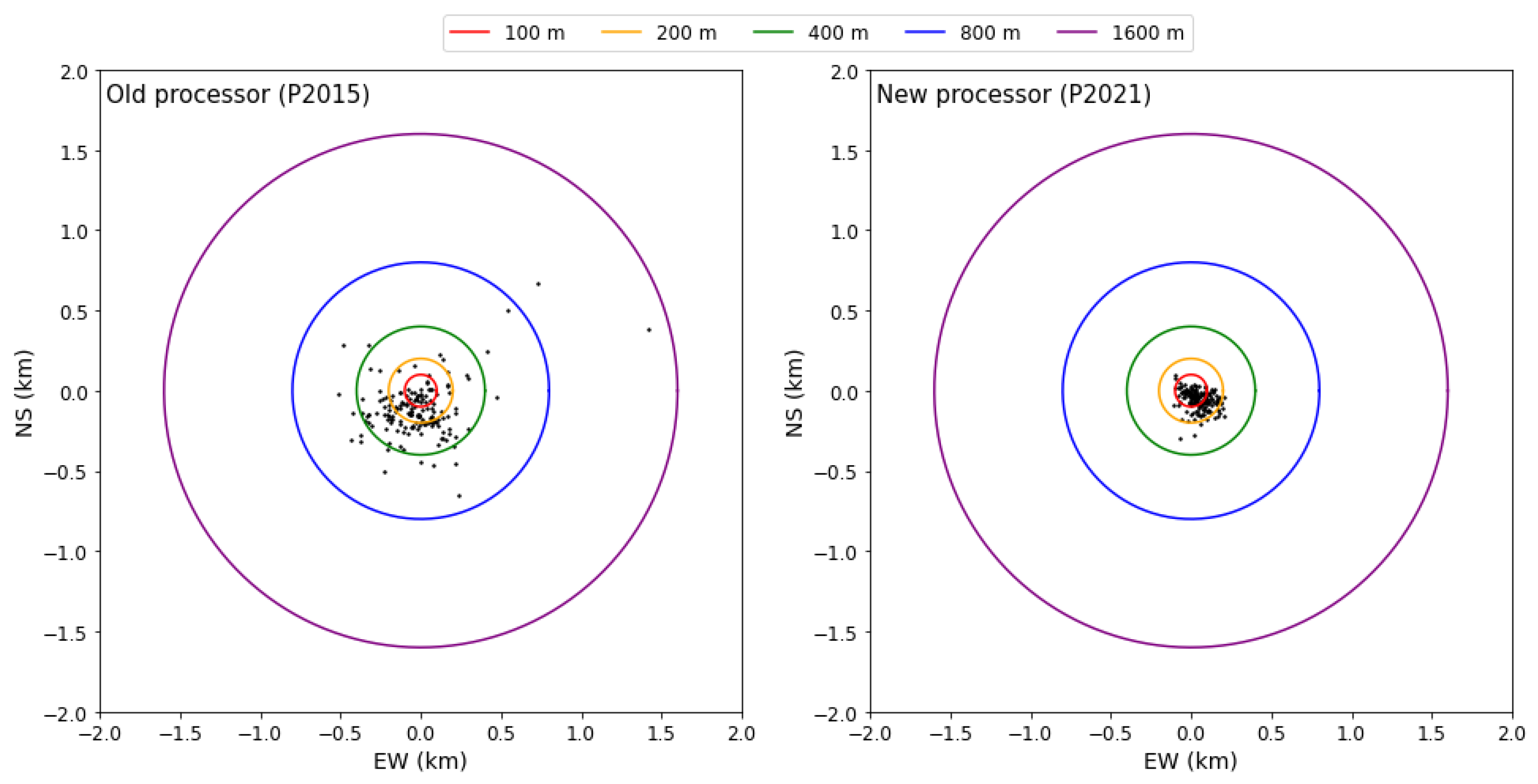
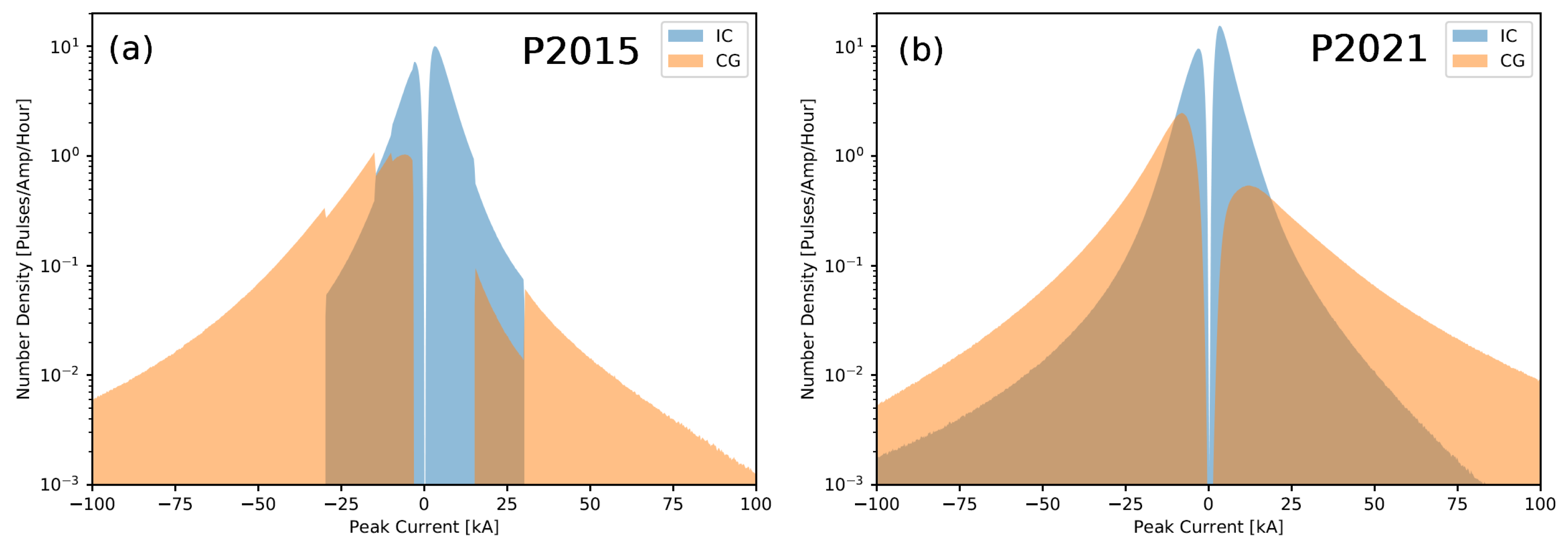
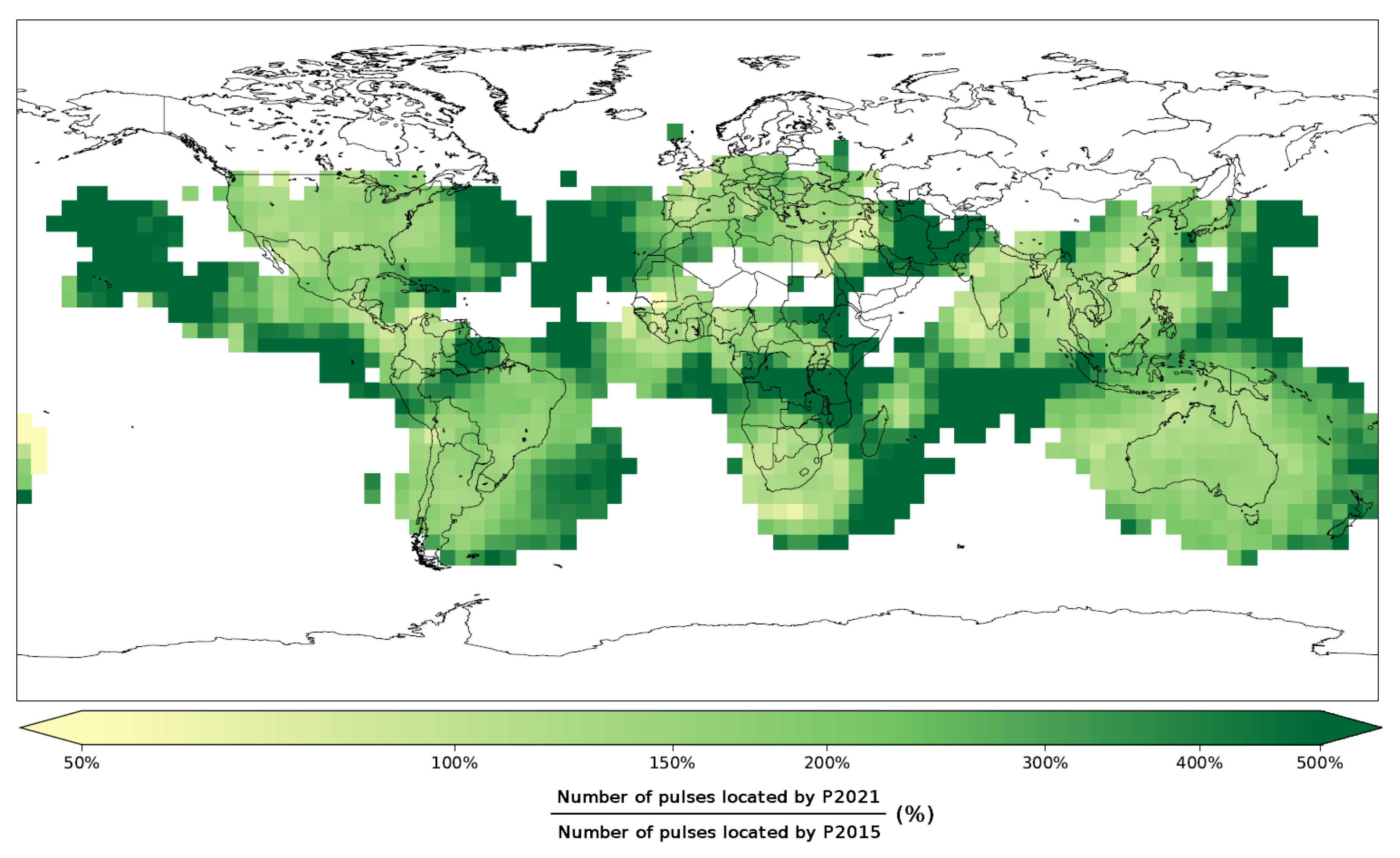
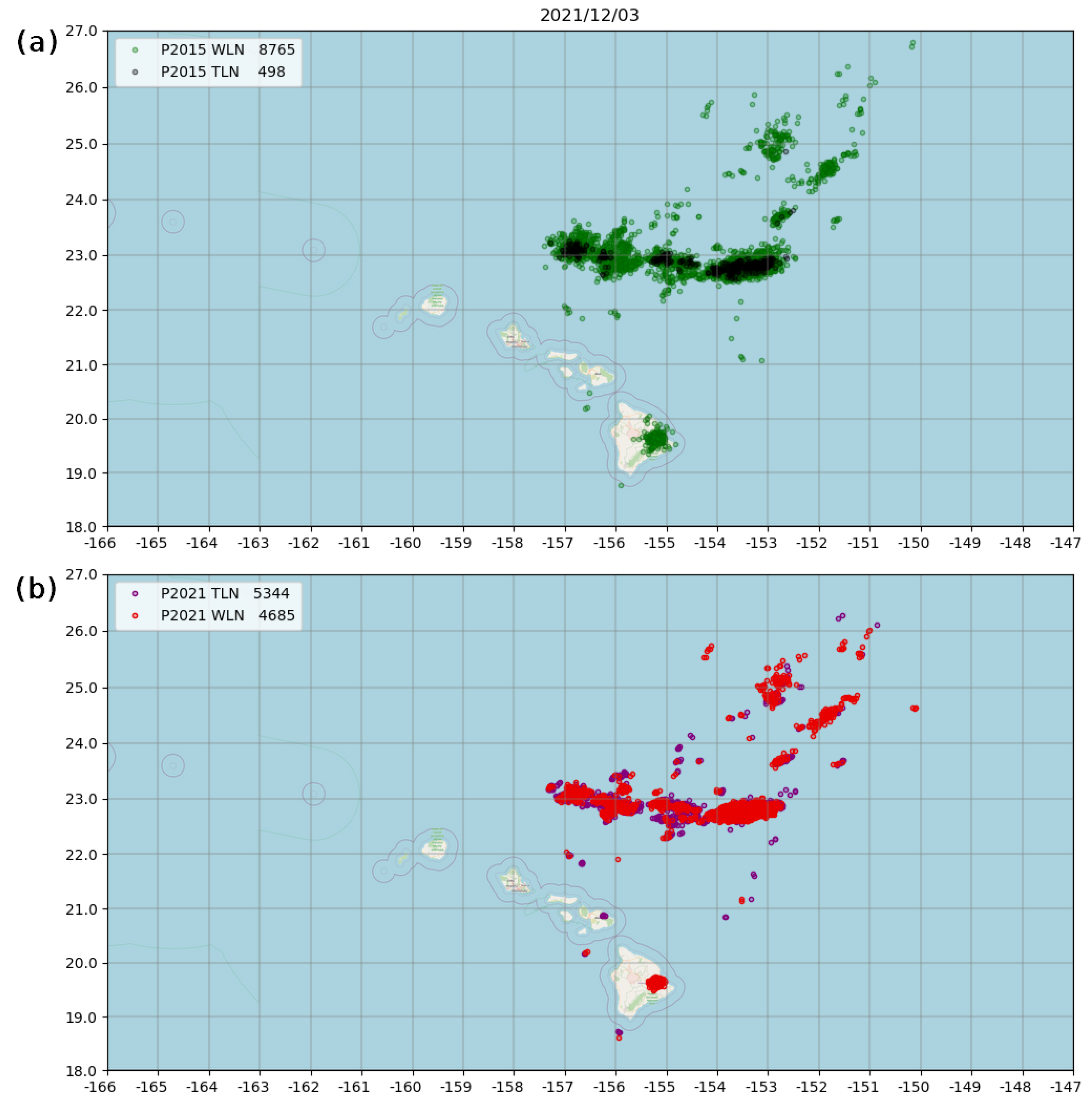
The Earth Networks Total Lightning Network (ENTLN) launched a new processor (P2021) in December 2021. Some major upgrades were made in the new processor, including a new classification algorithm, a new propagation model, and regional data processing architecture. Ground-truth datasets of natural and rocket-triggered lightning acquired in Florida were used to evaluate the performance characteristics of the new processor. Compared to the last processor launched in 2015 (P2015), the stroke classification accuracy increased from 91% to 94% for natural lightning and from 86% to 88% for rocket-triggered lightning. The location accuracy improved significantly with the median location error decreasing from 215 m to 92 m. On a global scale, we found the number of pulses detected by the ENLTN increased in all regions with an overall detection gain of 149%. One can see modest gains in detection in regions with a fairly dense network of sensors and significant gains in regions where sensor density is much lower. Each of the major upgrades as well as their influences on the performance characteristics of the ENLTN are discussed.
Keywords: Earth Networks Total Lightning Network; lightning detection; lightning classification; location accuracy Earth Networks Total Lightning Network; lightning detection; lightning classification; location accuracy