Article

Analysis of Two Convective Storms Using Polarimetric X-Band Radar and Satellite Data
1
Institute of Atmospheric Physics of the Czech Academy of Sciences, Bocni II 1401, 141 00 Prague, Czech Republic
2
Faculty of Environmental Sciences, Czech University of Life Sciences, Kamýcká 1176, 165 00 Prague, Czech Republic
3
Faculty of Science, Charles University, Albertov 6, 128 00 Prague, Czech Republic
4
Faculty of Electrical Engineering and Informatics, University of Pardubice, Studentská 95, 532 10 Pardubice, Czech Republic
*
Author to whom correspondence should be addressed.
Remote Sens. 2022, 14(10), 2294; https://doi.org/10.3390/rs14102294
Submission received: 30 March 2022 / Revised: 25 April 2022 / Accepted: 6 May 2022 / Published: 10 May 2022

Abstract

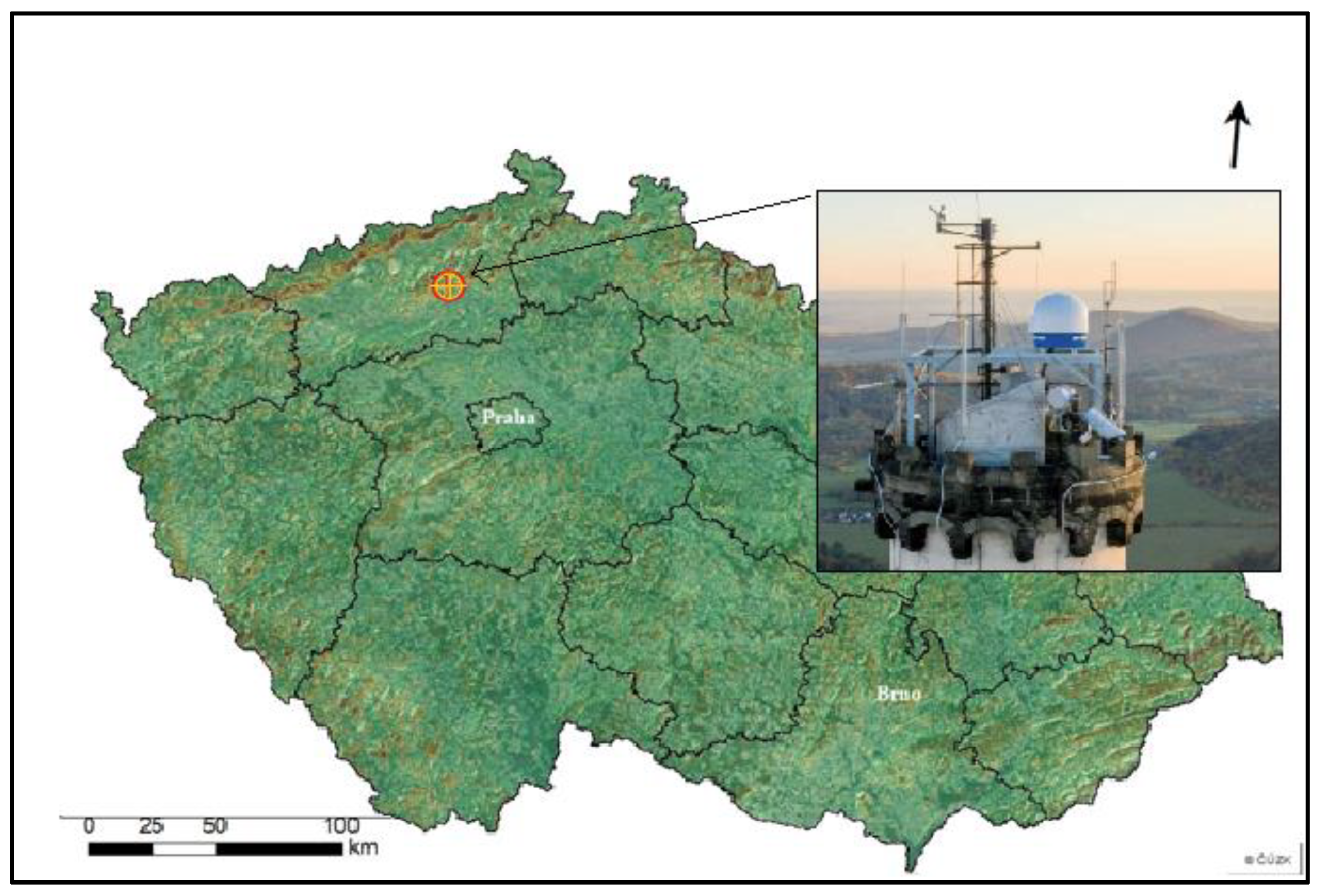
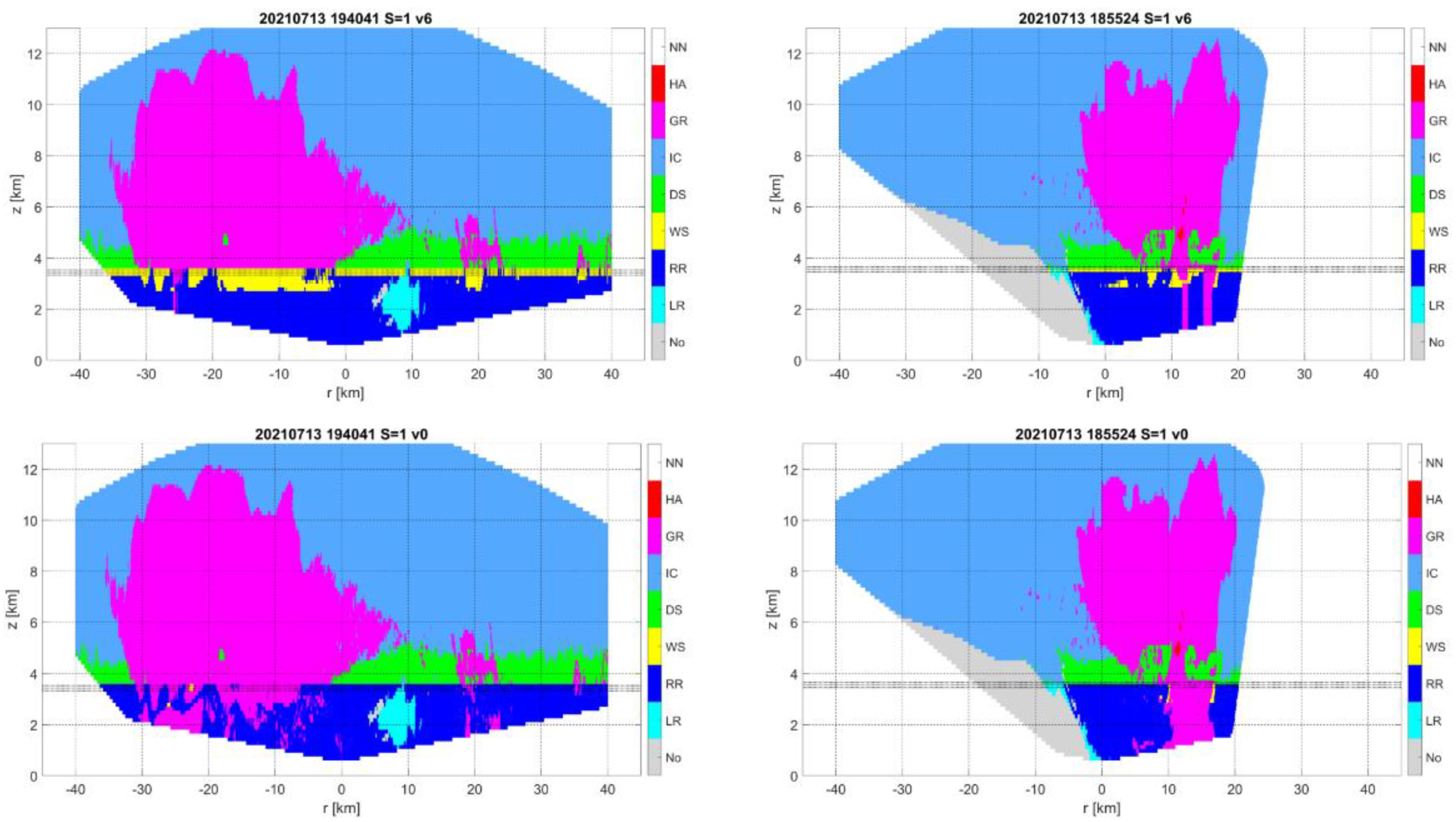
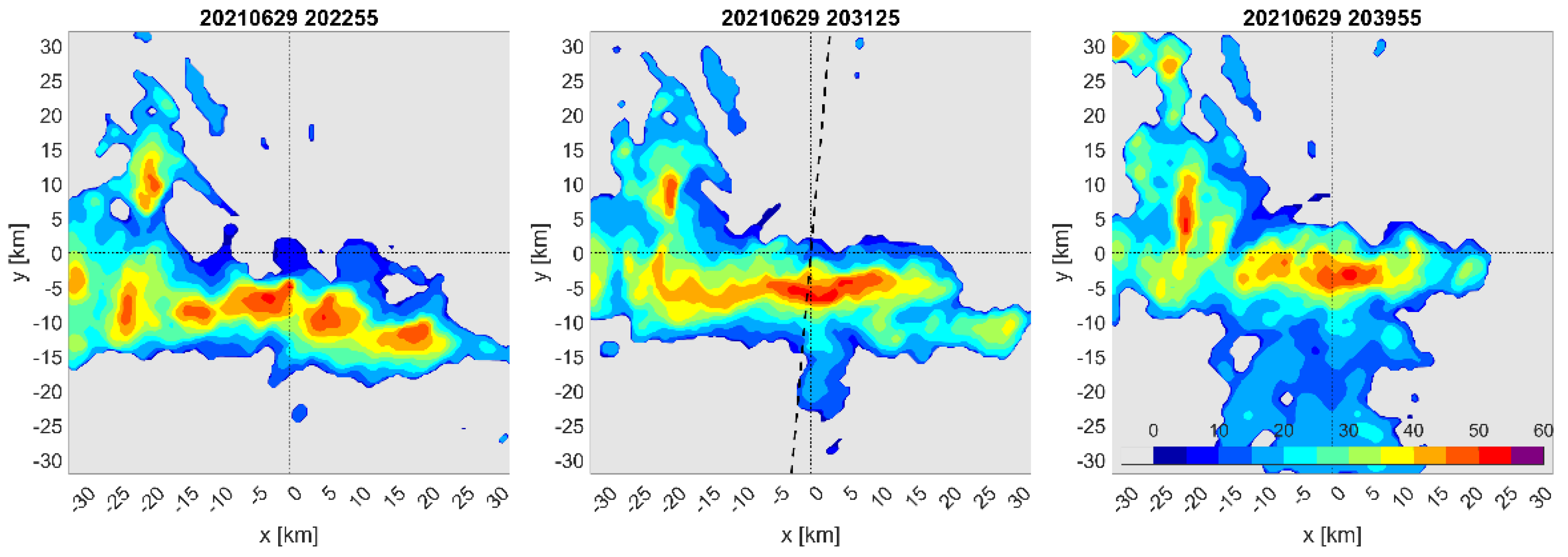
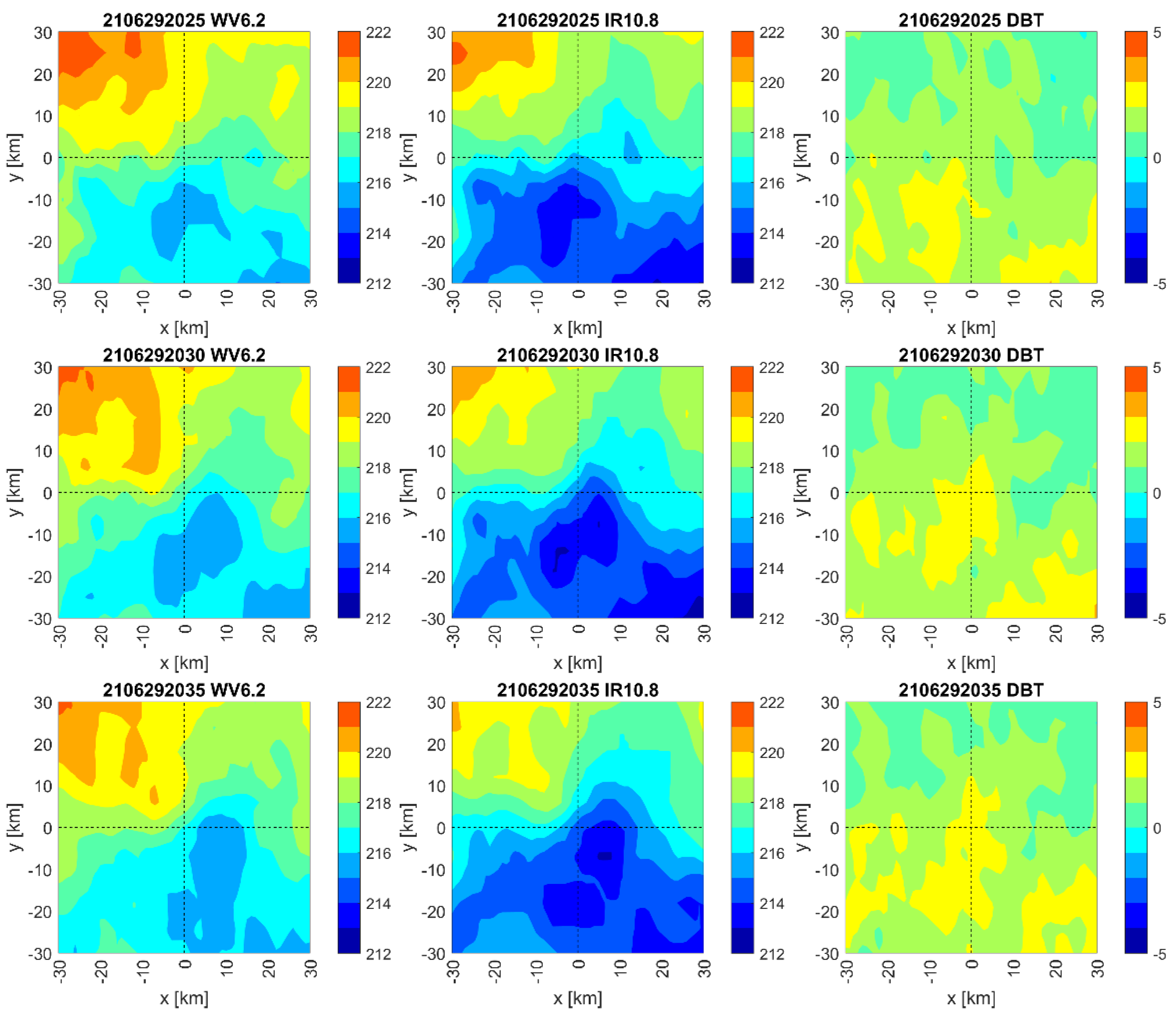
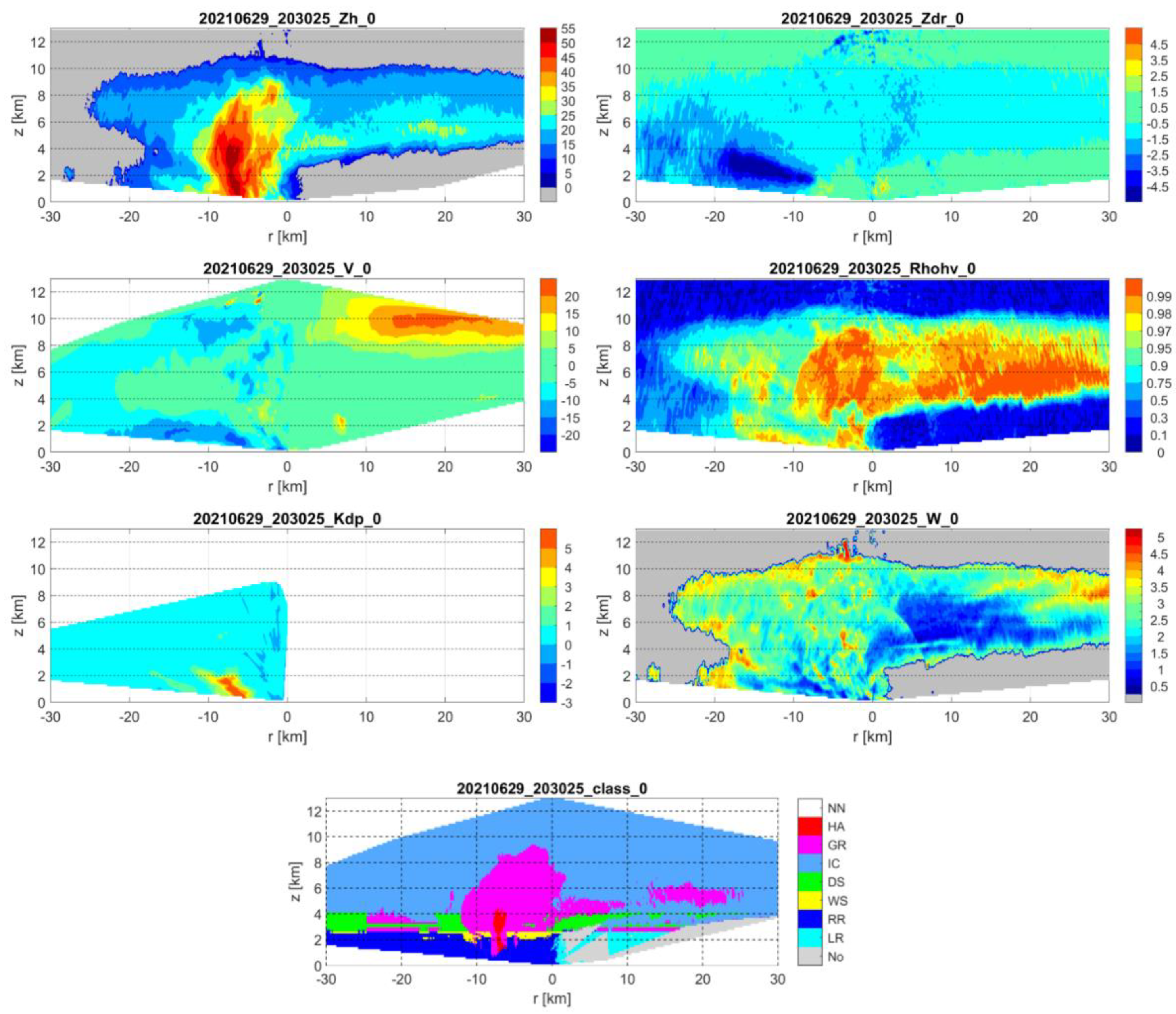
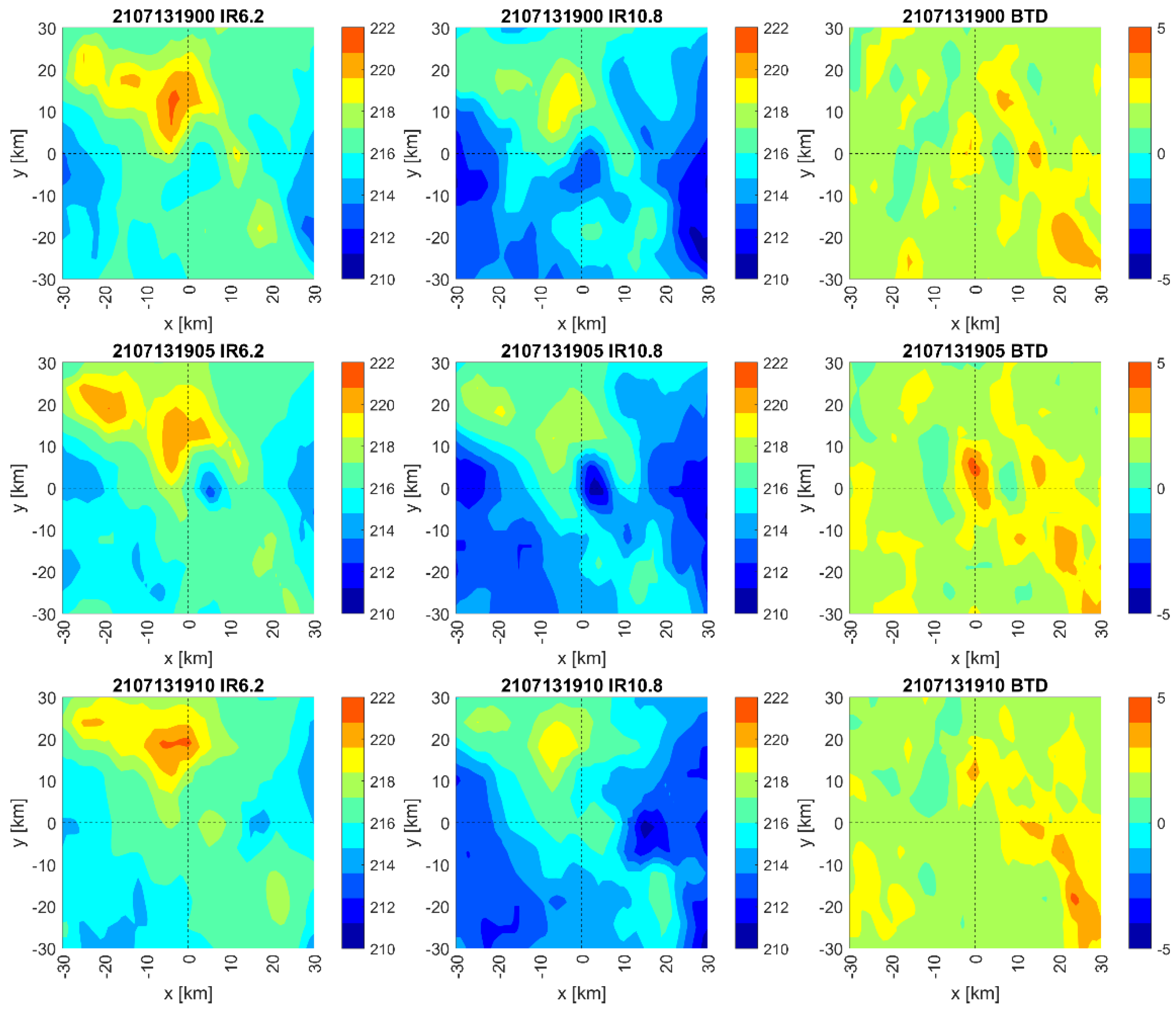
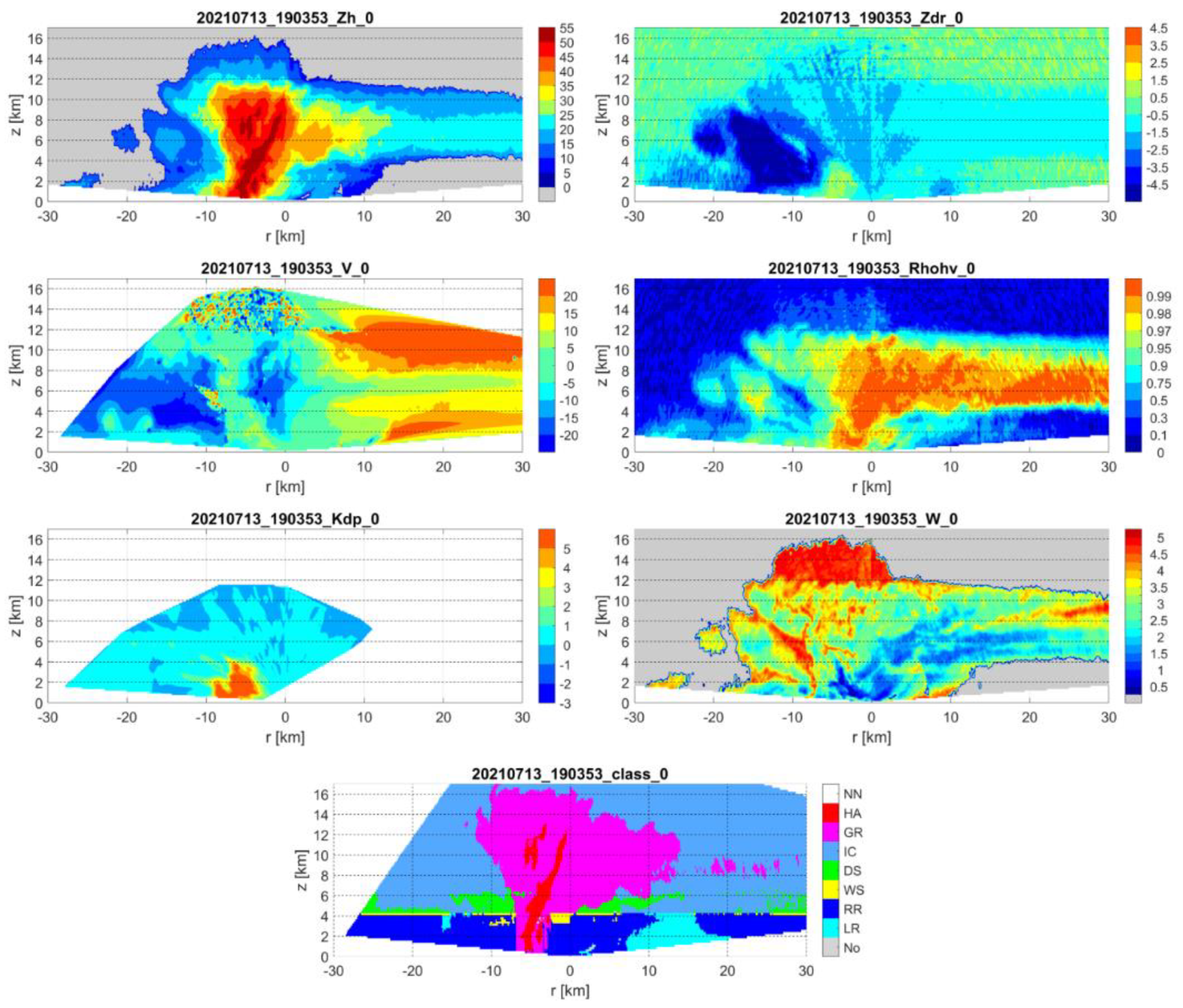
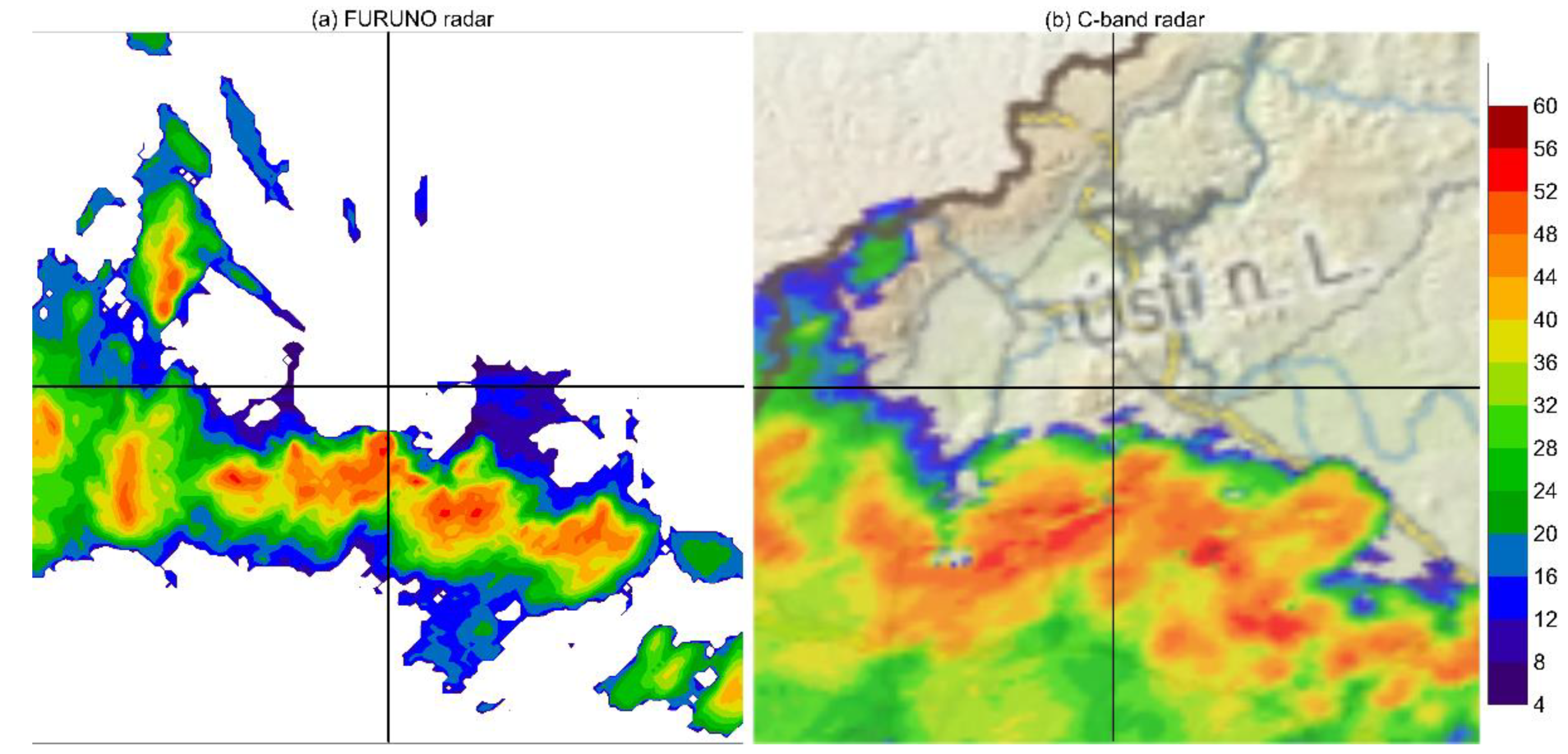
We analyzed two convective storms that passed over or near the Milešovka meteorological observatory. The observatory is located at the top of a hill and has been recently equipped with a Doppler polarimetric X-band radar FURUNO WR2120 for cloud investigations. Our analysis was based mainly on Doppler polarimetric radar data measured in vertical cross-sections (RHI-Range-Height Indicator). Radar data was also used for classifying hydrometeors by a newly developed XCLASS (X-band radar CLASSification) algorithm. We also used rapid scan data measured by the geostationary satellite Meteosat Second Generation to validate radar measurements at the upper parts of storms. Although an attenuation correction was applied to the reflectivity and differential reflectivity measurements, the attenuation typical of X-band radars was noticeable. It was mainly manifested in the differential reflectivity, co-polar correlation coefficient and specific differential phase. Nevertheless, radar measurements can be used to analyze the internal cloud structure of severe convective storms. The XCLASS classification was developed by major innovation of a previously published algorithm. The XCLASS algorithm identifies seven types of hydrometeors: light rain, rain, wet snow, dry snow, ice, graupel, and hail. It uses measured horizontal and vertical radar reflectivity, specific differential phase, co-polar correlation coefficient, and temperature, and applies fuzzy logic to determine the type of hydrometeor. The new algorithm practically eliminates unrealistic results around and below the melting layer provided by the original algorithm. It identifies wet snow in more cases, and areas with individual hydrometeors have more realistic shapes compared to the original algorithm. The XCLASS algorithm shows reasonable results for the classification of hydrometeors and can be used to study the structure of convective storms.
Keywords: X-band radar; MSG; convective storm; hydrometeor classification X-band radar; MSG; convective storm; hydrometeor classification