Article

Spatio-Temporal Changes of Mass Balance in the Ablation Area of the Muz Taw Glacier, Sawir Mountains, from Multi-Temporal Terrestrial Geodetic Surveys

1
State Key Laboratory of Cryospheric Science, Tien Shan Glaciological Station, Northwest Institute of Eco-Environment and Resources, Chinese Academy of Sciences, Lanzhou 730000, China
2
National Cryosphere Desert Data Center, Northwest Institute of Eco-Environment and Resources, Chinese Academy of Sciences, Lanzhou 730000, China
*
Author to whom correspondence should be addressed.
Remote Sens. 2021, 13(8), 1465; https://doi.org/10.3390/rs13081465
Submission received: 3 March 2021 / Revised: 31 March 2021 / Accepted: 7 April 2021 / Published: 10 April 2021
(This article belongs to the Special Issue The Cryosphere Observations Based on Using Remote Sensing Techniques)

Abstract

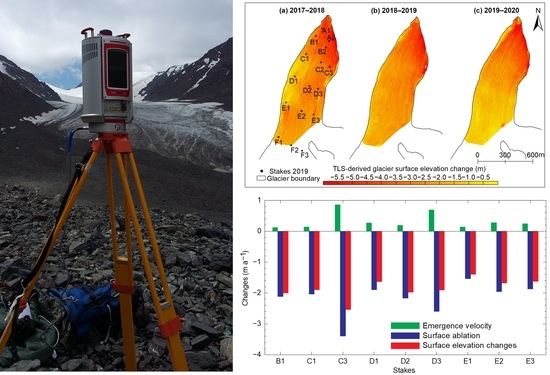
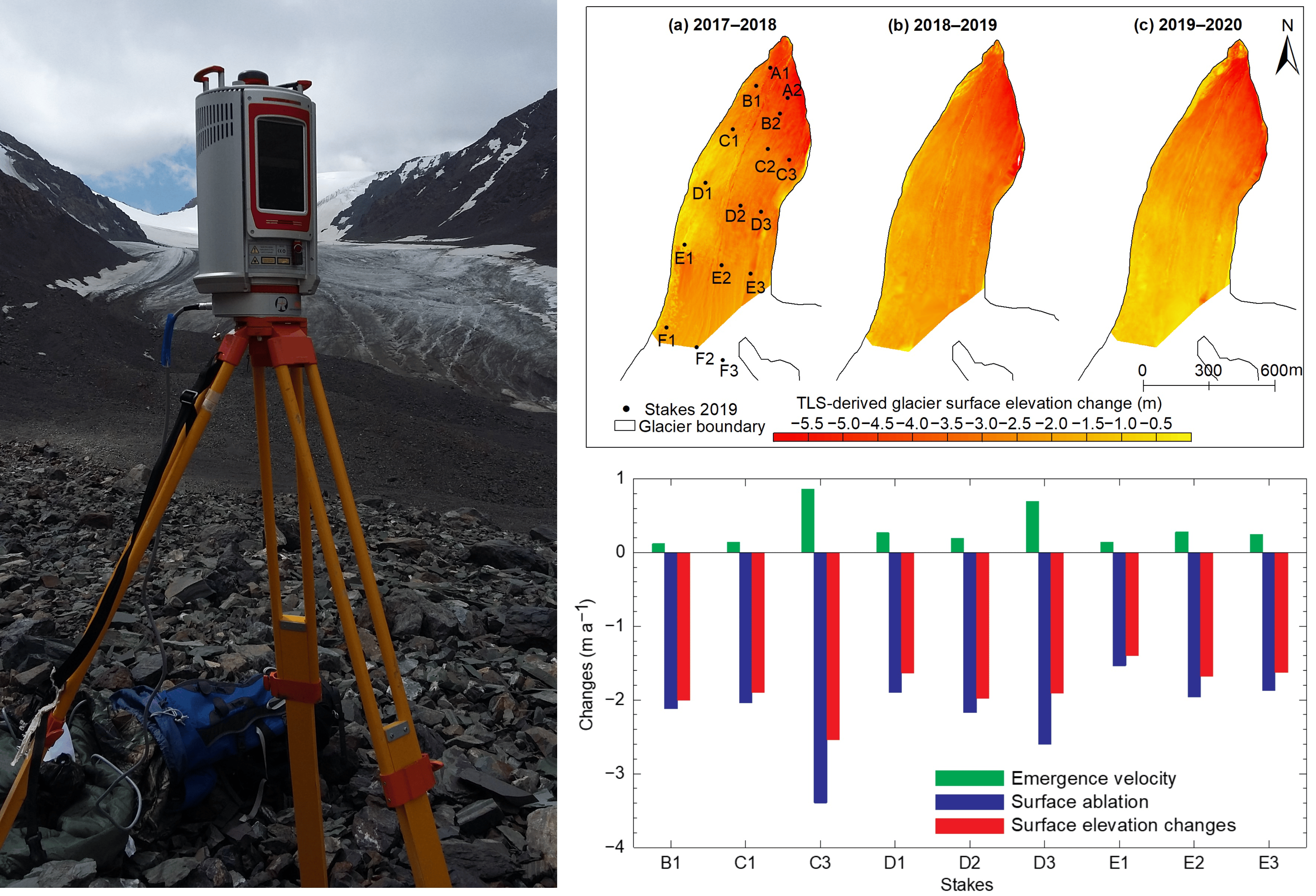
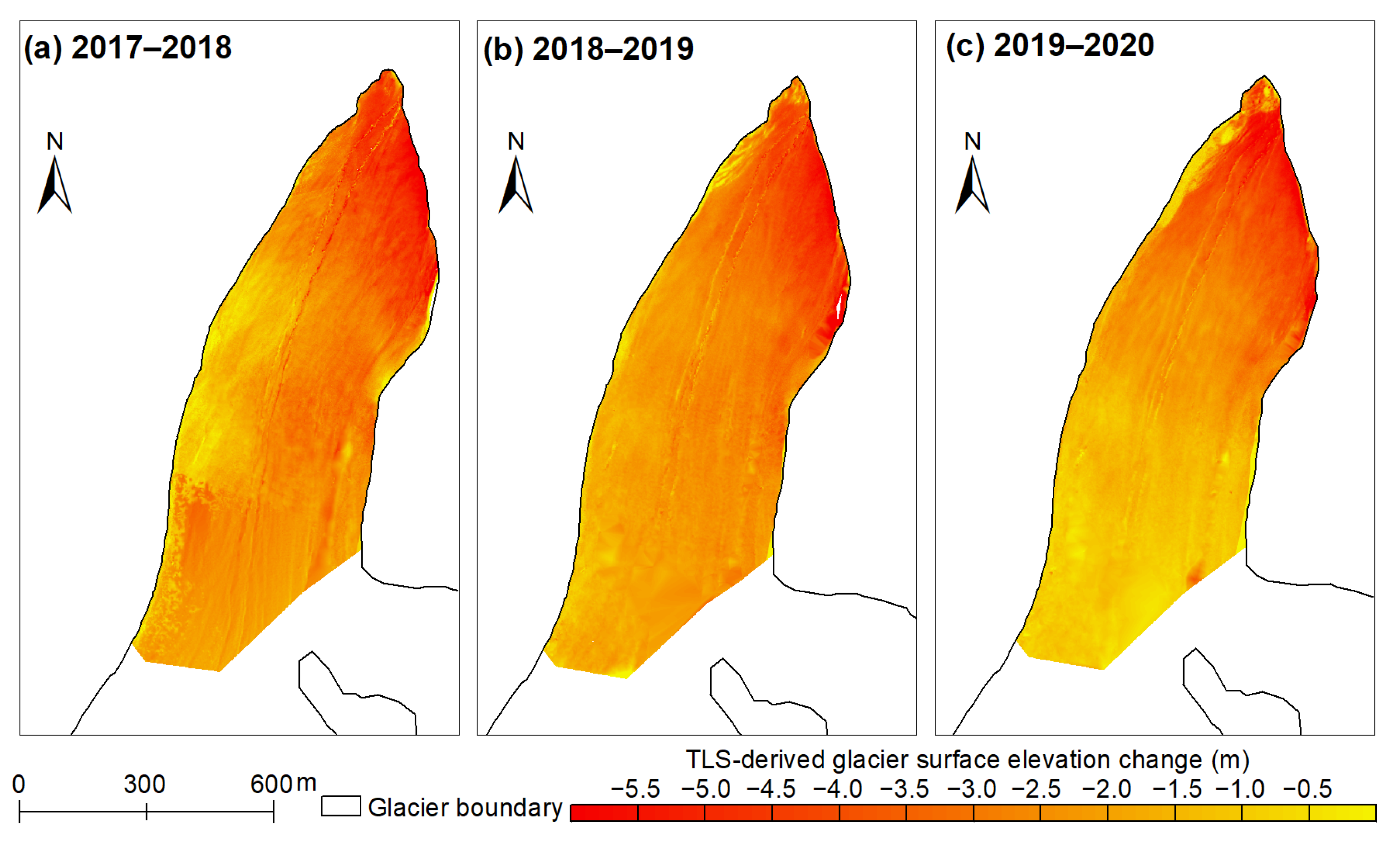
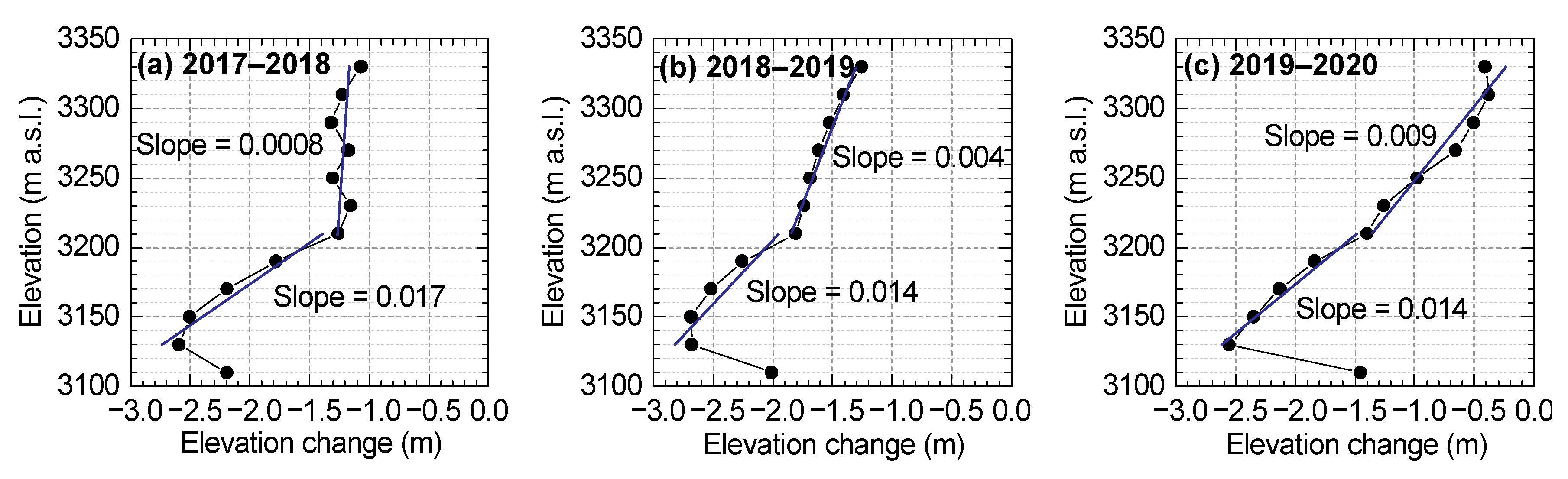
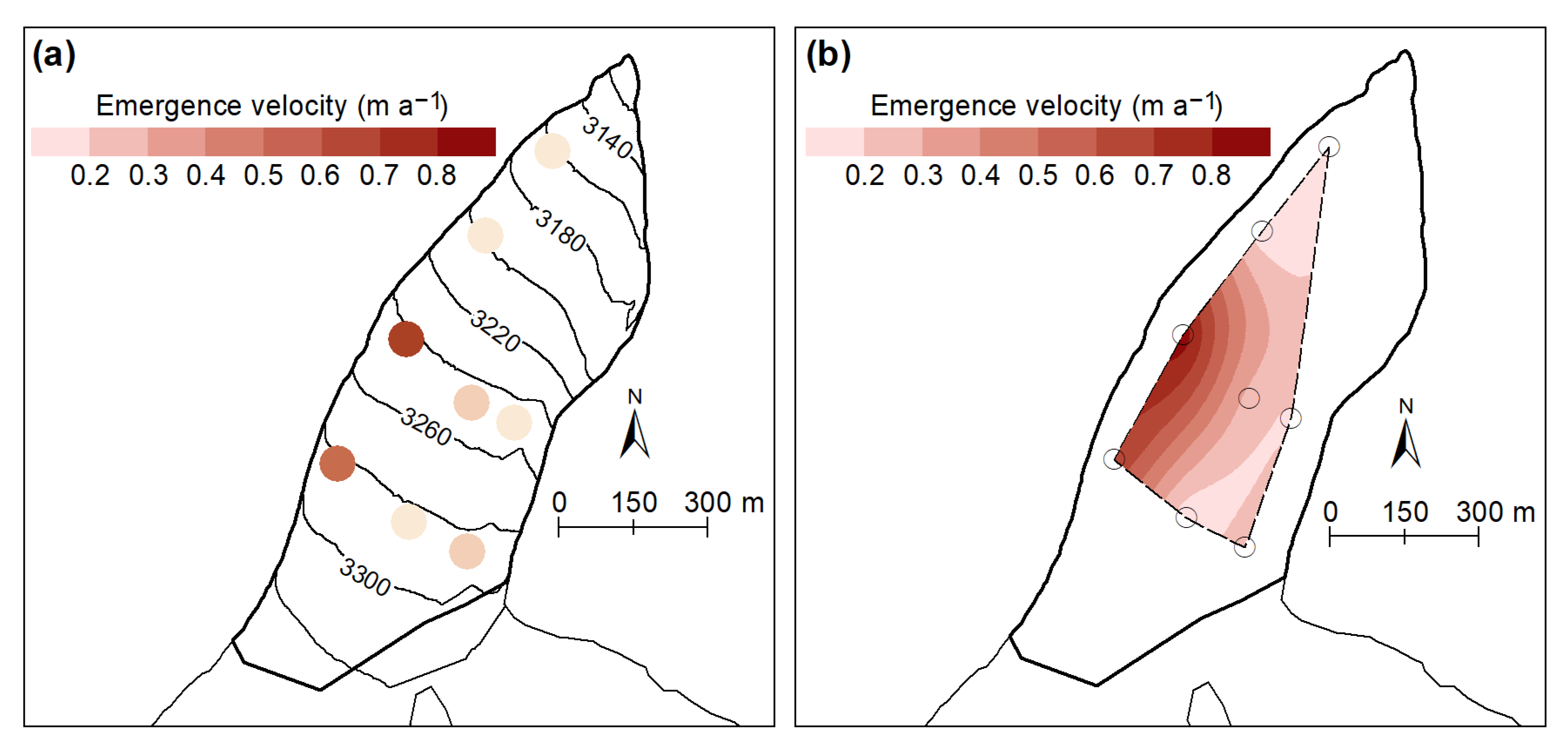
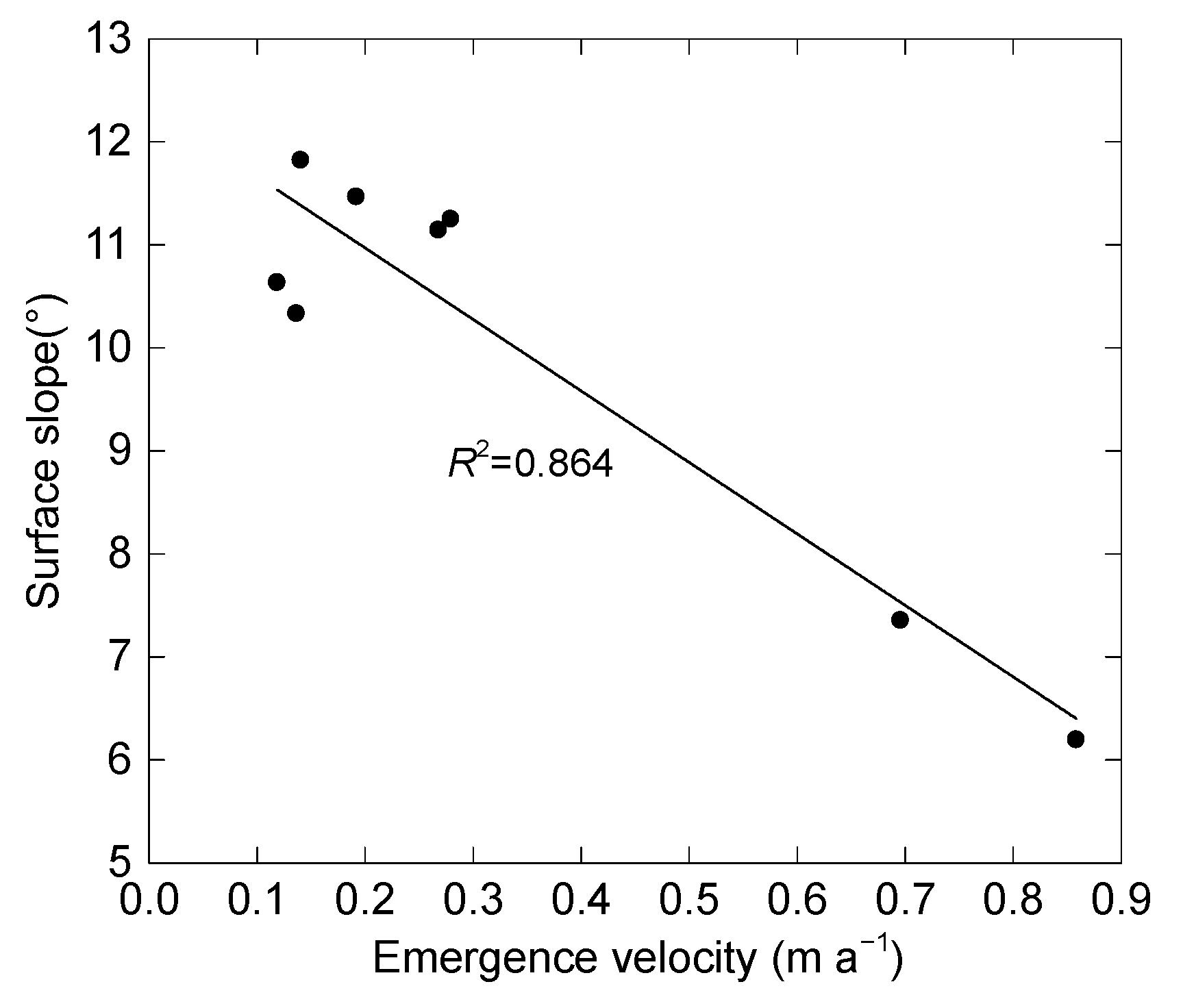
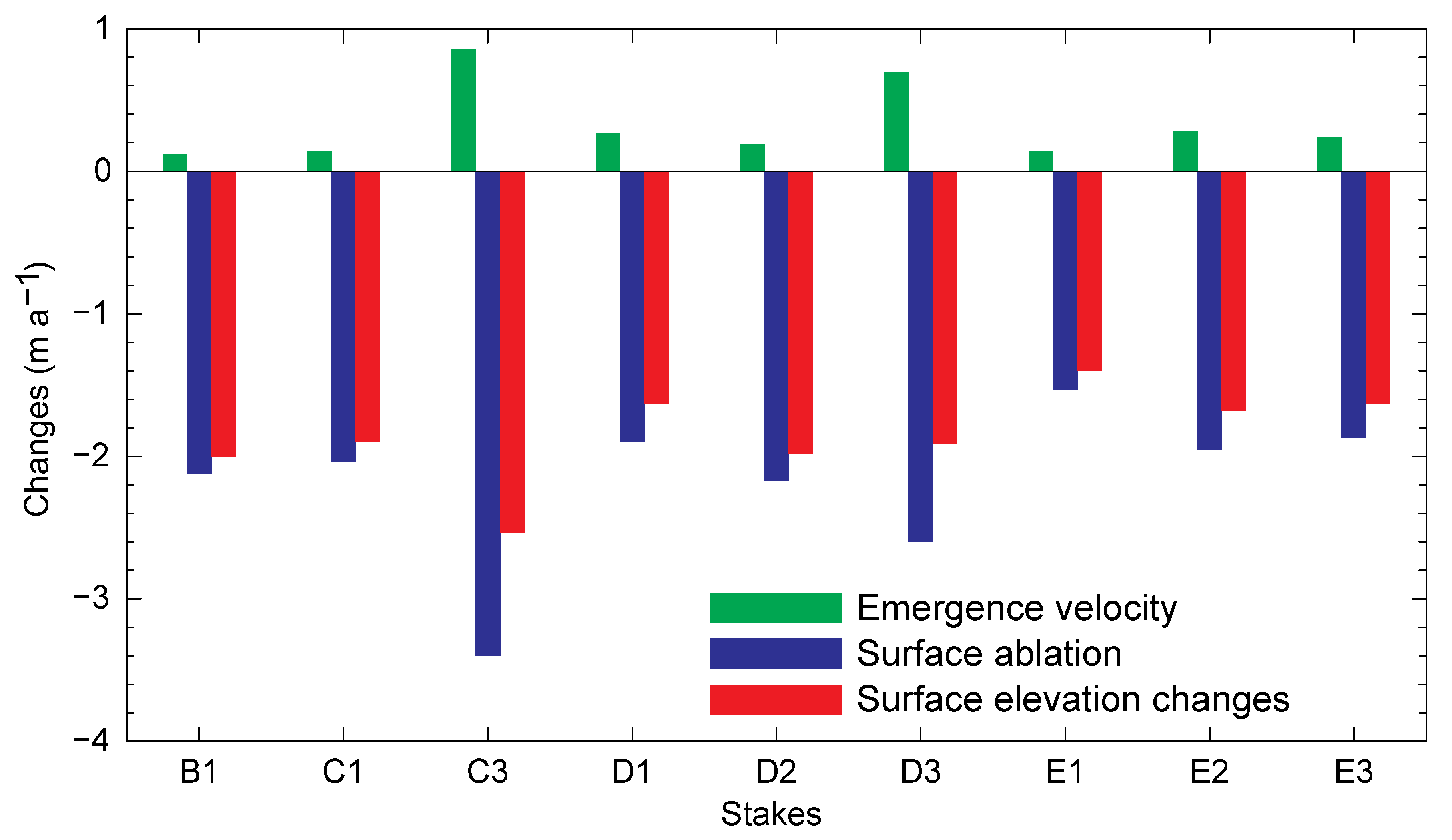
The glaciers in the Sawir Mountains are an important freshwater resource, and glaciers have been experiencing a continuing retreat over the past few decades. However, studies on detailed glacier mass changes are currently sparse. Here, we present the high-precision evolution of annual surface elevation and geodetic mass changes in the ablation area of the Muz Taw Glacier (Sawir Mountains, China) over the latest three consecutive mass-balance years (2017–2020) based on multi-temporal terrestrial geodetic surveys. Our results revealed clearly surface lowering and negative geodetic mass changes, and the spatial changing patterns were generally similar for the three periods with the most negative surface lowering (approximately −5.0 to −4.0 m a−1) around the glacier terminus. The gradient of altitudinal elevation changes was commonly steep at the low elevations and gentle in the upper-elevation parts, and reduced surface lowering was observed at the glacier terminus. Resulting emergence velocities ranged from 0.11 to 0.86 m a−1 with pronounced spatial variability, which was mainly controlled by surface slope, ice thickness, and the movement of tributary glaciers. Meanwhile, emergence velocities slightly compensated the surface ablation at the ablation area with a proportion of 14.9%, and dynamic thickening had small contributions to glacier surface evolution. Limited annual precipitation and glacier accumulation may result in these weak contributions. Higher-resolution surveys at the seasonal and monthly scales are required to get insight into the mass balance processes and their mechanism.
Keywords: glacier mass balance; glacier dynamics; terrestrial laser scanning; mountain glacier; Sawir Mountains glacier mass balance; glacier dynamics; terrestrial laser scanning; mountain glacier; Sawir Mountains
Graphical Abstract