Article

UAV-Based Estimate of Snow Cover Dynamics: Optimizing Semi-Arid Forest Structure for Snow Persistence
1
School of Informatics, Computing, and Cyber Systems, Northern Arizona University, 1295 S. Knoles Ave, Flagstaff, AZ 86011, USA
2
USDA Agricultural Research Service Southwest Watershed Research Center, Tucson, AZ 85719, USA
3
Geological Survey Southwestern Biological Center, Flagstaff, AZ 86001, USA
4
School of Forestry, Northern Arizona University, Flagstaff, AZ 86011, USA
*
Author to whom correspondence should be addressed.
Remote Sens. 2021, 13(5), 1036; https://doi.org/10.3390/rs13051036
Submission received: 20 January 2021 / Revised: 10 February 2021 / Accepted: 4 March 2021 / Published: 9 March 2021
(This article belongs to the Special Issue Ecohydrological Remote Sensing)

Abstract

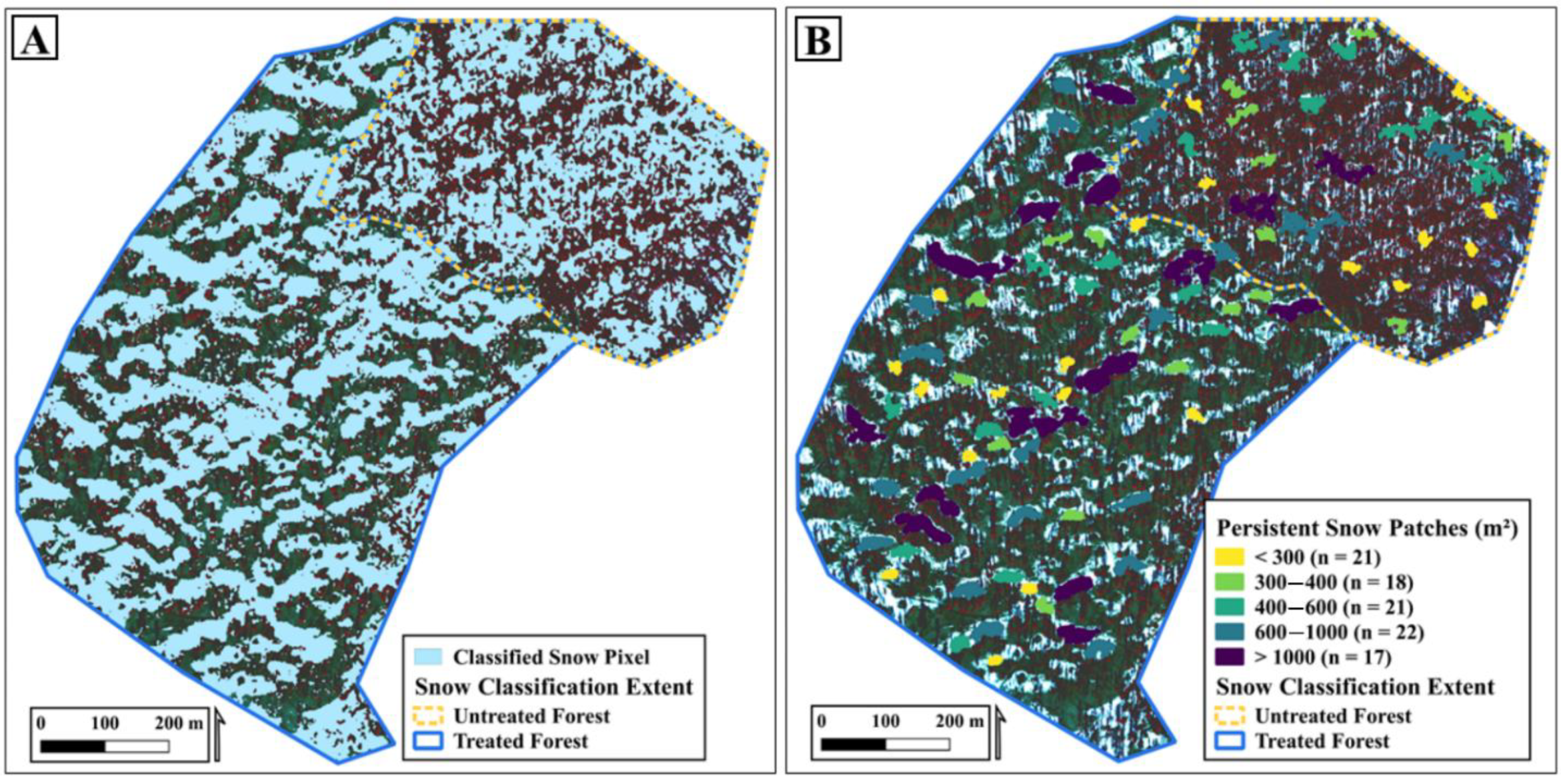
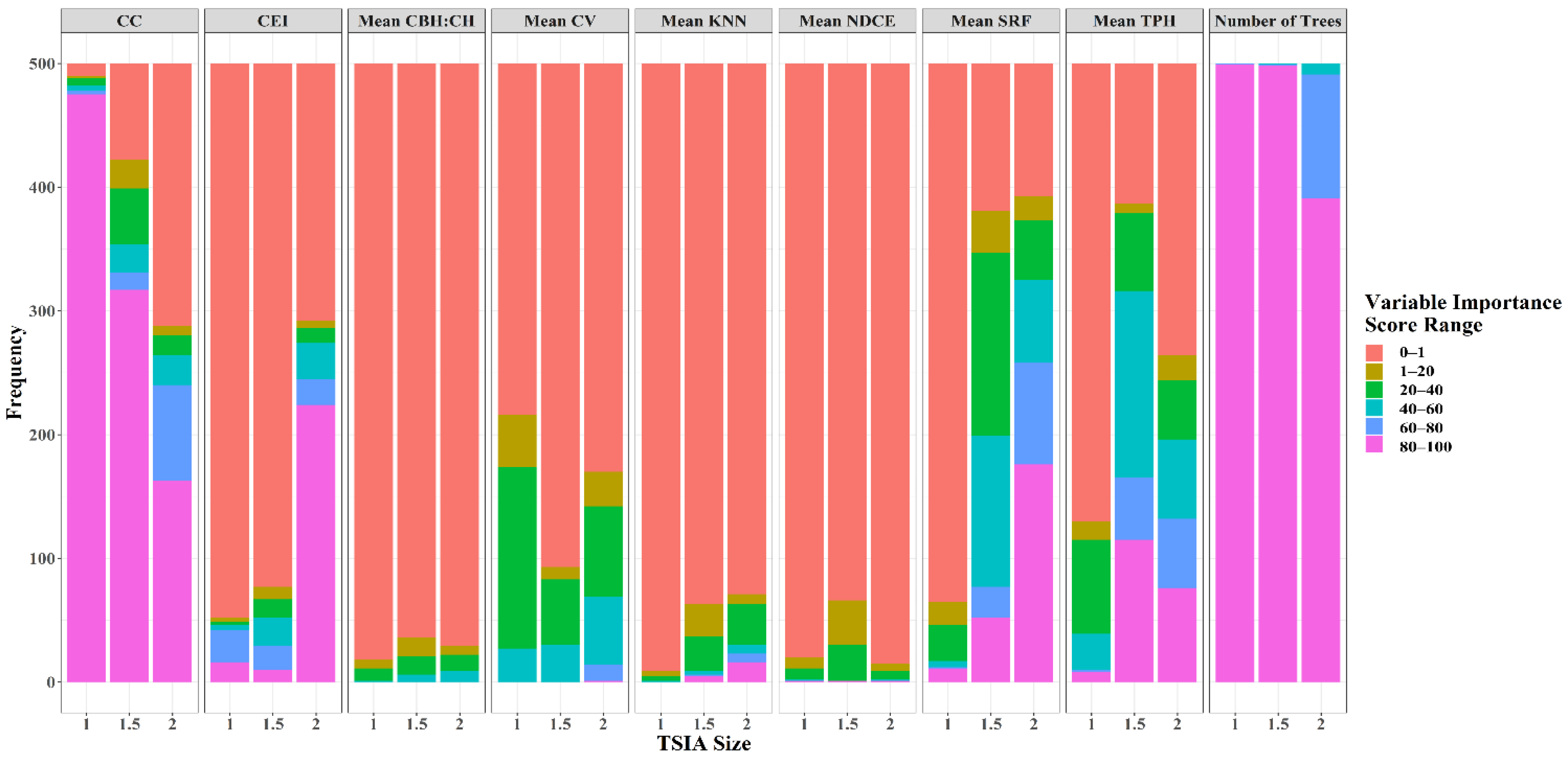
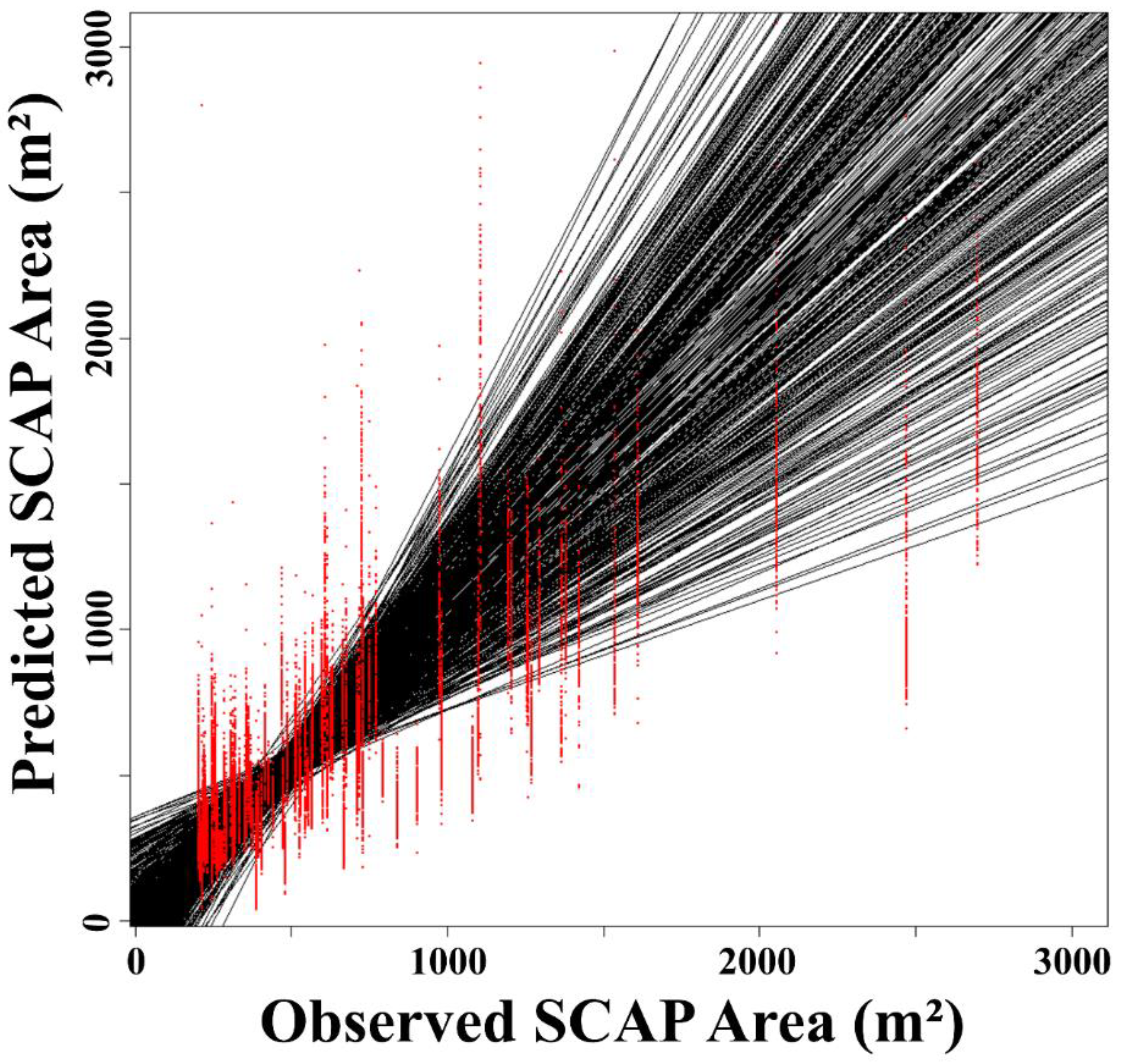
Seasonal snow cover in the dry forests of the American West provides essential water resources to both human and natural systems. The structure of trees and their arrangement across the landscape are important drivers of snow cover distribution across these forests, varying widely in both space and time. We used unmanned aerial vehicle (UAV) multispectral imagery and Structure-from-Motion (SfM) models to quantify rapidly melting snow cover dynamics and examine the effects of forest structure shading on persistent snow cover in a recently thinned ponderosa pine forest. Using repeat UAV multispectral imagery (n = 11 dates) across the 76 ha forest, we first developed a rapid and effective method for identifying persistent snow cover with 90.2% overall accuracy. The SfM model correctly identified 98% (n = 1280) of the trees, when compared with terrestrial laser scanner validation data. Using the SfM-derived forest structure variables, we then found that canopy shading associated with the vertical and horizontal metrics was a significant driver of persistent snow cover patches (R2 = 0.70). The results indicate that UAV image-derived forest structure metrics can be used to accurately predict snow patch size and persistence. Our results provide insight into the importance of forest structure, specifically canopy shading, in the amount and distribution of persistent seasonal snow cover in a typical dry forest environment. An operational understanding of forest structure effects on snow cover will help drive forest management that can target snow cover dynamics in addition to forest health.
Keywords: unmanned aerial vehicle (UAV); drone; point cloud data; 3D data; wildfire; fire behavior; structure-from-motion; SfM; lidar; BLK360; canopy base height; bulk density; canopy cover unmanned aerial vehicle (UAV); drone; point cloud data; 3D data; wildfire; fire behavior; structure-from-motion; SfM; lidar; BLK360; canopy base height; bulk density; canopy cover