Article

Adaptive Weighting Feature Fusion Approach Based on Generative Adversarial Network for Hyperspectral Image Classification


1
School of Computer Science and Engineering, North Minzu University, Yinchuan 750021, China
2
The Key Laboratory of Images & Graphics Intelligent Processing of State Ethnic Affairs Commission, North Minzu University, Yinchuan 750021, China
*
Author to whom correspondence should be addressed.
Remote Sens. 2021, 13(2), 198; https://doi.org/10.3390/rs13020198
Submission received: 12 December 2020 / Revised: 4 January 2021 / Accepted: 4 January 2021 / Published: 8 January 2021

Abstract

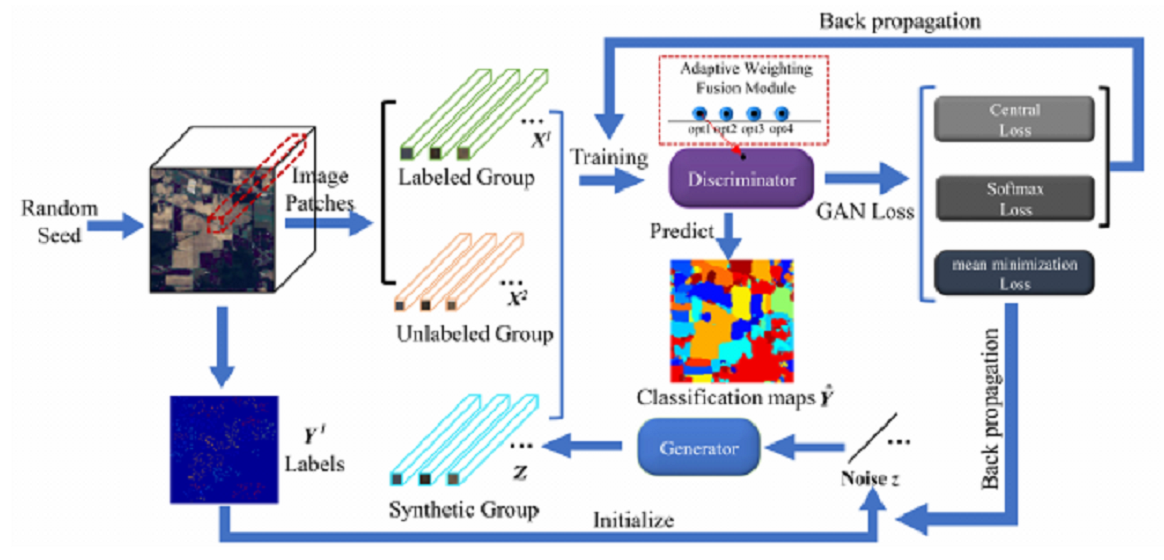
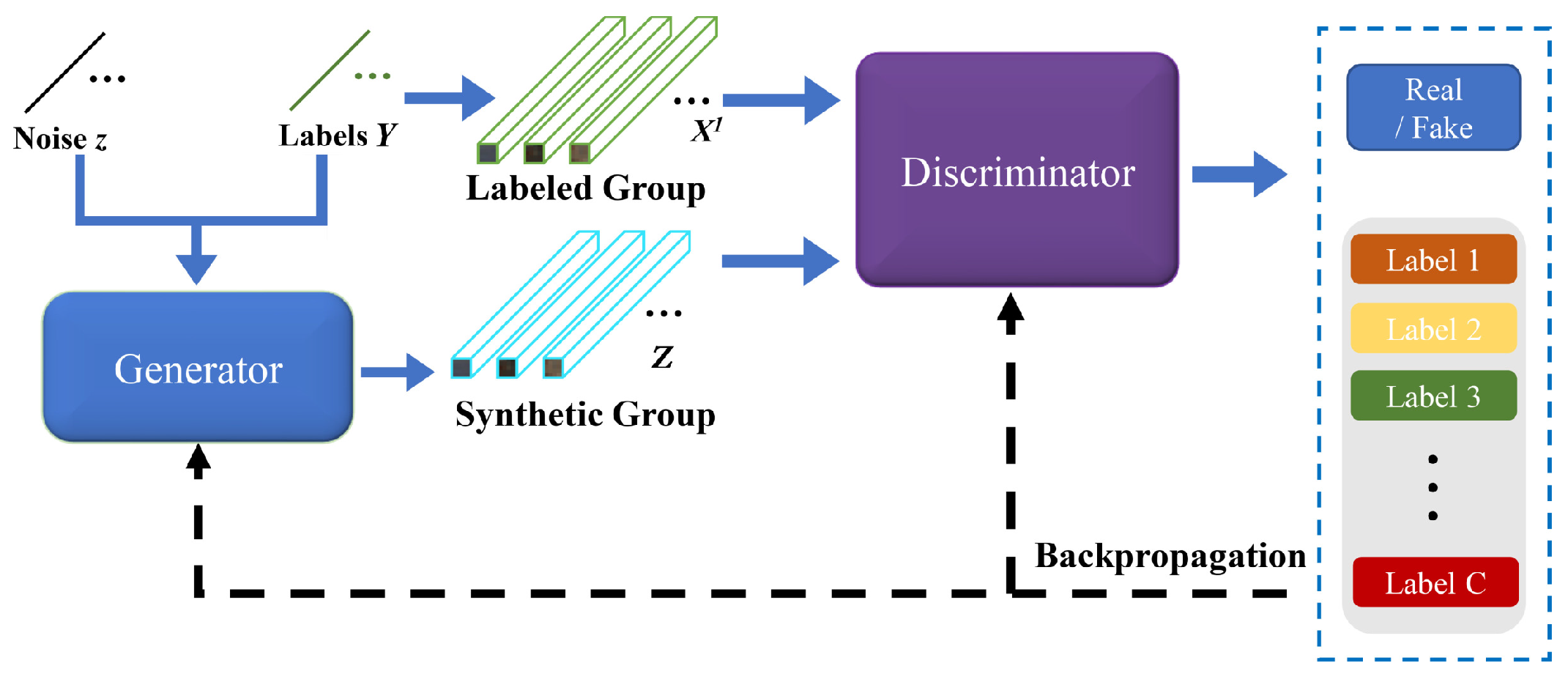
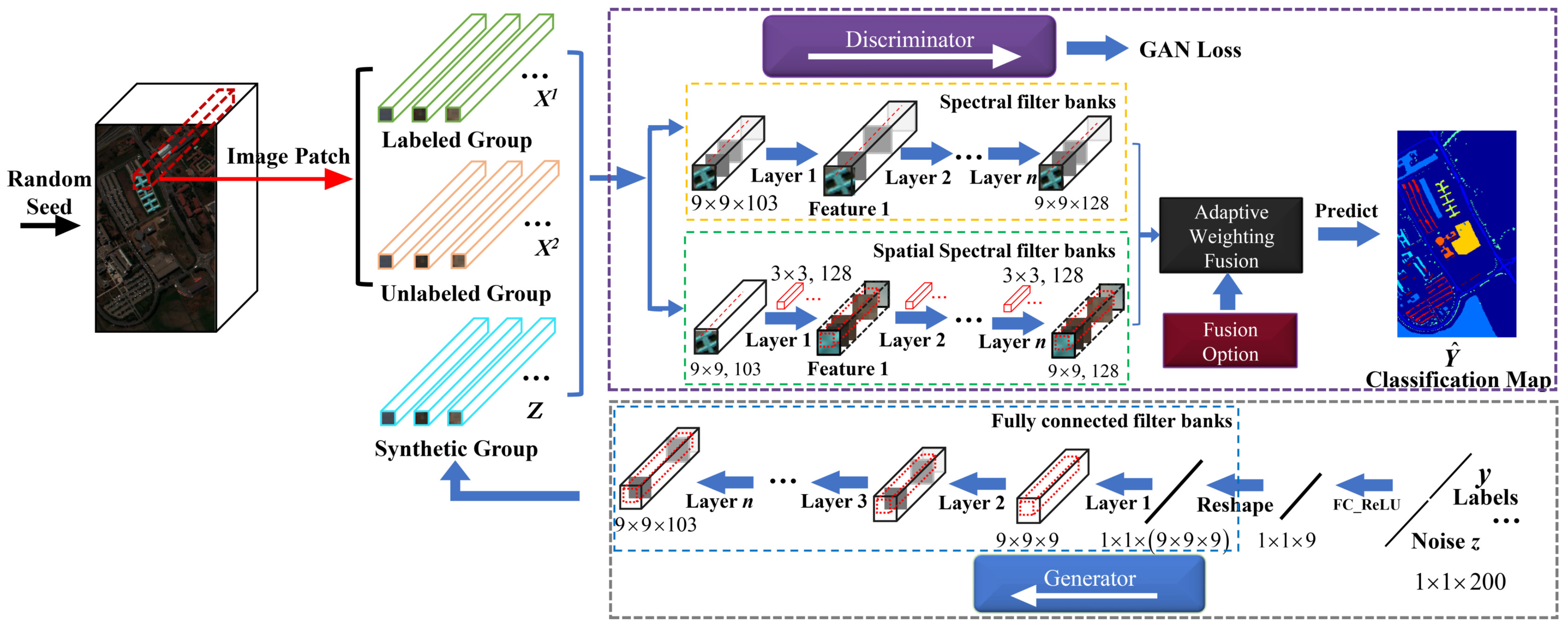
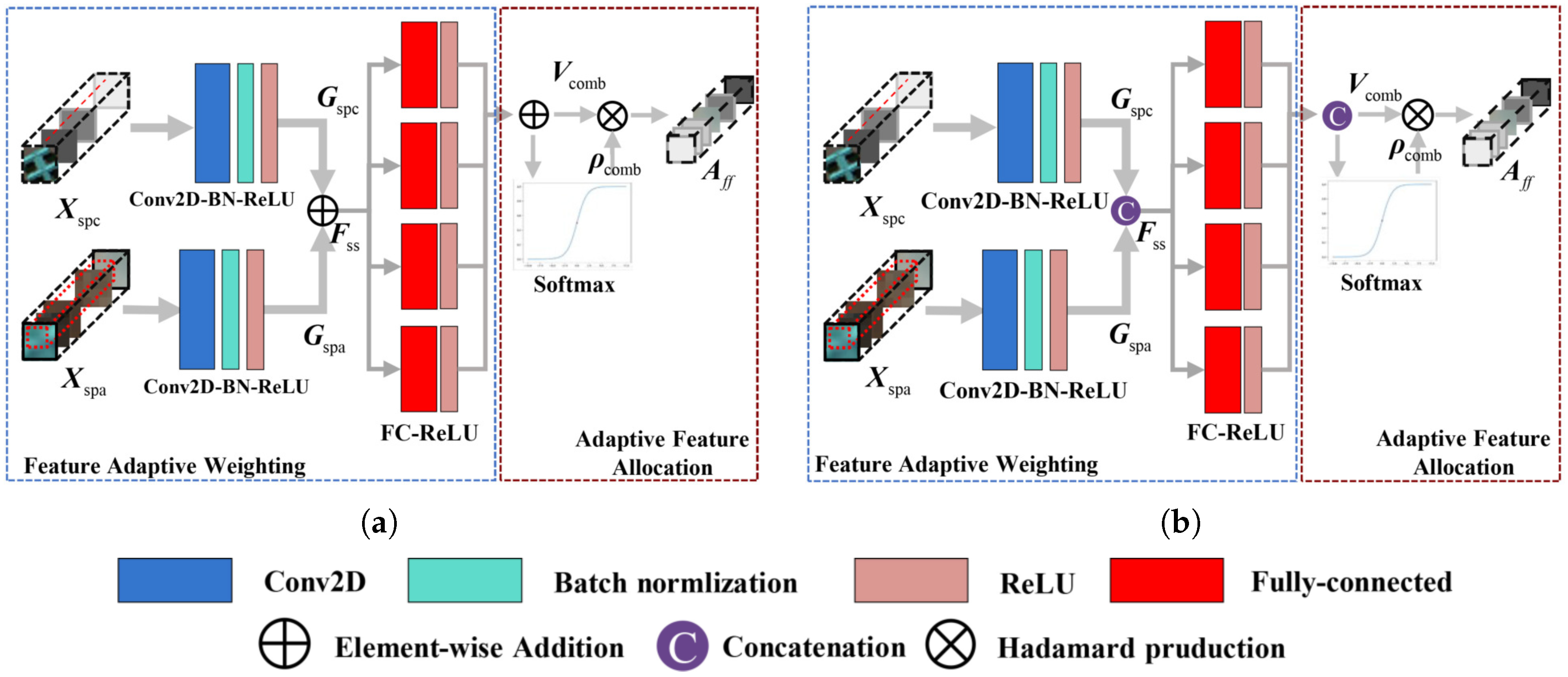
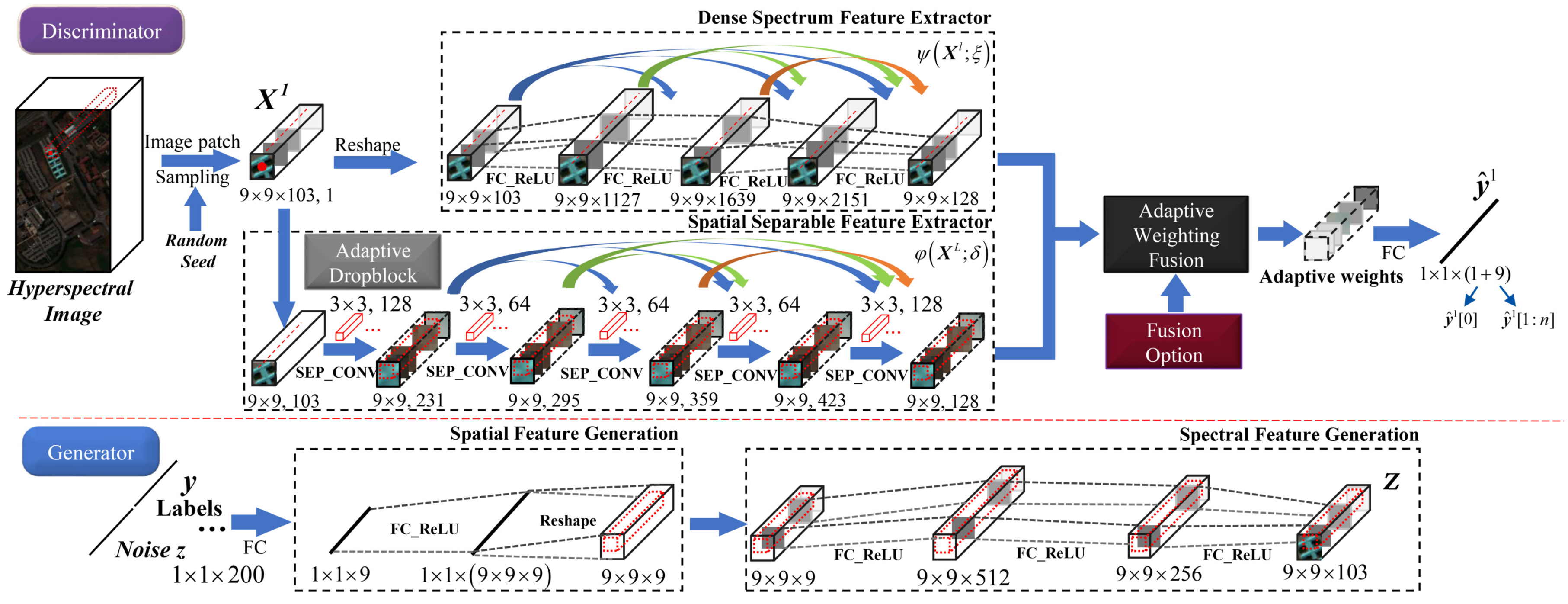
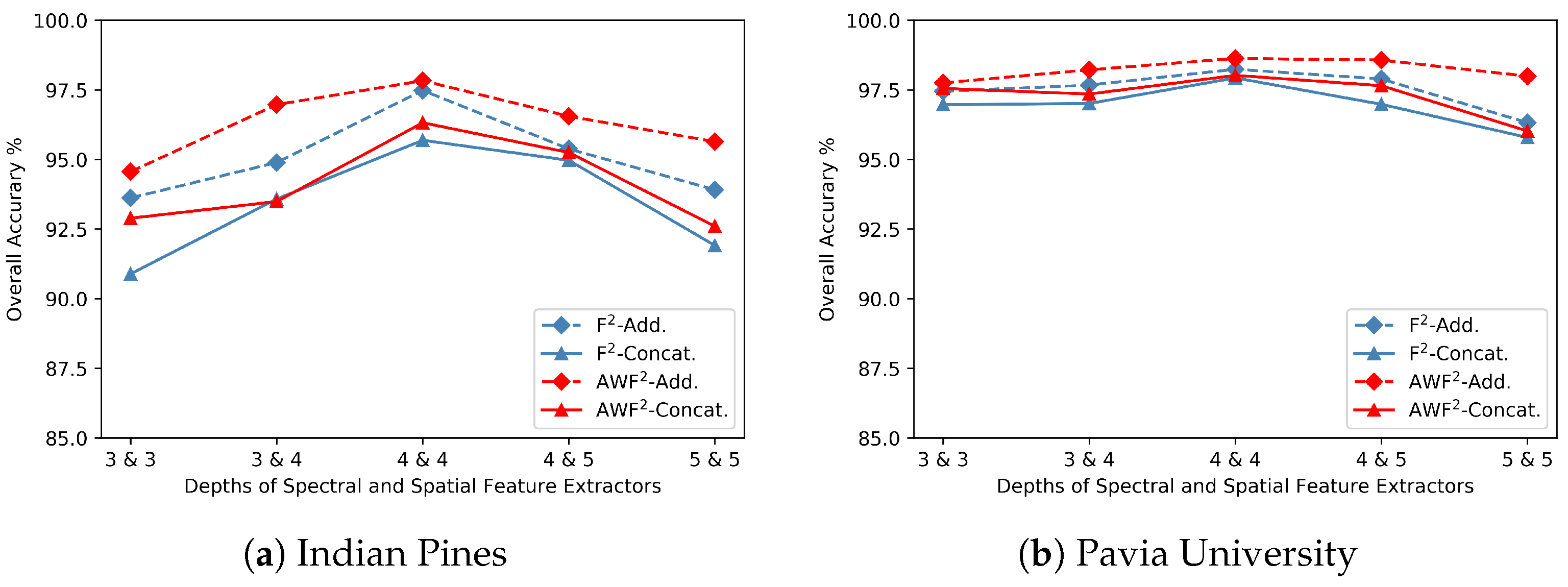
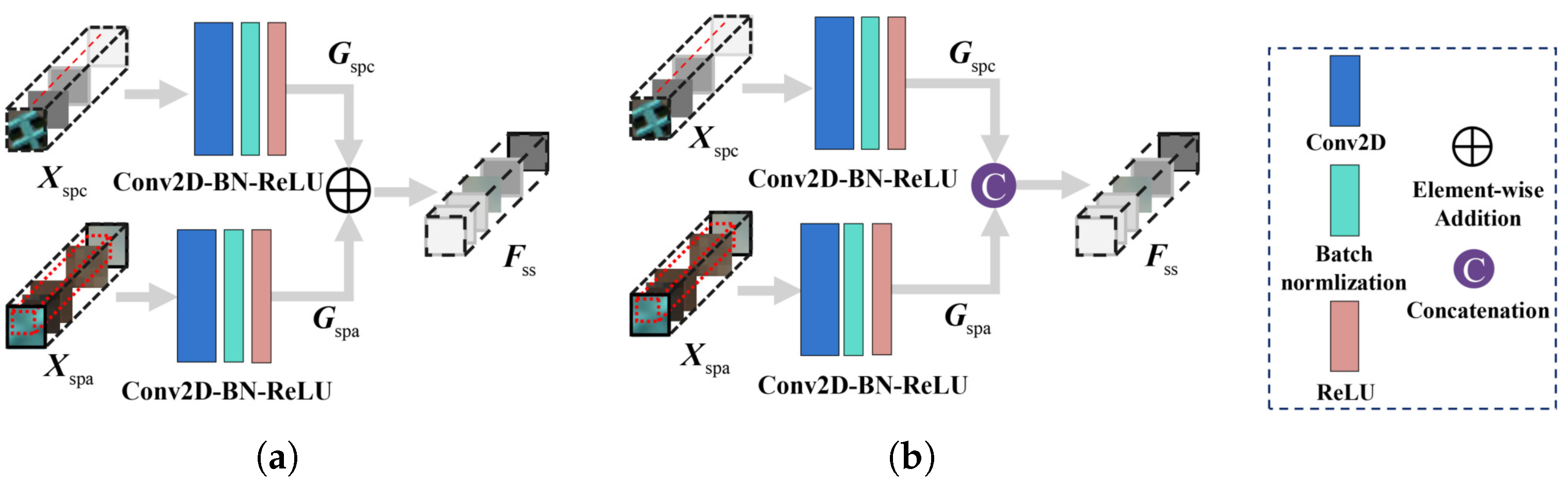
Recently, generative adversarial network (GAN)-based methods for hyperspectral image (HSI) classification have attracted research attention due to their ability to alleviate the challenges brought by having limited labeled samples. However, several studies have demonstrated that existing GAN-based HSI classification methods are limited in redundant spectral knowledge and cannot extract discriminative characteristics, thus affecting classification performance. In addition, GAN-based methods always suffer from the model collapse, which seriously hinders their development. In this study, we proposed a semi-supervised adaptive weighting feature fusion generative adversarial network (AWF2-GAN) to alleviate these problems. We introduced unlabeled data to address the issue of having a small number of samples. First, to build valid spectral–spatial feature engineering, the discriminator learns both the dense global spectrum and neighboring separable spatial context via well-designed extractors. Second, a lightweight adaptive feature weighting component is proposed for feature fusion; it considers four predictive fusion options, that is, adding or concatenating feature maps with similar or adaptive weights. Finally, for the mode collapse, the proposed AWF2-GAN combines supervised central loss and unsupervised mean minimization loss for optimization. Quantitative results on two HSI datasets show that our AWF2-GAN achieves superior performance over state-of-the-art GAN-based methods.
Keywords: generative adversarial networks; hyperspectral image classification; adaptive weighting feature fusion; semi-supervised deep learning generative adversarial networks; hyperspectral image classification; adaptive weighting feature fusion; semi-supervised deep learning
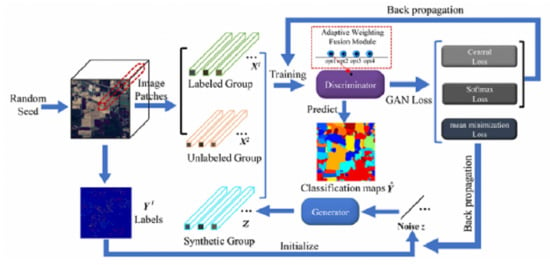
Graphical Abstract