Article

Evaluation of a Microwave Emissivity Module for Snow Covered Area with CMEM in the ECMWF Integrated Forecasting System


by
Yoichi Hirahara
1,2,*,
Patricia de Rosnay
1 and
Gabriele Arduini
1
1
European Centre for Medium-Range Weather Forecasts (ECMWF), Shinfield Park, Reading RG2 9AX, UK
2
Japan Meteorological Agency (JMA), 1-3-4 Otemachi, Chiyoda-ku, Tokyo 100-8122, Japan
*
Author to whom correspondence should be addressed.
Remote Sens. 2020, 12(18), 2946; https://doi.org/10.3390/rs12182946
Submission received: 5 July 2020 / Revised: 3 September 2020 / Accepted: 8 September 2020 / Published: 11 September 2020
(This article belongs to the Special Issue Remote Sensing of Land Surface and Earth System Modelling)

Abstract

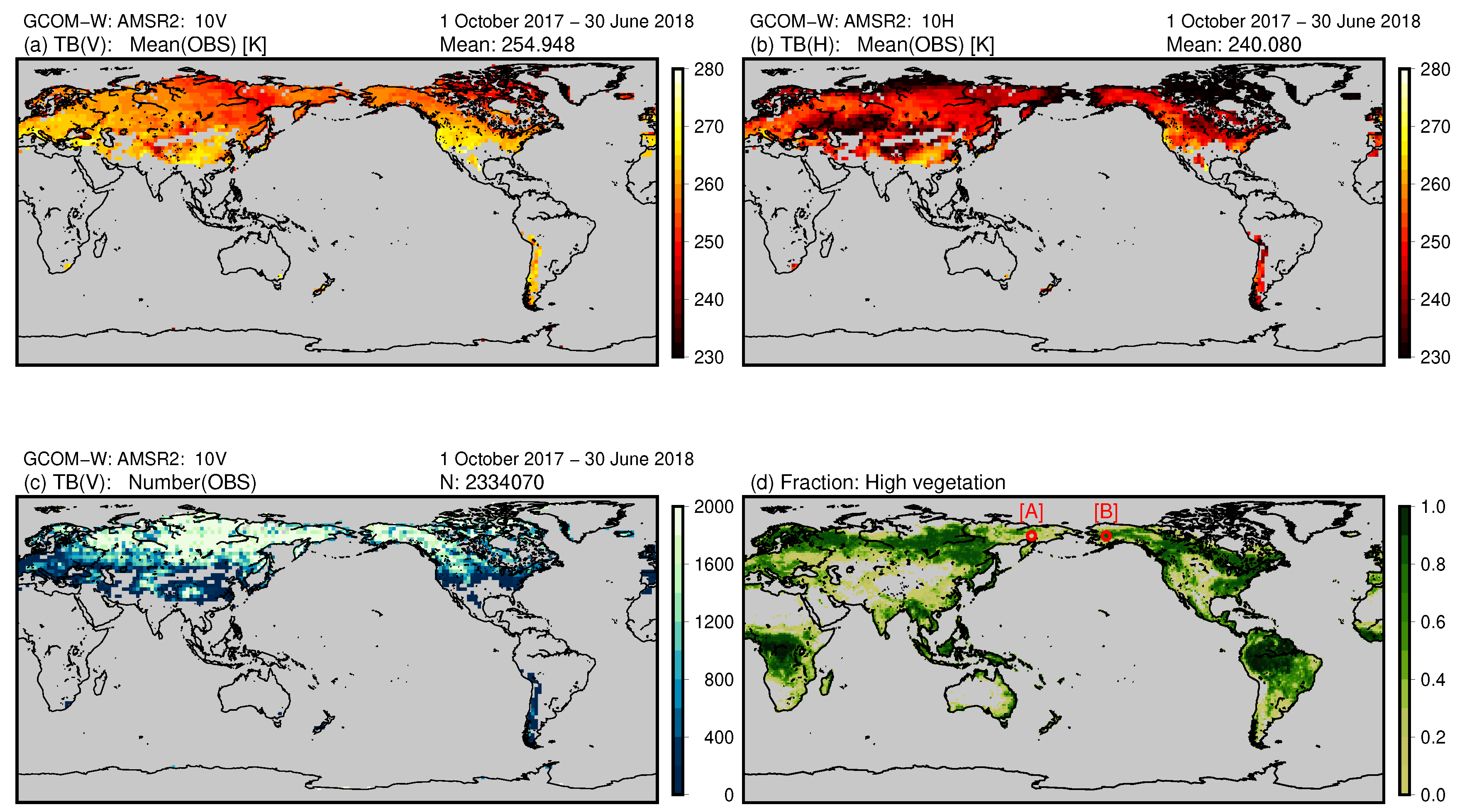
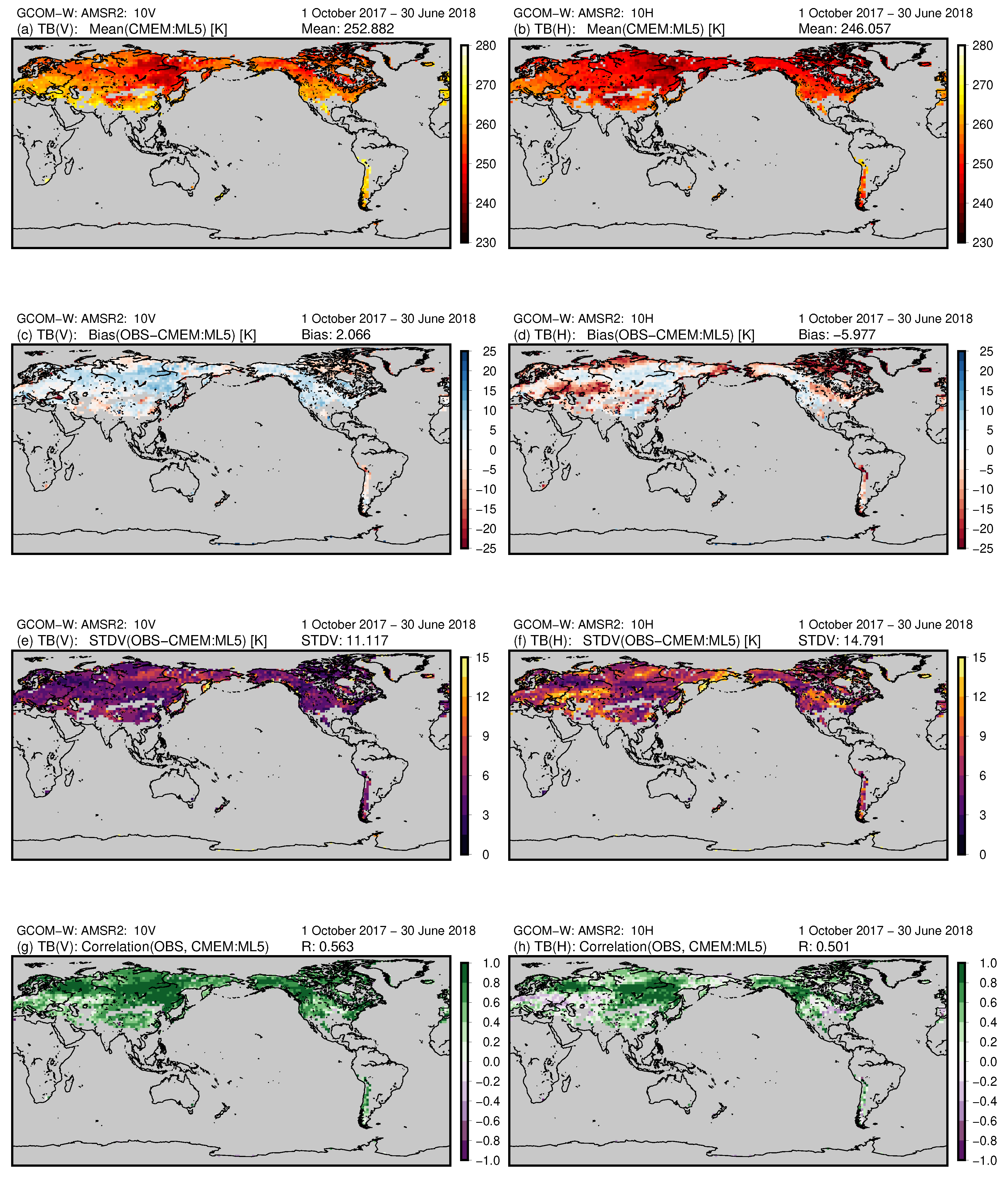
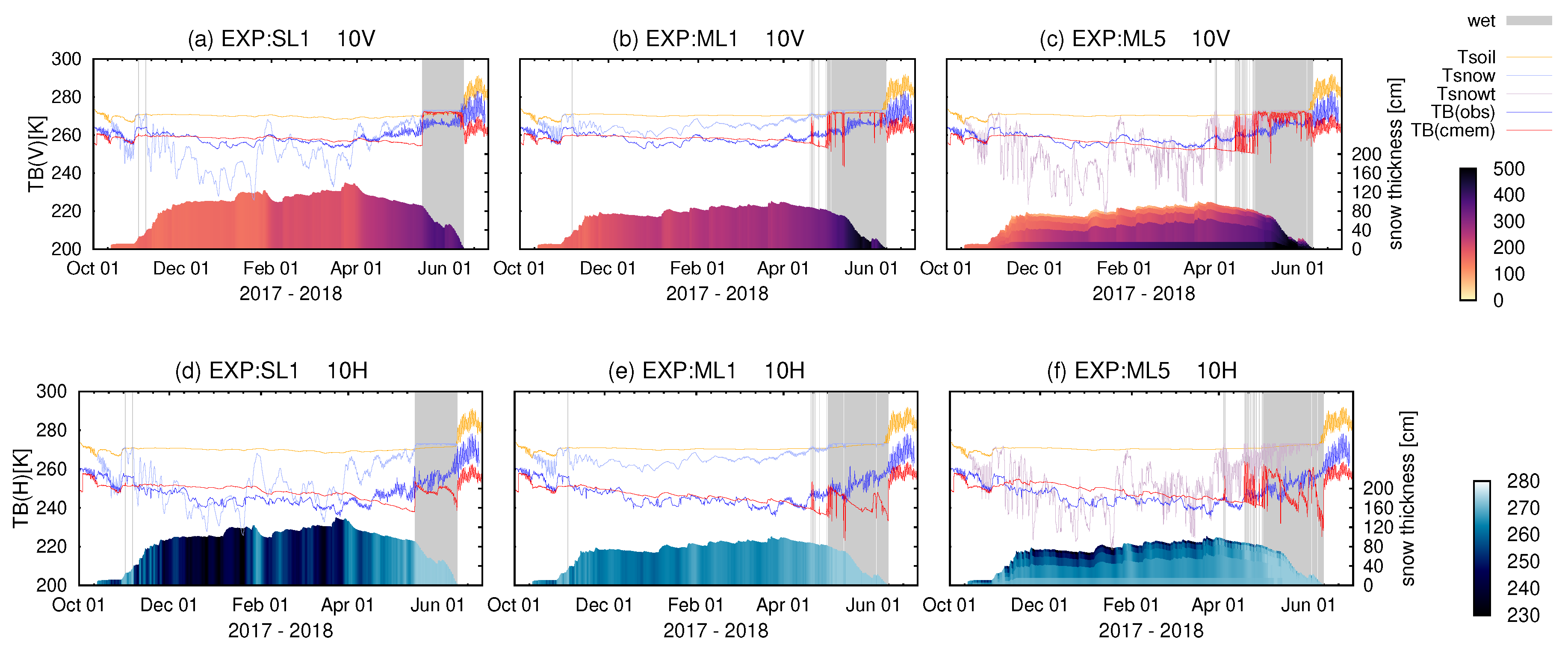
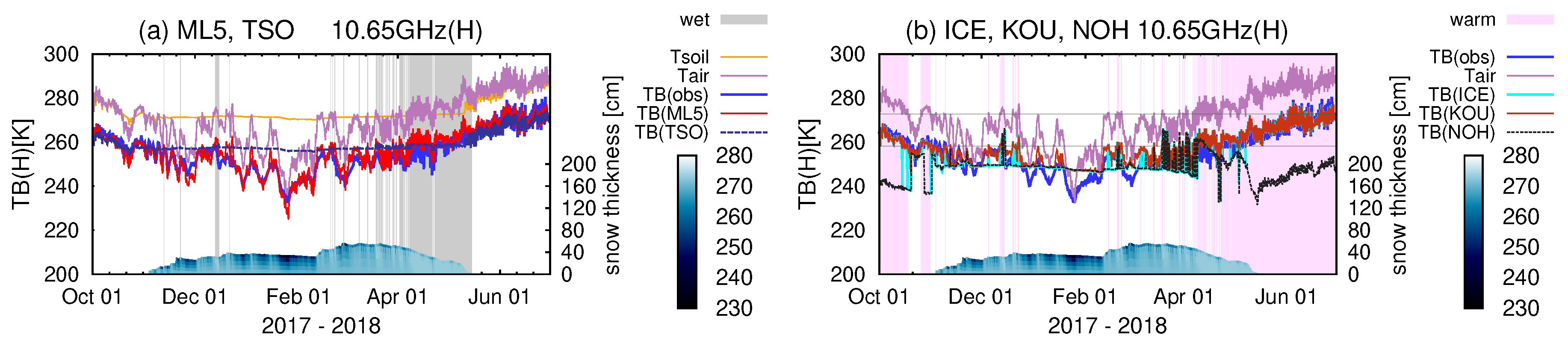
The Community Microwave Emission Modelling platform (CMEM) has been developed by the European Centre for Medium-Range Weather Forecasts (ECMWF) as the forward operator radiative transfer model for low frequency passive microwave brightness temperatures (TB). It is used at ECMWF for L-band TB monitoring over snow free areas. In this paper, upgrades to CMEM are presented in order to explore forward modelling in snow-covered areas for coupled land-atmosphere numerical weather prediction systems. The upgrades enable to use CMEM on an extended range of frequencies and the Helsinki University of Technology multi-layer snow emission model is implemented. Offline CMEM experiments are evaluated against AMSR2 (Advanced Microwave Scanning Radiometer 2) observations showing that simulated TB is improved when using a multi-layer snow scheme, compared to a single-layer scheme. The improvements mainly result from a better representation of snow characteristics in the multi-layer snowpack model. CMEM is also evaluated in the Integrated Forecasting System and coupled to RTTOV (Radiative Transfer for TOVS). The numerical results show improved simulated TB at low frequency V polarization over snow-covered area compared to a configuration using emissivity atlas. Degradations at frequencies higher than 20 GHz indicate that further improvements are required in the emissivity and snowpack properties modelling.
Keywords: CMEM; IFS; RTTOV; HUT; H-TESSEL; multi-layer snowpack; AMSR2; emissivity CMEM; IFS; RTTOV; HUT; H-TESSEL; multi-layer snowpack; AMSR2; emissivity