1. Introduction
Climate change has intensified global risks, leading to frequent extreme weather events such as floods, hurricanes, and wildfires [
1]. Projections from the World Economic Forum indicate that under a mid-range emissions pathway, climate change may contribute to approximately 14.5 million excess deaths worldwide by 2050. These fatalities are anticipated to result from intensified climate hazards such as flooding, drought, extreme heat, and tropical cyclones [
2]. Furthermore, the degree of vulnerability to climate change impacts differs across regions. Therefore, while the overall average increase in mortality might be around 1%, certain areas could experience much higher rates due to their heightened exposure to specific climate-related risks [
2]. As urban populations expand, cities must adopt strategies that enhance resilience to climate-related disruptions [
3]. Smart cities, which leverage digital technologies and data-driven solutions, are emerging as a key approach to sustainable urban development [
4]. However, these cities remain vulnerable to climate risks, necessitating comprehensive risk management frameworks, including sustainable insurance models.
Advancing climate-resilient urban development is essential for strengthening cities’ ability to withstand climate-related disruptions, as evidenced by the outcomes of the Climate-Adaptive Cities Pilot Policy [
4]. As cities grow and evolve, they are increasingly exposed to climate-related risks such as flooding, extreme heat, and disruptions to critical infrastructure [
3,
5,
6]. While smart cities rely on advanced technologies and sustainable infrastructure to enhance resilience, these measures alone cannot fully address the financial challenges posed by climate change. Integrating financial risk-transfer mechanisms, such as sustainable insurance, into urban planning is essential for ensuring long-term stability and adaptation [
1,
6]. Traditional insurance models tend to focus on post-disaster recovery, offering financial assistance only after damage has occurred. In contrast, sustainable insurance adopts a proactive approach, enabling cities to anticipate, prevent, and mitigate risks before they escalate into crises [
1]. By complementing data-driven smart technologies with comprehensive insurance frameworks, cities can safeguard assets, protect vulnerable communities, and maintain economic stability despite increasing climate threats. This approach aligns with Sustainable Development Goal (SDG) 11, which aims to make cities inclusive, safe, resilient, and sustainable. SDG 11 underscores the need for forward-thinking policies that prepare cities for environmental, social, and economic shocks. Sustainable insurance plays a key role in achieving these objectives by supporting climate adaptation strategies, risk forecasting, and equitable access to financial protection.
Sustainable insurance plays a pivotal role in strengthening financial resilience against climate-induced disasters [
7]. Sustainable insurance goes beyond traditional post-disaster recovery by embedding Environmental, Social, and Governance (ESG) principles into its framework, driving preventative strategies and climate adaptation efforts [
7]. By aligning insurance products with sustainability goals, cities can foster long-term resilience while reducing systemic vulnerabilities [
1]. Despite growing attention to climate-resilient smart cities, the existing literature reveals three key gaps in the integration of sustainable insurance into urban resilience planning. First, the research is conceptually fragmented: studies tend to address climate risk assessment, financial instruments, and smart-city technologies in isolation, with limited conceptual linkage to insurance-based risk-transfer mechanisms. Second, there is a methodological gap, as most studies prioritize case analyzes or technical assessments without developing integrative frameworks that position insurance within broader urban governance and resilience strategies. Third, the research is geographically uneven, with research concentrated on high-income regions [
8], while evidence remains limited from climate-vulnerable cities in the Global South, such as Sub-Saharan Africa [
9]. Collectively, these shortcomings indicate the absence of a comprehensive framework that explains how sustainable insurance can be systematically embedded into smart-city planning. Addressing this fragmentation requires a structured synthesis of existing knowledge. Therefore, this study uses a bibliometric approach, employing keyword co-occurrence mapping and cluster analysis to map the intellectual structure of the field and identify thematic patterns, research trends, and knowledge gaps. The objectives are threefold:
To map the global research landscape on sustainable insurance in climate-resilient smart cities.
To identify emerging themes and thematic clusters, including economic-policy integration, climate risk governance, digital urban innovation, and health within the SDG framework.
To highlight conceptual and practical contributions, demonstrating how innovative insurance mechanisms, such as parametric insurance, microinsurance, and data-driven pricing can enhance resilience, promote equitable access, and inform policy and planning decisions.
By explicitly framing sustainable insurance as a cross-cutting enabler in climate-resilient smart cities, this study provides novel insights for researchers, policymakers, insurers, and urban planners. The findings not only consolidate existing knowledge but also offer a roadmap for integrating financial resilience into smart city development, supporting sustainable and adaptive urban futures.
2. Literature Review
2.1. Sustainable Insurance for Climate-Resilient Smart Cities
Sustainable insurance integrates ESG principles into insurance practices to promote climate resilience and proactive risk management [
7]. While traditional insurance primarily emphasizes post-event compensation, many insurers also implement preventive services; sustainable insurance builds on this by systematically embedding forward-looking, risk-reduction strategies and incentives for resilience into coverage models [
10]. It incorporates climate risk assessment, green investment strategies, and incentives for resilience-building to align financial protection with sustainability objectives [
3]. Empirical evidence from parametric pools and insurer-led resilience programs demonstrates how these mechanisms can provide rapid liquidity and incentivize pre-event risk reduction. For example, CCRIF’s parametric payouts in the Caribbean show rapid disbursement after tropical cyclone events, which supports immediate recovery and reduces fiscal strain on governments [
11]. At the same time, evaluation reports of the African Risk Capacity (ARC) highlight both the value of anticipatory payouts and operational challenges that affect effectiveness. Smart cities are increasingly exposed to climate-related threats such as flooding, extreme heat, and infrastructure stress due to rapid urbanization [
6]. While technological innovations such as IoT sensors, AI-driven risk assessments, and real-time climate monitoring enhance resilience, financial mechanisms like sustainable insurance are essential to ensure long-term stability [
12]. For example, pilot projects that combine urban sensor networks with parametric triggers, recent UNDP and World Bank initiatives, illustrate how real-time data can activate automated payouts, linking smart city monitoring to financial protection [
13]. These pilots also reveal operational constraints (data quality, basis risk) that must be addressed for reliable urban applications. One of the most significant aspects of sustainable insurance is its ability to reward risk-aware behavior. Cities that implement flood-resistant construction, early-warning systems, and renewable energy solutions may receive lower insurance premiums, creating financial motivation for resilience-focused planning [
14]. Evidence from Rotterdam’s resilience investments and insurer engagement shows how targeted measures (such as flood defenses coupled with insurance incentives) reduce expected losses and influence planning decisions, yet success depends on governance coordination and clear regulatory frameworks. Comparative studies indicate that while high-income cities like Rotterdam and Singapore can couple insurance incentives with technical upgrades effectively, lower-income contexts often rely on donor-supported parametric products to achieve similar protective outcomes at scale [
15].
Despite its advantages, sustainable insurance faces challenges such as a lack of standardized climate risk data, regulatory inconsistencies, and limited awareness among urban stakeholders [
16,
17]. Public awareness remains particularly limited, which affects the uptake and effectiveness of resilience-focused insurance solutions. Data-driven approaches can help address this gap by identifying optimal periods, target groups, and communication channels for awareness initiatives, thereby improving engagement and risk-informed decision-making [
18]. The reports from IAIS/FSI and recent InsuResilience program evaluations identify basis risk, product complexity, and regulatory barriers as recurring obstacles to uptake, especially where local data or regulatory clarity are absent. Overcoming these barriers requires data-driven decision-making, public-private partnerships, and the development of innovative insurance products tailored to evolving climate risks [
17]. Recent programmatic evidence (InsuResilience Solutions Fund grants; UNDP parametric prototypes) shows growing efforts to co-develop products with local stakeholders and to strengthen data pipelines, but independent evaluations also stress the need for rigorous monitoring and impact assessment to validate long-term effectiveness [
19].
2.2. The Role of Sustainable Insurance in Climate-Resilient Smart Cities
Insurance plays a crucial role in climate-resilient smart cities, offering financial protection while enabling risk-informed decision-making and proactive adaptation [
10,
20]. In climate-resilient smart cities, insurance facilitates climate adaptation, encouraging cities to implement measures that minimize exposure to environmental hazards. Insurers leverage advanced modeling and risk analytics to assess vulnerabilities in infrastructure, utilities, transportation networks, and housing [
21]. Case studies from Singapore and other cities demonstrate insurance-linked risk assessments informing building standards and urban planning, though the translation from analytics to policy varies by governance context. Where regulatory frameworks and public–private collaboration are strong, insurers’ risk pricing and advisory roles effectively shape resilient investment [
17]. Insurance can influence urban policy and governance by informing building codes, zoning laws, and sustainability requirements; however, the extent to which risk information shapes regulations depends on local economic, political, and institutional contexts [
17] Insurance-linked financial instruments, including catastrophe bonds, resilience funds, and sovereign risk pools, can provide cities with resources to support infrastructure upgrades and emergency response, though their effectiveness is contingent upon the integration of risk data into decision-making processes and governance frameworks [
17,
22]. Comparative evidence shows that sovereign/regional pooled schemes (ARC in Africa; CCRIF in the Caribbean) can deliver systemic fiscal resilience, while city-level instruments (resilience funds, green bonds tied to insurance mechanisms) operate at project scale. Evaluations of these models reveal trade-offs: pooled sovereign products trade off local specificity for speed and fiscal protection, whereas city-level instruments require more complex project pipelines and stronger municipal finance capacity [
23].
Beyond physical resilience, insurance supports smart city technologies that address emerging urban risks. As cities increasingly rely on IoT, AI, and data-driven systems, they must manage new vulnerabilities, such as cybersecurity threats, data breaches, and systemic failures. Insurance products tailored to these risks help protect digital infrastructure and reinforce trust in smart city innovation [
17,
24]. Pilot programs that combine cyber-insurance with municipal digital resilience plans show promise, but peer-reviewed assessments emphasize limited market depth and the need for standardized metrics for digital risk in urban contexts [
25].
A key advantage of insurance in climate-resilient smart cities is its ability to incentivize climate adaptation. Cities investing in flood barriers, green infrastructure, and heat-resistant urban designs may benefit from lower insurance premiums or preferential policy terms [
6]. Real-world instances such as premium differentiation schemes and insurer incentives in some Asian and European cities demonstrate that insurance can alter cost–benefit calculus for resilience investments. However, the adoption of sustainable insurance and its influence on policy differ. Well-resourced cities are more able to incorporate incentives into planning cycles, while resource-constrained municipalities often rely on donor or multilateral support to drive initial uptake [
25].
Collaboration among insurers, policymakers, technology firms, and urban planners is essential to harness the full potential of insurance in climate-resilient smart cities. Joint initiatives can enhance real-time risk monitoring, improve early warning capabilities, and strengthen emergency preparedness [
19,
22]. Parametric insurance models, which provide automated payouts based on real-time climate data, ensure swift financial assistance for recovery, reducing administrative delays [
6]. Recent United Nations Development Programme (UNDP) and International Association of Insurance Supervisors (IAIS) guidance documents outline good practices for combining parametric triggers with urban monitoring systems but also caution that basis risk and trigger design must be carefully managed to align payouts with actual losses and adaptation objectives [
13].
Despite these benefits, integrating insurance into resilience strategies presents challenges, including data limitations, regulatory inconsistencies, and accessibility constraints [
19,
26]. Addressing these barriers requires strong policy support, public-private partnerships, and increased awareness of innovative insurance solutions [
26,
27]. Comparative program reviews (InsuResilience; ARC evaluations) emphasize that sustained impact depends on integrating insurance with broader adaptation investments, social protection systems, and local capacity building, rather than relying on insurance as a standalone fix [
25].
2.3. The Intersection of Climate Resilience and Insurance
The intersection of climate resilience and insurance is increasingly recognized as a fundamental component of disaster risk management [
10,
20]. As climate change intensifies the frequency and severity of extreme weather events, cities, businesses, and governments must adopt adaptive strategies to mitigate financial and structural vulnerabilities [
10]. Insurance serves not only as a financial safeguard but also as a strategic tool, bridging the gap between preparedness and recovery while incentivizing risk reduction measures that strengthen long-term resilience [
28]. Evidence from international frameworks and pooled insurance mechanisms demonstrates the value of combining financial instruments with policy measures to achieve systemic resilience objectives [
29]. The central role of insurance in climate resilience lies in risk assessment and pricing [
10]. Through advanced modeling and predictive analytics, insurers quantify environmental threats and guide investment in infrastructure capable of withstanding climate shocks [
10,
28]. The Port of Rotterdam case and related evaluations show how insurer engagement in risk modeling can inform infrastructure investments and multi-stakeholder resilience planning; however, translating modeling insights into financing and urban policy requires institutional coordination and long-term governance commitments. Comparative analyses indicate that these processes function best where insurers act as partners in a broader resilience ecosystem rather than as isolated risk-transfer vendors [
15].
By evaluating exposure to floods, hurricanes, heatwaves, and rising sea levels, insurers help identify priority areas for resilience-building and enable more strategic urban planning, ensuring resources are allocated effectively to protect communities and critical infrastructure [
10,
28]. Equally important is the integration of insurance into climate adaptation policies. Governments are increasingly turning to insurance mechanisms to fund resilience initiatives, ensure financial sustainability even in high-risk regions. For example, sovereign disaster insurance pools, such as Pacific and African Risk Capacity (ARC), demonstrate how pooled risk-sharing supports rapid recovery and can be an effective complement to traditional humanitarian financing. allow nations to share financial responsibility for climate-related damages, reducing the economic burden of extreme weather events [
16,
30]. Independent evaluations of ARC and other pooled instruments point to measurable benefits for contingency financing but also recommend improvements in trigger calibration, beneficiary targeting, and post-payout monitoring to maximize on-the-ground resilience outcomes [
31].
Insurance also provides market-driven incentives for climate adaptation. Businesses and property owners who adopt risk-reducing measures, such as flood barriers, energy-efficient building designs, or drought-resistant agricultural techniques, benefit from lower premiums or specialized coverage tailored to their risk profile. This encourages proactive resilience planning, ensuring that climate adaptation is both financially and structurally viable [
26]. In regions highly vulnerable to climate-related displacement, insurance solutions are evolving to support social protection measures and climate migration strategies. Innovations such as parametric insurance, which offers rapid payouts based on predefined risk triggers such as storm intensity or temperature thresholds, provide timely financial relief for affected communities, stabilizing economies and safeguarding livelihoods [
19]. Yet, empirical evaluations caution that basis risk (the mismatch between trigger and actual loss) and distributional issues (who receives protection) must be actively managed to ensure equity and effectiveness—especially in vulnerable urban communities. Program evaluations (InsuResilience, UNDP) illustrate promising early results but underscore the need for complementary investments (e.g., risk reduction, microfinance, social protection) to secure long-erm resilience [
19].
Despite its advantages, integrating insurance into climate resilience strategies presents several challenges. High costs, limited accessibility, and gaps in climate risk data remain significant barriers, particularly in developing regions [
19,
26]. Strengthening regulatory frameworks, expanding public-private partnerships, and leveraging technology-driven risk modeling are essential for making insurance more inclusive and effective in supporting climate adaptation [
26]. International frameworks such as the InsuResilience Global Partnership, the UN SDGs, and the Sendai Framework emphasize the role of insurance in reducing vulnerabilities and embedding financial resilience into development planning; their programmatic reports document progress while urging stronger monitoring, evidence generation, and integration with local adaptation pathways [
29].
In conclusion, the intersection of climate resilience and insurance is strategic and indispensable for shaping adaptive cities and economies. By aligning financial mechanisms with climate adaptation strategies, societies can move from reactive disaster recovery to proactive risk management, provided that insurance solutions are embedded within broader adaptation, governance, and equity frameworks. Empirical and programmatic evidence supports the potential of insurance to catalyze resilience, but also indicates that rigorous evaluation, improved data systems, and context-specific product design remain priorities for future research and practice.
3. Materials and Methods
Understanding the intersection between sustainable insurance and climate-resilient smart cities requires a methodological approach that is both structured and integrative. This section outlines the systematic procedures adopted to review, analyze, and synthesize relevant scholarly research. By employing a systematic literature review (SLR) guided by the Preferred Reporting Items for Systematic Reviews and Meta-Analyses (PRISMA) framework, this study ensures transparency, replicability, and methodological rigor. Each stage of the process, from search strategy to eligibility criteria and thematic analysis, is detailed to support the credibility and validity of the findings [
32].
3.1. Research Design
This study adopts a Bibliometric review methodology to investigate the role of sustainable insurance in fostering climate-resilient smart cities. Given the multidisciplinary scope spanning insurance, sustainability, urban planning, and digital transformation, the bibliometric approach provides a rigorous and transparent framework quantitatively map research trends, identify thematic clusters, and uncover knowledge gaps [
33,
34]. To enhance this study’s reliability and replicability, this review followed systematic search and screening procedures guided by PRISMA principles. These procedures ensured methodological transparency in the identification, screening, and selection of relevant publications. Data were retrieved from the Scopus database, and bibliometric analyses, including keyword co-occurrence mapping and cluster visualization using VOSviewer Version 1.6.20, were conducted to identify dominant themes, emerging topics, and relationships between concepts. This review was structured around three specific sub-questions:
How has sustainable insurance been conceptualized within urban climate resilience?
What types of insurance mechanisms are emerging (e.g., parametric insurance, microinsurance, insurance-linked securities, and other innovative models)?
What are the main methodological or empirical gaps in the literature on sustainable insurance for climate-resilient smart cities?
Accordingly, this study aims to explore and categorize research trends, assess conceptual and operational approaches, and identify gaps to inform future research directions in sustainable insurance and urban resilience.
3.2. Data Sources and Search Strategy
To ensure focused and reproducible coverage of the literature, this study retrieved data from the Scopus database on 10 July 2025. The search was conducted using a predefined search string applied across the following Scopus fields: Title, Abstract, and Keywords (TITLE-ABS-KEY). These fields were selected to capture publications in which sustainable insurance, climate resilience, or smart cities formed a central focus rather than a peripheral reference. Scopus was selected due to its comprehensive coverage of peer-reviewed journals and conference proceedings across diverse disciplines including environmental science, urban studies, finance, and insurance, which align well with the multidisciplinary nature of the topic. Its broad indexing, combined with advanced search capabilities and export functions compatible with bibliometric tools (e.g., VOSviewer), made it the most suitable and manageable source for this review [
35]. The keyword selection process was carefully developed to maximize relevance and coverage. A structured search approach was developed using refined keywords and Boolean operators to enhance specificity and minimize irrelevant results. To ensure comprehensive coverage, the keywords within each thematic concept were connected using the OR operator, while the major concepts were combined using AND. The final search string used in Scopus (TITLE-ABS-KEY) was structured as follows:
- ○
(“sustainable insurance” OR “green insurance” OR “climate insurance”)
AND
- ○
(“climate resilience” OR “climate-resilient cities” OR “urban resilience”)
AND
- ○
(“smart cities” OR “digital cities” OR “urban innovation”)
AND
- ○
(“climate adaptation” OR “risk transfer” OR “resilience planning”)
This structure ensured that variations in terminology across disciplines were captured while retaining the thematic focus of this review.
The search was limited to publications dated 2010 to 2024, aligning this review with recent advances in climate policy, technological innovation, and insurance practices. This timeframe reflects the increasing prominence of smart city initiatives and climate-responsive strategies within the insurance sector [
33].
3.3. Eligibility Criteria
The eligibility criteria for this review were developed following established systematic review protocols to ensure both thematic relevance and scholarly rigor [
36]. The focus was placed on publications that examine the integration of insurance within urban climate adaptation, particularly in the context of smart city development. To maintain prevalence and topical relevance, only English-language sources published within the timeframe of 2010 to 2024 were considered. To ensure the relevance and scholarly quality of this review, specific inclusion and exclusion criteria were applied during the study selection process [
33]. Eligible sources comprised peer-reviewed journal articles, conference proceedings, and book chapters published in English that explicitly addressed the role of insurance in the context of smart cities, climate resilience, or broader sustainability frameworks [
37]. These source types were selected because they represent the most reliable and citable forms of scientific knowledge for both systematic and bibliometric reviews. Conversely, studies that focused solely on traditional insurance models without linking to urban resilience or sustainability themes were excluded. Additional exclusions encompassed publications lacking empirical data, conceptual frameworks, or theoretical contributions [
33].
3.4. Screening and Selection Process
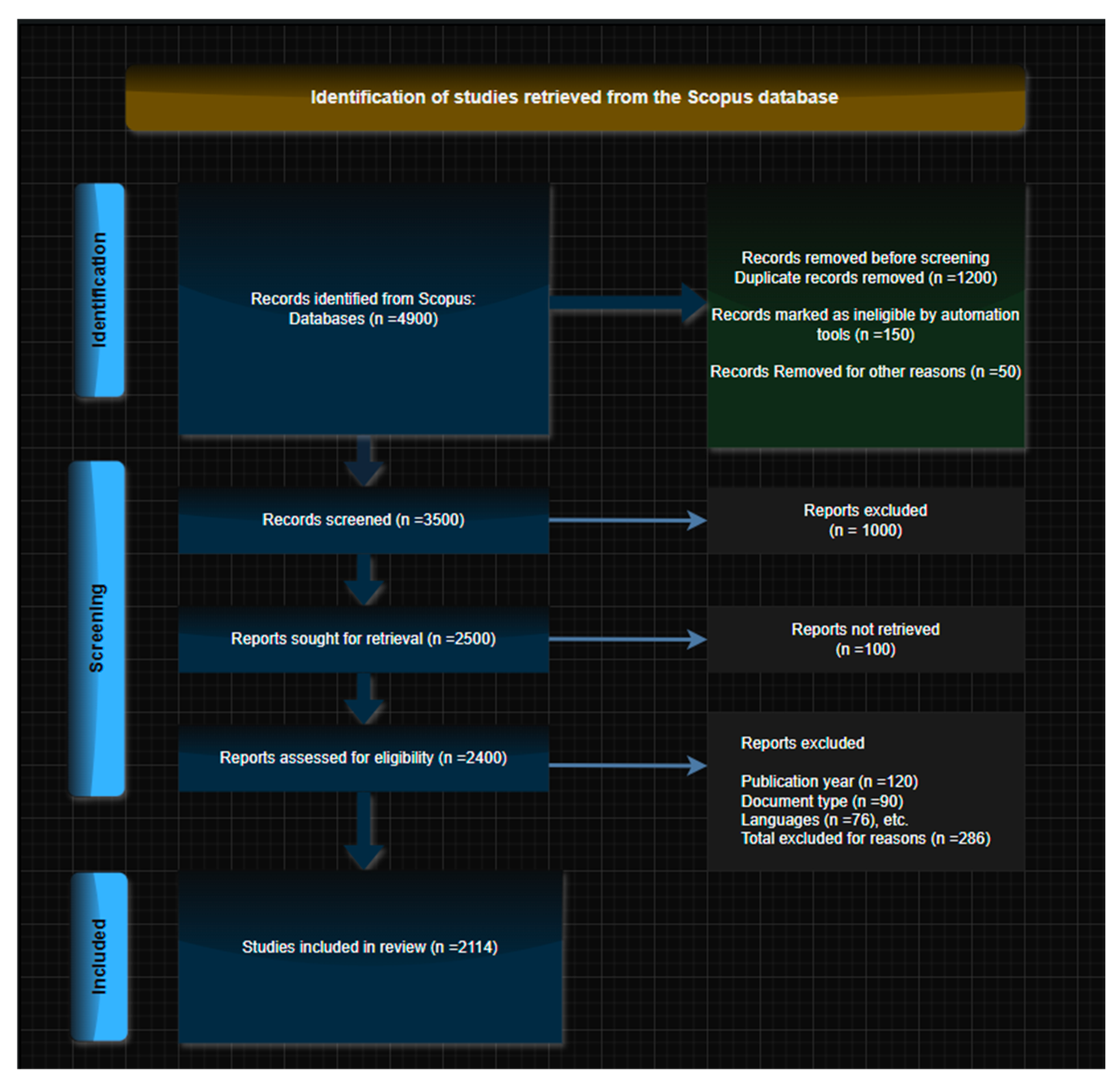
To ensure methodological rigor and transparency in the selection of the relevant literature, this study followed the four-phase PRISMA framework. This structured protocol enabled a systematic narrowing of sources. Initially, 4980 records were retrieved through comprehensive database searches using predefined search strings. The first level of exclusion applied filters to include only studies published from 2010–2024, written in English, reducing the dataset to 3500 records. At this stage, additional selection criteria were applied to ensure thematic and academic appropriateness: only records within relevant subject areas (aligned with the scope of this study) were retained, and only specific documents, such as journal articles, conference papers, books, and book chapters, were considered. This restriction was based on the need to prioritize peer-reviewed and scholarly sources, which are more likely to demonstrate methodological robustness, contribute original insights, and meet academic standards. Next, duplicates and clearly irrelevant titles were removed, resulting in 3200 records. Titles and abstracts were then screened for relevance to the research question, narrowing the set to 2400 potentially relevant records. Following this refinement process, a final set of 2114 studies was selected for inclusion in the analysis. These records were then exported in CSV format and imported into VOSviewer software to perform a bibliometric analysis, enabling the mapping of research trends and thematic clusters within the selected literature [
38]. A PRISMA flow diagram (
Figure 1) was used to illustrate the study selection process, providing transparent justification for exclusions and enhancing the reproducibility of this review.
4. Results
This section presents the findings of the bibliometric analysis conducted to examine the structure, evolution, and intellectual landscape of the selected body of literature. The results are organized thematically to provide insights and interpretations of the data. Each subsection highlights key patterns, trends, and influential contributors within the research domain, contributing to a broader understanding of the field’s development and current trajectory. The analysis covers the distribution of documents, which reveals the growth dynamics of scholarly output over time and signals phases of increased academic interest. This study also delves into keyword analysis and co-occurrence clustering, which uncover the thematic structure of the literature. These clusters are further interpreted in the synthesis of clusters section to articulate a more integrated research agenda, particularly within the context of sustainability. Lastly, the section concludes by identifying emerging trends and future research directions, offering guidance on where the field is heading and highlighting areas that are ready for further exploration. Together, these findings provide a comprehensive picture of the scholarly landscape and lay the groundwork for advancing research in a more coordinated and impactful manner. The analysis in this section is based on the data extracted from the Scopus database on 10 July 2025.
4.1. Distribution of Documents
4.1.1. Distribution of Documents by Year
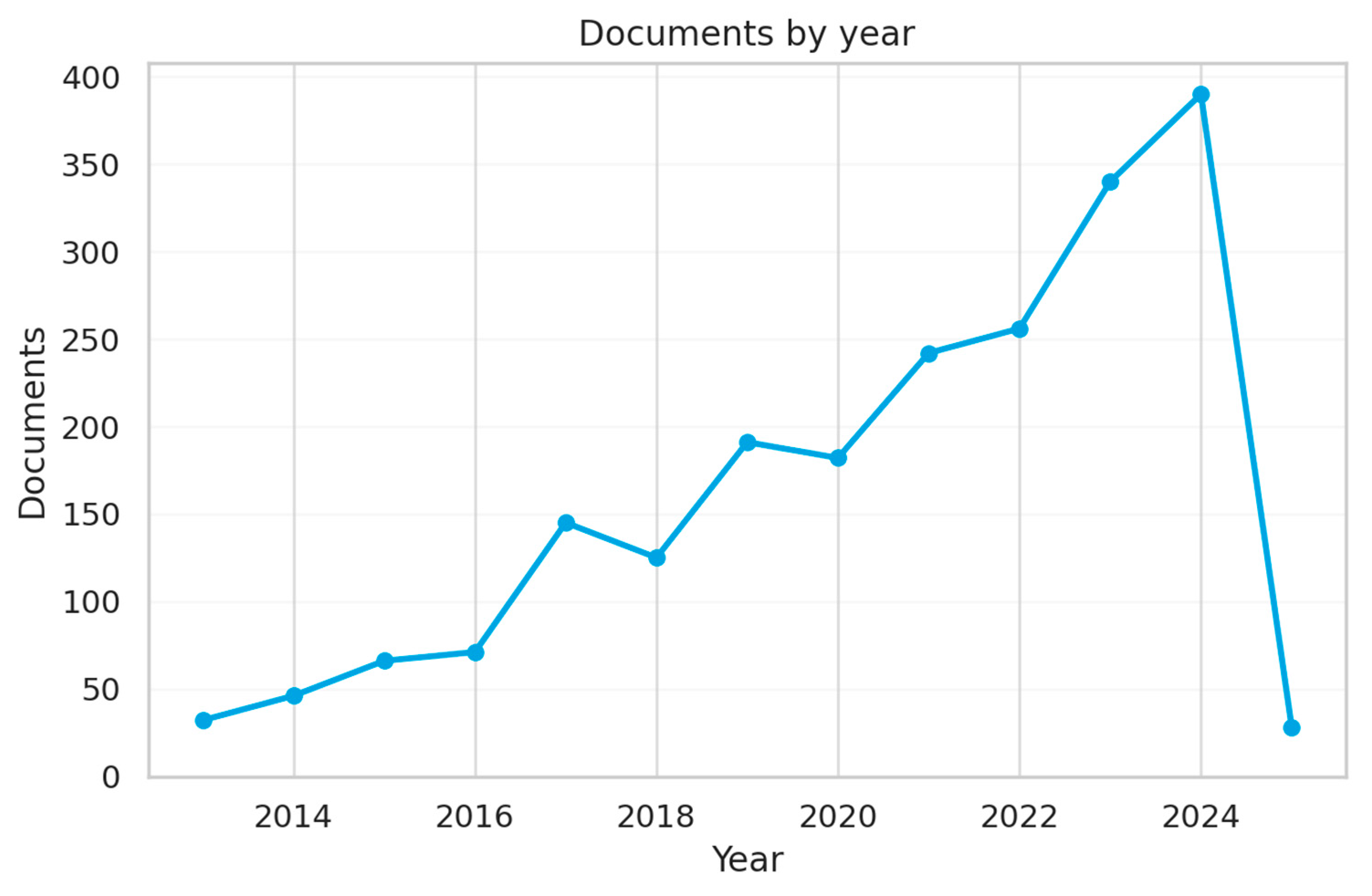
Figure 2 illustrates the distribution of documents produced between 2013 and 2024. Overall, the trend shows a substantial increase in scholarly or document output over the period, albeit with some fluctuations. From 2013 to 2016, the growth was steady but moderate, with annual output rising from fewer than 40 documents in 2013 to approximately 70 by 2016. A notable surge occurred in 2017, when the number of documents doubled compared to the previous year, reaching around 145. However, this momentum was briefly interrupted in 2018 with a slight decline, suggesting possible factors such as resource constraints, shifting research priorities, and so on. The period between 2019 and 2022 reflects a phase of sustained expansion. After recovering from the decline in 2018, the number of documents nearly doubled again by 2019, reaching close to 190, followed by a small dip in 2020. From 2021 onwards, the trajectory was consistently upward, surpassing 250 documents in 2022. The steepest growth is observed between 2022 and 2023, where production exceeded 340 documents, marking the most significant single-year increase in the dataset. By 2024, document production had peaked at nearly 390, representing more than a tenfold increase compared to the initial year of measurement. This rise reflects the scaling up of research initiatives and institutional support for sustainable insurance and climate-resilient urban studies [
39].
The chart depicts a strong upward trend in document production over the past decade, punctuated by minor fluctuations and culminating in a significant surge in recent years. This pattern underscores the growing importance of the field and suggests that scholarly engagement has expanded considerably.
4.1.2. Distribution of Documents by Source
Table 1 presents the distribution of documents by publication source, providing insight into the platforms most frequently used for disseminating research in this field. The data reflects not only the volume of contributions but also broader trends in citation impact and network integration, as indicated by citation counts and total link strength.
To ensure analytical relevance, a threshold of at least 15 documents and 40 citations was applied to filter sources. Out of 870 unique publication sources, only 14 met this criterion. This indicates a high degree of concentration in research dissemination, where a small subset of outlets accounts for the majority of impactful publications.
A more critical examination reveals that Sustainability (Switzerland) stands out not only for its 112 documents and 1318 citations but also for structural factors that systematically elevate its presence in the research network. Beyond its interdisciplinary scope and open access model, its prominence is strongly driven by high publication volume, which significantly increases the likelihood of its articles appearing in bibliometric analyses. Sustainability is one of MDPI’s largest journals, publishing thousands of papers annually, which naturally amplifies its visibility across multiple research domains, including sustainability, digital transformation, and urban resilience. Moreover, institutional publication incentives, especially in universities and research organizations that prioritize Scopus- or Web of Science-indexed outputs—further reinforce Sustainability as a preferred outlet. Many institutions encourage or reward publication in high-volume open access journals with faster review processes, making Sustainability an attractive option for researchers seeking timely dissemination. These systemic factors, combined with the journal’s broad thematic alignment, explain its strong link strength [
2] and its central role in shaping the intellectual structure of the field.
Following Sustainability, Lecture Notes in Electrical Engineering (42 documents), Land Journal (36 documents), and both the IET Conference Proceedings and Hawaii International Conference on System Sciences (36 documents each) represent moderate yet consistent contributors. While their citation counts and link strengths are lower, these outlets serve as important venues for conference-based dissemination and applied research presentations, especially in technical and engineering contexts.
Other notable sources include Frontiers in Environmental Science (23 documents, 432 citations) and Buildings Journal (19 documents, 347 citations), both of which demonstrate strong citation performance relative to output. This suggests that while they may not publish the largest volume of papers, the research disseminated through these journals tends to be highly cited, indicating substantial impact. In particular, Frontiers in Environmental Science shares the highest total link strength [
2] with Sustainability, emphasizing its integration within collaborative research networks. Heliyon, International Journal of Environmental Research, and WIT Transactions on Ecology and the Environment also contribute meaningfully, with over 20 documents each and moderate citation metrics. Their presence in the later years of the dataset suggests a diversification of dissemination channels, potentially influenced by emerging research themes or collaborative initiatives. In contrast, sources such as Innovation, Technology, and Knowledge Management, IOP Conference Series: Earth and Environmental Science, and the International Journal of Recent Technology and Engineering show lower citation counts and link strengths, yet they still represent active nodes in the publication network, especially in more technical or interdisciplinary subfields.
Overall, while research output is distributed across a diverse range of journals and conference proceedings, the data reveal a clear centralization around Sustainability (Switzerland). This centralization, coupled with high citation performance and network strength, reflects the journal’s increasing influence in shaping and disseminating cutting-edge sustainability research.
4.1.3. Distribution of Documents by Author
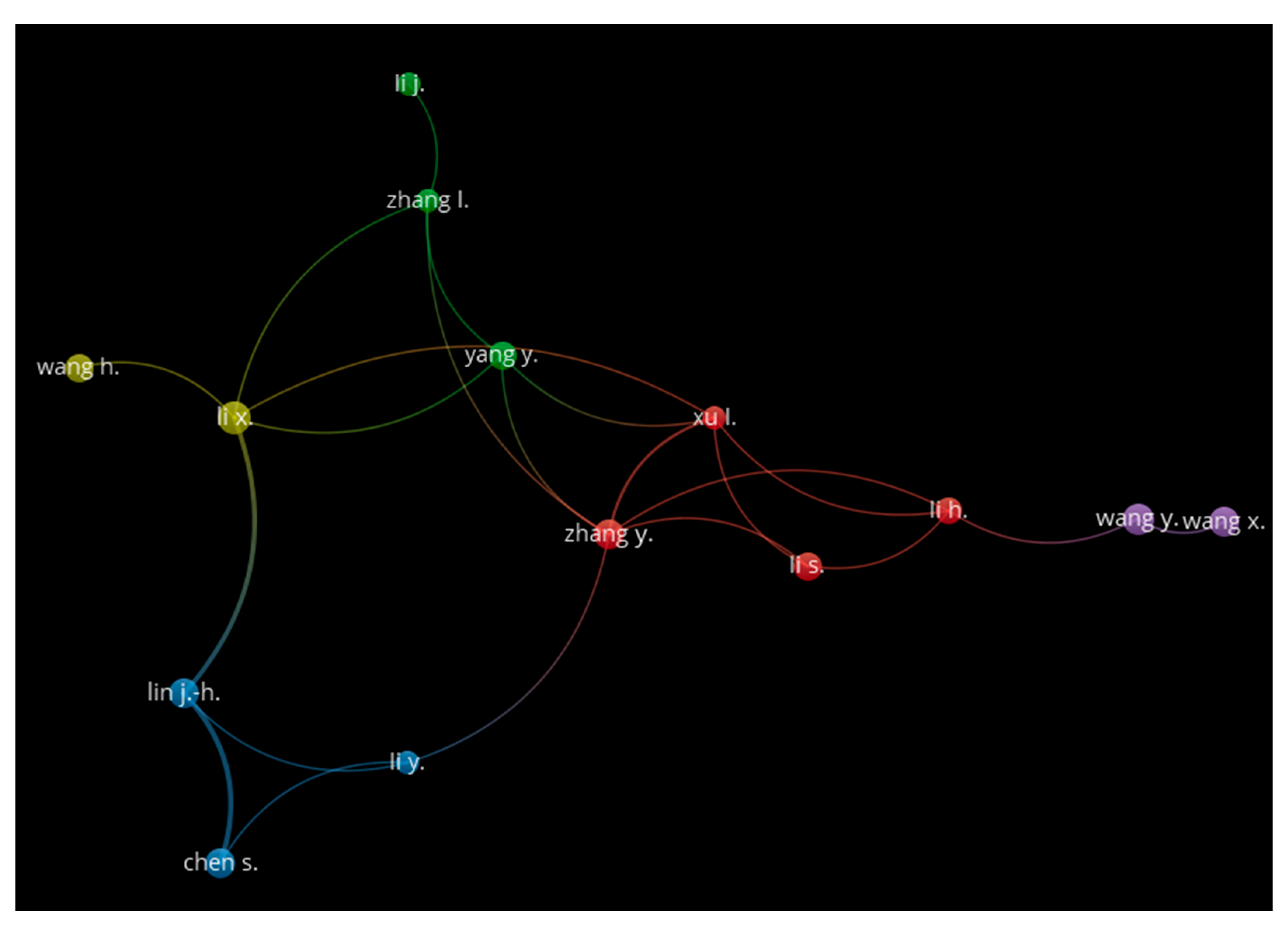
Figure 3 illustrates the productivity of the most prolific contributors within the dataset. To identify these authors, bibliometric thresholds were applied: the minimum number of documents by an author was set at 7, and the minimum number of co-authorship was set at 17. Out of a total of 6018 authors, only 18 met these thresholds, highlighting a relatively small group of highly productive scholars who stand out from the broader research community.
Table 2 provides a detailed overview of these 18 authors, listing their total number of documents, citation counts, and total link strength, which reflects the degree of collaboration with other scholars. Among them, Li X. (13 documents, 152 citations) and Wang Y. (12 documents, 93 citations) emerge as the most prolific contributors in terms of publications. They are followed closely by Lin J.-H. (11 documents, 65 citations) and Zhang Y. (11 documents, 149 citations), as well as Chen S. (10 documents, 158 citations), each of whom demonstrates consistent scholarly output.
Interestingly, the highest number of citations was achieved by Yang L. (9 documents, 165 citations), showing that productivity is not always directly tied to citation impact. This indicates that while some authors publish more frequently, others achieve significant influence with fewer works. A second tier of contributors, including Xu L., Li H., Zhang L., Li S., Li Y., Wang H., Wang X., Kim J.-M., Kumar A., Kumar R., and Sharma A., all produced 7–10 documents, reflecting steady contributions that help to broaden the knowledge base within the field. The co-authorship map visually represents the collaboration structure among these 18 authors. Distinct clusters are visible, reflecting networks of co-authorship and thematic alignment in research. For example, Li X. appears as a central connecting node, linking with multiple clusters, which underscores their pivotal role in collaborative efforts. Chen S., Lin J.H., and Li J. also form strong collaborative ties, as reflected by their higher link strengths. On the other hand, some authors, such as Wang X., Wang Y., and Kim J.M., are positioned more peripherally, indicating either smaller collaborative networks or more specialized contributions.
At the same time, caution is warranted when inferring geographic patterns from author names alone, as common surnames may span multiple regions. Nevertheless, when considered alongside documented affiliations at the country level, it is evident that China and India are among the leading contributors, supported by robust networks of researchers within these regions.
4.1.4. Distribution of Documents by Countries
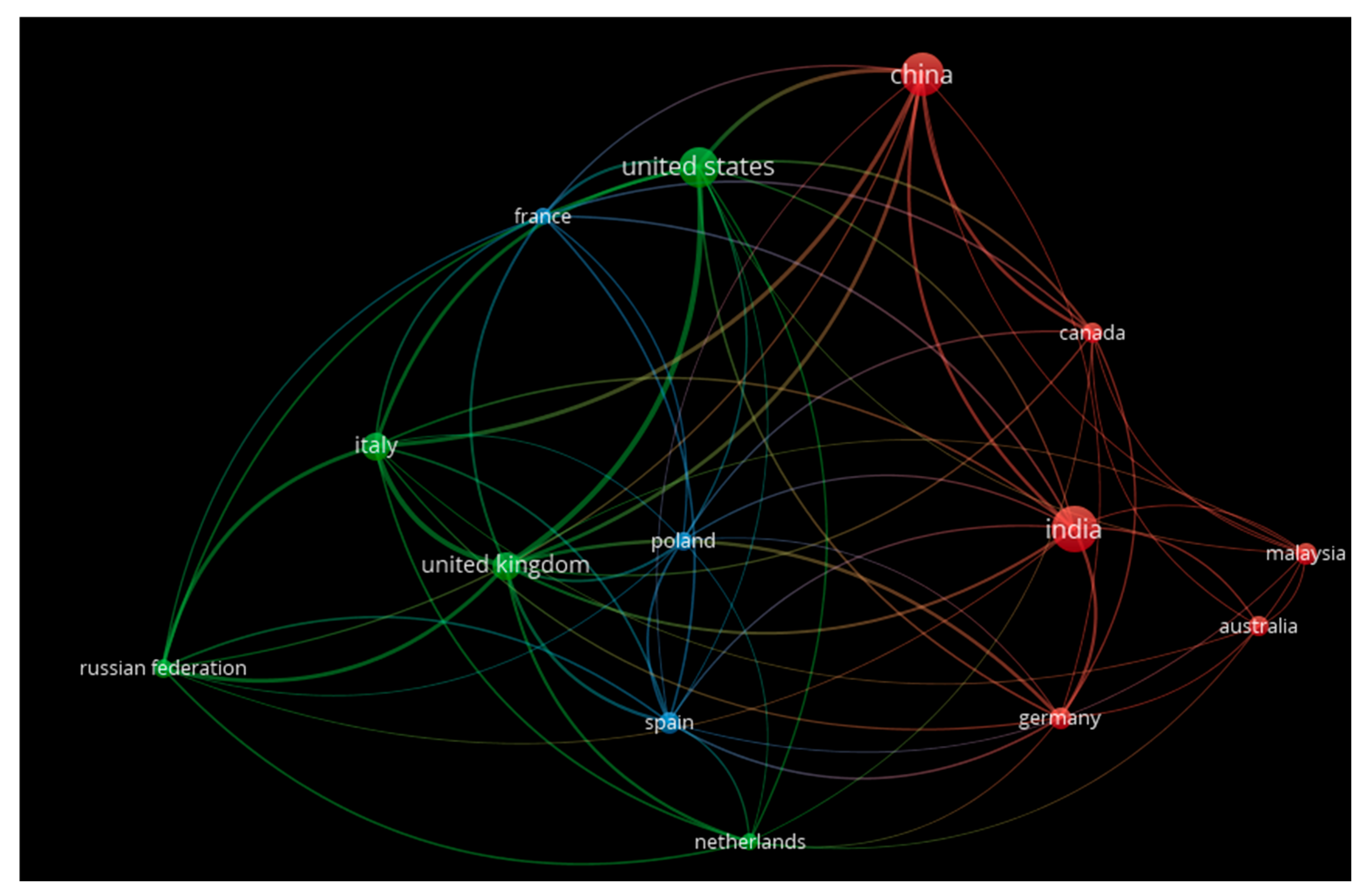
Figure 4 presents the distribution of publications across countries, illustrating national contributions to the field. To ensure significance, the thresholds were set at a minimum of 50 documents per country and a minimum of 550 citations per country. Out of 155 countries, only 14 met these thresholds, highlighting that research activity is concentrated within a limited set of nations.
As demonstrated in
Table 3, at the forefront is the United States, with 258 documents, 4690 citations, and a total link strength of 145, confirming its role as the global leader in both productivity and influence. The United Kingdom follows with 133 documents and 3475 citations, supported by a high collaboration index (TLS 104). Notably, India (353 documents, 2089 citations, TLS 92) and China (312 documents, 3756 citations, TLS 83) are among the largest producers, reflecting the growing prominence of Asian research systems in driving scholarly output. The substantial publication volume from India and China aligns with the author-level findings, where common Asian surnames (Li, Wang, Zhang, Yang, Chen, Kumar, Sharma) dominate the dataset, reinforcing the regional concentration of productivity.
Other European nations also make significant contributions: Italy (126 documents, 2528 citations, TLS 63), Germany (80 documents, 1157 citations, TLS 57), Netherlands (51 documents, 914 citations, TLS 50), France (52 documents, 1185 citations, TLS 44), Spain (76 documents, 1254 citations, TLS 37), and Poland (63 documents, 552 citations, TLS 13). These results highlight the diversity of European scientific contribution, with Italy and Germany being especially strong in both volume and citation impact.
Beyond Europe, Canada (64 documents, 1557 citations, TLS 53) and Australia (65 documents, 1219 citations, TLS 44) emerge as influential contributors from outside Asia and the U.S., reflecting their strong integration into global collaborative networks. The Russian Federation (55 documents, 1074 citations, TLS 30) and Malaysia (74 documents, 976 citations, TLS 25) also appear, with Malaysia’s inclusion notable as it reflects the rising visibility of Southeast Asian scientific contribution in this field. Overall, the country-level analysis shows a clear concentration of research productivity in North America, Europe, and Asia, with the U.S. leading globally but China and India demonstrating rapid growth in output. This pattern mirrors trends observed in the broader urban sustainability and climate resilience literature. For instance, a bibliometric study by Guo et al. (2019) identified the U.S., U.K., China, and India as dominant contributors to smart cities research, highlighting the central role of these nations in shaping the field [
40]. This complements the author-level findings, where Asian surnames dominate the author set, suggesting that regional ecosystems in China and India are critical drivers of global research. Moreover, the high total link strengths of countries like the U.S., U.K., China, and India underline the importance of international collaboration in advancing research impact.
The analysis also reveals notable geographic imbalances. No African country appears among the 14 nations that met the set thresholds, reflecting the continent’s limited visibility in this dataset. This absence, however, should not be interpreted as the total lack of scholarly activity. African countries are contributing to the field, but their publication volumes remain below the threshold applied in this analysis, which explains their exclusion from the top contributors list. The underrepresentation of African nations highlights persistent systemic barriers to research productivity, including limited investment in research and development. Most African countries allocate less than 1% of their GDP to this sector, alongside inadequate infrastructure, restricted access to academic resources, and difficulties in retaining skilled researchers, many of whom migrate abroad in search of better opportunities. A study by Olufadewa (2020) underscores that many West African countries allocate less than 0.25% of their GDP to research and development (R&D), while East and Southern African nations spend approximately 1% [
41] Furthermore, African scholars often participate in collaborative projects but are less frequently positioned as lead authors, which reduces both visibility and citation impact. Importantly, Africa’s exclusion here should be viewed not as a lack of capacity but as an indicator of structural challenges that constrain scholarly output [
42]. With greater investment, equitable international collaboration, and the development of regionally relevant research agendas, African countries hold significant potential to expand their contributions and strengthen their presence in the global research landscape.
4.1.5. Distribution of Documents by Type
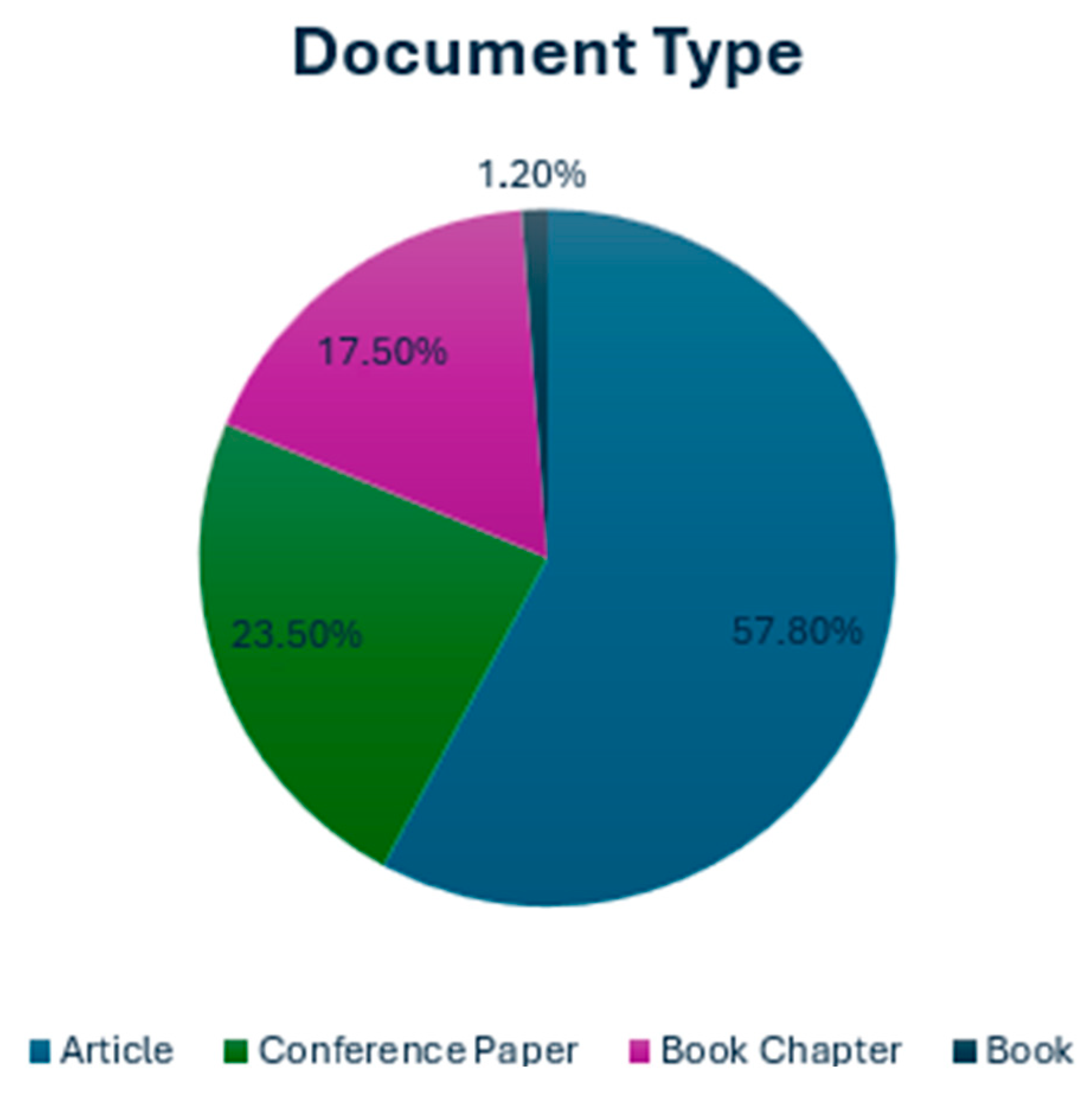
The analysis of document types (
Figure 5) reveals the distribution of research outputs in terms of their publication format, offering insight into the dissemination strategies and academic preferences within the dataset. The chart categorizes the research documents into four primary types: Articles, Conference Papers, Book Chapters, and Books. The most prominent category by a considerable margin is Articles, which constitute 57.8% of all documents. This dominance underscores the central role that peer-reviewed journal articles play in academic communication. Journal articles are widely regarded as the most recognized and valued form of scholarly output due to their rigorous review processes, standardized formatting, and widespread accessibility through indexing databases. This high percentage indicates a strong emphasis on producing research that aligns with formal academic standards and contributes to the cumulative body of scientific knowledge. This aligns with previous bibliometric studies that similarly highlight the pre-eminence of journal publications across fields, particularly in ensuring visibility and scientific credibility [
34,
35].
Following articles, Conference Papers account for 23.5% of the documents. This is a significant proportion, suggesting that a substantial part of the research is shared in academic conferences before or instead of formal journal publication. Conference papers often serve as preliminary publications that allow for early dissemination of findings, community feedback, and networking opportunities. Their strong presence is consistent with studies in computer science, engineering, and technology-oriented fields, where proceedings are considered both credible and impactful scholarly contributions [
34,
43]. Furthermore, earlier bibliometric analyses demonstrate that while conference proceedings are numerous, their long-term citation impact typically remains lower than that of journal articles, reinforcing the centrality of articles for cumulative scholarly influence [
44].
Book Chapters, comprising 17.5% of the total, also represent a notable share of the scholarly output. Book chapters typically offer in-depth exploration of specialized topics and are often included in edited volumes that focus on emerging issues or interdisciplinary themes. The significant share of book chapters suggests that scholars in this dataset are contributing to broader thematic discussions, possibly in collaborative or cross-institutional projects. Book chapters also provide the flexibility to discuss complex or conceptual content that might not fit within the rigid structure of journal articles [
41,
43]. The least represented type is Books, at 1.3%. This is expected, as books generally require substantial time, resources, and expertise to produce. Moreover, books are less frequently published in highly technical or fast-moving disciplines and are more common in humanities or policy-oriented fields. While their number is small, books often carry considerable academic weight and influence, particularly in establishing theoretical frameworks or comprehensive reviews [
41,
43].
Overall, these results mirror patterns observed in previous bibliometric studies across multiple disciplines, reinforcing that journal articles remain the backbone of scholarly communication, complemented by the rapid exchange of knowledge through conference proceedings, the thematic depth offered by book chapters, and the integrative contributions of books. The minimal output of books indicates that long-form monographic research is not a predominant mode of publication within this dataset.
4.2. Clusters for Keyword Analysis
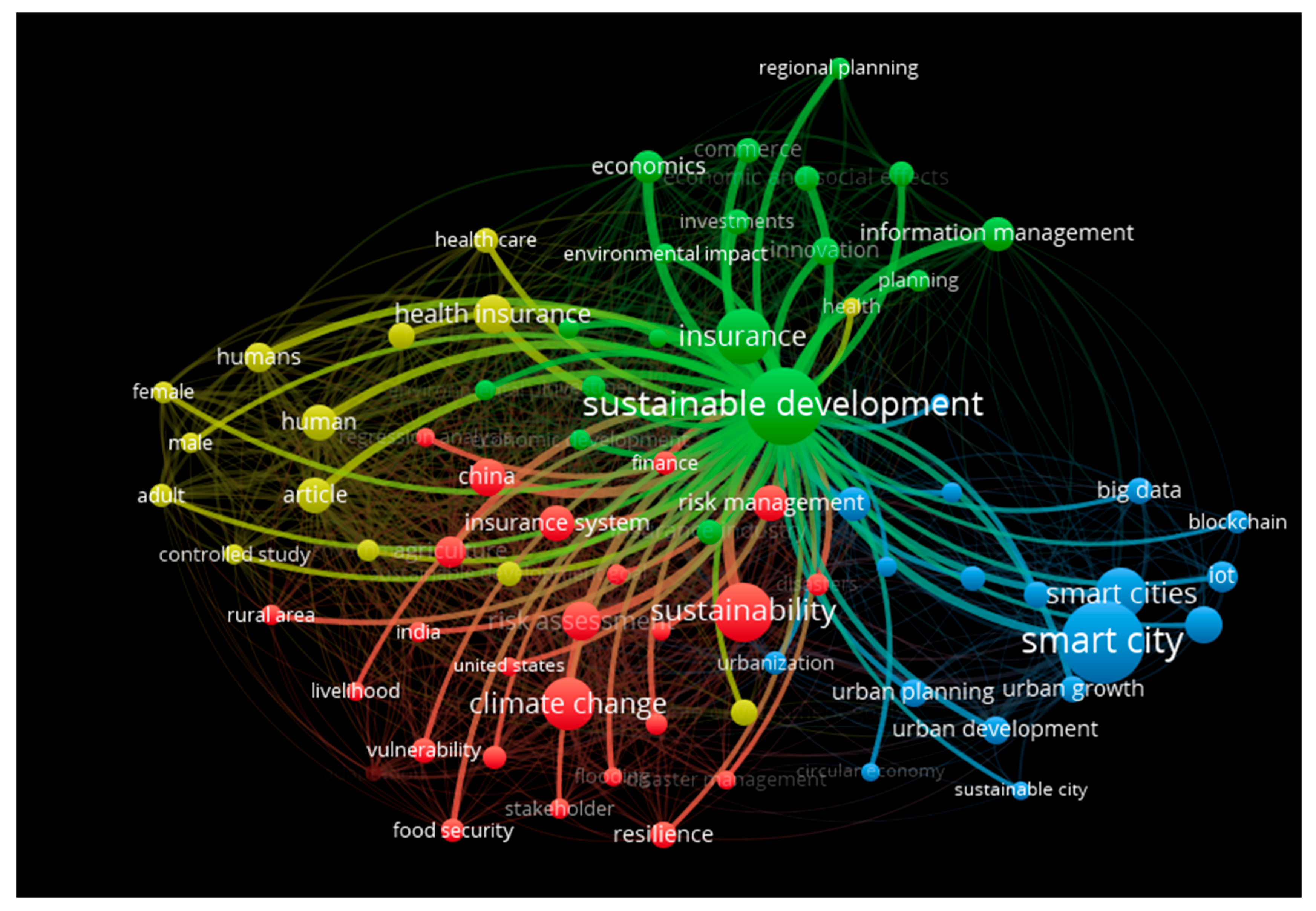
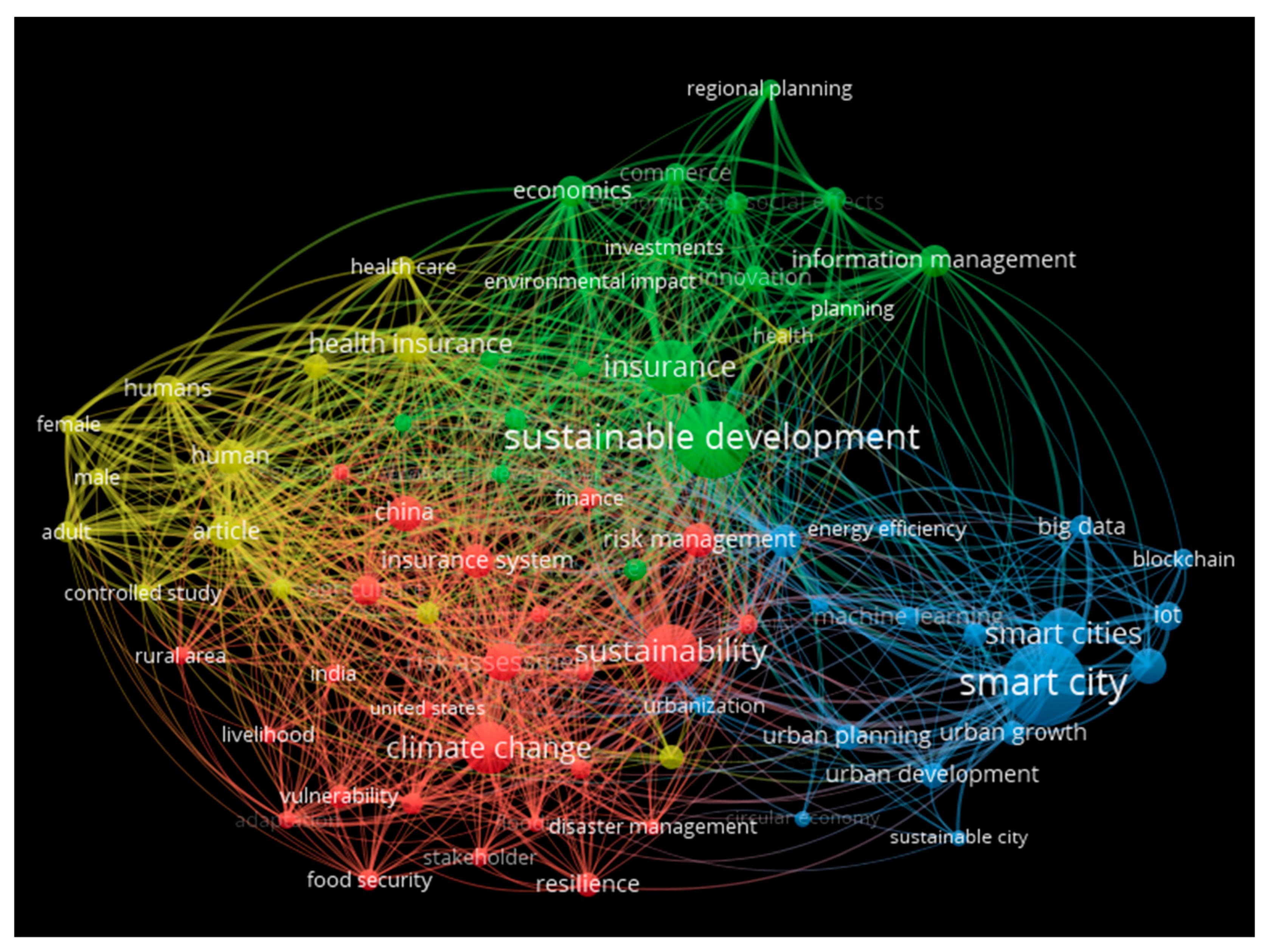
Below is a detailed discussion section for all four clusters derived from the bibliometric analysis using VOSviewer. The bibliometric analysis conducted through VOSviewer revealed four prominent clusters that collectively reflect the interdisciplinary nature of current research at the intersection of sustainability, urban development, risk management, and public policy. These clusters are: (1) Sustainable Economic Development, (2) Smart and Sustainable Urban Development, (3) Climate Resilience and Risk Management, and (4) Public Policy and Health. Each cluster captures a specific thematic emphasis while also illustrating interdependencies across the broader sustainability agenda. The minimum number of occurrences of a keyword was set at 20. Of the 11,842 keywords identified, 76 met this threshold. This selection criterion narrowed the dataset to a manageable set of relevant keywords, allowing for a focused and robust analysis of central themes and emerging research priorities in sustainability science, as demonstrated in
Figure 6.
4.2.1. Cluster 1: Sustainable Development, Economics, and Policy (Green)
The green cluster (
Figure 7) represents a critical intersection between economic systems, environmental governance, and sustainability imperatives. It integrates foundational economic concepts such as economic growth, commerce, investment, and finance with broader sustainability concerns, including environmental impact, environmental policy, and sustainable development.
The green cluster represents a critical intersection between economic systems, environmental governance, and sustainability imperatives. It integrates foundational economic concepts such as economic growth, commerce, investment, and finance with broader sustainability concerns, including environmental impact, environmental policy, and sustainable development. While this cluster covers foundational concepts such as economic growth, commerce, finance, and environmental policy, its relevance to the insurance sector becomes clear through its strong emphasis on risk governance, environmental economics, and insurance systems.
A key insight emerging from this cluster is the central role of insurance as a financial risk-transfer mechanism within sustainable economic planning. Keywords associated with economic instruments reflect growing academic attention to how risk transfer tools, such as climate insurance, catastrophe insurance, sovereign risk pools, and insurance-linked securities, internalize climate-related losses and reduce fiscal pressure on governments. The integration of environmental economics signals an increasing reliance on climate risk pricing, where premiums incorporate hazard exposure, loss probabilities, and environmental externalities [
21,
45,
46,
47]. The presence of innovation and information management indicates the transition toward data-driven underwriting using satellite data, IoT sensors, geospatial modelling, and predictive analytics. These digital tools enable insurers to design resilience incentives, such as premium discounts for renewable energy investments or disaster-resistant infrastructure.
Overall, this cluster frames sustainable development not only as an economic concept, but as a domain where insurance serves as a stabilizing institution, enabling investment, supporting resilience, and protecting households, firms, and governments from environmental and financial shocks [
21,
45,
46,
47].
4.2.2. Cluster 2: Smart Cities and Digital Urbanism
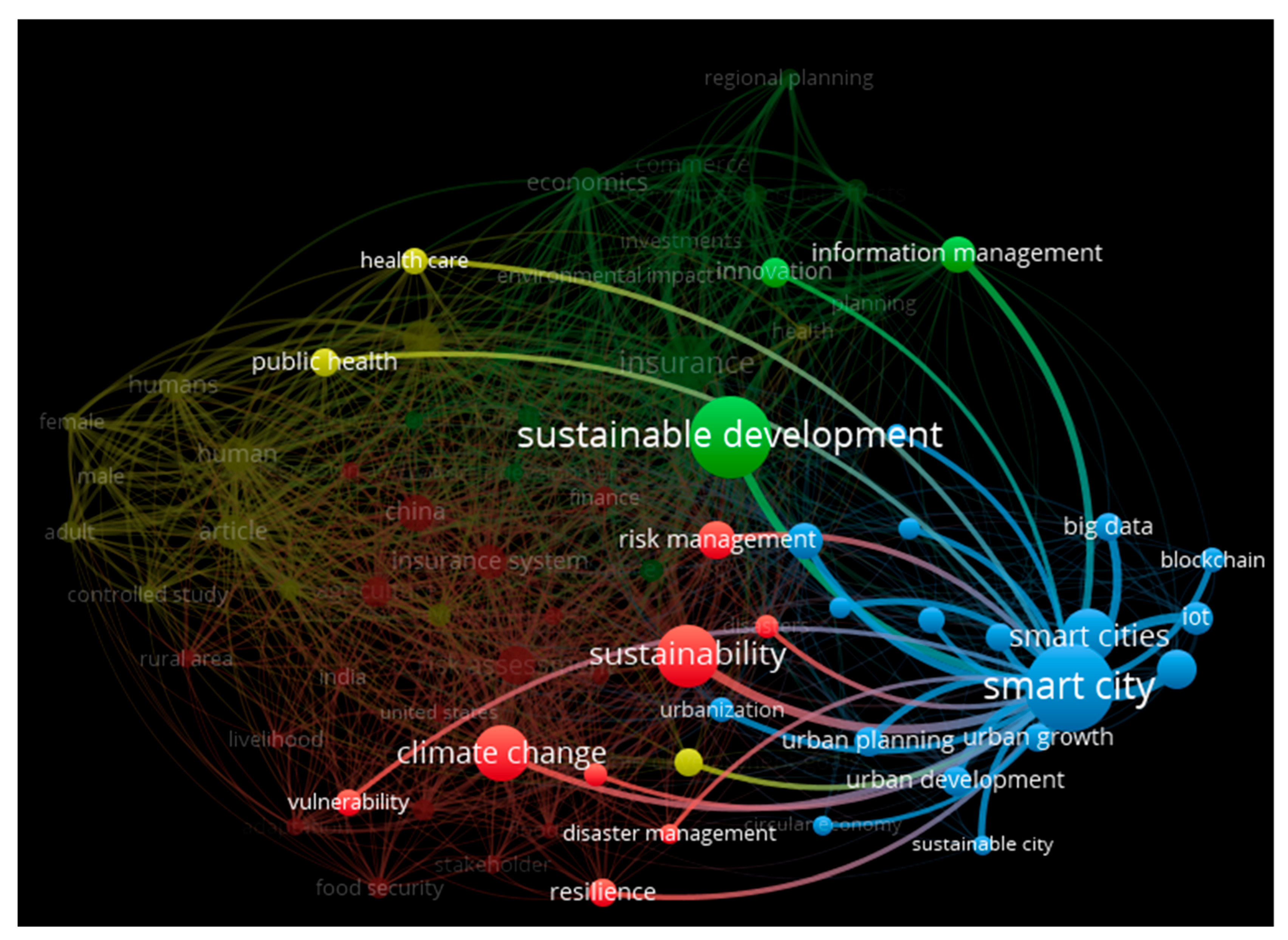
The blue cluster (
Figure 8) highlights how digitalization—through AI, IoT, blockchain, and big data—is reshaping urban sustainability and governance. From an insurance perspective, this digital transformation is foundational for enabling real-time risk assessment, usage-based insurance, parametric insurance, and smart-claiming systems.
In smart cities, IoT sensors embedded in buildings, transport networks, and flood-monitoring systems support continuous monitoring of hazard exposure, allowing insurers to offer more accurate underwriting and dynamic pricing tailored to actual risk levels. Machine learning models support early detection of weather extremes, infrastructure failures, and fire outbreaks, enabling parametric triggers that automate payouts when predefined thresholds are exceeded (e.g., rainfall intensity, wind speed, river height) [
48]. These innovations are not only solutions to congestion, pollution, and inefficiency but also serve as mechanisms to improve inclusivity and transparency in decision-making, aligning closely with sustainable governance models.
Importantly, the appearance of circular economy and energy efficiency within this cluster highlights a commitment to techno-environmental synergy, where innovation is aligned with ecological goals. This reflects an expanding recognition that smart urban systems must also contribute to climate resilience, resource efficiency, and low-carbon transitions. Similar findings are reported by bibliometric analyses of smart and sustainable city research, which emphasize the co-evolution of technology and environmental imperatives [
49,
50]. Blockchain technology enhances trust, transparency, and claims management, reducing fraud and enabling microinsurance schemes for low-income urban populations. The inclusion of circular economy and energy efficiency concepts further strengthens the link to insurance via green performance insurance, renewable-energy production guarantees, and energy-efficiency warranty insurance.
Thus, the blue cluster shows that digital urbanism is not only transforming cities but is providing the technological backbone for future urban climate-risk insurance, real-time coverage for vulnerable communities, and smart parametric products aligned with SDG 11 (Sustainable Cities).
4.2.3. Cluster 3: Climate Resilience and Risk Management
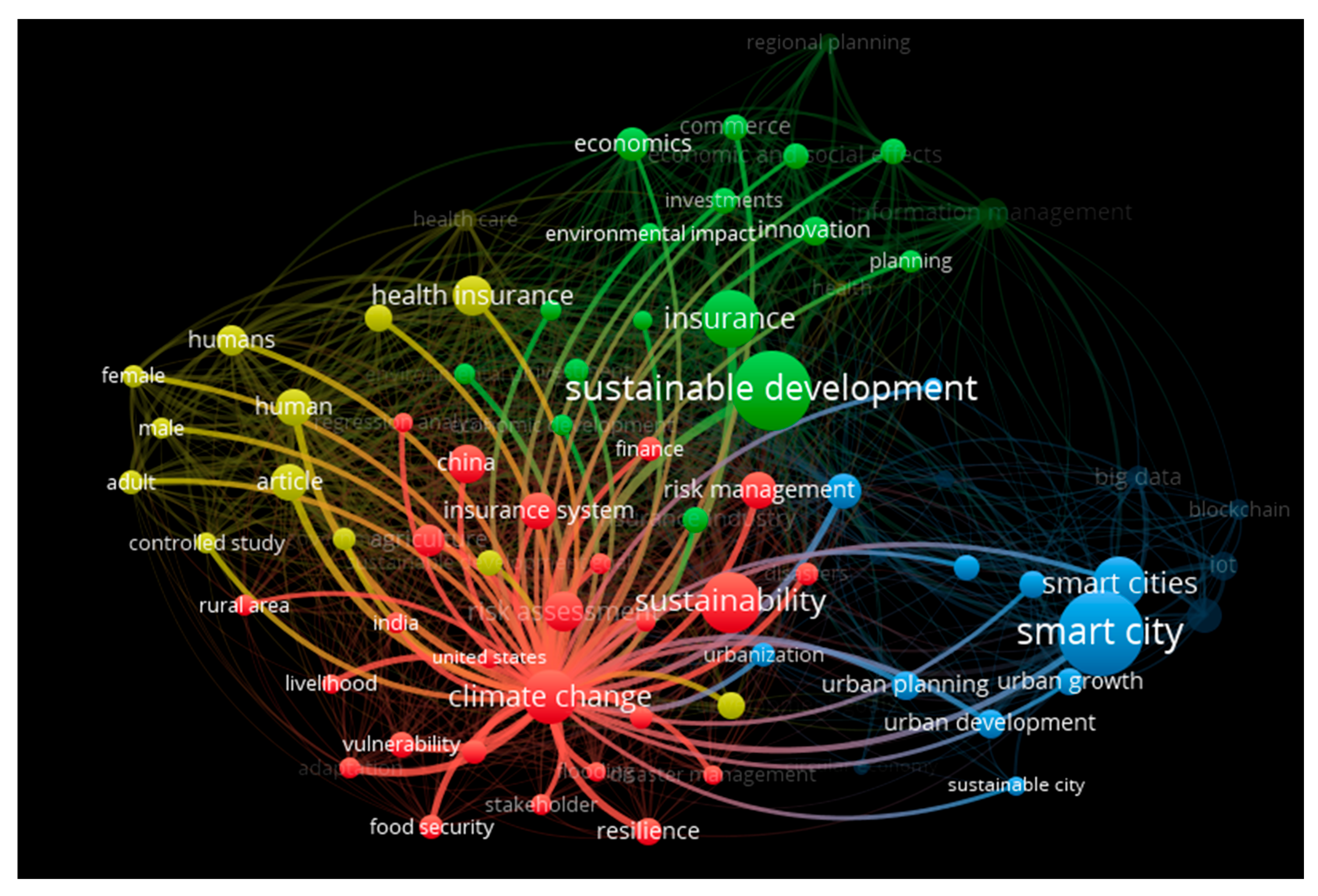
The red cluster (
Figure 9) is anchored in climate change, vulnerability, risk assessment, and adaptation—areas that directly intersect with the insurance sector’s core mandate of managing, transferring, and pricing risk. The recurrence of risk management terms reflects the expanding role of climate and disaster risk insurance, including:
Agricultural index insurance for droughts and floods
Sovereign catastrophe risk pools (ARC, CCRIF)
Parametric flood and cyclone insurance
Microinsurance for vulnerable households
Climate-risk pricing models based on exposure and vulnerability mapping
Figure 9.
Climate Resilience and Risk Management.
Figure 9.
Climate Resilience and Risk Management.
Flooding, extreme weather, and food security concerns emphasize the growing need for risk pooling and pre-disaster financing mechanisms, where insurance provides quicker liquidity than post-disaster humanitarian aid. Early warning systems and adaptive management signal opportunities for anticipatory risk financing, where payouts are triggered before losses occur, minimizing livelihood disruption [
51,
52].
This cluster’s connection to the economic-policy cluster reflects the global shift toward integrating financial resilience with climate governance. Insurers are increasingly adopting probabilistic modelling, catastrophe modelling, and geospatial analytics to quantify climate risk and price it effectively. In vulnerable regions, especially in the Global South, these insurance instruments are crucial in preventing climate impacts from translating into long-term poverty traps [
53]. It also provides an essential environmental and risk context for the urban-tech cluster, where the demand for adaptive infrastructure and data-driven monitoring is often driven by climate-related risks. At the same time, it highlights the limits of purely technological solutions, reminding us that resilience is as much about governance, participation, and equity as it is about engineering and innovation. Overall, this cluster reflects an urgently relevant and interdisciplinary strand of sustainability research. It underscores the imperative to embed resilience, adaptation, and risk-informed planning at all levels of governance and development practice. As climate change intensifies, the themes within this cluster will remain central to both research and policy, shaping global efforts toward building societies that are not only sustainable but also capable of withstanding and recovering from future shocks [
54,
55].
4.2.4. Cluster 4: Public Policy and Health
The yellow cluster (
Figure 10) situates health, public health, and SDGs at the center of sustainability. Its inclusion of health insurance directly connects sustainability research with insurance-based social protection systems.
Health insurance plays a dual role within this cluster:
Protection against health-related financial shocks: preventing households from falling into poverty due to medical expenses.
Strengthening resilience to environmental and climate-related health risks: including heat stress, vector-borne disease outbreaks, and pollution-related illnesses.
At its core, this cluster emphasizes the recognition that health systems and public health outcomes are indispensable to achieving the SDGs [
56,
57]. The inclusion of the SDGs within this cluster is significant, as it illustrates how global sustainability frameworks increasingly foreground the connections between health (SDG 3) and other goals, including poverty reduction (SDG 1), climate action (SDG 13), urban sustainability (SDG 11), and reduced inequalities (SDG 10) [
57,
58]. From a policy perspective, SDG 3 (Good Health and Well-Being) and SDG 10 (Reduced Inequalities) emphasize expanding access to universal health coverage, often financed through public, private, and hybrid insurance schemes. Environmental health risks (pollution, extreme heat, contaminated water) are increasingly being integrated into insurance benefit packages, particularly in climate-vulnerable regions [
59]. On the other hand, it also encompasses financial and institutional innovations, such as insurance schemes that reduce vulnerability to health-related shocks, particularly for marginalized and at-risk groups [
60]. These approaches highlight the dual role of health systems: safeguarding well-being while enhancing resilience to environmental and socio-economic stressors [
61]. The cluster also points to the co-benefits of sustainability measures for human health, reinforcing the idea that investments in clean energy, sustainable urban planning, and climate adaptation generate health dividends, such as lower rates of respiratory illness or reduced mortality from extreme weather events [
59]. By situating health within the SDG framework, the cluster underlines that healthy people and healthy societies are prerequisites for sustainable and equitable futures [
56]. Importantly, this cluster interconnects with the broader network. It aligns with the economic-policy cluster through shared attention to insurance and governance mechanisms [
53], and with the urban-tech cluster as cities increasingly incorporate health and well-being metrics into smart urban development initiatives [
62]. The integration of SDGs ensures that these linkages are not ad hoc but are guided by globally recognized, goal-oriented planning frameworks [
56,
59]. Overall, this cluster reinforces that sustainable development requires equitable, resilient, and financially viable insurance systems that safeguard well-being and improve communities’ ability to withstand shocks [
56].
4.3. Synthesis of Clusters: Toward an Integrated Sustainability Research Agenda
The keyword co-occurrence analysis conducted with VOSviewer reveals a multi-dimensional landscape of sustainability research, organized into four thematically distinct yet deeply interconnected clusters. Each cluster represents a core knowledge domain: economic-policy integration (green), climate resilience and risk governance (red), technological innovation in urban systems (blue), and health, public health, and the Sustainable Development Goals (yellow). Taken together, they highlight the inherently transdisciplinary nature of sustainability science [
63,
64]. At the center of the network lies Cluster 1 (green: economics and policy), which repositions sustainability as an economic and financial imperative. This cluster emphasizes the role of market mechanisms, insurance systems, and policy instruments in internalizing environmental costs and enabling resilience [
53,
65]. Closely aligned is Cluster 3 (red: climate change and risk governance), which focuses on managing climate-related risks through both structural measures (e.g., resilient infrastructure, climate-smart agriculture) and non-structural measures (e.g., adaptive governance, early warning systems). Together, these clusters underscore a critical insight: economic stability and climate adaptation are mutually reinforcing, and effective sustainability strategies require embedding risk governance within financial and policy frameworks [
66].
Cluster 2 (blue: smart cities and digital urbanism) introduces the role of digital technologies and urban innovation in advancing sustainability. Anchored in smart city research, it highlights the transformative potential of AI, IoT, blockchain, and big data to improve urban planning, optimize resource use, and enhance citizen-centered governance [
67,
68]. Its focus on energy efficiency and circular economy practices positions cities as key arenas for operationalizing low-carbon and inclusive transitions [
62,
69]. Complementing this is Cluster 4 (yellow: health, public health, and SDGs), which situates human well-being at the heart of sustainability. This cluster emphasizes the Sustainable Development Goals (SDGs) as a unifying framework that bridges environmental, economic, and social priorities [
57,
58]. By linking health systems, public health, and health insurance to sustainability debates, it underscores that resilient and equitable futures cannot be achieved without robust, accessible health systems and people-centered governance [
59]. The SDGs also function as a global accountability mechanism, aligning localized interventions—from urban planning to healthcare—with broader international targets [
57].
Importantly, the clusters are not discrete silos but intersect at multiple thematic nodes. Urbanization, energy efficiency, risk governance, and decision-making emerge as points of convergence, where economic, environmental, technological, and health considerations meet. For instance, climate risks drive innovation in smart urban systems, while economic instruments such as insurance connect directly to both health security and disaster resilience [
53,
64]. The SDGs provide the overarching framework that integrates these domains, ensuring coherence across scales of governance and sectors of intervention. Collectively, the four clusters reveal a sustainability discourse that is evolving from fragmented, discipline-specific approaches to holistic, systems-based thinking. The field is increasingly characterized by efforts to synchronize economic growth, environmental resilience, technological innovation, and inclusive governance under unified strategies [
63,
64]. This reflects the maturation of sustainability research into a more integrated science—one that acknowledges the complexity of global challenges and embraces the need for adaptive, evidence-based, and cross-sectoral solutions.
4.4. Emerging Trends and Future Research Directions
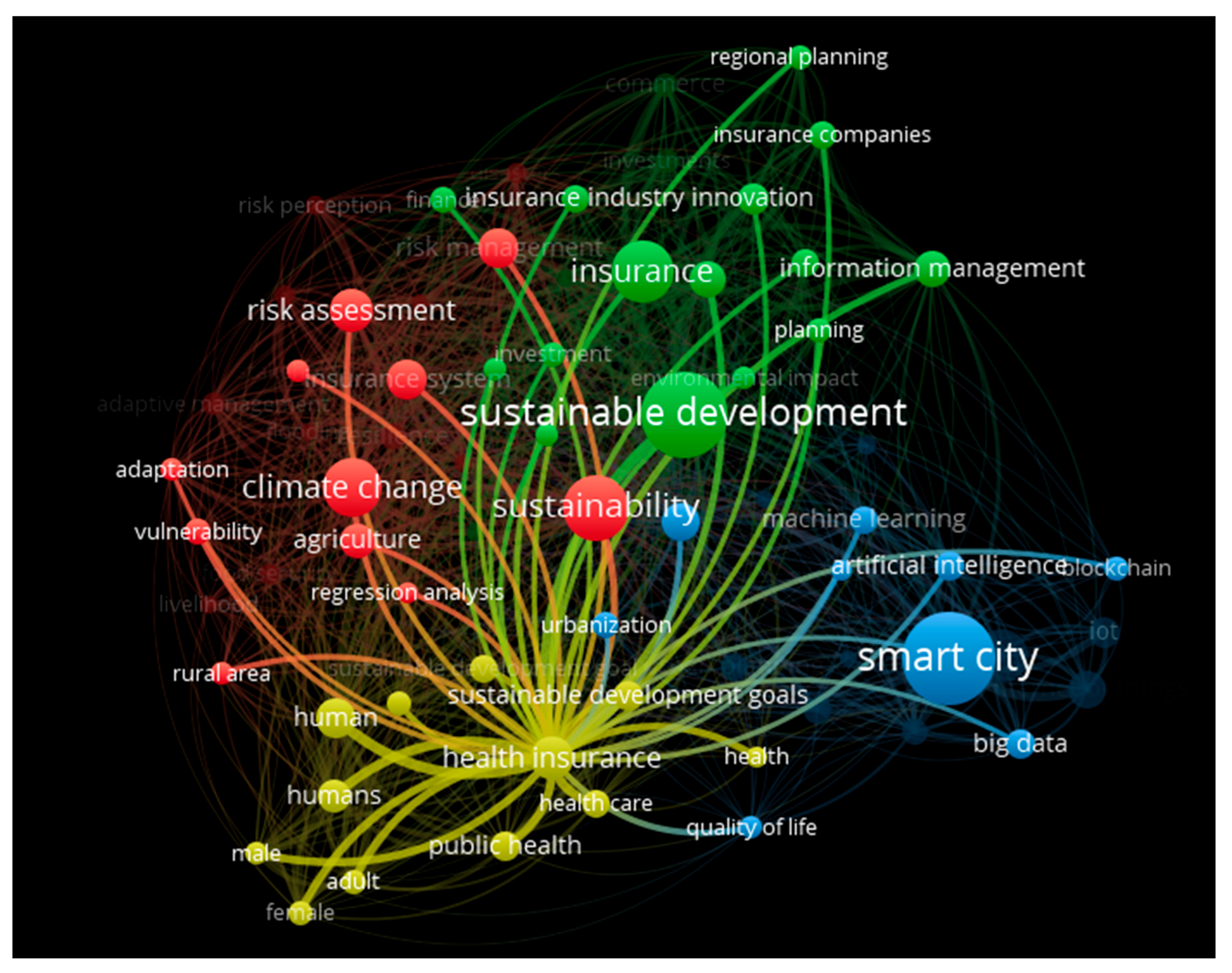
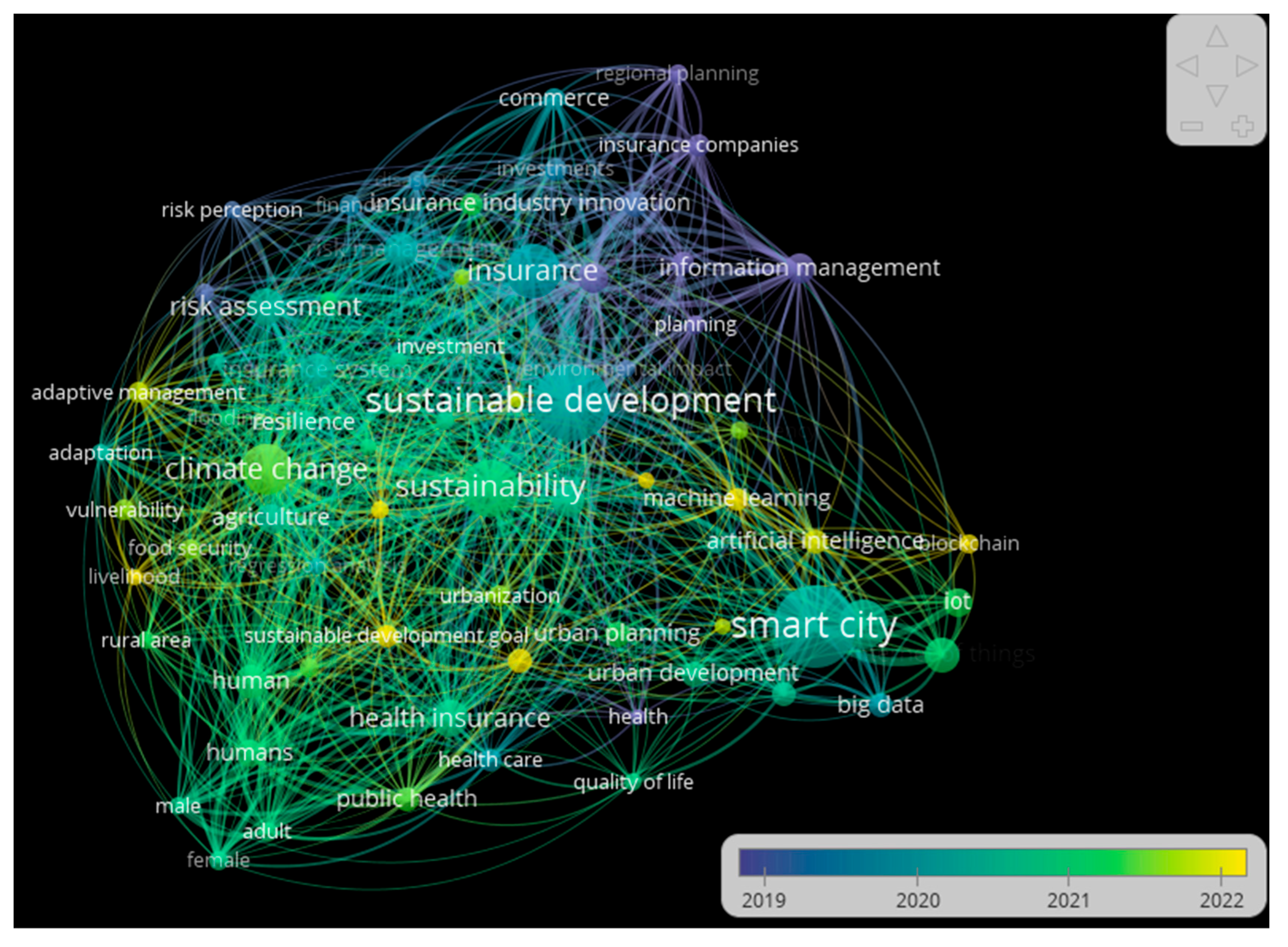
The overlay visualization of keyword co-occurrence reveals a distinct concentration of yellow-colored nodes, indicating terms that have surged in prominence around the year 2022 (
Figure 11). These emerging topics reflect a dynamic shift in sustainability research, increasingly driven by technological innovation, cross-sectoral integration, and human-centered design principles. A careful examination of these high-frequency, recent keywords suggests several interrelated thematic clusters, which together map the evolving contours of the research landscape. A detailed discussion of the emerging trends follows.
4.4.1. Digital Transformation and Smart Urbanism
Among the most striking trends is the growing convergence of advanced digital technologies with urban sustainability research. Keywords such as blockchain, big data, machine learning, Internet of Things (IoT), and artificial intelligence signal a robust intellectual engagement with the fourth industrial revolution’s implications for sustainability [
68]. These technologies are not only being explored in isolation but are increasingly discussed as integral components of smart city infrastructures, where they enable real-time data collection, predictive analytics, and adaptive management systems [
67]. The emerging literature positions digital transformation as a critical enabler of sustainability transitions by enhancing efficiency, transparency, and responsiveness in urban governance [
47,
68]. For example, IoT-based systems are being employed for dynamic traffic management, air quality monitoring, and smart energy grids, while machine learning algorithms are used to optimize waste collection, water use, and building energy performance [
47]. Similarly, blockchain is gaining attention for its potential to secure transparent, decentralized records in sectors such as renewable energy trading, climate finance, and urban planning processes [
70]. However, scholars caution against techno-determinism, highlighting the importance of addressing the broader societal and ethical dimensions of digital innovation [
71]. This includes concerns over data privacy, digital inequality, and algorithmic bias, issues that are now recognized as integral to the sustainability agenda.
4.4.2. Circular Economy as a Strategic Priority
The increasing co-occurrence of the term circular economy in the recent literature marks another significant shift in sustainability research. Unlike earlier focus areas centered on end-of-pipe environmental solutions, current studies adopt a systemic perspective on resource efficiency, waste minimization, and product lifecycle design [
69]. The circular economy framework is now being applied across various domains, including construction, manufacturing, urban development, and agriculture [
72,
73]. Notably, the intersection of the circular economy with digital technologies represents a burgeoning area of inquiry. Researchers are examining how big data, blockchain, and IoT can support material tracking, reverse logistics, and industrial symbiosis, thereby facilitating closed-loop systems at both local and global scales [
74,
75,
76]. This integration reflects an emerging consensus that the circular economy is not only an environmental imperative but also a driver of innovation, economic resilience, and climate mitigation [
77].
4.4.3. Human-Centered and Health-Oriented Urban Futures
The emergence of keywords such as quality of life, air quality, and health alongside smart city discourse underscores a growing shift toward human-centered urban sustainability. Recent research has moved beyond technological infrastructure to explore how innovations impact public well-being, social equity, and quality of urban life [
62]. This trend aligns with broader efforts to develop integrated indicators and assessment frameworks that capture the co-benefits of sustainability interventions, such as reductions in emissions, improvements in mental and physical health, and enhanced social cohesion [
10,
47]. It also highlights the importance of participatory governance and community engagement in ensuring that smart and sustainable city models are inclusive, equitable, and democratically accountable [
68]. By prioritizing human well-being as a central outcome, this strand of research reflects an evolution in sustainability discourse: cities are not only sites of technological innovation but also key arenas for advancing public health, resilience, and social inclusion.
4.4.4. Operationalizing the Sustainable Development Goals
Another key area of recent scholarly focus involves the implementation and localization of the SDGs. Keywords such as sustainable development goals, decision-making, and urbanization reflect a growing body of work on how to translate global sustainability targets into actionable strategies at the municipal and regional levels. This includes research on multi-level governance frameworks that coordinate efforts across local, national, and international scales [
78]; evidence-based decision-making tools for aligning policy, planning, and investment with SDG targets; and cross-sectoral integration, particularly linking environmental objectives with health, education, finance, and urban planning [
79]. Studies increasingly emphasize the need for policy coherence, where technological innovation, environmental regulation, and economic development are harmonized within a systems-oriented governance paradigm [
58]. The SDGs thus serve not only as a normative framework but also as an analytical lens through which institutional arrangements, stakeholder dynamics, and implementation mechanisms are critically assessed [
80].
4.4.5. Integrated and Interdisciplinary Approaches to Urban Resilience
The connectivity of emerging terms such as resilience, urbanization, energy efficiency, and sustainable city suggests that sustainability research is becoming more interdisciplinary and integrative. Rather than treating environmental, economic, and social dimensions as discrete areas of inquiry, researchers are now advancing systems-thinking approaches that recognize their mutual interdependence [
81]. For instance, the concept of urban resilience is being operationalized through models that combine climate adaptation, infrastructure robustness, economic diversification, and community empowerment [
82]. Researchers are increasingly interested in how cities can anticipate, absorb, and recover from systemic shocks, including those driven by climate change, pandemics, and economic disruptions [
83,
84]. Emerging research in this area examines the relationship between energy, health, and governance, recognizing that future-ready cities must be efficient, healthy, and governed through adaptive, inclusive institutions [
85,
86]. This integrative perspective underscores that building resilience requires embedding climate risk management, social equity, and energy transitions within coherent and adaptive urban governance frameworks.
4.5. Navigating the Next Frontier of Sustainability Research
The visualization of co-occurrence patterns from the recent literature provides a valuable roadmap for identifying emerging frontiers in sustainability science. The emphasis on digital transformation, circular economy, human-centered urbanism, and governance innovation signals a paradigm shift from reactive environmental management to proactive, strategic, and systemic sustainability transitions [
64].
Future research should continue to:
Promote interdisciplinary research that brings together urban planning, environmental science, finance and insurance, information systems, and public policy to design integrated solutions.
Critically assess how technological innovation influences fairness, equitable access to insurance, and participatory decision-making in urban contexts.
Translate global frameworks, such as the Sustainable Development Goals and climate adaptation strategies, into localized, context-sensitive insurance and resilience action plans.
Develop robust metrics and data infrastructures to monitor climate risk exposure, insurance effectiveness, and trade-offs, supporting evidence-based policy and investment decisions.
Ultimately, recent studies show a growing shift toward transdisciplinary problem-solving, where sustainability is not only an environmental objective but also a strategic foundation for designing climate-resilient smart cities, with sustainable insurance playing a central role in enhancing financial, infrastructure, and social resilience.
4.6. Conceptual Framework for Sustainable Insurance in Climate-Resilient Smart Cities
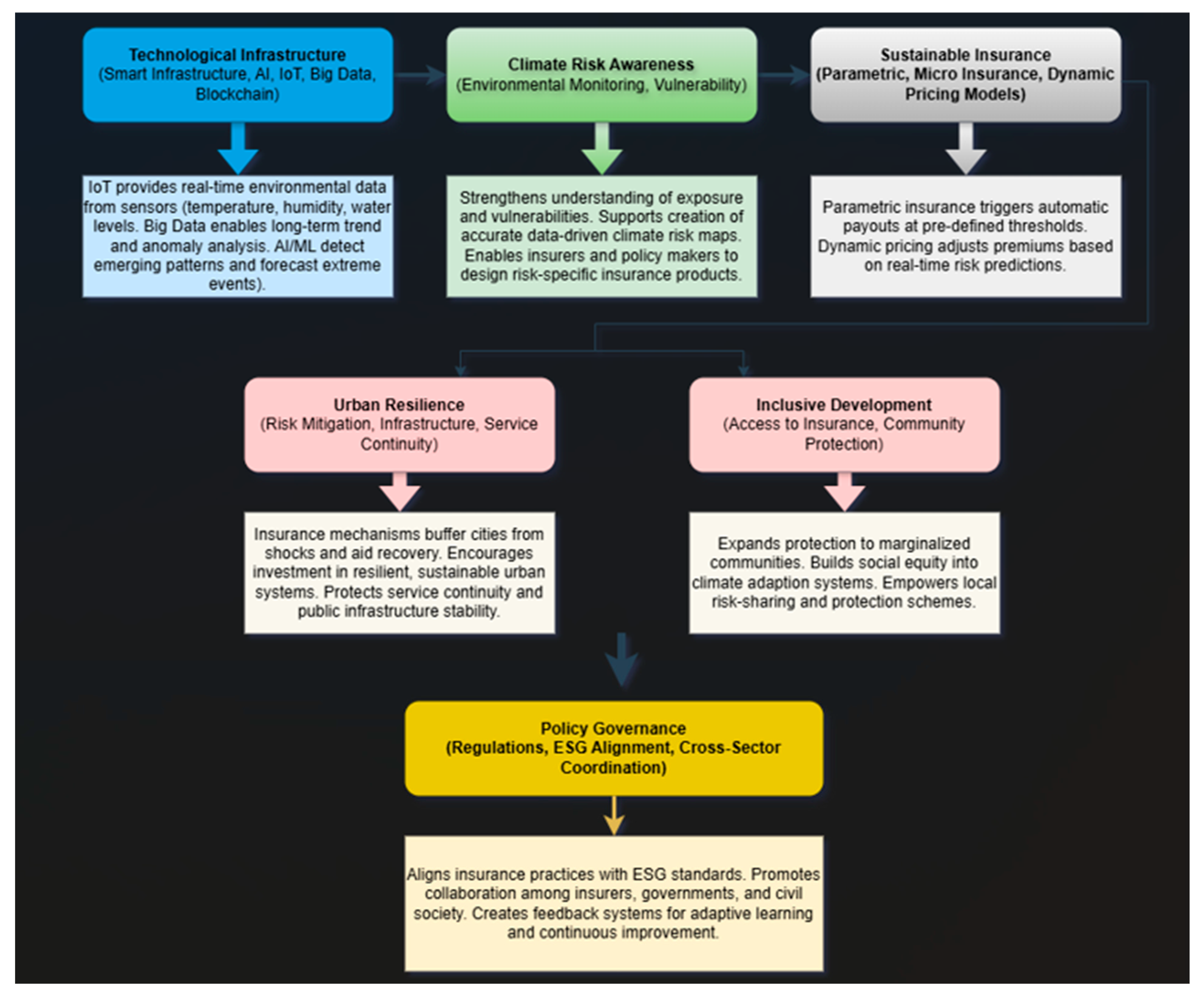
Building on the four thematic clusters identified in the bibliometric analysis: Sustainable Development, Economics, and Policy; Smart Cities and Digital Urbanism; Climate Resilience and Risk Management; and Public Policy and Health, this study proposes a cluster-informed conceptual framework that positions sustainable insurance as a central mechanism for translating technological, financial, and governance capacities into urban resilience. This framework articulates causal pathways and dynamic interactions that explain why and how insurance functions as both a risk management tool and a driver of adaptive urban behavior. The framework draws on three complementary theoretical perspectives: Risk Governance Theory, which emphasizes how financial instruments shape risk perception and collective adaptation; Socio-Technical Systems Theory, which situates smart cities as evolving interactions between technology, institutions, and society; and the Climate-Resilient Development (CRD) paradigm, which underscores anticipatory adaptation, inclusivity, and multi-scalar governance. Integrating these perspectives allows the framework to move beyond the “what” of sustainable insurance toward a nuanced understanding of its mechanisms, interdependencies, and outcomes (
Figure 12).
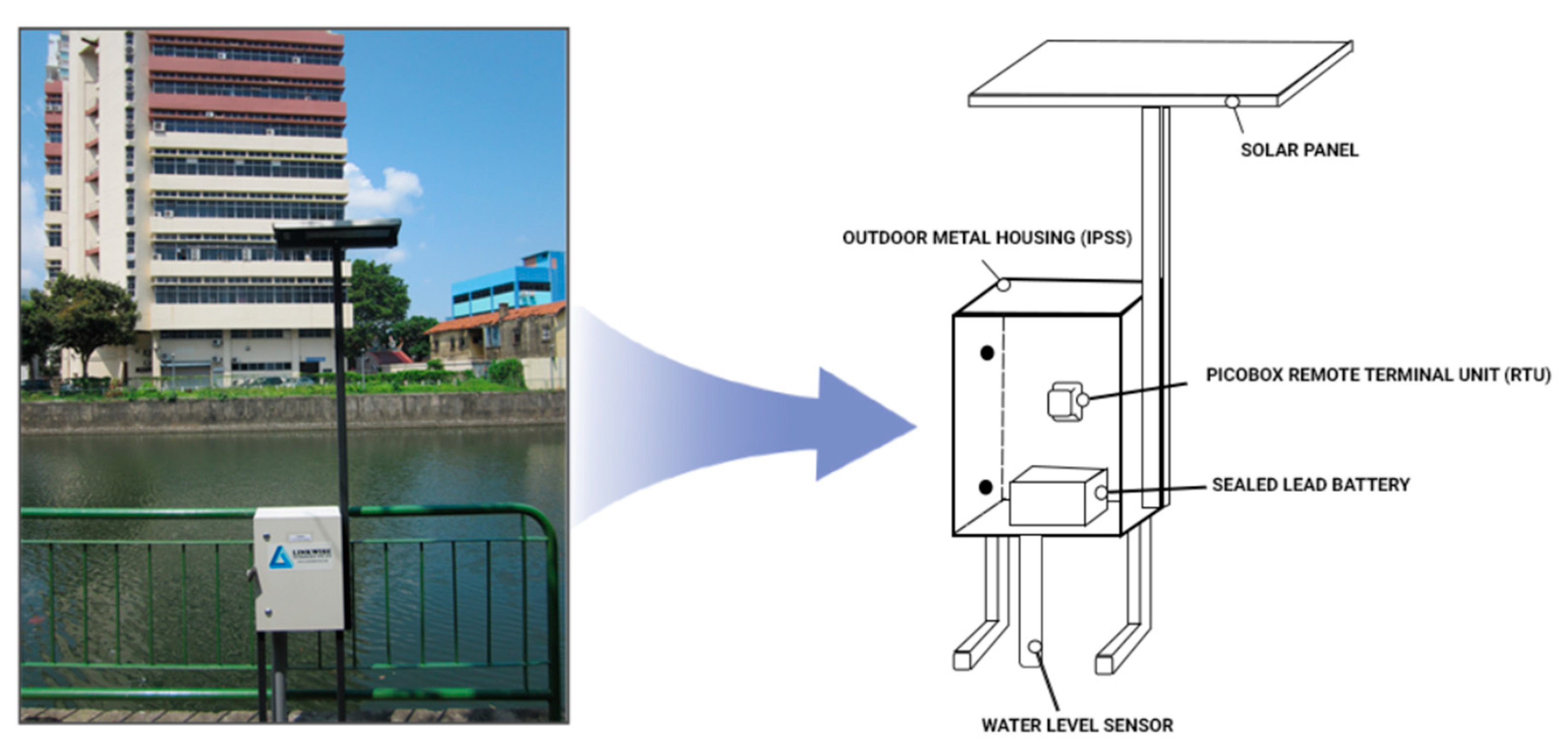
At the foundation of the framework lies technological infrastructure, encompassing artificial intelligence (AI), Internet of Things (IoT) sensors, geospatial analytics, and blockchain applications. These technologies transform raw environmental and urban data into actionable intelligence, enabling anticipatory risk governance [
87]. For example, IoT sensors embedded across urban infrastructure continuously monitor flood levels, extreme temperatures, or infrastructure stress, feeding predictive models that inform parametric triggers. AI-driven analytics enhance predictive accuracy, allowing insurers to adjust premiums dynamically based on real-time exposure, while blockchain smart contracts automate verification and claims processing, reducing delays and increasing transparency [
88,
89]. This technological base operationalizes insights from Cluster 2 (Smart Cities and Digital Urbanism), demonstrating how digitalization enables not only efficient urban management but also responsive, risk-adjusted insurance products [
90]. Critically, this layer establishes causal linkages: technology does not exist in isolation but directly shapes insurer decision-making, premium structures, and even household and corporate behavior by modifying risk perception [
26].
Building on this technological foundation, the framework situates climate-risk awareness as the cognitive and regulatory layer through which data informs action, reflecting the priorities of Cluster 3 (Climate Resilience and Risk Management) [
26]. Hazard mapping, exposure quantification, and geospatial analyses allow cities and insurers to identify areas of heightened vulnerability and design appropriate interventions [
26]. Insurance, in this layer, functions as a financial signal, translating risk knowledge into incentives: lower premiums for climate-resilient infrastructure or renewable energy investments encourage adaptation, while high-risk pricing discourages maladaptive development [
26]. This layer captures the dynamic interplay between knowledge, behavior, and policy, providing a mechanistic explanation of why urban actors adopt adaptive measures and how climate information is operationalized into financial and governance decisions.
At the core of the framework, sustainable insurance acts as the integrative mechanism linking economic governance, social protection, and climate adaptation [
30]. Drawing on insights from Cluster 1 (Sustainable Development, Economics, and Policy) and Cluster 4 (Public Policy and Health), insurance mediates risk transfer through instruments such as catastrophe bonds, insurance-linked securities, and regional risk pools, distributing climate-related losses across municipalities, insurers, and affected populations. Premium structures embed resilience incentives, while inclusive products, such as microinsurance and health-linked coverage ensure that vulnerable and low-income communities are protected, aligning interventions with the Sustainable Development Goals (SDGs 3 and 10) [
57]. This central layer illustrates how financial instruments operationalize technological capacity and climate-risk knowledge into tangible resilience outcomes, linking economic, social, and environmental objectives in a coherent system.
The governance and policy layer provides the institutional scaffolding necessary for these mechanisms to function synergistically. Regulatory mandates, such as climate-risk disclosure requirements and ESG-aligned underwriting practices, coordinate interactions between insurers, city planners, and technology providers [
51]. Cross-sector collaboration ensures that smart-city data, financial instruments, and social protection mechanisms operate cohesively rather than in isolation. Governance thus acts as the causal mechanism that maintains system coherence, facilitates feedback loops, and ensures that technological and financial innovations translate into meaningful urban adaptation. It embodies the CRD principle of multi-scalar governance, linking municipal action to national policy frameworks while integrating private and public sector capacities.
A defining feature of this framework is its dynamic, feedback-driven structure, which captures the iterative and interdependent nature of urban adaptation. Real-time environmental data enhance modeling accuracy, which refines risk-adjusted premiums, triggers parametric payouts, and reinforces adaptive behavior at household, corporate, and municipal levels. These behavioral adaptations, in turn, generate new data, which further informs pricing, hazard mapping, and governance decisions. Similarly, inclusive insurance coverage produces richer exposure data, improving actuarial precision and reinforcing socio-economic resilience. These feedback loops illustrate how components mutually influence each other over time, producing cumulative gains in climate-resilient capacity.
The proposed conceptual framework provides a theoretically robust, cluster-informed, and mechanistic model that explains both the emergence and operation of sustainable insurance in smart cities. By explicitly linking technological infrastructure, climate-risk knowledge, insurance mechanisms, and governance, the framework moves beyond descriptive categorization to elucidate why insurance matters, how it shapes urban adaptation, and under what conditions it enhances resilience. It offers a foundation for empirical research, guiding the design of interventions that are both evidence-based and aligned with multi-dimensional sustainability objectives, and demonstrates that sustainable insurance functions not merely as a financial product but as a systemic governance tool capable of fostering adaptive, inclusive, and technology-enabled urban resilience.
5. Policy Recommendations for Sustainable Insurance in Smart Cities
The four clusters identified in the bibliometric analysis provide a conceptual foundation for structured policy intervention in sustainable insurance for smart cities. The following recommendations translate the thematic insights of each cluster into specific policy directions:
Cluster 1 highlights the centrality of governance, economic frameworks, and regulatory coherence in shaping sustainable insurance systems. In line with this cluster, policy interventions should prioritize the integration of risk-transfer instruments, such as sovereign risk pools, catastrophe insurance, and insurance-linked securities into municipal disaster-risk management strategies. Embedding these financial tools within urban planning frameworks ensures that resilience financing becomes an integral component of long-term development agendas. Moreover, the introduction of resilience-linked incentives, including differentiated premiums for green buildings, flood-proofed infrastructure, and renewable-energy investments, would encourage climate-resilient behavior among households and firms. To operationalize these reforms, municipal finance departments must work closely with national insurance regulators to establish blended public–private insurance schemes supported by clear legislative mandates. The primary constraints in this domain include limited fiscal capacity at local government level and fragmented regulatory oversight, which necessitate stronger institutional coordination mechanisms.
Cluster 2 underscores the transformative role of digital technologies in enhancing risk assessment and underwriting accuracy. Accordingly, smart-city governance should prioritize the development of digital infrastructures capable of supporting real-time insurance models. This includes the deployment of IoT sensor networks for monitoring hazards such as flooding, fire risk, and weather variability, which provide the data required for parametric insurance triggers. Establishing interoperable municipal open-data platforms would further enable insurers to access reliable and standardized urban risk information. Advanced analytics and artificial intelligence tools should also be adopted to strengthen dynamic risk pricing, enhance fraud detection capabilities, and expand microinsurance delivery pathways. Implementation requires collaboration between municipalities, telecommunications providers, digital-innovation hubs, and insurtech firms to develop harmonized data-sharing protocols and risk-analysis dashboards. Challenges remain in relation to data privacy regulation, system interoperability, and variable levels of digital capability among smaller insurers.
Cluster 3 emphasizes the growing importance of climate-risk management and anticipatory financing in urban resilience. Policy frameworks should therefore advance the use of parametric insurance instruments to address climate-related perils such as floods, droughts, cyclones, and extreme heat, utilizing satellite and sensor-based data to trigger payouts. Cities should further explore the issuance of municipal catastrophe bonds and other insurance-linked securities to finance climate-resilient infrastructure. Participation in regional disaster-risk pools can enhance liquidity for rapid response and reduce the fiscal burden associated with post-disaster recovery. Effective implementation requires coordinated action among national treasuries, development finance institutions, and private reinsurers to support product design, hazard modeling, and premium affordability for high-risk communities. However, limited availability of high-resolution hazard data, the cost of designing specialized instruments, and insufficient risk-modeling capacity pose significant constraints in many developing regions.
Cluster 4 situates health systems, public welfare, and social vulnerability at the center of the sustainability agenda. Building on this cluster, policy interventions should strengthen inclusive insurance mechanisms that address the needs of low-income and marginalized populations. Digital microinsurance solutions deployed through mobile platforms can expand access to basic risk protection in informal settlements, where formal insurance penetration remains low. Integrating climate-related public health risks such as heat stress, pollution-related respiratory illness, and vector-borne diseases into urban health planning frameworks would also enhance resilience in line with SDG priorities. Community-based insurance models with municipal co-financing can complement these strategies by ensuring affordability and strengthening trust among vulnerable groups. Implementation will require partnerships between local social development agencies, civil society organizations, mobile-money providers, and health-insurance schemes. Persistent barriers include premium affordability, limited trust in insurance institutions, and low levels of risk-awareness in vulnerable communities.
5.1. Integrating Insurance into Climate-Resilient Urban Planning
Embedding insurance within urban planning frameworks has become essential, ensuring that climate risk assessments guide zoning regulations, infrastructure investments, and building codes to strengthen resilience [
91]. Conventional urban planning typically regards insurance as a post-disaster recovery instrument rather than as a proactive, preventive tool. However, cities need to proactively integrate risk-based insurance models within infrastructure development to reduce vulnerability before disasters occur [
5,
6]. Mandating climate risk assessments in zoning regulations and construction permits enables policymakers to ensure that new developments are designed to withstand environmental stressors, thereby reducing long-term financial losses and lowering insurance costs [
5]. For instance, in flood-prone areas, buildings should be constructed on elevated foundations to reduce water damage, while in zones exposed to extreme heat, regulations can mandate green infrastructure, such as green roofs, urban trees, or permeable surfaces, to mitigate temperature risks and enhance resilience [
47]. Insurance providers can offer premium discounts to properties complying with such resilience standards, incentivizing adaptation among developers and homeowners [
91,
92]. The adoption of nature-based solutions, such as permeable pavements and urban forests, further strengthens resilience while reducing payout risks for insurers. Cities like Copenhagen exemplify this approach. Copenhagen lowers flood insurance premiums for green infrastructure adoption [
5]. The initiative introduces ground-level “green” and “blue” infrastructure to enhance rainwater management in urban areas, thereby strengthening the neighborhood’s ability to withstand damage from intense cloudbursts [
93]. The strategy incorporates bike paths designed to double as stormwater channels, along with water towers and canals that direct excess water from the neighborhood to the harbor [
91]. These large-scale municipal adaptation efforts are complemented by smaller private initiatives like green roofs and rain gardens—together forming the core of the Climate-Resilient Neighborhood approach [
91].
Figure 13 illustrates an example of urban climate resilience through architectural design. Such design elements not only enhance the aesthetic and ecological value of the urban environment but also serve as a proactive climate adaptation strategy, mitigating heat stress, managing stormwater, and reducing flood risk. This approach aligns with the integration of insurance into urban planning, where adherence to resilience standards, such as elevated construction and green infrastructure, can influence insurance premiums and incentivize sustainable development [
5,
93]. The depicted building exemplifies how private and municipal initiatives can complement each other in forming climate-resilient neighborhoods.
5.2. Expanding Public-Private Partnerships for Inclusive Coverage
Governments should collaborate with insurers and private stakeholders to develop affordable microinsurance models, ensuring coverage reaches low-income communities vulnerable to climate shocks [
95]. Climate risks disproportionately impact informal settlements, where infrastructure is weak, financial protection is scarce, and recovery mechanisms are limited. Traditional insurance products fail to reach marginalized urban populations due to high premiums and rigid qualification criteria. To address this gap, public-private partnerships must be expanded to develop low-cost, accessible microinsurance models. Parametric insurance, which offers automatic payouts based on predefined triggers like flood levels or heatwaves, can streamline compensation while ensuring rapid recovery [
27,
95]. These models streamline complex claims processes, making insurance more accessible and viable for vulnerable populations. Municipal subsidies and donor collaborations can further reduce premium costs, making coverage accessible to informal housing residents [
27]. For example, Medellín’s community-based microinsurance strengthens resilience in landslide-prone areas, while Nairobi’s mobile-based insurance innovations ensure seamless access to climate protection for low-income residents. Such initiatives bridge the protection gap, empowering communities with financial security in disaster scenarios [
95,
96].
5.3. Leveraging Smart City Data for Dynamic Insurance Pricing
Smart cities should use real-time environmental data to adjust insurance premiums dynamically, ensuring risk-based pricing reflects climate exposure and proactive adaptation efforts [
10]. These cities generate huge amounts of real-time environmental data through IoT sensors, satellite imagery, and AI-driven forecasting models [
10]. This data can revolutionize insurance pricing, replacing outdated static models with dynamic, risk-reflective premium structures [
12]. For example, properties equipped with climate-resilient infrastructure, such as flood barriers, green roofs, or smart water management systems, should be rewarded with lower insurance costs. Conversely, high-risk properties without adaptation measures could face premium adjustments based on real-time vulnerability assessments [
10,
12]. Singapore applies real-time flood monitoring to ensure flexible insurance pricing, while Zurich’s Flood Resilience Alliance connects insurance policies with adaptive flood prevention strategies, ensuring financial protection complements physical adaptation investments [
97,
98].
Figure 14 shows a typical water-level monitoring station used in urban environments. The system consists of a water level sensor connected to a remote terminal unit, housed in an outdoor metal enclosure, powered by a solar panel and a sealed battery. This setup allows for continuous measurement of water levels, with data transmitted in real time for flood forecasting and risk assessment.
5.4. Strengthening Regulatory Frameworks for Climate-Risk Financing
Governments must implement climate-risk disclosure mandates, standardize insurance-linked municipal financing, and regulate innovative insurance mechanisms to ensure transparency and financial stability. Many existing insurance regulations fail to accommodate innovative models such as parametric insurance and blockchain-based policies, leading to inefficiencies in climate disaster response [
19,
100]. Policymakers must modernize regulatory frameworks, ensuring that insurers accurately disclose climate risks and integrate risk-sensitive underwriting standards into their operations [
46,
101]. Regulations should standardize climate-risk reporting, requiring insurers to outline exposure levels and link premiums to proven resilience measures [
19]. Additionally, municipal insurance-linked bonds can help cities finance large-scale climate adaptation projects, reducing dependency on post-disaster aid [
100,
101]. After Hurricane Sandy, New York City implemented climate risk disclosure policies, improving financial preparedness [
102]. Similarly, London integrates heatwave insurance into urban finance, ensuring climate-linked risks are properly assessed and mitigated [
102]. Innovative technologies such as blockchain and AI further enhance parametric insurance efficiency, enabling quicker payouts and better alignment of premiums with actual climate risks (Aon, 2024) [
100].
6. Research Implications
This study contributes significantly to the evolving discourse linking urban resilience, sustainable finance, and smart city governance, offering both theoretical enrichment and actionable insights. From a practical standpoint, the findings offer a strategic blueprint for governments, insurers, urban planners, and development agencies seeking to integrate climate resilience into urban financial systems. This study highlights the transformative potential of insurance not merely as a post-disaster recovery tool, but as a proactive enabler of urban climate adaptation [
47]. Specifically, it demonstrates how innovative insurance models, such as parametric insurance and microinsurance, can incentivize the deployment of adaptive infrastructure, strengthen community-level preparedness, and foster inclusive financial ecosystems that serve vulnerable populations often excluded from traditional risk transfer markets. The research also carries substantial implications for regulatory bodies and policymakers. It underscores the urgent need to reform existing policy architectures to support insurance innovation, enhance data governance through the integration of real-time environmental monitoring, and align regulatory frameworks with ESG principles [
7,
47]. In doing so, it provides a policy-relevant roadmap for fostering enabling environments where sustainable insurance can thrive as both a market product and a public policy instrument.
For scholars, this study offers a conceptual bridge between technological innovation and institutional governance. It highlights the importance of intersectoral collaboration among urban technologists, financial institutions, climate scientists, and public authorities in operationalizing insurance as a tool for systemic resilience. The research adds to existing theoretical frameworks by positioning insurance as a cross-cutting mechanism that links spatial planning, climate adaptation, financial equity, and digital transformation. Methodologically, this study opens up new avenues for interdisciplinary inquiry, inviting future research to empirically test the effectiveness of proposed policy models across different urban contexts. It also calls for deeper investigation into how smart city data ecosystems can be ethically and efficiently harnessed for real-time risk pricing, vulnerability mapping, and dynamic premium adjustment, areas that remain underexplored in the current literature. In summary, this work reframes insurance not simply as a financial safeguard but as a strategic tool for governance innovation, infrastructure resilience, and inclusive urban transformation. It reinforces the view that climate-adaptive urban futures will require not just technological upgrades, but also institutional reinvention with insurance at the core of both.
7. Study Limitations
This study provides a bibliometric synthesis of sustainable insurance in climate-resilient smart cities. While it contributes valuable insights, several limitations must be acknowledged.
Methodological Limitations: This review was restricted to English-language publications, which may have excluded important findings from non-English sources. The analysis relied solely on the Scopus database, potentially overlooking relevant research indexed in other databases. Furthermore, this study focused on publications between 2010 and 2024, possibly omitting earlier foundational research. The bibliometric approach, while useful for mapping thematic clusters and trends, cannot capture nuanced qualitative insights or context-specific applications.
Conceptual Limitations: The interdisciplinary nature of sustainable insurance and smart cities introduces considerable conceptual diversity. Variations in the definitions of key terms, such as “smart cities,” “resilience,” and “sustainable insurance” may have affected how studies were categorized and interpreted. Similarly, the focus on emerging thematic clusters may overlook less prominent but potentially significant perspectives in the literature.
Empirical and Geographical Limitations: Evidence on sustainable insurance is unevenly distributed, with studies concentrated in high-income regions. As a result, insights for climate-vulnerable cities in the Global South, including Sub-Saharan Africa, remain limited. Moreover, most studies emphasized case-based or technical assessments, while broader policy, regulatory, and socio-economic contexts were less frequently examined. This constrains the generalizability of the findings across diverse urban environments.
Practical and Policy Limitations: While this study identifies opportunities for integrating insurance into urban resilience strategies, the translation of bibliometric trends into actionable policy recommendations remains indirect. This review cannot fully capture operational challenges, such as basis risk, governance coordination, or stakeholder capacity, which are critical for implementing sustainable insurance solutions on the ground.
Future Directions: Despite these limitations, this study highlights key research gaps and avenues for future work, including the need to expand linguistic and database coverage, adopt standardized definitions, include longitudinal and mixed-methods analyses, and examine region-specific and operational challenges in greater depth. Addressing these limitations can enhance the applicability, relevance, and robustness of future research on sustainable insurance in climate-resilient smart cities.
8. Conclusions
The accelerating pace of urbanization, combined with intensifying climate risks, underscores the urgent need to integrate sustainable insurance into the governance of smart cities. This study has demonstrated that insurance, traditionally perceived as a reactive post-disaster mechanism, can serve as a proactive financial instrument, strengthening urban resilience, promoting climate adaptation, and advancing inclusive development. Smart cities, through their reliance on digital infrastructure, real-time data, and predictive technologies, present a unique opportunity to embed insurance within broader frameworks of risk-informed urban planning. The policy recommendations outlined in this study, spanning dynamic pricing models, public–private partnerships, and regulatory reform, reveal the multifaceted potential of sustainable insurance to function as both a climate risk buffer and a catalyst for systemic change. Through a synthesis of the emerging literature and policy analysis, this research has positioned sustainable insurance as a strategic enabler that aligns financial protection with ESG principles. Its value lies not only in post-disaster recovery but also in incentivizing preventive action, fostering adaptive infrastructure, and reinforcing long-term sustainability goals. The integration of innovations such as parametric insurance, microinsurance, and InsurTech platforms further enhances its relevance in the context of smart city systems. However, several barriers to adoption persist, including limited institutional awareness, inadequate regulatory frameworks, uneven data availability, and the underrepresentation of vulnerable communities in insurance design and access. These challenges point to the need for coordinated cross-sectoral strategies that embed insurance into local resilience plans, expand inclusive coverage, and leverage smart technologies for risk modeling and mitigation.
This study contributes to the growing discourse on the role of financial mechanisms in shaping climate-resilient urban futures. It emphasizes the importance of aligning insurance policies with global sustainability frameworks such as the UN Sustainable Development Goals, particularly SDG 11, which calls for inclusive, safe, resilient, and sustainable cities. By doing so, cities can not only recover from climate-induced disruptions but also prevent losses through anticipatory governance and strategic investment. In this evolving landscape, sustainable insurance must be reimagined as a foundational pillar of urban resilience, one that transforms insurers from passive claim payers into active partners in climate adaptation and urban sustainability. As urban populations expand and climate volatility intensifies, integrating sustainable insurance into the core of smart city planning is not only desirable but also essential for ensuring the viability, equity, and security of future urban generations.