
Long-Term Spatiotemporal Assessment of Land-Use Change, Drought Stress, and Vegetation Resilience in Alabama’s Black Belt: Implications for Sustainable Agricultural Resource Management



Abstract
1. Introduction
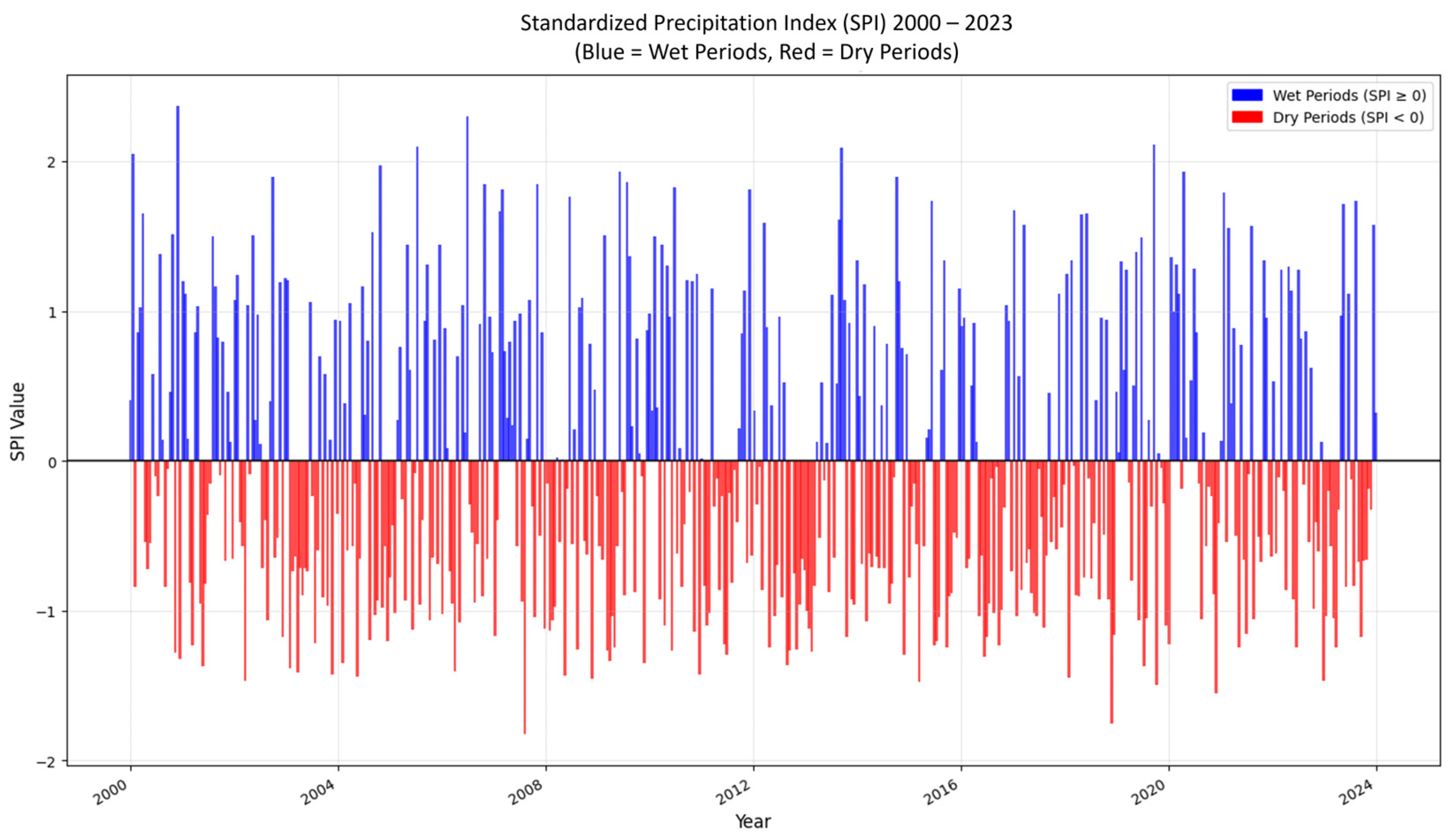
- Integration of LULC with Longitudinal Drought Metrics: We integrate LULC trajectories spanning 2000–2023 with both the SPI (reflecting precipitation anomalies) and the Standardized Precipitation Evapotranspiration Index (SPEI), which accounts for temperature-driven evaporative demand. This dual-index framework allows for an assessment of which metric more effectively characterizes vegetation stress under evolving climatic conditions.
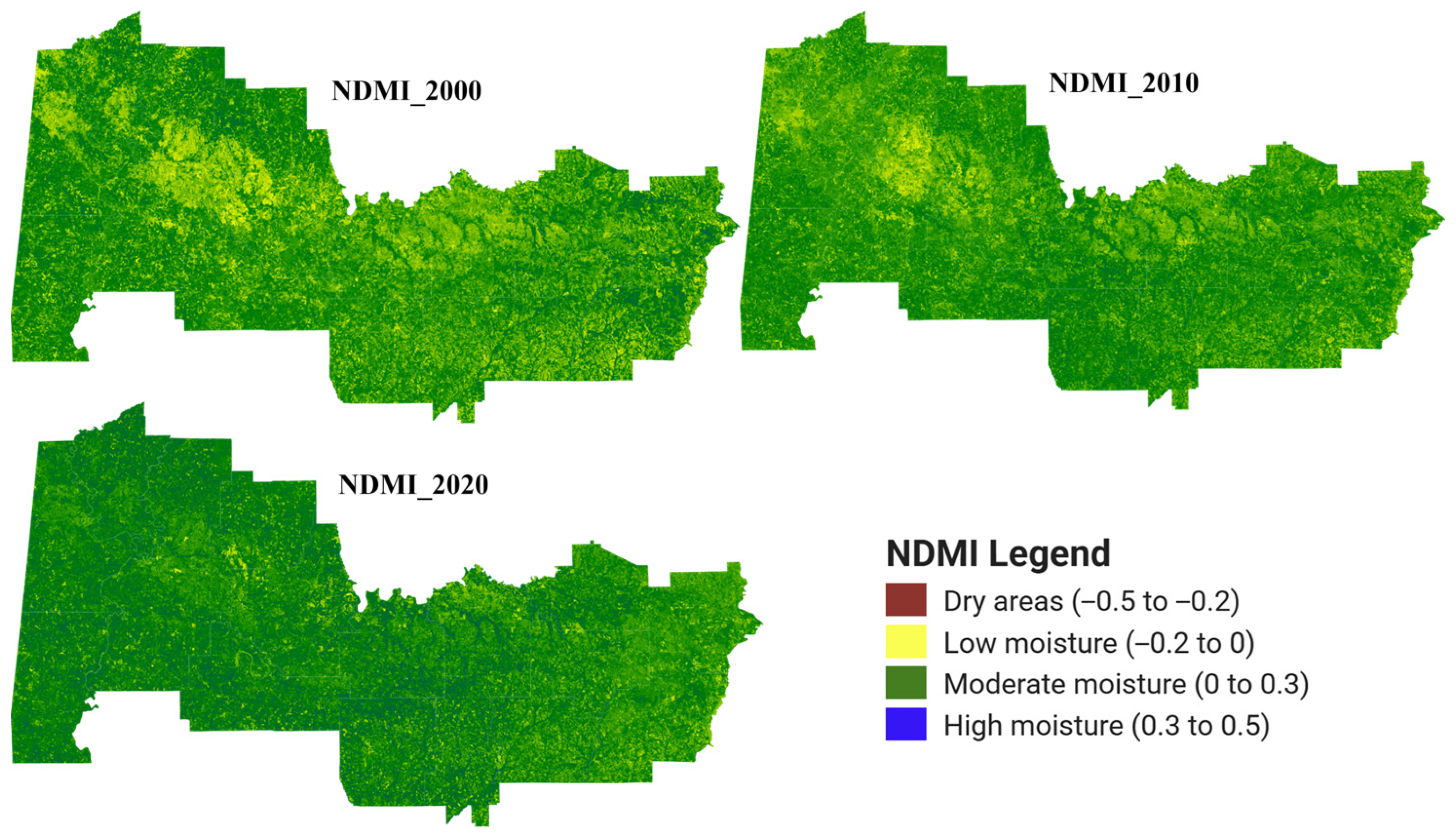
- Distinguishing Greenness Declines from Moisture Stress: We employ paired analyses of NDVI and the Normalized Difference Moisture Index (NDMI) to evaluate vegetation conditions. By analyzing these indices collaboratively, we can better discern whether reductions in vegetation are due to shifts in biomass or are primarily attributable to moisture stress, resulting in more nuanced ecological interpretations.
- Spatially Explicit Assessment of Land–Climate Interactions: Using multi-temporal Landsat imagery and a consistent supervised classification framework, we quantify LULC transitions across the entire Alabama Black Belt at high spatial resolution. Additionally, we investigate the co-variability of these transitions with SPI and SPEI across multiple temporal scales, leading to a spatially explicit understanding of where and how land-use and climate drivers interact to influence vegetation resilience.
2. Materials and Methods
2.1. Study Area
2.2. Materials
2.3. Methods
- Preprocessing Steps:Preprocessing is a critical phase, encompassing several essential techniques aimed at preparing the remote sensing data for analysis. The preprocessing included:
- -
- Radiometric Correction: This step was performed using the Radiometric Calibration Extension, which adjusts the pixel values in the images to compensate for various factors such as sensor inconsistencies and variations in atmospheric conditions that can lead to inaccurate readings.
- -
- Atmospheric Correction: This was implemented using the Dark Object Subtraction (DOS) model through the Semi-Automatic Classification Plugin (SCP). The atmospheric correction is particularly vital, as it ensures that the information extracted from the images is not distorted due to atmospheric variability, thus enhancing the reliability of the data.
2.3.1. Pre-Processing of Remote Sensing Data
- ▪
- Atmospheric Correction: For Landsat 5 TM and Landsat 7 ETM+, the LEDAPS (Landsat Ecosystem Disturbance Adaptive Processing System) algorithm was deployed. LEDAPS applies the 6S radiative transfer model to adjust for atmospheric scattering and absorption, utilizing ancillary climate data to incorporate water vapor, ozone, and aerosol optical depth. Conversely, for Landsat 8 OLI, the LaSRC (Land Surface Reflectance Code) algorithm was employed, which utilizes a similar radiative transfer methodology but is tailored for the specific spectral bands of the OLI sensor and includes a comprehensive cloud-masking routine.
- ▪
- Cross-Sensor Calibration: The Collection 2 Level 2 product harmonizes surface reflectance values across sensors through spectral band-pass adjustment factors, determined from overpass coincidences and pseudo-invariant calibration sites. This calibration process ensures that reflectance values for corresponding spectral bands (e.g., red, near-infrared, shortwave infrared) are directly comparable between TM, ETM+, and OLI, thereby eliminating biases that might otherwise be misinterpreted as land cover changes or trends in vegetation.
- ▪
- Cloud and Shadow Masking: All images underwent screening for clouds and cloud shadows utilizing the CFMask algorithm, which is part of the Collection 2 processing workflow. Pixels identified as cloud or shadow were excluded from further classifications and vegetation index computations to prevent erroneous signals.
2.3.2. Image Classification
- Ensure alignment with the land-cover classification systems employed by U.S. federal agencies.
- Facilitate clear distinctions between land-cover categories that can be interpreted from multispectral remote sensing data.
- Uphold a logical hierarchical structure across various thematic levels.
2.3.3. Accuracy Assessment
2.3.4. NDVI Index
2.3.5. NDMI Index
2.3.6. SPI Index
2.3.7. SPEI Index
3. Results and Discussion
4. Summary and Conclusions
Author Contributions
Funding
Institutional Review Board Statement
Informed Consent Statement
Data Availability Statement
Acknowledgments
Conflicts of Interest
References
- Scherzinger, F.; Schädler, M.; Reitz, T.; Yin, R.; Auge, H.; Merbach, I.; Roscher, C.; Harpole, W.S.; Blagodatskaya, E.; Siebert, J. Sustainable Land Management Enhances Ecological and Economic Multifunctionality under Ambient and Future Climate. Nat. Commun. 2024, 15, 4930. [Google Scholar] [CrossRef] [PubMed]
- Chavez, P.S., Jr. An Improved Dark-Object Subtraction Technique for Atmospheric Scattering Correction of Multispectral Data. Remote Sens. Environ. 1988, 24, 459–479. [Google Scholar] [CrossRef]
- Chowdhury, M.; Hasan, M.E.; Abdullah-Al-Mamun, M.M. Land Use/Land Cover Change Assessment of Halda Watershed Using Remote Sensing and GIS. Egypt. J. Remote Sens. Space Sci. 2020, 23, 63–75. [Google Scholar] [CrossRef]
- Congedo, L. Semi-Automatic Classification Plugin Documentation. Release 2016, 4, 29. [Google Scholar]
- Lambin, E.F.; Geist, H.J.; Lepers, E. Dynamics of Land-Use and Land-Cover Change in Tropical Regions. Annu. Rev. Environ. Resour. 2003, 28, 205–241. [Google Scholar] [CrossRef]
- Ahmad, S.; Farooq, R.; Waseem, M.; Kohnová, S. How Do Land Use Changes Affect Temperature and Groundwater in Urban Areas? An Integrated Remote Sensing, and Machine Learning Approach. Adv. Space Res. 2025, 76, 3963–3987. [Google Scholar] [CrossRef]
- Barone, J.A. Historical Presence and Distribution of Prairies in the Black Belt of Mississippi and Alabama. Castanea 2005, 70, 170–183. [Google Scholar] [CrossRef]
- Ibrahim, S.; El-Afandi, G. Short-Range Rainfall Prediction over Egypt Using the Weather Research and Forecasting Model. Open J. Renew. Energy Sustain. Dev. 2014, 1, 56–70. [Google Scholar] [CrossRef]
- Wang, J.; Miao, S.; Doan, Q.; Chen, F.; Abolafia-Rosenzweig, R.; Yang, L.; Zhang, G.; Zhang, Y.; Dou, J.; Xu, Y. Quantifying the Impacts of High-Resolution Urban Information on the Urban Thermal Environment. JGR Atmos. 2023, 128, e2022JD038048. [Google Scholar] [CrossRef]
- Ibrahim, S.; El Afandi, G. Short-Range Rainfall Prediction over Nigeria Using the Weather Research and Forecasting Model. Open J. Atmos. Clim. Change 2014, 1, 38–50. [Google Scholar]
- Welikhe, P.; Quansah, J.E.; Fall, S.; McElhenney, W. Estimation of Soil Moisture Percentage Using LANDSAT-Based Moisture Stress Index. J. Remote Sens. GIS 2017, 6, 200. [Google Scholar] [CrossRef]
- El Afandi, G.; Ismael, H.; Fall, S.; Ankumah, R. Effectiveness of Utilizing Remote Sensing and GIS Techniques to Estimate the Exposure to Organophosphate Pesticides Drift over Macon, Alabama. Agronomy 2023, 13, 1759. [Google Scholar] [CrossRef]
- Quansah, J.E.; Rochon, G.L.; Quagrainie, K.K.; Amisah, S.; Muchiri, M.; Ngugi, C. Remote Sensing Applications for Sustainable Aquaculture in Africa. In Proceedings of the 2007 IEEE International Geoscience and Remote Sensing Symposium; IEEE: Piscataway, NJ, USA, 2007; pp. 1255–1259. [Google Scholar]
- Preetha, P.P.; Hamdan, A.Z.A.; Anderson, M.D. Assessment of Climate Variability and Short-Term Land Use Land Cover Change Effects on Water Quality of Cahaba River Basin. Int. J. Hydrol. Sci. Technol. 2021, 11, 54. [Google Scholar] [CrossRef]
- Govender, T.; Dube, T.; Shoko, C. Remote Sensing of Land Use-Land Cover Change and Climate Variability on Hydrological Processes in Sub-Saharan Africa: Key Scientific Strides and Challenges. Geocart. Int. 2022, 37, 10925–10949. [Google Scholar] [CrossRef]
- Barakat, A.; Khellouk, R.; El Jazouli, A.; Touhami, F.; Nadem, S. Monitoring of Forest Cover Dynamics in Eastern Area of Béni-Mellal Province Using ASTER and Sentinel-2A Multispectral Data. Geol. Ecol. Landsc. 2018, 2, 203–215. [Google Scholar] [CrossRef]
- Selmy, S.A.; Kucher, D.E.; Mozgeris, G.; Moursy, A.R.; Jimenez-Ballesta, R.; Kucher, O.D.; Fadl, M.E.; Mustafa, A.A. Detecting, Analyzing, and Predicting Land Use/Land Cover (LULC) Changes in Arid Regions Using Landsat Images, CA-Markov Hybrid Model, and GIS Techniques. Remote Sens. 2023, 15, 5522. [Google Scholar] [CrossRef]
- Bonn, F.J.; O’Neill, N.T. Thermal Infrared Remote Sensing of Soils: Evolution, Trends and Perspectives. Remote Sens. Rev. 1993, 7, 281–302. [Google Scholar] [CrossRef]
- McKee, T.B.; Doesken, N.J.; Kleist, J. The relationship of drought frequency and duration to time scales. In Proceedings of the 8th Conference on Applied Climatology, Anaheim, CA, USA, 17–22 January 1993; Volume 17, pp. 179–183. [Google Scholar]
- Cheval, S. The Standardized Precipitation Index–An Overview. Rom. J. Meteorol. 2015, 12, 17–64. [Google Scholar]
- Ait El Haj, F.; Ouadif, L.; Akhssas, A. Monitoring Land Use and Land Cover Changes Using Remote Sensing Techniques and the Precipitation-Vegetation Indexes in Morocco. Ecol. Eng. Environ. Technol. 2023, 24, 272–286. [Google Scholar] [CrossRef]
- Abebe, G.; Getachew, D.; Ewunetu, A. Analysing Land Use/Land Cover Changes and Its Dynamics Using Remote Sensing and GIS in Gubalafito District, Northeastern Ethiopia. SN Appl. Sci. 2022, 4, 30. [Google Scholar] [CrossRef]
- Zabawa, R. The Black Farmer and Land in South-Central Alabama: Strategies to Preserve a Scarce Resource. Hum. Ecol. 1991, 19, 61–81. [Google Scholar] [CrossRef]
- Zabawa, R.; Baharanyi, N.; Amougou, M. Factors Associated with Black-Owned Land Loss. J. Agric. Food Inf. 1995, 2, 23–41. [Google Scholar] [CrossRef]
- Ibrahim, S.; El Afandi, G.; Moustafa, A.; Irfan, M. Study of Changing Land Use Land Cover from Forests to Cropland on Rainfall: Case Study of Alabama’s Black Belt Region. AgriEngineering 2025, 7, 176. [Google Scholar] [CrossRef]
- Gan, J.; Kolison, S.H.; Tackie, N.O. African-American Forestland Owners in Alabama’s Black Belt. J. For. 2003, 101, 38–43. [Google Scholar] [CrossRef]
- Rosson, J.F. Profiles of Midsouth Nonindustrial Private Forests and Owners; US Department of Agriculture, Forest Service, Southern Forest Experiment Station: Asheville, NC, USA, 1987; Volume 125.
- Bellamy, D.L.; Parks, A.L. Economic Development in Southern Black Belt Counties: How Does It Measure Up? Rev. Black Political Econ. 1994, 22, 85–108. [Google Scholar] [CrossRef]
- Fraser, R.F.; Gyawali, B.R.; Schelhas, J. Blacks in Space: Land Tenure and Well-Being in Perry County, Alabama. Small-Scale For. 2005, 4, 21–33. [Google Scholar] [CrossRef]
- Hansen, M.C.; Defries, R.S.; Townshend, J.R.G.; Sohlberg, R. Global Land Cover Classification at 1 Km Spatial Resolution Using a Classification Tree Approach. Int. J. Remote Sens. 2000, 21, 1331–1364. [Google Scholar] [CrossRef]
- Stagge, J.H.; Tallaksen, L.M.; Gudmundsson, L.; Van Loon, A.F.; Stahl, K. Candidate Distributions for Climatological Drought Indices (SPI and SPEI). Int. J. Climatol. 2015, 35, 4027–4040. [Google Scholar] [CrossRef]
- Bhattarai, S.; Talchabhadel, R. Comparative Analysis of Satellite-Based Precipitation Data across the CONUS and Hawaii: Identifying Optimal Satellite Performance. Remote Sens. 2024, 16, 3058. [Google Scholar] [CrossRef]
- Hasan, S.; Shi, W.; Zhu, X.; Abbas, S.; Khan, H.U.A. Future Simulation of Land Use Changes in Rapidly Urbanizing South China Based on Land Change Modeler and Remote Sensing Data. Sustainability 2020, 12, 4350. [Google Scholar] [CrossRef]
- Faruque, M.J.; Vekerdy, Z.; Hasan, M.Y.; Islam, K.Z.; Young, B.; Ahmed, M.T.; Monir, M.U.; Shovon, S.M.; Kakon, J.F.; Kundu, P. Monitoring of Land Use and Land Cover Changes by Using Remote Sensing and GIS Techniques at Human-Induced Mangrove Forests Areas in Bangladesh. Remote Sens. Appl. Soc. Environ. 2022, 25, 100699. [Google Scholar] [CrossRef]
- Surbakti, H.; Salsabilah, R.; Aryawati, R.; Sitepu, R. Utilization of Google Earth Engine and DSAS to Monitor Coastal Change in the Banyuasin Estuary. J. Penelit. Pendidik. IPA 2025, 11, 252–262. [Google Scholar] [CrossRef]
- Markogianni, V.; Kalivas, D.P.; Petropoulos, G.P.; Giovos, R.; Dimitriou, E. Comparative Analysis of Trophic Status Assessment Using Different Sensors and Atmospheric Correction Methods in Greece’s WFD Lake Network. Remote Sens. 2025, 17, 1822. [Google Scholar] [CrossRef]
- Saldarriaga, L.; Tan, Y.; Sabater, N.; Delegido, J. A Pixel-Based Machine Learning Atmospheric Correction for PeruSAT-1 Imagery. Remote Sens. 2025, 17, 460. [Google Scholar] [CrossRef]
- Chowdhury, S.J.K.; Fagun, I.A.; Kunda, M.; Yang, C.-S.; Chakrabortty, R.; Purohit, S.; Harun-Al-Rashid, A. Monitoring LULC Change in a Freshwater Swamp Forest of Bangladesh: A Remote Sensing-Based Interpretation of Conservation Policy Outcomes. Earth Syst. Environ. 2025, 9, 2381–2395. [Google Scholar] [CrossRef]
- Mohajane, M.; Essahlaoui, A.L.I.; Oudija, F.; Hafyani, M.E.; Hmaidi, A.E.; Ouali, A.E.; Randazzo, G.; Teodoro, A.C. Land Use/Land Cover (LULC) Using Landsat Data Series (MSS, TM, ETM+ and OLI) in Azrou Forest, in the Central Middle Atlas of Morocco. Environments 2018, 5, 131. [Google Scholar] [CrossRef]
- Shalaby, A.; Tateishi, R. Remote Sensing and GIS for Mapping and Monitoring Land Cover and Land-Use Changes in the Northwestern Coastal Zone of Egypt. Appl. Geogr. 2007, 27, 28–41. [Google Scholar] [CrossRef]
- Anderson, J.R. A Land Use and Land Cover Classification System for Use with Remote Sensor Data; US Government Printing Office: Washington, DC, USA, 1976; Volume 964.
- U.S. Geological Survey (USGS). Annual National Land Cover Database (NLCD) Collection 1 Science Product User Guide, Version 1.1; Land Satellites Data System (LSDS-2103); U.S. Geological Survey: Sioux Falls, SD, USA, 2025. Available online: https://www.mrlc.gov/sites/default/files/docs/LSDS-2103%20Annual%20National%20Land%20Cover%20Database%20%28NLCD%29%20Collection%201%20Science%20Product%20User%20Guide%20-v1.1%202025_06_11.pdf (accessed on 10 September 2025).
- Gao, H.; Guo, J.; Guo, P.; Chen, X. Classification of Very-High-Spatial-Resolution Aerial Images Based on Multiscale Features with Limited Semantic Information. Remote Sens. 2021, 13, 364. [Google Scholar] [CrossRef]
- Foody, G.M. Assessing the Accuracy of Land Cover Change with Imperfect Ground Reference Data. Remote Sens. Environ. 2010, 114, 2271–2285. [Google Scholar] [CrossRef]
- Sathyanarayanan, S.; Tantri, B.R. Confusion Matrix-Based Performance Evaluation Metrics. Afr. J. Biomed. Res. 2024, 27, 4023–4031. [Google Scholar] [CrossRef]
- Nicolau, A.P.; Dyson, K.; Saah, D.; Clinton, N. Accuracy Assessment: Quantifying Classification Quality. In Cloud-Based Remote Sensing with Google Earth Engine; Cardille, J.A., Crowley, M.A., Saah, D., Clinton, N.E., Eds.; Springer International Publishing: Cham, Switzerland, 2024; pp. 135–145. ISBN 978-3-031-26587-7. [Google Scholar]
- Foody, G.M. Status of Land Cover Classification Accuracy Assessment. Remote Sens. Environ. 2002, 80, 185–201. [Google Scholar] [CrossRef]
- Strahler, A.H.; Boschetti, L.; Foody, G.M.; Friedl, M.A.; Hansen, M.C.; Herold, M.; Mayaux, P.; Morisette, J.T.; Stehman, S.V.; Woodcock, C.E. Global Land Cover Validation: Recommendations for Evaluation and Accuracy Assessment of Global Land Cover Maps. Eur. Communities Luxemb. 2006, 51, 1–60. [Google Scholar]
- Kamusoko, C. Land Cover Classification Accuracy Assessment. In Optical and SAR Remote Sensing of Urban Areas; Springer Geography; Springer: Singapore, 2022; pp. 105–118. ISBN 978-981-16-5148-9. [Google Scholar]
- Amin, F.; Mahmoud, M. Confusion Matrix in Binary Classification Problems: A Step-by-Step Tutorial. J. Eng. Res. 2022, 6, 26. [Google Scholar]
- Beauxis-Aussalet, E.; Hardman, L. Simplifying the Visualization of Confusion Matrix. In Proceedings of the 26th Benelux Conference on Artificial Intelligence (BNAIC), Nijmegen, The Netherlands, 6–7 November 2014. [Google Scholar]
- Beauxis-Aussalet, E.; Hardman, L. Visualization of Confusion Matrix for Non-Expert Users. In Proceedings of the IEEE Conference on Visual Analytics Science and Technology (VAST)-Poster Proceedings, Paris, France, 9–14 October 2014; pp. 1–2. [Google Scholar]
- Zhao, C.; Pan, Y.; Zhang, P. Development of a New Indicator for Identifying Vegetation Destruction Events Using Remote Sensing Data. Ecol. Indic. 2024, 166, 112553. [Google Scholar] [CrossRef]
- Tadese, M.; Kumar, L.; Koech, R.; Kogo, B.K. Mapping of Land-Use/Land-Cover Changes and Its Dynamics in Awash River Basin Using Remote Sensing and GIS. Remote Sens. Appl. Soc. Environ. 2020, 19, 100352. [Google Scholar] [CrossRef]
- Bijaber, N.; El Hadani, D.; Saidi, M.; Svoboda, M.D.; Wardlow, B.D.; Hain, C.R.; Poulsen, C.C.; Yessef, M.; Rochdi, A. Developing a Remotely Sensed Drought Monitoring Indicator for Morocco. Geosciences 2018, 8, 55. [Google Scholar] [CrossRef]
- Baral, G.P.; McDougall, K.; Chong, A. Review of Australian Land Use Mapping and Land Management Practice. In Proceedings of the 2011 Surveying and Spatial Sciences Conference: Innovation in Action: Working Smarter (SSSC 2011); University of Southern Queensland: Toowoomba, Australia, 2011. [Google Scholar]
- Adjovu, G.E.; Stephen, H.; James, D.; Ahmad, S. Overview of the Application of Remote Sensing in Effective Monitoring of Water Quality Parameters. Remote Sens. 2023, 15, 1938. [Google Scholar] [CrossRef]
- Koohikeradeh, E.; Jose Gumiere, S.; Bonakdari, H. NDMI-Derived Field-Scale Soil Moisture Prediction Using ERA5 and LSTM for Precision Agriculture. Sustainability 2025, 17, 2399. [Google Scholar] [CrossRef]
- Jopia, A.; Zambrano, F.; Pérez-Martínez, W.; Vidal-Páez, P.; Molina, J.; De la Hoz Mardones, F. Time-Series of Vegetation Indices (VNIR/SWIR) Derived from Sentinel-2 (A/B) to Assess Turgor Pressure in Kiwifruit. ISPRS Int. J. Geo-Inf. 2020, 9, 641. [Google Scholar] [CrossRef]
- Han, J.; Singh, V.P. A Review of Widely Used Drought Indices and the Challenges of Drought Assessment under Climate Change. Environ. Monit. Assess. 2023, 195, 1438. [Google Scholar] [CrossRef]
- Bordi, I.; Fraedrich, K.; Sutera, A. Observed Drought and Wetness Trends in Europe: An Update. Hydrol. Earth Syst. Sci. 2009, 13, 1519–1530. [Google Scholar] [CrossRef]
- Rawat, K.S.; Tripathi, V.K. Standardized Precipitation Index Based Approach for Development of Regional Drought Monitoring System. J. Remote Sens. Technol. 2016, 4, 48–57. [Google Scholar] [CrossRef]
- Lee, S.; Moriasi, D.N.; Mehr, A.D.; Mirchi, A. Sensitivity of Standardized Precipitation and Evapotranspiration Index (SPEI) to the Choice of SPEI Probability Distribution and Evapotranspiration Method. J. Hydrol. Reg. Stud. 2024, 53, 101761. [Google Scholar] [CrossRef]
- Sun, G.; Tiwari, K.R.; Hao, L.; Amatya, D.; Liu, N.; Song, C. Climate Change and Forest Hydrology in Future Forests. In Future Forests; Elsevier: Amsterdam, The Netherlands, 2024; pp. 95–124. [Google Scholar]
- Vieira, S.M.; Kaymak, U.; Sousa, J.M. Cohen’s Kappa Coefficient as a Performance Measure for Feature Selection. In Proceedings of the International Conference on Fuzzy Systems; IEEE: Piscataway, NJ, USA, 2010; pp. 1–8. [Google Scholar]
- Paudel, K.; Gyawali, B.; Zourarakis, D.P.; Gebremedhin, M.; Lucas, S.T. Use of Lidar for Monitoring Vegetation Growth Dynamics in Reclaimed Mine Lands in Kentucky. Remote Sens. Appl. Soc. Environ. 2024, 36, 101277. [Google Scholar] [CrossRef]
- Gagen, M. The Forest Pathways Report 2023; World Wide Fund for Nature (WWF): Woking, UK, 2023. [Google Scholar]
- Rousta, I.; Shakiba, F.; Olafsson, H.; Vargas, E.R.M.; Siedliska, A.; Krzyszczak, J. Investigating the Relationship between Precipitation and Vegetation Dynamics with Emphasis on Agricultural Land Cover in the Atrak Basin Area. Atmosphere 2024, 15, 489. [Google Scholar] [CrossRef]
- Zhang, Y.; Liu, Y.; Chen, L.; Sun, J.; Sun, Y.; Peng, C.; Wang, Y.; Du, M.; Wu, Y. Characterizing Drought Patterns and Vegetation Responses in Northeast China: A Multi-Temporal-Scale Analysis Using the SPI and NDVI. Sustainability 2025, 17, 5288. [Google Scholar] [CrossRef]
- Dutta, D.; Kundu, A.; Patel, N.R. Predicting Agricultural Drought in Eastern Rajasthan of India Using NDVI and Standardized Precipitation Index. Geocart. Int. 2013, 28, 192–209. [Google Scholar] [CrossRef]
- Afandi, G.E.; Moustafa, A.; Ibrahim, S.; Irfan, M. An In-Depth Analysis of Approaches for Forecasting Extreme Rainfall Events Leveraging Artificial Intelligence, Machine Learning, and Deep Learning Techniques. Earth Syst. Environ. 2025, 9, 17. [Google Scholar] [CrossRef]
- Ji, L.; Peters, A.J. Lag and Seasonality Considerations in Evaluating AVHRR NDVI Response to Precipitation. Photogramm. Eng. Remote Sens. 2005, 71, 1053–1061. [Google Scholar] [CrossRef]
- Hernina, R.; Yandi, S. Drounght Analysis By Using Standarized Precipitation Index (SPI) and Normalized Difference Vegetation Index (NDVI) at Bekasi Regency in 2018. In Proceedings of the IOP Conference Series: Earth and Environmental Science; IOP Publishing: Bristol, UK, 2019; Volume 280, p. 012002. [Google Scholar] [CrossRef]
- Almeida-Ñauñay, A.F.; Villeta, M.; Quemada, M.; Tarquis, A.M. Assessment of Drought Indexes on Different Time Scales: A Case in Semiarid Mediterranean Grasslands. Remote Sens. 2022, 14, 565. [Google Scholar] [CrossRef]
- Munenzon, D. Co-Production for Equitable Governance in Community Climate Adaptation: Neighborhood Resilience in Houston, Texas. Urban Plan. 2024, 9. [Google Scholar] [CrossRef]
- Eastman, B.; Brzostek, E.; Cifelli, D.; Gazal, K.; Kannenberg, S.A.; Keck, M.; Kelly, C.N.; Kreye, M.M.; McGill, D.; Taylor, A.M. Building Trust and Efficacy in Forest Carbon Programs: Lessons from Stakeholder Engagement in Central Appalachia. BioScience 2025, 75, 865–880. [Google Scholar] [CrossRef]
- Kreye, M.M.; Rimsaite, R.; Adams, D.C. Public Attitudes about Private Forest Management and Government Involvement in the Southeastern United States. Forests 2019, 10, 776. [Google Scholar] [CrossRef]


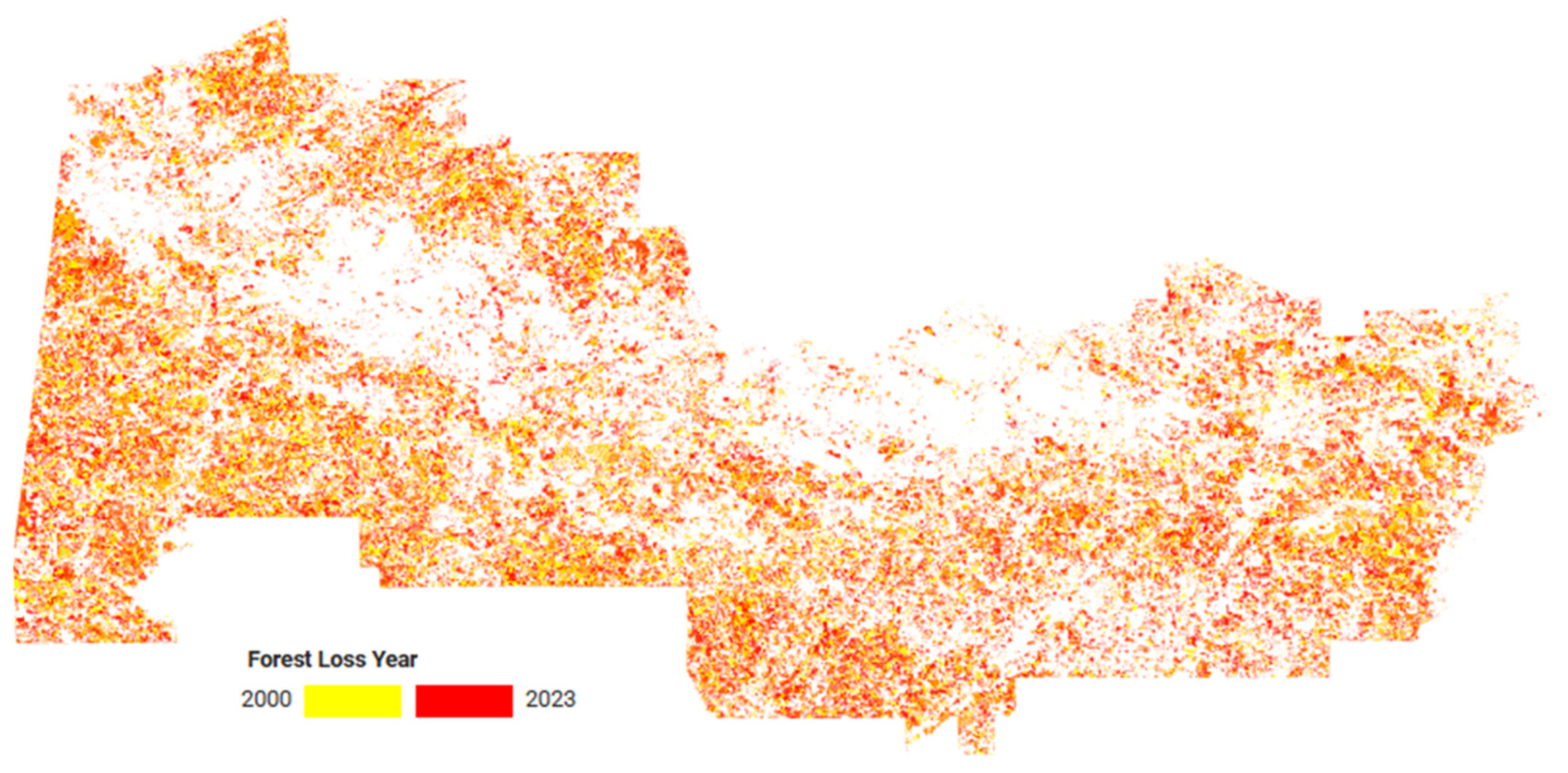

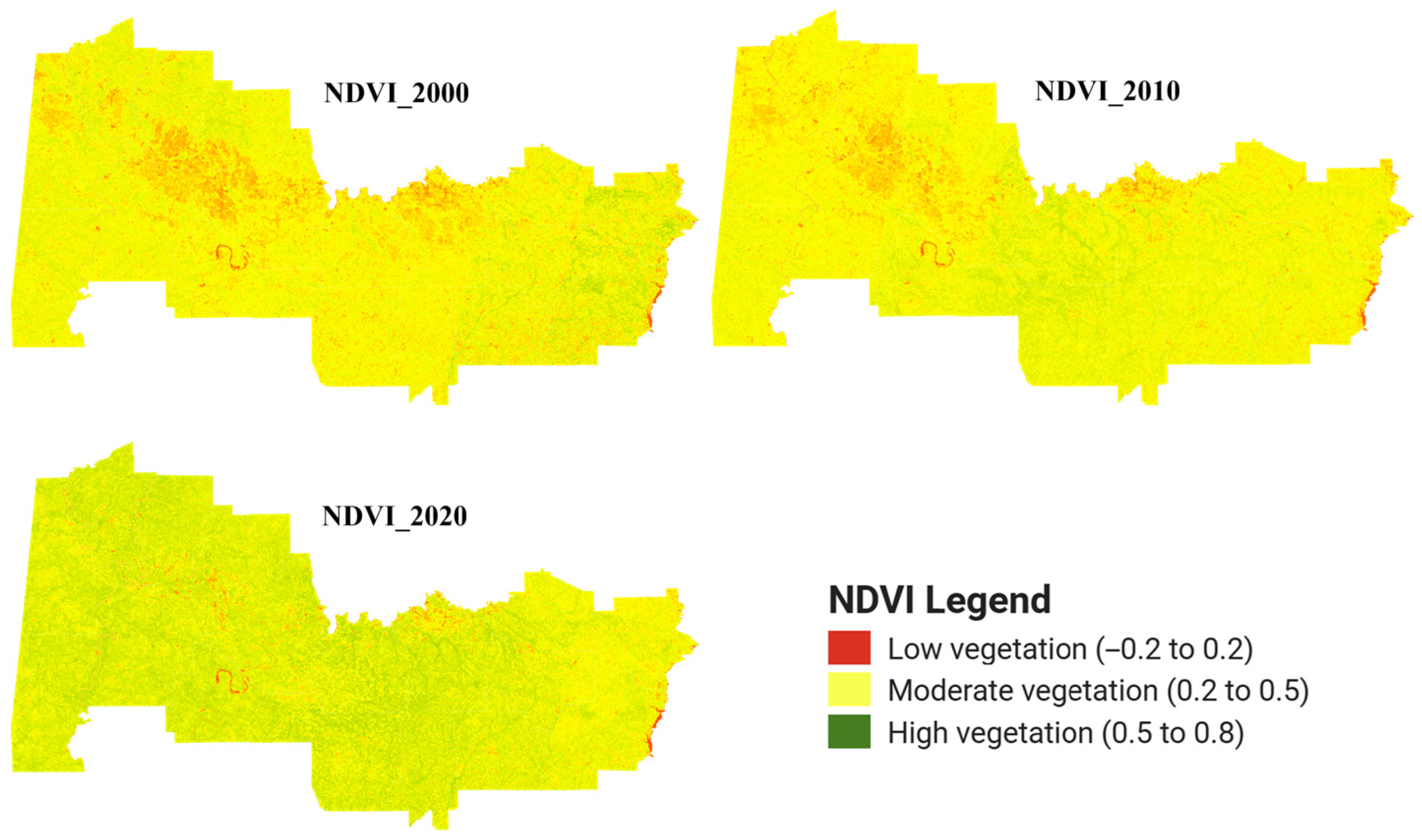

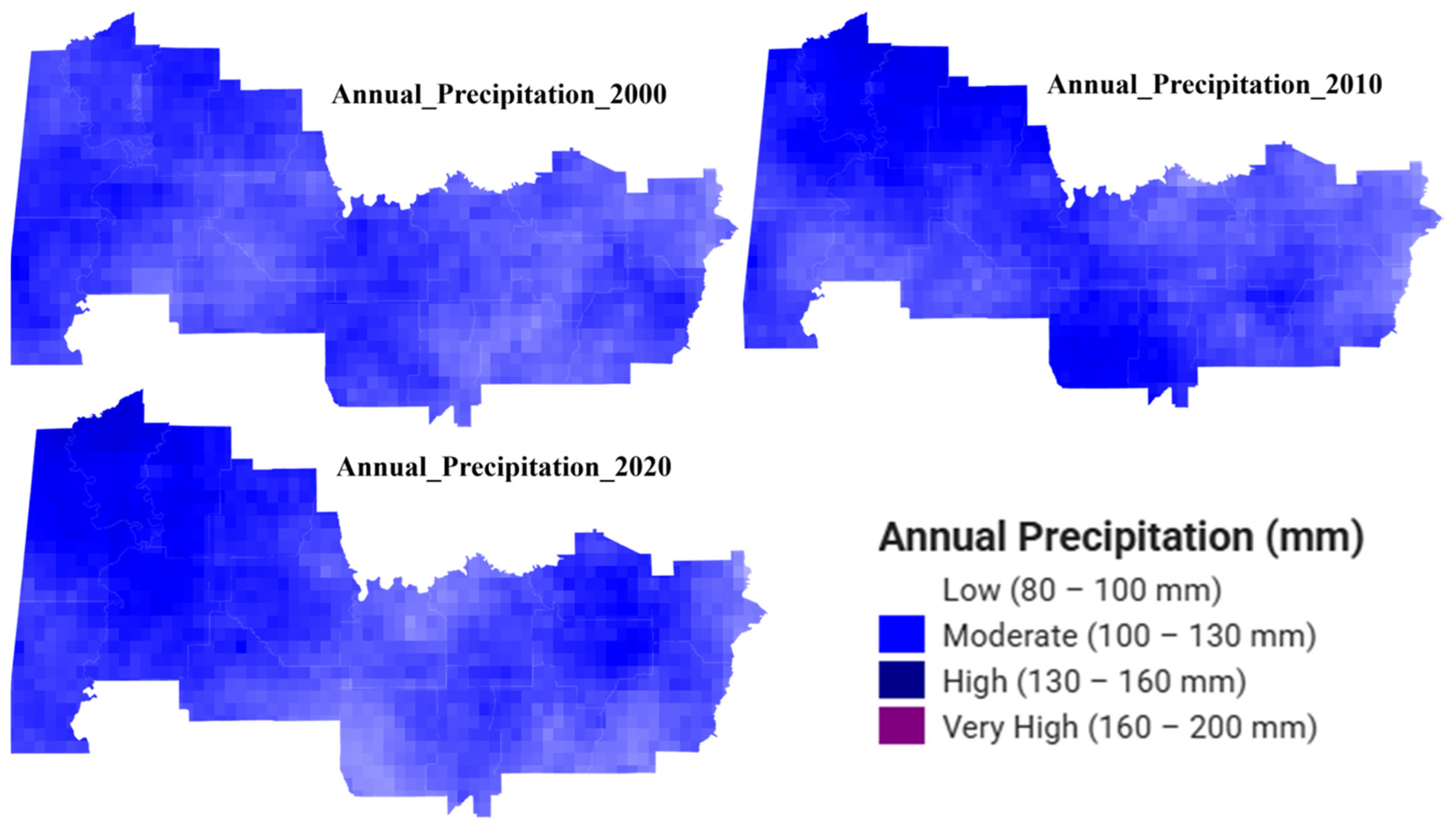


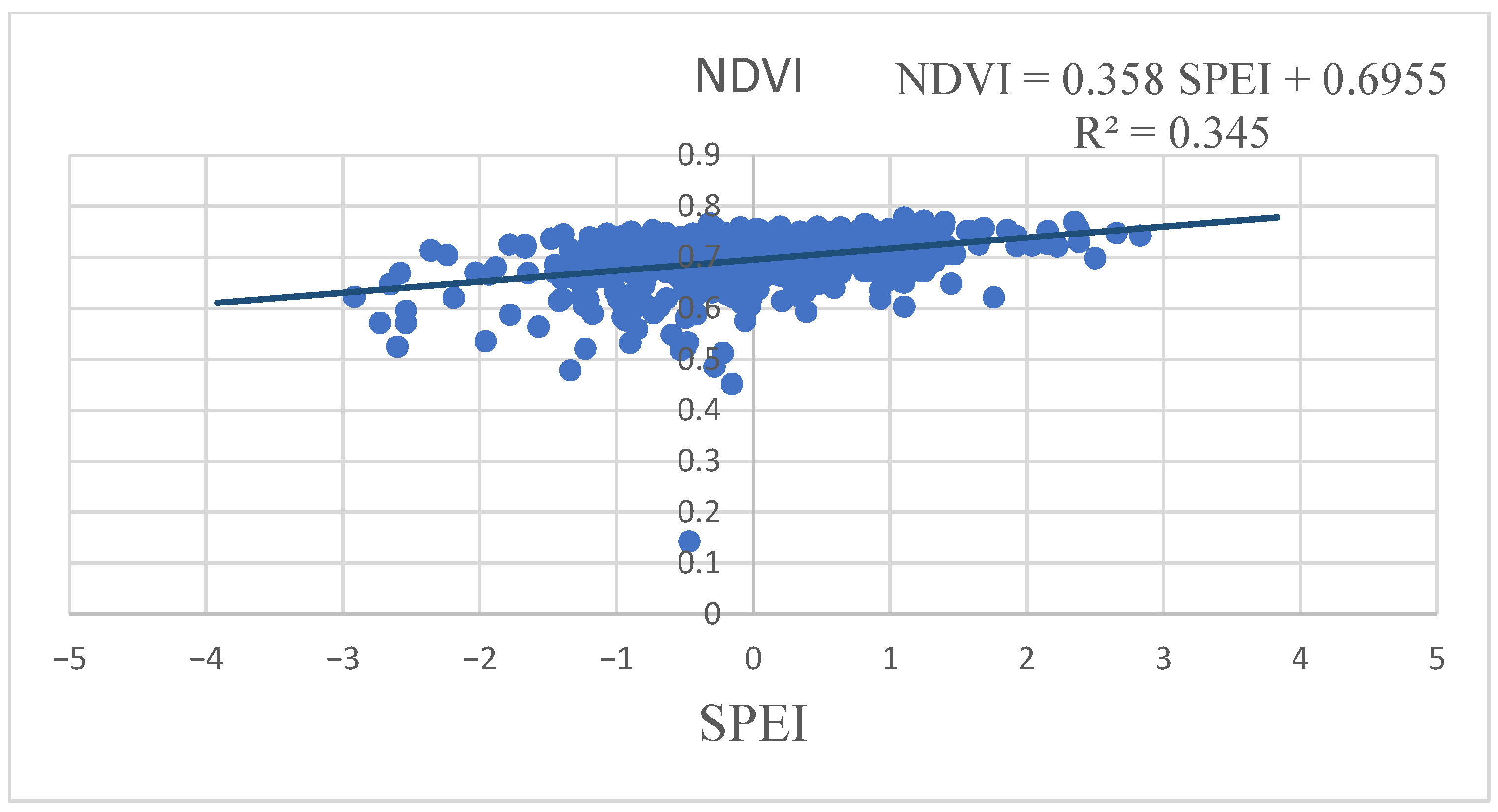

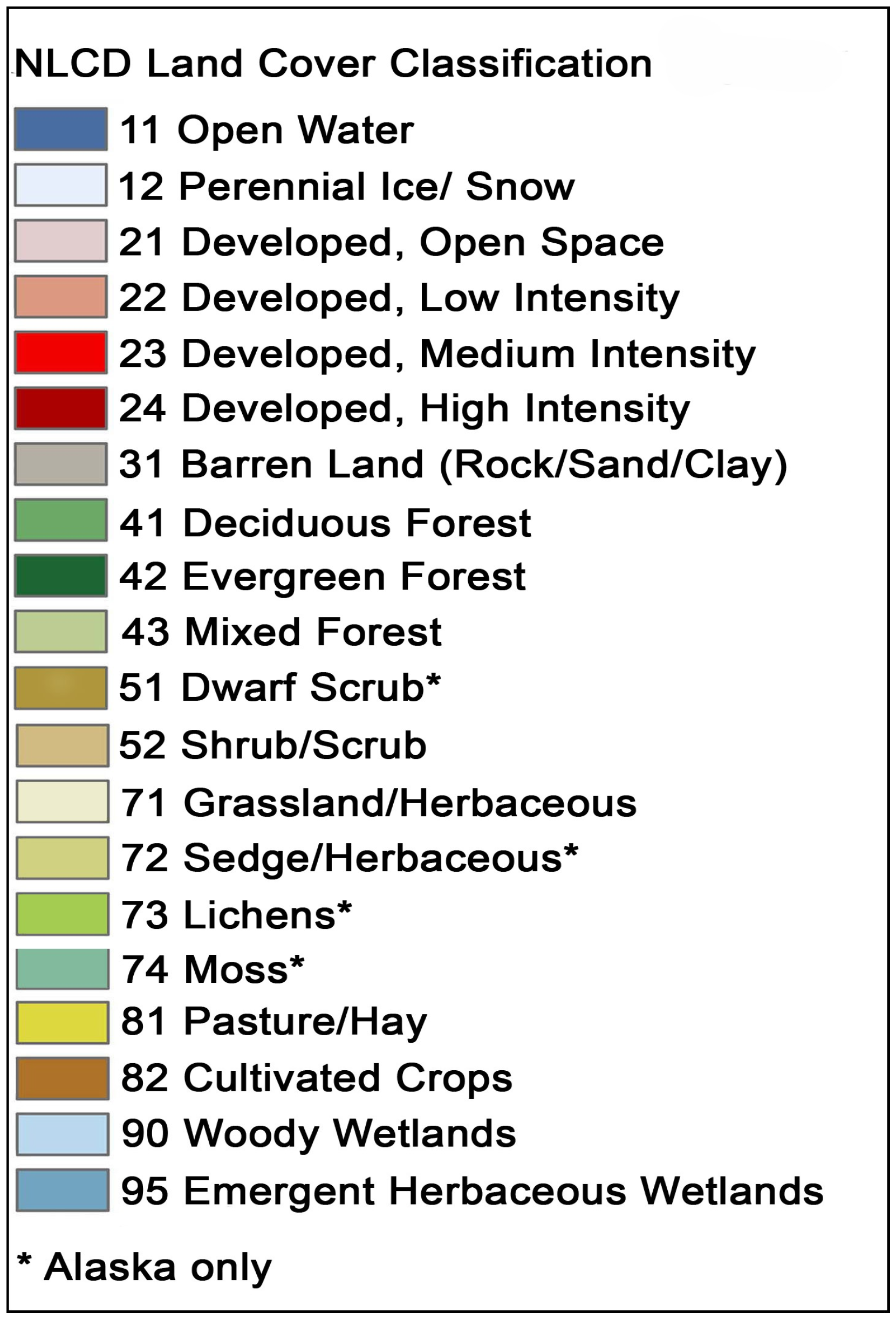
| Pixel Value | Color Table RGB Value | Land Cover Class |
|---|---|---|
| 250 | 0, 0, 0 | No Data |
| 11 | 70, 107, 159 | Open Water |
| 12 | 209, 222, 248 | Perennial Ice/Snow |
| 21 | 222, 197, 197 | Developed, Open Space |
| 22 | 217, 146, 130 | Developed, Low Intensity |
| 23 | 235, 0, 0 | Developed, Medium Intensity |
| 24 | 171, 0, 0 | Developed, High Intensity |
| 31 | 179, 172, 159 | Barren Land (Rock/Sand/Clay) |
| 41 | 104, 171, 95 | Deciduous Forest |
| 42 | 28, 95, 44 | Evergreen Forest |
| 43 | 181, 197, 143 | Mixed Forest |
| 52 | 204, 184, 121 | Shrub/Scrub |
| 71 | 223, 223, 194 | Grassland/Herbaceous |
| 81 | 220, 217, 57 | Pasture/Hay |
| 82 | 171, 108, 40 | Cultivated Crops |
| 90 | 184, 217, 235 | Wood Wetlands |
| 95 | 108, 159, 184 | Emergent Herbaceous Wetlands |
| Degree of Drought | SPI Classes |
|---|---|
| Exceptional wet | SPI > 2 |
| Severe wet conditions | 1 < SPI < 2 |
| Medium wet condition | 0 < SPI < 1 |
| Slight drought | −1 < SPI < 0 |
| Severe drought | −2 < SPI < −1 |
| Exceptional drought | SPI < −2 |
| Land Cover Types | Hectares_2000 | Hectares_2023 | Change_ha | % Change |
|---|---|---|---|---|
| Background/No Data | 3,581,141.04 | 3,581,141.04 | 0 | 0 |
| Open Water | 67,963.77 | 68,096.07 | 132.3 | 0.19 |
| Developed, Open Space | 124,515.27 | 126,036.54 | 1521.27 | 1.22 |
| Developed, Low Intensity | 32,676.84 | 34,085.07 | 1408.23 | 4.31 |
| Developed, Medium Intensity | 10,492.38 | 12,616.83 | 2124.45 | 20.25 |
| Developed, High Intensity | 3302.46 | 4180.86 | 878.4 | 26.6 |
| Barren Land | 6389.64 | 6615.54 | 225.9 | 3.54 |
| Deciduous Forest | 442,049.58 | 363,455.19 | −78,594.39 | −17.78 |
| Evergreen Forest | 889,341.75 | 983,798.64 | 94,456.89 | 10.62 |
| Mixed Forest | 655,043.13 | 625,555.71 | −29,487.42 | −4.5 |
| Shrub/Scrub | 250,503.39 | 260,432.19 | 9928.8 | 3.96 |
| Grassland/Herbaceous | 113,975.1 | 193,803.66 | 79,828.56 | 70.04 |
| Pasture/Hay | 665,392.68 | 577,787.31 | −87,605.37 | −13.17 |
| Cultivated Crops | 77,294.79 | 83,507.4 | 6212.61 | 8.04 |
| Woody Wetlands | 660,494.7 | 643,453.74 | −17,040.96 | −2.58 |
| Emergent Herbaceous Wetlands | 33,435.72 | 49,446.45 | 16,010.73 | 47.89 |
Disclaimer/Publisher’s Note: The statements, opinions and data contained in all publications are solely those of the individual author(s) and contributor(s) and not of MDPI and/or the editor(s). MDPI and/or the editor(s) disclaim responsibility for any injury to people or property resulting from any ideas, methods, instructions or products referred to in the content. |
© 2026 by the authors. Licensee MDPI, Basel, Switzerland. This article is an open access article distributed under the terms and conditions of the Creative Commons Attribution (CC BY) license.
Share and Cite
Ibrahim, S.; El Afandi, G.; Kreye, M.M.; Moustafa, A. Long-Term Spatiotemporal Assessment of Land-Use Change, Drought Stress, and Vegetation Resilience in Alabama’s Black Belt: Implications for Sustainable Agricultural Resource Management. Sustainability 2026, 18, 3702. https://doi.org/10.3390/su18083702
Ibrahim S, El Afandi G, Kreye MM, Moustafa A. Long-Term Spatiotemporal Assessment of Land-Use Change, Drought Stress, and Vegetation Resilience in Alabama’s Black Belt: Implications for Sustainable Agricultural Resource Management. Sustainability. 2026; 18(8):3702. https://doi.org/10.3390/su18083702
Chicago/Turabian StyleIbrahim, Salem, Gamal El Afandi, Melissa M. Kreye, and Amira Moustafa. 2026. "Long-Term Spatiotemporal Assessment of Land-Use Change, Drought Stress, and Vegetation Resilience in Alabama’s Black Belt: Implications for Sustainable Agricultural Resource Management" Sustainability 18, no. 8: 3702. https://doi.org/10.3390/su18083702
APA StyleIbrahim, S., El Afandi, G., Kreye, M. M., & Moustafa, A. (2026). Long-Term Spatiotemporal Assessment of Land-Use Change, Drought Stress, and Vegetation Resilience in Alabama’s Black Belt: Implications for Sustainable Agricultural Resource Management. Sustainability, 18(8), 3702. https://doi.org/10.3390/su18083702