Article

Research on Deicing and Pavement Performance of Spent Coffee Ground Deicing Asphalt Mixtures

1
CCCC Second Highway Consultants Co., Ltd., Wuhan 430056, China
2
School of Civil Engineering, Architecture and Environment, Hubei University of Technology, No. 28, Nanli Road, Hong-Shan District, Wuhan 430068, China
3
State Key Laboratory of Precision Blasting, Jianghan University, No. 8, Sanjiaohu Road, Han-Nan District, Wuhan 430056, China
*
Author to whom correspondence should be addressed.
Sustainability 2026, 18(7), 3305; https://doi.org/10.3390/su18073305
Submission received: 15 February 2026 / Revised: 21 March 2026 / Accepted: 24 March 2026 / Published: 28 March 2026

Abstract

To address the challenges of winter pavement icing and the disposal of organic waste, this study developed a sustained-release deicing filler utilizing biochar derived from spent coffee grounds (SCGs). The material was synthesized through high-temperature carbonization, followed by physical adsorption of chloride salts and surface hydrophobic modification to control release rates. The study made asphalt mixtures and replaced normal mineral filler with the SCG material by volume at ratios of 0%, 50%, 75%, and 100% to test road and deicing performance. Wheel-tracking tests showed that the additive improved high-temperature stability and dynamic stability went up by 27.04% at the 75% replacement level. Salt dissolving created voids and slightly lowered water stability at high dosages, but all performance numbers still met the current engineering rules. Rutting slab tests at −5 °C showed the 100% replacement mix cut snow coverage to 11.43% in 60 min and proved it works for deicing. Pull-out tests measure the bond strength between ice and pavement at −5 °C, −7 °C, and −9 °C. The SCG deicing material weakens ice sticking and the bond strength for the 100% group at −5 °C was 0.35 kN, which is about 57.8% lower than the control asphalt. The bond strength of the deicing mix at −9 °C was still lower than the normal mix at −5 °C. This big drop in stickiness means the pavement stops ice from packing hard and makes mechanical removal easier. This study shows that the prepared deicing materials exhibit excellent sustained-release performance and snow-melting efficiency while ensuring satisfactory road performance. SCG deicing materials can effectively reduce snow accumulation on road surfaces in winter, lower the difficulty of ice-layer removal, and realize the sustainable utilization of SCGs.

1. Introduction

In winter low-temperature environments, the deterioration of skid resistance caused by road icing is the primary cause of severe traffic accidents [1,2,3]. Currently, common road-deicing and snow-removal methods mainly include mechanical cleaning, spreading snow-melting agents, and electric or geothermal heating. Although mechanical cleaning and spreading snow-melting agents are common, they exhibit obvious time lags and limitations. The operation process easily damages the pavement structure and has low efficiency, while the excessive use of traditional chloride salts will accelerate the corrosion of steel reinforcements in bridges and the scaling of concrete pavements, significantly shortening the service life of transportation infrastructure. Furthermore, high concentrations of salt runoff from conventional deicing methods lead to increased soil salinity and osmotic stress in right-of-way vegetation, causing salt burn and long-term ecological shifts. The resulting salt infiltration into groundwater and nearby water bodies also poses a persistent threat to local aquatic ecosystems and water quality [4,5,6]. While electric and geothermal deicing methods are effective, the construction and operation costs are high, and they are mostly limited to airport runways and key transportation hubs [7,8,9]. In contrast, deicing asphalt pavement gradually becomes a research hotspot for solving road icing problems due to advantages such as no need for additional energy input and good compatibility with traditional pavement construction technologies [10,11].
The salt carrier is the core of deicing asphalt pavement. Currently, commonly used carriers are mostly natural minerals such as zeolite, volcanic rock, and diatomite, or synthetic porous materials [12,13]. Although these materials possess certain adsorption capabilities, they suffer from issues such as simple pore structures, limited loading capacity, and uncontrollable sustained-release performance. More importantly, the mining and processing costs of natural mineral resources are high, and they do not possess sustainable ecological recycling properties. Therefore, searching for a new carrier with extensive sources, low cost, and excellent pore structure to achieve efficient salt loading and long-term sustained release is the key to further improving the performance of deicing asphalt pavement and reducing engineering costs and environmental impacts.
Biochar attracts attention in the field of road engineering due to its unique pore structure and surface chemical properties. Studies by Zhao, Kumar, and Qin et al. indicate that biochar improves the rutting resistance of asphalt mixtures [14,15,16]. Ma investigates the interaction mechanism between biochar and asphalt mixtures using scanning electron microscopy and Fourier transform infrared spectroscopy, and finds that the fibrous and porous structure of biochar facilitates the formation of a skeleton in asphalt, thereby improving asphalt performance [17]. Among numerous biomass precursors, spent coffee grounds (SCGs) contain abundant organic matter such as cellulose, hemicellulose, and lignin, and possess a natural high carbon content, which makes them high-quality precursors for preparing high-performance porous carbon materials [18,19]. As a byproduct of a beverage with huge global consumption, SCGs are primarily sourced from the global coffee beverage industry, including coffee shops, instant coffee factories, and households, the annual output of SCGs exceeds 9 million tons [20,21]. Direct landfilling or discarding not only wastes resources but also causes secondary pollution, as substances such as polycyclic aromatic hydrocarbons contained within can potentially infiltrate groundwater and soil [22,23]. Arulrajah et al. investigated the use of SCGs mixed with fly ash, slag, and Portland cement as structural fill materials for road bases or embankments [24,25,26], and Skubiszewska et al. converted SCGs into porous carbon materials with hierarchical pore structures through catalytic carbonization and activation treatments, finding that their surfaces possess fewer polar functional groups and better compatibility with asphalt mastic [27]. However, few studies apply biochar prepared from SCGs as a snow-melting salt carrier in deicing asphalt pavements. SCG offers unique advantages as a material for road engineering. It possesses a naturally high carbon content and a complex lignocellulosic structure, making it an ideal precursor for high-performance biochar. The abundant pores formed in SCG biochar after activation hold promise in solving the problem of low loading capacity of traditional mineral carriers, and its lower surface polarity results in superior compatibility with asphalt mastic compared to hydrophilic minerals. Utilizing SCGs as a deicing salt carrier not only provides a more environmentally friendly alternative to mineral carriers, but it also achieves a circular economy through waste utilization. This method effectively sequesters carbon within the pavement structure, reducing carbon emissions from waste and thus enhancing the ecological value of sustainable transportation infrastructure.
This study proposes using SCGs as a precursor to prepare porous carbon carriers and develops a novel deicing material through the adsorption of snow-melting salts. It uses the equal-volume replacement method to replace mineral filler in asphalt mixtures with the deicing material, and it investigates the preparation process, road performance, and snow-melting performance of the deicing material. This study not only provides a long-term and economic active deicing solution for road engineering and enhances road traffic safety, but it also realizes the resource regeneration and utilization of solid waste, which possesses significant engineering application value and ecological environmental significance.

2. Raw Materials and Test Methods

2.1. Raw Materials

The asphalt selected for this study is 70# Grade A road petroleum asphalt produced by China Petroleum Chemical Corporation. Table 1 presents the properties of the 70# asphalt. The AC-13 asphalt mixture is adopted for the tests, and its gradation composition is shown in Table 2. The optimum asphalt content is determined to be 4.6% through the standard Marshall mix design method, and the mass ratio of mineral filler in the asphalt mixture is 4.8%.

2.2. Test Methods

2.2.1. Preparation of Deicing Material

In this study, the carrier of the deicing material was prepared with reference to the research method reported by Liu et al. [28], and the specific operation protocol is as follows: The spent coffee grounds (SCGs) were dried at 80 °C for 6–12 h to remove moisture and then impregnated with a 20 wt% FeCl3 solution at a mass ratio of 1:1. The sample was placed in a tube furnace, heated to 700 °C at a rate of 10 °C/min under argon protection, and held at this temperature for 2 h. The resulting carbonized material was soaked in a 15 wt% hydrochloric acid solution for 24 h, washed with water until neutral, filtered, and dried to obtain the carbonized SCG.
Amounts of 10, 30, 50, 70, and 90 g of carbonized SCGs were separately added to a supersaturated sodium chloride solution. The mixture was stirred at 1000 rpm for 10 h. After completion, the resulting mixed solution was filtered and placed in an oven at 80 °C to dry for 12 h. Subsequently, the sodium chloride-adsorbed carbonized SCG was added to a silane coupling agent (KH-570) for surface hydrophobic modification. The SCG material and the silane coupling agent were mixed in a 100:1 mass ratio in an anhydrous ethanol solution and stirred at 500 rpm for 2 h at 60 °C, and it was then ground to 200 mesh to obtain five types of SCG deicing materials with different ratios.

2.2.2. Performance Testing Methods of Deicing Material

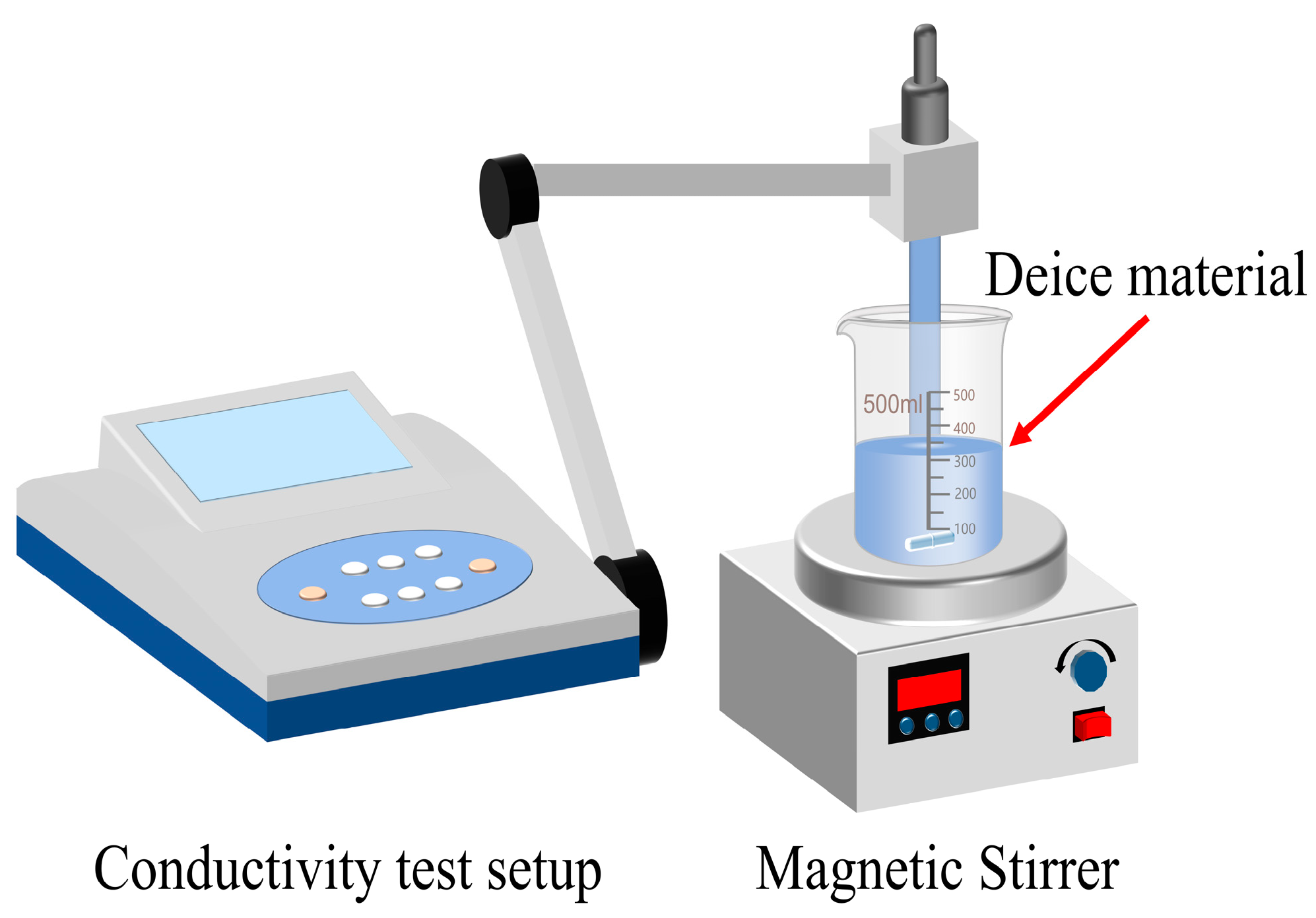
The key substance of the deicing material is chloride salt. As a strong electrolyte, it rapidly produces chloride ions after dissolving in water, making the solution conductive. The physical significance of conductivity is the electron transport capability in a solution or other dielectrics [29]. Therefore, conductivity reflects the content of dissolved salt in the solution. To evaluate the adsorption and sustained-release performance of carbonized SCG for sodium chloride, this study uses a DDS-12DW laboratory conductivity meter produced by Shanghai Bante Instrument Co., Ltd. (Shanghai, China) to measure the solution conductivity. During the measurement, 1 g of each prepared SCG deicing material is taken and added to 150 mL of distilled water. The mixture is continuously stirred at 200 rpm at 25 °C for 100 min, and the conductivity meter is used to measure the change in solution conductivity, as shown in Figure 1.

2.2.3. Road Performance Testing of Deicing Asphalt Mixtures

The study used SCG deicing material to replace mineral filler by volume at ratios of 0%, 50%, 75%, and 100% to make asphalt mixtures. We made the samples using the generally followed Method T0703-2011 in the Standard Test Methods of Bitumen and Bituminous Mixtures for Highway Engineering (JTG E20—2011) [30]. Specific optimizations were implemented to address potential practical hurdles associated with the high porosity and large specific surface area of SCG biochar. At higher replacement ratios, the excessive absorption of asphalt binder by the porous biochar can lead to a balling effect or agglomeration, which reduces the homogeneity of the mixture. To mitigate these issues, the mixing sequence was modified: The SCG deicing filler was first dry-mixed with the heated aggregates to ensure uniform dispersion before adding the asphalt binder. Furthermore, the total mixing time was extended by 30–40 s to ensure a complete and uniform coating of the binder. To compensate for the oil absorption effect within SCG biochar and ensure sufficient bonding between asphalt and aggregates, this study increased the asphalt content in the asphalt mixture at a 100% replacement ratio by 0.1% by testing the volumetric properties of the samples. Following preparation, the study conducts tests to check performance and these included immersion Marshall and freeze–thaw splitting for water stability along with low-temperature bending for cracking resistance and wheel tracking for high-temperature stability.

2.2.4. Deicing Performance Testing of Deicing Asphalt Mixtures

Snow-Melting Test: To evaluate deicing performance relative to the SCG replacement ratio, tests were conducted at −5 °C, with the temperature selected based on representative winter icing conditions in Hubei Province, China [31]. Standard rutting slabs with varying SCG content were conditioned at −5 °C for 12 h to achieve thermal equilibrium. A 5 cm snow layer was applied to the slab surface, this thickness was optimized through preliminary trials to ensure reliable visual quantification of the melting process. While maintaining a stable ambient temperature, the melting progress was monitored by recording the area of melted snow over time.
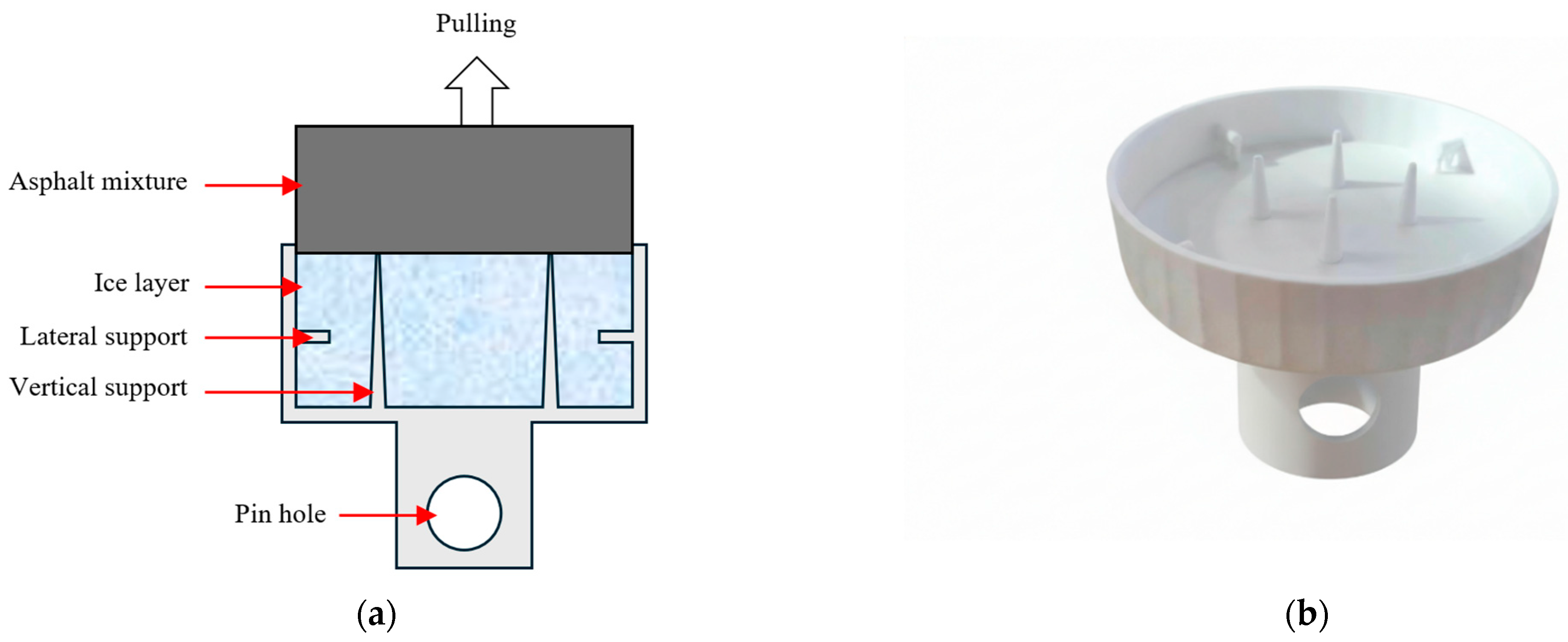
Pull-out Test: Since no suitable fixture currently exists to measure the bond strength between Marshall specimens and an intact ice layer, this study utilizes a custom-designed mold, as shown in Figure 2. Standard Marshall specimens containing varying dosages of SCG deicing material was placed on this mold and filled with water. Subsequently, the assemblies are frozen in environments at −5 °C, −7 °C, and −9 °C for 6 h. Finally, the specimens are secured to a WDW-20E micro-electronic universal testing machine produced by Jinan Nere Testing Machine Co., Ltd. (Shandong, China) using pins to conduct the pull-out test. The loading rate for the pull-out test was set at 1 mm/min. To minimize the influence of ambient temperature on the bond strength, the time elapsed from removing the specimen from the freezing environment to the initiation of the pull-out test was controlled within 30 s.
As shown in Figure 2, the Marshall specimen is placed on a self-designed mold via vertical support positioned slightly below the surrounding walls. This ensures that when the mold is filled with water, the Marshall specimen just touches the water surface, and the ice layer thickness is 10 mm for each test. Lateral supports are used to secure the ice layer. Pin holes allow for fixation to the testing machine via pin.

3. Results and Discussion

3.1. Performance Testing of Deicing Material

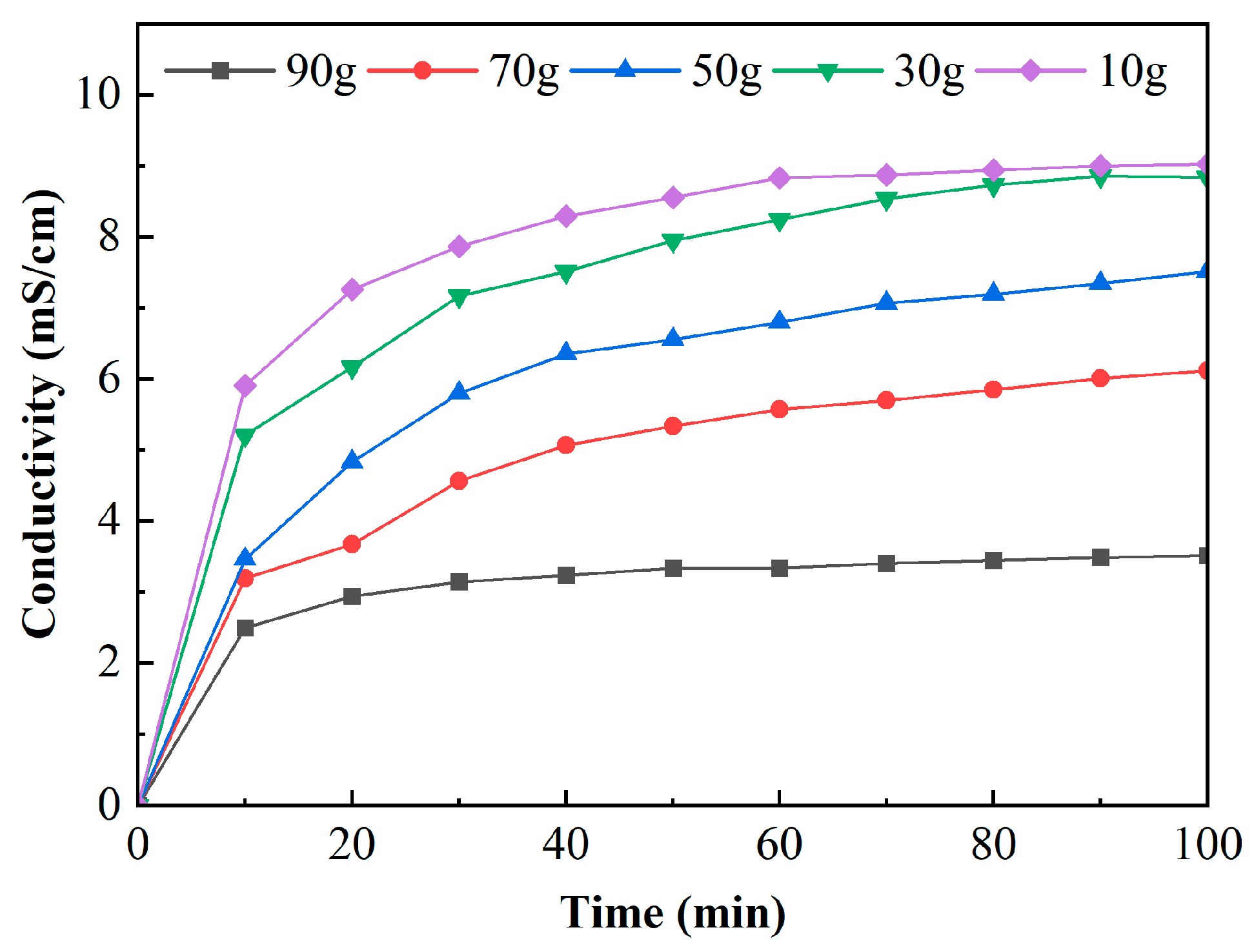
The variation curves of electrical conductivity over time for deicing materials with different SCG biochar ratios in 25 °C distilled water are shown in Figure 3. The change in conductivity directly reflects the release rate and total amount of sodium chloride released from the material into the aqueous solution.
As can be seen from Figure 3, the conductivity trends of the five groups of samples are basically consistent, all exhibiting a distinct “two-stage” release characteristic. In the initial stage of testing, the sodium chloride attached to the outer surface and large pores of the SCG biochar have a large contact area with water. It rapidly dissolves and ionizes into Na+ and Cl upon contact, causing a sharp increase in the ion concentration of the solution. This forms the rapid salt release stage of the deicing material. As time passes, the growth rate of conductivity gradually slows down and tends to stabilize. This phenomenon is attributed to two factors: First, the hydrophobic film formed by the surface modifier on the material surface partially blocks the rapid penetration of water molecules, acting as a sustained release barrier. Second, the salt deeply buried inside the microporous structure of the SCG biochar diffuses outward at a slower speed due to the influence of pore resistance and concentration gradient. This achieves the long-term sustained release of salt, forming the stable sustained-release stage of the deicing material.
Five curves demonstrate that the mixing ratio of SCG biochar with saturated salt solution significantly alters the final salt concentration and release capacity. Consequently, increasing the biochar dosage leads to a sustained decrease in conductivity. The lowest reading of 3.51 mS/cm was recorded when using 90 g of SCG biochar. The core mechanism of the deicing asphalt pavement is lowering the freezing point of the pavement surface through salt release. Continually reducing the amount of SCG biochar added to the saturated sodium chloride solution allows a unit mass of SCG biochar to absorb more chloride salt. When the added amount of SCG biochar is reduced to 30 g, the solution conductivity reaches 8.5 mS/cm. If the SCG biochar content is further reduced, the conductivity of the prepared deicing material increases only partially, indicating that the salt adsorption capacity of the SCG biochar has reached its upper limit. The higher initial conductivity in these cases also suggests that the excess salt is merely simply attached to the carrier surface, resulting in poor sustained-release effects. Therefore, comprehensively considering the effectiveness and durability of salt release, this study determines the added 30 g as the optimal preparation proportion for the SCG deicing material. Consequently, the SCG deicing material prepared with this proportion is selected for the subsequent tests on the road performance and deicing performance of asphalt mixtures.

3.2. Road Performance

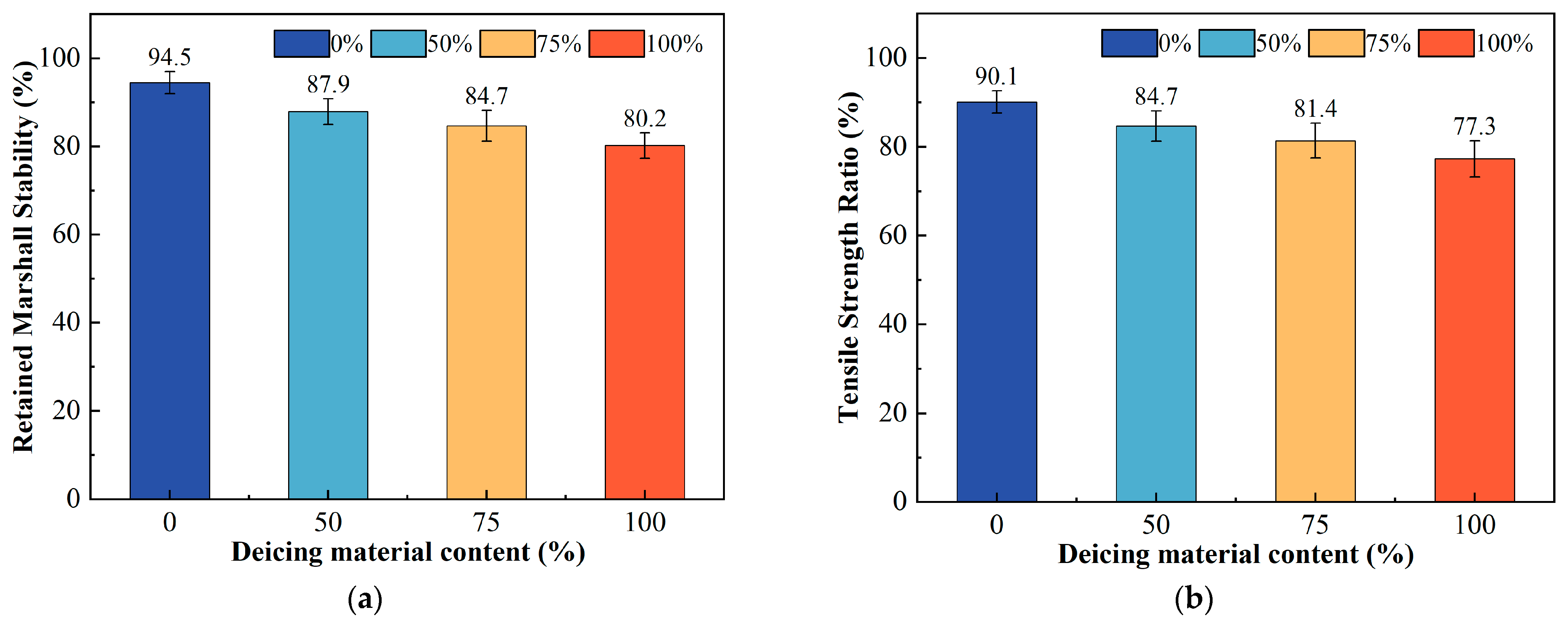
During operational service, asphalt pavements endure traffic stresses and rainwater scour, which keeps the salt-storing components in a persistently moist environment. The resistance of the pavement to water damage is typically characterized by its immersion residual stability and freeze–thaw splitting tensile strength. To investigate how the dosage of deicing material influences water stability, Marshall specimens were fabricated using the optimal SCG deicing material. The mineral powder was substituted by volume at ratios of 50%, 75%, and 100%. As the 25% substitution ratio yields inadequate salt release and cannot deliver effective deicing, tests for this ratio were not conducted. Simultaneously, a control set with 0% substitution was subjected to both immersion Marshall and freeze–thaw splitting tests. The results are shown in Figure 4.
According to the results, the incorporation of deicing materials exerts a negative influence on the water damage resistance of the asphalt mixture. Compared with the control group, the residual stability values after water immersion of the specimens with substitution rates of 50%, 75%, and 100% are reduced by 6.6%, 9.8%, and 14.3%, respectively. The freeze–thaw splitting tensile strength also exhibits a declining trend, with decreases of 5.4% and 8.7% observed in the low-dosage groups. Notably, the tensile strength ratio (TSR) of the full-substitution group is only 77.3%. Such degradation is mainly governed by the porosity, which is identified as the dominant factor controlling the variation in TSR. According to research by Li et al. [32] and Xu et al. [33], when the mixture is immersed in water, the salts in the deicing material dissolve, creating additional microscopic voids within the asphalt mixture. This process increases the interconnected porosity, facilitates water penetration, and consequently weakens the adhesion between the asphalt binder and the aggregates, leading to a decrease in TSR and residual stability.
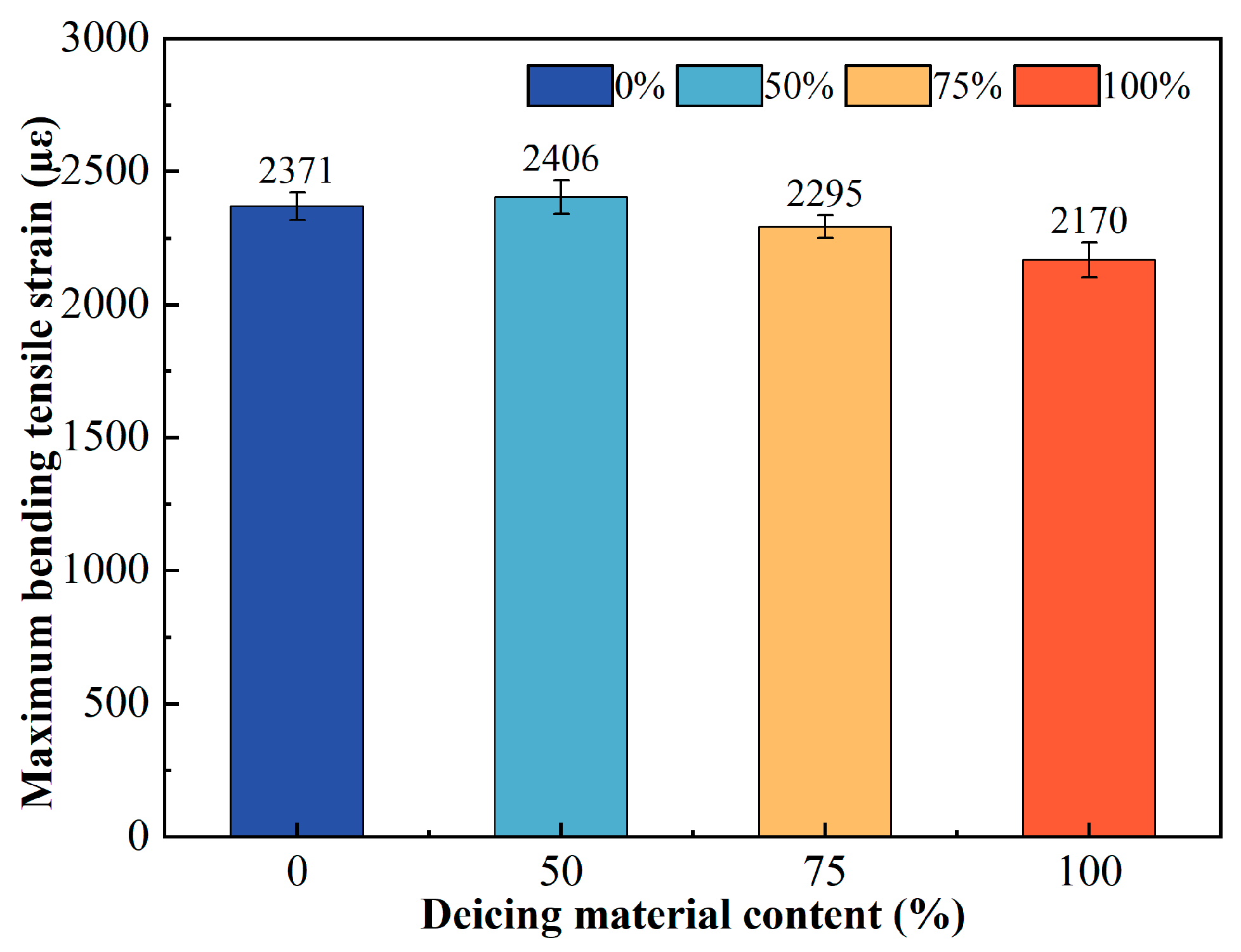
The main function of the deicing material is to achieve active deicing and snow-melting effects on the asphalt pavement surface in low-temperature environments [34]. It is very necessary to study the impact of deicing materials on the low-temperature performance of asphalt pavements. Low-temperature flexural failure strain is an important indicator reflecting the low-temperature deformation resistance of asphalt pavement. The low-temperature bending test results of asphalt mixtures incorporated with different proportions of deicing material are shown in Figure 5.
Figure 5 shows that at a 50% replacement level, the deicing asphalt mixture exhibits better low-temperature flexural strain than the control group containing standard mineral powder. The observed enhancement is mainly attributed to the interfacial strengthening effect induced by the silane coupling agent employed to modify SCG biochar. During the modification process, the silane coupling agent undergoes hydrolysis and condensation, generating stable Si–O–Si covalent linkages on the biochar surface. Meanwhile, its organic functional groups interact chemically with the asphalt binder, forming a molecular bridge between the inorganic biochar and the organic asphalt matrix. This improved interfacial bonding promotes more effective stress transmission within the asphalt mastic and effectively suppresses the initiation and growth of microcracks under low-temperature flexural loading [35].
However, at higher concentrations, because SCG biochar is highly porous, its specific surface area vastly exceeds that of conventional fillers. This leads to a dramatic expansion of the total filler surface area, causing the biochar to absorb more of the asphalt light fractions. As a result, the volume of effective asphalt available to bind the aggregates is diminished. This makes the asphalt mixture hard and brittle, making it more prone to brittle fractures at low temperatures, thereby causing a decrease in the failure strain value. Meanwhile, the deicing material is loaded with a large amount of sodium chloride crystals. An excessively high dosage increases the rigid brittleness of the asphalt mixture, making it easy to form stress concentrations and induce microcrack propagation under stress at low temperatures.
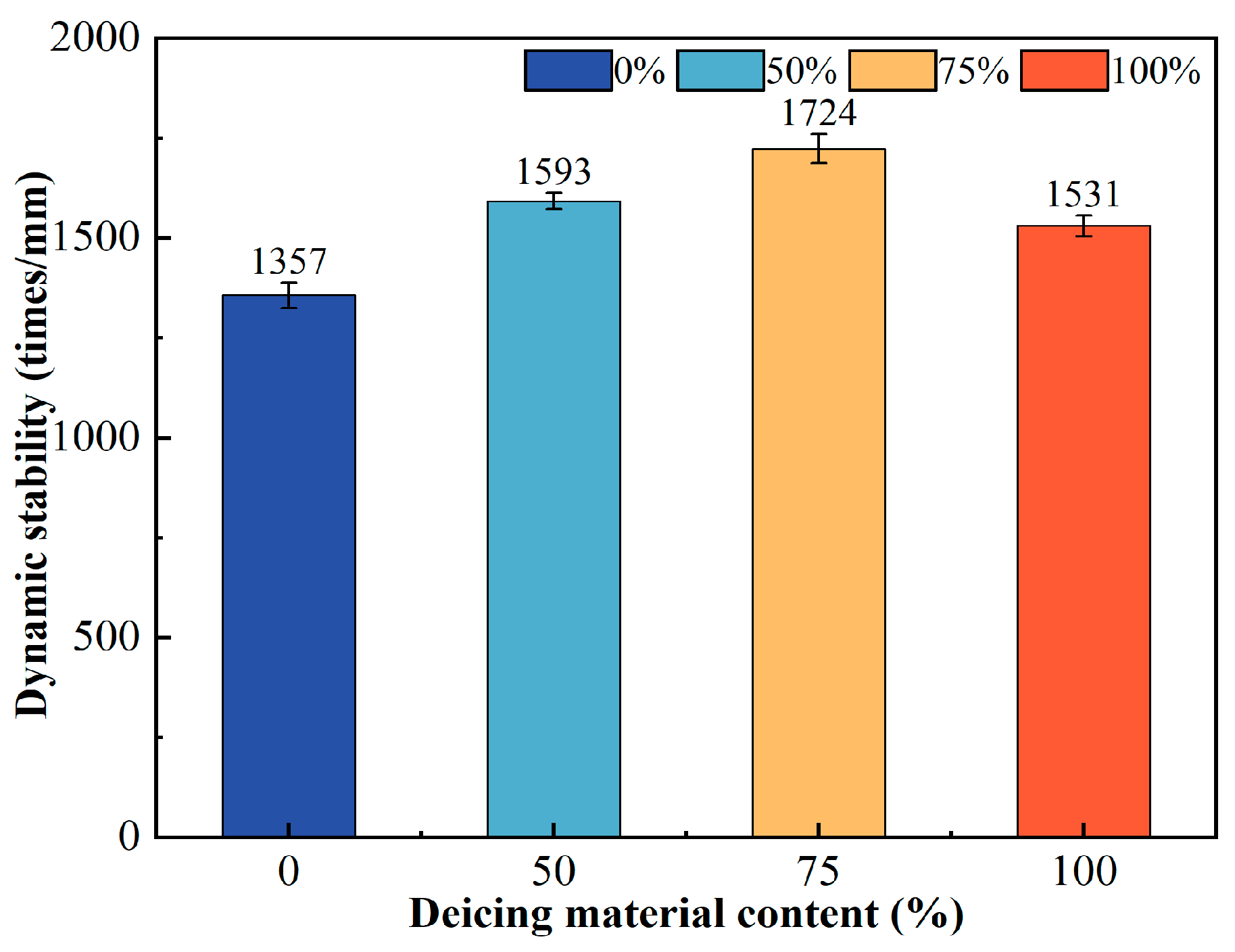
The wheel tracking test results of asphalt mixtures incorporated with different proportions of deicing material are shown in Figure 6.
Figure 6 illustrates that incorporating deicing material enhances the dynamic stability (DS) relative to the control group. As the dosage rises, the DS exhibits a trend of initial growth followed by a reduction. Specifically, at a 75% replacement level, the DS peaks at 1724 times/mm, outperforming the ordinary mixture by 27.04%. This enhancement is primarily attributed to the salt compounds within the additive, which elevate the softening point and stiffness of the asphalt mastic, consequently boosting the mixture rutting resistance.
Compared to commercial deicing particles like MFL and LX II, which often lead to a significant decline in Marshall stability and rutting resistance at high replacement ratios, there are also cases where the road performance does not meet the standards [36]. Although the Marshall stability of SCG still shows a decreasing trend, it still meets the road performance requirements at high dosage levels, and its rutting resistance is improved.

3.3. Snow-Melting Performance

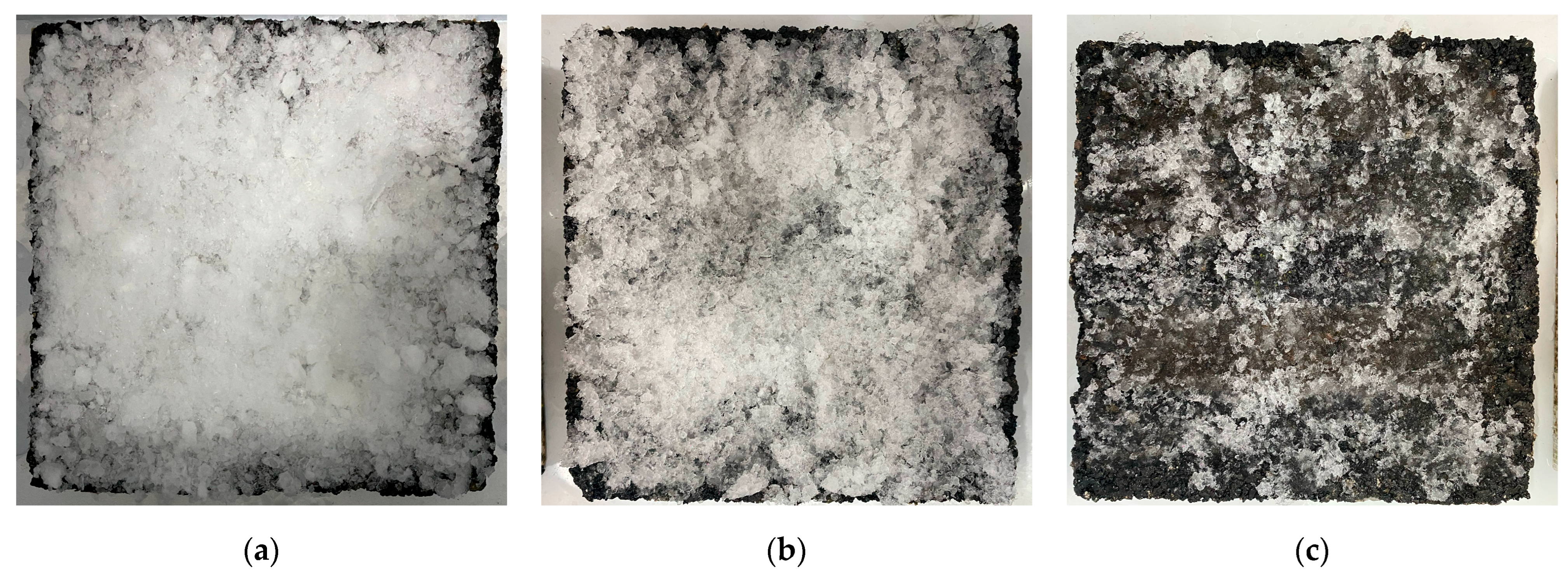
The ice-melting rate of the deicing asphalt pavement is the most intuitive indicator reflecting the snow-melting performance of the deicing material. In this study, rutting slab specimens with different dosages are placed in a −5 °C environment for 12 h to ensure a uniform internal temperature. Subsequently, the surfaces of the specimens are covered with a 5 cm thick layer of snow. Photographs of the snow on the rutting slab surfaces are taken at regular intervals, as shown in Figure 7.
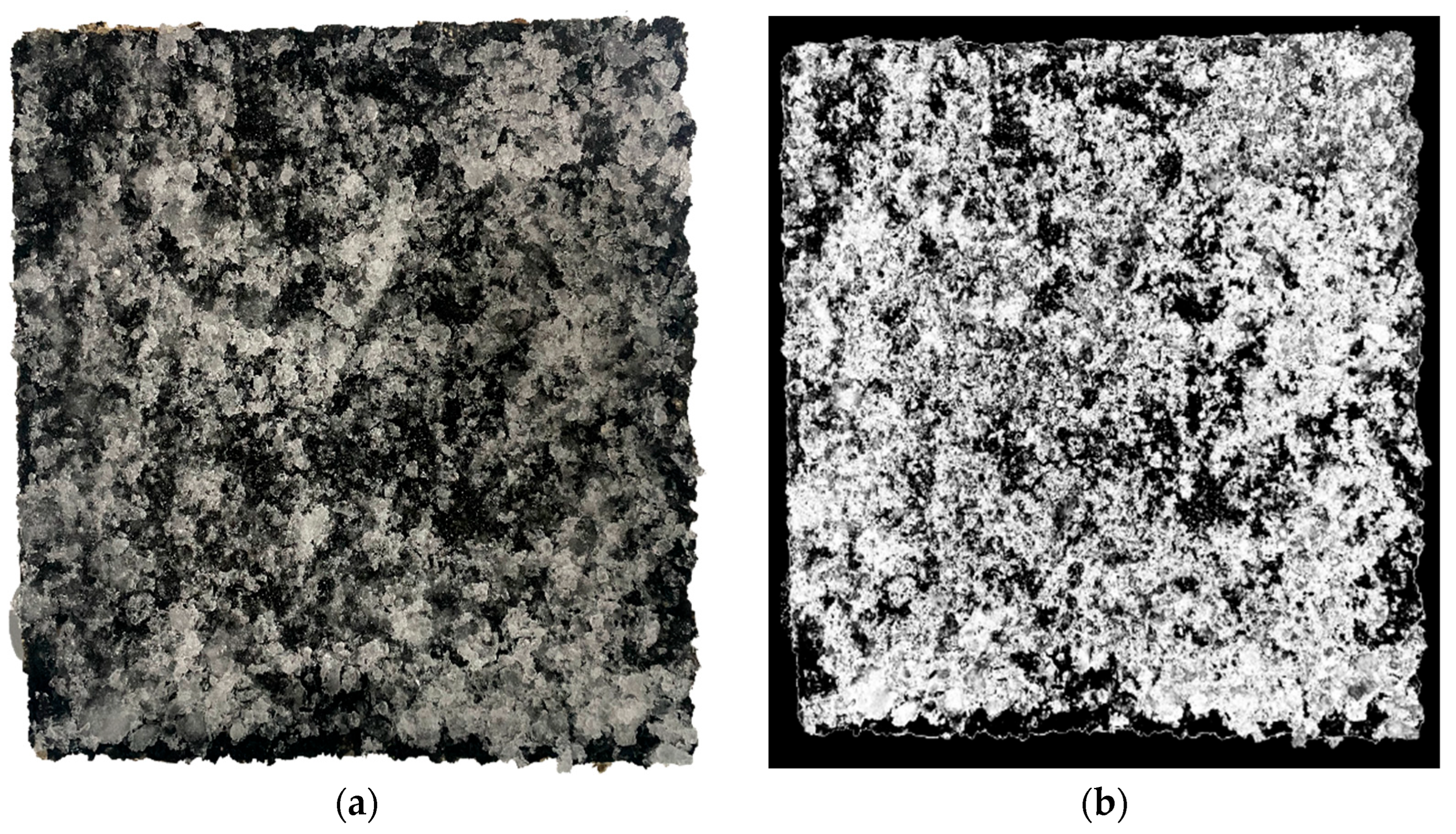
The image processing software Adobe Photoshop 2025 is employed to calculate the snow-covered area on the rutting slab specimens, as illustrated in Figure 8. After the background of the snow-covered rutting slab is removed, the surface snow is selected using the color selection tool. The selection result is shown in Figure 8b. The selected pixels are processed to calculate the snow coverage area for specimens with different dosages, and the results are presented in Figure 9.
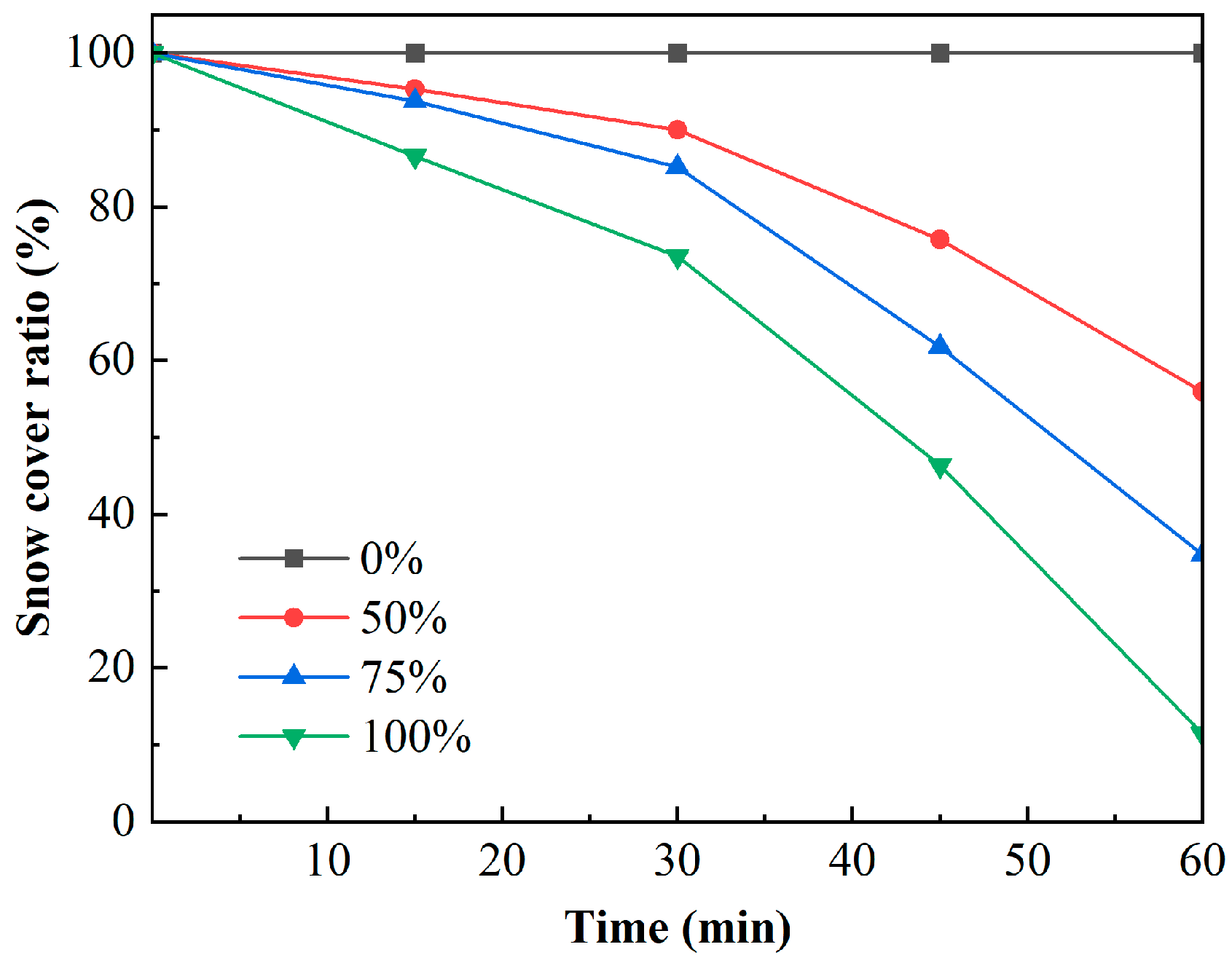
The variation in the snow coverage ratio on the surfaces of deicing asphalt mixture slabs with different dosages over time is shown in Figure 9. During the test period, the snow coverage ratio of the rutting slab with 0% dosage remains at 100%, confirming that natural melting of snow does not occur at the test ambient temperature. Thus, the snow-melting effect is mainly attributed to the incorporation of the deicing filler. With the increase in dosage, the snow-melting efficiency improves significantly. In the initial stage of the test, the snow-melting rates of all dosage groups are relatively slow, which is associated with the physical processes of salt migration from the interior of the carrier to the pavement surface and of the endothermic dissolution of the salt. After 30 min of testing, the high-dosage groups exhibit significant accelerated snow-melting characteristics. In particular, for the experimental group with 100% replacement of mineral filler, the snow coverage ratio decreases from 100% to 11.43% within 60 min, basically achieving the pavement snow removal objective. In contrast, the residual snow ratios for the 50% and 75% dosage groups at 60 min are 55.94% and 35.46%, respectively.
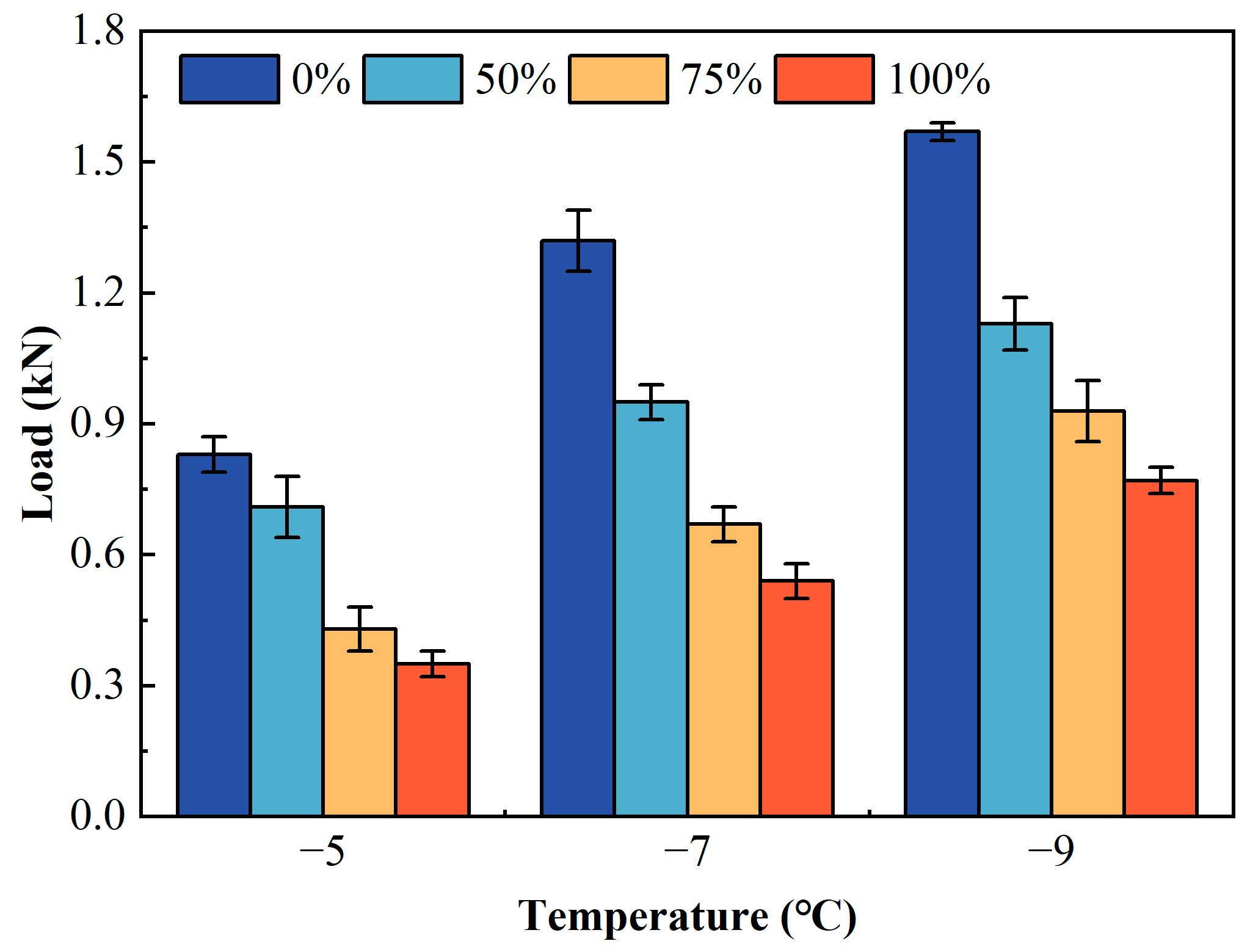
To quantify the influence of the SCG deicing material on the bond strength between the asphalt mixture and the ice layer, this study performs pull-out tests using a custom-designed mold and a WDW-20E micro-electronic universal testing machine at a loading rate of 1 mm/min. The bond strength results at different temperatures are shown in Figure 10.
As shown in Figure 10, at the three test temperatures of −5 °C, −7 °C, and −9 °C, the bond strength between the asphalt mixture and the ice layer gradually decreases with the increase in SCG deicing material dosage. Taking the ambient temperature of −5 °C as an example, the bond strength of the asphalt mixture with 100% dosage is 0.35 kN, representing a reduction of approximately 57.8% compared to the 0.83 kN of the ordinary asphalt mixture. This indicates that the SCG deicing material significantly reduces the adhesion strength between the ice layer and the pavement surface, making it easier to detach under mechanical clearing or vehicle rolling.
With the decrease in temperature, the bond strength between the asphalt mixture and the ice layer increases significantly. The bond strength of the ordinary asphalt mixture at −9 °C is 1.57 kN, which is 1.89 times higher than at −5 °C. This suggests that the difficulty of road deicing rises exponentially as the temperature drops. Notably, the bond strength of the deicing asphalt mixture with 100% dosage at −9 °C is 0.77 kN, which is lower than that of the ordinary asphalt mixture at −5 °C. This shows the effectiveness of the SCG deicing material, which can reduce the deicing difficulty of asphalt pavement in severe cold environments to the level of ordinary low temperatures.
The bond strength between asphalt mixture and ice layers weakens primarily due to the active slow-release effect of SCG deicing material on salts. The salt release process forms a microscopic meltwater film between the pavement and ice layer, disrupting both the mechanical interlocking and chemical bonding between ice and asphalt surfaces. This means SCG deicing materials effectively prevent snow from compacting into ice under traffic pressure, reduce energy consumption for mechanical deicing in winter, and provide reliable technical assurance for winter road safety and resource utilization.

4. Conclusions

This study utilized SCG as a biomass precursor to prepare SCG deicing materials through high-temperature carbonization, salt adsorption, and hydrophobic modification processes. The optimal preparation ratio was determined through conductivity testing. This material was then used to replace mineral fillers in asphalt mixtures by volume. The pavement performance and deicing capabilities of the resulting deicing asphalt mixtures were systematically investigated at different replacement ratios. It offers a new option for the sustainability and environmental friendliness of asphalt pavement engineering while achieving high-value resource utilization of waste SCG. The conclusions are as follows:
(1)
The salt release of the SCG deicing material exhibits a two-stage characteristic of rapid release followed by stable sustained release. The hydrophobic film formed by the hydrophobic modifier and the microporous structure of the SCG biochar jointly achieve long-term sustained release of salt. The optimal proportion of SCG biochar in the deicing material was determined to be 30 g by measuring the material conductivity in solution. An excessively high addition of biochar fails to achieve effective ice melting, while an excessively low addition leads to salt attachment on the surface and deterioration of sustained-release performance.
(2)
The SCG deicing filler exerts a certain influence on the road performance of the asphalt mixture, yet the overall performance still satisfies engineering application standards. High-temperature rutting resistance shows a trend of increasing first and then decreasing with the increase in the filler replacement ratio. Low-temperature cracking resistance improves slightly at low dosages, with a small increase in low-temperature flexural failure strain at a 50% replacement ratio, whereas it declines at high dosages. Water stability shows a continuous downward trend as the replacement ratio increases.
(3)
The SCG deicing asphalt mixture exhibits excellent snow-melting and deicing performance, and the snow-melting efficiency is positively correlated with the filler replacement ratio. In a −5 °C environment, the surface snow on the ordinary asphalt mixture without filler shows no natural melting, whereas the mixture with 100% replacement of mineral filler reduces the snow coverage ratio to 11.43% within 60 min, basically achieving the pavement snow removal goal. Pull-out test results indicate that increasing the filler dosage significantly weakens the bond strength between the ice layer and the pavement. At −5 °C, the bond strength of the pavement with 100% replacement ratio is reduced by 57.8% compared to the ordinary mixture. Moreover, in a −9 °C environment, the bond strength of this dosage group remains lower than that of the ordinary mixture at −5 °C.
While this study confirms the feasibility of SCG deicing materials, limitations remain: further research into the microscopic mechanism is needed to clarify the interfacial interactions of each component. The deicing aging and fatigue durability under long-term service should be evaluated. Its safety impact on the surrounding ecological environment needs to be assessed through leaching tests. In addition, large-scale construction processes should be further optimized to facilitate industrial-scale application.
Future research will focus on testing under a wider range of climatic and traffic conditions to evaluate the effect of deicing materials on asphalt pavement. By expanding the experimental database, we aim to develop robust formulas that quantify the relationship between deicing materials, ambient temperature, and adhesion strength. These efforts will provide more precise theoretical guidance and practical solutions for the design of sustainable deicing asphalt pavements.

Author Contributions

All authors contributed to the study conception and design. W.P.: Conceptualization, Methodology; Y.M.: Methodology, Validation; H.H.: Writing—original draft; L.X.: Data curation, Writing—review & editing; L.Z.: Formal analysis, Investigation; Z.C.: Software, Validation; W.L.: Resources, Visualization. All authors have read and agreed to the published version of the manuscript.

Funding

The authors declare that this study received funding from the Technology Innovation Project of Hubei Province (No. 2023BEB010), the Key Research and Development Program of Hubei Province (No. 2023BCB116, No. 2023BAB024), the Hubei Provincial Natural Science Foundation (No. 2023AFB323).

Institutional Review Board Statement

Not applicable.

Informed Consent Statement

Not applicable.

Data Availability Statement

The data supporting this study’s findings are available from the corresponding author upon reasonable request.

Conflicts of Interest

Author Wenbo Peng and Yalina Ma were employed by the company CCCC Second Highway Consultants Co., Ltd. The remaining authors declare that the research was conducted in the absence of any commercial or financial relationships that could be construed as a potential conflict of interest.

References

  1. Muthumani, A.; Fay, L.; Akin, M.; Wang, S.; Gong, J.; Shi, X. Correlating lab and field tests for evaluation of deicing and anti-icing chemicals: A review of potential approaches. Cold Reg. Sci. Technol. 2014, 97, 21–32. [Google Scholar] [CrossRef]
  2. Liu, K.; Da, Y.; Wang, F.; Ding, W.; Xu, P.; Pang, H.; Zhu, T. An eco-friendly asphalt pavement deicing method by microwave heating and its comprehensive environmental assessments. J. Cleaner Prod. 2022, 373, 133899. [Google Scholar] [CrossRef]
  3. Yin, L.; Jin, D.; Wu, M.; Liu, Z.; You, Z. Performance of high-rubber-content modified asphalt chip seal in wet-freezing environments. J. Cleaner Prod. 2025, 519, 145993. [Google Scholar] [CrossRef]
  4. Ding, H.; Wang, H.; Ma, Z.; Leng, Z.; Feng, P.; Wang, T.; Qu, X. Virtual strain loading method for low temperature cohesive failure of asphalt binder. J. Road Eng. 2023, 3, 300–314. [Google Scholar] [CrossRef]
  5. Jiang, X.; Ma, F.; Fu, Z.; Dai, J.; Yang, P.; Hou, Y.; Hao, Y.; Wen, Y.; Dong, W.; Shi, K. Multi-scale optimization of high-enthalpy encapsulated ternary eutectic phase change materials: Towards sustainable asphalt pavements with enhanced thermal management. Chem. Eng. J. 2025, 518, 164720. [Google Scholar] [CrossRef]
  6. Du, W.; Wang, Q.; Li, Y.; Wang, X.; Liu, X.; Wang, Y.; Wang, Y.; Li, J. Performances of asphalt mastic incorporating with a home-made sustained-releasing salt storage additive. Case Stud. Constr. Mater. 2025, 22, e04114. [Google Scholar] [CrossRef]
  7. Lim, H.; Lee, S.; Lee, J. Effective snow removal devices for road pavement using geothermal heat pipe. Appl. Therm. Eng. 2025, 265, 125624. [Google Scholar] [CrossRef]
  8. Lu, D.; Jiang, X.; Leng, Z.; Huo, Y.; Wang, D.; Zhong, J. Electrically conductive asphalt concrete for smart and sustainable pavement construction: A review. Constr. Build. Mater. 2023, 406, 133433. [Google Scholar] [CrossRef]
  9. Ma, T.; Gu, G.; Chen, F.; Wang, N. Influence of iron powder content on the electromagnetic and mechanical performance of soft magnetic geopolymer composite. J. Road Eng. 2023, 3, 288–299. [Google Scholar] [CrossRef]
  10. Wang, Z.; Zhang, T.; Shao, M.; Ai, T.; Zhao, P. Investigation on snow-melting performance of asphalt mixtures incorporating with salt-storage aggregates. Constr. Build. Mater. 2017, 142, 187–198. [Google Scholar] [CrossRef]
  11. Meng, Y.; Zhang, C.; Chen, J.; Ling, L.; Lai, J.; Yan, T.; Wang, Z. Deicing characteristics and pavement performance of eco-friendly de-icing asphalt mixture. Constr. Build. Mater. 2022, 360, 129565. [Google Scholar] [CrossRef]
  12. Zhao, Y.; Chen, C.; Xiang, Y.; Wang, J. Preparation, characterization, and anti-icing properties of sustained-release low-freezing-point asphalt mixture. J. Mater. Civ. Eng. 2022, 34, 4022171. [Google Scholar] [CrossRef]
  13. Meng, Y.; Meng, F.; Chen, J.; Wang, Z.; Li, Y.; Deng, S.; Wei, X.; Gou, C. Preparation of slow-release biologically active anti-icing filler and study on the anti-icing long-lasting performance. Constr. Build. Mater. 2024, 416, 135150. [Google Scholar] [CrossRef]
  14. Zhao, S.; Huang, B.; Ye, X.P.; Shu, X.; Jia, X. Utilizing bio-char as a bio-modifier for asphalt cement: A sustainable application of bio-fuel by-product. Fuel 2014, 133, 52–62. [Google Scholar] [CrossRef]
  15. Kumar, A.; Choudhary, R.; Narzari, R.; Kataki, R.; Shukla, S.K. Full article: Evaluation of bio-asphalt binders modified with biochar: A pyrolysis by-product of mesua ferrea seed cover waste. Cogent Eng. 2018, 5, 1548534. [Google Scholar] [CrossRef]
  16. Qin, W.; Hu, C.; Meng, Y. Research on rheological property of hydrochar based bio modified asphalt binder: A promising way to solve environmental problems caused by waste corn stalks. Constr. Build. Mater. 2021, 308, 125005. [Google Scholar] [CrossRef]
  17. Ma, F.; Dai, J.; Fu, Z.; Li, C.; Wen, Y.; Jia, M.; Wang, Y.; Shi, K. Biochar for asphalt modification: A case of high-temperature properties improvement. Sci. Total Environ. 2022, 804, 150194. [Google Scholar] [CrossRef] [PubMed]
  18. Goh, B.H.H.; Ong, H.C.; Chong, C.T.; Chen, W.-H.; Leong, K.Y.; Tan, S.X.; Lee, X.J. Ultrasonic assisted oil extraction and biodiesel synthesis of spent coffee ground. Fuel 2020, 261, 116121. [Google Scholar] [CrossRef]
  19. Sidlo, W.; Latosinska, J. Reuse of spent coffee grounds: Alternative applications, challenges, and prospects-a review. Appl. Sci. 2025, 15, 137. [Google Scholar] [CrossRef]
  20. Saberian, M.; Li, J.; Donnoli, A.; Bonderenko, E.; Oliva, P.; Gill, B.; Lockrey, S.; Siddique, R. Recycling of spent coffee grounds in construction materials: A review. J. Cleaner Prod. 2021, 289, 125837. [Google Scholar] [CrossRef]
  21. Fitriani, F.; Arifin, B.; Ismono, H. Indonesian coffee exports and its relation to global market integration. J. Socioecon. Dev. 2021, 4, 120–133. [Google Scholar] [CrossRef]
  22. Jalkh, R.; El-Rassy, H.; Chehab, G.R.; Abiad, M.G. Assessment of the physico-chemical properties of waste cooking oil and spent coffee grounds oil for potential use as asphalt binder rejuvenators. Waste Biomass Valoriz. 2018, 9, 2125–2132. [Google Scholar] [CrossRef]
  23. Chen, Z.; Yu, D.; Feng, Z. Aging resistance and microcharacteristics of asphalt modified by biochar from spent coffee grounds. J. Mater. Civ. Eng. 2024, 36, 05024008. [Google Scholar] [CrossRef]
  24. Arulrajah, A.; Kua, T.-A.; Phetchuay, C.; Horpibulsuk, S.; Mahghoolpilehrood, F.; Disfani, M.M. Spent coffee grounds-fly ash geopolymer used as an embankment structural fill material. J. Mater. Civ. Eng. 2016, 28, 04015197. [Google Scholar] [CrossRef]
  25. Kua, T.-A.; Arulrajah, A.; Horpibulsuk, S.; Du, Y.-J.; Shen, S.-L. Strength assessment of spent coffee grounds-geopolymer cement utilizing slag and fly ash precursors. Constr. Build. Mater. 2016, 115, 565–575. [Google Scholar] [CrossRef]
  26. Kua, T.-A.; Arulrajah, A.; Horpibulsuk, S.; Du, Y.-J.; Suksiripattanapong, C. Engineering and environmental evaluation of spent coffee grounds stabilized with industrial by-products as a road subgrade material. Clean Technol. Environ. Policy 2017, 19, 63–75. [Google Scholar] [CrossRef]
  27. Skubiszewska-Zięba, J.; Charmas, B.; Kołtowski, M.; Oleszczuk, P. Active carbons from waste biochars. J. Therm. Anal. Calorim. 2017, 130, 15–24. [Google Scholar] [CrossRef]
  28. Liu, X.; Zhang, S.; Wen, X.; Chen, X.; Wen, Y.; Shi, X.; Mijowska, E. High yield conversion of biowaste coffee grounds into hierarchical porous carbon for superior capacitive energy storage. Sci. Rep. 2020, 10, 3518. [Google Scholar] [CrossRef]
  29. Zou, G.; Chen, Q.; Jiao, Y.; Yuan, Y.; Zhang, Y.; Yu, J. Research on deicing performance of high-elastic/salt-storage asphalt mixture containing rubber particle and self-developed salt-storage filler. Constr. Build. Mater. 2024, 449, 138303. [Google Scholar] [CrossRef]
  30. JTG E20-2011; Standard Test Methods of Bitumen and Bituminous Mixtures for Highway Engineering. Ministry of Transport of the People’s Republic of China: Beijing, China, 2011.
  31. Shi, R.; Xia, Z.; Qin, P.; Hong, G.; Zhao, X.; Wen, Q.; Liu, Y. Typing and disaster loss evaluation of freezing events based on the comprehensive intensity index of low temperature, rainfall/snowfall and freezing in Hubei province. Torrential Rain Disasters 2024, 43, 448–457. [Google Scholar] [CrossRef]
  32. Li, F.; Wang, Z. Experiment on road performance of asphalt mixture with automatic long-term snowmelt agent. J. Highw. Transp. Res. Dev. Engl. Ed. 2012, 6, 11–17. [Google Scholar] [CrossRef]
  33. Xu, O.; Yang, X.; Xiang, S.; Zhang, H. Migration characteristic and model of chloride ions for NaCl-based salt storage asphalt mixtures. Constr. Build. Mater. 2021, 280, 122482. [Google Scholar] [CrossRef]
  34. Li, C.; Ge, H.; Sun, D.; Zhou, X. Novel conductive wearing course using a graphite, carbon fiber, and epoxy resin mixture for active de-icing of asphalt concrete pavement. Mater. Struct. 2021, 54, 48. [Google Scholar] [CrossRef]
  35. Sun, J.; Huang, W.; Wang, X.; Zhang, Z.; Wang, Y.; Hu, J.; Luo, S. Silane coupling agent-treated steel slag for sustainable asphalt pavements: Performance optimization and feasibility assessment. Constr. Build. Mater. 2025, 505, 144569. [Google Scholar] [CrossRef]
  36. Jun, C.; Xiaowen, Y.; Quan, L.; Wenming, Z.; Jiale, H. Mechanical, anti-icing and de-icing performance of porous asphalt mixture containing chloride-based particle. Int. J. Pavement Eng. 2023, 24, 2262087. [Google Scholar] [CrossRef]
Figure 1. Conductivity testing method.
Sustainability 18 03305 g001
Figure 2. Self-designed mold of the pull-out test. (a) Mold schematic; (b) physical mold diagram.
Sustainability 18 03305 g002
Figure 3. Electrical conductivity of deicing materials with different proportions.
Sustainability 18 03305 g003
Figure 4. Water stability test results. (a) Immersion Marshall test results; (b) freeze–thaw splitting test results.
Sustainability 18 03305 g004
Figure 5. Low-temperature bending test results of asphalt mixtures.
Sustainability 18 03305 g005
Figure 6. Wheel tracking test results of asphalt mixtures.
Sustainability 18 03305 g006
Figure 7. Snow coverage on the surface of rutting slabs at different times. (a) 0 min, (b) 30 min, (c) 60 min.
Sustainability 18 03305 g007
Figure 8. Calculation method for snow-covered areas on the surface of rutting slab specimens. (a). Initial surface image of rutting slab, (b). Surface snow selection result of rutting board.
Sustainability 18 03305 g008
Figure 9. Snow coverage results of rutting slab specimens with different dosages.
Sustainability 18 03305 g009
Figure 10. Bond strength of asphalt mixture with ice at different temperatures.
Sustainability 18 03305 g010
Table 1. Basic parameters of 70# matrix asphalt.
PenetrationSoftening PointDuctilityOpen Flash PointResidual Penetration RatioResidual Ductility
7.3 mm47 °C58 cm>300 °C67.5%8 cm
Table 2. Design gradation sieve passage rate.
Sieve Size/mm1613.29.54.752.361.180.60.30.150.075
Total passing/%1009577533727191495
Disclaimer/Publisher’s Note: The statements, opinions and data contained in all publications are solely those of the individual author(s) and contributor(s) and not of MDPI and/or the editor(s). MDPI and/or the editor(s) disclaim responsibility for any injury to people or property resulting from any ideas, methods, instructions or products referred to in the content.