1. Introduction
Strengthening production systems in social organizations represents a crucial, yet structural, challenge in rural development efforts, due to a consistent dilemma between productive efficiency and the community values that guide their collective work, which limits their capacity to promote viable economic processes without abandoning their principles of solidarity and participation [
1]. Given these tensions, add that consolidating productive strategies in these areas requires understanding that economic activity is intertwined with local identities and social relations that influence daily management; otherwise, a direct impact on sustainability and the capacity to generate economic and social value persists [
2]. Similarly, Hennchen and Schäfer [
3] agree that the absence of productive adaptability measures, such as internal cohesion and inclusiveness, limits development and success based on more sustainable systems.
In this regard, studies such as that by Jiménez et al. [
4] highlight that organizational strengthening or productive sustainability requires the integration of key instruments that promote a balance between efficiency, equity, and participation. However, as another limitation, Jiménez et al. [
5] demonstrated that a lack of management capacities, clear governance mechanisms, or articulated planning processes negatively impacts the production system, limiting its integration into broader value chains and hindering more resilient rural development. Thus, the Principles for Responsible Investment in Agriculture (RIA) have emerged as a benchmark for investing in more inclusive and environmentally sustainable actions, prioritizing respect for the rights of rural communities. It is evident that, in rural areas of Peru, their integration has led to stronger organizational resilience and concrete collaboration among local, public, and private actors [
4].
While the Working With People (WWP) model has become established as a perspective focused on integrating local and technical knowledge for the design of collaborative processes [
6], its focus on ethical, methodological, and technical dimensions has proven useful in boosting management capacities, energizing participation, and generating contextualized solutions to production challenges in rural communities [
7].
Thus, the integration of both models, IRA and WWP, contributes to a more robust analysis and management of social organizations, guiding them to generate added value and consolidate more efficient productive structures [
6]. Furthermore, Regalado et al. [
7] highlighted that cooperative systems with a high level of application of both models exhibit greater levels of stability and sustainable development compared to those that still maintain traditional models. Likewise, Jiménez [
8] affirms that this integration promoted an improvement in the sustainability and resilience of rural cooperatives in Andean contexts, strengthening their internal governance and increasing their productive capacity without compromising their community values, thereby fostering sustainable rural development.
Given the above, this paper examines how both models can contribute to understanding and strengthening production systems in social organizations, as well as their challenges and opportunities. Therefore, the Tejemujeres Cooperative, an organization made up of women artisans dedicated to weaving and solidarity microcredit mechanisms, is considered as a case study, operating within a logical community context. This constitutes a key space for analyzing, from a real-world environment, how the IRA and WWP approaches can be jointly operationalized in production processes linked to dynamics of mutual aid, time availability, and community participation, where they clearly seek to achieve a balance between efficiency and community. Based on the above, this article has the general objective of analyzing the integration of the IRA principles and the WWP model as an operational framework to strengthen production systems and the internal management of social organizations. To achieve this, three specific objectives are proposed: (a) to describe the structural and organizational limitations of the production system in the Tejemujeres Cooperative in relation to sustainable production systems; (b) to identify the elements of the IRA principles and the WWP model that are relevant for their application in the reality of the cooperative; (c) to propose an integrated IRA-WWP model for the productive strengthening of the Tejemujeres Cooperative without compromising its social identity. Consequently, the study is oriented towards answering the following question: how can the integrated application of the IRA principles and the WWP model contribute to strengthening the production system and the management of a social organization without compromising its community identity?
Development
This model is based on the premise that collective action generates a flow of formal and informal knowledge, which, when exchanged, allows for the creation of more sustainable and prosperous rural areas. Therefore, models are needed that integrate the knowledge generated in social learning processes [
1], emphasizing practical action, experience, the quality of social interaction and communication, from decision-making structures and the relationships between stakeholders, considering the input of external knowledge as a fundamental element for improving decision-making [
9].
According to Mur et al. [
10], it is a collaborative methodology oriented towards participatory management in sustainable development projects. It is based on co-responsibility, active participation, and the inclusion of diverse actors in decision-making, promoting the strengthening of local capacities and effective governance in social organizations such as the Tejemujeres Cooperative. Its application allows for the articulation of interdisciplinary knowledge, fosters equity, and guarantees long-term impacts in productive communities.
The WWP model emerged from studies on rural development and participatory project management with the aim of improving the relationship between communities, institutions, and productive sectors through active cooperation processes. Its application has been key in social impact, education, and governance projects, demonstrating its flexibility and effectiveness in different contexts [
11]. Thus,
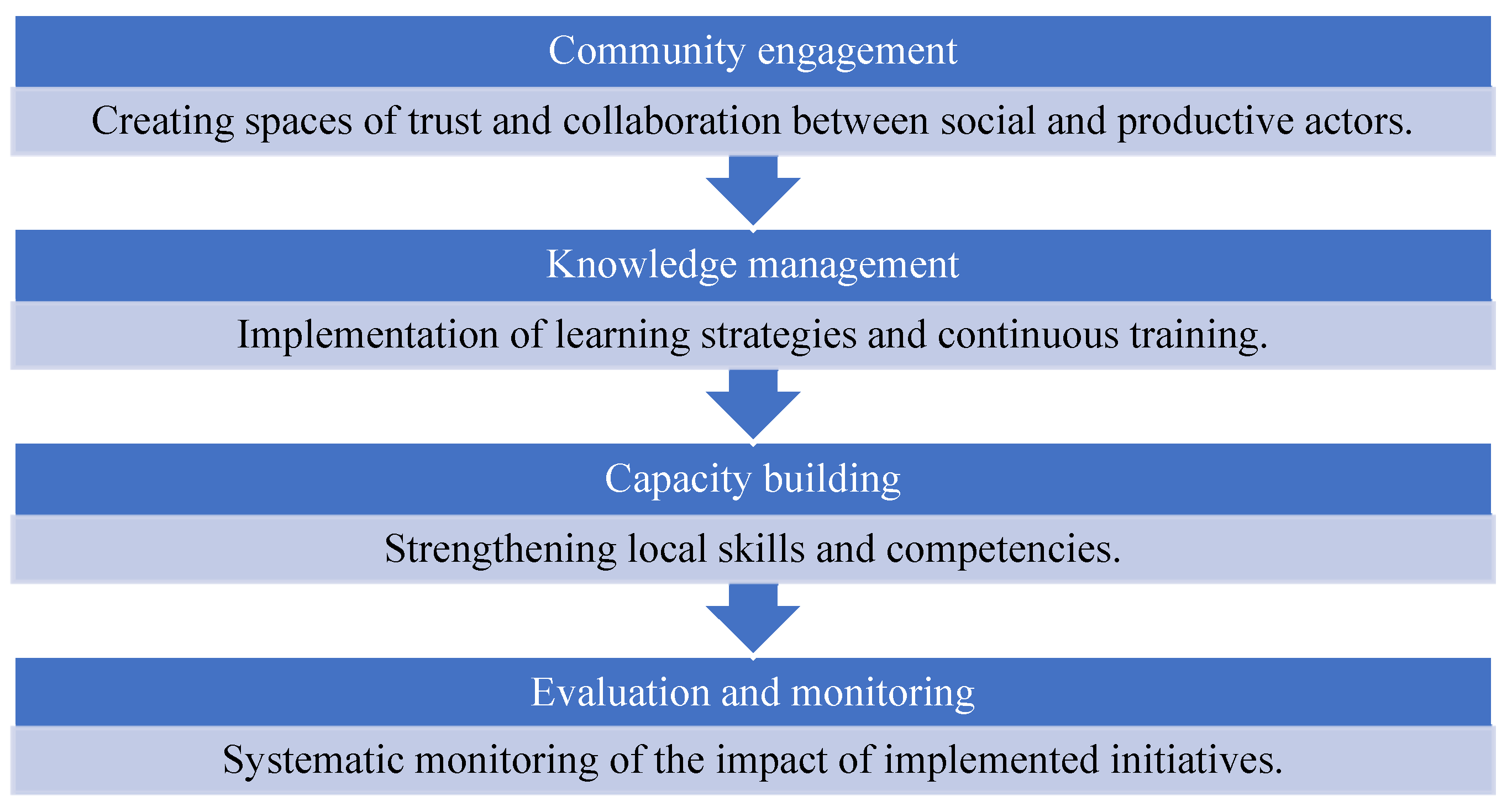
Figure 1 describes the model as a constant interaction between organizations and individuals for the co-creation of solutions adapted to each context, always prioritizing four fundamental axes:
Furthermore, Vásquez [
12] describes the principles of this model as fundamental to ensuring its effectiveness in any social and productive environment, where commitment implies shared responsibility among all project participants, promoting co-responsibility in decision-making and action execution. Transparency guarantees accessible communication throughout all implementation phases, allowing information to flow clearly and promptly.
Inclusion fosters equity in participation and decision-making, ensuring that all stakeholders have a voice in the process. Empowerment, for its part, focuses on developing capacities that allow those involved to achieve greater autonomy and leadership in project management. Finally, social innovation drives the creation of solutions tailored to local needs, promoting sustainable development and resilience in communities [
12]. The implementation of the WWP model promotes the optimization of the production system through an efficient organizational structure, fostering equity in decision-making and strengthening community networks. Furthermore, it facilitates the adoption of innovative strategies for sustainable growth aligned with the principles of social responsibility, inclusive development, and, above all, based on its four components [
13].
These principles were developed to ensure that investments in the agricultural sector contribute to sustainable development, respecting the rights of rural communities, promoting food security, and protecting natural resources [
4]. These principles were established by the United Nations Conference on Trade and Development (UNCTAD), the Organization for Economic Co-operation and Development (OECD), the Food and Agriculture Organization of the United Nations (FAO), and the World Bank, to guide governments, investors, and agricultural stakeholders in making decisions that promote equitable and sustainable growth, as shown in
Figure 2.
The IRA principles are based on ten fundamental pillars, including respect for land tenure rights, strengthening food security, promoting sustainable agricultural practices, and generating economic and social benefits for the communities involved [
14]. Furthermore, they seek to ensure that investments in agriculture are inclusive, transparent, and respectful of labor rights, fostering the participation of small-scale producers, women, and Indigenous communities in agricultural development. This allows for an equitable distribution of benefits and prevents forced displacement or the exploitation of natural resources without regard for the well-being of local populations.
2. Materials and Methods
The study was developed using a non-experimental, cross-sectional, and descriptive-explanatory design, based on a mixed-methods approach. This approach was deemed appropriate due to the need to understand the relevance of integrating the principles of Responsible Investment in Agriculture (RIA) and the Working with People (WWP) model as tools for strengthening the production system of the Tejemujeres Cooperative.
This social entity was selected for three reasons that make it a representative case of the general problem: (1) more than 14 years of consolidated organizational history under a horizontal structure and a solidarity economy approach, typical characteristics of rural social organizations in Latin America; (2) its intensive production activity based on artisanal labor, which reflects tensions between productivity, cultural identity, and sustainability, widely discussed in the literature on rural development, as described by Hennchen and Schäfer [
3]; Finally, (3) availability of systematized institutional information to triangulate evidence according to IRA and WWP approaches [
4,
5]. Therefore, the case is not only an empirical unit, but also a suitable laboratory to operationalize the IRA principles and the dimensions of the WWP model in a real community context.
The study population consisted of the 110 active female members of the cooperative, all artisans dedicated to hand weaving and complementary activities. They varied in age, production experience, level of education, and degree of participation in the different internal committees, but were united by a common practice: artisanal production as a means of livelihood, a source of cultural identity, and a mechanism for a solidarity economy.
For this purpose, a non-probabilistic census sampling method was used, given the importance of the participation of all members for the quantitative component, while for the qualitative component, a small group of participants were selected using purposive sampling.
2.1. Techniques and Instruments
It was operationalized through three complementary components: a quantitative approach based on a survey, a qualitative approach developed through a focus group, and a documentary approach focused on the analysis of relevant information about the management of the cooperative.
2.2. Survey
The study involved administering a structured questionnaire to the 110 members, providing census data on key dimensions such as productive sustainability, internal governance, valuation of artisanal work, perception of the limitations of the current system, and preliminary knowledge of the IRA principles and the WWP model. The questionnaire included closed-ended questions, five-point Likert scales, and prioritization items, developed from the categories proposed by the IRA principles: participation, livelihoods, inclusion, and sustainability; and the dimensions of the WWP model: social interaction, capabilities, shared vision, and knowledge management. Before its final implementation, the instrument underwent expert validation and a subsequent pilot test with 12 members, allowing for adjustments to wording, cultural relevance, and conceptual clarity. The reliability of the scales was assessed using Cronbach’s alpha, yielding values between 0.78 and 0.84 for the composite dimensions, which are adequate to ensure internal consistency.
Its processing and analysis were carried out using SPSS V.13 software, applying descriptive statistics, Chi-square tests, association analysis, and a K-Means cluster model to identify differentiated profiles around the implementation of the IRA–WWP model
2.3. Focus Group
The study was conducted through a focus group with 10 participants selected for their strategic roles within and outside the cooperative: artisan members, production and finance leaders, members of the Supervisory Board, designers involved in product development, and allied institutional stakeholders. This allowed for a deeper understanding of perceptions regarding the actual functioning of the production system, daily challenges, organizational sustainability, and the possibilities of integrating IRA principles and the WWP approach without compromising the organization’s cultural identity.
The study was conducted in person, with audio recording and a written report, over two hours. The participants were asked guiding questions about a description of the current production system, operational and organizational challenges, economic sustainability, material and governance limitations, prior knowledge of IRA/PIRA, principles already present in daily practice, areas susceptible to improvement through IRA-WWP, external support needed for implementation, and cultural strategies for harmonizing changes without affecting community identity. Therefore, to ensure the analytical consistency of the qualitative process, the focus group transcripts were reviewed iteratively, identifying recurring units of meaning that were subsequently grouped into analytical categories. Open coding enabled the identification of expressions linked to production limitations, organizational dynamics, and perceptions of sustainability. Subsequently, through axial coding, these categories were articulated into thematic axes related to governance, innovation, social cohesion, and productive projection. Finally, selective coding allowed for the integration of these axes into interpretive patterns consistent with the IRA principles and the WWP model, ensuring that the findings did not reflect isolated observations, but rather systematic recurrences in the participants’ discourse.
2.4. Documental Analysis
The third component consisted of a comprehensive documentary analysis of the cooperative’s main management and planning instruments: the Tejemujeres Final Report, the IEPS-Cuenca Production Process, the 2022–2030 Strategic Plan, and the 2024 Business Plan. These documents allowed for the reconstruction of the actual production flow, the identification of assigned roles, delivery times, quality control criteria, the marketing structure, support networks, and internal governance and sustainability challenges. The documentary analysis served as the basis for comparing quantitative and qualitative findings and for establishing alignment with the strategic dimensions of the IRA principles and the WWP model.
3. Results
3.1. Analysis of the Tejemujeres Cooperative’s Production System
The Tejemujeres Women Artisans Cooperative is a leading example of a social and productive organization in Gualaceo. Its production system is based on artisanal weaving as both an economic activity and a cultural practice. Previous studies demonstrate that the cooperative’s productive structure relies more on social and organizational dynamics than on strictly profitable indicators, highlighting strengths such as teamwork, communication, and ethical values, along with persistent weaknesses in leadership, planning, and digital skills. The results of a survey of 110 members show that membership growth (29.4%) coexists with a complete absence of young people under 25, confirming a generational shift issue. Participation remains concentrated in production (92%), while only 18% hold leadership roles. Time commitment is also limited by domestic responsibilities, as two-thirds of the members dedicate between 1 and 20 h per week to the cooperative.
This quantitative overview is complemented by focus groups, which identified perceptions that explain the structural limitations. Members indicated that low incomes discourage the incorporation of young people, and internal leaders mentioned resistance to innovation. External stakeholders added that limited infrastructure and a lack of productive diversification reduce growth capacity. Taken together, these elements show that the production system faces tensions that combine gender, age, organizational capacities, and market conditions.
Table 1 summarizes information from the survey, focus groups, and interviews with external stakeholders, integrating these three sources into an intersectional matrix focused on age, productive roles, management, time commitment, and main perceived strengths and weaknesses. This integration allows us to understand how social and organizational variables influence internal participation. Different profiles emerge between older women, middle-aged women, and a complete absence of young people. The former has the greatest tenure and experience but exhibit lower digital literacy and greater resistance to innovation. The second group simultaneously combines artisanal work with external activities, showing a greater willingness to seek training, although with family responsibilities. The absent group, comprised of those under 25, represents an untapped potential due to unattractive income and a lack of visibility of artisanal work as an economic opportunity. This implies that the future sustainability of the cooperative requires a generational succession strategy, as well as a redistribution of workloads and an expansion of leadership opportunities—elements consistent with IRA principles such as inclusion, recognition, and autonomy, and with WWP’s focus on capacity building and governance.
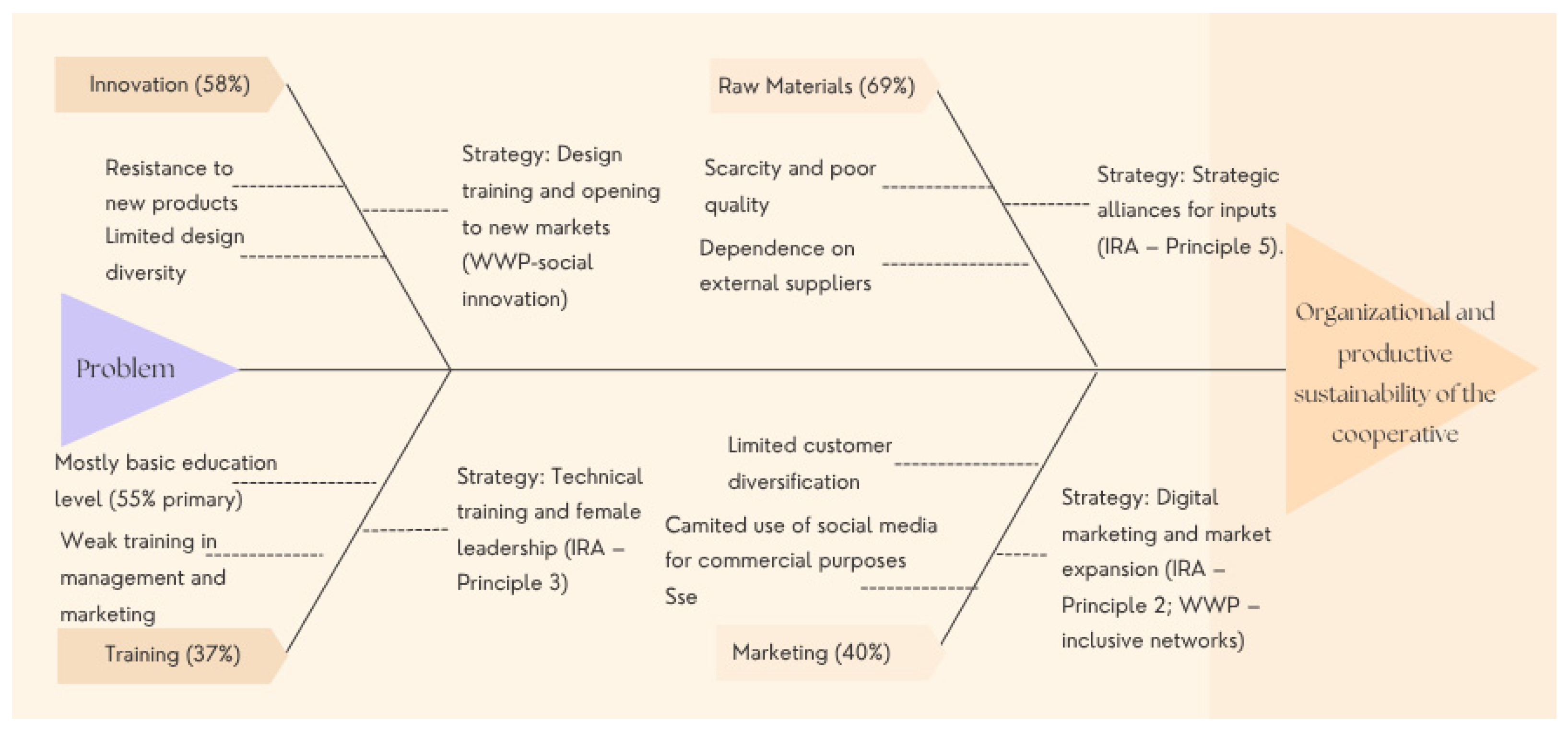
Figure 3 summarizes the main factors limiting the productive sustainability of the Tejemujeres Cooperative and the proposed strengthening strategies. The survey identified that 69% of members report a shortage of raw materials, 58% a lack of innovation, 40% marketing problems, and 37% insufficient training. Despite these limitations, 88% positively evaluate the cooperative’s economic sustainability, reflecting organizational resilience based on internal cohesion, member retention, and the cultural value placed on artisanal work. The qualitative analysis of the focus groups provides further insight. One member noted that “the poor quality of raw materials makes work slow and even demotivating,” while a finance leader acknowledged that “there is a lack of confidence in developing new products.”
External stakeholders, in turn, highlighted the need to “be open to innovation and secure strategic alliances” and to “strengthen training in management and digital marketing.” These perceptions align with the survey results, which show interest in improving innovation and diversification (88%), collaborative work (79%), and digital marketing (76%).
Thus, the diagram not only organizes the production constraints but also connects their impacts with the improvement strategies suggested within the framework of the IRA principles and the WWP model, aimed at ensuring access to inputs, strengthening capacity building, diversifying markets, and fostering inclusive governance.
3.2. Relationship Between the Limitations of the Production System and Sustainability
Table 2 shows that the chi-square tests for each limitation did not reveal a statistically significant association with the perception of sustainability, as the significance values (
p-values) were greater than 0.05. Since several tables had cells with expected frequencies of five or fewer, these results should be interpreted with caution and only as a descriptive trend. The lack of significant associations suggests that perceived sustainability does not depend on a single factor, but rather on the interaction of multiple social and organizational dynamics within the cooperative.
The qualitative analysis of the focus groups provides greater depth, reflected in expressions such as: “Here we all support each other, even though things are lacking, we always find a way to move forward,” or “we know we need to improve, but without losing who we are as artisans,” which demonstrates a favorable disposition toward improvement processes as long as they respect the collective identity and traditional forms of organization.
In this context, it is essential to note that the limitations associated with marketing and access to raw materials do not operate in isolation, nor do they have homogeneous effects on the cooperative’s sustainability. On the contrary, the qualitative findings show that these difficulties are partially mitigated by internal dynamics of mutual aid, cooperation, and collective organization. The members resort to informal support mechanisms, such as the exchange of supplies, the redistribution of workloads, or solidarity-based coordination during periods of lower production, which lessens the negative impact of structural constraints. This collaborative logic explains why, despite acknowledging persistent problems in innovation and marketing, the overall perception of sustainability remains relatively high. In this sense, social cohesion not only fulfills a cultural function but also acts as an operational factor that sustains the productive system in the face of adverse conditions, although it can also become a limitation if it replaces necessary modernization processes.
This finding is complemented by the results of the focus group, where members differentiated between everyday difficulties and overall sustainability. Low-quality inputs or a lack of trust in innovation affects processes, but do not necessarily alter the general perception of collective stability. This reinforces the importance of integrating both sources to interpret the production system.
The convergence between quantitative results and qualitative narratives allows us to affirm that the identified patterns do not respond to isolated perceptions, but to a collective construction of the meaning of sustainability, in which cooperation, cultural identity, and shared experience act as structuring axes of the productive system.
3.3. Non-Hierarchical Cluster Analysis (K-Means) on Perceptions of the Implementation of the IRA-WWP Model
Cluster analysis was conducted to identify distinct patterns in how members understand and value the implementation of the IRA principles and the WWP model. A K-Means procedure was applied, with the number of clusters set at three. This decision was based on the criteria of substantive interpretability and a preliminary review of the model with k = 2 and k = 4, where the resulting structure showed less conceptual stability. The choice of k = 3 allowed coherent and comparable profiles, and the initial centroids showed sufficient distance to avoid overlapping. The variables used came from Likert-type scales with the same response range, so no additional standardization was applied. Even so, the exploratory nature of the exercise is acknowledged, especially considering the sample size (N = 110) and the type of variables used.
The consolidated results show the formation of three distinct profiles. The first cluster comprises 41 members who reported low familiarity with the IRA-WWP principles, but have a strong focus on internal participation, community work, and daily cooperation. The second cluster, made up of 25 participants, is characterized by a moderately greater understanding of both models and a stronger emphasis on training, professionalizing artisanal work, and organizational improvement. The third cluster includes 44 members who, despite reporting limited initial familiarity, express a high value for technical training and opportunities to connect with external markets.
Although the procedure did not incorporate sociodemographic variables into the clustering algorithm, comparing these profiles with the patterns recorded in the previously presented intersectional matrix allows for a more nuanced interpretation. The groups with greater openness to innovation, diversification, and commercial engagement tend to coincide with middle-aged artisans and those with more dynamic ties to management. Meanwhile, more conservative perceptions are more frequently observed among members with longer tenures within the organization.
Overall, the results suggest that the implementation of IRA-WWP does not depend on a single line of action, but rather is shaped by internal differences in knowledge, expectations, and levels of participation. Training emerges as the unifying element among the three profiles, while governance and productive sustainability require differentiated strategies that acknowledge the cooperative’s internal heterogeneity and avoid homogeneous solutions that could reinforce existing gaps.
The differentiation of profiles obtained through cluster analysis reveals that resistance to or openness toward IRA-WWP principles is not solely determined by levels of knowledge, but also by organizational trajectories and accumulated experiences within the cooperative. While some groups value the stability and continuity of traditional practices, others see training and market access as opportunities for strengthening. This coexistence of perspectives explains why change processes require gradual strategies that acknowledge internal differences and avoid homogeneous approaches that could exacerbate existing tensions, as shown in
Table 3.
3.4. Triangulation of Findings with IRA Principles, WWP Model, and GRI-OCB (IPMA)
The findings from the focus group and the intersectional matrix were clearly linked to the IRA principles, the WWP model’s axes, and the GRI-OCB/IPMA governance guidelines. Beyond simply demonstrating mandatory alignment, this approach allowed the partners’ perceptions regarding resource scarcity, commercial dependence, low youth participation, weaknesses in training and innovation, and limitations in internal management to be situated within widely recognized frameworks for sustainability and community governance.
Table 3 illustrates that the challenges identified by the participants are not isolated but rather align with critical dimensions such as diversification, participation, transparency, innovation, and cultural resilience—central elements in both IRA and WWP, as well as in GRI-OCB/IPMA. Taken together, this triangulation serves as a conceptual framework that strengthens the proposed improvements, ensuring they simultaneously address Tejemujeres’ organizational reality and international principles of sustainable management.
In this sense, as shown in
Table 4, triangulation not only validates the empirical findings but also allows us to understand that the identified weaknesses—far from being isolated failures—are part of common structural tensions in community-based organizations. The alignment between the IRA principles, the WWP model, and the GRI-OCB standards underscores the importance of addressing sustainability from a holistic perspective, where governance, inclusion, and innovation are integrated with cultural identity and the dynamics of the territory.
3.5. Governance Model Based on the IRA Principles and the WWP Model
Based on the analysis developed using applied research techniques, it was possible to the analysis revealed that the perceptions of members, directors, and external stakeholders coincide with the need to strengthen internal cohesion, diversify productive activities, and consolidate more transparent governance processes. To guide these findings toward a structured proposal, a comparative perspective was adopted between the IRA principles and the relational approach of the WWP, two frameworks widely used in participatory rural development experiences. This comparison is not a circular exercise; rather, it allows for the interpretation of the results obtained considering international benchmarks that have demonstrated effectiveness in similar contexts. Upon reviewing the characteristics of each model, it was identified that the WWP stands out for its adaptability and applicability in community organizations, while IRA offers greater methodological rigor, especially in practices related to sustainability, diversification, and inclusion. The comparative assessment of both approaches is summarized in the following
Table 5.
The results showed that the WWP (Wholesale Value Project) scored highly in adaptability and practical feasibility, an aspect supported by experiences such as those of Ríos et al. [
15], Castañeda et al. [
16], and López et al. [
17], who document its effectiveness in local participation processes and capacity building. However, these studies also indicate that the model has made more progress in the social sphere than in formal environmental monitoring mechanisms. For its part, IRA (Integrated Environmental Management) demonstrates greater methodological consistency and robustness in articulating ecological and economic sustainability, although it requires more technical resources and administrative capacity. This complementarity supports the decision to integrate both approaches into a hybrid model adaptable to the Tejemujeres context.
Based on this integration, in
Table 6, a governance model is proposed that articulates three dimensions: ethical-social, technical-business, and political-contextual, consistent with the study’s findings and the principles that guide sustainable associative practices. Each dimension incorporates organizational competencies, participation criteria, and expected outcomes.
The hybrid WWP-IRA model allows for a comprehensive measurement of effectiveness across all ESG dimensions, evaluating environmental, social, and governance aspects at the Tejemujeres Cooperative. Furthermore, it ensures strategic alignment with the Sustainable Development Goals (SDGs) of the 2030 Agenda, strengthening the social and environmental impact of its artisanal activities. In
Table 7,
Table 8 and
Table 9, the incorporation of IPMA competencies contributes to professionalizing management, promoting leadership, planning, and collaborative work, while direct alignment with IRA principles guarantees social, environmental, and governance sustainability, consolidating a comprehensive and replicable governance framework for the organization.
4. Discussion
The findings of the study at the Tejemujeres Cooperative align with previous studies argue that grassroots social organizations tend to rely more on their human capital and cultural identity than on profitability indicators, which explains Tejemujeres’ resilience despite its business weaknesses.
The adaptability demonstrated by the members, who combine artisanal production with other economic activities, reinforces the findings, and it considers flexibility a key factor in strengthening sustainable production systems [
18,
19]. Along the same lines, it emphasizes that rural development projects should be built upon local perspectives, which is reflected in the members’ willingness to integrate the IRA principles and the WWP model without losing their community identity [
13].
However, a significant contrast is observed regarding innovation. While Caicedo and Grass [
1] point out that agro-industrial sustainability depends largely on diversification and innovation, in the case of Tejemujeres, the lack of innovation was not perceived as a factor that compromises its economic sustainability. This divergence can be explained by the fact that the cooperative maintains a certain stability thanks to its social cohesion and the sustained demand from a majority buyer. However, as Vásquez [
12] warns, dependence on a single development model without the capacity for real appropriation can limit future growth and increase vulnerability to external changes.
Regarding conceptual frameworks, the results confirm the relevance of the WWP model, which emphasizes active participation, inclusion, and co-responsibility in decision-making [
10,
11]. The high acceptance of this model by the members coincides with the findings of Jiménez et al. [
5], who consider it a space for co-creating solutions adapted to the territory. In Tejemujeres, technical training, internal governance, and market access were identified as priority elements, in line with the findings of [
20] regarding the role of association in organizational strengthening.
For their part, the IRA principles appear to be an essential complement, especially in the areas of environmental sustainability and governance. As evidenced by Jiménez et al. [
4] in cooperative experiences in Peru, its implementation can improve resilience and sustainability, although it requires greater technical and financial capacities, an aspect already noted by Obando [
18]. This contrast indicates that, while Tejemujeres recognizes the value of these principles, their full application could demand external support and strategic alliances for the development of training focused on its reality.
In turn, as methodological support for the proposal, the evaluation criteria for governance models with an ESG approach described in the study were used [
20]. These criteria consider ESG coverage, adaptability, practical feasibility, methodological rigor, and replicability, thus validating the relevance of using the models within the context of Tejemujeres. Furthermore, the model is flexible and easily applicable to community projects, such as those in Romania analyzed by Ríos et al. [
15], where the WWP approach facilitated the consolidation of competencies in regional project management, reinforcing inter-institutional cooperation and social participation as pillars of sustainability.
Castañeda et al. [
16] demonstrated its application in Colombia and Guatemala, where the model was key to implementing the Voluntary Guidelines on the Responsible Governance of Tenure of Land, Fisheries and Forests, promoted by the FAO. In these cases, the WWP approach strengthened dialogue between rural and governmental actors, fostering more inclusive processes that were sensitive to the local context. However, the same authors caution that the model still has limitations in incorporating environmental and monitoring indicators aligned with international standards, which restricts its ability to systematically measure ecological impacts.
From an educational perspective, [
21] the WWP model was adapted to improve evaluation systems in higher education, highlighting its potential to promote more collaborative learning processes oriented towards the holistic development of individuals. This shift of the approach from the rural sphere to university management demonstrates its flexibility and adaptability to diverse institutional contexts. Similarly, applied the model to rural entrepreneurship strategies in the northern plateau of Spain, finding that its application fosters autonomy and local leadership by linking human values with productive innovation [
18]. Finally, the analysis by Cazorla and De los Ríos [
21] confirms that the WWP model has evolved from Robert Chambers’ participatory approaches in the 1970s toward a more relational vision, where trust, cooperation, and ethical management are pillars of sustainable development [
2]. Therefore, the interpretation of the results obtained is supported, in which the social dimension and community linkage stand out over the environmental and regulatory aspects, showing that the model, although consolidated in its human dimension, requires further progress towards a more robust integration of ecological and global governance components.
Taken together, the results reinforce the arguments and maintain that sustainability in rural projects depends on a balanced integration of social, economic, and institutional factors [
6,
22]. In the case of Tejemujeres, the most viable strategy appears to be the construction of a hybrid model: leveraging the social proximity and flexibility of the WWP while gradually incorporating the methodological requirements of the IRA principles.
5. Conclusions
The integrated application of the IRA principles and the WWP model demonstrates that it is possible to strengthen the Tejemujeres Cooperative’s production and management system without altering its social and community identity. Although limitations related to access to raw materials, innovation, and training persist, internal cohesion and the cultural value of weaving remain key pillars supporting its perception of sustainability. In this context, IRA provides structure, sustainability criteria, and transparency mechanisms, while WWP reinforces participation and community engagement. The complementarity between these two approaches allows for improved production practices, market diversification, and professionalized management, all while respecting the cooperative’s core values. In this sense, the hybrid model offers a viable path to balancing efficiency, identity, and sustainability in Tejemujeres’ future development.
Regarding the first objective, it was identified that the main limitations of the Tejemujeres Cooperative’s production system are associated with a scarcity of raw materials, a lack of innovation in designs, low levels of technical training, and marketing difficulties. However, these restrictions have not directly impacted the members’ perception of economic sustainability, as they value the organization’s social and cultural cohesion as a fundamental asset for maintaining its stability. This finding reaffirms that the cooperative’s strength lies more in its community identity and the shared responsibility of its members than in purely business indicators.
Regarding the second objective, the analysis revealed that both the IRA principles and the WWP model offer key elements that can be adapted to Tejemujeres’ context. These include internal governance, active participation, technical training, social innovation, and links to fair markets, all aligned with the priorities identified by the members. Furthermore, the gradual incorporation of sustainable practices and financial transparency allows the organization to align its artisanal activities with international sustainability frameworks without losing its cultural essence.
Finally, in accordance with the third objective, it is proposed that the most appropriate strengthening strategy for the cooperative should combine the participatory flexibility of the WWP model with the methodological rigor and international reach of the IRA principles. This hybrid approach ensures a balance between respecting Tejemujeres’ social identity and the need to improve its competitiveness in diversified markets. In this way, the organization will be able to consolidate an innovative, sustainable, and culturally legitimate production system, guaranteeing its long-term economic viability and strengthening its role as a benchmark for social development in rural areas.
From future lines of research, it is recommended that this analysis be replicated in other cooperatives and artisan organizations to test the validity of the IRA-WWP hybrid model in diverse contexts. It would also be pertinent to develop longitudinal studies to assess how governance, participation, and sustainability evolve, incorporating environmental variables and more precise cultural metrics. Furthermore, it is suggested that participatory methodologies that actively integrate young women be explored to strengthen generational renewal and better understand their motivations and expectations regarding artisan work. These approaches will contribute to refining the proposed model and expanding its potential application in sustainable rural development processes.
Author Contributions
Conceptualization, M.O., R.G., M.P. and X.N.; methodology, M.O., R.G., M.P. and X.N.; software, M.O., R.G., M.P. and X.N.; validation, M.O., R.G., M.P. and X.N.; formal analysis, M.O., R.G., M.P. and X.N.; investigation, M.O., R.G., M.P. and X.N.; resources, M.O., R.G., M.P. and X.N.; data curation, M.O., R.G., M.P. and X.N.; writing—original draft preparation, M.O., R.G., M.P. and X.N.; writing—review and editing, M.O., R.G., M.P. and X.N.; visualization, M.O., R.G., M.P. and X.N.; supervision, M.O., R.G., M.P. and X.N.; project administration, M.O.; funding acquisition, M.O., R.G., M.P. and X.N. All authors have read and agreed to the published version of the manuscript.
Funding
This research received no external funding. The previous studies were funded by the researchers, and the article processing charges (APC) were funded by Universidad Bolivariana del Ecuador (UBE).
Institutional Review Board Statement
The study was conducted in accordance with the Declaration of Helsinki and received formal ethical approval from the Board of the Cooperativa de Mujeres Artesanas Tejemujeres, which serves as the competent authority for social and organizational research within the institution. Approval was granted by the General Management and the Presidency of the Cooperative, acting as an Internal Ethics Committee in accordance with their institutional statutes (approval code: CT-ET/2024-01, approval date: 15 March 2024).
Informed Consent Statement
Informed consent was obtained from all subjects involved in the study.
Data Availability Statement
Acknowledgments
The authors would like to acknowledge Rosendo Ortuño Soledispa and the Tejemujeres Cooperative.
Conflicts of Interest
The authors declare no conflict of interest.
References
- Caicedo, M.; Grass, J. Sostenibilidad en la Transformación Agroindustrial de la Costa Pacífica del Cauca: Modelos Organizativos, Retos y Oportunidades. Cienc. Lat. Rev. Científica Multidiscip. 2024, 8, 1228–1255. [Google Scholar] [CrossRef]
- Fonseca, N.; González, M.; Narváez, C. Asociatividad para la administración los sistemas de producción campesina. Rev. Estrateg. Organ. 2020, 9, 1–7. [Google Scholar] [CrossRef]
- Hennchen, B.; Schäfer, M. Do sustainable food system innovations foster inclusiveness and social cohesion? A comparative study. Front. Sustain. 2022, 3, 921169. [Google Scholar] [CrossRef]
- Jiménez, R.; De los Ríos, I.; Huamán, A. Los principios CSA-IRA como instrumentos para la dirección de proyectos de desarrollo rural. El caso de sierra central de Perú. In Proceedings of the 26th International Congress on Project Management and Engineering, Terrassa, Spain, 5–8 July 2022; pp. 1632–1644. [Google Scholar]
- Jiménez Aliaga, R.; De los Ríos-Carmenado, I.; Huamán Cristóbal, A.E.; Aliaga Balbín, H.; Marroquín Heros, A.M. Competencies and Capabilities for the Management of Sustainable Rural Development Projects in the Value Chain: Perception from Small and Medium Sized Business Agents in Jauja, Peru. Sustainability 2023, 15, 15580. [Google Scholar] [CrossRef]
- Acosta Mereles, M.L.; Ríos Carmenado, I.D.L.; Ávila Cerón, C.A.; Castañeda Sepúlveda, R. Inversión responsable en procesos de sustitución de cultivos ilícitos desde el modelo “Trabajando con Personas”: Estudio de caso Guaviare (Colombia). In Proceedings of the 27th International Congress on Project Management and Engineering, Donostia, Spain, 10–13 July 2023; pp. 1711–1725. [Google Scholar]
- Regalado-López, J.; Maimone-Celorio, J.A.; Pérez-Ramírez, N. Strengthening of the Rural Community and Corn Food Chain Through the Application of the WWP Model and the Integration of CFS-RAI Principles in Puebla, México. Sustainability 2025, 17, 5442. [Google Scholar] [CrossRef]
- Jiménez, R. Modelo de Desarrollo Rural Sostenible Desde los Principios de Inversión Responsable en Agricultura: Aplicación al Centro de Desarrollo Regional El Mantaro—Grupo de Acción Local Jauja, en Perú. Ph.D. Thesis, Universidad Politécnica de Madrid, Madrid, Spain, 2025. [Google Scholar]
- García, J. Modelo de Aprendizaje Basado en Proyectos Para el Desarrollo de Competencias de Contabilidad: Aplicación en la UPS; Universidad Politécnica de Madrid: Madrid, Spain, 2021. [Google Scholar]
- Mur Nuño, C.; Nole, P.; De Los Ríos, I.; Mejía, J. Buenas prácticas de gobernanza en los Bancos de Alimentos: Criterios ESG desde el modelo APS-WWP. In Proceedings of the VII Congreso Internacional sobre Aprendizaje, Innovación y Cooperación, Madrid, Spain, 18–20 October 2023; pp. 328–331. [Google Scholar]
- De los Ríos Carmenado, I.; Nole Correa, P.; Zuluaga Zuluaga, C.L.; Roncancio Burgos, M. ApS projects from the Working with People–WWP–model in the framework of responsible food consumption: Experience from the UPM Food Bank Chair. In Service-Learning Experiences at UPM: 2021 and 2022; UPM: Kuala Lumpur, Malaysia, 2023. [Google Scholar]
- Vásquez, M. Las comunidades y organizaciones afro no se apropian del modelo de desarrollo: Caso Norte del Cauca. Rev. Lumen Gentium 2023, 7, 95–114. [Google Scholar] [CrossRef]
- Inquilla, J.; Chaiña, F.; Sucapuca, M. Imaginarios sociales de desarrollo rural desde los actores locales: Caso de los regantes de Taraco y Pusi-Huancané-Perú. Idesia 2024, 42, 79–88. [Google Scholar] [CrossRef]
- López, I. Governance and networking in the Third Sector of Social Action. Hum. Rev. Int. Humanit. Rev./Rev. Int. Humanidades 2022, 15, 1–14. [Google Scholar]
- Ríos, I.; Rahoveanu, A.; Gallegos, A. Project Management Competencies for Regional Development in Romania: Analysis from “Working with People” Model. Procedia Econ. Financ. 2014, 8, 614–621. [Google Scholar] [CrossRef]
- Castañeda, R.; Avila Cerón, C.; De los Ríos-Carmenado, I.; Domínguez, L.; Gomez, S. Implementing the Voluntary Guidelines on the Responsible Governance of Tenure of Land, Fisheries and Forests from the Working with People Model: Lessons from Colombia and Guatemala. J. Peasant. Stud. 2023, 50, 1820–1851. [Google Scholar] [CrossRef]
- López, M.; Cazorla, A.; Panta, M. Rural Entrepreneurship Strategies: Empirical Experience in the Northern Sub-Plateau of Spain. Sustainability 2019, 11, 1243. [Google Scholar] [CrossRef]
- Obando, M. Análisis de los Estándares Internacionales de Gobernanza GRI y IPMA-OCB: Aplicación al Proyecto de la Gran Recogida de FESBAL; Universidad Politécnica de Madrid: Madrid, Spain, 2025. [Google Scholar]
- de los Ríos-Carmenado, I.; Sastre-Merino, S.; Fernández Jiménez, C.; Núñez del Río, M.; Reyes Pozo, E.; García Arjona, N. Proposals for Improving Evaluation Systems in Higher Education: An Approach from the Model “Working with People”. J. Technol. Sci. Educ. 2016, 6, 104–120. [Google Scholar] [CrossRef]
- Cazorla, A.; De los Ríos, I. “Putting the Last First” to “Working with People” in Rural Development Planning: A Bibliometric Analysis of 50 Years of Research. Sustainability 2023, 15, 10117. [Google Scholar] [CrossRef]
- Cazorla, A.; Negrillo, X. Los Principios Ira Como Base de Investigación Entre Universidades y Empresas. Contab. Mark. Empresa 2022, 7, 41–54. [Google Scholar]
- Aldaz, J.C.C.; Cortez, J.L.P.; López, M.C.; Jacome, S.S.I. Adaptabilidad en el sistema de producción agrícola: Una mirada desde los productos alternativos sostenibles. Rev. Cienc. Soc. 2020, 26, 308–327. [Google Scholar]
| Disclaimer/Publisher’s Note: The statements, opinions and data contained in all publications are solely those of the individual author(s) and contributor(s) and not of MDPI and/or the editor(s). MDPI and/or the editor(s) disclaim responsibility for any injury to people or property resulting from any ideas, methods, instructions or products referred to in the content. |