Article

Dynamics of Low-Carbon Technology Transitions in Chinese Cities: Spatiotemporal Patterns and Driving Mechanisms

1
College of Geography and Environment, Shandong Normal University, Jinan 250358, China
2
International Business College, Shandong Technology and Business University, Yantai 264005, China
*
Author to whom correspondence should be addressed.
Sustainability 2026, 18(5), 2629; https://doi.org/10.3390/su18052629
Submission received: 19 January 2026 / Revised: 3 March 2026 / Accepted: 6 March 2026 / Published: 8 March 2026
(This article belongs to the Section Sustainable Management)

Abstract

This study examines a panel of 268 Chinese cities during 2013–2023, employing patent applications in Low-carbon technologies (LCTs) as a proxy indicator for the level of LCTs. The spatiotemporal patterns of LCTs are characterized through integrated Standard Deviation Ellipses and Spatial Autocorrelation Techniques, while their driving mechanisms are investigated using Geographic Detectors. The key findings identified in this study are: (1) The advancement of LCTs exhibits a swift increasing trajectory; (2) The eastern region and provincial capital cities have relatively high levels of LCT, while western cities have lower levels. The overall trajectory of the gravity center moves southwest, and typical global and local spatial autocorrelation characteristics are observed in the cities; (3) Infrastructure construction and government R&D funding significantly drive LCTs, while environmental regulations show limited predictive power.

1. Introduction

Global climate change, as a major non-traditional challenge to human development in the 21st century, has fundamentally reshaped the supply–demand dynamics of natural resources. This issue has attracted growing attention within the academic community [1,2]. Under the guidance of sustainable development principles, the low-carbon transition has emerged as a global strategic priority. As a result, carbon emission mitigation and green urban development have been increasingly incorporated into national development agendas worldwide. Empirical studies indicate that low-carbon technologies (LCTs) function as key drivers of low-carbon policy implementation across diverse geographic contexts [3,4]. Through systematic integration with green technology systems, LCTs demonstrate advantages over traditional single-dimensional emission reduction approaches. Characterized by lower emissions, higher energy efficiency, and improved resource circularity, these technologies not only promote the transition toward a low-carbon economy but also provide practical pathways for multi-level environmental governance [5,6,7]. Meanwhile, the advancement of LCTs plays a crucial role in achieving the United Nations Sustainable Development Goals (SDGs). By optimizing energy structures, enhancing resource efficiency, and reducing carbon emissions, LCTs contribute to environmental governance while simultaneously supporting green economic growth and long-term social sustainability [8].
The fundamental theories of LCT transitions include diffusion of technical innovation theory, spatial polarization theory, and government-market coordination theory. In political economy, the term “transition” was first used to describe gradual changes in socioeconomic systems. Academics have created the “socio-technical transition” analytical framework in response to the growing effects of technology change on institutional structures and industrial organization. According to a multi-level perspective, which highlights the interplay between technological innovation, institutional settings, and societal demands, replacing conventional technologies with green technologies is not a linear process but rather develops within multi-layered structures [9]. The theory of technological innovation diffusion, which builds on this foundation, offers vital support for describing how LCTs move from demonstration applications to widespread acceptance. The theoretical foundation for examining regional and industrial variances in the dissemination of green and LCTs is laid by Everett’s diffusion model, which identifies the channels and determinants of innovation propagation within social systems. At the same time, the spatial polarization hypothesis highlights the unequal distribution of innovation resources and their spatial grouping. A spatial analytical framework for understanding the gradient distribution of LCT patents and innovation capabilities across China’s urban clusters is provided by Krugman’s new economic geography theory and Hirschman’s “growth poles” concept, which both suggest that technological innovations frequently concentrate in core regions before influencing surrounding areas through spillover effects [10]. Additionally, the synergistic impact of market incentives and institutional supply in technological transition is highlighted by government-market coordination theory. According to a related study, depending exclusively on market processes is insufficient for successful allocation in the green technology sector due to considerable externalities and public goods qualities. Regulation requires carbon market mechanisms, fiscal subsidies, and policy direction [11].
Analyzing LCTs’ spatiotemporal patterns and driving mechanisms holds advanced theoretical foundations for formulating policies to promote their development. Critical syntheses of current scholarship reveal three interconnected research dimensions: (1) Regarding measuring LCTs, Shi et al. detected and refined joint LCT patents in their study using keyword descriptors in patents and the total of innovating entities [12]. Dai et al. quantified green technology innovation (GTI) by utilizing the aggregate count of GTI patents at the provincial and regional tiers [13]. (2) In terms of the spatiotemporal patterns of LCTs, Xiao et al. examined the temporal and spatial characteristics of carbon emission efficiency across 136 countries from the perspectives of developed and developing nations and regions. Their findings revealed that only a few developed countries in Europe—such as Switzerland, Norway, Denmark, and the United Kingdom—exhibited relatively high carbon emission efficiency, while most developing countries in Asia and Africa demonstrated suboptimal carbon emission efficiency [14]. Ma et al. assessed the coupling coordination between urbanization and carbon emission efficiency using data from 106 countries worldwide between 2005 and 2020. They found a significant global decline in coupling levels with pronounced regional disparities. Countries with high coupling were primarily concentrated in Northern and Western Europe, while coupling levels remained low in Asia, Africa, and Eastern Europe [15]. Wang et al. observed a consistent decline in carbon emissions across the country, highlighting lower values in eastern coastal zones and elevated levels in inland regions, especially the northwest [16]. (3) As for the mechanisms driving the LCTs, Liu et al. focused on assessing the effectiveness of policy incentives and governmental R&D expenditure in fostering green innovation and improving the efficiency of high-tech innovation [17]. Guo et al. explored the key factors driving Chinese chemical companies’ adoption of LCTs [18]. Wang et al. adopted a methodological approach combining the dynamic Spatial Durbin model and DID analysis to explore the relationship between internet expansion and green innovation performance [19]. Cap et al. quantified greenhouse gas emissions avoided through 47 consumption changes across five European countries. By comparing emission reduction potentials in 2015, 2030, and 2050, the study assessed how socioeconomic and technological shifts impact mitigation potential. Findings indicate the most effective mitigation strategies involve reducing conventional vehicle use, decarbonizing residential heating, and transitioning to plant-based diets [20].
Although existing studies have generated substantial theoretical insights into the development of LCTs, two limitations remain. First, regarding spatiotemporal patterns, research on the spatiotemporal dynamics of LCTs in Chinese cities suffers from temporal discontinuity, and much of it is based on static or periodical analyses that dominate. This makes it challenging to explore the dynamic paths of spatiotemporal patterns of LCTs, thereby failing to reveal the deeper causes of regional differences. Second, the analysis of factors driving LCTs tends to be one-dimensional. The existing literature mainly focuses on single examinations such as policy incentives, corporate decisions, pilot effects, infrastructure construction, and government R&D funding, but it lacks a systematic analytical framework.
In light of this, the sample for this study consists of 268 Chinese cities at the prefecture level between 2013 and 2023. It uses the number of LCT patents to describe urban LCT levels, analyzes the spatiotemporal pattern of LCT in Chinese cities using standard deviation ellipses (SDE) and spatial autocorrelation techniques, and then uses geographic detector methods to look into the mechanisms that drive LCT. When compared to previous research, this study significantly advances three areas: First, this study uses officially certified LCT patent data to represent LCT levels, addressing the dispersed measuring techniques for green LCT levels in earlier studies. This method makes it possible to quantify LCT objectively and improves the comparison of LCT levels between cities. Second, this work creates a dynamic panel database spanning ten years in order to overcome the static nature of earlier spatiotemporal analyses. It monitors changes in the center of gravity, diffusion pathways, and the development of agglomeration patterns of LCTs by using spatial autocorrelation analysis and SDE. This method provides useful geographic information assistance for regional integration and spatial planning by more intuitively revealing phased developmental characteristics. Third, this study examines the key factors impacting LCT development by methodically choosing eight influencing variables from the economic, social, governmental, and infrastructure aspects. This method improves the theoretical framework for LCT research, departs beyond one-dimensional analyses of affecting factors, and offers a scientific foundation for later variable selection and the creation of urban LCT development policies.

2. Data and Research Methods

2.1. Data Sources

LCT Patents: According to National Intellectual Property Administration of China (https://www.cnipa.gov.cn/, accessed on 2 March 2026), LCTs are categorized into five technical branches: fossil energy decarbonization technologies, energy efficiency and recovery, clean energy, energy storage technologies, and CCUS. This study uses the number of LCT patents as a proxy for the level of LCT development across cities. LCT patents refer to technological innovations certified by intellectual property authorities that aim to reduce carbon emissions, enhance energy efficiency, or advance sustainable development. They encompass a wide range of fields, including renewable energy, energy-saving technologies, and other low-carbon solutions [21]. Patent data offer objective and quantifiable measures of technological innovation capacity at the urban level. In addition, information on patent application timing and geographic distribution helps reveal trends in technological evolution and patterns of spatial diffusion. Data on LCT patents for 268 Chinese cities covering the period 2013–2023 were obtained from the China Open Data Platform https://www.cnopendata.com, (accessed on 5 March 2026). This platform integrates patent information data publicly released by the national intellectual property authorities, featuring official data sources and a unified standardized processing workflow. Its data is authoritative in scope and reliable in origin, providing stable and comparable foundational data support for technological innovation research at the city level.
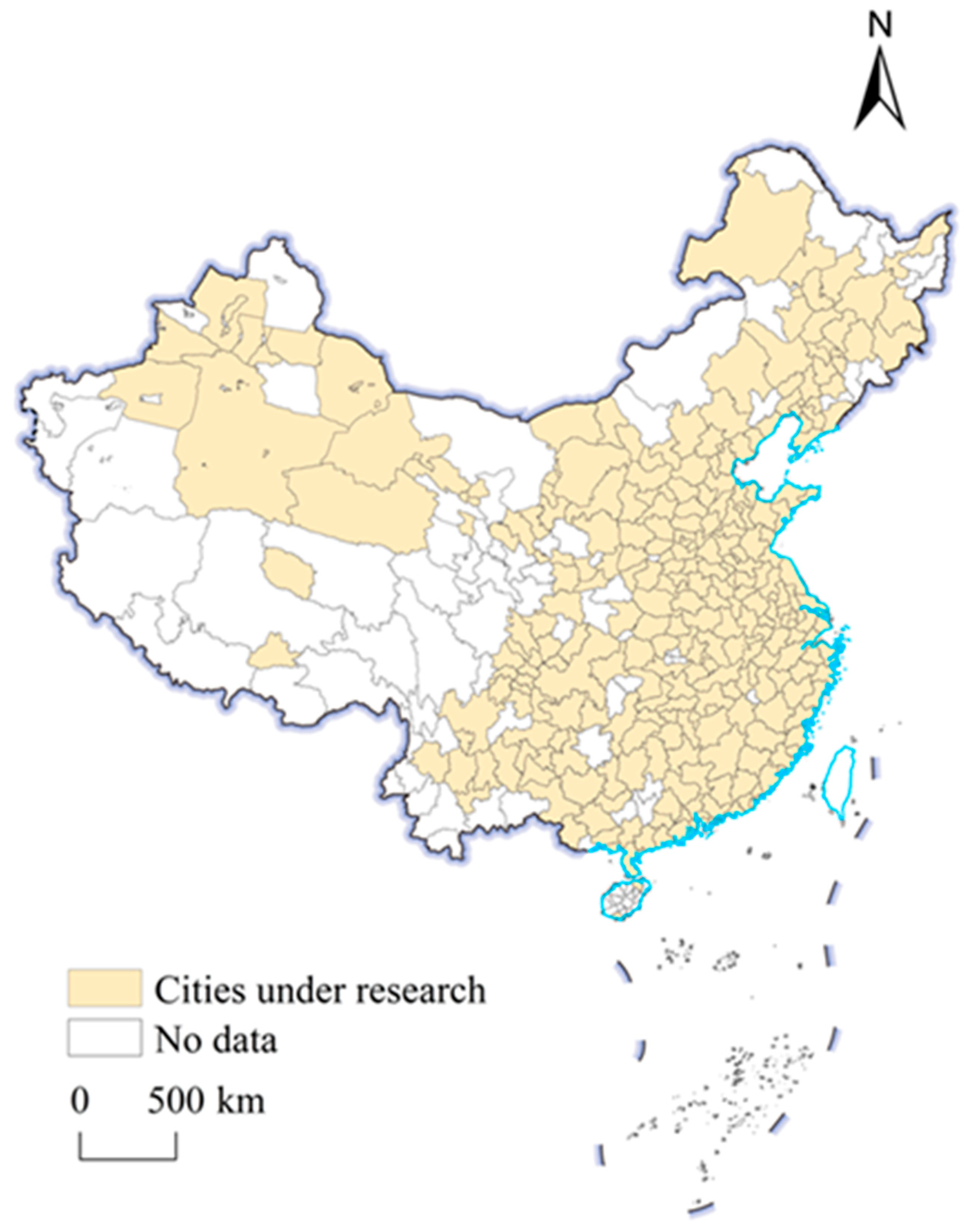
Driving Factors Data: Data on per capita GDP, the ratio of the tertiary to secondary industries, per capita retail sales of social consumer goods, the population of university students per 10,000 people, the proportion of science and technology investment in fiscal expenditures, per capita postal and telecommunications services, and the population of broadband internet users per 100 people are sourced from the China City Statistical Yearbook (https://www.stats.gov.cn). This study uses Python 3.8 software to do standardized word segmentation and data purification on provincial government work reports, drawing on existing methods for assessing environmental regulations. The frequency of essential terms associated with environmental legislation, such as “green,” “emission reduction,” “low-carbon,” and “environmental protection,” is regularly counted. By using these terms as proxy variables for environmental regulatory intensity based on their relative frequency throughout the text rather than just absolute word counts, measurement biases resulting from differences in report length or human factors are avoided. Instead of using simple absolute word counts, these high-frequency policy statements were used as proxy variables for the strength of environmental regulation based on their relative frequency across the entire text. This method avoids measurement bias brought on by variations in report length and human variables [22]. Among the original 268 prefecture-level city samples, some cities exhibited varying degrees of data missingness across the eight variables involved in the influencing factors. These missing data could not be supplemented or reasonably imputed using statistical yearbooks. To ensure research rigor, this study conducted moderate sample screening in the influencing factors analysis section (List of deleted cities: Aksu, Baiyin, Bayingolin, Bijie, Changde, Changji, Chaozhou, Chenzhou, Chuxiong, Dali, Datong, Enshi, Haikou, Haixi, Hami, Hebi, Hengyang, Heze, Jiamusi, Jiaozuo, Jieyang, Jinchang, Jingdezhen, Jinhua, Karamay, Lanzhou, Leshan, Liangshan, Liupanshui, Luohe, Meishan, Mianyang, Panzhihua, Puyang, Qiannan, Qianxinan, Shaoyang, Shenzhen, Shijiazhuang, Shizuishan, Shuozhou, Siping, Suihua, Tacheng, Tongliao, Tongren, Xiangyang, Xining, Xuchang, Yanbian, Yili, Yinchuan, Zaozhuang, Zhongshan, Zhongwei, Zhuhai, and Ziyang, Zunyi). Ultimately, 209 prefecture-level cities with complete and continuous data were retained as valid samples. The distribution of the studied cities is shown in Figure 1, and the descriptive statistics of the studied variables are presented in Table 1.

2.2. Research Methods

2.2.1. Standard Deviation Ellipse

The SDE is a spatial statistical method that utilizes the centroid and fundamental parameters to reveal the movement and distribution characteristics of elements [23]. This paper adopts the SDE to examine spatial characteristics associated with LCTs in Chinese cities [24]. The centroid and movement trajectory reflect the relative position and changes of LCTs in space. The corresponding mathematical expression is as follows:
X w ¯ = t = 1 n w t x t t = 1 n w t
Y w ¯ = t = 1 n w t y t t = 1 n w t
σ s = t = 1 n ( w t x l ¯ c o s w t y l ¯ s i n θ ) t = 1 n w t 2
σ t = t = 1 n ( w t x i ¯ s i n θ w t y i ¯ c o s θ ) t = 1 n w t 2
In the formula, ( X w ¯ , Y w ¯ ) represents the center of the ellipse, σ s and σ t are the standard deviations of the two coordinate axes, ( x t , y t ) denotes the spatial area of LCT distribution in cities, and w t represents the weight. s and t indicate the offset coordinates of individual points measured from the centroid of the ellipse, and θ refers to the angular displacement between the major axis of the ellipse and the direction of true north.

2.2.2. Spatial Autocorrelation Analysis

This method is applied to uncover global and local spatial dependencies and aggregation tendencies, thereby illustrating the spatial distribution disparities of the observed phenomenon [25]. This research investigates the spatial deployment and variation of LCTs in different cities, such as dispersion or agglomeration. Moran’s I and LISA indexes represent the spatial autocorrelation relationships of LCTs between cities. The corresponding formula is presented below:
Global Moran’s I:
I = a e = 1 a f = 1 a W e f ( x e x ¯ ) ( x f x ¯ ) e = 1 a f = 1 a W e f e = 1 a ( x e x ¯ ) 2
Local Moran’s I:
I i = a ( x e x ¯ ) f = 1 a W e f ( x f x ¯ ) e ( x e x ¯ ) 2
In the formula, I is the Global Moran’s I; I i is the Local Moran’s I; a is the count of study units; x e and x f are the LCT patent counts for cities e and f; x ¯ represents the average value of the dataset; W e f is the spatial relationship measure between cities e and f.

2.2.3. Geographical Detector

Geographical Detector is a geostatistical approach based on geographic stratification analysis of variables. It can analyze the spatial heterogeneity of variables and evaluate the correlation between variables and driving factors [26]. Utilizing the Geographical Detector method, this study systematically examines the strength of major driving factors and their interactive effects on the development of LCTs in Chinese cities. The corresponding calculation formula is presented below:
q = 1 1 n σ 2 i = 1 m n i σ x ,   i 2
In the formula, m is the quantity of strata for factor x; n is the total sample size; σ 2 and σ x ,   i 2 represent the variance of the study object and the variance within stratum i respectively; q ranges from 0 to 1 and serves as a measure of the influence strength of individual or interactive factors on the development of LCTs. A higher q value indicates that the driving factor has a more pronounced effect and explanatory power on LCTs.

3. Results Section

3.1. Spatiotemporal Patterns of LCTs in Chinese Cities

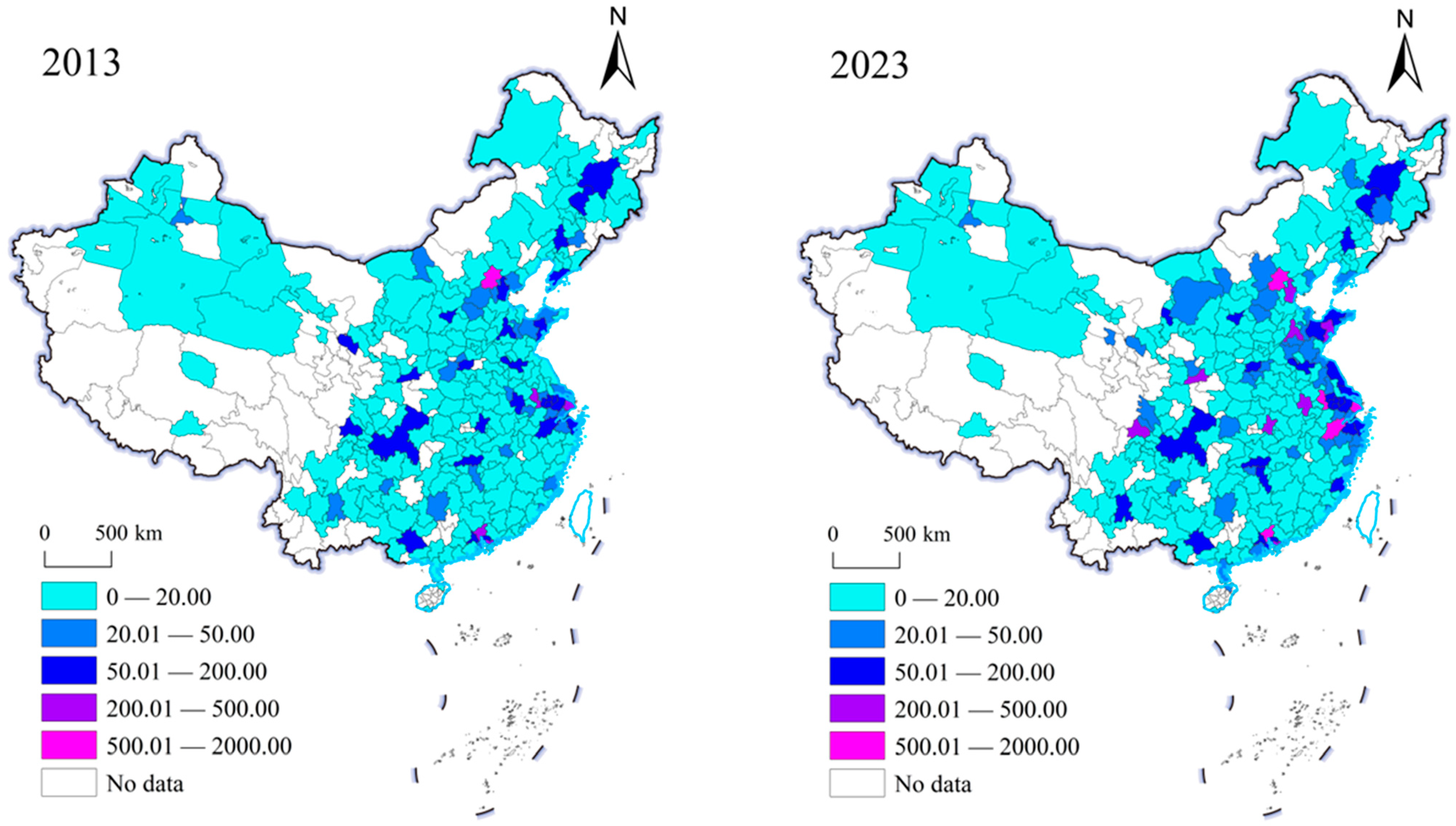
Figure 2 presents the spatial manifestation of LCTs across Chinese cities in 2013 and 2023. Building on these findings, we proceed with additional analyses to examine the spatiotemporal patterns observed.

3.2. Temporal Evolution Characteristics

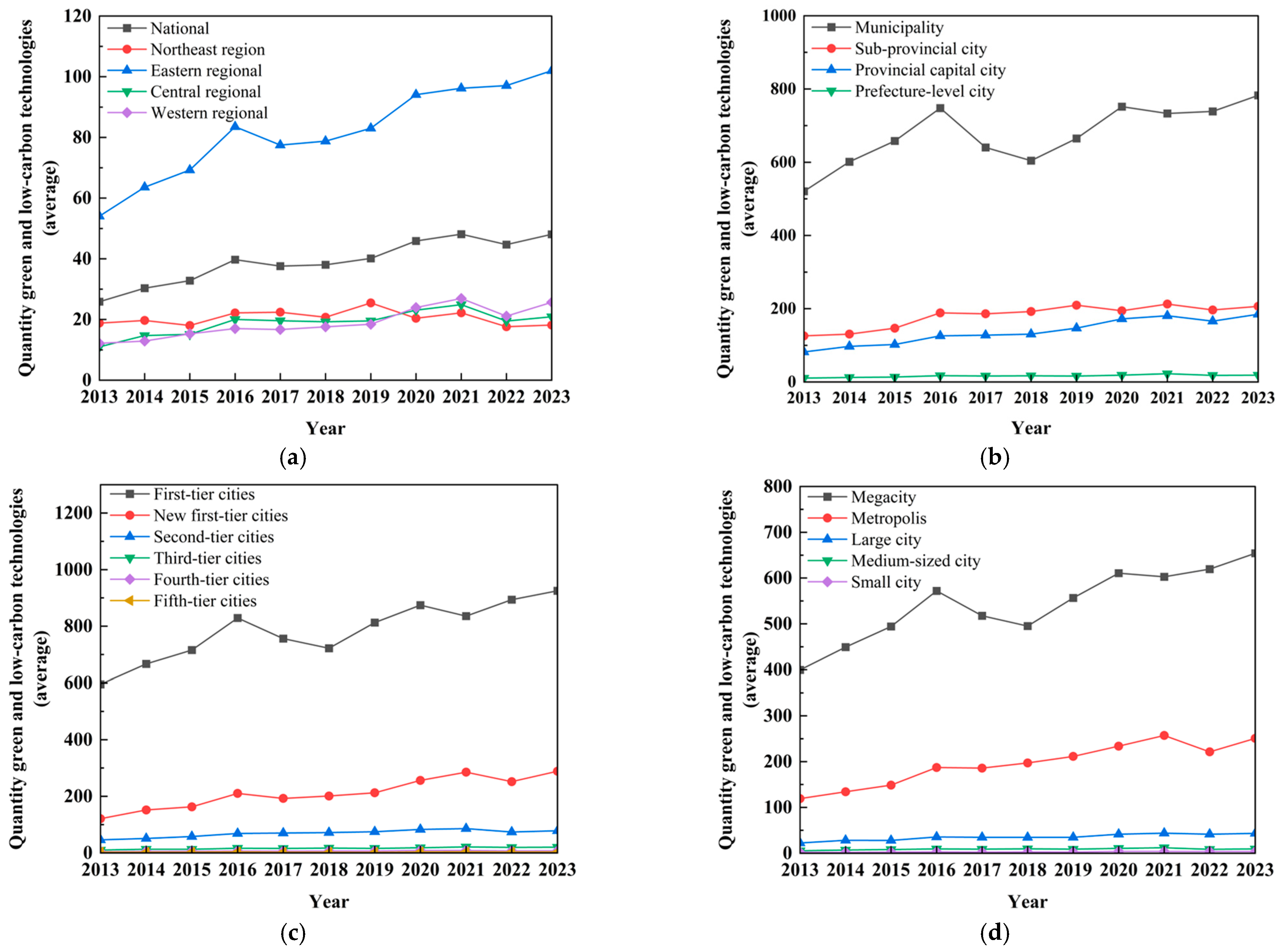
Given the large number of cities included in this study and space constraints, the evolutionary characteristics of LCT development at the individual city level are not presented in detail. Instead, cities are grouped by region, administrative hierarchy, population size, and economic tier, and the temporal evolution of LCT patent counts is examined for each category. The corresponding results are shown in Figure 3.
Figure 3a depicts the evolutionary trends in the number of LCT patents across different regions. At the national level, the number of LCT patents in Chinese cities increased steadily over the study period. The average annual number of LCT patents per city was 26 in 2013 and rose to 48 in 2023, corresponding to an average annual growth rate of 6.5%. Between 2013 and 2023, the number of LCT patents in the eastern region increased from 54 to 102, while in the central region it rose from 11 to 21. Over the same period, the western region experienced growth from 12 to 26, and the northeastern region from 19 to 22. Although all four regions exhibited upward trends, the eastern region recorded a markedly faster growth rate, whereas the northeastern region showed relatively slower expansion. A cross-regional comparison of total LCT patent counts reveals a persistent ranking pattern of “East > Northeast > Central > West” throughout the study period, indicating that the eastern region has maintained a leading position in LCT development relative to other regions.
Figure 3b illustrates the evolutionary trends in the number of LCT patents across cities of different administrative levels. From 2013 to 2023, the average annual number of LCT patents increased from 521 to 783 in municipalities directly under the central government, from 126 to 207 in sub-provincial cities, from 82 to 185 in provincial capitals, and from 10 to 19 in prefecture-level cities. Although all four administrative categories exhibited sustained growth, municipalities directly under the central government experienced markedly faster expansion, whereas prefecture-level cities showed relatively slower growth. A cross-sectional comparison across administrative levels reveals a consistent ranking pattern of “municipality > sub-provincial city > provincial capital city > prefecture-level city” throughout the study period. This pattern suggests that the level of urban low-carbon technological development tends to increase with higher administrative status.
Figure 3c presents the evolutionary trends in the number of LCT patents across cities of different economic tiers. From 2013 to 2023, the average annual number of LCT patents increased from 596 to 925 in first-tier cities and from 121 to 289 in new first-tier cities. Over the same period, second-tier cities experienced growth from 47 to 78, third-tier cities from 10 to 20, and fourth-tier cities from 4 to 8, while fifth-tier cities remained relatively stable at around three patents per year. Although all six economic tiers exhibited overall growth, first-tier cities demonstrated a markedly faster rate of increase, whereas other tiers expanded at comparatively slower paces. A cross-tier comparison reveals a persistent ranking pattern of “First-tier cities > New first-tier cities > Second-tier cities > Third-tier cities > Fourth-tier cities > Fifth-tier cities” throughout the study period. This distribution indicates that the level of urban low-carbon technological development tends to rise with higher levels of economic development.
Figure 3d shows the evolution trend of LCT patents in cities of different size levels. During the period from 2013 to 2023, all city size categories experienced an increase in average annual LCT patent output. Megacities saw a rise from 400 to 654, metropolis from 119 to 251, large cities from 22 to 44, medium-sized cities from 5 to 9, and small cities from 2 to 4. An overall increase in LCT patent numbers was observed across all five city size categories, with megacities experiencing significantly faster growth, while small cities recorded more modest gains. When comparing the quantity of LCT patents across the five size levels, the trend observed over the years was “Megacities > Metropolis > Large city > Medium-sized city > Small city”, indicating that the level of LCT in cities increases with the growth in city size.
The analysis of LCT patent data across various city types from 2013 to 2023 yields the following key findings: First, LCT patent numbers in Chinese cities have shown a steady annual increase, indicating continuous progress in the development of LCTs. The growth of LCT patents in China stems from policy support, technological progress, and rising market and social demand. With government guidance, industrial green transitions, and increasing public awareness, multiple forces interact to steadily drive low-carbon transformation in Chinese cities. Second, economically advanced and higher-tier cities, particularly those with larger populations, tend to demonstrate elevated levels of LCT. The reason for these differences is that larger and more developed cities benefit from stronger policy support, greater technological innovation capacity, and better infrastructure. With more government attention, concentrated talent, and superior urban facilities, they are able to achieve significantly higher levels of LCT development than smaller cities.

3.3. Spatial Distribution Characteristics

3.3.1. Standard Deviation Elliptical Characteristics

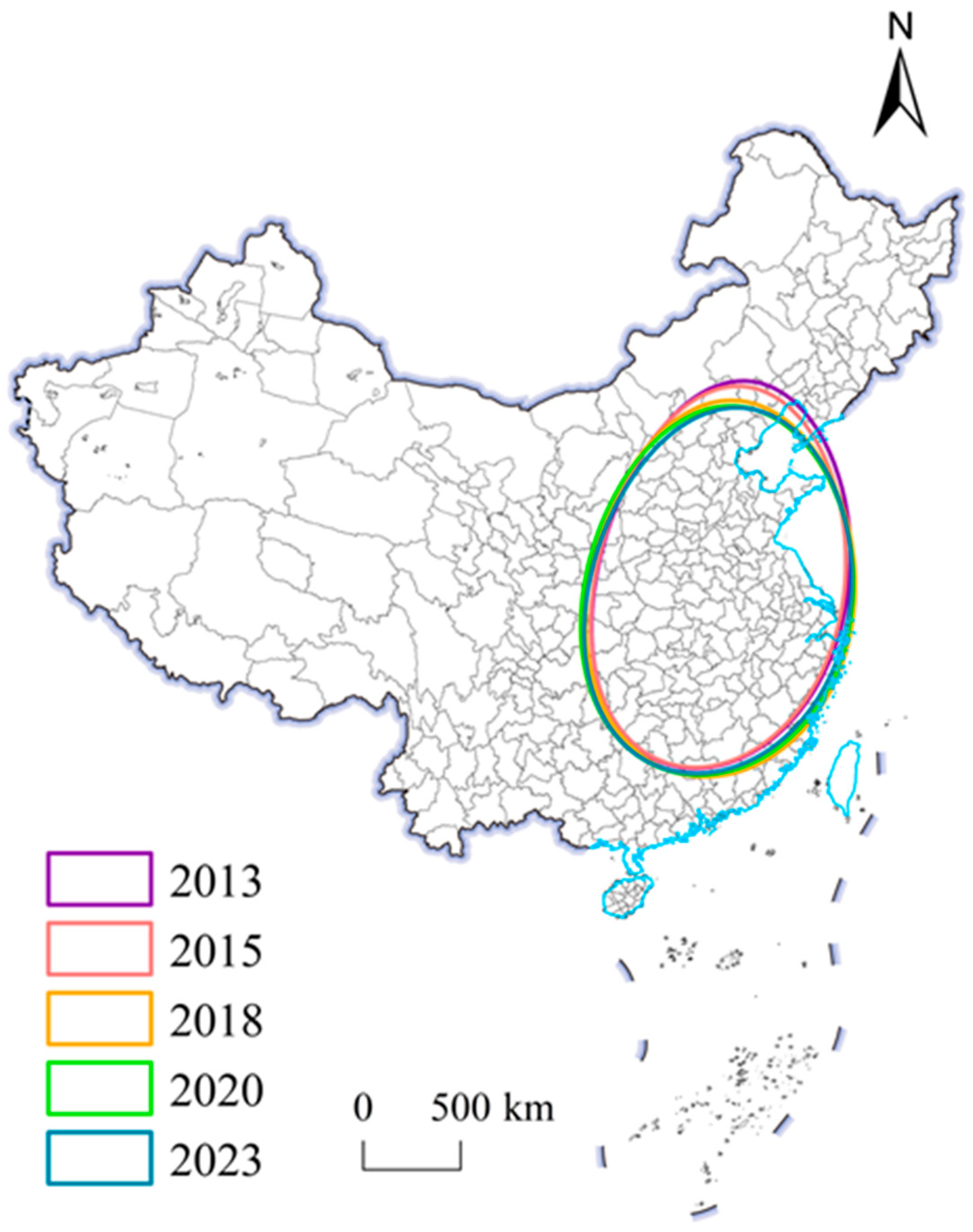
We selected five characteristic time points in 2013, 2015, 2018, 2020 and 2023 to analyze the SDEs of LCTs in Chinese cities (Figure 4) and their basic parameters (Table 2).
Judging from the SDE diagram and its parameters, the spatial distribution of urban LCTs covers most of central and eastern China, with a southern bias. Its extent exhibits a pattern of initial expansion followed by contraction: the ellipse area measured 2.03 million km2 in 2013, shrinking to 1.97 million km2 by 2015, before expanding again to 2.08 million km2 in 2018. with subsequent declines to 2.06 and 1.99 in 2020 and 2023, respectively. This spatial evolution indicates an overall pattern of diffusion followed by concentration in China’s urban LCTs between 2013 and 2023. The difference between the major and minor semi-axes (eccentricity) was 2.49 in 2013, while in 2015, 2018, and 2020, the flattening ratios decreased to 2.34, 1.61, and 1.54, respectively. By 2023, the flattening ratio increased to 1.8. A higher flattening ratio indicates greater directionality in the data, whereas values closer to each other suggest lesser directionality. The azimuth of the SDE fluctuated between 29° and 36° from 2013 to 2023. This indicates a gradual weakening of directionality in the spatial distribution of urban LCTs between 2013 and 2020. While LCT levels improved in regions beyond the eastern coastal areas, the overall distribution pattern remained unchanged. Eastern cities continued to dominate this distribution, owing to their more advanced technologies and more comprehensive policies.

3.3.2. Trajectory of Centroid Movement

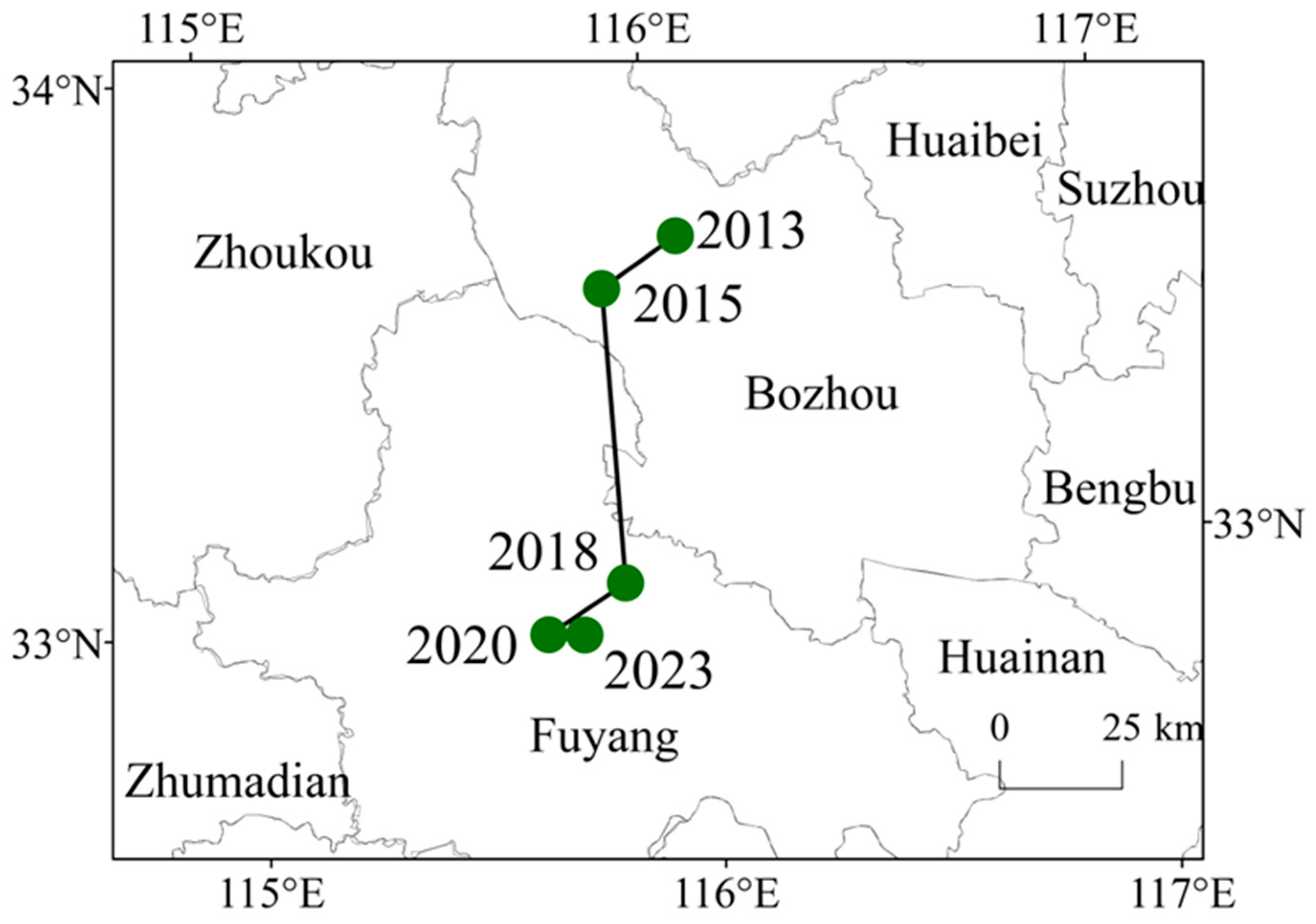
Figure 5 and Table 3, respectively, present the center-of-mass trajectory and parameters of the SDE for LCTs in Chinese cities. The center of gravity for China’s urban LCTs underwent significant shifts between 2013 and 2023. In both 2013 and 2015, it was located in Bozhou City, Anhui Province, moving southwestward from 116.04° E, 33.62° N to 115.86° E, 33.54° N. In 2018, 2020, and 2023, the center of gravity was situated in Fuyang City, Anhui Province. Between 2018 and 2020, the center coordinates shifted from 115.84° E, 33.01° N to 115.66° E, 32.93° N. while the 2020–2023 center shifted slightly eastwards to 115.74° E, 32.93° N. The centers of the SDEs for China’s urban LCTs consistently lie southeast of the country’s geometric center, indicating that eastern and southern regions possess superior LCTs compared to western and northern areas. Based on center coordinates and movement trajectories, China’s urban LCT exhibits an overall southwestward trend. The north–south displacement is greater than the east–west movement. The 2015–2018 period saw significant displacement (59.61 km) and rapid movement (19.87 km/a). whereas the 2020–2023 period saw a smaller displacement (8.9 km) and slower velocity (2.97 km/a). The spatial distribution, displacement distance, and direction of the center of gravity collectively indicate that the southern regions have experienced rapid advancement in LCT development, establishing themselves as the nation’s leading area in this field.

3.3.3. Results of Spatial Autocorrelation Analysis

Table 4 presents the Global Moran’s I values for LCTs in Chinese cities from 2013 to 2023. Positive and statistically significant Global Moran’s I values (at the 1% level) are observed across all years, demonstrating a marked positive spatial correlation. This reveals that the LCT development level in any given city tends to align with that in its surrounding areas.
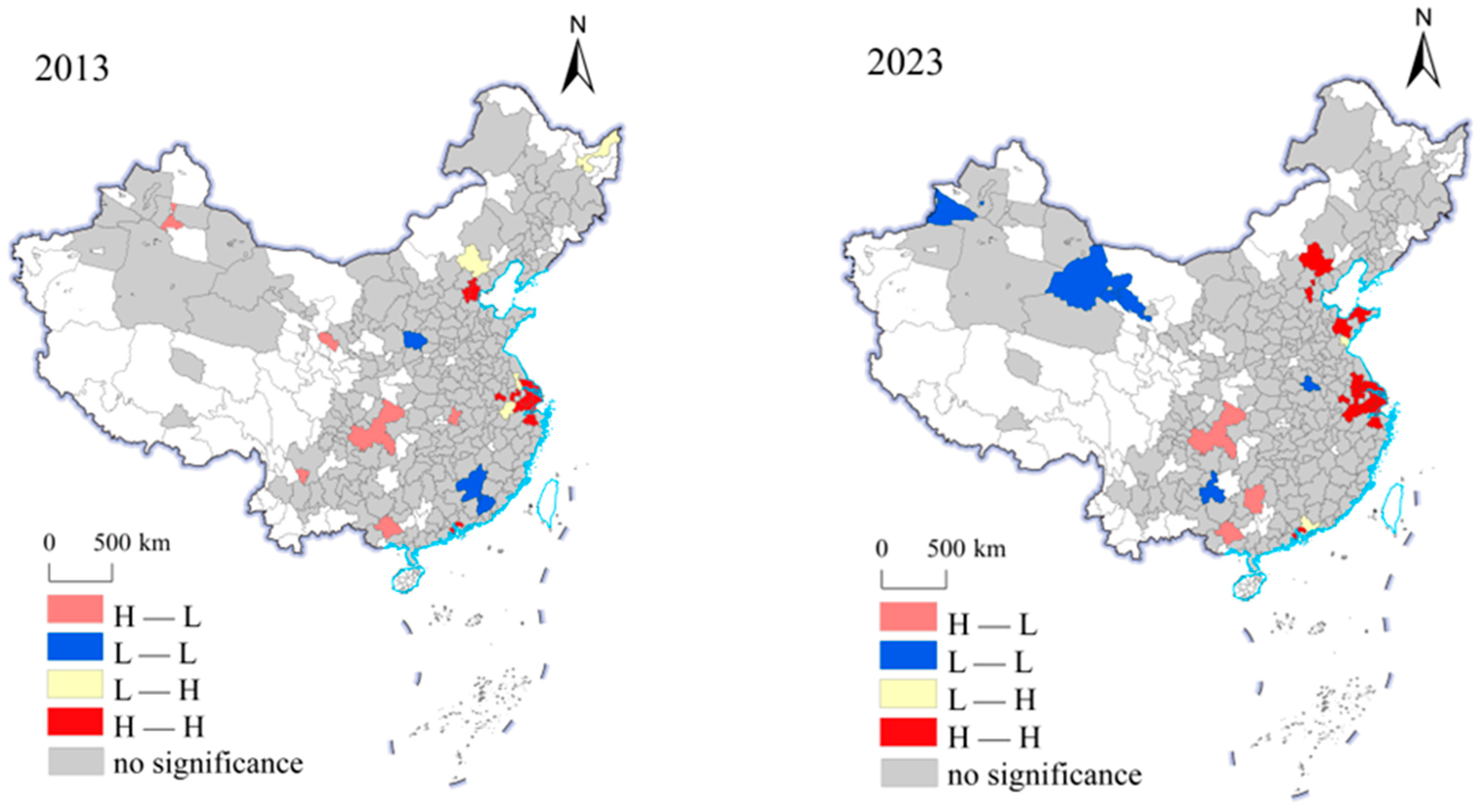
This study employed GeoDa software (v1.22) to generate LISA clustering maps for 2013 and 2023, further analyzing the spatial clustering patterns of LCTs in Chinese cities. The results are presented in Figure 6. Overall, China’s urban LCT spatial clustering patterns exhibit considerable stability. In 2013, high-high clustering cities were predominantly distributed across the Yangtze River Delta region, Tianjin Municipality, and select cities in Guangdong Province, reflecting an innovation diffusion pattern centered on core cities as growth poles. By 2023, certain cities on the Shandong Peninsula had entered the high-high clustering category, with the number of such cities gradually increasing. This may be attributed to these cities’ location in the eastern coastal region, where higher levels of economic development, stronger concentration of innovation factors, faster industrial upgrading, and the influence of national policies have combined to reinforce technological synergy and knowledge spillovers within the region. High-low agglomeration cities are primarily distributed in western regions and a few central-western cities such as Nanning and Chongqing. These cities possess relatively advanced LCTs themselves, yet their surrounding areas exhibit weak foundations, presenting an isolated leadership characteristic. This reflects the reality of uneven regional development and constrained spillover of innovation resources. Low-high agglomeration cities are primarily situated around Jiamusi, Langfang, and certain high-high agglomeration cities. Benefiting from technological spillovers and industrial transfers from neighbouring high-level cities, these cities nevertheless exhibit pronounced “neighbourhood dependency” due to insufficient innovation capacity or weak industrial foundations, preventing synchronous advancement. Low-low agglomeration cities are primarily located in the northwest and southwest regions, exhibiting structural constraints such as weak overall innovation foundations, resource-based industrial structures, and insufficient technological investment, with pronounced spatial lock-in effects. Moreover, between 2013 and 2023, most cities witnessed continuous improvement in LCT levels, with some L-L and L-H cities transitioning towards H-L or H-H types. This dynamic shift indicates that under the impetus of national innovation-driven strategies and regional coordination policies, LCTs are gradually diffusing from coastal core zones to inland regions, though the process still exhibits gradient transmission characteristics.

3.4. Driving Mechanisms of LCTs in Chinese Cities

3.4.1. Variable Selection

A distinct evolutionary trend characterizes the spatial disparities and clustering of LCTs in Chinese cities, driven by various contributing elements. Based on the preceding analysis, this study selects driving variables from four dimensions—economic foundation, society, government, and infrastructure—for further investigation.
The economic foundation is represented by two variables: per capita GDP (X1) and the ratio of tertiary to secondary industries (X2). The influence of per capita GDP on urban LCTs is not direct but operates through multiple channels including economic capacity, policy responsiveness, market demand, and technology diffusion. Cities with higher per capita GDP typically possess greater fiscal strength, enabling them to fund LCT R&D. Concurrently, high-income cities tend to be more open, attracting international LCT cooperation and investment, thereby providing superior platform support for urban LCT development [27,28]. The ratio of tertiary to secondary industries reflects the link between industrial structure optimisation and low-carbon transition. Cities with a higher tertiary sector share direct capital flows towards R&D, digitalisation, and light industries rather than traditional high-carbon manufacturing [29]. Furthermore, cities with developed service sectors cultivate consumers with heightened environmental awareness, thereby incentivising corporate investment in LCT industries—another significant determinant of urban LCT advancement.
The social dimension is represented by two variables: per capita retail sales of consumer goods (X3) and the number of university students per 10,000 population (X4). Per capita retail sales of consumer goods reflect urban residents’ consumption capacity and structure. Cities with higher per capita retail sales indicate residents possessing higher disposable income, making them more inclined to purchase low-carbon products [30]. This demand stimulates corporate investment in LCTs, while high consumption capacity provides capital support for such technologies. Consequently, it drives policy innovation and infrastructure upgrades, thereby promoting urban LCT development. The impact of university students per 10,000 population on LCT primarily operates through mechanisms such as human capital, knowledge innovation, and industrial synergy [31]. Cities with a high concentration of universities host numerous research institutes and key laboratories, which form the foundation for LCT R&D. As core nodes for knowledge spillovers, universities exhibit a significant positive correlation between talent density and LCT innovation efficiency. Research indicates that R&D talent has become a crucial resource for enhancing high-tech innovation efficiency.
Government intervention is explained through two variables: environmental regulations (X5) and the proportion of R&D expenditure in fiscal spending (X6). Environmental regulations, serving as a policy tool for government intervention to mitigate environmental externalities, exert a significant influence on urban LCT development. Research based on the ‘Porter Hypothesis’ has affirmed that stringent environmental oversight plays a positive role in promoting green technological innovation [32,33]. By establishing carbon emission standards, pollution discharge limits, and other requirements, governments compel enterprises to bear higher environmental costs, thereby necessitating investment in R&D resources for LCT development and driving technological advancement. Government R&D expenditure reflects the intensity of direct fiscal intervention in LCT development. Increased public funding not only provides greater resources for enterprises and research institutions to achieve technological breakthroughs [34], but also signals to attract private capital and high-calibre talent. This creates a multiplier effect, thereby enhancing the foundational support for LCT R&D.
Infrastructure is explained by two variables: per capita postal and telecommunications services (X7) and broadband internet access Users (X8). Per capita telecommunications volume serves as a key indicator for gauging a city’s information circulation efficiency and digitalisation level. A high per capita telecommunications volume signifies that a city possesses a dense communications network. Informatisation forms the foundation of smart cities, with smart city projects typically integrating multiple LCTs. Furthermore, accelerated information circulation facilitates the dissemination and application of LCT knowledge, promoting technology adoption [35,36]. The impact of internet access users on urban LCTs essentially reflects the co-evolutionary process between digital infrastructure and technological innovation. The internet overcomes temporal and spatial constraints in information transmission, enabling rapid integration and aggregation of resources such as high-tech talent, capital, and information technology. Numerous researchers have demonstrated that the internet advances low-carbon technological progress through multiple channels, including increased R&D expenditure and enhanced innovation efficiency [37].

3.4.2. Results of Univariate Analysis

Table 5 reports the detection results of various factors influencing urban LCT development. This study selects 2013, 2018, and 2022 as benchmark years for comparative analysis. The results indicate that in 2013, the tertiary-to-secondary industry ratio (X2) and the number of Internet broadband subscribers (X8) exhibited relatively high explanatory power. In both 2018 and 2022, per capita postal and telecommunication service volume (X7) and Internet broadband subscribers (X8) contributed most substantially to urban LCT development. These findings suggest that infrastructure construction plays a pivotal role and serves as a dominant driver of urban LCT advancement. Information infrastructure reduces traditional geographic constraints by accelerating the diffusion of low-carbon knowledge and facilitating intelligent management, thereby directly empowering the application of LCTs. At the same time, it promotes the transformation of the economic structure toward low-carbon service industries and platform-based economies, further stimulating the rapid development of urban LCTs. In contrast, environmental regulation (X5) demonstrates relatively low explanatory power across the observed years. However, this limited contribution does not imply policy ineffectiveness. Rather, it may reflect the combined effects of implementation deviations, shortcomings in policy instrument design, and insufficient firm-level responsiveness. Moreover, the impact of environmental regulation may exhibit temporal lag effects, and such timing mismatches could lead single-factor models to underestimate its long-term influence.

3.4.3. Results of Interaction Factor Analysis

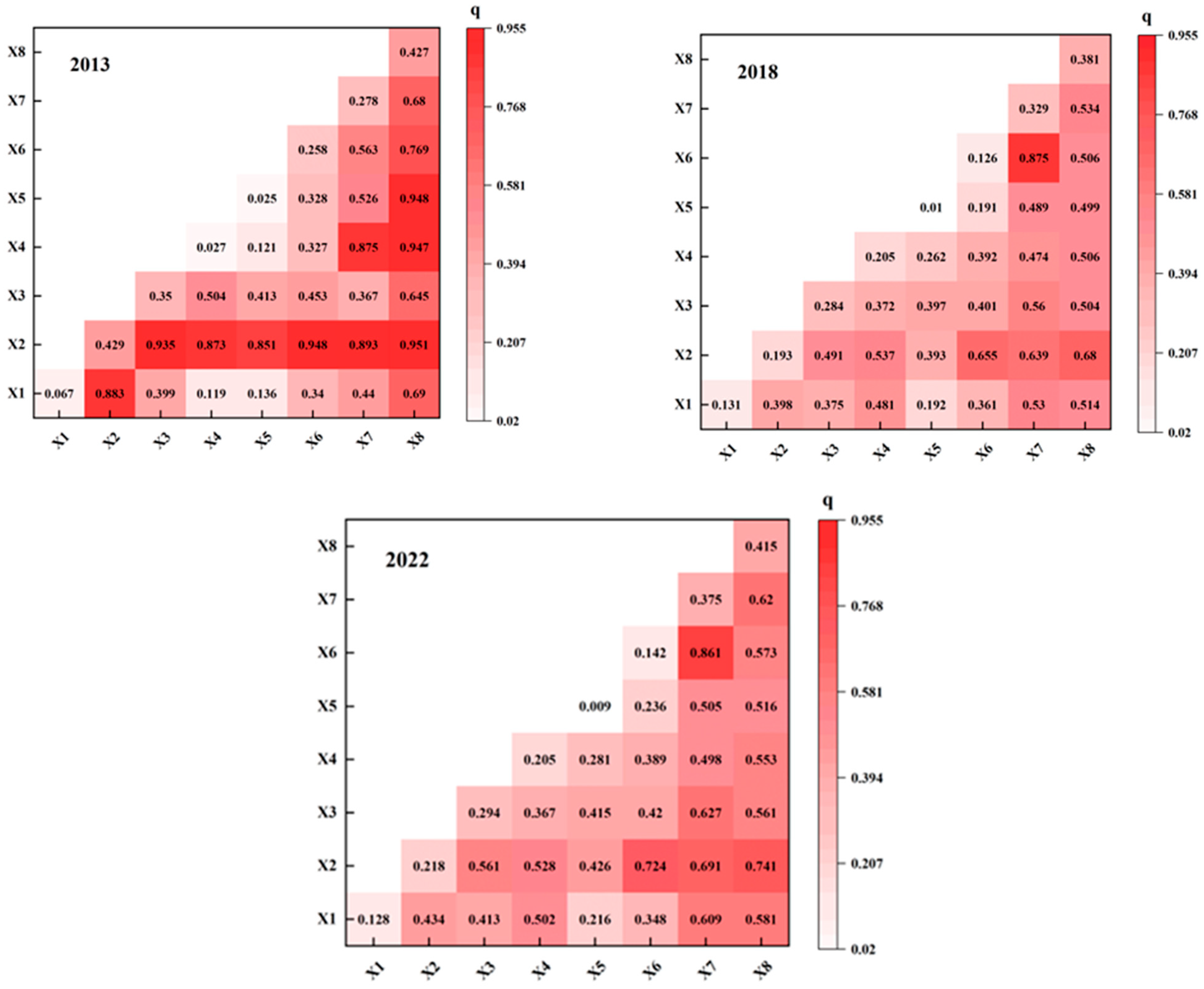
Figure 7 presents the results of the interaction effects among different variables on urban LCT development. The findings show that, for all three selected years, the q-values of pairwise interaction terms are consistently higher than those of the corresponding single factors. This indicates that urban LCT development in China is not driven by any single determinant but rather results from the combined influence of multiple factors. In 2013, the interaction between the tertiary-to-secondary industry ratio (X2) and the number of Internet broadband subscribers (X8) exhibited the highest explanatory power. In both 2018 and 2022, the interaction between the proportion of R&D expenditure in fiscal spending (X6) and per capita postal and telecommunication service volume (X7) contributed most substantially to LCT development. These results suggest that government financial investment and infrastructure development constitute key driving forces behind urban LCT advancement. Their combined effect is particularly pronounced, generating a strong synergistic impact that significantly promotes the development of urban LCTs.

3.4.4. Robustness Test

Within the research sample, municipalities directly under the central government and sub-provincial cities typically exhibit higher levels of economic development, greater concentration of innovation resources, and stronger policy support, often playing a leading role in the advancement of LCTs. Including these alongside ordinary prefecture-level cities in the analysis may introduce structural biases in the overall estimation results due to their significant scale advantages and factor agglomeration effects. Consequently, this study conducts robustness tests by excluding municipalities directly under the central government and sub-provincial cities, results shown in Table 6. This aims to mitigate scale and agglomeration biases stemming from higher-tier cities, thereby assessing whether the research conclusions rely excessively on a small sample of core cities and enhancing the reliability of the findings. Results indicate that after excluding target cities, annual internet broadband subscribers (X8) remain the variable with the highest contribution rate, while environmental regulations (X5) persist at the lowest level. However, in the comparison between per capita retail sales of consumer goods (X3) and per capita postal and telecommunications services volume (X7), the former surpasses the latter, rising to second place in contribution rate. This shift indicates that at the prefecture-level city level, residents’ consumption capacity and market demand provide more fundamental support for advancing LCT levels. Overall, these findings reveal distinct hierarchical differences in the mechanisms influencing LCT development. In higher-tier cities, the aggregation effects of information technology and innovation factors prove more critical, whereas in ordinary cities, the role of consumer market foundations and endogenous demand becomes more prominent. This differentiation enhances the robustness of the research conclusions and provides empirical grounds for subsequent stratified and categorised policy formulation.

4. Discussion

The analysis identifies a marked upward trajectory in LCT patents across China between 2013 and 2023, with the number growing at an average rate of 6.5% per year. The advancement of LCTs stems primarily from the combined impetus of strengthened national policies, technological progress, and increased financial investment. Institutional guidance and support from governments lay a crucial foundation for innovation [38]. Simultaneously, the continuous improvement of infrastructure conditions and the steady increase in government R&D funding have significantly enhanced cities’ capacity to absorb and transform LCT elements. This provides the necessary material foundation and financial support for technological innovation activities, while also amplifying the marginal effects of policy incentives to a certain extent. Notably, studies show that cities of different administrative levels, economic classes, and size categories have some differences in LCT levels. Significant regional differences are noted in the use of green financial instruments, methods for converting scientific discoveries into useful applications, and fiscal support strategies. In their study of 131 northern Chinese prefecture-level cities, Han et al., for example, found that R&D funding assistance, innovation ecosystems, and environmental legislation were important determinants of the effectiveness and developmental standards of low-carbon technological innovation in the area [39]. In particular, through capital advantages, talent aggregation, and policy preferences, first-tier cities and municipalities directly under the central government frequently create positive development cycles. Beijing and Shanghai, for example, were the first cities to participate in the national carbon emissions trading system. They established green technology innovation hubs by utilizing high-density research resources and financial capital. In order to promote the industrialization of LCTs, Shenzhen integrated post-grant procedures for technological R&D funding into high-tech zones and enhanced corporate emissions reduction requirements through market-based regulatory measures. In contrast, the environmental regulations of several central and western cities are mostly based on administrative command mechanisms. Their involvement in carbon trading and market-based adjustment mechanisms is still restricted. These cities struggle to overcome the impacts of technological lock-in, which are exacerbated by talent exodus and inadequate capital aggregation capacities. This finding challenges the “convergence hypothesis” proposed by some scholars [40,41], suggesting that developing LCTs is not a homogeneous process. Therefore, the formulation of development policies should take into account regional heterogeneity and other contextual factors.
From a geographical standpoint, Chinese cities exhibit an evident east–west divide in LCT performance, marked by higher levels in the east and lower ones in the west. The eastern and central areas act as key drivers of LCT development. Moreover, the southwestward shift of the SDE centroid suggests a growing momentum of low-carbon technological advancement in southwestern cities. The gradual synergistic impacts of national strategic orientation and regional economic reform are reflected in this evolutionary trajectory. At the level of economic structure, technical growth has stabilized in the eastern coastal regions after earlier reductions in high-energy-consuming industries and industrial upgrades. At the same time, during industrial transfer, the southwestern region has included sophisticated production layouts and new energy equipment manufacturing. In particular, Chengdu and Chongqing have strengthened the regional basis for LCT innovation by accelerating the clustering of electronic information, power battery, and high-end equipment industries through the Chengdu-Chongqing Economic Circle program. Southwest China’s position in the green technology ecosystem has been greatly improved at the national strategic level by the updated Western Development Strategy and Chengdu-Chongqing Economic Circle programs, as well as the establishment of new energy bases in clean energy-rich areas like Sichuan and Yunnan [42]. The years 2015–2018 saw a significant change in attention towards the Southwest due to a combination of market and policy variables, including concentrated national policy rollouts and accelerated industry migration. The center of gravity shifted slightly to the east after 2020 as eastern regions regained their competitive advantages through improved technology transfer mechanisms, deepened green finance, and digital economy empowerment. China’s LCT spatial pattern is shifting from unidirectional dissemination to reasonably balanced development across several locations, as seen by the overall velocity of movement slowing concurrently. In line with earlier research findings, this trend favors reducing regional inequities and fostering spatial equilibrium in green development [43]. Additionally, the polarization of LCTs in high-high cluster cities is evident, with their spatial spillover effects primarily limited to adjacent cities and only a limited ability to radiate across regions. The observed pattern corresponds to the “core-periphery” configuration of the LCT network as proposed by Shi [12]. Low-low cluster cities suffer from a weak foundation in LCT and struggle to attract social capital due to the long return period of investments. Thus, policy design should recognize that LCTs can no longer be simply replicated or transplanted, but must be transferred through innovation. Technologically lagging regions should be encouraged to actively pursue innovation and explore pathways for technology adaptation.
According to the results of the Geodetector analysis, the interaction between infrastructure and government R&D investment yields the highest explanatory power for the development of LCTs. This may be attributed to the fact that information infrastructure overcomes physical space limitations and positively influences the development of “local-adjacent” knowledge flows. It facilitates green innovation in cities through information support and agglomeration effects [44], thereby enhancing urban emission reduction outcomes. Additionally, government R&D investment is a key driver of high-efficiency technological innovation; the greater the investment, the more resources are available to support enterprises and research institutions in achieving technological breakthroughs. The relationship between government R&D subsidies and technological achievements follows an inverted U-shaped curve, implying that subsidy levels that are too high or too low are not ideal [45]. Furthermore, in contrast to the findings of Jaffe and Stavins [46], who emphasized that environmental regulations are instrumental in fostering green innovation and enhancing the diffusion of knowledge, this study finds that the independent explanatory power of environmental regulation is relatively low. This discrepancy may stem from regulatory frameworks that remain predominantly command-and-control in structure. Without digital support and sustained fiscal incentives, administrative ‘mandatory emission reductions’ alone struggle to foster stable innovation expectations and long-term technological accumulation. The effectiveness of environmental regulation is more likely to be realized through interaction with information infrastructure development and innovation funding support, rather than acting in isolation. Furthermore, the relatively stable contribution rates of per capita GDP and retail sales of consumer goods highlight the importance of demand-side drivers. Cities with higher income levels are more likely to foster green consumption preferences and quality upgrade demands, thereby guiding enterprises through market signals to increase investment in LCT R&D, driving endogenous improvements in technological progress and emission reduction performance [47].
This study offers valuable insights for nations such as Australia, Brazil, and India—countries characterized by vast populations and uneven regional development—in formulating low-carbon transition strategies, optimizing green technology deployment, and enhancing policy implementation efficiency. On the one hand, when advancing low-carbon cities and green industrial layouts, differentiated policy combinations should be adopted to promote LCTs based on each nation’s industrial structure and energy resource endowments, rather than simply replicating a single policy pathway. On the other hand, policymakers should strengthen synergies between digital infrastructure and fiscal investment to enhance the diffusion efficiency of green technologies. Furthermore, for nations like Brazil or India with complex energy consumption structures and rapidly advancing urbanization, this finding indicates that low-carbon transition relies not only on policy and investment but also necessitates stimulating market participation to generate endogenous innovation momentum through supply-demand interaction.
This paper still has several areas requiring refinement: Regarding indicator selection, this study utilizes the number of LCT patents to characterize a city’s level of development in this field. While this metric reflects technological innovation activity, the research fails to differentiate between various types of LCTs. Furthermore, the keyword criteria used in patent screening lack precision, potentially leading to an overly broad scope due to the ambiguity of conceptual definitions. Future research could build upon this foundation by establishing a classification system for technological subsystems. Integrating multi-dimensional metrics such as patent citation frequency, patent grant ratios, and technology conversion rates would enable a more comprehensive characterization of LCT development.

5. Conclusions and Policy Implications

5.1. Conclusions

This research employs the volume of patents in LCTs to approximate the development stage of such technologies within Chinese cities. By employing spatial and statistical techniques, this study investigates the spatiotemporal patterns and underlying drivers of LCT development in Chinese cities from 2013 to 2023. The major insights obtained from the analysis are presented as follows: (1) The number of LCT patents in Chinese cities has shown a steady year-by-year increase. Within the same category, cities with higher administrative rank, stronger economic development, and larger scale generally exhibit higher levels of LCTs. (2) Cities with higher levels of LCTs are mainly concentrated in the eastern region and provincial capitals, while cities in the western region generally lag behind. The center of gravity of LCT has shifted southwestward, and cities display significant global and local spatial autocorrelation patterns. (3) The per capita volume of postal and telecommunications services and the scale of broadband connectivity among users consistently show the highest explanatory power across years, indicating that infrastructure construction has been the dominant factor in the development of LCTs. Regarding interaction effects, the combination of R&D expenditure as a share of fiscal spending and per capita postal and telecommunications services exhibits the strongest explanatory power, suggesting that government funding and infrastructure development serve as drivers of the advancement of LCTs in cities.

5.2. Policy Implications

(1) To further advance the level of LCTs and strengthen the coordination between technological innovation and policy, governments should continue to increase fiscal support for LCT research and development, with particular emphasis on both basic and applied research, ensuring that funding effectively drives technological progress. At the same time, policy incentive mechanisms should be further refined to encourage enterprises to expand investments in LCT development. The establishment of pilot cities for LCTs should be maintained to facilitate the demonstration, application, and dissemination of advanced technologies. Additionally, active collaboration with international organizations and developed countries in the field of LCTs should be promoted to introduce cutting-edge technologies and management practices, thereby enhancing the global competitiveness of domestic LCTs.
(2) Strengthen regional coordination to promote balanced LCT development across eastern, central, and western regions. Establishing interregional collaborative mechanisms can effectively promote the transfer of LCTs from economically advanced eastern areas to less developed central and western regions, thereby accelerating their adoption and diffusion. Increase investment in information infrastructure, transportation networks, and other foundational sectors in central and western regions to improve their level of digitalization and connectivity, thereby providing essential support for promoting and adopting LCTs. Tailor LCT development policies to the specific conditions of different regions: technological innovation and the decarbonization of advanced industries should be strategic focal points for the eastern region, while the western region should emphasize technology adoption and the low-carbon upgrading of basic industries.
(3) Optimize driving mechanisms and promote the coordinated effects of multiple factors to advance LCT development. Multiple factors work together synergistically to drive LCT development, rather than any single factor alone. Policymakers should optimize the driving mechanisms from an integrated perspective to foster coordinated development among economic, social, governmental, and infrastructural elements. First, governments should continue increasing investment in infrastructure such as the internet and communication networks to promote smart city construction and enhance urban intelligence. Second, policy guidance should be used to raise public environmental awareness, encouraging consumers to choose low-carbon products and stimulating demand-side momentum. Third, environmental regulation policies should be optimized to ensure alignment with digital empowerment and financial support measures, thereby stimulating substantial technological breakthroughs among enterprises.

Author Contributions

Research design, H.Z.; data collection and processing, H.Z. and Y.T.; manuscript writing, H.Z.; writing guidance and manuscript revision, K.L. All authors have read and agreed to the published version of the manuscript.

Funding

Under the auspices of Taishan Scholar Foundation of Shandong Province (No. tsqn202408139); Taishan Scholar Foundation of Shandong Province (No. tstp20240821).

Institutional Review Board Statement

Not applicable.

Informed Consent Statement

Not applicable.

Data Availability Statement

The raw data supporting the conclusions of this article will be made available by the authors on request.

Conflicts of Interest

The authors declare that they have no known competing financial interests or personal relationships that could have appeared to influence the work reported in this paper.

Abbreviations

The following abbreviations are used in this manuscript:
LCTsLow-carbon Technologies
SDGsSustainable Development Goals
GTIGreen Technology Innovation
SDEStandard Deviational Ellipse

References

  1. Khan, A.A.; Luo, J.; Safi, A.; Khan, S.U.; Ali, M.A.S. What determines volatility in natural resources? Evaluating the role of political risk index. Resour. Policy 2022, 75, 102540. [Google Scholar] [CrossRef]
  2. Jiang, H.T.; Yin, J.; Zhang, B.; Wei, D.Q.; Luo, X.Y.; Ding, Y. Industrial carbon emission distribution and regional joint emission reduction: A case study of cities in the pearl river Basin, China. Chin. Geogr. Sci. 2024, 34, 210–229. [Google Scholar] [CrossRef]
  3. Abdellatief, T.M.M.; Ershov, M.A.; Kapustin, V.M. Low carbon energy technologies envisaged in the context of sustainable energy for producing high-octane gasoline fuel. Sustain. Energy Technol. Assess. 2023, 56, 103103. [Google Scholar] [CrossRef]
  4. Fu, D.P.; Zhang, L.T. How can low-carbon help high-quality urban development?—Empirical evidence from low-carbon city pilot policies. PLoS ONE 2024, 19, e0302683. [Google Scholar] [CrossRef]
  5. Abid, N.; Ceci, F.; Ikram, M. Green growth and sustainable development: Dynamic linkage between technological innovation, ISO 14001, and environmental challenges. Environ. Sci. Pollut. Res. 2022, 29, 25428–25447. [Google Scholar] [CrossRef]
  6. Bolton, R.; Poulter, H. Low-carbon technologies and the grid: Analysing regulation and transitions in electricity networks. Environ. Innov. Soc. Trans. 2025, 55, 100964. [Google Scholar] [CrossRef]
  7. Li, W.C.; Xu, J.; Wang, Z.M.; Yang, J.L. The impact of LCTI on China’s low-carbon transformation from the spatial spillover perspective. PLoS ONE 2020, 15, e0242425. [Google Scholar] [CrossRef] [PubMed]
  8. Wang, X.Y.; Song, C.Q.; Chang, X.C.; Ye, S.J.; Shi, S. Cross-national perspectives on using Sustainable Development Goals (SDGs) indicators for monitoring sustainable development: A database and Analysis. Chin. Geogr. Sci. 2021, 31, 600–610. [Google Scholar] [CrossRef]
  9. Geels, F. Technological transitions as evolutionary reconfiguration processes: A multi-level perspective and a case-study. Res. Policy 2002, 31, 1257–1274. [Google Scholar] [CrossRef]
  10. Cooke, P. Transition regions: Regional–national eco-innovation systems and strategies. Prog. Plan. 2011, 76, 105–146. [Google Scholar] [CrossRef]
  11. Chen, F.; Yu, H.Y.; Zheng, S.T.; Cao, X.R.; Wu, P.Q. Can an executive’s environmental background be a catalyst for corporate green and low-carbon transformation?--Evidence from 103 energy companies in China. Int. Rev. Econ. Financ. 2025, 104, 104676. [Google Scholar] [CrossRef]
  12. Shi, X.Y.; Huang, X.X.; Liu, H.F. Research on the structural features and influence mechanism of the low-carbon technology cooperation network based on temporal exponential random graph model. Sustainability 2022, 14, 12341. [Google Scholar] [CrossRef]
  13. Dai, L.; Yang, A.M.; Song, G.Y. Regional synergy between green technology innovation and low carbon development in China: A quantitative study of provinces and economic belts. Energy Rep. 2025, 13, 1085–1094. [Google Scholar] [CrossRef]
  14. Xiao, Y.P.; Ma, D.L.; Zhang, F.T.; Zhang, N.; Wang, L.; Guo, Z.; Zhang, J.; An, B.; Xiao, Y. Spatiotemporal differentiation of carbon emission efficiency and influencing factors: From the perspective of 136 countries. Sci. Total Environ. 2023, 879, 163032. [Google Scholar] [CrossRef]
  15. Ma, D.L.; Yan, Y.; Xiao, Y.P.; Zhang, F.T.; Zha, H.R.; Chang, R.; Zhang, J.; Guo, Z.; An, B. Research on the spatiotemporal evolution and influencing factors of urbanization and carbon emission efficiency coupling coordination: From the perspective of global countries. J. Environ. Manag. 2024, 360, 121153. [Google Scholar] [CrossRef]
  16. Wang, C.Q.; Ibrahim, H.; Wu, F.; Chang, W. Spatial and temporal evolution patterns and spatial spillover effects of carbon emissions in China in the context of digital economy. J. Environ. Manag. 2025, 373, 123811. [Google Scholar] [CrossRef] [PubMed]
  17. Liu, Y.Y.; Wang, Y.; Loh, L. Can talent policy promote green technology innovation? Res. Eval. 2024, 33, rvae056. [Google Scholar] [CrossRef]
  18. Guo, L.L.; Cui, M.; Qu, Y.; He, P.D. An integrated approach to modeling the influence of critical factors in low-carbon technology adoption by chemical enterprises in China. J. Environ. Manag. 2025, 373, 123834. [Google Scholar] [CrossRef]
  19. Wang, K.L.; Sun, T.T.; Xu, R.Y.; Miao, Z.; Cheng, Y.H. How does internet development promote urban green innovation efficiency? Evidence from China. Technol. Forecast. Soc. Change 2022, 184, 122017. [Google Scholar] [CrossRef]
  20. Cap, S.; Li, S.; de Koning, A.; Karjalainen, A.; Lettenmeier, M.; Coscieme, L. Carbon footprint reduction potential of consumption changes in five European countries in 2015, 2030, and 2050. Sustain. Prod. Consum. 2025, 59, 408–421. [Google Scholar] [CrossRef]
  21. Xu, Q.Y.; Xie, Y.Y.; Ying, H.Y. Exploring the green patent system in China from the perspective of achieving the dual carbon goal: Development, challenges and prospective enhancements. Hum. Soc. Sci. Commun. 2024, 11, 1738. [Google Scholar] [CrossRef]
  22. Yan, Z.M.; Yu, Y.; Du, K.; Zhang, N. How does environmental regulation promote green technology innovation? Evidence from China’s total emission control policy. Ecol. Econ. 2024, 219, 108137. [Google Scholar] [CrossRef]
  23. Moore, T.W.; McGuire, M.P. Using the standard deviational ellipse to document changes to the spatial dispersion of seasonal tornado activity in the United States. npj Clim. Atmos. Sci. 2019, 2, 21. [Google Scholar] [CrossRef]
  24. Li, Y.; Fang, Y.P.; Meng, Q.G. Spatial pattern evolution and driving factors of urban green technology innovation in China. J. Geogr. Sci. 2024, 34, 289–308. [Google Scholar] [CrossRef]
  25. Dong, Y.H.; Peng, F.L.; Li, H.; Men, Y.Q. Spatial autocorrelation and spatial heterogeneity of underground parking space development in Chinese megacities based on multisource open data. Appl. Geogr. 2023, 153, 102897. [Google Scholar] [CrossRef]
  26. Li, S.; Liu, C.; Sun, P.; Ni, T.H. Response of cyanobacterial bloom risk to nitrogen and phosphorus concentrations in large shallow lakes determined through geographical detector: A case study of Taihu Lake, China. Sci. Total Environ. 2022, 816, 151617. [Google Scholar] [CrossRef] [PubMed]
  27. Hussain, Z.; Mehmood, B.; Khan, M.K. Green growth, green technology, and environmental health: Evidence from high-GDP countries. Front. Public Health 2022, 9, 816697. [Google Scholar] [CrossRef]
  28. Lu, W.C.; Wang, K.H. Effects of economic globalization, environment–related technology innovation, and industrial structure change on the ecological footprint of top 10 Asian technological innovation countries. J. Environ. Stud. Sci. 2024, 14, 789–802. [Google Scholar] [CrossRef]
  29. Sun, Z.R.; Sun, Y.; Liu, H.C. Impact of spatial imbalance of green technological innovation and industrial structure upgradation on the urban carbon emission efficiency gap. Stoch. Environ. Res. Risk Assess. 2023, 37, 2305–2325. [Google Scholar] [CrossRef]
  30. Ji, C.J.; Hu, Y.J.; Tang, B.J. Research on carbon market price mechanism and influencing factors: A literature review. Nat. Hazards 2018, 92, 761–782. [Google Scholar] [CrossRef]
  31. Zhang, P.; Qian, Y.; Wang, X.F.; Yang, F. Can technological talent agglomeration improve carbon emission efficiency? Evidence from China. Environ. Dev. Sustain. 2024, 27, 30135–30159. [Google Scholar] [CrossRef]
  32. Li, Z.; Liu, Z. Does environmental regulation affect urban green technology innovation in China? Evidence from the low-carbon city pilot policy. Front. Energy Res. 2023, 11, 1068563. [Google Scholar] [CrossRef]
  33. Bi, K.X.; Huang, P.; Wang, X.X. Innovation performance and influencing factors of low-carbon technological innovation under the global value chain: A case of Chinese manufacturing industry. Technol. Forecast. Soc. Change 2016, 111, 275–284. [Google Scholar] [CrossRef]
  34. Li, R.R.; Du, J.; Wu, J.; Chen, X. Government carbon reduction policies and the shift to green lifestyles: The role of innovation, incentive, driving and economic effect. J. Environ. Manag. 2025, 374, 124056. [Google Scholar] [CrossRef]
  35. Chishti, M.Z.; Salam, M.; Xaisongkham, S.; Du, A.M. Influence of green ICT and socioeconomic factors on sustainable development: Evidence from Chinese provinces. Res. Int. Bus. Financ. 2025, 73, 102624. [Google Scholar] [CrossRef]
  36. Choi, C.; Yi, M.H. The Internet, R&D expenditure and economic growth. Appl. Econ. Lett. 2018, 25, 264–267. [Google Scholar] [CrossRef]
  37. Wu, H.T.; Xue, Y.; Yu, H.; Ren, S. How does internet development affect energy–saving and emission reduction? Evidence from China. Energy Econ. 2021, 103, 105577. [Google Scholar] [CrossRef]
  38. Yang, G. Can the low-carbon city pilot policy promote firms’ low-carbon innovation: Evidence from China. PLoS ONE 2023, 18, e0277879. [Google Scholar] [CrossRef]
  39. Han, D.; Li, Y.H.; Geng, Y.Y. Spatial network characteristics and driving factors of low-carbon technology innovation efficiency in northern China. Urban Clim. 2025, 62, 102529. [Google Scholar] [CrossRef]
  40. Burnett, J.W. Club convergence and clustering of US energy-related CO2 emissions. Resour. Energy Econ. 2016, 46, 62–84. [Google Scholar] [CrossRef]
  41. Galor, O. Convergence? Inferences from theoretical models. Econ. J. 1996, 106, 1056–1069. [Google Scholar] [CrossRef]
  42. Mao, W.X.; Wang, W.P.; Sun, H.F. Driving patterns of industrial green transformation: A multiple regions case learning from China. Sci. Total Environ. 2019, 697, 134134. [Google Scholar] [CrossRef]
  43. Vijayan, M.; Patil, A.; Kapse, V.; Bahadure, S. Assessing the energy efficiency practices in cities across the world. Curr. Sci. 2021, 121, 372–383. [Google Scholar] [CrossRef]
  44. Li, T.F.; Li, G.; Zeng, S.H.; Yu, H. Towards a low-carbon economy: How can green technological innovation affect carbon productivity in China? J. Environ. Manag. 2025, 392, 126685. [Google Scholar] [CrossRef] [PubMed]
  45. Cheng, Z.H.; Xu, Q.F.; Sanderson, I.F. China’s economic growth and haze pollution control. Nat. Hazards 2021, 107, 2653–2669. [Google Scholar] [CrossRef]
  46. Jaffe, A.B.; Stavins, R.N. Dynamic incentives of environmental regulations: The effects of alternative policy instruments on technology diffusion. J. Environ. Econ. Manag. 1995, 29, S43–S63. [Google Scholar] [CrossRef]
  47. Yan, Z.M.; Zhou, Z.C.; Du, K. How does environmental regulatory stringency affect energy consumption? Evidence from Chinese firms. Energy Econ. 2023, 118, 106503. [Google Scholar] [CrossRef]
Figure 1. Research on the distribution range of cities. Note: This map utilizes the standard map GS (2020) 4619 provided by the Ministry of Natural Resources, without any modifications to the official boundaries.
Sustainability 18 02629 g001
Figure 2. Number of LCT patents in Chinese cities. Note: This map utilizes the standard map GS (2020) 4619 provided by the Ministry of Natural Resources, without any modifications to the official boundaries.
Sustainability 18 02629 g002
Figure 3. Evolution trend of LCT patent’s number in different types of cities. (a) By geographical region; (b) By governance level; (c) By Level of economic development; (d) By urban scale.
Sustainability 18 02629 g003
Figure 4. SDE of LCTs in Chinese cities. Note: This map utilizes the standard map GS (2020) 4619 provided by the Ministry of Natural Resources, without any modifications to the official boundaries.
Sustainability 18 02629 g004
Figure 5. Centroid movement trajectory of LCTs in Chinese cities.
Sustainability 18 02629 g005
Figure 6. LISA cluster maps of LCTs in Chinese cities. Note: This map utilizes the standard map GS (2020) 4619 provided by the Ministry of Natural Resources, without any modifications to the official boundaries.
Sustainability 18 02629 g006
Figure 7. The detection results of interaction factors on LCTs.
Sustainability 18 02629 g007
Table 1. Descriptive statistics of the data.
Variable NameUnitSample SizeMeanStandard
Deviation
MaximumMinimum
Low-carbon Technology PatentsCount294839.204132.70720420
Per Capita GDPYuan229965,940.76437,345.5256,90812,498
Tertiary Industry/Secondary Industry%22991.2083.26781.7180.207
Per Capita Retail Sales of Consumer GoodsYuan229926,321.4120,279.8151,943.94848.382
Number of University Students per 10,000 PeoplePeople2299256.429231.41398.28811.92
Environmental Regulation%22990.0060.0020.2060.001
Proportion of R&D Expenditure in Fiscal Spending%22990.2030.1830.1420.001
Per Capita Postal and Telecommunications ServicesYuan/Person2299966.4061678.7119,417.5622.376
Broadband Internet Access UsersTen Thousand Households22993529.528863.99587,4576
Note: Individual indicators (such as the number of university students per 10,000 people) primarily serve to characterize a city’s overall development foundation and innovation environment. Their interpretation of LCT levels constitutes an indirect reflection and therefore holds only a relative reference value.
Table 2. Parameters of the SDE for LCTs in Chinese cities.
YearShape–Leng/kmShape–Area/km2XstdDistYstdDistRotation
201352442,028,3386.789.2731.04
201551641,972,9566.739.0729.83
201852302,077,3557.238.8429.03
202051922,059,8107.238.7733.79
202351281,997,5366.998.7935.64
Table 3. Centroid movement parameters of LCT in Chinese cities.
YearCentroid CoordinatesMovement DirectionMovement Distance (km)Movement Speed (km/a)
201333.62° N, 116.04° E///
201533.54° N, 115.86° ESouthwest21.6610.83
201833.01° N, 115.84° ESouthwest59.6119.87
202032.93° N, 115.66° ESouthwest22.0411.02
202332.93° N, 115.74° EEast8.902.97
Table 4. Global Moran’s I of LCTs in Chinese cities.
YearGlobal Moran’s IZ–ScoreP–Score
20130.1874.6830.001
20140.2415.6890.001
20150.1854.3270.001
20160.2024.7780.001
20170.2616.1010.001
20180.2716.4280.001
20190.2145.0970.001
20200.2255.3100.001
20210.2255.3960.001
20220.2084.9770.001
20230.1643.9670.002
Table 5. Results of the analysis of different factors on LCTs.
Variable201320182022
X10.0670.1310.128
X20.4290.1930.218
X30.3500.2840.294
X40.0270.2050.205
X50.0250.0100.009
X60.2580.1260.142
X70.2780.3290.375
X80.4270.3810.415
Table 6. Comparison of single-factor interaction detection results before and after urban exclusion.
Variable201320182022
Before DeletionAfter DeletionBefore DeletionAfter DeletionBefore DeletionAfter Deletion
X10.0670.1070.1310.1730.1280.167
X20.4290.1950.1930.0730.2180.079
X30.3500.4560.2840.4910.2940.447
X40.0270.0310.2050.3820.2050.359
X50.0250.0250.0100.0240.0090.029
X60.2580.2830.1260.2500.1420.266
X70.2780.3950.3290.3030.3750.341
X80.4270.4970.3810.6300.4150.582
Disclaimer/Publisher’s Note: The statements, opinions and data contained in all publications are solely those of the individual author(s) and contributor(s) and not of MDPI and/or the editor(s). MDPI and/or the editor(s) disclaim responsibility for any injury to people or property resulting from any ideas, methods, instructions or products referred to in the content.