Systematic Review

The Role of Nuclear Energy in the Economic Transformation of Developing Countries: A Systematic Review of Evidence from Poland

by
Marta Drosińska-Komor
1,
Jerzy Głuch
1,
Jędrzej Blaut
2,
Aleksandra Szewieczek
3 and
Łukasz Breńkacz
4,*
1
Faculty of Mechanical Engineering and Ship Technology, Gdańsk University of Technology, Narutowicza 11/12, 80-233 Gdańsk, Poland
2
Faculty of Mechanical Engineering and Robotics, AGH University of Krakow, al. Adama Mickiewicza 30, 30-059 Kraków, Poland
3
Faculty of Finance, University of Economics in Katowice, 1 Maja 50, 40-287 Katowice, Poland
4
The Department of Turbine Dynamics and Diagnostics, Institute of Fluid Flow Machinery, Polish Academy of Sciences, Fiszera 14, 80-231 Gdańsk, Poland
*
Author to whom correspondence should be addressed.
Sustainability 2026, 18(5), 2604; https://doi.org/10.3390/su18052604
Submission received: 23 December 2025 / Revised: 16 February 2026 / Accepted: 3 March 2026 / Published: 6 March 2026

Abstract

Growing electricity demand and decarbonisation requirements pose significant challenges for coal-dependent transition economies. This study examines whether nuclear deployment can support low-carbon economic transformation using Poland’s national nuclear programme as a case study. We conduct a structured document analysis that integrates a systematic search and screening of peer-reviewed literature with an analysis of national policy and planning materials and a synthesis of publicly available project documentation for the Lubiatowo-Kopalino nuclear power plant, the Pątnów project, and the planned small modular reactor (SMR) deployments. Impacts on employment, infrastructure, technical education, technology transfer, and local supply chain participation are assessed and mapped to the sustainable development goals and the EU climate policy criteria. The analysis indicates that, if accompanied by early workforce development and supplier prequalification, nuclear investments can stimulate industrial upgrading, strengthen energy security, and deliver regional co-benefits beyond electricity generation. At the same time, scheduling slippage, governance uncertainty, and gaps in domestic capabilities in nuclear-specific components can limit these benefits. The article concludes with recommendations for national and local authorities on stakeholder engagement, local content strategy, and risk management that can be transferred to Central European economies with similar starting conditions.

1. Introduction

The increase in energy demand in Poland is driven by socioeconomic development. This requires an ever-increasing amount of electricity production to support the population and industry. In 2024, Poland’s total installed capacity was 72.8 GW, sourced from various energy sources, including renewable and coal-based sources. Most of the energy produced (56.2% in 2024 [1]) still comes from non-renewable sources, including hard coal and lignite. In 2024, renewable electricity production was dominated by photovoltaics, accounting for 64.94% of RES generation, followed by wind power plants at 28.5%, while other renewable sources accounted for 5.56%. Given the intermittency of renewable energy sources, maintaining stable, controllable generation capacity remains crucial to ensuring energy security, so it is important not to cease production from non-renewable sources. This protects the energy supply, a key component of energy security in a country or region, especially amid global political instability, terrorism, war, cyberattacks, and the risk of disruption to external energy supplies [2].
The use of hard coal in Poland for electricity production depends mainly on coal reserves and, indirectly, on the economy [3]. Coal production in Poland has been declining over the period 1990–2024. The total coal production in 1990 was 849,479 TJ, and in 2024 it reached 329,335 TJ, indicating a 2.58-fold decrease in Poland’s coal production in the last 24 years. The need to reduce emissions of CO2, NOX, SOX, and other pollutants has led to the adoption of cleaner combustion technologies [4]. However, these solutions are capital-intensive and significantly increase the operating costs of coal-fired power plants [5,6]. This process is important given international and European climate commitments. An example of this is the 2015 Paris Agreement [7,8], which, in light of environmental problems and related sustainability goals, aims to limit global temperature increases to well below 2 °C relative to the preindustrial era [9,10] and, ideally, to 1.5 °C [9,10]. This process requires enormous effort, as global temperatures have already increased by 0.85 °C [11], underscoring the urgency of structural changes in energy systems [12].
Poland has committed to reducing greenhouse gas emissions by 35% from 1990 levels by 2030 and increasing the share of renewable energy sources in electricity generation to around 50% by 2030 [13]. Poland has set a target of achieving a 32.1% share of renewable energy sources in the final energy consumption in heating and cooling by 2030 [14,15].
Furthermore, the gradual depletion of fossil fuel resources, observed in both Poland and globally, reinforces the need for structural changes in the energy sector [16]. The Polish hard coal mining industry has begun a gradual reorientation of its business models, and more and more companies are undertaking initiatives to reduce their environmental impact [17].
An additional constraint arises from Poland’s existing power generation infrastructure [18]. The average age of Poland’s coal power plants is approximately 47 years, with an average efficiency of 37%, significantly below the EU average of 44% [19]. A significant proportion of boilers (more than 70%) and turbine sets (more than 54%) are operated for more than 30 years (71.36%) [20,21]. Due to the ageing of conventional power plants, the risk of failure and potential disruptions in electricity generation from renewable energy sources, and the need to develop nuclear energy, it is necessary to construct nuclear power plants in Poland.
Poland is currently planning to launch its first nuclear power plant, and work on this process has been ongoing for several years [22]. The construction of a nuclear power plant is expected to improve system stability, reduce dependence on fossil fuels, and limit transmission losses associated with electricity generation far from demand centres. Furthermore, it will enable economic development in the construction sector by creating new jobs and infrastructure.
There are different solutions to the world’s climate and sustainable development goals. The most significant involve changes in energy sources, such as the nuclear power plants studied. At a microlevel, these initiatives are reflected in ESG reporting, which also applies to taxonomic criteria which point to environmentally sustainable practices. In this regard, nuclear energy projects contribute significantly to achieving the sustainable development goals (SDGs). In this sense, nuclear energy ESG reporting is becoming a critical route for a company to demonstrate sustainable actions, with specific consideration of its potential for decarbonisation [14]. ESG reporting addresses various key challenges, such as establishing environmental sustainability, improving governance transparency, and appealing to investors [15]; however, it still needs more comprehensive, standardised reporting approaches to fully integrate into sustainable energy transitions. Ultimately, it is essential to note that the development of nuclear energy also plays a significant role in advancing the circular economy, economic transformation, firm performance, and value creation.
At the microlevel, circular economy principles are implemented through advances in sustainable materials and manufacturing processes. Research on eco-friendly polymer systems and biowaste-based particulate composites demonstrates that optimising material composition and processing parameters can significantly improve mechanical performance while reducing environmental impact, supporting ESG objectives, and enabling industrial upgrading [23,24]. Nuclear energy investments align with the principles of the circular economy through innovative waste management and resource recycling strategies. They also significantly reduce ecological concerns by reducing emissions and advancing technology [25]. Circular economy approaches in nuclear industries can reduce intermediate-level waste disposal by up to 94%, with environmental benefits in all categories of resource depletion [26]. As a result, there is a significant reduction in water scarcity, but the most important outcomes are the use of minerals and metals, as well as ionising radiation and waste [26]. In Poland, a national plan has been introduced for the management of radioactive waste and spent nuclear fuel [27]. However, it is expected to be much safer to store nuclear waste than to deal with the problem of poor, large-scale isolation of fossil fuels, which is common in Poland. Another issue is that spent nuclear fuel contains recyclable materials such as uranium and plutonium, which offer the potential for a circular economy [28]. Finally, it contributes to the creation of circular value chains, particularly for transforming carbon dioxide into energy through a specific closed cycle [29]. Although promising, research suggests that integrating the circular economy requires continued technological innovation and strategic waste management approaches.
Similar principles of lifecycle extension and improvement of system efficiency are observed in renewable energy technologies. Advanced vibration control and automatic balancing systems in offshore wind turbines significantly reduce fatigue loads, improve operational safety, and extend the useful life of components, thereby reinforcing circular-economy objectives through durability and resource efficiency [30].
Recent studies further emphasise that the role of nuclear energy in low-carbon development pathways should be evaluated within a broader sustainability and circular economy framework. The literature on sustainable development increasingly highlights the importance of integrating energy system transformations with circular economy principles to achieve long-term environmental and economic resilience, particularly in regions undergoing structural energy transitions [31].
Contemporary research indicates that nuclear energy, when evaluated alongside renewable sources, can support sustainable development objectives by providing stable low-carbon baseload power while enabling material efficiency, waste minimisation and resource recovery strategies consistent with circular economy models [32]. In particular, recent analyses underline the potential of advanced nuclear technologies, including small modular reactors, to enhance system flexibility and regional sustainability while addressing lifecycle environmental impacts [33].
Despite these advances, the literature indicates that significant differences remain between large-scale nuclear projects and SMR deployments in terms of technological maturity, system integration, and sustainability performance, and these differences are often not explored within a unified comparative framework [26]. This gap highlights the need for systematic, project-specific analyses that explicitly account for environmental, economic, and circular-economy dimensions within national low-carbon development strategies, as undertaken in the present study.
Against this broader sustainability and circular economy background, the present study narrows its empirical focus to the documentable socioeconomic and policy-relevant mechanisms through which nuclear deployment can contribute to economic transformation in a coal-dependent transition economy. Specifically, we synthesise evidence across three deployment strands (Lubiatowo-Kopalino, Pątnów and planned SMR initiatives listed in Table 1) and structure the findings into (i) a domestic capability screen throughout the project lifecycle (Table 2) and (ii) an SDG alignment mapping of identified mechanisms (Table 3).
This article assesses how nuclear energy deployment can contribute to the economic transformation of coal-dependent transition economies, using Poland as a case study. To ensure alignment between the motivation outlined above and the empirical outputs reported in Section 4, the study addresses the following research questions.
  • (RQ1) What is the current and planned deployment portfolio in Poland (Lubiatowo-Kopalino, Pątnów, and SMR initiatives), as evidenced by publicly available project and policy documentation?
  • (RQ2) Which socioeconomic and governance mechanisms are most consistently identified across the document corpus (workforce and skills, education and training, enabling infrastructure, technology transfer, and supply chain participation), and how do they differ across the three deployment strands?
  • (RQ3) Based on triangulated documentary evidence, where is the participation of the domestic industry most feasible across the project lifecycle, and what are the main capability constraints (as synthesised in the capability matrix, as shown in Table 2)?
  • (RQ4) How do the identified mechanisms align with the sustainable development goals and the EU climate-policy objectives (as reported in the mapping of the alignment of the SDGs, Table 3)?
The remainder of the paper is structured as follows. Section 2 details the document analysis design and evidence sources; Section 3 provides the national programme background; Section 4 reports the results of the three deployment strands, including Table 2 and Table 3; Section 5 discusses the implications and limitations; Section 6 concludes the paper.

2. Materials and Methods

2.1. Research Design and Scope

All empirical evidence used in this study is derived from documents. Consequently, the research is framed as a structured document analysis in which peer-reviewed literature, national policy/planning materials, and project-level documentation are treated as complementary document types within a single analytical corpus. Document analysis is a recognised qualitative approach for systematically evaluating documentary evidence and triangulating heterogeneous sources [34].
The peer-reviewed literature component is conducted as a scoping-oriented, systematised review whose purpose is to map relevant concepts, mechanisms, and empirical claims (e.g., local content, workforce development, technology transfer, and regional co-benefits) rather than to estimate pooled effect sizes. Therefore, we follow the core steps commonly recommended for scoping reviews—a transparent search strategy, explicit eligibility criteria, and structured evidence charting—and report these steps using relevant items from PRISMA 2020 and PRISMA-ScR; the search strategy is reported using PRISMA-S [35,36].
Reporting standard and registration. The literature review component of this study was conducted and reported in accordance with the PRISMA 2020 statement, with scoping review-specific items informed by the PRISMA-ScR extension, and the search strategy reported in accordance with PRISMA-S. A completed PRISMA 2020 checklist is provided in the Supplementary Materials (Table S1), and the study identification and selection process is documented in a PRISMA 2020 flow diagram (Figure S1). The review protocol was not prospectively registered; therefore, no registration number is available.
A systematic literature review was conducted to identify publications on the role of nuclear energy in the sustainable economic transformation of coal-dependent transition economies, with a particular focus on Poland. The search targeted four thematic streams: (i) evidence on the macroeconomic and energy-system impacts of nuclear deployment in transition or coal-reliant contexts (e.g., decarbonisation pathways, energy security, electricity prices), (ii) technology- and policy-focused studies on large-scale nuclear and small modular reactors (SMRs), including deployment readiness, licensing, supply-chain and workforce considerations, (iii) analyses of coal phase-out, just transition, and distributional effects at national and regional levels, and (iv) Polish institutional and regulatory context, including strategic documents, official statistics, and regulator reports. Searches were conducted in Scopus and Web of Science using combinations of keywords related to nuclear power, SMRs, coal transition, decarbonisation, energy security, and Poland/central and eastern Europe; additionally, targeted screening of authoritative grey literature (e.g., government strategies, regulator publications, and international organisations’ reports) was undertaken to capture policy-relevant evidence that was not indexed in bibliographic databases. Duplicate records were removed prior to screening. The primary search covered publications from 1978 to 2025; records outside this period were excluded unless they provided seminal conceptual framing or unique baseline evidence necessary for interpreting the Polish case. Titles/abstracts and, subsequently, full texts were screened against predefined inclusion criteria (relevance to the research questions, credibility of source, and availability of sufficient methodological detail), and reasons for full-text exclusion were documented in the PRISMA flow diagram. This combination of a systematic review with an embedded qualitative case study is consistent with established guidelines on literature-review rigour and the principles of systematic review outside the context of meta-analysis [37,38]. The case study logic (embedded units) provides the structure for integrating documentary evidence in the three deployment strands [34].

2.2. Data Sources

Data were collected via desk research. We use peer-reviewed publications, official policy and planning documents, publicly available project materials released by investors and public agencies, and the statistical and survey sources cited in the article. Sources were selected to cover the entire project pipeline (planning, procurement, construction, and operations) and to enable cross-checking of key factual claims.
The literature search was conducted in Scopus and the Web of Science Core Collection and complemented by Google Scholar to identify early-access items and relevant energy-policy outlets that were not consistently indexed. The final search was completed on 31 December 2025. The search strings combined terms for (i) nuclear deployment (including small modular reactors) and (ii) socioeconomic and sustainability mechanisms relevant to transition economies and coal regions. An example query was: (“nuclear energy” OR “nuclear power” OR “small modular reactor” OR SMR) AND (Poland OR “Central Europe” OR “transition economy” OR “coal region”) AND (“just transition” OR “regional development” OR “local content” OR “supply chain” OR workforce OR skills OR education OR infrastructure OR “technology transfer”).
We included peer-reviewed journal articles and review papers that (a) examined nuclear deployment within decarbonisation and energy transition pathways, (b) discussed socioeconomic impacts or policy/governance mechanisms (employment, education, infrastructure, industrial capabilities, local content), and/or (c) analysed SMR deployment in electricity and/or district heating contexts. We excluded publications that focused exclusively on reactor physics, component-level engineering performance, or radiological modelling, without discussing socioeconomic or policy mechanisms. Conference abstracts, non-scholarly commentary, and duplicated versions were excluded. After deduplication in a reference manager, screening was performed in two stages (title/abstract followed by full text).
The policy corpus comprised official national strategies, plans, and legal/administrative acts relevant to nuclear deployment, the energy transition, climate targets, and implementation instruments (including EU-level policy documents where directly applicable). Documents were retrieved from official government, regulator, and EU repositories, and only the latest consolidated versions were used when multiple amendments existed.
For Lubiatowo-Kopalino, Pątnów, and SMR initiatives, we compiled project dossiers comprising publicly available materials, including investor announcements, procurement and supplier prequalification information, environmental impact documentation, licensing communications, and regional development plans.

2.3. Analytical Procedure

We conducted qualitative content analysis to extract evidence on (i) labour market and education needs, (ii) infrastructure requirements, (iii) technology transfer pathways, and (iv) supply chain participation. These elements were synthesised into the capability matrix in Table 2 by classifying each subsystem according to current domestic capability (yes/no/in the future). The consistency of the SDGs (Table 3) was assessed using a rule-based mapping that links the identified impacts to the SDG descriptions and the selected targets; each SDG was coded as direct, indirect, or not applicable. The synthesis was triangulated across multiple sources to reduce dependence on single statements.

3. History of the National Nuclear Power Industry

The Polish energy sector is undergoing a significant transformation to achieve the EU’s climate targets. The country aims to reduce the share of coal in its energy mix while increasing the share of renewable energy sources (RES) and developing nuclear energy [39]. By 2030, Poland aims to achieve at least a 23% share of RES in gross final energy consumption, with wind and solar energy expected to reach 8–11 GW and 10–16 GW, respectively [40]. However, the intermittent nature of RES requires the presence of stable, dispatchable energy sources to ensure system reliability. In this context, nuclear energy is considered a complementary low-emission option alongside renewables.
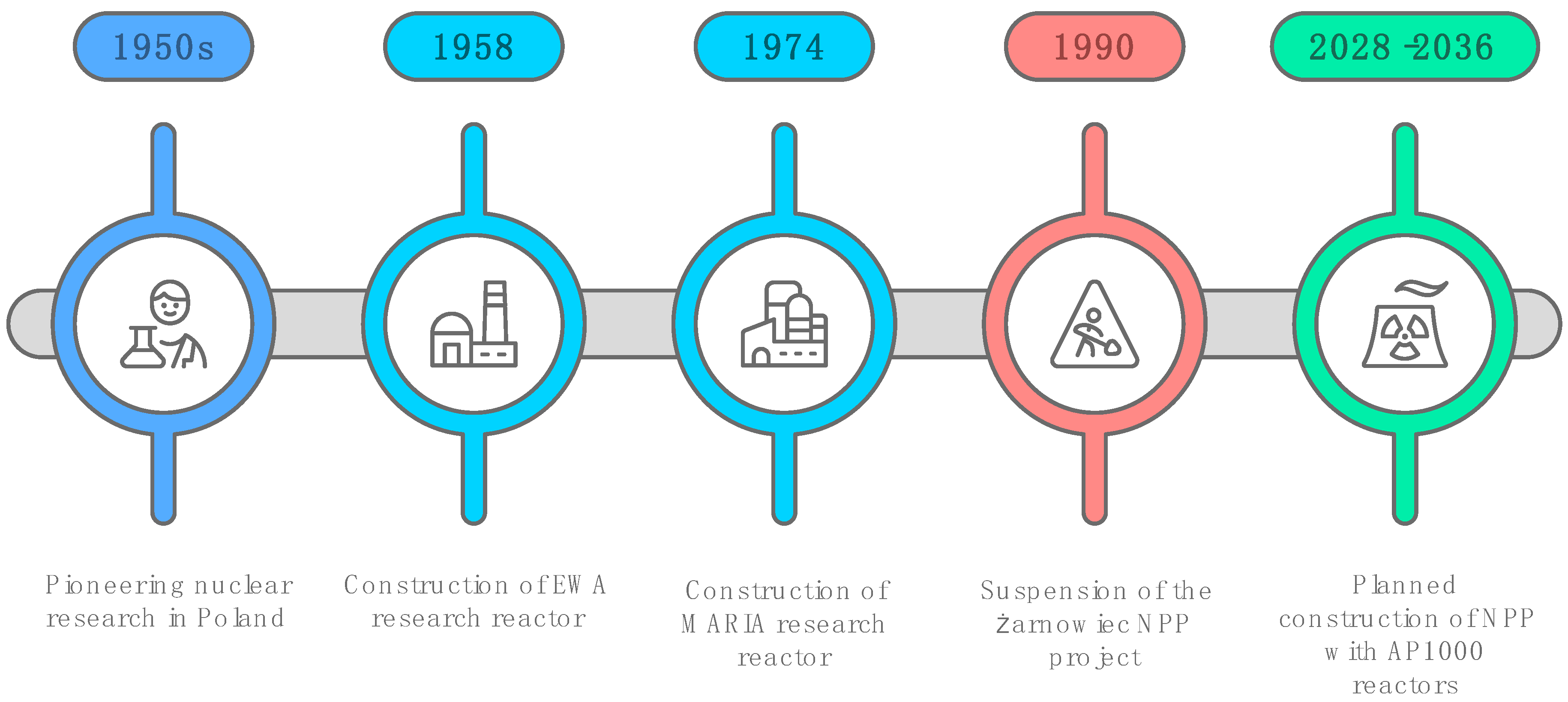
In Poland, the history dates back to the 1950s, when the research reactors EWA and MARIA were commissioned, as shown in Figure 1. The first research reactors, EWA and MARIA, helped build the country’s technical and research capacity.
In the 1970s, the decision was made to construct Poland’s first nuclear power plant in Żarnowiec using WWER-440 reactor technology developed by the USSR. It is a second-generation pressurised water reactor that uses water as both coolant and moderator [41].
The Żarnowiec Nuclear Power Plant project had significant economic and industrial potential, mainly due to the planned involvement of domestic companies in the production of key components, such as turbines and generators. The participation of Polish companies was expected to contribute to the development of the domestic industry by transferring know-how and modernising production facilities. However, following the Chernobyl disaster in 1986 and growing public protests, the investment was suspended. It was then finally cancelled in 1990, although the first unit was about 40% complete, and the expenditure incurred exceeded USD 500 million [42]. The cancellation of power plant construction resulted not only in significant financial losses and the loss of the infrastructure built, but also in a delay in the energy transition. Importantly, the interruption of investment also hampered the development of the domestic nuclear industry. In addition, it impeded the country’s development. The unfinished project had a long-lasting social impact on the displaced local communities.
Current plans for nuclear energy development in Poland, including the Lubiatowo-Kopalino power plant project, face additional challenges, such as site selection, nuclear fuel supply security, and radioactive waste management. Despite these barriers, nuclear energy is considered one of the key tools for reducing PM10 and PM2.5 emissions from coal combustion and improving air quality. The introduction of nuclear energy in Poland faces various constraints, including public expectations and the need to increase its importance in the structure of primary energy sources [43]. At the same time, the lack of a stable and coherent energy policy creates obstacles to the effective implementation of nuclear investments in Poland [44].

4. Results

This section reports the key findings derived from the document corpus, structured into three deployment strands and two synthesis outputs: domestic capability mapping (Table 2) and SDG alignment mapping (Table 3).
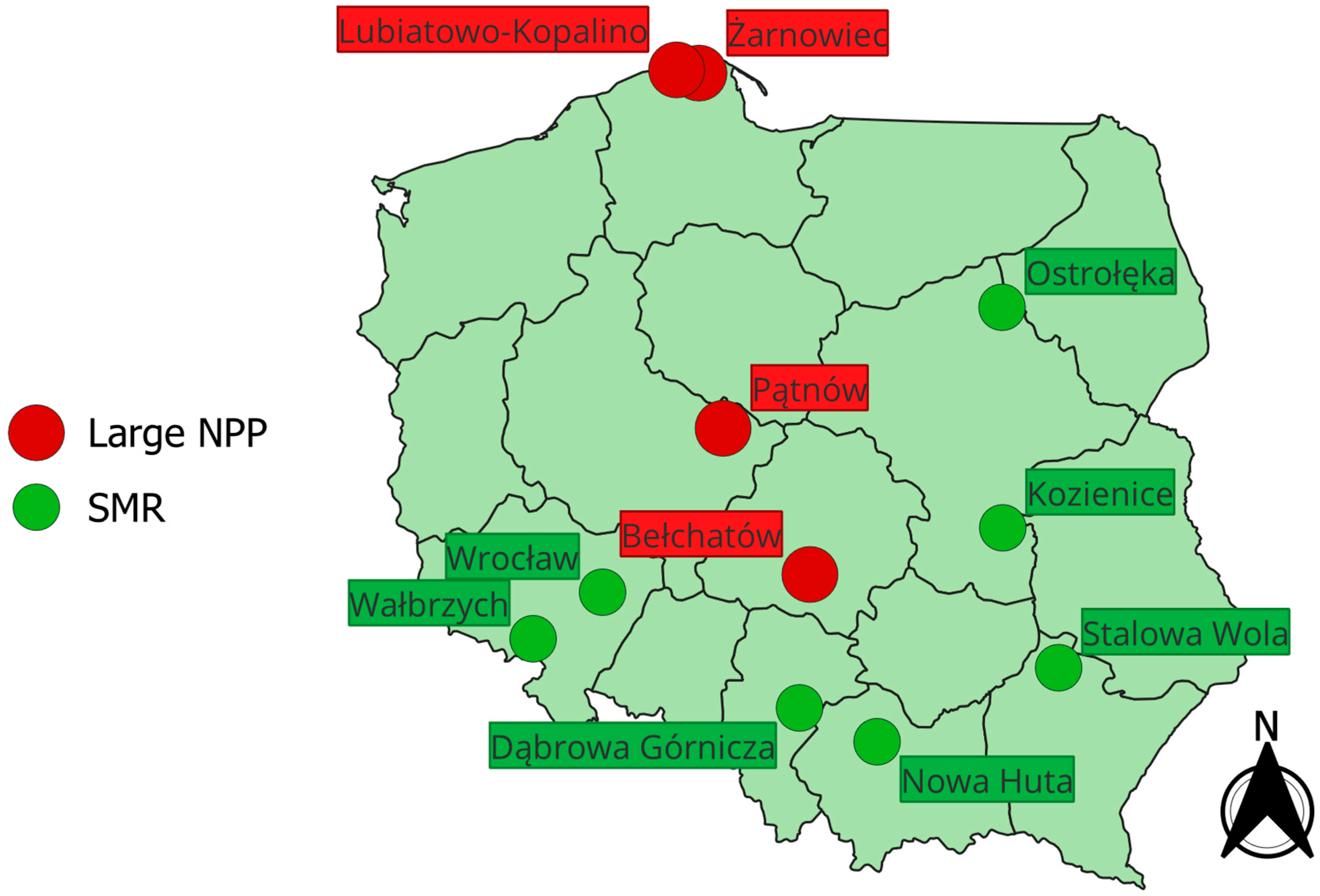
Currently, Poland has no operational nuclear power plants; however, this situation is expected to change within the next decade or so. The first government-owned nuclear power plant is expected to be built as the first unit in 2028 and completed in 2036 [45]. Additionally, two more nuclear power plant investments are planned, but the one in Lubiatowo-Kopalino is at the most advanced stage of construction (Table 1) [46]. The locations of nuclear power plants in Poland are shown in Figure 2. The implementation of nuclear energy is a key element of Poland’s strategy to reduce greenhouse gas emissions and to comply with national and international climate policy objectives [47]. According to current forecasts, the total installed capacity of nuclear power units is expected to reach approximately 7.4 GW net by 2040 and may increase to approximately 9.7 GW in the long term. Ensuring a long-term supply of nuclear fuel is an essential aspect of this strategy. In the European Union, uranium supplies and fuel-cycle services are regulated by the EURATOM Treaty, which allows power plant operators to enter into long-term contracts to enhance fuel supply security and operational stability. Poland plans to secure nuclear fuel supplies for at least five years after the launch of its first nuclear unit.
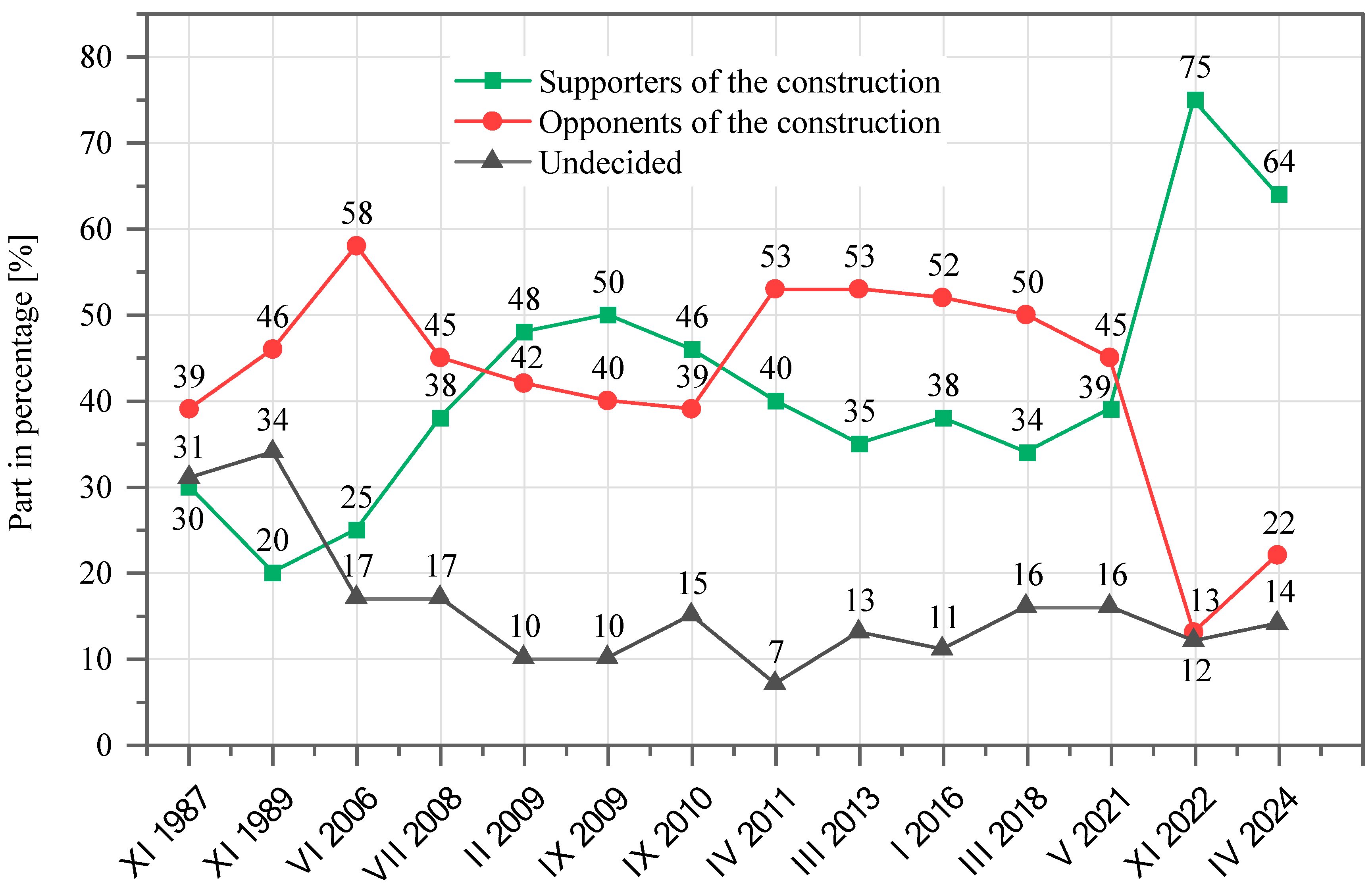
According to a CBOS survey conducted in 2024, 64% of the respondents support the construction of nuclear power plants in Poland (Figure 3). Public support peaked in 2022, driven by the energy crisis and the geopolitical situation following the war in Ukraine, and then stabilised at a relatively high level. In the last decade, the percentage of opponents has steadily declined, indicating a lack of strong resistance to the development of nuclear energy on a national scale. However, when the survey refers to the construction of a nuclear power plant in the immediate vicinity of respondents’ residences, support drops to around 45% [46].
An essential element in the evaluation of nuclear power plant construction in Poland is the issue of radioactive waste management, water demand, and cooling systems. Although these issues often raise public concerns, they are currently regulated by proven technological and legal solutions that are already in use in countries operating nuclear power plants. Spent nuclear fuel can also be treated as a raw material containing significant amounts of reused materials, in particular uranium and plutonium [48]. Fuel reprocessing technologies, used in France and other countries, enable the reuse of fissile materials in the fuel cycle [49]. This reduces the amount of radioactive waste stored. Although Poland currently does not plan to build its own fuel reprocessing facilities, these solutions may be used in the future for nuclear waste management. The use of water in the reactor cooling process is equally important. Modern nuclear power plants use closed or semi-closed circulation systems [50]. This type of circulation significantly reduces water consumption and its impact on local ecosystems. Locating planned power plants near natural water reservoirs, such as the sea or large rivers, is a significant technical advantage, enabling effective heat dissipation. Most of the water used for cooling is returned to the cycle or discharged after meeting strict environmental standards. Radioactive waste management and closed water circulation are integral to the planning and environmental impact assessment process. Their inclusion in the planning process for nuclear power plants is necessary for technological safety, environmental protection, public acceptance, and the long-term sustainability of the investment.
In addition to the nuclear power plant itself, it is necessary to implement a number of complementary infrastructure projects to support its construction and long-term operation, with significant effects on regional development. These include the construction of a national road connecting the site to the S6 motorway, the final route of which was approved in June 2024, as well as the modernisation and expansion of the railway infrastructure, which generates additional demand for construction and transport services. The coastal location of the power plant near Gdynia requires the construction of a marine transhipment facility for large components, thereby further stimulating employment in logistics and port services. Additionally, investments in transmission infrastructure, including new high-voltage lines and power stations, support both the integration of nuclear potential into the national power system and broader economic activity in the region.
Table 1. Comparison of three possible nuclear power plants.
ProjectLocalisationReactor TechnologyPower for One Reactor [MW]Reactors NumberInvestor, Partner Planned Launch Date
PEJ (Polish Nuclear Power Plants)Lubiatowo-Kopalino
Choczewo municipality, Pomeranian Province
AP1000
(Westinghouse Electric Company, Cranberry Township, PA, USA) Generation III+ reactor
11503PEJ (State Treasury), Westinghouse, Bechtel2033—start-up of 1 unit
OSGE (Orlen Synthos Green Energy) SMR–y 12 locations under consideration, for example,
Ostrołęka, Włocławek, Kozienice, Dabrowa Górnicza,
Stalowa Wola
BWRX–300 (SMR, GE Hitachi Nuclear Energy, Wilmington, NC, USA)300>10OSGE (Orlen + Synthos), GE Hitachi2030—first block
Pątnów (ZE PAK/PGE/KHNP)Pątnów, Greater Poland ProvinceAPR1400 (APR1400 (KHNP, Gyeongju-si, Gyeongsangbuk-do, Republic of Korea)
Generation III reactor
14002–3ZE PAK, PGE, KHNPAfter 2035

4.1. New Nuclear Projects

4.1.1. Nuclear Power Plant in Lubiatowo-Kopalino

After a lengthy selection process, Poland’s first state-owned nuclear power plant will be built in Lubiatowo-Kopalino, in the municipality of Choczewo, in the Pomeranian Province [51,52]. The nuclear power plant will deploy three AP1000 Generation III+ pressurised water reactors supplied by Westinghouse Electric Company [13,53], each with an installed capacity of approximately 1150 MW. The choice of this reactor technology reflects regulatory readiness and international operational experience, with the reactor already implemented around the world (licenced in the US, Bulgaria, China, and the UK, among others) [54] and characterised by a high level of safety [54].
This reactor is equipped with passive safety systems, i.e., systems that can operate without electrical power or human intervention, using, among others, gravity, natural convection, and atmospheric pressure [55]. Prefabricated components are used in their construction, allowing faster assembly and reducing the risk of delays compared to building and assembling each element on site. It is estimated that such a power unit can operate for up to 60 years. The fuel cycle lasts approximately 18 months, and in the future, it will be possible to use more advanced fuels, such as MOX. It was also designed to withstand earthquakes, extreme temperatures, and aircraft impacts, which are important for safety and potential catastrophic consequences. The construction of the nuclear power plant is expected to boost the Polish industry and technology [56]. Polish companies will represent 40–60% of the total investment value throughout the implementation process. These companies will primarily focus on construction, logistics and engineering services. This will make it possible to improve the qualifications of employees and transfer know-how in the field of nuclear energy to people involved in the construction and operation of the power plant. This level of local participation creates substantial opportunities for technology transfer, supplier development, and the upgrading of industrial capabilities, particularly in regions that were previously dependent on conventional energy sectors [57].
In addition, the development or establishment of new factories to produce components for the power plant and its infrastructure is expected. Therefore, during the construction process, it is expected that 8000 to 10,000 new jobs will be created in the construction, transport, logistics, and technical services sectors. Once the power plant is up and running, it is estimated that between 900 and 1200 permanent jobs will be created at the plant, including engineers, operators, and service specialists. Additionally, approximately 1000 people will also work at the power plant in areas such as logistics, security, IT, catering, and education. This contributes not only to the creation of new jobs but also to the long-term development of human capital, including through specialised training, certification paths, and participation in industry events.
The location of the power plant in Pomerania will also bring development to the region through improvements to road and rail infrastructure and ports. In addition, education will be developed through knowledge transfer between institutions, e.g., schools. Another advantage is energy security, as the power plant, with all its units operating, will supply approximately 20 to 22 TWh per year, representing approximately 10 to 15% of total national electricity demand.
Due to these investments, GDP and tax revenue will increase from the power plant operator’s activities, as well as from the salaries of full-time employees and subcontractors. The cost of the investment is estimated to be approximately PLN 192 billion (EUR 45 billion). This money will come from a public subsidy from the Polish government, amounting to approximately PLN 60 billion, as well as loans and bonds [58]. Beyond its energy output, the nuclear power plant in Lubiatowo-Kopalino is best understood as a multidimensional development initiative that combines industrial policy, regional development, workforce transformation, and energy security objectives.

4.1.2. Small Modular Reactors in Poland

Small modular reactors (SMRs) are currently being presented in Poland as a complement to the construction of large nuclear power plants, especially in regions experiencing a decline in demand for coal-based energy. Each SMR should have a capacity of approximately 300 Mwe [59]. The flagship initiative in this area is Orlen Synthos Green Energy (OSGE), a company established in 2022 by SGE (Orlen Synthos Green Energy), which was itself established in 2022 by PKN Orlen and Synthos Green Energy [60]. The company plans to implement a fleet of BWRX-300 reactors in selected industrial locations [61]. In 2023, a list of six locations [62] where SMRs are planned to be placed was established, namely:
  • Dąbrowa Górnicza (ArcelorMittal steelworks area).
  • Włocławek (Orlen company area, more specifically the Anwil industrial area).
  • Tarnobrzeg–Stalowa Wola (industrial area, possibly near power plants).
  • Ostrołęka (probably the area of the previously planned coal-fired power plant).
  • Stawy Monowskie (area near the Synthos chemical plant).
  • Kraków (Nowa Huta) (PGE combined heat and power plant area).
GE Hitachi Nuclear Energy is responsible for the BWRX-300, a Generation III+ boiling-water reactor [63]. The reactor’s operating pressure will be approximately 6.9 MPa. This technology has already passed key licensing stages in Canada and the United States, and the first construction project in Canada will be launched in 2024, with commissioning planned for 2028. This reactor features a simplified design with a limited number of components and passive safety systems. This will reduce construction time (24 to 36 months) and improve operational reliability. The reactors will be fuelled with low-enriched uranium (<5% U-235), and fuel replacement intervals will be approximately 12–24 months [64].
The cost of the first reactor is estimated to be approximately 6.7 billion zloty (EUR 1.5 billion). In comparison, the cost of the subsequent reactors is expected to fall to less than 4.5 billion zloty (1 billion) as a result of the experience gained during the construction of the first reactor, but also, due to economies of scale, the more reactors are built, the cheaper they become [65]. The planned financing will be obtained from the technology supplier, GE Hitachi, as well as from strategic partners OPG (Ontario Power Generation) and TVA (Tennessee Valley Authority) as an investment agreement worth USD 400 million, and from American institutions such as EXIM Bank and DFC in the form of loans amounting to USD 4 billion.
The investment will also receive technical and engineering support from Laurentis, Aecon, and AtkinsRéalis [66]. Hitachi Europe will be responsible for digitisation and automation, while ENEC (United Arab Emirates) will assist with project management and operational cooperation.
SMRs can have a significant impact on replacing coal-fired power plants in electricity generation. They will increase the country’s energy security by reducing fossil fuel imports [67].
Employment in SMR-based power plants has a different profile compared to large nuclear projects. During the construction phase at a single SMR location, approximately 1500–3000 people will be employed, of whom 200–300 will hold permanent positions during operation. These figures are lower than those for large power plants equipped with larger reactors. Due to the possibility of building multiple SMRs, the number of employees will be multiplied. Plans to launch 24 reactors will require qualified personnel, including individuals with nuclear energy operating licences. This situation may be problematic, as it can make it challenging to find employees with commercial experience in the nuclear sector. Fortunately, nuclear-related fields of study are currently being launched, which may help in finding qualified employees. In addition to this number of employees, less skilled workers will also be employed, for example, for security, catering, cleaning, and IT. This development will also reduce unemployment and improve employees’ standard of living.
In terms of infrastructure, SMRs offer flexibility in location, so they can be placed in the vicinity of former coal-fired power plants or directly within them. This allows for the reuse of some installations, e.g., network connections, as well as industrial land, thereby reducing investment costs. Each SMR location requires, among other things, nuclear-grade safety infrastructure and waste management systems.
Thanks to cooperation with partners from Canada and the United States, it will be possible to transfer technology and know-how to the national education system and industry. The speed and effectiveness of this process will depend on the ability of national universities, vocational schools, and research institutes to acquire nuclear energy-related competencies. Unlike large nuclear projects, which typically concentrate training activities in one location, small nuclear reactors require decentralised education and certification systems, posing an additional challenge for regulators and training providers.
SMRs are expected to rely more on domestic companies due to their modular design and serial production. Key power plant equipment (e.g., fuel assemblies and control systems) will be imported in the early stages of implementation. Domestic companies will participate in construction work, power plant support systems, logistics, and maintenance.
The economic viability of SMRs remains uncertain. It is assumed that each subsequent power plant equipped with SMRs will be significantly cheaper than the first, which unfortunately may not be the case. These forecasts are based on optimistic assumptions about learning curves, standardisation, and continuous implementation. In reality, there may be delays in work, a lack of public acceptance, or financing issues. As a result, although SMRs are potentially a valuable solution to replace traditional coal-fired power plants, their contribution to the country’s economic and energy transition depends on many factors, including those mentioned above, which will determine the profitability of such facilities.

4.1.3. Pątnów (ZE PAK/PGE/KHNP)

The planned nuclear power plant in Pątnów is an example of how nuclear energy can transform the economy of a region that is dependent on coal. In 2022, a letter of intent was signed regarding plans to build a nuclear power plant in Pątnów by ZE PAK (Zespół Elektrowni Pątnów–Adamów–Konin), PGE, and KHNP (Korea Hydro & Nuclear Power) [68]. The letter stated that the Korean Advanced Power Reactor 1400 (ARP1400) technology would be used. A year later, in 2023, a special purpose vehicle, PGE PAK Energia Jądrowa S.A., was established, with ZE PAK and PGE each holding a 50% stake. The project assumes the construction of at least two reactor units with a total installed capacity of approximately 2800 MW (equivalent to 22 TWh), which would cover approximately 12% of the country’s energy demand. The first unit is expected to be commissioned in around 2035. The cost of constructing two reactor blocks is estimated to be approximately 90–100 billion PLN.
The APR1400 reactor is a pressurised water reactor (PWR) [69] with an efficiency of 38% that is manufactured by KHNP. This reactor will be fuelled with uranium and is expected to operate for 60 years. It will be equipped with passive safety systems, double shields, and emergency cooling systems. This reactor is already in operation in South Korea and the UAE (Barakah) and is currently under construction in Egypt.
From a socioeconomic perspective, the Ptnów nuclear power plant project is significant because it is located in a region that is dependent on coal mining and coal-based electricity generation. The reuse of existing energy infrastructure and the gradual elimination of coal-based activities create favourable conditions for transforming the local labour market. It is estimated that during the construction phase, which will take place between 2027 and 2035, between 4000 and 6000 workers will be employed on the construction site, along with between 1000 and 1500 engineers and technicians. Subcontractors can temporarily employ thousands of workers, such as in transport, logistics, and other services, including catering, ranging from 2000 to 3000 workers. In the next phase, from 2035 (i.e., from the launch), 600 to 1000 jobs are expected to be created directly at the power plant, and 2000 to 3000 jobs are expected to be created indirectly.

4.1.4. Safety

In the case of nuclear power plant construction, it is not only the reactor itself that is considered; attention must also be paid to the need to improve and expand the energy infrastructure. The first thing is to develop transmission and distribution networks and build new transformer stations and high-voltage lines [70]. It is necessary to have a nuclear fuel storage facility either at the power plant site or elsewhere in the country. In addition, a plan for radioactive waste storage must be prepared.
In addition to the building itself, which houses the reactor, the entire technical and industrial infrastructure must also be prepared. This will include management centres, control laboratories, personnel facilities in the form of sanitary buildings, kitchens, and transportation in the form of parking lots and employee shuttle services. Of course, logistics must also be considered at this point, which requires that the facility be accessible by appropriate roads, railways, or ports.
The operation of a nuclear power plant requires a supply of nuclear fuel; the price fluctuates less than the price of coal or gas [71]. This makes it easier to predict fluctuations in fuel prices, which is important for long-term expenditures. It also results in changes in energy prices for consumers.
In addition to the above, emergencies must also be considered. Today, these may include wars, terrorist attacks, natural disasters, or blackouts. The safety of a nuclear power plant refers not only to the protection of the reactor, but also to the protection of the natural environment, the stability of the entire region in which it is located, and the protection of health. In the event of war, nuclear power plants are protected under international law [72], and in situations of armed conflict, they can become military or strategic targets, that is, occupied by the military. In such a case, damage to the reactor or cooling equipment may occur. Restricting access to specialised personnel can also cause catastrophic damage. Of course, the risk of sabotage must also be considered. To remedy such situations, the safety enclosure should be reinforced to protect the reactor from possible shelling and explosions. The introduction of emergency procedures and systems that enable remote control helps to limit the consequences that could arise in the event of loss of stationary control over the reactor.
Natural and climatic disasters must also be considered when designing and building power plants [73]. That is why it is so important to choose the right location for a nuclear power plant, mainly avoiding areas that are seismically active or at risk of flooding. In the event of an earthquake, the foundations and pipes are at risk. Floods and tsunamis can cause systems to flood and prevent the cooling process from taking place, as was the case in Fukushima in 2011 [74]. In addition to extreme situations, milder ones may occur, such as storms or fires, which can threaten people in facilities and cause power lines to outage. To increase safety, emergency drills must also be conducted to simulate potential disasters and how to respond to them.
In addition to the failures mentioned above, there may also be a power failure or blackout; that is, a sudden and prolonged power failure over a large area. For nuclear power plants, this can mean the shutdown of the reactor cooling system, the failure of monitoring and alarm systems, and the failure of all systems that require power. To this end, power plants must be equipped with emergency power sources such as diesel generators, batteries, and energy storage facilities. Blackouts can also be caused by cyberattacks, which is why cybersecurity and employee training on hardware and software issues are so important.
To increase nuclear power plant safety, new Generation III+ and IV reactors can be used [75]. These reactors have a significantly higher level of safety than previous generations. Among other things, they are equipped with passive cooling systems, which means they do not require an external power supply. They are equipped with systems that minimise the possibility of human error. Their use also reduces waste production. These examples show how complex the process of accounting for risks in a nuclear power plant is, which is why it is so important to ensure safety at the design stage.

4.1.5. Diagnostic Systems

Nuclear power plants must meet the most advanced safety standards among the technical equipment in use today. Nuclear power plant safety systems are divided into two groups: reactor safety and electricity generation system safety [76,77]. Reactor safety is paramount; it is maintained using the most advanced methods, but it is not the main focus of this paper. The focus is on the specific steam-turbine cycle used in nuclear power plants. The turbine section and its accessories must maintain the highest level of safety. This is guaranteed on the one hand by safety systems and on the other by advanced systems for monitoring all operating parameters. These systems are used in diagnostic procedures to ensure safety and also to manage the quality and cost-effectiveness of the operation. In the case of SMR, the problems of diagnostics and safety are even more important because such power plants are located close to inhabited areas.
Diagnostic procedures involve comparing the devices’ current operating parameters with benchmarks for safe and correct operation. The current parameters are derived from ongoing measurements. Benchmarks are generally defined functionally by numerical algorithms that draw on advanced scientific and engineering knowledge [19]. Numerical algorithms create advanced, realistic (that is, computationally accurate) models of entire power plants. They allow the evaluation and improvement of operations in the face of irregularities caused by both operational degradation of equipment and equipment failures. This aspect is particularly important for nuclear power plants.
In Poland, few practical works are carried out at the intersection of science and engineering. Examples include experimental and theoretical research on reactor-turbine installations carried out mainly by the Institute of Fluid-Flow Machinery of the Polish Academy of Sciences in Gdańsk and the knowledge of employees of the Institute of Nuclear Research in Świerk. Related Polish contributions include experimental and numerical identification of bearing dynamic coefficients and rotor dynamics studies for ORC turbomachinery (including oil-free bearing solutions), which are directly relevant to model-based condition monitoring, stability margins and maintenance planning for turbine generator trains (e.g., [78,79,80,81]).
A significant portion of diagnostic procedures can be adopted from other facilities, mainly conventional power plants (except reactors) powered by fossil fuels [8,82]. They mainly concern mechanical systems and energy conversion procedures in steam turbine installations. Gardzilewicz and Głuch [83,84] presented this perspective at the Karlsruhe Nuclear Power Plant Conference.
A significant problem in nuclear power plants is the possibility and quality of obtaining measurement results. Currently, operating power plants use reactors from Generation I (still) to Generation III+. The steam used in them is wet or, at most, saturated. This makes it easy to measure loads, pressures, and mass flow rates, but it is challenging to obtain objectively correct temperatures. In [83,84], a proposal is presented for developing numerical procedures to calculate temperatures in the nuclear steam cycle based on pressure, mass flow rate, and load measurements, along with the characteristics of the cycle’s components. This, in turn, enables the definition of operating characteristics, such as efficiency and throughput, in the energy conversion process, taking into account extensive experimental knowledge. That is essential in the diagnostic process to ensure safety. At this point, it is worth highlighting the expertise of Polish researchers in applying artificial intelligence methods to the diagnosis of steam power plants.
In conclusion, it is essential to emphasise the significant role of diagnostics in the operation of nuclear power plants. To date, research in this field in Poland offers opportunities to adapt to the operational procedures of nuclear power plants. At this point, it is worth highlighting the expertise of Polish researchers in applying artificial intelligence methods to diagnostics.

4.2. Cooperation Between the Manufacturer and the Local Supply Chain

The modernisation analysed in this study requires the cooperation of a wide range of specialists and a coordinated supply chain. A practical organisational model is provided by the example of the first nuclear power plant to be built in Poland; some of the following scopes and packages have been compiled based on a presentation of the subcontracting programme (Pomerania Development Agency, Gdańsk, 15 September 2025, Dan McLuskie), the parameters of which were stated earlier.
In nuclear projects, the supply chain can be divided into four basic stakeholder groups [85,86]. The first group consists primarily of the technology manufacturer and the main contractor (EPC). They are responsible for system design, quality requirements, schedules, and integration of all subsystems. The second group is the investor and the project company. This group is responsible for financial coordination, regulatory compliance, and long-term operational planning. The third group includes domestic industrial partners, such as construction companies, component manufacturers, installation contractors, logistics providers, service providers, and many others. The fourth group consists of supporting institutions, such as certification bodies, research institutes, and universities, whose tasks include monitoring compliance with standards and preparing and training qualified personnel.
Operationally, nuclear new-build supply chains are organised into contractual tiers and by safety significance. At the top, there is the owner/licensee (project company), working with an EPC/architect/engineer integrator and the technology vendor(s) responsible for the nuclear island. Downstream, the supply chain typically comprises: (i) Tier-1 suppliers of significant systems and long-lead equipment (e.g., turbine generator and conventional island packages, central electrical systems, large pumps/valves, I&C platforms); (ii) Tier-2/3 manufacturers, fabricators, and specialist contractors (civil works, steel structures, piping, electrical installation, HVAC/fire protection, coatings, logistics, temporary facilities, site services); and (iii) lifecycle service providers (maintenance, spare parts, calibration, inspection/diagnostics, and outage support). Procurement is commonly structured using a graded approach that distinguishes items and services necessary to nuclear safety (ITNS) from conventional balance-of-plant packages. This ITNS boundary drives the depth of qualification, audit intensity, and documentation/traceability requirements [87,88].
Therefore, efficient cooperation depends on transparent role allocation and interface governance between the owner/licensee, EPC integrator, technology vendor(s), and domestic suppliers. In nuclear new builds, most collaboration friction arises at package interfaces (design–procurement–construction handovers, documentation completeness, and configuration changes); consequently, interface management and document control become central instruments of cooperation rather than administrative overhead.
Evidence from the reviewed project documentation and previous studies indicates that nuclear projects can generate substantial local economic benefits, including long-term high-skilled employment and increased retention of economic activity within local supply chains. Across the reviewed project documentation and supply chain literature, recurring organisational patterns were identified regarding stakeholder roles, prequalification requirements, and package-based contracting. In specific contexts, such as West Kalimantan, Siti Alimah et al. [89] found that local populations require targeted skills training, with only 3.86% of the local workforce holding bachelor’s degrees. Domestic companies and universities can be involved in the entire process, starting with the design stage. At this preparatory stage, Polish companies can engage in geotechnical studies, geodetic measurements, and laboratory analyses. Then, their potential can be leveraged in preliminary construction work. This allows domestic companies to enter the project at an early stage and adapt their competencies to the nuclear sector’s requirements. It also generates immediate economic benefits through employment, local government revenues, and infrastructure development.
Technology transfer is crucial, as Koster, M. [90] demonstrates that nuclear projects are driving knowledge development in local manufacturing sectors. Ignazio Cabras et al. [91] further confirmed that nuclear sites can retain approximately one-third of economic activity within local supply chains.
These diverse participants improve the issues of strategic integration and collaborative cost reduction. A significant advantage is that nuclear supply chains are more cooperative, focusing on mutual value creation and introducing technological innovation.
Key strategies for efficient cooperation include:
(a)
Developing comprehensive evaluation systems for supplier selection [92]. In practice, this requires a staged prequalification pathway (initial capability screening, QMS and documentation review → audits, trial/low-criticality packages), with explicit criteria for traceability, configuration control, and non-conformance management for ITNS-related scopes.
(b)
Creating cooperative cost reduction agreements [93]. Effective mechanisms typically include early contractor involvement and joint value engineering workshops, transparent “open-book” cost structures for selected packages, and incentive-compatible arrangements (e.g., target-cost elements or shared savings) to avoid adversarial change-order dynamics.
(c)
Implementing integrated project management that synchronises strategic activities [94]. Concretely, this involves an integrated master schedule between key owners—EPC suppliers, a joint risk register, interface control documents (ICDs) for cross-package boundaries, and a familiar document management environment to ensure regulator-grade documentation and traceability.
Efficient cooperation in nuclear energy plant supply chains requires strategic international collaboration and careful selection of participants. Admission to participation requires prequalification: verified references; a quality system (e.g., ISO 9001 or equivalent); financial capacity and bank guarantees; compliance with sanctions regimes; and health and safety/environmental data for on-site work.
The construction and assembly of a turbine unit in a significant energy project require a distributed supply chain and coordination among multiple contractors. Experience from projects in Poland shows that an effective cooperation model combines parallel preparatory work, the organisation of temporary facilities, the implementation of technological “islands” and support services. This scheme applies to the manufacturer or installer of a steam turbine (classic unit, ORC, combined heat, and power plant), with extensive involvement of local companies.
During the preparatory stage, soil testing and field measurements are crucial, including geotechnical, geodetic (aerial and ground), sampling, and laboratory tests. This area naturally involves local suppliers of concrete, structures and general construction work, which are significant determinants of regional market development, job creation, local budget revenues, and quality of life. Infrastructure investments create substantial local economic benefits through several mechanisms: they allow greater access to the labour market [95]; they constitute fundamental capital input that increases productivity, reduces logistic costs, and improves the coverage of public services [96]; and finally, they improve economic growth rates, particularly in previously isolated regions [97]. Critically, these investments are not just about physical construction, but about creating comprehensive economic ecosystems.
During the main construction phase, cooperation covers both separate packages (deep excavations and drainage, tunnels, module assembly, temporary structures) and areas managed directly by the general contractor (turbine island, water intakes and discharges, desalination, waste management). These are accompanied by specialist contracts for fencing, protective coatings, passage sealing, coverings and casings, insulation, HVAC, fire protection, and the installation of protective structures.
The contract scale favours the participation of micro-, small-, and medium-sized enterprises (SMEs): hundreds of thousands of cubic metres of concrete, tens to hundreds of kilometres of pipelines, and millions of metres of cables are divided into numerous construction and supply packages. This creates space for companies ranging from scaffolding, facility maintenance, and site security to back-office services and ongoing utilities. At the same time, local content activities are being carried out, including supplier symposia, B2B meetings, prequalifications, and the successive awarding of contracts to domestic entities. Thus, the network of supply chain links is expanding, and the creation of value for various stakeholders involves many entities not only in terms of space but also in terms of hierarchical dependencies.
The schedule requires early decisions on preparatory packages, several months in advance of the “first concrete” milestone, and close coordination with the accompanying infrastructure (roads, rails, marine structures, 400 kV stations). The turbine supply chain must be integrated into these timelines so that the installation of machinery, pipelines, insulation, and auxiliary systems can proceed without conflict.
The model described is universal and can be applied to other energy projects, including cogeneration upgrades and binary ORC systems for geothermal energy, as analysed in this article.

4.3. Participation of the Domestic Industry Throughout the Project Lifecycle

The corpus consistently identifies the socioeconomic impact channels associated with nuclear deployment in Poland, including demand for workers, education and training needs, transport and enabling infrastructure, and the development of the local value chain [98]. Based on the synthesis of the project documentation and the reviewed literature, Table 2 summarises where participation by the domestic industry is feasible across the design, manufacturing, construction/assembly, and operation/maintenance stages.
Table 2. Possibilities of using the potential of the Polish industry in the construction and operation of a nuclear power plant.
Location/DeviceDesignProductionConstruction, AssemblyOperation, Repairs, Maintenance
ReactorReactorNoNoYesYes
Auxiliary systemsIn the futureIn the future
Reactor safety systemsxIn the futureYesYes
Powering your own needsxYesYesYes
Engine roomTurbineYesYesYesYes
GeneratorYesYesYesYes
Condenser YesYesYes
Heat ExchangersYesYesYesYes
Other elementsPipelinesYesYesYesYes
Structural elementsYesYesYesYes
Construction work YesYesYesYes
Power outputYesYesYesYes
Supporting infrastructureYesYesYesYes
Sanitary facilitiesYesYesYesYes
Facility protectionYesYesYesYes
Possible answers: yes: use of the domestic industry; no: lack of developed industry in this field; future: after gaining experience with the first domestic nuclear power plant; x: not applicable. Source: own study.
Table 2 indicates that domestic participation is most feasible in the balance of plant scope and in construction/assembly and O&M activities (e.g., civil works, structural elements, pipelines, supporting infrastructure, facility protection, and a large share of turbine-island components). On the contrary, the most capability-constrained areas are those directly linked to the nuclear island, particularly reactor design and reactor manufacturing.
The matrix also highlights capacity-building pathways, as several subsystems are marked as “in the future”, suggesting that participation may expand after learning-by-doing during the first domestic projects and through targeted certification and qualification processes. In general, Table 2 provides a structured evidence summary of where domestic suppliers can realistically enter the value chain under current conditions, versus where participation is conditional on experience accumulation and regulatory/quality requirements.

4.4. SDG Alignment Mapping

The development of nuclear energy will also positively impact the achievement of the United Nations sustainable development goals (SDGs). Seventeen strategic goals have been established here, and achieving them will have a positive impact on sustainable development worldwide. An analysis of the effects of nuclear power construction and subsequent production on the accomplishment of the 17 SDGs is presented in Table 3.
Table 3. Impact of nuclear energy in Poland on achieving all strategic sustainable development goals.
SDGAffiliation: Direct, Not Applicable, Indirectly ApplicableSDG Description
1No povertyIndirectly applicable Possibility of reducing poverty through new jobs. Fulfilment of task 1.4.
2Good health and well-being DirectlyResearch on the decarbonisation and reduction of greenhouse gases in energy production using nuclear energy. In this way, the number of people suffering from diseases caused by pollution will be reduced, achieving task 3.9.
3Quality educationDirectlyThe need for specialised and technical education indicates the creation of new fields of study related to nuclear energy, the realisation of tasks 4.4 and 4.7.
4Clean water and sanitationDirectlyImproving water quality by reducing pollution generated during electricity production. Fulfilment of task 6.3.
5Affordable and clean energyDirectlyIncreasing energy efficiency through the use of nuclear reactors to generate electricity. The knowledge gained during the facility’s construction and operation is shared through training and scientific publications. Fulfilment of tasks 7.1 and 7. A.
6Decent work and economic growthDirectlyEconomic growth through increased employment in the construction and operation of a nuclear power plant. Training and courses for employees who lack the necessary training to ensure the safe operation of the facility. Growth of the gross domestic product. Fulfilment of tasks 8.1, 8.2, and 8.3.
7Industry, innovation, and infrastructure DirectlyDevelopment of nuclear energy to minimise the consumption of conventional fuels in domestic electricity production. Development of road infrastructure and high-voltage networks. Fulfilment of tasks 9.1, 9.2, 9.4, and 9. B.
8Sustainable cities and communities Indirectly applicable Along with the construction of the power plant, new housing units will be built. Fulfilment of task 11.1.
9Responsible consumption and production DirectlyPresentation of research on sustainable nuclear energy production using III+ generation reactors. Fulfilment of tasks 12.2, 12.4.
10Climate actionDirectlyReduce greenhouse gas emissions to reduce the carbon footprint while complying with international legal obligations, including those under the United Nations Framework Convention on Climate Change. Fulfilment of tasks 13.2 and 13. A.
11Life on landDirectlyProtecting the environment by not producing greenhouse gases and also reducing the extraction of fossil fuels. Realisation of task 15.6.
12Partnerships for the goalsDirectlyCooperation within consortia; for example, the use and construction of reactors. Fulfilment of task 17.6.
Taken together, Table 2 and Table 3 synthesise the two main outcome streams of the study: (i) domestic capability screening throughout the project lifecycle and (ii) an SDG alignment mapping of the identified socioeconomic and sustainability mechanisms.

5. Discussion

The results highlight two interlinked issues that are critical for coal-dependent transition economies pursuing nuclear deployment. First, the Polish programme combines a large-scale nuclear power plant path with emerging SMR initiatives, creating opportunities for decarbonisation, but also increasing governance and delivery complexity. Second, the magnitude of socioeconomic co-benefits depends strongly on early workforce planning, supply chain readiness, and the ability to translate project pipelines into bankable local participation rather than aspirational local content targets.
The capability pattern in Table 2 implies that the near-term socioeconomic co-benefits are most likely to materialise through construction-intensive packages and balance-of-plant activities rather than through the nuclear island. This shifts policy attention to early supplier prequalification, quality system upgrades, and workforce planning in civil works, mechanical erection, piping, and auxiliary systems, where domestic participation is comparatively realistic.
Furthermore, the concentration of “future” capability entries in Table 2 suggests that a staged learning pathway (first-of-a-kind to nth-of-a-kind) may be required to expand domestic participation into more specialised subsystems. This supports the need for coordinated education and training initiatives, industry–university partnerships, and certification infrastructure to translate project pipelines into bankable local participation rather than aspirational goals.
These findings should be interpreted in light of the study’s reliance on publicly available and forward-looking documentation, which is inherently sensitive to regulatory decisions, financing conditions, and schedule changes. Future research should complement document-based synthesis with stakeholder interviews and quantitative monitoring of local procurement, workforce trajectories, and project delivery milestones as the Polish programme moves from planning into execution.

6. Conclusions

This review assessed how deployment can contribute to the economic transformation of coal-dependent transition economies, using the Polish nuclear programme as an illustrative case. It was based on a structured document analysis that integrates a systematic search and screening of the peer-reviewed literature with analysis of policy/planning documents and the synthesis of publicly available project documentation (Lubiatowo-Kopalino, Pątnów and the planned SMR fleet). A structured mapping also evaluated the consistency of these effects.
The first overarching conclusion is that, in a system that is still strongly reliant on coal and characterised by an ageing thermal fleet, nuclear power is a controlled, low-carbon source that can complement intermittent renewables and support the security of supply. For Poland, where demand growth, unit retirements, and the need to maintain system adequacy coincide, the analysed pathway frames nuclear not as a single technology choice but as a system-level stabiliser that can reduce exposure to weather-driven variability, lower emissions relative to coal-based generation, and provide a more predictable long-term cost structure for electricity planning, provided that governance, financing, and delivery schedules remain credible.
Second, the review indicates that the socioeconomic “co-benefits” of nuclear deployment are real but conditional. Job creation during construction and operation, regional infrastructure upgrades (roads, rail, port/loading capacity, and grid reinforcements), and increased demand for technical services can generate broad economic stimulus and local development. However, the scale of domestic value capture depends on early workforce preparation and supplier readiness. The capability screening presented in the article (Table 2) suggests that there is substantial potential for Polish companies in civil works, with a conventional balance of plants, turbine-generator islands, pipelines, structural elements, and many supporting services, while restrictions related to reactor design/manufacture and selected nuclear-specific systems remain. Consequently, without a deliberate supplier development and qualification programme linked to quality systems, prequalification requirements, and staged entry into contracts, local participation risks concentrating in lower-value packages, limiting long-term technology transfer.
Third, SMRs appear particularly relevant for “coal-to-nuclear” replacement pathways in industrial sites and district heating contexts, potentially enabling decarbonisation beyond electricity (especially where cogeneration and process heat needs are significant). At the same time, our review highlights that the deployment of SMR is sensitive to licensing timelines, supply chain maturity, first-of-a-kind costs, and the availability of qualified operators and service infrastructure. Therefore, the role of SMRs in economic transformation should be treated as promising but contingent and evaluated through phased deployment strategies that explicitly manage learning effects and programme risk.
Finally, the mapping (Table 3) indicates that nuclear deployment, when embedded in a coherent transition strategy, can align directly with multiple SDGs related to health (through reduction in pollution), education and skills, access to clean energy, decent work and growth, industry and infrastructure, responsible production, climate action, and partnerships, while indirectly contributing to local community development. Importantly, this alignment is not automatic. It depends on governance transparency, stakeholder engagement, just transition policies for affected regions, and the credibility of delivery (time, budget, and institutional capacity). For sustainability as an outlet, this conditionality sends a key message: nuclear energy may support sustainable development outcomes, but only when the social, institutional, and supply-chain dimensions are managed as rigorously as technical ones.
Based on the reviewed evidence, several actionable recommendations follow for Poland and similar Central European transition economies: (i) treat workforce development (secondary, higher education and professional certification) as a critical path activity rather than a supporting initiative; (ii) implement a national supplier development and prequalification programme to move domestic firms up the value chain in successive projects; (iii) synchronise “megaproject” logistics and grid expansion with nuclear construction milestones to reduce schedule risk; (iv) embed cybersecurity, emergency preparedness and diagnostic capability in the programme from the outset; and (v) maintain transparent governance and local engagement to protect social licence and reduce disruption risks.
From a policy perspective, the Polish case offers a benchmarkable policy package for other coal-dependent transition economies. First, benefits beyond decarbonisation require institutional readiness: a credible long-term policy signal, strong programme management entity, and an independent, well-resourced regulator to reduce governance-driven schedule and cost volatility [58,88]. Second, nuclear deployment should be embedded in an explicit “just transition” plan for coal regions, including workforce redeployment, reskilling and certification, and transparent local benefit-sharing mechanisms to maintain the social licence to operate [58,69]. Third, capturing domestic value does not happen automatically; it requires policy-supported supplier development (staged prequalification, nuclear-grade QA upgrades, and phased contract entry) and is tracked using indicators such as the domestic procurement share by contract tier, the number of qualified suppliers, and workforce certification rates [88,89]. Fourth, system integration should be planned in advance by aligning grid and logistics investments with nuclear milestones and deploying SMRs strategically for industrial heat and district heating in coal-CHP-centric areas [68,69]. To enable cross-country benchmarking and continuous policy learning, transition economies can publish a small KPI set (e.g., licensing lead time, schedule and cost variance, local procurement share, numbers of nuclear-qualified suppliers and certified operators/technicians, and periodic community acceptance metrics) and update it regularly as projects move from planning to execution.
The review is necessarily constrained by its reliance on publicly available sources and forward-looking plans, which are sensitive to regulatory, financing, and geopolitical changes. Future work should complement this synthesis with quantitative assessments—for example, scenario-based power system modelling, input–output or computable general equilibrium estimates for local content and employment multipliers, and comparative cross-country studies across transition economies—to better determine which institutional and market conditions nuclear programmes will deliver measurable and durable socioeconomic benefits alongside decarbonisation.

Supplementary Materials

The following supporting information can be downloaded at: https://www.mdpi.com/article/10.3390/su18052604/s1, Figure S1: PRISMA 2020 flow diagram for the identification, screening, eligibility assessment, and inclusion of peer-reviewed literature. Searches were conducted in Scopus and the Web of Science Core Collection, complemented by other sources (e.g., Google Scholar) to capture early-access items and relevant outlets that are not consistently indexed. The final search was completed on 31 December 2025. The PRISMA diagram refers only to the peer-reviewed literature component; policy, legal, and project documentation were collected and analysed as a separate documentary corpus, as described in the Methods.; Table S1: PRISMA 2020 checklist for the scoping review.

Author Contributions

M.D.-K.: Conceptualisation, Methodology, Material preparation, Data collection, Formal analysis, Investigation, Writing—original draft, Writing—review and editing, Supervision. J.G.: Writing—original draft, Writing—review. J.B.: Writing—original draft, Writing—review. A.S.: Writing—original draft, Writing—review. Ł.B.: Formal analysis, Visualisation, Writing—original draft, Writing—review and editing, Corresponding author and holds overall responsibility for the integrity of the work. All authors have read and agreed to the published version of the manuscript.

Funding

The authors declare that no funds, grants, or other support were received during the preparation of this manuscript.

Data Availability Statement

The datasets generated and/or analysed during the current study are available from the corresponding author on reasonable request.

Conflicts of Interest

The authors declare no conflict of interest.

Abbreviations

RESRenewable energy sources.
SMRSmall Modular Reactor.
°CDegrees Celsius.
CO2Carbon dioxide.
NOXNitrogen oxides.
SoxSulphur oxides.
NPPProposed nuclear power plant.
ESGEnvironmental, social, governance.

References

  1. Kwidziński, K.; Dusiło, M. Transformacja Energetyczna w Polsce; Edycja 2025; Forum Energii: Warszawa, Poland, 2025; Available online: https://www.forum-energii.eu/download/pobierz/transformacja-energetyczna-polski-edycja-2025 (accessed on 2 March 2026).
  2. Ruszel, M.; Turowski, P. Energy Security in the Context of Contemporary Geopolitical Challenges. Rocz. Nauk. Społecznych 2024, 52, 157–171. [Google Scholar] [CrossRef]
  3. Pepłowska, M.; Olczak, P. Review of Research on the Impact of Changes Resulting from the Hard Coal Mining Sector in Poland on the GDP Value. Energies 2024, 17, 1477. [Google Scholar] [CrossRef]
  4. Ziółkowski, P.; Drosińska-Komor, M.; Głuch, J.; Breńkacz, Ł. Review of Methods for Diagnosing the Degradation Process in Power Units Cooperating with Renewable Energy Sources Using Artificial Intelligence. Energies 2023, 16, 6107. [Google Scholar] [CrossRef]
  5. Bohdanowicz, Z.; Łopaciuk-Gonczaryk, B.; Gajda, P.; Rajewski, A. Support for Nuclear Power and Proenvironmental Attitudes: The Cases of Germany and Poland. Energy Policy 2023, 177, 113578. [Google Scholar] [CrossRef]
  6. Bartosik, M. Polityka i Porządek Prawny w Polskiej Energetyce Na Tle Polityki Unii Europejskiej. Przegląd Elektrotech. 2016, 1, 289–297. [Google Scholar] [CrossRef]
  7. Szturgulewski, K.; Głuch, J.; Drosińska-Komor, M.; Ziółkowski, P.; Gardzilewicz, A.; Brzezińska-Gołębiewska, K. Hybrid Geothermal-Fossil Power Cycle Analysis in a Polish Setting with a Focus on off-Design Performance and CO2 Emissions Reductions. Energy 2024, 299, 131382. [Google Scholar] [CrossRef]
  8. Drosińska-Komor, M.; Głuch, J.; Brzezińska-Gołębiewska, K.; Piotrowicz, M.; Ziółkowski, P. Conditions for Increasing the Recognition of Degradation in Thermal-Flow Diagnostics, Taking into Account Environmental Legal Aspects. J. Power Technol. 2023, 103, 33–48. [Google Scholar]
  9. Millar, R.J.; Fuglestvedt, J.S.; Friedlingstein, P.; Rogelj, J.; Grubb, M.J.; Matthews, H.D.; Skeie, R.B.; Forster, P.M.; Frame, D.J.; Allen, M.R. Emission Budgets and Pathways Consistent with Limiting Warming to 1.5 °C. Nat. Geosci. 2017, 10, 741–747. [Google Scholar] [CrossRef]
  10. Hansen, J.; Ruedy, R.; Sato, M.; Imhoff, M.; Lawrence, W.; Easterling, D.; Peterson, T.; Karl, T. A Closer Look at United States and Global Surface Temperature Change. J. Geophys. Res. Atmos. 2001, 106, 23947–23963. [Google Scholar] [CrossRef]
  11. Drosińska–Komor, M.; Głuch, J.; Ziółkowska, N.; Breńkacz, Ł.; Brzezińska–Gołębiewska, K.; Blaut, J.; Ziółkowski, P. Integrating Fourth–Generation Reactors into Maritime Transport. Ocean. Eng. 2025, 342, 122891. [Google Scholar] [CrossRef]
  12. Klatzer, T.; Bachhiesl, U.; Wogrin, S. State-of-the-Art Expansion Planning of Integrated Power, Natural Gas, and Hydrogen Systems. Int. J. Hydrogen Energy 2022, 47, 20585–20603. [Google Scholar] [CrossRef]
  13. Ministry of Climate and Environment (Poland). Projekt Krajowego Planu w dziedzinie Energii i Klimatu do 2030 r.—Wersja Wstępna z 02.2024 r; Ministry of Climate and Environment: Warsaw, Poland, 2024. Available online: https://www.gov.pl/web/klimat/projekt-krajowego-planu-w-dziedzinie-energii-i-klimatu-do-2030-r--wersja-wstepna-z-022024-r (accessed on 2 March 2026).
  14. Attanasio, D.M. Promise, Obstacles and Hope for New Nuclear’s Role in Decarbonisation. J. Energy Nat. Resour. Law 2023, 41, 351–360. [Google Scholar] [CrossRef]
  15. Jung, M.; Hwang, S.; Lee, D.; Jo, A.; Lee, K.; Jeon, Y.; Suh, H. A Study on ESG Management Cases Related to Korea Hydro & Nuclear Power’s Overseas Expansion. Int. Bus. J. 2022, 33, 27–53. [Google Scholar] [CrossRef]
  16. Jonek-Kowalska, I. Consolidation as a Risk Management Method in the Lifecycle of a Mining Company: A Novel Methodological Approach and Evidence from the Coal Industry in Poland. Resour. Policy 2019, 60, 169–177. [Google Scholar] [CrossRef]
  17. Sulik-Górecka, A.; Strojek-Filus, M. The Impact of Formal and Legal Conditions on Environmental Disclosures in the ESG Framework by Capital Groups in the Hard Coal Mining Sector: Evidence from Poland. Acta Montan. Slovaca 2025, 30, 259–271. [Google Scholar] [CrossRef]
  18. Kryzia, D.; Gawlik, L.; Pepłowska, M. Uwarunkowania Rozwoju Czystych Technologii Wytwarzania Energii z Paliw Kopalnych. Polityka Energ. Energy Policy J. 2016, 19, 63–74. [Google Scholar]
  19. Drosińska-Komor, M.; Głuch, J.; Breńkacz, Ł.; Ziółkowska, N.; Piotrowicz, M.; Ziółkowski, P. Advanced Genetic Algorithm-Based Signal Processing for Multi-Degradation Detection in Steam Turbines. Mech. Syst. Signal Process. 2025, 224, 112166. [Google Scholar] [CrossRef]
  20. Szczerbowski, R. Wyzwania Polskiego Sektora Wytwórczego Do 2030 Roku. Zesz. Nauk. Inst. Gospod. Surowcami Miner. I Energią Pol. Akad. Nauk 2018, 102, 203–216. [Google Scholar]
  21. Piwowarczyk-Ściebura, K.; Olkuski, T. Wdrażanie Polityki Klimatyczno-Energetycznej w TAURON POLSKA ENERGIA S.A. Polityka Energ. Energy Policy J. 2016, 19, 93–108. [Google Scholar]
  22. Bórawski, P.; Bełdycka-Bórawska, A.; Klepacki, B.; Holden, L.; Rokicki, T.; Parzonko, A. Changes in Gross Nuclear Electricity Production in the European Union. Energies 2024, 17, 3554. [Google Scholar] [CrossRef]
  23. Islam, M.M.; Chowdhury, S.; Khan, M.S. Development of Novel Composite Core Using Powdered Macadamia Nutshell and Its Sandwich Structures for Building and Other Engineering Applications. Materials 2025, 18, 4369. [Google Scholar] [CrossRef] [PubMed]
  24. Setera, M.; Rosowicz, M.; Blaut, J. Effects of Infill Design and Nozzle Diameter on Tensile Performance of Eco-Friendly PLA. J. Sustain. Smart Mater. Struct. Syst. 2025, 1, 88–93. [Google Scholar] [CrossRef]
  25. Tauseef Hassan, S.; Wang, P.; Khan, I.; Zhu, B. The Impact of Economic Complexity, Technology Advancements, and Nuclear Energy Consumption on the Ecological Footprint of the USA: Towards Circular Economy Initiatives. Gondwana Res. 2023, 113, 237–246. [Google Scholar] [CrossRef]
  26. Pucciarelli, M.; Palethorpe, S.J.; Spencer, J.; Banford, A.; Lettieri, P.; Paulillo, A. Using Life Cycle Assessment to Quantify the Environmental Benefits of Circular Economy Strategies in the Nuclear Industry. Prog. Nucl. Energy 2024, 168, 105026. [Google Scholar] [CrossRef]
  27. National Plan for Radioactive Waste and Spent Nuclear Fuel Management. Available online: https://www.gov.pl/web/zuop/krajowy-plan-postepowania-z-odpadami-promieniotworczymi-i-wypalonym-paliwem-jadrowym (accessed on 15 January 2026).
  28. Takao, K. How Does Chemistry Contribute to Circular Economy in Nuclear Energy Systems to Make Them More Sustainable and Ecological? Dalton Trans. 2023, 52, 9866–9881. [Google Scholar] [CrossRef]
  29. Schulten, R.; Kugeler, K.; Fröhling, W. Applications of Nuclear Process Heat. Prog. Nucl. Energy 1984, 14, 227–268. [Google Scholar] [CrossRef]
  30. Breńkacz, Ł.; Rumin, R.; Blaut, J. Method for Precision Automatic Unbalance Control in Wind Turbines by Continuously Adjusting Correction Mass. Adv. Sci. Technol. Res. J. 2026, 20, 212–242. [Google Scholar] [CrossRef]
  31. Du, M.; Antunes, J.; Wanke, P.; Chen, Z. Ecological Efficiency Assessment under the Construction of Low-Carbon City: A Perspective of Green Technology Innovation. J. Environ. Plan. Manag. 2022, 65, 1727–1752. [Google Scholar] [CrossRef]
  32. Muhammad Amir, R.; Zeler, I. Discourses on the Sustainability of Nuclear Energy: A Semi-Systematic Literature Review of Scientific Production. Discov. Sustain. 2024, 5, 503. [Google Scholar] [CrossRef]
  33. D’Auria, F.; Reventos, F.; Herranz, L.; Sanchez Perea, M.; Carlos Alberola, S.; Freixa, J.; Rossi, L.; Zhang, J.; Gupta, S.; Hoehne, T.; et al. What Is the Future for Nuclear Fission Technology? A Technical Opinion from the Guest Editors of VSI NFT Series and the Editor of the Journal Nuclear Engineering and Design. Nucl. Eng. Des. 2024, 425, 113332. [Google Scholar] [CrossRef]
  34. Bowen, G.A. Document Analysis as a Qualitative Research Method. Qual. Res. J. 2009, 9, 27–40. [Google Scholar] [CrossRef]
  35. Page, M.J.; McKenzie, J.E.; Bossuyt, P.M.; Boutron, I.; Hoffmann, T.C.; Mulrow, C.D.; Shamseer, L.; Tetzlaff, J.M.; Akl, E.A.; Brennan, S.E.; et al. The PRISMA 2020 Statement: An Updated Guideline for Reporting Systematic Reviews. BMJ 2021, 372, n71. [Google Scholar] [CrossRef]
  36. Rethlefsen, M.L.; Kirtley, S.; Waffenschmidt, S.; Ayala, A.P.; Moher, D.; Page, M.J.; Koffel, J.B.; Blunt, H.; Brigham, T.; Chang, S.; et al. PRISMA-S: An Extension to the PRISMA Statement for Reporting Literature Searches in Systematic Reviews. Syst. Rev. 2021, 10, 39. [Google Scholar] [CrossRef]
  37. Snyder, H. Literature Review as a Research Methodology: An Overview and Guidelines. J. Bus. Res. 2019, 104, 333–339. [Google Scholar] [CrossRef]
  38. Grant, M.J.; Booth, A. A Typology of Reviews: An Analysis of 14 Review Types and Associated Methodologies. Health Inf. Libr. J. 2009, 26, 91–108. [Google Scholar] [CrossRef]
  39. Suwała, W.; Wyrwa, A.; Tokarski, S. Ścieżki Transformacji Polskiej Energetyki. Energ. Rozproszona 2023, 9, 7–16. [Google Scholar] [CrossRef]
  40. Filar, B.; Kwilosz, T.; Miziołek, M.; Moska, A. Wykorzystanie Energii Pochodzącej z Farm Wiatrowych Do Produkcji Zielonego Wodoru. Naft.-Gaz. 2023, 79, 716–721. [Google Scholar] [CrossRef]
  41. Katona, T.J.; Biro, Á.; Rátkai, S. Feasibility of Safe Operation of WWER-440-Type Nuclear Power Plants for Up to 60–70 Years. Energies 2023, 16, 4170. [Google Scholar] [CrossRef]
  42. Fam, S.D.; Yong, D.L.; Ng, D.; Xiong, G. Denuclearization’s Indirect Consequences. Science 2012, 338, 605. [Google Scholar] [CrossRef] [PubMed]
  43. Kaliski, M.; Frączek, P. Rozwój energetyki jądrowej a bezpieczeństwo energetyczne. Rynek Energii 2012, 2, 15–23. [Google Scholar]
  44. Michalak, D.; Szyja, P. Szanse i Bariery Rozwoju Energetyki Jądrowej w Polsce w Kontekście Skutków Immisji Pyłów PM10 i PM2.5. Stud. Ind. Geogr. Comm. Pol. Geogr. Soc. 2022, 36, 33–58. [Google Scholar] [CrossRef]
  45. Gierszewski, J.; Młynarkiewicz, Ł.; Nowacki, T.R.; Dworzecki, J. Nuclear Power in Poland’s Energy Transition. Energies 2021, 14, 3626. [Google Scholar] [CrossRef]
  46. Brodacki, D.; Skorupińska, A.; Ratajczak, A. Energetyka Jądrowa w Polsce. Ocena Gotowości do Budowy Pierwszej Elektrowni; Baker McKenzie: Chicago, IL, USA; Polityka Insight: Warsaw, Poland, 2025. [Google Scholar]
  47. Czaplicka-Kolarz, K.; Stańczyk, K.; Kapusta, K. Technology Foresight for a Vision of Energy Sector Development in Poland till 2030. Delphi Survey as an Element of Technology Foresighting. Technol. Forecast. Soc. Change 2009, 76, 327–338. [Google Scholar] [CrossRef]
  48. Clayton, R.; Kirk, J.; Banford, A.; Stamford, L. A Review of Radioactive Waste Processing and Disposal from a Life Cycle Environmental Perspective. Clean. Technol. Environ. Policy 2025, 27, 665–682. [Google Scholar] [CrossRef]
  49. Kiegiel, K.; Smoliński, T.; Herdzik-Koniecko, I. Advanced Nuclear Reactors—Challenges Related to the Reprocessing of Spent Nuclear Fuel. Energies 2025, 18, 4080. [Google Scholar] [CrossRef]
  50. Jayabal, R. Next-Generation Solutions for Water Sustainability in Nuclear Power Plants: Innovations and Challenges. Nucl. Eng. Des. 2025, 432, 113757. [Google Scholar] [CrossRef]
  51. Darnowski, P.; Ignaczak, P.; Obrębski, P.; Stępień, M.; Niewiński, G. Simulations of the AP1000-based reactor core with SERPENT computer code. Arch. Mech. Eng. 2018, 65, 295–325. [Google Scholar] [CrossRef]
  52. Cholewiński, M.; Tomków, L. Assessment of District Heating Needs and Technical Possibilities in the Vicinity of a Future Polish Nuclear Power Station. Inter. J. Eng. Sci. 2017, 5, 1–10. [Google Scholar]
  53. Macieja, E.A.; Kim, J. Quantitative Assessment of Gaseous Effluents during Routine Operation: A Comparative Study of Planned Nuclear Power Plants at Lubiatowo-Kopalino and Pątnów Sites in Poland. Sci. Technol. Nucl. Install. 2024, 2024, 8699926. [Google Scholar] [CrossRef]
  54. Sutharshan, B.; Mutyala, M.; Vijuk, R.P.; Mishra, A. The AP1000TM Reactor: Passive Safety and Modular Design. Energy Procedia 2011, 7, 293–302. [Google Scholar] [CrossRef]
  55. Thulu, F.G.D.; Mengsitu, H.G.; Tenthani, C.; Macheso, P.S. Safety Analysis in AP-1000 Nuclear Power Plant Against Primary Loop Coolant Pump and Fuel Failures. Int. J. Nucl. Secur. 2024, 9, 5. [Google Scholar] [CrossRef]
  56. Zawalińska, K.; Kinnunen, J.; Gradziuk, P.; Celińska-Janowicz, D. To Whom Should We Grant a Power Plant? Economic Effects of Investment in Nuclear Energy in Poland. Energies 2020, 13, 2687. [Google Scholar] [CrossRef]
  57. Chmielewska-Śmietanko, D.K.; Miśkiewicz, A.; Smoliński, T.; Zakrzewska-Kołtuniewicz, G.; Chmielewski, A.G. Selected Legal and Safety Aspects of the “Coal-To-Nuclear” Strategy in Poland. Energies 2024, 17, 1128. [Google Scholar] [CrossRef]
  58. World Nuclear News. Available online: https://www.world-nuclear-news.org/articles/president-signs-bill-on-funding-for-polish-nuclear-power-plant (accessed on 22 December 2025).
  59. Al-Othman, A.; Darwish, N.N.; Qasim, M.; Tawalbeh, M.; Darwish, N.A.; Hilal, N. Nuclear Desalination: A State-of-the-Art Review. Desalination 2019, 457, 39–61. [Google Scholar] [CrossRef]
  60. Jureńczyk, Ł. Small Modular Reactors in Polish-American Energy Cooperatio. Spraw. Międzynarodowe 2024, 75, 97–117. [Google Scholar] [CrossRef]
  61. KPMG Advisory Spółka z Ograniczoną Odpowiedzialnością sp.k. Use of the BWRX-300 Technology in Poland—Benefits for the Economy and Local Authorities; KPMG Advisory: Warsaw, Poland, 2023; Available online: https://osge.com/wp-content/uploads/2024/01/2023_RAPORT_KPMG_SMR_ENG.pdf (accessed on 2 March 2026).
  62. Saleh, W.; Kojecky, D.; Macieja, E.A.; Kim, J. Advancing Small Modular Reactor Technology Assessment in the Czech Republic, Egypt, and Poland. Sci. Technol. Nucl. Install. 2023, 2023, 7002980. [Google Scholar] [CrossRef]
  63. Pieńkowski, L. An Overview of the BWRX-300 Reactor Building Design: Challenges and Solutions. Preprints 2025, 2025051533. [Google Scholar] [CrossRef]
  64. Sun, Y.; Kurosaki, K. Technical Overview of Recent Developments in Small Modular Reactors in the United States. arXiv 2025, arXiv:2504.02599. [Google Scholar] [CrossRef]
  65. World Nuclear News. TVA to Submit SMR Construction Permit Application. 17 April 2025. Available online: https://www.world-nuclear-news.org/articles/tva-to-submit-smr-construction-permit-application (accessed on 2 March 2026).
  66. AtkinsRéalis. AtkinsRéalis Signs Framework to Support the Deployment of Poland’s First Small Modular Reactors. 28 June 2024. Available online: https://www.atkinsrealis.com/en/media/press-releases/2024/2024-06-28 (accessed on 18 November 2025).
  67. Zarębski, P.; Katarzyński, D. Small Modular Reactors (SMRs) as a Solution for Renewable Energy Gaps: Spatial Analysis for Polish Strategy. Energies 2023, 16, 6491. [Google Scholar] [CrossRef]
  68. Bartela, Ł.; Homa, D.; Haneklaus, N.; Ochmann, J.; Gładysz, P.; Chmielewska-Śmietanko, D.; Miśkiewicz, A.; Smoliński, T.; Tuka, J.; Qvist, S.; et al. Assessment of Sites for Coal-to-Nuclear Transition in Poland. J. Clean. Prod. 2025, 521, 146256. [Google Scholar] [CrossRef]
  69. Nguyen, D.-D.; Thusa, B.; Azad, M.S.; Tran, V.-L.; Lee, T.-H. Optimal Earthquake Intensity Measures for Probabilistic Seismic Demand Models of ARP1400 Reactor Containment Building. Nucl. Eng. Technol. 2021, 53, 4179–4188. [Google Scholar] [CrossRef]
  70. Blaumann, H.; Ramirez, P.; Cantero, P.; Brollo, F.; Baiz, M.; Freijo, J.L. The Construction Stage in the RA-10 Reactor Project. In Proceedings of the 18th IGORR Conference 2017, Sydney, Australia, 3–7 December 2017; pp. 1–7. [Google Scholar]
  71. Ho, M.; Obbard, E.; Burr, P.A.; Yeoh, G. A Review on the Development of Nuclear Power Reactors. Energy Procedia 2019, 160, 459–466. [Google Scholar] [CrossRef]
  72. Bauwens, T.; Wade, R.; Burke, M. The Energy Commons: A Systematic Review, Paradoxes, and Ways Forward. Energy Res. Soc. Sci. 2024, 118, 103776. [Google Scholar] [CrossRef]
  73. Kim, D.; Kwag, S.; Hahm, D.; Kim, J.; Eem, S. Investigating Natural Disaster-Related External Events at Nuclear Power Plants: Towards Climate Change Resilience. Int. J. Energy Res. 2024, 2024, 3921093. [Google Scholar] [CrossRef]
  74. Hirose, K. 2011 Fukushima Dai-Ichi Nuclear Power Plant Accident: Summary of Regional Radioactive Deposition Monitoring Results. J. Environ. Radioact. 2012, 111, 13–17. [Google Scholar] [CrossRef]
  75. Caciuffo, R.; Fazio, C.; Guet, C. Generation-IV Nuclear Reactor Systems. EPJ Web Conf. 2020, 246, 00011. [Google Scholar] [CrossRef]
  76. Kumar, P.; Singh, L.K.; Kumar, C. Performance Evaluation of Safety-Critical Systems of Nuclear Power Plant Systems. Nucl. Eng. Technol. 2020, 52, 560–567. [Google Scholar] [CrossRef]
  77. Lee John, C.; McCormick Norman, J. Risk and Safety Analysis of Nuclear Systems; John Wiley & Sons, Inc.: Hoboken, NJ, USA, 2011; ISBN 9780470907566. [Google Scholar]
  78. Breńkacz, Ł.; Żywica, G.; Bogulicz, M. Selection of the Oil-Free Bearing System for a 30 KW ORC Microturbine. J. Vibroeng. 2019, 21, 318–330. [Google Scholar] [CrossRef]
  79. Breńkacz, Ł.; Żywica, G.; Bogulicz, M. Analysis of Dynamical Properties of a 700 KW Turbine Rotor Designed to Operate in an ORC Installation. Diagnostyka 2016, 17, 17–23. [Google Scholar]
  80. Breńkacz, Ł.; Żywica, G. Comparison of Experimentally and Numerically Determined Dynamic Coefficients of the Hydrodynamic Slide Bearings Operating in the Nonlinear Rotating System. In Proceedings of the Volume 7A: Structures and Dynamics; American Society of Mechanical Engineers: Charlotte, NC, USA, 26 June 2017; Volume 7A, pp. 1–12. [Google Scholar]
  81. Breńkacz, Ł.; Żywica, G.; Drosińska-Komor, M.; Szewczuk-Krypa, N. The Experimental Determination of Bearings Dynamic Coefficients in a Wide Range of Rotational Speeds, Taking into Account the Resonance and Hydrodynamic Instability. In Dynamical Systems in Applications; Springer Proceedings in Mathematics & Statistics; Awrejcewicz, J., Ed.; Springer International Publishing: Cham, Switzerland, 2018; Volume 249, pp. 13–24. ISBN 978-3-319-96600-7. [Google Scholar]
  82. Głuch, J.; Krzyżanowski, J. On Thermal Diagnostics of Turbomachinery Power Systems. In Proceedings of the 3rd European Conference on Turbomachinery—Fluid Dynamics and Thermodynamics, London, UK, 2–5 March 1999. [Google Scholar]
  83. Gardzilewicz, A.; Głuch, J. The Concept of the Thermal and Flow Diagnostics. Thermal and Flow Diagnostics of Steam Turbine Power Cycle with Prognosis of Repair. In Proceedings of the Symp. Kärntechnik 2000, Stockholm, Sweden, 29–30 November 2000. [Google Scholar]
  84. Gardzilewicz, A.; Głuch, J. The Numerical Realisation of the Thermal and Flow Diagnostics Concept. Thermal and Flow Diagnostics of Steam Turbine Power Cycle with Prognosis of Repair. In Proceedings of the Symp. Kärntechnik, Stockholm, Sweden, 29–30 November 2000. [Google Scholar]
  85. Locatelli, G.; Mancini, M.; Cocco, G.; Ruzzon, V. Entering the Nuclear Power Plant Supply Chain: The France Case Study. In Proceedings of the 2012 IEEE International Conference on Industrial Engineering and Engineering Management; IEEE: New York, NY, USA, 2012; pp. 1976–1980. [Google Scholar]
  86. Kozma, T. Cooperation in the Supply Chain Network. Forum Sci. Oeconomi 2017, 5, 45+58. [Google Scholar] [CrossRef]
  87. International Atomic Energy Agency (IAEA). Project Management in Nuclear Power Plant Construction: Guidelines and Experience; IAEA Nuclear Energy Series No. NP-T-2.7; STI/PUB/1537; IAEA: Vienna, Austria, 2012; Available online: https://www-pub.iaea.org/MTCD/Publications/PDF/Pub1537_web.pdf (accessed on 2 March 2026).
  88. International Atomic Energy Agency (IAEA). Procurement Engineering and Supply Chain Guidelines in Support of Operation and Maintenance of Nuclear Facilities; IAEA Nuclear Energy Series No. NP-T-3.21; STI/PUB/1725; IAEA: Vienna, Austria, 2016; Available online: https://www-pub.iaea.org/MTCD/Publications/PDF/Pub1725_web.pdf (accessed on 2 March 2026).
  89. Alimah, S.; Ariyanto, S.; Purmono, B.B.; Sunarko, S.; Suparman, S.; Yacoub, Y.; Mudjiono, M. Potential of Community Involvement at the Constructions Stage of Nuclear Power Plant Introduction Plan in West Kalimantan. AIP Conf. Proc. 2024, 2967, 100001. [Google Scholar] [CrossRef]
  90. Koster, M.; Mangena, J. Using the Project Integrated Management Methodology to Enhance the Development, Viability and Sustainability of the SA PBMR and PWR Component Manufacturing Sector. In Proceedings of the PICMET ’08—2008 Portland International Conference on Management of Engineering & Technology; IEEE: New York, NY, USA, 2008; pp. 1423–1429. [Google Scholar]
  91. Cabras, I.; Mulvey, G.C. Nuclear Economies and Local Supply Chains in Peripheral Areas: The Case of West Cumbria. Eur. Plan. Stud. 2012, 20, 707–724. [Google Scholar] [CrossRef]
  92. Yang, G.; Huang, W.J.; Lei, L.L. Using AHP and TOPSIS Approaches in Nuclear Power Plant Equipment Supplier Selection. Key Eng. Mater. 2009, 419–420, 761–764. [Google Scholar] [CrossRef]
  93. Iida, T. Coordination of Cooperative Cost-Reduction Efforts in a Supply Chain Partnership. Eur. J. Oper. Res. 2012, 222, 180–190. [Google Scholar] [CrossRef]
  94. Voronkov, I.; Muñoz, C. Integrated Project Program Management in the Nuclear-Power Engineering as a Driver for the Interindustrial Development of Export-Based Contractors of the Russian Federation. IOP Conf. Ser. Mater. Sci. Eng. 2020, 869, 062026. [Google Scholar] [CrossRef]
  95. Akomolehin, O.F.; Olusegun, I.F.; Famoroti, O.J.; Kareem, J.I.; Ogundele, A.T. Infrastructure Development and Labor Market Efficiency: A Sectoral Snalysis of Transport and Energy Investments in West Africa (2010–2025). Int. J. Innov. Sci. Res. Technol. 2025, 10, 2052–2070. [Google Scholar] [CrossRef]
  96. Lardé, J.; Sánchez, R.J. The Economic Infrastructure Gap and Investment in Latin America. FAL Bulletin: Facilitation of Transport and Trade in Latin America and the Caribbean; Economic Commission for Latin America and the Caribbean (ECLAC): Santiago, Chile, 2014; pp. 1–9. Available online: https://repositorio.cepal.org/bitstream/handle/11362/37381/7/S1500152_en.pdf (accessed on 2 March 2026).
  97. Silaban, D.E. Analysis of the Impact of Infrastructure Investment on Local and Regional Economic Growth in Developing Countries. J. Law. Regul. Gov. 2025, 3, 239–244. [Google Scholar] [CrossRef]
  98. Juszczak, A. Ekonomiczne Aspekty Inwestycji Jądrowych w Polsce—Wpływ Na Biznes, Rynek Pracy i Społeczności Lokalne; Polski Instytut Ekonomiczny: Warsaw, Poland, 2022; ISBN 978-83-66698-86-4. [Google Scholar]
Figure 1. Stages of nuclear energy development in Poland.
Sustainability 18 02604 g001
Figure 2. Location of the proposed and planned nuclear power plant in Poland. Lagre NPP—proposed nuclear power plant; SMR—small modular reactor.
Sustainability 18 02604 g002
Figure 3. Diagram showing the changes in % of support for nuclear power in Poland between 1987 and 2024, according to [46].
Sustainability 18 02604 g003
Disclaimer/Publisher’s Note: The statements, opinions and data contained in all publications are solely those of the individual author(s) and contributor(s) and not of MDPI and/or the editor(s). MDPI and/or the editor(s) disclaim responsibility for any injury to people or property resulting from any ideas, methods, instructions or products referred to in the content.