1. Introduction
The aquaculture industry has experienced notable growth over the past few decades. According to the Food and Agriculture Organization (FAO), the global aquatic animal production in 2022 reached 94.4 million tonnes, accounting for approximately 51% of the total aquatic animal production [
1]. The fisheries sector in Brunei has experienced steady expansion in recent years, particularly in prawn aquaculture. Brunei’s prawn aquaculture sector is export-oriented, with the largest producers exporting over 80% of their total production, highlighting the economic significance of the sector [
2].
The growth, survival, and productivity of aquatic animals are strongly influenced by the dissolved oxygen (DO) concentration in water. For warm-water aquaculture species, a DO level in the range of 4–7 mg/L is generally required to sustain healthy growth, while concentrations between 7 and 9 mg/L are considered optimal for most stream fish species [
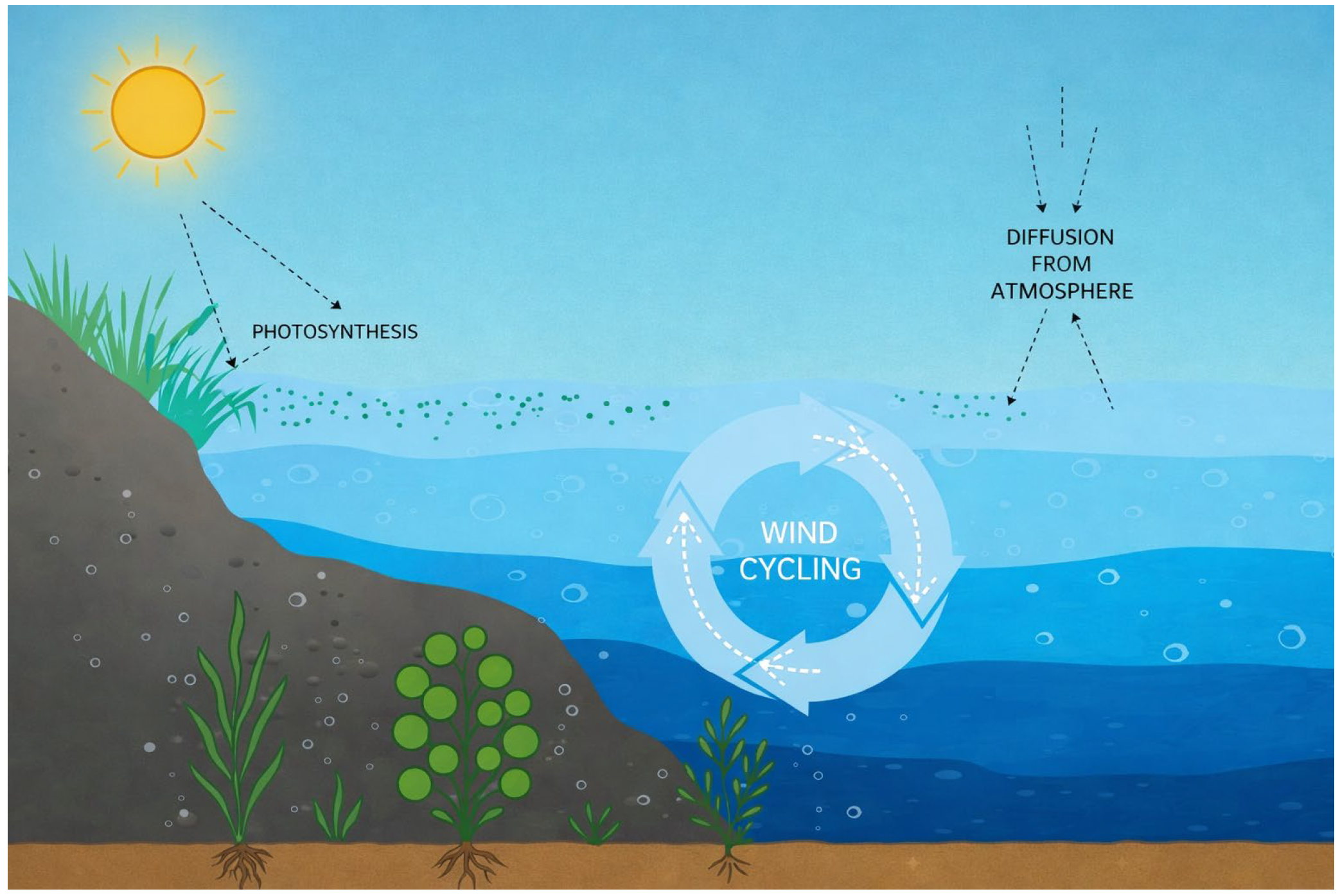
3]. Photosynthesis by aquatic plants and algae, together with the diffusion of atmospheric oxygen across the water surface, are natural processes that enhance dissolved oxygen content in aquatic ecosystems [
4].
Figure 1 represents the natural aeration process. However, natural aeration is often insufficient to meet the oxygen requirements of intensive or semi-intensive aquaculture ponds, particularly under high stocking densities and elevated feeding rates [
5]. Consequently, artificial aerators are widely employed to maintain adequate DO levels, making aeration systems one of the most critical components in aquaculture operations. Commonly used artificial aerators include paddle wheel aerators, diffused aerators, vertical pump aerators, spiral aerators, and propeller aerators [
6]. Diffused aerators and vertical pump aerators are typically used in smaller ponds, whereas paddle wheel aerators are the most widely adopted due to their high oxygen transfer efficiency, effective water circulation, ease of installation, low maintenance requirements, and relatively low cost [
7].
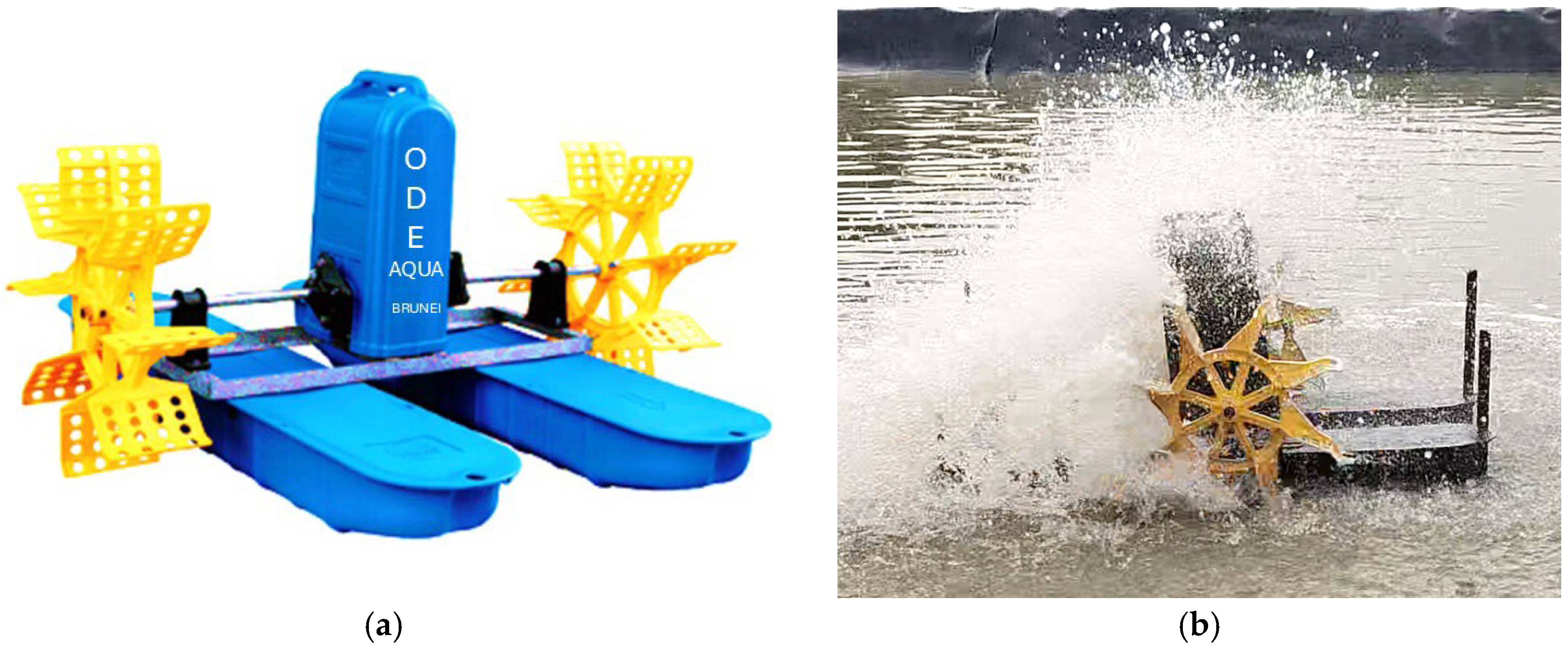
Figure 2a shows a two-impeller wheel aerator powered by a 745.6 W (1 hp) electric motor. The water circulation mechanism of a two-impeller paddle wheel aerator, in which water is splashed into the atmosphere to enhance the oxygen absorption, is shown in
Figure 2b. The daily energy requirement of one two-impeller paddle wheel aerator is 17.984 kWh. The effectiveness of the aeration is strongly influenced by the pond size and the capacity of the aerators employed [
8]. In most commercial aquaculture practices, aerators are operated continuously (24 h a day) throughout the entire production cycle to maintain an adequate DO level. An increase in both the number and surface area of aquaculture ponds necessitates a corresponding increase in the number and capacity of aerators, resulting in substantially higher energy consumption. In addition to the aerators, aquaculture farms utilise various other electrical loads including freezers and water pumps, feeding systems, monitoring and control systems, and lighting loads, which further contribute to the total energy demand. This highlights the substantial operational energy requirements and associated costs required for the stable and reliable operations of aquaculture farms. Beyond cost considerations, such high energy consumption raises serious concerns regarding environmental sustainability. While aquaculture production plays a critical role in ensuring food security, the associated high energy consumption results in substantial CO
2 emissions, thereby intensifying environmental and climate-related challenges.
The integration of renewable energy systems, particularly solar photovoltaic (PV)-based power systems, for powering aerators or supporting overall farm energy demand is a practical and scalable solution to reduce electricity consumption and operating costs while promoting environmentally sustainable aquaculture practices [
8]. The design, operation, performance evaluation, and cost-effectiveness of solar PV-powered aeration systems have been investigated in Thailand, South America, Egypt, the Philippines, Indonesia, India, and other regions [
7,
8,
9,
10]. A techno-economic and environmental assessment of a grid-connected solar PV system for aeration is presented in [
11]. The study aims to optimise the net present cost (NPC), renewable fraction (RF), and CO
2 emission reduction based on assumed operating conditions using bio-inspired optimisation techniques. Although potential cost and emission reductions are demonstrated, the system configuration retains a diesel generator as an auxiliary energy source, thereby constraining the achievable environmental benefits. Furthermore, the results are highly sensitive to assumed load profiles and operational strategies. The techno-economic optimisation of a standalone floating PV (FPV) system with battery energy storage for aquaculture aeration is investigated in [
12]. Similarly, a pilot study on the design and performance evaluation of a standalone FPV-powered paddle wheel aerator is reported in [
13]. While both studies confirm the technical feasibility of FPV systems for aerator operation, the analysis in [
13] considers limited operating hours and relatively low power demand, which does not represent commercial aquaculture practices requiring prolonged or continuous aeration. In addition, long-term operational performance and component degradation effects are not comprehensively evaluated, and the large battery capacity requirements and high capital cost of standalone FPV systems present challenges for large-scale deployment. In [
14], the technical feasibility of an automated aerator powered by a standalone floating PV system is demonstrated through experimental analysis. However, system-level design details and comprehensive techno-economic and environmental evaluations are not addressed. In [
15], the optimisation of a PV-powered aerator operation in a shrimp farm in Indonesia is presented for multiple system configurations, including grid-only, on-grid PV, off-grid PV, and hybrid PV systems. Although optimised configurations with reduced electricity costs and CO
2 emissions are identified, the return on investment and life-cycle economic assessments are not reported. Simulation-based analyses of solar PV-powered aerator systems are presented in [
10,
16], where simplified load assumptions and low-power aerators are employed. Similarly, ref. [
17] evaluates hybrid renewable energy integration using PV and wind systems with battery storage for a shrimp farm in Thailand through MATLAB-based simulations. The studies in [
10,
15,
16,
17] are purely simulation-based and rely primarily on assumed or simplified operational data, limiting their applicability to real aquaculture farm conditions. The work presented in [
4] focuses on the design and implementation of a semi-floating solar-powered venturi aeration system for aquaculture, with experimental validation of the aeration performance. However, the economic performance indicators and environmental impact metrics are not quantified. A review study in [
8] summarises energy efficiency strategies and solar PV integration in aquaculture power systems.
Table 1 presents a comparative analysis of the related research works.
The literature reveals that most studies on solar PV-powered aerators are predominantly simulation based, with only a limited number of investigations considering real-time system operation. Many reported studies focus on standalone PV configurations, where battery storage capacity and associated costs remain major limiting factors, particularly for large-scale deployment. In addition, aerator load profiles and operating hours are often assumed or simplified, which restricts the applicability of the findings to actual aquaculture farm conditions. The reviewed studies further indicate that hybrid system architectures and grid-interactive solutions are insufficiently explored, and a systematic evaluation of technical performance, economic viability, and environmental impact across different PV penetration levels is largely absent.
To overcome these limitations, the present work focuses on the planning, optimal sizing, and implementation of a hybrid solar PV system for aerator operation in an operational aquaculture farm. Unlike most existing studies, the analysis is based on measured energy demand and real-time system operation, enabling a realistic assessment of aerator energy requirements and system performance. A comprehensive techno-economic and environmental evaluation is conducted, explicitly accounting for system losses, cost components, and emission reduction potential. Furthermore, the study examines system performance at different PV penetration levels, providing quantitative insights into energy contribution, cost-effectiveness, and environmental benefits under varying levels of solar integration. The proposed methodology is demonstrated through a case study in Brunei Darussalam, and the outcomes offer practical guidance and actionable insights to support informed decision-making and strategic energy planning for sustainable aquaculture development.
3. Results and Discussion
3.1. Economic Assessment
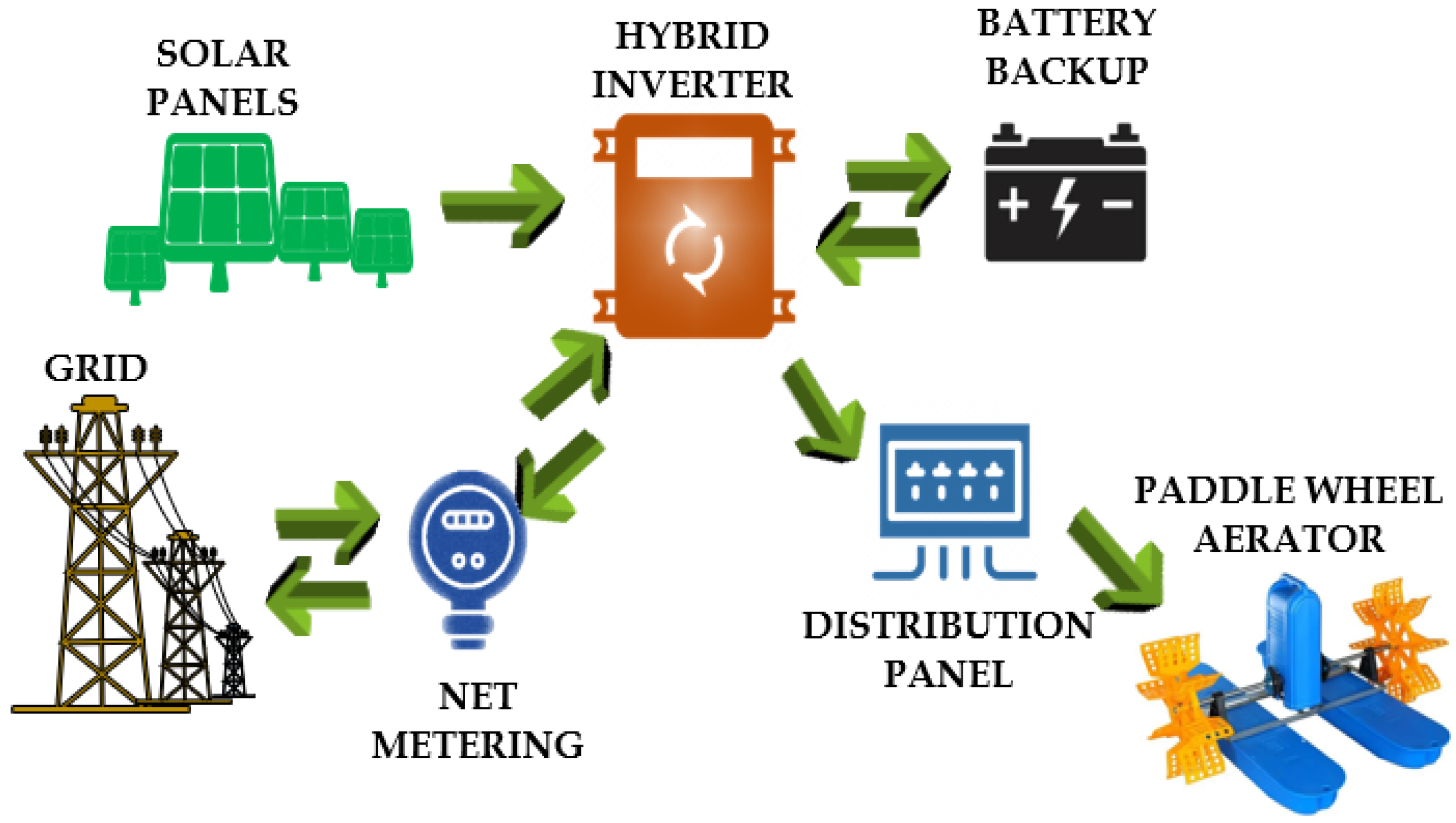
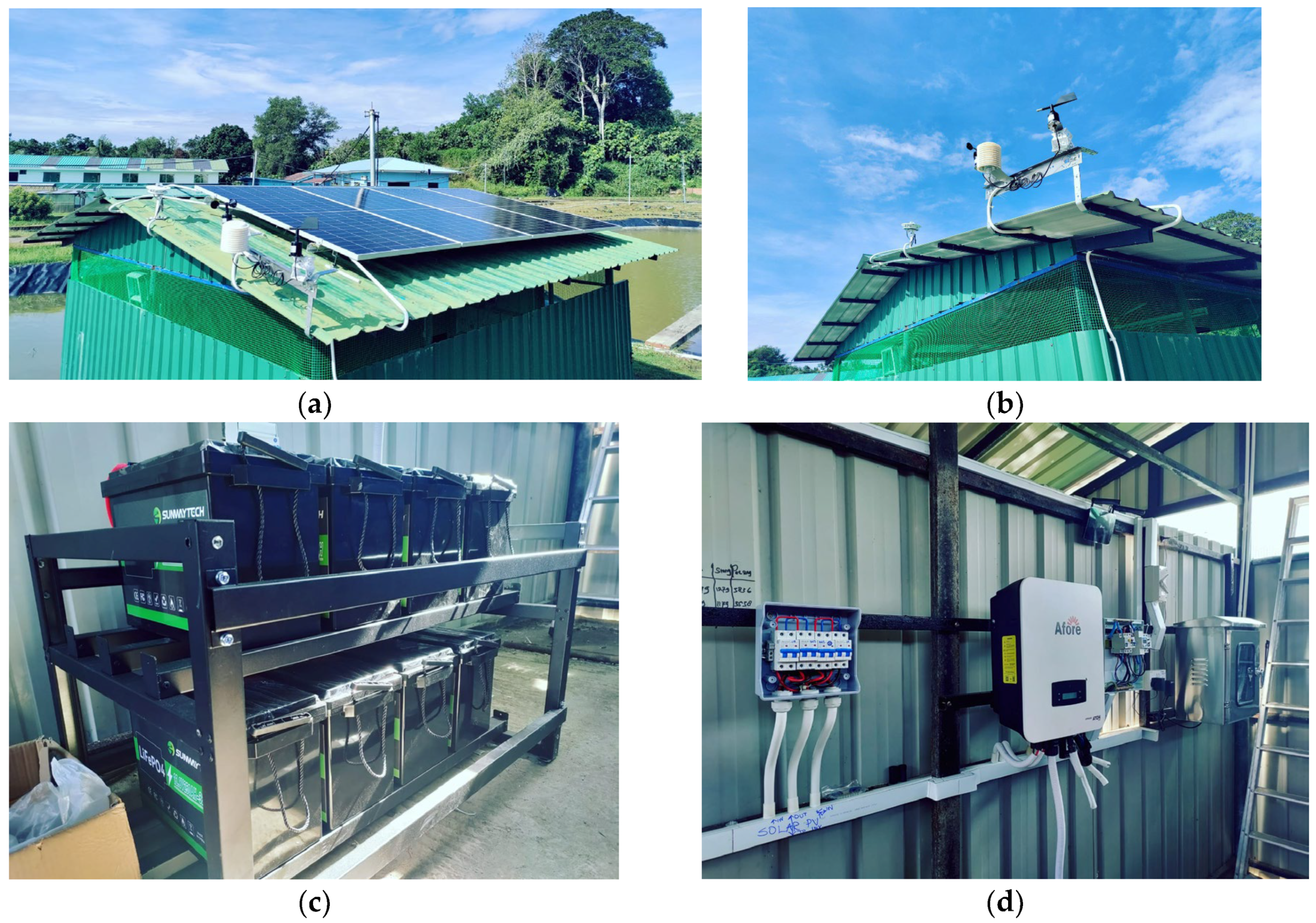
This section presents the operational studies conducted at the aquaculture farm equipped with the installed hybrid PV system under different operating scenarios. Initially, one aerator was connected to the hybrid inverter, and the system was configured such that the battery storage was utilised only during emergency conditions, such as grid outages.
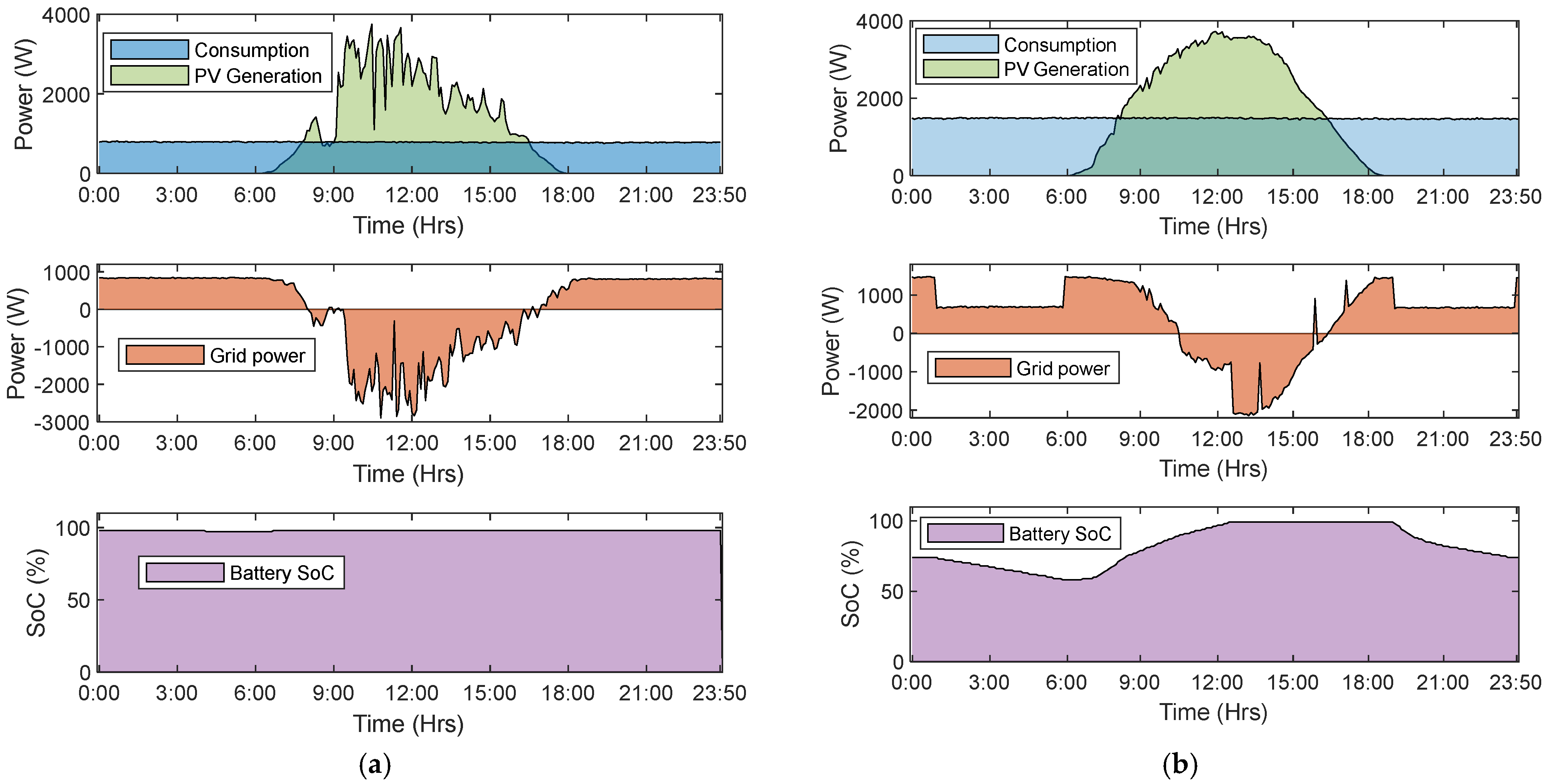
Figure 7a shows the PV power generation, aerator power consumption, grid power exchange, and battery state of charge (SoC) for Scenario 1 on a representative day (4 December 2024). The aerator is fully supplied by the grid prior to the onset of PV generation. Once PV generation commences, the aerator power demand is shared between the PV system and the grid, depending on the instantaneous PV output. When the PV generation exceeds the load demand, excess energy is exported to the grid. Under this configuration, the backup battery system is not utilised for load supply. Operational observations also indicate that the inverter has sufficient capacity to supply more than one aerator.
Based on this observation, a second aerator was connected to the inverter, and the system settings were modified to allow battery discharge between 19:00 and 06:00 (next day). This configuration enables a more effective utilisation of PV-generated energy and stored battery energy. The PV power generation, aerator power consumption, grid power exchange, and battery SoC for Scenario 2 on a representative day (26 July 2025) are shown in
Figure 7b. As expected, the total demand increases due to the additional aerator. The battery begins discharging at 01:00, supplying a constant portion of the load, while the remaining demand is met by the grid. The battery discharge stops at 06:00, after which the total load demand is supplied solely by the grid until PV generation resumes.
Subsequently, the PV-generated power supplies the load and charges the battery. By 09:35, the PV generation exceeds both the load demand and battery charging power, resulting in the export of surplus power to the grid, indicated by negative grid power. The battery reaches a full state of charge at 12:30, at which point a noticeable increase in grid export is observed. Until 16:15, the load demand is met entirely by PV generation, with surplus energy exported to the grid. Beyond this time, the load is supplied jointly by PV generation and grid power. At 19:00, the battery resumes constant-power discharge and continues supplying energy until 06:00 the following day, subject to the defined operational constraints.
The daily energy distribution, including the total PV generation, total consumption, grid import and export, and battery charging and discharging energies for both scenarios, is summarised in
Table 4. Under Scenario 1, the battery charging and discharging energies are 300 Wh and 500 Wh, respectively, representing internal self-consumption rather than direct load supply. Analysis of the PV generation, grid feed-in, and self-utilisation ratio indicates that more than 50% of the generated energy is exported to the grid. In contrast, under Scenario 2, the addition of a second aerator and the revised battery dispatch strategy increase PV self-utilisation to 79.4% on the selected day. This results in a substantial reduction in grid feed-in and more effective on-site utilisation of PV-generated energy.
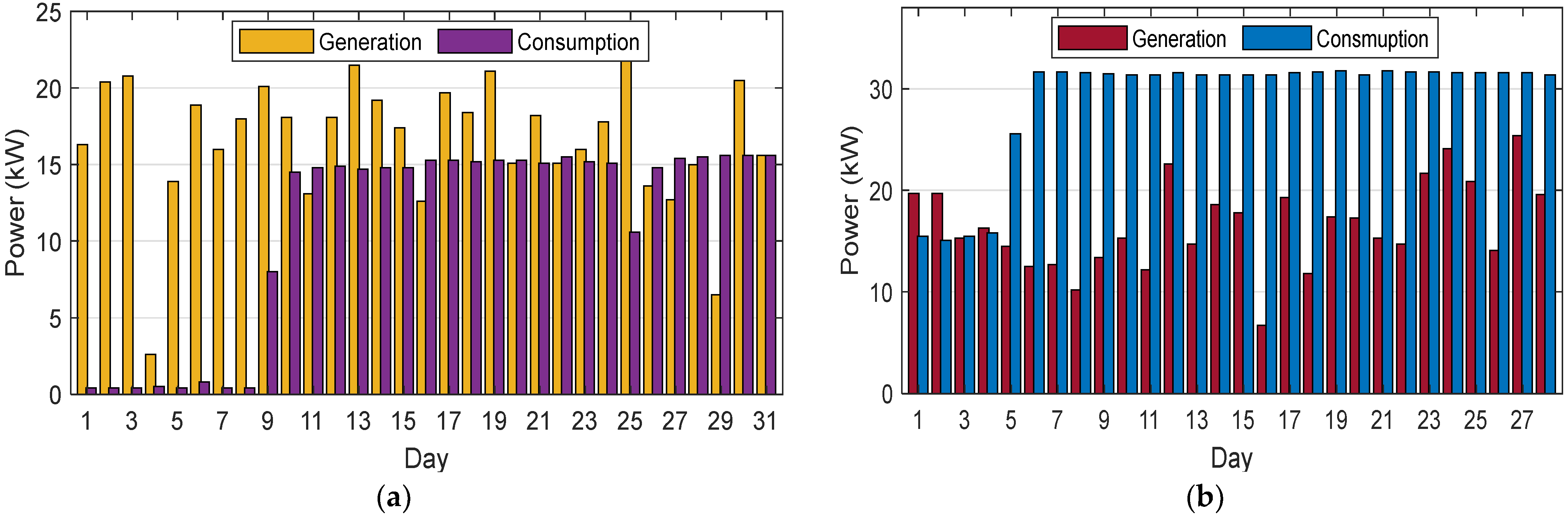
The daily average production and consumption for January 2025 and February 2025 are presented in
Figure 8a and
Figure 8b, respectively. The system was operated with one aerator from 9 January 2025 to 4 February 2025, and the second aerator was added to the system on 5 February 2025. As a result, the daily average energy consumption increased from 15.6 kWh/day to 31.2 kWh/day, reflecting the proportional increase in load demand due to the addition of the second aerator.
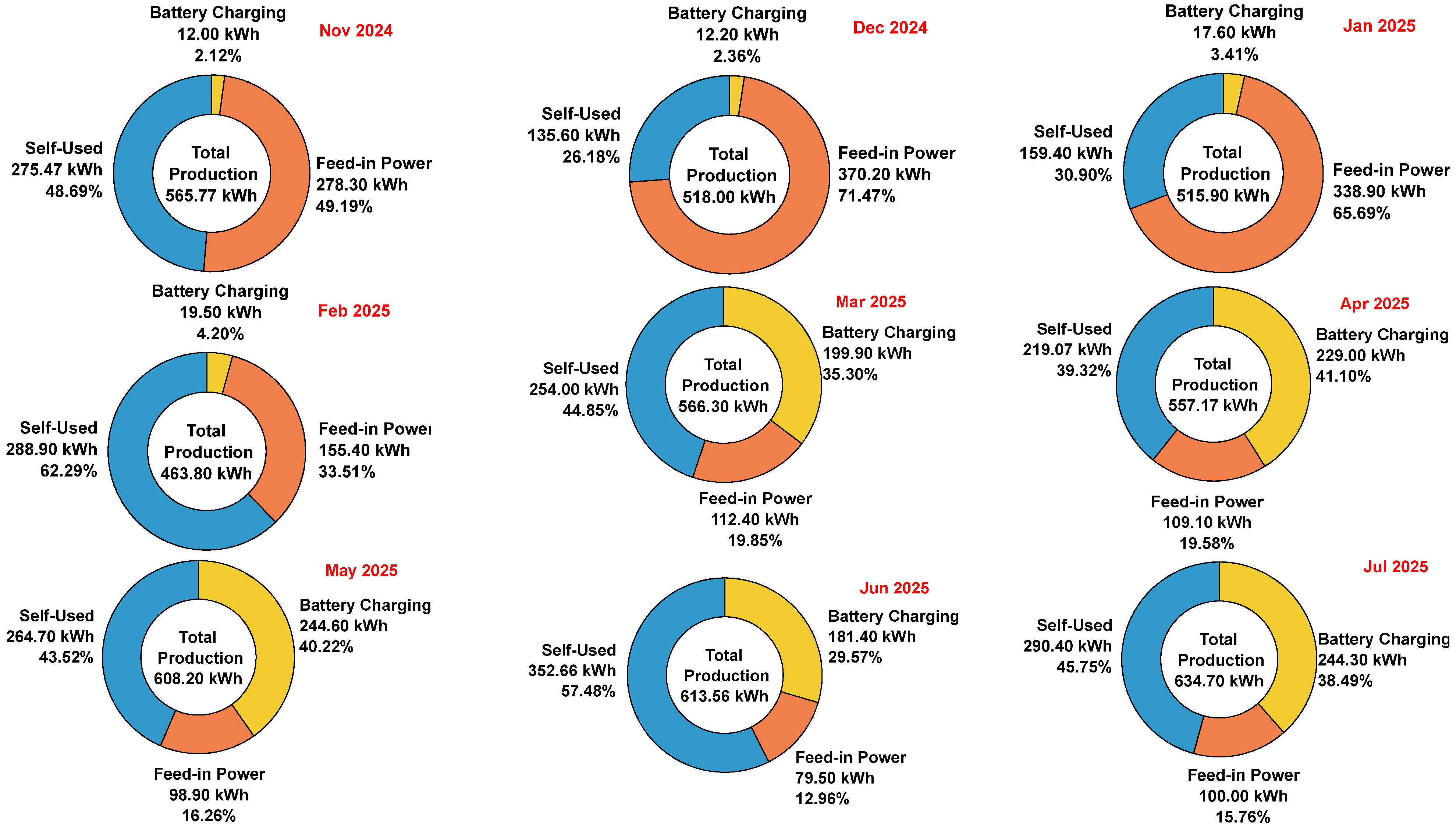
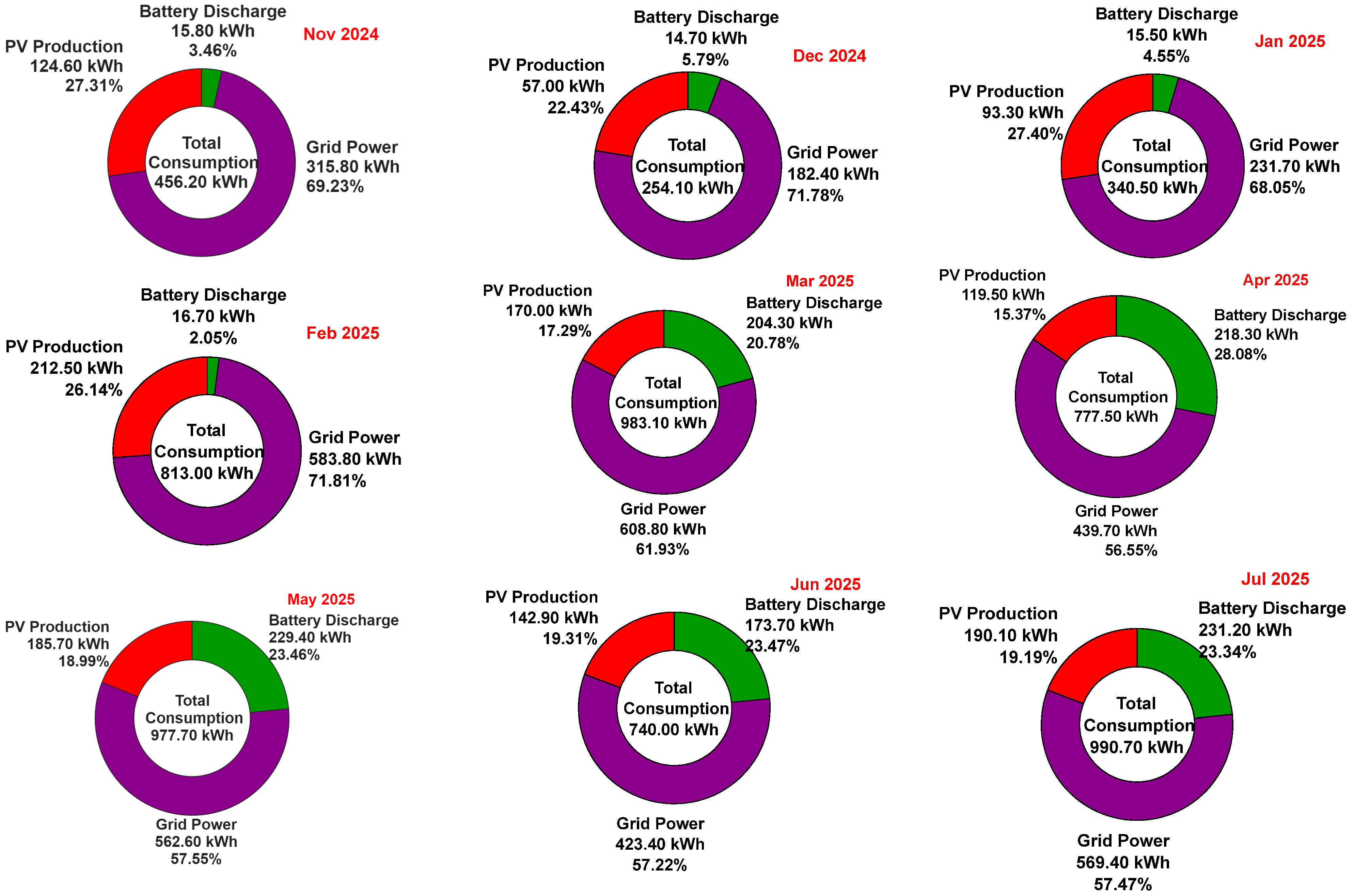
The monthly PV production, energy consumption, grid power including feed-in and energy import from the grid, battery charging and discharging, and the PV self-used ratio from November 2024 to July 2025 is summarised in
Table 5. The monthly energy distribution between the subsystems for both PV generation and energy consumption are illustrated in
Figure 9 and
Figure 10, respectively.
The results indicate that PV generation is utilised to meet the load demand, excess generation is fed into the grid, and a portion of energy is stored in the battery storage system. As mentioned previously, the battery was configured as an emergency backup until February 2025, with battery charging and discharging accounting for only 2–4% of the total energy flow. To improve the system utilisation, the operation strategy was revised from March 2025 to allow controlled battery discharge during night-time operation, enabling the battery to be fully recharged from PV generation during the daytime. This adjustment resulted in a marked increase in the battery charging and discharging activity, leading to a significant improvement in PV self-utilisation and a reduction in grid export. The grid import and export profiles reflect the dynamic power exchange between the grid and the load, which varies with aerator operation. During March 2025, May 2025, and July 2025, the total monthly energy consumption reached 983.10 kWh, 977.70 kWh, and 990.70 kWh, respectively, indicating that two aerators were in continuous operation during these months. These observations further confirm the high and sustained energy demand of aquaculture farms during full production cycles.
A quantitative comparison of the PV self-utilisation, based on measured operational data, is summarised in
Table 6. The results demonstrate that Scenario 2 increased the average PV self-utilisation from approximately 45% to over 83%, while substantially reducing the grid export, under the continuous operation of two aerators in real aquaculture farm conditions.
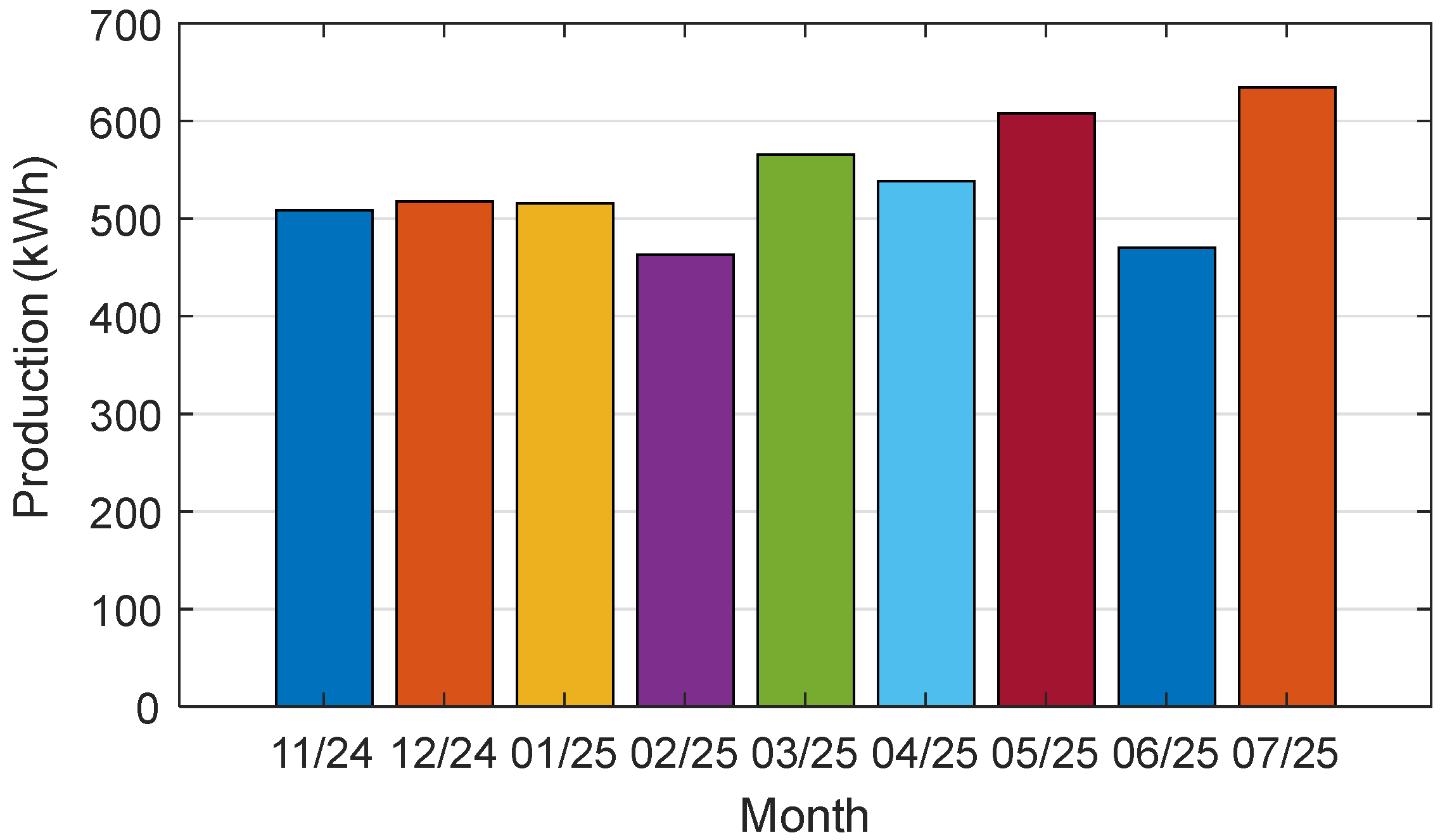
The monthly PV production is shown in
Figure 11. Based on the available data, the average monthly PV generation is 560.38 kWh, and the average monthly energy consumption of the aquaculture farm is 15.03 MWh. The installed PV system contributes approximately 3.7% of the total daily energy consumption, which is a relatively small share of PV generation compared to the overall energy demand of the farm during full-scale operation.
3.2. Cost Analysis
In Brunei Darussalam, the utility grid is highly reliable, and the probability of power outages is minimal. However, aquaculture farms require a continuous and uninterruptible power supply, as the survival and growth of aquatic animals depend primarily on aerator operation and other artificial oxygenation systems. Consequently, emergency backup generators are installed at aquaculture farms and can come online within a few minutes in the event of power outages or emergency shutdowns. Considering the high reliability of the utility grid and the availability of backup generators, battery storage is not mandatory for solar PV system integration in aquaculture farms in Brunei Darussalam. Accordingly, the cost analysis in this study is performed for an on-grid PV system. The installed 4.64 kW PV system is used as a benchmark, and the analysis is extended to evaluate different PV penetration levels.
The capital cost breakdown of a 4.64 kW on-grid PV system in Brunei Darussalam is presented in
Table 7. The miscellaneous costs include the cost of cables, circuit breakers, earthing and the cost other electrical accessories required for the installation.
The total cost of the system, known as the capital cost of the PV system, is calculated using the equation below.
Considering the size of the system, the annual maintenance cost is taken as 1% of the system cost, which is obtained using
The lifetime of the PV system is considered as 25 years. The depreciation and floating rate are not considered in this study. The lifetime of on-grid inverters is typically 15–20 years. Hence, one inverter replacement is assumed during the lifetime of the PV system. Thus, the lifetime cost of system including the replacement cost (
Cre(inv)) is
The capital cost of a 4.64 kW on-grid PV system (CCpv) is BND 4100.00, and the maintenance cost Cm is BND 1025.00. Therefore, the lifetime system cost (LCsys) is BND 5625.00, including the inverter replacement cost of BND 500.00.
As stated earlier, the average monthly production of the PV system is 560.38 kWh. Therefore, the lifetime energy generation of the PV system is 168.11 MWh. The annual derating factor of the selected panels is 0.4% per year. Therefore, the adjusted lifetime generation of the system
LGEnergy is 160.29 MWh. Thus, the levelised cost of electricity is
The average monthly electricity consumption of the selected aquaculture farm is approximately 15 MWh. The peak demand varies between 25 kW and 35 kW with an average peak demand of 30 kW. The average monthly electricity bill of the farm is BND 1900.00. According to the commercial electricity tariff in Brunei Darussalam [
20], the per unit energy cost for the aquaculture farm is BND 0.126/kWh (approximately 12.5 cents/kWh). A comparison of these costs shows that the LCoE of PV generated energy is much cheaper than the cost of electricity purchased from the utility services. This confirms the potential cost savings with PV system integration in an aquaculture farm.
In Brunei Darussalam, a one-one credit scheme is followed, whereby the excess electricity generated by solar PV system is offset against the grid consumption at the same tariff rate. Therefore, the cost of PV generated electricity is also BND 0.126/kWh. The average monthly cost of the PV generated energy can be calculated using
For an average monthly PV generation of 560.38 kWh, the monthly savings amounts to BND 70.67, resulting in annual savings (
ESCpv(year)) of BND 848.04. The lifetime energy savings cost (L
ESCpv) is estimated as
This yields a total lifetime energy savings cost of BND 21,201.00 over the 25-year system lifetime. The return of investment (
ROI) and the payback period (
PB) are calculated as follows:
The calculated ROI is 3.79%, and the payback period is 6.63 years (6 years and 8 months). The total cost savings over the lifetime achieved through PV system integration is obtained using Equation (15):
The total lifetime cost savings for the 4.64 kWp PV system is BND 15,576.00.
3.3. Basic Sensitivity Analysis
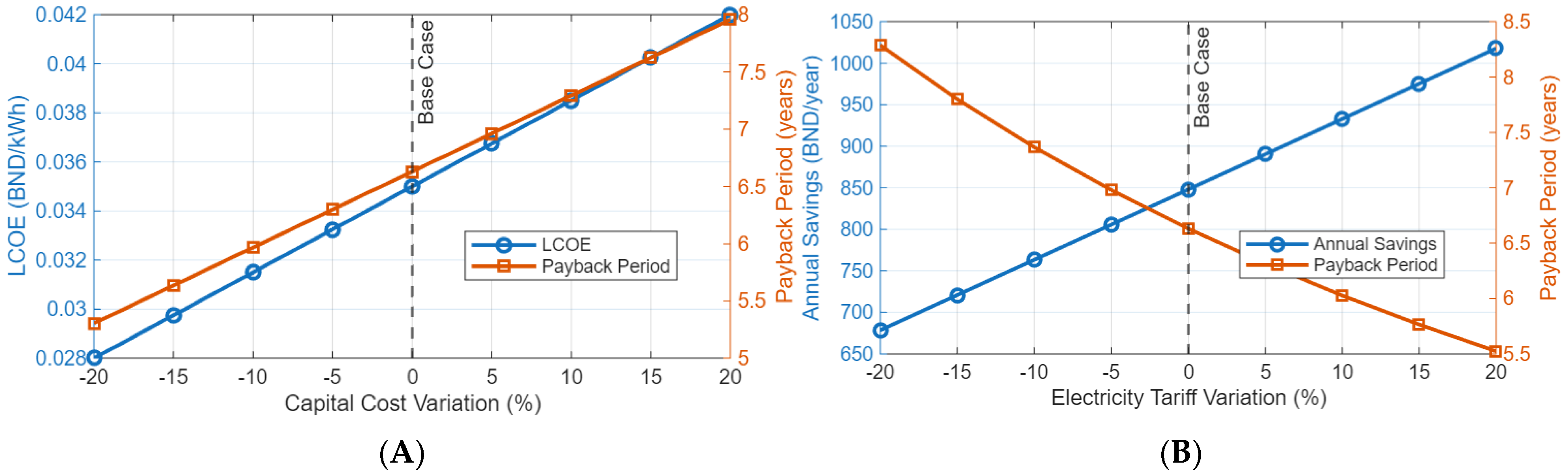
In this section, a basic sensitivity analysis of the key economic parameters (capital cost, electricity tariff) is presented. The base values of the capital cost, electricity tariff, and payback period are BND 4100.00, BND 0.035, and 6.63 years, respectively. For the analysis of the capital cost and electricity tariff, ±20% variation is considered. While
Figure 12A illustrates the sensitivity of the LCOE and PB to capital cost,
Figure 12B shows the sensitivity of the annual savings and PB to the electricity tariff. For the selected range of variability, the levelised cost of energy is obtained between BND 0.028 and 0.042/kWh, and the payback period changed from approximately 5.5 to 8.0 years. On the other hand, with a ±20% change in electricity tariff, the annual savings have a wider variation from approximately BND 678.00 to BND 1017.00, and the payback period changes from approximately 8.3 years to 5.5 years.
3.4. Cost Analysis Under Different PV Penetration Levels
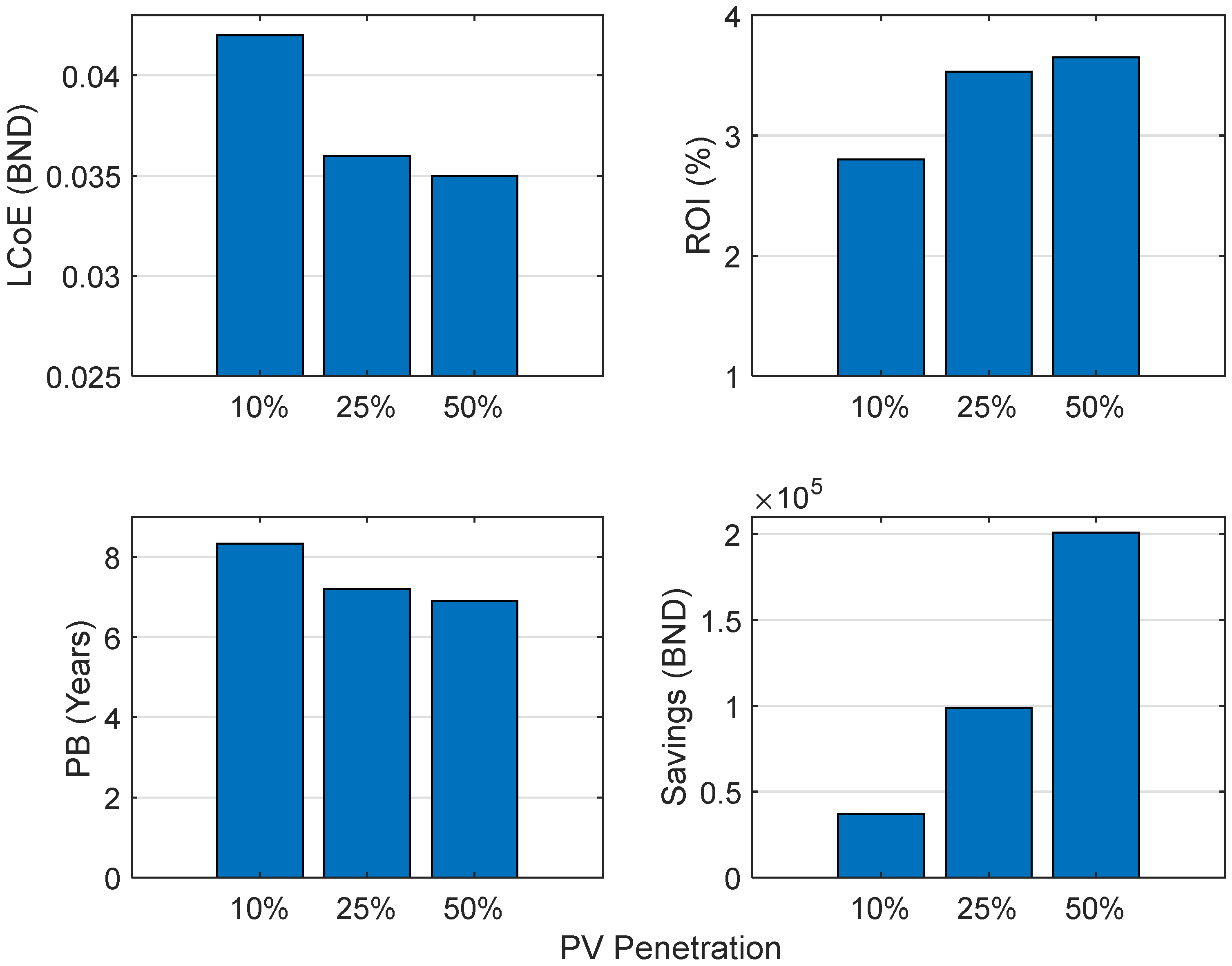
The analysis is carried out further to evaluate the costs under the PV penetration level of 10% of the total consumption of the farm, which is 12.16 kWp, 25% (30.40 kWp), and 50% (60.81 kWp). The system cost, lifetime PV generation, LCOE, ROI, and PB period under the selected conditions are presented in
Table 8.
Figure 13 shows the comparison between the LCoE, ROI, PB, and lifetime cost savings at different penetration levels of PV systems. The results indicate that, as the system size increases, the LCoE decreases, which results in an increased ROI and shorter payback period. The payback period decreased from 8.32 years for the 12.1 kWp system to 6.9 years for the 60.8 kWp system. In addition, the total lifetime cost savings increase substantially with higher PV penetration, reaching over BND 200,000 for the 50% penetration scenario. These findings demonstrate that the integration of higher capacity PV systems offers potential long-term energy savings and cost savings for aquaculture farms. The environmental assessment is presented in the following subsection.
3.5. DCF-Based Sensitivity Analysis of ROI and Payback Period
To evaluate the robustness of the economic performance, a discounted cash flow (DCF)-based sensitivity analysis is conducted by assuming a discount rate of 5%. The annual energy cost savings from the PV system are BND 848.04, and the lifetime of the PV system is 25 years. The present value of lifetime energy savings is calculated as
Then, the DCF-based return on investment (
ROIDCF) is obtained using Equation (16), as follows:
In addition, the discounted payback period (DPB) is determined by accumulating the discounted annual savings until they equal the lifetime system cost . The cumulative discounted savings exceeded the investment during the ninth year. Thus, the DCF-based payback period is approximately 9 years.
3.6. Environmental Assessment
In Brunei Darussalam, approximately 98% of the electricity generation is derived from coal, oil, and natural gas [
22], and the carbon emission,
Ki, is estimated as 0.85 kg/kWh [
23]. The monthly carbon emissions due to the total electricity consumption in the aquaculture farm,
CEL, is estimated using Equation (17), and the monthly the carbon emissions reduction due to PV production,
CELESS, PV, is calculated using Equation (18).
The daily average CO
2 emission of the aquaculture farm is 425.8956 kgCO
2 resulting in a monthly average CO
2 emission (
CEL) of 12,776.87 kgCO
2. The currently installed PV system reduces 476.8956 kgCO
2 per month and 142.896 tonnes of CO
2 emission over its lifetime of 25 years.
Table 9 presents the CO
2 emission reduction with the integration of the PV system into the farm at different penetration levels. The currently installed system can reduce only 3.7% CO
2 emission over the present electricity consumption rate. However, increasing the PV penetration significantly enhances the environmental benefits. A 60.82 kW
p PV system reduces 50% of CO
2 emission, with a monthly reduction of 6.24 tonnes of CO
2. The lifetime reduction in CO
2 emission would be 1872.81 tonnes.
These results show that solar PV integration in aquaculture farms not only delivers economic benefits but also contributes substantially to carbon emission mitigation, supporting long term environmental sustainability and climate resilient food production.
This study provides a techno-economic and environmental assessment of PV-integrated aquaculture systems, based on a deployed roof top PV system operation and real-time operational energy consumption data of the farm and particularly aerator operation. Likewise, the environmental assessment in this study considers only operational CO2 emission reductions resulting from the displacement of grid electricity by solar PV generation. Emissions associated with the life-cycle stages of PV systems, including manufacturing, installation, and end-of-life management, are not considered. Incorporating intelligent aeration control, floating PV deployment, and life-cycle sustainability analysis are identified as areas for future work.
4. Conclusions
This paper evaluated the technical, economic, and environmental benefits of the PV system integration into an aquaculture farm in Brunei Darussalam. The energy consumption profile of the selected farm and the energy demand for aerator operation were analysed. The case studies conducted in an aquaculture farm with the installation of a 4.64 kWp hybrid PV system for aerator operation under different scenarios are explained in detail. The technical evaluation of the PV system is carried out, and the economic and environmental assessment of the PV systems at different penetration levels and their benefits are analysed and discussed. The findings of the studies highlight the higher energy demand of the aquaculture industry and the benefits of PV system integration into its energy mix. The monthly average energy consumption in the selected farm is 15.1 MWh. With a 61 kWp PV system, 50% of the energy demand in the selected site can be met. At an LCoE of BND 0.035/kWh against the commercial tariff of BND. 0.12 per kWh, the system reduces 72% of the electricity cost. With a 3.65% ROI, the investment can be repaid in 6.91 years, and the PV system offers lifetime savings of BND 200,867.05. In addition to the financial benefits, 6.24 tonnes of CO2 emissions are reduced per month, and the lifetime CO2 emission reduction with 50% penetration of a PV system is 1872.81 kilotonnes. Overall, the integration of solar PV systems in aquaculture farms directly supports Sustainable Development Goals SDG 7, SDG 12, and SDG 13.
The PV system used in this study is a rooftop system, and the aerator operation is continuous. Future work will focus on the development of an automated control system for aerator operation based on the real-time DO level monitoring of the aquaculture ponds and deployment of a floating PV (Floatovoltaic or Aquavoltaic) system in the plant. The studies reveal that such systems not only enhance the generation efficiency of PV panels but also help to improve the growth and health of aquatic species. Likewise, monitoring the DO level in the aquaculture ponds and the integration of a DO-level based automated control system for aerator operations can reduce the overall energy consumption in the aquaculture farm by 30–40% and thus improve the sustainability and energy efficiency of aquaculture operations.



 ,
,