Article

A Comprehensive Benefit Evaluation of Offshore Wind–Fishery Integration Projects from a Sustainable Development Perspective: Evidence from China

1
School of Business, Guangdong Ocean University, Yangjiang 529500, China
2
School of Mechanical and Energy Engineering, Guangdong Ocean University, Yangjiang 529500, China
*
Author to whom correspondence should be addressed.
Sustainability 2026, 18(5), 2367; https://doi.org/10.3390/su18052367
Submission received: 27 December 2025 / Revised: 16 January 2026 / Accepted: 26 January 2026 / Published: 28 February 2026
(This article belongs to the Special Issue Marketing and Sustainability in the Blue Economy)

Abstract

The rapid expansion of offshore renewable energy and fisheries has intensified competition for limited marine space, posing challenges for sustainable marine resource management. Offshore wind–fishery integration, as a typical form of multi-use ocean space, has been promoted to enhance spatial efficiency and support coordinated economic, ecological, and social development. However, existing studies mainly focus on engineering feasibility or single-dimensional benefits, while comprehensive evaluations of integrated benefits remain scarce. This study aims to develop a sustainability-oriented framework to quantitatively evaluate the comprehensive economic, ecological, and social benefits of offshore wind–fishery integration projects. Based on the DPSIR framework, a multidimensional evaluation index system is constructed, and a multi-criteria decision-making model integrating the Analytic Hierarchy Process (AHP), entropy weighting, and TOPSIS is applied. Representative projects in Shandong, Guangdong, and Fujian provinces during 2022–2024 are analyzed. The results show that economic benefits currently dominate project performance, ecological benefits are becoming increasingly important, and social benefits exhibit a steady upward trend, with clear regional differences. By moving beyond single-benefit assessments, this study provides one of the first systematic evaluations of the comprehensive benefits of offshore wind–fishery integration projects, offering policy-relevant insights for sustainable marine spatial governance.

1. Introduction

1.1. Research Background

With the increasing intensity of marine space utilization worldwide, diverse demands, including offshore energy development, fisheries production, and ecological conservation, are increasingly concentrated within limited marine areas. Traditional marine management approaches, which are often oriented toward single sectors or functions, are therefore becoming inadequate in addressing complex spatial conflicts and sustainability challenges. In this context, marine space management concepts emphasizing coordination and multi-objective integration have emerged as a key direction in international ocean governance and marine resource allocation [1,2]. Previous studies suggest that promoting spatial and functional co-location of different marine industries can enhance marine space efficiency while reducing ecological and managerial risks associated with single-use development [3].
Against this background, the multi-use of ocean space and its practical implementation through multi-use platforms (MUPs) have gained increasing attention as an effective pathway to improve the overall performance of marine space utilization. Existing research indicates that integrating multiple marine functions within the same sea area can alleviate spatial competition and, through infrastructure sharing and operational synergies, enhance overall output and system resilience [4,5]. As a result, MUPs have become a central topic in contemporary marine space management and sustainable marine economy research.
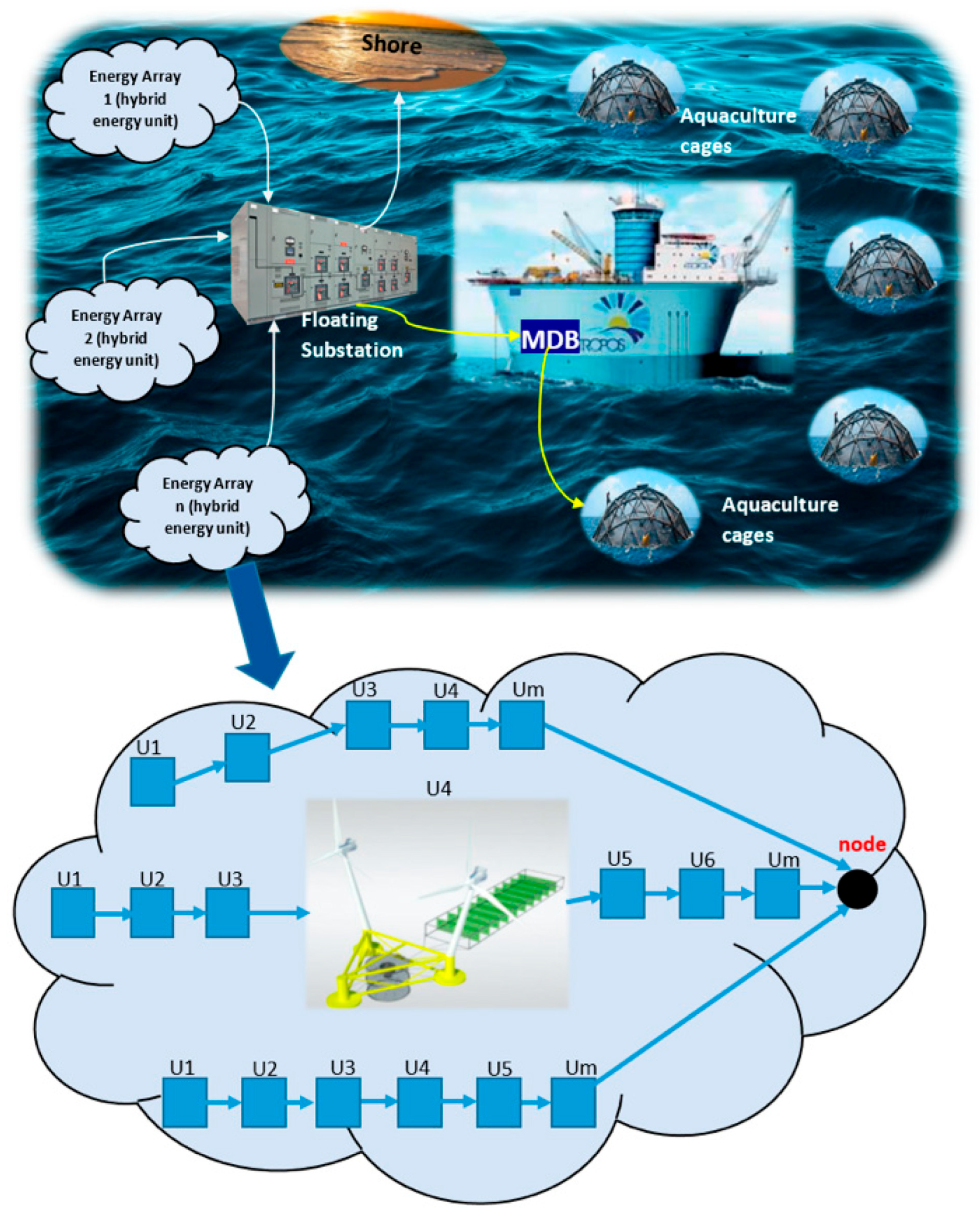
Figure 1 provides a conceptual illustration of a multi-use platform (MUP), in which multiple renewable energy technologies are configured according to site-specific conditions and combined with other marine activities such as aquaculture, maintenance services, and leisure functions. The figure highlights the integrated and multifunctional nature of MUPs, reflecting their role in enhancing the efficiency and sustainability of marine space utilization.
Within this context, offshore wind–fishery integration has emerged as a representative and rapidly developing form of energy-led MUPs, particularly in coastal regions where renewable energy deployment and fisheries activities exhibit strong spatial interdependence [7,8]. Accordingly, wind–fishery integration platforms should be understood as complex technical–organizational systems rather than as the mere co-existence of wind turbines and fisheries facilities [4,6]. In terms of their fundamental nature, such platforms are designed to simultaneously accommodate energy production, fisheries or aquaculture utilization, and ecological regulation objectives, thereby reflecting the core multifunctional logic underpinning MUP development [1,2,5]. These multiple functions are not pursued independently but are embedded within a unified spatial and institutional framework that seeks to enhance the overall efficiency and sustainability of marine space use [9,10].
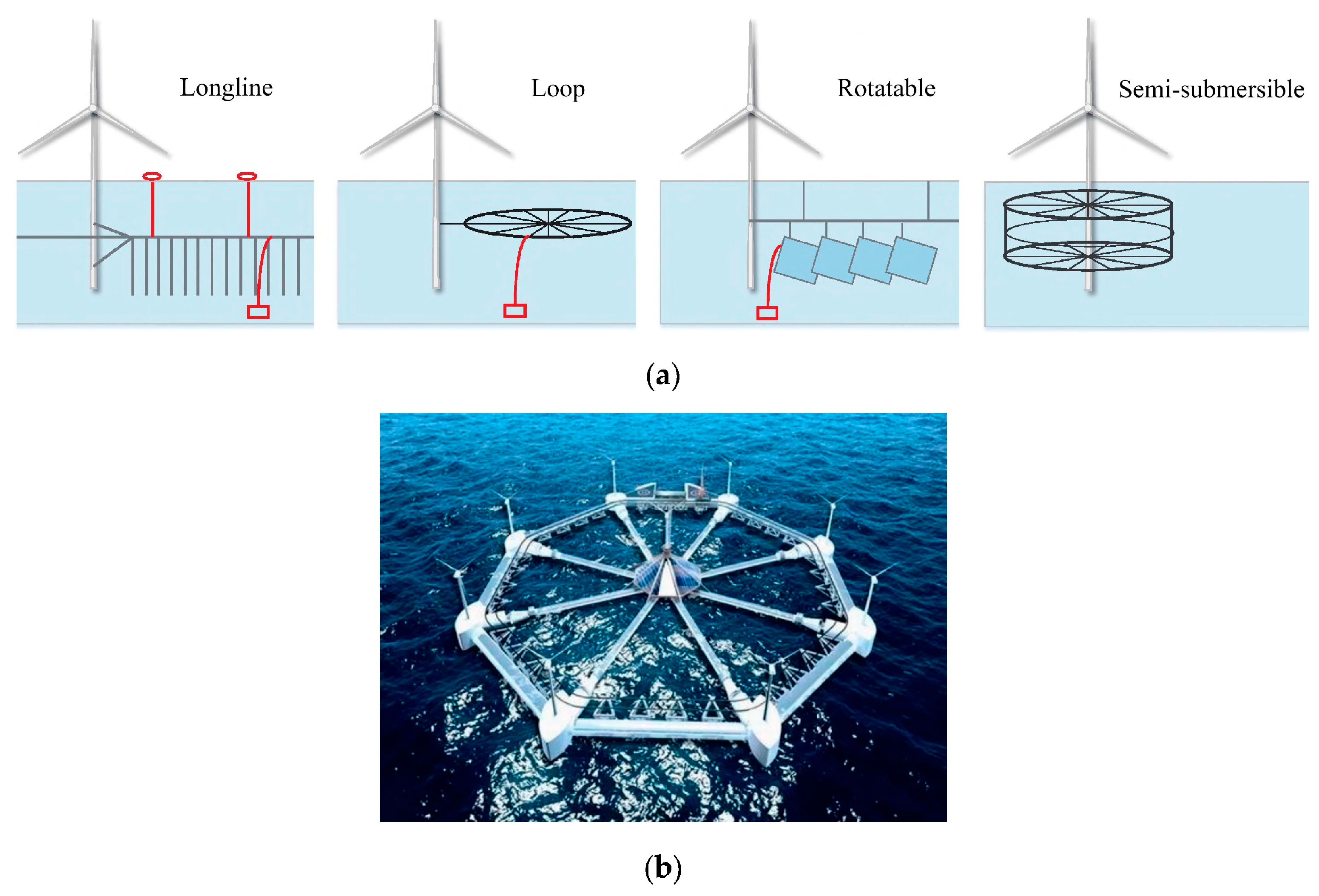
From a structural perspective, wind–fishery integration platforms can be conceptualized as layered systems comprising several interrelated components [4]. At the physical level, they typically combine offshore wind turbines and foundation structures with aquaculture cages, artificial reefs, or stock enhancement facilities. Spatially, these components are organized through horizontal co-location and, in some cases, vertical differentiation across the sea surface, water column, and seabed [11]. At the institutional and organizational level, the platforms involve multiple stakeholders—including energy developers, fisheries operators, and governmental authorities—whose activities are coordinated through marine spatial planning instruments and sector-specific regulatory arrangements. As shown in Figure 2, wind–fishery integration can be generally categorized into spatial integration, where aquaculture facilities are co-located within offshore wind farm areas, and structural integration, where wind turbine infrastructure is directly used to support aquaculture structures.
In terms of functioning, the subsystems within wind–fishery integration platforms remain functionally distinct, yet they are interconnected through shared space, infrastructure, and management mechanisms [3,4,5]. Rather than maximizing a single sectoral output, their interaction aims to enhance overall system performance by balancing economic returns, ecological benefits, and social outcomes. This integrated functioning logic fundamentally differentiates wind–fishery platforms from traditional single-purpose marine projects.
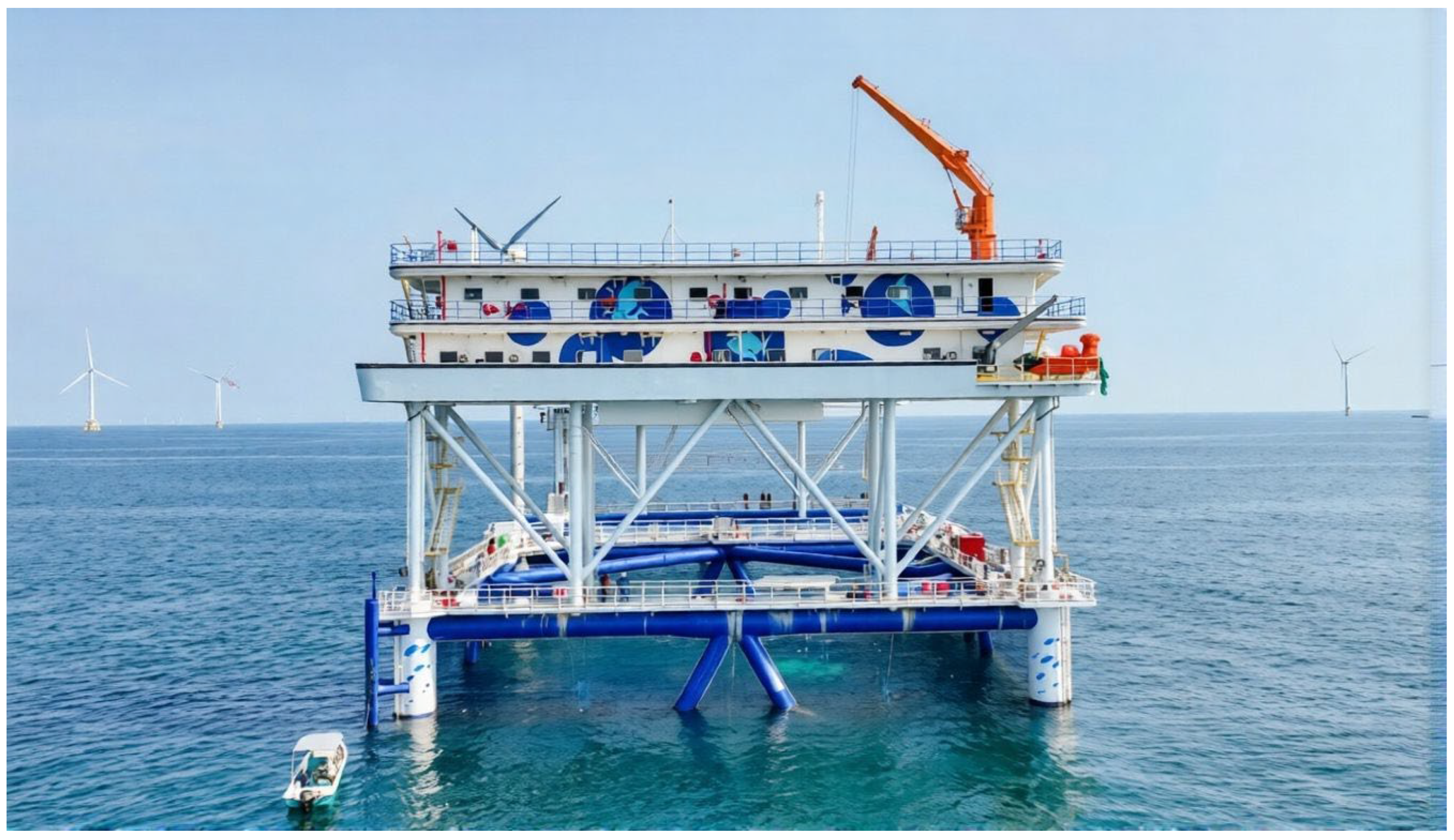
In China, the integration of offshore wind and fisheries aligns closely with national strategies for the green and low-carbon transformation of marine industries, with recent policy frameworks increasingly emphasizing industrial coordination and high-quality development [13]. Against this background, coastal provinces such as Shandong, Guangdong, and Fujian have implemented pilot integration projects, many of which became operational around 2022, marking a transition from conceptual exploration to practical application, as illustrated by Figure 3, which presents the “Fuxi-1” ultra-large offshore wind–aquaculture integrated cage platform in Shanwei, Guangdong Province. As offshore wind and marine ranching evolve from single-function projects to integrated multi-use platforms, systematically evaluating their performance from a sustainable development perspective has become a key challenge. Unlike single-industry projects, wind–fishery integration simultaneously addresses energy production, fisheries development, and ecosystem protection, which cannot be adequately assessed using isolated economic or ecological indicators. Therefore, this study develops a comprehensive, sustainability-oriented evaluation framework integrating economic, ecological, and social dimensions to assess offshore wind–marine ranching multi-use platforms and to support the sustainable development, regionally differentiated advancement, and policy optimization of wind–fishery integration projects in coastal areas.

1.2. Literature Review

Existing studies on the integration of offshore wind power and fisheries have primarily focused on engineering design, structural safety, and environmental impacts [15,16,17]. From perspectives such as hydrodynamics, structural mechanics, and ecological impact assessment, research shows that offshore wind installations may affect fishery resource distribution by altering local hydrodynamic conditions, benthic habitats, and underwater noise environments [18,19,20,21,22].
On this basis, some studies have examined the feasibility of introducing fisheries or aquaculture activities within or near offshore wind farms, with emphasis on facility layout, engineering safety constraints, and operational conflicts [23,24,25]. These studies assess the spatial and operational compatibility between wind power infrastructure and fishery production, providing preliminary technical support for wind–fishery integration.
Compared with wind–fishery integration, marine ranching has been studied within a more mature analytical framework. Existing literature has systematically evaluated marine ranching in terms of ecological restoration, fishery resource enhancement, and aquaculture model innovation, generally recognizing the role of artificial reefs, habitat restoration, and stock enhancement in improving resource carrying capacity and coastal ecosystem recovery [26,27,28,29,30].
However, marine ranching is often analyzed as a single-function system, with evaluations concentrating on ecological or fishery benefits and limited attention to coordinated development with other marine industries, particularly offshore wind power [31]. As a result, marine ranching and energy development are commonly treated as independent modes of marine space use, and integrated cross-industry evaluation frameworks remain limited.
Overall, although some studies have acknowledged potential synergies between offshore wind power and fisheries in terms of space and resource use [23,32], existing research remains largely dominated by engineering perspectives. Comprehensive analyses of integrated benefits, industrial coordination mechanisms, and multi-dimensional evaluation frameworks are still insufficient, especially with respect to the joint consideration of economic, ecological, and social objectives [33].
In the broader literature on the marine economy and sustainable development, various evaluation frameworks have been developed to assess regional marine economic performance and sustainability by integrating economic, social, and ecological indicators, thereby supporting marine spatial governance and industrial planning [34,35,36,37].
Recent studies have also assessed the benefits of offshore wind power or marine ranching projects [38,39]. However, most adopt single-benefit perspectives or apply cost–benefit and risk assessment models. Given the limited data availability of early-stage wind–fishery integration projects, many studies rely on semi-qualitative approaches, such as expert judgment, scenario analysis, and case studies, to explore development potential [32,40,41,42].
By contrast, systematic and quantitative models for evaluating the comprehensive benefits of wind–fishery integration are scarce, particularly those that address economic, social, and ecological dimensions in an integrated manner. This limitation reduces the applicability of existing research to policy formulation and industrial decision-making [33,43].
Multi-Criteria Decision-Making (MCDM) methods, including the Analytic Hierarchy Process (AHP), the entropy weight method, and the Technique for Order Preference by Similarity to Ideal Solution (TOPSIS), have been widely applied in marine resource management, offshore energy planning, and environmental assessment to address complex decision-making problems involving multiple objectives and constraints [44,45,46]. In the marine context, these methods have been employed for offshore wind site selection, wind power project evaluation, and marine ranching performance assessment, demonstrating their effectiveness in integrating economic, ecological, and social indicators [47,48,49].
However, existing applications of MCDM methods have predominantly focused on single-industry or single-function marine systems [44,50]. Systematic applications of MCDM methods to the comprehensive evaluation of offshore wind power–fishery integration projects, which represent a typical cross-industry and multifunctional marine space-use model, remain largely unexplored [50,51,52,53]. This methodological and application gap highlights the need for an integrated evaluation framework tailored to wind–fishery integration from a sustainability perspective.

1.3. Research Objectives and Contributions

Based on the above research background and literature review, this study pursues three main objectives. First, from a sustainability perspective, it develops a comprehensive evaluation framework for wind–fishery integration projects to assess their economic, social, and ecological performance. By adopting a multidimensional indicator system, the framework moves beyond single-benefit or single-industry approaches and captures the overall value of wind–fishery integration as a representative offshore Multi-Use Platform (MUP).
Second, in the context of limited data availability, this study integrates multi-source data with multi-criteria decision-making methods to enhance the scientific robustness and practical applicability of the evaluation. Specifically, AHP and the entropy weight method are combined to balance expert judgment and objective weighting, and TOPSIS is applied to rank project performance across cases.
Finally, representative wind–fishery integration projects in Shandong, Guangdong, and Fujian provinces are selected as empirical cases (Table 1). These provinces were chosen because they currently concentrate most of China’s offshore wind power–fishery integration projects that have entered the pilot or operational stage, thereby offering representative and comparable cases at the present development stage. Comparative analysis is conducted to identify regional differences in resource endowments, development models, and overall performance, providing international reference and comparative insights for advancing the sustainable development of wind–fishery integration projects.

2. Construction of the Comprehensive Benefit Evaluation Framework

This section focuses on the construction of an indicator system for evaluating the comprehensive benefits of wind–fishery integration projects. Drawing on theories of integrated marine space use, Multi-Use Platforms (MUPs), and the DPSIR framework, wind–fishery integration projects are characterized by multiple functions, including energy production, fishery production, and ecosystem management. Their performance, therefore, exhibits clear multi-dimensional and systemic features [54,55,56,57]. Accordingly, it is necessary to develop an evaluation indicator system that captures economic, social, and ecological benefits in an integrated manner, providing a theoretical foundation and data support for subsequent quantitative analysis.

2.1. Principles for Indicator Selection

To ensure the scientific validity, rationality, and operability of the evaluation results, the construction of the comprehensive benefit evaluation indicator system follows four main principles.
First, the indicator system is grounded in sustainable development theory and research on the multi-use of ocean space, adopting a systems perspective to comprehensively capture the multi-dimensional performance of wind–fishery integration projects and to avoid biased or partial evaluation results [58,59].
Second, the principle of industrial relevance emphasizes that wind–fishery integration represents a hybrid development model combining offshore wind power and modern fisheries. Its operational mechanisms, benefit structures, and constraints differ from those of single-industry projects. Indicator selection should therefore reflect key characteristics such as energy–fishery synergy, spatial sharing, and functional integration [58,60].
Third, the principle of data availability acknowledges that wind–fishery integration projects in China are still at an early stage, with incomplete and unsystematic statistical data. Indicator design should balance theoretical soundness with practical data conditions, prioritizing indicators that can be obtained from official statistics, government reports, or publicly available information from demonstration projects, thereby ensuring the feasibility of implementation [61].
Finally, the principles of comparability and operability require that indicators be clearly defined, standardized, and suitable for horizontal comparison across regions and projects. This facilitates evaluation, ranking, and interpretation of results [59,60].

2.2. Development of the Comprehensive Benefit Evaluation Indicator System

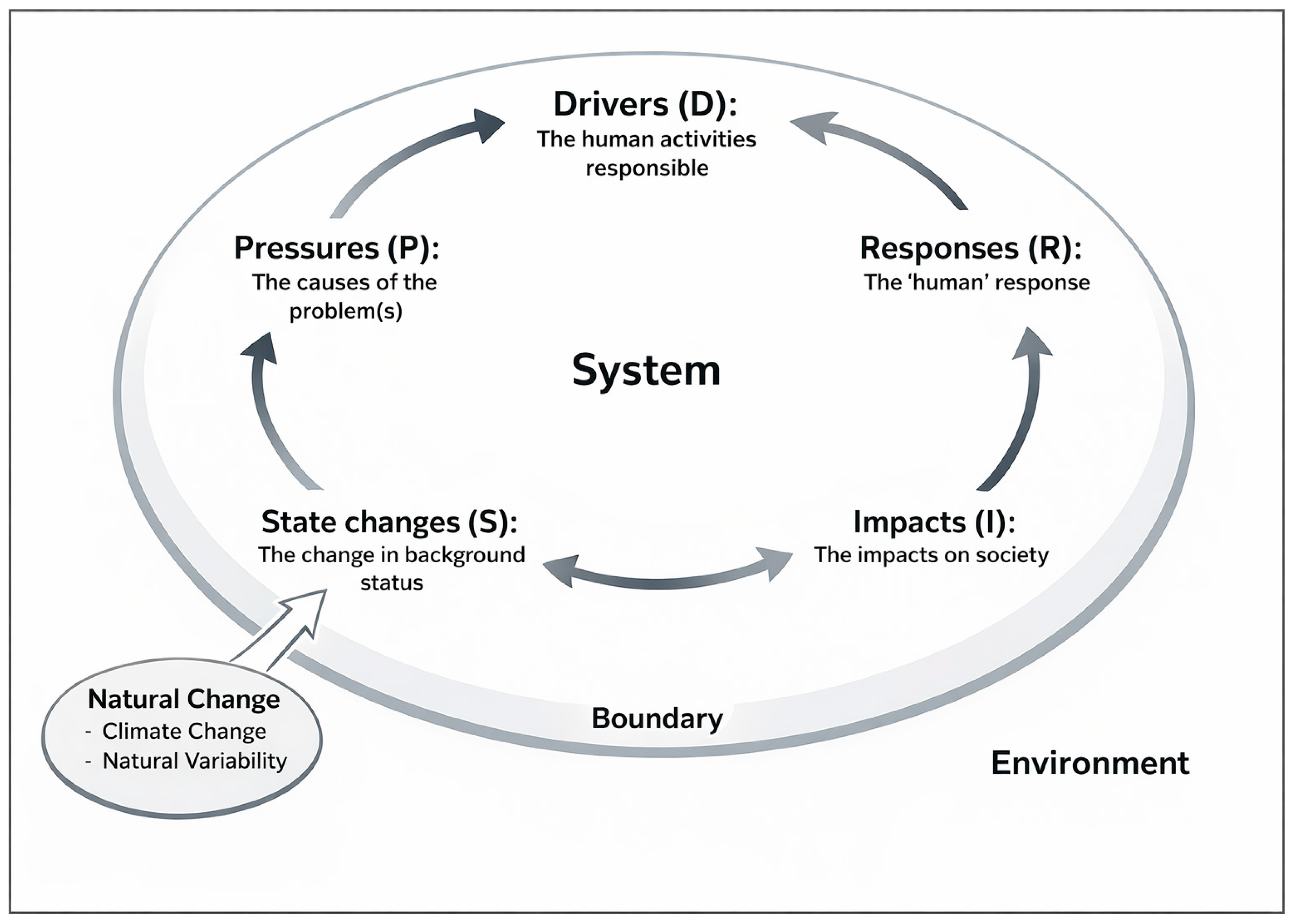
The comprehensive benefits of wind–fishery integration (WFI) reflect regional performance in coordinating renewable energy and fishery resource use, covering economic, ecological, and social dimensions, and serve as a key basis for assessing sustainability. Previous studies often focus on single industries or dimensions, such as offshore wind power or marine ranching [62,63,64,65,66]. To overcome this limitation, this study adopts the DPSIR framework as the theoretical foundation [63,64], widely applied in sustainability assessment and ecosystem management [64,65]. In DPSIR, “driving forces” denote socio-economic motivations, “pressures” represent human-induced environmental burdens, “state” indicates ecosystem condition, “impacts” capture economic, social, and ecological outcomes, and “responses” refer to policy and management feedback mechanisms, as illustrated in Figure 4.
The DPSIR framework, originally designed for macro-level environmental assessments, may produce imbalanced indicators and data gaps when directly applied to wind–fishery integration (WFI) [63,65]. To address this, the study integrates DPSIR’s causal logic with a three-dimensional structure covering ecological, economic, and social aspects. This dual-layer approach supports the construction of a comprehensive benefit evaluation system tailored to WFI, balancing theoretical coherence with empirical feasibility.
Based on these theoretical foundations and the principles of system integrity and operability, the construction of the evaluation indicator system followed a structured screening process. First, a preliminary pool of over 30 indicators was identified through a comprehensive review of existing studies on offshore wind power, marine ranching, and integrated marine space use. Second, indicators were screened according to their relevance to wind–fishery integration characteristics, availability of data, and comparability across regions; indicators with unclear definitions, insufficient data support, or redundancy were removed, resulting in a refined set of 15 indicators. Finally, the remaining indicators were organized within the integrated DPSIR framework and aggregated into three criteria-level dimensions—ecological, economic, and social benefits—forming the comprehensive evaluation indicator system presented in Table 2.
(1)
Ecological benefits. Ecological benefits capture the contributions of wind–fishery integration projects to environmental restoration, carbon mitigation, and marine ecosystem health [66,67,68,69]. Carbon sequestration from wind–fishery integration reflects the combined effects of clean energy generation and ecosystem carbon sinks and serves as a key indicator of ecological performance [68]. Stock enhancement and release volume represent project impacts on fishery resource recovery and ecological compensation [67]. The biodiversity index and seawater quality compliance rate evaluate ecosystem structure and environmental quality [68,69], while the number of newly implemented projects indicates regional progress in promoting integrated eco-friendly marine use models [69].
(2)
Economic benefits. Economic benefits assess the industrial performance and economic contribution of wind–fishery integration projects [67,68]. Marine aquaculture output value and offshore wind power output value measure direct economic returns and reflect the foundation of regional economic growth [67]. The cost–benefit ratio evaluates resource allocation efficiency and investment returns [68]. Carbon trading revenue represents the market realization of ecological benefits [69], while the gross output value of the regional marine industry reflects the broader driving effect of integrated development on the marine economy [68].
(3)
Social benefits. Social benefits reflect the impacts of wind–fishery integration on social welfare, public participation, and innovation capacity [69,70]. The growth rate of per capita disposable income indicates income effects, while the number of marine educations–related public activities measures public awareness and engagement [70]. R&D investment represents support for technological innovation and industrial upgrading [69]. The coverage rate of multi-stakeholder participation captures collaborative governance, and total marine industry employment reflects regional job creation effects [70]. It should be noted that indicators C11 and C15 may theoretically be considered neutral indicators, but based on the observed data in this study, they currently fall within the range of positive contribution. Therefore, they are treated as positive indicators in the evaluation.

2.3. Data Sources

The data used in this study are mainly derived from publicly available sources, including national and provincial statistical yearbooks, official statistics released by energy and fishery authorities, local government work reports, publicly disclosed information from wind–fishery integration demonstration projects, and relevant industry reports. The data cover the period in which wind–fishery integration projects in China have entered the demonstration and operation stages, allowing the evaluation to reflect recent development conditions.
As wind–fishery integration projects in China are still at an early stage, comprehensive long-term project-level data are limited. Therefore, projects are treated as representative cases of regional development models, and provincial and regional statistical data are used as proxies for project operating conditions and overall performance, enabling cross-regional comparison.
Indicators with different units are normalized to ensure comparability. For a small number of missing values, reasonable estimation is conducted based on regional statistics and publicly available project information, and the associated limitations are considered in the analysis.

3. Construction of the Comprehensive Benefit Evaluation Model

Based on the comprehensive benefit evaluation indicator system established above, this section introduces the methods and technical procedures adopted in this study, addressing how the evaluation is conducted. Given that wind–fishery integration projects involve multiple objectives, dimensions, and indicators, with substantial differences in units, attributes, and relative importance, a Multi-Criteria Decision-Making (MCDM) approach is employed to construct the comprehensive evaluation model.
Specifically, the evaluation process includes data preprocessing, indicator weighting, comprehensive benefit assessment, and robustness testing, forming a systematic and operational framework with stable evaluation results.

3.1. Data Preprocessing

As the evaluation indicators differ in units, magnitudes, and directional attributes (positive or negative), direct aggregation may lead to biased results. Therefore, before the comprehensive evaluation, the original data are normalized and directionally adjusted to improve comparability among indicators [71,72].
According to their attributes, indicators are classified as positive or negative. Positive indicators indicate higher comprehensive benefits with larger values, such as wind power generation output and mariculture output, whereas negative indicators indicate better performance with smaller values, such as pollution intensity or resource consumption indicators [71].
Negative indicators are transformed into positive ones using the following formula:
x ij = m a x x j x ij
where x ij denotes the original value of the j indicator for the i evaluation object, and x ij represents the value after directional transformation.
To eliminate the effects of differences in units and magnitudes across indicators, the min–max normalization method is applied to the transformed data, as expressed by the following formula:
z ij = x i j m i n x j m a x x j m i n x j
where z ij denotes the normalized value of the indicator, ranging from 0 to 1. Through normalization, all indicators are placed on a common scale and can be consistently used in subsequent weight calculation and comprehensive evaluation.
It should be noted that some indicators may theoretically be classified as neutral, neither strictly positive nor strictly negative. For example, the growth rate of per capita disposable income (C11) and total employment in the marine industry (C15) could have an optimal range, beyond which further increases may produce negative effects. However, based on the actual data observed for the provinces selected in this study, these indicators remain within the range of positive contribution to the overall evaluation. Therefore, in this study, C11 and C15 are treated as positive indicators and processed using the same normalization method as other positive indicators.

3.2. Determination of Indicator Weights

The appropriate determination of indicator weights is essential to ensure the scientific validity and reliability of the comprehensive evaluation results. Given the technical complexity and cross-industry nature of wind–fishery integration projects, reliance on a single weighting method may introduce either subjective or objective bias. Therefore, this study combines the Analytic Hierarchy Process (AHP) and the entropy weight method to determine indicator weights from both subjective judgment and objective data perspectives.
The Analytic Hierarchy Process (AHP) systematizes expert knowledge and decision preferences by constructing pairwise comparison matrices and is suitable for indicator systems with clear hierarchical structures but limited data-driven weighting capacity [73,74,75]. Based on the hierarchical structure of “target–criterion–indicator”, experts from the fields of marine economy, offshore wind power, and fishery management were invited to conduct pairwise comparisons of indicator importance to construct judgment matrices. Subjective weights were then derived from the maximum eigenvectors of the matrices. To ensure the rationality and consistency of expert judgments, consistency tests were conducted using the Consistency Index (CI) and Consistency Ratio (CR). A judgment matrix is considered acceptable when the CR value is less than 0.1, indicating satisfactory consistency.
The entropy weight method is grounded in information theory and determines objective weights based on the degree of dispersion of indicator data. Indicators with greater variability contain more information and are therefore assigned higher weights [76,77]. The calculation involves the following steps:
(1)
Entropy value calculation:
E j = k i p i j l n p ij
p ij = X i j i X i j , k = 1 ln n
(2)
Determination of objective weights:
w j = 1 E j j 1 E j
(3)
To integrate the advantages of AHP and the entropy weight method, a linear weighting approach is adopted to combine the AHP-based subjective weights W j AHP and entropy-based objective weights W j Entropy , yielding a composite weight:
W j = α W j AHP + 1 α W j Entropy
where w j AHP and w j Entropy represent the subjective and objective weights of the j indicator, respectively, and α is the weighting coefficient. Considering the balance between expert judgment and data objectivity, α is set to 0.5 in this study.

3.3. Comprehensive Benefit Evaluation Based on TOPSIS

After determining the indicator weights, the TOPSIS (Technique for Order Preference by Similarity to Ideal Solution) method is applied to evaluate and rank the comprehensive benefits of wind–fishery integration projects. TOPSIS assesses overall performance by measuring the distances between each evaluation object and the positive ideal solution as well as the negative ideal solution. Owing to its clear logic and intuitive results, this method has been widely used in studies on energy, environmental assessment, and sustainable development [78,79,80].
The main computational steps are as follows:
(1)
Construction of the weighted normalized decision matrix:
V = X · W
(2)
Determination of the positive and negative ideal solutions:
V + = { max v ij } , V = { min v ij }
(3)
Calculation of Euclidean distances:
S i + = j v i j v j + 2 , S i = j v i j v j 2
(4)
Calculation of the relative closeness:
C i = D i D i + + D i
where D i + and D i denote the distances between the i evaluation object and the positive and negative ideal solutions, respectively. The relative closeness C i ranges from 0 to 1, with larger values indicating a higher level of comprehensive benefits.

3.4. Robustness Analysis

To further examine the robustness of the comprehensive evaluation results, sensitivity analysis is conducted after applying the combined AHP–entropy weighting and the TOPSIS evaluation [81,82]. The robust tests are implemented through the following approaches.
(1)
Weight perturbation analysis: While keeping the sum of indicator weights equal to one, the composite weights are perturbed within a ±10% range, and the comprehensive evaluation results are recalculated to assess the sensitivity of the ranking to weight variations.
(2)
Indicator exclusion analysis: Individual indicators are removed one at a time, and the TOPSIS evaluation is repeated to compare changes in project rankings under different indicator combinations, thereby examining the dependence of the results on specific indicators.
(3)
Robustness assessment: By comparing rankings before and after weight perturbations and indicator exclusion, the evaluation model is considered robust if the overall ranking structure remains relatively stable and no significant rank reversals occur, indicating a high level of reliability of the results.

4. Results

Based on the AHP–entropy combined weighting and TOPSIS evaluation model, this chapter presents and interprets the empirical results of the comprehensive benefits of wind–fishery integration projects in Shandong, Guangdong, and Fujian provinces during 2022–2024. The analysis focuses on four key aspects: weight distribution, comprehensive benefit ranking, inter-provincial differences, and model robustness, aiming to reveal the current status and regional characteristics of wind–fishery integration in China’s coastal areas, providing data support and decision-making references for sustainable industry development.

4.1. Weight Distribution of Evaluation Indicators

Before presenting the combined weights, the AHP subjective weights were derived from a panel of 12 experts specializing in marine economics, offshore wind energy, fisheries management, and marine environmental protection. All experts completed a structured questionnaire, and 100% of the responses were valid. Pairwise comparison matrices were constructed based on their evaluations, and individual judgments were aggregated using the geometric mean method, followed by consistency checks to ensure reliability (CR < 0.1).
The combined weights of the 15 evaluation indicators are shown in Table 3, integrating expert judgment with objective data to reflect each indicator’s relative importance in the comprehensive evaluation system. At the indicator level, the top three weights are wind power generation value (C7), regional marine industry GDP (C10), and wind–fishery carbon sequestration (C1), while the lowest weight is the number of new wind–fishery integration projects (C5), due to the early stage of development and high initial investment in China.
From a methodological perspective, the entropy weight method emphasizes the dispersion of indicator data. The low variability of new project numbers during the sample period limited its objective weight, highlighting the advantage of the combined weighting approach in avoiding overemphasis on any single indicator.
This weight distribution aligns with the industrial characteristics of wind–fishery integration. As a typical offshore Multi-Use Platform (MUP), its core value lies in synergizing energy and fishery outputs, which explains why wind power generation (C7) and regional marine industry GDP (C10) hold the top two weights, emphasizing industrial scale and economic driving effects. Wind–fishery carbon sequestration (C1) ranks third, reflecting the ecological contribution and alignment with China’s dual-carbon goals and global sustainable ocean development trends. The low weight of new project numbers (C5) reflects the limited number of early-stage projects across the three provinces and their low data variability, resulting in minimal information contribution to the evaluation.
As shown in Table 4, the combined weights of the three criteria-level dimensions follow the order: economic benefits > ecological benefits > social benefits, which reflects the developmental characteristics of wind–fishery integration during the initial demonstration stage.
In the early stage of industry development, verifying economic feasibility and expanding industrial scale are the primary goals. Therefore, economic benefits (including direct output and industry-driven effects) are assigned the highest weight, consistent with the research conclusion that “economic output is the core evaluation dimension for emerging marine industries in their initial stage”. Ecological benefits rank second, indicating that ecological sustainability is a key constraint for wind–fishery integration development, aligning with Marine Spatial Planning (MSP) and ecosystem-oriented management principles. Social benefits have relatively lower weight, as effects such as employment promotion and public awareness are derivative outcomes of industrial development and often lag economic and ecological effects in the early stage. However, this does not diminish their long-term value—as the industry matures, the importance of social benefits will gradually increase.
It is noteworthy that the weight distribution among the three dimensions is relatively balanced (the difference between the highest and lowest weight is only 0.087), reflecting the systematic nature of the evaluation framework, as shown in Table 4. This prevents the bias of single-dimension evaluation and effectively addresses the multi-objective requirements of wind–fishery integration, which must consider energy security, food security, and ecological protection simultaneously.

4.2. Comprehensive Evaluation Results

When interpreting the TOPSIS-based provincial ranking, it should be noted that the ordering reflects differences in the comprehensive performance of wind–fishery integration under distinct resource endowments and policy contexts, rather than a purely ordinal comparison. The ranking, therefore, provides a comparative lens to examine how different development pathways and platform configurations translate into economic, ecological, and social benefits, which supports the evaluation of wind–fishery integration platform designs across regions.
Table 5 presents the TOPSIS composite scores and rankings for the three provinces from 2022 to 2024: (1) Shandong ranks first with scores increasing from 0.615 in 2022 to 0.685 in 2024; (2) Guangdong ranks second, with scores rising steadily from 0.489 to 0.532, showing stable growth; (3) Fujian ranks third, with scores improving from 0.436 to 0.487, representing the fastest growth among the three provinces.
In terms of temporal evolution, as shown in Table 6, the average annual growth rates of comprehensive benefits are 5.61% for Fujian, 5.30% for Shandong, and 4.28% for Guangdong. Fujian’s high growth rate is attributed to its lower initial base and accelerated benefit realization from recent pilot projects; Shandong maintains strong growth despite a high initial base, reflecting robust sustainability in industry development; Guangdong’s steady growth is closely linked to its mature policy framework and orderly industrial layout. It should be noted that Shandong’s comprehensive score slightly dropped to 0.468 in 2023, likely due to adjustments in marine industry statistical calibers or temporary impacts during offshore wind farm operation periods, but rebounded in 2024, indicating an overall stable development trend.
The dimension-specific scores for the three provinces, as shown in Table 7, further reveal the composition of comprehensive benefits: (1) Economic dimension: Shandong holds a clear advantage, with scores rising from 0.856 in 2022 to 0.923 in 2024, well above Guangdong and Fujian; (2) Ecological dimension: Guangdong slightly leads, with scores increasing from 0.587 to 0.642, followed closely by Fujian and Shandong, with the gap among the three provinces gradually narrowing; (3) Social dimension: Guangdong also leads, while Shandong and Fujian lag behind, though the lag diminishes year by year.
This dimension-specific performance indicates that Shandong’s overall advantage is strongly driven by the economic dimension, Guangdong’s core competitiveness lies in the coordinated development of ecological and social dimensions, and Fujian shows a “balanced three-dimensional but overall lower-level” pattern. This pattern is closely related to the provinces’ resource endowments and development strategies.
From a results-oriented perspective, this ranking reflects how different provincial development patterns of wind–fishery integration translate into distinct combinations of economic, ecological, and social performance, rather than a simple ordinal comparison among regions.

4.3. Comprehensive Evaluation Results

As shown in Table 6 and Table 7, inter-provincial differences in the comprehensive benefits of wind–fishery integration mainly manifest in three aspects:
(1)
Overall gap: In 2024, Shandong’s comprehensive score was 36.5% higher than Fujian’s and 28.8% higher than Guangdong’s.
(2)
Differentiation by advantage dimension: Shandong’s economic dimension score is more than twice that of Guangdong and Fujian, while Guangdong’s ecological and social dimension scores exceed Shandong by 13.4–15.7% and Fujian by 16.1–23.1%.
(3)
Growth trends: Fujian shows the fastest growth, Guangdong the most stable growth, and Shandong maintains a high growth rate of 5.30% despite a high base.
The ranking of key contributing indicators (Table 8) further reveals the sources of these differences:
(1)
Shandong Province: The top three contributing indicators are all economic (wind power output value, aquaculture output value, and regional marine industry GDP), highlighting the dominant role of industrial scale in driving comprehensive benefits.
(2)
Guangdong Province: The top three indicators cover both ecological (wind–fishery carbon sequestration) and economic (carbon trading revenue, regional marine industry GDP) dimensions, reflecting an “ecology–economy synergy” pattern.
(3)
Fujian Province: The top three indicators combine economic (wind power output value, carbon trading revenue) and ecological (biodiversity index) metrics, but their overall contribution is lower than in Shandong and Guangdong.
Shandong Province’s economic advantage stems from its strong industrial base. As China’s top province in offshore wind capacity and aquaculture output, Shandong Province has a complete industrial chain from wind power equipment to aquaculture processing. In 2024, its offshore wind power output value reached USD 34.1 billion, accounting for over 40% of the total for the three provinces, and aquaculture output was 7.8 million Mg, driving high economic benefit scores.
Guangdong Province leads in ecological and social dimensions, linked to its high-end industrial positioning. As a national blue carbon pilot, it generated USD 49 million in carbon trading revenue in 2024, the highest among the three provinces. Guangdong Province also maintains high R&D intensity (USD 9.1 billion) and broad multi-stakeholder participation (68%), supporting technological innovation and public engagement, thus boosting social benefits.
Fujian Province shows balanced but weaker performance due to a moderate resource endowment. Its offshore wind and aquaculture scale falls between Shandong Province and Guangdong Province, and the lack of national pilot policies and large industrial clusters limits economic output and ecological-social benefit realization.
Policy support is a key driver. Shandong Province’s renewable energy and marine economy plan explicitly backs large-scale wind–fishery integration via land, tax, and other incentives, stimulating industrial expansion. Guangdong Province integrates wind–fishery projects into blue carbon planning, prioritizing carbon projects, providing ecological compensation and subsidies, and promoting ecological benefit marketization. Fujian Province’s policies are general and lack targeted measures, leading to slower benefit growth.
Overall, inter-provincial differences result from the combined effects of resource endowment, industrial scale, and institutional tools, reflecting clear regional path dependence.

4.4. Sensitivity Analysis and Robustness Test

To verify the reliability of the evaluation results, a sensitivity analysis was conducted through weight perturbation, as shown in Table 9. Four scenarios were designed: favoring entropy weight (α = 0.4), favoring AHP subjective weight (α = 0.6), increasing ecological dimension weight by 10%, and increasing economic dimension weight by 10%.
The results indicate that the provincial ranking of comprehensive benefits remains stable under all scenarios: Shandong first, Guangdong second, Fujian third. Score fluctuations underweight perturbations (α = 0.4, α = 0.6) or a 10% increase in ecological/economic weights were minimal (<3%), and overall rankings were unaffected. This demonstrates the high robustness of the evaluation model, attributed to the combined weighting approach balancing subjective and objective information. Inter-provincial differences stem from intrinsic factors, such as resource endowment and industrial scale, rather than weight settings, ensuring the reliability of the findings for policy guidance.

5. Discussion

Building on the comprehensive evaluation results presented in Section 4, this discussion focuses on interpreting the empirical findings of wind–fishery integration (WFI) from a result-driven perspective, explicitly linking the observed patterns to existing literature and practical development contexts. The discussion is organized around key quantitative outcomes, including indicator weight distribution, provincial ranking differences, and dimension-specific performance.

5.1. Interpretation of Indicator Weights in the Context of Early-Stage WFI Development

The weight analysis (Table 3 and Table 4) shows that economic benefit indicators dominate the comprehensive evaluation, with wind power generation value (C7, weight = 0.088) and regional marine industry GDP (C10, weight = 0.085) ranking first and second, respectively. This result provides quantitative evidence that economic feasibility remains the primary concern in the early stage of WFI development, consistent with studies on offshore wind power and emerging marine industries, which emphasize scale expansion and cost recovery as initial priorities.
Ecological indicators, particularly wind–fishery carbon sequestration (C1, weight = 0.084), also receive relatively high weights, ranking third overall. Compared with conventional offshore wind evaluations that focus mainly on energy output, this finding highlights the added ecological value embedded in the WFI model, supporting recent literature on multi-use platforms (MUPs) that integrate renewable energy production with ecosystem services. In contrast, the low weight of newly added WFI projects (C5, weight = 0.048) reflects limited variability across provinces during 2022–2024, indicating that project quantity has not yet become a decisive driver of comprehensive benefits at this development stage.
At the dimensional level, economic benefits account for the highest combined weight (0.396), followed by ecological (0.342) and social benefits (0.309). This relatively balanced distribution, with a maximum difference of only 0.087, suggests that the evaluation framework avoids single-dimension bias, aligning with marine spatial planning and ecosystem-based management principles that require simultaneous consideration of energy security, food security, and environmental protection.

5.2. Provincial Ranking Differences and Their Underlying Mechanisms

The TOPSIS results (Table 5) indicate a stable provincial ranking during 2022–2024, with Shandong consistently ranking first, followed by Guangdong and Fujian. Shandong’s comprehensive score increased from 0.615 in 2022 to 0.685 in 2024, reflecting its strong industrial foundation in offshore wind power and marine aquaculture. This finding is consistent with regional studies showing that provinces with mature industrial chains tend to achieve higher economic spillover effects in integrated marine projects.
Guangdong ranks second, with scores rising steadily from 0.489 to 0.532. Although its overall score is lower than Shandong’s, Guangdong demonstrates clear advantages in ecological and social dimensions, which distinguish it from purely scale-driven development models reported in previous offshore wind literature. Fujian ranks third but records the highest average annual growth rate (5.61%), indicating strong development momentum despite a lower initial base, a pattern commonly observed in pilot-oriented or emerging regions.

5.3. Dimension-Specific Performance and Comparison with Existing Studies

The dimension-specific results (Table 7) further clarify the sources of inter-provincial differences. Shandong’s economic dimension score exceeded 0.92 in 2024, more than twice that of Guangdong and Fujian, confirming that its overall advantage is predominantly economic-scale-driven. This supports earlier findings that industrial agglomeration and output intensity are decisive factors in the early performance of offshore renewable projects.
By contrast, Guangdong leads in both ecological and social dimensions, with ecological scores increasing from 0.587 to 0.642 and social scores from 0.568 to 0.605. This coordinated performance aligns with recent studies emphasizing institutional innovation, blue carbon mechanisms, and stakeholder participation as key drivers of sustainable marine development, rather than sheer output expansion. Fujian exhibits a relatively balanced but lower-level three-dimensional structure, suggesting a transitional development pathway constrained by moderate resource endowment and limited policy targeting.

5.4. Robustness of Results and Implications for Result Interpretation

The sensitivity analysis (Table 9) shows that provincial rankings remain unchanged under all weight perturbation scenarios, with score fluctuations below 3%. This robustness indicates that the observed inter-provincial differences are not artifacts of weighting schemes but stem from intrinsic factors such as industrial scale, resource endowment, and policy orientation, reinforcing the credibility of the empirical results and their suitability for comparative policy analysis.

6. Conclusions

6.1. Research Contributions and Novelty

Based on the research objectives and analytical framework outlined above, this study contributes to sustainable marine spatial governance and multi-use offshore platforms in several ways.
First, regarding research focus, the study examines the emerging and early-stage field of offshore wind–fishery integration, using representative Chinese provinces with operational pilot projects. This complements existing literature and expands the application of multi-use marine space and sustainable marine economy research.
Second, methodologically, the study integrates AHP, entropy weighting, and TOPSIS to build a multi-criteria decision-making framework for evaluating the comprehensive benefits of wind–fishery integration. This provides a practical approach for quantitative analysis under limited data conditions.
Third, in terms of research approach, the study adopts a “case study—multi-source data integration—comprehensive evaluation” pathway, reducing reliance on large-sample datasets and offering a replicable framework for early-stage empirical studies.
Fourth, at the practical and policy level, the study proposes targeted, forward-looking policy recommendations based on evaluation results and national and local policy contexts, supporting government decision-making, corporate investment, and industrial planning, thereby enhancing the real-world relevance of the findings.

6.2. Main Conclusions

The results indicate that, at the current development stage, economic benefits play a dominant role in shaping the comprehensive performance of wind–fishery integration, as reflected by the highest dimension weight (0.396), compared with ecological (0.342) and social (0.309) dimensions. This finding suggests that industrial scale, output value, and related economic indicators remain the primary drivers of overall benefits during the early and expansion phases of integration projects. However, the contribution of ecological and social dimensions is non-negligible and shows a gradual upward trend, indicating a transition toward more balanced and sustainable development.
Significant inter-provincial heterogeneity is observed in both performance levels and structural compositions. Provinces with a strong industrial foundation exhibit clear advantages in economic benefits, while regions emphasizing blue carbon mechanisms, technological innovation, and stakeholder participation demonstrate comparatively higher ecological and social scores. The observed differences are not merely reflected in absolute scores but also in the internal configuration of benefit dimensions, revealing distinct development pathways shaped by resource endowment, industrial structure, and policy orientation.
From a dynamic perspective, all sampled provinces show growth in comprehensive benefits during 2022–2024, with annual growth rates ranging from 4.28% to 5.61%. Regions with a relatively lower initial base exhibit faster growth, while provinces with higher baseline performance maintain stable upward trajectories, indicating both catch-up effects and sustained development capacity. Sensitivity analysis further confirms the robustness of the evaluation results, as provincial rankings and relative performance patterns remain largely stable under alternative weighting scenarios, enhancing the credibility of the conclusions.
Overall, this study contributes to existing research by quantitatively revealing the multi-dimensional benefit structure and dynamic evolution of wind–fishery integration projects, moving beyond single-dimensional assessments and providing empirical evidence on how economic dominance, ecological enhancement, and social engagement interact during different stages of integrated marine development.

6.3. Policy Implications

The evaluation results provide several targeted policy implications. First, given the current dominance of economic benefits, policy design should acknowledge the stage-specific characteristics of wind–fishery integration. In the early and expansion phases, ensuring economic feasibility through industrial scale optimization, infrastructure support, and market-oriented mechanisms is essential for sustaining investment incentives and project viability.
Second, the observed advantages of certain provinces in ecological and social dimensions highlight the importance of differentiated policy pathways. Regions with strong ecological performance demonstrate that integrating wind–fishery projects into blue carbon schemes, ecological compensation mechanisms, and environmental governance frameworks can effectively enhance non-economic benefits. Therefore, a uniform policy approach may be inefficient, and region-specific strategies aligned with local resource endowments and development objectives are recommended.
Third, the stable growth trends and robustness of evaluation results suggest that policy instruments should focus on structural optimization rather than short-term performance ranking. Encouraging technological innovation, improving stakeholder participation mechanisms, and strengthening cross-sectoral coordination can facilitate the gradual convergence of economic, ecological, and social benefits, supporting the long-term sustainability of wind–fishery integration.

6.4. Limitations and Future Research Directions

This study has several limitations. The analysis is limited to a small number of provinces and a short time span, which may affect generalizability. In addition, some ecological and social indicators are represented by proxy variables due to data constraints, and dynamic feedback mechanisms are not fully captured. Future research may extend the spatial and temporal scope, incorporate dynamic modeling approaches, and integrate micro-level project data to further examine long-term development mechanisms.


Author Contributions

Conceptualization, Z.F. and T.Z.; methodology, Z.F.; validation, Z.F. and C.Z.; formal analysis, Z.F.; investigation, Z.F. and C.Z.; data curation, C.Z.; writing—original draft preparation, Z.F.; writing—review and editing, Z.F.; visualization, Z.F.; supervision, T.Z.; project administration, T.Z. All authors have read and agreed to the published version of the manuscript.

Funding

This research and the APC were funded by the Guangdong Province Science and Technology Innovation Specialized Fund (“Themed Topics + Task List”) Project (“Training Mode of Innovative and Entrepreneurial Scientific and Technological Talents under the Perspective of Industry-Education Integration”) [SDZX2023010]; the Guangdong Undergraduate Colleges and Universities Teaching Quality and Reform Project (“Guangdong Ocean University—Mingyang Intelligent Energy Group Teaching Base for Science-Industry-Education Integration Practice”) [YJGH [2024] No. 9]; the Guangdong Ocean University Scientific Research Initiation Fee Funded Project (“Construction of China’s Modern Marine New Energy Industry System: Research on Theory, Empirical Evidence and Path”), grant number [360302052303]; the Guangdong Ocean University Student Innovation Team Project—HaiZhi-Smart Ocean Offshore Wind-Fishery Integration Team, team/project number [CXTD2026002]; and the Guangdong Provincial Research Base for Social Sciences—Research Center for Digital Economy and High-Quality Development of Marine Industries.

Institutional Review Board Statement

Not applicable.

Informed Consent Statement

Not applicable.

Data Availability Statement

The data presented in this study are available from statistical sources. Specifically, the data were obtained from the official websites of the National Bureau of Statistics of China and relevant provincial statistical bureaus, including the China Statistical Yearbooks and regional statistical yearbooks. These data were derived from the following resources available in the public domain: https://www.stats.gov.cn/sj/ndsj/, https://data.stats.gov.cn/, http://tjj.shandong.gov.cn/, https://stats.gd.gov.cn/, https://tjj.fujian.gov.cn/xxgk/njgb/tjnj/ (all accessed on 14 January 2026).

Conflicts of Interest

The authors declare no conflicts of interest.

Correction Statement

This article has been republished with a minor correction to the Funding statement. This change does not affect the scientific content of the article.

References

  1. Ehler, C.; Douvere, F. Marine Spatial Planning: A Step-by-Step Approach Toward Ecosystem-Based Management; IOC Manuals and Guides No. 53, ICAM Dossier No. 6; UNESCO: Paris, France, 2009; Available online: https://repository.oceanbestpractices.org/handle/11329/459 (accessed on 14 January 2026).
  2. Douvere, F. The importance of marine spatial planning in advancing ecosystem-based sea use management. Mar. Policy 2008, 32, 762–771. [Google Scholar] [CrossRef]
  3. Kyriazi, Z.; Maes, F.; Degraer, S. Coexistence dilemmas in European marine spatial planning practices: The case of marine renewables and marine protected areas. Energy Policy 2016, 97, 391–399. [Google Scholar] [CrossRef]
  4. Schupp, M.F.; Bocci, M.; Depellegrin, D.; Kafas, A.; Kyriazi, Z.; Lukic, I.; Schultz-Zehden, A.; Krause, G.; Onyango, V.; Buck, B.H. Toward a common understanding of ocean multi-use. Front. Mar. Sci. 2019, 6, 165. [Google Scholar] [CrossRef]
  5. Klinger, D.H.; Eikeset, A.M.; Davíðsdóttir, B.; Winter, A.-M.; Watson, J.R. The mechanics of blue growth: Management of oceanic natural resource use with multiple, interacting sectors. Mar. Policy 2018, 87, 356–362. [Google Scholar] [CrossRef]
  6. Nassar, W.M.; Anaya-Lara, O.; Ahmed, K.H.; Campos-Gaona, D.; Elgenedy, M. Assessment of multi-use offshore platforms: Structure classification and design challenges. Sustainability 2020, 12, 1860. [Google Scholar] [CrossRef]
  7. Manolache, A.I.; Andrei, G. A comprehensive review of multi-use platforms for renewable energy and aquaculture integration. Energies 2024, 17, 4816. [Google Scholar] [CrossRef]
  8. Stokesbury, K.D.E.; Fay, G.; Griffin, R. A framework for categorizing the interactions of offshore windfarms and fisheries. ICES J. Mar. Sci. 2022, 79, 1711–1718. [Google Scholar] [CrossRef]
  9. Miranda, F.; Rosa-Santos, P.; Taveira-Pinto, F.; Guan, D.; Fazeres-Ferradosa, T.J. Aquaculture and offshore wind: A review of co-location design challenges. Ocean Eng. 2025, 318, 120161. [Google Scholar] [CrossRef]
  10. van den Burg, S.W.K.; Schupp, M.F.; Depellegrin, D.; Barbanti, A.; Kerr, S. Development of multi-use platforms at sea: Barriers to realising Blue Growth. Ocean Eng. 2020, 217, 107983. [Google Scholar] [CrossRef]
  11. Bonsu, P.O.; Letschert, J.; Yates, K.L.; Svendsen, J.C.; Berkenhagen, J.; Rozemeijer, M.; Kerkhove, T.R.H.; Rehren, J.; Stelzenmüller, V. Co-location of fisheries and offshore wind farms: Current practices and enabling conditions in the North Sea. Mar. Policy 2024, 159, 105941. [Google Scholar] [CrossRef]
  12. Cao, J.; Liu, J.; Liu, X.; Zeng, C.; Hu, H.; Luo, Y. A review of marine renewable energy utilization technology and its integration with aquaculture. Energies 2025, 18, 2343. [Google Scholar] [CrossRef]
  13. Pan, L.; Meng, Q.; Wang, Z.; Wu, J.; Yu, J. Coordinated measurement of marine economy: High-quality and low-carbon development in China. Ocean Coast. Manag. 2024, 257, 107342. [Google Scholar] [CrossRef]
  14. Li, Y.; Lin, J.; Meng, X. Current status, challenges, and prospects of integrated development of offshore wind power and marine ranching. Adv. Mar. Sci. 2025, 12, 212–221. [Google Scholar] [CrossRef]
  15. Esteban, M.; Diez, J.J.; López, J.S.; Negro, V. Why offshore wind energy? Renew. Energy 2011, 36, 444–450. [Google Scholar] [CrossRef]
  16. Jay, S.; Alves, F.L.; O’Mahony, C.; Gomez, M.; Rooney, A.; Almodovar, M.; Gee, K.; de Vivero, J.L.S.; Gonçalves, J.M.S.; da Luz Fernandes, M.; et al. Transboundary dimensions of marine spatial planning: Fostering inter-jurisdictional relations and governance. Mar. Policy 2016, 65, 85–96. [Google Scholar] [CrossRef]
  17. Maar, M.; Holbach, A.; Boderskov, T.; Thomsen, M.; Buck, B.H.; Kotta, J.; Bruhn, A. Multi-use of offshore wind farms with low-trophic aquaculture can help achieve global sustainability goals. Commun. Earth Environ. 2023, 4, 447. [Google Scholar] [CrossRef]
  18. van Berkel, J.; Burchard, H.; Christensen, A.; Mortensen, L.O.; Petersen, O.S.; Thomsen, F. The effects of offshore wind farms on hydrodynamics and implications for fishes. Oceanography 2020, 33, 108–117. [Google Scholar] [CrossRef]
  19. Buck, B.H.; Langan, R. Introduction: Aquaculture perspectives of multi-use sites in the open ocean. In Aquaculture Perspective of Multi-Use Sites in the Open Ocean; Buck, B.H., Langan, R., Eds.; Springer: Cham, Switzerland, 2017; pp. 1–23. [Google Scholar] [CrossRef]
  20. Gill, A.B. Offshore renewable energy: Ecological implications of generating electricity in the coastal zone. J. Appl. Ecol. 2005, 42, 605–615. [Google Scholar] [CrossRef]
  21. Galparsoro, I.; Menchaca, I.; Garmendia, J.M.; Borja, Á.; Maldonado, A.; Iglesias, G.; Bald, J. Reviewing the ecological impacts of offshore wind farms. npj Ocean Sustain. 2022, 1, 1. [Google Scholar] [CrossRef]
  22. Dannheim, J.; Bergström, L.; Birchenough, S.N.R.; Brzana, R.; Boon, A.R.; Coolen, J.W.P.; Dauvin, J.-C.; De Mesel, I.; Derweduwen, J.; Gill, A.B.; et al. Benthic effects of offshore renewables: Identification of knowledge gaps and urgently needed research. ICES J. Mar. Sci. 2020, 77, 1092–1108. [Google Scholar] [CrossRef]
  23. White, C.; Wang, Y.-H.; Walter, R.K.; Ruttenberg, B.I.; Han, D.; Newman, E.; Gopal, S.; Kaufman, L. Spatial planning offshore wind energy farms in California for mediating fisheries and wildlife conservation impacts. Environ. Dev. 2024, 51, 101005. [Google Scholar] [CrossRef]
  24. van den Burg, S.W.K.; Kamermans, P.; Blanch, M.; Pletsas, D.; Poelman, M.; Soma, K.; Dalton, G. Business case for mussel aquaculture in offshore wind farms in the North Sea. Mar. Policy 2017, 85, 1–7. [Google Scholar] [CrossRef]
  25. Tang, H.-J.; Chiang, W.-S.; Nan, F.-H. Engineering feasibility assessment of cage aquaculture in offshore wind power generation areas in Taiwan. Sustainability 2022, 14, 11705. [Google Scholar] [CrossRef]
  26. Kitada, S. Economic, ecological and genetic impacts of marine stock enhancement and sea ranching: A systematic review. Fish Fish. 2018, 19, 511–532. [Google Scholar] [CrossRef]
  27. Jensen, A.C. Artificial reefs of Europe: Perspective and future. ICES J. Mar. Sci. 2002, 59, S3–S13. [Google Scholar] [CrossRef]
  28. Zhou, X.; Zhao, X.; Zhang, S.; Lin, J. Marine ranching construction and management in East China Sea: Programs for sustainable fishery and aquaculture. Water 2019, 11, 1237. [Google Scholar] [CrossRef]
  29. Toledo, J.; Otero, C.; Barange, M.; Curiel, D.; Parce, J. Meta-analysis reveals artificial reefs can be effective tools for fish community enhancement but are not one-size-fits-all. Front. Mar. Sci. 2020, 7, 282. [Google Scholar] [CrossRef]
  30. Lester, S.E.; Stevens, J.M.; Gentry, R.R.; Kappel, C.V.; Bell, T.W.; Costello, C.J.; Gaines, S.D.; Kiefer, D.A.; Maue, C.C.; Rensel, J.E.; et al. Marine spatial planning makes room for offshore aquaculture in crowded coastal waters. Nat. Commun. 2018, 9, 945. [Google Scholar] [CrossRef]
  31. Chen, Y.-H.; Chen, Y.-J.; Zhang, Y.-P.; Chu, T.-J. Revealing the current situation and strategies of marine ranching development in China based on knowledge graphs. Water 2023, 15, 2740. [Google Scholar] [CrossRef]
  32. Couce Montero, L.; Abramic, A.; Guerra Marrero, A.; Espino Ruano, A.; Jiménez Alvarado, D.; Castro Hernández, J.J. Addressing offshore wind farms compatibilities and conflicts with marine conservation through the application of modelled benchmarking scenarios. Renew. Sustain. Energy Rev. 2025, 207, 114894. [Google Scholar] [CrossRef]
  33. Baulaz, Y.; Mouchet, M.; Niquil, N.; Ben Rais Lasram, F. An integrated conceptual model to characterize the effects of offshore wind farms on ecosystem services. Ecosyst. Serv. 2023, 60, 101513. [Google Scholar] [CrossRef]
  34. Costanza, R.; de Groot, R.; Sutton, P.; van der Ploeg, S.; Anderson, S.J.; Kubiszewski, I.; Farber, S.; Turner, R.K. Changes in the global value of ecosystem services. Glob. Environ. Change 2014, 26, 152–158. [Google Scholar] [CrossRef]
  35. Chen, F.; Jiang, Y.; Liu, Z.; Lin, R.; Yang, W. Framework system of marine sustainable development assessment based on systematic review. Mar. Policy 2023, 154, 105689. [Google Scholar] [CrossRef]
  36. Gambino, M.; Cuturi, C.; Guadalupi, L.; Capasso, S. Socio-economic analytical frameworks for marine spatial planning: Evaluating tools and methodologies for sustainable decision making. Sustainability 2024, 16, 10447. [Google Scholar] [CrossRef]
  37. European Commission. Blue Growth: Opportunities for Marine and Maritime Sustainable Growth; Communication COM(2012) 494 Final; European Commission: Brussels, Belgium, 2012; Available online: https://eur-lex.europa.eu/LexUriServ/LexUriServ.do?uri=COM:2012:0494:FIN:EN:PDF (accessed on 14 January 2026).
  38. Brelik, A.; Nowaczyk, P.; Cheba, K. The economic importance of offshore wind energy development in Poland. Energies 2023, 16, 7766. [Google Scholar] [CrossRef]
  39. von Jouanne, A.; Agamloh, E.; Yokochi, A. A review of offshore renewable energy for advancing the clean energy transition. Energies 2025, 18, 4798. [Google Scholar] [CrossRef]
  40. Liu, Q.; Sun, Y.; Wu, M. Decision-making methodologies in offshore wind power investments: A review. J. Clean. Prod. 2021, 295, 126459. [Google Scholar] [CrossRef]
  41. Vanegas-Cantarero, M.M.; Pennock, S.; Bloise-Thomaz, T.; Jeffrey, H.; Dickson, M.J. Beyond LCOE: A multi-criteria evaluation framework for offshore renewable energy projects. Renew. Sustain. Energy Rev. 2022, 161, 112307. [Google Scholar] [CrossRef]
  42. Ioannou, A.; Angus, A.; Brennan, F. Risk-based methods for sustainable energy system planning: A review. Renew. Sustain. Energy Rev. 2017, 74, 602–615. [Google Scholar] [CrossRef]
  43. Hooper, T.; Beaumont, N.J.; Hattam, C. The implications of energy systems for ecosystem services: A detailed case study of offshore wind. Renew. Sustain. Energy Rev. 2017, 70, 230–241. [Google Scholar] [CrossRef]
  44. Mardani, A.; Jusoh, A.; Nor, K.M.D.; Khalifah, Z.; Zakwan, N.; Valipour, A. Multiple criteria decision-making techniques and their applications—A review of the literature from 2000 to 2014. Econ. Res.-Ekon. Istraživanja 2015, 28, 516–571. [Google Scholar] [CrossRef]
  45. Dos Santos, B.M.; Godoy, L.P.; Campos, L.M.S. Performance evaluation of green suppliers using entropy-TOPSIS-F. J. Clean. Prod. 2019, 207, 498–509. [Google Scholar] [CrossRef]
  46. Mardani, A.; Jusoh, A.; Zavadskas, E.K.; Cavallaro, F.; Khalifah, Z. Sustainable and Renewable Energy: An Overview of the Application of Multiple Criteria Decision Making Techniques and Approaches. Sustainability 2015, 7, 13947–13984. [Google Scholar] [CrossRef]
  47. Shao, M.; Han, Z.; Sun, J.; Xiao, C.; Zhang, S.; Zhao, Y. A review of multi-criteria decision making applications for renewable energy site selection. Renew. Energy 2020, 157, 377–403. [Google Scholar] [CrossRef]
  48. Du, Y.; Gao, K. Ecological security evaluation of marine ranching with AHP-entropy-based TOPSIS: A case study of Yantai, China. Mar. Policy 2020, 122, 104223. [Google Scholar] [CrossRef]
  49. Abdel-Basset, M.; Gamal, A.; Chakrabortty, R.; Ryan, M. A new hybrid multi-criteria decision-making approach for location selection of sustainable offshore wind energy stations: A case study. J. Clean. Prod. 2021, 280, 124462. [Google Scholar] [CrossRef]
  50. Kumar, A.; Sah, B.; Singh, A.R.; Deng, Y.; He, X.; Kumar, P.; Bansal, R.C. A review of multi criteria decision making (MCDM) towards sustainable renewable energy development. Renew. Sustain. Energy Rev. 2017, 69, 596–609. [Google Scholar] [CrossRef]
  51. Majidi, A.G.; Ramos, V.; Rosa-Santos, P.; Akpınar, A.; das Neves, L.; Taveira-Pinto, F. Development of a multi-criteria decision-making tool for combined offshore wind and wave energy site selection. Appl. Energy 2025, 384, 125422. [Google Scholar] [CrossRef]
  52. Díaz, H.; Guedes Soares, C. A novel multi-criteria decision-making model to evaluate floating wind farm locations. Renew. Energy 2022, 185, 431–454. [Google Scholar] [CrossRef]
  53. Bao, M.; Arzaghi, E.; Abaei, M.M.; Abbassi, R.; Garaniya, V.; Abdussamie, N.; Heasman, K. Site selection for offshore renewable energy platforms: A multi-criteria decision-making approach. Renew. Energy 2024, 229, 120768. [Google Scholar] [CrossRef]
  54. Elliott, M.; Burdon, D.; Atkins, J.P.; Borja, A.; Cormier, R.; de Jonge, V.N.; Turner, R.K. “And DPSIR begat DAPSI(W)R(M)!”—A unifying framework for marine environmental management. Mar. Pollut. Bull. 2017, 118, 27–40. [Google Scholar] [CrossRef]
  55. Borja, A.; Galparsoro, I.; Solaun, O.; Muxika, I.; Tello, E.M.; Uriarte, A.; Valencia, V. The European Water Framework Directive and the DPSIR, a methodological approach to assess the risk of failing to achieve good ecological status. Estuar. Coast. Shelf Sci. 2006, 66, 84–96. [Google Scholar] [CrossRef]
  56. Borja, A.; Elliott, M.; Andersen, J.H.; Berg, T.; Carstensen, J.; Halpern, B.S.; Heiskanen, A.-S.; Korpinen, S.; Lowndes, J.S.S.; Martin, G.; et al. Overview of integrative assessment of marine systems: The ecosystem approach in practice. Front. Mar. Sci. 2016, 3, 20. [Google Scholar] [CrossRef]
  57. Huang, H.; Hu, Q.; Ma, J. Evaluation analysis of marine carrying capacity based on the DPSIR model: A case study in Zhejiang Province. J. Econ. Geogr. 2021, 41, 48–55. [Google Scholar] [CrossRef]
  58. Perrings, C.; Duraiappah, A.; Larigauderie, A.; Mooney, H. The biodiversity and ecosystem services science-policy interface. Science 2011, 331, 1139–1140. [Google Scholar] [CrossRef] [PubMed]
  59. Nardo, M.; Saisana, M.; Saltelli, A.; Tarantola, S.; Hoffmann, A.; Giovannini, E. Handbook on Constructing Composite Indicators: Methodology and User Guide; OECD Publishing: Paris, France, 2005. [Google Scholar]
  60. Greco, S.; Ishizaka, A.; Tasiou, M.; Torrisi, G. On the methodological framework of composite indices: A review of the issues of weighting, aggregation, and robustness. Soc. Indic. Res. 2019, 141, 61–94. [Google Scholar] [CrossRef]
  61. United Nations. Indicator Framework for the Sustainable Development Goals and Targets of the 2030 Agenda for Sustainable Development; United Nations: New York, NY, USA, 2017; Available online: https://unstats.un.org/sdgs/indicators/indicators-list/ (accessed on 14 January 2026).
  62. Borja, A.; Dauer, D.M.; Elliott, M.; Simenstad, C.A. Medium- and long-term recovery of estuarine and coastal ecosystems: Patterns, rates and restoration effectiveness. Estuaries Coasts 2010, 33, 1249–1260. [Google Scholar] [CrossRef]
  63. Svarstad, H.; Petersen, L.K.; Rothman, D.S.; Siepel, H.; Wätzold, F. Discursive biases of the environmental research framework DPSIR. Land Use Policy 2008, 25, 116–125. [Google Scholar] [CrossRef]
  64. Gari, S.R.; Newton, A.; Icely, J.D. A review of the application and evolution of the DPSIR framework with an emphasis on coastal social-ecological systems. Ocean Coast. Manag. 2015, 103, 63–77. [Google Scholar] [CrossRef]
  65. Patrício, J.; Elliott, M.; Mazik, K.; Papadopoulou, K.-N.; Smith, C.J. DPSIR—Two decades of trying to develop a unifying framework for marine environmental management? Front. Mar. Sci. 2016, 3, 177. [Google Scholar] [CrossRef]
  66. Atkins, J.P.; Burdon, D.; Elliott, M.; Gregory, A.J. Management of the marine environment: Integrating ecosystem services and societal benefits with the DPSIR framework in a systems approach. Mar. Pollut. Bull. 2011, 62, 215–226. [Google Scholar] [CrossRef]
  67. Garlock, T.M.; Asche, F.; Anderson, J.L.; Eggert, H.; Anderson, T.M.; Che, B.; Chávez, C.A.; Chu, J.; Chukwuone, N.; Dey, M.M.; et al. Environmental, economic, and social sustainability in aquaculture: The aquaculture performance indicators. Nat. Commun. 2024, 15, 5274. [Google Scholar] [CrossRef]
  68. Valenti, W.C.; Kimpara, J.M.; Preto, B.d.L.; Moraes-Valenti, P. Indicators of sustainability to assess aquaculture systems. Ecol. Indic. 2018, 88, 402–413. [Google Scholar] [CrossRef]
  69. Troell, M.; Naylor, R.L.; Metian, M.; Beveridge, M.; Tyedmers, P.H.; Folke, C.; Arrow, K.J.; Barrett, S.; Crépin, A.S.; Ehrlich, P.R.; et al. Does aquaculture add resilience to the global food system? Proc. Natl. Acad. Sci. USA 2014, 111, 13257–13263. [Google Scholar] [CrossRef]
  70. Breslow, S.J.; Allen, M.; Holstein, D.; Sojka, B.; Barnea, R.; Basurto, X.; Carothers, C.; Charnley, S.; Coulthard, S.; Dolšak, N.; et al. Evaluating indicators of human well-being for ecosystem-based management. Ecosyst. Health Sustain. 2017, 3, 1411767. [Google Scholar] [CrossRef]
  71. Sarstedt, M.; Mooi, E. A Concise Guide to Market Research: The Process, Data, and Methods Using IBM SPSS Statistics, 2nd ed.; Springer: Berlin/Heidelberg, Germany, 2019; pp. 137–142. [Google Scholar]
  72. Pollesch, N.L.; Dale, V.H. Normalization in sustainability assessment: Methods and implications. Ecol. Econ. 2016, 130, 195–208. [Google Scholar] [CrossRef]
  73. Forman, E.H.; Gass, S.I. The analytic hierarchy process—An exposition. Oper. Res. 2001, 49, 469–486. [Google Scholar] [CrossRef]
  74. Vargas, L.G. An overview of the analytic hierarchy process and its applications. Eur. J. Oper. Res. 1990, 48, 2–8. [Google Scholar] [CrossRef]
  75. Ishizaka, A.; Labib, A. Review of the main developments in the analytic hierarchy process. Expert Syst. Appl. 2011, 38, 14336–14345. [Google Scholar] [CrossRef]
  76. Chen, C.-H. A Novel Multi-Criteria Decision-Making Model for Building Material Supplier Selection Based on Entropy-AHP Weighted TOPSIS. Entropy 2020, 22, 259. [Google Scholar] [CrossRef] [PubMed]
  77. Sitorus, F.; Brito-Parada, P.R. A multiple criteria decision making method to weight the sustainability criteria of renewable energy technologies under uncertainty. Renew. Sustain. Energy Rev. 2020, 127, 109891. [Google Scholar] [CrossRef]
  78. Belton, V.; Stewart, T.J. Introduction. In Multiple Criteria Decision Analysis: An Integrated Approach; Springer: Boston, MA, USA, 2002; pp. 1–12. [Google Scholar] [CrossRef]
  79. Pandey, V.; Komal; Dincer, H. A review on TOPSIS method and its extensions for different applications with recent development. Soft Comput. 2023, 27, 18011–18039. [Google Scholar] [CrossRef]
  80. Behzadian, M.; Otaghsara, S.K.; Yazdani, M.; Ignatius, J. A state-of-the-art survey of TOPSIS applications. Expert Syst. Appl. 2012, 39, 13051–13069. [Google Scholar] [CrossRef]
  81. Saltelli, A.; Tarantola, S.; Campolongo, F.; Ratto, M. Sensitivity Analysis in Practice: A Guide to Assessing Scientific Models; Wiley: Chichester, UK, 2004; pp. 25–30. [Google Scholar]
  82. Więckowski, J.; Sałabun, W. Sensitivity analysis approaches in multi-criteria decision analysis: A systematic review. Appl. Soft Comput. 2023, 129, 110915. [Google Scholar] [CrossRef]
Figure 1. Schematic diagram of a potential multi-use platform (MUP) [6].
Sustainability 18 02367 g001
Figure 2. Aquaculture–offshore wind energy integration technology: (a) conceptual scheme proposed by the German Feasibility Project and (b) platform integrating aquaculture and offshore wind energy [12].
Sustainability 18 02367 g002
Figure 3. “Fuxi-1” ultra-large offshore wind–aquaculture integrated cage platform in Shanwei, Guangdong Province, China [14].
Sustainability 18 02367 g003
Figure 4. DPSIR theoretical framework. (Arrows indicate the causal and feedback relationships among the five components: Driving forces, Pressures, State, Impacts, and Responses. Natural change factors, such as climate variability, are considered part of the system boundary.).
Sustainability 18 02367 g004
Table 1. Basic information on approved and operational wind–fishery integration projects in Shandong, Guangdong, and Fujian Provinces.
Project NameProject LocationIntegration TypeProject Scale
Laizhou Offshore Wind Power–Marine Ranching Integrated Pilot ProjectLaizhou City, Shandong ProvinceOffshore wind power + artificial reefs + aquaculture cagesTotal installed capacity of 304 MW; the first national pilot project integrating offshore wind power and marine ranching.
Changyi Marine Ranching and 300 MW Offshore Wind Power Integration Demonstration ProjectChangyi City, Shandong ProvinceOffshore wind power + artificial reefs + shellfish and macroalgae aquacultureTotal installed capacity of 300 MW, with an offshore distance of approximately 14–18 km.
Qingzhou Island Offshore Wind–Integrated National Marine Ranching Demonstration Zone, YangxiYangjiang City, Guangdong ProvinceOffshore wind power + artificial reefs + aquaculture cagesDemonstration area covering 497 km2, the largest national marine ranching demonstration zone by sea area in China.
Shapa Deep-Sea Fishery Aquaculture Pilot Project, YangjiangYangjiang City, Guangdong ProvinceOffshore wind power + gravity-based aquaculture cagesBased on the 300 MW Shapa offshore wind farm, one typhoon-resistant HDPE aquaculture cage was deployed within the wind farm, with an offshore distance of about 30 km.
Pingtan Deep- and Far-Sea Aquaculture and Offshore Wind Power Integration Pilot ProjectFuzhou City, Fujian ProvinceOffshore wind power + steel aquaculture cagesSteel aquaculture cages were deployed within a pilot wind farm to test the cultivation of grouper and sparidae species.
SPIC “New Energy + Marine Ranching” Integrated Innovation Demonstration BaseJieyang City, Guangdong ProvinceOffshore wind power + artificial reefs + coastal tourismTotal installed capacity of 315 MW, proposing a “Four-Seas Model” integrating marine energy, marine ranching, marine carbon sinks, and marine ecological restoration.
CGN National Marine Ranching Demonstration Zone in the Nanpeng Island Waters, YangjiangYangjiang City, Guangdong ProvinceOffshore wind power + artificial reefs + aquaculture cagesPlanned construction includes artificial reef zones, four-pile cage aquaculture pilot areas, smart fishery zones, and shellfish bottom-seeding and suspended culture areas.
Qingzhou IV Offshore Wind Farm and Cage Aquaculture Integration Demonstration ProjectYangjiang City, Guangdong ProvinceJacket foundation + aquaculture cagesTotal installed capacity of 500 MW; the jacket–cage integrated system provides approximately 5000 m3 of aquaculture water volume, supporting about 150,000 golden pompanos.
Longyuan Floating Offshore Wind and Aquaculture Integration Project (“Guoneng Gongxiang”)Putian City, Fujian ProvinceSemi-submersible foundation + aquaculture cagesThe foundation adopts a three-column semi-submersible structure, equipped with one 4 MW floating offshore wind turbine; the platform provides approximately 10,000 m3 of aquaculture water volume.
Houhu Fishery Cage and Scientific Research Integrated Experimental Platform Project, ShanweiShanwei City, Guangdong ProvinceOffshore wind power + truss-type aquaculture cagesTotal installed capacity of 500 MW; the main aquaculture cage structure is 70 m long and 35 m wide, with an aquaculture water volume of approximately 60,000 m3.
Table 2. Comprehensive Evaluation Indicator System for Wind–Fishery Integration Projects.
Target LayerCriteria LayerIndicator LayerCodeType
Comprehensive Evaluation of Wind–Fishery Integration Projects (A)Ecological Benefits (B1)Wind–fishery carbon sequestration (C1)104 Mg+
Stock enhancement and release volume (C2)108 units+
Biodiversity index (C3)-+
Seawater quality compliance rate (C4)-+
Number of newly added wind–fishery integration projects (C5)units+
Economic Benefits (B2)Marine aquaculture output value (C6)104 Mg+
Wind power generation output value (C7)USD 107+
Cost–benefit ratio (C8)-+
Carbon sink trading revenue (C9)USD 107+
Gross output value of the regional marine industry (C10)USD 107+
Social Benefits (B3)Growth rate of per capita disposable income of urban and rural residents (C11)-+
Number of marine educations–related public activities (C12)units+
R&D investment (C13)USD 107+
Coverage rate of multi-stakeholder participation (C14)-+
Total employment in the marine industry (C15)104 persons+
Note: “+” indicates a positive/beneficial impact or indicator, “-” indicates a negative/less desirable impact or indicator.
Table 3. Subjective, Objective, and Combined Weights of Comprehensive Benefit Evaluation Indicators.
Criteria LayerIndicator LayerAHP Subjective WeightEntropy Objective WeightCombined WeightWeight Ranking
Ecological Benefits (B1)Wind–fishery carbon sequestration (C1)0.1000.0680.0843
Stock enhancement and release volume (C2)0.0800.0690.0746
Biodiversity index (C3)0.0700.0670.06810
Seawater quality compliance rate (C4)0.0700.0660.0689
Number of newly added wind–fishery integration projects (C5)0.0300.0650.04815
Economic Benefits (B2)Marine aquaculture output value (C6)0.0800.0720.0764
Wind power generation output value (C7)0.0900.0850.0881
Cost–benefit ratio (C8)0.0800.0710.0755
Carbon sink trading revenue (C9)0.0700.0730.0727
Gross output value of the regional marine industry (C10)0.0800.0890.0852
Social Benefits (B3)Growth rate of per capita disposable income of urban and rural residents (C11)0.0600.0700.06511
Number of marine educations–related public activities (C12)0.0400.0680.05414
R&D investment (C13)0.0600.0820.0718
Coverage rate of multi-stakeholder participation (C14)0.0500.0670.05813
Total employment in the marine industry (C15)0.0400.0830.06112
Table 4. Distribution of Combined Weights Across Different Dimensions.
Criteria LayerAHP Subjective WeightEntropy Objective WeightCombined WeightWeight Ranking
Ecological Benefits (B1)0.3500.3350.3422
Economic Benefits (B2)0.4000.3900.3961
Social Benefits (B3)0.2500.3700.3093
Table 5. TOPSIS-based Composite Scores and Rankings of Wind–Fishery Integration Projects by Province.
RegionYearTOPSIS Composite ScoreRanking
Guangdong Province20220.4895
20230.5134
20240.5323
Fujian Province20220.4369
20230.4628
20240.4876
Shandong Province20220.6152
20230.4687
20240.6851
Note: The ranking results are based on a global comparison across all provinces–year samples, rather than an inter-provincial ranking within a single year.
Table 6. Temporal evolution of comprehensive benefits for wind–fishery integration projects, 2022–2024.
RegionIndicatorIndicator Weight202220232024Annual Growth Rate (%)
Guangdong ProvinceGuangdong ProvinceComprehensive Score0.4890.5130.5324.28
Fujian ProvinceFujian ProvinceComprehensive Score0.4360.4620.4875.61
Shandong ProvinceShandong ProvinceComprehensive Score0.6150.6480.6855.30
Table 7. Comprehensive scores of ecological, economic, and social dimensions for different provinces.
RegionYearEcological ScoreEconomic ScoreSocial Score
Guangdong Province20220.5870.3120.568
20230.6140.3350.587
20240.6420.3510.605
Fujian Province20220.5720.3850.352
20230.6010.4070.376
20240.6380.4280.394
Shandong Province20220.5030.8560.428
20230.5320.8920.453
20240.5660.9230.476
Table 8. Key Indicator Contribution Ranking of Wind–Fishery Integration Comprehensive Benefits Note: by Province in 2024.
RegionYearTOPSIS Composite ScoreRanking
Guangdong ProvinceWind–fishery carbon sequestration (C1)0.084Ecological Benefits (B1)
Carbon sink trading revenue (C9)0.072Economic Benefits (B2)
Gross output value of the regional marine industry (C10)0.085Economic Benefits (B2)
Fujian ProvinceWind power generation output value (C7)0.088Economic Benefits (B2)
Biodiversity index (C3)0.068Ecological Benefits (B1)
Carbon sink trading revenue (C9)0.072Economic Benefits (B2)
Shandong ProvinceWind power generation output value (C7)0.088Economic Benefits (B2)
Marine aquaculture output value (C6)0.076Economic Benefits (B2)
Gross output value of the regional marine industry (C10)0.085Economic Benefits (B2)
Table 9. Comprehensive Evaluation Rankings under Different Weight Perturbation Scenarios.
ScenarioWeight AdjustmentGuangdong RankFujian RankShandong Rank
Baselineα = 0.5231
Perturbation 1α = 0.4, favoring entropy231
Perturbation 2α = 0.6, favoring AHP231
Perturbation 3Ecological + 10%231
Perturbation 4Economic + 10%231
Disclaimer/Publisher’s Note: The statements, opinions and data contained in all publications are solely those of the individual author(s) and contributor(s) and not of MDPI and/or the editor(s). MDPI and/or the editor(s) disclaim responsibility for any injury to people or property resulting from any ideas, methods, instructions or products referred to in the content.