1. Introduction
The World Health Organization (WHO) has stressed that individual hygiene and the spread of epidemics have correlated with a lack of drinking water and unsafe water supply since ancient times [
1]. The WHO declared that the COVID-19 pandemic constituted a high risk to health globally, posing a decisive challenge to healthcare systems worldwide, not least due to its seriously adverse effect on the global economy [
2,
3].
In response to the pandemic, with the international spread of the virus, many, if not most, countries introduced strict measures to mitigate the outbreak, including early detection programs and advisory social distancing, urging citizens to stay at home, banning large-group gatherings, imposing curfews, quarantining individuals, and implementing full lockdowns. Such preventive actions had an immediate and severe impact on lifestyles and consequently on all sectors of the world economy. For example, the International Air Transportation Association (IATA) reported that the air travel industry recorded a net loss of US
$137 billion in 2020 [
4], while the surplus of crude oil flooded the market due to the downturn in demand. The measures to curtail the impact of COVID-19, especially those related to public health, significantly affected water consumption patterns. The significant increase in global water demand during the lockdowns has been confirmed and evaluated by many sources (see the report by the Cranfield Centre for Competitive Creative Design) [
5]. Generally, the increase can be attributed to increased diurnal consumption as people remain at home and to increased preventive measures, such as handwashing.
Several studies have examined these changes across different regions. Balacco et al. [
6] conducted a study in the Puglia region in southern Italy, analyzing the effect of social restrictions on water demand. The main finding confirmed that changed population habits directly affected water consumption patterns. Campos et al. [
7] investigated how COVID-19 has affected hygiene behaviors and water consumption in Brazil. By analyzing responses from an online survey of 149 participants conducted between June and July 2020, the study found that adherence to WHO hygiene recommendations was associated with increased water use. The findings highlight the critical role of water in maintaining sanitary conditions during pandemics. Abulibdeh [
8] evaluated the spatiotemporal relationship between water and electricity consumption across six socioeconomic sectors in Doha, Qatar, during the COVID-19 pandemic using spatial analysis techniques within a GIS framework. The study revealed significant spatial heterogeneity in consumption patterns and increased consumption in certain areas and sectors, influencing resource management. The study offered recommendations for policymakers, provided valuable insights into managing resource use during crises, and informed future planning for sustainable resource management. Alvisi et al. [
9] assessed the impact of the COVID-19 lockdown on water consumption in a residential district of Rovigo, Italy. The results reveal an 18% increase in water use in April 2020 relative to the previous year, primarily attributable to residential users. The lockdown led to a shift in water-use patterns, with a delayed morning peak and more evenly distributed consumption throughout the day, attributable to changes in daily routines.
The pandemic’s impact on water consumption varied significantly across different sectors and geographic regions. Donde et al. [
10] evaluated the role of water, sanitation, and hygiene in controlling COVID-19, particularly in low-income countries. Despite high COVID-19 morbidity and mortality rates in high-income countries, many low-income countries have reported lower rates of infection and death, despite facing significant socioeconomic and medical challenges. The study highlighted the vital role of water, sanitation, and hygiene in stopping the spread of infectious diseases. Sivakumar [
11] discussed the COVID-19 impacts on the water sector and confirmed increased water demand during the pandemic. Kalbusch et al. [
12] examined the impact of COVID-19 prevention measures on water consumption in Joinville, Brazil, comparing data from before and after the quarantine. The study reveals a significant reduction in water use across the commercial, industrial, and public sectors, with the largest decline observed in industrial activities and noticeable declines in schools, malls, restaurants, and hotels. In contrast, they confirmed that residential water consumption increased, especially in apartment buildings.
Beyond immediate consumption changes, Tortajada and Biswas [
13] reported that the COVID-19 pandemic has intensified challenges in achieving the Sustainable Development Goals (SDGs), particularly those related to clean water and sanitation. Cooper [
14] reported that strengthening water security is crucial for preventing and managing future pandemics. The study shed light on measures to control COVID-19 and discussed essential factors affecting water scarcity by 2050, such as population growth, urbanization, and climate change, which are increasing water stress.
Many researchers, such as Al Mualla [
15], Bata et al. [
16], Babel et al. [
17], Ristow et al. [
18], Brentan et al. [
19], Guzmán et al. [
20], Rinaudo [
21], and Liu and Xue [
22], have conducted water demand forecasting in several locations using various computational tools. While previous studies have examined pandemic-related changes in water consumption patterns in different contexts, the present study makes several specific contributions. First, it analyzes four distinct operational scenarios affecting Kuwait’s national water network during the pandemic: (1) Normal Condition, (2) Stay-at-Home Request, (3) Partial Curfew, and (4) Full Curfew. Second, rather than focusing solely on demand-side effects, this work provides a technology-resolved, system-level assessment by evaluating impacts across all three desalination technologies used in Kuwait—Multi-Stage Flash (MSF), Multi-Effect Thermal Vapor Compression (MED-TVC), and Reverse Osmosis (RO). This enables a comprehensive analysis of how pandemic-response measures influenced water production, energy consumption, and environmental emissions using empirical operational data. Such an integrated assessment is particularly relevant in light of the World Health Organization’s forecast of potential future pandemics [
23,
24], as it offers actionable insights for managing interconnected water, energy, and environmental systems during public health emergencies.
2. Study Method
Understanding water demand dynamics is vital for sustainable resource management, particularly in the context of complex and evolving challenges. This study adopts a multifaceted methodology to analyze water consumption patterns, employing regression models, genetic algorithms, and integrated economic and environmental assessments. By combining statistical modeling with advanced optimization techniques, the research examines the influence of weather conditions, human activity, and pandemic-related restrictions on water demand. These methods aim to provide a comprehensive framework for evaluating key variables and forecasting consumption trends with improved accuracy, supporting data-driven decision-making in resource planning.
2.1. Regression Model
Regression analysis is widely used in scientific research to model the relationships between variables, highlighting its effectiveness in generating precise statistical assessments [
25]. It is applied to evaluate water demand, which various factors affect. Simple regression models are usually represented as a linear combination:
where
Y is the variable that is the dependent variable,
are coefficients,
is the error term,
i = 1, 2, …,
n, and
is the fundamental function of the independent variable vector
. The dependent variables are either the total water production or peak demand of water, while the regression model’s error term and coefficient values must be assessed using historical data. The following section explains that the independent variable, vector
, comprises weather conditions and several dummy variables.
2.2. Genetic Algorithms
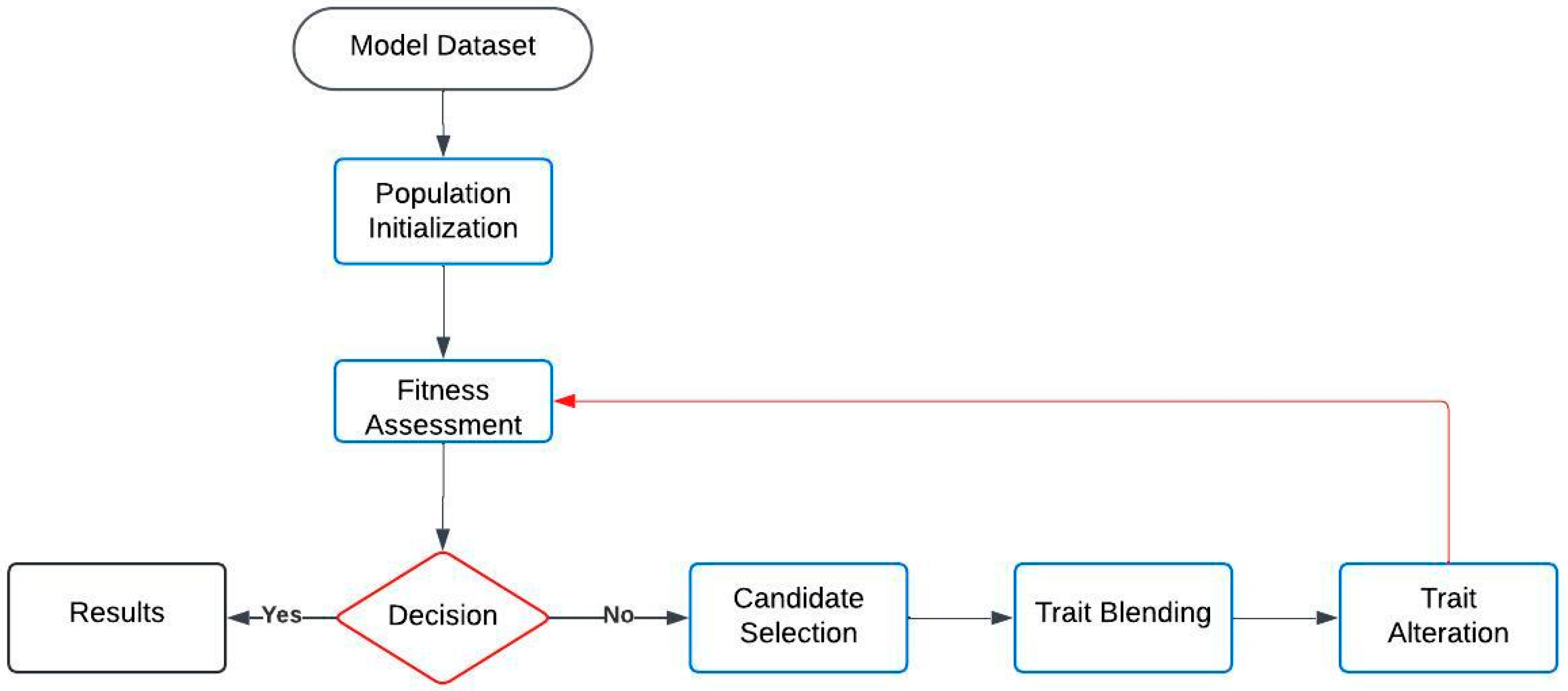
Evolutionary algorithms, particularly genetic algorithms (GAs), have become essential tools for scientists and engineers in addressing complex, real-world challenges, as they are extensively used for optimization and prediction across fields such as business, science, and engineering. Inspired by natural selection, a GA proceeds through five stages: generating an initial population, evaluating a fitness function, selecting individuals, applying crossover, and applying mutation. Through selection, individuals that meet fitness standards are more likely to reproduce, passing on beneficial traits to the next generation. During crossover, selected parents generate new offspring, whereas mutation further refines these offspring while preserving key genetic attributes. This cycle repeats until a designated fitness threshold is achieved.
Genetic algorithms (GAs) effectively estimate model parameters by efficiently exploring complex solution spaces. By simulating natural selection, GAs optimize parameter values in models that traditional methods may struggle with, particularly non-linear or multi-modal functions. In this study, GAs are employed within a symbolic regression framework using the Eureqa software (version 1.24), where both the model structure and parameter values automatically evolved without assuming a predefined functional form. In Eureqa Pro, core evolutionary parameters such as population size, number of generations, crossover and mutation rates, and selection strategy are internally controlled by the solver and are not user-defined; therefore, reproducibility is ensured by reporting the user-specified modeling settings, including the fitness objective, permitted mathematical building blocks, variable bounds, and data-handling procedures. Eureqa randomly reorganizes the dataset prior to splitting to minimize ordering bias and prevent overfitting. This process involves generating a population of candidate equations composed of different mathematical operators and refining them through selection, crossover, and mutation to improve fitness over generations. Consequently, the resulting models naturally exhibit mixed linear–nonlinear structures, combining linear terms with nonlinear operators when such combinations enhance predictive performance. As a result, GAs are valuable for precise parameter tuning in areas such as machine learning, engineering, and econometrics, thereby enhancing model accuracy [
26].
Figure 1 presents the framework and operational processes of the prediction models developed in MATLAB (version R2022b) and Simulink (Version 10.6). The symbolic expressions obtained from Eureqa are subsequently implemented in MATLAB/Simulink as simulation blocks for validation and forecasting under real operating conditions, without altering the mathematical form of the evolved equations. These equations can incorporate a variety of mathematical functions, including algebraic, trigonometric, exponential, squashing, and logical functions. Detailed explanations of GA techniques are extensively available in the literature [
27,
28], to achieve optimal data-fitting functional forms, both linear and nonlinear.
The model includes several independent variables that impact water demand,
Y: maximum temperature (
Tmax), temperature from the previous day (
Tmax,B), temperature from two days prior (
Tmax,BB), humidity (
H), minimum temperature (
Tmin), weekends and holiday periods (
WH), presence of Ramadan (
RM), strategic storage and occurrence of a dusty day (DS). The mathematical model follows this fundamental structure.
Model development is an iterative process that requires adequacy checks to assess its fitting accuracy. The model’s quality is evaluated using three performance metrics: mean absolute error (
MAE) (3), root-mean-squared error (
RMSE) (4), and the coefficient of determination (
R2) (5). This iterative process reduces the discrepancy between the observed dataset and the model’s predictions at each step. These metrics are defined as follows.
2.3. Economic and Environmental Analysis
The economic effects of the pandemic were analyzed based on data collected by the Ministry of Electricity and Water and Renewable Energy (MEWR) from official billing records provided by the Kuwait Petroleum Corporation (KPC). Energy consumption costs vary with fuel type, water production, and power generation, all of which depend heavily on the capacity and efficiency of power and desalination units and on the technologies in use. In Kuwait, steam power plants make up 47.7% of total installed capacity, combined cycle power plants represent 38.2%, gas turbine engines 13.7%, and renewable energy sources 0.4% [
29] Kuwait’s total installed desalination capacity stands at 640 million imperial gallons per day. The country’s desalination infrastructure is composed of three main technologies: Multi-Stage Flash (MSF), Reverse Osmosis (RO), and Multi-Effect Distillation (MED), which contribute 66.7%, 17.5%, and 15.6% of the capacity, respectively. To assess the economic impact, fuel consumption in 2020 during the pandemic was analyzed in comparison to fuel consumption in 2019 and the projected values for 2020 under typical conditions.
In the present work, specialized software will evaluate the undesired products released during power generation such as CO2, NOx and CO.
The emission of carbon dioxide (CO
2) is closely tied to power plant efficiency and fuel type, as it reflects the impact of fuel combustion. CO
2 levels rise with an increasing air-to-fuel ratio, reaching a peak at the stoichiometric ratio, after which they decline as the air-to-fuel ratio continues to increase. Kennedy et al. [
30] provided fixed CO
2 content values per kWh for various fossil fuels, derived from real data obtained from power plants in the UAE, as illustrated in
Table 1.
Carbon monoxide (CO) emissions result from the incomplete combustion of hydrocarbons, where they fail to fully oxidize into CO2 in the presence of air. Conversely, nitrogen oxides (NOx) are generated at elevated combustion temperatures and higher air-to-fuel ratios. The generic combustor models using specialized software were used to validate CO and NOx emissions, expressed in grams per kilogram of fuel.
2.4. Period of Study and Assumptions Made
This study was conducted over three consecutive months, from March to May 2020. This period was intentionally selected to capture four unique scenarios that influenced the operation of the national water network grid. Additionally, the study analyzed water supply patterns to illustrate the impact of the COVID-19 pandemic on both peak and total water demand. As outlined in
Table 2 [
31], the Kuwaiti government implemented social distancing in three stages: initially advising citizens to stay home, followed by a partial curfew, and ultimately imposing a full curfew.
Statistical and mathematical models are commonly used across disciplines in scientific research, often incorporating simplifying assumptions to match the study’s scope, computational limitations, and data availability. By simplifying models, researchers can reduce complexity while preserving accuracy in depicting real-world phenomena. This analysis was conducted based on essential assumptions:
The reduction in water production was linked to the utilization of three primary desalination technologies: Multi-Stage Flash (MSF), Multi-Effect Thermal Vapor Compression (MED-TVC), and Reverse Osmosis (RO), as these form the core desalination methods employed within the Kuwaiti water network.
Table 3 presents the performance metrics and models of the specific desalination units analyzed in this study.
The GE—9FA gas turbine engine, General Electric Company, Boston, MA, USA, chosen for this study, represents one of the highest heat rate capabilities among industrial gas turbine technologies and is widely used within Kuwait’s power network.
The fuel utilized in the study was natural gas, with its composition detailed in
Table 4.
The combustion process within the combustor was considered complete, with a 2% heat loss accounted for, and nitrogen was treated as an inert gas throughout the process.
The environmental impact assessment is based on a scenario-based estimation approach, where emissions are calculated using fixed emission factors combined with modeled fuel consumption derived from operational scenarios
2.5. Dataset
The regression analysis data was sourced from the Ministry of Electricity and Water and Renewable Energy (MEWR) through the Kuwait National Water Center (WCC), which manages and monitors the country’s water resources. The dataset spans five years and includes daily water consumption statistics, including maximum and minimum values, for the residential, commercial, and industrial sectors. To ensure the accuracy of weather-related data, the WCC cross-checked all information against weather records from the Meteorological Department of the Civil Aviation Authority of Kuwait.
The national airport is centrally located in the country. This weather data, recorded hourly, includes daily maximum and minimum temperatures, relative humidity, and peak water consumption.
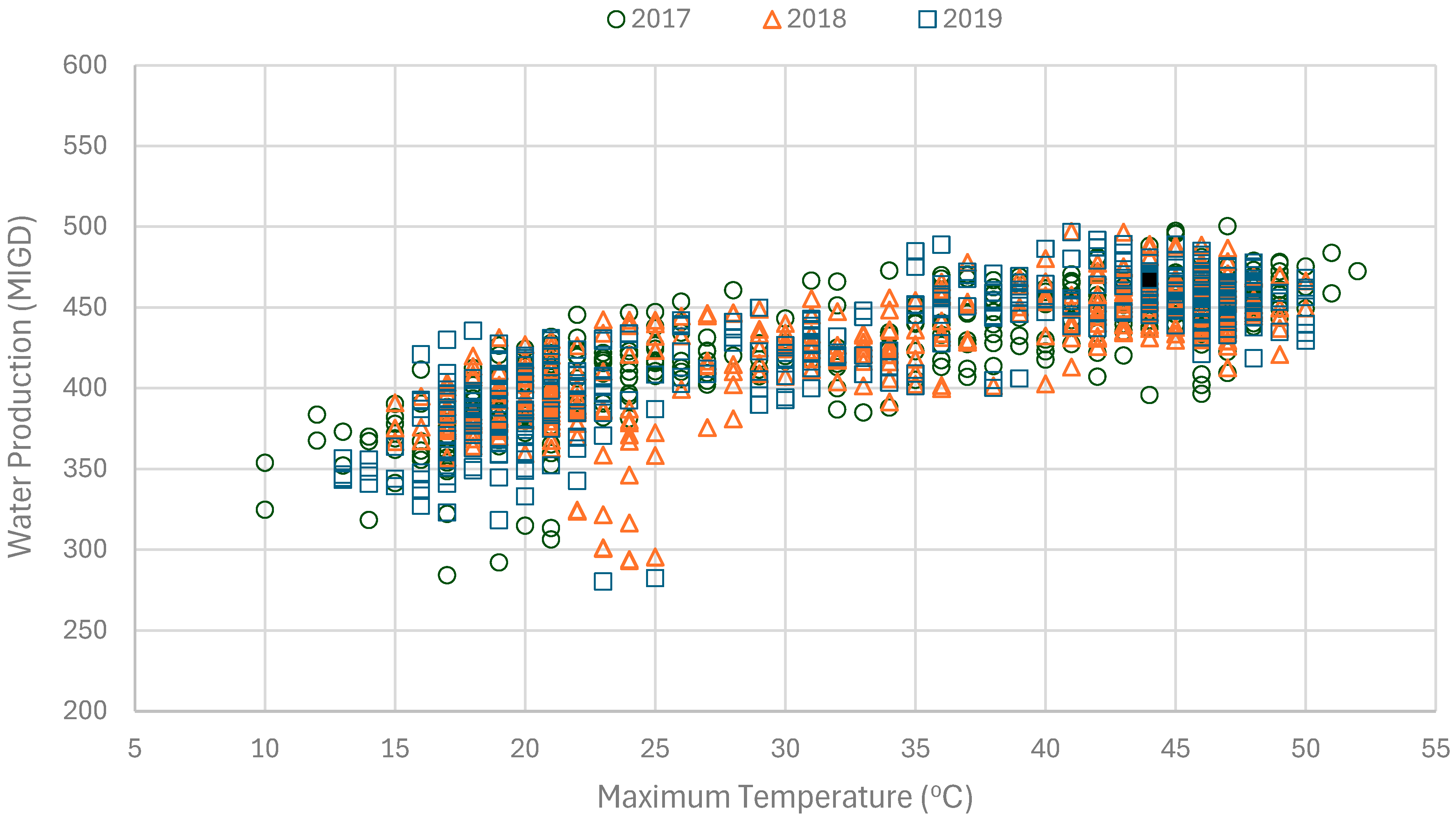
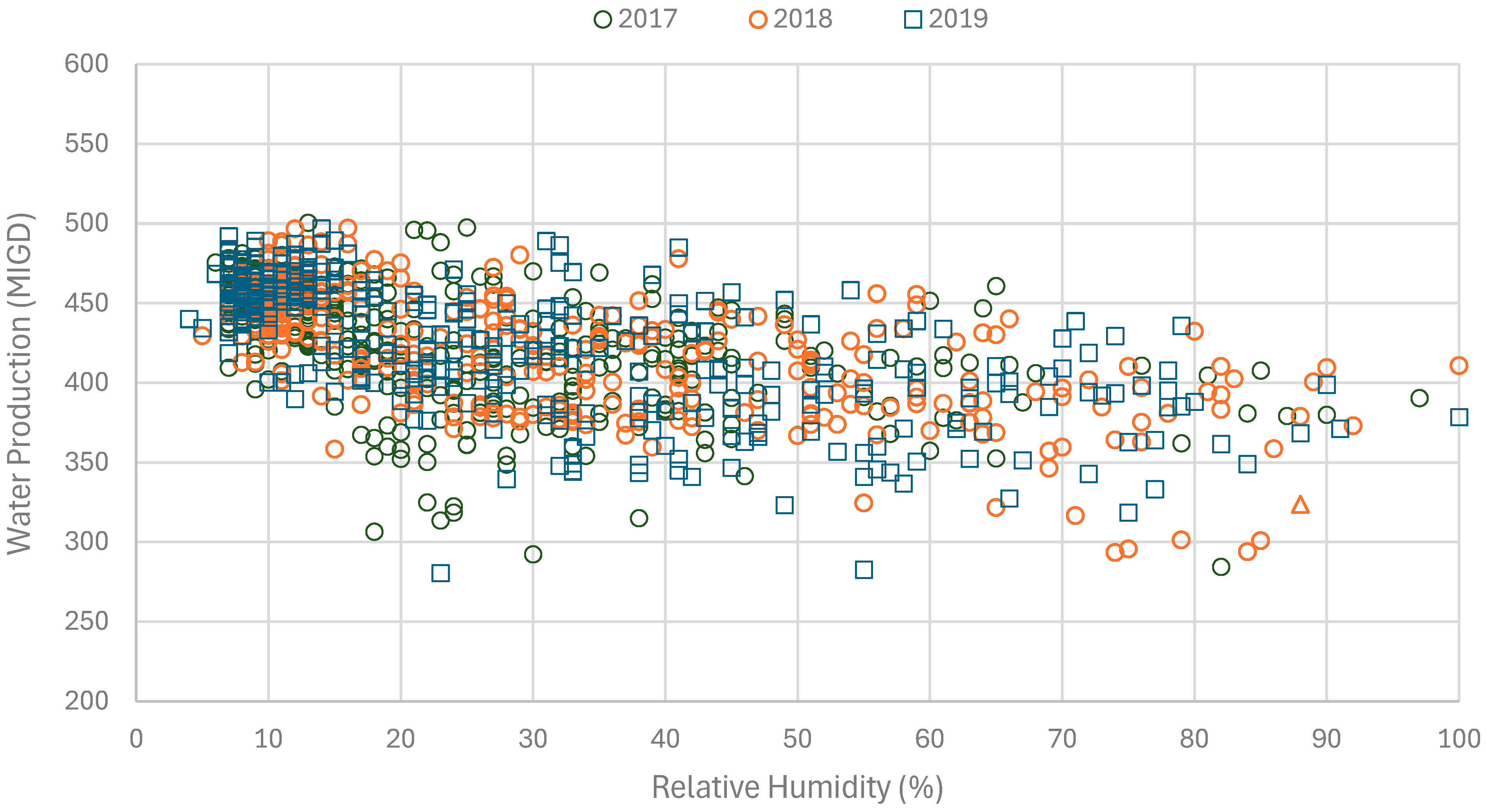
Figure 2 and
Figure 3 show the climatic data and peak water consumption over the past three years, illustrating that water demand is influenced by various factors, with the maximum daily temperature having the strongest impact. Other weather factors, such as relative humidity, minimum temperature, and the previous day’s maximum temperature, also play a significant role in determining consumption. Furthermore, the data highlights that water usage varies due to non-weather factors, including changes in human behavior on weekends, national holidays, and during Ramadan. During Ramadan, government sector working hours are reduced by about two hours per day, while commercial sector hours often extend until midnight, which further affects water demand.
3. Results and Discussion
Here we evaluate the developed model and present predicted and actual values for water production and consumption, costs and environmental impacts on Kuwait during the COVID-19 pandemic. By concentrating on four periods, we assessed the impact of the pandemic on the performance of the Kuwait water network. Actual data on real water demand in 2020 and 2019 were compared with the predicted 2020 demand to provide a better understanding of the assumptions underpinning the different scenarios. It was possible to assess residential water consumption precisely, allowing the Ministry of Electricity, Water, and Renewable Energy (MEWR) to use the unique circumstances of the lockdown to identify and then introduce measures to reduce rate of increase in future demand. The insights gained from sectoral consumption patterns and temporal variations provide a foundation for operational decision-making, including adaptive desalination scheduling during crisis periods and targeted demand-side management strategies for different consumer sectors. Error percentage plots validate the model’s applicability to the research objectives. The pandemic’s impact on water consumption was evaluated, and the economic and environmental effects of water production using the three previously selected desalination technologies were assessed. These findings enable water utilities to optimize resource allocation among MSF, MED-TVC, and RO technologies based on cost efficiency and environmental performance, particularly during emergency situations that require rapid operational adjustments.
3.1. Model Validation
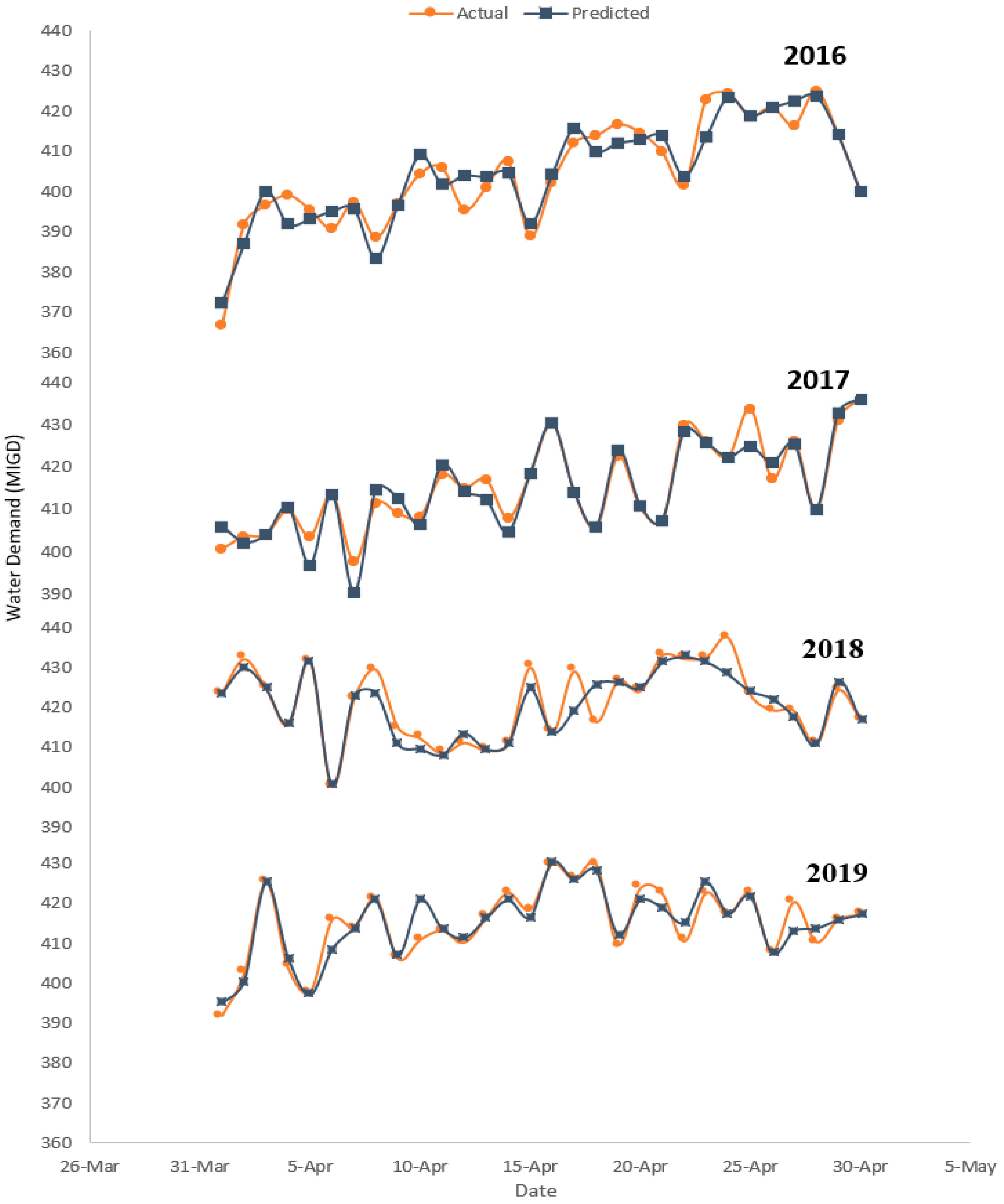
The regression model developed to predict water production and demand was validated using independent real operating data and demonstrated high accuracy. The dataset was divided into a training set (2016–2018, 75% of the data) used for model development, and a testing set (2019, 25% of the data) used exclusively for independent validation. The proposed models were compared on a daily basis across three representative months and multiple years to ensure reliability and generalization capability. For illustrative purposes, April was selected to present a daily comparison of the regression model’s predicted water demand values with the actual data for 2016 to 2019, as shown in
Figure 4. The model effectively predicted water demand, with the most significant deviation in April 2019 being 2.45%. Over the three years, the model achieved an average absolute error of 0.54%. Model selection was guided by a tradeoff between predictive accuracy and model complexity, and performance was assessed using independent multi-year data, confirming stable behavior across different operating conditions and indicating minimal overfitting.
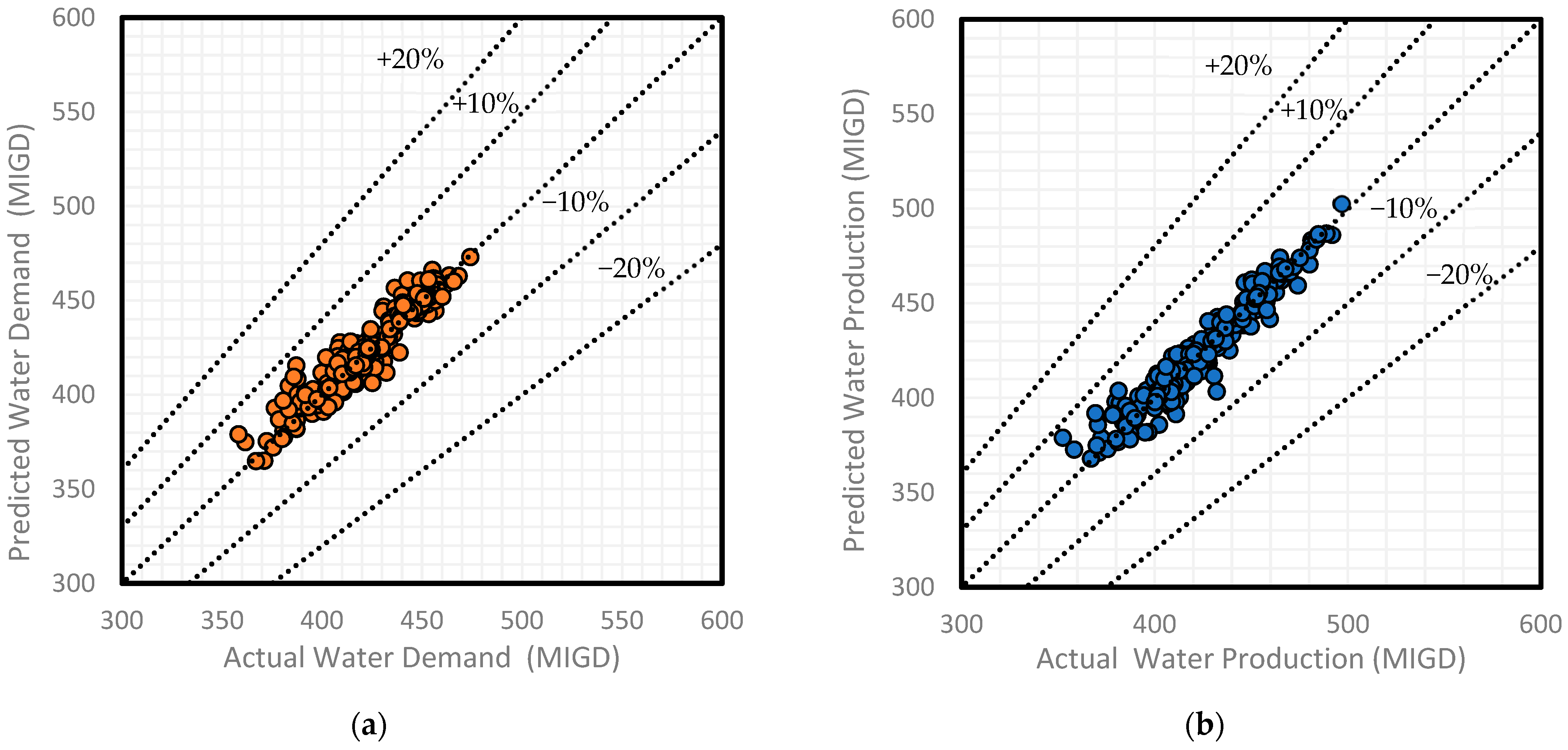
Figure 5a compares predicted and actual daily water production over three consecutive years for March, April, and May. The predictions demonstrated an average absolute error of 1.16%, with a maximum deviation of 7.49%. Significant deviations in water production forecasts were attributed to daily temperature variations, humidity levels, strategic storage adjustments, and dusty weather conditions. These insights enable adaptive desalination scheduling to compensate for weather-related production variations.
Figure 5b highlights the difference between the predicted and actual daily total water demand (MIGD), showing a maximum deviation of 7.29% and an average absolute error of 1.21%.
The regression model demonstrated strong predictive performance across various hydrological scenarios, supporting its applicability to water resource management. This predictive capability supports operational decisions including production optimization, demand-side management, and strategic storage utilization. The findings highlight the model’s value in supporting strategic decisions, such as optimizing water production and distribution, to improve the efficiency and sustainability of water resource use.
Electricity generation and demand are nearly identical, as electricity cannot be stored on a large scale and responds to instantaneous variations. In contrast, water demand often differs from production in the water network due to the country’s strategic water storage, allowing flexibility in managing fluctuations. This operational flexibility allows utilities to implement cost-effective demand management strategies during crisis periods. The following subsections will explore separate maps of water production and demand, providing deeper insights into the behavior of the water network during the pandemic.
3.2. Water Production
Kuwait, a desert nation, faces considerable challenges in ensuring water security due to its limited freshwater resources. The country relies primarily on desalination plants to satisfy its water requirements. Brackish groundwater from wells is used solely in post-treatment processes to adjust salinity levels before distribution to consumers. The United Nations has highlighted Kuwait’s challenges with declining groundwater levels, noting a recharge rate of less than 70 mm per year, which is exceptionally low given the arid climate and scarce rainfall [
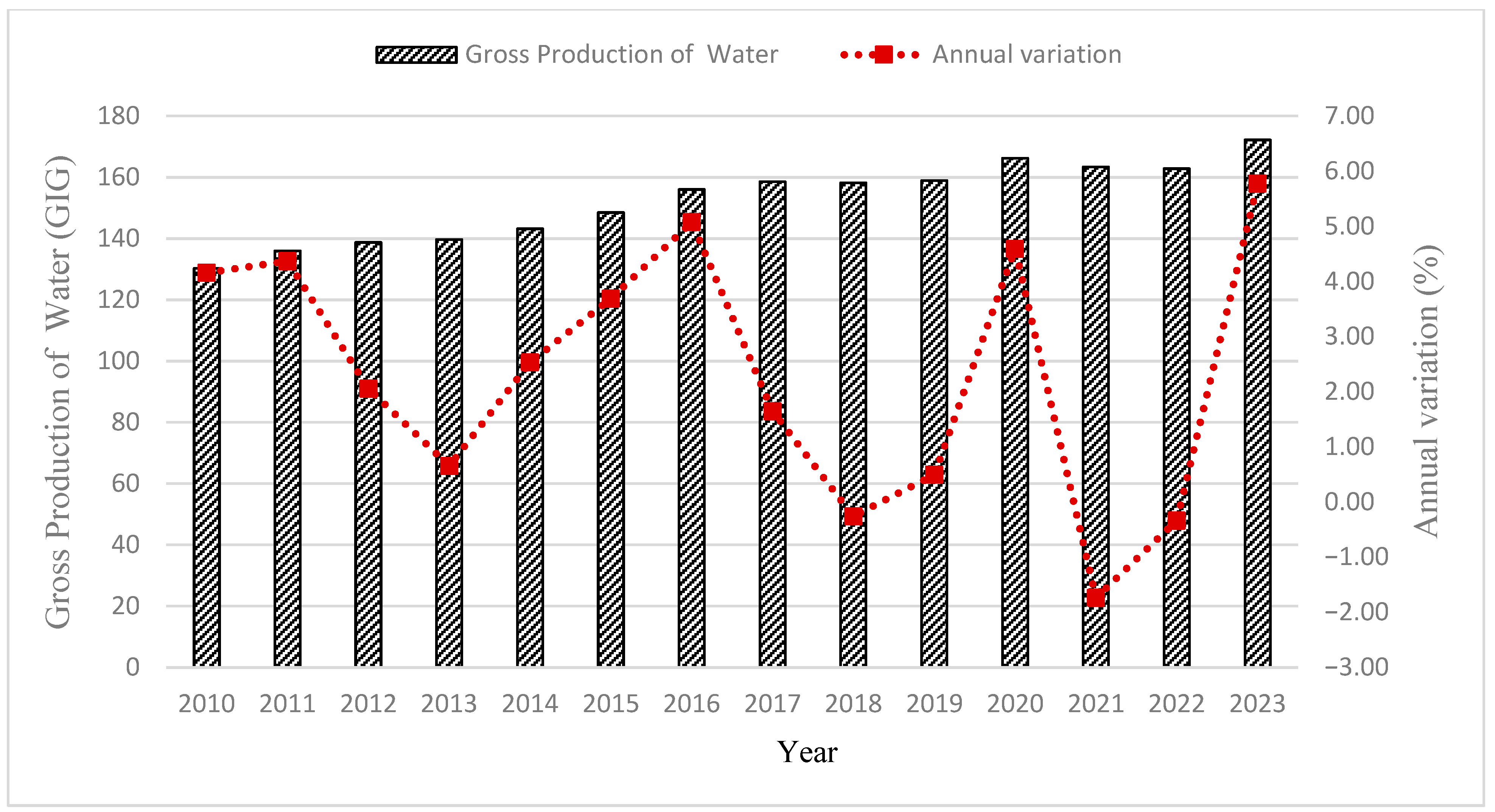
32]. From 2019 to 2024, Kuwait’s total installed water capacity has remained steady at 682.8 MIGD, employing three distinct desalination technologies, as shown in
Figure 6. Operational flexibility across these technologies enables adaptive scheduling based on cost-efficiency and demand patterns. In 2023, annual production was 172.199 GIG, a 5.77% increase from 2022. The annual percentage change was negative in 2018, 2021, and 2022, primarily due to tariff changes and the effects of the COVID-19 pandemic. The decline in 2021, following the pandemic, was −1.74%, a figure that had never been recorded or published in the Ministry of Electricity, Water, and Renewable Energy’s statistical data [
33]. This decline highlights the importance of adaptive operational strategies and demand-side management during crisis periods. The pandemic’s impact rippled through multiple sectors, triggering an economic downturn of a magnitude not witnessed in previous years.
3.3. Water Demand
Water demand is shaped by several intricate factors that address the needs of a region’s population, industries, agriculture, and ecosystems over a given period. In desert countries, climatic conditions and population size influence water demand. Kuwait’s daily per capita water consumption is high, at approximately 447 L. This surpasses the average water usage in many developed countries and is notably high within the Gulf Cooperation Council (GCC) region, although it falls slightly below the levels observed in the United Arab Emirates and Qatar [
34,
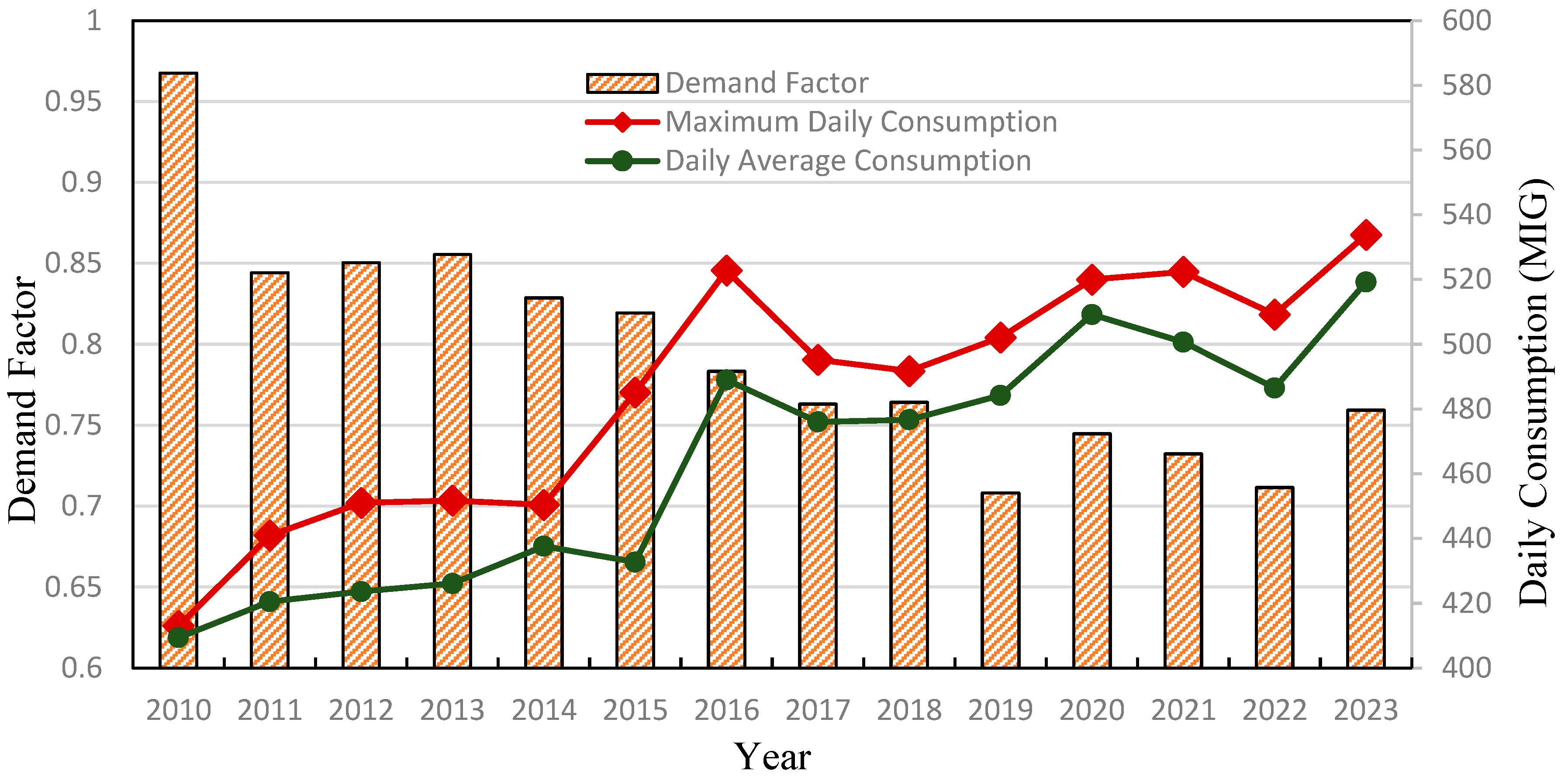
35]. The COVID-19 pandemic in 2020 brought significant changes to water demand patterns. Measures and precautions introduced to control the virus notably affected consumption habits. A large segment of the population typically travels abroad during the summer to avoid extreme heat. However, pandemic-related travel restrictions significantly disrupted this usual practice. These shifts highlight the need for adaptive demand forecasting and flexible desalination scheduling during crises. The demand factor, defined as the ratio of peak water demand to the system’s maximum production capacity, is vital for ensuring reliable and secure water delivery. It indicates the extent to which the system’s full capacity is utilized during periods of highest water usage.
Figure 7 illustrates the decline in Kuwait’s national water network demand factor over 14 years. Since 2010, the factor has steadily decreased, reaching a minimum of one in 2019. This trend reflects the successful collaboration between the Ministry of Electricity and Water and Renewable Energy and the Kuwait Authority for Partnership Projects (KAPP) in expanding water desalination capacity. The maximum water demand represents the peak level of water consumption within the national water network during a given timeframe. The desalination sector typically maintains desalination units with capacities exceeding the projected water demand to ensure a stable and dependable water supply. In 2016, water demand increased significantly relative to previous years, primarily due to exceptionally hot summer conditions. The Kuwait Meteorological Centre recorded a temperature of 54.0 °C, likely contributing to a surge in water consumption for cooling. Furthermore, the economic recovery that year, supported by increased government expenditures and a rebound in oil prices, may also have contributed to higher water consumption. In contrast, water demand declined significantly in 2017, consistent with a severe economic downturn driven by prolonged low oil prices and reductions in government spending. Moreover, improved weather conditions and the introduction of new water tariffs by the Ministry of Electricity and Water and Renewable Energy, designed to promote water conservation, likely shaped consumption trends in subsequent years. These variations demonstrate the effectiveness of tariff-based demand-side management strategies. The COVID-19 pandemic significantly increased water consumption in 2020. Maximum daily water consumption rose by 3.6%, and average daily consumption increased by 5.2%. In contrast, these figures were 2.1% and 1.6%, respectively, in 2019.
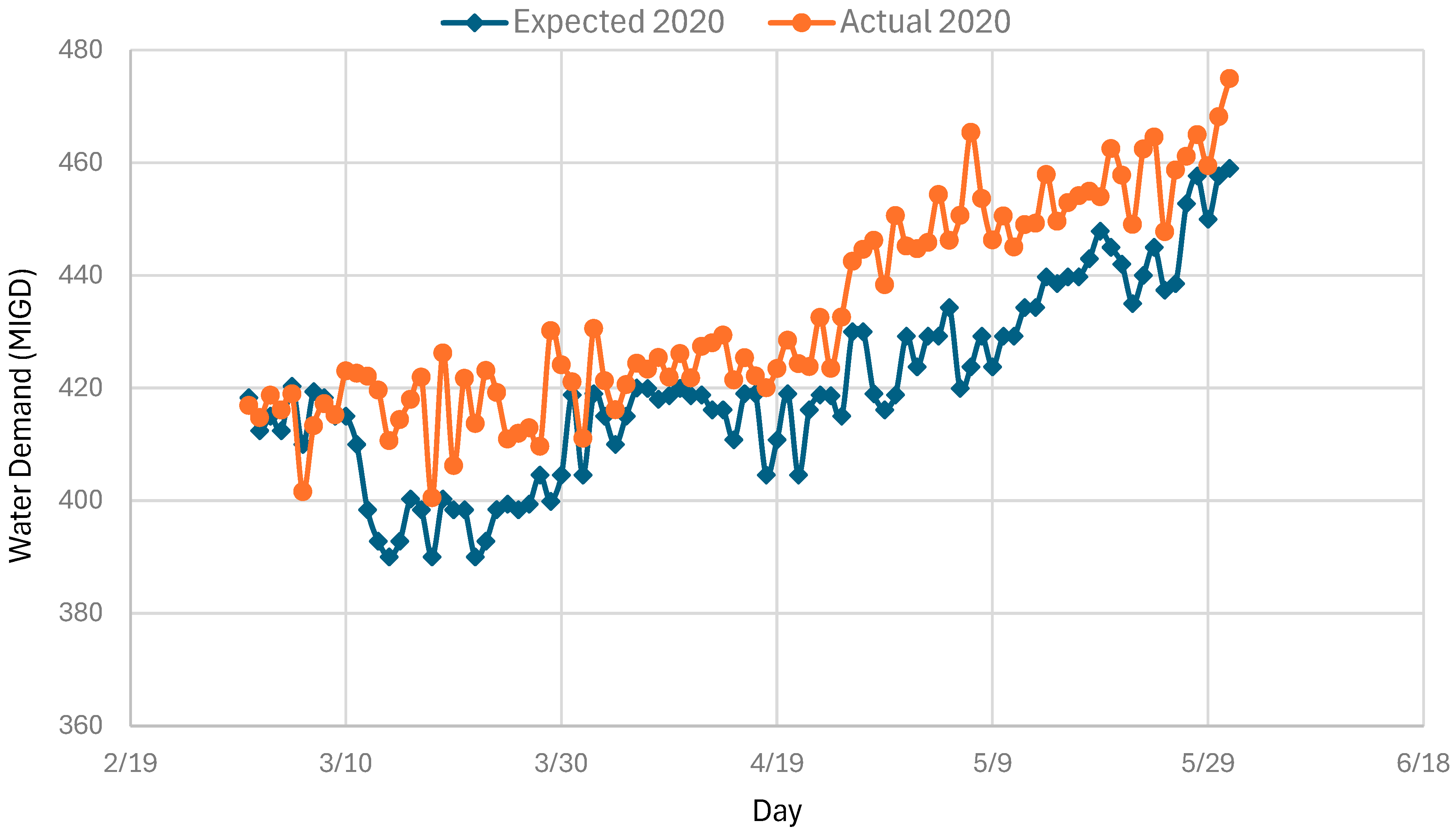
Figure 8 depicts the peak water demand during the 2020 test period. It includes two lines: the blue line represents the projected water demand for 2020 based on the developed daily models, while the orange line shows the actual recorded water demand for the same year. The early dates in March reflect normal conditions, with the actual and estimated values closely aligned. However, from 10 March to 14 March, 2020, demand declined slightly, whereas the proposed model showed a sharper drop, reaching its lowest point below the previous year’s value. This significant decrease was attributed to 14 March being a Saturday, observed as a holiday. Throughout the stay-at-home period, the trend remains similar, with a gap ranging from 5 to 30 MIGD. These gaps enable adaptive production scheduling by adjusting capacity across desalination units. The decreases observed at specific points are primarily attributable to increased humidity. The estimated water demand during the partial curfew period fell short of actual demand, primarily due to a surge in residential water consumption. Initial estimates of water demand during the partial curfew period underestimated actual consumption because of increased residential usage. After Ramadan began on 23 April 2020, water demand increased as temperatures rose, culminating in a peak difference of approximately 42 MIGD. This significant gap required immediate operational adjustments to meet unexpected demand surges. During the whole curfew period (11–30 May 2020), both predicted and actual water demand steadily increased. The difference between the two ranges is 6–20 MIGD, primarily driven by rising temperatures, decreasing humidity, and pandemic-related behavioral changes among residents. These insights inform demand-side management strategies for future crisis scenarios.
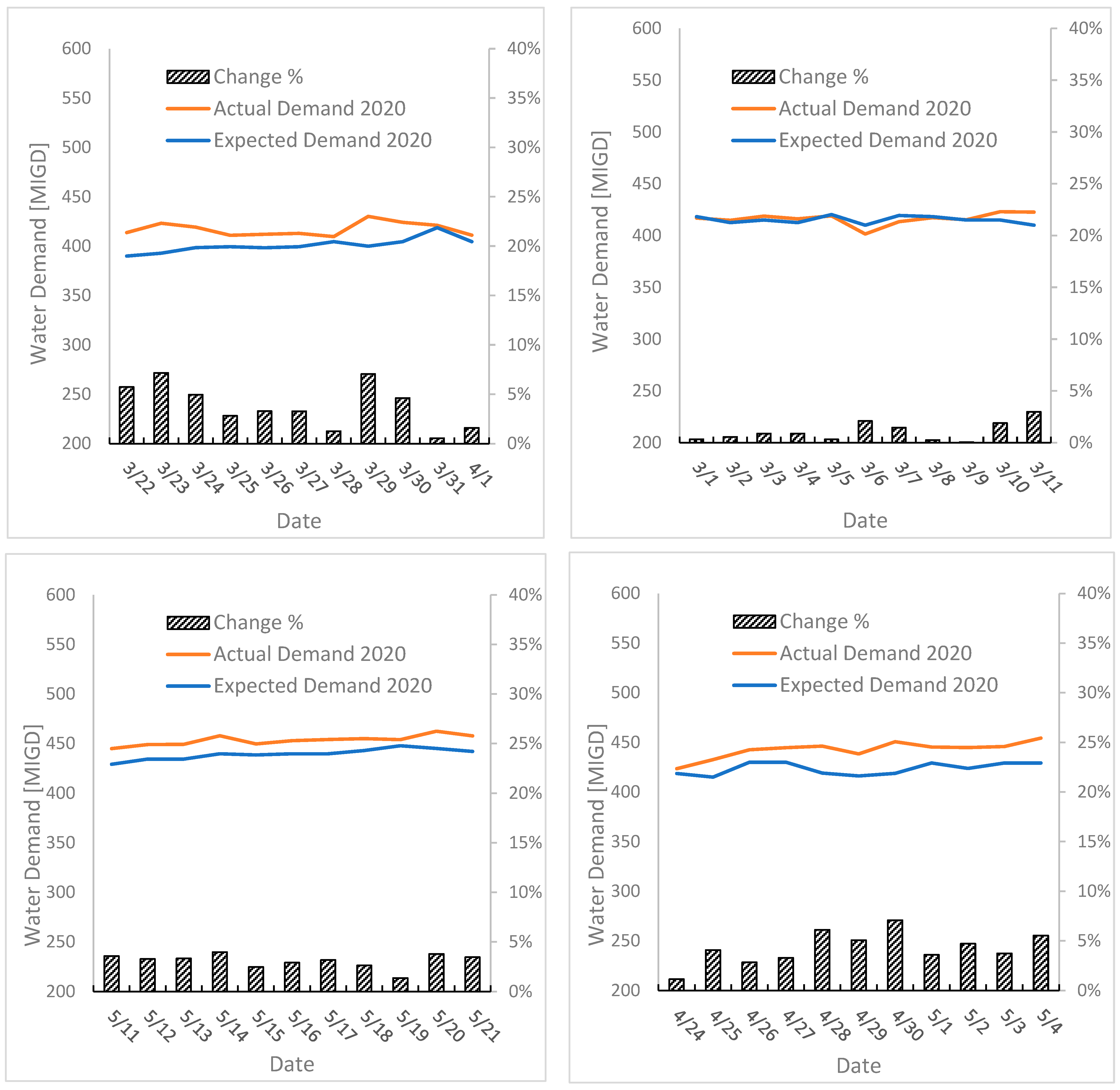
Figure 9 illustrates the variation in peak water demand across four distinct pandemic stages. An 11-day sample is collected for each scenario to assess the effects of various control measures on peak water demand. Both streams show minimal variation during the first phase, except on the final day of the period, when it reaches 3% due to pandemic-related news. As the stay-at-home restrictions were enforced, the gap between actual and estimated water demand steadily grew. This disparity peaked at approximately 30 MIGD, indicating a 7% increase in water consumption relative to initial projections. This deviation necessitated adaptive desalination scheduling to accommodate unexpected increases in demand. The percentage of variation decreases markedly with increasing temperature, reaching a minimum of 0.5%. Phase 3 pertains to the partial curfew scenario, driven by heightened pandemic precautions, disruptions in climatic conditions, and the onset of Ramadan. Across the partial curfew period, the average percentage change was approximately 3.35%. Such variations enable proactive demand-side management through strategic storage utilization. Water demand peaked at a record 475 MIGD during the full curfew, coinciding with a maximum temperature of 48 °C. Although overall demand rose significantly, daily demand fluctuations remained relatively stable, averaging approximately 3% between actual and estimated values. The 4-day holiday that coincided with this period, coupled with declining humidity, likely contributed to a slight moderation in overall water consumption. These patterns inform operational strategies for balancing production costs and reliability during crisis periods.
3.4. Total Water Production
Predicting water production poses distinct challenges compared to forecasting water demand. Strategic water storage can significantly affect results, potentially causing a mismatch between anticipated demand and actual production or failing to reflect the true need over a specific period accurately. Evaluating total water production is essential for several purposes, including determining fuel consumption requirements, providing precise estimates of revenue and profitability, and assessing the environmental impacts of desalination plant operations. Accurate forecasting enables the optimization of technology deployment across MSF, MED-TVC, and RO units based on operational efficiency and cost-effectiveness.
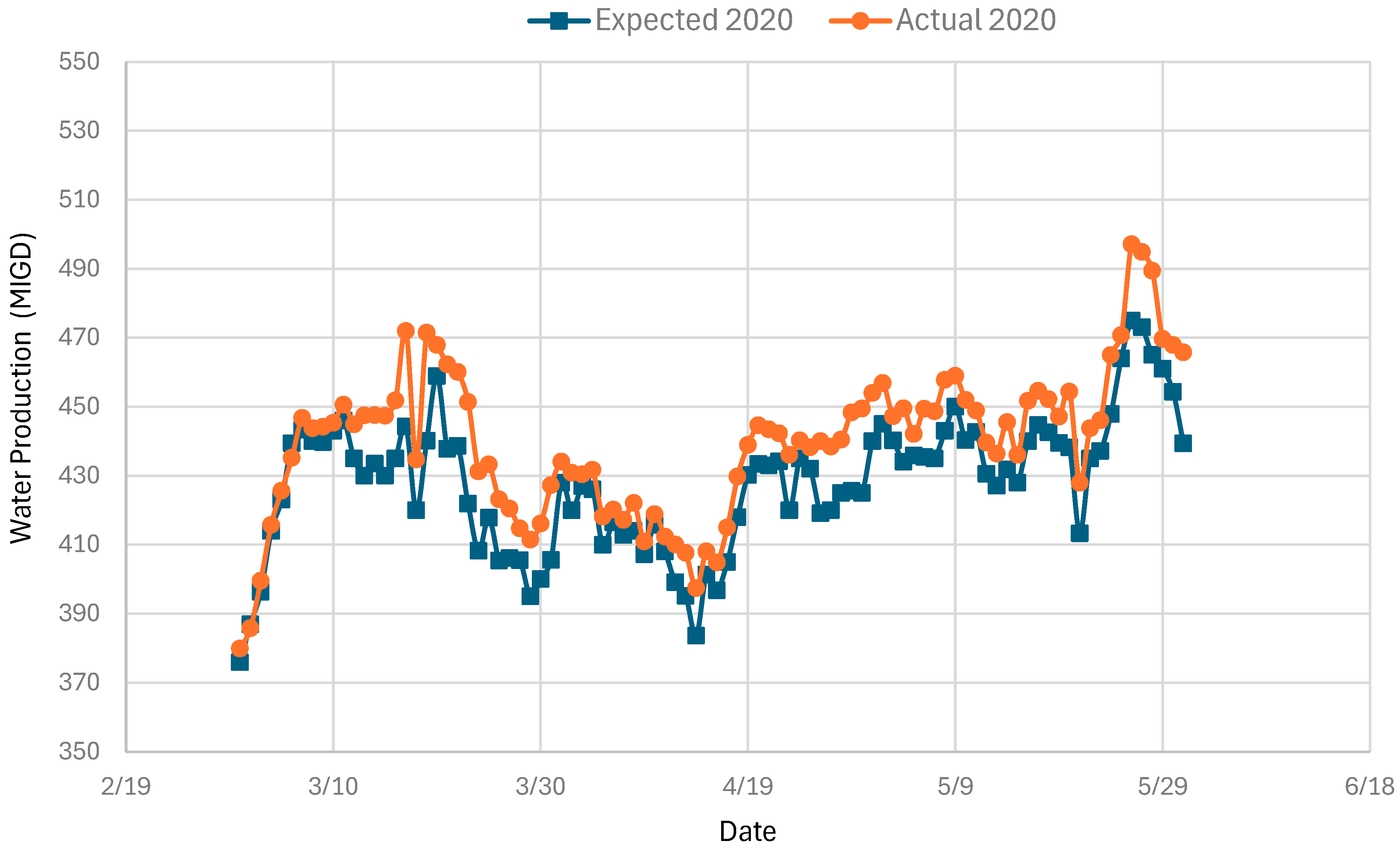
Figure 10 presents a graphical representation of the total amount of water produced in MIGD throughout the evaluation period, which spanned from the 1 March to the 30 May. During the first phase, the actual and estimated water production values were nearly identical, reflecting an upward trend due to reduced strategic storage resulting from the destination unit being taken offline for maintenance in preparation for the summer season. During the stay-at-home period, actual water production surpassed the estimated value due to an increase in water consumption prompted by the initial news of the pandemic and the announcement of precautionary measures. This required rapid activation of standby capacity, highlighting the need for operational reserves during crises. Phase 3 corresponds to the partial curfew scenario, during which actual water production exceeded the estimated value. The difference between actual and estimated figures was minimal at the start and end of the period but slightly higher in the middle, with an average variation of about 2.78%. The observed variation was influenced by a combination of factors, including the implementation of precautionary measures, the prevailing climatic conditions, and the unique behavioral patterns exhibited by individuals during the holy month of Ramadan. These variations enable gradual operational adjustments and strategic storage utilization for cost-effective management. Throughout the period of full lockdown, both the actual and estimated water production figures demonstrated a consistent trend. However, a notable and unforeseen surge in production was observed, reaching a magnitude of 497 MIGD. This unexpected increase can be attributed to a substantial rise in ambient temperature, with recorded peak temperatures reaching 48 °C. Managing this peak required coordinated operation across all technologies while prioritizing energy-efficient units to minimize costs and emissions.
3.5. Economic Assessment
This economic assessment seeks to determine the financial repercussions of the COVID-19 pandemic on Kuwait’s national water network by carefully analyzing operational and technical factors. The analysis prioritizes natural gas, the most cost-effective fossil fuels employed in Kuwait’s power and desalination plants (including gas oil, crude oil, and heavy fuel oil), to establish a conservative estimate of potential financial losses. It is essential to acknowledge that this approach may underestimate the actual financial impact, as using more expensive fuels would inevitably result in significantly higher potential losses. These cost insights support adaptive operational strategies that prioritize cost-effective technology deployment during periods of peak demand.
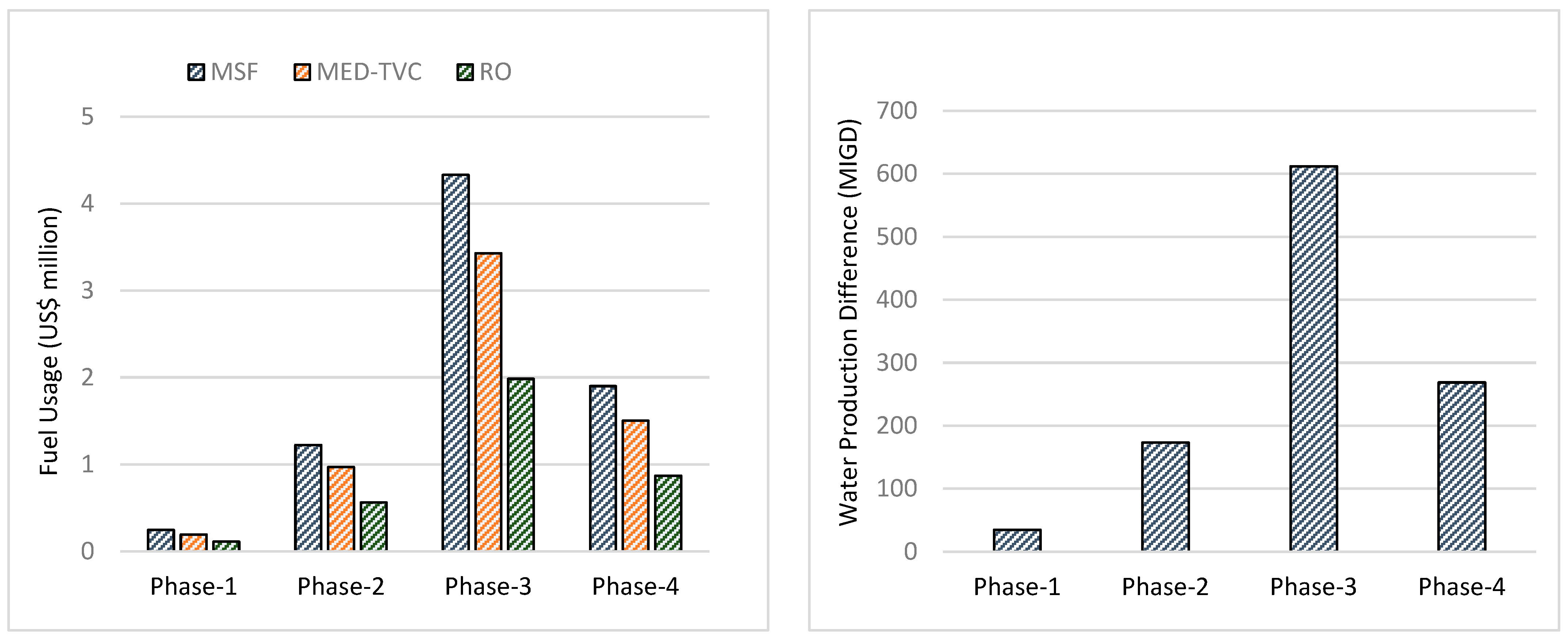
Figure 11 illustrates the relationship between fuel usage (expressed in US millions) and variations in water production (measured in Million Imperial Gallons per Day) during the different evaluation phases. The baseline was established to assess the discrepancy between actual and projected values for 2020 under normal operating conditions. During the evaluation period, energy consumption was monitored across three distinct desalination technologies. A significant increase in fuel consumption was observed, amounting to approximately US
$7.7 million, US
$6 million, and US
$3.5 million for Multi-Stage Flash (MSF), Multi-Effect Thermal Vapor Compression (MED-TVC), and Reverse Osmosis (RO) technologies, respectively. Among the desalination technologies evaluated, the Multi-Stage Flash (MSF) plant incurred the most significant fuel consumption costs. This can be attributed to its relatively lower energy efficiency than the other two technologies. In contrast, the Reverse Osmosis (RO) technology demonstrated a less pronounced effect on fuel costs, owing to its higher energy efficiency. These cost differentials guide operational decisions to prioritize RO and MED-TVC over MSF during crises, reducing fuel costs while maintaining production. Fuel costs reached their maximum during Phase 3, which was distinguished by the implementation of a partial curfew and encompassed the longest duration within the testing timeframe. This highlights the economic value of proactive demand-side management to reduce consumption and minimize costs during extended crises. However, in cogeneration plants, a portion of the fuel energy (typically between 3% and 6%) is allocated to the desalination plant. This allocation highlights the fact that desalination technology, when integrated within a cogeneration system, is often classified as a low-grade energy system. Furthermore, considering other factors such as operational and maintenance costs can substantially increase financial burdens, particularly in regions like Kuwait where water fees are heavily subsidized. These realities emphasize the need for integrated planning balancing capacity, efficiency, and demand-side management for financial sustainability.
3.6. Environmental Impact
Non-renewable power plants powered by fossil fuels deliver a consistent electricity supply but emit large volumes of pollutants and greenhouse gases into the air during operation.
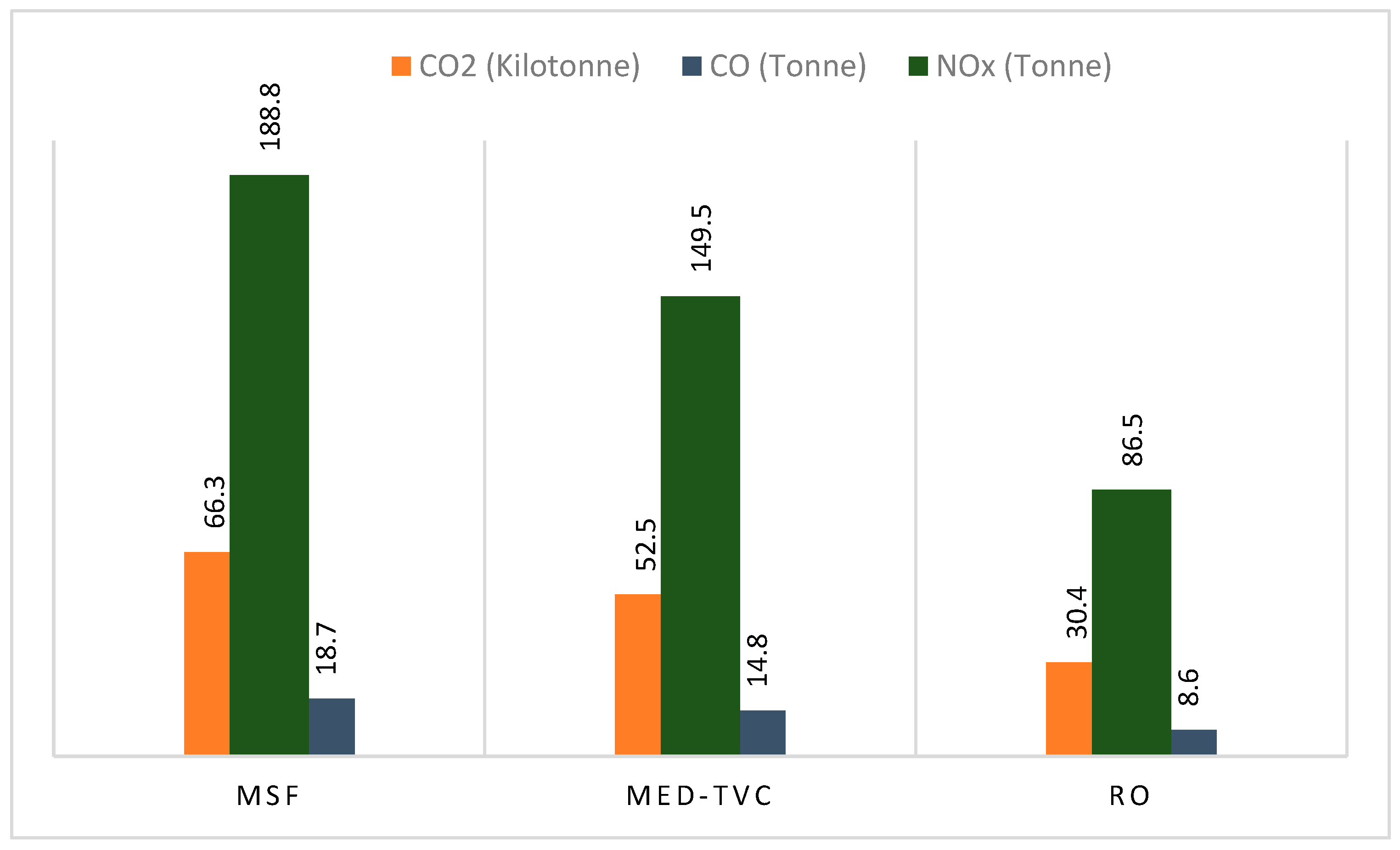
Figure 12 depicts an increase in the emissions of carbon dioxide (measured in kilo-tonnes), nitrogen oxides (NO
x), and carbon monoxide (CO) released from power plants into the environment during the specified test periods. Carbon dioxide (CO
2) emissions from power and desalination plants are strongly influenced by factors such as energy conversion efficiency and the air–fuel ratio during combustion. Lower heat rates and optimal air–fuel ratios generally lead to decreased emissions and a lower carbon intensity. Notably, reverse osmosis (RO) desalination plants are recognized for their significantly lower CO
2 emissions and reduced pollutant output, primarily due to their higher energy efficiency. These environmental performance differences provide strategic guidance for operational decision-making during demand surges. As outlined in the economic assessment subsection, Phase 3, characterized by the longest duration within the testing timeframe, was also responsible for the highest contribution to emissions. This emphasizes the environmental benefits of demand-side management interventions during extended crisis periods.
Figure 12 also highlights the rise in NO
x and CO emissions, which exhibit a pattern similar to CO
2 during the test period, as all three are connected to fuel combustion and the production of power and water. The quantities of nitrogen oxides (NO
x) released exhibit a greater magnitude than those of carbon monoxide (CO). This phenomenon can be attributed to the deliberate introduction of excess air within the combustion chambers, a measure essential for preventing incomplete combustion of the fuel. These emission patterns enable integrated operational strategies balancing cost, reliability, and environmental impact during crisis scenarios.