1. Introduction
With the continuous intensification of the global energy crisis, green and low-carbon development has become a common focus of attention among countries. Under the dual pressure of economy and environment, the transformation of the energy structure has become imminent [
1]. Among various renewable energy sources, solar energy has become one of the core directions of energy transition due to its wide distribution, environmental friendliness, and great development potential. As a key technology for solar energy utilization, photovoltaic power generation has made significant progress in recent years. According to statistics from the International Renewable Energy Agency (IRENA), by 2050, renewable energy will account for two-thirds of the global electricity supply [
2]. However, in photovoltaic power prediction, data feature characterization is crucial and is significantly affected by solar irradiance, seasons, and weather conditions. Its uncertainty poses a major challenge to the stable operation of the power grid and electricity dispatching. Therefore, the accuracy of photovoltaic power prediction is crucial to mitigating grid voltage fluctuations and achieving stable and economical scheduling of the power system [
3]. Numerous innovative models have been proposed for photovoltaic power prediction, which can be mainly categorized into physical modeling methods, statistical analysis methods, and artificial intelligence methods. Physical modeling is a typical mechanism-based forecasting method. This method builds a photovoltaic conversion model based on the physical characteristics of the PV system and environmental parameters to simulate power output. Its principle is to calculate the irradiance on the inclined surface of PV modules using radiative transfer or coordinate geometry algorithms, corrected by atmospheric adjustment factors; Then, the single/double diode equivalent circuit model is used to derive the current-voltage (I–V) characteristics and determine the maximum power point under different irradiance and temperature conditions. Reference [
4] used coordinate analysis to calculate hourly irradiance on the PV panel surface. The equivalent circuit model was used to compute the current-voltage characteristics of PV panels. Finally, an improved maximum power point tracking algorithm was used to adjust the output voltage of the PV panel to obtain PV power [
4]. Such methods offer explicit physical interpretability. However, the accuracy of such models heavily depends on the precise acquisition of PV module and system parameters, which are often difficult to obtain in real-world operations. Statistical methods predict power output using historical power data and related meteorological time-series features, employing classic models such as ARIMA and exponential smoothing. These models have simple structures; the classical ARIMA model predicts future power through autoregressive and moving average processes based on historical data. Reference [
5] introduced exogenous meteorological variables such as temperature, precipitation, sunshine duration, and humidity into the ARIMA model, significantly improving prediction accuracy and validating the critical role of weather information [
5]. However, statistical models are essentially linear and have limited ability to handle complex nonlinear relationships and multi-scale fluctuations in PV power signals. Their main drawback lies in complete dependence on historical data, making it difficult to fully account for the influence of meteorological variables on PV generation, thus limiting prediction accuracy and failing to capture complex weather effects and equipment dynamics.
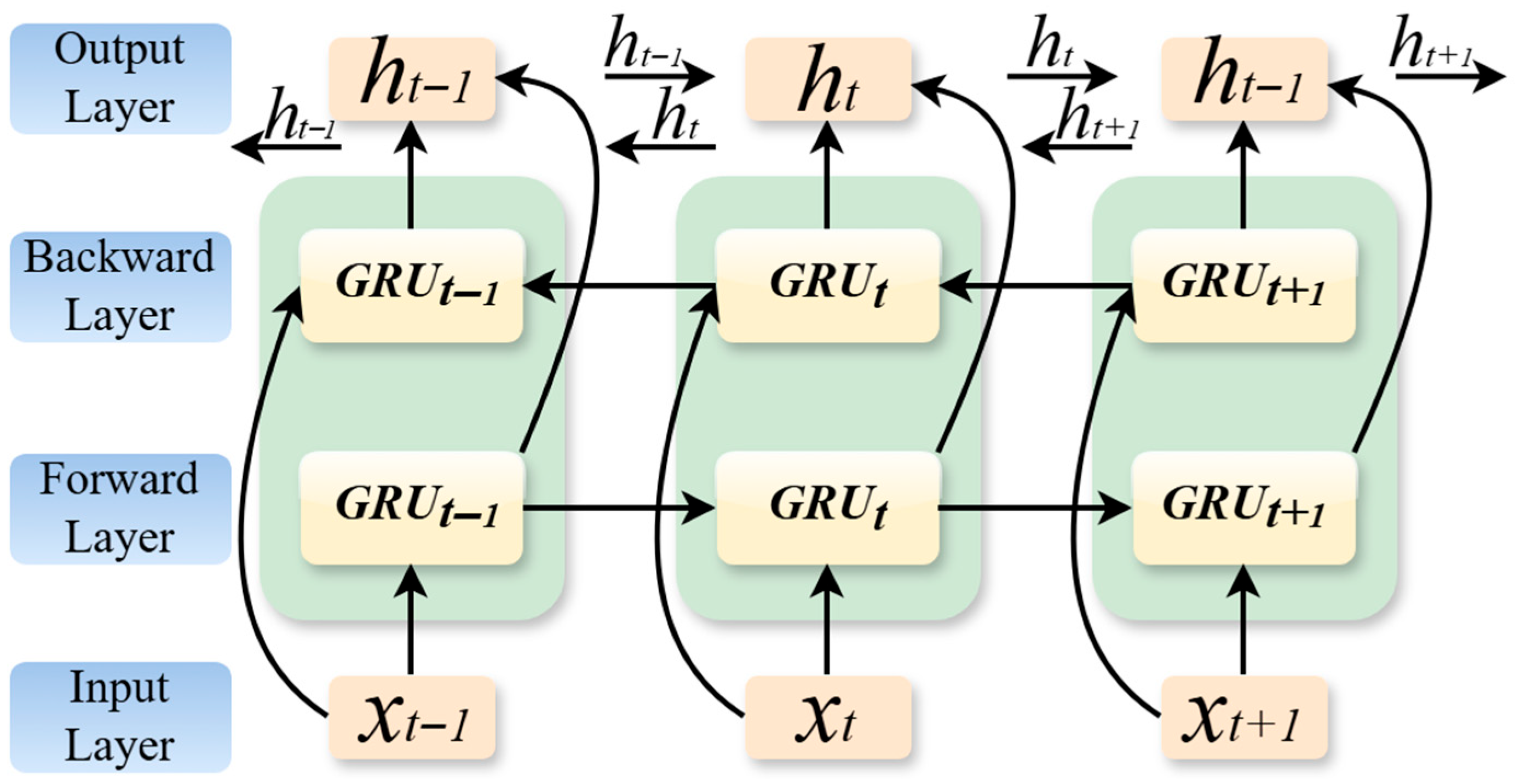
With the accumulation of big data resources and the continuous improvement of computing power, artificial intelligence methods have gradually become a core research direction and development hotspot in photovoltaic power prediction due to their advantages in nonlinear modeling and deep feature extraction. In the field of time series modeling, neural network models have been widely used, especially deep neural networks (DNNs) and their sequence-processing variants—recurrent neural networks (RNNs) and their derivatives such as long short-term memory (LSTM), gated recurrent units (GRU), and bidirectional gated recurrent units (BiGRU)—due to their excellent temporal feature extraction capabilities. Since the raw photovoltaic power signal exhibits high non-stationarity, nonlinearity, and multi-scale characteristics, single models often face issues such as low prediction accuracy and insufficient training stability when dealing with complex fluctuating signals. Thus, recent research increasingly favors multi-model fusion architectures to improve prediction performance [
6]. Reference [
7] compared the prediction errors of different single models and selected BiGRU and extreme gradient boosting (XGBoost), which had the lowest error and least correlation, to propose a short-term hybrid forecasting model named GSK-BiGRU-XGBoost [
7], which significantly improved prediction accuracy and robustness compared to single models. Reference [
8] constructed an ensemble model combining XGBoost LightGBM and LSTM using a Stacking framework to predict PV power [
8]. Reference [
9] proposed a data fusion-based Transformer generation model, LSTformer, which introduced the Time Series Analysis (TSA) module, Time Series Feature Fusion (TSFF) module, and the cycleEmbed module [
9]. It addresses the difficulty of extracting multiple time series features through data fusion, and the designed Temporal Convolutional Feedforward (TCNforward) unit further extracts temporal features during the encoding and decoding processes, effectively improving short-term PV power prediction accuracy. In Reference [
10], a two-stage deep learning framework was used for accurate solar PV power prediction, and this framework [
10] combined long short-term memory (LSTM) and convolutional neural network (CNN) architectures. The key function of the CNN layer is to recognize weather conditions, while the LSTM layer learns solar power generation patterns. Reference [
11] proposed a model based on recent clear-sky day decomposition and Temporal Convolutional Networks (TCN), using TCN to integrate the feature extraction capabilities of Convolutional Neural Networks (CNNs) with the modeling abilities of Recurrent Neural Networks (RNNs) and Long Short-Term Memory (LSTMs) [
11]. Reference [
12], in order to mitigate the impact of data fluctuations on prediction accuracy, employed the Random Forest method for feature selection [
12], followed by comparison after dataset optimization, which effectively improved the prediction accuracy. In summary, current studies have continuously explored multi-model fusion, deep learning framework innovation, and feature optimization methods, effectively enhancing the accuracy and stability of photovoltaic power prediction, laying a solid foundation for future model construction and optimization. However, these methods still face many challenges. For instance, under severe fluctuations or abrupt weather changes, although BiGRU can capture bidirectional temporal dependencies, its gated structure is relatively complex, which easily leads to an increased number of parameters, thus causing overfitting or prediction deviation under small sample conditions. Meanwhile, although BiGRU outperforms standard recurrent networks in capturing long-term dependencies, it still struggles to effectively alleviate the gradient vanishing problem, resulting in insufficient modeling of long-range dependencies. In addition, the deep network structure itself incurs high computational cost, and sample features may contain redundancy or insufficient information. These issues limit the practical application of models in real-world deployment.
Although the continuous optimization of multi-model fusion strategies and deep learning frameworks has improved the accuracy and robustness of PV power prediction to some extent, existing methods still face challenges in dealing with the non-stationarity, nonlinearity, and multi-scale fluctuation characteristics commonly found in raw power sequences, and current methods still have limitations in capturing deeper temporal patterns. How to address this challenge more effectively remains a key issue to be addressed. Against this background, signal decomposition techniques have been introduced into PV power forecasting research, by decomposing the original power sequence into several intrinsic mode functions (IMFs) with distinct frequency characteristics, each IMF is modeled separately, and the prediction results are then aggregated to reconstruct the final forecasting output. For example, reference [
13] proposed the EEMD-LSTM-BP model to address the issue of poor predictability of high-frequency data, effectively capturing complex fluctuation features [
13]. Reference [
14] further combined multidimensional similar-day clustering with a dual decomposition strategy, and constructed an improved XGBoost–Kernel Extreme Learning Machine model for short-term PV forecasting, and proposed a dual-signal decomposition model based on Variational Mode Decomposition and Complete Ensemble Empirical Mode Decomposition with Adaptive Noise (CEEMDAN) [
14]. Literature has shown that single decomposition methods still exhibit limitations when handling complex residual signals, which may lead to the loss of important information. Thus, the residual two-stage decomposition strategy was introduced, which further models the high-frequency noise or residuals remaining after the initial decomposition. Among them, Variational Mode Decomposition (VMD), a signal decomposition technique with a solid mathematical foundation, has advantages such as strong noise resistance and minimal boundary effects [
15], making it suitable for further analysis of residual signals. However, key parameters in VMD, such as the number of modes (K) and the penalty factor (α), have a significant impact on decomposition performance, and traditional empirical settings are often insufficient to obtain optimal values, which brings new challenges and opportunities for further optimization.
In photovoltaic power forecasting, the performance of deep learning models often depends on the setting of numerous hyperparameters, such as the number of hidden layer units, learning rate, and time steps. These parameters are usually determined through empirical methods or grid search, which suffers from high computational cost, low search efficiency, and unstable results. To overcome these limitations, heuristic optimization algorithms are introduced to adaptively optimize deep learning models and decomposition parameters. Reference [
16] proposed an intelligent photovoltaic power forecasting model based on Extreme Learning Machine (ELM) and Adaptive Spiral Dingo Optimization (ASDBO) algorithm [
16], which achieved improved accuracy under nonlinear scenarios. Reference [
17] indicates that residual components obtained from the first-stage decomposition usually contain high-frequency trends and stochastic residuals, which are critical factors affecting forecasting accuracy. Therefore, variational mode decomposition (VMD) is applied to the residual component for secondary decomposition to further alleviate mode mixing while balancing forecasting performance and model complexity. In contrast, high-frequency intrinsic mode functions (IMFs) exhibit relatively clear time scales after the first decomposition, and further decomposition provides limited benefits while increasing the risk of overfitting. Subsequently, the crested porcupine optimizer (CPO) algorithm is employed to optimize key parameters of the bidirectional long short-term memory (BiLSTM) model, thereby enhancing overall forecasting performance [
17]. Reference [
18] proposed a PV power prediction method based on an improved Avalanche Optimization algorithm (Good Point and Vibration Strategy Avalanche Optimizer, GVSAO) and Bi-directional LSTM network (Bi-LSTM) [
18], which optimizes key Bi-LSTM structural parameters based on the good point and vibration strategies, such as feature dimensions per time step and the number of hidden units in each LSTM layer. It can be seen that heuristic optimization algorithms play an important role in tuning deep learning parameters by efficiently searching for the optimal parameter combinations, which helps significantly improve model forecasting performance and stability.
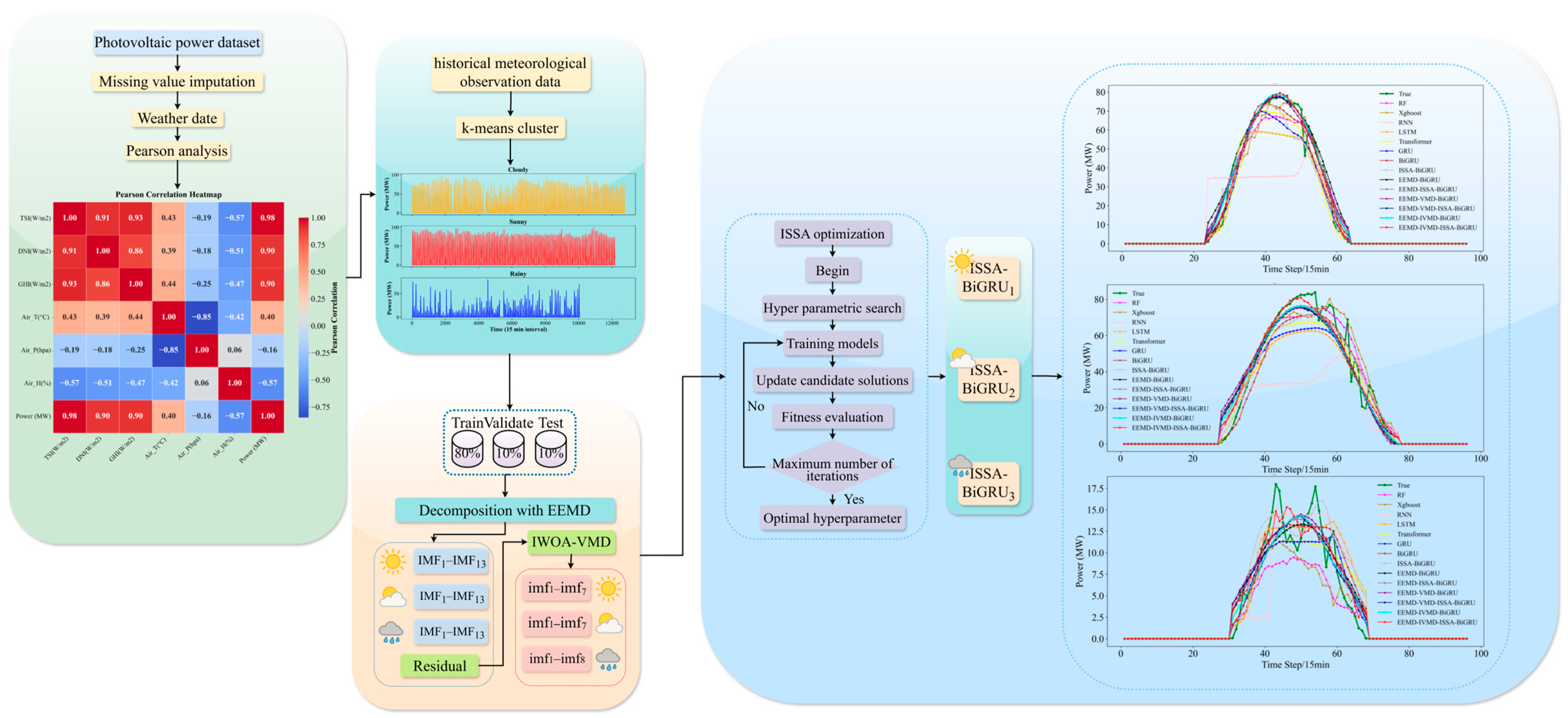
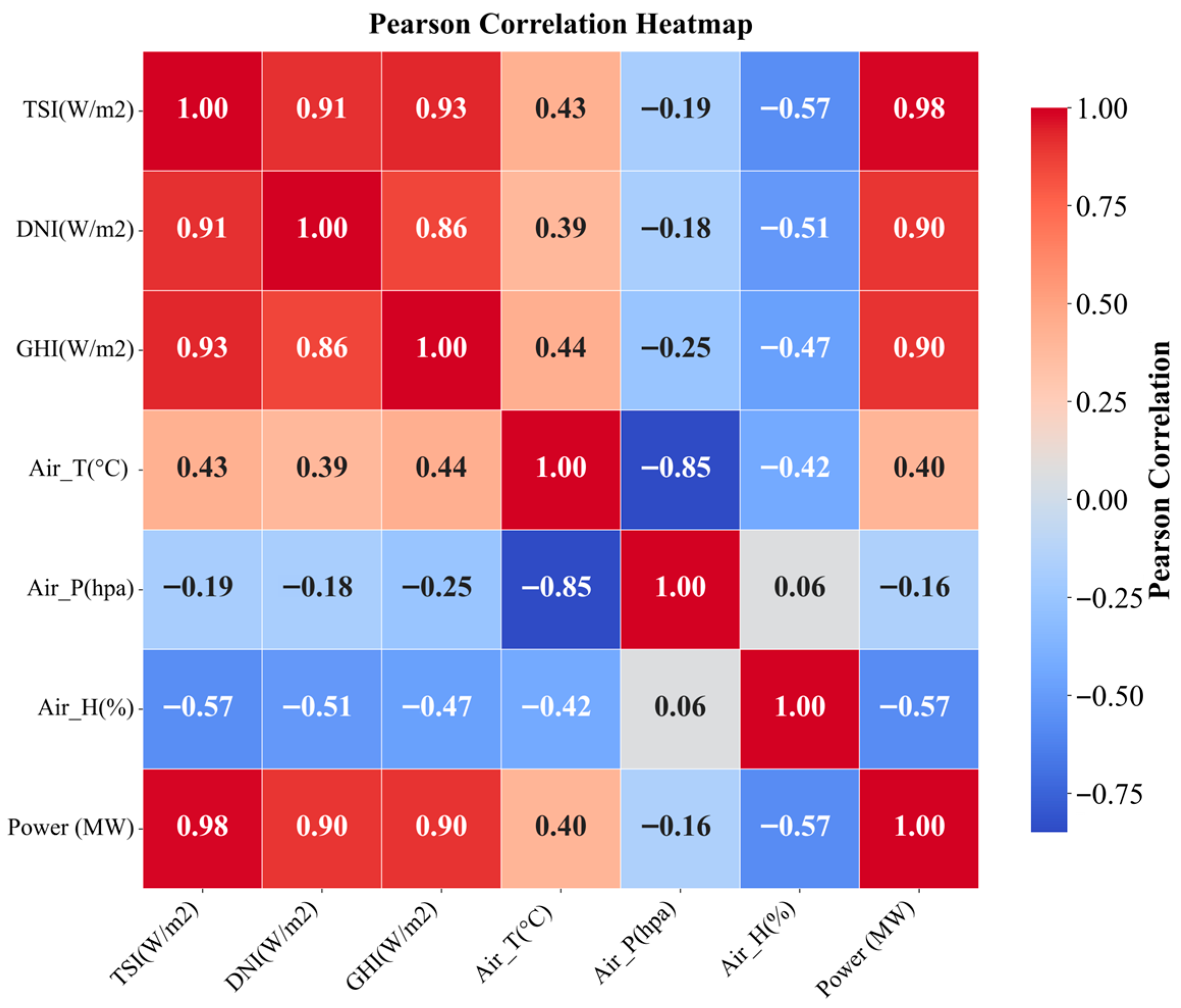
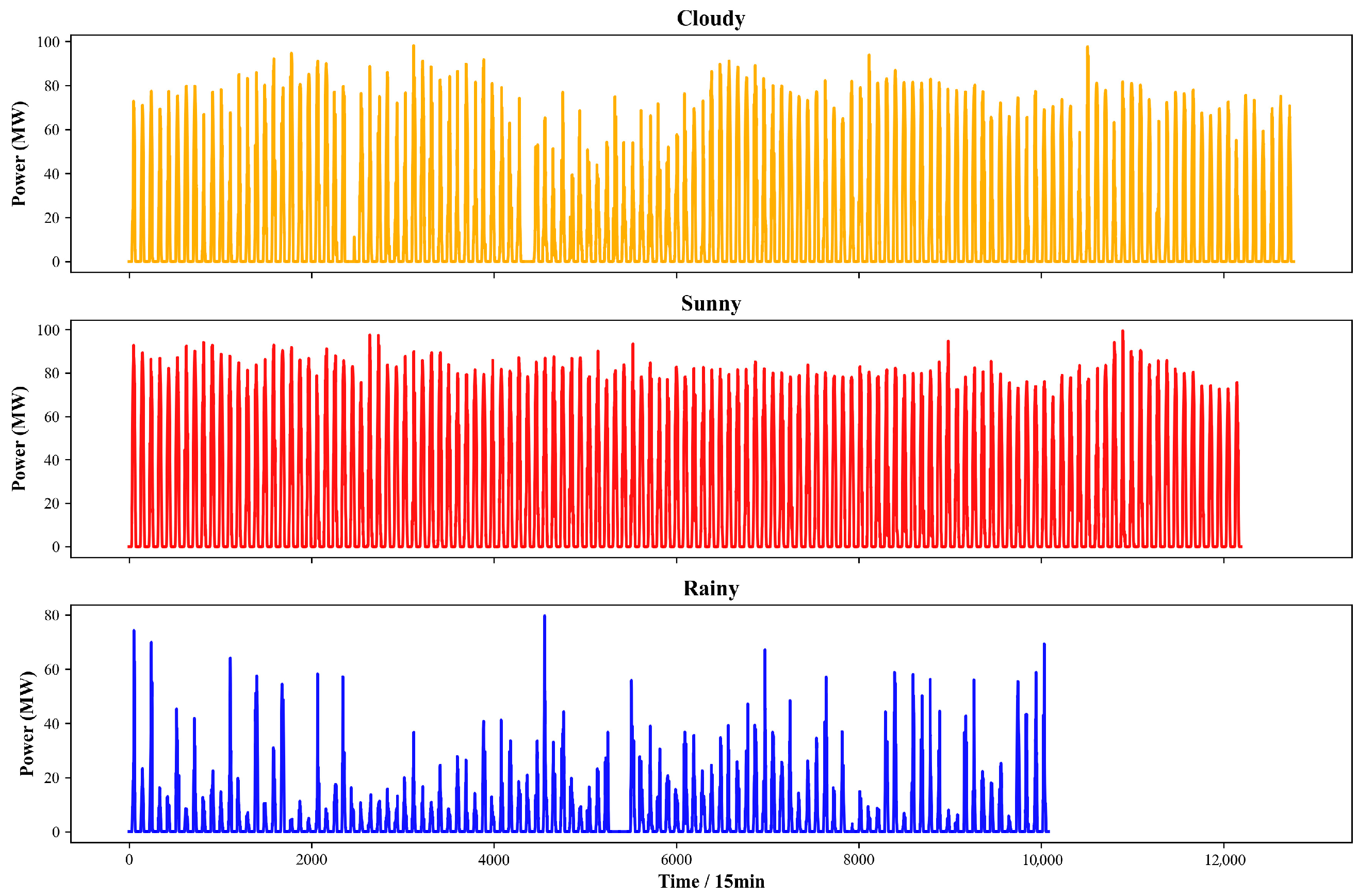
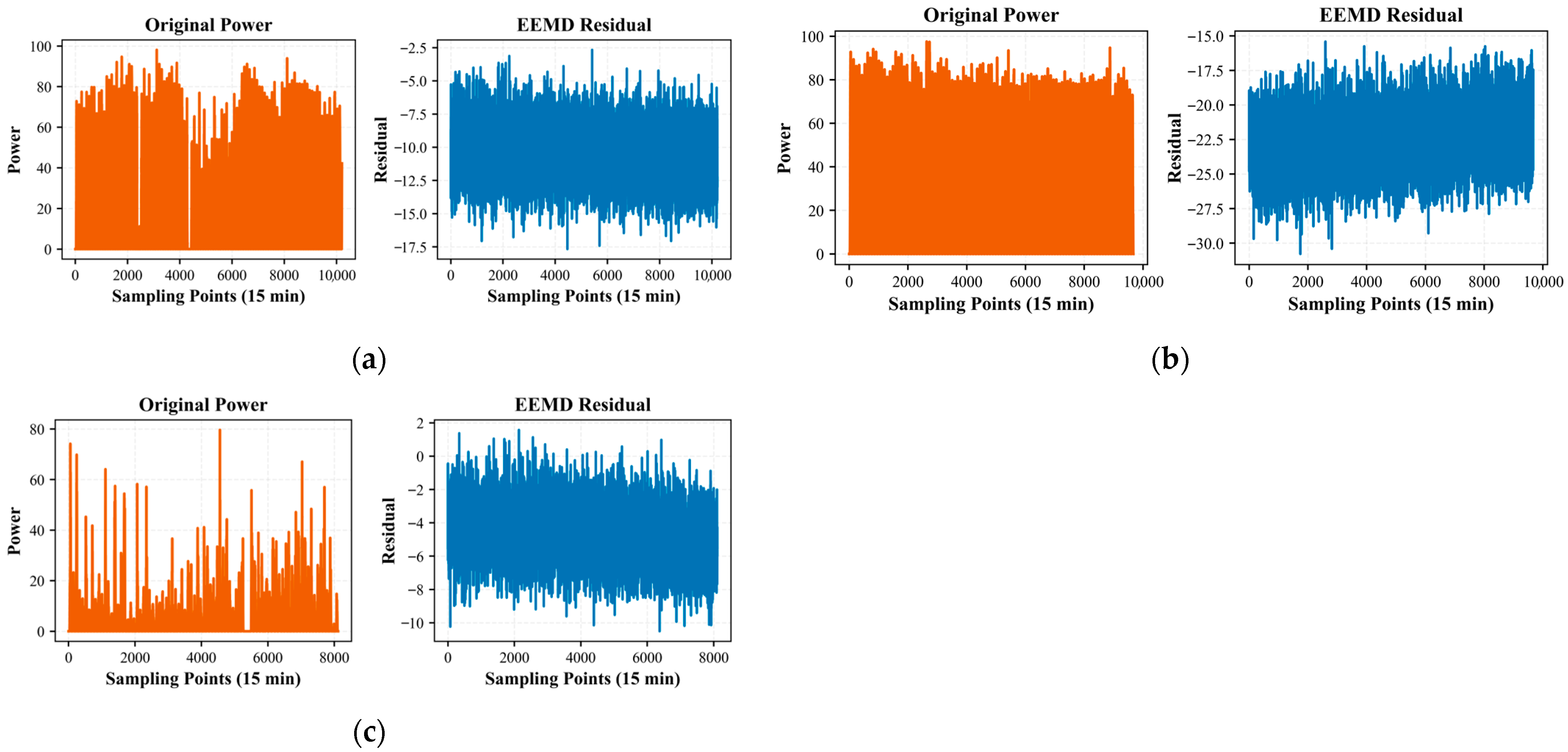
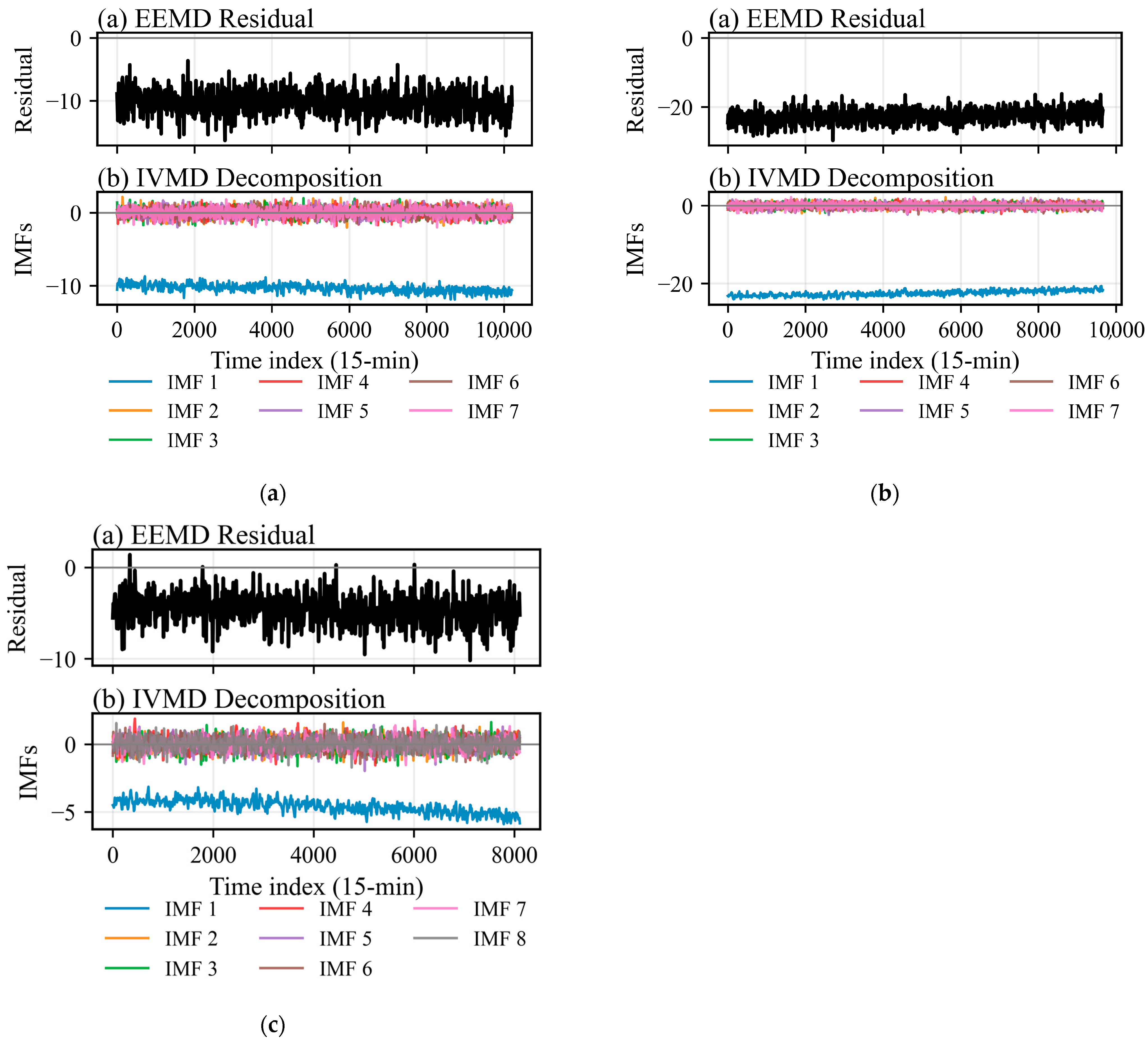
To address the limitations in existing studies and improve the accuracy of photovoltaic power forecasting, the proposed model introduces optimization mechanisms into signal decomposition and prediction modeling, respectively, thereby constructing a dual-layer collaborative optimization framework. Specifically, after preprocessing the raw data to handle missing values and performing similar-day clustering based on the Pearson correlation coefficient and K-means, although CEEMDAN and ICEEMDAN can further alleviate the mode mixing problem of EEMD to a certain extent, they are usually accompanied by higher computational costs. Therefore, EEMD is employed to perform an initial decomposition of the photovoltaic power series. Experimental analysis indicates that the residual signal retained after the first decomposition commonly contains low-frequency trend components and complex disturbance structures. If these intrinsic characteristics are ignored, forecasting errors are likely to accumulate in subsequent stages. Therefore, the residual is not simply treated as noise; instead, an IWOA-optimized VMD is introduced based on the initial EEMD decomposition to conduct secondary decomposition of the residual. In this process, IWOA is used to adaptively optimize the hyperparameters of VMD, including the number of decomposition modes K and the penalty factor. In the forecasting stage, ISSA is further applied to independently optimize the parameters of the BiGRU network. These parameters include the learning rate and the number of hidden units. Finally, the forecasting results are obtained by aggregating the outputs of all sub-models. The contributions of this paper are summarized as follows:
- (1)
To address the issues of noise residuals and mode mixing in traditional decomposition models, a cascaded decomposition framework based on EEMD and VMD is constructed. By performing secondary decomposition on the low-frequency components remaining after EEMD, the correlation between noise residuals and the decomposed data is further reduced. This effectively compensates for the shortcomings of a single decomposition method when dealing with complex non-stationary signals. Since the performance of VMD is affected by the number of modes K and the penalty factor α, an improved IWOA is used to optimize VMD by selecting the appropriate K and α.
- (2)
To address the tendency of traditional PV forecasting models to overfit and fall into local optima, a strategy is proposed using the Improved Sparrow Search Algorithm to intelligently optimize BiGRU hyperparameters. This method can search for and optimize key structural parameters of the BiGRU, improving its prediction accuracy in feature learning and temporal modeling, thereby avoiding overfitting.
4. Discussion
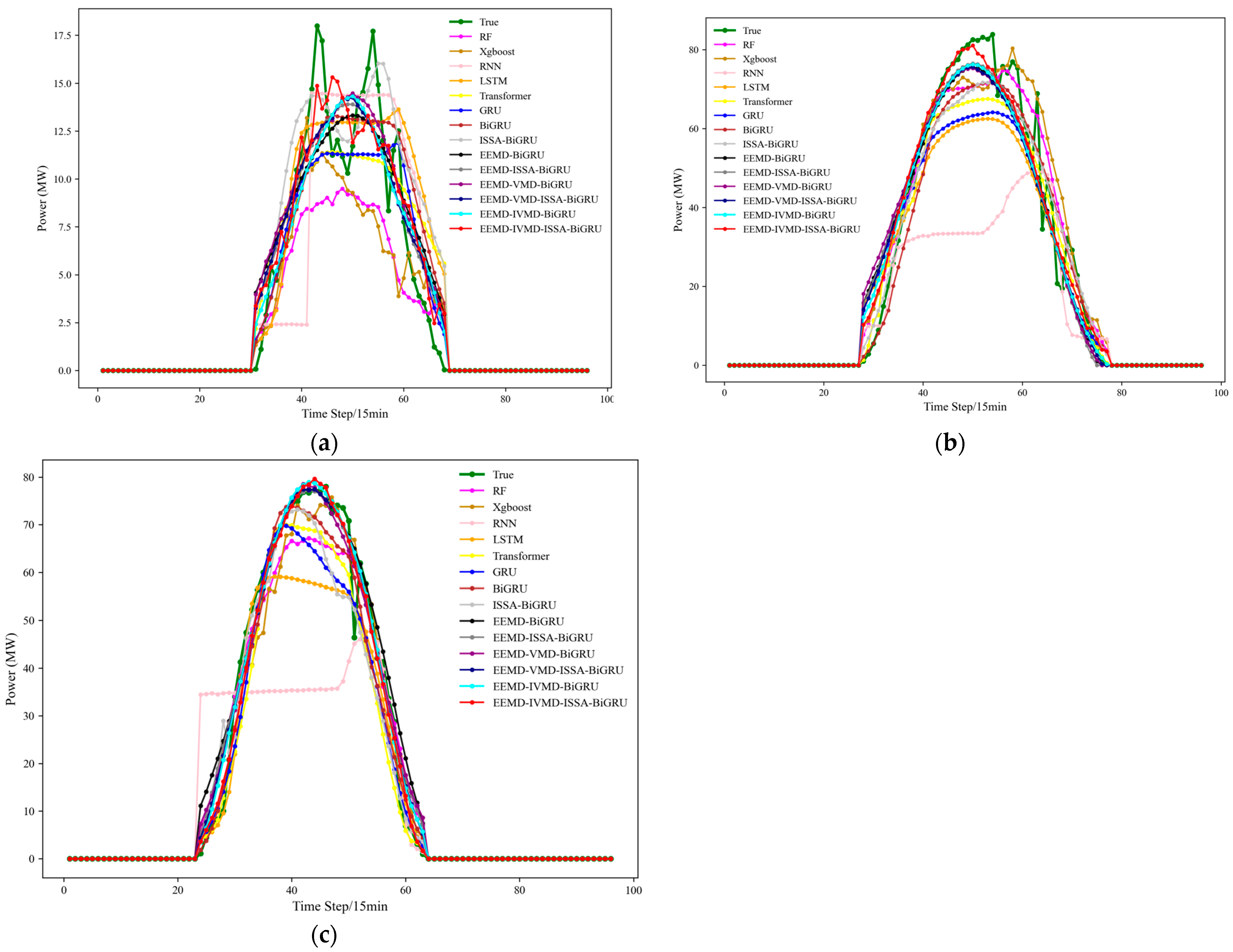
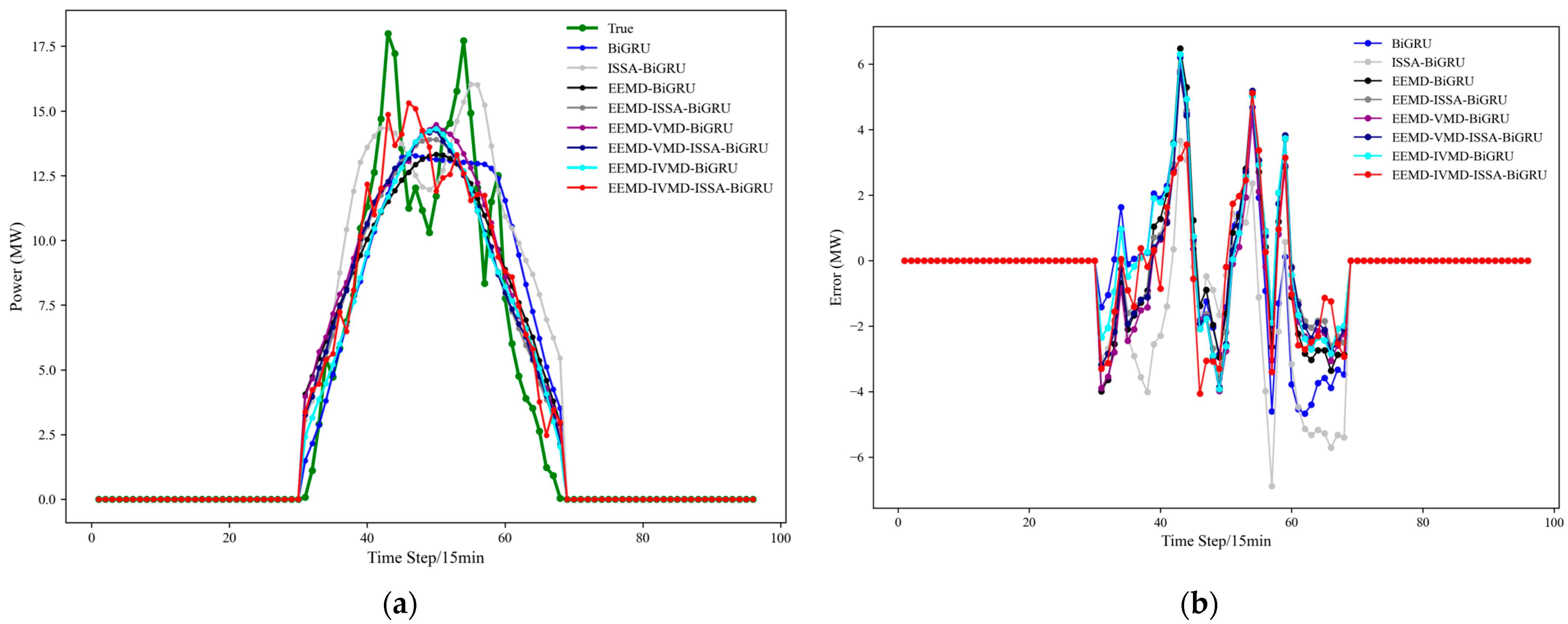
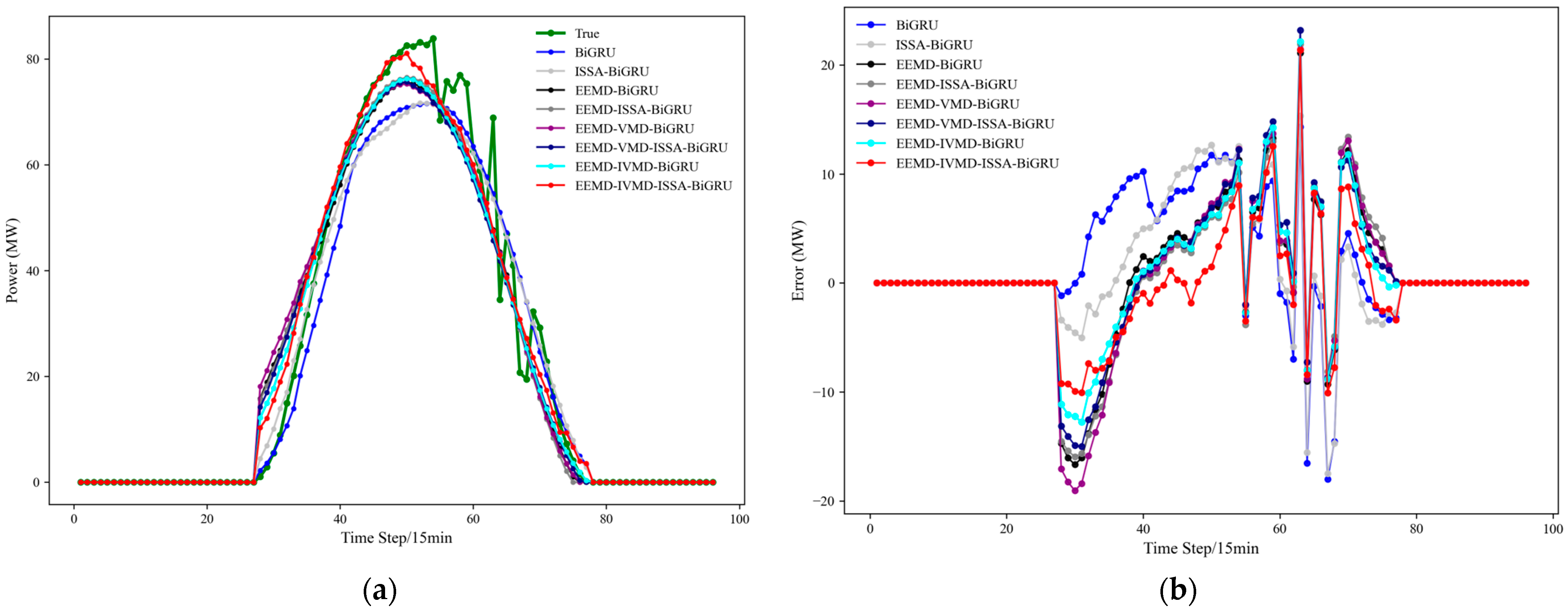
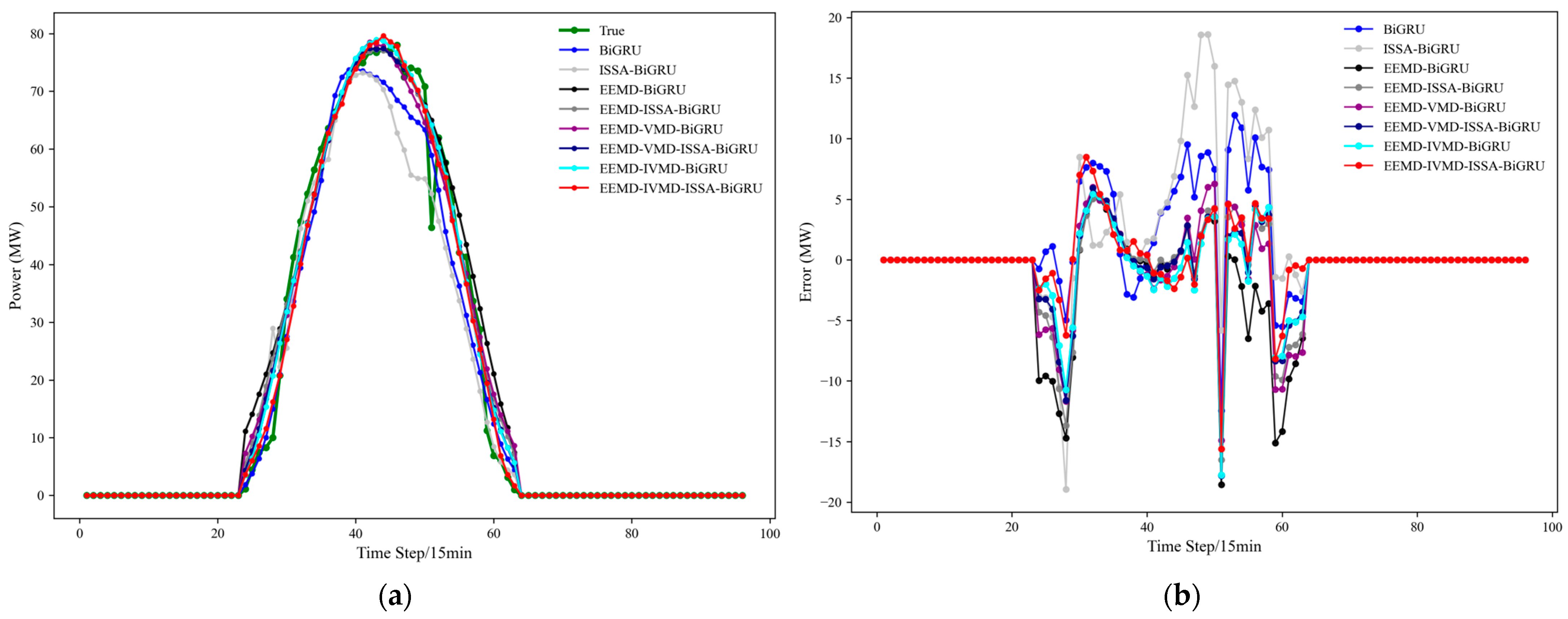
To systematically evaluate the contribution of each module to model performance, multiple ablation experiments were conducted in this study. The performance metrics of different models under various weather conditions are presented in
Table 7, while
Figure 8,
Figure 9 and
Figure 10 illustrate the prediction results and corresponding error curves for rainy, cloudy, and sunny scenarios. As shown in
Table 7, when only ISSA optimization was introduced, the error metrics under all weather conditions exhibited slight improvements, indicating that global parameter optimization can enhance convergence quality and prediction stability to a certain extent. However, the overall improvement was limited, indicating that single-parameter optimization is insufficient to fundamentally enhance the model’s capability in modeling strongly non-stationary sequences. In contrast, incorporating EEMD decomposition significantly improved model performance, with more pronounced gains observed under highly variable conditions such as rainy days, demonstrating the critical role of signal decomposition in alleviating the non-stationarity of photovoltaic power series. Further integrating ISSA optimization led to additional reductions in error metrics, reflecting a synergistic effect between the decomposition strategy and parameter optimization.
Further comparison of the decomposition structures reveals that multi-stage decomposition outperforms single-stage decomposition overall. By performing secondary decomposition on the residual sequence and integrating optimization mechanisms, the model demonstrates more stable error control across different weather conditions, with more pronounced advantages under highly volatile scenarios, indicating that refined processing of high-frequency disturbance components enhances the modeling of complex dynamic features. Compared with the original BiGRU model, the proposed EEMD-IVMD-ISSA-BiGRU reduces the MAE from 3.9469, 3.3152, and 3.5052 to 1.3804, 2.0465, and 1.4770 under sunny, cloudy, and rainy conditions, respectively; the RMSE decreases from 7.7936, 6.4867, and 8.3067 to 2.9468, 4.7888, and 3.5797; and the R2 increases from 0.9039, 0.9489, and 0.4685 to 0.9863, 0.9720, and 0.9002, demonstrating superior prediction accuracy and stability across different meteorological scenarios.
The performance differences among the models exhibit clear scene dependency under different weather conditions. This study utilizes one year of photovoltaic operational data from Macheng, Hubei Province, which is characterized by a typical subtropical monsoon climate with distinct seasonal transitions and frequent cloud variability. Under sunny conditions, all models achieve relatively high R2 values, indicating that the baseline model can adequately capture the power curve when irradiance varies smoothly, and that multi-stage decomposition and optimization mainly refine prediction errors. In contrast, under highly variable conditions such as cloudy and rainy weather, the performance gap widens significantly; in particular, the R2 of the baseline BiGRU under rainy conditions is only 0.4685, whereas the proposed model achieves 0.9002, highlighting the effectiveness of structural enhancements in dynamically changing environments. Therefore, from a practical application perspective, the proposed model demonstrates greater advantages in highly variable and intermittent environments, while the marginal gain under stable operating conditions remains limited.
In addition, the ablation experiments reveal that stacking all improvement strategies does not necessarily lead to linear performance gains. First, when only a single optimization algorithm was introduced without incorporating a decomposition structure, the overall improvement remained limited, suggesting that parameter-level optimization cannot compensate for insufficient sequence decomposition. Second, in certain experimental configurations, increasing the decomposition levels did not consistently improve prediction performance, indicating a diminishing-return effect in multi-stage decomposition strategies. These findings suggest that the effectiveness of the proposed framework depends on the proper coordination between decomposition structures and optimization strategies, and that blindly stacking modules does not ensure sustained performance improvement.
5. Conclusions
This study proposes an EEMD-IVMD-ISSA-BiGRU short-term photovoltaic power forecasting model that integrates signal decomposition and parameter optimization. By incorporating a meteorological feature-based weather classification strategy, adaptive modeling of photovoltaic power fluctuation characteristics under different meteorological conditions is achieved. Multiple models are employed for analysis and validation, leading to the following conclusions:
A systematic forecasting framework for short-term photovoltaic power prediction is constructed, in which different types of uncertainties in the forecasting process are addressed step by step, forming a clear modeling pathway. First, a weather classification strategy is introduced to divide the samples into clear, cloudy, and rainy categories, thereby reducing meteorological heterogeneity among samples. This enables the model to learn power variation patterns under relatively homogeneous meteorological scenarios, thereby effectively mitigating uncertainties caused by data distribution differences and abrupt weather changes. Second, EEMD is employed to perform an initial decomposition of the time series to reconstruct its structure and weaken the interference of non-stationarity and severe fluctuations on the model learning process. Under clear-sky conditions, the MAE decreases from 3.9469 to 2.7519, and the RMSE decreases from 7.7936 to 5.4165. On this basis, an IWOA-optimized VMD is introduced to perform secondary decomposition of the residual component, resulting in a further reduction in the MAE to 1.9025 and the RMSE to 3.8500. Finally, ISSA is used to optimize the parameters of the BiGRU model, enhancing the modeling stability of the time-series model under different meteorological conditions. As a result, the EEMD-ISSA-BiGRU-IVMD model achieves MAE values of 1.3804, 2.0465, and 1.4770 under clear, cloudy, and rainy conditions, respectively, with corresponding RMSE values of 2.9468, 4.7888, and 3.5797, and R2 values increasing to 0.9863, 0.9720, and 0.9002, respectively. Compared with the best-performing conventional BiGRU model, the MAE is reduced by 2.5665, 1.2687, and 2.0282 under the three weather conditions, respectively, and the RMSE is reduced by 4.8468, 1.6979, and 4.7270, respectively, while the R2 values are significantly improved. The synergistic effects of the above strategies enable the model to maintain relatively consistent forecasting performance under complex meteorological conditions, significantly improving the accuracy and stability of photovoltaic power prediction, and providing a modeling approach with good generalization capability for short-term photovoltaic power forecasting.
Although the proposed method achieves good performance in terms of prediction accuracy and stability, it still has certain limitations. On the one hand, the multi-layer signal decomposition and heuristic optimization processes increase the computational complexity of the model, leaving room for further optimization when applied to large-scale datasets. On the other hand, the model exhibits a certain dependence on the quality of meteorological feature data, and model performance may be affected when key meteorological variables are insufficiently represented or subject to large errors. Future research will focus on introducing joint calibration methods using actual meteorological observations, such as ground-based measured meteorological data, and combining model structure simplification with computational acceleration strategies, to further enhance the practical applicability of the model while maintaining prediction accuracy.




 ,
,