1. Introduction
Climate justice is a rapidly growing grassroots movement that seeks to understand the “disproportionate impacts of climate change on low-income and BIPOC communities across the world”—those who are often “least responsible for the climate crisis” [
1]. As a key driver of sustainable development, climate justice plays an essential role in redistributing power to those most affected by and most vulnerable to climate change [
2]. Because integrating environmental and climate justice “socially and academically” can empower individuals from “marginalized backgrounds and/or cultures” [
3] (p. 284), education is central to this work, serving as a “fundamental pillar” of a “sustainable future” [
4] (p. 2). While both environmental justice and climate justice address inequities in environmental impacts, environmental justice focuses more on fair treatment in environmental regulation, whereas climate justice emphasizes the historical, ethical and social dimensions of climate change causes and responses.
However, despite its importance, climate justice remains largely absent from mainstream American higher education curricula [
5,
6,
7]. In both K–12 and higher education contexts, climate change is often framed narrowly as a “scientific problem” with a “technological fix” rather than as an issue rooted in “underlying societal and economic structures” [
8] (p. 5). This lack of climate and environmental justice content persists throughout the U.S. education system. At the K–12 level, as of 2007, only about “3.5% of materials contained explicit environmental justice content” [
9] (p. 398). Moreover, even when climate change is taught, instruction frequently prioritizes individual actions—such as recycling or conserving energy—over systemic change, due partly to the influence of “fossil fuel interests” in educational materials [
10] (p. 459).
Though there has been recent progress, it remains uneven. For example, in New Jersey, where climate education is mandated, most students report familiarity with environmental justice concepts [
4] (p. 10). Yet, as of 2022, only New Jersey and Indiana had state curricular standards explicitly incorporating “justice-oriented content in relation to climate change” [
11] (p. 33).
Consequently, students entering higher education often exhibit significant disparities in environmental justice knowledge. Many college students have “little to no first-hand experience … to understand the realities being discussed by environmental justice scholars” [
12] (p. 3). Environmental issues in college curricula are commonly presented through the lens of “environmental sustainability” rather than “environmental justice” [
6] (p. 920). Within STEM fields, climate justice integration is particularly limited. At the University of Vermont, for example, only 17% of sustainability-related STEM courses included environmental justice content [
5]. In addition, students often view environmental issues through a “scientific measurement and research,” rather than “sociopolitical,” framework [
5]. White and Western perspectives dominate these contexts, with low “representation of students and faculty of color in environmental programs” [
5]. Generally, students from historically underrepresented communities report a weaker sense of belonging and inclusion on college and university campuses, as their lived experiences are rarely reflected in the curriculum [
7]. This lack of exposure leaves students underprepared to address the social inequities intertwined with climate change, such as the siting of polluting industries near low-income neighborhoods or the disproportionate impacts of urban heat waves.
To mitigate these persistent gaps, educators have explored a number of strategies, including faculty workshops, professional development, funding opportunities, and curricular resources. However, many instructors lack the time, expertise, or institutional support to meaningfully integrate climate justice into their teaching. To address these limitations, the Climate Justice Instructional Toolkit (CJIT) was developed as a flexible resource to help educators incorporate climate and environmental justice into a wide range of disciplines. Designed initially for MIT students and faculty, the CJIT is suitable for use in advanced secondary and postsecondary contexts, including Advanced Placement courses. It offers adaptable, interdisciplinary materials, case studies, and faculty perspectives to support active learning and inclusive teaching.
The goal of this study was to evaluate the ability of OERs to facilitate the integration of climate justice into their teaching by determining the effectiveness of the CJIT and examining how postsecondary instructors, K–12 teachers, and students engaged with and applied the toolkit. Specifically, we drew data from surveys and reviews collected across multiple educational contexts to assess the toolkit’s utility, adaptability, and potential to advance climate justice education.
2. Climate Justice Instructional Toolkit
As an Open Educational Resource (OER), the primary goal of the CJIT is to provide accessible, scalable, and adaptable support to postsecondary faculty and instructors across disciplines to facilitate the integration of climate justice content and instructional approaches into their courses. An open format for the CJIT was chosen based on prior research that demonstrates the success of OERs in aiding instructors with enhancing student experiences and exploration [
13,
14]. Though the CJIT was designed with MIT undergraduate instructors and students as its primary audience, the toolkit is freely available for public use through MIT Open Courseware, a trailblazer in OERs with 300 million lifetime visits. In addition, the resources can be adapted for other levels of education, including K–12, where the need for “science-based educational curricula to discredit false narratives of anti-climate change media” [
4] (p. 2) has become more apparent than ever. Ultimately, the CJIT, as an OER, aims to provide a free, and open resource to support instructors in experimenting with climate justice instruction across institutional and disciplinary contexts.
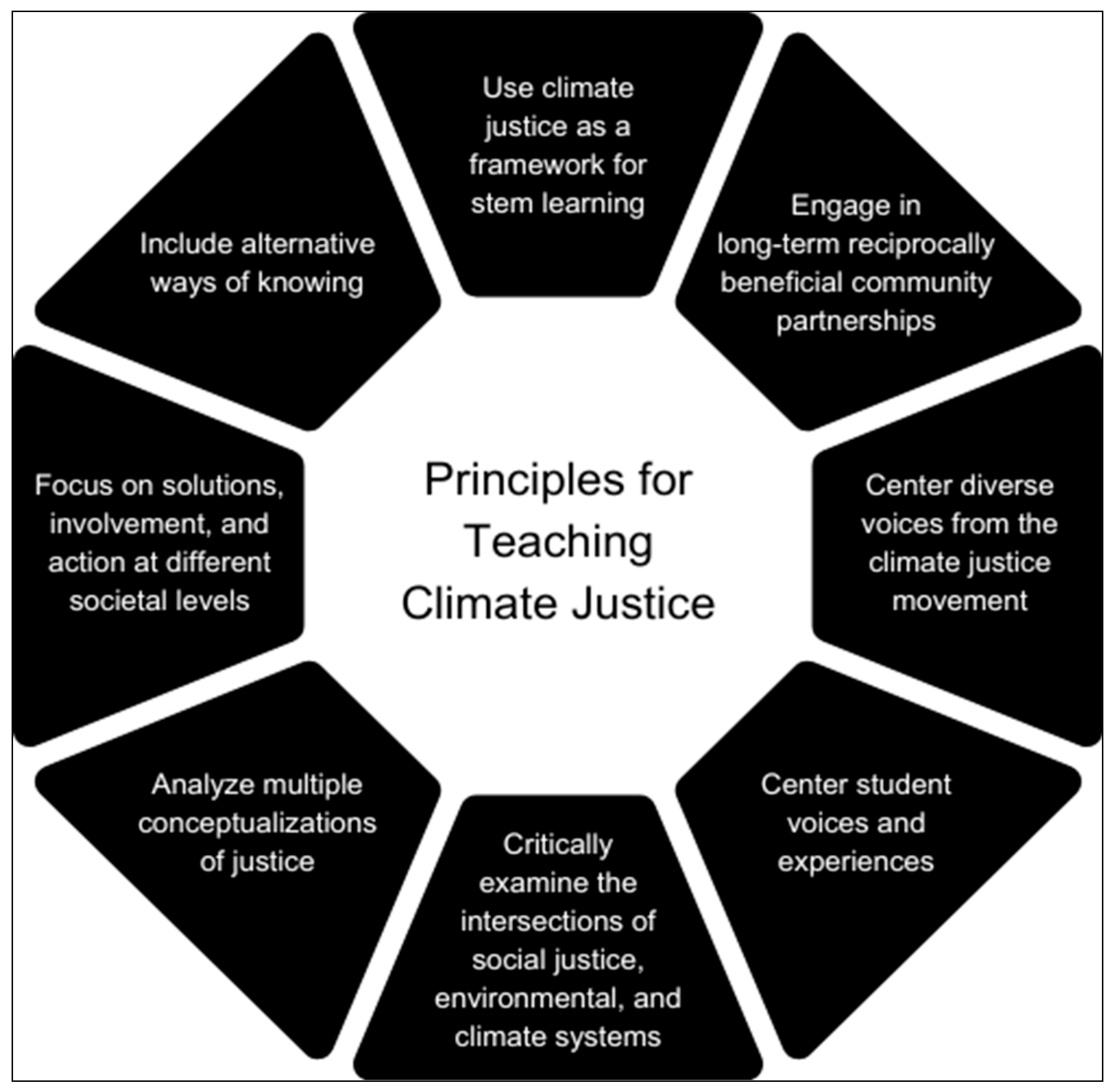
Co-constructed with undergraduate students, the CJIT comprises 11 climate-justice-adaptable teaching modules as well as a starter guide for teaching climate justice, resources for students and instructors, comprehensive instructor guides, and climate justice datasets. The starter guide is a particularly important resource, as it includes eight principles for teaching climate justice (see
Figure 1), general teaching tools and tips, strategies for teaching climate justice, and research on climate justice education and community-engaged teaching, action, and mental health. The starter guide and the eight principles of teaching climate justice were informed by the literature on climate justice education, including Bartlett et al. [
15], Cachelin and Nicolosi [
16], Coleman and Gould [
5], Doucette et al. [
17], Garibay et al. [
6], Garibay and Vincent [
18], Johnson and Wilkinson [
19], Kaza [
20], LaChance et al. [
21], Ladson-Billings [
22], Maina-Okori et al. [
23], Mitchell [
24], Mohai et al. [
25], Morales-Doyle [
26], Newberry and Trujillo [
27], Paris and Alim [
28], Pihkala [
29], Quan [
30], Rabe [
31,
32], Raine [
33], Ray [
34], Robinson and Carlson [
35], Schlosberg [
36], Sultana [
37], and Temper and Del Bene [
38].
Through its digital, open format and programming, which includes guest lectures, info sessions, and a workshop series entitled “Teaching Climate Justice Across the Curriculum,” the CJIT serves as a means for building communities engaged in climate justice education. The CJIT also aims to promote diversity within STEM fields by equipping students with the mindset and skills needed to engage actively in their communities.
Table 1 displays the full list of CJIT resources and programming.
3. Materials and Methods
To evaluate the uptake and effectiveness of the CJIT, we gathered data from instructors, students, and others who used the CJIT through a feedback survey as well as end-of-semester reflections from students who had taken a CJIT-designed course. A total of 76 responses were gathered. Of the 76 survey respondents, 39 were students, 22 were K–12 teachers, seven were administrators or staff, three were postsecondary instructors or lecturers, two were tenure-track postsecondary faculty, one was a curriculum developer, and one classified themselves as “other.” Primarily utilizing a multiple-choice format, the survey gathered information related to basic demographics to better understand who used the CJIT, the resources the respondent used and how, and respondents’ perceptions of the CJIT. Questions specific to higher education instructors, students, and K–12 teachers were organized into different sections within the survey, and respondents were directed to only respond to questions that applied to them and their role. The survey also included opportunities for respondents to share any additional comments, suggestions, or feedback in an open-ended format.
Appendix A lists the questions posed by the feedback survey.
For this study, we examined survey responses collected from the launch of the CJIT in October 2023 to 15 May 2024, and student reflections gathered in May 2024. The survey was administered directly to instructors who had used the CJIT or expressed interest in using the CJIT and to students participating in courses whose instructors had utilized the CJIT to design part or, in one case, all of the curriculum. The survey was also shared at conferences, guest lectures, workshops, and other promotional events at which the CJIT was discussed and promoted. In addition, the survey is permanently linked on the CJIT’s webpage for anyone to fill out at their own discretion. For this study, feedback on the CJIT was voluntary.
For our analysis, we employed a mixed methodology, combining quantitative survey data with qualitative data collected from both the survey and the student reflections. Initially, we analyzed survey responses by organizing the survey questions and their corresponding responses into three main categories: demographics, CJIT usage, and CJIT effectiveness. Traditional quantitative analysis was used for numerical and categorical survey data and qualitative coding techniques were used for analyzing the free response survey data. This analysis revealed general findings regarding the use and effectiveness of the CJIT. Using the same combination of quantitative and qualitative analysis, we then separately analyzed the survey responses from the students who had taken part in the course designed entirely using the CJIT and analyzed their end-of-semester reflections to reveal the effectiveness of the CJIT for full course design. Lastly, we also separately analyzed the survey responses from the K–12 teachers to examine the adaptability and effectiveness of the CJIT in a K–12 context.
4. Results and Discussion
In this section, we first review and discuss general findings from the survey data about the demographics of CJIT users, how the CJIT was used, and how users perceived the toolkit’s effectiveness. Second, we discuss the findings that emerged from data collected from students who had engaged in a fully CJIT-designed course. Third, we explore the data gathered from K–12 instructors, focusing on their perceptions of the CJIT’s effectiveness in a K–12 context. Finally, we consider what the data reveal about the challenges of implementing the CJIT.
4.1. General Use of and Experience with the CJIT by Instructors and Students
Most of the survey data be split into three categories based on their content and significance to the study: demographics, CJIT usage, and CJIT effectiveness. The demographic data offered a summary of who had used or shown interest in the CJIT; the usage data showed why, how, and to what extent the CJIT was used; and the effectiveness data revealed users’ perceptions of the effectiveness of the toolkit. The survey included two open-ended questions, responses to which were mined for quotes from the three main types of CJIT user—college-level instructors, students, and K–12 teachers—representing the three most common perceptions of the CJIT: those who thought it was effective, those who gave mixed reviews, and those who offered critiques.
4.1.1. Demographic Data
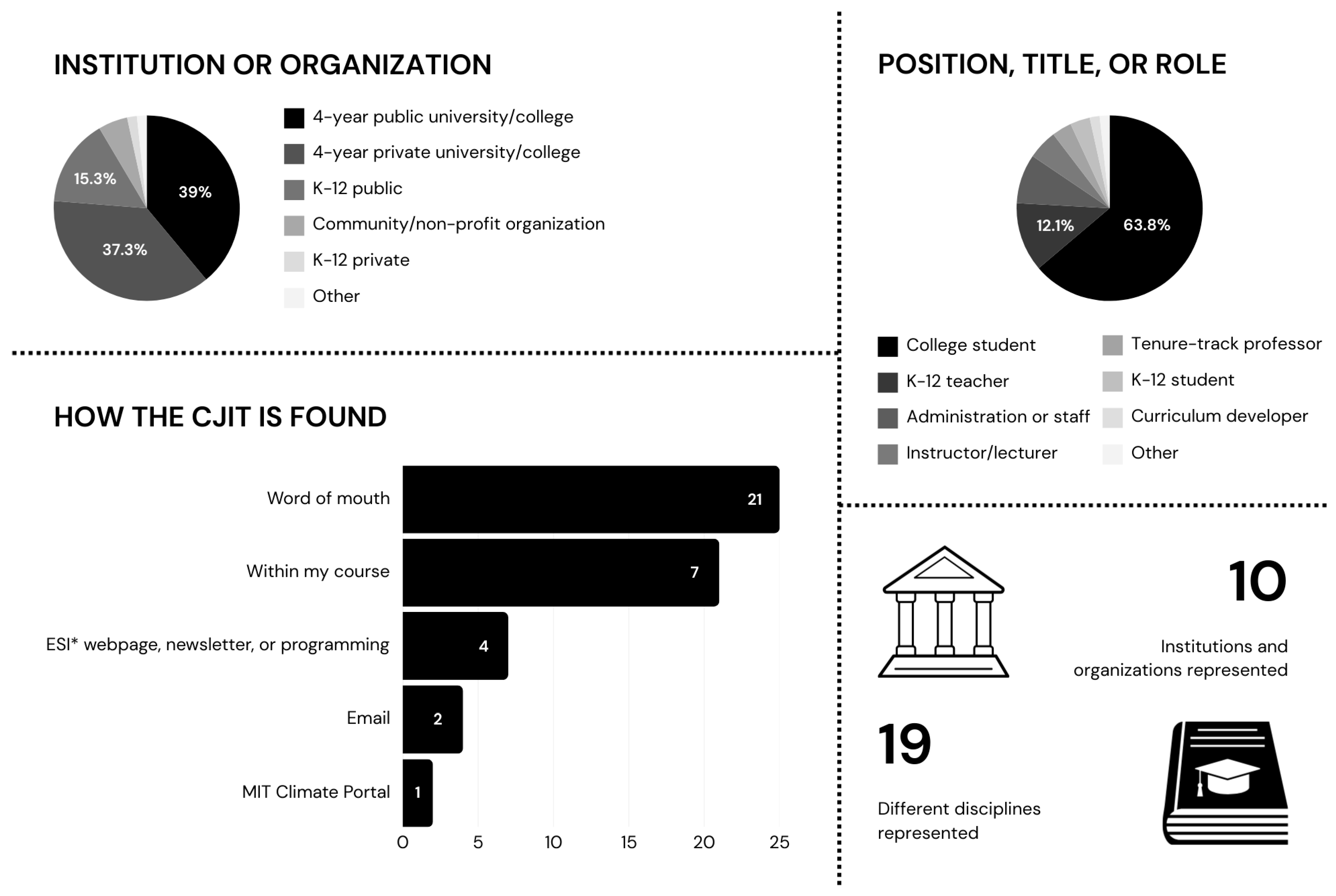
Figure 2 summarizes the demographic information of the survey respondents, who had used or shown interest in the CJIT.
The majority of the 76 survey respondents were affiliated with higher education institutions, with 39% belonging to 4-year public universities or colleges and 37.3% belonging to 4-year private universities or colleges. Another significant portion of the respondents, 15.3%, were affiliated with public K–12 schools, three (8.5%) represented a community or nonprofit organization, one was affiliated with a private K–12 school, and one classified their institution or organization as “other”. An overwhelming majority of the respondents, 63.8%, were college students, while 12.1% were K–12 teachers, due largely to the two K–12 education conferences at which the CJIT was presented via workshops during the study period. College-level instructors (i.e., instructors, lecturers, and tenure-track faculty) and higher education administrators or staff each made up 8.6% of respondents.
Of the college-level instructors, 5.2% were instructors or lecturers, and 3.4% were tenure-track faculty. One respondent identified themselves as a curriculum developer, and one selected “other.” In total, survey respondents represented 10 different institutions and organizations and 19 different disciplines. Additionally, the data revealed that most of the respondents had learned about the CJIT by word of mouth, within a course they were taking, or via the Environmental Solutions Initiative’s (ESI) webpage, newsletter, or programming. This was expected, considering that the CJIT was promoted in classes, at academic conferences, and as a part of the CJIT’s programming. Only three respondents had discovered the CJIT through other means: two from an email and one through the MIT Climate Portal.
4.1.2. Usage
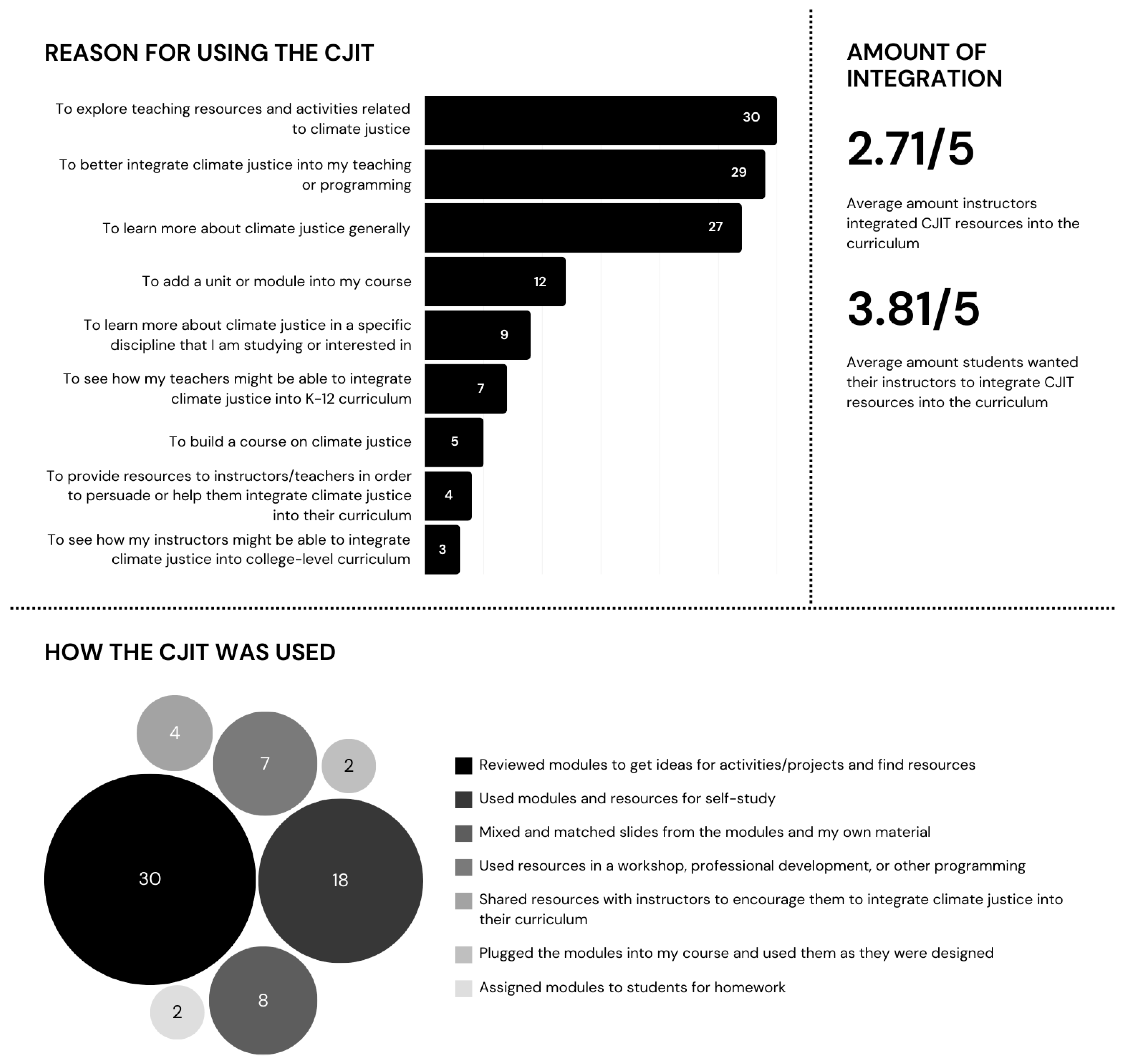
Figure 3 summarizes why, how, and to what extent the CJIT had been used by the survey respondents.
The most common reasons why respondents sought climate justice teaching resources were to explore resources and activities related to climate justice education, to better integrate climate justice into their teaching or programming, and to learn more about climate justice generally. The least common reasons included designing a course on climate justice, providing resources to instructors or teachers to persuade or help them to integrate climate justice into their curriculum, and determining how instructors might integrate climate justice into college-level curriculum. The most common uses of the CJIT included generating ideas for activities or projects, finding resources, and self-study. The least common uses were sharing toolkit materials with instructors to encourage them to integrate climate justice into their curriculum, incorporating the modules into courses and using them as they were designed, and assigning the modules to students for homework. These results are consistent with prior research on the use of open education resources (OERs) in higher education that found that OERs are often used as a source of inspiration when adapting course content and materials [
13,
14,
39]. In addition, on a scale from 1 to 5, with 1 being not at all effective and 5 being highly effective, instructors ranked the extent to which they integrated the CJIT into their courses and curriculum at an average of 2.7, while students ranked the extent to which they wanted their instructors to do so 1.2 points higher, at an average of 3.9. This suggests a mismatch between instructor interest and student demand and points to a need to better understand this dynamic.
4.1.3. Effectiveness
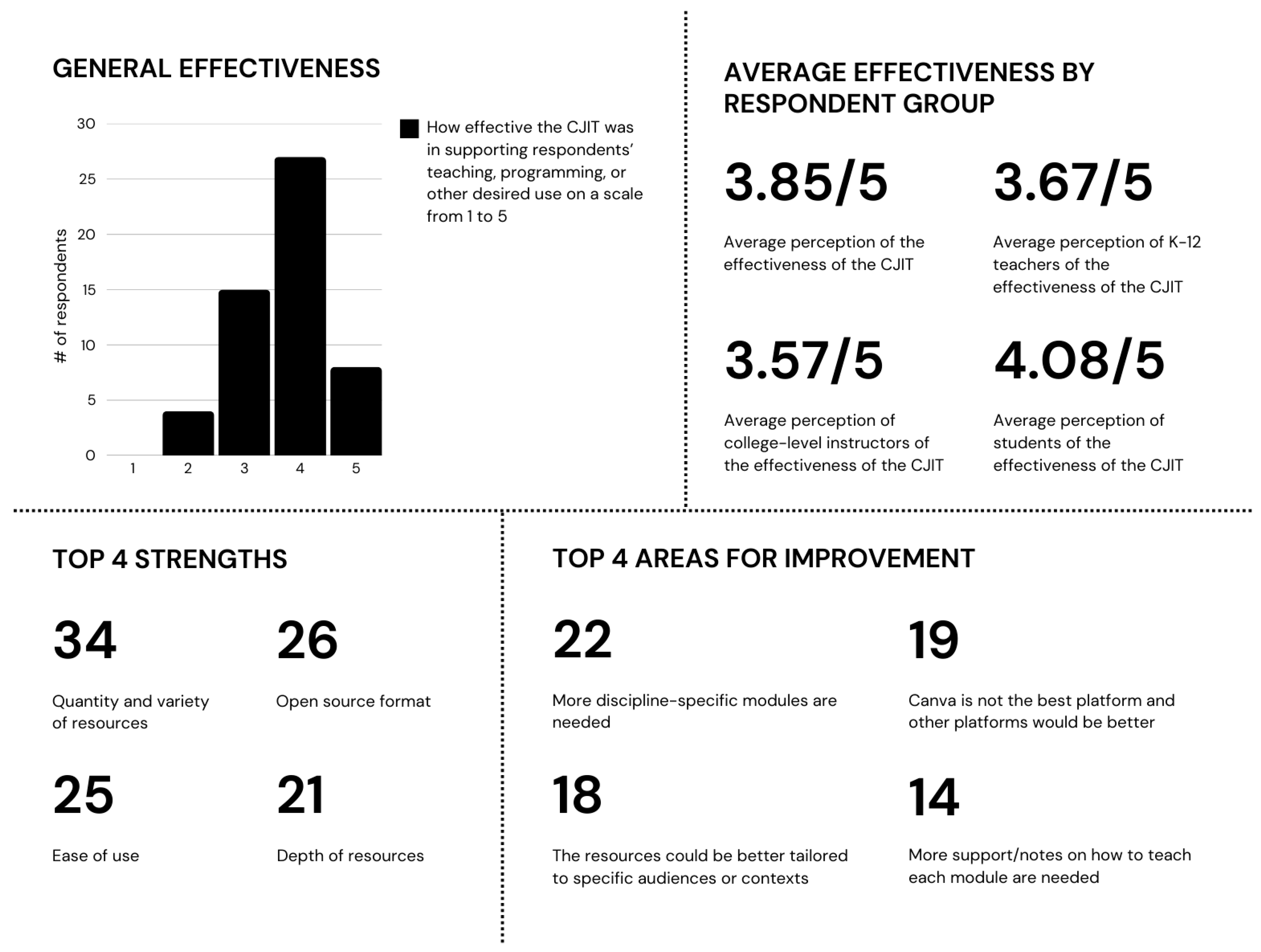
Figure 4 summarizes survey respondents’ perceptions of the effectiveness of the CJIT.
When asked to rank the effectiveness of the CJIT on a scale from 1 to 5, the average ranking among all 76 respondents was 3.85. For college instructors, the average was 3.57, and for students, the average was 4.08. On the same scale, K–12 teachers ranked the effectiveness of the CJIT at 3.67. According to respondents, the most useful aspects of the CJIT included the quantity and variety of resources, the open-source format, the ease of use, and the depth of resources. Conversely, respondents identified ways the CJIT could be improved, with the most common recommendation including adding discipline-specific modules, using a platform other than Canva for the modules, better tailoring the resources to specific audiences or contexts, and providing additional support or notes on how to teach each module.
While the survey data certainly highlight respondents’ perceptions of the CJIT, the quotes from individuals who had used or reviewed the CJIT are equally illustrative.
Table 2 includes nine quotations from the 32 survey respondents who did not participate in a CJIT-designed course and who were not K–12 teachers or students. These quotes were sourced from the two open-ended questions included in the survey, one that asked respondents to describe the reasoning for their rating of the CJIT’s effectiveness, and the other that asked what additional comments, suggestions, or feedback they had regarding the CJIT. Based on the responses to these two questions, three main perceptions of the CJIT’s effectiveness emerged: (1) The CJIT is effective, (2) the CJIT is adequate, and (3) the CJIT needs improvement. The quotes in
Table 2 are organized by these three perceptions.
Within the sample of instructors, staff, and students at 4-year colleges and/or universities, the perception of the CJIT was largely positive, with the main benefit being the adaptability of the CJIT for a variety of different audiences. Since students vary significantly in learning styles, experiences, and cultural backgrounds, adaptability is a consistent marker in the success of a curriculum. As outlined by a study of MIT AI curriculum, teachers determined that a curriculum that is “flexible… to varied classroom contexts” is critical to “success and long term sustainability” [
40] (p. 6882). Another key factor in the longevity of a curriculum, as well as success in battling climate inequities, is successful engagement between students and their communities. Often, “community engaged work is recognized as a high-impact practice in higher education” [
41] (p. 85); however, some survey respondents in our study believed the CJIT needed to be revised to further address sociopolitical components of Indigenous communities. Historically, and presently still, environmental justice frameworks “[do] not sufficiently take into account the influence of settler colonialism on Indigenous peoples” [
42] (p. 62). Due to its focus on mitigation and sustainable practices rather than technological adaptation, Indigenous environmental knowledge and history is critical to successfully addressing issues of climate and environmental justice [
43]. Thus, environmental justice discussion must be adapted to “recognise Indigenous sovereignties, cultures, and identities through Indigenous ontologies and epistemologies” [
42] (p. 39). Respondents also recommended that the CJIT be modified to better hold privileged groups accountable for their role in the climate crisis. Global wealth inequities fuel carbon emissions: It is estimated that the wealthiest individuals across a sampling of 200 countries account for nearly 20% of carbon dioxide emissions [
44].
4.2. Using CJIT for Full Course Design
Twenty-one of the 76 survey respondents were students who had participated in a semester-long course designed entirely using the CJIT. This section discusses the survey responses and end-of-semester reflections of these 21 students to better understand how the CJIT can be used for full course design.
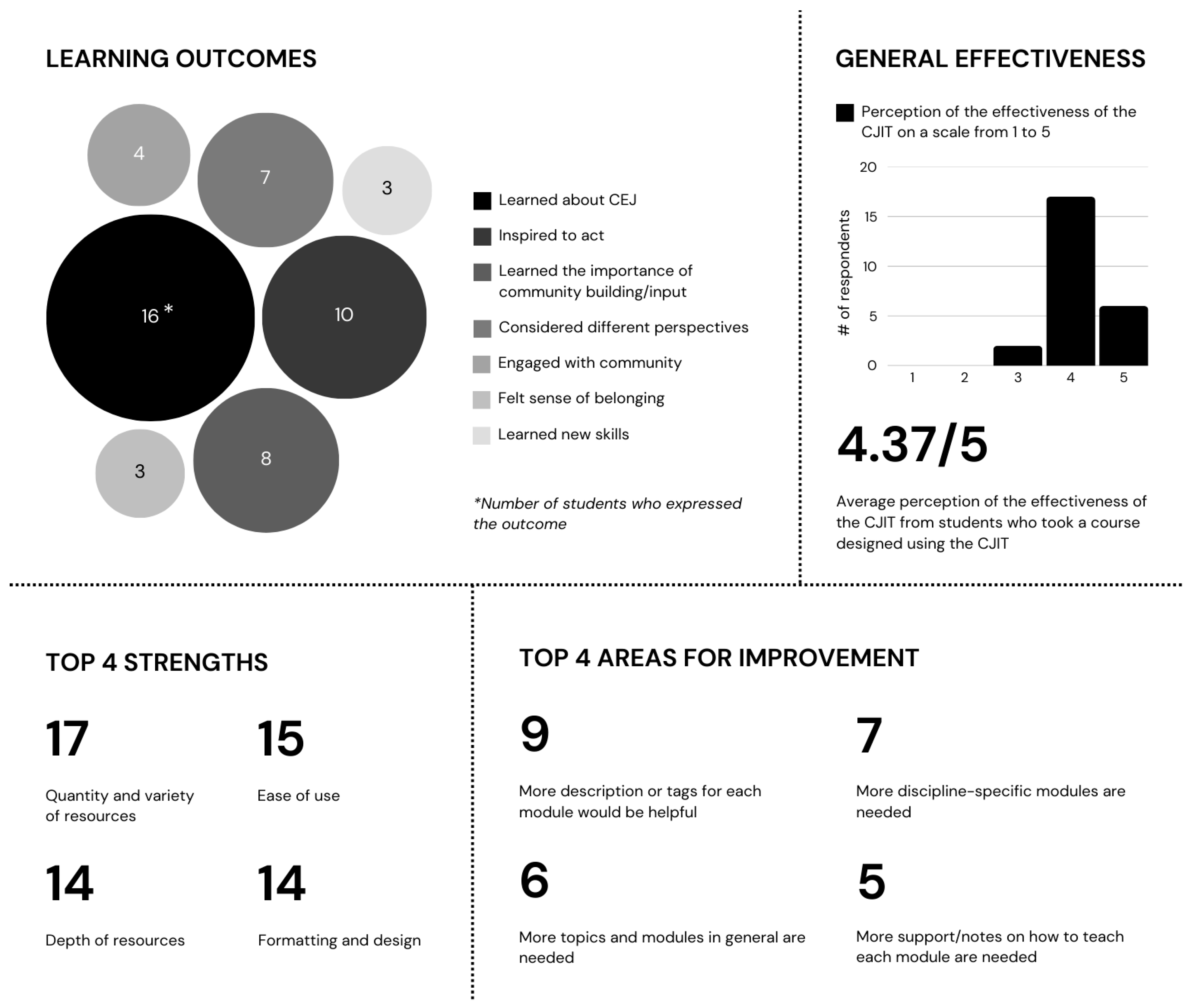
Figure 5 summarizes students’ learning outcomes based on a qualitative coding of their end-of-semester reflections. The figure also includes the students’ perceptions of the effectiveness of the CJIT and its strengths and areas for improvement, which were gathered from their survey responses.
Based on the students’ reflections, the CJIT-designed course yielded seven learning outcomes: 16 of the 21 students expressed that they learned more about climate and environmental justice; 10 felt inspired to act; eight learned the importance of community building and input; seven considered different perspectives than they had before the course; four engaged with their communities; three felt a sense of belonging; and three learned new skills. Based on the survey data, the average perception of the CJIT’s effectiveness from students who participated in a course designed entirely using the CJIT was 4.37 (out of 5), which was 0.29 points above the general average perception from all students of 3.85. This suggests that engaging more deeply with the CJIT in a classroom setting might result in better perceptions of its effectiveness. The students in the course identified the quantity and variety of resources, ease of use, depth of resources, formatting and design, selection of modules, and open-source format as the CJIT’s top six strengths. Conversely, students identified the following top six ways that the CJIT could be improved: adding more description or tags to each module, adding more discipline-specific modules, adding more topics and modules in general, providing more support/notes on how to teach each module, better tailoring the resources to specific audiences or contexts, and adding more resources to each module.
While the preceding figure includes helpful insights into students’ experiences using the CJIT for full course design, it is also important to examine students’ end-of-semester reflections to better measure the impact of using the CJIT for full course design.
Table 3 provides quotations from the end-of-semester reflections describing student perceptions of the CJIT. These quotes are organized into the same three perception categories used in
Table 2.
Within the sample of students who took a course designed entirely using the CJIT, the perception of the CJIT was largely positive. Most students agreed that the CJIT was a useful aid in non- environmental-justice classes and provided a solid basis for learning about climate justice, which is largely absent from mainstream curricula and is most beneficial when incorporated into multidisciplinary contexts [
45]. In STEM contexts, curricula utilizing a climate justice approach “brings meaning to seemingly abstract and disparate STEM knowledge” and “broadens the participation of women and racial and ethnic groups that have been historically underrepresented in STEM fields” [
17] (p. 8). However, students indicated that the modules would benefit from updates on policy initiatives and from greater focus on the downsides of such initiatives. Learning from policy shortfalls can better equip students to address climate justice in the future, helping them to set “meaningful expectations regarding policy change” and to understand the complex and systemic forces that shape policy decisions and failures [
46] (p. 3). Similarly to the instructor responses in
Table 2, students expressed that the CJIT would benefit from a more solutions-based framework as well as increased inclusion of Indigenous environmental justice topics. Regarding the need for a greater emphasis on solutions, the CJIT’s new discipline-specific modules (see
Section 4.4.3) attempt to provide students not only with more information about how STEM disciplines relate to climate justice, but also how they can be used to address issues of climate justice.
4.3. Exploring the Use of CJIT in K–12 Through Workshops
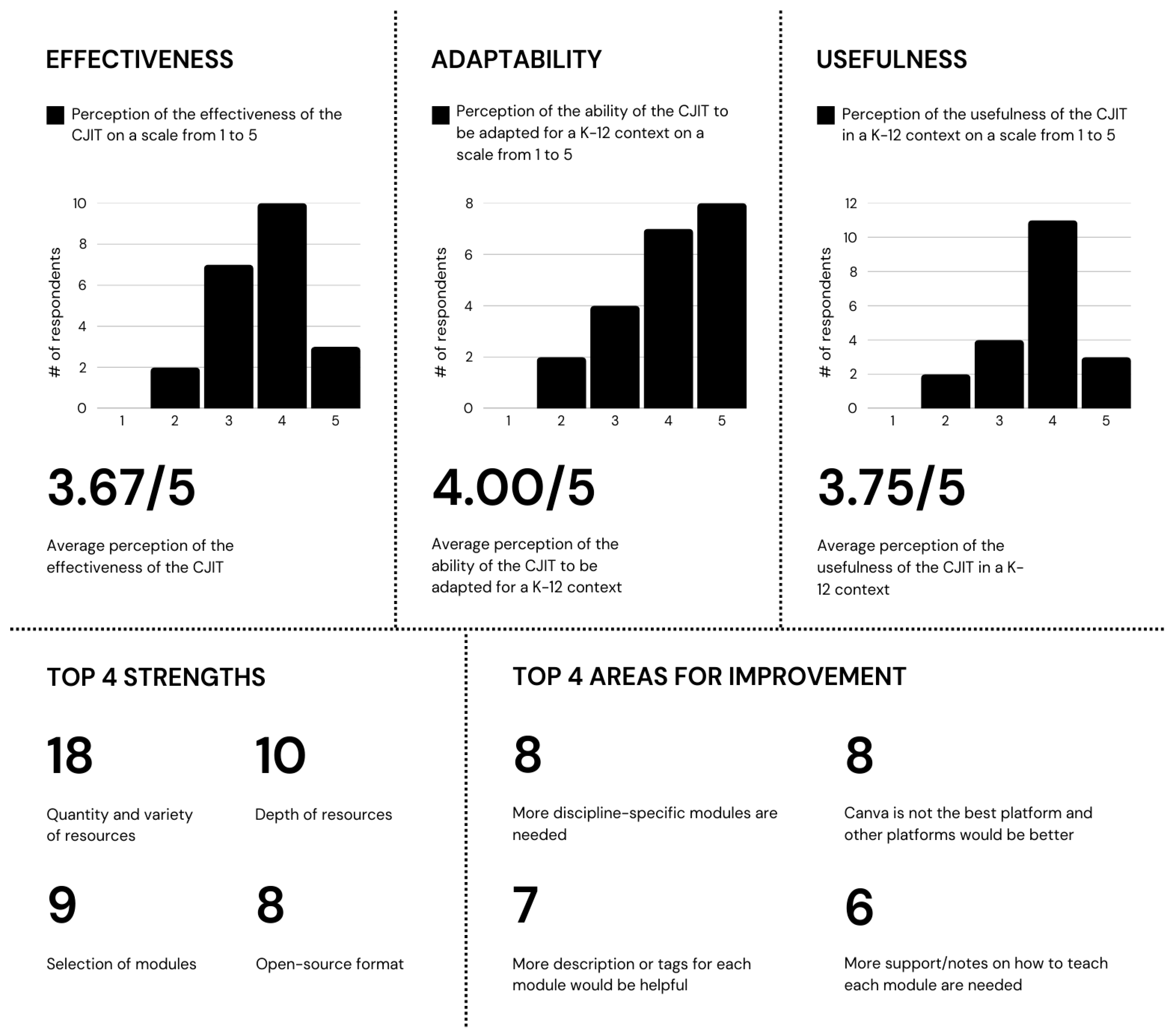
Figure 6 summarizes the K–12 teachers’ perceptions of the CJIT’s effectiveness and adaptability for and usefulness in a K–12 context. The figure also summarizes the K–12 teachers’ top four perceived strengths and areas for improvement of the CJIT.
Twenty-two of the 76 survey respondents were K–12 teachers. According to their survey responses, they rated the general effectiveness of the CJIT at 3.76 (out of 5), on average. More specifically, they rated the adaptability of the CJIT for a K–12 context at 4.00 and the usefulness of the CJIT in a K–12 context at 3.75. Furthermore, the K–12 teachers identified the quantity and variety of resources, the depth of resources, the selection of modules, and the open-source format as the CJIT’s top four strengths. Conversely, they identified adding more discipline specific modules, using a platform other than Canva, adding more description or tags for each module, and providing more support/notes on how to teach each module as the top four ways that the CJIT could be improved.
Though the survey data revealed significant insights into K–12 teachers’ perceptions of the effectiveness of the CJIT in a K–12 context, specific quotations from open-ended responses offer a more well-rounded understanding of how the CJIT can be used in a K–12 context and what changes would make it more accessible for K–12 teachers.
Table 4 includes nine quotes from the 22 survey respondents who identified themselves as K–12 teachers. These quotes were sourced from the two open-ended questions included in the survey, one that asked respondents to describe the reasoning for their rating of the CJIT’s effectiveness and the other that asked what other comments, suggestions, or feedback they had regarding the CJIT. The quotes in
Table 4 are organized by the same three perception categories used in
Table 2 and
Table 3.
According to K–12 teachers, the effectiveness of the CJIT was mixed. Public K–12 teachers agreed generally that the resources within the CJIT were useful and cited adaptability as the toolkit’s most significant benefit. We posit that, for K–12 teachers bound by district- and state-level curriculum, the CJIT’s modularity perhaps offers a viable, incremental way for them to integrate climate justice concepts like urban heat islands and e-waste into their classroom, even in districts where explicit discussions of equity and justice have been limited or scrutinized. However, K–12 teachers also indicated a need for increased organization of CJIT modules. Traditionally, K–12 curricula are sorted into separate disciplines like science, mathematics, and language arts [
47]; therefore, organization of CJIT modules according to these disciplines may help increase implementation at the K–12 level. In addition, middle school teachers regarded the CJIT as less effective. This stems largely from middle-school-aged students being in the “concrete operational stage,” in which they may struggle to comprehend hypothetical or abstract issues [
48]. High school students, on the other hand, occupy the “formal operational stage,” during which they develop the ability to comprehend such issues [
49]. Thus, high school students and beyond may be better prepared to engage more effectively with the content of the CJIT and to participate in more nuanced discussions and analyses of climate justice. This supports the CJIT’s focus on older audiences.
4.4. Limitations, Implications, and Future Work
4.4.1. Limitations
Although these findings provide new knowledge related to the uptake and effectiveness of the Climate Justice Instructional Toolkit, the study had several limitations. First, survey data were collected from a variety of users, including faculty members who used the toolkit to complete the survey, students in CJIT-designed courses, random users who found the CJIT online, and participants in CJIT-related workshops. Many participants were recruited through networks that likely shared overlapping commitments to equity and justice. Therefore, because this study relied on voluntary participation, it likely attracted instructors who were already interested in climate justice values, and thus provides little insight into how to attract individuals with little to no experience in climate justice. This likely skewed data on barriers to adoption and implementation. In addition, our total sample size was relatively small, making it difficult to draw broad conclusions across a variety of disciplines or institutions. Another potential limitation to data collection was researcher-participant bias. During workshop or classroom survey collection, a researcher or instructor was present. This may have led to social desirability response bias, whereby participants will agree to “items regardless of content” [
50] (p. 1), meaning they will be much more likely to respond positively in a survey. This bias may have encouraged participants to overstate their level of engagement with the CJIT to support the project.
Another limitation of this study was the gap between instructors’ initial interest in the CJIT and their actual implementation of the tool in their teaching. While some instructors attended workshops and expressed enthusiasm about applying the CJIT to their specific course content, participation in trainings did not translate into classroom uptake. Consequently, gathering data on actual use of the CJIT in courses was challenging. This discrepancy limited our ability to assess the full impact of the CJIT and suggests that stated intentions may not predict instructional adoption.
Because climate justice is an interdisciplinary field, it is crucial that it is implemented within a variety of disciplines, including humanities, social sciences, and STEM contexts. However, within our study, we did not collect data on disciplinary representation. In the future, gathering such data will help generate insights into how best to implement discipline-specific content.
We also did not collect longitudinal data. Beyond the initial data gathered from workshops, there was no information on whether instructors made lasting changes to their instruction. Furthermore, there were no consistent data collected on the depth of implementation of materials. In the future, pre- and post-implementation assessments should be used to evaluate changes in instructor knowledge or confidence around climate justice pedagogy. We also recommend future longitudinal studies that track the extent to which instructors use the toolkit in the long term after participating in workshops or training sessions, and what specific instructional changes they make.
4.4.2. Implications and Recommendations
This study has important implications for—and we offer recommendations to—three important stakeholders: instructors, students, and institutional leaders. The CJIT provides an accessible entry point for instructors who want to implement climate justice content but lack prior training or the necessary content expertise. The CJIT accomplishes this by using discipline-relevant case studies and structured teaching materials. This encourages more inclusive, socially responsive pedagogy in STEM fields, where knowledge is traditionally perceived as “autonomous and objective” [
51]. For students, exposure to climate justice issues helps them connect scientific and technical content to real-world experiences, particularly those affecting frontline communities, while toolkit materials support this learning by promoting “systems thinking skills, critical consciousness, and civic engagement tools needed to leverage STEM to create societal change and improve their communities” [
17] (p. 8).
Together, these approaches create space for culturally sustaining pedagogies through which students see their identities and values reflected in the curriculum—which aligns with 21st-century educational goals and “broaden(s) the participation of women and racial and ethnic groups” in STEM fields [
17] (p. 8). Such pedagogies support diversity and sustainability goals by embedding justice into the core curriculum, ensuring that equity and inclusion are foundational to student learning across disciplines. The CJIT aspires to serve as a model for cross-departmental and inter-institutional collaboration, showcasing how justice-centered pedagogy can unite diverse academic areas in pursuit of shared values. Broader usage of the CJIT with students may involve implementation within student organizations or societies or within other student-centered educational initiatives on campus. Additionally, future research should include data collection on student outcomes or perceptions over time after long-term implementation of the CJIT.
The CJIT can enhance faculty development by providing practical, flexible, adaptable, and ready-to-use tools that empower educators to tailor content to their specific contexts while maintaining a focus on justice and sustainability. This is similar to other work seeking to build climate justice modules in STEM [
17]. More support for faculty development can be accomplished by integrating the CJIT into existing centers of teaching and learning and innovative pedagogy, offering a replicable model for justice-oriented curriculum. This would serve both new and experienced educators, promoting reflective teaching and equity-focused adaptation. The toolkit encourages interdisciplinary design and aligns with approaches like inquiry-based learning, allowing it to be easily scaled from single lessons to multi-week units. Further research should investigate how curricular resources like the CJIT can blend with professional development projects, how they impact faculty perceptions of CJ broadly, and how they lead (or do not lead) to instructional change at different levels.
4.4.3. Future Work
In 2024, the ESI received additional funding to create new discipline-specific modules for the CJIT (see
Table 5). The new modules focus on the intersection of climate justice and computing, technology, critical data studies, and engineering disciplines to make it easier for faculty and instructors to include climate justice curriculum within STEM-focused institutions, schools, and departments. The modules also aim to provide a stronger emphasis on solutions by providing examples of how STEM can be used to address issues of climate and environmental justice. The modules include Climate Justice and Environmental Data, Computing and Climate Justice, Climate Justice and Socio-Technical Systems, Environmental Justice and Tech Innovation, and Climate Justice and Engineering 2.0. However, future studies are needed to explore how STEM-focused faculty who lack social science or humanities training perceive the implementation of climate-justice-related topics and case studies within their course design.
The new modules included in
Table 5 will help to address two key areas for improvement identified by survey respondents: the need for more discipline-specific resources and a greater emphasis on solutions. Other key areas for improvement, including the inclusion of more Indigenous environmental justice content and improved formatting and organization, can be addressed in many ways. A partnership with Indigenous scholars and activists could greatly improve the quality of the CJIT’s current Indigenous-related content as well as provide avenues for expansion. Furthermore, the conversion of the modules to a more user-friendly file format (i.e., pptx) and the use of “tagging” the metadata for the CJIT’s resources based on discipline, time required to complete, and level of difficulty could positively address key barriers to adoption [
52].
5. Conclusions
This study explored and evaluated the uptake and effectiveness of the Climate Justice Instructional Toolkit. By examining how educators integrated climate and environmental justice content using the CJIT as a resource, the study findings contribute to a deeper understanding of how OERs can reduce individual and institutional barriers for incorporating climate justice into mainstream curricula in secondary and postsecondary education. We accomplished this by focusing on the efficacy of the CJIT in a wide variety of educational contexts. Through this lens, this research provides both a theoretical framework and practical insights for those seeking to align their teaching with transformative, climate-justice-centered values.
To gather data for determining the effectiveness of the CJIT, we conducted a series of workshops and administered surveys. Our subsample of students, instructors, and faculty at 4-year colleges or universities expressed a mainly positive perception of the CJIT and identified the CJIT’s adaptability as one of its greatest benefits. However, respondents also cited a need for more content focused on Indigenous perspectives as well as for greater responsibility and attention on the middle and high socioeconomic classes for their role in contributing to the unequal impacts of climate change. Similarly, our subsample of students who had taken a course designed using the CJIT found the content applicable and adaptable. Yet, some noted a lack of Indigenous content and limited discussion of solutions and ways communities can adapt and increase resilience to climate change. Lastly, our subsample of public K–12 teachers found the CJIT to be very applicable and easily modifiable to their needs but expressed that the CJIT could benefit from increased categorization by subject and further adaptation for a middle or high school context.
Although many valuable insights emerged from the data collected, the small sample size and focus on a specific subset of faculty limited generalizability. In addition, the study lacked longitudinal data, meaning, there are no long-term results around the implementation of the CJIT. Nonetheless, the study implications are significant, as the findings point to concrete strategies, such as inclusive content design, community engagement, and institutional support, that can inform both faculty development and programmatic change.
Moving forward, future research should prioritize broader, longitudinal data collection, the inclusion of diverse stakeholder voices, and continued refinement of tools and frameworks to support educators at various stages of this work. In addition, future work should focus on the continued development and expansion of the CJIT. The upcoming 2.0 version will include more interdisciplinary modules—with particular attention given to integrating topics from technology and computing fields—responding to the growing need for justice-oriented approaches across STEM disciplines that work toward scientific and technological solutions and adaptations to climate change. In addition to content expansion, more emphasis should be devoted to outreach and dissemination. This includes targeted email campaigns and on-campus advertising efforts at MIT and beyond to increase visibility and accessibility of the CJIT among faculty and instructional staff. These efforts must center on supporting a broader range of educators in adopting and adapting justice-centered practices within their own curricular and pedagogical contexts.
Author Contributions
Conceptualization, C.R.; methodology, C.R. and M.S.; formal analysis, M.S.; investigation, C.R.; data curation, C.R. and M.S.; writing—original draft preparation, C.R., M.S. and P.M.; writing—review and editing, C.R. and M.S.; visualization, M.S.; supervision, C.R.; project administration, C.R.; funding acquisition, C.R. All authors have read and agreed to the published version of the manuscript.
Funding
This research was funded by the MIT Education Innovation Funds for Teaching and Learning (formerly Alumni Class Funds).
Institutional Review Board Statement
The study was conducted in accordance with the Declaration of Helsinki and approved by the Committee on the Use of Humans as Experimental Subjects (COUHES) of Massachusetts Institute of Technology on 31 August 2023 under protocol code E-5917.
Informed Consent Statement
Informed consent was obtained from all subjects involved in the study.
Data Availability Statement
The original data presented in the study will be made openly available prior to publication. For now, it can be found in
Appendix B.
Acknowledgments
We would like to acknowledge the participants who filled out the survey and engaged with us in a variety of contexts.
Conflicts of Interest
The authors declare no conflicts of interest.
References
- UC Center for Climate Justice. What Is Climate Justice? UC Center for Climate Justice: Berkeley, CA, USA, 2025; Available online: https://centerclimatejustice.universityofcalifornia.edu/what-is-climate-justice/ (accessed on 1 May 2024).
- Stephens, J.C. Beyond Climate Isolationism: A Necessary Shift for Climate Justice. Curr. Clim. Chang. Rep. 2022, 8, 83–90. [Google Scholar] [CrossRef]
- Aoki, E.; Rastede, E.; Gupta, A. Teaching sustainability and environmental justice in undergraduate Chemistry courses. J. Chem. Educ. 2021, 99, 283–290. [Google Scholar] [CrossRef]
- Shendell, D.G.; Black, L.F.; Way, Y.; Aggarwal, J.; Campbell, M.L.F.; Nguyen, K.T. Knowledge, Attitudes, and Awareness of New Jersey Public High School Students about Concepts of Climate Change, including Environmental Justice. Int. J. Environ. Res. Public Health 2023, 20, 1922. [Google Scholar] [CrossRef]
- Coleman, K.; Gould, R. Exploring just sustainability across the disciplines at one university. J. Environ. Educ. 2019, 50, 223–237. [Google Scholar] [CrossRef]
- Garibay, J.C.; Ong, P.; Vincent, S. Program and institutional predictors of environmental justice inclusion in U.S. post-secondary environmental and sustainability curricula. Environ. Educ. Res. 2015, 22, 919–942. [Google Scholar] [CrossRef]
- Schusler, T.M.; Espedido, C.B.; Rivera, B.K.; Hernández, M.; Howerton, A.M.; Sepp, K.; Engel, M.D.; Marcos, J.; Chaudhary, V.B. Students of colour views on racial equity in environmental sustainability. Nat. Sustain. 2021, 4, 975–982. [Google Scholar] [CrossRef]
- Kinol, A.; Miller, E.; Axtell, H.; Hirschfeld, I.; Leggett, S.; Si, Y.; Stephens, J.C. Climate justice in higher education: A proposed paradigm shift towards a transformative role for colleges and universities. Clim. Change 2023, 176, 15. [Google Scholar] [CrossRef] [PubMed]
- Kushmerick, A.; Young, L.; Stein, S.E. Environmental justice content in mainstream US, 6–12 environmental education guides. Environ. Educ. Res. 2007, 13, 385–408. [Google Scholar] [CrossRef]
- Eaton, E.M.; Day, N.A. Petro-pedagogy: Fossil fuel interests and the obstruction of climate justice in public education. Environ. Educ. Res. 2019, 26, 457–473. [Google Scholar] [CrossRef]
- Monitoring and Evaluating Climate Communication and Education Project [MECCE]; North American Association of Environmental Education [NAAEE]. Mapping the Landscape of K-12 Climate Change Education Policy in the United States; Monitoring and Evaluating Climate Communication and Education Project and North American Association of Environmental Education: Washington, DC, USA, 2022; Available online: https://stateimpactcenter.org/files/mapping_the_landscape.full_report_0.pdf (accessed on 1 May 2024).
- Chiles, R.M.; Ard, K.; Teixeira-Poit, S.; Flora, C.; Williams, R.; Grady, C. Empowering students to confront environmental injustice: Dialogue, theory, empathy, and partnership. SN Soc. Sci. 2022, 2, 255. [Google Scholar] [CrossRef]
- Weller, M.; De Los Arcos, B.; Farrow, R.; Pitt, B.; McAndrew, P. The impact of OER on teaching and learning practice. Open Prax. 2015, 7, 351–361. [Google Scholar] [CrossRef]
- Pulker, H.; Kukulska-Hulme, A. Openness reexamined: Teachers’ practices with open educational resources in online language teaching. Distance Educ. 2020, 41, 216–229. [Google Scholar] [CrossRef]
- Bartlett, M.; Larson, J.; Lee, S. Environmental Justice Pedagogies and Self-Efficacy for Climate Action. Sustainability 2022, 14, 15086. [Google Scholar] [CrossRef]
- Cachelin, A.; Nicolosi, E. Investigating critical community engaged pedagogies for transformative environmental justice education. Environ. Educ. Res. 2022, 28, 491–507. [Google Scholar] [CrossRef]
- Doucette, S.R.; Price, H.U.; Morrison, D.L.; Shaver, I. Teaching STEM Through Climate Justice and Civic Engagement. Sci. Educ. Civ. Engagem. 2023, 15, 6–16. [Google Scholar]
- Garibay, J.C.; Vincent, S. Racially inclusive climates within degree programs and increasing student of color enrollment: An examination of environmental/sustainability programs. J. Divers. High. Educ. 2018, 11, 201–220. [Google Scholar] [CrossRef]
- Johnson, A.E.; Wilkinson, K.K. All We Can Save: Truth, Courage, and Solutions for the Climate Crisis; One World: New York, NY, USA, 2021. [Google Scholar]
- Kaza, S. Teaching Ethics through Environmental Justice. Can. J. Environ. Educ. 2002, 7, 99–109. [Google Scholar]
- LaChance, A.; Pascal, J.; Gan, D.; Welsh, J.; Pauly, T.; Paul, P. Teaching environmental justice principles to chemical engineering seniors: An antiracist, collaborative approach. In Proceedings of the 2021 ASEE Virtual Annual Conference, virtual, 26–29 July 2021. [Google Scholar] [CrossRef]
- Ladson-Billings, G. Toward a theory of culturally relevant pedagogy. Am. Educ. Res. J. 1995, 32, 465–491. [Google Scholar] [CrossRef]
- Maina-Okori, N.M.; Koushik, J.R.; Wilson, A. Reimagining intersectionality in environmental and sustainability education: A critical literature review. J. Environ. Educ. 2017, 49, 286–296. [Google Scholar] [CrossRef]
- Mitchell, T.D. Traditional vs. Critical Service-Learning: Engaging the Literature to Differentiate Two Models. Mich. J. Community Serv. Learn. 2008, 14, 50–65. [Google Scholar]
- Mohai, P.; Pellow, D.; Roberts, J.T. Environmental justice. Annu. Rev. Environ. Resour. 2009, 34, 405–430. [Google Scholar] [CrossRef]
- Morales-Doyle, D. Justice-centered science pedagogy: A catalyst for academic achievement and social transformation. Sci. Educ. 2017, 101, 1034–1060. [Google Scholar] [CrossRef]
- Newberry, T.; Trujillo, O.V. Decolonizing education through transdisciplinary approaches to climate change education. In Indigenous and Decolonizing Studies in Education; Routledge eBooks: New York, NY, USA, 2018; pp. 204–214. [Google Scholar] [CrossRef]
- Paris, D.; Alim, H.S. What are we seeking to sustain through culturally sustaining pedagogy? A loving critique forward. Harv. Educ. Rev. 2014, 84, 85–100. [Google Scholar] [CrossRef]
- Pihkala, P. Anxiety and the Ecological Crisis: An analysis of Eco-Anxiety and Climate Anxiety. Sustainability 2020, 12, 7836. [Google Scholar] [CrossRef]
- Quan, M. A Framework for Justice-Centering Relationships: Implications for Impact in Place-Based Community Engagement. Metrop. Univ. 2023, 34, 138–157. [Google Scholar] [CrossRef]
- Rabe, C.J. Understanding Environmental Justice Instruction in Higher Education: Activist Epistemic Orientations and a Continuum of Community Engaged Curricular and Pedagogical Practice (Order No. 29162138). Ph.D. Dissertation, University of Massachusetts Boston, Boston, MA, USA, 2022. [Google Scholar]
- Rabe, C.J. Toward “Resistance and Re-visioning”: Exploring the integration of community partnerships and decolonial field methods in an undergraduate environmental justice program. Environ. Justice 2023, 17, 161–170. [Google Scholar] [CrossRef]
- Raine, A. Literary Reading, Mindfulness, and Climate Justice: An Experiment in Contemplative Ecocritical Pedagogy. In Contemplative Practices and Anti-Oppressive Pedagogies for Higher Education; Gaard, G., Ergüner-Tekinalp, B., Eds.; Routledge: New York, NY, USA, 2022. [Google Scholar]
- Ray, S.J. A Field Guide to Climate Anxiety: How to Keep Your Cool on a Warming Planet, 1st ed.; University of California Press: Oakland, CA, USA, 2020. [Google Scholar] [CrossRef]
- Robinson, S.-A.; Carlson, D. A just alternative to litigation: Applying restorative justice to climate-related loss and damage. Third World Q. 2021, 42, 1384–1395. [Google Scholar] [CrossRef]
- Schlosberg, D. Theorising environmental justice: The expanding sphere of a discourse. Environ. Politics 2013, 22, 37–55. [Google Scholar] [CrossRef]
- Sultana, F. Critical climate justice. Geogr. J. 2021, 188, 118–124. [Google Scholar] [CrossRef]
- Temper, L.; Del Bene, D. Transforming knowledge creation for environmental and epistemic justice. Curr. Opin. Environ. Sustain. 2016, 20, 41–49. [Google Scholar] [CrossRef]
- Baas, M.; Admiraal, W.; Van Den Berg, E. Teachers’ adoption of open educational resources in higher education. J. Interact. Media Educ. 2019, 2019, 9. [Google Scholar] [CrossRef]
- Ravi, P.; Broski, A.; Stump, G.; Abelson, H.; Klopfer, E.; Breazeal, C. Understanding Teacher Perspectives and Experiences after Deployment of AI Literacy Curriculum in Middle-school Classrooms. In Proceedings of the ICERI2023 Proceedings, Seville, Spain, 13–15 November 2023. [Google Scholar] [CrossRef]
- Walton, M.; Baker-Olson, A.; Luckes, H.; Blaber, I.; Walker, E.; Folkes-Lallo, B.; Becton, M.; Thomas, E. The integration of classroom and community learning in narrative accounts of Co-Curricular Service. Mich. J. Community Serv. Learn. 2022, 28, 83–107. [Google Scholar] [CrossRef]
- Parsons, M.; Fisher, K.; Crease, R.P. Environmental justice and indigenous environmental justice. In Decolonising Blue Spaces in the Anthropocene; Palgrave Studies in Natural Resource Management; Palgrave Macmillan: Cham, Switzerland, 2021; pp. 39–73. [Google Scholar] [CrossRef]
- Hernandez, J.; Meisner, J.; Jacobs, L.A.; Rabinowitz, P.M. Re-Centering Indigenous Knowledge in climate change discourse. PLoS Clim. 2022, 1, e0000032. [Google Scholar] [CrossRef]
- Apeti, A.E.; Bambe, B.W.W.; Edoh, E.D.; Ly, A. Wealth inequality and carbon inequality. Ecol. Econ. 2024, 227, 108406. [Google Scholar] [CrossRef]
- Haluza-DeLay, R. Educating for environmental justice. In International Handbook of Research on Environmental Education; Routledge: New York, NY, USA, 2013; pp. 394–403. [Google Scholar]
- Cairney, P.; Timonina, I.; Stephan, H. How can policy and policymaking foster climate justice? A qualitative systematic review. Open Res. Eur. 2023, 3, 51. [Google Scholar] [CrossRef] [PubMed]
- Button, L. Curriculum Integration. In Curriculum Essentials: A Journey; Pressbooks: Montreal, QC, Canada, 2021. [Google Scholar]
- Pelz, B.; Thomas, C.; Cleary, T. Middle and Late Childhood. In Lifespan Development; Balius, A., White, J., Eds.; Pressbooks: Montreal, QC, Canada, 2024. [Google Scholar]
- Bailey, A. Cognitive Development Theory: What Are the Stages? Verywell Health: New York, NY, USA, 2024; Available online: https://www.verywellhealth.com/cognitive-development-5220803 (accessed on 1 May 2024).
- Danner, D.; Aichholzer, J.; Rammstedt, B. Acquiescence in personality questionnaires: Relevance, domain specificity, and stability. J. Res. Personal. 2015, 57, 119–130. [Google Scholar] [CrossRef]
- Vakil, S.; Ayers, R. The racial politics of STEM education in the USA: Interrogations and explorations. Race Ethn. Educ. 2019, 22, 449–458. [Google Scholar] [CrossRef]
- Valiente, M.-C.; Sicilia, M.-A.; Garcia-Barriocanal, E.; Rajabi, E. Adopting the metadata approach to improve the search and analysis of educational resources for online learning. Comput. Hum. Behav. 2015, 51, 1134–1141. [Google Scholar] [CrossRef]
| Disclaimer/Publisher’s Note: The statements, opinions and data contained in all publications are solely those of the individual author(s) and contributor(s) and not of MDPI and/or the editor(s). MDPI and/or the editor(s) disclaim responsibility for any injury to people or property resulting from any ideas, methods, instructions or products referred to in the content. |