1. Introduction
1.1. Background
In the context of growing global concerns about climate change, pollution, and the degradation of natural resources, transitioning to sustainable industrial practices has become a necessity. Economic sectors such as agriculture, farming, and food production and processing are responsible for a significant percentage of environmental pollution through the use of toxic substances, waste generation, and the intensive consumption of non-renewable resources. Waste storage is an element that has, in recent years, received increased attention, as it can negatively affect ecosystems and human health [
1]. The situation has heightened interest in cases involving trash found in open-air areas.
In their study, Riseh et al. highlighted the potential to valorize plant wastes as a valuable cellulose resource. Such a biopolymer could have multiple utilities, including use in agriculture as a coating material [
2]. Implementing this strategy, along with composting, ensures the circularity principle [
3,
4] for vegetable reuse. In this regard, the development and implementation of environmentally friendly solutions are a priority, and green chemistry plays a central role in identifying and evaluating them. Designing the production process to yield sustainable products could be based on criteria for eco-friendly chemistry. This responds to the United Nations Sustainability Development Goals.
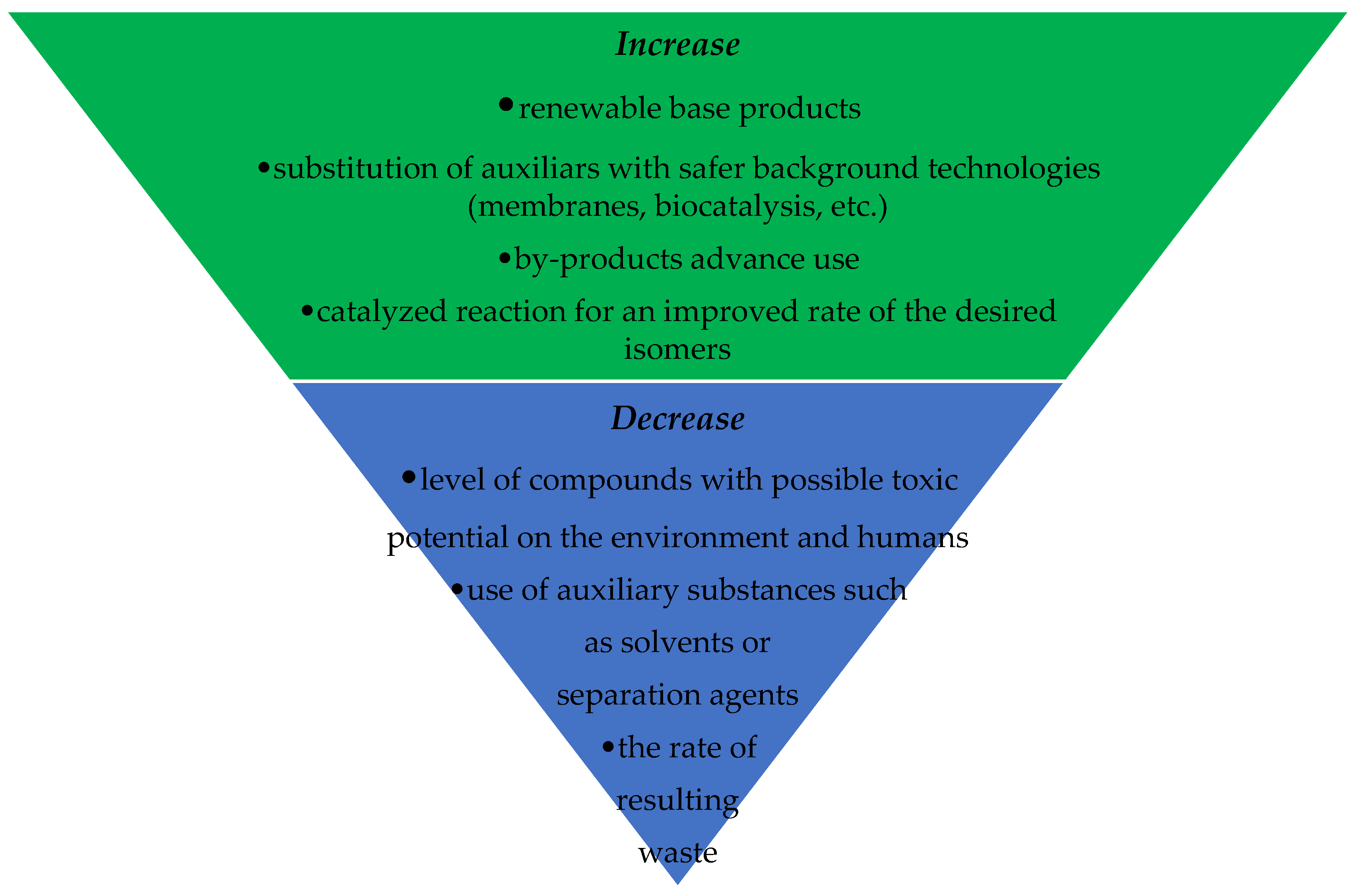
Figure 1 graphically suggests some areas where interest in their development should increase and others that could be considered for minimization [
5,
6,
7]. All technologies should include optimized processes that determine low environmental impact and higher economic and social efficiency [
8,
9]. For that, the outcomes must have little or no background remanence. Besides these, proper methodologies are needed for real (bio)monitoring (biosensors) of natural resources and for efficient strategies to limit impact in the case of restricted overflow. To address durability, the considered procedure could incorporate key bioattributes, including bio- and/or phyto-remediation, biofiltration, and biomining [
10]. For optimal results, it is necessary to consider the particulars of the implementing area [
11].
A new trend is currently emerging: synthetic biology. It seems to address both technological efficiency and environmental protection. Its main current weakness, as Ezeako et al. underlined, lies in its ethical and legislative aspects [
12]. Several limitations to the full implementation of biopesticides presented on the specialized market have also been identified by Fenibo et al. in their study. It is worth noting the need for training in the field of their application, a clear protocol for use, and assurance of profitability [
13].
Another aspect contributing to the development of a feasible ecological policy, in addition to the one targeting industrial activities, is the agricultural sector. It is a notable junction between industry in general and, in particular, food processing and the long-lasting evolution of ecosystems. Niu et al. highlighted the need for an integrative view of all processes to achieve a lower environmental impact of production across all phases, from raw material to the consumer [
14]. Ecological farming is primarily based on the use of integrated fertilizers and pesticides, along with less intensive mechanized activities. Such an attitude will result in a sustainable food chain and fewer stressors on natural resources [
15]. Promising results were achieved by implementing vertical farming, which enables better control over key stress factors, such as nutrients, water, and temperature [
16].
The tendencies mentioned in
Figure 1 could be seen as factors that contribute to reducing the industrial process carbon footprint and advancing the utilization of renewable resources.
One emerging direction in this field is the use of eco-friendly solvents, which are low-impact alternatives to traditional hazardous solvents for extraction, synthesis, and purification. The choice of these not only reduces environmental impact but also enhances the safety of industrial processes and the products obtained. In parallel, valorizing plant waste as a source of bioactive compounds (such as polyphenols, flavonoids, carotenoids, or organic acids) offers an innovative solution to reduce food waste and close the material loop within the circular economy [
17,
18,
19,
20].
These compounds, extracted from plant biomass using green solvents, have high potential for application in the food industry, particularly as functional ingredients, natural additives, or preservatives. At the same time, assessing the environmental risks associated with these processes and products is essential to ensure durable, safe development for both ecosystems and human health [
21].
Although plant-derived bioactive compounds hold significant potential for functional food applications, their practical incorporation is constrained by stability and formulation challenges. Many phenolic compounds and carotenoids are sensitive to thermal processing, oxidation, and light exposure, and their interactions with food matrices can adversely affect sensory attributes such as taste, color, and texture. Non-thermal technologies could also be considered an alternative for preserving the sensitive components of fruits and vegetables [
22,
23,
24]. Among the new tested technologies, one based on ultrasound could also be mentioned. In such a context, its use for biocompound extraction could help protect them.
Consequently, the technological relevance of bioactive-rich extracts depends not only on extraction yield but also on compound stability, sensory compatibility, and bioavailability. Shahidi et al. also emphasize the importance of the initial vegetable processing technology adopted to mitigate the negative impact on biomolecules in fruit wastes, enabling further processing [
25]. Oliveira et al. underlined the utility of phytocompound standardization to achieve targeted future functional roles. They also mentioned the potential use of novel technologies such as encapsulation or biofilm incorporation [
26] to preserve the biocompound attributes.
1.2. Study Objective
The present work aimed to integrate these directions, the use of green solvents, the sustainable extraction of bioactive compounds from plant waste, the assessment of environmental risks, and the applicability of the results in the food industry in a coherent and multidisciplinary approach, in line with the principles of green chemistry and circular bioeconomy.
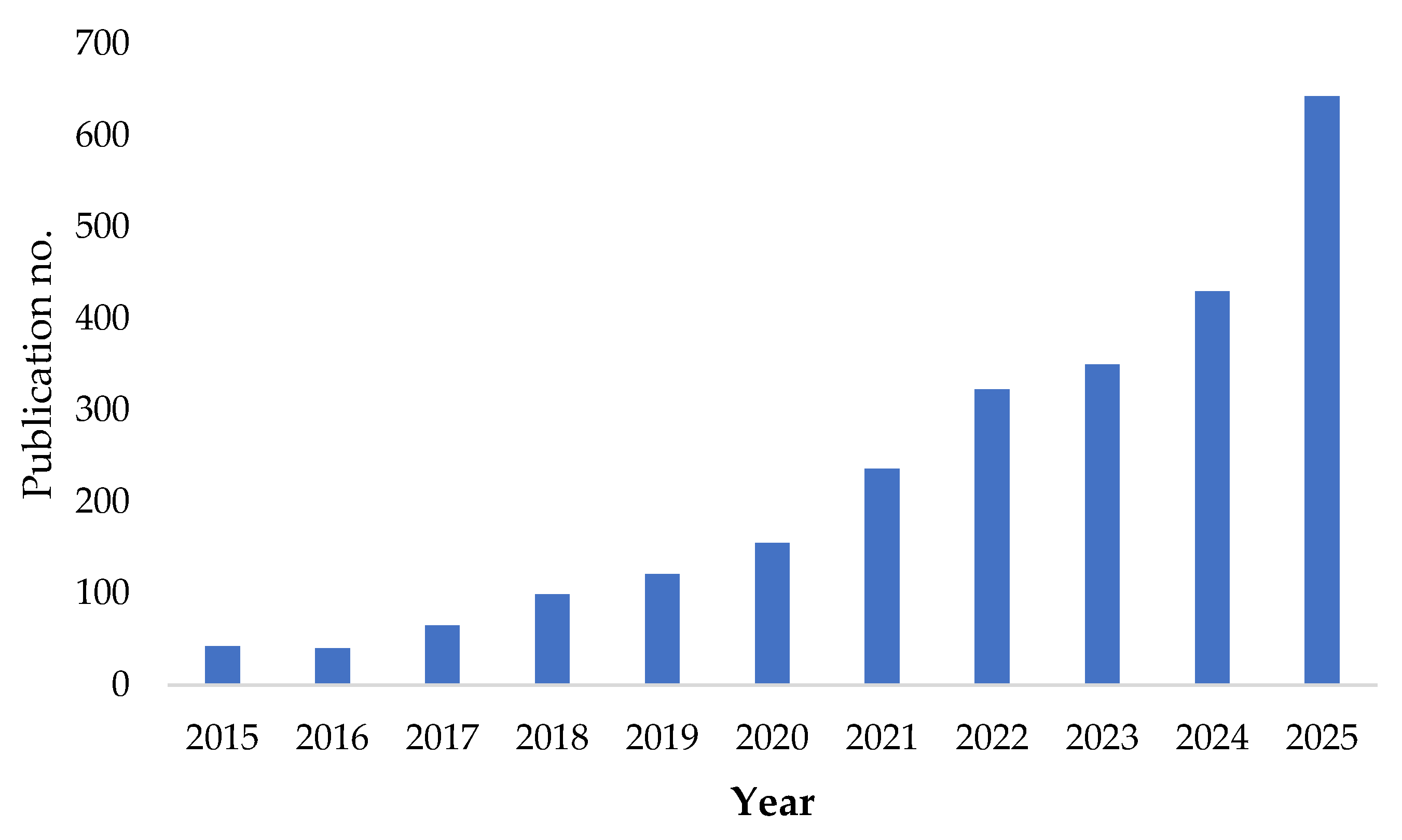
The initial process consisted of a reference literature review to establish publication trends in the field. The data were retrieved from the ScienceDirect database using a structured keyword-based search. The query targeted research related to biomass and biological waste valorization in the food sector and covered the period 2015–2025. The syntax contained “biomass valorization” OR “biological waste valorization” OR “plant-based waste valorization”, AND “food industry” OR “agro-food” OR “food processing”. The annual number of publications was used to assess temporal trends in scientific interest and research intensity in this field (
Figure 2). Selected research and review articles were published in the fields of chemical engineering, environmental sciences, energy, and agricultural and biological sciences.
The results show a marked rise in research activity, especially after 2018, reflecting growing scientific and policy interest in sustainable resource use, circular economy strategies, and low-impact extraction technologies. This addition strengthens the study’s contextual relevance and further justifies the need for the present analysis.
The originality of this article lies in integrating advanced multivariate statistical analysis of EUROSTAT data into a review article on the sustainable use of bioactive compounds and green extraction technologies. Unlike existing studies, which separately address the chemical, ecological, or economic aspects of bioactive compound extraction, this article proposes a unified analytical framework that correlates environmental performance, energy efficiency, and economic competitiveness at the macroeconomic level.
Application of the correlation matrix enabled the identification of structural relationships among greenhouse gas emissions, trade flows, energy productivity, and employment in the environmental goods and services sector, providing a quantitative perspective on the systemic pressures influencing the sustainability of agri-food chains. This approach highlights the central role of supply chains and energy efficiency in generating climate impact, an aspect that is rarely explicitly integrated into the literature on bioactive compounds.
The use of principal component analysis (PCA) introduces an innovative approach by reducing dimensionality and highlighting dominant patterns of sustainable development across European countries. PCA allows the identification of conceptual axes that differentiate economies oriented towards energy efficiency and bioeconomy from those dependent on intensive trade and high emissions, providing a new interpretative tool for positioning green extraction technologies in a macroeconomic context.
In addition, the integration of unsupervised classification methods, namely K-means clustering and Hierarchical Agglomerative Clustering (HAC), constitutes a novel contribution by grouping European countries based on their sustainability, energy efficiency, and trade integration profiles. This classification allows highlighting clusters with high potential for the industrial-scale green extraction of bioactive compounds and identifying structural gaps that limit their adoption.
By critically combining quantitative macroeconomic analysis with an in-depth literature review of green solvents, sustainable extraction, and plant waste valorization, this article goes beyond the traditional narrative review framework. Thus, this paper proposes a transferable conceptual model that links official statistical data to the development strategies of the food industry and the circular bioeconomy, providing relevant decision-making support for researchers, industry, and policymakers.
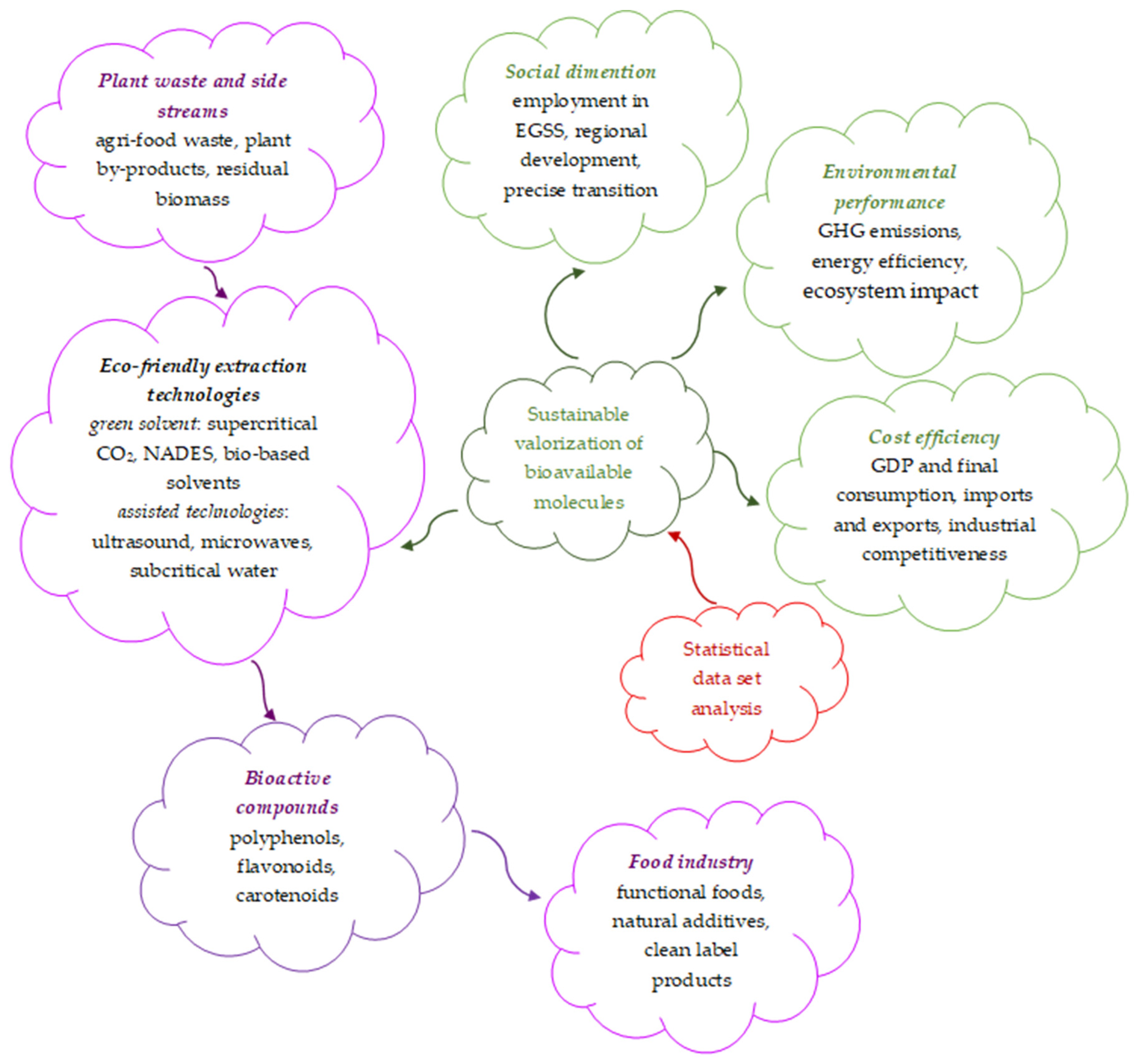
In this sense, the individuality of the article does not lie in the generation of new experimental data, but in the integrative and systemic way of interpreting existing ones, demonstrating that green extraction technologies of bioactive compounds represent not only a chemical solution, but also a strategic vector for achieving the European objectives of sustainability, energy efficiency, and economic competitiveness (
Figure 3).
The formal chart graphically synthesizes all concept dimensions analyzed in this paper. It has a central topic, the durable exploitation of biosynthesized elements. This also represents the convergence point of the ecological, economic, and social dimensions. These elements, along with others such as ethical or political ones, could be considered a base shell for future multidisciplinary approaches for the implementation of ecological sciences [
27] and technologies [
28,
29]. As Harieth Hellar-Kihampa underlined, there is a need to design and develop focused procedures that take into account the community’s particularities [
7].
Plant biomass and secondary flows are integrated into a circular economy ring as raw materials through waste reduction and resource security [
30,
31]. The environmentally friendly concepts discussed are based on green chemistry principles that reduce toxicity and increase energy efficiency [
32]. The phytochemicals considered exhibit interesting features such as antioxidant and antimicrobial activity, ensuring preservation and food safety [
33,
34]. These main attributes impact consumer health and increase social acceptability and added value [
35], as consumers are currently more oriented toward sustainable, healthy, and ecological nutritional ingredients.
The environmental and economic dimensions intersect to reduce carbon footprints and increase energy productivity through short supply chains and the development of local bioeconomies. The integrative quantitative analysis was considered a tool for pattern identification across different counties and as a possible decision-making support for implementing circular economy principles [
36], particularly sustainable food strategies.
Thus, this work contributes to filling a knowledge gap, providing a scientific and applicative framework that can guide both future research and the industrial implementation of green extraction technologies in the global context of sustainability
2. Materials and Methods
2.1. Study Design
This study was designed as a critical review article with a quantitative analytical component, combining an essential analysis of specialized literature with multivariate statistical methods applied to official macroeconomic datasets. The methodological goal was to identify structural relationships and systemic patterns between environmental, energy, and economic indicators relevant to the sustainable use of bioactive compounds and the application of green extraction technologies in the food industry.
Although this study is intended as a critically oriented article, the inclusion of an original multivariate analysis based on EUROSTAT data serves a complementary and integrative purpose. The literature on green extraction and biomass valorization is highly heterogeneous, spanning diverse technological approaches, feedstocks, and national contexts. Without a unifying analytical framework, comparative interpretation across regions risks remaining descriptive and fragmented.
The multivariate analysis of EUROSTAT indicators provides a structural macroeconomic and environmental context for the systematic interpretation of the reviewed technological evidence. By reducing multidimensional data into interpretable principal components and clusters, the analysis identifies typological patterns among European States that inform differentiated technological pathways and policy-relevant insights. Rather than generating new empirical claims at the process level, the quantitative component enhances the coherence and explanatory depth of the synthesis.
2.2. Data Sources
This review was conducted based on a systematic search across international scientific databases, including ScienceDirect and Google Scholar. The searches were conducted between May and August 2025, using combinations of keywords and logical operators such as “green solvents” and “environmental chemistry” and “bioactive compounds”; “plant waste” and “sustainable extraction” and “food industry”; “ecotoxicity” and “green extraction” and “circular economy”; “NADES” or “supercritical CO2”; and “food applications”.
The works selected were mainly published between 2010 and 2025. The focus was on original research articles, reviews, technical reports, or standards. These directly addressed at least one of the mentioned topics and were published in peer-reviewed journals or recognized scientific sources.
To analyze the representative works in the field, exclusion criteria were also applied. These included non-peer-reviewed articles, commercial technical notes, blog-type sources, and popular scientific content. Additionally, papers were excluded if they lacked methodological details or provided incomplete data on extract composition or extraction processes. Studies were also excluded if they focused exclusively on extraction from plants cultivated for pharmaceutical purposes, instead of plant waste.
The review analysis was carried out in two stages. The first was a narrative synthesis focused on presenting general trends and technological innovations. The second was a comparative study intended to identify the advantages and limitations of each solvent and extraction method, as well as gaps in the current literature.
To ensure accuracy, the information was verified by consulting two independent sources for each key statement. The data were updated with the most recent studies available throughout the current month.
The data used in the statistical analyses were extracted exclusively from the EUROSTAT database, ensuring comparability, consistency, and reproducibility across the States of Europe. The selected indicators include Total greenhouse gas emissions (GHG, [10
3 T]) [
37], Employment in the Environmental Goods and Services Sector (EEGSS, [FTE]) [
38], Total imports (IS [%]) [
39], Total exports (ES [%]) [
39], Energy productivity (EP, [KGOE] [
40], and Gross domestic product per capita–final consumption expenditure (GDPFCE, [EU27%] [
41]). The period considered was 8 years, from 2015 to 2022, a range for which all the information was presented. Only countries that appeared in the data set for all the markers discussed and were free to use were analyzed (26 in total).
The indicators were selected for their direct relevance in assessing the sustainability of the circular economy, energy efficiency, and environmental pressures, essential factors for the development and implementation of green extraction technologies for bioactive compounds. Eurostat used indicators intended to capture the systemic capacity to implement green extraction technologies instead of assessing raw material availability. In particular, employment in the Environmental Goods and Services Sector (EGSS) served as a proxy for technological readiness, institutional maturity, and the availability of skilled labor to adopt and operate advanced green extraction systems.
2.3. Data Selection, Preprocessing, and Statistical Assumptions
The multivariate analysis relies exclusively on EUROSTAT indicators, for which complete data were available and free to use across all selected European States. Countries with missing values for any variable in the analysis were excluded to ensure a consistent, comparable dataset. Data across all selected indicators were included under the assumption that this complete-case selection does not introduce systematic bias. The selected indicators were considered representative of macroeconomic, energy-related, and environmental structures relevant to biomass valorization. The data were processed using XLSTAT Essentials 2025.2.0 (by Lumivero, Denver, CO, USA) and integrated into Microsoft Excel.
No normalization or standardization of the input variables was performed before the analysis. Variables were retained in their original reported units to preserve their absolute economic and environmental magnitudes, which are central to the macroeconomic interpretation of the results. Consequently, the analysis emphasizes structural differences in scale and intensity across European countries instead of relative or unit-free comparisons. The absence of variable normalization means that indicators with larger absolute magnitudes may exert a greater influence on the resulting components and clusters. However, this effect aligns with the study’s objective of capturing scale-dependent macroeconomic structures.
Principal Component Analysis (PCA) was conducted under the assumption that the selected indicators exhibit meaningful linear relationships and that their combined variance reflects underlying macroeconomic and environmental dimensions relevant to biomass valorization and green extraction. K-means clustering was then applied to the principal component scores, using Euclidean distance as the similarity metric. The number of clusters was determined based on interpretability and internal validation criteria, including distances to cluster centroids and silhouette scores. The clustering results are therefore driven by the dominant macroeconomic and environmental patterns captured in the unscaled data. The resulting clusters were interpreted as exploratory typologies rather than predictive or causal classifications.
3. Statistics
3.1. Correlations
The bivariate relationships among the selected indicators were assessed using Pearson correlation coefficients (
Table 1). This method was chosen for the continuous nature of the data and to highlight the direction and intensity of linear relationships among the variables of interest. The correlation matrix was used as an exploratory tool to identify strong relationships between climate pressure and economic activity, to highlight interdependencies between international trade and energy efficiency, and to substantiate the selection of variables for subsequent multivariate analyses.
The data in
Table 1 show that there are only positive dependencies between the data considered. To determine the degree of strength between the variables, the ranges described in several references [
42,
43,
44] were used. There were also limitations to the method [
45,
46], which is why this study also includes other statistical analyses. Five very strong dependencies are observed in
Table 1. The highest values in the matrix (0.9564 and 0.9461) indicate an extremely close relationship.
The highest correlation in the set (r = 0.956) relates more to the topic from an economic point of view, since this sector is deeply integrated in international trade, imports and exports. These could be seen as intense two-way trade flows, with ecological implications associated with the dimensions of the supply chains. Therefore, a longer distribution link could imply high indirect emissions [
47,
48,
49,
50]. A major argument for shortening the distribution range is the valorization of locally based agri-food waste as a raw source for bioactive molecules [
19,
21,
51,
52,
53].
The results show a very strong positive correlation (r = 0.9461) between greenhouse gas (GHG) emissions and total imports. From an environmental perspective, it suggests the externalization of ecological impacts through global supply chains. Increased imports could lead to higher GHG emissions (transport, logistics, and external production). Such a situation could be seen as a strong argument for the local production of bioactive extracts from plant waste. Designing and implementing various actions in this direction could be seen as an important support for the circular economy and for reducing the carbon footprint [
20,
54,
55,
56,
57,
58].
Another important correlation was observed between GHG and exports (r = 0.8882). The result is associated with intensive industrial activity and, possibly, higher emissions. Without clean extraction technologies, economic competitiveness comes at a climate cost. Green extraction is needed to maintain competitiveness without increasing GHG emissions by limiting solvent use, as Putra et al. [
59] underlined in their study.
Another important correlation was found between the GHGs and employment in the environmental goods and services sector (EGSS) (r = 0.8648). Although it is a positive one, it does not mean negative causality. Large, industrialized economies are supposed to have high emissions, along with developed green sectors. Iqbal et al. underlined the possible advantages of green industries through the synergetic mechanism that could develop, in which increased employment could contribute to the financial improvement of general counties [
60]. The green sector could appear as a response to environmental pressure, not as a source of it. Its expansion is sustained with instruments related to research and innovation [
61,
62]. As Zhang et al. highlighted in their study, there may be differences in the integration of eco-friendly approaches across states [
63]. Similar outcomes have also been reported in other studies [
64,
65,
66]. Correlations between greenhouse gas emissions and trade-related indicators should not be interpreted as causal. They reflect the structural characteristics of large, open economies, where industrial intensity, consumption, and international trade co-occur. Therefore, greenhouse gas emissions serve as an indicator of economic scale rather than a direct consequence of trade flows.
A strong positive correlation was observed between energy productivity and the GDPFCE (r ≈ 0.68). This situation could demonstrate that increased energy areas and more efficient economies support a higher level of well-being. There is also confirmation that energy cost-effectiveness does not slow down economic development. The result obtained confirms the previously observed fact that implementing eco-friendly extraction techniques is compatible with economic growth. Such views hold that coupling energy-efficient technologies is essential in the bioactives industry and beyond [
67,
68,
69,
70,
71,
72] to reduce environmental impact.
A weak to moderate correlation was observed between GDPFGW and final consumption expenditure (Imports, r ≈ 0.29; Exports, r ≈ 0.30). The results could mean that consumption growth is not strictly dependent on trade. There is potential for domestic production. The background supports the development of the local functional ingredients and bioactive extracts industry.
One of the weaker correlations (r = 0.1536) was observed between energy productivity and GHG emissions. It could be considered that EP alone does not sufficiently explain GHG reduction. There may be a need to implement summative or synergistic strategies to support the increased use of renewable sources [
73,
74,
75], clean technologies, and process optimization (such as green extraction) [
76].
3.2. Principal Component Analysis
The descriptive statistical analysis (
Table 2) highlights significant heterogeneity among the European States in terms of greenhouse gas emissions, green sector employment, and trade integration. This variability justifies the use of multivariate methods, such as PCA and clustering analyses, to identify structural patterns and homogeneous groups. The results suggest that strategies for the sustainable valorization of bioactive compounds must be adapted to the specific economic and energy context of each state, strengthening the role of green extraction as a flexible and scalable solution.
The GHG standard deviation is very high (above the average), indicating extreme heterogeneity across states. It suggests the existence of highly industrialized economies with very high emissions and states with a low climate footprint.
The employment marker for the environmental goods and services sector (EGSS) also shows very high variability across countries. This finding indicates that developed economies have consolidated green sectors, whereas others are in their early stages. It also explains the high correlation with GHGs and highlights that the green industry emerges as a structural response to environmental pressure [
77,
78,
79,
80,
81].
The distributions of total imports and exports are strongly asymmetric, with maximum values well above the average. This situation may indicate a different dependence on international trade. In the context analyzed, this result underlines the implications of the circular bioeconomy, confirming the need for short supply chains and supporting local valorization of plant waste for bioactive extracts.
The energy productivity shows moderate variability compared to GES or EGSS, suggesting the existence of both energy-efficient models and energy-intensive economies. Such a result could be considered a relevant key indicator for supporting green extraction technologies, possibly strongly correlated with GDP and economic well-being.
The GDPFCE presents significant economic disparities in Europe. High consumption could be seen as a potential pressure on the environment. The situation could justify transitioning to sustainable food products and provides a strong argument for bioactive extracts with high added value and low impact [
82,
83].
The statistic characteristics determined further PCA and clustering based on the need for differentiated solutions, such as green extraction adapted to the national context.
Table 3 includes the eigenvalues resulting from the process of PCA. According to the Kaiser criterion (eigenvalue > 1) [
84], only the first two components (F1 and F2) were advised to be retained for interpretation.
The F1 component, with 62.59% of the total variability, represents the main axis of differentiation among European states. The F2 component, accounting for 25.45% of the variability, captures additional structural differentiation. These components could be considered extremely high for socio-economic and environmental data.
The F1 axis could be considered an economic–climate pressure axis, based on previous correlations. In terms of variable contributions, GHG, IS, ES, and EEGSS were the dominant contributors, each accounting for 20–25%. F1 describes the intensity of economic and commercial activity, correlated with environmental pressure. The situation illustrates the interference zone between large, globally integrated economies, high climate pressure, and the green sector developed in response.
The second axis, energy efficiency and well-being, was dominated by energy productivity and GDPFCE, with values ranging from 44% to 48%. It distinguishes energy-efficient and well-being states from energy-intensive ones. It is a key axis for green extraction technologies, directly linked to real sustainability.
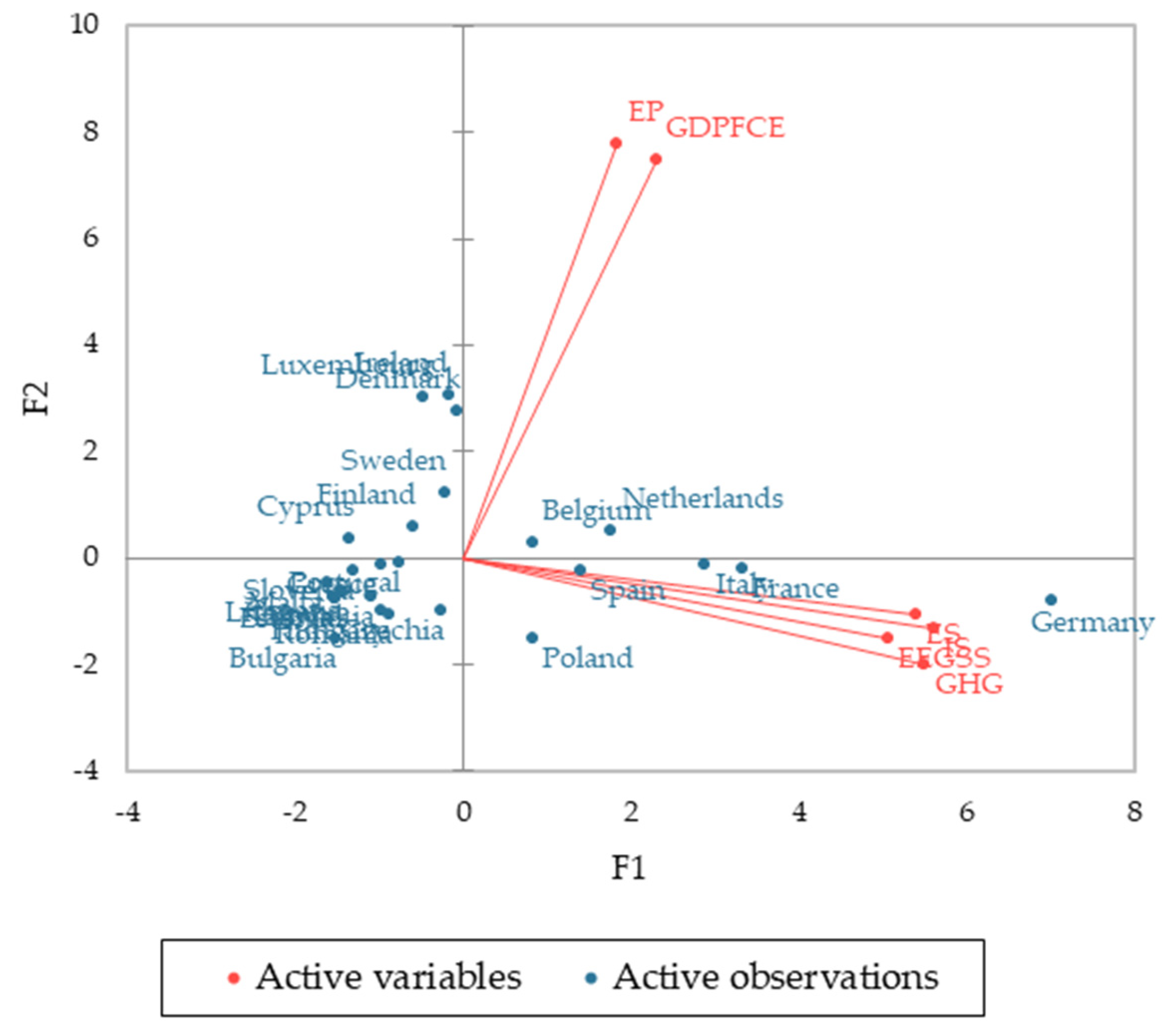
A representative correlation between the variables and the observations considered is reflected in the biplot representation (
Figure 4).
The PCA biplot (F1–F2, 88.04% of total variation) provides an extremely powerful overview of the relationships between socio-economic and environmental variables and the position of European countries. The F1 axis, representing economic activity intensity and ecological pressure, has GHG, EEGSS, and imports and exports as positively associated variables. These are almost collinear and oriented in the same direction, indicating a strong correlation between intense economic activity, international trade, and GHG emissions levels. Countries positioned on its positive side are Germany, France, Italy, Spain, Belgium, and The Netherlands. These could be considered large economies, strongly integrated into international trade, with high emissions and developed green sectors, but still insufficient for total decoupling. Even advanced economies with well-developed green sectors could remain subject to significant environmental pressures.
The energy efficiency and economic well-being view has GDPFCE as the dominant variable on F2. Countries with a positive position on F2 are Luxembourg, Ireland, and Denmark. These are characterized by high per capita consumption, greater energy efficiency, and a relatively lower climate impact per unit of prosperity. Such economies could serve as models for implementing green technologies and bioactive extracts with a low environmental impact.
The plot shows three obvious regional groups and patterns. The first one describes a mature industrial economy, such as those of Germany, France, and Italy, resulting from correlations with GHG, EEGSS, and trade. Unfortunately, this status comes with high environmental pressure. The second group comprises efficiency-oriented economies, such as those in Luxembourg, Ireland, and Denmark, because of the correlation between GDPFCE and F2. These have high green transition potential. The third cluster includes emerging European economies, specifically Bulgaria, Romania, Slovakia, and Croatia. These are negatively positioned on F1 and F2, and could be assigned to lower levels of consumption, emissions, and trade.
3.3. Clustering Analysis
The projection of the K-means analysis results onto the factorial space defined by the first two principal components confirms the existence of three distinct patterns within Europe. The representation is shown in
Figure 5, with each color corresponding to a specific cluster.
The first cluster (
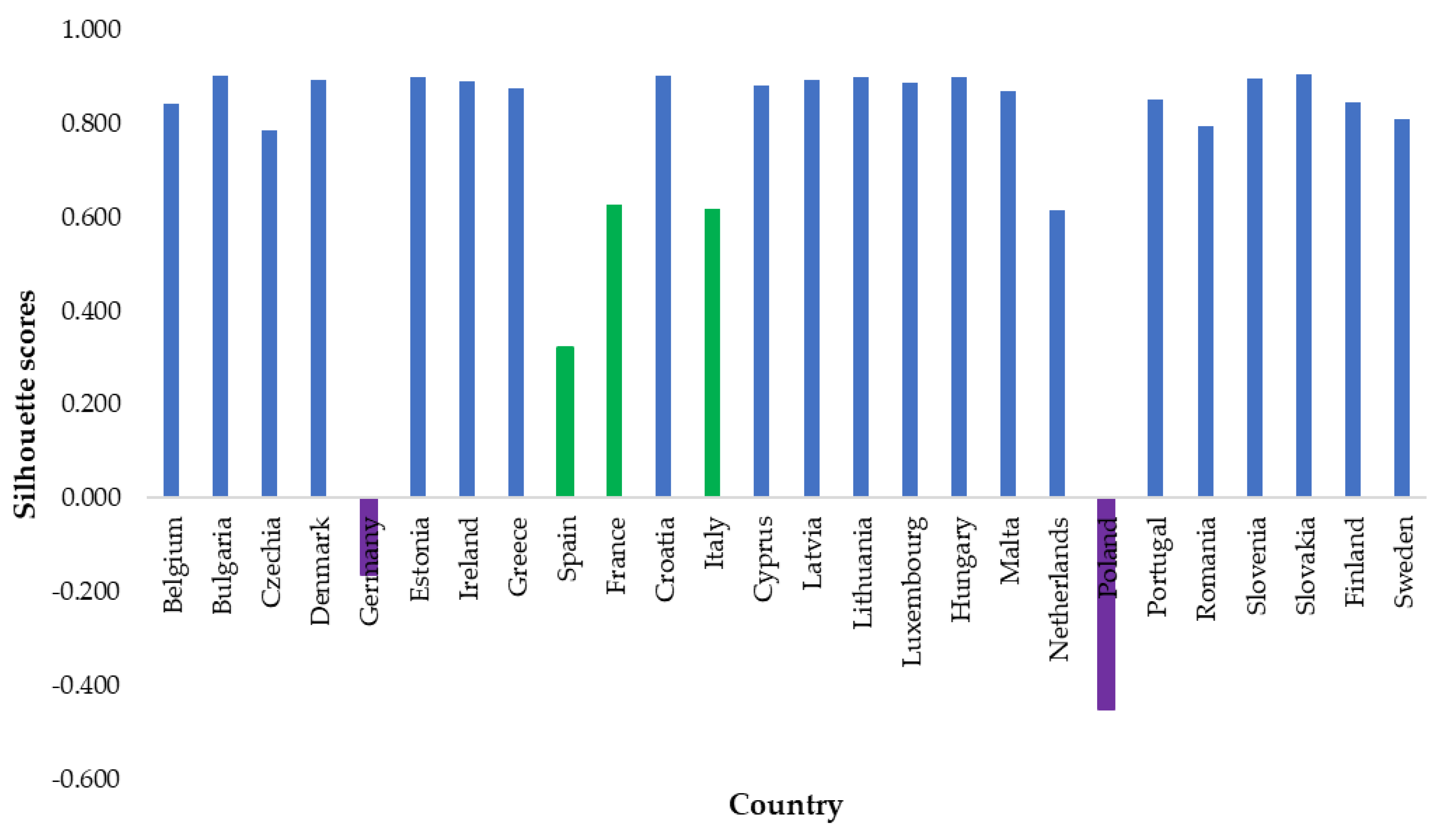
Figure 5, blue), which includes most counties, reflects economies with a balanced profile, characterized by moderate emissions and relatively high energy efficiency. The states have high Silhouette scores (≈0.80–0.90), except for The Netherlands (0.62), highlighting very good clusterization. These are concentrated in the central or slightly negative area on F1 and are positive/moderate on F2, and could be associated with better energy efficiency, moderate GHG emissions, and variable but balanced levels of trade.
The second cluster, comprising Germany and Poland (
Figure 5, violet), highlights economies with atypical energy and industrial structures undergoing complex transitions. Both counties have negative Silhouette scores, very large distances from the centroid, and ambiguous positioning between F1 and F2. Germany could be considered to have a very strong, efficient economy, but with high absolute emissions. Poland has a specific energy structure with a historical dependence on fossil fuels. Such a situation highlights the limitations of the classic clustering model and the need for differentiated policy approaches.
The third cluster (
Figure 5, green) brings together large, commercially integrated economies with high greenhouse gas emissions. It has moderate Silhouette scores (0.32–0.63). It is clearly positioned on the positive side of F1 and is aligned with GHG, EEGSS, IS, and ES vectors. These could be considered mature economies, highly integrated commercially, with developed green sectors, but still associated with high emissions, exerting significant environmental pressure.
This classification provides a solid framework for discussing the role of green extraction technologies and the bioeconomy in the context of European sustainability strategies.
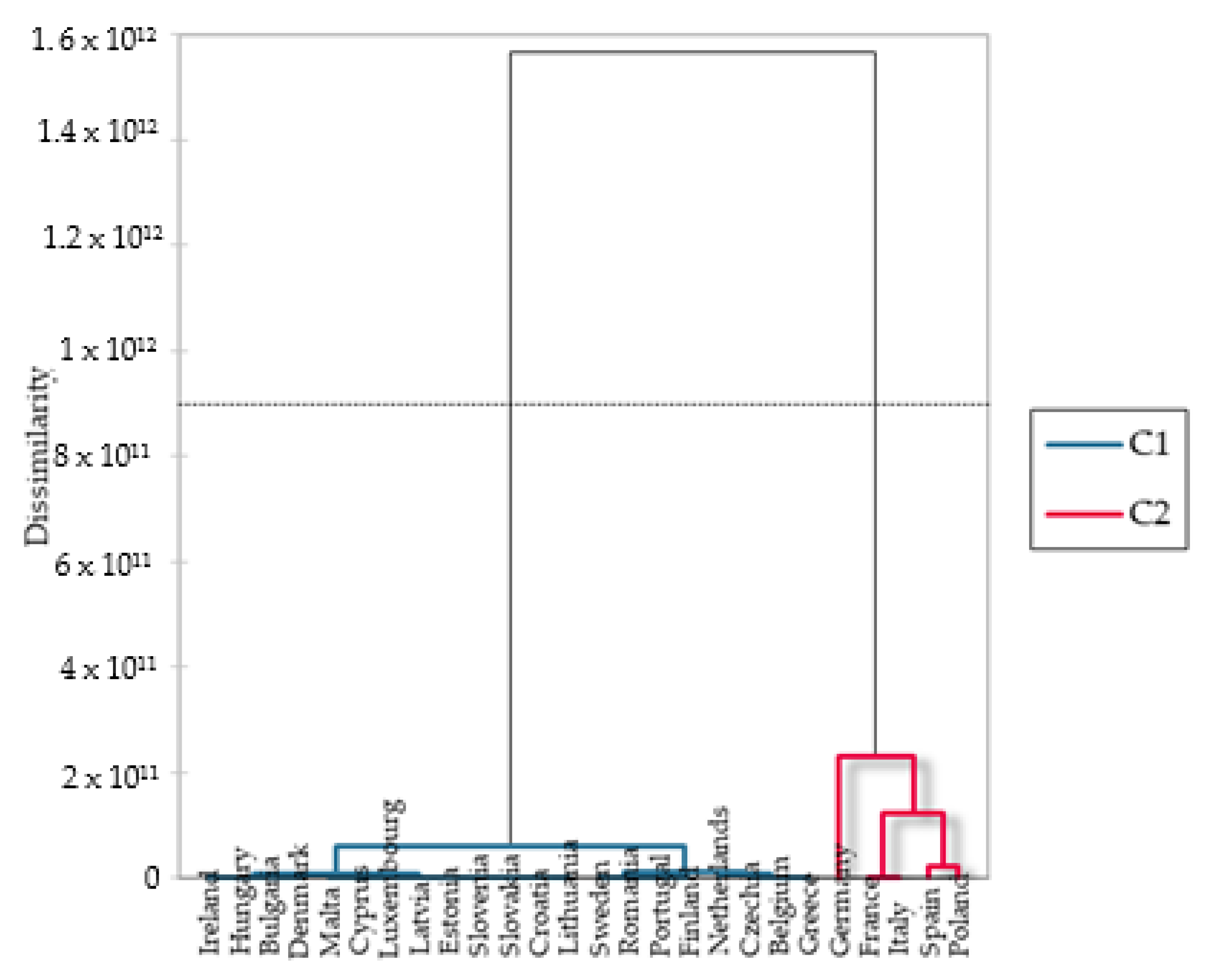
To determine the relative position of each state within the cluster, Agglomerative Hierarchical Clustering (AHC) was used (
Figure 6).
The dendrogram shows two main clusters (C1 and C2), separated by a high level of dissimilarity, indicating significant structural differences between the states considered.
Cluster C1 includes the majority of Central and Eastern European countries, as well as smaller Nordic and Mediterranean countries, and has a convergent profile. Some states, such as Bulgaria, Greece, Hungary, and Slovakia, are very close to the centroid (Denmark). These countries define the “core” of the cluster. Countries with moderate distances, such as Belgium, Estonia, Ireland, Portugal, Finland, and Sweden, could be considered to have acceptable structural variability within a large, geographically heterogeneous cluster. Peripheral states in Cluster 1 have distinct profiles but do not warrant a separate cluster. The Netherlands, Malta, and Romania have more developed economies or economies with specific structures, which are offset by energy efficiency and consumption, placing them close to Cluster 2 on the F1 axis of the PCA. Such a situation may suggest considering subclusters within Cluster 1. Generally, these have moderate levels of greenhouse gas emissions, relatively balanced employment in the environmental goods and services sector, and lower trade volumes and final consumption than those of large economies.
The early clustering of these countries in the dendrogram suggests structural convergence in the relationships between the economy, energy, and environmental pressures. This profile indicates high potential for implementing circular economy strategies, particularly for the recovery of plant waste and the integration of bioactive compounds into the food industry.
Cluster C2, including Germany, Poland, Spain, and Italy, shows a divergent profile, with dominant economies. It brings together countries that aggregate at much higher levels of dissimilarity. These countries are extremely distant from the centroid, France. Such a position explains the lower Silhouette scores and confirms the extreme positioning on positive F1 in the PCA biplot. This reflects high greenhouse gas emissions, high levels of economic activity and trade, and intensive consumption patterns with a significant environmental impact. The greater internal dispersion of this cluster suggests distinct national transition trajectories, strongly influenced by industrial structures and energy mix.
The AHC results are strongly supported by the countries’ positions in the PCA biplot (F1–F2). The F1 axis (≈63%), dominated by GHG, EEGSS, and trade, clearly separates large economies (C2), positioned on the right side of the biplot, from states with lower economic and environmental pressure (C1), located on the left. The F2 axis (≈25%), associated with energy productivity and final consumption expenditure, explains the internal differences within cluster C1, highlighting states with superior energy performance (Nordic states). The dendrogram confirms the structure identified by PCA, and the combination of the two methods reinforces the validity of the typologies obtained.
3.4. Discussion
Using PCA and clustering, these indicators delineate distinct macroeconomic contexts in which different extraction pathways become more or less viable. The identified clusters provide a structured framework for linking green extraction technologies to differentiated economic and energy profiles, supporting context-specific rather than universal valorization strategies.
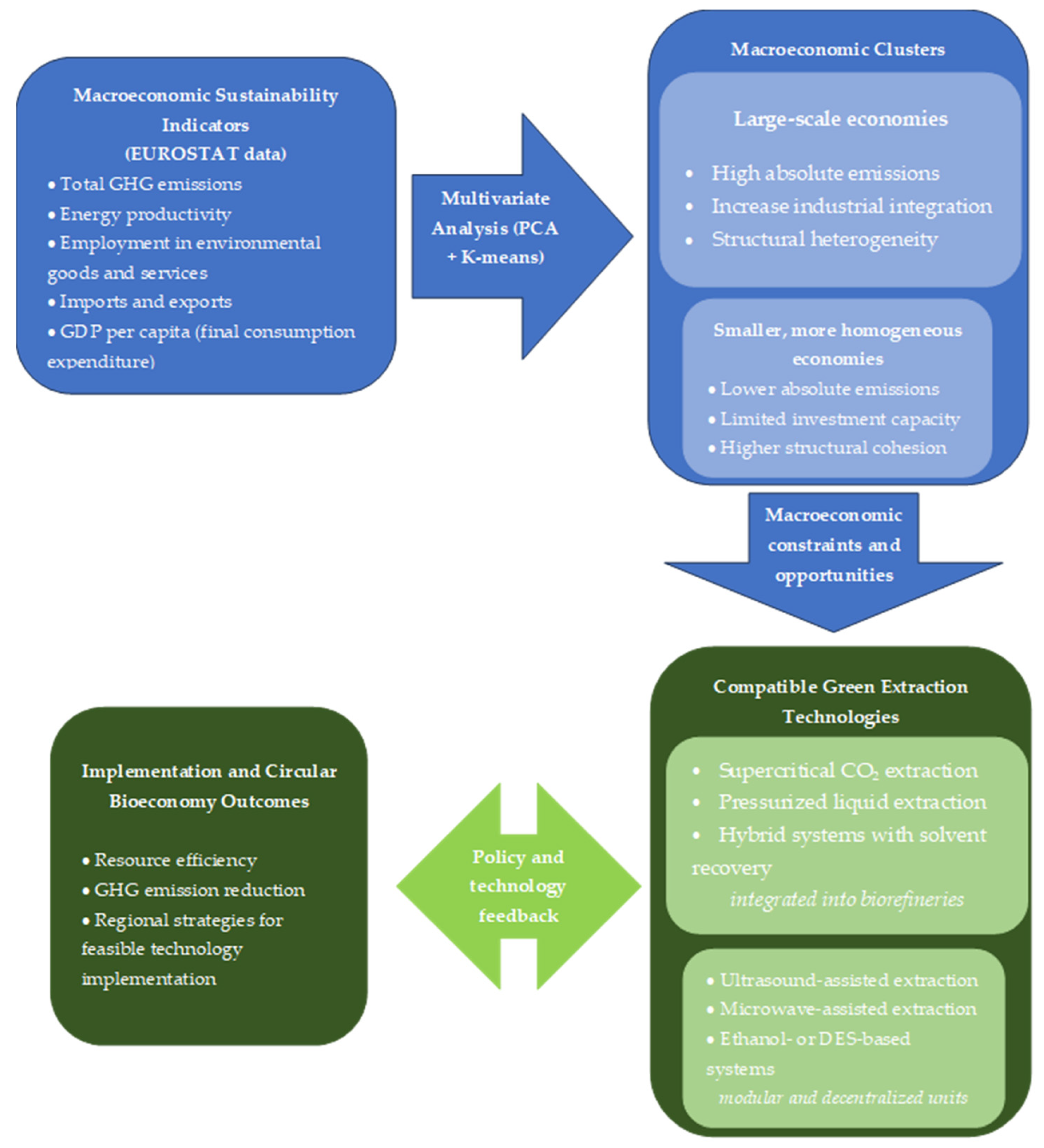
Although the clustering analysis groups the European States based on macroeconomic, energy, and environmental indicators, its added value lies in informing differentiated technological pathways rather than prescribing uniform solutions. By integrating cluster profiles derived from PCA and K-means with evidence from the green extraction literature, distinct patterns of technological compatibility emerge (
Figure 7).
Cluster C1, characterized by high internal cohesion, positive silhouette scores, and relatively balanced positions along the energy productivity and environmental employment dimensions, could be particularly suited to low-to-medium-energy-intensity green extraction technologies. In these states, the biomass profile appears more fragmented and heterogeneous, stemming from diversified, smaller-scale agro-food systems. Typical residues include fruit and vegetable processing waste and mixed food-industry side streams. For these countries, flexible and modular green extraction technologies, such as ultrasound-assisted extraction, microwave-assisted extraction, and pressurized liquid extraction, may be better suited because they accommodate variable feedstock composition and decentralized processing. Their advantages primarily include shorter processing times and compatibility with existing food-processing infrastructure [
85].
Cluster C2, which includes Germany, France, Italy, Spain, and Poland, countries with structurally distinct profiles and lower Silhouette scores, reflects higher industrial scale, greater emission intensity, and stronger integration into international trade. These are characterized by high agricultural output, extensive food-processing industries, and substantial volumes of relatively homogeneous biomass and plant-based waste streams, including cereal straw, sugar beet pulp, oilseed cakes, winery and olive mill residues, brewery by-products, and starch-processing waste. The scale and concentration of these resources make it particularly suitable for centralized, capital-intensive green extraction platforms, such as supercritical CO
2 extraction, integrated solvent-based biorefinery systems, and advanced pressurized extraction processes, which could be technologically and economically compatible. Integrating efficient energy recovery systems and high solvent recycling rates [
86,
87] contributes to increasing system sustainability. In these settings, technological feasibility is closely linked to large-scale processing, regulatory pressure for decarbonization, and the availability of advanced industrial infrastructure.
This cluster-specific interpretation shows that no single green extraction technology is universally optimal. Instead, the suitability of a given technology depends on the interactions between energy profiles, economic scale, and institutional capacity, as captured by the macro-level clustering results.
The macroeconomic indicators used in this study were not treated as direct measures of technological performance but as systemic variables that shape the feasibility, scalability, and environmental relevance of green extraction technologies.
The clustering results also identify countries with hybrid macroeconomic profiles, as reflected by lower or negative Silhouette scores. In these cases, implementing green extraction technologies may require adaptive or phased strategies that combine elements of centralized and decentralized systems. Such hybrid profiles underscore the limitations of prescriptive technology selection and highlight the importance of policy feedback mechanisms, pilot-scale demonstrations, and iterative optimization.
The proposed framework supports aligning green extraction technologies with macroeconomic and energy-related constraints, enhancing the likelihood that environmentally favorable extraction methods are not only technically viable but also economically and institutionally implementable. By embedding technology selection within a macroeconomic sustainability framework, the analysis contributes to more realistic, region-specific circular bioeconomy strategies.
Although most observations have positive Silhouette values, indicating reasonable internal cohesion, a subset of countries shows low (Spain, France, and Italy) or negative (Germany and Poland) scores. Instead of methodological failure, this outcome reflects the structural heterogeneity of macroeconomic and environmental profiles across European countries.
Negative Silhouette values could indicate that certain observations lie near cluster boundaries or share characteristics with multiple groups. In this context, this behavior is consistent with the presence of large, structurally complex economies whose macroeconomic indicators do not align neatly with a single typological profile. Such cases highlight transitional or hybrid positions within the macroeconomic space rather than misclassification.
The clustering approach in this study is exploratory and intended to support typological interpretation instead of a definitive classification. Therefore, the observed instability provides additional analytical insight by identifying countries for which standardized circular bioeconomy or green extraction strategies may be less effective, underscoring the need for tailored, country-specific policy and technological approaches. Consequently, Silhouette scores are interpreted here as diagnostic indicators of structural overlap and heterogeneity, complementing rather than invalidating the clustering results.
4. Eco-Friendly Approaches
4.1. Green Solvents
The concept of “green solvents” emerged to address the need to reduce the negative environmental and human health impacts of chemical processes. Conventional solvents—such as chloroform, toluene, or acetonitrile—are often toxic, flammable, persistent in the environment, and contribute to the formation of volatile organic compounds (VOCs), which affect air and water quality. In contrast, green solvents are substances that serve as solvents in chemical processes and are biodegradable, non-toxic, derived from renewable resources, and compatible with the principles of sustainable chemistry [
88,
89,
90]. Although green extraction technologies are often considered environmentally friendly due to their use of alternative solvents and milder operating conditions, a growing number of life-cycle assessment studies show that their environmental performance is highly context-dependent [
91]. Ali et al. mentioned the potential environmental benefits of using deep eutectic solvents for the extraction of phytocompounds used in traditional Chinese medicine. The possibility of reusing the solvent mainly drove the observed improvements, along with a reduced toxicological profile and lower energy consumption associated with additional techniques [
92]. Kamal et al.’s research underscores the potential of ultrasound-assisted saponin extraction, noting the possibility of halving the energy required compared to the classical Soxhlet method [
93]. Besides the main environmental benefit of such an approach, it is necessary to underline its threats and limitations. Usman et al. highlighted several constraints that could be encountered in implementing ecological principles in the field of extraction [
94]. Some of these relate to lower initial economic efficiency, users’ reticence, or the variability of raw material characteristics.
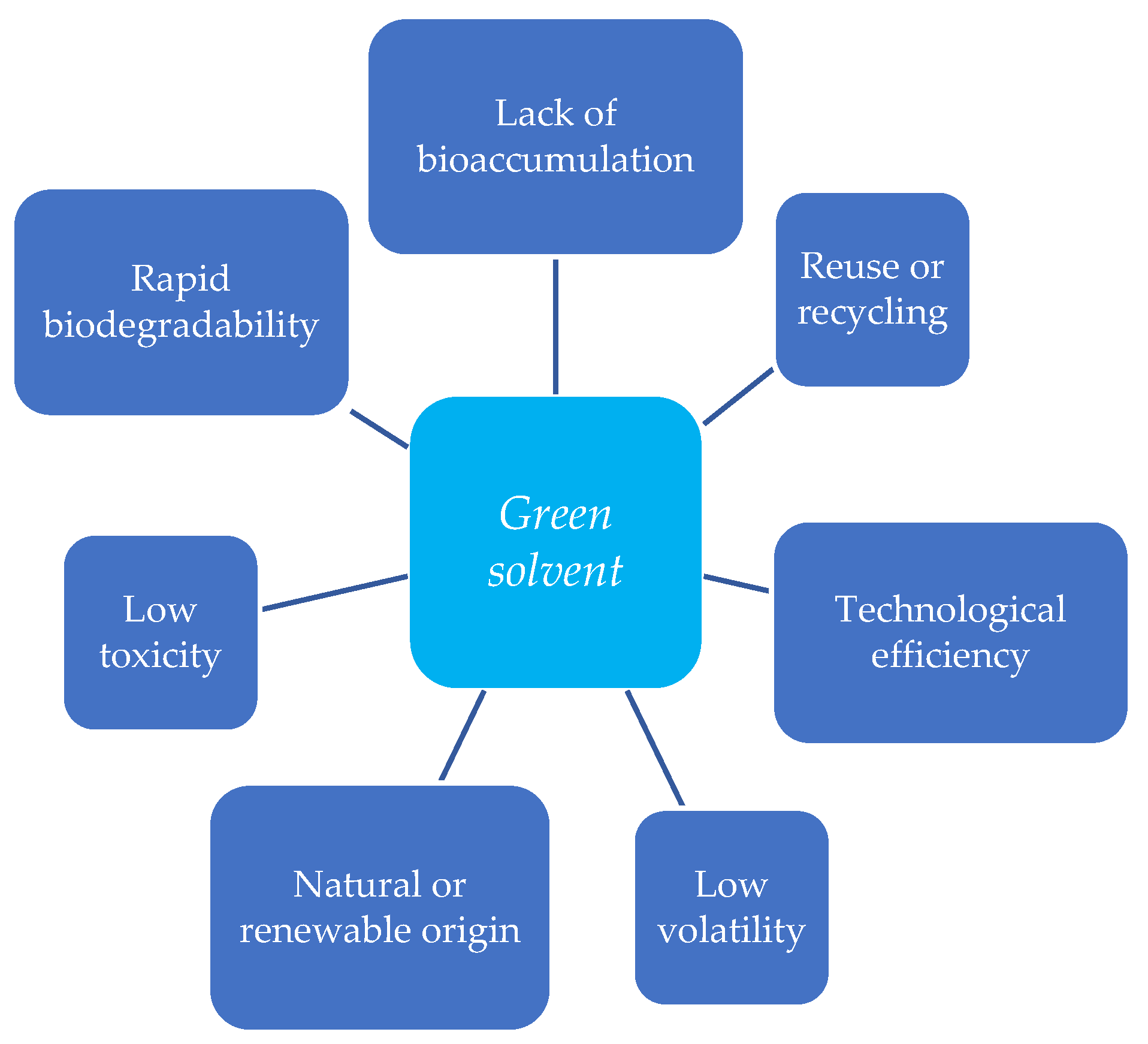
A solvent can be considered to have a low environmental impact if it meets some specific criteria. These are illustrated in
Figure 8.
A natural solvent refers to one obtained from fermentation. Renewable ones use biomass as a raw material [
95], ethanol is one such product. The toxicity exhibited refers to the impact that it has on operators, consumers, and the environment. The importance of minimal volatility is emphasized to ensure atmospheric quality. Technological efficiency is quantified by the amount of target compounds produced. The attributes of reuse or recycling in industrial processes are also important considerations that highlight the potential of green solvents as a circular link in the circular economy.
The solvent is also selected based on desired polarity, thermal stability, compatibility with the plant matrix, and cost [
96]. The literature mentioned several advantages of using green solvents. Some of these make them compatible with the extraction of sensitive compounds due to mild processing conditions. Such properties increase their feasibility for implementation in the food industry. Shi et al. underlined the potential for using the deep eutectic solvent for flavonoid extraction and purification [
97].
By using green solvents, industrial processes become more sustainable, facilitating the transition to a bioeconomy that efficiently exploits natural resources without compromising the ecological balance. The literature describes various types of green solvents used for the extraction of bioactive compounds [
98,
99]. In this classification, ethanol obtained from plant sources (e.g., grains and sugar cane) is miscible with water and is highly effective for extracting polyphenols. Ethyl lactate, derived from lactic acid and ethanol, is biodegradable and low in toxicity.
Subcritical water is used at temperatures between 100–374 °C under pressure. In such conditions, it changes its polarity to extract both polar and non-polar compounds. Supercritical fluids, especially supercritical CO
2, provide selective extraction without toxic residues, making them ideal for heat-sensitive compounds. Such an approach yielded satisfactory results in lipid extraction from specific Brazilian fruits, as noted by Morais et al. [
100].
Natural eutectic solvents (NADES) are mixtures of organic acids, sugars, and amino acids with customizable properties that are increasingly used for selective extractions.
The use of green solvents is considered one of the most effective methods for reducing the environmental impact of chemical processes. Still, rigorous assessment of the ecotoxicological risks associated with each solvent and process is essential for responsible, sustainable implementation. Although promoted as environmentally friendly alternatives, green solvents are not automatically harmless. Their impact must be assessed throughout their entire life cycle, from production to degradation. Ethanol and supercritical CO2 have a favorable ecotoxicity profile. However, not all solvents in this category are completely free of negative effects. Natural eutectic solvents (NADES), even if they are biodegradable and derived from edible compounds, can affect the osmolarity of aquatic environments if discharged in large quantities. Ethyl lactate, although relatively safe, can accumulate in soils under uncontrolled application conditions. Supercritical CO2, despite being environmentally safe, incurs energy costs associated with compression and high-pressure maintenance.
These examples underscore the importance of adopting an evidence-based approach instead of relying solely on marketing labels or theoretical assumptions. The adoption of green solvents in regulated industries, such as the food industry, requires compliance with strict safety and toxicity regulations. In the European Union, substances used in contact with food must comply with specific rules and, in the case of additives or flavorings, with other particular regulations. Some directives require assessing chemicals for health and environmental risks. To ensure that a green solvent is truly sustainable, ecotoxic risk assessment must be integrated from the process design stage.
There could be situations where high-pressure or temperature extraction techniques require more energy than conventional solvent extraction, offsetting potential benefits from reduced solvent toxicity. Other situations that could limit the sustainability of green solvents include when their recycling rates exceed critical thresholds and when processes are integrated into existing industrial energy systems. In these cases, green extraction technologies can achieve superior environmental performance.
These findings indicate that the environmental superiority of green extraction should be evaluated using full-life-cycle inventories instead of relying only on solvent properties. Future research could also aim to determine the technological phases and costs required to neutralize such compounds [
101]. Accordingly, the term “green extraction” is used in this study as a technological classification rather than as an a priori sustainability claim.
4.2. Bioactive Molecules from Plant Waste
The use of plant waste as a source of bioactive compounds is a sustainable strategy to reduce food waste and promote the circular economy [
54]. Instead of being disposed of through composting or landfill, these materials can become valuable raw materials for obtaining molecules with antioxidant, antimicrobial, anti-inflammatory, or coloring properties, with various applications, especially in the food and pharmaceutical sectors.
Plant waste from agricultural and agro-industrial processes includes fruit peels (oranges, apples, and pomegranates) [
102], stems and leaves (grapevines, olives, and basil), pits and seeds (grapes, plums, and tomatoes), and pulps and post-extraction residues (grape marc and pomace). Such products could be valuable sources of polyphenols (gallic acid, resveratrol, and catechins), flavonoids (quercetin, rutin, and hesperidin), carotenoids (β-carotene and lutein), organic acids (citric acid and malic acid), and soluble and insoluble fibers with prebiotic effects. These compounds are recognized for their functional and therapeutic properties, as well as their potential to replace synthetic additives.
Traditionally, bioactive compound extraction has been carried out using toxic organic solvents (methanol, chloroform, and acetone). Still, in the context of sustainable development, gentle, safe extraction methods based on aqueous ethanol are required, as they are ideal for polyphenolic extracts intended for food use. Natural eutectic solvents (NADES) offer high selectivity and are easily adaptable to the extraction target. Subcritical water enables the extraction of polar and non-polar compounds without the use of organic solvents. Supercritical CO2 is an efficient solvent for hydrophobic compounds such as carotenoids and essential oils, providing clean extraction with no residues. Ultrasound and microwaves are methods for intensifying the extraction process, reducing solvent consumption, and processing time.
Extraction efficiency is influenced by factors such as the type and proportion of solvent in the mixture, extraction temperature and time, solid–liquid ratio, and raw material particle size.
Studies show that extracts obtained with green solvents can yield levels comparable to or even superior to those obtained with traditional solvents. At the same time, the profile of the active compounds is better preserved. In addition, extracts obtained in this way show increased stability under food storage conditions, making them ideal for commercial formulations.
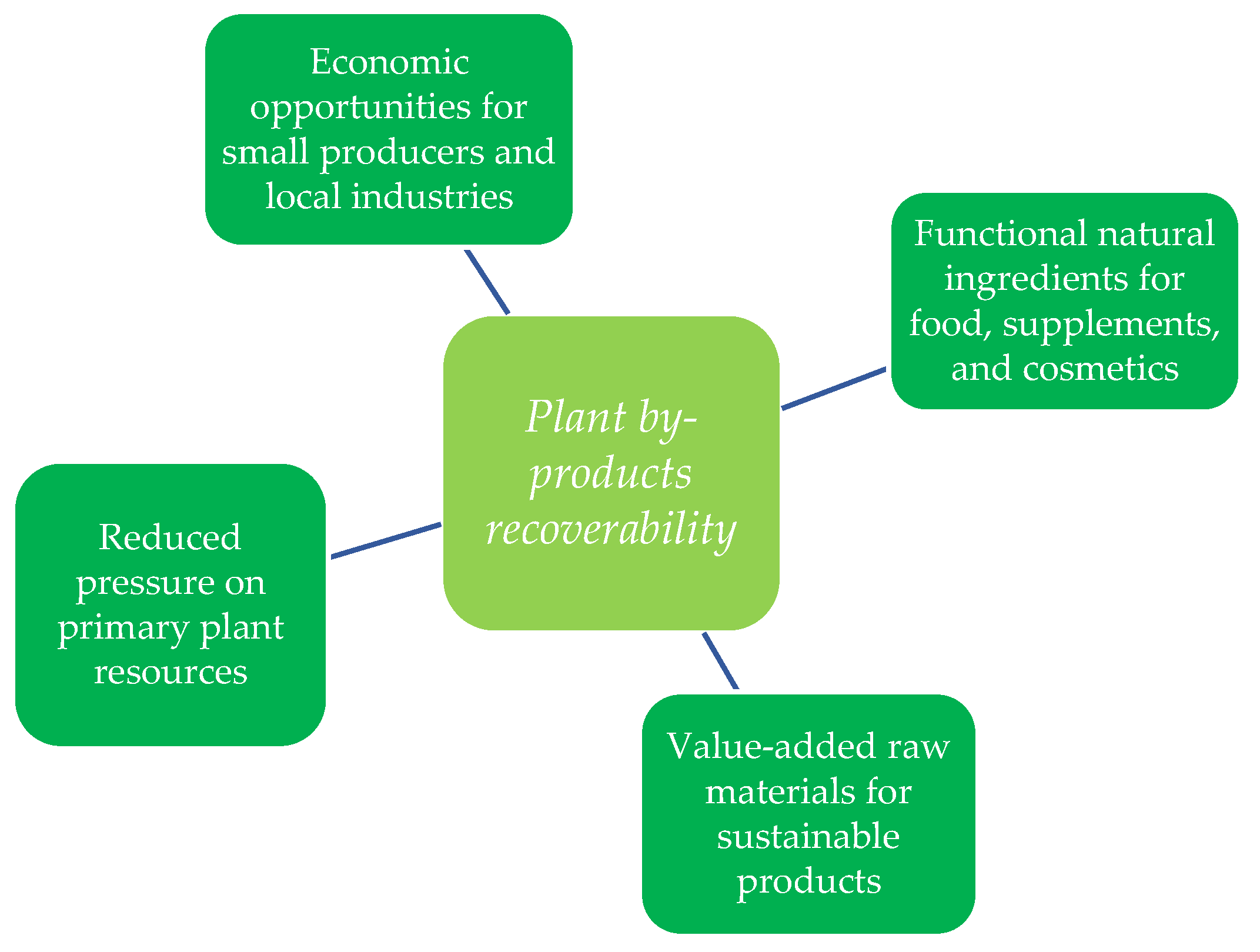
Recycling plant waste adds value and integrates it into production chains (
Figure 9).
This model aligns with the principles of the circular economy, promoting the recovery and reintegration of resources into a closed, waste-free system [
103]. The valuable biocompounds recovered from food waste or by-products could also contribute to improving consumers’ health, in addition to benefiting different industries and environmental sustainability, as Nemli et al. underlined in their study [
104].
4.3. Applications of Green Extracts in the Food Industry
The integration of extracts obtained through green methods into the food industry is an innovative direction with multiple advantages: it provides natural, sustainable, and safe ingredients, meets consumer demand for “clean label” products, and helps reduce the ecological impact of food chains. Bioactive compounds extracted from plant waste have demonstrated technological and functional potential across a range of applications, from natural preservatives to additives with nutritional or sensory roles.
Green extracts can be used in foods as natural antioxidants [
102], inhibiting lipid oxidation and extending product shelf life (e.g., extracts from pomegranate peel and grape marc). Bartolini et al. highlighted the positive results obtained by implementing the concept of reuse as a resources. Their investigation showed that eco-friendly phenol extraction from apple and potato trash could influence the formation of enzymatic browning pigments in apple slices [
105]. Ghosh et al. demonstrated valuable applications of naturally dried grape peel and seed. Their hydroalcoholic extract showed both antioxidant and antimicrobial properties, attributes that could be considered for the development of functional foods [
106].
As antimicrobial agents, they inhibit the growth of pathogenic or spoilage bacteria (phenols from sage, garlic, and rosemary). Anthocyanins or carotenoids could act as natural colorants to replace synthetic pigments. Providers for pleasant sensory profiles could be derived from aromatic plants. They could also serve as ingredients with added nutritional value, furnishing fiber, polyphenols, and essential fatty acids.
Examples of industrial applications could include adding antioxidant extracts (grape marc) to stabilize fats and improve the nutritional profile or replacing nitrites or synthetic additives with antimicrobial extracts (rosehip, garlic, and oregano) in meat and processed products. It could also involve the design of functional beverages and foods incorporating extracts from fruits or leaves rich in flavonoids and vitamins for antioxidant and energizing formulations [
30]. Surasani et al. demonstrated that the protein aggregation capacity of polyphenols results from vegetal waste processing [
107]
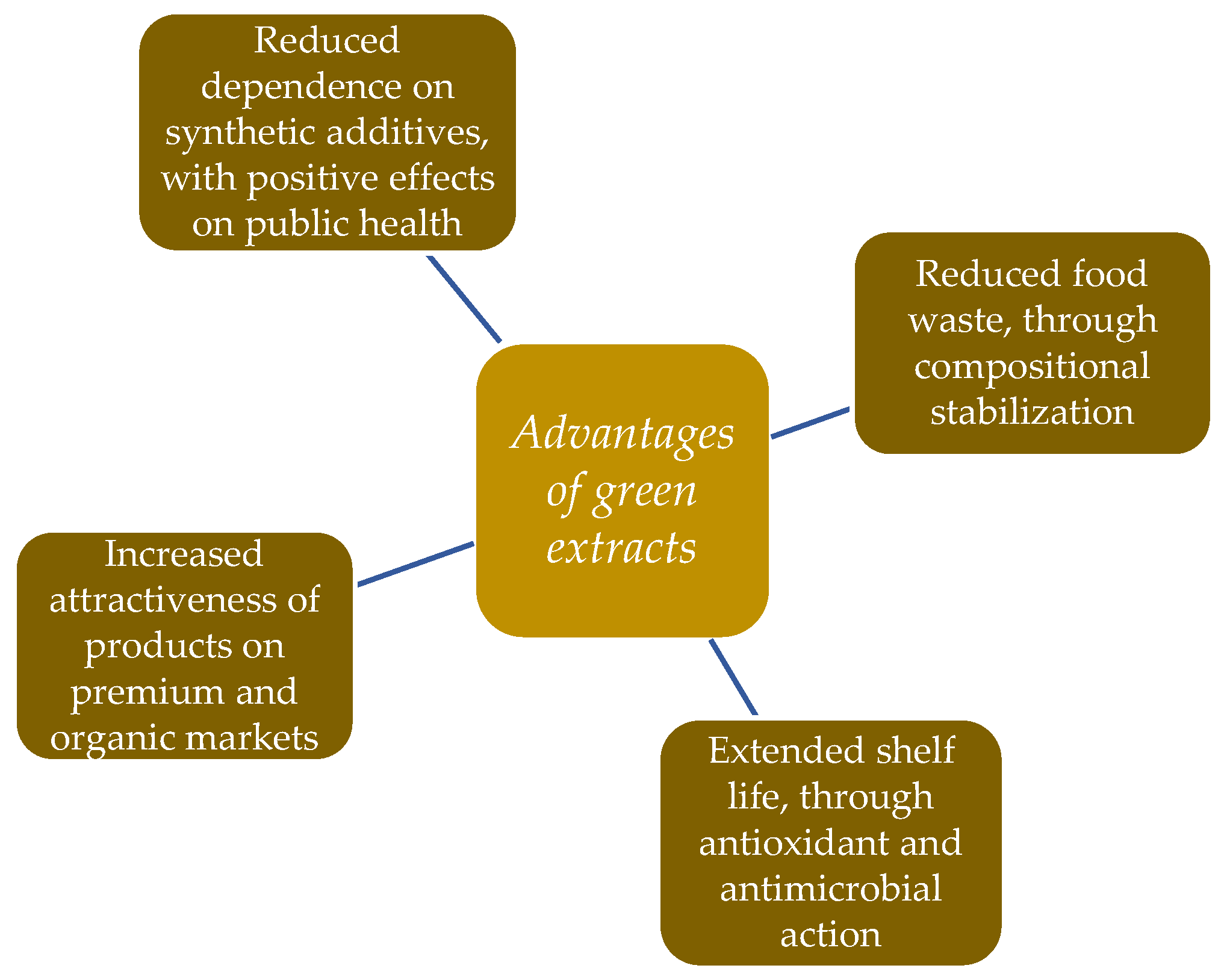
The use of green extracts in food has multiple benefits (
Figure 10).
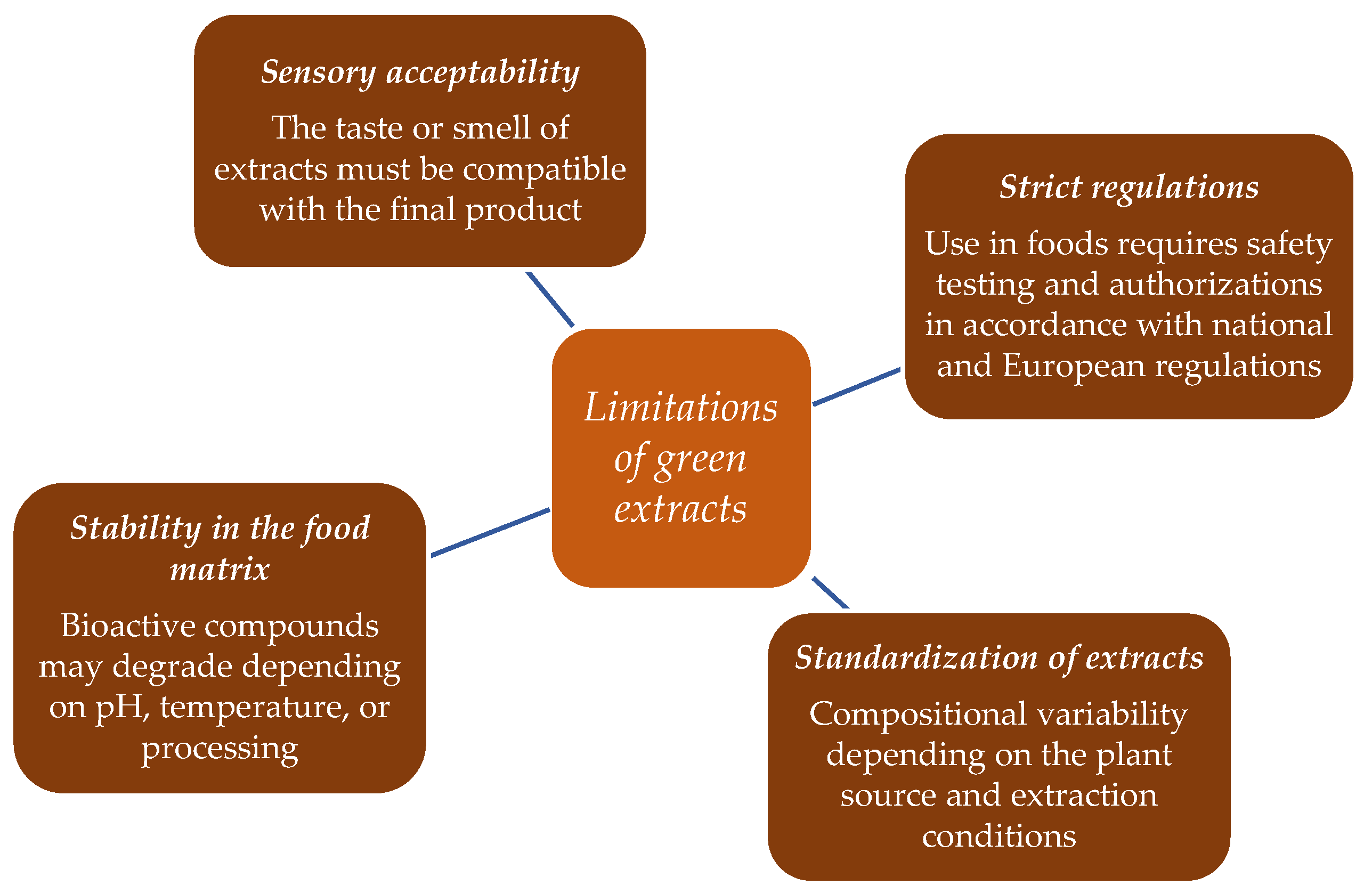
Although the potential is promising, the application of green extracts in food also involves challenges (
Figure 11).
The integration of these green ingredients requires a multidisciplinary approach that combines food science, process engineering, safety regulations, and industrial innovation [
108].
The transition to sustainable practices in the food industry and environmental chemistry is no longer just an option but a global necessity. The use of green solvents for the extraction of bioactive compounds from plant waste offers a promising solution that simultaneously addresses pollution, resource waste, and the growing demand for natural, safe, and functional products.
This chapter highlighted the central role of green solvents as environmentally friendly and efficient alternatives for the extraction of bioactive compounds, offering multiple advantages, including reduced toxicity, greater biodegradability, and compatibility with food applications. It was also emphasized that plant waste has potential as a renewable source of functional ingredients, contributing to the circular economy and reducing the ecological footprint of the agri-food industry. The concrete applications of green extracts in food products, from natural preservatives and antioxidants to flavors and ingredients with nutritional value, can enhance the quality and safety of modern foods.
At the same time, research in this field opens up several important future directions, such as the optimization of extraction processes to achieve maximum yields with minimum energy consumption, the development of new customized eutectic solvents adapted to different matrices and target compounds, and developing clear public policies and regulations that support the widespread adoption of these green industry practices [
109].
Combining green extraction technologies with the use of residual plant resources offers a viable path towards a sustainable, efficient food system oriented towards consumer and planetary health [
110,
111,
112], as well as towards the sustainability of agriculture, education [
113], pharma [
114], and dermatocosmetic industries [
115].
Table 4 presents specific performances reported in the literature for the different technologies used for phytocompnd extraction.
Ultrasound-assisted extraction (UAE) and microwave-assisted extraction (MAE) are characterized by rapid mass transfer and reduced processing times, often yielding high recoveries of polar bioactive compounds, such as polyphenols. Prolonged exposure could create local hotspots that may degrade thermolabile compounds and affect sensory attributes in food applications. Supercritical CO2 extraction offers excellent solvent-free extract profiles with minimal residual solvent, yet its high initial capital cost and energy requirements require careful life-cycle consideration.
State-specific regulatory barriers to clean-label products can influence solvent selection and process design, particularly when new solvent systems lack an explicit classification.
5. Discussion
The combined PCA and K-means analysis provides a structured macroeconomic–environmental framework for interpreting the differentiated potential of European States to support the deployment of green extraction technologies in the food industry. The first two principal components account for 88.04% of the total variance, ensuring that the clustering results are grounded in the dataset’s dominant structural patterns, instead of marginal statistical effects. The first principal component (F1) captures scale- and intensity-related dimensions and is strongly associated with total greenhouse gas emissions, total imports and exports, and GDP per capita linked to final consumption expenditure. Countries with higher F1 values, such as those in Cluster 3 (Spain, France, and Italy), are characterized by large agro-industrial systems, extensive trade integration, and consumption-driven economic activity. In these contexts, green extraction technologies are particularly relevant for improving process efficiency, reducing emission intensity, and valorizing large volumes of plant-based waste streams generated along extended food value chains.
The second principal component (F2) reflects structural capacity for environmental innovation, as it is aligned with energy productivity and employment in the environmental goods and services sector. Countries in Cluster 1, which exhibit high internal homogeneity, strong correlations with their cluster centroid, and consistently positive Silhouette scores, display comparatively favorable conditions for the incremental adoption of green extraction technologies. In these cases, existing environmental competencies, coupled with moderate industrial scales, create an enabling environment for integrating green extraction into current food-processing infrastructures as part of circular bioeconomy strategies.
Cluster 2, consisting of Germany and Poland, is statistically distinct, as indicated by negative Silhouette scores and large distances to the centroid. This result reflects their atypical macroeconomic and environmental profiles, particularly in terms of emission intensity and trade scale. For these countries, the adoption of green extraction technologies is likely to be driven less by gradual circularity measures and more by systemic industrial transformation, regulatory pressure, and decarbonization objectives. The statistical isolation of this cluster provides relevant insights into differentiated policy and technological pathways within the states.
The clustering does not imply deterministic technological outcomes, but serves as a decision-support tool at the macroeconomic level. By linking emission intensity, environmental employment, energy productivity, and economic scale, the analysis identifies structural conditions under which green extraction technologies can be strategically promoted as part of a circular bioeconomy transition in the food sector.
6. Conclusions, Limitations, and Future Developments
The transition to sustainable practices in the food industry and environmental chemistry is no longer just an option, but a global necessity. The use of green solvents in the extraction of bioactive compounds from plant waste offers a promising solution that simultaneously addresses pollution, resource waste, and the growing demand for natural, safe, and functional products. Currently, there may be inconveniences related to the exponential increase in capacity, which could affect yield. The integration of intelligent-assisted alternatives may provide some answers.
Many such initiatives are in the early stages of implementation, and as a result, several threats may be encountered during the different implementation phases. These could pertain to areas such as legislation, costs, or reluctance to try new things among those who carry out their activities using classic technological solutions. Policy makers could consider possible legislative restrictions on the use of new solvents or extracts from plant waste before their safety tests on humans and the environment. Like any new concept released on the market, such initiatives have high costs for industrial-scale implementation. These alternatives enter the market in competition with optimized alternatives that are already validated and are expected to have lower production costs but higher exploitation expenses. Such an aspect could significantly contribute to industry resistance to changing existing processes, due to technical and economic uncertainties and a certain resilience among consumers [
122]. Other motivations could stem from the training needs determined by the introduction of novel technologies. A potential offset to the financial aspect could be lower or nonexistent raw-material costs from waste valorization. This strategy could yield a third economic advantage by reducing neutralization costs, thereby mitigating the negative environmental impact of their long-term deposits [
123].
This work highlighted the central role of green solvents as an ecological and efficient alternative for the extraction of bioactive compounds, offering multiple advantages, including reduced toxicity, greater biodegradability, and compatibility with food applications. There was an emphasis on the importance of assessing ecotoxic risks, even for substances viewed as “green”, and on the need for an approach grounded in scientific data and life-cycle analyses.
The potential to valorize plant waste as a renewable source of functional ingredients, to contribute to the circular economy, and to reduce the agri-food industry’s ecological footprint was considered. The research incorporates concrete applications of green extracts in food products, ranging from natural preservatives and antioxidants to flavors and ingredients with nutritional value, thereby enhancing the quality and safety of modern foods.
At the same time, research in this field opens up several important future directions. Among these are opportunities to optimize extraction processes to achieve maximum yields with minimal energy consumption. Another concerns the development of new, personalized eutectic solvents tailored to different matrices and target compounds. The integration of bioactive extracts into smart packaging and controlled delivery systems is another possibility that subscribes to the goal of sustainable systems development. All intended applications must be supplemented by extensive testing of their effects on human health, including bioavailability and metabolic interactions. The comprehensive implementation of nanotechnologies could also be considered. McClements et al. highlight the benefits and various development methods in the field [
124]. Such methods could contribute to the protection and controlled release of phytochemicals in the target environment. Contreras-Anglo et al. highlighted various possibilities to valorize olive oil by-products through green extraction techniques and encapsulation methodologies to increase the product’s applicability [
125].
This study can serve as a foundation for documenting project proposals to access European funds for programs focused on the circular economy and food waste reduction. It could also be seen as a comprehensive foundation that enables the standardization of extraction methodologies and ecotoxicological assessments.
To address the threats posed by new technologies in the field, there is a need for clear public policies and regulations that support the large-scale adoption of these green practices across the industry. The combination of green extraction technologies with the use of plant waste resources offers a viable path towards a sustainable, efficient, and health-oriented food system for the consumer and the planet.
Although this review provides an integrated view of the use of green solvents for the extraction of bioactive compounds from plant waste and their potential in the food industry, it also has several inherent limitations. This review is based exclusively on published studies, which may introduce publication bias, as positive results are generally more frequently reported than negative ones. All analytical interpretations rely on published data. The author conducted no experimental validation.
One key limitation of this study is the lack of a dedicated life-cycle assessment of the extraction processes examined. Although the analysis synthesizes existing LCA findings from the literature, it does not provide a quantitative comparison of environmental impacts across extraction technologies. Consequently, claims about the sustainability of green extraction are framed cautiously and interpreted within the bounds of available evidence.
Limitations related to the statistical analysis are also acknowledged. The analysis was conducted at the macroeconomic level using aggregated national indicators. Although this approach is appropriate for identifying structural patterns and comparative profiles among European States, it does not capture firm-level heterogeneity, sector-specific technological readiness, or local supply-chain constraints that directly influence the implementation of green extraction technologies. The clustering results reflect statistical similarity across selected indicators, instead of direct measures of technological adoption. Consequently, the identified clusters should not be interpreted as predictors of the actual deployment rates of green extraction technologies, but rather as frameworks that highlight differentiated enabling conditions and structural constraints. Although PCA-based dimensionality reduction explains a substantial proportion of the total variance (88.04%), it inevitably simplifies complex socio-technical systems. Variables such as regulatory enforcement quality, investment incentives, and innovation diffusion dynamics were not explicitly included due to data availability constraints.
The proposed alignment between clusters and green extraction technologies is more indicative than prescriptive. The analysis does not replace techno-economic or process-level assessments, and technology selection ultimately depends on feedstock characteristics, plant scale, and local energy prices. Consequently, the cluster-based framework should be interpreted as a strategic screening tool more than a deterministic guide for technology deployment.
There could be significant differences in extraction protocols, green solvent types, and analytical methods, making it difficult to compare and standardize results directly. There is limited public data on the performance of green solvent processes at an industrial scale, making it hard to extrapolate laboratory results to commercial applications. Since many of the reviewed studies do not include integrated assessments of the total environmental impact, the conclusions are limited in respect to the real sustainability of the technologies.
Many articles do not address compliance with international regulations for the use of extracts in food products, which impacts the assessment of practical feasibility. Since this study covers mainly the period 2010–2025, further research may highlight emerging technologies that change the current outlook.
The use of the expression “green solvent” does not inherently reduce environmental or toxicological impacts. A growing body of life-cycle assessment studies indicates that solvents such as ethanol, supercritical CO2, and selected deep eutectic solvents may lower human toxicity and ecotoxicity indicators compared to conventional organic solvents, primarily due to lower volatility, improved recoverability, and reduced persistence in aquatic environments. The LCA outcomes are highly sensitive to system boundaries, energy demand, and solvent recovery rates. Although supercritical CO2 extraction eliminates organic solvent residues and reduces ecotoxicological risks, its overall environmental performance depends strongly on the energy required for compression and on its integration with renewable energy sources. Similarly, bio-based solvents may offer advantages in biodegradability and toxicity, but can still have non-negligible impacts if solvent losses or inefficient recycling occur. These considerations highlight the need to evaluate green extraction technologies from a full life-cycle perspective, rather than relying solely on solvent classification.
Future research could address these limitations by integrating micro-level data, such as firm surveys or sector-specific case studies, to validate the pathways suggested by the macroeconomic clusters empirically. Additionally, extending the analysis beyond Europe or incorporating dynamic time-series data could provide further insights into the temporal evolution of green extraction adoption within circular bioeconomy systems. Attention should be given to prioritizing harmonized LCA studies that systematically compare green and conventional extraction methods using consistent functional units, system boundaries, and solvent recovery assumptions, particularly at industrially relevant scales. Also, alternative normalization strategies could be explored to assess the sensitivity of clustering outcomes to scale effects. The sensitivity of cluster assignments to alternative distance metrics or normalization strategies was not explored and represents an avenue for future research.