1. Introduction
The investigation of alternative and sustainable energy sources is crucial in a time of rising environmental awareness and increasing energy needs. Utilizing energy from the infrastructure all around us is one promising direction explored in this paper. Infrastructure-Integrated Energy Harvesting (IIEH) is a novel idea that aims to address the world’s energy issue and advance environmentally responsible urban planning. Piezoelectric energy harvesting, thermal energy harvesting, wind energy harvesting, solar energy harvesting, and vortex-induced vibration energy harvesting are the five distinct, yet linked elements of infrastructure-integrated energy harvesting covered in this research review. Each of these techniques offers distinct benefits for energy capture, and when intelligently incorporated into the built environment, they can greatly aid in the development of a more sustainable and resilient future.
Utilizing piezoelectric materials, piezoelectric energy harvesting involves converting mechanical energy into electrical energy. It has drawn attention due to its flexibility in infrastructure, which is subject to significant vibrations, pressures, and strains. This study reveals the possibility of producing energy from pedestrian footsteps, structural vibrations, and even vehicle traffic by examining the most recent advancements in piezoelectric technology and its applications within civil constructions. In contrast, thermal energy harvesting concentrates on using temperature differences for power production. Buildings and roadways, for example, endure temperature variations during the day and across the seasons. This review explores recent developments in thermoelectric materials and systems that can transform waste heat into electrical energy, minimizing energy waste and improving building performance. The assessment also highlights the use of wind energy in infrastructure. Urban locations offer chances for small-scale wind turbines to be integrated into buildings or other structures because wind is a potent and easily accessible resource. One of the most well-known sources of renewable energy, solar energy, is not just found in rooftop solar panels. This review looks at how urban infrastructure might be improved to effectively use solar energy. Energy harvesting, a crucial area of research, is well known for its capacity to capture background mechanical vibrations and transform them into electrical energy suitable for low-power electronic devices. In recent years, vortex-induced vibrations (VIV), together with base excitations, have emerged as a promising source of energy.
Over recent decades, significant research has focused on developing new energy harvesting approaches to capture energy from natural resources such as wind, rain, and vibrations, which would otherwise be lost, and convert it into more useful forms [
1]. Roads, in particular, present abundant energy sources, including mechanical vibrations from vehicles, solar radiation on large pavement surfaces, and thermal gradients between the hot top layers and cooler underlying layers caused by traffic and sunlight. Consequently, piezoelectric, electromagnetic, thermoelectric, and solar panel systems are well-suited to transform these energy forms into electrical power [
2]. The work of Wang et al. [
3] compares the energy productivity of these four technologies in terms of power density. Photovoltaic systems typically show the highest peak productivity but are dependent on direct sunlight, limiting performance under low-light conditions, such as cloudy days or tunnels. Piezoelectric energy harvesting, in contrast, can generate electricity under a wider range of conditions.
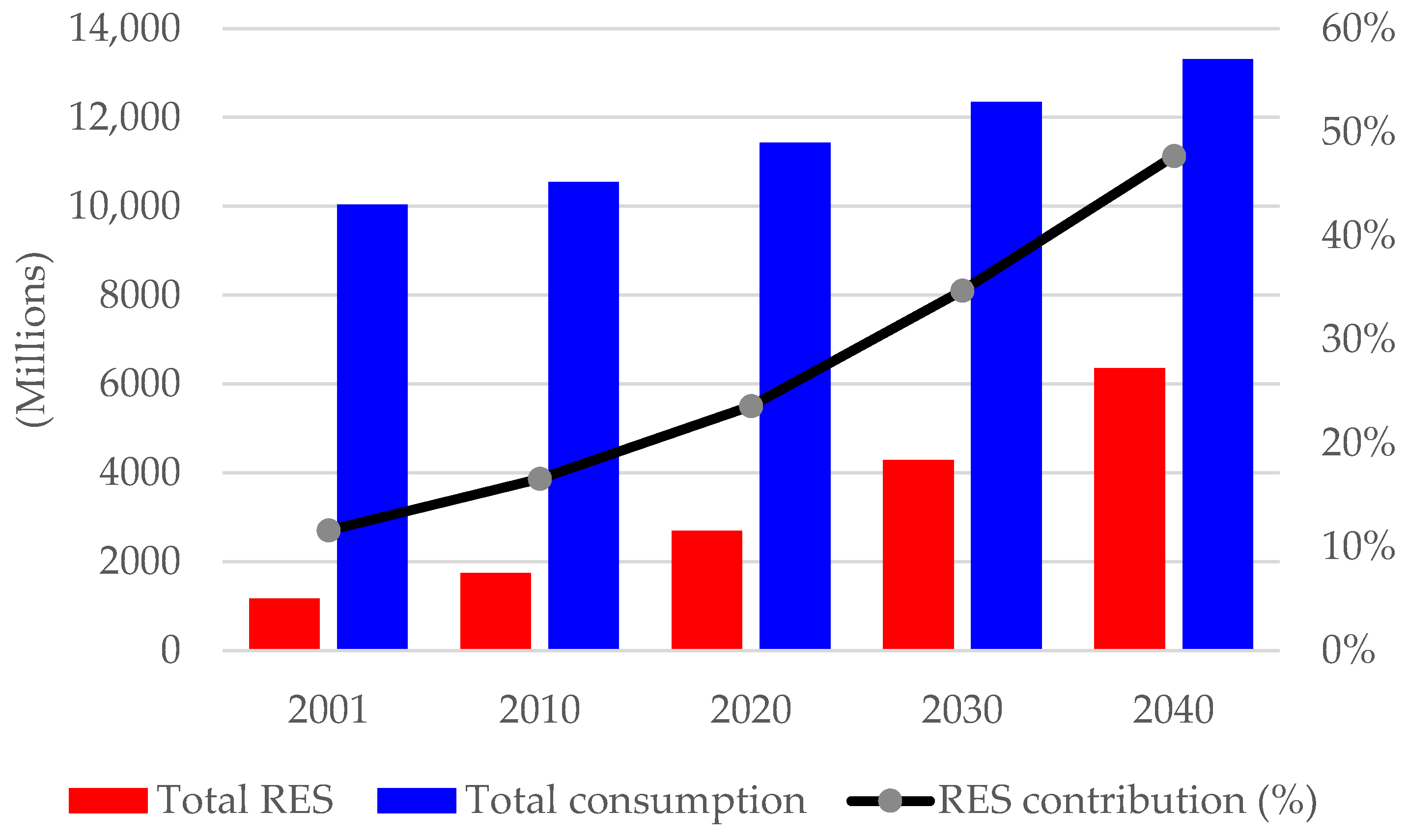
Table 1 and
Figure 1 show that renewable energy sources (RES) currently supply approximately 14% of global energy demand, with this share projected to grow significantly by 2100.
Figure 1 represents total energy consumption covered by renewable energy versus total consumption over a 40-year period. As total energy consumption increases by around 3500, the usage of RES increases by 5000.
As a creative strategy to exploit renewable energy sources, the infrastructure integration of solar energy collection has attracted a lot of interest. The study “Harvesting Roadway Solar Energy—Performance of the Installed Infrastructure-Integrated PV Bike Path” in this context provides an in-depth investigation of a groundbreaking project involving the integration of photovoltaic (PV) solar panels into a bike path infrastructure [
4]. The performance and viability of such an integrated PV system in relation to road applications are examined in this study, revealing insight into its potential as a sustainable energy source. This study is crucial because it provides important insights into the performance and effectiveness of infrastructure-integrated solar solutions in the real world, particularly in the context of urban planning and energy sustainability. This is because there is an increasing global focus on renewable energy and sustainable transportation solutions.
Table 1.
Global renewable energy scenario by 2040 (in Million Ton) [
5].
Table 1.
Global renewable energy scenario by 2040 (in Million Ton) [
5].
| Global Renewable Energy | 2001 | 2010 | 2020 | 2030 | 2040 |
|---|
Total consumption
(million tons oil equivalent) | 10,038 | 10,549 | 11,425 | 12,352 | 13,310 |
| Biomass | 1080 | 1313 | 1791 | 2483 | 3271 |
| Large hydro | 22.7 | 266 | 309 | 341 | 358 |
| Geothermal | 43.2 | 86 | 186 | 333 | 493 |
| Small hydro | 9.5 | 19 | 49 | 106 | 189 |
| Wind | 4.7 | 44 | 266 | 542 | 688 |
| Solar thermal | 4.1 | 15 | 66 | 244 | 480 |
| Photovoltaic | 0.2 | 2 | 24 | 221 | 784 |
| Solar thermal electricity | 0.1 | 0.4 | 3 | 16 | 68 |
| Marine (tidal/wave/ocean) | 0.05 | 0.1 | 0.4 | 3 | 20 |
| Total RES | 1165 | 1746 | 2694 | 4289 | 6351 |
| Renewable energy source contribution (%) | 11.6 | 16.6 | 23.6 | 34.7 | 47.7 |
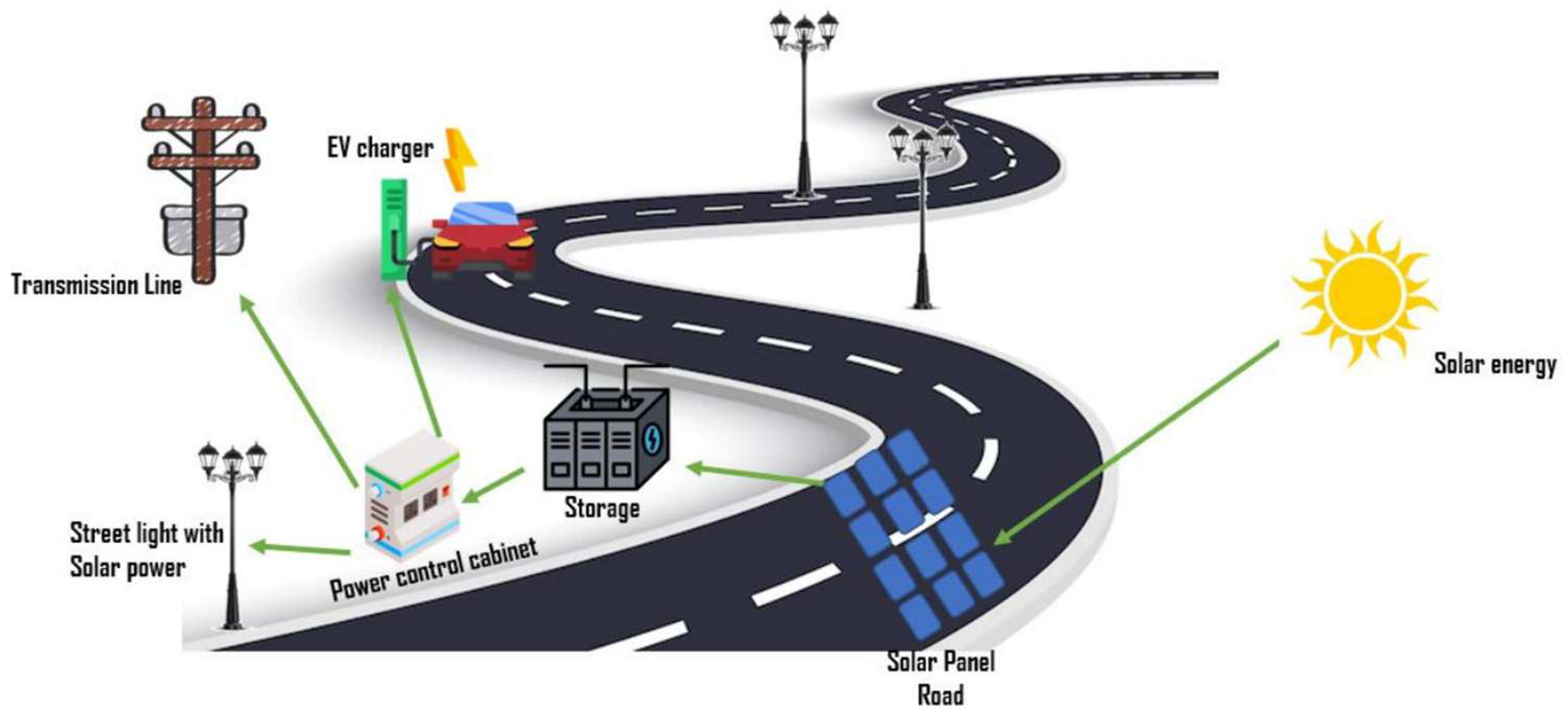
Infrastructure encompasses the essential physical systems of a country, including transportation networks, buildings, communication lines, sewage, water supply, and electrical systems. Roads are a key part of civil infrastructure, playing a crucial role in connecting communities and facilitating movement. Typically, roads function as the structural layer supporting traffic loads. Roadways and bridge decks are constantly subjected to vehicle-induced forces and solar radiation, which generate mechanical vibrations and thermal gradients within pavement layers [
6].
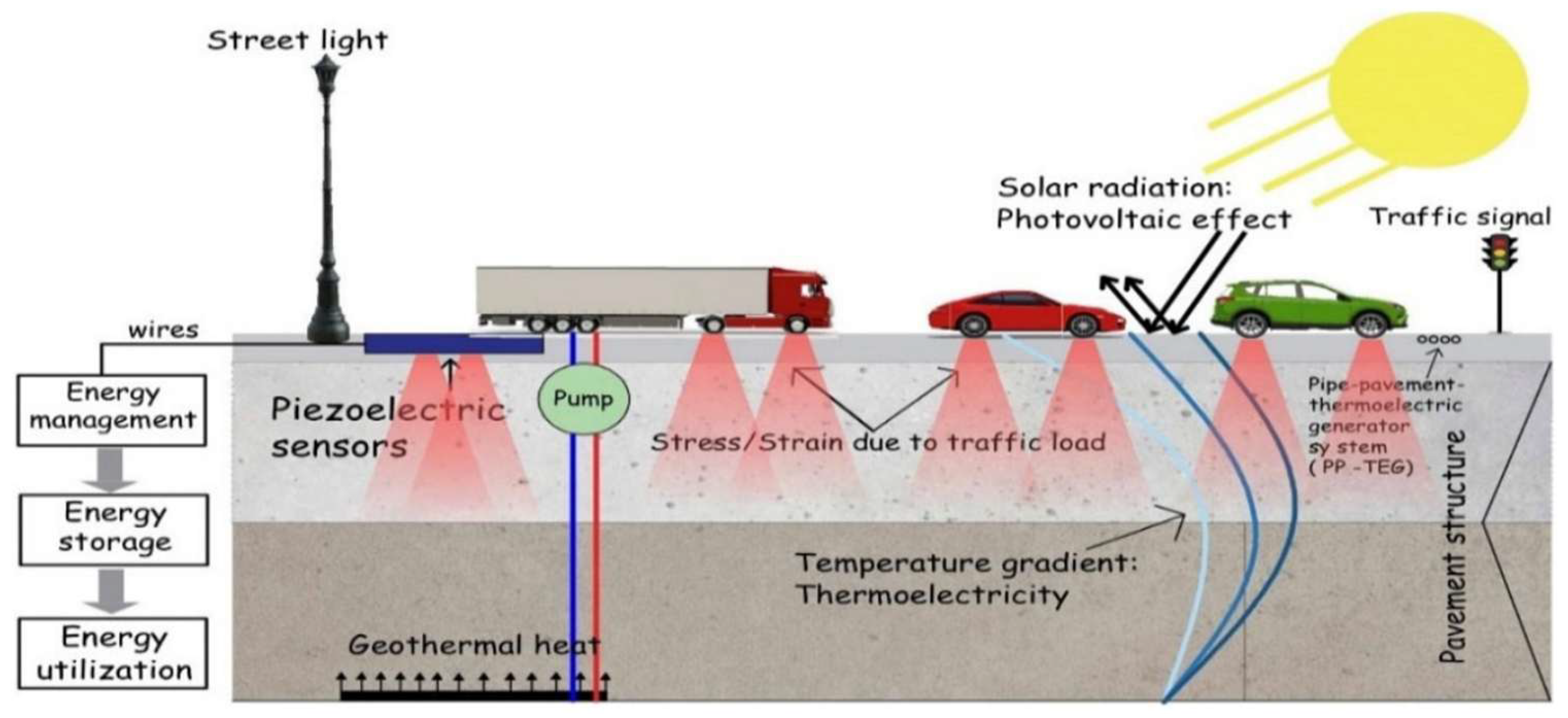
Figure 2 illustrates the energy harvesting technologies that can be applied to roadways.
While numerous studies have reviewed individual energy harvesting technologies or specific applications, a comprehensive comparison that integrates feasibility metrics such as cost, energy output, and technology readiness level for civil infrastructure applications remains limited. This paper addresses this gap by synthesizing existing studies and evaluating major energy harvesting technologies using consistent feasibility criteria relevant to real-world infrastructure implementation.
2. Literature Review
Numerous studies have investigated traditional renewable energy sources, energy feasibility analyses, and energy harvesting techniques from infrastructure and transportation systems, among other related topics. For the study, a comprehensive literature review on the fundamental principles of energy harvesting methods related to bridge and roadway applications, including material design, field experiments, and ongoing projects, is conducted and discussed below.
A systematic search was conducted in technical journals using databases (copus, WoS, IEEE Xplore, etc.) for the period 2010–2024 using keywords such as roadway energy harvesting, bridge energy harvesting, piezoelectric, thermoelectric, solar pavement, vortex-induced vibration, and geothermal infrastructure.
Inclusion criteria included studies focusing on transportation infrastructure, technologies at TRL ≥ 3, energy output, or cost-related data. Exclusion criteria eliminated studies lacking quantitative performance information or relevance to infrastructure applications.
Reported energy output and cost data were used to convert values to common units (kWh, USD/kWh) and normalized to annual operating periods. Adjustments were made for differences in system scale and test conditions to enable consistent cross-technology comparisons. This approach ensures reproducibility and transparency while supporting a comparative analysis of emerging and established energy harvesting technologies in civil infrastructure.
2.1. Solar Energy Harvesting
2.1.1. Photovoltaic (PV) Cell Energy
Photovoltaic cells convert incoming solar radiation into electrical energy through semiconductor behavior. A typical PV cell consists of an N-type semiconductor layer and a P-type semiconductor layer. When sunlight reaches these semiconductor materials, charge carriers are activated and begin to move in opposite directions. Positively charged carriers migrate toward the P-type layer, while negatively charged carriers move toward the N-type layer. This movement of charge carriers produces an electric current that can be delivered to an external electrical load [
8].
Previous research has explored the application of photovoltaic cells for solar energy harvesting on transportation infrastructure, particularly roadways. For example, Kang-Won et al. [
9] examined the feasibility of integrating PV systems into road surfaces for energy collection. Their findings indicate that installing thin-film photovoltaic cells on pavements faces significant challenges, mainly related to durability under varying environmental conditions and repeated traffic loading.
PV pavement surfaces have also been identified as a potential solution for decreasing the Urban Heat Island (UHI) impact. Efthymiou et al. [
10] showed how PV pavement affects the UHI effect using scaled-down field measurements and computational projections. Their findings demonstrated that PV pavement has lower surface and ambient temperatures than conventional asphalt pavement.
In a study conducted by Golden et al. [
11], the thermal effects of three different pavement surface coverings were evaluated. The results indicated that surface coverings provided greater thermal reduction than uncovered asphalt pavement surfaces.
In addition, Nordmann et al. [
12] investigated the performance of Photovoltaic Noise Barriers in six European countries. Their analysis showed that these systems could produce approximately 800 MWh of electricity per year, with an estimated expansion potential reaching up to 680 GWh. The study also confirmed that solar energy harvesting performance improves significantly when direct sunlight is available during specific periods of the day, while energy output decreases under conditions of reduced solar irradiance.
2.1.2. Solar Collector System
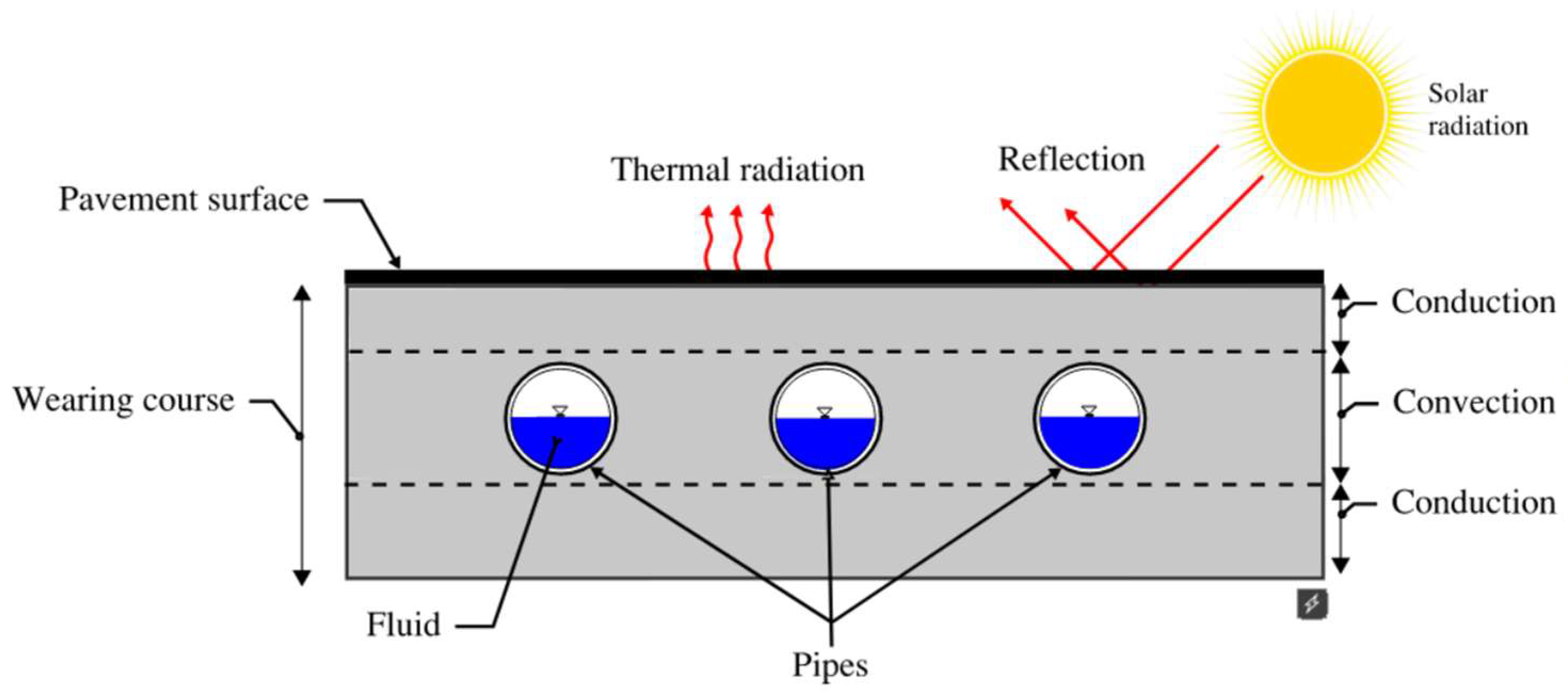
Asphalt solar collectors consist of pipe networks embedded within pavement slabs that transport a circulating fluid, as shown in
Figure 3. When the pavement absorbs radiation from the sun and the surrounding environment, its temperature rises and heat is transferred to the fluid inside the pipes due to temperature gradients. Heat transfer in asphalt solar collector systems occurs through three primary mechanisms: conduction, convection, and radiation. Conduction takes place between the pavement material and the pipe walls, while convection occurs when temperature differences exist among the ambient air, pavement layers, pipe surfaces, and the circulating fluid.
Radiative heat transfer becomes relevant in the absence of a physical medium and includes the transmission of solar radiation to the pavement surface as well as thermal radiation exchange between the pavement and the surrounding atmosphere. The heat captured by the piping system may also be utilized by thermoelectric generators to produce electrical energy [
13,
14]. Solar and atmospheric radiation increase pavement temperature, which subsequently transfers thermal energy to the circulating fluid through temperature differentials [
15].
Figure 3.
Solar collector mechanism [
15].
Figure 3.
Solar collector mechanism [
15].
2.2. Thermo-Electric Generator (TEG)
Thermo-electric generators (TEGs) harvest energy from variations in thermal conditions within an enclosed environment. These devices utilize temperature gradients between pavement layers to generate electricity based on thermo-electrical principles. The direct conversion of thermal energy into electrical power makes thermo-electric technology one of the promising approaches for effective heat energy harvesting [
16].
An excellent possibility to produce sustainable energy exists in the utilization of asphalt pavement energy. Integral to civil engineering infrastructure, asphalt pavements offer a variety of ways to absorb energy, from piezoelectric technology used to capture mechanical energy from passing automobiles to direct electricity generation from temperature gradients inside the pavement structure [
17]. The infrastructure of transportation might be revolutionized by this latent energy conversion to electricity, which would also lessen our dependency on fossil fuels. New methods are evolving to improve the effectiveness of energy harvesting, such as thermoelectric generators and innovative cooling systems. These dynamic methods are summarized in this literature review, which also reflects how the field of pavement energy harvesting is changing.
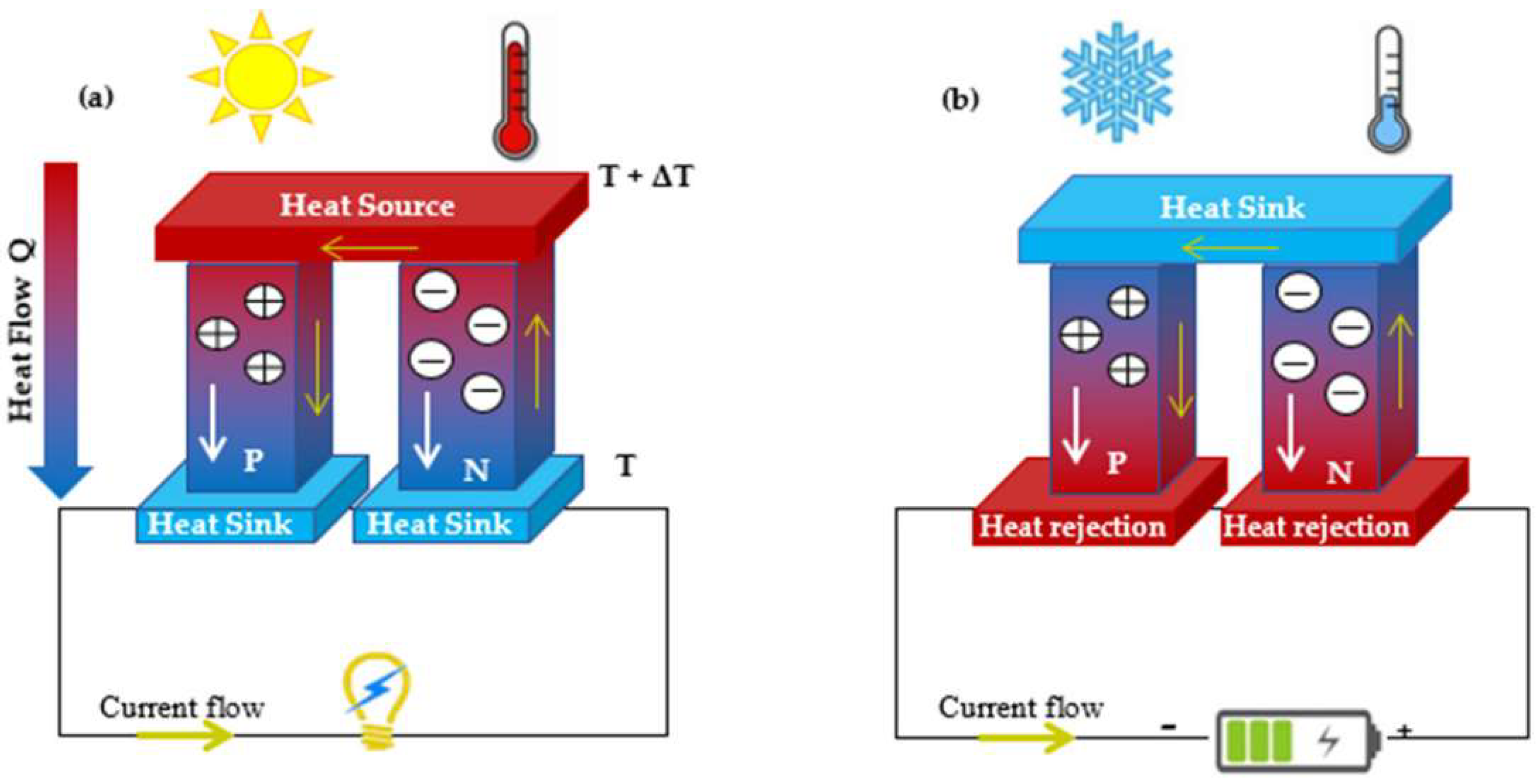
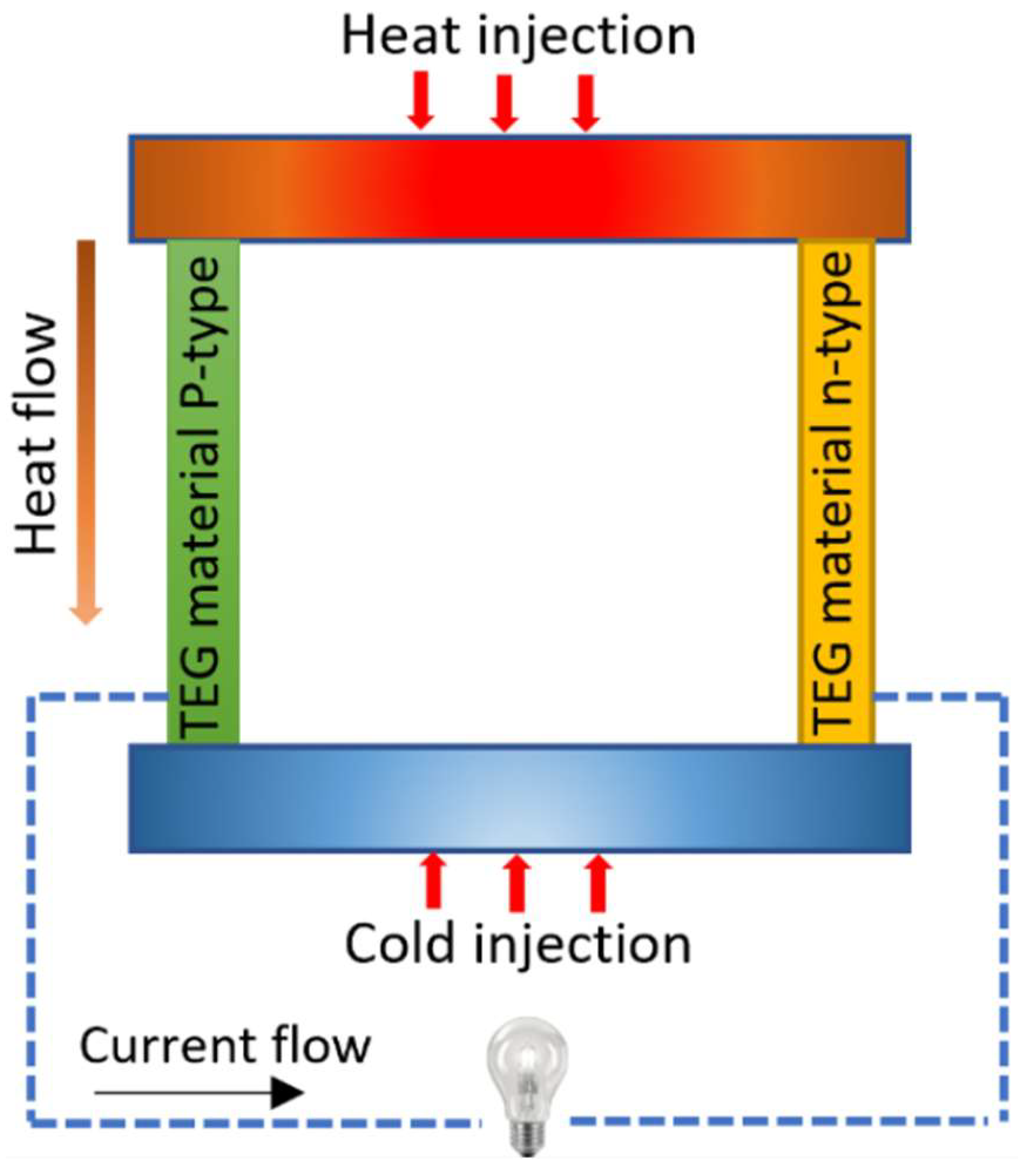
Figure 4 demonstrates how a thermoelectric generator (TEG) functions using P-type and N-type semiconductors. In
Figure 4a, a heat source is applied to the top, creating a temperature difference between the hot and cold ends. In the P-type semiconductor, holes act as charge carriers and move from the hot side to the cold side, while in the N-type semiconductor, electrons migrate in response to the temperature gradient. This movement of charges produces a voltage, driving a current through an external circuit to power devices such as a light bulb.
In
Figure 4b, the TEG is shown with a cold source on top. The same mechanism occurs, where holes in the P-type and electrons in the N-type semiconductors move according to the thermal gradient, generating a current that can charge a battery or other storage unit. The temperature difference across the semiconductors is the key driver of charge movement, and the resulting current flows through a closed circuit, converting thermal energy into electricity. The heat sinks on the cold side help maintain the temperature difference, which is essential for improving the generator’s efficiency [
18].
2.3. Geothermal Energy Harvesting
This section covers the geothermal energy systems, emphasizing their utilization of heat from underground sources. Geothermal heat pumps enhance heat output from fluids due to the relatively low temperatures of geothermal sources. Energy harvesting, defined as the conversion of environmental energy into electricity, finds applications in various systems, from sustainable infrastructures to supporting renewable energy initiatives. The evolution of energy harvesting from ancient windmills to modern technologies is noted, particularly for its benefits to sensors and small electrical devices by eliminating traditional wire connections [
19].
Research by Tota-Maharaj et al. [
20] examines the impact of geothermal heat on stormwater quality, highlighting significant temperature alterations affecting stormwater discharge and pathogenic growth. Despite the appeal of geothermal heat as a renewable energy source, limited research has been conducted on its ecological impact, as noted by Shen et al. [
21]. Their assessment shows significantly lower greenhouse gas emissions from geothermal heating systems compared to conventional snow removal methods at airport runways.
Wang et al. [
22] explored the potential of geothermal energy as a dependable, sustainable, and abundant resource to meet global energy demands. The study emphasizes utilizing geothermal energy from oil wells, leveraging existing assets, data, and technology to lower operating and capital costs. It reviews recent developments in oilfield-associated geothermal resources, identifies challenges, and proposes multidisciplinary technologies to facilitate oilfield geothermal development. Geothermal energy, historically found in areas with active volcanic or hydrothermal activity, is increasingly investigated in oil and gas reservoirs to address issues such as diminishing reserves and volatile oil prices. The paper discusses the effective applications of oilfield geothermal projects, including geothermal power generation, crude oil gathering, and space heating, while addressing challenges like low energy conversion efficiency.
Alternative technologies, such as thermoelectric techniques and nanotechnology, are explored to improve extraction efficiency and expand the spectrum of recoverable geothermal resources. The Organic Rankine Cycle (ORC) is highlighted as a method for utilizing intermediate to low-temperature geothermal energy, supporting environmental sustainability by reducing emissions. The study concludes by advocating for greater understanding and implementation of oilfield geothermal resources through integrated risk assessment and management frameworks to maximize energy extraction and efficiency [
22].
2.4. Piezoelectric (PE) Energy Harvesting
Piezoelectric materials generate electrical energy when exposed to variations in geometric deformation and mechanical stress in the presence of an electric field. The voltage output from piezoelectric materials varies with time, resulting in the generation of an alternating current signal. This signal activates both the direct and inverse piezoelectric effects [
23].
Piezoelectric materials can be classified into several groups, including polymers such as polyvinylidene fluoride, piezoelectric semiconductors such as ZnO, piezoelectric composites, single-crystal materials such as quartz, glass ceramics, and piezoceramics. Despite differences in mechanical behavior and piezoelectric performance, polymers and ceramics remain the most widely used forms. Electrical energy generation can be enhanced primarily by increasing the applied stress and by efficiently utilizing coupling modes.
The coupling modes include the d
33 mode and the d
31 mode, which are selected based on the poling orientation of the piezoelectric material relative to the direction of the applied force. In cantilever beam configurations, vertical forces are transferred to mounted thin films, causing transverse deformation and inducing electric potential. This energy conversion mechanism is commonly referred to as the 31-mode. Another approach enables piezoceramics to produce electrical energy from forces applied along the polarization direction, which is known as the 33-mode and was introduced by Du et al. [
6].
Previous studies have shown that piezoelectric energy harvesting performance is highly sensitive to excitation frequency, loading conditions, and transducer configuration. While d31-mode harvesters are often optimized around resonance conditions, d33-mode configurations generally exhibit stronger electromechanical coupling under favorable loading scenarios [
24,
25].
In practical infrastructure applications, d33 coupling modes generally exhibit higher energy conversion efficiency due to direct alignment between the applied stress and polarization direction, making them suitable for applications with well-controlled compressive loading. However, d33 configurations often require more complex mechanical designs and may be more sensitive to misalignment and localized stress concentrations. In contrast, d31 coupling modes typically provide lower conversion efficiency but offer greater structural robustness, simpler integration, and improved durability under bending and cyclic loading conditions. As a result, d31 modes are more commonly adopted in pavement, bridge, and embedded infrastructure applications where long-term reliability and load variability are critical considerations.
Based on the study by Zhao et al. [
26], the use of cymbal piezoelectric transducers on roadways and bridges is recommended for stress-based energy harvesting applications. This recommendation is supported by the consistent stiffness and high energy conversion efficiency observed in both roadway structures and sensor materials.
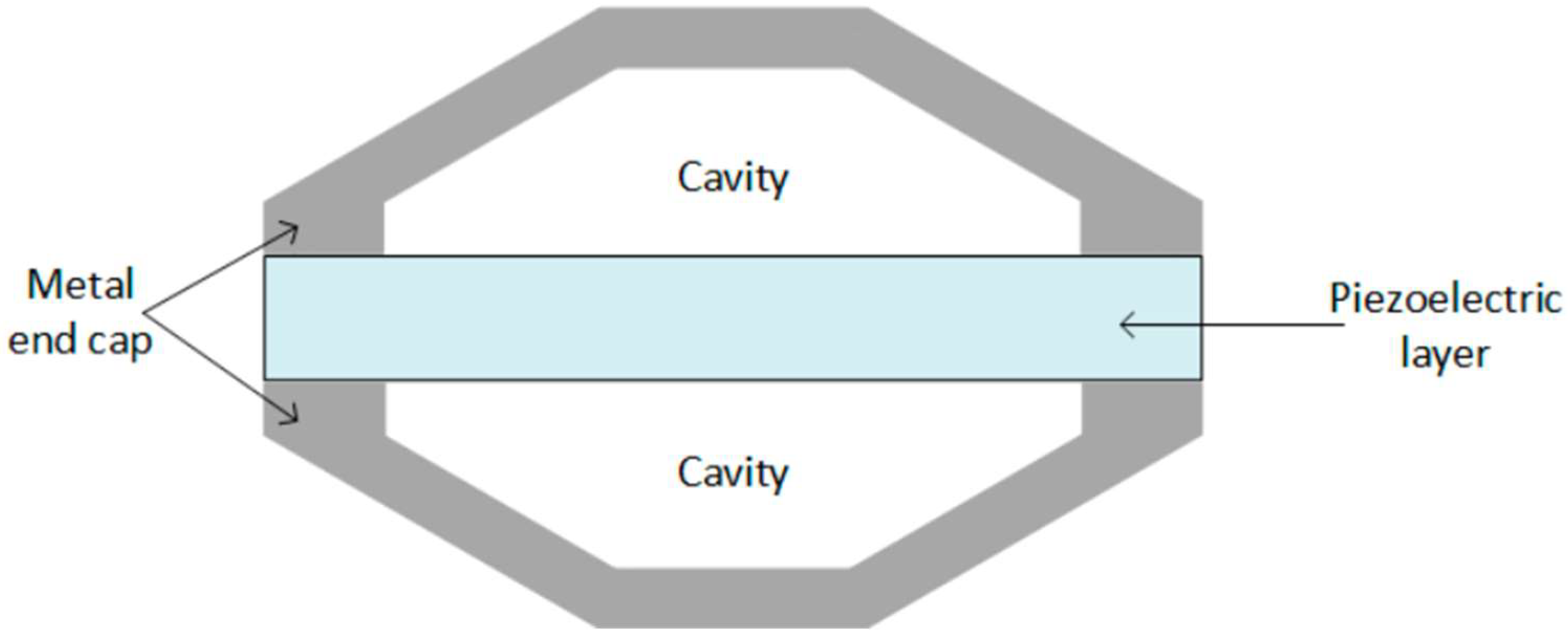
Cymbal transducers consist of a piezoelectric layer positioned between two metal end caps on opposite sides, as illustrated in
Figure 5, and are well suited for applications involving higher impact forces. When axial stress is applied to the metal end caps, the stress is amplified and transformed into radial stress. This mechanism results in an increased piezoelectric coefficient and consequently higher charge generation from the piezoelectric energy harvester [
27].
Cui et al. [
28] proposed a jellyfish-inspired bistable piezoelectric triboelectric hybrid energy harvester designed to improve broadband energy capture under low-frequency vibrations by leveraging nonlinear bistable dynamics. Their work combined theoretical analysis with experimental validation and demonstrated that the hybrid system can substantially enhance energy conversion efficiency and output performance when compared with conventional single-mode harvesters. These findings underscore the strong potential of the proposed configuration for self-powered sensing applications.
Comprehensive reviews by Sezer et al. [
29] have summarized recent advances in piezoelectric energy harvesting, including material development, operational modes, and device optimization strategies. Their work highlights applications at the nano-, micro-, and mesoscale levels across transportation, biomedical, and wearable systems, while also identifying current technical limitations and research directions for improving long-term performance and integration.
2.5. Wind Energy Harvesting
In the development of renewable technologies for wind energy generation, the application of piezoelectric devices for harvesting wind energy has attracted considerable research interest [
4,
30]. The influence of various parameters, including leaf geometry, hinge position, mass, critical wind speed, and pitch angle, on flutter-induced power output has been investigated. The results indicate that by adjusting harvester characteristics such as size and leaf shape, along with wind conditions, it is possible to achieve self-sustained vibrations and drive the device toward its maximum energy-harvesting state.
A novel wind energy harvester proposed by Li and Lipson [
31] focused on inducing self-oscillation of flexible flag-like structures under low-wind-speed conditions by attaching a weight, referred to as a stalk, at the free end of a piezoelectric membrane. The authors conceptualized a tree-inspired configuration consisting of piezoelectric leaves positioned analogously to natural foliage. Zhang and Nabavi [
32] conducted a survey for a comprehensive review of contemporary portable wind energy harvesters, surveying piezoelectric, electromagnetic, and electrostatic power generation methods, analyzing rotational and aeroelastic mechanisms for wind capture, categorizing devices by scale, evaluating power management systems, and identifying key challenges and research trends for improving energy conversion efficiency.
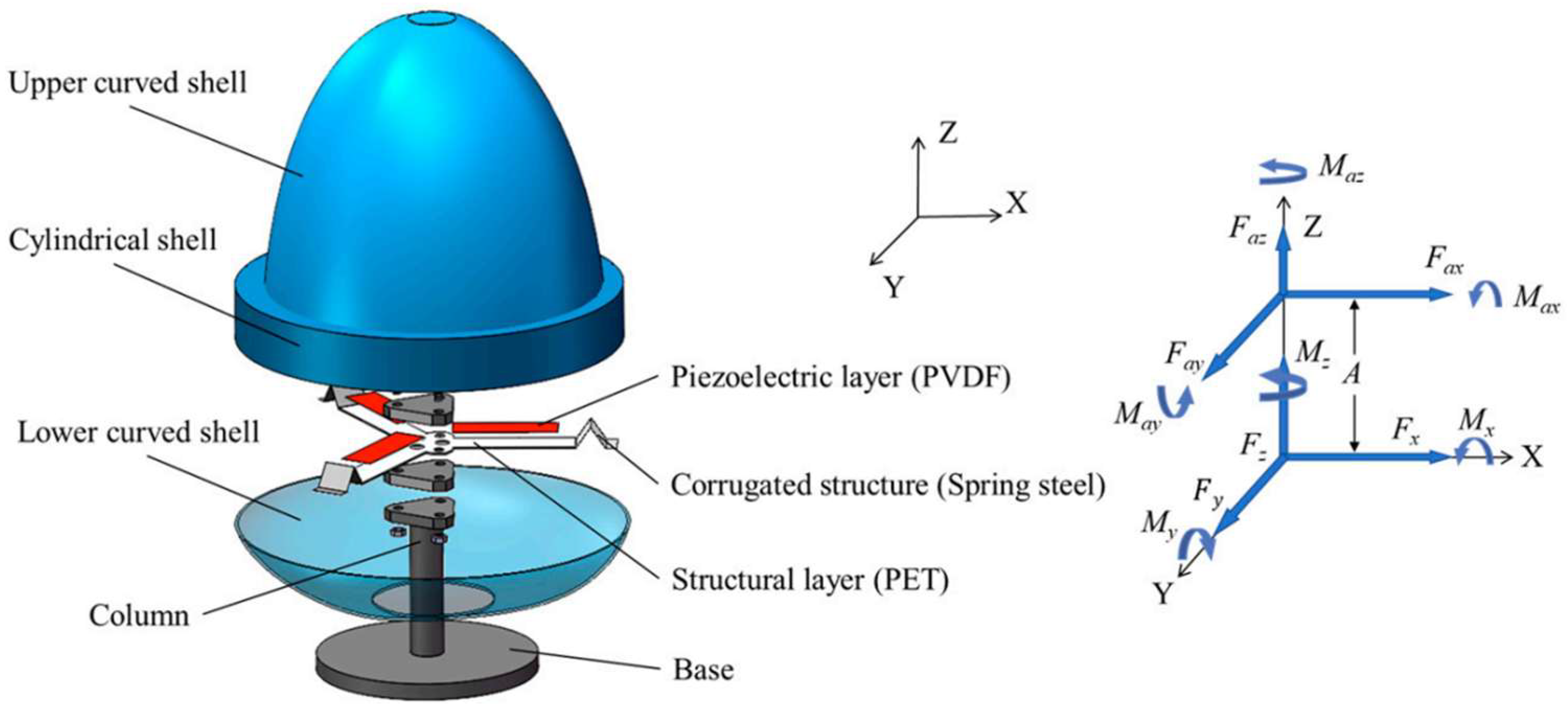
Figure 6 illustrates the mechanical configuration of a rotational wind energy harvester. Unlike conventional wind turbines that rely on circular rotation, this design captures wind energy through multidirectional vibrational motion using a lampshade-shaped shell. The rigid outer shell is supported by three piezoelectric composite beams that directly convert aerodynamic strain into electrical energy without requiring rotating components. By increasing beam length or shell diameter, the cut-in wind speed can be reduced, improving performance under low-wind conditions. In addition, the design incorporates a flexible rubber membrane at the base that serves as a protective enclosure for internal sensors. This configuration offers a more robust and sensitive solution for powering remote technologies when compared with traditional mechanical turbines [
33].
Yang et al. [
34] presented a rotational piezoelectric wind energy harvester consisting of twelve micro-cantilevers mounted at the rear of a fan structure. Several spherical masses were positioned at the fan’s epicenter. As wind flow induces fan tilting, interaction among the masses generates relative stress that is transferred to the piezoelectric cantilevers.
The global push for renewable energy sources has sparked an increased interest in capturing wind energy generated by vehicle traffic. However, commercial recognition has been hampered by the lack of a detailed description of how a customized device works, despite the notion being covered by many patents. Morbiato’s study [
35] aims to produce a pioneering technology that is compatible with emerging energy policies by conducting an experimental examination of the flow field generated by road traffic. This study is unique in that it describes the energy resource derived from aerodynamic losses caused by traffic, emphasizing its potential as a sustainable energy source. In addition to introducing a resource indicator for wind above a cut-in speed and investigating the effects of traffic clusters and wind-drops on truck flow and wind speed classes, the study presents two arguments in favor of harvesting wind energy caused by traffic: the consistent energy source inherent in transport aerodynamic losses and the advantageous energy supply associated with an increase in transportation demand. The study investigates the relationship between wind energy potential and aerodynamic losses in heavy vehicles, discovering that aerodynamic effects can cause large energy losses, accounting for up to 25% of total power consumption. The proposed solution, which places aerogenerators near the road strip, resolves concerns about potential traffic disturbance on the highway.
The study’s technique includes the use of video cameras and ultrasonic anemometers to record traffic flow and wind speed, allowing for a thorough examination of induced flows [
35]. The display of wind speed patterns connected with traffic density emphasizes the importance of traffic clusters. Furthermore, the feasibility of energy conversion with small wind turbines in the kW range is evaluated, as well as a discussion of the impact of traffic-related wind reduction on turbine performance. The findings indicate that wind energy generated by traffic could contribute to energy conversion during daytime work hours, perhaps resulting in a positive energy balance. This promotes more research into new materials, novel gadget designs, and enhanced energy conversion technologies. The study also emphasizes the importance of interdisciplinary collaboration to foster creativity in integrating traffic-induced wind energy harvesting into practical applications.
Overall, the findings of Morbiato [
35] demonstrate the technical feasibility of harvesting traffic-induced wind energy and highlight the need for further field-scale validation and system optimization for practical infrastructure deployment.
2.6. Vortex-Induced Vibration Energy Harvesting
Vortex-induced vibrations (VIV), which are caused by rotating fluid flows, can be used to generate electricity using piezoelectric technology. Numerous important studies have made a substantial contribution to this developing topic, offering insightful information, and expanding our comprehension of VIV-based energy conversion systems.
Dai et al. [
36] conducted significant research to investigate the delicate relationship between simultaneous VIV and base excitations, with the goal of improving energy harvesting efficiency. This study stressed the need to maximize the coexistence of these events to attain better energy conversion performance. The findings established a platform for future research, highlighting the need to understand and regulate the interaction between VIV and base excitations in energy harvesting systems.
Similarly, Pasetto et al. [
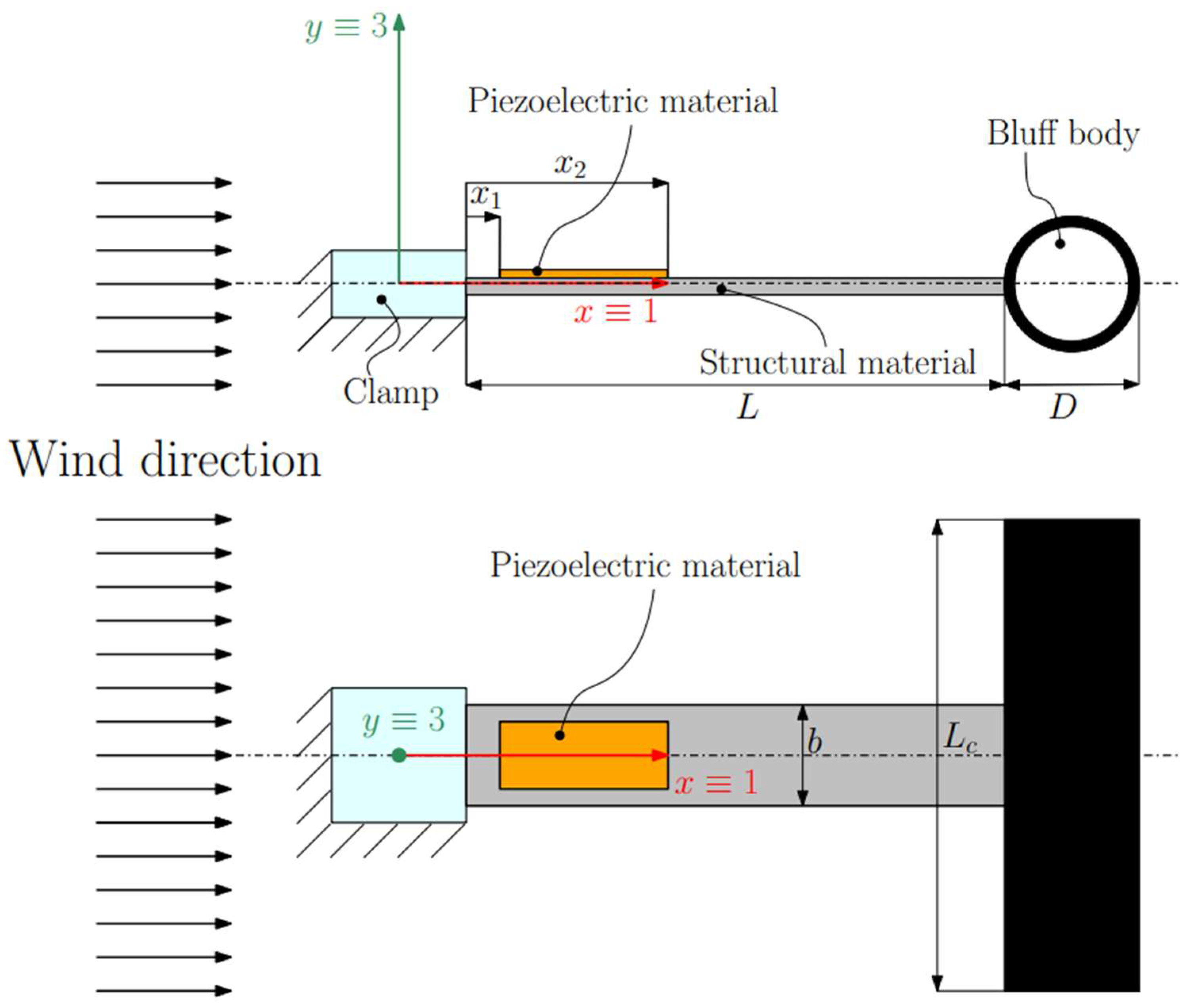
37] investigated the effect of important design parameters on the performance of piezoelectric energy harvesters using a similar cantilever-based model. The model utilized in their investigation is a piezoelectric cantilever beam with a circular cylinder fastened to its free end, creating a piezo-aeroelastic energy harvester, as shown in
Figure 7. This arrangement makes it possible to effectively use vibrations caused by vortices to generate electricity.
In 2021, Zhang et al. [
38] investigated the effect of Reynolds number on VIV-based energy harvesting, a critical component of fluid dynamics. Their research showed that the Reynolds number has a considerable impact on energy conversion efficiency. This understanding is critical for the development and improvement of VIV-based systems across a variety of flow circumstances, hence increasing the applicability and adaptability of VIV energy harvesters. A basic VIV-based piezoelectric energy harvester consists of a circular cylinder, a cantilever beam, and a piezoelectric transducer attached to the beam’s root. The aerodynamic force acting on the circular cylinder can cause the beam’s vibration, resulting in the generation of power by the piezoelectric transducer [
38].
Du et al. [
39] advanced the field by developing a micro windmill piezoelectric energy harvester based on VIV and specifically tailored for limited environments such as tunnels. This innovative design addresses the difficulty of energy production in urban areas and transportation infrastructure, where typical solutions may be impractical. With the potential to power critical infrastructure and sensors, this breakthrough opens new possibilities for sustainable energy solutions in tight spaces.
A thorough experimental investigation of various bluff body shapes for VIV-based energy harvesting techniques was also carried out by Mehdipour et al. in 2022 [
40]. Their research provided important information about how to create bluff bodies that convert energy effectively. This knowledge is essential for optimizing performance and ensuring higher energy yields when designing the shape and geometry of VIV-based energy harvesting devices for applications.
A novel magnetic-coupling monostable piezoelectric energy harvester under vortex-induced vibration was also proposed by Hou et al. in 2020 [
41]. This alternate strategy broadens the range of VIV-based energy harvesting techniques and might be advantageous in some circumstances. Their innovation expands the usefulness of VIV-based energy harvesters by adding to the growing toolkit of methods for converting VIV into electrical energy.
Collectively, these studies advance the understanding of VIV-based piezoelectric energy harvesting by clarifying key design parameters, flow-dependent effects, and transduction strategies relevant to efficient power generation and sensing applications.
Lai et al. [
42] present a novel hybrid piezo-dielectric (PD) wind energy harvester designed to efficiently capture energy from low-speed winds through VIV. The harvester utilizes vibro-impact (VI) dielectric elastomer generators (DEG) and piezoelectric ceramic (PZT) sheets to convert mechanical vibrations into electrical energy. The study theoretically models the hybrid PD harvester subjected to VIV and conducts wind tunnel tests to verify aerodynamic features and determine aerodynamic coefficients. The numerical analysis reveals how PZT and VI DEG work together to enhance VIV energy harvesting.
Wind energy harvesting has various applications, such as powering remote sensors, especially in low-wind conditions where conventional large-scale wind generators struggle. Dielectric elastomer generators (DEGs), including VI DEGs, are discussed as promising technologies for enhancing VIV-based wind energy harvesting due to their high power density and electromechanical conversion efficiency. The study proposes a hybrid PD harvester combining PZT and VI DEG for improved energy harvesting efficiency. Wind tunnel experiments validate the proposed dynamical model and determine crucial aerodynamic coefficients, providing essential data for further analysis and simulations of VIV-based energy harvesting systems [
42].
Similarly, Bahadur et al. [
43] tested a hybrid model that integrates both piezoelectric and electromagnetic transduction mechanisms to harness energy from VIV.
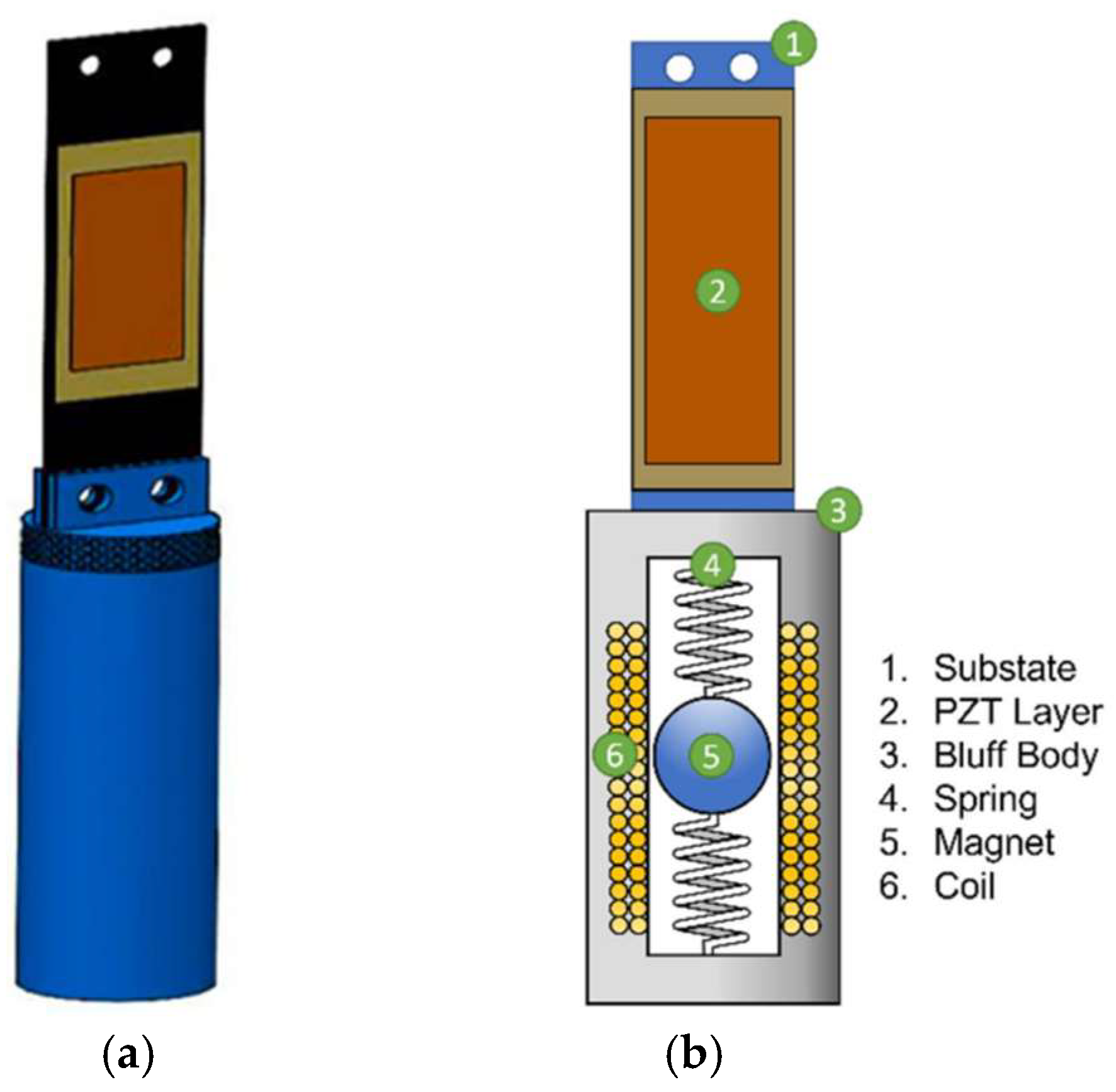
Figure 8 shows that the bluff body of the energy harvester is fixed to the free end of a cantilever beam made of aluminum and PZT composite. Bluff body oscillations brought on by vortex shedding cause strain on the piezoelectric layer, which results in an electrical output. A coil and a spherical permanent magnet make up the electromagnetic energy harvesting (EEH) mechanism that is integrated into the bluff body of the harvester. The relative motion between the magnet and the coil causes a current to be induced when the bluff body vibrates, producing more electrical energy. The harvester can more effectively extract energy from vortex-induced vibrations under a broader variety of flow conditions thanks to the combination of piezoelectric and electromagnetic transduction.
The long-term stability and durability of VIV energy harvesting systems remain active research topics, with limited full-scale infrastructure deployments reported to date. Laboratory and pilot-scale studies involving continuous or cyclic flow-induced excitation over periods ranging from several weeks to 6–12 months have generally demonstrated stable oscillation amplitudes and power output when resonance conditions and mechanical tolerances are properly maintained. Reported performance degradation is typically attributed to fatigue in elastic supports, wear in mechanical linkages, or changes in surface roughness affecting vortex shedding behavior. These findings support the technical feasibility of VIV systems under sustained loading while highlighting the need for standardized durability testing and extended field-scale monitoring in future infrastructure applications.
In addition to structural configuration and material selection, the performance of vibration-based energy harvesters can be enhanced through advanced dynamic and electrical design strategies. Nonlinear stiffness and bistable configurations have been shown to broaden operational bandwidth and improve energy capture under variable excitation. Frequency tuning and multifrequency forcing techniques further enable adaptation to changing ambient vibrations, while stochastic excitation models provide insight into realistic operating conditions. Moreover, the efficiency of interface circuits, including rectification, impedance matching, and energy storage, imposes practical constraints on achievable power output. These coupled mechanical–electrical considerations play a critical role in linking theoretical performance to real-world feasibility.
3. Methodologies of Energy Harvesting
This chapter highlights the research methodology used, including feasibility analysis tools and fundamental principles of energy collecting systems. The Energy Harvesting Technologies used for the study include solar, piezoelectric, and thermoelectric systems. Sample studies on solar, piezoelectric, and thermoelectric energy harvesting systems were compiled from the literature, covering materials, system configurations, energy output, and cost characteristics. These data were subsequently analyzed using feasibility metrics such as the levelized cost of electricity and simple payback period.
3.1. Basic Principles of the Energy Harvesting Technologies
3.1.1. Solar Energy Harvesting Technology
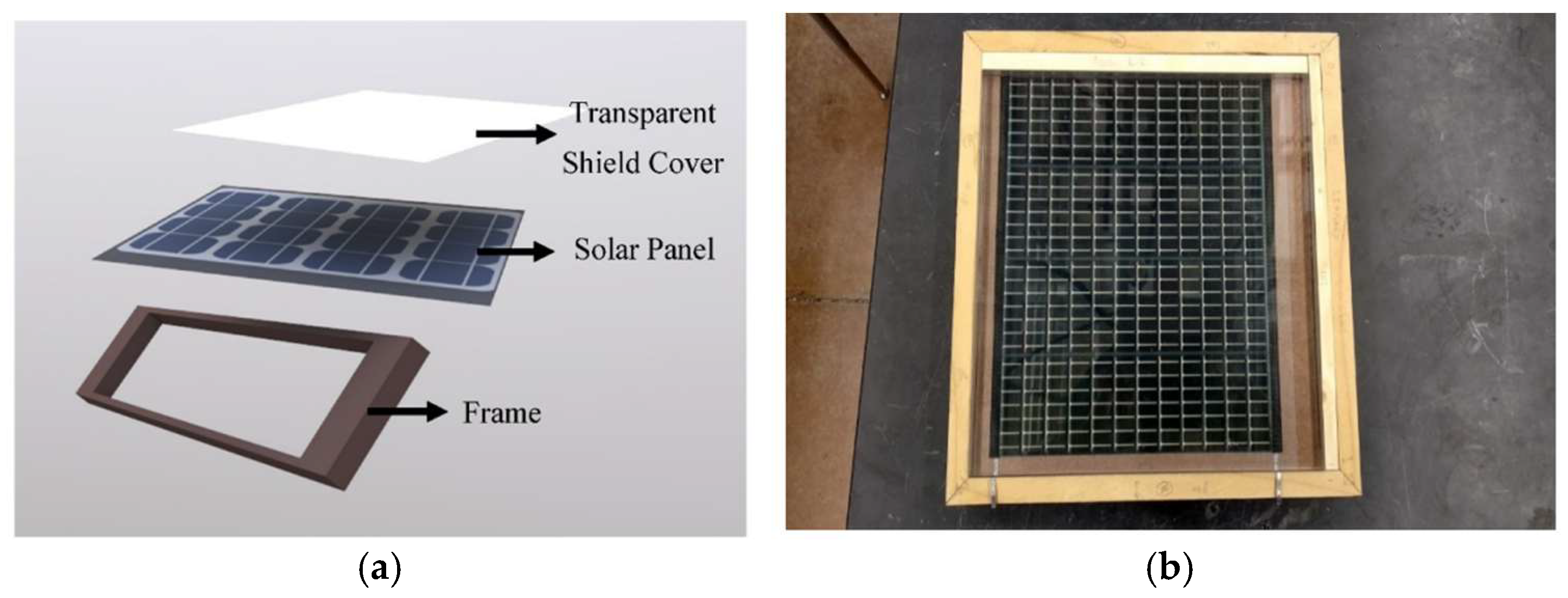
Roadway solar photovoltaic systems include photovoltaic noise barriers and solar panel roadways. The fundamental concept of roadway solar panels involves placing photovoltaic panels directly on asphalt pavement surfaces.
Figure 9 [
44] presents a representative solar panel configuration consisting of three layers: a transparent surface layer, a central photovoltaic layer, and a bottom protective frame. The incorporation of photovoltaic modules into highway noise barriers, referred to as photovoltaic noise barriers shown in
Figure 10 [
45], serves two primary purposes: mitigation of traffic noise and generation of electrical energy.
The representative Solar Energy Harvesting Technologies examined in this research include photovoltaic noise barriers on roadways in Belgium, photovoltaic noise barriers on roadways in Groningen in the Netherlands, photovoltaic noise barriers on roadways in Tiel in the Netherlands, and a pavement system integrated with solar panels in Massachusetts, USA.
3.1.2. Piezoelectric Energy Harvesting Technology
The piezoelectric energy harvesting process converts mechanical vibrations into electrical energy through the use of piezoelectric transducers. The combined mechanisms of deflection and compression define two primary forms of piezoelectric energy harvesting. In the first approach, compressive loading of layered piezoelectric materials leads to rapid electricity generation. In contrast, oscillatory motion of cantilever-based piezoelectric harvester arrays induced by external stimuli such as vehicle movement produces electrical power until the vibrations decay.
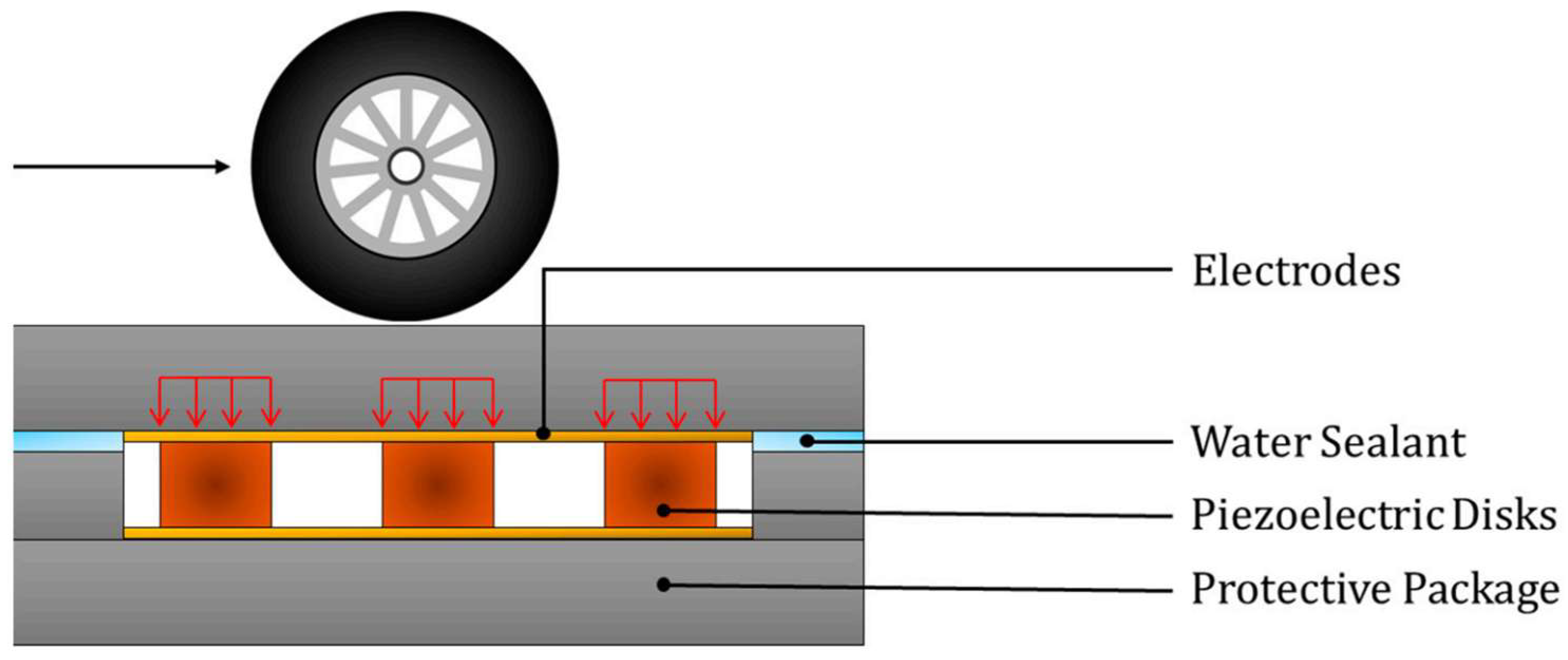
Figure 11 [
46] illustrates a piezoelectric roadway cross section and embedded piezoelectric devices that can be installed in sidewalks, roadways, railway beds, and airport pavements to collect energy generated under high-traffic conditions. The representative Piezoelectric Harvesting Technologies reviewed in this study include installations in Florida, Virginia, Madrid, Texas, and Georgia.
3.1.3. Thermoelectric Energy Harvesting Technology
This energy harvesting technology accumulates from the Thermoelectric (TE) effect. The temperature gradient between the cold and hot junctions of a TE module is responsible for the thermoelectric effect as seen in
Figure 12 [
47]. There are two classes of thermoelectric generation (TEG) systems surveyed on the basis of creating the temperature gradient. The first class leans on a pipe system placed in the pavement, which results in a temperature gradient between hot water (heat as a result of absorption of pavement heat) and cold water (nearby water source contributing to circulation) in the operation of the TEG [
21]. The installation of the thermoelectric cells in the pavement depicts the second class of the TEG system. The functionality of this second class of TEG system depends on the temperature gradient between the pavement subgrade soil and the surface [
48]. The sample Thermoelectric Harvesting Technologies used in the research were located in Florida and China.
Significant developments in thermoelectric energy harvesting from civil engineering infrastructures are introduced in this paper, with an emphasis on concrete materials and asphalt pavements in particular. The cutting-edge research presented here provides encouraging clues about how to turn these commonplace materials into renewable and sustainable energy sources. The design of a unique thermoelectric generator system is a significant contribution as it demonstrates the feasibility of using it as an independent power source for roadside applications by utilizing heat differences between pavement surfaces and the underlying soil [
49]. Concurrently, the investigation of energy-harvesting concrete highlights the possibility of incorporating intelligent and practical qualities into building materials. Examples of these concrete types include light-emitting, thermal-storing, thermoelectric, pyroelectric, and piezoelectric concretes [
50]. This revolutionary path is consistent with the global focus on renewable energy sources and environmentally friendly technologies.
The challenge of incorporating energy-harvesting devices into concrete constructions while maintaining structural integrity is specifically addressed. The enhanced electrical conductivity of cement/CNT composites allows for the use of these materials as self-powered sensor systems in buildings that can harvest energy from temperature changes within the structure [
51].
Furthermore, a thorough analysis of thermoelectric energy harvesting in asphalt pavements sheds light on the critical elements impacting energy conversion efficiency. The findings provide useful insights for the practical application of this technology, which is consistent with the broader goals of sustainable and renewable energy solutions [
51].
3.1.4. Vortex-Induced Vibration Energy Harvesting
Mehdipour et al. 2022 [
40] detail a VIV and piezoelectric film-based wind energy harvesting device that can be used as a methodology for VIV. The system is made up of a windmill to convert wind energy first, a blast blower with an axial fan to improve airflow in a tunnel, and a piezoelectric film (PVDF) to convert mechanical energy into electricity. Specifically, it consists of a windmill that converts energy from wind at first, a blast blower with an axial fan to improve tunnel airflow, and a flexible PVDF piezoelectric film for secondary energy conversion. PVDF was chosen as the piezoelectric film material because of its flexibility and resilience to cyclic pressure, which ensures that the material maintains its properties and dimensions.
Wind energy conversion begins when the windmill reaches a high enough speed to engage the blast blower. The subsequent airflow within the tunnel causes periodic vortex-induced vibrations, which exert pressure on the surface of the PVDF film, resulting in the generation of electricity.
The blast blower in the wind tunnel blows air over a cylinder to create vibrations caused by vortices. The axial flow fan’s wake flow velocity can be calculated using different expressions from the Blade Element Momentum (BEM) approach, which is used to simulate aerodynamic forces. The total effectiveness of the system is greatly influenced by this airflow.
A thorough understanding of windmill performance is critical for comprehending the energy conversion process. The parameters used to compute wind power are air density, blade diameter, and wind velocity. The tip–velocity ratio has an impact on wind turbine efficiency as well.
3.1.5. Vortex-Induced Vibration Energy Harvesting from a Magnetic-Coupling Monostable Piezoelectric Energy Harvester
Zang et al. [
38] propose enhancing electricity generation from wind and water movement by integrating nonlinear magnetic forces into piezoelectric energy harvesters for VIV. By applying Kirchhoff’s law and Euler–Bernoulli beam theory to a distributed-parameter model, a nonlinear monostable piezoelectric VIV transducer is developed. The study finds that load resistance and the length of the piezoelectric material (PZT) significantly impact the performance of the magnetic-coupling piezoelectric energy harvester (MCPEH), with two ideal resistance levels identified.
Additionally, considering kinetic wind energy and resistive shunt damping effects expands the resonance domain. The monostable nonlinear magnetic force enhances overall harvester performance, especially when the space between moving and stationary magnets is reduced. For specific parameters like a cylinder diameter of 20 mm, PZT length of 30 mm, and load resistance of 0.5 MΩ, the harvester achieves a maximum power production of 0.21 mW under wind stimulation at a velocity of 1.6 m/s [
38].
Wang et al. [
51] examine how load resistance, wind speed, cylinder shape, and piezoelectric beam impact energy harvesting efficiency and vibration response. The data indicate that the cylindrical mass, PZT length, and diameter all have an impact on resonance wind velocity, with a decrease in mass and an increase in PZT length and diameter leading to a higher resonance wind velocity. The work emphasizes the importance of nonlinear magnetic force in determining the stability and output power of the Magnet-Induced Monostable Nonlinear VIV Piezoelectric Energy Harvester (MCPEH).
Furthermore, the study investigates the effects of PZT length, diameter, and mass on vibration displacement and output power. While both parameters enhance vibration displacement, output power responds differently, rising with reduced mass and higher diameter but increasing even more with longer PZT length. The study identifies two ideal resistance levels required for effective energy harvesting. This comprehensive research provides important insights for optimizing magnet-induced nonlinear VIV piezoelectric energy harvesters and developing energy harvesting devices [
51].
3.1.6. Geothermal Energy Harvesting
Recent developments in the field of geothermal energy harvesting have sparked an investigation into more effective techniques for direct-use systems and power generation. Optimizing the efficiency of geothermal power plants requires examining the influence of critical factors on energy extraction, such as the design of the geothermal well, its depth, and the characteristics of the rock [
52,
53]. Furthermore, the possibility of using existing pipelines to transform remote geothermal energy into transport fuel presents a distinctive viewpoint, and evaluations of the economic, technological, and environmental aspects of this strategy offer insightful information on its feasibility [
54].
The literature also explores the difficulties in obtaining geothermal energy, highlighting factors including economic viability, environmental impact, and scalability. In order to guarantee that the advantages of this renewable energy source are realized without inadvertently harming ecosystems, it is essential to assess the environmental sustainability of geothermal projects [
55]. Furthermore, conducting a comprehensive assessment of the economic feasibility of geothermal energy, especially in comparison to other renewable energy sources, contributes significantly to policy development and decision-making processes [
56].
The working principle of the geothermal energy includes the solar collector system, which uses conduction, convection, and radiation as its three main heat transfer modes, and represents a novel way to capture solar energy using a network of pipes under the pavement. In this system, the pavement absorbs heat from the sun and the atmosphere, raising the temperature [
54]. Conduction optimizes heat exchange by facilitating the thermal energy transfer between the pipe walls and the pavement. Simultaneously, convective heat transfer occurs in the piping system, where temperature differences between the surrounding air, pavement, pipe walls, and the circulating fluid drive effective heat transfer. The method also makes use of radiation, which allows the electromagnetic waves to carry heat energy. This comprehensive use of heat transfer mechanisms demonstrates the solar collector system’s effectiveness [
54].
The limited availability of ecological impact studies for geothermal applications in infrastructure contexts reflects several practical and methodological challenges. Geothermal systems are highly site-specific, with subsurface interactions that are difficult to observe directly and require long-term monitoring to identify potential ecological effects such as groundwater alteration or induced seismicity. In addition, comprehensive environmental monitoring programs involve significant costs, specialized instrumentation, and regulatory coordination, which often exceed the scope of pilot-scale or feasibility-driven projects. As a result, existing research has largely prioritized technical performance and economic viability, leaving ecological impacts comparatively underexplored. This gap highlights the need for integrated, long-term environmental assessment frameworks in future geothermal infrastructure studies.
3.2. Economic Analysis
The two main feasibility analysis methods used for the comparison of the various energy harvesting methods are the Levelized Cost of Electricity and the Payback Period.
3.2.1. Levelized Cost of Electricity (LCOE)
The Levelized Cost of Electricity method allows comparison among power plants with different generation technologies and cost configurations. LCOE is determined by accounting for all expenses incurred over the entire service life of a power plant, including construction and operational costs, relative to the total amount of energy produced during its lifetime [
57]. This approach is applied to assess the cost required to generate an equivalent unit of electrical energy. It is defined as the ratio of total costs to total electrical energy generated, expressed in dollars per kilowatt-hour, as shown in Equation (1). LCOE facilitates comparison across technologies that differ in service life, capital investment, project scale, and energy output [
58]. The total annual cost consists of both fixed and variable components associated with plant operation, maintenance activities, servicing, repair work, and insurance expenses [
58].
To provide a transparent comparison of different energy harvesting technologies, a Capital Expenditure (CAPEX), only cost per kWh, is calculated rather than a full LCOE, due to limited operational and maintenance data. The CAPEX-only cost is therefore computed as:
Assumptions used for all technologies include:
System lifetime: 20 years (varied in sensitivity analysis from 10 to 25 years);
Discount rate: not accounted for;
Annual energy production: based on measured or estimated kWh/year for each technology;
Maintenance, replacement, and degradation: not included due to insufficient data;
Capacity factor and utilization hours: incorporated through estimated annual energy production.
This approach provides a conservative estimate of cost per kWh, suitable for cross-technology comparison. A full LCOE analysis could be performed in future work if reliable O&M and degradation data become available. Sensitivity analysis for lifetime and discount rate is included to illustrate the potential range of CAPEX-only cost.
As an illustrative example, the Texas case study in
Table 2 reports a piezoelectric energy output of 1777 Wh per year, with a capital expenditure of
$150 per unit. The system lifetime is 20 years.
3.2.2. Simple Payback Period (SPBP)
This parameter represents the duration needed for energy cost savings to offset the initial project investment. The payback calculation considers the upfront capital expenditure together with the resulting annual cash flow. The payback period is defined as the length of time, typically expressed in years, required to recover the initial investment. However, this method does not consider savings that may accrue after the initial investment has been fully recovered through project revenues. Despite this limitation, the approach remains useful for preliminary or first-cut evaluations of a project [
59].
In summary, the feasibility assessment framework applied in this review consists of four key metrics: (1) estimated energy output normalized per lane-mile or unit system, (2) levelized cost of electricity (LCOE), (3) simple payback period, and (4) technology readiness level (TRL). These metrics were used consistently across reviewed technologies to enable comparative evaluation of technical maturity and economic viability for infrastructure applications.
Table 2.
LCOE Comparisons of Energy Harvesting Technologies. (a). CAPEX-based levelized cost of electricity (LCOE, USD/kWh) and lifetime energy output (kWh) for full-scale systems. CAPEX: capital expenditure. Values are reported or estimated. (b). CAPEX-based LCOE (USD/kWh) and annual energy output (kWh/year) for laboratory-scale energy harvesters. Values are based on experimental measurements and estimates.
Table 2.
LCOE Comparisons of Energy Harvesting Technologies. (a). CAPEX-based levelized cost of electricity (LCOE, USD/kWh) and lifetime energy output (kWh) for full-scale systems. CAPEX: capital expenditure. Values are reported or estimated. (b). CAPEX-based LCOE (USD/kWh) and annual energy output (kWh/year) for laboratory-scale energy harvesters. Values are based on experimental measurements and estimates.
| Energy Harvest Type | Technology | System Configuration | Capex Cost | Annual Energy (kWh/year) | Lifetime Energy (kWh) | Lifetime LCOE
(CAPEX-Only Cost)
($/kWh) | Single or Array | System
Scale | Installation Area (ft2) | Duty Cycle | Assumptions/Calculation/Reference |
|---|
| Solar | Belgium
(PVNB) [60] | 429 kWp, 1867 panels × 230 Wp, 2800 €/kWp | 429 × 2800
=€1,201,200
≈$1,207,832 | 429 × 850 × 0.94
≈342,771 | 342,771 × 20
≈ 6,855,420 | 1,207,832/6,855,420 ≈ 0.176 | Array | Full scale | Panel area: 1867 × 1.6 m2 ≈ 2987 m2 ≈ 32,140 ft2 | Continuous daytime | 94% efficiency, 20 yr lifetime, no degradation, no discounting, 14% subsidies, Belgium irradiation 850 kWh/kWp/yr |
Groningen
(PVNB) [61] | 554 kWp, 660 m × 2 sides | $1357/kWp
(from reference)
=554 kWp × 1357
=$751,778 | 419,127
(from reference) | 419,127 × 20
≈ 8382,540 | 751,778/8382,540 ≈ 0.090 | Array | Full scale | Approx. 1320 m2
≈14,190 ft2 | Continuous daytime | 39° tilt, south-facing, 94% efficiency, 20 yr lifetime, no degradation, no discounting (reference data) |
Tiel
(PVNB) [61] | 572 kWp, 1464 m | $1357/kWp
(from reference)
=572 kWp × 1357
=$776,204 | 475,572
(from reference) | 475,572 × 20
≈ 9,511,440 | 776,204/9,511,440 ≈ 0.082 | Array | Full scale | 916 m2
≈9856 ft2 | Continuous daytime | 50° tilt, south-facing, 0.75 PR, 20 yr, no degradation, no discounting (reference data) |
Massachusetts & Texas
(PVNB) [62] | 99 kW, 4 rows of panels, fixed, grid-connected | $500,000
(from reference) | 179 kWh/m2/year × 666.7 m2
≈119,200 | 119,200 × 20
≈ 2,384,000 | 500,000/2,384,000 ≈ 0.21 | Array | Full scale | 666.7 m2
≈ 7180 ft2 | Continuous daytime | Solar insolation 4.9 kWh/m2/day, panel efficiency 10%, 20 yr lifetime |
| Piezoelectric | Madrid
(Spain) [63,64] | 30,000 cymbals | $25,640
(from reference) | 1.05 × 10−05 kWh/veh × 135,700 veh/day × 365 days =518.3 | 518.3 × 15
≈ 7774 | 25,640/7774
≈3.30 | Array | Full scale | 215 ft2 | Vehicle hits | Hit rate 100%, 15 yr lifetime, embedded in 100 m road |
| | 30,000 cymbals embedded in 100 m road | $25,640
(from reference) | 2.78 × 10⁻¹⁰ kWh/veh × 319,000 veh/day × 30,000 × 365 days
=970.8 | 970.8 × 15
≈14,562 | 25,640/14,562
≈1.76 | Array | Full scale | 215 ft2 | Vehicles crossing | 319,000 vehicles × 365 days; Lifetime = 15 yr; LCOE = Capex/Lifetime Energy |
| Thermoelectric | China [65] | 1 km × 10 m roadway, embedded TE modules | $90,000
(from reference) | 100 kWh × 365 days
=36,500 | 36,500 × 15 years = 547,500 | 90,000/547,500
=0.164 | Array | Full scale | 1000 m × 10 m =
107,640 ft2 | Continuous daytime | 15-year service life, no maintenance, no discounting, energy 100 kWh/day, energy output |
| Energy Harvest Type | Technology | System Configuration | Capex Cost | Annual Energy (kWh/year) | Lifetime Energy (kWh) | Lifetime LCOE
(CAPEX-only Cost)
($/kWh) | Single or Array | System
Scale | Installation Area (ft2) | Duty Cycle | Assumptions/Calculation/Reference |
| Piezoelectric | Virginia [63,66]
(Virginia Tech) | Single cymbal | $431.9
(from reference) | 7.45 × 10−7 × 3300 × 365 × 0.395
≈0.355 | 0.355 × 5 years
≈1.78 | 431.9/1.78
≈243.7 | Single | Laboratory/small scale | | Vehicle hits | Cp + Ci = $431.90, Wp = 7.45 × 10−07 kWh/vehicle, N = 3300/day, w = 39.5%, Y = 5 yr |
| Virginia [63] Innowattech Piezo | Single cymbal harvester | $2000
(from reference) | 1.26 × 10⁻⁶ kWh/veh × 3300 veh/day × 365 days = 1.517 | 1.517 × 5 years
≈7.585 | 2000/7.585
≈263.7 | Single | Laboratory/small scale | | Vehicle hits | Hit rate 39.5%, 5-year lifetime |
| Texas [62] Prototype VIII | 6 × PZT-5A disks, 43 mm dia, 6.2 mm height | $150
(from reference) | 993 Wh/year = 0.993 kWh/year (from RMS at ADT 80,000) | 0.993 kWh/year × 20 years
=19.86 | 150/19.86
≈7.56 | Single | Laboratory/small scale | | RMS, ADT 80,000 | Composite harvester, RMS output, 20 yr lifetime, no degradation/discount |
Texas [62]
Prototype X-Ax3 | 3 × Prototype X-A in parallel | $150
(from reference) | 1777 Wh/year
= 1.777 kWh/year (from RMS at ADT 80,000) | 1.777 kWh/year × 20 years
=35.54 | 150/35.54
≈4.22 | Single | Laboratory/small scale | | RMS, ADT 80,001 | Composite harvester, RMS output, 20 yr lifetime, no degradation/discount |
| Thermoelectric | Florida [63] | 19 TE modules, 1 m2 area | $944.3 | 0.056 × 365 days
=20.44 | 20.44 kWh/year × 20 years
=408.8 | 944.33/408.8 = 2.31 | Array | Laboratory/small scale | 1 m2 × 10.764 ≈ 10.764 ft2 | Continuous daytime | TE module cost $40 × 19 = 760; pipes + pavement = 184.33; 0.056 kWh/day/m2; 20 yr lifetime; LCOE back-calculated |
| Electromagnetic | Texas [67,68] | Prototype (speed bump) | | | | $37.36 | Single | Laboratory/small scale | | Vibration | |
4. Results and Discussion
4.1. Evaluation of Different Energy Harvesting Technologies
Table 2 and
Table 3 compare the varying energy harvesting technologies in terms of levelized cost of electricity, energy output and payback period. The anticipated output of electrical energy, the system capital costs and selected levelized cost of electricity are assessed in the literature. Thermoelectric, piezoelectric, and solar energy harvesting technologies were considered in this paper. Within
Table 2a, systems differ in physical implementation; therefore, comparison is intended to illustrate order-of-magnitude feasibility rather than direct economic equivalence. Reported energy outputs and CAPEX-only cost values span several orders of magnitude due to differences in system scale, application context, and measurement conditions. Device-scale and laboratory systems typically report peak or near-maximum outputs obtained under controlled loading conditions, while full-scale and infrastructure-integrated systems reflect field-averaged performance under realistic environmental and traffic conditions. Outlier values therefore reflect physical scaling effects rather than computational inconsistency.
Limited data are available on the payback periods of piezoelectric and thermoelectric energy harvesting systems. In contrast, several studies have reported payback periods for solar photovoltaic (PV) systems. Studies [
71,
72] indicate that solar PV systems in Texas exhibit payback periods ranging from 2 to 20 years, while wind turbines have a reported payback period of approximately 13 years. For rooftop solar PV installations on commercial buildings in New York City, the payback period has been estimated at 7.6 years with incentives and 24 years without incentives [
73]. Solar PV systems deployed in higher education facilities show payback periods of approximately 11 years [
74,
75]. These values are consistent with the payback periods summarized in
Table 3.
4.2. Energy Harvesting Technologies
Different energy harvesting technologies were evaluated based on energy output, cost, benefit-to-cost ratio, and technology readiness level. Electrical energy output and system costs were estimated using representative system configurations reported in the literature. To ensure consistency across technologies, a one lane mile roadway was selected as the reference case for calculating energy output and cost, assuming a typical system configuration for each technology. An exception applies to electromagnetic technologies used for sensor applications, which can only be assessed on a per unit basis.
The economic potential of various energy harvesting technologies is more effectively compared using cost effectiveness metrics. The Levelized Cost of Electricity approach was adopted to determine the cost required to produce an equivalent unit of electrical energy. This metric is defined as the ratio of total costs to total electrical energy generated, expressed in dollars per kilowatt hour, as shown in Equation (1). LCOE enables comparison among technologies with different service lives, project scales, capital investments, and capacities. It should be noted that the reported costs represent initial capital expenses only and do not include maintenance costs during operation due to limited data availability.
Table 4a presents the LCOE-based comparison used to assess the maturity of different technologies for implementation. Electrical energy harvesting systems are primarily designed for self-powered sensing and monitoring purposes. As a result, their performance is evaluated on a per system or per sensor basis rather than by lane mile normalization. In
Table 4b, each technology is assigned a corresponding technology readiness level. The TRL framework consists of nine levels, ranging from basic scientific research and observation at level one to full system implementation at level nine. The TRLs of solar collectors, thermoelectric, electromagnetic, and piezoelectric energy harvesting technologies generally fall between levels three and four, indicating ongoing research and development with foundational components being assembled to establish functional systems. In contrast, photovoltaic cell and geothermal technologies have achieved a TRL of nine.
Technology Readiness Levels (TRLs) are assigned based on reported laboratory validation, pilot-scale demonstrations, and documented field deployments following the framework in Wang et al. [
3]. Technologies such as photovoltaic (PV) systems and geothermal energy harvesting have reached TRL 9 due to their demonstrated performance in full-scale, operational infrastructure, long-term commercial deployment, and the existence of unified industry standards, certification protocols, and regulatory oversight.
In contrast, emerging technologies such as piezoelectric and vortex-induced vibration energy harvesting systems are currently positioned at TRL 3-4, reflecting laboratory-scale validation, limited field demonstrations, and the absence of standardized design codes or large-scale commercial adoption. The TRL assessment therefore emphasizes application scale, system integration, operational track record, and standardization maturity, rather than solely theoretical efficiency or experimental performance. This approach ensures consistency with industry-recognized readiness definitions and facilitates transparent comparison across technologies.
Table 5 provides an overview of the benefits and drawbacks associated with different energy harvesting technologies and outlines the extent of support from government agencies and industry. The findings are consistent with some observations reported in the literature. It was found that the peak productivity of photovoltaic technology was much greater than others. However, its energy productivity can be maximized only under direct sunlight during a certain period of the day. Productivity is constrained under low-illumination conditions, such as cloudy weather or tunnel environments. Aside from photovoltaic systems, piezoelectric energy harvesting can exhibit the highest productivity under certain operating conditions. In particular, piezoelectric transducers are identified as a promising option due to their wide operating range in terms of power density and voltage output.
The evaluation of input and feedback from government agencies and industry was conducted through a review of the literature, acknowledging their essential roles in the future development and deployment of energy harvesting technologies. Support was categorized into three levels, namely strong, medium, and low, to reflect the degree of involvement by government agencies or industrial partners. A strong level of support indicates that test sites are expected to be developed with direct governmental or industrial backing. Medium support suggests that government and industry stakeholders plan to establish test facilities, either based on university research outcomes or through active collaboration in the research process. A low level of support corresponds to research efforts that are primarily conducted at the university level.
4.3. Discussion
The economic potential ranking of different energy harvesting technologies was established based on the following key observations:
In general, a lower Levelized Cost of Electricity is preferred because it yields a greater amount of electrical energy per unit of capital investment.
Shorter payback periods are typically associated with more attractive investments. In contrast, longer payback durations reduce overall investment appeal.
The technology readiness levels of solar collectors, thermoelectric, electromagnetic, and piezoelectric energy harvesting technologies generally fall between TRL 3 and TRL 4. This indicates that active research and development efforts are underway and that fundamental technological components are being integrated to form functional systems. By comparison, photovoltaic cell and geothermal technologies have attained a technology readiness level of 9.
Aside from photovoltaic technology, piezoelectric energy harvesting shows greater yield under certain conditions. The piezoelectric transducer is a particularly promising technology due to its wide power density vs voltage envelope.
5. Conclusions
The use of renewable energy harvesting sources has become increasingly important for a future decarbonized energy supply in a variety of applications, including transportation [
97,
98], electric power generation, safety systems, and heating. To efficiently harness these renewable energy sources, reliable energy harvesting systems are required to provide green energy while also supporting the stability of critical infrastructure.
The most promising energy harvesting technologies for infrastructure were evaluated using feasibility analysis, technology readiness level, and benefit–cost ratio. Based on the feasibility assessment, solar energy harvesting emerged as the most viable alternative, indicating significant investment potential when compared to other energy harvesting technologies, as reflected by metrics such as levelized cost of electricity and payback period. However, piezoelectric energy harvesting demonstrated strong performance in terms of technological readiness and benefit–cost ratio, suggesting considerable potential for broader adoption and favorable economic returns.
Overall, this literature review provides a comprehensive overview of infrastructure-based energy harvesting approaches and demonstrates the wide range of strategies used to capture energy from different types of infrastructure. Advances in materials science, sensor technology, and energy conversion techniques have substantially improved the viability and practicality of these energy harvesting devices. Despite the multiple potential benefits of infrastructure-based energy harvesting, challenges related to system integration, cost-effectiveness, and scalability must be carefully considered. Continued efforts by researchers and practitioners are necessary to address these challenges and support practical implementation in real-world applications.
The integration of smart materials, efficient energy harvesting and storage technologies, and advanced control systems can further enhance the performance of energy harvesting devices across a variety of infrastructure settings.
The findings of this review highlight the role of infrastructure-based energy harvesting in improving system resilience and expanding the portfolio of renewable energy sources in pursuit of a more sustainable future. These insights can assist transportation agencies and infrastructure planners in prioritizing pilot projects and long-term investment strategies. Continued research and development in this area remain essential to fully realize the potential of these technologies and promote a more energy-efficient built environment.
To address the key challenges of system integration, cost-effectiveness, and scalability, several targeted technical pathways can be identified. At the material level, advancements in durable, high-performance functional materials, such as fatigue-resistant piezoelectric composites, corrosion-resistant components for VIV systems, and high-efficiency PV materials, can enhance reliability and reduce lifecycle maintenance costs. From a structural perspective, optimization of device geometry, load transfer mechanisms, and modular design can improve energy harvesting efficiency while simplifying installation and replacement within existing infrastructure.
At the system level, standardized interfaces, power conditioning architectures, and integration protocols can facilitate interoperability with grid-connected or sensor-based applications, reducing customization costs and deployment complexity. Additionally, scalable manufacturing techniques and prefabricated modular units can support cost reductions through economies of scale. Collectively, these technical pathways provide a structured direction for transitioning emerging energy harvesting technologies from experimental stages toward reliable, cost-effective, and scalable infrastructure applications.
While these studies provide strong insight into technical feasibility, energy conversion efficiency, and environmental benefits, there is a clear gap in economic evaluation. Most of the literature focuses on energy output and system performance under laboratory or pilot conditions but provides limited quantification of the levelized cost of electricity (COE) for infrastructure-integrated systems. Comparative COE analyses across different technologies under realistic operational conditions are scarce, making it difficult for decision-makers to prioritize technologies based on economic viability. Similarly, the payback period (PBP), or the time required for energy harvesting systems to offset capital and operational costs, is rarely reported. Existing studies largely highlight technical maturity and efficiency without detailed cost–benefit calculations that include installation, maintenance, and lifecycle expenses. This gap is particularly pronounced for emerging technologies, such as piezoelectric and VIV-based systems, where long-term field data are limited, and financial performance metrics are not well established. Addressing this gap is critical for supporting decision-making regarding technology selection, investment, and large-scale deployment in bridge and roadway energy harvesting applications.