1. Introduction
There is a contradictory situation wherein, in spite of considerable investments in environmental management systems, hospitality organizations struggle with a persistent problem of employees understanding sustainability principles but not consistently applying them to daily operations [
1,
2]. This gap in action-taking concerning knowledge of what sustainable practices require under operational pressure represents another critical barrier to the attainment of environmental goals in service-intensive industries [
3,
4]. This gap is increasingly felt acutely in hospitality contexts, wherein employees make several thousand discretionary decisions regarding resource use, waste management, and service delivery daily, which more often than not are kept out of direct observation and do not have immediate accountability concerning environmental choices [
5]. It has become critical for the advancement of theory and practical effectiveness in organizational sustainability to understand why some employees do bridge the gap while others do not.
Green Human Resource Management has come up as a chance for organizations to align their environmental goals with recruitment, training, performance appraisal, and reward systems [
6,
7]. GHRM practices are indeed effective at promoting pro-environmental behavior and reducing organizational impact on the environment [
8,
9]. However, the mechanism of realization—thereby raising the question as to what psychological mechanisms allow these HR practices to convert into sustained employee performance—remains largely unexplored [
2,
10]. The present literature has practically focused only on behavioral outcomes; very little consideration has been given to exploring the identity-based processes that actually underlay and induce these behaviors to occur and be sustained over time [
11,
12]. This theory-oriented gap prevents us from having a clear understanding of when and why GHRM interventions work or fail and makes the psychological transformations that ought to be achieved to move from mere compliance toward real commitment stay obscured.
We argue that the existence of this gap could be due to undue neglect on the part of existing research of an important insight from moral psychology: sustainable behavior, in the final analysis, is rooted in moral identity—whether individuals see environmental responsibility as being central to who they are [
13,
14]. Once sustainability values become fused into employees’ self-concepts, their actions should move away from being externally motivated compliance to being internally driven commitment [
15,
16]. Moreover, contemporary moral identity theory distinguishes between two critical dimensions: Moral Self (the internalization of moral values as core identity features) and Moral Integrity (the consistent enactment of those values through principled action) [
17,
18]. This distinction captures the developmental progression from meaning to action and from understanding oneself as responsible to acting responsibly that existing GHRM research has failed to examine.
The present study develops and tests an integrated model positioning moral identity as the central psychological mechanism linking GHRM to Sustainable Employee Performance in hospitality organizations. We conceptualize Sustainable Performance as employees’ capacity to perform proficiently, adaptively, and proactively while maintaining ethical and environmental responsibility over time [
19]. Our theoretical framework advances four key propositions. First, GHRM shapes both dimensions of moral identity by signaling organizational values that employees internalize (Moral Self) and by providing institutional support for consistent ethical behavior (Moral Integrity). Second, these identity dimensions are developmentally sequenced: internalized values provide the motivational foundation for behavioral consistency. Third, both dimensions independently influence sustainable performance through distinct psychological pathways. Fourth, and most comprehensively, GHRM influences performance through sequential mediation: shaping Moral Self, which cultivates Moral Integrity, which drives sustainable performance.
This research makes three primary theoretical contributions. First, we extend the GHRM literature by explicating the identity-based psychological mechanisms through which HR practices generate enduring behavioral change, addressing calls to move beyond documenting outcomes toward explaining underlying processes [
2,
6]. By demonstrating how GHRM shapes moral identity structures, we explain why some initiatives produce sustained commitment while others yield only transient compliance. Second, we advance moral identity theory by examining its operation within organizational sustainability contexts and demonstrating how organizational systems shape identity development and extension from individual to organizational levels of analysis. Third, we contribute to the sustainable performance literature [
19] by identifying moral identity as a key psychological antecedent and validating this performance construct in hospitality settings where discretionary environmental behaviors are critical yet understudied.
Methodologically, we employ a two-wave time-lagged design, addressing common method variance concerns and enabling stronger causal inference than predominant cross-sectional approaches. We test our model with hospitality employees (N = 392) from multiple hotel properties, using structural equation modeling to examine direct effects, parallel mediation, and sequential mediation pathways.
For practitioners, our findings illuminate how to design HR systems that cultivate deep, identity-based commitment rather than securing mere compliance. Understanding the sequential nature of moral identity development from value internalization to behavioral enactment enables realistic expectations about intervention timelines and highlights the necessity of sustained HR practices for identity transformation to occur. By differentiating Moral Self and Moral Integrity, we identify distinct intervention targets: practices facilitating value internalization versus those enabling behavioral consistency.
The paper proceeds as follows. We first establish theoretical foundations by reviewing the GHRM, moral identity theory, and sustainable performance literature. We then develop our framework and derive ten hypotheses specifying relationships among constructs. Subsequently, we describe our methodology; present results; and discuss theoretical contributions, practical implications, limitations, and future research directions.
2. Theoretical Framework and Hypothesis Development
2.1. The Direct Effect of GHRM on Sustainable Employee Performance
It is a complete organizational system to strategically integrate sustainability in the environment into core human resource functions: recruitment, selection, training and development, performance management, and compensation systems [
6]. This constitutes a combination of complementary human resource practices through a resource-based view, developing and leveraging the abilities and motivation resources of employees that are deemed valuable, rare, and difficult to imitate concerning sustainability-oriented knowledge and skills [
7,
10]. Embedding sustainability values throughout the architecture of human resource activities creates an infrastructure in which an individual will have the competencies, clarity of expectations, and motivational incentives to act responsibly over long periods of time.
This can be further conceived with the help of signaling theory, which states that HR practices are symbolic cues indicating the priorities of an organization and shaping sensemaking among employees [
20]. When sustainability is emphasized through various HR touchpoints, employees receive consistent signals about their organizations’ engagement with environmental management that affect their perceptions regarding role expectations and acceptable behaviors. This signaling effect becomes highly pronounced in hospitality contexts, wherein operational demands are intensive, resource consumption is high, and employees are mostly at their own discretion in judging sustainability trade-offs [
8].
The empirical evidence still tells a positive story about GHRM and several employee performance dimensions. Some studies have shown that green recruitment attracts environmentally minded candidates who have a tendency toward sustainable behavior [
6], while green training programs turn out to develop employees’ environmental capabilities and problem-solving competencies [
7]. Performance appraisal systems with sustainability criteria develop accountability frameworks that encourage desirable behaviors; green rewards provide tangible recognition that enhances motivation toward ongoing involvement in pro-environmental behaviors [
8,
9].
As defined by Ji et al. [
19], sustainable performance involves proficiency (consistent high-quality task execution with minimum waste), adaptiveness (flexibility to respond to emerging sustainability standards), and proactivity (self-initiated results toward better environmental outcomes). These proficiencies are not only about having technical competence but are also influenced by sustained psychological commitment and self-regulatory capacity resources, developed and cultivated through GHRM’s multifaceted influence on employee development, motivation, and organizational identification. Thus, we propose the following:
H1. Green Human Resource Management has a positive direct effect on Sustainable Employee Performance.
2.2. GHRM and the Development of Moral Self
GHRM’s causal link with performance is accepted; however, investigation into the mediating psychological mechanisms requires an examination of identity-linked processes. Clearly specified in the previous literature, the Moral Self represents the degree to which moral values are internalized as central and defining features of a person’s self-concept, such as honesty, fairness, responsibility, and care; this dimension of moral identity, in turn, affects how one interprets one’s responsibilities and oneself within an organizational context.
The social identity theory sets the standard for understanding how organizational practices shape employee self-concepts [
21]. Here, employees negotiate their identities along a continuum in which those values are incorporated within the larger rubric of being a member of the organization. Thus, GHRM represents perhaps one of the most powerful identity-shaping factors, which concomitantly embeds sustainability-oriented moral values into the employee experience. From recruitment and induction, green HR practices signal that environmental responsibility is really a part of organizational identity. In training programs, employees obtain value-laden narratives and knowledge that construct sustainability as more than an operational norm—it is now a moral obligation. Meanwhile, performance management systems that assess value attached to sustainability contributions reinforce the identity relevance of environmental stewardship [
6,
7].
The process by which GHRM, therefore, works upon Moral Self is one of repeated exposure to morally salient organizational cues. Moral identity theory tells us that when persons are in front of conscious situations that illuminate moral considerations, and when value structures and reward systems support those considerations, internalization ensues—the moral considerations spread into, and over time become actively incorporated into, one’s self-concept, which now propagates avenues for social consultancy in support of behavior [
13,
14]. In comprehensive GHRM-operating hospitality organizations, sustainability values come out prominently via several channels, thereby creating a moral environment quite conducive to internalization.
Empirical research substantiates the nexus between organizational sustainability initiatives and the moral identity realization of employees. Corporate social responsibilities enhance moral identity centrality for employees, according to a study by Kim et al. [
22], while Saeed et al. [
9] argued that Green HRM practice supports value congruence and moral awareness. Thus, the implication of these empirical findings is that when organizations deliberately strive to embed sustainability into the fabric of their HR systems, then the employees shall come to embrace such embeddedness with a stronger correlation between their self-concept and environmentally responsible actions, thus enhancing their Moral Self. We hypothesize the following:
H2. Green Human Resource Management positively influences employees’ Moral Self.
2.3. GHRM and the Cultivation of Moral Integrity
Beyond shaping internalized moral meaning, GHRM also influences the behavioral dimension of moral identity: Moral Integrity. Moral Integrity emerges from how much individuals truly apply their moral values in real life, judging from different behavioral contexts, including those with high personal cost, under time pressure, or with ethical ambiguity [
14,
17]. While the Moral Self captures what individuals think of themselves as moral beings, Moral Integrity describes the actualization of those beliefs into coherent and principled actions. This distinction is especially relatable to the hospitality industry, characterized by high emotional labor, resource constraints, frequent role conflicts, and intense interpersonal interactions—all conditions that regularly challenge the ability of employees to retain ethical consistency [
23].
The connection between GHRM and Moral Integrity may be interpreted in the light of institutional support theory, which postulates that systems within the organization, which clarify expectations, provide resources, and reinforce desired behavior, allow an employee to behave with integrity in accordance with their values [
24]. Organizations that communicate sustainability expectations clearly, train their employees, equip them with the necessary tools, and recognize them for their contributions create an environment where individuals tend to act with integrity, and their behavior aligns with green values. GHRM provides institutional scaffolding through such mechanisms as green training, which further heightens moral competence by preparing employees to understand ethical dilemmas, weigh alternatives, and implement sustainability solutions.
Empirical studies support that such training imparts skills that make it possible for individuals to maintain behavioral consistency in an environment of complex organizational circumstances [
8,
25]. Second, performance management systems that are infused with sustainability criteria define expectations with respect to the organization, as well as accountability frameworks that inhibit unethical behaviors. Thirdly, reward systems that acknowledge and promote environmentally responsible behaviors provide positive reinforcement, thereby enhancing the connection of ethical behavior with personal gain and reducing the perceived costs of integrity in difficult situations [
23,
26].
In addition, GHRM nurtures Moral Integrity by fostering an ethical climate of legitimate practice and collective efficacy regarding sustainability. Such an environment allows employees to “believe that ethical behavior will be rewarded rather than punished” [
8] when the organization is perceived as rewarding environmental responsibility. The belief itself enhances their collective capability to achieve sustainability objectives (Tang). Thus, the organizational climate reduces the barriers to moral actions and helps to enact these sustainability values regularly.
Several empirical studies have substantiated this relationship. Aboramadan et al. [
23] held that Green HRM practices enhance employees’ pro-environmental behaviors through improved organizational support perceptions, whereas Tang et al. [
8] offered evidence that environmental training and involvement build employees’ environmental passion and subsequent green behaviors. These findings suggest that GHRM processes not only shape what employees value but also help them to act consistently on those values. Thus, we propose the following:
H3. Green Human Resource Management positively influences employees’ Moral Integrity.
2.4. The Developmental Link: From Moral Self to Moral Integrity
A representative core idea of modern theories concerning moral identity is that internalized moral meaning comes before and predicts moral action, which is a developmental order captured in the relationship between Moral Self and Moral Integrity [
14,
17]. This principle resonates with Festinger’s [
27] theory of cognitive dissonance, holding that consistency between self-concept and behavior is maintained by individuals, of which later extensions show that dissonance is most powerful when identity is threatened, bringing moral identity back as a primary basis for regulating behavior. A strong Moral Self reflects central moral value placement within the self-concept, at which point individuals are particularly motivated to regulate their behavior in the manner specified above to preserve that valued aspect of identity [
13,
18].
Self-consistency theory develops the theoretical foundation for understanding this motivational mechanism. According to this model, one’s self-concept, as a cognitive-affective schema, controls information processing, decision-making, and behavior choice [
28]. The Moral Self being that well developed would induce automatic moral evaluation of situations and create high sensitivity in terms of ethical implications and acting in a way that self-validates that moral identity. This motivation arising through identity is most pronounced within hazy and difficult conditions of less external surveillance, the circumstances under which Moral Integrity is most tentatively tested [
14,
15].
This also speaks to the relationship between Moral Self and Moral Integrity: it embodies internal self-regulation—how people monitor their conduct against self-internalized standards and adjust those behaviors [
29]. Employees who have a strong Moral Self in their morality have clear internal benchmarks for ethical conduct and experience self-evaluative reactions (pride or guilt) based on conformity with these standards. Typical of these developments, self-regulation takes place all the time across contexts in which such behaviors are adopted and even predisposes individuals to continued behavioral consistency in situations where power may apply pressure for compromise [
17].
Research is mostly consistent on moral identity, through which one can extrapolate on behavioral integrity. Research consistently shows that moral identity fosters prosocial and ethical behavior, with early work [
30] establishing its role in reducing moral disengagement and strengthening prosocial conduct, and more recent studies [
31,
32] extending these findings by uncovering psychological mechanisms such as belongingness and moral elevation. In organizational contexts, studies show that employees who view moral values as central to their self-concept demonstrate greater ethical leadership behaviors, reduced counterproductive work behaviors, and enhanced citizenship behaviors [
33]. These findings indicate that the Moral Self provides the motivational foundation necessary for maintaining Moral Integrity. Accordingly, we hypothesize the following:
H4. Moral Self positively influences Moral Integrity.
2.5. Moral Integrity as a Driver of Sustainable Performance
Moral integrity, as the active manifestation of moral identity enabling sustainable performance, remains of central importance to the proposed model. Sustainable performance, characterized by proficiency, adaptivity, and proactivity, performed with environmental consciousness and ethical considerations [
19], waits for neither mere technical ability nor short-term compliance. It calls for resilience and steadfastness to ethical principles even in the face of operational pressure [
34].
Moral integrity thus interrelates with sustainable performance through three mechanisms. First, self-regulation governed by personal moral standards provides an obstacle to the undermining of sustainability standards through morally prohibited shortcuts [
35]. Integrity empowers hospitality employees with the self-regulation needed to perform excellently in environmental matters when they come under unusual operation stressors: “The integration with unethical practice is impertinent when work is stressful and under monitored” [
36]. Second, integrity aids in the ethically ambiguous decision-making situations that frequently arise in service delivery. Those with a higher sense of moral integrity index ethical dilemmas salient to responsible service delivery with enhanced sensitivity and principled reasoning [
15,
37], thus supporting the performance measures of proficiency, adaptivity, and proactivity. Third, integrity spurs intrinsic motivation. Self-determination theory states that values-led behavior is more autonomous, more resistant, and less reliant on punishment and reward sustenance [
38]. The pro-environment conduct of employees operating with integrity flows naturally from within, thus charging proactive measures and innovation in sustaining activities in their spirit [
39].
These propositions find empirical backing. Moral identity leads to the prediction of ethical leadership and organizational outcome [
35], while internalized values are established to induce enduring pro-environmental behavior in environmental psychology [
40]. The latter finds support in the context of hospitality, where employees’ green values and moral orientations positively affect outdoor environmental performance [
41], therefore supporting integrity-related traits predicting various sustainability dimensions [
11]. Taken together, these findings elevate the relevance of moral integrity as a potential proximal predictor of sustainable performance.
H5. Moral Integrity positively influences Sustainable Employee Performance.
2.6. The Direct Influence of Moral Self on Sustainable Performance
The Moral Self integrates moral values into one’s self-concept so that those values become chronically accessible schemas that guide attention, perception, and action. When moral identity is salient, people tend to interpret situations through the moral lens and act in ways consistent with their values [
13]. This identity-oriented mode of consideration means that sustainability-enabling behaviors are not just externally regulated; they intuitively spring up from internalized motivations aligned with one’s identity.
Goal systems theory may serve well in illuminating this process. Identity-pivotal values will be held at superordinate positions within hierarchically structured goal systems, directing the pursuit of subordinate goals [
42]. When values concerning sustainability are internalized into the Moral Self, they become chronic life goals that automatically generate intentions to behave in the appropriate way. Hence, employees with a strong Moral Self are more likely to establish sustainability-oriented performance goals and, in doing so, could achieve actual satisfaction from behaving in environmentally sound ways.
The Moral Self makes a second contribution to building moral sensitivity. Individuals whose identities are centered on moral values display increased attentiveness toward moral aspects of situations and the consequences of their acts [
37,
43]. In organizational contexts, this attentiveness allows employees to identify sustainability opportunities hidden from the gaze of others, thus facilitating adaptive and proactive performance.
According to identity theory, individuals are motivated to behave so as to verify and affirm salient identity meanings [
44]. When moral values are central to self-definition, sustainable actions are true expressions of identity. This identity-congruent motivation is then amplified by intrinsic psychological rewards, such as authenticity, meaning, and self-affirmation, sustaining performance over time [
38].
These mechanisms have some empirical support. Moral identity predicts prosocial and ethical behaviors in a wide variety of contexts [
33,
45] regarding environmentally responsible performance, while values and personality traits associated with moral character do as well [
11]. Taken together, these findings suggest that the Moral Self thereby enhances sustainable employee performance not only through consistency of behavior but also through direct motivation and perceptual processes.
H6. Moral Self positively influences Sustainable Employee Performance.
2.7. The Mediating Role of Moral Self in the GHRM-Performance Relationship
“Green Human Resource Management” (GHRM) does not merely develop abilities and motivation for sustainable performance; GHRM creates identity-based motivation, according to which cognitive and affective mediators’ behavior can be affected by environmental systems, not just direct control [
46]. Therefore, GHRM can act as an internal influence on the organization by stimulating the psychosocial mediator called Moral Self, the internalization of moral values related to sustainability, which then fuels sustainable performance. This is a way to explain change in behavioral durability: sustainable systems do indeed work by changing self-concepts rather than merely tuning up outside contingencies.
The process takes this course through socialization and identification in the organization. Employees of an organization that implements GHRM more holistically see sustainability reflected in consistently delivered cues, recruitment messages, training narratives, performance feedback, and recognition, as well as being core to membership and excellence [
6]. Empirical work shows that GHRM practices can create an employee-oriented avenue for pro-environmental behaviors through psychological green climate and green values facilitation [
7], whereas organizational identification mediates the relationship between GHRM and eco-friendly behavior [
47] and thus supports an identity-centered pathway.
Once internalized, moral sustainability values serve as self-guides to motivate responsible behavior on their own. Thus, moral identity functions like a self-schema that frames moral cognitions and action [
13], while self-determination theory would indicate that such identity congruency will motivate individuals intrinsically without any constant outside reinforcement [
38]. Identity theory further asserts that people tend to validate their most salient identity via their behavior; thus, action for sustainability becomes an authentic manifestation of the Moral Self [
44].
Empirical precedent backs identity-based mediation. CSR research shows that organizational initiatives affect employee outcomes through value congruence and identification [
48]. Identity research shows that identity means mediate the relationship between social structures and behavior [
16], while environmental psychology demonstrates that organizational practices and biospheric values strengthen environmental self-identity, which predicts green behaviors [
40,
49]. Jointly, these findings serve to uphold the position of the Moral Self as a mediator in translating GHRM into sustainable performance. Accordingly, we hypothesize the following:
H7. Moral Self mediates the relationship between Green Human Resource Management and Sustainable Employee Performance.
2.8. The Mediating Role of Moral Integrity in the GHRM-Performance Relationship
The second pathway through which GHRM drives sustainable performance operates via Moral Integrity: consistent, principled enactment of moral values in daily work. Whereas the Moral Self pathway centers on identity construction and internalized meaning, the Moral Integrity pathway emphasizes capability development and behavioral enablement, reflecting moral identity’s dual nature as both meaning and action [
14,
17].
AMO theory offers a clear structure for this mechanism: HR systems enhance performance by building employees’ abilities, strengthening motivation, and creating opportunities to act [
50]. Applied to integrity, GHRM elevates ability through green training, which develops ethical decision-making and environmental problem-solving; bolsters motivation through performance management and recognition, which clarify expectations and reinforce consistency; and expands opportunities through supportive climates and job design, which legitimize and facilitate ethical action [
8,
23,
25,
26].
This mediation highlights a practical insight: internalized values alone may not yield consistent, sustainable performance when competencies or support are lacking. GHRM closes this implementation gap by providing institutional scaffolding for moral action. Green training helps employees in intricate hospitality environments to recognize sustainability opportunities, analyze trade-offs, and implement solutions, while the performance system establishes standards for behaviors and provides rewards that offset the perceived costs of doing the right thing in tough situations [
8,
25,
26]. Moreover, climates with organizational support indicate ethical legitimacy that discloses value and backing toward environmentally responsible behavior, eliminating barriers toward discretionary moral acts [
23,
24].
Empirical findings affirm behavioral mediation in HR–performance links: GHRM affects environmental performance via employees’ pro-environmental behaviors [
26], and validated GHRM practices and green involvement are associated with enhanced green behaviors [
8]. Together, these results indicate that GHRM generates performance not only through skills but by cultivating consistent ethical conduct, capturing Moral Integrity as the behavioral pathway.
Accordingly, we hypothesize the following:
H8. Moral Integrity mediates the relationship between Green Human Resource Management and Sustainable Employee Performance.
2.9. The Mediating Role of Moral Integrity in the Moral Self-Performance Relationship
Beyond parallel pathways through Moral Self and Moral Integrity, we specify a sequential mediation from Moral Self to Sustainable Employee Performance via Moral Integrity. While Moral Self can exert direct effects on performance (H6), a substantial portion of its influence likely operates indirectly by cultivating Moral Integrity, the capacity to consistently enact moral values in behavior. This logic aligns with moral identity theory’s developmental perspective: internalized moral meaning must be translated into principled action to fully manifest in performance outcomes [
14,
17].
Moral Self represents identity-based motivation, the degree to which individuals prioritize moral considerations because they are self-defining [
13]. Yet motivation does not guarantee action. Moral psychology consistently documents a moral intention–behavior gap: people may know and endorse “the right thing” but fail to do it when effort, sacrifice, or courage are required [
18,
37]. Moral Integrity, therefore, reflects the self-regulatory capacity to bridge this gap, translating moral intentions into consistent actions despite situational constraints and competing temptations. Self-regulation theory clarifies the mechanism. Behavioral regulation involves setting standards, monitoring conduct, and adjusting actions to reduce discrepancies [
51]. When moral values are central to identity, they function as chronic standards against which behavior is evaluated. The quality of dedication that encompasses continued behavioral adjustment during integrity demands skills like impulse control, delayed gratification, and emotion management [
17]. Such capacities determine whether behavior maintained at certain times will be changed by future pressure and will show consistency with the moral standards of the individual concerned.
Empirical evidence supports sequential pathways, from moral identity and behavioral consistency to outcomes. Moral identity predicts prosocial behavior through self-regulatory processes [
15], and ethical leadership research indicates leaders’ moral identities influence organizational outcomes via their consistent ethical behaviors [
52]. Together, these findings suggest that moral meaning must be reliably enacted to drive performance, supporting the mediating role of Moral Integrity. Thus, we propose the following:
H9. Moral Integrity mediates the relationship between Moral Self and Sustainable Employee Performance.
2.10. Sequential Mediation: The GHRM → Moral Self → Moral Integrity → Performance Pathway
We propose a two-stage psychological pathway through which Green Human Resource Management (GHRM) predicts sustainable performance: GHRM shapes the Moral Self (identity-central sustainability values), which cultivates Moral Integrity (consistent enactment), which ultimately drives performance. Serial mediation models specify ordered causal chains in which an independent variable affects a first mediator that, in turn, influences a second mediator before impacting outcomes [
53]. The sequence here reflects a core developmental principle: moral meaning-making precedes and enables moral action [
14,
17,
18].
GHRM functions as an environmental system that structures employees’ experiences, recruitment messaging, training, performance criteria, and recognition, creating strong, consistent signals about sustainability [
6]. Through the HR system’s “strength” and shared sensemaking, these signals foster a climate where expected and rewarded behaviors are commonly understood [
20]. Empirically, GHRM practices increase employee workplace green behavior via psychological green climate and green values, indicating internalization of sustainability-related meanings [
7]. As these values become identity-central, the Moral Self is formed [
13].
Identity-congruent motives and dissonance pressures then drive behavioral consistency. Individuals regulate their actions to align with identity meanings [
44], and discrepancies between moral self-concept and behavior evoke dissonance, motivating adjustment toward consistency [
27]. With the sustained, cross-situational enactment of moral values, Moral Integrity emerges as employees repeatedly choose responsible actions under varying conditions [
14,
17]. This integrity should enhance sustainable performance by reducing waste and errors (proficiency), maintaining principles under change (adaptivity), and initiating improvements (proactivity). While E-SuPer clarifies these dimensions conceptually [
19], causal links from moral constructs require empirical testing in the present model.
Precedents for processes conceived as sequential lend support to our formulation, whereby socialization strategies in an organization first diffuse values, and alterations to attitudes and behaviors follow [
44]; ethical context induces behavior through value internalization and ethical judgment [
42]; and identity related to the environment will predict future pro-environmental conduct, thus demonstrating identity-to-behavior sequences [
40,
49]. As organizational systems and identity formation intertwine with behavioral enactment, an intelligible cascade is formulated in the interface between GHRM and lasting sustainable performance.
Accordingly, we hypothesize the following:
H10. The relationship between Green Human Resource Management and Sustainable Employee Performance is sequentially mediated by Moral Self and Moral Integrity.
2.11. Theoretical Integration and Model Summary
This study advances a multilevel framework explaining how Green Human Resource Management (GHRM) fosters Sustainable Employee Performance in hospitality organizations. Rather than viewing GHRM as simply a tool for skills training or incentive alignment, we position moral identity expressed through Moral Self and Moral Integrity as the central psychological mechanism that transforms organizational sustainability systems into enduring behavioral change.
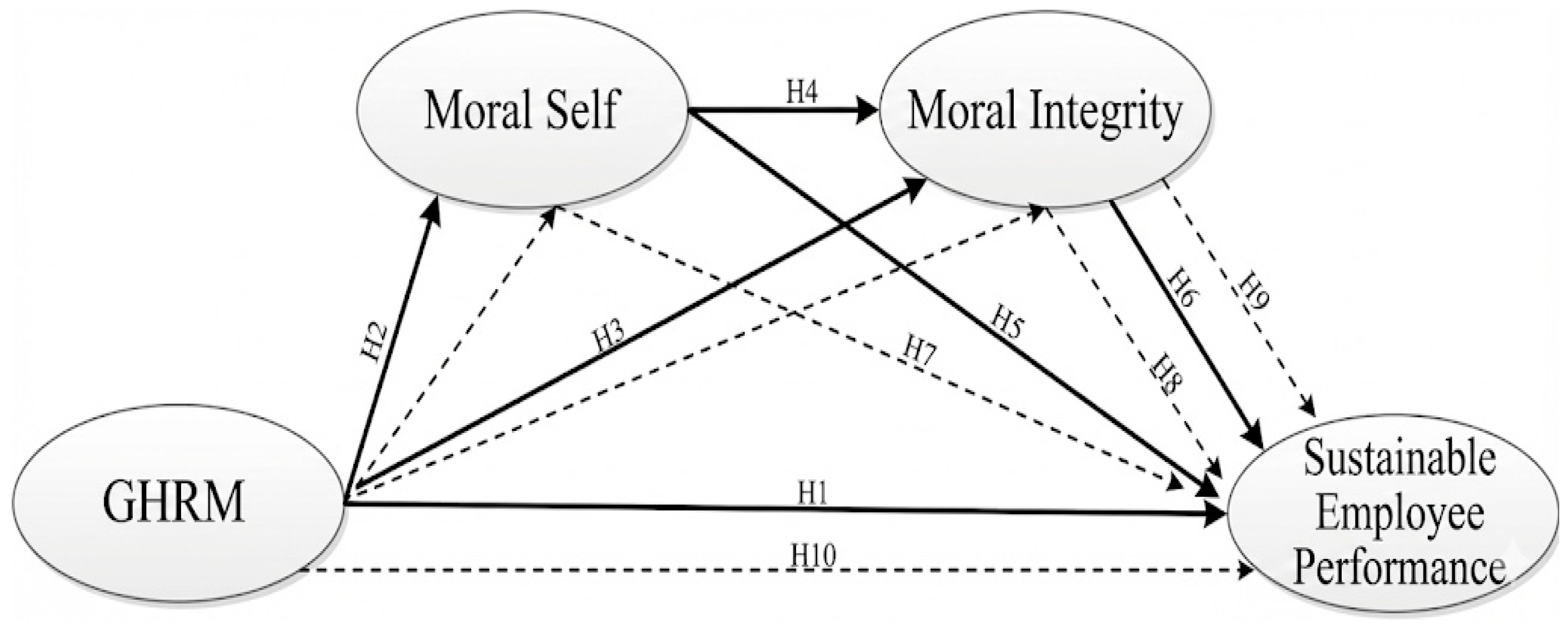
The conceptual framework as illustrated in
Figure 1 integrates several pathways. GHRM directly enhances performance by equipping employees with competencies, clear expectations, and motivational incentives (H1). It also shapes the Moral Self (H2) and Moral Integrity (H3), which themselves drive performance through distinct processes: identity-congruent motivation and moral awareness (H6), along with behavioral consistency and self-regulation (H5). Developmentally, Moral Self provides the motivational foundation that enables Moral Integrity (H4).
Beyond these direct effects, three mediation pathways explain how GHRM’s influence unfolds. Moral Self mediates the GHRM–performance link by showing how organizational values become personal identity (H7). Moral Integrity mediates by capturing the capability and behavioral enablement processes that sustain ethical action (H8). Moral Integrity also mediates the Moral Self–performance relationship, reflecting the translation of moral motivation into consistent behavior (H9). Finally, the sequential mediation pathway (H10) integrates these processes into a developmental cascade: GHRM shapes Moral Self, which cultivates Moral Integrity, which ultimately drives sustainable performance.
This framework contributes to theory and practice in four ways. First, it extends Green HRM theory by identifying identity-based psychological mechanisms behind lasting behavioral change. Second, it applies and expands moral identity theory to organizational contexts, showing how HR systems shape identity and how identity influences work outcomes. Third, it explains the durability of GHRM effects, addressing a gap in prior research that documented behaviors without clarifying the psychological processes sustaining them. Finally, it offers a multilevel, multi-pathway model that captures the complexity of human motivation while maintaining parsimony by centering moral identity as the organizing construct.
Table 1 synthesizes 15 seminal studies across three theoretical domains: Green Human Resource Management (GHRM), moral identity research, and Sustainable Employee Performance (E-SuPer) research. It highlights their theoretical frameworks, research contexts, methodologies, key findings, identified research gaps, and relevance to the present study.
Conceptual Integration Gap and Relevance to the Present Study:
Table 1 clearly illustrates the existing integration gap across the three theoretical domains. Specifically:
GHRM research (e.g., Renwick et al. [
6]; Dumont et al. [
7]; Tang et al. [
8]; Pham et al. [
12]; Saeed et al. [
9]) primarily focuses on how organizational systems and practices lead to pro-environmental behaviors and environmental performance outcomes. However, these studies provide a limited explanation of identity-based psychological mechanisms and do not delve into how GHRM influences the formation of an employee’s moral identity.
Moral identity research (e.g., Aquino & Reed, [
13]; Hardy & Carlo [
15]; Lapsley [
14]; Gibbs [
17]; Aquino et al. [
33]) establishes robust identity–behavior relationships in moral and prosocial domains. While these studies elucidate how moral identity drives ethical actions, they do not examine organizational sustainability contexts or the influence of HR systems on moral identity development.
Sustainable Employee Performance research (e.g., Ji et al. [
19]; Griffin et al. [
54]) has successfully validated the dimensions of sustainable performance (proficiency, adaptivity, and proactivity). Nevertheless, these studies do not investigate the moral-psychological antecedents of such performance or the specific influences of GHRM practices.
Relevance to the Present Study:
The present study directly addresses this integration gap by proposing and testing a comprehensive model that bridges these literatures. It explicitly examines the integrated pathway:
GHRM → Moral Self → Moral Integrity → Sustainable Employee Performance
By doing so, this research aims to explain the psychological mechanisms through which GHRM fosters sustained employee performance, moving beyond mere compliance to identity-driven commitment. It extends the GHRM literature by explicating identity-based processes, advances moral identity theory by examining its operation within organizational sustainability, and contributes to the sustainable performance literature by identifying moral identity as a key psychological antecedent. This integrated approach provides a more nuanced understanding of how HR practices can cultivate deep, identity-based commitment to sustainability within organizations.
5. Discussion
The findings of this study provide compelling evidence for the psychological pathways through which Green Human Resource Management (GHRM) practices translate into Sustainable Employee Performance (SEP). The sequential mediation model revealed that the majority of GHRM’s influence operates through moral identity mechanisms, with 80.6% of the total effect mediated. This result supports recent theoretical frameworks that emphasize the moral foundations of sustainable behavior in organizations [
10,
12].
A particularly striking outcome was the strong relationship between GHRM and employees’ moral self-concept, which aligns with Social Identity Theory and extends recent work by Singh et al. [
82] and Ahmad et al. [
83]. These scholars argued that environmental HR practices serve as identity-shaping mechanisms, and our findings confirm that when organizations implement green recruitment, training, and performance management systems, employees develop stronger environmental self-concepts. This enhanced moral self-awareness subsequently strengthens moral integrity, which then manifests in sustainable performance behaviors. In this way, the sequential pathway provides empirical support for the moral identity model proposed by Aquino and Reed [
13] and recently extended by Chen et al. [
84] in sustainability contexts.
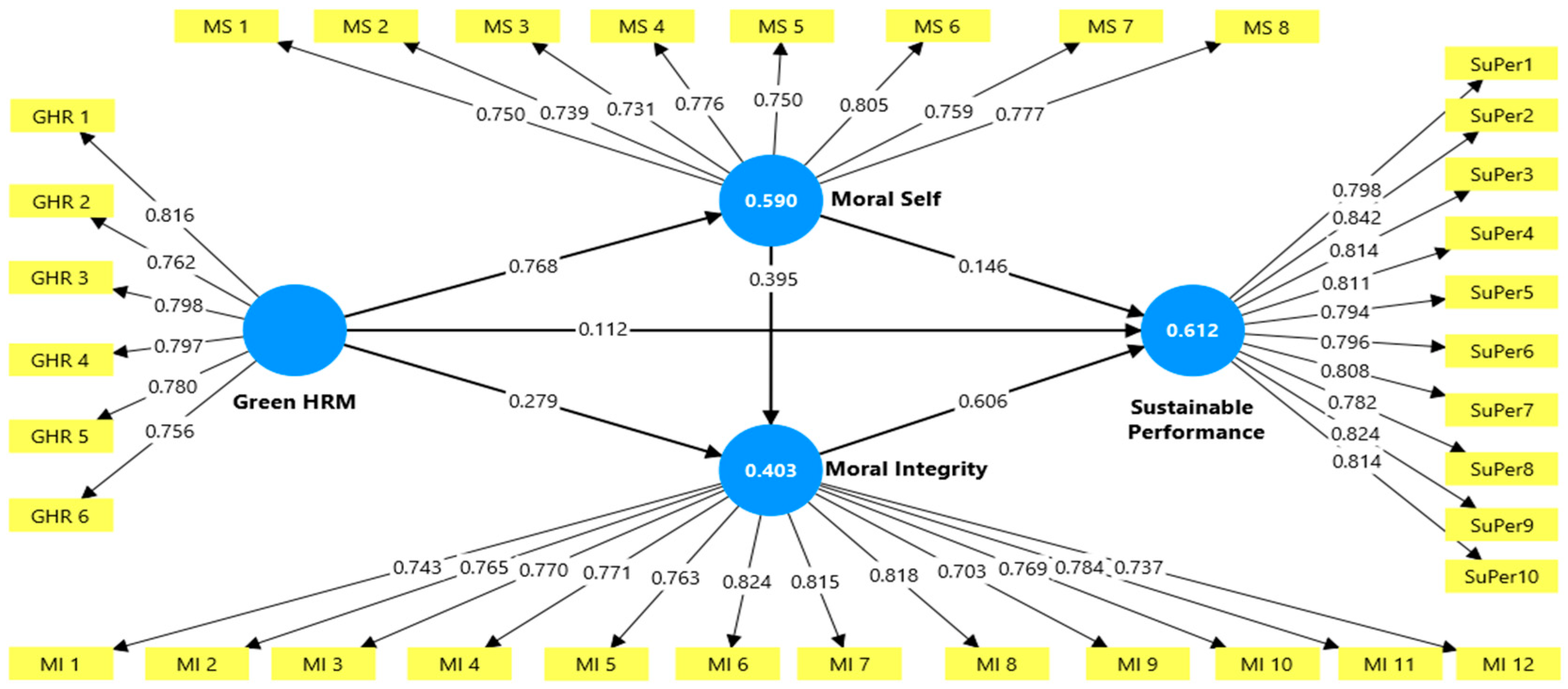
The particularly strong effect of moral integrity on SEP (β = 0.606,
p < 0.001) underscores its role as the most proximal determinant of sustainable behavior. This finding resonates with meta-analytic evidence suggesting that moral identity is among the strongest predictors of pro-environmental behavior in organizational settings [
85]. It also extends the work of Li et al. [
86], who demonstrated that moral emotions, such as moral anger, mediate the link between environmental awareness and sustainable behaviors.
The hospitality sector context makes these implications particularly salient. Given the industry’s significant environmental footprint and increasing regulatory pressures, integrated GHRM systems that emphasize moral development alongside technical competencies can move organizations beyond surface-level compliance toward authentic cultural transformation [
87,
88]. The strong predictive power of the model (R
2 = 0.612 for SEP) suggests that organizations investing in morally grounded GHRM can expect substantial returns in terms of sustainable employee behaviors, consistent with ROI analyses by Liu et al. [
89] and Yusoff et al. [
90].
Finally, contextual considerations enrich the interpretation of these findings. The study’s focus on the Egyptian hospitality sector highlights how collectivistic cultural orientations may amplify moral identity processes, consistent with Hassan et al. [
91] and Mahmoud et al. [
92]. Future research should examine whether these relationships hold in individualistic societies, where moral identity may operate differently [
93]. Moreover, the predominantly male sample (78%) underscores the need for gender-sensitive approaches. Evidence suggests that women respond more strongly to values-based interventions, while men are more influenced by performance-based incentives [
94,
95].
Taken together, these findings confirm the centrality of moral identity in translating HRM practices into sustainable employee outcomes. They highlight both the theoretical contribution of moral constructs as mediators and the practical importance of embedding moral dimensions within HRM strategies to achieve authentic, long-term sustainability in the hospitality sector.
7. Practical Implications
From a practical perspective, these findings highlight the importance of embedding environmental values across HR systems. Leaders should move beyond compliance mandates and instead cultivate employees’ moral self-concept through integrity-based recruitment, values-driven training, and mentoring initiatives. Performance management systems must reinforce these efforts by incorporating sustainability metrics that recognize and reward identity-congruent behaviors. Such comprehensive, values-driven systems ensure that sustainability emerges as an intrinsic expression of employees’ values rather than as externally imposed obligations [
96].
Industry reports further highlight that genuine employee engagement rooted in value alignment rather than mandated participation is critical for achieving sustainability certifications and environmental performance targets [
97]. The findings offer clear guidance for hospitality organizations facing mounting environmental pressures. Leaders should embed environmental values across recruitment, training, and performance management systems, creating conditions where sustainability is not an external obligation but an authentic expression of employees’ moral identity. Integrity-based recruitment, values-driven training, and performance metrics that reward identity-congruent behaviors can transform sustainability from a compliance exercise into a cultural norm. For the hospitality sector, an industry with significant environmental footprints, such integrated approaches are particularly critical, as they align employee engagement with organizational sustainability goals and regulatory demands.
7.1. Differentiated Implementation Strategies by Hotel Resource Level
Implementation strategies should be tailored to hotel resource levels, recognizing that different property types face distinct operational constraints and financial capabilities. Resource-Constrained Properties (Budget Hotels and Independent Operators): Resource-constrained properties should prioritize low-cost, high-impact GHRM practices that leverage existing organizational processes: 1. Focus on low-cost, high-impact GHRM practices: Incorporating sustainability criteria into existing recruitment interviews (no additional cost), integrating environmental modules into mandatory onboarding training, and recognizing sustainability contributions through non-monetary rewards (e.g., employee-of-the-month programs highlighting green initiatives). 2. Leverage peer-to-peer identity development: Creating employee-led “green teams” where sustainability champions mentor colleagues, building moral identity through social influence without formal training costs. This approach harnesses existing social networks to cultivate moral self-concept organically. 3. Partner with external resources: Accessing free sustainability training from tourism boards, environmental NGOs, or industry associations to build employee competencies without internal development costs.
Mid-Range Properties (Three- to Four-Star Hotels, and Regional Chains): Mid-range properties can implement structured GHRM bundles that balance investment with operational feasibility: 1. Implement structured GHRM bundles: Formal sustainability training programs, incorporating environmental performance metrics into annual reviews (weighted 10−15%), and establishing modest financial incentives for department-level sustainability achievements. 2. Deploy technology-enabled identity development: Using learning management systems for sustainability micro-learning modules, digital dashboards showing individual/team environmental impact, and gamification elements that make moral identity salient. These digital tools provide scalable identity-cultivation mechanisms. 3. Create cross-functional sustainability roles: Designating department sustainability coordinators who receive specialized training and serve as moral exemplars, facilitating identity development through role modeling. These coordinators bridge operational units and embed sustainability values throughout the organization.
High-Resource Properties (Five-Star Hotels, Luxury Resorts, International Brands): High-resource properties should pursue comprehensive GHRM integration that maximizes moral identity development: 1. Comprehensive GHRM integration: Embedding sustainability throughout the employee lifecycle from values-based recruitment using psychometric assessment to identify moral identity alignment, intensive onboarding immersion in organizational sustainability culture, ongoing development through advanced certification programs, performance systems with substantial weighting (20−30%) for environmental outcomes, and significant monetary incentives tied to property-level sustainability KPIs. 2. Invest in identity-deepening interventions: Offering paid time for environmental volunteering and community projects that strengthen moral self-concept, providing sabbatical opportunities for environmental leadership development, and creating innovation labs where employees design sustainability solutions. These investments cultivate deep moral integration. 3. Leadership in industry transformation: Positioning sustainability-committed employees as thought leaders through conference presentations, industry publications, and peer-property consulting, reinforcing moral identity through professional recognition. This approach transforms employees into sustainability ambassadors whose moral identities are publicly validated. These differentiated recommendations enable practitioners across the hospitality sector to implement identity-based sustainability strategies aligned with their operational and financial realities. Regardless of resource level, the fundamental principle remains constant: sustainability outcomes are most effectively achieved when HR systems cultivate employees’ moral identity rather than relying solely on compliance mechanisms.
7.2. Implications for Team Management, Internal Branding, and Leadership for Sustainability
The findings reveal critical implications for operationalizing moral identity development through Green HRM practices at the managerial, team, and organizational leadership levels. These multilevel considerations extend resource-differentiated implementation strategies (
Section 7.1) by specifying how GHRM-induced moral identity processes can be leveraged across different organizational strata.
Team Management Implications: The sequential mediation model, wherein 80.6% of GHRM’s total effect operates through moral identity mechanisms, suggests that team-level interventions represent critical leverage points for sustainability transformation. Building upon the peer-to-peer identity development mechanisms identified for resource-constrained properties, managers should reconceptualize teams as moral communities wherein sustainability constitutes a collective identity marker rather than an individual attribute. This viewpoint is congruent with the assertions of Social Identity Theory, which posits that affiliations to social groups fundamentally influence the individual’s self-concept [
13,
82]. Specifically, team leaders can facilitate collective moral identity development through three mechanisms: First, embedding sustainability goal setting within regular team processes transforms environmental performance into shared accountability, thereby consolidating collective moral self-concept. Second, establishing team-based sustainability challenges leverages peer influence and social learning processes, supporting moral identity formation through group-normative processes consistent with meta-analytic findings on pro-environmental behavior [
85]. Third, publicly celebrating team environmental achievements provides social validation of moral identity at the collective level, creating positive reinforcement loops that amplify identity–behavior alignment. The particularly strong effect of moral integrity on SEP (β = 0.606,
p < 0.001) underscores that when sustainability is embedded in team dynamics rather than imposed individually, employees experience stronger identity–behavior congruence through social validation mechanisms. This team-level approach addresses the hospitality sector’s reliance on discretionary environmental behaviors by creating normative environments where sustainable practices become identity-congruent rather than compliance-driven.
Internal Branding Implications: The transition from compliance-based to identity-based sustainability necessitates strategic internal branding that positions environmental stewardship as constitutive of organizational identity. This requirement emerges directly from the study’s finding that GHRM practices operate primarily through moral self-concept development (first mediation path), suggesting that organizational symbolism and communication must consistently reinforce environmental values as central to “who we are” rather than merely “what we do.” HR and communications leaders should implement three complementary strategies: First, developing internal campaigns showcasing employee sustainability champions as moral exemplars makes moral identity salient and aspirational, providing behavioral templates consistent with Aquino and Reed’s [
13] moral identity framework. Second, creating narrative platforms wherein employees articulate their sustainability journeys reinforces the cultural narrative that environmental values are intrinsic rather than imposed, facilitating authentic moral identity integration. Third, designing consistent visual and communicative touchpoints across employee interfaces (portals, newsletters, and workspace displays) that signal sustainability as a moral priority creates the identity-affirming organizational context necessary for moral self-concept development. This internal branding infrastructure transforms GHRM from discrete practices into a comprehensive identity cultivation system. The model’s strong predictive power (R
2 = 0.612 for SEP) suggests that when internal branding consistently reinforces environmental values, employees develop the robust moral self-concepts that translate into sustained performance outcomes, delivering the substantial behavioral returns identified in recent ROI analyses [
89,
90].
Leadership Implications for Sustainability: Senior leadership plays a pivotal yet under-examined role in legitimizing and accelerating moral identity development processes. The findings indicate that authentic leadership commitment serves as a critical boundary condition for the GHRM–moral identity pathway, as leaders provide both symbolic validation and resource allocation that enable moral self-concept formation. Leaders must enact three interdependent responsibilities: First, articulating sustainability as a moral imperative rather than merely a strategic priority signals that environmental values are central to organizational identity, thereby legitimizing employees’ moral self-concept development. This authentic framing is particularly critical in the hospitality context, where mounting environmental pressures could otherwise position sustainability as externally imposed compliance [
87,
88]. Second, demonstrating personal commitment through visible behaviors—participating in green teams, foregrounding sustainability in strategic communications, allocating resources to environmental initiatives—provides behavioral modeling that validates employees’ developing moral identities and offers concrete templates for identity-congruent action. Third, empowering middle managers as sustainability advocates through training, resources, and authority creates a leadership cascade that embeds moral identity development throughout organizational structures. The cross-functional sustainability coordinator roles prescribed for mid-range properties exemplify this distributed leadership model, wherein designated managers serve as moral exemplars who facilitate identity development across departmental boundaries. For high-resource properties, positioning sustainability-committed employees as industry thought leaders (conference presentations, publications, and peer consulting) extends this principle by providing professional recognition that publicly validates and reinforces moral identity.
Integrated Multilevel Framework: These three dimensions—team management, internal branding, and leadership—operate synergistically to create the comprehensive identity cultivation system that the sequential mediation model implies. When leadership authenticates sustainability as a core value, internal branding renders it culturally salient, and team management embeds it in daily practice, employees receive consistent signals that align moral self-concept with organizational environmental objectives. This multilevel integration addresses the collectivistic cultural orientation prevalent in the Egyptian hospitality sector [
91,
92], wherein group-level processes may amplify individual moral identity development. Importantly, this integrated approach is scalable across the resource-differentiated implementation strategies outlined in
Section 7.1. Resource-constrained properties can leverage low-cost team-based peer influence and leadership role modeling, mid-range properties can deploy technology-enabled internal branding alongside cross-functional coordination, and high-resource properties can implement comprehensive leadership development and sophisticated branding campaigns. Regardless of resource level, the fundamental principle remains constant: sustainability outcomes are most effectively achieved when multilevel organizational systems—from team norms and leadership exemplars to symbolic communications—collectively cultivate employees’ moral identity rather than relying solely on compliance mechanisms or isolated GHR practices.
8. Limitations and Future Research Directions
While this study provides robust evidence for the proposed theoretical model, several limitations should be acknowledged. First, the study’s focus on the Egyptian hospitality sector constrains generalizability. Egypt’s cultural profile—characterized by high collectivism and high power distance [
98]—may amplify organizational influence on individual identity formation compared to individualist societies. In collectivist cultures, institutional signals and group norms carry greater weight in shaping self-concept [
99], suggesting that GHRM practices may exert stronger identity effects in Egypt than in Western contexts. Additionally, while moral identity’s basic structure appears universal [
13], the specific content of moral values and their relative centrality to self-concept vary across cultures [
100]. Future research should examine whether the sequential mediation pathways observed here appear in individualist cultures, whether GHRM effect sizes vary systematically with cultural dimensions, and whether different sustainability values (e.g., waste reduction vs. energy conservation) show cultural variation in moral centrality. Cross-cultural comparative designs would clarify the boundary conditions of our theoretical model and identify culture-specific implementation strategies. Second, the predominantly male sample (78%) limits insights into gendered responses to GHRM, as prior evidence suggests women may be more responsive to values-based interventions, while men may react more strongly to performance-based incentives. Third, the non-experimental design precludes definitive causal claims. While our two-wave, time-lagged design strengthens causal inference compared to cross-sectional approaches by establishing temporal precedence and reducing common method bias [
63], the reliance on survey data restricts definitive causal conclusions. Alternative causal explanations remain plausible. Reverse causality is possible: employees with pre-existing strong moral identities may perceive and recall GHRM practices more favorably (positive affectivity bias). Additionally, unmeasured third variables—such as organizational ethical climate, leader moral modeling, or peer sustainability norms—may simultaneously influence GHRM implementation quality and employee moral development, creating spurious associations. While mediation pathways were statistically supported, longitudinal research with three or more measurement waves could strengthen causal claims by tracking how moral self-concept and integrity evolve over time in response to GHRM interventions. Such extended longitudinal designs would enable cross-lagged panel analysis, clarifying directional relationships and ruling out reciprocal causation. Moreover, experimental designs randomly assigning GHRM practice bundles would provide stronger evidence of causality and rule out alternative explanations such as reverse causality or omitted variable bias. Future research should prioritize experimental and extended longitudinal approaches to definitively establish causal mechanisms. Fourth, the study concentrated on moral identity constructs, leaving other psychological mechanisms (e.g., environmental passion, moral emotions, and organizational climate) unexplored. Fifth, the self-report nature of performance measures may be subject to social desirability bias. Our reliance on employee self-reports may introduce common method bias, even though we applied safeguards such as temporal separation, varied formats, and anonymity. Future research should incorporate multi-source performance assessment combining self-ratings, supervisor evaluations, and objective sustainability indicators (e.g., energy consumption per guest night, waste diversion rates, and water usage metrics) to triangulate findings and strengthen construct validity. Finally, while we focused on constructive GHRM mechanisms that cultivate moral identity, we did not examine how negative organizational practices such as workplace bullying might undermine moral development processes; destructive influences could attenuate or reverse the identity pathways we document and, therefore, represent an important boundary condition for the model.
Future studies should address these limitations by adopting cross-cultural comparative designs to examine whether moral identity operates differently across cultural orientations. Gender-balanced samples are needed to clarify how men and women internalize sustainability values through HR practices. Longitudinal research could strengthen causal claims by tracking how moral self-concept and integrity evolve over time in response to GHRM interventions. Moreover, future work should explicitly examine destructive organizational influences (e.g., workplace bullying; Elshaer et al. [
55]), alongside constructive GHRM practices, and integrate additional psychological constructs such as moral emotions [
86], environmental passion, and organizational justice to assess their relative strength and interaction and to determine whether and how negative practices disrupt moral identity formation and the pathways linking HRM to sustainable performance. Finally, sectoral comparisons beyond hospitality, such as manufacturing or healthcare, would test the robustness of the framework across industries with varying sustainability pressures.
9. Conclusions
This study provides comprehensive empirical evidence for a theoretically grounded framework explaining how Green Human Resource Management (GHRM) practices foster Sustainable Employee Performance (SEP) in the hospitality sector. By examining 10 distinct hypotheses across multiple pathways, our research demonstrates that GHRM’s influence operates through both direct mechanisms and sophisticated psychological processes centered on moral identity development.
Integration of Multiple Pathways: Our findings reveal three complementary pathways through which GHRM influences sustainable performance. First, GHRM exerts a direct, though modest, effect on SEP (β = 0.112, p < 0.05), consistent with AMO theory’s prediction that HR practices can directly enhance employee capabilities and motivation for sustainability. This direct pathway confirms that well-designed green HR systems do provide immediate benefits through skill development, knowledge transfer, and incentive alignment. However, the preponderance of GHRM’s influence operates indirectly through moral identity mechanisms. The Moral Self pathway (GHRM → Moral Self → SEP) accounts for a significant portion of GHRM’s total effect, demonstrating that when employees internalize environmental values as central to their self-concept, they are intrinsically motivated to perform sustainably. This finding extends Social Identity Theory into the sustainability domain, showing that organizational practices shape not just what employees know or can do, but fundamentally who they perceive themselves to be. The Moral Integrity pathway (GHRM → Moral Integrity → SEP) proved even more consequential, with Moral Integrity demonstrating the strongest predictive relationship with sustainable performance in the entire model (β = 0.606, p < 0.001). This underscores that behavioral consistency, the alignment between values and actions, serves as the most proximal driver of sustainable performance. Employees who maintain moral integrity translate their environmental commitments into consistent, observable behaviors regardless of situational pressures or conveniences. Most significantly, our sequential mediation analysis revealed that the complete pathway (GHRM → Moral Self → Moral Integrity → SEP) represents the primary mechanism through which green HR practices achieve their effects, accounting for 80.6% of the total mediation. This finding illuminates a developmental process: GHRM first cultivates internalized moral values (Moral Self), which then motivate behavioral alignment (Moral Integrity), ultimately manifesting in superior sustainable performance. The strength of this sequential pathway suggests that fragmented approaches targeting only values or only behaviors will prove less effective than integrated systems that recognize the developmental progression from identity to action.
Theoretical Contributions Across Domains: These findings advance three interconnected theoretical domains. First, they extend Green HRM theory by shifting focus from what practices organizations implement to how these practices psychologically transform employees. While the existing literature has established that GHRM correlates with various employee outcomes, our study explicates the specific psychological mechanisms—identity development and behavioral integrity—that explain these relationships. This represents a theoretical advancement from descriptive correlation to mechanistic explanation. Second, our research contributes to moral identity theory by demonstrating its applicability beyond traditional ethical domains into organizational sustainability contexts. Previous moral identity research has primarily examined prosocial behavior, ethical decision-making, or consumer choices. Our findings demonstrate that moral identity frameworks effectively explain employee behavior in environmental contexts, suggesting broader applicability than previously recognized. Moreover, by distinguishing between moral self (identity) and moral integrity (behavioral consistency) and demonstrating their sequential relationship, we provide empirical support for theoretical models that position identity as an antecedent to behavior. Third, our study bridges organizational behavior and environmental psychology by demonstrating that workplace practices can cultivate the same psychological orientations (environmental values, moral identity) that environmental psychologists have identified as crucial for pro-environmental behavior. This integration suggests that organizations represent powerful contexts for fostering broader environmental citizenship, not merely workplace compliance.
Contextual Considerations and Boundary Conditions: The hospitality industry context makes these implications particularly salient. Given the sector’s significant environmental footprint, direct customer interface, and labor-intensive operations, cultivating employees who are intrinsically committed to sustainability rather than merely compliant offers substantial advantages. Hotels cannot surveil every employee interaction, and sustainability initiatives often depend on discretionary behaviors—noticing waste opportunities, suggesting improvements, and educating guests—that cannot be mandated. Identity-based commitment addresses this challenge by internalizing motivation.
Furthermore, our study’s Middle Eastern context enriches interpretation. The strong effects we observed may partly reflect cultural orientations toward collectivism and social harmony that amplify the effectiveness of identity-based management approaches. Employees in collectivist cultures may be particularly responsive to organizational practices that signal valued identities and community membership. This suggests potential boundary conditions: the mechanisms we identified may operate somewhat differently across cultural contexts, with identity-based pathways potentially stronger in collectivist settings and compliance-based approaches relatively more influential in individualistic cultures. The relatively resource-rich context of five-star hotels in a major tourist destination also warrants consideration. Organizations with greater resources can invest in comprehensive GHRM systems, extensive training, visible environmental initiatives, and supportive leadership, which send stronger identity-relevant signals. The pathways we identified may manifest differently in resource-constrained contexts where fragmented or symbolic environmental practices send weaker or inconsistent signals about organizational values.
From Compliance to Identity: A Paradigm Shift in Sustainability Management: Our findings suggest a paradigm shift in how organizations should conceptualize sustainability management. Traditional approaches have emphasized compliance mechanisms, policies, monitoring, sanctions, and incentives that treat sustainable behavior as something organizations must induce through external controls. Our research demonstrates that this compliance paradigm, while producing direct effects, leaves the majority of potential influence unrealized.
An identity-based paradigm recognizes that the most powerful driver of sustainable performance is not external control but internal conviction. When employees embrace environmental values as central to their self-concept and demonstrate the integrity to align their behaviors with these values, sustainable performance emerges not as compliance but as self-expression. Organizations do not primarily foster this transformation through monitoring and incentives but through HR systems that credibly signal environmental commitment, provide opportunities for environmental engagement, and create communities where sustainability defines collective identity. This paradigm shift has profound practical implications. It suggests that organizations should evaluate GHRM initiatives not merely by their direct behavioral effects but by their capacity to cultivate moral identity. Training programs should emphasize not just skills but values. Recruitment should assess not just capabilities but value alignment. Performance management should recognize not just compliance but initiative and advocacy. Leadership should model not just technical proficiency but authentic commitment. The goal is to create organizational contexts where employees’ environmental values are activated, validated, and integrated into their working identities.
Concluding Reflection: Ultimately, this study demonstrates that employees become environmental stewards not because organizations compel them through monitoring and incentives but because sustainability resonates with who they fundamentally are. The sequential pathway we identified—from organizational practices to internalized values to behavioral integrity to performance outcomes—reveals a developmental process through which work experiences shape identity, which in turn directs behavior. This insight challenges instrumentalist assumptions that view employees primarily as subjects to be controlled or incentivized. Instead, it suggests that employees are moral agents whose self-concepts can be cultivated through organizational practices. When organizations invest in morally grounded HRM systems that signal authentic environmental commitment, they initiate a transformation whereby employees do not merely work for sustainable organizations; instead, they become sustainable people. This transformation produces more authentic, resilient, and impactful sustainability outcomes that advance both organizational performance and societal well-being.
For the hospitality industry specifically, this research demonstrates that the path to genuine sustainability leadership lies not in greenwashing or superficial initiatives but in fundamental transformation of organizational culture and employee identity. Hotels that successfully cultivate environmental moral identity among their workforce will not only achieve superior operational sustainability but will also send thousands of employees into their communities and personal lives with strengthened environmental values and behavioral commitments. In this way, organizational GHRM practices can create ripple effects that extend far beyond workplace boundaries, contributing to broader cultural shifts toward environmental responsibility.