Article

Stimulating Triple Bottom Line Organizational Performance Through Knowledge Sources and Green Innovation: A Mediation and Moderation Approach

School of Management and Economics, North China University of Water Resources and Electric Power, Zhengzhou 450046, China
*
Author to whom correspondence should be addressed.
Sustainability 2026, 18(4), 1931; https://doi.org/10.3390/su18041931
Submission received: 30 December 2025 / Revised: 4 February 2026 / Accepted: 6 February 2026 / Published: 13 February 2026

Abstract

From a knowledge-based perspective, monopolizing knowledge is getting difficult and is an emerging source for innovation and organizational performance. This study explores to what extent knowledge sources stimulate green innovation to enhance organizational performance, with moderation affecting resource orchestrion capability. Data were collected from Chinese manufacturing industries during February and April 2025. This study employed SmartPLS 4.1.12, which is widely used to analyze complex models of mediation and moderation for first- and second-order constructs. The results show that knowledge sources, both internal and external, act as stimulants to promote green innovation and improve organizational performance. In addition, green innovation also positively mediates between knowledge sources and organizational performance. Furthermore, resource orchestration capability strengthens the relationship between knowledge sources and green innovation. Future research may broaden the concept beyond other industrial businesses. Green innovation, tacit knowledge management, affective trust, and task efficiency can also be explored to stimulate organizational performance. This study provides proof that knowledge sources are essential for green innovation. Managers and organization leaders should encourage knowledge sharing initiatives inside and outside the company to improve organizational performance and green innovation. This study fills existing research areas that have received limited empirical attention and improve understanding of knowledge sources, inside and outside organizations, to boost green innovation and overall performance. Mediation and moderation research explores knowledge sources to foster green innovation and organizational performance.

1. Introduction

Organizations are gradually emphasizing social, financial, and operational performance to remain competitive in the market [1]. In this context, organizations are increasingly relying on green innovation (GI) as a practical pathway to enhance sustainability and manage environmental demands [2]. Therefore, organizations need to incorporate internal knowledge sources (INT) and external knowledge sources (EXT) into their innovation processes for competitive advantage and societal alignment [3,4]. The acquisition, dissemination, and application of knowledge sources (KS) are crucial for organizations seeking sustainable innovation and improving their operational, financial, and social performance [5].
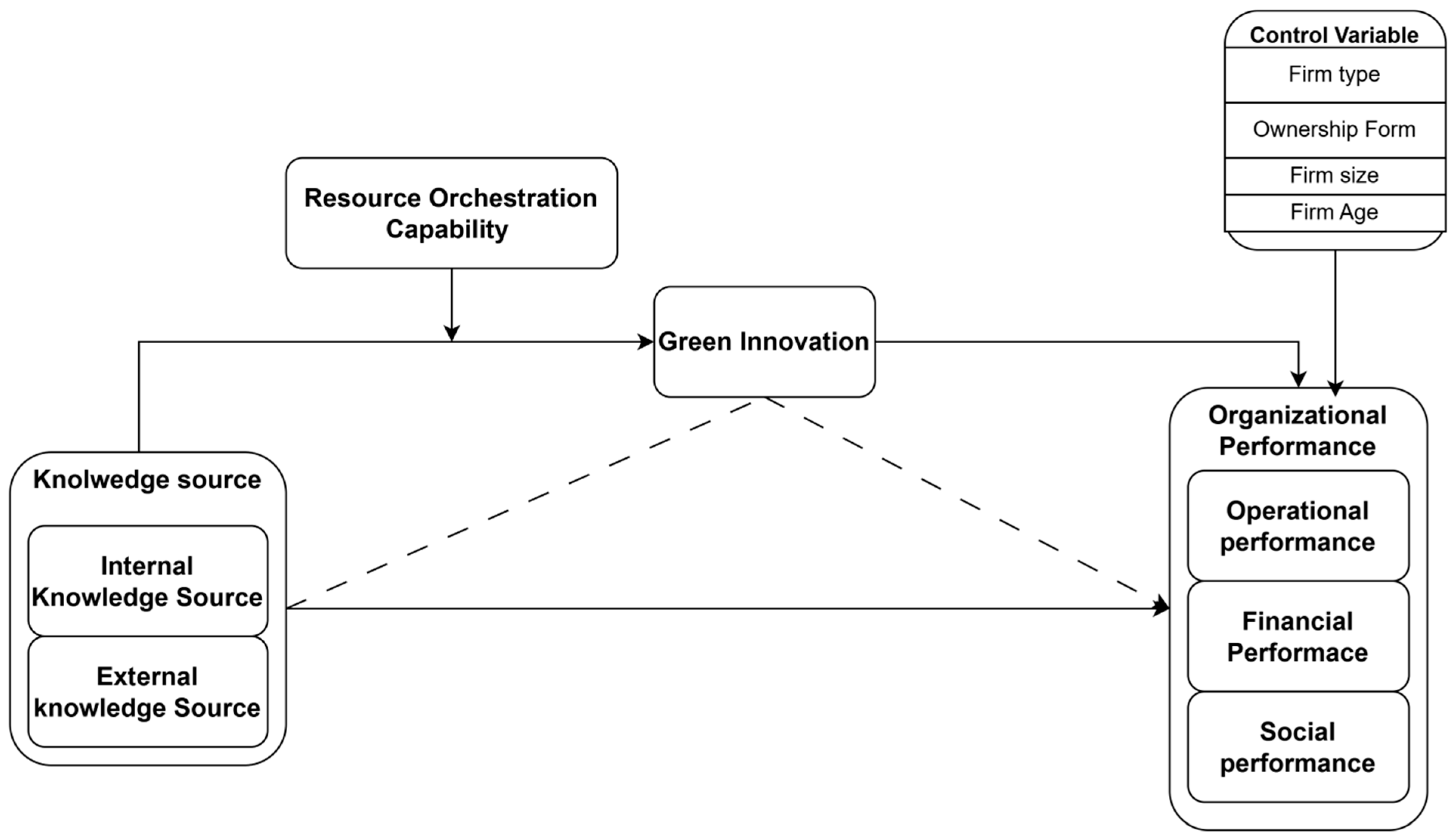
GI has the potential to drive organizational performance (OP) with advancing environmental responsibility across different economies [6]. Several crucial factors influence GI’s success, but knowledge stands out as a critical component [5]. Although many researchers have been working on different forms of knowledge, e.g., green knowledge [7], technological knowledge [8], and the knowledge creation process [9], the connection between KS and GI still needs to be explored to stimulate the OP. The critical challenge for organizations is achieving environmentally friendly and responsible growth with minimum cost [10]. We aim to fill a critical gap in understanding the pathways through which KS and GI capabilities contribute to OP (operational, financial, and social). Therefore, based on the preceding discussion, a conceptual framework was developed (Figure 1), highlighting the significance of this research domain for several key reasons.
Knowledge derived from internal and external sources has become a predominant economic and competitive asset [11]. Technologies and knowledge have significance for organizational innovation while effective knowledge utilization and related techniques are also crucial for organizations GI [5]. When organizations access, integrate, and apply diverse knowledge, they are better furnished to develop eco-friendly products, processes, and technologies [12]. Even though researchers have explored different types and forms of knowledge with GI [7,8,9], integration of KS and GI is still limited and needs to be examined.
Secondly, GI in organizations involves adopting eco-friendly practices to enhance sustainability, which aligns with global environmental commitments, with social potential, and promotes long-term competitiveness and responsible resource management [13]. Global commitments like the Paris Agreement and technological progress both stress the importance of GI, but the cost is still high. Businesses that use GI could eventually experience production losses and inefficiencies [14]. Therefore, organizations will not invest in the development of environmentally friendly innovation until they can predict a return on investment [15]. Due to this, the most important question that has to be addressed as a result is whether GI can stimulate OP (i.e., operational, financial, and social) while still maintaining the positive effects that it has on the atmosphere [16].
Thirdly, organizations that leverage diverse KS to achieve strategic goals such as operational, financial, and social objectives can significantly enhance OP [17,18]. Studies on GI and their effectiveness have sometimes produced contradictory findings [19,20], such as risks associated with knowledge transfer [21]. Furthermore, ref. [22] studies that found a significant negative impact of EXT on GI growth have captured the attention of scholars [23,24]. Therefore, this study addresses these ambiguities by adopting a boundary-condition perspective to examine when and how KS and GI contribute to operational, financial, and social performance in Chinese manufacturing firms, which are increasingly under pressure to meet sustainability requirements.
Fourthly, resource-based theory states that firms can obtain a competitive edge by holding a large number of valuable and uncommon resources to attain specific objectives [25]. These valuable and uncommon resources are difficult to duplicate for competitors [26]. At the same time, strategic theorists point out that possessing resources and competencies may not harvest the best results, particularly when insufficient consideration is paid to evaluating and deploying resources and capabilities through proper management actions [27]. ROC is an emerging topic and it is very important to examine in recent research work to make an organization produce more efficient results and innovation [28,29]. ROC is a boundary condition that determines when KS translates into GI to stimulate OP. Therefore, we still need to examine more research to explore how ROC strengthens or weakens the connection between KS and GI.
Based on the above discussion, this study will emphasize these questions:
  • RQ1. To what extent does KS significantly influence GI?
  • RQ2. Does GI significantly influence OP (i.e., operational, financial, and social)?
  • RQ3. Does GI mediate the relationship between KS and OP?
  • RQ4. Does ROC moderate the relationship between KS and GI?
Prior RBV and KBV studies have recognized that knowledge is a critical strategic resource for innovation and performance. Integration of diverse knowledge and environmental sustainability is a challenge for organizations [4,13]. Although, existing studies have largely investigated different terms of knowledge with innovation, and OP in different contexts. What is unclear is how KS impacts GI and OP with ROC, especially in the context of Chinese manufacturing firms. The objective of this study is to determine which extent internal and external KS contributes to the development and implementation of GI within organizations. Additionally, this study aims to investigate how GI acts as a mediator between KS and OP, explaining the pathways through which KS contributes to OP via GI. This study also explores the moderating role of ROC between KS and GI, examining how organizations’ ability to manage and coordinate diverse resources effectively influences their capacity for GI.
By exploring this dynamic interplay, this study will contribute valuable literature to the mechanisms through which KS contributes to GI, shaping the performance outcomes of organizations committed to environmental responsibility. Furthermore, previous researchers have not thoroughly examined the moderating roles of ROC, and the relationship between KS and GI is also a novel point of this study.

2. Literature Review

2.1. KS and GI

Organizations who promote KS activities inside or outside the organization can handle complex issues and can create new opportunities to encourage innovation [30]. Understanding and implementing the right knowledge can allow organizations to handle environmental issues and gain a competitive edge [31]. In this study, KS are conceptualized as both internal and external knowledge inputs that support GI. Internal knowledge sources (INT) include firm-specific knowledge embedded in employees, organizational routines, and internal R&D activities, which represent tacit and explicit knowledge accumulated within the organization. External knowledge sources (EXT) include knowledge acquired from customers, suppliers, competitors, universities, and industry networks, which provide technological and market insights [10]. Leveraging internal and external knowledge allows organizations to tackle environmental challenges effectively and secure a competitive advantage.
The INT of an organization is gathered from research which has been gathered over time inside the organizations and promotes innovation [32]. Internally generated knowledge can help an organization through idea generation and application which ultimate lead to innovation [33]. INT plays an important role in promoting environmentally friendly behaviors by stimulating ideation, development, and application [34]. Organizations with strong INT management systems are experts at identifying opportunities, leveraging existing knowledge, and driving innovation toward sustainable solutions [35]. Organizations with strong INT systems are better placed to tap into their intellectual capital and develop environmentally friendly products, processes, and practices [36].
Organizations also focus on enhancing internal capabilities as well as focus on external capabilities, which is essential for driving GI [37]. Organizations can enhance EXT partnering with industrial specialists and the external research sector [38]. The external insight not only enhances the creative process but also acts as a pool of knowledge instrumental in conceptualizing and implementing novel and GI [22]. The application of EXT, particularly originating from an organization’s research and development activities, significantly contributes to the advancement of GI [34]. Furthermore, due to inadequate INT, specifically in the current era of the Internet economy, firms must search for EXT to conduct GI [39].
Building trusting relationships between internal and external stakeholders promotes knowledge activities and GI [22]. The adoption of EXT and INT can reduce GI’s vagueness. Secondly, acquiring diverse knowledge can help firms overcome resource and capability weaknesses, promoting GI [40]. While many studies have explored the connection between knowledge and innovation [5,30], few have examined the specific influence of external and internal knowledge sources on innovation but not GI. Therefore, this study discusses how and what extent INT and EXT interact to influence GI. Based on prior discussions, the first two hypotheses were formulated.
H1. 
INT positively influences GI.
H2. 
EXT positively influences GI.

2.2. KS and OP

KM refers to the organized process of identifying, recording, transferring, and applying the right knowledge to enhance OP [5]. This process strategically transforms knowledge into intellectual resources, ultimately contributing to a company’s competitive advantage [41]. KM is strategically energetic in developed economies to enhance performance and build competitive advantages [42]. Many businesses are increasingly investing in KM activities to provide the right information at the right time and in the right format to enhance overall performance [30]. The productivity of knowledge sharing within enterprises has been recognized as a key factor for triple bottom line of OP such as operational, financial and social performance [43].
Although operational, financial, and social performance represent conceptually distinct dimensions [44], this study conceptualizes OP as a higher-order construct reflecting firms’ overall sustainability-oriented performance. Drawing from the triple bottom line perspective, firms are increasingly evaluated based on their ability to simultaneously achieve economic feasibility, environmental responsibility, and social goodwill [45]. These OP dimensions are not independent; improvements in environmental efficiency and social responsibility often enhance cost savings, operational efficiency, legitimacy, and long-term competitiveness. Therefore, aggregating these dimensions captures the systemic and interdependent nature of OP outcomes.
The role of INT and EXT in generating competitive advantage has become increasingly important. Scholars and practitioners are paying growing attention to how firms acquire, share, and utilize knowledge effectively [46]. Many prior researchers investigate knowledge sharing enhances GI, others find that knowledge alone does not guarantee sustainable outcomes due to implementation barriers [47]. From an enterprise’s resource-based (RBV) perspective, knowledge is a strategic resource that enables it to configure competitive strategies and gain substantial advantages when deployed more effectively than competitors. Moreover, most prior research focuses on EXT, whereas INT remains underexplored [22]. These contradictions suggest the need for a comprehensive framework that shows how KS stimulates OP. Understanding internal and external environments, adapting to changes, encouraging innovation, and fulfilling user expectations by effectively managing vital KS can enhance an organization’s competitive edge and overall performance. Organizations must consider internal and external resources to promote better performance and build competitive advantages. Based on the above discussion, the study developed the following hypotheses.
H3. 
INT significantly influences OP.
H4. 
EXT significantly influences OP.

2.3. Mediation Role of GI

GI, engrained in the resource-based theory, is increasingly acknowledged as a key driver of organizational effectiveness by protecting the environment, optimizing efficiency, and reducing production costs for improved economic performance [13,32]. GI is a key driver in shaping triple bottom line of OP (operational, financial, and social) [48]. Organizations must recognize GI as a strategic capability enabled by effective KS such as INT and EXT, allowing firms to achieve competitive advantage, meet stakeholder expectations, and improve sustainable OP [49]. Firms actively fetching in GI are likely to experience various benefits, including increased profitability, access to new markets, and strengthened financial resilience [50]. Businesses that use GI have stronger competitive advantages, lower rates of earnings retention, and higher asset returns than traditional businesses [51].
Implementing GI in organizations can improve the efficiency of energy, materials, reduce waste emissions in production, and contribute to achieving clean production [7]. Achieving GI efficiency will improve the organizational environment, increase employee satisfaction, enhance employee work efficiency, and ultimately enhance labor productivity and OP [52]. From social point of view, investment in GI strategies can reduce environmental pollution and can ultimately meet social performance and enhance organization goodwill [53]. Studies indicate that organizations engaged with GI can reduce resource consumption and optimize processes to enhance their operational performance. In addition, some scholars believe that implementing GI will increase costs for enterprises, and the uncertainty in the process will increase operational risks [22]. In the contemporary business landscape, GI is key driver for to organizational success, as reflected in the triple bottom line of operational, financial, and social performance [8,50].
New products help organizations gain new competitive advantages and achieve better performance [5]. Obtaining information sources is a critical component that significantly influences the success of the innovation process [30]. The GI victory reflects the organization’s ability to effectively integrate external knowledge with its internal capabilities [38,50].
Although prior scholars distinguish between green product and green process innovation, this study conceptualizes GI as a single construct capturing organizations overall capability to develop and implement environmentally oriented innovations [54]. In the context of Chinese manufacturing firms, and particularly in emerging economies, green product and process innovations are often tightly coupled, as eco-friendly products typically require cleaner production processes, and process improvements frequently enable greener product designs [55]. Treating GI as a single construct reflects its strategic and systemic nature rather than isolated innovation activities. Furthermore, many previous scholars discuss how GI significantly affects OP. However, between KS and OP, GI has never been explored before. GI can provide evidence that an organization can compete in a market over social operational and financial performance. Based on the above discussions, this study developed following hypotheses stated below.
H5. 
GI significantly influences OP.
H6. 
GI mediates the relationship between INT and OP.
H7. 
GI mediates the relationship between EXT and OP.

2.4. Moderating Role of ROC

ROC has recently become a viable approach to investigate how organizations might strategically use their resources to improve OP [12]. According to resource-based theory (RBT), businesses get a competitive edge by gaining a large number of valuable and special resources [13,30]. These resources are combined through partnerships, collaborations, or networks to achieve specific aims, such as optimizing production processes to reduce waste and emissions and stay ahead of the competition for a long time [26].
According to ROC theory and RBV, firms must actively orchestrate their resources to transform them into innovation capabilities. KS represents critical strategic resources, while GI reflects a capability that emerges from the effective integration and recombination of knowledge. Therefore, ROC is theoretically positioned to moderate the relationship between KS (INT and EXT) and GI by enhancing firms’ ability to convert knowledge into innovative outcomes [12]. Successfully managing both internal and external resources is critical for driving effective innovation outcomes [56]. To stay ahead in the market, organizations must actively engage with knowledge intensive partners, research institutes, and environmental NGOs, to acquire diverse KS related to green technology and environmental regulations for sustainability [13]. The binding process involves collaborations, while utilization entails applying diverse knowledge effectively to develop and implement GI, driving continuous learning and adaptation [30]. This collaboration helps organizations to learn, adapt, and utilize knowledge to develop and implement GI technologies. Effective ROC allows organizations to manage KS and foster innovation, enabling them to respond to environmental hurdles and seize opportunities in the evolution towards a GI [57].
Furthermore, strategic theorists emphasize that possessing abilities and resources by themselves will not provide the greatest outcomes, particularly if careful consideration is not given to assessing and making the most use of these assets through effective management techniques [27]. Organization needs to carefully analyze resources for achieving greatest outcomes. Resources alone are incapable of generating value and competitive advantages [56]. Based on the above arguments, this study intends to analyze two moderating factors between knowledge sources and green innovation, which are stated below.
H8. 
ROC moderates the relationship between INT and GI.
H9. 
ROC moderates the relationship between EXT and GI.

3. Research Methodology

This study employed questionnaire survey deductive methodology which is legitimate in many social science studies [58]. Data were collected from Chinese manufacturing industries because China plays an important role in boosting industrial economics has a strong ability to adopt knowledge management and remain competitive in global markets [30]. Therefore, this study targets different managerial positions within Chinese manufacturing industries (Appendix A).
Furthermore, we randomly contacted 200 Chinese manufacturing industries such as (textile, sports goods, leather, chemical and petroleum etc.) published by Wind Info in Hunan province of China [59,60]. Between February and June 2025, we engaged with company representatives through phone and in-person interactions to describe the study goals. After assuring them about privacy and anonymity, 189 organizations agreed to participate in data collection. Building on prior work, we collected data by distributing 543 questionnaires to managers operating at different hierarchical levels, enabling representation of varied competencies and strategic knowledge [5].
Of the 428 returned surveys, 353 were retained after removing 48 incomplete responses, yielding a 65.19% valid response rate. A t-test comparing early and late respondents showed no significant differences in age or gender (p > 0.05), indicating minimal non-response bias. The final sample included 162 females (46%) and 191 males (54%) (Appendix A). Furthermore, this study employed SmartPLS software (4.1.1.2), and we strictly followed the sampling procedure established SEM guidelines with a sample size of 353, meeting the threshold for robust analysis [31,61].

3.1. Measurement of Variable

An established construct was used to measure the variable. Data were assessed using a 7-point Likert scale for superior answer quality [62]:
INT was assessed using seven indicators adopted from [63];
EXT was evaluated through six indicators adapted from [64];
ROC was captured with three items developed by [28];
GI measurement relied on seven indicators from [65];
FP was measured in the study by using the following five items [66];
Five items were adopted to measure the OPP taken from the study [67];
SP was evaluated using four indicators referenced [68].
This study examined the impact of control variables on organizational performance such as firm type, ownership form, firm size, and firm age. Many prior studies also analyzed and examined control variables in different contexts [10].

3.2. Common Method Bias

To verify that the dataset was not affected by method variance, we applied a CMB diagnostic in line with recommendations by [69]. We reviewed inner-model VIF statistics, and values at or below 3.3 indicated that bias was not a concern, consistent with [70]. Furthermore, later we also test Herman’s single factor which is 25.239% of the total variance and met the threshold less than the standardized value, 50%.

3.3. Data Analysis

Analytical Approach

This study utilized SmartPLS 4.1.1.2 because the research characteristics align with the strengths of variance-based structural equation modeling (PLS-SEM) [58]. First, the primary objective of this study is to explain the variance in OP by examining a complex mediation and moderation framework involving KS and GI. PLS-SEM is particularly suitable for predictive research models with multiple latent constructs and interaction effects [71]. Second, PLS-SEM is appropriate for studies with relatively moderate sample sizes and non-normal data distributions, which are common in organizational and survey-based research contexts [72]. Moreover, PLS-SEM allows robust estimation of complex structural models without strict distributional assumptions [72,73]. Therefore, PLS-SEM was selected based on methodological appropriateness rather than mere popularity in prior literature.

4. Results

4.1. Assessment of Measurement Quality

Our primary step involved confirming construct reliability and validity. All indicators met recommended thresholds AVE ≥ 0.50 and reliability coefficients (alpha, CR, rho_A) above 0.70 consistent with prior recommendations [71,74,75]. The results are presented in Table 1 and Table 2.
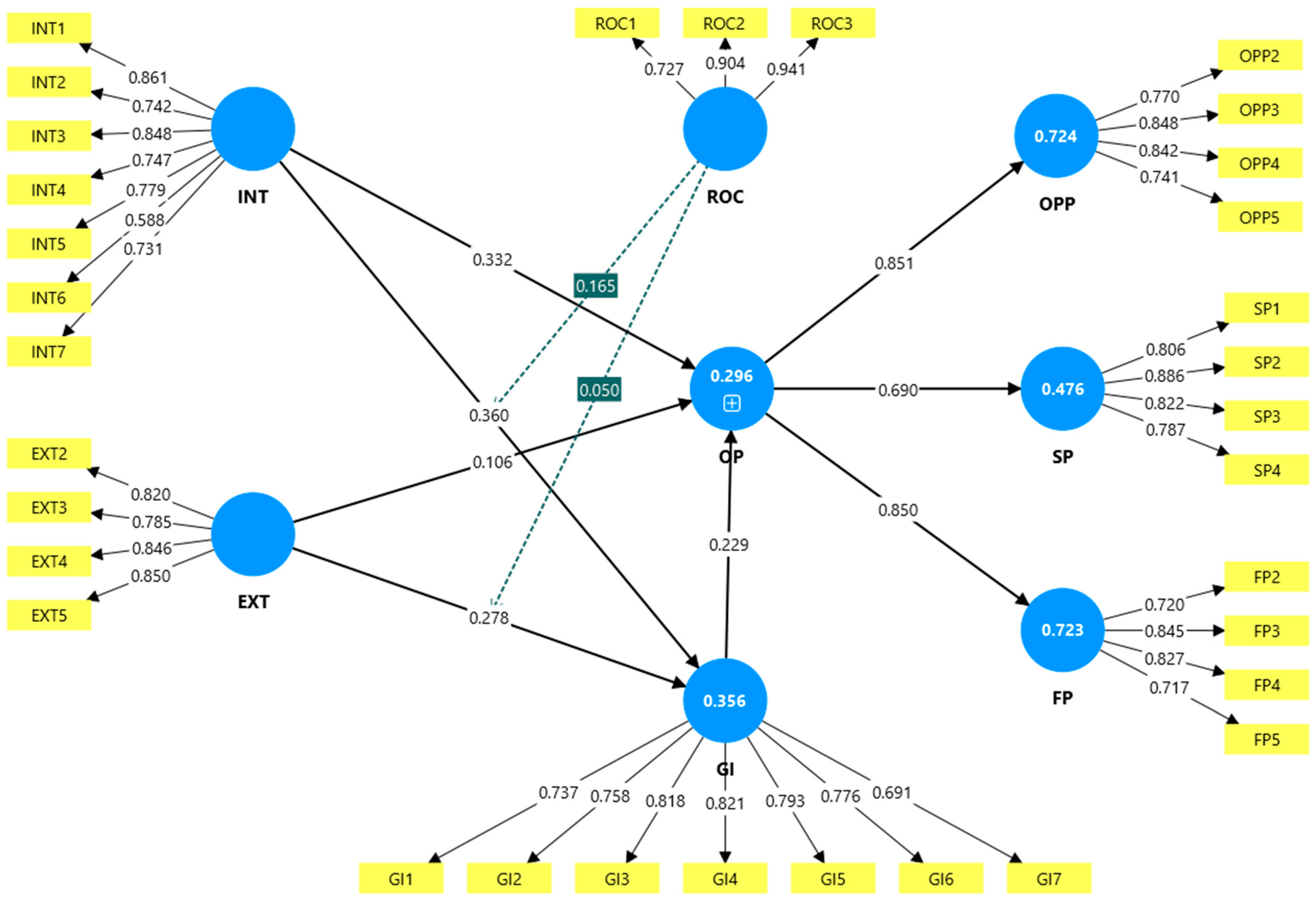
Factor loading revealed each variable’s dominant factor via correlation matrix analysis. Table 1 and Table 2 show factor loadings; first-order constructs should be ≥0.6 [58]. We assessed multicollinearity for each component using variance inflation factors (VIFs) based on [76]. The analysis confirmed that multicollinearity was not a concern if VIFs are below 5 [71]. See Table 1 and Table 2 and Figure 2 and Figure 3 for results. Furthermore, during assessment of the measurement model, followed by prior studies, items with low factor loadings (EXT1, EP1, and OPP1) were removed to ensure constructs retained their theoretical integrity [30]. This validation stage also enabled us to confirm the distinctiveness of the constructs, including assessments involving the higher-order structure [73].
After VIF, validity, and reliability analyses, we assessed discriminant validity. Fornell Larker criteria, heterotrait–monotrait ratios are commonly used to test the discriminant validity of all variables [77]. HTMT values ≤ 0.85 or 0.90 indicate HTMT establishment [78,79]. Furthermore, according to the [80], each construct’s diagonal value exceeded its inter-construct correlations, confirming discriminant validity Table 3, Table 4, Table 5 and Table 6 show discriminant validity results indicating that they met the recommended threshold.

4.2. Predictive Relevance

R2 and Q2 analyses indicated that the model explained a moderate proportion of variance in GI (R2 = 0.367) and OP (R2 = 0.305). The Q2 values were greater than zero, suggesting acceptable predictive relevance [58,81]. Table 7 states the results of R2 and Q2.

4.3. Structural Model Assessment

This study tested five direct, two mediation, and two moderation hypotheses. We used bootstrapping (5000 resamples) to analyze the structural model and assess the significance of relationships [71].
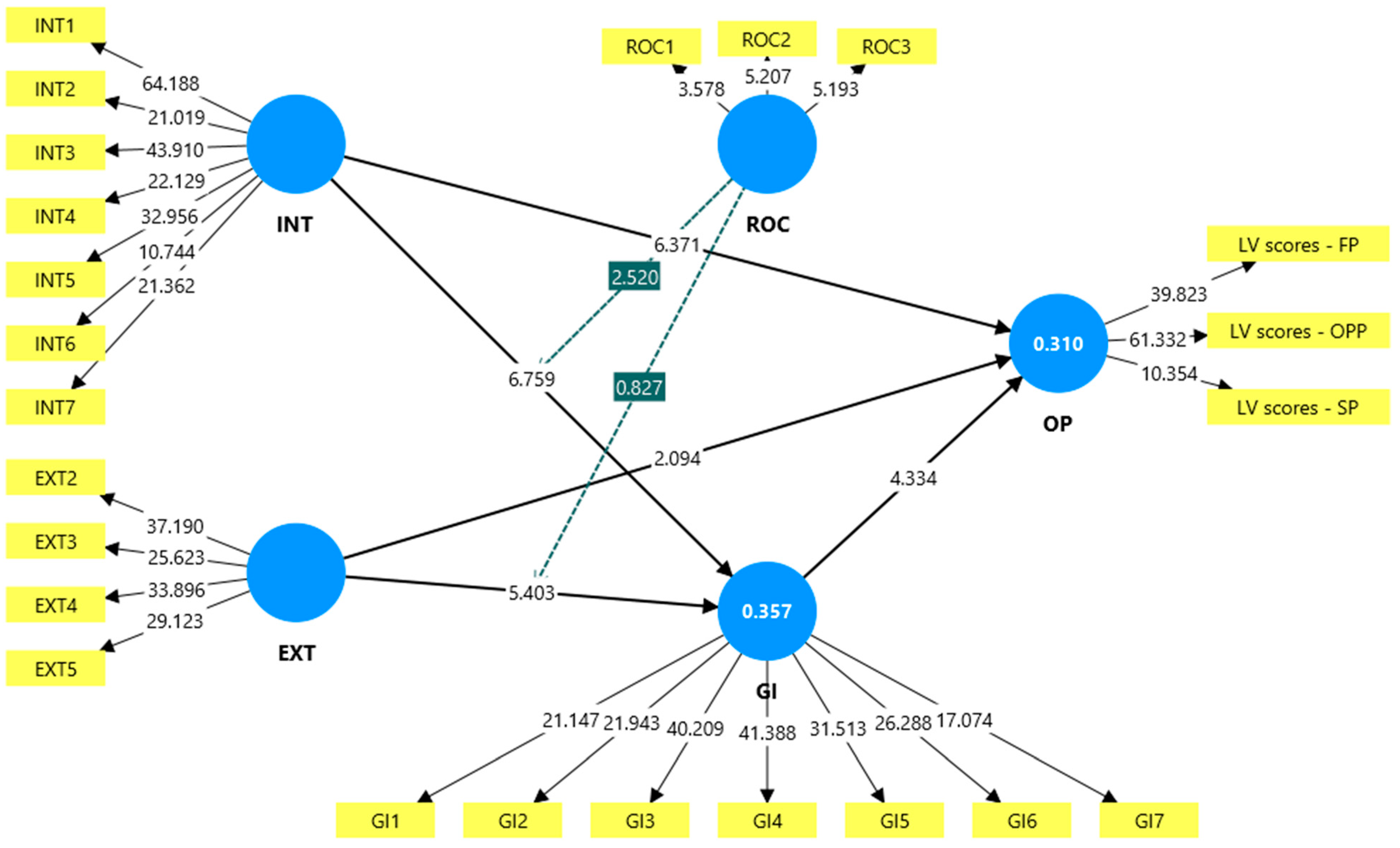
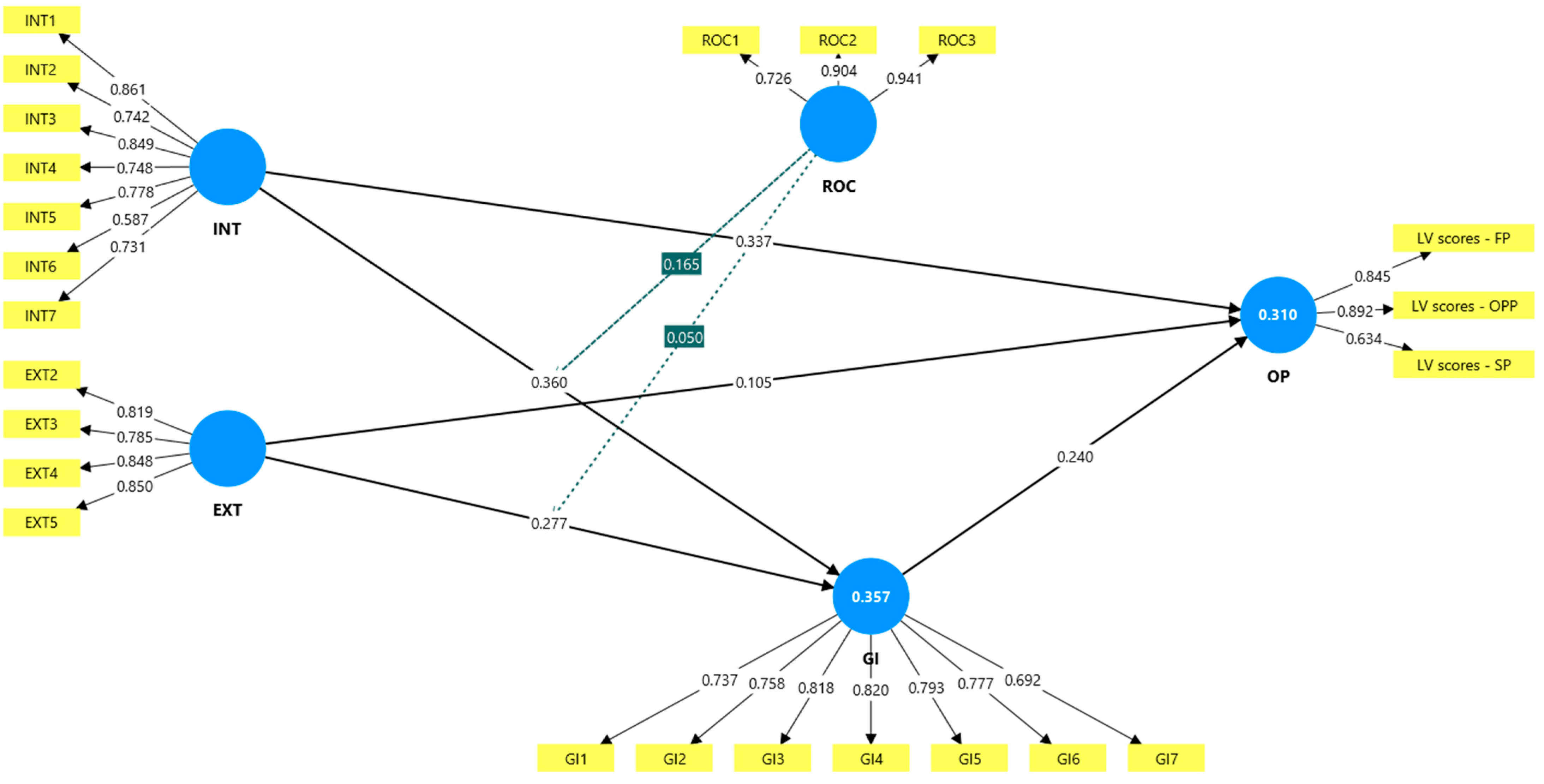
Both forms of KS have shown a significantly positive relationship with GI. Results indicate the 1st hypothesis EXT → GI β value is 0.277, the T value is 5.403, and the p-value is 0.000, indicating the positive relationship and the 2nd hypothesis INT → GI β value is 0.360, the T value is 6.759, and the p-value is 0.000, indicating the positive relationship. EXT and INT also have a significant positive connection with OP. The 3rd and 4th hypothesis results indicate EXT → OP β value is 0.105, the T value is 2.094, the p-value is 0.018, and INT → OP β value is 0.337, the T value is 6.371, and the p-value is 0.000, respectively. The 5th hypothesis also indicates a significant relationship between GI and OP results. GI → OP β Value is 0.240, the T value is 4.334, and the p-value is 0.000. (See Table 8).
For mediation analyses, we followed [58,82,83]. EXT → GI → OP (β = 0.066, T = 3.236, p = 0.001) and INT → GI → OP (β = 0.086, T = 3.776, p < 0.001) show significant positive relationships (see Table 9).
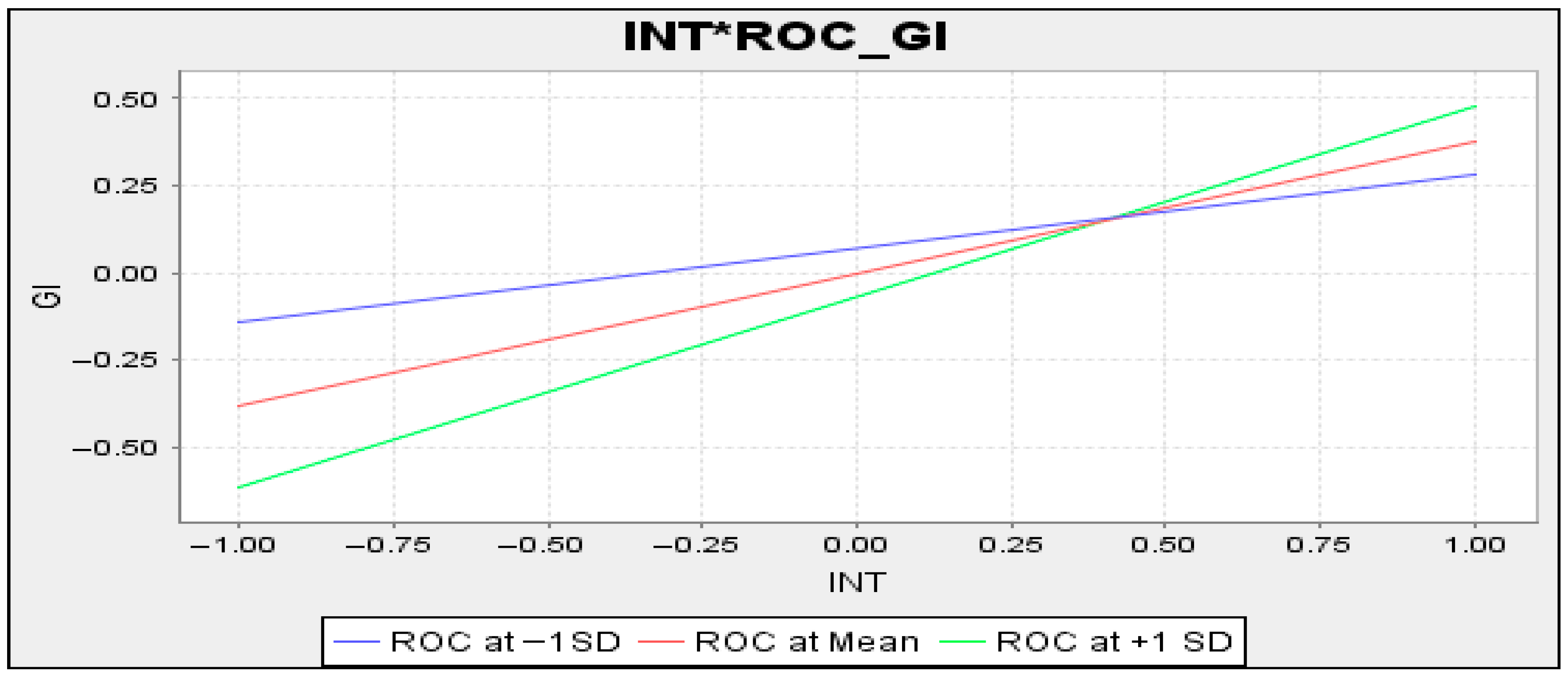
ROC insignificantly moderates the effect of EXT on GI (β = 0.050, T = 0.827, p = 0.204) but significantly moderates the effect of INT on GI (β = 0.165, T = 2.520, p = 0.006) (Table 10, Figure 4 and Figure 5).
The results for the control variables show that none were statistically significant (see Table 11). This indicates that control variables did not have a meaningful effect on the OP.

5. Discussion

Many prior researchers acknowledge that knowledge is the backbone of innovation [5,7]. Organizational innovation and employees’ creativity depend upon how effectively an organization can utilize its knowledge to stimulate the OP [30]. Implementing green solutions is complex and requires balancing ecological and economic considerations [14]. Therefore, organizations need to create an environment where knowledge is shared and utilized effectively, and optimal innovation is gained by overcoming technological hurdles and tackling environmental challenges while promoting organizational performance [32]. This process is significantly influenced by acquiring accurate knowledge, which stands out as a key point for organizations [5]. Based on the available literature and using a research model, this research investigated the relationship between KS, GI, OP (operational, financial, and social), and the moderating role of ROC.
Firstly, it has become increasingly challenging from a KM perspective to monopolize knowledge, and innovation is getting more and more complicated [5]. Therefore, businesses are experiencing significant pressure to enhance their quality and efficiency towards GI [84]. Our first research question is whether KS (INT and EXT) significantly influences GI. Our findings demonstrate that KS significantly impacted GI, indicating knowledge serves as a vital resource for driving innovation towards environmental sustainability [85]. In a wider perspective, prior researchers also discuss how integrated internal knowledge and external collaborations empowers organizations to generate creative solutions for a greener future [86]. Furthermore, our study results showed a significant positive connection between KS and OP, extend the KM literature, and suggest that leveraging INT and EXT contributes to improved OP, such as enhanced operational, financial, and social performance [34,36]. An organization’s ability to acquire, retain, and integrate relevant knowledge is crucial for enhancing GI and OP [32]. By leveraging KS, firms cannot just cultivate innovative ideas but also gain a competitive advantage over their competitors [5].
Secondly, organizations that aim to enhance their OP in the operational, financial, and social context are strongly connected with environmentally friendly solutions [87]. Although GI has several well-known advantages for organizations, this relationship is still complex [53]. This study showed a significant positive relationship between GI and OP, and extended the existing literature and suggests firms that create environmentally friendly innovations can gain an advantage over their competitors and stay ahead in the market dimensions [3,88]. Establishing the critical role of GI in shaping overall OP and investing in GI is likely to experience positive outcomes across operational, financial, and social dimensions [7,89].
Thirdly, in order to boost OP, businesses must concentrate on enhancing their capacity for innovation through internal and external collaboration [38,90]. Therefore, this study discussed the mediating role of GI in the connection between KS and OP. Previous research also discussed GI as a mediator and discussed how KM helps organizations gain GI and significantly stimulate OP [91]. Our findings align with prior scholars who discussed how knowledge can significantly enhance their GI outcomes and improve OP [92]. Furthermore, our findings also highlight that strong KS with (INT and EXT) alone in organizations is insufficient, and they also need to improve greener capabilities to generate OP [22].
Fourthly, organizations are struggling to gain, update, and deploy their resources to explore new opportunities. Therefore, many previous scholars emphasize that ROC is an emerging topic and cannot be ignored for organizational success and innovation [12,27]. Although organizations increasingly rely on KS and innovation capabilities, knowledge alone is insufficient to generate GI. Consistent with ROC theory, firms must actively structure, bundle, and leverage their knowledge resources to transform them into GI outcomes [56].
Our findings indicate that stronger ROC enhances the effect of INT on GI. This sheds light on the strategic importance of resource management in the innovation process [93]. In contrast, the interaction term for EXT and ROC is insignificant, suggesting that merely having resources does not generate value or competitive advantages; dynamic and strategic application of these resources is vital for creating value [56]. The divergence between our findings and prior studies may be explained by contextual and organizational factors. Chinese manufacturing firms face increasing regulatory and stakeholder pressure for environmental sustainability, which may strengthen the role of GI in driving OP outcomes. Moreover, ROC as a moderator provides a boundary-condition explanation, showing that KS led GI only when firms possess strong orchestration capabilities. Therefore, organizations need to pay more attention to evaluating and deploying resources and capabilities through management actions to achieve GI [93].

5.1. Theoretical Implication

Existing RBV and KBV literature in the domain of strategy and management thoroughly emphasize that knowledge is the primary source for innovation and OP [22,32]. Moreover, previous scholars have investigated multiple knowledge dimensions and their influence on GI and OP [8,35]. Despite extensive research on knowledge and innovation, the mechanisms through which KS affects GI and OP via ROC remain underexplored, especially in Chinese manufacturing contexts. Furthermore, prior studies have not simultaneously examined the pathway from KS to GI and subsequent social, financial, and operational performance under the moderating influence of ROC. In this context, this research has substantially contributed to the advancement of the theory of KBV by examining the link between KS, GI, OP, and ROC.
Firstly, many prior studies have stated that KS is a necessary cornerstone for GI [13,22]. In the GI context, KS reflects firms’ dissemination and integration of knowledge related to eco-friendly technologies, waste minimization, and sustainable practices, which constitute valuable and strategic intangible resources [38]. Such shared knowledge represents a critical organizational capability that enables firms to recombine INT and EXT to generate GI [22]. Our study extends the literature and confirms that GI often relies on external knowledge inputs and inter-organizational collaborations, reinforcing the role of knowledge as a central strategic asset for sustainable OP.
Secondly, GI can increase the organizations reputation and make a social impact, ultimately leading to better operational and financial performance [7]. Our findings demonstrate that organizations that prioritize GI can attain a competitive advantage over their competitors. In line with innovation diffusion theory, organizations that develop superior innovation capabilities can achieve early-mover advantages, thereby strengthening their OP [5]. Moreover, the finding indicates that GI significantly impacts on OP, e.g., operational, financial, and social.
Thirdly, the mediation analysis demonstrates that GI significantly transmits the effect of KS on OP [7,22]. From an RBV perspective, KS represents valuable strategic resources, while GI reflects the capability to convert these resources into performance outcomes. Consistent with the KBV, the findings suggest that firms that effectively integrate and recombine internal and external knowledge can generate GI that enhances OP, including financial performance, brand legitimacy, and operational efficiency. Furthermore, this study extends the literature by showing that knowledge-driven GI acts as a critical mechanism through which firms achieve early competitive advantages and superior OP in the manufacturing context.
Finally, our findings also stress the important role of ROC with KS and contribute to existing literature, which ultimately enhance organization GI [57]. This finding extends resource orchestration theory by demonstrating its role in translating knowledge-based resources into GI outcomes in emerging economy manufacturing firms. Our findings underscore the theoretical importance of ROC as a boundary condition, demonstrating that KS contribute more effectively to GI when firms possess the capability to structure, bundle, and leverage their resources strategically.

5.2. Practical Implications

Business leaders and managers must acknowledge the significance of knowledge exchange and prioritize it in the realm of GI. Implementing KS (INT and EXT) has major advantages of organization by facilitating the integration of new knowledge. This study discusses how Chinese managers can improve the OP with the help of knowledge sharing activities. Organizations must strategically align their knowledge-sharing initiatives with sustainability, and acknowledging the potential for green infrastructure to contribute to long-term success [4].
Business managers and executives in manufacturing firms should establish structured mechanisms to acquire and integrate both internal knowledge (e.g., employee expertise, R&D experience) and external knowledge (e.g., suppliers, customers, universities) to support GI initiatives. Manufacturing firms also need to understand that simply acquiring knowledge is insufficient; manufacturing firms benefit when such knowledge is embedded into GI solutions, such as cleaner production methods, energy-efficient machinery, and environmentally compliant product designs. Our advice for managers is to recognize the significance of seeking knowledge from suppliers, customers, and competitors because knowledge sharing improves worker motivation, engagement, and retention [34].
Furthermore, from an organization’s perspective, all sources and resources are important; their impact on a company’s innovativeness is not equal. Therefore, organizations also needed to manage their resources for their best output. Our research aims to assist managers in implementing more effective orchestration techniques, with a specific focus on the value of understanding the different knowledgeable stakeholder groups involved in a company’s GI strategy. By doing so, manufacturing firms with complex production systems should invest in managerial coordination mechanisms that align sustainability initiatives across different departments. Therefore, our study demonstrates to organizational leaders and managers how GI promotes sustainable business performance in several ways, which helps to clarify the importance of incorporating GI into business investment strategies. Chinese industry policymakers can use these insights to improve strategies and policies that motivate companies to embrace GI and support the green economy. However, organizations should thoroughly examine contextual factors they might need to invest in for developing capabilities and enabling the transformation of KS activities into practical innovation and OP.

6. Research Limitation

This study employed a cross-sectional research design between KS factors with ROC to motivate the GI to stimulate OP. However, future research is advised to enlarge the scope of the study by including additional variables that might have an impact on the framework utilized to select knowledge acquisition methodologies by consideration of some control variables. Furthermore, future research may disaggregate operational, financial, and social performance to examine whether GI and KS employ distinct effects on each OP dimension.
Moreover, this study discussed the Chinese manufacturing industries, and data were collected in a single province, which may limit the generalizability of the study. Future studies may broaden to other industries and regions to motivate eco-friendly innovation, which may expand the study generalizability. Furthermore, this study employed a self-reported survey, which may cause CMB. Therefore, future research could consider multisource data or a longitudinal study. Additionally, following PLS SEM guidelines, some items were deleted that disturbed the construct validity and reliability; therefore, we encourage future studies to employ a refined measurement scale or mixed method approach to ensure comprehensive construct coverage. In addition, this was a cross-sectional study that utilized SmartPLS for data analysis. For better understanding, researchers may employ other methodologies such as AMOS, SPSS, or Mplus. Although ROC is considered a moderate variable in this study, task efficiency and affective trust may also be considered for better outcomes. Researchers also need to consider that tacit knowledge may also be employed to stimulate green innovation because many previous researchers have given importance to tacit knowledge, which is needed to study to increase innovation [5,30].

7. Conclusions

Our study analyzed the model between KS (INT and EXT), GI, and OP (i.e., operational, financial, and social). This study developed four research questions: five direct, two mediation, and two moderation hypotheses. Furthermore, we employed SmartPLS 4.1.1.2 version. By employing the SmartPLS 4.1.1.2 version, we conducted a thorough analysis of the complex connections within our research model, ensuring precise interpretation of our study’s results.
This study focused on how KS stimulates GI and OP. Furthermore, GI acts as a mediator, and ROC acts as a moderator in our empirical model. This study’s conclusion offers a broad understanding of how KS, GI, and ROC collectively stimulate triple line OP. Practically, these results stress the significance of fostering INT and ENT capabilities, with a strategic emphasis on ROC, to drive green innovation and achieve operational financial and social success. Our research findings are important and emphasize the critical importance of encouragement, both internal and external knowledge capabilities, strategically emphasizing resource orchestration for organization.


Author Contributions

U.Z., conceptualization, formal analysis, methodology, software, writing~original draft. G.L., Supervision. All authors have read and agreed to the published version of the manuscript.

Funding

This research received no external funding.

Institutional Review Board Statement

Not applicable.

Informed Consent Statement

Not applicable.

Data Availability Statement

This study is based on primary data and data is unavailable due to privacy and ethical restrictions.

Conflicts of Interest

The authors declare no conflict of interest.

Appendix A

Table A1. Demographic Table.
FrequencyPercent
Ownership form
State owned16346.2
Non-state owned19053.8
Firm type
Textile4813.6
Chemical and petroleum4011.3
Sports goods4211.9
Leather4813.6
Autoparts manufacturing4412.5
Fertilizer4211.9
Cement3610.2
Others5315.0
Firm size
<1007120.1
100–2506719.0
251–5006919.5
501–10007521.2
>10007120.1
Total353100.0
Firm age
<5 years8524.1
6–10 years9526.9
11–25 years8824.9
>25 years8524.1

References

  1. Obeng, H.A.; Arhinful, R.; Mensah, L.; Mensah, C.C. The mediating role of service quality in the relationship between corporate social responsibility and sustainable competitive advantages in an emerging economy. Bus. Strategy Dev. 2025, 8, e70099. [Google Scholar] [CrossRef]
  2. Carroll, A.B. The three-dimensional corporate social performance model revisited and refreshed. J. Sustain. Bus. 2025, 10, 5. [Google Scholar] [CrossRef]
  3. Tu, Y.; Wu, W. How does green innovation improve enterprises’ competitive advantage? The role of organizational learning. Sustain. Prod. Consum. 2021, 26, 504–516. [Google Scholar] [CrossRef]
  4. Awan, U.; Arnold, M.G.; Gölgeci, I. Enhancing green product and process innovation: Towards an integrative framework of knowledge acquisition and environmental investment. Bus. Strategy Environ. 2021, 30, 1283–1295. [Google Scholar] [CrossRef]
  5. Zia, U.; Zhang, J.; Alam, S. Role of tacit knowledge management process and innovation capability for stimulating organizational performance: Empirical analysis, PLS-SEM approach. Kybernetes 2024, 53, 4976–5000. [Google Scholar] [CrossRef]
  6. Dai, J.; Mehmood, U.; Nassani, A.A. Empowering sustainability through energy efficiency, green innovations, and the sharing economy: Insights from G7 economies. Energy 2025, 318, 134768. [Google Scholar] [CrossRef]
  7. Abbas, J.; Khan, S.M. Green knowledge management and organizational green culture: An interaction for organizational green innovation and green performance. J. Knowl. Manag. 2023, 27, 1852–1870. [Google Scholar] [CrossRef]
  8. Huang, L.; Wang, C.; Chin, T.; Huang, J.; Cheng, X. Technological knowledge coupling and green innovation in manufacturing firms: Moderating roles of mimetic pressure and environmental identity. Int. J. Prod. Econ. 2022, 248, 108482. [Google Scholar] [CrossRef]
  9. Wang, C.; Zhang, X.E.; Teng, X. How to convert green entrepreneurial orientation into green innovation: The role of knowledge creation process and green absorptive capacity. Bus. Strategy Environ. 2023, 32, 1260–1273. [Google Scholar] [CrossRef]
  10. Usman Shehzad, M.; Zhang, J.; Le, P.B.; Jamil, K.; Cao, Z. Stimulating frugal innovation via information technology resources, knowledge sources and market turbulence: A mediation-moderation approach. Eur. J. Innov. Manag. 2023, 26, 1071–1105. [Google Scholar] [CrossRef]
  11. Jha, S.; Basu, S. Knowledge spillovers between R&D-driven incumbents and start-ups in open innovation: A systematic review and nomological network. J. Knowl. Manag. 2025, 29, 588–638. [Google Scholar]
  12. Shehzad, M.U.; Zhang, J.; Latif, K.F.; Jamil, K.; Waseel, A.H. Do green entrepreneurial orientation and green knowledge management matter in the pursuit of ambidextrous green innovation: A moderated mediation model. J. Clean. Prod. 2023, 388, 135971. [Google Scholar] [CrossRef]
  13. Shehzad, M.U.; Jianhua, Z.; Naveed, K.; Zia, U.; Sherani, M. Sustainable transformation: An interaction of green entrepreneurship, green innovation, and green absorptive capacity to redefine green competitive advantage. Bus. Strategy Environ. 2024, 33, 7041–7059. [Google Scholar] [CrossRef]
  14. Al-Masri, R.; Ibrahim, M. Integrating green finance, economic complexity, and renewable energy for sustainable development in Asia. J. Energy Environ. Policy Options 2025, 8, 66–74. [Google Scholar]
  15. Stucki, T. Which firms benefit from investments in green energy technologies?–The effect of energy costs. Res. Policy 2019, 48, 546–555. [Google Scholar] [CrossRef]
  16. Khanra, S.; Kaur, P.; Joseph, R.P.; Malik, A.; Dhir, A. A resource-based view of green innovation as a strategic firm resource: Present status and future directions. Bus. Strategy Environ. 2022, 31, 1395–1413. [Google Scholar] [CrossRef]
  17. Dadhich, M.; Hiran, K.K. Empirical investigation of extended TOE model on Corporate Environment Sustainability and dimensions of operating performance of SMEs: A high order PLS-ANN approach. J. Clean. Prod. 2022, 363, 132309. [Google Scholar] [CrossRef]
  18. Robinson, S.; Stubberud, H.A. Green innovation in germany: A comparison by business size. J. Int. Bus. Res. 2013, 12, 47–56. [Google Scholar]
  19. Singh, S.K.; Del Giudice, M.; Chiappetta Jabbour, C.J.; Latan, H.; Sohal, A.S. Stakeholder pressure, green innovation, and performance in small and medium-sized enterprises: The role of green dynamic capabilities. Bus. Strategy Environ. 2022, 31, 500–514. [Google Scholar] [CrossRef]
  20. Le, T.T. How do corporate social responsibility and green innovation transform corporate green strategy into sustainable firm performance? J. Clean. Prod. 2022, 362, 132228. [Google Scholar] [CrossRef]
  21. Wong, S.K.S. Environmental Requirements, Knowledge Sharing and Green Innovation: Empirical Evidence from the Electronics Industry in China. Bus. Strategy Environ. 2013, 22, 321–338. [Google Scholar] [CrossRef]
  22. Arfi, W.B.; Hikkerova, L.; Sahut, J.-M. External knowledge sources, green innovation and performance. Technol. Forecast. Soc. Change 2018, 129, 210–220. [Google Scholar] [CrossRef]
  23. Wang, C.-H. How organizational green culture influences green performance and competitive advantage. J. Manuf. Technol. Manag. 2019, 30, 666–683. [Google Scholar] [CrossRef]
  24. McLean, L.D. Organizational culture’s influence on creativity and innovation: A review of the literature and implications for human resource development. Adv. Dev. Hum. Resour. 2005, 7, 226–246. [Google Scholar] [CrossRef]
  25. Shi, Q.; Shen, L. Orchestration capability: A bibliometric analysis. Kybernetes 2022, 51, 3073–3094. [Google Scholar] [CrossRef]
  26. Carnes, C.M.; Chirico, F.; Hitt, M.A.; Huh, D.W.; Pisano, V. Resource Orchestration for Innovation: Structuring and Bundling Resources in Growth- and Maturity-Stage Firms. Long Range Plan. 2017, 50, 472–486. [Google Scholar] [CrossRef]
  27. Al Koliby, I.S.; Al-Hakimi, M.A.; Zaid, M.A.K.; Khan, M.F.; Hasan, M.B.; Alshadadi, M.A. Green entrepreneurial orientation and technological green innovation: Does resources orchestration capability matter? Bottom Line 2024, 37, 45–70. [Google Scholar] [CrossRef]
  28. Wang, J.; Xue, Y.; Yang, J. Boundary-spanning search and firms’ green innovation: The moderating role of resource orchestration capability. Bus. Strategy Environ. 2020, 29, 361–374. [Google Scholar] [CrossRef]
  29. Xin, X.; Miao, X.; Cui, R. Enhancing sustainable development: Innovation ecosystem coopetition, environmental resource orchestration, and disruptive green innovation. Bus. Strategy Environ. 2023, 32, 1388–1402. [Google Scholar] [CrossRef]
  30. Zhang, J.; Zia, U.; Shehzad, M.U.; Sherani. Tacit knowledge management process, product innovation and organizational performance: Exploring the role of affective trust and task efficiency. Bus. Process Manag. J. 2024, 31, 267–297. [Google Scholar] [CrossRef]
  31. Zia, U.; Zhang, J.; Du, X.; Liu, J. Significance of knowledge management process and customer relationship management for stimulating innovation capability: Empirical analysis, PLS-SEM approach. Int. J. Knowl. Manag. Stud. 2024, 15, 17–37. [Google Scholar] [CrossRef]
  32. Shehzad, M.U.; Zhang, J.; Alam, S.; Cao, Z. Determining the role of sources of knowledge and IT resources for stimulating firm innovation capability: A PLS-SEM approach. Bus. Process Manag. J. 2022, 28, 905–935. [Google Scholar] [CrossRef]
  33. Salim, N.; Ab Rahman, M.N.; Abd Wahab, D. A systematic literature review of internal capabilities for enhancing eco-innovation performance of manufacturing firms. J. Clean. Prod. 2019, 209, 1445–1460. [Google Scholar] [CrossRef]
  34. Chen, Z.; Liang, M. How do external and internal factors drive green innovation practices under the influence of big data analytics capability: Evidence from China. J. Clean. Prod. 2023, 404, 136862. [Google Scholar] [CrossRef]
  35. Martínez-Ros, E.; Kunapatarawong, R. Green innovation and knowledge: The role of size. Bus. Strategy Environ. 2019, 28, 1045–1059. [Google Scholar] [CrossRef]
  36. Ma, Y.; Hou, G.; Yin, Q.; Xin, B.; Pan, Y. The sources of green management innovation: Does internal efficiency demand pull or external knowledge supply push? J. Clean. Prod. 2018, 202, 582–590. [Google Scholar] [CrossRef]
  37. Zhang, J.; Liang, G.; Feng, T.; Yuan, C.; Jiang, W. Green innovation to respond to environmental regulation: How external knowledge adoption and green absorptive capacity matter? Bus. Strategy Environ. 2020, 29, 39–53. [Google Scholar] [CrossRef]
  38. Cao, H.; Chen, Z. The driving effect of internal and external environment on green innovation strategy-The moderating role of top management’s environmental awareness. Nankai Bus. Rev. Int. 2019, 10, 342–361. [Google Scholar] [CrossRef]
  39. Du, L.; Zhang, Z.; Feng, T. Linking green customer and supplier integration with green innovation performance: The role of internal integration. Bus. Strategy Environ. 2018, 27, 1583–1595. [Google Scholar] [CrossRef]
  40. Liao, Z. Institutional pressure, knowledge acquisition and a firm’s environmental innovation. Bus. Strategy Environ. 2018, 27, 849–857. [Google Scholar] [CrossRef]
  41. Gold, A.H.; Malhotra, A.; Segars, A.H. Knowledge management: An organizational capabilities perspective. J. Manag. Inf. Syst. 2001, 18, 185–214. [Google Scholar] [CrossRef]
  42. Paruchuri, S.; Awate, S. Organizational knowledge networks and local search: The role of intra-organizational inventor networks. Strateg. Manag. J. 2017, 38, 657–675. [Google Scholar] [CrossRef]
  43. Lilleoere, A.-M.; Hansen, E.H. Knowledge-sharing enablers and barriers in pharmaceutical research and development. J. Knowl. Manag. 2011, 15, 53–70. [Google Scholar] [CrossRef]
  44. Wan, X.; Chun, S.; Xue, S.; Shehzad, M.U. The causal and interactive approach to drive sustainability: Role of green dynamic capabilities, ambidextrous green innovation strategy and resource orchestration capability. Bus. Process Manag. J. 2025. [Google Scholar] [CrossRef]
  45. Sahoo, S.; Kumar, A.; Upadhyay, A. How do green knowledge management and green technology innovation impact corporate environmental performance? Understanding the role of green knowledge acquisition. Bus. Strategy Environ. 2023, 32, 551–569. [Google Scholar] [CrossRef]
  46. Zhang, J.; Sherani; Riaz, M.; Zia, U.; Ali, S.; Liu, J. Digital innovation in software SMEs: The synergy of digital entrepreneurship opportunities, knowledge generation and market-sensing capabilities via moderated–mediation approach. Bus. Process Manag. J. 2024, 31, 2094–2125. [Google Scholar] [CrossRef]
  47. Novitasari, M.; Agustia, D. Green supply chain management and firm performance: The mediating effect of green innovation. J. Ind. Eng. Manag. 2021, 14, 391–403. [Google Scholar] [CrossRef]
  48. Junaid, M.; Zhang, Q.; Syed, M.W. Effects of sustainable supply chain integration on green innovation and firm performance. Sustain. Prod. Consum. 2022, 30, 145–157. [Google Scholar] [CrossRef]
  49. Ardito, L.; Petruzzelli, A.M.; Dezi, L.; Castellano, S. The influence of inbound open innovation on ambidexterity performance: Does it pay to source knowledge from supply chain stakeholders? J. Bus. Res. 2020, 119, 321–329. [Google Scholar] [CrossRef]
  50. Aftab, J.; Abid, N.; Sarwar, H.; Veneziani, M. Environmental ethics, green innovation, and sustainable performance: Exploring the role of environmental leadership and environmental strategy. J. Clean. Prod. 2022, 378, 134639. [Google Scholar] [CrossRef]
  51. Przychodzen, J.; Przychodzen, W. Relationships between eco-innovation and financial performance—Evidence from publicly traded companies in Poland and Hungary. J. Clean. Prod. 2015, 90, 253–263. [Google Scholar] [CrossRef]
  52. Song, W.H.; Yu, H.Y. Green Innovation Strategy and Green Innovation: The Roles of Green Creativity and Green Organizational Identity. Corp. Soc. Responsib. Environ. Manag. 2018, 25, 135–150. [Google Scholar] [CrossRef]
  53. Andersen, J. A relational natural-resource-based view on product innovation: The influence of green product innovation and green suppliers on differentiation advantage in small manufacturing firms. Technovation 2021, 104, 102254. [Google Scholar] [CrossRef]
  54. Cassânego, V.M.; Moralles, H.F.; de Mattos Nascimento, D.L.; Tortorella, G.L. Exploring the role of open innovation and artificial intelligence in green innovation: A dynamic capabilities approach. J. Innov. Knowl. 2025, 10, 100774. [Google Scholar] [CrossRef]
  55. Xie, X.; Wang, M. Firms’ digital capabilities and green collaborative innovation: The role of green relationship learning. J. Innov. Knowl. 2025, 10, 100663. [Google Scholar] [CrossRef]
  56. Cui, M.; Pan, S.L.; Cui, L. Developing community capability for e-commerce development in rural China: A resource orchestration perspective. Inf. Syst. J. 2019, 29, 953–988. [Google Scholar] [CrossRef]
  57. Jin, S.; Wang, J.; Zhu, P. Environmental scanning, resource orchestration, and disruptive innovation. RD Manag. 2024, 55, 27–50. [Google Scholar] [CrossRef]
  58. Hair, J.F., Jr.; Sarstedt, M.; Hopkins, L.; Kuppelwieser, V.G. Partial least squares structural equation modeling (PLS-SEM). Eur. Bus. Rev. 2014, 26, 106–121. [Google Scholar] [CrossRef]
  59. Lei, H.; Gui, L.; Le, P.B. Linking transformational leadership and frugal innovation: The mediating role of tacit and explicit knowledge sharing. J. Knowl. Manag. 2021, 25, 1832–1852. [Google Scholar] [CrossRef]
  60. Lei, H.; Khamkhoutlavong, M.; Le, P.B. Fostering exploitative and exploratory innovation through HRM practices and knowledge management capability: The moderating effect of knowledge-centered culture. J. Knowl. Manag. 2021, 25, 1926–1946. [Google Scholar] [CrossRef]
  61. Iacobucci, D. Structural equations modeling: Fit indices, sample size, and advanced topics. J. Consum. Psychol. 2010, 20, 90–98. [Google Scholar] [CrossRef]
  62. Likert, R. A technique for the measurement of attitudes. Arch. Psychol. 1932, 22, 55. [Google Scholar]
  63. Laursen, K.; Salter, A. Open for innovation: The role of openness in explaining innovation performance among UK manufacturing firms. Strateg. Manag. J. 2006, 27, 131–150. [Google Scholar] [CrossRef]
  64. Laursen, K.; Salter, A.J. The paradox of openness: Appropriability, external search and collaboration. Res. Policy 2014, 43, 867–878. [Google Scholar] [CrossRef]
  65. Chen, Y.-S.; Lai, S.-B.; Wen, C.-T. The influence of green innovation performance on corporate advantage in Taiwan. J. Bus. Ethics 2006, 67, 331–339. [Google Scholar] [CrossRef]
  66. Yu, Y.; Huo, B.; Zhang, Z.J. Impact of information technology on supply chain integration and company performance: Evidence from cross-border e-commerce companies in China. J. Enterp. Inf. Manag. 2021, 34, 460–489. [Google Scholar] [CrossRef]
  67. Bowersox, D.J.; Closs, D.J.; Stank, T.P.; Keller, S.B. How supply chain competency leads to business success. Supply Chain Manag. Rev. 2000, 4, 70–78. [Google Scholar]
  68. Muangmee, C.; Dacko-Pikiewicz, Z.; Meekaewkunchorn, N.; Kassakorn, N.; Khalid, B. Green entrepreneurial orientation and green innovation in small and medium-sized enterprises (SMEs). Soc. Sci. 2021, 10, 136. [Google Scholar] [CrossRef]
  69. Podsakoff, P.M.; MacKenzie, S.B.; Lee, J.-Y.; Podsakoff, N.P. Common method biases in behavioral research: A critical review of the literature and recommended remedies. J. Appl. Psychol. 2003, 88, 879. [Google Scholar] [CrossRef]
  70. Kock, N. Common method bias in PLS-SEM: A full collinearity assessment approach. Int. J. E-Collab. (Ijec) 2015, 11, 1–10. [Google Scholar] [CrossRef]
  71. Hair, J.F.; Risher, J.J.; Sarstedt, M.; Ringle, C.M. When to use and how to report the results of PLS-SEM. Eur. Bus. Rev. 2019, 31, 2–24. [Google Scholar] [CrossRef]
  72. Hair, J.F., Jr.; Sarstedt, M.; Ringle, C.M.; Gudergan, S.P. Advanced Issues in Partial Least Squares Structural Equation Modeling; saGe Publications: Thousand Oaks, CA, USA, 2017. [Google Scholar]
  73. Sarstedt, M.; Hair, J.F., Jr.; Cheah, J.-H.; Becker, J.-M.; Ringle, C.M. How to specify, estimate, and validate higher-order constructs in PLS-SEM. Australas. Mark. J. 2019, 27, 197–211. [Google Scholar] [CrossRef]
  74. Bagozzi, R.P.; Yi, Y. Multitrait-Multimethod Matrices in Consumer Research. J. Consum. Res. 1991, 17, 426–439. [Google Scholar] [CrossRef]
  75. Hair, J.F.; Black, W.C.; Babin, B.J. RE Anderson Multivariate Data Analysis: A Global Perspective; Pearson Prentice Hall: Upper Saddle River, NJ, USA, 2010. [Google Scholar]
  76. Fornell, C.; Bookstein, F.L. Two structural equation models: LISREL and PLS applied to consumer exit-voice theory. J. Mark. Res. 1982, 19, 440–452. [Google Scholar] [CrossRef]
  77. Henseler, J.; Ringle, C.M.; Sarstedt, M. A new criterion for assessing discriminant validity in variance-based structural equation modeling. J. Acad. Mark. Sci. 2015, 43, 115–135. [Google Scholar] [CrossRef]
  78. Kline, R.B. Principles and Practice of Structural Equation Modeling; Guilford Publications: New York, NY, USA, 2015. [Google Scholar]
  79. Teo, T.S.; Srivastava, S.C.; Jiang, L. Trust and electronic government success: An empirical study. J. Manag. Inf. Syst. 2008, 25, 99–132. [Google Scholar] [CrossRef]
  80. Fornell, C.; Larcker, D.F. Evaluating structural equation models with unobservable variables and measurement error. J. Mark. Res. 1981, 18, 39–50. [Google Scholar] [CrossRef]
  81. Hair, J.F., Jr.; Gabriel, M.L.; Patel, V.K. Modelagem de Equações Estruturais Baseada em Covariância (CB-SEM) com o AMOS: Orientações sobre a sua aplicação como uma Ferramenta de Pesquisa de Marketing. Rev. Bras. De Mark. 2014, 13, 44–55. [Google Scholar] [CrossRef]
  82. Preacher, K.J.; Hayes, A.F. SPSS and SAS procedures for estimating indirect effects in simple mediation models. Behav. Res. Methods Instrum. Comput. 2004, 36, 717–731. [Google Scholar] [CrossRef] [PubMed]
  83. Ringle, C.M.; Sarstedt, M.; Mitchell, R.; Gudergan, S.P. Partial least squares structural equation modeling in HRM research. Int. J. Hum. Resour. Manag. 2020, 31, 1617–1643. [Google Scholar] [CrossRef]
  84. Shehzad, M.U.; Zhang, J.; Dost, M.; Ahmad, M.S.; Alam, S. Linking green intellectual capital, ambidextrous green innovation and firms green performance: Evidence from Pakistani manufacturing firms. J. Intellect. Cap. 2023, 24, 974–1001. [Google Scholar] [CrossRef]
  85. Asiaei, K.; O’Connor, N.G.; Barani, O.; Joshi, M. Green intellectual capital and ambidextrous green innovation: The impact on environmental performance. Bus. Strategy Environ. 2023, 32, 369–386. [Google Scholar] [CrossRef]
  86. Shehzad, M.U.; Zhang, J.; Dost, M.; Ahmad, M.S.; Alam, S. Knowledge management enablers and knowledge management processes: A direct and configurational approach to stimulate green innovation. Eur. J. Innov. Manag. 2024, 27, 123–152. [Google Scholar] [CrossRef]
  87. Zhang, J.; Islam, M.S.; Jambulingam, M.; Lim, W.M.; Kumar, S. Leveraging environmental corporate social responsibility to promote green purchases: The case of new energy vehicles in the era of sustainable development. J. Clean. Prod. 2024, 434, 139988. [Google Scholar] [CrossRef]
  88. Stucki, T.; Woerter, M. Determinants of Green Innovation: The Impact of Internal and External Knowledge; KOF Swiss Economic Institute, ETH Zurich: Zurich, Switzerland, 2012. [Google Scholar]
  89. Alam, S.S.; Islam, K.Z. Examining the role of environmental corporate social responsibility in building green corporate image and green competitive advantage. Int. J. Corp. Soc. Responsib. 2021, 6, 8. [Google Scholar] [CrossRef]
  90. Song, M.; Yang, M.X.; Zeng, K.J.; Feng, W. Green knowledge sharing, stakeholder pressure, absorptive capacity, and green innovation: Evidence from Chinese manufacturing firms. Bus. Strategy Environ. 2020, 29, 1517–1531. [Google Scholar] [CrossRef]
  91. Zameer, H.; Wang, Y.; Yasmeen, H.; Mubarak, S. Green innovation as a mediator in the impact of business analytics and environmental orientation on green competitive advantage. Manag. Decis. 2022, 60, 488–507. [Google Scholar] [CrossRef]
  92. Abdelwhab Ali, A.; Panneer selvam, D.D.D.; Paris, L.; Gunasekaran, A. Key factors influencing knowledge sharing practices and its relationship with organizational performance within the oil and gas industry. J. Knowl. Manag. 2019, 23, 1806–1837. [Google Scholar] [CrossRef]
  93. Asiaei, K.; Rezaee, Z.; Bontis, N.; Barani, O.; Sapiei, N.S. Knowledge assets, capabilities and performance measurement systems: A resource orchestration theory approach. J. Knowl. Manag. 2021, 25, 1947–1976. [Google Scholar] [CrossRef]
Figure 1. Research model.
Sustainability 18 01931 g001
Figure 2. First-order measurement model.
Sustainability 18 01931 g002
Figure 3. Second-order measurement model.
Sustainability 18 01931 g003
Figure 4. Structural model.
Sustainability 18 01931 g004
Figure 5. INT*ROC→ GI.
Sustainability 18 01931 g005
Table 1. First-order measurement results.
Factor LoadingVIFC.Arho_AC.RAVE
External knowledge source0.8450.8540.8960.682
EXT1 Deleted
EXT20.8201.790
EXT30.7851.866
EXT40.8462.780
EXT50.8502.669
EXT6Deleted
Financial performance0.7830.7950.8600.608
FP1 Deleted
FP20.7201.440
FP30.8451.997
FP40.8271.893
FP50.7171.391
Green Innovation 0.8860.8900.9110.596
GI10.7372.024
GI20.7581.975
GI30.8182.631
GI40.8212.519
GI50.7933.029
GI60.7763.174
GI70.6912.033
Internal knowledge source0.8780.8930.9050.580
INT10.8613.768
INT20.7422.582
INT30.8484.819
INT40.7471.940
INT50.7792.722
INT6Deleted
INT70.7313.397
Operational performance0.8140.8210.8780.643
OPP1Deleted
OPP20.7701.625
OPP30.8482.121
OPP40.8422.028
OPP50.7411.480
Resource orchestration capability0.8590.9130.8960.743
ROC10.7272.029
ROC20.9042.124
ROC30.9412.527
Social performance 0.8440.8500.8960.683
SP10.8061.987
SP20.8862.665
SP30.8222.097
SP40.7871.730
Table 2. Second-order measurement results.
Factor LoadingVIFC.Arho_AC.RAVE
Organizational performance 0.7150.7960.8380.637
Financial0.8451.766
Operational0.8921.710
Social0.6341.198
Table 3. First-order Fornell Larker criteria.
EXTFPGIINTOPPROCSP
EXT0.826
FP0.2190.780
GI0.4500.2810.772
INT0.4030.380.5010.761
OPP0.3510.6350.4850.4910.802
ROC−0.0860.025−0.123−0.030.0350.862
SP0.2310.3850.260.2550.346−0.0630.826
Table 4. First-order HTMT results.
EXTFPGIINTOPPROCSP
EXT
FP0.262
GI0.5130.338
INT0.4310.4950.522
OPP0.4250.7730.5820.566
ROC0.1190.1220.1160.0730.085
SP0.2670.4750.3000.2990.4210.063
Table 5. Second-order Fornell Larker criteria.
EXTGIINTOPROC
EXT0.826
GI0.4500.772
INT0.3910.4850.761
OP0.3440.4500.4940.798
ROC−0.086−0.123−0.0330.0100.862
Table 6. Second-order HTMT.
EXTGIINTOPROC
EXT
GI0.513
INT0.4550.522
OP0.4200.5400.604
ROC0.1190.1160.0730.115
Table 7. R2 and Q2.
Table 7. R2 and Q2.
R2Q2
GI0.3670.210
OP0.3050.181
Table 8. Direct hypotheses.
Hypotheses (O)(STDEV)TpResults
H1EXT → GI0.2770.0515.4030.000Significant
H2INT → GI0.3600.0536.7590.000Significant
H3EXT → OP0.1050.0502.0940.018Significant
H4INT → OP0.3370.0536.3710.000Significant
H5GI → OP0.2400.0554.3340.000Significant
Table 9. Mediation hypotheses.
Meditation HypothesesOSTDEVTpResults
H6EXT → GI → OP0.0660.0213.2360.001Significant
H7INT → GI → OP0.0860.0233.7760.000Significant
Table 10. Moderation hypotheses.
Moderation HypothesesOSTDEVTpResults
H8EXT*ROC→ GI0.0500.0610.8270.204Insignificant
H9INT*ROC→ GI0.1650.0662.5200.006Significant
Table 11. Control variable effect on OP.
ConstructΒSDT Value Sig.
Ownership form0.107−0.058−1.0910.276
Firm type0.023−0.046−0.8660.387
Firm size0.0380.0440.8140.416
Firm age0.0490.0370.6830.495
Disclaimer/Publisher’s Note: The statements, opinions and data contained in all publications are solely those of the individual author(s) and contributor(s) and not of MDPI and/or the editor(s). MDPI and/or the editor(s) disclaim responsibility for any injury to people or property resulting from any ideas, methods, instructions or products referred to in the content.