1. Introduction
Organizations are gradually emphasizing social, financial, and operational performance to remain competitive in the market [
1]. In this context, organizations are increasingly relying on green innovation (GI) as a practical pathway to enhance sustainability and manage environmental demands [
2]. Therefore, organizations need to incorporate internal knowledge sources (INT) and external knowledge sources (EXT) into their innovation processes for competitive advantage and societal alignment [
3,
4]. The acquisition, dissemination, and application of knowledge sources (KS) are crucial for organizations seeking sustainable innovation and improving their operational, financial, and social performance [
5].
GI has the potential to drive organizational performance (OP) with advancing environmental responsibility across different economies [
6]. Several crucial factors influence GI’s success, but knowledge stands out as a critical component [
5]. Although many researchers have been working on different forms of knowledge, e.g., green knowledge [
7], technological knowledge [
8], and the knowledge creation process [
9], the connection between KS and GI still needs to be explored to stimulate the OP. The critical challenge for organizations is achieving environmentally friendly and responsible growth with minimum cost [
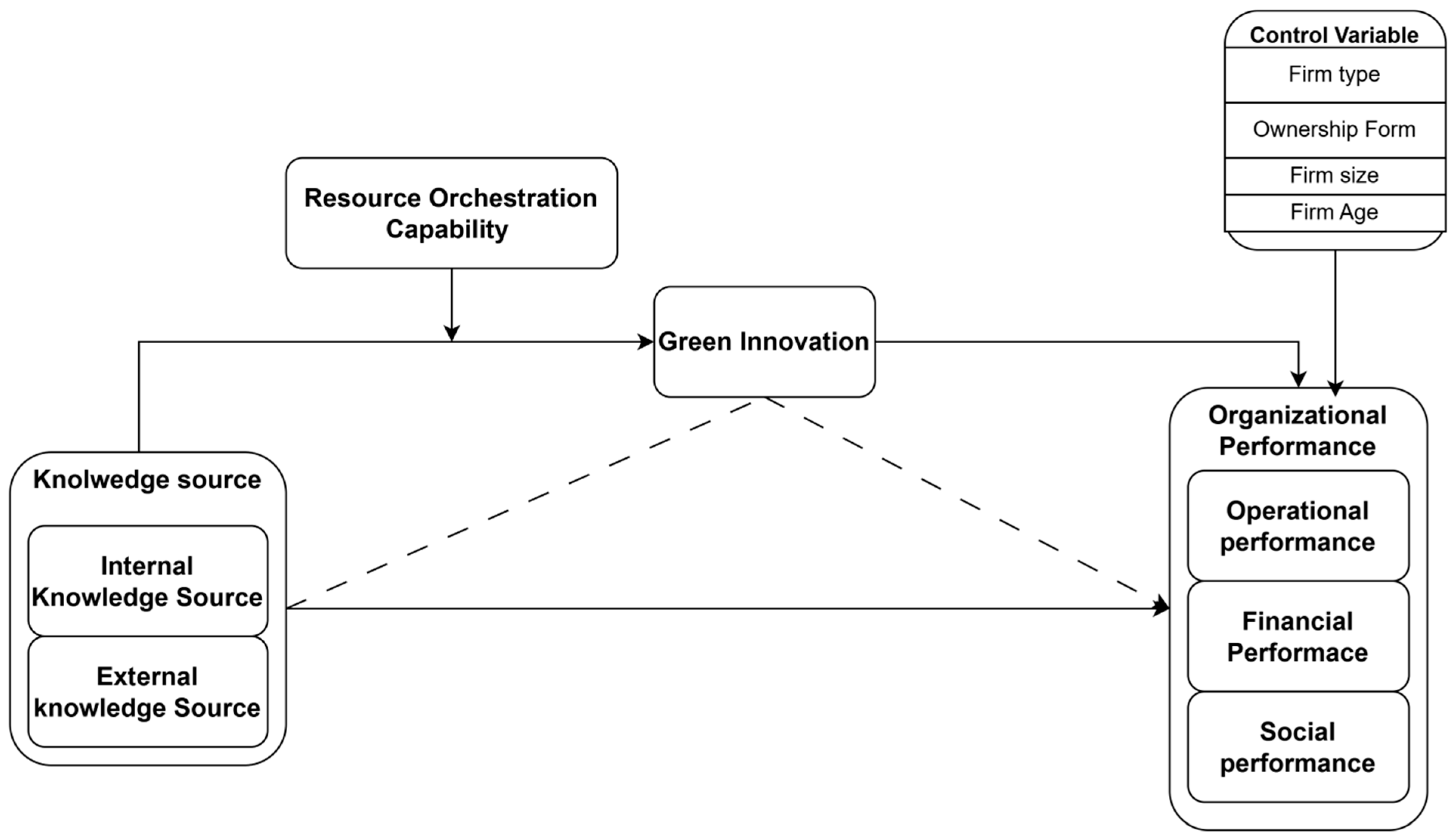
10]. We aim to fill a critical gap in understanding the pathways through which KS and GI capabilities contribute to OP (operational, financial, and social). Therefore, based on the preceding discussion, a conceptual framework was developed (
Figure 1), highlighting the significance of this research domain for several key reasons.
Knowledge derived from internal and external sources has become a predominant economic and competitive asset [
11]. Technologies and knowledge have significance for organizational innovation while effective knowledge utilization and related techniques are also crucial for organizations GI [
5]. When organizations access, integrate, and apply diverse knowledge, they are better furnished to develop eco-friendly products, processes, and technologies [
12]. Even though researchers have explored different types and forms of knowledge with GI [
7,
8,
9], integration of KS and GI is still limited and needs to be examined.
Secondly, GI in organizations involves adopting eco-friendly practices to enhance sustainability, which aligns with global environmental commitments, with social potential, and promotes long-term competitiveness and responsible resource management [
13]. Global commitments like the Paris Agreement and technological progress both stress the importance of GI, but the cost is still high. Businesses that use GI could eventually experience production losses and inefficiencies [
14]. Therefore, organizations will not invest in the development of environmentally friendly innovation until they can predict a return on investment [
15]. Due to this, the most important question that has to be addressed as a result is whether GI can stimulate OP (i.e., operational, financial, and social) while still maintaining the positive effects that it has on the atmosphere [
16].
Thirdly, organizations that leverage diverse KS to achieve strategic goals such as operational, financial, and social objectives can significantly enhance OP [
17,
18]. Studies on GI and their effectiveness have sometimes produced contradictory findings [
19,
20], such as risks associated with knowledge transfer [
21]. Furthermore, ref. [
22] studies that found a significant negative impact of EXT on GI growth have captured the attention of scholars [
23,
24]. Therefore, this study addresses these ambiguities by adopting a boundary-condition perspective to examine when and how KS and GI contribute to operational, financial, and social performance in Chinese manufacturing firms, which are increasingly under pressure to meet sustainability requirements.
Fourthly, resource-based theory states that firms can obtain a competitive edge by holding a large number of valuable and uncommon resources to attain specific objectives [
25]. These valuable and uncommon resources are difficult to duplicate for competitors [
26]. At the same time, strategic theorists point out that possessing resources and competencies may not harvest the best results, particularly when insufficient consideration is paid to evaluating and deploying resources and capabilities through proper management actions [
27]. ROC is an emerging topic and it is very important to examine in recent research work to make an organization produce more efficient results and innovation [
28,
29]. ROC is a boundary condition that determines when KS translates into GI to stimulate OP. Therefore, we still need to examine more research to explore how ROC strengthens or weakens the connection between KS and GI.
Based on the above discussion, this study will emphasize these questions:
RQ1. To what extent does KS significantly influence GI?
RQ2. Does GI significantly influence OP (i.e., operational, financial, and social)?
RQ3. Does GI mediate the relationship between KS and OP?
RQ4. Does ROC moderate the relationship between KS and GI?
Prior RBV and KBV studies have recognized that knowledge is a critical strategic resource for innovation and performance. Integration of diverse knowledge and environmental sustainability is a challenge for organizations [
4,
13]. Although, existing studies have largely investigated different terms of knowledge with innovation, and OP in different contexts. What is unclear is how KS impacts GI and OP with ROC, especially in the context of Chinese manufacturing firms. The objective of this study is to determine which extent internal and external KS contributes to the development and implementation of GI within organizations. Additionally, this study aims to investigate how GI acts as a mediator between KS and OP, explaining the pathways through which KS contributes to OP via GI. This study also explores the moderating role of ROC between KS and GI, examining how organizations’ ability to manage and coordinate diverse resources effectively influences their capacity for GI.
By exploring this dynamic interplay, this study will contribute valuable literature to the mechanisms through which KS contributes to GI, shaping the performance outcomes of organizations committed to environmental responsibility. Furthermore, previous researchers have not thoroughly examined the moderating roles of ROC, and the relationship between KS and GI is also a novel point of this study.
3. Research Methodology
This study employed questionnaire survey deductive methodology which is legitimate in many social science studies [
58]. Data were collected from Chinese manufacturing industries because China plays an important role in boosting industrial economics has a strong ability to adopt knowledge management and remain competitive in global markets [
30]. Therefore, this study targets different managerial positions within Chinese manufacturing industries (
Appendix A).
Furthermore, we randomly contacted 200 Chinese manufacturing industries such as (textile, sports goods, leather, chemical and petroleum etc.) published by Wind Info in Hunan province of China [
59,
60]. Between February and June 2025, we engaged with company representatives through phone and in-person interactions to describe the study goals. After assuring them about privacy and anonymity, 189 organizations agreed to participate in data collection. Building on prior work, we collected data by distributing 543 questionnaires to managers operating at different hierarchical levels, enabling representation of varied competencies and strategic knowledge [
5].
Of the 428 returned surveys, 353 were retained after removing 48 incomplete responses, yielding a 65.19% valid response rate. A
t-test comparing early and late respondents showed no significant differences in age or gender (
p > 0.05), indicating minimal non-response bias. The final sample included 162 females (46%) and 191 males (54%) (
Appendix A). Furthermore, this study employed SmartPLS software (4.1.1.2), and we strictly followed the sampling procedure established SEM guidelines with a sample size of 353, meeting the threshold for robust analysis [
31,
61].
3.1. Measurement of Variable
An established construct was used to measure the variable. Data were assessed using a 7-point Likert scale for superior answer quality [
62]:
INT was assessed using seven indicators adopted from [
63];
EXT was evaluated through six indicators adapted from [
64];
ROC was captured with three items developed by [
28];
GI measurement relied on seven indicators from [
65];
FP was measured in the study by using the following five items [
66];
Five items were adopted to measure the OPP taken from the study [
67];
SP was evaluated using four indicators referenced [
68].
This study examined the impact of control variables on organizational performance such as firm type, ownership form, firm size, and firm age. Many prior studies also analyzed and examined control variables in different contexts [
10].
3.2. Common Method Bias
To verify that the dataset was not affected by method variance, we applied a CMB diagnostic in line with recommendations by [
69]. We reviewed inner-model VIF statistics, and values at or below 3.3 indicated that bias was not a concern, consistent with [
70]. Furthermore, later we also test Herman’s single factor which is 25.239% of the total variance and met the threshold less than the standardized value, 50%.
3.3. Data Analysis
Analytical Approach
This study utilized SmartPLS 4.1.1.2 because the research characteristics align with the strengths of variance-based structural equation modeling (PLS-SEM) [
58]. First, the primary objective of this study is to explain the variance in OP by examining a complex mediation and moderation framework involving KS and GI. PLS-SEM is particularly suitable for predictive research models with multiple latent constructs and interaction effects [
71]. Second, PLS-SEM is appropriate for studies with relatively moderate sample sizes and non-normal data distributions, which are common in organizational and survey-based research contexts [
72]. Moreover, PLS-SEM allows robust estimation of complex structural models without strict distributional assumptions [
72,
73]. Therefore, PLS-SEM was selected based on methodological appropriateness rather than mere popularity in prior literature.
5. Discussion
Many prior researchers acknowledge that knowledge is the backbone of innovation [
5,
7]. Organizational innovation and employees’ creativity depend upon how effectively an organization can utilize its knowledge to stimulate the OP [
30]. Implementing green solutions is complex and requires balancing ecological and economic considerations [
14]. Therefore, organizations need to create an environment where knowledge is shared and utilized effectively, and optimal innovation is gained by overcoming technological hurdles and tackling environmental challenges while promoting organizational performance [
32]. This process is significantly influenced by acquiring accurate knowledge, which stands out as a key point for organizations [
5]. Based on the available literature and using a research model, this research investigated the relationship between KS, GI, OP (operational, financial, and social), and the moderating role of ROC.
Firstly, it has become increasingly challenging from a KM perspective to monopolize knowledge, and innovation is getting more and more complicated [
5]. Therefore, businesses are experiencing significant pressure to enhance their quality and efficiency towards GI [
84]. Our first research question is whether KS (INT and EXT) significantly influences GI. Our findings demonstrate that KS significantly impacted GI, indicating knowledge serves as a vital resource for driving innovation towards environmental sustainability [
85]. In a wider perspective, prior researchers also discuss how integrated internal knowledge and external collaborations empowers organizations to generate creative solutions for a greener future [
86]. Furthermore, our study results showed a significant positive connection between KS and OP, extend the KM literature, and suggest that leveraging INT and EXT contributes to improved OP, such as enhanced operational, financial, and social performance [
34,
36]. An organization’s ability to acquire, retain, and integrate relevant knowledge is crucial for enhancing GI and OP [
32]. By leveraging KS, firms cannot just cultivate innovative ideas but also gain a competitive advantage over their competitors [
5].
Secondly, organizations that aim to enhance their OP in the operational, financial, and social context are strongly connected with environmentally friendly solutions [
87]. Although GI has several well-known advantages for organizations, this relationship is still complex [
53]. This study showed a significant positive relationship between GI and OP, and extended the existing literature and suggests firms that create environmentally friendly innovations can gain an advantage over their competitors and stay ahead in the market dimensions [
3,
88]. Establishing the critical role of GI in shaping overall OP and investing in GI is likely to experience positive outcomes across operational, financial, and social dimensions [
7,
89].
Thirdly, in order to boost OP, businesses must concentrate on enhancing their capacity for innovation through internal and external collaboration [
38,
90]. Therefore, this study discussed the mediating role of GI in the connection between KS and OP. Previous research also discussed GI as a mediator and discussed how KM helps organizations gain GI and significantly stimulate OP [
91]. Our findings align with prior scholars who discussed how knowledge can significantly enhance their GI outcomes and improve OP [
92]. Furthermore, our findings also highlight that strong KS with (INT and EXT) alone in organizations is insufficient, and they also need to improve greener capabilities to generate OP [
22].
Fourthly, organizations are struggling to gain, update, and deploy their resources to explore new opportunities. Therefore, many previous scholars emphasize that ROC is an emerging topic and cannot be ignored for organizational success and innovation [
12,
27]. Although organizations increasingly rely on KS and innovation capabilities, knowledge alone is insufficient to generate GI. Consistent with ROC theory, firms must actively structure, bundle, and leverage their knowledge resources to transform them into GI outcomes [
56].
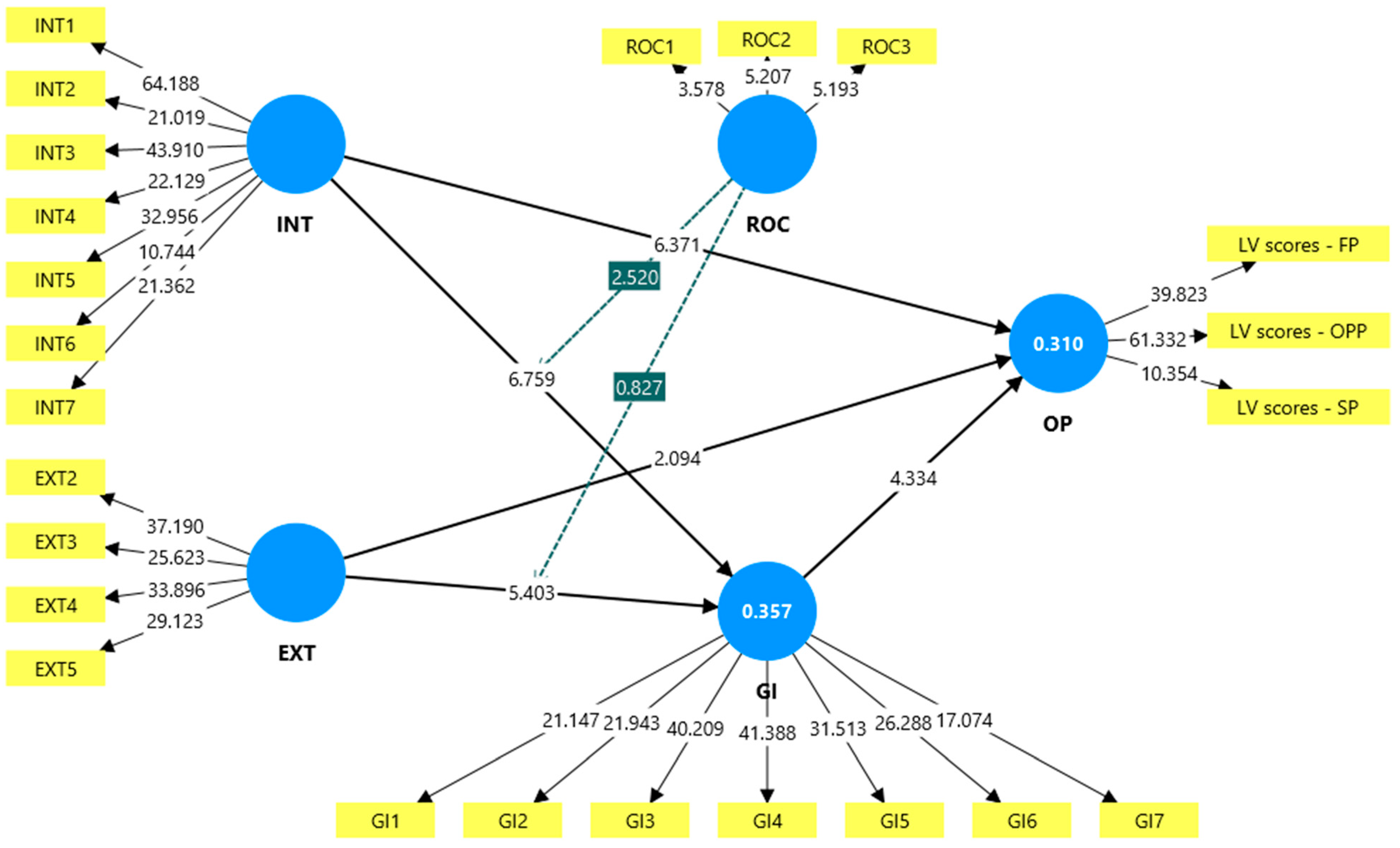
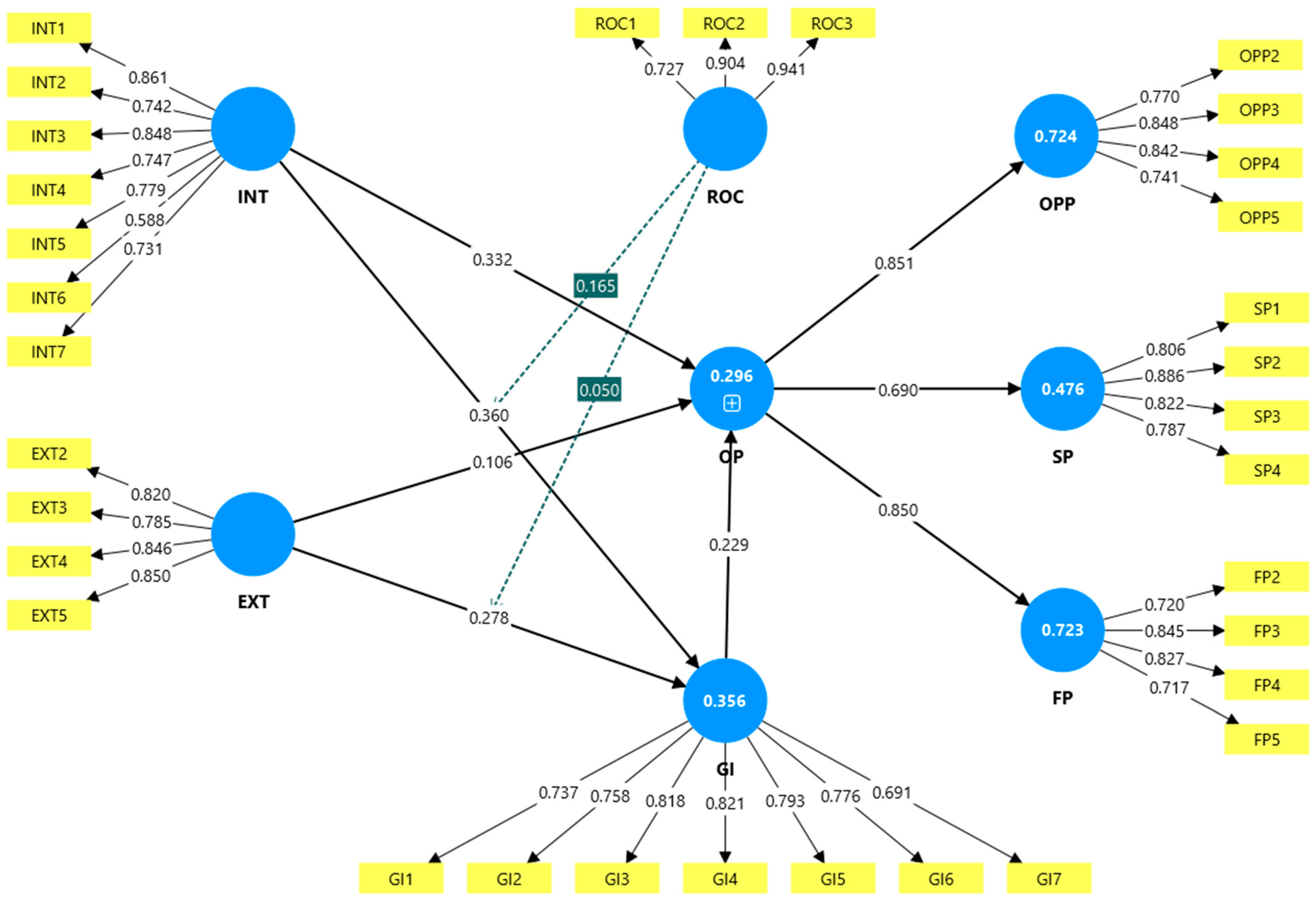
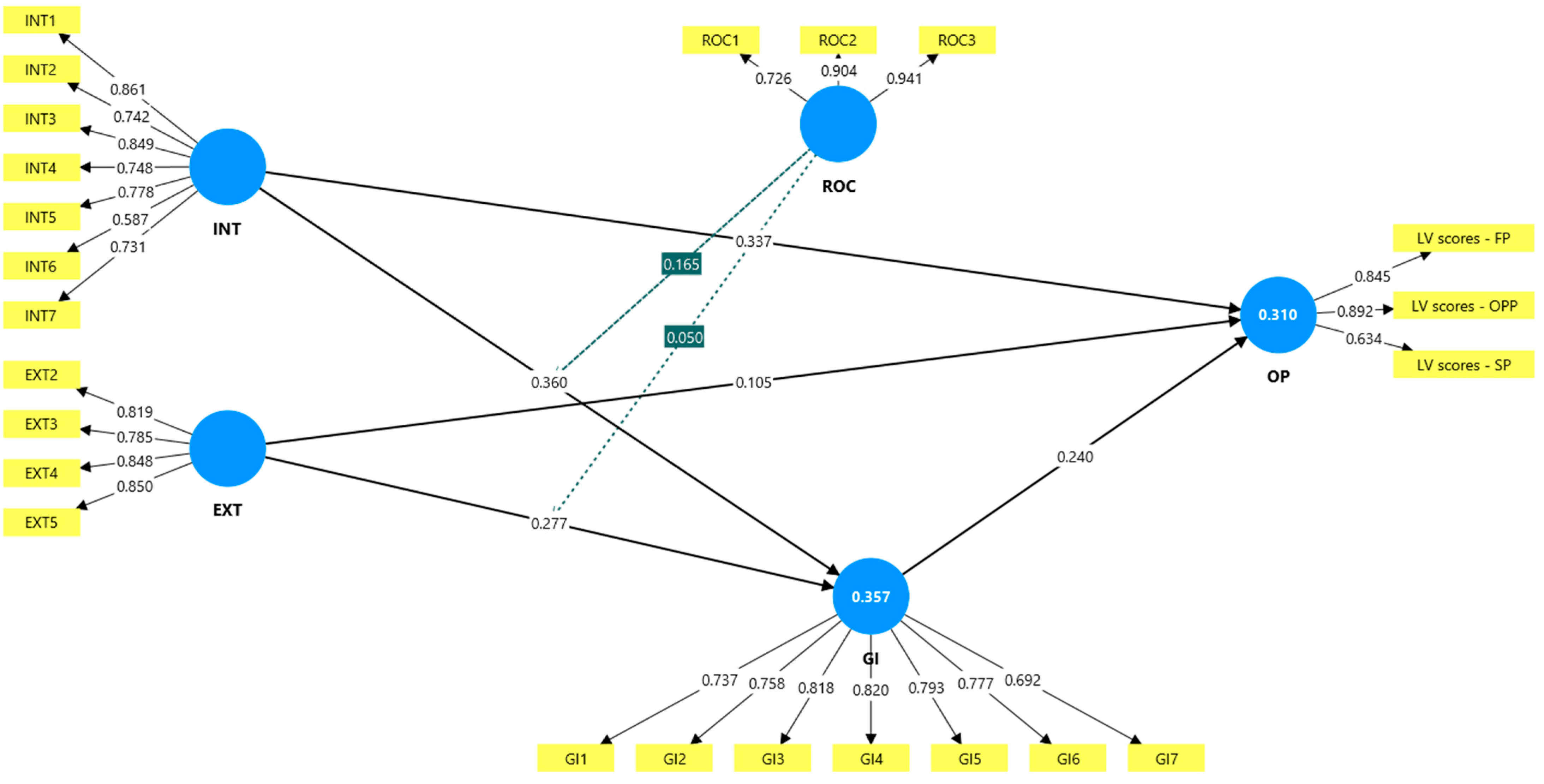
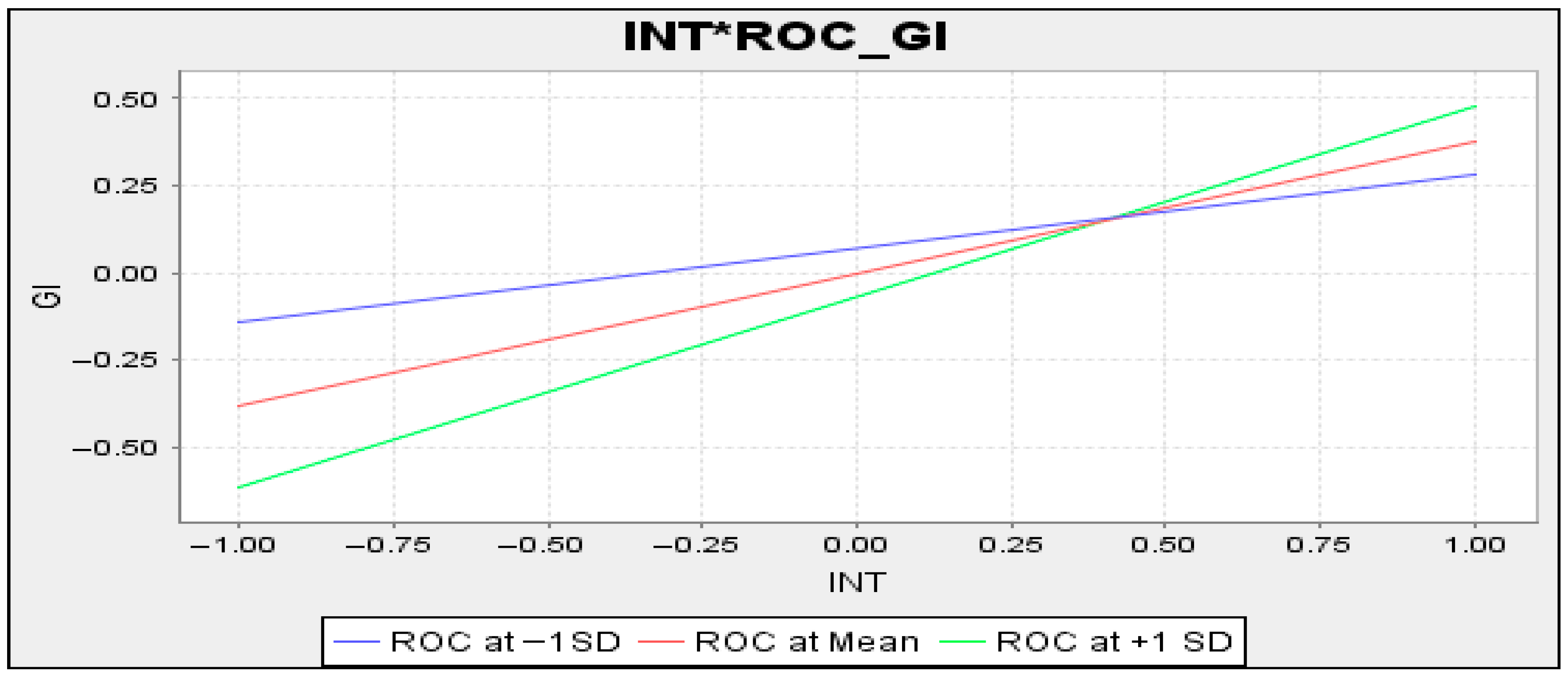
Our findings indicate that stronger ROC enhances the effect of INT on GI. This sheds light on the strategic importance of resource management in the innovation process [
93]. In contrast, the interaction term for EXT and ROC is insignificant, suggesting that merely having resources does not generate value or competitive advantages; dynamic and strategic application of these resources is vital for creating value [
56]. The divergence between our findings and prior studies may be explained by contextual and organizational factors. Chinese manufacturing firms face increasing regulatory and stakeholder pressure for environmental sustainability, which may strengthen the role of GI in driving OP outcomes. Moreover, ROC as a moderator provides a boundary-condition explanation, showing that KS led GI only when firms possess strong orchestration capabilities. Therefore, organizations need to pay more attention to evaluating and deploying resources and capabilities through management actions to achieve GI [
93].
5.1. Theoretical Implication
Existing RBV and KBV literature in the domain of strategy and management thoroughly emphasize that knowledge is the primary source for innovation and OP [
22,
32]. Moreover, previous scholars have investigated multiple knowledge dimensions and their influence on GI and OP [
8,
35]. Despite extensive research on knowledge and innovation, the mechanisms through which KS affects GI and OP via ROC remain underexplored, especially in Chinese manufacturing contexts. Furthermore, prior studies have not simultaneously examined the pathway from KS to GI and subsequent social, financial, and operational performance under the moderating influence of ROC. In this context, this research has substantially contributed to the advancement of the theory of KBV by examining the link between KS, GI, OP, and ROC.
Firstly, many prior studies have stated that KS is a necessary cornerstone for GI [
13,
22]. In the GI context, KS reflects firms’ dissemination and integration of knowledge related to eco-friendly technologies, waste minimization, and sustainable practices, which constitute valuable and strategic intangible resources [
38]. Such shared knowledge represents a critical organizational capability that enables firms to recombine INT and EXT to generate GI [
22]. Our study extends the literature and confirms that GI often relies on external knowledge inputs and inter-organizational collaborations, reinforcing the role of knowledge as a central strategic asset for sustainable OP.
Secondly, GI can increase the organizations reputation and make a social impact, ultimately leading to better operational and financial performance [
7]. Our findings demonstrate that organizations that prioritize GI can attain a competitive advantage over their competitors. In line with innovation diffusion theory, organizations that develop superior innovation capabilities can achieve early-mover advantages, thereby strengthening their OP [
5]. Moreover, the finding indicates that GI significantly impacts on OP, e.g., operational, financial, and social.
Thirdly, the mediation analysis demonstrates that GI significantly transmits the effect of KS on OP [
7,
22]. From an RBV perspective, KS represents valuable strategic resources, while GI reflects the capability to convert these resources into performance outcomes. Consistent with the KBV, the findings suggest that firms that effectively integrate and recombine internal and external knowledge can generate GI that enhances OP, including financial performance, brand legitimacy, and operational efficiency. Furthermore, this study extends the literature by showing that knowledge-driven GI acts as a critical mechanism through which firms achieve early competitive advantages and superior OP in the manufacturing context.
Finally, our findings also stress the important role of ROC with KS and contribute to existing literature, which ultimately enhance organization GI [
57]. This finding extends resource orchestration theory by demonstrating its role in translating knowledge-based resources into GI outcomes in emerging economy manufacturing firms. Our findings underscore the theoretical importance of ROC as a boundary condition, demonstrating that KS contribute more effectively to GI when firms possess the capability to structure, bundle, and leverage their resources strategically.
5.2. Practical Implications
Business leaders and managers must acknowledge the significance of knowledge exchange and prioritize it in the realm of GI. Implementing KS (INT and EXT) has major advantages of organization by facilitating the integration of new knowledge. This study discusses how Chinese managers can improve the OP with the help of knowledge sharing activities. Organizations must strategically align their knowledge-sharing initiatives with sustainability, and acknowledging the potential for green infrastructure to contribute to long-term success [
4].
Business managers and executives in manufacturing firms should establish structured mechanisms to acquire and integrate both internal knowledge (e.g., employee expertise, R&D experience) and external knowledge (e.g., suppliers, customers, universities) to support GI initiatives. Manufacturing firms also need to understand that simply acquiring knowledge is insufficient; manufacturing firms benefit when such knowledge is embedded into GI solutions, such as cleaner production methods, energy-efficient machinery, and environmentally compliant product designs. Our advice for managers is to recognize the significance of seeking knowledge from suppliers, customers, and competitors because knowledge sharing improves worker motivation, engagement, and retention [
34].
Furthermore, from an organization’s perspective, all sources and resources are important; their impact on a company’s innovativeness is not equal. Therefore, organizations also needed to manage their resources for their best output. Our research aims to assist managers in implementing more effective orchestration techniques, with a specific focus on the value of understanding the different knowledgeable stakeholder groups involved in a company’s GI strategy. By doing so, manufacturing firms with complex production systems should invest in managerial coordination mechanisms that align sustainability initiatives across different departments. Therefore, our study demonstrates to organizational leaders and managers how GI promotes sustainable business performance in several ways, which helps to clarify the importance of incorporating GI into business investment strategies. Chinese industry policymakers can use these insights to improve strategies and policies that motivate companies to embrace GI and support the green economy. However, organizations should thoroughly examine contextual factors they might need to invest in for developing capabilities and enabling the transformation of KS activities into practical innovation and OP.
7. Conclusions
Our study analyzed the model between KS (INT and EXT), GI, and OP (i.e., operational, financial, and social). This study developed four research questions: five direct, two mediation, and two moderation hypotheses. Furthermore, we employed SmartPLS 4.1.1.2 version. By employing the SmartPLS 4.1.1.2 version, we conducted a thorough analysis of the complex connections within our research model, ensuring precise interpretation of our study’s results.
This study focused on how KS stimulates GI and OP. Furthermore, GI acts as a mediator, and ROC acts as a moderator in our empirical model. This study’s conclusion offers a broad understanding of how KS, GI, and ROC collectively stimulate triple line OP. Practically, these results stress the significance of fostering INT and ENT capabilities, with a strategic emphasis on ROC, to drive green innovation and achieve operational financial and social success. Our research findings are important and emphasize the critical importance of encouragement, both internal and external knowledge capabilities, strategically emphasizing resource orchestration for organization.