Article

Climate Risk Perception and Environmental Disclosure: Evidence from China’s A-Share Market

1
School of Law and Economics, Wuhan University of Science and Technology, Wuhan 430065, China
2
School of Economics and Management, Wuhan University, Wuhan 430072, China
*
Author to whom correspondence should be addressed.
Sustainability 2026, 18(4), 1848; https://doi.org/10.3390/su18041848
Submission received: 24 December 2025 / Revised: 6 February 2026 / Accepted: 9 February 2026 / Published: 11 February 2026
(This article belongs to the Special Issue Environmental Behavior and Climate Change)

Abstract

Environmental information disclosure (EID) serves as a key indicator for assessing corporate green progress and is a central pathway for advancing the synergy between economic and environmental systems. Clarifying the mechanism through which climate risk perception (CRP) influences corporate EID holds significant practical relevance for supporting firms in responding to climate change. Using a sample of China’s A-share listed companies from 2011 to 2023, this study employs a two-way fixed effects model to examine the impact of climate risk perception on corporate environmental information disclosure. Research findings suggest that climate risk perception is positively correlated with environmental information disclosure, a relationship linked through two key channels: the exertion of disclosure pressure on firms and the incentivization of green innovation. Further analysis reveals a positive moderating role of institutional ownership. Heterogeneity analysis shows that the effect of CRP varies considerably across firm characteristics: its promoting effect is weaker in foreign-invested and traditional firms but markedly in digital ones. The measurement and variable construction of CRP in this study can serve as a reference for variable development in related fields. Moreover, the main findings can assist enterprises in making better decisions when facing climate risks and provide a new perspective for deepening research on corporate green performance.

1. Introduction

Climate change has been robustly documented to increase the intensity and frequency of extreme weather events [1], significantly affecting both natural ecosystems and socioeconomic systems in China. For instance, during the summer of 2025, persistent heatwaves in northern China and the Huang-Huai region severely threatened wheat production in Hebei Province. That same September, heavy rainfall damaged early rice crops across southern China. These recurring extremes illustrate the substantial economic threats posed by climate risk, underscoring the need to better understand its transmission mechanisms and to develop effective response strategies.
Climate risk perception (CRP) directly endangers corporate fixed assets and supply chain security [2] and indirectly impairs firms’ operational capacity by disrupting production and investment activities [3], thereby challenging broader macroeconomic stability and sustainable development. In this context, corporate environmental information disclosure (EID) serves as a key indicator of environmental responsibility and sustainability performance [4]. Effective EID can motivate firms to enhance their environmental management and pursue green transformation. Nevertheless, the relationship between CRP and corporate EID remains underexplored. Critically, while the perception of climate risk reflects management’s subjective attention and concern—an internal cognitive state distinct from objective exposure or strategic disclosure behavior—it is often inferred from observable communication. Prior studies indicate that environmental disclosure decisions are influenced by diverse factors such as institutional investor engagement, corporate governance quality, and green investment [5,6,7]. These findings suggest that firms may respond strategically and variably to similar climate risk exposures—a dynamic that warrants closer examination.
To empirically capture the concept of CRP, this paper employs the frequency of climate-related terms in corporate annual reports as a proxy. This approach is based on two principal considerations and is theoretically grounded in the distinction between perception and disclosure. First, annual reports serve as strategic documents that convey management’s priorities and risk evaluations to external stakeholders. The repeated mention of a specific issue in these reports signals its perceived significance at the managerial level [8], thereby reflecting internal cognitive attention rather than merely external pressure or symbolic signaling. Second, text-based measures of perception are well-established in the academic literature. In finance and accounting research, similar textual analysis methods have been used to infer a firm’s internal outlook. For instance, the frequency of risk-related terms in 10-K filings has been validated as a proxy for corporate risk perception [9], and such measures have been shown to predict subsequent earnings volatility and stock price movements. This evidence supports the view that textual disclosures reflect a firm’s underlying risk perceptions. This study adopts textual frequency of climate-related terms as a proxy for corporate CRP, conceptually distinguishing it from objective climate risk exposure. It thereby seeks to examine how internally formed climate risk awareness shapes external environmental disclosure behavior.
Environmental changes present direct physical risks to firms, including flooding [10] and saltwater intrusion [11,12], which can lead to substantial financial losses and operational disruptions [13]. Theoretically, investor sentiment theory suggests that CRP may cause deviations from rational investment behavior by altering risk preferences and asset allocation strategies. Meanwhile, information asymmetry theory highlights that investors often lack sufficient and precise information regarding a firm’s exposure to environmental risks. This gap tends to widen during periods of market stress, further distorting asset pricing and resource allocation. Together, these mechanisms can undermine capital allocation efficiency, thereby impeding China’s green transition and sustainable development goals [14,15]. Therefore, clarifying the relationship between CRP and EID is essential for effectively addressing climate risks, improving environmental governance, and supporting the achievement of “dual carbon” targets alongside sustainable economic growth.
Corporate EID is often driven by stakeholder environmental concerns and external pressure [16]. In practice, however, stakeholder attention tends to prioritize financial performance [17], social contributions [18], and public sentiment [19], frequently relegating environmental issues to a secondary role. This tendency is compounded by systematic disparities in EID transparency across regions and ownership types [20], resulting in inconsistent data quality and reliability. Consequently, stakeholders face considerable difficulty in accurately assessing the financial and operational implications when firms are exposed to climate-related shocks. While existing literature has separately emphasized the importance of CRP and EID, the intrinsic linkage between the two—particularly regarding transmission mechanisms, contextual influences, and heterogeneous effects—remains underexplored.
This study employs textual analysis to measure corporate climate risk perception and integrates it into the research framework of environmental information disclosure, thereby expanding the analytical perspective in this field. Specifically, the research addresses three interconnected questions: (1) Does climate risk perception significantly improve a firm’s environmental information disclosure? (2) If so, through what mechanisms does this effect operate? (3) Does this impact vary across different industries and firm characteristics? The answers to these questions are presented in the conclusion.
Based on a comprehensive panel of China’s A-share listed firms from 2011 to 2023, this study empirically examines the impact of CRP on corporate EID. The results reveal a statistically significant positive relationship, which remains robust across a battery of rigorous tests. Mechanism analysis identifies a dual-channel pathway through which CRP enhances EID: first, by dampening corporate growth expectations, which motivates firms to strategically improve environmental disclosure to mitigate adverse perceptions; and second, by incentivizing green innovation, as evidenced by an increase in green patent output. Heterogeneity analysis indicates that the positive effect of CRP is more pronounced in domestically owned firms, digitally oriented enterprises, and non-traditional industries. Furthermore, moderating effect tests confirm that institutional shareholding strengthens the relationship between CRP and EID.
This study makes three contributions to the literature:
Firstly, it introduces an external, non-economic driver—CRP—into the micro-level analysis of corporate environmental disclosure, thereby offering a novel perspective and enriching research on corporate environmental behavior. While prior studies have predominantly focused on internal economic determinants such as firm size, age, and profitability [21,22], the role of external climatic shocks has received limited attention [23]. By centering on CRP, this paper provides fresh empirical evidence on how firms respond to climate change and improve their disclosure quality.
Secondly, the research advances the understanding of underlying mechanisms by systematically examining the dual mediating roles of corporate growth expectations and green innovation in the CRP–EID relationship. Although corporate growth [24] and green innovation [25] have been studied separately in related contexts, they have not been integrated into a coherent framework that links external risk perception, internal corporate conduct, and disclosure outcomes. This study constructs such a framework, delineating a complete transmission pathway from external climate risk shocks to internal strategic adjustments and, ultimately, to enhanced environmental transparency.
Finally, the findings reveal the significant moderating role of institutional ownership, deepening insights into the contextual conditions that shape corporate responses. While previous research has acknowledged the influence of institutional investors on environmental performance [26], their specific function as a moderator in the context of CRP and EID has been underexplored. By identifying this reinforcing effect, the study highlights the governance role institutional investors play in strengthening corporate environmental accountability. Consequently, this paper provides a new theoretical lens for understanding the complex linkages between climate risk perception, corporate environmental behavior, and sustainable development.
The reminder of this paper is structured as follows: Section 2 reviews the relevant literature and develops the research hypotheses. Section 3 outlines the empirical model, variable definitions, and data sources. Section 4 presents the main empirical results, including descriptive statistics, baseline regression analysis, mechanism tests, and heterogeneity analysis. Section 5 summarizes the key findings and policy implications, and discusses the limitations of the study along with potential directions for future research.

2. Literature Review and Research Hypotheses

2.1. Literature Review

Addressing CRP constitutes a critical contemporary environmental challenge and plays an instrumental role in promoting corporate clean transition and sustainable development. As a fundamental dimension of climate risk [27], CRP captures the potential for severe damage to ecosystems, socioeconomic activities, and corporate assets resulting from climate change-induced extreme weather events, such as heavy rainfall, hurricanes, droughts, and floods [28]. These risks are often reflected in temperature anomalies and frequent climate disasters [29], directly threatening the implementation of corporate green strategies and long-term sustainability objectives. In this context, corporate EID serves as a vital mechanism for assessing green performance and environmental responsibility, garnering growing attention from governments, investors, and the public as a key indicator of corporate sustainability.
The literature consistently shows that CRP not only directly undermines corporate economic performance [30] and triggers market volatility but also disrupts the pricing of essential commodities such as coal [31]. Moreover, it can significantly affect firms’ total factor productivity—for instance, by tightening financing constraints and thereby lowering productivity [32]. The repercussions of CRP have increasingly permeated the global financial system, manifesting in elevated bank credit risk [33], reduced investment returns [34], and potential threats to overall financial stability. Therefore, elucidating the mechanisms through which CRP affects corporate EID practices and designing targeted policies to mitigate its adverse effects hold substantial practical importance for enhancing corporate resilience, safeguarding financial stability, and fostering sustainable economic growth.
Research on EID has largely concentrated on its economic implications, including its positive role in securing environmental certifications [35] and attracting green investment [36]. Additional studies have examined the drivers of EID from regulatory and market-based perspectives, such as green finance policies, environmental auditing systems, and specialized courts [37,38,39]. Notably, beyond its economic function, EID also serves as a strategic tool for corporate image management. In pursuit of “green” legitimacy and associated benefits, firms may engage in greenwashing, creating an environmentally friendly facade without substantive action. In this regard, strategic environmental disclosure often exacerbates such greenwashing behaviors, whereas substantive environmental disclosure can mitigate information asymmetry and help curb corporate greenwashing. Nonetheless, although CRP is recognized as a salient external shock that directly threatens corporate assets—evidenced by its impact on leverage through heightened distress costs and increased operational expenses [40]—its potential effect on corporate EID behavior remains underexplored. Therefore, understanding whether and how CRP influences firm’s substantive disclosure is of critical importance.
Clarifying the relationship between CRP and EID would enable stakeholders to better assess a firm’s operational and environmental standing and holds significant value for improving the effectiveness of environmental governance systems. High-quality EID has been shown to enhance regional environmental quality [41] and accelerate corporate green transition [42], thereby reinforcing market confidence in low-carbon pathways and supporting the achievement of global sustainability goals.

2.2. Research Hypotheses

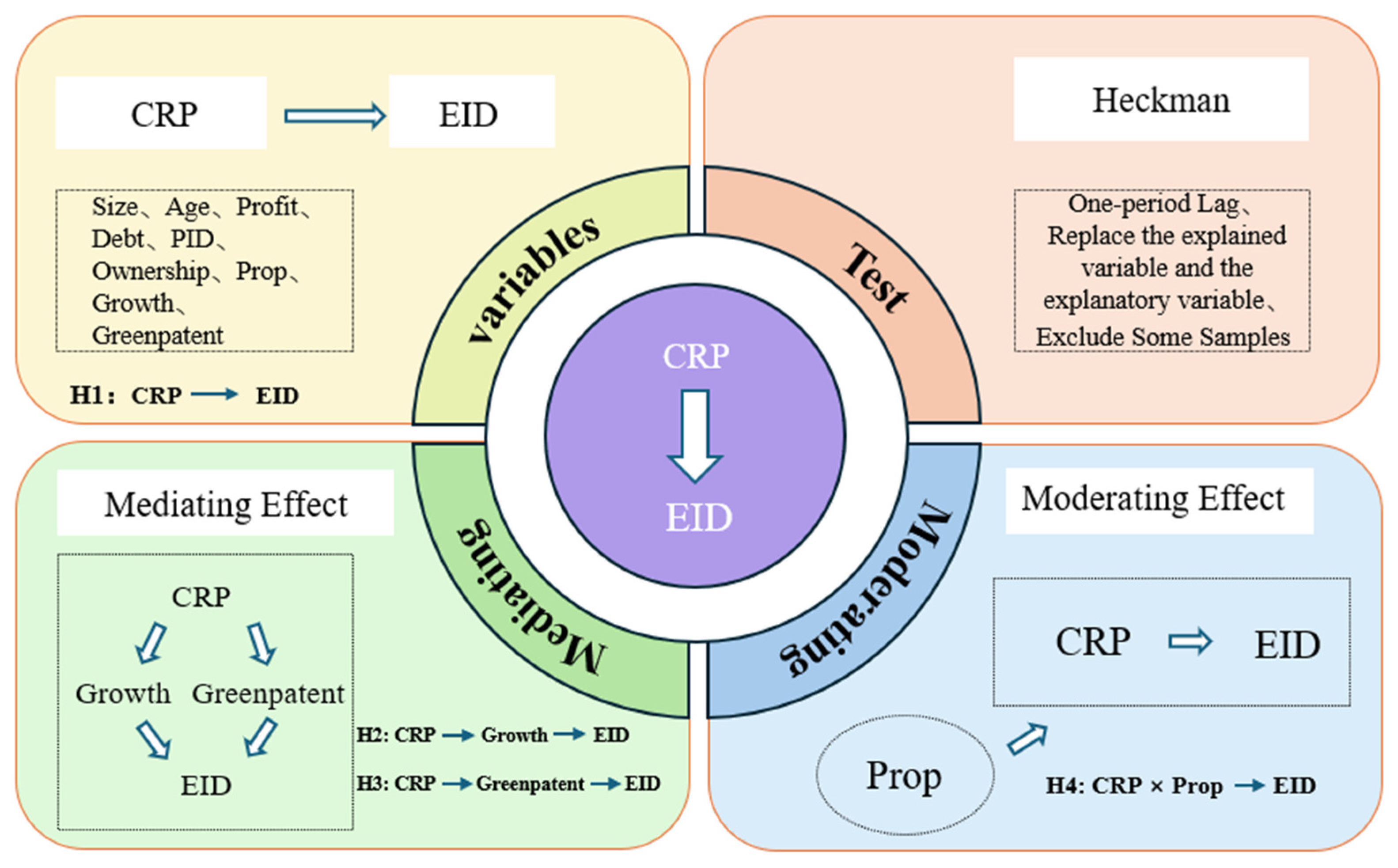
This section presents the four research hypotheses and the underlying theories adopted in constructing the analytical framework, as illustrated in Figure 1 below.
From an organizational standpoint, CRP is increasingly recognized as a material factor affecting corporate profitability and sustainable development [43]. In today’s market environment, where information spreads rapidly and investor sentiment is highly sensitive, negative shocks stemming from climate risks can quickly translate into reduced corporate valuations and higher financing costs, thereby threatening long-term business viability. To alleviate market concerns and sustain investor confidence, corporate management have strong incentives to proactively disclose more comprehensive and transparent environmental information. However, the effectiveness of such disclosure is not guaranteed. If the information disclosed is perceived as lacking credibility or being merely superficial [44], it may fail to stabilize market expectations and could even trigger accusations of “greenwashing” [45], further eroding corporate reputation and stakeholder trust.
In pursuit of sustainable profitability and long-term value creation, firms are therefore motivated to enhance the quality and transparency of their EID. High-quality EID helps mitigate information asymmetry between firms and stakeholders, strengthens investor confidence and can partially counteract the adverse market perceptions induced by CRP exposure—thus reducing potential economic and reputational losses. Based on this reasoning, we propose the following baseline hypothesis:
H1: 
CRP significantly promotes corporate EID.
The proposed theoretical framework posits that CRP influences EID through two primary transmission channels.
The first channel operates through the corporate growth pathway. CRP can directly constrain a firm’s growth potential, as reflected in a slowdown of total asset growth—a key indicator of a firm’s capacity to expand its asset base and generate future revenue [46,47]. This metric also significantly shapes capital market assessments of the firm’s intrinsic value and growth prospects [48]. When growth opportunities are curtailed due to climate risk exposure, firms have an incentive to enhance their EID to signal sustainable operational resilience and long-term value creation potential to external markets [49], thereby alleviating investor concerns and preserving capital market confidence.
The second channel functions through green innovation mechanisms. Recent studies indicate that the financial technology development can substantially strengthen corporate ESG performance by promoting green innovation, alleviating financing constraints, and reducing environmental uncertainty [50]. This provides an important contextual backdrop for understanding corporate innovation responses to climate risks. Within this context, exposure to CRP motivates firms to increase green patenting activities, which enhances their climate resilience and adaptive capacity. As a key output of green innovation, green patents reflect a firm’s technical response to climate challenges and enrich the substance and credibility of EID. By disclosing such innovation outcomes, firms can demonstrate their commitment to green transformation and climate adaptation. Supported by FinTech-enabled information dissemination, these disclosures help strengthen market recognition and stabilize investor expectations regarding corporate sustainability. Moreover, the social pressure arising from CRP exposure, together with greater information transparency driven by FinTech, creates an effective external oversight mechanism that continually encourages firms to improve the quality and comprehensiveness of their environmental reporting.
Corporate growth performance and green patent output represent critical indicators of a firm’s long-term competitiveness and green technological capability, addressing key stakeholder concerns. Together, they constitute the dual mediating mechanisms through which CRP affects corporate EID behavior. Based on this analysis, the following mediation hypotheses are proposed:
H2: 
CRP encourages corporate EID by decreasing corporate growth potential.
H3: 
CRP fosters corporate EID by stimulating corporate green innovation activities.
The fund ownership ratio—defined as the percentage of shares held by investment funds in a listed company—serves as a key indicator of institutional investor engagement in corporate governance. Unlike individual retail investors, institutional investors typically emphasize stable long-term returns and sustainable investment practices [51]. Their shareholding levels have been shown to correlate positively with corporate social and environmental performance [52]. Empirical studies consistently indicate that firms with greater institutional ownership tend to achieve stronger overall performance, and that equity funds contribute positively to market stability and resource allocation efficiency [53].
In the long run, the level of fund ownership can significantly shape corporate EID behavior by influencing stock price dynamics and operational decision-making [54]. Institutional investors play a pivotal role in improving the ESG performance of listed companies [55], with EID forming a crucial element of comprehensive ESG assessment. When firms are exposed to CRP, institutional investors such as funds—guided by portfolio resilience and sustainable investment principles—strengthen their external monitoring of corporate environmental conduct and elevate their demands for transparent and comprehensive disclosure. This enhanced oversight facilitates a more accurate evaluation of a firm’s physical risk exposure and adaptive capacity, thereby reducing agency costs and investment risks stemming from information asymmetry [56]. Consequently, as fund ownership rises, the governance influence and signaling expectations of institutional investors intensify, rendering the effect of CRP on EID quality more pronounced.
Based on this reasoning, the following moderation hypothesis is proposed:
H4: 
A higher fund ownership ratio strengthens the positive effect of CRP on corporate EID.

3. Research Design

3.1. Model Design

3.1.1. Baseline Model

Building on the established literature, this study employs a two-way fixed effects model to examine the relationship between CRP and EID [57]. The baseline model is specified as follows:
E I D i t = α 0 + β C R P i t +   γ 0 X i t + V t + θ i   +   ε i t
where E I D i t denotes the EID status of firm i in year t; C R P i t measures the extent of climate-related risk exposure of company i in year t; X i t is a vector of firm-level control variables; V t and θ i represent year and firm fixed effects, respectively; and ε i t is the idiosyncratic error term. This specification allows us to control for unobserved time-invariant firm heterogeneity and common temporal shocks.

3.1.2. Mediating Effect Model

To examine the transmission channels through which corporate growth and green innovation affect EID, we adopt a three-step mediation framework following established methodology [58].
M i t = α 1 + β 1 C R P i t + γ 1 X i t + V t + θ i + ε i t
E I D i t = α 2 + β 2 C R P i t + γ 2 X i t + δ M i t + V t + θ i + ε i t
The mediating variable M i t in these models represents either the corporate growth level or the green patent output of firm i in year t. All other variables are defined consistently with Model (1).

3.1.3. Moderating Effect Model

To investigate whether fund ownership moderates the relationship between CRP and EID, we extend Model (1) by introducing an interaction term:
E I D i t = α 0 + β 1 C R P i t + β 2 P r o p i t +   β 3 C R P i t × P r o p i t + γ 0 X i t + V t + θ i + ε i t
where P r o p i t denotes the fund ownership ration of firm i in year t. The interaction term C R P i t × P r o p i t captures the moderating effect of institutional ownership on the CRP–EID link. All other variables are defined consistently with Model (1).

3.2. Variable Definitions

3.2.1. Explained Variable: EID

This study develops a comprehensive multidimensional framework to systematically assess corporate EID. The framework categorizes EID content into five key dimensions: (1) environmental liability disclosure, focusing on quantified environmental load indicators; (2) environmental management disclosure, emphasizing qualitative descriptions of management systems and initiatives; (3) environmental regulation and certification disclosure, covering compliance with pollutant emission standards and related certification information; (4) disclosure channels, referring to the formal platforms and mediums used for information dissemination; and (5) environmental performance and governance disclosure, reflecting actual outcomes and the effectiveness of implemented measures. Detailed scoring criteria are provided in Table 1.

3.2.2. Explanatory Variable: CRP

Accurately measuring firm-level CRP is essential for assessing corporate investment behavior and risk exposure in the context of environmental uncertainty [59]. Unlike macro- or industry-level analyses, microlevel research focuses on the direct impact of extreme climate events on individual firms’ operations, assets, and supply chains, allowing for a more precise identification of heterogeneous corporate responses.
This study quantifies CRP through textual analysis [60]. We compile a customized glossary of climate risk terms based on existing literature [61] (see Table 2 for details). Keywords related to extreme weather, natural disasters, and other climate-related risks are systematically identified in corporate annal and social responsibility reports. The firm-level CRP index is then calculated as the frequency of these keywords divided by the total word count of the report.

3.2.3. Control Variables

To mitigate potential confounding effects on EID, this study includes six control variables spanning financial and governance dimensions. From the financial perspective, we control for firm size (Size), profitability (Profit), and the debt-to-asset ratio (Debt) to account for influences related to resource endowment, earnings capacity, and capital structure. From the governance perspective, we include firm age (Age), the proportion of independent directors (PID), and ownership concentration (Ownership) to capture institutional constraints associated with governance maturity and developmental stage. Detailed definitions, measurements, and theoretical rationales for each variable are provided in Table 3.

3.2.4. Mediating Variables

To examine the mechanisms through which CRP affects EID, this study employs two mediating variables: corporate growth and green patent output. Corporate growth is measured by the total asset growth rate (see Table 3), which effectively reflects a firm’s expansion capacity and development potential [62]. Green patent count captures the level of a firm’s green technological innovation, a construct supported by the prior literature. For example, research indicates that the digital economy can facilitate corporate green transition through low-carbon innovation [63]. A higher level of green innovation not only strengthens a firm’s resilience to climate risks but also enhances its motivation for EID by building a credible environmental image and responding to stakeholder expectations.

3.2.5. Moderating Variables

The moderating variable in this study is prop, defined as the percentage of shares held by securities investment funds relative to a company’s total equity. This metric reflects the degree of institutional investor involvement in corporate governance [64]. Generally, a higher prop signals institutional confidence in the firm’s prospects and strengthens external monitoring. Under such governance pressure, firms are more likely to improve information transparency to maintain market credibility and reduce information asymmetry.

3.3. Data Sources and Sample Selection

This study selects Chinese A-share listed companies from 2011 to 2023 as the initial sample. The determination of this time window is primarily based on the following three considerations: First, since 2011, China’s EID policies have entered a phase of systematic refinement. Starting from this point allows for the observation of corporate behavioral changes against the backdrop of evolving policies. Second, the 13-year longitudinal panel data facilitate the identification of medium- to long-term trends among variables, thereby enhancing the robustness of the research findings.
Following established empirical practices [65], we apply the following data-cleaning steps: (1) exclude financial institutions and ST/*ST firms (those with abnormal financial conditions) according to the China Securities Regulatory Commission (CSRC) 2012 industry classification; (2) drop observations with missing values for key variables; (3) remove firms with fewer than five consecutive years of data; and (4) winsorize all continuous variables at the 1st and 99th percentiles to mitigate outlier influence, then standardize them. The final balanced panel comprises 19,604 firm-year observations. Textual data are extracted from corporate annual and social responsibility reports; financial and governance variables are obtained from the CSMAR databases.

4. Empirical Analysis Results

4.1. Descriptive Analysis

Table 4 presents the descriptive statistics for the primary variables. The full sample comprises 19,604 firm-year observations. The mean value of the key explanatory variable, CRP, is 0.193, with a range from 0 to 2.738, indicating substantial cross-firm variation in CRP. The dependent variable, EID, has an average of 7.895 and varies between 0 and 36, suggesting both room for improvement in the overall disclosure level among Chinese A-share listed firms and notable heterogeneity across companies.
The statistics of the control variables—Size, Profit, Debt, Age, PID, and Ownership—are consistent with those reported in prior studies. The distributions appear reasonable, and no extreme outliers are observed, supporting the appropriateness of variable selection and measurement. To address potential multicollinearity concerns, we compute VIF for all explanatory variables. All VIF values are below 5, confirming that severe multicollinearity is not present and bolstering the reliability of the subsequent regression analysis.

4.2. Baseline Regression

Table 5 presents the baseline regression results on the effect of CRP on corporate EID. To systematically evaluate the robustness of the relationship, control variables are introduced progressively across columns: column (1) includes only the explanatory variable; columns (2) and (3) incorporate financial and governance controls, respectively; and column (4) includes all control variables together.
The results show that the coefficient on CRP is positive and statistically significant at the 1% level in all specifications. This indicates that, after accounting for other relevant factors, CRP consistently promotes higher levels of EID, providing empirical support for H1.
In economic terms, based on the full model in column (4), a unit increase in CRP is associated with a rise in EID of about 0.179 units. This magnitude is both statistically meaningful and policy-relevant. Notably, the significance and stability of the CRP coefficient remain unchanged as controls are added, suggesting that its effect is systematic and not driven by omitted firm-level characteristics. Although EID is shaped by a range of internal and external factors, the robust positive association with CRP underscores the distinct role of external climate pressure in motivating corporate environmental transparency.
Overall, the baseline results are statistically robust and economically interpretable. They affirm CRP as an important external driver of corporate disclosure, offer firm-level evidence on how companies respond to climate risks, and provide insights for the design of environmental disclosure policies.

4.3. Robustness Tests

To assess the reliability and validity of the baseline regression findings, a sequence of supplementary tests was conducted, focusing on robustness tests and endogeneity treatment. The results consistently confirm that the positive effect of CRP on EID is statistically significant across various methods, confirming the validity of our results. The results of robustness tests and endogeneity treatments are presented in Table 5.

4.3.1. One-Period Lagged Variables

To handle potential concerns about contemporaneous causality, all explanatory and control variables were lagged by a single period, and the regression was re-computed. The results, reported in the leftmost column, reveal that the parameter estimate for CRP remains positive with a significant level of 5%. This finding indicates that the promoting effect of CRP on EID persists even after accounting for time lag effects between variables, thereby reinforcing the temporal robustness and causal inference of the baseline conclusion.

4.3.2. Replacing the Dependent Variable

Although the baseline regression utilized a multidimensional EID index to capture disclosure quality, the original continuous variable was replaced with a binary dummy variable (EID_dv) [66] to mitigate potential bias arising from the measurement method. This dummy variable has a value of 1 when the business discloses environmental information, and 0 otherwise, capturing the extensive margin of disclosure behavior. As presented in second column, the result for the central explanatory variable is still significantly positive. This finding reveals that the driving effect of CRP on EID is consistent, regardless of whether it is assessed from the perspective of disclosure quality or disclosure behavior.

4.3.3. Excluding the Effect of Special Periods

The global COVID-19 crisis substantially disrupted standard corporate operations and information disclosure practices [67]. To diminish the influence this exceptional exogenous event on our discoveries, data samples from 2020 onward were excluded and the revised model was fitted. The results, which are displayed in the mid column, display that the coefficient for CRP remains positive and statistically significant at the 1% level. This finding suggests that the research results are robust under normal operating conditions, thereby enhancing their generalizability and external validity.

4.3.4. Alternative Explanatory Variable

To verify the robustness of the findings and address potential measurement error in textual analysis, this study draws on prior research [68] and employs an objective meteorological indicator—the frequency of extreme drought events—to directly examine the impact of climate risk on corporate EID. Using corporate registration addresses and daily city-level weather data, we calculate the proportion of years in which each firm experienced extreme drought (EED). After data cleaning and imputation, 13,544 valid observations are retained. Regression results (Table 6, Column 4) indicate that the frequency of extreme drought has a statistically significant positive effect on EID. This result aligns with the main findings based on the text-based CRP measure, thereby reinforcing the hypothesis that CRP promotes corporate environmental disclosure.

4.4. Endogeneity Test

Given that current corporate EID is largely voluntary in nature, the study may be susceptible to selection problem in sampling. Consequently, the Heckman two-stage selection model was implemented to tackle this potential issue. First, a binary variable (EID_dv) is determined depending on whether a firm releases environmental information, assigned a value of 0 for observations with zero EID scores and 1 for all others. Second, the industry mean EID is introduced as an instrumental variable for estimating a Probit model for EID decisions, from which the IMR is derived. Finally, the IMR is incorporated into the main regression model for further estimation.
In the first stage, the industry average EID for the same year served as an instrumental variable to estimate the selection equation. The results indicate that the mean EDI is significant at the 1% level, the validity of the instrumental variable, as reported in Column (5). After accounting for IMR during the second-stage regression, the coefficient parameter for CRP remains positive and significant at the 1 percent level. This finding demonstrates that the advantageous effect of CRP on EID is robust even after correcting for potential selection bias, in line with the main results of this study and aligning with previous research in this domain.

4.5. Key Correlated Pathways Analysis

To examine the pathways through which CRP affects corporate EID, we test the mediating roles of corporate growth and green innovation, as outlined in the theoretical framework.

4.5.1. Development Pressure Pathway

Corporate growth serves is a key indicator of a firm’s capacity to expand, generate profits, and maintain competitiveness, reflecting its long-term value-creation potential in a dynamic market environment [69]. To test whether CRP influences EID by constraining corporate growth, we estimate the corresponding mediation model.
The left column of Table 7 reproduces the baseline positive effect of CRP on EID. Column (2) shows that CRP significantly reduces corporate growth, suggesting that climate-related disruptions may hinder asset expansion and revenue growth by increasing operational costs and supply-chain instability. Column (3) further indicates a negative association between corporate growth and EID, implying that firms facing growth constraints tend to increase their environmental disclosure.
Together, these results support H2: CRP promotes EID by dampening corporate growth. The mechanism operates as follows: when climate-induced pressures limit growth prospects, firms have an incentive to enhance EID to reassure investors, signal proactive environmental governance, and partly offset the negative market expectations associated with slower growth—thereby supporting a sustainable development path.

4.5.2. Green Innovation Driving Pathway

Green innovation is a core strategic response to environmental challenges and low-carbon transition. As a key facet of green innovation, smart manufacturing has been shown to improve corporate ESG performance, which is closely linked to EID. We therefore examine whether CRP affects disclosure by stimulating green innovation.
The two right-hand columns of Table 7 present the results for this channel. Column (4) shows that CRP significantly increases the number of green patents, confirming that climate pressure spurs firms’ eco-innovation efforts. Column (5) reveals a positive and significant relationship between green patent output and EID, indicating that firms with stronger green innovation are more willing and able to improve their environmental disclosure.
These findings provide support for H3: CRP enhances EID by encouraging green innovation. The underlying logic is that firms respond to climate risks by boosting green patenting, which strengthens their technological competitiveness and climate resilience. Disclosing such innovation outcomes signals a commitment to green transformation and technical capability to the market, thereby bolstering investor confidence and creating a foundation for long-term sustainable development.

4.5.3. Reverse Causality Analysis of the Mediation Channels

To address potential reverse causality—where EID might influence the proposed mediators—we employ a cross-lagged model. As reported in columns (6) and (7) of Table 7, lagged EID shows no statistically significant effect on either green innovation or corporate growth. This suggests that prior disclosure levels do not drive subsequent changes in green patenting or firm expansion. The result helps alleviate concerns that the observed mediation effects might be subject to reverse causality.

4.6. Further Analysis

4.6.1. Moderating Effect Analysis

Existing research indicates that institutional investor involvement significantly shapes corporate strategic behavior, particularly in the areas of innovation and environmental governance [70]. The fund ownership ratio—a key indicator of institutional investor engagement—reflects both the intensity of external monitoring and the potential to influence corporate disclosure through signaling and resource-provision channels. Against a backdrop of growing environmental awareness, institutional investors increasingly scrutinize firms’ exposure to and management of climate risks, using such information to guide investment decisions.
To investigate whether the fund ownership moderates the relationship between CRP and EID, we introduce an interaction term, Prop × CRP, into the baseline model.
Table 8 reports the moderation results. The left column shows that, without the interaction term, the coefficient on CRP is 0.179 and significant at the 1% level. After including the interaction in column (2), the interaction coefficient is 0.028 (positive and significant at the 1% level), while the main effect of CRP remains sizable (0.176) and statistically significant. These results suggest that a higher fund ownership ratio strengthens the positive effect of CRP on EID, supporting H4.
This moderating role likely operates through two complementary channels. First, greater institutional ownership implies stronger monitoring capacity and higher demands for transparency, prompting firms to improve EID when facing climate risks in order to reduce investment uncertainty. Second, the long-term orientation and professional expertise of institutional investors lead them to emphasize sustainable performance, motivating firms to enhance disclosure as a means of signaling climate resilience and maintaining capital market confidence. Thus, fund ownership not only directly encourages EID but also amplifies the responsiveness of disclosure to CRP through reinforced external governance.

4.6.2. Heterogeneity Analysis

To examine how firm characteristics shape the relationship between CRP and EID, we conduct subgroup tests based on three attributes: foreign ownership, digital orientation, and traditional industry classification.
Preliminary descriptive statistics (Table 9) reveal several patterns. First, foreign-invested firms show consistently higher mean EID scores than domestic firms across all sample years. Second, both traditional and non-digital firms exhibit higher average EID levels than their non-traditional and digital counterparts, respectively. Importantly, all subgroups display a clear upward trend in EID from 2011 to 2023, reflecting a broad improvement in disclosure practices. Given these systematic differences, a detailed heterogeneity analysis is warranted.
The regression results are presented in Table 10. Column (1) reports the interaction between foreign ownership and CRP. The coefficient is −0.044 and significant at the 1% level, indicating that the positive effect of CRP on EID is weaker in foreign-invested firms than in domestic firms. Quantitatively, a unit increase in CRP raises EID by 0.183 units in domestic firms, but only by 0.140 in foreign-invested firms—a reduction of about 23.9%. This attenuation may stem from the already elevated transparency norms and structured governance routines in foreign-invested enterprises, which diminish the marginal effect of incremental CRP on disclosure.
Column (2) shows the interaction for digital firms. The coefficient is 0.172 (significant at the 1% level), meaning the CRP–EID link is stronger in digital firms than in non-digital ones. A unit rise in CRP increases EID by 0.146 units in non-digital firms, compared to 0.318 in digital firms—an amplification of 117.5%. This pronounced effect aligns with the information-processing advantage of digital firms: their advanced data integration, real-time monitoring systems, and agile reporting platforms likely enable them to more efficiently and visibly translate climate risk awareness into structured disclosure.
Column (3) introduces an interaction term for traditional industry affiliation. The coefficient is −0.172 (significant at the 1% level), indicating that the promoting effect of CRP on EID is weaker in traditional firms. Economically, a unit increase in CRP raises EID by only 0.071 units in traditional firms, compared to 0.243 in non-traditional firms—a reduction of approximately 70.8%. This subdued response may reflect structural rigidity, higher compliance-focused disclosure motives, or resource constraints that limit traditional firms’ ability to dynamically adjust disclosure in response to perceived climate risks.

5. Conclusions and Implications

This study systematically examines the impact of CRP on EID and its underlying mechanisms. Using a theoretical framework and data from China’s A-share listed firms between 2011 and 2023, we obtain the following key findings: CRP significantly improves the level of corporate EID. Mechanism tests show that CRP influences EID through two parallel channels: by exerting development pressure and by promoting green innovation. This acts as a test of the moderating effect by constraining corporate growth and by stimulating green innovation. Moderating effect analysis indicates that fund ownership strengthens the positive relationship between CRP and EID, highlighting the governance role of institutional investors in climate-risk transmission. Furthermore, the effect exhibits notable heterogeneity: it is weaker in foreign-invested firms, stronger in digital firms, and less pronounced in traditional enterprises. This study examines the variations in corporate environmental performance and their underlying mechanisms across diverse institutional and social contexts. Compared with ESG frameworks developed primarily in European settings, the research design adopted here demonstrates stronger contextual relevance, offering more targeted practical insights for corporate development planning in China.
Drawing on the theoretical foundation and empirical evidence from this study, a number of policy implications can be derived to guide firms in addressing CRP, enhancing the quality of EID, and facilitating the transition to a green and low-carbon economy.
Firstly, it is essential to strengthen the monitoring and disclosure of CRP to transform external pressures into governance momentum. Government agencies should establish and refine systems for CRP monitoring, early warning, and standardized disclosure. It is advisable that environmental authorities, in collaboration with meteorological and financial regulatory agencies, develop guidelines for assessing and disclosing firm-level CRP exposure. Furthermore, these guidelines should encourage firms to provide quantitative disclosures in their environmental or annual reports. This initiative aims to convert ambiguous external climate pressures into clear, comparable, and quantifiable information, thereby compelling firms to take climate threats seriously and to integrate them into their strategic decision-making processes. The conclusions of this paper confirm that CRP serves as an effective external governance mechanism. Institutionalizing its disclosure can amplify its positive impact on enhancing corporate environmental information transparency.
Secondly, targeted support for corporate capacity building is essential to enhance the dual mediating channels of EID systematically. This study reveals that CRP drives improvements in EID quality through two parallel pathways: exerting development pressure on firms and promoting green patent innovation. This result suggests that both corporate financial status and innovation capability are critical for fulfilling environmental responsibilities. Consequently, policy formulation must address these two dimensions. For firms under growth pressure, it is vital to provide diversified measures such as green transition funds and climate adaptation subsidies to help them mitigate risk impacts and sustain operational resilience. For firms engaged in green innovation, enhancing green technology certification and trading systems is crucial, as doing so strengthens the value realization of green patents and incentivizes the translation of innovation results into high-quality EID. This policy approach, which balances the alleviation of pressure with an increase in motivation, ensures that firms facing CRP possess both the ability and the willingness to demonstrate their sustainability through improved EID by concurrently facilitating growth and innovation channels.
Thirdly, it is essential to actively engage institutional investment entities to enhance the moderating effect of market mechanisms. This study demonstrates that a greater share of fund shareholding significantly amplifies the influence of CRP on EID. Consequently, policies should aim to cultivate and guide institutional investors toward a more proactive governance role. Specifically, (1) regulatory authorities should refine guidelines for institutional investors’ involvement in corporate governance, encouraging them to integrate firms’ CRP management and EID quality as fundamental components of their investment decisions and post-investment oversight. (2) It is crucial to vigorously develop and promote ESG investment principles while offering policy incentives to financial institutions that actively engage in green investment and foster transparency among the firms in which they invest. By leveraging the regulatory power of capital markets, we can transform the challenges posed by CRP into market opportunities that drive high-quality development.
Finally, building on the heterogeneity analysis findings, it is recommended that differentiated guidance be implemented in policy design and management practices: digital enterprises should leverage their technological capabilities to enhance the timeliness and traceability of information disclosure; foreign-invested enterprises ought to integrate international experience with localized climate risk responses to improve the substance of their disclosures; traditional enterprises require a dual approach combining external regulatory pressure and internal transition support to activate their disclosure incentives, thereby fostering overall improvement in environmental information transparency across diverse enterprise types.
While this study provides new evidence for understanding the mechanism through which CRP influences EID, several limitations warrant acknowledgment, and they also indicate directions for future research. First, regarding the measurement of core variables, the CRP index constructed through textual analysis in this paper, while effective in capturing the frequency of external climate shocks faced by firms, remains essentially a proxy variable based on macro-geographic information matching. It may not fully reflect the depth of subjective perception or the strategic priority that corporate management assigns to climate risks. Second, concerning the identification of impact mechanisms, although the parallel mediating roles of corporate growth and green innovation have been tested, other unobserved intermediate variables may exist within the transmission pathway. Finally, regarding the research sample and timeliness, the conclusions drawn from data on China’s A-share listed companies require further validation for their generalizability across different institutional contexts and stages of market development.
Building upon these limitations, future research could be deepened and expanded in the following directions. First, promoting the integration of multidimensional and subjective perception data. Subsequent studies could employ methods such as questionnaire surveys, management interviews, or AI-powered semantic analysis to obtain more direct firm-level CRP data. Combining these with macro physical risk indicators would help construct a more comprehensive measurement system that better approximates decision-making reality. Second, deepening the analysis of complex mediating pathways. More sophisticated econometric methods could be applied to examine potential synergistic, substitutive, or sequential relationships among corporate growth, green innovation, and other latent variables within the transmission mechanism. Third, expanding comparative research from cross-contextual and dynamic perspectives. Future work could compare the role of CRP across different countries, industries, or policy environments, or employ longitudinal designs to analyze firms’ learning and adaptation processes within this mechanism, thereby enhancing the external validity and dynamic explanatory power of the theory.

Author Contributions

Conceptualization, Y.D.; methodology, L.T.; software, H.Z.; validation, Y.D., L.T. and H.Z.; resources, Y.D.; data curation, L.T. and H.Z.; writing—original draft preparation, H.Z.; writing—review and editing, Y.D., L.T. and H.Z. All authors have read and agreed to the published version of the manuscript.

Funding

This research was supported by a project grant from the research project “Research on the Impact of FinTech on the Credit Financing Capacity of Small, Medium and Micro Enterprises—from the Perspective of Heterogeneity” (HBSME2023C05), which as associated with the Hubei Provincial Small and Medium-sized Enterprises Research Center.

Institutional Review Board Statement

Not applicable.

Informed Consent Statement

Not applicable.

Data Availability Statement

The original data source is from the website https://data.csmar.com/. The data provided in this study, as well as the Stata 18.0 code, are available upon request from the corresponding author. The data are not publicly archived due to privacy considerations regarding participant location and travel behavior.

Conflicts of Interest

The authors declare no conflicts of interest.

Abbreviations

The following abbreviations are used in this manuscript:
CRPClimate Risk Perception
EIDEnvironmental information disclosure

References

  1. Thomas, V.; Albert, J.R.G.; Hepburn, C. Contributors to the frequency of intense climate disasters in Asia-Pacific countries. Clim. Change 2014, 126, 381–398. [Google Scholar] [CrossRef]
  2. Wen, J.; Song, S.X.; Cheng, Z.Y.; Zhao, X.X. The Impact of Extreme Weather Events on Income Inequality: Global Evidence. Emerg. Mark. Financ. Trade 2025, 61, 4138–4164. [Google Scholar] [CrossRef]
  3. Surminski, S.; Di Mauro, M.; Baglee, J.A.R.; Connell, R.K.; Hankinson, J.; Haworth, A.R.; Ingirige, B.; Proverbs, D. Assessing climate risks across different business sectors and industries: An investigation of methodological challenges at national scale for the UK. Philos. Trans. R. Soc. A Math. Phys. Eng. Sci. 2018, 376, 20170307. [Google Scholar] [CrossRef] [PubMed]
  4. Zeng, S.X.; Xu, X.D.; Dong, Z.Y.; Tam, V.W. Towards corporate environmental information disclosure: An empirical study in China. J. Clean. Prod. 2010, 18, 1142–1148. [Google Scholar] [CrossRef]
  5. Feng, C.; Cheng, X.; Luo, J.; Zheng, H.; Wang, M. Can corporate site visits by institutional investors improve the quality of corporate environmental information disclosure? Evidence from China. Int. Rev. Financ. Anal. 2025, 102, 104138. [Google Scholar] [CrossRef]
  6. Sun, J.; Zheng, L.; Zhan, M. New path to green transformation: Exploring the impact of corporate governance on environmental information disclosure quality of new energy companies. J. Environ. Manag. 2025, 373, 123789. [Google Scholar] [CrossRef] [PubMed]
  7. Cheng, H.; Cao, A.; Hong, C.; Liu, D.; Wang, M. Can green investors improve the quality of corporate environmental information disclosure? Int. Rev. Econ. Financ. 2025, 98, 103901. [Google Scholar] [CrossRef]
  8. Li, K.; Mai, F.; Shen, R.; Yan, X. Measuring corporate culture using machine learning. Rev. Financ. Stud. 2021, 34, 3265–3315. [Google Scholar] [CrossRef]
  9. Kravet, T.; Muslu, V. Textual risk disclosures and investors’ risk perceptions. Rev. Account. Stud. 2013, 18, 1088–1122. [Google Scholar] [CrossRef]
  10. Sadeghi, N. Continuity of small businesses when facing increased flood risk due to global climate change impacts: A systematic literature review. Int. J. Disaster Risk Reduct. 2022, 82, 103316. [Google Scholar] [CrossRef]
  11. Azevedo de Almeida, B.; Mostafavi, A. Resilience of infrastructure systems to sea-level rise in coastal areas: Impacts, adaptation measures, and implementation challenges. Sustainability 2016, 8, 1115. [Google Scholar] [CrossRef]
  12. Bhattachan, A.; Jurjonas, M.D.; Morris, P.R.; Taillie, P.J.; Smart, L.S.; Emanuel, R.E.; Seekamp, E.L. Linking residential saltwater intrusion risk perceptions to physical exposure of climate change impacts in rural coastal communities of North Carolina. Nat. Hazards 2019, 97, 1277–1295. [Google Scholar] [CrossRef]
  13. Sakai, P.; Yao, Z. Financial losses and flood damages experienced by SMEs: Who are the biggest losers across sectors and sizes? Int. J. Disaster Risk Reduct. 2023, 91, 103677. [Google Scholar] [CrossRef]
  14. Gao, D.; Zhang, T.; Liu, X. The Urban Renewable Energy Transition: Impact Assessment and Transmission Mechanisms of Climate Policy Uncertainty. Energies 2025, 18, 2089. [Google Scholar] [CrossRef]
  15. Gao, D.; Cai, J.; Wu, K. The smart green tide: A bibliometric analysis of AI and renewable energy transition. Energy Rep. 2025, 13, 5290–5304. [Google Scholar] [CrossRef]
  16. Liu, X.; Anbumozhi, V. Determinant factors of corporate environmental information disclosure: An empirical study of Chinese listed companies. J. Clean. Prod. 2009, 17, 593–600. [Google Scholar] [CrossRef]
  17. Hopkins, M. Defining indicators to assess socially responsible enterprises. Futures 1997, 29, 581–603. [Google Scholar] [CrossRef]
  18. Moneva, J.M.; Rivera-Lirio, J.M.; Muñoz-Torres, M.J. The corporate stakeholder commitment and social and financial performance. Ind. Manag. Data Syst. 2007, 107, 84–102. [Google Scholar] [CrossRef]
  19. Wu, D.; Memon, H. Public pressure, environmental policy uncertainty, and enterprises’ environmental information disclosure. Sustainability 2022, 14, 6948. [Google Scholar] [CrossRef]
  20. Lin, Y.; Huang, R.; Yao, X. Air pollution and environmental information disclosure: An empirical study based on heavy polluting industries. J. Clean. Prod. 2021, 278, 124313. [Google Scholar] [CrossRef]
  21. Zhang, X.; Zhang, M.; Fang, Z. Impact of climate risk on the financial performance and financial policies of enterprises. Sustainability 2023, 15, 14833. [Google Scholar] [CrossRef]
  22. Yang, X.; Zheng, C.; Wang, M. The impact of environmental information disclosure quality on corporate value: The mediating role of innovation investment. Financ. Res. Lett. 2025, 79, 107304. [Google Scholar] [CrossRef]
  23. Ciscar, J.C.; Iglesias, A.; Feyen, L.; Szabó, L.; Van Regemorter, D.; Amelung, B.; Nicholls, R.; Watkiss, P.; Christensen, O.B.; Dankers, R.; et al. Physical and economic consequences of climate change in Europe. Proc. Natl. Acad. Sci. USA 2011, 108, 2678–2683. [Google Scholar] [CrossRef] [PubMed]
  24. Li, N.; Wang, X.; Zhang, S. Effects of digitization on enterprise growth performance: Mediating role of strategic change and moderating role of dynamic capability. Manag. Decis. Econ. 2023, 44, 1040–1053. [Google Scholar] [CrossRef]
  25. Amore, M.D.; Bennedsen, M. Corporate governance and green innovation. J. Environ. Econ. Manag. 2016, 75, 54–72. [Google Scholar] [CrossRef]
  26. Jianfeng, Z.; Zexin, Z.; Lutong, Z.; Mingyang, F. The impact of ESG rating changes on fund shareholding. Heliyon 2024, 10, e38760. [Google Scholar] [CrossRef]
  27. Gupta, R.; Pierdzioch, C. Climate risks and forecastability of the realized volatility of gold and other metal prices. Resour. Policy 2022, 77, 102681. [Google Scholar] [CrossRef]
  28. Guo, X.; Li, R. Climate physical risks and corporate supply chain resilience: How do investor sentiment and risk-taking behaviors influence supply chain operations? Financ. Res. Lett. 2025, 85, 107903. [Google Scholar] [CrossRef]
  29. Huang, S.; Vigne, S.; Yao, D.; Xu, X. Climate risk analysis: Definitions, measurements, strategies, and sectoral impacts. J. Econ. Surv. 2025, 39, 1795–1822. [Google Scholar] [CrossRef]
  30. Ben-Salha, O.; Zmami, M.; Waked, S.S.; Raggad, B.; Najjar, F.; Alenazi, Y.M. Assessing the Impacts of Transition and Physical Climate Risks on Industrial Metal Markets: Evidence from the Novel Multivariate Quantile-on-Quantile Regression. Atmosphere 2025, 16, 233. [Google Scholar] [CrossRef]
  31. Ewald, C.O.; Huang, C.; Ren, Y. On the effects of physical climate risks on the Chinese energy sector. J. Risk Financ. Manag. 2024, 17, 458. [Google Scholar] [CrossRef]
  32. Shen, H.; Feng, H.; Xiao, Q.; Ma, S.; Guo, H. Research on the Dual Effects of Corporate Physical and Transition Climate Risks on Total Factor Productivity. Emerg. Mark. Financ. Trade 2025, 61, 4247–4265. [Google Scholar] [CrossRef]
  33. Bellinvia, A.; Venturelli, V.; Brighi, P.; Algeri, C. Weathering the Storm: How Climate Risks Shape Bank Credit Risk in European Banks. Financ. Res. Lett. 2025, 81, 107511. [Google Scholar] [CrossRef]
  34. Fiordelisi, F.; Ricci, O.; Santilli, G. Spotlight on physical risk: Assessing the banks’ stock reaction to the ECB climate stress test. Int. Rev. Financ. Anal. 2025, 98, 103882. [Google Scholar] [CrossRef]
  35. Hassan, A.; Ibrahim, E. Corporate environmental information disclosure: Factors influencing companies’ success in attaining environmental awards. Corp. Soc. Responsib. Environ. Manag. 2012, 19, 32–46. [Google Scholar] [CrossRef]
  36. Meng, J.; Zhang, Z. Corporate environmental information disclosure and investor response: Evidence from China’s capital market. Energy Econ. 2022, 108, 105886. [Google Scholar] [CrossRef]
  37. Liu, G.; Guo, L. How does mandatory environmental regulation affect corporate environmental information disclosure quality. Financ. Res. Lett. 2023, 54, 103702. [Google Scholar] [CrossRef]
  38. Hu, B.; Xu, Q. Environmental Regulation Penalties and Corporate Environmental Information Disclosure. Int. Rev. Econ. Financ. 2025, 102, 104344. [Google Scholar] [CrossRef]
  39. Lv, Y.; Wang, F.; Liu, G.; Ren, R. The impact of environmental court construction on the quality of corporate environmental information disclosure. Int. Rev. Financ. Anal. 2024, 95, 103512. [Google Scholar] [CrossRef]
  40. Ginglinger, E.; Moreau, Q. Climate risk and capital structure. Manag. Sci. 2023, 69, 7492–7516. [Google Scholar] [CrossRef]
  41. Feng, Y.; He, F. The effect of environmental information disclosure on environmental quality: Evidence from Chinese cities. J. Clean. Prod. 2020, 276, 124027. [Google Scholar] [CrossRef]
  42. Xu, H.; Fu, Y.; Li, Y.; Zhang, G.; Bi, S. Environmental information disclosure and green transformation: Evidence from Chinese manufacturing enterprises. Heliyon 2024, 10, e38402. [Google Scholar] [CrossRef] [PubMed]
  43. Zhou, M.; Ma, Y. Physical vs. Transition climate risks: Asymmetric effects on stock return predictability. Int. Rev. Financ. Anal. 2025, 104, 104266. [Google Scholar] [CrossRef]
  44. Kothari, S.P.; Li, X.; Short, J.E. The effect of disclosures by management, analysts, and business press on cost of capital, return volatility, and analyst forecasts: A study using content analysis. Account. Rev. 2009, 84, 1639–1670. [Google Scholar] [CrossRef]
  45. Aksak, E.O.; Ferguson, M.A.; Duman, S.A. Corporate social responsibility and CSR fit as predictors of corporate reputation: A global perspective. Public Relat. Rev. 2016, 42, 79–81. [Google Scholar] [CrossRef]
  46. Cooper, M.J.; Gulen, H.; Schill, M.J. Asset growth and the cross-section of stock returns. J. Financ. 2008, 63, 1609–1651. [Google Scholar] [CrossRef]
  47. Li, X.; Becker, Y.; Rosenfeld, D. Asset growth and future stock returns: International evidence. Financ. Anal. J. 2012, 68, 51–62. [Google Scholar] [CrossRef]
  48. Cooper, I.; Maio, P. Asset growth, profitability, and investment opportunities. Manag. Sci. 2019, 65, 3988–4010. [Google Scholar] [CrossRef]
  49. García-Sánchez, I.M.; Noguera-Gámez, L. Institutional investor protection pressures versus firm incentives in the disclosure of integrated reporting. Aust. Account. Rev. 2018, 28, 199–219. [Google Scholar] [CrossRef]
  50. Gao, D.; Tan, L.; Chen, Y. Smarter is greener: Can intelligent manufacturing improve enterprises’ ESG performance? Humanit. Soc. Sci. Commun. 2025, 12, 529. [Google Scholar] [CrossRef]
  51. Chuang, W.I.; Susmel, R. Who is the more overconfident trader? Individual vs. institutional investors. J. Bank. Financ. 2011, 35, 1626–1644. [Google Scholar] [CrossRef]
  52. Jia, X.; Li, B.; Liu, Z.; Sun, C. The green effects of fund market–analysis based on institutional investors’ preference. Kybernetes 2023, 52, 495–517. [Google Scholar] [CrossRef]
  53. Hau, H.; Lai, S. The role of equity funds in the financial crisis propagation. Rev. Financ. 2017, 21, 77–108. [Google Scholar] [CrossRef]
  54. Wei, P.; Mao, X.; Chen, X. Institutional investors’ attention to environmental information, trading strategies, and market impacts: Evidence from China. Bus. Strategy Environ. 2020, 29, 566–591. [Google Scholar] [CrossRef]
  55. Yao, M.; Chen, W. Enhancing ESG performance through public fund shareholding. Financ. Res. Lett. 2025, 76, 107032. [Google Scholar] [CrossRef]
  56. Field, L.C.; Lowry, M. Institutional versus individual investment in IPOs: The importance of firm fundamentals. J. Financ. Quant. Anal. 2009, 44, 489–516. [Google Scholar] [CrossRef]
  57. Brogaard, J.; Li, D.; Xia, Y. Stock liquidity and default risk. J. Financ. Econ. 2017, 124, 486–502. [Google Scholar] [CrossRef]
  58. Gao, D.; Tan, L.; Duan, K. Forging a path to sustainability: The impact of Fintech on corporate ESG performance. Eur. J. Financ. 2024, 1–19. [Google Scholar] [CrossRef]
  59. Swart, R. Assessing physical climate risks for investments: A risky promise. Clim. Serv. 2019, 14, 15–18. [Google Scholar] [CrossRef]
  60. Yin, L.; Tan, L.; Wu, J.; Gao, D. From risk to sustainable opportunity: Does climate risk perception lead firm ESG performance? J. Int. Financ. Manag. Account. 2025, 36, 581–597. [Google Scholar] [CrossRef]
  61. Li, Q.; Shan, H.; Tang, Y.; Yao, V. Corporate climate risk: Measurements and responses. Rev. Financ. Stud. 2024, 37, 1778–1830. [Google Scholar] [CrossRef]
  62. Teece, D.J. The foundations of enterprise performance: Dynamic and ordinary capabilities in an (economic) theory of firms. Acad. Manag. Perspect. 2014, 28, 328–352. [Google Scholar] [CrossRef]
  63. Gao, D.; Tan, L.; Chen, Y. Unlocking carbon reduction potential of digital trade: Evidence from China’s comprehensive cross-border e-commerce pilot zones. Sage Open 2025, 15, 21582440251319966. [Google Scholar] [CrossRef]
  64. Qi, D.; Wu, W.; Zhang, H. Shareholding structure and corporate performance of partially privatized firms: Evidence from listed Chinese companies. Pac.-Basin Financ. J. 2000, 8, 587–610. [Google Scholar] [CrossRef]
  65. Berkman, H.; Jona, J.; Soderstrom, N. Firm-specific climate risk and market valuation. Account. Organ. Soc. 2024, 112, 101547. [Google Scholar] [CrossRef]
  66. Li, Y.; Yao, X. Confucian culture, climate risk, and corporate environmental information disclosure quality: Evidence from China. J. Bus. Ethics 2025, 199, 603–625. [Google Scholar] [CrossRef]
  67. Xue, S.; Luo, Z.; Liu, Y. The impact of leverage on investment and firm value during the COVID-19: Evidence from Chinese listed firms. Int. J. Financ. Eng. 2024, 11, 2341001. [Google Scholar] [CrossRef]
  68. Carlton, J.S.; Mase, A.S.; Knutson, C.L.; Lemos, M.C.; Haigh, T.; Todey, D.P.; Prokopy, L.S. The effects of extreme drought on climate change beliefs, risk perceptions, and adaptation attitudes. Clim. Change 2016, 135, 211–226. [Google Scholar] [CrossRef]
  69. Okello, A.; Onyango-Delewa, P.; Owot, G.M. Debt Financing and Growth Sustainability of Small and Medium-Sized Enterprises: The Moderating Effect of Debt Literacy. Int. J. Econ. Financ. 2025, 17, 1. [Google Scholar] [CrossRef]
  70. Liu, B.; Wang, J.; Tong, X.; Zhou, Z.; Qiu, Z. Institutional investor shareholding and the quality of corporate innovation: Moderating effects based on internal and external environment. Manag. Decis. Econ. 2024, 45, 326–338. [Google Scholar] [CrossRef]
Figure 1. Research framework.
Sustainability 18 01848 g001
Table 1. Scoring criteria for the dependent variable.
ClassificationNumber of ItemsExplanation
Environmental Liability Disclosure2Emissions related to production activities
Environmental Management Disclosure8Environment-related incidents and actions
Environmental Regulation and Certification Disclosure2Corporate certifications
Vehicles of Environmental Information Disclosure3Methods of information disclosure
Environmental Performance and Governance Disclosure6Treatment of emissions
Note: The table outlines the measurement items and their descriptions, along with the scoring criteria for the dependent variable: quantitative description = 2; qualitative description = 1; no description = 0.
Table 2. Climate risk lexicon.
Category of Climate RiskSpecific Terminologies
Physical Climate RiskAir Temperature, Blizzard, Cold, Cold Wave, Climate, Cooling, Dampness, Debris Flow, Disaster, Drought, Drought Condition, Dust, Earthquake, Extreme, Extreme Cold, Flood, Flood and Drought, Flood and Waterlogging, Flood Disaster, Flood Season, Flood Situation, Freezing, Freezing Injury, Freezing Rain, Frost, Gale, Groundwater, Hail, Heavy Rain, Heavy Rainfall, High and Cold, High Humidity, Hurricane, Illumination, Landslide, Overcast and Rainy, Precipitation, Rain and Snow, Rainfall, Rainfall Situation, Rainwater, Rainy, Rainy Season, Sandstorm, Severe, Severe Cold, Settlement, Snow Disaster, Storm, Surface, Temperature, Tornado, Typhoon, Tsunami, Water Level, Water Shortage, Water Situation, Water Storage, Water Temperature, Waterlogging, Weather, Winter
Transition RiskClean, Circulation, Consumption Reduction, Ecological, Efficiency, Efficiency, Efficiency Improvement, Emission Reduction, Energy, Energy Conservation, Energy Consumption, Environmental, Environmental Protection, Fuel, Fuel Consumption, Fuel Oil, Green, High Efficiency, Intensive, Low Carbon, Natural Gas, Nuclear Power, Photovoltaic, Power Consumption, Renewable, Solar Energy, Transformation, Transformation, Upgrading, Utilization Rate, Water Conservation, Wind Power
Note: This table presents the terminology used to construct the CRP measure in this study.
Table 3. Variable introduction.
TypeFull NameCodeDefinition
Explained VariableCompany Environmental Information DisclosureEIDSum of scores from 25 disclosure items
Explanatory VariableClimate Risk PerceptionCRPFrequency proportion of climate risk words in the climate risk context
Control VariablesCompany SizeSizeLn (full assets)
Company AgeAgeCurrent year minus founding year plus 1
ProfitabilityProfitRatio of net profit to total assets
Debt RatioDebtTotal liabilities/Total assets
Percentage of Independent DirectorsPIDNumber of independent directors/Full number of board membership
Ownership ConcentrationOwnershipSum of the shareholding ratios of the top three shareholders
Moderating VariableFund Shareholding ProportionPropFund shareholding/Total shares of the listed company
Mediating VariablesGrowth LevelGrowthChange in total assets/Beginning total assets
Number of Green PatentsGreenpatentCount of granted sustainable technology patents to the enterprise
Note: This table lists the names, symbols, and definitions of the variables used in the text.
Table 4. Descriptive summary.
VariableObsMeanStd. Dev.MinMaxVIF
PCR19,6040.1930.1900.0002.738
EID19,6047.8957.6410.00036.000
Size19,60422.6161.37614.94728.6961.58
Age19,60413.7267.2270.00033.0001.22
Profit19,6040.0870.088−1.0442.4111.00
Debt19,6040.4480.239−0.1598.2561.19
PID19,6040.3760.0620.0950.9791.02
Ownership19,60448.04916.3260.33398.3571.14
Growth19,6040.1110.436−3.24741.4621.03
Greenpatent19,60410.12551.8960.0001603.0001.13
Prop19,6044.7346.4070.00071.0411.06
Note: This table reports the descriptive statistics of the sample. Variable definitions and measurement methods are provided in Table 2.
Table 5. Baseline regression results.
(1)
EID
(2)
EID
(3)
EID
(4)
EID
CRP0.202 ***0.180 ***0.200 ***0.179 ***
(0.024)(0.025)(0.024)(0.024)
Size 0.179 *** 0.177 ***
(0.027) (0.027)
Profit 0.006 0.006
(0.008) (0.008)
Debt −0.032 ** −0.028 **
(0.014) (0.014)
Age 0.2750.240
(0.271)(0.258)
PID 0.023 **0.022 **
(0.010)(0.010)
Ownership 0.025 *0.019
(0.015)(0.015)
Firm FE
Year FE
N19,60419,60419,60419,604
R20.3630.3690.3640.369
Note: This table presents the baseline regression results based on the firm-year fixed effects model specified in Equation (1), which estimates the impact of CRP on EID. Standard errors are enclosed in brackets; *, **, and *** represent significance levels of 10%, 5%, and 1% thresholds, respectively; √ indicates that this item is controlled for.
Table 6. Endogeneity and robustness tests.
(1)
EID
(2)
EID_dv
(3)
EID
(4)
EID
(5)
EID
(6)
EID
CRP0.135 **1.041 ***0.149 *** 0.099 ***
(0.024)(0.149)(0.021) (0.007)
Mean EID 0.805 ***
(0.031)
EED 0.018 *
(0.010)
IMR −1.050 ***
(0.049)
Cons
Firm FE
Year FE
N18,096988013,57213,54419,60419,604
R20.3570.3790.1690.3560.2170.268
Note: This table summarizes the results of robustness checks and endogeneity tests. Standard errors are given in brackets; *, **, and *** represent significance levels of 10%, 5%, and 1% thresholds, respectively; √ indicates that this item is controlled for.
Table 7. Transmission mechanism tests.
(1)
EID
(2)
Growth
(3)
EID
(4)
Greenpatent
(5)
EID
(6)
Green (L1)
(7)
Growth (L1)
CRP0.158 ***−0.009 ***0.157 ***0.058 ***0.155 ***
(0.007)(0.003)(0.007)(0.003)(0.007)
Growth −0.140 ***
(0.014)
Greenpatent 0.047 ***
(0.016)
CRP (L1) 0.008 *0.043 **
(0.057)(0.031)
EID (L1) −0.003−0.000
(0.339)(0.926)
LDV 0.651 ***−0.016 **
(0.000)(0.042)
Cons
Firm FE
Year FE
N19,60419,60419,60419,60419,60418,09618,096
R20.2340.0920.2510.2060.2480.4700.014
Note: This table reports the regression results for the mediation analysis. Standard errors are given in brackets; *, **, and *** represent significance levels of 10%, 5%, and 1% thresholds, respectively; √ indicates that this item is controlled for.
Table 8. Moderating effect.
(1)
EID
(2)
EID
CRP0.179 ***0.176 ***
(0.024)(0.024)
Prop × CRP 0.028 ***
(0.010)
Cons
Firm FE
Year FE
N19,60419,604
R20.3690.373
Note: This table reports the results of the analysis on the moderating effect, showing that fund ownership significantly strengthens the relationship between CRP and EID. Standard errors are given in brackets; *** represent statistical significance at the 1% threshold; √ indicates that this item is controlled for.
Table 9. Analysis of between-group differences.
YearForeignDomesticDigitalNon-DigitalTraditionalNon-Traditional
MeanMeanMeanMeanMeanMean
20115.313 (745)2.911 (763)2.314 (204)4.377 (1304)4.377 (1304)2.314 (204)
20126.056 (745)4.098 (763)2.947 (190)5.371 (1318)5.371 (1318)2.947 (190)
20136.411 (745)4.245 (763)3.333 (192)5.604 (1316)5.604 (1316)3.333 (192)
20146.528 (745)4.345 (763)3.142 (190)5.752 (1318)5.752 (1318)3.142 (190)
20156.854 (745)4.262 (763)3.228 (189)5.874 (1319)5.874 (1319)3.228 (189)
20167.639 (745)5.280 (763)4.005 (198)6.815 (1310)6.815 (1310)4.005 (198)
20178.185 (745)6.519 (763)4.411 (197)7.783 (1311)7.783 (1311)4.411 (197)
20189.353 (745)7.864 (763)5.842 (202)9.026 (1306)9.026 (1306)5.842 (202)
20199.958 (744)8.281 (764)6.379 (203)9.533 (1305)9.533 (1305)6.379 (203)
20208.848 (744)7.865 (764)6.275 (204)8.675 (1304)8.675 (1304)6.275 (204)
202111.249 (744)9.678 (764)7.284 (204)10.949 (1304)10.949 (1304)7.284 (204)
202213.970 (744)10.792 (764)8.814 (204)12.915 (1304)12.915 (1304)8.814 (204)
202316.878 (744)12.241 (764)10.412 (204)15.173 (1304)15.173 (1304)10.412 (204)
Note: This table reports the mean EID for each subgroup, with sample sizes in parentheses.
Table 10. Results of heterogeneity test.
(1)
EID
(2)
EID
(3)
EID
CRP0.183 ***0.146 ***0.318 ***
(0.011)(0.007)(0.028)
En × CRP−0.044 ***
(0.014)
Dig × CRP 0.172 ***
(0.029)
Tra × CRP −0.172 ***
(0.029)
Cons
Firm FE
Year FE
N19,60419,60419,604
R20.2460.2470.247
Note: This table reports the results of the heterogeneity analysis. Standard errors are given in parentheses; *** represent statistical significance at the 1% threshold; √ indicates that this item is controlled for.
Disclaimer/Publisher’s Note: The statements, opinions and data contained in all publications are solely those of the individual author(s) and contributor(s) and not of MDPI and/or the editor(s). MDPI and/or the editor(s) disclaim responsibility for any injury to people or property resulting from any ideas, methods, instructions or products referred to in the content.