1. Introduction
Pipeline safety and monitoring technology play a crucial role in energy transportation and urban infrastructure. In recent years, with the development of technology, various emerging monitoring technologies and methods have emerged, greatly improving the safety and operational efficiency of pipelines. For example, distributed strain measurement technology has been applied to internal corrosion monitoring of pipelines [
1], and wireless sensor networks have been used for third-party damage monitoring and emergency management systems [
2]. In addition, visual management systems for oil and gas pipeline safety monitoring based on Internet of Things technology and intelligent data analysis methods have also become research hotspots [
3,
4].
Pipeline integrity management is one of the important techniques to ensure pipeline safety. By using advanced data analysis and intelligent methods, the structural integrity of pipelines can be effectively evaluated. For example, intelligent analysis methods based on deep learning and machine learning have been widely applied in defect detection and incident recognition [
5,
6,
7]. In addition, significant progress has been made in the application of distributed optical fiber sensing technology and acoustic analysis technology in pipeline leakage monitoring [
8,
9,
10]. These technologies not only improve the accuracy of monitoring but also make real-time monitoring possible.
Pipeline safety is of utmost importance to oil and gas companies. In 2017, Mudge William [
11] noted that over 2.5 million miles of pipelines in the United States require proper maintenance and monitoring to ensure their safety. By implementing end-to-end monitoring and data collection, pipeline safety can be significantly enhanced, preventing potential leaks, failures, and other risks, thereby ensuring stable energy delivery and normal company operations. In terms of regulatory standards for pipeline safety, in 2017, Tuft Peter [
12] proposed amendments to the AS 2885 standard [
13], introducing a new
Section 6 to cover safety management requirements. This new section aims to improve the standardization and enforcement of pipeline safety management, ensuring the safety and reliability of pipeline operations. Through this revision, the AS 2885 standard [
13] will become more comprehensive and detailed, contributing to the overall improvement of safety management in the industry.
Pipeline integrity management plays an important role in pipeline safety and monitoring technology. EI Akruti [
14] discussed the role of Enterprise Asset Management (EAM) in the integrity management of high-pressure gas and liquid petroleum pipelines in 2016, emphasizing the importance of maintaining pipeline integrity through comprehensive asset management. Dai Bingtao [
15] analyzed the data model of oil and gas pipeline integrity in his research in 2021, and discussed its establishment and application, providing a foundation for the reliability of pipeline data. Li Zhenpei [
16] pointed out in 2016 that pipeline operators must use a robust data model to implement Pipeline Integrity Management (PIM) to ensure the safety and reliability of pipelines.
In addition, Afangide [
17] proposed a cost-effective method for monitoring the integrity of submarine pipelines based on time-dependent degradation parameters and health assessment models in 2018, providing new ideas for effective management of submarine pipelines. Motta Tierradentro Carlos [
18] discussed the geological disaster risks faced by the Cenit pipeline in a study in 2019 and introduced management practices to improve prevention and response to enhance the pipeline’s ability to withstand geological disasters. In 2017, Zhao Jiaxi [
19] proposed an optimized pressure fluctuation recording method, using the Supervisory Control and Data Acquisition (SCADA) data to predict pipeline crack propagation and improve the accuracy of pipeline integrity analysis. Another study developed a program to predict the propagation of corrosion fatigue cracks in pipeline steel through SCADA data and statistical pressure fluctuation analysis, further enhancing the real-time monitoring capability of pipeline health [
20].
This review discusses the latest progress and applications of pipeline safety and monitoring technologies, including internal corrosion monitoring, external damage detection, leak monitoring, and intelligent data analysis methods. It summarizes current research that explores various aspects of pipeline integrity management from different perspectives, including data models, asset management, health monitoring, and pressure fluctuation analysis, providing valuable theoretical and practical support for improving pipeline safety and reliability. Through a systematic review and analysis of existing literature, references can be provided for researchers and engineers in related fields, and, accordingly, researchers will reveal trends relevant to the current technology development.
A gap that this review tried to fill is to capture the state-of-the-art in the recent 10 years in terms of the integration between traditional safety engineering and intelligent technologies, which is covered in
Section 2 and
Section 5. Also, it attempted to classify and unify “monitoring technology” and “safe operation” topics in
Section 3. Whereas, more importantly,
Section 4 integrates conventional engineering practices with modern intelligent technologies that have not been fully investigated in previous studies. Examples of recent engineering practice are demonstrated in
Figure 1,
Figure 2,
Figure 3,
Figure 4,
Figure 5 and
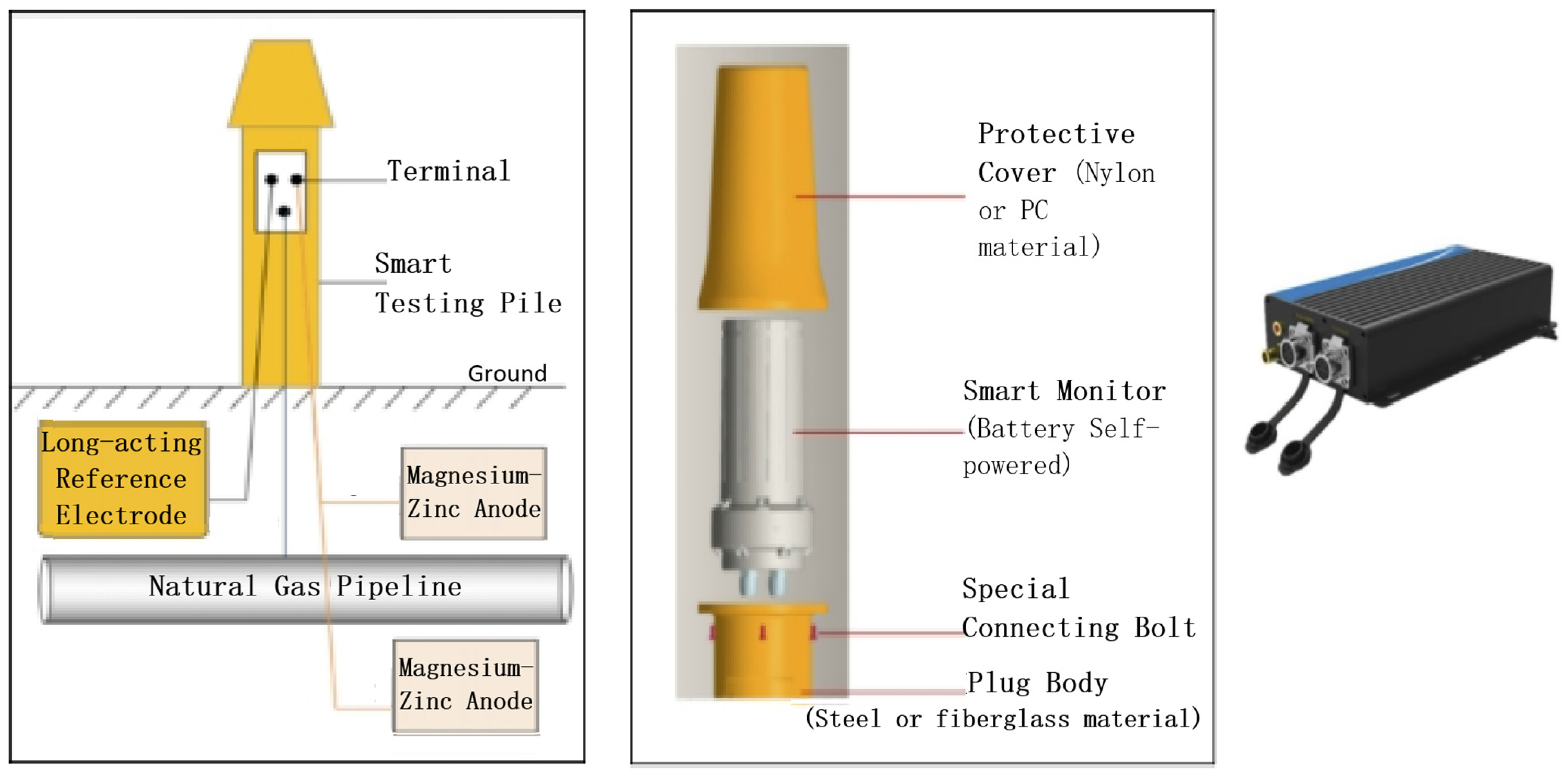
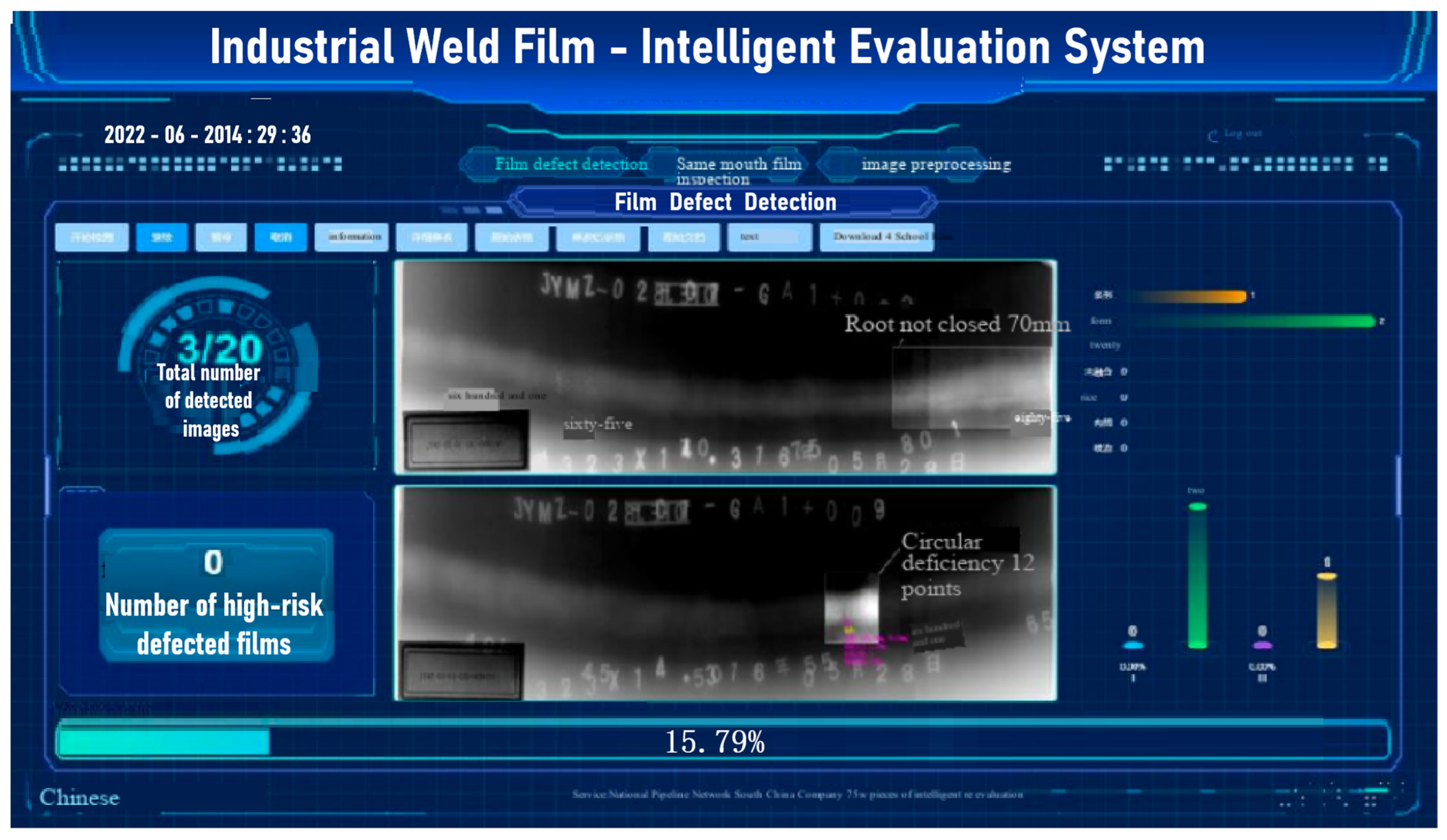
Figure 6, including the three-axis UHD sub-millimeter digital composite internal detector, the smart pile collection system, and the internal inspection data management system based on big data in the field of intelligent integrated pipeline monitoring. To summarize, the methodology for enhancing the credibility of this review depends on two aspects: (1) the systematic literature collection, such as the literature on intelligent monitoring in the field of pipeline safety, and (2) reliability filtering and categorizing literature based on research objectives, technical verification, application implementation, experimental group, and case study literature based on the research team experience at the Pipeline Technology and Safety Research Center, China University of Petroleum in Beijing.
2. The Main Challenges Faced by Pipeline Safety
2.1. Corrosion in Pipelines
Corrosion is one of the most common threats to pipeline system infrastructure. Due to the long-term exposure of pipelines underground or underwater to different environments, corrosion can not only reduce the service life of pipelines but also lead to leaks and even catastrophic accidents. Monitoring and assessment of pipeline corrosion is an important task in pipeline safety management. Environmental factors have a significant impact on the rate and form of corrosion in the study of pipeline corrosion behavior. In 2020, Azam et al. studied the corrosion behavior of carbon steel pipes in the waters of the Malay Peninsula and found that the corrosion rate was higher in the Strait of Malacca region [
21]. According to this study, pipeline corrosion may be considerably accelerated by particular geographic locations and environmental factors like seawater composition and flow rate. The properties of different types of soil can also affect the corrosion of buried pipelines. In 2021, considering factors such as soil properties and ground loads, Zheng proposed a new method based on the finite element method (FEM) to assess the safety of natural gas pipelines with corrosion defects under underground overload conditions [
22]. This indicates that, in addition to the corrosion defects themselves, the combined effects of external soil environment and mechanical stress may have a significant impact on the overall safety of pipelines. Pourazizi (2020) explored the corrosion behavior of oil and gas pipeline steel under different failure modes, especially stress corrosion cracking and hydrogen-induced cracking, and emphasized the influence of pH on these corrosion modes [
23].
Also, the critical role of environmental chemical conditions, such as pH, should be revealed in the corrosion sensitivity of pipeline materials. Shabani Hadi (2018) studied a case of longitudinal crack failure in a 30-inch natural gas pipeline due to stress corrosion cracking (SSC) and metallurgical defects [
24].
Furthermore, with respect to the interaction between oil pipelines supported by mountain overpasses built in mountainous areas, the friction interaction between elastic cleaning pigs and pipeline walls can be analyzed based on pipeline mechanics, contact dynamics, and computational simulation principles (such as the finite element method, CFD, etc.), combined with the latest industry standards (such as ASME and API relevant standards), striving to achieve a balance between theoretical rigor and engineering practice.
2.2. Pipeline Leakage
Although pipeline safety has improved, pipeline leaks remain one of the most serious safety hazards, potentially leading to significant energy loss, environmental pollution, and even fires or explosions. Consequently, the development of effective leak monitoring, rapid detection, and risk assessment technologies has become a key focus in pipeline safety research. Natural gas leaks, in particular, continue to pose substantial safety and environmental risks due to the emission of methane. Bariha Nilambar (2016) [
25] analyzed the hazards associated with high-pressure natural gas pipeline leaks and found that the release rate of butane is higher than that of propane and methane. Jackson Robert B. (2014) [
26] employed the Picarro G2301 system to identify 5893 leak points in Washington, D.C., highlighting the widespread nature of urban pipeline leakage.
From a regulatory and management perspective, Ryan P. Scott (2019) [
27] reported that state-level pipeline safety plans emphasize public education and stakeholder engagement, supported by financial assistance from the Pipeline and Hazardous Materials Safety Administration (PHMSA). In Europe, Cairncross (2014) [
28] examined how new oil and gas discoveries in Italy reignited debates on legal reform and energy policy.
In terms of accident consequence analysis, Cetinyokus et al. (2024) [
29] investigated industrial accident scenarios at the Edirne–Ipsala compression station using the ALOHA software to simulate leakage consequences under different conditions. For offshore and deep-sea pipeline systems, Kildibaeva (2020) [
30] studied multiphase jet flow behavior and hydrate formation following pipeline rupture, providing insights into the risks associated with subsea oil and gas leakage.
Beyond simplified consequence models, advanced computational tools have been applied to simulate gas dispersion and combustion behavior following pipeline leakage. The Fire Dynamics Simulator (FDS) is a computational fluid dynamics (CFD) model developed to simulate low-speed, thermally driven flows by numerically solving the Navier–Stokes transport equations [
31]. FDS can be used to model the dispersion of flammable or toxic gases, as well as fire and heat transfer phenomena, following pipeline leaks in both indoor and outdoor environments. It has been applied to simulate the behavior of hydrogen, natural gas, propane, and other hazardous gases, supporting the assessment of fire, explosion, and toxicity risks under complex boundary conditions.
In addition to CFD-based simulations, probabilistic risk assessment frameworks have been increasingly adopted to evaluate pipeline leakage hazards involving gaseous fuels. A representative example is the Hydrogen Plus Other Alternative Fuels Risk Assessment Models (HyRAM+) [
32], a free software toolkit developed for quantitative risk assessment of hydrogen and other alternative fuels, including methane and propane. HyRAM+ integrates publicly available failure probability data with physical and probabilistic models to assess leakage scenarios, thermal radiation, overpressure effects, and potential impacts on people and infrastructure. Together, CFD-based tools such as FDS and probabilistic assessment frameworks such as HyRAM+ complement traditional deterministic consequence analysis methods by explicitly accounting for flow behavior, uncertainty, and failure likelihood, thereby providing comprehensive support for pipeline leakage risk evaluation and mitigation planning.
2.3. External Damage and Fracture
Pipelines may be affected by external factors such as natural disasters (such as earthquakes and floods) or human damage (such as excavation, construction, and intentional damage). Natural disasters are often unpredictable and have strong destructive power. Earthquakes can cause pipelines to rupture or displace, while floods can erode the soil around the pipelines, causing them to lose support and deform or rupture. Human damage is also an important issue facing pipeline safety. During urban construction and infrastructure construction, excavation can easily damage pipelines if care is not taken to protect underground pipelines. In addition, intentional damage to pipelines also occurs from time to time, which not only affects the normal operation of pipelines but also poses a serious threat to public safety.
The impact of external damage on pipeline facilities cannot be ignored. Once the pipeline is damaged externally, it will not only lead to safety accidents such as leakage, but also affect the operational stability of the entire pipeline system. Therefore, relevant protective measures and monitoring technologies need to be continuously optimized. For example, measures such as strengthening the protective structure of the pipeline system, setting up warning signs, and strengthening supervision of construction areas can be taken to reduce the risk of human damage. At the same time, advanced monitoring technologies such as distributed fiber optic sensing technology and drone inspection can be used to detect signs of external damage in a timely manner, so as to take corresponding repair measures.
In the research on third-party damage risks, Ni Mingkang [
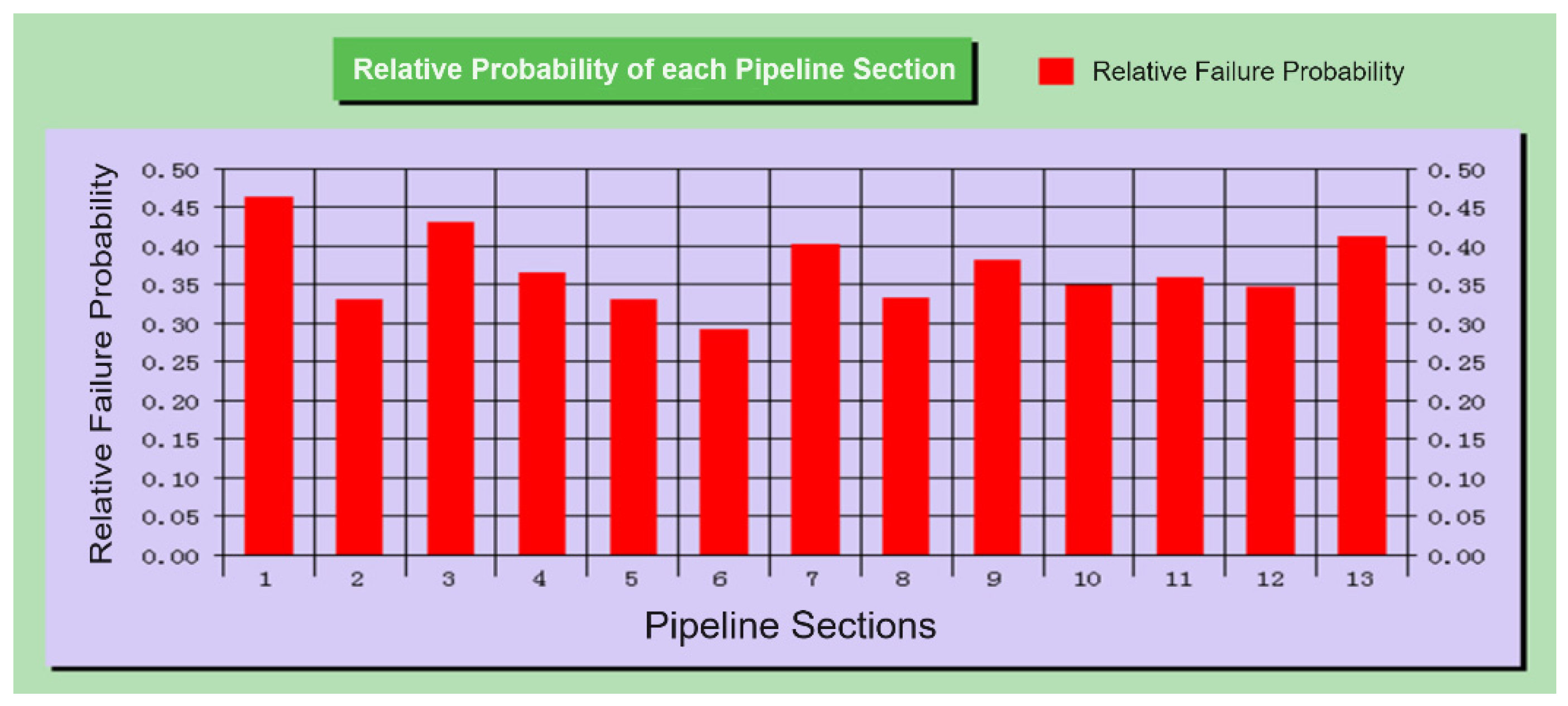
33] proposed a new method for real-time detection of third-party damage (TPD) in 2024, which mainly relies on acoustic sensors to effectively monitor steel pipes. Moreover, accident statistics of domestic and foreign long-distance pipelines and the actual conditions of a pipeline showed that the percentage of failures caused by corrosion vs. third-party damage was 0.5 and 0.2, respectively. Operational quantitative data, in
Figure 1, shows that the pipe sections with high relative failure probability are pipe sections 1, 3, 7, and 13.
In 2019, Gupta S S [
34] analyzed a mechanical damage accident in the Indian crude oil import pipeline system and evaluated the impact of the accident on safety. In 2021, Song C L [
35] studied the causes of leakage and ignition failure in oil and gas mixed transmission pipelines in western China, finding that electrochemical corrosion was the main reason for frequent leakage, while environmental factors such as H
2S, O
2, CO
2, and Cl
− further contributed to pipeline failure. In 2023, Mohamed Azzam [
36] investigated an 18-inch submarine pipeline rupture incident and found that the pipeline rupture was caused by fatigue crack propagation due to sharp welding toe angles, rather than operating pressure. These studies provided valuable insights for understanding and preventing submarine pipeline ruptures. In 2023, Yan Mingqing [
37] developed a pipeline rupture and leakage model based on unsteady flow equations and analytical methods, providing a new perspective for understanding the rupture behavior of natural gas pipelines. Lozano Toro Harol [
38] proposed a quantitative model combining ALOHA and GIS in her research in 2024 to assess the health risks of natural gas pipelines after rupture in urban areas, which helps to improve emergency response capabilities. El Abbasy Mohammed S [
39] developed a set of models to predict the failure of non-cleanable oil and gas pipelines in 2016, optimizing operations and reducing costs. These models are significant for the daily maintenance of pipelines. In addition, Bruschi Roberto [
40] used finite element analysis and the GTN model to study ductile damage in pipeline girth welds in 2017, providing a theoretical basis for improving welding processes. In a 2014 study, Xianyong Zhang [
41] analyzed the reliability of residual wall thickness of X70 and X80 steel pipes, explored the impact of defects on pipeline strength, and enhanced understanding of pipeline life management. In 2017, Duthu Ray C [
42] compared the road damage and life cycle greenhouse gas emissions of truck transportation and pipeline water conveyance systems, finding that IDPs were superior to truck transportation in terms of economic and environmental impacts, which has important guiding significance for the construction and operation of natural gas pipelines. In 2020, Zhao B J [
43] designed and verified a subsea pipeline repair fixture and its sealing structure. Through finite element modeling and experimental testing, the reliability and durability of the repair were ensured.
These studies have generally explored the models of natural gas pipeline rupture and related issues from different perspectives, covering various aspects from rupture risk assessment, emergency response to material science and maintenance technology, providing a rich theoretical basis and practical guidance for the integrity management and damage detection of natural gas pipelines.
Despite the abundance of research findings, the scope for future research remains vast, driven by technological advancements and evolving needs. For instance, as AI and big data technologies continue to progress, devising more effective methods to utilize these emerging technologies for pipeline condition monitoring and damage prediction emerges as a pivotal area of inquiry. Moreover, with the global emphasis on environmental protection and sustainable development intensifying, finding ways to achieve greener and more efficient maintenance and management while ensuring pipeline safety will be a significant focus of future research. To summarize, the study of oil and gas pipeline integrity management and damage detection necessitates ongoing attention to the application of new technologies and shifts in practical demands, aiming to continually enhance technological proficiency and practice, thereby ensuring the safe and reliable operation of oil and gas pipelines.
3. Classification and Overview of Pipeline Safety Monitoring Technology
The monitoring and diagnostic technologies reviewed in this paper were selected based on their relevance to pipeline safety engineering, maturity of application, and representativeness in addressing key integrity threats. The classification of technologies follows a structured qualitative framework that considers underlying physical principles (e.g., acoustic, optical, electromagnetic, and visual sensing), sensitivity to different defect types (such as corrosion, leakage, and third-party damage), applicability under various geotechnical and environmental conditions, and scalability to long-distance pipeline networks.
Rather than applying a unified quantitative benchmarking system, the evaluation in this review is predominantly qualitative and comparative in nature. Quantitative performance indicators reported in the literature—such as detection accuracy, probability of detection, false alarm rate, spatial resolution, and response time—are referenced where available to illustrate typical performance levels. However, no common set of quantitative indicators was implemented because test circumstances, application scenarios, and evaluation standards varied throughout investigations. The focus of this review is therefore on system-level applicability, engineering effectiveness, and integration trends rather than direct numerical comparison among different monitoring technologies.
3.1. Classification Research in Pipeline Monitoring Technology
The classification research of pipeline monitoring technology covers a variety of technical means to satisfy the needs of different application scenarios.
Table 1 shows the classified application fields versus monitoring technology types.
3.2. Monitoring Technology for Safe Operation of Pipeline System
In recent years, research and applications in pipeline system safety operation monitoring technology have shown the development of various innovative methods and technologies. In 2017, Qiu Ronglai [
57] proposed an impedance method monitoring system, which is the preferred safety monitoring system in the construction of urban heating networks in China, and detailed the intelligent insulation pipeline with alarm devices. Additionally, in 2023, Liu Jiping [
58] designed and implemented an intelligent online monitoring system for supports and hangers of the power station pipeline. Through a remote intelligent displacement expansion online monitoring system, it improved the safety management efficiency of the six major pipelines in power plants, achieving real-time monitoring and alarm functions. In terms of safety monitoring of oil and gas pipelines, Ma Zhenjun [
59] analyzed the application of fiber optic sensing technology in oil and gas pipeline safety monitoring in 2013, pointing out that fiber optic sensing technology was widely used to monitor pipeline safety during the peak period of oil and gas pipeline construction in China. In 2024, Wang Youfa [
60] proposed an intelligent safety monitoring system for oil and gas pipeline construction based on sensors to monitor, warn, and alarm in real time, significantly improving the level of safety management. Furthermore, for safety management in tunnel construction, Wang Fei [
61] developed a tunnel construction monitoring and safety management system based on UWB positioning and GIS technology in 2021, achieving real-time monitoring and management of the environment, personnel, and machinery. In terms of power environment monitoring, Li Huasheng [
62] discussed the application of power environment monitoring systems in the intelligent construction of computer rooms in 2023, improving the operational safety of various systems through intelligent monitoring and fault alarms. Lastly, Seo J H [
63] proposed a simplified method to predict the expansion of submarine pipelines in 2018, aiming to provide support for robust oil and gas transportation design. These studies and technologies have provided various effective solutions for the safe operation monitoring of pipeline systems, significantly improving the safety management level in related fields.
Fiber optic sensing (FOS) technologies have become an important component of modern pipeline monitoring systems; however, different types of FOS exhibit distinct performance characteristics and application scopes. Among them, Fiber Bragg Grating (FBG) sensors and Distributed Acoustic Sensing (DAS) systems represent two typical technical routes with complementary advantages.
FBG-based sensing systems are characterized by high measurement precision and strong sensitivity to local parameters such as strain, temperature, and deformation. Due to their discrete sensing nature, FBG sensors are particularly suitable for localized monitoring scenarios, such as high-risk pipeline sections, stress concentration areas, river crossings, and geological hazard-prone zones. In these applications, FBG sensors provide accurate point-level measurements, supporting detailed structural health assessment. However, the deployment of FBG systems usually requires a relatively dense sensor layout and higher installation and maintenance costs when applied to large-scale pipeline networks.
In contrast, DAS systems enable long-distance, fully distributed monitoring along optical fibers, allowing continuous sensing over tens of kilometers with a single interrogator. DAS is well-suited for large-scale pipeline networks, such as national trunk pipelines, where wide-area coverage and scalability are critical requirements. By capturing vibration and acoustic signals, DAS systems are effective for applications including third-party intrusion detection, leakage monitoring, and distributed security surveillance. Nevertheless, compared with FBG sensors, DAS generally offers lower spatial resolution and sensitivity for precise local deformation measurement.
From an engineering perspective, the selection between FBG and DAS involves a trade-off among monitoring precision, spatial coverage, and system cost. For national pipeline networks, a hybrid monitoring strategy is often adopted in practice: DAS systems provide long-distance, large-scale monitoring as a backbone solution, while FBG sensors are deployed at key locations requiring high-precision measurements. Such multi-level and multi-parameter fusion architectures align with the development direction of intelligent pipeline monitoring systems and support both large-scale supervision and localized risk assessment.
4. Research and Application of Modern Pipeline Safety and Intelligence
4.1. Intelligent Detection Field
In the field of pipeline monitoring, Gong Shilin et al. [
64] developed a buried pipeline structural state monitoring data analysis system based on a MATLAB GUI, which improved the efficiency of data processing and supported the identification of pipeline structural anomalies. The shift from conventional monitoring techniques to more sophisticated and automated pipeline detection systems was made possible by early research. Later, pipeline engineering and associated sectors have seen a remarkable advancement in monitoring systems in recent years. These technologies have developed from traditional physical measurement techniques to intelligent monitoring systems backed by machine learning, big data analytics, and the Internet of Things (IoT). Although application requirements differ across scenarios, the overall development trend is characterized by increasing integration, intelligence, and operational efficiency, particularly in complex and large-scale pipeline environments.
From an engineering application perspective, pipeline condition assessment has traditionally relied on statistical indicators such as failure rates or historical incident records. With the introduction of intelligent monitoring systems, including vibration sensing, pressure monitoring, and AI-based warning algorithms, abnormal conditions—such as pressure fluctuations, deformation, or early signs of corrosion-can be detected in near real time and analyzed in comparison with historical operational data. This shift supports more proactive pipeline integrity management and targeted maintenance.
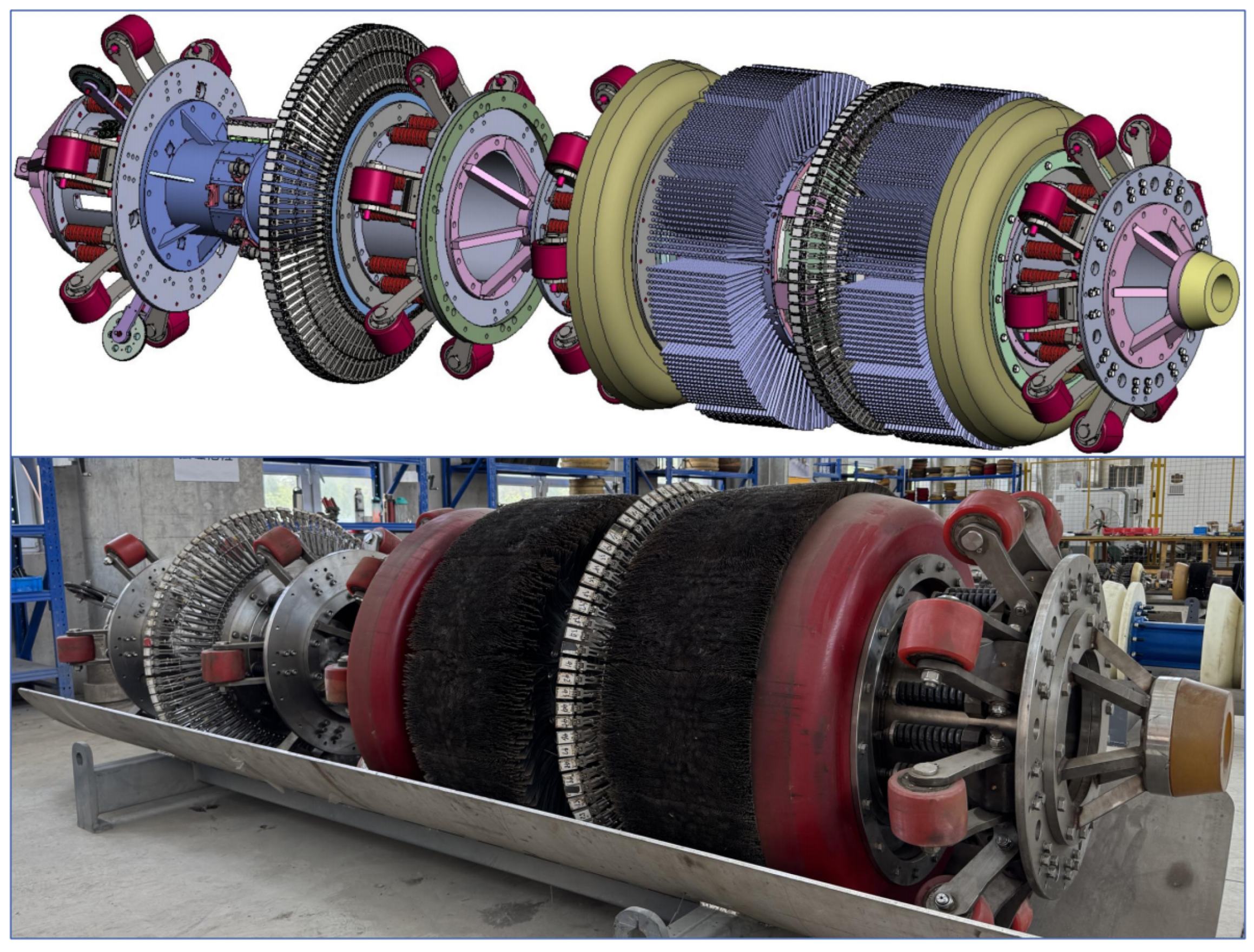
To address challenges associated with detecting small-scale defects such as pinhole corrosion in oil and gas pipelines, ultra-high-definition in-line inspection technologies have been developed as representative examples of hardware innovation. The three-axis ultra-high-definition (UHD) digital composite internal detector integrates magnetic flux leakage sensing, geometric deformation measurement, and centerline positioning within a unified inspection platform (
Figure 2). Through high-density sensor arrangements and optimized signal acquisition design, the system enhances the characterization of micro-defects and circumferential weld features, supporting a more detailed interpretation of inspection data. The integration of multiple sensing functions on a common time axis improves data consistency and positioning reliability, thereby facilitating subsequent integrity evaluation and maintenance decision-making. In addition, machine learning–based analysis software has been applied to support automated identification and quantification of defect signals, reducing reliance on manual interpretation and improving inspection efficiency in practical applications.
Beyond established intelligent sensing technologies, emerging approaches such as quantum sensing are attracting increasing attention as potential future solutions for pipeline monitoring. Quantum sensing exploits quantum physical effects to achieve extremely high sensitivity in measuring parameters such as magnetic fields, strain, temperature, and pressure. Sensors with enhanced sensitivity may enable earlier detection of weak anomaly signals and provide high-quality data for predictive models and long-range time-series analysis. Although quantum sensing technologies are currently at an exploratory stage for large-scale pipeline deployment, they represent a promising future direction for intelligent detection systems aimed at early fault identification and advanced risk prediction [
65].
4.2. Monitoring and Integrity Technology Field
Within the scope of research at the Pipeline Technology and Safety Research Center, key progress has been made in the field of intelligent integrated pipeline monitoring. A smart integrated monitoring system has been established for parameters that significantly impact pipeline safety, such as stress, deformation, temperature, displacement, cathodic protection potential, leakage, and video monitoring. Through in-depth research on multi-parameter and multi-channel unified acquisition technology, we have overcome the differences in output and sampling requirements of different types, achieving efficient and automated acquisition of monitoring data. Leveraging the 4G transmission solution, we have successfully established a remote data transmission link and implemented remote monitoring capabilities. Acquisition devices with integrated communication modules have been independently developed, as shown in
Figure 3. They use mobile communication networks to ensure bidirectional data interaction between the monitoring terminal and the acquisition device. Additionally, we have established four primary models: a geological disaster monitoring model, a cathodic protection potential monitoring model, a leakage monitoring model, and a dynamic risk assessment and trend prediction early warning model. These models, along with supporting analysis software, enable data query and analysis, early warning dissemination, and convenient import and export operations for various data tables (
Figure 4). Monitoring signals are uniformly aggregated to the central server database, centrally analyzed and processed, and visually displayed on the terminal. This ultimately achieves real-time and accurate monitoring of pipeline operating conditions, real-time dynamic risk assessment, and effective early warning of risk trends, providing solid technical support and data basis for pipeline safety operation and maintenance.
4.3. AI Recognition Technology and Evaluation System for Pipeline Weld Film
Pipeline weld inspection and evaluation technology plays a crucial role in the fields of oil and gas, petrochemicals, and natural gas transmission. In recent years, with the continuous advancement of industrial technology, various emerging technologies and methods have been introduced into pipeline weld inspection and evaluation, including radiographic inspection, ultrasonic inspection, magnetic inspection, and intelligent evaluation systems based on AI and deep learning. AI-based inspection technologies have been widely applied in pipeline weld evaluation. Studies such as [
65,
66] focus on the digitization and standardized management of radiographic images to improve interpretation consistency, while works including [
67,
68,
69] investigate deep learning–based methods for automated weld defect recognition and classification. Together, these studies illustrate how intelligent inspection technologies enhance inspection efficiency and support the intelligent transformation of pipeline inspection practices. Radiographic inspection and its digital film processing are one of the most widely used technologies at present. References [
70,
71,
72] primarily investigate digital radiographic image processing and evaluation techniques for pipeline weld inspection, emphasizing image quality enhancement and standardized interpretation. These studies provide a technical foundation for the development of digital radiographic inspection systems in pipeline engineering. Ultrasonic testing and phased array ultrasonic inspection technologies have also been extensively studied for pipeline weld evaluation. Works such as [
73,
74] focus on ultrasonic signal analysis, defect characterization, and intelligent interpretation methods, highlighting the advantages of ultrasonic techniques in detecting subsurface and volumetric weld defects. At the same time, intelligent inspection and evaluation systems based on AI and deep learning have gradually become a research hotspot. Recent studies include [
75,
76,
77] for automated weld defect recognition. These works demonstrate how machine learning–based models can reduce reliance on manual interpretation and improve the consistency of defect identification in industrial inspection scenarios.
The digital management software for weld seam radiographs employs JPEG 2000 image compression technology, supporting both lossy and lossless compression to ensure efficient storage and transmission of image data. By adhering to the DICONDE file format standard and maintaining compatibility with ASTM specifications, the software provides a standardized solution for managing radiographic images and associated inspection information.
The system integrates image enhancement techniques, such as Auto Levels, together with AI-based defect recognition models (e.g., YOLO-based frameworks with attention mechanisms,
Figure 6), to support automated analysis of weld radiographs. The application of these technologies has been shown in engineering practice to improve the efficiency and accuracy of weld defect recognition, while reducing reliance on manual interpretation.
In addition, a weld seam radiograph defect database has been established based on a B/S architecture, enabling image visualization and categorized data indexing. The database currently contains a large number of defect records and continues to expand, providing valuable data support for intelligent recognition systems. Through the construction of annotated sample datasets containing radiographic images and defect location information, the system lays a solid data foundation for the development and optimization of AI-based inspection technologies.
Overall, the integrated application of standardized data management, image enhancement, and AI-assisted recognition technologies enhances inspection efficiency and supports the practical application of intelligent methods in industrial weld inspection.
4.4. PAUT Intelligent Identification Technology for Oil and Gas Pipeline Welds
Ultrasonic testing (UT) is widely used in pipeline weld inspection technology. In 2020, Chen Jian [
78] studied the fully automated UT and evaluation technology for oil and gas pipeline welds. By optimizing AUT testing technology, the quality of weld inspection was improved, providing strong support for oil and gas pipeline engineering. In addition, in 2022, Wang Junlong [
79] conducted research on the identification of abnormal signals at the root of high chromium alloy steel pipeline welds. Various methods were used to verify weld defect signals, effectively avoiding misjudgments and achieving good results. These two studies jointly demonstrate that optimizing and innovating UT technology is of great significance for improving the accuracy and reliability of pipeline weld inspection.
Due to its short history of popularization, there is a shortage of professional personnel and teams. Compared with traditional radiography, the evaluation of Phased Array Ultrasonic Testing (PAUT) images requires comprehensive consideration of multiple factors such as image type, color block, amplitude, and position, which makes it less intuitive. Thus, extremely high technical skills are required from the inspection and evaluation personnel, and the error rate is difficult to avoid during manual evaluation, which also takes a long time. To overcome these challenges, we have proposed various solutions. Based on AI deep learning, PAUT ultrasonic image recognition and analysis technology utilizes the powerful pattern recognition ability of deep learning to greatly improve detection efficiency and ensure real-time and efficient pipeline welding, inspection, and storage.
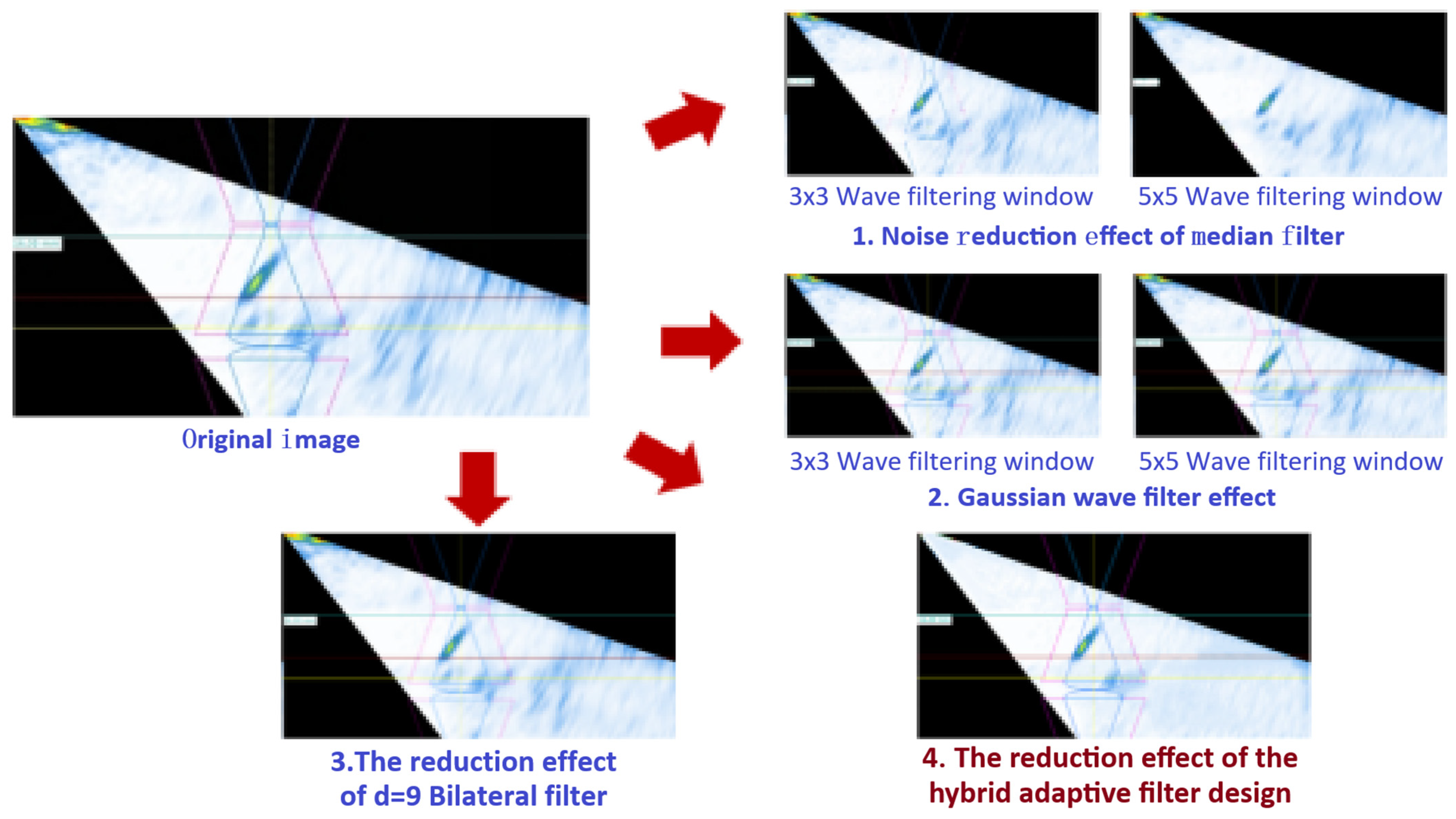
In the image preprocessing stages shown in
Figure 5, we designed an innovative PAUT preprocessing adaptive hybrid filtering noise reduction technology. Specifically, we first perform pixel classification and accurately divide the ultrasound phased array (UPA) fan-shaped scanning image pixels into noise pixels, smooth area pixels, and edge or detail pixels based on eight carefully formulated rules. Subsequently, based on the pixel classification results, we comprehensively apply bilateral filtering, weighted mean filtering, and median filtering algorithms to perform adaptive filtering on the image, effectively filtering out various false defects and noise pollution signals, laying a solid foundation for subsequent accurate defect identification.
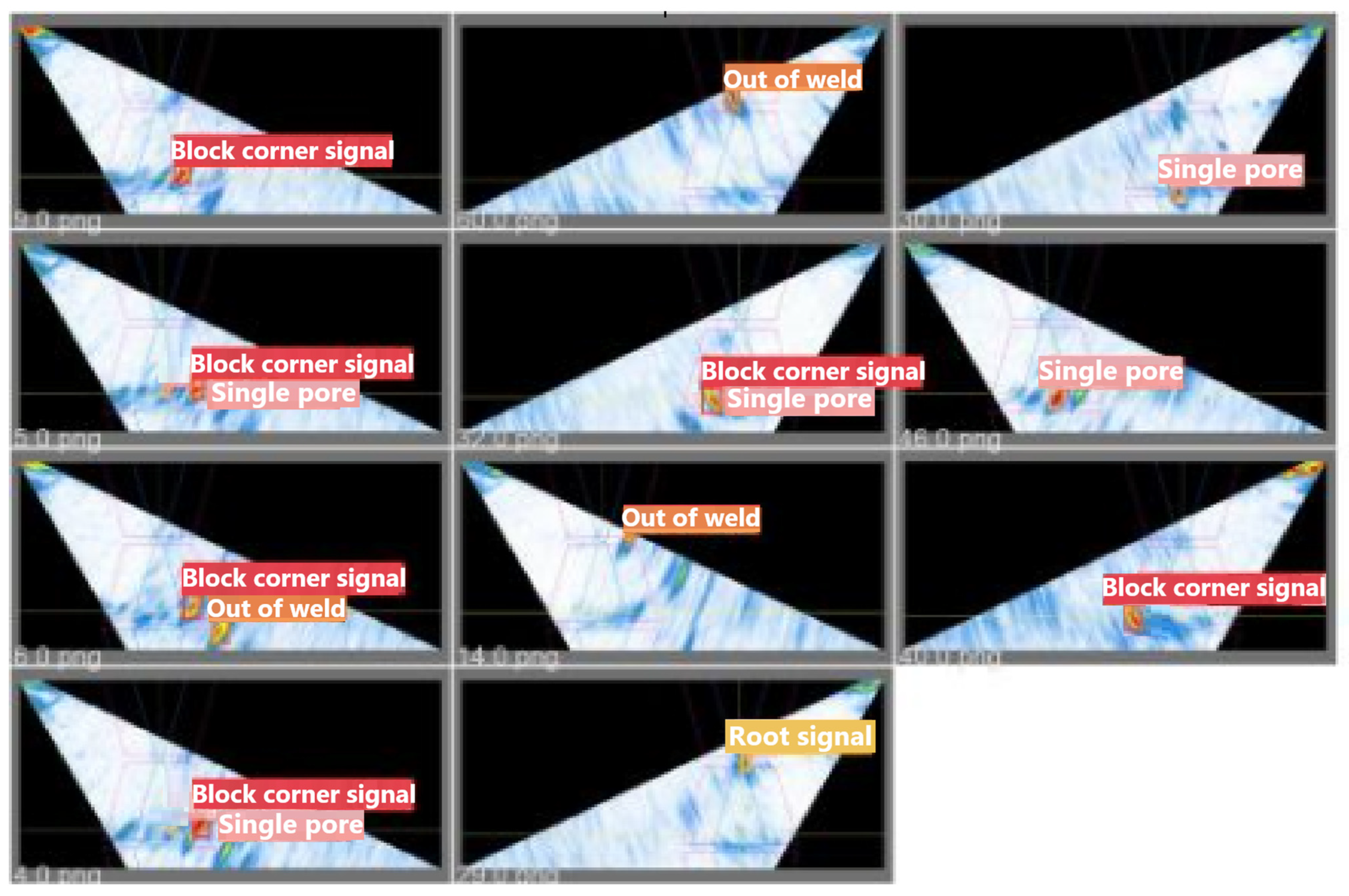
For defect identification and localization in PAUT inspection, intelligent UPA weld defect recognition software has been applied in engineering practice to support automated analysis of ultrasonic phased array data. AI-based target detection frameworks, built upon deep learning models, enable effective identification and localization of weld defects and provide technical support for intelligent PAUT inspection systems.
The software supports static, dynamic, and real-time recognition functions, allowing defect types and locations to be continuously identified and displayed during PAUT scanning. Through deep learning–based feature extraction from weld defect signals, the system reduces reliance on manual interpretation and improves the consistency of quality evaluation results under complex inspection conditions.
In practical applications, the intelligent recognition system has been validated using representative PAUT inspection data, including different scanning modes and typical weld defect scenarios. It’s indicated that the AI-assisted PAUT recognition enhances inspection efficiency, improves defect identification accuracy, and supports stable operation during dynamic scanning processes.
Overall, the application of intelligent PAUT weld defect recognition technology enhances pipeline weld inspection capability and provides technical support for assuring the safe operation of oil and gas pipelines. It also offers a valuable reference for the further development and broader application of intelligent ultrasonic inspection technologies.
4.5. Big Data-Based Internal Inspection Data Management System
Currently, pipeline integrity management is not only limited to traditional detection methods, such as endoscopic inspection data and pressure differential sampling analysis [
80,
81], but also introduces advanced technologies such as fiber optic sensing technology, drone-assisted monitoring, and deep learning [
82,
83]. The integrated application of these technologies enables pipeline monitoring systems to more comprehensively respond to external environmental changes and internal failure issues [
84,
85]. Simultaneously, intelligent pipeline management systems and emergency response mechanisms have progressively emerged as research hotspots, enhancing become research hotspots, improving the safety and efficiency of pipeline operations through real-time data analysis and predictive maintenance [
86,
87].
The Pipeline Technology and Safety Research Center at China University of Petroleum in Beijing is committed to developing an internal inspection data management system based on big data. Based on the classification standards of defect types by the British Standards Institution, a unified internal inspection data results template has been constructed, covering important aspects such as inspection results, wall thickness changes, and marker boxes, and clear feature categories are defined through threshold setting. Currently, the system can convert multiple types of data, including PII, Rosen, China Petroleum Inspection, Nondestructive Testing (NDT), Shenyang University of Technology, etc., greatly improving the compatibility and efficiency of data integration and processing.
The system conducts a comprehensive integrity evaluation of pipeline defects in internal inspection data by setting pipe parameters such as material, pipe diameter, wall thickness, yield strength, etc., based on different evaluation methods. This evaluation process comprehensively considers various factors, including the geometric shape, size, and location of defects, as well as the operating pressure, temperature, and other operating conditions of the pipeline, to accurately assess the remaining strength and remaining life of the pipeline, providing a scientific basis for formulating reasonable pipeline maintenance and repair strategies. Based on big data development, the internal inspection data management system of the Pipeline Technology and Safety Research Center has achieved standardized, refined management and in-depth analysis of internal inspection data through its perfect functional architecture, providing strong technical support for the safe operation and scientific maintenance of oil and gas pipelines. It has important application value and broad development prospects in the field of pipeline technology.
4.6. Research Progress of Large Models in Oil and Gas Pipeline Networks
The research progress of large-scale models in oil and gas pipelines can be categorized as shown in
Table 2.
4.7. Pipeline Safety Inspection Through the Integration of Air, Space, and Ground
With the development of technology, traditional pipeline inspection methods have been unable to meet the needs of complex environments, especially in the field of oil and gas pipeline safety. The integration of air, space, and ground technology has emerged as the times require. It integrates satellite remote sensing, drones, and ground sensor networks to form a comprehensive, multi-level, intelligent protection, inspection, and monitoring system for long-distance oil and gas pipelines. In addition to overcoming the drawbacks of manual inspection and single monitoring techniques, this technology significantly enhances emergency response capabilities, offering previously unheard-of solutions for the complete life cycle management of oil and gas pipelines, while promoting the transformation of pipeline operation and management towards digitalization and intelligence.
The specific application of space–air–ground integrated technology in the field of pipeline safety manifests in multiple aspects. Firstly, InSAR satellite technology is used to conduct large-scale geological risk screening along the pipeline, quickly obtaining the terrain, landform, and minor surface changes in the target area. Secondly, drone aerial photography is used to establish a three-dimensional real-scene model of disaster points, which can complete data collection of disaster points within 24 h, laying a solid foundation for subsequent stress analysis of pipeline structure and implementation of on-site emergency prevention measures. In addition, the detection depth of extremely low-frequency electromagnetic precision exploration technology can reach up to 20 m, which is double compared to conventional ground-penetrating radar. Micro-motion detection technology can quickly identify karst caves, underground hidden holes, and mined-out areas by analyzing the material differences between the detected object and the surrounding environment, accurately diagnosing the “disease” of pipelines.
4.8. Application of Robotic Intelligent Inspection in Pipeline Safety
The application of intelligent inspection robots in the field of pipeline safety aims to solve the problems of heavy workload and low efficiency in traditional pipeline inspection and maintenance. These robots can walk or fly autonomously, conduct fine inspection of pipeline appearance, and clearly capture defects such as cracks and corrosion on the pipeline surface through high-definition cameras and infrared thermal imaging sensors. Thus, ① enhancing inspection efficiency, ② reducing safety hazards, ③ increasing detection accuracy, and ④ enabling remote monitoring and management are the primary technical benefits. Unmanned inspection robots greatly increase inspection efficiency because they can navigate autonomously, swiftly cover extensive pipeline sections, and are not constrained by time or physical strength. Robots take the place of manual inspection in hazardous or challenging-to-reach locations, such as high altitudes, deep oceans, and hazardous gas conditions, hence minimizing safety hazards. Pipeline defects and anomalies can be precisely detected by various types of high-precision sensors and image recognition technologies, which can then provide precise detection results and maintenance recommendations.
By seamlessly integrating with intelligent monitoring systems, intelligent pipeline inspection robots have enhanced the effectiveness and safety of pipeline inspection and maintenance in real-world applications. To inspect and repair pipelines, for instance, the Western Pipeline Company uses a combination of personnel, vehicles, and drone-assisted inspections. Through the “AI +” multi-party linkage approach, it takes only 3 h from early warning to on-site disposal, breaking the traditional response record of “human and vehicle inspection and maintenance”. In addition, the application of an intelligent control and management platform for pipeline risk monitoring has achieved real-time and effective monitoring and control of pipeline risks such as third-party damage, oil theft through drilling, and geological disasters around pipelines, effectively preventing large-scale mechanical construction operations and other activities that pose a threat to pipelines around them.
As technology continues to advance, the application of intelligent inspection robots in pipeline maintenance will become more extensive and in-depth. In the future, inspection robots will have stronger autonomous navigation and path planning capabilities, higher detection accuracy and stability, and broader application scenarios. Simultaneously, inspection robots will accomplish more intelligent pipeline maintenance and management tasks by integrating the IoT, big data, AI, and other technologies, offering comprehensive guarantees for the safe and effective operation of pipelines. This will not only improve the safety and efficiency of oil and gas pipeline networks, but also contribute to national energy security with pipeline network wisdom and strength.
4.9. Application of AI Recognition Technology
AI-based recognition technology for oil and gas pipeline weld radiographs has been widely applied in recent years to support intelligent inspection and quality evaluation. Based on deep learning frameworks such as convolutional neural networks, these technologies enable effective feature extraction and pattern recognition from complex radiographic images, providing technical support for automated weld defect identification.
In engineering practice, AI-assisted weld radiograph recognition systems have demonstrated high recognition accuracy and improved inspection efficiency compared with traditional manual interpretation methods. By automatically identifying and classifying weld defects, such systems reduce dependence on inspector experience and enhance the consistency and reliability of inspection results, particularly in large-scale pipeline projects involving massive volumes of radiographic data.
The application of AI recognition technology also supports the digitalization and standardized management of weld inspection data. Integrated with digital radiograph management systems, AI-assisted inspection facilitates efficient data storage, retrieval, and re-evaluation, contributing to improved traceability and lifecycle management of pipeline weld quality.
It should be noted that the effectiveness of AI-based weld radiograph recognition systems is influenced by factors such as image quality, inspection standards, and application scenarios. Therefore, in the context of this review, the discussion emphasizes qualitative improvements in accuracy, efficiency, and engineering applicability rather than dataset-specific quantitative performance metrics. Thus, the AI recognition technology offers a crucial technical basis for the intelligent advancement of pipeline weld inspection and helps to enhance the safety and reliability of oil and gas pipeline operations.
5. Sustainability Challenges of Pipeline Safety and Intelligent Technology
5.1. Technological Innovation and Integration
In the UK, the massive vapor cloud explosion at Flixborough in 1974 highlighted the problem of major hazards, which led the Advisory Committee on Major Hazards (ACMH) to introduce legislation to control major hazard installations [
88].
With the development of AI technology, the application of deep learning algorithms in pipeline safety monitoring needs to be continuously optimized to improve detection accuracy and efficiency. Future research needs to explore more advanced algorithm models, such as pipeline safety detection technology based on large models, to adapt to complex pipeline environments and improve the ability to recognize abnormal behaviors.
Pipeline monitoring technology is gradually shifting from a single mode to multi-modal data fusion, such as combining fiber optic monitoring data, surveillance image data, inspection video data, etc. Future technologies must integrate various data sources more effectively to improve data processing capabilities and decision support accuracy.
5.2. Data Security and Privacy Protection
National localization and self-reliance are crucial to ensuring the confidentiality and security of pipeline data. Research and development of localization of technologies is highly recommended to reduce dependence on less-advanced technologies and contribute to building a self-reliant and controllable technology system.
With the application of big data and cloud computing technology, the secure storage and processing of pipeline monitoring data has become particularly important. More powerful data encryption technology and access control mechanisms need to be developed to prevent data leakage and unauthorized access.
5.3. Industry Cooperation and Standardization
The development of pipeline safety monitoring technology requires cooperation between different industries, including oil, natural gas, information technology, and security. Sharing data and experience through cooperation can promote the development and unification of technical standards. To ensure the wide applicability and interoperability of the technology, a series of technical standards and specifications, including data formats, interface protocols, and operational processes, should be developed and followed.
5.4. Regulatory and Policy Support
With the application of new technologies, corresponding regulations and policies are needed to guide and regulate the development of technology, ensuring the legal and compliant use of technology. The development of pipeline safety monitoring technology must also consider the requirements of environmental protection and sustainable development, reducing the impact on nature.
In practice, these regulations provide a comprehensive safety & integrity guide for operators and others involved with pipeline activities. They must, however, guarantee the following: qualification, employee training, financial and liability readiness, transparency, public awareness, and regulatory responsibility, as well as technology upgrades and preventive actions (such as risk assessments, leak detection, integrity monitoring, etc.)
5.5. Overview of the Developments, Obstacles, and Solutions Related to Sustainability Challenges
The fiber optic sensing and ultrasonic detection, big data and AI-driven predictions, intelligent construction and maintenance innovations, automated construction equipment, pipe rehabilitation technology, and other applications of sustainability technologies, as well as energy conservation and resource recycling, are examples of technological advancements in intelligent monitoring technology. However, the main obstacles include the sustainability balancing issue, data integration and algorithm dependability, legislative and economic barriers, and insufficient adaptation to complicated circumstances. On the other hand, the technological innovation and integration, policy and management optimization, sustainable design, international cooperation and standardization, etc., are the available solutions to the existing challenges.
5.6. Economic Sustainability and Cost Considerations of Integrated Intelligent Monitoring Systems
While intelligent pipeline monitoring technologies bring significant technical and operational advantages, their large-scale implementation also introduces new challenges related to cost and economic sustainability. Integrated space–air–ground monitoring systems, in particular, require a larger initial investment than traditional inspection procedures due to the deployment of sensor equipment, communication infrastructure, data platforms, and intelligent analytic tools.
From a cost structure perspective, the total cost of ownership of integrated intelligent systems includes not only hardware acquisition and installation costs, but also expenses related to data transmission, system integration, software maintenance, and personnel training. These upfront and operational costs may exceed those of conventional periodic inspection methods when considered in isolation.
However, the economic sustainability of intelligent monitoring systems should be evaluated from a long-term and system-level perspective rather than through direct short-term cost comparison. Integrated space–air–ground monitoring enables continuous supervision, early risk identification, and rapid response, which can significantly reduce the likelihood of major accidents, unplanned shutdowns, and large-scale environmental or economic losses. In large national pipeline networks, even a small reduction in failure probability or response time can translate into substantial long-term economic benefits.
In addition, intelligent monitoring systems support the optimization of inspection frequency, targeted maintenance, and resource allocation, thereby reducing redundant inspections and manual workload. As data accumulation and algorithm maturity increase, marginal operation costs are expected to decrease, further improving cost-effectiveness over the system lifecycle.
It should be noted that comprehensive cost–benefit analysis and quantitative total cost of ownership evaluation depend strongly on specific project conditions, network scale, regulatory requirements, and regional economic factors. Such analyses are typically conducted in project-level feasibility studies and are therefore beyond the scope of this review. Nevertheless, from an engineering and management perspective, integrated intelligent monitoring systems offer a viable pathway toward economically sustainable pipeline safety management when evaluated over their full lifecycle.
6. Future Development Trends and Prospects
The future development of pipeline safety and monitoring technology will exhibit a multidimensional innovation trend, with technologies such as multimodal large models, space–air–ground integration, and intelligent robots playing a central role in jointly driving pipeline safety monitoring technology towards a more efficient, intelligent, and comprehensive direction.
6.1. Deep Application of Large Models
In the field of pipeline safety monitoring, large models are envisioned as multimodal intelligent frameworks that integrate heterogeneous data from sensors, inspection systems, and monitoring platforms. Unlike task-specific algorithms, large models focus on unifying information from time-series sensor data and image-based inspection data to support comprehensive safety assessment and decision-making.
From an engineering standpoint, large models serve as an upper-layer intelligence that coordinates data interpretation across various monitoring technologies rather than replacing existing detection or identification algorithms. By enabling semantic association among distributed sensing signals, inspection images, and operational records, large models provide a foundation for system-level risk analysis and integrated safety management.
The self-learning capability of large models is expected to rely on the continuous accumulation of operational data and feedback from engineering practice, allowing periodic model updating and gradual performance improvement. As such, large models represent a future development direction toward unified, data-driven pipeline safety systems rather than a single deployable algorithm.
6.2. Improvement of the Integrated Air–Space–Ground Monitoring System
The integrated air–space–ground monitoring system is expected to play an increasingly important role in future pipeline safety management by enabling multi-scale and multi-source information fusion. From a development perspective, the focus is not only on expanding sensing coverage but also on improving coordination among satellite remote sensing, unmanned aerial vehicles, and ground-based sensor networks.
At the engineering level, future improvements will emphasize data integration efficiency, real-time information sharing, and unified risk interpretation across different monitoring layers. By enhancing interoperability among space-, air-, and ground-based monitoring subsystems, the integrated system can support more timely risk identification and coordinated response, particularly for large-scale pipeline networks exposed to complex environmental and human-induced risks.
To summarize, the air–space–ground integrated monitoring system represents a trend toward comprehensive situational awareness and system-level safety management rather than isolated inspection or monitoring approaches.
6.3. Innovation in Robot Intelligent Technology
Intelligent robotic technologies are expected to further enhance pipeline inspection and maintenance by reducing manual workload and improving operational safety. Future development will focus on strengthening autonomous navigation, environmental perception, and task adaptability of inspection robots in complex pipeline environments.
From an engineering application perspective, intelligent robots are envisioned as important components of collaborative inspection systems rather than standalone solutions. By working in coordination with sensor networks, monitoring platforms, and decision-support systems, robots can support targeted inspection, rapid on-site verification, and emergency response.
As intelligent control and data integration capabilities continue to improve, robotic inspection systems will contribute to more flexible and efficient pipeline safety management, supporting the transition toward automated and intelligent operation and maintenance.
6.4. Predictive Maintenance and Health Management
Predictive maintenance and pipeline health management represent a key development direction for improving long-term safety and operational efficiency. By leveraging accumulated monitoring data and historical inspection records, future systems will increasingly shift from reactive maintenance toward condition-based and risk-informed decision-making.
From a system-level perspective, predictive maintenance relies on the integration of sensing data, inspection results, and operational information to support early risk identification and maintenance planning. Hence, the major goal is to offer prompt and dependable decision support for maintenance planning and resource allocation, rather than focusing on accurate failure prediction.
As data-driven analysis capabilities mature, predictive maintenance frameworks are expected to enhance pipeline reliability, reduce unplanned downtime, and support sustainable lifecycle management of large-scale pipeline networks.