Article

Application of Opalized Tuff as an Aggregate in Lightweight Concrete

by
Todorka Samardzioska
1,
Dimitar Goshev
2 and
Slobodan B. Mickovski
1,3,*
1
Faculty of Civil Engineering, Ss. Cyril and Methodius University in Skopje, 7000 Skopje, North Macedonia
2
Institute of Earthquake Engineering and Engineering Seismology, Ss. Cyril and Methodius University in Skopje, 1000 Skopje, North Macedonia
3
Department of Construction and Built Environment, Glasgow Caledonian University, Glasgow G4 0BA, UK
*
Author to whom correspondence should be addressed.
Sustainability 2026, 18(3), 1547; https://doi.org/10.3390/su18031547
Submission received: 9 January 2026 / Revised: 29 January 2026 / Accepted: 30 January 2026 / Published: 3 February 2026

Abstract

Lightweight concretes have gained great momentum in construction in the last decade, due to the large number of sustainable characteristics and construction advantages associated with them. The sustainability of lightweight concrete depends mainly on the application of sustainable aggregates, such as the amorphous opalized tuff, found in large quantities in Eastern Macedonia. It is economically viable, easy to extract from surface mines, and easy to process. The physical, chemical, and mechanical properties, porosity, and water absorption of the tuff as a stone aggregate were examined as the aim of this study, with the objective of assessing its potential application in lightweight concrete. The tuff showed an average bulk density 87.2% lower than that of limestone. The compressive strength of the tested opalized tuff samples was 41.16 MPa, or 48.5% of the average strength of limestone rock (84.88 MPa). Furthermore, three concrete mixes with different aggregates were tested: with 100% limestone, with 50% tuff and 50% limestone, and with 100% tuff. The increase in the amount of tuff in the concrete mix required a larger amount of water, due to the high porosity of the tuff; the high water absorption of the tuff aggregate reduced the consistency of the concrete mix, so the bulk density decreased significantly with increasing tuff content. The concrete with 100% tuff aggregate was 44% lighter than concrete with 100% limestone aggregate, which means that concrete–tuff mixes can be classified as lightweight concrete. Our results further showed that by increasing the amount of opalized tuff aggregate in the concrete, the compressive strength of the hardened concrete decreased. The 50:50 mix showed an average compressive strength of 25.68 MPa at 28 days, i.e., 42% lower than the average compressive strength for limestone concrete (44.27 MPa). The tuff-only mix exhibited a compressive strength of 10.46 MPa that was 76.4% lower than limestone-only concrete. The increase in the amount of tuff in the concrete was shown to reduce the thermal conductivity; i.e., concrete with tuff aggregate showed a thermal conductivity coefficient of 0.3585 W/m·K, which is 5.58 times lower than that of conventional concrete with limestone aggregate. The results from the laboratory analyses provide guidance for the application of the local amorphous opalized tuff as a natural stone and as a filler for producing lightweight mortars and concretes. Every alternative and possibility for its application would contribute to reducing waste, reducing energy consumption in buildings, and thus creating an ecologically safe environment. The application of opalized tuff in lightweight concrete will support green jobs and the circular economy using locally available, alternative material, through reducing transportation emissions and decreasing waste.

1. Introduction

Construction today cannot be imagined without concrete, a material with a wide range of applications across the industry. Conventional concrete has many positive sides, such as cost-effectiveness, a variety of shapes, excellent water resistance, resistance to high temperatures, the ability to use industrial waste, the ability to work with reinforcement, low maintenance, high compressive strength, durability, and easy availability [1]. On the other hand, its major disadvantages include brittle fracture, low tensile strength, need for formwork, maintenance time, cracking, and poor thermal insulation properties [1].
As of recent times, attention has been focused on energy efficiency and the environmental impact of buildings on the surrounding environment, which presents a challenge among engineers to find new or improve existing construction materials. Considering that buildings consume as much as 41% of total primary energy [2,3], recent research has increasingly been focused on the materials used for energy-efficient buildings. The tendency is towards the use of recycled materials, materials with improved thermal characteristics, that are easily accessible, with less energy to obtain, and leave a smaller carbon footprint on the environment.
Recent research has also emphasized the importance of advanced theoretical and multiscale approaches for capturing the complex mechanical behaviour of reinforced and engineered concretes. In this context, refined kinematic descriptions, such as node-dependent kinematic models, have been proposed to more accurately represent the structural response of reinforced concrete elements and their interaction mechanisms [4]. In parallel, material-level strategies aimed at enhancing energy dissipation and damage tolerance have been explored through the development of enriched concrete formulations with tailored dissipative properties [5]. These contributions highlight the growing interest in coupling material innovation with advanced mechanical modelling to achieve improved structural performance.
Lightweight concretes have gained great momentum in construction research and applications in the last few years, due to their large number of sustainable characteristics and structural advantages, such as lower density that results in lighter structures, good strength characteristics, economic feasibility, greater fire resistance, good energy characteristics, operability, etc. [6]. Since cement composites are the most widely used construction materials, it is natural that research is also in favour of improving their mechanical, physical, and thermal properties. By replacing cement or aggregate with more environmentally friendly materials, various types of concrete with improved properties can be obtained. Natural (volcanic tuff and zeolite) and artificial pozzolanic materials (silicates, fly ash, and metakaolin) are used as substitutes for cementitious materials or aggregate in concrete. Artificially produced aggregates for lightweight concrete consume time and energy to produce and, thus, leave a considerable carbon footprint on the environment.
Using tuff in the construction industry will reduce the over-reliance on conventional materials and, subsequently, will reduce the overall cost of construction [7,8,9]. Furthermore, Thienel et al. [10] and Vandanapu et al. [11] confirmed that tall buildings constructed with normal-weight concrete are much more susceptible to catastrophic impacts from seismic forces than buildings constructed with lightweight concrete. This means that the effects of seismic forces, especially in tall concrete buildings, can be reduced if lightweight construction materials are used.
Large reserves of volcanic tuff exist in the countries of the Middle East (Egypt, Jordan, and Saudi Arabia, [7,8,12]) and also in Macedonia (e.g., the Strmosh mine in Eastern Macedonia [13]). They can present a good foundation for the existing industry and for the future development and application of mineral resources.
The tuff is a natural, porous volcanic material with a large specific surface area and belongs to the group of lightweight aggregates. Its low density is a consequence of the micropores in its structure. The amorphous opalized tuff from the Strmosh mine is available in various types, sizes, and colours [13]. It has a wide range of applications, such as for filtering wastewater and drinking water, use in the refractory industry, a carrier for pesticides, a filler in the rubber and paper industries, use in the paint industry, etc. [8,14,15].
Another possibility is the use of the opalized tuff as an additive in cement or as an aggregate for lightweight concrete, which would significantly improve the thermal properties of the concrete. The thermal conductivity is the key thermal property affecting the transfer of heat by conduction through concrete. Asadi et al. found that the thermal conductivity for different types of concrete was 2.24 to 3.85 (W/m·K), depending on the concrete class [16,17]. Furthermore, the thermal conductivity of normal-weight concrete is reported to be in the range of 1.6 to 3.2 W/m·K for a compressive strength in the range of 15 to 62 MPa [17]. Proving the thermo-mechanical properties of lightweight concrete, which contains a variable amount of opalized tuff as an aggregate, would enable the application of this material for the production of an ecological material with sustainable significance.
The use of volcanic tuff in construction dates back a long time, primarily due to its excellent mechanical properties [7]. Its porosity, water absorption, specific gravity, and mechanical properties are parameters that dictate its use in construction. The mechanical characteristics of volcanic tuffs and their application in structures, either as stand-alone material for foundations and masonry blocks or as an aggregate for lightweight insulating mortars and concretes, have been investigated (e.g., [7,8,15,17,18,19,20,21]). However, the specific characteristics of the tuffs in Eastern Macedonia have not been explored in light of their application in lightweight concrete and the resulting mechanical (mainly strength) and sustainability (mainly thermal conductivity) characteristics.
The aim of this study is to investigate the mechanical and sustainability performance of the volcanic tuff from Eastern Macedonia as an aggregate in lightweight concrete. To achieve this, the physical, chemical, and mechanical characteristics of the volcanic tuff as a stone will be tested, alongside the characteristics of a range of concrete mixes containing various proportions of volcanic tuff as an aggregate. The potential of using different proportions of opalized tuff from Eastern Macedonia in lightweight concrete mixes will be critically explored against a structural and sustainability backdrop.

2. Materials and Methods

2.1. Properties of White Opalized Tuff and Limestone

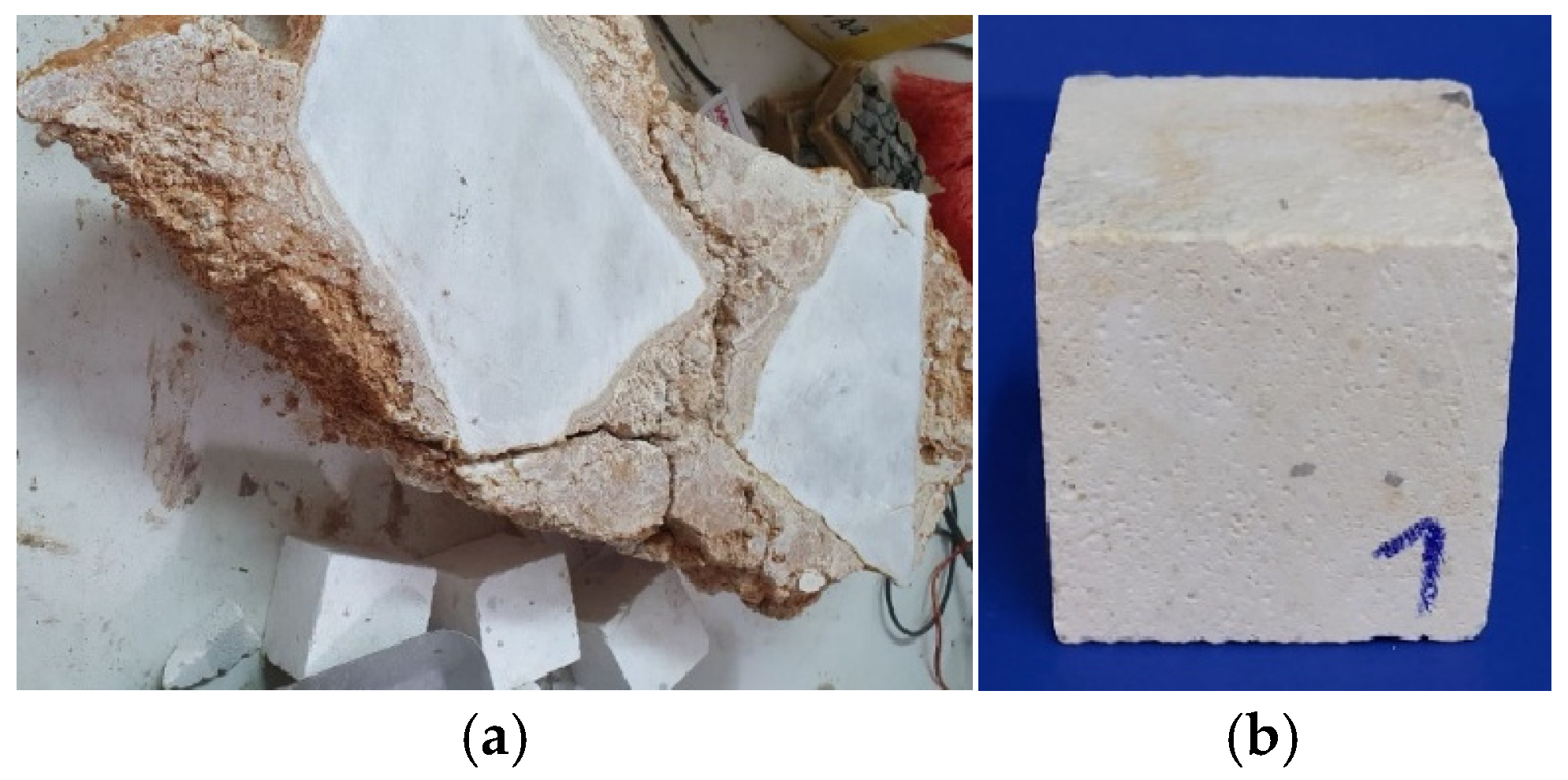
Opalescent tuff is an extrusive igneous soft rock [9] derived from consolidated volcanic ash, which is usually formed by volcanoes during eruptions (Figure 1a). It usually has a high silica content, which gives it strong resistance to weathering and erosion; it also has a porous structure, which allows it to easily absorb water.
For the purposes of this research, tuff from the Strmosh locality in Eastern Macedonia was examined, together with limestone sampled from Govrlevo quarry in Northern Macedonia. The chemical analysis of the tuff (Table 1) showed that it is composed mainly of SiO2 (94.5%), about 3% aluminum oxide, and small amounts of other oxides, which is comparable to other tuffs reported in the literature [21,22,23,24,25].
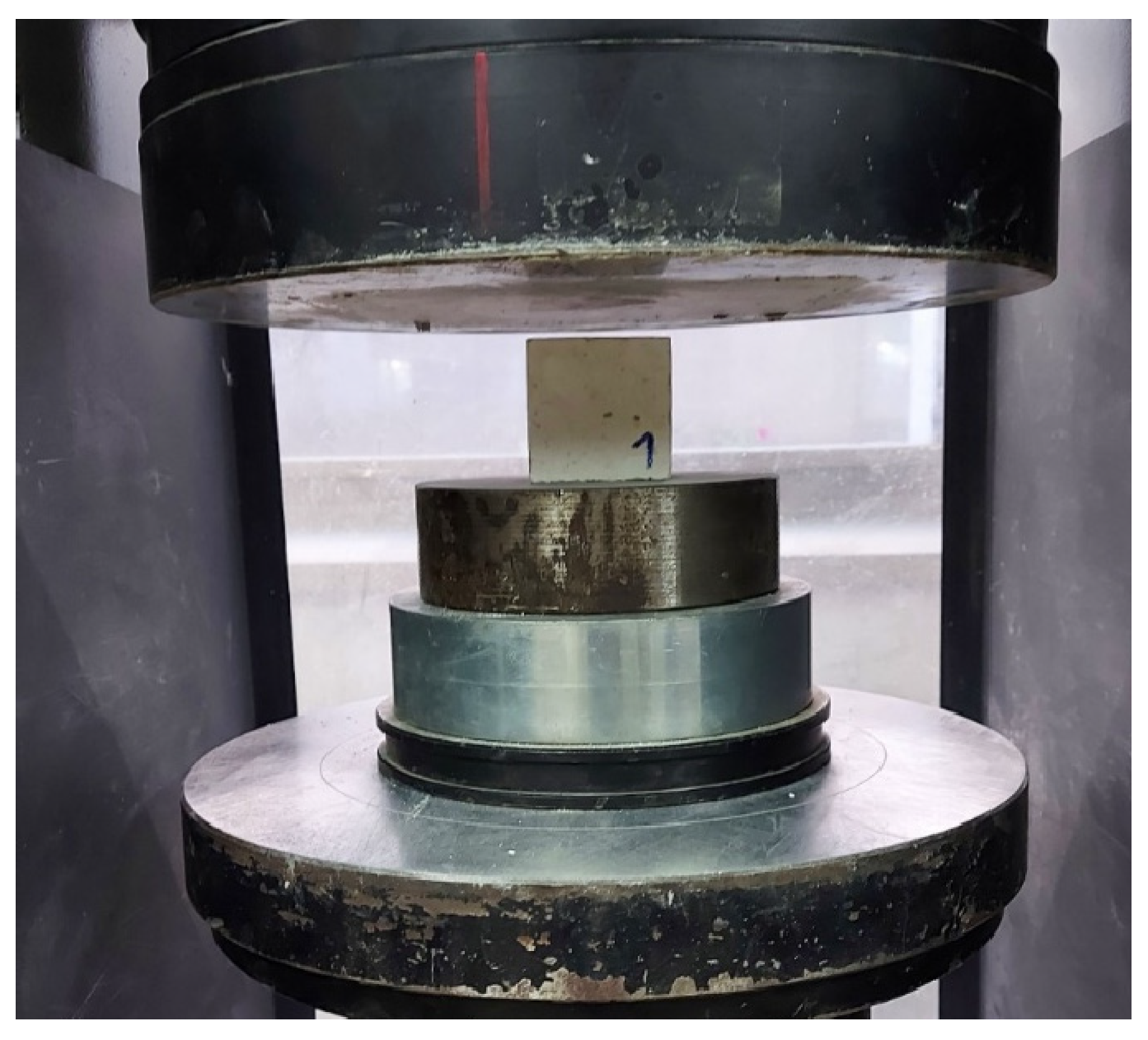
Both the tuff and limestone rocks were tested in accordance with the current national standards [26,27,28,29]. Four cubic rock samples (50 × 50 × 50 mm; Figure 1b) of each rock were tested in the Materials Laboratory at CEIM, Skopje, Macedonia. The physical and mechanical properties, i.e., mass, volume, bulk density, and compressive strength (Figure 2), were tested for the tuff and limestone samples.
The results of the physical and mechanical properties, i.e., mass, volume, bulk density, and compressive strength, are shown in Table 2 for the tuff samples and in Table 3 for the limestone samples.

2.2. Properties of Concrete Samples

2.2.1. Components of Concrete

The concrete mix for the tested samples was composed of water, cement as a binder, aggregate, and additives to improve the properties of the concrete.
Clean, mains-supplied water was used throughout this study. Portland cement with pozzolanic additives and properties as shown in Table 4 (CEM II/B-M (V-L) 42.5 N cement produced by “Titan Cementarnica Usje” in Skopje) was selected for the preparation of the samples for this research. The minimum amount of clinker in the cement was 65%, while the remaining 35% was fly ash (V), natural gypsum (for regulation of the beginning of setting), and up to 5% other minor mineral additives.
The concrete mixtures for this research were made from the following aggregates:
  • Limestone aggregate 100% (right side of Figure 2);
  • Aggregate comprising 50% tuff and 50% limestone;
  • Tuff aggregate 100% (left side of Figure 2).
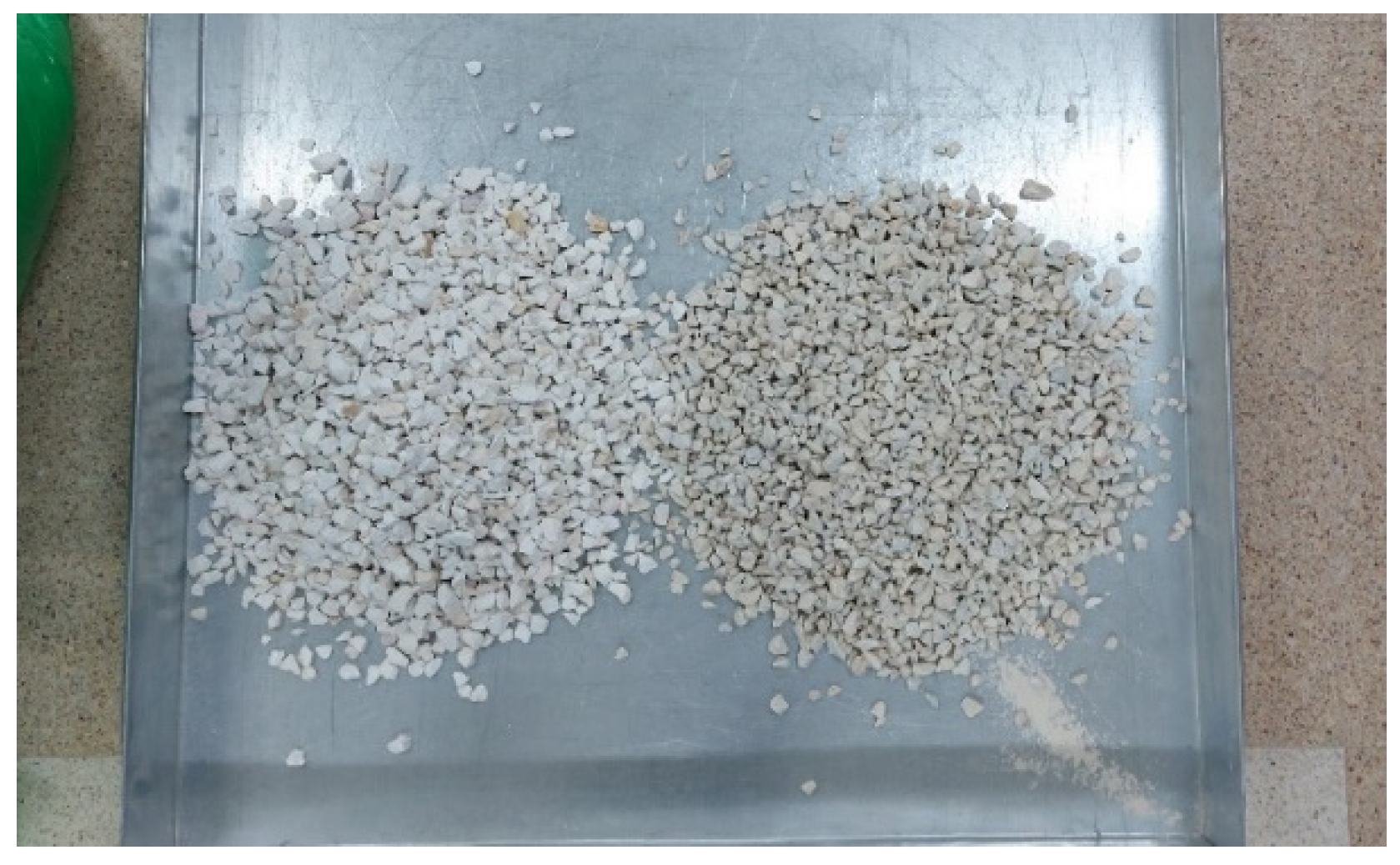
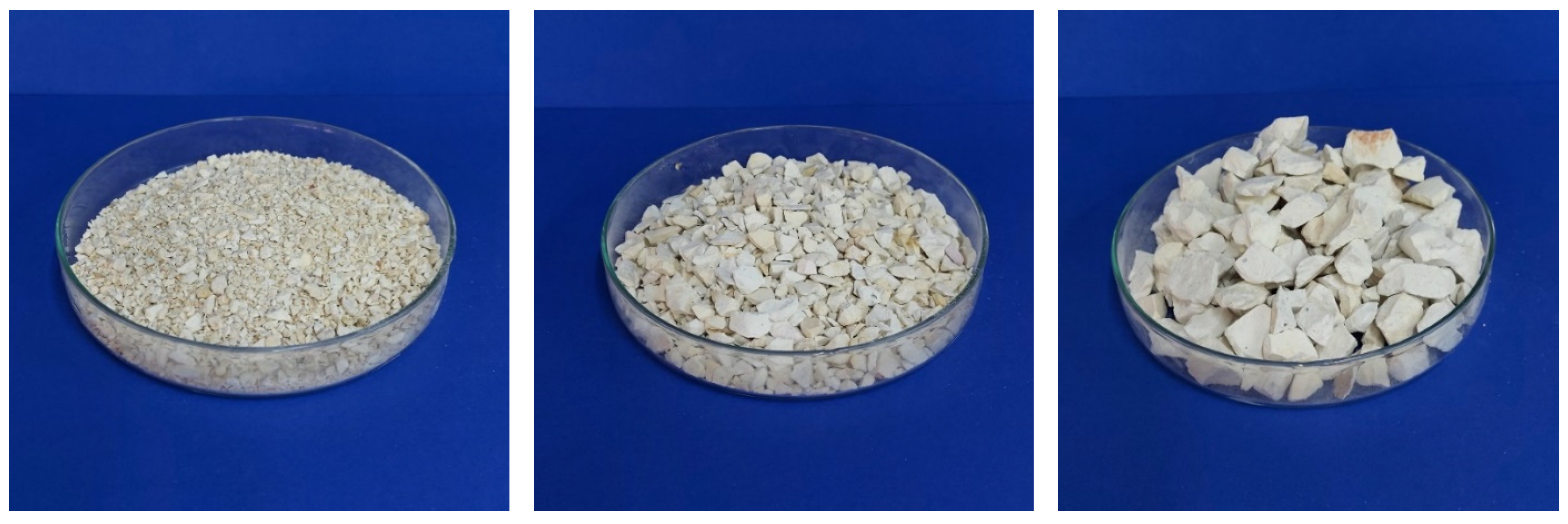
Due to the method of production of tuff and the available material, only three fractions were used: 0–4 mm, 4–8 mm, and 8-16 mm (Figure 3). The aggregate with 50% tuff and 50% limestone was prepared so that the limestone and tuff had the same volume share, due to the different specific mass. Figure 3 shows the two types of aggregate used; on the left is tuff (white colour) and on the right is limestone (greyish-white colour). The first, second, and third fractions of the tuff aggregate are presented in Figure 4.
Testing of mechanical and physical properties of the three types of aggregate mixes was performed in the Materials Laboratory at CEIM and included determination of particle size distribution using a sieving method [30], loose bulk density and voids [31], and particle density and water absorption [32]. The obtained results are presented in Table 5.
A polycarboxylate superplasticizer additive (Superfluid 21M1M, produced by ADING Skopje; see Table 6) was used for the concrete mixes to provide a high degree of water reduction [33] and improve the concrete quality since the tuff was expected to have a high water absorption.

2.2.2. Preparation of Concrete Mixtures

The quantities used for the preparation of each of the three concrete mixtures are presented in Table 7. Due to the high water absorption of the mixed aggregate, additional water was added to saturate the aggregate. The amount of water added was as much as the mixed aggregate could absorb. The water was added to the aggregate one hour before starting the preparation of the concrete. Presented “real” water–cement ratios for mixes II and III in Table 7 include absorbed water.
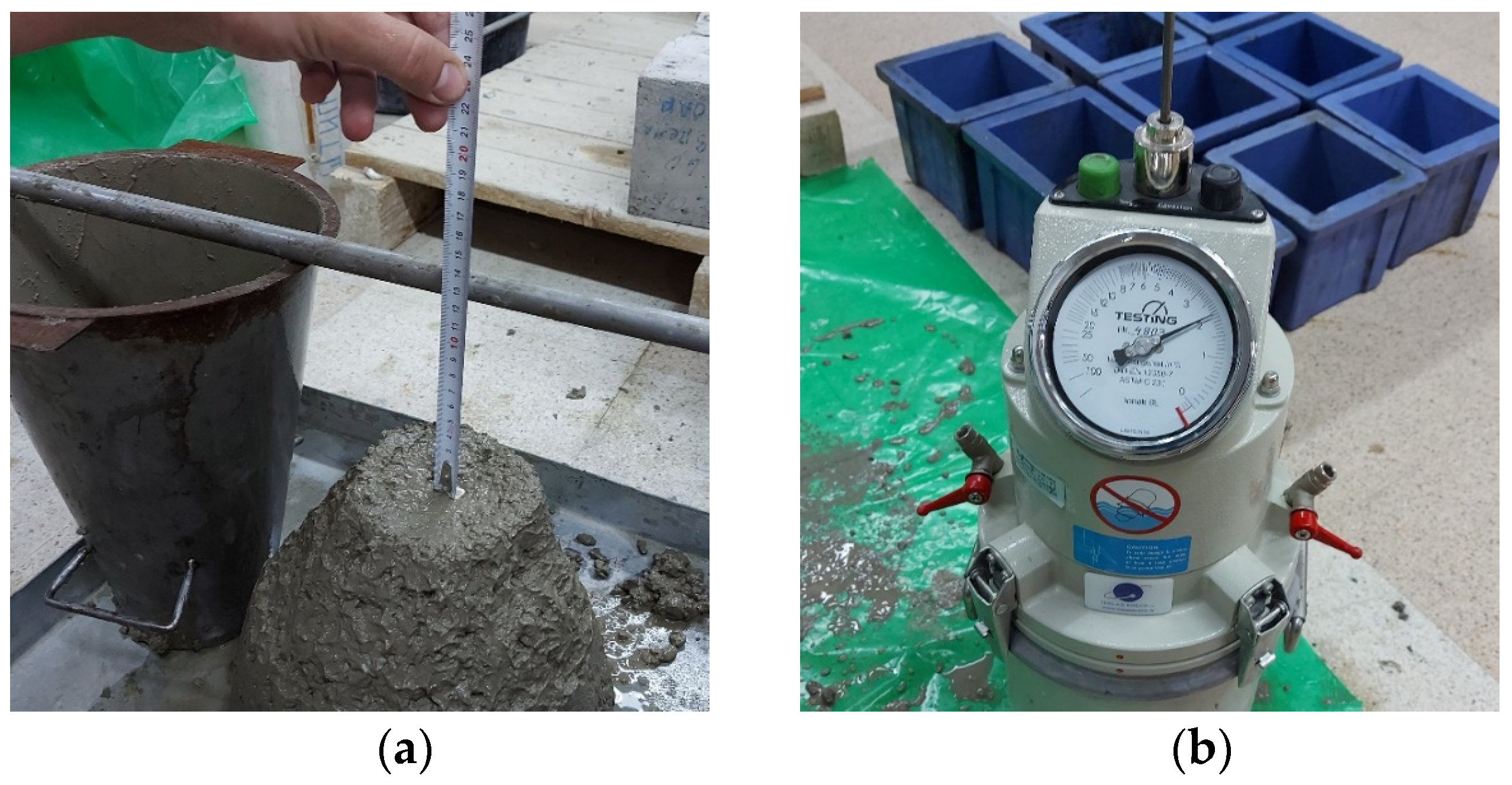
Testing of the fresh and hardened concrete was carried out for the three concrete mixtures. Fresh concrete testing included analyzing the Slump test [34], air content–pressure methods [35], and the density of the concrete (Figure 5).
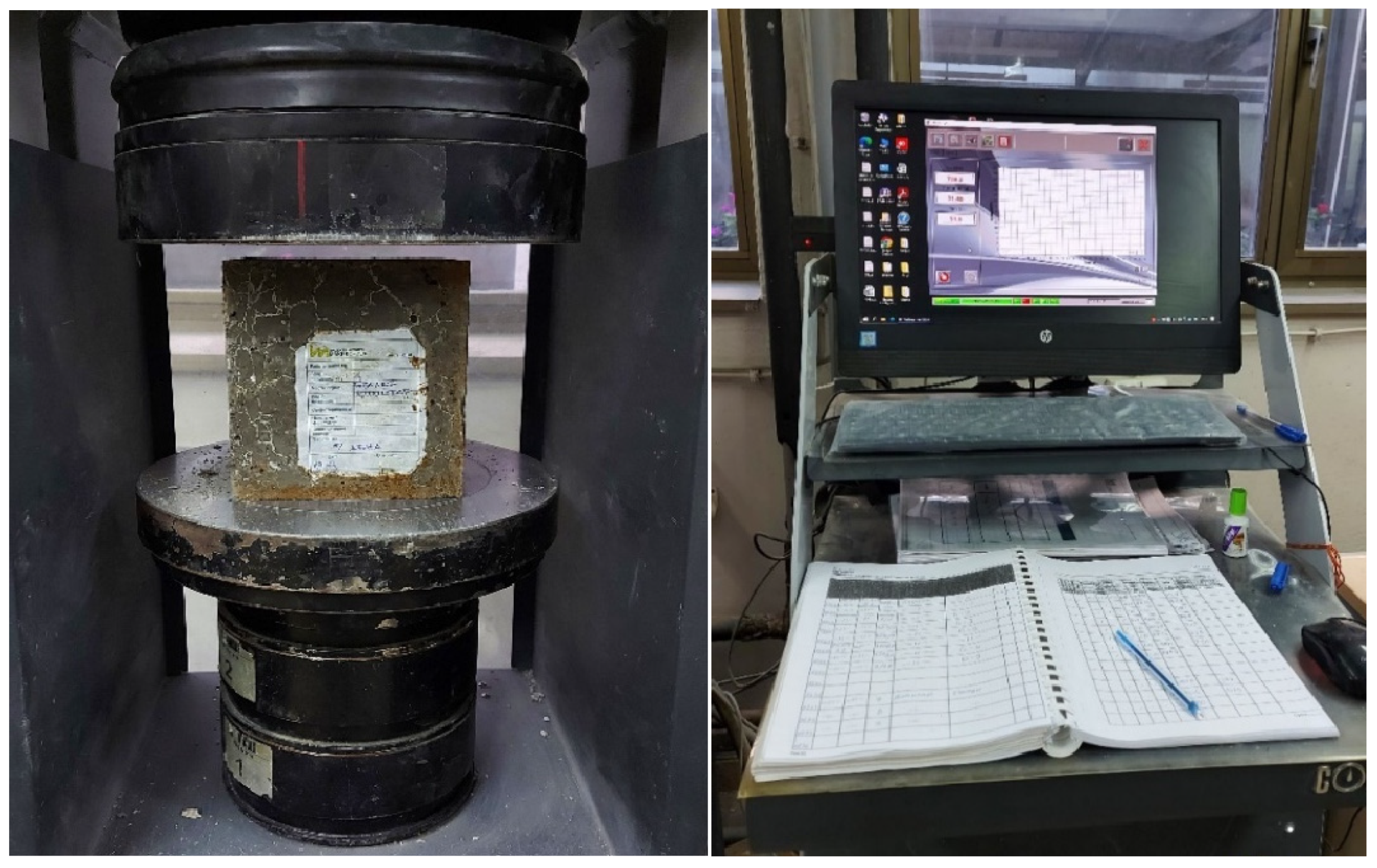
The compressive strength of the concrete mixes was tested on standardized cube-shaped specimens with dimensions 150 × 150 × 150 mm, at 3, 7, and 28 days [36]. The samples were stored in a humid chamber (temperature of 20 °C ± 2 °C and a humidity of 95% ± 2%; [37]) until their testing (Figure 6).
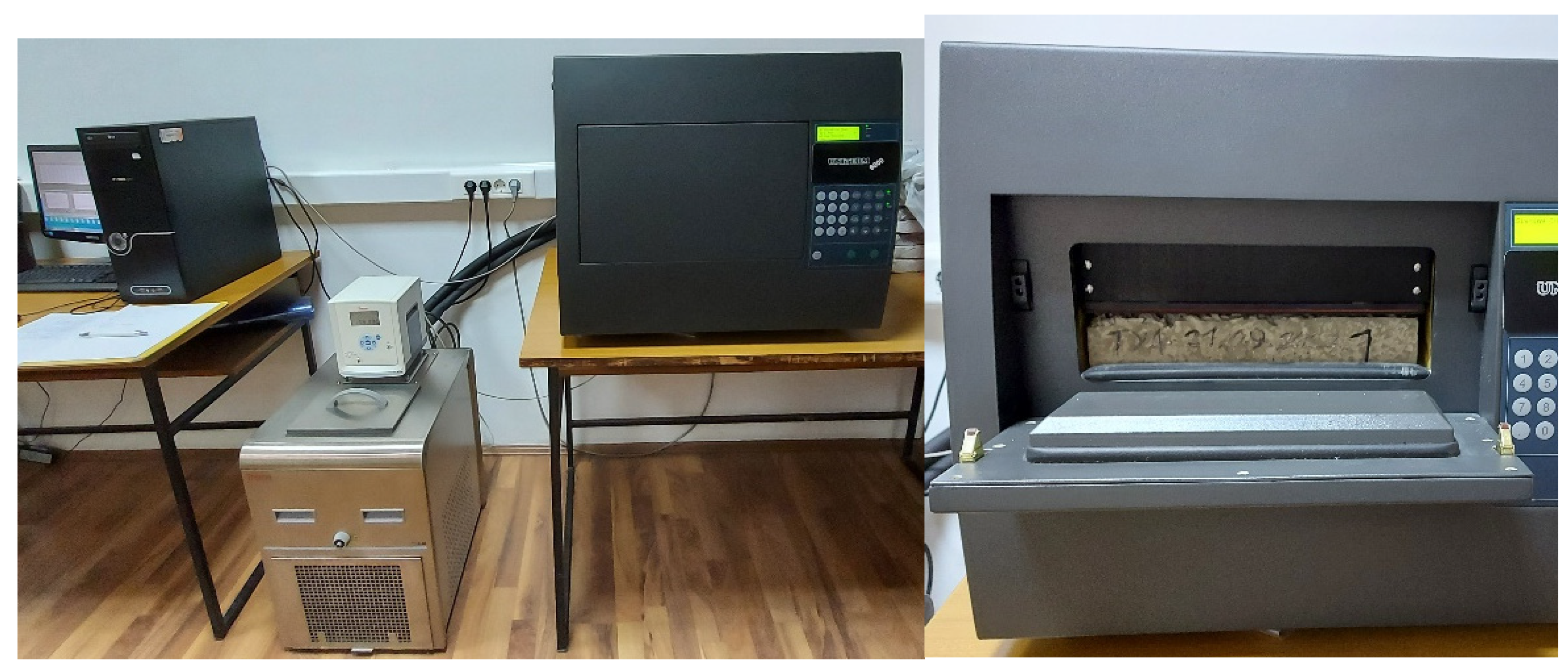
Thermal conductivity λ [W/m·K], defined as the amount of heat that passes through a material of unit thickness per unit time [38], was measured using a heat flow meter (HFM 436/3)—see Figure 7—according to [39,40]. The instrument has a temperature range of −30 °C to 100 °C and can measure the thermal conductivity of insulation materials in the range of 0.005 to 0.5 W/m·K [41]. Therefore, the thermal conductivity of normal concretes could not be measured with this instrument, which is one of the limitations of this study.
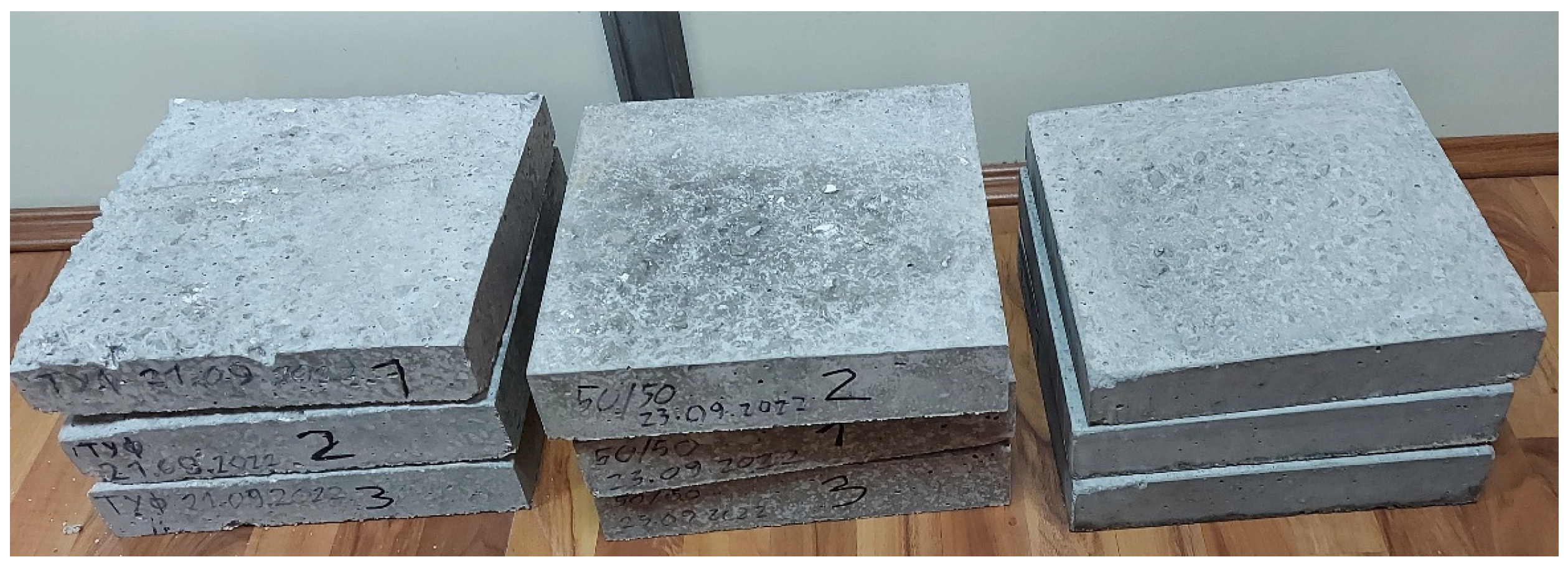
The specimens have base dimensions of 30 × 30 cm, with a height of 5 to 6 cm. Three samples were made from each mixture; see Figure 8.
The heat flux through the test sample, along with a given temperature gradient [28], was measured for II and III mix samples. For I mix samples, a value of λ = 2.0 W/m·K was assumed and adopted, as suggested in the literature for ordinary concrete [16], due to the abovementioned limitations of the HFM instrument.

3. Results and Discussion

3.1. Comparison of Limestone and Opalized Tuff

The results of the tests on opalized tuff and limestone showed that tuff had an average density of 1419.3 kg/m3, which was 87.2% lower than that of limestone with 2657.6 kg/m3, as shown in Table 2 and Table 3.
The average compressive strength of the limestone rock, on the other hand, was 84.83 MPa, which, compared to the average compressive strength of the tested tuff samples of 41.15 MPa, is 106.15% higher (Table 2 and Table 3).

3.2. Properties of the Aggregate Mixes

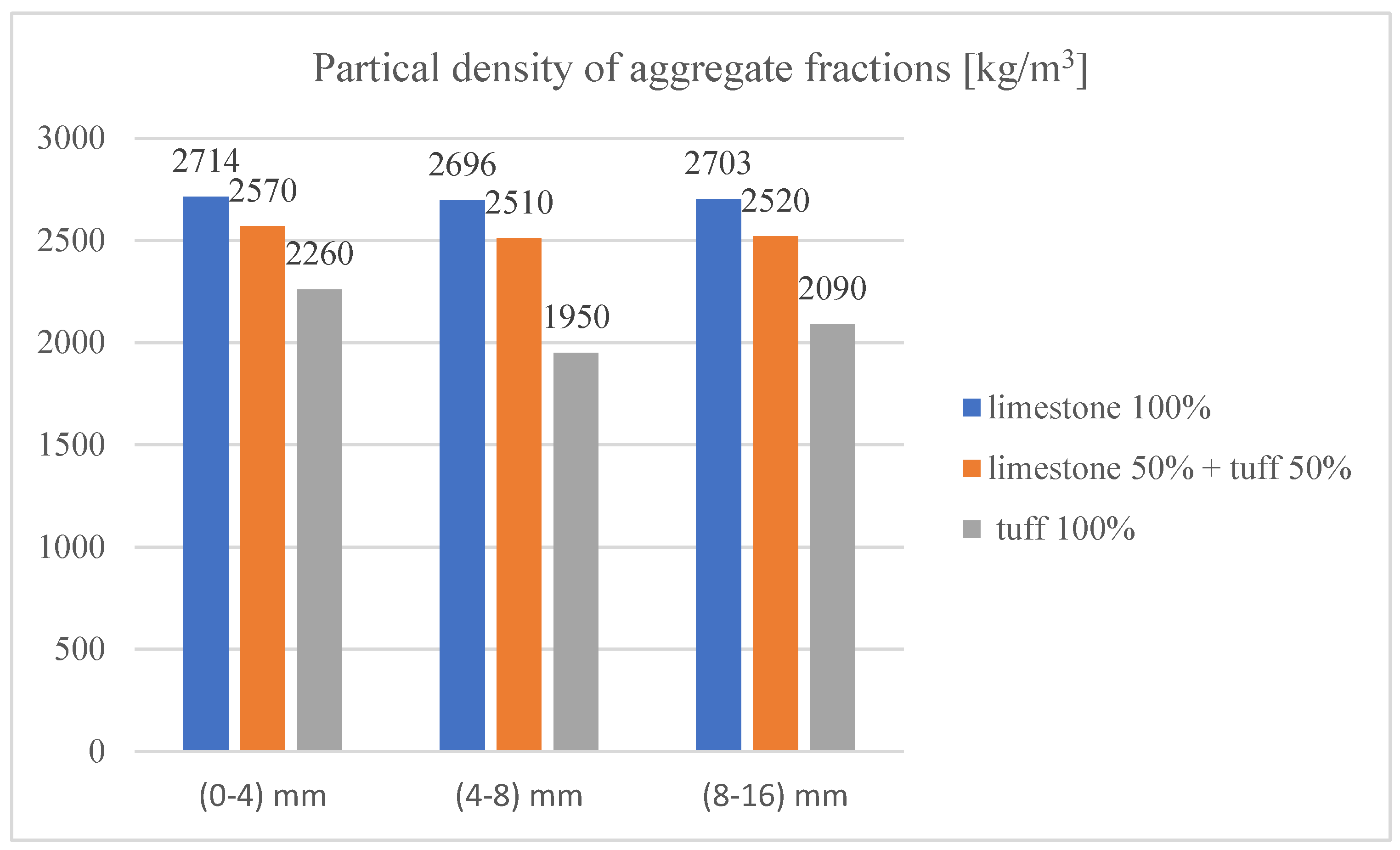
The aggregate mix with the lowest particle density was shown to be the tuff aggregate, followed by the 50:50% mix, and finally the limestone aggregate, which had the highest average particle density, as shown in Figure 9. Namely, more tuff in the mix leads to a lighter mix.
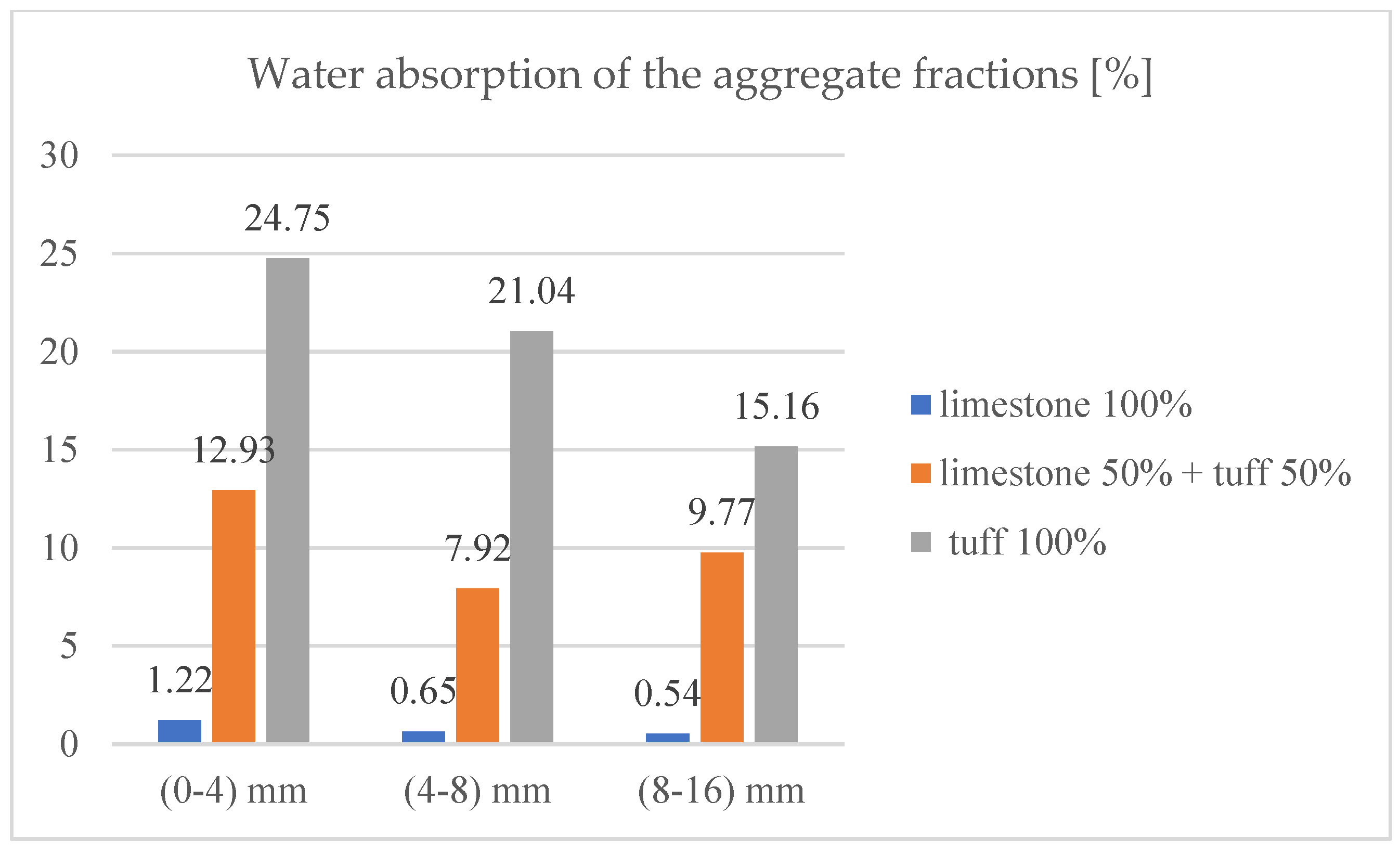
Water absorption was highest in the tuff aggregate, while it was lowest in the limestone aggregate, as shown in Figure 10. Tuff aggregate has almost 30 times greater water absorption capacity than limestone aggregate, and aggregate with 50% tuff and 50% limestone has over 10 times greater water absorption capacity than limestone aggregate for all three fractions.
Due to the high water absorption of the tuff aggregate and the 50% tuff and 50% limestone aggregate, there was a suspicion that the aggregates would not be fully saturated within 24 h. Therefore, the aggregates were water-saturated for a period of 48 h. The results of that test confirmed our expectation: the water absorption continued after 24 h. These results are shown in Table 5. The tuff aggregate still had the ability to absorb water after 24 h, while the 50% tuff and 50% limestone aggregate did not show a significant difference between the results at 24 h and at 48 h. The tuff aggregate absorbed over 20% more water after 48 h than it did after 24 h. The 50/50 tuff and limestone aggregate absorbed only 5% more water after 48 h.

3.3. Properties of the Fresh Concrete

The results of the slump test on the three concrete mixes are presented in Table 8.
The consistency of the I mix was drastically greater than the other two recipes. Although the other two concrete mixes had a higher amount of water than the first recipe, due to the high water absorption by the tuff, their consistency decreased. The III mix, which only contains tuff as an aggregate, showed a slightly higher consistency than the II mix, which was not expected. This is potentially because the tuff absorbed less water than expected, which led to a slightly higher consistency than the second recipe.
The results of the air contents of the fresh concrete mixtures, obtained with the water column method [35], are presented in Table 8.
The results show that the III mix was most porous (2.7%), while the lowest porosity was recorded for mix I (2.1%/). According to [43], the recorded values for air void content in mixes II and III do not belong to the group of standard concretes (1–2% porosity.
The average bulk density of the fresh concrete mixes is shown in Table 8. The aggregate type had a major effect on the density, with mix I showing the highest density (2351 kg/m3), which was 41.6% higher than mix III, 1660 kg/m3.

3.4. Properties of the Hardened Concrete

3.4.1. Compressive Strength

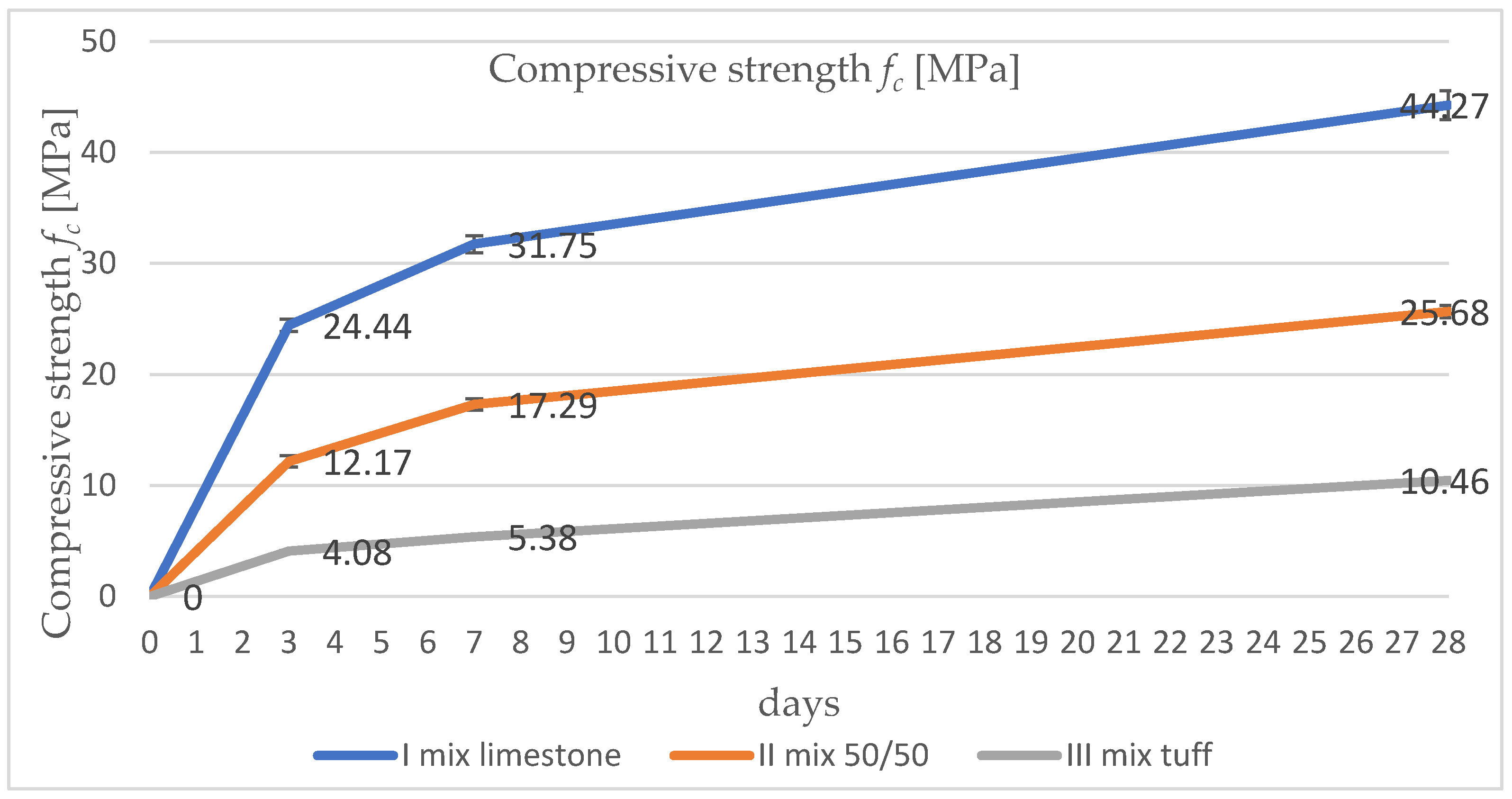
The results obtained from the compressive strength tests on mixes I, II, and III at 3, 7 and 28 days are shown in Figure 11.
According to [44], all tested concrete mixes belong to the group of concretes with normal strength (<60 MPa), with mix I classified as C30/37, mix II as C20/25, and mix III as C8/10. The highest average compressive strength of 44.27 MPa was obtained for the test specimens from mix I, while mix III, with opalized tuff aggregate only, showed an average compressive strength of 10.46 MPa and had a significantly lower strength than mix I.
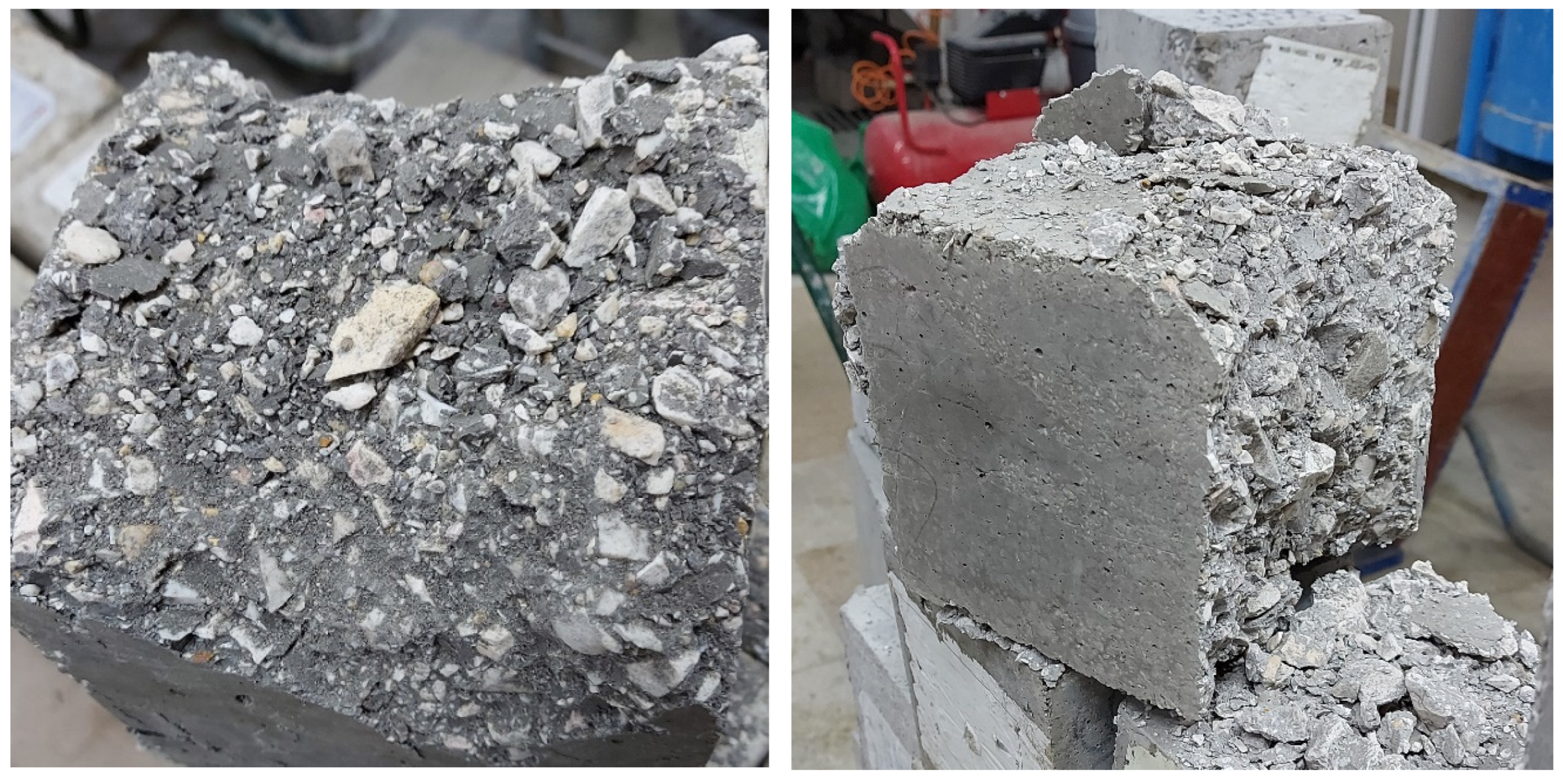
During the tests on mix III concrete, a fracture occurred between the tuff grains and the cement paste (Figure 12). In other words, the normally desired fracture across the grain was not present. As the micro-scale mechanisms are out of the scope of this study, we postulate that the poor bond probably resulted from the high water absorption of the tuff, especially in the smallest fraction.
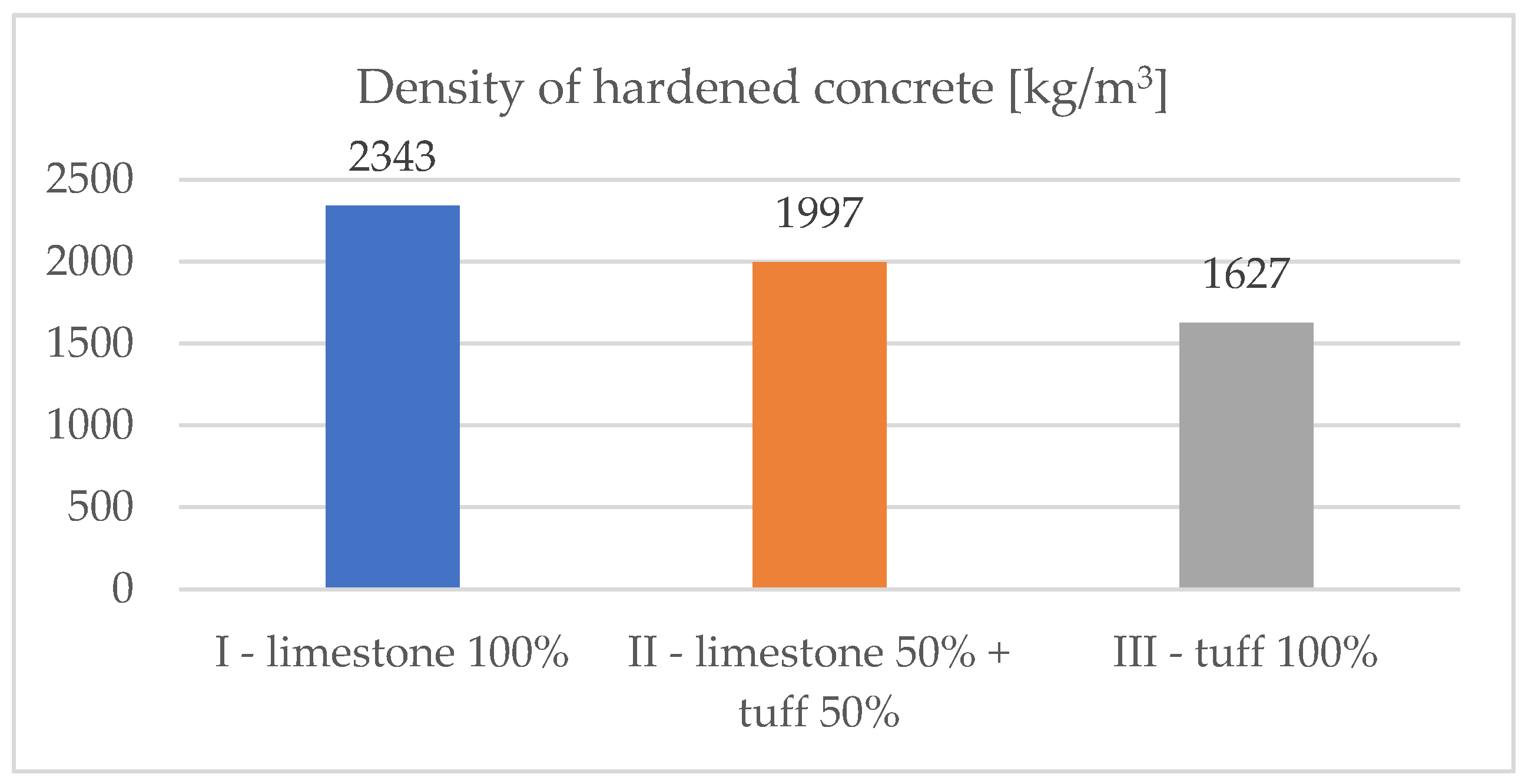
The results of the density tests for the concrete mixes (Figure 13) and the classification, in accordance with [44], showed that mixes II and III can be classified as lightweight concretes.

3.4.2. Thermal Conductivity

The thermal conductivity for the concrete mixture with limestone aggregate (mix I) was assumed to be 2.0 W/m·K, an even less favourable value according to [15,17].
The results obtained from the thermal conductivity test are given in Table 9.
Results presented in Table 9 showed that mix III concrete with tuff aggregate only had a 5.59 times lower thermal conductivity than the conventional concrete with limestone aggregate only. The mix III concrete had the lowest thermal conductivity of all tested mixes, which was significantly different from that of mix I, which means that the tuff concrete mix can be used as a better insulation material when compared to traditional limestone aggregate concrete mix.

3.5. Discussion

The testing and results presented in the previous sections contributed toward the determination of some properties of opalized tuff from the Strmosh site and its characterization as an aggregate for concrete. The results of the tests on the stone of opalized tuff and limestone showed that tuff had 87.2% lower density than that of the tested samples of the limestone; see Table 2 and Table 3. This finding resulted in more than twice the compressive strength in favour of the limestone.
Results of water absorption showed that tuff aggregates absorbed more water than limestone aggregates, due to the presence of numerous larger sizes of pores within their cellular structure. The water absorption of limestone depends on its porosity and varies from 1% to 12% by weight [45], and a value less than 2.5% is usually recommended for use in concrete aggregates. On the contrary, tuff has larger pore spaces to store water, and its water absorption continued even after the first 24 h. It showed absorption of 29.78% for the finest fraction after 48 h, which is comparable to the results in the literature [16,17]. The absorption capacity is important for the water/cement ratio, which controls the workability and permeability of the fresh concrete and the compressive strength of the hardened concrete.
It is important to note that for the preparation of concrete with tuff aggregate, a superplasticizer must be used. Tuff contains many fine particles, which absorb more water and increase the friction between cement grains, making the mix stiff and unworkable [8]. Superplasticizer disperses cement particles and improves the slump and workability of fresh concrete. Furthermore, it allows for lower water–cement ratios, leading to better strength and performance. Additionally, the test concrete specimens with tuff aggregate must be dried before testing, as proposed in [8].
The testing of the aggregate mixes and hardened concrete showed that the density of concrete decreased significantly with increasing the tuff content; the concrete mix with tuff aggregate only was 44% lighter than concrete with limestone aggregate only. This, unlike standard concrete, classifies the tuff concretes in the category of lightweight concretes [12]. With their low bulk density, they contribute to reducing the overall weight of the structure, which in turn makes it easier to lay the foundation for the structure [46,47]. In addition, the lower weight of the structure also brings benefits in seismically active areas, due to the attraction of smaller inertial forces [48].
The water absorption test of the tuff aggregate, according to the 24 h standard, was not sufficient for the tuff stone to be water saturated. Therefore, the tuff aggregate was exposed to water absorption for a period of 48 h, when it absorbed over 20% more water than it had in 24 h. In contrast, the aggregate of 50% tuff and 50% limestone absorbed only 5% more water in 48 h. Tuff aggregate’s water absorption in concrete is generally high due to its porous cellular structure. Results in the literature are comparable to those obtained in this research, varying between 16% and 22% [7,8].
Increasing the amount of tuff in the concrete mix required a larger amount of water, due to the high porosity and fine particles of the tuff [49], which absorb more water and increase the friction between cement grains. The high water absorption of the tuff aggregate reduced the consistency of the concrete mix [50], as reported in [7,21] also.
Increasing the amount of opalized tuff aggregate in the concrete resulted in a decrease in the compressive strength of the hardened concrete. In general, concrete with tuff aggregate requires a longer period to reach its strength. The time of 28 days was not sufficient for the mix III to reach its strength, probably because the tuff has the ability to react with hydration and/or microscopic mechanisms, which were outside of the scope of this study. Research in papers [7,15,17,21] confirms that concrete with tuff reaches its compressive strength later. Edris et al. [21], among others, recommend testing the strength properties of tuff concrete at 56 days. The average compressive strength of tuff aggregate concrete after 7 days was 5.38 MPa, representing a strength gain of 51.4% in comparison with the 28-day strength of 10.46 MPa. The limestone aggregate concrete had a compressive strength of 31.75 MPa, which is 71.7% in comparison with the 28-day strength of 44.27 MPa. In concrete with an aggregate of 50% tuff and 50% limestone, however, the strength increased by 50%; see Figure 11. For structural normal-weight concrete, the strength at 7 days should be between 60% and 65% of the 28-day compressive strength. Evidently, both types of aggregates influence the increase in compressive strength differently, reaching the final strength later than usual. Lower strength of the tuff concrete makes it feasible for non-bearing elements, for concrete masonry units, etc.
By increasing the proportion of opalized tuff in the aggregate, thermal conductivity was shown to decrease; i.e., the concrete with tuff aggregate becomes a better thermal insulation material. Using tuff as an aggregate in concrete reduces its density, which increases the porosity of the concrete and increases its thermal insulation properties. The relationship between the density and thermal conductivity is also proven: with decreasing density, the thermal conductivity decreases. Furthermore, using tuff concrete will provide better energy efficiency in buildings. For instance, a façade wall, built of normal concrete with thickness d = 20 cm and plastered on both sides, will need 10 cm thermal insulation material (with average thermal conductivity of 0.38 W/m·K), which is 2 cm more than the respective wall made of tuff concrete and 8 cm thermal insulation. They would both have a U-value of 0.35 W/m2·K, which is the max allowed value for façade walls in Macedonia [51]. Usual thermal insulation has embodied energy of 16.8, 88.6, and 101.5 MJ/kg for rockwool, EPS, and polyurethane foam, respectively [52], which is much greater than the embodied energy in the concrete of 1.11 MJ/kg. On the other hand, the cost of the thermal insulation increases in proportion to its thickness. Therefore, having thermal insulation of 8 cm thickness instead of 10 cm would provide financial savings of 20% for the same thermal characteristics of the building envelope and a thinner wall of 2 cm. Our decision to assume, rather than measure, the thermal conductivity of the limestone concrete due to instrument limitations invariably requires that the results above be treated with caution. Similarly, the standard but relatively low number of samples tested for this study and the use of standard deviation from the average test results may obscure the true nature of the dataset and potential skew. Future research on this topic could use more advanced and appropriate instrumentation to verify (or otherwise) our assumption and more robust testing to obtain more statistically justified results.
Conventional aggregates (limestone, for instance) require more fines, cement, and water to make good-quality concrete compared with tuff aggregate concrete. This would lead to an increase in the cost of production of conventional concrete in comparison to the tuff concrete [7]. On the other hand, less cement means less CO2 and less embodied carbon, having in mind that cement production is responsible for more than 7% of the total carbon emissions [53].
Opalized tuff, which is found in large quantities in Eastern Macedonia, is economically viable, easy to extract from surface mines, and easy to process [54]. Any alternative and possibility for its application would contribute to reducing energy consumption [3,47] and thus to an ecologically safe environment.
Lightweight concrete made from opalized tuff can have potentially large economic benefits. The lower bulk density compared to conventional concrete contributes to lighter structures, which also affects the easier foundation of the building [46]. Significantly improved thermal insulation properties allow for a reduction in heat energy losses in buildings (through building envelope elements: façade walls, roofs, and floors). A 35 cm thick wall, made of tuff concrete only, would satisfy the requirement for U = 0.9 W/m2K for external walls bordering different users or different heating systems, or a 45 cm wall with thermal conductivity U = 0.7 W/m2K would be fine for an interior partition wall between heated and less heated space [51]. This means that, in many cases, the concrete walls will not need additional thermal insulation—the use of pure concrete walls will allow for greater architectural freedom when designing the building’s façade and faster construction [55,56], as no time is wasted installing additional thermal insulation (which can also be flammable; [57,58]).

4. Conclusions

The mechanical and sustainability performance of the volcanic tuff from Eastern Macedonia was investigated with the aim of verifying its feasibility as an aggregate in lightweight concrete. This paper does not introduce a fundamentally new class of material or testing concept, as volcanic tuffs and lightweight concretes are well known in the literature. However, the study does offer incremental originality through the detailed characterization of opalized tuff from a specific geological source in Eastern Macedonia and through the systematic comparison of three aggregate replacement levels under a unified experimental framework. This regional specificity and local availability, combined with the joint evaluation of mechanical and thermal performance, provide a new possibility for sustainable concrete in this region.
The tuff showed an average bulk density 87.2% lower than limestone regularly used as concrete aggregate and an average compressive strength approximately half that of limestone. Because of this, the aggregate mixes containing the tuff showed lower particle density when compared to the particle density of limestone aggregate. Furthermore, the water absorption was higher in the tuff aggregate mixes, which took longer to saturate. When mixed into concrete, the tuff aggregate mixes slumped to Class S2 (cf. C5 for limestone aggregate), reflecting their lower average density and higher air void content when compared to the limestone aggregate mix. These reflected on the strength of the concrete mixed with tuff, which was lower than the strength of the concrete with limestone aggregate. However, the compressive strength of the concrete with tuff aggregate mixes was significantly lower than that of concrete with limestone aggregate, which makes it viable for applications where porous, low-density, insulating material is needed in construction. Considering the relative abundance of this material in Eastern Macedonia and the relatively low carbon footprint for extraction and transportation, it can be considered a sustainable alternative to traditional limestone aggregate concrete mixes.

Author Contributions

Conceptualization, T.S.; Methodology, T.S.; Validation, D.G. and S.B.M.; Formal analysis, D.G.; Investigation, D.G.; Resources, T.S.; Data curation, D.G.; Writing—original draft, T.S.; Writing—review & editing, S.B.M.; Supervision, T.S.; Funding acquisition, S.B.M. All authors have read and agreed to the published version of the manuscript.

Funding

This research received no external funding.

Institutional Review Board Statement

Not applicable.

Informed Consent Statement

Not applicable.

Data Availability Statement

The data presented in this study are available on request from the first author due to legal reasons.

Acknowledgments

The research work has been carried out with the support of the Faculty of Civil Engineering, Ss. Cyril and Methodius University in Skopje and the Laboratory of the construction company “Civil Engineering Institute Makedonija”—Skopje.

Conflicts of Interest

The authors declare no conflict of interest.

References

  1. Neville, A.M. Properties of Concrete; Pearson Education Ltd.: Edinburgh Gate, UK, 2011; ISBN 978-0-273-75580-7. [Google Scholar]
  2. Osama, O. Intelligent building, definitions, factors and evaluation criteria of selection. Alex. Eng. J. 2018, 57, 2903–2910. [Google Scholar] [CrossRef]
  3. Zarco-Soto, F.J.; Zarco-Soto, I.M.; Ali, S.S.S.; Zarco-Periñan, P.J. Energy consumption in buildings: A compilation of current studies. Energy Rep. 2024, 13, 1293–1307. [Google Scholar] [CrossRef]
  4. Augello, R.; Carrera, E.; Pagani, A.; Arruda, M.R.; Shen, J. Node-dependent kinematic models applied to reinforced concrete structures. Math. Mech. Complex Syst. 2023, 11, 19–43. [Google Scholar] [CrossRef]
  5. Scerrato, D.; Giorgio, I.; Della Corte, A.; Madeo, A.; Dowling, N.E.; Darve, F. Towards the design of an enriched concrete with enhanced dissipation performances. Cem. Concr. Res. 2016, 84, 48–61. [Google Scholar] [CrossRef]
  6. Bjegović, D.; Štirmer, N. Teorija i Tehnologija Betona; Sveuciliste u Zagrebu Gradjevinski Fakultet: Zagreb, Croatia, 2015; ISBN 978-953-6272-77-8. [Google Scholar]
  7. Al-Zboon, K.; Al-Zou’by, J.; Abu-Hamatteh, Z. Utilization of Volcanic Tuffs as Construction Materials. Jordanian J. Eng. Chem. Ind. (JJECI) 2019, 2, 27–32. [Google Scholar]
  8. Sang, G.K.; Abuodha, S.O.; Mwero, J.N. Investigating The Potential Use of Tuff Aggregates to Produce Lightweight Concrete. Int. J. Sci. Res. Publ. (IJSRP) 2020, 10, 458–478. [Google Scholar] [CrossRef]
  9. King, H.M. Tuff—An Igneous Rock That Forms from the Debris Ejected by an Explosive Volcanic Eruption. Available online: https://geology.com/authors/hobart-king (accessed on 21 January 2026).
  10. Thienel, K.C.; Haller, T.; Beuntner, N. Lightweight Concrete—From Basics to Innovations. Materials 2020, 13, 1120. [Google Scholar] [CrossRef] [PubMed]
  11. Vandanapu, S.N.; Muthumani, K. Seismic Performance of Lightweight Concrete Structures. Adv. Civ. Eng. 2018, 2018, 2105784. [Google Scholar] [CrossRef]
  12. Khamza, Y.Y.; Zhuginissov, M.T.; Kuldeyev, E.I.; Zhumadilova, Z.O.; Nurlybayev, R.E. Improving Lightweight Structural Tuff Concrete Composition Using Three-Factor Experimental Planning. Infrastructures 2024, 9, 124. [Google Scholar] [CrossRef]
  13. Samardzioska, T.; Jovanovski, M.; Lepitkova, S. Zeolites-sustainable building material. In Proceedings of the 1st International Conference on Construction Materials for Sustainable Future, Zadar, Croatia, 19–21 April 2017; pp. 146–151. [Google Scholar]
  14. Chmielevska, E. Zeolites—Materials of sustainable significance (short retrospective and outlook). Environ. Prot. Eng. 2010, 36, 129–135. [Google Scholar]
  15. Al-Zou’by, J.; Al-Zboon, K.K. Effect of volcanic tuff on the characteristics of cement mortar. Cerâmica 2014, 60, 279–284. [Google Scholar] [CrossRef]
  16. Asadi, I.; Shafigh, P.; Hassan, Z.F.B.A.; Mahyuddin, N.B. Thermal conductivity of concrete—A review. J. Build. Eng. 2018, 20, 81–93. [Google Scholar] [CrossRef]
  17. Price, R.H. Analysis of Rock Mechanics Properties of Volcanic Tuff Units from Yucca Mountain, Nevada Test Site; Sandia National Laboratories: Albuquerque, NM, USA, 1983. [Google Scholar]
  18. Hudymaa, N.; Avarb, B.B.; Karakouzian, M. Compressive strength and failure modes of lithophysae-rich Topopah Spring Tuff specimens and analogue models containing cavities. Eng. Geol. 2004, 73, 179–190. [Google Scholar] [CrossRef]
  19. Marcari, G.; Fabbrocino, G.; Lourenço, P.B. Investigation on compressive behavior of tuff masonry panels. In Workshop on Design for Rehabilitation of Masonry Structures, Proceedings of the 8th International Masonry Conference (8IMC), Dresden, Germany, 4–7 July 2010; pp. 1083–1092. [Google Scholar]
  20. Yu, L.; Zhou, S.; Deng, W. Properties and pozzolanic reaction degree of tuff in cement–based composite. Adv. Concr. Constr. 2015, 3, 71–90. [Google Scholar] [CrossRef]
  21. Edris, W.F.; Abdelkader, S.; Salama, A.H.E. Concrete Behaviour with Volcanic Tuff Inclusion. Civ. Eng. Archit. 2021, 9, 1434–1441. [Google Scholar] [CrossRef]
  22. Cai, Y.; Lin, Z.; Lu, K. Dosage Effect of Wet-Process Tuff Silt Powder as an Alternative Material of Sand on the Performance of Reactive Powder Concrete. Materials 2022, 15, 3930. [Google Scholar] [CrossRef]
  23. Yossifova, M.; Dimitrova, D.; Ivanova, R.; Tzvetanova, Y.; Lyutov, G.; Sergeeva, I. Mineral and Chemical Composition of Selected Clinoptilolita Tuffs and Migration of Elements in Acidic Aqueous Media. Proc. Bulg. Acad. Sci. 2021, 74, 1012–1023. [Google Scholar]
  24. Zhao, L.; Zhu, Q.; Jia, S.; Zou, J.; Nechaev, V.P.; Dai, S. Origin of Minerals and Critical Metals in an Argillized Tuff from the Huayingshan Coalfield, Southwestern China. Minerals 2017, 7, 92. [Google Scholar] [CrossRef]
  25. Malanchuk, Z.; Zaiets, V.; Tyhonchuk, L.; Moshchych, S.; Gayabazar, G.; Dang, P.T. Research of the properties of quarry tuff-stone for complex processing. E3S Web Conf. 2021, 280, 01003. [Google Scholar] [CrossRef]
  26. MKS EN 1926; Natural Stone Test Methods—Determination of Uniaxial Compressive Strength. Standardization Institute of the Republic of North Macedonia: Skopje, North Macedonia, 2010.
  27. MKS EN 1925; Natural Stone Test Methods—Determination of Water Absorption Coefficient by Capillarity. Standardization Institute of the Republic of North Macedonia: Skopje, North Macedonia, 2010.
  28. MKS EN 13755; Natural Stone Test Methods—Determination of Water Absorption at Atmospheric Pressure. Standardization Institute of the Republic of North Macedonia: Skopje, North Macedonia, 2010.
  29. MKS EN 1936; Natural Stone Test Methods—Determination of Real Density and Apparent Density, and of Total and Open Porosity. Standardization Institute of the Republic of North Macedonia: Skopje, North Macedonia, 2010.
  30. MKS EN 933-1; Tests for Geometrical Properties of Aggregates—Part 1: Determination of Particle Size Distribution—Sieving Method. Standardization Institute of the Republic of North Macedonia: Skopje, North Macedonia, 2013.
  31. MKS EN 1097-3; Tests for Mechanical and Physical Properties of Aggregates—Part 3: Determination of Loose Bulk Density and Voids. Standardization Institute of the Republic of North Macedonia: Skopje, North Macedonia, 2010.
  32. MKS EN 1097-6; Tests for Mechanical and Physical Properties of Aggregates—Part 6: Determination of Particle Density and Water Absorption. Standardization Institute of the Republic of North Macedonia: Skopje, North Macedonia, 2022.
  33. Available online: www.ading.com.mk (accessed on 21 January 2026).
  34. MKS EN 12350-2; Testing Fresh Concrete—Part 2: Slump Test. Standardization Institute of the Republic of North Macedonia: Skopje, North Macedonia, 2019.
  35. MKS EN 12350-7; Testing Fresh Concrete—Part 7: Air Content—Pressure Methods. Standardization Institute of the Republic of North Macedonia: Skopje, North Macedonia, 2019.
  36. MKS EN 12390-3; Testing Hardened Concrete—Part 3: Compressive Strength of Test Specimens. Standardization Institute of the Republic of North Macedonia: Skopje, North Macedonia, 2019.
  37. MKS EN 12390-2; Testing Hardened Concrete—Making and Curing Specimens for Strength Tests. Standardization Institute of the Republic of North Macedonia: Skopje, North Macedonia, 2019.
  38. Samardzioska, T.; Peshevski, I.; Pancovska, V.Z.; Golaboski, B.; Jovanovski, M.; Abazi, S. Red Clay as a Raw Material for Sustainable Masonry Composite Ceramic Blocks. Sustainability 2025, 17, 6852. [Google Scholar] [CrossRef]
  39. MKS ISO 8301; Thermal Insulation—Determination of Steady-State Thermal Resistance and Related Properties—Heat Flow Meter Apparatus. Standardization Institute of the Republic of North Macedonia: Skopje, North Macedonia, 2016.
  40. MKS EN 12667; Thermal Performance of Building Materials and Products—Determination of Thermal Resistance by Means of Guarded Hot Plate and Heat Flow Meter Methods—Products of High and Medium Thermal Resistance. Standardization Institute of the Republic of North Macedonia: Skopje, North Macedonia, 2009.
  41. Operating Instructions Heat Flow Meter 436/3; NETZSCH-Gerätebau GmbH: Selb, Germany, 2008.
  42. MKS EN 12350-6; Testing Fresh Concrete—Part 6: Density. Standardization Institute of the Republic of North Macedonia: Skopje, North Macedonia, 2019.
  43. Abousnina, R.; Aljuaydi, F.; Benabed, B.; Almabrok, M.H.; Vimonsatit, V.A. State-of-the-Art Review on the Influence of Porosity on the Compressive Strength of Porous Concrete for Infrastructure Applications. Buildings 2025, 15, 2311. [Google Scholar]
  44. MKC EN 206:2013+A2:2022; Concrete—Specification, Performance, Production and Conformity. Standardization Institute of the Republic of North Macedonia: Skopje, North Macedonia, 2013.
  45. Dutka, B.; Nurkowski, J.; Tram, M.; Rada, S. Comparison of the Water Absorbability of Rocks and Composite-Cement Stones for Optimal Characterization of Sustainable Building Materials. Sustainability 2025, 18, 198. [Google Scholar] [CrossRef]
  46. Mohammed, J.H.; Hamad, A.J. Materials, properties and application review of Lightweight concrete. Rev. Téc. Ing. Univ. Zulia 2014, 37, 10–15. [Google Scholar]
  47. Cavalline, T.L.; Gallegos, J.; Castrodale, R.W.; Freeman, C.; Liner, J.; Wall, J. Influence of Lightweight Aggregate Concrete Materials on Building Energy Performance. Buildings 2021, 11, 94. [Google Scholar] [CrossRef]
  48. Gamal, Y.A.S.; Elrazek, M.A. Evaluation of the seismic performance of lightweight concrete multistory buildings. In IOP Conference Series: Materials Science and Engineering, Proceedings of the 36th Eg-MRS International Conference, Cairo, Egypt, 24–25 September 2022; IOP Publishing: Bristol, UK, 2022; Volume 1269. [Google Scholar]
  49. Shi, Y.; Li, X.; Li, Y.; Peng, Z.; Li, J. Effect of Tuff Powder Mineral Admixture on the Macro-Performance and Micropore Structure of Cement-Based Materials. Front. Mater. 2020, 7, 595997. [Google Scholar] [CrossRef]
  50. Mendoza-Goden, D.; Gallegos-Villela, R.R.; Flores-Becerra, P.; Perez-Sanchez, J.F.; Suarez-Dominguez, E.J.; Palacio-Perez, A. Evaluation of Expanded Clay and Tuff as Lightweight Agents in Concrete Stabilized with Nopal Mucilage and Aloe Vera. Eng 2025, 6, 1. [Google Scholar] [CrossRef]
  51. Official Gazette of Republic of Macedonia. Rulebook on Energy Characteristics in Building, No. 94 of 4.7.2013; Official Gazette of Republic of Macedonia: Skopje, Macedonia, 2013. [Google Scholar]
  52. Deshmukh, R.; More, A. Low Energy Green Materials by Embodied Energy Analysis. Int. J. Civ. Struct. Eng. Res. 2014, 2, 58–65. [Google Scholar]
  53. International Energy Agency. Technology Roadmap—Low Carbon Transition in the Cement Industry; International Energy Agency (IEA): Paris, France, 2018. [Google Scholar]
  54. Spasovski, O.; Simic, V. New Data on Geochemistry and Mineralogy of Opalized Tuff in the Strmosh Deposit near Probishtip, NE Macedonia. In Proceedings of the 15th Congress of Geologists of Serbia with International Participation, Belgrade, Serbia, 26–29 May 2010; pp. 235–239. [Google Scholar]
  55. Sandak, A.; Sandak, J.; Brzezicki, M.; Kutnar, A. State of the Art in Building Façades. In Bio-Based Building Skin; Environmental Footprints and Eco-design of Products and Processes; Springer Nature: Berlin/Heidelberg, Germany, 2019. [Google Scholar] [CrossRef]
  56. Peck, M. Modern Concrete Construction Manual; Institut für Internationale Architektur-Dokumentation GmbH & Co. KG: Munich, Germany, 2016. [Google Scholar]
  57. Hossain, M.D.; Hassan, M.K.; Akl, M.; Pathirana, S.; Rahnamayiezekavat, P.; Douglas, G.; Bhat, T.; Saha, S. Fire Behaviour of Insulation Panels Commonly Used in High-Rise Buildings. Fire 2022, 5, 81. [Google Scholar] [CrossRef]
  58. Ali, A.; Issa, A.; Elshaer, A. A Comprehensive Review and Recent Trends in Thermal Insulation Materials for Energy Conservation in Buildings. Sustainability 2024, 16, 8782. [Google Scholar] [CrossRef]
Figure 1. (a) Tuff rock; (b) cubic rock sample.
Sustainability 18 01547 g001
Figure 2. Testing compressive strength of the tuff sample.
Sustainability 18 01547 g002
Figure 3. Volumetric mixing of the aggregate.
Sustainability 18 01547 g003
Figure 4. First (0–4) mm, second (4–8) mm, and third (8–16) mm fractions of tuff.
Sustainability 18 01547 g004
Figure 5. Testing fresh concrete: (a) slump test; (b) air content.
Sustainability 18 01547 g005
Figure 6. Testing the compressive strength of the concrete.
Sustainability 18 01547 g006
Figure 7. HFM with the temperature control system.
Sustainability 18 01547 g007
Figure 8. Thermal conductivity test samples.
Sustainability 18 01547 g008
Figure 9. Particle density of aggregate fractions.
Sustainability 18 01547 g009
Figure 10. Water absorptions of aggregate fractions after 24 h.
Sustainability 18 01547 g010
Figure 11. Average compressive strengths of hardened concrete with different aggregates. Error bars show plus/minus SD.
Sustainability 18 01547 g011
Figure 12. Poor bond between the surface of the tuff grains and the cement paste, mix III.
Sustainability 18 01547 g012
Figure 13. Density of hardened concretes.
Sustainability 18 01547 g013
Table 1. Composition of opalized tuff.
SiO294.51%
AI2O33.04%
Fe2O30.42%
CaO0.25%
MgO0.07%
TiO20.06%
K2O0.13%
Na2O0.25%
Heat losses1.43%
Table 2. Physical and mechanical properties of tuff.
SampleDimensions
[cm]
Mass
[g]
Volume [cm3]Density
[kg/m3]
Force
[kN]
Compressive Strength [MPa]
abhmVγFσ
14.834.724.85157.40110.571423.686.738.03
24.814.874.70158.15110.101436.5111.447.56
34.864.914.69158.31111.921414.5108.045.26
44.994.684.83158.20112.801402.578.833.74
Average4.874.804.77158.02111.341419.396.241.15
±SD0.080.110.080.421.2414.3415.956.39
Table 3. Physical and mechanical properties of limestone.
SampleDimensions
[cm]
Mass
[g]
Volume [cm3]Density
[kg/m3]
Force
[kN]
Compressive Strength [MPa]
abhmVγFσ
14.884.874.86307.91115.502665.9173.372.92
24.964.874.94310.50119.332602.1219.991.04
34.934.854.81307.44115.012673.2196.582.18
44.954.924.91321.57119.582689.2226.993.17
Average 4.934.884.88311.86117.352657.6204.1584.83
±SD0.040.030.066.612.4338.2524.339.25
Table 4. Properties of CEM II/B-M (V-L) 42.5 N.
Essential PropertiesIndicatorHarmonized Technical Specification
Type of cementCEM II/B-M (V-L) 42.5 N/CEM IIMKS EN 197-1:2012
Compressive strength
(Standard and early) Mpa
42.5 N
satisfactory/≥ 10.0 и ≥ 42.5, ≥62.5
Setting time (initial, min)satisfactory/≥ 60
Stability:
- Spread (mm)
- SO3 content

satisfactory/≤ 10
satisfactory/≤ 3.5%
Chloride contentsatisfactory/≤ 0.1%
Table 5. Mechanical and physical properties of the aggregates.
Type of AggregateFraction
[mm]
Loose Bulk Density ρb
[kg/m3]
Particle Density ρa
[kg/m3]
Water Absorption After 24 h
[%]
Water Absorption After 48 h
[%]
100% limestone0–4 1670 27141.22
4–8138726960.648
8–16 142127030.538
50% limestone + 50% tuff0–4 1445257012.93 13.66
4–8127825107.92 9.88
8–16 121125209.77 11.24
100% tuff0–4 780226024.75 29.78
4–8650195021.0426.40
8–16 680209015.1621.95
Table 6. Technical properties of Superfluid 21M1M [33].
PropertyMethodDeclared Value
AppearanceVisualBrown liquid
Density (at 20 °C)ISO 758(1.06 ± 0.02) g/cm3
pH value (at 20 °C)ISO 43163.5–5.5
Chloride contentEN 480-10≤0.1%
Alkali contentEN 480-12≤0.2%
Table 7. Quantities of the components in the three concrete mixtures.
Mix ComponentsI Mix (100% Limestone)
[kg/m3]
II Mix (50% Limestone + 50% Tuff)
[kg/m3]
III Mix (100% Tuff)
[kg/m3]
Aggregate (0–4) mm941.2800.0644.0
Aggregate (4–8) mm235.3240.0322.0
Aggregate (8–16) mm633.5560.0434.0
Total aggregate quantity181016001400
Cement CEM II/B-M (V-L) 42.5 N390370370
Water (city water supply)220210 + 163.6190 + 316.3
Admixture Superfluid 21M1M3.122.962.96
w/c0.570.57 (real 1.01)0.51 (real 1.37)
Table 8. Consistency, air contents, and density of the fresh concrete [34,35,42].
Concrete Mixture Consistency of Fresh Concrete [mm]ClassAir Contents [%]Density
[kg/m3]
I mix, limestone aggregate260S52.102351
II mix, limestone + tuff aggregate70S22.502020
III mix, tuff aggregate80S22.701660
Table 9. Thermal conductivity of hardened concrete.
Type of Concrete MixSample 1Sample 2Sample 3Average Value ± SD
λ 
[W/m·K]
λ 
[W/m·K]
λ 
[W/m·K]
λ 
[W/m·K]
I—100% limestone2222 ± 0
II—50/50 limestone + tuff0.4820.3460.4850.483 ± 0.079
III—100% tuff0.3490.3460.3810.359 ± 0.019
Disclaimer/Publisher’s Note: The statements, opinions and data contained in all publications are solely those of the individual author(s) and contributor(s) and not of MDPI and/or the editor(s). MDPI and/or the editor(s) disclaim responsibility for any injury to people or property resulting from any ideas, methods, instructions or products referred to in the content.