Article

The Impact of the Sand Table Simulation Teaching Method on Secondary Vocational Students’ Sustainable Practical Competencies: An Empirical Study on Engineering Bidding Instruction


1
School of Materials and Architectural Engineering, Guizhou Normal University, Guiyang 550025, China
2
School of Materials and Architectural Engineering, Guizhou Minzu University, Guiyang 550025, China
*
Author to whom correspondence should be addressed.
Sustainability 2026, 18(3), 1544; https://doi.org/10.3390/su18031544
Submission received: 29 December 2025 / Revised: 24 January 2026 / Accepted: 31 January 2026 / Published: 3 February 2026
(This article belongs to the Section Sustainable Education and Approaches)

Abstract

Against the backdrop of the global sustainable development agenda and China’s “dual carbon” strategy, vocational education confronts an urgent mandate to nurture talents with professional proficiency and sustainable literacy. Thus, this study innovatively employed the sand table simulation teaching method in the secondary vocational course “Engineering Bidding and Contract Management”, integrating sustainability principles such as green procurement and life cycle cost analysis within a structured “learning–thinking–acting–reflecting” framework. The study aims to empirically explore the impact of this approach on the sustainable practice capabilities of secondary vocational students. Using a single-group pretest–posttest design, a 16-week intervention was conducted with 40 students. Data were collected via questionnaires, interviews, observations, and professional assessments, analyzed via paired t-tests. The results show that the method significantly enhanced students’ sustainable practical competencies: all posttest dimension scores exceeded pretest scores (p < 0.05, Cohen’s d = 2.201). This study verifies the effectiveness of sand table simulation teaching method in sustainable education and expands its application to engineering secondary vocational courses. It also provides a situational and operational teaching paradigm and empirical support for the integration of vocational education with SDGs.

1. Introduction

The current global context is defined by a global discourse surrounding environmental education and education for sustainable development, with the United Nations playing a pivotal role in this discussion. The crux of this discourse lies in the exploration of how education can effectively respond to the challenges posed by sustainable development. On 25 September 2015, the United Nations General Assembly adopted 17 Sustainable Development Goals (SDGs) comprising 169 targets [1]. Within these goals, quality education is positioned as a vital component of the education sector, with the aim of driving the sustainable transformation of all forms of education. The achievement of these objectives is predicated on the cultivation of social cognition, ecological cultural awareness, and practical capabilities through education. This will guide shifts in thinking and action, ultimately steering us towards sustainable lifestyles and sustainable production and consumption patterns [2,3,4]. Scholars argue that education at all levels is the only factor capable of engendering such significant transformations [5]. In accordance with this global consensus, China has also clearly defined its “dual carbon” (carbon peak and carbon neutrality) strategic goals, which impose new demands on talent cultivation, particularly in vocational education. Society and industry now demand not only technically skilled professionals but also comprehensive, practice-oriented talents equipped with sustainable competencies, awareness, and literacy. In other words, there is a need for green-skilled professionals who possess specialised expertise, cultural literacy, professional ethics, teamwork capabilities, and innovative thinking [6]. Vocational education has assumed an increasingly predominant role in the cultivation of skilled workers and technical personnel, thus becoming the primary avenue for the development of such competencies. The focus of education has shifted from the transmission of isolated, static operational skills to the cultivation of students’ sustainable practical competencies. This competency is designed to cultivate students’ capacity to apply professional knowledge in authentic, multifaceted, and evolving work environments. It is expected to facilitate the development of innovative problem-solving skills that are environmentally sustainable.
Secondary vocational education has been identified as the foundation and pivotal component of the vocational education system. Consequently, educational reform becomes essential to realise these talent cultivation objectives. Nevertheless, pedagogical practices in numerous secondary vocational schools are presently confronted with considerable challenges. It is evident that pedagogical models continue to be characterised by a certain degree of obsolescence, with an emphasis on theoretical instruction and the repetitive practice of skills. This approach has been demonstrated to result in a paucity of student initiative, inadequate knowledge transfer abilities, and an absence of awareness regarding sustainable development. Consequently, students encounter difficulties in integrating their acquired knowledge and skills to address complex real-world problems [7]. This phenomenon highlights a substantial discrepancy between the education system and the real world, wherein students frequently encounter difficulties in effectively applying their learning to future professional and personal contexts. This discrepancy can be attributed to the disparity between contemporary teaching methodologies and the competencies demanded by the sustainable development epoch [8]. A case study on the integration of SDGs into science curricula has highlighted a number of challenges in terms of implementation, including shortages of relevant materials and inadequate vocational training [9]. Consequently, the exploration of innovative teaching methods that bridge the theory-practice gap while fostering student agency and sustainable literacy has become an urgent imperative for deepening vocational education reform and enhancing the quality of sustainable talent development.
In this context, pedagogical innovations that are designed to enhance awareness and practical capabilities in sustainable development assume a particularly crucial role. The efficacy of sustainable education methodologies in enhancing students’ comprehension of SDGs and cultivating their sustainable practices has been empirically substantiated [10]. Among these, sand table simulation teaching demonstrates significant application potential. The construction of highly realistic virtual practice environments facilitates the assumption of specific roles by students. Within a closed-loop experience of “simulation–decision–feedback–reflection,” they confront the challenge of balancing multiple objectives, including resource constraints, market competition, environmental impacts, and social benefits. The program has been developed to overcome the limitations of traditional classroom settings by translating macro concepts of sustainable development into concrete, actionable, and decision-making scenarios for students [11]. It is evident that this approach, through dynamic interactions, subtly cultivates students’ sense of social responsibility, systems thinking, collaborative spirit, and sustainable vision. It provides an effective pathway for developing sustainable practical competencies through scenario simulation and conceptual integration.
Based on this, the aim of this study was to empirically investigate the impact of sand table simulation teaching methods on the sustainable practical competencies of secondary vocational students. Through teaching experiments, questionnaires and semi-structured interviews, the study will analyse the effectiveness of this teaching method in stimulating autonomous learning, promoting knowledge integration and skill transfer, encouraging teamwork and problem solving, and strengthening social responsibility awareness. The study will then examine the effectiveness of cultivating these abilities among secondary vocational students. It aims to generate empirical evidence and reference pathways for innovating vocational teaching models, thereby fostering high-calibre technical talent that aligns with sustainable development imperatives. The study primarily addresses the following two questions:
  • How does the sand table simulation teaching method foster sustainable practical skills in secondary vocational students?
  • What impact does the sand table simulation teaching method have on the sustainable practical competencies of secondary vocational students?

2. Literature Review

2.1. Sustainable Practical Competence

Practical application facilitates and assesses the mastery of teaching content, complementing classroom-based theoretical instruction [12]. Practical competence refers to hands-on skills, or the ability to apply theory to real-world contexts. The requirements are linked to professional training objectives, course learning goals and societal job demands. It goes beyond the mere replication of theoretical knowledge, requiring the integrated application of analytical, synthetic and innovative abilities to effectively integrate theory and practice. Based on practical competence, sustainable practical competence places greater emphasis on the long-term development of comprehensive abilities and the fulfilment of ongoing social responsibilities. It is a composite concept that embodies the enduring demands of SDGs on talent cultivation. It emphasises the transformation of sustainable development principles into concrete action capabilities within personal, professional and daily contexts, representing a key competency for sustainable development. By integrating knowledge, skills, values and motivation, it enables learners to address contemporary global challenges, nurturing social responsibility and practical wisdom to build a sustainable future. Currently, there is no unified consensus on the concept and connotation of sustainable practice competency. Most scholars focus on researching frameworks and pedagogical approaches for sustainable development capabilities [5,13,14,15,16,17]. Building on extensive academic research and fully considering the sustainable principles of applicability, practicality, and action-oriented implementation, this study synthesises viewpoints from selected scholars (see Table 1) to help articulate the concept of sustainable practice competency. As shown in the table, Wiek et al. [13] emphasise the need for a wide range of skills to address complex sustainability issues. Evans [14] believes that the use of project/problem-based learning teaching methods can most effectively cultivate the “five” core competencies of sustainable development, emphasizing the cultivation of change promoters of action. Germany’s approach to sustainable development education is based on design-oriented competencies and prioritises action-oriented and problem-solving capabilities in competency development [18]. Mogensen and Schnack [19] highlight the concept of ‘action competence’, which aims to cultivate students’ critical thinking and participatory awareness. A literature review indicates that key sustainable development competencies converge on cyclical, sustainable and scalable practical competencies that integrate learning, reflection, action and insight. While scholars have not explicitly defined sustainable practice competencies, various studies consistently emphasise the importance of thinking, problem-solving, strategy, action, participation, cognition, awareness and skills, which aligns with the essence of sustainable practice competencies.
In 2017, UNESCO explicitly pointed out that the key competencies for sustainable development are eight major competencies such as systematic thinking, foresight, normative, strategic, collaborative, self-awareness, critical thinking, and comprehensive problem solving [20] (see Table 2). It can be seen that the system of key competencies for sustainable development is diversified, complete and comprehensive, encompassing the key indicators of sustainable practice competencies. Therefore, it can be seen that in order to cultivate talents with sustainable practice ability, education at all levels must anchor the construction of sustainable development, carry out the teaching of sustainable development, and create a sustainable development education model. Focusing on learning, thinking, doing and realising in one of the recyclable, sustainable and developable teaching design, innovate teaching methods and create green practice activities. This is essential for advancing the sustainable, high-quality development of talent, technology, and education.
Sustainable practice competence embodies sustainability and is regarded as a dynamic competence [21], and its core system takes the four dimensions of “knowledge–skills–attitude–action” as the vertical evaluation indicators, and sustainable development competence, awareness and literacy as the horizontal assessment indicators. Specifically, it includes: resource management and assessment, behavioural change and motivation, project management skills, social responsibility, teamwork skills, critical thinking skills, problem-solving and decision-making skills, systematic thinking and ethical judgment, professional skills application and transferability, professional cultural literacy, understanding of environmental and sustainable development issues, integration of the use of these skills, as well as good information technology and general office skills. system framework [22,23,24]. Based on the research of sustainable development in secondary vocational education, this study interprets the sustainable practice competence more inclined to the coupling and unification of knowledge, emotion, intention, and action, emphasizing students’ professional knowledge and skills mastery, teamwork ability, problem solving ability, lifelong learning ability, awareness of sustainability, and perpetual response ability. Based on the concepts of green, environmental protection and sustainable development and the concept of people-oriented, root-casting education, incorporating the concepts and issues of sustainable development [25], the educational emphasis resides in cultivating the enduring professional competence and sustained social responsibility that students will carry into future roles, while concurrently enhancing their professional competitiveness and capacity for sustainable practice.

2.2. Sand Table Simulation Teaching Method

Sand table simulation teaching method is applicable to engineering, management and marketing professional teaching, is an important practical training courses essential teaching methods. Sand table simulation belongs to one kind of simulation experiment teaching method, which is a practical teaching method with more realistic scene simulation. In the 1980s, with the popularisation of ERP system, sand table simulation was introduced into enterprise training, which improves the decision-making ability of managers by simulating the scenes of market competition and resource deployment, etc. At the end of the 20th century, sand table simulation has been popularised in the psychotherapy and vocational education (e.g., medicine, construction engineering), and has become an important interdisciplinary tool. Simply put, the sand table simulation is a decision-making and training method that simulates real-life scenarios through physical or digital models, and its core lies in role playing, environment restoration, and dynamic adjustments to help participants understand complex problems, formulate strategies, and optimise decision-making and master operational processes. The carrier of sand table simulation is usually a sand table model, and participants simulate the evolution of the real scenario by manipulating the elements in the model (such as the project environment, roles, tools, materials, cards and documents). Its essence is a kind of “experiential learning”, emphasizing the combination of practice and reflection. With the development of information technology, modern scholars are more inclined to define it as an immersive learning method that realises the dynamic simulation of complex systems through the combination of virtual and real environment construction [26]. The sand table serves as an instructional medium, while simulation functions as both a pedagogical instrument and methodology. The sand table simulation teaching method is a kind of experiential, project-based teaching, integration of group cooperation, role playing, task-driven, case study and expert diagnosis in one [27], to guide the students to active learning and problem solving, task completion, as an effective teaching method. The method is characterised by operability, reciprocity, contextualisation and dynamic simulation, which is highly consistent with the research findings of Hwang, W et al. [28], and is highly compatible with the teaching methods for developing sustainable practical skills of secondary students.

2.3. Teaching Methods for Developing Sustainable Practical Competencies and the Application of Sand Table Simulations

In the process of cultivating students’ sustainable practice ability, differentiated teaching methods should be adopted for students of different learning stages and professional backgrounds. Current research shows that it is common practice to integrate the concept of sustainable development and related knowledge into curricula and teaching activities [29,30]. For example, Agustí Pérez et al. [31] integrated sustainable development content into basic courses such as linear algebra through a teacher continuing professional development program. Based on project-based learning, the program guided students to assess the social and environmental feasibility of dam construction through mathematical modelling, which enabled students to integrate mathematical, environmental, and social multidimensional perspectives in real-world problems, thereby developing systems thinking and ethical judgment. Similarly, Pavan K. et al. [32] constructed a three-dimensional “culture–classroom–practice” model to systematically embed sustainability into a four-year engineering curriculum. Students acquire life cycle thinking and system optimisation capabilities through practical activities such as operating real carbon capture devices and designing green process chains. In addition, some scholars cultivate students’ awareness of sustainable life based on ESDG of learning–thinking–behaviour [33] and cultivate students’ sense of hope, initiative and responsibility through action-oriented teaching method (AOP) [24]. Therefore, the teaching method of integrating sustainability practice ability into the vocational education system and integrating it into the existing professional course modules is feasible and helps to reduce the impact on the structure of the original talent training program [34,35,36]. The core of this method is to integrate the goal of sustainable development, the concept of circular economy and social responsibility with the teaching of professional skills, so that students can gradually form a sustainable practice view in the process of learning professional knowledge [15,16,17,35]. For example, Some secondary vocational schools have introduced the simulated project of “green hotel operation” into their practical teaching courses, and set up the “battery recycling and life cycle assessment” practice link in new energy vehicle maintenance majors. In the engineering project management course, the sand table simulation training guides students to establish the concept of sustainable utilisation of resources and funds, and stimulates innovative thinking. In the business administration program, the sand table simulation of real work scenarios helps students to master professional knowledge and skills and enhance their core qualities to adapt to future careers, so as to maintain the continuous development of practical ability and the lasting applicability of skills.
As a highly contextualised and experiential teaching strategy, the sand table simulation teaching method has shown significant advantages in cultivating students’ comprehensive ability in recent years, and its characteristics are highly compatible with the inherent requirements of the cultivation of sustainable practical ability [37]. Originally originating from military rehearsal, the teaching method has attracted attention for its visualisation and contextualisation features, and then gradually expanded to business management, project management and psychology and other fields. Scholars at home and abroad have continued to deepen the teaching function of sand table simulation from the three dimensions of knowledge breadth, practicability and management level, and strengthened the systematic thinking and risk prediction ability of participants by optimising the dynamic decision-making environment. Relevant researches have widely covered complex technical fields such as management, engineering economics, military training, engineering project management and building construction. For example, L. Valente et al. [38] developed a training system integrating mixed reality devices by combining extended reality and interactive simulation, which enhanced the realism and interactivity of incident command training; Zhang et al. [39] used a sand tray projection model to guide the short-term scheduling of a hybrid energy system, and their modelling methodology is an important reference value for the practical teaching of various disciplines.
For courses with strong specialisation, high practical requirements and complex knowledge structure, it is especially important to build corresponding practical training resources and improve the quality of practical training. Therefore, many scholars have proposed the simulation environment teaching method by taking advantage of the interaction and contextualisation of sand table simulation. This method has been applied in many fields such as medicine, animation art, electric power engineering, environmental engineering and database technology. For example, Tsai, H.P. et al. [40] designed a new virtual reality (VR) teaching software (2D+3D VR), which simulates cognitive learning through various process scenarios and interactive models, and enhances students’ learning motivation and practical skills; Molina et al. [41] assisted the design and simulation of environmental engineering through a digital sand table, effectively enhancing the engineering innovation ability of the students; and Li et al. [42] integrated virtual experiments into the database teaching and constructed a virtual environment-based innovative teaching mode based on virtual environment. In addition, sand table simulation has also been used to promote the development of students’ vocational decision-making ability or as a reflective tool for social practice education [43].
The application of sand table simulation has been more mature in financial management courses. Many scholars deepen its integration with professional courses by optimizing the teaching design. For example, Sun Jinfeng and An Guixin et al. [44] coordinated the quality of teaching from the three phases of pre-training, mid-training and post-training, guided students to understand the management concepts of enterprise survival and development, dynamic game and competitive cooperation, and realised the balance between fun and seriousness in virtual simulation teaching. In the construction engineering profession, sand table simulation was first introduced into the engineering project management course, and now many vocational schools have opened related practical training. Huang Yannan [45] used sand table teaching in the project management course, emphasizing the links of starting the project according to the rules, analysing the background, preparing the plan and checking it after operation to form a complete teaching closed loop. Hui Jizhuang and Fan Bohan [46] developed a steel bridge assembly construction simulation system using VR technology; He Hu and others [47] designed a VR simulation sand table training system for railroad courses, which promotes further innovation in the simulation of the teaching environment. In contrast, the application of sand table simulation in engineering bidding and contract management courses is still in the preliminary exploration stage, and only some undergraduate and higher vocational colleges and universities carry out relevant practices.
In summary, sand table simulation facilitates student immersion in vocational scenarios, and through its highly simulated environment, it enhances vocational adaptability while cultivating literacy in sustainable practice. However, despite the significant potential of sand table simulation teaching, its systematic use in the cultivation of sustainable practice ability is still in the exploratory stage in domestic and international secondary vocational education, and the related research is still insufficient, which needs to be further deepened and practiced.

3. Methodology

3.1. Research Design

The purpose of this study is to empirically investigate the impact of the sand table simulation teaching method on the sustainable practice ability of secondary school students. To achieve this purpose, a single-group pre- and post-test design was used to collect data through questionnaires, semi-structured interviews, and classroom observations in order to validate the effectiveness of sand table simulation teaching methodology in curriculum and practice teaching and to test the effectiveness of its role in enhancing students’ sustainable practice ability. The design focuses on quantitative research, focusing on measurement and comparative analysis of the same group of participants before and after the intervention [48,49,50]. The details are as follows: in this study, a sustainable practice competency scale in the area of engineering tendering was designed as a pre-test at the beginning of the course “Engineering Tendering and Contract Management”. Subsequently, over a 16-week cycle, students were exposed to the pedagogical practice of the sand table simulation method in the Engineering Tendering and Bidding course. The scale was measured again in a post-test at the end of the 16-week period to assess the change in students’ competencies through a pre- and post-comparison. In addition, semi-structured interviews were used to gain in-depth access to teachers’ and students’ perspectives and experiences, enhancing the depth and flexibility of understanding, while classroom observations were used to record real-time teaching practices, methodology use, and educational interactions in the classroom. The measurement of such diversified and multi-dimensional data can enhance the credibility and explanatory power of the research results. Thus, a comprehensive and multi-dimensional view of the shaping mechanism of the sand table simulation teaching method on students’ sustainable awareness, critical thinking and sustainable practice ability can be revealed.
Data were collected in the following three ways. 1. Online questionnaire: a structured electronic questionnaire containing Likert scales (Some Scale Items from the questionnaire are detailed in Appendix A Table A1) and open-ended questions was distributed through a professional questionnaire platform. The questionnaire was pre-surveyed before the formal issuance and verified by the expert group. 2. Face-to-face interviews: Before and after the teaching practice, semi-structured interviews were conducted with some students and teachers to gain an in-depth understanding of students’ learning experience and the implementation details of sand table simulation and its effects. 3. Practical ability assessment: students’ immediate operational ability and sustainable skill performance were assessed through the simulation of the hands-on tasks (Assessed by researchers and experts involved in the study). The questionnaire is mainly filled out by the students participating in the sand table simulation teaching experiment, and some questions are evaluated by the professional teachers to ensure the multi-dimensional verification of the data.

3.2. Participants

A secondary vocational school in Guiyang, China was selected for the study. We obtained a list of senior secondary vocational students and selected initial candidates through random sampling. The sample met certain criteria: 1. Having experience studying cost engineering, 2. Possessing basic knowledge of engineering bidding, 3. Not having recently participated in similar teaching practices. Ultimately, 46 students were included in the teaching practice study. After excluding samples with a response completeness below 80%, 40 valid samples remained. These students were approximately 17–18 years old, including 26 boys and 14 girls. Before the experiment, the purpose and methods of the study were explained to all participating students and their parents, and informed consent was obtained from both parties to ensure voluntary and informed participation. In addition, this study also invited three experienced engineering experts from the school to participate (expert background information is detailed in Appendix A Table A2), to gain teachers’ perspectives and first-hand teaching experience, conduct the teaching research flexibly, and provide scientific guidance and teaching evaluation for the study.

3.3. Basic Conditions for Implementation

This teaching practice is based on the key competency framework for education for sustainable development proposed by UNESCO [20], focusing on cultivating students’ sustainable practice abilities and green skills in real and practical environments. The school provides the necessary activity venues and administrative support for teaching. The collaborating company, Glodon, offers important technical support and a rich, multi-source database of green engineering project cases for the research. The specific teaching and research equipment used includes the following:
  • Engineering Bidding Simulation Teaching Aid: Provides students with a platform to practice bidding processes close to real-world scenarios;
  • Supporting Teaching Materials: Includes student simulation operation manuals, self-assessment forms, and peer evaluation forms;
  • Case Resources: Covers 200 typical green engineering project cases to support scenario simulations and case analysis.

3.4. Implementation

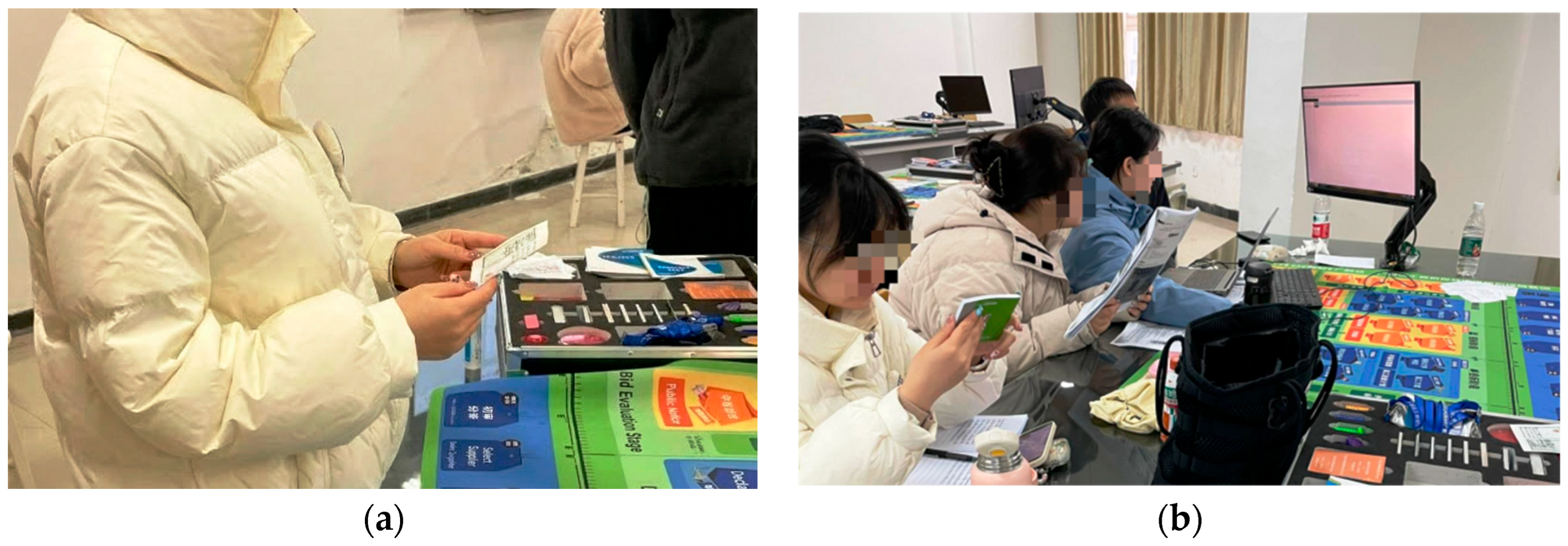
This study focuses on the bidding and tendering business process, and uses a sand table simulation teaching method to carry out teaching activities. The instructional design involves both in-class and extracurricular activities, as well as students’ learning and daily life, emphasizing the integration of environmental awareness and sustainability into the teaching. The teaching practice lasts for 16 weeks, with 2 h of classroom instruction and 2 h of self-study each week. The first week is conducted in a dedicated classroom, and from the second week onwards, sessions are held in the training room, alternating between the training room in odd weeks and the dedicated classroom in even weeks. The specific teaching schedule is shown in Table 3. The teaching starts from the development of capabilities such as legal application, document preparation, cost control, problem solving, and teamwork, with a focus on honing professional qualities, awareness of sustainable development, and green environmental concepts. The effectiveness of the sand table simulation teaching method in cultivating vocational students’ sustainable practical competencies is measured through multiple dimensions and methods, including classroom observation, simulated exercises, teamwork, peer and self-evaluation, teacher evaluations, and performance tests. This study adheres to a student-centred and action-oriented approach, emphasizing empowering the research of engineering bidding sand table simulation teaching through project- and task-driven methods, role playing, and team collaboration. Students personally experience the bidding process and dynamically perceive professional operations such as bid opening, bid evaluation, bid determination, and risk identification, while gaining an understanding of the skills required to integrate green and sustainable concepts into professional practice. For example, in the bid evaluation segment, student groups simulate roles such as host, tendering party, bidding party, and evaluation committee based on green and sustainable evaluation rules, conducting interactive exercises. Through immersive role playing experiences, students understand the responsibilities of each role and learn through interaction, thereby enhancing their sustainable literacy and practical ability. Some implementation cases are shown in Figure 1.
Through contextualised and practice-oriented instructional design, students gradually build learning confidence, stimulate interest and intuitive understanding of bidding and tendering operations, and thereby master the essential knowledge, key skill points, and sustainable awareness and abilities required for the job through hands-on practice. In addition, the instructional design follows an integrated cyclical development approach of “learning, thinking, practicing, and realising,” which is embedded in every classroom lesson and extracurricular extension activity. It clarifies the core activities and role positioning of teachers and students at each stage, promoting a spiralling growth in students’ knowledge, abilities, and overall competence, achieving sustainable career development. Some instructional design cases are shown in Table 4. During the design process, the following principles are emphasised: meticulous design of teaching content, student action as the primary driver, ensuring the operability of sand table simulations and the authenticity of the simulated environment, and promoting the long-term development of students’ competencies. Finally, by comparing data from questionnaires and test scores, and combining this with observed changes in students’ actions during the research process, the effectiveness of students’ sustainable practical competencies after the implementation of the sand table simulation teaching method is analysed.

3.5. Data Collection and Questionnaire Design

The questionnaire design derives from secondary vocational education’s talent cultivation objectives and the competency requirements for sustainable development education, which integrate the specific instructional aims of this course and the cognitive characteristics of secondary vocational students, following comprehensive literature review [13,14,15,16,17,18,19,20,24,35]. The design of the questionnaire points to the integration of knowledge, skills, values and actions required by sustainable practical ability [4], and systematically interprets the talent training concept of “knowledge, emotion, intention and action” in secondary vocational education. It covers multiple dimensions, including students’ internal and external factors and sustainability, taking into account not only students’ learning attitudes but also their mastery of knowledge and skills, problem-solving abilities, and awareness and literacy in sustainable development. The questionnaire items were designed by referencing questionnaire designs from scholarly papers by Pavan K. [32], Li X. et al. [51], Redman A. et al. [52], Chan C.K.Y. et al. [53], and others. These items were finalised after summarizing and refining them based on the key focuses of course competency development and sustainability requirements. In order to ensure the comprehensiveness and scientific rigor of the questionnaire, the questionnaire was reviewed and verified by five expert groups [54], and a pre-survey was conducted. The questionnaire is divided into a pre-test and a post-test, with the question dimensions remaining largely consistent. It uses a five-point Likert scale, where each question has five options, and respondents are asked to rate the extent to which the description applies to them on a scale of 1 to 5, with the values assigned as follows: ‘Totally Disagree = 1; Disagree = 2; Neutral = 3; Agree = 4; Totally Agree = 5.’ As shown in Table 5, the questionnaire consists of four dimensions and 17 indicators. The learning attitude dimension includes learning interest, engagement, attention, and learning efficacy; the professional knowledge and skill mastery dimension considers six indicators, including awareness and literacy in sustainable practices, mastery of professional knowledge, and green document preparation skills; the team collaboration and problem-solving dimension enriches the measurement of sustainable practice ability. In addition, guided by the standards for bidding courses, basic knowledge points related to sustainable practice abilities in bidding were selected. A basic bidding knowledge test was developed to assess students’ foundational professional knowledge.
All participants completed questionnaires and test papers, and the collected data were analysed using IBM SPSS Statistics 27.0 software (IBM Corporation, Armonk, NY, USA). The questionnaire included 30 items. To ensure the internal consistency of the scale, data from 40 valid samples were used to calculate the scale’s Cronbach’s alpha value for internal consistency testing. The Cronbach’s alpha value was 0.979, indicating good measurement reliability. The KMO coefficient was 0.801, with a significance level of (p ≤ 0.001), indicating a strong correlation between the variables and the suitability for factor analysis, and the data analysis among the measured factors was statistically significant.

3.6. Data Analysis

This study used the paired sample t-test method for data analysis. The paired sample t-test is a statistical method used to examine whether the mean difference in two measurements of the same group of subjects is significant [55]. This method can effectively test the significant relationship between the pre-test and post-test data of various indicators in the sample. However, before conducting the test, several assumptions of the paired dependent sample t-test were first checked. First, the dependent variable was measured at the interval level, and pre-test and post-test scores were obtained using the same instrument, resulting in continuous data. Second, dependent observations were used, meaning that each participant had two matched or paired scores (pre-test and post-test). Third, the normality of the data and outliers were examined. Since the differences in scores between the two related measurements were normally distributed and did not contain any significant outliers (skewness and kurtosis values were close to zero, the Shapiro–Wilk test statistic was greater than 0.05, histograms showed a normal distribution, and there were no outliers), the data met the conditions for a parametric test and could be analysed using the paired sample t-test.

4. Results

4.1. Descriptive Analysis of the Paired Samples

The descriptive statistical analysis results of each dimension before and after the two sets of tests are shown in Table 6. Higher mean scores indicate better learning status among students, while smaller standard deviations (SD) indicate smaller differences between students. Before the teaching experiment, the mean scores for students’ learning attitude, mastery of professional knowledge and skills, teamwork ability, and problem-solving ability were 20.725, 32.075, 13.850, and 11.600, respectively. After the experiment, the mean scores were 37.800, 49.350, 20.475, and 21.600, respectively. Comparing the pre- and post-test mean scores of the two groups, it can be seen that the post-test scores were higher than the pre-test scores, indicating that after the sand table simulation teaching, students’ attitudes toward learning bidding knowledge improved significantly, their mastery of professional knowledge and skills increased notably, and their teamwork and problem-solving abilities were continuously enhanced, effectively improving students’ sustainable practice ability. The comparison of SD across dimensions also shows that the SD of all four dimensions decreased to varying degrees, such as learning attitude (pre-test: SD = 7.324; post-test: SD = 5.962), indicating that students who had poor learning status before participating in the experiment also made significant progress and improved their overall abilities. In conclusion, the results of this study indicate that at the beginning of the course, students’ total sustainable practice ability was at a medium level (M = 68.250). After the sand table simulation teaching experiment, students’ sustainable practice ability further developed, reaching a relatively high level (M = 129.225).
This study also conducted descriptive statistical analysis of students’ test scores before and after the intervention. As shown in Table 7, the mean pre-test score was 73.27, while the mean post-test score was 82.38, an overall increase of about 9 points. Looking at the standard deviation (post-test = 16.598 < pre-test = 22.703), this indicates that after using the sand table simulation method for teaching, each student participating in the experiment showed significant improvement in professional knowledge of engineering bidding, and their awareness of sustainable practical competencies increased.

4.2. Paired Sample Significance Analysis

The effect size (Cohen’s d value) of this study was 2.201. The Cohen’s d value represents the size of the effect, with conventional thresholds for small, medium, and large effects being 0.20, 0.50, and 0.80, respectively. A Cohen’s d value greater than 0.8 indicates a very large effect [55]. This further suggests that there is a significant difference in the sustainable practice ability test scores of vocational students before and after the intervention. The detailed analysis is as follows: as shown in Table 8, in terms of learning attitude (p = 0.000 < 0.05; t = −12.915), there was a significant difference in students’ learning attitudes before and after the sand table simulation practice teaching, indicating a positive and proactive change in their learning attitudes. Regarding mastery of professional knowledge and skills (p = 0.000 < 0.05; t = −8.028), there was a significant difference between the pre-test and post-test in students’ mastery of professional knowledge and skills, demonstrating that sand table simulation teaching has a significant effect on improving students’ professional knowledge and skills. In terms of teamwork and problem-solving abilities (p = 0.000 < 0.05; t = −21.021, t = −20.824), the results showed significant differences in these abilities before and after the experimental study. Sand table simulation teaching effectively cultivated students’ teamwork and problem-solving skills, which improved significantly compared to before the intervention. Looking at the paired sample t-test results for the overall pre- and post-tests, the mean difference was 60.97, with a 95% confidence interval for the difference ranging from a lower limit of 52.113 to an upper limit of 69.837, t = 13.918, and significance (two-tailed) p = 0.000 < 0.05. This indicates that at the 5% significance level, there is a significant difference in the students’ status and sustainable practice ability in engineering bidding before and after sand table simulation teaching. In other words, after sand table simulation teaching, vocational students showed significant improvement in their understanding of bidding and sustainable practice ability.
Cohen’s d is calculated by taking the mean of the paired differences and dividing it by the sample standard deviation of the paired differences. The equation is shown in (1):
Cohen’s d = Mean Difference/Standard Deviation of Differences = MD/SD = 60.975/27.709 = 2.201
The researchers also conducted a paired-sample t-test on the students’ test scores before and after implementing the sand table simulation teaching experiment, with the aim of analysing whether the engineering bidding and tendering sand table simulation teaching, which incorporates the concepts of green sustainable development and skill requirements, could have a positive impact on the participants’ performance as expected. The results are shown in Table 9. From the data in the table, it can be seen that the significance probability value p = 0.000 < 0.05, indicating that the sand table simulation teaching of engineering bidding and tendering, integrated with green sustainable development concepts and skill requirements, has a significant effect on the students’ performance. After a period of sand table simulation-based teaching, students’ professional knowledge and sustainable practical competencies in engineering bidding and tendering have clearly improved.

5. Discussion

This article studies how the sand table simulation teaching method cultivates the sustainable practical ability of secondary vocational students, and how it affects the sustainable practical ability of students in the secondary vocational education environment. This paper explores whether and how the sand table simulation pedagogy, through empirical research grounded in an integrated “learning–thinking–action–understanding” cyclical instructional design, can enhance the sustainable practice capabilities of secondary vocational students. In this study, student participants arouse the perceptual experience of learning engineering bidding professional knowledge. The data analysis results from 40 secondary vocational students and their action changes during the teaching experiment answered our research questions, indicating that the sand table simulation teaching method is regarded as an effective way to improve their sustainable practical ability in our engineering bidding and contract management course. This study adheres to the student-centred, action-oriented, focusing on the use of project + task-driven, role playing, teamwork and other forms of empowerment engineering bidding sand table simulation teaching research, and project/problem-oriented learning. The teaching method is the conclusion of the optimal ranking of sustainable development education to cultivate sustainable ability [14]. In addition, using sand table simulation as a carrier of sustainability-related capabilities, combined with the characteristics of professional courses, the system integrates sustainable concepts such as green procurement and full life cycle cost analysis to construct a teaching framework. This research enables participants to understand how to introduce sustainability concepts into engineering bidding courses and what activities can be carried out to improve sustainable practical ability. Compared with Huang R.X., et al. [17] used the value-based education method to be more perfect, focusing on the situational and practical teaching framework. Through 16 weeks of teaching practice, the study found that the sand table simulation teaching method and the AOP [24] have the same effect on improving students’ sustainability, cultivating comprehensive practical skills and problem-solving ability. However, the sand table simulation teaching method is more flexible and can be used in a variety of teaching methods, such as project teaching method, situational teaching method and AOP. In addition, through research and verification, based on the “learning–thinking–action–understanding” integrated circular teaching design, the project bidding sand table simulation teaching, which organically integrates the sustainable development goals, circular economy concepts and social responsibility consciousness with professional skills teaching, can enable students to gradually form a sustainable concept of practice in the process of professional knowledge learning, and effectively improve the practical skills of secondary vocational students. This “situation-immersion, role experience, reflection, sublimation” teaching model broadens the range of applications for sustainable teaching methods and aligns with existing research theories [14,15,18,56,57].

5.1. The Mechanism and Effect of the Sand Table Simulation Teaching Method in Cultivating Sustainable Practical Ability

Nowadays, sustainable skills talents are essential human resources required for social intelligentisation and sustainable development, with a significant shortage in the workforce. Accelerating the integration of sustainability into educational curricula across all levels is crucial in line with the key strategic objectives of Education for Sustainable Development [58].
This study, through empirical research methods, explored the impact of the sand table simulation teaching method on the sustainable practice abilities of secondary vocational students, which is an important topic with time value. The results indicate that the sand table simulation teaching method has a significant positive effect on improving students’ learning attitudes, mastery of professional knowledge and skills, teamwork abilities, and problem-solving skills, with a large effect size (Cohen’s d = 2.201), suggesting that this method substantially promotes the development of sustainable practice abilities in secondary vocational students.
The results of this study show that after completing the sand table simulation teaching, students’ overall sustainable practice ability scores increased from 68.250 in the pre-test to 129.225 in the post-test, with significant growth observed across all dimensions. This finding is similar to those of Tsai, H.P. et al. [40] and Weinberg, A.E. et al. [24]. The “learning–thinking–practicing–seeing” integrated teaching framework designed in this study is consistent with the key capacity framework for sustainable development emphasized by UNESCO [20]. This framework emphasises systematic thinking, strategic ability, and collaborative ability. It also aligns with the comprehensive skills framework proposed by Wiek et al. to address complex sustainability issues [13]. The sand table simulation, by creating a highly realistic engineering bidding scenario, enables students to naturally integrate sustainable concepts (such as green procurement and lifecycle cost analysis) into professional decision-making through a cycle of “learning, thinking, acting, and reflecting,” thereby achieving a coupled unity of ‘knowledge, emotion, intention, and action.’ This is consistent with the teaching philosophy advocated by Evans T.L., which addresses complex, systemic challenges through participation in real situations [14]. It demonstrates that sustainable teaching involves more than just the transfer of knowledge; it also requires a fundamental change in worldview and behaviour.
Existing research has shown that sand table simulation has significant advantages in enhancing students’ comprehensive practical competencies. For example, authors such as Bubany, S. T., and Krieshok, T. S. have noted that sand table interventions can effectively improve career decision-making skills and optimise the decision-making process [59]; Molina and others confirmed through a digital sand table teaching project its effectiveness in improving students’ learning performance [41]; Xiaolan, H. et al. indicated that sand table simulation teaching can effectively improve the practical and decision-making abilities of students majoring in management from vocational schools [60]; Other scholars have also constructed a four-in-one training model integrating “theoretical instruction, simulation practice, competition participation, and entrepreneurial implementation” to improve students’ practical innovation and entrepreneurial skills [61]. Building on this, the present study applies the sand table simulation teaching method to the vocational course “Engineering Bidding and Contract Management” and explicitly incorporates the SDGs and green skill requirements, thereby expanding the empirical support of this method in cultivating sustainable practical competencies. Notably, through the teaching cycle of “role playing, scenario simulation, and reflective review,” students not only mastered bidding skills but also internalised a sense of responsibility for resource conservation and environmental friendliness. This aligns with students’ expectations to enhance sustainability and interactive teaching in the course [23], and is consistent with the “action competence” development path emphasised by Mogensen and Schnack [19].
Sustainable practical ability should be fostered throughout the integrated process of instruction, learning, and assessment, a development supported by the principles of participatory experience theory [62]. The instructional experimental design of this study fully embodies the vocational education teaching philosophy of “student-centred and action-oriented,” which is highly consistent with the human-centred, learner-centred educational philosophy of education for sustainable development that emphasises contextual and practical learning [56]. Through a 16-week structured sustainable teaching activity, students gradually develop system thinking, teamwork, and problem-solving skills through simulated tasks. This “learning by doing” model aligns with Germany’s ‘action-oriented’ educational philosophy and echoes the reform direction of integrating jobs, courses, competitions, and certifications in vocational education in China [63,64]. The research results further validate the applicability and effectiveness of sand table simulation in secondary vocational education, particularly in practice-intensive majors such as engineering and management, where realistic vocational scenarios can effectively bridge the gap between theory and practice. Moreover, this study employs a multi-source validation approach that utilises questionnaires, interviews, observations, and practical assessments, which enhances the credibility of its findings while offering a methodological reference for similar pedagogical investigations.
In summary, this study demonstrates through empirical data that the sand table simulation teaching method can significantly enhance the sustainable practice abilities of vocational high school students. This method, through contextualised, interactive, and reflective learning experiences, not only promotes the development of students’ professional knowledge and comprehensive qualities but also facilitates the deep integration of their awareness and ability for sustainable development. In the context of deepening vocational education reforms and advancing the “dual carbon” goals, the sand table simulation teaching method offers a feasible path for teaching innovation in vocational education, holding significant practical value and promotion significance for cultivating high-quality technical and skilled talents who meet the requirements of sustainable development.

5.2. Implications for Practitioners

This 16-week empirical study demonstrates the practical value of sandbox simulation pedagogy for engineering bidding and procurement education. This study systematically incorporates sustainability concepts, such as green procurement and whole life cycle cost analysis, by constructing an integrated “learning–thinking–practicing–reflecting” instructional cycle framework grounded in sustainable education objectives and aligned with course characteristics and professional training requirements. Implementing sandbox simulations in engineering bidding and procurement instruction effectively enhances vocational school students’ sustainable practice capabilities and internalises their sustainability literacy. The findings also offer meaningful insights for current engineering bidding instruction in secondary vocational schools. Based on the implementation process, the researcher summarises and reflects on the study, deriving pedagogical implications primarily from the research findings and teaching experience.

5.2.1. Combined with the Characteristics of Secondary Vocational Students, Refine the Teaching Content, Build Sustainable Teaching Design

Secondary vocational students are the future shapers of the sustainable world. In teaching, more time, energy and patience are needed to shape students’ new characters (sustainability, literacy and values, etc.). In the process of carrying out the research, it is found that the students have an obvious characteristic, like hands-on, lack of reflection. This leads to their fear of difficulties in the face of tedious and theoretical teaching content. At the same time, it is also observed that most students are not strong enough in learning willpower and have limited learning attention. Therefore, when teaching, educators should integrate content according to secondary vocational students’ characteristics, flexibly use multidimensional teaching tools, and utilise various resources. Additionally, teachers should optimise their teaching designs dynamically and guide students in cultivating their reflective abilities. This requires teachers to adopt a student-centred, action-oriented approach that breaks the traditional linear model of “knowledge indoctrination-skill practice” and builds sustainable instructional design. The application of sand table simulation teaching method based on the integrated teaching design of “learning–thinking–action–enlightenment” in the teaching of engineering bidding not only makes abstract and boring knowledge easy to be understood and mastered by students, but also increases students ‘interest and participation in learning, arouses students ‘perceptual experience of learning engineering bidding knowledge, and cultivates students ‘reflective critical ability and practical ability in action learning. Therefore, teachers should consider the characteristics of vocational school students when refining instructional content, selecting teaching methods, and integrating teaching resources and subject matter. This approach enables the creation of sustainable instructional designs based on the four-phase, scaffolded model of “contextual introduction–critical analysis–hands-on practice–reflective synthesis,” thereby fostering effective, sustainable learning environments for students. This design shifts vocational students from passive recipients to active constructors of knowledge, promoting the simultaneous development of professional expertise, practical skills, and sustainability literacy.

5.2.2. Combined with the Characteristics of the Course, Innovative Teaching Methods, and Rich Sustainable Inquiry Activities

Any teaching method needs to be validated in practice, because the same teaching methods may yield different results across different contexts. In secondary vocational education, it is essential to fully understand and consider the learning characteristics of vocational students. Equally important is integrating these insights with the distinctive features of the curriculum. A thorough interpretation of the curriculum standards and familiarity with the course attributes will facilitate teaching implementation and foster innovation in instructional methods. Prior to the implementation of engineering bidding and tendering instruction, this study undertook substantial preparatory work in this regard. Furthermore, grounded in the philosophy of sustainable education development, an extensive review of literature on “sustainability-plus” was conducted. Based on an in-depth understanding of the connotations of sustainability-plus—including sustainable education, sustainable competencies, and sustainable development—the research question of how to cultivate sustainable practical abilities was formulated. The emergence of this question marked the beginning of the innovation process. Through iterative cycles of reflection, action, analysis, and rethinking centred on this problem, the sand table simulation teaching method was systematically selected as the approach for conducting practical instructional research on engineering bidding and tendering. This study integrates project- and task-driven teaching methods, role playing, and teamwork. It uses the teaching mode of “sand table simulation + sustainable concept” to organically integrate abstract sustainability knowledge and operational skills. This cultivates students’ sustainable literacy and ability to practice sustainability. Through the reflection on teaching practice, the concept of sustainability should be naturally embedded in professional instruction and accurately integrated into professional scenarios, so that abstract concepts can be transformed into practical skills. Due to their general lack of interest in theoretical knowledge, secondary vocational students tend to prefer hands-on operation and learning by doing. Therefore, it is necessary to enrich sustainable inquiry activities in teaching, with the aim of attracting students’ attention to sustainability-oriented tasks and mobilizing their initiative and enthusiasm for learning. Methods such as task-driven learning, action-oriented approaches, discussions, role playing, and group cooperative inquiry can be adopted. During the process of sustainable inquiry activities, teachers, acting as guides and designers, should provide appropriate guidance and direction. It should be noted that sustainable inquiry activities need to be organised according to the nature of the profession and the characteristics of the course.

5.2.3. Establish a Multi-Evaluation Method, Take Root in School–Enterprise Cooperation, and Revitalise Sustainable Education Elements

The purpose of evaluation is to promote development. It is important to establish a multi-evaluation method. Pluralism refers to multi-dimensional, multi-method, and multi-subject evaluations in teaching activities. In the process of team cooperation exploration, for example, self-evaluation and mutual evaluation standards are established to organise self-evaluation and mutual evaluation among group members. This promotes mutual supervision and common progress among students and guides them toward self-improvement. At the same time, a scientific and reasonable teaching evaluation system helps teachers further improve their methods. This study adopts a multi-evaluation system of “self-evaluation + group mutual evaluation + teacher comments + practical evaluation,” which pays attention not only to the achievement of professional skills but also to the quantification of sustainable literacy improvement, focusing on process evaluation and the visual design of abilities. As an educational model aimed at cultivating skills and professional competencies, deepening the integration of industry and education is the lifeline for advancing vocational education. Establishing strong school–enterprise partnerships serves as a crucial pathway for the sustainable development of vocational education. It is essential to actively collaborate with industry enterprises by introducing real-world green project cases, specialised sandbox teaching tools, and technical support, as this enhances the authenticity and professionalism of teaching. Research in teaching practice reveals that the cultivation of sustainable practical abilities is not an instant process but requires repeated and long-term interventions. Therefore, in alignment with the integration requirements of “post-course–competition–certificate,” incorporating sustainable practical abilities into the assessment indicators for vocational skill level certificates can promote the long-term consolidation of students’ sustainable competencies and their application in professional settings. Simultaneously, leveraging all sustainable educational elements enables lifelong cultivation.

6. Conclusions

This study systematically demonstrated, through a 16-week teaching experiment and multi-source data validation, the efficacy of sand table simulation pedagogy in cultivating sustainable practical abilities within secondary vocational engineering bidding courses, and the following represent its most significant contributions and insights:
  • The teaching mode of “sand table simulation + sustainable concept” is constructed and verified. Through the teaching loop of “situational immersion role experience-reflective enhancement,” students not only significantly improve their bidding practical skills, but also internalise their environmental awareness, resource optimisation and social responsibility, reflecting the sustainable education goal of “knowledge, emotion, intention, and behaviour”. This model is an effective teaching design that aligns with vocational education development and SDGs, worthy of further promotion in secondary vocational education.
  • It expands the application scope and theoretical connotation of sand table simulation teaching method. This study extends sand table simulation from traditional management courses to engineering bidding teaching, and systematically integrates it into SDGs, providing empirical support and replicable paths for the teaching reform of engineering secondary vocational courses. This expansion enriches the theoretical system of vocational education teaching innovation, offering a valuable reference for subsequent related research and practice.
  • It provides a practical basis for implementing the Sustainable Education Strategy and green skills training in secondary vocational education. Research shows that sand table simulation effectively bridges the gap between theory and practice, as well as between professional skills and sustainable literacy. It helps cultivate compound talent with technical ability and competence in sustainable development, which is consistent with the core requirements of SDGs and the development direction of modern vocational education, and is worthy of wide application in relevant teaching scenarios.

Limitations of This Study and Suggestions for Future Research

One of the main limitations of this study is its small sample size and limited sampling source. The samples were taken from only 40 students at a secondary vocational school, which may affect the representativeness of the study. Additionally, while most secondary vocational schools offer the core course “Project Bidding and Contract Management,” sand table simulation teaching integrated with the concept of sustainability is still an innovative teaching method. Due to limited teaching resources and conditions, the scale and depth of relevant practice are limited. Future research can expand the sample range and improve the effectiveness and universality of this study by conducting larger-scale research in different regions and multiple secondary vocational schools. This study used a single-group pre-test-post-test design combined with multi-source data collection, including interviews and classroom behavioural observations, to explore the impact of the sand table simulation teaching method on the sustainable practical abilities of secondary vocational students. However, the lack of a control group may weaken causal inference and limit the applicability of the results. In future research, a pre-test and post-test experimental design with a control group can improve the reliability, validity, and generalizability of the results. In addition, the current research focuses on the effect of a 16-week short-term teaching intervention and does not evaluate the long-term maintenance of students’ abilities and behaviour. Cultivating sustainable practical ability is an ongoing process of internalisation and repeated construction. The long-term effectiveness of this approach in real career scenarios still needs to be verified by further longitudinal research.
Finally, in order to cultivate the sustainable practical ability of secondary vocational students in a more comprehensive, three-dimensional and efficient way. Future research could integrate intelligent technologies such as VR and digital twins to further deepen the immersion and interactivity of sand table simulations. For example, as Chandramouli and others have demonstrated in GIS education with desktop VR and CAVE technologies [65], these approaches can more effectively support the cultivation of complex system thinking and green innovation capabilities. In the future, we will further explore the construction of a “Wisdom” project bidding and table simulation teaching platform based on an integrated cycle of “learning, thinking, action and understanding”, with the aim of realising lifelong cultivation and dynamic tracking evaluation of sustainable practical capabilities.
Despite its limitations, this study is pioneering and has contributed to the existing body of literature. It yields important reference results for researchers, vocational educators, and curriculum experts on cultivating the sustainable practical capabilities of secondary vocational students, while concurrently providing valuable empirical evidence and innovative design frameworks for related pedagogical reforms. Future researchers are encouraged to conduct further research into sustainable teaching methods and sustainable practical ability training in secondary vocational education. Secondary vocational students are the future shapers of a sustainable world.

Author Contributions

B.Y.: Writing—Original Draft, Investigation, Methodology, Resources. F.W.: Writing—review and editing, Project administration, Investigation, Funding acquisition. S.D.: Investigation, Methodology, Resources. J.W.: Writing—review and editing, Investigation, Software. Q.Z.: Writing—review and editing, Methodology, Resources. H.H.: Writing—review and editing, Methodology, Resources. X.W.: Investigation, Methodology, Resources. J.J.: Investigation, Methodology, Software. Y.C.: Investigation, Methodology, Software. P.L.: Investigation, Methodology, Software. All authors have read and agreed to the published version of the manuscript.

Funding

This research was funded by the 2024 Guizhou Provincial Graduate Research Fund Project (no. 2024YJSKYJJ175); the 2024 Major Undergraduate Teaching Research Project of Guizhou Normal University (no. 2024-XZD-ZX-05); the 2025 Special Research Project on Educational Digitalization of Guizhou Normal University (no. 2025XJZX29) and the 2023 Teaching Content and Curriculum System Reform Project of Guizhou Normal University (no. 2023XJJG01).

Institutional Review Board Statement

Ethical review and approval were waived for this study as it does not involve any personally identifiable information.

Informed Consent Statement

Informed consent was obtained from all subjects involved in the study.

Data Availability Statement

Some or all data, models, or code that support the findings of this study are available from the corresponding author upon reasonable request.

Acknowledgments

The authors would like to extend their sincere appreciation to the reviewers and editors for their valuable contributions in enhancing the quality of this paper. And we thank the valuable practical resources and teaching conditions provided by the vocational schools with which we collaborated. We would also like to express our sincere gratitude to our university for its comprehensive support in terms of research.

Conflicts of Interest

The authors declare no conflicts of interest.

Abbreviations

The following abbreviations are used in this manuscript:
SDGsSustainable Development Goals
SDstandard deviations
VRvirtual reality
ESDGEducation for Sustainable Development Goals
AOPaction-oriented teaching method

Appendix A

Table A1. Some Scale Items from the questionnaire.
DimensionScale Item
Learning attitude1. I’m particularly interested in the bidding and tendering course that incorporates sustainable concepts such as green procurement and life cycle cost.
4. I can actively think and try to integrate the concept of sustainability into decision-making in the simulation teaching.
Proficiency in professional knowledge and skills7. Through sand table simulation training, I have developed a stronger awareness of sustainable practices and acquired professional competencies in sustainable bidding and tendering.
14. I am capable of independently preparing tender documents that meet sustainability requirements.
Teamwork skills16. During group discussions, I can clearly articulate my views on sustainable bidding.
19. When team members disagree on environmental regulations, I can help mediate and coordinate discussions.
Problem-solving ability22. When handling complex bidding cases, I can pinpoint sustainability-related key issues.
30. This course has equipped me with the knowledge and skills to promote green bidding practices in my actual work.
Table A2. Information table of experts involved in the study.
CodingTitle/PositionWork SeniorityAcademic BackgroundWork in Research
AProfessor, doctoral supervisor20-yearDoctor of Engineering ManagementThe main research directions are the dynamic management of the whole life cycle of the project, the dynamic control of the cost and the planning of the sustainable project. Guide the course teaching design, participate in interviews and questionnaire review.
BProfessor, Master’s Supervisor15-yeardoctor of educationIt mainly studies the reform of teaching methods in secondary and higher education. Guide teaching implementation, course teaching design, participate in interviews and questionnaire review.
Centerprise engineer13-yearmaster of civil engineeringThe research direction is green technology development and implementation research. Guide teaching implementation and curriculum design, participate in sand table simulation exercise evaluation, participate in interviews and questionnaire review.
DEnterprise technical consultant5-yearMaster of Engineering CostIt is mainly responsible for the development and research of measurement and pricing software, engineering drawing software, electronic bidding simulation platform and so on. Provide technical services and participate in simulation evaluation.
ESecondary vocational senior lecturer20-yearMaster of Engineering CostDedicated to the teaching and research work of secondary vocational education, pay attention to the integration of theory and practice, project-based teaching, situational simulation teaching and other research. Assist in teaching observation, student behaviour recording and evaluation, etc., participate in interviews and questionnaire reviews.

References

  1. Transforming Our World: The 2030 Agenda for Sustainable Development; Resolution Adopted by the General Assembly on 25 September 2015. Available online: https://www.un.org/sustainabledevelopment/ (accessed on 4 November 2025).
  2. Kyle, W.C. Expanding Our Views of Science Education to Address Sustainable Development, Empowerment, and Social Transformation. Discip. Interdscip Sci. Educ. Res. 2020, 2, 2. [Google Scholar] [CrossRef]
  3. Odoom, D.; Mensah, E.O.; Dick-Sagoe, C.; Lee, K.Y.; Opoku, E.; Obeng-Baah, J. Examining the Level of Public Awareness on the Sustainable Development Goals in Africa: An Empirical Evidence from Ghana. Environ. Dev. Sustain. 2023, 26, 6221–6238. [Google Scholar] [CrossRef]
  4. Chankseliani, M.; McCowan, T. Higher Education and the Sustainable Development Goals. High. Educ. 2021, 81, 1–8. [Google Scholar] [CrossRef]
  5. Cebrián, G.; Junyent, M.; Mulà, I. Current Practices and Future Pathways towards Competencies in Education for Sustainable Development. Sustainability 2021, 13, 8733. [Google Scholar] [CrossRef]
  6. Gu, L. Research on the Articulation between Secondary and Higher Vocational Education Based on the ‘Progressive Ability’ Main Line. Educ. Vocat. 2013, 26–27. [Google Scholar] [CrossRef]
  7. Perkins, D. Future Wise: Educating our Children for a Changing World; John Wiley & Sons: Hoboken, NJ, USA, 2014. [Google Scholar]
  8. Lambrechts, W.; Mulà, I.; Ceulemans, K.; Molderez, I.; Gaeremynck, V. The Integration of Competences for Sustainable Development in Higher Education: An Analysis of Bachelor Programs in Management. J. Clean. Prod. 2013, 48, 65–73. [Google Scholar] [CrossRef]
  9. Munasi, K.R. Evaluating the Integration of Education for Sustainable Development in the Life Sciences Curriculum: A Case Study of Grade 11 Teachers in Vhembe East District. Sustainability 2024, 16, 10918. [Google Scholar] [CrossRef]
  10. Efe, H.; Umdu Topsakal, Ü. Let’s Take the Pulse of the Classroom on Sustainability! An Exploratory Study on Student Views and Teacher Solution Suggestions Regarding Sustainable Development Goals. Sustainability 2025, 17, 5095. [Google Scholar] [CrossRef]
  11. Mulder, K.F.; Segalàs, J.; Ferrer-Balas, D. How to Educate Engineers for/in Sustainable Development: Ten Years of Discussion, Remaining Challenges. Int. J. Sustain. High. Educ. 2012, 13, 211–218. [Google Scholar] [CrossRef]
  12. Guo, M.; Xiong, X.; Zeng, L. Research on the Cultivation Model of Science and Engineering Undergraduates with ‘Practice’ as the Core. Lab. Res. Explor. 2021, 40, 203–207+212. [Google Scholar] [CrossRef]
  13. Wiek, A.; Withycombe, L.; Redman, C.L. Key Competencies in Sustainability: A Reference Framework for Academic Program Development. Sustain. Sci. 2011, 6, 203–218. [Google Scholar] [CrossRef]
  14. Evans, T.L. Competencies and Pedagogies for Sustainability Education: A Roadmap for Sustainability Studies Program Development in Colleges and Universities. Sustainability 2019, 11, 5526. [Google Scholar] [CrossRef]
  15. Caldana, A.C.F.; Eustachio, J.H.P.P.; Lespinasse Sampaio, B.; Gianotto, M.L.; Talarico, A.C.; da Silva Batalhão, A.C. A Hybrid Approach to Sustainable Development Competencies: The Role of Formal, Informal and Non-Formal Learning Experiences. Int. J. Sustain. High. Educ. 2021, 24, 235–258. [Google Scholar] [CrossRef]
  16. Krüger, C.; Pennabel, A.F.; de Oliveira, M.S.B.; Guimarães, F.H.C.B.; Caldana, A.C.F. Model for Fostering Competencies for Sustainable Development in HEI: Human Resources as Drivers of the Process. Int. J. Manag. Educ. 2025, 23, 101238. [Google Scholar] [CrossRef]
  17. Huang, R.X.; Pagano, A.; Marengo, A. Values-Based Education for Sustainable Development (VbESD): Introducing a Pedagogical Framework for Education for Sustainable Development (ESD) Using a Values-Based Education (VbE) Approach. Sustainability 2024, 16, 3562. [Google Scholar] [CrossRef]
  18. De Haan, G. The BLK ‘21’ Programme in Germany: A ‘Gestaltungskompetenz’-based Model for Education for Sustainable Development. Environ. Educ. Res. 2006, 12, 19–32. [Google Scholar] [CrossRef]
  19. Mogensen, F.; Schnack, K. The Action Competence Approach and the ‘New’ Discourses of Education for Sustainable Development, Competence and Quality Criteria. Environ. Educ. Res. 2010, 16, 59–74. [Google Scholar] [CrossRef]
  20. UNESCO. Education for Sustainable Development Goals: Learning Objectives; UNESCO: Paris, France, 2017; ISBN 978-92-3-100209-0. [Google Scholar]
  21. Bari, N.; Chimhundu, R.; Chan, K.C. Interrelation between Sustainable Dynamic Capabilities, Corporate Sustainability, and Sustained Competitive Advantage. Sustainability 2024, 16, 2864. [Google Scholar] [CrossRef]
  22. Bukhari, S.A.; Jain, M.P. Sustainable Practices and Green Competencies: Insights from Hotel Industry. Int. J. Health Sci. 2022, 6, 5122–5130. [Google Scholar] [CrossRef]
  23. Kocot, M.; Kwasek, A.; Mathea, G.; Kandefer, K.; Soboń, D. Students’ Expectations Regarding the Achievement of Educational Outcomes in Terms of Knowledge, Practical Skills, and Social Competencies as Determinants of Sustainable Education. Sustainability 2024, 16, 1263. [Google Scholar] [CrossRef]
  24. Weinberg, A.E.; Jordan, M.E.; Jongewaard, R. “Real Work, Real Consequences”: An Action-Oriented Pedagogies (AOP) Framework for Sustainability Education in K-12 Classrooms. Sustain. Sci. 2024, 19, 2027–2040. [Google Scholar] [CrossRef]
  25. Kamp, L. Engineering Education in Sustainable Development at Delft University of Technology. J. Clean. Prod. 2006, 14, 928–931. [Google Scholar] [CrossRef]
  26. Jeong, S.; Elliott, J.B.; Feng, Z.; Feldon, D.F. Understanding Complex Ecosystems Through an Agent-Based Participatory Watershed Simulation. J. Sci. Educ. Technol. 2022, 31, 691–705. [Google Scholar] [CrossRef]
  27. Lu, S. ERP Curriculum Innovation System Based on Big Data and Information Technology. J. Phys. Conf. Series. 2020, 1574, 012100. [Google Scholar] [CrossRef]
  28. Hwang, W.-Y.; Wu, T.-H.; Shadiev, R. Applications of Reciprocal Teaching in Flipped Classroom to Facilitate High Level of Cognition for Sustainable Learning Practices. Sustainability 2023, 15, 5848. [Google Scholar] [CrossRef]
  29. Thürer, M.; Tomašević, I.; Stevenson, M.; Qu, T.; Huisingh, D. A Systematic Review of the Literature on Integrating Sustainability into Engineering Curricula. J. Clean. Prod. 2018, 181, 608–617. [Google Scholar] [CrossRef]
  30. Javed, H.; Du, J.; Farooq Islam, M. Unpacking Organizational Capabilities and Green Innovation for Sustainable Performance: The Role of Environmental Regulations in Manufacturing Industry. J. Clean. Prod. 2025, 507, 145453. [Google Scholar] [CrossRef]
  31. Pérez-Foguet, A.; Lazzarini, B. Continuing Professional Education in Engineering Faculties: Transversal Integration of Sustainable Human Development in Basic Engineering Sciences Courses. J. Clean. Prod. 2019, 218, 772–781. [Google Scholar] [CrossRef]
  32. Inguva, P.K.; Chadha, D.; Brechtelsbauer, C.; Heng, J.Y.Y.; Matar, O.K.; Shah, U. Integrating Sustainability into Chemical Engineering Education: Experiences from Imperial College London. Clean. Responsible Consum. 2025, 18, 100303. [Google Scholar] [CrossRef]
  33. Koçulu, A. Developing Secondary School Students’ Sustainable Living Awareness to Help Achieve the Sustainable Development Goals. Sustainability 2025, 17, 4757. [Google Scholar] [CrossRef]
  34. Yang, W. Research on the Pathways of Integrating the Green Development Concept into Innovation and Entrepreneurship Education in Vocational Colleges. Coll. Job 2025, 14, 176–180. [Google Scholar] [CrossRef]
  35. Gil-Doménech, D.; Magomedova, N.; Sánchez-Alcázar, E.J.; Lafuente-Lechuga, M. Integrating Sustainability in the Business Administration and Management Curriculum: A Sustainability Competencies Map. Sustainability 2021, 13, 9458. [Google Scholar] [CrossRef]
  36. Canning, R. Vocational Education: Purposes, Traditions and Prospects. J. Vocat. Educ. Train. 2013, 65, 158–159. [Google Scholar] [CrossRef]
  37. Ghobakhloo, M. Industry 4.0, Digitization, and Opportunities for Sustainability. J. Clean. Prod. 2020, 252, 119869. [Google Scholar] [CrossRef]
  38. Valente, L.; De Lorenzis, F.; Calandra, D.; Lamberti, F. Enhancing Sand-Table-Based Incident Command Training with Extended Reality and Interactive Simulations: A Use Case in Forest Firefighting. IEEE Trans. Learn. Technol. 2025, 18, 273–288. [Google Scholar] [CrossRef]
  39. Zhang, T.; Huang, W.; Chen, S.; Zhu, Y.; Kang, F.; Zhou, Y.; Ma, G. The Scheduling Research of a Wind-Solar-Hydro Hybrid System Based on a Sand-Table Deduction Model at Ultra-Short-Term Scales. Energies 2023, 16, 3280. [Google Scholar] [CrossRef]
  40. Tsai, H.-P.; Lin, C.-W.; Lin, Y.-J.; Yeh, C.-S.; Shan, Y.-S. Novel Software for High-Level Virological Testing: Self-Designed Immersive Virtual Reality Training Approach. J. Med. Internet Res. 2023, 25, e44538. [Google Scholar] [CrossRef] [PubMed]
  41. Molina, J.R.; Rodríguez y Silva, F.; Herrera, M.Á. The Potential of Digital Sand-Table Use in Engineering Education: Towards a Development of Future Engineers. High. Educ. Ski. Work.-Based Learn. 2019, 9, 30–40. [Google Scholar] [CrossRef]
  42. Li, L.; Chen, Y.; Li, Z.; Li, D.; Li, F.; Huang, H. Online Virtual Experiment Teaching Platform for Database Technology and Application. In Proceedings of the 2018 13th International Conference on Computer Science & Education (ICCSE), Colombo, Sri Lanka, 8–11 August 2018; pp. 1–5. [Google Scholar]
  43. Amas, D. Using the Sand Tray Method as a Reflective Learning Tool in Social Work Practice Education. Soc. Work Educ. 2024, 43, 79–85. [Google Scholar] [CrossRef]
  44. Sun, J.; An, G.; Su, H.; Hao, Z. Research on Key Point Control for Improving ERP Simulation Teaching Quality. Exp. Technol. Manag. 2021, 38, 230–235. [Google Scholar] [CrossRef]
  45. Huang, Y. Practical Exploration of Introducing Sand Table Teaching in the ‘Engineering Project Management’ Course. Theory Pract. Educ. 2014, 34, 43–44. [Google Scholar]
  46. Hui, J.; Fan, B.; Ding, K.; Cheng, X.; Liu, Y.; Cheng, G. VR-based Simulation System for Prefabricated Steel Bridge Construction. J. Build. Sci. Eng. 2022, 39, 108–116. [Google Scholar] [CrossRef]
  47. Hu, H.; Chen, J.; Zhu, J.; Yang, Y.; Zheng, H. Design and Development of an Integrated Virtual-Reality Training Simulation Sand Table for Rail Systems. Information 2024, 15, 141. [Google Scholar] [CrossRef]
  48. Cohen, L.; Manion, L.; Morrison, K. Research Methods in Education, 6th ed.; Routledge: London, UK; New York, NY, USA, 2007; ISBN 978-0-415-37410-1. [Google Scholar]
  49. Perreault, K. Research Design: Qualitative, Quantitative, and Mixed Methods Approaches. Man. Ther. 2011, 16, 103. [Google Scholar] [CrossRef]
  50. Fraenkel, J.R.; Wallen, N.E.; Hyun, H.H. How to Design and Evaluate Research in Education; McGraw-Hill: New York, NY, USA, 2012. [Google Scholar]
  51. Li, X.; Li, P.; You, H.; Zhou, Q.; Zhao, L.; Huang, Y.; Luo, Y. Using Eye Tracking to Explore Differences and Influencing Factors of Map Reading Ability in Different Problem Situation among High School Students. Comput. Educ. 2026, 240, 105466. [Google Scholar] [CrossRef]
  52. Redman, A.; Wiek, A.; Barth, M. Current Practice of Assessing Students’ Sustainability Competencies: A Review of Tools. Sustain. Sci. 2020, 16, 117–135. [Google Scholar] [CrossRef]
  53. Chan, C.K.Y.; Zhao, Y.; Luk, L.Y.Y. A Validated and Reliable Instrument Investigating Engineering Students’ Perceptions of Competency in Generic Skills. J. Eng. Educ. 2017, 106, 299–325. [Google Scholar] [CrossRef]
  54. Forcael, E.; Puentes, C.; García-Alvarado, R.; Opazo-Vega, A.; Soto-Muñoz, J.; Moroni, G. Profile Characterization of Building Information Modeling Users. Buildings 2022, 13, 60. [Google Scholar] [CrossRef]
  55. Zaidi, A.U. A Guide for Statistical Tests and Interpretations with SPSS, 1st ed.; Routledge: New York, NY, USA, 2024; ISBN 978-1-003-21569-1. [Google Scholar]
  56. Schott, C.; Marshall, S. Virtual Reality and Situated Experiential Education: A Conceptualization and Exploratory Trial. J. Comput. Assist. Learn. 2018, 34, 843–852. [Google Scholar] [CrossRef]
  57. Asadi, S.; Allison, J.; Khurana, M.; Nilashi, M. Simulation-Based Learning for Computer and Networking Teaching: A Systematic Literature Review and Bibliometric Analysis. Educ. Inf. Technol. 2024, 29, 15655–15690. [Google Scholar] [CrossRef]
  58. Leifler, O.; Dahlin, J.-E. Curriculum Integration of Sustainability in Engineering Education—A National Study of Programme Director Perspectives. Int. J. Sustain. High. Educ. 2020, 21, 877–894. [Google Scholar] [CrossRef]
  59. Bubany, S.T.; Krieshok, T.S.; Black, M.D.; McKay, R.A. College Students’ Perspectives on Their Career Decision Making. J. Career Assess. 2008, 16, 177–197. [Google Scholar] [CrossRef]
  60. Xiaolan, H.; Jie, H.; Yili, W. Study on the Teaching System of ERP Sand Table Simulation. Res. J. Appl. Sci. Eng. Technol. 2013, 6, 2544–2549. [Google Scholar] [CrossRef]
  61. Duan, N.; Lu, H.; Lu, X.; Tao, X.; Huang, C. Design and Application of ERP Sand Table Teaching Method in Innovation and Entrepreneurship Courses under the “Learning, Training, Competition, and Creation” Training Mode. Int. J. New Dev. Educ. 2023, 5, 44–49. [Google Scholar] [CrossRef]
  62. Pitic, D.; Irimiaș, T. Enhancing Students’ Engagement through a Business Simulation Game: A Qualitative Study within a Higher Education Management Course. Int. J. Manag. Educ. 2023, 21, 100839. [Google Scholar] [CrossRef]
  63. Wang, J.; Xu, H. A Review of Research on ‘Post-Course-Competition-Certification’ from 2010 to 2022: Connotation Evolution, Basic Characteristics, and Future Prospects. Educ. Occup. 2023, 92–98. [Google Scholar] [CrossRef]
  64. Wang, X.; Jin, H. The theoretical foundation, intrinsic requirements, and implementation path of integrating ‘post-course-competition-certification’ in vocational education based on the concept of higher vocational education. Educ. Vocat. 2022, 21–28. [Google Scholar] [CrossRef]
  65. Chandramouli, M.; Lei, T.-C.; Chou, T.-Y.; Huang, Y.-M.; Kolanuvada, S.R. Design and Implementation of GIS Virtual Learning Environments for Interactive Visualization Using Desktop Virtual Reality (VR) & iSpace. In Proceedings of the 2016 ASEE Annual Conference & Exposition Proceedings, New Orleans, LA, USA, 26–29 June 2016; p. 26676. [Google Scholar]
Figure 1. Case study of bid evaluation simulation: (a) moderator conducting a bid opening meeting simulation; (b) the evaluation committee is familiar with the relevant details of the bidding documents and conducts the review.
Sustainability 18 01544 g001
Table 1. Analysis of scholars’ perspectives on sustainable practice competence.
ResearchersKey Points
Wiek et al. [13]A core competency framework for sustainable development has been proposed that encompasses systems thinking, foresight, normative capacity, strategic capability and interpersonal collaboration. This framework, which is widely referenced, emphasises the integrated skills required to address complex sustainability challenges.
Evans, T.L. [14]It clearly puts forward the five core competence models (system, criticism and norms, interpersonal and communication, creation and strategy, interdisciplinary) that sustainable development education in colleges and universities should cultivate, and believes that the teaching method of project/problem-oriented learning is the most effective. It is emphasised that sustainable development is essentially interdisciplinary, and it must go beyond the boundaries of traditional disciplines and integrate multidisciplinary knowledge and methods to cope with complex and systematic sustainable challenges. It is pointed out that education should focus on ability rather than knowledge indoctrination, and teaching should emphasise the mode of “learning by doing” and real situation participation and cooperation to solve real problems. The focus is on cultivating students to be action-oriented change agents.
de Haan [18]Building a design competency-based model of education for sustainable development that emphasises the development of participatory practice skills and strategic competencies and competencies such as learning to design. Sustainability practice competencies are considered to be a mindset that enables the translation of sustainability thinking into action and the flexibility to solve problems in an unknown future. The focus is on action-oriented and problem-solving skills.
Mogensen and Schnack [19]Emphasising the concept of “capacity for action”, it was argued that the focus of education should be not only on imparting knowledge about issues, but also on developing critical thinking and a sense of participation in order to equip students with the willingness and confidence to participate in and influence the process of change towards sustainable development.
Table 2. Key competencies for sustainability.
Competency NameDescription
Systems thinking competencyThe abilities to recognise and understand relationships; to analyse complex systems; to think of how systems are embedded within different domains and different scales; and to deal with uncertainty.
Anticipatory competencyThe abilities to understand and evaluate multiple futures—possible, probable and desirable; to create one’s own visions for the future; to apply the precautionary principle; to assess the consequences of actions; and to deal with risks and changes.
Normative competencyThe abilities to understand and reflect on the norms and values that underlie one’s actions; and to negotiate sustainability values, principles, goals, and targets, in a context of conflicts of interests and trade-offs, uncertain knowledge and contradictions.
Strategic competencyThe abilities to collectively develop and implement innovative actions that further sustainability at the local level and further afield.
Collaboration competencyThe abilities to learn from others; to understand and respect the needs, perspectives and actions of others (empathy); to understand, relate to and be sensitive to others (empathic leadership); to deal with conflicts in a group; and to facilitate collaborative and participatory problem solving.
Critical thinking competencyThe ability to question norms, practices and opinions; to reflect on own one’s values, perceptions and actions; and to take a position in the sustainability discourse.
Self-awareness competencyThe ability to reflect on one’s own role in the local community and (global) society; to continually evaluate and further motivate one’s actions; and to deal with one’s feelings and desires.
Integrated problem-solving competencyThe overarching ability to apply different problem-solving frameworks to complex sustainability problems and develop viable, inclusive and equitable solution options that promote sustainable development, integrating the above-mentioned competences.
Table 3. Teaching plan for developing sustainable practice competencies.
WeekTeaching LocationTeaching Content and ThemesKey Focus of Core Competency DevelopmentTeaching Activities and MethodsEvaluation and Measurement MethodsIntegration Points for Sustainability/Environmental AwarenessIndependent Study Schedule
1Specialised ClassroomCourse Introduction: Basics of Tendering Regulations and Process OverviewRegulation application, problem-solvingQuestionnaires, lectures, case studies, group discussionsClassroom observation, participation in group discussionsIntroducing green procurement and sustainable engineering conceptsThe Smart Vocational Education Platform (Platform official website: www.icve.com.cn) offers a large amount of learning resources. Students can study specialised content independently, watch instructional videos and classic case videos, read green engineering project cases and regulatory documents, and complete chapter exercises. Note: All learning data is used as comprehensive evaluation material. Study time should be at least 2 h per week, with the rest arranged independently.
2Training RoomTender Document Preparation Analysis and PracticeDocument preparation, team collaborationTask-driven, group study and document preparationPeer review within the group, quality of document draftsIncorporate environmental standards and sustainability clauses into the tender requirements
3Training LabBasic Bidding Strategies and Cost ControlCost control, problem solvingIntroduction to Sand Table Simulation and Cost Estimation ExercisesSimulation Operation Records and Cost Analysis ReportExploring the Cost of Green Building Materials and Life Cycle Cost Analysis
4Specialised classroomPrequalification and Bid Document PreparationDocument preparation, team collaborationRole Division (Tenderer/Bidder), Document Preparation SimulationDocument integrity review, team self-assessmentPrepare bid document sections reflecting environmental performance
5Training LabBid Opening Process Simulation and Risk IdentificationRegulation Application and Problem SolvingRole playing (host, bidder), process simulationProcess standardisation evaluation and accuracy of risk point identificationAnalysis of the environmental qualification review process during bid opening
6Specialised classroomIn-depth Study of Bid Evaluation Methods and StandardsRegulation Application and Problem SolvingCase Study and Evaluation Criteria Development ExerciseCase analysis report, peer evaluationIncorporate green scoring items into the evaluation criteria design
7Training LabBid Evaluation Committee Simulation Exercise (1)Problem solving, teamworkGroup role-play (evaluation experts, bidders), simulated review agendaObservation of the evaluation process and quality of comment writingPractice of Evaluation Decision-Making Based on Sustainability Indicators
8Specialised classroomCalibration and Contract Signing SimulationRegulation Application, Document PreparationSimulation of calibration decisions, contract terms negotiation and preparationEvaluation of Draft Contract Review and Negotiation PerformanceInclude environmental responsibility clauses and sustainability commitments
9Training LabComprehensive Simulation Exercise (Part 1): First Experience of the Full ProcessComprehensive practice and teamworkFull-process sand table simulation (group confrontation)Teamwork Evaluation, Process Integrity AssessmentIntegrate environmental protection and sustainability considerations throughout the entire process
10Specialised classroomSimulation Review and Problem DiscussionProblem Solving, Legal ApplicationGroup reports, collective discussions, teacher feedbackReview report, effectiveness of problem-solving strategiesWeaknesses in sustainability practices revealed during the simulation seminar
11Training LabRisk Topic Simulation: Objections, Complaints, and HandlingProblem-solving, legal applicationScenario Simulation (Raising/Handling Objections), Role PlayingEmergency response capability assessment, accuracy of legal referencesIntroducing cases of environmental compliance disputes
12Specialised classroomElectronic Bidding Platform Operations and Environmental RequirementsRegulation Application, Document PreparationPlatform demonstration, hands-on operation, key points for creating eco-friendly tender documentsProficiency in platform operation and standardisation of electronic documentsEmphasizing the Environmental Significance and Practice of Paperless Bidding
13Training LabComprehensive Simulation Exercise (II): Complex Scenario ChallengesComprehensive practice, teamwork, cost controlsand table simulations involving complex conditions (such as budget changes and new environmental regulations)Overall Performance Rating, Strategy InnovationResponding to the impact of sustainability policy changes on projects
14Specialised classroomProfessional Ethics and Sustainable Procurement TopicsProfessionalism and awareness of sustainable developmentKeynote lectures, ethical debates, sustainable sourcing case studiesSpecial Topic Report and Debate PerformanceIn-depth Exploration of Environmental Responsibility and Sustainable Procurement in Engineering Ethics
15Training LabFinal Project Presentation and DefenceIntegrated practice, problem-solving, teamworkThe team presents the complete bidding plan and answers questionsTeacher evaluation, peer evaluation, and the innovation and feasibility of the planEvaluation of the depth and innovation of the sustainability section in the plan
16Specialised classroomCourse Summary, Competency Assessment, and ReflectionComprehensive Ability AssessmentTheoretical knowledge test, questionnaire survey, personal learning reflection reportDepth of test scores, questionnaire data, and reflection reportsAssess the extent to which awareness of sustainable development and green concepts has been internalised
Table 4. A case study on implementing sustainable teaching in evaluation simulation based on the integrated design of “learning, thinking, practicing, and understanding”.
Cycle PhaseTeacher-Led Activities (Design, Guidance, Feedback)Student-Centred Activities (Experience, Inquiry, Construction)Design Intent
Learning (Input and Perception)1. Situational Anchoring and Resource Provision: Release the “Tender Document for the ‘Ecological New City B-07 Plot’ Project” (simplified teaching version, only for educational activities), and create a realistic and urgent learning scenario through the project promotional video and the ‘dual-carbon’ policy video. Provide a ‘core materials package,’ including excerpts from the ‘Green Building Evaluation Standards,’ an introduction to building carbon emissions and calculation tools, a short essay analysing life cycle cost (LCC) versus lowest bid, and samples of renewable building materials.
2. Guiding Question-Driven Approach: “As a bidder, how can you earn green points?” “As an evaluation expert, how do you choose between a bid with the ‘lowest price’ and one with ‘better green performance and LCC’? What is the basis for your decision?”
1. Independent Inquiry and Information Integration: Working in groups of 5–8 people, spend 2 h on self-directed study of the tender documents and analyse the scoring criteria. Using the provided materials and independent research, understand key concepts such as “carbon footprint,” “green supply chain,” and “LCC.”
2. Formation of Preliminary Understanding: Collaboratively organise the “Checklist of Key Sustainability Requirements for This Project” and the “List of Difficult Questions” (e.g., how to quantify the environmental benefits of waste recycling?).
1. Authentic Learning: Start from real professional challenges to stimulate intrinsic learning motivation.
2. Sustainable Awareness Integration: Incorporate environmental standards as mandatory success criteria and essential learning content, embedding the concept of sustainable development from the outset.
Thinking (Internalisation and Analysis)1. Organise structured discussions: Guide the group to discuss issues from the dual perspectives of the “bidding party” and the “evaluating party.”
2. Provide thinking tools: Introduce a SWOT analysis template to examine the advantages, disadvantages, and risks of “adopting high-cost, high-performance green building materials.” Introduce a simple decision scoring table, assigning weights and scores to “technology, cost, environment, reliability,” and conduct a quantitative comparison of the hypothetical “Energy-saving Plan A/B.”
3. Targeted guidance: Provide detailed explanation on common issues such as “environmental cost-benefit analysis,” illustrating how to incorporate long-term energy savings, carbon trading value, and other comprehensive considerations.
1. In-depth Analysis and Collaborative Thinking: Assume roles such as ‘Cost Manager’ and ‘Environmental Engineer’ to conduct internal debates. Use thinking tools to systematically sort out the pros and cons of different options.
2. Strategy Rehearsal: Initially form the group’s focus points as a ‘bid evaluation party’ or the strategic highlights as a ‘bidding party’ (e.g., focusing on showcasing BIM-based logistics optimisation to reduce carbon emissions).
1. Cultivating critical thinking: Encourage thinking about the standards themselves rather than passively accepting them.
2. Training in systematic thinking: Use tools to elevate intuitive understanding to rational analysis, and to understand the connections and trade-offs among the elements of a system.
Practice and Experience1. Create a simulated practice environment: Organise a ‘Project Bid Opening and Evaluation Simulation Meeting’ in the training room. Set up areas for bid opening, bid evaluation, and waiting for bids. Define roles: 3 groups as ‘Bidders A/B/C,’ 2 groups as ‘Bid Evaluation Committee,’ and the teacher as the ‘Tendering Party Representative’ as well as ‘Supervisor.’
2. Process observation and dynamic intervention: As an ‘invisible observer,’ use the ‘Bid Evaluation Simulation Observation Record’ to document each group’s performance (collaboration, legal references, consideration depth of sustainability clauses). Only intervene lightly in the role of ‘arbitrator’ if there are significant procedural deviations or deadlocks.
1. Role Playing and Immersive Exercises:
Bidder: Present the core content of the technical proposal within the allotted time, proactively highlighting the features of the green solution and responding to inquiries.
Evaluation Committee: Prepare a detailed list of questions in advance, asking professional questions regarding technical feasibility, cost reasonableness, and the credibility of sustainable performance, and independently score and deliberate based on the scoring sheet.
2. Application and Adaptability: Handle unexpected situations in dynamic interactions (for example: when asked “How will you ensure a 75% waste recycling rate?”, provide on-site specific management plans and details of partner qualifications).
1. Comprehensive ability transformation: Converting knowledge and thinking into the ability to act, communicate, and respond in complex situations.
2. Professional scenario simulation and concept integration: High-fidelity simulation training enhances the transferability of job skills, and allows students to naturally reflect consideration of green factors during evaluation questioning and bidding defence, enabling environmental concepts to permeate through actions.
Enlightenment (Reflection and Sublimation)1. Organise multi-dimensional debriefs: Immediately after the simulation, conduct a “circle hot debrief,” inviting representatives from each role to share their “most challenging moments,” “new insights,” and “lessons worth learning.” Assign a structured reflection report, requiring a summary from four dimensions: knowledge gained, performance of abilities, team collaboration, and reflections on sustainable decision-making.
2. Extract and connect: Summarise and distil the reflections from each group, elevating them to the level of methodology and professional competence (such as the ethical conduct of evaluation experts).
3. Set a new cycle starting point: Transform common issues exposed (for example, differing understandings of a certain environmental standard) into the starting point for the next teaching unit.
1. Multi-level reflection: Personal insights: Write reflection journals focusing on specific areas of growth and shortcomings in knowledge, skills, and perspectives. Team insights: The group summarises the key factors behind the success or failure of the simulation and evaluates the effectiveness of team collaboration.
2. Internalisation and reconstruction of concepts: Through reflection, internalise ‘sustainability’ from an external guideline into one of the intrinsic value criteria guiding personal decision-making.
3. Develop improvement plans: Based on reflection, set clear improvement goals for both individuals and the group for the next task (e.g., how to better present environmental plans in the bidding documents next time).
1. Development of metacognitive abilities: Promote students to learn how to learn and how to improve through systematic reflection.
2. Continuous development of competencies: Achieve a qualitative transformation from ‘experience’ to ‘insight,’ and then to ‘competence,’ allowing professional qualities and sustainable development perspectives to truly take root.
3. Cyclical closed loop and openness: ‘Understanding’ is both the endpoint of this cycle and provides new focus for the next ‘learning,’ forming a learning path that is cyclical and capable of development.
Table 5. Sustainable practice competency questionnaire design dimensions and indicators.
DimensionIndicatorQuestionnaire Item
Learning attitudeLearning InterestQ1
Learning EngagementQ2
Attention InvestmentQ3, Q4
Learning Self-EfficacyQ5, Q6
Proficiency in professional knowledge and skillsAwareness and Literacy in Sustainable PracticesQ7, Q8
Mastery of Basic KnowledgeQ9, Q10, Q11
Ability to Apply RegulationsQ12
Cost Control AbilityQ13
Ability to Prepare Green DocumentsQ14
Ability to Perform Sustainable Simulation OperationsQ15
Teamwork skillsInformation ExpressionQ16, Q17
Communication and CoordinationQ18, Q19
Teamwork SpiritQ20, Q21
Problem-solving abilityKnowledge Integration AbilityQ22, Q23
Business Operation AbilityQ24, Q25, Q26
Thinking Transfer AbilityQ27, Q28
Sustainable CompetenceQ29, Q30
Table 6. Descriptive statistics of paired samples by dimension.
Dimension NMeanStandard Deviation
Learning attitudePre-test4020.7257.324
Post-test4037.8005.962
Proficiency in professional knowledge and skillsPre-test4032.07511.439
Post-test4049.3508.053
Teamwork skillsPre-test4013.8505.131
Post-test4020.4753.679
Problem-solving abilityPre-test4011.6006.144
Post-test4021.6003.550
TotalPre-test4068.25022.476
Post-test40129.22520.228
Table 7. Statistics of the test scores.
NAverageStandard DeviationStandard Error Mean
Test resultsPre-test4073.27022.7033.589
Post-test4082.38016.5982.624
Table 8. Paired sample t-test of pre- and post-tests for the experimental class.
Paired Sample Test
Paired Differencetdfp
MeanStandard Deviation of DifferencesStandard Error MeanDifference 95%
Confidence Interval
Lower LimitUpper Limit
Learning attitudePre-test–Post-test−17.0758.3620.215−19.749−14.401−12.915390.000
Proficiency in professional knowledge and skillsPre-test–Post-test−17.27513.6100.536−21.628−12.922−8.028390.000
Teamwork skillsPre-test–Post-test−6.6254.0990.245−14.936−12.314−21.021390.000
Problem-solving abilityPre-test–Post-test−10.0003.9480.064−14.263−11.737−20.824390.000
TotalPre-test–Post-test−60.97527.7090.356−69.837−52.113−13.918390.000
Table 9. Paired sample t-test of pre- and post-test scores.
Paired Sample Test
Paired Differencetdfp
AverageStandard DeviationStandard Error MeanDifference 95%
Confidence Interval
Lower LimitUpper Limit
Pre-test–Post-test−9.1106.1050.965−5.554−2.579−5.472390.000
Disclaimer/Publisher’s Note: The statements, opinions and data contained in all publications are solely those of the individual author(s) and contributor(s) and not of MDPI and/or the editor(s). MDPI and/or the editor(s) disclaim responsibility for any injury to people or property resulting from any ideas, methods, instructions or products referred to in the content.