1. Introduction
The global textile and apparel industry has become one of the most visible arenas in which contemporary sustainability debates unfold [
1]. As a highly resource-intensive and labor-dependent sector, it contributes significantly to environmental degradation, particularly through high water and chemical consumption in manufacturing processes and the generation of industrial wastewater, as well as through greenhouse gas emissions from energy use across the supply chain [
2,
3]. The sector’s environmental footprint is substantial: textile wet processing alone is responsible for a large share of industrial water use and greenhouse gas emissions, and global textile production contributes materially to pollution and resource depletion [
3,
4]. These environmental pressures are accompanied by persistent social challenges, including precarious employment and uneven value distribution within global supply chains, prompting scholars to argue that sustainability in textiles must be understood as encompassing both environmental and socio-economic dimensions.
At the same time, sustainability has moved from being a voluntary add-on to a structural condition shaping market access, reputational legitimacy, and long-term competitiveness under increasing regulatory scrutiny and stakeholder expectations, and has increasingly become a strategic element of corporate positioning and market communication. Despite this, sustainability in the textile industry remains rarely implemented or analyzed as a holistic transformation [
5]. Instead, it is often translated into fragmented sets of practices, indicators, and reporting routines that privilege what is easily measured and audited—primarily environmental performance—while social and economic aspects remain underrepresented in corporate disclosures and strategic planning [
6]. These reporting routines do not only document organizational practices but also function as market-facing narratives through which firms frame, justify, and differentiate their sustainability commitments.
This selective operationalization obscures the trade-offs firms face between competing sustainability dimensions and limits our ability to explain why certain sustainability narratives stabilize over time [
7]. To advance multidimensional understanding, research has increasingly emphasized frameworks such as the Triple Bottom Line (TBL), which conceptualizes sustainability as the integrated pursuit of environmental integrity, social well-being, and economic viability, and highlights the need for analytical frameworks that go beyond technical metrics [
8]. Stakeholder Theory further elucidates that corporate sustainability responses are shaped by the salience, legitimacy, and enforceability of different stakeholder expectations, influencing what firms prioritize in practice [
9]. Institutional Theory complements this by explaining how organizational practices become standardized and legitimized through coercive, normative, and mimetic pressures within organizational fields, often independently of their substantive environmental or social effectiveness [
10]. Together, these perspectives suggest that sustainability must be analyzed not merely as a set of discrete practices but as a discursive and institutionalized phenomenon, and as a form of strategic communication through which firms seek legitimacy, credibility, and competitive positioning in the marketplace. Corporate disclosures and sustainability reporting function as strategic artifacts of market communication through which firms construct legitimacy, signal compliance, and align themselves with dominant institutional norms in the face of regulatory expectations and stakeholder demands.
These dynamics are particularly pronounced in supplier economies that occupy intermediate positions in global value chains where transnational regulatory regimes, buyer-driven governance, and asymmetric power relations shape interpretations and operationalizations of sustainability. In such contexts, sustainability does not operate solely as a regulatory or ethical concern, but also as a communicative and reputational resource in competitive markets. In this context, Türkiye represents a pivotal case in global textile and apparel value chains due to its significant export orientation, comparative competitiveness in international markets, and deep integration within European sourcing networks [
11,
12]. While large, export-oriented firms increasingly adopt internationally recognized sustainability standards, small and medium-sized enterprises (SMEs) often remain underrepresented in formal reporting regimes, raising critical questions about the inclusiveness, coherence, and depth of the sector’s sustainability transition. Against this backdrop, the present study conceptualizes sustainability reporting as a strategic and institutionalized form of market communication. Rather than treating disclosures as neutral representations of organizational practice, it examines how sustainability is discursively constructed, selectively emphasized, and hierarchically ordered within corporate texts addressed to multiple external stakeholder and market audiences. Drawing on the Triple Bottom Line framework, Stakeholder Theory, and Institutional Theory, the study focuses on how sustainability priorities emerge, stabilize, and become normalized over time. Empirically, the study applies a theory-informed thematic content analysis to sustainability-related disclosures published by 52 large-scale textile firms operating in Türkiye between 2020 and 2024, using an SDG-aligned coding framework to systematically examine the articulation and relative prominence of environmental, social, and economic dimensions. Rather than measuring sustainability performance, the analysis reconstructs the discursive structures through which sustainability is made visible, legitimate, and comparable.
The study is guided by three research questions: (i) Which dimensions of sustainability are emphasized by large-scale textile firms in Türkiye? (ii) How are these emphases mapped onto the SDG framework? (iii) What do these patterns reveal about the institutional structuring of sustainability governance in the sector? By integrating multidimensional sustainability perspectives with stakeholder dynamics and institutional pressures, this study moves beyond descriptive inventories of corporate practices and offers an explanatory account of why certain sustainability dimensions become prioritized, stabilized, and normalized, while others remain weakly embedded within corporate communication and market-facing narratives.
4. Research Gap and Contribution
Despite the growing body of research on sustainability in the global textile and apparel industry, existing studies remain fragmented in both thematic scope and analytical depth. A substantial share of empirical work continues to privilege environmental indicators—such as emissions, water use, and waste management—while social and economic dimensions are often addressed in descriptive or normative terms rather than through systematic, theory-driven analysis [
17,
18]. As a result, sustainability is frequently conceptualized as a collection of loosely connected practices instead of a multidimensional and structurally embedded process shaped by institutional configurations, stakeholder hierarchies, and market governance mechanisms.
A second limitation concerns the weak integration between macro-level governance research and firm-level sustainability studies. While policy-oriented scholarship focuses on regulatory frameworks and transnational standards, firm-level research often examines managerial practices in isolation, without situating them within broader institutional and market structures. This separation obscures the mechanisms through which sustainability discourses are translated into organizational routines—or fail to be translated—across different regulatory and competitive environments. Consequently, much of the literature remains largely classificatory rather than explanatory, offering limited explanatory insight into why certain sustainability dimensions become dominant and how institutional pressures shape these priorities.
In the Turkish context, these limitations are particularly pronounced. Existing studies have largely emphasized environmental management, export competitiveness, and technological upgrading [
53,
58], while treating sustainability as a set of discrete concerns rather than an integrated and institutionally mediated phenomenon. Social sustainability—especially in relation to informal labor, subcontracting networks, and migrant employment—remains underexamined, and economic sustainability is often reduced to short-term efficiency rather than long-term resilience and inclusive value creation. As a result, the Turkish textile sector is frequently portrayed through a structurally partial sustainability lens.
A further gap concerns theoretical integration. Although frameworks such as the Triple Bottom Line (TBL), Stakeholder Theory, and Institutional Theory are widely cited, they are rarely mobilized in a complementary and analytically coherent manner. Many studies invoke these perspectives in parallel rather than operationalizing their combined explanatory potential. This limits the field’s ability to explain not only what firms do in the name of sustainability, but why particular dimensions become prioritized, how these priorities are reproduced over time, and which institutional mechanisms stabilize these patterns.
The present study addresses these gaps through four interrelated contributions. First, it conceptualizes sustainability as a multidimensional and structurally mediated phenomenon by simultaneously analyzing environmental, social, and economic dimensions. Second, it advances theoretical integration by combining the Triple Bottom Line framework with Stakeholder Theory and Institutional Theory into a unified explanatory lens. Third, it contributes methodologically by applying a theory-informed thematic content analysis to sustainability disclosures from 52 large-scale textile firms operating in Türkiye, treating corporate reports as institutional artifacts rather than neutral performance accounts. Finally, by focusing on Türkiye as a major supplier economy positioned between transnational governance regimes and locally embedded production structures, the study offers context-sensitive insights into the stratified and uneven nature of sustainability transitions.
Taken together, these contributions reposition the present research not as a descriptive inventory of corporate practices, but as a theoretically grounded and analytically systematic investigation into how sustainability is framed, prioritized, and institutionally reproduced within the Turkish textile sector. The following section outlines the methodological design adopted to empirically examine these dynamics.
5. Research Design and Analytical Strategy
This study adopts a qualitative, theory-informed research design to examine how sustainability is framed, prioritized, and hierarchically structured in corporate disclosures produced by large-scale textile firms in Türkiye. Rather than treating sustainability as a set of predefined performance indicators, the analysis focuses on how firms narratively construct, emphasize, and position different sustainability dimensions within publicly available documents. Accordingly, the analytical strategy is designed to capture not only the presence of specific themes, but also their relative salience and discursive prominence across cases. To meet this objective, the study employs thematic content analysis. This method enables systematic comparison across a large corpus of textual material while remaining sensitive to contextual variation and firm-specific narrative strategies [
59]. Unlike purely quantitative approaches based on frequency counts, thematic analysis allows for the examination of how meanings are articulated, connected, and normalized across cases. This makes it particularly suitable for the analysis of sustainability disclosures, which often combine standardized terminology with organization-specific framing.
The analytical design is explicitly structured by the study’s theoretical framework, which integrates the Triple Bottom Line (TBL), Stakeholder Theory, and Institutional Theory. These perspectives do not function merely as abstract reference points but directly inform the operational focus of the analysis. The TBL framework guides the distinction between environmental, social, and economic dimensions; Stakeholder Theory directs attention to the communicative orientation of disclosures toward different audiences; and Institutional Theory provides an interpretive lens for identifying convergence, standardization, and patterned repetition across firms. In line with this framework, the coding strategy does not assume equal representation across sustainability dimensions. Instead, it is designed to detect patterns of dominance, marginalization, and imbalance, enabling the empirical identification of which dimensions are systematically foregrounded and which remain weakly articulated within corporate narratives. Importantly, the study does not aim to evaluate the substantive effectiveness of reported sustainability practices. Rather, it examines the discursive structures through which sustainability is framed, prioritized, and made publicly visible. This allows the analysis to move beyond descriptive inventories of activities toward a comparative examination of how sustainability priorities are constructed and stabilized under different institutional and market conditions. Taken together, these considerations inform the operational design of the analysis. Thematic content analysis enables both structured cross-case comparison and interpretive sensitivity to narrative variation. Accordingly, the coding procedure combines deductive categories derived from the SDG-informed TBL framework with inductive refinement based on patterns emerging from the data. The following section details how firms were selected for inclusion in the study and explains the case logic underlying the construction of the empirical sample.
5.1. Sample Construction and Case Logic
This study focuses on textile and apparel firms operating in Türkiye that publicly communicate sustainability-related activities through corporate websites, sustainability reports, or annual reports. The sampling strategy is not designed to produce a statistically representative cross-section of the sector. Instead, it is constructed to capture how sustainability is discursively articulated and made publicly visible by firms that actively participate in formalized sustainability communication.
Firms were included based on the availability of publicly accessible sustainability-related disclosures published between 2020 and 2024. These disclosures constitute the primary empirical material of the study. By concentrating on companies that explicitly construct sustainability narratives, the analysis enables a systematic examination of how different sustainability dimensions are framed, prioritized, and hierarchically organized across cases.
The final sample consists of 52 firms operating in two main subsectors: the manufacturing of textile products and the manufacturing of clothing. This distinction reflects heterogeneity within the broader textile and apparel industry and allows the analysis to account for differences in production structures, market positioning, and regulatory exposure. Rather than functioning as control variables, these subsectors are treated as contextual features shaping how sustainability is communicated and structured.
Data sources vary across the sample. While most disclosures were retrieved from corporate websites, a smaller number of firms published stand-alone sustainability reports or integrated sustainability sections within their annual reports. This variation is analytically meaningful, as different reporting formats entail different degrees of standardization, narrative density, and audience orientation, which in turn influence how sustainability is framed and emphasized.
Importantly, the documents are not treated as direct representations of organizational practices. Instead, they are approached as institutionalized communicative artifacts through which firms construct, legitimize, and stabilize particular understandings of sustainability. This orientation allows the analysis to focus on patterns of discursive prioritization rather than on the verification of underlying practices.
The classification of firms into five sustainability profiles—low engagement, balanced, environmentally dominant, socially dominant, and economically dominant—does not function as a sampling criterion. These profiles are analytical outcomes derived from the coding procedures described in subsequent sections and are used to structure cross-case comparison rather than to predefine firm categories.
Table 1 summarizes the analytical classification of firms based on the relative dominance of environmental, social, and economic references in their disclosures. This categorization provides the empirical basis for the group-level patterns discussed in
Section 6.1. As shown in
Table 1, more than half of the firms (51.9%) fall into the low-engagement profile, indicating that sustainability discourse remains weakly institutionalized and unevenly integrated across a substantial portion of the sample. By adopting this case logic, the study treats firms as analytically strategic cases rather than as representative units of the Turkish textile sector. This enables a theoretically informed yet methodologically transparent examination of how sustainability is publicly framed, selectively emphasized, and stabilized within the sector. The following section details the construction of the empirical corpus and explains how documents were selected, filtered, and prepared for analysis.
5.2. Data Corpus and Document Selection
The empirical material of this study consists of publicly available sustainability-related disclosures produced by textile and apparel firms operating in Türkiye between 2020 and 2024. These materials include stand-alone sustainability reports, integrated reports, annual reports with dedicated sustainability sections, and sustainability-related content published on corporate websites. This selection follows directly from the study’s discursive and institutional focus: sustainability is examined not as an operational outcome, but as a publicly constructed and communicated phenomenon. Accordingly, public disclosures are used as the primary empirical material because they constitute the most formalized, outward-facing texts through which firms articulate and justify sustainability priorities to external audiences. These texts are explicitly designed to address multiple stakeholder groups—including international buyers, regulators, investors, and consumers—making them particularly suitable for analyzing how sustainability is framed, legitimized, and made visible.
The temporal scope of the analysis (2020–2024) was chosen to examine sustainability communication during a period in which reporting expectations and transnational policy initiatives gained greater prominence in the sector. This period coincides with the consolidation of reporting frameworks, the growing prominence of SDG-oriented narratives, and the expansion of transnational initiatives such as the European Green Deal [
60] Focusing on this timeframe is intended to capture discourse under comparatively mature reporting conditions, rather than treating sustainability communication as an early-stage or ad hoc practice.
No single document type was privileged. Sustainability reports, annual reports, and website-based disclosures differ in narrative structure, degree of standardization, and communicative orientation. Rather than treating this heterogeneity as a limitation, the study approaches it as analytically meaningful, as it reveals how sustainability narratives are adapted to different communicative contexts. All documents were retrieved directly from corporate websites to ensure transparency and consistency of access. Only materials that explicitly addressed sustainability-related themes were included. General marketing materials, press releases unrelated to sustainability, and purely financial documents without sustainability content were excluded.
The final dataset therefore consists of a heterogeneous corpus varying in length, format, and degree of standardization. To ensure analytical comparability, the analysis focused on substantive narrative content rather than on visual design or branding elements. Only textual segments explicitly addressing sustainability-related issues were subjected to coding. By constructing the dataset in this way, the study ensures that its empirical material reflects how sustainability is actively communicated rather than inferred. This provides a systematic basis for identifying discursive patterns, thematic priorities, and narrative asymmetries across firms and sustainability dimensions. The following section outlines the coding framework and explains how theoretical categories were operationalized for systematic analysis.
5.3. Coding Framework and Theoretical Anchoring
To systematically analyze how sustainability is articulated in corporate disclosures, this study employs a thematic coding framework anchored in the Sustainable Development Goals (SDGs) and the Triple Bottom Line (TBL) conceptualization of sustainability. The SDGs, adopted by all United Nations member states in 2015, provide a globally recognized reference structure integrating environmental, social, and economic sustainability objectives [
61]. Using the SDGs as a coding reference supports alignment with internationally recognized sustainability language and facilitates structured cross-case comparison.
The coding framework is organized around the three TBL dimensions—environmental, social, and economic—which function as high-level analytical categories. Within each dimension, relevant SDGs and thematically related subcategories were mapped in order to classify sustainability-related references in a systematic and transparent manner (e.g., SDG 12 for responsible consumption and production; SDG 8 for decent work and economic growth). This hierarchical structure allows textual segments to be assigned to analytically meaningful domains while maintaining external referentiality to established sustainability frameworks [
13,
61].
The coding process followed a two-stage logic. First, a deductive structure was constructed based on the SDG-informed TBL framework to ensure conceptual consistency and comparability across documents. Second, inductive refinement was applied to capture emergent themes, localized expressions, and sector-specific narrative patterns that were not fully anticipated by the initial scheme. This hybrid approach balances theoretical anchoring with empirical openness and is widely used in qualitative research [
62]. All coding decisions were documented in an iteratively developed codebook that included operational definitions, inclusion and exclusion criteria, and representative text examples. This procedure ensured internal analytical coherence while allowing for context-sensitive interpretation [
63].
Rather than focusing solely on the presence of themes, the final coded dataset enables structured comparison of their relative prominence, distribution, and narrative positioning across firms. This makes it possible to identify which sustainability dimensions are foregrounded, secondary, or marginal within each firm’s disclosure profile. The following section details how this coding framework was applied in practice and explains the step-by-step analytical procedure.
5.4. Analytical Procedure
The analysis followed a structured thematic content analysis combining deductive and inductive coding procedures. This approach enables systematic comparison across a large corpus of corporate disclosures while remaining sensitive to firm-specific narrative variation [
59]. All documents were imported into MAXQDA, a computer-assisted qualitative data analysis software used for organizing, coding, and comparing large qualitative datasets [
64]. The software was employed as a technical support tool to apply the coding framework consistently across the entire corpus and to generate structured comparative outputs, such as code frequency tables and cross-case matrices.
The analytical process consisted of three main stages.
First, deductive coding was conducted using the SDG-informed TBL framework described in
Section 5.3. During this stage, all textual segments referring to sustainability-related issues were assigned to one of the three predefined dimensions: environmental, social, or economic. This step served as an initial structuring device rather than as a fixed classificatory endpoint, ensuring conceptual comparability across firms while leaving room for empirical refinement.
Second, inductive refinement was applied. As coding progressed, additional subthemes, rhetorical patterns, and sector-specific emphases emerged that were not fully captured by the initial framework. These were incorporated into the codebook through iterative revision, allowing the analytical structure to remain responsive to empirical variation while preserving conceptual coherence [
62]. This stage enabled the identification of context-specific narrative logics without departing from the theoretically anchored structure of the analysis.
Third, coded segments were aggregated and compared across firms. This stage focused not only on the presence of sustainability themes but also on their relative concentration across the three dimensions. This made it possible to identify dominant, secondary, and marginal sustainability emphases within each firm’s disclosure profile. Rather than treating frequency as a direct proxy for importance, these distributions were interpreted as indicators of discursive prioritization.
Throughout the process, coding decisions were documented in a continuously updated codebook that included operational definitions, inclusion and exclusion criteria, and representative text examples. This procedure enhances transparency and analytical traceability. The final analytical step involved grouping firms according to their dominant sustainability orientation. This classification was derived from the observed proportional distribution of coded segments across the three TBL dimensions. Importantly, this grouping does not imply substantive performance differences but reflects relative patterns of discursive emphasis. The specific logic of this classification is explained in the following section.
5.5. Classification Logic
The classification of firms into sustainability profiles was treated as an analytical outcome rather than as a predefined typology. Instead of assuming fixed sustainability orientations, profile categories were derived inductively from the observed distribution of coded material across the three Triple Bottom Line (TBL) dimensions. After completion of the coding process, all coded segments were aggregated at the firm level. For each firm, the proportional distribution of environmental, social, and economic references was calculated. This allowed the analysis to move beyond the mere presence of themes toward an assessment of their relative narrative prominence within each firm’s disclosure.
To enable systematic and transparent classification, a dominance-based threshold logic was applied. A firm was categorized as environmentally dominant, socially dominant, or economically dominant if more than 60% of its coded references were concentrated within a single TBL dimension. This threshold does not imply a natural boundary between sustainability types but serves as an analytical heuristic designed to identify clearly pronounced patterns of discursive prioritization rather than marginal or ambiguous emphasis. Firms that did not meet this dominance threshold but exhibited relatively even distributions across the three dimensions were classified as balanced. Firms with very limited sustainability-related disclosure were categorized as low-engagement.
The classification procedure consisted of three steps. First, MAXQDA’s frequency and code matrix functions were used as computational support tools to calculate the proportional distribution of codes across the three TBL dimensions for each firm. Second, firms were assigned to provisional profile categories based on these proportional distributions. Third, all provisional classifications were manually reviewed to ensure that the assigned profiles reflected substantive narrative emphasis rather than numerical artifacts.
The resulting five-category scheme—environmentally dominant, socially dominant, economically dominant, balanced, and low-engagement—functions as an analytical device summarizing dominant patterns of sustainability emphasis observed in the data. These profiles do not represent stable organizational identities or substantive performance categories, but relative discursive configurations derived from publicly available communication. They enable structured cross-case comparison and provide the basis for the group-level visualizations presented in the following section.
5.6. Visualization Strategy and Analytical Outputs
To support structured comparison across firms and sustainability profiles, the study employs group-level visualizations derived from the coded dataset. These visual outputs function as analytical tools rather than as statistical representations. Their purpose is not to measure performance, but to render complex thematic distributions legible and comparable across analytical categories. Following the firm-level classification described in
Section 5.5, coded data were aggregated at the profile level. Firms were grouped into five sustainability profiles—environmentally dominant, socially dominant, economically dominant, balanced, and low-engagement—and the distribution of SDG-aligned codes was calculated for each group. This aggregation enables the analysis to move beyond individual narratives and identify recurrent and structurally patterned asymmetries at the group level.
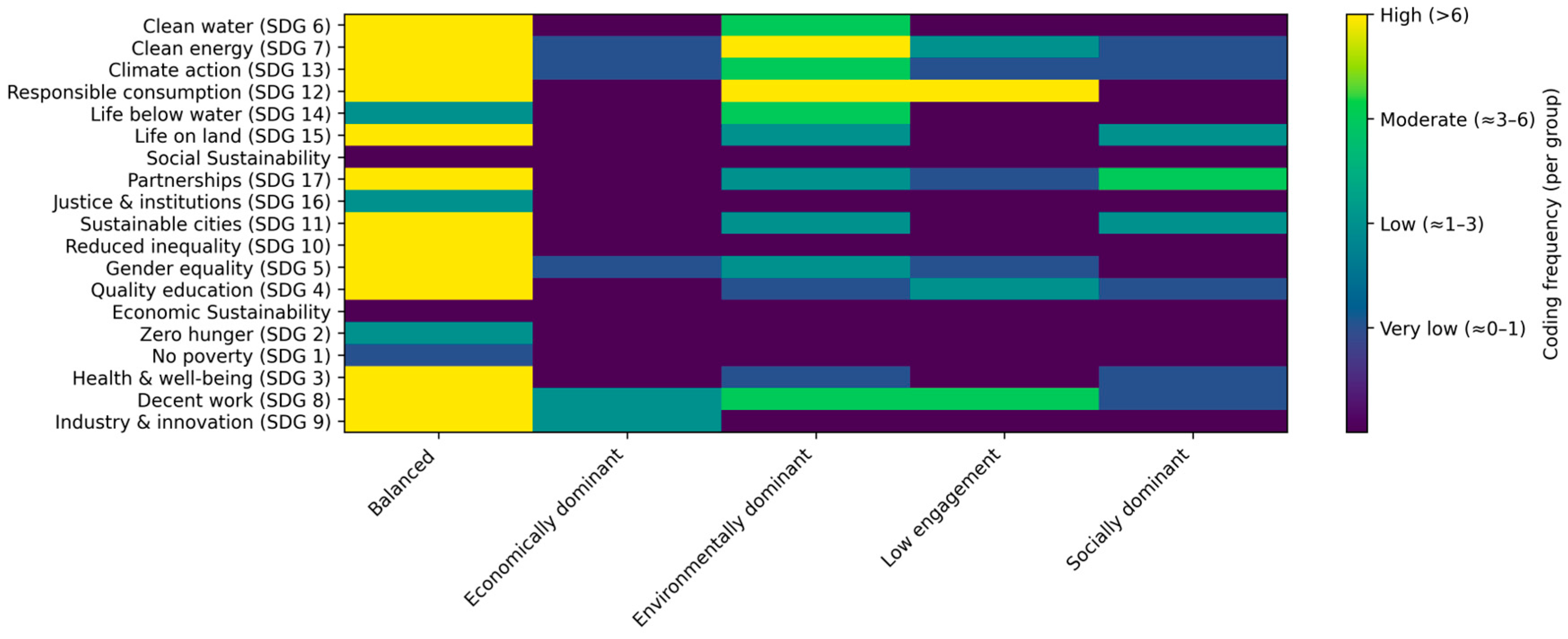
The primary visualization tool used in this study is a heatmap matrix (
Figure 1), which displays the relative concentration of SDG-aligned codes across TBL-based firm categories. Heatmaps are particularly suitable for representing multidimensional distributions, as they allow simultaneous comparison across multiple analytical axes.
In
Figure 1, rows represent individual Sustainable Development Goals, while columns represent the five sustainability profiles. Cell values indicate the relative density of coded references associated with each SDG within each profile group. Color intensity reflects the degree of thematic emphasis, with darker tones indicating higher concentrations of references. This visualization strategy serves three analytical functions. First, it enables the identification of dominant and marginal sustainability domains across profile groups. Second, it facilitates comparison of internal variation between profiles, revealing how balanced and dominant firms differ in their thematic concentration. Third, it highlights SDGs that remain systematically underrepresented, indicating persistent absences or marginalization. Importantly, these visualizations do not function as indicators of substantive sustainability performance. Instead, they support interpretive pattern recognition by making discursive distributions visible prior to and independently of their theoretical interpretation in the findings section. By embedding these visual outputs within the analytical workflow, the study ensures that classification outcomes and thematic distributions are made transparent before substantive interpretation.
6. Results
6.1. Overview of Sustainability Coding Results
The structural composition of the sample provides an important contextual lens for interpreting the distribution of sustainability themes, as firms were analytically classified into five TBL-based profiles (balanced, environmentally dominant, socially dominant, economically dominant, and low-engagement) based on proportional dominance thresholds (≥60%) and overall coding intensity (see
Section 5.5 and
Table 1). As shown in
Table 1, more than half of the firms (51.9%) fall into the low-engagement profile, indicating that sustainability discourse remains weakly institutionalized and unevenly integrated across a substantial portion of the sample. This classification is not impressionistic, but analytically derived from the proportional distribution of SDG-aligned codes across the three TBL dimensions. Environmentally dominant firms account for 19.2% of the sample, whereas economically and socially dominant profiles remain exceptional cases (each 1.9%).
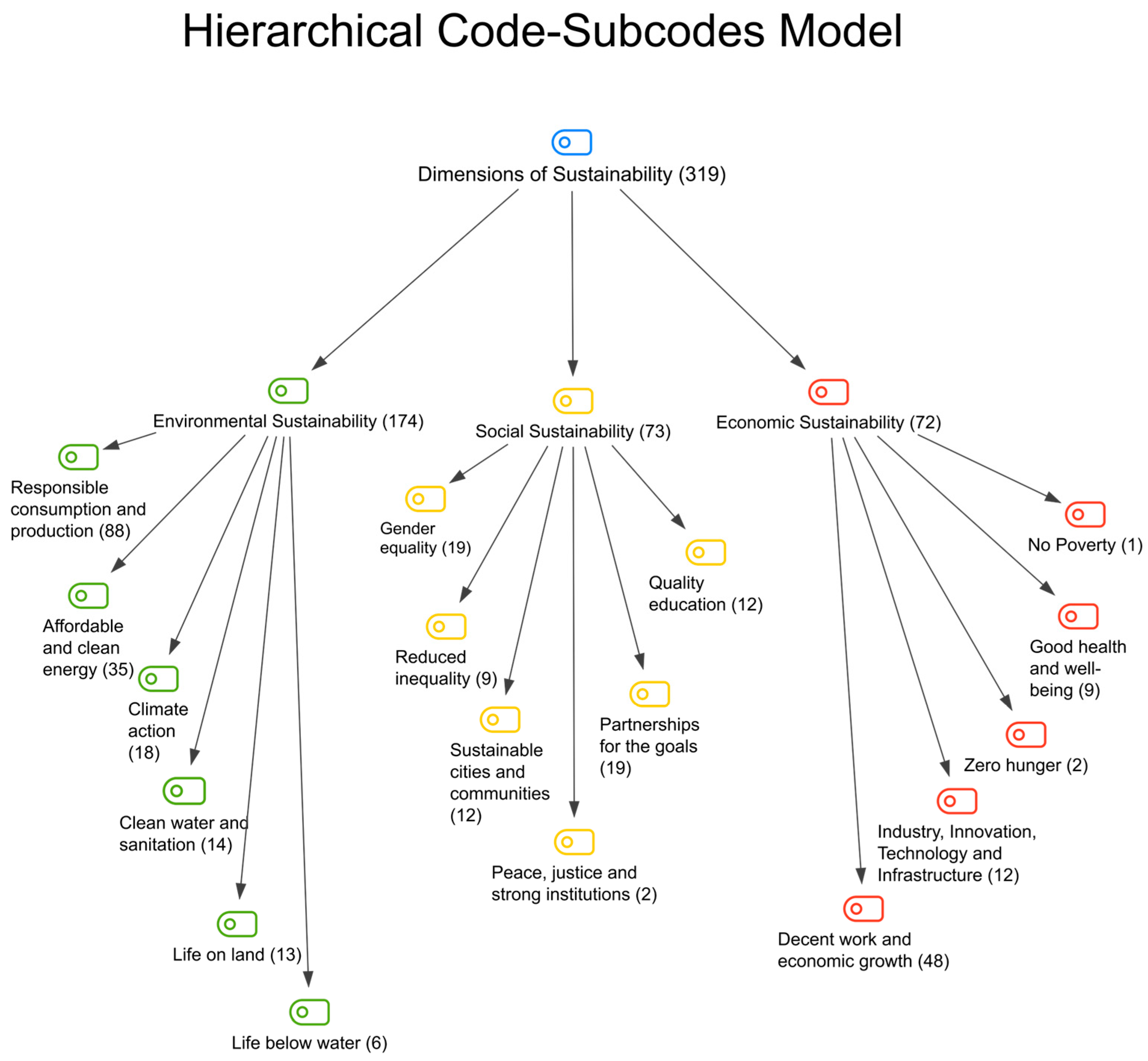
Across the full corpus, the distribution of coded references is markedly asymmetric: environmental sustainability dominates corporate discourse (n = 174), while social (n = 73) and economic (n = 72) dimensions remain substantially less visible. This imbalance constitutes the empirical basis for the profile-based clustering shown in
Figure 1. Several firms display an exclusively environmental orientation, operationalized as Env.% = 1.00 under the dominance-based classification rule (e.g., Mem Textile, Matesa Textile, and Atlas Denim; see
Table S2 in the Supplementary Materials). In contrast, Gülsan constitutes the only socially dominant case (Soc.% = 0.63), and Zorluteks the only economically dominant case (Eco.% = 0.63), underscoring the structural rarity of non-environmental dominance patterns in the sample.
Figure 2 summarizes the SDG-aligned coding structure used to distinguish environmental, social, and economic sustainability themes. Environmental sustainability is operationalized through themes such as resource and energy efficiency, emissions, waste minimization, and circular production practices. Social sustainability covers labor-related issues, occupational health and safety, diversity and inclusion, and community-oriented initiatives. Economic sustainability includes innovation, productivity and upgrading narratives, employment continuity, and resilience-oriented statements.
6.2. Illustrative Firm-Level Cases: How Structural Patterns Materialize in Practice
While the preceding section outlined the group-level distribution of sustainability orientations, these aggregate patterns require contextual grounding at the firm level. To this end, this subsection presents three analytically selected illustrative cases that exemplify how the dominant sustainability profiles identified in
Section 6.1 are articulated in corporate disclosures. These cases are not intended as full case studies but as analytical vignettes that show how macro-level distributions are reflected in organizational narratives. Each case is selected to represent one of the structurally extreme profile types—environmentally dominant, socially dominant, and economically dominant—thereby making visible the qualitative logic underlying the quantitative clustering patterns.
6.2.1. Environmentally Dominant Firms and the Marginalization of Social Sustainability
Several firms classified as environmentally dominant—such as Mem Textile, Matesa Textile, and Atlas Denim—exhibit a proportional concentration of sustainability-related references entirely within the environmental dimension (Env.% = 1.00; see
Table S2 in the Supplementary Materials), thereby constituting analytically clear cases of environmental dominance under the ≥60% threshold rule described in
Section 5.5. These firms concentrate their sustainability discourse almost exclusively on production-side indicators, including energy efficiency, emissions monitoring, wastewater treatment, and waste recovery. In these cases, environmental sustainability is articulated through standardized, quantifiable, and externally verifiable metrics that align closely with international certification schemes and buyer-driven compliance requirements. This reporting structure reflects the group-level pattern identified in
Section 6.1, where environmental sustainability dominates corporate discourse (n = 174), while social and economic dimensions remain substantially less visible.
By contrast, these firms report either very limited or no references to social sustainability. Issues such as wage equity, worker representation, subcontracted labor conditions, or mechanisms of employee participation are largely absent from their disclosures. This absence is not incidental but structurally consistent with the dominance-based classification logic, illustrating how environmentally legible practices tend to crowd out socially sensitive but less standardized dimensions of sustainability.
6.2.2. Socially Dominant Reporting and the Limits of Narrative-Based Sustainability
Gülsan represents the only socially dominant firm in the sample, with social references constituting 63% of its coded sustainability content. This classification is analytically derived from the proportional dominance criterion (≥60%) described in
Section 5.5 (Soc.% = 0.63; see
Table S2 in the Supplementary Materials), making Gülsan a structurally exceptional case within the dataset. Unlike environmentally dominant firms, Gülsan’s disclosures emphasize themes such as inclusion, community engagement, education-oriented initiatives, and internal governance practices. These references construct a narrative of social responsibility that foregrounds relational and ethical commitments. However, the mode of articulation differs markedly from environmental reporting. Social practices are primarily communicated through qualitative narratives and aspirational statements rather than through standardized indicators, benchmarks, or externally verifiable data. This pattern reflects the group-level asymmetry identified in
Section 6.1, where social sustainability remains weakly institutionalized despite its normative prominence. For instance, while the firm frequently references employee well-being and social cohesion, these claims are rarely accompanied by measurable targets, performance indicators, or third-party validation.
6.2.3. Economically Dominant Reporting and the Narrow Framing of Resilience
Zorluteks emerges as the only economically dominant firm in the sample, with economic references accounting for 63% of its sustainability-related content. This classification is analytically derived from the proportional dominance criterion (≥60%) described in
Section 5.5 (Eco.% = 0.63; see
Table S2 in the Supplementary Materials), rendering Zorluteks a structurally exceptional case within the dataset. In this case, economic sustainability is primarily framed through themes of competitiveness, technological upgrading, productivity, and export capacity. References to innovation and infrastructure development align closely with SDG 9 (Industry, Innovation and Infrastructure) and SDG 8 (Decent Work and Economic Growth). However, this framing remains relatively narrow. Economic sustainability is articulated mainly in terms of efficiency and growth rather than long-term resilience, distributive stability, or vulnerability reduction. There is limited discussion of risk diversification, crisis preparedness, or value-chain dependency. This pattern reflects the group-level asymmetry identified in
Section 6.1, where economic sustainability appears as a marginal and weakly elaborated dimension.
6.2.4. Analytical Role of the Illustrative Cases
Together, these cases provide concrete illustrations of how sustainability asymmetries are reflected in firm-level disclosure practices. Rather than functioning as anecdotal examples, they demonstrate how proportional dominance at the coding level translates into structurally distinct narrative logics. They serve as a bridge between the aggregate patterns presented in
Section 6.1 and the domain-specific analyses that follow, thereby anchoring the subsequent sections in empirically observable reporting structures rather than abstract typologies.
6.3. Environmental Sustainability Practices
Environmental sustainability emerges as the most extensively articulated domain in the corporate disclosures of Turkish textile firms, with 174 coded references across the corpus. This dominance is structurally consistent with the TBL-based profile distribution introduced in
Section 6.1, where environmentally dominant and low-engagement firms jointly constitute the majority of the sample. Environmental themes are particularly pronounced among environmentally dominant firms such as Mem Textile, Matesa Textile, and Atlas Denim, which allocate their sustainability discourse entirely to this dimension (Env.% = 1.00). Sun Textile similarly exhibits a strongly environmental orientation (Env.% = 0.91).
In substantive terms, environmental disclosures most frequently align with SDGs associated with standardized reporting and externally auditable expectations, notably SDG 12 (Responsible Consumption and Production), SDG 7 (Affordable and Clean Energy), and SDG 13 (Climate Action). Firms primarily emphasize production-side interventions, including resource efficiency, energy management, emissions monitoring, wastewater treatment, and waste-related practices. This thematic concentration mirrors the group-level clustering patterns illustrated in
Figure 1, where environmentally legible themes dominate across firm profiles.
This orientation is also reflected in the mode of reporting. Environmental practices are typically described using technical language, quantified indicators, and references to management systems, facilitating external validation and comparability. This reporting style corresponds to the dominance-based classification logic outlined in
Section 5.5, which privileges dimensions that can be standardized, audited, and externally verified. However, the thematic scope remains selective: disclosures concentrate on operational improvements, while broader ecological concerns—such as biodiversity, adaptation, and ecosystem-related SDGs—remain comparatively marginal. This selectivity indicates that environmental sustainability is not treated as an integrated ecological agenda but as a set of compliance-oriented operational practices.
6.4. Social Sustainability Practices
Social sustainability appears unevenly integrated into corporate sustainability narratives, with 73 coded references across the sample. This unevenness reflects the TBL-based profile structure identified in
Section 6.1, where socially dominant firms constitute a structurally exceptional minority, while most firms either marginally engage with or entirely omit social sustainability themes. Firm-level distributions illustrate this heterogeneity. Gülsan is the only socially dominant firm (Soc.% = 0.63), whereas several environmentally dominant firms (e.g., Mem Textile, Matesa Textile, Atlas Denim) report no social references. Even among firms classified as balanced, the relative emphasis on social themes varies considerably (e.g., Sanko Textile Soc.% = 0.36; Tayeks Soc.% = 0.22; Roteks Soc.% = 0.25).
Where social themes do appear, they tend to cluster around SDGs associated with reputational visibility and narrative communication, including partnerships, education-oriented initiatives, inclusion discourse, and governance-related statements. This thematic pattern corresponds to the group-level asymmetry illustrated in
Figure 1, where socially oriented SDGs remain weakly represented across firm profiles. In contrast to environmental reporting, social practices are predominantly communicated through qualitative narratives and general commitments rather than standardized metrics or externally verifiable indicators. This narrative mode of articulation mirrors the dominance-based classification logic described in
Section 5.5, which structurally favors dimensions that can be formalized, audited, and externally validated.
Consistent reporting on structurally sensitive areas—such as subcontracted labor conditions, wage structures, and representation mechanisms—remains limited, indicating a narrow thematic scope and a reliance on symbolic rather than performance-oriented articulation. Taken together, these patterns suggest that social sustainability is primarily mobilized as a reputational and relational resource rather than as a formally institutionalized domain of organizational accountability.
6.5. Economic Sustainability Practices
Economic sustainability is unevenly integrated into corporate disclosures, with 72 coded references across the corpus. This uneven integration reflects the TBL-based profile structure introduced in
Section 6.1, where economically dominant firms constitute a structurally exceptional minority, while most firms either marginally address or entirely omit economic sustainability themes. Firm-level profiles highlight this fragility. Zorluteks is the only economically dominant firm (Eco.% = 0.63), whereas several environmentally dominant firms (e.g., Mem Textile, Matesa Textile, Atlas Denim) include no economic references. Among balanced firms, the relative weight of economic themes remains modest (e.g., Kordsa Eco.% = 0.30; Hugo Boss TR Eco.% = 0.10).
In thematic terms, economic references most frequently align with SDGs associated with innovation and growth, notably SDG 9 (Industry, Innovation and Infrastructure) and SDG 8 (Decent Work and Economic Growth). These themes are predominantly framed through narratives of competitiveness, efficiency, technological upgrading, and export capacity. This pattern corresponds to the group-level asymmetry illustrated in
Figure 1, where economically oriented SDGs remain weakly represented across firm profiles.
However, disclosures rarely engage with resilience-oriented or distributive perspectives. References to long-term risk mitigation, value distribution, or structural vulnerability remain limited, suggesting a narrow conceptualization of economic sustainability focused on business continuity rather than systemic stability. This framing reflects a communicative prioritization of short-term performance and market positioning over long-term socio-economic embeddedness and adaptive capacity.
6.6. Certification and Standardization in Sustainability Practices
Certifications constitute a central component of how sustainability is formalized and made visible in corporate disclosures. Within the TBL-based profile structure introduced in
Section 6.1, certifications function as institutionalized markers that render certain sustainability dimensions more legible, comparable, and externally auditable than others. In export-oriented sectors such as textiles, they function as standardized reference points that enable comparability, external validation, and procedural compliance.
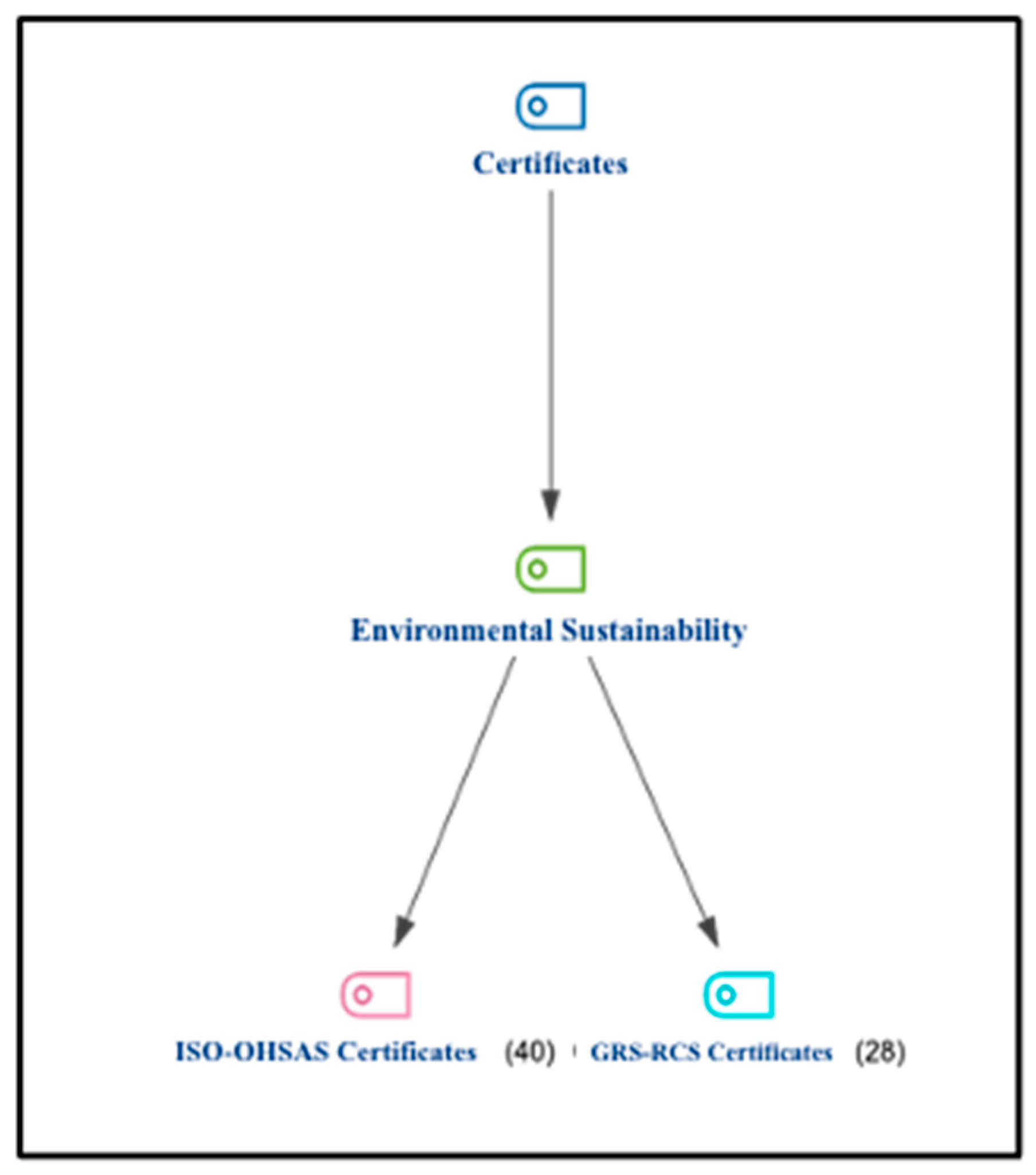
As illustrated in
Figure 3, certification schemes in the sample are overwhelmingly concentrated in the environmental domain. Empirically, 40 out of 52 firms (77%) report holding at least one ISO- or OHSAS-type certification. The most frequently reported standards are ISO 9001 [
65] (Quality Management) and ISO 14001 [
42] (Environmental Management), followed by ISO 50001 [
66] (Energy Management) and OHSAS 18001 [
67] (Occupational Health and Safety). In addition, 28 firms adopt traceability-oriented schemes such as GRS [
68] and RCS [
69], which emphasize material transparency and circularity. This distribution aligns closely with the dominance of environmental sustainability identified in
Section 6.1 and visually represented in
Figure 1.
The thematic orientation of these certifications aligns primarily with SDGs associated with production efficiency and environmental management, notably SDG 12 (Responsible Consumption and Production), SDG 7 (Affordable and Clean Energy), and SDG 13 (Climate Action). This alignment indicates that certification schemes privilege sustainability dimensions that can be formalized through procedural templates and standardized auditing protocols. By contrast, certification schemes explicitly targeting biodiversity, ecosystem protection, or social inclusion remain rare.
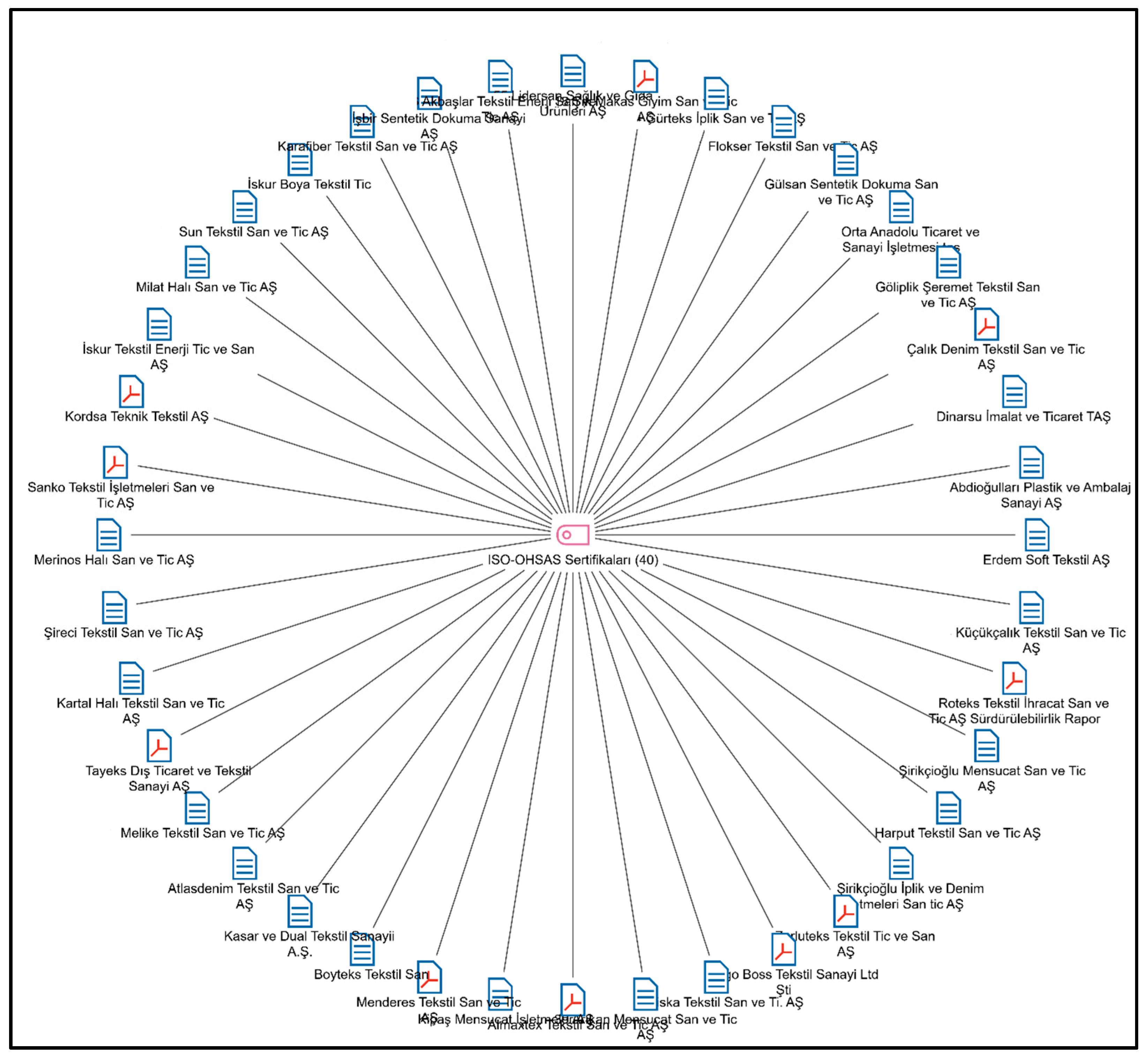
Figure 4 further indicates that while ISO-based certifications facilitate procedural compliance and international market access, firms rarely disclose information on audit depth, renewal processes, or non-compliance. As a result, certifications primarily function as markers of formal alignment rather than as transparent indicators of substantive sustainability transformation. This pattern reflects a broader communicative logic in which sustainability is performed through recognizable symbols of compliance rather than through detailed accounts of organizational change.
Taken together, the findings reveal a systematically uneven configuration of sustainability communication in the Turkish textile sector. Across firm profiles, thematic distributions, and certification patterns, environmental sustainability emerges as the most visible, formalized, and standardized dimension, while social and economic sustainability remain comparatively fragmented, weakly specified, and unevenly integrated into corporate narratives. Importantly, these patterns cannot be understood merely as descriptive differences in reporting emphasis; rather, they reflect underlying communicative, institutional, and market-oriented mechanisms that shape what becomes visible, measurable, and legitimate as “sustainability.”
Accordingly, the following discussion moves beyond documenting thematic distributions to examine how and why certain sustainability dimensions become prioritized, stabilized, and normalized in corporate discourse. Drawing on the combined insights of stakeholder theory, institutional theory, and a strategic communication perspective, the discussion interprets sustainability disclosures not as neutral representations of organizational practice, but as purposive instruments through which firms seek legitimacy, manage external expectations, and position themselves within competitive and regulatory environments. This shift from empirical mapping to analytical interpretation enables a deeper understanding of sustainability as a communicative and institutionalized phenomenon rather than as a purely operational one.
7. Discussion
7.1. Main Discussion
The findings of this study point to a systematically uneven configuration of sustainability communication in the Turkish textile sector. Environmental sustainability emerges as the most visible, formalized, and institutionally stabilized dimension, whereas social and economic sustainability remain comparatively fragmented, weakly specified, and unevenly integrated into corporate narratives. Crucially, this asymmetry should not be interpreted merely as a difference in reporting emphasis. Rather, it reflects how sustainability is strategically communicated, selectively institutionalized, and mobilized as a mechanism of market positioning and legitimacy construction. These communicative hierarchies are not merely interpretive claims but are empirically grounded in the group-level distributions illustrated in
Figure 1 and
Figure 2, which show a clear clustering of firms around environmentally dominant profiles and a systematic underrepresentation of social and economic orientations.
From a strategic communication perspective, corporate sustainability disclosures operate not only as informational devices but also as signaling instruments. Firms do not simply “report” sustainability practices; they actively frame, prioritize, and stylize particular dimensions in ways that resonate with dominant external expectations. In this sense, sustainability functions less as a comprehensive transformation logic and more as a selective communicative repertoire through which firms render themselves visible, comparable, and legitimate within competitive and regulatory environments.
This pattern becomes particularly evident when viewed through the lens of the Triple Bottom Line (TBL). While TBL normatively presupposes an integrated balance between environmental, social, and economic value creation, the empirical patterns observed here indicate a hierarchical ordering of sustainability priorities. Environmental concerns dominate corporate discourse, whereas social and economic dimensions are treated as supplementary or symbolic. Rather than being internalized holistically, sustainability is decomposed into institutionally rewarded components, reinforcing its role as a positioning mechanism rather than a genuinely integrative managerial logic.
Stakeholder theory provides further insight into why this hierarchy persists. Firms disproportionately address the expectations of those audiences whose evaluations carry immediate market consequences—such as international buyers, regulators, certification bodies, and global brands. These actors articulate their demands through standardized and auditable indicators, particularly in the environmental domain. In contrast, stakeholders associated with social and economic sustainability—such as workers, subcontractors, local communities, and domestic suppliers—possess comparatively weaker and less formalized channels of influence. As a result, their concerns remain marginal within market-facing sustainability narratives.
Institutional theory helps explain how these communicative hierarchies become stabilized over time. Environmental sustainability is reinforced through coercive pressures (e.g., export regulations and compliance requirements), mimetic dynamics (e.g., the imitation of multinational reporting templates), and normative expectations embedded in professional standards and certification regimes. Social and economic dimensions lack comparable infrastructures of standardization, benchmarking, and third-party verification. Consequently, they remain less routinized, less visible, and less communicable within formal disclosure architectures.
Together, these mechanisms generate what can be described as a visibility bias in sustainability communication. Environmental practices are more easily translated into quantifiable, comparable, and externally verifiable indicators, making them more suitable for symbolic legitimation and reputational signaling. Social and economic practices, by contrast, tend to be relational, context-dependent, and politically sensitive, which renders them less amenable to standardization and less attractive as strategic communication resources. Firms therefore foreground environmental achievements while narrating social and economic commitments in more generic or aspirational terms. As
Figure 1 and
Figure 2 illustrate, this visibility bias manifests in the concentration of corporate narratives around highly standardized SDGs—most notably SDG 12 and SDG 13—while dimensions associated with labor relations, inclusion, and long-term economic resilience remain weakly articulated or entirely absent.
The empirical patterns visualized in
Figure 1 and
Figure 2 further reinforce this interpretation, indicating that sustainability orientations are not randomly distributed but systematically structured around what is institutionally legible and externally rewarded. Importantly, this suggests that sustainability in the Turkish textile sector is shaped less by internal organizational transformation and more by external legitimacy-seeking dynamics. Firms tend to adopt and communicate those sustainability practices that are most likely to be recognized, audited, and rewarded by global markets, while those that are less visible or more politically contentious remain weakly institutionalized. In this sense, sustainability increasingly operates as a signaling and positioning device rather than as a fully integrated organizational logic.
7.2. Theoretical Implications
This study contributes to the sustainability literature by demonstrating that corporate sustainability in the Turkish textile sector is not a neutral or internally driven process but is structurally shaped by firms’ institutional positioning, stakeholder exposure, and governance environments. Rather than being internalized as an integrated framework, sustainability is selectively activated in ways that reflect what is most visible, measurable, and externally rewarded.
First, the findings refine the empirical interpretation of the Triple Bottom Line (TBL) framework. While TBL normatively assumes a balanced integration of environmental, social, and economic dimensions, the observed patterns reveal a hierarchical configuration in which environmental sustainability dominates corporate discourse. This suggests that TBL should not be treated solely as a normative benchmark but as an institutionally mediated practice shaped by reporting infrastructures, certification systems, and regulatory incentives. Second, the results extend stakeholder theory by showing that sustainability priorities are structured by differential stakeholder salience. Firms disproportionately address the concerns of powerful and externally oriented actors—such as international buyers, certification bodies, and regulators—while stakeholders associated with social and economic sustainability exert weaker and less formalized influence. This produces a form of selective responsiveness, where sustainability becomes oriented toward external legitimacy rather than internal transformation. Third, institutional theory provides a structural explanation for the persistence of this imbalance. Environmental sustainability is reinforced through coercive pressures (e.g., export regulations), mimetic dynamics (e.g., imitation of multinational reporting templates), and normative expectations embedded in professional standards. Social and economic dimensions lack comparable infrastructures of standardization, auditing, and benchmarking, which limits their routinization. The observed asymmetry is therefore not accidental but institutionally reproduced.
Taken together, these findings suggest that sustainability should be conceptualized not as a unified managerial logic but as a differentiated governance outcome shaped by what is institutionally rewarded.
7.3. Managerial and Policy Implications
While the previous sections documented how sustainability orientations cluster unevenly across firms, the following table translates these structural asymmetries into differentiated governance needs. In doing so, it moves from diagnosis to prescription. Rather than offering generic policy prescriptions,
Table 2 specifies how different firm types require distinct governance instruments, depending on their institutional position, reporting capacity, and market exposure. Accordingly, the study advances a differentiated sustainability governance logic, showing that firms face distinct barriers depending on their market exposure, reporting capacity, and institutional embeddedness. Governance instruments must therefore be tailored rather than standardized.
Table 2 operationalizes the differentiated sustainability governance logic by linking firm types to their dominant structural barriers, appropriate policy instruments, and the underlying mechanisms through which these tools are expected to work.
For beginner exporters, the primary constraint is not unwillingness but the high financial and cognitive costs of certification and compliance. Instruments such as subsidized audits, shared certification platforms, and EU pre-accession funds can reduce entry barriers, lower transaction costs, and accelerate institutional learning.
For export-oriented large firms, the challenge is not the absence of sustainability engagement but its narrow environmental concentration. Mandatory social and economic disclosure modules, ESG-linked finance, and multidimensional performance dashboards can recalibrate what is institutionally rewarded, thereby broadening sustainability integration beyond environmental compliance.
Domestic-market-oriented SMEs face weak external pressure for sustainability. For these firms, demand-side instruments—such as eco-labeling schemes, consumer awareness campaigns, and targeted tax incentives—are likely to be more effective than coercive regulation, as they create reputational and market-based motivations.
Informal and semi-formal subcontractors represent the most structurally excluded group. Their primary barrier is not non-compliance but invisibility. Training programs, simplified digital reporting tools, and formalization incentives function as inclusion mechanisms, allowing these actors to enter sustainability governance regimes rather than remain permanently outside them.
Across all firm types, the findings indicate that sustainability must be reframed from a reporting exercise into a coordination logic that integrates internal metrics, cross-departmental alignment, and broader stakeholder engagement. Without such alignment, sustainability risks remaining fragmented, symbolic, and environmentally skewed rather than genuinely transformative.
7.4. Future Research Directions
The findings of this study indicate that sustainability engagement is not uniform across firms but is shaped by structural conditions such as institutional pressures, stakeholder hierarchies, and reporting capacity. Future research should therefore move beyond firm-level descriptions and examine how these conditions differentially structure sustainability trajectories.
First, subsequent studies should extend the analytical framework to small and medium-sized enterprises (SMEs) and informal producers, which constitute the backbone of the Turkish textile sector. The present findings suggest that these actors are not simply “less sustainable” but are embedded in fundamentally different governance environments. Qualitative and mixed-method approaches—such as interviews, ethnographic fieldwork, and participatory observation—would be particularly valuable for capturing how sustainability is negotiated under conditions of limited resources and weak institutional support. Second, future research should explicitly investigate how stakeholder salience shapes sustainability priorities. The results show that environmental dimensions dominate because they are most visible to powerful external actors, including regulators, global buyers, and certification bodies. Empirical studies examining how workers, local communities, domestic consumers, and suppliers gain or lose influence over corporate decision-making would provide deeper insight into the political economy of sustainability. Third, the performative dimension of sustainability reporting warrants closer attention. While firms frequently disclose environmental targets and efficiency gains, transparency regarding methodologies, verification processes, and implementation depth remains limited. Longitudinal and comparative designs could help distinguish between transitional dynamics and stable patterns of symbolic compliance.
Finally, cross-country comparative research would enable a more systematic understanding of how different regulatory architectures, labor regimes, and market configurations shape the balance between environmental, social, and economic sustainability. Such studies would clarify whether the asymmetries observed here are sector-specific, country-specific, or structurally embedded in global value chains.
Together, these directions suggest that future research should focus less on whether firms engage in sustainability and more on how sustainability becomes institutionalized, whose interests it serves, and under what conditions it can become genuinely integrative.
7.5. Limitations of the Study
This study has three main limitations. First, it is based solely on publicly available corporate disclosures; therefore, the findings capture how sustainability is communicated rather than how it is necessarily implemented, which may introduce reporting bias. Second, the sample includes only large-scale firms listed in the ISO 500 [
70], limiting the generalizability of the results to the wider textile sector. SMEs, informal producers, and subcontracted suppliers—who constitute a substantial part of production networks—are not represented and likely face different sustainability constraints. Third, the cross-sectional design does not allow for causal inference or the observation of change over time. Longitudinal research would be required to assess whether the observed imbalances reflect a transitional phase or a stable institutional pattern. These limitations define the scope of the study and highlight directions for future research.
8. Conclusion and Recommendations
This study examined how sustainability is articulated by 52 large-scale textile firms in Türkiye using an SDG-based content analysis. Rather than revealing a balanced integration of environmental, social, and economic dimensions, the findings point to a persistent and structurally reproduced asymmetry: environmental sustainability is highly visible and formalized, whereas social and economic dimensions remain weakly operationalized and inconsistently measured.
Importantly, this imbalance is not merely descriptive. Drawing on the combined insights of the Triple Bottom Line framework, stakeholder theory, and institutional theory, the analysis demonstrates that sustainability priorities are shaped by external governance mechanisms rather than by internally integrated strategies. Environmental practices dominate because they are more easily standardized, audited, certified, and rewarded in international markets. Social and economic dimensions, by contrast, lack comparable institutional scaffolding and therefore remain less visible, less measurable, and less systematically embedded.
This study contributes to the literature in three ways. First, it shows that sustainability engagement is not uniform across firms but conditioned by institutional embeddedness, market exposure, and reporting capacity. Second, it demonstrates that the Triple Bottom Line framework, when operationalized empirically, reveals not balance but the mechanisms through which imbalance is reproduced. Third, it introduces a replicable SDG-based coding framework that enables the systematic comparison of sustainability dimensions beyond simple frequency counts.
Building on this mechanism-based interpretation, the study advances a differentiated governance logic for sustainability. Rather than assuming a uniform transition pathway, policy instruments and managerial tools should be aligned with firms’ structural positions. For beginner exporters, high certification and compliance costs represent the main barrier; subsidized audits, shared certification platforms, and EU pre-accession funds can facilitate institutional learning. For export-oriented large firms, the challenge lies in the narrow environmentalization of sustainability; mandatory social and economic disclosure modules and ESG-linked financing can recalibrate what is institutionally rewarded. For domestic-market SMEs, demand-side instruments such as eco-labeling and consumer awareness campaigns are likely to be more effective than coercive regulation. For informal subcontractors, the core problem is structural invisibility; training programs, simplified reporting tools, and formalization incentives can function as inclusion mechanisms.
Ultimately, Türkiye’s position in global textile value chains will depend not only on environmental performance but also on its capacity to embed social inclusion, labor protection, and long-term economic resilience into sustainability strategies. A multidimensional approach is therefore not only normatively desirable but strategically necessary. Although grounded in the Turkish textile sector, these dynamics are likely to characterize other export-oriented industries embedded in global value chains, where sustainability becomes increasingly shaped by external visibility regimes rather than internal transformation.
Finally, this study also contributes to marketing scholarship by conceptualizing sustainability as a signaling mechanism. Firms do not merely implement sustainability practices; they actively curate how these practices are translated into market-facing narratives through reports, certifications, and standardized claims. Recognizing sustainability as both a production logic and a communication logic is essential for developing more credible and socially inclusive sustainability strategies. Without such recognition, sustainability risks remaining a performative exercise—visible, standardized, and marketable, yet structurally incapable of addressing deeper social and economic inequalities.