1. Introduction
In Europe, about 70% of the population lives in cities, and UN projections estimate that by 2050 this share will rise to 80% [
1]. The accelerated growth of urban populations confronts cities with major challenges related to improving mobility and transport systems, eliminating the negative impacts of traffic on society, health, and the environment, as well as reducing the number of road traffic casualties [
2]. The importance of timely addressing these challenges is emphasized in a number of documents adopted at the EU level (European Green Deal [
3], Sustainable and Smart Mobility Strategy [
4], Zero Pollution Action Plan [
5]).
Organizing efficient and sustainable mobility under such conditions represents a challenge for ensuring quality of life from different aspects, but above all, regarding the impact of traffic on the environment, human health, and well-being. In the analyses of the sustainability of urban transport systems, research has largely focused on the harmful effects of motor traffic on air quality, noise generation, and the reduction in traffic safety levels.
Even though Europe is among the safest regions in the world in terms of road traffic safety (average fatality rate is about 5 deaths per 100,000 inhabitants), there are still significant differences between countries—while Norway has the lowest fatality rate, around 2/100,000, in Hungary, it reaches 11/100,000 inhabitants [
6].
According to European Commission data, on average, 38% of traffic accidents occur in urban areas, and in some countries, this share is considerably higher. For example, in Croatia, more than 58% of all traffic accidents are recorded in cities, which indicates the need for additional safety measures in urban environments [
7].
Data from the CARE database clearly show that passenger cars are the dominant participants in urban traffic accidents, with a large number of casualties involving vulnerable road users [
8,
9] but also passengers and car drivers in accidents where no other vehicle is involved, pointing to the importance of a detailed analysis of factors such as speed, distraction, and infrastructure [
10].
Within the EU Road Safety Policy Framework 2021–2030, Next steps towards Vision Zero, key intervention areas have been defined to improve traffic safety, including safe infrastructure, safe vehicles, safe road user behavior, and fast and effective emergency response. Planned measures are based on analyses of accident causes, which show that one-third of accidents are linked to speed [
11], while research confirms that the risk of being involved in a crash when speeding is 12.8 times higher compared to drivers who respect speed limits [
12]. In [
11], the responsibility of users for safe behavior is emphasized, as well as the importance of properly designed infrastructure that must be shaped to reduce the possibility of conflicts and mitigate the consequences of accidents. One of the most successful examples of good practice is the Dutch Sustainable Safety program [
13], which is based on eliminating dangerous situations, minimizing exposure to risks, and mitigating consequences when accidents do occur.
Results of conducted before-and-after analyses have shown that measures such as roundabouts, separated cycling lanes, safe pedestrian crossings, and other interventions implemented in traffic infrastructure significantly reduce the number of accidents and the severity of consequences [
14,
15]. This integrated approach confirms that the combination of responsible user behavior, systematically designed infrastructure, and effective speed control measures represents the foundation for achieving the “Vision Zero” goal in the European transport system.
When new traffic solutions are implemented in urban areas, it is implied that traffic functioning is checked using tools for analyzing traffic flow quality, whereby traffic simulation methods, due to their stochastic nature, enable a very realistic assessment of infrastructural solutions since they not only respect designed elements but also take into account the traffic behavior. Traffic microsimulations enable the testing of different scenarios before their actual implementation, thereby increasing the efficiency of traffic planning [
16]. One of the most widely used tools in this field is the PTV VISSIM software package (PTV VISSIM Academic 2023, SP 05), which is based on a microsimulation approach and modeling driver behavior through various algorithms, enabling detailed analysis of interactions between vehicles, pedestrians, and cyclists in complex urban conditions [
17].
However, even though there is a need and available tools, checking traffic safety aspects is generally not a common step in the analysis of traffic solutions in urban environments.
Safety Assessment
For safety assessment, it is possible to use tools compatible with traffic microsimulations that allow for the prediction of the number of conflicts between traffic participants. One of the widely used methodologies in this field is the Surrogate Safety Assessment Model (SSAM)
, developed to identify potential conflicts and quantify safety risks [
18]. Through various indicators (Time-to-Collision, Post-Encroachment Time, and Deceleration Rate to Avoid Collision), the SSAM methodology enables the assessment of the probability and severity of conflicts in traffic situations [
19]. Applying this methodology in combination with microsimulation tools such as VISSIM makes it possible to assess safety aspects of different infrastructural solutions already in the design phase, increasing the potential for preventive action [
20]. Research has shown that applying the SSAM methodology in traffic simulations significantly contributes to understanding the safety implications of different design solutions, especially in urban areas where there are complex traffic situations [
21,
22]. In the case of roundabouts, applying the SSAM methodology in combination with microsimulation tools such as VISSIM or AIMSUN has proven particularly useful, as it enables assessment of safety effects and identification of potential conflicts in situations where reliable accident data are lacking [
23,
24,
25].
Vasconcelos et al. [
26] conducted a double validation of the SSAM results in urban traffic conditions. In the conceptual phase of the research, they compared the number of simulated conflicts with the number of traffic accidents using three independent analytical predictive models. The obtained conflict-flow curves correspond to the shape of the accident-flow curves predicted by the regression models. Field research was conducted at two non-traffic and two roundabouts in Coimbra, including observation of conflicts (9 h per location) and microsimulation models. The results show that SSAM underestimates the number of conflicts, partly due to the strict time to collision threshold and the absence of pedestrians in the model, but faithfully reproduces the daily rhythm and spatial distribution of potential conflicts [
26].
The study done by Giuffrè et al. [
25], through detailed model calibration in AIMSUN and VISSIM, investigates whether a reliable model for predicting real accidents at roundabouts can be developed based on simulated conflicts (SSAM). The empirical part of the study included 26 roundabouts in Slovenia—single-lane, dual-lane, and turbo roundabouts. The authors developed a linear model with three variables: the number of conflicts during peak hours, the ratio of peak-hour and 24 h traffic volumes, and the outer diameter of the roundabout. The model confirmed the significance of potential conflicts as a predictor of real accidents, with the reliability of the model being 0.72 [
25].
In the aforementioned research, roundabouts are analyzed as isolated elements of the traffic network, which is not always realistic, as in an urban environment, they can be positioned in the vicinity of and interact with another intersection of a different type.
Brocchini et al. [
27] present a detailed study of traffic safety and flow conducted on two corridors: one consisting solely of roundabouts and the other a combination of roundabouts and traffic-light intersections. The results of microsimulation-based research on the roundabout corridor in Pisa, Italy, show that fully roundabout-based scenarios improve traffic conditions, but they do not always guarantee optimal safety outcomes (based on the number of potential conflicts calculated with the SSAM tool). Similar research conducted on a corridor in Avignon, France, where most roundabouts are complemented by some traffic-light intersections, indicates a more favorable balance between traffic flow and safety. The authors propose that optimizing the layout of roundabouts and traffic-signalized intersections within the corridor could be a potential continuation of the research [
27].
In the study presented in this paper, the Surrogate Safety Assessment Measures (SSAM, version 3.0) method was applied to analyze a segment of the traffic network in which a roundabout and a signalized intersection interact, considering different distances between intersections and by varying selected traffic parameters—traffic load and distribution.
The motivation for the research was that, in recent years, roundabouts have been implemented more and more often within the urban road network, often in the vicinity of and within reach of traffic lighted intersections, and the analysis of the existing literature shows that there is the lack of research and practical guidelines or instructions in existing regulations and practice regarding the positioning of roundabouts in close proximity to signalized intersections [
28].
At the same time, apart from the lack of clear recommendations for the positioning of roundabouts and traffic light intersections, common design practice is to check their mutual influence on the quality of traffic flows, but not on the traffic safety implications. This is why, in addition to the traffic flow aspect, predominantly represented in evaluations of traffic solution effectiveness, this study emphasizes the safety aspect of traffic operations.
Based on data collected experimentally at real intersections and modeling using VISSIM and the SSAM method, the main goal of this study is to develop models for practical application in the preliminary safety assessment of a roundabout in interaction with traffic lights.
2. Materials and Methods
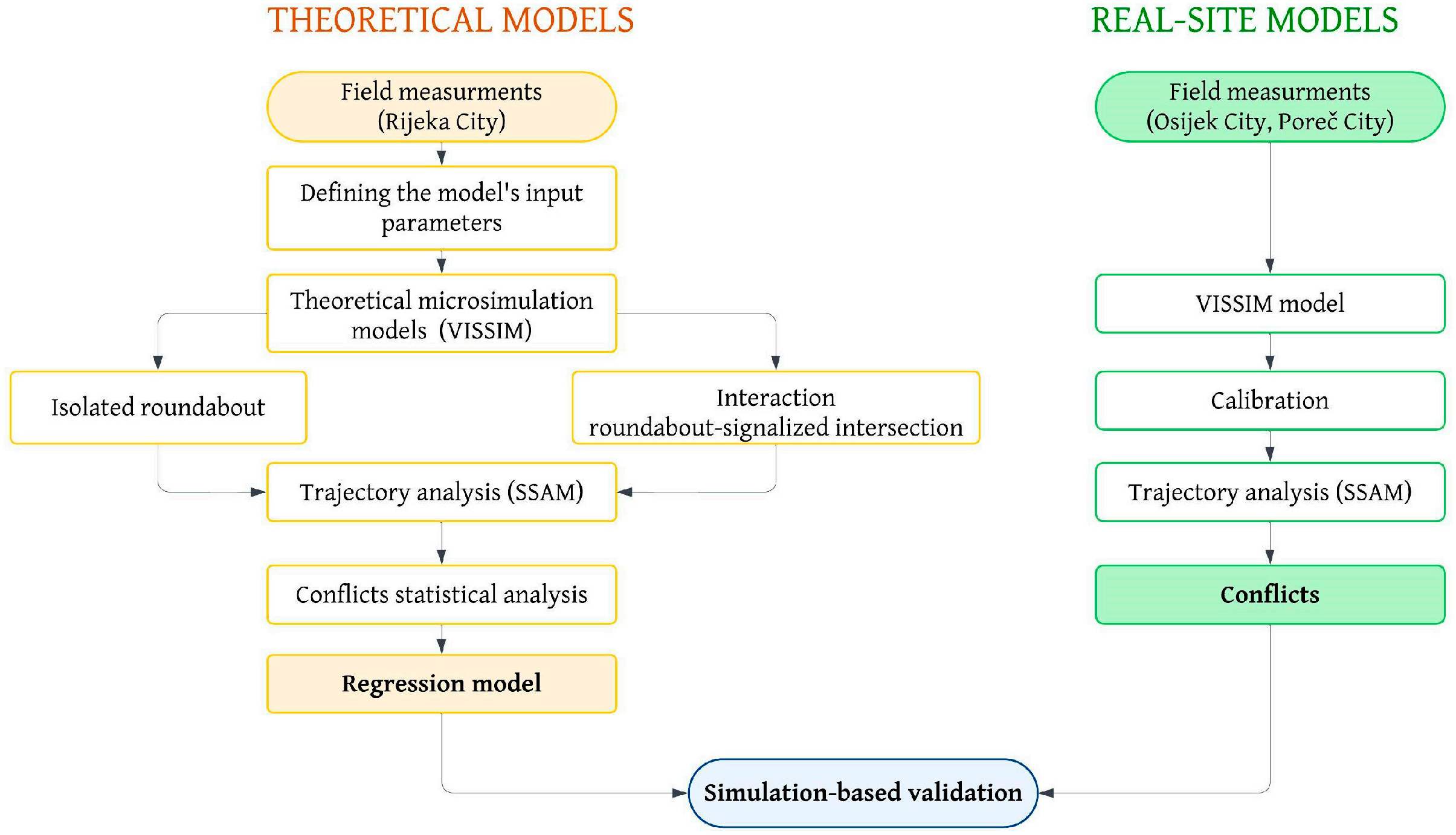
The research was conducted using a combination of experimental methods, the development of traffic microsimulation models, and statistical methods. Due to the significantly lower rates of severe crashes and fatalities at single-lane roundabouts, many crash participants in Croatia often opt not to report incidents to avoid potential penalties. Consequently, the official crash records for the roundabouts in question are notably underreported, failing to accurately represent the true situation. Therefore, official statistics were omitted from this analysis, and potential conflicts that could result in crashes were examined. The research plan is presented in the flowchart in
Figure 1, and key implementation steps are summarized below.
Field measurements conducted in Rijeka City served as the basis for developing theoretical traffic microsimulation models across various scenarios. To maintain the quality and integrity of the database, field measurements were carried out using Datacollect SRD (DataCollect Traffic Systems GmbH, Kerpen, Germany) radar traffic counters, a contactless traffic monitoring system (with an integrated self-calibration procedure) providing traffic volumes, vehicle speed, and vehicle length classification. Traffic measurements were conducted during representative weekday conditions (Wednesday or Thursday, in continuation for 24 h), excluding atypical traffic situations such as public holidays, adverse weather, or roadworks. The selected measurement period was chosen to capture stable traffic flow conditions and typical driver behavior, ensuring that the collected data are suitable for microsimulation model calibration and validation. The surveys were conducted in 2021 (March, April, May, and July), 2022 (January), and 2023 (April).
The microsimulation models created in VISSIM were used to analyze various conditions, including both isolated roundabouts and roundabouts interacting with signalized intersections. To estimate the number of potential conflicts based on vehicle trajectories, the Surrogate Safety Assessment Model (SSAM) was employed.
VISSIM is a microsimulation program designed to analyze and optimize traffic flows and intersection capacity. Unlike other microsimulation models that focus primarily on intersections and connections, the VISSIM network model is organized through links and connections, enabling more complex intersection modeling. It utilizes a stochastic, discrete, time-adjusted approach that takes into account the psychophysical characteristics of car-following behavior, along with algorithms based on driving rules for vehicles merging from minor directions [
17].
SSAM is a software application designed to analyze trajectory files produced by microscopic simulation programs and compute surrogate safety measures. It automatically identifies, classifies, and evaluates traffic conflicts. This method removes the subjective nature linked to traditional conflict analysis techniques and enables the evaluation of a facility’s safety within a controlled environment prior to potential crashes [
26,
29].
From the dataset results generated by SSAM, a linear regression model was formulated to predict the daily total number of conflicts, based on the roundabout/signalized intersection distance, the outer radius of the roundabout, and the red-signal duration at the signalized intersection.
To evaluate the accuracy of the regression model, additional field measurements were conducted at four roundabouts in the cities of Osijek and Poreč. Based on the field data, microsimulation models were developed in VISSIM and calibrated using travel time. Vehicle trajectories exported from VISSIM were analyzed in SSAM to obtain the total number of conflicts. The analysis results were then compared with those from the previously established regression model.
2.1. Theoretical Models
This section describes the method for defining the input parameters of the model and the development of theoretical microsimulation models to analyze the influence of a signalized intersection on the adjacent roundabout.
2.1.1. Defining the Model’s Input Parameters
Field measurements were conducted at nine single-lane roundabouts located in Rijeka, Croatia. According to the Croatian guidelines for the design of roundabouts on state roads [
30], these roundabouts are classified as medium-sized urban roundabouts, with outer radii ranging from 15 to 20 m. They are typically constructed in urban areas with relatively high traffic volumes, and their geometric elements are designed to accommodate speeds of up to 40 km/h, with an estimated daily capacity of approximately 20,000 vehicles. The results of these field measurements are detailed in the authors’ previous studies [
28,
31].
Based on the collected field data, an analysis was carried out to evaluate the share of daily traffic during the peak hours, the distribution of traffic between major and minor directions, traffic composition, daily traffic volumes, applicable speed limits, and the geometric characteristics of the analyzed roundabouts. The findings of this analysis are presented in [
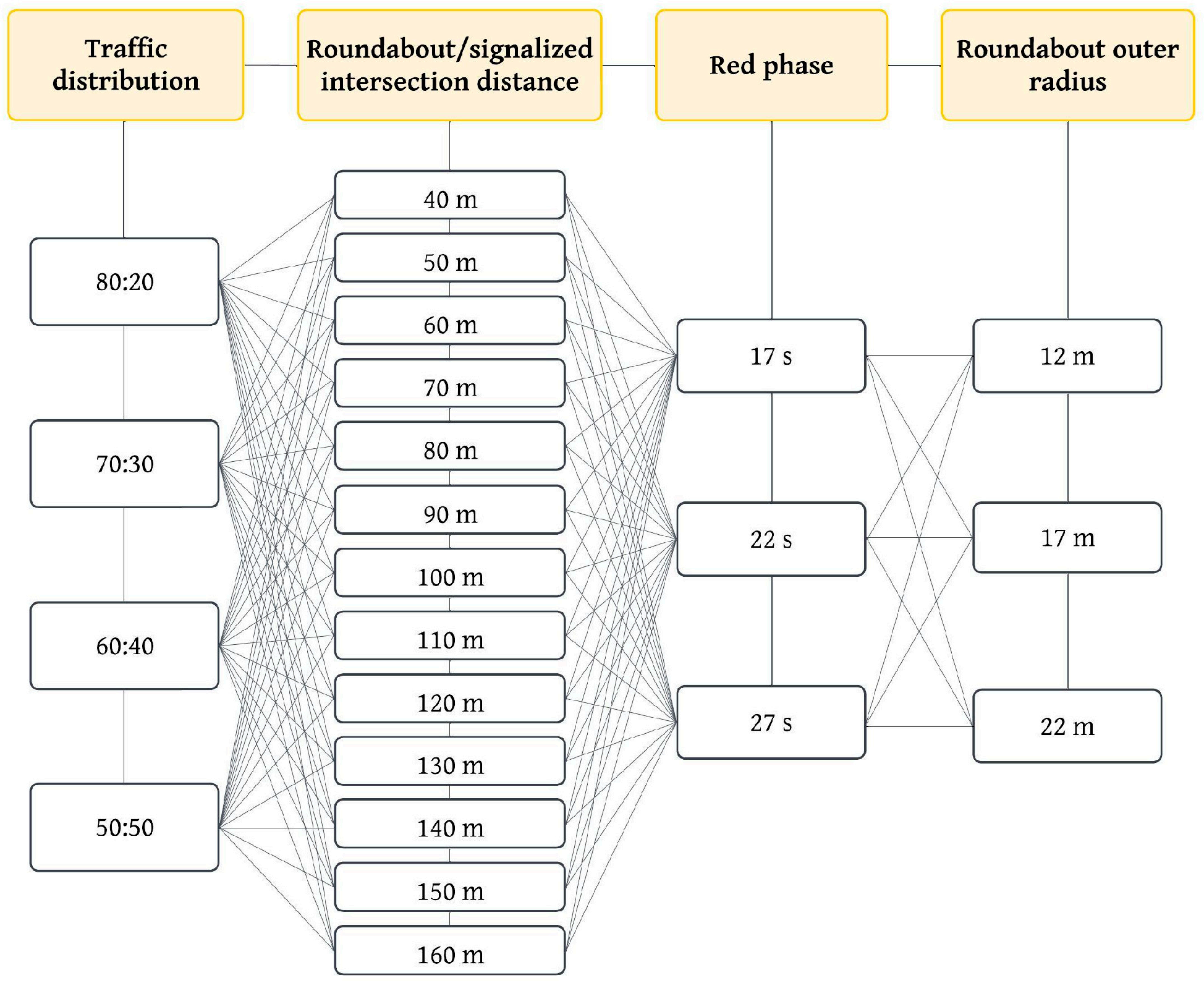
28]. It was revealed that certain analyzed intersections exhibit a highly uneven traffic distribution, with up to 80% of the total traffic volume in the main direction. Preliminary research established that the traffic distribution significantly affects vehicle travel time. Accordingly, the following traffic distributions between the major and minor directions were introduced into the model: 80:20, 70:30, 60:40, and 50:50.
The selection of geometric and operational input parameters was also based on a previously conducted conflict-based microsimulation study [
31] investigating urban single-lane roundabouts, which demonstrated clear correlations between roundabout design elements (such as outer radius, entry and exit geometry, circulatory roadway width) and type of potential traffic conflicts. These relationships provided the theoretical background for focusing on selected design and operational parameters in the present modeling framework.
Further analysis is outlined in [
31], which showed that, in addition to traffic volume, the total number of conflicts is also significantly influenced by the outer radius of the roundabout, which is consistent with previous scientific findings [
32,
33,
34]. Consequently, this geometric parameter was included in the model, and roundabouts with outer radii of 12 m, 17 m, and 22 m were analyzed. The selected values for the outer radii were based on preliminary and experimental studies, as all analyzed roundabouts fall within this dimensional range. The inclusion of the outer radius as an input parameter allows the model to more effectively capture the influence of roundabout geometry on its capacity and safety performance.
Field observations highlighted the importance of the signal cycle length, particularly the duration of the red phase at the adjacent signalized intersection. It was observed that longer red phases may cause vehicle queues that can temporarily block traffic flow within the roundabout. Based on these observations, the red phase duration at the signalized intersection was incorporated into the research model through three scenarios: a 17 s red phase (total cycle length of 60 s), a 22 s red phase (total cycle length of 65 s), and a 27 s red phase (total cycle length of 70 s).
The distance between the roundabout and the signalized intersection was varied from 40 to 160 m, with increments of 10 m. In all models, the daily traffic volume was set at 20,000 vehicles per day, representing the maximum recommended capacity for roundabouts of this size according to the Croatian Guidelines [
30].
A graphical representation of the input parameters utilized is shown in
Figure 2, resulting in a total of 480 scenarios.
All modeled scenarios assume compliance with minimum stopping sight distance and intersection sight distance requirements according to the Croatian Guidelines [
30].
2.1.2. Theoretical Microsimulation Model
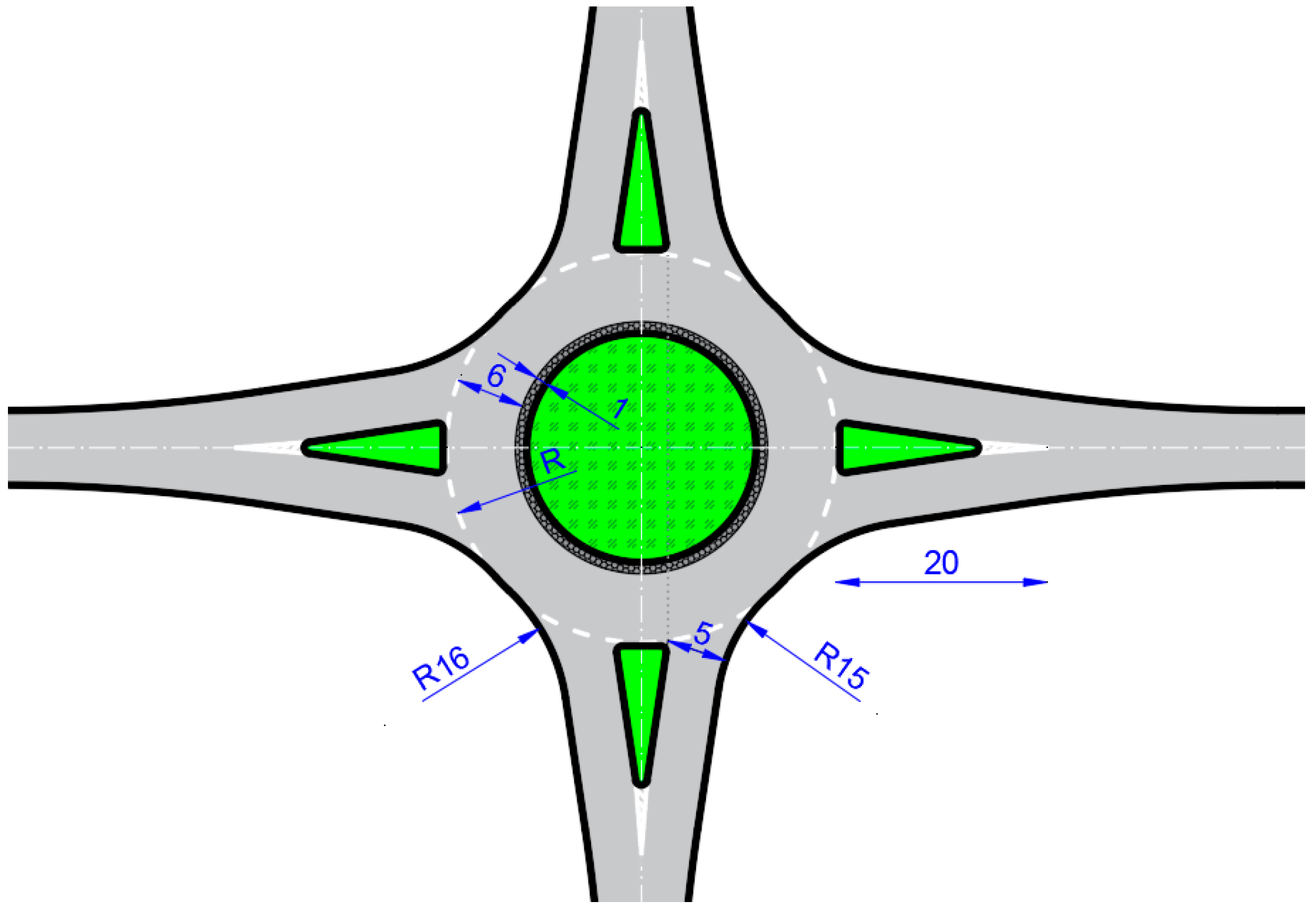
Based on traffic and geometric data collected, average input geometric elements (
Figure 3,
Table 1) were defined to establish a theoretical microsimulation model of an isolated roundabout. The speed limit within a roundabout of this size, as specified by the Guidelines [
30], is 40 km/h. The defined approach speed is 50 km/h, and all approaches are two-way. To yield simpler and more relevant results, the approach axis is optimally aligned at a right angle, with no pedestrian crossings. The traffic structure was obtained by averaging the traffic counter data. A detailed description of the development of microsimulation models is provided in the authors’ previous work [
28].
Although roundabout performance is frequently assessed under peak-hour conditions, preliminary findings indicated that this approach did not yield sufficient conflict data for a statistically robust analysis. As a result, each scenario was simulated over a full 24 h period, ensuring an adequate number of conflicts for statistical analysis and capturing a wider range of driving behaviors. Employing daily traffic volumes rather than solely relying on peak-hour data is consistent with practices observed in several other SSAM-based roundabout studies [
25,
35]. This methodology also aligns with traditional safety prediction approaches that consider crashes on a daily or annual basis [
32,
36].
In accordance with recommendations from [
20], a total of ten simulations were conducted for each scenario. This encompassed 12 scenarios of an isolated roundabout and 468 scenarios examining the impact of a signalized intersection on an adjacent roundabout, resulting in a cumulative total of 4800 microsimulations. The duration of the simulation was 24 h and 15 min, which included a 15 min warm-up period during which traffic was loaded into the road network. The remaining time was dedicated to the simulation.
In the theoretical model, default driver behavior input parameters were applied (average standstill distance of 2 m, additive part of the desired safety distance of 2 m, and a multiplicative part of the desired safety distance of 3 m, with a random seed increment of 1).
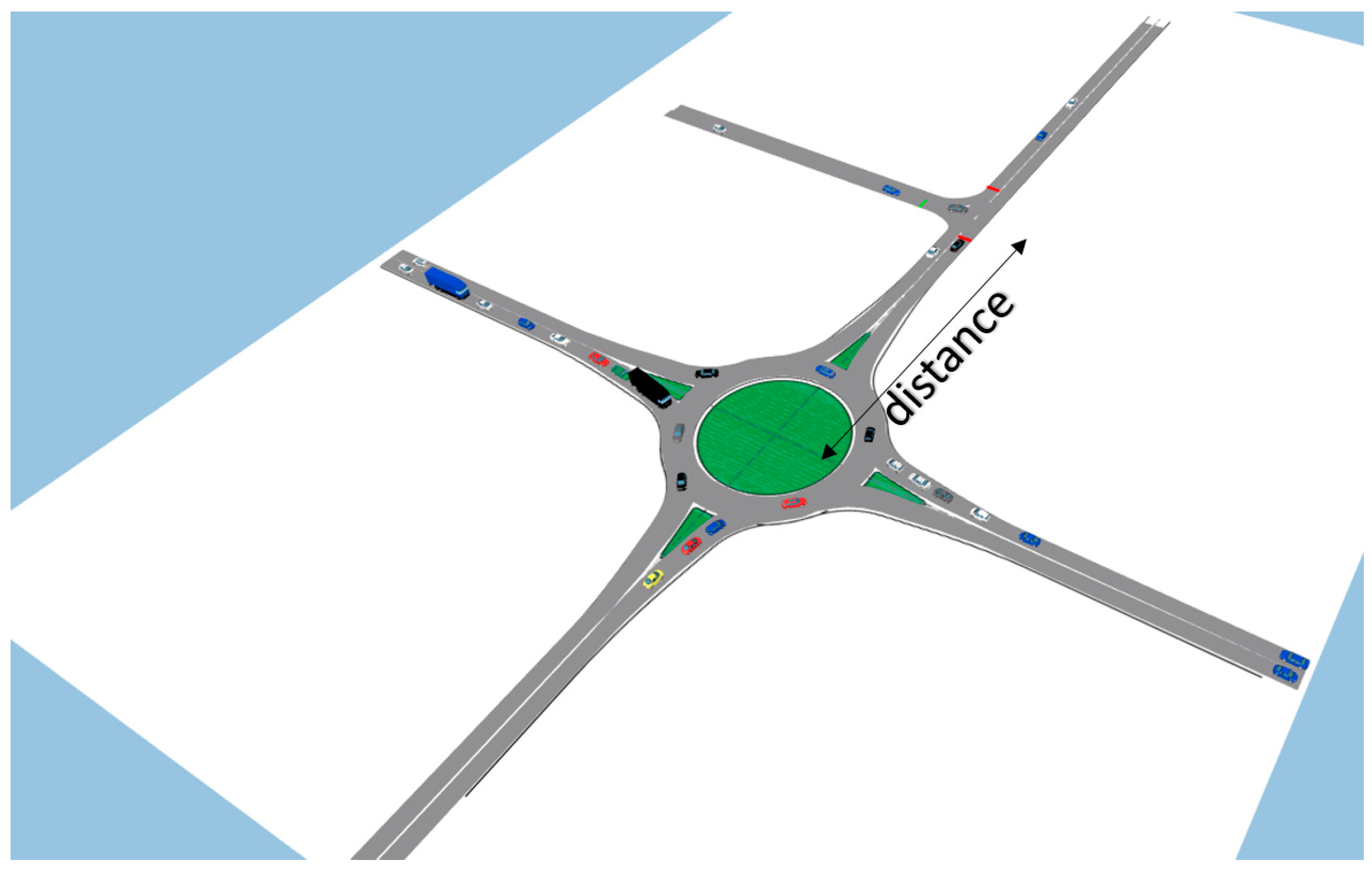
After successfully modeling the isolated roundabout, the next step was to conduct a microsimulation to assess the effect of a signalized intersection on the adjacent roundabout. A three-leg signalized intersection was incorporated into the network, with the distance from the roundabout’s central point to the signalized intersection ranging from 40 to 160 m, as shown in
Figure 4. The minimum distance of 40 m was defined as the threshold necessary to accommodate the geometric elements of both intersections.
Each microsimulation generated a separate *.trj file containing numerical vehicle-trajectory data (vehicle identity, position, speed, and timestamp at each simulation step). Each *.trj file was processed with SSAM, which automatically identified and classified traffic conflicts. A traffic conflict is defined as a situation in which a collision would occur in the absence of driver reaction, and its identification and classification are based on surrogate safety measures and the type of interaction, in accordance with the methodological framework of the tool [
18].
From the SSAM output, key metrics were extracted: the total number of conflicts and the number of conflicts by type—crossing, rear-end, and lane-change conflicts. This procedure yielded, for each scenario, a set of 10 numerical values for each conflict type as well as for the total number of conflicts, from which the average number of conflicts per scenario was calculated. Such an approach explicitly accounts for the stochastic nature of microsimulations and enables the quantification of within-scenario variability.
Conflict classification primarily hinges on the conflict angle, though link and lane information may also influence it. The conflict angle is utilized for classification as follows:
Crossing: A conflict angle greater than 85° poses the highest risk in terms of severity due to the angle of impact and the significant energy transfer involved.
Rear-end: A conflict angle of less than 30° typically results in lower severity, though it can still lead to substantial injuries, particularly in high-speed scenarios.
Lane-change: A conflict angle of 30° to 85° is moderate in severity but carries the risk of triggering cascading events, such as multi-vehicle collisions.
2.2. Real-Site Models
To assess the reliability and applicability of the regression model under real-world traffic conditions, experimental investigations were conducted at selected locations in the cities of Osijek and Poreč, Croatia, where a roundabout and a signalized intersection are positioned such that mutual interaction in traffic operations occurs.
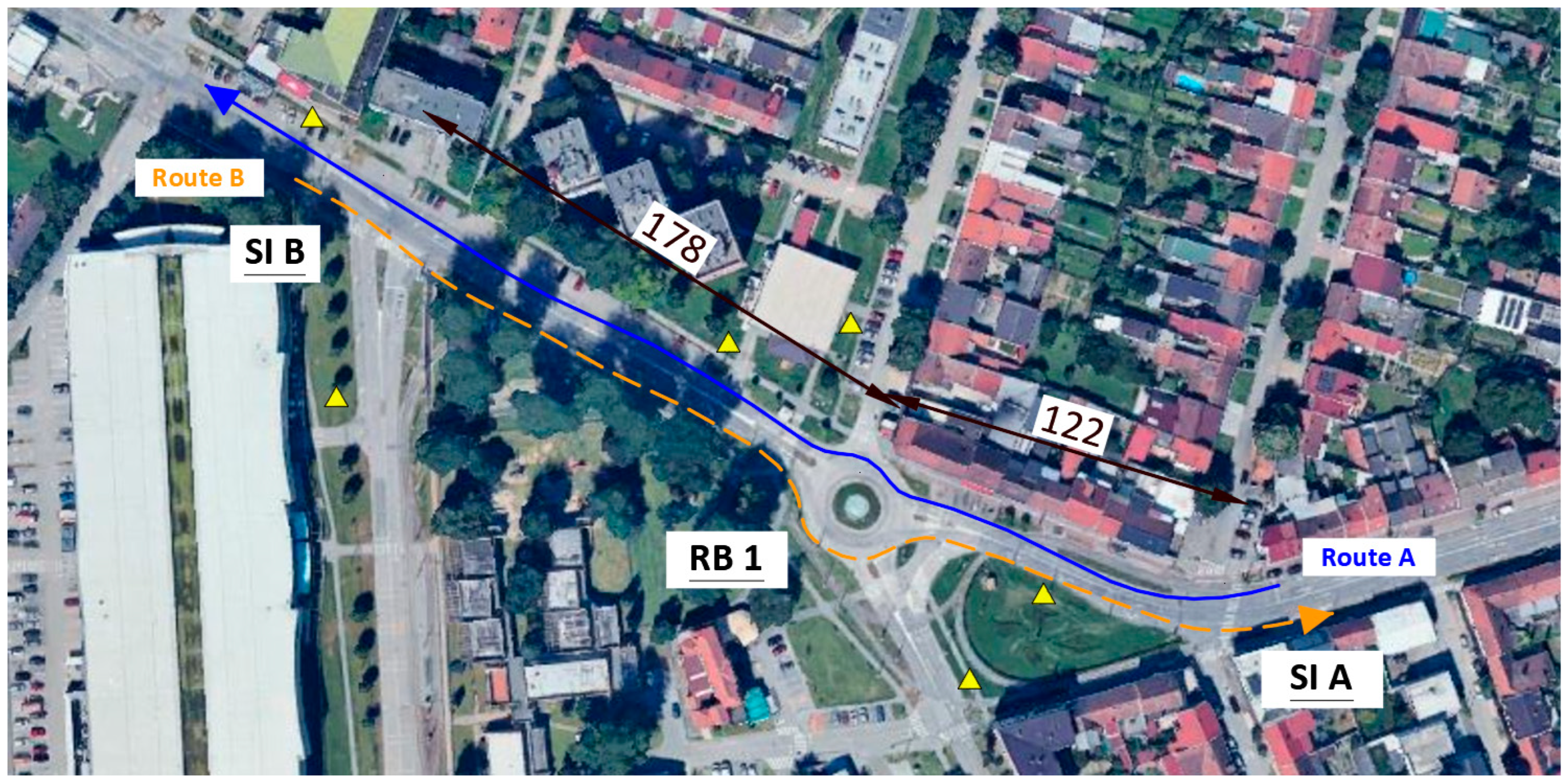
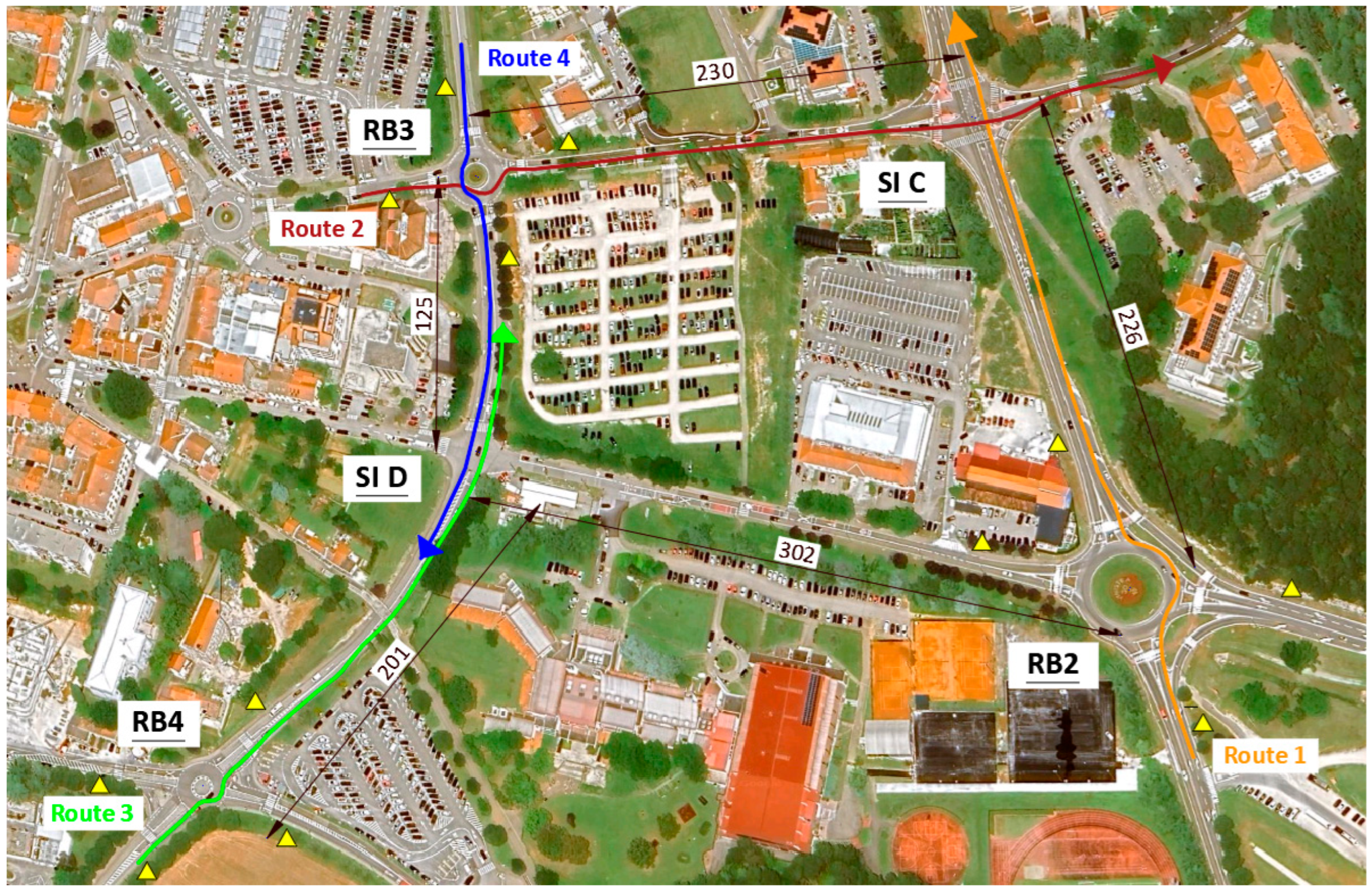
Travel time data collected within the actual road network were used to calibrate the microsimulation models. Traffic volume and vehicle composition data were collected using Datacollect SDR radar traffic counters, with records maintained continuously over a 24 h period. The locations of each traffic counter are marked by a yellow triangle symbol in
Figure 5 and
Figure 6. The specific dates for data collection were as follows: Roundabout RB1—4 September 2024; Roundabout RB2—11 July 2024; Roundabout RB3—17 July 2024; and Roundabout RB4—1 August 2024.
2.2.1. Field Measurements
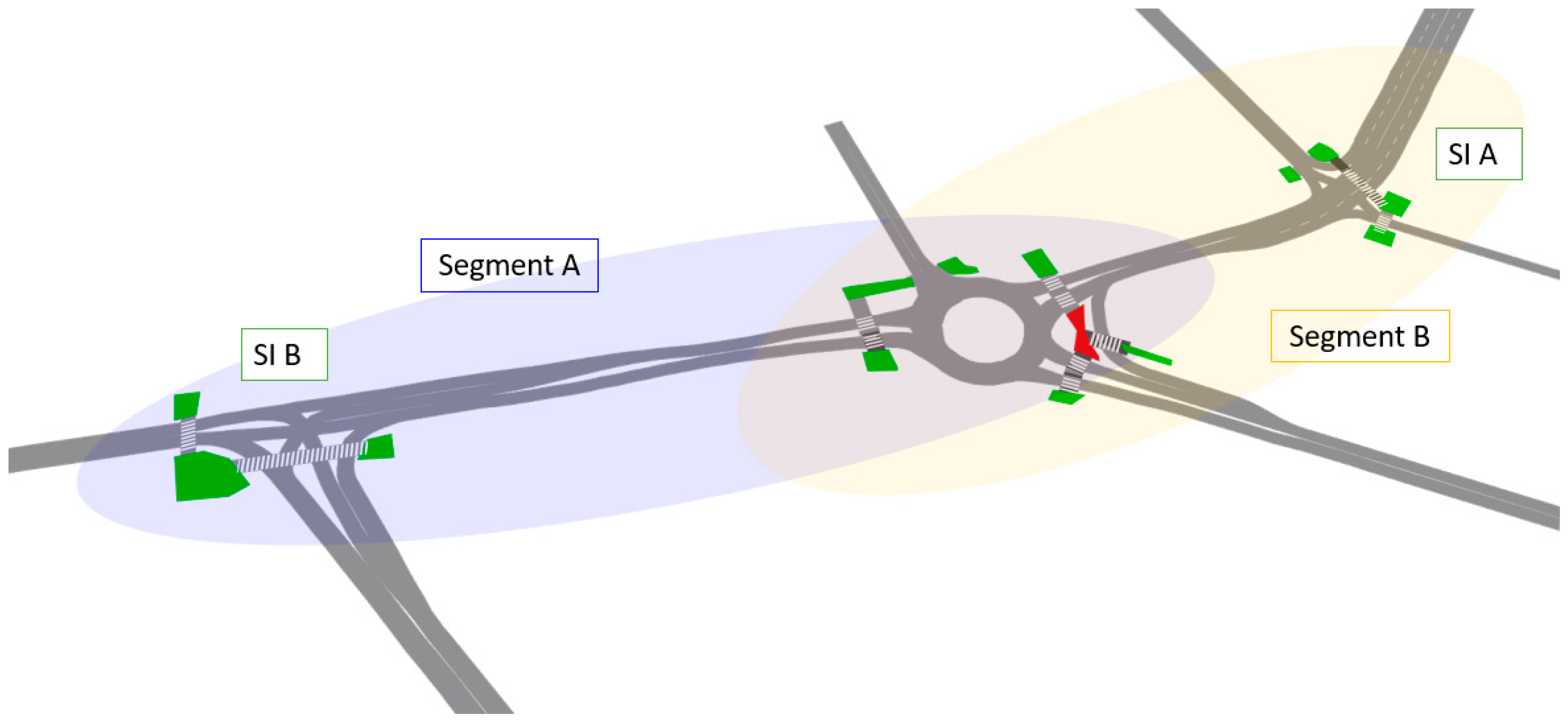
The location in the City of Osijek (Croatia) was used to validate the regression model at a roundabout (RB1) situated along a traffic corridor between two signalized intersections (SI A and SI B), where local traffic predominates (
Figure 5). This segment of the road network is located in an area predominantly designated for residential use, in the immediate vicinity of a school and a shopping center. The outer radius of the roundabout is 15 m, which, according to Croatian guidelines [
30], classifies it as a medium-sized urban roundabout. Three intersections were analyzed:
Roundabout (four-leg)—RB1;
Signalized intersection (four-leg)—SI A—located 122 m from the roundabout;
Signalized intersection (three-leg)—SI B—located 178 m from the roundabout.
The cycle length at Signalized Intersection A is 90 s, with the red interval of the first phase lasting 25 s. The cycle length at Signalized Intersection B is also 90 s, with the red interval of the first phase lasting 21 s.
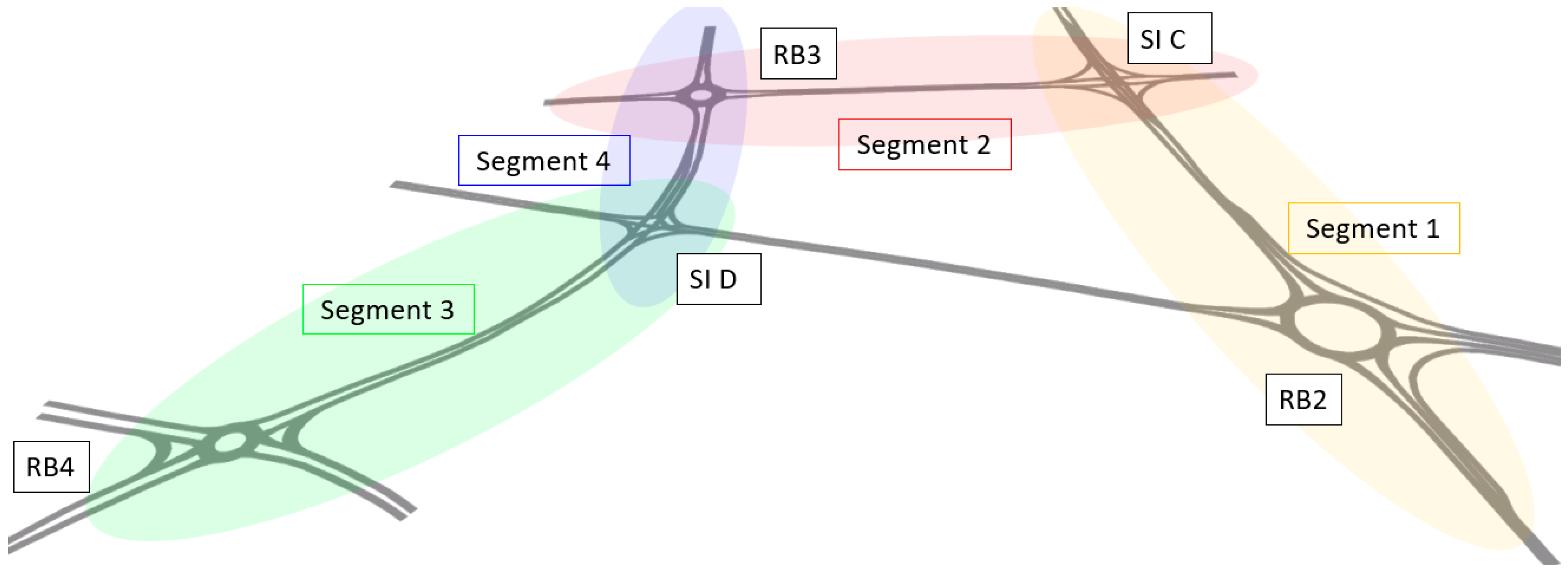
The second analyzed segment of the road network is situated in the City of Poreč (Croatia) and includes three roundabouts in close proximity to signalized intersections, as shown in
Figure 6. This network segment is located in a predominantly residential area, directly adjacent to the historic town center, a shopping plaza, and the primary municipal parking facility. Given that Poreč is a tourist destination, a significant portion of the traffic at these roundabouts consists of tourists, leading to greater diversity in driver behavior.
Three roundabouts and two signalized intersections were analyzed:
Roundabout (four-leg)—RB2—located 226 m from SI C and 302 m from SI D;
Roundabout (four-leg)—RB3—located 230 m from SI C and 125 m from SI D;
Roundabout (four-leg)—RB4—located 201 from SI D;
Signalized intersection (four-leg)—SI C;
Signalized intersection (four-leg)—SI D.
The cycle length at Signalized Intersection SR C is 60 s, with the red interval of the first phase lasting 25 s and that of the second phase lasting 35 s. The cycle length at Signalized Intersection SR D is 70 s, with the red interval of the first phase lasting 25 s.
During the afternoon peak hour (16–17 h), measurements were carried out to determine travel times on six routes between predefined control points (
Figure 5 and
Figure 6). All routes were 300 m long. A database of measured travel times for given distances between existing spatial points (light poles, traffic lights, trees, etc.) was established under real traffic conditions. Travel times were obtained using the GPS application GeoTracker (v5.4.1), which provides high-resolution measurements of both route length and travel duration. Data were collected using a passenger vehicle operated by three different drivers. For each analyzed route, vehicle travel time was assessed based on 15 independent vehicle passes through both the roundabout and the signalized intersection. Descriptive statistics of vehicle travel time are detailed in
Table 2.
Travel time is defined as the average travel time [s] of vehicles along the 300 m route. The length of the analyzed road segment was selected in order to comprehensively capture all relevant elements of vehicle movement under the combined influence of a roundabout and a signalized intersection. The chosen distance enables the precise measurement of travel time, including the deceleration phase when approaching the roundabout, vehicle circulation through the roundabout, and acceleration upon exiting, as well as the subsequent deceleration, stopping, and passage through the signalized intersection. Furthermore, the segment allows for an assessment of the effects of varying distances between intersections (40–160 m), while ensuring sufficient data variability for detailed statistical analysis.
A summary of the field measurements on all the analyzed routes is presented in
Table 3. This table outlines the time intervals for the individual traffic signals at the signalized intersections corresponding to the signal phase during which traffic flows along the observed routes. It includes data on the total cycle length (C) as well as the specific durations of the green (g), red–amber (r-a), red (r), and amber (a) light intervals.
2.2.2. Calibration of the Real-Site Microsimulation Models
Based on the field measurements conducted in the cities of Osijek and Poreč, described in detail in
Section 2.2.1, microsimulation models of selected segments of the traffic network were developed in VISSIM. To obtain the most relevant data, the microsimulation models were calibrated using travel time data.
In the VISSIM software, two types of parameters—measurable and non-measurable (i.e., difficult to quantify)—significantly influence simulation outcomes. Measurable parameters include traffic volume, traffic distribution and composition, signal control, vehicle speeds, and the dynamic characteristics of traffic flow. The accuracy of these field-collected parameters is crucial, as they directly affect the reliability of the model.
As part of previous research, the authors developed a VISSIM model calibration methodology using neural networks, which yielded good calibration and validation results for different traffic indicators and different urban traffic networks [
37,
38,
39]. For the purposes of this analysis, the following parameters were selected for calibration:
Random seed increment;
Average standstill distance (m)—default value: 2;
Additive part of the desired safety distance (m)—default value: 2;
Multiplicative part of the desired safety distance (m)—default value: 2.
The random seed increment determines the step size used to modify the value of the random number generator, thereby producing different values for the stochastic variables of the simulator’s mathematical models.
The remaining three parameters relate to driver behavior as defined by the Wiedemann 74 car-following model, which is well-suited for simulating urban traffic networks. The average standstill distance represents the gap that drivers maintain between their own vehicle and the one ahead under complete stop conditions, reflecting local driving habits. During calibration, this parameter varied between 1 and 3 m.
The additive part of the desired safety distance corresponds to the constant component of the safety gap that drivers maintain regardless of vehicle speed and represents the minimum safety distance during driving. During calibration, this parameter varied from 1 to 5 m.
The multiplicative part of the desired safety distance describes the speed-dependent component of the safety gap. Its value is multiplied by the vehicle speed, thereby determining the additional distance drivers maintain based on their speed. During calibration, this parameter varied between 1 and 6.
These driver behavior parameters directly regulate the models governing vehicle spacing during driving and stopping. Previous research has demonstrated their high sensitivity—even small changes in their values can substantially affect simulation results [
40,
41]. Furthermore, studies focused on the calibration of urban traffic networks [
42,
43] indicate that the average standstill distance and the additive and multiplicative components of the desired safety distance have the greatest influence on queue lengths and vehicle waiting times.
Travel time was selected as the primary calibration indicator because it integrates a range of key elements of driver behavior, including desired speeds, reaction times, vehicle interactions, and queue formation, thereby providing a comprehensive representation of traffic flow dynamics. An additional advantage of this metric is its relative simplicity and the precision of its measurements. Existing research confirms the effectiveness of travel time as a calibration criterion under various traffic conditions, showing that this indicator clearly reflects the functional performance of the traffic system and allows for a reliable evaluation of the quality of the simulation model [
37,
44,
45].
The development of the traffic microsimulation models for the existing conditions was based on a digital orthophotomap and project documentation provided by the City of Osijek and the City of Poreč. Operating speed, traffic composition, and daily traffic volume were determined through field measurements and analysis of data obtained from traffic counters (
Section 2.2.1). The key input parameters used in developing the traffic microsimulation models are presented in
Table 3, including the outer radius of the analyzed roundabouts, daily traffic volume, traffic distribution between major and minor directions, traffic composition, and daily operating speeds.
The calibration of the traffic microsimulation model is an iterative process focused on identifying the optimal values for the model’s input parameters. This calibration involved comparing the simulated travel times with the observed travel times recorded between the roundabout and the signalized intersection. The chosen route length of 300 m aligns with that utilized in the development of the regression model (
Section 3.2).
The calibration criterion was defined by Equation (1) [
37]:
where
TMOD denotes the mean model-predicted travel time between reference points, and
TMEAS represents the mean measured travel time between the same points. The model is considered calibrated when the above condition is satisfied.
The results of the travel time comparison are shown in
Table 4, with relative deviations ranging from 0.50% to 4.79%, indicating strong agreement between the simulation model and field data.
The optimal values of input parameters used for the calibration of the respective VISSIM models (for Osijek and Poreč networks) are presented in
Table 5.
3. Results
This section presents the results of the traffic conflict analysis obtained using VISSIM microsimulation and the Surrogate Safety Assessment Model (SSAM). The influence of key geometric and traffic parameters—namely, the distance between the roundabout and the signalized intersection, the outer roundabout radius, the red time duration at the signalized intersection, and the traffic distribution between major and minor approaches—on the total number of conflicts is analyzed over a 24 h period.
In the second part of the section, the results of a statistical analysis are presented, including descriptive statistics, correlation analyses, and the development of a multiple linear regression model to predict the total number of conflicts. The predictive performance of models of varying complexity is evaluated, and the final conflict prediction model is proposed together with its applicability bounds. Finally, the regression model is validated by comparing its predictions with conflicts derived from calibrated microsimulation models for corridors in the cities of Osijek and Poreč.
3.1. Analysis and Interpretation of the Number of Conflicts over a 24 h Period
Analysis was conducted using data obtained from VISSIM and SSAM to evaluate the impact of observed parameters on the total number of conflicts in the analyzed scenarios.
The findings reveal a significant influence of the distance between the roundabout and the signalized intersection on conflict occurrences, particularly for roundabouts with a smaller outer radius (R = 12 m). Scenarios involving isolated roundabouts consistently recorded fewer conflicts compared to those with closely spaced intersections. At the minimum analyzed spacing of 40 m, the total number of conflicts surged by 40% to 60%, with the most pronounced effect noted for roundabouts with an external radius of 12 m. For larger roundabouts (outer radii of 17 m and 22 m), the adverse effects of reduced spacing were also evident, typically leading to increases in conflicts of 20% to 40%.
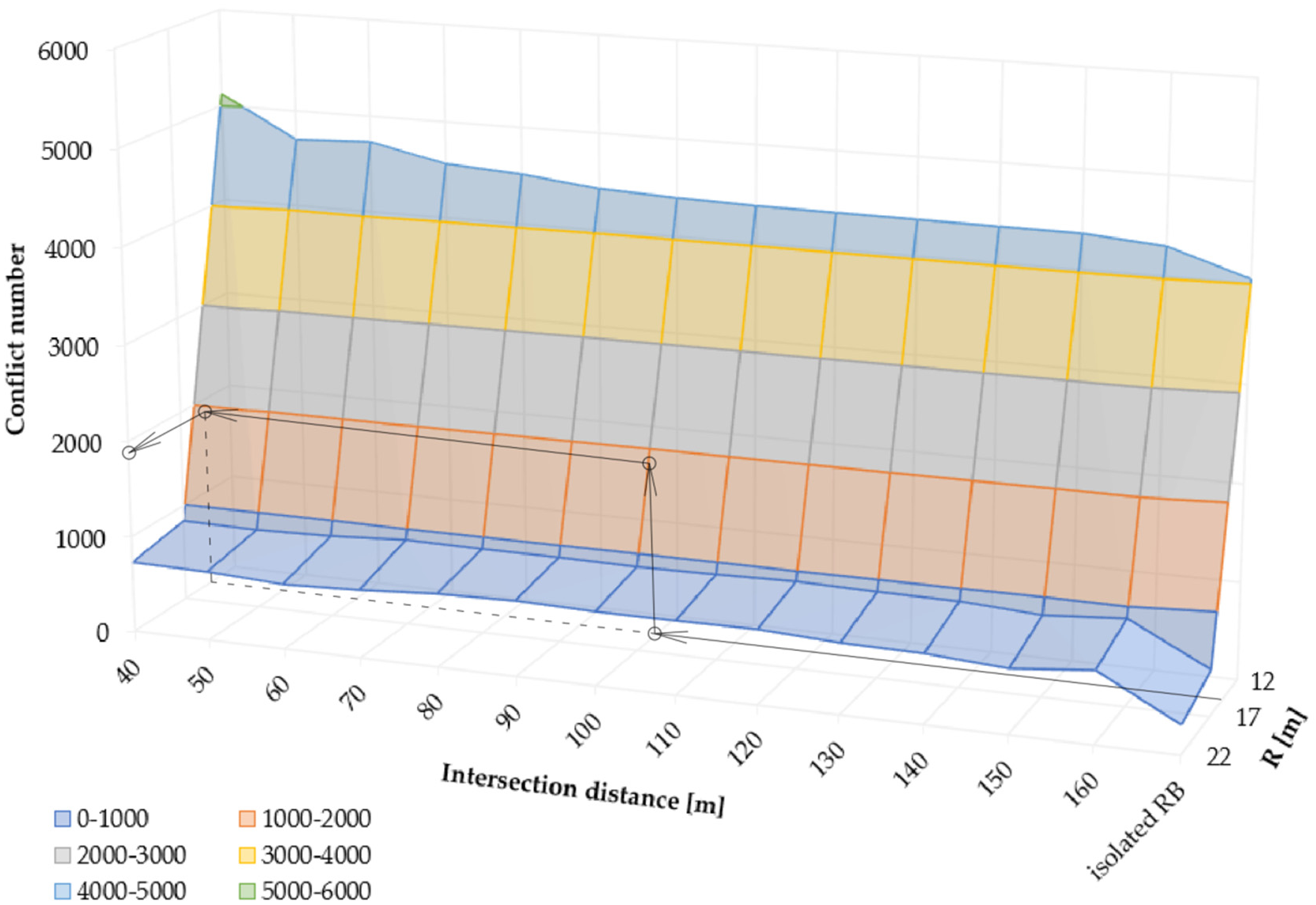
Figure 7 illustrates the combined effects of the outer roundabout radius (R) and the distance to the signalized intersection on the total number of conflicts. The results presented pertain to scenarios featuring a 70% traffic share on the main direction (MDP) and a 22 s red time (RT) at the signalized intersection. This figure offers a specific example for estimating the total number of conflicts for a scenario with 100 m spacing between the roundabout and the signalized intersection, a roundabout outer radius of 15 m, a red phase duration of 22 s, and 70% of traffic flow in the main direction. Based on the graph, the estimated total number of conflicts for this scenario is approximately 1800.
For roundabouts with the smallest analyzed outer radius of 12 m, increasing the distance between intersections from a minimum of 40 m to a maximum of 160 m reduces the total number of conflicts by approximately 8% to 15%. For instance, in a scenario where the main traffic flow comprises 70% and the signal red time is 22 s, the number of conflicts decreases from 5122 (at 40 m) to 4404 (at 160 m), indicating a reduction of around 14%.
In the case of medium-sized roundabouts with an outer radius of 17 m, the impact of increasing intersection spacing on the number of conflicts is less significant, typically varying from 5% to 10%. In this scenario, with a 70% share of the main traffic and a signal red time of 22 s, conflicts decrease from 904 (at 40 m) to 834 (at 160 m), reflecting a reduction of approximately 7%. A similar magnitude of conflict reduction is noted for larger roundabouts with an outer radius of 22 m.
Increasing the outer radius from the minimum of 12 m to a medium value of 17 m results in a significant reduction in conflicts, ranging from 75% to 90%. In the case of an isolated roundabout with a 70% share of main traffic, the number of conflicts drops dramatically from 4044 (R = 12 m) to 472 (R = 17 m), representing an approximate 88% reduction.
Moreover, increasing the outer radius from 17 m to 22 m further reduces conflicts by an additional 20% to 35%. With a spacing of 40 m and a signal red time of 17 s, the number of conflicts decreases from 773 (R = 17 m) to 535 (R = 22 m), reflecting an additional 31% reduction.
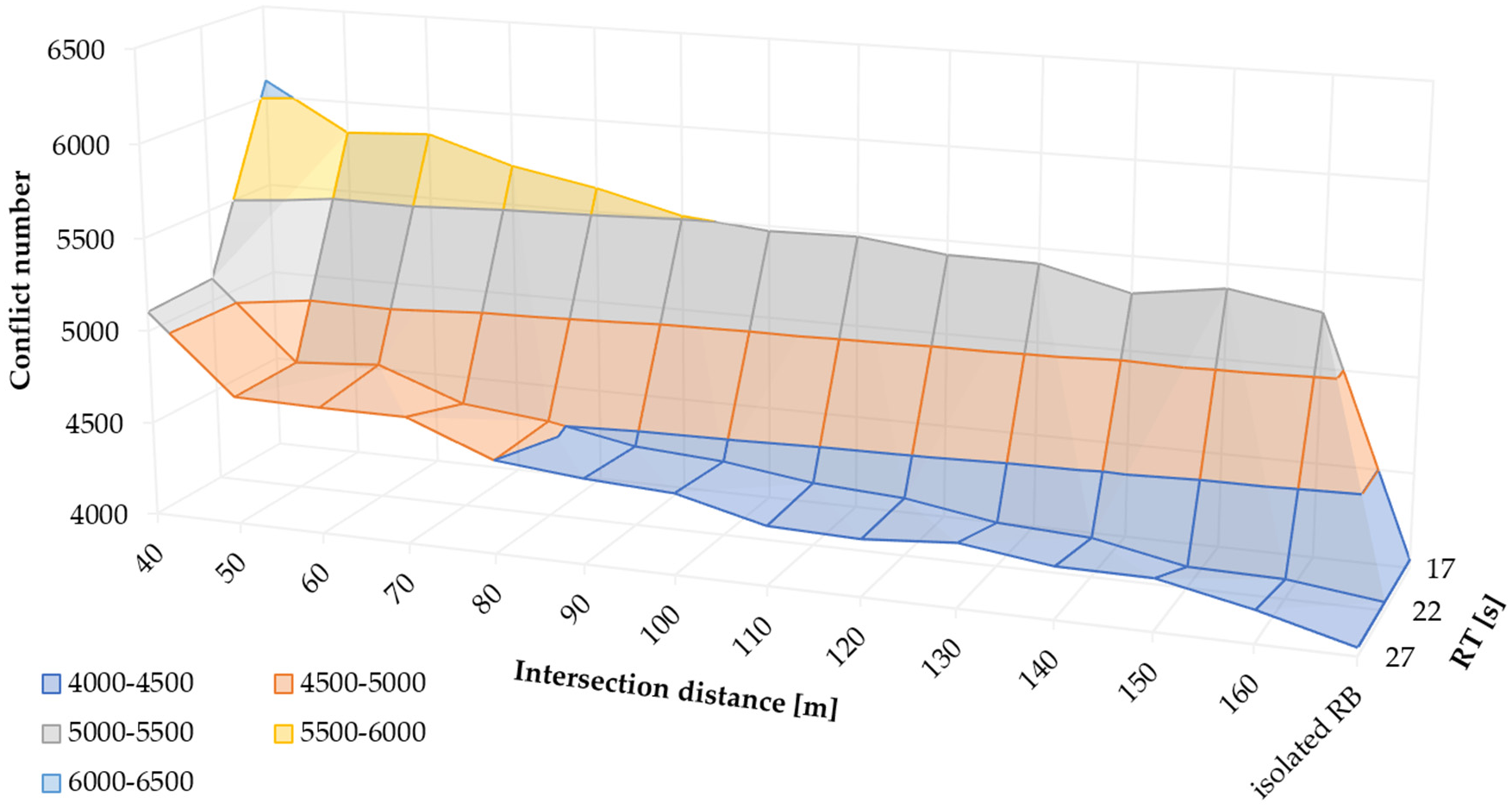
Figure 8 illustrates the combined effect of the signal red time (RT) and the distance between the roundabout and the signalized intersection on the total number of conflicts in scenarios where the main traffic flow (MDP) consists of 70%, and the outer roundabout radius is set at 12 m.
For small roundabouts with an outer radius of 12 m, increasing the red time from 17 to 22 s leads to a notable reduction in the number of conflicts, ranging from 10% to 20%. For instance, at an intersection spacing of 40 m, with 70% of traffic on the main direction, the number of conflicts decreases from 6088 (with a red time of 17 s) to 5122 (with a red time of 22 s), reflecting an approximate reduction of 16%. Further extending the red time from 22 to 27 s yields an additional decline in conflicts, albeit at a lower intensity, averaging around 10%.
In contrast, for larger roundabouts with outer radii of 17 m and 22 m, the impact of red time duration is significantly less pronounced, resulting in an average reduction in conflicts of about 5%.
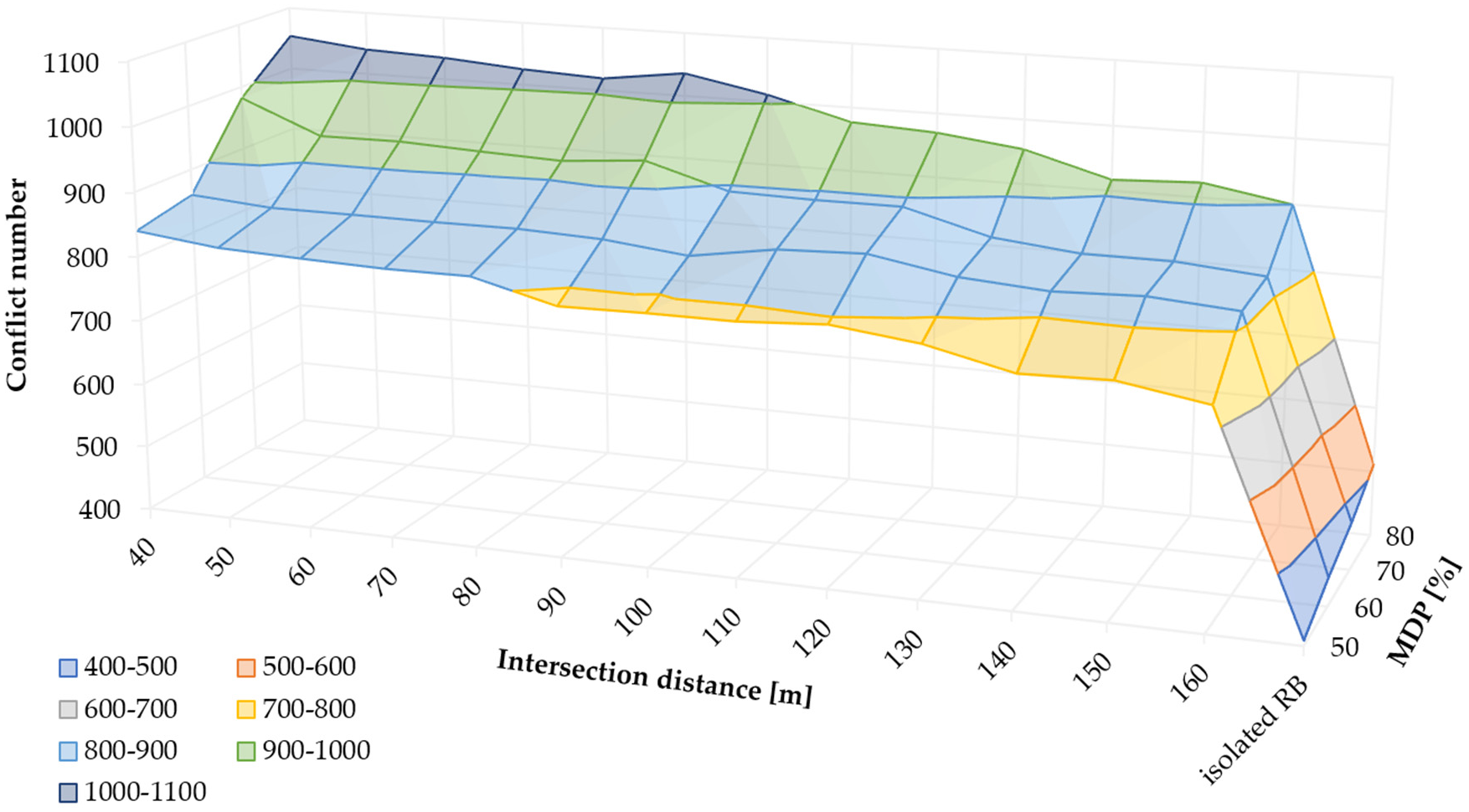
Figure 9 illustrates the combined effect of the percentage of traffic in the main direction (MDP) and the distance between the roundabout and the signalized intersection on the total number of conflicts. The results pertain to scenarios featuring a red time duration of 17 s (RT) and an outer roundabout radius of 17 m.
Reducing the share of traffic on the main direction from 80% to 50% in the case of smaller roundabouts (12 m) leads to an average increase in conflicts of 20–30%. For an isolated roundabout, the number of conflicts increases from 3407 (with 80% of traffic on the main direction) to 4329 (with 50% of traffic on the main direction), representing a 27% increase. At roundabouts with larger radii (17 and 22 m), a more even traffic distribution across approaches (50% on the main direction) results in an average reduction in conflicts of approximately 10%.
3.2. Statistical Analysis and Development of the Conflict Prediction Model
The development of the conflict prediction model is based on an analysis of the results obtained from a series of traffic scenarios described in the preceding section. The statistical processing of the data included the following methods:
Descriptive analysis was used to identify the characteristics of the variability in the occurrence of different conflict types and to determine the target variable for the regression model.
Pearson’s correlation test was applied to examine the interrelationships between the model’s input parameters for all conflict types.
Multiple linear regression was performed using a stepwise predictor selection method with the aim of identifying statistically significant model parameters that have a direct influence on the number of conflicts.
Descriptive statistical indicators for all analyzed conflict types are presented in
Table 6.
In all scenarios, rear-end conflicts account for more than 90% of the total number of potential conflicts. The greatest variability is observed in the total number of conflicts, as evidenced by the wide range of values (288–6440) and the high standard deviation (2020.42). The total number of conflicts encompasses all conflict types, providing a more comprehensive representation of traffic safety at the roundabout. Since different parameters may affect individual conflict types in different ways, focusing on the total number of conflicts enables the identification of those that exert the strongest overall influence. Consequently, the further development of the model is directed towards the total number of conflicts within a 24 h period.
Table 7 presents the correlation analysis between the model parameters and the individual and total conflict types.
Increasing the distance between the roundabout and the signalized intersection has a moderately negative effect on rear-end conflicts, whereas its influence on crossing and lane-change conflicts is almost negligible. Traffic distribution, i.e., an increased share of vehicles in the main direction, has a beneficial effect on reducing the number of rear-end conflicts. The duration of the red interval at the adjacent signalized intersection also has a moderately positive effect on the reduction in rear-end conflicts, while not exerting a significant influence on crossing or lane-change conflicts. The most important parameter contributing to improved traffic safety is the outer radius of the roundabout, which shows a distinct negative effect on all analyzed conflict types.
Based on the conducted analyses, a conflict prediction model was developed. Multiple linear regression was used to investigate the influence of the input parameters on the total number of conflicts. The analysis was carried out using a stepwise method, whereby the model was formed on the basis of the statistical significance of the input variables.
Four independent variables were examined: the distance between the roundabout and the signalized intersection, the distribution of traffic between the major and minor directions, the duration of the red interval at the signalized intersection, and the outer radius of the roundabout. The dependent variable was the total number of conflicts. The dataset used for the analysis was divided into a training set comprising 384 scenarios and a validation set comprising 96 scenarios.
The stepwise inclusion method resulted in a final model that incorporated three statistically significant input parameters: intersection spacing, red interval duration, and the outer radius. The parameter describing the distribution of traffic between the major and minor directions was excluded from the final model, as it did not make a significant contribution to explaining the variance in the total number of conflicts. The parameters of the resulting regression model are presented in
Table 8.
All three parameters have negative regression coefficients, indicating that an increase in any of these parameters leads to a reduction in the number of conflicts (under identical traffic conditions). The outer radius is the strongest factor, whereas intersection spacing and red interval duration exhibit weaker, yet still statistically significant, negative effects. Three models of varying complexity (with one, two, and three input parameters) were analyzed, and their accuracy and complexity indicators are presented in
Table 9.
The three-parameter model (final model) exhibits the lowest mean squared error (MSE = 152,708.505) and the highest coefficient of determination (R2 = 0.801), indicating that the included model parameters explain 80.1% of the variance in the total number of conflicts. The regression model does not account for the remaining 19.9% of the variance, which can be attributed to other unmodeled influences or random error. The adjusted R2 is 0.799, which is almost identical to R2, suggesting that the inclusion of additional parameters did not impair the regression model’s efficiency relative to the number of predictors. The high coefficient of determination indicates that the model fits the data very well and that there is a strong linear relationship among the model parameters.
Moreover, Mallows’ Cp statistic for the final model is 3.872, which is almost equal to the number of parameters in the model, including the constant, indicating a good balance between goodness of fit and model parsimony. Compared with the simpler models, the Akaike Information Criterion (AIC = 4587.513) is lowest for this three-predictor model, thereby confirming the superior predictive performance of including all three variables.
To further evaluate the regression model’s accuracy and predictive performance, partial validation via the hold-out method was employed. The training set was used to estimate the model, while the validation set was used to assess its performance on unseen data. The goodness-of-fit indicators of the final regression model are presented in
Table 10.
The validation set yields an R2 of 0.795 (adjusted R2 = 0.739), which is almost as high as the R2 in the training set. The mean squared prediction error on the validation set (MSE = 158.212) and the corresponding RMSE (397.758) are very close to the values obtained for the training set (MSE = 152,708.505; RMSE = 390.779). The mean absolute percentage error (MAPE) is 36.1% on the validation set (compared with 34.5% on the training set). These results indicate that the regression model does not suffer from overfitting and generalizes well—the predictive relationships between the parameters retain similar strength on the validation data.
In the context of traffic safety analysis, where conflict variability can be extremely high (as evidenced by a high standard deviation of the total number of conflicts: 2020.42, with a mean of 2174.21), such an MAPE value is not unusual. For example, in the study by [
46], where machine learning was employed to predict the number of conflicts, a MAPE of 36.99% was achieved. In ref. [
47], a linear regression model was developed to predict a composite risk index, with a reported MAPE of 25.9%.
Based on the statistical analysis, a prediction model for the total number of conflicts was defined, as expressed in Equation (2).
where
Conflicts—total number of conflicts along the traffic corridor, including the roundabout and the signalized intersection (model developed for an AADT of 20,000 veh/day);
D (m)—distance between the roundabout and the signalized intersection, in the range of 40–160 m;
RT (s)—duration of the red time at the signalized intersection, in the range of 17–27 s;
R (m)—outer radius of the roundabout, in the range of 12–22 m.
The model provides reliable results within the defined ranges of the input parameters, whereas for applications beyond these limits, the validity of the results should be verified additionally.
3.3. Simulation-Based Validation of the Regression Model
In order to compare the results of the regression model for conflict prediction, described in
Section 3.2, with the results of the traffic microsimulation models developed for the cities of Osijek and Poreč, a calibration of the traffic microsimulation models was carried out based on the measured travel times presented in
Section 2.2.
The comparison of the predicted number of conflicts obtained from the regression model with the number of conflicts derived from calibrated traffic microsimulations was carried out in order to verify the reliability of the analytical approach and to identify differences between analytical and simulation-based modeling.
The regression model was developed for a traffic corridor comprising one roundabout and one signalized intersection, with a daily traffic volume of 20,000 vehicles. For this reason, it was necessary to adapt the calibrated microsimulation models for Osijek and Poreč to the regression model framework.
The comparison was conducted through the following steps:
Model segmentation—The calibrated microsimulation models of the traffic network in Poreč and the corridor in Osijek were divided into segments, each comprising one roundabout and one signalized intersection.
Adjustment of traffic volume—In all analyzed segments, the traffic volume was adjusted to 20,000 veh/day to conform to the assumptions of the regression model.
Prediction using the regression model—For each segment, the expected number of conflicts was calculated based on the regression model (Equation (2)).
Computation of deviations—The differences between the analytically predicted number of conflicts and the number of conflicts obtained using the SSAM were determined.
Normality testing of differences—The normality of the distribution of the obtained differences was examined using the Shapiro–Wilk test.
Statistical analysis—Appropriate statistical tests were performed to compare the results and to assess the significance of the differences.
In the microsimulation traffic model of the corridor in Osijek, two segments were analyzed, as shown in
Figure 10. Segment A consists of a roundabout and the signalized intersection SI A, while Segment B comprises a roundabout and the signalized intersection SI B.
In the microsimulation traffic network of the City of Poreč, four segments were analyzed, as shown in
Figure 11. Segment 1 comprises roundabout RB2 and signalized intersection SI C, while Segment 2 includes roundabout RB3 and signalized intersection SI C. Segment 3 consists of roundabout RB4 and signalized intersection SI D, whereas Segment 4 connects roundabout RB3 with signalized intersection SI D.
Based on parameters measured under real-world conditions—including the geometric characteristics of the intersections, the duration of the red interval at the adjacent signalized intersection, and the distance between the roundabout and the signalized intersection—the expected number of conflicts was calculated (Equation (2)).
Table 11 presents the input parameters used in the comparison between the regression model and the microsimulation results for the analyzed segments. Parameter values that fall outside the regression model’s applicability range are highlighted in bold.
The microsimulations conducted in VISSIM generated vehicle trajectories across the analyzed segments. These trajectories were then used to estimate conflicts using the SSAM software (Version 3.0).
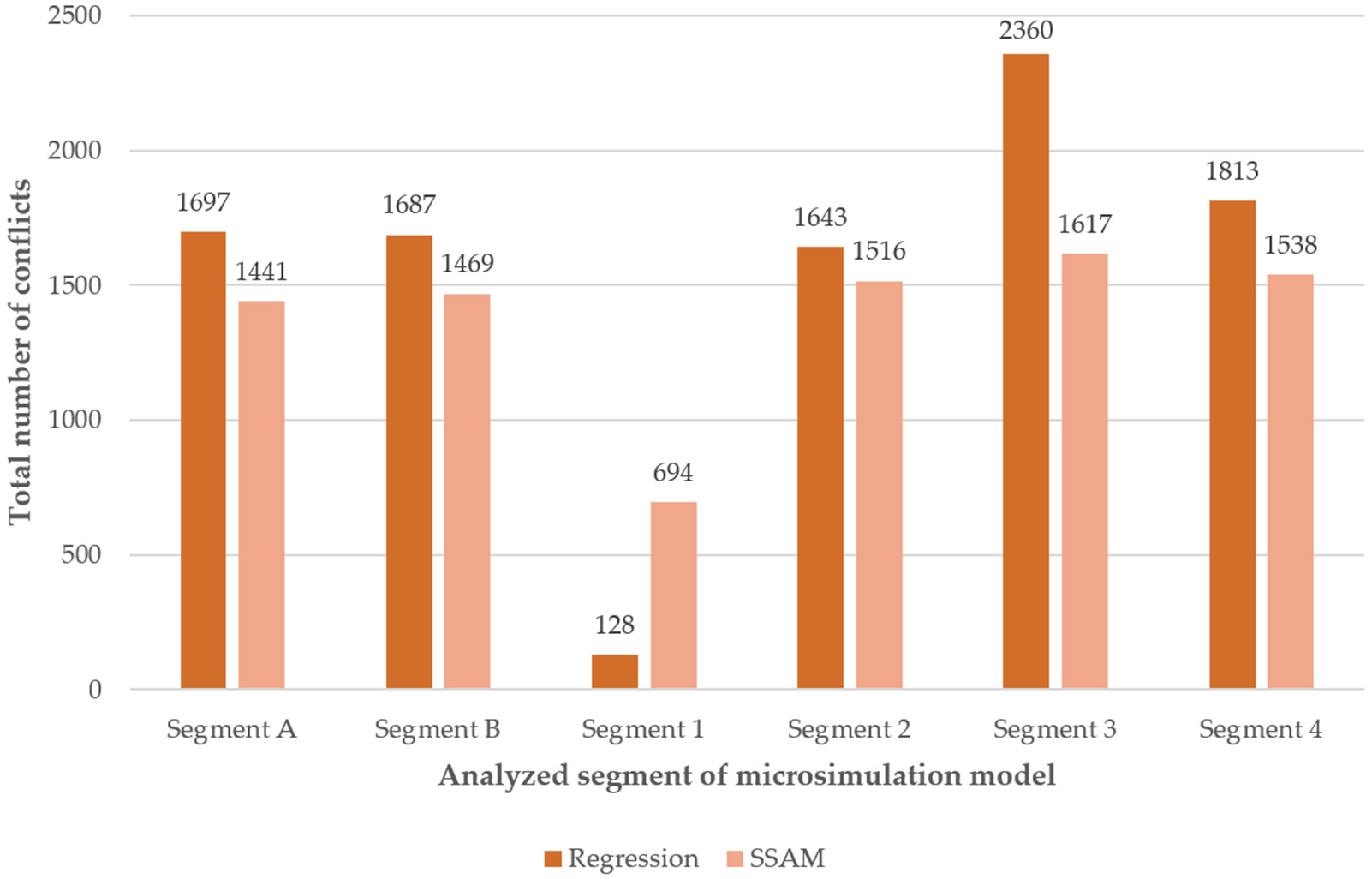
Figure 12 compares the analytically estimated number of conflicts obtained from the regression model with the number determined by applying the safety assessment model based on surrogate safety measures (SSAM).
Before comparing the results using statistical tests, the normality of the distribution of the total number of conflicts was examined for each segment. To assess normality, the Shapiro–Wilk test was applied, which tests the null hypothesis that the sample is drawn from a population with a normal distribution. The results of the Shapiro–Wilk test for all segments, including W statistics,
p-values, and the conclusion regarding the normality of the data distribution, are presented in
Table 12.
The outcomes of the Shapiro–Wilk test indicated that the data distribution deviated significantly from normality for all analyzed segments (p < 0.05). As a result, a nonparametric approach was employed for all segments, specifically utilizing the one-sample Wilcoxon test.
The findings for each segment under examination are detailed in
Table 13, which includes the Wilcoxon test statistic V, the standardized test statistic Z, and the associated significance level (
p-value).
The Wilcoxon test shows that, for Segments A, B, 2, and 4, there is no statistically significant difference between the number of traffic conflicts obtained using the safety assessment model based on surrogate safety measures (SSAM) and those predicted by the regression model.
Negative values of the Z statistic in these segments indicate that the SSAM yields slightly lower estimates of the number of conflicts than the regression model; however, the observed differences are not statistically significant. The mean absolute percentage error (MAPE) between the SSAM and regression model results ranges from 7.97% to 15.22%, indicating a very good level of agreement between the two approaches.
Segments 1 and 3 lie outside the parametric bounds of the regression model with respect to the outer roundabout radius. Segment 1 includes roundabout RB1 with an outer radius of 24 m, whereas Segment 3 includes roundabout RB4 with an outer radius of 11.5 m. In these segments, statistically significant differences were observed between the number of conflicts based on SSAM and those derived from the regression model.
In Segment 1, the positive Z statistic (Z = 2.752) indicates that SSAM predicts a significantly higher number of conflicts than the regression model. Conversely, in Segment 3, the negative Z statistic (Z = −2.752) indicates that SSAM yields significantly lower conflict estimates than the regression model.
Since the outer roundabout radius was previously identified as the most influential parameter of the regression model (
Section 3.2), deviations of this parameter from the model’s applicability range in these segments result in an increased error in the predicted number of conflicts.
The comparison shows a high degree of consistency between the regression conflict prediction model and the calibrated microsimulation model outcomes for the cities of Osijek and Poreč, with an acceptable margin of deviation. The statistical analysis confirms that there is no significant difference between the regression model (analytical approach) and the SSAM (microsimulation approach), provided the regression model’s applicability conditions are met.
4. Discussion
The strong influence of the outer roundabout radius on the number of traffic conflicts identified in this study is consistent with previous research on roundabout safety. In particular, Daniels et al. [
32] and Mahdalová et al. [
34] identified the outer radius as one of the most influential geometric parameters affecting roundabout safety performance. The conflict reduction observed in this study when increasing the outer roundabout radius from 12 m to 17 m is comparable to the reductions reported in [
33,
36]. By confirming these relationships using an extensive microsimulation-based dataset and extending the analysis to combined roundabout–signalized intersection systems, the present research reinforces prior findings and broadens their applicability to more complex urban traffic environments.
Unlike most existing studies, which predominantly analyze roundabouts as isolated intersections [
32,
33], this research explicitly investigates the safety effects arising from the interaction between a roundabout and a nearby signalized intersection. The results clearly indicate that short spacings significantly increase the number of traffic conflicts, particularly for smaller roundabouts. Current design guidelines and prior research primarily address spacing between intersections from an operational perspective, focusing on capacity, delay, and queue spillback [
30,
36], whereas the safety impacts of closely spaced roundabout–signalized intersection systems remain limited. These findings suggest that safety-oriented criteria should be explicitly incorporated into the determination of intersection spacing in urban environments, alongside traditional operational considerations.
The results of this research demonstrate that increasing red-time duration at signalized intersections reduces the number of traffic conflicts, particularly at roundabouts with smaller outer radii. This finding is consistent with previous studies highlighting the importance of traffic signal control and queue management in reducing rear-end conflicts near intersections and along urban corridors [
26,
30].
Limitations of the Study
The results of this study should be interpreted in light of several limitations. Traffic safety was evaluated using surrogate safety measures obtained from microsimulation and analyzed with the SSAM tool. While such measures are widely accepted for comparative safety assessment [
25,
26], they represent potential rather than observed crashes and do not account for crash severity. Consequently, the findings indicate relative safety performance rather than absolute crash risk.
The regression model was developed for a simplified corridor consisting of one roundabout and one adjacent signalized intersection. More complex urban networks with multiple closely spaced intersections were not considered and may exhibit different interaction mechanisms.
Model applicability is limited to the tested parameter ranges (outer roundabout radius of 12–22 m, spacing of 40–160 m, red time duration of 17–27 s, and an AADT of 20,000 veh/day). Validation results showed that prediction accuracy decreases outside these bounds; therefore, applications beyond them should be supported by additional analyses.
The model is based on Croatian design standards and locally calibrated driver behavior parameters. Although largely aligned with European practice, differences in national standards and driving behavior may limit direct transferability without recalibration. Furthermore, all scenarios assume compliance with minimum sight distance requirements defined by existing guidelines; restricted visibility conditions were not explicitly modeled.
Finally, pedestrian crossings and pedestrian-related conflicts were not included in the analysis and are explicitly declared outside the scope of this study, which focused on motorized traffic interactions to isolate the effects of geometric spacing and signal timing.
5. Conclusions
A review of the existing research has shown that although the operational performance of roundabouts interacting with other intersections is recognized in available technical regulations and scientific studies, it has not been systematically investigated.
The aim of this study was to assess the influence of various traffic and design parameters on the safety of roundabouts located in the immediate vicinity of signalized intersections based on field data and traffic microsimulation models analyses.
The theoretical VISSIM traffic model was developed as the basis for conducting conflict analysis using the SSAM methodology. Results were then compared with findings obtained through the same SSAM-based approach applied to real-site intersections at two distinctly different locations within the urban road network in Croatia. Applying the SSAM methodology enabled the quantification of potential conflicts and assessment of the safety effects of different scenarios, thereby contributing to a better understanding of the optimal positioning and design of roundabouts near signalized intersections.
The results show that the distance between the roundabout and the signalized intersection has a significant effect on the number of conflicts, particularly in the case of smaller roundabout radii: outer radii of 12 m and 16 m. The analysis of roundabouts and signalized intersections at spacings from 40 to 160 m showed that at the smallest analyzed distance of 40 m, an increase in the total number of conflicts was observed in the range of 40% to 60%, with the greatest impact recorded at intersections with the smallest analyzed outer radius of 12 m. For larger roundabouts (outer radii of 17 m and 22 m), the negative effect of a small spacing between intersections was also confirmed, although to a lesser extent. In these cases, the increase in the number of conflicts generally ranges between 20% and 40% compared with the isolated scenarios.
In conclusion, the study demonstrates that the outer roundabout radius plays a crucial role in reducing the total number of conflicts. Additionally, the duration of the red interval at the adjacent signalized intersection contributes to a further, albeit less significant, reduction in conflicts.
Based on the statistical analysis of the theoretical VISSIM model outputs, a regression model was developed for predicting the number of conflicts using three input parameters: the distance between the roundabout and the signalized intersection, the duration of the red interval at the traffic signal, and the external radius of the roundabout. The resulting regression model demonstrated high accuracy and good generalization capability on an independent validation set, with a coefficient of determination of 0.801 and a mean absolute percentage error of 34.538%.
The comparison of the regression model results with those of calibrated microsimulation models developed for the cities of Osijek and Poreč (Croatia) also confirmed the validity of the analytical approach. Statistical analysis showed that there are no significant differences between the traffic conflicts predicted by the regression model (theoretical) and those identified using the SSAM tool based on real-site data, provided that the regression model’s applicability conditions are met.
Calibration of the model to local conditions in the two considered cases (Osijek and Poreč in Croatia) showed the necessity of this step in the application of the developed model in order to take into account local traffic conditions.
The practical value of the research is reflected in the development of a predictive model and three-dimensional diagrams, which can serve as tools for a rapid evaluation of different road network planning variants. The model for predicting the number of conflicts enables assessing the safety implications of such interventions before the actual construction or reconstruction of an intersection. It complements the findings of the author’s previous study [
28], in which a model was proposed for estimating travel time between a roundabout and a signalized intersection. Together, these models provide concrete tools and quantitative criteria that support decision-making in the road network planning process from both the traffic efficiency and traffic safety perspectives.
Finally, the conclusion is that the research conducted in this study confirms that the design of roundabouts in close proximity to signalized intersections, from the perspective of traffic safety, can contribute to achieving the goals of sustainable mobility and the Vision Zero strategy. The developed regression model, as a practical tool in the planning phase, enables the design of infrastructure that forgives human error and minimizes the risk of severe accidents. In this sense, the findings of this research support the broader societal objective of creating safe, healthy, and sustainable cities in which transport infrastructure actively contributes to quality of life and the realization of the vision of zero traffic fatalities.
Future Research Directions
Future studies should extend the proposed framework to more complex urban corridors with multiple closely spaced intersections, where spillback effects may significantly influence safety performance.
The applicability of the regression model should be improved by expanding the range of geometric, operational, and traffic demand parameters, including wider ranges of intersection spacing, roundabout sizes, signal timing parameters, and different AADT levels. In this context, a formal sensitivity analysis could be conducted to systematically quantify the relative influence of individual parameters on conflict occurrence and to further enhance the robustness of the model.
Where reliable accident databases are available, integrating observed crash data with surrogate safety measures would further validate and refine the proposed model.
In addition, future work should include non-motorized road users, such as pedestrians and cyclists, to enhance applicability in urban environments.
Finally, the impact of emerging technologies—such as adaptive signal control, connected vehicles, and advanced driver assistance systems—on traffic conflicts and safety performance represents a promising area for further investigation and for integration into microsimulation-based safety assessment frameworks.