1. Introduction
The integration of Portugal into the European Union in 1986 marked the beginning of a profound restructuring of the national agricultural sector, driven by the guidelines of the Common Agricultural Policy (CAP). Since Portugal’s accession, CAP has significantly influenced farmers’ decisions and behavior, shaping their choices in terms of productive activities. It is therefore essential to conduct a thorough analysis of land-use changes, with a particular focus on how Portuguese agriculture has responded to the implementation of successive CAP reforms. Such analysis will provide valuable insights into the dynamics of adaptation and the impact of agricultural policies on the rural landscape, offering crucial guidance for effective management of the territory.
Regulations (EU) No. 1242/2008, 220/2015, and 1975/2019 [
1,
2,
3], in line with the European Farm Typology, define the Standard Output (SO) as the indicator representing the gross production value per hectare (or per head in the case of livestock). These values are calculated using annual regional and national data, considering crop types, production systems and methods, productivity levels, and producer sale prices [
4].
Beyond calculating total SO, it is essential to identify clusters and apply multivariate methodologies to analyze agricultural data. Biplot methods, proposed by Gabriel [
5,
6], offer joint representations of the rows and columns of a data matrix. Galindo [
7] proposed the HJ-Biplot method, which ensures equal representation quality for both rows and columns, shares similar principles with Correspondence Factor Analysis (CFA) and Multiple Correspondence Analysis (MCA), and offers greater versatility [
8]. It has been widely applied in agricultural data analysis [
9,
10,
11,
12]. Although some studies have combined HJ-Biplot with cluster analysis to develop municipal typologies, none have implemented this approach dynamically using multi-year datasets.
Moreover, one critical area of research is to establish the relation between SO and agricultural sustainability. Conducted research and government reports [
13] show the importance of determining if land-use evolution is positively or negatively related to sustainability.
Therefore, the objective of this article is to analyze the main changes in land use resulting from the adoption of the CAP in Portuguese agriculture based on SO and to establish a relation with agricultural sustainability. More specifically, the aims are as follows: (1) To identify the evolution of SO for temporary and permanent crops in Portugal and its agricultural regions; (2) to identify clusters/or groups of agricultural regions; (3) to explore the relationship between SO and agricultural sustainability using several indicators; and (4) to explore the effects of CAP on sustainable land use.
The article is structured as follows:
Section 2 reviews relevant previous studies and outlines the methodology;
Section 3 presents the methodological approach;
Section 4 describes the empirical implementation;
Section 5 presents the results;
Section 6 presents the discussion, and finally,
Section 7 offers the concluding remarks.
2. Literature Review
This section is dedicated to the literature review and comprises two sub-sections. The first identifies and reviews some previous studies on land-use changes in Portugal. The second involves a comprehensive review of Biplot methods and agricultural data analysis.
2.1. Agricultural Land Uses in Portugal
Portugal has experienced significant land-use changes in recent decades [
14]. Meneses et al. [
14] observed the land-use changes in the Portuguese administrative territories (NUTS II) during the period 1995–2010, analyzing the predominant anthropogenic and natural determinants and assessing the complex consequences resulting from the territorial changes. Alves et al. [
15] analyzed the spatiotemporal dynamics of land use in the Portuguese mainland from 1995 to 2018.
Regarding agricultural land uses, Jones et al. [
16] provided a systematic evaluation of contemporary (1986–2006) territorial transitions and their subsequent ramifications in the Central and Alentejo regions. This appraisal used datasets of the CORINE Land Cover initiative (1985 and 2006) alongside the National Agricultural Inventory (1989 and 1999).
Roxo et al. [
17] investigated how historical and recent land-use changes impacted soil erosion in the Serra de Mértola region, Portugal, using 58 years of measurements.
Imbrechts et al. [
18] studied agricultural abandonment in the Portuguese mainland, mapping the spatial patterns and drivers of recent (1995–2018) land-use changes based on detailed land-use data made available by the Portuguese government.
Viana et al. [
19] generate an extensive spatial–temporal dataset documenting yearly yields for wheat, corn, and rice. They modeled historical and contemporary output configurations across a 169-year duration at the sub-regional scale.
Biagetti et al. [
20] use a synthetic indicator to study the environmental sustainability of Portuguese municipal agriculture systems.
These changes had consequences for the configuration of Utilized Agricultural Area (UAA), and even on its amount. There was a decrease from 1989 to 199 and again in 2009, but according to the main results of the 2019 Agricultural Census [
21], the UAA recorded an 8.1% expansion compared to 2009. Arable land experienced an 11.6% reduction, which was more than offset by substantial growth in permanent crops (+24.6%) and permanent pastures (+14.9%).
2.2. Biplot Methods and Agricultural Data Analysis
Principal Component Analysis (PCA) is a statistical methodology for dimensionality reduction that projects a dataset onto a lower-dimensional orthogonal subspace. The objective is to derive a set of uncorrelated variables, known as principal components, that successively maximize the variance of the projected data. The resultant geometric representation can elucidate patterns of similarity and dissimilarity between the set of observational units. Consequently, proximity in this reduced vector space is interpreted as congruence with respect to the underlying study variables [
5].
Factorial Correspondence Analysis (FCA) is an interesting multivariate technique. It facilitates the simultaneous graphical display of the row and column categories of a contingency table (or two-way frequency table) within a low-dimensional vector space. The mapping is constructed such that the separation between points approximates the chi-square distance, allowing the visual interpretation of associations and dependencies between the categories [
5].
Another alternative, much less known, is the Biplot Method, proposed by Gabriel [
6]. This alternative enables joint representations of rows and columns of a data matrix. These are not simultaneous representations in the strict sense, as the representations for rows and columns do not obtain the same quality. However, they have an important property: scalar products of markers for rows and columns reproduce the elements of the initial matrix.
Galindo [
7] proposed the HJ-Biplot method, allowing the same quality in the representation of rows and columns. This is a symmetric simultaneous representation technique, similar to correspondence analysis, but it is not restricted to frequency data. The method achieves an optimal representation quality for rows and columns, and addresses some limitations found in previous studies [
7].
Since the HJ-Biplot methodology was proposed, several innovations have been proposed in various fields. Galindo-Villardón et al. [
5] proposed the use of HJ-Biplot as an alternative to correspondence analysis, Hidalgo [
22] proposed the augmented HJ-Biplot to improve the aforementioned methodology, and Hernández et al. [
23] used a compositional HJ-biplot in which the links provide estimates of the linear relationship among variables. Cascante-Yarlequé et al. [
8] reviewed studies using this methodology, covering the period from 1986 to 2024. Their findings indicate applications of this methodology in a wide range of sectors, particularly in the health sector.
In agronomy, the HJ-Biplot is a powerful tool for identifying patterns of association between crop production profiles and their respective geographic locations. It enables the detection of regional clusters with similar agricultural characteristics and facilitates the analysis of correlations among specific variables. Moreover, this approach allows for the identification of atypical observations (outliers), which may indicate anomalies or phenomena of particular interest for further investigation. By maximizing the explained variance in a two-dimensional projection, the method enhances the robustness and interpretability of results. As such, the HJ-Biplot is a highly valuable analytical technique for understanding complex agricultural systems and supporting strategic decision-making.
Dorado et al. [
9] analyzed the similarity structures and land productivity patterns in Castilla-León, from 1991 to 1995, using the HJ-Biplot representation with a data matrix from different years. Hernández Suárez et al. [
23] analyzed seasonal variations in tomato flavor using the HJ-Biplot methodology. Herrera Ramírez et al. [
24] evaluated the nutritional requirements of tropical tree species for urban forestry. Hernández et al. [
25] studied the impact of agricultural techniques and harvest periods on tomato quality. Leibar et al. [
26] studied the effects of soil and climate on fruit composition.
In Portugal, Xavier and Costa Freitas [
11] analyzed land-use dynamics between 1999 and 2009, focusing on temporary and permanent crops by using an HJ-Biplot approach. Recently, Xavier and Rosário [
12] analyzed the SO of temporary and permanent crops across all municipalities of the Portuguese mainland in 2019.
Nevertheless, Vicente-Villardón [
27] proposed an innovative technique, the use of generalized biplots, as an alternative. Baccalá [
28] proposed multiple biplots as an alternative to interactive and joint biplots, based on the comparison of variable clouds and using a compromise matrix. Yan and Kang [
29] proposed the GGE biplot analysis as a graphical tool for breeders, geneticists, and agronomists.
Vicente-Villardón et al. [
30] detailed the methodology related to logistic biplots that allow binary data to be considered. Galindo et al. [
31] analyzed the institutional capacity to innovate dynamically using a logistical biplot. De Noronha et al. [
32] studied the capacity to innovate in Portugal using logistic external biplots. Vicente-Villardón et al. [
33] presented an approach using external logistic biplots on mixed data. Cárdenas et al. [
34] created the regression biplots as a generalization of logistical biplots. In addition, other versions of MANOVA-biplot [
35] have emerged, which allow tables to be compared across various time periods and the creation of compromise sets.
In response to the problem we propose to study—land-use evolution and trends in Portugal—the HJ-Biplot has the most advantages as it offers a good representation of columns and rows, and also has great potential for a dynamic analysis. Additionally, a cluster analysis may be easily implemented in the biplot coordinates, creating homogeneous groups. Nevertheless, it is important to identify connections with agricultural sustainability. Xavier et al. [
36] present a composite indicator for analyzing sustainability in Portugal. Moreover, INE [
37] presents an analysis of the most important agro-environmental indicators using statistical data.
3. Methodology
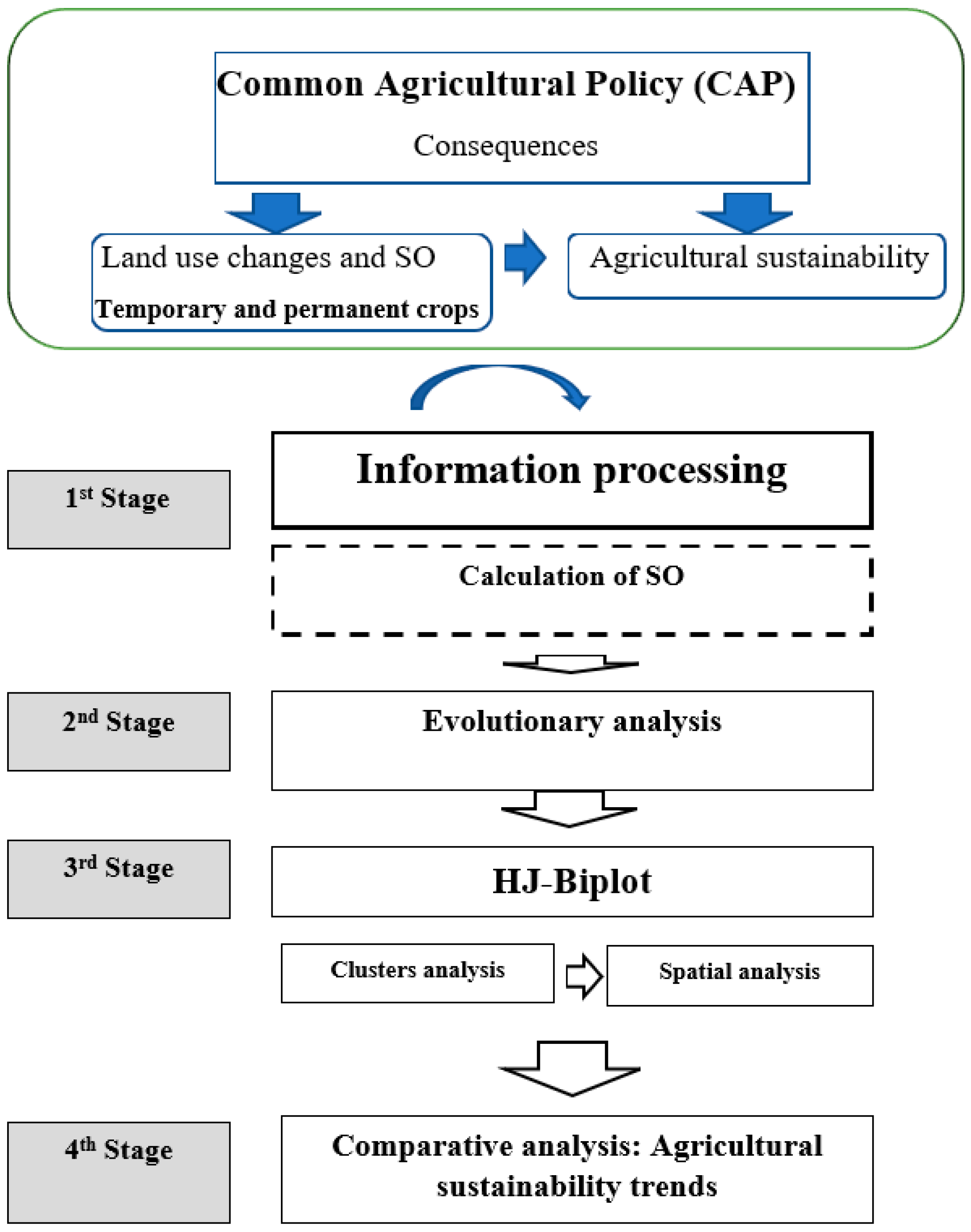
To answer the research question, the methodological approach follows the framework presented in
Figure 1, which is based on the previous studies [
9,
11,
12].
The first stage involves data collection, the calculation of SO, and the identification of any information gaps. Firstly, the SOs were analyzed, and the coherence with the data was studied. In situations with information gaps or a nonlinear relation, experts analyzed the data. Secondly, the coherence of the geographical level of the SO and the level of analysis is considered and studied by experts and technicians. Then the SO of each crop is calculated for the several geographical areas and for the series considered.
The second stage involved analyzing the SO for both temporary and permanent crops over 30 years. This was followed by an examination of the distribution of SO across different agricultural regions.
In the third stage, HJ-Biplot and cluster analysis were performed and complemented by a spatial analysis. These analyses allow the identification of relationships between variables and a spatial evolutionary perspective on the data.
Finally, the fourth stage involves a statistical analysis to establish relations between the SO of temporary and permanent crops and agricultural sustainability, using several social, environmental, and economic indicators.
3.1. Calculation of Standard Output
“The standard output coefficient of an agricultural product (crop or livestock) is the average monetary value of the agricultural output at farm-gate price, in euros per hectare or per head of livestock” [
38]. It was established under Commission Regulations (EC) No. 1242/2008, 220/2015, and 1975/2019, with the Ministers of Agriculture of each Member State of the European Union bearing responsibility for its determination, and the results published by Eurostat. According to Article 4 of Commission Delegated Regulation (EU) No 1198/2014 [
39], as referred in Article 5b(2) of Regulation (EC) No 1217/2009 [
40], the reference period for calculating the SO is five successive years from year N-5 to year N-1.
Therefore, the total SO is calculated for each territorial unit, according to the formulation:
where
is the total Standard Output (SO) in the territorial unit i;
is the Standard Output coefficient (SOC) in the territorial unit i for the crop k; and
is the area of crop k in the territorial unit i.
3.2. HJ-Biplot Analysis
As mentioned above, the Biplot analysis is a multivariate analysis technique proposed by Gabriel [
6] that allows the simultaneous graphical representation of individuals and variables [
10].
An HJ-Biplot representation for a data matrix X is a graphical representation using multivariate markers j1, j2, …, jn for lines and h1, h2, …, hn for the columns of X. These markers are defined so that both are a good representation of the data and exist in the same reference system. The lines are represented by dots and the columns by vectors.
The mathematical basis of HJ-Biplot lies in the Singular Value Decomposition (SVD) of the data matrix. Any real matrix X of characteristic r, where r ≤ min(n,p), with n representing the number of rows and p the number of columns, can be factored as the product of three matrices, such that
where
is the matrix of the eigenvectors of XX′;
is the matrix of the eigenvectors of X′X;
is a diagonal matrix of corresponding to the r eigenvectors of XX′ or X′X.
The elements of
are given by the following equation:
Thus, starting from the SVD, the selection of markers in the q dimension for the rows and columns of the matrix X is calculated as follows:
where J values are the markers for lines and H values are for columns.
The HJ-Biplot representation requires consideration of the following principles [
11,
41]:
- (1)
The magnitude of the variability of an attribute (variable) in the classification is directly proportional to the length of its representing vector.
- (2)
The correlation between two variables is inferred from the cosine of the angle between their respective vectors: an acute angle indicates a positive correlation; a negative correlation is characterized by an obtuse angle; and a right angle denotes no relationship.
- (3)
The proximity between the points representing individuals (observations) on the factorial graph exhibits analogous behavioral patterns. Individuals with similar coordinates present analogous behavior patterns or characteristics regarding the variables analyzed.
- (4)
The markers corresponding to the rows (individuals/observations) coincide with their coordinates in the principal component space of the variables.
- (5)
When a variable assumes a predominant value for a given individual, the vector representing that variable will be located near the point representing the individual in the factorial plot.
- (6)
The farther the points representing the column markers are from the center of gravity, the greater their variability. Likewise, the closer the point representing an individual is to the direction of a variable—and the farther it is from the center—the greater the importance of that variable in explaining the individual’s results.
4. Empirical Implementation
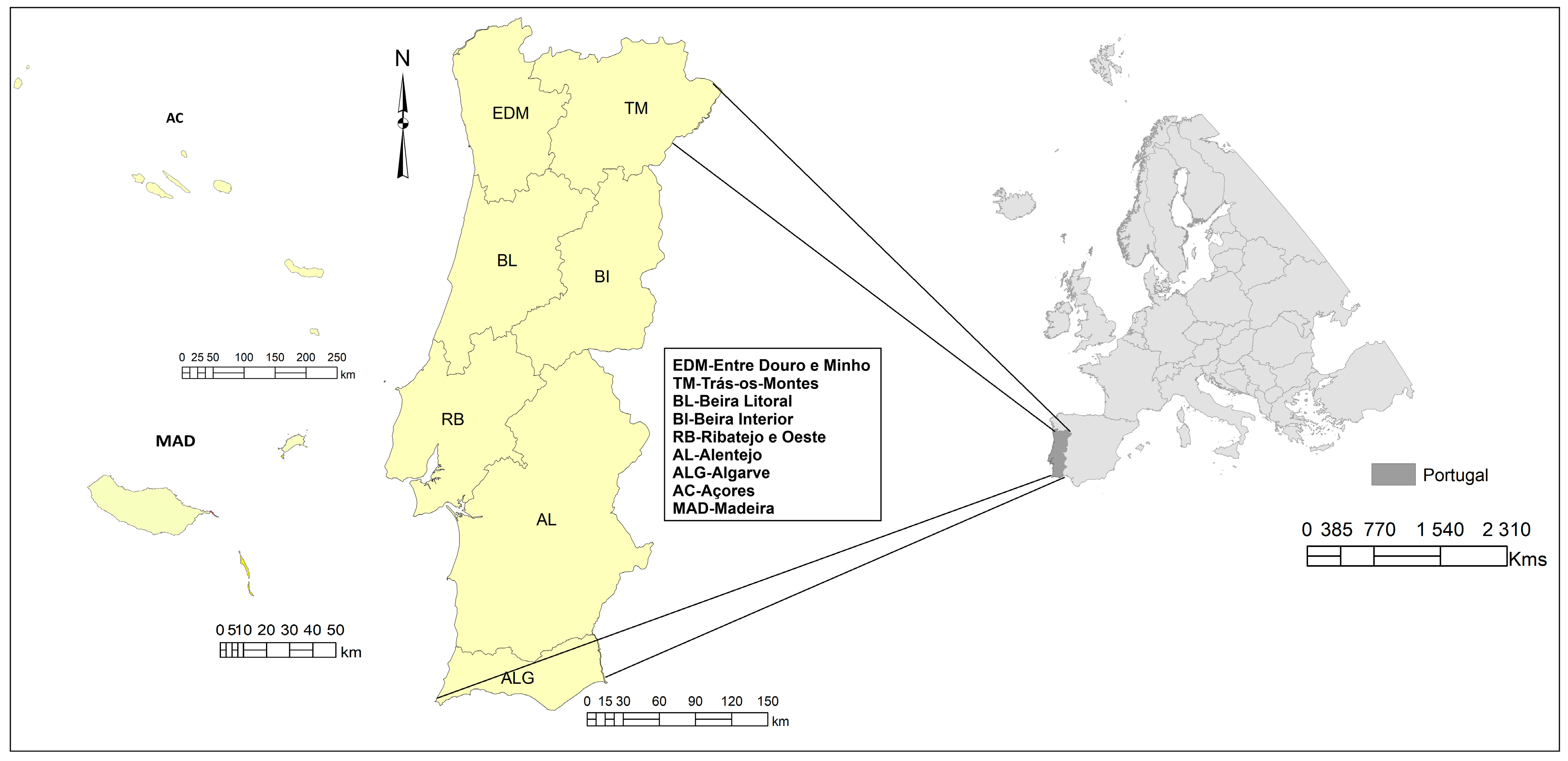
The methodological approach was applied to the nine agricultural regions of Portugal (
Figure 2), considering data from a set of years between 1989 and 2023 from Agricultural Censuses and Agricultural Structural Surveys. The set of years includes the following 13 temporal periods: 1989, 1993, 1995, 1997, 1999, 2003, 2005, 2007, 2009, 2013, 2016, 2019, 2023 (
https://www.ine.pt/xportal/xmain?xpgid=ine_main&xpid=INE, accessed on 16 February 2025). The SO data was provided by the GPP of the Ministry of Agriculture and is available online.
For the HJ-Biplot analysis, the dataset was simplified into a set of crop classes aligned with the study’s objectives. The data were categorized into temporary and permanent crops, and specific classes were defined accordingly. It is important to note that the total number of listed classes may not encompass all existing temporary and permanent crops.
Table 1 presents the selected crop classes and their corresponding codes. As shown in the previous section, each SO coefficient is multiplied by the area of the respective crop in each agricultural region, and the results are summed by crop and then by class to obtain the total SO per agricultural region. However, some classes, such as vegetables and flowers, have different production methods, namely intensive and extensive systems, as well as outdoor and greenhouse cultivation. In these cases, SO coefficients were weighted and applied to the total area in the class.
The 2020 SO coefficients served as the foundation for all data across the 13 selected time periods, with the respective adjustments made to align with the NUTS 2024 classification for agricultural regions. They were calculated as the average over the five-year period from 2018 to 2022 (see
Appendix A). The Standard Output (SO) is defined according to the European Typology, as established in Commission Regulations (EC) No. 1242/2008, 220/2015, and 1975/2019. The responsibility for its determination lies with the Ministers of Agriculture of the Member States, and the results are published by Eurostat. The SOC 2020 are calculated on the average of the period of 5 years that spans from 2018 to 2022. The SOC 2020 was therefore used in this study, and it is presented in
Appendix A at NUT II 2024 level.
Therefore, agricultural regions use SO values according to the NUTS II 2024 classification adopted by the National Statistics Institute (INE): EDM and TM correspond to SO Norte; Beira Interior (BI) and Beira Litoral (BL) correspond to SO Centro, Alentejo (AL) corresponds to SO Alentejo; Algarve (ALG) corresponds to SO Algarve; Madeira (MAD) corresponds to SO Madeira; and Açores (AC) corresponds to SO Açores. Almost all agricultural regions are aligned with the NUTS II classification, except Ribatejo and Oeste (RO), whose territory belongs to three NUTS, hence three SO values were used. The correspondence between temporary crops and permanent crops, and the 2020 SO is presented in
Appendix A.
Another issue is the consistency of the data used when considering a time series of 30 years. Ideally, it would be necessary to have a sequence of SO, that would represent all the years of the sequence, as technological changes may occur. Nevertheless, we have only available data for the SO for the last 20 years. This methodology was used for the EU statistics in a more recent period. Therefore, several aspects had to be analyzed by technicians and experts who worked with agricultural statistics in the GPP. There is agreement that, despite some technological changes, the use of the 2020 SO may provide insight into the structural changes in temporary and permanent crops. This was analyzed and tested empirically, and therefore it was concluded that it is valid to use the SOC 2020 for the whole series. Regarding the prices and productivities, we must highlight that the SOC 2020 already uses a set of prices as defined by the SO methodology. So, for the periods analyzed, constant prices were assumed, and 2020 SO were applied.
A double-centered data transformation and singular value decomposition were employed. Double-centered data transformation adjusts a matrix by subtracting both row-wise and column-wise means, effectively eliminating object (row) and trait (column) effects so that the matrix has zero means in both directions. The single value decomposition was previously described in Equation (2).
HJ-Biplot analysis was then applied, and the resulting coordinates were used for hierarchical cluster analysis to define distinct municipal typologies. Various algorithms and methods were considered to group objects with similar characteristics into categories. The tree clustering method builds clusters by assessing the dissimilarities (similarities) or distances between objects. Initially, each object forms its own cluster, and a selected distance measure is used to assess the distances between them. As objects are grouped, the distances between these new clusters are determined using linkage rules such as single linkage or Ward’s method. In this study, Euclidean distance served as the dissimilarity index, and Ward’s method [
42] was applied as the linkage criterion.
The results of the model were compared with national trends in agricultural sustainability over the last 25 years (1999–2020), as information gaps prevent analysis at lower administrative levels. A set of sustainability indicators provided by the National Statistics Institute was selected. Due to data gaps for some indicators, it was not possible obtain a complete time series. For more details, online metadata may be consulted (
www.ine.pt).
In addition to the economic dimension of the sustainability represented by the SO, the selected sustainability indicators also focus on the environmental and social dimensions. Environmental indicators include nitrogen balance per (UAA), phosphorus balance per UAA, energy consumption per UAA, agricultural ammonia emissions per UAA, agricultural emissions of GHG per UAA, phytopharmaceuticals quantities sold per UAA. Social indicators include the number and percentage of agricultural producers in Portugal by age group. Some indicators cover shorter timeframes. In these cases, trendlines were estimated to analyze the trends.
MULTBIPLOT v 15-/12/2014 software was used to perform the HJ-Biplot and cluster analysis, ArcGIS 10.4 and QGIS 3.10 for results display, and SPSS 26 for statistical analysis.
5. Results
5.1. Evolution Analysis of Standard Output in Portugal
Table 2 presents the evolution of SO for the main temporary crops in Portugal, across selected years from 1989 to 2023. The data reveal a downward trend in corn for grain, corn for forage, and dried legumes, although a slight recovery has been observed over the past decade. SO values for vegetables show fluctuations, with increases noted from 2016. Increases are also evident in the SO of temporary grasslands and floriculture. Overall, SO for temporary crops decreased until 2007, fluctuated in subsequent years, and increased in the last two surveys in 2019 and 2023.
Table 3 shows the evolution of the SO share for the main temporary crops in Portugal. The analysis reveals that the share of corn (grain and forage) has decreased, while grain legumes have shown a slight upward trend. Temporary grasslands and floriculture have increased their shares, whereas vegetables maintained their relative position. In 2023, floriculture and vegetables together accounted for over 70% of the total SO of temporary crops. The evolution of vegetables and floriculture, which provide fresh and unprocessed products, is also linked to new supply strategies of food retailers and new dietary trends toward healthy and wellness products. In the case of corn, the SO evolution reflects reduced crop competitiveness and policy changes, beginning with the withdrawal of co-financing support, followed by the decrease in price support, and culminating with the withdrawal of the direct compensatory payment in 2007.
Table 4 presents the share of SO for temporary crops in 2023, by agricultural region. Corn has the highest share in Beira Interior (BI) and Beira Litoral (BL), although it is absent in Madeira (MAD). Temporary grasslands are prominent in the Azores (AC) and Entre Douro and Minho (EDM) regions, and legumes are most significant in Beira Interior. Vegetables are divided into extensive vegetable (VEG1) and intensive vegetable crops (VEG2). The former has the highest SO share in Trás-os-Montes (TM), Entre Douro and Minho (EDM), Alentejo (AL) and Ribatejo and Oeste (RB). The latter accounts for the largest SO share in Madeira (MAD) and Ribatejo and Oeste (RB) (over 40%) and over 25% in Beira Litoral (BL) and Alentejo (AL). Lastly, floriculture holds the highest share in the Algarve (ALG).
Based on these results one can draw conclusions about the distribution of SO in each agricultural region. Azores are characterized as a forage-producing region; Entre Douro and Minho (EDM), in addition to forage, is also prominent in extensive vegetable crops. Madeira (MAD), Alentejo (AL), and Ribatejo and Oeste (RB) are regions where vegetable production has achieved notable success, while the Algarve (ALG) stands out for its focus on floriculture. Although these results do not provide a conclusion about the productive specialization of agricultural regions, they are valuable insights into regional competitive advantages.
Table 5 presents the evolution of SO for permanent crops in Portugal and
Table 6 displays their respective percentage share.
Overall, the results indicate an increase in the total SO of permanent crops. This growth is associated with a rise in SO values for small and soft fruits, fresh tropical fruits, olive groves, and nuts. Conversely, there has been a decline in the SO of fresh fruits, citrus, and vineyards.
When analyzing the percentage share of the SO of each permanent crop in the total (
Table 6), fresh fruits show a marked and consistent decline over the period, from 17.7% in 1989 to just 7.11% in 2023. A declining trend in the SO is also observed in citrus, which went from 8.66% in 1989 to 5.02% in 2023. These patterns may reflect market challenges related to product distribution, limited industrialization, and increased external competition.
Olive groves have also exhibited a downward trend, despite recent stabilization in their share. In 1989, they accounted for 11.37% of the total SO, compared to 10.62% in 2023. Nevertheless, their current share remains a key component of permanent crops, likely due to the adoption of modern irrigation technologies, particularly in the Alentejo region (AL). On the other hand, significant abandonment has occurred in marginal areas.
Vineyards have shown a consistent decline in their SO share, dropping from 26.23% in 1989 to just 14.41% in 2003. This trend may be due to intense competition among wine markets, a global decrease in wine consumption, and the high costs associated with disease treatment.
Small and soft fruits have maintained a stable share, currently around 31%. Nuts showed significant growth. After an initial period of considerable decline, their share increased from 3.66% in 1989 to 26.63% in 2023. This growth over the past decade is due to improved production management, including the use of irrigated land, orchard renewal and the adoption of modern production technologies, as well as more favorable market conditions. In turn, Fresh Tropical Fruits (FTF) also showed distinct growth during the period, rising from 1.61% in 1989 to 5.02% in 2023. This increase reflects strong investment—initially in kiwi, followed by avocado and persimmon—accompanied by acreage expansion and profitability, driven by high market demand for products perceived as beneficial to health.
Table 7 presents the total SO shares of each permanent crop by agricultural regions in 2023. The SO of fresh fruits is most prominent in Ribatejo and Oeste-RB (26.2%) and Beira Interior-BI (23.2%), while the Algarve (ALG) records the lowest share (0.2%). SO of small berry fruits are most significant in the Algarve and Alentejo. SO of citrus fruits shows the highest share in the Algarve (ALG), which accounts for an impressive 45% of the SO. Madeira leads in subtropical fruits, contributing 52% of the total SO. Alentejo (AL) has the most significant weight of SO for nuts, with a 36.4% share, and holds the largest share of SO for olive groves (15.1%), closely followed by Beira Interior (BI). Vineyard production in Entre Douro and Minho (EDM) accounts for 49.8% of the total SO, followed by Trás-os-Montes (TM) with 42%, underscoring the importance of viticulture within both regions.
5.2. HJ-Biplot and Cluster Analysis
An HJ-Biplot analysis was performed for both temporary and permanent crops. The primary objective of this analysis is to identify the axes that best explain the variance or residuals in the data. For temporary crops, two axes were retained, accounting for 78.4% of the accumulated inertia. Similarly, for permanent crops, two axes were retained, explaining 70.8% of the accumulated inertia.
The relative contributions to the factors for temporary crops are presented in
Table 8. Axis 1 is strongly correlated with vegetables, corn forage, corn and grain legumes, representing irrigated crops and grains. Axis 2, in turn, is correlated with floriculture.
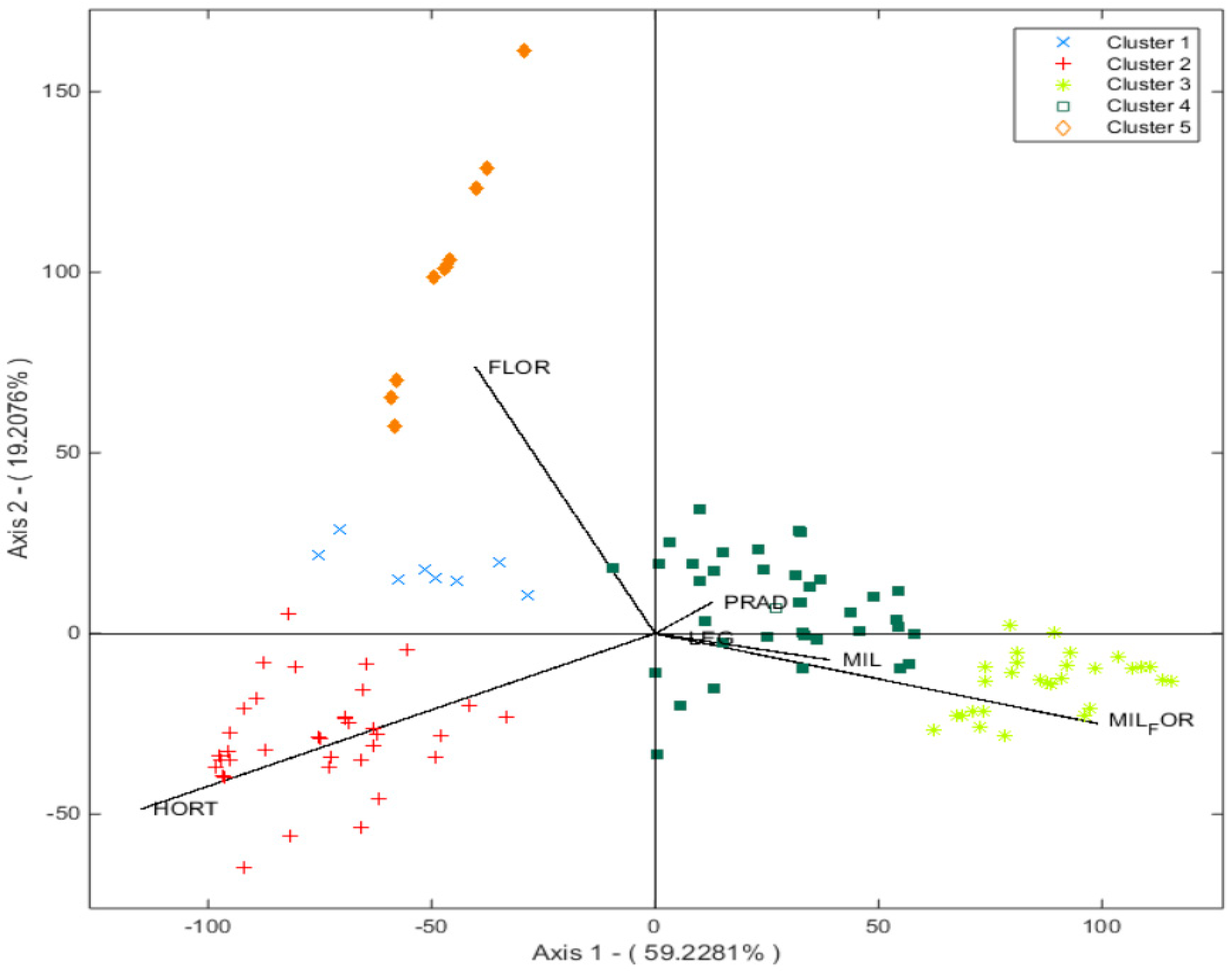
The HJ-Biplot representation of temporary crops (
Figure 3) reveals a positive correlation between corn (COR) and corn forage (FCO). In contrast, corn forage shows a negative correlation with vegetables (VEG) and floriculture (FLO). Both vegetables and floriculture are negatively correlated with all other crops. An inverse correlation is also noted between temporary grasslands (TGR) and vegetables (VEG).
A cluster analysis identified the following territorial groups for temporary crops:
Cluster 1—Competitive zones of floriculture and vegetables.
Cluster 2—Competitive zones of vegetables.
Cluster 3—Competitive zones of corn forage.
Cluster 4—Competitive zones oriented toward temporary grasslands, legumes, and corn.
Cluster 5—Competitive zones of floriculture.
These territorial clusters do not reflect regional productive specialization but enable the identification of areas with competitive advantages in production and market conditions.
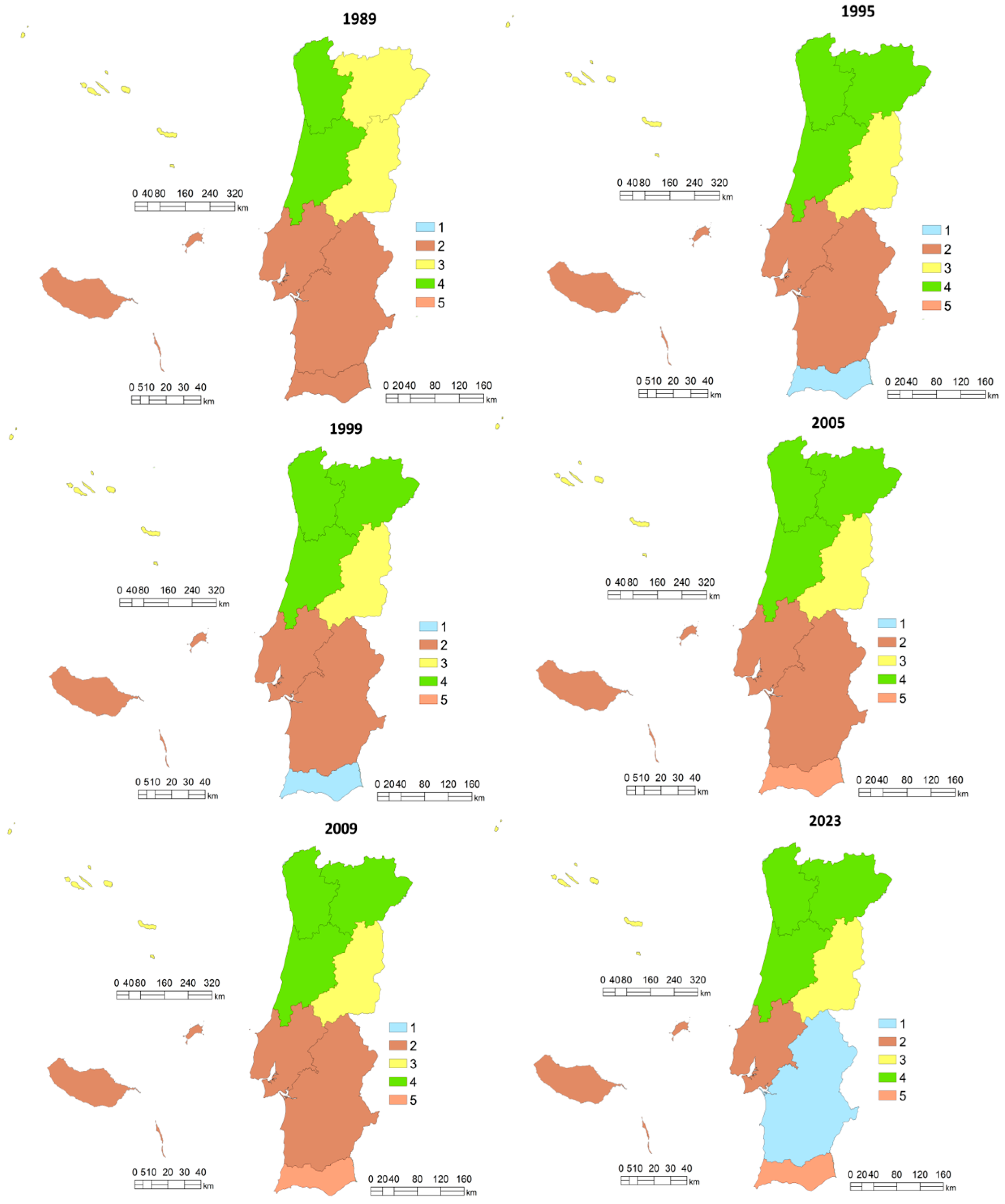
Figure 4 shows the spatial location of temporary crop clusters over the years. Overall, the spatial clustering of agricultural regions is relatively stable across the analyzed time points. However, compared to 1989, notable reorientations occurred. In 2023, Clusters 2, 4, and 1 are the most representative for temporary crops. The Algarve region (ALG) became stronger in Cluster 1 in 1995 and later in Cluster 5. Trás-os-Montes (TM) exhibited competitive advantages in Cluster 3 in 1989 and in Cluster 4 in 1995, while Alentejo (AL) developed competitive advantages in Cluster 2 and Cluster 1.
Table 9 presents the relative contributions to the factors for permanent crops. Axis 1 is strongly correlated with small berry fruits as well as vineyards, while Axis 2 is correlated with the remaining crops.
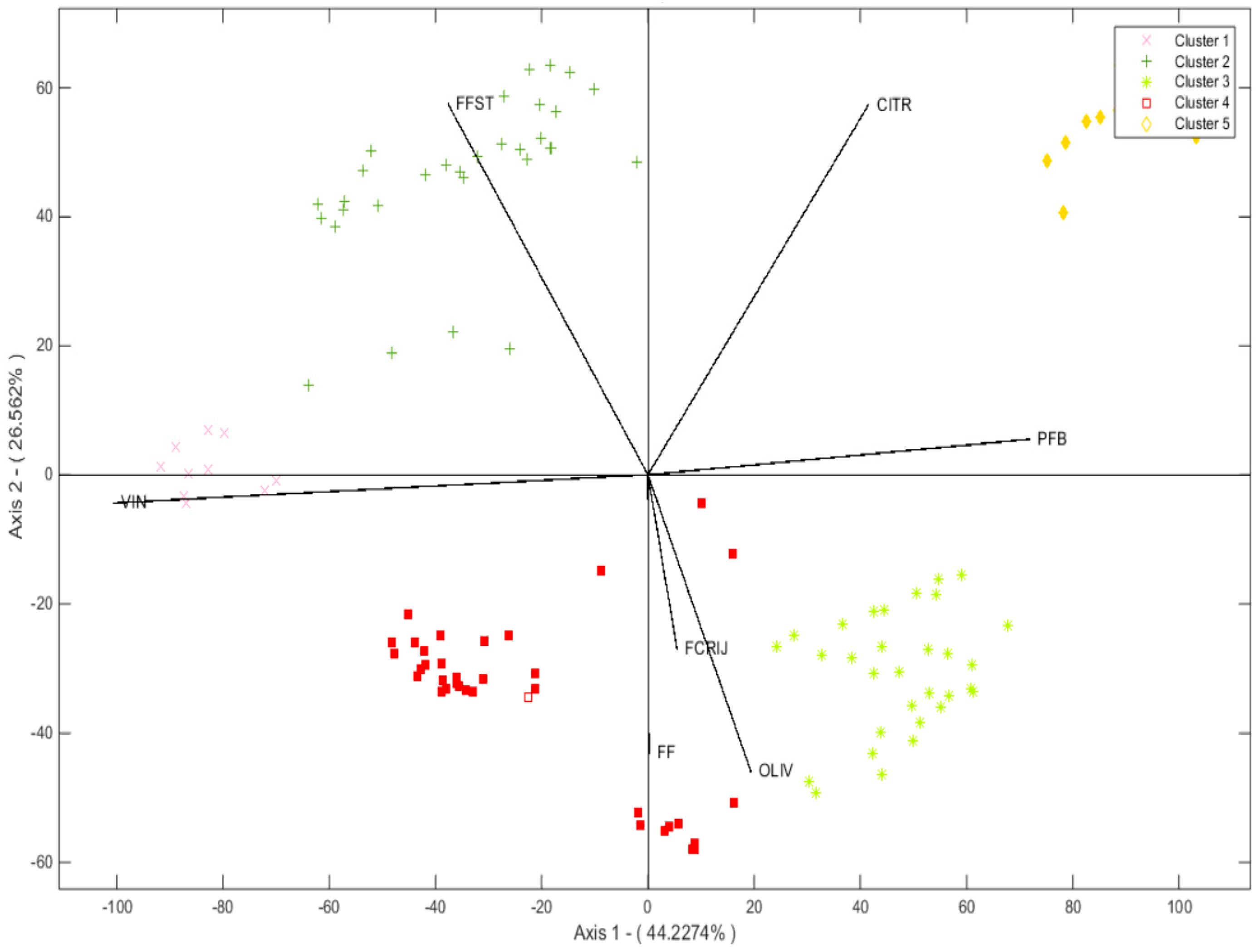
The HJ-Biplot representation of permanent crops is shown in
Figure 5. It reveals a strong positive correlation between olive groves, nuts, and fresh fruits. Vineyards, citrus fruits, and small berry fruits also show negative correlations.
The cluster analysis resulted in the following territorial groups for permanent crops:
Cluster 1—Competitive zones of vineyards.
Cluster 2—Competitive zones of fresh tropical fruits and vineyards.
Cluster 3—Competitive zones of olive groves and small berry fruits.
Cluster 4—Competitive zones of vineyards and other fruit crops, such as fresh fruits and nuts.
Cluster 5—Competitive zones of citrus and small berry fruits.
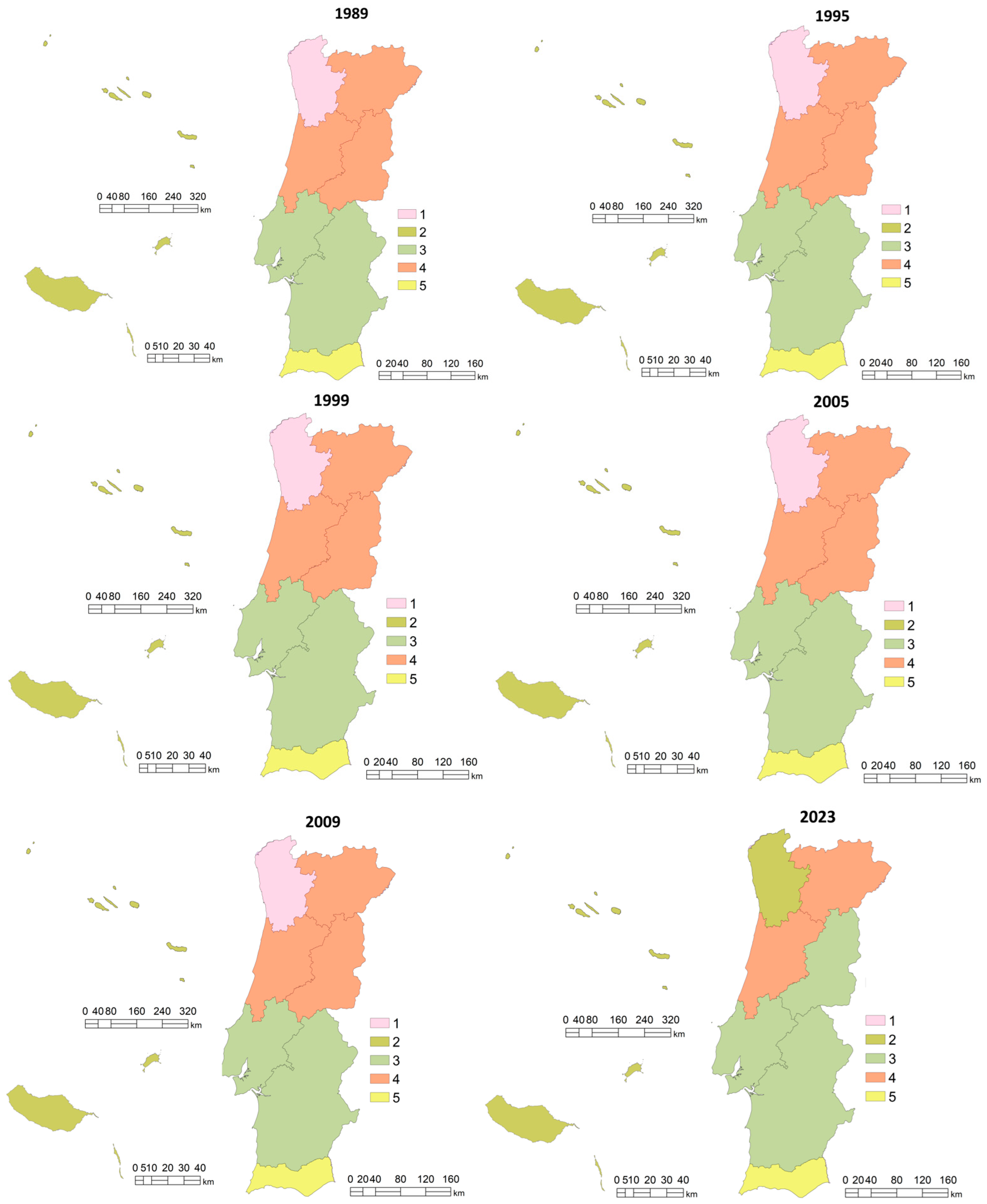
Figure 6 illustrates the spatial location of the identified clusters. In mainland Portugal, Cluster 3 is the most frequent, especially in the regions of Alentejo (AL), Ribatejo and Oeste (RB), and Beira Interior (BI).
5.3. Agriculture Impacts on Sustainability
All the changes identified somehow had an impact on sustainability. Nevertheless, agricultural sustainability always depends on the balanced relations established between the economy, environment, and society. Thus, the evolution patterns presented above regarding the SO of permanent and temporary crops have consequences for the sustainability of agriculture in environmental and social terms.
The Food and Agriculture Organization of the United Nations recognizes many agricultural systems as sustainable. Nevertheless, some indicators show the agricultural impacts, such as the balanced use of organic and inorganic fertilizers, energy, and GHG emissions.
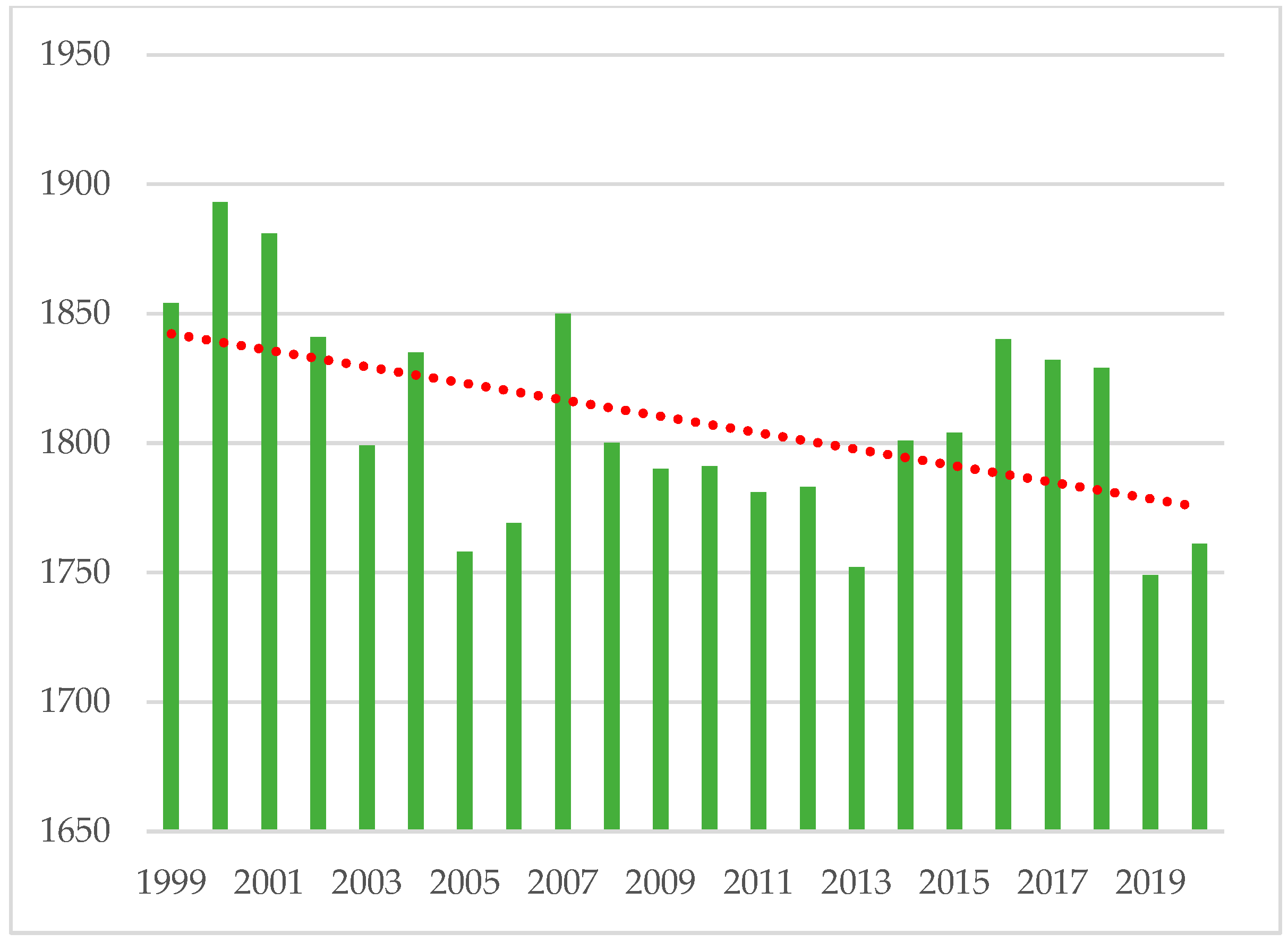
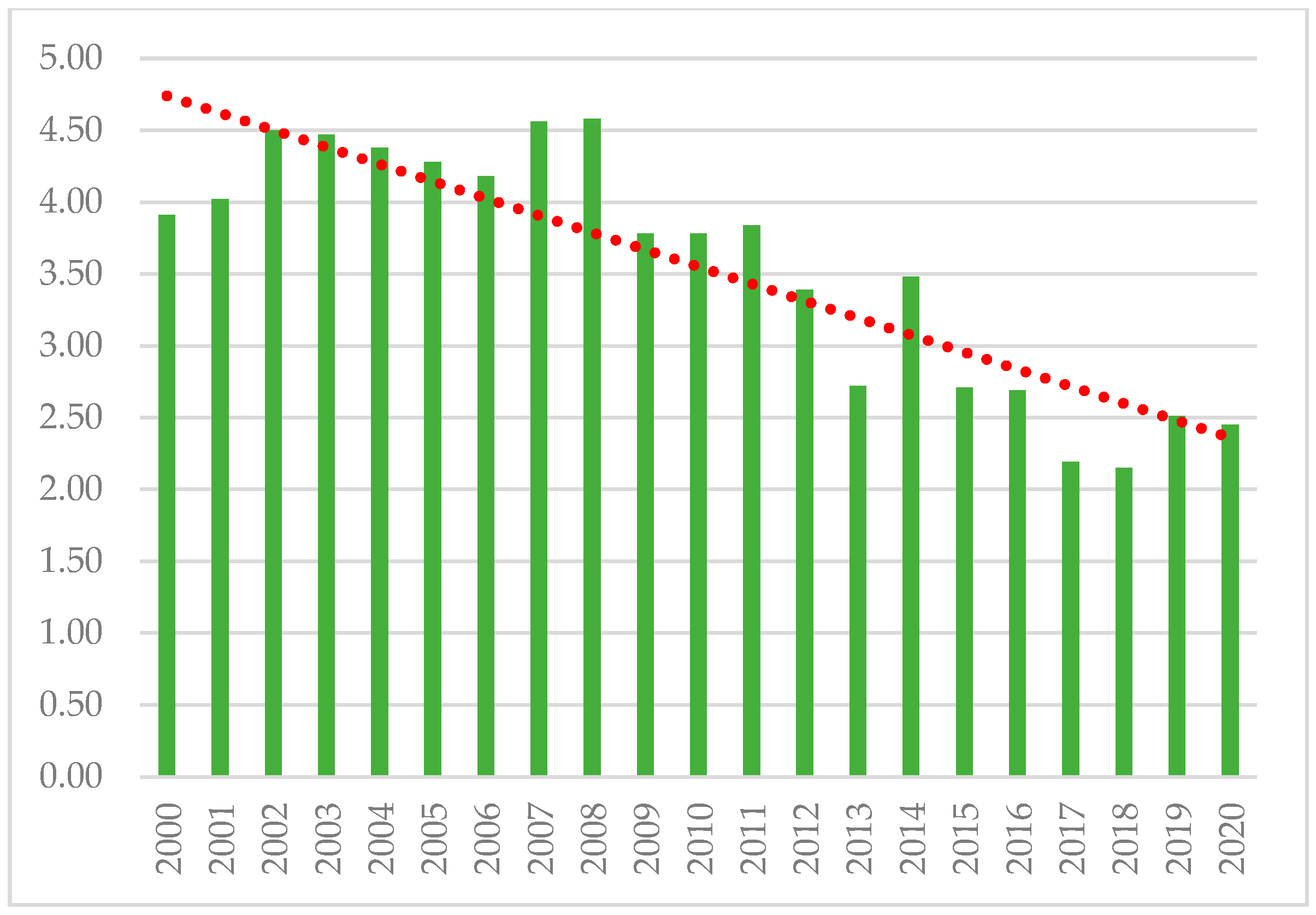
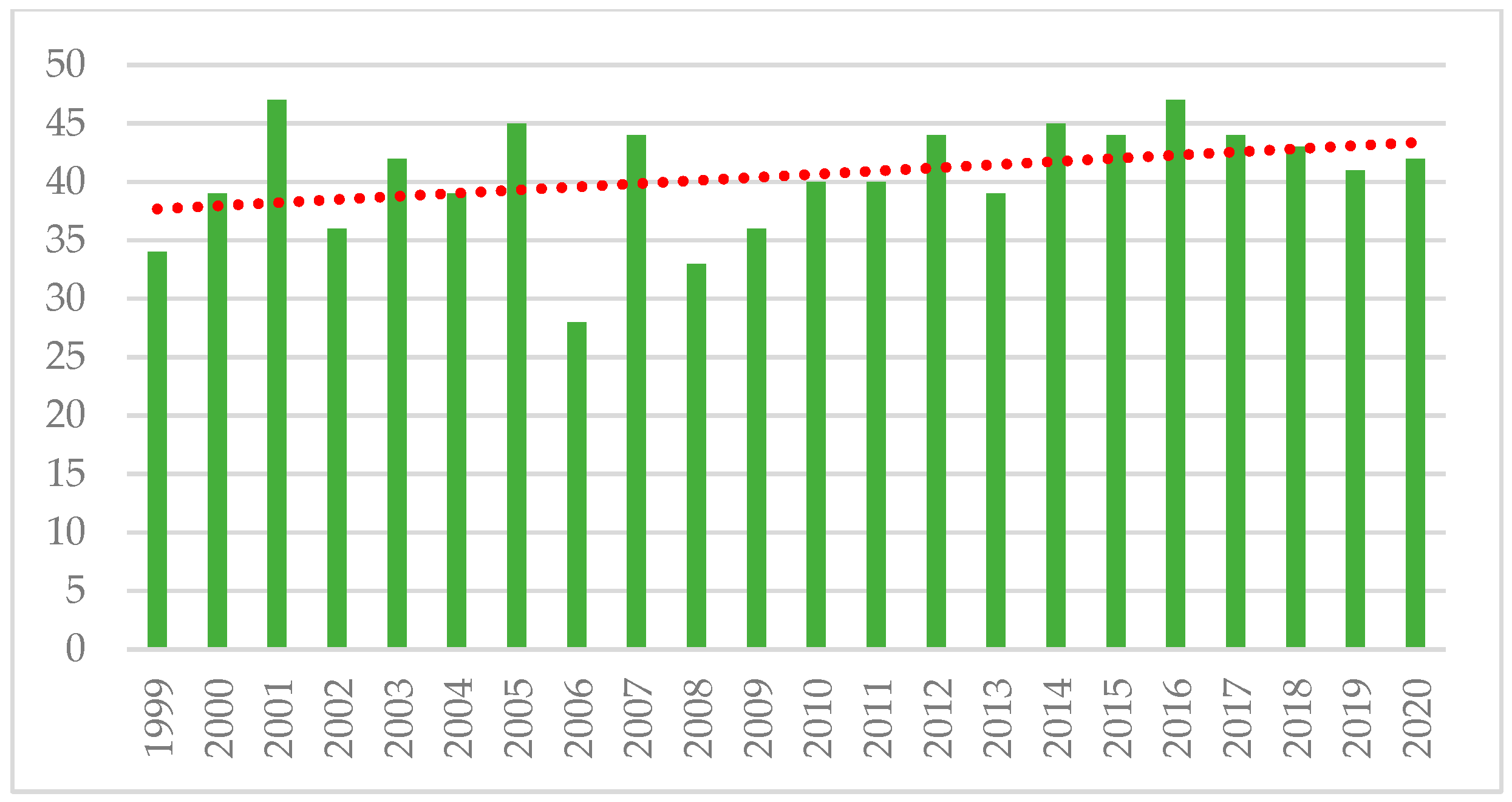
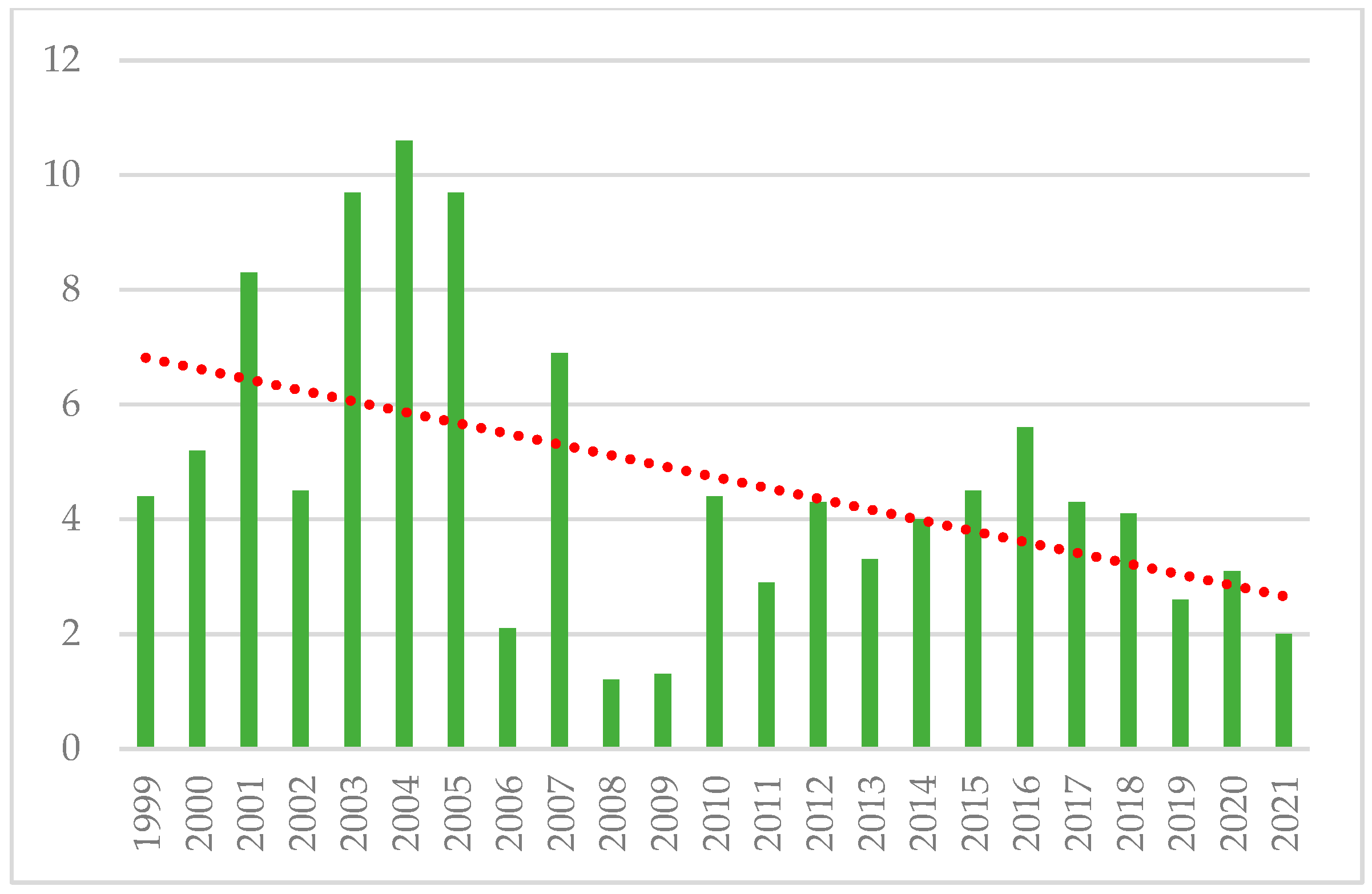
Figure 7 indicates that, according to the red trendline, the nitrogen balance in Portugal has slightly increased over the past few decades. The fluctuations are associated with the meteorological conditions of the agricultural year. On the contrary, the phosphorus balance shows a clear decreasing trend (
Figure 8).
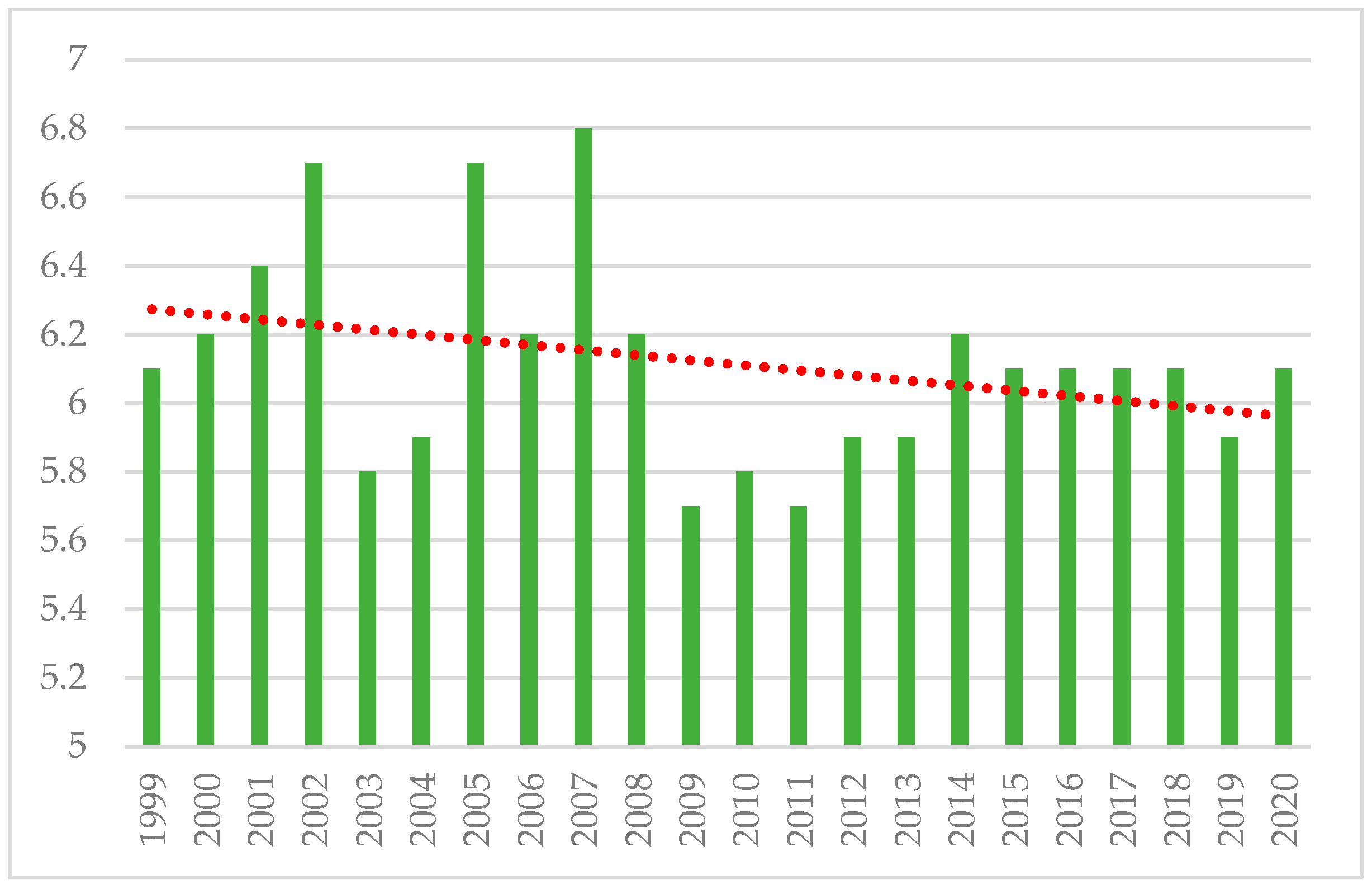
According to
Figure 9, energy consumption also points to a decreasing trend. This is particularly notable given that agriculture has shifted from a labor-intensive to a capital-intensive industry.
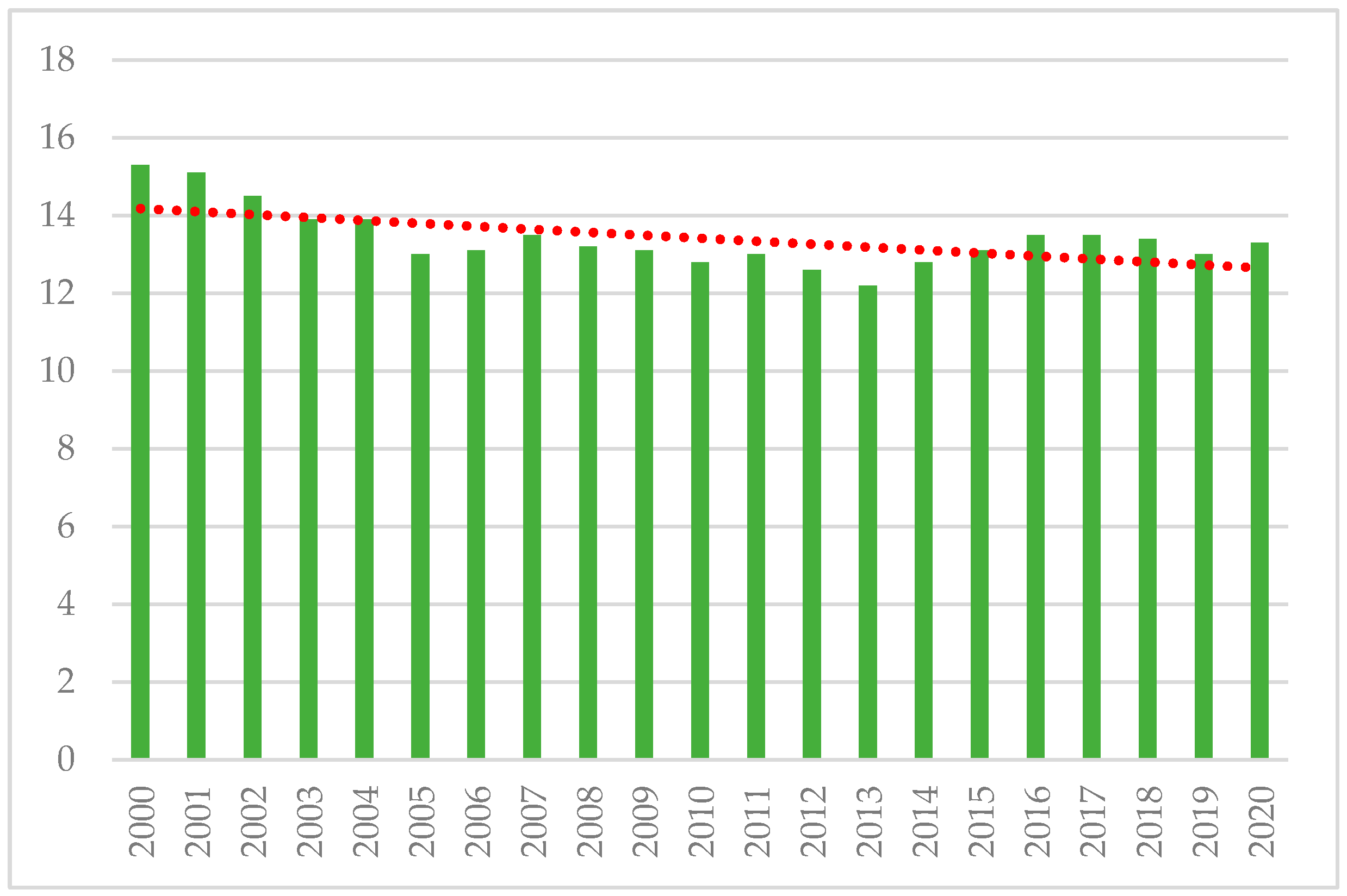
According to
Figure 10 and
Figure 11 there is a decreasing trend of Agricultural ammonia emissions and Greenhouse Gases (GHG), meaning a lower impact on the greenhouse effect and the general environment. Finally, the evolution of pharmaceutical quantities sold per ha of UAA shown in
Figure 12 also exhibits a decrease.
Regarding the social indicators, it must be stressed that over the last two decades, the labor involved in agricultural holdings, measured in annual working units, decreased by 40% (
www.ine.pt). This decrease in part is due to the modernization of Portuguese agriculture during the last few decades, which has enabled the industry to be less labor-intensive and more capital-intensive.
Table 10 presents the evolution of the agricultural producers in Portugal by age group. Over the past 20 years, only the group over 65 years of age has shown a significant increase, currently representing 52.5% of all agricultural producers. Formal education of these producers is relatively low since 11% have no formal education and 70% have only basic education (
www.ine.pt). This demography constrains the sustainability of Portuguese agriculture, as the sector faces challenges from an aging workforce and persistent low levels of formal education.
Table 11 presents the gender balance. In 1999, only 22% of the farm managers were women. Over the years, this percentage increased, reaching 31% in 2019 (
www.ine.pt).
6. Discussion
Our results corroborate the profound and multifaceted influence that CAP had on land-use change in Portuguese agriculture in the period 1989–2023. Over this period, successive CAP reforms introduced distinct policy measures that changed the incentives for both temporary and permanent crops, reshaping agricultural practices and trajectories across agricultural regions.
For temporary crops, such as cereals and legumes, early CAP mechanisms, such as price support and later area-based payments led to some specialization and intensification in several regions. Per-hectare subsidies tended to favor larger farms, sometimes resulting in loss of crop diversity and traditional rotations. However, more recent reforms, particularly those following Agenda 2000, the decoupling of payments, the introduction of greening requirements in the 2014–2020 CAP, and other policy measures, namely those associated with rural development, have sought to reverse these trends. The decrease in cereals and forage crops and the growth of vegetables and floriculture are associated with both CAP changes and an increasing demand for value-added products.
In permanent crops, such as vineyards, olive groves, and orchards, CAP had also a significant impact, though through different mechanisms. Most policy measures were structural, providing support for investments in new orchards, irrigation, quality schemes, rural infrastructures, and productivity improvements. In turn, fresh fruits, citrus fruits, and vineyards showed a decline in their SO, while nuts, small and soft fruits, and fresh tropical fruits have grown. These changes reveal a shift from traditional crops to crops with higher returns and traded in more integrated markets.
The HJ-Biplot and cluster analyses showed different regional patterns over time. For temporary crops, cluster of vegetables and floriculture grew, particularly in regions with favorable climatic conditions, irrigation infrastructure and proximity to markets, such as Ribatejo and Oeste (RB), Algarve (ALG) and Alentejo (AL). Clusters associated with cereals, forage and temporary grasslands keep being important in regions with extensive livestock systems.
In the case of permanent crops, the results of cluster analysis indicate different competitive profiles. Alentejo (AL), Beira Interior (BI), and Ribatejo and Oeste (RB) are regions with competitive advantages in olive groves, nuts and small and soft fruits. Entre Douro and Minho (EDM), Trás-os-Montes (TM), and Madeira (MAD) are regions where vineyards and, in the latter case, fresh tropical fruits stand out. These are the results of combined effects of agroclimatic conditions, investment patterns, CAP incentives, and market conditions on land-use change.
However, this dynamic also led, in some cases, to the intensification of production and the abandonment of marginal areas of low productivity, as well as traditional practices. These changes had implications for agricultural sustainability. At the level of the economic dimension, the development of high-value crops allowed for an increase in total SO, suggesting potential improvements in farmers’ income.
Regarding the environmental dimension, indicators show some improvements. Phosphorus balance, energy consumption, ammonia emissions, greenhouse gas emissions, and phytopharmaceutical utilization per hectare exhibit decreasing trends. However, nitrogen balance reveals the consequences of interannual climatic variability and the expansion of intensive cropping systems, suggesting that nutrient management should be a policy concern.
Within the social dimension of sustainability, several structural challenges remain unresolved. The intensification of agricultural systems and capital led to a decline in labor over the last two decades. The number of aging farmers increased, namely those over 65 years old. Women’s participation in farm management has increased, but the level of formal education remains low, and the potential to generate renewal is limited. These issues are significant constraints on the sector’s social sustainability.
Therefore, the results of this study are consistent with previous analyses. Several studies have identified intensification, extensification, and abandonment as the main land-use trajectories, highlighting significant regional differentiation [
14,
15]. The SO evolution reflects this pattern since regions with better agroclimatic conditions and agricultural infrastructures present increasing SO associated with value-added crops. However, regions where SO has declined or stagnated are characterized by extensive systems and partial abandonment.
The observed SO dynamics align with other studies that emphasize the structural changes driven by CAP in Portuguese agriculture [
16,
19]. The decline of cereals and traditional crops, alongside the expansion of market-oriented permanent crops, reflects long-term adjustments to CAP incentives. Our cluster analysis also corroborates the concept that agricultural competitiveness is predominantly found in regions with greater market integration and technological advancement, while marginal regions struggle to achieve economic viability. However, recent studies indicate a partial recovery of some inland territories [
18].
Regarding sustainability, the results are consistent with recent studies on environmental assessments of Portuguese agriculture. Gradual environmental efficiency gains are also supported by Biagetti et al. [
20], which corroborates our findings associated with the improvement in several environmental indicators. However, Roxo et al. [
17] highlighted the intensity of some agricultural systems in Alentejo (AL) in a study on land degradation and soil erosion.
Xavier et al. [
36] studied the dynamics of agricultural sustainability in Portugal at the municipality level for 2009 and 2019. The highest aggregated sustainability performance (top 50) was primarily concentrated in the Alentejo Region. Conversely, municipalities with lower rankings were predominantly situated in the Central and Northern Regions, and partially in the Algarve Region. Municipalities ranked below the 200th position were mainly concentrated in the Central Region.
Increases in SO may be associated with localized environmental pressures. From a social perspective, the decline of farm labor, population aging, and low levels of formal education are critical issues for sustainability. However, despite land-use change leading to improved economic and environmental indicators, achieving agricultural sustainability requires a stronger, balanced integration of social, environmental, and economic dimensions.
Therefore, our results highlight the role of CAP for a gradual reorientation of Portuguese agriculture toward value-added crops, as well as improvements in several environmental indicators. However, some social constraints, such as an aging population and low level of formal education among farmers, should contribute to reinforcing CAP measures to support generational renewal, innovation, and knowledge transfer, and simultaneously ensure economic and environmental agricultural sustainability.
In comparison with our study, for the dynamics identified in reference to temporary and permanent crops regarding SO, some conclusions may be drawn. The Ribatejo and Oeste region (RB) is included in Cluster 2 of temporary crops, which have competitive advantages in vegetables. These are high added value crops and contribute well to the economic and social well-being of farmers, although they have impacts on the environment. Some regions, such as the Alentejo Region (AL), present good results for aggregated sustainability. Regarding the permanent crops, the Alentejo (AL) is included in Cluster 3, and is oriented toward olive groves and small and soft fruits, while for temporary crops, it is included in Cluster 1—Competitive zones of floriculture and vegetables.
7. Conclusions
This study analyzed the main land-use changes in temporary and permanent crops using Standard Output and identified key trends through HJ-Biplot and cluster analysis. The results confirm that Portugal’s entry to the European Union in 1986 led to significant changes in its agricultural sector, largely shaped by the Common Agricultural Policy. They highlight spatial and temporal patterns in agricultural competitiveness.
Temporary crops experienced a decline in total Standard Output weight, particularly for grains, while floriculture increased. The SO for temporary crops fell until 2007, fluctuated in the subsequent years, and rose again during the 2019 and 2023 Agricultural Surveys. By 2023, floriculture and vegetables accounted for more than 70% of total SO for temporary crops, indicating a clear reorientation. The Algarve region showed competitive advantages, initially in vegetables and later in floriculture. Trás-os-Montes shifted its competitive advantages from corn forage to temporary grasslands, legumes, and corn.
In the case of permanent crops, a decrease was observed in fresh fruits, citrus fruits, and vineyards, while small and soft fruits, fresh tropical fruits, olive groves, and nuts have increased. Overall, the total Standard Output for permanent crops increased during the studied period. The agricultural regions of Entre Douro and Minho, Azores, and Madeira showed competitive advantages in vineyards and fresh tropical fruits. The regions of Beira Interior, Alentejo, Ribatejo and Oeste have competitive advantages in olive groves and small and soft fruits, while Beira Litoral and Trás-os-Montes are reinforcing their competitiveness in vineyards, fresh fruits, and small and soft fruits. The Algarve region stands out for its focus on citrus fruits and small and soft fruits.
At the level of agricultural sustainability, some improvements were identified in the indicators analyzed regarding the economic, environmental, and social dimensions. However, there are still substantial challenges for the future, namely in terms of agricultural competitiveness and balancing the economic, environmental, and social dimensions of sustainability. In this scope, future CAP measures should focus on better balancing the social dimension of sustainability by promoting innovation processes, training, knowledge transfer, and incentives to renew the agricultural workforce.
Despite the relevance of our findings, the present analysis also faces certain limitations. First, the data are not available at the level of the agricultural region on a yearly basis. Second, SO matrices are not available for a series of 30 years, and a compromise was accepted using the SO 2020. Third, additional calculations were made for the Ribatejo and Oeste regions to transpose the SO from NUT II 2024. Finally, we must highlight that our study did not consider all crop categories, as a direct correspondence with the SO matrices was not possible.
To address these limitations, future research should include a broader range of agricultural activities to establish a more detailed relationship between Standard Output and crop areas. Key dynamics at the municipality level should also be examined using the 2020 Standard Output. Further statistical refinement is needed, particularly in exploring the relationships between Standard Output and socioeconomic variables.







 ,
,