Article

What Drives the Adoption of Sustainable Agricultural Practices in Romania? A Farmer Survey Analysis


by
Cosmina-Simona Toader
1,
Ciprian Ioan Rujescu
1,
Andrea Feher
2,3,*,
Valentina Constanța Tudor
4,
Mariana Ramona Ciolac
2 and
Sorin Mihai Stanciu
2
1
Department of Management and Rural Development, Faculty of Management and Rural Tourism, University of Life Sciences “King Mihai I” from Timisoara, Calea Aradului No. 119, 300645 Timisoara, Romania
2
Department of Economy and Firm Financing, Faculty of Management and Rural Tourism, University of Life Sciences “King Mihai I” from Timisoara, Calea Aradului No. 119, 300645 Timisoara, Romania
3
Research Centre for Sustainable Rural Development of Romania, Romanian Academy, Timisoara Branch, Bvd. Mihai Viteazu 24, 300223 Timisoara, Romania
4
Faculty of Management and Rural Development, University of Agronomic Sciences and Veterinary Medicine, 010961 Bucharest, Romania
*
Author to whom correspondence should be addressed.
Sustainability 2026, 18(3), 1616; https://doi.org/10.3390/su18031616
Submission received: 7 January 2026 / Revised: 28 January 2026 / Accepted: 29 January 2026 / Published: 5 February 2026

Abstract

The transition to sustainable agriculture is a key strategic objective at the European level; however, its effective implementation largely depends on farmers’ perceptions and the extent to which sustainable practices are integrated at the farm level. This study analyzes Romanian farmers’ attitudes towards sustainable agricultural practices, their self-reported level of integration, and the associations between these two dimensions. Data were collected through an online self-administered questionnaire (CAWI), yielding 264 valid responses. Nonparametric methods were applied, including the Kruskal–Wallis test with post hoc comparisons, principal component analysis (PCA) with promax rotation, and Kendall’s tau correlation. Significant differences in perceived importance of sustainable practices were observed by farming experience, with higher scores reported by farmers with 6–10 years of experience compared to those with 16–20 years (p = 0.0046). PCA confirmed a two-component structure reflecting attitudes and self-reported integration, explaining 72.4% of the total variance. The association between these constructs was modest but statistically significant (τ = 0.289, p < 0.001). Overall, the farmers report positive attitudes towards sustainability alongside a moderate and heterogeneous level of practice integration, with soil and water protection and long-term cost considerations emerging as more salient than market- or image-related factors. The findings provide a descriptive and correlational perspective relevant for advisory services and support measures aligned with farmers’ reported perceptions and experience.

1. Introduction

Sustainability in agriculture is no longer just a concept, but has become an imperative necessity, being essential to respond to the global challenges of food security and climate change. Today’s farmers face the challenge of producing enough food while protecting the environment, efficiently managing resources, and contributing to the resilience of rural communities [1,2,3,4]. The integration of sustainable agricultural practices (SAPs) into farm management is crucial to achieving these objectives, but this process is influenced by a multitude of economic, institutional, and behavioral factors [5,6,7,8]. Decisions are shaped not only by technical possibilities, financial incentives, or new technologies, but also by farmers’ attitudes, perceptions, and motivations [9,10,11,12].
In the European context, the Farm to Fork strategy [13] has set ambitious targets for reducing the use of pesticides and chemical fertilizers, putting increased pressure on Member States to accelerate the green transition [14,15]. In Romania, agriculture has experienced major changes since joining the European Union in 2007, from modernization efforts to the introduction of environmentally oriented policies, including the new eco-schemes under the Common Agricultural Policy (CAP) 2023–2027 [16,17,18,19]. However, despite a high awareness of sustainability and a generally positive attitude towards it, the degree to which Romanian farmers actually implement sustainable practices remains uneven [20,21,22,23].
At the national level, the implementation of sustainability-oriented agricultural policies in Romania takes place within a heterogeneous structural context, characterized by diverse farm sizes, varying levels of access to advisory services, and administrative complexity. While instruments such as eco-schemes under the CAP Strategic Plan 2023–2027 formally promote sustainable practices, their effective integration at the farm level depends to a significant extent on farmers’ perceptions, motivations, and self-reported capacity to adopt such measures. In this context, empirical evidence that links farmers’ attitudes with reported levels of practice integration remains limited.
In the context of Central and Eastern European countries, including Romania, the transition towards sustainable agriculture is further shaped by historical legacies, post-communist restructuring processes, and a highly heterogeneous farm structure. Previous research highlights both the opportunities associated with European integration and persistent structural constraints, such as land fragmentation, undercapitalization of farms, and uneven access to agricultural advisory services. While these studies provide valuable insights into specific practices, policy instruments, or particular farmer groups, quantitative analyses that simultaneously examine farmers’ attitudes, motivations, and reported levels of sustainable practice integration in the Romanian agricultural context remain limited.
Many studies focus either on the adoption of specific practices or on broad policy frameworks, leaving a gap in understanding of the factors associated with the reported integration of sustainable practices at the farm level, especially among young farmers and in the context of the digitalization of agriculture [24,25,26,27]. This study aims to fill this gap by simultaneously exploring the attitudes, perceptions, and motivations of Romanian farmers, along with the level of effective integration of sustainable practices on their farms. Using a survey of 264 farmers, we apply statistical techniques, including principal component analysis and correlation analysis, to examine the relationship between farmers’ attitudes and the practical implementation of sustainability measures.
By adopting an analytical framework that takes into account the complexity of SAP adoption, our research provides a nuanced perspective on the attitude–behavior gap in the Romanian agricultural context [28,29,30]. By highlighting patterns and associations related to the reported integration of sustainable practices, this research provides valuable insights for policymakers, advisory services, and other stakeholders [31,32,33]. Understanding what motivates farmers, beyond general awareness, can help design more effective measures to align positive attitudes with reported integration at the farm level, thereby contributing to the translation of positive intentions into tangible actions on the ground, in line with the European Union’s sustainability goals [34,35,36].
Based on this analytical framework, the study is guided by the following research questions, which address key dimensions of sustainable agriculture adoption in Romania, focusing on differences in perceptions, associations between attitudes and reported integration of practices, and the motivations underlying farmers’ decisions.
RQ1. Do farmers’ perceptions regarding the importance of sustainable agricultural practices differ according to farming experience?
RQ2. Is there an association between farmers’ attitudes towards sustainable agricultural practices and their self-reported level of integration of these practices at the farm level?
RQ3. What motivations do farmers report for integrating sustainable agricultural practices into their farm operations?

2. Literature Review

The literature review is conceived as a narrative synthesis aimed at contextualizing the research problem and supporting the conceptual framing of the study. It does not represent an independent empirical method, but rather provides the theoretical background necessary for interpreting farmers’ attitudes, motivations, and reported integration of sustainable agricultural practices. Accordingly, the literature review does not follow a systematic review protocol, but is based on a narrative selection of relevant studies commonly cited in the field to support the conceptual framing of the research.

2.1. The Concept of Sustainable Agriculture and the Adoption of Sustainable Practices

The transition to sustainable agriculture is approached in the specialized literature as a complex and multidimensional process, essential for managing contemporary challenges related to food security, climate change, and natural resource degradation [37,38,39]. In the European area, the analysis of this approach is complemented by the agricultural policy literature, which highlights the importance of aligning agriculture with the environmental and climate objectives of the European Union, from the perspective of agricultural producers’ perceptions and reactions to public policies [40]. In operational terms, sustainable agricultural practices are understood as a set of management techniques and methods oriented towards the efficiency of resource use, the conservation of natural capital, and the reduction in environmental impact in the medium and long term [41,42,43].
The adoption of these practices by farmers is described as a decision-making process influenced by a multitude of factors, with significant variations depending on the geographical, economic, and social context. The literature emphasizes the role of economic incentives and public policies in the adoption of SAP, but shows that their effectiveness depends on the way they are implemented and how they are perceived by farmers [44,45]. At the same time, structural and institutional barriers are highlighted that can limit the transition to sustainable practices even in the presence of favorable intentions [46]. Beyond the policy dimension, studies on adoption in small- and medium-sized farms show that capital limitations, perceived risks, and reduced access to resources can slow down the consistent adoption of SAP [47]. On the technological component, research dedicated to smart agriculture and digital solutions indicates a relevant potential for optimizing the use of inputs and increasing the efficiency of agricultural processes, with an effect on sustainable resource management [46,47].
In addition to these approaches, the literature pays particular attention to farmers’ motivations to adopt sustainable agricultural practices, identifying both economic factors, such as profitability and access to markets, and non-economic factors, such as personal values, social norms, and community pressure [48,49]. Other studies characterize the differences between agroecological and conventional farmers, highlighting significant variations in motivations, types of practices adopted, and perspectives on the role of agriculture in society [50]. To explain these decision-making mechanisms, a series of studies apply the theory of planned behavior, examining the impact of attitudes, subjective norms, and perceived behavioral control on farmers’ intention to adopt SAP [11,44,51]. Moreover, evidence from the COVID-19 period suggests that crisis contexts can reconfigure the perceived relevance and effects of responsible practices, highlighting shifts in how such commitments are evaluated [52]. In addition, the recent literature proposes to overcome the binary perspective of adoption/non-adoption and suggests understanding adoption as a gradual process, differentiated by intensity and sophistication, depending on the available resources and contextual constraints of farms [7,8].

2.2. Factors Influencing the Adoption of Sustainable Agricultural Practices

The literature has identified a wide range of determinants of the adoption of SAP, which can be grouped into several categories, including socio-demographic, economic, institutional, environmental, and systemic factors [1,6,10]. Socio-demographic factors, such as age, education level, and experience in agriculture, are frequently analyzed, although the results are often inconclusive or strongly dependent on the analyzed context [6,12]. For example, while some authors suggest that younger and more educated farmers are more likely to adopt sustainable innovations and practices, others emphasize the role of practical experience in managing the risks associated with new agricultural technologies and practices [11,12]. Economic factors, including farm size, access to capital, financial incentives, and perceived profitability, play a crucial role in the decision to adopt SAP [1,8,9]. European-level analyses show that larger and better-capitalized farms have a greater capacity to absorb the initial costs of transitioning to sustainable practices, while small farms are often constrained by financial constraints and reduced access to credit [8]. Economic motivations are complemented by non-economic factors, such as personal values, social norms, and community pressure, which significantly influence farmers’ behavior [9].
Support policies, such as compensatory payments under the CAP 2014–2020, were designed to encourage the adoption of environmentally beneficial practices, but their effectiveness was often conditioned by how these instruments were implemented and perceived by farmers [1,20]. Studies conducted in Romania highlight that, although these instruments offer important financial incentives, the complexity of administrative requirements and the low level of agricultural advice may limit their real impact on farmers’ behavior [20].
Recent literature pays particular attention to the role of European agricultural policies and new strategic directions in stimulating the transition towards sustainability. The European Commission’s strategic documents emphasize the need to align the economic objectives of agriculture with environmental and climate objectives, focusing on measurable results and performance [13,14,15]. The implementation of the CAP Strategic Plan 2023–2027 in Romania highlights important opportunities for promoting SAP, but also challenges related to their adaptation to the polarized structure of agricultural holdings [16,17].
Along with economic and institutional factors, the literature highlights the importance of specific agricultural practices and characteristics of production systems. Studies conducted in Romania analyze the role of crop rotation, input use, and farm structure in promoting sustainability, highlighting the existence of significant differences between farm types and agricultural regions [19,21,22]. Other research addresses changes in agricultural land use and the structural dynamics of the Romanian agricultural sector, highlighting territorial and institutional constraints that influence the adoption of SAP [18,23].
At the European and international level, comparative studies show that the intensity of adoption of sustainable agricultural practices varies significantly between countries and agricultural systems, being influenced by the institutional framework, access to information, and the level of public support [8,30]. Research conducted in non-European contexts, such as Africa or Asia, highlights the role of capital limitations, perceived risks, and access to support networks in the adoption of sustainable land management practices [47,48,49,50].
The recent literature indicates the need for an integrated approach to the adoption of sustainable agricultural practices, which goes beyond understanding this process as a simple choice between adoption and non-adoption. Some studies propose analytical frameworks that distinguish between different levels and forms of adoption, such as the intensity, variability, and degree of sophistication of the practices used, suggesting that the transition to sustainability occurs gradually and differs between farms [7,8]. This approach is supported by research showing that farmers’ decisions are simultaneously influenced by economic, institutional, and behavioral factors, the interaction of which shapes the mode and pace of SAP adoption [10,11].

2.3. The Attitude–Behavior Gap and the Role of Technology

A central aspect in the study of the adoption of SAPs is the frequently observed gap between farmers’ positive attitudes towards sustainability and the actual level of implementation of these practices at the farm level. Although sustainability is frequently recognized as a legitimate and necessary objective, numerous studies show that this recognition does not automatically translate into concrete, consistent, and long-term behaviors [1,9]. This phenomenon is explained by the presence of economic, institutional, and technical constraints, which determine the selective or partial adoption of SAP, rather than a complete transition to sustainable production systems [6,7,8].
To better understand this discrepancy, some of the literature resorts to behaviorally inspired theoretical frameworks, in particular the theory of planned behavior, which highlights the role of attitudes, subjective norms, and perceived behavioral control in the formation of adoption intention. Applying these models to the agricultural context shows that the stated intention to adopt SAPs is often moderated by factors such as perceived risk, economic uncertainty, and lack of resources for implementation [11]. In this sense, farmers’ decisions are not the result of personal values or beliefs alone, but of the interaction between internal motivations and external constraints.
The recent literature pays increasing attention to the role of agricultural technologies and digitalization in reducing this attitude–behavior gap. Studies on the acceptance of climate-smart technologies highlight that the perception of economic and environmental benefits, as well as the assessment of climate risks, significantly influence farmers’ willingness to adopt innovative solutions [34,35]. Complementarily, research on emerging technologies and precision agriculture shows that digitalization can contribute to optimizing input use and increasing resource efficiency, facilitating the integration of environmental objectives into current agricultural management decisions [36].
In the European context, differences in the intensity of SAP adoption are explained by significant variations in the institutional framework, the level of financial support, and access to agricultural advisory services. Analyses highlight that adoption is not a uniform process, but one that depends on the type of farm, the production structure, and the capacity of farmers to manage the complexity of the new sustainability requirements [7,8]. These findings are also supported by studies conducted in non-European contexts, which show that capital limitations, perceived risks, and limited access to technology represent major barriers to the adoption of sustainable land management practices [47,48,49].
At the national level, research dedicated to Romania highlights the existence of persistent structural challenges, related to the fragmentation of holdings, the low level of capitalization, and technological gaps compared to the European average [18,22,23]. Although there is a growing awareness of the risks associated with climate change, the implementation of adaptation and mitigation measures remains limited, especially among small- and medium-sized farms [24,25]. At the same time, recent studies highlight the tensions between the environmental objectives promoted by the Farm to Fork strategy and the economic constraints perceived by farmers, especially young farmers, regarding the use of chemical inputs [13,53].
Overall, the literature suggests that technology can play an essential role in reducing the gap between attitudes and behaviors, but this potential can only be harnessed in the presence of a coherent institutional framework, adapted support mechanisms, and an approach that simultaneously integrates the economic, behavioral, and technological dimensions of SAP adoption.
Recent quantitative analyses further emphasize that environmental performance in agriculture, including carbon-related outcomes, is shaped by a combination of structural, technological, and regional factors, reinforcing the need for context-sensitive approaches to sustainability transitions [54].
Taken together, the reviewed literature highlights that, while farmers’ attitudes, motivations, policy frameworks, and technological factors have been extensively examined, fewer empirical studies simultaneously address how these dimensions interact in shaping the reported integration of sustainable agricultural practices at the farm level, particularly in structurally heterogeneous contexts such as Romania. This gap supports the need for a combined analysis of perceptions, attitudes, motivations, and self-reported integration, as undertaken in the present study.

3. Methodology

In order to achieve the proposed goal, namely to create an overview of the current situation of the integration of sustainable agricultural practices by Romanian farmers, the authors undertook quantitative research based on a survey. In this regard, the aim was to create a profile of Romanian farmers and the level of integration of sustainable agricultural practices, and highlight the attitudes and motivations that underlie the decision to integrate sustainable agricultural practices.

3.1. Participants and Sampling

The target group of the research was made up of active farmers in Romania, without restrictions related to the location of the farm, its category, or its economic size.
The sampling method used was a non-probabilistic one based on convenience and snowball sampling. This method was necessary to access a geographically dispersed population and to facilitate the distribution of the questionnaire.

3.2. Data Collection Instrument

The data collection instrument was a structured, self-administered questionnaire designed to measure the key variables of the study. The questionnaire was divided into 6 main sections, as follows: respondents’ consent, socio-demographic profile, level of information and awareness regarding sustainable agricultural practices, attitude towards sustainable agricultural practices, integration of sustainable agricultural practices, and motivation for integrating sustainable agricultural practices (Table A1).
The conceptual distinction between attitudes towards sustainable agricultural practices (Q4) and their self-reported integration at the farm level (Q5) was informed by behavioral approaches frequently used in agricultural sustainability research. In line with extended applications of the theory of planned behavior in agri-food and rural studies, attitudes are commonly operationalized as evaluative orientations toward sustainability, while reported practices reflect the degree of behavioral implementation under existing structural and contextual constraints [11,44,51]. Accordingly, items Q4 and Q5 were designed as two analytically distinct but related constructs, allowing the examination of their association without assuming causal directionality.
Within the socio-demographic section, farm size was measured using a self-reported categorical variable reflecting the economic orientation and perceived size of the holding. The respondents classified their farms as subsistence, semi-subsistence, small commercial, medium commercial, or large commercial farms, in line with commonly used typologies in national and European agricultural statistics [55]. These categories capture farmers’ own assessment of farm size and market orientation rather than classifications based on strictly defined thresholds of land area or economic output.
Before the actual launch, the questionnaire was pre-tested on a sample of 10 farmers. The purpose of the pilot was to verify the clarity, relevance, and time required to complete the questions, thus ensuring the content validity of the instrument.

3.3. Data Collection Procedure

Data collection was carried out between 22 October 2025 and 30 November 2025 using the online platform Google Forms. Participants were approached through social networks, professional networks, farmers’ associations, and online platforms dedicated to agriculture. At the beginning of the questionnaire, an introductory text was included explaining the purpose of the study, ensuring the confidentiality and anonymity of the responses, and emphasizing the voluntary nature of participation, in accordance with data protection regulations (GDPR).

3.4. Data Analysis

The collected data were coded and analyzed using SAS OnDemand for Academics statistical software version 3.8 [56]. The analysis comprised descriptive statistics, nonparametric group comparisons, correlation analysis, and principal component analysis (PCA).
Descriptive statistics were used to summarize the socio-demographic profile of the respondents, the perceived importance of sustainable agricultural practices (Q1), attitudes towards sustainable agricultural practices (Q4.1–Q4.6), and the self-reported level of integration of sustainable agricultural practices at the farm level (Q5.1–Q5.12). The questionnaire items were measured using numerical scales with approximately equal intervals, which allowed for the analysis of mean response values. This approach is commonly applied in empirical research when Likert-type items are aggregated or used for descriptive and correlational purposes.
Prior to inferential analysis, the assumption of normality was assessed using the Kolmogorov–Smirnov test. Although graphical inspection suggested a slight tendency towards a Gaussian distribution, the test results indicated that normality could not be assumed. Consequently, nonparametric statistical methods were applied throughout the analysis. Group differences were examined using the Nonparametric One-Way ANOVA (Kruskal–Wallis) test, followed by pairwise two-sided multiple comparison analysis based on the Dwass–Steel–Critchlow–Fligner procedure. The significance level was set at α = 0.05.
Effect size was calculated using the formula:
η 2 = H k + 1 n k
where H is the value of the Kruskal–Wallis test, k is the number of groups, and n is the sample size [57].
Associations between individual questionnaire items were assessed using Kendall’s tau correlation coefficient. For the analysis of relationships between groups of items, composite scores were computed as arithmetic means. Since these scores were derived from items measured on the same scale, standardization was not applied.
Principal component analysis (PCA) was conducted using JASP version 0.17.3 [58] to examine the underlying structure of the attitudinal (Q4) and integration (Q5) items. The analysis was based on a Pearson correlation matrix. Component extraction followed the Kaiser criterion, and an oblique promax rotation was applied. Sampling adequacy was assessed using the Kaiser–Meyer–Olkin (KMO) measure and Bartlett’s test of sphericity. The resulting components were subsequently used as composite variables in the correlation analysis to assess the association between farmers’ attitudes towards sustainable agricultural practices and their reported level of integration at the farm level.
Additional comparisons were performed between groups defined by age, educational level, and farming experience with respect to responses concerning the perceived importance of sustainable agricultural practices for the future of agriculture (Q1).

4. Results and Discussion

By applying the questionnaire, 264 valid and complete responses were obtained. The socio-demographic profile of the respondents is presented in Table 1.
The sample is dominated by male farmers (71.21%), farmers belonging to the 1981–1996 generation (43.94%), with a high level of education (83.33% of the respondents having university or post-university studies), who run medium-sized commercial farms (28.79%), and are specialized in field crops (53.03%). This structure is consistent with the general characteristics of commercial agriculture in Romania, marked by a polarization of holdings and a high share of farms oriented towards plant production, also highlighted in other structural analyses of the Romanian agricultural sector [18,22,23].
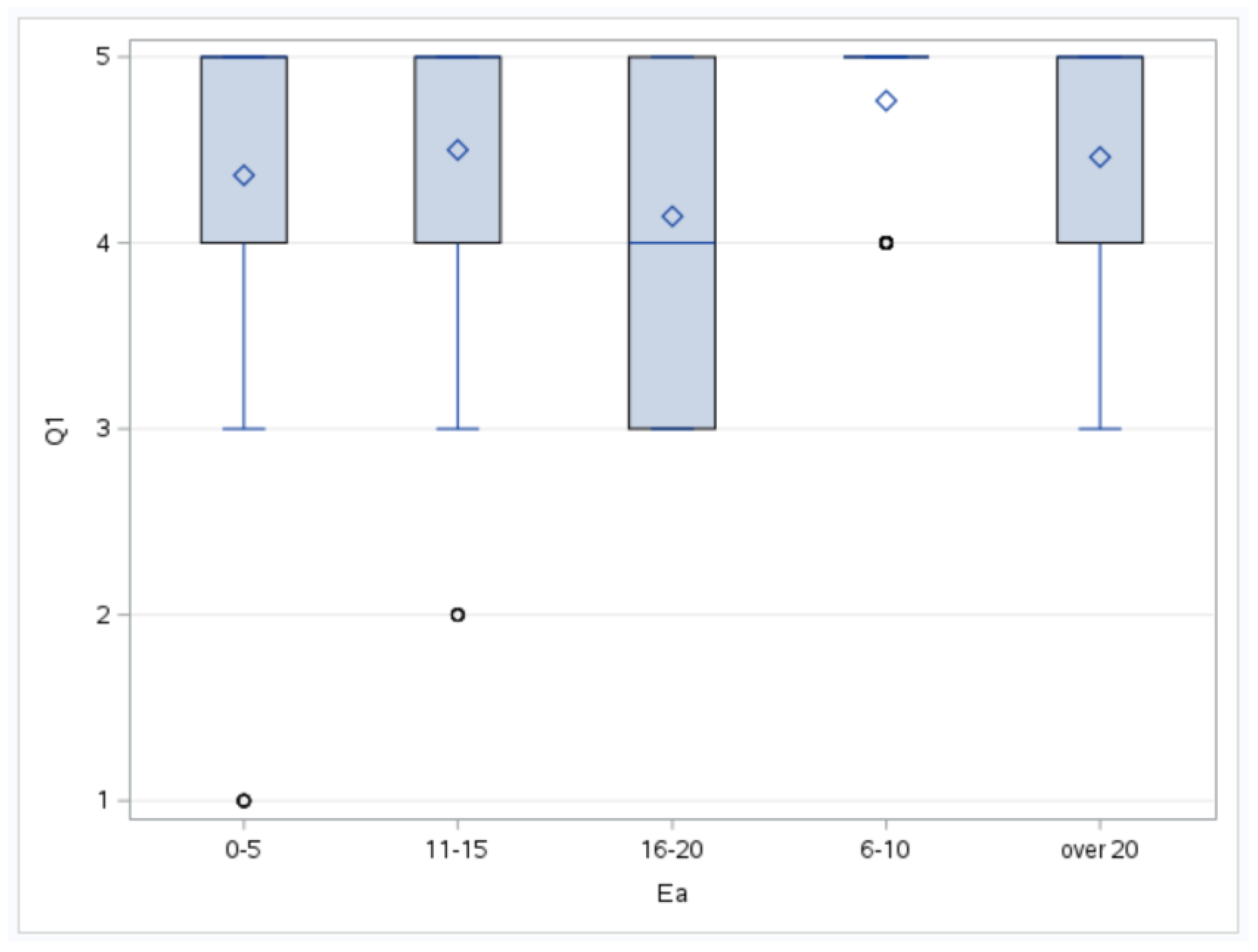
To assess whether socio-demographic variables (age, educational level, and experience in agriculture) influence the perception of the importance of sustainable agricultural practices, the Nonparametric One-Way ANOVA (Kruskal–Wallis) test was applied to the responses to question Q1—How important do you think sustainable agricultural practices are for the future of agriculture?. The distribution of responses to Q1 by experience in agriculture is shown in the boxplot diagram in Figure 1.
The null hypothesis has been defined as H 0 : the distribution of scores is the same across all groups. As a result of the test, H 0 was rejected. It was found that farming experience was associated with significant differences between the answers given to question Q1 ( χ 2 = 15.033 ,     d f = 4 ,     p = 0.0046). The effect size has the value η 2 = 0.042 . The effect size is modest: approximately 4.2% of the percentage of the variance in the responses to Q1 is determined by the grouping by experience in agriculture (Ea). More specifically, farmers with 6–10 years of experience in agriculture gave different answers compared to those with 16–20 years of experience in agriculture, according topairwise multiple comparison analysis, p = 0.0018. The mean of the answers of those with 6–10 years of experience in agriculture was 4.76, and those with 16–20 years of experience in agriculture were 4.14 (Table 2). Also, the comparison of groups 6–10 vs. over 20 indicates significant differences, p = 0.0431.
These results indicate statistically significant differences in the perceived importance of sustainable agricultural practices across the experience groups. Farmers with 6–10 years of experience reported higher importance scores compared to those with 16–20 years of experience, although mean values remain relatively high across all categories. The findings suggest a differentiated perception of sustainability importance depending on farming experience, without implying causal relationships. Overall, sustainability is considered important by farmers regardless of experience level, with variations reflecting differences in self-reported perceptions rather than distinct attitudinal positions.
Similar heterogeneity across farmer groups has been reported in prior research on the adoption of sustainable agricultural practices, where experience and other socio-structural factors are associated with differentiated perceptions and adoption patterns, while causal mechanisms remain context-dependent and influenced by multiple interacting drivers [1,6,8,46].
Although the present survey does not capture the underlying mechanisms, this variation by experience may be interpreted in the context of Romania’s heterogeneous farm structures and the administrative and advisory environment surrounding sustainability-oriented measures discussed in the literature. These interpretations remain contextual and do not imply causal inferences.
The higher salience of soil- and pollution-related benefits compared with biodiversity and climate-related benefits can be read as a preference for outcomes that are more visible at the farm level, while broader or longer-term effects may be less immediately recognized within the questionnaire context [8,37,39]. In Romania’s structurally diverse farming sector, where farm management decisions are shaped by both market pressures and policy requirements, the respondents may be more likely to prioritize benefits perceived as directly linked to farm viability [16,22,23]. This interpretation remains contextual, as the survey does not measure constraints or objective environmental performance.
The distribution of answers to Q2—In your opinion, what are the most important benefits of sustainable agriculture? can be observed in Table 3. The answers highlight the hierarchy of the 11 advantages that underlie the practice of sustainable agriculture, found in 44 combinations.
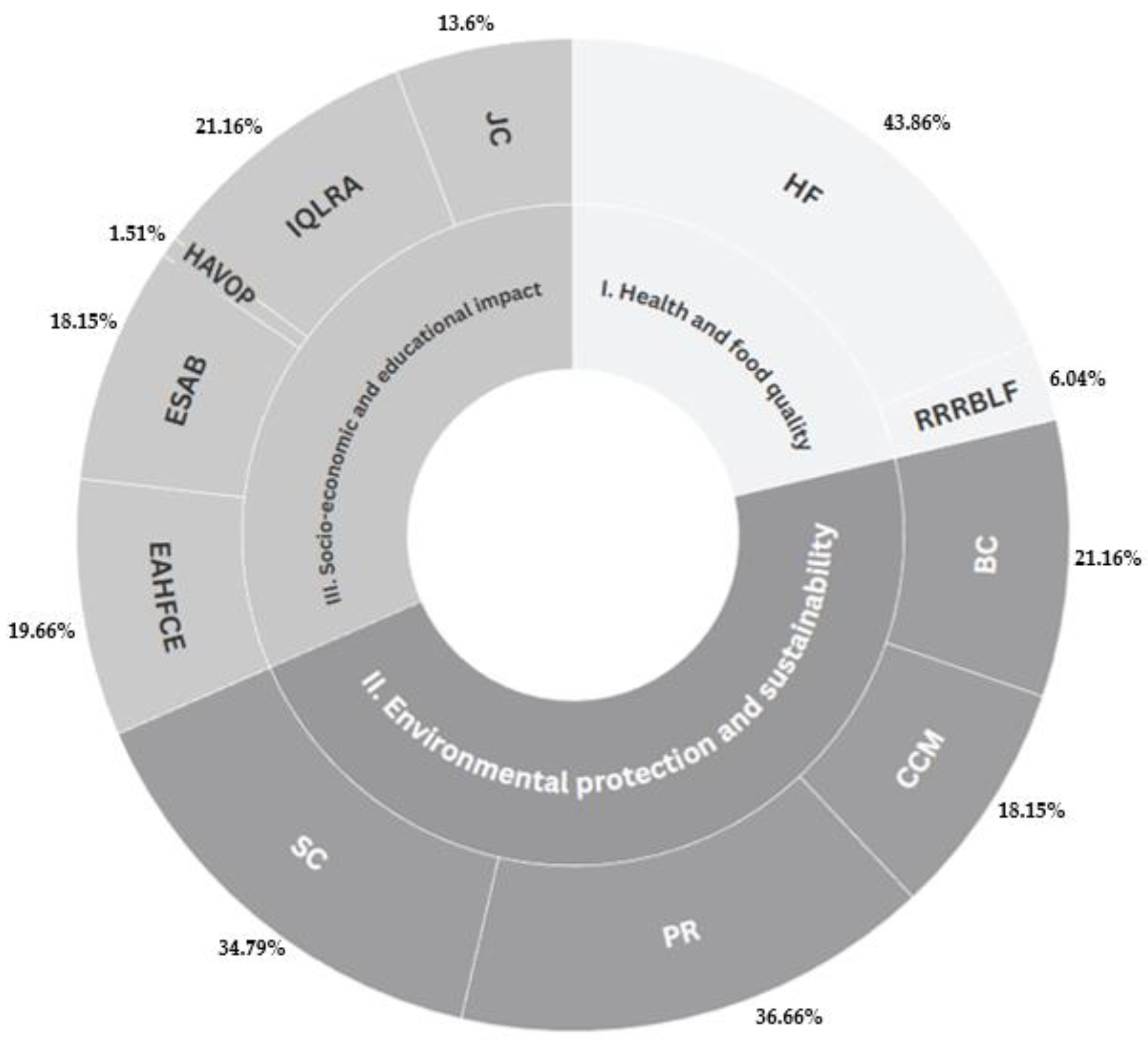
Analyzing the combinations of responses, healthier food (HF) is the benefit most frequently chosen by farmers, appearing in 43.86% of the responses. This underlines a major concern of farmers for nutritional quality and food safety. This orientation is convergent with the results reported in the international literature, which show that benefits related to consumer health and food safety are often perceived by farmers as the most tangible and immediately valued results of sustainable agriculture, even going beyond strictly economic or environmental considerations [3,9,37]. On the other hand, reducing the risk of resistant bacteria on livestock farms (RRRBLF), although an important technical topic for public health, remains a niche concern, with a significantly lower frequency (6.04%). This ranking confirms the observations of other studies, according to which benefits of a more technical nature or with indirect effects on the daily activity of the farm are more difficult for farmers to assimilate, especially in the absence of clear public policy requirements or specific economic incentives [6,46].
For clarity, the reported benefits are grouped into several thematic categories based on their relative frequencies and conceptual similarity. These groupings are used only as a descriptive aid and are not derived from statistical clustering or factor analysis.
Environmental concerns emerge as a prominent thematic category (Figure 2). Pollution reduction (PR)—36.66% and soil conservation (SC)—34.79% are perceived as almost equally important and rank immediately after HF. PR and SC are found in 48 combinations, suggesting that the respondents see soil quality and pollution control as interdependent and essential for a healthy agricultural environment. In contrast, biodiversity conservation (BC)—21.16% and climate change mitigation (CCM)—18.15% register a lower frequency, indicating a prioritization of immediate and local impacts (soil, water, and air) relative to ecological and climatic aspects that find a solution in the long term. This differentiation between local, immediate impacts and long-term ecological or climate benefits is frequently documented in the literature, which highlights the tendency of farmers to prioritize directly observable results at the farm level, such as soil quality and pollution reduction, compared with global climate objectives [8,34,35].
Another thematic category includes factors that target community development and the economic viability of the agricultural sector. Improving the quality of life in rural areas (IQLRA)—21.16% and education and awareness about healthy food and a clean environment (EAHFCE)—19.66% are perceived as medium-level benefits, suggesting a recognition that changes in agriculture are also intended to bring benefits at the community level. Direct economic factors, such as economic sustainability of agricultural businesses (ESAB)—18.15% and job creation (JC)—13.6%, although fundamental, are not found at the top of farmers’ preferences, indicating that environmental and health benefits are considered to be more urgent or desirable. The result is in line with research showing that, in the perception of farmers, economic sustainability is often seen as an indirect consequence of sustainable practices, and not as a primary benefit, being conditioned by the existence of functional markets, support policies, and adequate compensation mechanisms [1,8,51]. The low frequency of higher added value of organic products (HAVOP)—1.51% may reflect an implicit reluctance of farmers. If higher added value is understood as higher prices for consumers, some respondents may not consider it a desirable benefit, especially in the context where HF is a priority, but not necessarily at a premium cost. This reluctance towards capitalizing on sustainable products through higher prices has also been reported in other European contexts, where farmers show a strong concern for food accessibility and for the social acceptability of sustainable products, even to the detriment of potential direct economic gains [29,53].
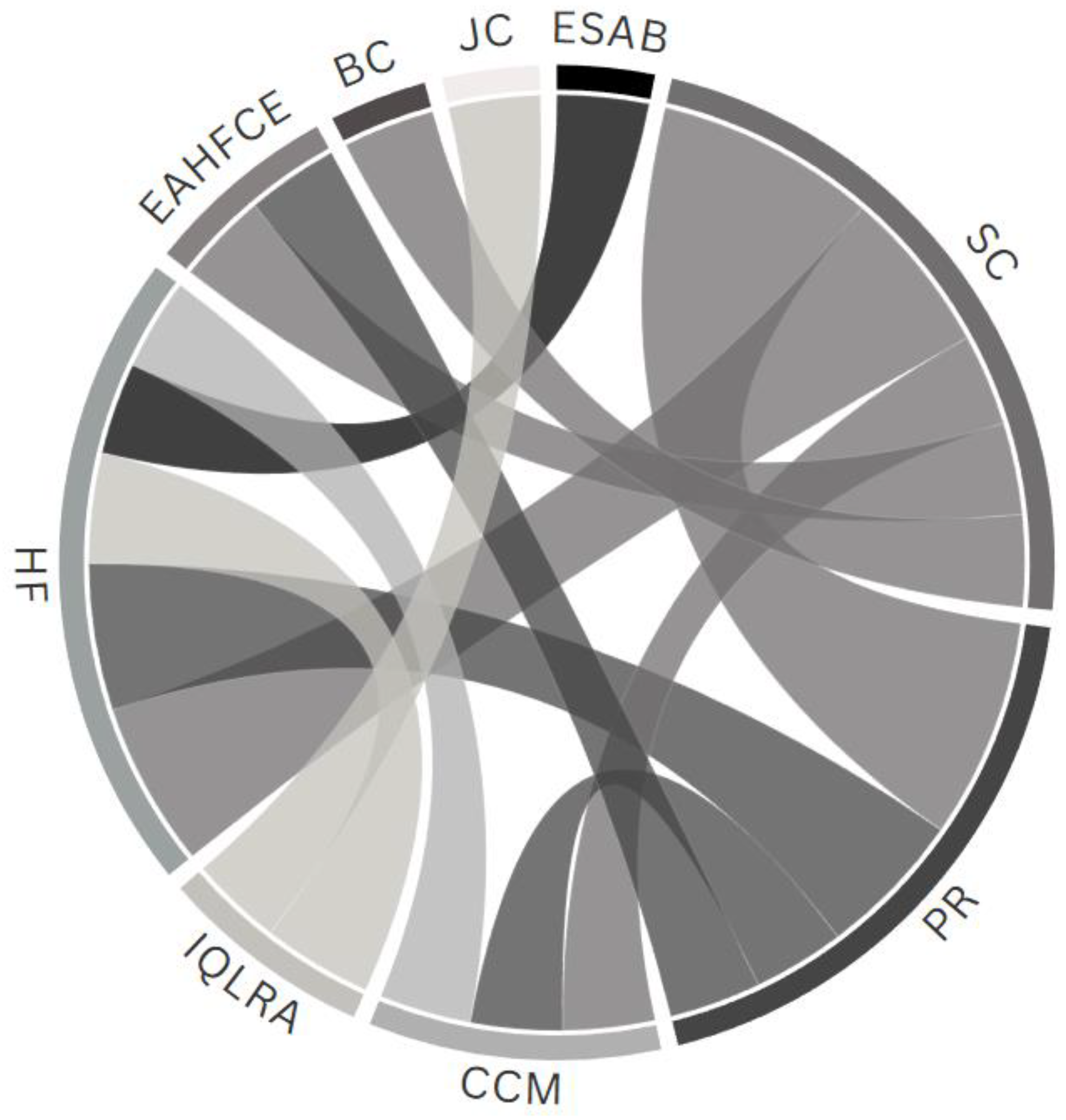
The frequency of correlations between farmers’ responses is represented in Figure 3. The analysis of co-selection patterns between reported benefits highlights how respondents tend to associate different dimensions of sustainable agriculture. These patterns provide a descriptive overview of the combinations most frequently selected together, indicating perceived linkages between benefits at the level of individual responses.
It should be noted that the multiple-choice structure of Q2 allows for the analysis of response frequencies and co-selection patterns between reported benefits. The chord diagram illustrates the frequency with which different benefits were selected together by the respondents and does not represent statistically tested correlations or causal relationships. Therefore, the observed co-occurrence patterns should be interpreted descriptively, as indications of how the respondents tend to associate different benefits, rather than as measures of strength or direction of association.
The co-selection of pollution reduction (PR) and soil conservation (SC) was the most frequent combination, suggesting that the respondents often associate these two benefits when evaluating sustainable agriculture. This pattern reflects a perceived connection between soil quality and pollution control at the farm level. Similar associations between soil management and environmental protection are widely discussed in the literature on sustainable agriculture, which conceptualizes these elements as interrelated components of sustainability frameworks [5,42].
The co-selection of HF and SC (frequency = 36) represents the second most frequent pairing among the reported benefits. This pattern suggests that the respondents often associate soil conservation with healthier food within the questionnaire context.
The frequent co-selection of healthier food (HF) with soil conservation (SC) and pollution reduction (PR) indicates that the respondents tend to associate food quality with environmental management practices. This descriptive pattern suggests that health-related benefits are commonly perceived alongside environmental benefits in the context of sustainable agriculture. Such associations are consistent with previous research highlighting the perceived links between environmentally friendly practices, food quality, and health outcomes, without implying a direct causal interpretation [3,26,37].
The co-occurrence of healthier food (HF) and improving the quality of life in rural areas (IQLRA) points to a tendency among the respondents to associate food-related benefits with broader rural development outcomes. This observation can be discussed in light of the literature on sustainable rural development, where healthy food production and short supply chains are often framed as contributors to local economic and social vitality [27,45]. However, this interpretation remains contextual, as Q2 does not directly measure development strategies or policy preferences.
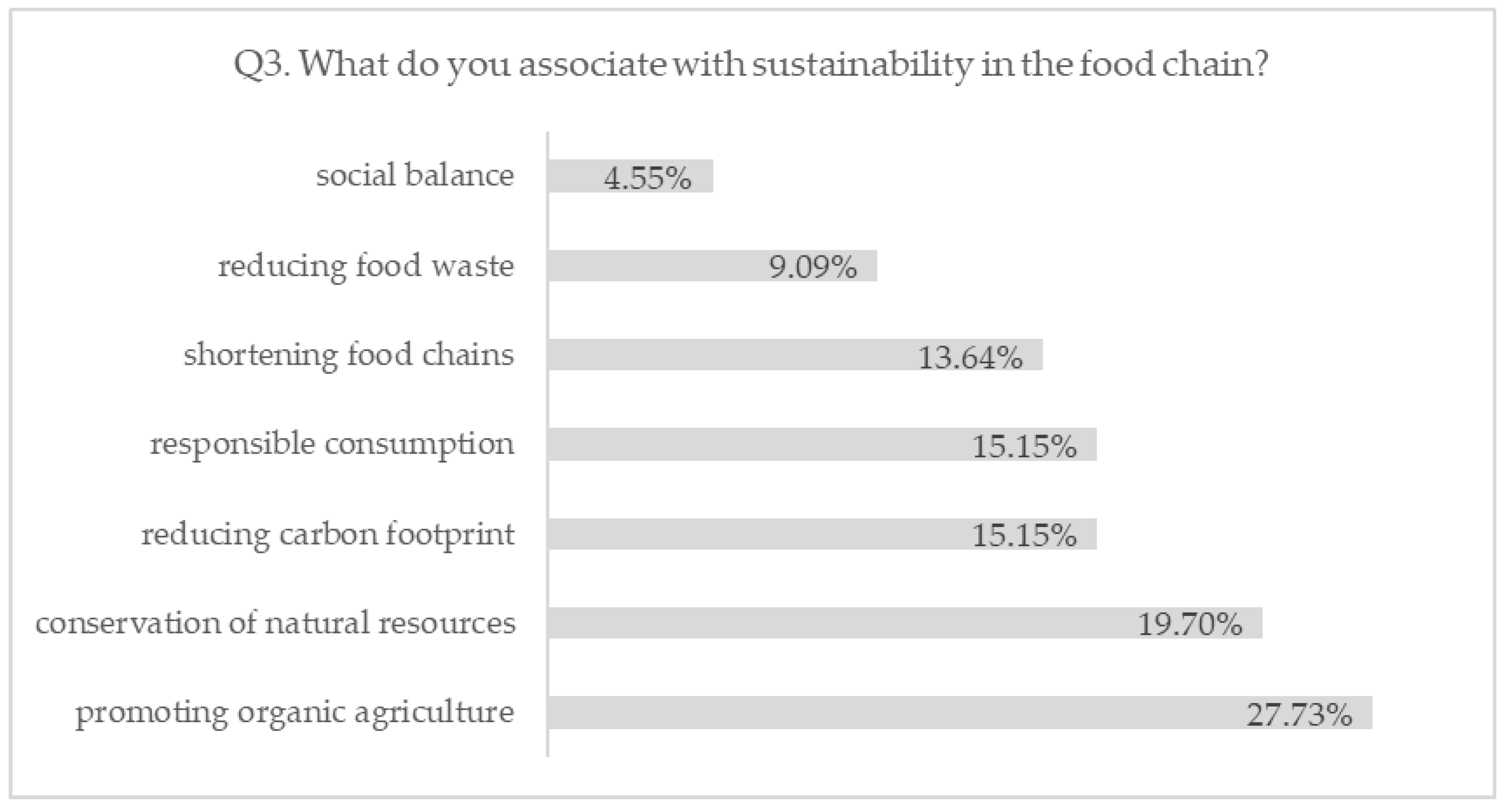
To question Q3—What do you associate with sustainability in the food chain?, the farmers’ responses provide an overview of the most frequently reported associations related to sustainability in the food chain. Thus, according to the answers given, 27.73% of the farmers associate food chain sustainability with promoting organic agriculture, 19.70% with conservation of natural resources, and 15.15% with reducing carbon footprint and responsible consumption (Figure 4).
The analysis of the responses highlights a stronger emphasis on aspects related to agricultural practices and environmental protection, while also reflecting references to elements beyond the farm gate.
The fact that the most common association with food chain sustainability is the promotion of organic farming indicates that the respondents frequently link sustainability with agricultural practices that exclude the use of synthetic chemicals. Sustainability represents cleaner and more natural agriculture for farmers. In this context, sustainability is often associated with cleaner and more natural forms of agriculture. This association is consistent with the literature, which shows that organic farming is often perceived by farmers and consumers as the most visible and easily understood expression of sustainability in agriculture due to the exclusion of synthetic chemical inputs and the emphasis on natural processes [4,12,37].
The association of food chain sustainability with the conservation of natural resources highlights the importance given by farmers to the sustainable management of natural resources (soil and water). This perception is frequently encountered in studies on the adoption of sustainable agricultural practices, which emphasize the central role of soil and water as key resources for the long-term viability of agricultural holdings [6,42].
Reducing the carbon footprint and responsible consumption are the next associations attributed by the Romanian farmers in equal proportion. These two associations extend farmers’ vision of food chain sustainability beyond primary agricultural production. The inclusion of reducing the carbon footprint reflects an association between sustainability and climate-related aspects of agricultural activity. The association with responsible consumption indicates that the respondents also mention consumer-side aspects when describing sustainability in the food chain. Although they were selected less frequently, shortening food chains, reducing food waste, and maintaining social balance complete the picture of food chain sustainability. Thus, the association with shortening food chains reflects the desire to increase efficiency, reduce transport costs, and increase transparency, bringing producers closer to consumers.
Although food waste is a major problem globally [60], the lower share of farmers who associate it with food chain sustainability (9.09%) should be interpreted as lower relative salience within this question rather than as a lack of importance or concern.
The social dimension of food chain sustainability is selected less frequently compared to the ecological and economic thematic categories, given that only 4.55% of the farmers associate social balance with food chain sustainability.
Taken together, these associations indicate that food chain sustainability is most frequently described through agricultural practices and environmental aspects, while systemic and social components are mentioned less often. This pattern is consistent with the literature that highlights differences between favorable attitudes towards sustainability and their translation into a more integrated understanding of the food chain [6,7,26,53]. In this context, it becomes relevant to further investigate how these associations relate to the reported level of integration of sustainable agricultural practices, an aspect addressed by applying PCA.
The use of PCA for items Q4.1–Q4.6 and Q5.1–Q5.12 led to a clearly defined factor structure that allows a statistically significant reduction in dimensionality. The values χ 2 = 1275.9 ,     p < 0.001 were obtained, and for each of the items studied, the KMO values indicate a very good fit, the lowest of which is 0.82. Furthermore, Bartlett’s test leads to p < 0.001, so the data are suitable for PCA.
Items related to attitudes toward sustainability and those regarding implementation on farms were designed separately in the questionnaire, with the understanding that they fall into these categories. The respondents’ answers, following the application of PCA, confirm the predefined structure of the questionnaire.
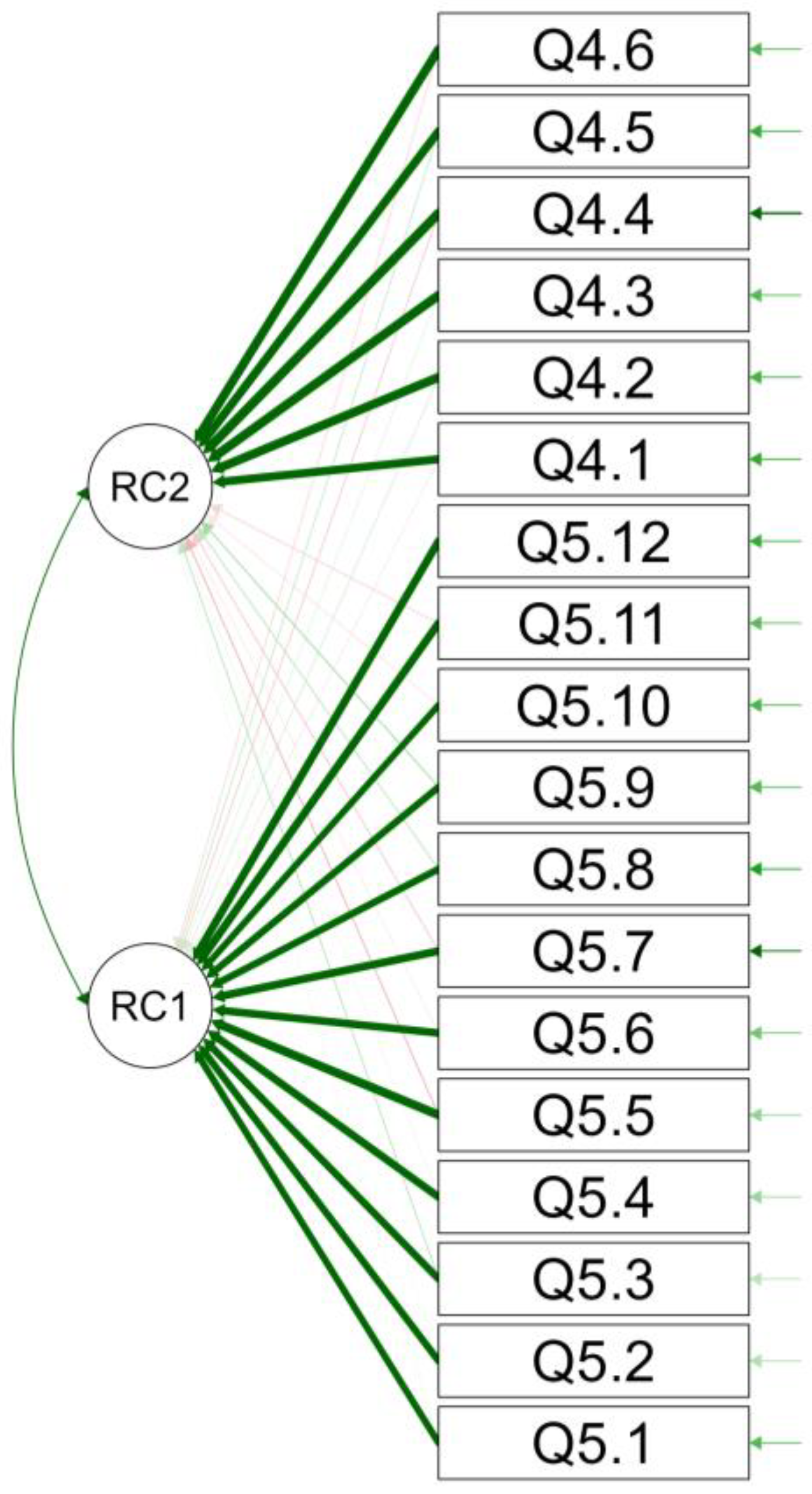
Thus, two principal components were determined: RC1 associated with items Q5.1–Q5.12, and RC2 associated with items Q4.1–Q4.6. The first component, integration of sustainable agricultural practices, explains 44.6% of the variance, while the second component, Attitude towards sustainable agricultural practices, explains 27.8% (Table 4). Together, the two components explain a high cumulative level of the total variance, respectively, 72.4%.
The factor loadings of both components are high. In the case of the first component, the values range between 0.752 and 0.898, and for the second component, between 0.864 and 0.943, all of which are associated with low values of uniqueness (Table 5), indicating a good representation of the items by the identified factor structure.
Thus, the PCA confirms a clearly defined logical grouping of the items that were initially theoretically defined within the questionnaire. The items corresponding to Q4 are clearly separated from those corresponding to Q5, leading to the identification of two distinct constructs. More precisely, the extraction of components was carried out in accordance with the initial grouping of the items, which captures, on the one hand, a behavioral characteristic of farmers regarding the application of sustainable principles (Q5), and on the other hand, a characteristic that captures the attitude towards the concept of sustainability (Q4).
The PATH diagram confirms the grouping of the items (Figure 5). The arrows pointing from items Q4.1–Q4.6, Q5.1–Q5.12 towards components RC1 and RC2 represent the component loadings for each item. The thickness of the arrows is proportional to these values. The arrows pointing outwards towards items Q4.1–Q4.6 and Q5.1–Q5.12 indicate uniqueness, the variance not explained by the principal components. These have low values, which shows that the items are well explained by the model determined by PCA. In addition, the existence of a relationship between the attitudinal and behavioral dimensions is observed, highlighted by the bidirectional arrow between the two components.
The association between the two identified constructs (attitudes towards sustainability and self-reported integration at the farm level) was examined using Kendall’s tau based on composite scores. The correlation was τ = 0.289 (p < 0.001), indicating a modest association between more favorable attitudes and higher self-reported levels of practice integration. The relationship is statistically significant but limited in strength and should be interpreted strictly as correlational. However, in the field of agriculture and social sciences, the number of factors that can influence outcomes is large. Thus, the coefficient value indicates the presence of an association, while also reflecting the involvement of additional factors. Overall, the result indicates that more favorable attitudes towards sustainability tend to co-occur with higher self-reported levels of practice integration, although the relationship remains modest and should be interpreted strictly as correlational.
The analysis was also extended to the level of individual items in order to identify the specific links between the respondents’ attitude towards sustainable agricultural practices and their integration into the farm activity. In this regard, Kendall’s tau correlation analysis was performed, resulting in the matrix presented in Table A2, which captures the relationships between the items describing the two components: attitude (Q4) and integration (Q5).
At the item level (Table A2), all Kendall’s tau coefficients are positive, indicating consistent co-variation between attitudinal items (Q4) and self-reported integration items (Q5) without implying directionality or causality. The strongest associations cluster around items linked to environmental protection and resource efficiency (Q4.2–Q4.3) and practices related to nutrient management, agroecology, and precision agriculture (Q5.9, Q5.3, and Q5.8), suggesting that these practice areas align more closely with the respondents’ evaluative orientations within the questionnaire context [2,3,8,19]. At the same time, the magnitude of associations varies across practices, which is consistent with adoption research, highlighting that different practices tend to involve different implementation contexts and requirements [1,6,46,47].
All the reported item-level associations are statistically significant (p < 0.0001). The overall model shows that attitude (Q4 variables) is associated with higher self-reported levels of practice integration (Q5 variables), especially in the case of variables Q5.9, Q5.3, and Q5.8.
The data in Table 6 indicate that the respondents report relatively similar mean scores across several attitudinal dimensions, with the highest mean values for environmental protection (Q4.2; 3.92), followed closely by economic benefits (Q4.4; 3.87) and resource efficiency (Q4.3; 3.84). The mean score for image-related considerations (Q4.5; 3.59) is comparatively lower. These results suggest a balanced orientation in the farmers’ self-reported attitudes toward sustainability, where environmental and economic considerations are both evaluated positively, while image-related aspects are rated somewhat less favorably. This interpretation remains descriptive and refers to reported evaluations within the questionnaire rather than to observed motivations or decision-making mechanisms.
The highest consensus is recorded in Q4.1 and Q4.2. With deviations of 1.06 and 1.07, the respondents are most united in their opinions regarding social responsibility and environmental protection. These are fundamental values being widely accepted in the farming community.
The largest divergence is observed at Q4.6, with a deviation of 1.26, indicating that opinions on the importance of financial support are the most divided. Thus, some farmers consider subsidies vital, while others give them much less importance in the context of sustainability.
A high divergence is observed for economic benefits (Q4.4). The deviation of 1.23 suggests that economic experiences related to sustainability vary considerably from one farm to another.
Analyzing the data in Table 7, it is observed that the averages vary between 2.59 and 3.40, which indicates a moderate level of integration of sustainable agricultural practices.
The most common practice among the respondents is nutrient management (Q5.9), with an average response of 3.40. This reflects a concern for fertilization efficiency and soil protection.
Precision agriculture (Q5.8) follows closely, with an average response of 3.37, indicating a strong technological orientation and desire for input optimization.
Water conservation (Q5.10) is also a major priority (3.33), thus underlining the importance of water resources management in the current climate context.
The standard deviation gives us an indication of how uniform the integration of sustainable agricultural practices is. The highest consensus is recorded in Q5.8 and Q5.9, with deviations of 1.12 and 1.14. These practices are not only the most widely used but also the most consistently applied among farmers, with a common understanding of their benefits. The highest variability is observed in Q5.4, with a deviation of 1.32. For animal welfare, it indicates a large discrepancy between farms. This is logical, since not all farms have a zootechnical component, or the standards applied vary.
High variability is observed for agroecology (Q5.3). The deviation of 1.28 suggests that the interpretation and application of agroecological principles differ significantly from one farmer to another.
The fact that nutrient management (Q5.9) and precision agriculture (Q5.8) have the highest mean scores suggests that the most frequently reported practices are those linked to input efficiency and resource management.
Practices that require major conversions or have less immediate economic benefits (agroforestry, carbon agriculture) are found at the bottom of the ranking. This indicates the need for financial incentives or better targeted technical support for these categories.
Averages around 3.00 indicate that sustainability is “in the process of integration.” There is moderate openness, but integration has not yet reached the “extremely large” level (4.00), which leaves room for supportive policies to transform intention into operational routine.
Overall, the modest association between attitudes and self-reported integration is consistent with research describing an attitude–behavior gap in sustainability transitions, where supportive views coexist with partial or selective adoption [6,7,8]. In Romania, the literature points to factors such as administrative requirements, uneven access to advisory support, and differences in farms’ capacity to accommodate change, which may help contextualize this gap [16,20,22,23]. These points are offered as literature-informed interpretations, as the present study does not measure costs, technical barriers, or institutional constraints. Against this background, the farmers’ reported motivations provide additional insight into how the respondents themselves frame the reasons for integrating sustainable practices.
The distribution of answers to Q6—What are the reasons behind integrating sustainable practices into your farm’s operations? is presented in Table 8. As Q6 is a multiple-choice question, the analysis is based on response frequencies and patterns of co-occurrence, highlighting the relative salience of different reported reasons within the survey context.
Improving soil and water quality appears most frequently across the reported combinations, being included in six out of the eleven response patterns. In addition, it represents the most frequently selected single option (22.72%). This indicates that soil and water protection is a highly salient reason reported by the respondents when reflecting on the integration of sustainable practices, without implying exclusive or dominant motivations.
The combination “Improving soil and water quality/Reducing long-term costs”, selected by 16.66% of the respondents, is the second most frequently reported response pattern. This co-occurrence indicates that the respondents often report environmental resource protection and cost-related considerations together when reflecting on reasons for integrating sustainable practices. Such a pattern is consistent with findings in the literature showing that the protection of natural resources, particularly soil and water, is frequently reported alongside expectations of long-term cost efficiency in relation to the adoption of sustainable agricultural practices [1,6,8,12]. This interpretation remains descriptive and refers to the relative salience of jointly reported reasons within the survey context.
The combination “Improving soil and water quality/Reducing long-term costs/Increased demand for organic products”, chosen by 15.15% of the respondents, further illustrates the co-occurrence of agronomic, economic, and market-related considerations within individual responses. This indicates that some respondents simultaneously report environmental resource management, cost efficiency, and market-related factors when describing reasons for integrating sustainable practices. Similar co-occurrences are discussed in the literature, which highlights that expectations regarding future cost reductions, together with perceived market dynamics for sustainable or organic products, are often reported in relation to the adoption of sustainable agricultural practices [8,9,47]. In the present study, this pattern reflects reported combinations of reasons rather than distinct motivational profiles or strategic orientations.
The individual frequency analysis of motivations provides a clear picture of the determinants in the adoption of sustainable agricultural practices by the farmers. Improving soil and water quality (74.22%) and reducing long-term costs (63.61%) were selected by an overwhelming majority of the farmers. The high frequency of these options indicates that respondents most often selected soil and water quality and cost-related considerations when reporting reasons for integrating sustainable practices, a result in agreement with studies that highlight the central role of natural capital in decisions to adopt sustainable practices [1,3,6,12].
Cost-related considerations also show high relative salience. Reducing long-term costs was selected by 63.61% of the respondents, indicating that economic aspects are frequently reported alongside environmental considerations when explaining the integration of sustainable practices. This pattern is consistent with the literature on farmers’ economic motivations, which highlights the role of long-term cost efficiency in the adoption of sustainable agricultural practices [8,9,47].
Even though they have a lower frequency, market-related motivations and the farm’s image also play an important role. The increased demand for organic products is mentioned by 36.35% of the farmers, indicating that although the market is an incentive, it is not the main driving force for most farmers. The decision to integrate sustainable agricultural practices seems to be based more on internal considerations (soil and costs) and less on market pressure or opportunity. This finding supports the conclusions of other studies showing that market signals are often secondary to internal agronomic and economic factors in farmers’ decision-making [6,8,29].
Improving the farm’s image is the reason with the lowest frequency (22.72%), indicating that PR or marketing-related benefits associated with sustainability are perceived primarily as secondary outcomes rather than as primary drivers of adoption.
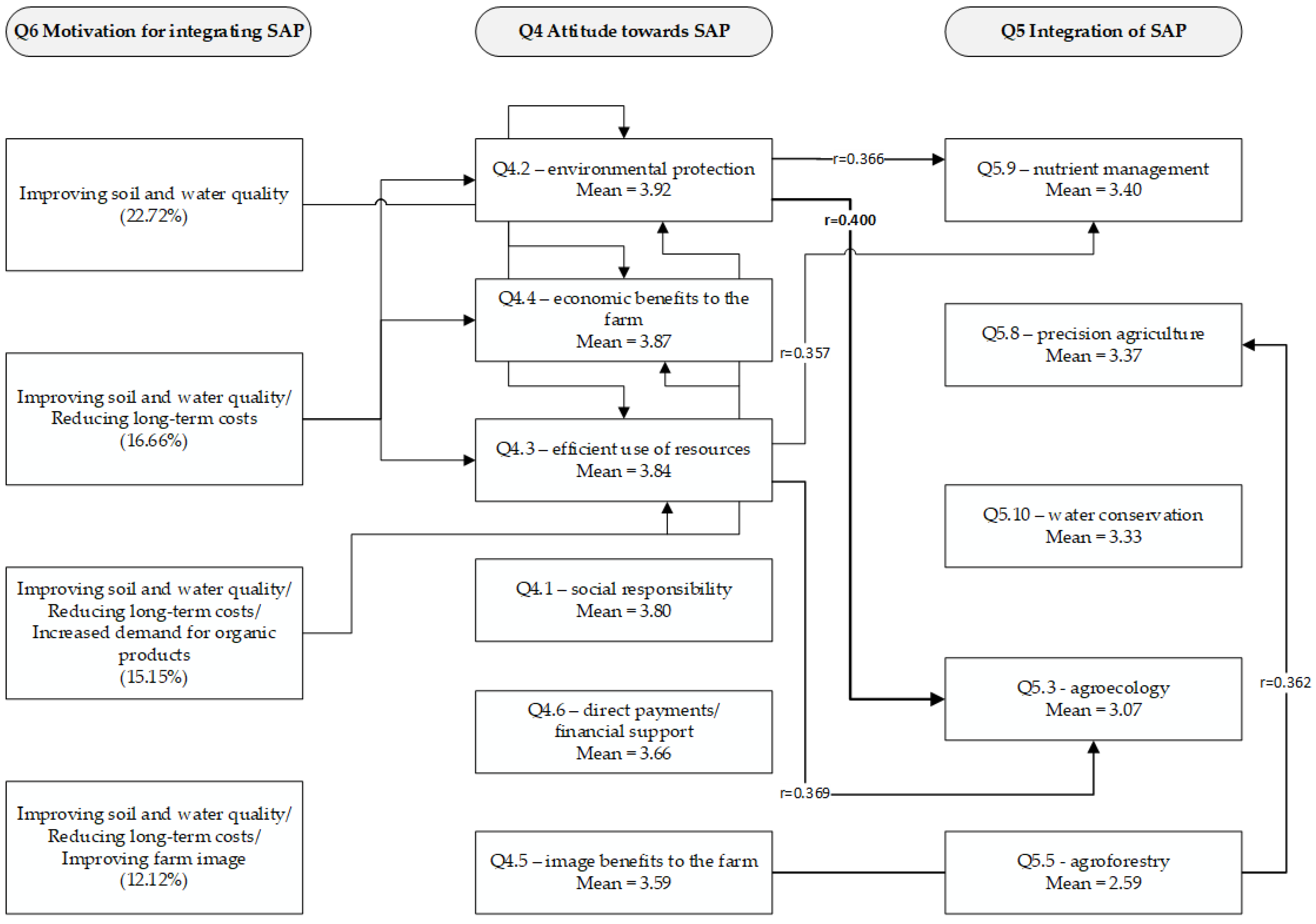
To provide an integrated overview of the descriptive relationships identified in the analysis, Figure 6 offers a synthetic visual summary of the reported motivations (Q6), attitudinal evaluations (Q4), and self-reported levels of integration of sustainable agricultural practices (Q5). The figure does not introduce additional analyses, but brings together the main empirical patterns discussed above in a consolidated graphical form (Figure 6).

5. Conclusions

This study provides empirical evidence on Romanian farmers’ self-reported perceptions, attitudes, and evaluations regarding sustainable agricultural practices. Overall, respondents report generally positive attitudes towards sustainability, while the reported level of integration of sustainable practices at the farm level remains moderate. This contrast reflects an attitude–integration gap within self-assessed data and does not allow direct inferences regarding actual behavior, implementation intensity, or external constraints.
Statistically significant differences in the perceived importance of sustainable agricultural practices were identified in relation to farming experience (RQ1). Farmers with moderate experience (6–10 years) reported higher mean importance scores compared to those with longer experience (16–20 years). Other socio-demographic characteristics, including education level, age group, and farm size category, did not generate statistically significant differences. These results indicate variation across the experience groups, without implying generational effects or causal mechanisms.
The multivariate analysis confirms the existence of two analytically distinct constructs corresponding to the questionnaire design: attitudes towards sustainable agricultural practices and their self-reported integration at the farm level (RQ2). The statistically significant, modest correlation observed between these constructs indicates co-variation between more favorable attitudes and higher reported levels of integration. This relationship should be interpreted strictly as associative rather than directional or causal.
With regard to motivations for integrating sustainable practices (RQ3), the frequency-based results indicate that farm-level considerations related to soil and water protection and long-term cost management are reported more frequently than market- or image-related factors. These findings reflect relative salience within the survey context and do not provide evidence on decision-making processes, strategic behavior, or risk management.
Taken together, the results suggest that the transition towards sustainable agriculture in Romania, as reflected in the farmers’ self-reported responses, is heterogeneous and gradual. Any policy implications derived from these findings should therefore be framed cautiously and understood as reflecting perceived priorities rather than demonstrated behavioral outcomes.
The study has several limitations. The sample includes a relatively high proportion of respondents with higher education, which may reflect the data collection channels used and may limit generalizability. In addition, all analyses rely on self-reported data, and discrepancies may exist between stated perceptions and actual farm practices. Consequently, interpretations referring to behavior, constraints, or strategic motivations should be regarded as contextual explanations informed by the literature rather than as direct empirical findings of this study.

6. Recommendations

The results indicate the importance of placing greater emphasis on the practical implementation of sustainable agricultural practices at the farm level. Although the respondents report generally positive attitudes and a high level of awareness, the reported degree of integration remains moderate. This suggests that support measures should prioritize practical applicability, including accessible tools, concrete examples, and technical assistance adapted to diverse farm contexts.
The differences observed across the experience groups suggest that communication and support initiatives may be more effective when they take into account farmers’ professional trajectories. Farmers with moderate experience appear to report higher perceived importance of sustainability, while farmers with longer experience may benefit from approaches that emphasize demonstrated outcomes and reduced uncertainty without assuming resistance or negative attitudes.
Given that sustainability is most frequently associated with direct benefits related to soil, water, and long-term cost efficiency, promotion and support initiatives may be more effective if they build on these reported priorities. Linking environmental considerations to farm-level economic stability may contribute to a more consistent integration of sustainable practices, as perceived by the farmers.
Finally, the findings point to several directions for future research. Further studies could examine the concrete technical, economic, and institutional barriers that limit the integration of sustainable practices, particularly among farms reporting lower levels of adoption. In addition, comparative analyses across European contexts or longitudinal research designs could provide deeper insight into how farmers’ attitudes and reported levels of integration evolve over time, and how these dynamics relate to broader institutional and structural conditions.

Author Contributions

Conceptualization, C.-S.T., C.I.R. and A.F.; methodology, C.-S.T. and M.R.C.; software, C.I.R. and C.-S.T.; validation, A.F. and C.I.R.; formal analysis, V.C.T.; investigation, V.C.T. and S.M.S.; resources, S.M.S. and M.R.C.; data curation, C.I.R.; writing—original draft preparation, C.-S.T. and A.F.; writing—review and editing, V.C.T. and C.-S.T.; visualization, M.R.C.; supervision, C.I.R. and S.M.S.; project administration, A.F.; funding acquisition, A.F. All authors have read and agreed to the published version of the manuscript.

Funding

This research received no external funding.

Institutional Review Board Statement

The study was conducted in accordance with the Declaration of Helsinki, and approved by the Institutional Review Board (or Ethics Committee) of University of Life Sciences “King Mihai I” from Timisoara 44/08.09.2025, 8 September 2025.

Informed Consent Statement

Informed consent was obtained from all subjects involved in the study.

Data Availability Statement

The original contributions presented in this study are included in the article. Further inquiries can be directed to the corresponding author.

Conflicts of Interest

The authors declare no conflicts of interest.

Abbreviations

The following abbreviations are used in this manuscript:
CAPCommon Agricultural Policy
PCAPrincipal Component Analysis
SAPSustainable Agricultural Practices

Appendix A

Table A1. Questionnaire design and item coding.
Analyzed AspectItem CodeItemQuestion Types
Socio-demographic profileGGendersingle choice question
PPeriod corresponding to birth year
ElEducational level
EaExperience in agriculture
CCategory of the agricultural holding
EsEconomic size of the agricultural holding
Level of information and awareness regarding sustainable agricultural practicesQ1.How important do you think sustainable agricultural practices are for the future of agriculture?rating scale question
the evaluation of the item was performed using an interval scale:
1—not at all important
2—slightly important
3—neither important nor unimportant
4—important
5—very important
Q2.In your opinion, what are the most important benefits of sustainable agriculture? multiple-choice question (max. 3)
Q3.What do you associate with sustainability in the food chain? single-answer question
Attitude towards sustainable agricultural practicesQ4.1Integrating the concept of sustainability into your own farm is an opportunity to demonstrate a commitment to social responsibilityrating scale question
the evaluation of the item was done using an interval scale:
1—total disagreement
2—disagreement
3—neutral
4—agree
5—totally agree
Q4.2Integrating the concept of sustainability into your own farm is an opportunity to demonstrate a commitment to environmental protection
Q4.3Integrating the concept of sustainability into your own farm is an opportunity to demonstrate a commitment to the efficient use of resources.
Q4.4Integrating the concept of sustainability into your own farm is a way to bring economic benefits to the farm.
Q4.5Integrating the concept of sustainability into your own farm is a way to bring image benefits to the farm.
Q4.6Integrating the concept of sustainability into your own farm is a way to obtain direct payments and other forms of financial support.
Integration of sustainable agricultural practicesQ5.1To what extent do you integrate organic farming practices into your farm?rating scale question
the evaluation of the item was done using an interval scale:
1—not at all
2—to a small extent
3—to a moderate extent
4—to a large extent
5—to a very large extent
Q5.2To what extent do you integrate integrated pest management practices into your farm?
Q5.3To what extent do you integrate agroecology into your farm?
Q5.4To what extent do you integrate animal breeding and welfare plans into your farm?
Q5.5To what extent do you integrate agroforestry into your farm?
Q5.6To what extent do you integrate high nature value agriculture into your farm?
Q5.7To what extent do you integrate carbon agriculture into your farm?
Q5.8To what extent do you integrate precision agriculture into your farm?
Q5.9To what extent do you integrate improved nutrient management practices into your farm?
Q5.10To what extent do you integrate water conservation practices into your farm?
Q5.11To what extent do you integrate other soil-beneficial practices into your farm?
Q5.12To what extent do you integrate other practices related to GHG emissions into your farm?
Motivation for integrating sustainable agricultural practicesQ6What are the reasons behind integrating sustainable practices into your farm’s operations?multiple-choice question (max. 3)

Appendix B

Table A2. Kendall’s tau b correlation coefficients between attitude towards sustainable agricultural practices and integration of agricultural practices in the activity of farms managed by respondents (Kendall’s tau correlation coefficients, N = 264, Prob > | τ | under H0: τ = 0 ).
Q5.1Q5.2Q5.3Q5.4Q5.5Q5.6Q5.7Q5.8Q5.9Q5.10Q5.11Q5.12
Q4.10.1810.2000.3050.2090.1400.1710.1970.2020.2240.1760.1800.154
0.0004<0.0001<0.0001<0.00010.00710.00090.00010.0001<0.00010.00070.00040.0027
Q4.20.3120.2910.4000.2920.2140.2970.3100.2920.3660.2600.2640.316
<0.0001<0.0001<0.0001<0.0001<0.0001<0.0001<0.0001<0.0001<0.0001<0.0001<0.0001<0.0001
Q4.30.3260.3190.3690.2970.1810.3290.2490.3290.3570.2390.2230.266
<0.0001<0.0001<0.0001<0.00010.0005<0.0001<0.0001<0.0001<0.0001<0.0001<0.0001<0.0001
Q4.40.1120.1850.3000.2180.1050.1530.1010.2820.3130.1920.0850.188
0.02820.0003<0.0001<0.00010.04220.00270.0487<0.0001<0.00010.00020.09620.0002
Q4.50.3070.2270.2830.3260.2820.3010.2910.3620.3230.1450.2150.322
<0.0001<0.0001<0.0001<0.0001<.0001<0.0001<0.0001<0.0001<0.00010.0042<0.0001<0.0001
Q4.60.1690.1070.2240.2640.2160.2330.1770.2550.2320.0960.1790.244
0.00080.0338<0.0001<0.0001<0.0001<0.00010.0004<0.0001<0.00010.05750.0004<0.0001
Source: Own statistical processing using SAS OnDemand for Academics.

References

  1. Piñeiro, V.; Arias, J.; Dürr, J.; Elverdin, P.; Ibanez, A.M.; Kinengyere, A.; Opazo, C.M.; Owoo, N.; Page, J.R.; Prager, S.D.; et al. A scoping review on incentives for adoption of sustainable agricultural practices and their outcomes. Nat. Sustain. 2020, 3, 809–820. [Google Scholar] [CrossRef]
  2. Jin, K.; Heerink, N.; Davies, W.J.; Shen, J.; Zhang, Y.; Hou, Y.; Zhao, Y.; Zhao, Z.; Zhang, F. Coordinating environmental protection and agricultural development: A village-based case study for promoting green transformation. Front. Agr. Sci. Eng. 2024, 11, 100–112. [Google Scholar] [CrossRef]
  3. de Souza, N.R.D.; Solberg, M.K.M.; Hu, X.P.; Cherubini, F. Environmental benefits and changes in ecosystem services of climate-smart agriculture relative to conventional agriculture in Norway. J. Environ. Manag. 2025, 377, 124633. [Google Scholar] [CrossRef]
  4. Dudek, M.; Rosa, A. Regenerative Agriculture as a Sustainable System of Food Production: Concepts, Conditions, Perceptions and Initial Implementations in Poland, Czechia and Slovakia. Sustainability 2023, 15, 15721. [Google Scholar] [CrossRef]
  5. Zahm, F.; Alonso Ugaglia, A.; Barbier, J.-M.; Carayon, D.; Del’homme, B.; Gafsi, M.; Gasselin, P.; Gestin, C.; Girard, S.; Guichard, L.; et al. Assessing farm sustainability: The IDEA4 method, a conceptual framework combining dimensions and properties of sustainability. Cah. Agric. 2024, 33, 10. [Google Scholar] [CrossRef]
  6. Adamsone-Fiskovica, A.; Grivins, M. Understanding the potential of sustainability turn in farming: Review of sociotechnical adoption factors of agri-environmental cropping practices. Renew. Agric. Food Syst. 2024, 39, e16. [Google Scholar] [CrossRef]
  7. Han, G.; Niles, M.T. An adoption spectrum for sustainable agriculture practices: A new framework applied to cover crop adoption. Agric. Syst. 2023, 212, 103771. [Google Scholar] [CrossRef]
  8. Thompson, B.; Barnes, A.P.; Toma, L. Increasing the adoption intensity of sustainable agricultural practices in Europe: Farm and practice level insights. J. Environ. Manag. 2022, 320, 115663. [Google Scholar] [CrossRef] [PubMed]
  9. Menozzi, D.; Fioravanzi, M.; Donati, M. Farmer’s motivation to adopt sustainable agricultural practices. Bio-Based Appl. Econ. 2015, 4, 125–147. [Google Scholar] [CrossRef]
  10. Pierrette Coulibaly, T.; Du, J.; Diakité, D.; Abban, O.J.; Kouakou, E. A Proposed Conceptual Framework on the Adoption of Sustainable Agricultural Practices: The Role of Network Contact Frequency and Institutional Trust. Sustainability 2021, 13, 2206. [Google Scholar] [CrossRef]
  11. Czyżewski, B.; Poczta-Wajda, A.; Matuszczak, A.; Smędzik-Ambroży, K.; Guth, M. Exploring intentions to convert into organic farming in small-scale agriculture: Social embeddedness in extended theory of planned behaviour framework. Agric. Syst. 2025, 225, 104294. [Google Scholar] [CrossRef]
  12. Gebska, M.; Grontkowska, A.; Swiderek, W.; Golebiewska, B. Farmer Awareness and Implementation of Sustainable Agriculture Practices in Different Types of Farms in Poland. Sustainability 2020, 12, 8022. [Google Scholar] [CrossRef]
  13. European Commission. Communication from the Commission to the European Parliament, The Council, The European Economic and Social Committee and the Committee of the Regions. A Farm to Fork Strategy for a Fair, Healthy and Environmentally-Friendly Food System; COM(2020) 381 final; European Commission: Brussels, Belgium, 2020. [Google Scholar]
  14. Heyl, K.; Garske, B.; Stubenrauch, J.; Ehlers, K. Turning the EU’s agricultural vision into environmental action: A performance-oriented CAP after 2027. Ambio 2026, 55, 204–210. [Google Scholar] [CrossRef]
  15. European Commission. Communication from the Commission to the European Parliament, The Council, The European Economic and Social Committee and the Committee of the Regions. A Vision for Agriculture and Food. Shaping Together an Attractive Farming and Agri-Food Sector for Future Generations; COM(2025) 75 final; European Commission: Brussels, Belgium, 2025. [Google Scholar]
  16. European Commission. Romania–CAP Strategic Plan 2023–2027; Approved on 7 December 2022, Updated 2024. Available online: https://agriculture.ec.europa.eu/cap-my-country/cap-strategic-plans/romania_en (accessed on 20 December 2025).
  17. Feher, A. European Union Policies and Funding Programmes. The Case of Romania; Pro Universitaria: Bucharest, Romania, 2025. [Google Scholar]
  18. Feher, A.; Stanciu, S.; Iancu, T.; Adamov, T.C.; Ciolac, R.M.; Pascalau, R.; Banes, A.; Raicov, M.; Gosa, V. Design of the macroeconomic evolution of Romania’s agriculture 2020–2040. Land Use Policy 2022, 112, 105815. [Google Scholar] [CrossRef]
  19. Tudor, V.C.; Stoicea, P.; Chiurciu, I.-A.; Soare, E.; Iorga, A.M.; Dinu, T.A.; David, L.; Micu, M.M.; Smedescu, D.I.; Dumitru, E.A. The Use of Fertilizers and Pesticides in Wheat Production in the Main European Countries. Sustainability 2023, 15, 3038. [Google Scholar] [CrossRef]
  20. Lungu, V.; Uliu, D.V.; Vladu, M. Studies on the level of ‘agro-environment and climate’ compensatory payments given to Romanian farmers. Sci. Pap.-Ser. Manag. Econ. Eng. Agric. Rural Dev. 2022, 22, 373–378. [Google Scholar]
  21. Stoicea, P.; Basa, A.G.; Stoian, E.; Toma, E.; Micu, M.M.; Gidea, M.; Dobre, C.A.; Iorga, A.M.; Chiurciu, I.A. Crop Rotation Practiced by Romanian Crop Farms before the Introduction of the “Environmentally Beneficial Practices Applicable to Arable Land” Eco-Scheme. Agronomy 2023, 13, 2086. [Google Scholar] [CrossRef]
  22. Raicov, M.; Băneș, A.; Feher, A.; Mateoc-Sîrb, N.; Otiman, P.I. The current structure of agricultural holdings in Romania. Lucr. Stiintifice Manag. Agric. 2025, 27, 259–266. [Google Scholar]
  23. Rusu, M. Main factors of agricultural land use change in Romania: A territorial analysis. In Agrarian Economy and Rural Development-Trends and Challenges. International Symposium, 14th ed.; Steliana, R., Vili, D., Eds.; The Research Institute for Agricultural Economy and Rural Development (ICEADR): Bucharest, Romania, 2023; pp. 144–150. [Google Scholar]
  24. Iancu, T.; Tudor, V.C.; Dumitru, E.A.; Sterie, C.M.; Micu, M.M.; Smedescu, D.; Marcuta, L.; Tonea, E.; Stoicea, P.; Vintu, C.; et al. A Scientometric Analysis of Climate Change Adaptation Studies. Sustainability 2022, 14, 12945. [Google Scholar] [CrossRef]
  25. Micu, M.M.; Dinu, T.A.; Fintineru, G.; Tudor, V.C.; Stoian, E.; Dumitru, E.A.; Stoicea, P.; Iorga, A. Climate Change—Between “Myth and Truth” in Romanian Farmers’ Perception. Sustainability 2022, 14, 8689. [Google Scholar] [CrossRef]
  26. Polimeni, J.M.; Iorgulescu, R.I.; Albu, L.L.; Ionica, A. Romanian Farmers’ Markets: Understanding the Environmental Attitudes of Farmers as an Instrument for Bioeconomy Development. Sustainability 2022, 14, 11553. [Google Scholar] [CrossRef]
  27. Florian, V.; Chițea, M.A.; Rusu, M.; Brumă, I.S.; Tanasă, L. Territorial Development and Ecological Agriculture: Common Perspectives. Agric. Econ. Rural Dev. 2022, 19, 3–12. [Google Scholar]
  28. Kalfas, D.; Kalogiannidis, S.; Papaevangelou, O.; Melfou, K.; Chatzitheodoridis, F. Integration of Technology in Agricultural Practices towards Agricultural Sustainability: A Case Study of Greece. Sustainability 2024, 16, 2664. [Google Scholar] [CrossRef]
  29. Palomo-Campesino, S.; García-Llorente, M.; González, J.A. Characterizing agroecological and conventional farmers: Uncovering their motivations, practices, and perspectives toward agriculture. Agroecol. Sustain. Food Syst. 2021, 45, 1399–1428. [Google Scholar] [CrossRef]
  30. Georgescu, P.-L.; Barbuta-Misu, N.; Zlati, M.L.; Fortea, C.; Antohi, V.M. Quantifying the Performance of European Agriculture Through the New European Sustainability Model. Agriculture 2025, 15, 210. [Google Scholar] [CrossRef]
  31. Ciucu-Durnoi, A.-N.; Florescu, M.S.; Delcea, C. Envisioning Romania’s Path to Sustainable Development: A Prognostic Approach. Sustainability 2023, 15, 12671. [Google Scholar] [CrossRef]
  32. European Commission. Directorate-General for Agriculture and Rural Development. Annual Activity Report 2024. 2025. Available online: https://commission.europa.eu/publications/annual-activity-report-2024-agriculture-and-rural-development_en (accessed on 20 December 2025).
  33. European Commission. Directorate-General for Agriculture and Rural Development. EU Agricultural Outlook 2024–2035: A Resilient Sector Adapts to Climate Change and Sustainability Concerns. 2024. Available online: https://agriculture.ec.europa.eu/media/news/eu-agricultural-outlook-2024-35-resilient-sector-adapts-climate-change-sustainability-concerns-and-2024-12-11_en (accessed on 20 December 2025).
  34. Rodríguez-Barillas, M.; Klerkx, L.; Poortvliet, P.M. What determines the acceptance of Climate Smart Technologies? The influence of farmers’ behavioral drivers in connection with the policy environment. Agric. Syst. 2024, 213, 103803. [Google Scholar] [CrossRef]
  35. Rodríguez-Barillas, M.; Poortvliet, M.P.; Klerkx, L. Unraveling farmers’ interrelated adaptation and mitigation adoption decisions under perceived climate change risks. J. Rural Stud. 2024, 109, 103329. [Google Scholar] [CrossRef]
  36. Gamage, A.; Gangahagedara, R.; Subasinghe, S.; Gamage, J.; Guruge, C.; Senaratne, S.; Randika, T.; Rathnayake, C.; Hameed, Z.; Madhujith, T.; et al. Advancing sustainability: The impact of emerging technologies in agriculture. Curr. Plant Biol. 2024, 40, 100420. [Google Scholar] [CrossRef]
  37. Phung, Q.A.; Dao, N. Farmers’ perceptions of sustainable agriculture in the Red River Delta, Vietnam. Heliyon 2024, 10, e28576. [Google Scholar] [CrossRef]
  38. Palacios, S.P.I. Farmers’ attitudes towards sustainable agriculture in Japan. Jpn. Stud. 2005, 25, 187–202. [Google Scholar] [CrossRef]
  39. Vojinovic, M.Z.; Maric, A.C.; Oplanic, M. Factors influencing farmers’ adoption and willingness to accept sustainable production practices in Istria County, Croatia. J. Cent. Eur. Agric. 2025, 26, 495–509. [Google Scholar] [CrossRef]
  40. Tomaš Simin, M.; Milić, D.; Novaković, D.; Zekić, V.; Novaković, T. Organic Agriculture in Focus: Exploring Serbian Producers’ Views on the Common Agricultural Policy and the National Agrarian Policy. Sustainability 2024, 16, 4559. [Google Scholar] [CrossRef]
  41. Stoica, G.D.; Sterie, M.C.; Giucă, A.D.; Ursu, A.; Petre, I.L. Trends in Organic Farming in Romania. Sci. Pap. Ser. Manag. Econ. Eng. Agric. Rural Dev. 2022, 22, 725–732. [Google Scholar]
  42. Popescu, D.-M.; Duica, M.-C.; Duta, N.-M.; Duica, A.; Voinea, C.-M.; Stanescu, G. Transforming Agriculture for a Sustainable Future: Economic, Ethical, and Environmental Perspectives. Sustainability 2025, 17, 5518. [Google Scholar] [CrossRef]
  43. Rabbi, M.F. Systemic drivers of carbon emissions in farming systems of five EU countries: Pathways for SDG-aligned food security. Farming Syst. 2026, 4, 100184. [Google Scholar] [CrossRef]
  44. Rad, D.; Redeș, A.; Roman, A.; Egerău, A.; Lile, R.; Demeter, E.; Dughi, T.; Ignat, S.; Balaș, E.; Maier, R.; et al. The use of theory of planned behavior to systemically study the integrative-qualitative intentional behavior in Romanian preschool education with network analysis. Front. Psychol. 2022, 13, 1017011. [Google Scholar] [CrossRef] [PubMed]
  45. Iagăru, R.; Concioiu, N.; Șipoș, A.; Iagăru, P.; Băluță, A.D.; Vasile, A. Strategic Approaches to Sustainable Rural Development by Harnessing Endogenous Resources to Improve Residents’ Quality of Life. Land 2025, 14, 491. [Google Scholar] [CrossRef]
  46. Strapchuk, S.; Mykolenko, O. Sustainable development in agriculture: Definition, barriers and consequences for Ukrainian agricultural producers. J. East Eur. Manag. Stud. 2023, 28, 293–312. [Google Scholar] [CrossRef]
  47. Mutyasira, V.; Hoag, D.; Pendell, D. The adoption of sustainable agricultural practices by smallholder farmers in Ethiopian highlands: An integrative approach. Cogent Food Agric. 2018, 4, 1552439. [Google Scholar] [CrossRef]
  48. Kansanga, M.M.; Luginaah, I.; Bezner Kerr, R.; Dakishoni, L.; Lupafya, E. Determinants of smallholder farmers’ adoption of short-term and long-term sustainable land management practices. Renew. Agric. Food Syst. 2021, 36, 265–277. [Google Scholar] [CrossRef]
  49. Bayisa, H.; Kebede, B.; Benti, F. Factors Influencing the Implementation and Adoption of Sustainable Land Management Practices on Wacaca Mountain in Central Highlands of Ethiopia. Environ. Model. Assess. 2025, 30, 53–70. [Google Scholar] [CrossRef]
  50. Liu, M.; Zhong, T.; Lyu, X. Spatial Spillover Effects of “New Farmers” on Diffusion of Sustainable Agricultural Practices: Evidence from China. Land 2024, 13, 119. [Google Scholar] [CrossRef]
  51. Prigoreanu, I.; Radu, G.; Grigore-Sava, A.; Costuleanu, C.L.; Ungureanu, G.; Ignat, G. Assessing the Economic Sustainability of the EU and Romanian Farming Sectors. Sustainability 2025, 17, 4440. [Google Scholar] [CrossRef]
  52. Ubrežiová, I.; Čarnogurský, K.; Janošková, M. Beyond the crisis: Role and effects of corporate social responsibility during the COVID-19 Pandemic. Entrep. Bus. Econ. Rev. 2025, 13, 29–46. [Google Scholar] [CrossRef]
  53. Mihai, M.; Mihai, V.C.; Pocol, C.B.; Ursa, A.; Dumitras, D.E. Young Romanian Farmers’ Perspective and Behavior Toward Fertilizer Use in View of the European Union’s Farm to Fork Sustainable Strategy. Sustainability 2025, 17, 9952. [Google Scholar] [CrossRef]
  54. Huang, J.; Lu, H.; Du, M. Regional Differences in Agricultural Carbon Emissions in China: Measurement, Decomposition, and Influencing Factors. Land 2025, 14, 682. [Google Scholar] [CrossRef]
  55. Law No. 37/2015 on the Classification of Farms and Agricultural Holdings. Available online: https://legislatie.just.ro/Public/DetaliiDocument/166318 (accessed on 16 January 2026).
  56. SAS OnDemand for Academics. Available online: https://documentation.sas.com/doc/en/sasstudiocdc/3.8/webeditorcdc/webeditorref/titlepage.htm (accessed on 20 November 2025).
  57. Tomczak, M.; Tomczak, E. The need to report effect size estimates revisited. An overview of some recommended measures of effect size. TRENDS Sport Sci. 2014, 1, 19–25. [Google Scholar]
  58. JASP Team. JASP; Version 0.17.3; JASP Team: Amsterdam, The Netherlands, 2023; Available online: https://jasp-stats.org/download/ (accessed on 17 December 2025).
  59. Flourish Studio. Available online: https://app.flourish.studio/projects (accessed on 30 December 2025).
  60. Mutmainna, I.; Gareso, P.L.; Suryani, S.; Tahir, D. Can agriculture and food waste be a solution to reduce environmental impact of plastic pollution? zero-waste approach for sustainable clean environment. Bioresour. Technol. 2025, 420, 132130. [Google Scholar] [CrossRef] [PubMed]
Figure 1. Boxplot diagram of responses to Q1 by experience in agriculture of respondents. Source: Own statistical processing using SAS OnDemand for Academics.
Sustainability 18 01616 g001
Figure 2. Ranking the benefits of sustainable agriculture. Note: SC—soil conservation; PR—pollution reduction; BC—biodiversity conservation; CCM—climate change mitigation; HF—healthier food; RRRBLF—reducing the risk of resistant bacteria on livestock farms; ESAB—economic sustainability of agricultural businesses; JC—job creation; HAVOP—higher added value of organic products; IQLRA—improving the quality of life in rural areas; EAHFCE—education and awareness about healthy food and a clean environment. Source: Authors’ own processing using Flourish Studio [59].
Sustainability 18 01616 g002
Figure 3. Chord diagram of the frequency of co-selection patterns between reported benefits Q2. Note: SC—soil conservation; PR—pollution reduction; BC—biodiversity conservation; CCM—climate change mitigation; HF—healthier food; ESAB—economic sustainability of agricultural businesses; JC—job creation; IQLRA—improving the quality of life in rural areas; EAHFCE—education and awareness about healthy food and a clean environment. Source: Authors’ own processing using Flourish Studio [59].
Sustainability 18 01616 g003
Figure 4. Frequency of responses to question Q3. Source: Authors’ own processing.
Sustainability 18 01616 g004
Figure 5. Description through main components of the attitude towards sustainability and its integration into agricultural farms. Source: Authors’ own processing of statistical data from the applied questionnaire using JASP 0.17.3 [58].
Sustainability 18 01616 g005
Figure 6. Descriptive synthesis of reported motivations (Q6), attitudes towards sustainable agricultural practices (Q4), and self-reported levels of practice integration (Q5).
Sustainability 18 01616 g006
Table 1. Socio-demographic profile of the sample.
Item CodeItemNumber of Responses%
SSample size264100
GM18871.21
F7628.79
P1946–1964207.58
1965–19808030.30
1981–199611643.94
1997–20124818.18
Elhigh school3613.64
post-graduate9636.36
secondary school83.03
university12446.97
Ea0–54416.67
11–157227.27
16–202810.61
6–106825.76
over 205219.70
CFarm specialized in field crops14053.03
Farm specialized in permanent crops41.52
Farm specialized in raising herbivorous animals124.55
Mixed crop and livestock farming3212.12
Mixed crop farming166.06
Mixed livestock farm83.03
Specialized horticulture farm2810.61
Unclassified exploitation249.09
EsCommercial farm/large agricultural holding249.09
Commercial farm/medium-sized agricultural holding7628.79
Semi-subsistence farm 4416.67
Small commercial farm 6825.76
Subsistence farm 5219.70
Note: S—sample size; G—gender; P—period corresponding to birth year; El—educational level; Ea—experience in agriculture; C—category of the agricultural holding; Es—economic size of the agricultural holding.
Table 2. Average values for responses to question Q1 in relation to experience in agriculture of respondents.
Experience in Agriculture (Years)NQ1
MeanStd. Dev
0–5444.361.24
6–10684.760.42
11–15724.500.83
16–20284.140.84
over 20524.460.64
Source: Own statistical processing using SAS OnDemand for Academics.
Table 3. Frequency of responses to question Q2.
Q2No of Responses%Q2No of Responses%
HF207.57JC/IQLRA/EAHFCE41.51
ESAB166.06BC/CCM/JC41.51
EAHFCE124.54BC/JC/IQLRA41.51
SC/PR/CCM124.54BC/IQLRA41.51
SC/PR/EAHFCE124.54BC/HF/EAHFCE41.51
BC83.03BC/HF/RRRBLF41.51
SC/PR/IQLRA83.03HF/RRRBLF41.51
SC/PR/HF 83.03HF/IQLRA41.51
SC/PR/BC83.03HF/ESAB/IQLRA41.51
SC/HF/EAHFCE83.03CCM/ESAB/HAVOP41.51
PR83.03CCM/JC/EAHFCE41.51
PR/CCM/HF83.03JC/IQLRA41.51
HF/JC/IQLRA83.03SC/BC/CCM41.51
CCM/HF/ESAB83.03SC/BC/IQLRA41.51
RRRBLF41.51SC/BC/ESAB41.51
SC41.51PR/HF/ESAB41.51
SC/HF41.51PR/BC/EAHFCE41.51
PR/HF41.51PR/BC/IQLRA41.51
PR/HF/IQLRA41.51SC/HF/ESAB41.51
PR/ESAB/EAHFCE41.51SC/HF/JC41.51
PR/HF/JC41.51SC/HF/IQLRA41.51
PR/RRRBLF41.51SC/CCM/HF41.51
Note: the acronyms represent the 11 advantages that underlie the practice of sustainable agriculture, found in the questionnaire as answer options for Q2. S (sample size) = 264; SC—soil conservation; PR—pollution reduction; BC—biodiversity conservation; CCM—climate change mitigation; HF—healthier food; RRRBLF—reducing the risk of resistant bacteria on livestock farms; ESAB—economic sustainability of agricultural businesses; JC—job creation; HAVOP—higher added value of organic products; IQLRA—improving the quality of life in rural areas; EAHFCE—education and awareness about healthy food and a clean environment. Source: Authors’ own processing.
Table 4. Component characteristics determined through PCA to describe the attitude towards sustainability and its integration into agricultural farms.
ComponentsEigenvalueProportion of VarianceCumulative
RC19.5140.4460.446
RC23.5230.2780.724
Source: Authors’ own processing of statistical data from the applied questionnaire using JASP 0.17.3 [58].
Table 5. Component loadings determined through PCA for describing the attitude towards sustainability and its integration into agricultural farms.
RC1RC2Uniqueness
Q5.50.898 0.263
Q5.70.845 0.335
Q5.110.844 0.328
Q5.120.842 0.287
Q5.40.833 0.29
Q5.60.83 0.329
Q5.30.805 0.275
Q5.80.791 0.302
Q5.20.79 0.369
Q5.90.785 0.274
Q5.10.767 0.401
Q5.100.752 0.455
Q4.4 0.9430.161
Q4.3 0.9320.104
Q4.2 0.9140.122
Q4.6 0.9020.223
Q4.5 0.8760.17
Q4.1 0.8640.275
Note: Applied rotation method is promax. Source: Authors’ own processing of statistical data from the applied questionnaire using JASP 0.17.3 [58].
Table 6. Average values for responses to question Q4.
Item CodeNMeanStd. Dev
Q4.12643.801.06
Q4.22643.921.07
Q4.32643.841.19
Q4.42643.871.23
Q4.52643.591.20
Q4.62643.661.26
Note: Q4—integrating the concept of sustainability into your own farm is an/a: Q4.1—opportunity to demonstrate a commitment to social responsibility; Q4.2—opportunity to demonstrate a commitment to environmental protection; Q4.3—opportunity to demonstrate a commitment to the efficient use of resources; Q4.4—way to bring economic benefits to the farm; Q4.5—way to bring image benefits to the farm; Q4.6—way to obtain direct payments and other forms of financial support. Source: Own statistical processing using SAS OnDemand for Academics.
Table 7. Average values for responses to question Q5.
Item CodeNMeanStd. Dev
Q5.12642.931.25
Q5.22643.121.26
Q5.32643.071.28
Q5.42642.931.32
Q5.52642.591.25
Q5.62642.901.24
Q5.72642.781.25
Q5.82643.371.12
Q5.92643.401.14
Q5.102643.331.18
Q5.112642.861.28
Q5.122642.691.25
Note: Q5—o what extent do you integrate: Q5.1—organic farming practices into your farm?; Q5.2—integrated pest management practices into your farm?; Q5.3—agroecology into your farm?; Q5.4—animal breeding and welfare plans into your farm?; Q5.5—agroforestry into your farm?; Q5.6—high nature value agriculture into your farm?; Q5.7—carbon agriculture into your farm?; Q5.8—precision agriculture into your farm?; Q5.9—improved nutrient management practices into your farm?; Q5.10—water conservation practices into your farm?; Q5.11—other soil-beneficial practices into your farm?; Q5.12—other practices related to GHG emissions into your farm?. Source: Own statistical processing using SAS OnDemand for Academics.
Table 8. Frequency of responses to question Q6.
Q6No of Responses%
Improving soil and water quality6022.72
Improving soil and water quality/Reducing long-term costs4416.66
Improving soil and water quality/Reducing long-term costs/Increased demand for organic products4015.15
Improving soil and water quality/Reducing long-term costs/Improving farm image3212.12
Reducing long-term costs2810.60
Reducing long-term costs/Improving farm image/Increased demand for organic products166.06
Increased demand for organic products166.06
Improving soil and water quality/Increased demand for organic products124.54
Improving soil and water quality/Improving farm image/Increased demand for organic products83.03
Reducing long-term costs/Improving farm image 41.51
Reducing long-term costs/Increased demand for organic products41.51
Total264100
Note: Q6—What are the reasons behind integrating sustainable practices into your farm’s operations?. Source: Authors’ own processing.
Disclaimer/Publisher’s Note: The statements, opinions and data contained in all publications are solely those of the individual author(s) and contributor(s) and not of MDPI and/or the editor(s). MDPI and/or the editor(s) disclaim responsibility for any injury to people or property resulting from any ideas, methods, instructions or products referred to in the content.