Skip to Content
SustainabilitySustainability
  • Article
  • Open Access

8 January 2026

Processor-in-the-Loop Validation of an Advanced Hybrid MPPT Controller for Sustainable Grid-Tied Photovoltaic Systems Under Real Climatic Conditions

,
,
,
,
,
and
Laboratory Electronics, Instrumentation and Energy (LEIE), Faculty of Science, Chouaib Doukkali University, El Jadida 24000, Morocco
*
Author to whom correspondence should be addressed.

Abstract

The global shift toward sustainable energy systems has led to an increased adoption of PV systems, driven by their enhanced performance and environmental benefits, including reduced carbon emissions. Improving the efficiency of Grid-Tied Photovoltaic Systems (GTPVS) is essential for guaranteeing reliable and sustainable renewable power integration. This research paper presents advanced hybrid Maximum Power Point Tracking (MPPT) designed for GTPVS to maximize PV energy harvesting and support grid sustainability. The proposed technique combines Advanced Variable Step Size Incremental Conductance (AVIC) for reference voltage generation and an Integral Backstepping Control (IBC) to regulate the control of the step-up converter. This hybrid technique enables rapid convergence speed, reduces power losses, and enhances stability under fast-changing environmental conditions, Partial Shading Conditions (PSCs), and grid disturbances conditions. This MPPT is evaluated via the MATLAB/Simulink environment, version 2020b, and validated in real time using a Processor-in-the-Loop (PIL) setup on the eZdsp TMS320F28335 platform. Comparative analysis with benchmark methods confirms its superiority, with an average tracking performance of 99.57%, a response time of 0.02 s, and a Total Harmonic Distortion (THD) of 0.69%, accompanied by negligible steady-state oscillations. These findings indicate the validity and sustainability of the AVIC-IBC MPPT for real-time GTPVS operating under realistic climatic conditions.

1. Introduction

Traditional energy sources, such as fuel and gas, contribute significantly to ecosystem degradation and greenhouse gas accumulation due to their extensive carbon emissions [1]. Recently, the use of these conventional sources has declined because of their bad impact on environmental sustainability, resulting in a global demand for sustainable clean energy sources. This transition aims to guarantee long-term energy security while preserving sustainable and environmental balance for future generations. Among these friendly energy sources, photovoltaic (PV) technologies have seen increased use in 2021, contributing 133 GW out of 257 GW of raised capacity, corresponding to numerical data revealed by the International Renewable Energy Agency (IRENA) [2]. PV technology systems are divided into two types, the grid-off and the grid-on. Grid-off systems are limited to the use of a PV generator (PVG) and DC-DC converter, which usually require batteries for energy storage, while grid-on systems are connected directly to the electrical grid using the DC-AC stage, which allows for the direct injection of PV power without dependency on batteries [3].

1.1. Literature Review

The performance of injecting PV power into the grid is affected by various factors, such as rapid and abrupt atmospheric conditions or grid disturbances, including AC load or faults. These issues may pose significant challenges for achieving optimal power generation with superior quality. Consequently, in Grid-Tied PV Systems (GTPVSs), the effectiveness of Maximum Power Point Tracking (MPPT) techniques is linked to their capacity to follow the Maximum Power Point (MPP) amidst variations in atmospheric conditions [4]. Various research studies have addressed this issue by proposing different MPPT techniques that effectively improve PV power generation and its injection into the electrical grid.
Classic MPPTs are the most used in the PV domain due to their simple installation and affordable maintenance costs. Among them are Perturb & Observe (P&O) and Incremental Conductance (INC) [5], implemented on Arduino Nano, proving their embedded feasibility on low-cost platforms. The first one is very efficient under stable environmental conditions. Nonetheless, it suffers from high fluctuations around the MPP [6,7]. The INC algorithm was introduced to ameliorate P&O limitations. Unfortunately, this also struggles with rapid fluctuations in irradiance and temperature, resulting in power degradation and slow convergence time [8].
Various researchers have presented bio-inspired MPPT techniques, bringing an updated solution for overcoming the key downside of conventional methods. Grey Wolf Optimizer (GWO) [9] techniques demonstrate a fast response time compared to traditional algorithms and other bio-inspired methods such as classic PSO and WOA, under variable irradiances. However, the performance of GWO under highly changing environmental conditions, such as Partial Shading is decreased., Ant Colony Optimization (ACO) and Artificial Bee Colony (ABC) MPPT algorithms have also been established [10], but they suffer from limited convergence speed during complex Partial Shading Conditions (PSCs). The Enhanced Autonomous Group Particle Swarm Optimization Algorithm (EAGPSO) has shown enhanced tracking efficiency, experimentally validated by the Arduino Mega 2560 [11]. Regarding these ameliorations, PSO-based algorithms require accurate adjustment of control parameters, making their performance highly sensitive [12]. Genetic Algorithm (GA)-based strategies experience a superior computational burden, even if they ameliorate the global research ability [10]. Other new techniques, such as the Salp Swarm Algorithm (SSA) [13] and Sooty Tern Optimization (STO) [14], have established an increased tracking accuracy, although they may suffer from high computational complexity due to their population-based nature. Besides these techniques, numerous recent bio-inspired MPPT algorithms have been introduced, namely, the Whale Optimization Algorithm (WOA) [15,16], Grasshopper Optimization Algorithm (GOA) [17], Improved Coot Optimizer Algorithm (ICOA) [18], hybrid Cuckoo Search–Gorilla Troops Optimizer (CS-GTO) [19], Sand Cat Swarm Optimization (SCSO) [20], Knowledge Propagation Optimization (KPO) [21], Memetic Salp Swarm Algorithm (MSSO) [22], Dandelion Optimization (DO) [23], Butterfly Optimization Algorithm (BOA) [24], and Harris Hawks Optimizer (HHO) [25]. These techniques usually enhance MPPT performance and considerably improve the global search effectiveness under PSC. Despite this, their iterative and population-based nature increases computational complexity, which may lead to memory requirements and high execution time, limiting their real-time practicability on embedded platforms. To tackle these limitations, various intelligent AI methods have been proposed. Artificial Neural Network (ANN) techniques [26] improve tracking efficiency and mitigate fluctuations by applying multilayer structures from climatic data. Convolutional Neural Networks (CNNs) also demonstrate superior accuracy in real-time applications under abruptly changing environmental conditions [27]. AI-Fuzzy Logic Control (FLC) techniques have achieved widespread interest in the PV field [28], particularly the Takagi–Sugeno type [3], which integrates fuzzy logic with analytical expressions to enhance robustness and reduce data dependency. Nevertheless, these AI-based techniques often demand high memory and computational resources due to their large training datasets, which may limit their real-time processing functionalities on low-cost hardware platforms. Nonlinear control techniques, such as Sliding Mode Control (SMC) [29] and Backstepping Control (BC) [30], are the most prevalent nonlinear control strategies, valued for their resilience under abrupt and uncertain conditions. SMC typically experiences a chattering phenomenon and varying switching frequencies. These issues have been addressed in the literature by integrating the integral action into the technique [31]. The BC is known for its robustness, as it promptly determines the MPP and improves the overall performance of the PV system. Despite these advantages, the controller often exhibits steady-state errors and performance issues. Incorporating integral action into the approach was a key enhancement, exhibiting high MPP with superior PV system performances [3].

1.2. Motivation of the Suggested Work

In fact, the control of GTPVS requires superior techniques for enhancing its performance in the face of stochastic conditions such as abrupt climatic changes or grid fluctuations. With this aim, the present paper introduces a hybrid MPPT technique, the Advanced Variable Step Size Incremental Conductance-Integral Backstepping Control (AVIC-IBC). This method is applied to a GTPVS of 123 kW power. This system contains two stages, a DC-DC step-up converter and a three-phase inverter linked to the grid. The step-up is controlled by the proposed hybrid MPPT technique, which regulates the control law α of the converter. Due to the integration of two controllers, this suggested method establishes a significant efficiency by adjusting the step size according to the operating point using the AVIC algorithm. This operation prevents steady-state oscillations and overshoots. This method is selected due to its ability to regulate the perturbation step rapidly, utilizing arithmetic operations, which enhances performance in terms of fast convergence speed without any remarkable fluctuations. Contrary to classic algorithms, conventional INC algorithms face a trade-off between steady-state stabilization and convergence speed because of their fixed step size. Other variable-step MPPT strategies, namely, adaptive P&O, also encounter incorrect tracking under variable conditions, especially at PSC. Additionally, they create large steady-state oscillations around the MPP, which waste energy. On the other hand, BC techniques, even if robust, may encounter slow convergence, while the proposed hybrid AVIC-IBC is designed to address these limitations, which diminish fluctuations by achieving the optimal Vref using the AVIC approximator. At the same time, the IBC rapidly adjusts the control law α so that the extracted Vpv becomes equivalent to the generated Vref. This results in negligible power ripples and losses on both sides of the PV chain. This technique not only enhances efficiency and reduces power losses but also maintains a stable Vdc bus voltage, leading to superior power quality injection into the grid. Moreover, the IBC structure guarantees the stability of the system and eliminates residual steady-state errors using the Lyapunov function and the integral term, conducive to enhanced overall robustness. The combination of these two techniques shows robust dynamic behavior and high performance under abrupt atmospheric conditions and grid disturbances. Table 1 summarizes the main differences between existing MPPT approaches and the proposed AVIC–IBC method.
Table 1. The differences between existing MPPT and the proposed AVIC–IBC method.

1.3. Key Contributions of the Work

The proposed hybrid MPPT technique is simulated and evaluated through the Matlab/Simulink environment (version 2020b) and compared with other control methods under various environmental scenarios, including real irradiance profiles. The suggested technique demonstrates its potential for real-time usage by a hardware PIL evaluation through the eZdsp TMS320F28335 board. The contributions of this work are introduced as follows:
  • Developing a novel advanced MPPT based on variable step size incremental conductance (AVIC) hybridized with integral backstepping control (IBC) for enhancing the PV system performance;
  • Validation with real-world data;
  • A PIL implementation using eZdsp TMS320F28335 validates the proposed technique in real time, proving its practical applicability;
  • A comparison performance evaluation is detailed between the proposed technique and others under different environmental conditions, demonstrating its high tracking efficiency and accuracy.

1.4. Organization of the Paper

This paper is structured as follows: Section 1 includes the introduction. The description of the adopted GTPVS is detailed in Section 2, while the proposed technique is presented in Section 3. Section 4 discusses its performance and comparative analysis, followed by the conclusion in Section 5.

2. Presentation of the Proposed GTPVS

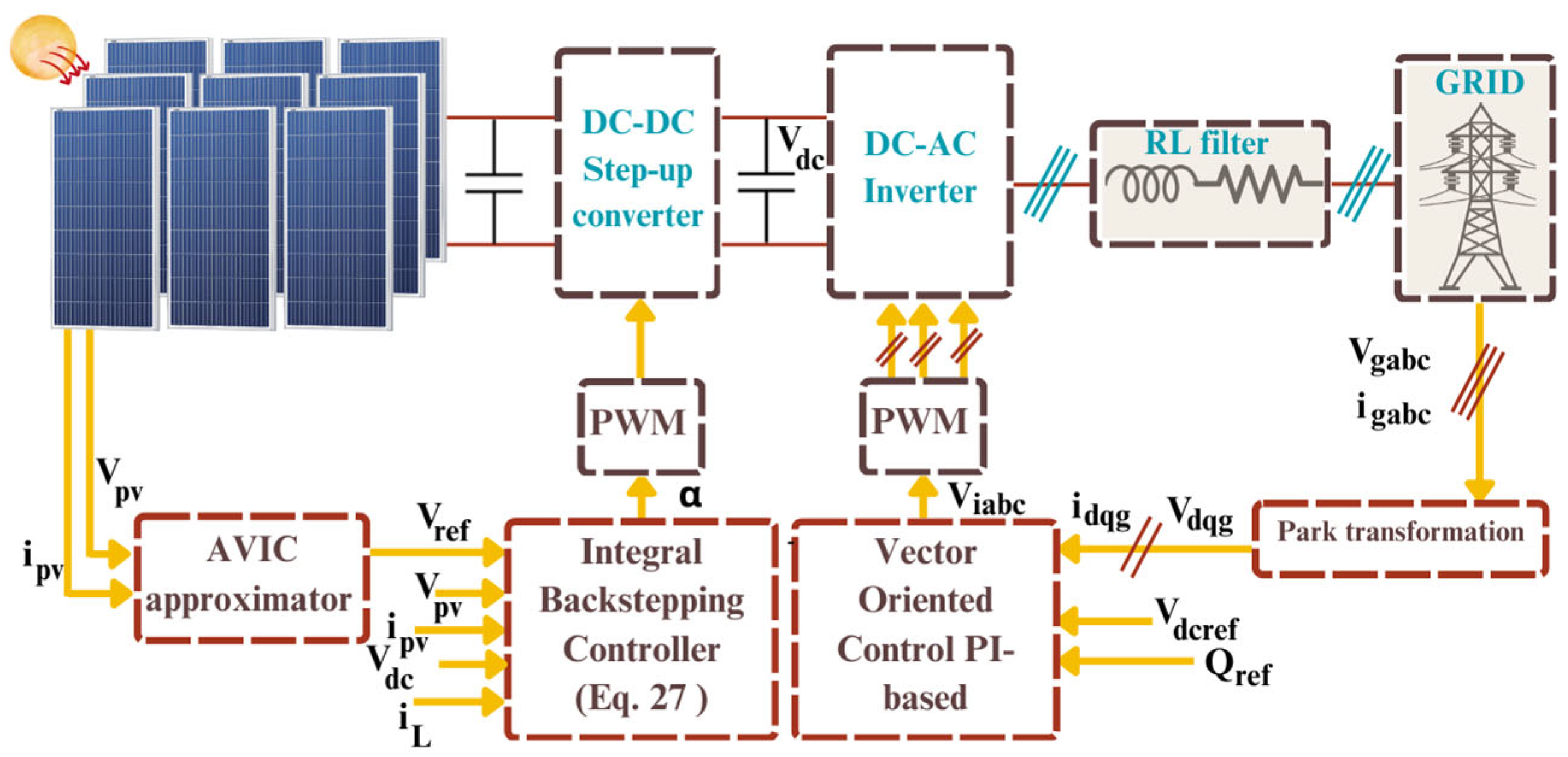
Figure 1 illustrates the GTPVS adopted in this paper. The PV array is used to transform sunlight into electricity. The next stage in the scheme is the DC-DC step-up converter, which is utilized to boost the extracted PV voltage to a required set point using an advanced control technique: AVIC-IBC. The AC side includes a three-phase inverter linked to the electrical grid, which is regulated by vector-oriented control based on a proportional–integral (PI) controller for providing the Ppv power injection.
Figure 1. The architecture of the proposed Grid-Tied PV systems.
Equations (1) and (2) introduce the step-up converter and the DC-AC side modelling, respectively, presented as follows:
{ d V p v d t = 1 C 1 ( i p v i L ) d i L d t = 1 L ( V p v ( 1 α ) V d c ) d V d c d t = ( 1 α ) i L C 1 i g C 1
{ d i d g d t = β 1 i d g + β 2 i q g + β 3 ( V d i V d g ) d i q g d t = β 1 i q g β 2 i d g + β 3 V q i d V d c d t = 2 C 2 ( 3 2 V d g i d g + P o u t )
where Vpv and Ipv are the voltage and the current of the PV array, respectively. Vdc is the DC bus voltage; iL is the step-up current. İg is the input current of the three-phase inverter. α is the control low. C1 and C2 are the input and output capacitor values, respectively. Pout is the output power of the step-up converter, and β1 = Rf/Lf, β2 = ω, and β3 = 1/Lf. A nonlinear controller can use Equations (1) and (2) as dynamic equations.

3. Design of the Suggested Hybrid MPPT Technique

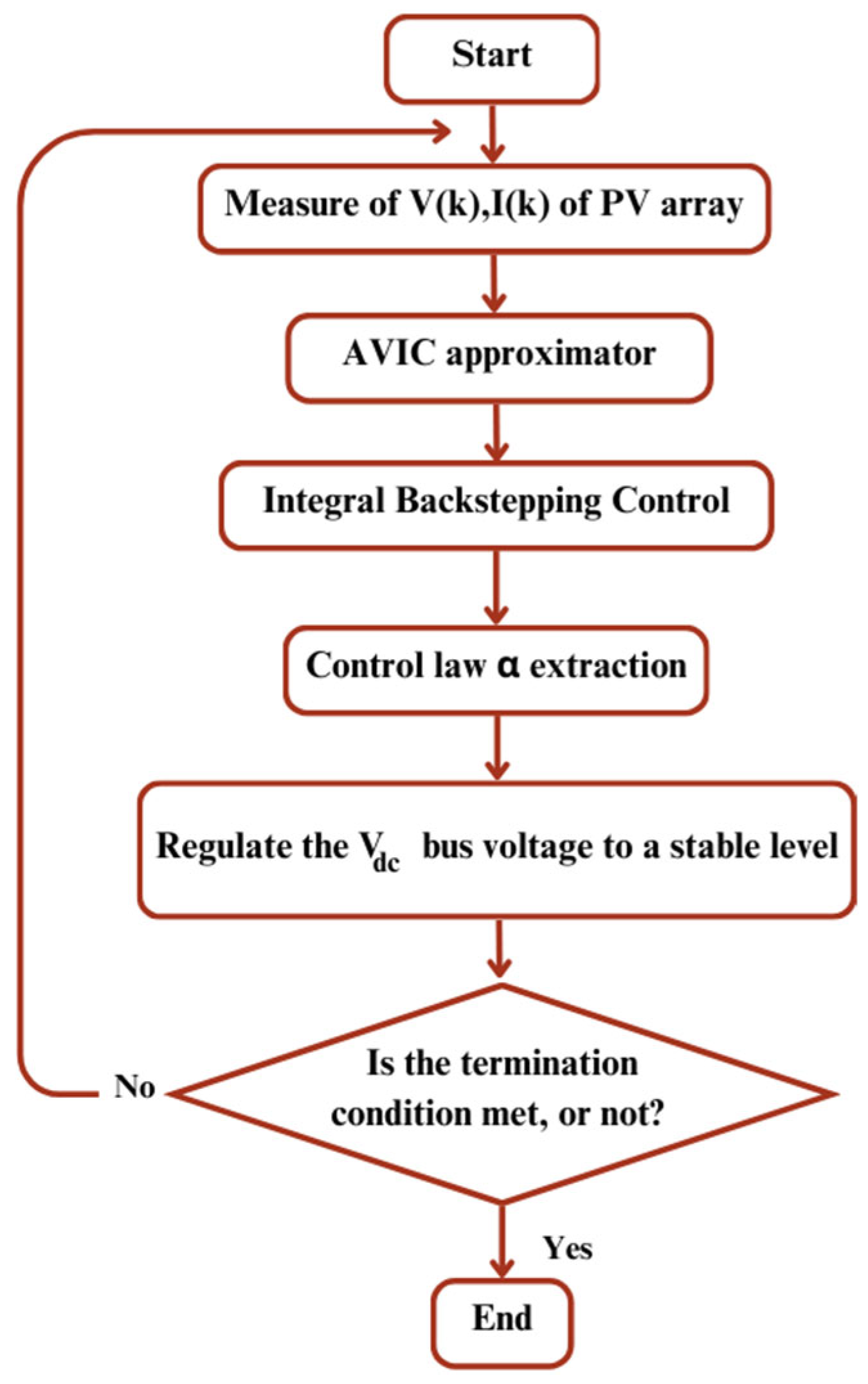
The proposed control technique integrates the strengths of Advanced Variable Step Size Incremental Conductance (AVIC) and Integral Backstepping (IBC) to improve the performance of the PV system. The flow diagram of the suggested hybrid MPPT technique is highlighted in Figure 2.
Figure 2. Flowchart of the suggested hybrid technique “Advanced Variable Step Size Incremental Conductance-Integral Backstepping”.

3.1. Advanced Variable Step Size Incremental Conductance

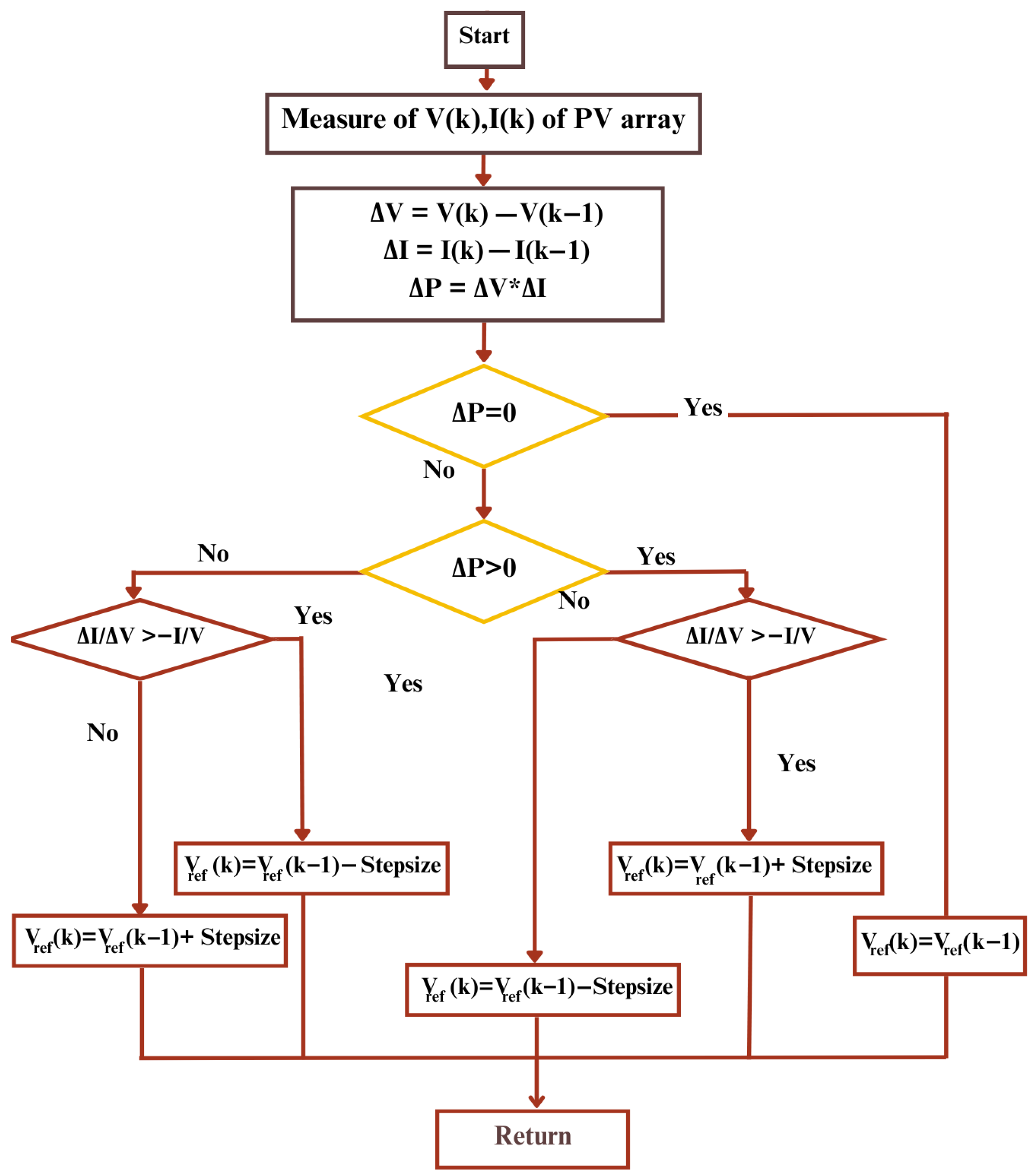
The AVIC algorithm is used in this control approach as an approximator for extracting the voltage reference Vref of the PV voltage. This algorithm is an advanced version of the classic IC algorithm designed to optimize Vref generation through step size adjustment. The classic one regulates the operating point using the power voltage derivative [3]. However, this method utilizes a fixed step size, leading to a slow response when it is small, and when the fixed step size is large, it leads to high oscillations and instability [7]. The AVIC overcomes these limitations by adjusting the step size dynamically. When the PV system is distant from the MPP, the step size increases to provide rapid tracking. As the operating point approaches the MPP, the step size is reduced, enabling precise stability with fewer oscillations. This step size is regulated according to the instant slope of the PV power–voltage characteristic and defined as follows:
V ( k ) = k | P ( k ) V ( k ) |
where k is a positive gain. When the operating point is distant from the MPP, the magnitude of | P V |   is large, leading to an increased step size for rapid convergence. As the operating point converges toward the MPP, | P V |   reduces, and the step size is automatically decreased, diminishing the steady-state fluctuations. The flowchart illustrating the Vref approximator is displayed in Figure 3.
Figure 3. Flowchart of the Advanced Variable Step Size Incremental Conductance approximator.

3.2. Integral Backstepping Control

The GTPVS necessitates an excellent performance control method for efficiently extracting 123 kW power and injecting it into the grid without any significant losses. For this purpose, the IBC regulates the step-up converter’s control law α, ensuring optimal power extraction and negligible fluctuations. To this end, the initial step of the suggested method is described as follows [3]:
δ 1 = V p v V r e f
The Vpv needs to track the set point Vref to ensure that the error δ1 is near zero. Substituting the Vpv derivative with its corresponding Equation (1) in the derivative of Equation (4) results in
δ ˙ 1 = V ˙ p v V ˙ r e f = 1 C 1 ( i p v i L ) V ˙ r e f
the integral action η and its derivative are established as
η = 0 t ( δ 1 ) d t = 0 t ( V p v V r e f ) d t
η ˙ = δ 1
the insertion of integral action strengthens the GTPVS reliability and performance. To guarantee stability, the initial Lyapunov function f1 along with its derivative, are shown as
f 1 = 1 2 δ 1 2 + λ 2 η 2
f 1 ˙ = δ 1 δ 1 ˙ + λ η η ˙
by inserting Equations (5) and (7) into Equation (9) and applying simplifications, the result is as follows:
f 1 ˙ = δ 1 ( 1 C 1 ( i p v i L ) V ˙ r e f ) + λ η ( V p v V r e f )
f1 is the initial Lyapunov function, which is positive, whereas its derivative is required to be negative for maintaining the Vpv convergence to its set point. For this,
λ 1 δ 1 = 1 C 1 ( i p v i L ) V ˙ r e f + λ η
both λ and λ1 are defined as positive parameters, where
i L = C 1 ( λ 1 δ 1 + i p v C 1 V ˙ r e f + λ η )
the stabilization function is presented as
i L r e f = C 1 ( λ 1 δ 1 + i p v C 1 V ˙ r e f + λ η )
where iLref acts as the virtual set point of iL. To track iL to its reference iLref, in the next step, an error δ2 is defined as
i L = δ 2 + i L r e f
integrating Equations (13) and (14) into Equation (5) results in
δ ˙ 1 = i p v C 1 δ 2 + C 1 ( λ 1 δ 1 + ( i p v C 1 ) V ˙ r e f + λ η ) C 1 V ˙ r e f
after simplification, Equation (15) is expressed as
δ ˙ 1 = λ 1 δ 1 δ 2 C 1 λ η
replacing the derivative of δ1 in Equation (9) results in the following simplified expression:
f 1 ˙ = λ 1 δ 1 2 δ 1 δ 2 C 1
the derivative of δ2 can be stated as
δ ˙ 2 = i L ˙ i L r e f ˙
the derivative of iref is derived using Equations (7) and (16) in this manner:
i L r e f ˙ = C 1 ( λ 1 ( λ 1 δ 1 δ 2 C 1 λ η ) + i p v ˙ C 1 V ¨ r e f + λ ( V p v V r e f ) )
replacing Equation (19) in Equation (18) yields
δ ˙ 2 = i L ˙ C 1 ( λ 1 2 δ 1 λ 1 δ 2 C 1 λ λ 1 η + i p v ˙ C 1 ) + C 1 ( V ¨ r e f λ 1 δ 1 )
a second new Lyapunov function f2 and its derivative are given to establish global stability and guarantee that both errors converge to zero.
f 2 = f 1 + 1 2 δ 1 2
f ˙ 2 = f ˙ 1 + δ 2 δ ˙ 2
inserting Equation (17) in (22), this gives
f ˙ 2 = λ 1 δ 1 2 δ 1 δ 2 C 1 + δ 2 δ ˙ 2 = λ 1 δ 1 2 + δ 2 ( δ ˙ 2 δ 1 C 1 )
the Equation (23) must be strictly negative-definite. To meet this criterion, we provide
δ ˙ 2 δ 1 C 1 = λ 2 δ 2
λ2 is defined as a positive parameter. Based on Equations (1), (19), and (24), the following results can be obtained:
λ 2 δ 2 = V p v L V d c L ( 1 α ) C 1 ( λ 1 2 δ 1 λ 1 δ 2 C 1 λ λ 1 η + i p v ˙ C 1 ) + C 1 ( V ¨ r e f λ 1 δ 1 ) δ 1 C 1
after simplification, Equation (25) is introduced as
V d c L ( 1 α ) = λ 2 δ 2 + V p v L + λ 1 2 C 1 δ 1 + λ 1 δ 2 + λ λ 1 C 1 η + i p v + ˙ C 1 V ¨ r e f C 1 λ 1 δ 1 δ 1 C 1
the control law α for the system is stated by simplifying the previously mentioned equation, which is written in the following format:
α = 1 L V d c ( λ 2 δ 2 + V p v L + λ 1 2 C 1 δ 1 + λ 1 δ 2 + λ λ 1 C 1 η + i p v + ˙ C 1 V ¨ r e f C 1 λ 1 δ 1 δ 1 C 1 )
the hybrid control gains λ, λ1, and λ2 were selected by choosing small positive values to strictly satisfy the Lyapunov stability conditions of the IBC. These three gains were then continuously increased until they achieved a fast dynamic response, minimal overshoot, and insignificant steady-state fluctuations.
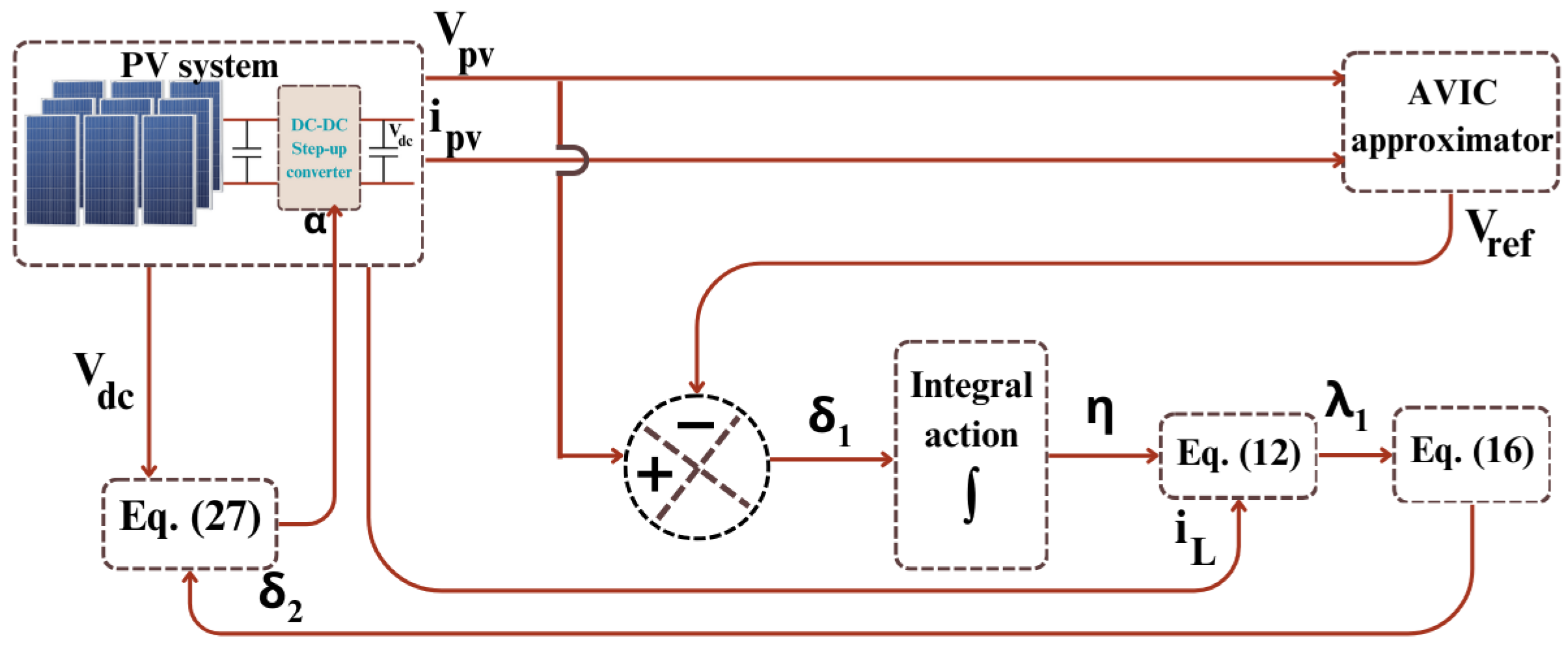
Figure 4 depicts the inner architecture process of the proposed advanced hybrid MPPT control.
Figure 4. Structure of the hybrid control AVIC-IBC technique.

4. Results and Discussion

This article introduces a hybrid AVIC-IBC control technique that is simulated in the MATLAB/Simulink environment, version 2020b. Table 2 describes the system specifications. The rated power is 123 kW with 15 modules connected in series (Nss = 15) and 41 parallel strings (Npp = 41). The proposed method is benchmarked against the classic IC, P&O, and BC techniques. A probabilistic assessment is based on multiple uncertain scenarios to establish the robustness and effectiveness of the suggested hybrid method. These scenarios aim to evaluate the GTPVS’s performance under several meticulously designed environmental conditions that the system may encounter, providing relevant insights derived from practical contexts, thereby improving the validity of the findings. For assessing the real applicability of the suggested hybrid technique, an eZdsp TMS320F28335 board is used in Processor-In-the-Loop (PIL) implementation.
Table 2. The suggested GTPVS specifications.

4.1. Scenario 1: Test Under Fast Variation in Irradiance

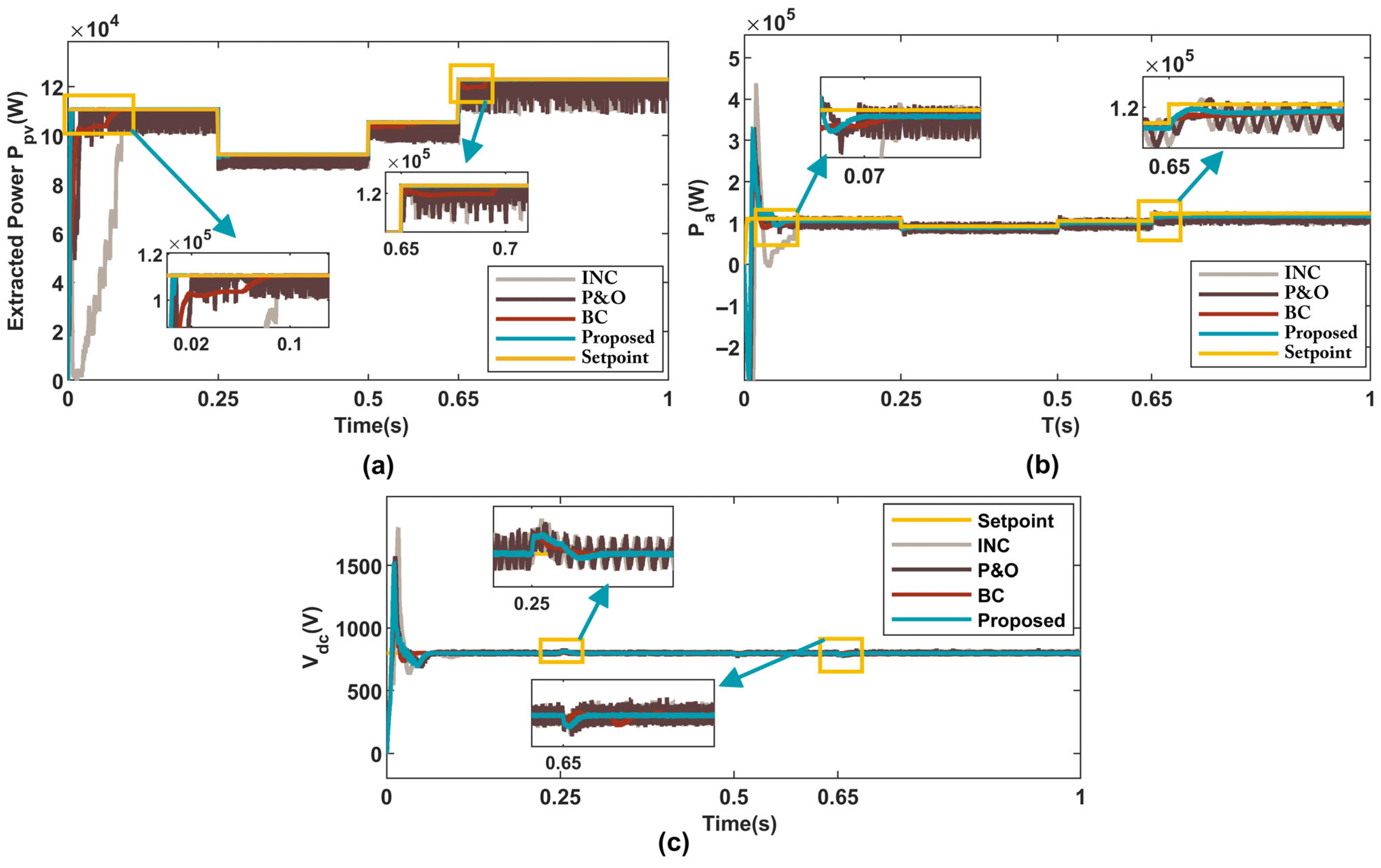
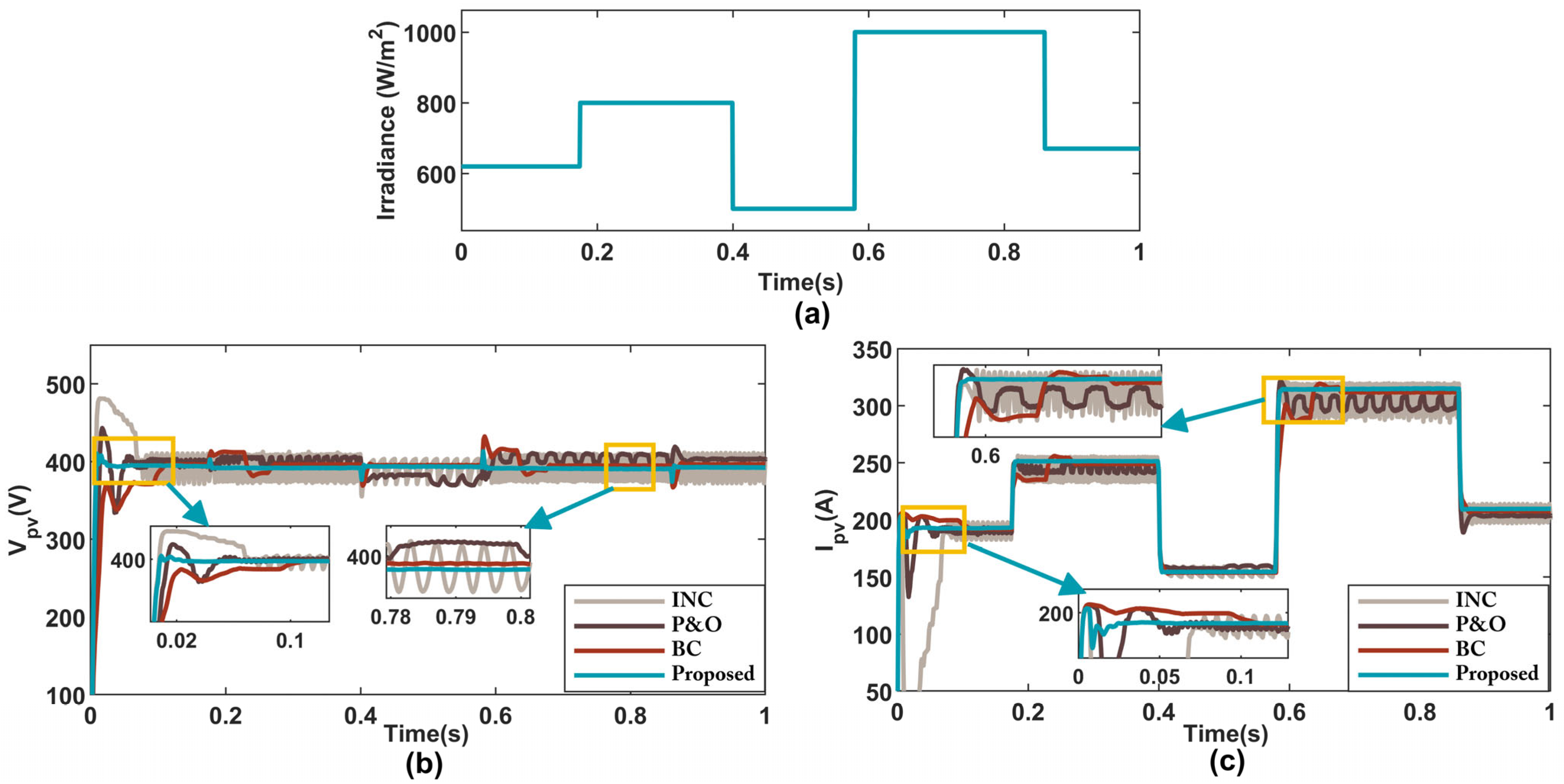
The first scenario presents rapid changes in irradiance with a fixed temperature of 25 °C as indicated in Figure 5a. The profile has been created to serve as an essential baseline for analyzing the MPPT performance. Figure 5b,c demonstrate that the proposed hybrid AVIC-IBC technique provides PV voltage and current with negligible fluctuations within 0.02 s, contrary to the BC technique, which reaches the steady state at 0.1 s. The other classic control methods provide high fluctuations during transient and steady states.
Figure 5. Assessment of GTPVS performance scenario 1: (a) irradiance profile; (b) PV voltage; (c) PV current.
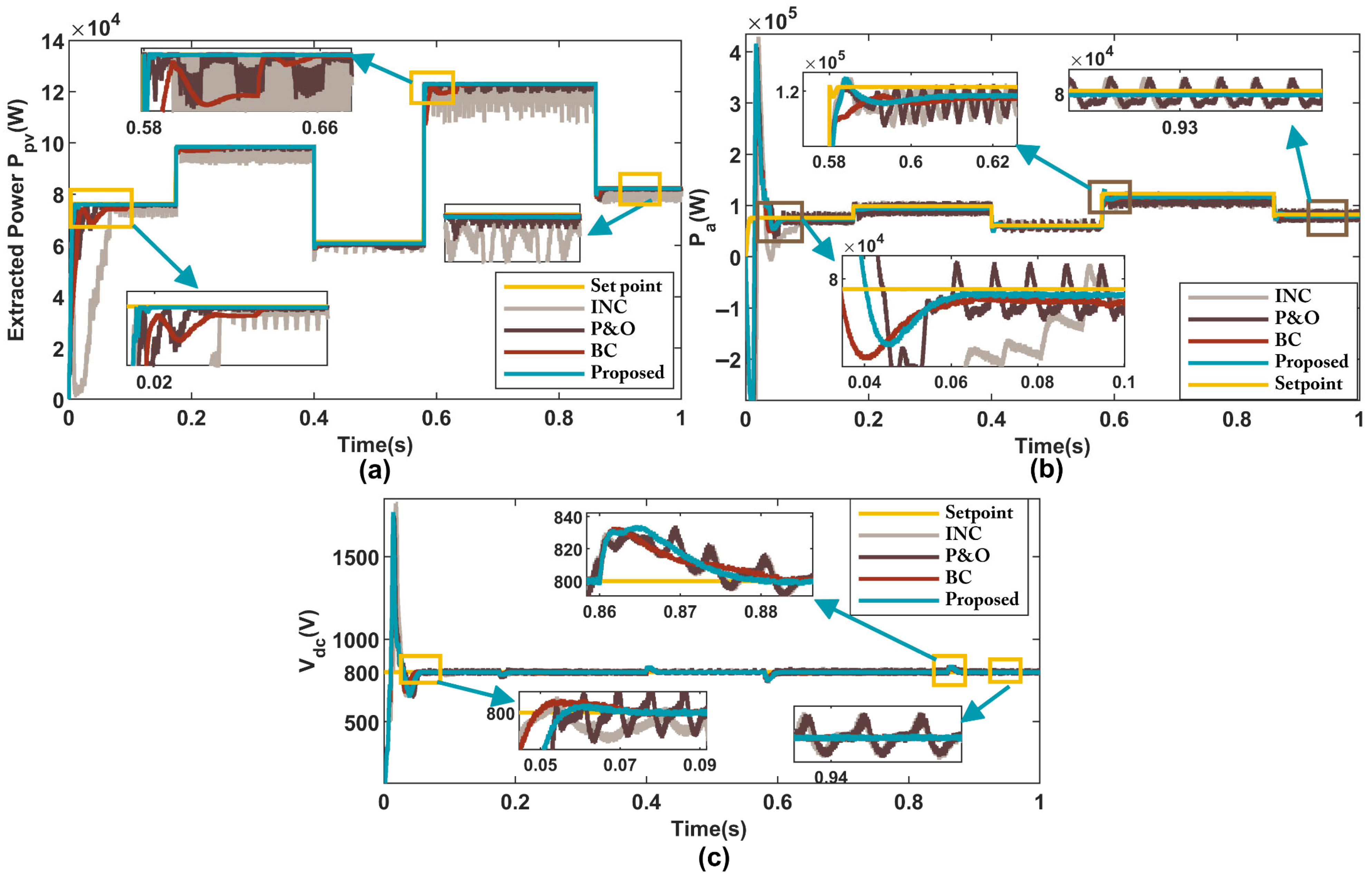
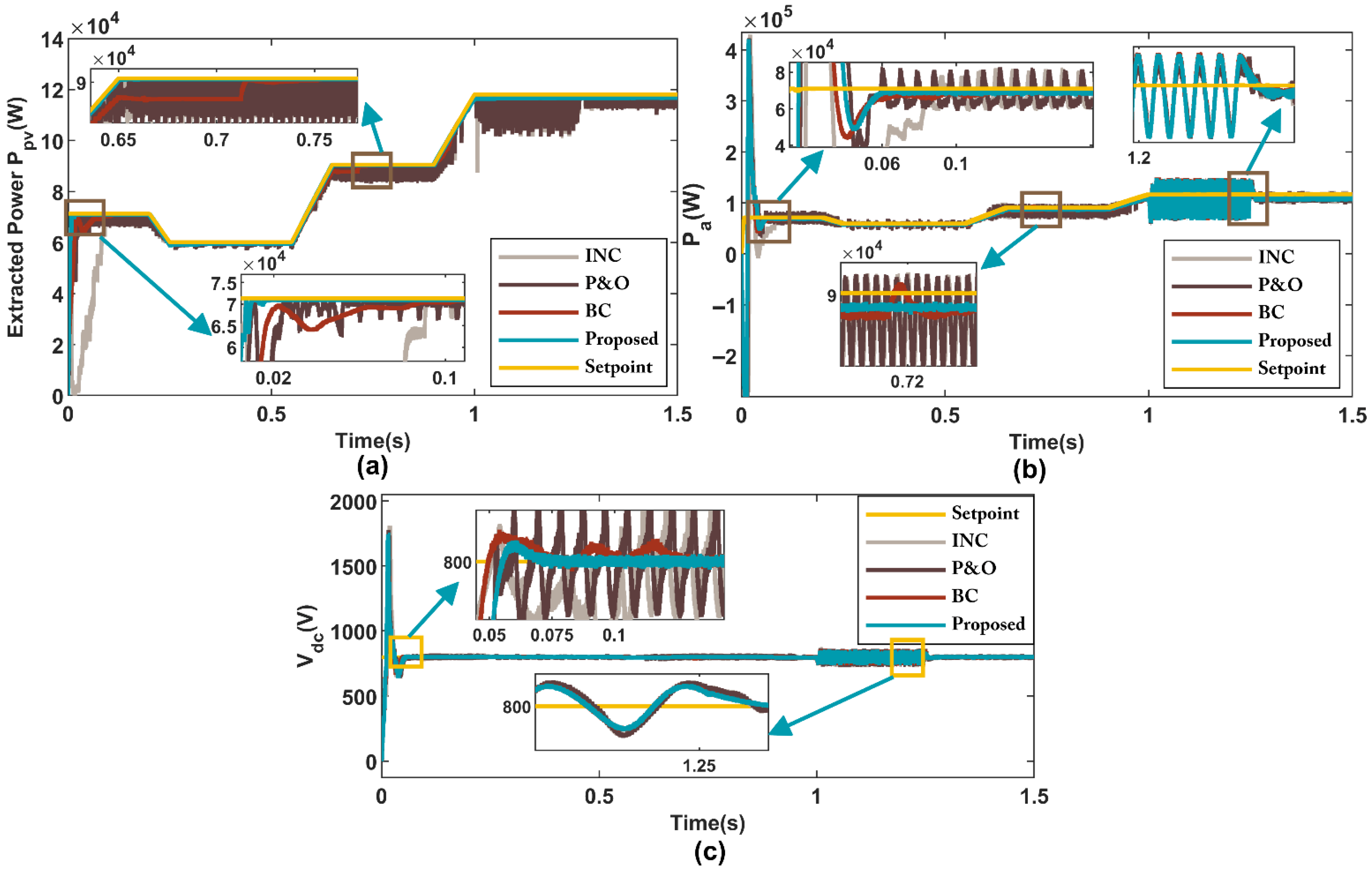
Figure 6a introduces the Ppv power performance of the four MPPT techniques. The proposed method has a fast settling time of 0.02 s, providing a rapid MPPT convergence. Moreover, it reveals a higher steady state, indicating an advanced efficiency over other techniques with insignificant oscillations, which reduces energy losses. This technique also succeeds in injecting an active power Pa into the grid with a fast response time of 0.06 s, as displayed in Figure 6b. Concerning the Vdc bus voltage, the suggested technique reliably keeps Vdc stable at its setpoint with minimal voltage fluctuations in just 0.06 s at the beginning of the signal, and after the transient state, it can stabilize in only 0.02 s, as presented in Figure 6c, in contrast to other techniques that exhibit delayed stabilization and high oscillations, which may augment power losses.
Figure 6. Assessment of GTPVS performance scenario 1: (a) extracted PV power; (b) active power; (c) DC bus voltage.

4.2. Scenario 2: Test Under Real Irradiance Profile

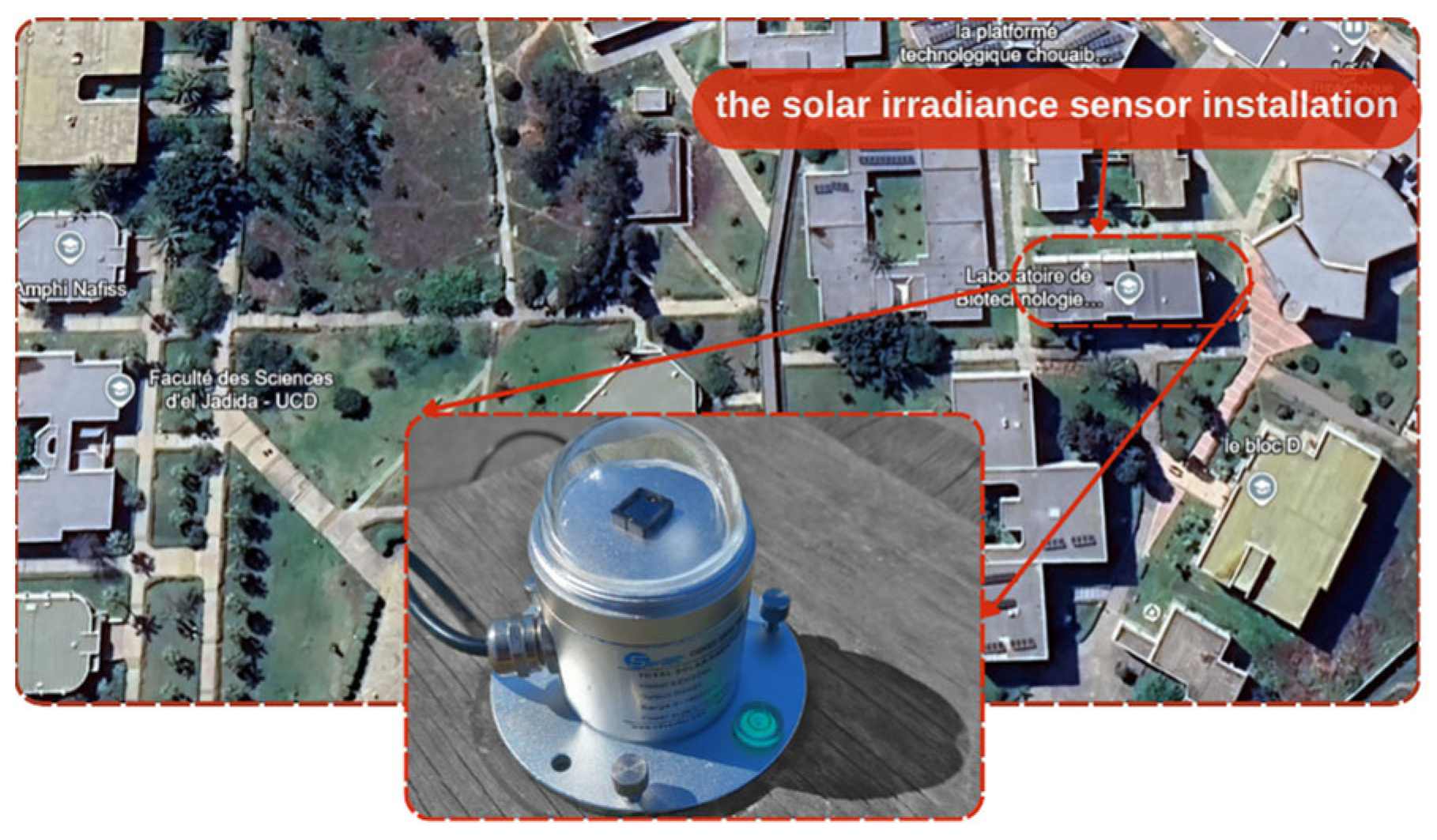
A real irradiance profile for a typical day was measured by an SEM228A solar irradiance sensor installed on the roof of the faculty of sciences’ research building, El-Jadida, Morocco (latitude: 33.23° N, longitude: −8.50° W), for improved data collection without disturbance, as shown in Figure 7.
Figure 7. Location of the solar irradiance sensor installation.
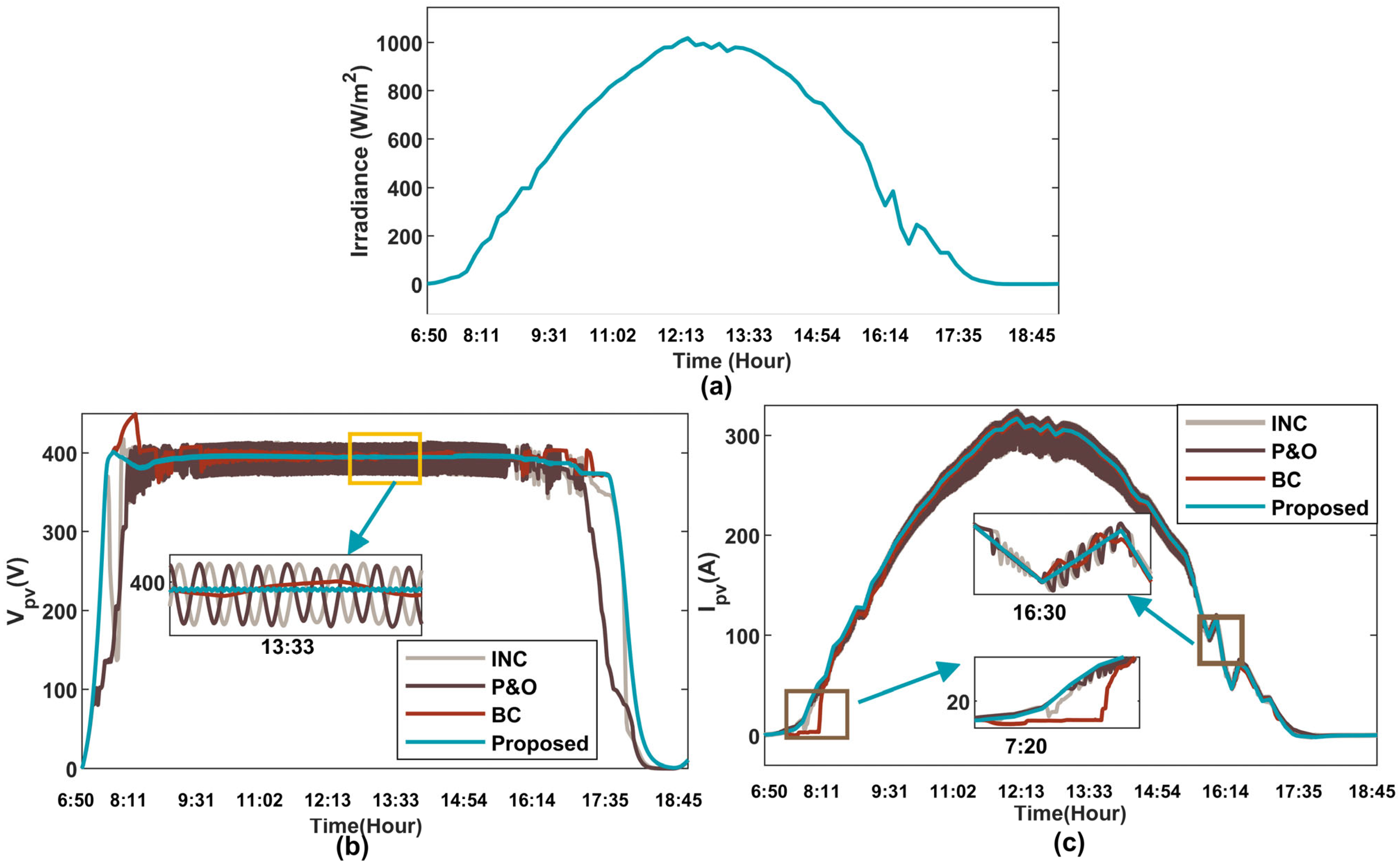
Figure 8a illustrates this practical real profile, which starts at 0 W/m2 in the early morning, peaks at 1040 W/m2 by 12:30 p.m., then gradually declines. This natural profile introduces realistic, unpredictable fluctuations, providing a more credible and challenging scenario to assess MPPT performance under actual operating conditions. As displayed in Figure 8b,c, the proposed hybrid MPPT method achieves fast MPP convergence with negligible variations in voltage and current, maintaining stable output throughout the time, contrary to the other benchmarked techniques, which exhibit high oscillations leading to significant power losses.
Figure 8. Assessment of GTPVS performance scenario 2: (a) irradiance profile; (b) PV voltage; (c) PV current.
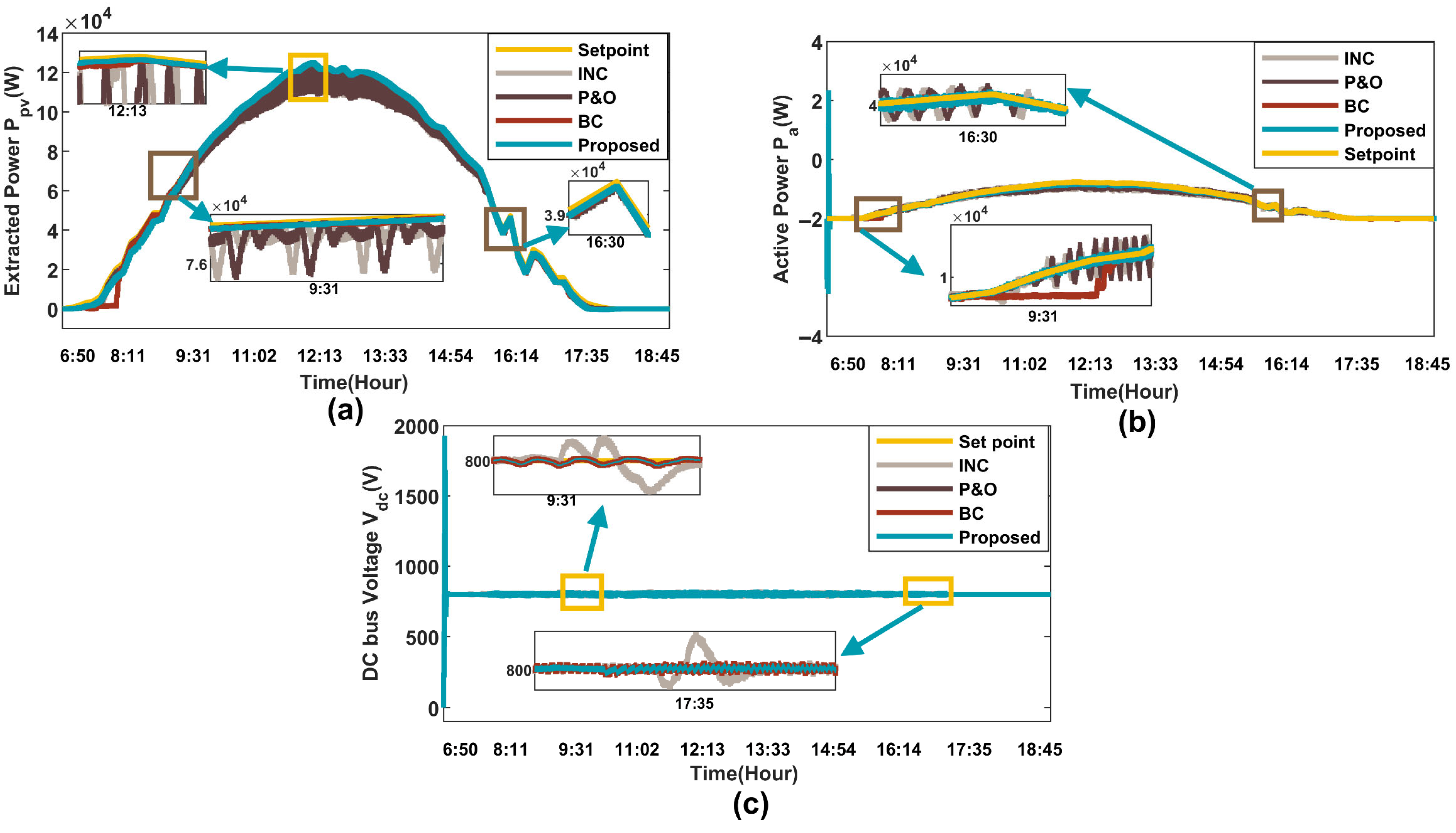
Figure 9a presents the extracted Ppv curves for all benchmarked control strategies. The proposed technique consistently reaches the exact MPP rapidly without any critical fluctuations, unlike the other methods compared. In Figure 9b, the active power Pa of the proposed technique changes throughout the time test by pursuing the set point with fewer fluctuations, contrary to the other classic strategies, especially the P&O, which produces superior oscillations during the day. Figure 9c proves that the proposed technique exhibited a robust Vdc throughout the day, highlighting high power stability, and superior efficiency. These findings indicate the technique’s effectiveness for GTPVS applications.
Figure 9. Assessment of GTPVS performance test under scenario 2: (a) extracted PV power; (b) active power; (c) DC bus voltage.

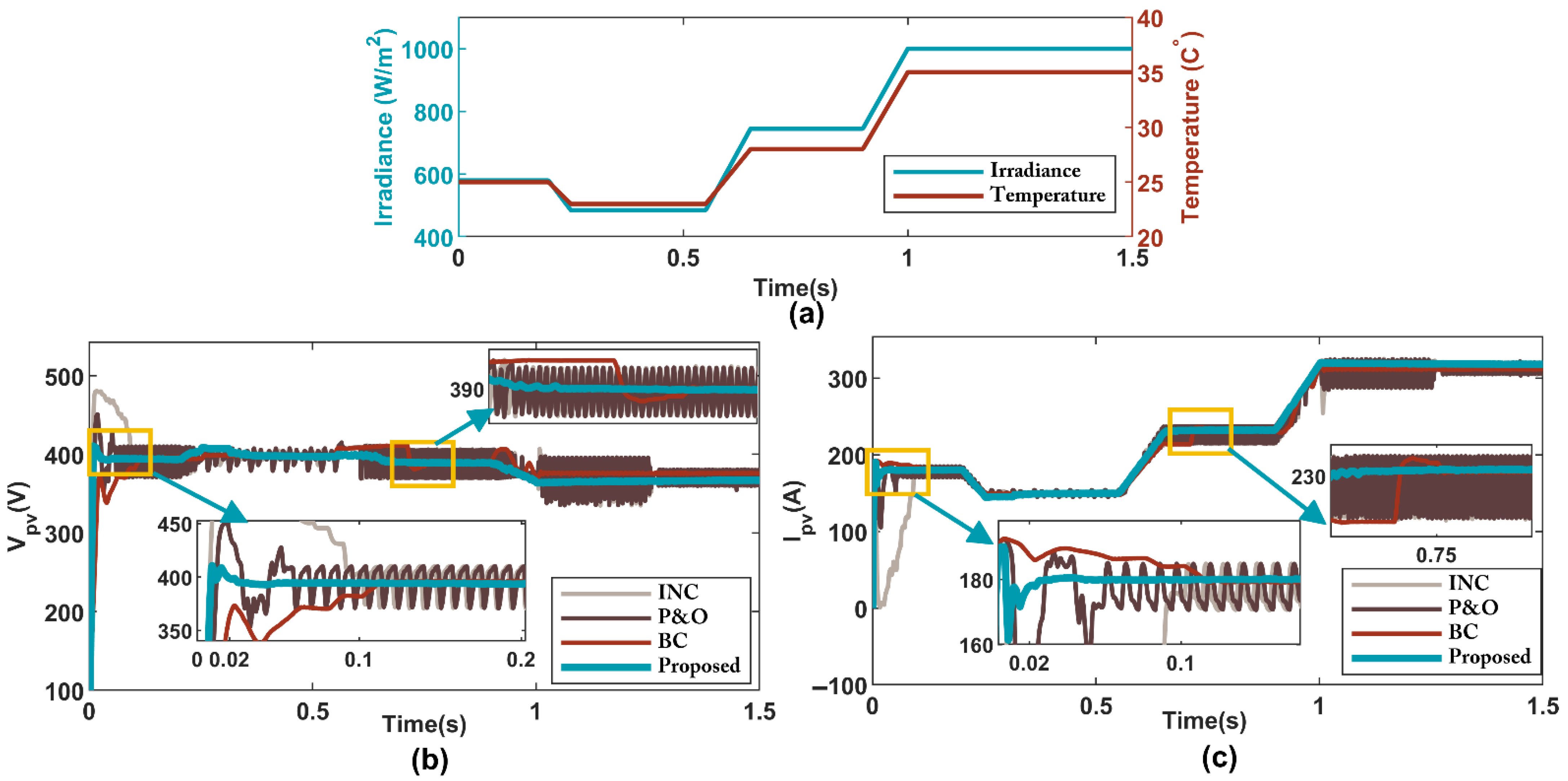
4.3. Scenario 3: Test of Variant Irradiance and Temperature Under Grid Fault Conditions

The third scenario involves both irradiance and temperature variations as presented in Figure 10a. These climatic changes allow the evaluation of the system’s response during both dynamic and stationary regimes. The various atmospheric fluctuations enable a precise analysis of the PV system’s behavior. Furthermore, the robustness of the proposed technique is also tested under a fault grid disturbance of 250 ms, starting at 1 s. Figure 10b,c present the comparative simulations of Ipv and Vpv, respectively, where the suggested method exhibits a faster adaptation of 0.02 s with fewer oscillations. In contrast to the other techniques, INC, P&O, and BC display significant fluctuations with longer convergence times.
Figure 10. Assessment of GTPVS performance under scenario 3: (a) irradiance profile; (b) PV voltage; (c) PV current.
Figure 11a displays the Ppv behavior, in which the proposed technique achieves a rapid response in only 0.02 s with fewer fluctuations as opposed to the other techniques, such as the BC, which stabilize in 0.1 s. For a steady state, the INC and P&O methods create important fluctuations, leading to power losses. Figure 11b,c present the active power and the Vdc bus voltage signals. These figures confirm that the suggested technique has a faster settling time of 0.06 s than the other methods. Furthermore, during the fault grid, the technique creates minimal variations, and the extracted PV energy is absorbed by the Vdc bus capacitor, which demonstrates the diminished deviations shown in the Vdc bus voltage response. After this event, the proposed hybrid technique quickly restores the active power value and also rapidly regulates the Vdc to its set point.
Figure 11. Assessment of GTPVS performance under scenario 3: (a) extracted PV power; (b) active power; (c) DC bus voltage.

4.4. Scenario 4: Test Under Partial Shading Conditions

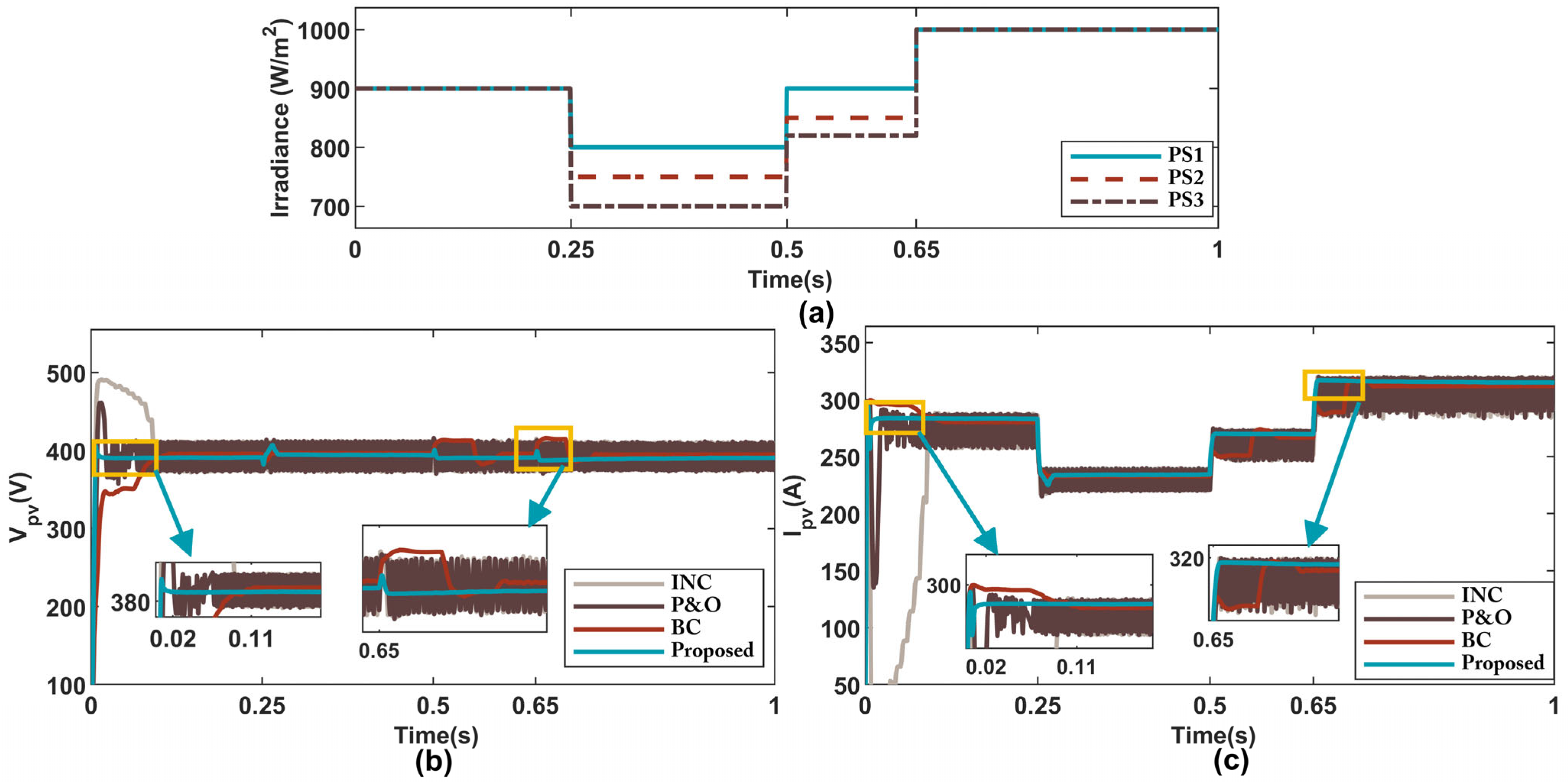
The fourth scenario includes Partial Shading Conditions (PSCs), in which the PVG of this system is divided into three distinct shading zones; each zone produces 41 kW, with a total of 123 kW. Every zone is exposed to different irradiance levels whilst the temperature is fixed at 25 °C. This scenario mimics a realistic non-uniform irradiation condition caused by building, cloud movement, or other atmospheric factors. Figure 12a presents three irradiations of PSC profiles, which were subjected to the three zones of the PVG. Figure 12b,c display the benchmarked signal analysis of Vpv and Ipv, respectively, which the proposed hybrid technique rapidly adapts to PSC variations in only 0.02 s with negligible fluctuations, in opposition to the other methods that require more convergence time.
Figure 12. Assessment of GTPVS performance under scenario 4: (a) PSC profile; (b) PV voltage; (c) PV current.
Figure 13a presents the extracted power Ppv by the four compared techniques, where the proposed one attains the setpoint in 0.02 s with insignificant fluctuations, in contrast to the BC method, which takes a longer time to stabilize at every PSC transition. The P&O and INC algorithms establish high fluctuations during both transit and steady states, increasing the power losses. Figure 13b,c show the active power and the Vdc bus voltage behaviors, respectively. These figures indicate that the proposed method stabilizes rapidly in only 0.07 s without exhibiting significant oscillations. Contrary to other benchmarked techniques, especially the P&O and INC, they display greater oscillations and a slower stabilization time.
Figure 13. Assessment of GTPVS performance under scenario 4: (a) extracted PV power; (b) active power; (c) DC bus voltage.

4.5. Performance Index Comparison

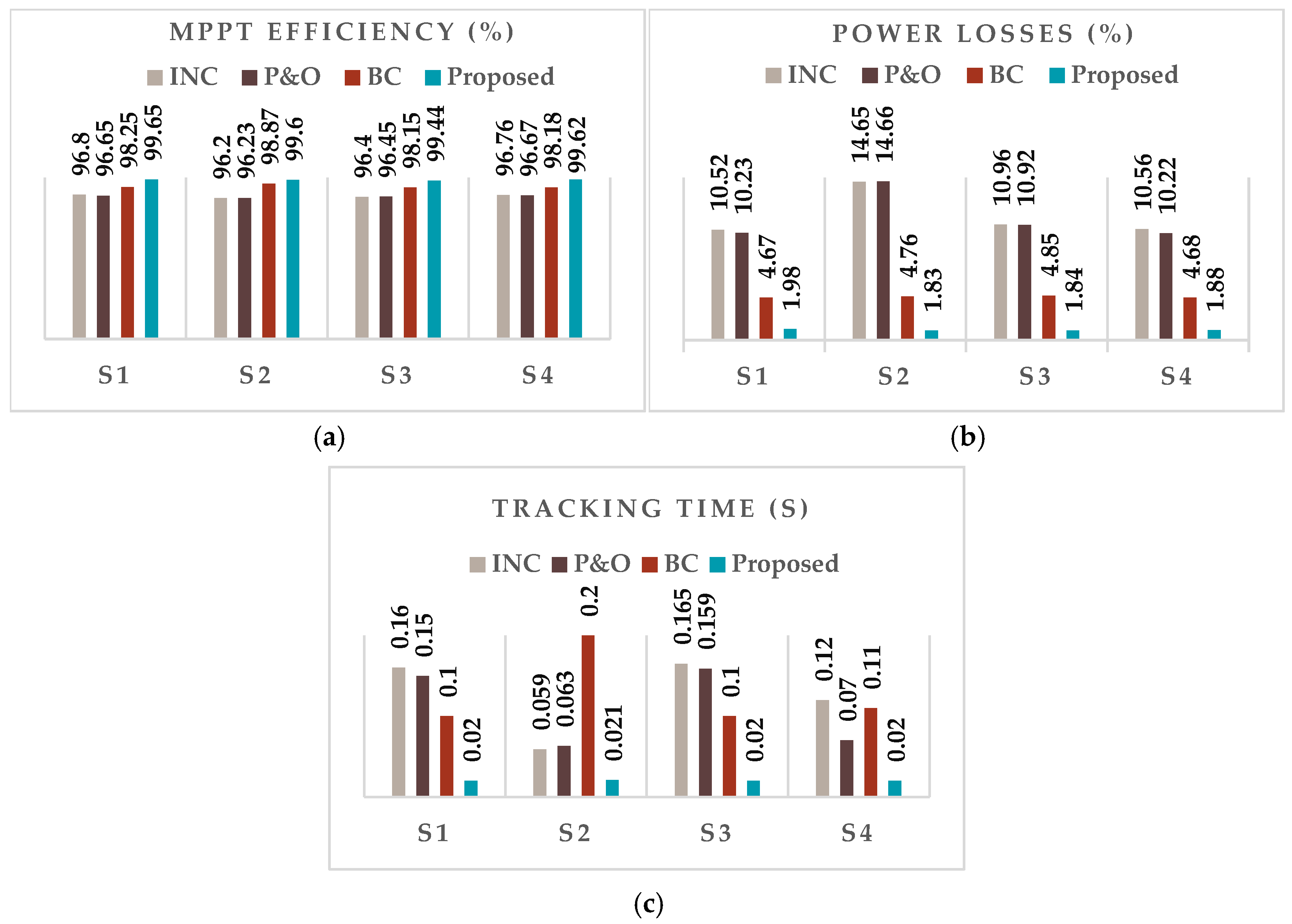
Figure 14 displays the main performance indices, power losses, and MPPT efficiency, which is evaluated over the steady-state regime and calculated using Equation (28). The tracking time is also presented for assessing the convergence speed of each method, which is the required time for the Ppv power to settle within ±1% of the steady-state MPP after any atmospheric condition changes. These indices are calculated for each control technique in all tested scenarios. The presented graphics charts indicate that the proposed hybrid technique performs well compared to the others. It is superior in efficiency with an average value of 99.57% contrary to the others that exhibit a low tracking efficiency of 96.54%, as in the case of INC. The AVIC-IBC also has a faster tracking time of 0.02 s and an average power loss of 1.88%, which is very negligible compared to P&O and INC, which have higher average power losses of 11.67% and 11.50%, respectively. These conventional methods generate significant oscillations, particularly in the steady-state regime, which lead to energy dissipation and tracking deviation.
Figure 14. Performance index assessment under the four scenarios: (a) MPPT efficiency, (b) power losses, (c) tracking time.
The MPPT tracking efficiency is calculated as follows [3]:
η = 0 t P p v d t 0 t P s e t p o i n t d t
where Ppv is the extracted PV power, while Pset point is the ideal power.
Table 3 shows a performance comparison of the suggested MPPT hybrid technique with other control strategies in the literature. The comparison is based on three main performance criteria: average tracking time, efficacy, and hardware implementation type. The proposed MPPT technique outperforms the others by exhibiting tracking efficiency and shorter tracking time, indicating superior MPP tracking with rapid convergence during changing weather conditions.
Table 3. Benchmarking analysis of the suggested technique with other approaches from the literature.

4.6. Comparison of the Current THD

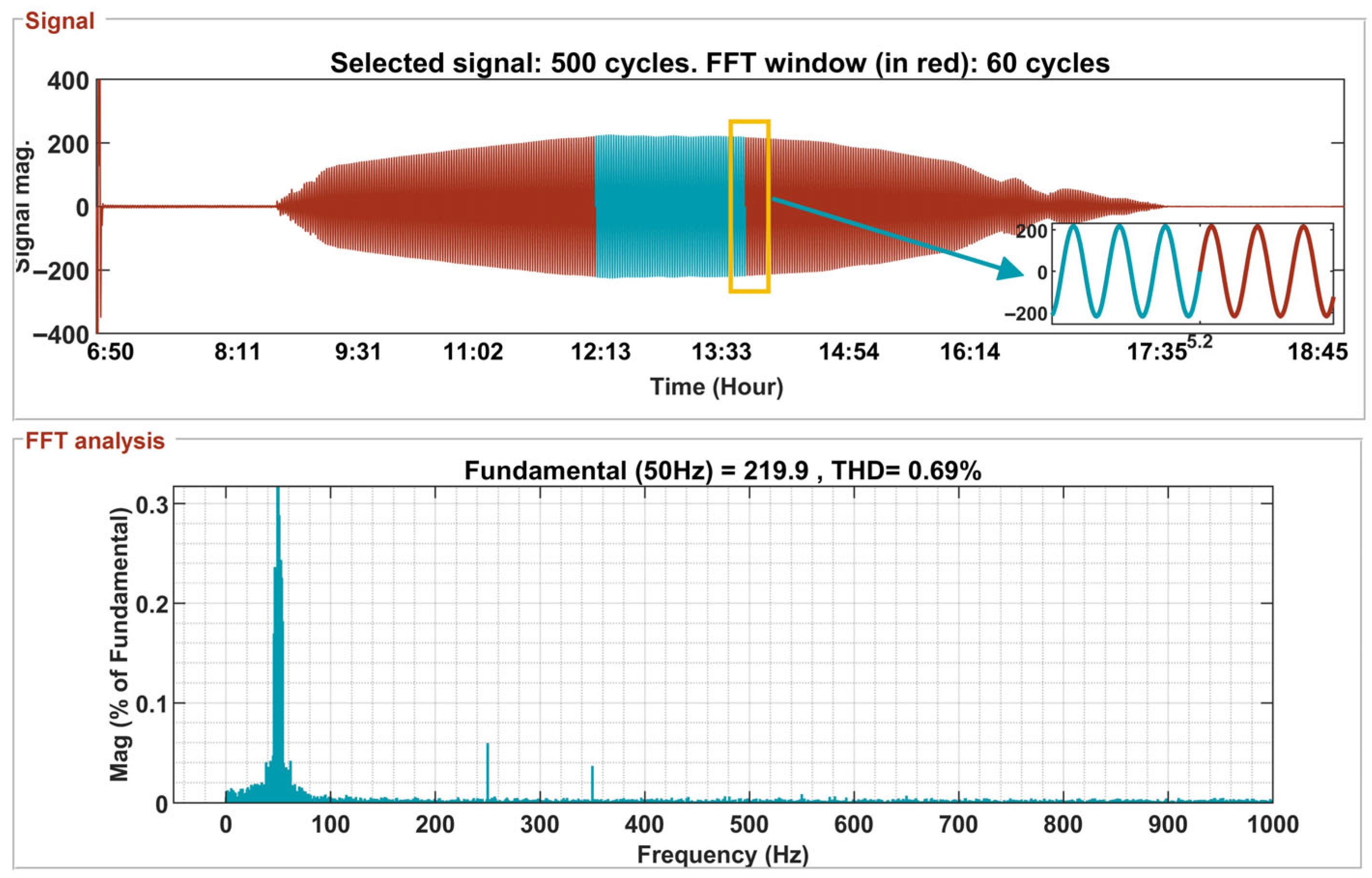
The suggested hybrid AVIC-IBC technique achieves a THD of 0.69% during the realistic irradiation variation of scenario 2, as displayed in Figure 15, which complies with IEEE 519-2014 (THD current ≤5% for distribution-level systems). This confirms that the inverter output satisfies the required grid power quality criteria under the tested operating conditions. Table 4 benchmarks this THD value against others from the literature, revealing the high power quality of the technique.
Figure 15. Current THD performance of the proposed hybrid AVIC-IBC technique in scenario 2. (The different color lines is made due to demonstrating the whole current signal, which is in red. While the green signal which is the selected one that has THD of 0.69%.)
Table 4. Benchmarking analysis of the suggested technique THD with others in the literature.

4.7. Hardware PIL Implementation Validation Assessment

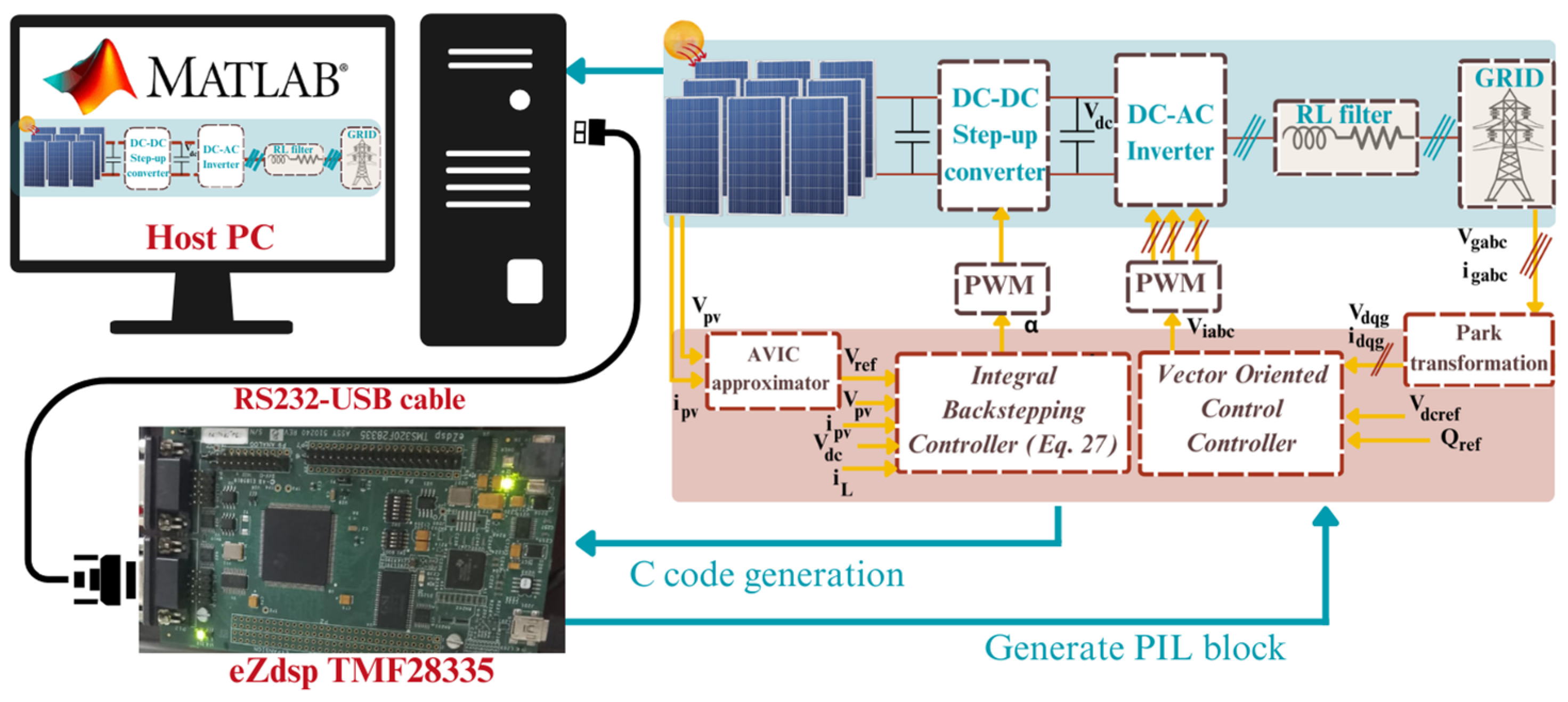
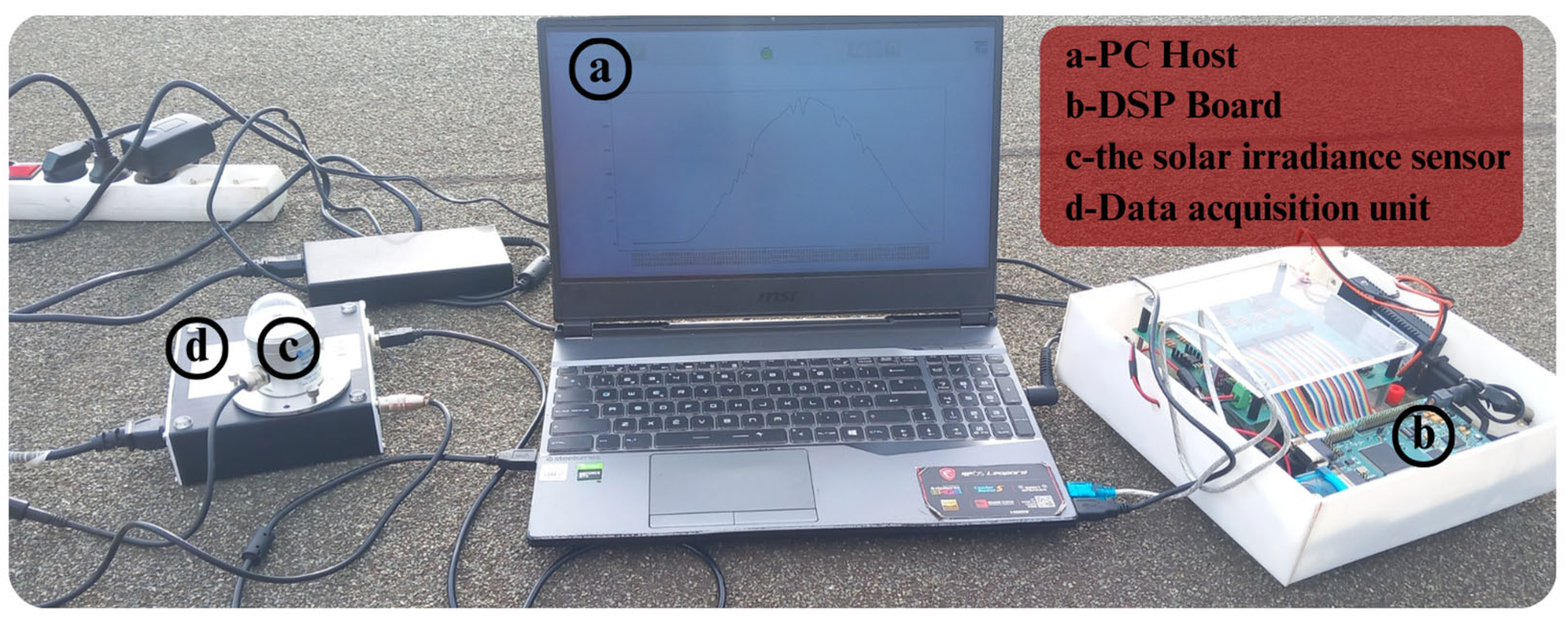
In real-world control implementation, processor-in-the-loop (PIL) validation is widely used because it bridges the gap between simulations and practical hardware execution, contrary to model-in-the-loop (MIL) and software-in-the-loop (SIL). The PIL method assesses logic and mathematical computations on the target microcontroller, providing a realistic evaluation of numerical precision and execution speed. This ensures that the embedded system can handle real-time constraints and calculations. In this paper, PIL implementation was performed using the eZdsp TMS320F28335 board, where the proposed technique was tested in real-time, as demonstrated in Figure 16. The entire experimental setup for the real-time application is displayed in Figure 17, which involves the PC host, eZdsp embedded board, and solar irradiance sensor (SEM228A).
Figure 16. PIL implementation of the proposed hybrid AVIC-IBC technique.
Figure 17. The entire experimental setup for the real-time application.
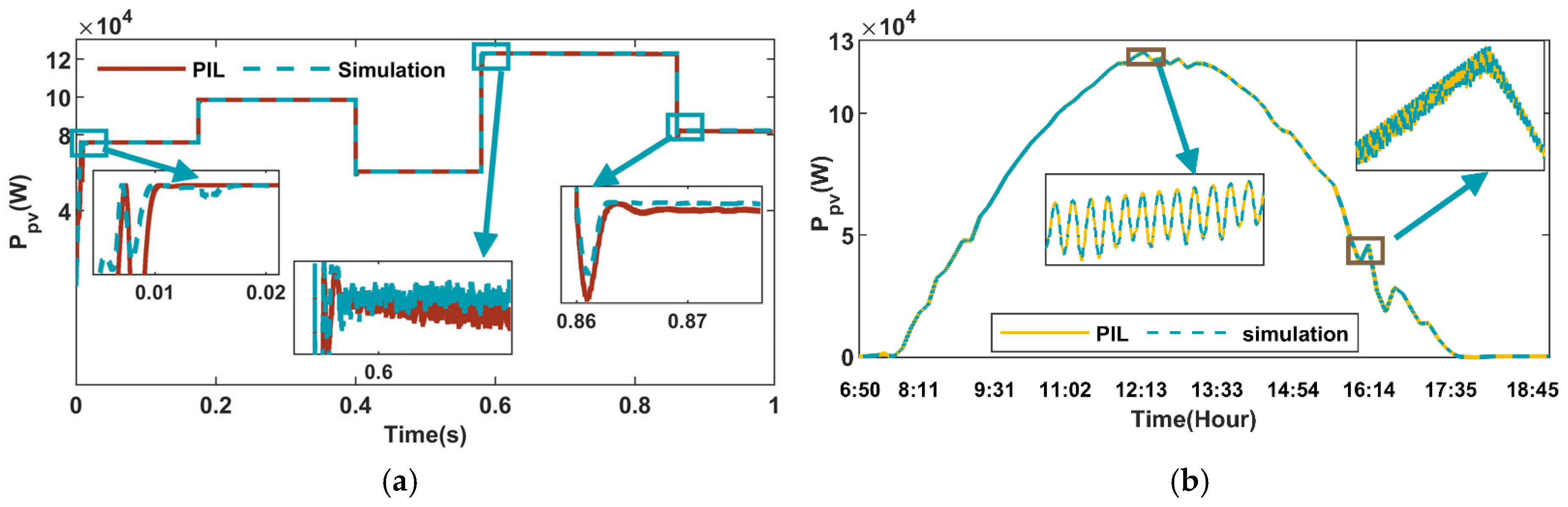
Figure 18a,b present the comparison of the PIL implementation and MIL using the extracted Ppv power of scenario 1 and scenario 2, respectively, as it reflects the MPPT efficiency. Both implementations in both tests were executed with the same sampling time of 10 µs to establish consistency. The performance metrics Mean Absolute Deviation (MAD) and Mean Absolute Percentage Deviation (MAPD) were calculated for both scenarios over steady-state time. The results indicate that MAD and MAPD for Ppv of scenario 1 are 13.5 W and 0.06102%, respectively, and for scenario 2 are 5.02 W and 0.03250%. These performance indices indicate superior fidelity between these two verification tests. The computational complexity of the proposed technique is low due to the AVIC’s simple arithmetic operations and the limited algebraic operations of IBC. Additionally, the total execution time per control cycle was below the adopted sampling time, establishing real-time practicability without processor overload.
Figure 18. Results of MIL and PIL comparison of the proposed AVIC-IBC technique under two scenarios: (a) scenario 1, (b) scenario 2.

5. Conclusions

This article highlights the implementation of a hybrid technique that integrates an Advanced Variable Step Size Incremental Conductance algorithm within the Integral Backstepping Control (AVIC-IBC) applied to GTPVS with a rated power of 123 kW. This method was examined under various test cases, involving a realistic irradiance profile of El Jadida, Morocco, Partial Shading Conditions, and fault grid disturbance. The results indicate that classic methods exhibit diminished tracking efficiency in all scenarios. The INC algorithm establishes an average MPPT tracking of 96.54%. The P&O also displays a reduced value of 96.5%. The BC technique reveals a superior tracking MPPT of 98.36%. However, the proposed method achieves the highest tracking efficiency performance, with an average value of 99.57%. In addition, this technique achieves an average rapid convergence time of 0.02 s compared to other benchmarked methods, which attain the steady-state regime slowly, such as INC and P&O algorithms, which take 0.5 s and 0.44 s, respectively. The AVIC-IBC enhances the GTPVS by minimizing power losses in all test scenarios, ensuring low average power losses of 1.88%. The hybrid method not only improves the DC side but also reduces the THD to 0.69%, surpassing other existing methods in the literature, such as CPMA (THD 4.38%). The PIL validation on the eZdsp TMS320F28335 board reveals that this control technique performs efficiently at a 10 µs sampling time, demonstrating its practicality for this type of board. Future work will focus on the effects of component aging, long-term temperature variations, and measurement noise. Moreover, a complete hardware experiment is required to confirm the findings of this proposed hybrid technique on a real test bench based on the eZdsp TMS320F28335 platform.

Author Contributions

Conceptualization, O.E.; methodology, O.E.; software, O.E.; validation, O.E., A.O., T.G., and O.E.A.; formal analysis, O.E., A.O., N.E.-C., Y.E., and O.E.A.; investigation, O.E., N.E.-C., A.O., and Y.E.; resources, O.E. and A.O.; data curation, O.E. and O.E.A.; writing—original draft preparation, O.E.; writing—review and editing, O.E., A.O., and Y.E.; visualization, O.E., A.O., Y.E., and S.S.; supervision, A.O., Y.E., and S.S.; project administration, A.O. and Y.E.; funding acquisition, S.S. All authors have read and agreed to the published version of the manuscript.

Funding

This research received no external funding.

Institutional Review Board Statement

Not applicable.

Data Availability Statement

The authors confirm that the data supporting the findings of this study are available within the article.

Conflicts of Interest

The authors declare no conflicts of interest.

Abbreviations

AVICAdvanced Variable step size Incremental Conductance
ACOAnt Colony Optimization
ABCArtificial Bee Colony
ANNArtificial Neural Networks
BCBackstepping Control
BOAButterfly Optimization Algorithm
CNNConvolutional Neural Networks
CS-GTOCuckoo Search–Gorilla Troops Optimizer
CSOCuckoo Search Optimizer
DODandelion Optimization
EAGPSOAEnhanced Autonomous Group Particle Swarm Optimization Algorithm
FLCFuzzy Logic Control
GAGenetic Algorithm
GAOGrasshopper Optimization Algorithm
GTPVSGrid-Tied Photovoltaic System
GWOGrey Wolf Optimizer
HHOHarris Hawks Optimizer
HILHardware-In-the-Loop
INCIncremental Conductance
IBCIntegral Backstepping Control
ICAOImproved Coot Optimizer Algorithm
KPOKnowledge Propagation Optimization
MPPMaximum Power Point
MPPTMaximum Power Point Tracking
MILModel-In-the-Loop
MSSOMemetic Salp Swarm Algorithm
PSCPartial Shading Condition
PSOParticle Swarm Optimization
P&OPerturb & Observe
PVPhotovoltaic
PILProcessor-In-the-Loop
RERenewable Energy
SCSOSand Cat Swarm Optimization
SSASalp Swarm Algorithm
SMCSliding Mode Control
SILSoftware-In-the-Loop
STOSooty Tern Optimization
THDTotal Harmonic Distortion
WOWhale Optimization

References

  1. Davoodi, M.; Jafari, K.H.; Brenna, M.; Zaninelli, D. Sustainable Electric Railway System Integrated with Distributed Energy Resources: Optimal Operation and Smart Energy Management System. Int. Trans. Electr. Energy Syst. 2025, 2025, 6626245. [Google Scholar] [CrossRef]
  2. AboRas, K.M.; Alhazmi, A.H.; Megahed, A.I. Optimal Incremental Conductance-Based MPPT Control Methodology for a 100 KW Grid-Connected PV System Employing the RUNge Kutta Optimizer. Sustainability 2025, 17, 5841. [Google Scholar] [CrossRef]
  3. Echab, O.; Ech-Cherki, N.; Nassar-Eddine, I.; Chetouani, E.; Obbadi, A.; Errami, Y.; Sahnoun, S.; Aoutoul, M. Enhanced performance of intelligent hybrid Takagi Sugeno-Integral Backstepping controller for grid-tied PV systems: Processor-in-the-loop validation. Comput. Electr. Eng. 2025, 128, 110690. [Google Scholar] [CrossRef]
  4. Tian, A.; Wu, Y.; Hu, Z.; Wang, Z.; Wu, T.; Jiang, J.; Peng, Z. Two-stage PV grid-connected control strategy based on adaptive virtual inertia and damping control for DC-link capacitor dynamics self-synchronization. J. Energy Storage 2023, 72, 108659. [Google Scholar] [CrossRef]
  5. Lemmassi, A.; Derouich, A.; Hanafi, A.; Byou, A.; Benmessaoud, M.; El Ouanjli, N. Low-cost MPPT for triple-junction solar cells used in nanosatellites: A comparative study between P&O and INC algorithms. e-Prime 2024, 7, 100426. [Google Scholar] [CrossRef]
  6. Swaminathan, N.; Lakshminarasamma, N.; Cao, Y. A fixed zone perturb and observe MPPT technique for a standalone distributed PV system. IEEE J. Emerg. Sel. Top. Power Electron. 2021, 10, 361–374. [Google Scholar] [CrossRef]
  7. Nusrat, M.; Mekhilef, S.; Mubin, M.; Ahmed, S.; Seyedmahmoudian, M.; Stojcevski, A.; Alshammari, O. Advancements in flexible power point tracking and power control strategies for photovoltaic power plants: A comprehensive review. Energy Rep. 2024, 12, 237–250. [Google Scholar] [CrossRef]
  8. Manna, S.; Singh, D.K.; Alsharif, M.H.; Kim, M.K. Enhanced MPPT approach for grid-integrated solar PV system: Simulation and experimental study. Energy Rep. 2024, 12, 3323–3340. [Google Scholar] [CrossRef]
  9. Aguila-Leon, J.; Vargas-Salgado, C.; Chiñas-Palacios, C.; Díaz-Bello, D. Solar photovoltaic Maximum Power Point Tracking controller optimization using Grey Wolf Optimizer: A performance comparison between bio-inspired and traditional algorithms. Expert Syst. Appl. 2023, 221, 118700. [Google Scholar] [CrossRef]
  10. Tariq, M.; Rihan, M.; Ayan, M. A comprehensive review on the application of recently introduced optimization techniques obtaining maximum power in the solar PV System. Renew. Energy Focus 2024, 49, 100564. [Google Scholar] [CrossRef]
  11. Refaat, A.; Khalifa, A.E.; Elsakka, M.M.; Elhenawy, Y.; Kalas, A.; Elfar, M.H. A novel metaheuristic MPPT technique based on enhanced autonomous group Particle Swarm Optimization Algorithm to track the GMPP under partial shading conditions—Experimental validation. Energy Convers. Manag. 2023, 287, 117124. [Google Scholar] [CrossRef]
  12. Alhusseini, H.; Abdali, L.M.; Issa, H.A.; Velkin, V.I. Adaptive Particle Swarm Optimization based Model Predictive Control MPPT algorithm for PV systems Under Partial Shading Conditions. Results Eng. 2025, 28, 107419. [Google Scholar] [CrossRef]
  13. Huang, B.; Song, K.; Jiang, S.; Zhao, Z.; Zhang, Z.; Li, C.; Sun, J. A Robust Salp Swarm Algorithm for Photovoltaic Maximum Power Point Tracking Under Partial Shading Conditions. Mathematics 2024, 12, 3971. [Google Scholar] [CrossRef]
  14. Kaaitan, M.T.; Fayadh, R.A.; Al-Sagar, Z.S.; Yaqoob, S.J.; Bajaj, M.; Geremew, M.S. A novel global MPPT method based on sooty tern optimization for photovoltaic systems under complex partial shading. Sci. Rep. 2025, 15, 27030. [Google Scholar] [CrossRef] [PubMed]
  15. Tao, H.; Ghahremani, M.; Ahmed, F.W.; Jing, W.; Nazir, M.S.; Ohshima, K. A novel MPPT controller in PV systems with hybrid whale optimization-PS algorithm based ANFIS under different conditions. Control Eng. Pract. 2021, 112, 104809. [Google Scholar] [CrossRef]
  16. Raslan, H.M.; Osman, Z.H.; Hassan, H.A. Techno-economic planning of distributed generation using modified whale optimization techniques. Alex. Eng. J. 2025, 132, 293–311. [Google Scholar] [CrossRef]
  17. Araoye, T.O.; Ashigwuike, E.C.; Mbunwe, M.J.; Bakinson, O.I.; Ozue, T.I. Techno-economic modeling and optimal sizing of autonomous hybrid microgrid renewable energy system for rural electrification sustainability using HOMER and grasshopper optimization algorithm. Renew. Energy 2024, 229, 120712. [Google Scholar] [CrossRef]
  18. Naser, A.T.; Mohammed, K.K.; Ab Aziz, N.F.; binti Kamil, K.; Mekhilef, S. Improved coot optimizer algorithm-based MPPT for PV systems under complex partial shading conditions and load variation. Energy Convers. Manag. X 2024, 22, 100565. [Google Scholar] [CrossRef]
  19. Gacem, A.; Kechida, R.; Bekakra, Y.; Jurado, F.; Sameh, M.A. Hybrid cuckoo search-gorilla troops optimizer for optimal parameter estimation in photovoltaic modules. J. Eng. Res. 2024, 13, 3334–3351. [Google Scholar] [CrossRef]
  20. Li, L.; Zhao, W.; Wang, H.; Xu, Z.; Ding, Y. Sand cat swarm optimization based maximum power point tracking technique for photovoltaic system under partial shading conditions. Int. J. Electr. Power Energy Syst. 2024, 161, 110203. [Google Scholar] [CrossRef]
  21. Oberoi, V.; Chankaya, M.; Panda, M.; Chauhan, T. Novel knowledge propagation optimization (KPO) algorithm for grid-tied PV system. Results Eng. 2025, 28, 107647. [Google Scholar] [CrossRef]
  22. Saraswat, R.; Suhag, S. Memetic salp swarm algorithm optimized control for operational resilience in grid-tied microgrid. Sustain. Comput. Inform. Syst. 2025, 48, 101195. [Google Scholar] [CrossRef]
  23. Halali, Y.; Ghaitaoui, T.; Mekhilef, S.; Ahmed, S.; Omar, O.A.; Essama, G.A.; Bendib, A.; Loukriz, A.; Hafiz, A.; Alshammari, O.; et al. A dandelion optimization-based MPPT control technique for solar PV system under partial shading conditions. Sci. Afr. 2025, 29, e02938. [Google Scholar] [CrossRef]
  24. Srilakshmi, K.; Gaddameedhi, S.; Ramadevi, A.; Balachandran, P.K.; Reddy, J.G.P.; Vangalapudi, R. Design and simulation of reduced switch converter based solar PV and energy storage fed shunt active power filter with butterfly optimization. Results Control Optim. 2025, 19, 100554. [Google Scholar] [CrossRef]
  25. Gali, V.; Gupta, N.; Jamwal, P.K.; Kumawat, M.; Babu, B.C. Real-time performance enhancement of battery energy storage system in sustainable microgrids using Harris Hawks Optimization. Sustain. Comput. Inform. Syst. 2025, 46, 101110. [Google Scholar] [CrossRef]
  26. Roy, B.; Adhikari, S.; Datta, S.; Devi, K.J.; Devi, A.D.; Ustun, T.S. Harnessing deep learning for enhanced MPPT in Solar PV systems: An LSTM approach using real-world data. Electricity 2024, 5, 843–860. [Google Scholar] [CrossRef]
  27. Latoui, A.; Daachi, M.E.H. Real-time monitoring of partial shading in large PV plants using Convolutional Neural Network. J. Sol. Energy 2023, 253, 428–438. [Google Scholar] [CrossRef]
  28. Maroua, B.; Laid, Z.; Benbouhenni, H.; Fateh, M.; Debdouche, N.; Colak, I. Robust type 2 fuzzy logic control microgrid-connected photovoltaic system with battery energy storage through multi-functional voltage source inverter using direct power control. Energy Rep. 2024, 11, 3117–3134. [Google Scholar] [CrossRef]
  29. Ahmad, F.F.; Ghenai, C.; Hamid, A.K.; Bettayeb, M. Application of sliding mode control for maximum power point tracking of solar photovoltaic systems: A comprehensive review. Annu. Rev. Control 2020, 49, 173–196. [Google Scholar] [CrossRef]
  30. Armghan, H.; Ahmad, I.; Armghan, A.; Khan, S.; Arsalan, M. Backstepping based non-linear control for maximum power point tracking in photovoltaic system. Sol. Energy 2018, 159, 134–141. [Google Scholar] [CrossRef]
  31. Ghazi, G.A.; Al-Ammar, E.A.; Hasanien, H.M.; Khan, M.; Ko, W.; Choi, H.J.; Park, S. Low voltage ride-through capability enhancement using optimal super twisting sliding mode control for grid-tied pv systems. Int. J. Electr. Power Energy Syst. 2025, 172, 111124. [Google Scholar] [CrossRef]
  32. Rayaguru, N.K.; Lindsay, N.M.; Crespo, R.G.; Raja, S.P. Hybrid bat–grasshopper and bat–modified multiverse optimization for solar photovoltaics maximum power generation. Comput. Electr. Eng. 2023, 106, 108596. [Google Scholar] [CrossRef]
  33. Ullah, K.; Ishaq, M.; Tchier, F.; Ahmad, H.; Ahmad, Z. Fuzzy-based maximum power point tracking (MPPT) control system for photovoltaic power generation system. Results Eng. 2023, 20, 101466. [Google Scholar] [CrossRef]
  34. Kurian, G.M.; Jeyanthy, P.A.; Devaraj, D. FPGA implementation of FLC-MPPT for harmonics reduction in sustainable photovoltaic system. Sustain. Energy Technol. Assess. 2022, 52, 102192. [Google Scholar] [CrossRef]
  35. Debdouche, N.; Zarour, L.; Chebabhi, A.; Bessous, N.; Benbouhenni, H.; Colak, I. Genetic algorithm-super-twisting technique for grid-connected PV system associate with filter. Energy Rep. 2023, 10, 4231–4252. [Google Scholar] [CrossRef]
  36. Das, S.R.; Sahoo, A.K.; Dhiman, G.; Singh, K.K.; Singh, A. Photo voltaic integrated multilevel inverter based hybrid filter using spotted hyena optimizer. Comput. Electr. Eng. 2021, 96, 107510. [Google Scholar] [CrossRef]
  37. said Adouairi, M.; Bossoufi, B.; Motahhir, S.; Saady, I. Application of fuzzy sliding mode control on a single-stage grid-connected PV system based on the voltage-oriented control strategy. Results Eng. 2023, 17, 100822. [Google Scholar] [CrossRef]
  38. Pati, S.; Nanda, A.B.; Osumanu, F.; Sahu, B.; Choudhury, A. Minimum grid involvement-based control of a grid-connected PV-battery system using nine switch converter. Comput. Electr. Eng. 2025, 122, 109941. [Google Scholar] [CrossRef]
Disclaimer/Publisher’s Note: The statements, opinions and data contained in all publications are solely those of the individual author(s) and contributor(s) and not of MDPI and/or the editor(s). MDPI and/or the editor(s) disclaim responsibility for any injury to people or property resulting from any ideas, methods, instructions or products referred to in the content.

Article Metrics

Citations

Article Access Statistics

Multiple requests from the same IP address are counted as one view.