Immersive Content and Platform Development for Marine Emotional Resources: A Virtualization Usability Assessment and Environmental Sustainability Evaluation

Abstract
1. Introduction
2. Related Works
2.1. Overview of Existing Research and Utilization Strategies Related to Dokdo
2.1.1. Biodiversity Studies
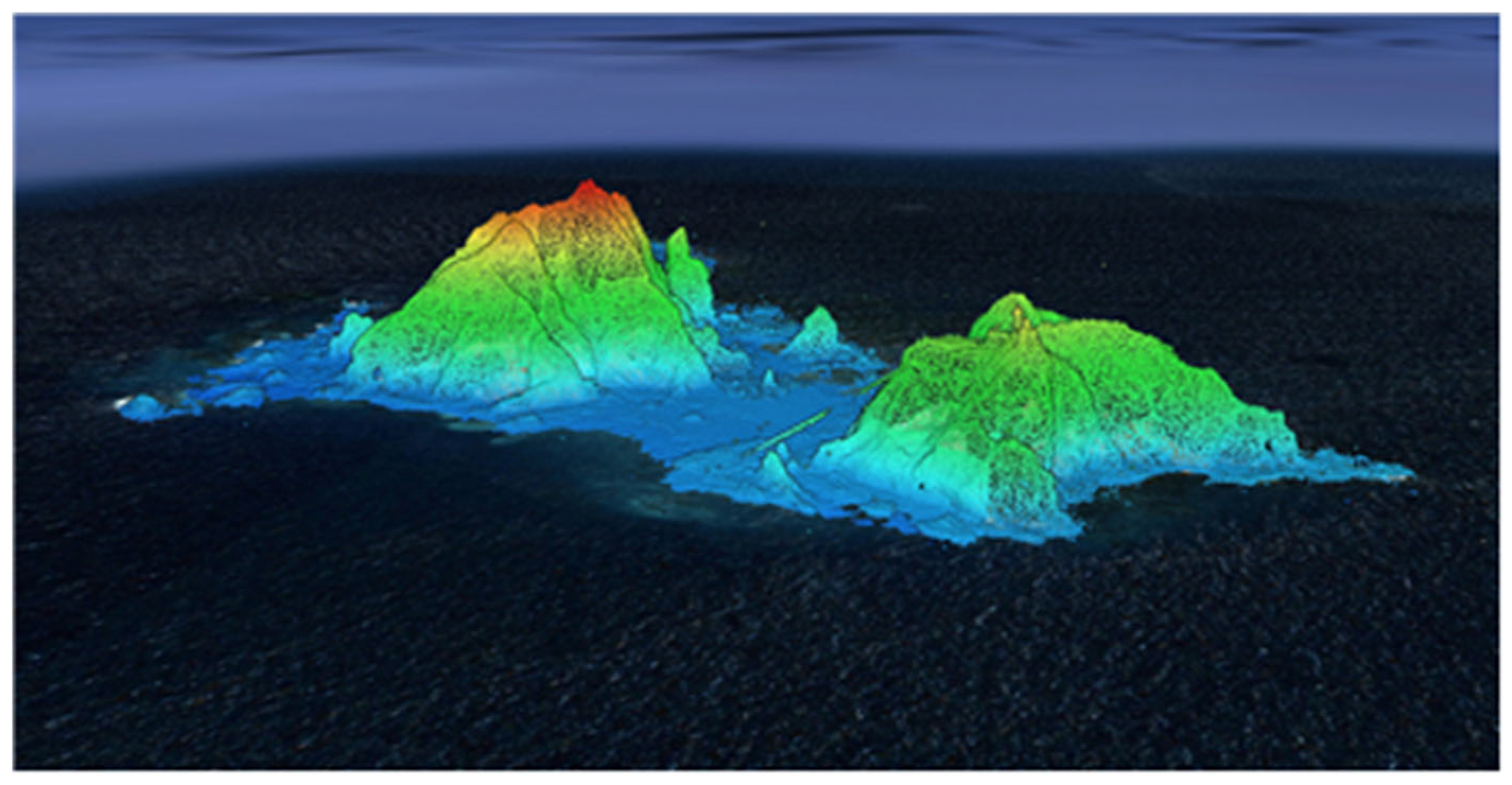
2.1.2. Submarine Topography Studies
2.1.3. Geological Change Studies
2.2. Studies Utilizing Virtual Reality (VR)
2.3. Application of Digital Twin Technology
3. Proposed Method
- Scientific applicability
- Public accessibility
- Industrial applicability
3.1. Subsection Development of VR Content Based on Dokdo’s Research Results
3.1.1. 360-Degree Underwater VR Filming and Post-Processing
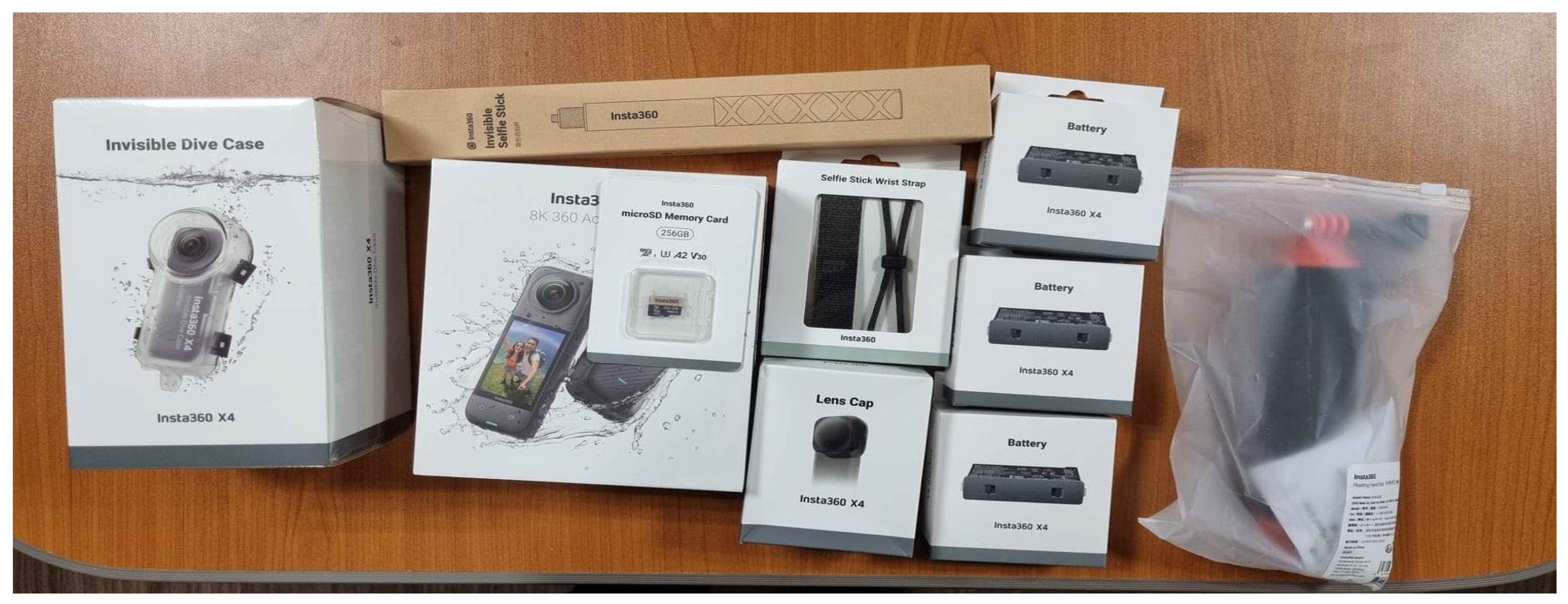
- Equipment Preparation and Configuration
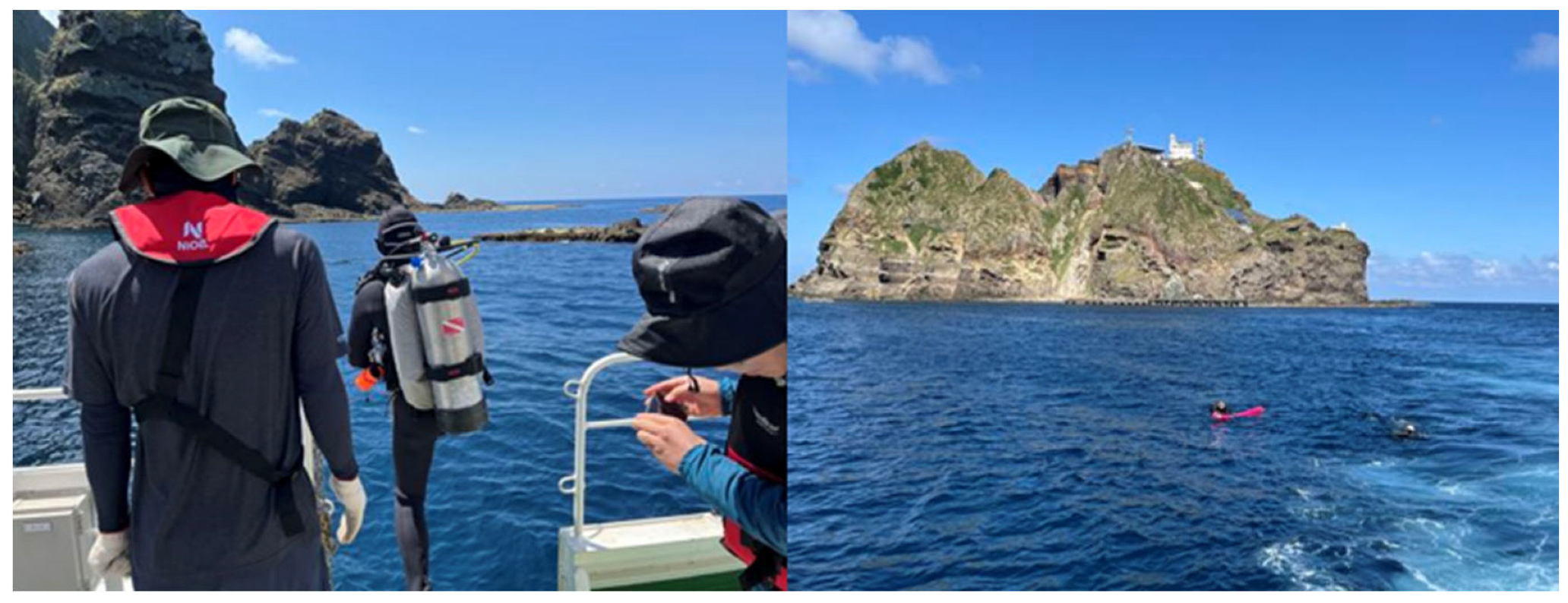
- Site Selection and Safety Measures for Underwater Filming
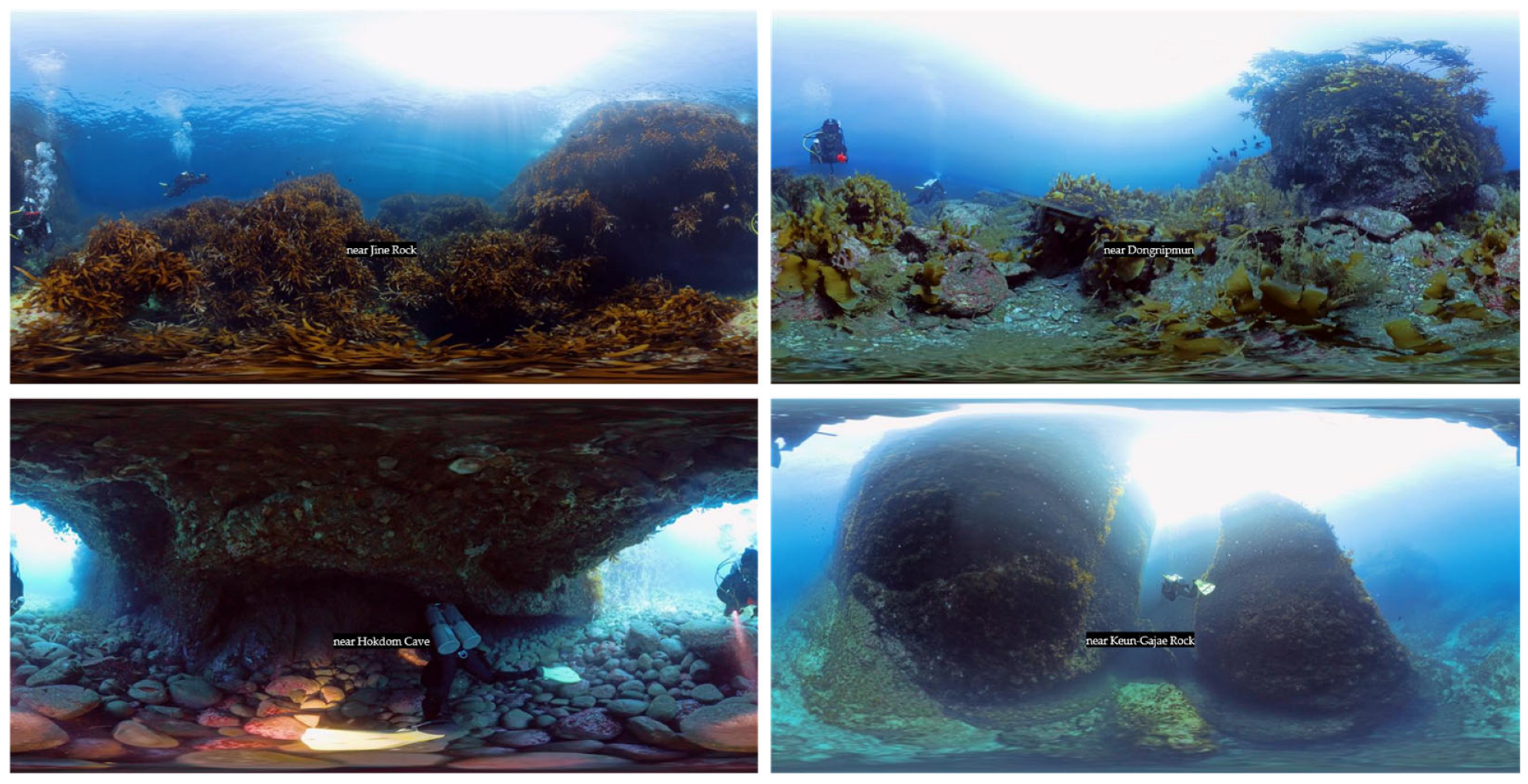
- 360° Underwater VR Filming
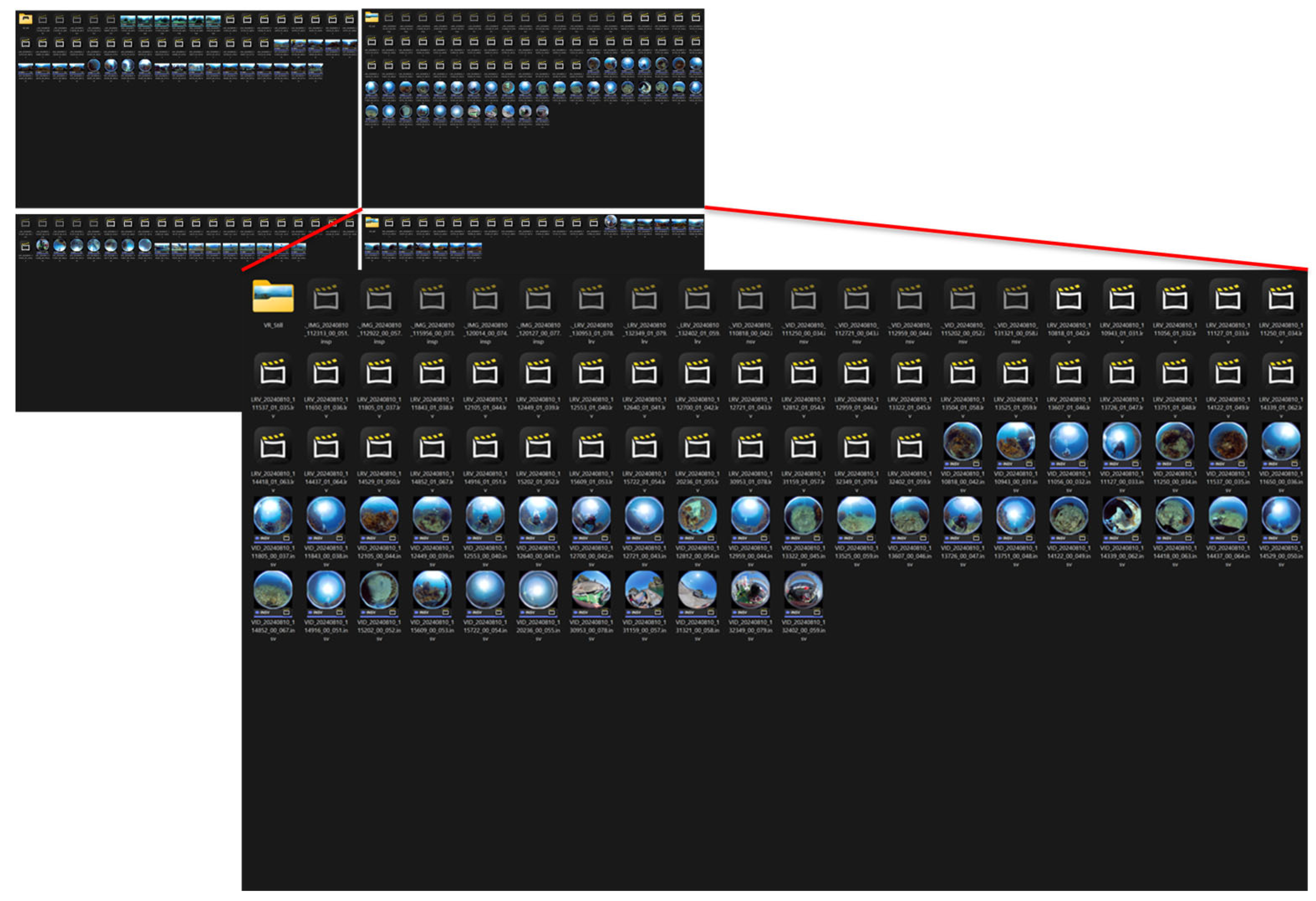
- Post-Processing and Data Correction
3.1.2. Content Development of Dokdo Marine Life Using 3D Modeling
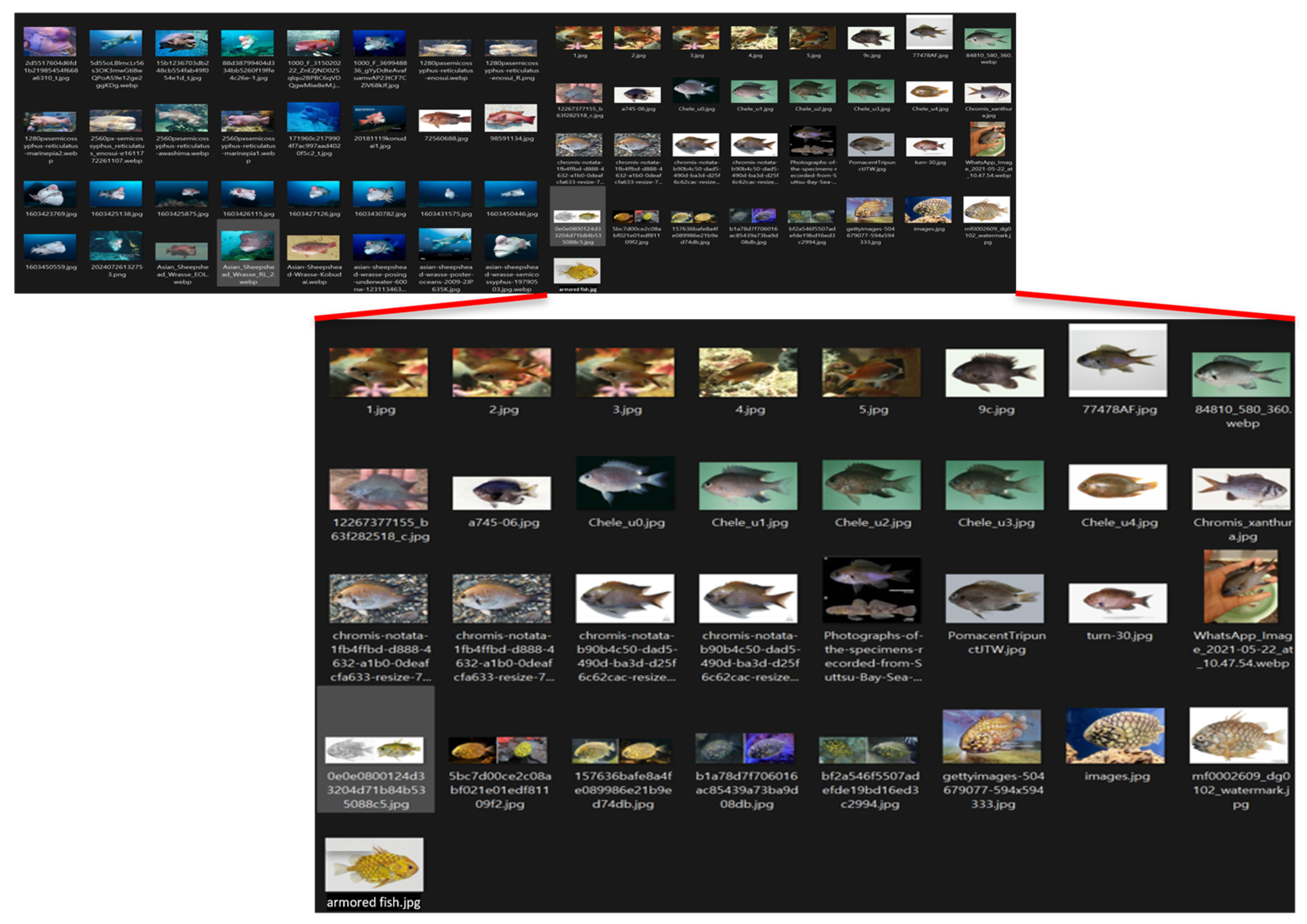
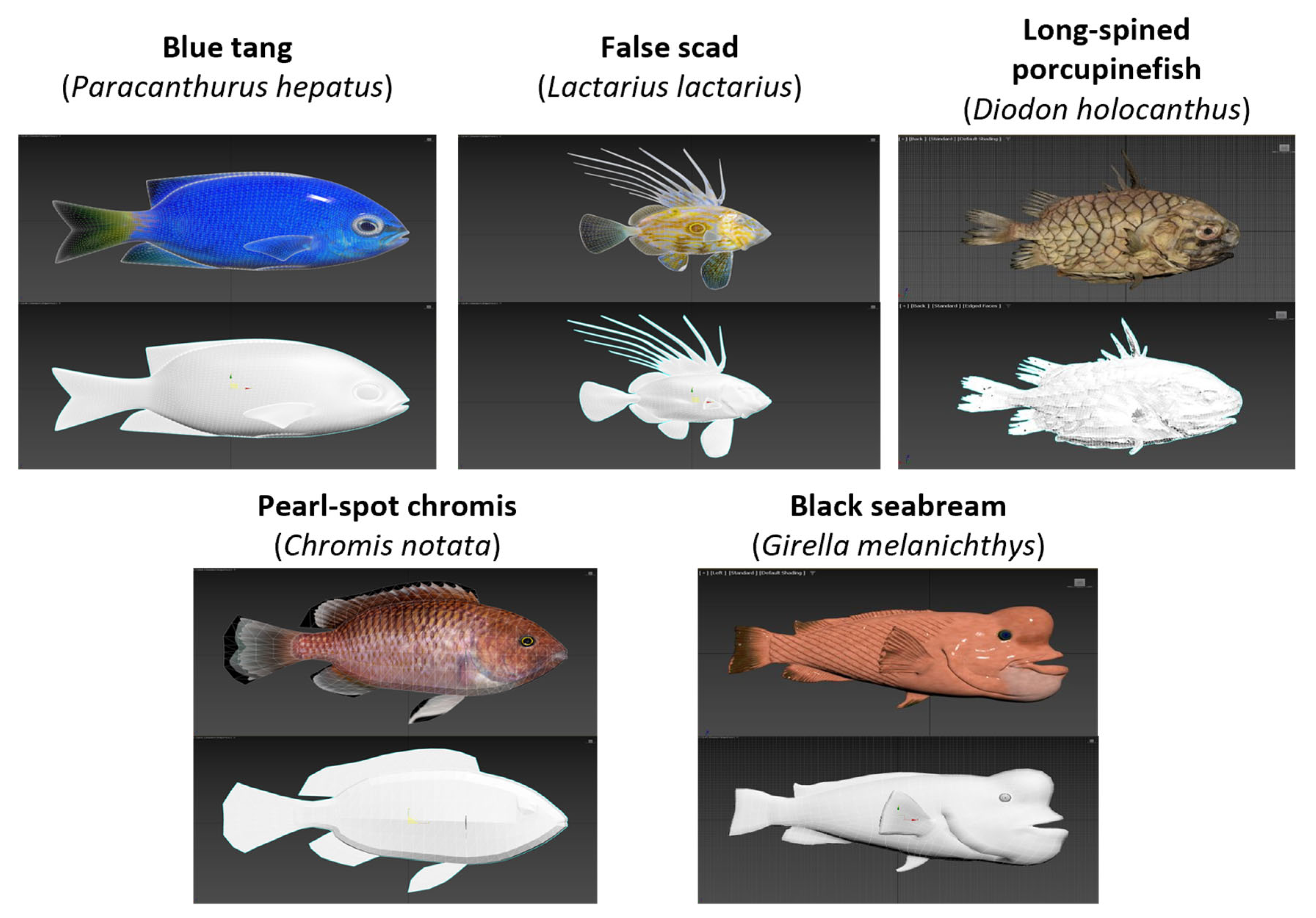
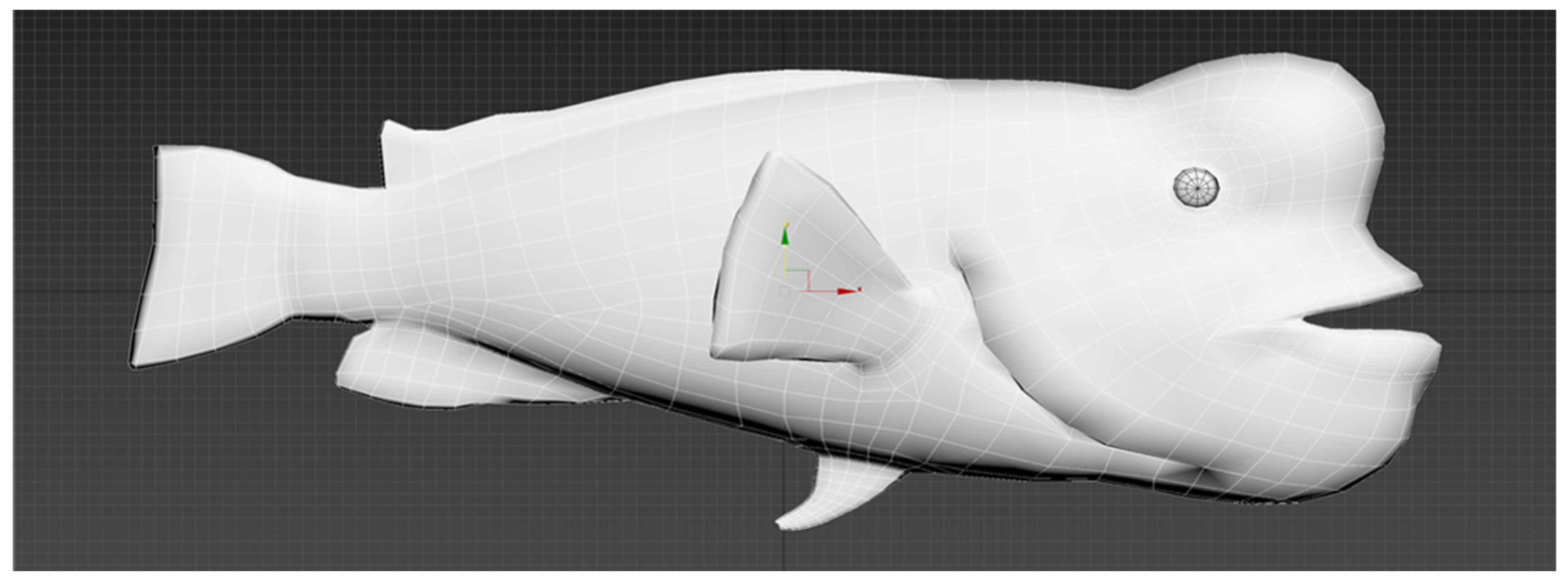
- Selection of Target Species and High-Polygon Modeling
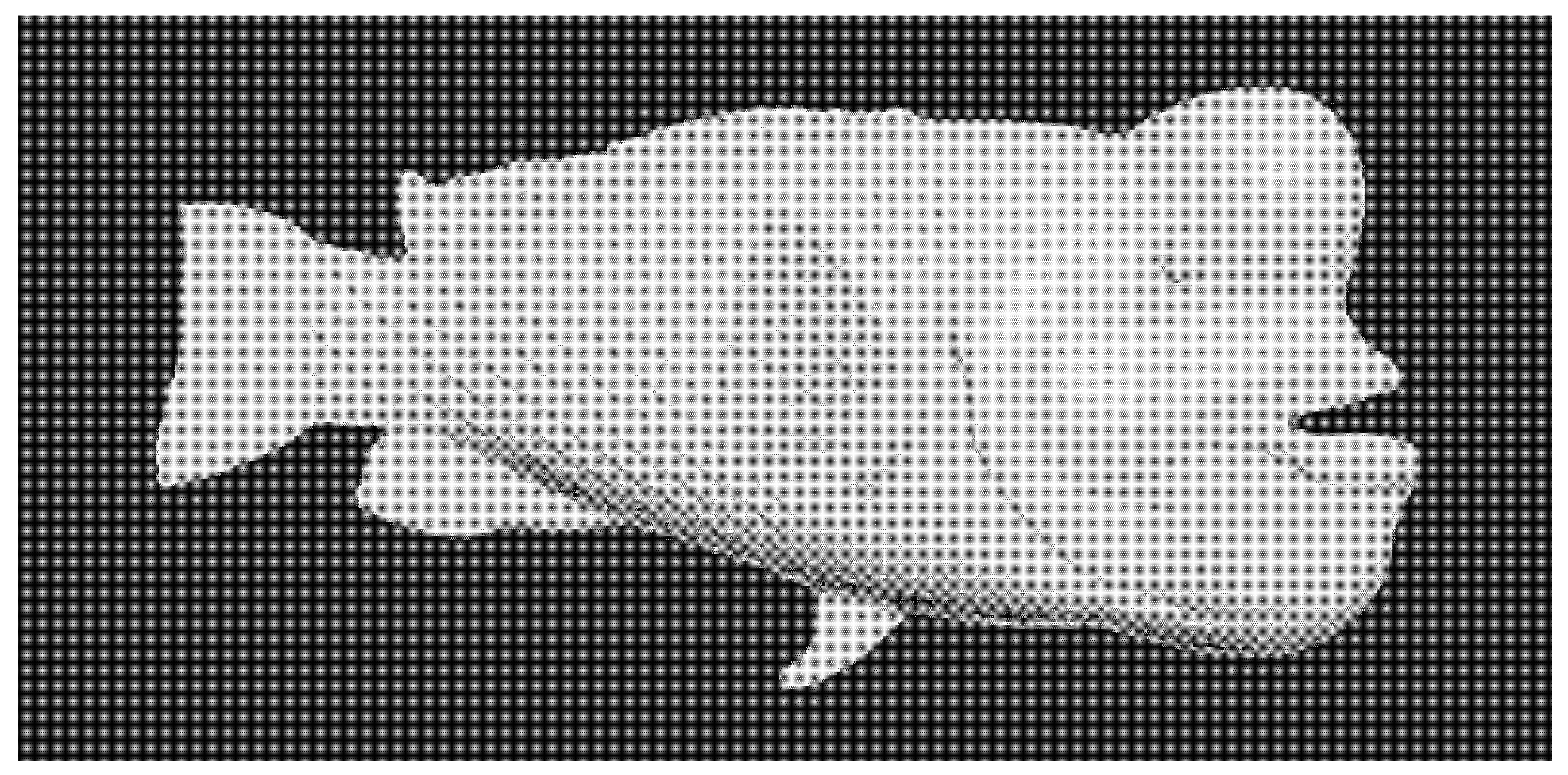
- Optimization of 3D Models through Retopology
- UV Mapping
- Validation of Biological Morphology and Environmental Accuracy
3.2. Web 3D-Based Virtualization of Dokdo
3.2.1. Aerial Survey of Dokdo Using RTK Drone
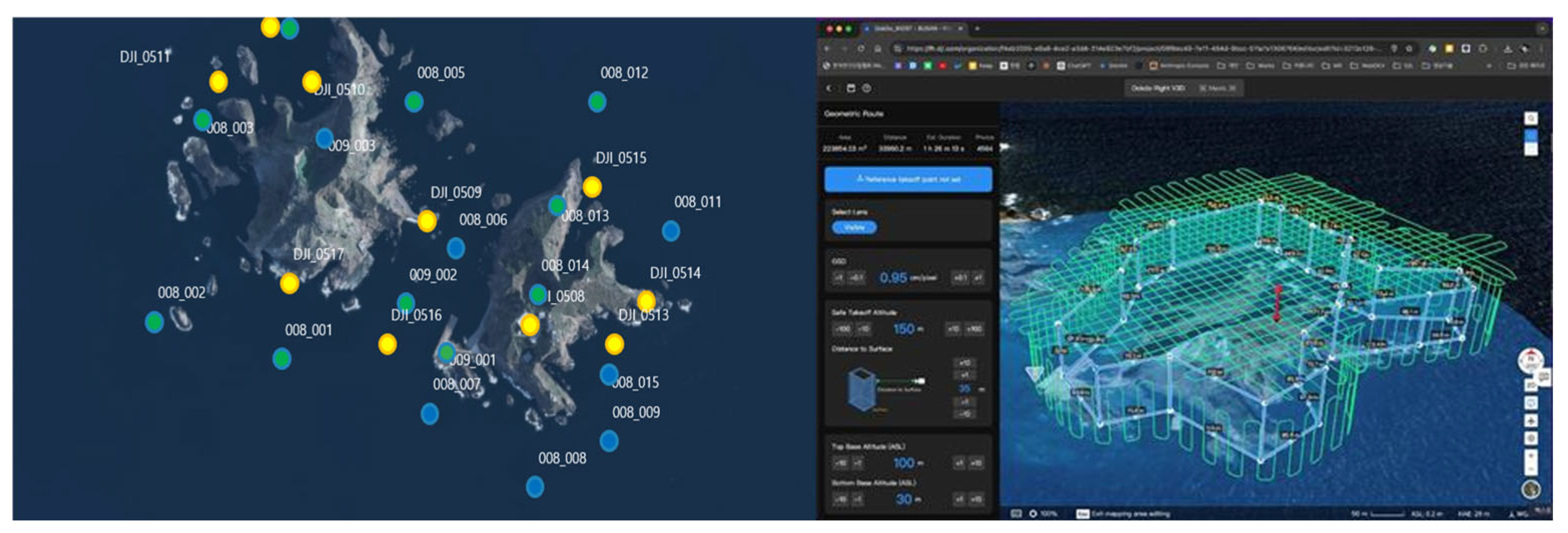
- Drone Setup and Flight Planning
- Smart 3D Capture Flight Path Method
- (1)
- 3D Mapping Method
- -
- Captures terrain in a grid pattern using only 2D routes
- -
- High-precision terrain production at sampling level
- (2)
- Smart 3D Capture Method
- -
- Generates 3D flight paths referencing terrain point cloud
- -
- Performs terrain capture optimized for shooting distance and quality
- -
- Enables ultra-high-precision terrain production at GSD 0.075 m/pixel level
- Pre-preparation and Planning
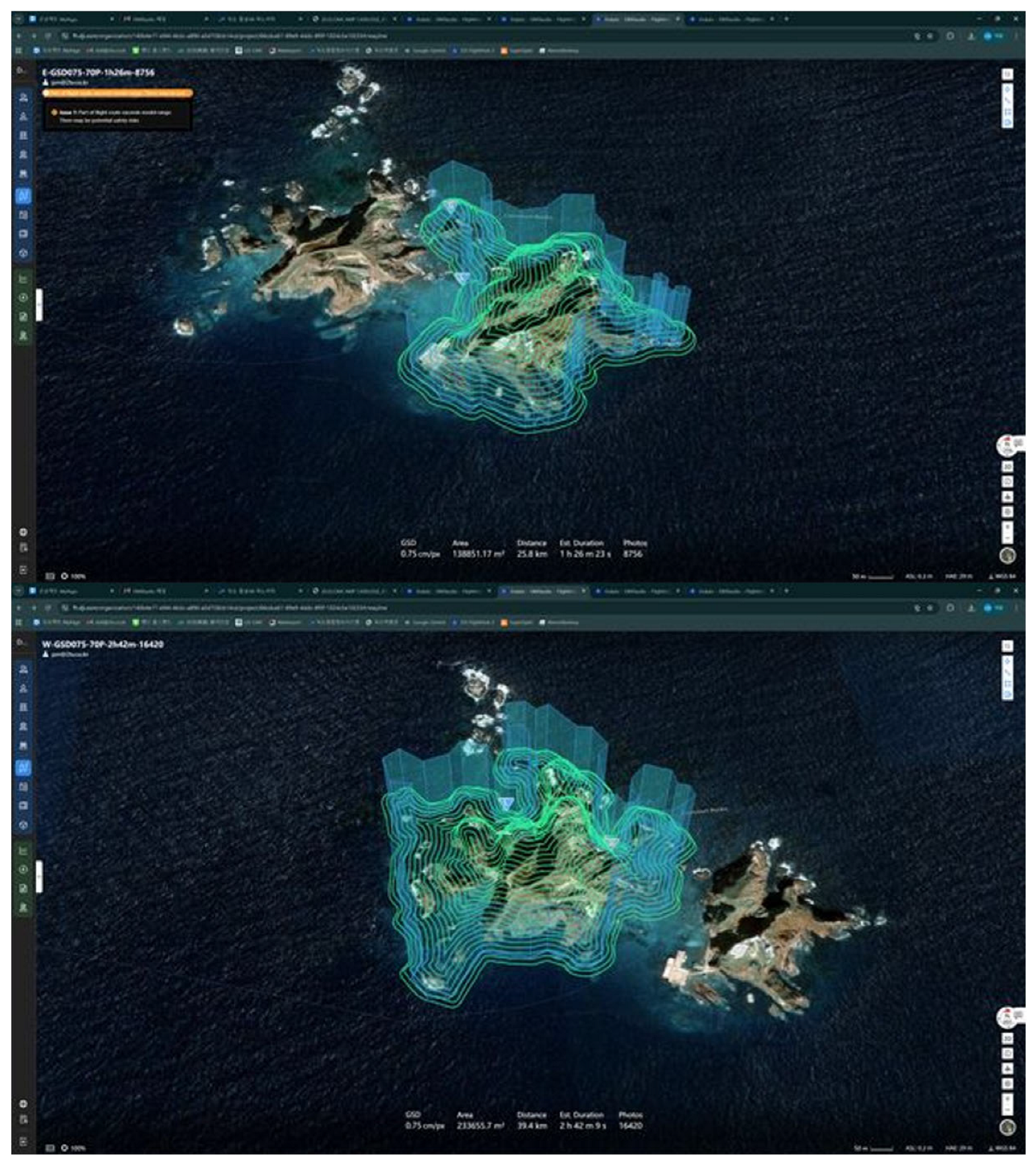
- Smart 3D Capture Flight Path Generation
- Preliminary imaging: 12–13 July 2025
- Main imaging 1st: 8–10 August 2025
- Main imaging 2nd: 23–25 August 2025
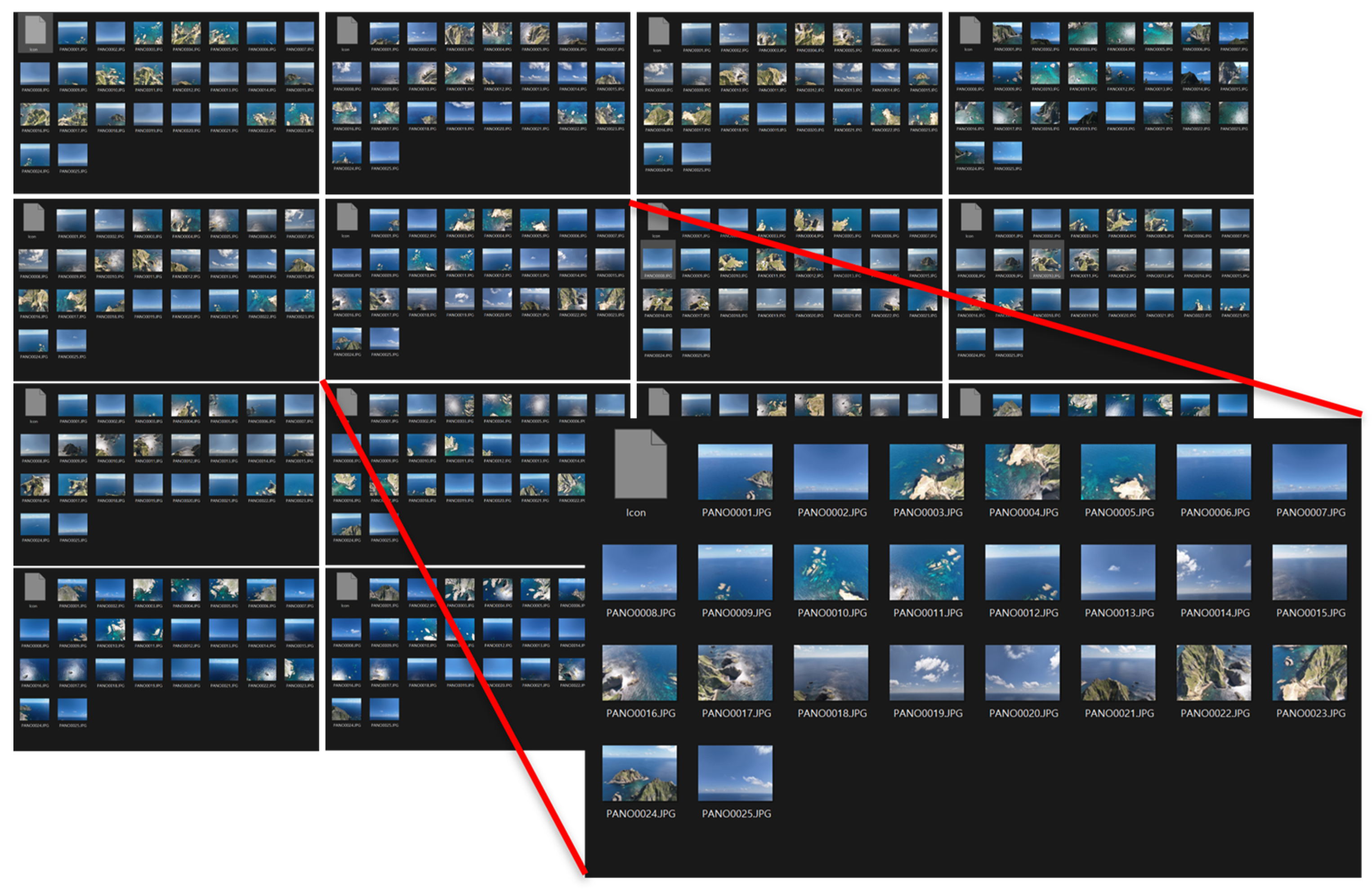
- Aerial Imaging Using RTK Drone
- Smart 3D Capture Drone Imaging Results
- Dongdo: GSD 0.75, imaging time 1 h 26 min, 15,607 images
- Seodo: GSD 0.75, imaging time 2 h 42 min, 34,480 images
- Gajebawi: GSD 0.75, imaging time 1 h 56 min, 4098 images
- Additional erosion zone imaging: 16,270 images
- Other supplementary imaging: 22,566 images
- Environmental Conditions and Imaging Parameters
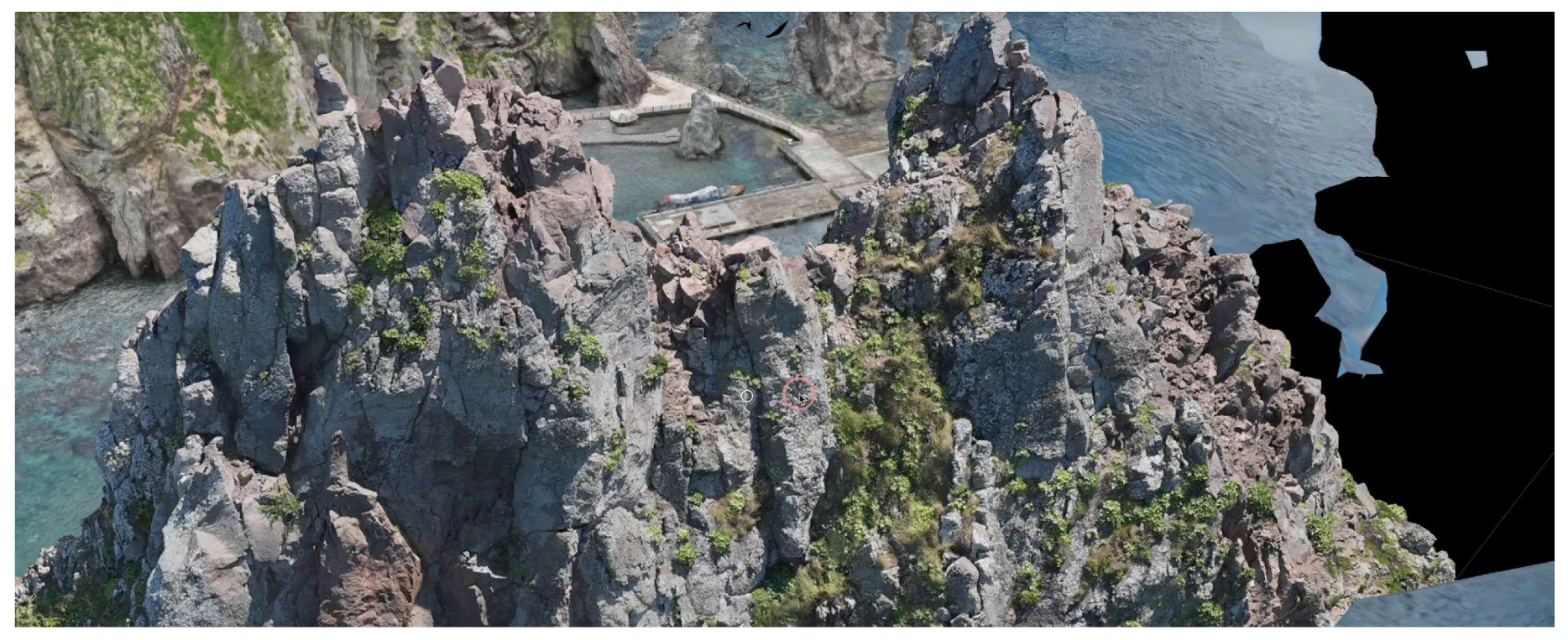
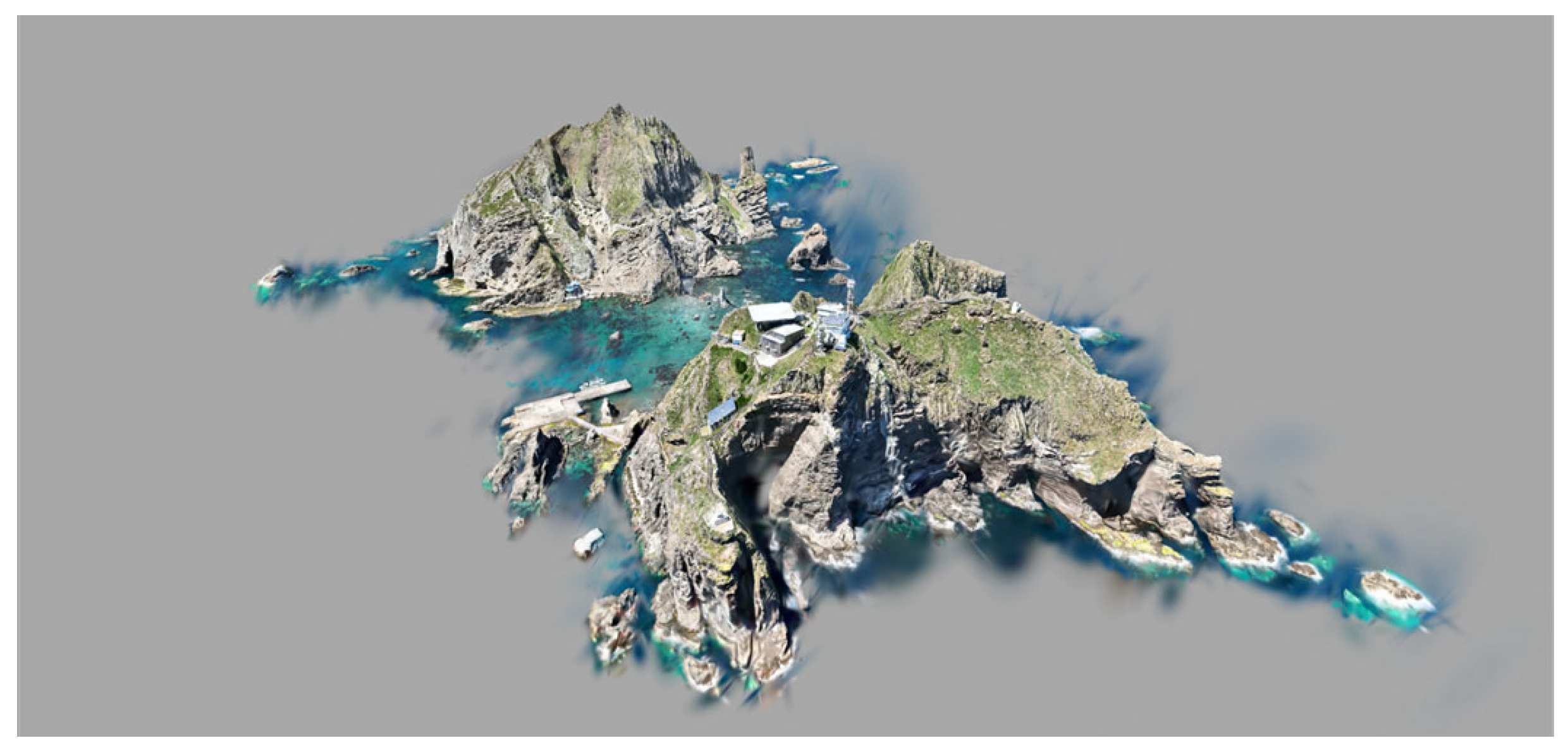
3.2.2. Dokdo Virtualization Using Aerial Imaging Data
- Editing of Aerial Imaging Data
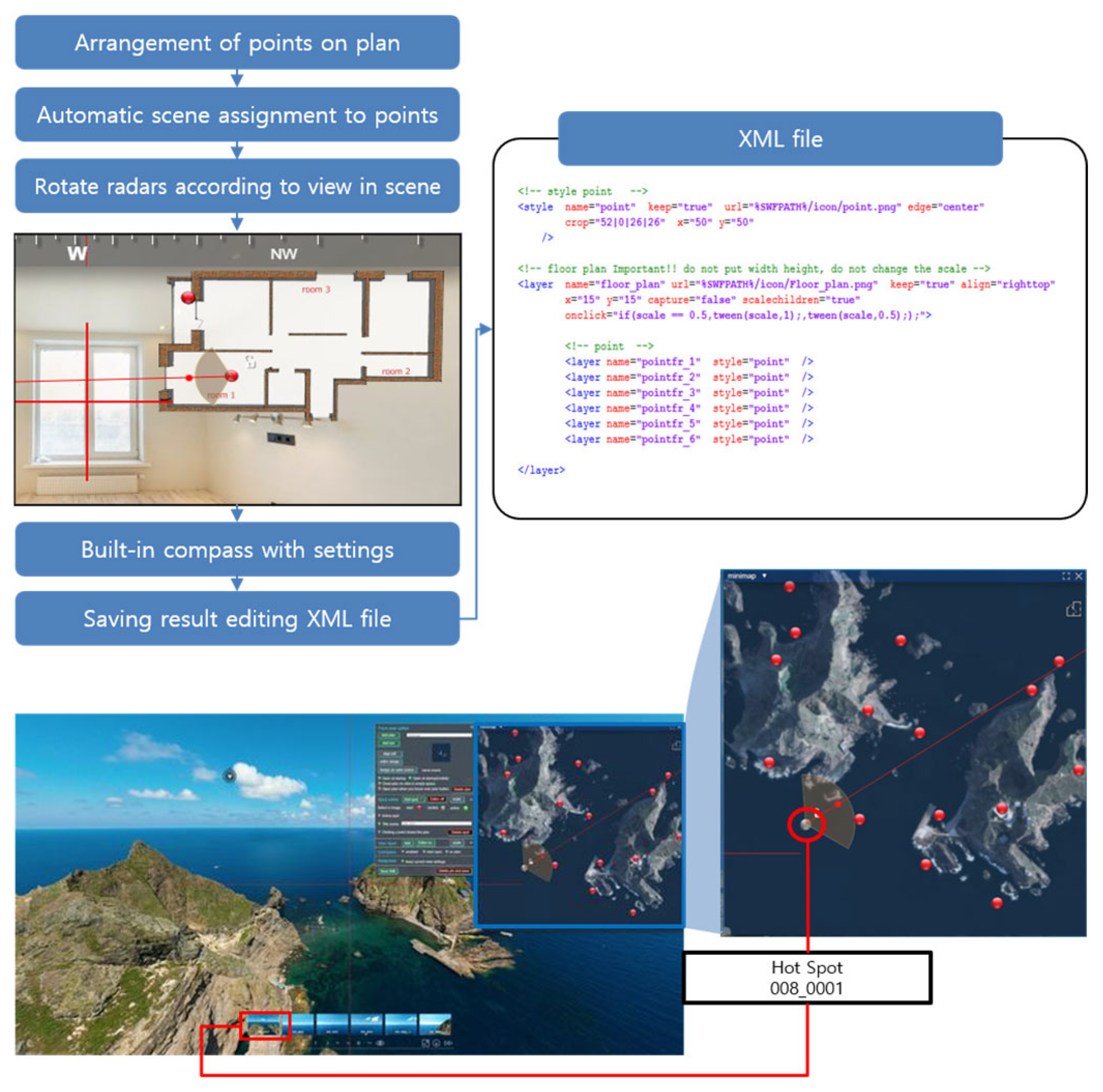
- Web 3D-Based Virtualization
- 3D Model Optimization and Rendering Parameters
- Adaptive density control: During training, Gaussians are split, cloned, and pruned to adaptively adjust the number of Gaussians according to scene complexity, achieving balance between memory efficiency and rendering quality [40]
- Spherical Harmonics degree: Spherical Harmonics (SH) are used to model view-dependent appearance for representing reflection and lighting effects
- Opacity and Covariance: The opacity and covariance matrix of each Gaussian are learned to precisely represent the geometric structure of the scene
- 3DGS Training Environment and Results
3.3. Evaluation of VR Healing Content
3.3.1. Study Design and User Satisfaction Survey
3.3.2. System Usability Scale (SUS) Evaluation
4. Practical Deployment of Research Outcomes
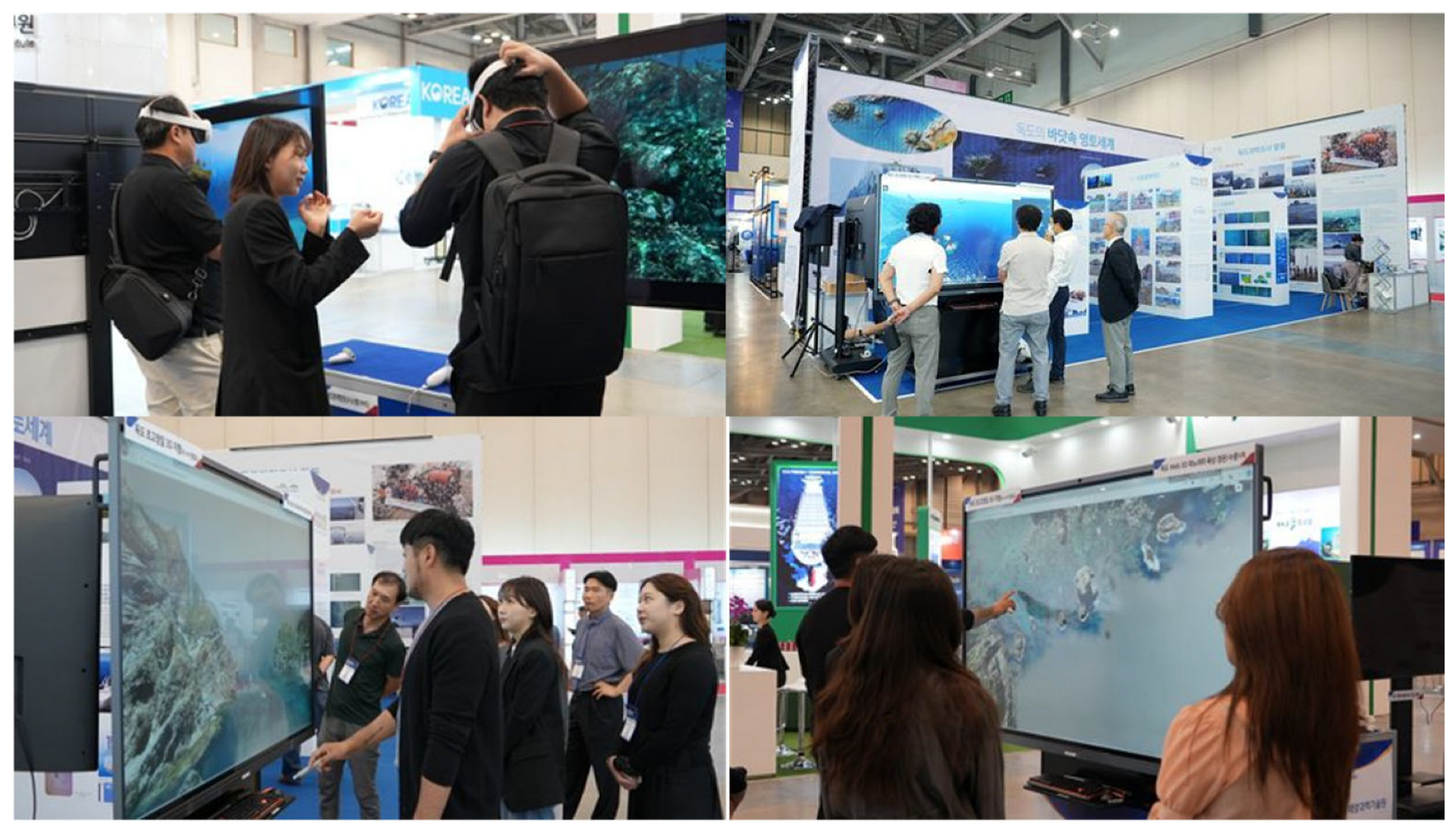
4.1. Field Demonstration and User Response
4.2. User Evaluation of VR Content
- High Willingness to Re-Engage
- Satisfaction Levels and Qualitative Feedback
- Motivations for Re-Engagement
4.3. Usability Assessment via the System Usability Scale (SUS)
- Evaluation Design and Participant Composition
- SUS Score Calculation and Interpretation
- Reliability Analysis of the SUS Instrument
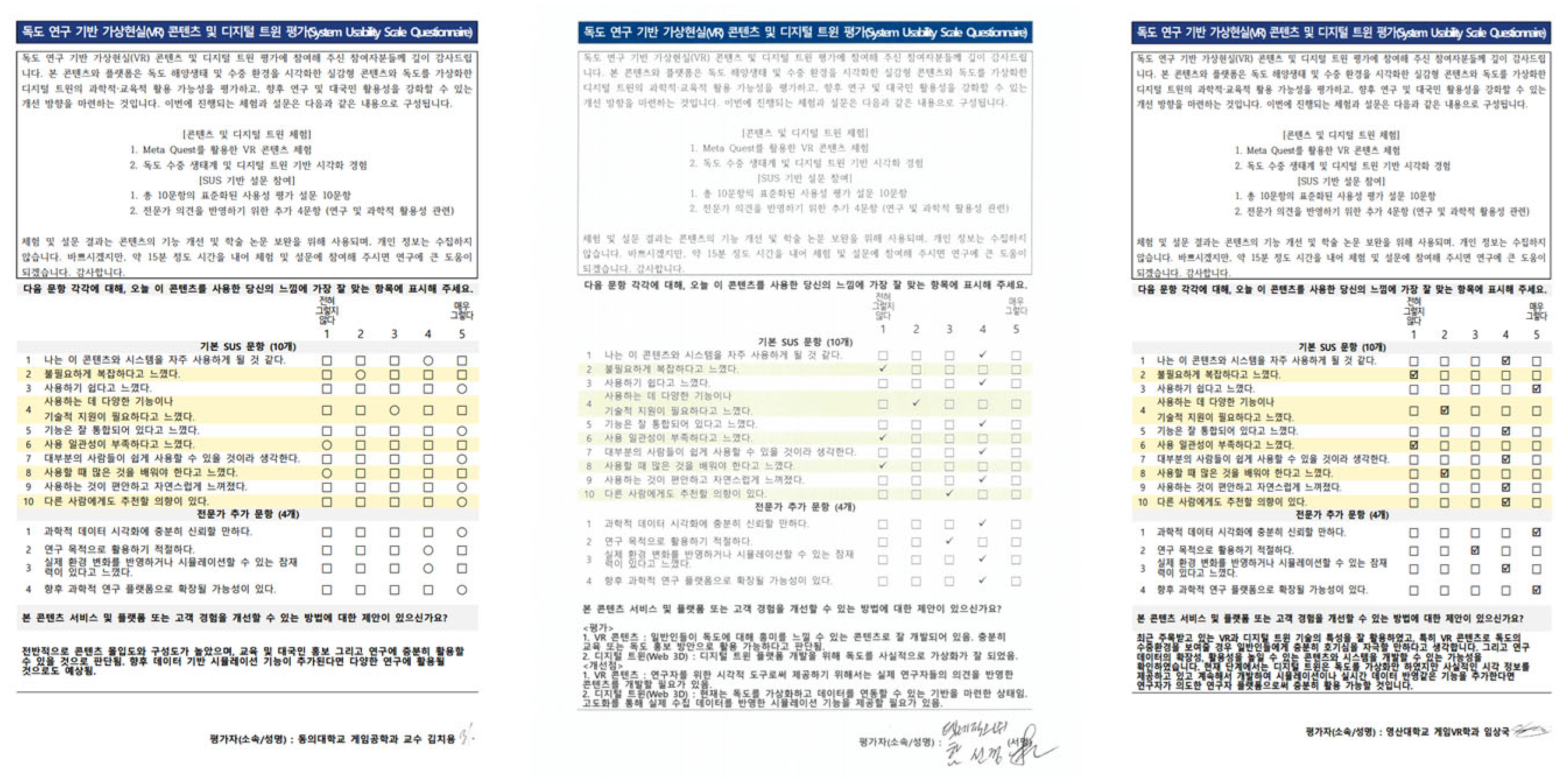
- Summary of User Feedback and Expert Recommendations
- -
- scientific analytical tools,
- -
- data-driven simulation modules,
- -
- research-focused interfaces, and
- -
- digital-twin expansion capabilities.
- Optimization Measures and Effectiveness Verification
- Scope of the Current Evaluation and Future Physiological Validation
- Overall Interpretation
4.4. Environmental Sustainability Assessment
5. Conclusions
Author Contributions
Funding
Institutional Review Board Statement
Informed Consent Statement
Data Availability Statement
Acknowledgments
Conflicts of Interest
References
- Song, S.J.; Park, J.; Ryu, J.; Rho, H.S.; Kim, W.; Khim, J.S. Biodiversity hotspot for marine invertebrates around the Dokdo, East Sea, Korea: Ecological checklist revisited. Mar. Pollut. Bull. 2017, 119, 162–170. [Google Scholar] [CrossRef] [Scilit]
- Bukh, A. Korean National Identity, Civic Activism and the Dokdo/Takeshima Territorial Dispute. J. Asian Secur. Int. Aff. 2016, 3, 183–199. [Google Scholar] [CrossRef] [Scilit]
- Choi, K.; Yoon, Y.-J.; Song, O.-Y.; Choi, S.-M. Interactive and immersive learning using 360 virtual reality contents on mobile platforms. Mob. Inf. Syst. 2018, 2018, 2306031. [Google Scholar] [CrossRef] [Scilit]
- Li, L.; Wu, S.; Xue, C.; Ma, Y.; Qin, Q. Research on Visualization Methods for Marine Environmental Element Fields in Twin Spaces. J. Mar. Sci. Eng. 2025, 13, 449. [Google Scholar] [CrossRef] [Scilit]
- Yin, Y.; Dong, Y.; Wang, K.; Wang, D.; Jones, B. Science as a Public Good: Public Use and Funding of Science; National Bureau of Economic Research: Cambridge, MA, USA, 2021. [Google Scholar]
- Abramo, G.; D’Angelo, A. The alignment of public research supply and industry demand for effective technology transfer: The case of Italy. Sci. Public Policy 2009, 36, 2–14. [Google Scholar] [CrossRef] [Scilit]
- Diaba-Nuhoho, P.; Amponsah-Offeh, M. Reproducibility and research integrity: The role of scientists and institutions. BMC Res. Notes 2021, 14, 451. [Google Scholar] [CrossRef] [Scilit] [PubMed]
- Klaeger, T.; Gottschall, S.; Oehm, L. Data science on industrial data—today’s challenges in brown field applications. Challenges 2021, 12, 2. [Google Scholar] [CrossRef] [Scilit]
- United Nations. Resolution Adopted by the General Assembly on 11 September 2015; United Nations: New York, NY, USA, 2015; Volume 14. [Google Scholar]
- Radianti, J.; Majchrzak, T.A.; Fromm, J.; Wohlgenannt, I. A systematic review of immersive virtual reality applications for higher education: Design elements, lessons learned, and research agenda. Comput. Educ. 2020, 147, 103778. [Google Scholar] [CrossRef] [Scilit]
- Coban, M.; Bolat, Y.I.; Goksu, I. The potential of immersive virtual reality to enhance learning: A meta-analysis. Educ. Res. Rev. 2022, 36, 100452. [Google Scholar] [CrossRef] [Scilit]
- McKinsey&Company. What Is Digital Twin Technology? 2023. Available online: https://www.mckinsey.com/featured-insights/mckinsey-explainers/what-is-digital-twin-technology (accessed on 29 October 2025).
- Hazeleger, W.; Aerts, J.; Bauer, P.; Bierkens, M.; Camps-Valls, G.; Dekker, M.; Doblas-Reyes, F.; Eyring, V.; Finkenauer, C.; Grundner, A. Digital twins of the Earth with and for humans. Commun. Earth Environ. 2024, 5, 463. [Google Scholar] [CrossRef] [Scilit]
- Riaz, K.; McAfee, M.; Gharbia, S.S. Management of climate resilience: Exploring the potential of digital twin technology, 3D city modelling, and early warning systems. Sensors 2023, 23, 2659. [Google Scholar] [CrossRef] [Scilit] [PubMed]
- Hoffmann, J.; Bauer, P.; Sandu, I.; Wedi, N.; Geenen, T.; Thiemert, D. Destination Earth—A digital twin in support of climate services. Clim. Serv. 2023, 30, 100394. [Google Scholar] [CrossRef] [Scilit]
- Bekele, M.K.; Pierdicca, R.; Frontoni, E.; Malinverni, E.S.; James, G. A survey of augmented, virtual, and mixed reality for cultural heritage. ACM J. Comput. Cult. Herit. 2018, 11, 36. [Google Scholar] [CrossRef] [Scilit]
- Biljecki, F.; Stoter, J.; Ledoux, H.; Zlatanova, S.; Çöltekin, A. Applications of 3D city models: State of the art review. ISPRS Int. J. Geo-Inf. 2015, 4, 2842–2889. [Google Scholar] [CrossRef] [Scilit]
- Korea.net. Dokdo Ecological Survey Reveals 594 New Species. 2016. Available online: https://www.korea.net/NewsFocus/Sci-Tech/view?articleId=141017 (accessed on 29 October 2025).
- Kim, J.C.; Yoo, K.D. Spatial and temporal distribution of macrobenthos in intertidal hard bottoms in Dokdo Island. Korean J. Environ. Ecol. 2015, 29, 221–227. [Google Scholar] [CrossRef] [Scilit]
- Cho, J.-S.R.; Kim, Y.-M.; Sagong, J.; Lee, J.-H.; Yeo, M.-Y.; Bahn, S.-Y.; Kim, H.-M.; Lee, G.-S.; Lee, D.-H.; Choo, Y.-S. Biodiversity of marine invertebrates on rocky shores of Dokdo, Korea. Zool. Stud. 2012, 51, 710–726. [Google Scholar]
- Myoung, J.-G. The fish fauna around Dokdo in the East Sea, Korea. Ocean Polar Res. 2002, 24, 449–455. [Google Scholar] [CrossRef] [Scilit]
- Prado, E.; Rodríguez-Basalo, A.; Cobo, A.; Ríos, P.; Sánchez, F. 3D fine-scale terrain variables from underwater photogrammetry: A new approach to benthic microhabitat modeling in a circalittoral Rocky shelf. Remote Sens. 2020, 12, 2466. [Google Scholar] [CrossRef] [Scilit]
- Cao, C.; Chen, J.; Feng, M.; Xu, C.; Zhang, P.; Zhou, P. Deep-sea submarine terrain monitoring—A brand new way. In Proceedings of the OCEANS 2019-Marseille, Marseille, France, 17–20 June 2019; pp. 1–5. [Google Scholar]
- Kang, J.-H.; Kim, H.-J. Temporal changes in gravel beach morphology of Dokdo Island using aerial photos and ground-based LiDAR data. J. Geomorphol. Assoc. Korea 2021, 28, 45–57. [Google Scholar] [CrossRef] [Scilit]
- Kang, J.; Sung, H. The morphological classification and stability of hillslope in the Dokdo. J. Korean Geomorphol. Assoc. 2009, 16, 15–27. [Google Scholar]
- Bianconi, F.; Filippucci, M.; Cornacchini, F.; Meschini, M.; Mommi, C. Cultural heritage and virtual reality: Application for visualization of historical 3D reproduction. Int. Arch. Photogramm. Remote Sens. Spat. Inf. Sci. 2023, 48, 203–210. [Google Scholar]
- Stylianidis, E.; Evangelidis, K.; Vital, R.; Dafiotis, P.; Sylaiou, S. 3D Documentation and visualization of cultural heritage buildings through the application of geospatial technologies. Heritage 2022, 5, 2818–2832. [Google Scholar] [CrossRef] [Scilit]
- Tao, F.; Qi, Q.; Liu, A.; Kusiak, A. Data-driven smart manufacturing. J. Manuf. Syst. 2018, 48, 157–169. [Google Scholar] [CrossRef] [Scilit]
- Yu, Z.; Du, P.; Yi, L.; Luo, W.; Li, D.; Zhao, B.; Li, L.; Zhang, Z.; Zhang, J.; Zhang, J.; et al. Coastal Zone Information Model: A comprehensive architecture for coastal digital twin by integrating data, models, and knowledge. Fundam. Res. 2024. [Google Scholar] [CrossRef] [Scilit]
- Jeddoub, I.; Nys, G.-A.; Hajji, R.; Billen, R. Digital Twins for cities: Analyzing the gap between concepts and current implementations with a specific focus on data integration. Int. J. Appl. Earth Obs. Geoinf. 2023, 122, 103440. [Google Scholar]
- Zhang, J.; Zhu, J.; Tu, W.; Wang, M.; Yang, Y.; Qian, F.; Xu, Y. The effectiveness of a digital twin learning system in assisting engineering education courses: A case of landscape architecture. Appl. Sci. 2024, 14, 6484. [Google Scholar] [CrossRef] [Scilit]
- Lim, H.S.; Hong, S.; Park, J.H.; Choi, Y.; Choi, H. Development of Coastal Disaster Simulation System using Marine Digital Twin Technology. J. Coast. Res. 2025, 113, 981–985. [Google Scholar] [CrossRef] [Scilit]
- Mullick, S.; Dutta, P.K.; Bhattacharya, P.; El-kenawy, E.-S.M. Digital twin technology for river basin management: A framework for proactive flood mitigation and water resource optimization. In Proceedings of the IET Conference Proceedings CP913, Hybrid Conference, Bahrain, 1–3 December 2024; pp. 660–665. [Google Scholar]
- Park, J.H.; Choi, Y.S.; Lim, H.S. Development of Ocean Healing VR Content Using Underwater Video Technology. J. Coast. Disaster Prev. 2024, 11, 71–77. [Google Scholar]
- Park, J.H.; Choi, Y.S.; Lim, H.S. Development of ICT-IoT-VR ocean healing platform using wearable device linkage application. In Proceedings of the International XR Conference, Busan, Republic of Korea, 20–22 May 2024; pp. 397–411. [Google Scholar]
- Walcutt, N.L.; Knörlein, B.; Sgouros, T.; Cetinić, I.; Omand, M.M. Virtual reality and oceanography: Overview, applications, and perspective. Front. Mar. Sci. 2019, 6, 644. [Google Scholar] [CrossRef] [Scilit]
- Meta. Using Virtual Reality to Connect with the Ocean. 2022. Available online: https://about.fb.com/news/2022/10/using-virtual-reality-to-connect-with-the-ocean/ (accessed on 29 October 2025).
- Dataparc. Understanding Digital Twin Platforms: Transforming Data into Actionable Insights. 2023. Available online: https://www.dataparc.com/blog/understanding-digital-twin-platforms-actionable-insights-2/ (accessed on 29 October 2025).
- Ge, C.; Qin, S. Urban flooding digital twin system framework. Syst. Sci. Control Eng. 2025, 13, 2460432. [Google Scholar] [CrossRef] [Scilit]
- Kerbl, B.; Kopanas, G.; Leimkühler, T.; Drettakis, G. 3D Gaussian splatting for real-time radiance field rendering. ACM Trans. Graph. 2023, 42, 1–14. [Google Scholar] [CrossRef] [Scilit]
- Lewis, J.R.; Sauro, J. Item benchmarks for the system usability scale. J. Usability Stud. 2018, 13, 158–167. [Google Scholar]
- Lewis, J.R.; Sauro, J. The factor structure of the system usability scale. In Human Centered Design, Proceedings of the First International Conference on Human Centered Design, San Diego, CA, USA, 19–24 July 2009; Springer: Berlin/Heidelberg, Germany, 2009; pp. 94–103. [Google Scholar]
- Bangor, A.; Kortum, P.; Miller, J. Determining what individual SUS scores mean: Adding an adjective rating scale. J. Usability Stud. 2009, 4, 114–123. [Google Scholar]
- Hyzy, M.; Bond, R.; Mulvenna, M.; Bai, L.; Dix, A.; Leigh, S.; Hunt, S. System usability scale benchmarking for digital health apps: Meta-analysis. JMIR Mhealth Uhealth 2022, 10, e37290. [Google Scholar] [CrossRef] [Scilit]
- Macris, A.; Drafta, S.; Martiniuc, Ș.; Petre, A.E. Comparative Usability Evaluation of Three Digital Smile Design Software Tools Using the System Usability Scale. Dent. J. 2025, 13, 418. [Google Scholar] [CrossRef] [Scilit]
- Lewis, J.R. The system usability scale: Past, present, and future. Int. J. Hum.–Comput. Interact. 2018, 34, 577–590. [Google Scholar] [CrossRef] [Scilit]









| Category | Selected Technology | Alternatives | Scientific Usability (Accuracy/Fidelity) | Public Accessibility (Availability/Ease of Use) | Industrial Applicability (Use Cases/Sustainability) | Notes |
|---|---|---|---|---|---|---|
| VR Device | Meta Quest 2/3 | HTC Vive, Valve Index | △ Moderate (some precision loss) | ◎ Excellent (wireless, affordable) | ◎ Excellent (widely used in exhibition, education) | Wireless, multi-platform support |
| HTC Vive Pro | ◎ Excellent (high precision, full tracking) | △ Low (requires PC, expensive) | △ Limited (industrial field use only) | Expensive, wired | ||
| Valve Index | ◯ Good (accurate tracking, 144 Hz) | △ Low (difficult setup) | △ Limited (mainly gaming) | Research usage limited | ||
| 3D Reconstruction/Rendering | Smart 3D Capture + 3DGS | NeRF, Photogrammetry | ◎ Excellent (GSD 0.075 m/pixel, real-time rendering) | ◯ 3D Reconstruction/Rendering | ◯ Smart 3D Capture + 3DGS | Optimized for real-time immersive visualization |
| Real-Time Spatial Rendering | WebGL | Unity, Unreal Engine | ◯ Good (web-based 3D rendering) | ◎ Excellent (no installation, browser-based) | △ Moderate (industrial use requires tuning) | Lightweight 3D environment |
| Unity | ◎ Excellent (simulation + scientific use) | △ Low (installation needed) | ◎ Excellent (broadly used in education/industry) | Complex setup, heavier platform | ||
| Unreal Engine | ◎ Excellent (realism, high-resolution) | △ Low (expertise needed, steep learning curve) | ◎ Excellent (architecture, VFX) | May be overkill for simple applications |
| Filming Location | Number of Clips | Minimum Duration (s) | Maximum Duration (s) |
|---|---|---|---|
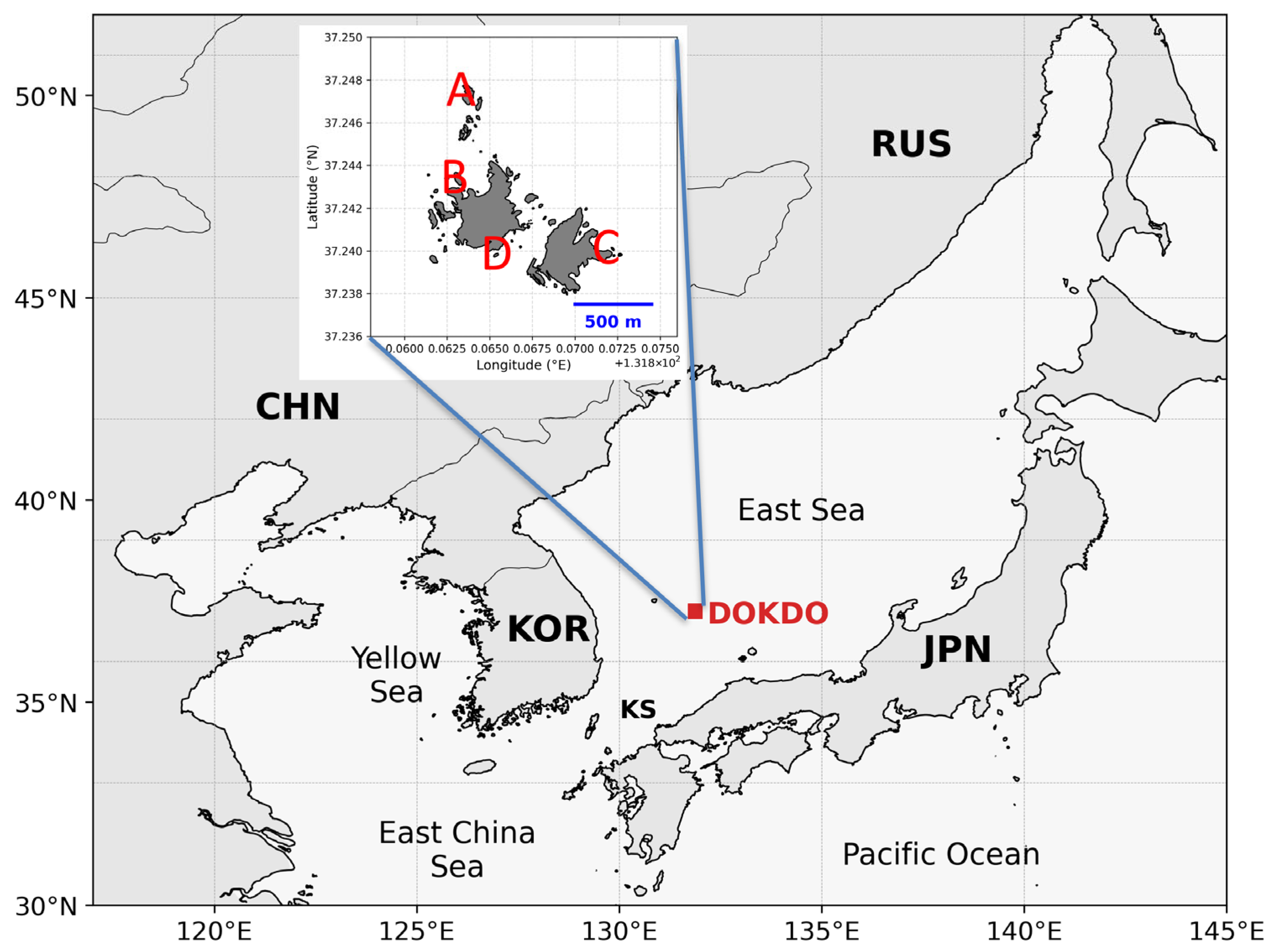
| Keun-Gajae Rock (A) | 16 | 78 | 187 |
| Jine Rock (B) | 14 | 11 | 210 |
| Dongnipmun (C) | 13 | 19 | 113 |
| Hokdom Cave (D) | 7 | 43 | 269 |
| Phase | Period | Participants | Event |
|---|---|---|---|
| 1 | 3–6 May 2024 | 90 | 2024 Wando Jangbogo Seafood Festival |
| 2 | 7–10 May 2025 | 42 | Marine Leisure Tourism Expo |
| 3 | 28–29 August 2025 | 42 | The 13th Annual Conference of the Korean Society of Coastal Disaster Prevention |
| System Usability Scale Questionnaire | ||||||
| Thank you for participating in this usability evaluation of the marine healing virtual reality (VR) content developed as part of two research and development projects supported by the Ministry of Oceans and Fisheries of Korea and conducted by the Korea Institute of Ocean Science and Technology (KIOST): Efficacy and Standardization Technology Development of Marine Healing Resources and Their Life-Cycle Safety Management and the Global Industry-Leading Research and Training Program for Innovative Human Resources in Marine Leisure Tourism. This questionnaire is designed to assess the usability of the VR content you experienced. Your responses will be used exclusively for research purposes related to evaluating the effectiveness of the content. All information will remain confidential and will not be used for any purposes unrelated to this study. | ||||||
| Please indicate the extent to which you agree with each of the following statements by selecting the box that best reflects your experience with the content. | ||||||
| Strongly Disagree | Strongly Agree | |||||
| 1 | 2 | 3 | 4 | 5 | ||
| 1 | I would be inclined to use this marine healing content on a regular basis. | □ | □ | □ | □ | □ |
| 2 | I found this content to be unnecessarily complex. | □ | □ | □ | □ | □ |
| 3 | I found the content to be easy to use. | □ | □ | □ | □ | □ |
| 4 | I believe I would require technical assistance to use this content. | □ | □ | □ | □ | □ |
| 5 | I found that the various functions of this content were well integrated. | □ | □ | □ | □ | □ |
| 6 | I felt that the content exhibited too much inconsistency. | □ | □ | □ | □ | □ |
| 7 | I believe that most users would learn to use this content very quickly. | □ | □ | □ | □ | □ |
| 8 | I found the content somewhat cumbersome to use at first. | □ | □ | □ | □ | □ |
| 9 | I felt confident while using this content. | □ | □ | □ | □ | □ |
| 10 | I would recommend this content to others. | □ | □ | □ | □ | □ |
| Category | Overall (n = 174) | Experienced ᵃ (n = 49) | Non-Experienced ᵇ (n = 125) |
|---|---|---|---|
| Male | 51.7% | 59.2% | 48.8% |
| Female | 48.3% | 40.8% | 51.2% |
| Most Common Age Group | 30–39 (24.7%) | 30–39 (26.5%) | 30–39 (24.0%) |
| High Satisfaction (Excellent/Good) | 88.5% | 87.8% | 88.8% |
| Bad Rating | 2.3% | 6.1% | 0.8% |
| Willingness to Re-Engage (Yes) | 97.1% | 100% | 96% |
| Top Preferred Content | 1st-person experience (35.6%) | 34.7% | 36.0% |
| Statistic | Value |
|---|---|
| Mean | 80.18 |
| Standard Deviation | 12.04 |
| Median | 80.00 |
| 25th Percentile (Q1) | 72.50 |
| 75th Percentile (Q3) | 86.88 |
| Item | Statement | Mean | Standard Deviation | Status |
|---|---|---|---|---|
| 1 | I would use this system frequently | 4.07 | 0.87 | Strong |
| 2 | The system is unnecessarily complex | 1.52 | 0.89 | Excellent |
| 3 | The system is easy to use | 4.55 | 0.74 | Excellent |
| 4 | I would need technical support | 2.57 | 1.23 | Fair |
| 5 | Functions are well integrated | 4.10 | 0.82 | Strong |
| 6 | The system is inconsistent | 1.79 | 0.81 | Strong |
| 7 | Most people would learn quickly | 4.55 | 0.77 | Excellent |
| 8 | The system is cumbersome to use | 2.19 | 1.19 | Good |
| 9 | I felt confident using the system | 4.31 | 0.68 | Strong |
| 10 | I would recommend this system | 4.57 | 0.59 | Excellent |
| Platform Type | Avg. SUS Score | Source/Context (Recent Research) |
|---|---|---|
| Digital health applications (physical activity apps only) | 83.28 | Meta-analysis of physical activity–focused digital health applications [44] |
| Dental software applications | 80.33 | Medit Link dental software usability study [45] |
| This study platform | 80.18 | Marine VR and Web3D digital twin platform (n = 42), this study |
| High-popularity mobile applications | 77.70 | Usability study of 15 widely used mobile apps (e.g., Facebook, Amazon) [46] |
| Digital health applications (all categories) | 76.64 | Comprehensive meta-analysis of digital health applications [44] |
| Dental software applications | 74.72 | PreTeeth AI Pro usability evaluation [45] |
| Dental software applications | 74.72 | SmileCloud software usability evaluation [45] |
| Digital health applications (excluding physical activity apps) | 68.05 | Meta-analysis excluding physical activity–focused apps [44] |
| Global Industry Benchmark | 68.00 | Sauro–Lewis Curved Grading Scale (CGS) benchmark for acceptable usability [46] |
| Expert | SUS Score |
|---|---|
| Expert A | 90 |
| Expert B | 80 |
| Expert C | 85 |
| Average | 85 |
Disclaimer/Publisher’s Note: The statements, opinions and data contained in all publications are solely those of the individual author(s) and contributor(s) and not of MDPI and/or the editor(s). MDPI and/or the editor(s) disclaim responsibility for any injury to people or property resulting from any ideas, methods, instructions or products referred to in the content. |
© 2026 by the authors. Licensee MDPI, Basel, Switzerland. This article is an open access article distributed under the terms and conditions of the Creative Commons Attribution (CC BY) license.
Share and Cite
Han, M.; Lim, H.S.; Jeon, G.-S.; Kwon, O.J. Immersive Content and Platform Development for Marine Emotional Resources: A Virtualization Usability Assessment and Environmental Sustainability Evaluation. Sustainability 2026, 18, 593. https://doi.org/10.3390/su18020593
Han M, Lim HS, Jeon G-S, Kwon OJ. Immersive Content and Platform Development for Marine Emotional Resources: A Virtualization Usability Assessment and Environmental Sustainability Evaluation. Sustainability. 2026; 18(2):593. https://doi.org/10.3390/su18020593
Chicago/Turabian StyleHan, MyeongHee, Hak Soo Lim, Gi-Seong Jeon, and Oh Joon Kwon. 2026. "Immersive Content and Platform Development for Marine Emotional Resources: A Virtualization Usability Assessment and Environmental Sustainability Evaluation" Sustainability 18, no. 2: 593. https://doi.org/10.3390/su18020593
APA StyleHan, M., Lim, H. S., Jeon, G.-S., & Kwon, O. J. (2026). Immersive Content and Platform Development for Marine Emotional Resources: A Virtualization Usability Assessment and Environmental Sustainability Evaluation. Sustainability, 18(2), 593. https://doi.org/10.3390/su18020593