Article

Geobotanical Characterisation of Plant Communities Associated with Traditional Sheep Pastoralism in North-Western Spain: Implications for Landscape Conservation Planning


by
Raquel Alonso-Redondo
1,*,
Ángel Penas
1,
Alejandro González-Pérez
1,
Francisco Javier Pérez-Barbería
2 and
Sara del Río
1,3
1
Department of Biodiversity and Environmental Management (Botany Area), University of Leon, 24071 León, Spain
2
Biodiversity Research Institute (CSIC–University of Oviedo–Principality of Asturias), Edificio de Investigación, Campus de Mieres, 33600 Mieres, Spain
3
Instituto de Ganadería de Montaña (IGM), Universidad de León-CSIC, 24071 León, Spain
*
Author to whom correspondence should be addressed.
Sustainability 2026, 18(13), 6829; https://doi.org/10.3390/su18136829 (registering DOI)
Submission received: 30 May 2026 / Revised: 30 June 2026 / Accepted: 3 July 2026 / Published: 5 July 2026

Abstract

Traditional grazing maintains essential ecosystem services, yet this activity is rapidly disappearing across Europe. Understanding the geobotanical features of traditionally grazed areas is critical for predicting biodiversity shifts driven by pastoral decline. This study provides a geobotanical characterisation of traditional sheep farms in north-western Spain. We integrated bioclimatic, phytosociological, and biogeographical approaches with spatial autocorrelation analyses, including global Moran’s I, Local Indicators of Spatial Association (LISA), and join-count tests, to assess spatial patterns in vegetation richness and plant community organisation. The results indicate that 28.22% of the studied farms were located in the Castilian Duero sector, 93.45% within the supramediterranean thermotype, and 75.46% within the subhumid ombrotype. A high diversity of vegetation was recorded, with 111 plant communities identified. These include several priority habitats of community interest within the European Union, notably belonging to the phytosociological classes Molinio-Arrhenatheretea, Festuco-Brometea, and Poetea bulbosae. This spatial approach characterises the vegetation mosaics within a fixed buffer around the holdings, although it does not directly measure actual forage use. As a key scientific novelty, this work provides, for the first time, a macro-regional and quantitatively validated integration that explicitly links broad environmental filters with localized pastoral vegetation mosaics. By providing a statistically robust diagnosis of landscape aggregation and segregation, this geobotanical characterisation serves as a fundamental tool for land managers and shepherds, contributing directly to the conservation and sustainable management of endangered traditional pastoral landscapes under changing environmental conditions.

1. Introduction and Objectives

Plant communities associated with traditional pastoralism are ecologically important ecosystems that provide key ecosystem functions. These communities, broadly referred to here as pastures and grasslands, include endemic and functionally important species and contribute to processes such as pollination, trophic interactions, water retention, carbon sequestration, and soil protection. Their conservation is therefore relevant not only because of their intrinsic natural value, but also because of the ecosystem services they provide to society [1,2,3,4].
In the European Union, the conservation of grasslands is a key priority, as they constitute habitats of community interest [5] targeted by European Habitat Action Plans to restore and maintain semi-natural dry grasslands widely used for grazing [6,7]. This challenge aligns with the EU’s strategic biodiversity objectives [8] and the United Nations’ designation of 2026 as the International Year of Rangelands and Pastoralists [9]. Similarly, the International Union for Conservation of Nature (IUCN) highlights traditional pastoral practices as effective management systems that bridge agriculture and biodiversity conservation in response to unique ecological challenges [10]. Through balanced management, these systems provide key provisioning and regulating services, such as livestock products, soil fertility, carbon sequestration, and nutrient cycling, which are vital for ecosystem resilience [11,12,13].
However, a delicate balance must be struck: while unsustainable grazing undermines ecosystem services [14,15,16], the complete removal of grazing and fire pressures leads to the disappearance of key dryland plant species [17,18]. Spain exemplifies this dynamic [19]. The progressive decline and abandonment of traditional agro-silvo-pastoral practices [5] contribute to landscape homogenisation and the loss of habitats of community interest, threatening iconic cultural and natural heritage systems such as dehesas, drovers’ roads, bocage, and hedgerows [20,21].
In Castilla y León, sheep farming has been analysed mainly from productive, structural and sustainability perspectives, including studies on dairy sheep systems in León and north-western Spain and recent assessments of small-ruminant production systems in the region [22,23]. However, spatially explicit geobotanical information on the vegetation associated with traditional sheep pastoralism remains limited. In particular, there is still a need for regional-scale analyses linking farm locations, bioclimatic and biogeographical units, phytosociological diversity, and habitats of conservation interest. While geobotany has demonstrated its rigorous applicability in land-use planning, management, and landscape conservation [24,25,26], integrated frameworks capable of characterising the full baseline of plant communities accessible to traditional sheep farming across an entire macro-region are still lacking.
As a key scientific novelty designed to bridge this gap, this study provides an integrated, multi-scale geobotanical characterisation that explicitly links macro-environmental filters with localized pastoral vegetation mosaics. This specific characterisation is urgently needed not only to understand the current spatial distribution of these systems, but also to provide a standardised reference enabling targeted planning for conservation and adaptation to climate change. To achieve this, our specific objectives are directly linked to a step-by-step spatial and statistical methodology designed to analyse traditional sheep farms in north-western Spain—a major stronghold of pastoralism in Europe. Specifically, we used GIS-based spatial intersections, bioclimatic classification, and vegetation mapping to analyse their biogeographical, bioclimatic, and phytosociological context. Additionally, we applied global and local spatial autocorrelation analyses to evaluate the spatial structure of these variables in order to determine whether their distribution follows significant territorial patterns. The study focuses on the areas of influence surrounding farms, defined cartographically using a 2 km buffer around each farm location, as a spatial approximation of the range of vegetation potentially available to grazing livestock. Although this does not constitute a direct measurement of actual vegetation use by the grazing herds present in each area, it provides a consistent basis for comparing farms and their surrounding vegetation across the study region. In addition, the spatial analyses allow us to distinguish between two complementary dimensions of vegetation pattern: the richness of plant communities present around farms and the territorial structuring of individual associations. This distinction is important because overall richness may show weaker spatial differentiation than community composition, with the latter more strongly reflecting regional biogeographical and bioclimatic filtering [27]. By integrating these dimensions, the study aims to improve our understanding of the ecological setting of traditional sheep pastoralism and to provide a scientific basis for land-use planning, conservation, and the sustainable management of pastoral landscapes under changing environmental conditions [28,29].
These objectives align with the United Nations Sustainable Development Goals (SDGs): SDG 2 (Zero Hunger) through the promotion of resilient agricultural practices; SDG 11 (Sustainable Cities and Communities) through the fostering of inclusiveness, security, sustainability, and territorial resilience; SDG 12 (Responsible Consumption and Production) through the efficient management of natural resources; and SDG 15 (Life on Land) through the advocacy of the conservation, restoration, and sustainable use of ecosystems [30].

2. Materials and Methods

2.1. Study Area
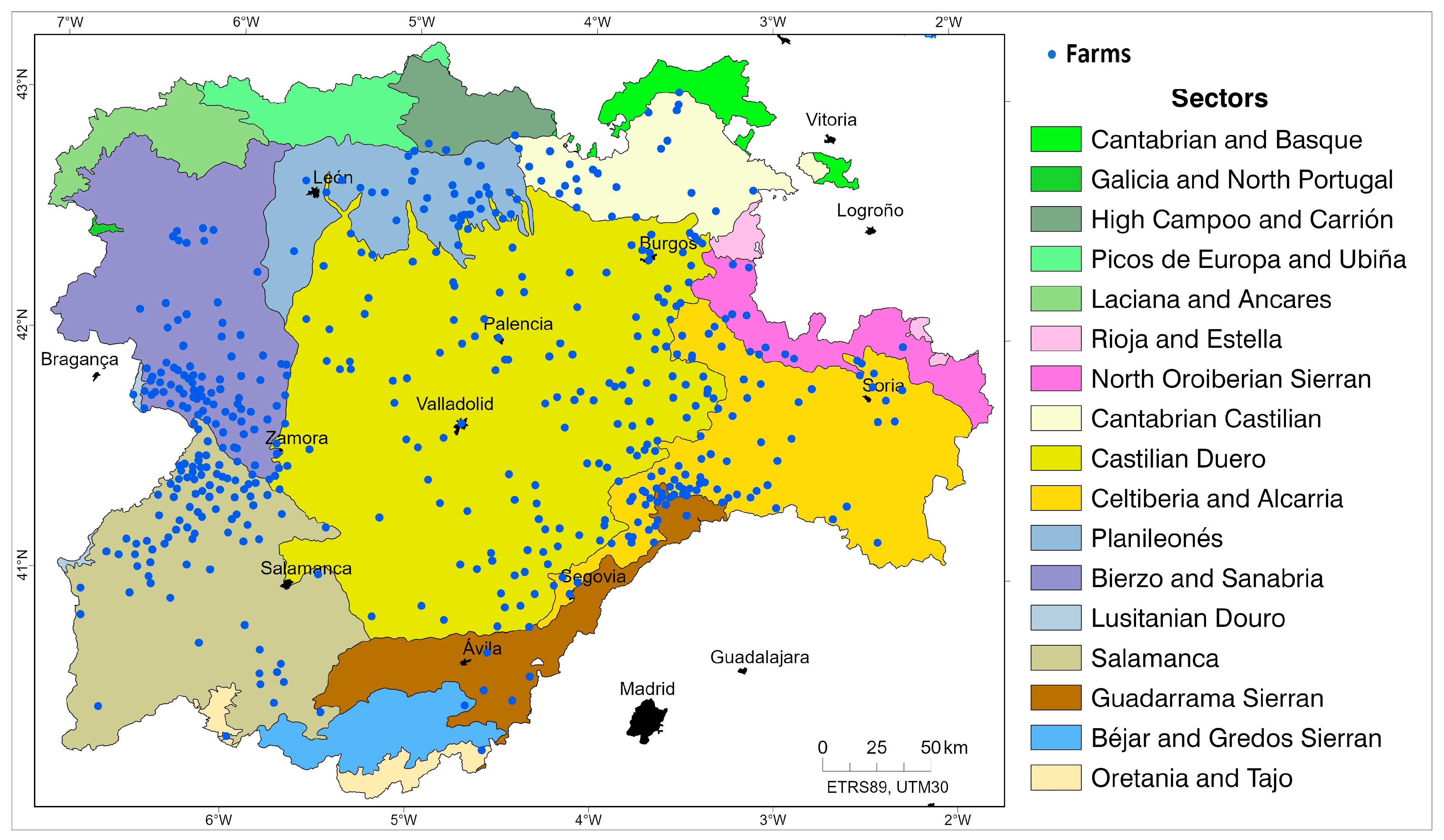
The study encompasses 489 farms located throughout the nine provinces of Castilla y León in north-western Spain (Figure 1). At 94,225 km2, it is the largest region in Europe. It is surrounded by mountain ranges, including the Cantabrian Range, the Galician-Leonese Massif, the Iberian System and the Central System. Most of its surface area is contained within a high plateau known as the Northern Meseta (Meseta Norte), which has an average altitude of 800 m above sea level and corresponds predominantly to the Duero river basin. The region boasts great landscape contrasts and high biodiversity and is home to numerous natural spaces. Its population density is one of the lowest in Spain and Europe, at approximately 26 inhabitants per km2. Much of the land is used for agriculture, primarily for growing rain-fed crops, and the region’s agricultural production represents 15% of Spain’s primary sector. Furthermore, the region has a long-standing tradition of livestock farming. The ovine sector comprises approximately 1800 farms according to data from the Junta de Castilla y León [31]. Official statistics (Ministry of Agriculture, Fisheries and Food, Spain) indicate that the region holds a major position within the sector, accounting for approximately 41% of Spanish milking ewes and around 29% of national sheep-meat production. This confirms the relevance of Castilla y León as a key territory for the study of sheep farming, pastoral landscapes and associated semi-natural vegetation.
The sheep farms included in this study were selected based on their membership of the Protected Geographical Indication (PGI) ‘Lechazo de Castilla y León’. This PGI constitutes an institutionally defined and quality-certified subset of sheep farms distributed across the autonomous community and linked to local sheep breeds and lamb production. We do not assume that these farms are statistically representative of all sheep farms in Castilla y León; rather, they provide a consistent and traceable sampling frame for analysing the geobotanical context of sheep farms associated with a traditional regional production system.
For the purposes of this study, traditional pastoralism was operationally defined as a management system in which flocks are guided daily by shepherds and make regular use of local natural or semi-natural pastures. This optimises pasture use and is considered compatible with biodiversity conservation. This operational definition is consistent with broader descriptions of pastoralism as a livestock system based on mobility, grazing-resource use and shepherd-mediated management [32]. Based on one year of data on the grazing routes of 17 collaborating flocks (a subset of the farms), we calculated the distance between the farm location and the outermost recorded grazing points, and then estimated the mean radius of the effectively grazed area across flocks, which resulted in an average grazing radius of 3338 m (SD = 1184 m). The observed grazing-route information guided the choice of buffer size for the phytosociological analysis (see Section 2.2).
Figure 1. Study area in north-western Spain showing the location of farms and identified biogeographical units. Data source: Ref. [33].
Sustainability 18 06829 g001

2.2. Methods

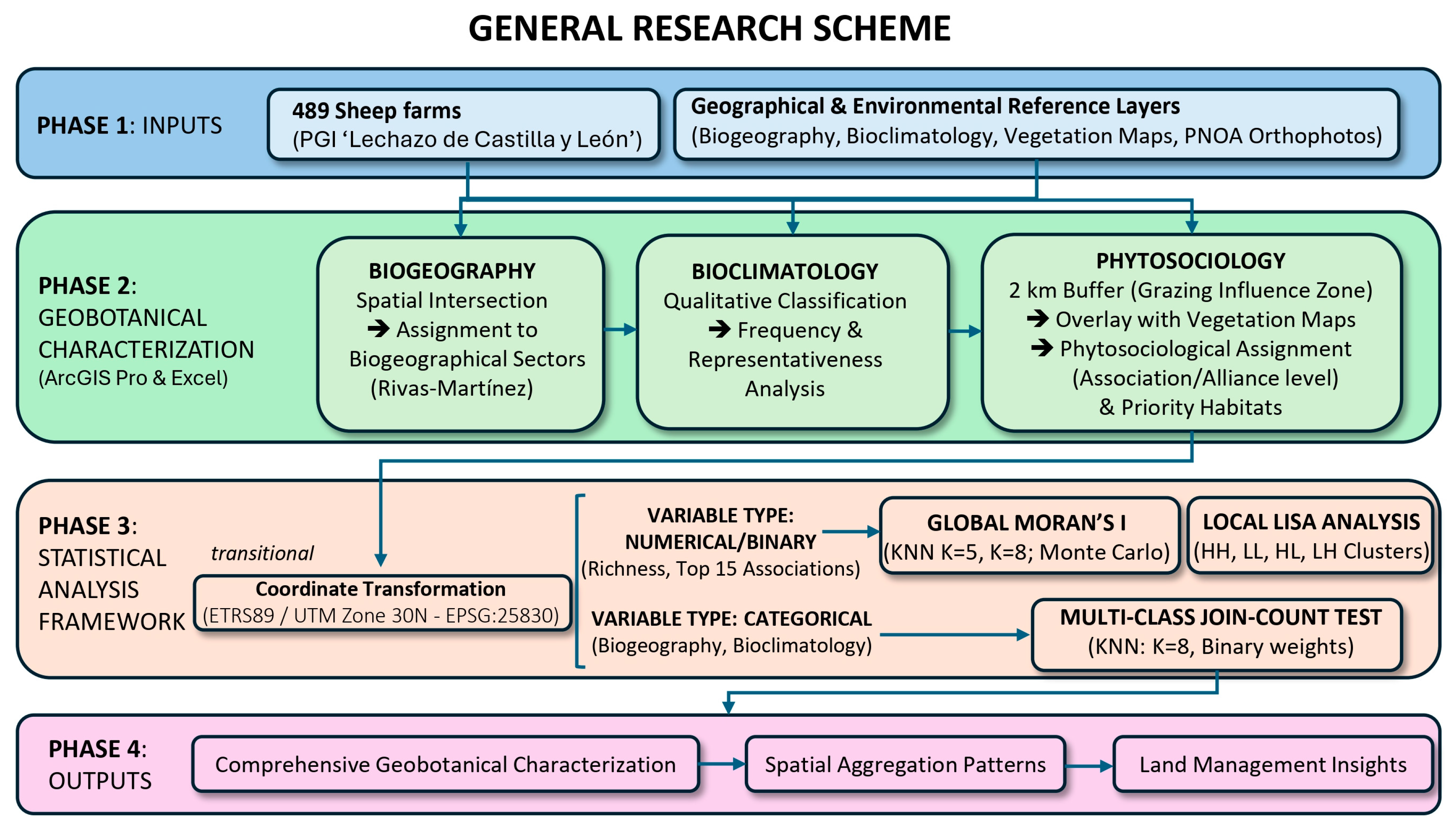
To provide a comprehensive overview of the methodological stages and techniques used in this study, a general research scheme is illustrated in Figure 2. We conducted a geobotanical characterisation of the traditional sheep grazing farms under study, applying the latest biogeographical, bioclimatological and phytosociological approaches. Additionally, we applied spatial autocorrelation analysis to identify patterns of aggregation and segregation in the landscape, providing a statistically robust framework for the study. For the biogeographical characterisation, we adopted the approach proposed by Rivas-Martínez et al. [33] for the delineation of biogeographical units in the Iberian Peninsula, identifying them at the sector level for each farm under study. We generated the shapefile of the biogeographical sectors of Castilla y León using the polygon shapefile from the Biogeographic Map of the Iberian Peninsula and Balearic Islands as a basis. Through a spatial intersection of the farm point layer and the sector polygon layer, each farm was assigned to its corresponding unit. This analysis was performed using ArcGIS Pro 3.4.3 software [34].
We applied the worldwide bioclimatic classification of Rivas-Martínez et al. [31] to assign each farm to a qualitative bioclimatic category. After integrating the farms’ geographical information with the bioclimatic units, we processed the data in Microsoft Excel version 365 to analyse the representativeness and frequency of each unit within the studied sample.
To conduct the phytosociological analysis of the plant communities present on the studied farms, we generated a polygon shapefile incorporating a 2 km buffer around each farm presence point. The purpose was to establish a map of the farms’ zones of influence that included the diversity of plant communities potentially available to the livestock, considering the mean radius of the effectively grazed area estimated from information provided by the shepherds of the collaborating flocks. This boundary represents a spatial approximation of accessible vegetation. It does not imply a direct measurement of actual vegetation consumption, grazing pressure, or livestock intensity. The 2 km radius was selected as a conservative threshold to represent the core zone of influence of each farm. Although survey data from a subset of these farms indicated an estimated average grazing radius of 3.3 km, livestock pressure and management intensity naturally follow a distance-decay gradient from the farm base, concentrating the highest frequency of use in the immediate surroundings [35]. Therefore, the 2 km buffer intentionally captures this inner core foraging area. Given that specific grazing distances were not available for the entire dataset, applying this uniform, conservative radius effectively minimizes localized spatial overlap in clustered areas and avoids peripheral landscape noise [36], ensuring a standardised characterisation consistent with spatial studies in European mountain farming systems [37]. A larger buffer zone would likely overestimate the area accessible on a daily basis and would include more peripheral or occasional communities, although it would not alter the main regional patterns, as macro-environmental filters (biogeography and bioclimatology) remain stable at this close spatial scale. This buffer shapefile was overlaid onto the online polygon shapefile available for the Natural and Semi-natural Habitats Maps of Spain at a 1:50,000 scale [38], as well as the polygon shapefile of the Vegetation Map of the Natural Spaces of Castilla y León at a 1:10,000 scale [39] and the Forest Map of Spain in Castilla y León at a 1:25,000 scale [40]. In cases where there was insufficient vegetation data within these layers for the studied farm areas, digital orthophotos of the territory at a 1:25,000 scale with the ETRS89/UTM zone 30N geodetic system from the National Aerial Orthophotography Plan [41] were incorporated, enabling the completion of plant community identification within the farms’ zones of influence. These interpretations were further supported by the authors’ expert knowledge and previous field experience in the region, as well as their involvement in the development of these official cartographies. With all this information and utilising the Spatial Analyst tools in ArcGIS, a database of the vegetation types associated with each farm was generated in Excel. To handle scale differences, layers were spatially harmonized in the GIS environment, prioritizing the highest available resolution (1:10,000 and 1:25,000) for data extraction and resolving spatial mismatches. Nomenclatural errors, synonymies, and location errors were corrected, and an identification field containing the generic physiognomic name of the vegetation type was included. Uncertainty in vegetation classification was minimized by cross-referencing cartographic data with high-resolution digital orthophotos and a literature review of the Vegetation Series Map of Spain [42]. This entire process allowed for the phytosociological assignment of the vegetation types present down to the most detailed level possible: the association level or, if this was not possible, the phytosociological alliance level. Finally, the vegetation types were grouped by phytosociological affinity to determine the most represented phytosociological classes within the areas of influence of the farms, and a descriptive statistical analysis was performed in Excel to determine the frequency of occurrence of plant communities at the phytosociological association level in these zones. Furthermore, the presence of priority habitats according to the European Habitats Directive [43,44] within the zones of influence of the studied farms was analysed.
Once the geobotanical characterisation of the farms had been obtained in the GIS environment, the resulting information was integrated into a statistical analysis framework in order to evaluate its spatial structure and identify potential patterns of aggregation or segregation across the territory. To this end, the spatial autocorrelation of the variables was evaluated using the statistical procedures outlined below. The possible existence of spatial autocorrelation depended on the type of variable analysed. The spatial structuring of the plant communities associated with the analysed farms was therefore assessed using global and local spatial autocorrelation analyses. First, phytosociological richness was analysed, defined as the number of distinct plant communities present within a 2 km radius of each farm. To ensure proper calculation of metric distances, the geographical coordinates of the farms were transformed into a projected reference system (ETRS89/UTM Zone 30N; EPSG:25830).
Global spatial autocorrelation was evaluated using global Moran’s index [39,40,41] to determine whether farms located close to one another tended to show similar levels of phytosociological richness. Based on the geographical coordinates of the farms, spatial neighbourhoods were defined using the K-nearest neighbours (KNN) method. Two neighbourhood sizes were tested, K = 5 and K = 8, in order to verify that the results were not dependent on a single definition of spatial proximity. Statistical significance was assessed using Monte Carlo permutation tests with 999 random simulations [45]. The spatial organisation of individual plant associations was analysed by converting each association into a binary presence/absence variable for each farm. To ensure robust interpretation, this analysis was restricted to the 15 most frequent associations in the dataset.
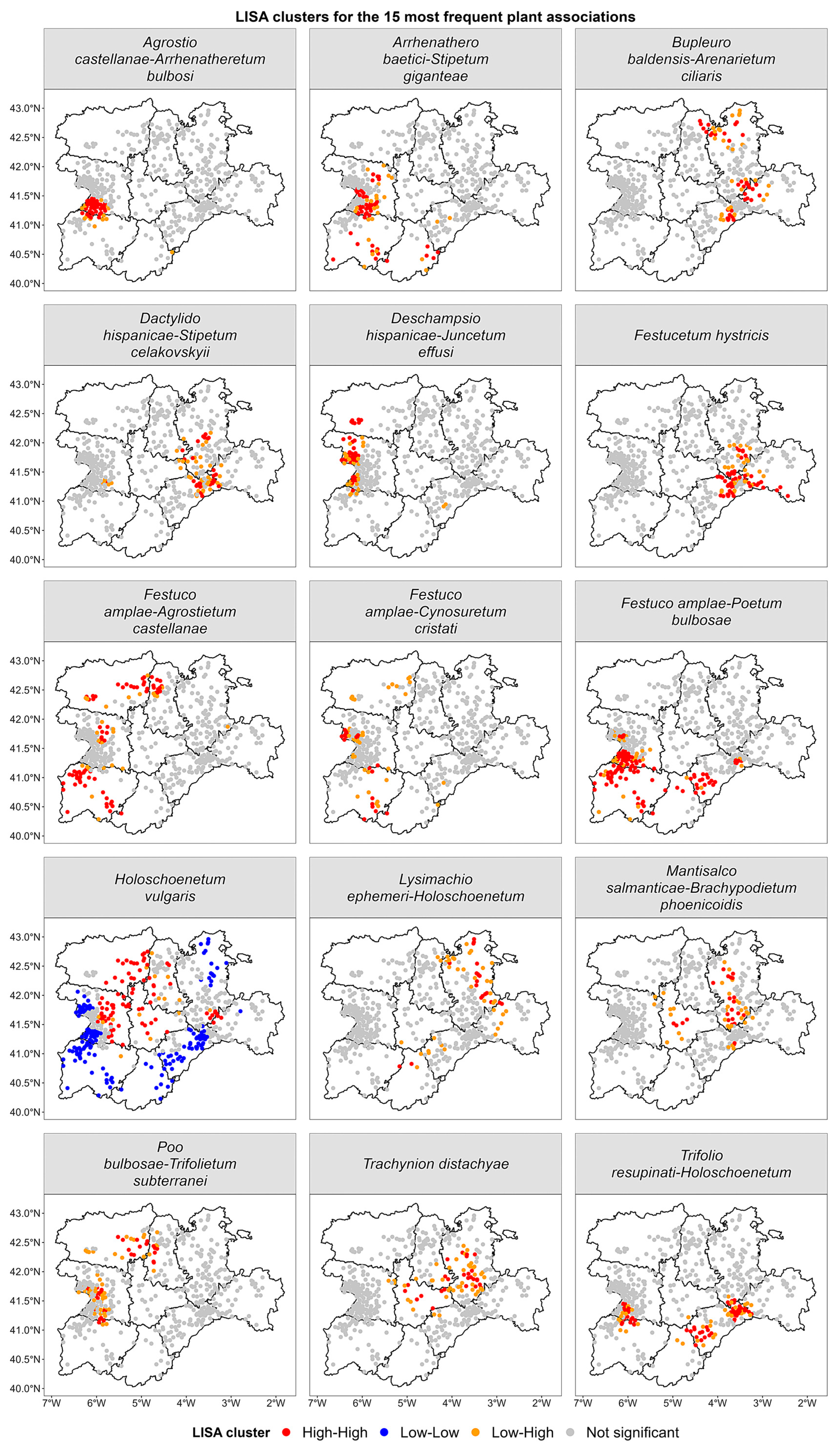
Additionally, a local spatial autocorrelation analysis using Local Indicators of Spatial Association (LISA) [46] was performed on the associations showing the highest global autocorrelation. LISA enabled the identification of the specific areas where plant associations formed significant local clusters, thereby revealing territorial cores of presence, absence, or spatial transition.
To evaluate the spatial clustering of categorical variables (bioclimatology and biogeography), the multi-class join-count test was applied [46,47,48]. This test assessed whether neighbouring farms belonged to the same categories more often than expected by chance. The analysis was implemented using the spdep package in R, following the procedures described by Bivand et al. [49]. All previous analyses were performed in the R environment (software version 4.0.2) [50], utilising the sf package for spatial data management and the spdep package for constructing weight matrices and calculating spatial autocorrelation.
This study aims to provide a comprehensive characterisation of the natural vegetation in grazed areas by integrating biogeographical, bioclimatic and phytosociological data. This approach is crucial for evaluating the effects of traditional sheep grazing on biodiversity conservation and maintenance, and the associated ecosystem services. Furthermore, the study’s findings are intended to help stakeholders make rational use of resources, conserve the landscape, and manage land effectively.

3. Results

3.1. Biogeographical and Bioclimatic Distribution of Farms

The GIS-based spatial analysis of the 489 extensive livestock farms revealed a clear spatial pattern closely associated with the geobotanical features of the studied territory. This indicates that traditional livestock systems in north-western Iberia are closely linked to the natural environment, as widely documented in the Iberian pastoral literature [51,52]. The hierarchical biogeographical framework identified two distinct biogeographical regions—Mediterranean and Eurosiberian—comprising a total of three provinces (Central Iberian Mediterranean, Western Iberian Mediterranean, and European Atlantic), five subprovinces (Castilian, Oroiberian, Carpetania and León, Lusitania and Extremadura, and Orocantabrian), and thirteen biogeographical sectors. Of all the biogeographical sectors within the Mediterranean region, the Castilian Duero sector exhibited the highest density of livestock farms, representing 28.22% of the total number of holdings within the study area (see Figure 1 and Table 1). This sector is physically characterised by base-rich substrates, gentle relief and slopes, and the presence of open or sparsely wooded evergreen forests dominated by holm oak, with a predominance of semi-natural grasslands. In other Mediterranean areas, such as the Bierzo–Sanabria–Salamanca contact zone, a prominent density of farms is also observed. Conversely, in the Eurosiberian region, farm density is notably low.
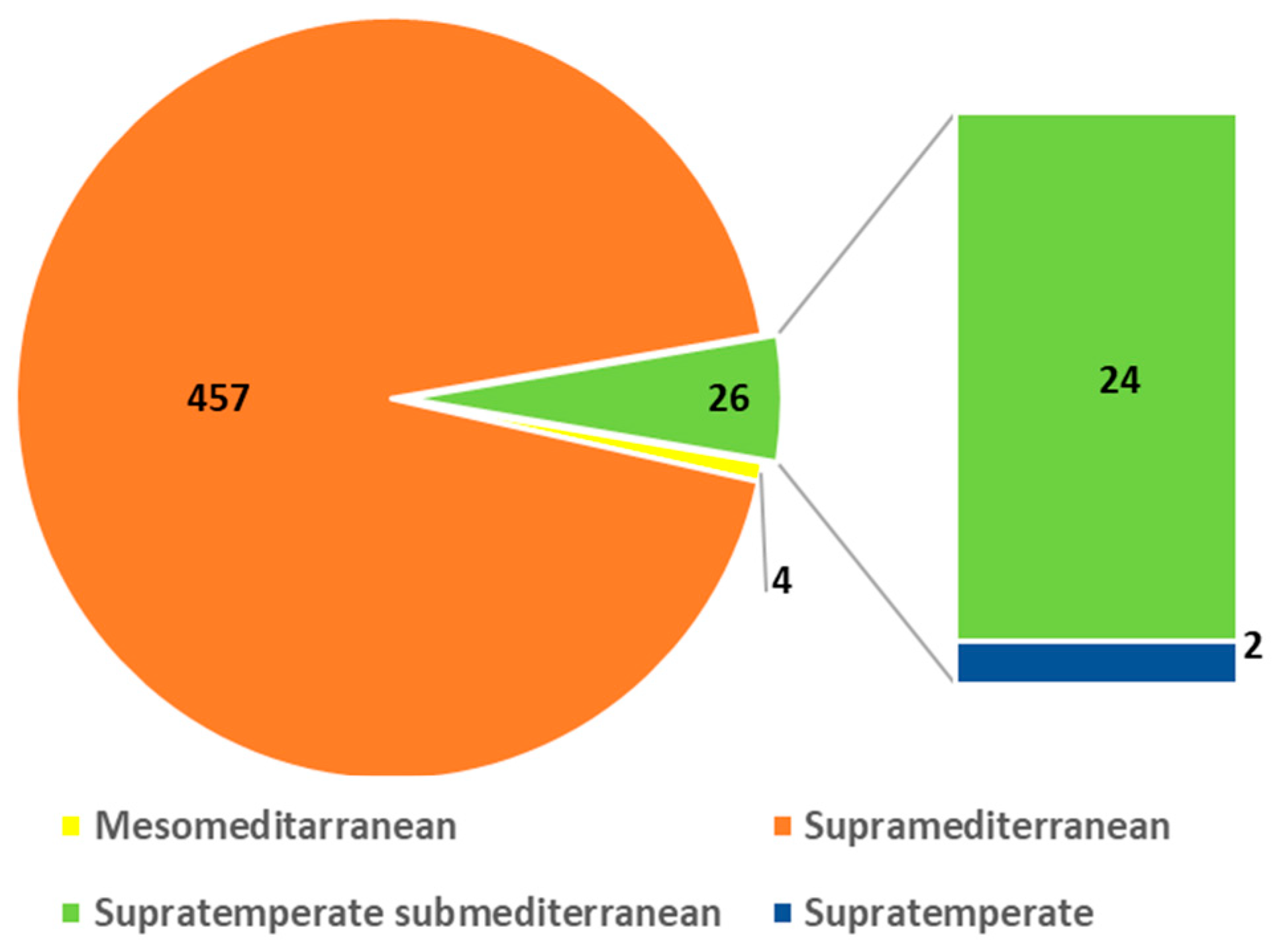
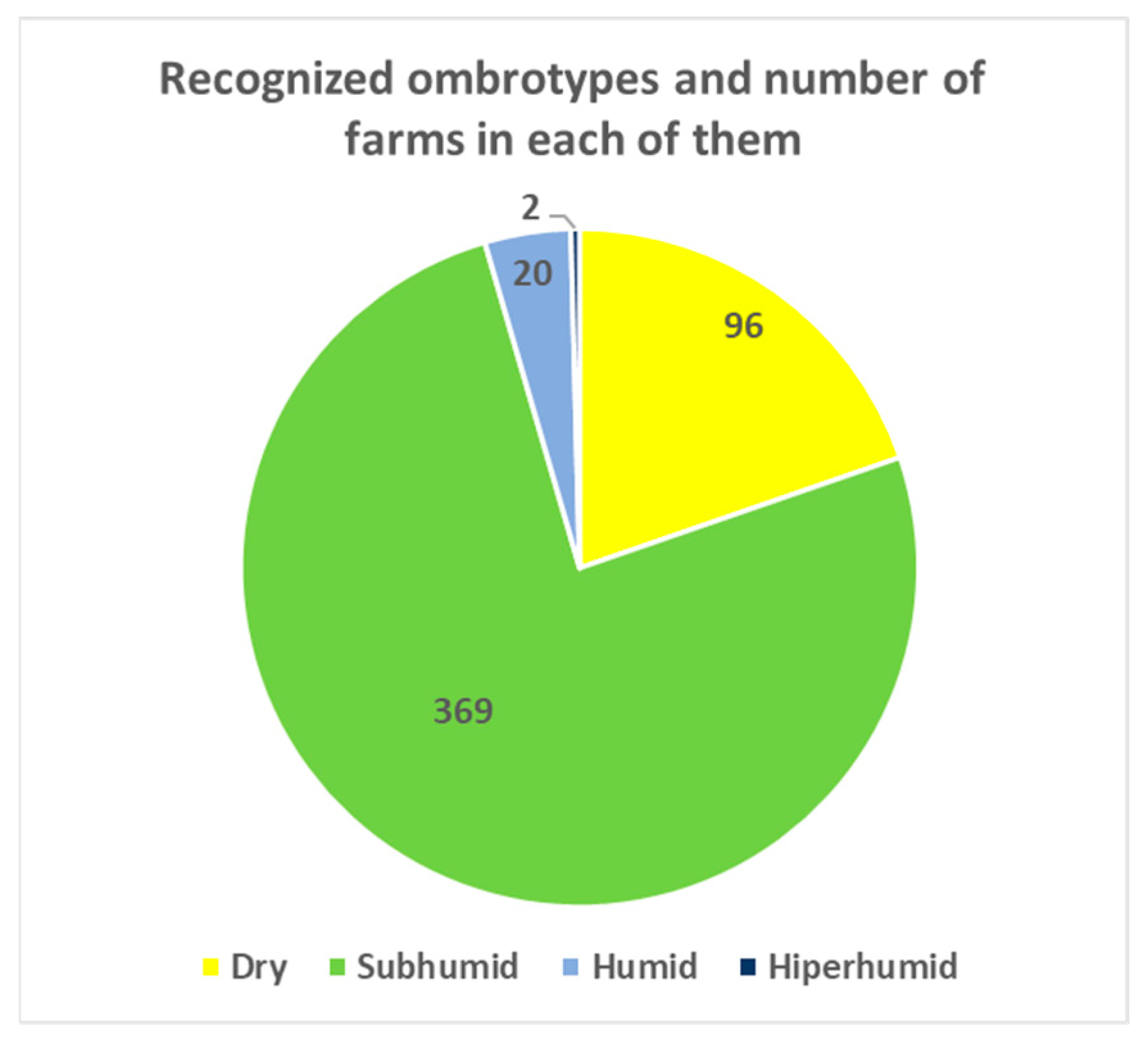
From a bioclimatic standpoint, the study area is overwhelmingly dominated by Mediterranean conditions, with a clear prevalence of supramediterranean and subhumid environments. Specifically, the supramediterranean thermotype represents 93.45% of the total farms, whereas the supratemperate thermotype is the least represented, accounting for only 0.4% (Figure 3). Regarding the ombrotypes, the subhumid type is found in 75.46% of the farms, far ahead of the dry type at 19.63%, while the hyperhumid type is the least prevalent at 0.4% (Figure 4). Based on summer drought conditions (ombrothermic index Ios2 < 2), two main bioclimates were identified: Mediterranean pluviseasonal oceanic and Temperate oceanic with a submediterranean variant.

3.2. Phytosociological Characterisation and Priority Habitats

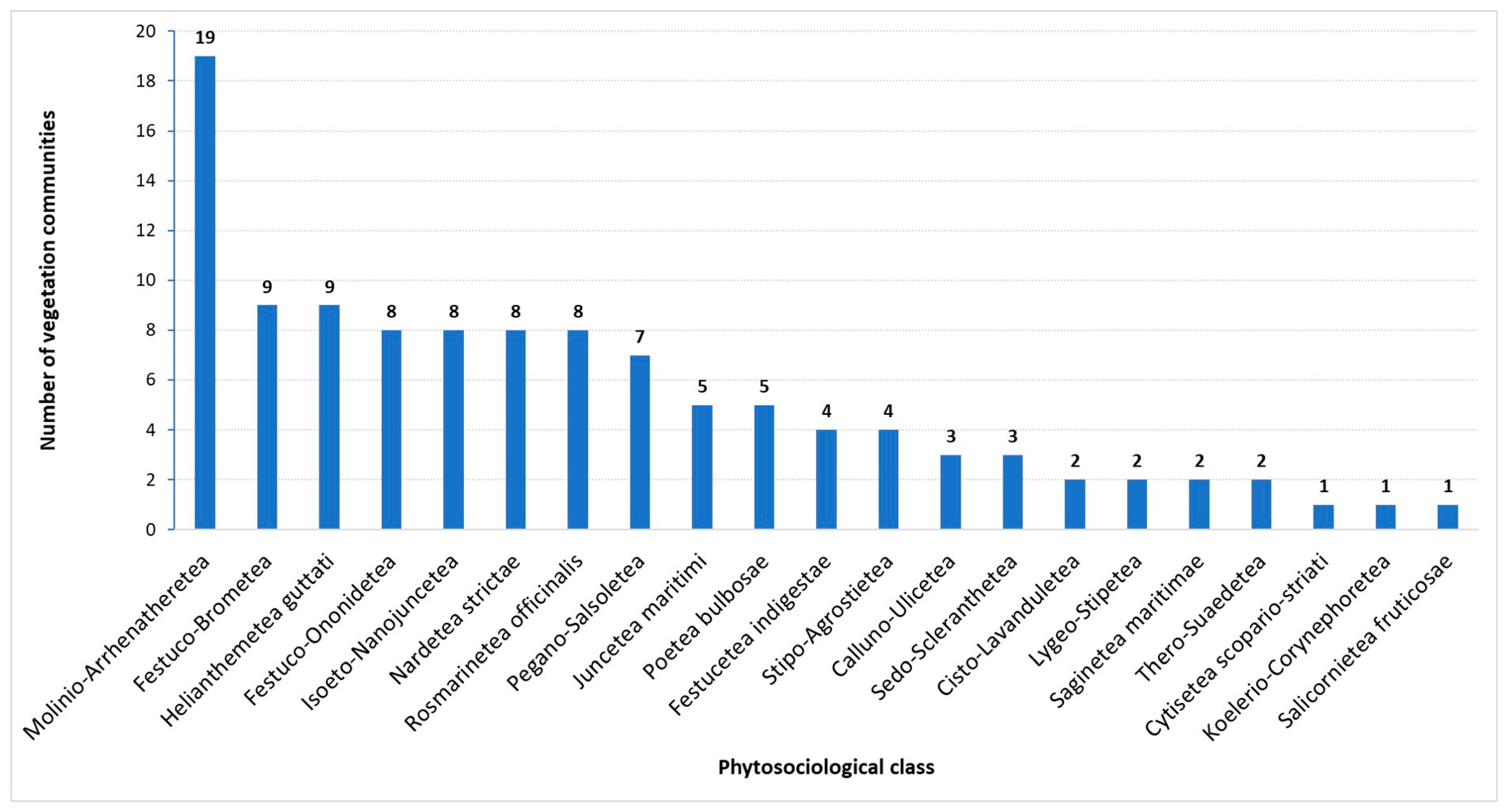
A total of 21 phytosociological classes and 111 plant communities were identified in the areas surrounding the surveyed farms, where natural pastures form complex arrangements with scrublands and forests. Spatial analysis indicated that the predominant vegetation cover belongs to the grassland and meadow phytosociological classes of Molinio caeruleae-Arrhenatheretea elatioris, Festuco valesiacae-Brometea erecti, and Poetea bulbosae, reflecting different humidity, productivity, and seasonal variation gradients. Among these, Molinio-Arrhenatheretea communities form mesophilic pastures and meadows on relatively deep soils with high water availability. Festuco-Brometea grasslands are xerophilic and develop on calcareous substrates, with Brachypodium phoenicoides being documented as a dominant and characteristic species in these pastures [52,53,54]. Finally, Poetea bulbosae communities form seasonal ‘majadales’ in drier environments, including legumes of the genera Trifolium, Astragalus, and Medicago [55], notably represented by the Festuco amplae–Poetum bulbosae association.
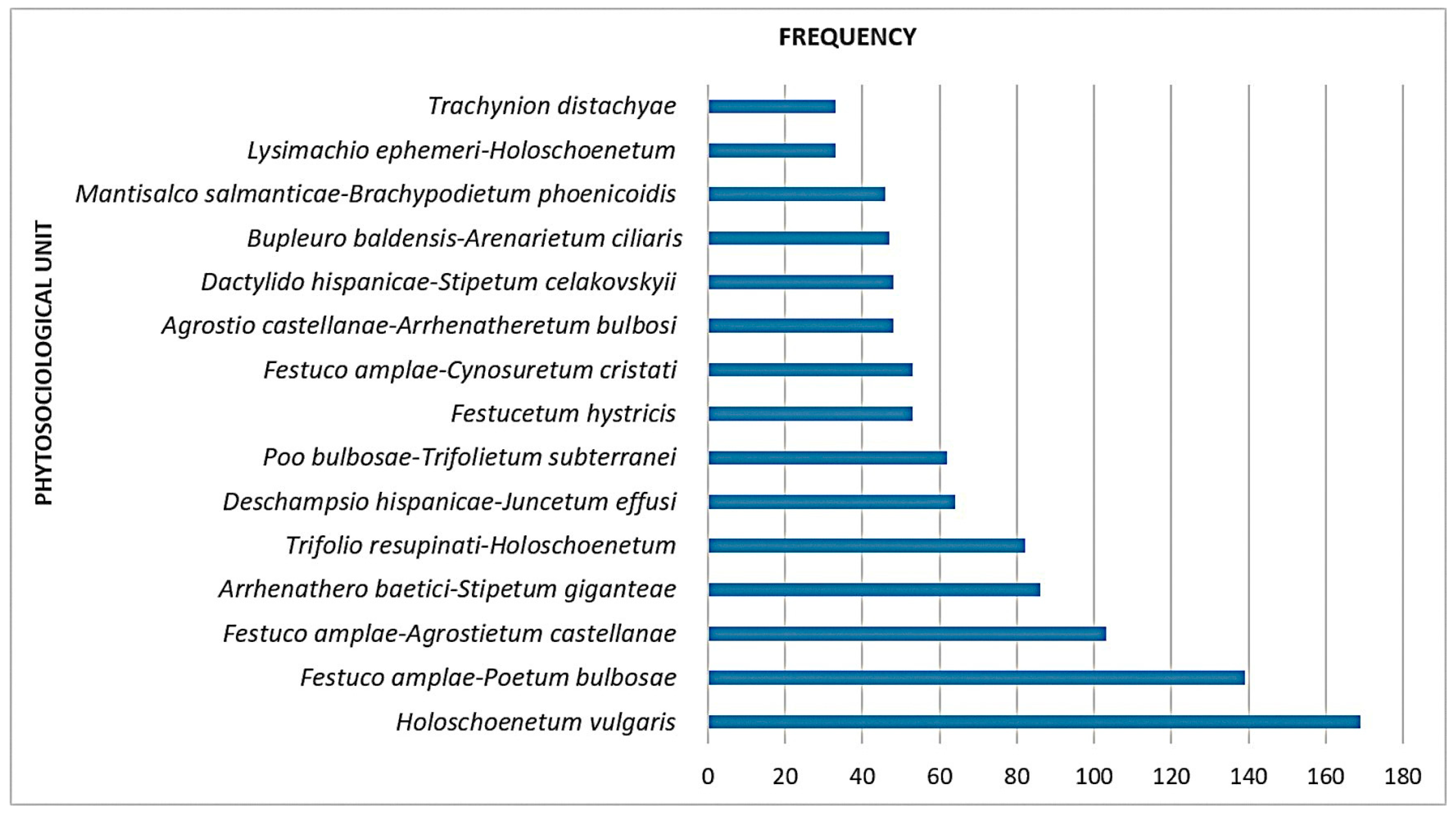
At a more detailed scale, the analysis shows that the most frequent associations in the farm environment are Holoschoenetum vulgaris, Festuco amplae-Poetum bulbosae, Festuco amplae-Agrostietum castellanae, and Arrhenathero baetici-Stipetum giganteae (Figure 5 and Figure 6). The spatial arrangement of these communities shows that terrains with different levels of soil moisture regularly coexist near the farms within agro-silvo-pastoral units, where livestock use coexists with crops, pastures, and degraded forest lands. Consequently, drier grasslands, such as Festuco amplae-Agrostietum castellanae and Festuco amplae-Cynosuretum cristati, occur near more water-demanding communities, such as Holoschoenetum vulgaris, Trifolio resupinati-Holoschoenetum vulgaris, and Deschampsio hispanicae-Juncetum effusi. This pattern suggests site selection based on forage availability, accessibility, and water points. Furthermore, 26% of the identified communities (29 out of 111) are priority habitats under the European Union’s Directive 92/43/EEC. Specifically, the following habitats were identified: 6220*, Pseudo-steppe with grasses and annuals of the Thero-Brachypodietea; 6230*, Species-rich Nardus grasslands on siliceous substrates in mountain and sub-mountain areas of continental Europe; 3170*, Mediterranean temporary ponds; 4020*, Temperate Atlantic wet heaths with Erica ciliaris and Erica tetralix; and, more locally, 1520*, Iberian gypsum vegetation (Gypsophiletalia) and 6110*, Semi-natural dry grasslands and scrubland on calcareous substrates (Festuco-Brometalia) acting as important orchid sites. Of these, the association of high pastoral interest, Festuco amplae–Poetum bulbosae, is particularly notable, as it is widely represented in the territory and recognised within habitat type 6220*. A full list of all vegetation types identified at the association or alliance level is included in the Supplementary Materials (Table S1).

3.3. Spatial Autocorrelation Analysis

Global spatial autocorrelation analysis revealed a moderate, statistically robust spatial structuring of plant association richness within a 2 km radius of the sheep farms [56,57]. Using K-nearest-neighbour spatial weights, global Moran’s I was positive and significant for both K = 5 and K = 8. It indicated that the pattern was robust to reasonable changes in the neighbourhood definition. An individual spatial autocorrelation analysis of the fifteen most frequent plant associations yielded positive Moran’s I values ranging between 0.21 and 0.75. These values were statistically significant in all cases (p < 0.01 in Monte Carlo tests), indicating a clear regionalisation of the plant communities. Particularly high values were observed in the associations Agrostio castellanae–Arrhenatheretum bulbosi, Festuco amplae–Poetum bulbosae, and Festucetum hystricis, suggesting that these specific communities are strongly spatially structured and concentrated in defined areas of the studied territory. The distinct ecological and management requirements may therefore explain the strong spatial structuring of these associations. For instance, Agrostio castellanae–Arrhenatheretum bulbosi occurs in traditionally managed meadows whose composition and distribution are influenced by soil moisture and nutrient availability [58]. Festuco amplae–Poetum bulbosae is a siliceous supramediterranean pasture found under subhumid to humid conditions [52] and belongs to the class Poetea bulbosae, which is closely associated with recurrent sheep grazing [59]. In contrast, Festucetum hystricis is characteristic of calcareous grasslands [60].
Local Indicators of Spatial Association (LISA) further identified heterogeneous spatial patterns in the distribution of plant communities around the analysed sheep farms (Figure 7). Some associations formed clearly defined local clusters, whereas others showed a more fragmented or dispersed distribution across the study area.
The difference between the moderate spatial autocorrelation of total richness and the stronger regionalisation of individual associations indicates that vegetation diversity and vegetation composition are organised differently across the territory. Total richness showed only a moderate spatial structure, meaning that neighbouring farms tended to contain a broadly similar number of plant communities. However, individual associations showed stronger spatial clustering, indicating that the specific communities present around farms varied more clearly among regions.
The multi-class join-count tests showed that neighbouring farms belonged to the same biogeographical units or bioclimatic categories more often than would be expected under spatial randomness. For biogeographical units, the strongest clustering was observed in the Salamanca sector (z = 41.24), Bierzo and Sanabria sector (z = 41.19), Cantabrian Castilian sector (z = 39.02), Planileonés sector (z = 38.34), Castilian Duero sector (z = 32.84), and Celtiberia and Alcarria sector (z = 30.47). For bioclimatic units, the highest values were found in the Mediterranean pluviseasonal-oceanic supramediterranean dry (z = 25.34), followed by the supramediterranean subhumid (z = 18.63) and the Temperate oceanic submediterranean supratemperate subhumid (z = 15.13). These results indicate that the spatial distribution of traditional sheep farms is not random with respect to biogeographical and bioclimatic units, but follows a coherent territorial structure, complementing the Moran’s I and LISA results obtained for phytosociological richness and plant associations.

4. Discussion

4.1. Environmental Determinism and Landscape Drivers

The strong clustering of traditional sheep farms across the region of Castilla y León indicates that their distribution is associated with regional ecological boundaries [28,47,61]. This pattern is more consistent with environmental regionalisation than with spatial randomness. Broad-scale biogeographical and bioclimatic gradients operate as primary environmental filters that shape the pastoral landscape [62]. This macro-spatial pattern is reflected in the marked concentration of farms in Mediterranean territories, which offer optimal conditions for this activity. Within this configuration, the Castilian Duero sector emerges as the most extensively occupied area where base-rich soils, gentle slopes, and an abundance of semi-natural grasslands create environmental conditions that directly enhance livestock productivity, reflecting a long-standing pastoral tradition. In other Mediterranean areas, such as the Bierzo–Sanabria–Salamanca contact zone, the environmental template manifests differently; the presence of acidic, infertile soils makes intensive agriculture less viable, meaning these spaces are naturally dedicated to traditional extensive systems, acting as crucial reservoirs of natural and semi-natural vegetation that contribute to the functional balance of the landscape. Conversely, environmental limitations within the Eurosiberian region, such as reduced grazing space, rugged terrain, and steep slopes, naturally restrict farm density. Our bioclimatic results reinforce this interpretation. The combination of a supramediterranean thermotype and a subhumid ombrotype appears to provide an optimal equilibrium between bioclimatic conditions, natural resource availability, and traditional cultural practices. This enables pastures to exist regularly over time, thereby acting as an important environmental filter.
At a landscape level, the turnover model indicates that farms are preferentially located within agro-silvo-pastoral units where regional abiotic constraints interact dynamically with local topography, soil hydrology, and land-use histories, reflecting the heterogeneous and multifactorial nature of Mediterranean livestock landscapes [19,63,64]. The presence of well-defined spatial blocks suggests that sheep farms are embedded within relatively coherent regional ecological units that directly affect the availability and quality of forage resources. Because different plant associations exhibit contrasting floristic compositions and functional traits, spatial differentiation in their syntaxonomic identity—rather than differences in total richness—has significant functional implications. Consequently, the observed spatial structure reflects bioclimatic and biogeographical patterns that may correspond to differences in pastoral productivity, seasonality, and resilience. These findings suggest that traditional pastoralism is closely linked to the preservation of the region’s natural landscape and cultural heritage.

4.2. Pastoral and Ecological Significance of the Identified Communities

The identification of 21 phytosociological classes around the surveyed farms highlights the remarkable geobotanical diversity maintained by these systems. This syntaxonomic richness represents approximately 28.4% of the 74 phytosociological classes described for the Iberian Peninsula and the Balearic Islands [42]. This finding underscores the critical role of these extensive livestock systems in preserving macro-vegetational complexity at a regional scale.
From a pastoral perspective, the high phytosociological diversity observed indicates that traditional sheep farms are strategically embedded within heterogeneous landscapes that offer complementary forage resources distributed across environmental gradients. Mesophilic meadow communities belonging to the Molinio-Arrhenatheretea class provide highly productive forage under more humid conditions in spring and summer, whereas xerophilic Festuco-Brometea grasslands contribute stable, high-quality resources under drier regimes. Furthermore, the distinct Mediterranean character of the Poetea bulbosae communities offers essential early spring grazing due to the rapid growth of therophytic vegetation, pointing to a long-standing relationship between traditional livestock practices and vegetation dynamics. At a more detailed scale, the recurrent presence of associations occupying different parts of the environmental gradient—from wetter depressions and stream margins with water points (Holoschoenetum vulgaris, Trifolio resupinati-Holoschoenetum, and Deschampsio hispanicae-Juncetum effusi) to shallower or well-drained soils (Festuco amplae–Poetum bulbosae and Festuco amplae–Agrostietum castellanae) and old cultivated margins (Arrhenathero baetici–Stipetum giganteae)—further illustrates this spatial complementarity. For instance, Holoschoenetum vulgaris communities play an important role as a grazing resource once other areas have dried out, despite their relatively low forage value, while Festuco amplae–Poetum bulbosae is heavily utilised by livestock in spring when its biomass is at its maximum.
Ecologically, the importance of these communities extends beyond forage provision. Many of the identified vegetation types are characterised by high floristic richness and are associated with semi-natural systems of recognised conservation value. Notably, 26% of the identified communities correspond to priority habitats under the European Habitats Directive. This reinforces the idea that traditional sheep pastoralism persists in territories where livestock activity overlaps with habitats of high conservation interest. The results do not demonstrate a direct causal effect of grazing on the maintenance of these habitats, but they do show that traditional sheep farms are spatially associated with landscapes containing a substantial proportion of priority or otherwise valuable semi-natural vegetation. In this context, the continuity of extensive livestock farming based on traditional grazing, transhumance, and sustainable forage management is widely considered a key functional component for the stability and resilience of these habitat types. Within these systems, livestock activity potentially functions as an intermediate disturbance mechanism that helps maintain landscape heterogeneity and deliver critical ecosystem services. These include landscape connectivity, natural fertilisation, biodiversity maintenance, microclimatic regulation, carbon sequestration, water cycle regulation, protection against drought and erosion, shelter and sustenance for wildlife, and wildfire hazard reduction through biomass control. Therefore, conserving these agro-silvo-pastoral mosaics should be a priority in land-use planning. The reduction or abandonment of these practices represents a significant threat that risks leading to a loss of structural heterogeneity and a decrease in species diversity. This compromises the maintenance of several priority habitats that the literature describes as highly associated with grazing, such as the ‘majadales’ of the Poetea bulbosae class [65].

4.3. Implications for Management and Conservation

This study provides a robust geobotanical baseline for the distribution of traditional sheep farms. However, this characterisation is structural; it does not directly assess actual grazing intensity, fine-scale vegetation consumption, or the immediate impacts of livestock management on vegetation dynamics. Furthermore, forecasted climate change scenarios imply that variations in temperature and drought regimes may alter pasture phenology, forage quantity, and the balance among the vegetation communities currently associated with these subhumid supramediterranean environments. In this sense, the diversity of vegetation associated with traditional livestock activities may enhance the landscape’s resilience to climate change, making geobotanical information essential for the proper planning of these livestock practices. This natural and cultural heritage is vital for ensuring the long-term sustainability of rural areas, as it combines the conservation of natural resources with the maintenance of local knowledge and practices, helping to sustain rural communities and prevent abandonment and depopulation [66]. Crucially, the long-term preservation of this socio-ecological heritage depends on understanding how this vegetation diversity is structured across the territory.
In ecological terms, our spatial findings demonstrate that many farms support comparable levels of vegetation diversity, but this diversity is not composed of the same plant associations everywhere. Instead, plant communities are replaced across the territory according to biogeographical, bioclimatic, edaphic, and land-use gradients. This pattern reflects the mosaic nature of Mediterranean pastoral landscapes, where different combinations of wet meadows, dry grasslands, scrublands, and woodland edges occur in different areas [48]. These results align with landscape-scale dynamics observed in other European and Mediterranean pastoral systems where extensive grazing maintains high habitat heterogeneity [67,68,69].
From a management perspective, these results indicate that conservation should not focus only on maintaining high numbers of plant communities around farms. It is also important to preserve the regional mosaics and local clusters of specific plant associations, because they provide complementary forage resources, support different habitat types, and contribute to the ecological resilience of traditional sheep pastoral systems.

4.4. Limitations and Future Research Directions

While the present study establishes a robust, macro-regional, and geobotanical baseline for the territorial distribution of traditional sheep farms, certain limitations must be acknowledged to guide future investigations. Because our spatial analysis is based on the geobotanical characterisation of a 2 km buffer zone around the holdings, it provides a comprehensive structural and descriptive baseline of the vegetation mosaic, but it does not determine the exact floristic composition of the livestock’s actual diet or selective grazing behavior. Consequently, these data do not constitute a direct assessment of real-time grazing intensity or the immediate causal effects of livestock consumption on specific plant communities. Regarding environmental dynamics, forecasted climate change scenarios represent a critical challenge that will require long-term monitoring. Variations in temperature and drought regimes are highly likely to alter pasture phenology, forage quantity, and the competitive balance among the plant communities currently associated with these subhumid supramediterranean environments.
To address these challenges, future research should focus on analyzing the specific conservation status, successional trends, and ecological carrying capacity of the identified plant communities. Future field studies should focus on establishing permanent vegetation plots within the farms’ areas of influence. This will allow for the long-term monitoring of changes in species composition and plant community dynamics under shifting climatic conditions. Connecting these phytosociological dynamics with local pastoral practices will be essential to precisely determine the optimal livestock densities required to prevent both biomass accumulation and habitat degradation. Future work should therefore integrate explicit management variables, such as stocking rates, grazing calendars, production system typologies, or historical land-use trajectories, in order to better understand how environmental structure and pastoral practices interact. Such an integration would allow for a more mechanistic evaluation of the role of traditional sheep farming in sustaining biodiversity, ecosystem services, and landscape resilience in Mediterranean pastoral systems under a changing climate [70].
Finally, a promising direction for future research is the application of this integrated multi-scale geobotanical methodology to other European regions. Replicating this framework—which links macro-climatic filters with localized phytosociological mosaics—would allow for large-scale comparative analyses to identify pan-European environmental determinants and design standardised cross-border conservation strategies for endangered pastoral landscapes.

5. Conclusions

The primary scientific novelty of this study lies in offering, for the first time at a macro-regional scale, a robust and spatially explicit integration of the multi-scale environmental filters that govern traditional pastoral systems. While previous research has often focused on local or descriptive assessments, this work bridges broad-scale biogeographical and bioclimatic templates with fine-scale phytosociological data across an extensive territory of over 94,000 km2. Specifically, our findings demonstrate that macro-scale biogeographical and bioclimatic factors restrict the primary concentration of farms to Mediterranean sectors, particularly subhumid supramediterranean environments, by establishing regional climate suitability. Concurrently, landscape-scale phytosociological factors drive the high diversity of surrounding vegetation, which comprises 21 classes and 111 plant communities. This richness results in a notable 26% spatial overlap with EU priority habitats. Spatial analyses additionally reveal that, although total community richness is relatively homogeneous across the territory, community composition is strongly regionalised by these environmental filters.
Taken together, these findings highlight the potential relevance of traditional extensive sheep farming in the conservation and sustainable management of Mediterranean landscapes. The preservation of the mosaic of natural and semi-natural grasslands, scrublands, woodlands and wet meadows should therefore constitute a central objective of land-use planning policies. Doing so will help mitigate the risks associated with agricultural intensification and land abandonment, which may threaten biodiversity and landscape heterogeneity. Given the increasing impacts of climate change, adaptive management measures informed by this geobotanical framework will be necessary, including grazing systems adjusted to ecological carrying capacity. In this context, agri-environmental policies should support extensive management practices, thereby reinforcing the need to recognise livestock farmers as key agents in territorial management.
In conclusion, the results of this study provide a valuable structural scientific foundation to inform management policies combining geobotanical knowledge of the territory with the productive sustainability of livestock systems and the protection of the region’s natural and cultural heritage. However, as this regional approach demonstrates spatial association rather than direct causation, future research should incorporate direct field data on grazing intensity, flock movements, stocking rates, and management practices to fully validate these landscape dynamics. Finally, it is worth highlighting that the geobotanical and methodological framework developed in this study is highly transferable. It can be readily applied to evaluate and monitor the ecological value of other traditional pastoral systems across and outside the Mediterranean basin.

Supplementary Materials

The following supporting information can be downloaded at: https://www.mdpi.com/article/10.3390/su18136829/s1, Table S1: List and frequency of identified plant communities in the study area.

Author Contributions

Conceptualization, R.A.-R. and S.d.R.; methodology, R.A.-R. and S.d.R.; software, R.A.-R. and S.d.R.; validation, R.A.-R., S.d.R. and F.J.P.-B.; formal analysis, R.A.-R., A.G.-P. and S.d.R.; investigation, R.A.-R., Á.P., A.G.-P., F.J.P.-B. and S.d.R.; writing—original draft preparation, R.A.-R., S.d.R. and F.J.P.-B.; writing—review and editing, R.A.-R., Á.P., A.G.-P., F.J.P.-B. and S.d.R.; visualization, R.A.-R., A.G.-P., F.J.P.-B. and S.d.R.; supervision, R.A.-R., S.d.R. and F.J.P.-B.; project administration, F.J.P.-B.; funding acquisition, F.J.P.-B. All authors have read and agreed to the published version of the manuscript.

Funding

This research was supported by the Spanish Agencia Estatal de Investigación (AEI; https://doi.org/10.13039/501100011033; grant PID2023-146074OB-I00), the Gobierno del Principado de Asturias-SEKUENS (IDe/2024/000780), and the European Union Next Generation EU/PRTR (grant TED2021-131388B-I00).

Institutional Review Board Statement

Not applicable.

Informed Consent Statement

Not applicable.

Data Availability Statement

The original contributions presented in this study are included in the article/Supplementary Materials. Further inquiries can be directed to the corresponding author.

Acknowledgments

We gratefully acknowledge the Indicación Geográfica Protegida Lechazo de Castilla y León for its collaboration in this study.

Conflicts of Interest

The authors declare no conflicts of interest. The funders had no role in the design of the study; in the collection, analyses, or interpretation of data; in the writing of the manuscript; or in the decision to publish the results.

Abbreviations

The following abbreviations are used in this manuscript:
GISGeographic Information System
EUEuropean Union
SDGsSustainable Development Goals
PGIProtected Geographical Indication
KNNK-nearest neighbours method
LISALocal Indicators of Spatial Association

References

  1. Ingty, T. Pastoralism in the Highest Peaks: Role of the Traditional Grazing Systems in Maintaining Biodiversity and Ecosystem Function in the Alpine Himalaya. PLoS ONE 2021, 16, e0245221. [Google Scholar] [CrossRef] [PubMed]
  2. Norderhaug, A.; Clemmensen, K.E.; Kardol, P.; Thorhallsdottir, A.G.; Aslaksen, I. Carbon Sequestration Potential and the Multiple Functions of Nordic Grasslands. Clim. Change 2023, 176, 5. [Google Scholar] [CrossRef]
  3. Topalidou, E.; Solomou, A.D.; Santos, S.S.; Krystallidou, E.; Kakara, S.; Mantzanas, K. Dynamic Role and Importance of Multi-Kingdom Communities in Mediterranean Wood-Pastures. Sustainability 2021, 13, 10179. [Google Scholar] [CrossRef]
  4. Schmitt, T.M.; Riebl, R.; Martín-López, B.; Hänsel, M.; Koellner, T. Plural Valuation in Space: Mapping Values of Grasslands and Their Ecosystem Services. Ecosyst. People 2022, 18, 258–274. [Google Scholar] [CrossRef]
  5. Bergmeier, E.; Petermann, J.; Schröder, E. Geobotanical Survey of Wood-Pasture Habitats in Europe: Diversity, Threats and Conservation. Biodivers. Conserv. 2010, 19, 2995–3014. [Google Scholar] [CrossRef]
  6. Olmeda, C.; Šefferová, V.; Underwood, E.; Millan, L.; Gil, T.; Naumann, S. EU Habitat Action Plan for the Habitat Type 6210 Semi-Natural Dry Grasslands and Scrubland Facies on Calcareous Substrates (Festuco-Brometalia); European Commission: Brussels, Belgium, 2019. [Google Scholar]
  7. Klinkovská, K.; Sperandii, M.G.; Trávníček, B.; Chytrý, M. Significant Decline in Habitat Specialists in Semi-Dry Grasslands over Four Decades. Biodivers. Conserv. 2024, 33, 161–178. [Google Scholar] [CrossRef]
  8. Tucker, G. Europe’s Nature and Conservation Needs. In Nature Conservation in Europe: Approaches and Lessons; Cambridge University Press: Cambridge, UK, 2023; pp. 13–40. ISBN 9781108654647. [Google Scholar]
  9. Angola; Bolivia (Plurinational State of); Central African Republic; Mongolia. International Year of Rangelands and Pastoralists, 2026: Draft Resolution; A/RES/76/253; United Nations: New York, NY, USA, 2022. [Google Scholar]
  10. Brooks, T.M.; Siikamäki, J. (Eds.) IUCN Agriculture and Conservation; IUCN, International Union for Conservation of Nature: Gland, Switzerland, 2024; ISBN 9782831723099. [Google Scholar]
  11. Reid, W.V.; Mooney, H.A.; Cropper, A.; Capistrano, D.; Carpenter, S.R.; Chopra, K.; Dasgupta, P.; Dietz, T.; Duraiappah, A.K.; Hassan, R.; et al. Millennium Ecosystem Assessment. In Ecosystems and Human Well-Being: Synthesis; Island Press: Washington, DC, USA, 2005. [Google Scholar]
  12. Davis, K.F.; Yu, K.; Herrero, M.; Havlik, P.; Carr, J.A.; D’Odorico, P. Historical Trade-Offs of Livestock’s Environmental Impacts. Environ. Res. Lett. 2015, 10, 125013. [Google Scholar] [CrossRef]
  13. FAO Food and Agriculture Organization of the United Nations. Marco Mundial de Biodiversidad de Kunming-Montreal. Available online: https://www.fao.org/biodiversity/kunming-montreal-global-biodiversity-framework/es (accessed on 20 November 2024).
  14. Dale, V.H.; Polasky, S. Measures of the Effects of Agricultural Practices on Ecosystem Services. Ecol. Econ. 2007, 64, 286–296. [Google Scholar] [CrossRef]
  15. Power, A.G. Ecosystem Services and Agriculture: Tradeoffs and Synergies. Philos. Trans. R. Soc. B Biol. Sci. 2010, 365, 2959–2971. [Google Scholar] [CrossRef] [PubMed]
  16. Smith, H.F.; Sullivan, C.A. Ecosystem Services within Agricultural Landscapes-Farmers’ Perceptions. Ecol. Econ. 2014, 98, 72–80. [Google Scholar] [CrossRef]
  17. Gudka, M.; Davies, J.; Poulsen, L.; Schulte-Herbrüggen, B.; MacKinnon, K.; Crawhall, N.; Henwood, W.D.; Dudley, N.; Smith, J. Conserving Dryland Biodiversity: A Future Vision of Sustainable Dryland Development. Biodiversity 2014, 15, 143–147. [Google Scholar] [CrossRef]
  18. Davies, J.; Poulsen, L.; Schulte-Herbrüggen, B.; Mackinnon, K.; Crawhall, N.; Henwood, W.D.; Dudley, N.; Smith, J.; Gudka, M. Conserving Dryland Biodiversity; IUCN: Gland, Switzerland, 2012. [Google Scholar]
  19. Arroyo, A.I.; Pueyo, Y.; Barrantes, O.; Alados, C.L. Interplay between Livestock Grazing and Aridity on the Ecological and Nutritional Value of Forage in Semi-Arid Mediterranean Rangelands (NE Spain). Environ. Manag. 2024, 73, 1005–1015. [Google Scholar] [CrossRef] [PubMed]
  20. Hearn, K.P.; Llorente, E.P. Spanish Dehesas as Heritage: Using Participatory Mapping and Archival Data to Characterise the Temporal Evolution of an Agrosilvopastoral Cultural Landscape. Landsc. Hist. 2024, 45, 5–32. [Google Scholar] [CrossRef]
  21. López-Estébanez, N.; Molina-Holgado, P.; Allende Álvarez, F. Preserving the Values of Mediterranean Enclosed Fields with Dry Stone Walls, an Example of Vulnerable Natural and Rural Heritage. Heritage 2024, 7, 41. [Google Scholar] [CrossRef]
  22. Hidalgo-González, C.; Rodríguez-Fernández, M.P.; Plaza-Martín, J.; Palacios-Riocerezo, C. Assessment of Sustainability of Dairy Sheep Farms in Castilla y León (Spain) Based on the MESMIS Method. In Sheep Farming—Herds Husbandry, Management System, Reproduction and Improvement of Animal Health; IntechOpen: London, UK, 2022. [Google Scholar] [CrossRef]
  23. Gonzalez-Ronquillo, M.; Robles-Jimenez, L.E.; Osorio Avalos, J.; Revilla, I.; Hidalgo-González, C.; Rodriguez, P.; Nieto, J.; Plaza, J.; Palacios Riocerezo, C. Typification and Characterization of Different Livestock Production Systems of Mediterranean Dairy Sheep Farms with Different Degrees of Intensification: A Comparative Study. Animals 2025, 15, 448. [Google Scholar] [CrossRef] [PubMed]
  24. Alfaro-Saiz, E.; García-González, M.E.; del Río, S.; Penas, A.; Rodríguez, A.; Alonso-Redondo, R. Incorporating Bioclimatic and Biogeographic Data in the Construction of Species Distribution Models in Order to Prioritize Searches for New Populations of Threatened Flora. Plant Biosyst. 2015, 149, 1031–1043. [Google Scholar] [CrossRef]
  25. del Río, S.; Álvarez-Esteban, R.; Alonso-Redondo, R.; Álvarez, R.; Rodríguez-Fernández, M.P.; González-Pérez, A.; Penas, A. Applications of Bioclimatology to Assess Effects of Climate Change on Viticultural Suitability in the DO León (Spain). Theor. Appl. Climatol. 2024, 155, 3387–3404. [Google Scholar] [CrossRef]
  26. Penas, A.; Alonso-Redondo, R.; González-Pérez, A.; Álvarez-Santacoloma, A.; Ochoa-Ramos, N.Y.; Ferreiro-Lera, G.-B.; del Río, S. Detailed Biogeographical Mapping as a Useful Novel Tool for the Conservation of Endemic Taxa: A Case of Study for Iberian Orchids. Open Res. Eur. 2024, 4, 210. [Google Scholar] [CrossRef]
  27. Soininen, J.; Lennon, J.J.; Hillebrand, H. A Multivariate Analysis of Beta Diversity across Organisms and Environments. Ecology 2007, 88, 2830–2838. [Google Scholar] [CrossRef] [PubMed]
  28. Elsen, P.R.; Oakes, L.E.; Cross, M.S.; DeGemmis, A.; Watson, J.E.M.; Cooke, H.A.; Darling, E.S.; Jones, K.R.; Kretser, H.E.; Mendez, M.; et al. Priorities for Embedding Ecological Integrity in Climate Adaptation Policy and Practice. One Earth 2023, 6, 121–134. [Google Scholar] [CrossRef]
  29. Munang, R.; Thiaw, I.; Alverson, K.; Liu, J.; Han, Z. The Role of Ecosystem Services in Climate Change Adaptation and Disaster Risk Reduction. Curr. Opin. Environ. Sustain. 2013, 5, 47–52. [Google Scholar] [CrossRef]
  30. United Nations Department of Economic and Social Affairs (UN DESA). The Sustainable Development Goals Report 2025; United Nations: New York, NY, USA, 2025; Available online: https://unstats.un.org/sdgs/report/2025/ (accessed on 21 May 2026).
  31. Junta de Castilla y León. Portal de Análisis de Datos Abiertos. Datos Medio Rural y Pesca. Available online: https://analisis.datosabiertos.jcyl.es/pages/home (accessed on 21 May 2026).
  32. Serrano-Zulueta, R.; Gómez-Sal, A.; Pauné, F.; Velado-Alonso, E.; Garzón, J.; del Prado, A.; Herrera, P.M.; Majadas, J.; Pasetti, F.; Prada-Llorente, E.; et al. A Classification of Pastoralism in Spain: Understanding the Past to Address Present Challenges. Nomad. Peoples 2024, 28, 242–274. [Google Scholar] [CrossRef]
  33. Rivas-Martínez, S.; Penas, A.; Díaz González, E.; Cantó, P.; Del Río, S.; Carlos Costa, J.; Herrero, L.; Molero, J. Biogeographic Units of the Iberian Peninsula and Baelaric Islands to District Level. A Concise Synopsis. Int. J. Geobot. Res. 2017, 17, 131–188. [Google Scholar] [CrossRef]
  34. Esri Inc. ArcGIS Pro, (Version 3.4.3); Esri Inc.: Redlands, CA, USA, 2026. [Google Scholar]
  35. Bailey, D.W.; Gross, J.E.; Laca, E.A.; Rittenhouse, L.R.; Coughenour, M.B.; Swift, D.M.; Sims, P.L. Mechanisms That Result in Large Herbivore Grazing Distribution Patterns. J. Range Manag. 1996, 49, 386–400. [Google Scholar] [CrossRef]
  36. Turner, M.G.; Gardner, R.H. Landscape Ecology in Theory and Practice: Pattern and Process, 2nd ed.; Springer: New York, NY, USA, 2015. [Google Scholar]
  37. Mottet, A.; Ladet, S.; Coqué, N.; Gibon, A. Agricultural Land-Use Change and Its Drivers in Mountain Landscapes: A Case Study in the Pyrenees. Agric. Ecosyst. Environ. 2006, 114, 296–310. [Google Scholar] [CrossRef]
  38. Banco de Datos de la Naturaleza (BDN). Atlas y Manual de los Hábitats Naturales y Seminaturales de España. Cartografía Digital a Escala 1:50.000; Ministerio de Medio Ambiente: Madrid, Spain, 2005.
  39. Universidades de León y Salamanca y Consejería de Medio Ambiente de la Junta de Castilla y León. Cartografía Detallada de Hábitats del Anexo I de la Directiva 92/43/CEE a Escala 1:10.000 en Diversos Espacios Incluidos en la Red Natura 2000; Junta de Castilla y León: Valladolid, Spain, 2013. [Google Scholar]
  40. Banco de Datos de la Naturaleza (BDN). Mapa Forestal de España; Ministerio de Agricultura, Alimentación y Medio Ambiente de España: Madrid, Spain, 2020.
  41. Instituto Geográfico Nacional (IGN). Ortofotos Plan Nacional de Ortofotografía Aérea (PNOA) Máxima Actualidad; IGN: Madrid, Spain, 2023.
  42. Rivas-Martínez, S. Mapa de Series, Geoseries y Geopermaseries de Vegetación de España—Parte II. Itinera Geobot. 2011, 18, 5–424. [Google Scholar]
  43. European Council. Council Directive 92/43/EEC of 21 May 1992 on the Conservation of Natural Habitats and of Wild Fauna and Flora. Off. J. Eur. Communities 1992, L, 206. [Google Scholar]
  44. BOE. del Patrimonio Natural y de la Biodiversidad; LEY 42/2007, de 13 de diciembre; BOE: Madrid, Spain, 2007; Volume 299. [Google Scholar]
  45. North, B.V.; Curtis, D.; Sham, P.C. A Note on the Calculation of Empirical P Values from Monte Carlo Procedures. Am. J. Hum. Genet. 2002, 71, 439–441. [Google Scholar] [CrossRef] [PubMed]
  46. Anselin, L. Local Indicators of Spatial Association—LISA. Geogr. Anal. 1995, 27, 93–115. [Google Scholar] [CrossRef]
  47. Legendre, P. Numerical Ecology. In Encyclopedia of Ecology: Volume 1–4, 2nd ed.; Elsevier: Amsterdam, The Netherlands, 2019; Volume 3. [Google Scholar]
  48. Cliff, A.D.; Ord, J.K. Spatial Autocorrelation; Pion: London, UK, 1973; Volume 19. [Google Scholar]
  49. Bivand, R.S.; Pebesma, E.; Gómez-Rubio, V. Applied Spatial Data Analysis with R, 2nd ed.; Springer: New York, NY, USA, 2013. [Google Scholar]
  50. R Core Team. R: A Language and Environment for Statistical Computing; R Foundation for Statistical Computing: Vienna, Austria, 2021. [Google Scholar]
  51. Montserrat Recoder, P. Ecología de pastos y fomento agropecuario en la montaña. Pastos 1981, 11, 5–14. [Google Scholar]
  52. San Miguel Ayanz, A. Pastos Naturales Españoles: Caracterización, Aprovechamiento y Posibilidades de Mejora; Ediciones Mundi-Prensa, Fundación Conde del Valle de Salazar: Madrid, Spain, 2001; ISBN 84-7114-991-5. [Google Scholar]
  53. San Miguel Ayanz, A.; Roig Gómez, S.; Perea, R. The Pastures of Spain. Pastos Rev. Soc. Esp. Estud. Pastos 2016, 46, 6–39. [Google Scholar]
  54. Yera Posa, J.; Ascaso Martorell, J. 6210 Pastos vivaces mesofíticos y mesoxerofíticos sobre sustratos calcáreos de Festuco-Brometea. In Bases Ecológicas Preliminares para la Conservación de los Tipos de Hábitat de Interés Comunitario en España; Ministerio de Medio Ambiente, y Medio Rural y Marino: Madrid, Spain, 2009; p. 74. [Google Scholar]
  55. Ribeiro, S.; Gonçalves, P.; Dalila Espírito-Santo, M. Land-Use Influence on Mediterranean Perennial Swards of Poa Bulbosa: A Case Study in the International Tagus Region. Lazaroa 2012, 33. [Google Scholar] [CrossRef]
  56. Kormann, U.G.; Stokely, T.D.; Verschuyl, J.; Kroll, A.J.; Harris, S.; Maguire, D.; Mainwaring, D.; Rivers, J.W.; Betts, M.G. Reconciling Biodiversity with Timber Production and Revenue via an Intensive Forest Management Experiment. Ecol. Appl. 2021, 31, e02441. [Google Scholar] [CrossRef] [PubMed]
  57. Dembicz, I.; Velev, N.; Boch, S.; Janišová, M.; Palpurina, S.; Pedashenko, H.; Vassilev, K.; Dengler, J. Drivers of Plant Diversity in Bulgarian Dry Grasslands Vary across Spatial Scales and Functional-Taxonomic Groups. J. Veg. Sci. 2021, 32, e12935. [Google Scholar] [CrossRef]
  58. Rodríguez-Rojo, M.P.; Sánchez-Mata, D. Mediterranean Hay Meadow Communities: Diversity and Dynamics in Mountain Areas throughout the Iberian Central Range (Spain). Biodivers. Conserv. 2004, 13, 2361–2380. [Google Scholar] [CrossRef]
  59. Galán De Mera, A.; Morales Alonso, R.; Vicente Orellana, J.A. Pasture Communities Linked to Ovine Stock. A Synthesis of the Poetea Class in the Western Mediterranean Region. Phytocoenologia 2000, 30, 223–267. [Google Scholar] [CrossRef]
  60. Font Quer, P. Le Festucetum hystricis, Une Association Montagnarde Nouvelle de l’Espagne. Vegetatio 1954, 5, 135–136. [Google Scholar] [CrossRef]
  61. Dansereau, G.; Legendre, P.; Poisot, T. Evaluating Ecological Uniqueness over Broad Spatial Extents Using Species Distribution Modelling. Oikos 2022, 2022, e09063. [Google Scholar] [CrossRef]
  62. Erfanzadeh, R.; Imani, N.; Ghelichnia, H.; Török, P. Climate-Dependent Shifts in Vegetation Diversity and Composition Following Grazing Removal along an Aridity Gradient. Glob. Ecol. Conserv. 2026, 68, e04243. [Google Scholar] [CrossRef]
  63. Carmona, C.P.; Azcárate, F.M.; de Bello, F.; Ollero, H.S.; Lepš, J.; Peco, B. Taxonomical and Functional Diversity Turnover in Mediterranean Grasslands: Interactions between Grazing, Habitat Type and Rainfall. J. Appl. Ecol. 2012, 49, 1084–1093. [Google Scholar] [CrossRef]
  64. Santana, J.; Porto, M.; Reino, L.; Moreira, F.; Ribeiro, P.F.; Santos, J.L.; Rotenberry, J.T.; Beja, P. Using Beta Diversity to Inform Agricultural Policies and Conservation Actions on Mediterranean Farmland. J. Appl. Ecol. 2017, 54, 1825–1835. [Google Scholar] [CrossRef]
  65. Pérez-Barbería, F.J.; Brewer, M.J.; Gordon, I.J. Traditional Herders’ Perception of Job Satisfaction and Integration into Society: Another Obstacle to the Survival of Pastoralism? Ambio 2024, 54, 325–337. [Google Scholar] [CrossRef] [PubMed]
  66. Oteros-Rozas, E.; Martín-López, B.; González, J.A.; Plieninger, T.; López-Santiago, C.; Montes, C. Socio-cultural valuation of ecosystem services in a transhumance social-ecological network. Reg. Environ. Change 2014, 14, 1269–1289. [Google Scholar] [CrossRef]
  67. Papanikolaou, A.D.; Fyllas, N.M.; Mazaris, A.D.; Dimitrakopoulos, P.G.; Kallimanis, A.S.; Pantis, J.D. Grazing effects on plant functional group diversity in Mediterranean shrublands. Biodivers. Conserv. 2011, 20, 2831–2843. [Google Scholar] [CrossRef]
  68. European Environment Agency. Extensive Livestock Systems and Nature in Europe. 2026. Available online: https://www.eea.europa.eu/en/analysis/publications/extensive-livestock-systems-and-europes-nature (accessed on 15 March 2026).
  69. Probo, M.; Lonati, M.; Ravetto Enri, S.; Mariotte, P.; Pauler, C. Influence of pastoral management on the conservation of mountain pasture biodiversity. INRAE Prod. Anim. 2025, 38, 8436. [Google Scholar] [CrossRef]
  70. Pérez-Barbería, F.J. Public–Pastoralist Perception Gaps in Valuing Pastoralism: Implications for Its Sustainability. Ambio 2026, 1–12. [Google Scholar] [CrossRef] [PubMed]
Figure 2. General research scheme illustrating the methodological workflow of the study.
Sustainability 18 06829 g002
Figure 3. Distribution of farms by identified thermotype.
Sustainability 18 06829 g003
Figure 4. Distribution of farms by identified ombrotype.
Sustainability 18 06829 g004
Figure 5. Distribution of plant communities by phytosociological class.
Sustainability 18 06829 g005
Figure 6. The 15 plant communities with the highest frequency of occurrence. The complete list of all identified plant communities and their frequencies is provided in the Supplementary Materials (Table S1).
Sustainability 18 06829 g006
Figure 7. LISA clusters for the 15 most frequent plant associations.
Sustainability 18 06829 g007
Table 1. Distribution of plant communities and number of farms across the studied biogeographical sectors.
Biogeographical SectorSurface (km2)N° Farms (%) N° Plant Communities
Castilian Duero30,676.6138 (28.3)59
Salamanca12,812.297 (19.9)32
Bierzo and Sanabria10,596.881 (16.6)34
Celtiberia and Alcarria10,875.274 (15.2)39
Planileonés5366.732 (6.6)19
Guadarrama Sierran4450.422 (4.5)26
Cantabrian Castilian4621.622 (4.5)19
North Oroiberian Sierran2815.411 (2.3)14
Oretania and Tajo952.43 (0.6)5
Picos de Europa and Ubiña2254.42 (0.4)4
High Campoo and Carrión1902.82 (0.4)9
Bejar and Gredos Sierran2451.32 (0.4)6
Lusitanian Douro144.41 (0.2)4
Disclaimer/Publisher’s Note: The statements, opinions and data contained in all publications are solely those of the individual author(s) and contributor(s) and not of MDPI and/or the editor(s). MDPI and/or the editor(s) disclaim responsibility for any injury to people or property resulting from any ideas, methods, instructions or products referred to in the content.