Article

Influence of Shea Shell Waste as a Biomass Additive on Thermal Transformations, Gas Emissions, and the Properties of Sustainable Building Ceramics


by
Weronika Zaręba
1,2,
Paweł Murzyn
1,* and
Michał Pyzalski
1,3,*
1
Faculty of Materials Science and Ceramics, AGH University of Krakow, Al. Mickiewicza 30, 30-059 Krakow, Poland
2
Sieć Badawcza Łukasiewicz—Instytut Ceramiki i Materiałów Budowlanych, Cementowa 8, 31-983 Krakow, Poland
3
Faculty of Management, AGH University of Krakow, Al. Mickiewicza 30, 30-059 Krakow, Poland
*
Authors to whom correspondence should be addressed.
Sustainability 2026, 18(13), 6828; https://doi.org/10.3390/su18136828 (registering DOI)
Submission received: 29 May 2026 / Revised: 19 June 2026 / Accepted: 29 June 2026 / Published: 5 July 2026

Abstract

The study investigated and quantified the feasibility of using waste derived from shea tree fruit shells (Vitellaria paradoxa) as an organic multifunctional additive for building ceramic bodies, focusing on its influence on thermal behavior, pore formation, and mechanical performance. The scope of the research included sieve analysis, chemical analysis (WDXRF), phase composition analysis (XRD), thermal analysis coupled with evolved gas analysis (DTA–TG–EGA), and the evaluation of the physical and mechanical properties of the obtained ceramic materials. The analyses demonstrated that the shea waste was characterized by a high content of organic matter, a loss in ignition of 93.84%, and a calorific value of 19.421 kJ/g. The incorporation of biomass resulted in increased porosity and reduced apparent density of the ceramic materials. The relative porosity increased from 27.00% for the reference sample to 34.98% for the sample containing 30% shea waste. Simultaneously, the compressive strength decreased from 23.67 MPa to 10.10 MPa, while the flexural strength decreased from 8.96 MPa to 4.76 MPa. Partial replacement of conventional mineral additives and, in particular, partial substitution of fossil-derived kiln fuel demand with high-calorific biomass enabled a reduction in overall CO2 emissions associated with ceramic production. This includes both process-related emissions from raw material decomposition and fuel-related emissions generated in the tunnel kiln. In addition, a reduced contribution of carbon originating from inorganic mineral sources (including carbonates) to total emissions covered by emission trading systems (ETSs) was observed. Despite the reduction in mechanical parameters, samples containing up to 20% shea waste retained properties suitable for application in the production of ceramic building materials.

1. Introduction

Climate change and the associated need to reduce greenhouse gas emissions, particularly carbon dioxide, currently represent some of the most significant technological and environmental challenges faced by modern industry. This issue is of particular importance in energy-intensive sectors, including the building materials industry and, specifically, the building ceramics sector. In European Union countries, the implementation of regulatory frameworks and economic instruments aimed at reducing CO2 emissions has increased production costs and intensified the pressure to develop new raw material and technological solutions capable of lowering process energy consumption and reducing the use of fossil fuels and mineral raw materials [1].
In the case of ceramic materials, particular importance is attributed both to the high firing temperatures and to the presence of components undergoing decomposition or combustion accompanied by gas release. These processes simultaneously affect the energy balance of production, pollutant emissions, and the development of the microstructure and properties of the final ceramic product.
One of the directions in the development of more sustainable ceramic technologies is the utilization of organic waste materials, including waste biomass originating from the agri-food industry. Materials of this type are of interest not only because of their availability and low cost, but also due to their renewable nature and their ability to function pore-forming additives and an additional source of thermal energy during firing. Owing to the high content of organic matter, biomass undergoes combustion during heating, generating gases and leaving voids within the ceramic structure, which may result in reduced bulk density and improved thermal insulation properties of the products [1,2].
At the same time, the presence of such additives affects the course of thermal processes, gas emissions, water demand, drying and firing shrinkage, and the mechanical properties of the final ceramic materials. For this reason, the selection of biomass type, its quantitative proportion, degree of fragmentation, and chemical composition is of crucial importance for the final technological performance.
Industrial ceramic bodies are primarily based on clay raw materials accompanied by non-plastic and technological additives used to regulate rheological properties, the sintering process, and the porosity of the ceramic material. Clay raw materials, composed mainly of layered minerals such as kaolinite, illite, and montmorillonite, are responsible for the plasticity of the body after mixing with water and determine the behavior of the material during shaping, drying, and firing stages [2,3].
Non-plastic components, such as quartz, usually serve as tempering materials that reduce excessive shrinkage and improve the dimensional stability of the material. However, their presence requires appropriate control of the thermal process due to the polymorphic transformations of SiO2, particularly the quartz transformation occurring at approximately 573 °C [3]. Fluxing additives also play an important role, including feldspathic raw materials and certain igneous rocks such as basalt and melaphyre, which promote the formation of a liquid phase and intensify the sintering process [4,5]. Complementing this group are pore-forming additives, whose function is to generate controlled porosity, contributing to reduced density and thermal conductivity, although usually at the expense of decreased mechanical strength [5,6].
In recent years, increasing attention has been devoted to waste-derived organic pore-forming additives such as spent coffee grounds, sawdust, sunflower husks, rice husks, and other by-products of plant processing [7,8,9,10]. These materials have been shown to effectively modify the porosity of ceramic bodies and reduce the consumption of external fuel due to the exothermic nature of their oxidation during firing. However, their effects are not identical, as they depend on elemental composition, ash content, loss on ignition, calorific value, as well as particle size and grain morphology. Biomass materials with a high content of volatile components and a broad combustion range may promote a more gradual evolution of gases and reduce the risk of internal defect formation.
On the other hand, materials containing higher amounts of mineral constituents or undesirable elements may affect the sintering process and generate additional environmental concerns associated with the emission of specific compounds or the presence of trace elements in the resulting ash [10,11,12,13,14].
A particularly interesting yet still insufficiently investigated waste material is the shell of the shea tree fruit (Vitellaria paradoxa), generated during the production of shea butter. This raw material is of considerable economic and social importance, especially in Sub-Saharan African countries, where the shea tree constitutes an important source of income and a raw material for the food and cosmetic industries [14,15,16,17]. Along with the increasing global demand for shea products, the amount of generated solid waste is also growing, making its management an emerging environmental issue.
To date, shea shells have been used mainly as a fuel or as a material with limited local applications, whereas their potential as an additive in ceramic materials has not yet been extensively investigated. Unlike commonly studied lignocellulosic additives such as sawdust or agricultural husks, shea shell waste is characterized by a distinctly higher fixed carbon content and a two-stage degradation behaviour over a broad temperature range, which enables its simultaneous function as a pore-forming agent and internal energy source during firing. Literature reports confirm its high organic matter content and relatively high calorific value, supporting its potential as a multifunctional additive in ceramic technology [18,19]. Additionally, unlike typical lignocellulosic residues that decompose predominantly through cellulose/hemicellulose breakdown, shea shells exhibit a more carbon-rich structure and a wider thermal decomposition window, which may significantly influence gas evolution dynamics, pore development and firing behaviour of ceramic bodies [18,19]. Additionally, shea shell waste exhibits a distinct particle morphology and undergoes a two-stage thermal decomposition over a broad temperature range, which may further affect pore formation and the thermal behaviour of ceramic mass.
At the same time, the ash composition may contain not only alkali oxides typical of biomass, but also trace amounts of undesirable elements, which requires evaluation from the perspective of environmental safety and their influence on the final properties of the ceramic material [20].
In the technology of building ceramics, the relationship between thermal transformations, gas emissions, and the sintering process is of particular importance. During the heating of ceramic bodies, a series of complex physicochemical phenomena occur, including water evaporation, dehydroxylation of clay minerals, oxidation of organic substances, decomposition of sulfides and carbonates, polymorphic transformations of silica, and the formation of new high-temperature phases [21,22,23].
In systems containing organic additives, particular significance is attributed to the temperature range of biomass combustion as well as the quantity and type of evolved gases, since their emission occurs simultaneously with the progressive densification and sintering of the material. Excessively rapid or unfavorably timed gas evolution may lead to the formation of excessive open porosity, cracking, deformation, or other technological defects. Conversely, a properly controlled process may enable the development of a favorable and controlled porous microstructure [23,24].
For this reason, thermal analysis coupled with evolved gas analysis during heating constitutes a valuable tool for assessing the suitability of new waste-derived additives for ceramic bodies.
In the context of the growing importance of low-emission technologies and the circular economy, it is therefore justified to seek new waste-derived raw materials that could serve as pore-forming additives in building ceramics while simultaneously reducing the consumption of primary raw materials and improving the environmental balance of production. Shea shells appear to be a promising candidate for such applications; however, their influence on thermal processes, gas emissions, and the performance properties of ceramic materials requires detailed investigation.
The aim of the present study was to systematically evaluate the influence of shea shell waste on the thermal behaviour, gas evolution, microstructural development, and mechanical performance of building ceramic bodies, and to assess its applicability as a functional pore-forming and energy-contributing additive in ceramic technology.

2. Methods and Materials

2.1. Research Methods

The chemical composition of the samples was determined by wavelength-dispersive X-ray fluorescence spectroscopy (WDXRF) using an Axios mAX spectrometer (Malvern Panalytical, Worcestershire, UK). The instrument was equipped with an X-ray tube with a rhodium (Rh) anode, enabling the analysis of a wide range of elements in solid samples. Measurements were carried out under appropriately selected operating conditions, including tube voltage and current intensity, adjusted to the analyzed elements and energy ranges.
Samples were prepared either as pressed pellets or fused glass discs, depending on the analytical requirements and the expected accuracy of the determinations. Quantitative analysis was performed using calibration curves developed on the basis of reference materials with known chemical compositions. Matrix effect corrections were applied using appropriate fundamental parameter models, which increased the accuracy and repeatability of the results. The obtained data were presented as the contents of major oxides and selected trace elements, enabling a comprehensive chemical characterization of the investigated materials.
The phase composition of the samples was analyzed by X-ray diffraction (XRD) using a system consisting of a PW1140/00/60 power supply stabilizing the operation of the X-ray tube and a PW1050/50 vertical goniometer (Philips, Eindhoven, The Netherlands). The instrument was equipped with a vertically mounted PHILIPS X-ray tube with a copper anode (Cu) and Kα radiation wavelength of 1.54178 Å, using a nickel filter. A PW2216/20 “fine focus” X-ray tube with a power of 1.2 kW was applied; the operating power was 1 kW, corresponding to a tube voltage of 40 kV and a cathode filament current of 25 mA. The application of a narrow X-ray beam and appropriate adjustment of the diffractometer settings enabled increased accuracy of the measurement results [24].
The raw materials were also investigated using differential thermal analysis and thermogravimetric analysis (DTA–TG). Measurements were carried out using an STA 449 F3 Jupiter analyzer (Netzsch, Kraków, Poland) coupled with a QMS 403C Aeolos quadrupole mass spectrometer (Netzsch, Kraków, Poland). Samples with a mass of approximately 75 mg were placed in alumina (Al2O3) crucibles. The analyses were conducted in a synthetic air atmosphere with a gas flow rate of 40 mL/min and a heating rate of 15 °C/min. The temperature range extended from 30 °C to 1000 °C.
Based on the thermogravimetric analysis (TGA) results concerning mass losses within characteristic temperature ranges, the contents of individual components in the investigated samples were estimated. The amounts of Ca(OH)2 and CaCO3 in the initial samples were determined from the mass loss values on the TG curves and the corresponding stoichiometric coefficients [24,25,26,27,28].

2.2. Raw Materials

The primary raw material used in the study was clay, which served as the ceramic matrix, supplemented with mineral additives such as basalt, fly ash, and slag. The key component investigated in the present work was an organic waste material derived from the shells of the shea tree fruit (Vitellaria paradoxa), generated during the production of shea butter.
The material was supplied in a dry and fragmented form, characterized by irregular grain morphology and a brown coloration. The raw material originated from the mechanical shelling of shea fruits collected in the Sub-Saharan African region and subsequently processed outside their place of origin.
The relative moisture content of the waste material was determined by drying at 105 °C until a constant mass was achieved, yielding a value of 12.44%. Bulk density was determined using the volumetric method, resulting in a value of 569 kg/m3.
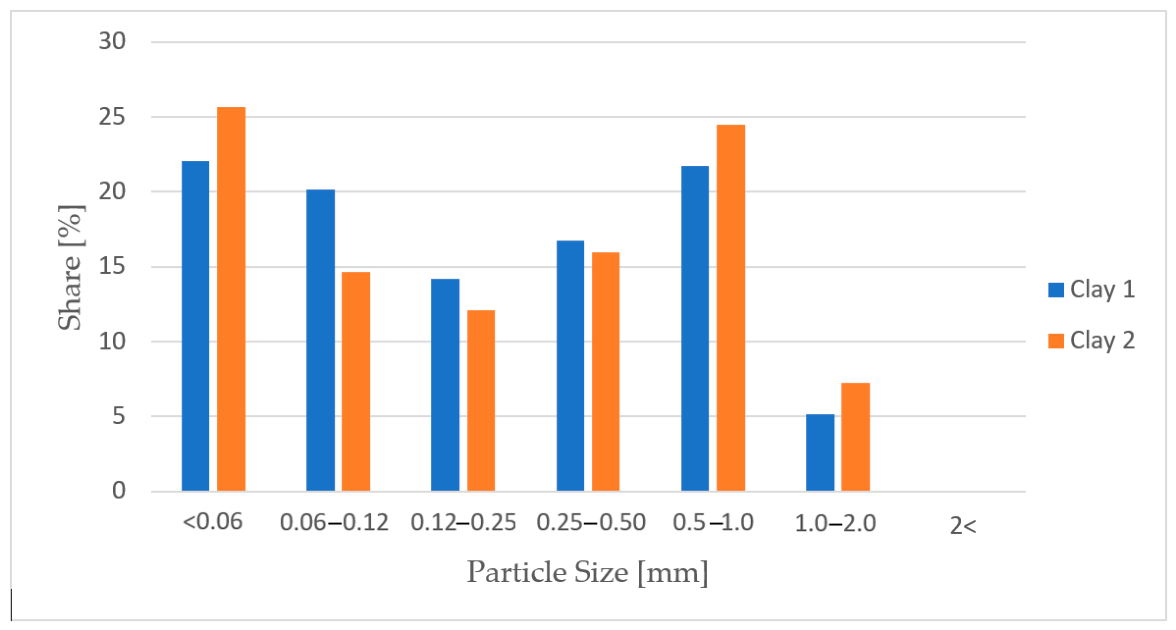
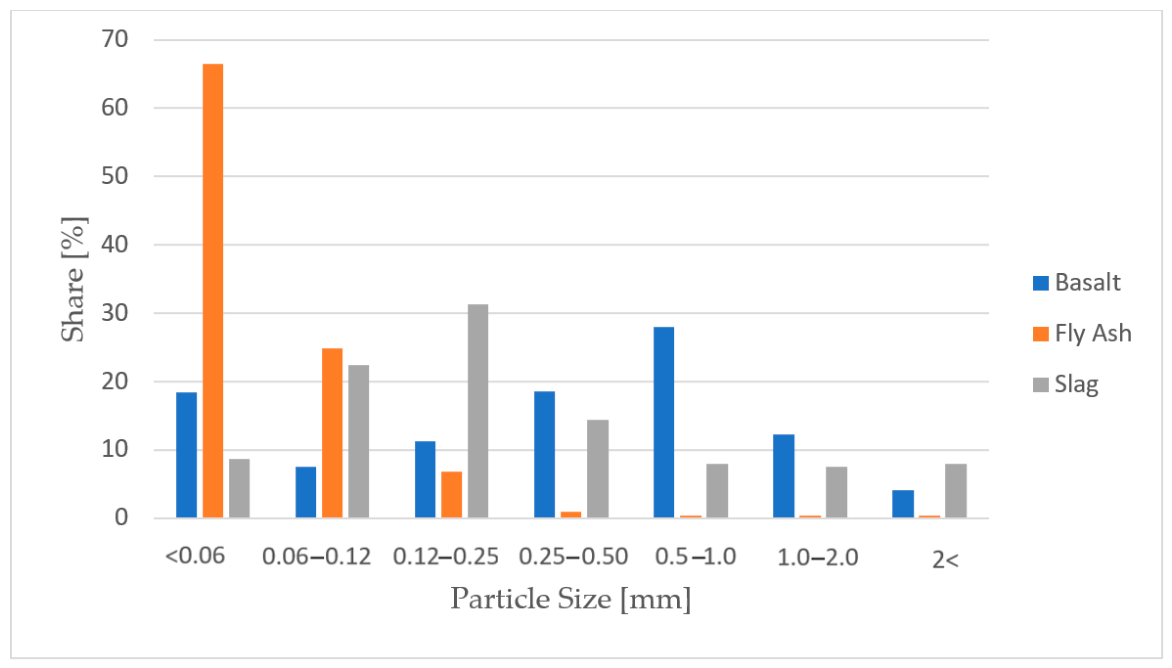
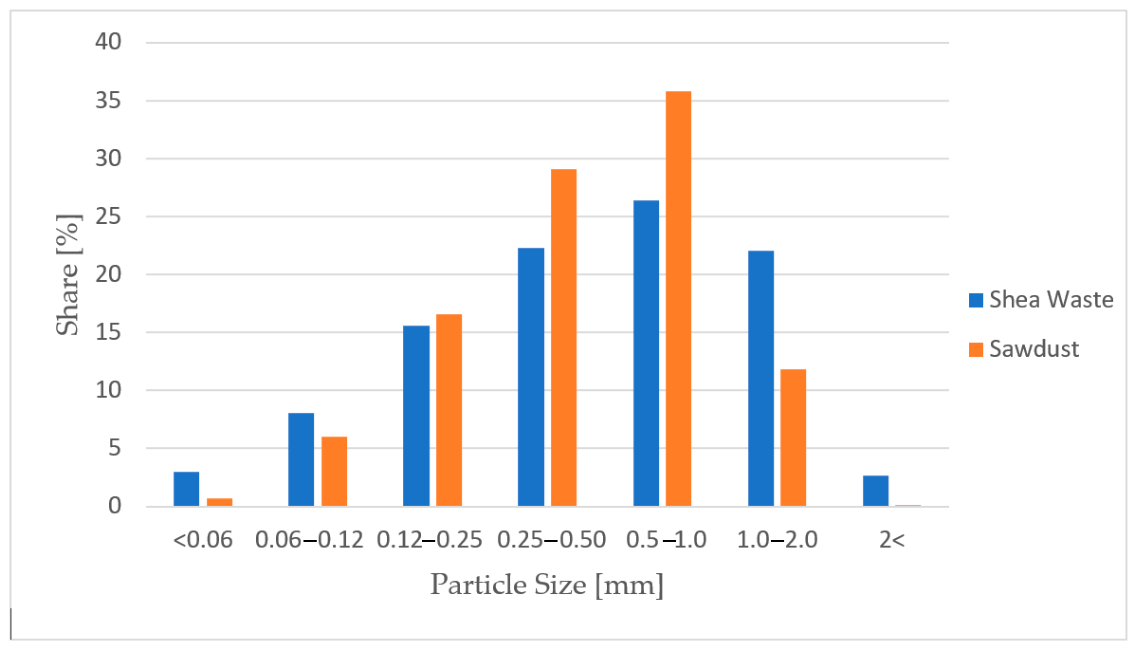
Particle size distribution was determined by dry sieve analysis using a set of sieves with mesh sizes ranging from 2.0 mm to 0.063 mm. The analysis revealed a unimodal distribution with a dominant fraction in the range of 0.5–1.0 mm. The chemical compositions of the raw materials and the sieves analyses are presented in Table 1 and Figure 1, Figure 2 and Figure 3.
The particle size analysis of the ground clays revealed a bimodal distribution, with dominant fractions in the ranges of 1.0–0.5 mm and below 0.063 mm. The raw materials exhibited a similar degree of fineness resulting from the grinding process, and all particles were smaller than 2 mm, which is advantageous from the perspective of laboratory investigations and ensuring mixture homogeneity. In the case of clays, the presence of larger marl particles is particularly unfavorable, as they may cause spalling and reduce the mechanical strength of the fired products.
The analysis of technological additives demonstrated significant differences in their particle size distribution. Fly ash was characterized by the highest proportion of the finest fractions, which may positively affect the densification of the material microstructure. Basalt mainly contained medium-sized fractions, whereas slag exhibited a higher proportion of irregularly shaped particles and the presence of larger sintered agglomerates. The variation in particle size distribution of the additives may influence the forming behavior of the mixtures and their physicomechanical properties.
The particle size distribution of the organic additives was similar; however, these materials differed markedly in grain morphology. Shea waste possessed particles of a more spherical character, whereas sawdust exhibited a fibrous and needle-like form. The shape of sawdust particles may affect the porosity structure of the material as well as the orientation of the voids formed after the combustion of the organic additives.
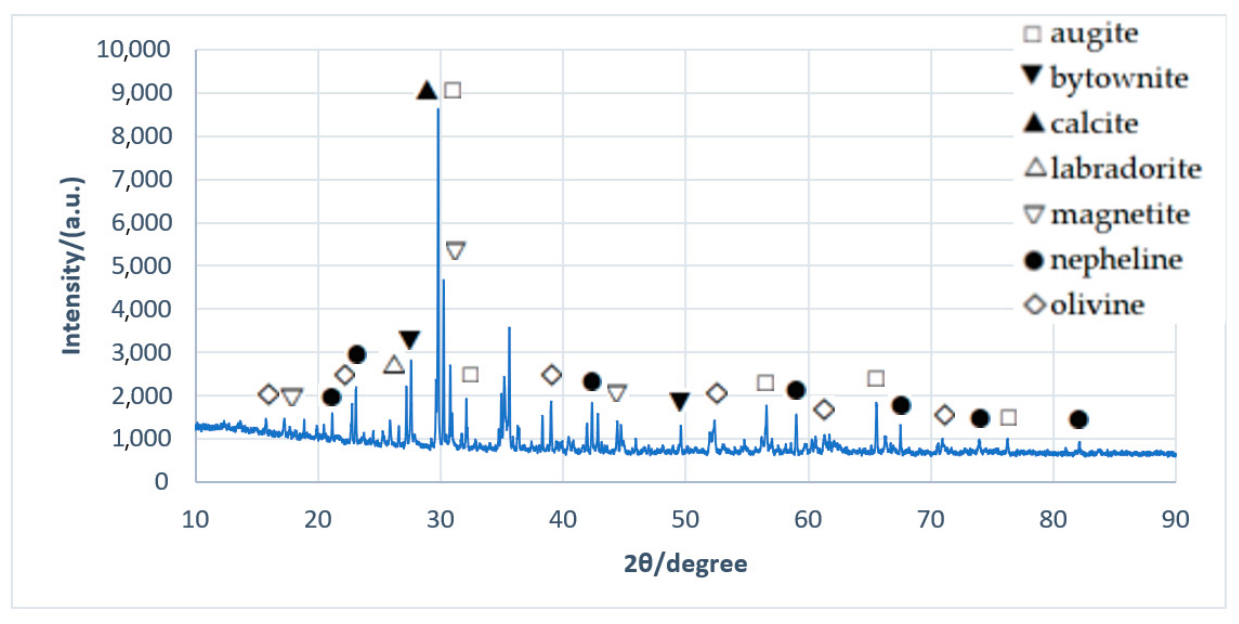
The XRD analysis of basalt (Figure 4) revealed a complex mineral composition characteristic of volcanic igneous rocks. The main identified crystalline phases included augite, nepheline, olivine, magnetite, calcium carbonate, and plagioclases represented by labradorite and bytownite. The presence of nepheline indicates the occurrence of aluminosilicate components with a lower silica content, which may affect the reactivity of the material during firing. In turn, the presence of magnetite confirms the contribution of iron-bearing phases, which may influence both the color of the fired products and the sintering processes.
The occurrence of calcium carbonate may lead to partial decarbonation during thermal treatment, resulting in CO2 release and local changes in material porosity. The identified plagioclases are responsible for the presence of stable aluminosilicate phases affecting the mechanical properties and thermal stability of the investigated basalt.
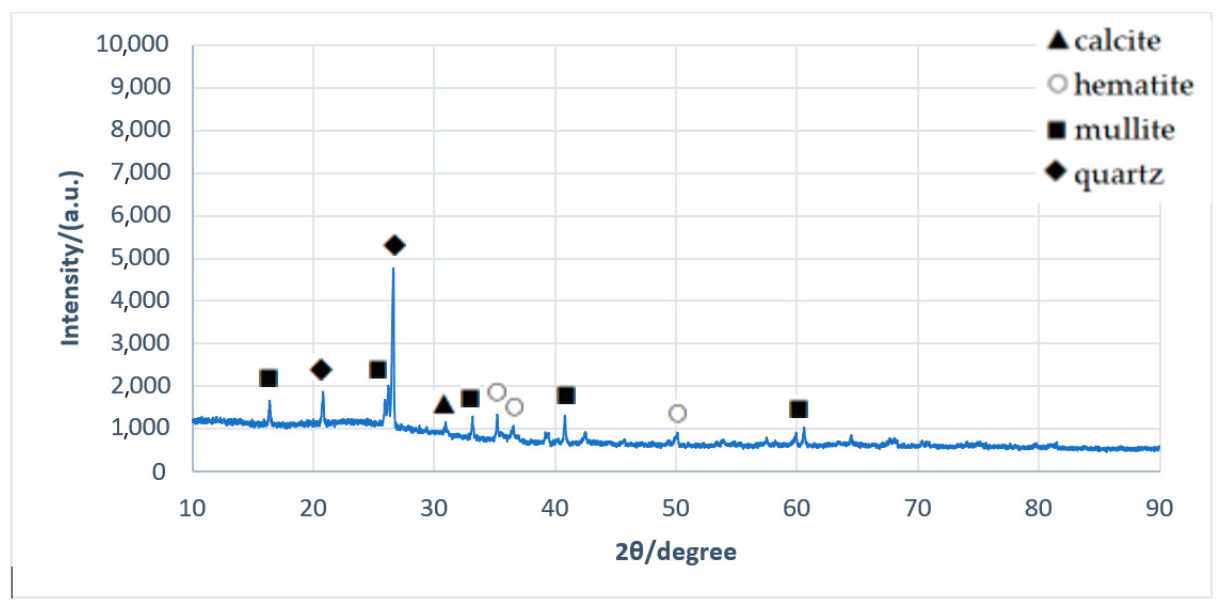
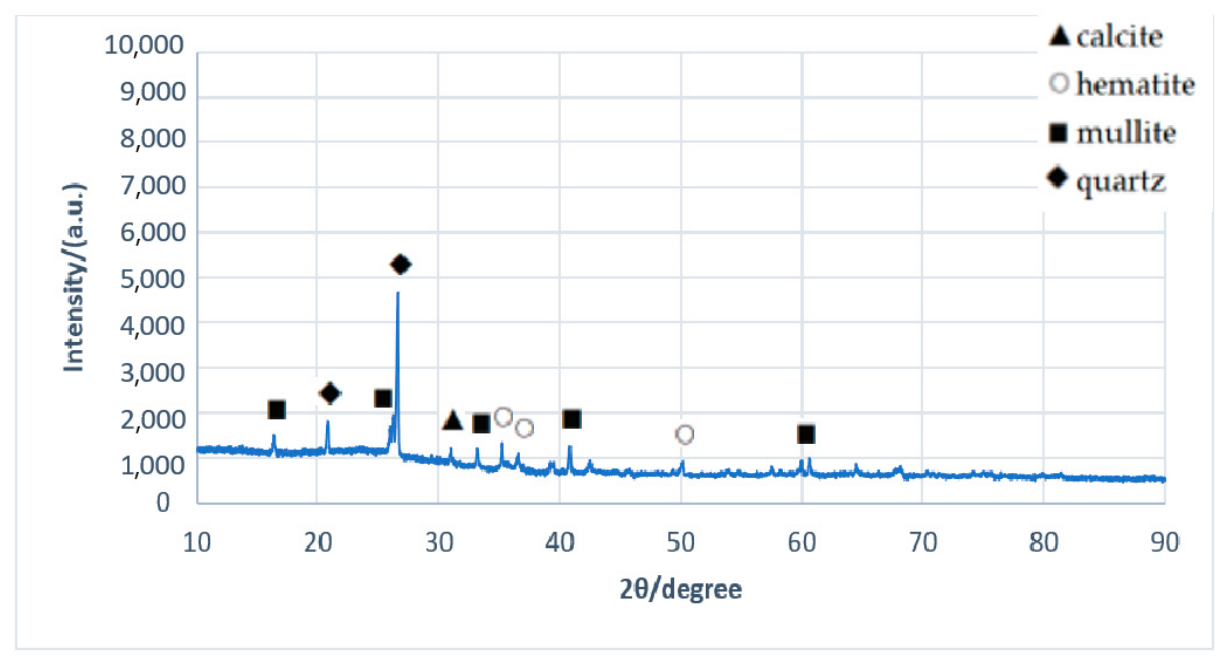
The diffractometric analysis of fly ash (Figure 5) revealed the presence of typical mineral products formed during coal combustion. The dominant crystalline phases were quartz and mullite, accompanied by calcite and hematite. Quartz represents a phase with high thermal stability and low chemical reactivity, whereas mullite is characteristic of materials exposed to high temperatures and is responsible for the good refractory properties and mechanical stability of the material. The presence of mullite also indicates the partial transformation of clay minerals during the combustion process.
Calcite may originate both from mineral additives present in the fuel and from secondary carbonation of the ash. Hematite, in turn, confirms the presence of oxidized iron phases, which may influence coloring properties as well as the course of thermal processes. In the analyzed fly ash, the presence of an amorphous phase, not directly visible on the diffractogram, is also probable. This phase is associated with a glassy aluminosilicate substance that may exhibit pozzolanic activity.
The phase analysis of slag (Figure 6) revealed a phase composition very similar to that of fly ash. Quartz, mullite, calcite, and hematite were identified in the sample. The presence of the same phases indicates a similar origin of the material and comparable thermal processes occurring during fuel combustion. Compared to fly ash, however, slag is generally characterized by a higher proportion of partially melted grains and a greater degree of material sintering.
The presence of mullite indicates high-temperature transformations of aluminosilicate minerals, whereas quartz remains a relatively thermally stable phase. Iron-bearing phases represented by hematite may influence the mechanical properties and coloration of the material after firing. Calcite present in the slag may undergo decomposition during further thermal treatment, leading to microstructural changes associated with carbon dioxide emission. Similarly to fly ash, the presence of a significant amount of amorphous phase can also be assumed, which may affect the reactivity of the material and its ability to form secondary binding products.

2.3. Physicochemical Characterization of Shea Fruit Waste

The shea fruit waste was obtained and stored in a tightly sealed container, which limited secondary moisture absorption and the influence of external factors. The raw material was characterized by a dry and hard structure and occurred in a fragmented form. The material originated from the shelling process of mature fruits of the shea tree (Vitellaria paradoxa), commonly found in African countries.
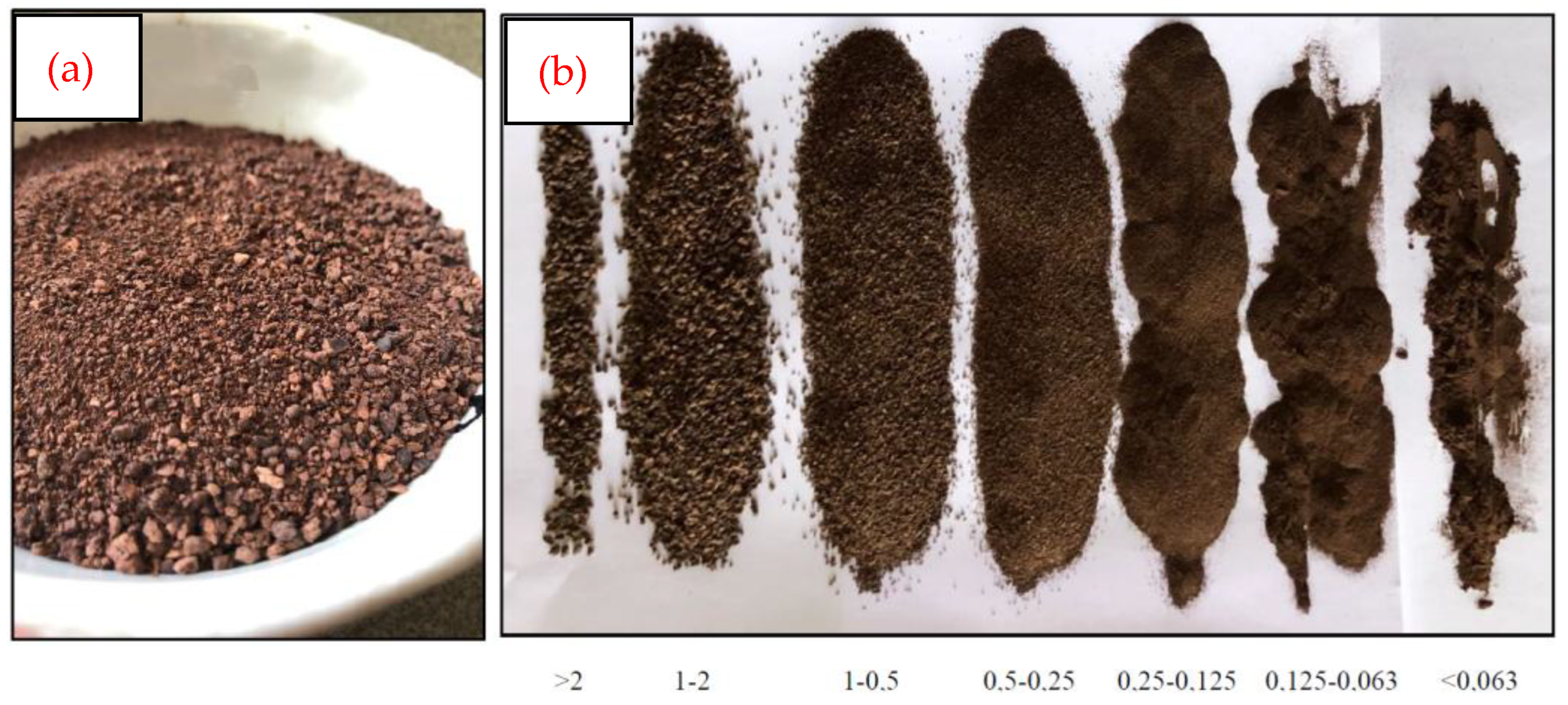
Macroscopically, the material exhibited a granular form, dominated by irregular and angular particles of varying size (Figure 7). The color of the raw material ranged from light brown to dark brown, which may result from differences in the degree of oxidation and the content of organic constituents.
As previously mentioned (Figure 1), the particle size distribution analysis indicated a unimodal character, with the dominant fraction ranging from 0.5 to 1.0 mm. Compared to clay-based materials (Figure 2), shea waste should be classified as a coarse-grained material. Such granulometric characteristics suggest that during thermal treatment processes (e.g., firing), the material may promote the formation of a relatively well-developed macroporous pore network. This is particularly important in the context of its potential application as a pore-forming additive in ceramic or construction materials.

2.4. Relative Humidity

In order to determine the relative moisture content of the tested material, a 100 g sample was weighed and subsequently dried in a laboratory oven at 105 °C until a constant mass was achieved. The drying process was conducted for 23 h, ensuring the complete removal of free moisture. After drying, the sample was reweighed, and the relative moisture content was calculated according to the following relationship:
U = m w m 0 × 100 %
where
  • U—relative humidity [%];
  • mw—mass of water contained in the sample [g];
  • m0—mass of the sample in the wet state [g].
The obtained moisture content value of 12.44% indicates that the material in its as-received state contains a moderate amount of moisture, which is typical for organic waste materials stored under laboratory conditions. This moisture level may significantly influence subsequent technological processes, particularly the drying behavior, thermal decomposition kinetics, and the development of the microstructure of materials after thermal treatment.
From an engineering perspective, the control of the initial moisture content constitutes an important parameter determining both the energy demand of the raw material preparation process and its rheological properties and reactivity in composite systems.

2.5. Thermal Analysis

Shea fruit waste was subjected to thermal analysis in order to determine its thermal stability, the course of physicochemical transformations, and the nature of gases evolved during heating. The analysis included simultaneous measurements of DTA (Differential Thermal Analysis), TG (Thermogravimetry), and DTG (Derivative Thermogravimetry) curves, supplemented by Evolved Gas Analysis (EGA).
The DTA curve enables the identification of endothermic and exothermic effects occurring within the sample, associated with phase transformations and chemical reactions. The TG curve illustrates the mass changes in the material as a function of temperature, whereas the DTG curve represents the rate of these changes, allowing precise identification of individual stages of thermal transformations.
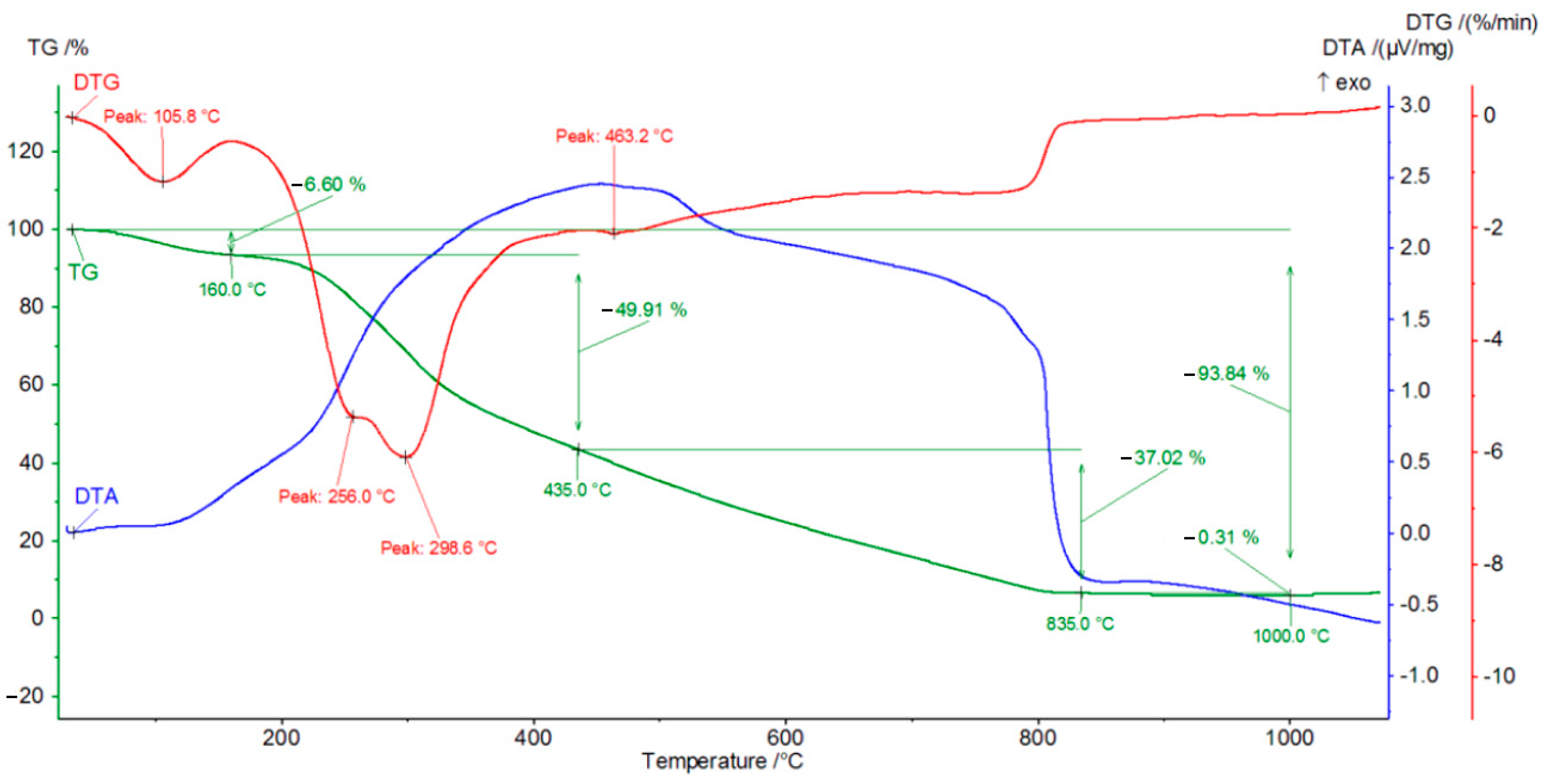
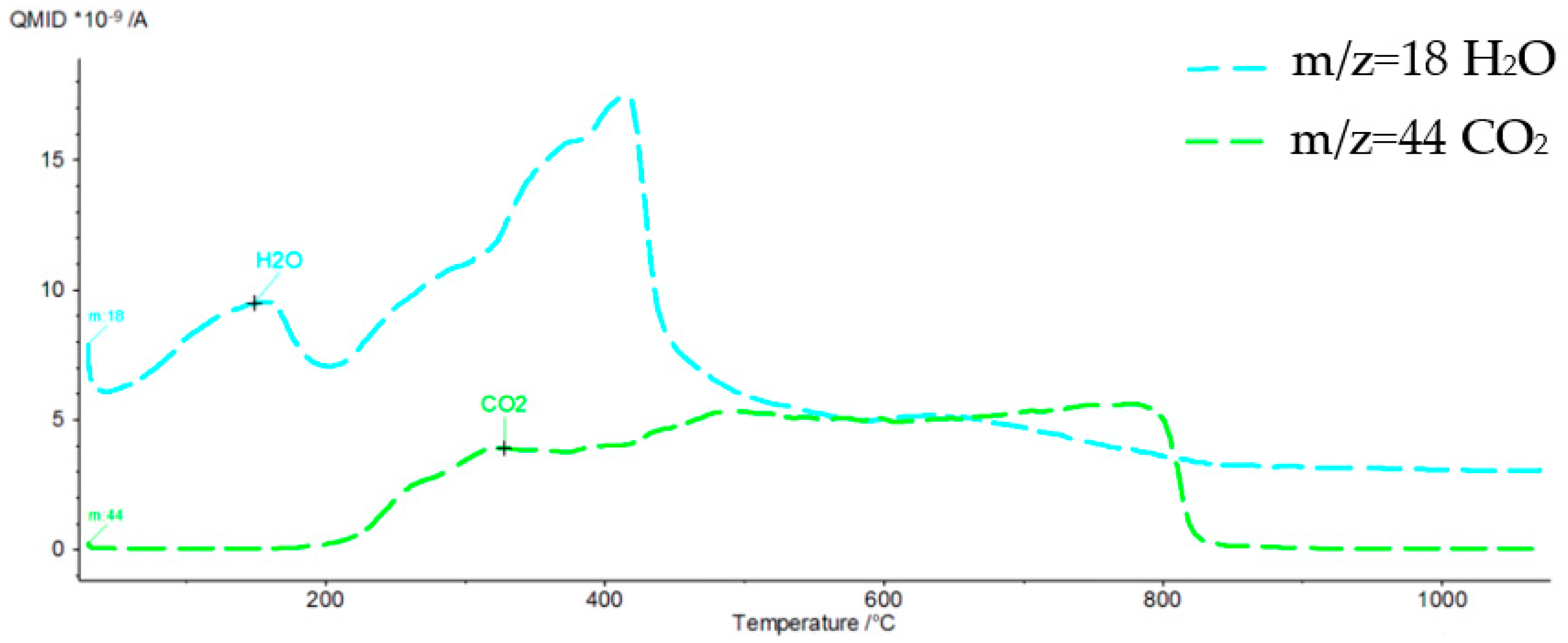
Figure 8 presents the DTA, TG, and DTG curves as a function of temperature, while the results of the EGA are shown as the relationship between ion current and temperature for mass-to-charge ratios m/z = 18 (H2O) and m/z = 44 (CO2) (Figure 9).
Thermal analysis demonstrated that the investigated material is characterized by a significant mass loss, distinct thermal effects, and intensive gas emission, indicating a high content of organic matter. The dominant organic component was most likely cellulose, (C6H10O5)n, the oxidation of which led to the formation of carbon dioxide and water vapor. The total loss on ignition reached 93.84%, confirming the nearly entirely organic nature of the investigated waste material.
The combustion process proceeded in two stages and exhibited an exothermic character over a wide temperature range from approximately 160 °C to 835 °C. In the first stage, up to approximately 435 °C, intensive emission of water vapor (m/z = 18) and smaller amounts of CO2 were observed, which is associated with the decomposition of less ordered organic structures as well as dehydration and depolymerization processes.
The second stage, occurring within the temperature range of 435 °C to 835 °C, was characterized by dominant CO2 emission (m/z = 44) accompanied by a reduction in the amount of released water vapor. This indicates the oxidation of more condensed and carbonized organic structures formed during the earlier stages of thermal decomposition.
In the final stage of the analysis, at the inflection point of the TG curve, a slight additional mass loss of approximately 0.31% was recorded. The interpretation of this effect is not unequivocal; however, it may be attributed to the emission of residual volatile compounds or the final oxidation of trace amounts of organic matter. Considering that the major portion of the organic substance was combusted up to approximately 830 °C, the observed effect is marginal and does not significantly affect the overall thermal characteristics of the material.
The obtained results indicate that shea waste may serve as an effective pore-forming additive, whose complete combustion over a broad temperature range promotes the development of a well-developed porous structure in thermally treated materials.
Based on the thermogravimetric analysis, the carbonate content in the clay sample was determined. The mass loss of 2.37% within the temperature range of 665–1100 °C was attributed to the decarbonation process. On the basis of molar mass ratios, the carbonate content was determined to be 5.39%, whereas the inorganic carbon (IC) content amounted to 0.65%.
The DTA/TG/DTG curves obtained for the clay exhibited a thermal behavior characteristic of clay minerals such as illite and montmorillonite. The EGA confirmed CO2 emission both within the temperature range corresponding to the combustion of organic matter and at higher temperatures associated with carbonate decomposition. SO2 emission at lower temperatures was attributed to pyrite oxidation, whereas at higher temperatures it was related to sulfate decomposition. However, it is more likely that the SO2 emission originated predominantly from pyrite transformations, which is supported by the absence of harmful sulfates in the final products. The total mass loss for this sample amounted to 8.71%.
Analogous calculations were performed for the claystone sample, for which the mass loss within the temperature range of 625–1050 °C reached 5.14%. The carbonate content was determined to be 11.69%, while the inorganic carbon (IC) content amounted to 1.40%. Similarly to the clay sample, the main mineral constituents were illite and montmorillonite. The thermal analysis revealed both the combustion of organic matter and the decarbonation process. SO2 emission occurred within a single temperature range and was associated with sulfate decomposition. The total mass loss amounted to 11.26%.
In the case of basalt, the dominant phases are aluminosilicates, which undergo dehydration and dehydroxylation processes during heating. The slight mass loss and CO2 emission indicate the presence of trace amounts of carbonates. In the final stage of the analysis, an increase in sample mass was observed, which may be associated with the oxidation of iron compounds and the formation of oxides. The total mass loss amounted to 1.17%.
In addition to aluminosilicate phases, the ash also contained unburned carbon, the presence of which was confirmed by CO2 emission during thermal analysis. In the final stage of the investigation, an increase in sample mass was recorded, which may indicate the formation of new mineral phases at elevated temperatures. The total mass loss amounted to 3.76%.
In the case of slag from Opole, the presence of both organic matter and residual carbonaceous phases was identified, which underwent combustion during heating. In the final stage of the analysis, an endothermic effect accompanied by CO2 emission was observed, suggesting the decomposition of small amounts of carbonates. Similarly to ash and basalt, the final stage of the analysis was characterized by an increase in sample mass, most likely related to the formation of new oxide phases. The overall mass change amounted to −6.27%.
Thermal analysis of sawdust revealed the presence of moisture, which was removed during the initial stage of heating as a result of dehydration. However, the principal component of the material was organic matter, which underwent intensive combustion over a wide temperature range, accompanied by a strong exothermic effect and significant CO2 emission.
Sawdust exhibited the highest mass loss among all investigated raw materials, reaching 98.13%, which clearly indicates its almost entirely organic character.

2.6. Calorific Value

The determination of the calorific value of shea fruit waste was carried out using an IKA C200 calorimeter. Prior to the analysis, the material was dried and subsequently ground in an impact mill in order to obtain a homogeneous fraction, thereby ensuring the repeatability of the measurement results.
For the analysis, samples with a mass ranging from 0.3 to 0.5 g were weighed using an analytical balance. The samples were then placed in the crucible of the calorimetric bomb, which, after sealing, was filled with compressed oxygen. The prepared bomb was installed in the calorimeter vessel, where it was surrounded by water acting as the heat-absorbing medium.
The measurement consisted of the complete combustion of the sample under excess oxygen conditions and the recording of the temperature increase in the calorimetric system. On this basis, the amount of thermal energy released during combustion was determined and recalculated per unit mass of the sample. The obtained result therefore represents the calorific value expressed in kJ/g.
The calorific value of the shea waste was determined on the basis of two independent measurements, yielding an average value of 19.421 kJ/g. This value is slightly lower compared to typical woody biofuels, such as Pinus sylvestris wood (19.61 kJ/g) and Picea abies wood (20.55 kJ/g) [13,29,30].
The obtained result indicates that shea waste is characterized by a relatively high energy value, comparable to the calorific value of wood. This may suggest a significant contribution of lignocellulosic organic compounds, such as cellulose, hemicelluloses, and lignin. From a practical perspective, this indicates the potential applicability of this type of waste as an energy feedstock or as a pore-forming additive in technological processes where controlled energy release and gas evolution during thermal treatment are required.
Among the analyzed raw materials, sawdust exhibited the highest energy value, with a calorific value of approximately 19.332 kJ/g. The high calorific value of this material results from the dominant content of lignocellulosic organic matter, the combustion of which proceeds with the release of significant amounts of thermal energy.
The lowest calorific values were recorded for mineral materials such as basalt (−252 J/g) and clay (−97 J/g). The negative values of this parameter indicate that endothermic processes dominate during the heating of these materials, including dehydration, dehydroxylation, and carbonate decomposition, all of which require energy input.
The clays exhibited differentiated energy-related properties. In the case of clay 1, the calorific value reached 443 J/g and was significantly higher than that of clay 2. These differences may be attributed to variations in mineralogical and chemical composition, particularly the content of organic matter and the proportion of clay and carbonate minerals, which determine the balance between exothermic and endothermic processes occurring during heating.
In the case of additives such as ash and slag, the observed thermal energy originates mainly from the combustion of residual carbon contained in these materials. The presence of unburned organic or carbonaceous matter affects the course of thermal processes, leading to localized exothermic effects, despite the fact that the dominant constituents of these raw materials are mineral phases characterized by high thermal stability.
The obtained results confirm that the energetic behavior of the raw materials is closely related to their phase and chemical composition, which is of key importance in designing ceramic body formulations, particularly in the context of the thermal balance of the firing process and the development of the microstructure of the final material.

2.7. Carbon Analysis

A representative sample of shea fruit waste with a mass of approximately 0.5 kg was used for the carbon content analysis. The analysis included the determination of total carbon (TC) and total organic carbon (TOC) using the combustion method with infrared (IR) detection, which is a standard and highly precise analytical technique commonly applied in the investigation of organic and environmental materials. The inorganic carbon (IC) content was determined by calculation as the difference between total carbon and organic carbon.
The obtained results indicate that the investigated material contains exclusively organic carbon, with a content of 50.31%. The absence of significant amounts of inorganic carbon suggests that the waste structure does not contain considerable quantities of carbonates or other mineral forms of carbon.
The chemical composition of lignocellulosic biomass, to which the analyzed material can be classified, consists primarily of carbon, hydrogen, and oxygen, while smaller amounts of elements such as nitrogen, sulfur, potassium, and chlorine are also present, together with mineral constituents forming the ash residue after combustion.
The high organic carbon content directly correlates with the results of the thermal analysis, in which the loss on ignition reached 93.84%. This value results both from the intensive combustion of carbon-rich organic matter and from the release of water vapor associated with the presence of moisture and products of thermal decomposition.
An important aspect of the interpretation is the fact that carbon dioxide generated as a result of the oxidation of organic carbon (TOC) contained in biomass is not included in CO2 emission balances within the framework of environmental regulations. This is due to its biogenic origin, meaning that such emissions constitute a part of the natural carbon cycle and do not contribute to a net increase in atmospheric CO2 concentration.
The presented results confirm that shea waste is a material with a high organic matter content, which is of significant importance both from the perspective of its energy-related properties and its potential technological applications, particularly as a pore-forming additive or as a feedstock in thermal conversion processes.
The highest organic carbon content, and consequently total carbon content, was observed for biologically derived materials, namely sawdust (50.61%) and shea waste (50.31%). The high TOC values are a consequence of their lignocellulosic nature and the predominance of organic matter. In contrast, the lowest carbon content was recorded for basalt, which results from its almost exclusively mineral composition.
Inorganic carbon occurred primarily in clay-based raw materials such as clay 1 and clay 2. Its presence is mainly associated with the occurrence of carbonates, particularly calcium carbonate, CaCO3. The presence of this phase is technologically important because its decomposition (carbonate dissociation) within the temperature range of approximately 700–900 °C proceeds in an endothermic manner, thereby affecting the thermal balance of the firing process. Moreover, the presence of larger carbonate grains may lead to the formation of defects in the form of lime popping in the final ceramic products.
A comparison of the results obtained using different methods indicates a high level of agreement for the clay 1. The inorganic carbon content determined by carbon analysis amounted to 0.66%, whereas the value calculated on the basis of thermal analysis (TG) reached 0.65%. The minor difference (0.01%) may result from overlapping processes, such as the partial decomposition of sulfates occurring within the same temperature range.
In the case of clay 2, a clear discrepancy between the results was observed. The directly determined IC content amounted to 0.90%, whereas the value derived from the TG curve reached 1.40%. Such a significant difference suggests that the mass loss of 5.14% within the temperature range attributed to decarbonation does not result exclusively from carbonate decomposition. It may be assumed that part of this effect is also associated with the decomposition of sulfates and other mineral compounds that were not unequivocally identified in the thermal analysis.
The obtained results confirm that both the form of carbon occurrence and its quantity have a significant influence on the course of thermal processes and the final properties of ceramic materials. In particular, the inorganic carbon content determines the progression of endothermic reactions, whereas the presence of organic carbon affects porosity generation and gas emission during firing.

2.8. Research Concept

The aim of the study was to determine the influence of selected raw material additives, particularly biomass in the form of shea husk and sawdust, on the course of thermal processes, gas emissions, and the physicomechanical properties of building ceramic materials, with consideration of environmental engineering aspects and CO2 emission reduction. The research assumptions were based on the prior characterization of the raw materials, including DTA and TG thermal analyses as well as Evolved Gas Analysis (EGA). These investigations enabled the identification of the temperature ranges associated with the thermal decomposition of both organic components (sawdust, shea husk) and mineral additives (ash, slag), which constituted the basis for the design of ceramic body compositions. The experimental concept involved the gradual increase in biomass content within the ceramic body by introducing shea husk in the range from 0 to 30 vol.%, while simultaneously monitoring changes in the properties of the raw mixtures and the fired ceramic materials. The selected replacement levels (5, 10, 20 and 30 vol.%) were chosen to represent clearly differentiated biomass contents while maintaining practical relevance from the perspective of industrial raw material dosing and facilitating interpretation of the observed trends. The mixture designated as “0” constituted the reference system, whereas the subsequent compositions (1–4) contained progressively increasing amounts of biomass. The M-0 mixture was adopted as a reference composition representing a conventional clay-based ceramic body containing a standard lignocellulosic pore-forming additive (sawdust), commonly used in industrial practice. The study focus was placed on evaluating the effect of partial substitution of sawdust with shea shell waste; therefore, the mineral matrix was kept constant and only the organic fraction was modified. The compositions of the ceramic mixtures are presented in Table 2.
In order to maintain technological balance and to control the porosity and reactivity of the system, the proportion of mineral additives in the form of ash and slag was reduced at higher contents of organic additives (above 25 vol.%) in proportions corresponding to the increase in biomass content. This approach was intended not only to stabilize the forming and firing processes, but also to reduce the overall carbon footprint of the material. An important element of the research concept was the consideration of the environmental aspect. Biomass, as a renewable energy source, is not treated as a net source of CO2 emissions in environmental balance assessments, in contrast to emissions resulting from the decarbonation processes of mineral raw materials. Therefore, replacing part of the mineral additives with organic components constitutes a potential strategy for reducing greenhouse gas emissions in building ceramics technology. The compositions of the ceramic bodies were developed on the basis of volumetric proportions and subsequently converted into mass fractions using the determined bulk densities of the raw materials, which allowed the reduction in dosing errors at the laboratory scale. An appropriate amount of water was added to each of the five designed mixtures in order to obtain the required technological consistency. The adopted research concept enables a comprehensive assessment of the influence of organic and mineral additives on the material and environmental properties of building ceramics, including the identification of optimal compositions in terms of balancing functional properties with CO2 emission reduction.

3. Results and Discussion

3.1. Preparation, Shaping, and Technological Properties of the Investigated Ceramic Bodies

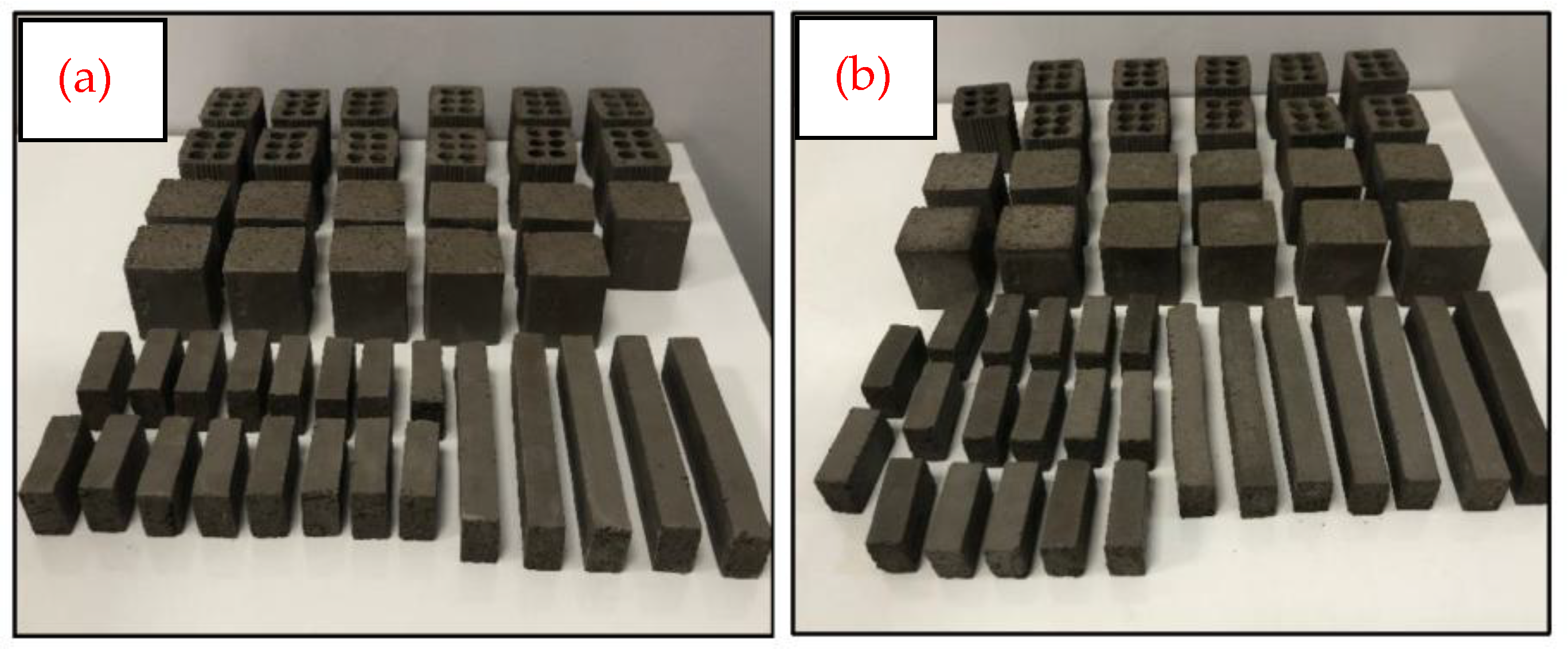
The preparation process of the ceramic bodies initially involved the dry homogenization of the components, followed by mixing with water on a forming table. After a one-day homogenization period, the mixtures were repeatedly processed using a laboratory screw press, which enabled the achievement of appropriate homogeneity and plasticity of the mass. In the subsequent stage, extruded strands were formed and then cut using a wire cutter into elements of predetermined dimensions. Three types of dies were used for shaping, enabling the production of specimens with square cross-sections (cubes), rectangular cross-sections with a core (hollow elements), and smaller rectangular cross-sections (bricks and beams).
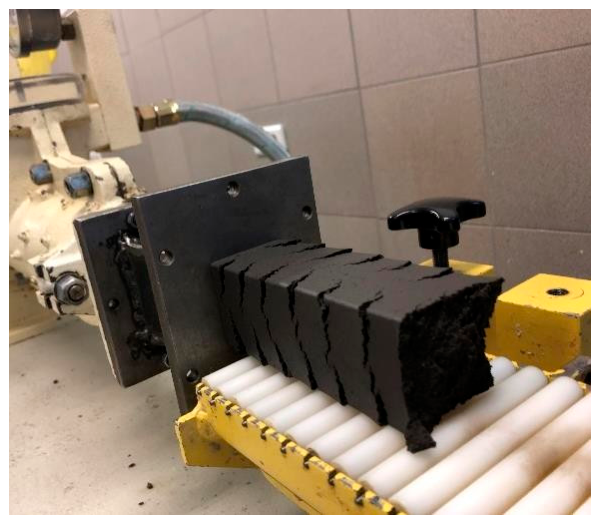
The analysis of the forming process demonstrated that the composition of the ceramic body significantly influenced its rheological properties. In particular, the mixture containing the highest proportion of organic additive (shea waste) initially exhibited unfavorable rheological behavior, manifested by irregular extrusion flow and the formation of characteristic edge deformations of the extruded strand, referred to as “dragon teeth” in Figure 10. This phenomenon was effectively reduced by increasing the amount of mixing water, which improved the plasticity and flow stability of the mass. This indicates that, under industrial conditions, the application of organic additives with a high content of volatile matter may require adjustments of technological parameters, particularly with respect to the moisture content of the ceramic body.
After shaping, the specimens were subjected to a controlled drying process. In the initial stage, the samples were stored under laboratory conditions and covered with fabric, which enabled the slow evaporation of moisture and minimized the risk of crack formation. Subsequently, the material was dried stepwise in a laboratory dryer, initially at 70 °C and then at 105 °C, until a constant mass was achieved. During the drying process, the samples were regularly turned to ensure uniform moisture removal.
In the case of ceramic bodies with the highest content of organic matter (series 3 and 4), the occurrence of a surface deposit of biological origin, most likely mold, was observed (Figure 11). This phenomenon resulted from the influence of a warm and humid environment conducive to the growth of microorganisms. The deposit was effectively removed mechanically prior to further drying and did not significantly affect the final properties of the products; however, it indicates potential technological and sanitary risks under industrial conditions.
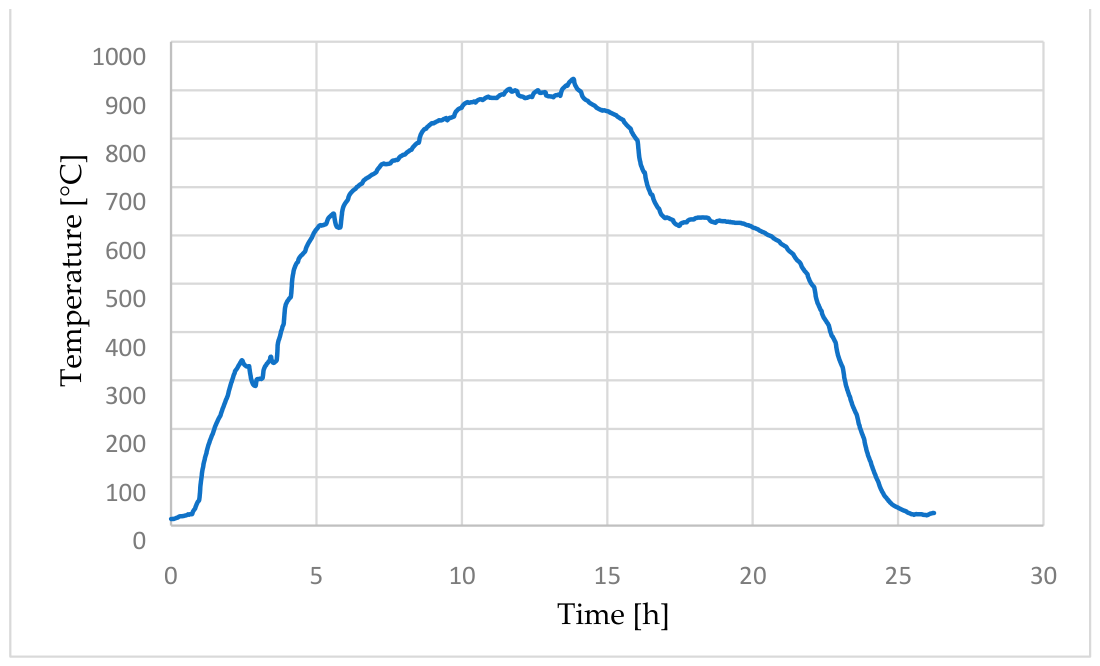
The firing of the specimens was carried out in a gas-fired tunnel kiln in a cycle lasting approximately 25 h, at a maximum temperature of about 920 °C. The temperature regime was monitored using a thermocouple located in the immediate vicinity of the samples. The firing curve is shown in Figure 12. After completion of the firing process, the material was gradually cooled to ambient temperature.
After firing, small white efflorescence deposits were observed on the surface of specimens containing higher amounts of organic additives. These deposits could be easily removed mechanically and did not significantly affect the aesthetic quality of the products, particularly considering their intended application beneath a plaster layer.
The mixing water content was determined on the basis of the mass difference between the specimens after shaping and after drying, according to the following relationship:
W z = m p l m s m p l 100 %
where mpl denotes the mass of the specimen after shaping, while ms represents the mass after drying to constant weight.
The obtained results clearly indicate that the demand for mixing water increased with the increasing content of organic additives. The highest value was recorded for mixture 4 (22.26%), which was associated both with its composition and with the necessity to adjust its rheological properties. For comparison, mixture 3, containing 20% shea waste, exhibited a water content of 19.72%, whereas the reference mixture (0) was characterized by a value approximately 2% lower.
Drying shrinkage was determined on the basis of length measurements between markers applied to freshly formed specimens, according to the following equation:
S s = L p l L s L p l 100 %
where Lpl denotes the initial marker length, while Ls represents its length after drying.
The analysis of the results indicates that an increase in the shea waste content leads to an increase in drying shrinkage, which should primarily be associated with the higher proportion of mixing water in the system. At the same time, the observations suggest that shea waste exhibits a weaker lean-effect compared to sawdust, as evidenced by the greater shrinkage of specimens containing this additive.
The apparent density of the dried specimens was determined using the geometric method by calculating the specimen volume on the basis of their dimensions and relating it to the dry mass according to the following relationship:
V b = a b h
ρ b = m s V b
where a, b, and h denote the specimen dimensions, while ms represents the mass after drying.
The obtained results, presented in Table 3, indicate a systematic decrease in apparent density with increasing shea waste content in the mixtures. The lowest value was recorded for mixture 4 (1.53 g/cm3), whereas for mixture 2 it amounted to 1.66 g/cm3. This phenomenon results from the lower bulk density of the biomass and the increased amount of mixing water, which consequently leads to higher material porosity after drying. The application of organic additives, particularly shea waste, significantly affects the technological properties of ceramic bodies, including their rheology, water demand, shrinkage, and apparent density. These effects should be taken into account in the design of industrial processes, especially in the context of optimizing forming and drying parameters.

3.2. Comprehensive Analysis of Thermal Transformations of the Investigated Ceramic Bodies

The DTA, TG, and DTG curves obtained for the reference mixture M-0 indicate a multistage course of thermal transformations characteristic of a clay-based mixture containing an organic additive in the form of sawdust. According to Table 4, the total mass loss within the temperature range of 30–1000 °C amounted to 10.69%, while the individual transformation stages can be correlated with specific effects visible on the thermal curves and with gas emissions recorded for ions with m/z ratios of 18, 44, and 64.
Within the temperature range of 30–210 °C, two endothermic effects with maxima at approximately 96 °C and 129 °C were recorded, accompanied by a mass loss of 1.08%. These transformations should primarily be attributed to the removal of physically bound water, capillary water, and partially interlayer water present in clay minerals, particularly illite and montmorillonite. This interpretation is confirmed by the ion current curve for m/z = 18, where an increase in the H2O signal is visible at low temperatures. The presence of two maxima indicates that water does not occur in the sample in a single form, but is bound to the mineral matrix with varying binding strengths.
In the subsequent temperature range of 210–400 °C, a distinct exothermic effect with a maximum at approximately 340 °C is observed, corresponding to a mass loss of 3.19%. According to Table 4, this transformation is associated with the combustion of organic matter, accompanied by the emission of both H2O and CO2. The EGA plot shows an intensive signal for m/z = 44 within this range, confirming the oxidation of the organic fraction. The simultaneous signal for m/z = 18 results from the formation of water as a combustion product and from the continued removal of water associated with the clay matrix.
The temperature range of 400–600 °C involves two overlapping processes. The first is the continued combustion of residual organic matter, visible as an exothermic effect in the region of approximately 460 °C, while the second is the dehydroxylation of clay minerals, with a maximum at approximately 514 °C. The total mass loss within this interval amounts to 3.58%.
The overlap of the exothermic and endothermic reactions results in a complex shape of the DTA curve, which should not be interpreted as a single process. Within this temperature range, the ion current curve for m/z = 44 still indicates CO2 emission, whereas the signal for m/z = 18 confirms the release of structural water resulting from the decomposition of hydroxyl groups within the structure of clay minerals.
The final significant transformation stage occurs within the temperature range of 600–1000 °C. In Table 4, this stage is assigned to the decarbonation of carbonates, with the maximum effect observed at approximately 768 °C and accompanied by a mass loss of 2.84%. This process is endothermic in nature and is associated with carbonate decomposition and CO2 release, which is confirmed by the peak on the ion current curve for m/z = 44 near 780 °C. At the same time, the signal for m/z = 64, attributed to SO2, remains very low, indicating that the decomposition of sulfur compounds is of marginal importance for this mixture.
Mixture M-0 exhibits a typical course of transformations characteristic of a clay-based raw material containing a small proportion of organic matter. The greatest mass losses occur within the temperature ranges corresponding to sawdust combustion and the dehydroxylation of clay minerals. The total mass loss of 10.69% indicates a relatively moderate content of volatile and organic components, which is consistent with its role as the reference mixture.
The analysis of the DTA, TG, and DTG curves for mixture M-1 indicates a similar but more intense course of thermal transformations compared to the reference mixture M-0. The total mass change within the temperature range of 30–1000 °C amounts to 12.73%, clearly indicating a higher content of volatile components, particularly organic matter and constituents susceptible to dehydroxylation and decarbonation.
Within the temperature range of 30–210 °C, two endothermic effects with maxima at approximately 96 °C and 129 °C are observed, corresponding to a mass loss of 1.40%. According to Table 5, these processes are associated with dehydration, involving the removal of physically bound water and partially interlayer water from clay minerals (illite and montmorillonite). Compared to sample M-0, the higher mass loss suggests a greater content of adsorbed water or a more developed specific surface area of the material. This interpretation is confirmed by the distinct signal for m/z = 18 (H2O) within this temperature range.
The temperature range of 210–400 °C includes a strong exothermic effect with a maximum at approximately 333 °C, accompanied by a mass loss of 3.89%. This process is associated with the combustion of organic matter (sawdust), accompanied by the emission of CO2 and H2O. The intensity of this effect is noticeably greater than in sample M-0, indicating a higher proportion of the organic fraction. The ion current curve for m/z = 44 exhibits a distinct peak within this range, confirming CO2 emission as a product of oxidation.
Within the temperature range of 400–600 °C, the most complex stage of transformations occurs, involving both the continued combustion of organic matter and the dehydroxylation of clay minerals. The maxima of the effects are observed at approximately 449 °C (exothermic) and 511 °C (endothermic), respectively. The total mass loss within this interval amounts to 4.32%, representing the largest contribution to the overall mass loss. The overlap of exothermic and endothermic processes results in the complex character of the DTA curve. Intensive CO2 emission (m/z = 44) together with the presence of the H2O signal (m/z = 18) confirms the simultaneous occurrence of combustion and dehydroxylation processes. Compared to sample M-0, these transformations are more intense, indicating both a higher content of organic matter and potentially a greater proportion of clay phases undergoing dehydroxylation.
Within the temperature range of 600–1000 °C, an endothermic effect with a maximum at approximately 766 °C is observed, associated with carbonate decarbonation. The corresponding mass loss amounts to 3.12%, which is higher than that observed for the reference sample. This process is accompanied by a distinct CO2 emission peak (m/z = 44) within the temperature range of approximately 750–800 °C. This indicates a higher content of carbonate phases in mixture M-1 or their occurrence in a more reactive form. The signal for m/z = 64 (SO2) remains marginal, indicating a low content of sulfur compounds.
In summary, mixture M-1 is characterized by a more intensive course of thermal transformations compared to the reference mixture, which is reflected in the higher total mass loss. The greatest differences concern the temperature ranges associated with the combustion of organic matter and the dehydroxylation process, indicating an increased content of both the organic component and reactive clay phases. The increased contribution of decarbonation processes also suggests a higher carbonate content, which may be of significant importance for the technological properties of the material, particularly in the context of firing processes.
The analysis of the DTA, TG, and DTG curves for mixture M-2 indicates the most intensive course of thermal transformations among all analyzed samples. The total mass change within the temperature range of 30–1000 °C amounts to 14.48%, clearly demonstrating the highest content of volatile constituents, particularly organic matter and phases susceptible to dehydroxylation and decarbonation.
Within the temperature range of 30–210 °C, two distinct endothermic effects with maxima at approximately 97 °C and 129 °C are observed, corresponding to a mass loss of 1.58%. According to Table 6, these processes are related to dehydration involving the removal of physically bound water and interlayer water from clay minerals (illite and montmorillonite). Compared to samples M-0 and M-1, the greater mass loss indicates an increased water sorption capacity or a higher proportion of the clay fraction. This interpretation is confirmed by the intensive signal for m/z = 18 (H2O).
Within the temperature range of 210–400 °C, a strong exothermic effect with a maximum at approximately 329 °C is observed, accompanied by a significant mass loss of 4.93%. This process corresponds to the combustion of organic matter, accompanied by the emission of CO2 and H2O. The intensity of this effect is the highest among all analyzed samples, clearly indicating the greatest content of the organic component (e.g., sawdust additive). The ion current curve for m/z = 44 exhibits a very pronounced CO2 emission peak within this range.
The temperature range of 400–600 °C represents the most complex stage of transformations, with the maximum exothermic effect occurring at approximately 449 °C and the endothermic maximum at approximately 512 °C. The total mass loss amounts to 5.18%, constituting the dominant contribution to the overall mass loss. These processes involve both the continued combustion of residual organic matter and the dehydroxylation of clay minerals. The overlap of exothermic and endothermic effects results in a distinctly complex DTA curve profile. Intensive CO2 emission (m/z = 44) together with the presence of the H2O signal (m/z = 18) confirms the simultaneous occurrence of both processes. Compared to samples M-0 and M-1, this temperature range exhibits the highest transformation dynamics, indicating the high reactivity of the material.
Within the temperature range of 600–1000 °C, an endothermic effect with a maximum at approximately 763 °C is observed, associated with carbonate decarbonation. The corresponding mass loss amounts to 2.79%, confirming the presence of carbonate phases, although their proportion is slightly lower than in sample M-1. This process is accompanied by a distinct CO2 emission peak (m/z = 44) within the temperature range of approximately 750–800 °C. The signal for m/z = 64 (SO2) remains negligible, indicating a marginal content of sulfur compounds.
Mixture M-2 is characterized by the highest intensity of thermal transformations and the greatest total mass loss. The key differences compared to samples M-0 and M-1 concern the significantly greater contribution of organic matter and the more intensive course of dehydroxylation processes. The high transformation dynamics within the temperature range of 210–600 °C indicate high material reactivity, which may be of considerable technological importance, particularly in the context of firing processes and the development of the microstructure of the final material.
The analysis of the DTA, TG, and DTG curves for mixture M-3 indicates the advanced and intensive course of thermal transformations (Table 7). The total mass loss within the temperature range of 30–1000 °C amounts to 15.81%, confirming the highest content of both volatile constituents and phases susceptible to thermal transformations, particularly organic matter and clay minerals.
Within the temperature range of 30–210 °C, two endothermic effects with maxima at approximately 102 °C and 130 °C are observed, corresponding to a mass loss of 1.51%. These processes are associated with dehydration, i.e., the removal of physically bound water and interlayer water from clay minerals (illite and montmorillonite). The mass loss value is comparable to those observed for samples M-1 and M-2, suggesting a similar proportion of clay phases; however, the slightly higher maximum temperature indicates stronger water binding within the material structure. The intensive m/z = 18 (H2O) signal confirms the nature of these transformations.
Within the temperature range of 210–400 °C, a very strong exothermic effect with a maximum at approximately 295 °C is observed, corresponding to a mass loss of 5.45%. This is the highest value among all analyzed samples and clearly indicates the dominant contribution of organic matter. The combustion process proceeds intensively and at a lower temperature than in samples M-1 and M-2, suggesting greater reactivity or finer particle size of the organic component. This process is accompanied by distinct emissions of CO2 and H2O, as confirmed by the ion current curves for m/z = 44 and 18.
The temperature range of 400–600 °C involves complex transformations, with the maximum exothermic effect occurring at approximately 447 °C and the endothermic maximum at approximately 511 °C. The total mass loss amounts to 5.18%, constituting a significant contribution to the overall mass loss.
These processes involve the continued combustion of residual organic matter and the dehydroxylation of clay minerals. The overlap of exothermic and endothermic effects results in a distinctly complex DTA curve profile. Intensive CO2 emission together with the presence of H2O indicates the simultaneous occurrence of both processes. The high mass loss value confirms the substantial content of both organic matter and reactive clay phases.
Within the temperature range of 600–1000 °C, an endothermic effect with a maximum at approximately 761 °C is observed, associated with carbonate decarbonation. The corresponding mass loss amounts to 2.87%, indicating a significant, although not dominant, contribution of carbonate phases. This process is accompanied by a distinct CO2 emission peak (m/z = 44) within the temperature range of approximately 750–800 °C. The signal for m/z = 64 (SO2) remains minimal, indicating only trace amounts of sulfur compounds.
Mixture M-3 is characterized by the highest intensity of thermal transformations and the greatest total mass loss among all analyzed samples. Its key feature is the dominant contribution of organic matter, the combustion of which begins at lower temperatures and proceeds more dynamically than in the remaining samples. The high intensity of dehydroxylation processes together with the presence of carbonate phases indicates a complex mineralogical composition and high material reactivity, which may be of considerable importance for technological processes, particularly under firing conditions and during the development of the final material structure.
Table 8 presents the analysis of the DTA, TG, and DTG curves for the mixture M-4. The total mass loss within the temperature range of 30–1000 °C amounts to 19.58%, demonstrating a very high content of volatile constituents, particularly organic matter and clay minerals capable of dehydration and dehydroxylation.
Within the temperature range of 30–185 °C, two endothermic effects with maxima at approximately 98 °C and 133 °C are observed, corresponding to a mass loss of 1.54%. These processes are associated with dehydration involving the removal of physically bound and interlayer water from clay minerals such as illite and montmorillonite. The endothermic character of these effects together with the presence of the m/z = 18 (H2O) signal confirms this mechanism. Compared to the remaining samples, the temperature range is slightly lower, which may indicate weaker water binding within the material structure.
Within the temperature range of 185–390 °C, a very strong exothermic effect with a maximum at approximately 295 °C is observed, corresponding to a mass loss of 7.00%. This is the highest value within this temperature interval among all analyzed samples, clearly indicating the dominant contribution of highly reactive organic matter. The intensive combustion process is confirmed by the ion current curves showing distinct emissions of CO2 (m/z = 44) and H2O (m/z = 18).
The temperature range of 390–630 °C represents the most complex stage of transformations, in which the combustion of residual organic matter overlaps with the dehydroxylation of clay minerals. The maximum exothermic effect is observed at approximately 514 °C, whereas the endothermic maximum occurs near 575 °C. The total mass loss amounts to 8.82%, constituting the dominant contribution to the overall mass loss. Such a high value confirms the significant proportion of both organic constituents and reactive clay phases. The DTA curve exhibits a distinctly complex character resulting from the simultaneous occurrence of exothermic and endothermic reactions. Intensive emissions of CO2 and H2O confirm the coexistence of these processes.
Within the temperature range of 630–1000 °C, an endothermic effect with a maximum at approximately 761 °C is observed, corresponding to the decarbonation of carbonates. The mass loss amounts to 2.22%, indicating a moderate content of carbonate phases in the material. This process is accompanied by distinct CO2 emission, whereas the absence of a significant signal for m/z = 64 (SO2) indicates only trace amounts of sulfur compounds.
In summary, mixture M-4 is characterized by the highest total mass loss and the greatest intensity of organic matter combustion processes among all analyzed samples. Particularly significant is the very high contribution of transformations occurring within the temperature range of 185–630 °C, indicating the dominant role of organic matter together with the considerable activity of clay phases. Compared to samples M-0 to M-3, this material exhibits the greatest reactive potential, which may be of key importance in technological processes involving thermal treatment, affecting both the kinetics of transformations and the development of the final microstructure.
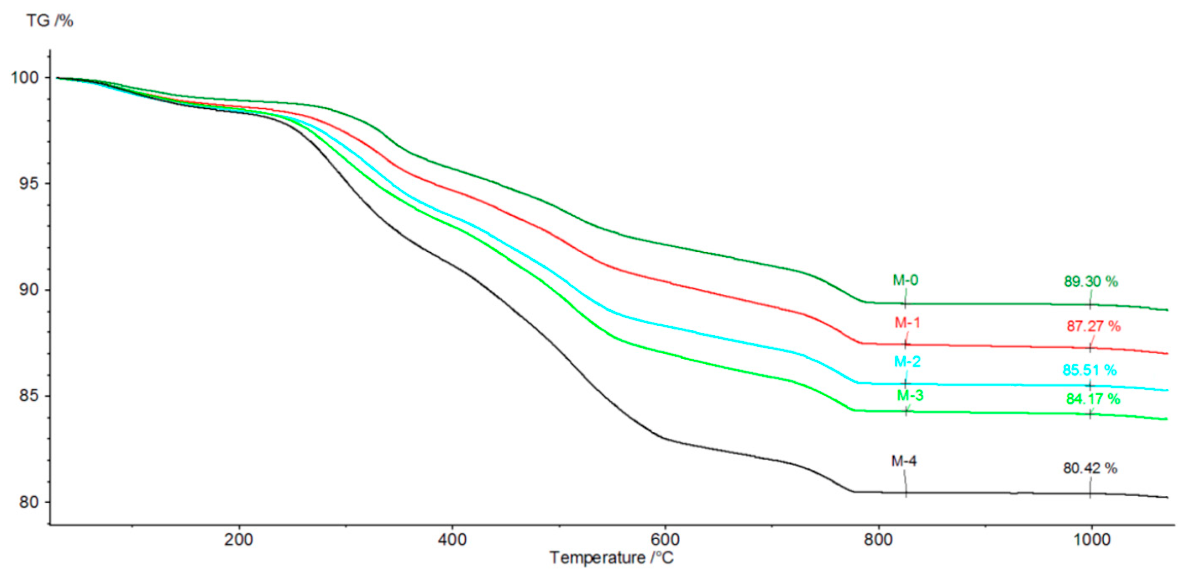
Based on the detailed analysis of the DTA, TG, and DTG curves as well as the ion current curves for samples M-0–M-4, together with their comparative summaries (Figure 13), it can be concluded that all investigated ceramic bodies exhibit an analogous pattern of thermal transformations, differing, however, significantly in their intensity and kinetics. With increasing content of the organic additive, a systematic increase in total mass loss is observed, ranging from approximately 10.7% for the reference sample M-0 to nearly 19.6% for sample M-4. The TG curves clearly indicate that the greatest differences between the samples occur within the temperature range of 200–600 °C, demonstrating the dominant role of organic matter combustion and clay mineral dehydroxylation in determining the mass balance.
Within the initial temperature range, extending up to approximately 200 °C, all samples exhibit endothermic effects associated with the process of dehydration, involving the removal of physically bound water and interlayer water from clay minerals such as illite and montmorillonite.
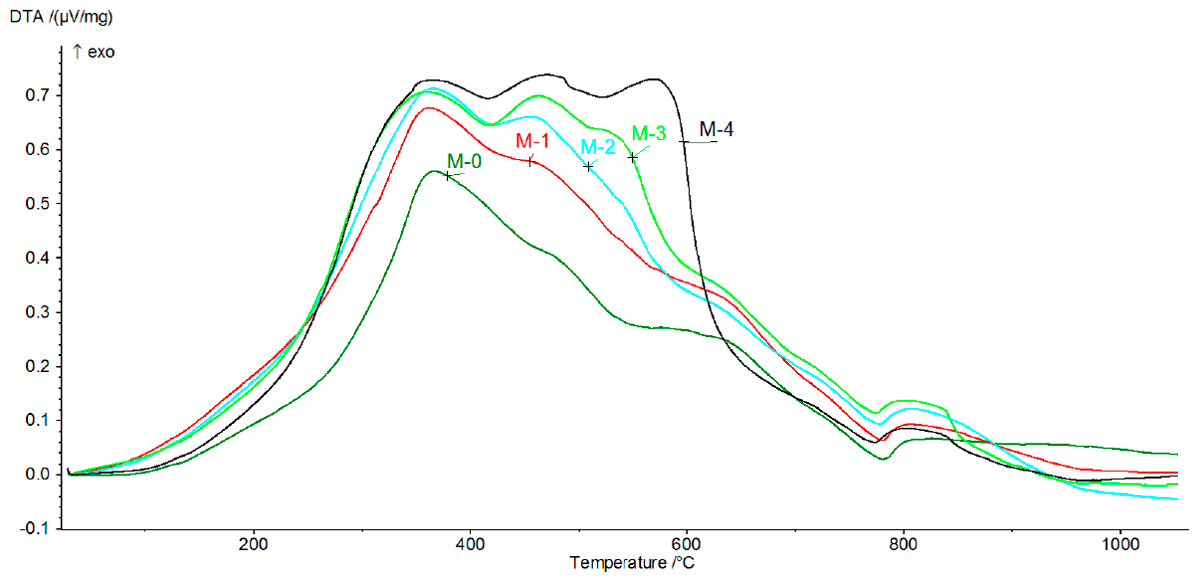
The intensity of these effects is relatively similar for all mixtures (Figure 14), indicating that the proportion of physically bound water does not change significantly with increasing organic additive content. The situation changes substantially within the temperature range of 200–400 °C, where the combustion of organic matter begins, manifested by distinct exothermic effects on the DTA curves. The intensity of these effects increases with the content of the organic additive, while their maxima become progressively more pronounced, indicating an increasing amount and reactivity of organic matter within the system.
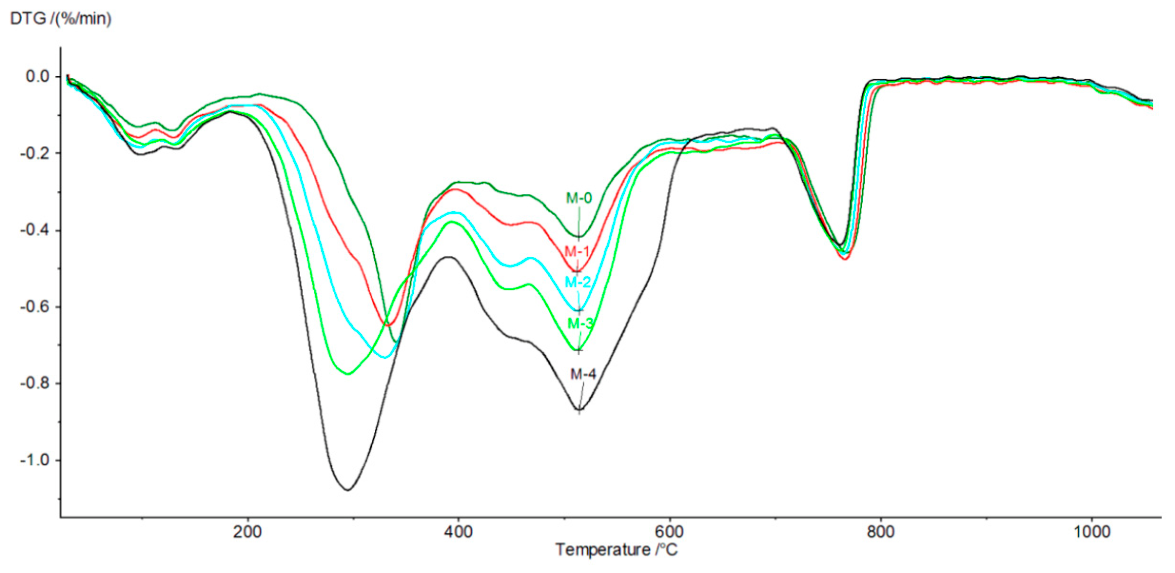
The most complex course of transformations is observed within the temperature range of 400–600 °C, where two significant processes overlap: the combustion of residual organic matter, which is exothermic in nature, and the dehydroxylation of clay minerals, which proceeds endothermically. As a result, the DTA curves within this region exhibit a complex character arising from the superposition of effects with opposite energetic signs. At the same time, this is the temperature range in which the greatest mass losses and the highest transformation rates on the DTG curves are recorded, particularly for samples M-3 and M-4 (Figure 15). This clearly indicates that an increase in the content of the organic additive leads to the intensification of processes occurring within this range and to an increase in the dynamics of structural changes in the material.
Within the higher temperature range, approximately 700–800 °C, all samples exhibit endothermic effects associated with carbonate decarbonation, accompanied by CO2 emission. The intensity of these effects is relatively similar for all analyzed mixtures, suggesting that the content of carbonate phases in the investigated materials is comparable and does not significantly depend on the proportion of the organic additive. The analysis of the ion current curves confirms the above interpretations, indicating dominant H2O emission at low temperatures and CO2 emission within the temperature ranges corresponding to organic matter combustion and decarbonation. The absence of a significant signal for m/z = 64 indicates only trace amounts of sulfur compounds in the investigated samples.
The comparative summaries of the TG, DTA, and DTG curves clearly demonstrate that an increase in the content of the organic additive results not only in a greater total mass loss, but also in an acceleration of the transformation processes and an increase in their energetic intensity. The DTG curves indicate progressively higher maxima of the mass loss rate, whereas the DTA curves reveal an increase in exothermic effects, particularly within the temperature range corresponding to organic matter combustion. As a consequence, the material evolves from the relatively stable reference system M-0 to a system with high thermal reactivity, represented by sample M-4.
All investigated ceramic bodies undergo the same sequence of thermal transformations, including dehydration, combustion of organic matter, dehydroxylation, and decarbonation; however, their quantitative and kinetic behavior strongly depends on the content of the organic additive. The temperature range of 200–600 °C is of the greatest technological importance, as it encompasses the most intensive processes responsible for the development of porosity and structural changes in the material. Increasing the proportion of the organic additive enhances the pore-forming potential of the material, but simultaneously increases the risk of defect formation during thermal treatment, which is of key importance for the design of the firing process and the control of the final properties of ceramic products.
The results presented in Table 9 indicate a systematic increase in the calorific value with increasing shea waste content in the ceramic mixtures. The reference mixture (0) was characterized by the lowest calorific value (865 J/g), whereas mixture 4 exhibited the highest value, amounting to 2665 J/g. This means that the mixture containing the highest proportion of organic additive released more than three times as much energy as the reference system.
The increase in calorific value is directly related to the higher content of organic matter undergoing combustion during firing, which is also confirmed by the TG-DTA-DTG analyses indicating intensified exothermic effects and greater mass losses for mixtures containing shea waste.
The obtained results suggest the possibility of partially reducing fuel consumption during the firing process of ceramic products. At the same time, the high calorific value of the mixtures may lead to local overheating of the material and increased intensity of gas evolution during firing. For this reason, careful control of the thermal parameters of the process is required, particularly the heating rate and temperature distribution within the kiln, in order to avoid deformation and destabilization of the technological process.

3.3. Porosity

The relative porosity of the investigated ceramic materials was determined on the basis of the relationship between the mass of fired specimens and water-saturated specimens. The obtained results indicate a clear influence of the shea waste additive on the development of open porosity within the material (Table 10). The lowest value of relative porosity was recorded for the reference mixture, for which the average value amounted to 27.00%, whereas the highest value was observed for mixture No. 4, reaching 34.98%. With increasing content of the organic additive, a systematic increase in the amount of open pores within the ceramic structure was observed. In the case of mixture No. 3, the porosity increased by approximately 14%, whereas for mixture No. 4 the increase reached approximately 30% relative to the reference sample.
The increase in porosity is directly related to the combustion of organic additives during firing, leading to the formation of additional voids and capillary channels within the microstructure of the material. The increase in the amount of open pores also resulted in enhanced water absorption capacity. A clear correlation was observed between relative porosity and water absorption by immersion, the values of which increased with increasing shea waste content. For mixture No. 3, water absorption increased by approximately 29%, whereas for mixture No. 4 the increase reached as much as 63% relative to the reference mixture. These results indicate that organic additives significantly modify the porous structure of the ceramic material, thereby affecting its performance properties.

3.4. Compressive and Flexural Strength Tests

Compressive strength tests were carried out for both solid and hollow specimens. The compressive strength was determined on six samples of each composition with dimensions of approximately 50 × 50 × 50 mm. The obtained results were discussed with reference to EN 771-1 “Specification for masonry units—Part 1: Clay masonry units” [31]. The results demonstrated that an increase in the shea waste content caused a gradual reduction in the mechanical strength of the ceramic materials (Table 11, Table 12 and Table 13). For solid specimens, the highest average strength was obtained for the reference mixture, amounting to 23.67 MPa, whereas the lowest value was recorded for mixture No. 4, reaching 10.10 MPa. After applying the shape factor, these values corresponded to strength classes 20 and 7.5, respectively. In the case of hollow specimens, the strength values were lower; however, they exhibited a similar trend. The reference mixture achieved an average strength of 19.84 MPa, whereas mixture No. 4 reached only 8.09 MPa.
The addition of 5% shea waste already caused a noticeable deterioration in the mechanical properties of the material. For solid specimens, the compressive strength decreased by approximately 11% relative to the reference sample, resulting in a reduction in the strength class from 20 to 15. In the case of mixture No. 1, the strength reduction amounted to approximately 17% for solid specimens and about 15% for hollow specimens. The principal reason for the deterioration of mechanical properties was the increase in material porosity resulting from the combustion of the organic additive and the formation of a greater number of voids within the ceramic structure.
The reduction in strength may have also been influenced by changes in the composition of the ceramic bodies. The increased proportion of organic material was associated with a reduction in the amount of clay, which constitutes the primary component responsible for the cohesion and strength of the ceramic body. Additionally, the reduced content of ash and slag may have limited the proportion of fluxing phases affecting the intensity of sintering processes during firing.
Despite the reduction in mechanical parameters, most of the investigated materials containing shea waste achieved strength values corresponding to classes 10 and 15, indicating their potential practical applicability in construction. Particularly important is the fact that hollow specimens containing 20% shea waste achieved parameters allowing their classification within strength class 10, which makes it possible to consider the use of such materials for the production of ceramic elements intended for masonry structures in single-family buildings.
Flexural strength tests demonstrated a significant influence of the shea waste additive on the mechanical properties of the obtained ceramic materials. With increasing content of the organic additive, a systematic decrease in the flexural strength of all investigated samples was observed. The highest average value was obtained for the reference mixture, for which the flexural strength amounted to 8.96 MPa, whereas the lowest value was recorded for mixture No. 4, reaching 4.76 MPa.
Even a small proportion of shea waste caused a noticeable deterioration in mechanical performance. For mixture No. 1, containing 5% additive, the flexural strength decreased by approximately 7% relative to the reference sample, whereas for mixture No. 2 the reduction amounted to approximately 16%. The greatest decrease in mechanical parameters was observed for mixture No. 3, where the flexural strength was approximately 30% lower than that of the reference sample. This trend indicates a direct relationship between the content of the organic additive and the weakening of the ceramic material structure.
The reduction in flexural strength is primarily associated with the increase in material porosity. During firing, the organic material undergoes complete combustion, leaving voids and a network of open pores within the structure, which act as stress concentration sites and facilitate the initiation and propagation of cracks. As a result, the material becomes more susceptible to failure under bending loads. This effect was particularly evident for mixture No. 4, characterized by the highest porosity and the lowest mechanical strength.The analysis of specimen fracture surfaces after testing revealed a homogeneous internal structure of the ceramic materials. No black core or local discolorations indicating insufficient oxidation of organic components during firing were observed. The uniform color of the cross-sections indicates the proper course of the firing process in an oxidizing atmosphere and appropriate conditions for gas diffusion within the specimens. This means that the organic additives underwent effective combustion, and the resulting porosity was the effect of controlled burnout of the organic material rather than technological defects associated with incomplete thermal transformation of the ceramic body.

4. Conclusions

  • Sieve analyses demonstrated that all applied raw materials were characterized by an appropriate particle size distribution enabling their use in the preparation of homogeneous ceramic bodies. Shea waste differed from sawdust in terms of grain morphology, exhibiting a more irregular and granular shape, which influenced the manner of pore formation within the structure of the fired ceramic materials.
  • Chemical and mineralogical analyses of the raw materials confirmed the presence of phases characteristic of clay materials, igneous rocks, and combustion by-products. Basalt was found to consist mainly of aluminosilicate and iron-bearing minerals, whereas ash and slag were dominated by quartz, mullite, hematite, and calcite. The mineral composition of the technological additives influenced the course of sintering processes and the final properties of the ceramic materials.
  • Thermal analyses demonstrated that shea waste is characterized by a high content of organic matter and a significant mass loss during heating. The combustion process proceeded in two stages and covered a wide temperature range. With increasing shea waste content in the mixtures, the amount of released heat and the loss on ignition values increased, indicating a significant influence of the biomass on the firing process.
  • Replacing part of the conventional additives with shea waste increased the calorific value of the ceramic mixtures from 865 J/g (reference mixture) to 2665 J/g (mixture No. 4), indicating the potential for partial substitution of external fuel demand during firing. Although direct CO2 emissions were not measured, the obtained results suggest that the use of shea waste may contribute to lowering the carbon footprint of ceramic production.
  • Increasing the proportion of shea waste in the ceramic mixtures resulted in higher open porosity and lower apparent density of the materials. This effect was associated with the combustion of organic matter and the formation of additional voids within the microstructure of the ceramic bodies.
  • The mechanical strength of the ceramic materials decreased with increasing content of shea waste. Both compressive and flexural strength tests demonstrated a clear correlation between increased porosity and deterioration of mechanical parameters. The greatest reduction in strength was recorded for mixtures containing the highest proportion of biomass.
  • Despite the decrease in mechanical strength, most of the investigated materials containing up to 20% shea waste retained parameters corresponding to strength classes enabling their application in construction. The samples from mixture No. 4 exhibited the lowest compressive strength (10.10 MPa), measured on solid ceramic cubes. Considering that the compressive strength of hollow ceramic cubes units is lower, the use of this composition in load-bearing masonry units may be limited. Nevertheless, this material may still be suitable for non-load-bearing applications, such as partition walls or infill walls.
  • The obtained results confirm the feasibility of using shea fruit waste as an organic additive in building ceramics technology. An appropriately selected proportion of biomass makes it possible to obtain materials with reduced density and potentially lower CO2 emissions, while maintaining parameters enabling their practical application in the production of ceramic building products.

Author Contributions

Conceptualization, W.Z., P.M. and M.P.; methodology, W.Z., P.M. and M.P.; software, W.Z., P.M. and M.P.; validation, W.Z., P.M. and M.P.; formal analysis, W.Z., P.M. and M.P.; investigation, W.Z., P.M. and M.P.; resources, W.Z., P.M. and M.P.; data curation, W.Z., P.M. and M.P.; writing—original draft, W.Z., P.M. and M.P.; writing—review and editing, W.Z., P.M. and M.P.; visualization, W.Z., P.M. and M.P.; supervision, W.Z., P.M. and M.P.; project administration, W.Z., P.M. and M.P.; funding acquisition, P.M. and M.P. All authors have read and agreed to the published version of the manuscript.

Funding

The studies were financed by the “Excellence Initiative—Research University” program (IDUB) at AGH University of Krakow and from the subsidy of the Minister of Science and Higher Education for the AGH University of Kraków.

Institutional Review Board Statement

Not applicable.

Informed Consent Statement

Not applicable.

Data Availability Statement

The original contributions presented in this study are included in the article. Further inquiries can be directed to the corresponding authors.

Conflicts of Interest

The authors declare no conflicts of interest.

References

  1. Olaniyi, H.F.; Elinge, C.M.; Lawal, M.; Jinga, D.D. Ignition and Burning Rate of Sheanut Shell Briquettes Produced at Moderate Temperature and Die Pressure. Int. Res. J. Appl. Sci. Eng. Technol. 2024, 10, 1–7. [Google Scholar]
  2. Jannat, N.; Al-Mufti, R.L.; Hussien, A.; Abdullah, B.; Cotgrave, A. Utilisation of Nut Shell Wastes in Brick, Mortar and Concrete: A Review. Constr. Build. Mater. 2021, 293, 123546. [Google Scholar] [CrossRef]
  3. Kováč, J.; Trník, A.; Medveď, I.; Štubňa, I.; Vozár, L. Influence of Fly Ash Added to a Ceramic Body on Its Thermophysical Properties. Therm. Sci. 2016, 20, 603–612. [Google Scholar] [CrossRef]
  4. Bolewski, A.; Budkiewicz, M.; Wyszomirski, P. Surowce Ceramiczne; Wydawnictwo Geologiczne: Warszawa, Poland, 1991.
  5. Zhang, Z.; Zhang, L.; Li, A. Development of a sintering process for recycling oil shale fly ash and municipal solid waste incineration bottom ash into glass ceramic composite. Waste Manag. 2015, 38, 185–193. [Google Scholar] [CrossRef] [PubMed]
  6. Stoch, L. Minerały Ilaste; Wydawnictwo Geologiczne: Warszawa, Poland, 1974.
  7. Wiśniewski, P. Dodatki organiczne we współczesnej ceramice. Cz. II. Właściwości spoiw. Szkło Ceram. 2008, 59, 43–47. [Google Scholar]
  8. Lubas, M.; Nowak, A.; Iwaszko, J.; Jasinski, J.J.; Zajemska, M. Characterization of calumite-modified melaphyre glass in terms of mineral fibres and glass-ceramic materials production. Ceram. Int. 2024, 50, 3624–3632. [Google Scholar] [CrossRef]
  9. Aleksakhin, A.; Sala, D.; Golovin, K.; Kovalev, R. Reducing energy costs for pipeline transportation. Transp. Res. Procedia 2021, 57, 24–32. [Google Scholar] [CrossRef]
  10. Haberko, K.; Kordek, M.; Pampuch, R. Nauka o Procesach Ceramicznych; PWN: Warszawa, Poland, 1992. [Google Scholar]
  11. Sala, D.; Bieda, B. Application of uncertainty analysis based on Monte Carlo (MC) simulation for life cycle inventory (LCI). Inżynieria Miner. 2019, 2, 80. [Google Scholar] [CrossRef]
  12. Adazabra, A.N.; Viruthagiri, G.; Ravisankar, R. Cleaner Production in the Shea Industry via the Recovery of Spent Shea Waste for Reuse in the Construction Sector. J. Clean. Prod. 2016, 122, 335–344. [Google Scholar] [CrossRef]
  13. Jiang, G.; Husseini, G.A.; Baxter, L.L.; Linford, M.R. Analysis of Shea Nut Shells by X-ray Photoelectron Spectroscopy. Surf. Sci. Spectra 2004, 11, 112–118. [Google Scholar] [CrossRef]
  14. Richert, M.; Dudek, M.; Sala, D. Surface Quality as a Factor Affecting the Functionality of Products Manufactured with Metal and 3D Printing Technologies. Materials 2024, 17, 5371. [Google Scholar] [CrossRef] [PubMed]
  15. European Integrated Pollution Prevention and Control Bureau. Reference Document on Best Available Techniques in the Ceramic Manufacturing Industry (CER); MB/FS/EIPPCB/CER_Final Draft; Seville, Spain, 2010. [Google Scholar]
  16. Garcia-Ten, J.; Monfort, E.; Gómez-Tena, M.; Sanz, V. Use of Coatings to Minimise Acid Emissions during Ceramic Tile Firing. J. Clean. Prod. 2011, 19, 1110–1116. [Google Scholar] [CrossRef]
  17. da Fonseca, B.S.; Vilão, A.; Galhano, C.; Simão, J.A.R. Reusing Coffee Waste in Manufacture of Ceramics for Construction. Adv. Appl. Ceram. 2014, 113, 3. [Google Scholar]
  18. Sermyagina, E.; Martinez, C.L.M.; Nikku, M.; Vakkilainen, E. Spent Coffee Grounds and Tea Leaf Residues: Characterization, Evaluation of Thermal Reactivity and Recovery of High-Value Compounds. Biomass Bioenergy 2021, 150, 106141. [Google Scholar] [CrossRef]
  19. Pelozo, G.; Quaranta, N.; Caligaris, M. Effect of the Incorporation of Biomass Wastes on the Properties of Fired Clay Bricks; Food and Agriculture Organization of the United Nations: San Nicolás, Argentina, 2018. [Google Scholar]
  20. Kłosek-Wawrzyn, E.; Wiśniewska, K.; Wons, W. Badanie wpływu rodzaju, ilości i uziarnienia dodatków poryzujących na porowatość i podciąganie kapilarne tworzyw ceramicznych. Mater. Ceram. 2020, 72, 151–160. [Google Scholar]
  21. Aniszewska, M.; Gendek, A. Porównanie ciepła spalania i wartości opałowej szyszek wybranych gatunków drzew leśnych. Leśne Pr. Bad. 2014, 75, 231–236. [Google Scholar]
  22. Dychkovskyi, R.; Sala, D.; Pyzalski, M.; Miroshnykov, I.; Sujak, A.; Durczak, K.; Kotsan, I.; Pererva, A. Management of Chemical Synthesis Processes of Potassium Humate During Coal Beneficiation Waste Processing. Sustainability 2026, 18, 2196. [Google Scholar] [CrossRef]
  23. Fedoreiko, V.; Kravchenko, O.; Sala, D.; Zahorodnii, R.; Pyzalski, M.; Dychkovskyi, R. Management and Optimization of Bio-Resource Decentralized Energy Generation Under Political Instability. Energies 2026, 19, 737. [Google Scholar] [CrossRef]
  24. Pavlychenko, A.; Sala, D.; Pyzalski, M.; Dybrin, S.; Antoniuk, O.; Dychkovskyi, R. Utilizing Fuel and Energy Sector Waste as Thermal Insulation Materials for Technical Buildings. Energies 2025, 18, 2339. [Google Scholar] [CrossRef]
  25. Dziarmagowski, M.; Karbowniczek, M.; Pyzalski, M.; Okoń, J. Reduction of Converter Slag in Electric Arc Furnace. Ironmak. Steelmak. 1992, 19, 45–49. [Google Scholar]
  26. Karamanov, A.; Pelino, M.; Salvo, M.; Metekovits, I. Sintered glass-ceramics from incinerator fly ashes. Part II. The influence of the particle size and heat-treatment on the properties. J. Eur. Ceram. Soc. 2003, 23, 1609–1615. [Google Scholar]
  27. Dejean, A.; Ouédraogo, I.W.; Mouras, S.; Valette, J.; Blin, J. Shea nut shell based catalysts for the production of ethanolic biodiesel. Energy Sustain. Dev. 2017, 40, 103–111. [Google Scholar] [CrossRef]
  28. Quainoo, A.K.; Konadu, A.; Kumi, M. The potential of shea nut shells in phytoremediation of heavy metals in contaminated soil using lettuce (Lactuca sativa) as a test crop. J. Bioremediation Biodegrad. 2015, 6, 1. [Google Scholar]
  29. Kobomoje, O.S.; Mohammed, A.O.; Omojasola, P.F. The production of citric acid from shea nut shell (Vitellaria paradoxa) using Aspergillus niger. Adv. Appl. Sci. Res. 2013, 4, 25–28. [Google Scholar]
  30. Mbakbaye, M.R.; Ronoh, E.K.; Sanewu, I.F. Effects of shea nutshell ash on physical properties of lateritic soil. SSRG Int. J. Civ. Eng. 2021, 8, 1–6. [Google Scholar] [CrossRef]
  31. PN-EN 771-1+A1:2015-10; Specification for Masonry Units—Part 1: Clay Masonry Units. PKN: Warsaw, Poland, 2015.
Figure 1. Particle Size Distribution of Shea Waste and Sawdust.
Sustainability 18 06828 g001
Figure 2. Particle Size Distribution of Clay 1 and Clay 2.
Sustainability 18 06828 g002
Figure 3. Particle Size Distribution of Basalt, Fly Ash, and Slag.
Sustainability 18 06828 g003
Figure 4. X-ray diffraction (XRD) pattern of Basalt.
Sustainability 18 06828 g004
Figure 5. X-ray diffraction (XRD) pattern of Fly Ash.
Sustainability 18 06828 g005
Figure 6. X-ray diffraction (XRD) pattern of Slag.
Sustainability 18 06828 g006
Figure 7. Macroscopic appearance of processed Shea Fruit Shells: (a) original material, (b) after separation into size fractions.
Sustainability 18 06828 g007
Figure 8. DTA, TG, and DTG thermal curves as a function of temperature for the shea waste sample.
Sustainability 18 06828 g008
Figure 9. Thermal curves of evolved gases presented as ion current for m/z 18 and 44 as a function of temperature for the shea waste sample.
Sustainability 18 06828 g009
Figure 10. “Dragon teeth” specimens formed from mixture 4.
Sustainability 18 06828 g010
Figure 11. View of the dried specimens prepared from mixtures: (a) No. 0 reference, (b) No. 4 with surface deposit.
Sustainability 18 06828 g011
Figure 12. Firing curve of samples in an industrial furnace.
Sustainability 18 06828 g012
Figure 13. Comparison of TG curves for the investigated ceramic bodies. Abbreviations: M-0—mixture 0, M-1—mixture 1, M-2—mixture 2, M-3—mixture 3, M-4—mixture 4.
Sustainability 18 06828 g013
Figure 14. Comparison of DTA curves for the investigated ceramic bodies. Abbreviations: M-0—mixture 0, M-1—mixture 1, M-2—mixture 2, M-3—mixture 3, M-4—mixture 4.
Sustainability 18 06828 g014
Figure 15. Comparison of DTG curves for the investigated ceramic bodies. Abbreviations: M-0—mixture 0, M-1—mixture 1, M-2—mixture 2, M-3—mixture 3, M-4—mixture 4.
Sustainability 18 06828 g015
Table 1. Chemical Composition of the Raw Materials.
BasaltFly AshSlagClay 1Clay 2Shea Waste
SiO239.1550.9452.4563.8858.280.35
Al2O313.3630.2624.8612.4416.480.37
CaO12.802.883.546.635.510.36
Fe2O31.426.3510.065.654.040.07
MgO10.391.682.011.232.310.10
Na2O6.051.230.810.320.880.19
TiO22.411.371.380.800.800.01
P2O51.550.940.380.4310.4310.01
K2O0.922.933.191.812.742.11
Table 2. Volumetric composition of ceramic body mixtures containing shea husk biomass and selected mineral additives.
Mixture No.Clay 1 [%] Vol.Clay 2 [%] Vol.Basalt [%] Vol.Ash [%]
Vol.
Slag [%] Vol.Sawdust [%] Vol.Shea Husk [%] Vol.
0402057.57.5200
1402057.57.5155
2402055.05.01510
3402057.57.5020
4402052.52.5030
Table 3. Results of the apparent density test of samples dried to constant weight.
Mixture No.Apparent Density [g/cm3]
01234
Average1.76 ± 0.011.70 ± 0.011.66 ± 0.011.65 ± 0.011.53 ± 0.01
Table 4. Interpretation of the thermal curves for mixture 0.
Temperature Range
(Maximum Transformation Temperature)
[°C]
Mass Change [% w/w]Type of TransformationExothermic/EndothermicSubstance
30 ÷ 210
(96)
−1.08H2O dehydrationendothermicillite/montmorillonite
30 ÷ 210
(129)
H2O dehydrationendothermicillite/montmorillonite
210 ÷ 400
(340)
−3.19H2O and CO2 combustionexothermicorganic matter
400 ÷ 600
(ok. 460)
−3.58H2O and CO2 combustionexothermicorganic matter
400 ÷ 600
(514)
H2O dehydroxylationendothermicillite/montmorillonite
600 ÷ 1000
(768)
−2.84CO2 decarbonationendothermiccarbonates
Total mass change 30 ÷ 1000 [°C] = −10.69 [%]
Table 5. Interpretation of the thermal curves for mixture No. 1.
Temperature Range
(Maximum Transformation Temperature)
[°C]
Mass Change [% w/w]Type of TransformationExothermic/EndothermicSubstance
30 ÷ 210
(96)
−1.40H2O dehydrationendothermicillite/montmorillonite
30 ÷ 210
(129)
H2O dehydrationendothermicillite/montmorillonite
210 ÷ 400
(333)
−3.89H2O and CO2 combustionexothermicorganic matter
400 ÷ 600
(ok. 449)
−4.32H2O and CO2 combustionexothermicorganic matter
400 ÷ 600
(511)
H2O dehydroxylationendothermicillite/montmorillonite
600 ÷ 1000
(766)
−3.12CO2 decarbonationendothermiccarbonates
Total mass change 30 ÷ 1000 [°C] = −12.73 [%]
Table 6. Interpretation of the thermal curves for mixture No. 2.
Temperature Range
(Maximum Transformation Temperature)
[°C]
Mass Change [% w/w]Type of TransformationExothermic/EndothermicSubstance
30 ÷ 210
(97)
−1.58H2O dehydrationendothermicillite/montmorillonite
30 ÷ 210
(129)
H2O dehydrationendothermicillite/montmorillonite
210 ÷ 400
(329)
−4.93H2O and CO2 combustionexothermicorganic matter
400 ÷ 600
(449)
−5.18H2O and CO2 combustionexothermicorganic matter
400 ÷ 600
(512)
H2O dehydroxylationendothermicillite/montmorillonite
600 ÷ 1000
(763)
−2.79CO2 decarbonationendothermiccarbonates
Total mass change 30 ÷ 1000 [°C] = −14.48 [%]
Table 7. Interpretation of the thermal curves for mixture No. 3.
Temperature Range
(Maximum Transformation Temperature)
[°C]
Mass Change [% w/w]Type of TransformationExothermic/EndothermicSubstance
30 ÷ 210
(102)
−1.51H2O dehydrationendothermicillite/montmorillonite
30 ÷ 210
(130)
H2O dehydrationendothermicillite/montmorillonite
210 ÷ 400
(295)
−5.45H2O and CO2 combustionexothermicorganic matter
400 ÷ 600
(447)
−5.18H2O and CO2 combustionexothermicorganic matter
400 ÷ 600
(511)
H2O dehydroxylationendothermicillite/montmorillonite
600 ÷ 1000
(761)
−2.87CO2 decarbonationendothermiccarbonates
Total mass change 30 ÷ 1000 [°C] = −15.81 [%]
Table 8. Interpretation of the thermal curves for mixture No. 4.
Temperature Range
(Maximum Transformation Temperature)
[°C]
Mass Change [% w/w]Type of TransformationExothermic/EndothermicSubstance
30 ÷ 210
(98)
−1.54H2O dehydrationendothermicillite/montmorillonite
30 ÷ 210
(133)
H2O dehydrationendothermicillite/montmorillonite
210 ÷ 400
(295)
−7.00H2O and CO2 combustionexothermicorganic matter
400 ÷ 600
(514)
−8.82H2O and CO2 combustionexothermicorganic matter
400 ÷ 600
(575)
H2O dehydroxylationendothermicillite/montmorillonite
600 ÷ 1000
(761)
−2.22CO2 decarbonationendothermiccarbonates
Total mass change 30 ÷ 1000 [°C] = −19.58 [%]
Table 9. Results of calorific value measurements for the designed mixtures.
Mixture No.Calorific Value [J/g]
0865
11085
21560
31862
42665
Table 10. Results of relative porosity measurements for ceramic specimens.
Mixture No.Relative Porosity [%]
01234
Average27.0 ± 0.2327.69 ± 0.1929.50 ± 0.1530.79 ± 0.3234.98 ± 0.31
Table 11. Results of compressive strength tests for solid ceramic cubes.
Mixture No.Compressive Strength [MPa]
01234
Average23.67 ± 2.9121.00 ± 2.2115.43 ± 2.0419.69 ± 2.5210.10 ± 1.33
Product strength class201510157.5
Table 12. Results of compressive strength tests for hollow ceramic cubes.
Mixture No.Compressive Strength [MPa]
01234
Average19.84 ± 2.4721.29 ± 2.6411.58 ± 1.6816.86 ± 0.358.09 ± 0.90
Product strength class15157.5105
Table 13. Results of flexural strength tests for ceramic beams.
Mixture No.Compressive Strength [MPa]
01234
Average8.96 ± 0.248.36 ± 0.417.48 ± 0.176.21 ± 0.514.76 ± 0.23
Disclaimer/Publisher’s Note: The statements, opinions and data contained in all publications are solely those of the individual author(s) and contributor(s) and not of MDPI and/or the editor(s). MDPI and/or the editor(s) disclaim responsibility for any injury to people or property resulting from any ideas, methods, instructions or products referred to in the content.