1. Introduction
The impact of tourism on society is enormous. It carries several positive elements, such as stress reduction, improved health and the opportunity to spend leisure time with relatives and friends [
1,
2]. Due to the type of activities performed during leisure, a part of society is excluded due to its physical limitations, which may be caused by illness or injury [
3]. Decision-makers responsible for the development of tourist areas should also take into account the needs of excluded people. However, from the perspective of the sustainable development paradigm, which relies on social justice and rigorous environmental protection, the spatial exclusion of people with physical limitations remains a serious problem. Implementing sustainable tourism requires strict consideration of the diverse needs of all travellers, including people with disabilities. This means implementing logistical solutions that, on one hand, maximize social participation and destination accessibility, and on the other hand, minimize the physical degradation of the natural environment.
According to the Polish Tourist and Sightseeing Society (PTTK), the concept of tourism for people with disabilities is defined as “intentional, purposeful physical activity adapted to individual needs, performed in various forms, closely related to sightseeing activity.” It is a form of social rehabilitation for people with disabilities. This activity maximizes physical, mental, social, and occupational fitness and adaptation to everyday life. Tourism for people with various disabilities is a recreation and a means of therapy and education [
4]. However, due to physical limitations caused by illness or injury, a significant part of society is often excluded from these activities. While Geographic Information Systems (GIS) and Multi-Criteria Decision Analysis (MCDA) are widely applied in tourism planning and transport accessibility analysis, a critical review of the literature reveals a profound ‘urban bias’. Existing studies predominantly focus on structured environments: urbanized areas, public mass transit catchments, or standard hiking trails [
5,
6,
7]. In these conventional models, accessibility is usually calculated based on standard human walking speeds or generalized vehicular traffic. Consequently, current spatial decision support systems fail when applied to nature-based tourism for individuals with motor disabilities. They typically do not account for the harsh geomorphological realities of wilderness areas nor the specific operational and geometric constraints of specialized off-road vehicles, such as strict slope limits and specific track width requirements in rugged terrain [
8,
9,
10].
Consequently, there is a research gap in spatial planning methods for nature-based accessible tourism that explicitly account for the static operational constraints of specialized off-road assistive vehicles. The proposed contribution is not a dynamic engineering simulation of the wheelchair, but a GIS-MCDA decision-support framework that incorporates predefined spatial constraints relevant to the vehicle, namely the adopted maximum slope threshold and minimum route-width requirement.
To bridge this gap, transportation accessibility is crucial. It is described in the literature as the basis for meeting society’s diverse needs, including optional trips such as excursions and tourism [
11,
12,
13,
14,
15,
16]. Accessibility determines the ability of people with special needs to use a particular mode of transport or visit a place [
17,
18,
19]. Consequently, increasing spatial accessibility and adjusting infrastructure directly improves an area’s sustainability. In the context of mountain areas, this becomes a challenge regarding off-road mobility.
Sustainable tourism development necessitates taking into account the diverse needs of all tourists, including those with disabilities [
20]. From a transportation perspective, this requires implementing solutions that minimize environmental degradation while maximizing accessibility to travel destinations [
21,
22,
23]. This delicate balance is the very essence of sustainable mobility, ensuring that natural heritage is preserved for future generations while being actively shared today without discrimination.
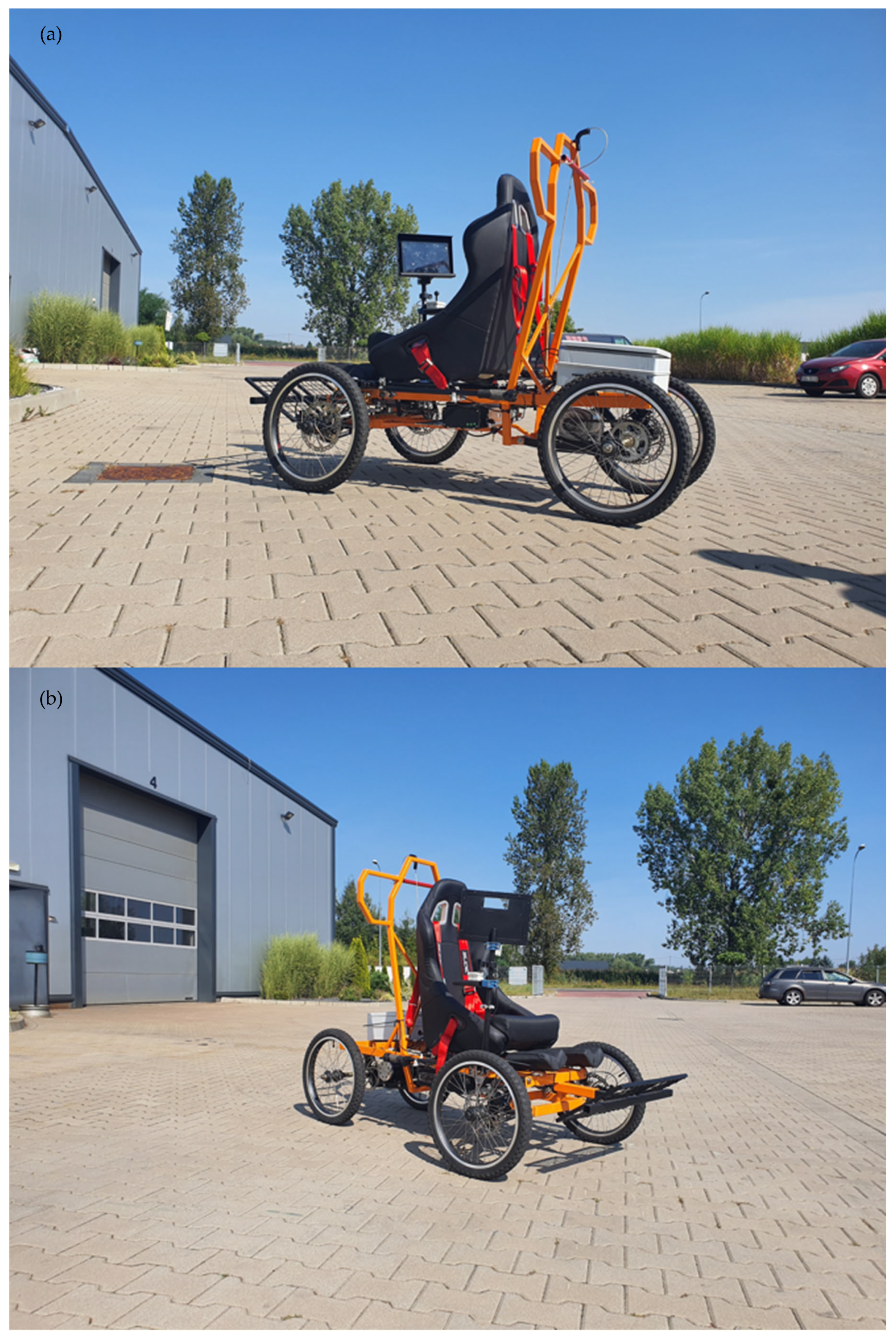
Current technology makes it possible to reduce social exclusion in various ways. A modern approach to tourism allows people with special needs to make optional trips to previously inaccessible places. To address this issue, the project ‘Mountain Without Barriers’ was initiated. Conducted under the ‘Things for people’ carried out by the National Center for Research and Development, it seeks to develop an integrated system for planning, organizing, and supporting mountain tourism for people with physical disabilities. The project consists of 3 main components: the development of a specialized off-road vehicle, an integrated information system for planning, supervision and support, and the determination of the accessibility of the tourist offer for people with special needs. The prototype of the vehicle designed to navigate these challenging terrains is shown in
Figure 1.
The specialized off-road vehicle is designed with the following technical specifications to ensure stability and maneuverability in mountain terrain:
Dimensions and Geometry: Total vehicle length is 1550 mm, width is 1000 mm, and height is 1450 mm. To ensure lateral stability in rugged environments, the front track width is set at 900 mm, while the rear track width is 700 mm. The minimum turning radius is 5000 mm.
Propulsion and Power System: The vehicle utilizes a rear-wheel-drive system powered by a 48 V DC electric motor with a nominal capacity of 1000 W. Energy is supplied by a 48 V DC, 20 Ah battery pack, enabling a maximum speed of 20 km/h. The vehicle is fitted with 20 × 2.35” off-road tyres optimized for unpaved surfaces.
Braking System: Heavy-duty braking and descent control are managed via an independent hydraulic disc brake on each front wheel, complemented by a single central hydraulic disc brake mounted directly on the rear axle.
Analytical Operational Constraints and Safety Margin: Mechanically, the 1000 W powertrain enables the prototype to negotiate a maximum physical terrain gradient of 25% under optimal, high-traction conditions. However, for the macroscopic spatial routing framework, a strict operational threshold of 15% (Gmax = 15%) was applied. This defines an engineered safety margin of 40% (a 10-percentage-point reduction from the absolute physical failure threshold of 25%). This analytical buffer is intentionally integrated into the spatial filtering process to mathematically account for real-world environmental degradation, including variable wheel–soil traction coefficients on wet or loose mountain terrain, terrain resistance, and the mitigation of continuous thermal loads on the electric motor during sustained ascents.
The developed wheelchair is characterized by modular construction, allowing for the installation of different wheels adapted to terrain challenges and fully adapting the control system to the user and their disability.
While the vehicle itself is a core component, its effective operation depends on supporting infrastructure. The article discusses the problems of organizing travel in non-urbanized areas using a specialized off-road vehicle. Specifically, the research presented focuses on identifying suitable locations for infrastructure (“base points”) necessary for vehicle services such as recharging, battery replacement, technical condition checks, and basic repairs to ensure safety and convenience. The indicated points are necessary for developing the stated type of tourism for people with special needs to ensure their safe and comfortable travel and to reduce the potential stress caused by using a new device. This paper presents a method for locating such infrastructure based on spatial analysis utilizing QGIS and OpenStreetMap data. A case study of the proposed method was performed in Kłodzko County, Lower Silesia Voivodship, Poland. The study demonstrates that the integration of spatial data can effectively support the development of accessible tourism services, ensuring that people with physical limitations can access previously unreachable areas without compromising the ecological integrity of the mountain environment.
This study demonstrates how advanced spatial planning can bridge the gap between social equity and environmental preservation. By prioritizing the sustainable retrofitting of existing mountain infrastructure rather than invasive new construction, the proposed framework ensures that the development of accessible tourism aligns fundamentally with the multidimensional principles of sustainable regional development.
2. Related Works
The concept of “Tourism for All” has gained significant traction in recent years, driven by the demographic shift towards an ageing population and the increasing recognition of the rights of people with disabilities [
2,
12]. The literature predominantly categorizes accessibility barriers into three types: intrinsic (individual capabilities), interactive (cognitive/communication), and environmental (physical infrastructure) [
24,
25,
26,
27,
28,
29]. While substantial research has been devoted to the social and psychological aspects of accessible tourism such as the “travel chain” concept and the emotional impact of exclusion the operationalization of these concepts into physical spatial planning remains a challenge. Article [
1] emphasizes that designing innovative assistive technology is only the first step; the successful deployment of such devices requires a supportive environment. However, most destination management strategies still treat accessibility as a regulatory compliance issue rather than a logistical challenge requiring advanced spatial modelling.
Geographic Information Systems (GIS) have become the standard for analyzing transport accessibility. Numerous studies have utilized GIS to model catchment areas, public transport connectivity, and service gaps. Researchers [
30,
31,
32,
33,
34,
35] like have developed sophisticated distance-measure impacts and impedance functions to calculate travel times. However, a critical review of this literature reveals a distinct “urban bias.” The vast majority of models, including those by [
36,
37], rely on data layers typical of developed cities: paved road networks, scheduled transit stops, and flat or predictable topography. In these scenarios, “accessibility” is often reduced to a function of distance or time on a standardized surface. These models fail when applied to nature-based tourism, where the friction of distance is dictated not by speed limits, but by geomorphology (slope, mud, rock). As noted by [
16], accessibility measures must be context-specific; yet, standard GIS algorithms for “walking” or “driving” do not account for the specific traction and stability limits of assistive off-road mobility devices.
Furthermore, while Multi-Criteria Decision Analysis (MCDA) methods, such as the Analytical Hierarchy Process (AHP) [
38], TOPSIS, and Simple Additive Weighting (SAW), are widely utilized in urban transit and facility location problems, their application in nature-based inclusive tourism remains scarce [
39,
40]. In urban settings, optimizing the location of supporting infrastructure such as Electric Vehicle (EV) charging stations often relies on predictable grid connectivity, standard road networks, and high traffic volumes [
41,
42,
43]. However, locating service hubs in hostile, mountainous environments fundamentally shifts the decision-making paradigm. The friction of distance is no longer just a matter of travel time; it is strictly dictated by battery energy consumption on steep gradients and the static physical tolerances of off-road wheelchairs. Consequently, selecting an optimal location requires a transparent and highly adaptable multi-criteria framework. In this context, integrating GIS with the SAW method allows for a clear synthesis of hard spatial constraints (e.g., elevation, route density) and qualitative infrastructural attributes, explicitly reflecting the preferences and safety requirements of the end-users.
The emerging field of off-road accessible tourism lacks a dedicated spatial decision support framework. While OpenStreetMap (OSM) and Volunteered Geographic Information (VGI) have democratized access to trail data, they often lack critical attribute data required for specialized vehicles. Standard trail difficulty ratings are designed for bipeds (hikers), not for wheeled electric vehicles with specific torque and battery constraints. There is a noticeable absence of methodologies that integrate specific vehicle operational limits, namely critical slope thresholds and required trail width, directly into accessibility mapping. For the purposes of the GIS model, the maximum longitudinal slope threshold was adopted as a fixed operational input parameter. This threshold was taken from the project’s technical documentation and used as a conservative boundary condition for regional spatial filtering. The present study does not derive this value from mechanical equations and does not independently validate it through torque, traction, braking, thermal-load, or wheel–soil interaction modelling.
Accordingly, each trail segment was classified as feasible only when both conditions were satisfied: Ce = 1 if Ge ≤ G_max and We ≥ W_min; otherwise Ce = 0. This binary classification should be interpreted as a conservative regional screening procedure. Final route approval requires field verification because temporary or micro-scale barriers are not captured by the macro-level GIS dataset.
To clearly delineate the contribution of this research against the current state of the art,
Table 1 summarizes the key methodological differences between traditional accessibility models and the spatial decision support framework proposed in this study.
3. Method of Locating Supporting Infrastructure for Travel by Persons with Special Needs Using a Specialized Off-Road Vehicle
Compared to standard spatial planning frameworks in the existing literature, the methodology adopted in this study features two distinct improvements. First, while conventional GIS accessibility models typically rely on generic pedestrian parameters or standard vehicular routing, our framework mathematically integrates the precise electromechanical limits of a custom assistive vehicle (e.g., the 15% gradient threshold and specific track width) directly into the spatial friction surface, transforming theoretical routing into physically executable paths. Second, whereas traditional Multi-Criteria Decision Analysis (MCDA) often concludes with a simple linear ranking of alternatives, our approach introduces a two-stage location–allocation model. By combining Simple Additive Weighting (SAW) scoring with a subsequent spatial dispersion maximization algorithm, the method ensures that the highest-scoring infrastructure hubs are not only locally optimal but also strategically distributed to maximize regional territorial coverage and prevent service redundancy.
The developed method aims to identify potential locations for the associated infrastructure (“base” points). The following services will be available at the identified locations for the off-road vehicle: recharging the vehicle, changing batteries, and checking the technical condition with the possibility of carrying out basic repairs and passenger assistance. The points are an essential aspect in terms of the safety of the journey, especially at the beginning of the use of such a vehicle, as long as the driver is fully familiar with the vehicle and feels comfortable in it. The costs for the location of the indicated “base” points influence the need to find optimal locations that serve as many routes as possible for the trolley and are evenly distributed over the area, allowing longer journeys. The number of base points in the method varies depending on the specific function they serve in the tourist chain. The system assumes two types of infrastructure locations:
Starting Points (Parking Lots): These must be fully accessible via paved public roads to allow tourists to arrive by car and transfer to the specialized off-road vehicle.
Deep-Mountain Support Points (Mountain Huts): These are located in difficult-to-access terrain to provide safety and range extension (charging/repairs) during the excursion. Consequently, base points are located in strategic nodes such as mountain huts so that possible actions can be taken and the passenger can be helped during the trip.
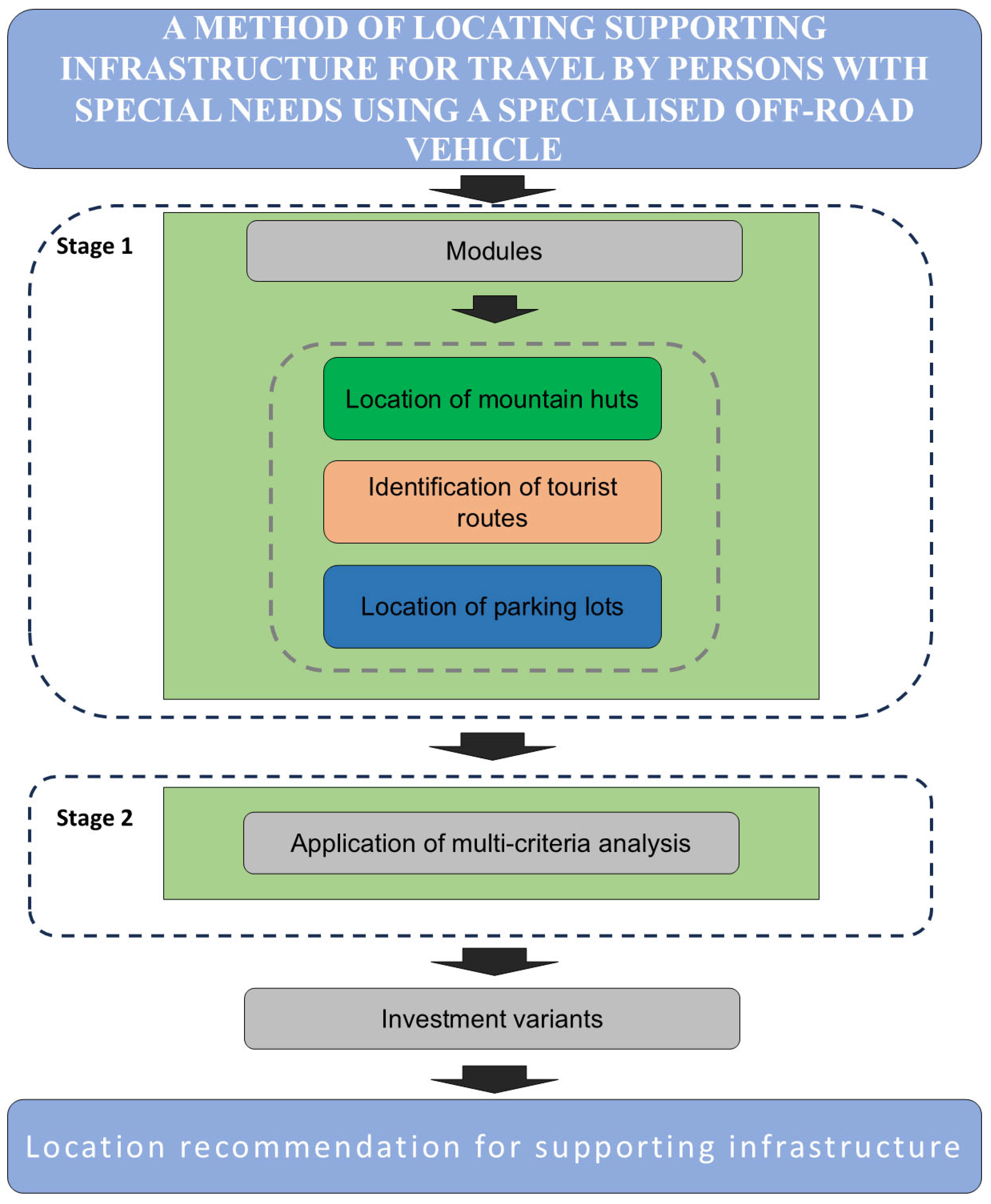
Figure 2 shows a diagram of the proposed method for searching for the location of base points. The technique consists of two main stages. The first is related to the developed modules, which allow for determining the boundary conditions of the analyzed area. The second stage allows the identification of potential locations using multi-criteria analysis (for identified sites that meet the boundary conditions in stage one) combined with quantitative input data obtained through spatial analysis and qualitative data describing the attractiveness of the location data based on the adopted pattern. The final result is a recommendation of locations for supporting infrastructure. The indicated locations can be subjected to variants based on the obtained results of the multi-criteria analysis. Varianting is related to determining the number of sites where accompanying infrastructure should be introduced, depending on a given decision-maker’s possibilities, e.g., financial. The spatial analysis assumes using geographic information system (GIS) data and software (e.g., QGIS 3.40.6 (QGIS Development, 2023 [
61]).
Stage one is divided into method modules:
Location of mountain huts;
Identification of tourist routes with analysis of accessibility for the designed vehicle;
Location of parking lots along with optimization of indicated locations.
Each module of stage one requires digitally geocoded input data. After a preliminary evaluation of data completeness and attribute availability (specifically regarding trail tags and facility descriptions), it was decided to include data from the OpenStreetMap [
62] database in the method. OpenStreetMap data, while extensive, often lacks specific attributes critical for accessible tourism, such as trail surface type (surface tag), smoothness (smoothness tag), and obstacle details. Therefore, the method incorporates a mandatory data enrichment step. Missing geometric data (e.g., gaps in trail continuity) and attribute data are manually supplemented using satellite imagery interpretation and cross-referencing with local authoritative maps (e.g., National Tourist Society maps). This step ensures that the routing algorithm does not reject passable trails due to missing tags.
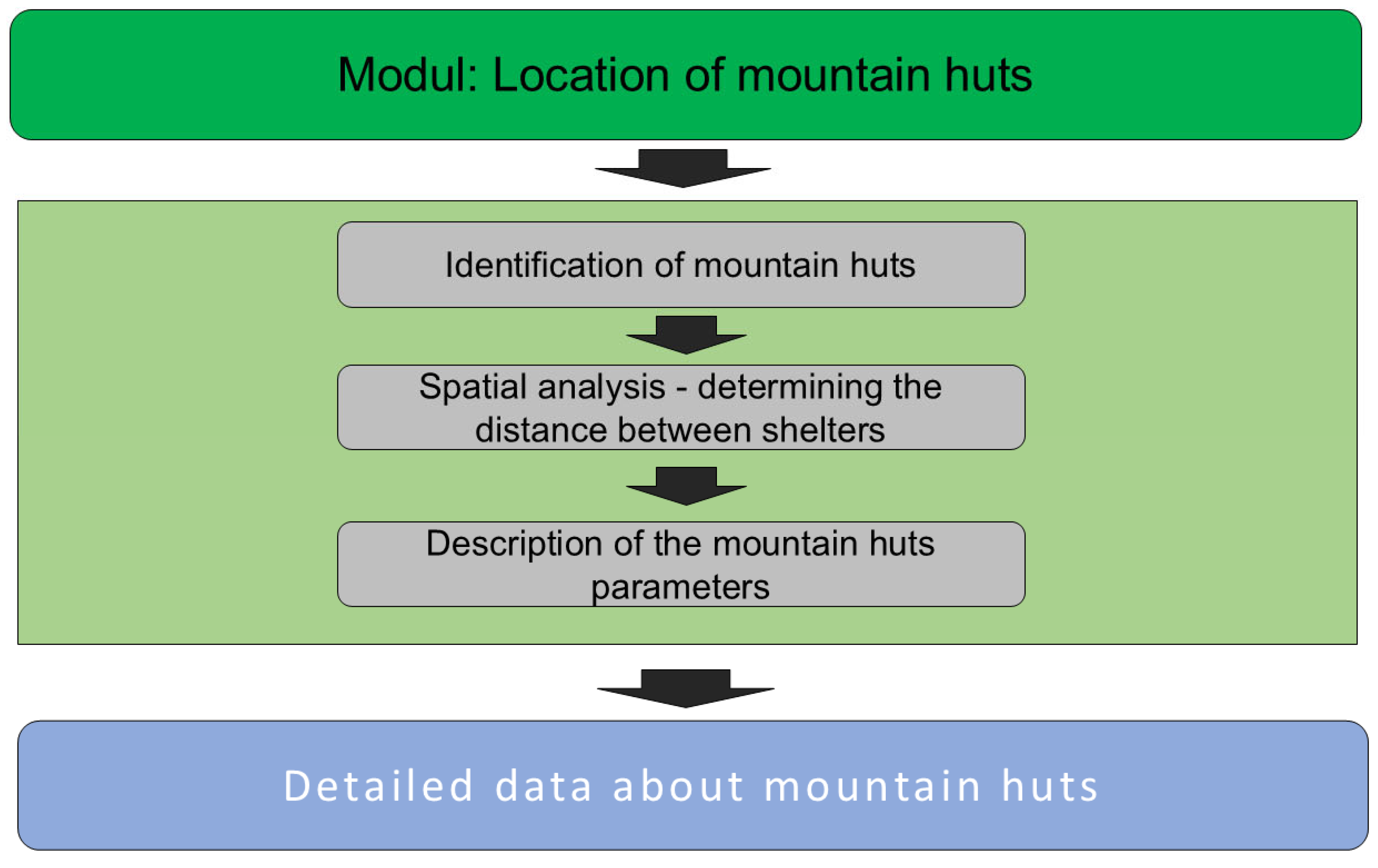
The flowchart of the procedure within the module of stage one localisation of mountain huts is shown in
Figure 3.
OpenStreetMap has been proposed to acquire data on the location of mountain huts using the tourism key with the value alpine_hut. The location of the mountain huts is the basis since the first base points will be located there. A person who applies the designed cart can expect assistance during the performed trip. There is less risk of needing external assistance during the start and end of the journey. Of course, this depends on the person’s disability using the designed wheelchair. The second element of module one is determining the distance between mountain huts. The indicated data is needed to eliminate points for investment variants. The last element allows the acquisition of detailed data about the mountain huts for input into the multi-criteria analysis. Examples of this data are the height above sea level, which indicates the attractiveness of the facility and the difficulty of reaching it.
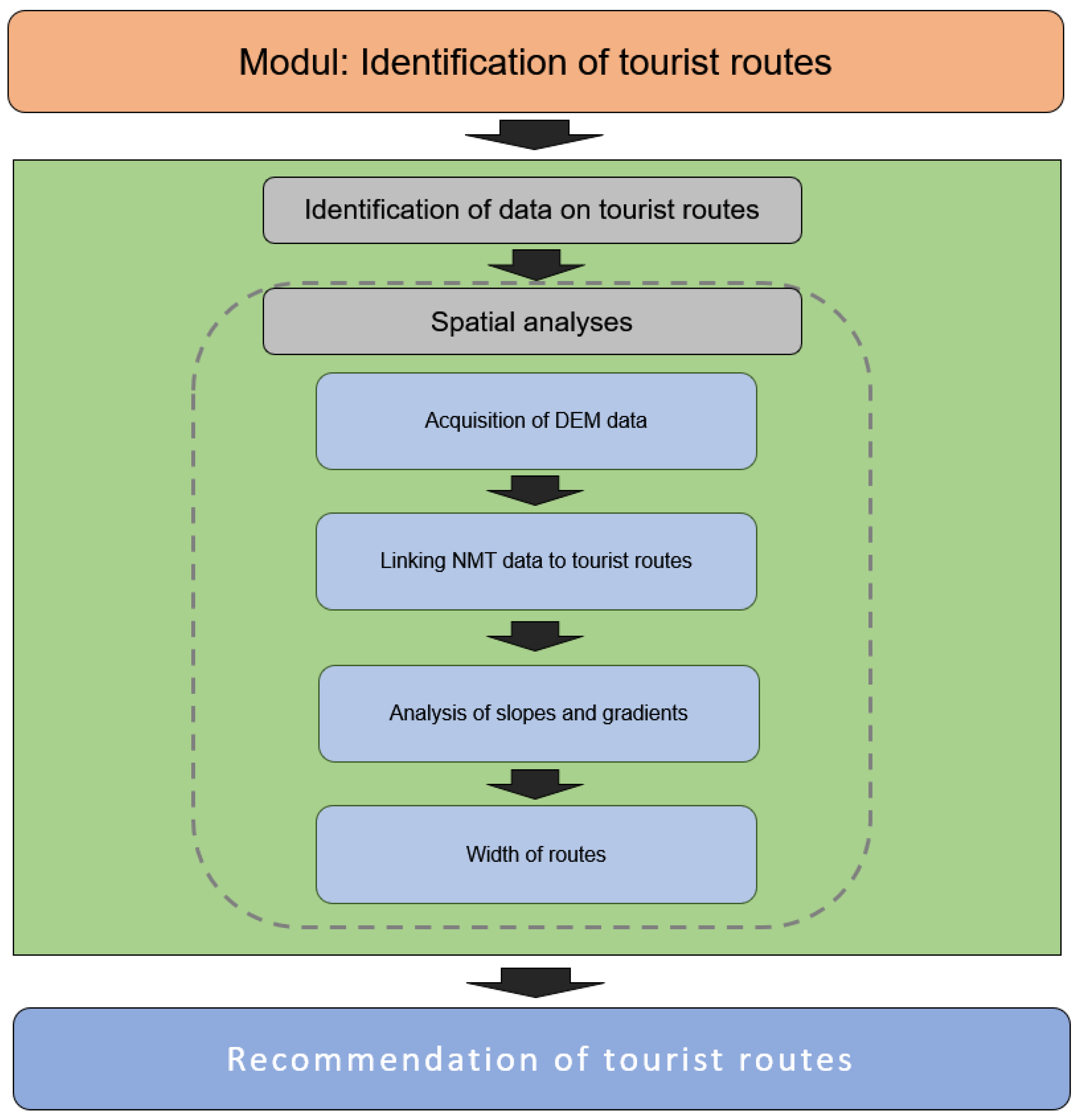
The second module is related to the identification of hiking trails (the scheme of operation is shown in
Figure 4). It is recommended that data be uploaded in a spatial format.
An example database for hiking trails is OpenStreetMap, using the route key and hiking foot value. The essential element is to identify the routes for a given area. Correct increasing enables further spatial analysis. The routing should be subjected to a mileage analysis, and the completeness of the data should be checked after loading the data from OpenStreetMap. Another aspect is to assess the feasibility of realizing crossings by the designed terrain cart. The boundary conditions for slope accessibility were derived directly from the technical specifications and field stability tests of the specialized vehicle prototype developed specifically within the ‘Mountain Without Barriers’ project. These values are not theoretical assumptions but represent the strict physical limitations of the custom-built vehicle’s electromechanical design specifically the 1000 W motor’s torque capacity and the chassis’ weight distribution under full passenger load, as determined during initial engineering field trials. To ensure passenger safety and operational capability, the maximum thresholds were set at a 15% uphill grade (limited by motor torque and traction) and a 20% downhill grade (limited by braking system efficiency and rollover risk). The suggested entry and exit restrictions were defined for cases where the trail in question is, for example, one-way. To check the conditions for the trails, use the Digital Elevation Model (DEM) and choose the two-way gradients according to the formula:
where:
E—the set of all edges in the graph (trail network);
Gk—the maximum slope gradient of segment k derived from the DEM [%];
Gmax—the critical traction limit (set at 15% for safety margin, despite theoretical 25%. capability) [%]. The boundary conditions for slope accessibility (Gmax = 15%) were adopted as a fixed input parameter for the spatial model. This value is derived directly from the approved technical documentation and internal electromechanical trials of the ‘Mountain Without Barriers’ project. While the comprehensive engineering validation of this threshold including torque-to-mass ratios, motor thermal limits under continuous load, and dynamic wheel–soil friction coefficients constitutes a separate mechanical engineering study, within the scope of this macroscopic spatial framework, the 15% gradient acts as a strict, pre-defined operational constraint to guarantee absolute passenger safety.
Wk—the minimum width of segment k [m];
Wmin—the vehicle width plus safety buffer (1.0 m + buffer) [m].
For the identified trails, points at specific distances d are mapped, for which the elevation value from the DEM is loaded. To ensure high precision and reproducibility, the study utilized a high-resolution Digital Elevation Model (DEM) sourced from the Polish Head Office of Geodesy and Cartography (GUGiK). The DEM was generated from Airborne Laser Scanning (LiDAR) data and features a spatial resolution of 1 × 1 m. The slope-calculation method involved vectorizing the unpaved trail network from OpenStreetMap and segmenting these lines into discrete 1-m intervals using QGIS geoprocessing tools. The elevation values were then extracted for each segment’s start and end nodes, allowing the longitudinal slope to be calculated accurately at a micro-scale and preventing the “flattening” effect that occurs when averaging slopes over longer distances.
The indicated approach makes it possible to find mountain trails accessible for passage by the designed terrain carts. The final step is to analyze the width of the trails since narrow roads between rocks, for example, could prevent passage for the designed cart. In addition to studies using spatial analysis, the final selected routes should be tested in real conditions because spatial data does not always take into account additional elements, such as what we cannot predict is necessary to make the data insensitive to crossings.
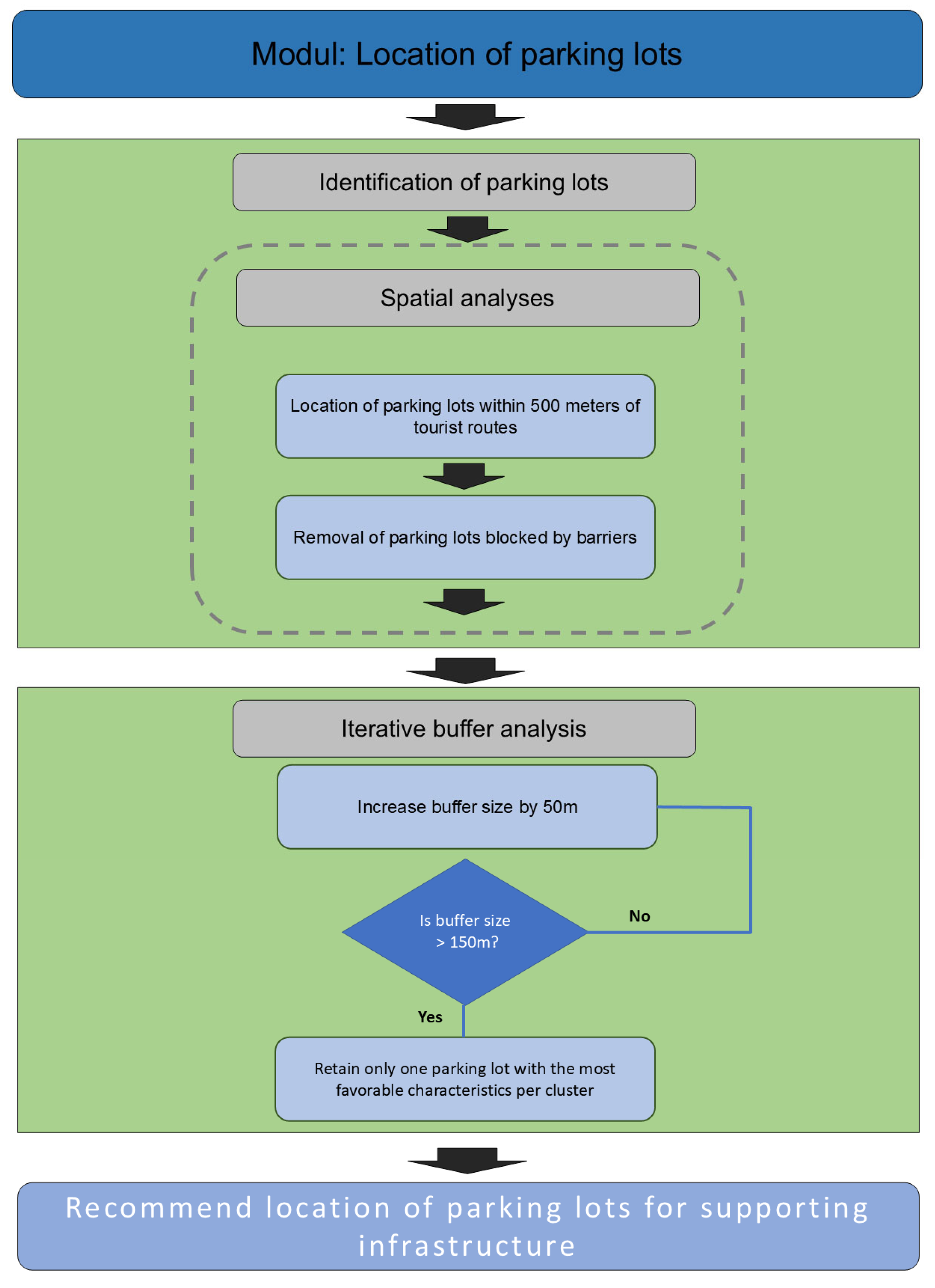
The third module concerns the analysis of available parking lots (a scheme is shown in
Figure 5).
The module checks parking points at the beginnings and ends of trails. The proposed data source is OpenStreetMap, which uses an amenity key and parking value. The data must be verified in the field, considering, for example, the pavement condition. Parking lots more than 500 m from mountain trails are eliminated first. Due to legal elements, the cart should not be shuffled on public roads. Another aspect is the public availability of parking spaces—possible barriers and seasonality of the parking lots in question are checked. Especially in tourist places, private parking lots are not always available. To ensure a broad spatial distribution of potential starting points and avoid redundancy, an iterative cluster elimination analysis was performed. The logic assumes that parking lots located in immediate proximity (clusters) serve the same entry point. Therefore, buffers of 50 m, 100 m, and 150 m were applied iteratively to remove adjacent facilities, retaining only the one with the most favourable characteristics (e.g., closest proximity to the trail head) within each cluster. The module element makes it possible to identify potential parking spaces where a supporting location for the projected carts can be placed depending on the variation in the number of base spaces. This also identifies the locations that are potentially best for supporting vehicles. The distances between other parking lots are also searched to check the potential service of the area. The minimum, maximum and average distances between parking lots are checked. The transition from Stage 1 to Stage 2 involves a direct mapping of spatial outputs into decision-making variables. Specifically:
The ‘Location of mountain huts’ module defines the set of alternatives (potential base points).
The ‘Location of parking lots’ module provides the input data for the quantitative criterion Distance to the parking lot.
The ‘Identification of tourist routes’ module provides the input for the criterion Number of hiking routes. Thus, the spatial attributes calculated in Stage 1 constitute the quantitative dataset for the MCA model.
The second stage in the method involves performing a multi-criteria analysis of potential sites. Based on the first stage carried out, possible locations are indicated for creating base points. Depending on the variants of the investment, locations are shown and subjected to multi-criteria analysis. Methodologically, these ordinal qualitative scores were transformed into numerical values under the assumption of equal-interval linear mapping. This approach treats the qualitative assessments as an interval scale, allowing them to be mathematically integrated with quantitative spatial data within the Simple Additive Weighting (SAW) framework. This conversion is a widely accepted and practical simplification in spatial multi-criteria models, as it effectively translates subjective evaluations into operational numerical attributes. Quantitative criteria were assigned explicit numerical values. Data for quantitative criteria were obtained using spatial analysis in the process of implementing the method modules.
To select the optimal location, the Simple Additive Weighting (SAW) method was applied. The suitability score
for each potential base point
was calculated according to the following equation:
where:
—the total suitability score for the th location;
—the normalized weight of the jth criterion (where );
—the normalized rating of the i-th location with respect to the jth criterion;
n—the total number of evaluation criteria.
Since the criteria involved heterogeneous units (e.g., meters for distance, integers for route counts, and ordinal scales for attractiveness), a standardization procedure was necessary. We adopted a discrete scoring function to map raw attribute values into a standardized interval [0, 1] (scaled to 1–5 for stakeholder clarity).
This method was chosen for its applicability in spatial decision support systems where criteria have varying units. The assignment of weights to individual criteria was not arbitrary but resulted from a structured participatory design process. The specific values were determined based on a series of consultation meetings and workshops involving 15 participants with various motor disabilities (predominantly daily wheelchair users). The weighting process was conducted using the Delphi technique, where participants were asked to distribute points among the criteria based on their perceived importance for safe travel. During these sessions, participants evaluated the relative importance of safety, accessibility, and attractiveness factors. The individual scores were then averaged to produce the final normalized weights, ensuring that the decision-making model objectively reflects their real-world needs. Consequently, weights were assigned to each criterion to denote its significance in the set of all criteria. To ensure a comprehensive evaluation, the criteria were categorized into two groups: quantitative (measured directly via spatial analysis) and qualitative (assessed based on infrastructure audits and assigned a score).
Quantitative Criteria:
Distance to the parking lot—determines the distance to the nearest parking lot in case the base point is assumed to be located in a mountain hut—weight 0.2.
Number of hiking routes—determines the number of hiking trails passing through the point—this allows for increased accessibility to the site from various locations—weight of 0.2.
Elevation above sea level—determines the difficulty of access and attractiveness of potential views—weight of 0.2.
Qualitative Criteria:
Attractiveness of the mountain hut—this is a qualitative criterion in which a given mountain hut earns points based on an infrastructural audit. For example, a maximum score of 5 is awarded to facilities possessing all key adaptations (an adapted toilet for people with disabilities, an adapted entrance to the site for people with disabilities, and information adapted to people with special needs), whereas a score of 1 indicates a complete lack of such adaptations.
Access—this criterion evaluates the logistical accessibility of the base point for service and maintenance vehicles. It prioritizes locations connected by paved or hardened roads, ensuring that support infrastructure can be easily installed and maintained, even if the primary tourist arrival is via the off-road vehicle. The criterion takes into account whether the alpine hut in question has direct access or partial access by designated asphalt roads. Locations with direct access via designated asphalt roads receive a score of 5, partial access via hardened forest roads receives a 3, and locations accessible only via difficult unpaved off-road trails receive a score of 1—weight of 0.1.
Tourist attractiveness—this is a qualitative criterion determined based on information provided on tourist sites, with a weight of 0.1. A score of 5 denotes a highly iconic regional destination (e.g., adjacent to the highest peaks), while a score of 1 indicates a location with minimal specific tourist draw.
To determine the final network of supporting infrastructure, the proposed methodology fundamentally employs a two-stage location–allocation framework. In the first stage, the SAW model evaluates the absolute suitability of each individual location, producing a candidate ranking. In the second stage, spatial distribution is introduced. Importantly, spatial dispersion is deliberately not built into the initial SAW scoring model because ‘distance to other facilities’ is a dynamic network attribute, not a static site attribute. Instead, a spatial dispersion optimization step is applied post-scoring. This step selects the final designated number of facilities (e.g., three hubs) from the top-scoring candidate pool by maximizing the average Euclidean distance between them. This two-stage approach ensures that the final infrastructure network is both highly suitable at the individual facility level and optimally distributed across the region to prevent service redundancy.
4. Results
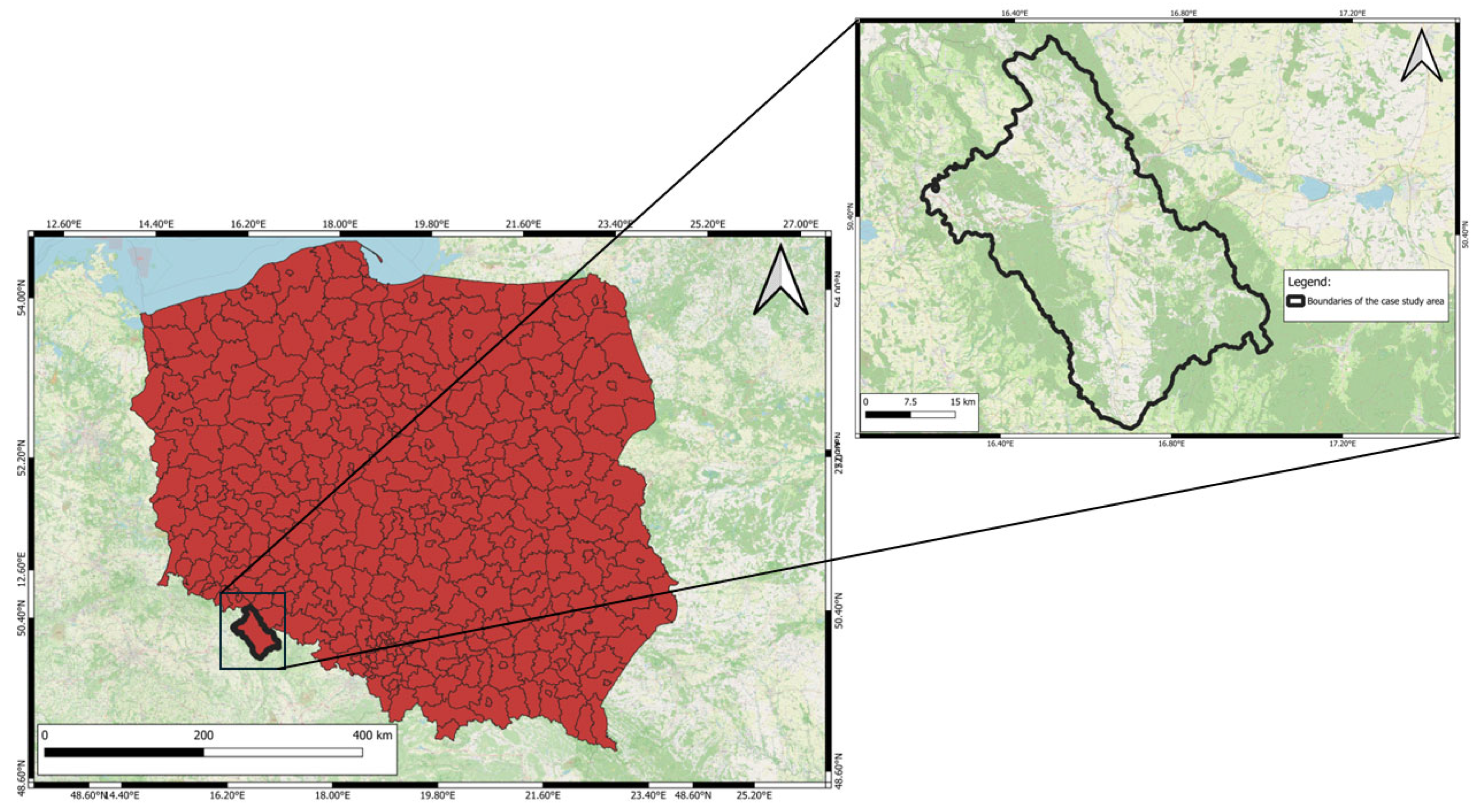
A case study of the developed method was performed for Kłodzko County, part of the Lower Silesia Voivodship in the southwest region of Poland. The County covers an area of about 1643.37 square kilometres and has 147,823 residents. The population density is about 90 people per square kilometre. The County consists of 14 municipalities.
Figure 6 shows the location of Kłodzko County against the background of Poland. Kłodzko County was intentionally selected as the primary test site due to its unique geographical and infrastructural characteristics, which create an ideal empirical laboratory for evaluating off-road wheelchair accessibility. Firstly, the region features a highly diverse mountain topography (encompassing various ranges of the Sudetes, including the Śnieżnik Massif and the Owl Mountains), providing a wide spectrum of natural terrain gradients essential for rigorously testing the vehicle’s 15% slope operational limit. Secondly, the county possesses a dense, historically established network of mountain shelters (e.g., ‘Na Śnieżniku’, ‘Pod Muflonem’, ‘Orzeł’). This existing infrastructure makes the region perfectly suited for validating the model’s core principle of ‘sustainable retrofitting’, adapting current facilities rather than initiating invasive new construction. Finally, Kłodzko County encompasses highly popular, environmentally protected areas where balancing intense tourist traffic with strict ecological conservation and the growing demand for social inclusion remains a pressing regional management challenge.
A może tak: A preliminary local sensitivity check was conducted using an equal-weight scenario. Under this scenario, “Na Śnieżniku” remained the highest-scoring candidate, while Pod Muflonem, Orzeł, and Jagodna formed a tied second group. This indicates that the first-choice location is stable, whereas the final selection of the second and third hubs depends on the spatial-dispersion stage. Therefore, the selection of Pod Muflonem and Orzeł over Jagodna should be explained by the two-stage logic of the framework: first identifying high-scoring candidate hubs and then maximizing regional territorial coverage among them.
Kłodzko County is surrounded by mountains that form its natural boundary. The entire district area is very strongly differentiated in terms of phytogeography. Its western part is the Central Sudetes, and the eastern part is the Eastern Sudetes. The Klodzko Basin occupies the central part. It is bounded from the north by the Bardzkie Mountains, from the west by the Table Mountains, and the east by the Złote Mountains and the Śnieżnik Massif with the Krowiarky Mountains, already belonging to the Eastern Sudetes.
In the south, the extension of the Klodzko Basin is the Upper Neisse Trench, bounded on the west by the Bystrzyckie Mountains and the Orlickie Mountains, and on the east by the Śnieżnik Massif.
One national park in the district is the Table Mountains National Park, which has an area of 6339 ha. In addition, there are two landscape parks in the region: the Śnieżnik Landscape Park (area 28,800 ha) and the Owl Mountains Landscape Park (area 8141 ha).
In Kłodzko County, hiking routes are about 600 km, while biking trails are 400 km. The most important mountain ranges in the district, along with the peaks, are:
Śnieżnik Massif—The most important peak is Śnieżnik (1425 m above sea level), the highest peak in the district. There are also smaller peaks in the range, such as Mały Śnieżnik and Czarna Góra.
Table Mountains: There are several distinctive peaks here, including Szczeliniec Wielki (919 m above sea level) and Mały Szczeliniec.
Bystrzyckie Mountains—The main peaks are Jagodna (977 m) and Sasanka.
Orlickie Mountains—In this range, the highest peak is Orlica (1084 m).
Golden Mountains—Jawornik Wielki (872 m) and other smaller hills are here.
In the following area, the developed method of locating supporting infrastructure for travel by persons with special needs using a specialized off-road vehicle was used. As part of the variants, looking for the optimum 3 locations was proposed.
4.1. Stage 1 of the Method
4.1.1. Module—Location of Mountain Huts
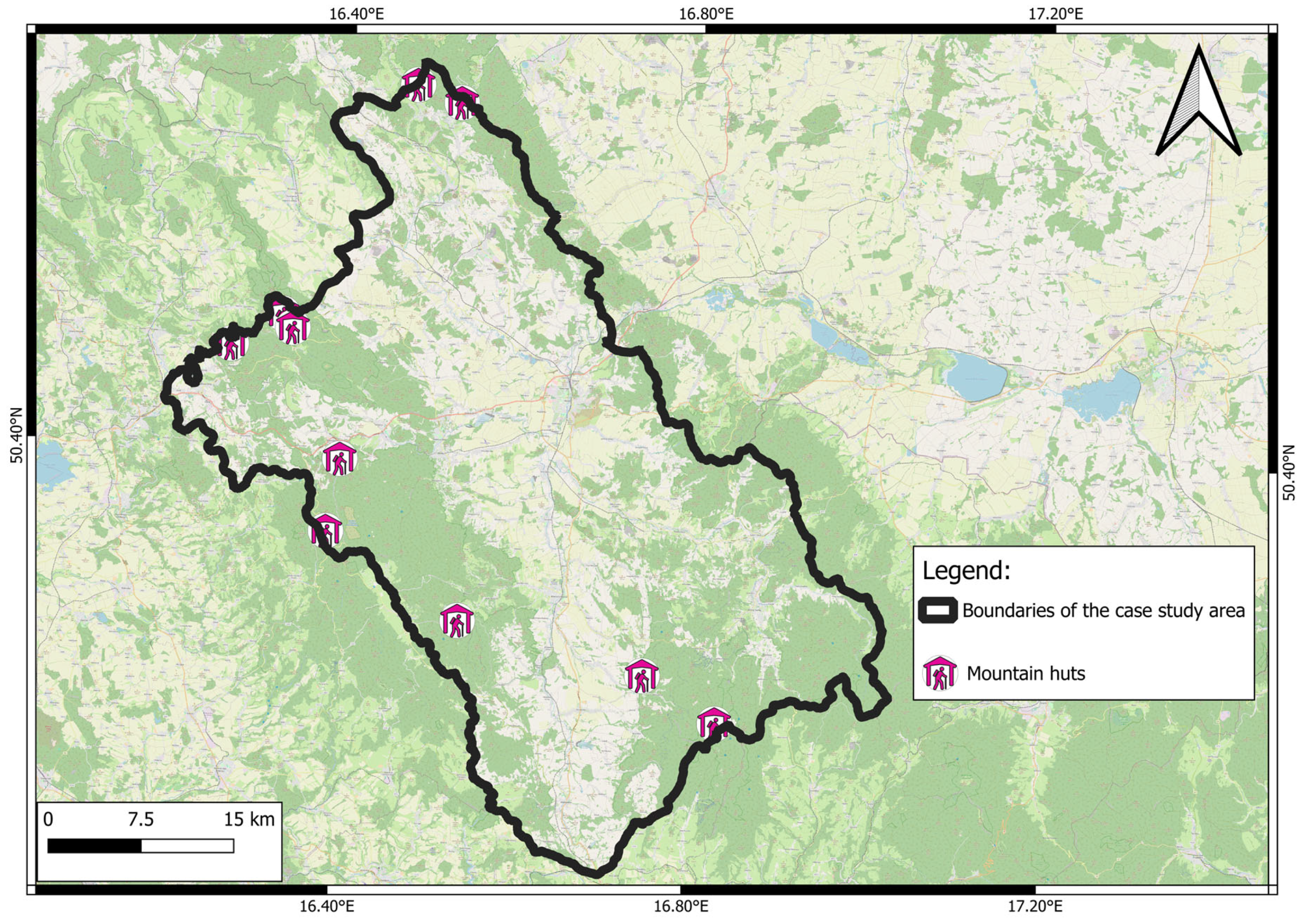
Figure 7 shows the analysis of mountain huts. The data was downloaded from OpenStreetMap using the tourism key and alpine_hut value. There are 10 mountain huts in the area, which serve 33 sections of mountain routes.
As part of the spatial analysis of the distance between mountain huts performed—checking the closest facility, the following results were obtained:
Average distance between mountain huts—5400 m;
Maximum distance between mountain huts—12,880 m;
Minimum distance between mountain huts—1404 m.
A description of the mountain huts parameters is shown in
Table 2.
4.1.2. Module—Identification of Tourist Routes
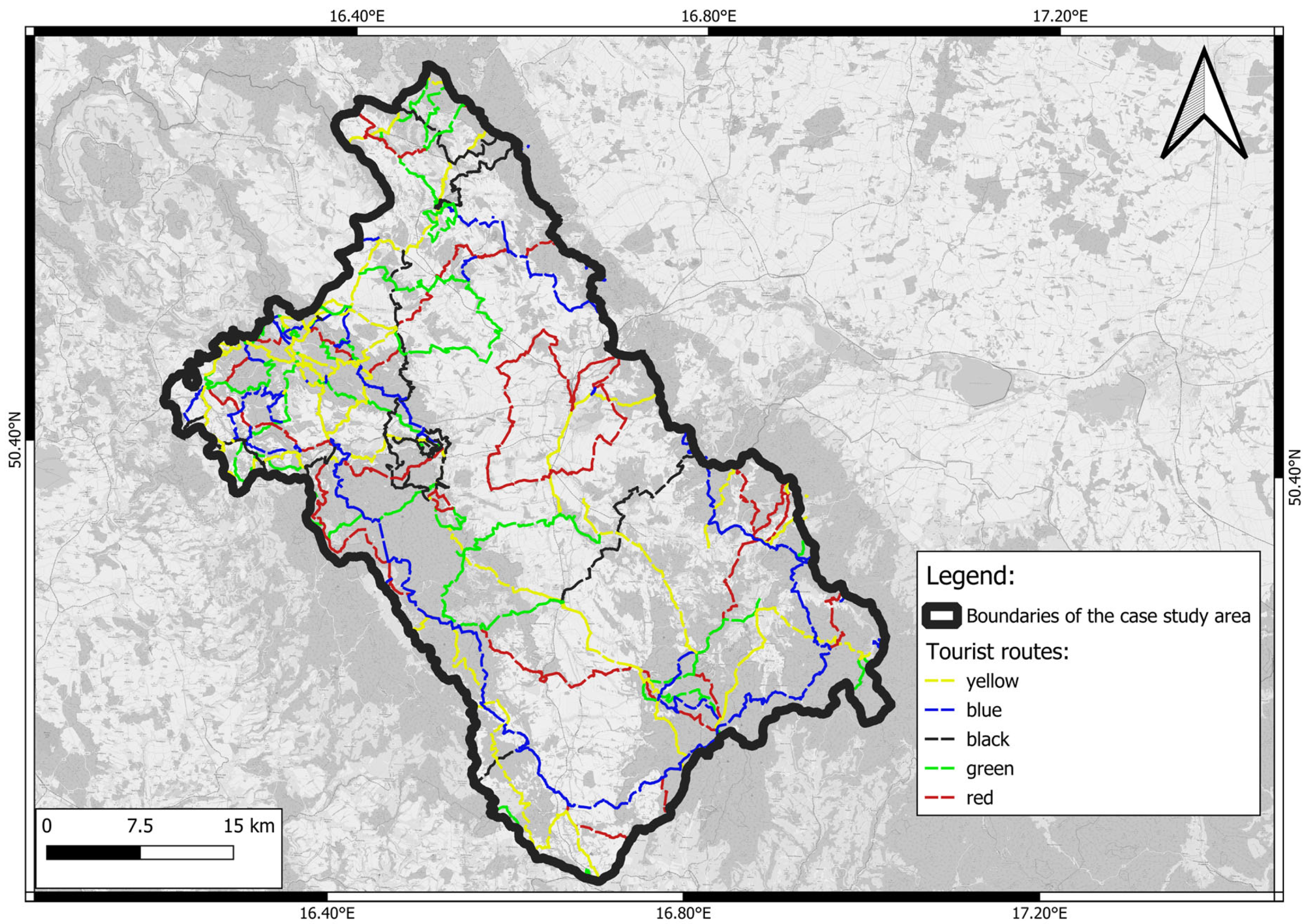
In the first step, publicly available data was downloaded from OpenStreetMap using the tourism key and the alpine_hut value. The initial extraction from OpenStreetMap yielded approximately 400 km of designated hiking trails. A quantitative validation against the official digital maps of the Polish Tourist and Sightseeing Society (PTTK) revealed a significant data gap of approximately 200 km (33% of the total network). These missing sections primarily connecting trails and newer routes were manually digitized and attributed. To mitigate any subjective bias during the manual digitization process, a strict mapping protocol was implemented. The missing trail geometries were reconstructed by cross-referencing high-resolution national orthophotomaps (GUGiK) with official GPS tracks and reference maps provided by the Polish Tourist and Sightseeing Society (PTTK). Furthermore, topological consistency rules were applied within QGIS to ensure seamless snapping to the existing OSM network, guaranteeing structural integrity. This supplementation was crucial, as omitting these segments would have disconnected key mountain huts from the graph, rendering the spatial analysis impossible.
Figure 8 shows the identified and classified footpaths in the analysis area.
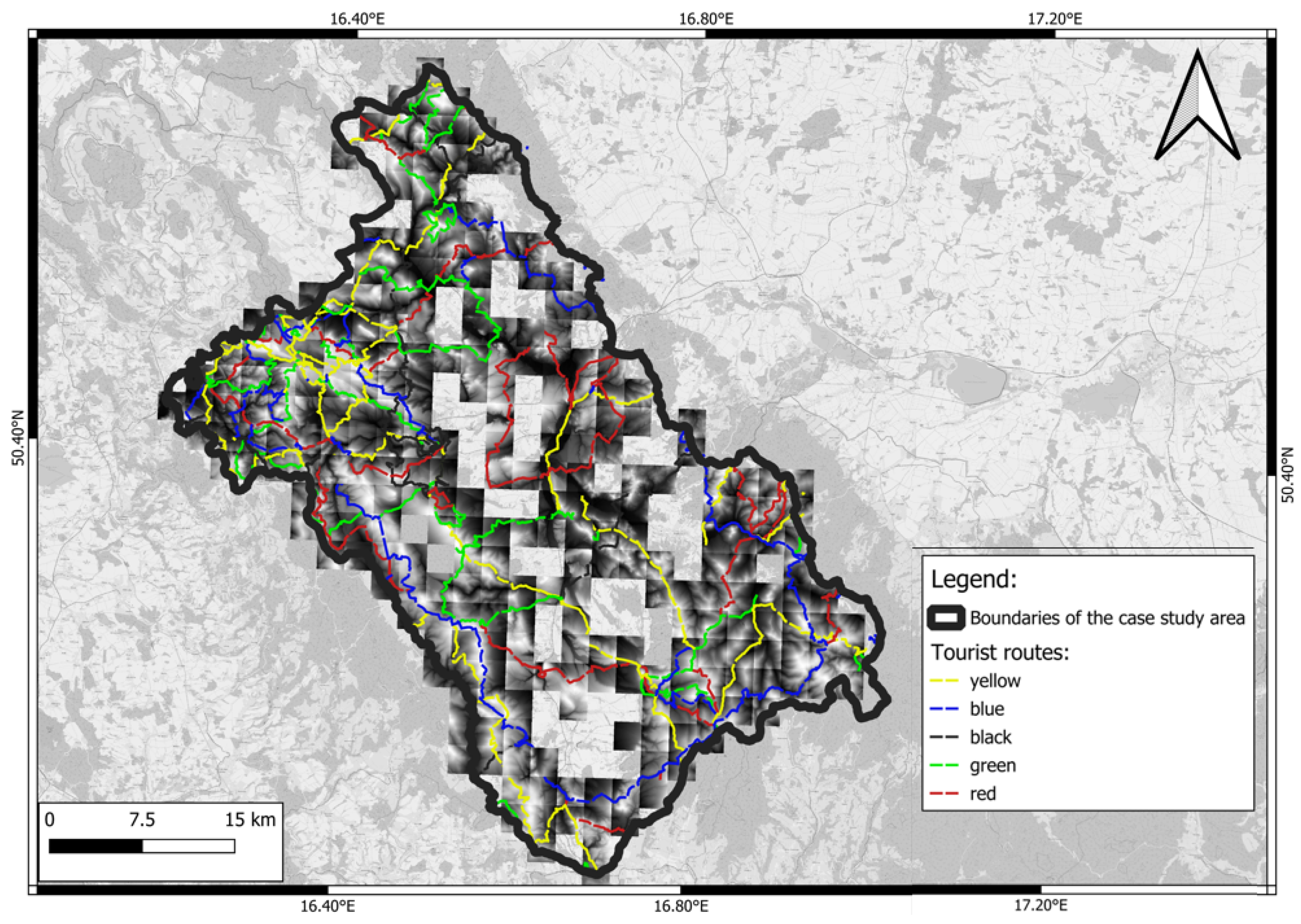
The next step is to acquire data from the Digital Elevation Model (DEM) in raster form. The acquired data was combined with a vector layer describing mountain trails. Based on the prepared data, slopes in the area were counted.
Figure 9 shows the combined raster data with vector data describing tourist routes. Rasters are downloaded (from Polish Head Office of Geodesy and Cartography) in the form of squares and combined into one layer. Based on the analysis of slopes and elevations, 20 km of mountain trails were eliminated. Examples of eliminated sections included steep gradients, such as at descents at dams and steep stairs.
The last element in the route analysis is the constructed vehicle’s width and possibility. Due to the indicated construction limitation, the route to the Szczeliniec hut (about 5 km) was eliminated. This also excluded one of the mountain huts from further analysis.
4.1.3. Module—Location of Parking Lots
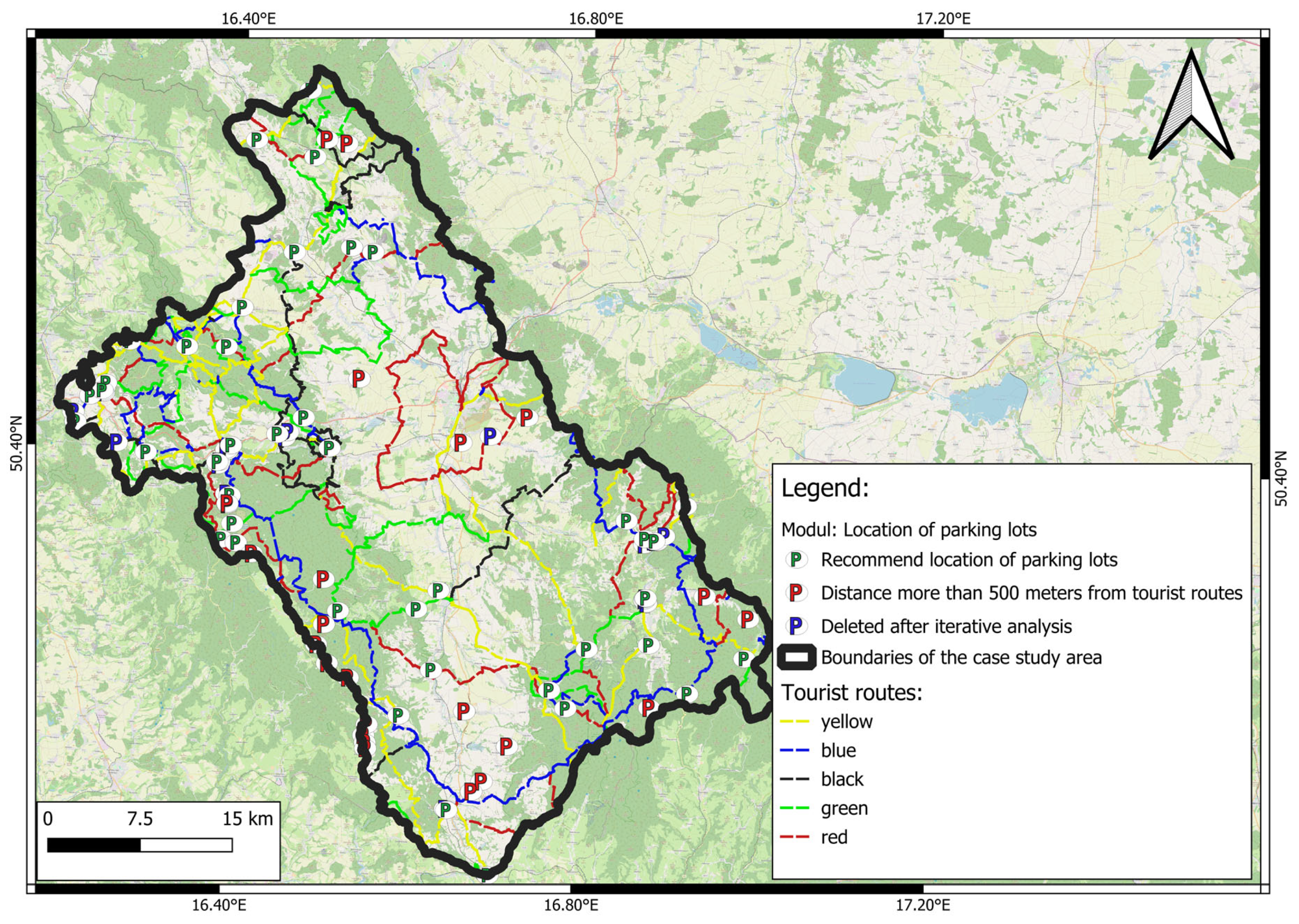
The module extracted data from OpenStreetMap using the amenity key and parking values. The extracted dataset of 92 parking facilities underwent a two-step validation process. First, satellite imagery was used to filter out private properties misclassified as public parking and to verify surface conditions (paved vs. unpaved). This remote validation was followed by field checks for the final selected locations. It should be explicitly noted, however, that the parking-lot model serves as a macro-level spatial filter designed to identify regional starting nodes. Consequently, a detailed architectural assessment of micro-scale infrastructural attributes such as the exact number of designated accessible bays, precise dimensional transfer spaces, fee structures, or lighting quality was not the focus of this spatial study. Spatial analysis was performed, and parking lots more than 500 m from tourist routes were eliminated. This left 68 potential locations. To narrow down the locations, an iterative analysis was performed to eliminate facilities next to each other using spatial analyses—increasing the area by 50 m to 150 m as follows. In the end, 42 locations remained. The results are shown in
Figure 10. Data on the distances of the remaining locations:
Average distance between parking lots—3313 m;
Maximum distance between parking lots—6368 m;
Minimum distance between parking lots—645 m.
4.2. Stage 2 of the Method
Based on the input of constraints identified in the first stage, a multi-criteria analysis was performed for nine mountain huts. Evaluation ratings for criteria for the multicriteria analysis are shown in
Table 3.
Table 4 shows the results for the multiplied rating by the weight of the criteria, and the final result of the multi-criteria analysis of objects is obtained.
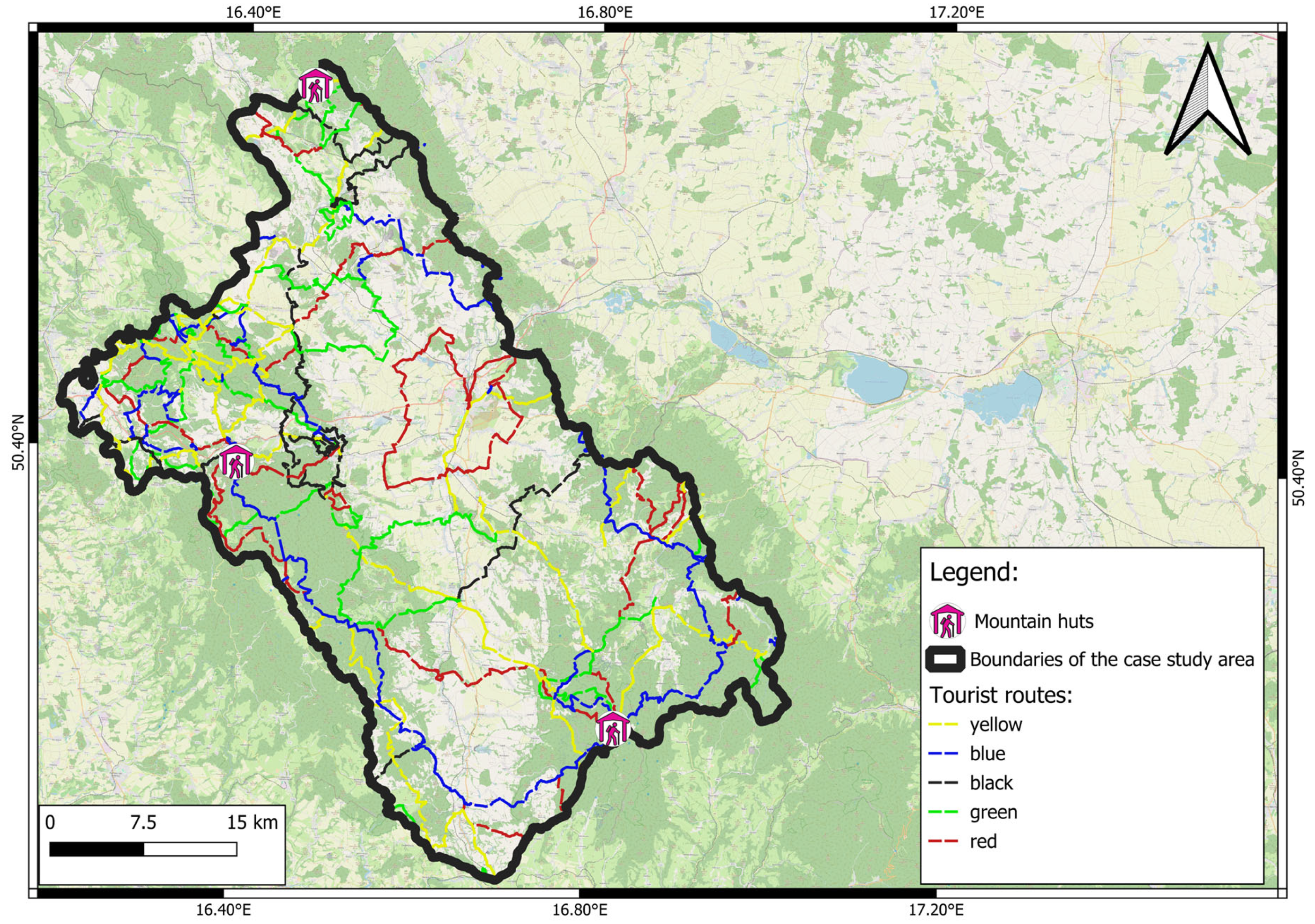
In further analysis, the top five highest-scoring objects from the SAW model were considered: mountain huts Na Śnieżniku, Iglicznej, Jagodna, Pod Muflonem, and Orzeł. To finalize the selection of three hubs, a spatial dispersion optimization step was applied to these top five candidates to maximize territorial coverage and prevent service redundancy. This two-stage approach ensures that the selected facilities are not only highly rated but also optimally distributed across the region. The selection algorithm initialized with the absolute highest-scoring facility (Na Śnieżniku) and iteratively evaluated the remaining objects to maximize the average Euclidean distance between the selected nodes. This formal spatial objective function resulted in the final selection of: Na Śnieżniku, Pod Muflonem, and Orzeł. The average distance between sites is 33,500 m.
Figure 11 shows the final locations that are recommended for the construction of supporting infrastructure for travel by persons with special needs using a specialized off-road vehicle.
To validate the robustness of the SAW ranking and address potential uncertainties inherent in the Delphi-based weight elicitation, a preliminary sensitivity check was conducted. An alternative scenario applying equal weights (1/6 ≈ 0.166 for all six criteria) to the top candidate pool was calculated. Under this equal-weight scenario, the facilities Na Śnieżniku (score: 0.85), Pod Muflonem (0.78), and Orzeł (0.78) consistently maintained the highest scores compared to the remaining alternatives. This structural stability confirms that the selection of these specific hubs is robust and not merely an artefact of subjective weight manipulation, validating their input into the final spatial dispersion algorithm.
The application of the method resulted in the selection of three key base points: “Na Śnieżniku”, “Pod Muflonem”, and “Orzeł”. Validating these findings in a real-world setting confirms their appropriateness. The “Na Śnieżniku” hut is located near the highest peak in the region (Śnieżnik, 1425 m a.s.l.), which is a primary destination for the majority of tourists visiting the county. Placing a base point there significantly increases the attractiveness of the offer for people with disabilities, allowing them to reach the most iconic viewpoint. Similarly, the “Pod Muflonem” and “Orzeł” huts are strategic nodes in the Duszniki-Zdrój and Góry Sowie regions. These locations are not only equidistant, ensuring wide area coverage (approx. 33.5 km separation), but are also situated near major tourist hubs, ensuring that the specialized vehicle service supports the most trafficked and visually attractive routes.
Vehicle Performance and Field Validation To verify the feasibility of the proposed method and the vehicle’s capabilities within the terrain, a comprehensive validation process was conducted. This included a sequence of laboratory and field tests designed to confirm the safety and integrity of the entire service chain.
Laboratory Testing: Prior to field deployment, the vehicle underwent approximately 200 h of engineering verification. These tests assessed structural stability, power source efficiency, and the electromechanical reliability of the braking system. Key digital functions, including route planning and the SOS response module (verified reaction time < 5 s), were also rigorously tested.
Field Tests: Field validation was conducted in real-world non-urbanized environments, covering a total distance of approximately 160 km on hiking trails and forest roads. Testing protocols involved evaluating the vehicle against the spatially identified 15% slope threshold under both dry and light precipitation conditions to assess potential traction degradation. The trials included two target-group users with physical limitations navigating sections of the actual routes leading to the selected hubs. Throughout the 160 km trials, performance metrics indicated zero critical mechanical failures and verified that the battery range safely exceeded the distances required by the spatial model. Target group testing involving individuals with physical limitations was supported by volunteers and the Mountain Volunteer Search and Rescue (GOPR). However, it is important to emphasize that a comprehensive technical evaluation including detailed mechanical telemetry, battery discharge curves, and user biomechanical feedback falls outside the spatial planning scope of this article and will be the subject of a separate, dedicated engineering publication. The testing process involved a gradual engagement strategy:
Initial trials by designers and able-bodied testers.
Target group testing involving individuals with physical limitations, supported by volunteers and the Mountain Volunteer Search and Rescue (GOPR).
The tests confirmed the effectiveness of the vehicle’s safety features, such as tilt monitoring and electronically assisted braking (hill-start assist and descent speed control). The validation demonstrated that the vehicle successfully navigated the routes identified by the spatial analysis, confirming the practical applicability of the proposed location method.
5. Discussion
This study has four main limitations. First, the GIS model uses static spatial thresholds and does not simulate dynamic vehicle performance. Second, the adopted 15% slope threshold is treated as a predefined operational input rather than as a mechanically derived result of this paper. Third, micro-scale terrain conditions, including moisture, mud, gravel, snow, roots, stones, gates, bridges, and side-slope instability, are not captured by the regional GIS dataset. Fourth, the sensitivity analysis is limited to a preliminary equal-weight scenario and does not replace full Global Sensitivity Analysis.
Previous studies on transport accessibility often focus on urban environments or general pedestrian mobility, neglecting the specific mechanical constraints of assistive technologies in rugged terrain. This study bridges that gap by operationalizing the “accessibility” concept through hard engineering parameters. The critical contribution of this research is the direct translation of the vehicle’s static operational thresholdsthe 15% safety slope threshold and turning radius into the routing algorithm. While standard topographic maps might classify a trail as accessible based solely on width, our analysis demonstrates that without integrating slope gradients derived from Digital Elevation Models (DEM), such classifications pose significant safety risks for electric mobility devices. The exclusion of trails exceeding the vehicle’s traction capabilities (e.g., the route to Szczeliniec) highlights that “accessibility” in mountain tourism is not a binary attribute but a dynamic variable dependent on the interaction between terrain and vehicle technology.
The reliance on Volunteered Geographic Information (VGI), such as OpenStreetMap (OSM), presents both opportunities and challenges for remote area planning. Our findings align with the literature suggesting that while OSM provides extensive coverage, it often lacks critical attribute data for specialized needs. The identification of a 33% gap in trail continuity compared to authoritative PTTK maps underscores the risks of relying solely on open data for safety-critical applications. This study proposes a hybrid verification model combining automated GIS analysis with manual digitization and field validation. This approach is particularly vital for off-road wheelchair users, where a “missing link” in a digital map can result in a physical trap in the field.
From a destination management perspective, the selection of existing mountain huts (“Na Śnieżniku”, “Pod Muflonem”, “Orzeł”) as service hubs supports a strategy of sustainable retrofitting rather than new construction. Locating charging infrastructure within existing, anthropogenically altered nodes minimizes environmental impact in protected areas like the Śnieżnik Landscape Park. Furthermore, the multi-criteria analysis (MCA) demonstrated that optimal locations must balance purely logistical factors (distance to parking) with “soft” factors like tourist attractiveness. This suggests that accessible tourism infrastructure should not be marginalized to the periphery but integrated into prime tourist nodes to ensure social inclusion and a high-quality experience for users with disabilities.
In contrast to conventional studies which often model accessibility using uniform friction surfaces, this analysis demonstrates that such generalized approaches overestimate territorial coverage by neglecting vehicle-specific physical thresholds. A key finding of this study is the quantified discrepancy between standardized pedestrian-based models and the operational reality of off-road assistive vehicles in rugged terrain. Our results show that while theoretical models suggest high connectivity, the integration of 15% slope constraints reduces the effectively accessible area. This underscores that sustainable accessibility planning in mountainous regions must evolve from purely GIS-based mapping to a spatial framework strictly bounded by vehicle-specific physical parameters.
Furthermore, while the adopted 15% slope threshold incorporates a conservative safety buffer, this macro-level GIS framework inherently lacks the capacity to dynamically model localized, micro-scale environmental variables. As is critical in physical off-road environments, actual slope tolerance is strongly dependent on real-time factors such as surface moisture, gravel composition, seasonal snow or mud conditions, downhill braking dynamics, and side-slope (camber) stability. These elements profoundly influence operational off-road accessibility but remain outside the scope of this static topological routing model. Because the spatial framework cannot dynamically predict weather-induced traction loss or loose gravel resistance, the severe 40% safety margin (reducing the routing limit from the vehicle’s 25% physical maximum to 15%) was applied precisely to provide a universal geographic buffer against these unquantified environmental hazards. Integrating real-time soil friction data and dynamic weather routing represents a critical avenue for future research in accessible mountain tourism.
While our preliminary equal-weight sensitivity check confirms the immediate robustness of the selected hubs, scaling this methodology to larger, multi-regional networks will require more advanced mathematical validation. As highlighted by recent methodological advancements in spatial decision-making [
39,
63,
64], relying solely on deterministic, local sensitivity checks can mask complex interactions between criteria. Integrating a true Global Sensitivity Analysis (GSA) such as variance-based Sobol indices or Monte Carlo simulations would allow planners to comprehensively evaluate how simultaneous, multi-dimensional variations in stakeholder preferences (e.g., drastically prioritizing terrain safety over tourist attractiveness) alter the spatial network topology. We acknowledge that the absence of a full GSA in this current macroscopic proof-of-concept is a limitation, and transitioning from deterministic SAW to a probabilistic GSA framework remains the most critical next step for refining off-road accessibility models.
Furthermore, while the Simple Additive Weighting (SAW) method was deliberately selected for its computational transparency and ease of interpretation by non-expert stakeholders during the participatory weighting process, we acknowledge that different Multi-Criteria Decision Analysis (MCDA) techniques can yield varying rankings. Future research should conduct a comprehensive comparative analysis employing alternative methods such as AHP, TOPSIS, or PROMETHEE to assess the methodological sensitivity of the hub location rankings. Additionally, while our current two-stage approach effectively utilized a spatial dispersion function to maximize territorial coverage, future iterations of the framework could integrate advanced location–allocation models, such as the p-median or maximal covering location problems (MCLP), to further optimize the network based on dynamic tourist demand patterns and predictive traffic volumes.
While the proposed method effectively identifies static infrastructure locations, it has limitations regarding dynamic environmental variables and micro-scale obstacles. The current route-width analysis relies on macroscopic topological data and does not account for localized, dynamic, or temporary barriers, such as individual rocks, exposed roots, gates, structural bridges, or seasonal narrowing due to vegetation growth. The current spatial model focuses strictly on macroscopic topological constraints (maximum slope and minimum path width). As a regional spatial decision support tool, it inherently lacks complex micro-engineering simulations. Specifically, the framework does not incorporate explicit energy-consumption formulations, traction and friction modelling, braking-distance assessments, wheel–soil interaction analyses, turning-radius kinematics, or battery degradation and terrain resistance modelling. Consequently, this methodology should be explicitly understood as a macro-level GIS filtering and MCDA exercise designed for regional infrastructure siting, rather than a dynamic, engineering-integrated vehicle performance model. The aforementioned electromechanical and physical variables, while absolutely critical for the micro-scale technical deployment of the vehicle, fall outside the macroscopic geographic scope of this study and represent essential avenues for future engineering research.
Finally, the economic aspect of maintaining these base points, specifically energy costs and liability agreements with hut operators, remains a practical challenge that requires valid business models to ensure long-term viability. Furthermore, the detailed engineering design of the charging hubs including power supply calculations, exact charging times, battery swapping logistics, and architectural weather protection falls outside the spatial scope of this study. The proposed framework answers the fundamental geographical question of where to optimally locate the infrastructure, whereas the specific electromechanical and architectural parameters of how to construct and equip these hubs represent the subsequent phase of operational deployment.
6. Conclusions
The main contribution of this study is the development of a macro-level GIS-MCDA framework for preliminary planning of support infrastructure for off-road wheelchair tourism in mountain destinations. The framework incorporates predefined static vehicle-related constraints, particularly the adopted maximum slope threshold and minimum path-width requirement, into a spatial filtering procedure. The method does not replace engineering validation of the vehicle or field-level route inspection. Instead, it supports early-stage regional planning by identifying where existing mountain infrastructure can be retrofitted to provide charging, maintenance, and assistance services while minimizing the need for new construction in environmentally sensitive areas.
The project’s most significant planned outcomes include developing a specialized off-road vehicle tailored for people with special needs and creating an integrated system for planning, organizing, supervising, and supporting mountain excursions for individuals with physical limitations. The method described allows for strategic planning of the necessary accompanying infrastructure to ensure a safe and enjoyable travel experience. The absence of such infrastructure could not only limit the vehicle’s usability but also negatively impact the overall perception and acceptance of the project by its target users. The main conclusions and scientific contributions of this study can be summarized as follows:
Methodological Innovation: The study successfully integrated specific technical constraints of an off-road wheelchair (e.g., the 15% slope threshold and wheel width limits) directly into GIS routing algorithms. This shifts the accessibility paradigm from general pedestrian modelling to vehicle-constrained spatial planning.
Robust Location Framework: By employing a two-stage location–allocation process combining Simple Additive Weighting (SAW) scoring with spatial dispersion maximization, the framework ensures that infrastructure hubs are both highly suitable and optimally distributed to maximize territorial coverage without service redundancy.
Sustainable Retrofitting Strategy: The empirical results from the Kłodzko County case study demonstrated that adapting existing mountain huts (e.g., ‘Na Śnieżniku’, ‘Pod Muflonem’, ‘Orzeł’) as service hubs minimizes environmental interference in protected areas, making the logistical deployment both economically and ecologically viable.
Socio-Economic Impact: Beyond technical logistics, the developed infrastructure framework directly combats the spatial exclusion of individuals with motor disabilities. Providing safe and logistically supported access to wilderness areas promotes social equality and creates new opportunities for accessible tourism growth in local economies.
Future Research Directions: Future enhancements should incorporate dynamic environmental variables (e.g., seasonal soil mechanics), global sensitivity analysis to test the robustness of criteria weights, and a comparative analysis using alternative multi-criteria models (such as AHP or p-median) to further optimize network efficiency.
Feasibility and implementation challenges while the spatial analysis identifies optimal locations geographically, their practical implementation requires addressing legal and economic constraints. A key advantage of the proposed method is its reliance on existing infrastructure (mountain huts managed by PTTK) rather than requiring new construction in protected nature reserves. This strategic choice significantly mitigates land-use challenges and reduces the initial investment to the cost of retrofitting (installing charging stations and service points) rather than erecting new buildings.
However, specific challenges remain for the selected sites (Na Śnieżniku, Pod Muflonem, Orzeł). Economic feasibility depends on establishing clear agreements with facility operators regarding energy costs and liability. Maintenance challenges are addressed by the project’s assumption that shelter staff will be trained to provide basic assistance. Furthermore, since these locations are within or near landscape parks (e.g., Śnieżnik Landscape Park), any external modifications must comply with strict environmental protection policies, although internal adaptations for accessibility are generally encouraged by local authorities.
In conclusion, the approach described offers a framework for addressing the complex challenge of improving tourism accessibility in rugged terrains. While the current study focused on Kłodzko County, its principles and methodologies are transferable to other regions and contexts, making it a valuable reference for future efforts in accessible tourism development. By creating inclusive opportunities for people with disabilities to explore and enjoy nature, the project has the potential to redefine the boundaries of accessible tourism, promoting equality, social integration, and sustainable growth in the tourism sector.
Ultimately, this study advocates for a paradigm shift in tourism management: moving from reactive adaptation to proactive, data-driven planning. As assistive robotics and off-road e-mobility evolve, the presented spatial framework will serve as a foundational blueprint for the smart, inclusive mountain destinations of the future.