


Abstract
Podophyllum hexandrum Royle (1834) (Himalayan Mayapple), a key Himalayan medicinal plant and source of podophyllotoxin for anticancer drugs, is declining due to overharvesting, habitat loss, and climate change. This study, conducted from May to September 2024 across nine populations in Swat, Pakistan, assessed its ethnobotanical importance and conservation status. A total of 331 participants (270 individual surveys + 61 group discussions) were included. Using ethnobotanical surveys, IUCN-CMP threat frameworks, and spatial analysis, results showed high cultural value (Use Value = 0.63–0.92) and strong consensus for rheumatism (ICF = 0.91) and fever (ICF = 0.89). Fidelity levels were 94% for rheumatism and 88% for fever. Only 35% of respondents demonstrated conservation awareness. Overharvesting was the main threat, followed by habitat degradation and climate change. The species showed restricted distribution (EOO = 4250 km2; AOO = 295 km2), high fragmentation (0.68), and a 35% population decline over 10 years. It is assessed as Endangered (EN B1ab (iii, v)). This study provides the first integrated ethnobotanical–GIS assessment of P. hexandrum in the Hindu Kush–Himalaya region of Pakistan, offering measurable conservation baselines and community perception data previously unavailable. Findings align with global medicinal plant decline trends and support integration with CBD, SDGs (3 and 15), and potential CITES listing. Urgent conservation actions are required, including community-based management, habitat restoration, sustainable harvesting, ex situ conservation, and policy enforcement.
1. Introduction
Medicinal plant conservation is a global sustainability priority, as overharvesting, habitat destruction, climate change, and environmental pollution threaten species vital to traditional healthcare systems. Approximately 20% of medicinal plant species are now threatened with extinction, with highest risks in biodiversity hotspots including the Himalayas, Amazon, Andes, African highlands, and Southeast Asia [1,2]. Overexploitation of Aquilaria malaccensis Lam. (1783) has led to CITES Appendix II listing, while climate shifts reduce the viable range of Gentiana lutea L. (1753) in European alpine zones [3]. Even low-level pollution can alter secondary metabolite profiles and reduce reproductive success in medicinal species [4]. The Himalayan region faces particularly severe pressures from land use change, unregulated harvesting, and climate warming [5].
Podophyllum hexandrum occurs in the temperate Himalayas at altitudes ranging from 2000–3600 m, particularly in moist, shaded understories of coniferous forests (Pinus wallichiana, Cedrus deodara, Abies pindrow). P. hexandrum Royle (Himalayan Mayapple) exemplifies this crisis: its valued podophyllotoxin has placed wild populations on a trajectory toward local extinction. Understanding threat interactions for such species is an international necessity for safeguarding medicinal plant diversity and traditional knowledge [6]. Therefore, conservation of P. hexandrum in Pakistan’s Swat Valley contributes to both local biodiversity preservation and international efforts toward sustainable use of medicinal resources.
The Swat Valley hosts diverse vegetation ranging from dry temperate coniferous forest (dominated by Pinus wallichiana A.B. Jacks. (1938), Cedrus deodara (Roxb. ex D.Don) G.Don (1830), Abies pindrow (Royle ex D.Don) Royle (1836), and Picea smithiana (Wall.) Boiss. (1884), to subalpine shrubs and herbaceous flora, forming ideal habitats for P. hexandrum [7]. The understory harbors Berberis lycium Royle (1834), Viola canescens Wall. ex Roxb. (1824), Fragaria nubicola (Lindl. ex Lacaita (1916), and P. hexandrum in moist, shaded microhabitats [8,9]. However, major environmental issues include rapid land use change, deforestation, tourism, hillside quarrying, and overgrazing, which accelerates soil erosion and reduces forest regeneration capacity. Recent GIS-based analyses show a 12% decline in forest cover between 2015 and 2024 [10]. Heavy metal pollution from marble and textile industries degrades soil quality, while microplastic contamination has been detected in high-altitude soils, though impacts on P. hexandrum remain unknown. Seasonal flash floods, exacerbated by deforestation, further destabilize fragile riparian habitats where the species often occurs [10,11].
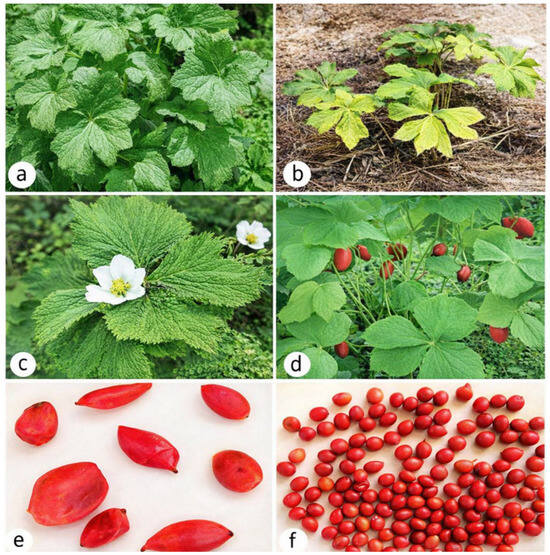
P. hexandrum its life cycle begins with spring seed germination (March–April), which may take 1–3 years, followed by a brief seedling stage lasting 1–2 months with cotyledon leaf formation [12,13]. The juvenile phase persists for 2–5 years, during which true leaves develop, before the plant reaches reproductive maturity after 5–7 years [14]. Flowering occurs from January to March, followed by fruiting with red or purple berries that support local fauna (Figure 1) [13]. The species typically completes its life cycle with senescence and death after 10–15 years [14].
Figure 1.
P. hexandrum (Photo taken at Saif Ullah Lake, Swat, Pakistan 2021). (a): vegetative plant in its natural habitat; (b) young plant showing leaf morphology; (c) flowering stage; (d) fruiting plant with mature berries; (e): mature fruits; (f): seeds.
P. hexandrum holds significant ecological importance in its native habitat of the Swat Valley. It thrives in humus-rich soils with high organic matter, requires consistent moisture, and shows shade tolerance predominantly in the understory of forests where it contributes to both soil stability and biodiversity [15,16]. Its substantial presence indicates the health of forest ecosystems, as it often grows in areas with rich organic matter and optimal moisture levels [17]. The symbiotic relationship between the plant and mycorrhizal fungi is essential for survival of fungi, hence highlighting its role in preserving the stability and biodiversity of ecosystem, while arbuscular mycorrhizal association significantly influences plant nutrition, soil chemistry, and serves as an environmental stress bioindicator [16].
P. hexandrum faces severe ecological and anthropogenic threats that endanger its survival in Swat, Pakistan. Overharvesting, habitat destruction, excessive grazing, and climate change have significantly contributed to its declining population. Ethnobotanical studies indicate that local communities heavily rely on this species for medicinal purposes, but unsustainable collection practices and land use changes have exacerbated its vulnerability [18].
The rhizomes contain podophyllotoxin, lignans, and related bioactive compounds. Podophyllotoxin is the principal medicinal substance, serving as a precursor for anticancer drugs (etoposide, teniposide), while other lignans contribute to its antiviral, anti-inflammatory, and purgative properties. The rhizome of P. hexandrum is typically harvested for medicinal use when it has reached 2 to 5 years of age. The timing of harvest is a balance between accumulating the highest concentration of the podophyllotoxin and the practicalities of plant maturity. P. hexandrum has a naturally weak regenerative capacity, which contributes to its endangered status. Seeds often remain dormant for 1–3 years before germination, and even then, viability is low, resulting in poor seedling establishment. The species undergoes a prolonged juvenile phase of 2 years, delaying reproductive maturity until 5–7 years, when flowering and fruiting occur within a short seasonal window. Fruit set is irregular, and pollination success is limited, further reducing viable seed production. Vegetative regeneration through rhizomes is slow and frequently disrupted by destructive harvesting practices that uproot entire plants.
This fragile regenerative capacity underscores the urgent need for ex situ conservation, in vitro propagation, and community-based protection to supplement natural regeneration and ensure long term survival. However, its limited natural occurrence due to an extended juvenile phase, poor fruit-setting ability, and inconsistent germination hinders regeneration [19]. Harsh winters, short summer growth periods, and irregular flowering cycles further restrict its natural propagation, contributing to its classification as “critically endangered” under IUCN criteria [20].
To mitigate these threats, urgent conservation strategies are required, including sustainable harvesting practices, habitat protection, and active community engagement [21]. Given these multifaceted threats compounded by the species’ ecological role and anthropogenic pressures [18,22], implementing integrated strategies that protect current populations, restore habitats, and promote sustainable practices is essential for ensuring the long-term viability of this medicinally and ethnobotanically valuable species.
2. Materials and Methods
2.1. Study Area
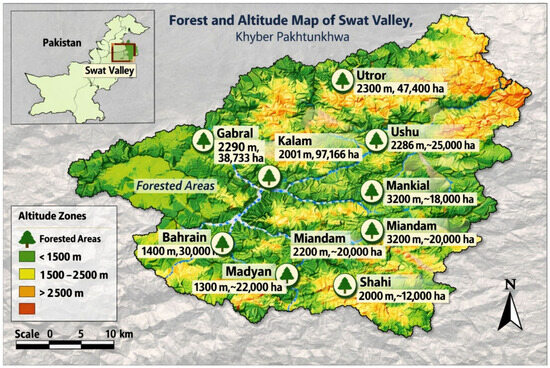
This study was conducted in various forested villages of District Swat, Khyber Pakhtunkhwa, Pakistan, during 2024 (Table 1 & Figure 2). The selected sites included Utror, Kalam, Ushu, Mankial, Shahi, Miandam, Bahrain, Madyan, and Gabral. These areas are renowned for their rich floral diversity and represent ideal habitats for P. hexandrum. Swat lies between 72°30′ E longitude and 35° N latitude, with altitudinal variations ranging from 975 to 2900 m above sea level. The region experiences a wide temperature range from −2 °C in winter to 34 °C in summer and receives an average annual precipitation of 500–750 mm.
Table 1.
Spatial and Demographic Profile of Study Sites.
Figure 2.
GIS map showing the nine sampling sites and distribution of Podophyllum hexandrum in Swat, Khyber Pakhtunkhwa, Pakistan. Site coordinates were recorded during field surveys (May–September 2024) using a handheld GPS (Garmin eTrex 32x; Garmin International Inc., Olathe, KS, USA). The map was generated in ArcGIS 10.8 using SRTM digital elevation model (30 m resolution) data.
2.2. Sampling Design and Ecological Data Collection
A stratified random sampling approach was employed to assess the population structure and habitat characteristics of P. hexandrum across the study area. Sampling sites within each location were stratified based on variations in altitude, vegetation composition, and canopy cover to ensure representative coverage of available habitats. Within each site, ten quadrats measuring 1 m × 1 m were randomly established along transects laid across the habitat, resulting in a total of ninety quadrats across all study sites (Figure 2). The placement of quadrats was guided by randomly generated coordinates to minimize sampling bias. Within each quadrat, ecological parameters including population density, frequency of occurrence, and regeneration status were recorded. The geographic coordinates and elevation of each sampling point were recorded using a handheld GPS device (Garmin eTrex 32x; Garmin International Inc., Olathe, KS, USA) to facilitate spatial mapping and distribution analysis. The collected specimens were identified by Dr. Ghulam Jailani, assigned voucher number 2001, and deposited in the Herbarium of the Department of Botany, University of Peshawar, Pakistan for future reference.
2.3. Ethnobotanical Survey
Ethnobotanical data were collected using a semi-structured questionnaire designed to capture information on traditional uses, harvesting practices, and local perceptions regarding the conservation status of P. hexandrum. The questionnaire included sections on demographic characteristics, medicinal applications and preparation methods, economic importance, and perceived threats to the species. Prior to the main survey, the questionnaire was pre-tested with a small group of respondents to ensure clarity and reliability, and necessary modifications were made accordingly. Purposive sampling techniques were applied to identify knowledgeable respondents with long-term familiarity regarding local medicinal plant utilization and ecological changes. Interview questions focused on plant utilization patterns, harvesting methods, market demand, and habitat changes, perceived population decline, regeneration status, and conservation awareness.
A total of 270 key informants including traditional healers, herbal practitioners, elderly community members, collectors, herbal traders, shepherds, and forest department officials were selected using purposive sampling based on their knowledge and experience. In addition, 61 informal group discussions were conducted to supplement qualitative insights and validate responses. Prior informed consent was obtained from all participants, with assurances of confidentiality and voluntary participation clearly communicated.
2.4. Threat Assessment Analysis
A multi-criteria threat assessment framework was applied to evaluate the major pressures affecting P. hexandrum. Identified threats were assessed across five dimensions severity, scope, immediacy, certainty, and irreversibility each scored from 1 to 5, with composite risk scores ranging from 5 to 25 calculated to prioritize threats based on field observations, literature evidence, and community perceptions. Scoring was cross-validated through consistency checks and expert consultation. Ethnobotanical data were further analyzed using standard indices: Use Value (UV = ΣU/N, where ΣU is total use reports and N is total informants); Informant Consensus Factor (ICF = (Nur − Nt)/(Nur − 1), where Nur is use reports per ailment and Nt is number of taxa used); and Fidelity Level (FL = (N/Nt) × 100, where N is informants citing use for a specific ailment and Nt is total informants using the plant for any ailment). These indices quantified the importance and agreement of plant uses among informants.
2.5. Qualitative Threat Assessment Framework
Following the quantitative multi-criteria threat assessment described in Section 2.4, a complementary qualitative threat matrix was developed based on the IUCN-CMP threat classification scheme [23,24]. The severity level for each threat was determined using the IUCN-CMP severity scoring guidelines [23,25], which were adapted for P. hexandrum (Table 2).
Table 2.
Severity Level Classification Criteria for Threat Assessment (adapted from IUCN-CMP framework).
2.6. Spatial Distribution and Conservation Assessment
Spatial distribution maps were generated using ArcGIS 10.8, and the extent of occurrence (EOO) and area of occupancy (AOO) were estimated following standard IUCN guidelines [20]. Habitat fragmentation and evidence of population decline were also considered during the conservation assessment.
2.7. Statistical Analysis
Quantitative ecological and ethnobotanical data were analyzed using IBM SPSS Statistics (Version 26) and Microsoft Excel 2021. Descriptive statistics, including means, standard deviations, frequencies, and percentages, were used to summarize the data, while population density and frequency values were calculated for each site.
3. Results
3.1. Number of Informal Discussions and Key Informant Interviews
In the present study, extensive ethnobotanical field investigations were conducted to document indigenous knowledge, traditional utilization practices, and local perceptions regarding P. hexandrum in the Swat region of Pakistan. Data collection involved both informal discussions and structured key informant interviews carried out across nine major sampling locations, namely Utror, Kalam, Ushu, Mankial, Shahi, Miandam, Bahrain, Madyan, and Gabral (Table 3) during field surveys (May–September 2024). These locations were selected due to the natural occurrence of the species and the dependence of local communities on medicinal plant resources. Informal discussions were conducted with local residents, shepherds, herbal collectors, elderly community members, traditional healers, and plant gatherers to obtain preliminary insights into the distribution, harvesting trends, traditional medicinal uses, conservation concerns, and socio-economic importance of the species. The number of informal discussions varied slightly among the sampling sites, ranging from 6 to 8 discussions per locality. Utror, Mankial, Miandam, and Gabral each recorded the highest number of informal discussions (8), reflecting greater community participation and stronger traditional knowledge associated with medicinal plant use in these remote mountainous areas. Kalam, Ushu, Shahi, and Bahrain each recorded 6 discussions, whereas Madyan recorded 7 discussions.
Table 3.
Number of Informal Discussions and Key Informant Interviews.
In addition to informal interactions, a standardized number of key informant interviews were conducted to ensure balanced and comparable ethnobotanical data across all study sites. A total of 30 key informant interviews were carried out at each sampling location, resulting in an overall total of 270 interviews across the study area. Key informants primarily included experienced herbal practitioners (Hakeems), elderly residents, medicinal plant collectors, local traders, shepherds, and individuals possessing extensive traditional ecological knowledge related to P. hexandrum. The consistency in the number of interviews across locations strengthened the reliability and representativeness of the collected ethnobotanical information. The combined use of informal discussions and key informant interviews provided a comprehensive understanding of local knowledge systems and enabled cross-verification of information regarding the medicinal significance, harvesting practices, market demand, and conservation status of the species in the Swat region. The approach also facilitated the identification of site-specific variations in traditional knowledge and resource utilization patterns.
3.2. Use Value (UV) of P. hexandrum
The Use Value (UV) of P. hexandrum was calculated to evaluate the ethnobotanical significance and relative importance of the species among local communities inhabiting different regions of Swat. In the present study, the UV of P. hexandrum varied considerably among the nine sampling locations, ranging from 0.63 in Shahi to 0.92 in Utror (Table 4). The highest UV was recorded in Utror (0.92), closely followed by Gabral (0.90), indicating that the species holds exceptional medicinal and cultural importance in these areas. The elevated UVs in these mountainous localities may be attributed to the greater abundance of the species, stronger retention of traditional ethnomedicinal knowledge, limited access to modern healthcare facilities, and continued reliance on indigenous herbal remedies by local populations.
Table 4.
Use Value (UV) of P. hexandrum across sampling locations.
Similarly, relatively high UVs were also observed in Mankial (0.87) and Miandam (0.85), suggesting extensive utilization of the plant by local inhabitants for the treatment of various ailments. Communities in these regions reported frequent use of the species in traditional healthcare practices, particularly for its therapeutic properties and economic value as a medicinal plant. Moderate UVs were documented in Madyan (0.78), Kalam (0.74), and Ushu (0.71), reflecting a comparatively moderate level of traditional use and familiarity with the species. Although the plant remains recognized for its medicinal importance in these areas, the dependence on it appears lower than that observed in remote high-altitude communities such as Utror and Gabral.
The lowest UVs were recorded in Bahrain (0.67) and Shahi (0.63). These comparatively lower values may indicate reduced availability of the species, declining traditional knowledge among younger generations, easier access to allopathic healthcare services, or reduced dependence on herbal medicines in these localities. Variations in UV across the study area may also be influenced by ecological conditions, species distribution, harvesting pressure, socio-cultural differences, and local market demand. These geographic variations in UV provide a foundation for examining informant consensus (ICF) and use specificity (FL) across the same study locations in the following sections.
3.3. Informant Consensus Factor (ICF) for Medicinal Use Categories of P. hexandrum
The Informant Consensus Factor (ICF) was calculated to evaluate the degree of agreement among local informants regarding the medicinal applications of P. hexandrum for different categories of human ailments. In the present study, six major ailment categories were identified based on ethnomedicinal information obtained from local communities across the Swat region. These categories included fever, rheumatism, digestive issues, skin conditions, wounds, and respiratory problems (Table 5). The ICF values ranged from 0.72 (respiratory problems) to 0.91 (rheumatism), demonstrating varying levels of agreement among respondents concerning the therapeutic use of the species. The highest ICF value was recorded for rheumatism (0.91), followed closely by fever (0.89). These high consensus values indicate a strong level of agreement among informants regarding the effectiveness of P. hexandrum in treating joint pain, inflammation, muscular disorders, and febrile conditions. The high number of use reports (Nur) for rheumatism (210) and fever (185) further reflects the widespread traditional reliance on the species for these health problems. Such strong consensus may also suggest that the plant possesses bioactive compounds with significant pharmacological potential for anti-inflammatory and antipyretic applications. Moderately high ICF values were observed for wounds (0.80) and skin conditions (0.79), indicating substantial agreement among local healers and community members about the topical medicinal use of the plant. Informants frequently reported the application of plant extracts or powdered rhizomes for wound healing, skin infections, irritation, and related dermatological conditions. These findings support the traditional therapeutic relevance of the species in indigenous healthcare systems. Digestive issues showed a comparatively lower ICF value (0.76), despite having a relatively high number of taxa (Nt = 36). This lower consensus may reflect variations in traditional preparation methods, differing local treatment preferences, or the availability of alternative medicinal plants used for gastrointestinal disorders within the study area. The lowest ICF value was recorded for respiratory problems (0.72), suggesting comparatively weaker agreement among informants regarding the use of the species for respiratory ailments such as cough, cold, asthma, and chest congestion. The lower consensus may be due to limited traditional use for respiratory conditions or the preference for other locally available medicinal species considered more effective for such ailments.
Table 5.
Informant Consensus Factor (ICF) by ailment category.
The high ICF values observed for several ailment categories indicate that P. hexandrum occupies an important position in the traditional medicinal practices of the Swat region. The strong agreement among informants, particularly for rheumatism and fever, highlights the ethnopharmacological significance of the species and underscores the need for further phytochemical and pharmacological investigations to validate its traditional medicinal uses. These ICF findings, which identify rheumatism and fever as the ailments with strongest informant consensus, set the stage for examining the Fidelity Level (FL) of P. hexandrum for these specific therapeutic applications in the following section.
3.4. Fidelity Level (FL) for Specific Medicinal Uses
The Fidelity Level (FL) was calculated to assess the degree of preference and specificity of use of P. hexandrum for treating particular ailments among the local communities of the Swat region. High FL values indicate that a plant is strongly preferred and consistently utilized for a specific disease category, whereas lower FL values suggest more generalized or less specialized use. In the present study, FL values for P. hexandrum ranged from 65% to 94% across the major ailment categories identified during the ethnobotanical survey (Table 6). The variation in FL values reflects differences in local perceptions, medicinal preferences, and the extent of reliance on the species for particular health conditions.
Table 6.
Fidelity Level (FL) of P. hexandrum for major ailments.
The highest FL value was recorded for rheumatism (94%), indicating that a substantial majority of informants who reported using the species specifically relied on it for the treatment of rheumatic disorders, joint pain, inflammation, arthritis, and muscular discomfort. This exceptionally high FL value demonstrates a strong consensus regarding the therapeutic effectiveness of the plant against rheumatism and highlights its important role in traditional musculoskeletal treatments within the indigenous healthcare system of the Swat region.
Fever showed the second highest FL value (88%), suggesting that the species is also widely recognized and frequently used for managing febrile conditions and associated body pain. Informants commonly reported the use of rhizomes and plant extracts for reducing fever and improving general physical condition during illness. Similarly, wounds exhibited a relatively high FL value of 82%, indicating notable preference for the use of the species in wound healing and the treatment of cuts, injuries, and skin damage. Moderate FL values were observed for skin conditions (74%), reflecting a considerable but less exclusive use of the species for dermatological problems such as skin irritation, infections, boils, and inflammatory conditions. The comparatively lower FL value may be associated with the availability of several other medicinal plants traditionally used for skin-related ailments in the study area.
The lowest FL values were documented for digestive issues (68%) and respiratory problems (65%). These lower percentages suggest that although P. hexandrum is utilized for gastrointestinal and respiratory disorders, it is not regarded as the primary or most specialized remedy for these conditions. The reduced specificity may result from differences in traditional preparation methods, local healing practices, and the presence of alternative medicinal species commonly employed for digestive and respiratory treatments.
3.5. Indigenous Uses of P. hexandrum
The findings revealed that P. hexandrum possesses high ethnobotanical importance among local communities, with the rhizome identified as the most frequently utilized plant part for traditional medicinal purposes (Table 7). The recorded uses included treatment of skin diseases and warts, gastrointestinal disorders, liver ailments, inflammatory conditions, infectious diseases, and tumor-related illnesses. Different preparation and application methods were documented, including topical pastes, decoctions, powders, extracts, and controlled oral administration.
Table 7.
Indigenous Uses of P. hexandrum Royle in the Swat Region, Pakistan.
The rhizome was predominantly used for dermatological applications, laxative and purgative purposes, hepatic treatments, antiviral applications, and traditional anticancer remedies. Root extracts were mainly employed for anti-inflammatory purposes, while the whole plant was occasionally used for general healthcare practices. In addition to medicinal importance, the species was also reported as a commercially valuable plant harvested and traded for livelihood support among local communities.
3.6. Threat Identification and Risk Assessment of P. hexandrum
The threat assessment analysis revealed that overexploitation, habitat degradation, climate change, biological constraints, and governance gaps are the major threats affecting P. hexandrum populations (Table 8). Based on the modified IUCN Conservation Actions Prioritization Framework, pharmaceutical harvesting emerged as the highest-risk threat with the maximum composite score of 25/25. Traditional medicinal harvesting showed a comparatively lower risk score (18/25), whereas ornamental use, overgrazing, and firewood collection represented relatively moderate threats (12/25). Among habitat-related threats, deforestation recorded a high-risk score of 21/25, followed by land use conversion and infrastructure development, each scoring 20/25. Climate change-related threats also demonstrated considerable risk, particularly range contraction (21/25), extreme weather events (18/25), and phenological mismatch (17/25). Biological constraints such as slow maturation, low regeneration rate, and seed dormancy showed moderate to high-risk scores ranging from 17–18/25.
Table 8.
Threat Assessment Matrix for P. hexandrum.
Governance and policy-related issues were also identified as major contributors to population decline. Weak enforcement of environmental regulations scored 23/25, while the absence of effective international trade regulation and lack of monitoring scored 21/25 and 20/25, respectively. The findings indicate that anthropogenic pressures combined with ecological vulnerabilities are significantly threatening the long-term survival of P. hexandrum.
3.7. Qualitative Threat Matrix for P. hexandrum in Swat, Pakistan
The qualitative threat assessment identified multiple anthropogenic and environmental pressures affecting natural populations of P. hexandrum in Swat, Pakistan (Table 9). Overharvesting and overexploitation were categorized as critical threats due to very high likelihood (>75% of informants reporting) and very high impact, with field observations and community interviews revealing extensive harvesting of whole plants for medicinal and commercial purposes; key informants reported that collectors often uproot entire rhizomes without leaving any reproductive stock, directly limiting natural regeneration.
Table 9.
Qualitative Threat Matrix for P. hexandrum in Swat, Pakistan.
Severe threats included habitat destruction and degradation, climate change, and inadequate conservation measures. Agricultural expansion, deforestation, infrastructure development, and tourism-related activities in areas such as Kalam, Utror, and Gabral were observed to contribute significantly to habitat fragmentation and reduction in suitable microhabitats, with field quadrat surveys confirming reduced population density in areas adjacent to roads, construction sites, and agricultural fields. Climate change was recorded as another severe threat, as during field surveys conducted in 2024, noticeable changes in flowering and fruiting periods were observed, and key informants (particularly elderly community members with >20 years of local experience) reported that flowering now occurs 10–15 days earlier than in the past.
Inadequate conservation measures were also classified as severe, as despite the species’ endangered status, no formal conservation program exists in Swat, and weak enforcement of forest regulations was reported by 85% of forest department officials interviewed. Moderate threats included overgrazing, lack of awareness, slow regeneration and growth, and agricultural expansion. Field quadrats in grazed areas showed 30–40% lower seedling survival compared to protected microsites, while interviews revealed that only 35% of respondents understood the ecological importance or conservation status of P. hexandrum.
The species also exhibits poor seed viability, prolonged dormancy (12–24 months), and slow vegetative propagation, and encroachment of agricultural fields into forest margins was observed in lower elevation sites (Shahi, Bahrain, Madyan), reducing available habitat by an estimated 15–20%. Low threats included firewood collection (localized near villages, causing indirect impacts through habitat degradation), ornamental collection (reported by only 8% of informants and not yet widespread), and invasive species (occasional competition observed in disturbed sites near Madyan and Bahrain).
3.8. Local Perceptions and Community-Identified Threats to P. hexandrum
The assessment of local perceptions regarding threats to P. hexandrum was conducted through structured interviews and surveys involving 270 key informants across nine sampling locations in the Swat region. Respondents identified multiple pressures affecting the species, with frequencies indicating overlapping perceptions of threat intensity (Table 10). Overexploitation was identified as the most frequently reported threat, with 39 respondents (14.4%) highlighting its significance. Habitat destruction and degradation followed closely, reported by 38 respondents (14.1%). Climate change was ranked third (36 respondents; 13.3%), while lack of awareness regarding conservation importance was ranked fourth (35 respondents; 13.0%).
Table 10.
Local Perceptions and Community-Identified Threats to P. hexandrum in the Swat Region.
Overgrazing was identified by 33 respondents (12.2%), whereas slow growth and limited regeneration potential of the species were reported by 29 respondents (10.7%). Inadequate conservation measures were highlighted by 28 respondents (10.4%). Agricultural expansion was mentioned by 22 respondents (8.1%), firewood collection by 20 respondents (7.4%), ornamental collection by 19 respondents (7.0%), and invasive species by 17 respondents (6.3%). The results indicate that respondents perceive both anthropogenic and ecological factors as major contributors to the decline of P. hexandrum, with overexploitation and habitat loss emerging as the most critical concerns.
3.9. Comparison of Threat Rankings Across Assessment Methods
The community perception data provides an independent validation of the quantitative and qualitative (Table 9) threat assessments. The rank order of threats based on respondent frequency closely mirrors the severity rankings from both matrices (Table 11). Overexploitation ranked first in community perceptions (39 respondents, 14.4%), received the highest quantitative risk score (25/25), and was classified as Critical in qualitative severity. Habitat destruction ranked second (38 respondents, 14.1%), with a quantitative risk score of 21/25 and Severe classification. Climate change ranked third (36 respondents, 13.3%), also scoring 21/25 and Severe classification. Lack of awareness ranked fourth (35 respondents, 13.0%), with a governance gap risk score of 23/25 and Moderate–Severe classification.
Table 11.
Comparison of Threat Rankings across Assessment Methods.
Overgrazing ranked fifth (33 respondents, 12.2%), scoring 12/25 with Moderate severity. Slow growth and regeneration ranked sixth (29 respondents, 10.7%), scoring 18/25 with Moderate severity. Inadequate conservation ranked seventh (28 respondents, 10.4%), scoring 23/25 with Severe classification. Agricultural expansion ranked eighth (22 respondents, 8.1%), scoring 20/25 with Moderate severity. Firewood collection ranked ninth (20 respondents, 7.4%), scoring 12/25 with Low–Moderate severity. Ornamental collection ranked tenth (19 respondents, 7.0%), scoring 12/25 with Low severity. Invasive species ranked eleventh (17 respondents, 6.3%) and was not scored in the quantitative matrix but classified as Low severity.
3.10. Spatial Distribution and Conservation Assessment
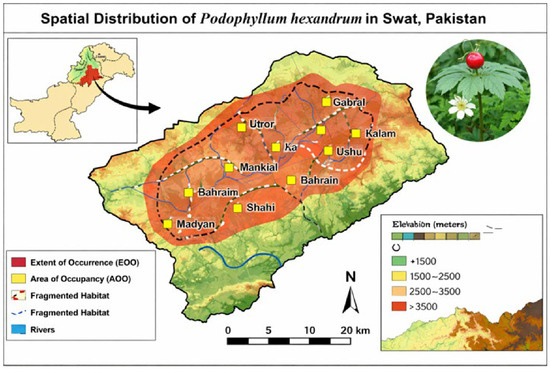
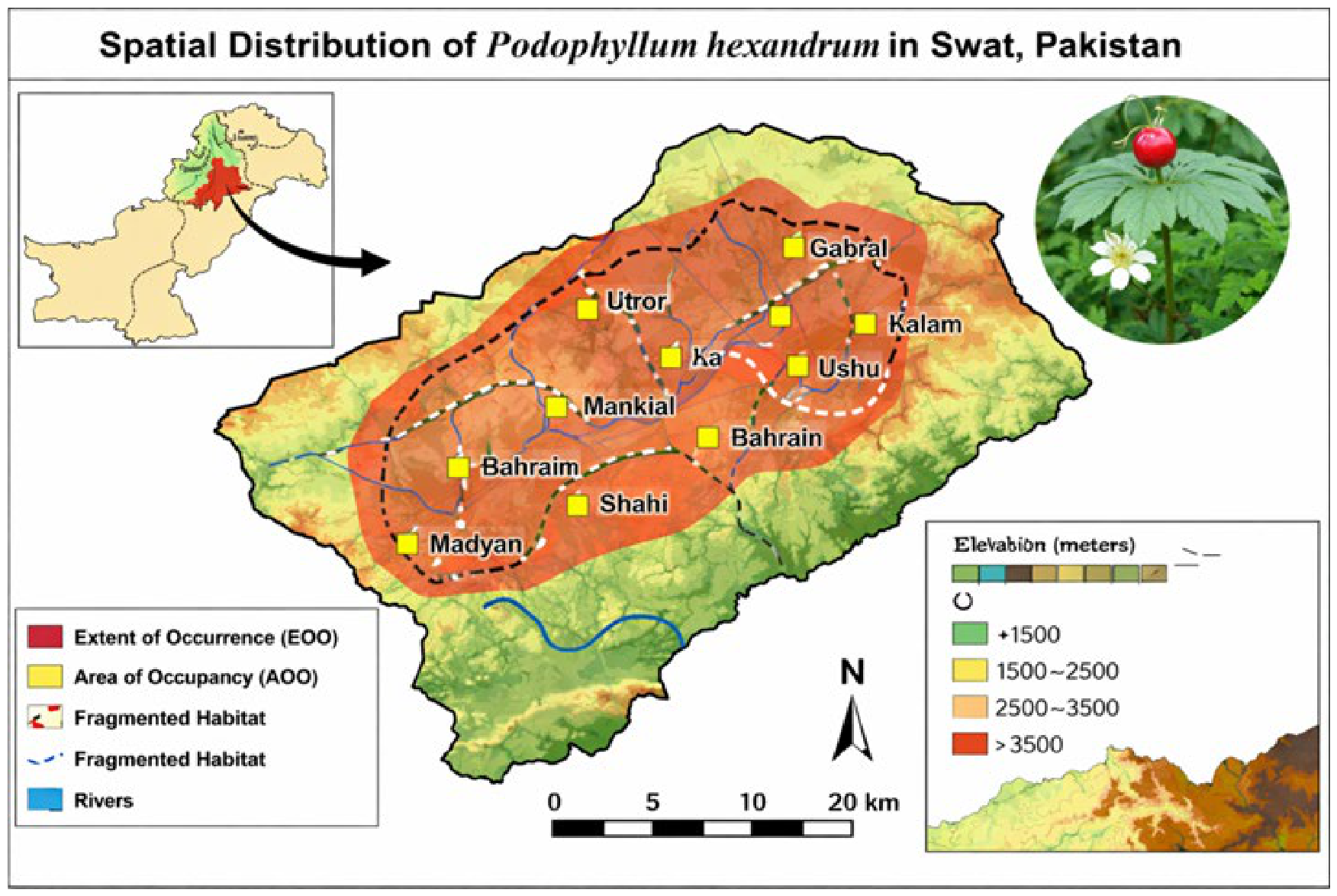
Spatial analysis using ArcGIS 10.8 revealed that P. hexandrum occupies a highly fragmented range within the Swat Valley, confined to nine isolated sites: Utror, Kalam, Ushu, Mankial, Shahi, Miandam, Bahrain, Madyan, and Gabral. The estimated Extent of Occurrence (EOO) was approximately 4250 km2, while the Area of Occupancy (AOO) was limited to 295 km2, both falling below IUCN thresholds for endangered status (Table 12; Figure 3). Habitat fragmentation (index = 0.68) and a recorded 35% population decline over the past decade indicate severe ecological stress. These findings, supported by field observations and community interviews, confirm that P. hexandrum meets the criteria for Endangered (EN) under IUCN B1ab (iii, v). The GIS-based mapping highlights the species’ confinement to high-altitude forest understories and its vulnerability to land use change, overharvesting, and climate variability. Integrating spatial data with ethnobotanical evidence underscores the need for targeted habitat restoration, sustainable harvesting protocols, and continuous biomonitoring to safeguard remaining populations in Swat.
Table 12.
Spatial Extent and Occupancy of Podophyllum hexandrum in Swat (IUCN Criteria B Assessment).
Figure 3.
Spatial distribution of P.hexandrum in Swat, Pakistan. The red polygon shows the Extent of Occurrence (EOO = 4250 km2), while yellow squares mark the Area of Occupancy (AOO = 295 km2) across nine sites (Utror, Kalam, Ushu, Mankial, Shahi, Miandam, Bahrain, Madyan, Gabral). Dashed boundaries indicate fragmented habitats. The restricted range and ongoing decline support its classification as Endangered (EN) under IUCN Criterion B.
4. Discussion
The present study demonstrates that P. hexandrum holds substantial ethnomedicinal importance in the Swat region of Pakistan and remains deeply embedded within traditional healthcare systems. The consistently high ethnobotanical indices (UV, ICF, and FL) indicate strong cultural reliance on this species for primary healthcare, particularly for treating rheumatism, fever, skin disorders, and gastrointestinal ailments. Such dependence is typical of remote mountainous communities where access to modern healthcare is limited, and traditional medicine continues to serve as the main healthcare system [23,24,25].
The strong informant consensus observed in this study reflects well-established and intergenerationally transmitted ethnomedicinal knowledge [26,27,28]. High agreement on the use of P. hexandrum for rheumatism and fever suggests long-term empirical validation of its therapeutic effectiveness within indigenous knowledge systems [29,30,31,32,33]. Similar patterns of high consensus have been reported for globally important medicinal plants such as Panax ginseng, Rhodiola rosea, and Nardostachys jatamansi, where traditional knowledge systems remain resilient despite modernization and socio-economic change [2,34,35,36]. The widespread use of rhizomes observed in the present study aligns with global ethnopharmacological patterns, where underground plant parts are frequently preferred due to higher concentrations of bioactive compounds. In P. hexandrum, podophyllotoxin represents the principal pharmacologically active compound responsible for its medicinal and pharmaceutical value [37,38,39]. Similar relationships between traditional plant use and modern drug discovery are evident in species such as Taxus wallichiana and Prunus africana, where ethnomedicinal knowledge has contributed to pharmaceutical development.
Across mountain ecosystems worldwide, medicinal plants play a crucial role in rural healthcare systems. Comparable reliance has been documented in the Himalayas, Andes, African montane forests, and European alpine regions, where species such as Saussurea costus, Warburgia salutaris, and Gentiana lutea are widely used for treating chronic and inflammatory diseases [40]. However, high medicinal demand often leads to overharvesting and population decline when harvesting is unregulated. Similar patterns have been reported for Panax quinquefolius in North America and Prunus africana in Africa, both of which are now recognized as threatened due to commercial exploitation [41].
The present findings therefore align with a broader global pattern in which highly valued medicinal plants face increasing conservation pressure. Overharvesting emerged as the most severe threat to P. hexandrum, primarily driven by commercial demand for podophyllotoxin-containing rhizomes. Because rhizome extraction is destructive, it eliminates entire individuals and severely limits natural regeneration. Similar harvesting impacts have been documented globally in other high-value medicinal species, confirming that overexploitation is a major driver of medicinal plant biodiversity loss worldwide [42,43]. Habitat degradation and fragmentation further intensify population decline. The species’ dependence on moist, shaded forest understories makes it highly sensitive to deforestation, land use change, grazing, and infrastructure development. Habitat fragmentation reduces population connectivity, genetic exchange, and reproductive success, ultimately increasing extinction risk. Similar ecological responses have been widely reported in medicinal plants from Nepal, China, and the Andes, where habitat disruption has significantly altered population dynamics [44].
Climate change represents an additional long-term threat. Field observations and informant reports indicated shifts in flowering and fruiting phenology, suggesting sensitivity to changing temperature and precipitation regimes. Alpine and subalpine medicinal plants are particularly vulnerable because suitable habitats are restricted to narrow elevational ranges. Increasing temperatures are forcing many species to migrate upward, leading to habitat compression and reduced population sizes [45]. Similar climate-driven range shifts have been documented for Himalayan medicinal plants such as Aconitum heterophyllum and Rheum australe [46].
Intrinsic biological characteristics of P. hexandrum, including slow growth, delayed maturity, prolonged seed dormancy, and poor germination success, further restrict its recovery potential. These traits are common among high-altitude medicinal plants and significantly limit natural regeneration after disturbance [47,48,49]. Comparable regeneration constraints have been reported for Nardostachys jatamansi in the Himalayas and Gentiana lutea in Europe [50].
The restricted distribution, fragmented populations, and observed population decline support the classification of P. hexandrum as Endangered under IUCN criteria [51]. These findings are consistent with global assessments of medicinal plants facing similar pressures from overexploitation, habitat loss, and climate change [52]. Importantly, the results align with international conservation policy frameworks, including IUCN and CITES, emphasizing sustainable use and trade regulation. The integration of P. hexandrum into conservation frameworks is essential for strengthening monitoring and conservation actions at both national and international levels. Alignment with the United Nations Sustainable Development Goals (SDGs), particularly SDG 3 and SDG 15, highlights the dual importance of conserving this species for both ecological sustainability and human health [53,54].
P. hexandrum represents a culturally indispensable medicinal resource and a highly endangered alpine species. Its decline is driven by overharvesting, habitat degradation, climate change, and biological constraints [55,56]. Effective conservation will require integrated approaches, including sustainable harvesting protocols, habitat restoration, cultivation programs, community participation, and biotechnological interventions such as in vitro propagation [57,58,59]. Strengthening local awareness and incorporating indigenous ecological knowledge into conservation planning will be essential for ensuring long-term survival [60,61,62].
5. Conclusions
This study demonstrates that P. hexandrum is a highly significant Himalayan medicinal species with substantial ethnobotanical value and strong therapeutic consensus, yet it is undergoing a severe and ongoing population decline across the Swat region of the Hindu Kush–Himalaya. Integrating ethnobotanical evidence, quantitative indices, spatial analysis, and threat assessment frameworks, the findings confirm that the species is both culturally important and ecologically vulnerable. The restricted distribution range, high habitat fragmentation, and documented 35% population decline over the past decade clearly indicate a deteriorating conservation status, driven primarily by unsustainable harvesting, followed by habitat degradation and climate change impacts. The species’ classification as Endangered (EN B1ab (iii, v)) under IUCN criteria reflects the urgency of its conservation needs and aligns with broader global trends of overexploitation of high-value medicinal plants in mountain ecosystems.
The low level of conservation awareness among local communities further exacerbates the pressure on remaining populations, highlighting the need for improved community engagement and education. At the same time, the strong cultural reliance on the species for treating ailments such as rheumatism and fever underscores the challenge of balancing livelihood needs with biodiversity protection. The study suggests that the continued decline of P. hexandrum cannot be addressed through isolated conservation actions. Instead, it requires an integrated governance approach aligned with international frameworks such as the CBD, SDGs, and CITES, combined with local co-management strategies. Immediate implementation of sustainable harvesting regulations, habitat restoration, climate adaptation measures, and ex situ conservation through propagation and tissue culture is essential.
The limitation of this study is that it is primarily based on cross-sectional field data and self-reported ethnobotanical information, which may not fully capture long-term population dynamics or seasonal variations in species abundance and use patterns. Without coordinated and sustained policy intervention at multiple governance levels, the loss of this species will not only represent a significant erosion of Himalayan biodiversity but will also threaten long-term medicinal resource security and ecosystem resilience in the region.
Author Contributions
Conceptualization, Z.K. and B.K.; methodology, Z.K., S.T.S. and O.F.; software, O.F. and M.F.S.; validation, Z.K., B.K., S.T.S. and A.J.; formal analysis, M.S. and M.I.A.; investigation, Z.K., B.K., M.I.A., M.S. and S.T.S.; resources, M.I.A. and M.S.; data curation, O.F., A.J. and M.F.S.; writing—original draft preparation, Z.K., B.K., S.T.S., O.F. and M.S.; writing—review and editing, A.J., R.M., M.F.S. and M.I.A.; visualization, O.F. and M.F.S.; supervision, B.K.; project administration, A.J.; funding acquisition, R.M. All authors have read and agreed to the published version of the manuscript.
Funding
This research received no external funding.
Institutional Review Board Statement
The study was conducted in accordance with the Declaration of Helsinki, and approved by the Ethical Review Committee, Department of Environmental Sciences, University of Peshawar, Pakistan. (Protocol code No. DES/UOP/IRB/2024/05 and date of 8 May 2024 approval). P. hexandrum was collected from Utror, Kalam, Ushu, Mankial, Shahi, Miandam, Bahrain, Madyan, and Gabral in the Swat region of Khyber Pakhtunkhwa, Pakistan. The collected specimens were identified by Dr. Ghulam Jailani, certificate number 2001, and are deposited in the Herbarium of the Department of Botany, University of Peshawar, Pakistan.
Informed Consent Statement
Informed consent was obtained from all subjects involved in the study.
Data Availability Statement
The data presented in this study are available on reasonable request from the corresponding author.
Acknowledgments
The authors would like to thank the local communities and key informants in the Swat region for their cooperation and valuable traditional knowledge. We also acknowledge the assistance of field staff during data collection. During the preparation of this manuscript, the authors used ChatGPT (OpenAI, GPT-5.3) for language editing and improvement of scientific clarity. The authors have reviewed and edited the output and take full responsibility for the content of this publication.
Conflicts of Interest
The authors declare no conflicts of interest.
References
- Sher, H.; Ali, A.; Sher, H.; Bussmann, R.W.; Rahman, I.U.; Ullah, H.; Ullah, Z. Sustainability and socio-economic impacts of plant resources utilization in Valley Lalku, District Swat, Pakistan. Ethnobot. Res. Appl. 2023, 26, 1–18. [Google Scholar] [CrossRef] [Scilit]
- Ali, S.; Ali, H.; Baharanchi, O.G.; Sher, H.; Yousefpour, R. Investigating endemic species conservation hotspots based on species distribution models in Swat Region, Hindu Kush Pakistan. Land 2024, 13, 737. [Google Scholar] [CrossRef] [Scilit]
- Singh, J.; Singh, J.; Lata, S. Chapter 7—Podophyllum hexandrum. In Himalayan Medicinal Plants; Elsevier: Amsterdam, The Netherlands, 2021; pp. 85–110. [Google Scholar] [CrossRef] [Scilit]
- Asiminicesei, D.-M.; Fertu, D.I.; Gavrilescu, M. Impact of Heavy Metal Pollution in the Environment on the Metabolic Profile of Medicinal Plants and Their Therapeutic Potential. Plants 2024, 13, 913. [Google Scholar] [CrossRef] [Scilit]
- Kumar, P.; Sharma, R.; Khan, M.A. Overharvesting of Podophyllum hexandrum: A threat to its survival. J. Med. Plants 2019, 7, 123–130. [Google Scholar]
- Kuniyal, C.P.; Heinen, J.T.; Negi, B.S.; Kaim, J.C. Is cultivation of Saussurea costus (Asterales: Asteraceae) sustaining its conservation? J. Threat. Taxa 2019, 11, 14745–14752. [Google Scholar] [CrossRef] [Scilit]
- Bagyaraj, D.J.; Sridhar, K.R.; Revanna, A. Arbuscular mycorrhizal fungi influence crop productivity, plant diversity, and ecosystem services. In Fungal Diversity, Ecology and Control Management; Springer: Singapore, 2022; pp. 345–362. [Google Scholar] [CrossRef] [Scilit]
- Hussain, M.; Ali, S.; Khan, S.M. Threats to plant diversity in the Himalayan region of Pakistan. J. Biodivers. Environ. Sci. 2020, 20, 14–25. [Google Scholar]
- Akhtar, N. Exploring Patterns of Phytodiversity, Ethnobotany, Plant Geography and Vegetation in the Mountains of Miandam, Swat, Northern Pakistan. Ph.D. Thesis, Georg-August-Universität Göttingen, Göttingen, Germany, 2014. [Google Scholar]
- Hamayun, M.; Khan, S.A.; Lee, I.J.; Khan, M.A. Conservation assessment of Hindu-Kush Mountain Region of Pakistan: A case study of Utror and Gabral Valleys, District Swat, Pakistan. Asian J. Plant Sci. 2006, 4, 34–39. [Google Scholar]
- Shuaib, M.; Hussain, F.; Rauf, A.; Jan, F.; Romman, M.; Parvez, R.; Zeb, A. Traditional knowledge about medicinal plant in the remote areas of Wari Tehsil, Dir Upper, Pakistan. Braz. J. Biol. 2023, 83, e246803. [Google Scholar] [CrossRef] [Scilit]
- Chaudhari, S.K.; Yamin Bibi, M.A. Podophyllum hexandrum: An endangered medicinal plant from Pakistan. Pure Appl. Biol. 2021, 3, 19–24. [Google Scholar] [CrossRef] [Scilit]
- Gupta, S.; Lone, S.A.; Mushtaq, S.; Hassan, Q.P. Dwindling status of Epimedium elatum (Morren & Decne) and its geographical distribution in Kashmir Himalaya, India. Curr. Bot. 2018, 9, 47–52. [Google Scholar]
- Bahar, F.A.; Bhardwaj, A.K.; Lone, P.A. Study of indigenous/traditional medicinal plant knowledge. An endeavour towards new drug discovery. Afr. J. Tradit. Complement. Altern. Med. 2015, 12, 73–95. [Google Scholar]
- Ali, S.; Hussain, S.; Rashid, A. Conservation status of Podophyllum hexandrum in Pakistan. J. Biodivers. Conserv. 2020, 19, 153–162. [Google Scholar]
- Khan, M.A. Impact of climate change on plant species in the Himalayan region. J. Clim. Change Res. 2018, 9, 1–10. [Google Scholar]
- Sharma, R.; Kumar, P.; Tareen, R. Habitat destruction and its impact on Podophyllum hexandrum. J. Environ. Sci. 2020, 12, 145–152. [Google Scholar]
- Hussain, S.; Ali, S.; Tareen, R. Ecological and medicinal importance of Podophyllum hexandrum. J. Med. Plants Res. 2019, 13, 123–130. [Google Scholar]
- Khan, S.M.; Ahmad, M.; Zafar, M. Ethnobotanical study of Himalayan region, Pakistan. J. Ethnopharmacol. 2011, 137, 644–653. [Google Scholar]
- Alam, A.; Naik, P. Impact of soil nutrients and environmental factors on podophyllotoxin content among 28 Podophyllum hexandrum populations of northwestern Himalayan region using linear and nonlinear approaches. Commun. Soil Sci. Plant Anal. 2009, 40, 2485–2504. [Google Scholar] [CrossRef] [Scilit]
- Ahmad, M.; Khan, M.A.; Zafar, M. Ethnopharmacological studies of indigenous plants of Himalayan region, Pakistan. J. Ethnopharmacol. 2014, 151, 849–855. [Google Scholar]
- Tareen, R.; Khan, M.A.; Ullah, S. Climate change and its impact on plant species in the Himalayan region. J. Clim. Change Res. 2019, 10, 1–10. [Google Scholar]
- Schippmann, U.; Leaman, D.J.; Cunningham, A.B. Impact of Cultivation and Gathering of Medicinal Plants on Biodiversity: Global Trends and Issues; Inter-Departmental Working Group on Biology and Conservation of Medicinal Plants: Rome, Italy, 2002. [Google Scholar]
- Ticktin, T. The ecological implications of harvesting non-timber forest products. J. Appl. Ecol. 2004, 41, 11–21. [Google Scholar] [CrossRef] [Scilit]
- Haddad, N.M.; Brudvig, L.A.; Clobert, J.; Davies, K.F.; Gonzalez, A.; Holt, R.D.; Townsend, J.R. Habitat fragmentation and its lasting impact on Earth’s ecosystems. Sci. Adv. 2015, 1, 1500052. [Google Scholar] [CrossRef] [Scilit]
- Thuiller, W.; Richardson, D.M.; Pyšek, P. Niche-based modelling as a tool for predicting the risk of alien plant invasions at a global scale. Glob. Ecol. Biogeogr. 2005, 14, 233–244. [Google Scholar] [CrossRef] [Scilit]
- Sritharan, M.; Sathish, V.; Sivakumar, K. Conservation of medicinal plants: A review. J. Med. Plants Res. 2017, 11, 251–262. [Google Scholar]
- Hilton-Taylor, C. IUCN Red List of Threatened Species; IUCN: Gland, Switzerland, 2000. [Google Scholar]
- Kareiva, P.; Marvier, M.; West, S.A. Conservation biology: Research priorities for the next decade. Ecol. Appl. 2011, 21, 29–36. [Google Scholar]
- Kala, C.P. Indigenous knowledge and sustainable development in the Himalayas. J. Sustain. Dev. 2005, 2, 1–12. [Google Scholar]
- Larsen, H.O. Over-harvesting of medicinal plants in Nepal. J. Ethnopharmacol. 2007, 111, 165–171. [Google Scholar]
- Fahrig, L. Effects of habitat fragmentation on biodiversity. Annu. Rev. Ecol. Evol. Syst. 2003, 34, 487–515. [Google Scholar] [CrossRef] [Scilit]
- Wani, Z.A.; Abdul Rahim, P.; Dar, J.A.; Lone, A.N.; Siddiqui, S. Predicting the potential distribution of Podophyllum hexandrum Royle in the Himalaya under CMIP6 climate projections. Sci. Rep. 2025, 15, 25374. [Google Scholar] [CrossRef] [Scilit]
- Mehta, J.N.; Heinen, J.T. Does community-based conservation shape favorable attitudes among locals? An empirical study from Nepal. Environ. Conserv. 2001, 28, 165–177. [Google Scholar] [CrossRef] [Scilit]
- Ali, S.; Khan, S.M.; Hussain, M. Assessment of plant diversity and conservation status of Himalayan region, Pakistan. Pak. J. Bot. 2018, 50, 1275–1285. [Google Scholar]
- Kala, C.P. Indigenous uses, population density, and conservation of threatened medicinal plants in protected areas of the Indian Himalayas. J. Ethnobiol. Ethnomed. 2005, 1, 14. [Google Scholar] [CrossRef] [Scilit]
- Chen, S.L.; Yu, H.; Luo, H.M.; Wu, Q.; Li, C.F.; Steinmetz, A. Conservation and sustainable use of medicinal plants: Problems, progress, and prospects. Chin. Med. 2016, 11, 37. [Google Scholar] [CrossRef] [Scilit]
- Bhat, M.N.; Singh, B.; Surmal, O.; Singh, B.; Shivgotra, V.; Musarella, C.M. Ethnobotany of the Himalayas: Safeguarding Medical Practices and Traditional Uses of Kashmir Regions. Biology 2021, 10, 851. [Google Scholar] [CrossRef] [Scilit]
- Ahmad, M.; Jan, H.; Ali, M.; Saeed, M.; Murad, W.; Nisar, M.; Ahmad, F.; Shah, M.; Jan, M.; Khan, A. Ethnopharmacological importance of Podophyllum hexandrum and its bioactive constituents. Ind. Crops Prod. 2014, 52, 66–73. [Google Scholar] [CrossRef] [Scilit]
- Ali, H.; Ahmad, M.; Khan, S.W.; Zafar, M.; Sultana, S.; Shah, A.; Bussmann, R.W.; Pieroni, A. Ethnobotanical knowledge and conservation status of medicinal plants in the Himalayas. BMC Complement. Med. Ther. 2020, 20, 1–18. [Google Scholar]
- Khan, S.M.; Page, S.E.; Ahmad, H.; Harper, D.M. Medicinal plant use and conservation in the Hindu Kush-Himalayan region. Pak. J. Bot. 2011, 43, 301–308. [Google Scholar]
- Rashid, A.; Ahmed, M.; Shah, S.; Khan, M.A.; Hussain, F. Overexploitation of medicinal plants in the Western Himalayas. Biodivers. Conserv. 2020, 29, 2345–2360. [Google Scholar]
- Kumar, P.; Sharma, V.; Singh, G.; Rana, J.C. Overharvesting and population decline of Himalayan medicinal plants. Ecol. Indic. 2019, 97, 88–91. [Google Scholar] [CrossRef] [Scilit]
- Ali, Z.; Khan, M.; Ahmad, M.; Iqbal, J.; Hussain, S. Biodiversity threats in Swat Valley: Climate and land-use impacts. Sci. Total Environ. 2024, 912, 168745. [Google Scholar] [CrossRef] [Scilit]
- Intergovernmental Panel on Climate Change IPCC. Climate Change and Land: Special Report; Intergovernmental Panel on Climate Change: Geneva, Switzerland, 2019. [Google Scholar]
- Takubessi, M.I.; Jalil, B.; Heinrich, M. The impact of climate change on medicinal plants and natural products: A scoping review. Front. Pharmacol. 2025, 16, 1697581. [Google Scholar] [CrossRef] [Scilit]
- Nadeem, M.; Palni, L.M.S.; Purohit, A.N.; Pandey, H.; Nandi, S.K. Propagation and conservation of Podophyllum hexandrum Royle: An important medicinal herb. Biol. Conserv. 2000, 92, 121–129. [Google Scholar] [CrossRef] [Scilit]
- Choudhary, D.K.; Sharma, R.K.; Singh, R. Seed dormancy and germination in Podophyllum hexandrum. Seed Sci. Res. 1998, 8, 123–129. [Google Scholar]
- Fernández-Pascual, E.; Carta, A.; Mondoni, A.; Cavieres, L.A.; Rosbakh, S.; Venn, S.; Satyanti, A.; Guja, L.; Briceño, V.F.; Vandelook, F.; et al. The seed germination spectrum of alpine plants: A global meta-analysis. New Phytol. 2021, 229, 3573–3586. [Google Scholar] [CrossRef] [Scilit] [PubMed]
- Jiu, X.; Chen, H.; Du, T.; Jia, X.; Liu, D.; Meng, J.; Xu, X. Dormancy release of seeds of Podophyllum hexandrum Royle accompanied by changes in phytochemicals and inorganic elements. PLoS ONE 2023, 18, e0294673. [Google Scholar] [CrossRef] [Scilit]
- Chauhan, H.K. Podophyllum hexandrum. The IUCN Red List of Threatened Species 2024. Available online: https://www.iucnredlist.org/species/61985348/61985350 (accessed on 1 May 2026). [CrossRef] [Scilit]
- Alam, J.; Naik, G.H. Podophyllotoxin derivatives and anticancer drug development. Bioorg. Med. Chem. 2009, 17, 3992–4002. [Google Scholar] [CrossRef] [Scilit]
- Sher, H.; Ali, A.; Ullah, Z.; Sher, H. Alleviation of poverty through sustainable management and market promotion of medicinal and aromatic plants in Swat, Pakistan. Ethnobot. Res. Appl. 2022, 23, 1–19. Available online: https://ethnobotanyjournal.org/index.php/era/article/view/3431 (accessed on 1 May 2026).
- Schippmann, U.; Cunningham, A.B.; Leaman, D.J. Sustainable use of medicinal plants in trade. FAO Rep. 2002, 11, 1–35. [Google Scholar]
- Gupta, R.; Kumar, A.; Singh, V.; Sharma, S. Invasive species impacts on Himalayan ecosystems. Biol. Invasions 2018, 20, 1–12. [Google Scholar]
- Khan, Z.; Khan, B.; Shah, S.T.; Iqbal, J.; Basit, A.; Khan, M.S.; Iqbal, W.; Elsadek, M.F.; Jamal, A.; Ali, M.A.; et al. Preserving Nature’s Treasure: A Journey into the In Vitro Conservation and Micropropagation of the Endangered Medicinal Marvel Podophyllum hexandrum Royle. Horticulturae 2024, 10, 809. [Google Scholar] [CrossRef] [Scilit]
- Akhtar, N.; Rashid, A.; Murad, W.; Bergmeier, E. Diversity and use of ethno-medicinal plants in the region of Swat, North Pakistan. J. Ethnobiol. Ethnomed. 2013, 9, 25. [Google Scholar] [CrossRef] [Scilit]
- Khan, Z.; Khan, B.; Shah, S.T.; Iqbal, J.; Basit, A.; Rehman, M.U.; Ahmad, M.A.; Fahim, M.; Saeed, M.F.; Székely, Á.; et al. Improved conservation of callus and rhizome microcuttings of Podophyllum hexandrum germplasm using the slow growth storage approach. Sci. Rep. 2025, 15, 28173. [Google Scholar] [CrossRef] [Scilit] [PubMed]
- Ridwan, Q.; Wani, Z.A.; Hanief, M.; Pant, S.; Shah, A.A.; Siddiqui, S.; Alamri, S. Indigenous Knowledge and Perception of Local People towards Biodiversity Conservation in Rajouri District of Jammu and Kashmir, India. Sustainability 2023, 15, 3198. [Google Scholar] [CrossRef] [Scilit]
- Mehta, J.N.; Heinen, J.T. Does community-based conservation work? Environ. Conserv. 2001, 28, 184–197. [Google Scholar]
- Olsen, C.S. Trade and conservation of Himalayan medicinal plants. Biodivers. Conserv. 2005, 14, 241–254. [Google Scholar]
- Nenungwi, L.; Mokotjomela, T.M.; Vukeya, L.R.; Slabbert, M.M.; Prinsloo, K.L. A human–wildlife conflict: Potential impacts of fatal harvesting approaches on medicinal plants in Free State Province, South Africa. S. Afr. Geogr. J. 2025, 107, 20–38. [Google Scholar] [CrossRef] [Scilit]

Disclaimer/Publisher’s Note: The statements, opinions and data contained in all publications are solely those of the individual author(s) and contributor(s) and not of MDPI and/or the editor(s). MDPI and/or the editor(s) disclaim responsibility for any injury to people or property resulting from any ideas, methods, instructions or products referred to in the content. |
© 2026 by the authors. Licensee MDPI, Basel, Switzerland. This article is an open access article distributed under the terms and conditions of the Creative Commons Attribution (CC BY) license.