1. Introduction
The introduction of digital technology to the construction industry is now accelerating at an unprecedented pace, despite being historically resistant to innovation and slow to embrace digitalisation. Globally, investment in Architecture, Engineering and Construction (AEC) technologies surged to approximately
$50 billion USD between 2020 and 2022, an 85% increase compared to the previous three-year period [
1]. This momentum is shared in Australia, where digital technology adoption rose by 20% in 2024, signifying a pivotal shift in an industry traditionally characterised by fragmented implementation and conservative technological uptake [
2].
This rapid digital transformation has exposed a critical skills gap, hindering the adoption of emerging technologies. Despite the transformative potential of these technologies, their integration remains constrained by a workforce that lacks the necessary digital competencies to maximise their benefits [
3].
Addressing the skills gap requires strategic alignment between educational frameworks, workforce training, and industry demands. A critical examination of how academic programmes and professional development initiatives influence technology adoption in the construction sector is imperative to bridge the existing skills gap. This highlights the need for further studies with a focus on recent tools and technologies that can be integrated into education and training to enhance technological proficiency. Addressing these needs may facilitate the implementation of innovation and operational efficiency across all phases of construction projects.
The Australian construction industry is the third-largest industry sector in the national economy, contributing significantly to economic growth and employing approximately 1.3 million people [
4]. Despite its scale and importance, the sector continues to lag in technology adoption, constrained by a widening gap between technological advancement and workforce capabilities.
This paper intends to provide information that may potentially address these challenges and help align educational pathways and technology adoption within the Australian construction sector. The findings are expected to provide insights that can be used to understand the technology adoption factors in the selected sample. This expected outcome may inform curriculum development, professional training programmes, and government policies aimed at strengthening Australia’s construction workforce for a digitally enabled future. These types of studies may eventually support or guide how the Australian construction sector approaches technology adoption and its integration into education, offering a pathway to bridge the digital skills gap and enhance industry-wide innovation.
The key objectives of the research are to (1) identify what technologies are being taught in formal tertiary education based on a sample of participants; (2) examine the organisational and individual barriers to training; and (3) present recommendations for the future design of education and training programmes to improve the technology adoption gap in the Australian construction industry.
The scope of this research focuses on examining the adoption of emerging digital technologies in the context of the Australian construction industry, which may help improve the effectiveness of current education and training frameworks based on a sample of participants. The study is mainly interested in gaining insights into the barriers to integration and the digital skills gap among graduates, using a triangulated approach through surveys and interviews with industry professionals, educators, and students to identify key challenges.
2. Literature Review
2.1. Emerging Technologies in the AEC Sector
Emerging technologies such as Building Information Modelling (BIM), Digital Twins (DTs), Artificial Intelligence (AI), the Internet of Things (IoT), Virtual Reality (VR), and Augmented Reality (AR) have the potential to transform the construction landscape, driving significant improvements in project efficiency, safety and decision-making. Despite this promise, the construction industry has historically been slow to adopt digital innovations, even as infrastructure demands, labour shortages, and expectations for data-driven outcomes continue to rise. However, the emergence of Construction 4.0, which represents the integration of advanced digital technologies and automation into construction practices, is beginning to shift this trajectory [
5]. Leading this transformation in Australia are Tier 1 and Tier 2 construction firms, who are beginning to realise tangible benefits in productivity, project appeal and revenue generation [
6]. The importance of digitalisation is widely recognised in academia as critical to improving project delivery and competitiveness [
7,
8]. Persistent barriers remain in the industry, most notably, the lack of digital skills within the workforce.
2.1.1. Building Information Modelling (BIM)
BIM is a digital representation of a building’s physical and operational characteristics, enabling a data-rich model that supports decision-making across the entire project lifecycle [
9]. Software platforms such as AutoCAD 2026 and Revit underpin BIM processes, enabling integrated modelling across both the design and construction phases.
Among the suite of emerging technologies influencing the AEC sector, including the Internet of Things (IoT), Artificial Intelligence (AI), Digital Twins, and Virtual Reality (VR), BIM is the most widely adopted [
10]. Its prominence is reinforced by its codification in international standards such as ISO 19650-1:2018 [
11] and the development of the Australian BIM Strategic Framework. Furthermore, the Australian Government has mandated the application of BIM for all federally funded infrastructure projects exceeding AUD
$50 million, embedding its use in procurement processes and reinforcing its role in public sector project delivery [
12].
While large Tier 1 and Tier 2 construction firms have embraced BIM to enhance productivity, coordination and lifecycle asset management, uptake among small-to-medium enterprises (SMEs) remains comparatively limited. Despite SMEs comprising approximately 98% of construction businesses in Australia, only 42% of these firms were reported to be actively engaging with BIM [
13]. More recent studies continue to highlight persistent barriers such as high implementation costs, lack of in-house expertise and limited client demand [
14], which have contributed to this BIM adoption divide within the sector.
Barriers to digital technology adoption in the Australian construction sector are multifaceted, spanning technical, organisational and educational domains. Sepasgozar and Davis [
15] conceptualise these challenges using NVivo and AHP analyses, highlighting the complex interplay among process-related barriers, decision-making uncertainties, and misaligned stakeholder incentives that hinder BIM implementation. Alieh et al. [
16] underscore the critical role of education, revealing a mismatch between university-delivered BIM training and industry expectations, which perpetuates skill shortages and hampers organisational readiness.
2.1.2. Digital Twins (DTs)
DT technology refers to the development of a real-time digital counterpart of a physical asset at any stage of the project lifecycle, offering an integration of socio-technical and process-driven attributes compared to traditional BIM [
17].
In the Asia Pacific (APAC) region, a considerable proportion of AEC professionals are still unaware of DT technology, highlighting a widespread lack of awareness and digital readiness [
2]. Between 2020 and 2022, only 17.1% of construction projects integrated Digital Twin (DT) technology, with adoption forecasted to increase to 25.5% by 2025 [
18]. Despite this upward trend, DT implementation in construction remains at an early stage and continues to lag other sectors. Madubuike et al. [
19] emphasise this disparity, noting that construction significantly trails more digitally mature industries in adopting DT, but also that the increasing development of smart infrastructure offers a strong foundation for the integration of DTs.
The adoption of DT technology in the construction industry remains constrained by a range of interrelated barriers. Opoku et al. [
20] categorise these into stakeholder, industry, enterprise and technology domains, identifying limited awareness, resistance to change, and inadequate digital skills as critical issues. Zhu et al. [
18] reinforce these challenges, citing high implementation costs, insufficient IT infrastructure in SMEs and a lack of strategic leadership. Mousavi et al. [
21] further highlight integration difficulties, data inconsistency and cybersecurity risks, calling for interdisciplinary collaboration, standardisation and platform unification. All three studies consistently identify the lack of a skilled workforce as a critical barrier, emphasising the need for targeted education and training initiatives to support industry readiness.
2.1.3. Artificial Intelligence (AI)
AI encompasses a broad spectrum of computational techniques, including machine learning, computer vision, natural language processing and intelligent optimisation, which are all designed to simulate human intelligence in complex environments. According to Pan and Zhang [
22], AI plays six pivotal roles in construction: knowledge representation and reasoning, information fusion, computer vision, natural language processing, intelligent optimisation and process mining. These functions enable AI to support key project tasks such as defect detection, predictive maintenance, project scheduling and real-time site monitoring. Collectively, these applications contribute to enhanced safety, improved quality and greater productivity across the construction lifecycle [
23].
In recent years, while AI has significantly reshaped numerous industries, the construction sector has been relatively slow to adopt it. The recent rise and swift integration of advanced large language models (LLMs) such as OpenAI’s GPT, Google’s PaLM and Microsoft Co-pilot has demonstrated substantial promise and captured widespread global construction attention [
24]. In contrast, blockchain technology, despite its potential to enhance transparency, security and contract automation, has been identified as a technology still in its infancy, with its application in construction remaining underdeveloped and largely experimental [
3].
Despite the transformative potential of AI to enhance efficiency, forecasting, and decision-making across construction and project management, several persistent barriers hinder its widespread adoption. Regona et al. [
25] identify the fragmented nature of the construction industry, difficulties in data acquisition, high implementation costs and the complexity of applying AI to non-standardised environments as significant challenges. Similarly, Shang et al. [
26] highlight the financial burden of AI implementation and maintenance, a lack of skilled personnel and insufficient top-down support as critical obstacles within project management contexts. Ghimere et al. [
24] add that further limitations include data scarcity, poor domain-specific adaptation of large language models, workflow integration challenges, legal and ethical concerns and high implementation costs. Gupta and Arif [
27] also attribute the limited uptake of AI and blockchain in the construction industry to stakeholder resistance, as many industry actors remain reliant on conventional practices. To address these challenges, they propose strategic interventions such as targeted educational programmes and workforce training initiatives to bridge the digital skills gap and facilitate smoother integration of this emerging technology.
2.1.4. Internet of Things (IoT) and Sensor-Based Technologies
IoT refers to an interconnected network of physical devices embedded with sensors and communication technologies, enabling real-time data acquisition, integration and analysis through access to domain-specific software systems. These devices facilitate functions such as structural health monitoring, equipment tracking and site safety management by transmitting operational data across project phases [
28].
IoT adoption in the Australian construction sector is progressing gradually, driven by its potential to improve efficiency, safety and sustainability. There is limited research into the adoption rates; however, the PWC report commissioned by the Australian Computer Society [
29] estimates annual benefits of AUD 75–96 billion from future IoT implementation. Ghosh et al. [
30] highlights fragmented uptake and a lack of integrated strategies for the integration of IoT, while Sheikhmiri and Issa [
31] report only moderate industry awareness. Although interest is rising, widespread deployment is constrained by gaps in education, policy and digital readiness, particularly among SMEs.
Multiple barriers hinder IoT adoption in Australia’s construction industry, including high costs, limited standardisation and insufficient technical skills [
31,
32]. Productivity concerns related to wearable sensors and the demand for continuous monitoring also deter implementation [
28]. Additionally, cybersecurity risks and the fragmented nature of construction projects reduce willingness to invest in long-term digital infrastructure [
30]. These challenges suggest that while IoT technologies are available, structural, organisational and labour limitations slow their adoption.
2.1.5. Virtual and Augmented Reality (VR and AR)
VR and AR are immersive technologies to enhance visualisation, communication and, most notably, enhance the training of construction workers. VR enables simulated environments for experiential learning, while AR overlays digital information onto physical spaces with the highest rate of application in hazard identification, safety education and training and safety inspections [
33]. These technologies improve safety performance by offering reduced risk for workers to engage with complex or hazardous procedures [
34,
35].
Despite their recognised potential to enhance safety training, design visualisation and project coordination, AR and VR remain underutilised in the Australian construction sector. Key barriers include high implementation costs, limited awareness and conservative industry attitudes towards innovation [
36,
37]. These technologies are often viewed as immature and not yet feasible for widespread application, particularly among SMEs. As a result, AR and VR are still in the exploratory phase of adoption across much of the industry.
2.2. Barriers to Technology Adoption
Despite growing global investment in construction technologies, the AEC industry continues to demonstrate resistance to digital transformation. Persistently low productivity growth and narrow profit margins may promote a risk-averse culture that may also discourage the adoption of emerging technologies [
6,
38]. High upfront investment costs, combined with time-intensive implementation processes, remain significant deterrents to industry-wide integration of digital systems. Compounding these financial and procedural challenges is a widespread lack of digital competencies across the workforce. This is a structural weakness that continues to hinder the effective deployment of advanced technologies [
16,
39].
A review of the literature reveals a range of interrelated barriers impeding digital adoption. These span financial constraints, organisational inertia, interoperability limitations and concerns around cybersecurity. However, the most frequently cited obstacle is the lack of digital skills among construction professionals, which significantly undermines the sector’s ability to manage and integrate emerging tools [
40].
Table 1 summarises the key thematic barriers identified across recent academic studies, grouped according to their dominant characteristics and the sources that support them.
As illustrated in
Table 1, while technical and financial barriers remain prominent, a growing number of studies point to deeper systemic issues within the construction workforce itself. Many of the technologies central to digital transformation require advanced skills in data management and systems thinking. These competencies are not yet widely developed across the sector.
2.3. Education and Training for Technology Adoption
2.3.1. Current Landscape of AEC Education and Training
The substantial increase in investment across AEC technologies has highlighted a widening gap between the tools being developed for industry and those embedded within the education and training landscape. Australian universities have made progress in incorporating BIM into their programmes, with 24 out of 43 institutions offering BIM-based content in 2020 and 76 courses recorded in 2024, many of which now align with ISO:19650 frameworks [
11]. However, this integration is largely confined to technical subjects such as modelling and coordination [
8,
41] and does not reflect the broader collaborative, lifecycle and sustainability applications of BIM in practice [
42].
Alieh et al. [
16] applies the Person–Organisation Fit theory to highlight this disconnect, showing that universities tend to teach BIM as a standalone design tool rather than as an integrated process for digital collaboration and risk-informed decision-making. Casasayas et al. [
42] similarly identify challenges such as fragmented curricula and limited academic professional development opportunities.
In parallel, Australia’s vocational education and training (VET) sector offers short, practice-focused courses aimed at upskilling the existing workforce, with training often centred on tools such as Bluebeam Revu, Navisworks and BIM 360. However, these offerings tend to prioritise software-specific skills over broader capabilities such as data interoperability, lifecycle asset management and compliance with information standards [
7,
43]. Institutional capacity and educator readiness are major factors influencing whether technologies such as VR and AR are adopted into VET and university classrooms. A lack of training for instructors has emerged as a primary barrier, limiting the sector’s ability to deliver digitally competent graduates at scale. Consequently, graduates are entering the workforce underprepared to meet the digital expectations of industry, highlighting a growing misalignment between educational outputs and professional requirements.
2.3.2. The Digital Skills Gap
Although digital tools are becoming central to construction practice, graduates from Australian AEC programmes remain critically underprepared to meet industry’s technological expectations. Suprun et al. [
44] identified the difference between academic outcomes and professional requirements in areas such as digital coordination, collaborative software use, and data-driven decision-making. Papuraj et al. [
45] reviewed digital and BIM-related training in construction project management courses across Australia and found significant gaps in practical exposure, interdisciplinary collaboration and staff capability. These findings confirm that many graduates lack the technical fluency and real-world experience needed to contribute confidently within digital project environments.
This disconnect is also reflected in the work of Alieh et al. [
16], who assessed the BIM work readiness of graduates from Australian universities. While those in the industry recognised that graduates often have basic BIM software 2026 proficiency, the study found that most lacked the deeper competencies required for industry application, including collaborative model management, coordination workflows and decision-making. Alieh et al. [
16] argue that current BIM education fails to deliver beyond the technical interface, neglecting broader industry needs such as project integration and soft skills.
Broader emerging digital technologies such as AI, IoT, Digital Twins, VR and AR remain largely absent from structured curricula [
10]. Siddiqui et al. [
39] propose a comprehensive list of digital competencies for the adoption of any emerging technology, as they are still not systematically delivered across AEC programmes.
In vocational education, similar limitations exist. Chaaya et al. [
7] highlight that most VET programmes prioritise software-specific training, often at the expense of broader strategic, integrative, and collaborative digital capabilities. These constraints are compounded by instructor capability gaps, short course durations and limited digital infrastructure.
Tahmasebinia et al. [
46] further discussed the mismatch between academia and industry through a comparative keyword analysis. They argued that the literature focuses on digitalization and infrastructure, while industry discourse centres around lifecycle optimisation, coordination, and risk management. These different approaches to digitalisation highlight the urgent need for digital education to reflect the AEC sector’s utilisation and priorities.
2.4. Limitations of Existing Literature and Research
To consolidate key findings from the literature,
Table 2 summarises key peer-reviewed studies that examine education and digital technology adoption in the AEC sector. It outlines each paper’s main contributions and highlights limitations that have influenced the scope, stakeholder engagement, or practical applicability of their conclusions.
While the existing literature has significantly advanced our understanding of the barriers to digital technology adoption in the AEC sector, it remains largely diagnostic, with limited focus on the training and education aspects of emerging technologies. Few studies propose practical frameworks or pedagogical strategies capable of addressing these persistent challenges within educational and training contexts. Some other studies utilised advanced technologies for teaching and proposed practical frameworks or pedagogical strategies. For example, Sepasgozar [
47] developed virtual tour modules to simulate on-the-job, case-based learning, along with a theoretical framework. This is useful to construction education since it gives direct access to best-practice sites that were constrained by safety, scale, or pandemic conditions. They also proposed and validated the Virtual Teaching Acceptance Model, showing that immersion, situated learning, and social presence were key drivers of engagement and satisfaction in virtual learning environments. While these type of studies focused on technology utilisation for education, there are limited studies to enhance the skill or literacy of technology usage in the industry [
2,
3]. The digital skills gap is cited as a critical constraint, yet concrete models for embedding these competencies into formal learning environments are rarely articulated. Much of the scholarship is anchored in the domain of BIM, which, while foundational, is often treated in isolation from the wider ecosystem of digital technologies including AI, IoT, DT, and immersive tools such as VR and AR. This narrowness limits the relevance of findings to the broader demands of digitally enabled project delivery.
Equally, methodological approaches across the literature tend to be constrained. A considerable proportion of studies rely exclusively on industry-facing surveys or curriculum analyses, with limited triangulation across stakeholder groups. The perspectives of students, educators, and training providers are frequently absent or underrepresented. As a result, the literature offers a fragmented view of how digital readiness is cultivated across the learning lifecycle. A limited number of studies critically examine how educational structures respond to, or fall short of, evolving technological expectations in practice. These limitations highlight the need for more integrated and data-driven research that examines not only what digital skills are needed, but also how they are taught, contextualised, and applied within real-world learning environments.
3. Methodology
To address the limitations identified in
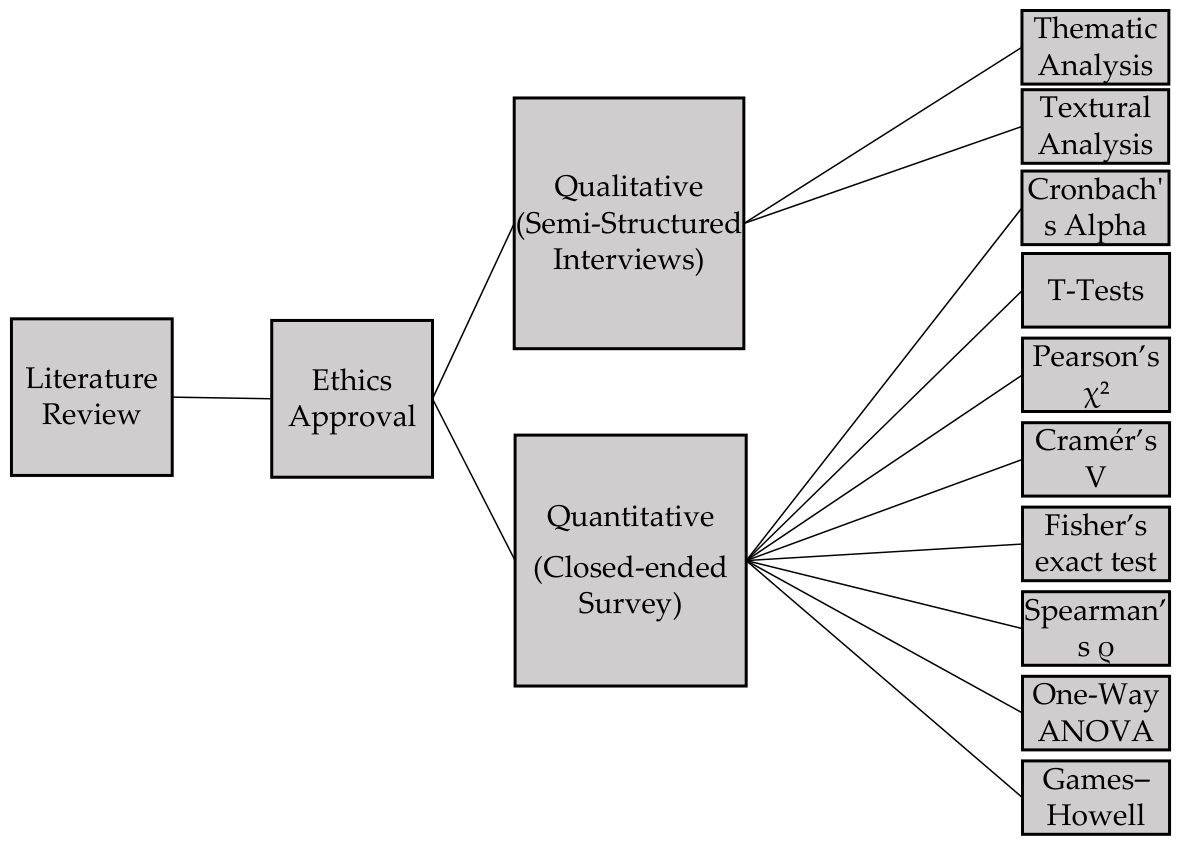
Section 2.4, this study adopts an empirical mixed-methods design that integrates quantitative and qualitative data collection. The research deliberately incorporates perspectives from three stakeholder groups: industry practitioners, educators, and students/early career professionals. The intention here is to overcome any potential biases from a single stakeholder group. A structured survey captures patterns of technology exposure, training participation, and self-rated capability across the sector. Semi-structured interviews were also conducted to provide contextual depth regarding organisational and academic curricular factors influencing technology adoption. The overall research workflow, including data collection, analysis, and triangulation, is summarised in
Figure 1.
3.1. Research Design
As the research is exploratory in nature, the selected methodology was the use of a mixed-methodology study combining the insights from both semi-structured interviews and a survey. Through collecting both qualitative data from the interview portion and quantitative data from the survey portion, the results will be compared to enhance the reliability of this study in the built environment [
48]. A triangulation approach will also be utilised, with both quantitative and qualitative data collected concurrently and integrated during analysis. This is a suitable and an appropriate research approach for construction management research [
49]. This design facilitates the corroboration of findings across methodological domains, ensuring the research will have breadth and depth in its analysis, remain concise and be able to be completed within the limitations of this course. Given the exploratory nature of the study and the purposive, non-probability sampling strategy employed, the findings are not intended to be statistically generalisable to the entire Australian AEC sector. Instead, they provide analytically grounded insights into patterns, constraints, and relationships that characterise technology education and training within the selected sample.
The interview and survey themes were developed following an extensive literature review. The three focal themes across the method were technology exposure and competency, training and education for technology adoption and graduate preparedness and support needs. The research methodology design is shown in
Figure 1.
3.2. Preliminary Research
The research commenced with a literature review of sources in the domains of education, training, and digital technology adoption in the AEC sector. Sources were retrieved from Google Scholar and the University of Sydney Library via iteratively refined keyword strings (e.g., digital skills, construction education, training programmes, BIM/DT/AI/IoT/VR-AR), with relevance screening and inclusion/exclusion applied to converge on relevant evidence and data. Crucially, the literature review translated existing research into measurable variables and themes: it informed the mixed-methods design, underpinned the survey’s item wording and scaling, and structured the semi-structured interview guide.
3.3. Data Collection
Ethics approval was sought and granted by the University of Sydney Human Research Ethics Committee (HREC) with identifier 2025/HE000379. All participants of the study provided informed consent prior to participation. Different types of data are discussed as follows.
3.3.1. Quantitative Data
A structured, close-ended survey was designed to align with three overarching themes and organised into clearly delineated sections: general industry experience, technology exposure and self-rated competency, current training methods, graduate preparedness and support needs.
The questions were designed following the literature review and drew on key ideas or gaps in the literature. Questions were framed by utilising the previous literature so as to avoid author bias, and ensure the results were focused on key ideas. The survey was administered via Microsoft Forms to align with the approved ethics application.
The format of the survey was standardised to support quantitative analysis: multiple-choice questions captured organisational context (organisation type, role, education, technologies taught/exposed to); binary yes/no items screened for recent training participation; Likert-type scales (1–5) assessed attitudes and perceived barriers; frequency scales (Never–Always) profiled organisational training practices; and numeric ratings quantified expertise (0–4), perceived investment and digital literacy (0–10).
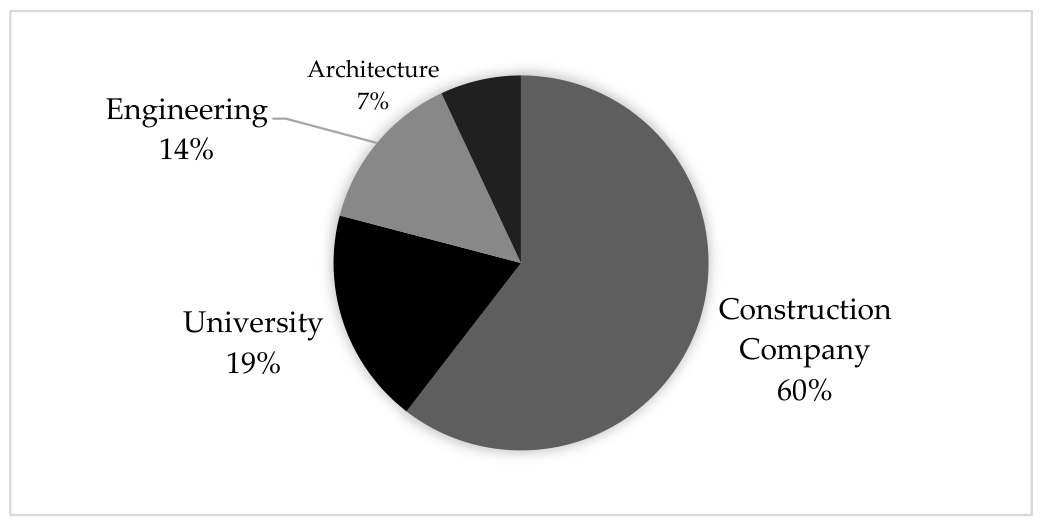
Participants were recruited through the researcher’s professional network within the Australian AEC community using a non-probability, heterogeneous purposive sampling strategy targeting individuals with relevant experience, education, and expertise. The survey yielded 43 participants, spanning construction companies, engineering firms, architectural practices, and tertiary education.
Survey respondents by sector can be seen in
Figure 2; the composition is heavily weighted towards the construction sector of the industry, which may introduce over-representation bias and constrain the results from being generalisable. This will be further discussed in
Section 4.
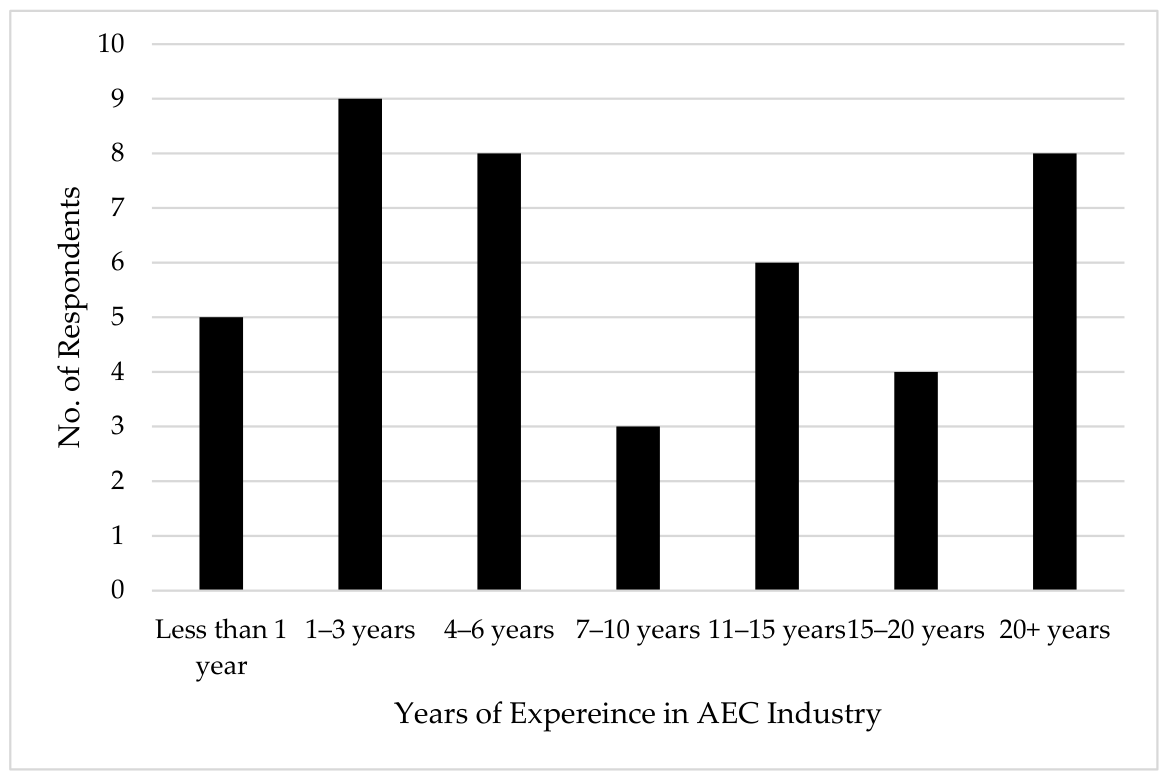
As shown in
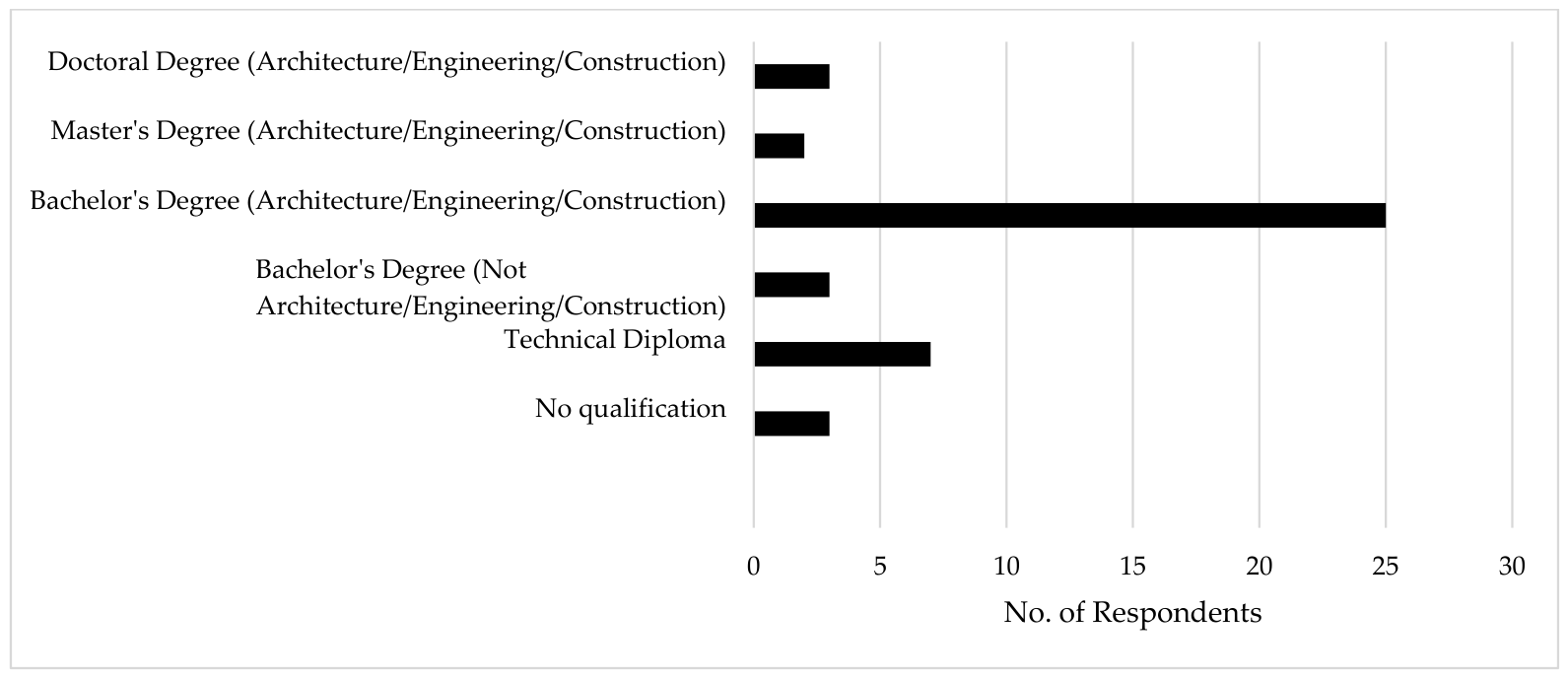
Figure 3, participant experience is concentrated in early career bands, with smaller mid-career groups and a secondary peak at 20+ years. When assessing survey respondents in relation to formal education, the cohort is dominated by Bachelor’s degree AEC graduates, with smaller groups holding technical diplomas or non-AEC Bachelor’s degrees and only a few postgraduate or unqualified participants, refer to
Figure 4 below. This profile reflects the recruitment approach and is acknowledged when interpreting the training and competency results.
3.3.2. Qualitative Data
Six semi-structured interviews were conducted using purposive, expertise-based sampling to obtain informed perspectives on digital technology adoption in the Australian AEC sector. Participants were required to have substantive AEC experience and direct involvement in implementing or overseeing technologies (e.g., BIM, Digital Twins, AI, IoT, VR/AR). Recruitment through professional networks targeted three stakeholder groups:
- (i)
Construction and engineering leaders responsible for business outcomes and involved in recruiting or supervising graduates.
- (ii)
Academic leaders involved in curriculum and training design.
- (iii)
Students or early career participants currently engaged in formal education pathways. A de-identified list of interviewees is provided in
Table 3.
Interviews followed a set of questions aligned to the survey’s themes (industry context; technology exposure and competency; training practices and barriers; graduate preparedness and support needs), while allowing probing to clarify examples and discuss further areas of interest. The semi-structured nature allowed for a flowing conversation where ideas were explored, and questions were shaped to the experiences provided during the interview. Sessions were conducted in mixed mode (face-to-face and Zoom). Identifiers were removed during transcription; pseudonyms were assigned; and files were stored on encrypted drives consistent with institutional guidelines and the approved ethics protocol.
3.4. Data Analysis
3.4.1. Quantitative Data
Survey data were cleaned in IBM SPSS Statistics version 31. Internal consistency for multi-item questions and scales was assessed using Cronbach’s α. Inferential tests were chosen according to measurement level and diagnostic results: associations between categorical variables used Pearson’s χ2 with Cramér’s V (Fisher’s exact test applied when expected counts were <5 or after defensible category collapsing); group mean differences used independent-samples tests and heteroscedasticity-robust variants (Welch’s t, Welch’s ANOVA) when Levene’s test indicated unequal variances, with Games–Howell for post hoc comparisons under unequal n/variance. Effect sizes (Hedges’ g/Cohen’s d, η2/ω2, Cramér’s V) and 95% CIs are reported with two-tailed p values (α = 0.05). Analytic sample size reflects listwise deletion and estimates from small subgroups are flagged. Simple Excel visualisations were also produced to aid interpretation.
3.4.2. Qualitative Data
Interview transcripts were imported into NVivo (v14) and organised into case classifications, capturing participants’ roles and sectors to enable matrix queries. An inductive, bottom-up coding strategy was implemented (open coding → category development → thematic consolidation), supported by contemporaneous analytic memos and a documented audit trail of code definitions and revisions. Coding dependability was strengthened through constant comparison and code–recoding checks. Matrix coding queries examined patterned variation in themes by role/sector and across focal domains (e.g., governance/permissions, training modalities, curriculum constraints). Text search and word frequency queries were used heuristically to surface candidate concepts. Representative quotations were extracted for each higher-order theme to illustrate participants’ reasoning, provide descriptions, and reduce interpretive bias in reporting.
3.4.3. Triangular Integration
A convergent mixed-methods design guided analysis. Quantitative patterns (e.g., training participation, differences by organisation type, self-rated expertise profiles) are often considered to be compared with qualitative explanations (e.g., authorisation processes, resourcing, curriculum governance) where possible and applicable. This may help establish the validity and thickness of the data. Interpretations are bounded by the non-probability sampling frame and modest sample size; where statistical power was limited, qualitative evidence was used to contextualise plausibility rather than to over-generalise.
3.5. Reliability and Validity
3.5.1. Reliability
To assess the reliability of the survey portion of the methodology, internal consistency was examined for all analytic items which capture exposure to emerging technologies (taught and career exposure), self-rated expertise, participation in recent training, organisational training provision, perceived training barriers, and digital readiness attitudes. However, the survey has its limitation of sample size and had limited access to a larger group of participants. Demographic/classification variables (e.g., organisation type, education level) were excluded, as they do not align with the underlying concepts and aims of the research.
Internal consistency was examined across thematically related survey items to indicate coherence in this exploratory study. Cronbach’s alpha was used to assess whether items addressing related themes were sufficiently consistent to support the analysis. It was, however, not used to assert the presence of a single latent construct. Cronbach’s α = 0.761, which is suitable for an exploratory mixed-methods study of this scale [
50]. This indicates that the survey data function coherently and provide a reliable base for subsequent analysis. Analysis of the item-total statistics indicated that most items contributed positively to the overall scale; however, a small number of items with opposite meaning or very low variance did not support this. For example, “Taught: no current technology,” “Exposed: no current technology,” and “When were you first exposed…” showed low or negative corrected item-total correlations (r ≈ −0.13 to −0.31) and slightly higher α if the item was deleted (values up to ≈0.767). These items were retained to preserve coverage of non-adoption cases, which are understood to be central to an Australian AEC sample as the industry is characterised by uneven digital uptake. Overall, the α = 0.761 result indicates that the survey data function as a coherent set of indicators and provides an adequate reliability base for subsequent inferential analysis.
All interviews employed the same semi-structured guide linked to the survey domains (education/exposure, training provision, barriers, and graduate preparedness), and all transcripts were reviewed by the same student researcher in NVivo using a single, iteratively refined codebook or guide.
3.5.2. Validity
Validity was addressed through design alignment, transparency, and triangulation, where practicable and the samples allowed. The survey items were derived directly from the research aims and drew on established AEC/digital construction themes (skill deficits, organisational resistance, cost/access constraints), which supports content validity. The paper also considered pairing perceptions (e.g., “structured education increases adoption”; “graduates are adequately prepared…”) with behavioural/context variables (technologies taught, training undertaken in the last 12 months, training modes offered). At the same time, the use of heterogeneous purposive sampling reduces repeatability. Participants were selected by the researcher from professional AEC networks, so a different researcher drawing on a different network could obtain a different configuration of roles and organisations. This can introduce data dispersion, making it harder to detect strong patterns in a modest sample [
51] and it can open the possibility of author/selection bias [
52]. To mitigate this, recruitment deliberately sought diversity across organisation types and roles so that the sample addressed a portion of the Australian AEC context, even if not statistically generalisable.
For the interview analysis, an inductive, bottom-up coding approach was used specifically to avoid allowing pre-existing constructs from the survey or literature to over-determine the findings or to mask emergent, practice-level issues [
53]. Themes derived from the interviews were then compared back to the survey results. The thematic patterns that diverged from the survey were retained rather than suppressed, so triangulation functioned as both confirmation and elaboration, with points for further discussion. This triangulation increased the credibility of the interpretations despite the non-probability sample. Overall, the methodology constrains repeatability and statistical generalisability; the combination of aligned themes, aims, acceptable internal consistencies (α = 0.761) and bottom-up analysis provide a defensible level of validity and reliability for the purposes of this mixed-method AEC study.
4. Results and Discussion
4.1. Current Technology Adoption
Objective one of this research was to identify what technologies are being taught in formal tertiary education based on a sample of participants. To meet the study objectives, we first established the current state of technology adoption to provide context for analysing training, education, and perceived effectiveness. This initial focus informed the development of survey items and interview prompts, ensuring participants had a clear frame of reference. Consequently, this staged approach enabled a more nuanced analysis of how participants engage with technology and how training influences their professional expertise.
Across the survey sample, as shown in
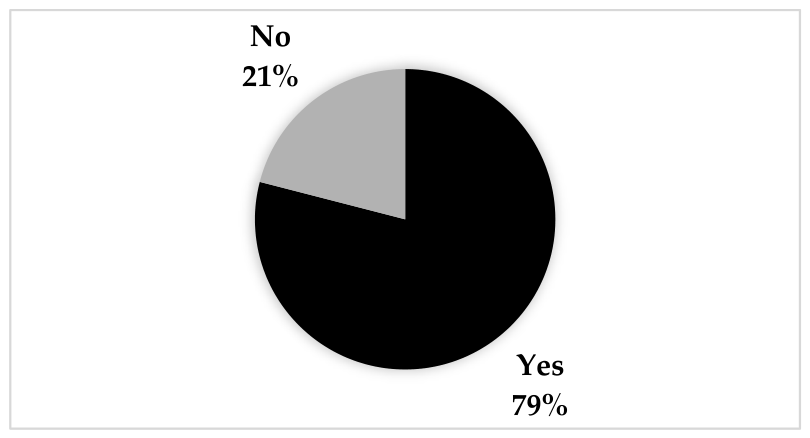
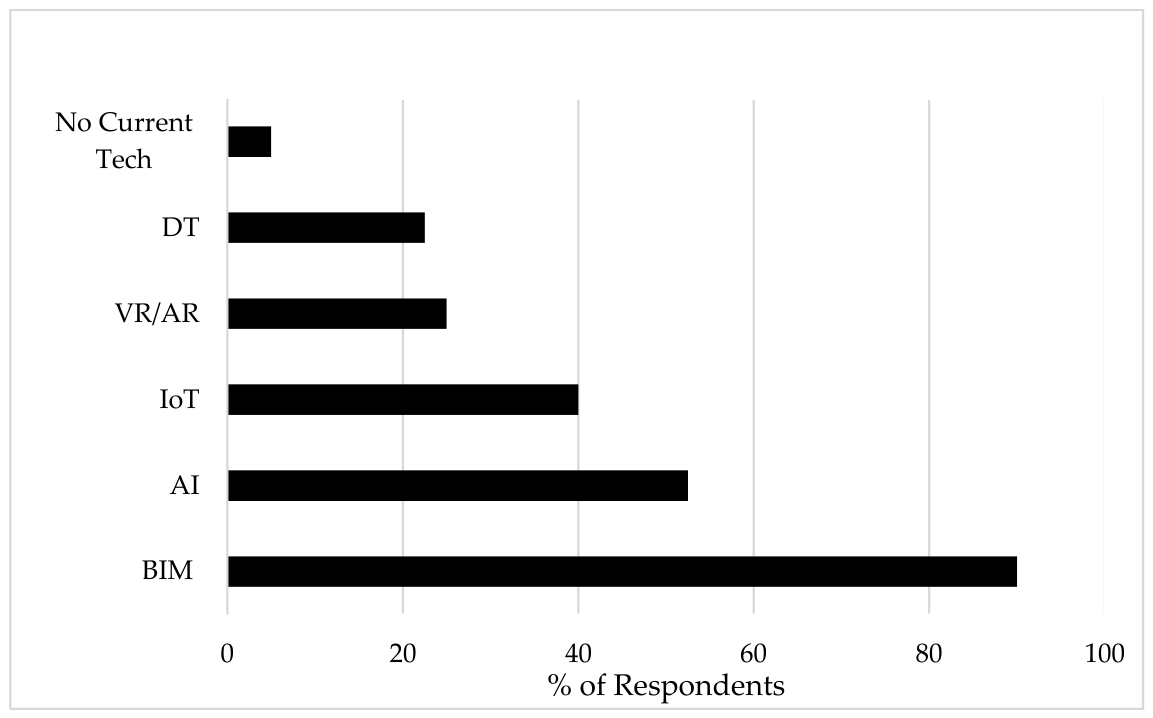
Figure 5, 79% reported that they themselves, or their organisation, currently use at least one emerging technology, while 21% reported no current use. Career exposure was highest to BIM (90%), followed by AI (52.5%), IoT (40%), VR/AR (25%), and Digital Twins (22.5%), with only 5% indicating no exposure (see
Figure 6). This pattern indicates that BIM is the most mature and embedded technology, whereas newer tools such as AI, IoT, VR/AR and DTs are less widely integrated into practice, yielding less exposure.
Evidence from the qualitative portion of the research also indicates active implementation of emerging technologies in practice. Interviewee 3 noted that BIM “started about eight to nine years ago,” and the firm later “got our own BIM manager”; they are now “looking into the AI space, from tendering to working on site.” Interviewee 2 described several internally developed technologies: “a lot of what we do here has been generated in house”, including an operation-grade building monitoring platform “similar to a digital twin,” used to forecast wind conditions across the Sydney CBD that they “developed 10 years ago.” They also reported internal seminars led by “younger guys who are more clued up with the advances in AI,” and observed that roughly “20% of the presentations” at recent conferences focused on AI applications in wind engineering. Both industry interviewees affirmed that AI is being explored and trialled across the sector and within their organisations, with BIM being comparatively mature across the industry.
These results align with the existing literature positioning BIM as the most mature and institutionally embedded digital workflow in the AEC sector [
10,
11,
12], underpinned by formal standards and procurement mandates, which is consistent with the 90% exposure rate reported in this study. In contrast, AI, IoT, VR/AR and DTs recorded substantially lower exposure, supporting their characterisation in the literature as emergent technologies that are typically deployed on selected projects and require more advanced data infrastructure, specialised expertise, and system integration. Notably, AI emerged as the second most widely encountered technology in the survey, with interview participants consistently identifying it as a major technology that will be embedded across the sector, signalling an inflection point in its adoption trajectory. While the relatively small sample constrains the generalisability of these findings, the pattern observed, a mature baseline in BIM alongside comparatively limited but growing engagement with newer technologies, particularly AI, provides important context for interpreting how current education and training pathways are preparing the workforce for contemporary and future digital demands.
4.1.1. Technology Expertise, Literacy and Organisation Type
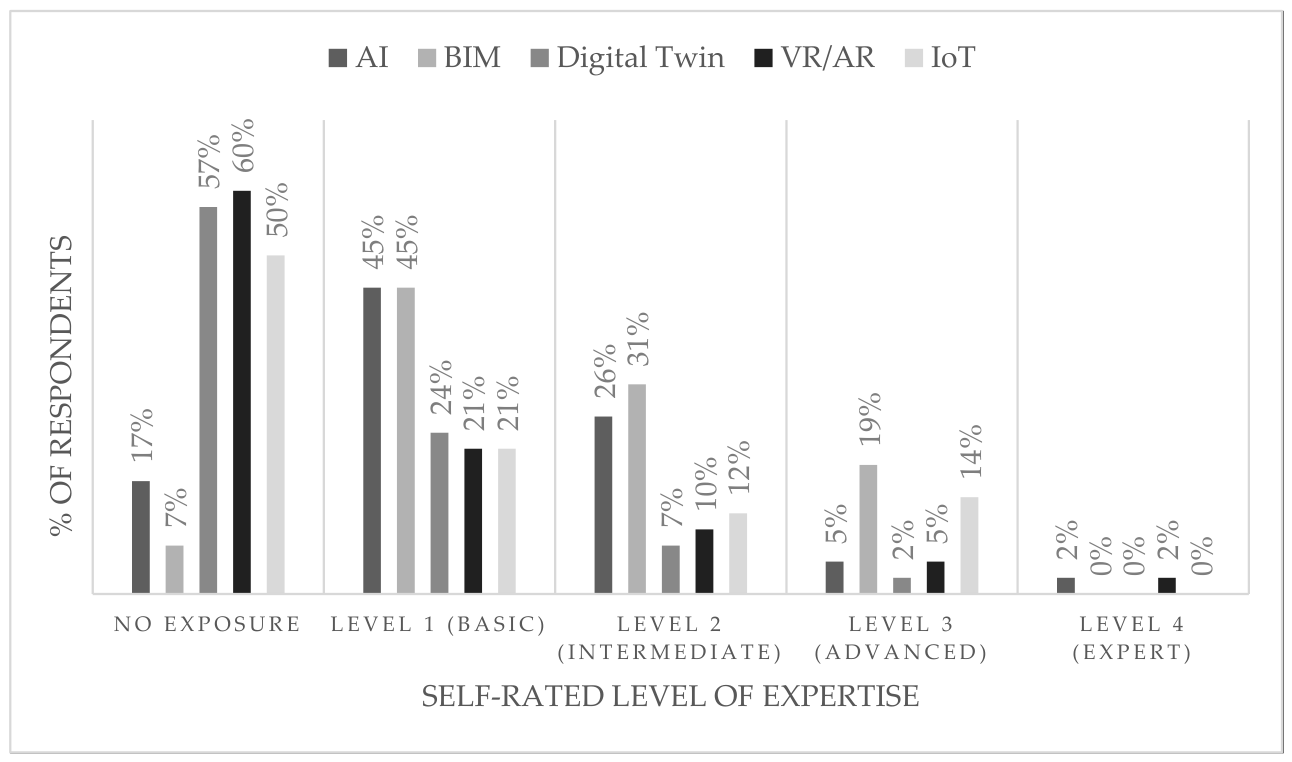
Overall, as shown in
Figure 7, respondents reported low levels of expertise across all identified emerging technologies, extending beyond limited exposure to a lack of confidence in applied use. Self-ratings on the five-point scale (0 = No exposure, 1 = Basic knowledge, 2 = Applied practitioner, 3 = Specialist, 4 = Expert), supported by a descriptor table, were concentrated at Levels 0–1 for AI, Digital Twins, VR/AR and IoT. This indicates that current education and training pathways are, in many cases, only introducing these tools at a conceptual level rather than building applied, workflow-ready capabilities. Such patterns raise questions about how effectively existing programmes are equipping graduates and practitioners for the digital demands of contemporary project delivery and asset management.
Within this context, BIM stands out as the comparatively more mature and embedded technology, with a higher proportion of respondents reporting applied practitioner and specialist expertise levels. This aligns with the literature positioning BIM as the most widely adopted and institutionally supported digital process in the Australian AEC sector, underpinned by clearer implementation guidelines, contractual requirements, and more consistent curricular inclusion. The contrast between BIM and the other technologies underscores how structured frameworks, policy signals and coordinated training investment can translate into higher capability, while their absence contributes to patchy and shallow uptake elsewhere. These findings collectively point to the need for more coherent, practice-oriented approaches to developing digital skills.
Further analysis was conducted with the level of expertise in each technology in relation to organisation type. One-way ANOVAs tested whether self-rated expertise in AI, BIM, DTs, IoT, and VR/AR differed by organisation type (
Table 4). Levene’s tests supported homogeneity for all outcomes except Digital Twins, for which Welch’s robust test was used; the conclusions were unchanged. No statistically significant differences were observed for AI, Digital Twin, IoT, or VR/AR (all
p ≥ 0.19; η
2 ≈ 0.03–0.12). BIM showed the largest effect but did not reach significance, F(3, 38) = 2.594,
p = 0.067, η
2 = 0.17; Games–Howell post hoc tests revealed no significant pairwise contrasts. Descriptively, architectural firms reported the highest BIM expertise; while this pattern reflects the literature [
54], it should be interpreted cautiously given the small group sizes. This paints a wider picture of the sector with digital skills and expertise of similar maturity across all organisations. There are however digital ‘leaders’ across the sector with high digital maturity across some technologies.
When asked about digital literacy, participants rated their own digital literacy (M = 5.881/10) and their direct team’s literacy (M = 5.929/10) at comparable levels; the mean difference was negligible (paired t(41) = −0.206, p = 0.838, d_z ≈ −0.03). Across respondents, self- and team-ratings were strongly associated (r = 0.70, p < 0.001). These findings indicate broadly aligned perceptions of digital capability within workgroups. While this alignment suggests a shared understanding of literacy levels, it should be interpreted as convergence rather than evidence that digital literacy operates as a fully collective capability.
More broadly, mid-range self-ratings and the absence of clear organisational leaders align with prior studies highlighting persistent gaps in digital proficiency and uneven institutionalisation of advanced tools across the AEC sector. Taken together, these results point to systemic, cross-organisational capability deficits rather than isolated weaknesses confined to organisation types, reinforcing the need for structured, embedded, and collaborative upskilling initiatives.
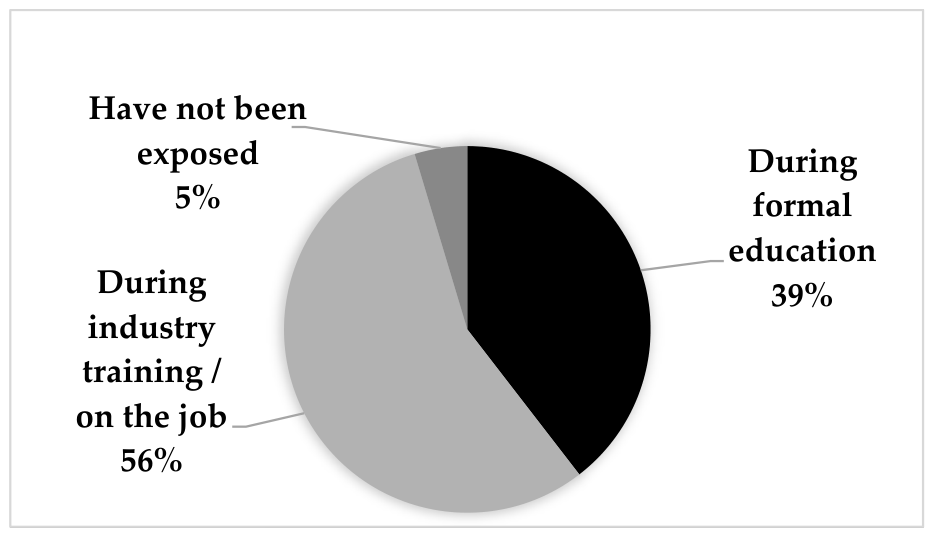
4.1.2. First Exposure to Emerging Technology
Figure 8 shows when first exposure to emerging technology occurred. Interestingly it occurred predominantly in industry, whether that be through training or on the job. A smaller proportion first encountered these tools during formal education, 40%; only 5% reported no exposure. The larger share reporting first exposure in industry likely reflects the cohort profile: many respondents completed their formal education at the outset of their careers and have not re-entered formal study since. As a result, this survey question and result may capture legacy curricula rather than current university practice and should not be read as evidence that contemporary programmes provide minimal exposure. In short, the finding may overstate industry’s role relative to present-day formal education; interpreting it alongside graduation year or recency of study would provide a more balanced view. However, it does indicate if the digital skills gap was to be addressed it would need to consider formal education pathways for those that are already within the industry, who are unlikely to re-engage with formal education.
4.2. Current Training and Education Use and Effectiveness
To further extend objective one, the extent to which current education and training arrangements in the Australian AEC sector are keeping pace with emerging digital technologies is disseminated. This is limited to the sample used in this paper and the analysis proceeds in three steps:
- (i)
Identify what technologies participants reported being taught in formal (tertiary) education.
- (ii)
Examine participation in workplace and professional training over the last 12 months.
- (iii)
Compare these patterns with organisational training offerings and interview accounts of industry-embedded learning.
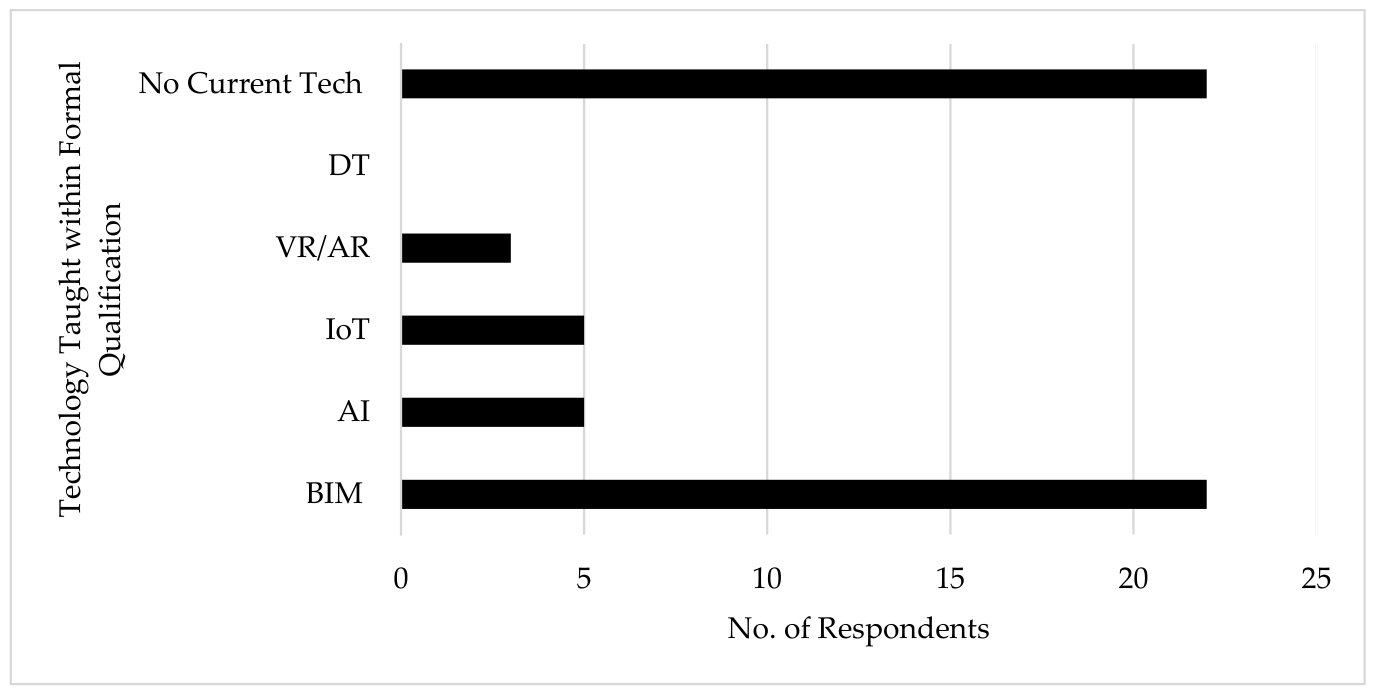
4.2.1. Emerging Technology in Tertiary Education
Figure 9 shows that exposure to emerging technologies within formal education is polarised: most respondents reported either no technologies being taught or BIM being included in their programmes, while only a small proportion indicated coverage of AI, IoT or VR/AR, and none reported formal instruction in Digital Twins. To examine whether this pattern was influenced by recency of formal education, exposure during university study was analysed in relation to years of industry experience. Only 11.9% reported being taught AI at university, and the association between AI-at-university and experience was not significant (χ
2(6) = 4.84,
p = 0.565), indicating consistently low AI coverage across cohorts. BIM appeared more frequently, with 50.0% reporting university exposure; however, the BIM-by-experience association was also non-significant (χ
2(6) = 10.383,
p = 0.109). Although the corresponding Cramér’s V suggested a potentially meaningful association, chi-square assumptions were violated (multiple expected counts < 5), so this effect is not interpreted. Overall, the absence of statistically reliable associations likely reflects limited power arising from small cell sizes rather than definitive equivalence across cohorts, indicating that firmer conclusions about curriculum evolution would require a larger and more stratified sector-wide sample.
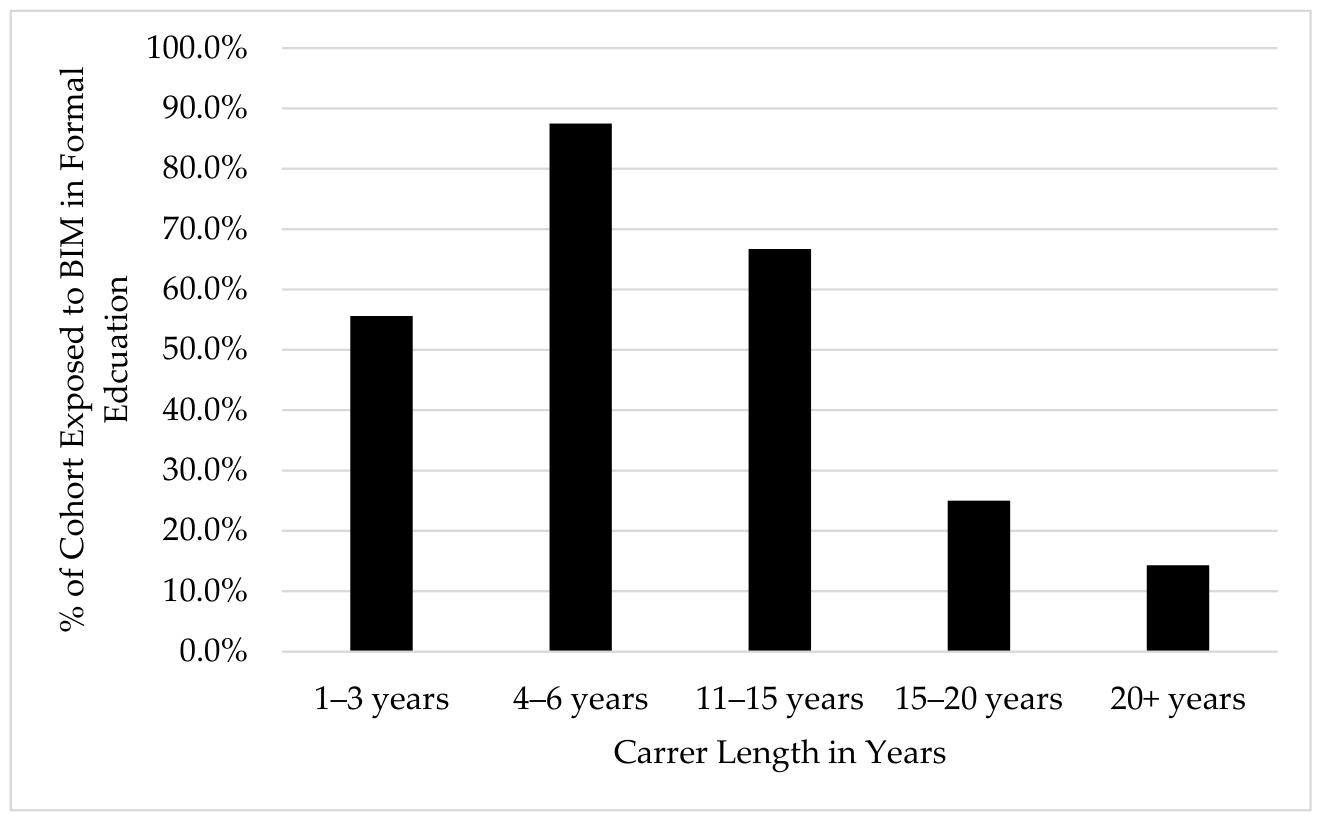
Descriptively, BIM teaching was more commonly reported by early to mid-career respondents (
Figure 10) (e.g., 1–3 years: 55.6%; 4–6 years: 87.5%; 11–15 years: 66.7%) and less frequently by longer-tenure cohorts (15–20 years: 25.0%; 20+ years: 14.3%), which aligns with a gradual diffusion of BIM into university curricula over time. Taken together, these results indicate BIM has been incorporated more systematically in more recent years, albeit unevenly and with limited statistical power to draw firm inferences. From a practice and curriculum design perspective, this pattern supports prioritising explicit AI content in undergraduate programmes, alongside targeted continuing professional development for mid- and late-career professionals, to reduce cohort-based gaps in exposure to key digital tools.
More broadly, the findings suggest that curriculum reform operates on multi-year cycles. Although BIM is widely recognised as a mature digital workflow in industry, it has only relatively recently become common in university programmes, pointing to a persistent lag between industry consolidation and formal educational adoption. For many respondents, emerging technologies were not embedded in their studies at all, which helps explain why limited digital skills are repeatedly identified in the literature as a critical barrier: a workforce that was not systematically taught to engage with current technologies is less likely to be prepared for rapid waves of newer tools. Interview evidence reinforces this interpretation. Interviewee 1 advocated a cross-stream subject showcasing “the latest technologies and what the software can do,” while noting that curriculum changes can take up to a decade due to layered approval processes. Interviewee 4 similarly observed that core engineering units rarely include specific content on emerging technologies, that majors emphasise broad conceptual understanding over hands-on tool proficiency, and that digital content often appears only in isolated application-focused subjects. Together, these insights suggest that without deliberate curriculum innovation, staff upskilling, and deeper industry partnerships, newer technologies such as AI, IoT, Digital Twins and VR/AR are likely to enter coursework slowly, potentially perpetuating the digital capability gap the sector is already experiencing, which this research seeks to address.
4.2.2. Effect of Formal Education on Expertise
To establish if there is a link between education and expertise, self-rated expertise was compared between participants who were taught the technology in formal education vs. those who were not. For AI, the taught group rated themselves higher: Welch’s t(5.94) = −2.551,
p = 0.044, and Cohen’s d ≈ 1.00 (large). This suggests a meaningful difference, but as only five respondents to the survey form part of the taught group, this result is indicative and not conclusive. For BIM, the effect was clear and robust, t(40) = −3.572,
p < 0.001, d = 0.78 (medium–large), with the taught group reporting higher expertise. For Digital Twins, IoT, and VR/AR, group sizes were too small (some cells ≤ 2, zero variance), so reliable comparisons were not possible. Taken together, these analyses suggest that formal exposure is associated with higher self-rated expertise, where sample sizes allow robust testing (notably BIM), while early AI findings point in the same direction but require replication with a larger cohort. However, interpretation across most technologies is constrained by the underlying profile of low exposure and low self-rated expertise in both industry and formal training; apart from BIM, sparse and uneven group sizes limit the stability and detectability of any true differences. The results are summarised in
Table 5.
To further explore whether self-rated expertise varies by educational attainment, one-way ANOVAs were conducted comparing mean scores across six formal education levels. Assumptions were checked with Levene’s test; if violated, Games–Howell post hoc comparisons were used and Welch’s F was considered where available (though Welch could not be computed for some outcomes due to zero variance). For AI, there were no education-level differences, F(5, 36) = 0.576,
p = 0.718, η
2 = 0.074 (homogeneous variances: Levene
p = 0.141). For BIM, education level mattered, F(5, 36) = 4.457,
p = 0.003, η
2 = 0.382; variances were unequal (Levene
p = 0.002) and Welch was unavailable due to a zero-variance group, so interpretation relied on Games–Howell post hoc tests. For Digital Twins, an overall effect was detected, F(5, 36) = 3.070,
p = 0.021, η
2 = 0.299, but no pairwise comparisons remained significant after adjustment and strong assumption violations were present, so this result is treated as exploratory. For VR/AR and IoT, omnibus tests were non-significant (
p = 0.063 and
p = 0.095, respectively); the isolated significant pairwise contrast for IoT (Bachelor’s (AEC) > No qualification) is therefore interpreted cautiously as a tentative pattern rather than definitive evidence. The results are summarised in
Table 6.
The one-way ANOVA indicates a substantive association between education level and BIM expertise, with the highest proficiency concentrated among master’s-level graduates. Read alongside the planned Games–Howell contrasts, and with appropriate caution regarding unequal variances and small subgroup sizes, this gradient is consistent with master’s programmes articulating explicit BIM learning outcomes, embedding structured and assessed practice, and aligning tasks with model-based delivery requirements. For AI and other emerging technologies, the absence of consistent, statistically robust differences across education levels reflects both limited formal coverage and a generally low base of exposure and confidence, rather than clear evidence that education level has no effect. Because BIM is both the most widely taught in formal education and the most mature digital workflow in industry, the findings cohere with an education–maturity alignment in which curricular emphasis follows the consolidation of practice. In this view, higher qualifications correlate mature skills into explicit outcomes, while lower qualifications absorb them once pedagogical stability is achieved.
The curriculum and policy implications are direct and actionable. In Australia, relatively few construction professionals pursue master’s degrees (refer to
Figure 2); hence, the principal leverage point is undergraduate reform that mainstreams BIM-aligned outcomes and assessment earlier in the programme. A practical route is to adapt master’s-level elements into core units and capstone studios, scaffolded by staged deliverables, iterative feedback, and alignment with industry-standard information requirements and collaboration protocols. The same mechanism is transferable to emerging technologies. As AI, Digital Twins, IoT, and VR/AR consolidate in practice, universities could progressively translate that consolidation into explicit undergraduate learning outcomes, assessed tasks requiring applied use rather than awareness, and integrated work-integrated learning opportunities. Parallel continuing professional development can supply master’s-style depth for practitioners who do not undertake postgraduate study, thereby broadening capability growth beyond the small postgraduate pipeline and accelerating diffusion across cohorts. Accordingly, the results in this section could be interpreted as strongest for BIM, where both educational and industry maturity generate a sufficient signal, and are necessarily tentative for AI, Digital Twin, IoT, and VR/AR, where low exposure, limited training and sparse data constrain inference and contribute to the digital capability gap this study seeks to address.
4.2.3. Industry and Professional Training in Emerging Technology
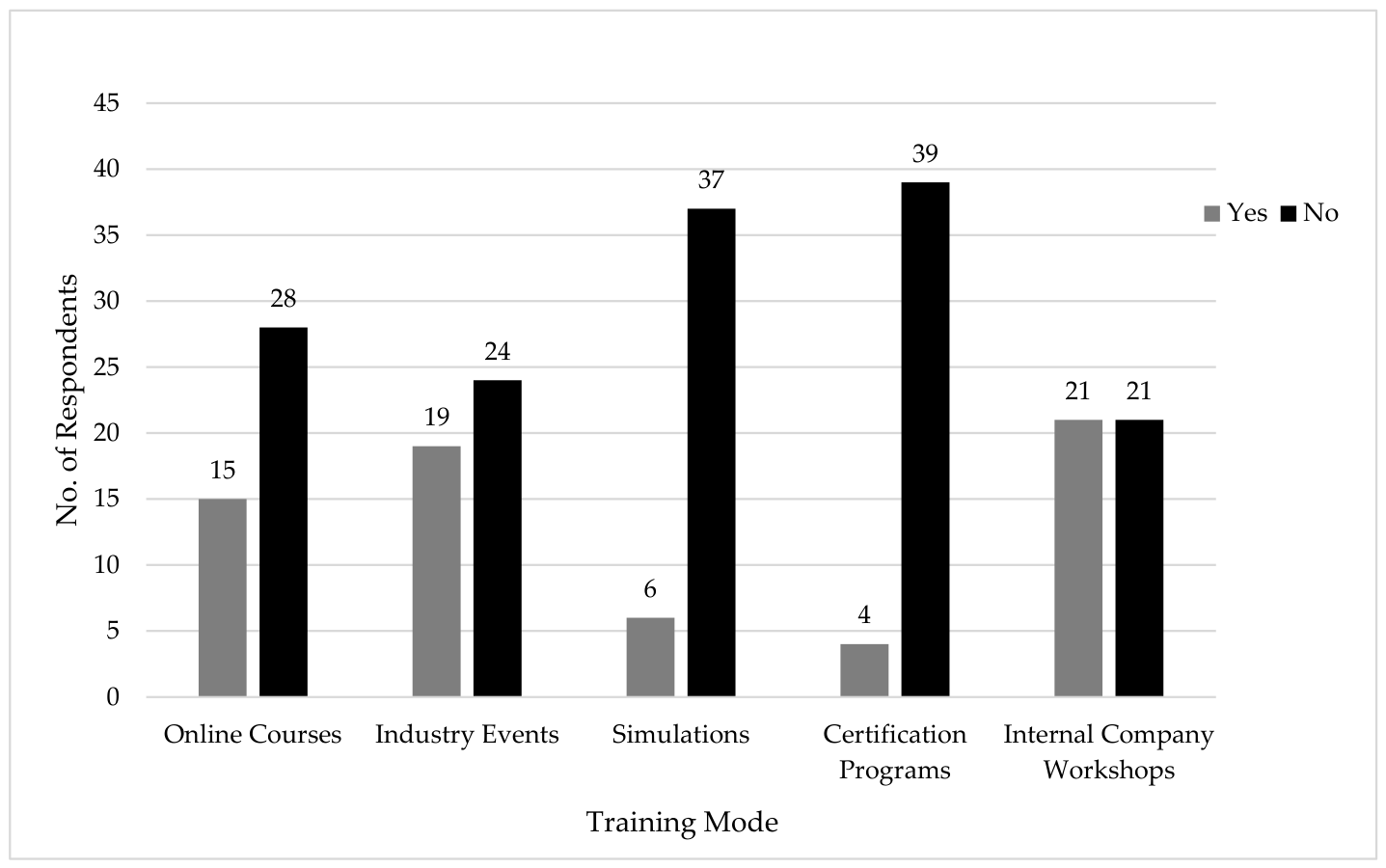
Turning to industry and professional training within the AEC industry, engagement with training was limited. Across the five modes, the “no” group dominated, as shown in
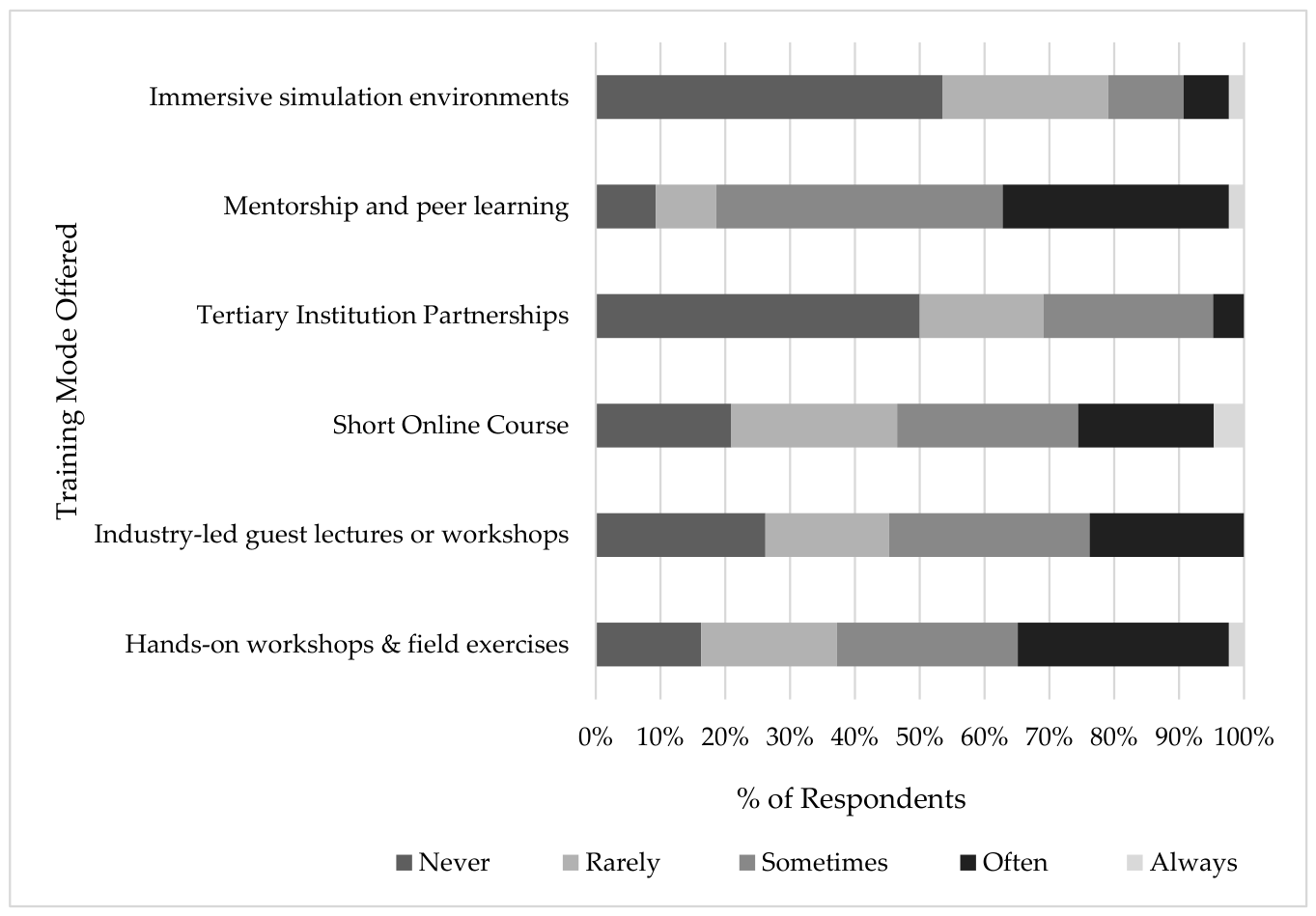
Figure 11: certification programmes (90% no) and simulations (86% no) were rarely undertaken; online course (the most taken up) still had 65% no; industry events had 55% no; and internal workshops had 50% no. This indicates that, on average, most respondents did not receive formal training in the last 12 months, with participation concentrated among a minority. Further to this, when survey participants were asked about their organisational offering (
Figure 12), they mirror the interview accounts of practice-embedded learning. Survey responses indicate that mentorship/peer learning and hands-on workshops/field exercises are the most offered modalities (often and always ≈ 37% and 35%, respectively), whereas tertiary-institution partnerships and immersive simulation environments are rarely offered (never ≈ 50–54%). Taken together, these findings show a training environment dominated by informal and locally delivered mechanisms, with relatively few opportunities for systematic, high-structure digital upskilling. This pattern suggests a supply side gap: organisations rely on mentoring and peer learning, yet a limited pipeline of staff with advanced digital capability constrains their effectiveness. Accordingly, inferences about the impact of specific training modes, particularly for AI, Digital Twins, IoT and VR/AR, are constrained by low overall participation rates and sparse coverage, and non-significant patterns should not be over-interpreted as evidence that training is unimportant. Accordingly, strengthening formal education to produce graduates who can both apply emerging technologies and act as competent peer mentors may enhance workplace adoption of emerging technologies.
Interview evidence aligns with the survey’s indication of limited participation in structured training and a reliance on person-led upskilling. Interviewee 2 characterised training provisions as “predominantly mentoring,” adding that “the best way is mentoring,” because a “structured learning pathway shows what the system can do, rather than how it works for us and the consequence of not doing it”; for heavier users, training remains “predominantly one-on-one”. Interviewee 3 described “internal seminars” and “technical discussions” led by “younger staff more clued up with advances in AI,” but noted “not much really” at scale, with engagement with structured training methods “my own initiative, not a widespread thing”. Taken together, these accounts corroborate the survey pattern of low formal uptake and suggest that mentoring sustains foundational capabilities, while systematic and scalable provision, such as targeted online modules supported by structured workshops and events, is required to develop digital skills across the wider industry. Consistent with the broader dataset, these qualitative insights should be interpreted as indicative of current practice under conditions of low resourcing and uneven digital expertise, rather than as evidence that informal mentoring alone is sufficient to meet emerging technology demands. The results are summarised in
Figure 12.
4.2.4. Effect of Training on Expertise
When assessing the relationship between training type and mean overall expertise in emerging technology, across all five training modes, respondents who undertook training reported higher overall expertise than those who did not (positive mean differences; g ≈ 0.45–0.79). The increase was statistically significant for online courses (Welch
p = 0.025; g ≈ 0.79, medium–large). Industry events showed a borderline trend (Welch
p = 0.056; g ≈ 0.61). Simulations, certifications, and internal workshops were directionally positive but non-significant, noting small “yes” samples for simulations (n = 6) and certifications (n = 4). If adjusting for multiple comparisons (five tests), none remain significant at FDR q = 0.05; given the study’s exploratory aim, the consistent positive direction and non-trivial effect sizes are informative and are therefore reported descriptively rather than as definitive causal effects. The results are summarised in
Table 7.
Greater breadth of training was associated with higher self-rated expertise (Spearman’s ρ = 0.435, BCa 95% CI [0.149, 0.693], p = 0.004; n = 42), suggesting that respondents engaging in more modalities tended to report higher expertise. Item-level estimates were compatible with this pattern: online courses were associated with higher mean ratings (ΔM ≈ 0.46; Welch p ≈ 0.025; Hedges’ g ≈ 0.79), industry events showed a positive but imprecise association (Welch p ≈ 0.056; g ≈ 0.61), and simulations, certifications, and internal workshops were directionally positive but underpowered. Taken together, these estimates suggest that participation, particularly across multiple modalities and cumulative, structured engagement with professional learning opportunities, may align with enhanced digital capability, notwithstanding generally low training uptake in the sample.
These data must be interpreted with caution because participation in training was self-selected, several training subgroups were very small and multiple comparisons had weak formal statistical significance. It is also possible that the observed differences may reflect underlying motivation or pre-existing interest, where more digitally engaged respondents are more likely to seek training and to rate their competence highly, rather than training alone producing the increase in expertise. The reason for the non-significant findings for simulations, certifications and internal workshops is therefore not definitive, but may relate to limited sample sizes, uneven access, or offerings that are not yet systematically embedded or targeted to emerging technologies. The key finding is a demonstration of a coherent positive training expertise gradient within the overall low-uptake environment, indicating that accessible training modes are meaningful contributors to digital skill expertise.
Further investigation could be sought into which specific training designs (e.g., intensity, sequencing, assessment, alignment with project delivery) are most effective for different technologies and professional cohorts. These findings suggest that evidence-informed, diverse training pathways could be treated as a central strategy to reduce the digital capability gap in the Australian AEC sector, while underscoring the need for a more systematic evaluation of training impacts.
4.3. Training and Education Barriers
Objective two of this research was to examine the organisational and individual barriers to training. Building on the previous analyses, formal training is infrequently utilised and university pathways rarely provide applied instruction in tool use; nevertheless, both forms of exposure are associated with higher digital capabilities. Accordingly, the next portion details the barriers to education and training.
4.3.1. Organisational Barriers
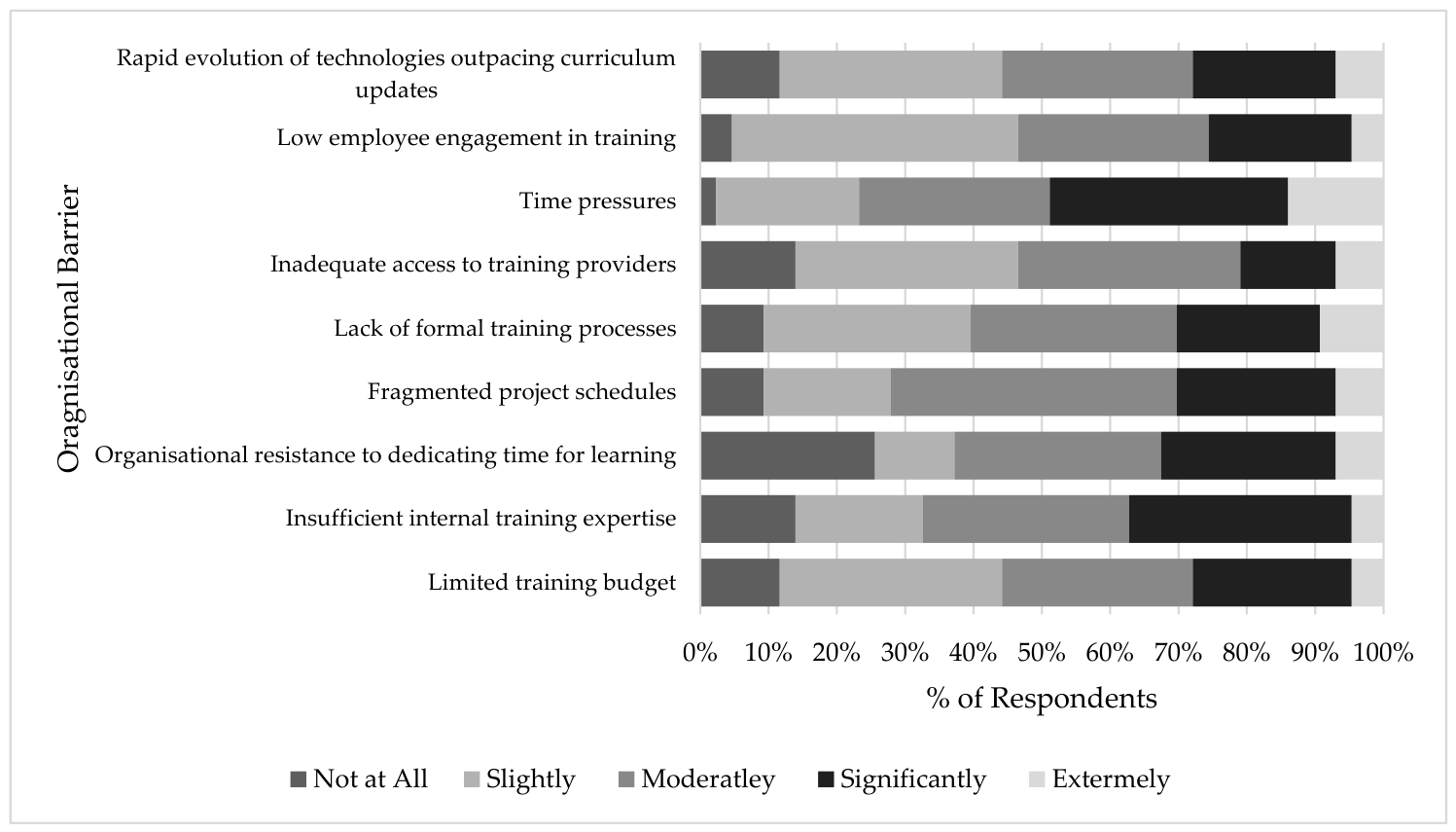
Across the sample, as shown in
Figure 13, survey responses show that perceived organisational barriers to digital training and education are led by time pressure and the fast pace of technological change, followed by limited budgets and reluctance to release staff for learning; access to providers and internal expertise were rated as less severe constraints. One-way ANOVAs (Welch-corrected where applicable) detected no statistically significant differences by organisation type (all
p ≥ 0.12), and estimated effects were small–moderate, so observed ordering should be treated as descriptive given small, unbalanced groups and occasional zero variances. Overall, the pattern suggests that respondents experience a lack of time and protected capacity, rather than a total absence of options, as the main brake on upskilling. These results lead to a simple but important conclusion in this sample: organisational conditions constrain whether digital training occurs. When projects are busy, margins are tight, and technologies are evolving quickly, training is treated as discretionary and easily postponed, which is consistent with broader descriptions of AEC organisations prioritising short-term delivery over longer-term capability building. The lack of strong differences between organisation types suggests that these pressures are widely shared across the sector.
To interrogate organisational-level determinants beyond individual perceptions, we conducted interviews with decision-makers and business leaders. Their accounts elaborated on the survey-identified impediments, shifting emphasis from capability gaps to governance, authorisation, return-on-investment (ROI) proof, and project-level constraints.
Interview evidence isolates a coherent set of organisational barriers to technology training and adoption. Interviewee 2 emphasised managerial authorisation and economic justification as primary constraints, noting that “the hardest thing is management approval”, followed by the need to “justify the return on investment”; limited time and budgets intensify these hurdles, which the organisation partially mitigates through incremental pilots and the occasional use of external financing such as government incentives and R&D tax subsidies. These constraints also shape delivery choices: training must be low disruption and brief, for example, directing staff to “go spend two hours learning how to do something,” as longer sessions are impractical for senior field personnel, whereas early career staff may self-study outside work. Interviewee 3 identified client governance and legal contingencies as additional barriers that operate at the project level: implementation depends on prior approval and site access, confidentiality and intellectual property agreements restrict experimentation and post-project use, and “the client has the ultimate say of what we do,” including permission for any publication beyond contracted reporting to enhance further education regarding the use or results of emerging technologies. Together, these accounts indicate that binding constraints arise less from technical capability and more from permissions, decision rights, evidence of ROI, protected time and funding, and contractual frameworks that limit experimentation and knowledge sharing; without targeted solutions to these governance and resource frictions, structured training and wider adoption are likely to remain sporadic and uneven.
Turning to the education pipeline, interviews with academic staff indicate that barriers to integrating new technologies in coursework arise from institutional processes, governance requirements, and limited professional development for educators. An academic interviewee explained that software adoption is governed by departmental policy and central IT procurement, with requests required “two months before” semester and purchased under school-wide licences; in practice, they had “never asked for any software” and “just used Canvas,” as compliance with university policies and assessment regulations takes precedence. The recent “AI hype” prompted requirements to “give options to students within the assessments” consistent with policy, yet there was “no place” within existing processes to propose and implement new tools at short notice. Crucially, the interviewee stated they would adopt new platforms “if the university offered training or professional development workshops,” but such support is “not offered,” and sourcing equivalents independently is time-consuming and outside normal responsibilities; responsibility for any downstream issues would also rest with the individual, which further discourages change. Taken together, the evidence suggests that curricular adoption is constrained less by educator willingness than by governance, licencing cycles, assessment compliance, lack of funded professional development, and workload models that do not recognise the time required to evaluate, pilot, and safely integrate new software.
These findings should be viewed considering some limitations: barrier ratings are self-reported, not all participants were senior decision-makers, and the qualitative sample is small. Even so, the convergence between survey data and interview accounts is clear. Barriers to digital capability appear to stem primarily from how time, budgets, authority, contracts, and responsibilities are organised. Without adjustments that create protected learning time, clearer approval pathways, supported pilots, and funded professional development for both practitioners and educators, training and adoption efforts are likely to remain patchy, regardless of individual willingness or the availability of emerging technologies.
4.3.2. Individual Barriers
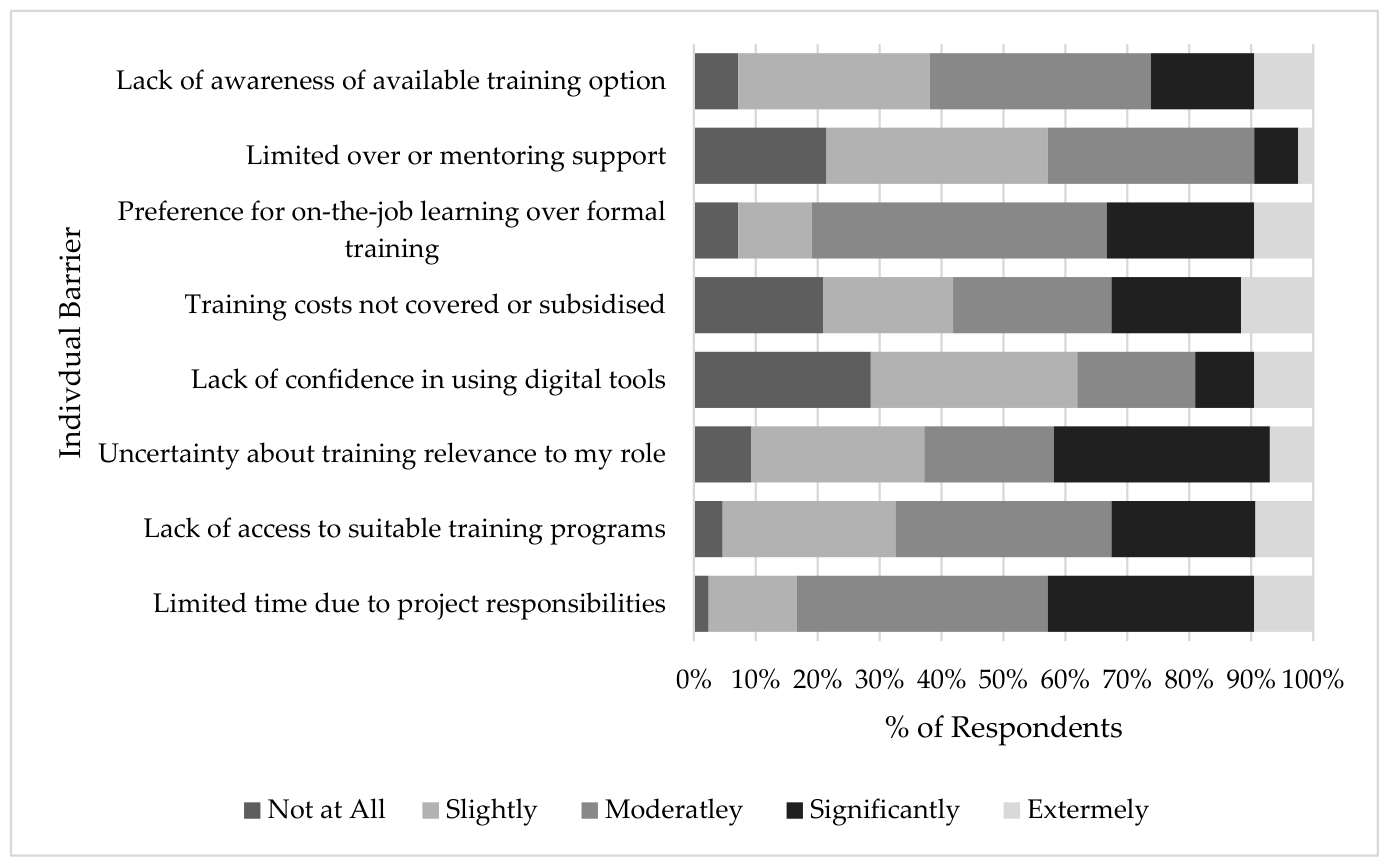
Figure 14 indicates that individual-level barriers to digital training are dominated by time pressure and role alignment. Limited time arising from project responsibilities was most frequently rated at the higher-severity end of the scale, suggesting that day-to-day delivery demands directly displace opportunities for learning. A second cluster of barriers relates to perceived suitability and capability: a lack of access to appropriate programmes, uncertainty about whether training is relevant to one’s role, and low confidence in using digital tools all received mid-to-high ratings, implying that individuals are more likely to engage when training is clearly job-specific, pitched at an appropriate level, and framed as achievable. Financial concerns and a preference for learning in the workplace rather than external settings appeared, but with less consistent support, indicating that these factors constrain particular subgroups rather than the entire cohort. A lack of awareness of available training was the least frequently endorsed barrier, suggesting that the primary constraint is not information, but the capacity to take up training that is resourced, contextually relevant, and scheduled within normal workloads.
These results indicate that individual barriers are tightly intertwined with the conditions created by organisations: respondents are not rejecting digital upskilling in principle, but are signalling that training must compete with project deadlines, be clearly worthwhile for their current role, and feel manageable given their starting skill level. This pattern is consistent with prior observations that adult learners favour training that is directly applicable, time-efficient, and embedded in real work, and it aligns with earlier sections of this study showing low overall training uptake despite generally positive attitudes toward technology. In this context, low confidence functions as both a barrier and a signal: without scaffolded, role-relevant options, those who feel least capable are also those least likely to participate.
These findings should be interpreted cautiously. Barrier ratings are self-reported and may be influenced by social desirability or by respondents externalising constraints (“no time,” “not relevant”). The cross-sectional design does not distinguish between genuine structural limits, perceptions shaped by organisational culture, and individual preference. Nevertheless, the convergence of responses suggests several practical implications: designing training that is modular, targeted to specific roles, explicitly connected to project tasks, and deliverable within normal work patterns is likely to lower individual barriers more effectively than generic awareness-raising alone. Without such alignment, even motivated practitioners may continue to perceive digital training as optional or poorly timed, reinforcing the digital skills gap identified elsewhere in this research.
4.4. Graduate Preparedness and Recommendations
Objective four of this research was to present recommendations for the future design of education and training programmes. Given the observed association between formal educational attainment and self-reported digital expertise, the next step is to consider how graduate readiness is assessed within the industry context, how recent graduates experience their transition into employment, and which areas are identified as priorities for strengthening future industry preparation.
4.4.1. AEC Sector Perceptions of Graduate Preparedness
Graduate preparedness was measured via agreement with the statement: “Graduates from educational programs are adequately prepared to meet the digital technology demands of the AEC industry”. The mean response of the Likert scale was 5.23/10. As evident by the mean, this suggests there are perceived gaps between university preparation and the digital demands encountered in practice.
A one-way ANOVA was run to test whether ratings of graduate preparedness for the digital technology demands of the AEC industry differed across organisation types (construction company, engineering firm, university/tertiary education, architectural firm). The assumption of homogeneity of variances was met, Levene’s F(3, 38) = 1.56, p = 0.214, so group variances were comparable.
The standard ANOVA showed a near-significant effect of organisation type, F(3, 38) = 2.686, p = 0.060, with organisation type explaining about 17.5% of the variance in preparedness ratings (η2 = 0.175), which is a meaningful effect size for this sample. Because the groups were unbalanced, the robust Welch test was also inspected; this test indicated a statistically significant difference between organisation types, Welch’s F(3, 10.68) = 8.783, p = 0.003, confirming that perceptions are not uniform across the sector.
Games–Howell post hoc comparisons showed that only one pair of groups differed significantly: architectural firms rated graduates’ digital preparedness significantly lower than construction companies (mean difference = 2.59, p = 0.003). All other pairwise comparisons (construction vs. engineering, construction vs. university, engineering vs. university, engineering vs. architectural, university vs. architectural) were non-significant (all p > 0.34). This means the overall effect is being driven mainly by architectural practices being more critical than construction organisations. However, this is constrained due to the low level of engagement in the architectural sector of the industry in both the survey and interviews.
This pattern suggests that dissatisfaction with graduate digital readiness is not evenly distributed; it is strongest in design and BIM-intensive environments (typically architectural firms), which typically expect graduates to operate immediately in model-based, coordinated, visual and client-facing digital workflows. Construction companies, by contrast, reported slightly more favourable views, implying that, with some on-boarding/training, current graduates are workable for construction-side digital tasks.
4.4.2. Graduate and Industry Perspectives of Graduate Preparedness
From the graduate perspective, Interviewee 4’s account is representative of the graduate side: core civil units “touch on broad understandings rather than learning specific software,” so “from university experience alone, little to none. I wouldn’t be confident,” especially because “actually navigating a model, understanding how they work, and being familiar with the interfaces hasn’t been covered for me at uni.”. In a design role that treats model navigation as a baseline task, this becomes a visible deficit and therefore produces a harsher judgement of graduate readiness. The interviewee further noted that when a tier-three builder put a model in front of him, he “didn’t really know how to navigate or utilise it properly,” and he linked this directly to “limited provision of this knowledge in civil engineering.”
Industry interviewees, by contrast, framed the same gap as trainees. Interviewee 2 was explicit that, for graduates, “we expect you to not know much, we expect you to want to be a sponge, I don’t care what software packages they’ve got, as long as they can demonstrate a natural affinity to learn,” signalling a tolerance for partial university preparation provided the graduate can learn fast in situ. Interviewee 4 also noted that two-thirds of staff in their engineering practice “rely heavily” on importing architectural models and converting them into analysis/physical test models, so they look to universities to supply graduates with “the broader base experience… more likely to be adaptable to what we’re doing here.”
However, all interviews make the same structural point: AEC employees interact through shared digital artefacts, especially BIM, so it is not sufficient for only architects or engineers to graduate with model literacy skills. It is clear employers were relatively forgiving regarding specific tools; however, they still required cross-stream digital intelligibility, the ability of a graduate to open, read and use models and assess datasets that originate in another part of the AEC chain.
The university perspective helps to situate this mismatch. Interviewee 1 explained that contemporary civil engineering and construction programmes are primarily structured to develop “the process of thinking” and to satisfy accreditation and assessment requirements, rather than to provide implementation-level training in rapidly evolving software; consequently, industry technologies will almost always appear in practice before they are embedded in curricula. Industry expectations expressed by Interviewee 2 align with this emphasis on higher-order capabilities. They indicated that specific software experience is less important than how graduates think in and around technology, including their ability to harness emerging tools such as AI, maintain control over their use, and interrogate outputs rather than accept them uncritically. Together, these perspectives suggest that universities and employers may be broadly aligned in seeking graduates who can think critically with and about technology, while the key challenge is designing and adapting educational and workplace environments that develop these capabilities alongside exposure to current AEC digital tools.
4.4.3. Implications for AEC Education and Training
The survey results in
Figure 15 (elements viewed as lacking) and
Figure 16 (features considered most likely to enhance preparedness) together are consistent with the presence of a lag: respondents identified the largest gaps to be in applied, context-rich learning, whether that be the application of tools in realistic project scenarios, exposure to on-site use cases, or input from industry professionals. They identified almost the same elements as the most effective levers for improving graduate readiness (more practical, hands-on training during studies, greater industry collaboration, and integration of real-world case studies). In other words, what is currently missing and what is likely to make the biggest difference are essentially the same things: authentic tasks using current software, designed and delivered with direct industry involvement. This convergence suggests that the issue is not conceptual weakness in graduates but structural misalignment between university delivery cycles and the pace and specificity of digital practice in the Australian AEC sector.
Taken together with the broader results of this study, limited formal training, uneven exposure beyond BIM, and persistent organisational and educational barriers, these findings indicate that incremental adjustments may not be sufficient. Bridging the gap between educational provision and industry demand requires a fundamental shift in how digital capability is conceptualised and embedded within both university curricula and professional training pathways. A narrow focus on software-specific proficiency may support immediate employability but may not adequately prepare graduates or practitioners for lifecycle information management, interdisciplinary coordination, or data-driven decision-making. As AI, IoT, Digital Twins, VR/AR and related technologies become more integrated into everyday workflows, digital education may need to prioritise transferable capabilities that can be applied across tools, platforms, and roles. Reliance on competency in a single environment, such as BIM alone, is inadequate for developing a workforce that can adapt to and effectively utilise the breadth of emerging technologies shaping the contemporary AEC sector.
5. Conclusions and Recommendations for Further Research
This research investigated how current education and training practices support the development of digital capability in the AEC sector in the Australian context, with specific attention to AI, BIM, Digital Twins, VR/AR and IoT. Using a mixed-methods design that combined a structured survey of practitioners and students with semi-structured interviews with industry and academic stakeholders, the study examined exposure, self-rated capability, training participation, organisational support and perceptions of graduate preparedness.
The findings indicate that while BIM has reached a comparatively higher level of maturity and is increasingly embedded in both practice and curricula, capability in other emerging technologies remains limited. Formal education and workplace training are uneven, often ad hoc, and constrained by time, cost, fragmented responsibility, competing project demands and the rapid pace of technological change. Respondents consistently reported concerns about the digital readiness of graduates and early career professionals, particularly regarding integrated workflows, data literacy, and the ability to adapt to new tools. Across both data sources, there was strong convergence around the need for transferable, interdisciplinary digital competencies rather than narrow, software-specific proficiency.
Collectively, the evidence is consistent with a misalignment between the pace of technological development and the current utilisation of education and training pathways to address this pace. Without targeted intervention, this gap will continue to limit the sector’s capacity to leverage emerging technologies at scale. In response, this research provides statistically robust findings and actionable recommendations that address the identified barriers and support the development of a more digitally proficient AEC workforce.
Based on the convergence of survey and interview findings, this study proposes three pathways for strengthening emerging technology capabilities in the Australian AEC sector: (1) curriculum reform that embeds digital workflows, particularly BIM-adjacent and AI-supported processes, across undergraduate study rather than confining them to isolated electives; (2) scalable industry-embedded training models that combine short, modular online learning with mentored, project-based application to accommodate time and cost constraints; and (3) institutional support mechanisms, including protected training time, clearer governance pathways for technology trials, and funded professional development for educators, to reduce structural barriers to adoption. Together, these measures provide practical recommendations for aligning education, training, and industry uptake of emerging technologies.
Future research should extend this study using a larger and more diverse sample, particularly with respect to organisation type, firm size and educational background, to better capture variation in digital adoption across the AEC sector, particularly the drivers for training and education. This paper does not intend to generalise the findings and recommends further investigations. A more representative dataset, particularly representing vocational educational training, would enable finer-grained analysis of how practices differ by context and qualification pathway and provide a stronger evidence base for targeted curriculum and training design. Further work should also examine the economics of digital adoption, including direct and indirect costs, return on investment, and funding mechanisms, as cost emerged as a prominent perceived barrier. Robust evidence on strategies to reduce implementation and training costs is likely to be critical for improving uptake. In addition, the effectiveness of specific pedagogical approaches, such as interdisciplinary subjects, embedded project-based learning, micro-credentials, blended delivery, and site-integrated training, should be systematically evaluated through pilot programmes and longitudinal designs that assess their impact on digital capability, graduate preparedness, on-site application and retention within the AEC industry.
Author Contributions
Conceptualization, S.M., F.T., A.S. and S.S.; methodology, S.M., F.T., A.S. and S.S.; software, S.M., A.S. and F.T.; validation, F.T. and A.S.; formal analysis, S.M.; writing—original draft preparation, S.M., A.S. and F.T.; writing—review and editing, F.T., A.S. and S.S.; visualization, S.M. and F.T.; supervision, F.T. and S.S.; All authors have read and agreed to the published version of the manuscript.
Funding
This research received no external funding.
Institutional Review Board Statement
The study was conducted in accordance with the Declaration of Helsinki and approved by the Institutional Review Board (or Ethics Committee) of the UNIVERSITY OF SYDNEY RESEARCH INTEGRITY & ETHICS ADMINISTRATION (protocol code 2025/HE000379 2025-08-01).
Informed Consent Statement
Informed consent was obtained from all subjects involved in the study.
Data Availability Statement
The data used in this research has not been made available due to the conditions of the ethics approval.
Conflicts of Interest
The authors declare no conflict of interest.
References
- Kaniewski, J.; Poppensieker, T.; Woetzel, J.; Mischke, J.; Garemo, N.; Kuhlmann, A. From Start-Up to Scale-Up: Accelerating Growth in Construction Technology; McKinsey & Company: New York, NY, USA, 2023; Available online: https://www.mckinsey.com/industries/private-capital/our-insights/from-start-up-to-scale-up-accelerating-growth-in-construction-technology (accessed on 1 January 2026).
- Deloitte. State of Digital Adoption in the Construction Industry; Deloitte: London, UK, 2025. [Google Scholar]
- Perera, S.; Jin, X.; Samaratunga, M.; Gunasekara, K. Drivers and barriers to digitalisation: A cross-analysis of the views of designers and builders in the construction industry. J. Inf. Technol. Constr. 2023, 28, 87–106. [Google Scholar] [CrossRef]
- Australian Bureau of Statistics. Tradies Continue to Lead the Way in $568b Construction Industry | Australian Bureau of Statistics. ABS. Available online: https://www.abs.gov.au/articles/tradies-continue-lead-way-568b-construction-industry (accessed on 5 March 2026).
- Perrier, N.; Bled, A.; Bourgault, M.; Cousin, N.; Danjou, C.; Pellerin, R.; Roland, T. Construction 4.0: A comparative analysis of research and practice. J. Inf. Technol. Constr. 2024, 29, 16–39. [Google Scholar] [CrossRef]
- Laslett, C. Construction Tech Scoping Study. Australian Broadband Advisory Council, Construction Expert Working Group. 2022. Available online: https://www.infrastructure.gov.au/sites/default/files/documents/Construction%20Expert%20Working%20Group%20scoping%20study%E2%80%94March%202022.docx (accessed on 25 May 2026).
- Chaaya, M.L.; Sarkis, L.M.; Tahmasebinia, F. Integration of Emerging Technologies with Construction Practices in Australia. Buildings 2025, 15, 396. [Google Scholar] [CrossRef]
- Soltani, S.; Maxwell, D.; Rashidi, A. The State of Industry 4.0 in the Australian Construction Industry: An Examination of Industry and Academic Point of View. Buildings 2023, 13, 2324. [Google Scholar] [CrossRef]
- Jane, K. Building Information Modeling (BIM): BIM Is a Digital Representation of a Building’s Physical and Functional Characteristics. 2024. Available online: https://www.researchgate.net/publication/383360237_Building_Information_Modeling_BIM_BIM_is_a_digital_representation_of_a_building’s_physical_and_functional_characteristics (accessed on 25 May 2026).
- Brozovsky, J.; Labonnote, N.; Vigren, O. Digital technologies in architecture, engineering, and construction. Autom. Constr. 2024, 158, 105212. [Google Scholar] [CrossRef]
- ISO 19650-1:2018; Organization and Digitization of Information About Buildings and Civil Engineering Works, Including Building Information Modelling (BIM)—Information Management Using Building Information Modelling—Part 1: Concepts and Principles. International Organisation for Standardisation (ISO): Geneva, Switzerland, 2018.
- Butler, L.; Shirowzhan, S.; Sepasgozar, S. BIM and GIS values and acceptance criteria in government-funded infrastructure projects. In Digital Twin Adoption and BIM-GIS Implementation; Routledge: London, UK, 2024. [Google Scholar]
- Hosseini, M.; Banihashemi, S.; Chileshe, N.; Namzadi, M.O.; Udaeja, C.; Rameezdeen, R.; McCuen, T. BIM adoption within Australian Small and Medium-sized Enterprises (SMEs): An innovation diffusion model. Constr. Econ. Build. 2016, 16, 71–86. [Google Scholar] [CrossRef]
- Hong, Y.; Hammad, A.W.; Sepasgozar, S.; Akbarnezhad, A. BIM adoption model for small and medium construction organisations in Australia. Eng. Constr. Archit. Manag. 2018, 26, 154–183. [Google Scholar] [CrossRef]
- Sepasgozar, S.M.E.; Davis, S. Construction Technology Adoption Cube: An Investigation on Process, Factors, Barriers, Drivers and Decision Makers Using NVivo and AHP Analysis. Buildings 2018, 8, 74. [Google Scholar] [CrossRef]
- Alieh, L.; Hosseini, M.R.; Martek, I.; Wu, W.; Arashpour, A. Bridging the gap: Assessing the person-organization fit between BIM education and industry expectations in Australia. Eng. Constr. Archit. Manag. 2025, 32, 3760–3778. [Google Scholar] [CrossRef]
- Sacks, R.; Brilakis, I.; Pikas, E.; Xie, H.S.; Girolami, M. Construction with digital twin information systems. Data-Centric Eng. 2020, 1, 14. [Google Scholar] [CrossRef]
- Zhu, H.; Hwang, B.-G.; Yu, T.; Wei, F. Building on Digital Twin: Overcoming Barriers and Unlocking Success in the Construction Industry. J. Constr. Eng. Manag. 2024, 150, 04024142. [Google Scholar] [CrossRef]
- Madubuike, O.; Anumba, C.; Khallaf, R. A review of digital twin applications in construction. J. Inf. Technol. Constr. 2022, 27, 145–172. [Google Scholar] [CrossRef]
- Opoku, D.-G.J.; Perera, S.; Osei-Kyei, R.; Rashidi, M.; Bamdad, K.; Famakinwa, T. Barriers to the Adoption of Digital Twin in the Construction Industry: A Literature Review. Informatics 2023, 10, 14. [Google Scholar] [CrossRef]
- Mousavi, Y.; Gharineiat, Z.; Karimi, A.A.; McDougall, K.; Rossi, A.; Gonizzi Barsanti, S. Digital Twin Technology in Built Environment: A Review of Applications, Capabilities and Challenges. Smart Cities 2024, 7, 2594–2615. [Google Scholar] [CrossRef]
- Pan, Y.; Zhang, L. Roles of artificial intelligence in construction engineering and management: A critical review and future trends. Autom. Constr. 2021, 122, 103517. [Google Scholar] [CrossRef]
- Abioye, S.O.; Oyedele, L.O.; Akanbi, L.; Ajayi, A.; Delgado, J.M.; Bilal, M.; Akinade, O.O.; Ahmed, A. Artificial intelligence in the construction industry: A review of present status, opportunities and future challenges. J. Build. Eng. 2021, 44, 103299. [Google Scholar] [CrossRef]
- Ghimire, P.; Kim, K.; Acharya, M. Opportunities and Challenges of Generative AI in Construction Industry: Focusing on Adoption of Text-Based Models. Buildings 2024, 14, 220. [Google Scholar] [CrossRef]
- Regona, M.; Yigitcanlar, T.; Xia, B.; Li, R. Opportunities and Adoption Challenges of AI in the Construction Industry: A PRISMA Review. J. Open Innov. Technol. Mark. Complex. 2022, 8, 45. [Google Scholar] [CrossRef]
- Shang, G.; Low, S.P.; Lim, X. Prospects, drivers of and barriers to artificial intelligence adoption in project management. Built Environ. Proj. Asset Manag. 2023, 13, 629–645. [Google Scholar] [CrossRef]
- Gupta, M.; Arif, R. Digital Shift in Construction in Australia: Unlocking Potential with AI and Blockchain. J. Resilient Econ. 2024, 4, 1–8. [Google Scholar] [CrossRef]
- Tabatabaee, S.; Mohandes, S.R.; Ahmed, R.R.; Mahdiyar, A.; Arashpour, M.; Zayed, T.; Ismail, S. Investigating the Barriers to Applying the Internet-of-Things-Based Technologies to Construction Site Safety Management. Int. J. Environ. Res. Public Health 2022, 19, 868. [Google Scholar] [CrossRef]
- PWC. Australia’s IoT Opportunity: Driving Future Growth. September 2018. Available online: https://www.pwc.com.au/consulting/assets/publications/acs-pwc-iot-report-web.pdf (accessed on 25 May 2026).
- Ghosh, A.; Edwards, D.J.; Hosseini, M.R. Patterns and trends in Internet of Things (IoT) research: Future applications in the construction industry. Eng. Constr. Archit. Manag. 2021, 28, 457–481. [Google Scholar] [CrossRef]
- Sheikhmiri, M.; Issa, T. Awareness Factors, Opportunities and Challenges of Iot Application in Australia. In Sustainability Awareness and Green Information Technologies; Springer: Cham, Switzerland, 2020. [Google Scholar]
- Tortorella, G.; Cox, D.; Li, W.; Barros, A. Drivers and barriers for the traceability digitalisation in the Australian construction supply chain. Prod. J. 2023, 33, e20220082. [Google Scholar]
- Li, X.; Yi, W.; Chi, H.-L.; Wang, X.; Chan, A. A critical review of virtual and augmented reality (VR/AR) applications in construction safety. Autom. Constr. 2018, 86, 150–162. [Google Scholar] [CrossRef]
- Kanade, S.; Duffy, V. Use of Virtual Reality for Safety Training: A Systematic Review. In Presented at the International Conference on Digital Human Modeling and Applications in Health, Safety, Ergonomics and Risk Management; Springer: Cham, Switzerland, 2022. [Google Scholar] [CrossRef]
- Getuli, V.; Capone, P.; Bruttini, A.; Isaac, S. BIM-based immersive Virtual Reality for construction workspace planning: A safety-oriented approach. Autom. Constr. 2020, 114, 103160. [Google Scholar] [CrossRef]
- Delgado, J.M.; Oyedele, L.; Beach, L.; Demian, T.; Demian, P. Augmented and Virtual Reality in Construction: Drivers and Limitations for Industry Adoption. J. Constr. Eng. Manag. 2020, 146, 04020079. [Google Scholar] [CrossRef]
- Wang, Y.; Oraee, M.; Vaz-Serra, P.; Francis, V. Augmented Reality Adoption in the Australian Construction Industry: A Qualitative Framework. In Proceedings of the 44th The Australasian Universities Building Education Association (AUBEA) Conference, Online, 28–29 October 2021; Available online: https://www.researchgate.net/publication/355982882_Augmented_Reality_Adoption_in_the_Australian_Construction_Industry_A_Qualitative_Framework (accessed on 25 May 2026).
- Rashidi, A.; Najafi, M.; Arashpour, M.; Moehler, R.; Bai, Y.U.; Rahimian, F. Guest editorial: Embracing the future construction project lifecycle: Education and training for construction 4.0. Smart Sustain. Built Environ. 2024, 13, 757–762. [Google Scholar] [CrossRef]
- Siddiqui, F.H.; Thaheem, M.J.; Abdekhodaee, A. A Review of the Digital Skills Needed in the Construction Industry: Towards a Taxonomy of Skills. Buildings 2023, 13, 2711. [Google Scholar] [CrossRef]
- Chen, X.; Alice, C.-R.; Yng, L.; Wing, Y.T.; Antony, P.; Yang, N. Digital technologies in the AEC sector: A comparative study of digital competence among industry practitioners. Int. J. Constr. Manag. 2025, 25, 63–76. [Google Scholar] [CrossRef]
- Abdirad, H.; Dossick, C. BIM curriculum design in architecture, engineering, and construction education: A systematic review. Electron. J. Inf. Technol. Constr. 2016, 21, 250–271. [Google Scholar]
- Casasayas, O.; Hosseini, M.R.; Edwards, D.; Shuchi, S.; Chowdhury, M. Integrating BIM in Higher Education Programs: Barriers and Remedial Solutions in Australia. J. Archit. Eng. 2021, 27, 05020010. [Google Scholar] [CrossRef]
- Gutierrez-Bucheli, L.; Goh, J.T.; Rashidi, A.; Maxwell, D.; Digby, R.; Fang, Y.; Pook, H.; Arashpour, M. Adopting immersive technologies in construction training: Determining educational decision-making criteria through a Delphi technique. Smart Sustain. Built Environ. 2025, 14, 1434–1458. [Google Scholar] [CrossRef]
- Suprun, E.; Perisic, N.; Stewart, R.; Mostafa, S. Preparing the Next Generation of Civil Engineering Graduates: Identifying and Combating the Digital Skills Gap. In Proceedings of the 30th Annual Conference for the Australasian Association for Engineering Education (AAEE 2019): Educators Becoming Agents of Change: Innovate, Integrate, Motivate, Brisbane, Queensland, Australia, 8–11 December 2019. [Google Scholar]
- Papuraj, X.; Izadyar, N.; Vrcelj, Z. Integrating Building Information Modelling into Construction Project Management Education in Australia: A Comprehensive Review of Industry Needs and Academic Gaps. Buildings 2025, 15, 130. [Google Scholar] [CrossRef]
- Tahmasebinia, F.; Saravana, A.; Macaraniag, B.; Zeng, W.; Elfar, C. Gap in BIM knowledge: Academic learning and practical experience in civil engineering. In Proceedings of the 35th Annual Conference of the Australasian Association for Engineering Education (AAEE 2024); Engineers Australia: Christchurch, New Zealand, 2024. [Google Scholar]
- Sepasgozar, S.M.E. Immersive on-the-job training module development and modeling users’ behavior using parametric multi-group analysis: A modified educational technology acceptance model. Technol. Soc. 2022, 68, 101921. [Google Scholar] [CrossRef]
- Ahmed, V.; Opoku, A.; Aziz, Z. Research Methodology in the Built Environment; Routledge: London, UK, 2016; Available online: https://www.routledge.com/Research-Methodology-in-the-Built-Environment-A-Selection-of-Case-Studies/Ahmed-Opoku-Aziz/p/book/9781138849471 (accessed on 25 May 2026).
- Love, P.; Holt, G.D.; Li, H. Triangulation in construction management research. Eng. Constr. Archit. Manag. 2002, 9, 294–303. [Google Scholar]
- George, D.; Mallery, P. SPSS for Windows Step-by-Step: A Simple Guide and Reference, 7th ed.; 14.0 Update; Allyn & Bacon: Boston, MA, USA, 2003; Available online: https://www.scirp.org/reference/ReferencesPapers?ReferenceID=1457632 (accessed on 25 May 2026).
- Memon, M.; Ting, H.; Cheah, J.-H.; Ramayah, T.; Chuah, F.; Cham, T.-H. Sample Size for Survey Research. Review and Recommendations. J. Appl. Struct. Equ. Model. 2020, 4, i–xx. [Google Scholar] [CrossRef]
- Tongco, M. Purposive Sampling as a Tool for Informant Selection. Ethnobot. Res. Appl. 2007, 5, 147–158. [Google Scholar] [CrossRef]
- Silver, C.; Lewins, A. Using Software in Qualitative Research: A Step-by-Step Guide; SAGE Publications Ltd.: Thousand Oaks, CA, USA, 2014. [Google Scholar] [CrossRef]
- Kehoe, O.; Mcphee, S.; Saravana, A.; Tahmasebinia, F.; Sepasgozar, S. Accelerating the Adoption of Emerging Technologies in AEC Industries Through Improved BIM Education. Presented at the Australasian Association for Engineering Education. January 2026. Available online: https://www.researchgate.net/publication/399487617_Accelerating_the_Adoption_of_Emerging_Technologies_in_AEC_Industries_through_Improved_BIM_Education (accessed on 25 May 2026).
Figure 1.
Methodology flowchart.
Figure 1.
Methodology flowchart.
Figure 2.
Survey participants by sector.
Figure 2.
Survey participants by sector.
Figure 3.
Survey participants by years of experience.
Figure 3.
Survey participants by years of experience.
Figure 4.
Survey respondents by highest level of formal education.
Figure 4.
Survey respondents by highest level of formal education.
Figure 5.
Exposure to emerging technology of survey participants.
Figure 5.
Exposure to emerging technology of survey participants.
Figure 6.
Participants’ exposure to technology within industry.
Figure 6.
Participants’ exposure to technology within industry.
Figure 7.
Self-rated expertise by emerging technology.
Figure 7.
Self-rated expertise by emerging technology.
Figure 8.
Exposure to emerging technology.
Figure 8.
Exposure to emerging technology.
Figure 9.
Technology taught within formal education.
Figure 9.
Technology taught within formal education.
Figure 10.
BIM exposure within formal education by years of experience.
Figure 10.
BIM exposure within formal education by years of experience.
Figure 11.
Training participants completed in the previous 12 months.
Figure 11.
Training participants completed in the previous 12 months.
Figure 12.
Frequency of training offered within organisations.
Figure 12.
Frequency of training offered within organisations.
Figure 13.
Frequency of organisational barriers to training.
Figure 13.
Frequency of organisational barriers to training.
Figure 14.
Frequency of individual barriers to training.
Figure 14.
Frequency of individual barriers to training.
Figure 15.
Elements viewed as lacking in university teaching of emerging technologies.
Figure 15.
Elements viewed as lacking in university teaching of emerging technologies.
Figure 16.
Features considered most likely to enhance graduate preparedness for technology adoption.
Figure 16.
Features considered most likely to enhance graduate preparedness for technology adoption.
Table 1.
Barriers to the adoption of technology.
Table 1.
Barriers to the adoption of technology.
| Barrier | Sources |
|---|
| Skills and Training Deficit | [8,13,16,20,21,27] |
| High Implementation Costs | [18,20,27] |
| Organisational and Cultural Resistance | [18,21,30,32] |
| Fragmentation and Lack of Standards | [21,25,30,32] |
| SME Constraints and Digital Readiness | [13,20,31,36,37] |
| Cybersecurity and Data Concerns | [21,30] |
Table 2.
Findings and limitations of the existing literature.
Table 2.
Findings and limitations of the existing literature.
| Source | Findings | Limitations |
|---|
| [16] | Evaluated the alignment between graduate BIM competencies and industry expectations through the Person–Organisation Fit framework. | Sample limited to industry professionals; absence of student and educator input; scope confined to BIM-related skills. |
| [42] | Identified institutional barriers to BIM integration in Australian university programmes and proposed curricular standardisation and academic staff development. | Based solely on secondary literature; lacked empirical validation; did not incorporate multi-stakeholder perspectives. |
| [7] | Provided insight into industry-level integration of emerging technologies using surveys and semi-structured interviews. | Focused exclusively on industry practitioners; educational institutions and training practices were not examined. |
| [45] | Mapped the extent of digital and BIM-related instruction in Australian construction management curricula. | Content-focused analysis; no engagement with academic staff or learners; lacked assessment of pedagogical efficacy. |
| [39] | Developed a digital skills taxonomy necessary for technology integration in construction, based on a synthesis of the current literature. | Did not evaluate instructional delivery or learning outcomes; not contextualised within Australian education systems. |
| [8] | Compared academic and industry viewpoints on emerging technologies through a mixed-methods approach. | Limited by a small, geographically constrained sample; results may not be broadly generalisable across the sector. |
| [46] | Conducted a comparative discourse analysis to reveal misalignment between academic and industry interpretations of BIM. | Document-based approach only; did not engage with educators, students, or training stakeholders; restricted to BIM focus. |
Table 3.
Interviewee overview.
Table 3.
Interviewee overview.
| Interviewee | Industry | Role | Experience | Education Level |
|---|
| Interviewee 1 | Education/Academia | Lecturer | 20+ | Doctoral Degree (AEC) |
| Interviewee 2 | Construction | Construction Director | 20+ | Bachelor’s Degree (AEC) |
| Interviewee 3 | Engineering | Vice President | 20+ | Doctoral Degree (AEC) |
| Interviewee 4 | Education/Construction | Student/Undergraduate | 1–3 years | Bachelor’s Degree (AEC) |
Table 4.
Technology utilisation by industry sector/organisation type.
Table 4.
Technology utilisation by industry sector/organisation type.
| Technology | F-Statistic (df1, df2) | p-Value | η2 | Levene p | Specific Group Differences (Games–Howell) |
|---|
| AI | 1.664 (3, 38) | 0.191 | 0.116 | 0.254 | NA |
| BIM | 2.594 (3, 38) | 0.067 | 0.170 | 0.864 | NA |
| Digital Twin | 0.855 (3, 6.655) | 0.509 | 0.113 | 0.001 | NA |
| IoT | 0.361 (3, 37) | 0.782 | 0.028 | 0.229 | NA |
| VR/AR | 0.819 (3, 38) | 0.492 | 0.061 | 0.135 | NA |
Table 5.
Statistical analysis of technology expertise in relation to if the technology was taught within formal education.
Table 5.
Statistical analysis of technology expertise in relation to if the technology was taught within formal education.
| Technology | t-Statistic (df) | p-Value (Sig.) | Effect Size (Cohen’s d) | Overall Significant Difference? | Direction (Taught vs. Not) |
|---|
| AI | −2.551 (5.940) | 0.044 | ≈1.00 | Yes | Taught > Not taught |
| BIM | −3.572 (40) | <0.001 | 0.78 | Yes | Taught > Not taught |
Table 6.
Statistical analysis summary—emerging technology expertise.
Table 6.
Statistical analysis summary—emerging technology expertise.
| Technology | F-Statistic (df1, df2) | p-Value (Sig.) | η2 | Overall Sig.? | Levene p | Significant Games–Howell Pairs (Direction) |
|---|
| AI | 0.576 (5, 36) | 0.718 | 0.074 | No | 0.141 | NA |
| BIM | 4.457 (5, 36) | 0.003 | 0.382 | Yes | 0.002 | Master’s (AEC) > Bachelor’s (AEC) (p < 0.001);
Master’s (AEC) > Technical Diploma (p = 0.010);
Master’s (AEC) > No qualification (p < 0.001);
Bachelor’s (AEC) > No qualification (p < 0.001);
Technical Diploma > No qualification (p = 0.004) |
| Digital Twin | 3.070 (5, 36) | 0.021 | 0.299 | Yes | <0.001 | NA (no pairwise p < 0.05) |
| VR/AR | 2.320 (5, 36) | 0.063 | 0.244 | No | 0.024 | NA |
| IoT | 2.054 (5, 35) | 0.095 | 0.227 | No | 0.006 | Bachelor’s (AEC) > No qualification (p = 0.008) |
Table 7.
Statistical analysis of training type against mean overall emerging technology expertise.
Table 7.
Statistical analysis of training type against mean overall emerging technology expertise.
| Training Type | n (No) | Mean (No) | n (Yes) | Mean (Yes) | Mean Diff (Yes−No) | Welch p (2-Sided) | Hedges’ g |
|---|
| Online courses | 27 | 0.794 | 15 | 1.253 | 0.459 | 0.025 | 0.79 |
| Industry events | 23 | 0.794 | 19 | 1.158 | 0.364 | 0.056 | 0.61 |
| Simulations | 36 | 0.896 | 6 | 1.333 | 0.438 | 0.196 | 0.73 |
| Certification programmes | 38 | 0.922 | 4 | 1.300 | 0.378 | 0.355 | 0.62 |
| Internal workshops | 21 | 0.821 | 21 | 1.095 | 0.274 | 0.144 | 0.45 |
| Disclaimer/Publisher’s Note: The statements, opinions and data contained in all publications are solely those of the individual author(s) and contributor(s) and not of MDPI and/or the editor(s). MDPI and/or the editor(s) disclaim responsibility for any injury to people or property resulting from any ideas, methods, instructions or products referred to in the content. |