Article

Application of Acoustic Tomography in Urban Tree Risk Assessment: A Case Study from Jarocin (Poland)


by
Wojciech Durlak
1 and
Margot Dudkiewicz-Pietrzyk
2,*
1
Horticultural Production Institute, Faculty of Horticulture and Landscape Architecture, University of Life Sciences in Lublin, 28 Głeboka St., 20-612 Lublin, Poland
2
Department of Landscape Architecture, Faculty of Horticulture and Landscape Architecture, University of Life Sciences in Lublin, 28 Głeboka St., 20-612 Lublin, Poland
*
Author to whom correspondence should be addressed.
Sustainability 2026, 18(10), 5114; https://doi.org/10.3390/su18105114
Submission received: 22 April 2026 / Revised: 12 May 2026 / Accepted: 14 May 2026 / Published: 19 May 2026
(This article belongs to the Special Issue Evaluation of Landscape Ecology and Urban Ecosystems)

Abstract

Urban trees constitute a key component of sustainable urban green infrastructure, providing ecosystem services related to climate regulation, biodiversity conservation, and human well-being. At the same time, mature and veteran trees in public spaces are frequently perceived as a safety risk due to visible structural defects, often resulting in precautionary removal decisions based solely on visual assessment. This study evaluates the applicability of acoustic tomography as a non-invasive diagnostic tool supporting sustainable urban tree management using the city of Jarocin (western Poland) as a case study. Following preliminary Visual Tree Assessment (VTA), 20 mature urban trees were identified, of which six representative specimens were subjected to detailed analysis using the PiCUS Sonic Tomograph 3. The internal condition of tree trunks, sound wave propagation velocity, residual wall thickness (t/R ratio), and structural stability were analysed in relation to species characteristics and site conditions. The results demonstrated considerable variation in the internal condition of the analysed trees and revealed that visible external defects did not necessarily correspond to a critical reduction in mechanical stability. Five out of six examined trees met or approached the accepted safety threshold (t/R ≥ 0.30), supporting their retention rather than removal. In several cases, acoustic tomography identified substantially larger zones of structurally sound wood than suggested by visual inspection alone. The findings confirm that integrating acoustic tomography into urban tree risk assessment can improve decision-making accuracy, reduce unnecessary tree removal, and support biodiversity-oriented and climate-adaptive urban green space management. The proposed approach may serve as a transferable framework for sustainable management of mature urban trees in medium-sized cities.

1. Introduction

Biodiversity is increasingly recognized as one of the fundamental components of sustainable urban development, directly influencing ecosystem stability, environmental quality, and human well-being. Rapid urbanisation and ongoing climate change substantially transform natural environments, intensifying pressure on ecosystems and reducing the resilience of urban landscapes [1,2]. Under these conditions, urban green infrastructure plays a crucial role in mitigating environmental degradation and supporting climate adaptation processes within cities.
Urban greenery provides numerous ecosystem services, including regulation of urban microclimate, mitigation of the urban heat island effect, improvement of air quality, stormwater retention, and the creation of habitats for living organisms [3,4]. Among all components of urban green infrastructure, mature and veteran trees are of particular importance due to their high ecological, cultural, and landscape value. Unlike newly planted trees, large old trees constitute a non-renewable ecological resource whose environmental functions cannot be rapidly replaced.
At the same time, ageing urban trees frequently become the subject of safety concerns in intensively used public spaces. With increasing age, trees may develop cavities, internal decay, frost cracks, or structural defects that raise concerns regarding the risk of trunk or branch failure [5,6]. Consequently, municipal authorities and urban green space managers are often confronted with the challenge of balancing public safety requirements with biodiversity conservation and the preservation of valuable urban trees.
In urban arboricultural practice, tree risk assessment is commonly based on the Visual Tree Assessment (VTA) method. Although VTA remains one of the most widely used approaches due to its simplicity and practical applicability, its diagnostic capacity is limited because it relies primarily on external symptoms and expert interpretation [5]. External defects do not always reflect the actual internal mechanical condition of the trunk, particularly in mature trees capable of maintaining structurally functional peripheral wood despite advanced internal decay. As a result, decisions based exclusively on visual inspection may lead either to underestimation of failure risk or to precautionary and potentially unjustified tree removal.
For this reason, non-invasive diagnostic techniques are gaining increasing importance in contemporary urban tree management. Among them, acoustic tomography enables the assessment of internal trunk structure without damaging living tissues by analysing the propagation velocity of sound waves within wood [7,8,9,10]. This method allows the identification of decay zones, cavities, cracks, and residual wall thickness, providing quantitative information about the mechanical integrity of the trunk. Consequently, acoustic tomography may substantially improve the objectivity and reliability of urban tree risk assessment, particularly in the case of mature and historically valuable trees located in public spaces.
Sustainable urban green space management requires the long-term integration of environmental, social, and economic objectives [11,12,13,14]. In this context, tree inventories and diagnostic methods play an important role by providing reliable information on the condition, structure, and ecological value of mature urban trees [15,16]. Córdoba Hernández and Camerin (2024) demonstrated that integrating objective ecosystem assessment tools into land-use planning can support more effective conservation-oriented decision-making under increasing urban and climate pressure [17]. Consequently, non-invasive diagnostic techniques may contribute not only to arboricultural assessment itself, but also to broader sustainable urban planning and biodiversity protection strategies.
Despite the growing use of non-destructive diagnostic techniques in arboriculture, their practical integration into urban green space management remains limited, especially in medium-sized cities of Central and Eastern Europe. Previous studies have focused primarily on the technical aspects of acoustic tomography or on forestry applications, whereas relatively little attention has been devoted to its role as a decision-support tool integrating public safety, biodiversity conservation, and climate-adaptive urban management. Furthermore, there is still insufficient evidence regarding the extent to which tomographic diagnostics may reduce precautionary removal of mature urban trees based solely on visual assessment.
The city of Jarocin (western Poland) provides a representative example of these challenges due to its historical green infrastructure and significant proportion of mature urban trees located in intensively used public spaces. The city therefore constitutes a suitable case study for evaluating the applicability of non-invasive diagnostic techniques within sustainable urban tree management and for assessing their role in balancing biodiversity conservation with public safety requirements.
The aim of this study was to assess whether acoustic tomography can effectively complement visual tree assessment methods and support sustainable, climate-adaptive urban tree management by providing reliable data for risk assessment and the planning of maintenance interventions.
The following research hypotheses were formulated:
H1. 
Acoustic tomography enables a more precise assessment of the mechanical stability of mature and veteran trees than an assessment based solely on the visual method (VTA).
H2. 
In urban trees exhibiting significant external defects, the proportion of structurally sound wood may remain at a level ensuring public safety.
H3. 
A t/R ratio ≥ 0.30 constitutes a practical safety threshold for mature urban trees under urban environmental conditions.
H4. 
The application of acoustic tomography in tree risk assessment may contribute to reducing unjustified removal of urban trees.

2. Materials and Methods

2.1. Study Area and Sample Selection

Jarocin is a county town located in the Greater Poland Voivodeship. It is situated on the Kalisz Upland, which is part of the Wielkopolska Lowland, at the intersection of road routes connecting Poznań with Kalisz and Leszno with Konin. According to data from 31 December 2021, the city had a population of 26,410 inhabitants and covered an area of 22 km2. The share of green areas in the total area amounted to 4.19% [18].
Jarocin and its surroundings are very attractive in terms of landscape and history; therefore, the local authorities are increasingly paying attention to creating appropriate conditions for active recreation of residents and tourists while simultaneously protecting the natural environment. One of the most important monuments of the city is the Church of St. Martin from 1610. The largest public garden is the Radoliński Park, designed by the creator of the Potsdam gardens, Peter Lenné, within which a palace from the mid-19th century is located. The building was constructed according to the design of Friedrich August Stüler for the then owner of Jarocin, Władysław Radoliński, one of the wealthiest landowners in Greater Poland. The palace was built in the style of a picturesque English neo-Gothic residence [19,20].
The study was conducted in 2023. A preliminary assessment of urban trees was carried out using the Visual Tree Assessment (VTA) method in accordance with EU guidelines. On this basis, 20 mature trees showing concerning visual symptoms were selected, including structural defects of the trunk or crown, with simultaneous consideration of trees located in the immediate vicinity of pedestrian routes and transport corridors.
From this group, six representative specimens were selected as case studies, taking into account differences in species, age, location, and legal status (including trees protected as natural monuments). The analysed trees belonged to the following species: pedunculate oak (Quercus robur L.), European ash (Fraxinus excelsior L.), horse chestnut (Aesculus hippocastanum L.), small-leaved lime (Tilia cordata Mill.), London plane (Platanus × hispanica Mill. ex Münchh. ‘Acerifolia’), and white poplar (Populus alba L.). The results of the detailed dendrological inventory are presented in Appendix A.

2.2. Visual Tree Assessment (VTA)

Visual tree assessment included an analysis of the condition of the root system (roots, trunk base, and buttresses), the trunk, and the crown, including its structure and level of maintenance. The assessment was carried out by experienced specialists involved in urban green space management. It should be emphasised that the VTA method, despite its widespread use, is burdened by subjectivity of assessment and a limited ability to identify internal defects, which should be taken into account when interpreting the results [21,22,23,24,25].

2.3. Sonic Tomography

In recent years, the number of tools and methods available for conducting non-invasive studies on trees has been steadily increasing [7,26]. A number of tests and techniques can be classified as non-invasive diagnostic methods [8,27]. These include mechanical, ultrasonic, resonance, sonic, and several other approaches [28,29].
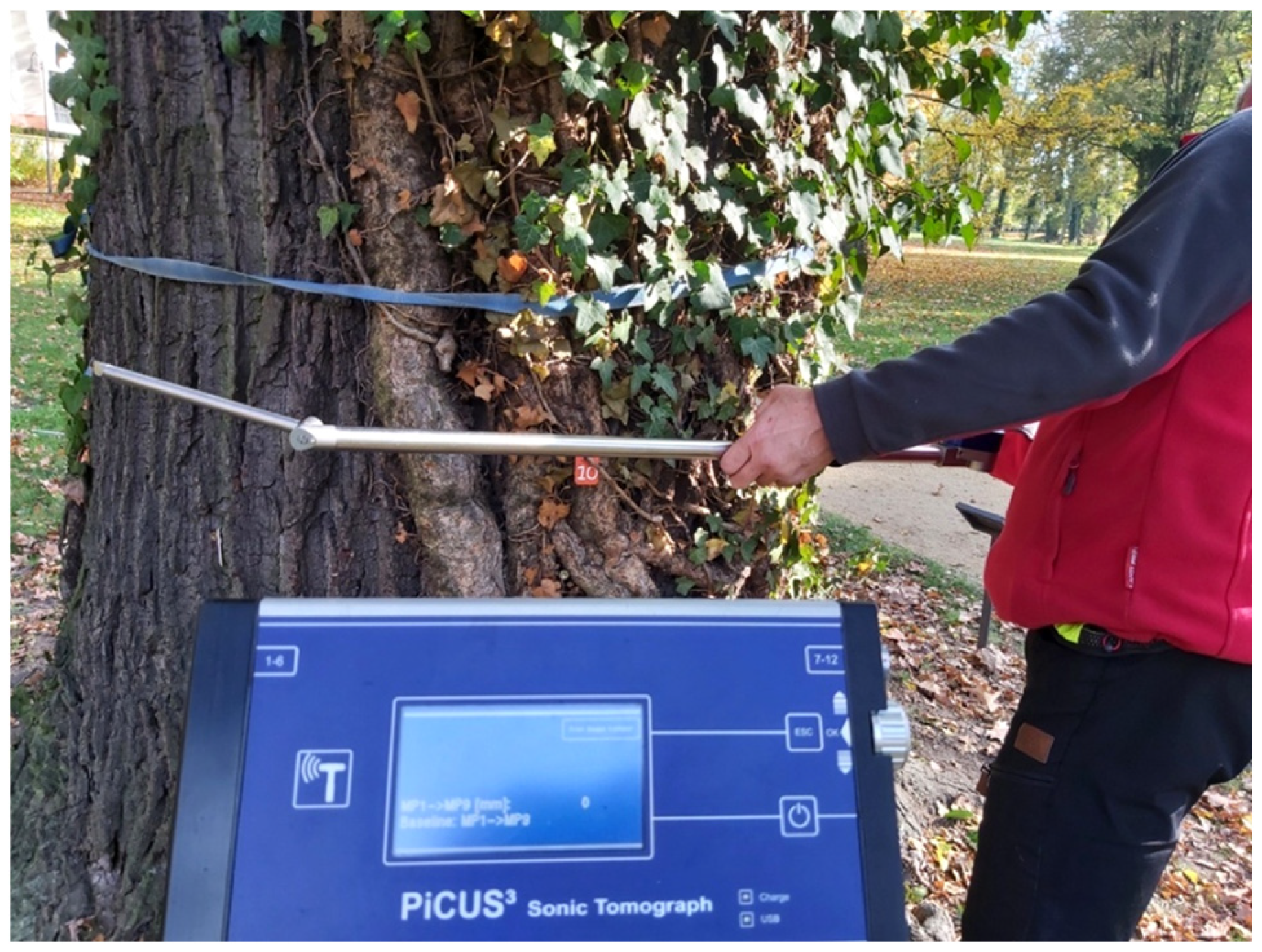
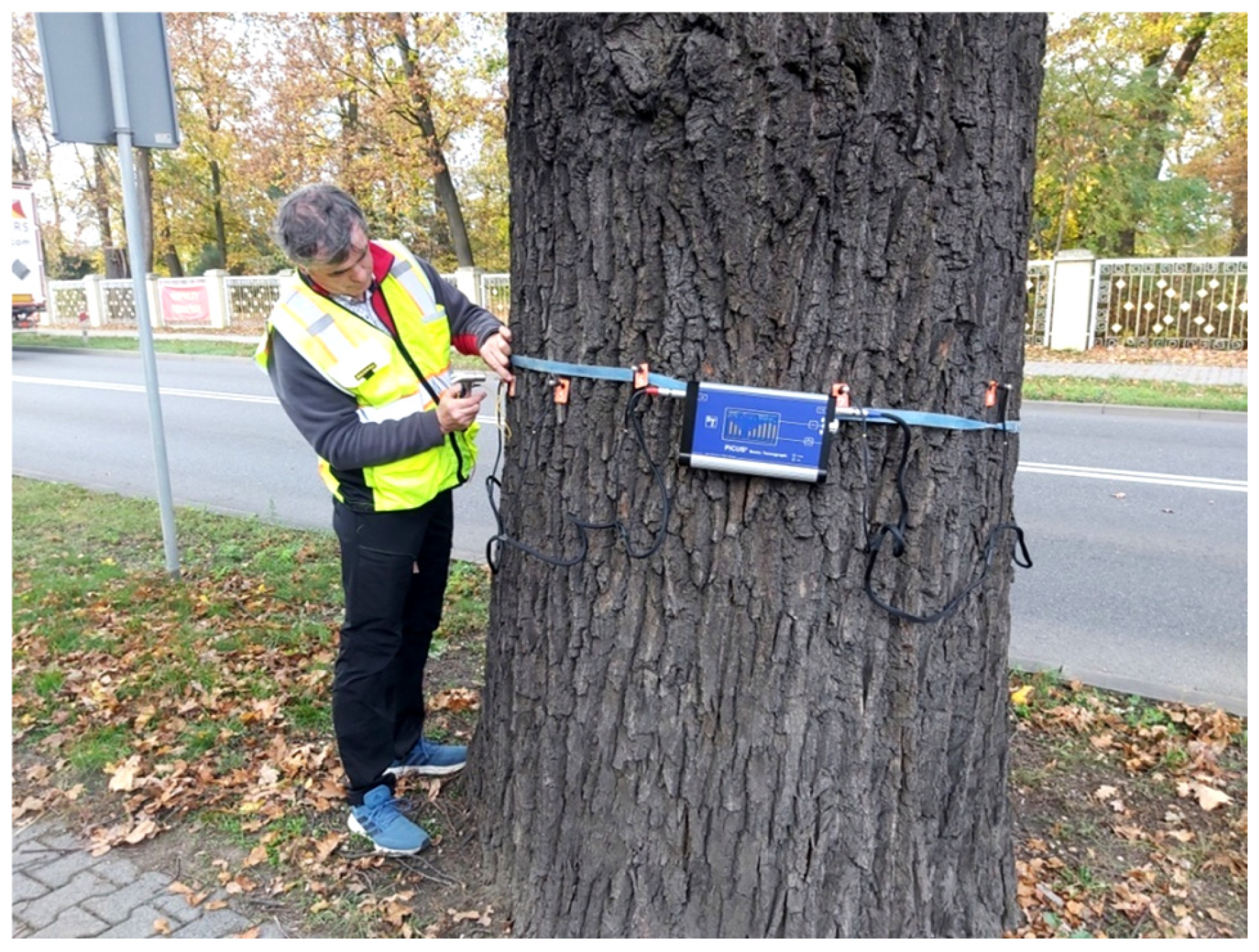
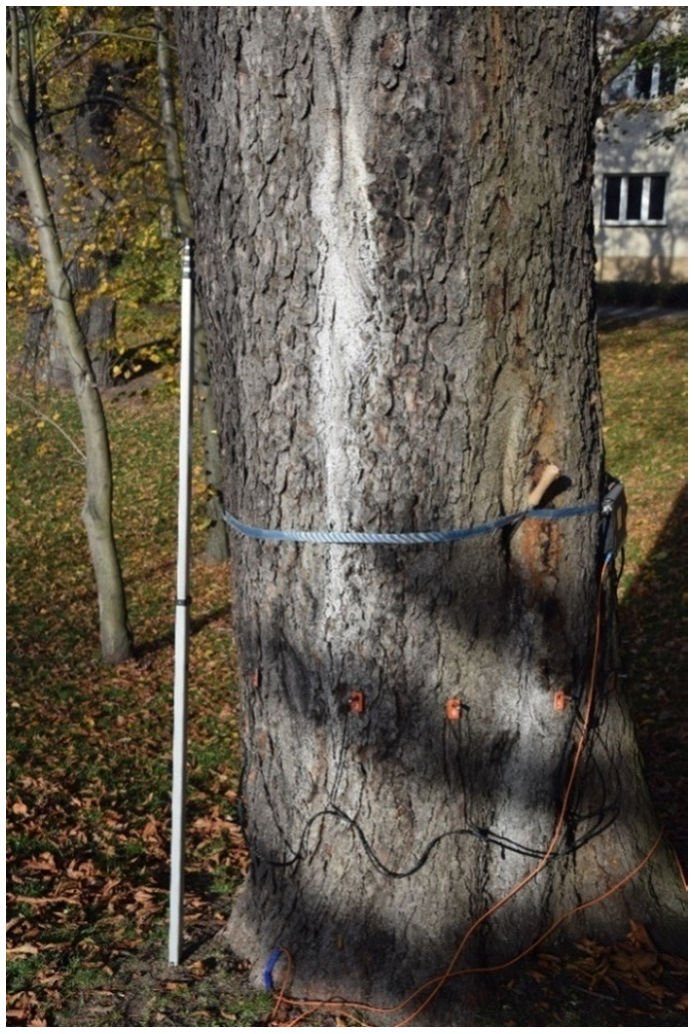
Detailed diagnostics of the internal condition of tree trunks, together with measurements of trunk geometry, were carried out using the PiCUS Sonic Tomograph 3 and the electronic PiCUS Calliper (Figure 1 and Figure 2). Tomographic measurements were conducted at breast height (130 cm above ground level), unless trunk defects required measurements at an alternative height, and sensors were installed temporarily during each measurement in accordance with the manufacturer’s standard operating procedure. At the selected measurement height, a set of sensors was evenly distributed around the trunk circumference, with the first measurement point established relative to the north direction using a compass.
During the examination, acoustic impulses were generated using an electronic impact hammer, and the travel time of sound waves between sensors was recorded automatically. Based on the obtained data, coloured tomograms illustrating the distribution of sound wave velocity within the trunk cross-section were generated. Areas characterised by relatively high sound velocity were interpreted as zones of structurally intact wood, whereas areas with reduced velocity were considered potentially affected by internal defects or decay processes [7,8]. The colour spectrum of the tomograms ranged from brown tones representing relatively high sound velocity to blue and white tones indicating reduced sound velocity.

2.4. Data Analysis and Tree Safety Assessment Criteria

Based on the tomograms, the proportion of structurally sound wood, transition wood, and damaged zones was determined. The key parameter used for assessing the mechanical stability of the trunk was the t/R ratio, defined as the ratio of the minimum thickness of the sound residual wall (t) to the radius of the trunk (R). Additionally, the geometric moment of inertia of the cross-section and the minimum required wall thickness were analysed in accordance with the TreeSA method.
For the purposes of this study, a threshold value of t/R ≥ 0.30 was adopted as an indicative safety criterion, in accordance with literature data and practical recommendations used in tree diagnostics [5]. The results of acoustic tomography were compared with the results of visual assessment in order to identify discrepancies between external evaluation and the actual technical condition of the trunk.
In the assessment of the stability of urban trees, it is essential to consider both the slenderness ratio (h/D) and the t/R ratio, as they describe two complementary aspects of tree biomechanics. The h/D ratio (height-to-diameter ratio) reflects the magnitude of loads acting on the tree, particularly the increasing bending moment generated by wind with increasing height. In contrast, the t/R parameter (ratio of residual wall thickness to trunk radius) determines the ability of the cross-section to withstand these loads, and its threshold value of approximately 0.30 is commonly regarded as a practical safety limit.
Only the combined consideration of these two indicators allows for a reliable risk assessment. High h/D values increase the susceptibility of a tree to lateral forces, whereas low t/R values indicate reduced structural strength of the trunk. Consequently, trees that are both slender and internally weakened are particularly hazardous, as the increase in external loading is not compensated by sufficient load-bearing capacity of the cross-section [30,31,32].

2.5. Study Design

The applied methods were non-invasive and did not cause permanent damage to tree tissues, which allows for the repeatability of studies in subsequent years and enables the use of acoustic tomography for monitoring the condition of urban trees. The trees are protected as natural monuments [33]. The conducted research contributed to the protection of valuable, old trees against removal or neglect. Management plans and green space development strategies were developed. Furthermore, the dissemination of the research results contributed to increased community engagement, with the expectation that residents may better understand the overall value of trees.
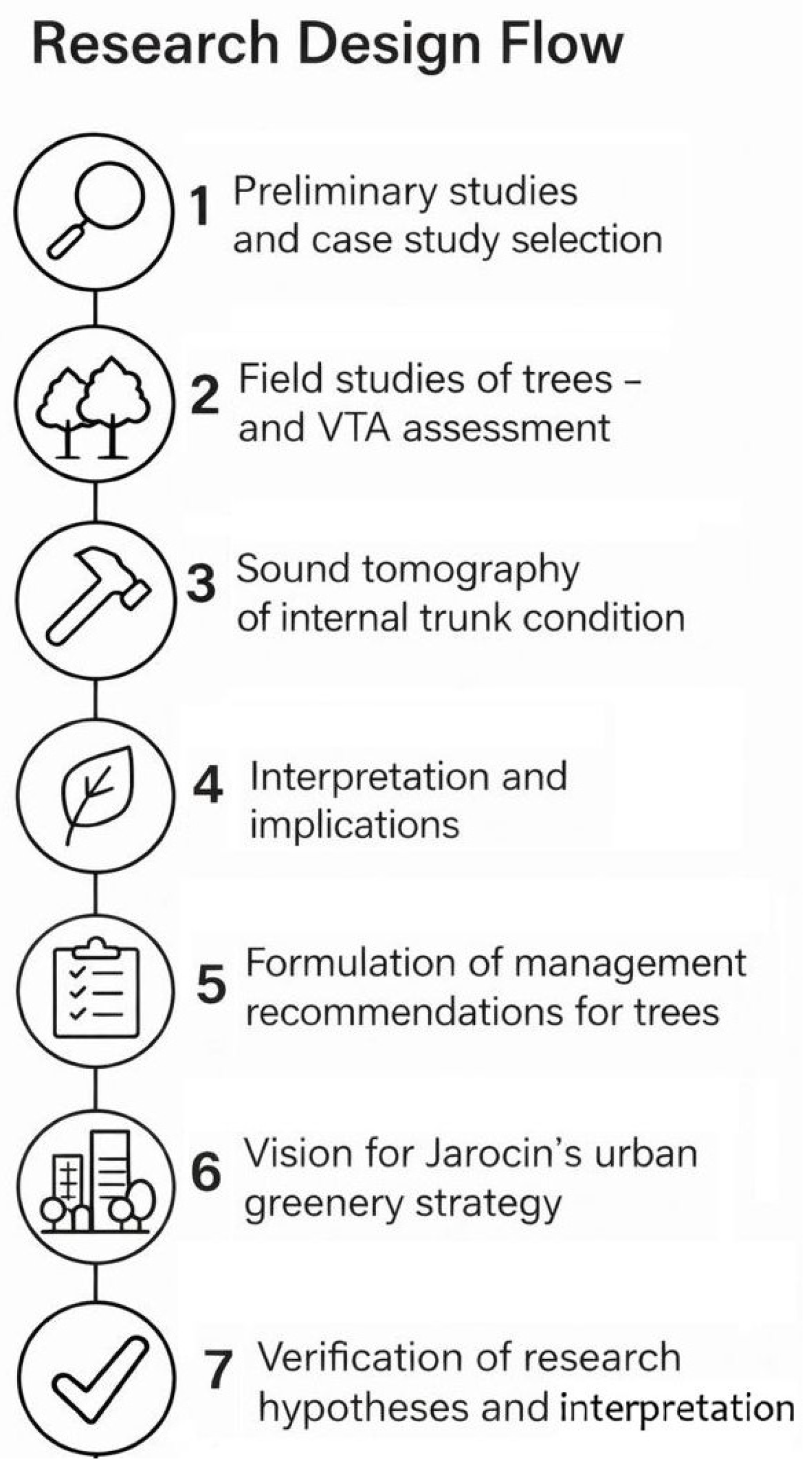
To ensure a systematic approach, the research design was structured into a sequence of seven methodological steps (Figure 3).

3. Results

3.1. Objects and Reasons for Tomograph Examination

  • Object No. 1—horse chestnut (Aesculus hippocastanum L.), a natural monument named “Andrzej”, located in the Radoliński Park in Jarocin
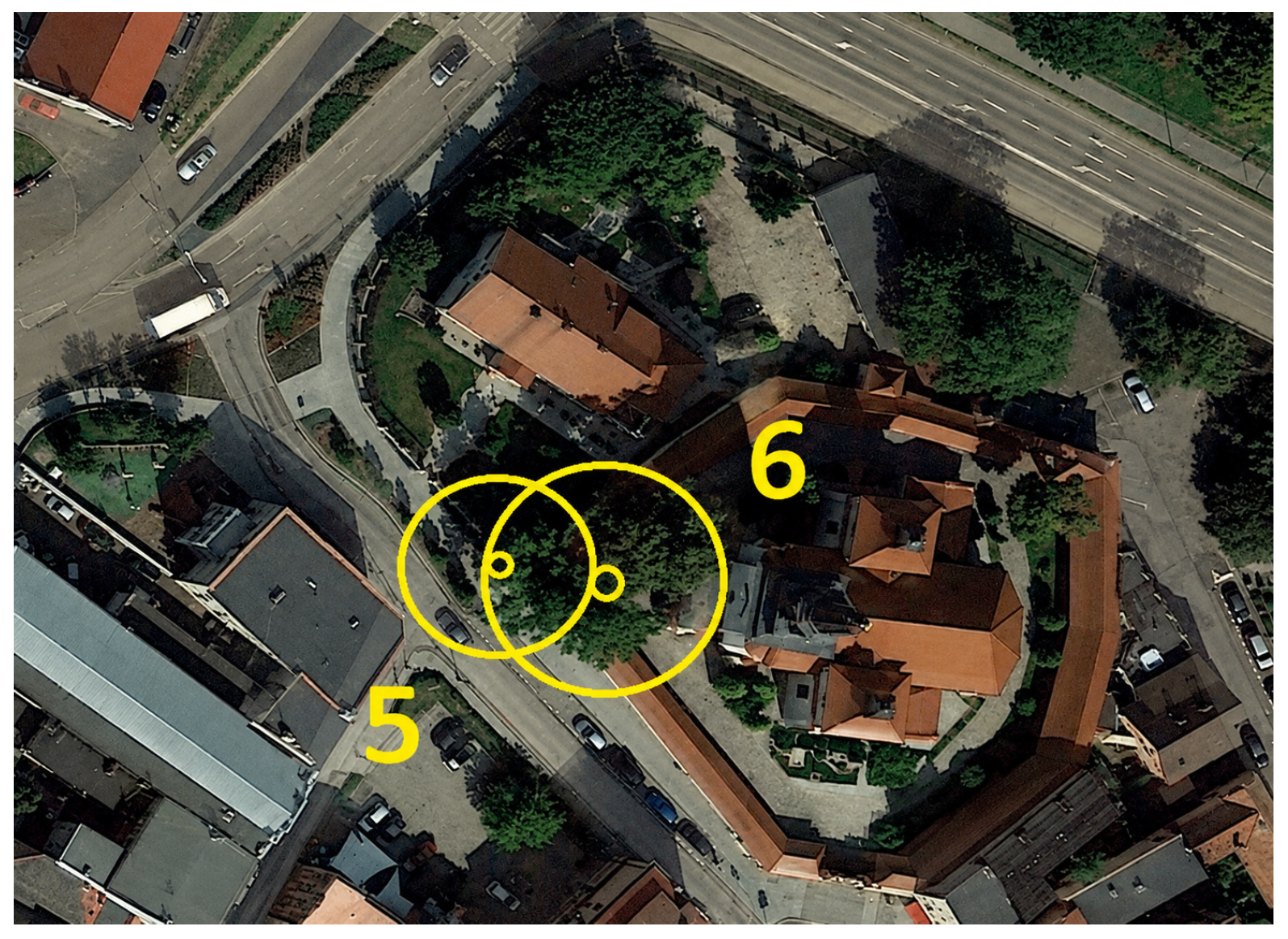
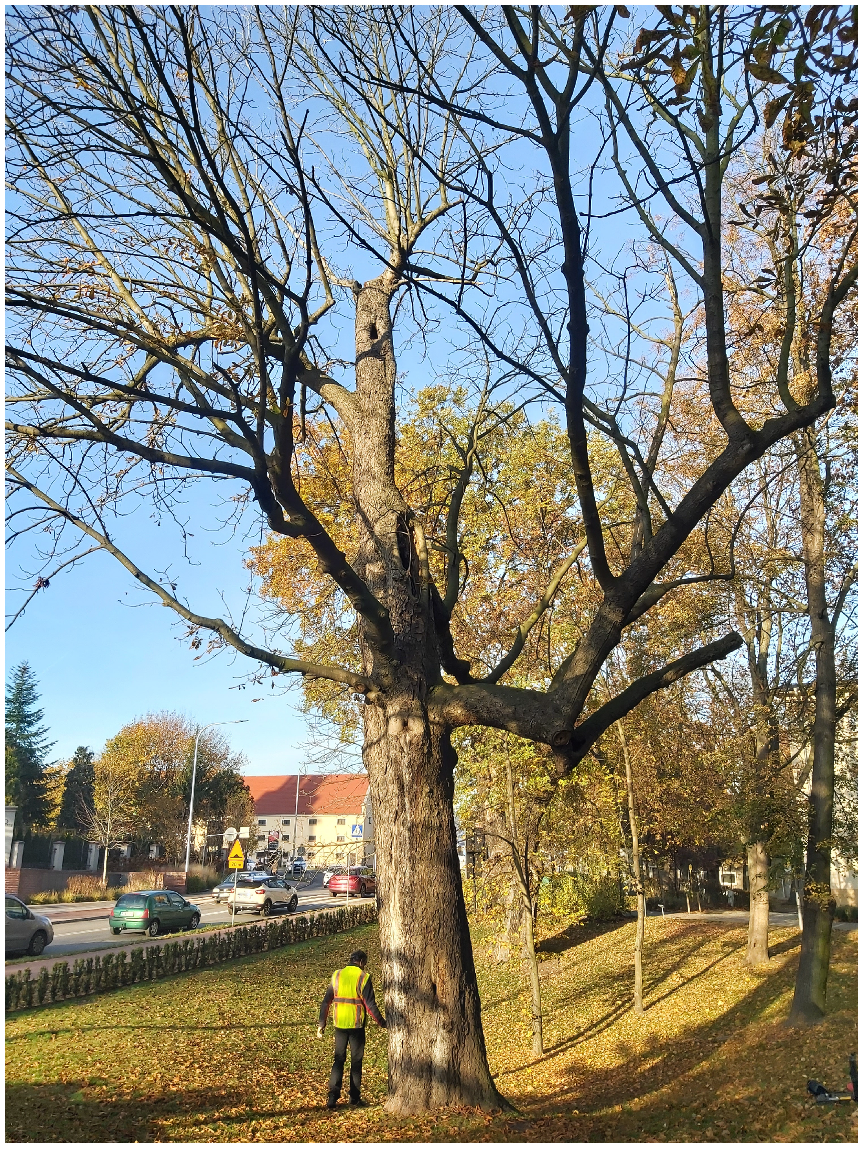
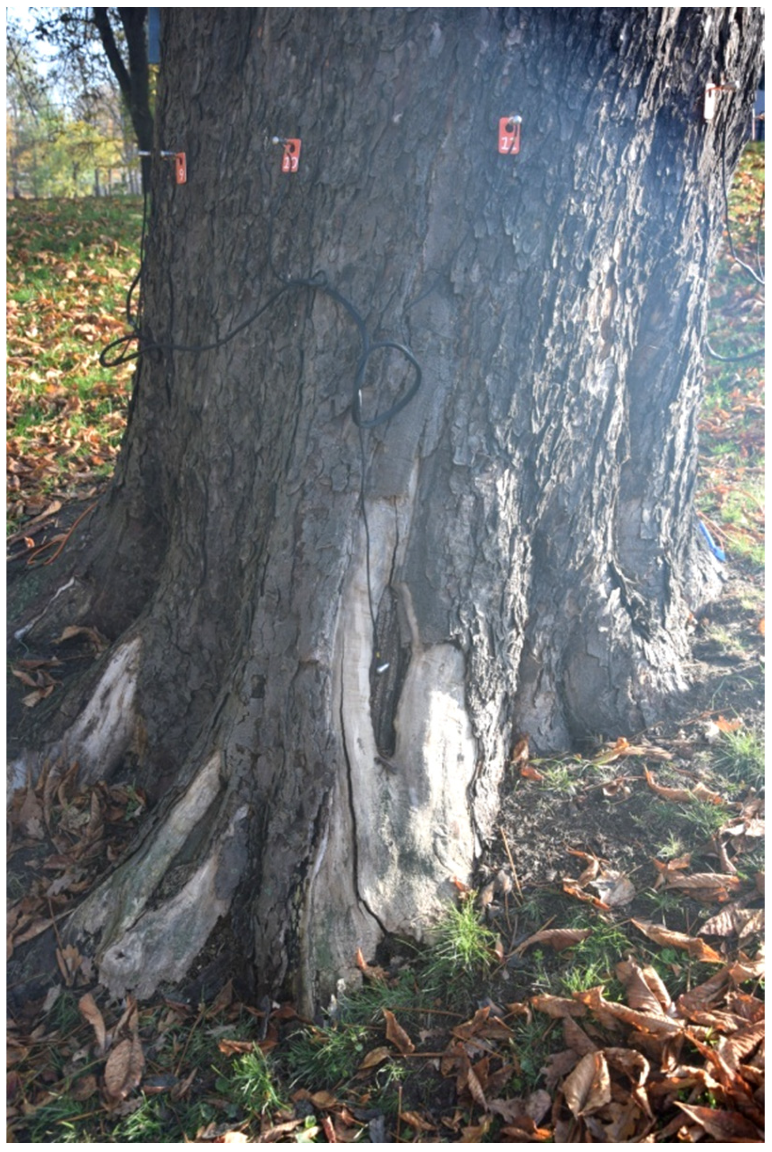
Examination reason: The tree grows near the historic Treasury building, on a small slope (Figure 4 and Figure 5). On the south-western side, the root buttresses are severely damaged, with loose or missing bark and symptoms of the presence of the saprophytic fungus Chondrostereum purpureum (Pers.) Pouzar, which causes white rot of wood (Figure 5 and Figure 6).
The trunk at the base has partially exposed root buttresses, clearly visible from the northern side (Figure 6).
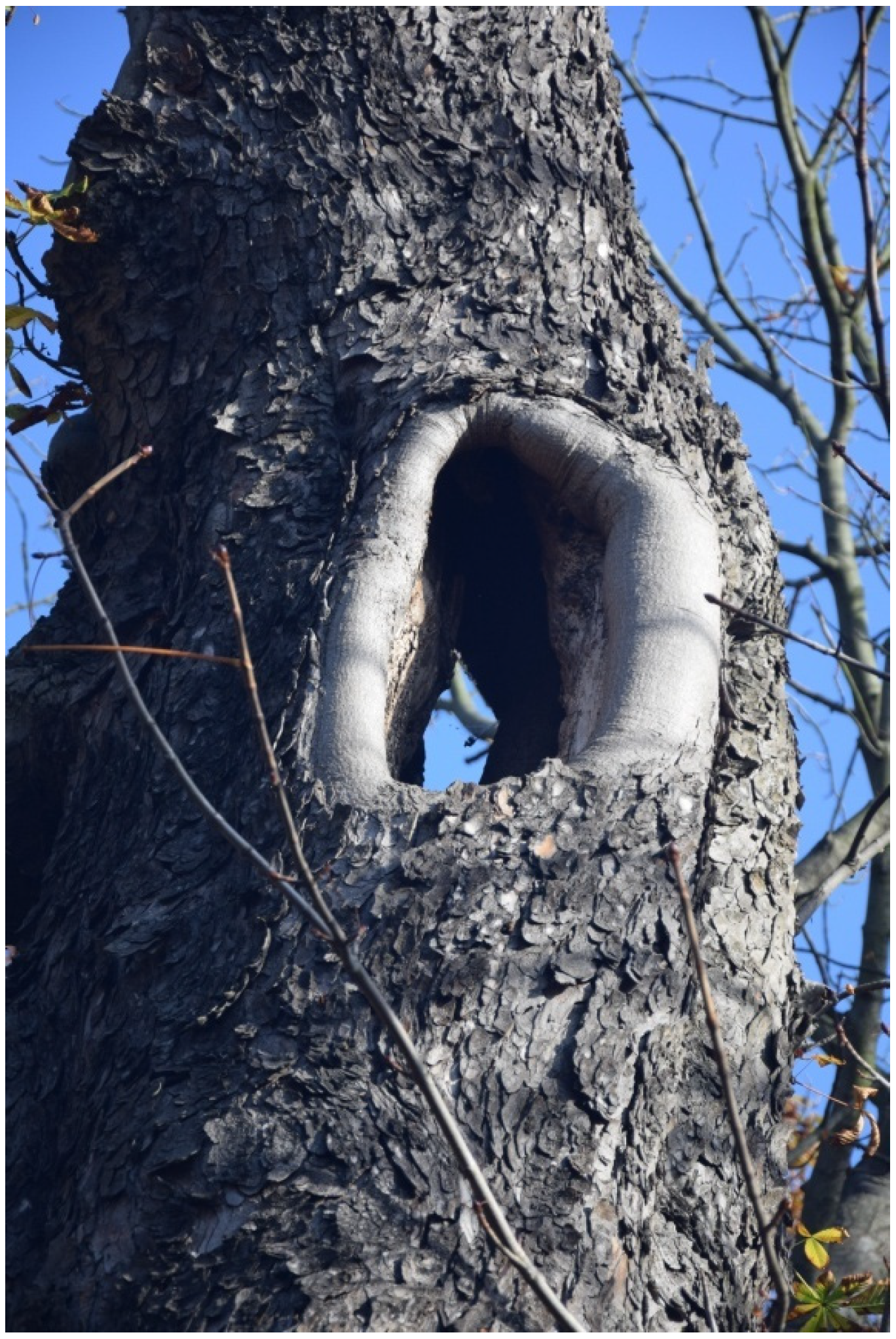
On the eastern side, at a height of approximately 1 m, a deep cavity is visible, penetrated with an arboricultural probe and accompanied by a watery exudate. Nearby, over a length of about 1 m, a frost crack is visible with traces of dried exudate (Figure 7). In the upper part of the crown, numerous hollows are present, as well as open cavities penetrating through the trunk and deep chimney-type cavities of an open character (Figure 8). The edges of the injuries are relatively well occluded; however, symptoms of wood decay are visible inside the trunk. Numerous traces of previous corrective and sanitary pruning cuts with occluded edges are also visible. However, the presence of stubs of thick branches indicates improper pruning practices which, combined with weak compartmentalisation in horse chestnut trees, often leads to fungal infections and, consequently, progressive wood decay. Dead branches in the crown were estimated at 30–35%. In the upper part of the crown on the southern side, one unoccupied bird nest was observed. The vitality of the tree, assessed using the Roloff scale [34], was classified as class 1, corresponding to the degeneration phase, characterised by weakened crown development.
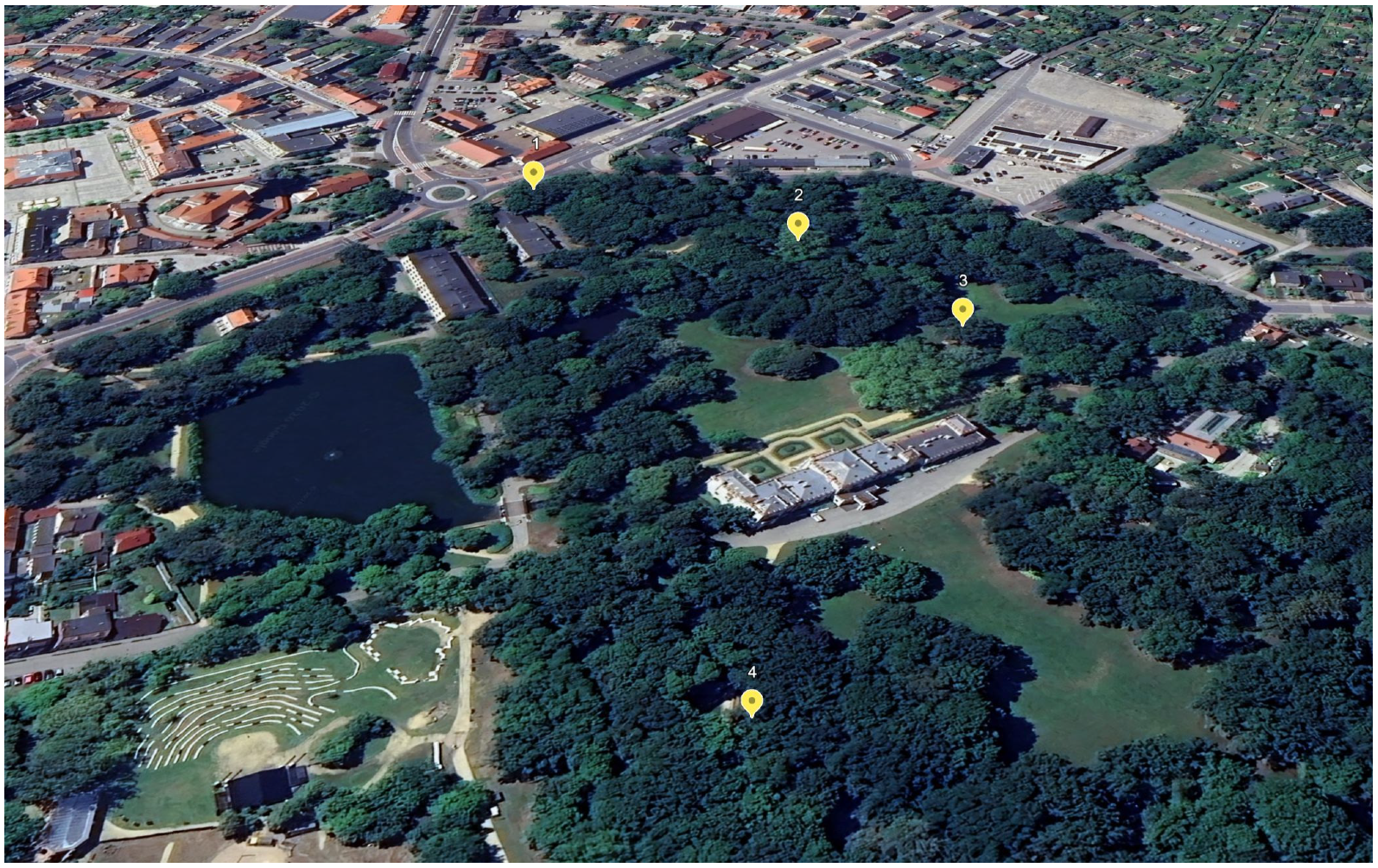
Figure 4. Location of trees examined using acoustic tomography in the Radoliński Park in Jarocin [35].
Sustainability 18 05114 g004
Figure 5. Horse chestnut (Aesculus hippocastanum L.), natural monument “Andrzej”, Radoliński Park, Jarocin—south-western view (photo MDP, 2023).
Sustainability 18 05114 g005
Figure 6. Trunk base (root collar) viewed from the south-west (photo MDP, 2023).
Sustainability 18 05114 g006
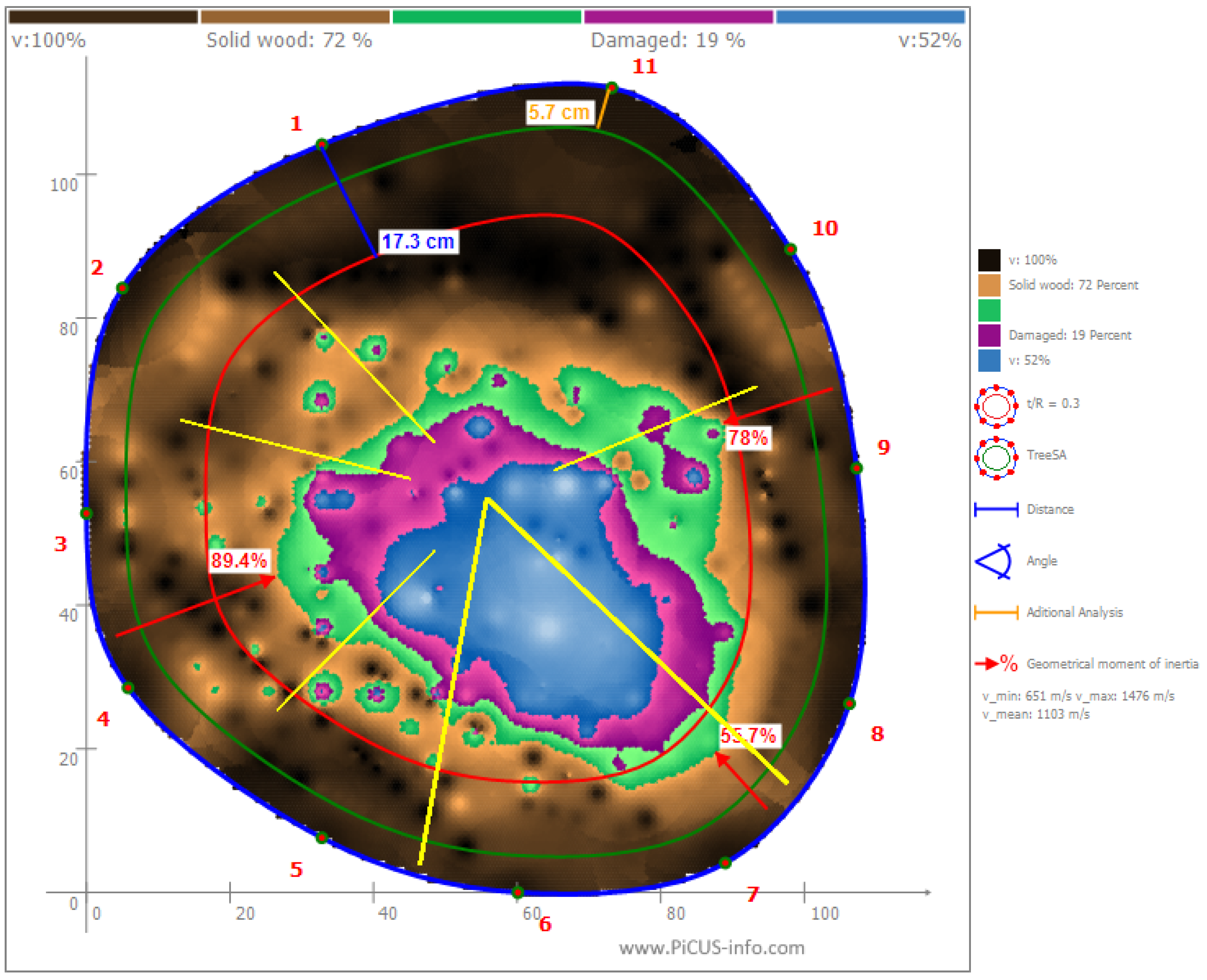
For the analysed horse chestnut tree, tomographic examination was carried out at a height of 100 cm above ground level, with 11 measurement sensors distributed around the trunk. Based on the obtained results, damage was identified in the central part of the trunk, indicating an ongoing degradation process resulting from an open chimney-type cavity. Structurally sound wood (visualised in brown) accounted for 72% of the cross-sectional area of the trunk, while damaged wood (blue and purple) constituted 19%. The remaining area (9%) represented transition wood, marked in green on the tomogram (Figure 9). The yellow lines visible in the image suggest the possible presence of internal cracks arranged radially in all directions of the analysed cross-section. The calculated geometric moment of inertia for this trunk cross-section, measured in the weakest points at the height of measurement, ranged from 55.7% to 89.4% of the maximum strength relative to a defect-free trunk. The weakest areas in this respect were located between measurement points 7 and 8. The red line, relevant for the calculation of the t/R ratio (i.e., the ratio of sound wood thickness (t) to trunk radius (R)), runs along the circumference of the analysed cross-section and indicates the minimum residual wall thickness for the given tree, representing the safety limit against trunk failure. In this case, it averaged 17.3 cm, and the calculated t/R ratio was 0.31. This value falls within the safety threshold, which is also reflected in the tomogram, where the damaged area does not extend beyond the boundary marked by the red line.
Considering the propagation velocity of sound waves within the trunk, the highest value was recorded between measurement points 2 and 6 (1476 m·s−1), while the lowest was observed between sensors 9 and 4 (651 m·s−1), i.e., across the diagonal of the trunk. The sound velocity in the damaged area is therefore significantly lower, whereas in healthy wood it is higher than the average typical for horse chestnut, which, according to the literature, ranges from 873 to 1146 m·s−1 [36]. The minimum residual wall thickness required to maintain adequate structural stability of the tree, calculated using the TreeSA method, should be approximately 5.7 cm (green line on the tomogram). Based on the measurement at a height of 100 cm, it was found that the weakening of the wood structure does not exceed the assumed safety threshold at any point. The minimum required residual strength of solid wood for this trunk, calculated using the TreeSA method, should be 21%, whereas the tomographic measurements indicate that the proportion of structurally sound wood is 72%, which confirms good structural stability of the tree. However, it should be noted that horse chestnut belongs, according to the CODIT system, to species with weak compartmentalisation [37]. The CODIT system describes the ability of a tree to form barriers (e.g., phenolic barriers) that isolate infected or decaying wood to prevent the spread of pathogens into healthy tissues. The effectiveness of compartmentalisation depends on the tree species. Available sources indicate that species with weak compartmentalisation have limited ability to form protective barriers, which in older specimens often results in extensive decay, hollows, or through cavities in the trunk. Nevertheless, some trees, despite extensive internal defects, may still retain sufficient mechanical stability if the residual wall thickness is adequate.
  • Object No. 2—London plane (Platanus × hispanica Mill. ex Münchh. ‘Acerifolia’)—natural monument “Lucy”.
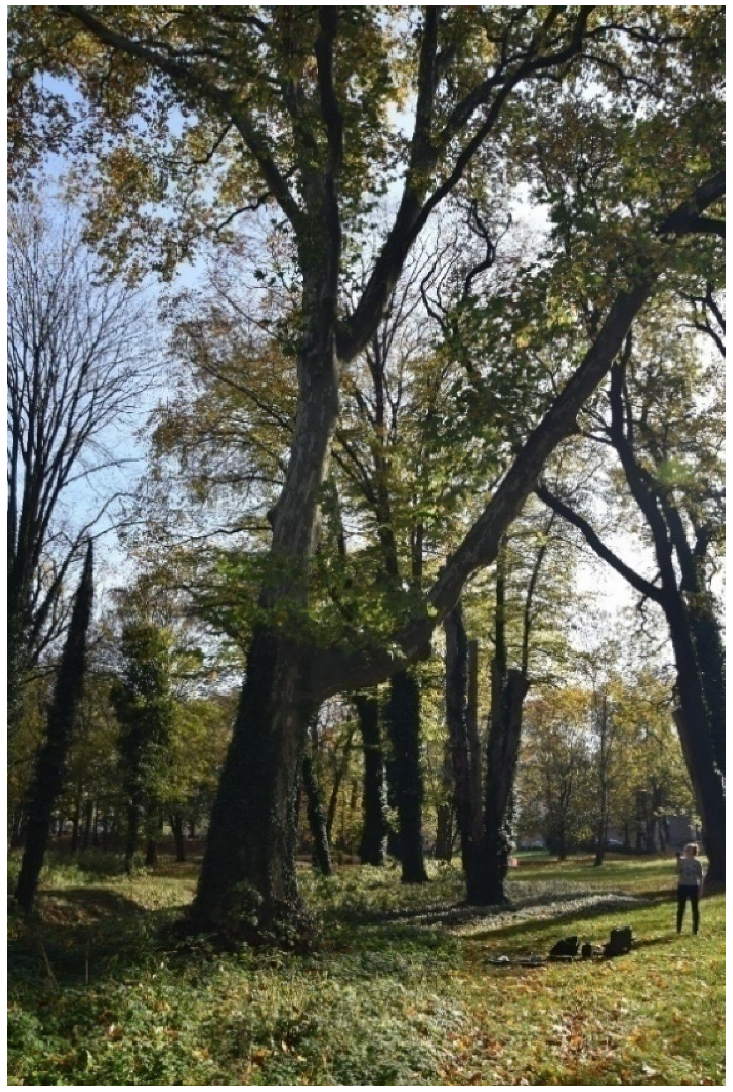
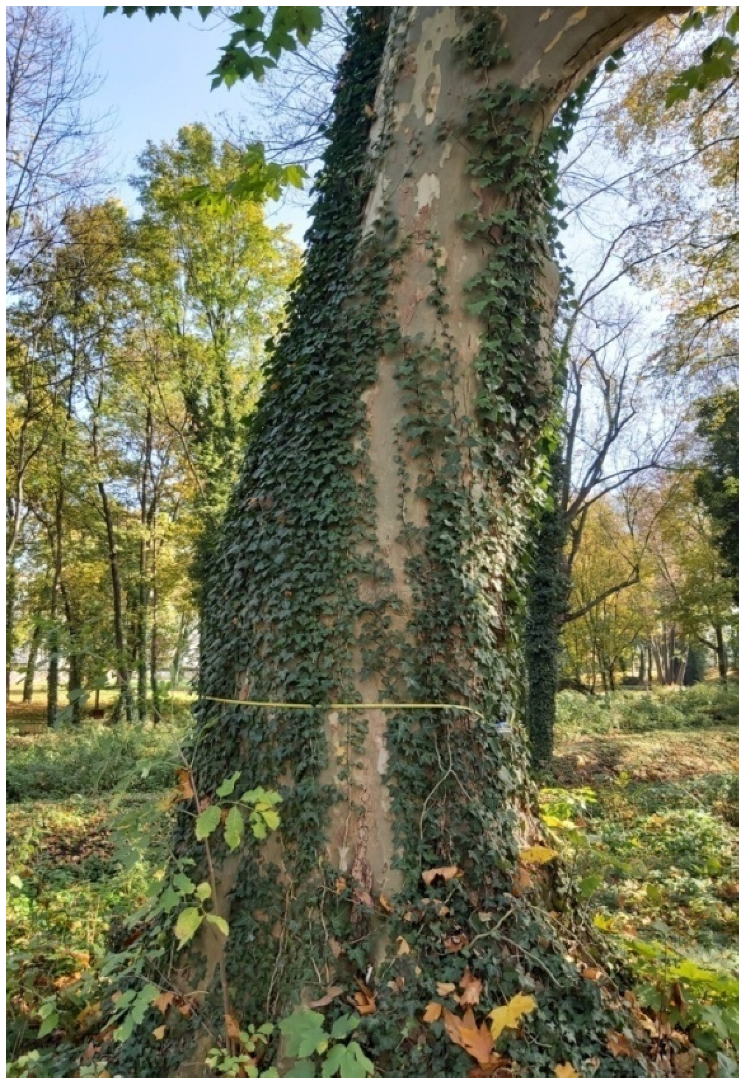
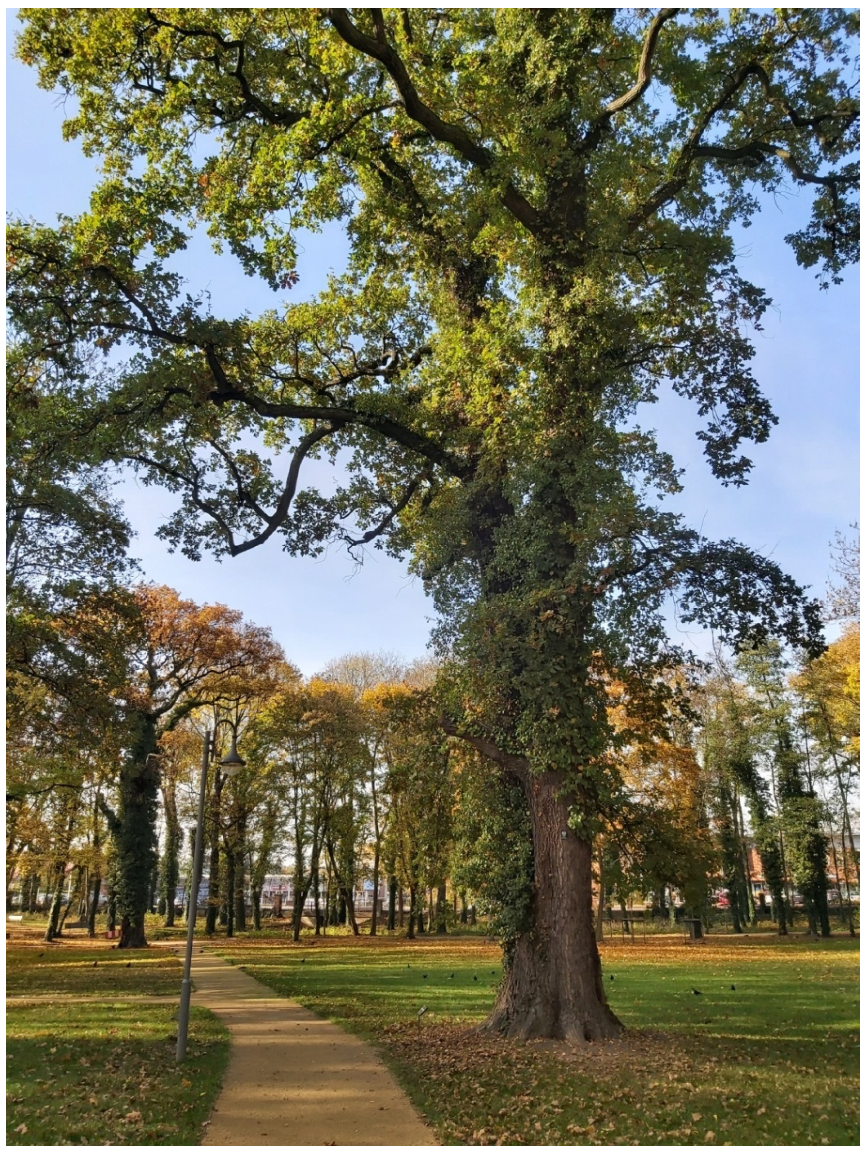
Examination reason: The London plane tree grows near the Lipinka watercourse and in the vicinity of two other natural monuments—the European beech “Hugo” (dead tree) and a multi-stem pedunculate oak “Władysław” (Figure 4, Figure 10 and Figure 11). The tree is slightly inclined towards the south-east at an angle of 25°. The plane tree has developed a single main leader; however, towards the southern side, a large branch has developed, diverging from the main trunk in a U-shaped form. Directly below it, cracks in the bark are visible.
The visual condition of the tree is good. Its trunk base is strongly developed, with well-formed root buttresses. The tree grows in an open area partially covered with lawn vegetation, and its trunk is overgrown with common ivy (Hedera helix L.) from the base up to the crown base.
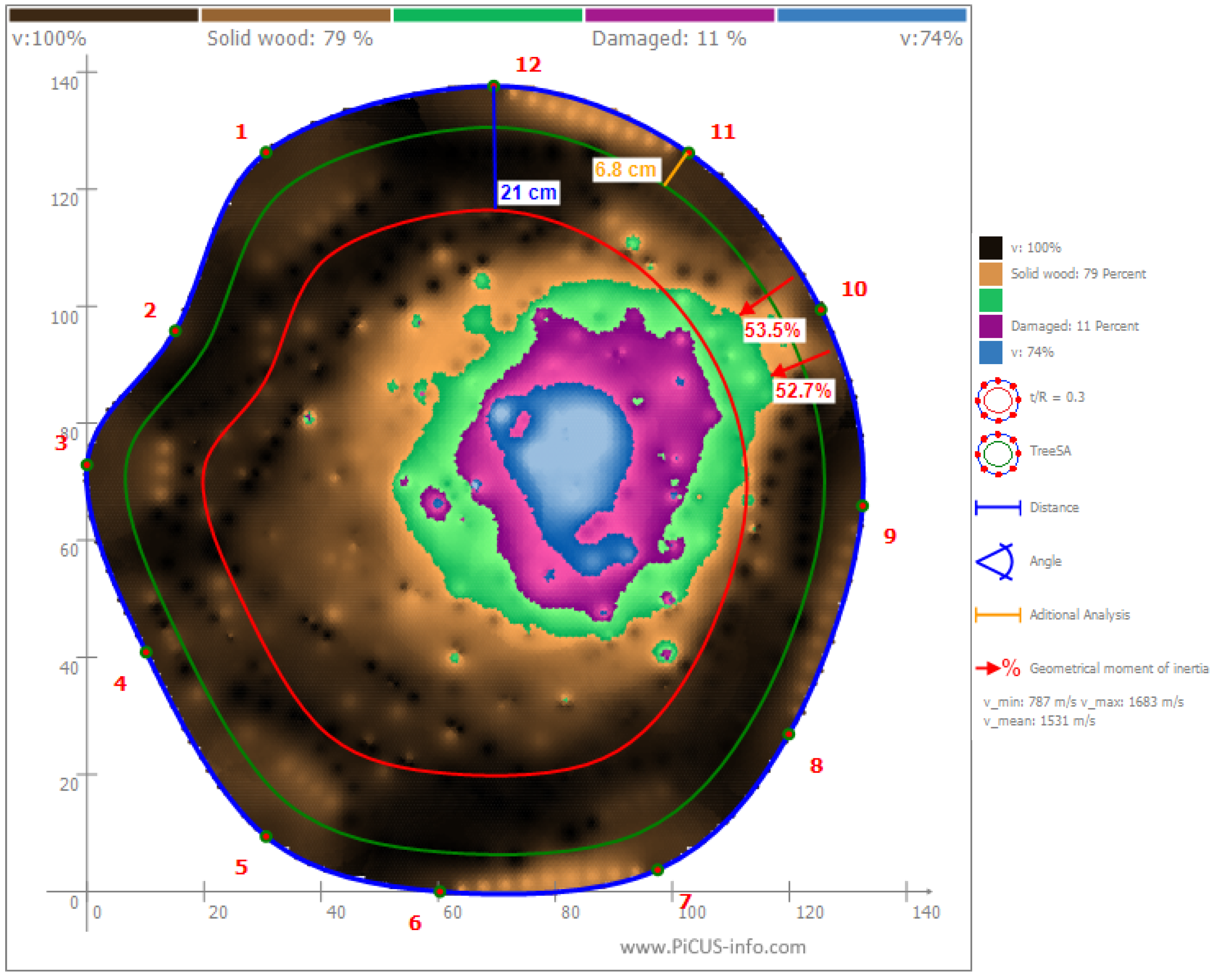
On the trunk and branches, there are knotted growths, open cavities resulting from broken or shed branches, occluded wounds, and fruiting bodies of fungi growing at higher levels, most likely belonging to polypores, which are difficult to identify. In the upper part, the crown forks again in a U-shaped form. Dead branches are estimated at 20%. The vitality of the tree, according to the Roloff scale, can be classified at the time of assessment as an intermediate stage between classes 0 and 1. Tomographic examination was conducted at a height of 130 cm above ground level, with 12 measurement points placed around the trunk. Based on the analysis of the obtained results, minor internal damage was identified, mainly in the central part of the trunk. Structurally sound wood accounts for the majority of the analysed cross-section (79%), while damaged wood constitutes 11%. The remaining area consists of transition wood (Figure 12). The geometric moment of inertia calculated for different directions of this trunk cross-section, measured at the weakest points at the height of measurement, ranges between 52.7% and 53.5% of the maximum strength relative to a defect-free trunk, indicating a high value. The red line on the tomogram, used for calculating the t/R ratio (i.e., the ratio of sound wood thickness (t) to trunk radius (R)), defines the minimum residual wall thickness for the tree, representing the safety limit against trunk failure. In this case, it lies outside the damaged zone, indicating a considerable reserve of sound tissue. The average residual wall thickness is 21 cm, and the calculated t/R ratio is 0.32. Considering the propagation velocity of sound waves within the trunk, the highest value was recorded between measurement points 3 and 7 (1683 m·s−1), while the lowest was observed between sensors 10 and 4 (787 m·s−1). The typical sound wave velocity in healthy plane tree wood ranges from 950 to 1033 m·s−1 [36]. The minimum residual wall thickness required for maintaining structural stability, calculated using the TreeSA method, should be approximately 6.8 cm (green line on the tomogram). The calculated minimum required residual strength of solid wood for this tree is 21%, whereas the tomographic measurements indicate that the proportion of structurally sound wood is 79%. Thus, despite the presence of internal structural damage, the mechanical stability of the tree is maintained at a good level.
  • Object No. 3—Pedunculate oak (Quercus robur L.)—natural monument named “Friedrich August”, located in Radoliński Park in Jarocin
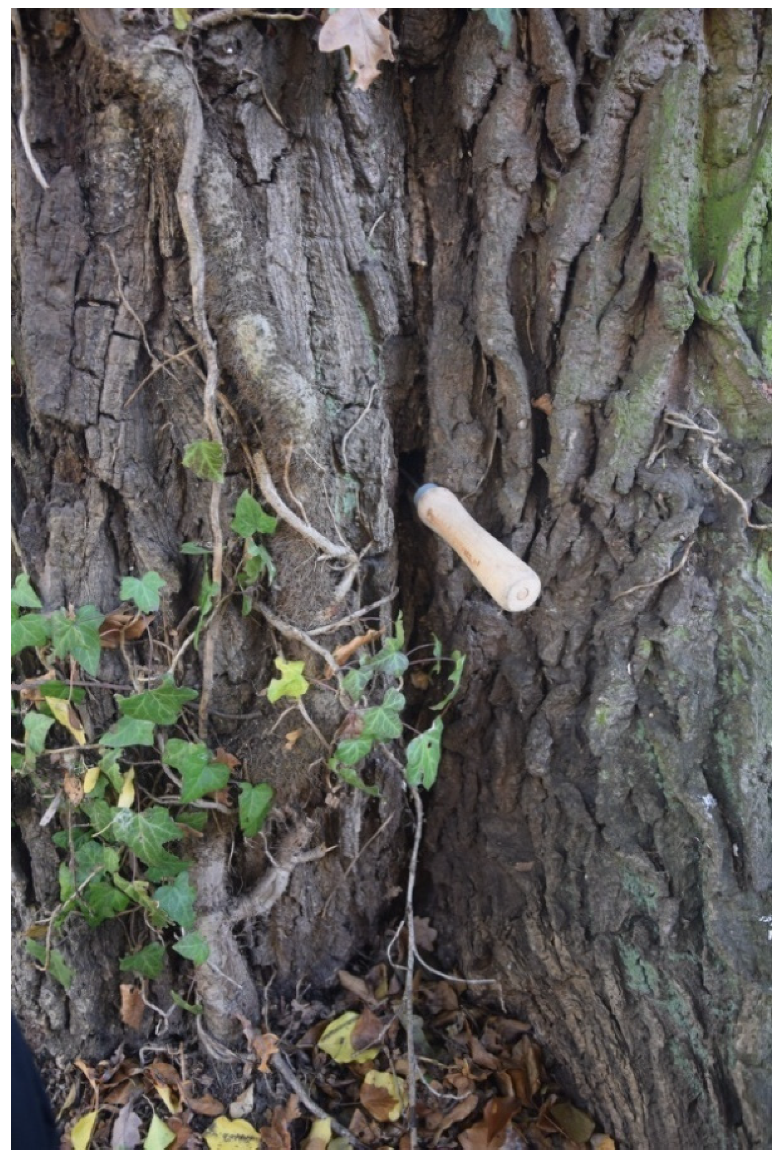
Reason for examination: the tree grows along a pedestrian path leading to the Radoliński Palace, near a group of plane trees (Figure 4 and Figure 13). A deep cavity is visible in the trunk on the western side, large enough to fully accommodate an arboricultural probe (Figure 14).
The visual condition of the tree is very good. The root buttresses at the base of the trunk are undamaged, and the trunk is straight, transitioning into a symmetrical and spreading crown, which is undoubtedly influenced by favorable site conditions. The trunk and crown are overgrown with large specimens of Hedera helix (Figure 14). The leaves are partially affected by oak powdery mildew (Microsphaera alphitoides Griff. et Maubl.), which primarily causes significant damage in young oak stands; however, mature trees generally cope well with this pathogen. The crown shows traces of past sanitary pruning, as well as a small number of stubs of thick branches and limbs. In the upper parts of the crown, flexible dynamic bracing systems connecting major limbs are visible. Deadwood accounts for approximately 25% of the crown volume, resulting in a slightly openwork structure. According to the Roloff scale, the vitality of the tree on the day of assessment was rated as class 1 (degeneration phase, reduced crown development).
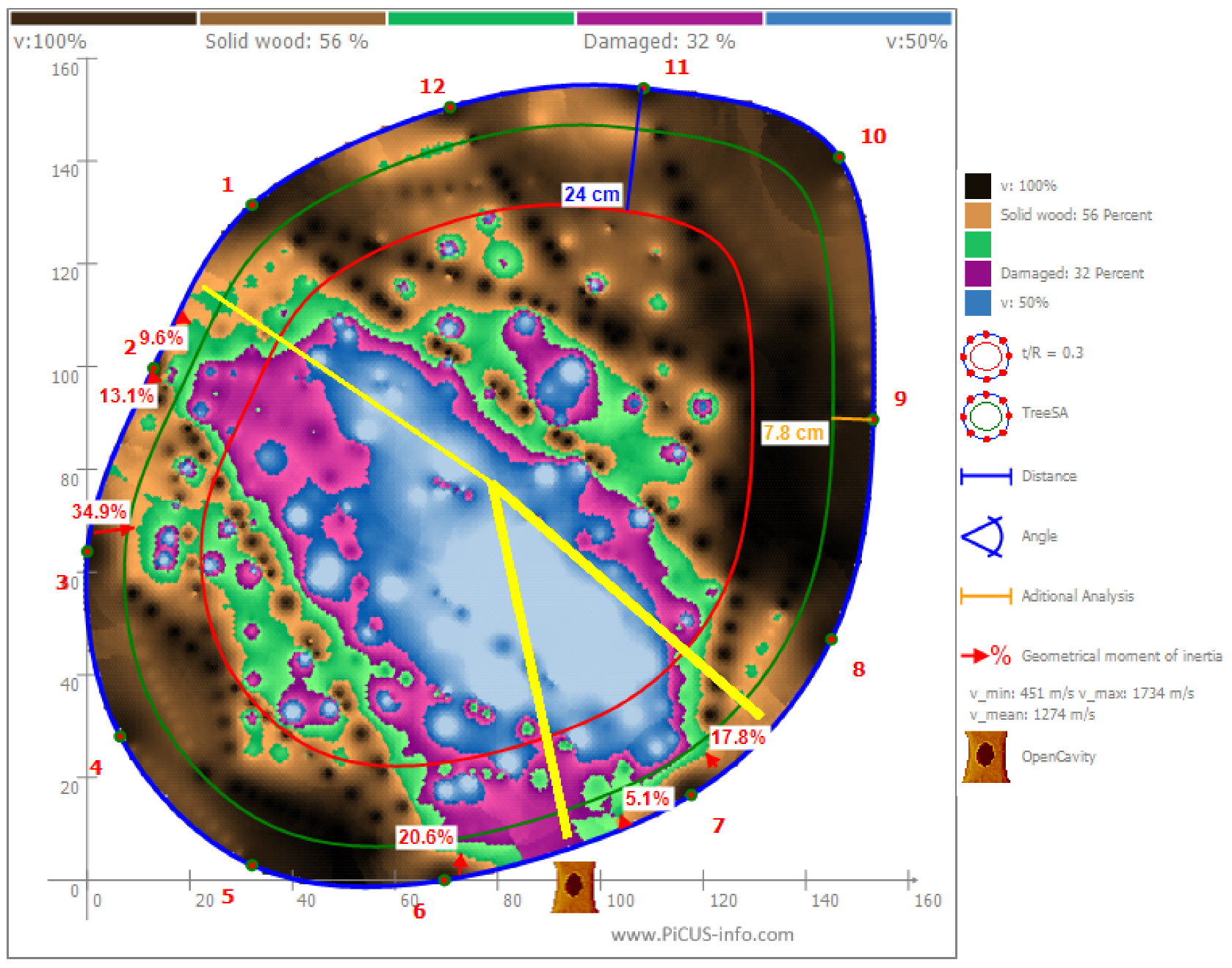
Tomographic measurements were performed at a height of 100 cm above ground level, using 12 measurement points distributed around the trunk. The results indicate internal trunk damage along the north–south axis (Figure 15). A significant portion of the central wood has undergone decay, while relatively extensive areas of sound wood remain on the eastern and western sides. Sound, mechanically functional wood constitutes 56% of the trunk cross-section, while damaged wood accounts for 32%, and transitional wood 12%. Yellow lines visible on the tomogram partially correspond to open cavities and suggest the presence of internal cracks near measurement points 6 and 7. The red line, indicating the minimum residual wall thickness considered safe against trunk failure, runs along the circumference of the cross-section. The calculated residual wall thickness is 24 cm, becoming thinner only in the most severely damaged areas. The calculated t/R ratio is 0.30, placing it at the lower limit of the safe range. It should be noted that the eastern and western sections of the trunk retain a substantial reserve of sound wood, which improves overall structural safety. The velocity of sound waves in the wood ranged from 451 m·s−1 (between sensors 9 and 4) to 1764 m·s−1 (between sensors 1 and 8). The upper values exceed those typically reported in the literature, where sound velocity in healthy oak wood ranges from 1382 to 1610 m·s−1. The calculated geometric moment of inertia at the weakest points ranged from 9.6% to 34.9%, nearly opposite each other. The minimum residual wall thickness required to maintain structural stability, calculated using the Tree SA method, is 7.8 cm (green line on the tomogram). The minimum required residual strength of solid trunk wood, calculated using the same method, is 6%. Based on the tomographic analysis, the proportion of fully functional wood (56%) confirms that, despite internal structural degradation, the tree maintains good structural stability.
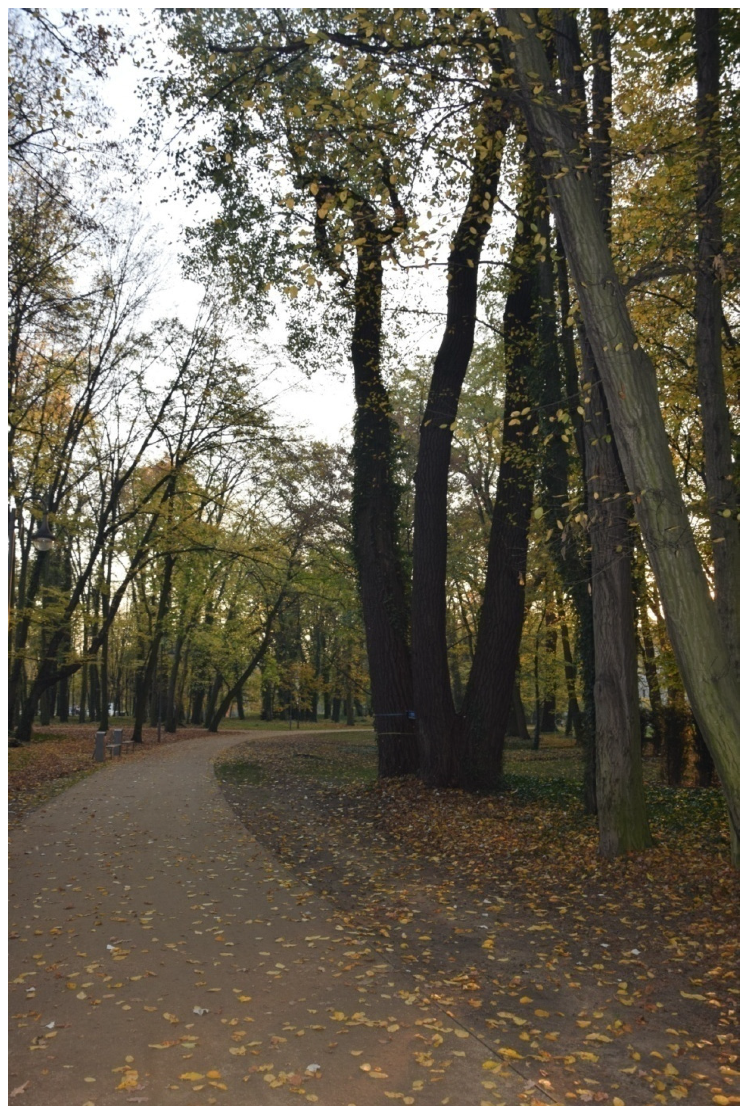
  • Object no. 4—white poplar (Populus alba L.) in Radoliński Park in Jarocin
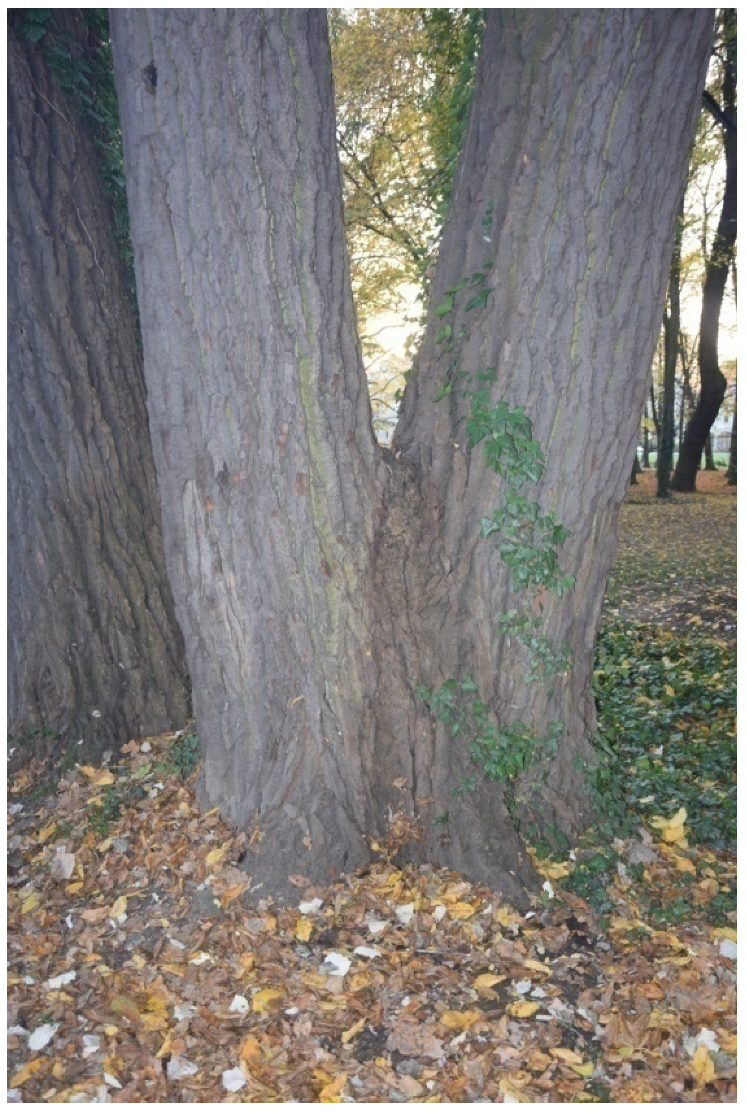
Reason for examination: the white poplar grows in close proximity to another tree of the same species. A park pathway is located within the crown projection area (Figure 16). The health condition of the trunk itself is satisfactory; however, some concern arises from a V-shaped bifurcation of two co-dominant leaders at a height of 130 cm, which—combined with a high-set crown—may pose an increased risk of trunk failure (Figure 17).
Based on the visual assessment, the tree is in good health condition. The root buttresses at the base of the trunk are well developed and undamaged. The trunk is overgrown with shoots of Hedera helix, similarly to the neighboring tree. Crown deadwood is estimated at approximately 20%. The vitality of the assessed tree, according to the Roloff scale, can be classified as phase 1 (degeneration phase—reduced crown development), similarly to the adjacent specimen.
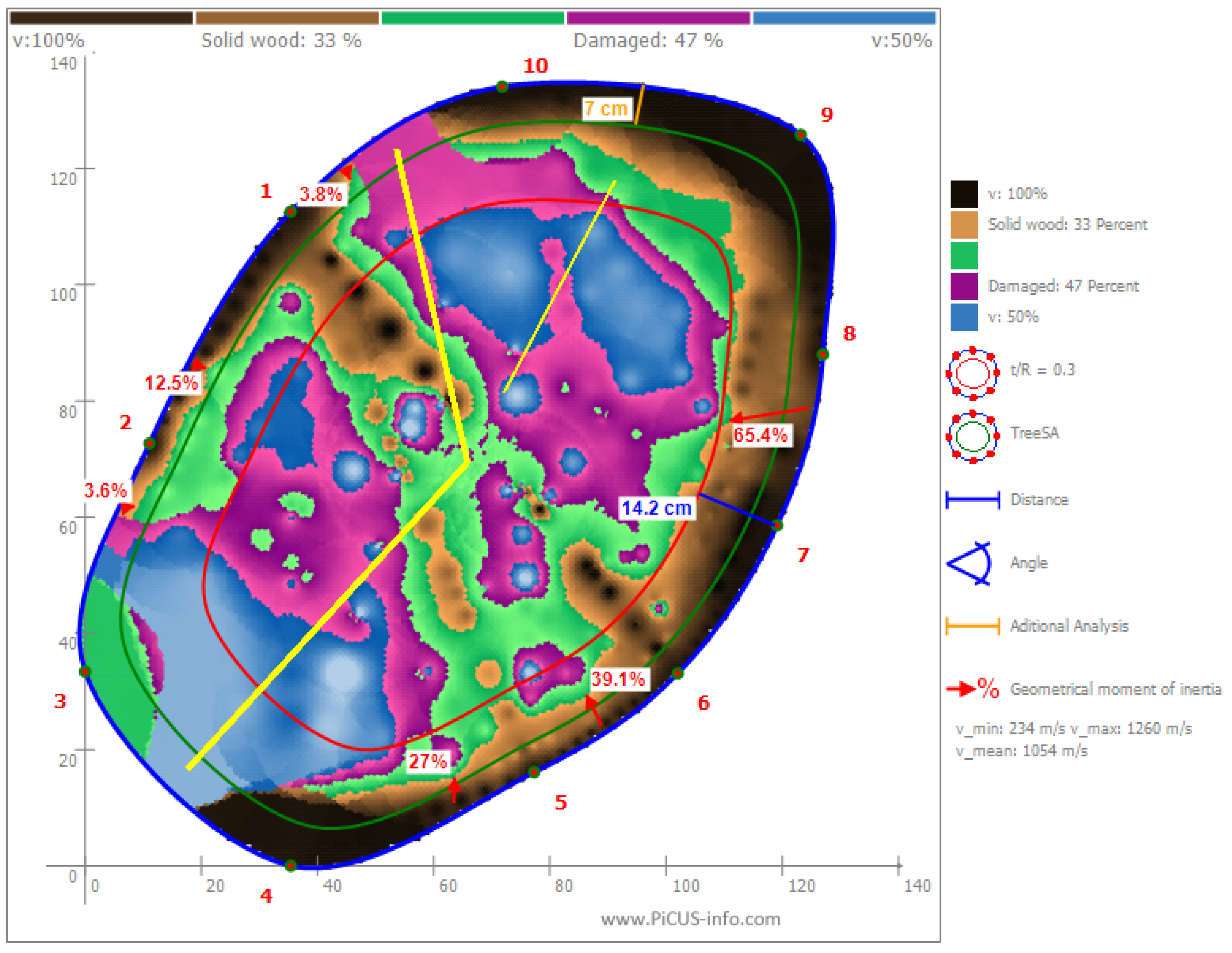
Tomographic examination of the trunk interior was conducted at a height of 100 cm above ground level. For this purpose, 10 measurement points were arranged around the trunk. Following the measurements and analysis, a color tomogram illustrating the actual internal condition of the trunk was obtained. In contrast to the visual assessment, the cross-section revealed extensive internal decay, largely affecting the eastern and western parts of the trunk. In the central part, along the north–south axis, a layer of relatively sound wood is present, which may have a stabilizing function. Additional fragments of sound wood are located in the peripheral zone of the trunk, mainly on the northern and western sides. The most degraded areas constitute 47% of the total cross-section (indicated by blue and violet colors), while sound wood accounts for only 33% (brown color). The remaining 20% consists of transitional wood (Figure 18). Yellow lines on the tomogram suggest the presence of radial cracks. This significantly increases the risk of trunk failure during extreme weather events. The calculated geometric moment of inertia for different directions, measured at the weakest points at the height of measurement, ranges from 3.6% to 65.4% of the maximum strength relative to a defect-free trunk. These calculations consider only the trunk geometry at the measurement level; however, the physical properties of the wood should also be taken into account, as they may influence the final assessment. Based on the obtained results, the tree’s condition in terms of mechanical strength and resistance to bending can be considered moderate. The red line on the tomogram, used to determine the t/R ratio (ratio of sound wood thickness t to trunk radius R), indicates the minimum residual wall thickness required for structural safety. In this case, it averages 14.2 cm, and the calculated t/R ratio is 0.20, which is significantly below the commonly accepted threshold. It should be noted that the sound wood is primarily located in the peripheral zone of the trunk, which may—but does not necessarily—contribute to an increased risk of trunk failure. Regarding acoustic wave velocity within the trunk, the highest value was recorded between measurement points 1 and 6 (1260 m·s−1), corresponding to a reinforcing internal rib of wood running across the cross-section. The lowest velocity was recorded between sensors 3 and 9 (234 m·s−1), where extensive decay is present. According to the TreeSA method, the minimum residual wall thickness required for structural stability should be approximately 7 cm (green line on the tomogram). The calculated minimum required residual strength of solid trunk wood is 18%, while tomographic measurements indicate that the proportion of fully functional wood is 33%, nearly twice the required minimum. This result indicates that, despite a low t/R ratio, the tree still maintains adequate structural stability.
The favorable location of this poplar—growing in a sheltered, dense stand in proximity to tree no. 10 and other specimens—significantly reduces the risk of failure despite the reduced t/R ratio. The critical wall thickness considered safe encompasses approximately half of the trunk cross-section, and additionally, a cambial column of sound wood running between measurement points 6 and 1 reinforces the trunk internally. As with the adjacent poplar, this tree should be monitored in the future with regard to public safety, due to its proximity to a pedestrian pathway.
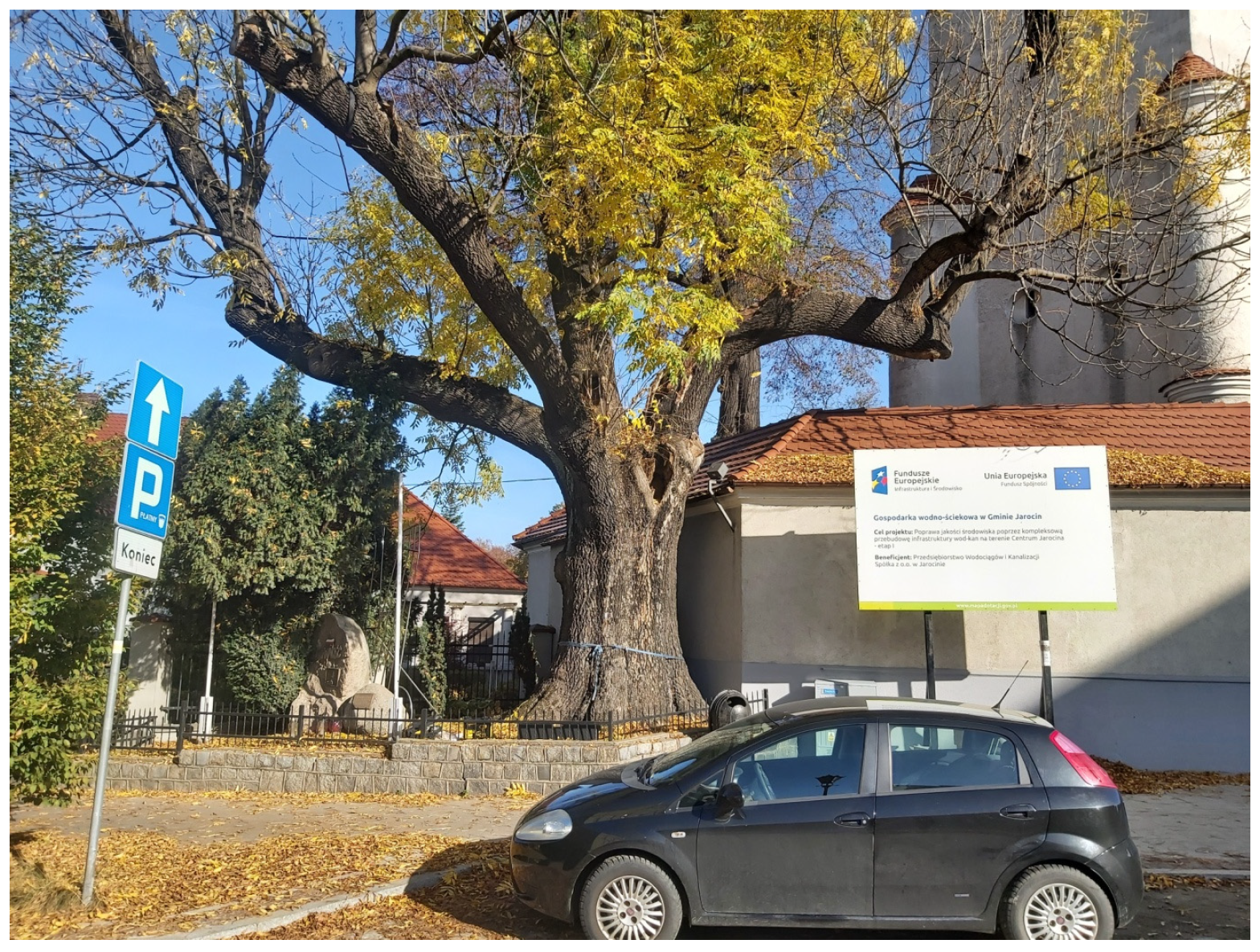
  • Object no. 5—European ash (Fraxinus excelsior L.), natural monument located by the boundary wall of the Church of St. Martin in Jarocin, Rynek Street
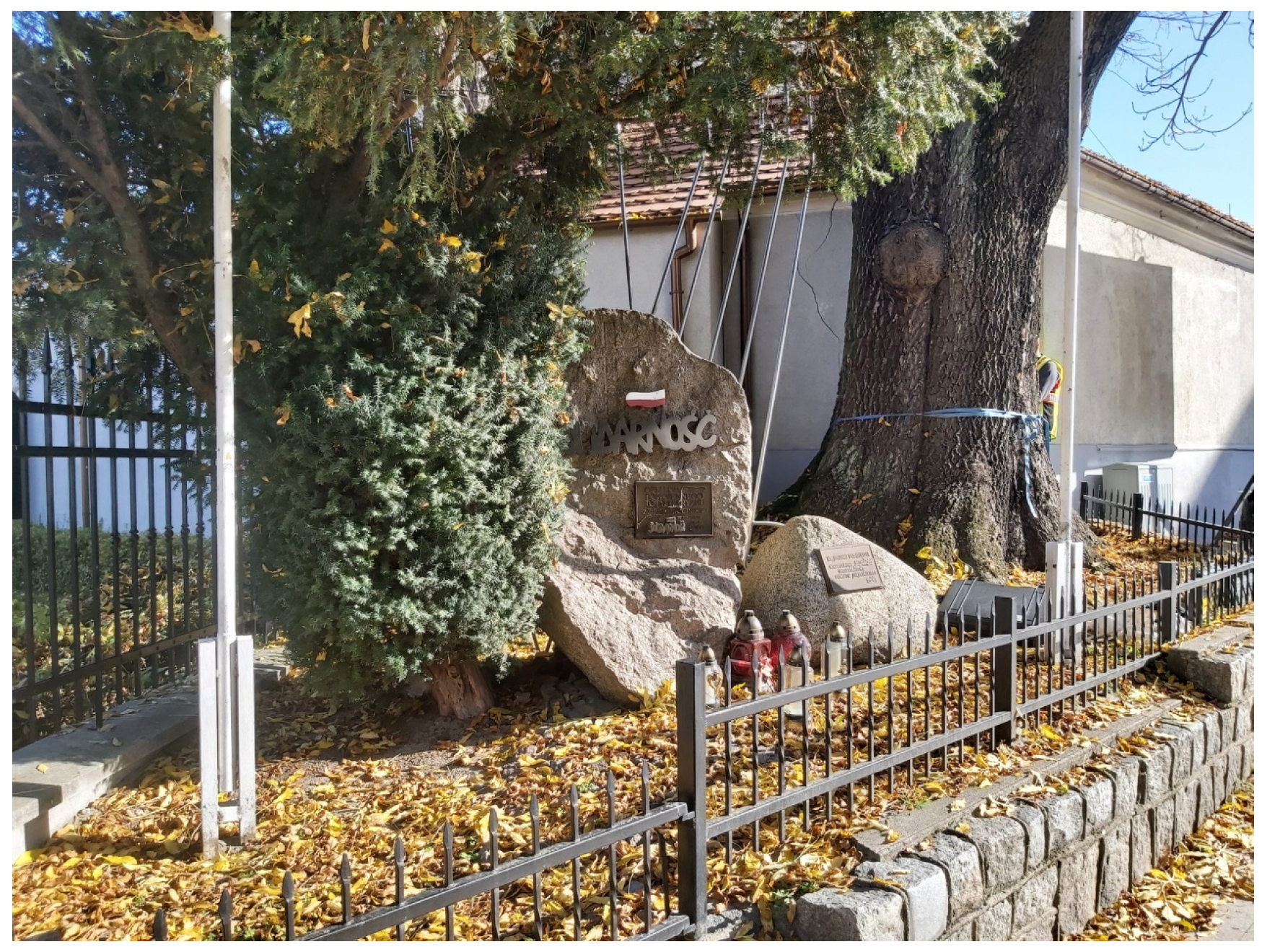
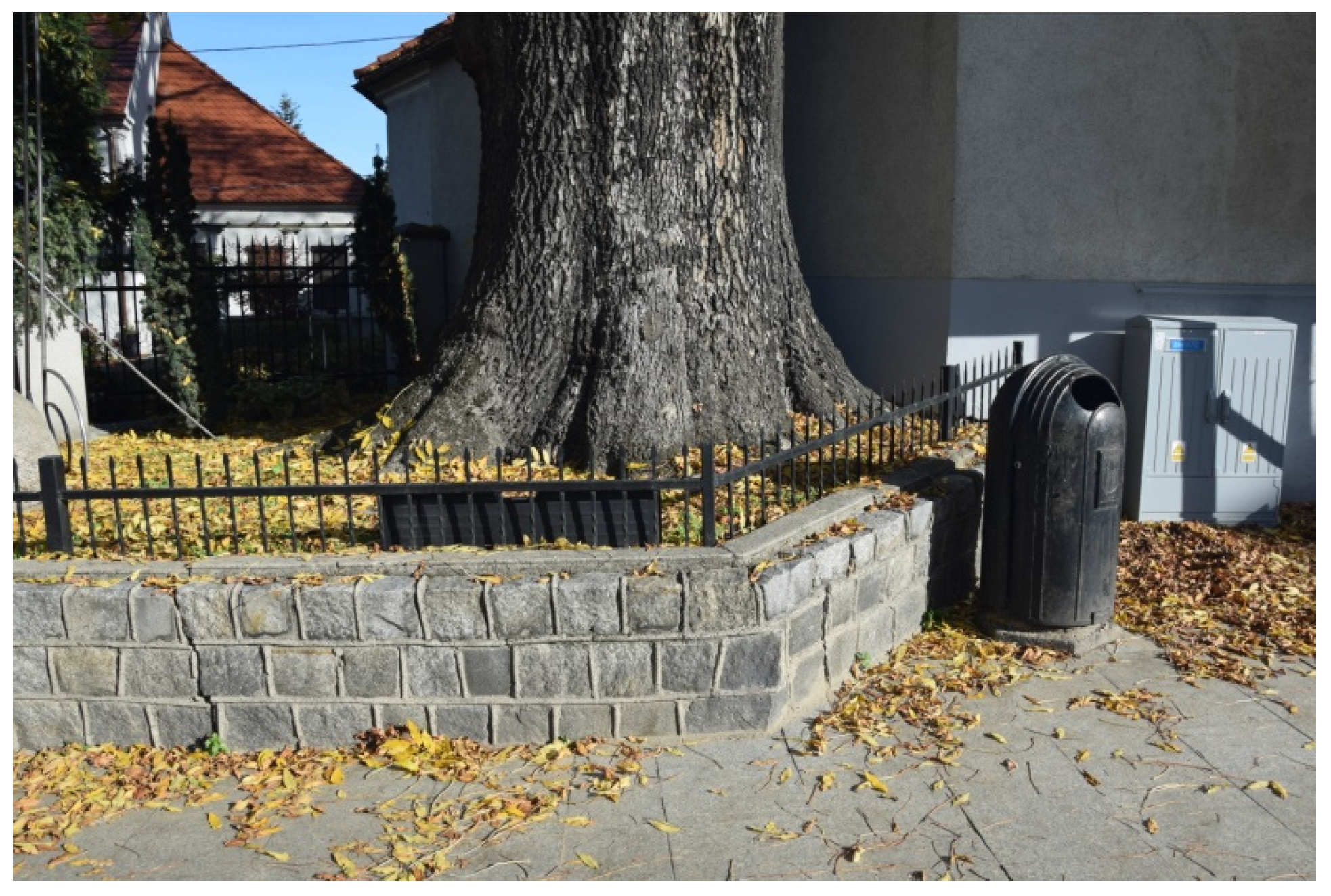
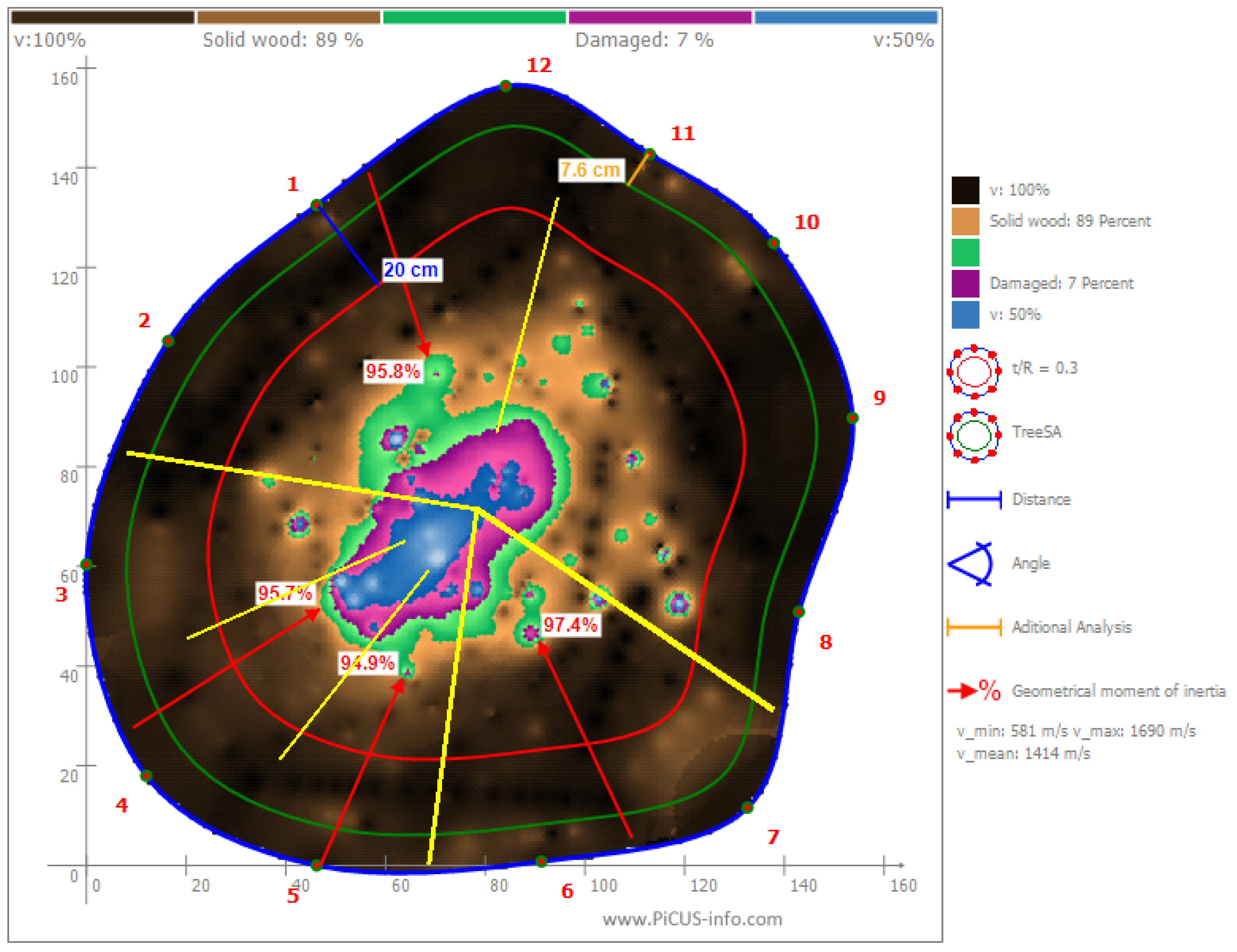
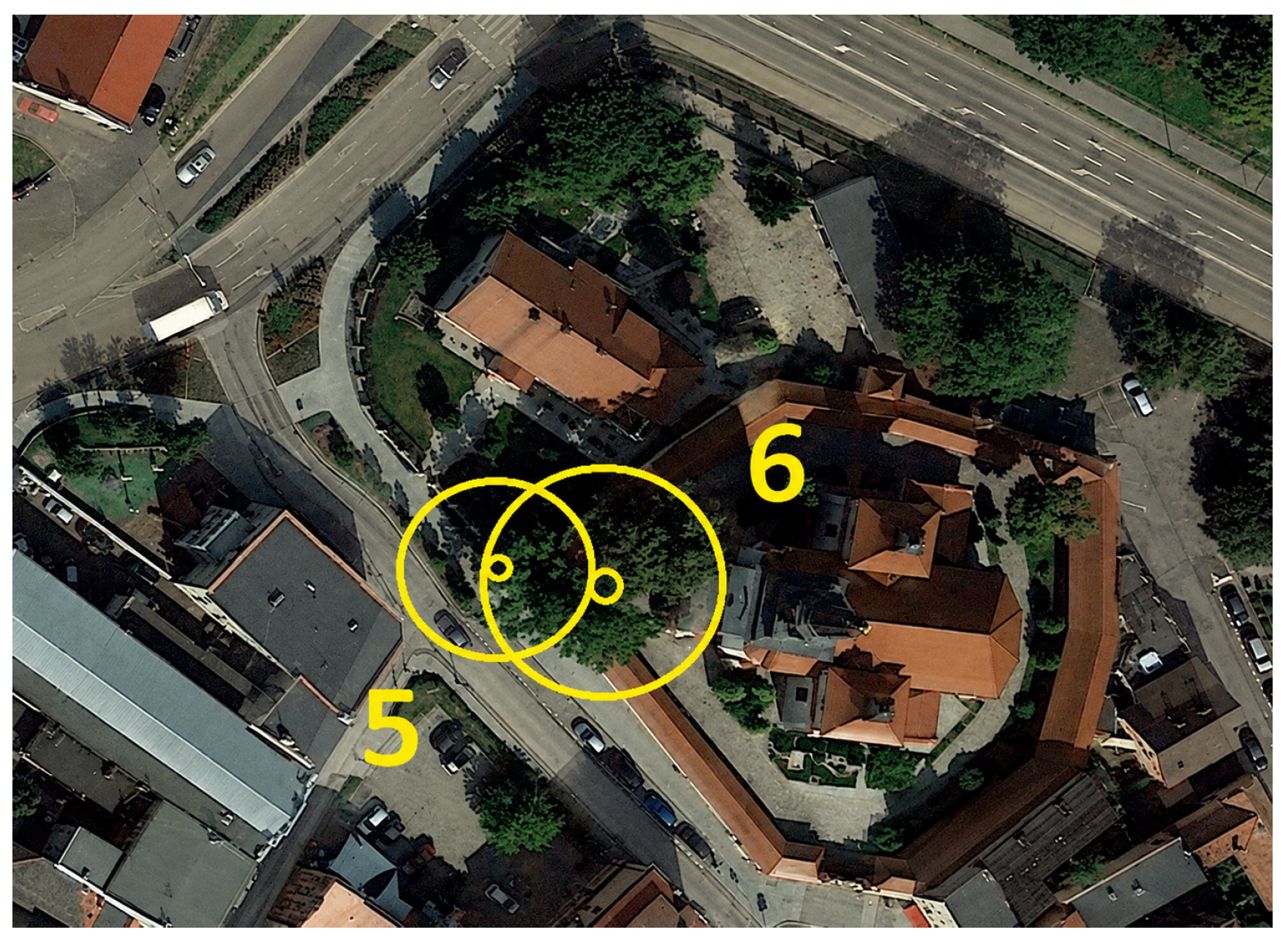
Reason for examination: the ash tree grows on an elevated planting bed with a grass surface, bounded to the north by the boundary wall of the Roman Catholic Parish of St. Martin and to the south by a low retaining wall (Figure 19 and Figure 20). Within the crown projection area of the tree, there is a stone obelisk dedicated to Jerzy Popiełuszko (Figure 21 and Figure 22), as well as a pedestrian pathway, a parking area, and a church garden.
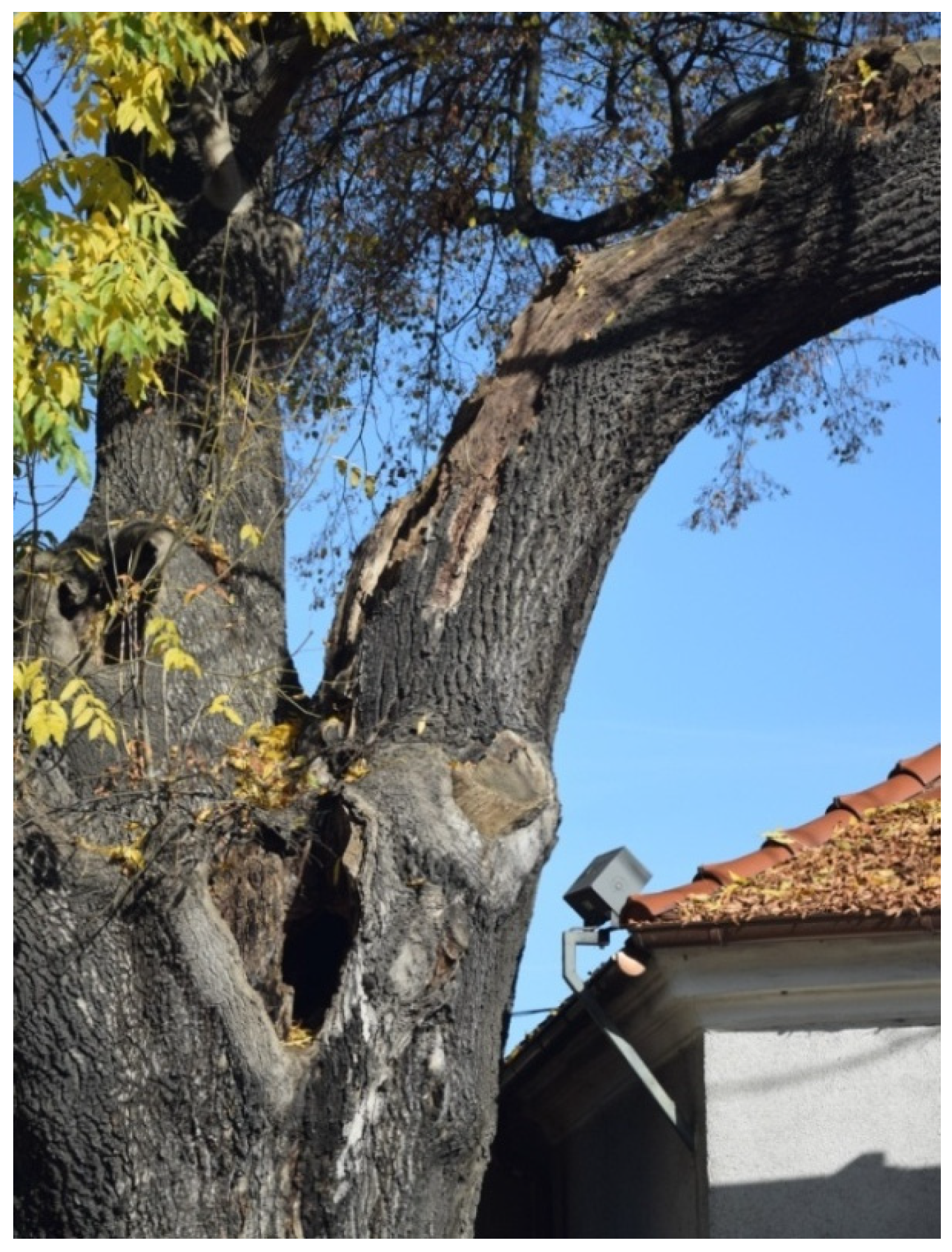
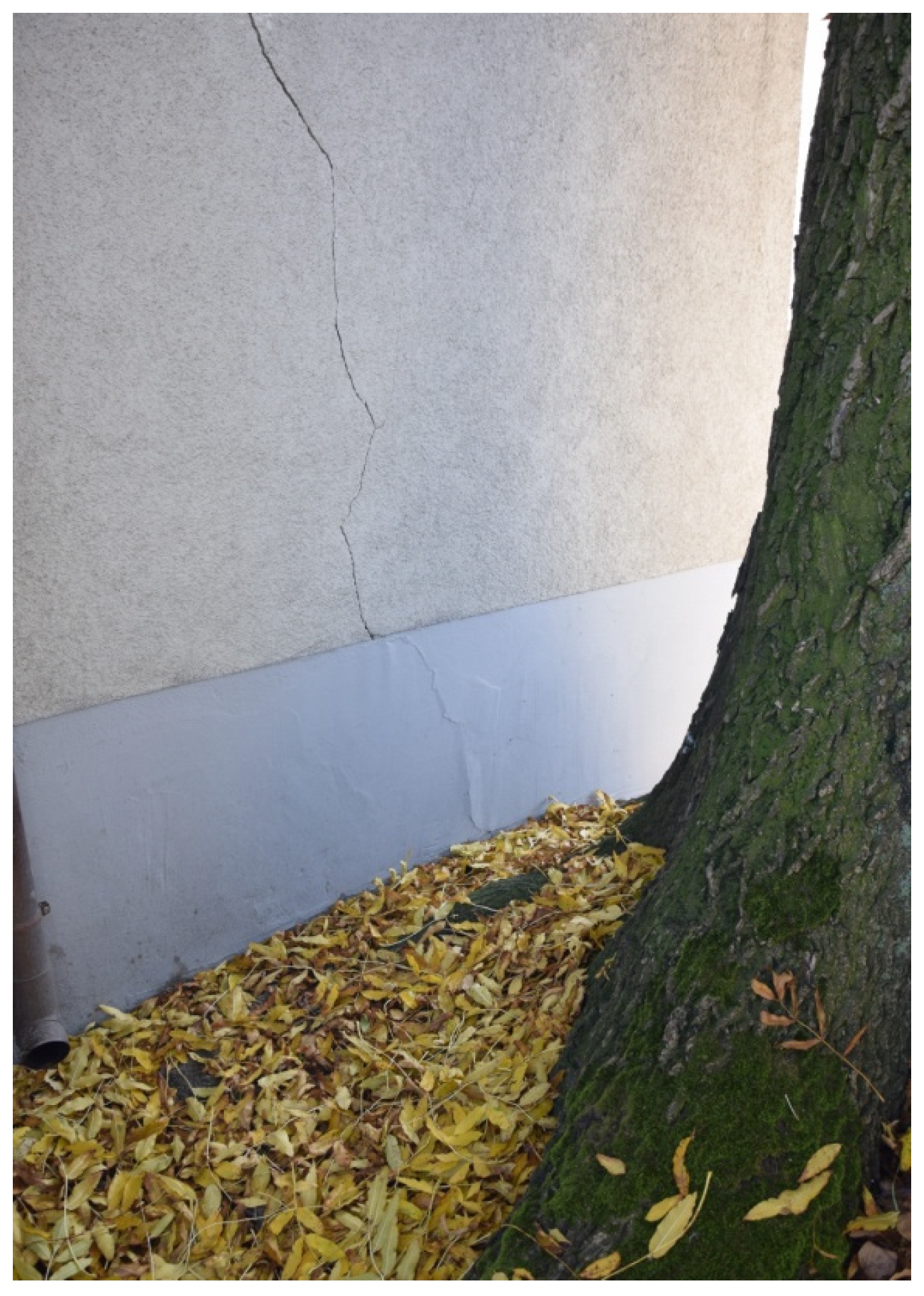
The trunk base is strongly developed, with well-formed root buttresses. The tree grows very close to a masonry boundary wall; the root buttresses extend beneath the wall’s foundation, and the expanding roots are causing cracks in the structure. The crown is regular and symmetrically, almost horizontally branched. Numerous exudations are visible on the trunk. On the southern side, at a height of approximately 3 m, there is a very large, deep open cavity with internal decay, resulting from the failure of a major limb (Figure 23). Similarly, on the main stem from the western side, a characteristic chimney-type cavity is present. A major branch extending toward the church—stripped of bark in its upper part—is partially fractured, with irregular, splintered edges (Figure 24). Three sets of dynamic flexible bracing systems (Cobra type) have been installed in the crown, connecting the main limbs that extend almost horizontally in all directions. These systems limit excessive movement of branches and improve safety in the tree’s surroundings. On the northern side of the trunk, a well-healed frost crack extending to the base of the crown is visible, with a relatively thick layer of callus tissue. Crown deadwood is estimated at approximately 20–25%. Some leaves have already fallen, while others remain on the more vital parts of the crown. Numerous wounds from past pruning of large branches are relatively well occluded. The vitality of the tree, according to the Roloff scale, can be classified on the day of assessment as class 2 (stagnation phase—no further crown development).
Tomographic examination was carried out at a height of 130 cm above the ground surface. Twelve measurement points were installed on the trunk of the tree and then an acoustic measurement was performed. Based on the obtained results, damage to the central part of the trunk was found, covering 7% of its cross-sectional area. Undamaged wood, at the same time technically functional, occupied 89% of this cross-section. The remaining area is transitional wood (Figure 25). On the attached tomogram, yellow lines are visible, being the equivalent of internal cracks spreading radially inside the trunk. This is only a suggestion indicating the possibility of such a situation, but without 100% confirmation.
The geometric moment of inertia calculated for different directions for this trunk cross-section, measured at the weakest points at the measurement height, ranges from 94.9 to 97.4% of the maximum strength in relation to a trunk free of defects or damage. The applied calculations take into account only the geometry of the trunk at the level of the measurement performed; therefore, in higher parts of the trunk, e.g., just below the crown base, the situation may be different. One should also take into account the properties of the wood itself, which may affect the final measurement result. Nevertheless, due to visible defects in the upper part of the trunk, which connect with areas of decay in its central part, the diagnosis should be made with caution. The flexible bracing installed in the crown significantly reduces the forces acting on the main branches of the tree. The red line, important for calculating the t/R ratio, i.e., the ratio of sound wood (t) to the radius of the trunk (R), running along the circumference of the measured trunk cross-section, determines the minimum thickness of the remaining wall constituting the safety limit against trunk breakage. In this case, it is on average 20 cm, and the calculated t/R ratio is 0.25. The trunk of the tree therefore has a reduced coefficient compared to the optimal one and therefore requires more frequent monitoring. The previously mentioned bracing reduces the risk of trunk splitting to some extent, but does not eliminate it completely. Taking into account the velocity of sound wave propagation inside the trunk, its highest value was recorded between measurement points 3 and 11 (1690 m·s−1), i.e., in the area of sound wood, and the lowest (581 m·s−1) between sensors 7 and 2, where the acoustic wave moved through damaged areas. The velocity of sound moving in damaged areas is almost twice as low, and in the sound area it reaches values even higher than those assigned to healthy ash wood, which according to the literature range from 1162 to 1379 m·s−1. The minimum thickness of sound wall, important for the statics of the tree, calculated by the TreeSA method, should be on average 7.6 cm (green line on the tomogram). Based on the measurement at a height of 130 cm, it was found that the weakening of the wood structure in the area of occurrence of cavities or decay of tissues does not exceed at all the assumed safety limit. The minimum required residual strength of solid trunk wood of the tree, calculated by the TreeSA method, should be 2%, while based on tomographic measurements the percentage share of fully technically functional wood is in this case 88%, thus significantly exceeding the calculated minimum value. Such a result indicates very good statics, which is also influenced by the low-set crown.
  • Object no. 6—Small-leaved lime (Tilia cordata Mill.)—natural monument growing opposite the entrance to the Church of St. Martin
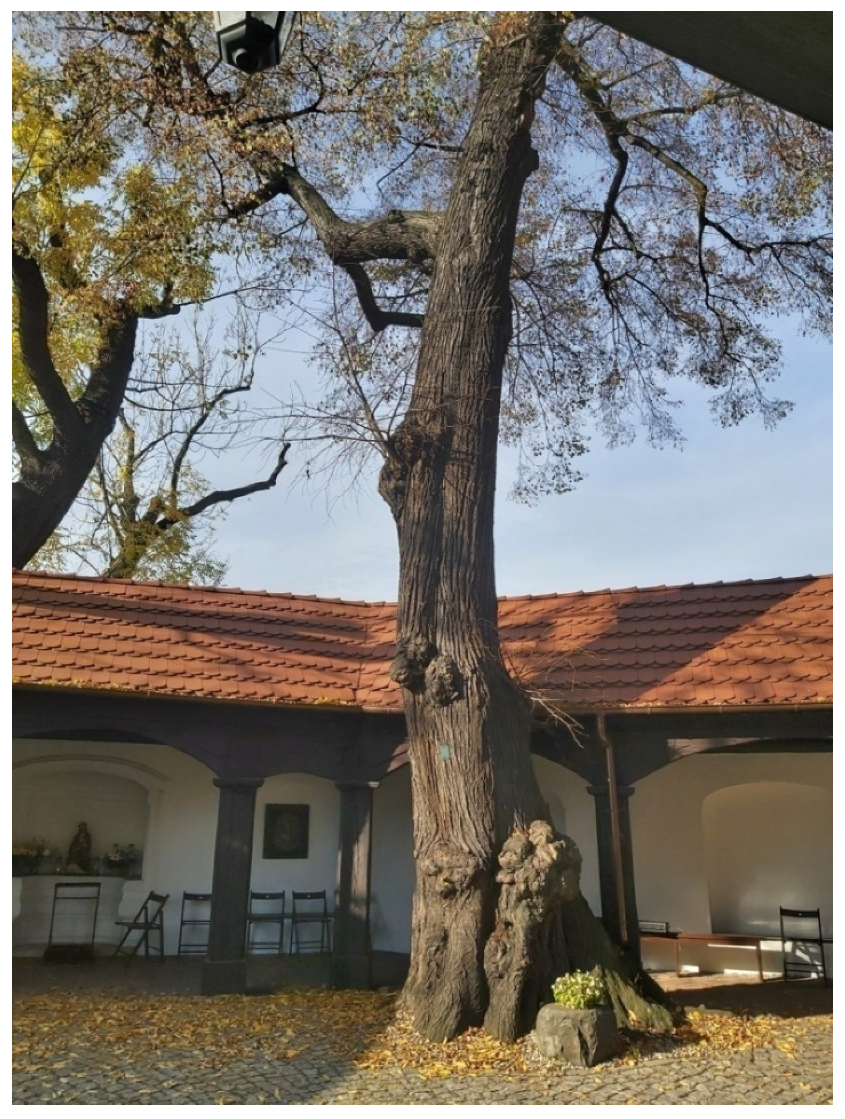
Reason for examination: the tree grows in the church courtyard opposite the main entrance to the church (Figure 26 and Figure 27). Within the crown projection area there is a boundary wall and a covered Stations of the Cross walkway. Previously, on the other side of the church, a similar lime tree grew (now already removed).
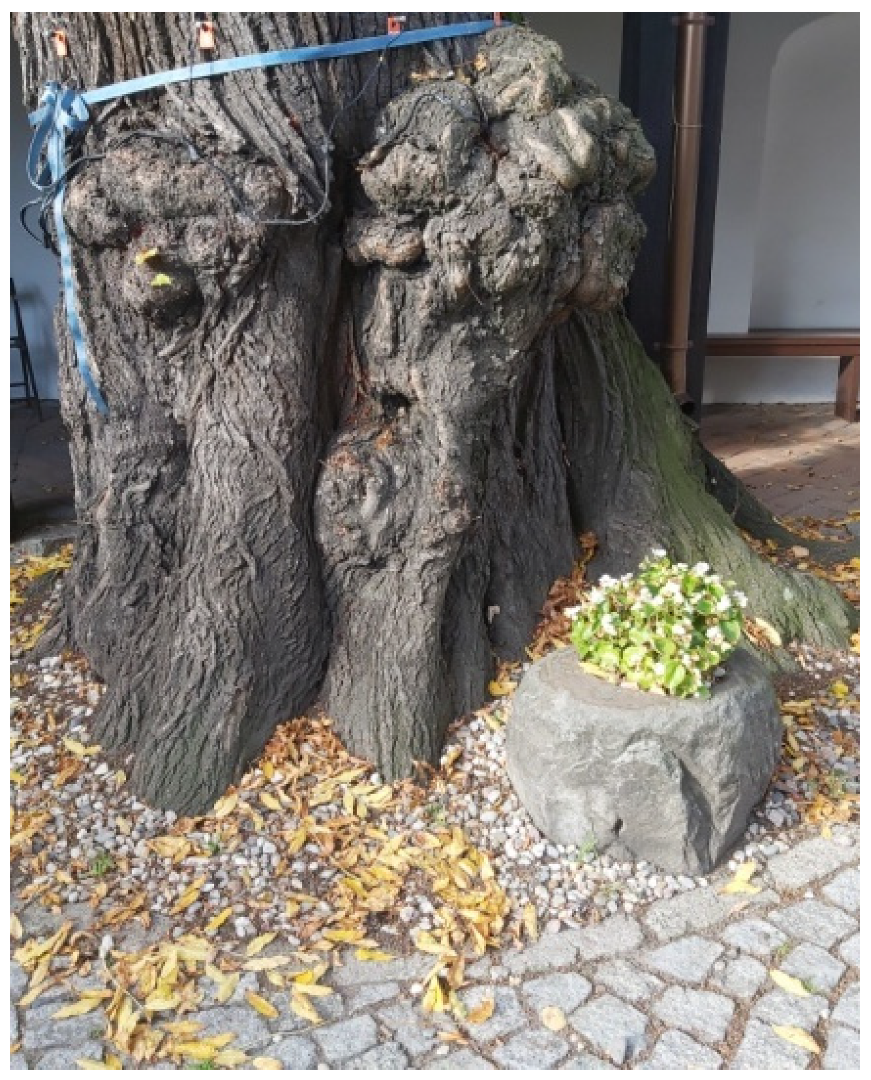
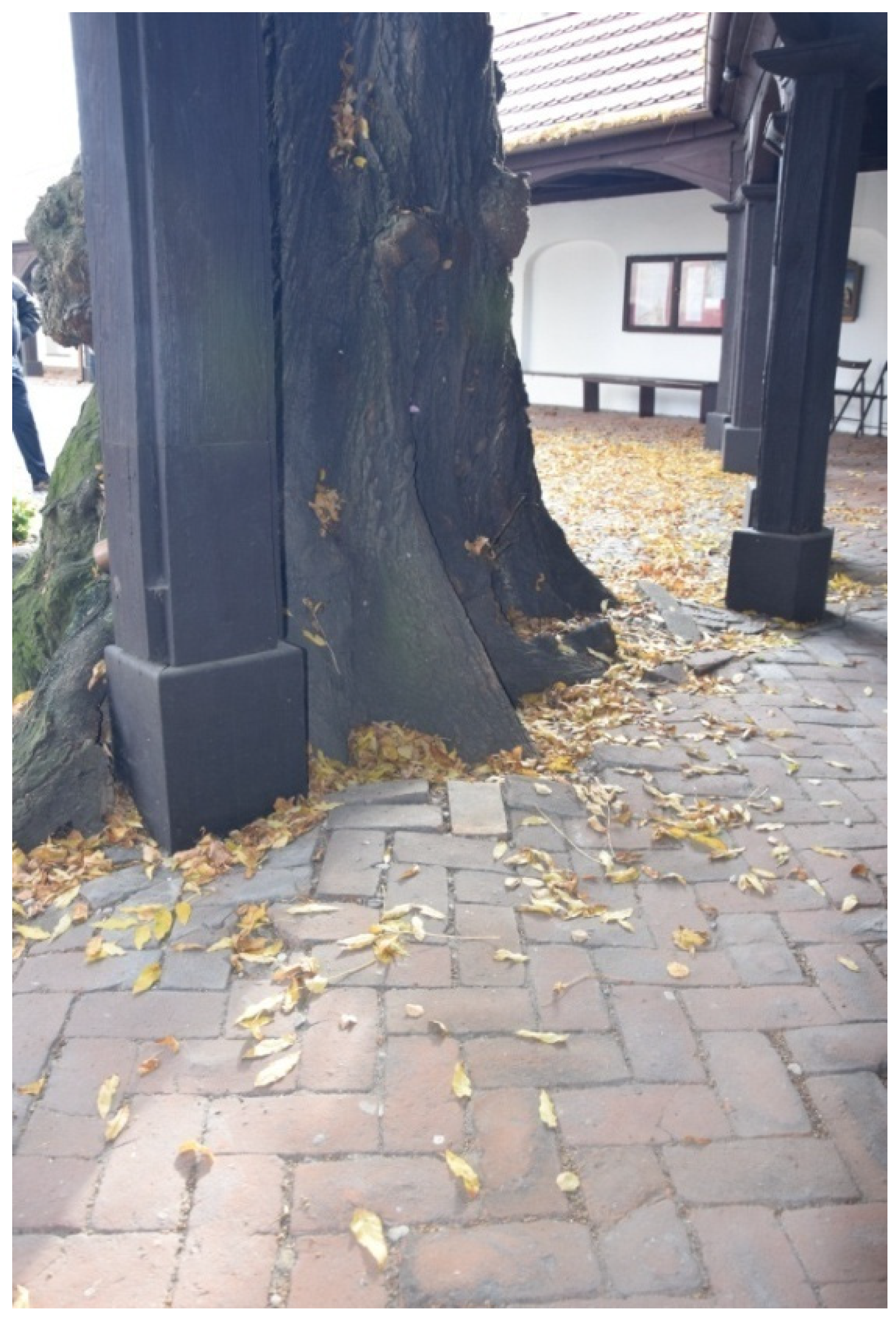
Visually, the tree appears healthy. The root buttresses are well developed, and the roots developing just below the surface on the south-west side grow into a wooden post supporting the roof of the arcades and lift the clinker brick pavement under the cloisters (Figure 28 and Figure 29). In the remaining area, beneath the crown dripline, there is a granite block pavement. The trunk of the tree, with numerous knotted growths, is slightly inclined toward the north. In the crown, traces of previous maintenance pruning are visible. The crown itself is symmetrical, with an oval shape. Crown deadwood is estimated at approximately 15%. The vitality according to the Roloff scale falls within class 1.
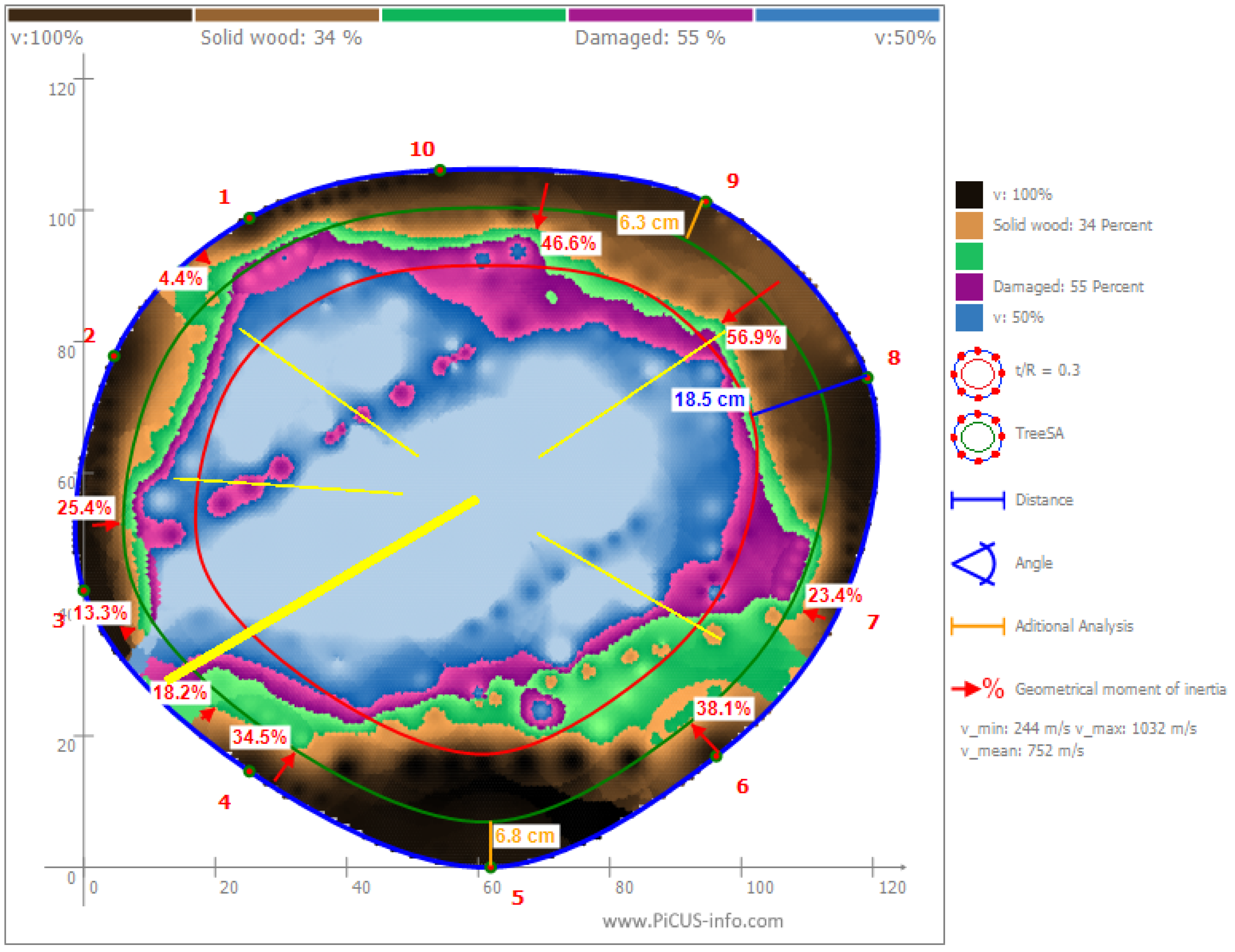
For the small-leaved lime, the tomographic examination was carried out at a height of 160 cm above the ground surface, installing 10 measurement points on the trunk. The optimal height for conducting the examination was determined based on prior sounding of the trunk with a diagnostic hammer at different levels and the occurrence of knotted growths. After performing the examination and analyzing the results, extensive destruction of the internal structures of the trunk was found, covering its central part and the area on the eastern side (Figure 30). Fully sound and at the same time technically functional wood occupies 34% of the trunk cross-section, while damaged wood accounts for as much as 55%. The remaining area is occupied by transitional wood (11%). It is clearly visible that carious decomposition, or a cavitary lesion, shows the greatest tendency to progress in two directions. This corresponds with the distribution of yellow lines, which suggest the occurrence of radial internal cracks. The geometric moment of inertia calculated for this lime tree, for different directions and for this trunk cross-section, measured at the weakest points at the measurement height, ranges from 4,4% to 56.9% of the maximum strength relative to a trunk free of defects or damage. Based on the obtained results, it can be stated that the condition of the tree in terms of mechanical strength and resistance to trunk bending is somewhat reduced. The red line defining the minimum wall thickness, important for calculating the t/R coefficient and constituting the safety limit against trunk breakage, is located 18.5 cm from the trunk edge. The calculated t/R coefficient is 0.30, which still corresponds to the safe threshold value. Taking into account the velocity of sound wave propagation inside the trunk, the highest value was recorded between measurement points 4 and 5 (1032 m·s−1), and the lowest (244 m·s−1) between sensors 5 and 10. The sound velocity in the damaged area is therefore much lower, while in the sound wood it falls within the range typical for healthy lime wood, which according to the literature is from 940 to 1183 m·s−1. The minimum thickness of sound wall, important for the statics of the tree, calculated using the TreeSA method, should be on average 6.8 cm (green line on the tomogram). Based on the measurement at a height of 160 cm, it was found that the weakening of the wood structure in areas of cavities or decay practically does not exceed the assumed safety limit, except for a minimal section between measurement points 3 and 4. The minimum required residual strength of solid trunk wood, calculated using the TreeSA method, should be 32%. Taking into account the data obtained from the tomographic examination, the percentage share of fully technically functional wood is in this case 34%, which still falls within the safety zone. This indicates still acceptable statics of the tree assessed on the day of measurement.
Since the obtained results are at the threshold of values considered minimal, and taking into account the safety of the surroundings, a progressive destructive process should be expected in the coming years. The rate at which it will develop depends on many factors. Similarly to poplars, lime trees are characterized by soft wood highly susceptible to biocorrosion; therefore, it is advisable to monitor the tree in the coming years to determine whether the internal wood decay is not progressing too rapidly.

3.2. Overall Health Condition and Structural Integrity of the Assessed Trees

Tomographic analysis revealed significant variation in the internal condition of the wood of the examined urban trees, despite their similar age and exposure to comparable urbanization pressure. The proportion of sound and at the same time technically functional wood in the trunk cross-section, at the measurement height, ranged from 33% to 88% (Table 1 and Table 2).
The highest values of technically functional wood were found in Platanus × hispanica and Quercus robur, where they amounted to 79% and over 55%, respectively. These species were also characterized by high sound wave propagation velocities and favorable values of the geometric moment of inertia of the trunk cross-section.
The lowest values of sound wood were recorded in Populus alba and Tilia cordata, in which the tomograms revealed extensive zones of reduced acoustic wave velocity, indicating advanced processes of degradation of the internal wood structure, located mainly in the central zones of the trunk.
In several cases, trees showing clear external defects, such as cavities, frost ribs, or traces of previous pruning, maintained continuity of the peripheral layer of wood with parameters ensuring the mechanical stability of the trunk. These results indicate the limited usefulness of visual assessment as a standalone tool for estimating the actual risk of trunk failure.
Figure 30. Tomogram of the internal structure of the small-leaved lime (Tilia cordata Mill.)—inventory no. 6; measurement height: 160 cm (prepared by W. Durlak).
Sustainability 18 05114 g030

3.3. Assessment of Residual Wall Thickness and the t/R Ratio

The values of the t/R ratio, defining the relationship between the minimum thickness of the sound trunk wall and its radius, ranged from 0.20 to 0.32. Four out of the six analyzed trees reached or exceeded the value of 0.30, considered in arboricultural practice as safe under typical loading conditions.
Two trees (Populus alba and Tilia cordata) showed threshold or reduced values (t/R ≤ 0.25). In their case, however, the tomograms revealed a favorable spatial distribution of sound wood, concentrated mainly in the peripheral zones of the trunk. Additionally, the assessment of stability was influenced by location-related factors, such as shelter from wind and crown architecture.
The obtained results indicate that the interpretation of the t/R ratio should take into account both the spatial distribution of tissues and the habitat context of the tree, rather than relying solely on the threshold value of this indicator.

3.4. Distribution of Sound Wave Velocities and Wood Condition

The recorded velocities of acoustic wave propagation showed high variability and ranged from 234 m·s−1 to over 1700 m·s−1, depending on the species and the degree of degradation of the internal trunk structures. Areas of sound wood were characterized by velocities consistent with or exceeding the reference values reported in the literature, whereas zones of decay showed a significant reduction in wave propagation speed.
In all analyzed cases, the tomograms revealed a heterogeneous internal structure of the trunk. Degradation processes were concentrated mainly in the central zones, while the peripheral wood often maintained structural continuity and mechanical functionality. This phenomenon was particularly evident in species exhibiting a high capacity for compartmentalization.
In some tomograms, radially oriented zones of reduced acoustic wave velocity were observed, interpreted as potential internal cracks. However, their presence did not always translate into a significant reduction in the overall static stability of the trunk.

3.5. Significance of the Results for Risk Classification

The combined analysis of the results of visual tree assessment (VTA) and acoustic tomography showed that none of the examined trees met the criteria requiring immediate removal due to the risk of trunk failure. Despite the concerning external defects identified during the preliminary visual assessment, as many as 83% of the trees subjected to tomography (5 out of 6 specimens) retained sufficient structural stability, which allowed them to be preserved from unjustified removal.
The obtained data, however, made it possible to differentiate the level of risk and to formulate management recommendations (Table 3), including maintenance treatments, the use of flexible bracing, and periodic monitoring of technical condition.
Acoustic tomography made it possible to objectify the risk assessment, reducing the subjectivity of decisions made solely on the basis of visual evaluation and enabling precise differentiation between trees requiring intervention and those that can be safely preserved.

3.6. Sustainable Management of Urban Greenery in Jarocin

In Jarocin, urban greenery plays an important role in shaping public space, and the municipal authorities undertake a number of actions aimed at its maintenance and development. The tasks and activities carried out by the city include:
  • dendrological expertise—regular assessments of tree health condition;
  • sustainable green space management—maintenance instead of removal;
  • public participation—residents have a voice in decisions regarding urban greenery;
  • compensatory planting—if a tree must be removed, new ones should be planted in return;
  • legal protection—designation of trees as natural monuments or inclusion under planning protection.
The Municipality of Jarocin regularly announces tenders for the ongoing maintenance of green areas, including, among others, the care of parks, squares, and maintenance pruning of hedges. As part of the revitalization of the Jarocin town center, modern tree planting systems have been implemented, enabling better plant development under urban conditions. Special technologies have been applied that allow for the planting of large, mature trees, with the aim of immediately replacing existing greenery.
Jarocin also invests in the revitalization of existing green areas. An example is the modernization of Radoliński Park, where activities are carried out to renew infrastructure and improve the aesthetics and functionality of the site. Thanks to such initiatives, Jarocin is becoming an increasingly friendly place for residents, offering spaces conducive to recreation and social integration.
It should be noted that the decision-making bodies of cities in Poland are City Councils. All councils operate on the basis of the same laws and have the same competencies. In all of them, there is a standing committee dealing with environmental issues. The executive body of a city in all cities is the Mayor (President of the City). From a competency and organizational point of view, the councils are prepared to implement systemic management of biodiversity within their cities.
A significant obstacle, however, is the low level of awareness among city councillors. According to a report of the Ministry of the Environment from 2010, only 19% of Poles have encountered the term “biodiversity” in their lifetime [38]. The concept of “biodiversity loss” remains at a similarly low level of recognition. Poles are characterized by low awareness and very general knowledge regarding the causes and consequences of biodiversity loss.

3.7. Vision of the Urban Green Space Strategy for Jarocin

The authors of the manuscript also developed a concept of a detailed action plan for the urban green space strategy of Jarocin, divided into time periods (2025–2030 and 2031–2050) (Table 4), together with objectives and actions (Table 5 and Table 6). Indicators for monitoring progress were also developed (Table 5).
Monitoring and evaluation will take place every two years, and their outcome will be the report “Green Jarocin”, in which progress and possible adjustments of actions will be discussed. This will be accompanied by public consultations and updates of priorities. These will take the form of open evaluation meetings with residents and experts.

4. Discussion

4.1. Acoustic Tomography and Limitations of Visual Assessment

Visual Tree Assessment (VTA) remains one of the most widely applied approaches in urban tree risk assessment due to its simplicity, low cost, and practical applicability in everyday arboricultural practice. However, the results of the present study confirm that visual assessment alone may not provide sufficient information regarding the actual mechanical stability of mature and veteran trees. External symptoms such as cavities, frost cracks, pruning wounds, or bark defects do not necessarily correspond to a critical reduction in structural stability, particularly in species capable of maintaining a mechanically functional peripheral layer of wood despite advanced internal decay.
The discrepancies observed between external tree appearance and tomographic results highlight one of the major limitations of VTA-based assessment. In several analysed trees, visible defects suggested potentially high failure risk, whereas acoustic tomography revealed the presence of continuous zones of structurally sound wood capable of maintaining trunk stability. This phenomenon may be explained by compartmentalisation processes described in the CODIT model, in which trees isolate damaged tissues while preserving mechanically functional peripheral wood. Consequently, the presence of internal decay alone should not automatically be interpreted as an indicator of imminent failure risk.
Tomography methods are currently widely applied in studies concerning tree health condition, wood quality, pathogenic processes, prevention of tree failure in urbanised areas, and long-term climatic stress analysis. However, despite their considerable diagnostic value, tomographic methods may also be influenced by a range of biological, environmental, and technical factors, including species-specific wood properties, climatic conditions, trunk geometry, the presence of cavities or advanced decay, and potential limitations associated with image interpretation and automatic colour calibration. Consequently, acoustic tomography should not be treated as a standalone predictor of failure risk, but rather as part of an integrated diagnostic framework combining tomographic analysis, visual assessment, biomechanical interpretation, and site-specific conditions.
The obtained results confirm that acoustic tomography substantially improves the objectivity of tree risk assessment by providing quantitative information on residual wall thickness, internal wood condition, and spatial distribution of structural defects. Compared with visual inspection alone, tomographic analysis reduces diagnostic uncertainty and enables more evidence-based management decisions, particularly in the case of monumental and historically valuable trees located in intensively used public spaces.
These findings are consistent with international studies emphasising the increasing role of non-invasive diagnostic techniques in sustainable urban tree management. The integration of acoustic tomography into urban arboricultural practice may contribute to reducing precautionary tree removal, improving public safety, and supporting biodiversity conservation within urban green infrastructure systems.

4.2. Biomechanical Interpretation of Tree Stability

The results indicate that the t/R ratio should not be interpreted as a universal or isolated indicator of tree safety. Although the threshold value of t/R ≥ 0.30 is widely applied in arboricultural practice, the mechanical stability of trees depends on a more complex interaction between trunk geometry, wood properties, crown architecture, and external loading conditions. As emphasized by Sellier and Fourcaud (2009), tree stability is influenced not only by residual wall thickness but also by the spatial distribution of stiffness within the stem and the dynamic interaction between the trunk and crown under wind loading conditions [39]. Similarly, Jackson (2019) demonstrated that the dynamic response of trees to wind loading is determined largely by crown architecture and structural asymmetry rather than solely by material properties or residual wall thickness [40].
In the present study, some trees with threshold or slightly reduced t/R values maintained acceptable biomechanical stability due to favourable spatial distribution of sound wood, sheltered growing conditions, and relatively balanced crown architecture. These observations support the interpretation that residual wall thickness should be analysed together with broader biomechanical factors influencing load distribution and structural response.
Previous biomechanical studies have also demonstrated that tree response to wind loading depends on complex interactions among the crown, trunk, and root system, as well as on dynamic loading conditions associated with gust intensity and wind exposure. As noted by Moore (2018), wind-induced tree failure results from highly variable mechanical interactions that cannot be fully explained using simplified static indicators alone [41]. Consequently, acoustic tomography should be integrated with broader biomechanical interpretation rather than treated as a standalone predictor of failure risk.
These observations demonstrate that biomechanical interpretation of tomographic data requires consideration of both internal trunk condition and external structural characteristics of the tree. Consequently, risk assessment should be based on integrated analysis rather than simplified threshold-based classification alone.

4.3. Implications for Biodiversity-Oriented Urban Management

One of the key challenges of contemporary urban green space management is reconciling the requirements of public safety with the protection of biodiversity and cultural heritage. Veteran trees play an irreplaceable ecological, landscape, and social role, and their loss constitutes an irreversible damage both from the perspective of the functioning of urban ecosystems and the identity of public spaces [42,43,44,45].
Sustainable urban green space management increasingly requires the integration of biodiversity conservation, ecosystem service provision, and public safety within a single decision-making framework [46,47,48,49]. In this context, mature and veteran trees represent a particularly valuable component of urban green infrastructure due to their ecological continuity, cultural significance, and high capacity for delivering ecosystem services.
The results of the present study demonstrate that acoustic tomography may substantially support biodiversity-oriented urban tree management by reducing uncertainty associated with visual assessment alone. The possibility of objectively assessing residual wall thickness and internal structural condition enables more balanced management decisions, particularly in cases where trees exhibit visible external defects but still maintain sufficient mechanical stability.
These findings are especially relevant for medium-sized cities, where decisions regarding the removal of mature trees often generate social conflicts and may lead to irreversible ecological losses. The integration of non-invasive diagnostic techniques with systematic tree inventories and long-term monitoring may therefore contribute to more transparent, evidence-based, and socially acceptable urban green management practices.
At the same time, the growing recognition of ecosystem services provided by mature urban trees—including microclimate regulation, carbon storage, stormwater retention, and habitat provision—further strengthens the need for management strategies aimed at preserving structurally stable veteran trees whenever possible [50,51,52]. From the perspective of climate adaptation and sustainable urban development, reducing precautionary tree removal may significantly enhance the long-term resilience of urban green infrastructure systems.
The integration of acoustic tomography into urban green space management practices represents a transition from a reactive model—primarily based on visual assessment and ad hoc interventions—to a more adaptive and evidence-based decision-making model. In medium-sized cities such as Jarocin, where green resources are limited and decisions regarding tree removal often generate strong public emotions, this approach is of particular importance [53,54,55].
The combination of advanced diagnostic techniques with systematic monitoring enables the rationalization of green space maintenance costs, increases the transparency of administrative decisions, and supports greater social acceptance of management actions concerning monumental and veteran trees. In the long term, such solutions may constitute an important component of urban climate adaptation strategies, strengthening the resilience of urban green infrastructure systems.

4.4. Transferability and Limitations

Although the study was conducted in a medium-sized Central European city, the proposed diagnostic and decision-support approach demonstrates broader applicability to urban areas facing similar challenges related to ageing tree populations, climate adaptation, and increasing public safety expectations. Nevertheless, the transferability of the results should be interpreted cautiously, as tree biomechanics and decay dynamics may vary depending on climatic conditions, dominant species composition, maintenance practices, and local regulatory frameworks. In regions exposed to more intensive wind events or prolonged drought stress, the relationship between residual wall thickness and structural stability may differ substantially. Therefore, future research should focus on comparative multi-city studies integrating tomographic diagnostics, biomechanical modelling, and long-term monitoring under different environmental conditions.
Despite the considerable diagnostic potential of acoustic tomography, this method should be treated as an element of a broader tree assessment system, rather than as a standalone tool. The obtained results refer only to selected trunk cross-sections and do not fully account for the complex interactions between the root system, trunk, and crown.
Future studies should therefore integrate tomographic data with biomechanical modelling, analysis of climatic stresses, and long-term monitoring of structural changes in urban trees. Such an integrated approach may substantially improve the reliability of urban tree risk assessment and support more adaptive and resilient urban green space management strategies.
The interpretation of tomographic results may additionally be influenced by species-specific wood properties, trunk geometry, climatic conditions, and measurement height. Environmental factors such as prolonged drought, frost conditions, or temperature variability may affect acoustic wave propagation and consequently influence tomographic image interpretation. Furthermore, trees with irregular trunk architecture or extensive internal cavities may require particularly cautious interpretation of automatically generated tomographic images. Therefore, acoustic tomography should be applied as part of an integrated diagnostic framework combining quantitative measurements, visual assessment, and site-specific biomechanical interpretation.
The study was conducted during a single measurement period and therefore does not account for potential seasonal variability in wood moisture content and acoustic properties.
Additionally, future studies could benefit from more standardized diagnostic procedures and shared reference databases developed in cooperation with manufacturers of tomographic equipment. Such an approach could improve the comparability of results among different studies, tree species, and environmental conditions, while also increasing the reliability of tomographic image interpretation in arboricultural practice.

4.5. Verification of Research Hypotheses

Hypothesis H1. 
Acoustic tomography enables a more precise assessment of the mechanical stability of mature and veteran trees than an assessment based solely on the visual method (VTA).
The results of the study confirm Hypothesis H1. A comparison of the results of the visual tree assessment (VTA) with tomographic analysis revealed significant discrepancies between the external evaluation and the actual internal condition of the trunks. In several cases, trees exhibiting clear visual defects (e.g., cavities, frost ribs, traces of past pruning) were characterized by a continuous and functionally efficient layer of peripheral wood, ensuring the mechanical stability of the trunk. Acoustic tomography thus provided quantitative data that allowed for a more precise and objective estimation of risk than visual assessment alone.
Hypothesis H2. 
In urban trees exhibiting significant external defects, the proportion of structurally sound wood may remain at a level ensuring public safety.
Hypothesis H2 was confirmed by the results of the tomographic analysis. Despite the presence of significant external defects, such as trunk cavities or signs of biocorrosion, the proportion of healthy and structurally sound wood in the cross-sections of the examined trees ranged widely from 33% to 88%. In the majority of analyzed specimens, the continuity of the peripheral wood layer was preserved, allowing the mechanical stability of the trunk to be maintained at a level acceptable from the perspective of public safety.
Hypothesis H3. 
The value of the coefficient  t / R 0.30  constitutes a practical safety threshold for mature urban trees under urbanized environmental conditions.
The results generally support Hypothesis H3, as most analysed trees meeting or approaching the accepted safety threshold maintained adequate structural stability under urban conditions. However, the findings also indicate that the interpretation of the t/R ratio should account for species-specific characteristics, spatial distribution of sound wood, and local site conditions.
Four out of six examined trees reached or exceeded the value of t/R ≥ 0.30, generally regarded in arboricultural practice as acceptable. At the same time, two specimens exhibited threshold or slightly reduced values (t/R ≈ 0.25); however, their overall stability was supported by a favorable spatial distribution of sound wood, crown architecture, and local site conditions. These results indicate that the t/R coefficient should be interpreted as an important but not the sole decision-making parameter, and its significance increases when combined with an analysis of tissue distribution and site-specific conditions.
Hypothesis H4. 
The application of acoustic tomography in the tree risk assessment process leads to a reduction in the number of decisions on unjustified removal of urban trees.
Hypothesis H4 was confirmed based on the results of the study and the analysis of management recommendations. The use of acoustic tomography made it possible to demonstrate sufficient residual strength of tree trunks that, based solely on visual assessment, could have been classified for removal. In none of the analyzed cases was the need for immediate removal identified; instead, differentiated recommendations were formulated, including maintenance treatments, monitoring, or the application of technical support measures. These results clearly indicate that the integration of acoustic tomography into the risk assessment process supports more evidence-based and biodiversity-oriented urban tree management while reducing unnecessary removal of valuable mature trees.

5. Conclusions

The conducted study confirms that acoustic tomography constitutes an effective and reliable tool supporting the assessment of the mechanical stability of mature and veteran urban trees. The application of this non-invasive diagnostic method enabled an objective evaluation of the internal condition of the trunk, significantly increasing the precision of risk estimation compared to assessments based solely on visual observation. The obtained results confirm that the presence of external defects does not necessarily indicate a loss of mechanical stability, and that the preservation of a continuous, functionally effective peripheral wood layer may ensure the safety of users of public spaces. The article is interdisciplinary in nature and falls within the field of environmental sciences, with particular emphasis on landscape architecture, urban arboriculture, urban ecology, and sustainable environmental management.
The study demonstrated that the integration of acoustic tomography with tree risk assessment procedures may contribute to reducing unjustified tree removal decisions, thereby supporting the protection of valuable urban green resources, including monumental and historic trees. Such an approach supports the implementation of sustainable development principles through the rational management of urban natural capital and the preservation of key ecosystem functions of urban greenery.
The case study of Jarocin demonstrates that medium-sized urban centres can effectively implement advanced diagnostic tools within modern, knowledge-based green infrastructure management systems. The growing importance of urban green spaces for environmental quality, climate adaptation, and residents’ well-being further highlights the need for evidence-based approaches supporting the protection and sustainable management of mature urban trees.
It should be emphasized that the presented results refer to a limited number of trees and to the assessment of trunk condition at selected heights, which does not allow for a full consideration of root system dynamics or tree behavior under extreme wind load conditions. The interpretation of acoustic tomography results requires experience and should always be conducted in conjunction with visual assessment and an analysis of site conditions.
Despite the indicated limitations, the proposed approach demonstrates considerable transferability potential and may be effectively applied in other medium-sized cities, particularly in Central and Eastern Europe, characterized by similar climatic, urban, and legal conditions. The integration of acoustic tomography with systematic tree inventories and urban green strategies may constitute a universal model supporting the sustainable management of veteran trees in public spaces and the adaptation of cities to the climate challenges of the 21st century.
From a scientific perspective, the present study contributes to the growing body of research on non-invasive tree diagnostics by integrating acoustic tomography, Visual Tree Assessment (VTA), and biomechanical interpretation within the broader framework of sustainable urban green infrastructure management. The results demonstrate that the interpretation of the t/R ratio should be contextual and supported by additional structural and environmental information rather than treated as a universal threshold value. The study also highlights the role of acoustic tomography as a decision-support tool enabling more objective and evidence-based assessment of mature urban trees.
From a practical perspective, the proposed approach may support municipalities and urban green space managers in making more balanced decisions concerning tree preservation, maintenance, and public safety. The integration of tomographic diagnostics into urban tree management may contribute to reducing unnecessary tree removal, protecting biodiversity and cultural landscape values, and strengthening the climate resilience of urban green infrastructure systems.

Author Contributions

Conceptualization, M.D.-P. and W.D.; methodology, M.D.-P. and W.D.; software W.D.; formal analysis, M.D.-P. and W.D.; investigation, M.D.-P. and W.D.; data curation, M.D.-P. and W.D.; writing—original draft preparation M.D.-P. and W.D.; writing—review and editing, M.D.-P. and W.D.; visualization, M.D.-P. and W.D.; supervision, M.D.-P. and W.D. All authors have read and agreed to the published version of the manuscript.

Funding

This research received no external funding.

Institutional Review Board Statement

Not applicable.

Informed Consent Statement

Not applicable.

Data Availability Statement

The original contributions presented in this study are included in the article. Further inquiries can be directed to the corresponding authors.

Acknowledgments

The research was financed from the funds of the Institute of Horticultural Production and the Department of Landscape Architecture.

Conflicts of Interest

The authors declare no conflicts of interest.

Appendix A

Table A1. Detailed dendrological inventory results of the analysed trees in Jarocin, 2023.
No.SpeciesTrunk Circumference at Breast Height (1.3 m) [cm]Trunk Diameter at 1 m Height [cm]Bark Thickness [cm]Tree Height [m]Average Crown Spread [m]Crown Base Height [m]Total Crown Height [m]GPS Coordinates
1.Monumental horse chestnut (Aesculus hippocastanum L.) Andrzej354112.7416.6N-S 15.2
E-W 15.6
~15.4
4.312.3N 51° 58′24.632″
E 17° 30′11.606″
2.Monumental London plane (Platanus × hispanica Mill. ex Münchh. ‘Acerifolia’) Lucy417144.9225.2N-S 37.5
E-W 24.9
~31.2
4.221N 51° 58′30.245″
E 17° 30′4.503″
3.Monumental pedunculate oak (Quercus robur L.) Friedrich August511165.6620.8N-S 22
E-W 22.7
~22.3
3,717.1N 51° 58′32.671″
E 17° 30′6.915″
4.White poplar (Populus alba L.)453138.8427.8N-S 23.2
E-W 21
~22.1
1611.8N 51° 58′32.671″
E 17° 30′6.915″
5.European ash (Fraxinus excelsior L.)495171417.5N-S 13
E-W 20.7
~16.8
314.5N 51°58′23.326″
E 17°30′4.255″
6.Monumental small-leaved lime (Tilia cordata Mill.)380138.8423.6N-S 13.1
E-W 19.5
~16.3
7.416.2N 51°58′23.401″
E 17°30′5″

References

  1. Ampoorter, E.; De Schrijver, A.; De Frenne, P.; Hermy, M.; Verheyen, K. Experimental assessment of ecological restoration options for compacted forest soils. Ecol. Eng. 2011, 37, 1734–1746. [Google Scholar] [CrossRef]
  2. Stojnić, S.; Suchocka, M.; Benito-Garzón, M.; Torres-Ruiz, J.M.; Cochard, H.; Bolte, A.; Cocozza, C.B.; de Luis, M.; Martinez-Vilalta, J. Variation in xylem vulnerability to embolism in European beech from geographically marginal populations. Plant Physiol. 2018, 178, 173–185. [Google Scholar] [CrossRef] [PubMed]
  3. Blicharska, M.; Mikusiński, G. Incorporating social and cultural significance of large old trees in conservation policy. Conserv. Biol. 2014, 28, 1558–1567. [Google Scholar] [CrossRef] [PubMed]
  4. Olchowik, J.; Suchocka, M.; Malewski, T.; Baczewska-Dąbrowska, A.; Studnicki, M.; Hilszczańska, D. The ectomycorrhizal community of Crimean linden trees in Warsaw, Poland. Forests 2020, 11, 926. [Google Scholar] [CrossRef]
  5. Mattheck, C. Updated Field Guide for Visual Tree Assessment; Forschungszentrum Karlsruhe: Karlsruhe, Germany, 2007. [Google Scholar]
  6. Suchocka, M. Zalety i ograniczenia stosowania wizualnej metody oceny drzew (VTA) jako odpowiedź na problemy związane z zagrożeniami powodowanymi przez drzewa. Człow. Sr. 2012, 36, 97–110. [Google Scholar]
  7. Bieker, D.; Kehr, R.; Weber, G.; Rust, S. Non-destructive monitoring of early stages of white rot by Trametes versicolor in Fraxinus excelsior. Ann. For. Sci. 2010, 67, 210. [Google Scholar] [CrossRef]
  8. Gao, S.; Wang, X.; Wiemann, M.; Brashaw, B.; Ross, R.; Wang, L. A Critical Analysis of Methods for Rapid and Nondestructive Determination of Wood Density in Standing Trees. Ann. For. Sci. 2017, 74, 27. [Google Scholar] [CrossRef]
  9. Dudkiewicz, M.; Durlak, W. Sustainable management of very large trees with the use of acoustic tomography. Sustainability 2021, 13, 12315. [Google Scholar] [CrossRef]
  10. Dudkiewicz, M.; Kopacki, M.; Iwanek, M.; Hortyńska, P. Problemy zachowania bioróżnorodności na przykładzie wybranych miast Polski. Agron. Sci. 2021, 76, 67–84. [Google Scholar] [CrossRef]
  11. Mölder, A.; Schmidt, M.; Plieninger, T.; Meyer, P. Habitat-tree protection concepts over 200 years. Conserv. Biol. 2020, 34, 1444–1451. [Google Scholar] [CrossRef]
  12. Szczepanowska, H.B. Miejsce zieleni w strukturze projektowania, zarządzania i oceny ekologicznej inwestycji miejskich. Człow. Sr. 2012, 36, 5–49. [Google Scholar]
  13. Szczepanowska, H.B. Drzewa w mieście—Zielony kapitał wartości i usług ekosystemowych. Człow. Sr. 2015, 39, 5–28. [Google Scholar]
  14. Puzdrakiewicz, K. Zielona infrastruktura jako wielozadaniowe narzędzie zrównoważonego rozwoju. Stud. Miej. 2018, 27, 155–174. [Google Scholar] [CrossRef]
  15. Clark, J.R.; Matheny, N.P.; Cross, G.; Wake, V. A model of urban forest sustainability. Arboric. Urban For. 1997, 23, 17–30. [Google Scholar] [CrossRef]
  16. Konijnendijk, C.C.; Nilsson, K.; Randrup, T.B.; Schipperijn, J. Urban Forests and Trees; Springer: Berlin/Heidelberg, Germany, 2005. [Google Scholar]
  17. Córdoba Hernandez, R.; Camerin, F. The Application of Ecosystem Assessments in Land Use Planning: A Case Study for Supporting Decisions toward Ecosystem Protection. Futures 2024, 161, 103399. [Google Scholar] [CrossRef]
  18. Statistics Poland (GUS) 2022: Local Data Bank—Population and Area of Jarocin (as of 31 December 2021). Available online: https://bdl.stat.gov.pl (accessed on 29 January 2026).
  19. Narodowy Instytut Dziedzictwa 2024: Park Radolińskich w Jarocinie—Zespół Pałacowo-Parkowy. Available online: https://zabytek.pl (accessed on 22 April 2026).
  20. Urząd Miejski w Jarocin 2024: Historia Miasta Jarocin i Dziedzictwo Kulturowe. Available online: https://www.jarocin.pl (accessed on 22 April 2026).
  21. Qiu, Q.; Qin, R.; Lam, J.H.M.; Tang, A.M.C.; Leung, M.W.K.; Lau, D. An innovative tomographic technique integrated with acoustic-laser approach for detecting defects in tree trunk. Comput. Electron. Agric. 2019, 156, 129–137. [Google Scholar] [CrossRef]
  22. He, K.; Zhang, Y.; Li, X.; Wang, H. Construction of street tree risk assessment system integrating non-destructive testing methods. Front. Earth Sci. 2024, 12, 1338316. [Google Scholar] [CrossRef]
  23. Lin, C.-J.; Peng, P.-H.; Lin, P.-H. The impact of the number of sensors on stress wave velocity in 2D acoustic tomography of tree trunks. Forests 2025, 16, 1439. [Google Scholar] [CrossRef]
  24. Michajlová, K.; Kováč, J.; Vojtáš, J. Evaluation of the quality of standing trees using acoustic stress tomography. For. J. 2024, 70, 45–58. [Google Scholar]
  25. Emerick, T.; Lima, J.T.; Silva, J.R.M. Evaluation of internal wood condition in tree trunks using non-destructive techniques. Cerne 2025, 31, e103456. [Google Scholar] [CrossRef]
  26. Bär, A.; Hamacher, M.; Ganthaler, A.; Losso, A.; Mayr, S. Electrical resistivity tomography: Patterns in Betula pendula, Fagus sylvatica, Picea abies and Pinus sylvestris. Tree Physiol. 2019, 39, 1262–1271. [Google Scholar] [CrossRef]
  27. Durlak, W.; Dudkiewicz, M.; Milecka, M. A combined methods of senile trees inventory in sustainable urban greenery management on the example of the city of Sandomierz (Poland). Land 2022, 11, 1914. [Google Scholar] [CrossRef]
  28. Allikmäe, E.; Laarmann, D.; Korjus, H. Vitality assessment of visually healthy trees in Estonia. Forests 2017, 8, 223. [Google Scholar] [CrossRef]
  29. Burcham, D.C.; Brazee, N.J.; Marra, R.E.; Kane, B. Can sonic tomography predict loss in load-bearing capacity for trees with internal defects? A comparison of sonic tomograms with destructive measurements. Trees—Struct. Funct. 2019, 33, 681–695. [Google Scholar] [CrossRef]
  30. Papandrea, S.F.; Romeo, F.; Pellegrino, G. Comparative evaluation of inspection techniques for decay detection in urban trees. Urban For. Urban Green. 2022, 68, 127474. [Google Scholar]
  31. Brudi, E.; van Wassenaer, P. Trees and statics: Nondestructive failure analysis. J. Arboric. 2002, 28, 195–201. [Google Scholar]
  32. James, K.R.; Haritos, N.; Ades, P.K. Mechanical stability of trees under dynamic loads. Am. J. Bot. 2006, 93, 1522–1530. [Google Scholar] [CrossRef]
  33. Generalna Dyrekcja Ochrony Środowiska 2026: Centralny Rejestr Form Ochrony Przyrody. Available online: https://crfop.gdos.gov.pl/CRFOP (accessed on 22 April 2026).
  34. Roloff, A. Urban Tree Management for the Sustainable Development of Green Cities; John Wiley & Sons: West Sussex, UK, 2016; pp. 82–94. [Google Scholar]
  35. Google LLC 2026: Google Earth. Available online: https://earth.google.com (accessed on 22 April 2026).
  36. Mattheck, C.; Bethge, K. Detection of decay in trees with the Metriguard stress wave timer. J. Arboric. 1993, 19, 374–378. [Google Scholar] [CrossRef]
  37. Shigo, A.L.; Marx, H.G. Compartmentalization of Decay in Trees; U.S. Department of Agriculture Forest Service: Washington, DC, USA, 1977.
  38. Ministerstwo Środowiska 2010: Świadomość Ekologiczna Polaków—Zrównoważony Rozwój. Available online: https://www.gov.pl/web/klimat/swiadomosc-ekologiczna-polakow (accessed on 22 April 2026).
  39. Sellier, D.; Fourcaud, T. Crown structure and wood properties: Influence on tree sway and response to strong winds. Am. J. Bot. 2009, 96, 885–896. [Google Scholar] [CrossRef]
  40. Jackson, T.; Shenkin, A.; Kalyan, B.; Zionts, J.; Calders, K.; Origo, N.; Disney, M.; Burt, A.; Raumonen, P.; Malhi, Y. A New Architectural Perspective on Wind Damage in a Natural Forest. Front. For. Glob. Change 2019, 1, 13. [Google Scholar] [CrossRef]
  41. Moore, J.; Gardiner, B.; Sellier, D. Tree Mechanics and Wind Loading. In Plant Biomechanics; Geitmann, A., Gril, J., Eds.; Springer: Cham, Switzerland, 2018; pp. 79–106. [Google Scholar] [CrossRef]
  42. Oliveira, W.; Santos, A.; Ribeiro, P.; Silva, J. Benefits of urban trees to people and their potential for ecosystem service provision. Urban For. Urban Green. 2024, 95, 127899. [Google Scholar]
  43. Jovanović, S.; Petrović, D.; Milanović, M.; Stojanović, V. The role of urban tree areas for biodiversity conservation and climate resilience. Land 2025, 14, 1815. [Google Scholar] [CrossRef]
  44. Hintural, W.P.; Atkinson, G.; Mears, M.; Rumble, H.; Rogers, K. Quantifying regulating ecosystem services provided by urban trees. Forests 2024, 15, 1446. [Google Scholar] [CrossRef]
  45. Zhang, X.; Liu, Y.; Wu, J.; Li, D. Decision-support frameworks for urban tree planning and management under conflicting objectives. Urban For. Urban Green. 2025, 92, 127734. [Google Scholar]
  46. Adams, M.P.; Smith, P.L. A systematic approach to model the influence of the type and density of vegetation cover on urban heat using remote sensing. Landsc. Urban Plan. 2014, 132, 47–54. [Google Scholar] [CrossRef]
  47. Ng, E.; Chen, L.; Wang, Y.; Yuan, C. A study on the cooling effects of greening in a high-density city: An experience from Hong Kong. Build. Environ. 2012, 47, 256–271. [Google Scholar] [CrossRef]
  48. Norton, B.A.; Coutts, A.M.; Livesley, S.J.; Harris, R.J.; Hunter, A.M.; Williams, N.S.G. Planning for cooler cities: A framework to prioritise green infrastructure to mitigate high temperatures in urban landscapes. Landsc. Urban Plan. 2015, 134, 127–138. [Google Scholar] [CrossRef]
  49. Khalaim, O.; Zabarna, O.; Kazantsev, T.; Panas, I.; Polishchuk, O. Urban green infrastructure inventory as a key prerequisite to sustainable cities in Ukraine under extreme heat events. Sustainability 2021, 13, 2470. [Google Scholar] [CrossRef]
  50. Nielsen, A.; Östberg, J.; Delshammar, T. Review of urban tree inventory methods used to collect data at single-tree level. Arboric. Urban For. 2014, 40, 96–111. [Google Scholar] [CrossRef]
  51. Feltynowski, M.; Kronenberg, J.; Bergier, T.; Kabisch, N.; Łaszkiewicz, E.; Strohbach, M.W. Challenges of urban green space management in the face of using inadequate data. Urban For. Urban Green. 2018, 31, 56–66. [Google Scholar] [CrossRef]
  52. Hubacek, K.; Kronenberg, J. Synthesizing different perspectives on the value of urban ecosystem services. Landsc. Urban Plan. 2013, 109, 1–6. [Google Scholar] [CrossRef]
  53. Kane, B.; Smiley, E.T.; Fraedrich, B.R.; Watson, G. Tree risk assessment: Advancing from visual inspection to integrated diagnostic approaches. Arboric. Urban For. 2023, 49, 1–12. [Google Scholar]
  54. Rahman, M.A.; Armson, D.; Ennos, A.R. A framework for urban tree management decision-making under climate stress. Urban For. Urban Green. 2022, 74, 127642. [Google Scholar]
  55. Esteban, M.; Pérez, F.; Gómez, L. Comparison of acoustic tomography and resistance drilling for detecting internal defects in standing trees. Forests 2025, 16, 1125. [Google Scholar] [CrossRef]
Figure 1. Measurement of trunk geometry using the PiCUS Calliper electronic (photo MDP, 2023).
Sustainability 18 05114 g001
Figure 2. Central unit of the tomograph during tree trunk examination (photo MDP, 2023).
Sustainability 18 05114 g002
Figure 3. Research design and methodological framework illustrating the sequential research process (by MDP).
Sustainability 18 05114 g003
Figure 7. Deep trunk cavity with visible exudate traces, penetrated by an arboricultural probe, located on the eastern side at a height of 1.3 m (photo MDP, 2023).
Sustainability 18 05114 g007
Figure 8. Open cavity extending through the trunk with well-occluded wound margins (photo MDP, 2023).
Sustainability 18 05114 g008
Figure 9. Acoustic tomogram of the internal trunk structure of horse chestnut (inventory no. 1), measured at 100 cm above ground level (prepared by W. Durlak).
Sustainability 18 05114 g009
Figure 10. London plane (Platanus × hispanica ‘Acerifolia’), natural monument “Lucy”, located in the Radoliński Park near two other protected trees (photo MDP, 2023).
Sustainability 18 05114 g010
Figure 11. Tree trunk overgrown with common ivy (Hedera helix L.) (photo MDP, 2023).
Sustainability 18 05114 g011
Figure 12. Acoustic tomogram of London plane trunk (inventory no. 2), measured at 130 cm above ground level (prepared by W. Durlak).
Sustainability 18 05114 g012
Figure 13. Location of the pedunculate oak (Quercus robur L.), natural monument named “Friedrich August” (inventory no. 3), in Radoliński Park in Jarocin—near the park pathway leading to the Palace (photo MDP, 2023).
Sustainability 18 05114 g013
Figure 14. View of the trunk from the northern side with an arboricultural probe inserted into the cavity. (photo MDP, 2023).
Sustainability 18 05114 g014
Figure 15. Tomogram of the internal structure of the pedunculate oak trunk—inventory no. 3, measurement height: 100 cm (prepared by W. Durlak).
Sustainability 18 05114 g015
Figure 16. White poplar (Populus alba L.) in Radoliński Park in Jarocin—inventory no. 4; tree location in relation to the park pathway (photo: MDP, 2023).
Sustainability 18 05114 g016
Figure 17. V-shaped bifurcation of co-dominant leaders (photo: MDP, 2023).
Sustainability 18 05114 g017
Figure 18. Tomogram of the internal structure of the white poplar (Populus alba L.)—inventory no. 4, measurement height: 100 cm (prepared by W. Durlak).
Sustainability 18 05114 g018
Figure 19. European ash (Fraxinus excelsior L.), inventory no. 5, and small-leaved lime (Tilia cordata Mill.), inventory no. 6—location of the trees in the vicinity of the Church of St. Martin in Jarocin (photo: MDP, 2023).
Sustainability 18 05114 g019
Figure 20. European ash (Fraxinus excelsior L.)—tree inventory no. 5—location by the boundary wall of the Church of St. Martin in Jarocin, Rynek Street (photo: MDP, 2023).
Sustainability 18 05114 g020
Figure 21. Stone obelisk of Jerzy Popiełuszko located within the immediate crown projection area (photo: MDP, 2023).
Sustainability 18 05114 g021
Figure 22. View of the tree’s growing site and constraints affecting root system development (photo: MDP, 2023).
Sustainability 18 05114 g022
Figure 23. Deep cavity and chimney-type defect on the western side of the main stem, and a debarked limb on the eastern side (photo: MDP, 2023).
Sustainability 18 05114 g023
Figure 24. Root buttresses extending to the wall structure and the resulting cracking of the masonry (photo: MDP, 2023).
Sustainability 18 05114 g024
Figure 25. Tomogram of the internal structure of the European ash (Fraxinus excelsior L.)—inventory no. 5, measurement height: 130 cm (prepared by W.Durlak).
Sustainability 18 05114 g025
Figure 26. Small-leaved lime, inventory no. 6—location of the tree in the vicinity of the Church of St. Martin in Jarocin (photo: MDP, 2023).
Sustainability 18 05114 g026
Figure 27. Small-leaved lime, natural monument—tree inventory no. 6—located opposite the entrance to the Church of St. Martin—general view (photo: MDP, 2023).
Sustainability 18 05114 g027
Figure 28. View of the trunk base from the northern side with heavily paved surface (photo: MDP, 2023).
Sustainability 18 05114 g028
Figure 29. Root buttresses growing into the post supporting the arcade roof (photo: MDP, 2023).
Sustainability 18 05114 g029
Table 1. Summary of structural parameters, internal wood condition, and comparison between visual assessment (VTA) and acoustic tomography results for analysed urban trees (prepared by the authors).
Tree No.SpeciesStatusHealthy Wood (%)Damaged Wood (%)Transition Wood (%)t/RMin Wall Thickness (cm)MOI Range (%)Sound Velocity Range (m·s−1)VTA vs. Tomography
1Aesculus hippocastanumMonument721990.3117.354.7–89.3651–1476Underestimated risk
2Platanus × hispanicaMonument791290.3221.050.6–52.5787–1683Consistent
3Quercus roburMonument5533120.3024.09.8–41.4451–1741Overestimated risk
4Populus albaNon-monument3347200.2014.23.5–66.4234–1260Underestimated risk
5Fraxinus excelsiorMonument88750.2520.094.7–97.8581–1709Overestimated risk
6Tilia cordataMonument3356110.3018.55.6–45.7244–1044Borderline
Table 2. Risk classification and management recommendations for analysed trees (prepared by the authors).
Tree No.Speciest/RStructural ConditionRisk LevelRecommended Action
1Aesculus hippocastanum0.31GoodLowRetain, periodic monitoring
2Platanus × hispanica0.32Very goodLowRetain
3Quercus robur0.30ModerateModerateMonitoring, possible pruning
4Populus alba0.20WeakHighDetailed monitoring, risk mitigation
5Fraxinus excelsior0.25ModerateModerateMonitoring, structural support
6Tilia cordata0.30BorderlineModerateFrequent monitoring
Table 3. Recommendations and guidelines for conservation actions for the examined trees (prepared by the authors).
No.English Name/Latin NameRemarks/Recommendations
1.Horse chestnut (Aesculus hippocastanum L.)—natural monument named “Andrzej”Removal of deadwood and wound protection in accordance with arboricultural principles by a team qualified in the care of veteran trees. Annual monitoring of health condition.
2.London plane (Platanus × hispanica Mill. ex Munch. ‘Acerifolia’)—natural monument named “Lucy”Removal of deadwood in accordance with arboricultural principles by a team qualified in the care of veteran trees. Monitoring of health condition every 2 years.
3.Pedunculate oak (Quercus robur L.)—natural monument named
“Friedrich August”
Removal of branch deadwood in accordance with arboricultural principles by a team qualified in the care of veteran trees. Inspection of bracing systems. Monitoring of health condition every 2 years.
4.White poplar (Populus alba L.)Removal of deadwood in accordance with arboricultural principles by a team qualified in the care of veteran trees. Annual monitoring of health condition. Consider installation of a dynamic bracing system (Cobra type) connecting both leaders.
5.European ash (Fraxinus excelsior L.)—natural monumentRemoval of deadwood in accordance with arboricultural principles by a team qualified in the care of veteran trees. Inspection of bracing systems. Annual monitoring of health condition.
6.Small-leaved lime (Tilia cordata Mill.)—natural monumentRemoval of deadwood and crown correction in accordance with arboricultural principles by a team qualified in the care of veteran trees. Improvement of site conditions by increasing the biologically active surface area around the trunk. Annual monitoring of health condition.
Table 4. Concept of plans for urban greenery in Jarocin up to 2030 (prepared by the authors).
Vision 2030—A City of Functional Greenery and an Aware Resident
Strategic goal:
Creation of a coherent system of urban greenery as an integral part of the city’s infrastructure—improving quality of life, residents’ health, and resilience to climate change.
Key actions:
Revitalization of all major parks and squares, taking into account water retention and biodiversity.
Establishment of flower meadows and community gardens on unused land.
Implementation of a digital green space management system (GIS + sensors + monitoring).
Education of residents—programs for schools, gardening workshops, informational campaigns.
Green participatory budget—residents decide on green investments.
Outcome:
Jarocin as a green city, with a network of parks and squares positively influencing the local climate and residents’ health.
Table 5. Concept of plans for urban greenery in Jarocin up to 2050 (prepared by the authors).
Vision 2050—Jarocin as a City of Green Infrastructure and Symbiosis with Nature
Strategic goal:
Integration of urban greenery with the entire urban structure—as a system of ecosystem services supporting the sustainable development of the city.
Key actions:
Green corridors connecting districts, parks, villages, and natural areas.
Green roofs and façades as a standard in public construction.
Urban agroecology—support for local, ecological cultivation within urban areas.
Use of greenery for energy production (e.g., through microbiological bioenergy technologies).
Green buffer zones—natural barriers reducing noise, air pollution, and flooding.
Outcome:
Jarocin as a model “medium-sized green city” in Poland, attracting residents and investments thanks to its ecological identity and quality of life.
Table 6. Detailed Action Plan—Urban Greenery Strategy for Jarocin 2030/2050 (prepared by authors).
Stage I—YEARS 2025–2030|“Green Foundation”
YearOperational goalKey actionsSuccess indicators
2025Greenery audit and systemic planningDigital inventory of greenery
Map of needs and potentials
Completion of greenery map
Diagnostic report
2026Maintenance and revitalization of existing greeneryComprehensive revitalization of Radoliński Park
Replacement of worn-out trees
% of revitalized green areas (min. 40%)
Number of planted trees
2027Neighborhood and community green spacesEstablishment of community gardens
“Green Courtyards” program
Number of active resident groups (min. 10)
Number of community gardens (min. 5)
2028Green-blue infrastructureConstruction of rain gardens
Street-level water retention
Retention capacity (m3)
Number of completed pilot projects
2029Education and participationGreen lessons in schools
Application for reporting greenery-related issues
Number of application downloads (min. 1000)
Schools with green program (min. 80%)
2030System coherence and integrationConnecting parks and squares into a “green network”Number of connected green enclaves (min. 10)
Length of pedestrian and cycling routes within green areas
Stage II—YEARS 2031–2050|“Green City of the Future”
PeriodKey actionsStrategic goalSuccess indicators
2031–2035Urban green infrastructureGreen roofs and façades on 10% of public buildings
Green bus stops and streets
Area of green roofs (m2)
Number of green bus stops
2036–2040 Green economy and energyBio-green energy zones
Recycling of green biomass
Energy production from bio-greenery (kWh)
Tonnage of greenery processed locally
2041–2045Green satellite townsExpansion of the green system to villages and suburban areasNumber of municipal gardens and parks near villages
5-min green accessibility index (95%)
2046–2050Green identity and international modelGreen building standards
Participation in international green city networks
Participation in at least 3 networks (e.g., C40, GreenCity)
Position in quality-of-life rankings
Disclaimer/Publisher’s Note: The statements, opinions and data contained in all publications are solely those of the individual author(s) and contributor(s) and not of MDPI and/or the editor(s). MDPI and/or the editor(s) disclaim responsibility for any injury to people or property resulting from any ideas, methods, instructions or products referred to in the content.