Article

Digital Nudges and Environmental Concern in Shaping Sustainable Consumer Behavior Aligned with SDGs 12 and 13


by
Nasser Ali M. Khalufi
Department of Management and Marketing, College of Business, Jazan University, Jazan 45142, Saudi Arabia
Sustainability 2025, 17(24), 11292; https://doi.org/10.3390/su172411292
Submission received: 22 October 2025 / Revised: 9 December 2025 / Accepted: 11 December 2025 / Published: 16 December 2025

Abstract

This paper examines the effects of AI-based digital nudges on consumers’ sustainable purchase intentions and behaviors, using an integrated framework that combines the Technology Acceptance Model (TAM) and the Nudge Theory. Previous studies have demonstrated that digital nudges can stimulate eco-friendly behavior. However, the interaction between personalization, timing, message framing, cognitive variables like perceived usefulness, and psychological variables such as environmental concern has not been explained. The study employs quantitative research based on SEM-PLS, which explores the relationships between these constructs with a valid response of 810 samples. Personalization, timing of nudges, and framing enhance perceived utility and sustainable purchase intention. Perceived usefulness mediated the relationship between digital nudging and sustainable purchase intention, moderated by environmental concern as a psychological catalyst. These results support the validation of the combined TAM Nudge model, illustrating the role of technology and behavior in fostering sustainability. The implication of the study can support policymakers, marketers, and digital designers in creating ethical AI-based interventions to meet SDG 12 (Responsible Consumption and Production) and SDG 13 (Climate Action), transforming sustainability awareness into a quantifiable behavioral change.

1. Introduction

Global growth has become an aspect that requires sustainability due to the heightening concerns about climate change and environmental degradation. Although consumers are increasingly becoming conscious, there is still a significant difference between what they say and what they do. Although all 17 SDGs contribute to sustainable development, this study focuses exclusively on SDG 12 (Responsible Consumption and Production) and SDG 13 (Climate Action) because both goals are the most relevant to how consumers make decisions and modify their behavior. SDG 12 emphasizes the need to encourage responsible consumption behaviors, whereas SDG 13 stresses the need for behavioral changes that help address climate change. This research aims to comprehend the impact of digital nudges on sustainable consumer behavior; hence, these two SDGs signify the most pertinent behavioral components within the overarching SDG framework. SDG 12 (Responsible Consumption and Production) and SDG 13 (Climate Action) emphasize the need to guide consumer behavior toward sustainable choices [1]. Since the process of digitization is rather rapid, AI, data analytics, and smart technologies are already being used to ensure responsible consumption. Effective behavior tools are AI-based digital nudges that influence customers to make sustainable decisions without limiting their freedom [2]. These nudges may be personalized product recommendations, situational reminders, or sustainability messages that appear on the digital interfaces. They help individuals make decisions that are consistent with their values.
The success of such nudges is, however, not always uniform. Digital nudging can improve environmentally friendly behavior, but it is necessary to consider personalization level, timing, and message framing [3,4]. Excessive personalization and repeated/untimely nudges might result in message fatigue and leave consumers anxious about their privacy and freedom [5,6]. Moreover, much of the previous research has concentrated on either behavioral causes or technology adoption models separately and has not emphasized an integrated approach. Thus, little is known about how technological acceptance or behavioral nudging stimulates sustainable decisions. This creates a considerable research gap, as recent studies introduce theoretical frameworks suggesting that the adoption of digital technology can lead to long-lasting behavioral change [7,8,9]. Additionally, previous studies also fail to explain how digital nudging can fill the gap between behavior and intention to influence behavioral change aligned with SDGs 12 and 13 [10,11,12]. Previous frameworks either focused on technology adoption or behavioral intention in separate but failed to present an integrated model, which raises a gap between intention and behavioral gap in the context of cognitive adoption and emotional responsibility.
The past studies have mostly analyzed behavioral nudges and technology adoption models separately. Research on sustainable consumption tends to focus on behavior-based interventions, without integrating assessments of cognitive technology [7,8]. Similarly, technology acceptance studies often use frameworks like TAM or UTAUT for sustainability applications or smart systems, but do not incorporate behavioral design strategies like defaults, framing, or choice architecture [3,4] Such a division has led to a limited understanding of the interaction between cognitive evaluations and behavioral cues in creating sustainable choices.
After evaluating several theories and models (Refer Appendix D), this paper combines TAM and Nudge Theory to bridge this gap. The TAM identifies rational cognitive elements, including perceived usefulness and ease of use, as the driving force behind technology adoption [13,14]. The Nudge Theory involves applying small psychological and social cues to change behavior without coercion [15,16]. This paper explores why consumers prefer AI-powered solutions for sustainability and how behavioral design elements, such as personalization, time, and message framing, convert intent into action. Sustainable purchasing intention and behavior are influenced by environmental concern, whereas cognitive evaluation of behavior is mediated by perceived usefulness.
Even though TAM and Nudge Theory have been implemented as independent concepts in earlier sustainability research, the number of studies that operationalize cognitive and behavioral viewpoints and integrate them into a single framework is limited. Since sustainable choices are the result of both rational judgments about technology and unthinking reactions to design indicators, the model of combining them provides a more comprehensive explanation of the impact of AI-based nudges on consumer behavior.
The following research questions are formulated to achieve the objectives below:
  • Research Question 1: What is the role of AI in driving nudge towards sustainable purchase intention and behavior?
  • Research Question 2: What is the role of perceived usefulness towards purchase intention and behavior?
  • Research Question 3: How do AI–driven digital nudges comply with SDGs 12 and 13?
  • Research Question 4: What is the relationship between sustainable purchase intention and sustainable purchase in the presence of Environmental Concern as a moderator?
This study aims to develop and validate an integrated TAM–Nudge Theory framework, examine the mediating role of perceived usefulness, and assess the moderating effect of environmental concern, emphasizing how AI-driven nudges support SDG 12 and 13. Its contribution is in offering a synthesis of TAM and Nudge Theory into one explanatory construct, responding to the demand of multi-theoretical integration of explanatory tools in sustainability studies [17,18]. The results indicate that AI-based personalization, time, and framing can have an impact on environmentally responsible purchasing, and it can be used by policymakers and marketers seeking ethical and transparent digital interventions that would be consistent with SDG 12 and SDG 13. The research also adds to the literature because it demonstrates the combined efforts of cognitive appraisals and behavioral indicators on sustainable decision-making on the digital landscape. Although TAM and Nudge Theory have been applied in isolation in previous research, few have combined them in AI-mediated situations where perceptions, timing cues, and message framing interact. This research elucidates how sustainability intentions can be transformed into action by connecting perceived usefulness and behavior-changing effects of digital nudges by this research. The application of the model in the Saudi digital marketplace also broadens the applicability of the model to a specific cultural and technological context and provides a theoretical and practical understanding of sustainable consumption.
Based on the previous papers [17,18], it is evident that the majority of the studies consider sustainability behavior based on either technological adoption models [19], consumer psychology, or AI-based recommendation systems alone. Although various articles cover the concept of digital sustainability interventions, no one uses TAM and Nudge Theory as an empirical model, and none explore the role of AI-driven personalizations, timings, and framing as a combination of factors affecting sustainability decisions. Similarly, the current papers lack the study of the dual-path process of (a) cognitive evaluation through Perceived Usefulness and (b) psychological value orientation through Environmental Concern as moderators between intention and actual behavior. The current research is consequently novel in that it (1) integrates cognitive and behavioral theories into a single predictive model, (2) empirically tests aspects of AI-based nudge design altogether, and not separately, and (3) bridges the long-standing intention-behavior gap using a moderated-mediation mechanism. This integrated TAMNudge strategy has not been modeled in the existing literature and constitutes a fresh theoretical and practical input on the field of AI-sustainable consumption.

2. Literature Review

2.1. Theoretical Anchoring

The present study is a synthesis of the cognitive approach and the behavioral approach to understanding the practice of adopting and using sustainability-focused technologies by consumers. It confirms the application of the Technology Acceptance Model (TAM) and Nudge Theory. One of the most dependable models used in predicting the use of technology is TAM, as coined by Davis [13]. It contends that behavioral intention is conditional on perceived usefulness, the belief that a technology is beneficial to performance, and perceived ease of use, the belief that a technology requires little effort [14,15]. TAM is useful in understanding why individuals embrace digital sustainability solutions, including mobile applications, smart energy gadgets, and artificial intelligence-based recommendation systems [16,17,18]. However, TAM is primarily more about cognitive assessments, and it does not encompass all the biases in behaviors and emotional aspects that inform actions in the real world [19,20]. Consumers might enjoy the advantages of sustainable technologies, but cannot yet act on them. Integrating TAM and Nudge Theory is therefore essential, as neither theory alone captures both the reflective cognitive evaluation and the automatic behavioral responses triggered by AI-enabled digital interventions [21,22]. Their combination provides a more complete and rigorous explanation of how AI-based digital nudges shape sustainable decisions.
In an attempt to fill this gap, the Nudge Theory [20] provides a behavioral prism where trivial, high-profile signals can influence individuals to make superior decisions without infringing on liberty. Some examples are eco-friendly defaults, social-norm messages, and prompt sustainability reminders. The success of these nudges is determined by how they are made, how they are presented, and when they are presented. Nudges can be further optimized with the help of digital and AI-based tools that personalize nudges with the help of data and contextual information. Integrating TAM and Nudge Theory thus relates the concept of rational assessment with behavioral intervention, providing a comprehensive perspective of how AI-based digital nudges make sustainable decisions. Thus, by relating cognitive evaluations in TAM to the behavioral processes of nudging, pragmatic sustainability can be modeled, which implies that people are willing to engage in sustainable behaviors due to the ease they feel in a digital environment. Additionally, the recent sustainability studies bring out the concept of pragmatic sustainability, where consumers act sustainably not always because of caring about the environment, but because due to the presence of digital systems, they can make sustainable decisions more conveniently, easily, and without much effort, which are integrated into their everyday lives [21,22]. According to this view, the TAM and Nudge Theory can be integrated because both models recognize ease, contextual factors, and reduction in effort as the ones that form a strong influence on behavior, then motivational strength. It is proposed in the literature that these design characteristics can promote pragmatic sustainability through lessening the cognitive load and aligning sustainable decisions with daily digital engagements, and therefore making sustainable actions more likely to be performed in the real world [23,24]. This aligns with the growing recognition that sustainable consumption behaviors are often pragmatic rather than idealistic, occurring when digital choice environments make responsible actions simple, timely, and convenient [25,26]. Although these pragmatism mechanisms have been identified in the sustainability literature, no empirical studies have directly tested how AI-based digital nudges operationalize these low-effort, convenience-based pathways, which this research paper fills this knowledge gap.

2.2. Gap Identification

Although many studies have explored consumer behavior, green technology adoption, and nudging, several important gaps remain. First, most existing research looks at nudges on their own and does not connect them with cognitive adoption models like TAM [7,27]. Second, the well-known gap between what consumers intend to do and what they do in terms of sustainable consumption remains widely reported [28,29,30]. Third, many empirical studies do not fully examine how different nudge design elements—such as personalization, timing, and framing—work together in digital settings [3,4]. These issues highlight the need for a framework that integrates both TAM and Nudge Theory.
To begin with, it is notable that the integrated models of technology acceptance and nudging of behavior have not yet been developed [31]. Although TAM-based research usually pays attention to attitudes and attitudes towards green technologies, it seldom considers behavioral design systems like nudges. In contrast, behavioral economics studies of nudges are usually done in isolation, not in relation to the cognitive beliefs, which mediate adoption. It results in a conceptual gap: we are not well-versed in how nudges (e.g., personalization, timing, framing) are converted into long-term behavior through technological adoption pathways.
Second, the intention-behavior gap that persists in green consumption remains a challenge for researchers. The behavior of consumers with pro-environmental intentions may be very low even when they declare a strong pro-environmental intention (so-called attitude-behavior gap). According to the literature, discrepancies were found, and contextual modulating factors, such as product availability and consumer effectiveness, affect the translation of intention to action [32]. Even more recently, demonstrated that intention is only partially predictive of pro-environmental behavior, leaving an opportunity to implement interventions that would help bridge the gap between intention and action [33]. Scholars also criticize the effectiveness of traditional behavior theories in sustainable industries like the hospitality industry, to highlight why intentions often do not translate [34,35,36,37]. This has led researchers to highlight pragmatic sustainability, in which sustainable action is motivated by situational convenience and low-effort digital space as opposed to environmental values or moral concern [38,39]. However, in spite of its topicality, not many studies specifically evaluate how the AI-driven nudge design can make pragmatic pathways operational.
Third, previous nudging studies have not adequately decomposed how given elements of design work together to affect perception and behavior within a real-world digital context (e.g., how personalization, timing, and framing interact) [31]. Most of the empirical research considers nudges in one big lump, although some newly emerging research indicates that the timing, the individualization, and the frame in which a nudge is presented are critical in influencing its effectiveness. Further, moral issues (privacy, transparency, manipulation) are not often incorporated into these models, although they can also have a moderating effect on effectiveness or adoption.
Previous literature lacks a strong integrated model of nudge design, technology adoption, mediated intentions, and moderated behavioral implications. This study fills the gaps by combining TAM and Nudge Theory, incorporating perceived usefulness and environmental concern as moderators to integrate design, cognition, and values into a predictive model.

2.3. Incorporation of the New Trends

Artificial intelligence and high rates of digitalization have affected the ways organizations express sustainability. In today’s world, AI-driven digital nudges can analyze client data, make decisions about their desires, and deliver messages at the right time and through the right channel. This individualization enhances involvement, yet new ethical and methodological questions are raised. Recent studies indicate issues with AI-based nudging and sustainable consumer behavior. The authors suggest that AI-based personalized e-commerce recommendations can promote green buying because they can adapt to individual behavior [2,40]. The study by [41] discovered that cleaner delivery algorithmic nudges reduce carbon emissions. According to [42,43], smart home data minimizes energy consumption in a home by facilitating energy-saving behaviors. The above findings indicate that digital platforms could open sustainability and implement it in everyday decisions.
Various new issues are also raised in the literature. According to [3], too many or untimely nudges can result in message exhaustion and decrease receptiveness to change. Invasive personalization may invade the privacy and autonomy of the user [43,44]. Therefore, transparency, informed consent, and ethical responsibility should be ensured in the construction of AI-based systems to assure the users of their trust and encourage truly sustainable digital practices [45,46,47].
This paper analyzes the relationship between nudge personalization, timing, and framing, and perceived usefulness and environmental concern, to embrace successful and ethical sustainable action. The approach meets the growing need to conduct research relating technological adoption to a tangible behavior change. The digital transformation is gaining momentum. To reduce wastefulness, save energy, and enhance environmentally friendly ways of living, businesses and governments are seeking to rely on more apps, sensors, and AI chatbots. These attempts are unsuccessful without a theoretical foundation.

2.4. Synthesis of Constructs

2.4.1. AI-Personalized Nudges

Digital nudging is defined as a cue designed by the interface to encourage some specific behavior [48]. Digital nudging will be more effective when personalized. The more the messages align with a person’s values, interests, or way of life, the greater the positive reaction of the individual towards such messages [49,50]. The AI and big data analytics will allow the companies to learn behavior and customize content dynamically [51]. Research indicates that this approach not only makes customers satisfied and more credible but also encourages them to continue making green purchases. In a study [33] discovered that the impact of dark-green consumers, who are committed to sustainability, is stronger than that of light-green consumers or indifferent consumers. It is essential to have flexible personalization strategies that consider client readiness. However, cases of breaches of personal data and fraudulent targeting may harm trust [52]. The approach based on personalization should be efficient and transparent to encourage responsible consumption. Therefore, based on the above review, the following hypothesis is proposed:
Hypothesis 1 (H1):
Personalization Level has a significant impact on Sustainable Purchase Intention.

2.4.2. Timing of Nudges

The timing of a consumer being nudged is also an important determinant that can affect consumer behavior. Transparent intervention has a significant positive impact on decision-making, whereas an excessive number of messages or indicators that are not received at the right time may annoy or overburden the customer’s brain [36,53,54]. Studies in energy, tourism, and health indicate that situational or event-related nudges are identified are better than regular notifications [55,56,57]. Previous studies [58] concluded that the effect of behavioral outcomes faded rapidly after the environmental initiatives were completed, hence regular nudging is important towards sustainable consumer behavior.
Therefore, that message at the right time may have a significant impact on behavior instead of a too long message. Therefore, the hypothesis presented is the following:
Hypothesis 2 (H2):
The timing of Nudge has a significant effect on Sustainable Purchase Intention.

2.4.3. Nudge Framing

Framing deals with the way information is framed. Several governments enhance positive, gain-framed, and socially normative messages to improve sustainable behaviors [59]. According to a study conducted by [60], social-norm nudges had a significant impact on making eco-friendly decisions since they invoked peer influence. Likewise, default-based nudges, which include the pre-selection of green choices, would promote sustainable choices without restricting freedom [55,61]. The use of visual and textual messages about the benefits of the environment or finance further increases engagement levels [62,63,64]. However, it requires effectiveness, which is based on clarity, credibility, and cultural sensitivity. Framing effects can be undermined because of financial constraints, habitual orientation, and feelings of being manipulated [65,66]. Therefore, trust is essential and supported by transparency and reinforcement.
Therefore, the third hypothesis is developed:
Hypothesis 3 (H3):
Nudge Framing is significantly related to Sustainable Purchase Intention.

2.4.4. Perceived Nudge Usefulness

The cognitive relationship between perceived usefulness (PU) and behavioral intention is significant. The more helpful, easy to comprehend, and aligned with the goals the nudge is, the more likely consumers are to act on the nudges [67]. Research indicates that when nudges have clear benefits (e.g., reduced energy usage or social donation) they improve intention and satisfaction levels [68]. But this relationship has emotional and contextual factors that influence it. Too many or cold-blooded nudges can cause skepticism or technostress [40,69]. The view of usefulness is also culturally influenced, with what can be considered useful in one culture being intrusive in another. Perceived usefulness fills the gap between the design and the behavioral outcomes of digital nudges. It is an intervening factor that translates features like personalization, timing, and framing into intention. In addition, a user is more likely to internalize the message of a nudge when they believe it to be valuable and trustworthy to them, as opposed to fighting it. The next hypothesis is thus stated:
Hypothesis 4 (H4):
Perceived usefulness of nudges has a significant impact on sustainable purchase intention.
Hypothesis 4 (H4a):
Perceived usefulness of nudges mediates the relationship between Personalized Level and Sustainable Purchase Intention.
Hypothesis 4 (H4b):
Perceived usefulness of nudges mediates the relationship between Timing of Nudge and Sustainable Purchase Intention.
Hypothesis 4 (H4c):
Perceived usefulness of nudges mediates the relationship between Nudge Framing and Sustainable Purchase Intention.

2.4.5. Sustainable Purchase Intention and Behavior

Sustainable Purchase Intention (SPI) is a tendency that shows a consumer’s readiness to buy environmentally friendly products, whereas Sustainable Purchase Behavior (SPB) represents the process of purchasing or consuming them. Previous research proves that a high intention is not enough, but is required to ensure the consistency of behavior [70,71]. Convenience, price, or habit barriers normally come in the way, creating an intention-behavior gap. This issue can be addressed by incorporating the TAM and the Nudge Theory. TAM describes the motivational foundation of the intent to purchase sustainable products, explicating why it is needed in the first place, whereas Nudge Theory incorporates the behavioral mechanisms that might trigger the intent at the point of decision-making. As an example, intention can be transformed into action through AI-based reminders, gamified rewards, or eco-defaults, to name a few [72,73]. The moderating factor is Environmental Concern (EC): the more environmentally concerned an individual is, the more they are susceptible to perceived usefulness and nudges [74,75]. Less-concerned consumers might need to be nudged repeatedly and at the appropriate time to maintain engagement. Intention and behavior are also associated with internal variables, including trust, accessibility, and self-efficacy, that reinforce the connection between intention and behavior [76,77].

2.4.6. Environmental Concern

Environmental Concern refers to the awareness and emotional response of an individual towards environmental issues. It can affect intention and behavior by influencing attitudes and values. It has been shown that the more concerned a person is, the more willing they are to buy green products [78,79,80]. This is usually enhanced by emotional stimuli, including guilt, pride, or moral satisfaction [81,82]. However, its influence is situational. The same studies indicate that the issue of environmental concern does not necessarily result in consistent behavior due to moral licensing, the inclination to balance one green behavior with non-green behavior [82]. Aesthetic and social concern could prevail over environmental intentions in the case of fashion or the luxury market [83]. Therefore, the environmental concern moderating role plays a critical role in comprehending the conditions under which and to whom nudges are effective [84].
Therefore, the hypothesis is the following:
Hypothesis 5 (H5):
The relationship between Sustainable Purchase Intention and Sustainable Purchase Behavior is moderated by Environmental Concern.
In the above Figure 1, TAM combined with Nudge Theory carries some epistemological limitations, because they belong to different schools of thought. TAM is based on the rational, cognitive assessment of technology, and Nudge Theory is founded on behavioral economics and the non-rational judgmental process. The awareness of the differences helps to specify the borders of the integrated model and represents the fact that AI-driven digital spaces affect both the cognitive and automatic behavioral reactions.
The above framework establishes the relationship between the sustainable consumer behaviors investigated in this paper and SDG 12 and SDG 13. The behavioral-SDG–SDG mapping is provided in Appendix E. SDG 12 is concerned with responsible consumption patterns, including the choice of environmentally friendly products, waste reduction, and the selection of recyclable or resource-efficient alternatives. SDG 13 is linked to climate-action behaviors such as purchasing products that have low carbon impact, consuming less energy, or being climate-friendly. These SDG-related behavioral pathways are directly related to the constructs used in the study—sustainable purchase intention and sustainable purchase behavior moderated by environmental concern. The details of this mapping are presented in Appendix E. Table 1 illustrates the gap in the previous reviews and how the present study addresses it.

3. Research Methodology

3.1. Research Design

This study uses a quantitative survey design [92] to examine how three AI-driven nudge elements—personalization, timing, and framing—affect perceived usefulness, sustainable purchase intention (SPI), and sustainable purchase behavior (SPB), with environmental concern acting as a moderating factor. The research combines the Technology Acceptance Model (TAM) and Nudge Theory to understand both the cognitive and behavioral effects of AI-based nudges on sustainable consumption. Data were collected using a structured questionnaire, and the relationships among the variables were analyzed using SEM-PLS [93]. All measurement items (listed in Appendix A) were evaluated using a five-point Likert scale [94], where 1 represented Strongly Disagree and 5 represented Strongly Agree. To ensure reliability and content validity, the items were adapted from previously validated studies and further refined through expert review and pilot testing, as shown in Table 2.

3.2. Measurement of Constructs

The responses to each of the elements in this study are thoroughly derived from previously established and popular scales that guarantee reliability and validity for the study. Such concepts as Personalized Level, Timing of Nudge, and Nudge Framing are based on behavioral and nudge studies [85,87], reflecting the influence of nudges on decision-making. New behavior adoption is predicted by perceived utility of nudges, as indicated by the Technology Acceptance Model [13]. The constructs of consumer behavior literature are used in Sustainable Purchase Intention and Sustainable Purchase Behaviour [83,88,97] which is important to directly examine the willingness and actual behaviors of green products. Environmental Concern is a moderator that is applied with the aid of environmental psychology constructs [52,100]. It is essential because the extent to which people are concerned about the environment largely influences their response to nudges and their decision-making regarding the environment. By adopting validated questions, the research ensures that every construct is firmly grounded in a solid theoretical foundation and historical empirical evidence, aligning well with the study’s focus on nudges, sustainability, and consumer behavior. To ensure that it was clear, reliable, and valid, the questionnaire was first tested on a sample of 50 people. (The detailed questionnaire may be seen in Appendix A).

3.3. Sampling Strategy and Collection of Data

The target population was the Saudi Arabian residents, including residents and expatriates who are working in popular establishments. This representation has resolved the generalizability issue as the population is not restricted to a specific geographic location. The sampling included a multi-level sampling technique. First, only those respondents who already have prior experience with AI-powered retail technology (recommendation systems, personalized offers, and nudges intended to benefit the environment) were considered. The second stratified random sampling method was employed to ensure the sample was representative of all groups. The method used to recruit the participants was to use voluntary response framework. The questionnaire was shared via the online platform, the email invitation, university networks, and social media. There was no coercion to participate, and no rewards were given. Before the conduction of the survey, the participants were informed of the purpose of the study and asked to give informed consent. The general rule of thumb of SEM is that the number of samples per item should be 20 or more. Given that there were 30 items, there must have been 600 or more responses. To compensate for potential non-response, 1000 questionnaires were distributed to key retail chains, resulting in 810 valid responses, eliminating outliers and missing value responses.
The response rate qualified for analysis is 81%. Individuals who had never used AI before were not allowed to participate to ensure high quality. This research involves the use of a measurement and a structural model to examine the data [100]. The details of the raw data are uploaded as the supplementary sheet, refer link below.

3.4. Data Analysis Techniques

The data were first checked for the lack of values, outliers (measured using Mahalanobis distance), and skewness (measured using skewness and kurtosis). To assess reliability and validity, we checked Cronbach’s alpha, Composite Reliability (CR), and Average Variance Extracted (AVE). The validity of the test was proved using the Fornell-Larcker criteria and the HTMT ratio (less than 0.85). Multicollinearity was checked with VIF values (less than 5). Reflecting (SPI, SPB, perceived usefulness, trust) and formative (AI transparency, nudge efficacy) constructs were included. Predicted correlations were tested through SEM-PLS and their significance assessed through bootstrapping (10,000 resamples). The SRMR (<0.08), NFI (>0.90), d ULS, and d G indices were used to test the model’s goodness of fit [101]. To minimize the common method bias (CMB), the single-factor test developed by Harman was employed, revealing that none of the factors could explain more than 30 percent of the variation. Procedural remedies such as anonymity, randomization of questions, and reverse-coded items were used [102,103].

3.5. Ethical Considerations

Their research complied with ethical guidelines. Informed consent was obtained, and the study’s purpose, confidentiality, and volunteering were explained to the respondents. The respondents were assured that no personal information would be collected. The permission was granted by the institutional review board before information was collected.

3.6. Data Interpretation

According to the values of Cronbach’s alpha and CR exceeding 0.7, and AVE exceeding 0.5, the measuring model showed high reliability and validity [101]. The proposed correlations were confirmed by structural analysis, which showed that environmental concern moderates the relationship between AI-based nudges and SPI/SPB.

4. Data Analysis and Interpretation

4.1. Model Fit Evaluation

The measurement and structural models were analyzed in this research paper to guarantee the overall strength and validity of the suggested framework. This assessment was significant because it ensured that the constructs applied in the model were effective, truthful, and adequately reflected the most important concepts of the research. These models would also enable the readers to evaluate the extent to which the proposed relationships explained sustainable purchase intention and behavior. The analysis of the reliability scores, R 2, Q 2, and model fit indices (SRMR, NFI) [103] was used to verify that the model accurately described the data and had high predictive value. The study planned to ensure the model was statistically sound and reliable for structural analysis.
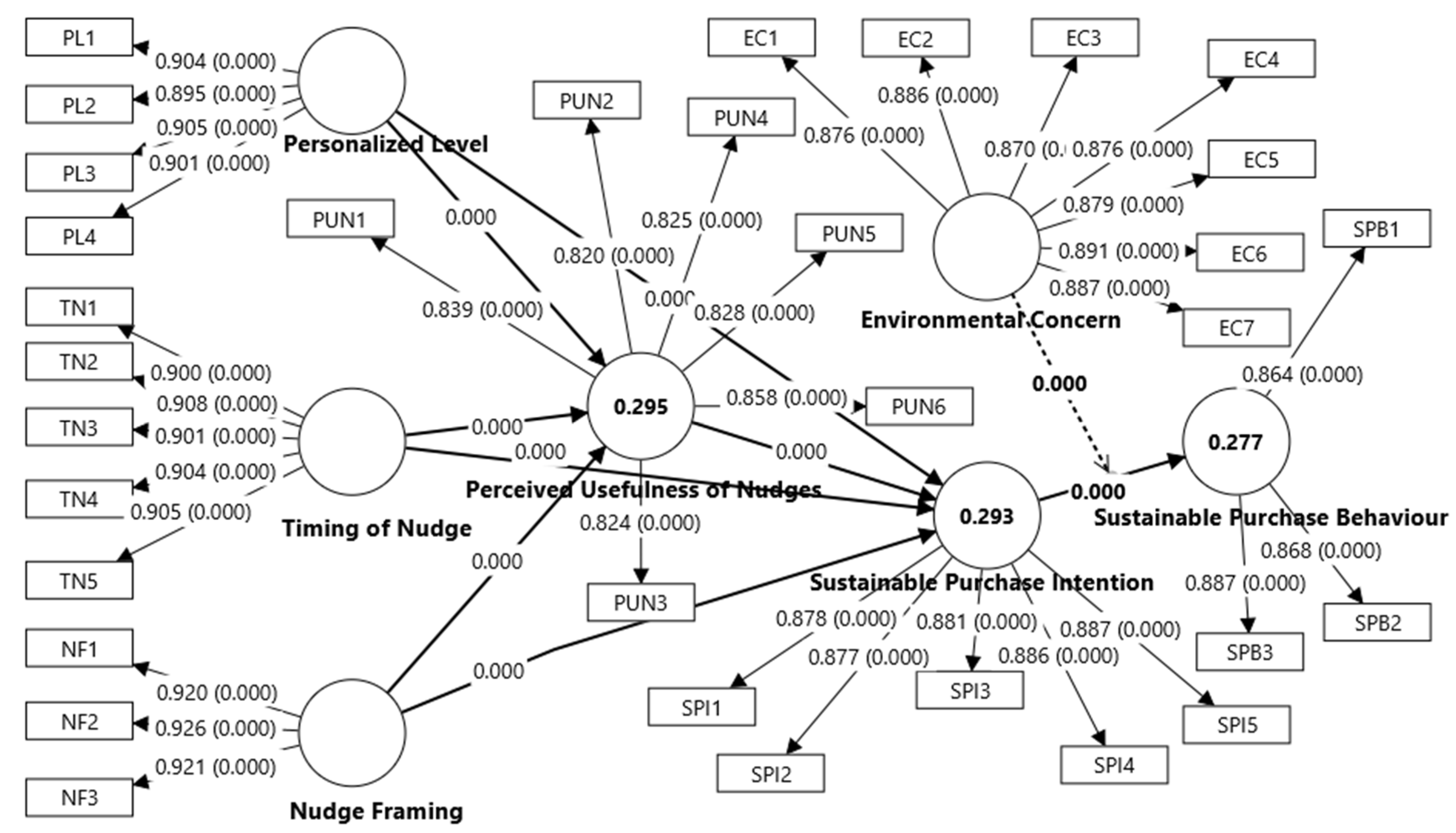
Figure 2 shows the measurements and structural model, indicating that the proposed structure is reliable and statistically valid. The constructs were above the recommended values of internal consistency with Cronbach’s alpha (α) and composite reliability (rho and rho c) of between 0.84 and 0.96, which is far above the recommended level of at least 0.70 [104]. The average variance extracted (AVE) values, ranging from 0.69 to 0.85, were also above the accepted value of 0.50, which is a good indicator of strong convergent validity. In addition, the square roots of AVE (diagonal value) were greater than inter-construct correlations, which met the Fornell–Larcker criterion and validated the discriminant validity [105] (See Table 2). The results show that both concepts are unique and can effectively measure their target. Perceived usefulness (R2 = 0.30), sustained purchase intention (R2 = 0.14), and sustainable purchase behavior (R2 = 0.28) have moderate explanatory power [106]. The predictive utility of the model is determined by positive Q2 (0.27–0.29) [107]. Its strong performance is also demonstrated by the model fit indices SRMR = 0.064 (which is below the required 0.08 level), NFI = 0.932 (which is above the 0.90 level), and adequate d_ULS (2.326) and d_G (0.328) values, suggesting that the model has a strong conceptual fit [104]. The results validate the constructs and the relationships between constructs. Overall, the combined TAM–Nudge framework is a valid concept that would help to explain the impact of AI-based nudging mechanisms on customer sustainable buying intentions and behaviors (see Table 3).
The software executed post hoc power analysis (see Table 4) (Refer to Appendix C) to determine the power size effect of the model conforming to the sample size and meaningful relationship. The power of most of the correlations between variables was near 1, indicating a high probability that these were real effects rather than random outcomes. All-important pathways at the more stringent significance level of 1% were above 0.80, indicating sensitivity to the model. The results of the study were reliable as there was sufficient data and sample size to justify the results. Acceptable values of power indicate that personalization, timing, and long-term behavior are statistically significant in their relationship. This confirms the study results and demonstrates that AI-based nudges encourage sustainable consumer behavior within the framework of the integrated TAM-Nudge paradigm. The VIF (Variance Inflation Factor) values for all constructions were largely less than 5, indicating that multicollinearity was not a concern for any of the variables. The path estimations of the structural analysis are stable and correct, as each model construct is unique and dissimilar.
The structural model evaluation was used to assess the extent to which the proposed framework describes the relationships between personalization, timing, framing, and sustainable buying behavior.
Table 5 presents the structural model results, which show that hypotheses H1–H5 have a significant effect in contributing to the integrated TAM and Nudge theoretical frameworks. H1 and H2 indicate that AI-integration context-related interventions significantly affect consumer acceptance of sustainable technology, with medium effects on personalization (f2 = 0.113) and timing (f2 = 0.100) on sustainable purchase intention. It is consistent with the previous research on perceived usefulness and ease of use by TAM [13,14]. Previous studies also highlighted that personalized nudges are more effective in enhancing eco-conscious behavior [43,108]. The claim that small behavioral nudges can lead to voluntary and sustainable activities is supported by H3 (f2 = 0.054) [108]. However, message framing has a less significant impact but signals social norms considerably. Technological adoption and ethical motivation are also mediated through perceived usefulness (f2 = 0.014), which confirms the literature [109]. Lastly, H5 shows that the intention to behave is moderated by environmental concern (f2 = 0.030), and its effect is an important factor in initiating actual behavior change from intention to actual purchase, which also strengthens the previous study [110]. Collectively, the outcomes facilitate SDG 12 (Responsible Consumption), SDG 13 (Climate Action), and SDG 4 (Sustainability Awareness), demonstrating that AI-based nudges bridge the gap between behavioral intention and sustainable action. The study contributes to the body of theoretical knowledge by combining the Technology Acceptance Model (TAM) with Nudge Theory to explain how AI-based interventions can be used to foster sustainable consumer behavior. TAM considers logical aspects, such as perceived usefulness and ease of use, whereas Nudge Theory examines the effects of context-dependent reminders on behavior. Hence, the integration of technological acceptance and behavior frameworks provides a more detailed consideration of how individuals make decisions regarding sustainability. The findings build on the existing literature [14,90] to illustrate that personalization, timing, and framing not only help modify sustainable technologies but are also helpful in the long-term sustainability of pro-environmental behaviors. The technology adoption, including environmental concern as a moderating variable, aligns closely with the goals of SDG 12 (Responsible Consumption) and SDG 13 (Climate Action).
Additionally, H4a–H4c, Perceived Usefulness of Nudges mediates interactions between Nudges and personalization, timing, and framing, and sustainable purchase intention. Appropriate and well-timed nudges are more helpful and would lead to sustainable behavior. Therefore, perceived usefulness strengthens the AI-based design factor towards sustainable intention.
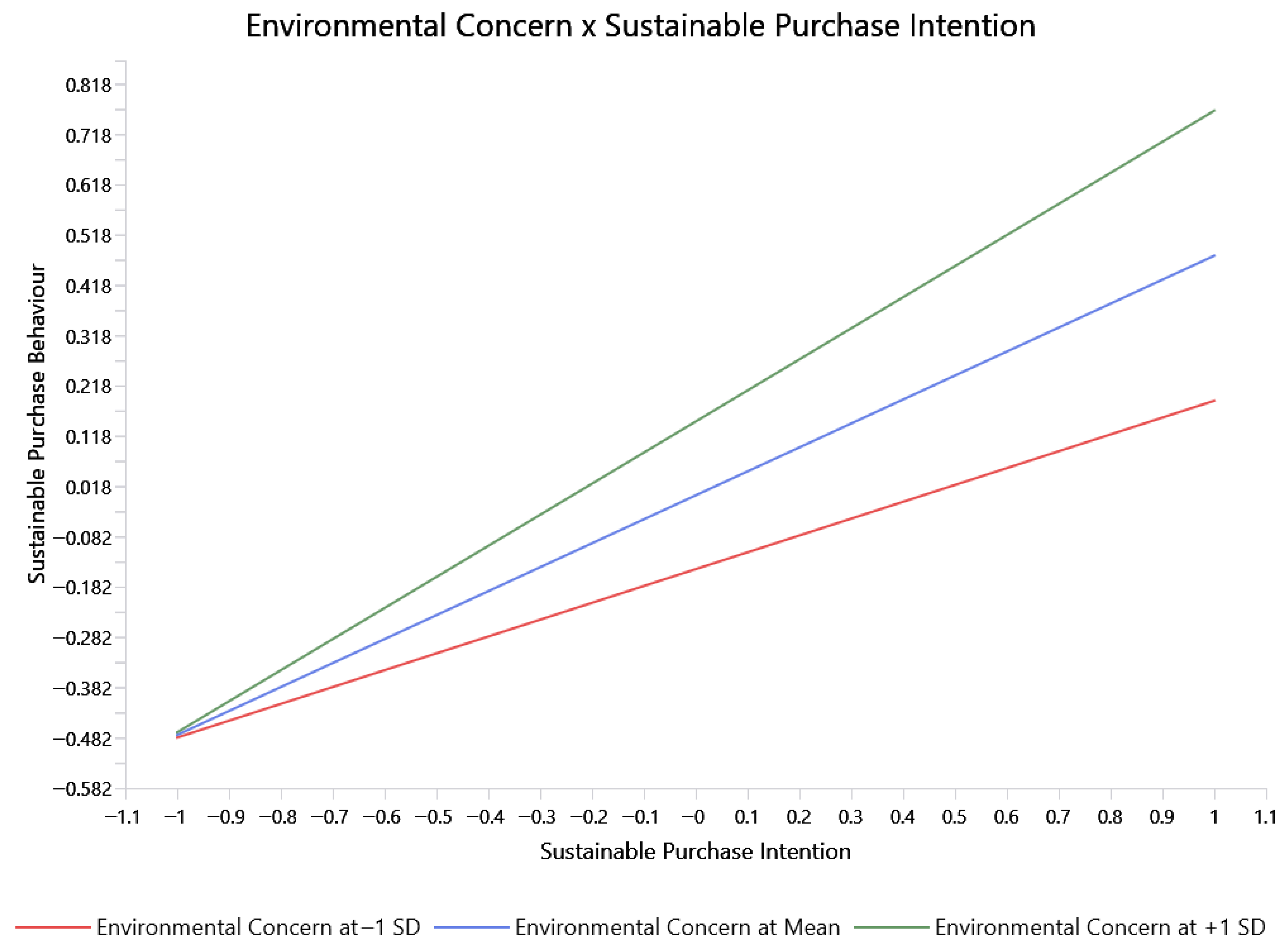
The results show that environmental concern is further illustrated by Figure 3 in slope analysis, which strengthens the relationship between people’s intentions and their actual sustainable purchasing behavior (β = 0.142, p < 0.001, f2 = 0.030). From Figure 3, it can be drawn that for every one-unit increase in environmental concern, sustainable purchase behavior increases by about 0.14 units. This means that when individuals care more about environmental issues, they are more likely to transform their sustainable intentions into sustainable behavior. Although the effect is small, it is meaningful because building genuine environmental awareness is often a gradual process that leads to long-term behavioral change. From a theoretical point of view, this supports Nudge Theory, which suggests that environmental concern makes people more responsive to behavioral cues, and the Technology Acceptance Model (TAM), which explains that trust and perceived usefulness encourage adoption of green technologies. In practical terms, environmental concern acts as a psychological booster that strengthens intention rather than working alone. In line with SDG 13 (Climate Action) and Saudi Vision 2030 [90], it highlights the need for governments and organizations to pair digital nudges with awareness campaigns and education programs. Encouraging deeper concern for the environment helps make sustainable behavior habitual and value-driven rather than short-term or externally motivated.

4.2. Importance–Performance Map Analysis (IPMA)

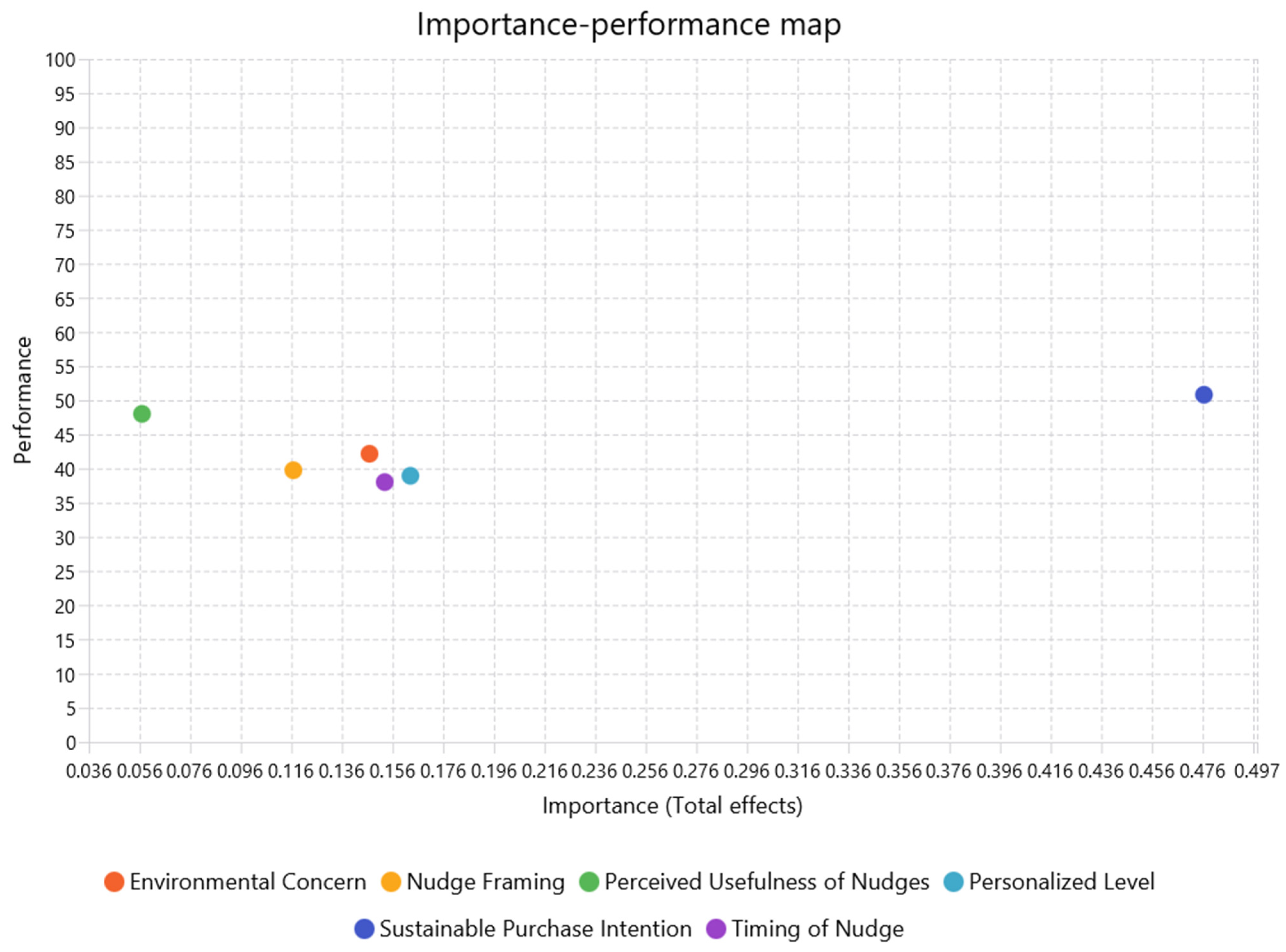
The Importance–Performance Map Analysis (IPMA) [91] was used to identify which factors are most influential in driving sustainable purchase behavior and how well they currently perform. Unlike standard path analysis, which only measures the strength of relationships, IPMA provides a broader view by combining both importance (total effect) and performance (average score) of each construct. This helps to pinpoint areas were managerial, social improvements would have the greatest impact. In this study, IPMA results highlight that constructs such as personalization, timing of nudges, and perceived usefulness are highly important but perform moderately, suggesting that enhancing these areas could significantly improve sustainable purchase intentions. This analysis is valuable for decision-makers and policymakers because it not only confirms which factors matter most but also guides practical strategies to strengthen weaker areas—supporting long-term progress toward SDG 12 (Responsible Consumption) and SDG 13 (Climate Action).
The results in Figure 4 of IPMA show that the greatest contributions to salary, purchase intention, and purchase behavior are brought by personalization, timing of nudges, and perceived usefulness. The very high impact and alignment with SDG 12 (Responsible Consumption) and SDG 13 (Climate Action) are demonstrated by constructs such as personalized level (importance = 0.342) and timing of nudge (importance = 0.321). This suggests that AI-based, timely, and customized interventions efficiently encourage consumers to engage in environmentally friendly activities. The effect of sustainable purchase intention (importance = 0.476) on actual sustainable behavior is very high, demonstrating that essential environmental intentions can be successfully transformed into real-life behavior with appropriate smart and ethical nudges. The results endorse the Technology Acceptance Model (TAM) by identifying the importance of perceived usefulness and the Nudge Theory, which involves using minor behavioral cues to influence ethical decisions, as presented in Table 6. This indicates that digital policymakers, marketers, and sustainability activists must focus on improving the personalization, timing, and awareness of consumers in their digital approach. This will build upon climate-sensitive decision-making, providing a solid base for the more detailed implications in the following section and the sustainability aspirations of Saudi Vision 2030.

5. Discussion

The results of the current research provide valuable information on the way in which digital nudges AI can alter the intentions and actions associated with sustainable purchases by integrating the Technology Acceptance Model (TAM) and the Nudge Theory [22]. According to the results, sustainable online decision-making deals with both rational consideration of utility (TAM) and automatic reactions to faint digital signals (Nudge Theory). This two-process exposition reveals that consumers practice sustainable behavior not merely because they believe it is right to be sustainable or that they care about the environment, but rather because the digital world enables more convenient and compatible sustainable choices to be made, and that fits into their daily routine. This is a critical component of pragmatic sustainability, which is also mentioned in the previous studies [111]. This contributes to a better understanding of psychological processes of digital sustainability interventions, as they are summarized in Table 7.

5.1. Psychological Sustainability Intention Activators of Individualization and Timing

Personalization was found to be one of the best predictors of sustainable intention, which is consistent with the previous findings that personalized messages increase relevant, cognitive fluency, and reduced effort [40,50]. Nudges that are consistent with preferences or past behavior of users enhance the perceived usefulness, which is a fundamental construct of the TAM, and enhance the intention to act sustainably [108]. A behavioral perspective is that personalization decreases the psychological distance and enhances the emotional engagement and trust [36], which makes the behavior of sustainability natural and easy. This is a sign of practical sustainability, whereby people act eco-friendly as the experience is uncomplicated and customized. Likewise, the time of nudges is also important. Timely nudges are moment-of-decision triggers, which are consistent with the findings of the research that behavior is much influenced by situational cues [45]. Providing sustainability at the opportune moment enhances the salience of green alternatives and decreases procrastination, shortening the intention-behavior difference that is much discussed in pro-environmental studies [67]. This brings the element of pragmatic sustainability since it aids in making people more likely to behave sustainably without the need of additional mental or motivational stimulation.

5.2. Framing and Perceived Usefulness Effects in Behavior Formation

Framing did not impact as much as personalization and timing, but it is still significant. Messages using gain framing, loss framing, and norm-based appeals can shape behavior by influencing emotional interpretation and social motivation [73]. These formulated messages render sustainable actions purposeful, legitimate, and helpful, increasing their utilitarian value. The question of perceived usefulness is crucial in TAM: the stronger the perceived usefulness, the stronger the sustainable intentions of consumers become in making responsible decisions with the help of AI-enabled nudges [11,22]. This is in line with the self-efficacy theories in which individuals become more likely to behave when doing things they consider to be manageable. Hence, perceived usefulness is not only an assessment made, but also a more practical process that transforms the intention to sustainability into action, into daily practice.

5.3. Intention-Behavior Relationship and Environmental Concern Moderation

The high correlation between the sustainable buying intent and the actual behavior is in line with the behavior theories [14]. Nevertheless, this paper indicates that environmental concern is a major force that enhances this connection. When people are more concerned about the environment, the level of moral responsibility and value alignment increases, and it is identity-driven, which forms a greater chance of intent to action [82,109]. This observation supports the concept of pragmatic sustainability: even those people who value the environment more tend to be more consistent in their actions when making sustainable choices effortlessly [112,113], readily, and conveniently with the help of digital nudges [114,115,116].

5.4. What It Means to AI-Powered Sustainable Consumption

All in all, the findings reveal that AI-based nudges can influence sustainable consumption based on a mixture of rational judgments (TAM), behavioral cues (Nudge Theory), and practical easiness of action (pragmatic sustainability). Sustainable digital behavior is not an action by itself, but it is supported when technology simplifies, demystifies the options and adheres to the decision-making patterns of users. Practically, platforms and policymakers aiming at encouraging sustainable consumption ought to focus on the aspects of personalization, timing, and framing so that digital nudges become useful and low effort. Behavioral consistency can also be increased by customizing nudges to users who already have a high level of environmental concern. These insights are related directly to SDG 12 and SDG 13 and coincide with the priorities of Saudi Vision 2030 to be responsible and sustainable in the use of digital consumption.

Limitations & Future Avenues of Research

The limitations of this study indicate some potential directions to be followed in future research. To begin with, the study employed a one-time survey; thus, it is unable to explain cause-and-effect relationships and the evolution of behavior over time in full. Long-term or experimental research designs should be utilized in the future to determine whether digital nudges have an enduring impact on sustainable behavior to support SDG 12 and SDG 13. Second, the data were all Saudi-based, and this might be a limitation regarding the generalizability of the results across regions. The results compared with those from other cultures and countries would contribute to demonstrating how the TAM–Nudge model performs in a broader global context and advance Vision 2030 and SDG 9. Third, the researchers have used self-reported data, which is subject to the effects of social desirability. At least in future research, it may be improved by using behavioral tracking tools or digital logs (SDG 12). Fourth, the study only briefly refers to transparency, though it does not delve into other ethical aspects of AI-enhanced nudging. Fairness, bias, and user autonomy are the subjects of research that should be explored in the future to inform responsible AI practices in accordance with SDG 16 and Vision 2030. Fifth, the model consists of two psychological factors only, and further research ought to consider other moderators such as trust in AI, digital literacy, cultural norms, or emotional engagement (SDG 4, SDG 13). Sixth, the model has been applied to general consumers; its application to sectors such as the tourism sector, retail, energy, or agriculture may provide more practical information for policy and management (SDG 9, SDG 12). The study does not include cross-cultural or cross-industry comparisons, as it was intentionally designed to validate the integrated TAM–Nudge framework within a single cultural context. Future research may extend this model across different cultures and sectors to explore variations in digital nudge effectiveness. Lastly, the research is limited to AI-based nudging. Future studies should investigate how AI can be integrated with other technologies like IoT, blockchain, or metaverse systems to create more advanced digital sustainability solutions (SDG 9, Vision 2030). Refer to Appendix B for details.

6. Conclusions

This paper used the Technology Acceptance Model (TAM) and Nudge Theory to describe how AI-based nudges can be used to alter the intentions and real-life actions of consumers towards purchasing environmentally friendly products. The results indicate that personalization, timing, framing, and perceived usefulness have a significant role in promoting sustainable consumption. These variables also make environmentally friendly decisions simpler, more topical, and more comfortable, which enhances the connection between intention and actual behavior. This would reinforce SDG 12 (Responsible Consumption and Production) in that digital platforms can be used to encourage more responsible buying behaviors in consumers through appropriate and timely prompts. The findings also indicate that perceived usefulness assists in transforming the intentions of sustainability into actual performance, and the environmental concern enhances such relationship even more. In cases where consumers are environmentally conscious, nudges with AI are more effective in encouraging climate-friendly behavioral change. This clearly shows a contribution of SDG 13 (Climate Action) by showing how digital applications can contribute to climate-aware choices during daily online communication. In general, the study contributes to sustainability research because it integrates behavioral and technological approaches. It demonstrates that digital nudges are not only persuasion models, but also useful mechanisms that can be used to bridge the intention-behavior gap in sustainable consumption. These understandings can help firms, policymakers, and the designers of digital platforms develop transparent, ethical, and personalized interventions that are consistent with user values and help people adopt sustainable lifestyles. Future studies ought to explore the consistency of behavior in the long term, cultural variations, and ethical concerns associated with AI-based nudging. Moving to sustainable consumption, the advancement will be based on technologies that can effectively merge human values, behavioral science, and environmental awareness into the digital platforms that determine everyday choices.

Supplementary Materials

Funding

The manuscript has not received any funding.

Institutional Review Board Statement

The study was conducted according to the guidelines of the Declaration of Helsinki and approved by the Institutional Review Board of Deanship of Graduate Studies and Scientific Research, Jazan University (protocol code JU-20250286-DGSSR—RP-2025 and 27 May 2025).

Informed Consent Statement

Informed consent was obtained from all individual participants included in the study.

Data Availability Statement

The dataset used in this study is anonymized to protect participant confidentiality and is available on the author’s institutional drive. It can be accessed through the link provided below.

Conflicts of Interest

The author declares no conflicts of interest.

Abbreviations

The following abbreviations are used in this manuscript:
AbbreviationFull FormContext/Meaning
AIArtificial IntelligenceCore term in digital interventions
TAMTechnology Acceptance ModelTheoretical framework
SDGSustainable Development GoalsUnited Nations’ global goals
SPISustainable Purchase IntentionDependent variable
SPBSustainable Purchase BehaviorDependent variable
PLPersonalized LevelIndependent construct
TNTiming of NudgeIndependent construct
NFNudge FramingIndependent construct
PUNPerceived Usefulness of NudgesMediating variable
ECEnvironmental ConcernModerating variable
IPMAImportance–Performance Map AnalysisAdvanced PLS-SEM analysis
SEM-PLSStructural Equation Modeling–Partial Least SquaresData analysis technique
PUPerceived UsefulnessTAM construct
PEUPerceived Ease of UseTAM construct (mentioned conceptually)
SDStandard DeviationStatistical term
CRComposite ReliabilityMeasurement model metric
AVEAverage Variance ExtractedConvergent validity
HTMTHeterotrait–Monotrait RatioDiscriminant validity
VIFVariance Inflation FactorMulticollinearity check
SRMRStandardized Root Mean Square ResidualModel fit index
NFINormed Fit IndexModel fit index
d_ULSUnweighted Least Squares DiscrepancyModel fit index
d_GGeodesic DiscrepancyModel fit index
R2Coefficient of DeterminationStructural model
Q2Predictive RelevanceModel predictive power
βPath CoefficientStructural equation output
IPCCIntergovernmental Panel on Climate ChangeIf mentioned in literature context
GCCGulf Cooperation CouncilIf referred to Saudi regional context
CMBCommon Method BiasMeasurement bias check

Appendix A

Table A1. Research Items.
ConstructCodeItem StatementScale (1–5)
Personalized Level (PL)PL1The digital platform provides sustainability messages that match my personal preferences.1 = Strongly Disagree → 5 = Strongly Agree
PL2The personalized nudges I receive feel relevant and tailored to my needs.
PL3The system effectively customizes recommendations based on my previous behavior.
PL4I find personalized nudges more effective than general sustainability messages.
Timing of Nudge (TN)TN1The sustainability reminders appear at the right time before I make a purchase.
TN2I find timely nudges helpful in making better purchasing decisions.
TN3Receiving sustainability messages at convenient moments improves my decision-making.
TN4I am more likely to act sustainably when nudges are delivered at appropriate times.
Nudge Framing (NF)NF1The sustainability messages emphasize positive outcomes of my actions.
NF2The way messages are framed influences my motivation to act sustainably.
NF3Clear and persuasive framing makes sustainability messages more effective.
Perceived Usefulness of Nudges (PUN)PUN1The sustainability nudges help me make better purchasing decisions.
PUN2I find the nudges valuable for identifying eco-friendly options.
PUN3The nudges make my shopping experience easier and more efficient.
PUN4I consider these digital nudges useful for promoting sustainable consumption.
PUN5The sustainability nudges motivate me to act in environmentally responsible ways.
Sustainable Purchase Intention (SPI)SPI1I intend to buy eco-friendly products in the future.
SPI2I prefer sustainable options when choosing products.
SPI3I am willing to pay more for environmentally friendly products.
SPI4I plan to support brands that promote sustainable practices.
SPI5Digital nudges influence my willingness to choose sustainable products.
Sustainable Purchase Behaviour (SPB)SPB1I frequently purchase products that are certified as sustainable.
SPB2I consistently choose options that reduce environmental impact.
SPB3I make efforts to purchase from companies that follow eco-friendly practices.
Environmental Concern (EC)EC1I am aware of the environmental challenges facing our planet.
EC2I am concerned about the harm human activities cause to the environment.
EC3I believe it is everyone’s responsibility to protect the environment.
EC4I actively support products and companies that are environmentally responsible.
EC5I have changed aspects of my lifestyle to reduce environmental harm.
EC6Governments and organizations should enforce policies to protect the environment.
EC7I worry about the long-term environmental consequences of unsustainable behavior.

Appendix B

Table A2. Total Effect.
ConstructsOriginal sample (O) Sample mean (M) Standard deviation (STDEV) T statistics (|O/STDEV|) p Values
Environmental Concern -> Sustainable Purchase Behaviour 0.147 0.148 0.034 4.360 0.000
Environmental Concern x Sustainable Purchase Intention -> Sustainable Purchase Behaviour 0.142 0.141 0.031 4.609 0.000
Nudge Framing -> Perceived Usefulness of Nudges 0.303 0.303 0.027 11.427 0.000
Nudge Framing -> Sustainable Purchase Behaviour 0.117 0.117 0.016 7.444 0.000
Nudge Framing -> Sustainable Purchase Intention 0.245 0.245 0.028 8.726 0.000
Perceived Usefulness of Nudges -> Sustainable Purchase Behaviour 0.057 0.057 0.016 3.504 0.000
Perceived Usefulness of Nudges -> Sustainable Purchase Intention 0.119 0.119 0.033 3.630 0.000
Personalized Level -> Perceived Usefulness of Nudges 0.322 0.323 0.027 11.852 0.000
Personalized Level -> Sustainable Purchase Behaviour 0.163 0.164 0.018 9.249 0.000
Personalized Level -> Sustainable Purchase Intention 0.342 0.342 0.028 12.426 0.000
Sustainable Purchase Intention -> Sustainable Purchase Behaviour 0.476 0.478 0.024 20.117 0.000
Timing of Nudge -> Perceived Usefulness of Nudges 0.312 0.312 0.028 11.236 0.000
Timing of Nudge -> Sustainable Purchase Behaviour 0.153 0.153 0.014 10.589 0.000
Timing of Nudge -> Sustainable Purchase Intention 0.321 0.321 0.027 11.934 0.000

Appendix C

Table A3. Post Hoc Power Analysis Achieved.
Path coefficientsAlpha 1%Alpha 5%
Environmental Concern -> Sustainable Purchase Behaviour0.1470.9770.996
Environmental Concern x Sustainable Purchase Intention -> Sustainable Purchase Behaviour0.1420.9670.994
Nudge Framing -> Perceived Usefulness of Nudges0.30311
Nudge Framing -> Sustainable Purchase Intention0.20911
Perceived Usefulness of Nudges -> Sustainable Purchase Intention0.1190.8820.969
Personalized Level -> Perceived Usefulness of Nudges0.32211
Personalized Level -> Sustainable Purchase Intention0.30311
Sustainable Purchase Intention -> Sustainable Purchase Behaviour0.47611
Timing of Nudge -> Perceived Usefulness of Nudges0.31211
Timing of Nudge -> Sustainable Purchase Intention0.28311

Appendix D

Table A4. Comparison of Alternative Theoretical Models.
ModelCore ConstructsStrengthsLimitationsRelevance Compared to TAM–Nudge Integration
TAM (Technology Acceptance Model)Perceived usefulness, perceived ease of useStrong predictor of technology adoption; simple and widely validatedFocuses mainly on cognitive evaluations; limited consideration of behavioral biasesForms the cognitive foundation of this study; explains the rational evaluation of AI-enabled nudges
TPB (Theory of Planned Behavior)Attitude, subjective norms, perceived behavioral controlExplains intention formation influenced by social norms and perceived controlDoes not account for digital design elements or choice architectureUseful for intention modeling, but does not explain how nudges influence behavior
TRA (Theory of Reasoned Action)Attitude, subjective normsGood for predicting intentions in stable environmentsLimited relevance in digital contexts; lacks behavioral mechanismsLess suitable for AI-enabled or nudged decision environments
UTAUT (Unified Theory of Acceptance & Use of Technology)Performance expectancy, effort expectancy, social influence, facilitating conditionsStrong explanatory power; integrates multiple modelsComplex; requires many moderating variablesUseful for adoption but does not explain micro-level decision shifts caused by nudges
Nudge TheoryDefaults, framing, heuristics, social cuesExplains actual behavioral shifts; effective in sustainability contextsDoes not capture cognitive evaluations of technologyComplements TAM by explaining how design influences behavior beyond cognition
Dual-Process Models (e.g., System 1 & System 2)Automatic vs. deliberate decision-makingExplains intuitive vs. reflective choicesHard to operationalize in digital interfacesSupports the role of nudges but does not link to technology acceptance
Behavioral Economics ModelsLoss aversion, choice architecture, heuristicsExplains real-world deviations from rationalityNot technology-focusedReinforces the need for nudges but lacks integration with technology adoption constructs
Value–Belief–Norm TheoryEnvironmental values, personal normsStrong predictor of pro-environmental behaviorNot suitable for technology-specific contextsExplains environmental concern but not digital adoption processes

Appendix E

Table A5. Alignment of Sustainable Consumer Behaviors with SDG 12 and SDG 13.
SDGConsumer Behaviors Aligned With the SDGHow AI-Driven Nudges Support These BehaviorsRelevant Constructs in This Study
SDG 12—Responsible Consumption & Production
  • Choosing eco-friendly or recyclable products
  • Reducing waste through responsible purchasing
  • Selecting sustainable alternatives in everyday consumption
  • Personalization nudges recommend eco-friendly options
  • Framing emphasizes responsible product choices
  • Timely reminders reduce impulsive and non-sustainable purchases
Personalization, Framing, Timing, Perceived Usefulness → Sustainable Purchase Intention
SDG 13—Climate Action
  • Choosing energy-efficient or low-carbon products
  • Reducing carbon-intensive consumption patterns
  • Making climate-conscious purchase decisions
  • AI-driven nudges present climate-friendly alternatives
  • Timing nudges promote eco-action during high-impact moments
  • Visual framing highlights carbon-saving benefits
Environmental Concern (Moderator), Sustainable Purchase Behavior

References

  1. Anuardo, R.G.; Espuny, M.; Costa, A.C.F.; Espuny, A.L.G.; Kazançoğlu, Y.; Kandsamy, J.; de Oliveira, O.J. Transforming E-Waste into Opportunities: Driving Organizational Actions to Achieve Sustainable Development Goals. Sustainability 2023, 15, 14150. [Google Scholar] [CrossRef]
  2. Gupta, R.; Dwivedi, J.; Mathur, A. The Role of Behavioral Economics in Consumer Decision-Making Towards Sustainable Products. In Nudging Green: Behavioral Economics and Environmental Sustainability; World Sustainability Series; Springer Nature: Cham, Switzerland, 2024; Volume Part F3319, pp. 49–65. [Google Scholar]
  3. Nowak, M.; Alnyme, O.; Heldt, T. Testing the effectiveness of increased frequency of norm-nudges in encouraging sustainable tourist behaviour: A field experiment using actual and self-reported behavioural data. J. Sustain. Tour. 2024, 32, 1307–1331. [Google Scholar] [CrossRef]
  4. Saulītis, A.; Silkāne, V.; Ozola, A.K. Enhancing sustainable consumer behaviour through Nudging: Insights from a field experiment on adoption of electronic receipts. Electron. Commer. Res. Appl. 2025, 74, 101548. [Google Scholar] [CrossRef]
  5. Balconi, M.; Acconito, C.; Rovelli, K.; Angioletti, L. Influence of and Resistance to Nudge Decision-Making in Professionals. Sustainability 2023, 15, 14509. [Google Scholar] [CrossRef]
  6. Smieskol, P.; Jakobi, T.; von Grafenstein, M. From consent to control by closing the feedback loop: Enabling data subjects to directly compare personalized and non-personalized content through an On/Off toggle. Comput. Law Secur. Rev. 2025, 59, 106186. [Google Scholar] [CrossRef]
  7. Grappi, S.; Bergianti, F.; Gabrielli, V.; Baghi, I. The effect of message framing on young adult consumers’ sustainable fashion consumption: The role of anticipated emotions and perceived ethicality. J. Bus. Res. 2024, 170, 114341. [Google Scholar] [CrossRef]
  8. Lemken, D.; Wahnschafft, S.; Eggers, C. Public acceptance of default nudges to promote healthy and sustainable food choices. BMC Public Health 2023, 23, 2311. [Google Scholar] [CrossRef]
  9. Mujalli, A.; Wani, M.J.G.; Almgrashi, A.; Khormi, T.; Qahtani, M. Investigating the factors affecting the adoption of cloud accounting in Saudi Arabia’s small and medium-sized enterprises (SMEs). J. Open Innov. Technol. Mark. Complex. 2024, 10, 100314. [Google Scholar] [CrossRef]
  10. Ruyobeza, B.; Grobbelaar, S.S.; Botha, A. Forecasting the adoption of digital health technologies: The intention-expectation gap. Eval. Program Plan. 2025, 112, 102670. [Google Scholar] [CrossRef] [PubMed]
  11. Hettler, F.M.; Schumacher, J.-P.; Hammer, J.; Teuteberg, F. Understanding Digital Nudging for Overcoming Inertia Related to Sustainable Investment Decisions: An Experimental Study. J. Knowl. Econ. 2025. Available online: https://link.springer.com/article/10.1007/s13132-025-02797-4 (accessed on 29 May 2023).
  12. Wani, M.J.G.; Loganathan, N.; Mujalli, A. The impact of sustainable development goals (SDGs) on tourism growth. Empirical evidence from G-7 countries. Cogent Soc. Sci. 2024, 10, 2397535. [Google Scholar] [CrossRef]
  13. Davis, F.D. Perceived Usefulness, Perceived Ease of Use, and User Acceptance of Information Technology. MIS Q. 1989, 13, 319–340. [Google Scholar] [CrossRef]
  14. Venkatesh, V.; Bala, H. Technology acceptance model 3 and a research agenda on interventions. Decis. Sci. 2008, 39, 273–315. [Google Scholar] [CrossRef]
  15. Barker, H.; Shaw, P.J.; Richards, B.; Clegg, Z.; Smith, D. What nudge techniques work for food waste behaviour change at the consumer level? A systematic review. Sustainability 2021, 13, 11099. [Google Scholar] [CrossRef]
  16. Espinosa, V.I.; Wang, W.H.; Huerta de Soto, J. Principles of Nudging and Boosting: Steering or Empowering Decision-Making for Behavioral Development Economics. Sustainability 2022, 14, 2145. [Google Scholar] [CrossRef]
  17. Bartmann, M. The Ethics of AI-Powered Climate Nudging—How Much AI Should We Use to Save the Planet? Sustainability 2022, 14, 5153. [Google Scholar] [CrossRef]
  18. Avasilcăi, S.; Tudose, M.B.; Gall, G.V.; Grădinaru, A.-G.; Rusu, B.; Avram, E. Digital Technologies to Support Sustainable Consumption: An Overview of the Automotive Industry. Sustainability 2025, 17, 7047. [Google Scholar] [CrossRef]
  19. Mochi, P.; Pandya, K.; Lindberg, K.B.; Korpås, M. Social Nudging for Sustainable Electricity Use: Behavioral Interventions in Energy Conservation Policy. Sustainability 2025, 17, 6932. [Google Scholar] [CrossRef]
  20. Simon, C.; Amarilli, S. Feeding the behavioral revolution: Contributions of behavior analysis to nudging and vice versa. J. Behav. Econ. Policy 2018, 2, 91–97. [Google Scholar]
  21. Granato, G.; Mugge, R. Leveraging social norms for sustainable behaviour: How the exposure to static-and-dynamic-norms encourages sufficiency and consumption reduction of fashion. J. Environ. Psychol. 2025, 108, 102809. [Google Scholar] [CrossRef]
  22. White, K.; Habib, R.; Hardisty, D.J. How to SHIFT consumer behaviors to be more sustainable: A literature review and guiding framework. J. Mark. 2019, 83, 22–49. [Google Scholar] [CrossRef]
  23. Villamil, C.; Schulte, J.; Hallstedt, S. Implementing sustainability in product portfolio development through digitalization and a game-based approach. Sustain. Prod. Consum. 2023, 40, 277–296. [Google Scholar] [CrossRef]
  24. Bolón-Canedo, V.; Morán-Fernández, L.; Cancela, B.; Alonso-Betanzos, A. A review of green artificial intelligence: Towards a more sustainable future. Neurocomputing 2024, 599, 128096. [Google Scholar] [CrossRef]
  25. Theocharis, D.; Tsekouropoulos, G. Sustainable Consumption and Branding for Gen Z: How Brand Dimensions Influence Consumer Behavior and Adoption of Newly Launched Technological Products. Sustainability 2025, 17, 4124. [Google Scholar] [CrossRef]
  26. D’Adamo, I.; Della Sciucca, M.; Gastaldi, M.; Lupi, B. Indicator Assessment of Sustainable Development Goals: A Global Perspective. Sustainability 2025, 17, 8259. [Google Scholar] [CrossRef]
  27. Lin, H.; de Barcellos, M.D.; De Steur, H. The role of nudges in food choices: An umbrella review. Food Qual. Prefer. 2025, 134, 105679. [Google Scholar] [CrossRef]
  28. de Matos, C.A.; Luppi, L.; Veiga, R.T. Assessing the intention-behavior gap in the pro-environmental behavior context: A longitudinal study about water conservation. J. Clean. Prod. 2025, 524, 146499. [Google Scholar] [CrossRef]
  29. Shehawy, Y.M.; Ali Khan, S.M.F. Consumer readiness for green consumption: The role of green awareness as a moderator of the relationship between green attitudes and purchase intentions. J. Retail. Consum. Serv. 2024, 78, 103739. [Google Scholar] [CrossRef]
  30. Carrington, M.J.; Neville, B.A.; Whitwell, G.J. Lost in translation: Exploring the ethical consumer intention-behavior gap. J. Bus. Res. 2014, 67, 2759–2767. [Google Scholar] [CrossRef]
  31. Verma, T.; Arora, D.S. Influence Without Intrusion: Decoding the Role of Digital Nudging in Shaping Online Decisions. Electron. Commer. Res. 2025. [Google Scholar] [CrossRef]
  32. Tezer, A.; Bodur, H.O. The greenconsumption effect: How using green products improves consumption experience. J. Consum. Res. 2021, 47, 25–39. [Google Scholar] [CrossRef]
  33. Khalufi, N.A.M.; Sheikh, R.A.; Khan, S.M.; Onn, C.W. Evaluating the Impact of Sustainability Practices on Customer Relationship Quality: An SEM-PLS Approach to Align with SDG. Sustainability 2025, 17, 798. [Google Scholar] [CrossRef]
  34. Gonçalves, J.; Mateus, R.; Silvestre, J.D.; Roders, A.P. Going beyond Good Intentions for the Sustainable Conservation of Built Heritage: A Systematic Literature Review. Sustainability 2020, 12, 9649. [Google Scholar] [CrossRef]
  35. Wut, T.M.; Lee, D.; Lee, S.W. Does Attitude or Intention Affect Behavior in Sustainable Tourism? A Review and Research Agenda. Sustainability 2023, 15, 14076. [Google Scholar] [CrossRef]
  36. Khan, S.M.; Suhluli, S. Generative AI and Cognitive Challenges in Research: Balancing Cognitive Load, Fatigue, and Human Resilience. Technologies 2025, 13, 486. [Google Scholar] [CrossRef]
  37. Islam, Q.; Ali Khan, S.M. Assessing Consumer Behavior in Sustainable Product Markets: A Structural Equation Modeling Approach with Partial Least Squares Analysis. Sustainability 2024, 16, 3400. [Google Scholar] [CrossRef]
  38. Toderas, M. Artificial Intelligence for Sustainability: A Systematic Review and Critical Analysis of AI Applications, Challenges, and Future Directions. Sustainability 2025, 17, 8049. [Google Scholar] [CrossRef]
  39. Mathew, M.; Spinelli, R. Decoding sustainable drivers: A systematic literature review on sustainability-induced consumer behaviour in the fast fashion industry. Sustain. Prod. Consum. 2025, 55, 132–145. [Google Scholar] [CrossRef]
  40. Masmali, F.H.; Khan, S.M.; Hakim, T. IoT-Enabled Digital Nudge Architecture for Sustainable Energy Behavior: An SEM-PLS Approach. Technologies 2025, 13, 504. [Google Scholar] [CrossRef]
  41. Shehawy, Y.M.; Faisal Ali Khan, S.M.; Khalufi, N.A.M.; Abdullah, R.S. Customer adoption of robot: Synergizing customer acceptance of robot-assisted retail technologies. J. Retail. Consum. Serv. 2025, 82, 104062. [Google Scholar] [CrossRef]
  42. Strzelecki, A.; Kolny, B.; Kucia, M. Smart Homes as Catalysts for Sustainable Consumption: A Digital Economy Perspective. Sustainability 2024, 16, 4676. [Google Scholar] [CrossRef]
  43. Woo, E.J.; Kang, E. Employee environmental capability and its relationship with corporate culture. Sustainability 2021, 13, 8684. [Google Scholar] [CrossRef]
  44. Lilley, D.; Wilson, G.T. Integrating ethics into design for sustainable behaviour. J. Des. Res. 2013, 11, 278. [Google Scholar] [CrossRef]
  45. Saura, J.R.; Škare, V.; Dosen, D.O. Is AI-based digital marketing ethical? Assessing a new data privacy paradox. J. Innov. Knowl. 2024, 9, 100597. [Google Scholar] [CrossRef]
  46. Mersinas, K.; Bada, M.; Furnell, S. Cybersecurity behavior change: A conceptualization of ethical principles for behavioral interventions. Comput. Secur. 2025, 148, 104025. [Google Scholar] [CrossRef]
  47. Islam, Q.; Faisal Ali Khan, S.M. Integrating IT and Sustainability in Higher Education Infrastructure: Impacts on Quality, Innovation and Research. Int. J. Learn. Teach. Educ. Res. 2023, 22, 210–236. [Google Scholar] [CrossRef]
  48. Islam, Q.; Ali Khan, S.M.F. Sustainability-Infused Learning Environments: Investigating the Role of Digital Technology and Motivation for Sustainability in Achieving Quality Education. Int. J. Learn. Teach. Educ. Res. 2024, 23, 519–548. [Google Scholar] [CrossRef]
  49. Karlsen, R.; Andersen, A. Recommendations with a Nudge. Technologies 2019, 7, 45. [Google Scholar] [CrossRef]
  50. Saniuk, S.; Grabowska, S.; Gajdzik, B.Z. Personalization of products in the industry 4.0 concept and its impact on achieving a higher level of sustainable consumption. Energies 2020, 13, 5895. [Google Scholar] [CrossRef]
  51. Saniuk, S.; Grabowska, S.; Straka, M. Identification of Social and Economic Expectations: Contextual Reasons for the Transformation Process of Industry 4.0 into the Industry 5.0 Concept. Sustainability 2022, 14, 1391. [Google Scholar] [CrossRef]
  52. Shao, J.; Feng, Y.; Liu, Z. The Impact of Big Data-Driven Strategies on Sustainable Consumer Behaviour in E-Commerce: A Green Economy Perspective. Sustainability 2024, 16, 10960. [Google Scholar] [CrossRef]
  53. Swani, K.; Labrecque, L.; Markos, E. Are B2B data breaches concerning? Consequences of buyer’s or firm’s data loss on buyer and supplier related outcomes. Ind. Mark. Manag. 2024, 119, 43–61. [Google Scholar] [CrossRef]
  54. Plak, S.; van Klaveren, C.; Cornelisz, I. Raising student engagement using digital nudges tailored to students’ motivation and perceived ability levels. Br. J. Educ. Technol. 2023, 54, 554–580. [Google Scholar] [CrossRef]
  55. Pan, X.; Wu, L.; Long, F.; Ma, A. Exploiting user behavior learning for personalized trajectory recommendations. Front. Comput. Sci. 2022, 16, 163610. [Google Scholar] [CrossRef]
  56. Amiri, B.; Jafarian, A.; Abdi, Z. Nudging towards sustainability: A comprehensive review of behavioral approaches to eco-friendly choice. Discov. Sustain. 2024, 5, 444. [Google Scholar] [CrossRef]
  57. Sunstein, C.R.; Reisch, L.A.; Kaiser, M. Trusting nudges? Lessons from an international survey. J. Eur. Public Policy 2019, 26, 1417–1443. [Google Scholar] [CrossRef]
  58. Khan, S.M.; Shehawy, Y.M. Perceived AI Consumer-Driven Decision Integrity: Assessing Mediating Effect of Cognitive Load and Response Bias. Technologies 2025, 13, 374. [Google Scholar] [CrossRef]
  59. Wang, J.; Shen, M.; Chu, M. Why is green consumption easier said than done? Exploring the green consumption attitude-intention gap in China with behavioral reasoning theory. Clean. Responsible Consum. 2021, 2, 100015. [Google Scholar] [CrossRef]
  60. Hyytinen, A.; Tuimala, J.; Hammar, M. Enhancing the adoption of digital public services: Evidence from a large-scale field experiment. Gov. Inf. Q. 2022, 39, 101687. [Google Scholar] [CrossRef]
  61. Griesoph, A.; Hoffmann, S.; Merk, C.; Rehdanz, K.; Schmidt, U. Guess what …?—How guessed norms nudge climate-friendly food choices in real-life settings. Sustainability 2021, 13, 8669. [Google Scholar] [CrossRef]
  62. Lemken, D. Options to design more ethical and still successful default nudges: A review and recommendations. Behav. Public Policy 2024, 8, 349–381. [Google Scholar] [CrossRef]
  63. Prelez, J.; Wang, F.; Shreedhar, G. For the love of money and the planet: Experimental evidence on co-benefits framing and food waste reduction intentions. Resour. Conserv. Recycl. 2023, 192, 106904. [Google Scholar] [CrossRef]
  64. Qin, H.; Xiao, J.; Ge, D.; Xin, L.; Gao, J.; He, S.; Hu, H.; Carlsson, J.G. JD.com: Operations Research Algorithms Drive Intelligent Warehouse Robots to Work. Interfaces 2022, 52, 42–55. [Google Scholar] [CrossRef]
  65. Roozen, I.; Raedts, M.; Meijburg, L. Do verbal and visual nudges influence consumers’ choice for sustainable fashion? J. Glob. Fash. Mark. 2021, 12, 327–342. [Google Scholar] [CrossRef]
  66. Kasperbauer, T.J. The permissibility of nudging for sustainable energy consumption. Energy Policy 2017, 111, 52–57. [Google Scholar] [CrossRef]
  67. Maione, G.; Supino, S.; Grimaldi, M.; Troisi, O. Exploring the political-institutional perspective of sustainable consumer behavior within the circular economy: A structural equation modeling approach from nudge theory. Socioecon. Plann. Sci. 2025, 100, 102254. [Google Scholar] [CrossRef]
  68. Hou, C.; Sarigöllü, E. Is bigger better? How the scale effect influences green purchase intention: The case of washing machine. J. Retail. Consum. Serv. 2022, 65, 102894. [Google Scholar] [CrossRef]
  69. Agyemang, P.; Kwofie, E.M.; Baum, J.I.; Wang, D. Insights from consumers’ exposure to environmental nutrition information on a dashboard for improving sustainable healthy food choices. Clean. Responsible Consum. 2025, 16, 100241. [Google Scholar] [CrossRef]
  70. Peters, L.; Wieland, D.A.C. I Tell You What You Want, What You Really, Really Want: Digital Information Nudging as Bridge towards a Sustainable Purchase Decision. In Proceedings of the 29th Annual Americas Conference on Information Systems, Panama City, Panama, 10–12 August 2023. AMCIS 2023. [Google Scholar]
  71. Alyahya, M.; Agag, G.; Aliedan, M.; Abdelmoety, Z.H. Understanding the factors affecting consumers’ behaviour when purchasing refurbished products: A chaordic perspective. J. Retail. Consum. Serv. 2023, 75, 103492. [Google Scholar] [CrossRef]
  72. Hossin, M.A.; Xiong, S.; Alemzero, D.; Abudu, H. Analyzing the Progress of China and the World in Achieving Sustainable Development Goals 7 and 13. Sustainability 2023, 15, 14115. [Google Scholar] [CrossRef]
  73. Frommeyer, B.; Wagner, E.; Hossiep, C.R.; Schewe, G. The utility of intention as a proxy for sustainable buying behavior—A necessary condition analysis. J. Bus. Res. 2022, 143, 201–213. [Google Scholar] [CrossRef]
  74. Ghose, A.; Chandra, B. Models for Predicting Sustainable Durable Products Consumption Behaviour: A Review Article. Vision 2020, 24, 81–89. [Google Scholar] [CrossRef]
  75. Candelo, E.; Casalegno, C.G.; Civera, C. Digital transformation or analogic relationships? A dilemma for small retailer entrepreneurs and its resolution. J. Strateg. Manag. 2022, 15, 397–415. [Google Scholar] [CrossRef]
  76. Esposito, L.; Jalal, R.N.-U.-D. Environmental awareness and pro-environmental behavior impact on renewables investments: A moderating role of environmental concerns. Socioecon. Plann. Sci. 2025, 101, 102256. [Google Scholar] [CrossRef]
  77. De Carvalho, B.L.; De Fátima Salgueiro, M.; Rita, P. Accessibility and trust: The two dimensions of consumers’ perception on sustainable purchase intention. Int. J. Sustain. Dev. World Ecol. 2016, 23, 203–209. [Google Scholar] [CrossRef]
  78. Guath, M.; Stikvoort, B.; Juslin, P. Nudging for eco-friendly online shopping—Attraction effect curbs price sensitivity. J. Environ. Psychol. 2022, 81, 101821. [Google Scholar] [CrossRef]
  79. Balaskas, S.; Panagiotarou, A.; Rigou, M. Impact of Environmental Concern, Emotional Appeals, and Attitude toward the Advertisement on the Intention to Buy Green Products: The Case of Younger Consumer Audiences. Sustainability 2023, 15, 13204. [Google Scholar] [CrossRef]
  80. Maduku, D.K. How environmental concerns influence consumers’ anticipated emotions towards sustainable consumption: The moderating role of regulatory focus. J. Retail. Consum. Serv. 2024, 76, 103593. [Google Scholar] [CrossRef]
  81. Ogiemwonyi, O. Factors influencing generation Y green behaviour on green products in Nigeria: An application of theory of planned behaviour. Environ. Sustain. Indic. 2022, 13, 100164. [Google Scholar] [CrossRef]
  82. Rolleston, C.; Nyerere, J.; Brandli, L.; Lagi, R.; McCowan, T. Aiming Higher? Implications for Higher Education of Students’ Views on Education for Climate Justice. Sustainability 2023, 15, 14473. [Google Scholar] [CrossRef]
  83. Chen, C.; Li, D.; Qian, J.; Li, Z. The Impact of Green Purchase Intention on Compensatory Consumption: The Regulatory Role of Pro-Environmental Behavior. Sustainability 2024, 16, 8183. [Google Scholar] [CrossRef]
  84. Moraga, M.V.; Manalo, A.J.J.; Nadela, M.B.F.; Ngan, K.D.C.; Oyco, J.E.D. To Green or Not to Green: An Analysis of Green Purchase Intention among Fashion Brand Consumers using a Structural Equation Modeling Approach. Rev. Integr. Bus. Econ. Res. 2025, 14, 733–747. [Google Scholar]
  85. Egan, M. Nudge: Improving Decisions About Health, Wealth and Happiness; Routledge: Abingdon, UK, 2017. [Google Scholar]
  86. Dennis, A.R.; Yuan, L.; Feng, X.; Webb, E.; Hsieh, C.J. Digital Nudging: Numeric and Semantic Priming in E-Commerce. J. Manag. Inf. Syst. 2020, 37, 39–65. [Google Scholar] [CrossRef]
  87. Mirsch, T.; Lehrer, C.; Jung, R. Digital Nudging: Altering User Behavior in Digital Environments. In Proceedings of the 13 Internationalen Tagung Wirtschaftsinformatik (WI 2017), St. Gallen, Switzerland, 12–15 February 2017. [Google Scholar]
  88. Joshi, Y.; Rahman, Z. Factors Affecting Green Purchase Behaviour and Future Research Directions. Int. Strateg. Manag. Rev. 2015, 3, 128–143. [Google Scholar] [CrossRef]
  89. Dunlap, R.E.; Van Liere, K.D.; Mertig, A.G.; Jones, R.E. Measuring endorsement of the new ecological paradigm: A revised NEP scale. J. Soc. Issues 2000, 56, 425–442. [Google Scholar] [CrossRef]
  90. Raman, R.; Lathabai, H.H.; Nedungadi, P. Sustainable development goal 12 and its synergies with other SDGs: Identification of key research contributions and policy insights. Discov. Sustain. 2024, 5, 150. [Google Scholar] [CrossRef]
  91. Overview—Vision 2030. Saudi Vision 2030. Available online: https://www.vision2030.gov.sa/en/overview (accessed on 29 May 2023).
  92. Truijens, D. Coherence between theory and policy in Nudge and Boost: Is it relevant for evidence-based policy-making? Ration. Soc. 2022, 34, 368–394. [Google Scholar] [CrossRef]
  93. Snyder, H. Literature review as a research methodology: An overview and guidelines. J. Bus. Res. 2019, 104, 333–339. [Google Scholar] [CrossRef]
  94. Memon, M.A.; Ramayah, T.; Cheah, J.H.; Ting, H.; Chuah, F.; Cham, T.H. PLS-SEM Statistical Programs: A Review. J. Appl. Struct. Equ. Model. 2021, 5, 1–14. [Google Scholar] [CrossRef]
  95. Dinner, I.; Johnson, E.J.; Goldstein, D.G.; Liu, K. Partitioning default effects: Why people choose not to choose. J. Exp. Psychol. Appl. 2011, 17, 332–341. [Google Scholar] [CrossRef]
  96. Namazi, M.; Namazi, N.R. An empirical investigation of the effects of moderating and mediating variables in business research: Insights from an auditing report. Contemp. Econ. 2017, 11, 459–470. [Google Scholar]
  97. Ajzen, I. The theory of planned behavior. Organ. Behav. Hum. Decis. Process. 1991, 50, 179–211. [Google Scholar] [CrossRef]
  98. Testa, F.; Pretner, G.; Iovino, R.; Bianchi, G.; Tessitore, S.; Iraldo, F. Drivers to green consumption: A systematic review. Environ. Dev. Sustain. 2021, 23, 4826–4880. [Google Scholar]
  99. Schlegelmilch, B.B.; Bohlen, G.M.; Diamantopoulos, A. The link between green purchasing decisions and measures of environmental consciousness. Eur. J. Mark. 1996, 30, 35–55. [Google Scholar] [CrossRef]
  100. Li, G.; Li, W.; Jin, Z.; Wang, Z. Influence of Environmental Concern and Knowledge on Households’ Willingness to Purchase Energy-Efficient Appliances: A Case Study in Shanxi, China. Sustainability 2019, 11, 1073. [Google Scholar] [CrossRef]
  101. Cash, P.; Isaksson, O.; Maier, A.; Summers, J. Sampling in design research: Eight key considerations. Des. Stud. 2022, 78, 101077. [Google Scholar] [CrossRef]
  102. Islam, Q.; Khan, S.M.F.A. Understanding deep learning across academic domains: A structural equation modelling approach with a partial least squares approach. Int. J. Innov. Res. Sci. Stud. 2024, 7, 1389–1407. [Google Scholar] [CrossRef]
  103. Howard, M.C.; Boudreaux, M.; Oglesby, M. Can Harman’s single-factor test reliably distinguish between research designs? Not in published management studies. Eur. J. Work Organ. Psychol. 2024, 33, 790–804. [Google Scholar] [CrossRef]
  104. Schuberth, F.; Rademaker, M.E.; Henseler, J. Assessing the overall fit of composite models estimated by partial least squares path modeling. Eur. J. Mark. 2022, 57, 1678–1702. [Google Scholar] [CrossRef]
  105. Hair, J.; Alamer, A. Partial Least Squares Structural Equation Modeling (PLS-SEM) in second language and education research: Guidelines using an applied example. Res. Methods Appl. Linguist. 2022, 1, 100027. [Google Scholar] [CrossRef]
  106. Dijkstra, T.K.; Henseler, J. Consistent partial least squares path modeling. MIS Q. Manag. Inf. Syst. 2015, 39, 297–316. [Google Scholar] [CrossRef]
  107. Cohen, J. Set Correlation and Contingency Tables. Appl. Psychol. Meas. 1988, 12, 425–434. [Google Scholar] [CrossRef]
  108. Gupta, P.; Ding, B.; Guan, C.; Ding, D. Generative AI: A systematic review using topic modelling techniques. Data Inf. Manag. 2024, 8, 100066. [Google Scholar] [CrossRef]
  109. Han, L.B.; Wang, C.-K.; Lin, C.-Y.; Hoang, N.C.; Hai, L.N. Exploring behavioral dynamics in sustainable choices: Ethical insights from an emerging market. Clean. Responsible Consum. 2025, 19, 100332. [Google Scholar] [CrossRef]
  110. Masukujjaman, M.; Alam, S.S.; Siwar, C.; Halim, S.A. Purchase intention of renewable energy technology in rural areas in Bangladesh: Empirical evidence. Renew. Energy 2021, 170, 639–651. [Google Scholar] [CrossRef]
  111. Hauff, S.; Richter, N.F.; Sarstedt, M.; Ringle, C.M. Importance and performance in PLS-SEM and NCA: Introducing the combined importance-performance map analysis (cIPMA). J. Retail. Consum. Serv. 2024, 78, 103723. [Google Scholar] [CrossRef]
  112. Antonini, G.; D’Adamo, I.; Di Leo, S.; Gastaldi, M.; Scarcelli, M. Advancing Sustainable Development Through Integrated Photovoltaic and Battery Energy Storage Systems in Commercial Buildings: A Strategic, Economic, and Environmental Perspective. Sustain. Dev. 2025, 33, 9144–9164. [Google Scholar] [CrossRef]
  113. Baumgartner, J.; Ruettgers, N.; Hasler, A.; Sonderegger, A.; Sauer, J. Questionnaire experience and the hybrid System Usability Scale: Using a novel concept to evaluate a new instrument. Int. J. Hum. Comput. Stud. 2021, 147, 102575. [Google Scholar] [CrossRef]
  114. Magno, F.; Cassia, F.; Ringle, C.M. A brief review of partial least squares structural equation modeling (PLS-SEM) use in quality management studies. TQM J. 2022, 36, 1242–1251. [Google Scholar] [CrossRef]
  115. Levy, M.S.; Perng, S.K. A note on the consistency of the modified fisher prediction function. J. Stat. Plan. Inference 1986, 13, 263–267. [Google Scholar] [CrossRef]
  116. Hu, J.; Longfor, N.R.; Dong, L.; Qian, X. Beyond theory of planned behavior: A meta-analysis of psychological and contextual determinants of household waste separation. Environ. Impact Assess. Rev. 2026, 116, 108087. [Google Scholar] [CrossRef]
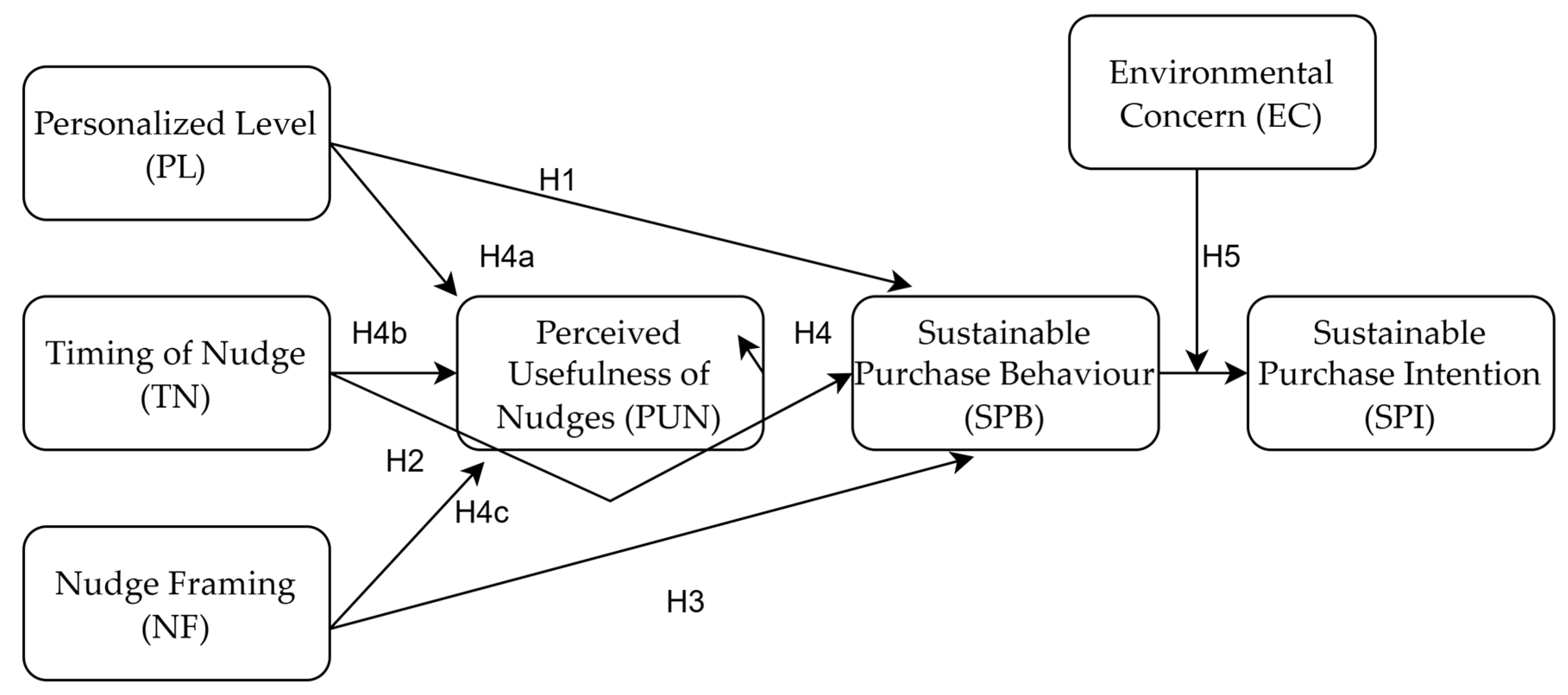
Figure 1. Framework of the Study.
Sustainability 17 11292 g001
Figure 2. Model Assessment Framework.
Sustainability 17 11292 g002
Figure 3. Slope Analysis.
Sustainability 17 11292 g003
Figure 4. IPMA—Analysis.
Sustainability 17 11292 g004
Table 1. Theoretical Foundations and Hypothesis Mapping for the Integrated TAM–Nudge Framework.
Construct/TheoryReferencesCore ConceptIdentified Research GapLinked HypothesisRelevant SDGs
Technology Acceptance Model (TAM)[13,14,74]Adoption depends on perceived usefulness and ease of use.Limited integration of TAM with behavioral/digital interventions for sustainability.— (Foundational Theory)SDG 9, SDG 12
Nudge Theory[15,16,85]Nudges influence behavior without restricting choice.Long-term sustainability outcomes and ethics of nudging remain underexplored.— (Foundational Theory)SDG 12, SDG 13
Digital Nudging[2,46,86,87]Digital environments provide context-aware nudges supporting sustainable choices.Limited empirical testing on how AI cues shape cognitive beliefs in sustainability decisions.Framework-level constructSDG 12, SDG 13, SDG 9
Personalization[6,50,52]Tailored messages increase engagement, trust, and intention.Need to ensure personalization supports sustainability while protecting autonomy/control.H1: Personalization → SPISDG 12
Timing of Nudges[3,56]Well-timed nudges increase effectiveness and compliance.Optimal contextual timing is understudied in digital sustainability nudges.H2: Timing → SPISDG 12
Framing of Nudges[7,61,65,67]Gain-framed and norm-based messages encourage pro-environmental choices.Cross-cultural validation and ethical transparency require more evidence.H3: Framing → SPISDG 12, SDG 13
Perceived Usefulness[68,69]If nudges are seen as beneficial, intention strengthens.Mediating role of usefulness is rarely tested in AI–sustainability models.H4: PU mediates Nudge → SPISDG 9, SDG 12
Sustainable Purchase Intention (SPI)[73,88]Willingness to choose environmentally friendly products.Intention–behavior gap persists; digital nudging effects need more testing.Core DVSDG 12
Sustainable Purchase Behavior (SPB)[30]Actual pro-environmental purchasing actions.Few studies link AI nudges to real consumer actions/behavior.Outcome variableSDG 12, SDG 13
Environmental Concern (Moderator)[76,79,80,83,89]Strong ecological concern can intensify responses to sustainability nudges.Mixed evidence across contexts and cultures.H5: EC moderates SPI → SPBSDG 13
Integration with SDGs / Vision 2030[90,91]Sustainability agendas require behavioral change and digital innovation.Limited empirical integration of AI + behavior + SDG measurement in one model.Policy alignmentSDG 12, SDG 13, SDG 9, SDG 7
Table 2. Formulation of Constructs.
Personalized Level4Perception of tailored nudges, relevance of personalized messages, alignment with preferences, and effectiveness of customization[85,87]
Timing of Nudge4Appropriateness of timing, reminders before purchase, influence of timely cues, and convenience of intervention[87,95]
Nudge Framing3Positive vs. negative framing, gain vs. loss emphasis, clarity of framed message[85,96]
Perceived Usefulness of Nudges5Ease of decision-making, helpfulness, perceived value, support in sustainable choice, clarity, motivation[13,87]
Sustainable Purchase Intention5Willingness to buy eco-friendly products, preference for sustainable options, readiness to pay more, long-term intention, influence of nudges[88,97]
Sustainable Purchase Behaviour3Actual eco-friendly buying actions, frequency of green purchases, and consistency in sustainable choices[30,98]
Environmental Concern (Moderator)7Awareness of environmental issues, concern about ecological harm, responsibility to act, support for eco-products, lifestyle adjustments, policy support, future concern[89,99]
Table 3. Measurement and Structural Model Validation with Post Hoc Power Analysis.
Constructs/Pathsαρₐρ_cAVE1234567VIF RangePath CoefficientPower (α = 1%)Power (α = 5%)
1. Environmental Concern (EC)0.950.960.960.780.88 3.18–3.50→ Sustainable Purchase Behavior0.9770.996
2. Nudge Framing (NF)0.910.910.950.850.030.92 2.91–3.31→ Perceived Usefulness of Nudges11
→ Sustainable Purchase Intention11
3. Perceived Usefulness of Nudges (PUN)0.910.910.930.690.060.330.83 2.23–2.54→ Sustainable Purchase Intention0.8820.969
4. Personalized Level (PL)0.920.920.950.810.030.020.360.90 3.01–3.16→ Perceived Usefulness of Nudges11
→ Sustainable Purchase Intention11
5. Sustainable Purchase Behaviour (SPB)0.840.850.910.760.150.450.530.510.87 1.95–2.12← Sustainable Purchase Intention11
6. Sustainable Purchase Intention (SPI)0.930.930.950.780.040.270.400.380.550.88 2.80–3.09
7. Timing of Nudge (TN)0.940.950.960.820.020.030.330.030.140.340.903.47–3.69→ Perceived Usefulness of Nudges11
→ Sustainable Purchase Intention11
8. EC × SPI (Interaction)0.020.050.030.000.200.080.021.00→ Sustainable Purchase Behavior0.9670.994
Table 4. Model Evaluation Summary: Predictive Validity and Fit Statistics.
Constructs/IndicesR2Adj. R2Q2 PredictRMSEMAESRMRd_ULSd_Gχ2NFI
Perceived Usefulness of Nudges0.300.290.290.850.68
Sustainable Purchase Behavior0.280.280.270.860.65
Sustainable Purchase Intention0.140.140.280.850.67
Model Fit (Saturated) 0.0280.4490.2521296.160.943
Model Fit (Estimated) 0.0642.3260.3281555.050.932
Table 5. Hypothesis Testing and SDG Alignment.
HypothesisPath Relationshipβ (O)t-Valuep-Valuef2Effect SizeDecisionSDG Linkage
H1Personalized Level → Sustainable Purchase Intention0.30310.495 0.0000.113MediumAcceptedSDG 12—Responsible Consumption and Production
H2Timing of Nudge → Sustainable Purchase Intention0.2839.9800.0000.100MediumAcceptedSDG 13—Climate Action
H3Nudge Framing → Sustainable Purchase Intention0.2097.0030.0000.054Small—MediumAcceptedSDG 12—Responsible Consumption and Production
H4Perceived Usefulness of Nudges → Sustainable Purchase Intention0.0643.5240.0000.014SmallAcceptedSDG 4—Quality Education/Awareness for Sustainability
H4aPersonalized Level → Perceived Usefulness → Sustainable Purchase Intention0.0383.120.002SignificantPartialAcceptedSDG 4—Quality Education (Awareness)
H4bTiming of Nudge → Perceived Usefulness → Sustainable Purchase Intention0.0373.040.002SignificantPartialAcceptedSDG 12—Responsible Consumption
H4cNudge Framing → Perceived Usefulness → Sustainable Purchase Intention0.0362.980.003SignificantPartialAcceptedSDG 13—Climate Action
H5Environmental Concern × Sustainable Purchase Intention → Sustainable Purchase Behaviour0.1424.6090.0000.030SmallAcceptedSDG 13—Climate Action
Table 6. Importance Performance Map Analysis.
Target ConstructPredictor VariableImportance (Total Effect)Performance ScoreAligned SDGPriority Level
Perceived Usefulness of NudgesNudge Framing0.30339.752SDG 12—Responsible ConsumptionHigh
Personalization Level0.32238.941SDG 12—Responsible ConsumptionHigh
Timing of Nudge0.31238.017SDG 13—Climate ActionHigh
Sustainable Purchase IntentionNudge Framing0.24539.752SDG 12—Responsible ConsumptionModerate
Perceived Usefulness of Nudges0.11948.015SDG 4—Quality Education (Sustainability Awareness)Low
Personalization Level0.34238.941SDG 12—Responsible ConsumptionHigh
Timing of Nudge0.32138.017SDG 13—Climate ActionHigh
Sustainable Purchase BehaviourEnvironmental Concern0.14742.165SDG 13—Climate ActionModerate
Nudge Framing0.11739.752SDG 12—Responsible ConsumptionLow
Perceived Usefulness of Nudges0.05748.015SDG 4—Quality EducationLow
Personalization Level0.16338.941SDG 12—Responsible ConsumptionModerate
Sustainable Purchase Intention0.47650.815SDG 13—Climate ActionVery High
Timing of Nudge0.15338.017SDG 13—Climate ActionModerate
Table 7. Implications of the Study.
Implication TypeKey Insight (Human Language)Theoretical/Practical ContributionAligned SDGsRelevance and Impact
TheoreticalCombining TAM and behavioral principles offers a comprehensive explanation of how and why consumers adopt AI-based sustainable technologies.Extends TAM beyond technology perception to include behavioral triggers from Nudge Theory.SDG 12 & SDG 13Strengthens academic understanding of digital sustainability models, especially within the Saudi context.
Environmental concern plays a motivational role, transforming intention into real behavior by appealing to moral responsibility.Adds an ethical and emotional dimension to the integrated TAM framework.SDG 13Supports the development of climate-conscious behavioral theories for sustainable consumption research.
ManagerialPersonalizing AI-driven digital interventions increases user engagement and promotes green purchase decisions.Enhances perceived usefulness (TAM) while applying behavioral design principles.SDG 12Helps businesses develop consumer-tailored AI systems that drive responsible buying.
Delivering AI prompts at the right time improves decision confidence and increases responsiveness to sustainable choices.Connects real-time behavioral cues with user experience principles.SDG 13Encourages firms to use predictive data to activate sustainable consumer actions at critical decision points.
Transparent and positively framed sustainability messages build customer trust and encourage ethical engagement.Supports normative influence in Nudge Theory and enhances perceived trustworthiness in TAM.SDG 4 & SDG 12Fosters ethical communication strategies in digital sustainability initiatives.
PolicyPromoting environmental awareness through education strengthens the link between intention and real sustainable behavior.Integrates moral responsibility within technology adoption frameworks.SDG 13 & SDG 4Supports Vision 2030 goals to cultivate environmentally responsible citizens through education.
AI sustainability strategies should incorporate personalization and ethical standards to ensure accountability.Links digital transformation with fair governance and responsible innovation.SDG 12 & SDG 13Enables policymakers to design inclusive and transparent digital sustainability frameworks.
Collaboration among academia, government, and industry is essential to embed sustainability into technology innovation.Extends TAM by promoting collective adoption and knowledge diffusion.SDG 4 & SDG 13Supports human capital development for a digitally sustainable economy.
Disclaimer/Publisher’s Note: The statements, opinions and data contained in all publications are solely those of the individual author(s) and contributor(s) and not of MDPI and/or the editor(s). MDPI and/or the editor(s) disclaim responsibility for any injury to people or property resulting from any ideas, methods, instructions or products referred to in the content.