Sustainable Concrete Hollow Blocks Using Composite Waste Replacing Fired Clay Bricks—An Experimental Study


Abstract
1. Introduction
2. Materials and Methods
2.1. Materials
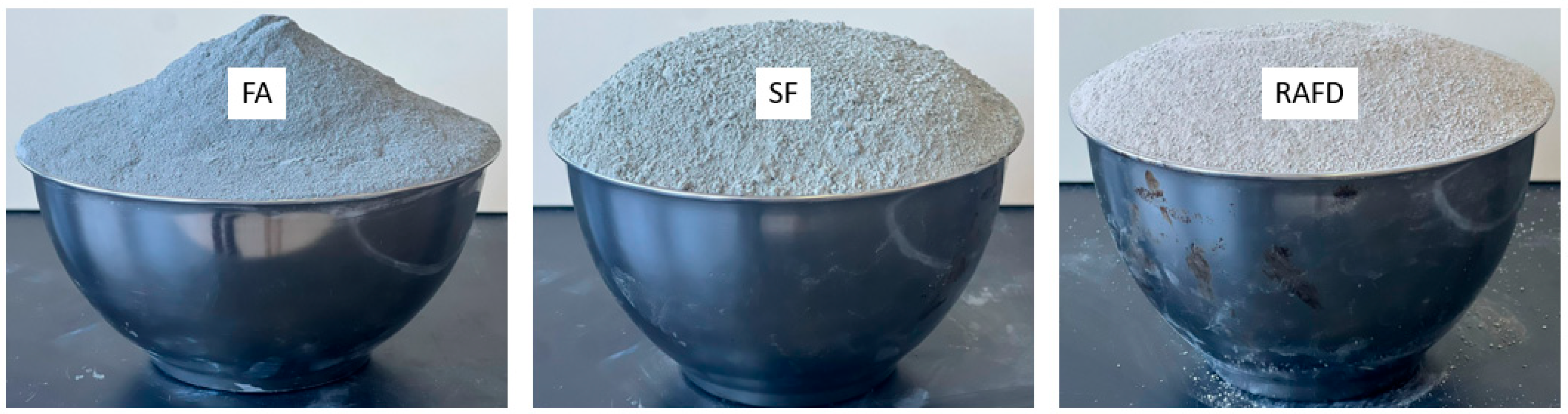
2.1.1. Supplementary Cementitious Materials
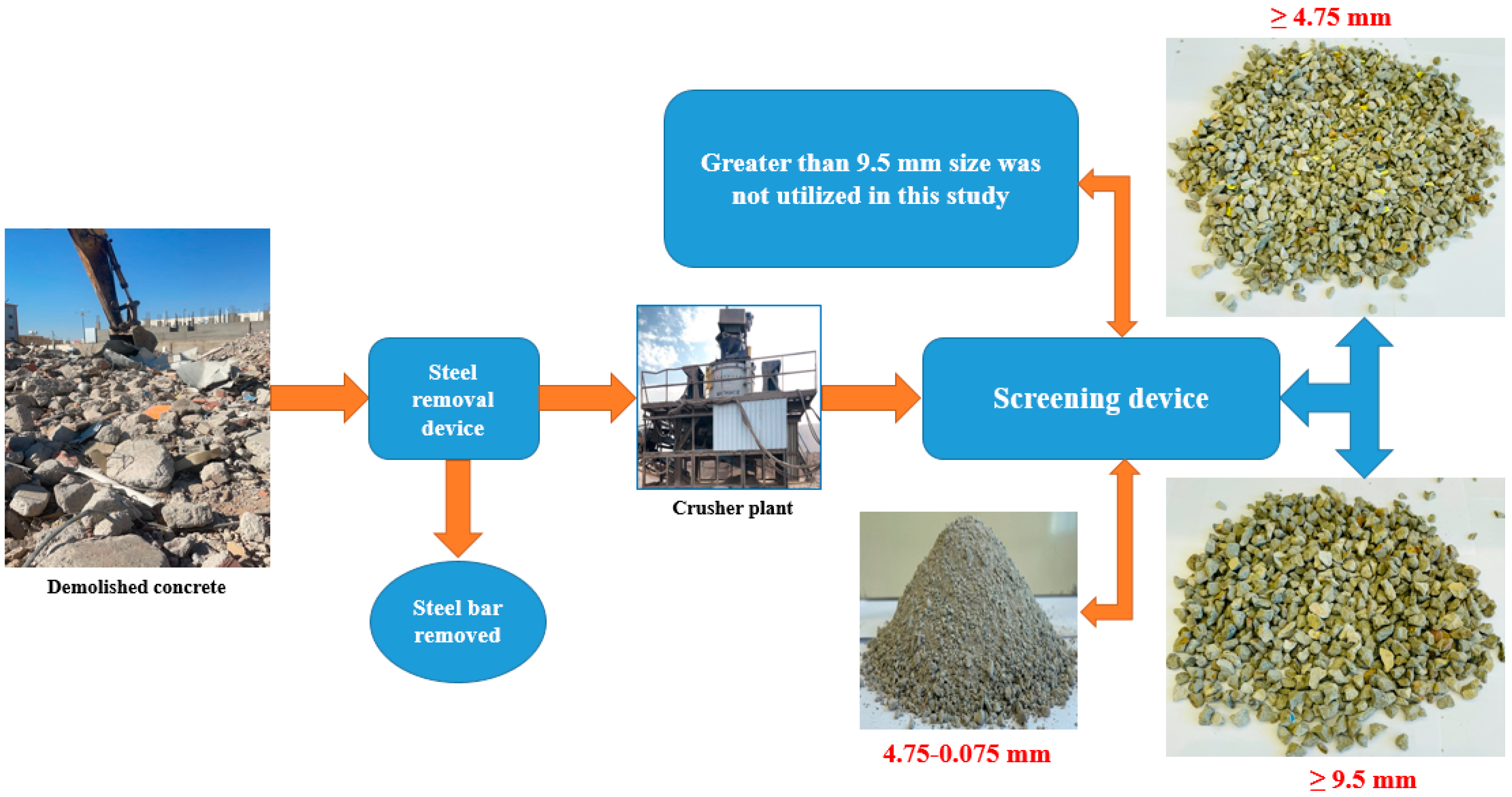
2.1.2. Development of Recycled Aggregates
2.2. Methods
2.2.1. Design Mix Designations, Proportions, and Mixing Methodologies
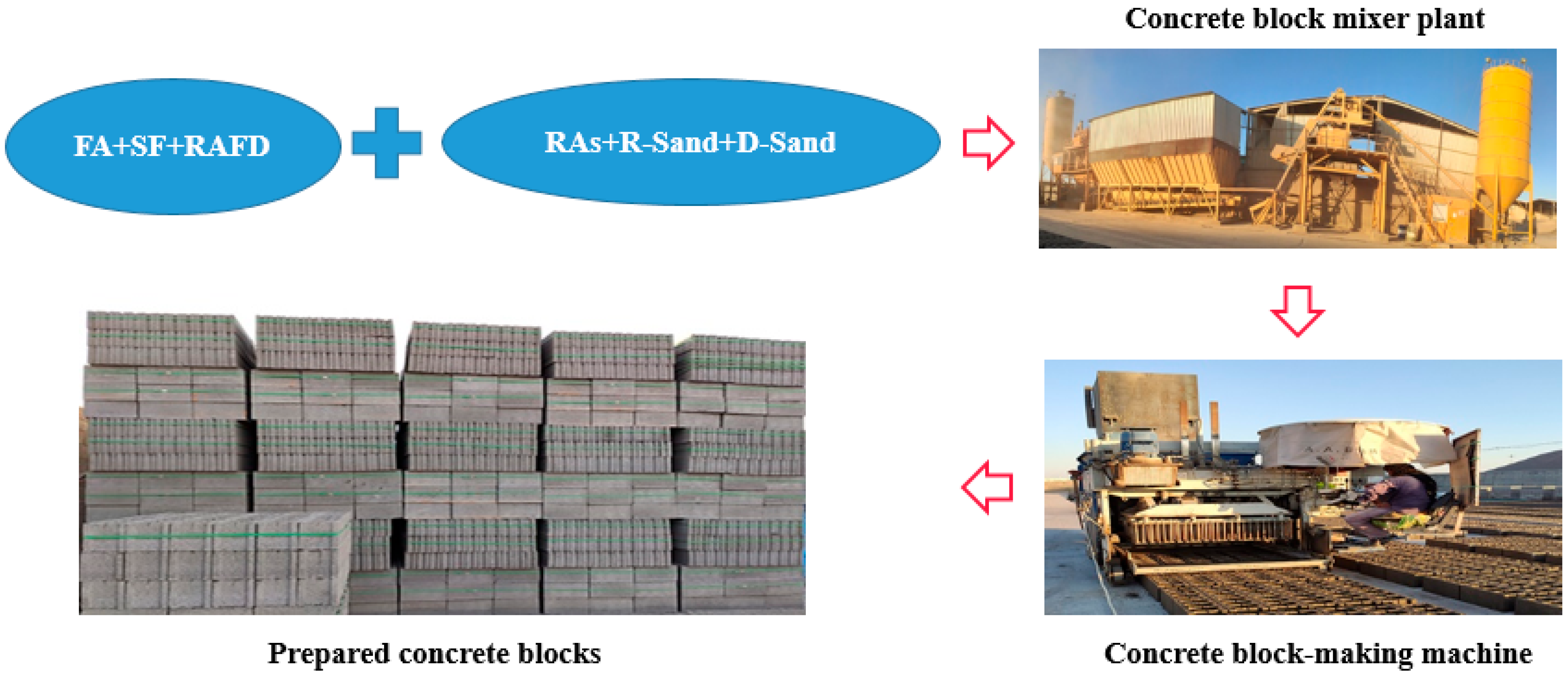
2.2.2. Hollow Block Manufacturing Process
3. Environmental Impact from the Clay Brick Industry
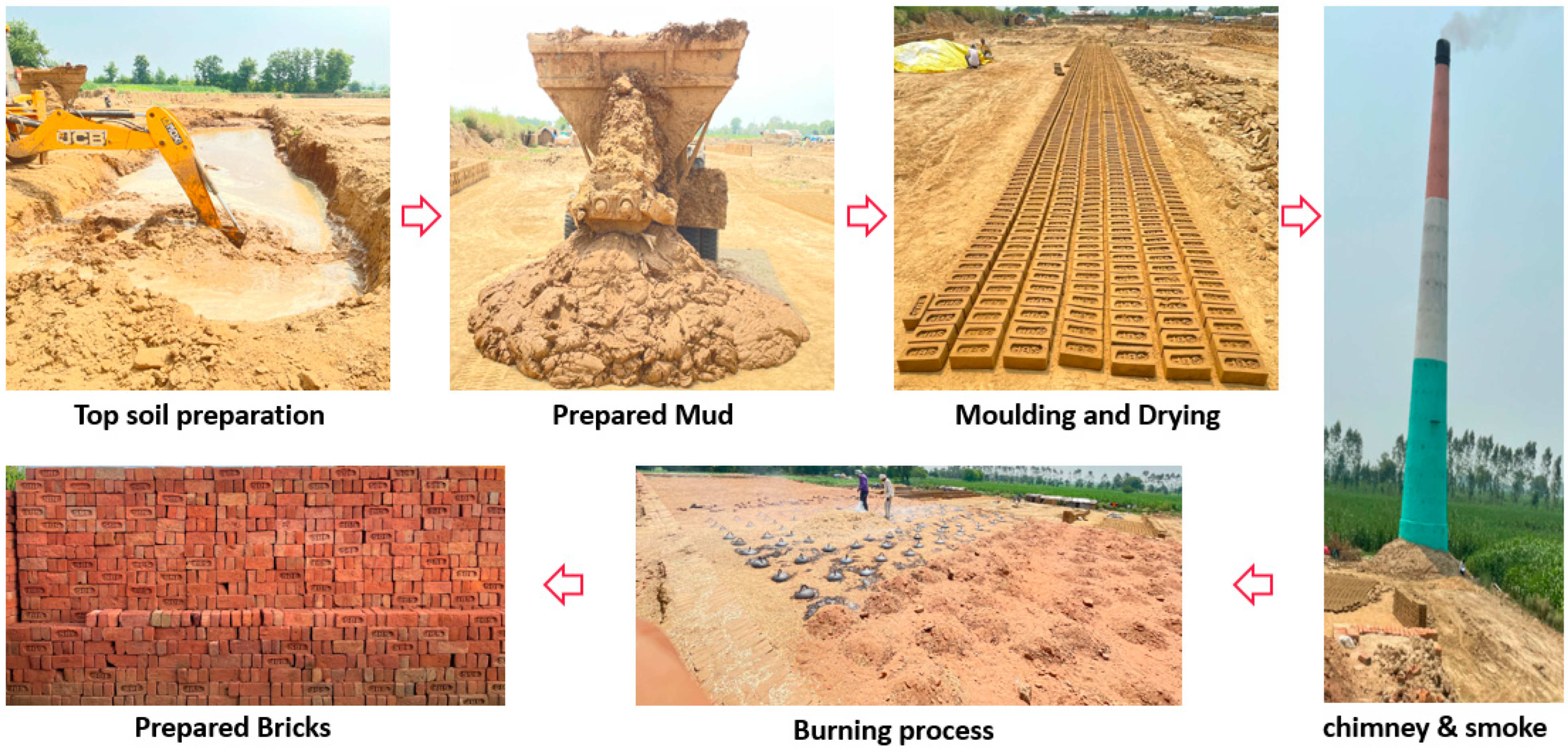
3.1. Fired Clay Brick Production Scenario
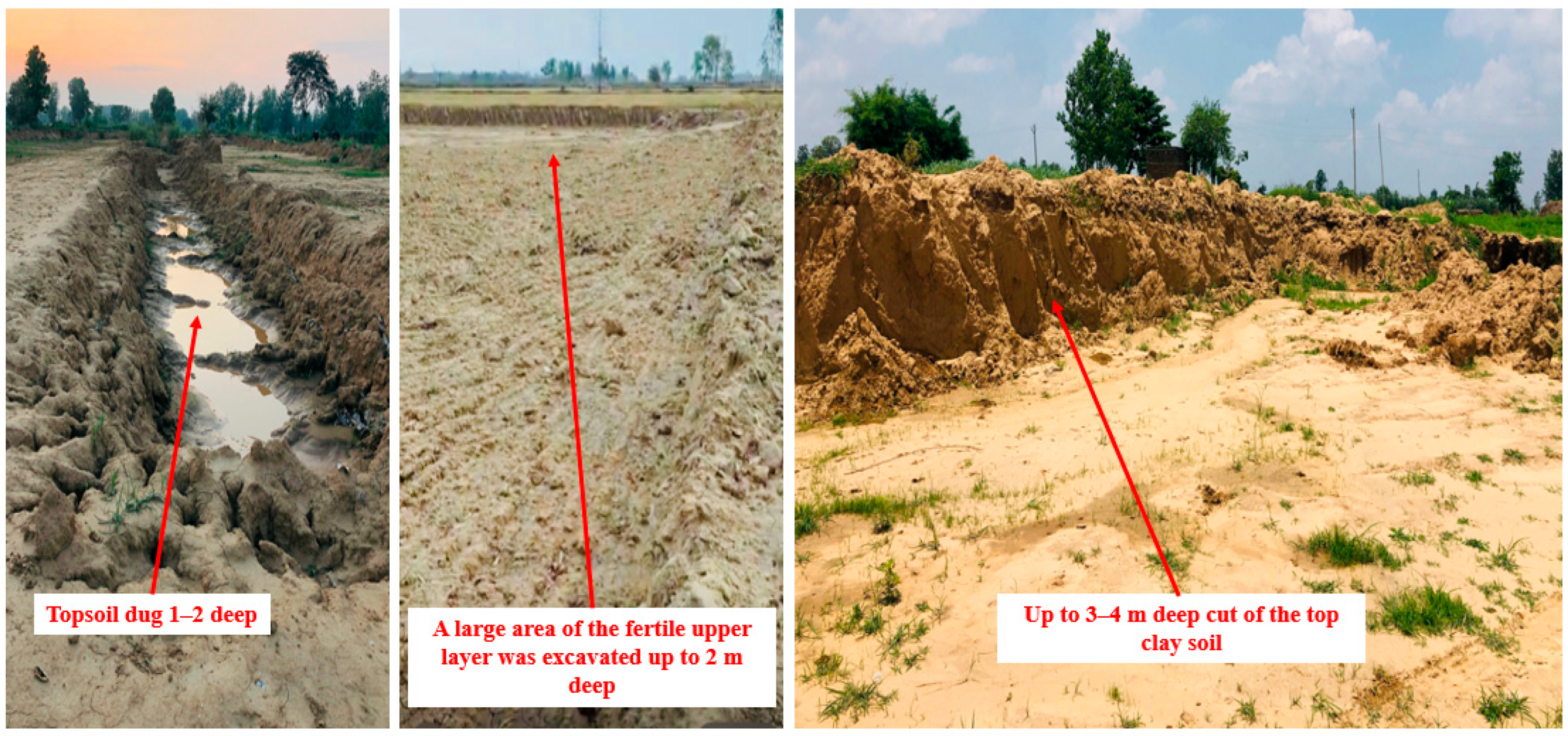
3.2. Environmental Consequences of Fired Clay Bricks in the Construction Sector
4. Results and Discussion
4.1. Strength Characteristics
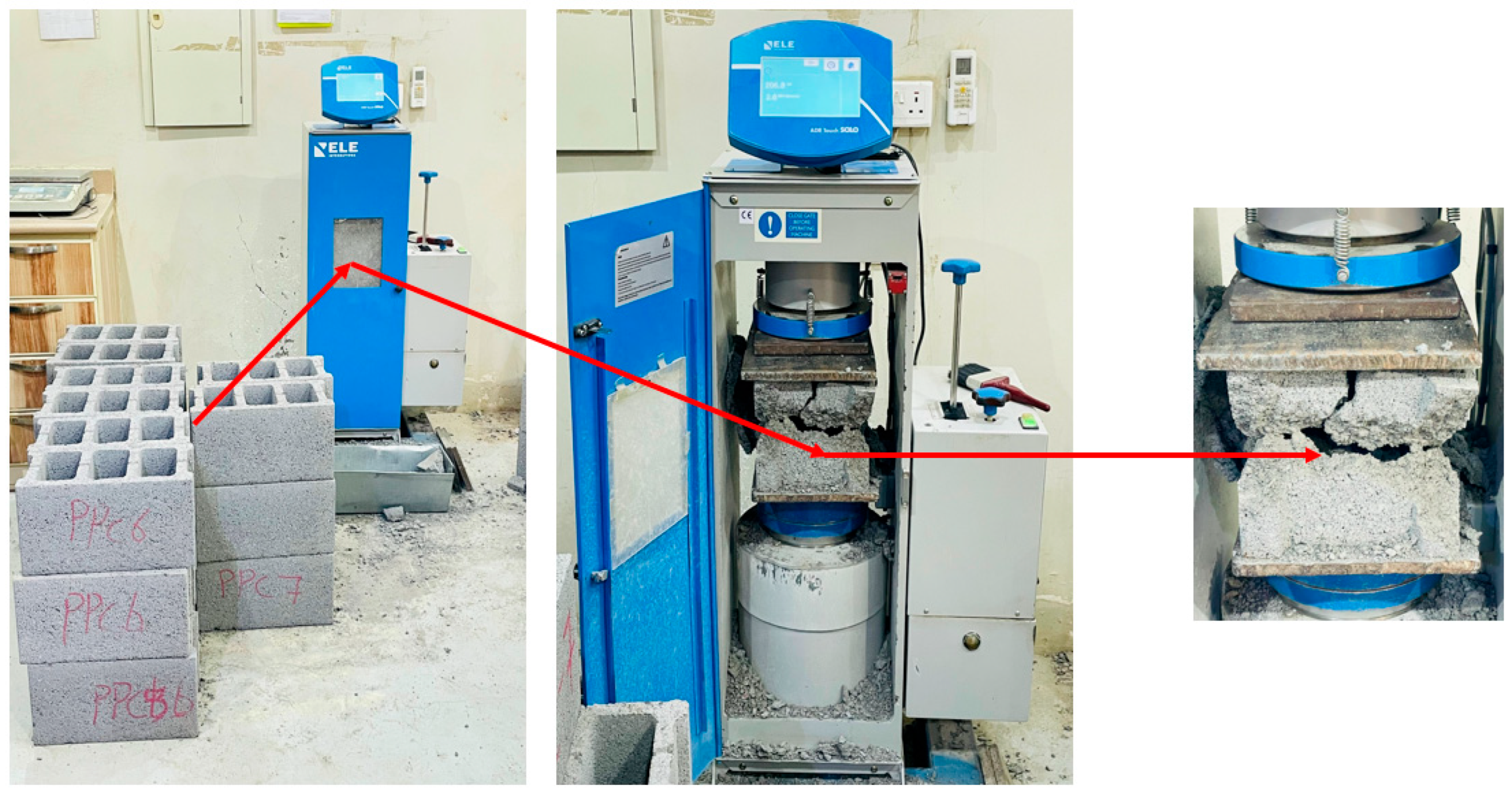
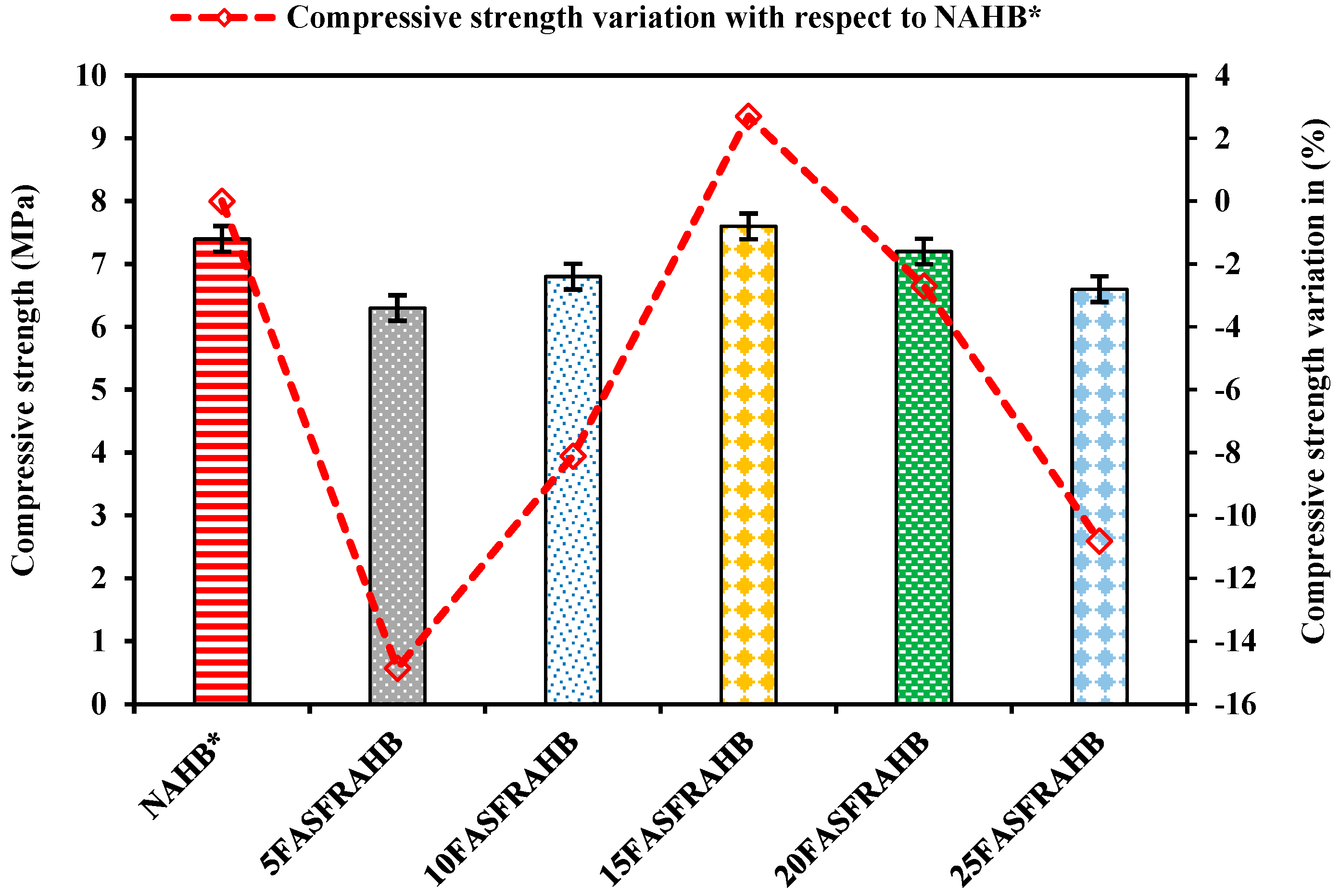
4.1.1. Developed Hollow Blocks’ Compressive Strength
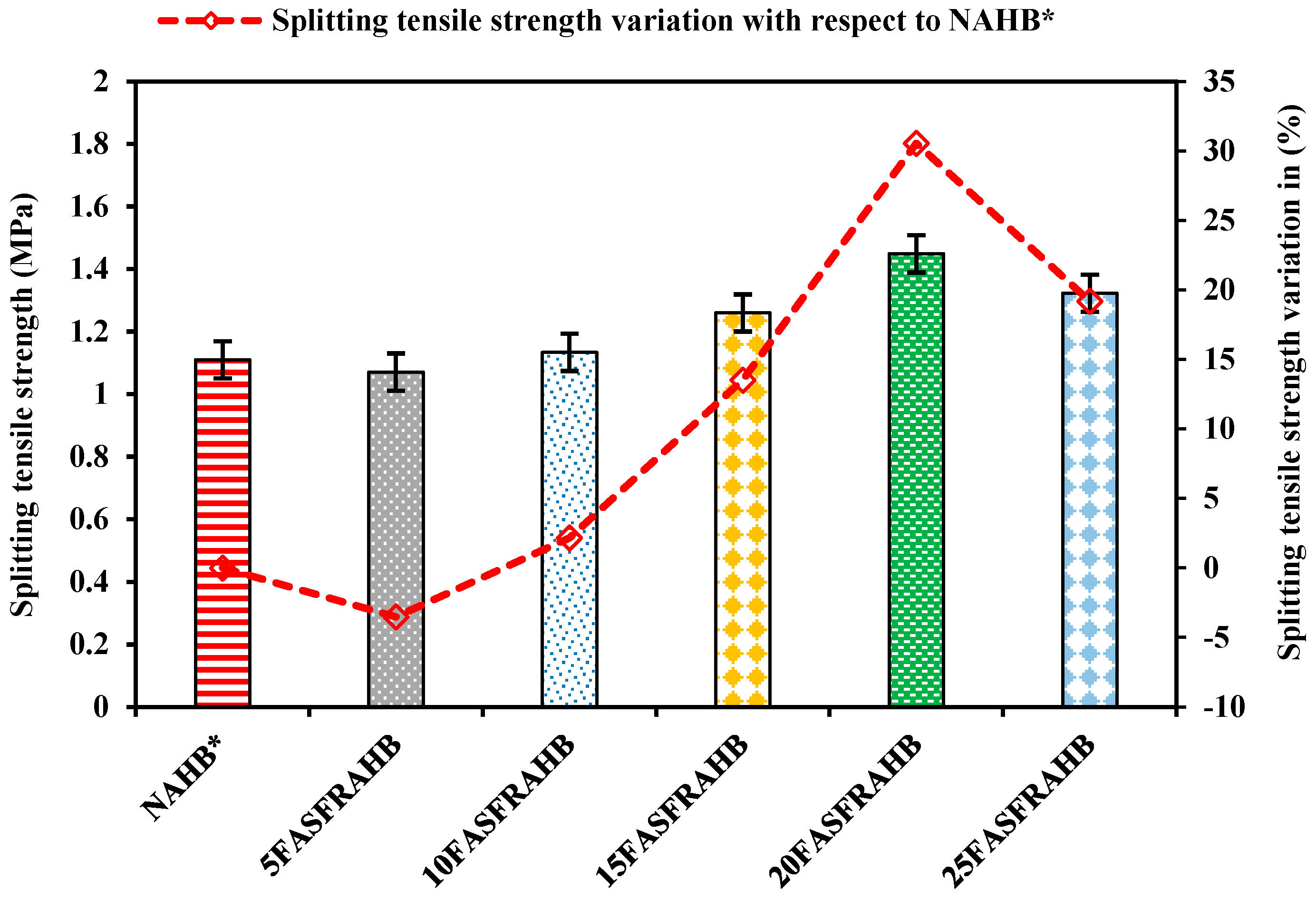
4.1.2. Splitting Tensile Strength
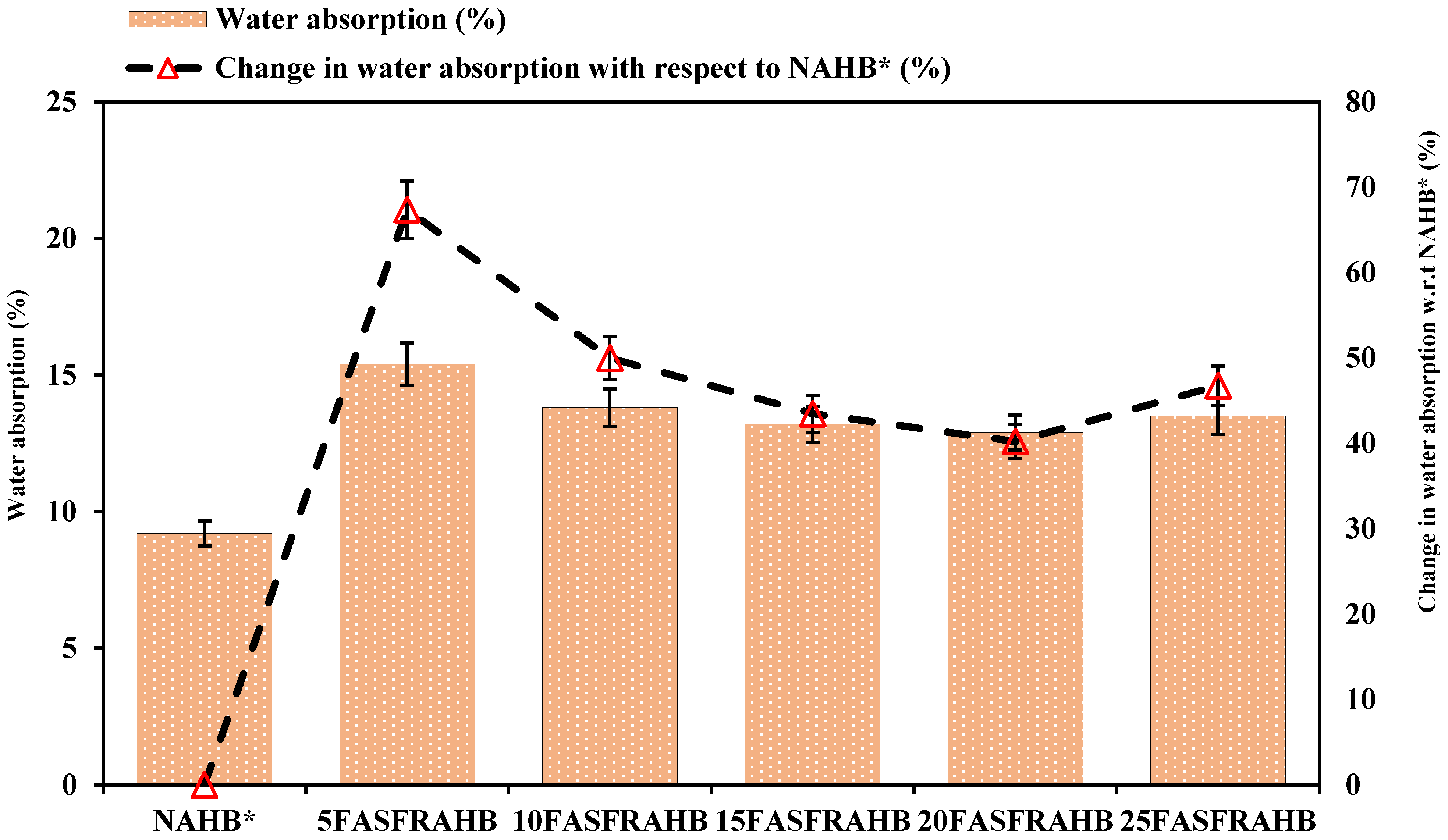
4.2. Water Absorption
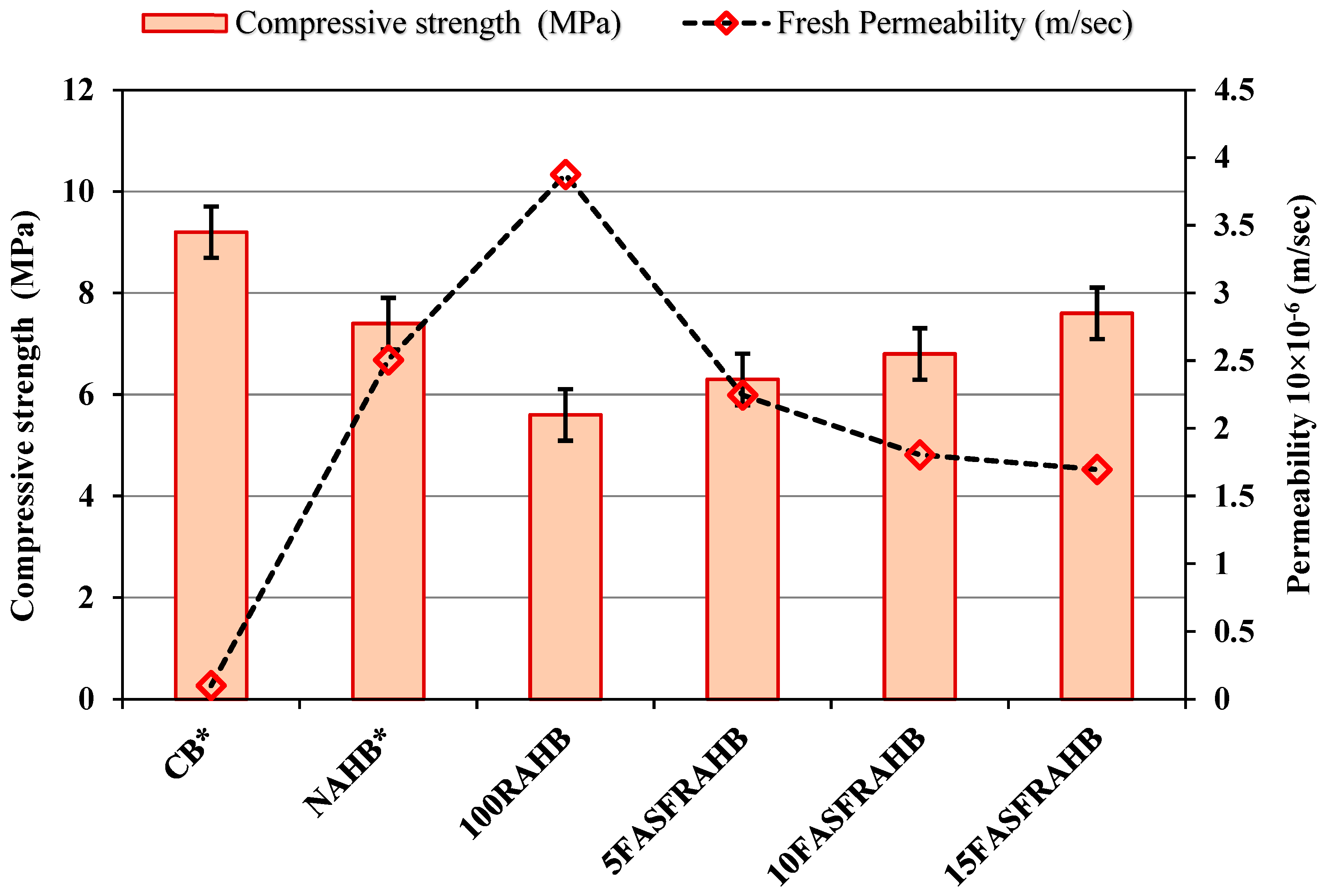
4.3. Permeability and Compressive Strength Relationship
4.4. Validation of Results
4.4.1. Compressive Strength Validation
4.4.2. Splitting Tensile Strength Validation
4.4.3. Water Absorption Validation
5. Economic Analysis of Sustainable Concrete Hollow Block
5.1. Carbon Footprint and River Sand Reduction from the Construction Industry
5.1.1. Minimizing CO2 Emissions
5.1.2. Preservation of Natural Sand
6. Conclusions
- The developed sustainable hollow blocks, 15FASFRAHB, exhibited the highest compressive strength, 7.6 MPa, when 30% of OPC was replaced with the combination SCMs (15% FA + 10% SF + 5% RAFD). This has successfully reached the acceptable limit for hollow blocks in construction work.
- It has also been concluded that the developed sustainable hollow block mix 20FASFRAHB started reducing compressive strength when the SCM combination (20% FA + 10% SF + 5% RAFD) reached 35%.
- The STS value of the reference mix NAHB* was determined to be 1.11 MPa. The optimal mix 15FASFRAHB was recorded at 1.26 MPa, almost 13.51% higher than the reference mix. The mix 20FASFRAHB achieved the highest value of 1.449 MPa, 30.54% higher than the reference mix.
- It can be concluded that SCMs effectively reduce the permeability coefficient (k), but a direct correlation between the permeability coefficient (k) and compressive strength in all mixes is not maintained.
- It is concluded from the sample calculation of selected data that 6.48 × 10⁷ tons of CO2 emissions can be reduced when 30% OPC is replaced with an optimized SCM (15% FA + 10% SF + 5% RAFD) combination, and it is further concluded that by incorporating 100% sustainable sand, 1.2 × 10⁹ tons of river sand can be saved annually.
Author Contributions
Funding
Institutional Review Board Statement
Informed Consent Statement
Data Availability Statement
Conflicts of Interest
References
- Fiala, J.; Mikolas, M.; Krejsova, K. Full brick, history and future. IOP Conf. Ser. Earth Environ. Sci. 2019, 221, 012139. [Google Scholar] [CrossRef]
- Alam, J.; Khan, M.; Akhtar, M. Fly ash based brick tiles: An experimental study. Int. J. Emerg. Trends Eng. Dev 2013, 6, 35–44. [Google Scholar]
- Jha, S.; Nayak, A.; Sharma, Y.; Mishra, V.; Sharma, D. Fluoride accumulation in soil and vegetation in the vicinity of brick fields. Bull. Environ. Contam. Toxicol. 2008, 80, 369–373. [Google Scholar] [CrossRef]
- Akhtar, M.N.; Bani-Hani, K.A.; Akhtar, J.; Khan, R.A.; Nejem, J.K.; Zaidi, K. Flyash-based bricks: An environmental savior—A critical review. J. Mater. Cycles Waste Manag. 2022, 24, 1663–1678. [Google Scholar] [CrossRef]
- El Maataoui, Y.; Alehyen, S.; Fadil, M.; Aouan, B.; Liba, A.; Saufi, H.; Taibi, M. Application of central composite design for optimizing mechanical performance of geopolymer paste from fly Ash using the mechanosynthesis method: Structural and microstructural analysis. Iran. J. Sci. Technol. Trans. Civ. Eng. 2025, 49, 2481–2501. [Google Scholar] [CrossRef]
- Velasco, P.M.; Ortíz, M.M.; Giró, M.M.; Velasco, L.M. Fired clay bricks manufactured by adding wastes as sustainable construction material–A review. Constr. Build. Mater. 2014, 63, 97–107. [Google Scholar] [CrossRef]
- Al-Awsh, W.A.; Al-Amoudi, O.S.B.; Al-Osta, M.A.; Ahmad, A.; Saleh, T.A. Experimental assessment of the thermal and mechanical performance of insulated concrete blocks. J. Clean. Prod. 2021, 283, 124624. [Google Scholar] [CrossRef]
- Akhtar, J.; Alam, J.; Akhtar, M. An experimental study on fibre reinforced fly ash based lime bricks. Int. J. Phys. Sci. 2010, 5, 1688–1695. [Google Scholar]
- Akhtar, M.; AKhtar, J.; Hattamleh, O. The Study of Fibre Reinforced Fly Ash Lime Stone Dust Bricks With Glass Powder. Int. J. Eng. Adv. Technol. 2013, 3, 314–319. [Google Scholar]
- Akhtar, M.; Hattamleh, O.; Akhtar, J. Feasibility of coal fly ash based bricks and roof tiles as construction materials: A review. MATEC Web Conf. 2017, 120, 03008. [Google Scholar] [CrossRef]
- Akhtar, J.; Ahmad, T.; Akhtar, M.; Abbas, H. Influence of Fibers and Fly Ash on Mechanical Properties of Concrete. Am. J. Civ. Eng. Archit. 2014, 2, 64–69. [Google Scholar] [CrossRef]
- Maaze, M.R.; Das, S.K.; Garg, N.; Shrivastava, S. A Review of Ecofriendly Brick Production: Exploring the Use of Fly Ash and Industrial Waste in the Construction Industry. J. Struct. Des. Constr. Pract. 2025, 30, 03124004. [Google Scholar] [CrossRef]
- Priyadarshini, M.; Mondal, G.; Dash, S.R. Development of a Nonconventional First-Class Fly Ash Brick and Evaluation of Its Mechanical and Durability Properties. J. Mater. Civ. Eng. 2025, 37, 04025266. [Google Scholar] [CrossRef]
- Singh, R.; Patel, M. Mechanical, durability, and microstructural characteristics of rice-straw-ash-based clay bricks: A sustainable approach to utilize biomass-based power plant waste. J. Mater. Cycles Waste Manag. 2025, 27, 170–192. [Google Scholar] [CrossRef]
- ACI-211.1-91; Standard Practice for Selecting Proportions for Normal, Heavyweight, and Mass Concrete. American Concrete Institute: Farmington Hills, MI, USA, 1991.
- ACI-214.4R-03; Guide for Obtaining Cores and Interpreting Compressive Strength Results. American Concrete Institute: Farmington Hills, MI, USA, 2013.
- Akhtar, M.N.; Albatayneh, O.; Bani-Hani, K.A.; Malkawi, A.I.H. Performance of modified desert sand concrete: An experimental case study. Case Stud. Constr. Mater. 2024, 21, e03465. [Google Scholar] [CrossRef]
- Hamada, H.M.; Abed, F.; Al-Sadoon, Z.A.; Elnassar, Z.; Hassan, A. The use of treated desert sand in sustainable concrete: A mechanical and microstructure study. J. Build. Eng. 2023, 79, 107843. [Google Scholar] [CrossRef]
- Jin, B.H.; Song, J.X.; Liu, H.F. Engineering characteristics of concrete made of desert sand from Maowusu Sandy Land. Appl. Mech. Mater. 2012, 174, 604–607. [Google Scholar] [CrossRef]
- ASTM-C136-06; Standard Test Method for Sieve Analysis of Fine and Coarse Aggregates. ASTM: West Concord, PA, USA, 2006.
- Mitra, D. Brick by Brick/Environment, Human Labour & Animal Welfare. In Environment, Human Labour, and Animal Welfare; International Labour Office: Geneva, Switzerland; The Brooke Hospital for Animals: London, UK; The Donkey Sanctuary: Sidmouth, UK, 2016. [Google Scholar]
- CSE-India. Overview on Brick Kiln: Pollution, Technology and Where We Need to Go? Presentation at Anil Agarwal Dialogue. March 11 2015. Available online: https://cdn.cseindia.org/docs/aad2015/Overview2.pdf (accessed on 11 March 2015).
- Zhang, L. Production of bricks from waste materials—A review. Constr. Build. Mater. 2013, 47, 643–655. [Google Scholar] [CrossRef]
- ICIMOD. Resource Efficient Burnt-Clay Bricks in India. International Centre for Integrated Mountain Development 2017. Available online: www.icimod.org (accessed on 31 March 2019).
- Baum, E. The Brick Industry Worldwide. ESMAP & World Bank Report. Ministry of Construction Vietnam: Hanoi, Vietnam, 2017. [Google Scholar]
- Turner, K.G.; Anderson, S.; Gonzalez-Chang, M.; Costanza, R.; Courville, S.; Dalgaard, T.; Dominati, E.; Kubiszewski, I.; Ogilvy, S.; Porfirio, L.; et al. A review of methods, data, and models to assess changes in the value of ecosystem services from land degradation and restoration. Ecol. Model. 2016, 319, 190–207. [Google Scholar] [CrossRef]
- Agarwal, A. Overview of Brick Kiln Sector in the Country. AAEIT, 2012. Available online: https://cdn.cseindia.org/docs/photogallery/slideshows/TP-cleaner-brick-production-20171211-15-Overview-of-Brick-Kiln-Sector-Environmental-issues-Nivit-Kuma.pdf (accessed on 11 March 2015).
- Gibbs, H.; Salmon, J.M. Mapping the world’s degraded lands. Appl. Geogr. 2015, 57, 12–21. [Google Scholar] [CrossRef]
- Van der Laan, C.; Wicke, B.; Verweij, P.A.; Faaij, A.P. Mitigation of unwanted direct and indirect land-use change–an integrated approach illustrated for palm oil, pulpwood, rubber and rice production in North and East Kalimantan, Indonesia. Gcb Bioenergy 2017, 9, 429–444. [Google Scholar] [CrossRef]
- Prince, S.; Von Maltitz, G.; Zhang, F.; Byrne, K.; Driscoll, C.; Eshel, G.; Kust, G.; Martínez-Garza, C.; Metzger, J.P.; Midgley, G.; et al. Chapter 4: Status and trends of land degradation and restoration and associated changes in biodiversity and ecosystem fundtions. In IPBES: The IPBES Assessment Report on Land Degradation and Restoration; Montanarella, L., Scholes, R., Brainich, A., Eds.; Secretariat of the Intergovernmental Science-Policy Platform on Biodiversity and Ecosystem services: Bonn, Germany, 2018. [Google Scholar]
- Lambin, E.F.; Turner, B.L.; Geist, H.J.; Agbola, S.B.; Angelsen, A.; Bruce, J.W.; Coomes, O.T.; Dirzo, R.; Fischer, G.; Folke, C.; et al. The causes of land-use and land-cover change: Moving beyond the myths. Glob. Environ. Change 2001, 11, 261–269. [Google Scholar] [CrossRef]
- Lambin, E.F.; Meyfroidt, P. Global land use change, economic globalization, and the looming land scarcity. Proc. Natl. Acad. Sci. USA 2011, 108, 3465–3472. [Google Scholar] [CrossRef]
- USDA. Soil Formation. United States Department of Agriculture. Available online: https://www.nrcs.usda.gov/resources/guides-and-instructions/soil-classification (accessed on 10 September 2015).
- Lambin, E.F.; Geist, H.J.; Lepers, E. Dynamics of land-use and landcover change in tropical regions. Annu. Rev. Environ. Resour. 2003, 28, 205–241. [Google Scholar] [CrossRef]
- Drescher, J.; Rembold, K.; Allen, K.; Beckschäfer, P.; Buchori, D.; Clough, Y.; Faust, H.; Fauzi, A.M.; Gunawan, D.; Hertel, D.; et al. Ecological and socioeconomic functions of tropical lowland rainforest transformation systems: An integrative approach. Philos. Trans. R. Soc. B 2015. [Google Scholar] [CrossRef]
- Olsson, L.; Barbosa, H.; Bhadwal, S.; Cowie, A.; Delusca, K.; Flores-Renteria, D.; Hermans, K.; Jobbagy, E.; Kurz, W.; Li, D.; et al. Land Degradation: IPCC Special Report on Climate Change, Desertification, Land 5 Degradation, Sustainable Land Management, Food Security, and 6 Greenhouse gas fluxes in Terrestrial Ecosystems; Intergovernmental Panel on Climate Change (IPCC): Geneva, Switzerland, 2019; p. 1. [Google Scholar]
- Maria, S.; Croitoru, L.; Khaliquzzaman, M.; Ferdausi, S.A.; Li, J. Introducing Energy-efficient Clean Technologies in the Brick Sector of Bangladesh. Government of Bangladesh. Energy Sector Management Assistance Program (ESMAP); The World Bank: Washington, DC, USA, 2011. [Google Scholar]
- DMG-Events. Construction Market in India. A Report by Dmg Events India. 2015. Available online: http://www.arbinternational.es/ARCHIVO/documentos/sectorial/1431507298_construction-market-report.pdf (accessed on 10 September 2015).
- Maithel, S.; Ravi, A.; Kumar, S. Roadmap for Promoting Resource Efficient Bricks in India: A 2032 Strategy; Greentech Knowledge solutions Pvt. Ltd.: New Delhi, India, 2018. [Google Scholar]
- Weyant, C.; Athalye, V.; Ragavan, S.; Rajarathnam, U.; Lalchandani, D.; Maithel, S.; Baum, E.; Bond, T.C. Emissions from South Asian brick production. Environ. Sci. Technol. 2014, 48, 6477–6483. [Google Scholar] [CrossRef]
- Skinder, B.; Pandit, A.; Sheikh, A.; Ganai, B. Brick kilns: Cause of atmospheric pollution. J. Pollut. Eff. Control 2014, 2, 3. [Google Scholar] [CrossRef]
- Ball, C. The harmful effects of living in brick kiln communities in the South Asia Region. Ballard Brief 2024, 2024, 10. [Google Scholar]
- ASTM-C496/C496M-11; Standard Test Method for Splitting Tensile Strength of Cylindrical Concrete Specimens. ASTM: West Concord, PA, USA, 2011.
- Shekhar, D.; Godihal, J. Sustainability Analysis of Hollow Concrete Blocks Manufactured Using Recycled Concrete Aggregate and Fly Ash as an Eco-Friendly Construction Component. J. Archit. Eng. 2024, 30, 04024001. [Google Scholar] [CrossRef]
- Akhtar, M.N.; Malkawi, D.A.H.; Bani-Hani, K.A.; Malkawi, A.I.H. Durability Assessment of Sustainable Mortar by Incorporating the Combination of Solid Wastes: An Experimental Study. Civ. Eng. J. 2023, 9, 2770–2786. [Google Scholar] [CrossRef]
- ASTM C129-03; Standard Specification for Nonloadbearing Concrete Masonry Units. ASTM: West Conshohocken, PA, USA, 2003; Volume 4, pp. 1–3.
- Bakera, T.; Malchiodi, B.; Hafez, H.; Scrivener, K. Low-Carbon Concrete Hollow Blocks as a Sustainable Solution for Affordable Houses. In Proceedings of the 18th International Brick and Block Masonry Conference, Birmingham, UK, 21–24 July 2024; pp. 914–920. [Google Scholar]
- Al-Naghi, A.A.A.; Ali, T.; Inam, I.; Qureshi, M.Z.; Kahla, N.B.; Ghazouani, N. An innovative approach to enhancing the strength and durability of recycled aggregate concrete through fly ash-silica fume coating and rice husk ash supplementation. Sci. Rep. 2025, 15, 32780. [Google Scholar] [CrossRef]
- Pedro, D.; De Brito, J.; Evangelista, L. Durability performance of high-performance concrete made with recycled aggregates, fly ash and densified silica fume. Cem. Concr. Compos. 2018, 93, 63–74. [Google Scholar] [CrossRef]
- Sharaky, I.; Issa, U.; Alwetaishi, M.; Abdelhafiz, A.; Shamseldin, A.; Al-Surf, M.; Al-Harthi, M.; Balabel, A. Strength and water absorption of sustainable concrete produced with recycled basaltic concrete aggregates and powder. Sustainability 2021, 13, 6277. [Google Scholar] [CrossRef]
- Shmlls, M.; Bozsaky, D.; Horváth, T. Compressive, flexural and splitting strength of fly ash and silica fume concrete. Pollack Period. 2022, 17, 50–55. [Google Scholar] [CrossRef]
- Thamboo, J.; Sathurshan, M.; Zahra, T. Reliable unit strength correlations to predict the compressive strength of grouted concrete masonry. Mater. Struct. 2024, 57, 151. [Google Scholar] [CrossRef]
- Chopperla, K.S.T.; Kaladaran, G.; Kochaver, A.K.; Isgor, O.B.; Weiss, W.J. The effect of water absorption and specific gravity of supplementary cementitious materials on required water. Cem. Concr. Compos. 2024, 154, 105808. [Google Scholar] [CrossRef]
- Safiuddin, M.; Mahmud, H.; Jumaat, M.Z. Efficacy of ASTM saturation techniques for measuring the water absorption of concrete. Arab. J. Sci. Eng. 2011, 36, 761–768. [Google Scholar] [CrossRef]
- McCarthy, N. China Used More Concrete in 3 Years than the U.S. Used in the Entire 20th Century. 2014. Available online: https://www.forbes.com/sites/niallmccarthy/2014/12/05/china-used-more-concrete-in-3-years-than-the-u-s-used-in-the-entire-20th-century-infographic/?sh=768ab48b4131 (accessed on 5 December 2014).
- IEA. Reducing CO2 Emissions While Producing Enough Cement to Meet Demand is a Global Challenge, Especially Since Demand Growth is Expected to Resume. Available online: https://www.iea.org/energy-system/industry/cement (accessed on 11 July 2023).
- Zheng, L.; Wu, H.; Zhang, H.; Duan, H.; Wang, J.; Jiang, W.; Dong, B.; Liu, G.; Zuo, J.; Song, Q. Characterizing the generation and flows of construction and demolition waste in China. Constr. Build. Mater. 2017, 136, 405–413. [Google Scholar] [CrossRef]



| Mix Designation | SCM Materials | Aggregates | Sand | Water | ||||||||
|---|---|---|---|---|---|---|---|---|---|---|---|---|
| OPC | FA | SF | RAFD | Total | NA 4.75 mm | NA 9.5 mm | RA 4.75 mm | RA 9.5 mm | R. Sand | D. Sand | kg/m3 | |
| % | % | % | % | % | % | % | % | % | % | % | ||
| kg/m3 | kg/m3 | kg/m3 | kg/m3 | kg/m3 | kg/m3 | kg/m3 | kg/m3 | kg/m3 | kg/m3 | kg/m3 | ||
| NAHB* | 100 | 0 | 0 | 0 | 100 | 100 | 100 | 0 | 0 | 100 | 0 | 156.4 |
| 280 | 0 | 0 | 0 | 280 | 750.6 | 714.8 | 0 | 0 | 500.4 | 0 | ||
| 280 | 0 | 0 | 0 | 280 | 0 | 0 | 750.6 | 714.8 | 250.2 | 250.2 | ||
| 5FASFRAHB | 85 | 5 | 10 | 5 | 100 | 50 | 50 | 50 | 50 | 50 | 50 | 156.4 |
| 224 | 14 | 28 | 14 | 280 | 375.3 | 357.4 | 375.3 | 357.4 | 250.2 | 250.2 | ||
| 10FASFRAHB | 75 | 10 | 10 | 5 | 100 | 50 | 50 | 50 | 50 | 50 | 50 | 156.4 |
| 210 | 28 | 28 | 14 | 280 | 375.3 | 357.4 | 375.3 | 357.4 | 250.2 | 250.2 | ||
| 15FASFRAHB | 70 | 15 | 10 | 5 | 100 | 50 | 50 | 50 | 50 | 50 | 50 | 156.4 |
| 196 | 42 | 28 | 14 | 280 | 375.3 | 357.4 | 375.3 | 357.4 | 250.2 | 250.2 | ||
| 20FASFRAHB | 65 | 20 | 10 | 5 | 100 | 50 | 50 | 50 | 50 | 50 | 50 | 156.4 |
| 182 | 56 | 28 | 14 | 280 | 375.3 | 357.4 | 375.3 | 357.4 | 250.2 | 250.2 | ||
| 25FASFRAHB | 60 | 25 | 10 | 5 | 100 | 50 | 50 | 50 | 50 | 50 | 50 | 156.4 |
| 168 | 70 | 28 | 14 | 280 | 375.3 | 357.4 | 375.3 | 357.4 | 250.2 | 250.2 | ||
| Selected Data, Annual Cement-Based Production (Tons) | Per ton OPC Used 0.3 × Column 1 (Tons) | Per ton of OPC Carbon Emission 0.6 × Column 2 (Tons) | Combined Percentage of (FA + SF + RAFD) in Place of OPC (%) | Reduction in OPC 0.30 × Column 2 (Tons) | Reduction in Carbon Emissions 0.6 × Column 5 (Tons) |
|---|---|---|---|---|---|
| Column 1 | Column 2 | Column 3 | Column 4 | Column 5 | Column 6 |
| 2 × 10⁹ | 6.0 × 10⁸ | 3.6 × 10⁸ | 30 | 1.08 × 10⁸ | 6.48 × 10⁷ |
| Selected Data, Annual Cement-Based Materials Production (Tons) | Consumption of Natural Sand per Ton of Concrete 0.60 × Column 1 (Tons) | Natural Sand is Replaced with 100% Sustainable Sand (%) | Preservation of Natural Sand 1 × Column 2 (Tons) | Saving Natural Sand for Producing One Ton of Concrete (Tons) |
|---|---|---|---|---|
| Column 1 | Column 2 | Column 3 | Column 4 | Column 5 |
| 2 × 10⁹ | 1.2 × 10⁹ | 100 | 1.2 × 10⁹ | 1.2 × 10⁹ |
Disclaimer/Publisher’s Note: The statements, opinions and data contained in all publications are solely those of the individual author(s) and contributor(s) and not of MDPI and/or the editor(s). MDPI and/or the editor(s) disclaim responsibility for any injury to people or property resulting from any ideas, methods, instructions or products referred to in the content. |
© 2025 by the authors. Licensee MDPI, Basel, Switzerland. This article is an open access article distributed under the terms and conditions of the Creative Commons Attribution (CC BY) license (https://creativecommons.org/licenses/by/4.0/).
Share and Cite
Akhtar, M.N.; Malkawi, D.A.H. Sustainable Concrete Hollow Blocks Using Composite Waste Replacing Fired Clay Bricks—An Experimental Study. Sustainability 2025, 17, 10963. https://doi.org/10.3390/su172410963
Akhtar MN, Malkawi DAH. Sustainable Concrete Hollow Blocks Using Composite Waste Replacing Fired Clay Bricks—An Experimental Study. Sustainability. 2025; 17(24):10963. https://doi.org/10.3390/su172410963
Chicago/Turabian StyleAkhtar, Mohammad Nadeem, and Dima A. Husein Malkawi. 2025. "Sustainable Concrete Hollow Blocks Using Composite Waste Replacing Fired Clay Bricks—An Experimental Study" Sustainability 17, no. 24: 10963. https://doi.org/10.3390/su172410963
APA StyleAkhtar, M. N., & Malkawi, D. A. H. (2025). Sustainable Concrete Hollow Blocks Using Composite Waste Replacing Fired Clay Bricks—An Experimental Study. Sustainability, 17(24), 10963. https://doi.org/10.3390/su172410963