Article

Evaluating Crumb Rubber Modified (CRM) Asphalt as a Sustainable Binder Alternative for High-Friction Surface Treatments


Department of Civil, Architectural, and Environmental Engineering, Missouri University of Science and Technology, Rolla, MO 65409, USA
*
Author to whom correspondence should be addressed.
Sustainability 2025, 17(24), 10940; https://doi.org/10.3390/su172410940
Submission received: 26 September 2025 / Revised: 24 November 2025 / Accepted: 4 December 2025 / Published: 7 December 2025
(This article belongs to the Special Issue Strategies for Improving the Sustainability of Asphalt Pavements)

Abstract

High-friction surface treatments (HFSTs) are widely applied to improve pavement safety by enhancing long-term skid resistance. Although epoxy resins are commonly used due to their strength and durability, their high cost, susceptibility to delamination, incompatibility with substrates of flexible pavements, and adverse environmental concerns limit their long-term performance. This study presents crumb rubber modified (CRM) asphalt as a sustainable alternative binder for HFST applications. CRM binders offer high performance and compatibility with existing pavement surfaces, cost effectiveness and reduced environmental impacts as compared to epoxy binders. In addition, the binder development utilizes enhanced recycling technologies for interacting with used tire rubber with asphalt. The evaluated CRM binders were prepared under varying interaction temperatures, crumb rubber contents, and types. The developed binders were evaluated for friction performance with two aggregate sources, calcined bauxite (CB) and rhyolite (Rhy). Binder characterization included rheological testing conducted through both frequency sweep and temperature sweep procedures. HFST mixes were evaluated using the British Pendulum Test (BPT), the Dynamic Friction Tester (DFT), and the Circular Track Meter (CTM) in collaboration with the Three-Wheel Polishing Device (TWPD) to simulate the traffic-induced polishing effect. The results showed that CRM content influenced binder performance under polishing. CRM asphalt-based HFST with a relatively high CRM content (15%) maintained a greater coefficient of friction (COF) and exhibited polishing resistance, showing low reduction in the COF after the total number of polishing cycles. In contrast, mean profile depth (MPD) analysis revealed that the most macrotexture efficiency was found in binders with a lower CRM content (10%) after completing the total number of polishing cycles. Analysis of Variance (ANOVA) showed a significant effect of the interaction conditions and rheological properties of CRM binders on the British pendulum number (BPN) loss due to the polishing process. As expected, aggregate source further influenced the resistance to polishing; CB outperformed Rhy with significantly lower aggregate loss under polishing. Overall, the results confirmed that CRM asphalt binders can effectively serve as a sustainable, flexible, and cost-effective alternative binder in HFST.

1. Introduction

Pavement surface friction is an important aspect of road safety, especially under wet conditions where low friction greatly raises the possibility of crashes [1,2]. Increasing pavement surface friction has been found to decrease accident rate and enhance traffic safety [3]. Therefore, most transport agencies are progressively readjusting their financial resources and budgets to give greater priority to pavement maintenance programs, that is, the improvement of pavement surface friction [4]. The strategic change is intended to reduce the expensive rehabilitation costs while maintaining the operational functionality of the current road infrastructure.
There are several types of surface treatments used in pavement engineering, including chip seals and high-friction surface treatment (HFST), which differ significantly in purpose and material composition [5,6]. Chip seals are primarily designed as pavement preservation techniques that extend service life and may provide moderate friction improvement, typically using asphalt emulsions. In contrast, HFST is a targeted pavement solution developed specifically to enhance surface friction [5,6]. The effectiveness of HFST in reducing crashes on critical roadway locations, such as horizontal curves, was assessed by the Federal Highway Administration through the national surface enhancements at horizontal curves program [7]. HFST is a thin layer of polishing and abrasion-resistant aggregate, commonly calcined bauxite (CB), bonded to the surface of the pavement through the application of a high-strength binder [8,9]. The most widely employed binders in HFST are epoxy resins because of their high strength and stiffness, while other synthetic resins like polyester and polyurethane have also been utilized [8,9]. Although these materials are effective, they are moisture-sensitive during curing and subject to certain performance challenges [9].
Currently, researchers have pointed to increasing concerns about insufficient resources and environmental concerns, specifically in the construction industry [10]. As a response measure, sustainable development of asphalt pavements has gained significance, with the emphasis on ways to extend pavement life, decrease consumption of resources, and limit ecological effects [11,12]. Thus, recycled and sustainable products are being utilized for pavements by many transport agencies. In HFST, Guo et al. (2023) explored silicone resin as a promising alternative binder [13]. They found that the incorporation of silicone resin with high-friction aggregates significantly enhanced the skid resistance of the pavement, demonstrating the promise of such an alternative material [13]. The optimal silicone resin composition also had excellent hydrophobic performance, enhancing pavement toughness and highlighting the need for ongoing research into sustainable and effective binder alternatives [13].
However, three main modes of failure have been recognized since the introduction of epoxy-based HFST, which are delamination, aggregate loss, and cohesive failure in the substrate layer [6,14]. Waters (2011) revealed that early failures, including delamination and chip loss, were traditionally associated with poor construction practices [14]. Nevertheless, now that application procedures have been refined, particularly in countries such as New Zealand, cohesive failure in the asphalt substrate has become the most frequent mode of failure [14]. This change highlights one of the biggest drawbacks of epoxy binders, which is their rigidity and incompatibility with underlying layers of flexible pavements under repeated loading and environmental conditions [14]. Bennert et al. (2021) also clarified the performance of HFST as a function of the condition of the underlying pavement [15]. Their research determined that HFST performs optimally when applied to pavements that are in partially good structural condition and need little surface restoration [15]. To ensure consistent adhesion and long-term performance, the authors suggested resurfacing and milling before HFST application [15]. HFST, when placed over open-graded friction coarse or deteriorated surfaces, is more prone to early failures such as debonding and cracking [15]. In view of these difficulties, high-friction chip seals were suggested as a promising alternative under some pavement conditions [15]. Another major drawback of epoxy-based HFST is the high cost of epoxy, which poses a significant barrier to widespread and cost-effective implementation [5,15].
In addition, one of the biggest issues of epoxy-based HFST is that it has a high thermal expansion and contraction rate, which is two to three times greater than that of asphalt mixtures [16]. This difference generates interfacial stress, particularly with temperature changes. When mixed with old or deteriorated asphalt, this stress will cause early failure in the substrate layer, primarily in the shape of shallow horizontal cracks and delamination [17]. Although epoxy-based binders are widely used in HFST due to their high initial strength, their long-term performance often suffers from moisture sensitivity and poor compatibility with flexible pavements. In contrast, asphalt-based binders offer better compatibility with underlying layers of flexible pavements, making them attractive alternatives for HFST applications [17]. Therefore, Roshan and Abdelrahman (2025) evaluated asphalt-based binder as an alternative binder for HFSTs [18,19]. Their results showed that while modified binders exhibited lower binder bonding strength (BBS) than epoxy resins, they provided adequate surface friction performance and were more cost-effective across different aggregate types used in this study [18,19]. These findings suggest that high-stiffness asphalt binders may present practical advantages by balancing performance, flexibility, and economic feasibility [18,19]. In addition, asphalt-based HFST applications, particularly when combined with optimized aggregate gradation, can deliver friction and texture performance comparable to epoxy while improving substrate compatibility and cost-effectiveness [20].
From an environmental perspective, epoxy binders also present several environmental challenges. The chemical composition of these synthetic resins includes volatile organic compounds, which are carbon-containing compounds that easily evaporate at room temperature, contributing to air pollution and posing health risks during application and curing [21,22]. Additionally, epoxy resins are not biodegradable, raising concerns about their persistence in the environment if waste materials are not disposed of appropriately [23,24]. The production of epoxy binders also contributes to environmental concerns, as it involves the emission of greenhouse gases and other pollutants, thereby increasing the carbon footprint of the material [25]. During application, there is a risk of spills or leaks, which may contaminate nearby soil and water sources if not properly contained. Another important limitation of epoxy-based HFSTs is the difficulty they present for maintenance and rehabilitation.
At the end of their service life, pavements treated with epoxy-based HFSTs present challenges for recycling and disposal, necessitating specialized processes for safe removal and processing. By contrast, asphalt-based binders can be milled and reincorporated within conventional pavement rehabilitation processes, making them more compatible with long-term maintenance strategies and circular economy practices. Addressing these environmental issues requires adherence to best practices in the handling and application of epoxy binders and exploring alternative materials or methods that can provide similar safety benefits with a reduced environmental impact.
In light of the drawbacks associated with epoxy-based HFST binders, including their incompatibility with flexible pavements, high thermal expansion, elevated costs, and environmental burdens from volatile organic compound emissions and end-of-life disposal, this study aims to investigate crumb rubber modified (CRM) asphalt as a sustainable and flexible asphalt-based alternative binder for HFSTs. CRM binder combines high stiffness with moderate elasticity, offering potential to enhance frictional performance while maintaining adaptability with asphalt substrates. In addition, the CRM binder provides a significant cost advantage compared to epoxy resins and supports circular economy approaches by recycling waste tire rubber. Prior studies also indicate that the utilization of CRM asphalt binder has been shown to enhance the functional performance of asphalt pavements, particularly by contributing to improved skid resistance and reducing traffic-induced noise levels [26,27]. The primary objectives of this research are to:
  • Evaluate the effects of crumb rubber (CR) type, content, and interaction temperature on the rheological properties of CRM asphalt binders, with emphasis on stiffness–elasticity balance relevant to HFST applications.
  • Evaluate the feasibility of using CRM asphalt binders as a sustainable alternative binder for HFST applications and assess the friction performance of CRM-based HFST systems with different aggregate types under polishing conditions. In addition, establish how the rheological characteristics of conducted CRM binders, particularly stiffness, elasticity, and high-temperature behavior, influence macrotexture and microtexture durability during HFST polishing.

2. Materials and Experimental Methods

2.1. Materials

2.1.1. Base Binder

In this study, a high-performance grade (PG) binder was employed, as specified by AASHTO T315-24 [28], since previous research has highlighted the suitability of high-grade binders for asphalt-based HFST [15,19]. The PG was determined through dynamic oscillatory testing and bending beam rheometer (BBR) analysis. For the high-temperature grade, the complex shear modulus (G*) and phase angle (δ) of the original and rolling thin film oven (RTFO) aged binder were evaluated according to AASHTO T315-24 [28]. For the low-temperature grade, the stiffness (S) and creep rate (m-value) of the pressure aging vessel (PAV) aged binder were evaluated following AASHTO T313-22 [29]. Table 1 summarizes the rheological properties and BBR results obtained for the investigated base binder to identify its PG.

2.1.2. Crumb Rubber

In this study, two types of CR were used, which varied in terms of production method and particle size distribution. CR 30A and CR 40C were assigned to the CRs. CR 30A was manufactured through the wet ambient grinding process, whereas CR 40C was obtained using a cryogenic grinding technique, in which the material is cooled to very low temperatures with liquid nitrogen and subsequently ground into fine particles. The particle size gradations of the two CR sources are summarized in Table 2. With only slight variations at specific sieve sizes, the two sources’ gradations show comparable general trends. The most notable variation occurs at the 0.425 mm (#40) sieve, where CR 40C shows about 10% higher passing compared to CR 30A, indicating a slightly finer gradation for the cryogenic rubber.

2.1.3. Preparation of CRM Binders

This study utilized six different CRM binders. The CRM binders were prepared using the two CRs, each incorporated at two percentages of 10% and 15% by weight of the asphalt binder. These contents were selected as they represent the most commonly used range in binder modification, while higher contents (20–35%) have only been explored in limited studies [30]. Moreover, increasing CR content tends to reduce the workability of conducted CRM binders. The interaction between the CR and the asphalt binder was performed using a high shear mixer (Ross High shear mixer device) operated at a fixed speed of 3000 rpm. The mixing process was conducted for a duration of four hours at two interaction temperatures: 170 °C and 200 °C. These temperature levels were selected based on the findings of Ragab et al. (2013), who reported that temperatures below 160 °C are insufficient to initiate the formation of a three-dimensional polymeric network structure [31]. In addition, increasing the interaction temperature above 200 °C weakens matrix formation due to depolymerization of the material [32]. The four-hour mixing duration was chosen to promote sufficient interaction and enable partial devulcanization of the crumb rubber, consistent with observations reported in previous studies [31,32].
Table 3 lists the binders evaluated in this study, including their identification codes (IDs) and interaction conditions. The IDs assigned to CRM binders reflect key preparation parameters: CR type (30A or 40C), the CR content by weight (10% or 15%), and the interaction temperature (170 °C or 200 °C). For instance, the CR 40C-15-170 indicates a CRM binder containing 15% crumb rubber with CR type 40C, prepared at an interaction temperature of 170 °C.

2.1.4. Aggregate

In this study, two aggregate types were selected, CB and rhyolite (Rhy). A single aggregate gradation was used for both aggregates, and Table 4 presents this gradation along with a summary of their physical and durability properties.

2.2. Experimental Methods

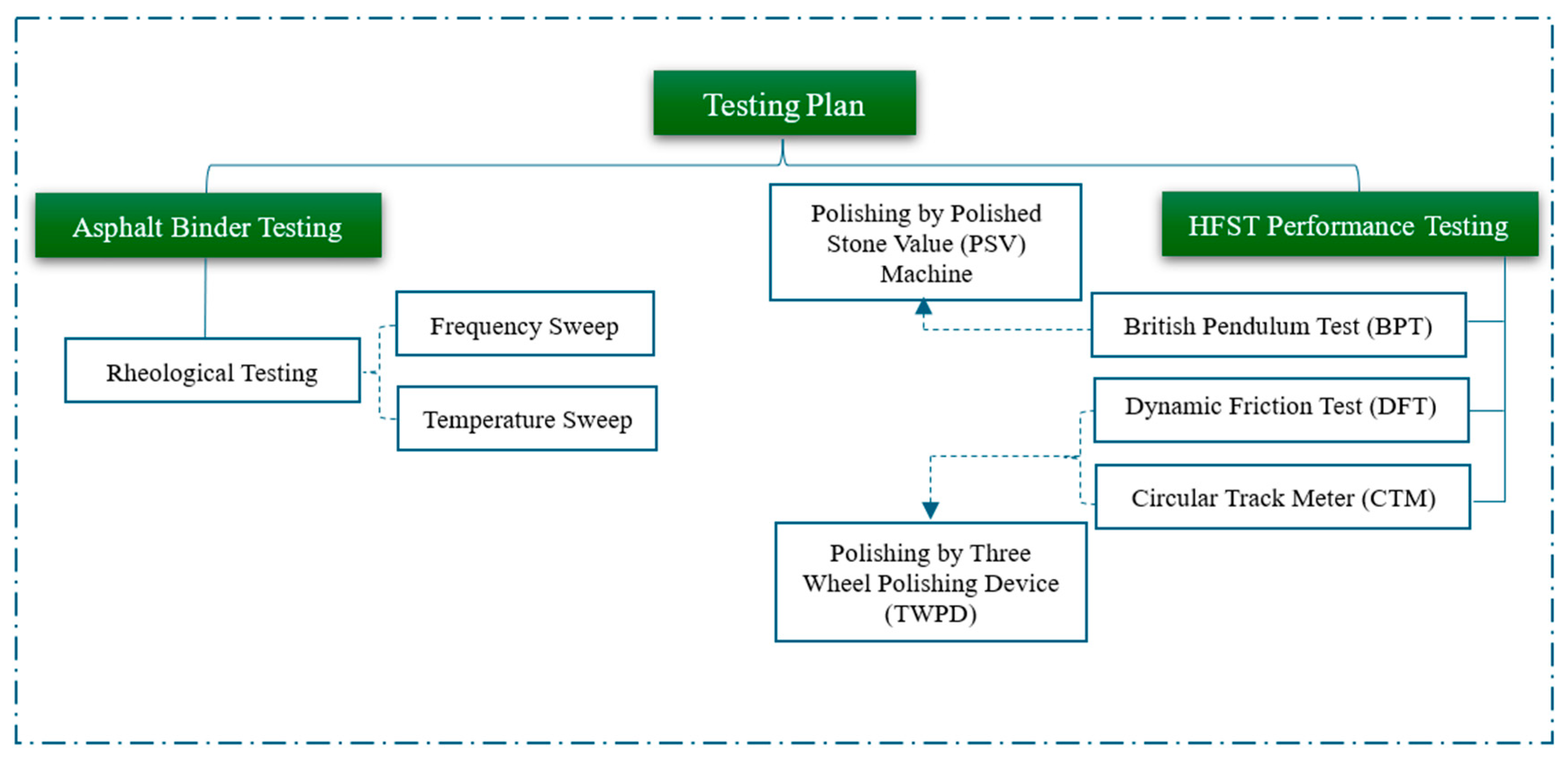
Figure 1 presents the overall experimental plan adopted to achieve the study objectives. The strategy was designed to evaluate both the fundamental material behavior of the CRM binder and its functional performance for HFST. The binder testing program consisted primarily of rheological evaluations. The rheological tests, including frequency sweep and temperature sweep, were conducted to characterize the viscoelastic properties of CRM binder and to evaluate how interaction parameters influence binder stiffness and elasticity.
Parallel to binder testing, HFST performance was evaluated through surface friction and texture characterization. The BPT and DFT were employed to measure friction properties. The CTM was used to quantify macrotexture depth, which plays a key role in long-term skid resistance. Additionally, the specimens were subjected to polishing using the Polished Stone Value (PSV) machine and the Three-Wheel Polishing Device (TWPD). These devices introduced controlled polishing cycles, allowing the investigation of aggregate resistance to polishing and the durability of binder-aggregate systems under simulated traffic loads.

2.2.1. Temperature Sweep Test

The temperature sweep test was performed on the original (unaged) binders to evaluate their rheological behavior at high temperatures. This test is designed to characterize the temperature susceptibility of asphalt binders and to assess their potential resistance to rutting under high temperature loading conditions. The measurements were conducted using a dynamic shear rheometer (DSR) equipped with parallel plates of 25 mm diameter and a testing gap of 1 mm using an Anton Paar MCR 302e device (Anton Paar GmbH, Graz, Austria). The test temperature started at 58 °C and was increased up to the high temperature grade for the base binder, 88 °C, in 6 °C intervals. Throughout the test, a constant strain amplitude of 12% and a constant loading frequency of 10 rad/s were applied, following the procedure recommended by AASHTO T315. At each temperature level, the complex shear G* and δ of the binders were recorded. The rutting factor, G*/sin δ, was then calculated as a primary indicator of the binder’s ability to resist rutting.

2.2.2. Frequency Sweep Test

The frequency sweep test was carried out to characterize the linear viscoelastic response of the asphalt binders at elevated temperatures. The test was conducted under a constant strain amplitude of 0.5% with loading frequencies ranging from 0.01 to 100 rad/s. Additionally, the frequency test was conducted on the unaged binders at the same temperature range used in the temperature sweep test.
The resulting data were analyzed using the time-temperature superposition principle, which states that the viscoelastic response of a material at one temperature can be shifted horizontally along the frequency axis to match the response at another temperature. By applying this principle, all frequency sweep results obtained at different temperatures were combined to form continuous master curves at a chosen reference temperature. These master curves provide an extended representation of the rheological parameters, particularly G* and δ, over a wide range of reduced frequencies. The horizontal shift factors required for this procedure were calculated using the Williams-Landel-Ferry equation as shown in Equation (1). After determining the shift factors, the G* and δ data were fitted using a symmetric logistic sigmoidal model represented in Equation (2) and Equation (3). Ultimately, all test data were shifted to produce smooth master curves at a reference temperature of 58 °C. The fitting process was carried out using the Solver tool in the Microsoft Excel software.
l o g   a T = C 1 ( T T 0 ) C 2 + ( T T 0 ) = l o g f r l o g f
l o g G * = θ + α 1 + e β + γ l o g f r
δ f r = π 2 × a × γ × e β + γ l o g f r 1 + e β + γ l o g f r 2
where aT is the shift factor, T is the testing temperature, T0 is the reference temperature (58 °C), θ is the equilibrium modulus, α represents the difference between the equilibrium and glassy moduli, fᵣ is the reduced frequency, and C1, C2, a, β, and γ are the coefficients of the model.

2.2.3. HFST Specimen Preparation for Texture Testing

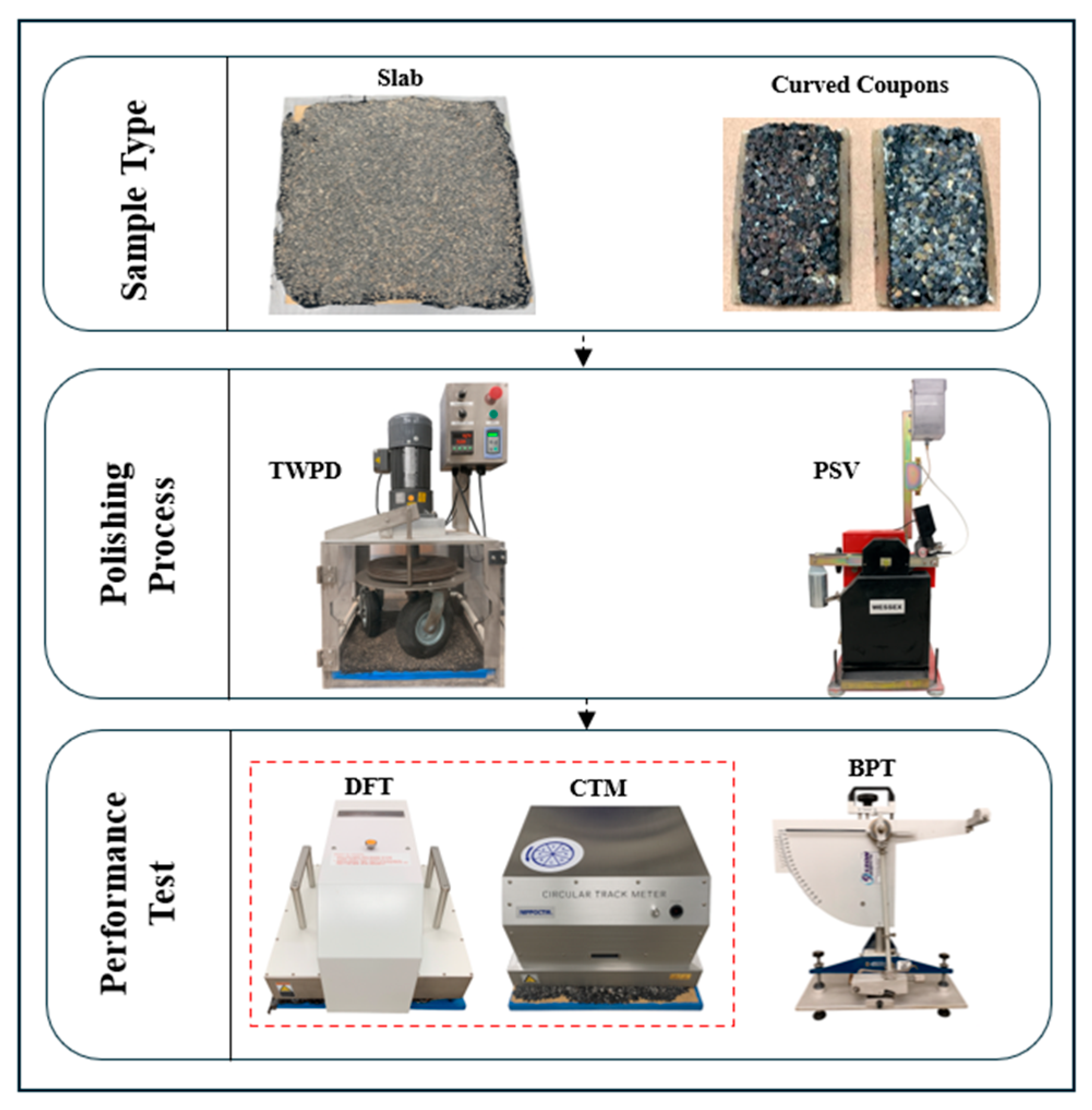
Figure 2 illustrates the experimental framework used for the laboratory-based evaluation of HFST in this study, including the sample types, polishing procedures, and performance testing devices.
This study involved two different sample configurations for specific performance testing methods: small-scale curved coupon samples were prepared for the BPT, while larger slab specimens were prepared for the DFT and CTM. The preparation procedures followed the methodology detailed by Roshan and Abdelrahman (2025) [19]. Asphalt binder was applied at a rate ranging from 0.30 to 0.38 gallons per square yard. The application temperature varied depending on the binder type, generally between 170 °C and 180 °C, to ensure the binder reached a suitable viscosity for uniform spreading. Prior to placement, aggregates were dried in an oven at the corresponding binder application temperature. They were then spread over the binder at a rate of 12 to 15 pounds per square yard, ensuring even coverage across the slab surface. Care was taken to maintain approximately 50% aggregate embedment in the binder layer, a criterion supported by Bennert et al. (2021) for optimizing surface performance and minimizing potential failure mechanisms in high-friction surface treatments [15].

2.2.4. HFST Performance for Texture Properties

In this study, three testing methods were used to assess the friction properties of the materials: BPT, DFT, and CTM. The BPT was specifically used to examine the compatibility between the selected binder and aggregate for HFST purposes. The procedure followed AASHTO T278 [39], focusing on how different asphalt binders affect surface friction. The test was performed on small coupon specimens, where the frictional resistance was measured by dragging a rubber slider across the sample surface. To evaluate surface resistance before and after polishing, samples were polished using a Polished Stone Value (PSV) machine (Wessex Engineering Projects Ltd., Wiltshire, UK), with the polishing carried out for a total duration of 10 h [40].
The DFT, used in this study, operates according to the procedures in ASTM E1911-19 [41]. It is equipped with a rotating disk that holds three rubber sliders. After reaching the desired speed, the disk is brought into contact with the wet sample surface, and the Coefficient of Friction (COF) is recorded as the disk slows down. The test was conducted before and after the polishing process. For the polishing process for this test, the TWPD was applied based on AASHTO PP104-21 [42]. The TWPD uses a turntable system with three rubber tires and a continuous water spray to simulate actual traffic and moisture conditions. As the rubber wheels at a pressure of 35 psi roll over the surface, they gradually remove fine particles and contribute to polishing. Friction values were collected at different stages of the polishing process, including at the beginning (0 cycles), and then after 30,000, 70,000, and 140,000 polishing cycles.
Finally, to assess the surface texture and macrotexture of the HFST samples, the CTM was used. This test was carried out according to the procedure outlined in ASTM E2157-19 [43]. The CTM measures the Mean Profile Depth (MPD), which represents the average surface texture depth of the pavement. The device includes a laser-based sensor mounted on a rotating arm that travels along a circular path with a diameter of 284 mm (11.2 inches). As the arm rotates, the sensor scans the pavement surface and records elevation data to calculate MPD. This method provides detailed information about the texture profile, which is important for evaluating the surface’s ability to maintain friction and manage water drainage under different traffic and weather conditions [40]. Similar to the DFT, the CTM was conducted on slab specimens before and after the polishing process using the TWPD machine.

3. Results and Discussion

3.1. Temperature Sweep Analysis

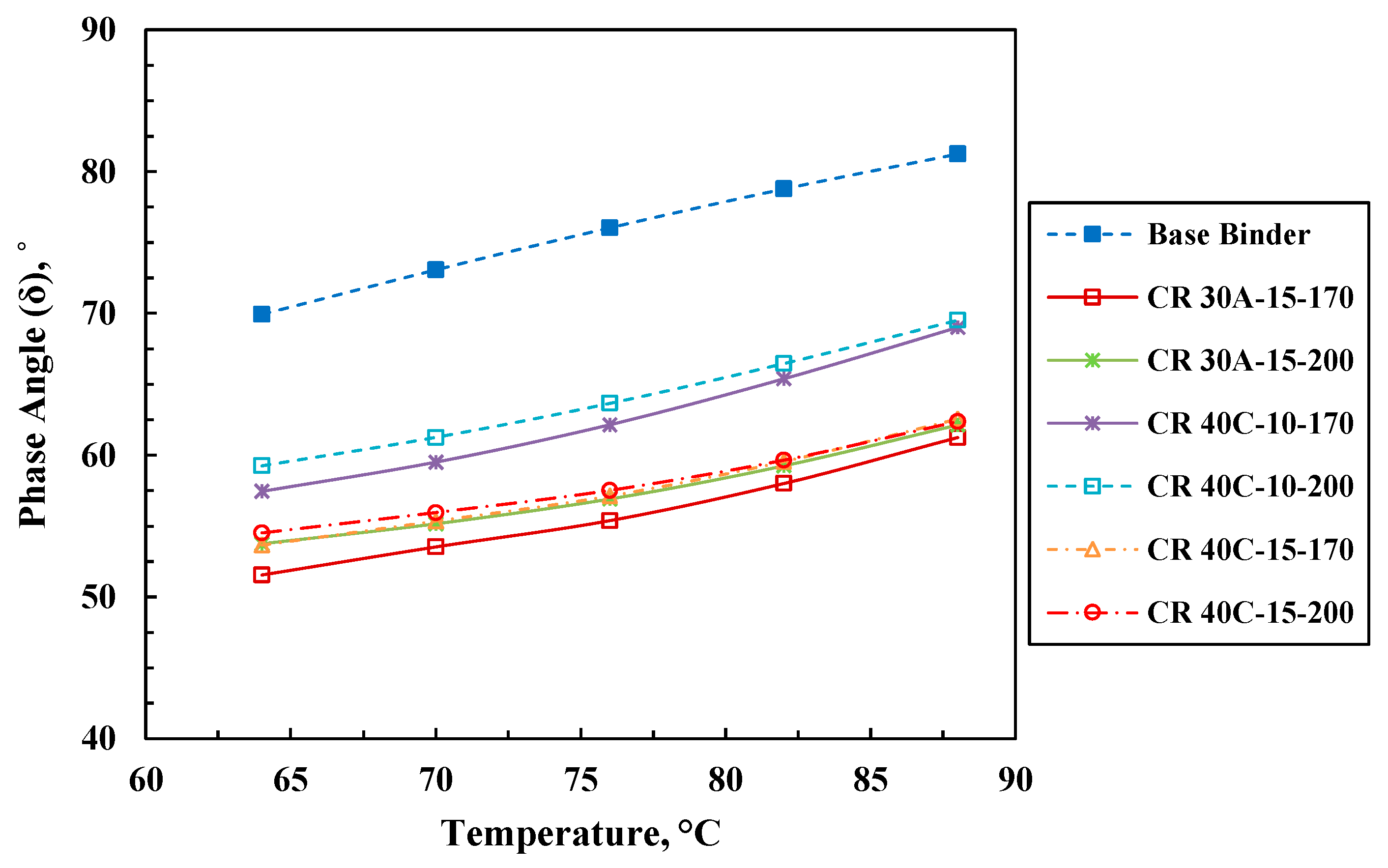
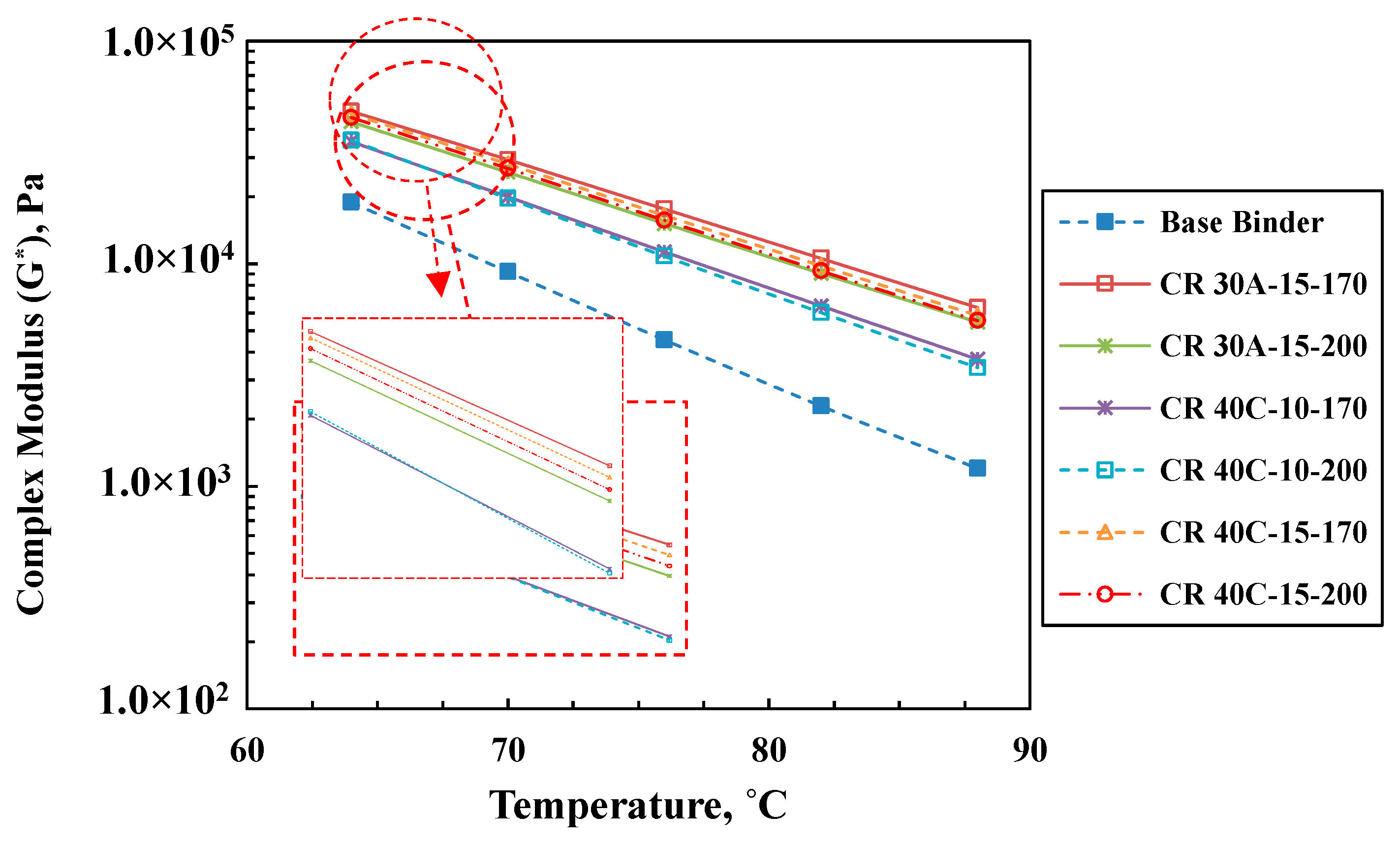
The TS results presented in Figure 3 and Figure 4 illustrate the variation in G* and δ with increasing temperature for the base and various CRM binders. As expected, the base binder showed the steepest reduction in G* and the highest δ values, reflecting lower stiffness and greater susceptibility to deformation under high temperatures, a weakness for HFST applications where sustained elastic response is required. In contrast, all CRM binders demonstrated improved stiffness and reduced phase angles, confirming the vital role of CR in improving elastic response.
Among the CRM binders, increasing the CR content resulted in a significant increase in G* values. Interaction temperature was also identified as a critical parameter. Binders modified at 170 °C generally displayed higher stiffness and lower δ than those prepared at 200 °C. Additionally, increasing the interaction temperature to 200 °C led to reductions in G*, indicating that excessive heat may cause over-devulcanization and degradation of rubber chains. This interpretation aligns with Ragab et al. (2013) and Abdelrahman and Carpenter (1999), who reported that while elevated heat can enhance dispersion, excessive treatment softens the polymer structure and reduces reinforcement efficiency [31,32].
Phase angle trends confirmed that CRM binders retain elasticity more effectively than the base binder, which rapidly transitioned to viscous behavior with temperature. In particular, the smaller δ-temperature slope of CR 30A-15-170 indicates better thermal stability, a property essential for HFST because it helps maintain binder-aggregate adhesion and skid resistance under traffic and heat. The CR type also affected performance. The 30C type promoted slightly greater elasticity than the 40A type. These results suggest that both rubber content and processing method interact with temperature in complex ways, underscoring the need to optimize interaction conditions to balance stiffness and elasticity for durable HFST applications.

3.2. Frequency Sweep Analysis

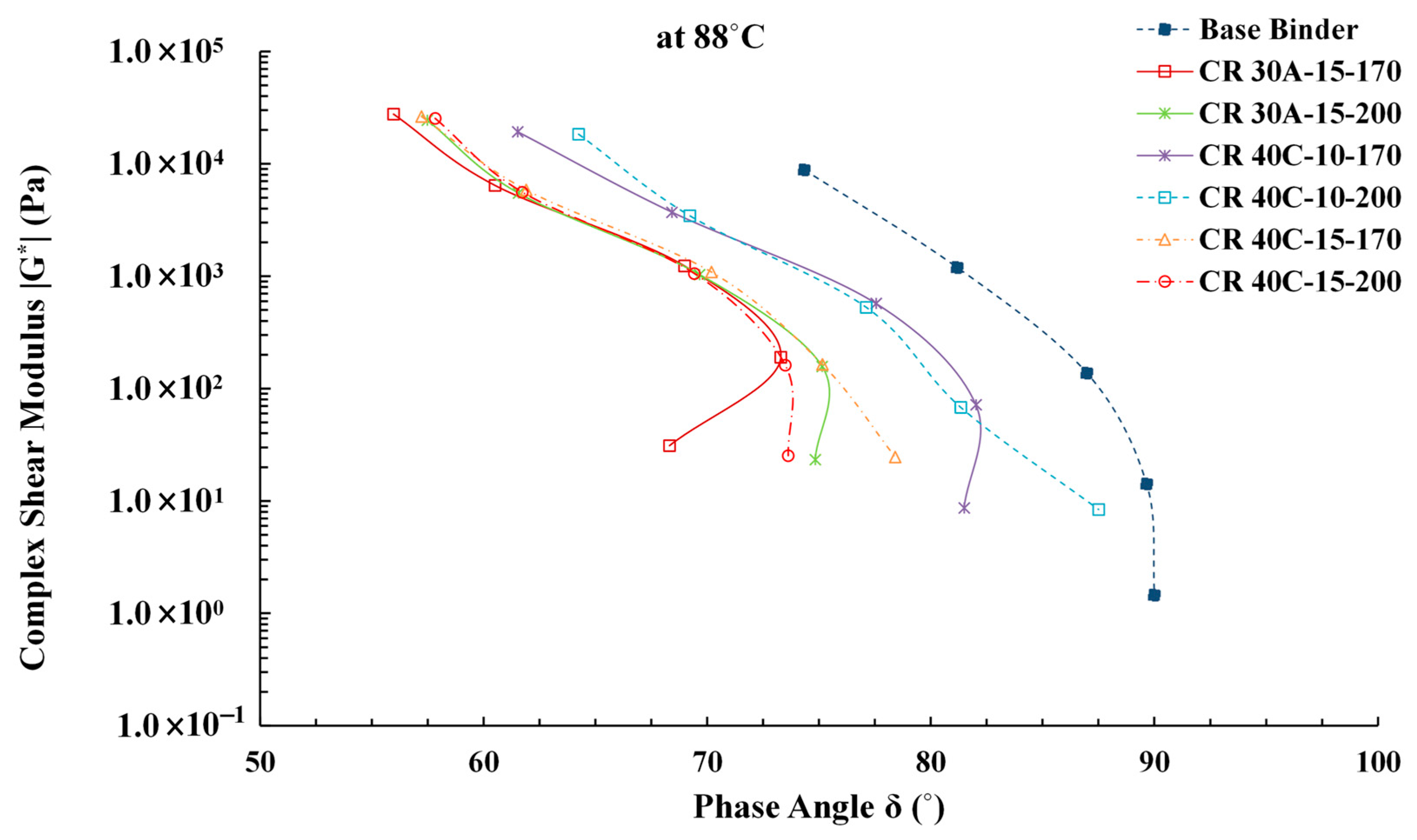
Black space diagrams provide a direct assessment of the balance between stiffness and elasticity of asphalt binders. Figure 5 presents the black curves at 88 °C, which reveal clear differences between the base binder and CRM binders. The base binder curve lies in the upper-right region, indicating a viscous structure causing rapid softening at high temperatures, which increases binder sensitivity and compromises the long-term effectiveness of HFST applications. In contrast, all CRM binders shift downward and leftward, reflecting greater stiffness and enhanced elasticity. This improvement is most evident for binders with 15% CR, which maintain low δ values across the frequency range and resist viscous flow under slow loading conditions. Blending temperature also plays a critical role, with 30A binders performing best at 170 °C, where the curve shows a more elastic structure. For 40C binders with 15% CR, 200 °C yielded the most favorable results due to better swelling and dispersion of finer particles. However, for 40C binders with 10% CR, the 170 °C blend performed better, while the 200 °C blend shifted toward viscous behavior, showing that higher temperature is not effective when rubber content is insufficient.
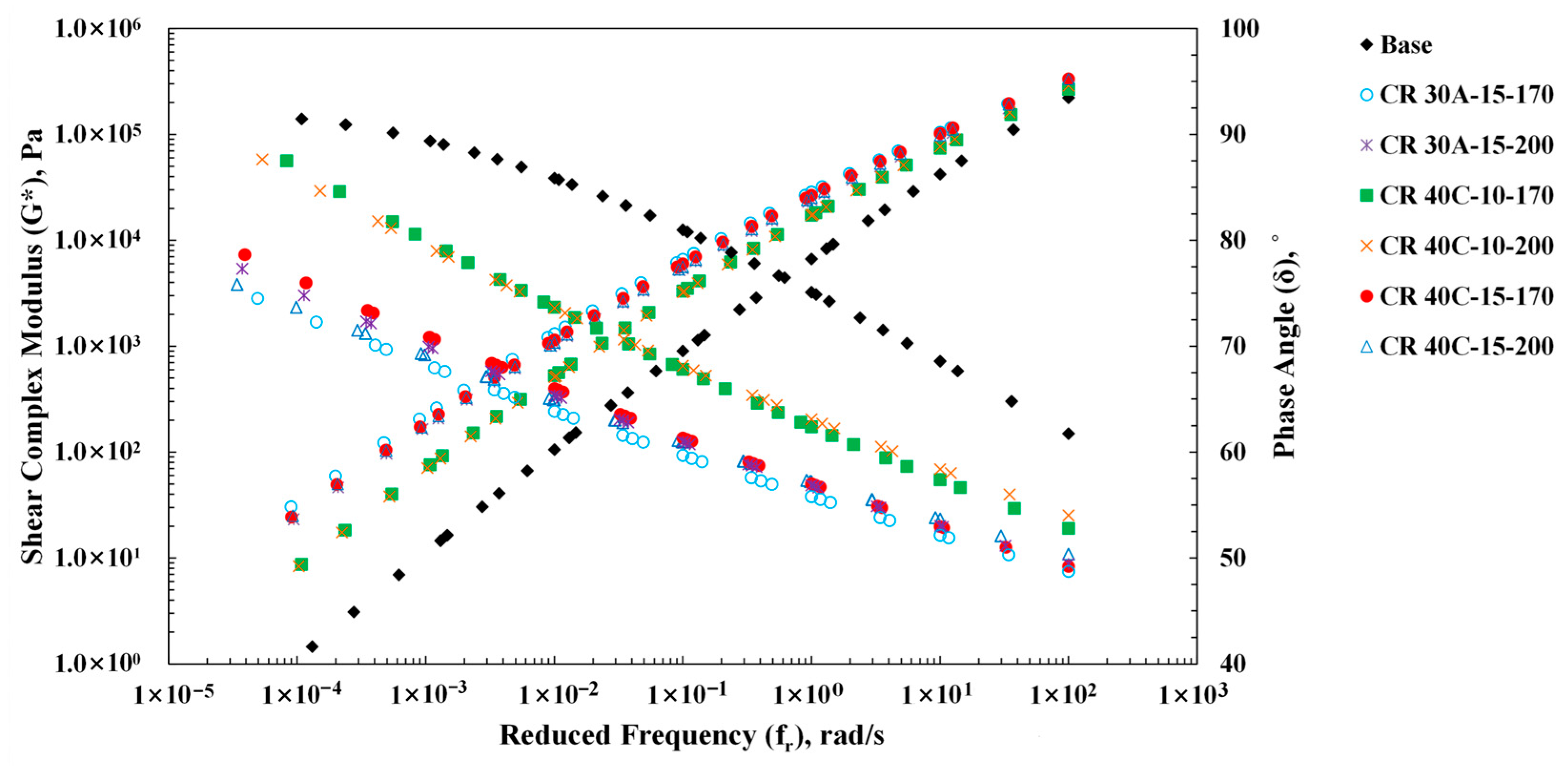
The master curves of G* and δ, developed from frequency sweep tests, illustrate the rheological behavior of the base binder and CRM binders across a wide frequency range Figure 6. The base binder consistently exhibited the lowest G* and highest δ values, reflecting low stiffness and a viscous character, particularly at low frequencies corresponding to long loading times. In contrast, all CRM binders showed markedly higher G* and lower δ, especially in the low-frequency domain, indicating enhanced elasticity and improved resistance to permanent deformation. This rheological improvement is particularly useful in HFST systems, where pavement surfaces experience high stress due to high braking and cornering maneuvers [44].
The influence of CR content, type, and blending temperature was also evident. Binders with 15% CR produced stiffer and more elastic responses compared to 10% CR binders. For 30A rubber, blending at 170 °C yielded the most favorable curves, while 40C binders with 15% CR performed best at 200 °C due to more effective swelling and dispersion of finer particles. By contrast, 40C binders with 10% CR performed better at 170 °C under slow loading, whereas blends at 200 °C showed improved high-frequency response but higher δ at low frequencies, indicating greater viscous behavior. Overall, these master curve results confirm that increasing CR content and optimizing blending temperature extend the viscoelastic range, reduce temperature susceptibility, and strengthen binder elasticity, directly supporting the feasibility of CRM asphalt as a sustainable HFST binder.

3.3. HFST Performance Analysis

3.3.1. Effect of Investigated Binders on BPN Response to Polishing in CB-Based HFST

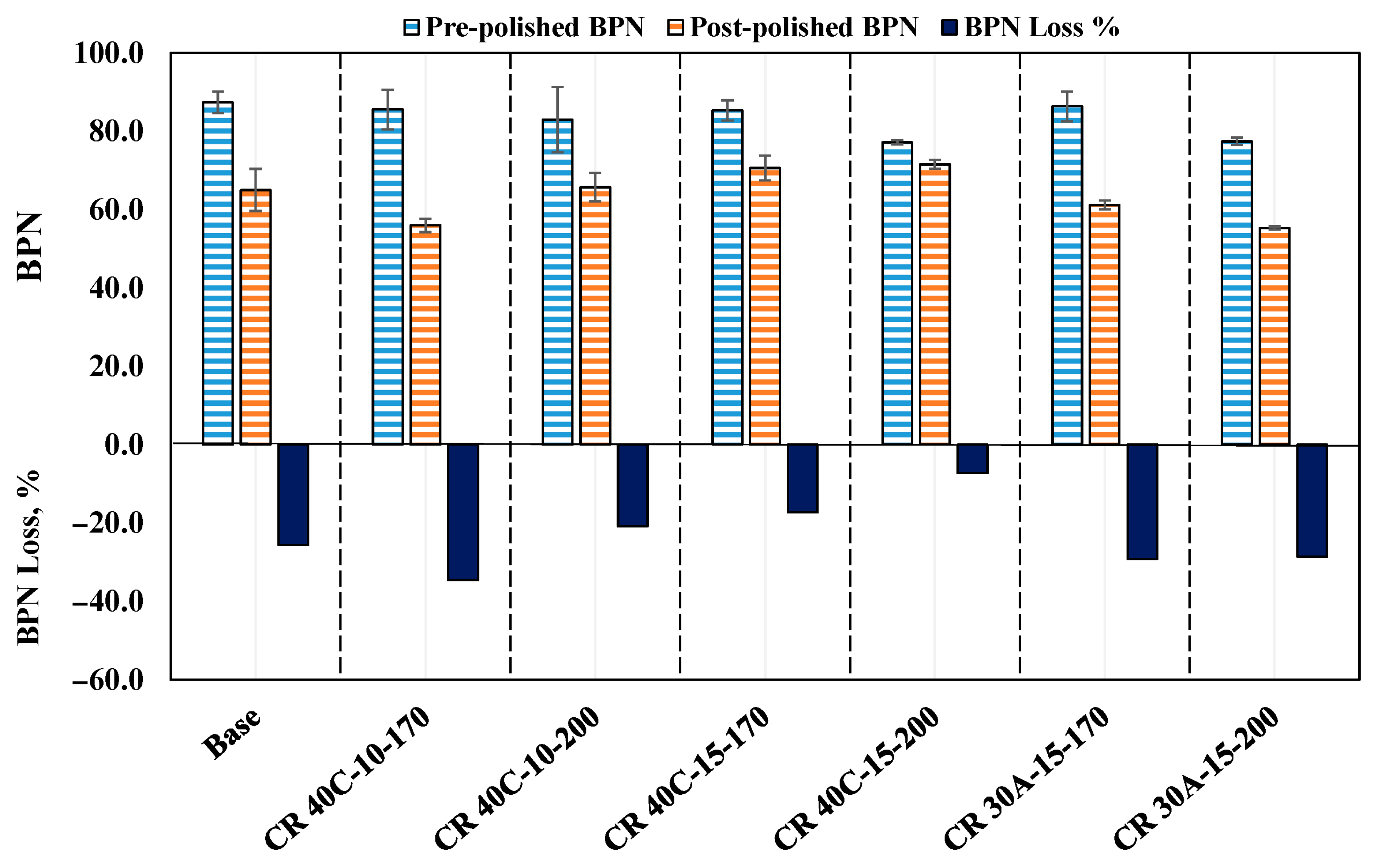
The British Pendulum Number (BPN) was measured before and after polishing to evaluate the skid resistance response of base binder and CRM binder formulations using CB aggregate. As shown in Figure 7, all binders exhibited high pre-polished BPN values greater than 80, using the main scale of the device, except for CRM binders containing 15% CR at 200 °C, which fell slightly below this threshold.
After polishing, a distinct performance trend was observed. The CR 40C-15-200 binder, despite recording one of the lowest pre-polished values, achieved the highest post-polished BPN among all binders. This suggests that its interaction condition enhanced surface durability and friction retention. In general, binders prepared at 170 °C displayed higher pre-polished BPN values compared to those at 200 °C. However, post-polished BPN values were consistently higher at 200 °C, accompanied by lower percentages of reduction. This was most evident in CR 40C-15-200, which showed the smallest decline (7.3%) compared with larger reductions for 170 °C conditions. Additionally, the epoxy-based HFST evaluated by Roshan and Abdelrahman (2025) using the same CB aggregate recorded high pre-polished BPN values higher than 80% and showed only about a 17% reduction after polishing, which was the lowest among the evaluated binders in this study [19].
Comparison between the two CR sources further revealed that the 40C type promoted higher post-polished BPN values than the 30A at different conditions. Moreover, increasing rubber content from 10% to 15% improved polishing resistance, as demonstrated by smaller BPN losses. These findings are consistent with rheological measurements; binders with balanced stiffness and elasticity provided better interfacial adhesion and microtexture preservation, which translated into higher BPN values after polishing.
Interestingly, although increasing CR content tended to reduce the bonding strength of asphalt because of the absorption of lighter binder fractions, which limited binder-aggregate adhesion, it simultaneously enhanced BPN performance after polishing [45]. The BPN test evaluates the surface friction retained after polishing, which is strongly influenced by the elastic contribution of the rubber-modified binder and its ability to resist texture loss under repeated loading. This indicates that higher CR contents not only resist polishing by strengthening the binder’s viscoelastic network but also improve the balance between stiffness and elasticity. In other words, the improved rheological properties compensate for the reduction in direct bond strength by resisting surface wear and preserving microtexture.
To quantify the influence of rheological properties and interaction conditions on the BPN loss before and after the polishing process, the analysis of variance (ANOVA) was performed at a 95% confidence level (α = 0.05). The analysis included different factors G*/sin δ at 64 °C and 88 °C, CR content, and interaction temperature, with results summarized in Table 5. All evaluated parameters exhibited statistically significant effects, as indicated by their high F-values and extremely low p-values (p < 0.001). The parameter G*/sin δ at 64 °C showed the strongest influence (F = 226.7). Similarly, G*/sin δ at 88 °C (F = 88.0) was also significant, confirming the contribution of binder elasticity-stiffness balance at elevated temperatures. Increasing the DSR test temperature reduces the statistical significance of G*/sin δ because asphalt binders exhibit diminished elastic stiffness and enhanced viscous flow at elevated temperatures. Consequently, G*/sin δ loses its discriminating power at higher temperatures, resulting in lower F-values in the ANOVA outcomes. Furthermore, the significance level associated with the combined factor of the interaction temperature and CR content was comparatively lower than that of the rheological parameters. Overall, these results highlight that both rheological properties and material processing conditions are critical predictors of microtexture degradation in CRM-based HFST systems.

3.3.2. Effect of Investigated Binders on COF Response to Polishing in CB-Based HFST

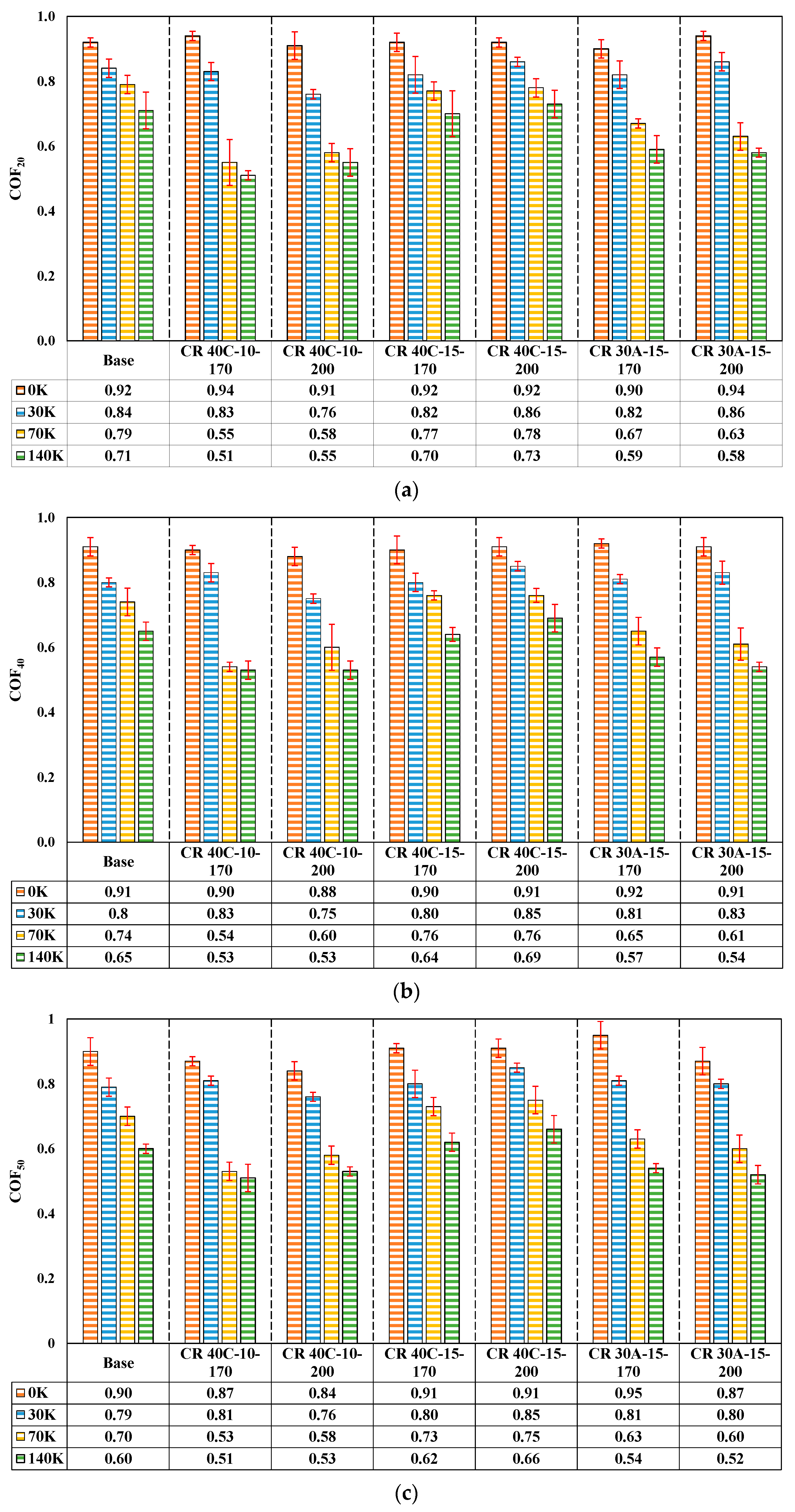
The evaluation of the COF for various investigated binders under different speeds and polishing cycles offers important insights into their microtexture performance as HFST materials. Figure 8 illustrates the COF values measured at 20, 40, and 50 km/h using the DFT across three polishing intervals: 30,000, 70,000, and 140,000 cycles via the TWPD using CB aggregate. At the lowest speed of 20 km/h as shown in Figure 8a, the base binder consistently exhibited high COF20 across all polishing intervals with CR 40C-15-200, reflecting strong adhesion and friction retention. In contrast, binders modified with 10% CR showed weaker initial COF20, with a sharp decline after the 70k polishing cycle, indicating susceptibility to surface microtexture loss. Interestingly, binders with 15% CR, particularly those containing finer #40C particles, demonstrated better frictional resistance than both the 30A type and the base binder. This highlights the role of particle size and content in sustaining microtexture under polishing.
At higher speeds of 40 and 50 km/h as shown in Figure 8b,c, the CRM binders, particularly CR 40C-15-200, followed closely by CR 40C-15-170, demonstrated the highest friction durability among all modified binders. These mixtures consistently retained higher COF values after progressive polishing cycles, indicating stronger microtexture stability at elevated speeds. Although the base binder had one of the highest COF values at low speed (20 km/h), its friction capacity declined more rapidly with increasing speed. This behavior suggests that stiffness and elasticity become more critical at higher speeds, where the contact time between tire and surface is reduced. Conversely, CRM binders with 10% CR and those prepared with coarser 30A rubber showed the greatest reductions, particularly from the 30k to 70k interval. Notably, 10% CR binders, although experiencing the steepest decline in the early polishing stage, exhibited the lowest rate of further reduction between 70k and 140k cycles, suggesting that most deterioration occurs during initial wear.
These COF results also align with rheological properties. Despite their superior rheological stiffness compared to the base binder, 10% CR binders produced weaker friction. By contrast, 15% CRM binders achieved better post-polished BPN and COF values. Notably, differences were identified between the BPN and COF trends, with BPN more accurately reflecting initial microtexture, while COF provided a clearer indication of polishing resistance and long-term frictional performance. These findings align with the observations of Zhong et al. (2025), who reported that although BPN and DFT results exhibited a moderate correlation, discrepancies in aggregate ranking and polishing response were evident [46]. Their analysis demonstrated that, while both devices produced reasonably consistent measures of microtexture, the agreement was limited, and variations between the two parameters persisted [46]. Importantly, the report recommended the use of COF from a DFT device for evaluating pavement friction properties in preference to BPN, as it provides a more reliable assessment of long-term performance [46].
Among all mixes, CR 40C-15-200 exhibited the lowest COF reduction, followed by CR 40C-15-170 and the base binder (27–33% losses), while binders with 30A type rubber and lower CR content suffered the greatest reductions (36–43%). These findings are consistent with previous studies, which reported that asphalt-based HFST binders, while initially comparable to epoxy-based systems, tend to degrade faster under extended polishing [19]. However, highly modified binders with optimized rubber content and particle size can significantly mitigate this decline. For instance, one study found that a PG 88-16 asphalt binder over CB aggregate lost only about 19% of COF after 140k cycles, outperforming the epoxy control at about 23% [19]. Such evidence supports the conclusion that optimized CRM binders can sustain high friction levels effectively, reducing the performance gap with epoxy systems and ensuring greater long-term safety.

3.3.3. Effect of Investigated Binders on MPD Response to Polishing in CB-Based HFST

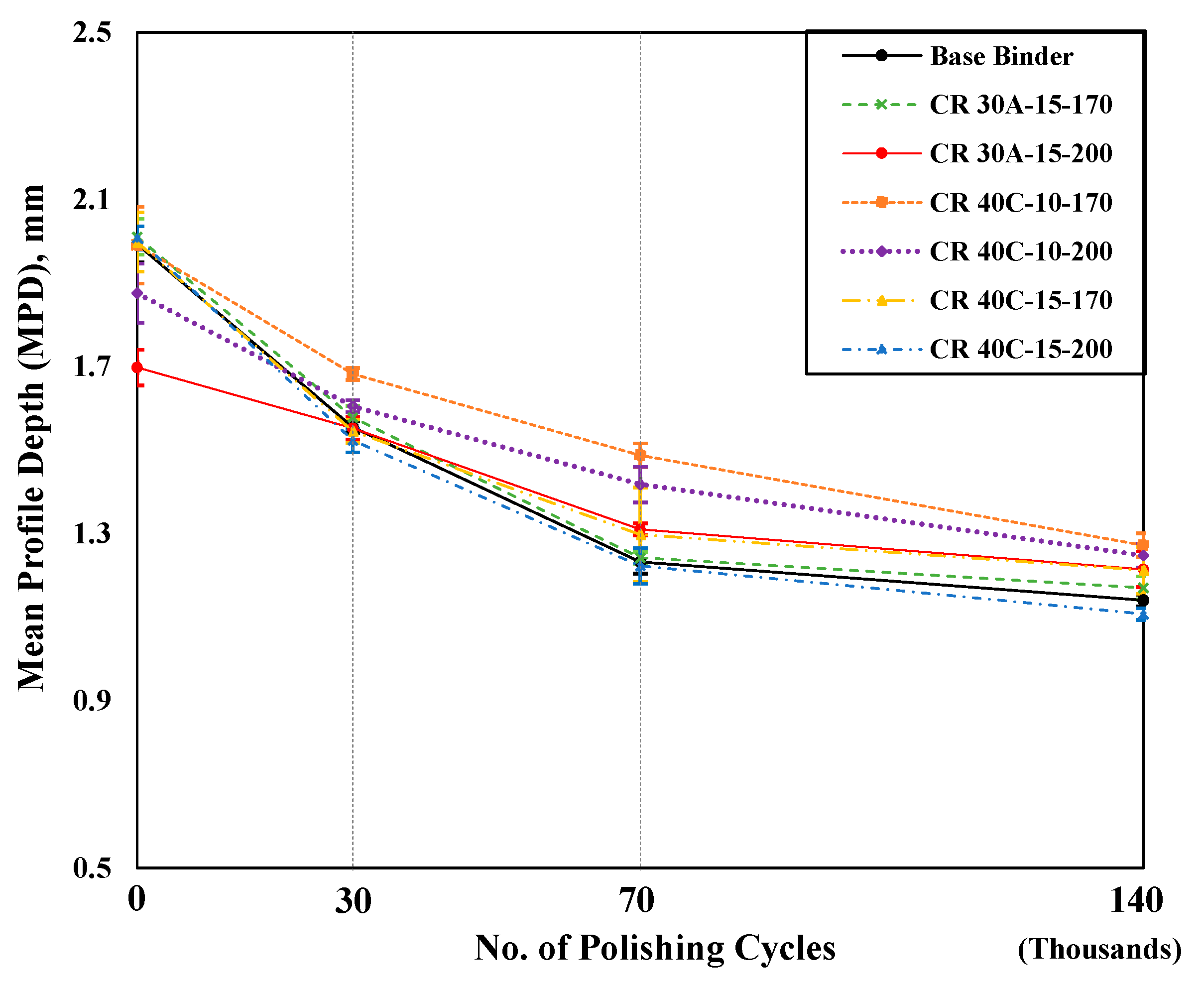
The MPD is a key surface texture parameter directly linked to the performance of macrotexture in HFST. Figure 9 presents the MPD values by the CTM for different investigated binders over CB aggregate at three provided polishing intervals: 30,000, 70,000, and 140,000 cycles. Notably, differences in MPD were observed among mixtures incorporating the same aggregate but different binders, which can be attributed to variations in the binders’ rheological characteristics. The base binder exhibited the lowest MPD, whereas the addition of CR enhanced the macrotexture up to 10% CR content, but decreased when CR increased to 15%. This indicates that binders modified with 10% CR achieved a balance between elasticity and stiffness, enabling better aggregate embedment and resistance to surface densification.
The base binder started with a high initial MPD of 1.99 mm but reduced progressively to 1.23 mm at 70,000 cycles, indicating severe texture degradation due to polishing. Interestingly, the CRMBs with 10% rubber content exhibited the most favorable macrotexture performance throughout the polishing cycles. For example, CR 40C-10-170 had the same starting MPD value of 1.99 mm, but this binder exhibited improved resistance to polishing, retaining a higher MPD of 1.27 mm at 140,000 cycles. Among the modified binders, CR 40C-10-200 exhibited the highest durability in MPD retention, which was reduced from 1.88 mm to 1.25 mm throughout the polishing sequence. This effect indicates that a higher interaction temperature assists in enhancing binder resilience through more effective swelling and dispersion of CR. In contrast, CR 40C-15-200 registered a larger reduction from 2.01 mm to 1.11 mm. While CR 30A-15-200 initially had the lowest MPD of 1.70 mm, it exhibited a relatively modest texture loss to finish at 1.22 mm. This implies that larger CR particles, although they decrease the initial surface roughness, might provide improved structural integration as time progresses.
It is important to note that COF and MPD do not always follow the same trend, as COF primarily reflects microtexture and binder-aggregate friction response, whereas MPD represents macrotexture durability and aggregate relief [47,48,49]. As previously discussed, this explains why CRM asphalt-based HFST mixtures, despite exhibiting higher MPD values, particularly those with 10% CR, tend to show slightly lower COF and BPN results compared with the base binder. The higher MPD indicates improved macrotexture retention due to the enhanced elasticity of rubber-modified binders. This refined explanation is consistent with Alhasan et al. (2022), who reported no clear correlation between COF reduction and MPD, confirming that frictional performance is not solely governed by macrotexture but also influenced by microtexture and surface interaction mechanisms [47]. Similarly, Li et al. (2019) observed that higher MPD does not necessarily correspond to higher friction, as the two properties are governed by distinct surface characteristics [49].
To examine the difference in COF50 and MPD between 70k and 140k polishing cycles, the t-test was performed at a 0.05 significance level. The p-values summarized in Table 6 show that both parameters fall below 0.05, confirming statistically significant reductions with continued polishing. These significant outcomes can be attributed to the notable drops observed in some binders across both parameters. For instance, binders such as CR 40C-15-170 and CR 30A-15-170 experienced large COF reductions of approximately 15%, while CR 40C-10-170 exhibited the steepest MPD loss of nearly 15%. Such consistent declines across different CRM conditions expand the overall statistical difference, demonstrating that polishing strongly impacts both frictional resistance and macrotexture. These findings emphasize that while CRM binders improve high-temperature rheology and moisture resistance, their long-term polishing durability varies with rubber type, content, and interaction conditions, underscoring the importance of optimizing binder formulation for HFST applications.
To establish a direct comparison with conventional HFST materials, Table 7 presents the performance results of the investigated CRM binders alongside those reported for epoxy-based HFST by Roshan and Abdelrahman (2025) [19]. It is important to note that both studies utilized the same CB aggregate source, ensuring a consistent evaluation of binder effects on surface performance. The epoxy binder exhibited the highest macrotexture and frictional performance. However, some investigated CRM binders, particularly CR 40C-15-200 and CR 40C-15-170 demonstrated comparable frictional behavior, achieving COF50 values at the terminal cycles of 0.66 and 0.62 and post-polishing BPN values of 72 and 71, respectively. Although their MPD values were significantly lower than those of epoxy-based systems, these CRM binders preserved satisfactory surface texture while providing enhanced flexibility and sustainability. Overall, the results highlight that appropriately optimized CRM binders can deliver friction performance comparable to epoxy binders, with additional advantages of lower cost, higher compatibility with asphalt substrates, and improved environmental and practical benefits.

3.3.4. Performance Comparison of CB- and Rhy-CRM Binders in HFST

A comparative comparison was conducted to assess the frictional and surface texture performance of HFST applications prepared with two aggregate types: CB and Rhy. The comparison was performed using five investigated binders: the base binder, CR 40C-10-200, CR 40C-15-170, CR 40C-15-200, and CR 30A-15-170.
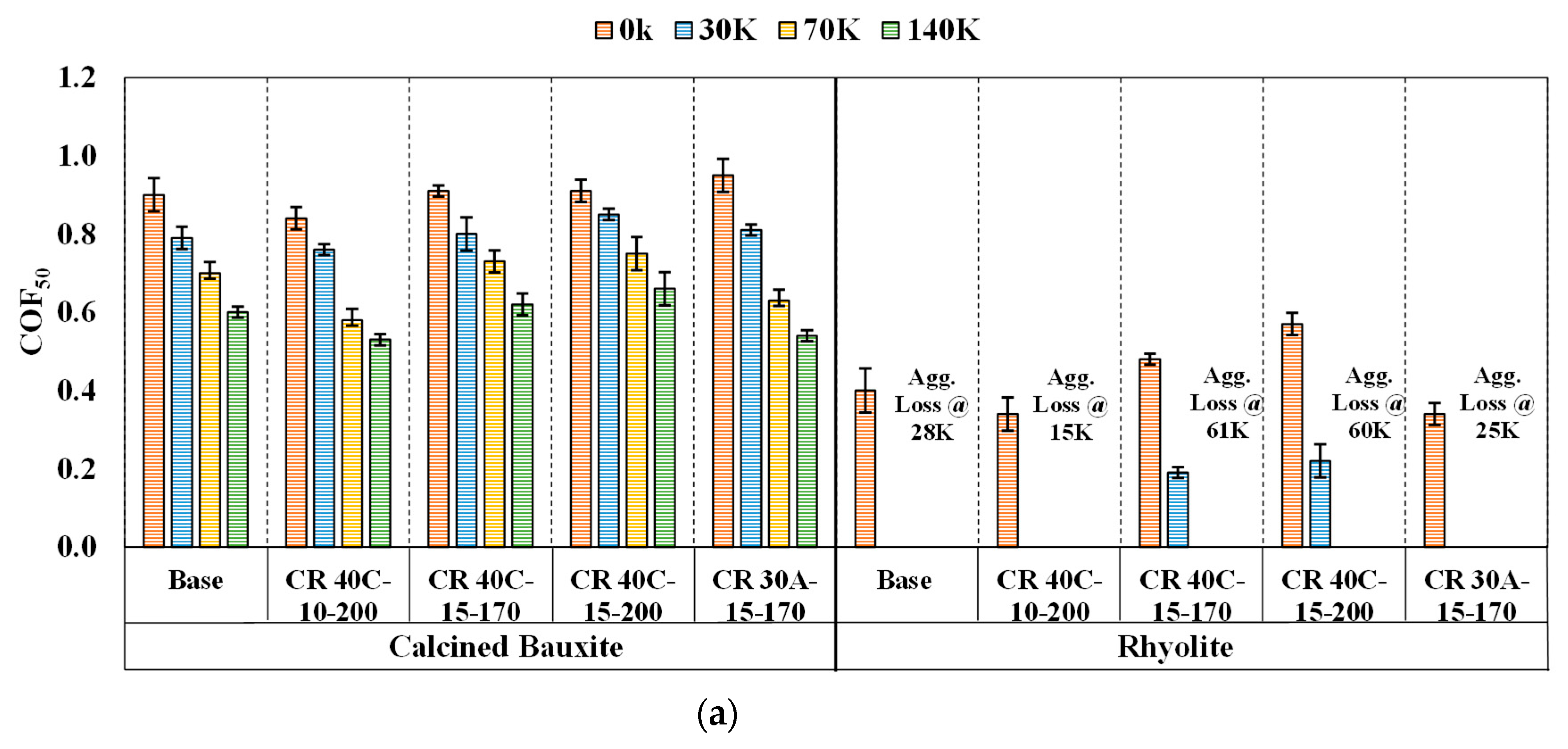
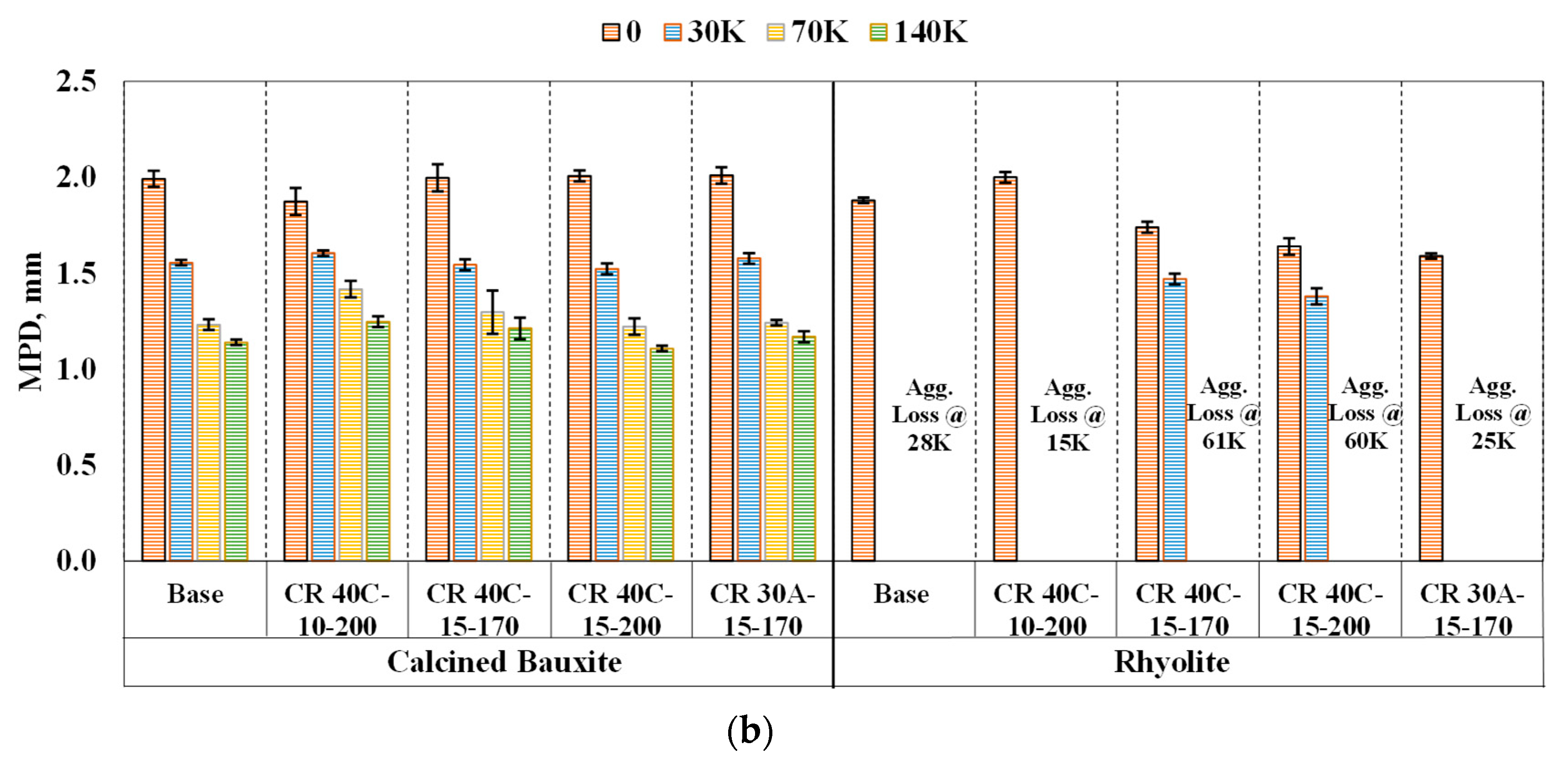
As shown in Figure 10, CB-based HFSTs demonstrated better durability. The initial COF values ranged between 0.84 and 0.92 and gradually decreased to 0.55–0.62 after 140k cycles. In contrast, Rhy-based HFSTs exhibited lower initial COF values (0.34–0.57) and suffered severe aggregate loss during the early stages of polishing. All Rhy-based slabs experienced complete aggregate loss before completing the total polishing cycles. Only CR 40C-15-170 and CR 40C-15-200 survived the 30k-cycle interval, with COF values reduced to 0.19 and 0.22, respectively, declines exceeding 60%. These mixtures failed during the second polishing interval, while all other Rhy-based systems failed even earlier, before 30k cycles, as indicated by both DFT and MPD results.
This aggressive aggregate loss in Rhy-based HFSTs can be explained by the mineralogical properties of Rhy. Rhy is a silica-rich volcanic rock dominated by quartz and orthoclase, classifying it as an acidic aggregate [50,51,52]. Acidic aggregates are hydrophilic and exhibit weak bonding with bitumen compared to basic aggregates [52]. In asphalt mixtures, Rhy is well-documented for its high moisture susceptibility, often suffering from stripping distress where water weakens the binder-aggregate bond [51,52,53]. Lu and Wang (2017) further demonstrated that Rhy is more prone to stripping than limestone due to the highly polar nature of quartz surfaces [54]. Field observations also confirm that siliceous and Rhy aggregates are among the most vulnerable to water damage [55]. This finding explains why several studies have recommended the use of anti-stripping agents in Rhy-based hot mix asphalt [56,57].
In the HFST application, this limitation is more pronounced because the binder film is extremely thin and provides only minimal protection to the aggregate surface. Since the polishing tests were conducted under continuous water conditioning using the TWPD, the presence of water accelerated unbonding at the binder-aggregate interface, particularly in asphalt-based binders. Unlike hot-mix asphalt, where thicker binder coatings provide partial resistance to stripping, the minimal binder coverage in HFST accelerates moisture-related debonding. Consequently, the hydrophilic nature of Rhy, combined with the thin film thickness typical in HFST, explains the rapid aggregate loss and inability of Rhy-based specimens to sustain polishing in this study.

4. Conclusions

Epoxy binders, though widely used in high-friction surface treatment (HFST), suffer from major drawbacks, including high cost, incompatibility with flexible pavements, environmental concerns, and failure modes such as delamination and cohesive cracking in the substrate. To address these deficiencies, this study evaluated the applicability and performance of crumb rubber modified (CRM) asphalt binders as a sustainable and flexible alternative for HFST, offering reduced environmental impacts, balanced stiffness-elasticity, and more stable failure modes. These advantages make CRM binders promising for extending pavement service life and improving recyclability in future maintenance cycles.
The performance evaluation confirmed that skid resistance and texture durability in CRM-based HFST are primarily governed by the rheological properties of the binder and the interaction conditions, which together play the most critical role in determining long-term friction performance. The British Pendulum Test (BPT) results confirmed that CRM binders can effectively retain skid resistance after polishing, with higher crumb rubber (CR) contents showing improved friction durability despite lower initial British pendulum number (BPN) values. Notably, the CR 40C-15-200 binder achieved the highest post-polished BPN and the lowest percentage loss, demonstrating superior resistance to microtexture degradation. Analysis of variance (ANOVA) further showed that rheological properties, particularly G/sin δ, were the strongest predictors of BPN loss, highlighting the critical role of binder stiffness-elasticity balance in preserving skid resistance.
Similarly, the coefficient of friction (COF) results from the dynamic friction test (DFT) showed that increasing crumb rubber (CR) content achieved better friction retention and polishing resistance, while lower CR content provided more durable macrotexture. The results also indicated that higher interaction temperatures improved long-term COF but reduced the mean profile depth (MPD) values. Between the two types of crumb rubber, the cryogenic type consistently outperformed the ambient type at both interaction temperatures, highlighting the effect of particle characteristics on polishing resistance. The aggregate type also had a decisive impact on CRM-based HFST performance. Calcined bauxite (CB) consistently retained its aggregate under polishing, whereas rhyolite (Rhy) suffered severe aggregate loss during the initial polishing cycles, limiting its long-term durability.
Notably, the evaluated CRM binders, particularly the cryogenic 40C formulation with 15% rubber, demonstrated microtexture performance that approached that of epoxy-based HFST. Overall, CRM binders address epoxy’s deficiencies while offering a cost-effective and environmentally sustainable solution when properly optimized for rubber content and interaction temperature. By optimizing binder interaction conditions and material selection, CRM-based HFST can reduce environmental impacts, extend pavement service life, and improve recyclability, supporting safer and more durable pavements.

Author Contributions

Conceptualization, A.A. and M.A.; methodology, A.A. and M.A.; software, A.A.; validation, A.A. and M.A.; formal analysis, A.A.; investigation, A.A. and A.R.; resources, M.A.; data curation, A.A., A.R. and M.A.; writing—original draft preparation, A.A.; writing—review and editing, A.R. and M.A.; visualization, A.A. and M.A.; supervision, M.A. All authors have read and agreed to the published version of the manuscript.

Funding

This research was funded by sources provided by Missouri University of Science and Technology (Missouri S&T) and the Missouri Asphalt Pavement Association (MAPA) endowment fund.

Institutional Review Board Statement

Not applicable.

Informed Consent Statement

Not applicable.

Data Availability Statement

The original contributions presented in this study are included in the article; additional raw data supporting the findings are available from the corresponding author upon reasonable request.

Acknowledgments

This research is conducted as part of the Ph.D. program of Abdallah Aboelela under the advisership of Magdy Abdelrahman. The authors wish to extend their sincere gratitude to the Missouri University of Science and Technology for their invaluable support and assistance throughout this research.

Conflicts of Interest

The authors declare no conflicts of interest.

Abbreviations

The following abbreviations are used in this manuscript:
CRMCrumb Rubber Modified
HFSTHigh-Friction Surface Treatment
CBCalcined Bauxite
RhyRhyolite
BPTBritish Pendulum Test
CTMCircular Track Meter
DFTDynamic Friction Tester
COFCoefficient of Friction
MPDMean Profile Depth
CRCrumb Rubber
DSRDynamic Shear Rheometer
BBRBending Beam Rheometer
PAVPressure Aging Vessel
RTFORolling Thin Film Oven
UVCUncompacted Void Content
LAALos Angeles Abrasion
MDAMicro-Deval Abrasion
TWPDThree Wheel Polishing Device
PSVPolished Stone Value
BPNBritish Pendulum Number

References

  1. Henry, J.J. Evaluation of Pavement Friction Characteristics; Transportation Research Board: Washington, DC, USA, 2000; Volume 291. [Google Scholar]
  2. Huang, C.; Huang, X. Effects of pavement texture on pavement friction: A review. Int. J. Veh. Des. 2014, 65, 256–269. [Google Scholar] [CrossRef]
  3. Chen, C.; Gu, F.; Heitzman, M.; Powell, B.; Kowalski, K. Influences of alternative friction aggregates on texture and friction characteristics of high friction surface treatment. Constr. Build. Mater. 2022, 314, 125643. [Google Scholar] [CrossRef]
  4. Elkhazindar, A.; Hafez, M.; Ksaibati, K. Incorporating pavement friction management into pavement asset management systems: State department of transportation experience. CivilEng 2022, 3, 541–561. [Google Scholar] [CrossRef]
  5. Wilson, B.; Mukhopadhyay, A. Alternative Aggregates and Materials for High Friction Surface Treatments; Texas A&M Transportation Institute: Texas, TX, USA, 2016. [Google Scholar]
  6. Roshan, A.; Abdelrahman, M. Influence of Aggregate Properties on Skid Resistance of Pavement Surface Treatments. Coatings 2024, 14, 1037. [Google Scholar] [CrossRef]
  7. Meggers, D.A. Evaluation of High Friction Surface Locations in Kansas; Kansas Department of Transportation Bureau of Research: Topeka, KS, USA, 2016. [Google Scholar]
  8. Julian, F.; Moler, S. Gaining traction in roadway safety. Public Roads 2008, 72, 38–44. [Google Scholar]
  9. Wilson, B.; Wang, K.C.P.; Li, J.Q.; Yang, G. Recommendations Report for High Friction Surface Treatments: Candidate Sites, Materials, and Construction; Department of Transportation. Federal Highway Administration. Office of Safety: Washington, DC, USA, 2020. [Google Scholar]
  10. Varnäs, A.; Balfors, B.; Faith-Ell, C. Environmental consideration in procurement of construction contracts: Current practice, problems and opportunities in green procurement in the Swedish construction industry. J. Clean Prod. 2009, 17, 1214–1222. [Google Scholar] [CrossRef]
  11. Awed, A.M.; Aboelela, A.E.; El-Ashwah, A.S.; Allam, M.; El-Badawy, S.M. Improvement of unbound granular pavement layers and subgrade with cement dust in Egypt. Int. J. Pavement Res. Technol. 2020, 13, 621–629. [Google Scholar] [CrossRef]
  12. Yang, C.; Wu, S.; Xie, J.; Amirkhanian, S.; Zhao, Z.; Xu, H.; Wang, F.; Zhang, L. Development of blending model for RAP and virgin asphalt in recycled asphalt mixtures via a micron-Fe3O4 tracer. J. Clean. Prod. 2023, 383, 135407. [Google Scholar] [CrossRef]
  13. Guo, L.; Wu, S.; Li, Y.; Chen, A.; Liu, Q.; Wang, J.; Zhao, Z.; Song, Y. High friction surface treatment with silicone resin materials (HFST-S): A preventive maintenance method of asphalt pavements. Constr. Build. Mater. 2023, 409, 134155. [Google Scholar] [CrossRef]
  14. Waters, J. High friction surfacing failure mechanisms. In Proceedings of the 3rd International Surface Friction Conference, Gold Coast, QLD, Australia, 15–18 May 2011. [Google Scholar]
  15. Bennert, T.; Blight, R.; Ganji, V.; Tulanowski, D.; Gresavage, S. Development of high friction surface treatment prescreening protocols and an alternative friction application. Transp. Res. Rec. 2021, 2675, 345–355. [Google Scholar] [CrossRef]
  16. Anderson, R.M.; King, G.N.; Hanson, D.I.; Blankenship, P.B. Evaluation of the relationship between asphalt binder properties and non-load related cracking. J. Assoc. Asph. Paving Technol. 2011, 80, 615–664. [Google Scholar]
  17. Chen, X.; Chen, Y.; Ma, T.; Gu, L.; Shi, S. Study on the performances of epoxy asphalt binders influenced by the dosage of epoxy resin and its application to steel bridge deck pavement. Constr. Build. Mater. 2024, 432, 136683. [Google Scholar] [CrossRef]
  18. Roshan, A.; Abdelrahman, M. Performance and Economic Evaluation of Asphalt-Based High Friction Surface Treatment (HFST) Applications. Appl. Sci. 2025, 15, 873. [Google Scholar] [CrossRef]
  19. Roshan, A.; Abdelrahman, M. Impact of Aggregate Characteristics on Frictional Performance of Asphalt-Based High Friction Surface Treatments. CivilEng 2025, 6, 4. [Google Scholar] [CrossRef]
  20. Roshan, A.; Abdelrahman, M. Friction and Texture Evaluation of Asphalt-Based Binders as Alternatives to Epoxy-Based High-Friction Surface Treatments. Transp. Res. Rec. 2025, 2679, 458–474. [Google Scholar] [CrossRef]
  21. Zhong, Z.; Sha, Q.; Zheng, J.; Yuan, Z.; Gao, Z.; Ou, J.; Zheng, Z.; Li, C.; Huang, Z. Sector-based VOCs emission factors and source profiles for the surface coating industry in the Pearl River Delta region of China. Sci. Total Environ. 2017, 583, 19–28. [Google Scholar] [CrossRef]
  22. Ma, Y.; Fu, S.; Gao, S.; Zhang, S.; Che, X.; Wang, Q.; Jiao, Z. Update on volatile organic compound (VOC) source profiles and ozone formation potential in synthetic resins industry in China. Environ. Pollut. 2021, 291, 118253. [Google Scholar] [CrossRef]
  23. Kadam, A.; Pawar, M.; Yemul, O.; Thamke, V.; Kodam, K. Biodegradable biobased epoxy resin from karanja oil. Polymer 2015, 72, 82–92. [Google Scholar] [CrossRef]
  24. Klose, L.; Meyer-Heydecke, N.; Wongwattanarat, S.; Chow, J.; García, P.P.; Carré, C.; Streit, W.; Antranikian, G.; Romero, A.M.; Liese, A. Towards sustainable recycling of epoxy-based polymers: Approaches and challenges of epoxy biodegradation. Polymers 2023, 15, 2653. [Google Scholar] [CrossRef] [PubMed]
  25. Albadrani, M.A.; Almutairi, A.D. Impact of Eco-Friendly Plaster Using Epoxy Resin and Epoxy Hardener on Mechanical Properties under Compression and Tension. Polymers 2024, 16, 548. [Google Scholar] [CrossRef] [PubMed]
  26. Wang, H.; Liu, X.; Apostolidis, P.; Scarpas, T. Review of warm mix rubberized asphalt concrete: Towards a sustainable paving technology. J. Clean. Prod. 2018, 177, 302–314. [Google Scholar] [CrossRef]
  27. Wang, H.; Zhou, L.; Airey, G. Adhesion Properties Between Crumb Rubber Modified Bitumen and Aggregate. In International Symposium on Asphalt Pavement & Environment; Springer: Berlin/Heidelberg, Germany, 2024; pp. 179–183. [Google Scholar]
  28. AASHTO T315-24; Standard Method of Test for Determining the Rheological Properties of Asphalt Binder Using a Dynamic Shear Rheometer (DSR). AASHTO: Washington, DC, USA, 2024.
  29. AASHTO T313-22; Standard Method of Test for Determining the Flexural Creep Stiffness of Asphalt Binder Using the Bending Beam Rheometer (BBR). AASHTO: Washington, DC, USA, 2022.
  30. Bressi, S.; Fiorentini, N.; Huang, J.; Losa, M. Crumb rubber modifier in road asphalt pavements: State of the art and statistics. Coatings 2019, 9, 384. [Google Scholar] [CrossRef]
  31. Ragab, M.; Abdelrahman, M.; Ghavibazoo, A. Performance enhancement of crumb rubber–modified asphalts through control of the developed internal network structure. Transp. Res. Rec. 2013, 2371, 96–104. [Google Scholar] [CrossRef]
  32. Abdelrahman, M.A.; Carpenter, S.H. Mechanism of interaction of asphalt cement with crumb rubber modifier. Transp. Res. Rec. 1999, 1661, 106–113. [Google Scholar] [CrossRef]
  33. ASTM C128-22; Standard Test Method for Relative Density (Specific Gravity) and Absorption of Fine Aggregate. American Society for Testing and Materials: West Conshohocken, PA, USA, 2023.
  34. AASHTO T85-22; Standard Method of Test for Specific Gravity and Absorption of Coarse Aggregate. AASHTO American Association of State Highway and Transportation Officials: Washington, DC, USA, 2022.
  35. ASTM C1252; Standard test Method for Uncompacted Void Content of Fine Aggregate (as Influenced by Particle Shape, Surface Texture, and Grading). ASTM International: West Conshohocken, PA, USA, 2023.
  36. AASHTO T96; Standard Method of Test for Resistance to Degradation of Small-Size Coarse Aggregate by Abrasion and Impact in the Los Angeles Machine. American Association of State Highway and Transportation Officials: Washington, DC, USA, 2022.
  37. ASTM D6928; Standard Test Method for Resistance of Coarse Aggregate to Degradation by Abrasion in the Micro-Deval Apparatus. ASTM International: West Conshohocken, PA, USA, 2017.
  38. AASHTO T27-24; Standard Method of Test for Sieve Analysis of Fine and Coarse Aggregates. AASHTO American Association of State Highway and Transportation Officials: Washington, DC, USA, 2024.
  39. AASHTO T278; Standard Method of Test for Surface Frictional Properties Using the British Pendulum Tester. AASHTO: Washington, DC, USA, 2021.
  40. Li, S.; Xiong, R.; Yu, D.; Zhao, G.; Cong, P.; Jiang, Y. Friction Surface Treatment Selection: Aggregate Properties, Surface Characteristics, Alternative Treatments, and Safety Effects; Purdue University: West Lafayette, IN, USA, 2017. [Google Scholar]
  41. ASTM E1911-19; Standard Test Method for Measuring Surface Frictional Properties Using the Dynamic Friction Tester. ASTM International: West Conshohocken, PA, USA, 2024.
  42. AASHTO PP104-21; Sample Preparation and Polishing of Asphalt Mixture for Dynamic Friction Testing. American Association of State Highway and Transportation Officials: Washington, DC, USA, 2022.
  43. ASTM E2157-19; Standard Test Method for Measuring Pavement Macrotexture Properties Using the Circular Track Meter. ASTM International: West Conshohocken, PA, USA, 2024.
  44. Kline, C.F.; Mullins, M.; Linsenmayer, M. High Friction Surface Treatments, Transportation Research Synthesis; Minnesota Department of Transportation, Research Services & Library: Saint Paul, MN, USA, 2018. [Google Scholar]
  45. Mohamed, A.S.; Wang, W.; Weng, H.; Fang, Y.; Xiao, F. Impacts of colloidal and interfacial interactions on bonding strength of rubberized RAP asphalt binder. Constr. Build. Mater. 2022, 349, 128768. [Google Scholar] [CrossRef]
  46. Wu, Z.; Hungria, R.; Bharati, S. Assessment of Laboratory Friction Testing Equipment and Validation of Pavement Friction Characteristics with Field and Accelerated Friction Testing; Louisiana Transportation Research Center: Baton Rouge, LA, USA, 2025. [Google Scholar]
  47. Alhasan, A.; Smadi, O.; Walton, R.; Schleppi, B.L. Pavement texture characterisation using wavelets analysis in relation to pendulum skid tester. Int. J. Pavement Eng. 2022, 23, 2320–2334. [Google Scholar] [CrossRef]
  48. Yu, M.; Yang, Z.; You, Z.; Luo, Y.; Li, J.; Yang, L. Laboratory investigation of traffic effect on the long-term skid resistance of asphalt pavements. Constr. Build. Mater. 2023, 401, 132642. [Google Scholar] [CrossRef]
  49. Li, S.; Cong, P.; Yu, D.; Xiong, R.; Jiang, Y. Laboratory and field evaluation of single layer and double layer high friction surface treatments. Transp. Res. Rec. 2019, 2673, 552–561. [Google Scholar] [CrossRef]
  50. Majidzadeh, K.; Brovold, F.N.; Brovold, F.N. Effect of Water on Bitumen-Aggregate Mixtures; University of Florida: Gainesville, FL, USA, 1966. [Google Scholar]
  51. Mathews, D.H. Adhesion in bituminous road materials: A survey of present knowledge. Inst. Pet. J. 1958, 44, 423. [Google Scholar]
  52. Rice, J.M. Relationship of aggregate characteristics to the effect of water on bituminous paving mixtures. In Symposium on Effect of Water on Bituminous Paving Mixtures; ASTM International: West Conshohocken, PA, USA, 1959; pp. 17–34. [Google Scholar]
  53. Case Institute of Technology; Society of Chemical Industry (Great Britain). Adhesion and Adhesives: Fundamentals and Practice; Society of Chemical Industry: London, UK, 1954. [Google Scholar]
  54. Lu, Y.; Wang, L. Atomistic modelling of moisture sensitivity: A damage mechanisms study of asphalt concrete interfaces. Road Mater. Pavement Des. 2017, 18 (Suppl. S3), 200–214. [Google Scholar] [CrossRef]
  55. Kennedy, T.W. Prevention of Water Damage in Asphalt Mixtures; ASTM International: West Conshohocken, PA, USA, 1985. [Google Scholar]
  56. Ali, S.A.; Foley, K.A.; Zaman, M.; Walters, K.B. Microstructural Evaluation of the Effects of Aggregate Type, Aging, and Additives on the Moisture Susceptibility of Binder–Aggregate Systems Using Chemical and Thermodynamic Approaches. J. Mater. Civ. Eng. 2024, 36, 04024321. [Google Scholar] [CrossRef]
  57. Behnood, A.; Gharehveran, M. Morphology, rheology, and physical properties of polymer-modified asphalt binders. Eur. Polym. J. 2019, 112, 766–791. [Google Scholar] [CrossRef]
Figure 1. Experimental Testing Plan.
Sustainability 17 10940 g001
Figure 2. Experimental Framework for HFST Surface Preparation, Polishing, and Texture Performance Evaluation.
Sustainability 17 10940 g002
Figure 3. Complex Modulus Versus Temperature for the Investigated Asphalt Binders.
Sustainability 17 10940 g003
Figure 4. Phase Shift Angle Versus Temperature for all Investigated Asphalt Binders.
Sustainability 17 10940 g004
Figure 5. Black Space Diagram of all Investigated Asphalt Binders at Temperature 88 °C.
Sustainability 17 10940 g005
Figure 6. Master Curves for Investigated Asphalt Binders at Reference Temperature 58 °C.
Sustainability 17 10940 g006
Figure 7. Pre- and Post-Polished BPN Values and Percentage Loss for the CB-Based Samples.
Sustainability 17 10940 g007
Figure 8. COF Values for CB-Based Samples. (a) at 20 km/h; (b) at 40 km/h; (c) at 50 km/h.
Sustainability 17 10940 g008
Figure 9. MPD Values across Polishing Process for the CB-Based Samples.
Sustainability 17 10940 g009
Figure 10. Results of CB and Rhy-Based HFST Under Polishing Cycles: (a) COF at 50 km/h; (b) MPD.
Sustainability 17 10940 g010aSustainability 17 10940 g010b
Table 1. Properties of the Investigated Base Binder at PG High and Low Temperatures.
PropertyResultsRequirements
High Temperature 88 °C(Original) G*/sin δ, kPa1.08≥1.0
(RTFO) G*/sin δ, kPa2.35≥2.2
Low Temperature −16 °C(PAV) m-value0.39≥0.30
(PAV) Creep Stiffness, MPa175≤300
Table 2. Crumb Rubber Particles Gradation.
Sieve #/Size (mm)Passing% (CR 30A)Passing% (CR 40C)
#30 (0.6)97.998.1
#40 (0.425)61.070.3
#60 (0.25)25.627.1
#80 (0.18)15.813.9
#100 (0.15)10.87.7
#200 (0.075)4.03.1
Table 3. Identification and Specifications of the Investigated Asphalt Binders.
Binder IDsCR TypeCR Content, %Interaction Temperature, °C
Base Binder
CR 30A-15-17030A15170
CR 30A-15-20030A15200
CR 40C-10-17040C10170
CR 40C-10-20040C10200
CR 40C-15-17040C15170
CR 40C-15-20040C15200
Table 4. Aggregate Physical and Durability Properties.
PropertiesCBRhySpecifications
Bulk Specific Gravity (Gsb)3.252.56ASTM C128-22 [33]
Absorption (%)2.50.9AASHTO T85-22 [34]
UVC (%) *4442ASTM C1252-17 [35]
LAA (%) *1617AASHTO T96 [36]
MDA (%) *15 min (2.45)
30 min (4.2)
15 min (2.60)
30 min (4.74)
ASTM D6928-17 [37]
HFST Gradation Passing (%)#4100AASHTO T27-24 [38]
#695
#162.5
* UVC = Uncompacted Void Content, LAA = Los Angeles Abrasion, MDA = Micro-Deval Abrasion. # = Standard sieve number used in sieve analysis.
Table 5. Analysis of Variance (ANOVA) for BPN Loss.
ParameterF-Valuep-ValueSignificance
(G*/sin δ)64°C226.73.37 × 10−8Yes
(G*/sin δ)88°C88.02.85 × 10−6Yes
Interaction Temp./CR%76.25.43 × 10−6Yes
Table 6. Results of t-test for differences in COF50 and MPD between 70k and 140k Polishing Cycles.
Parameterp-Value
COF500.0003
MPD0.0004
Table 7. Comparison of Friction and Texture Performance between Epoxy-Based and Investigated Asphalt-Based Using CB Aggregate.
Source/ReferenceBinder Type140k Polishing CyclesPost BPN
COF50MPD
Roshan and Abdelrahman, (2025) [19]Epoxy Resin0.621.8574
Present studyBase Binder0.601.1465
CR 40C-10-1700.511.2756
CR 40C-10-2000.531.2566
CR 40C-15-1700.621.2171
CR 40C-15-2000.661.1172
CR 30A-15-1700.541.1761
CR 30A-15-2000.521.2255
Disclaimer/Publisher’s Note: The statements, opinions and data contained in all publications are solely those of the individual author(s) and contributor(s) and not of MDPI and/or the editor(s). MDPI and/or the editor(s) disclaim responsibility for any injury to people or property resulting from any ideas, methods, instructions or products referred to in the content.