Article

Water and Soil Physico-Chemical Characteristics in Ibex Reserve: An Environmental Case Study of Houta Bani Tamim

by
Abdulhakim J. Alzahrani
1,
Osama Khled Redwan
1,
Maha Chieb
2 and
Mohamed H. El-Saeid
3,*
1
Environmental Impact Assessment and Monitoring Department, National Center for Wildlife, P.O. Box 4508, Riyadh 12411, Saudi Arabia
2
Department of Microbiology and Plant Pathology, University of California, Riverside, CA 92507, USA
3
Department of Soil Sciences, College of Food and Agriculture Sciences, King Saud University, P.O. Box 2460, Riyadh 11451, Saudi Arabia
*
Author to whom correspondence should be addressed.
Sustainability 2025, 17(22), 10151; https://doi.org/10.3390/su172210151
Submission received: 21 September 2025 / Revised: 4 November 2025 / Accepted: 7 November 2025 / Published: 13 November 2025
(This article belongs to the Topic Water-Soil Pollution Control and Environmental Management)

Abstract

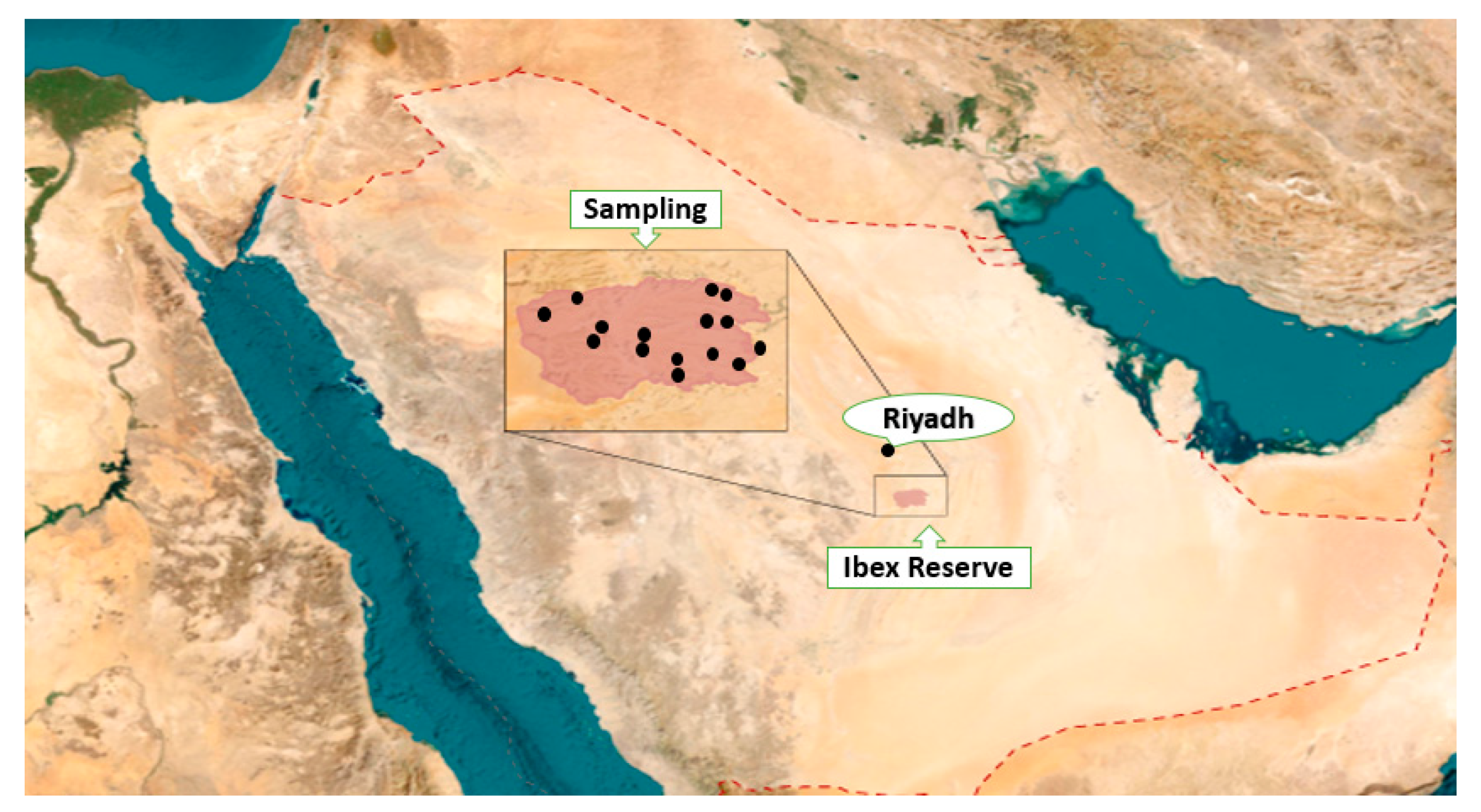
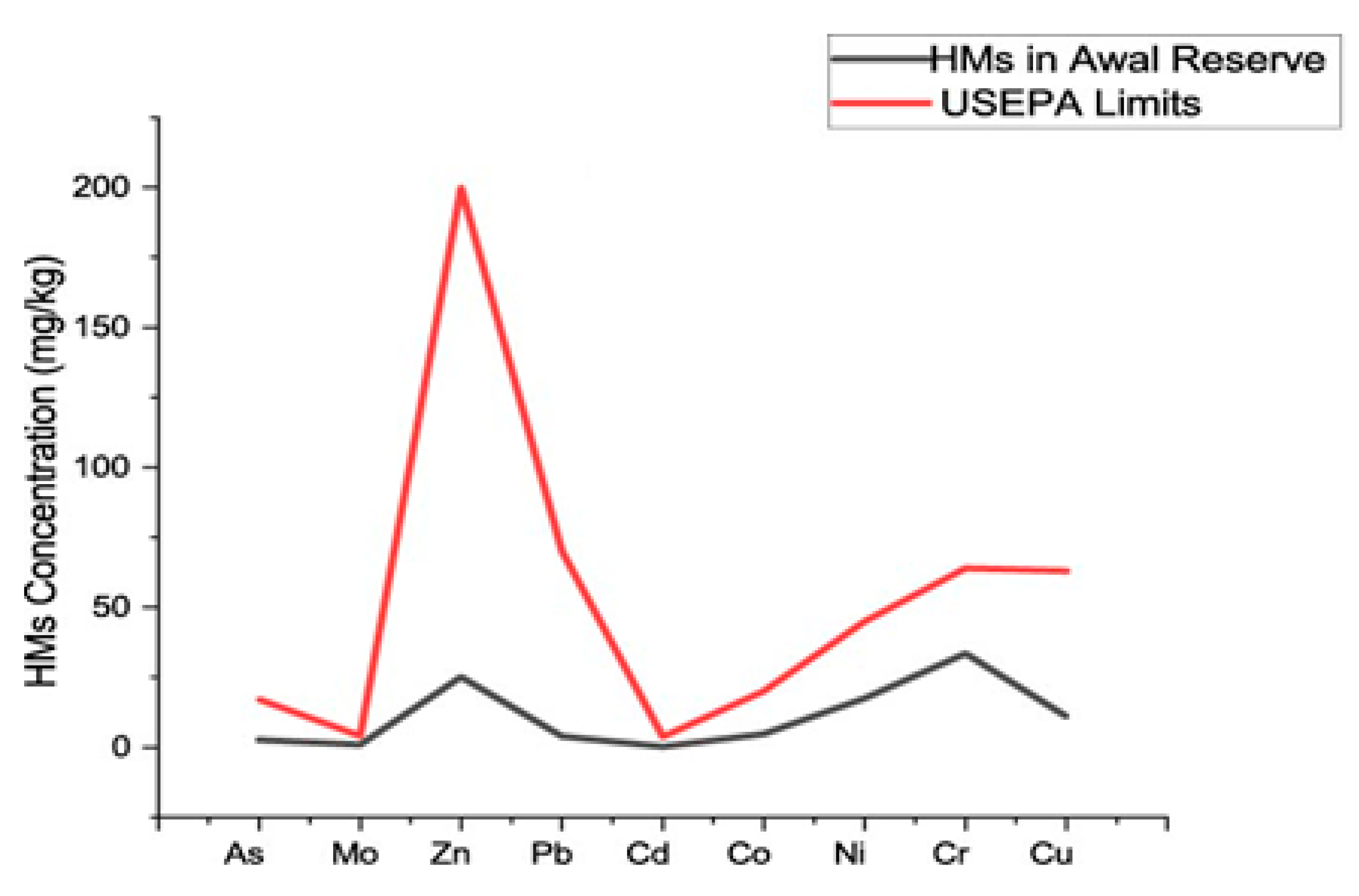
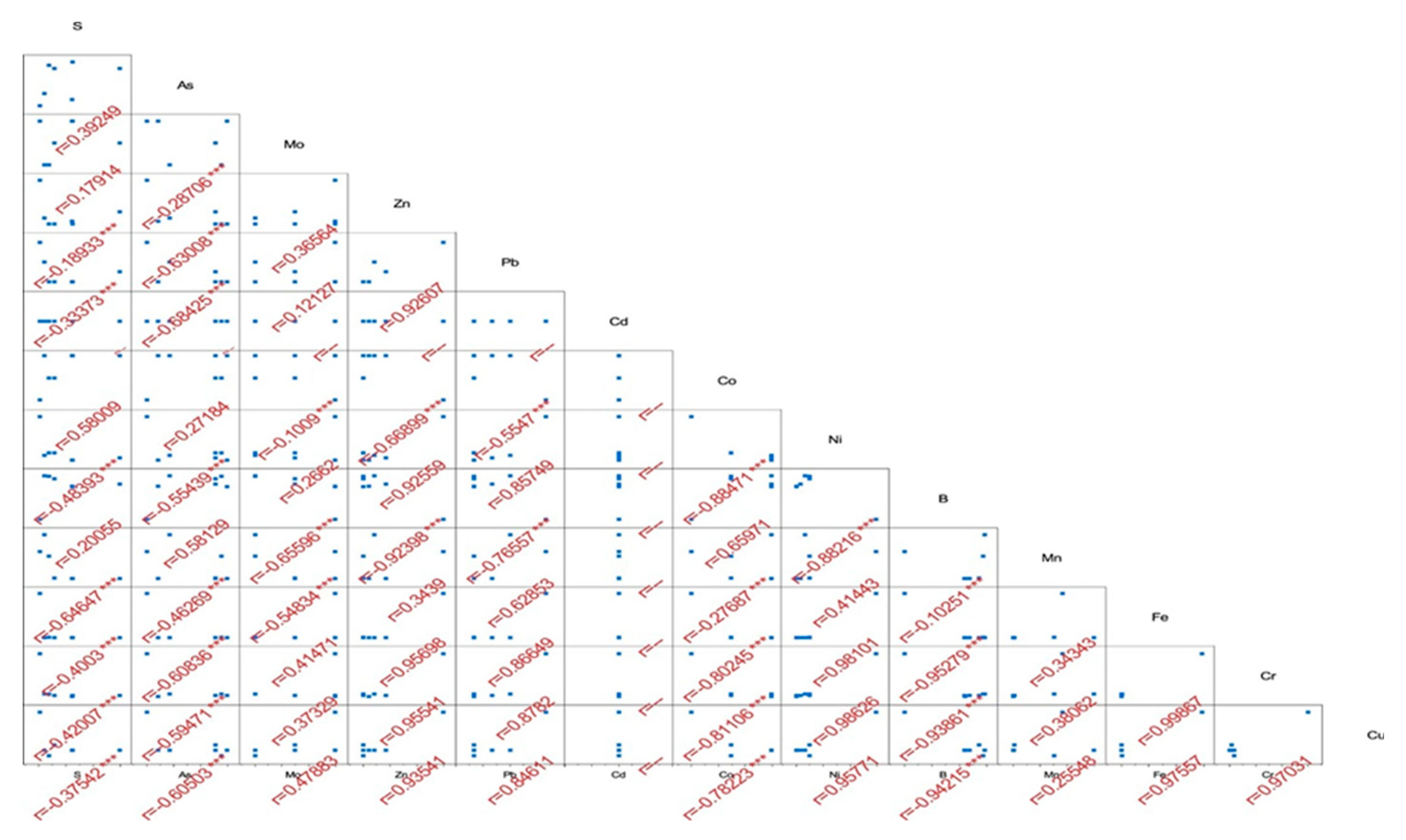
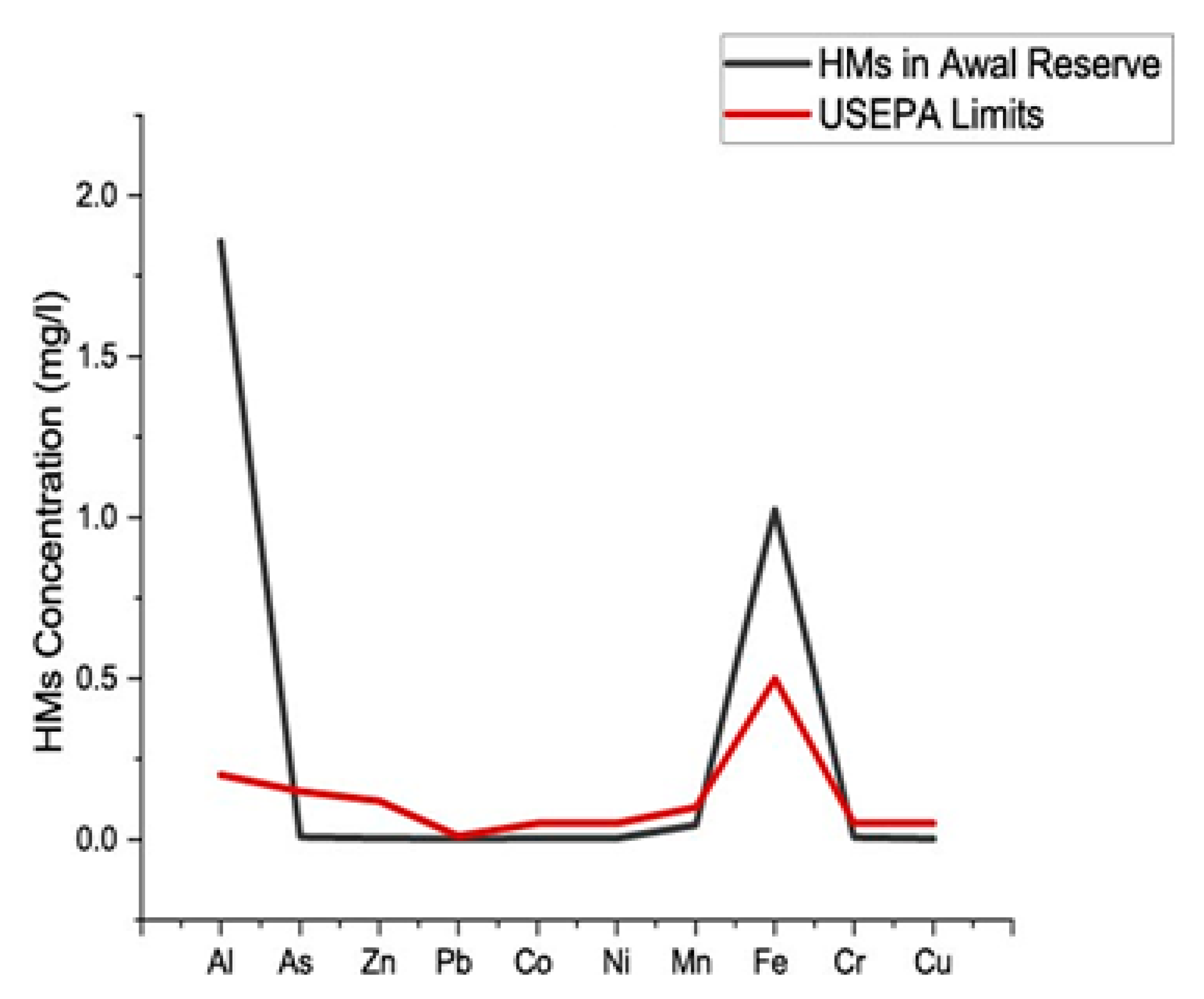
Protected areas are essential for conserving biodiversity and sustaining ecosystems, yet their effective management requires a clear understanding of soil and water quality, which underpin ecological processes. This study evaluated 15 soil and seven water samples to assess their physico-chemical properties, focusing on heavy metal concentrations. Results showed that soils were generally neutral to alkaline, with Hashwan-2 exhibiting the highest concentrations of calcium (26.5 meq/L), magnesium (11.2 meq/L), carbonates (0.32 meq/L), bicarbonates (3.66 meq/L), and chloride (35.43 meq/L). Heavy metal analysis indicated elevated nickel (51.628 mg/kg) and chromium (76.29 mg/kg) at Albuyitlar-2, and chromium (68.015 mg/kg) at Shabak-Mateam-1 1 1, exceeding US-EPA permissible limits of 45 mg/kg for nickel and 64 mg/kg for chromium. Water samples revealed high levels of aluminum (12.681 mg/L), manganese (0.146 mg/L), and iron (7.055 mg/L), also exceeding the US-EPA thresholds of 0.2, 0.1, and 0.5 mg/L, respectively. In contrast, more toxic metals such as arsenic, cadmium, lead, and mercury remained within safe limits. These findings highlight localized concerns regarding heavy metal contamination that warrant continued monitoring to ensure ecosystem health.
Keywords: protected area; Tuwaiq; biodiversity; physio-chemical properties; soil; water analysis protected area; Tuwaiq; biodiversity; physio-chemical properties; soil; water analysis