1. Introduction
Currently, the energy demands of human society have increased significantly due to industrial globalization. Simultaneously, continuously growing citizen living standards have undoubtedly exacerbated the depletion of primary energy sources. In the global energy consumption landscape, fossil fuels are dominant, with about 85% of primary energy demand being met by traditional fossil fuel combustion. Unfortunately, the consumption of fossil fuels has led to a steady rise in greenhouse gas emissions, with about 56.6% of anthropogenic greenhouse gas emissions attributed to fossil fuel consumption [
1]. According to incomplete statistics and relevant research reports, building energy consumption accounts for a considerable proportion of overall energy consumption in some developed countries, about one third [
2,
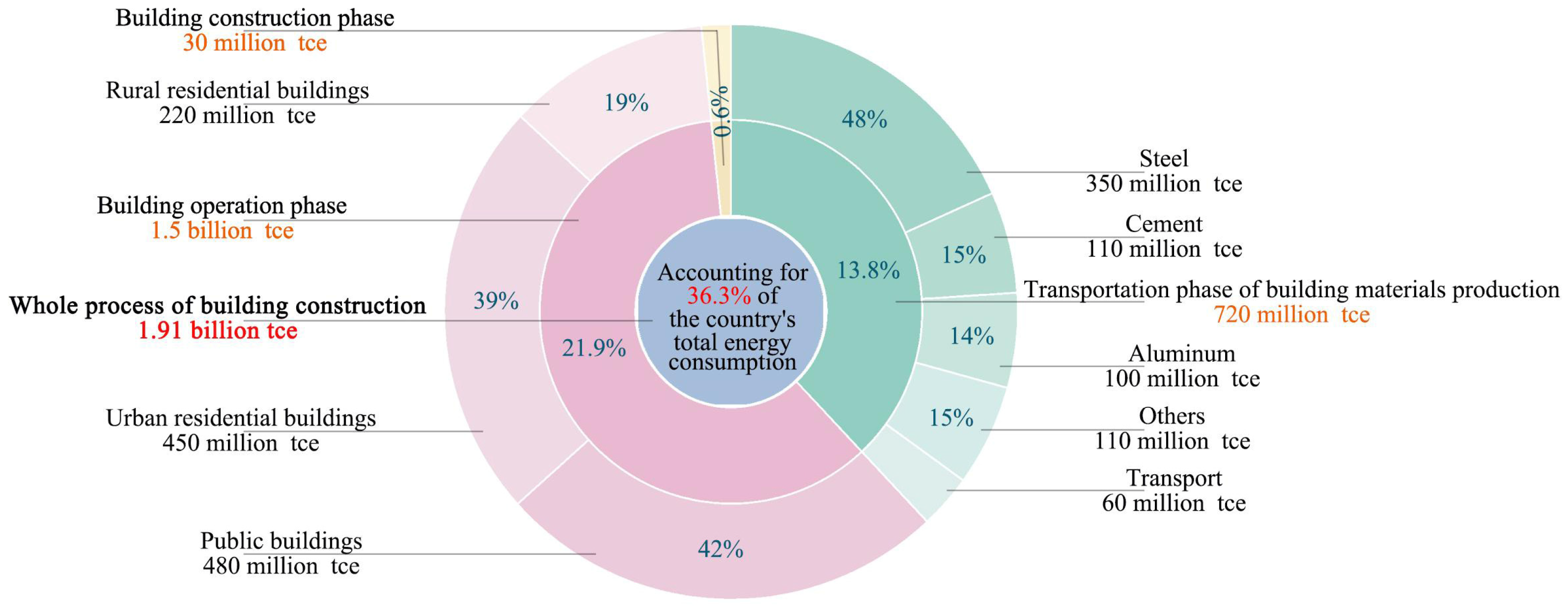
3]. Moreover, in 2021, the total energy consumption of the whole process of national housing construction will be 1.91 billion tce, accounting for 36.3% of the total national energy consumption (
Figure 1) [
4]. Meanwhile, among the many types of energy consumption, heating, ventilation, and air-conditioning (HVAC) systems have emerged as dominant energy consumers in the building sector and incur extremely high energy consumption costs. They occupy a prominent place, consuming more than half of the total energy to achieve the desired thermal comfort conditions and attain better indoor air quality by regulating humidity and temperature [
5]. This creates a self-reinforcing vicious cycle: (1) Global warming increases the use of energy-intensive temperature control systems; (2) energy-intensive cooling generates greenhouse emissions; (3) resultant temperature rise amplifies cooling demand; (4) escalated HVAC operation further intensifies energy consumption; (5) cumulative emissions exacerbate global warming trends. Lowering energy consumption and increasing energy efficiency in the industrial design of buildings are one of the main ways to reduce carbon emissions. Therefore, reducing energy use in this sector plays a crucial role in achieving carbon emission reduction targets and ultimately carbon neutrality [
6].
Recently, many researchers have begun to shift their focus to the efficient use of solar energy and technological innovations to achieve major breakthroughs in the improvement of energy-saving models in the building sector [
7,
8]. Transitioning to renewable energy systems offers a promising pathway to decouple energy production from fossil fuel dependency [
9,
10]. In particular, solar energy shows a stronger research appeal due to its unique and inexhaustible properties [
11]. Solar-integrated systems enable near-zero extra energy input for building temperature control. They could facilitate innovative heat recovery ventilation strategies that optimize thermal energy flows. In this way, these systems can reduce the dependence on fossil energy, thereby mitigating global climate change and contributing to the sustainable development of mankind. Against this background, passive solar building technology has emerged as an important technology in eco-friendly and sustainable building practices, complementing the concepts of eco-housing and green building. Furthermore, passive solar building technology is known for its low cost and zero pollution in providing the required heat for a significant portion of the space [
12]. More critically, passive solar building technology eliminates the need for auxiliary power-driven equipment to force the circulation of heat-transfer fluids, which promises zero-energy building operation [
13,
14]. Among the numerous passive strategies, Trombe walls (TWs) are a widely applied, simple, classic passive solar heating system in buildings. TWs play a significant role in slowing down the rate of environmental degradation [
15] and effectively reducing the emission of greenhouse gases [
16]. TWs have been proven to be one of the most successful and common passive energy-saving technologies, with several notable advantages such as low synthesis cost, convenience of application, and ease of maintenance, which are used to reduce energy consumption related to cooling and heating [
17]. By utilizing this technology to regulate the overall temperature of buildings, it will be possible to reduce the additional energy input required for building temperature control, thereby reducing global greenhouse gas emissions. Specifically, the thermal storage capacity of Trombe walls can be enhanced by increasing their weight and volume. However, this approach would increase the permanent load of the building, posing a challenge for structural engineers. In addition, such TWs are rather monolithic and restrictive, which is not conducive to their wide application.
Hence, it can be concluded that improving the advanced nature and energy utilization efficiency of the TW system through multi-component regulation is of great significance for addressing energy overload and the greenhouse effect through the use of passive energy technology [
18,
19,
20]. As one of the most promising methods to solve the above challenge presented by TWs, the application of phase change technology for energy storage as an efficient method of Thermal Energy Storage (TES) has garnered widespread attention from scholars. The technology can lighten the load of TWs and, therefore, improve the structural and thermal function of TWs [
21,
22,
23,
24]. This technology exploits the characteristics of phase change materials (PCMs), which undergo phase transitions within specific temperature ranges [
25,
26]. Compared to traditional sensible heat storage materials such as water, bricks, or rocks, PCMs can store 5 to 14 times more heat per unit volume [
27]. These materials benefit from their latent heat of phase change, absorbing a significant amount of energy during the melting process and releasing energy during the solidification process, thereby achieving effective storage and release of thermal energy. Studies have shown that Trombe walls (TWs) with PCMs, due to their large latent heat capacity and narrow melting temperature range, can reduce energy consumption by 10% to 30% annually [
28,
29]. PCM implementation enhances thermal system efficiency through entropy minimization while maintaining cost competitiveness. Moreover, TWs with PCMs store more energy in a smaller volume [
30], a characteristic that also makes PCM-TWs an effective alternative solution to the problem of building a constant load. Thus, it can be seen that the TW system coupled with PCMs can further achieve high heat storage and utilization based on basic energy optimization, thereby reducing additional energy consumption and mitigating global warming [
31,
32,
33]. Additionally, by integrating catalyst materials into TW systems to achieve multifunctional applications—such as removing harmful gases from the air and regulating O
2 or CO
2 concentration—this contributes to realizing more futuristic green building projects. Whereas the review by Zhou et al. [
26] focused on the passive application of PCMs in TWs, the present research is the first to integrate PCM-TWs from multiple dimensions in structural optimization, material selection, and operational strategies. Therefore, we intend to review the previous research in detail from different levels inherent in PCM-TWs and summarize the potential of extending the field in the future as a reference for the environmentally and energy-friendly development of advanced building technology design.
3. Basic Concepts of TWs
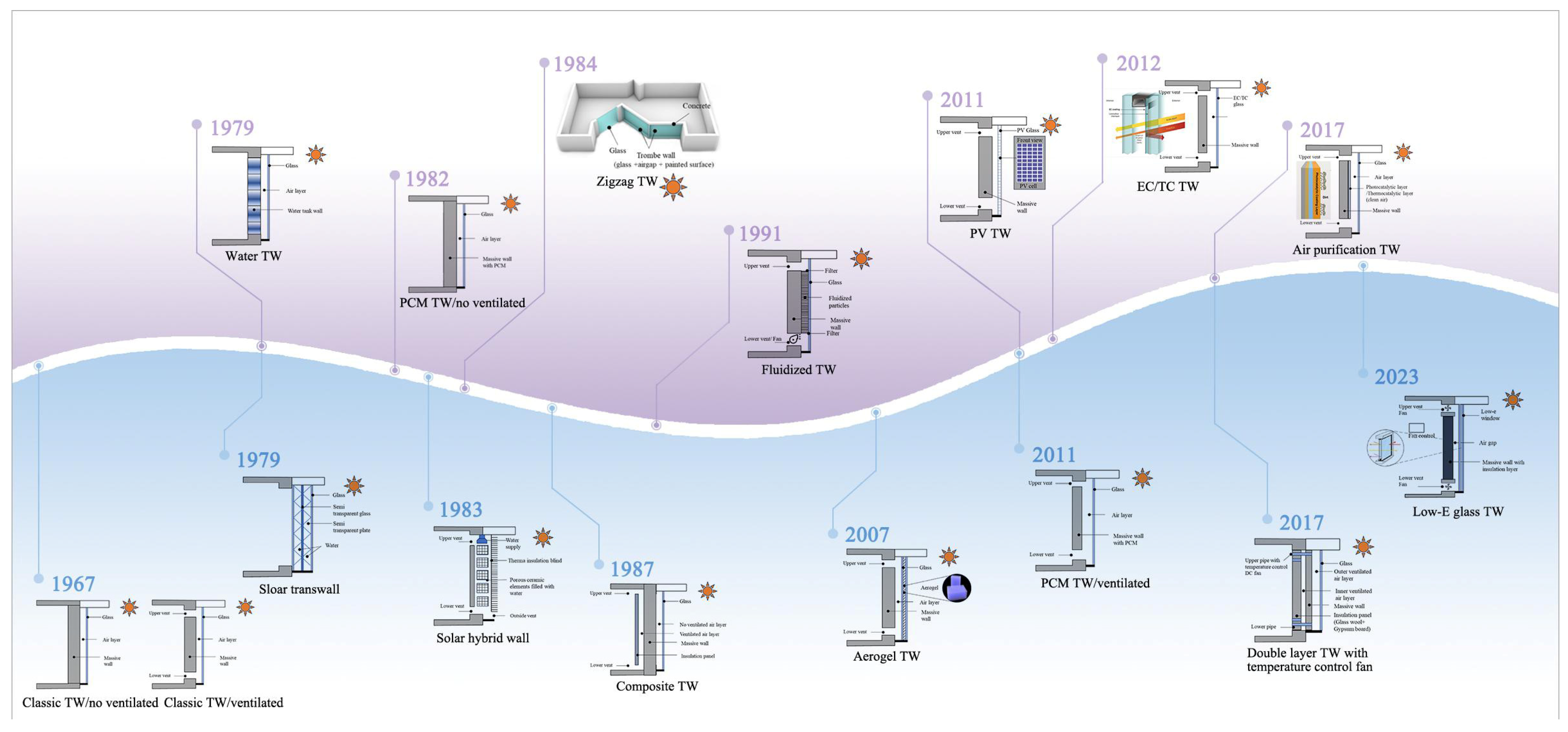
To contextualize all findings, a timeline of TW technology development was constructed (
Figure 4) to offer a comprehensive understanding of the evolution of the technology from its origins to its current state. Overall, TW innovations have evolved around three areas: thermal storage materials, glazing, and ventilation systems. Based on those studies, the comparative analysis of PCM types highlighted critical trade-offs between latent heat capacity and thermal stability, underscoring the need for material selection tailored to specific climatic demands.
In recent decades, TWs have been extensively studied for their efficient energy use and wide geographical applicability [
34]. The origins of TWs can be traced back to the 1960s, when they were first proposed by E.S. Morse and then further developed and popularized in 1957 by Félix Trombe and Jacques Michel. However, it was not until 1967, when architects Félix Trombe and Jacques Michel designed a low-rise apartment building in Odeillo, France, that the classic TW was first applied, and the system became known as the classic TW (
Figure 5) [
35].
From the point of view of storing energy and structural comparison, the classic TW had a simple structure, consisting of transparent glass and a heat storage wall (e.g. stone or concrete) with no insulation layer. It had a high heat storage capacity but high heat loss, affecting efficiency. Water TWs used water as the heat storage medium, utilizing the high specific heat capacity of water to enhance their heat storage capacity, but there were problems such as difficulties in encapsulation, being prone to leakage, and high weight. PCM-TWs embedded PCM into the TW, absorbing or releasing latent heat through phase change, with high heat storage density and small volume. PCM-TWs improved space utilization. PV-TWs integrated photovoltaic panels, which could generate electricity to store electricity and use its backside heat for thermal storage, realizing the double utilization of solar energy. However, the cost was high and affected by solar radiation and temperature. Composite TWs added thermal insulation panels and ventilation air layers to the traditional design to reduce heat loss, improve heat storage efficiency, and enhance indoor temperature regulation. The double-layer TW utilized a double-layer structure with additional insulation and double ventilation layers to further reduce heat loss and enhance temperature regulation flexibility. Low-E glass TWs used low-E glass instead of ordinary glass, which reduced heat loss while maintaining good lighting and improved thermal storage capacity and indoor comfort. Aerogel TWs added aerogel as an insulating material in the wall or glass, reducing heat loss and improving thermal storage efficiency, but with high cost and complex processing and installation.
Based on the original construction of TWs, optimizing their performance by improving their constituent units and wall structure types was the main research direction of this technology. For example, in the research field of water TWs, Zhou et al. [
36] developed a new type of composite TW, which combined the characteristics of water walls and traditional TWs. It was revealed that the thermal performance of the composite TW surpassed that of the traditional TW during the day and at night. Especially at night, the heat loss could be reduced by 31%. Fundamentally, the strategic incorporation of water as the PCM altered wall configurations while leveraging thermoregulation principles through specific heat capacity modulation. More experiments and designs should prioritize optimizing the synergistic effects between PCM characteristics and architectural integration. Furthermore, systematic investigations should be required to evaluate the long-term performance stability of the application of PCMs under varying climatic conditions. It certainly requires researchers to carry out more detailed research on the composition and mechanism of operation of TWs themselves to lay the groundwork for the introduction of new and efficient materials.
3.1. The Operating Principles of TWs
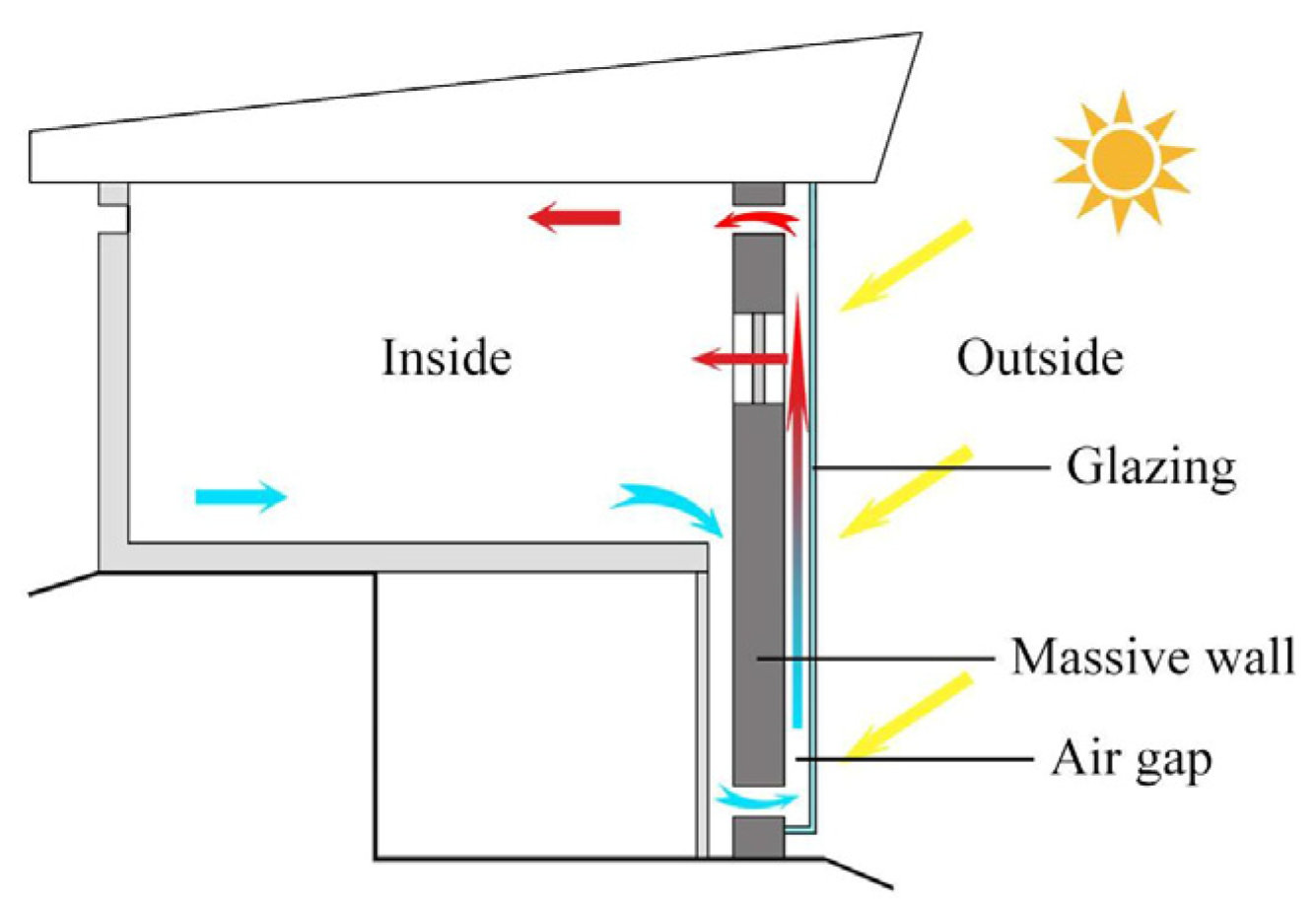
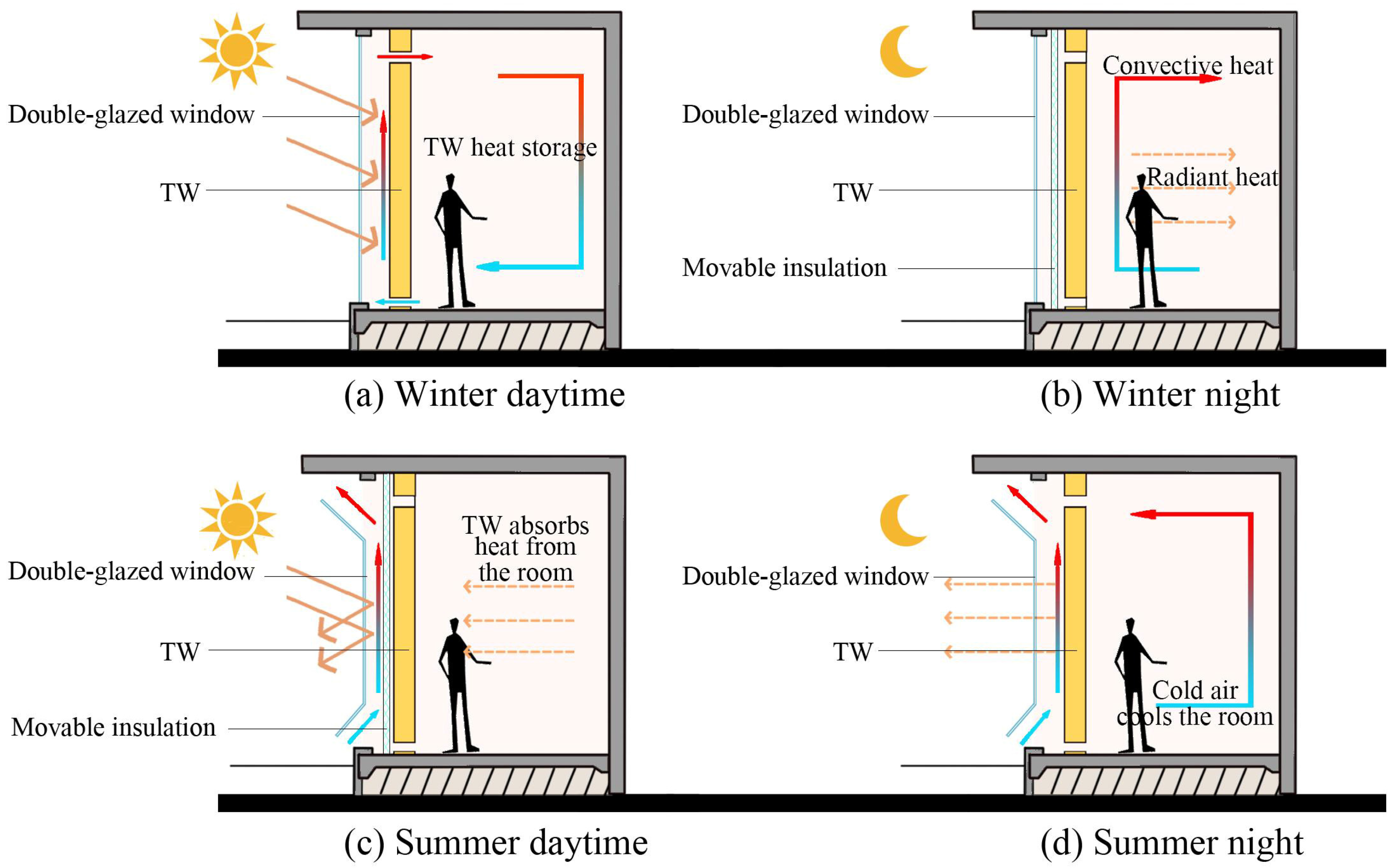
A comprehensive understanding of the principles of TW operation in different regions and seasonal variations under different operating conditions is of crucial importance to understanding the evolution of their components described above. These systems were originally envisioned to harness solar energy through specialized wall configurations without the need for mechanical drives.
Figure 6 illustrates the principles of operation and seasonal/diurnal performance variations.
It is worth noting that the actual operation of TWs tends to undergo subtle changes due to geographical conditions and anthropogenic factors. A realistic instance is that China is extremely rich in solar energy resources, especially in the highland areas of Tibet, Qinghai, and western Sichuan, which are among the richest solar energy resources in the world [
31,
32,
33,
37]. Given this, the efficient use of these abundant solar resources through TWs is crucial to improving energy consumption in a few unique regions.
Table 1 [
38] lists common climate zones where passive solar heating can be applied. Today, a wide variety of solar energy utilization devices are used in the construction industry, including solar chimneys [
39,
40,
41,
42], solar roofs [
43,
44], and TWs [
45,
46]. The academic exploration of TW systems has progressively intensified, since their conceptual inception, to make them more energy friendly and efficient, especially in the field of operating mechanisms. Through iterative technological evolution, the operation principles of modern TWs demonstrate enhanced performance metrics and expanded adaptability across diverse climatic and functional contexts, ultimately enabling comprehensive solar energy utilization that synergizes energy conservation with multifunctional applications. In summary, the direction of TW research in the 21st century looks more like finding an optimal balance between the inherent advantages of TWs and the improved functionalization of novel operations. Optimization of the operation mode of TWs through the introduction of novel materials is one of the current cutting-edge directions in this field. Therefore, it is significant to study the connection between materials and the underlying operation logic of TW systems to realize the efficiency, energy saving, and flexibility of TWs.
3.2. The Components of TWs
Before the introduction of different functionalized materials, based on a full understanding of the operating principles of TWs, a broader reflection on the constituents of TWs should be made. Therefore, the intrinsic connection between the evolution of the TW structure and its working principles needs to be summarized, thus better realizing the organic combination of TWs and novel materials. Building upon this conceptual framework, it becomes possible to view the independent optimization of the TW components and the interactive evolutionary mechanisms within the whole system, which will be systematically exemplified separately in the subsequent discussions.
Firstly, one of the most critical components is the thermal storage wall, which is often made of materials with a high specific heat capacity to obtain prolonged accumulation of stored solar energy. Efficient utilization of solar energy can be easily achieved by adjusting and improving the thermal performance of the thermal storage wall. To achieve this aim, a series of effective methods can be invoked to improve light absorption and heat collection, such as the application of thermochromic coatings (TCC) or the use of PCMs, etc. Regarding PCM integration, Xiao et al. [
47] explored a PCM-TW to improve energy efficiency in buildings located in cold areas of China’s high strategy, significantly reducing the heating season heat load and improving the thermal comfort, reducing the heat load by 71.53% of the target. At the same time, this study also proved that the investment in PCM-TWs had a payback period of 6.56 to 11.18 years, which showed attractive economic value. These advancements collectively underscore the necessity of holistic system optimization that transcends individual component enhancements. Particularly, the synergistic interplay between material properties and architectural thermodynamics emerges as a pivotal research frontier.
Secondly, the other two components, the glass and the air channels, exhibit significant synergistic interactions and are frequently analyzed as correlated elements in TW studies. Specifically, the greenhouse effect is generated when solar radiation penetrates glazing materials into air channels. This phenomenon is primarily facilitated by the temperature differential between in/outdoor environments and the main components of TWs, which ultimately leads to the pooling and reuse of thermal energy in the thermal storage wall. Precisely, the air channels are divided into two zones with different functional characteristics: the warm and the cold channels. During system operation, the cold and warm portions of the air channel are activated and create a density difference in the air throughout the channel system, which in turn creates a natural buoyancy effect and results in a new heat cycle. Xiao et al. [
48] introduced a Low-E glass TW with an auxiliary temperature control ventilation system in an office building in a hot summer and cold winter area in China and improved in indoor thermal comfort without using air conditioning. When combined with air conditioning, compared with ordinary walls and traditional TWs, heating demands were reduced by 61.4% and 11.1%, respectively, resulting in improved building energy efficiency. Similarly, Ma et al. [
49] successfully developed the temperature-controlled ventilated double-layer Trombe wall system (TCVD-TW), which effectively regulated the temperature and humidity in the building. Using intelligent temperature control and ventilation mechanisms, the system improved energy efficiency (up to 35.96%) in winter by setting the supply air temperature to 1 °C above the heating set point. In summer, the cooling load was effectively reduced by setting the supply air temperature 1 °C below the cooling set point (energy efficiency was improved by 33.62%). In addition, by optimizing the airflow and adjusting the thickness of the air layer of the double wall, the system further improved the energy performance, providing the building with a year-round energy-saving solution that significantly reduces the energy consumption of heating and cooling. Focusing on developing consistent component intelligent control algorithms capable of dynamically adjusting operational parameters of TWs in response to real-time environmental fluctuations is a promising area for future research.
4. PCMs and Their Specific Application in TWs
Although the TW has proven to be an efficient means of reusing solar energy, it is extremely limited by the climate. To address this limitation, among various strategies, integrating phase change materials (PCMs) into TW systems has emerged as a particularly promising approach [
50,
51,
52,
53,
54,
55,
56,
57,
58]. It is worth observing that the introduction of PCMs improves the energy storage capacity of a TW system and extends the duration of ventilation and heat dissipation, especially during nighttime (a critical performance mode of a TW) [
59,
60,
61]. One of the effective techniques to optimize the way TWs store and release thermal energy is through the introduction of PCMs. Generally, PCMs optimize the thermal energy structure in the form of latent heat by undergoing a phase change at a constant temperature. In the presence of phase change materials, the TW holds more temporary energy in a tiny volume, greatly improving the original TW’s unstable heat transfer and unsatisfying thermal resistance. From the perspective of the full life cycle of a building, PCM-TWs perform well in terms of the payback period for environmental loads, with a global warming potential (GWP) payback period of no more than one year, compared to no more than five years for the IMPACT2002+ indicator [
62].
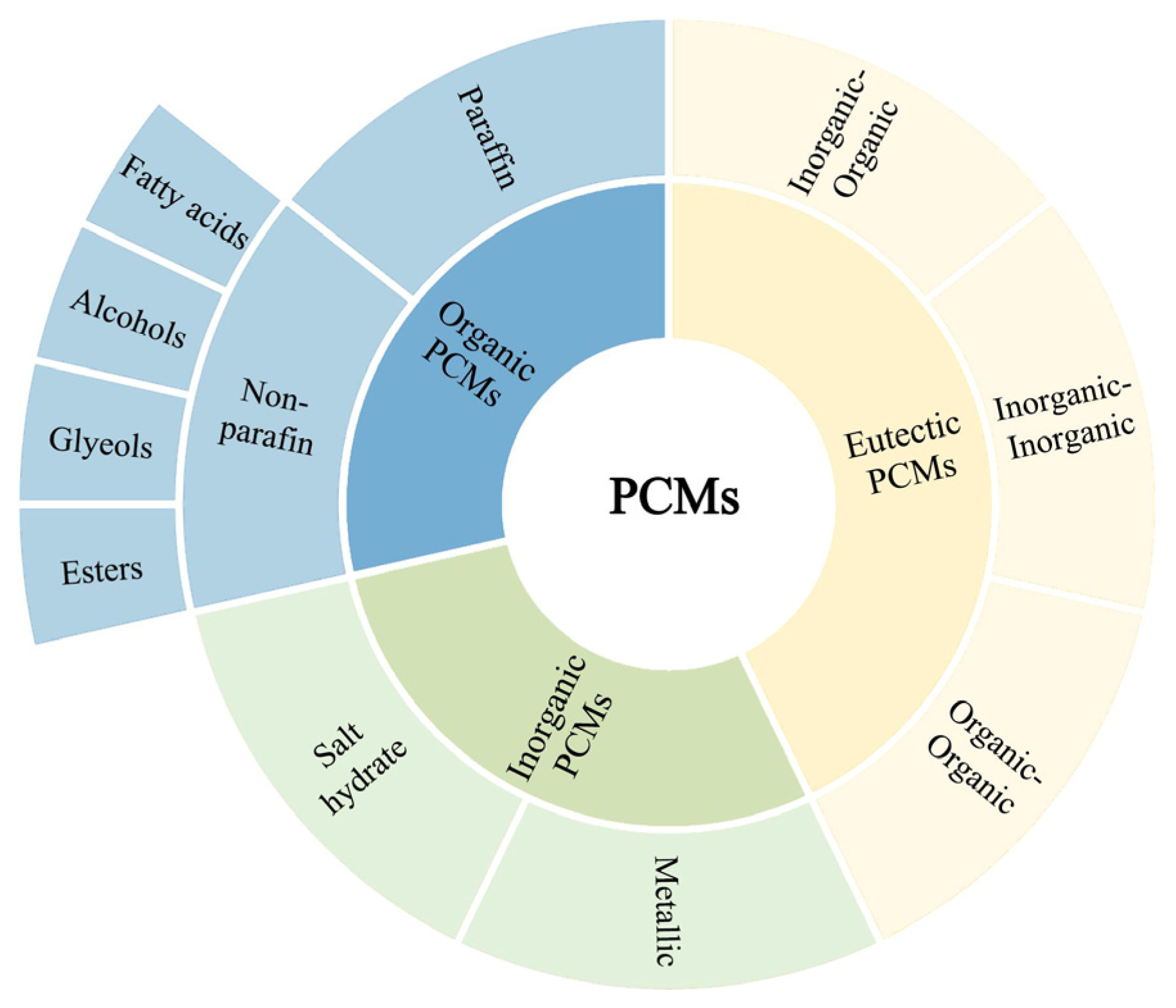
With increasing research on environmentally friendly materials in this century, the types of PCMs have become increasingly diverse. The primary characteristic of a PCM is its chemical composition’s response to temperature changes, which can be broadly categorized into four types: inorganic PCMs, eutectic PCMs, organic PCMs, and hybrid composite PCMs [
63]. Some representative PCMs (
Figure 7) are summarized in this paper. Inorganic PCMs primarily include, but are not limited to, molten salts, hydrated salts, pure metals, and alloys. Such materials have high thermal conductivity, lower volume cost compared to organic compounds, and are non-flammable. These materials are relatively easy to obtain; however, it is important to note that they may experience issues such as corrosion, supercooling, and phase separation failure under operational conditions. Although the cost of inorganic PCMs is satisfactory, these issues can lead to device degradation. A eutectic material is a mixture of two or more salts that form eutectic points in a specific ratio, with a specific melting point and latent heat. Eutectic mixtures can adjust the melting point and latent heat as needed, but there may be phase separation problems [
64,
65,
66,
67]. Organic PCMs include paraffin, fatty acids, alcohols, and salts, which melt at the same composition, self-nucleate, and are generally non-corrosive to the container materials. Their advantages are lower costs and good thermal stability, but their thermal conductivity is usually low [
68,
69,
70]. Organic PCMs offer highly satisfactory cost performance and can precisely regulate long-term stability through functional group and hydrophilic/hydrophobic design. However, the laboratory synthesis process for organic PCMs is cumbersome, and their low thermal performance makes them difficult to apply in engineering. Organic–inorganic hybrid PCMs, which combine excellent thermal performance with the ability to achieve phase change and temperature interaction through mutual compensation, represent a promising direction for future development [
71,
72,
73]. The future development of organic–inorganic hybrid PCMs will primarily focus on advanced functionality, novelty, and cost control.
PCM-TWs also have some unsatisfactory issues with their inherent compositional and intrinsic properties, including the following:
- (1)
Compared to traditional TWs, the high cost of PCMs increases the initial investment.
- (2)
The thermal performance of PCM-TWs is highly sensitive to the phase transition temperature, which must be meticulously selected to match local climatic conditions.
- (3)
PCMs are susceptible to performance degradation over repeated thermal cycles. Encapsulation failure may result in leakage, contaminating building structures and requiring costly remediation.
- (4)
PCM-TWs rely on sufficient solar irradiation and diurnal temperature variations to trigger phase transitions. In regions with prolonged overcast conditions or minimal day–night thermal fluctuations, the energy storage capacity of PCMs may remain underutilized, reducing system effectiveness compared to traditional TWs.
- (5)
Just as with traditional TWs, PCM-TWs typically require substantial thickness to accommodate thermal storage materials, potentially encroaching on usable interior space.
- (6)
Most PCM-TW studies are confined to controlled laboratory settings or small-scale test rooms, with experimental durations often limited to a single heating season.
The ways of combining PCMs with construction materials include direct incorporation, immersion, encapsulation, shape stabilization, heat impregnation, and spraying [
74,
75,
76]. While each of these methods has its own advantages, they also suffer from PCM leakage and performance degradation. Direct doping and immersion methods may lead to PCM leakage due to thermal cycling, which affects the material performance, while encapsulation techniques (microencapsulation and macroencapsulation) are effective in preventing leakage [
77]. Existing studies have addressed these issues by optimizing the encapsulation structure and material combinations. For example, Yu et al. [
78] encapsulated PCM by using TiO
2. After 100 thermal cycles, the enthalpy loss of melting was only 1.58%. Göksu et al. [
79] utilized polyacrylic acid and activated single-walled carbon nanotubes to encapsulate the PCM. After 500 cycles, there was almost no loss of mass, the change of melting point was 0.00~0.20 °C, the change of freezing point was −0.19~0.13 °C, and the change of melting enthalpy was −0.78%~−0.53%. Zhu et al. [
80] designed a microcapsule structure design to decrease latent heat of the TiO
2@SnBi58 alloy microcapsule by only about 1.5% and 0.7% after 500 thermal cycles, which significantly improved the leakage resistance and thermal cycle stability. These studies provided an effective way to improve the service life and application effectiveness of PCMs. Moreira et al. [
81] reduced the PCM loss rate of PETG capsules from 50% to 0% by optimizing 3D printing parameters, geometry, and materials, and achieved 100% seal retention for TPU capsules on the first attempt. The study found that layer height, extrusion factor, and geometry were the main influencing factors, with a maximum leakage reduction of 94%, providing a reliable process path for custom PCM macrocapsules.
On the other hand, the environmental impacts of PCMs are mainly analyzed through the Life Cycle Assessment (LCA) method. It has been shown that the environmental impacts of PCM systems are mainly concentrated in the manufacturing phase, where the storage material (a mixture of KNO
3 and NaNO
3) accounts for 95.66% of the environmental impacts of the whole system in the manufacturing phase [
82]. The use of hydrated salt instead of paraffin as a PCM material in the building envelope can significantly reduce the environmental impacts in the manufacturing stage, thus enhancing the environmental benefits of a PCM throughout its life cycle. In addition, the PCM integration scheme can be further optimized through a multi-objective optimization approach to achieve a balance of energy efficiency, economic feasibility, and environmental impact. Machine learning can also predict hourly room temperatures of PCM-Trombe walls with zero error, predict heating compliance, etc., providing fast and reliable data support for long-term performance evaluation [
83,
84].
Despite the significant potential of PCM-TWs in improving building thermal performance and energy conservation, current research on key issues such as long-term stability, life cycle assessment (LCA), and payback period (PBP) remains insufficient. Most existing studies focus on short-term thermal performance simulations or small-scale experimental verification, lacking systematic assessments of material aging, thermal cycling stability, and system performance degradation. For example, Azimi et al. [
85] showed a PBP of 75–104 months, indicating that high initial costs remain a barrier to widespread adoption. Furthermore, Dimassi et al.’s study in multiple climate zones of Tunisia found that although PCM-TWs exhibited a good life cycle (LCC) across all regions with a payback period generally less than 3 years, their life cycle cost and energy-saving benefits were significantly affected by climatic conditions, suggesting the need for more precise economic assessments tailored to regional characteristics [
86]. Therefore, future research should strengthen the study of PCM material durability, long-term thermal performance evolution, and their compatibility with building lifespan, combining life cycle cost analysis and carbon emission assessment to promote the sustainable application of PCM-TWs in practical engineering projects.
The development of solutions to these problems has extremely significant implications for exploiting the higher building energy efficiency of PCM-TWs. Therefore, the next section discusses how the limitations of TWs can be promisingly addressed through three specific aspects of PCM-TWs: structural optimization, PCM type selection, and specific modes of operation.
4.1. Structural Optimization
Table 2 summarizes the effects of different structural optimization schemes on the performance of PCM-TWs, providing a basis for selecting the best future structural design.
4.1.1. Double-Layer Design
Structurally, the earliest research on the application of PCM-TW technology first started with a single layer, owing to its advantages such as a simple structure [
99,
100,
101]. Building upon this foundation, the dual-layer PCM-TW system evolved through the incorporation of an additional PCM layer, enhancing both thermal storage capacity and system efficiency. It is particularly suitable for high-latitude regions where the average daily temperature is below 10 °C and the average solar radiation rate in winter is between 2 kWh m
−2 and 6 kWh m
−2 [
88]. Such areas often require large amounts of energy to provide heating, and double-layer PCM-TWs can be very effective in increasing the overall heat storage capacity of a building compared to the single-layer system. In addition, the two-layer PCM-TW system can be used to further optimize the thermal efficiency of the building by combining the different thermal properties of the two layers of PCM materials without removing the TW. For example, when the first layer of the PCM enters the phase transition temperature, the second layer of the PCM can act as an insulating layer, as it has not reached the phase transition point; when the second layer of the PCM enters the phase transition temperature, all the heat input should be transferred and consumed in the interior of this layer; and in all other cases, both layers of the PCM can act as thermally insulating layers. Briefly, during the first layer phase transition, the second layer maintains insulation until reaching its phase transition threshold, at which point complete heat transfer occurs within the activated layer, with both layers providing insulation during non-transition phases.
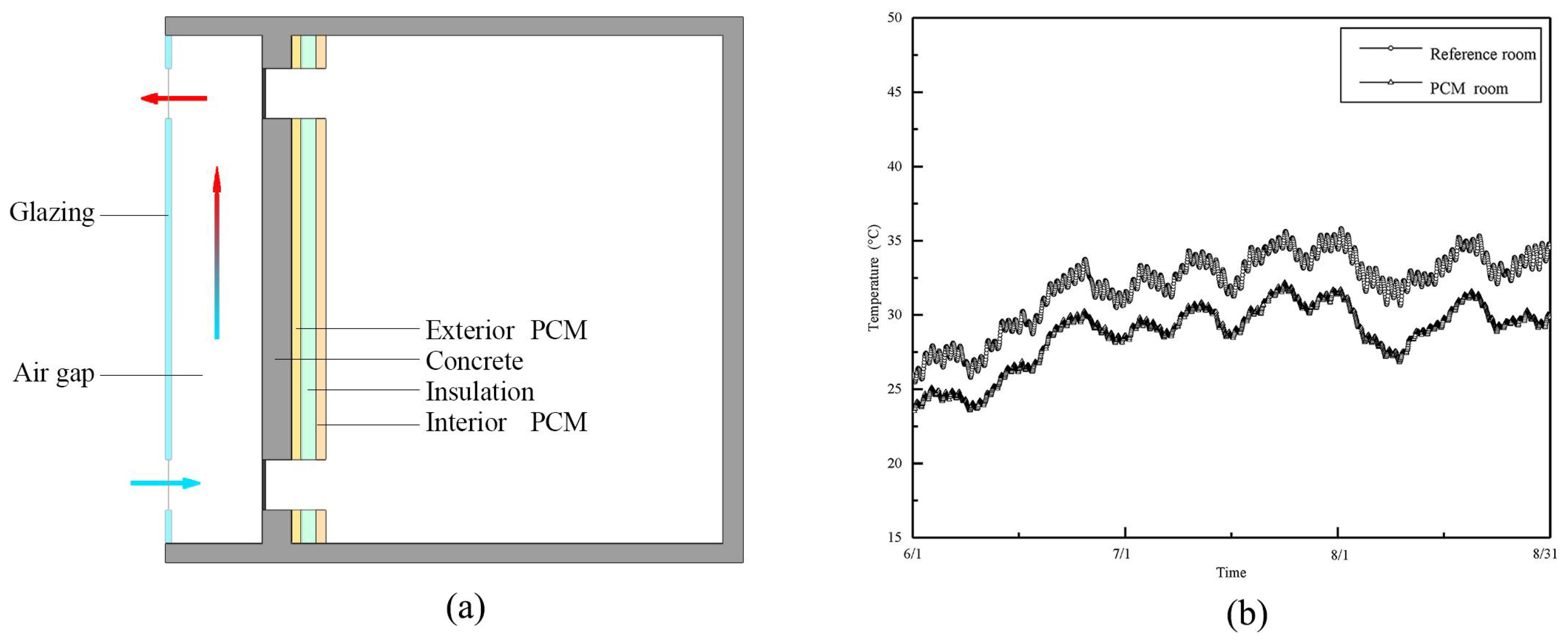
Zhu et al. [
87] proposed a double-layer PCM-TW system. It was found that the double-layer PCM-TW had a significant energy-saving effect under the climatic conditions of Wuhan. Compared with the reference TW building, the indoor temperature of the PCM-TW room in summer was on average 3.28 °C lower than that of the reference room (
Figure 8).
Zhou et al. [
88] studied in depth the double-layer PCM-TW system (
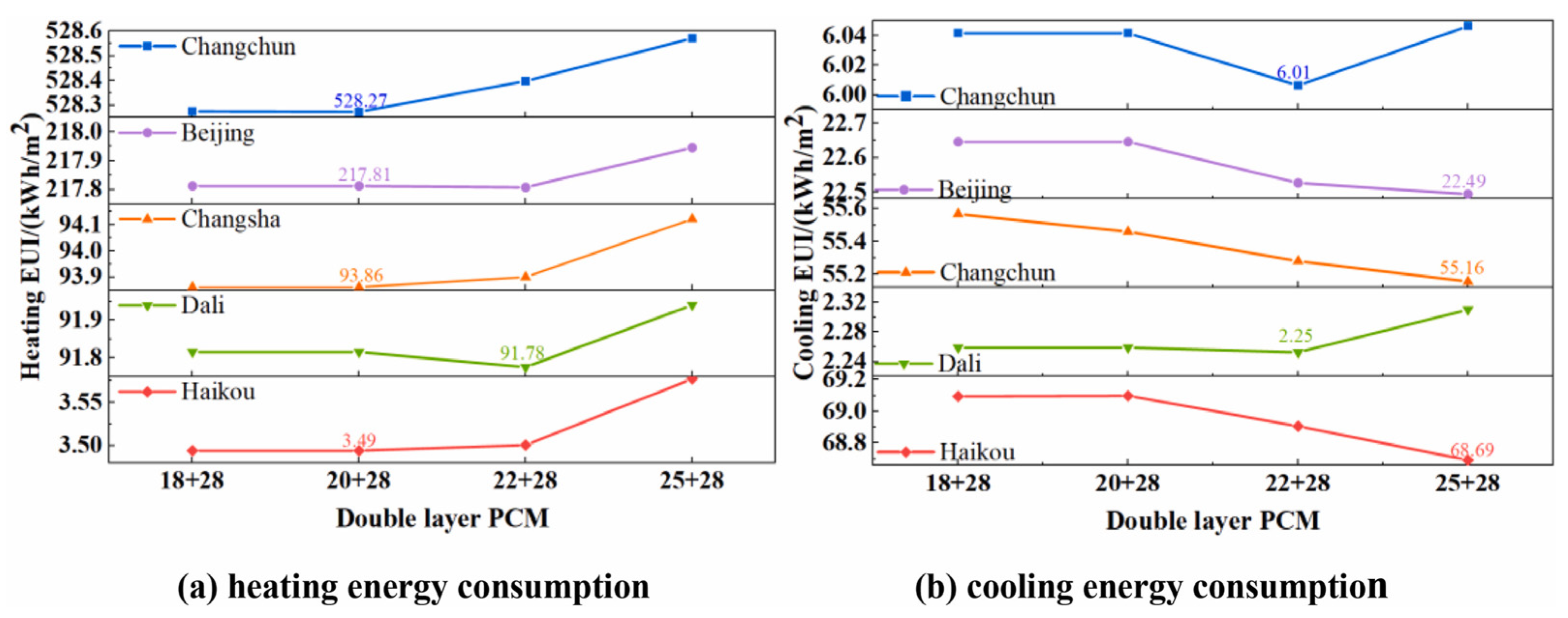
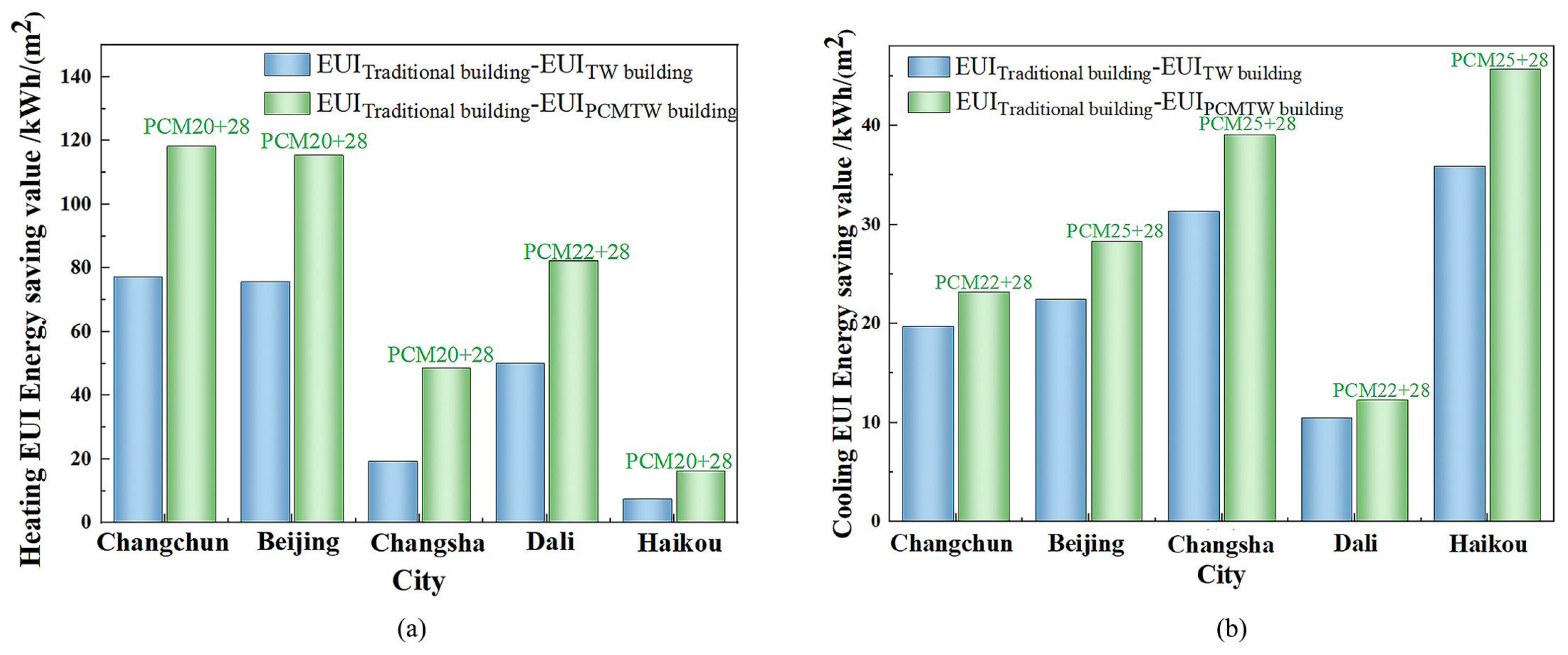
Table 3). They evaluated the system in different climate regions such as Changchun, Beijing, Changsha, Dali, and Haikou. The double-layer PCM-TW utilized the outer PCM to absorb and store heat in the summer and relied on the inner PCM to release heat in the winter. The results showed that this structure could significantly reduce building energy consumption under different climatic conditions, especially in Changchun, achieving the highest heating energy saving effect, up to 118.16 kWh/m
2. In Haikou, the highest cooling energy saving effect was achieved, reaching 45.71 kWh/m
2 (
Figure 9). In addition, the double-layer PCM-TWs significantly reduced the peak cooling loads and the peak temperatures and delayed the time of peak load appearance.
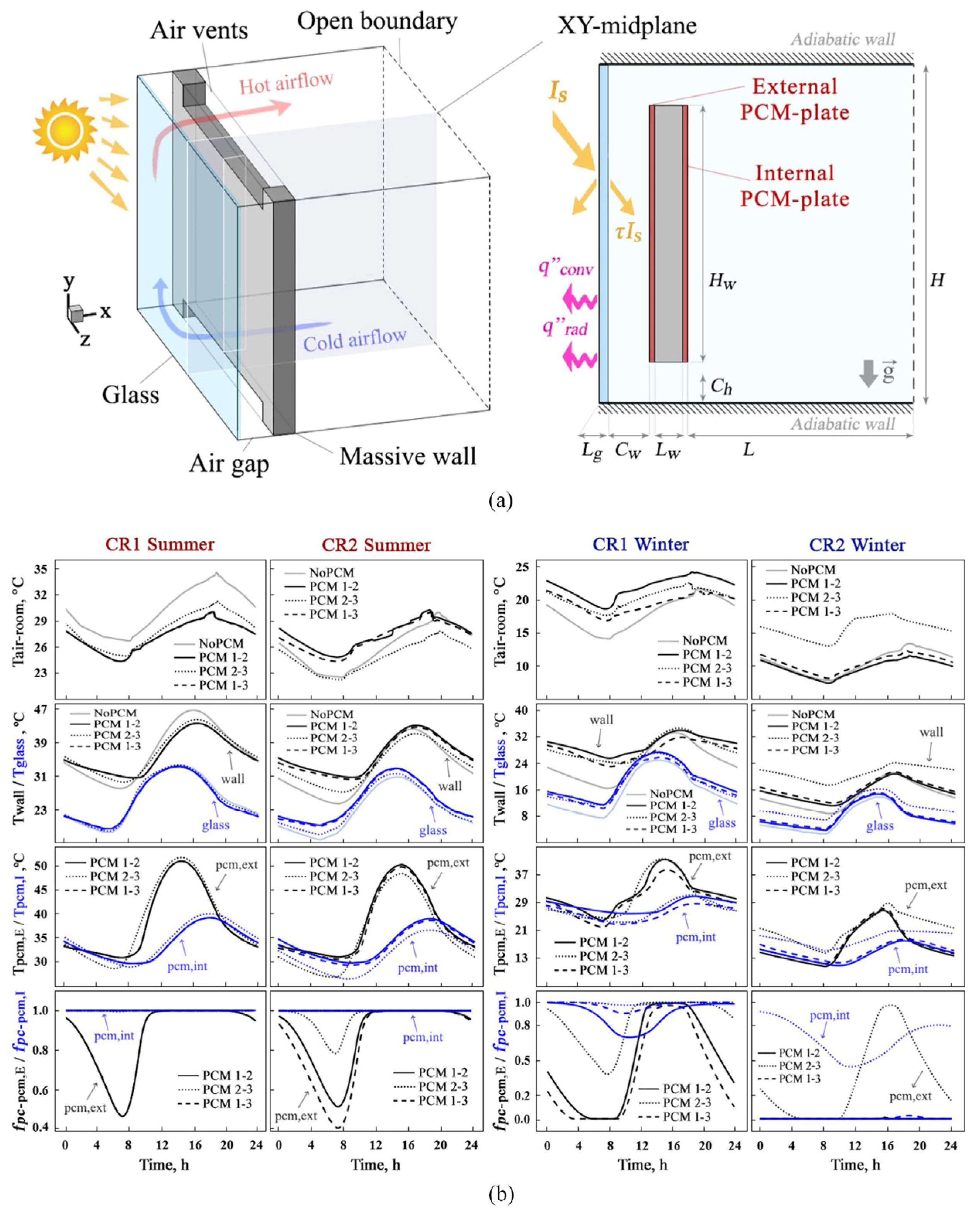
Rivera and Moraga [
89] carried out numerical simulation studies using the computational fluid dynamics (CFD) model to explore the energy efficiency and thermal comfort of double-layer PCM-TWs. Three different double-layer PCM configurations, PCM 1-2 (SP26E/SP31), PCM 2-3 (SP27/SP31), and PCM 1-3 (SP21EK/SP31), were attached to the interior and exterior surfaces of the concrete wall. Specifically, four climatic conditions were simulated to evaluate system adaptability. The research findings indicated that the double-layer PCM-TW demonstrated outstanding performance in regulating the indoor thermal environment. Particularly for CR2, the PCM 2-3 (SP26/SP31) boosted the average air temperature by 31% in winter and suppressed it by 5% in summer (
Figure 10).
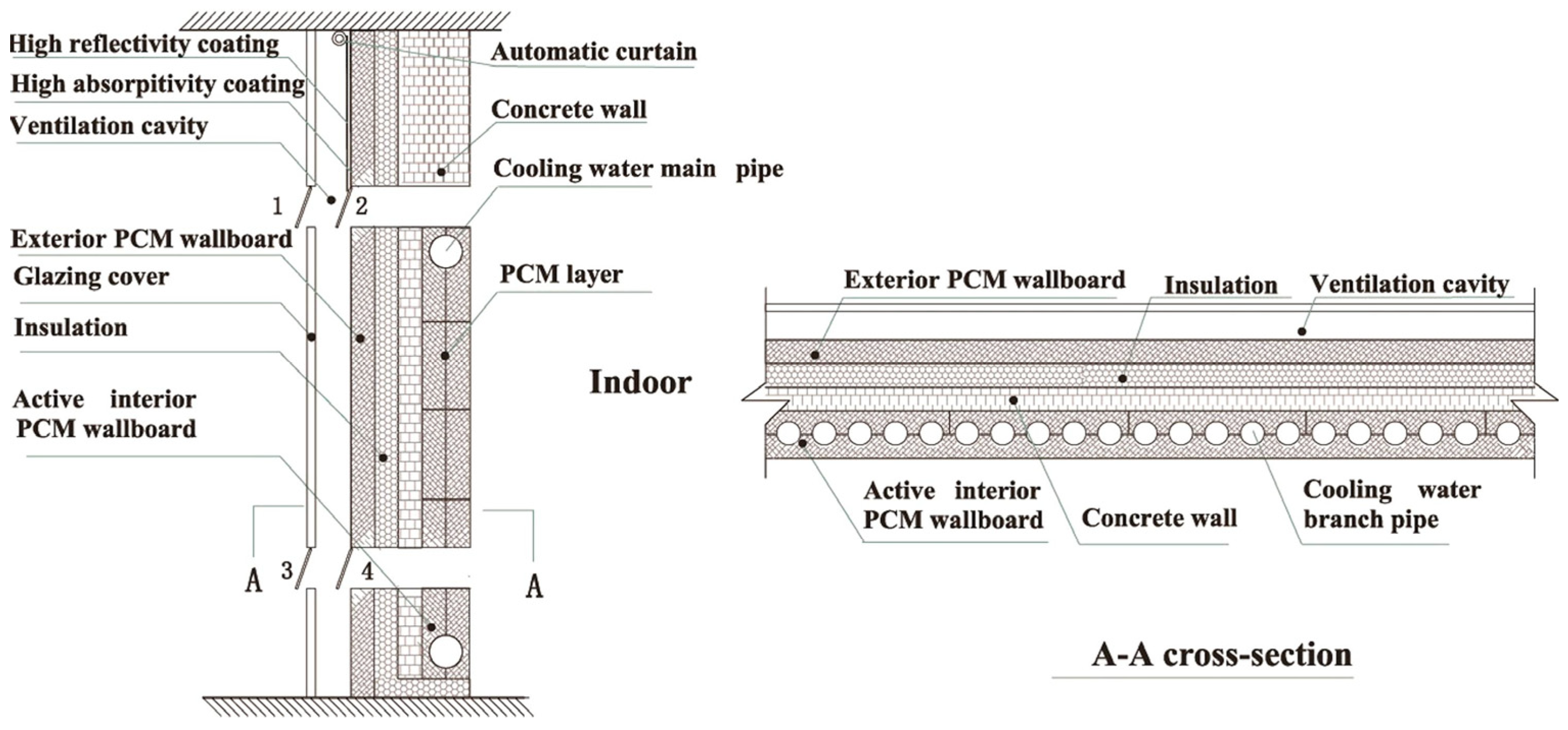
Liu and Zhou [
90,
91] proposed a double-layered and ventilation-enhanced PCM-TW, which contained two layers of PCM wall panels (
Figure 11). The outer PCM wall panel was used to store natural cooling energy (night ventilation in summer) and solar energy (daytime in winter), while the inner PCM wall panel was used for radiant cooling and heating.
In brief, the coupled regulation of thermal storage in winter and overheating suppression in summer is realized through the differential phase change temperature cascade design of a double-layer PCM (high phase change temperature in the outer layer/low phase change temperature in the inner layer), the core of which lies in the use of the sensible thermal storage effect of dynamic PCM and the gradient buffering effect of insulating PCM to form an active suppression mechanism of diurnal thermal hysteresis and vertical temperature stratification. Taking cold regions as an example, under the same total heat storage capacity, a single-layer PCM-TW (single phase change temperature) is difficult to adapt to the different needs of winter and summer, resulting in insufficient utilization of some thicknesses of PCM (insufficient heat storage in winter and excessive insulation in summer). However, the “external resistance and internal storage” design of a double-layer PCM-TW allows each layer of PCM to be precisely matched with seasonal needs, which can reduce the wall thickness.
Although some of the literature points out that double-wall systems may face high construction complexity and high costs in practical applications [
102,
103], studies have shown that double PCM wallboards have good energy-saving potential and are economically viable in some climatic conditions. And according to the dynamic payback period analysis (DPP), the use of double-layer PCM systems can significantly reduce the payback period. For example, in Isfahan, the payback periods for a single-layer RT22 and RT25 PCM were 5.8 and 3.8 years, respectively, whereas the payback period for the RT18/RT22 dual-layer PCM system was 1.7 years, a reduction of about 50% [
104]. In addition, with the development of emerging technologies such as AI-optimized design and 3D-printed building components, the constructional complexity and construction cost of double-layer PCM-TWs are expected to be significantly reduced in the future. They are expected to be lightweight while ensuring high performance, thus enhancing their marketability and comprehensive benefits in actual projects [
105,
106].
Similarly, as previously mentioned, salt hydrate PCMs can potentially improve the economic viability of PCM-TWs due to their lower cost. Static Payback Period (SPP) and Dynamic Payback Period (DPP) are commonly used when assessing the economic feasibility of PCMs [
107,
108]. SPP is simple and intuitive but does not consider the time value of money, whereas DPP provides more realistic results by introducing a discount rate. An office in Shenyang is 5.91 years, while the DPP varies between 7.18 and 9.39 years depending on different discount rates [
109]. In addition, the economics of PCMs vary significantly in different climates, and they usually have better economic performance in cold regions. Life Cycle Cost Analysis (LCCA) and data-driven optimization methods (e.g., artificial neural networks (ANN)) are more comprehensive and dynamic approaches to economic analysis [
110,
111]. They can help to better understand and predict the economics of PCMs.
4.1.2. Integration with Other Devices or Components
The integration of PCM-TWs with other devices or components is also an important direction for structural optimization. The performance of the whole system is further improved by combining them with equipment such as heat pump systems and components such as external sunshades.
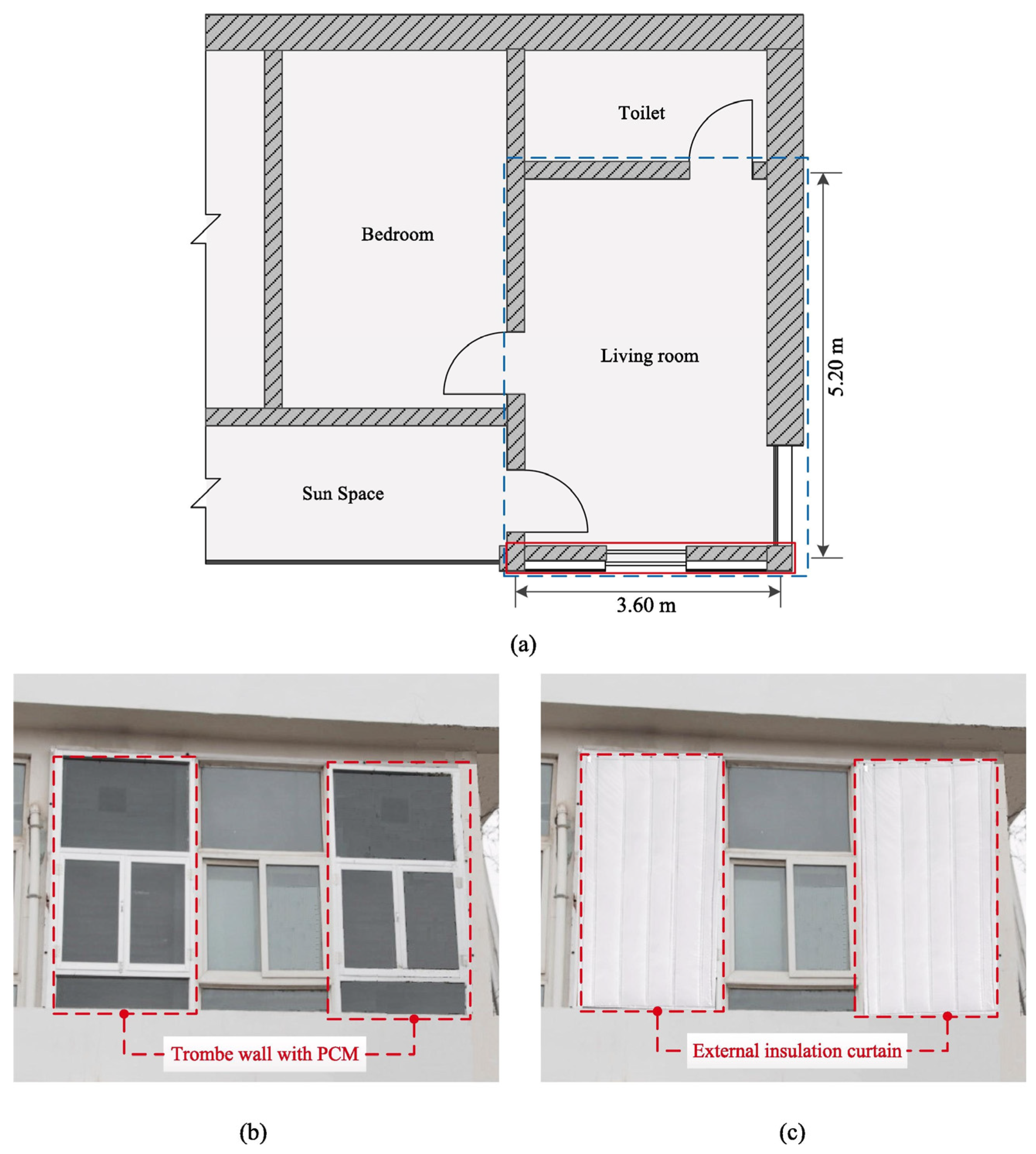
Liu et al. [
92] came up with a PCM-TW design incorporating an external insulation component to improve its all-weather thermal performance (
Figure 12). The researchers analyzed the effects of the design parameters of the thermal insulation components on thermal performance by establishing a non-stationary heat transfer model and combining it with experimental validation. The results showed that the thermal resistance of the insulation curtain and the thermal resistance of the enclosed air layer had a significant effect on the thermal performance of the TW. The additional thermal resistance of the optimized external insulation assembly was 2 m
2·°C·W
−1, corresponding to a maximum thermal resistance of the closed air layer of about 0.5 m
2·°C·W
−1. Compared to the nighttime without an insulation curtain, the indoor operating temperatures were significantly higher with an insulation curtain.
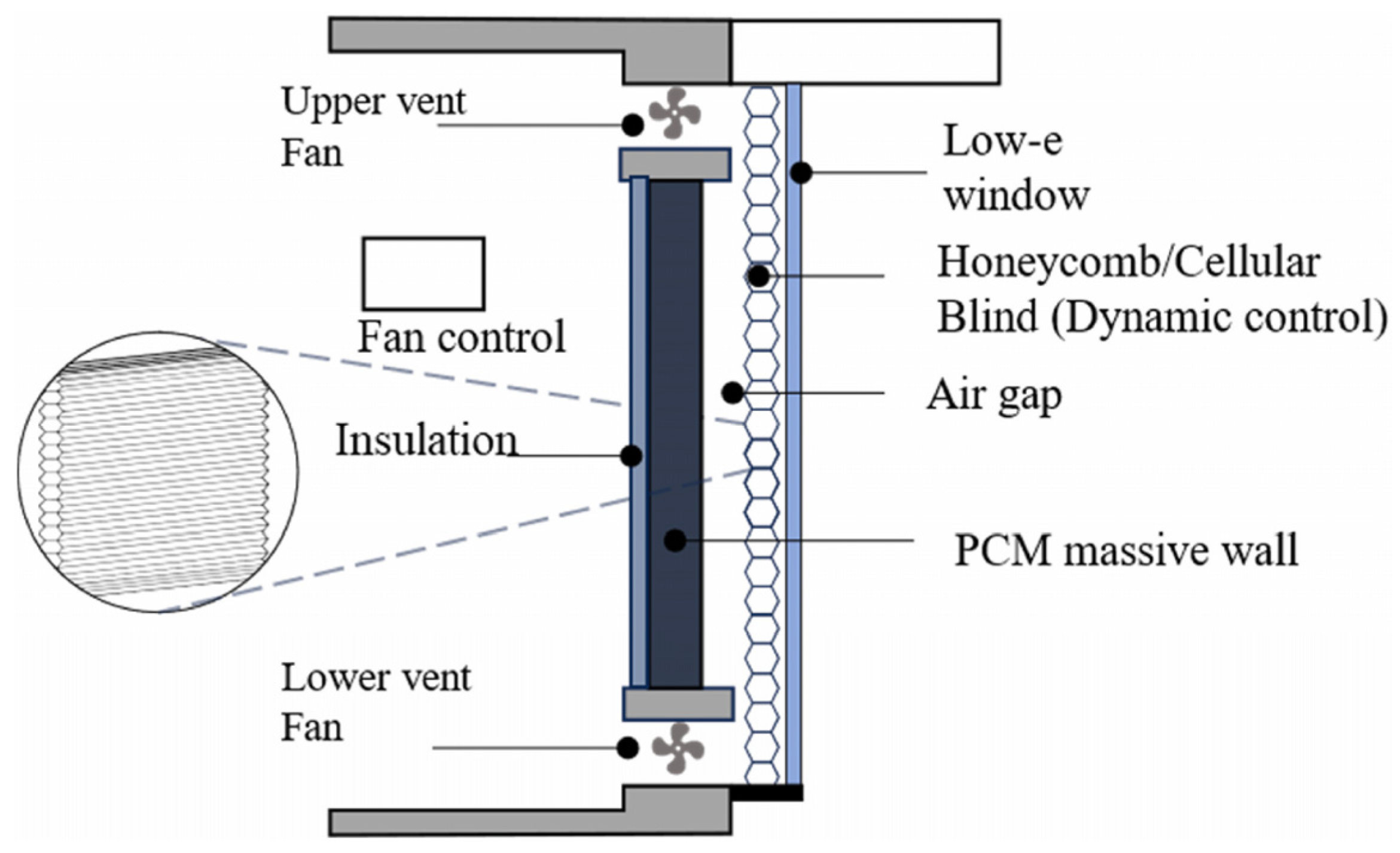
The study of a dynamically controlled Trombe wall system (TWS) was conducted by Xiao et al. [
93]. As an efficient shading device, the honeycomb/cellular blind automatically adjusted its opening and closing status by monitoring the environmental conditions (e.g., solar radiation intensity, indoor temperature, etc.) in real time with smart sensors (
Figure 13). In winter, when the solar radiation was high, the shutters opened automatically and the fan introduced hot air into the room to warm it up; at night or when the solar radiation was low, the shutters closed to reduce the heat dissipation. In summer, when solar radiation was high, the shutters closed to block the sunlight and the fan circulated cool air to cool down the room.
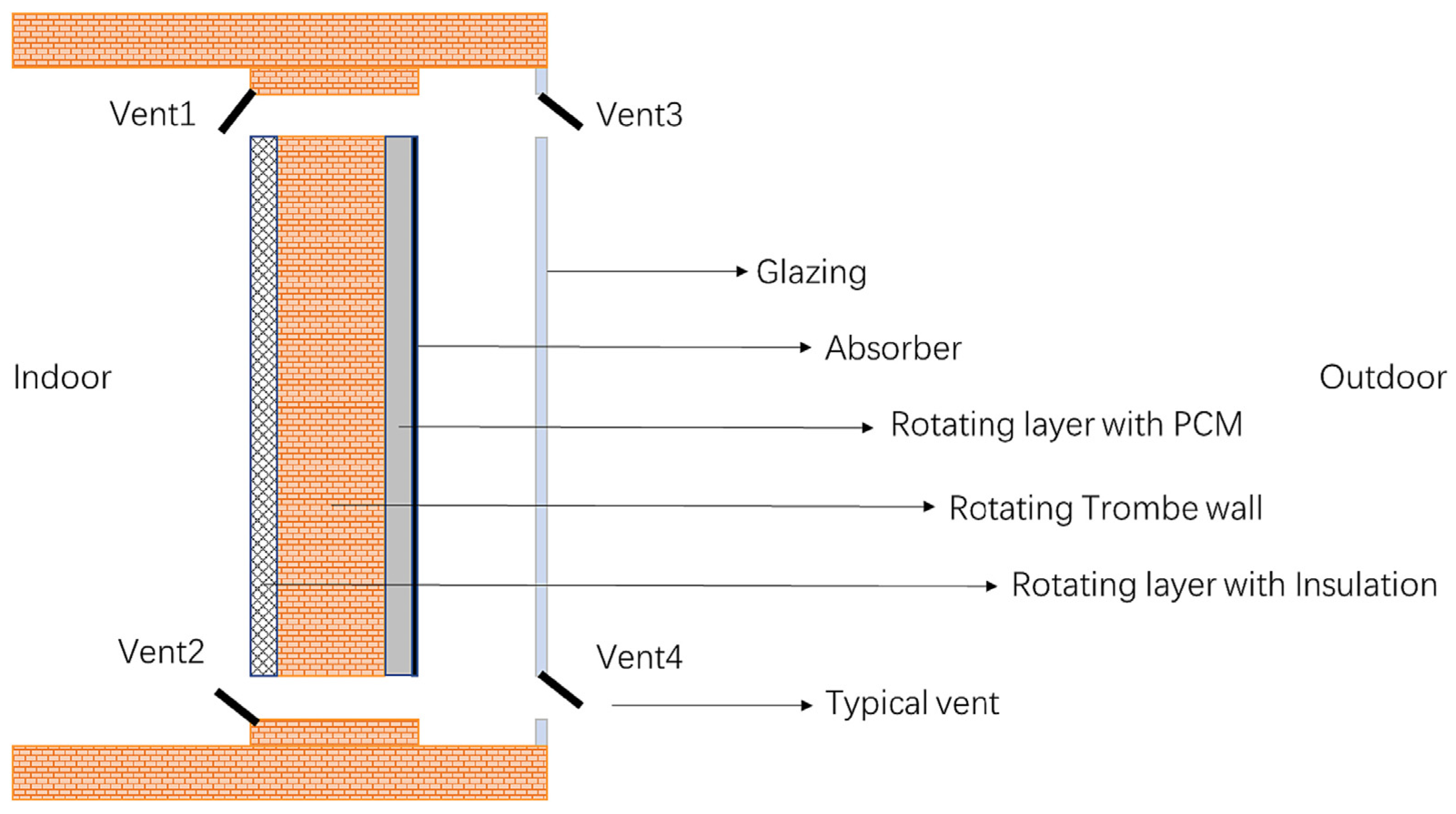
Liu and Zhou [
90,
91] integrated automatic shutters and active cooling/heating ducts. The study found that these devices not only improved the thermal performance of PCM wallboards but also improved indoor environmental quality, providing more flexible temperature control and fresh air supply.
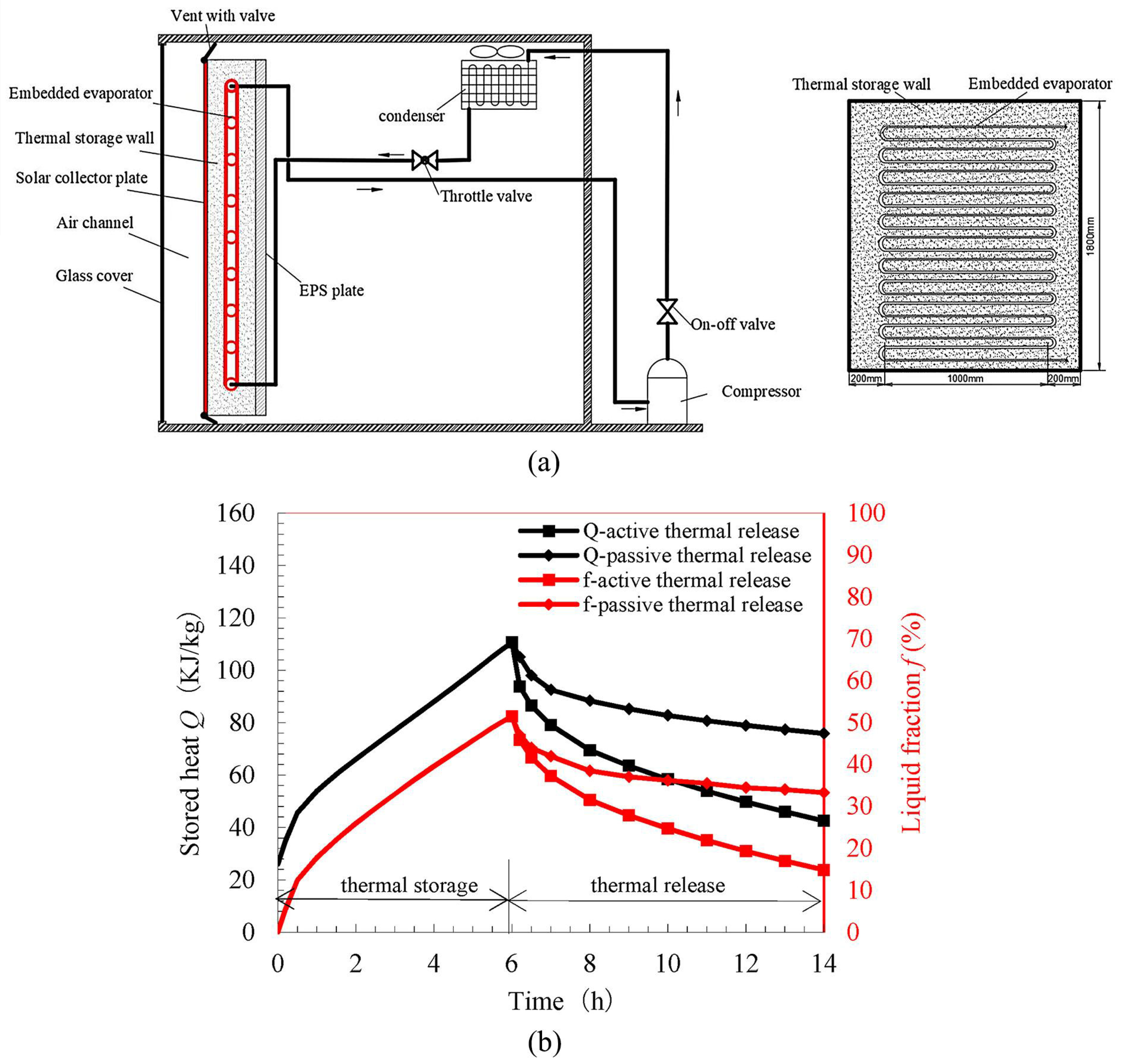
Li et al. [
94] investigated an integrated PCM-TW with an evaporator embedded in a heat pump system to achieve a combination of active and passive solar energy utilization (
Figure 14). By passively storing heat during the day and actively releasing heat at night, the thermal performance of the PCM-TW was improved; the heat release improved by 33.33 kJ/kg and the ratio of heat release to heat storage improved by 30.12% compared to the passive heat release mode.
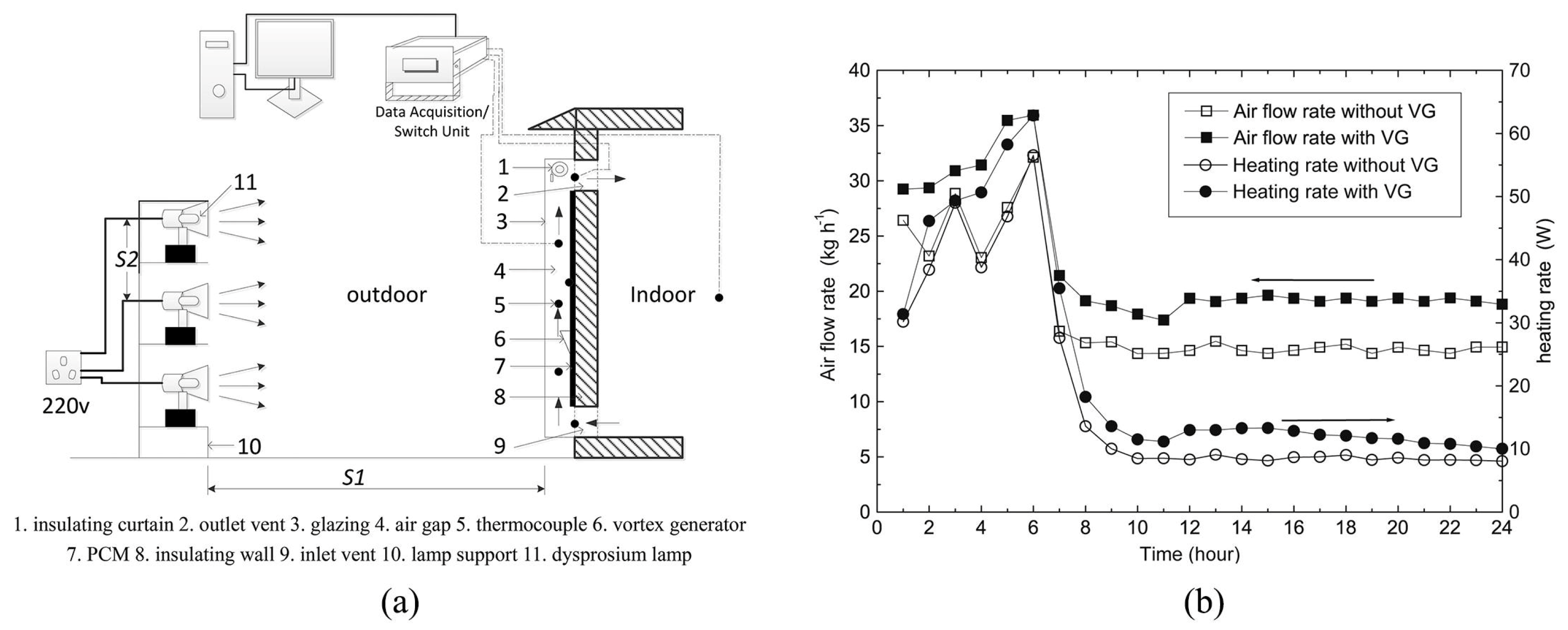
Zhou and Pang [
95] experimentally explored a PCM-TW system enhanced with a delta-wing vortex generator (DWVG). They found that mounting the delta-wing vortex generator on the surface of the PCM plate could significantly improve the convective heat transfer efficiency between the air and the PCM plate. The experimental results showed that the DWVG could effectively enhance the heat exchange rate on the surface of the PCM plate during both charging (heat absorption) and discharging (heat release). The PCM-TW with a single row of DWVGs increased the air flow rate and the rate of heat supply to the room by 28.5% and 39.4%, respectively, compared to the case without VGs (
Figure 15). Furthermore, it was found that the height, spacing, and location of the VGs had a significant effect on their thermal performance. Under experimental conditions, a combination of DWVGs with a height of 30 mm, small front edge pitch of 2 mm, lateral spacing of 225 mm, and vertical spacing of 340 mm exhibited the best thermal performance.
To sum up, there are two main types of PCM-TWs used in combination with external components or other systems and equipment. Some combinations solve summer overheating problems by enhancing thermal insulation and optimizing heat release while improving winter heating efficiency, reducing energy consumption and improving overall system performance. Moreover, some of the combinations stabilize the indoor temperature and improve air quality, providing a more comfortable and energy-efficient living environment for indoor occupants.
4.1.3. The Shape of PCM-TWs and Cavities
The surface-specific configurations of PCM-TWs such as pattern design, structural partitioning, and three-dimensional overlapping are also attractive to researchers as an important structural optimization approach. For example, a corrugated structure can increase the surface area for airflow, thereby improving heat transfer efficiency. A semicircular structure, on the other hand, can optimize the distribution of the PCM so that it absorbs and releases heat more uniformly during the phase change process. While maintaining the same heat storage density, optimizing the shape can reduce the wall thickness.
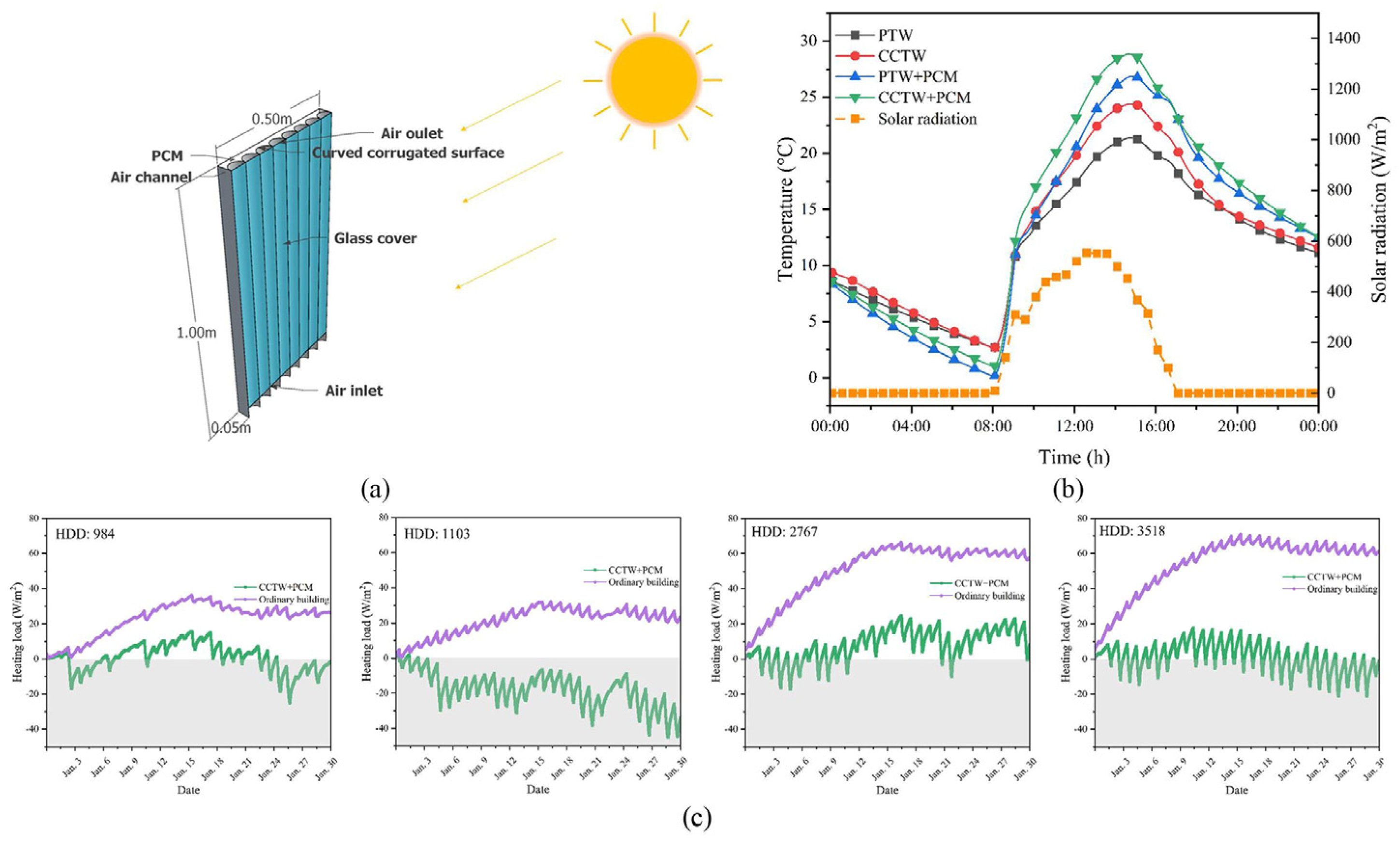
Li et al. [
96] developed a novel curved corrugated Trombe wall (CCTW) integrated with PCM (
Figure 16). The study employed a thermal resistance-capacitance (RC) method to characterize heat transfer in the PCM-enhanced CCTW. Experimental data revealed 26.8% and 35.0% increases in mean and peak outlet air temperatures, respectively, compared to conventional planar Trombe walls (PTWs). Regarding indoor thermal environments, the PCM-CCTW system achieved temperature elevations of 14.0 °C (mean) and 20.0 °C (peak), representing 32% and 42% improvements over standard TWs, respectively. Furthermore, the system demonstrated full compliance with building heating requirements in regions requiring 1103 heating degree-days (HDD). Heating load reductions of 20–50 W/m
2 were observed across varied HDD zones, confirming the system’s dual capability in enhancing thermal comfort while reducing HVAC energy consumption.
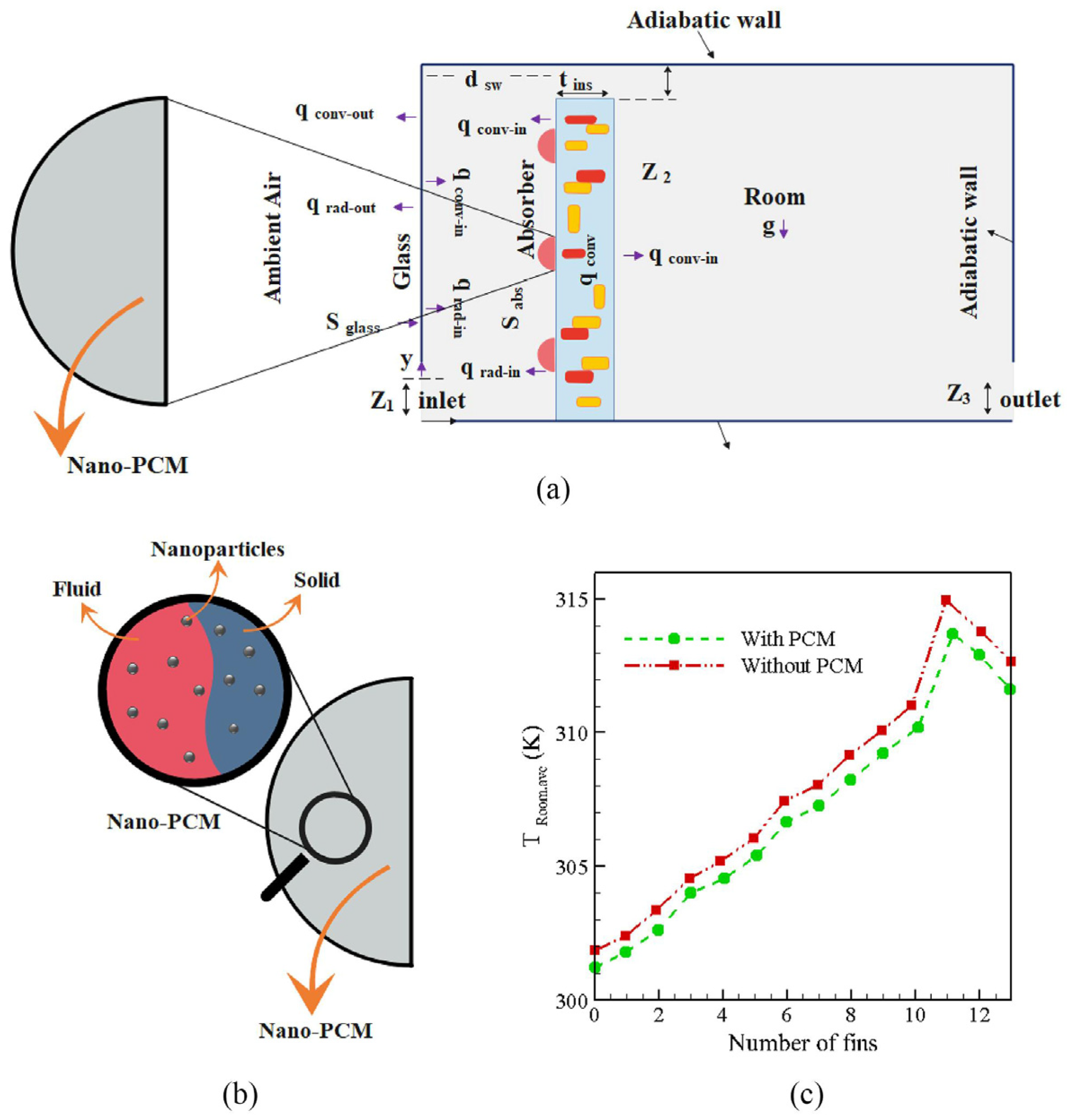
Under mild winter climate conditions, Liang et al. [
97] conducted a numerical simulation study of a TW integrating semicircular fins and nano-phase change materials (nano-PCMs) using ANSYS FLUENT software (
Figure 17). The results showed that increasing the number of fins can significantly increase the average indoor temperature (TRA), but the temperature decreased instead after more than 11 fins; the addition of PCM could reduce the indoor temperature during the daytime and, at the same time, improve the overall heating efficiency by storing energy to realize nighttime heating.
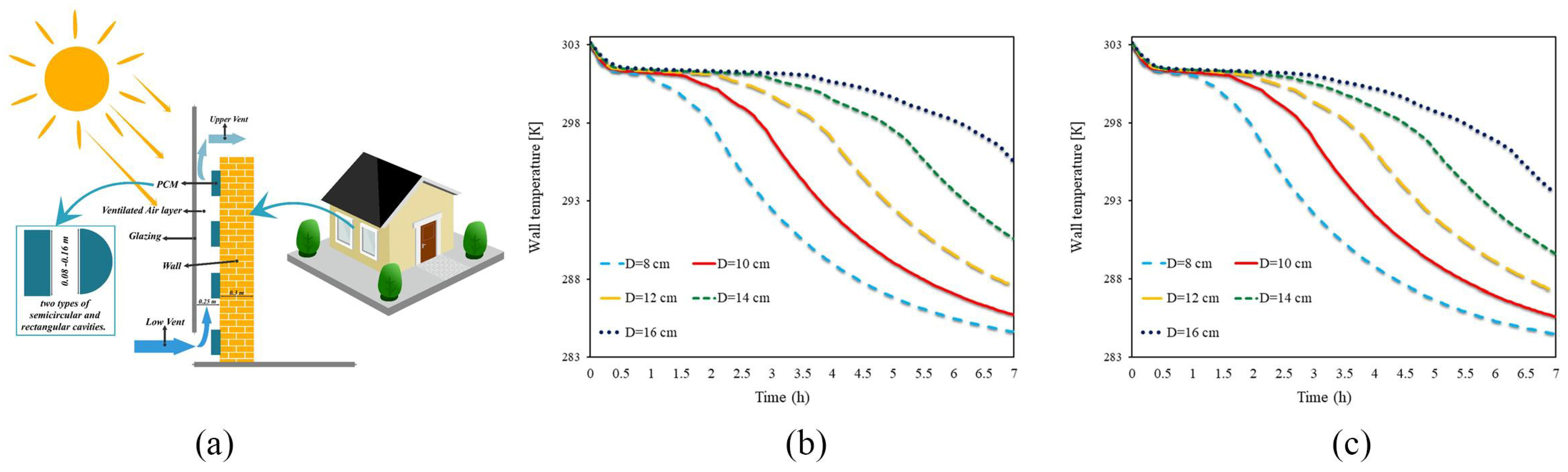
Mustafa et al. [
98] investigated the effect of rectangular (REC) and semicircular (SEC) PCM cavities installed in a TW on the performance of the wall through numerical simulations (
Figure 18). The study used COMSOL software to analyze the effect of different sizes of barriers on Trombe wall temperature (TWL), exhaust air temperature (TAR), and the melting rate of PCM in the absence of solar radiation. The results showed that the use of semicircular cavities significantly increased the TWL compared to rectangular cavities, with a maximum increase of 2.1 °C at an aspect ratio of 16 cm. In addition, semicircular cavities prolonged the freezing time of PCM, especially in larger-sized cavities, with an increase in freezing time of 15 min compared to rectangular cavities. This suggested that semicircular cavities offered significant advantages in improving the thermal efficiency and thermal storage capacity of TWs, especially at night or in conditions without solar radiation, to more effectively maintain the wall temperature and prolong the heat release time.
It appears that the shape of PCM-TWs or cavities is still predominantly rectangular. However, there have been studies gradually focusing on semicircular structures. Further optimization of the shape is expected to lead to a significant improvement in the performance of PCM-TWs.
4.2. PCM Selection
Table 4 lists studies on the thermophysical properties, layout selection, and other materials integration of relevant PCMs to aid in the selection of the most suitable PCM for specific application requirements.
4.2.1. PCM Properties and Configuration
Selecting PCMs for different climate zones and building needs are based on the properties of the PCM, such as melting point, heat of fusion, and thermal conductivity, as well as the thickness of the PCM. In solar thermal utilization systems, the phase change temperature of the PCM usually needs to be adapted to the solar radiation intensity and indoor temperature requirements. For instance, the use of a tuned PCM-TW system with a lower phase change temperature allows buildings in the cold northern temperate zone to absorb more solar heat production during the day to reduce anthropogenic heating [
126]. Whereas the PCM should be positioned to ensure that it can maximize the absorption and release of heat energy, the proper thickness can optimize the heat transfer efficiency and heat storage capacity. PCM placement in appropriate locations on the wall (e.g., near air passages or on the wall surface) can dramatically improve the heat transfer efficiency. At the same time, optimizing the thickness of the PCM can reduce the heat transfer time while ensuring thermal storage capacity [
127].
Zhou et al. [
88] explored the energy efficiency performance of single- and double-layer PCM-TW buildings under different climatic conditions. The results showed that for single-layer PCM-TWs, the lowest annual energy consumption was achieved when the PCM with a phase change temperature of 22 °C was placed on the interior surface and combined with a ventilation strategy. In the double-layer PCM-TW, the optimal PCM phase change temperature combinations were different for different climatic regions: the optimal combination for cold regions (Changchun) was PCM22+28, and the optimal combination for hot-summer/warm-winter regions (Haikou) was PCM25+28 (
Figure 19).
In a mixed dry climate, Zhou et al. [
112] simulated 10 different scenarios through a validated CFD model to study the effects of the melting point of the PCM layer on the comprehensive performance of the TW (
Table 5). For summer operations, a 38 °C phase transition temperature PCM configuration demonstrated 48.9% peak load reduction, 76% thermal fluctuation suppression, and 14.4% cooling load decrease, with 4.5 h/6.1 h delays for peak/minimum temperatures. Comparatively, winter conditions with 30 °C PCM achieved 38.2% heating reduction, 28.5% fluctuation control, and 4.0 h/1.7 h temperature lags for minimum/maximum values, respectively.
Moreover, dynamic PCM and insulating PCM are two different types of PCMs; however, an effective combination of the two can result in an excellent improvement in the thermal performance of the wall. In this system, there is a significant temperature difference between the inner and outer surfaces of the glass when solar energy is input, which is mainly due to the sensible heat storage effect of dynamic PCM. In contrast, the temperature difference between the middle and lower parts of the glass is relatively small thanks to the effect of the intrinsic air flow rate in different parts and the different responses to solar irradiation in different regions. However, the system will eventually be in a steady state rather than a constant drop or rise in temperature. This is mainly due to the insulating PCM, which gives the system a gentler temperature gradient. Meanwhile, the combined application of the two types of PCMs can also effectively suppress the vertical thermal delamination phenomenon.
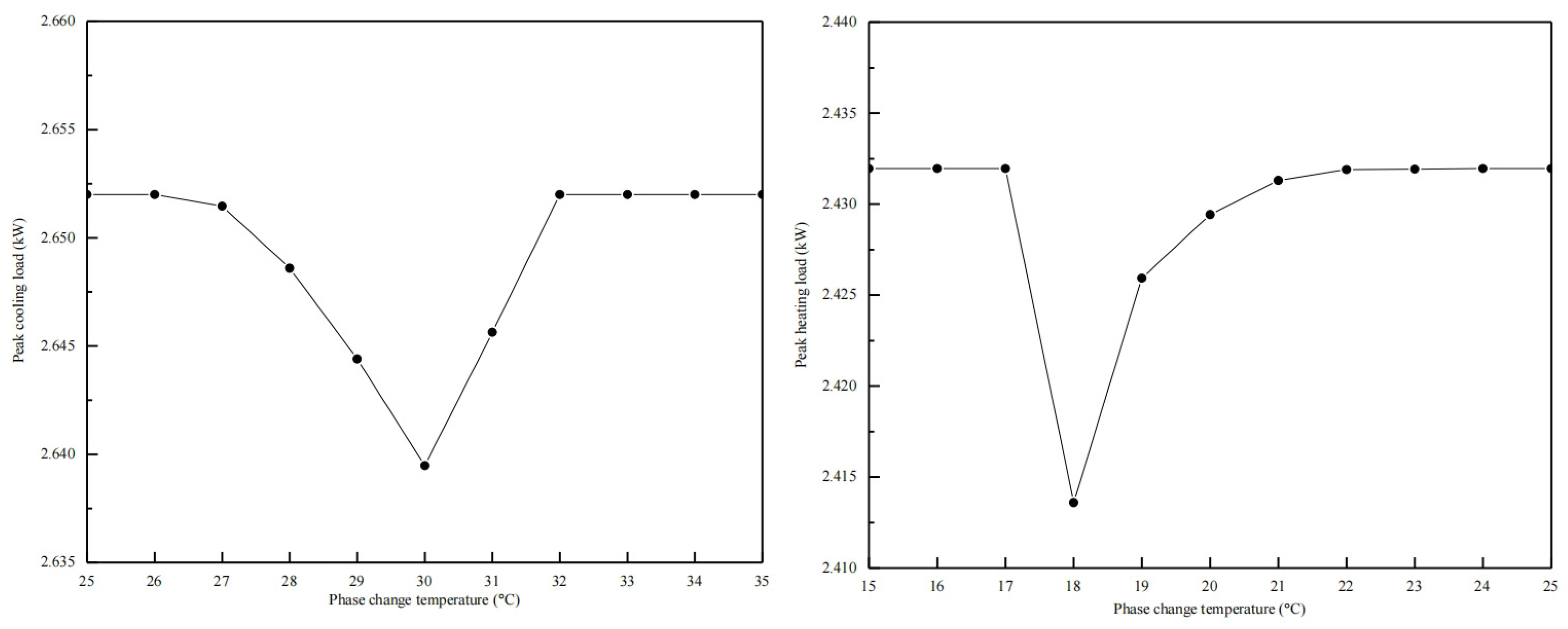
Li et al. [
113] investigated the PCM phase change temperature and analyzed the summer and winter performance of a double-layer PCM-TW in Wuhan using numerical simulation. The study determined the optimal phase transition temperature of 30 °C for the exterior PCM in summer and 18 °C for the interior PCM in winter (
Figure 20).
A novel all-weather PCM thermo-catalytic purified Trombe wall (PCM&TC-Trombe wall) was proposed and experimentally and numerically investigated by Li et al. [
114]. It was found that for different PCM materials, the study proposed the optimal PCM layer thickness for optimal energy saving and purification. To be specific, the thickness of the PCM layer should be 1 cm when butyl palmitate was used, 6 cm when octadecane was used, and 6 cm when paraffin was used.
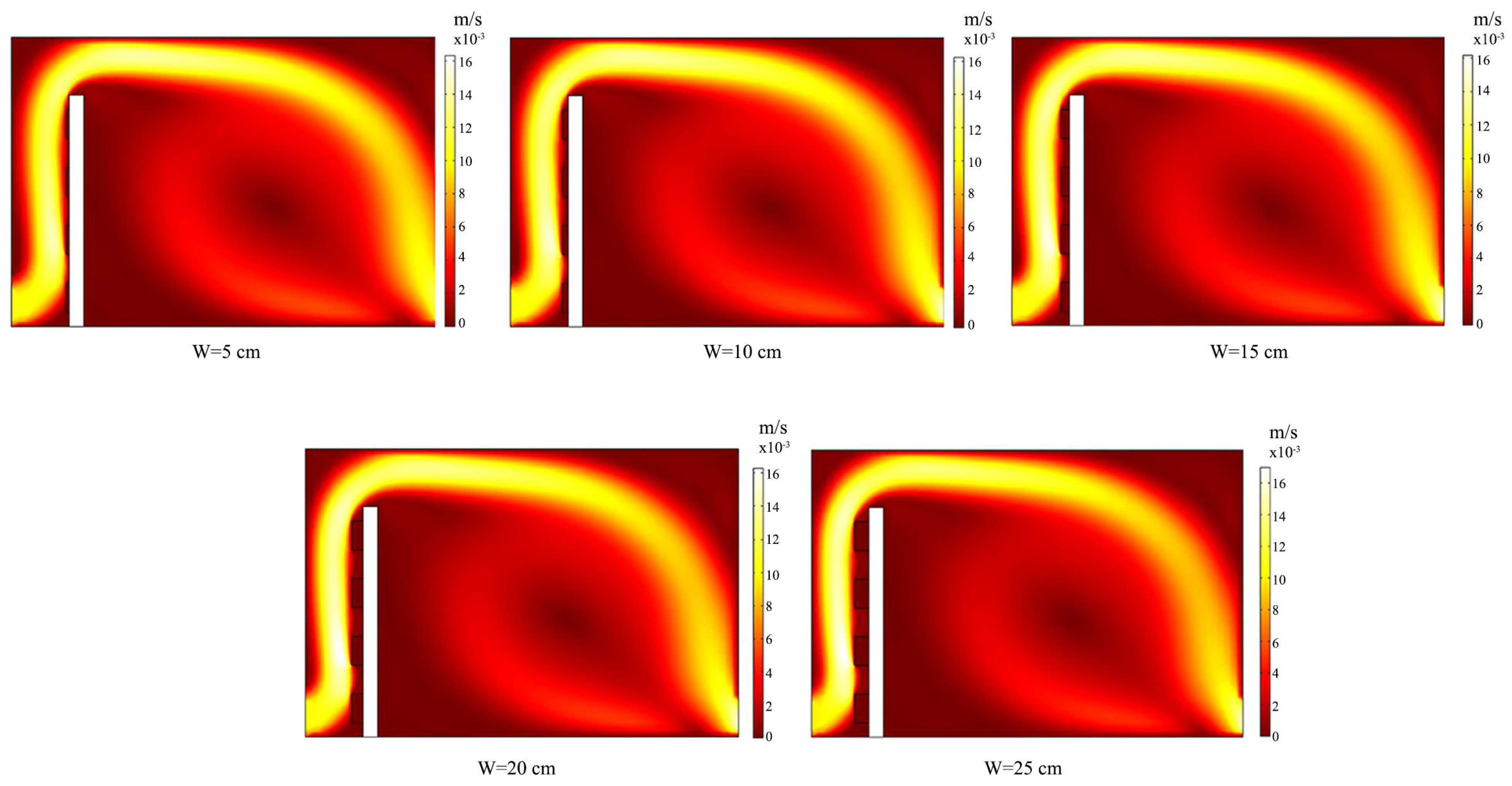
In the study by Almojil et al. [
115], a TW was fitted with four PCM blades of different thicknesses (5–25 cm) to assess their effect on fuel consumption and CO
2 emissions during different months (
Figure 21). The results showed that increasing the thickness of the blades significantly increased the wall temperature at night and prolonged the heating time of the wall. The TW with 25 cm thick blades was still able to maintain high temperatures at night and the melted PCM stayed on the wall for more than 8 h. In addition, this PCM-TW reduced fuel consumption and CO
2 emissions during the winter months, especially during the warmer months.
Tlili and Alharbi [
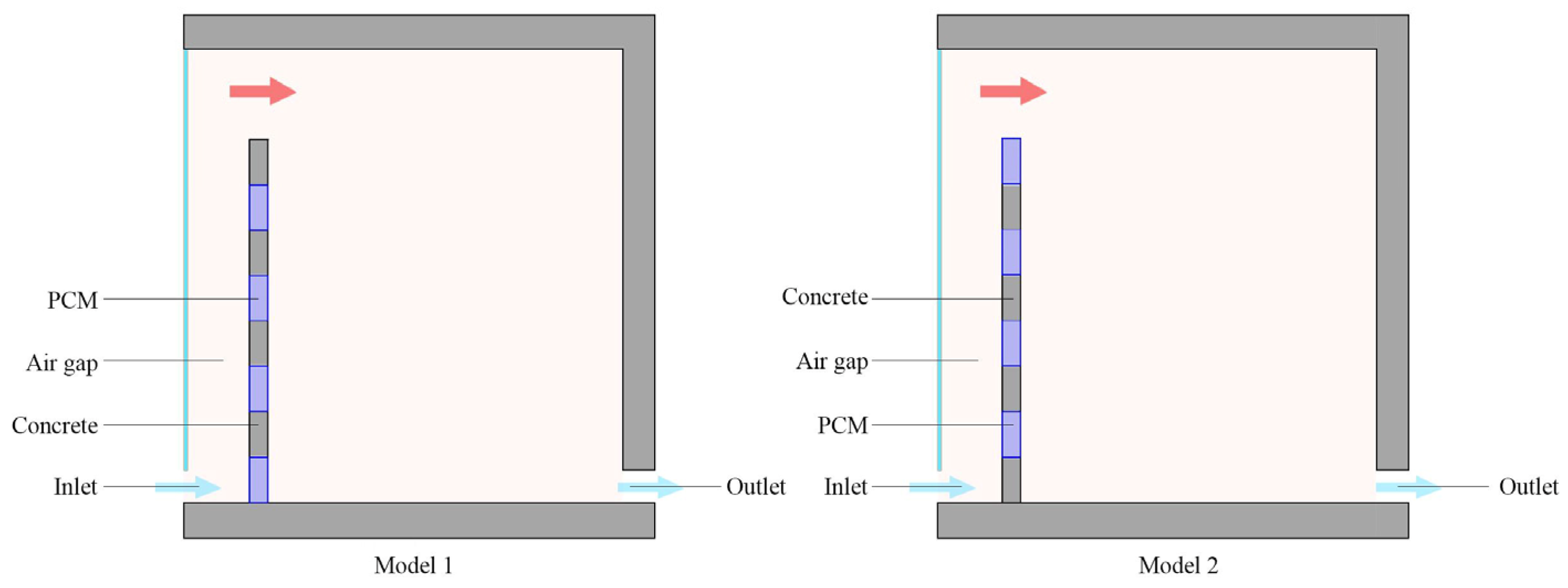
116] explored the effect of two different arrangements of PCM blocks and cement blocks on the thermal performance of the wall (
Figure 22). In Model 1, the PCM and cement blocks were arranged alternately, with the first block from the bottom being a PCM block; this arrangement allowed the PCM block to be in direct contact with the air inlet, allowing for faster heat release and maintenance of the room’s temperature. In Model 2, the first block from the bottom was a cement block followed by a PCM block, an arrangement that allowed the PCM block to be located slightly higher and able to maintain a higher temperature for a longer period, thus releasing heat more efficiently at night. The temperature of the blocks in front of the entrance decreased earlier under both models. The upper molten PCM froze more slowly and had a slower temperature drop due to contact with hotter air. The results showed that Model 2 performed better in maintaining room temperature at night and that increasing the inlet and outlet sizes could further optimize airflow and heat exchange efficiency, allowing the PCM to solidify and release heat faster.
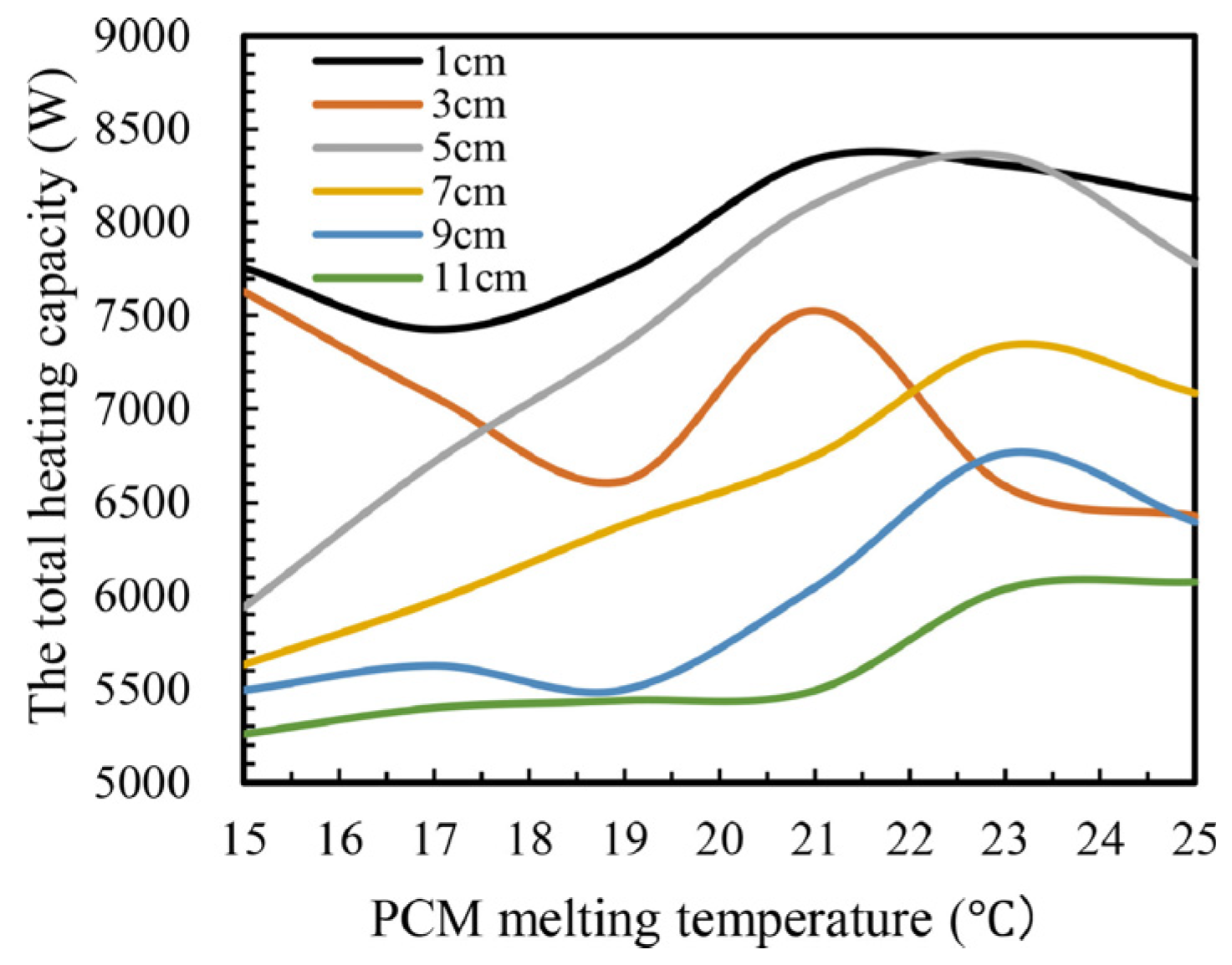
Duan et al. [
117] conducted a detailed heating performance analysis of a TW with integrated PCM by the state-space method for three cities, Beijing, Jiuquan, and Shenyang, which were in different solar energy distribution areas in China. It was found that the optimal PCM melting temperatures and layer thickness varied from city to city, with the optimal combinations of 23 °C and 5 cm for Beijing and Jiuquan (
Figure 23), and 21 °C and 5 cm for Shenyang. In addition, as shown in
Table 6, the study revealed the effective thickness of the PCMs for different melting temperatures, indicating that the effective thickness should be equal to or less than the design thickness to ensure that PCMs could fully realize the phase change energy storage and energy release processes.
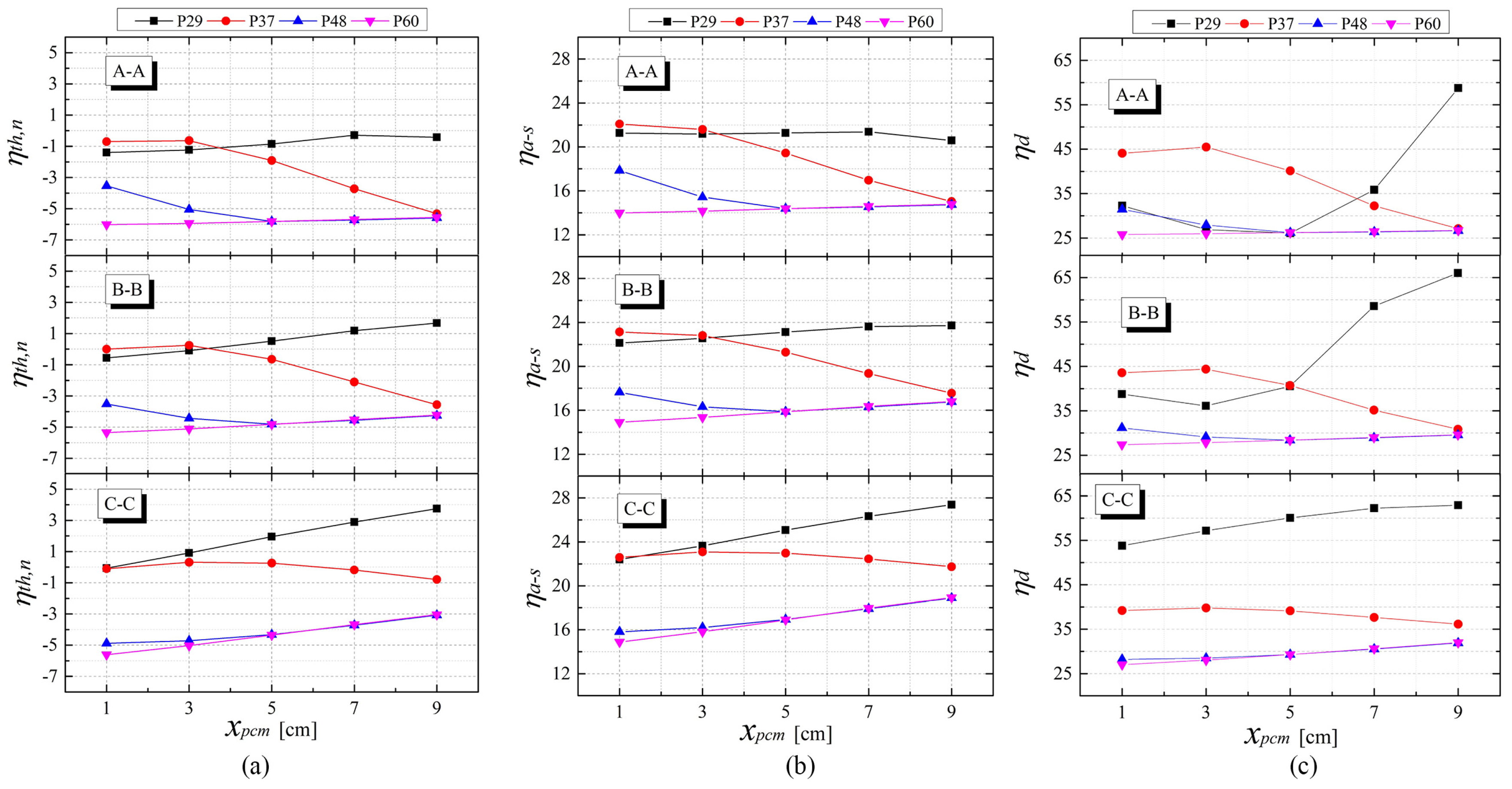
Vázquez-Beltrán et al. [
118] explored in detail the effects of the melting point, location, and wall material of PCMs on the thermal performance of the system. It was found that low melting point PCMs (e.g., 29 °C) were able to significantly improve the system’s nighttime thermal efficiency (up to 3.75%) and achieve the highest energy storage and release efficiencies (27.66% and 67.60%, respectively) when they were in a concrete wall and away from heat-absorbing surfaces. In contrast, high melting point PCMs (e.g., 48 °C and 60 °C) showed the worst thermal performance due to their inability to fully melt (
Figure 24). In addition, the combination of wall materials had a significant effect on thermal performance, with the combination of concrete and adobe (C-A) performing optimally in terms of energy storage and release, while the concrete wall (C-C) performed best in terms of nighttime thermal efficiency.
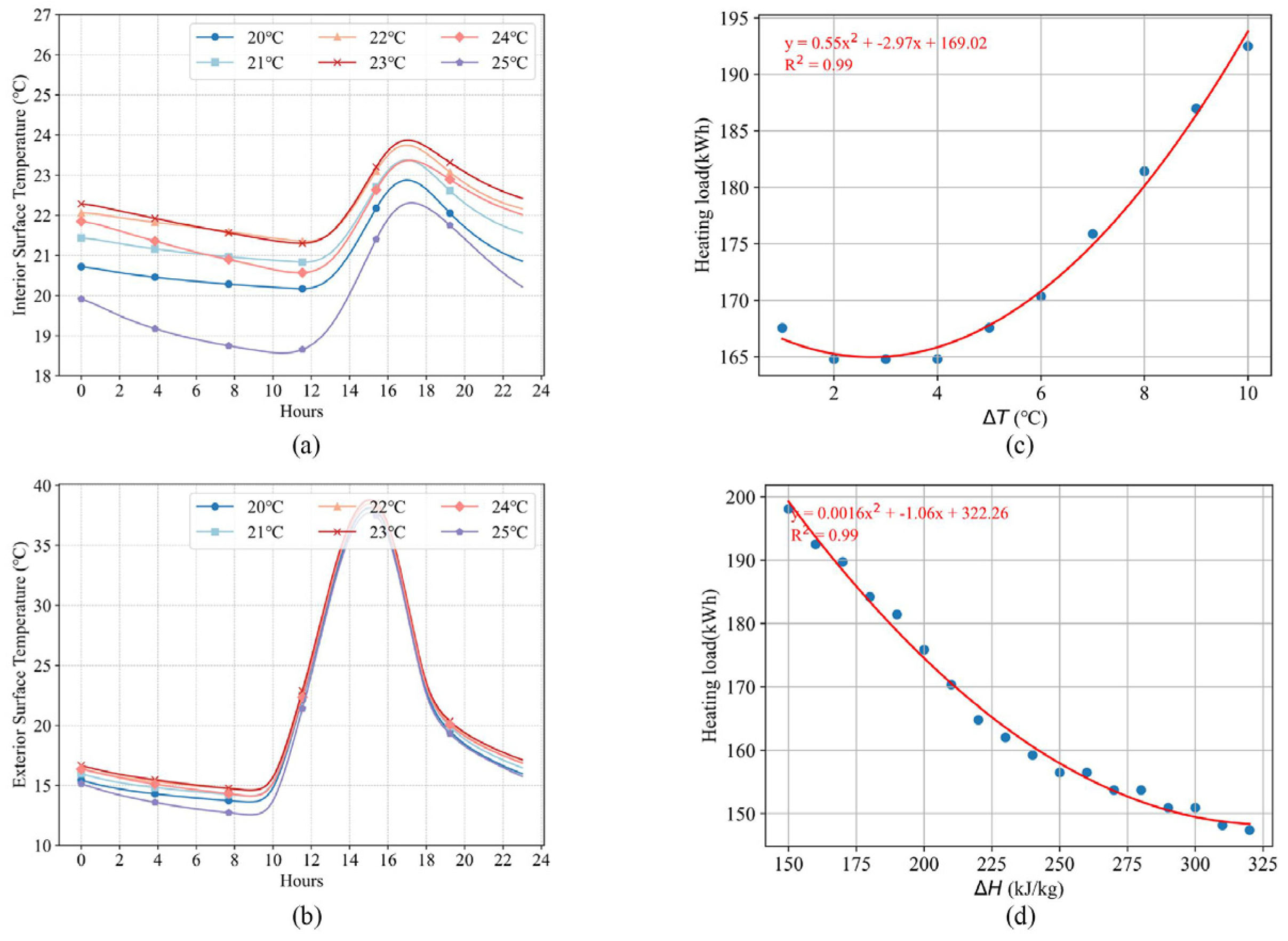
Xiao et al. [
93] determined the optimal values of phase change temperature (Tf), phase change temperature range (ΔT), and latent heat (ΔH) by genetic algorithm. The optimal phase change temperature was 23 °C and the optimal value of the phase change temperature range was 2 °C, which ensured that the PCM could undergo phase change in the appropriate temperature range and avoided the problem of rapid heat release due to too small a range or slow response due to too large a range. The optimum value for latent heat was 220,000 J/kg (
Figure 25). Higher latent heat values significantly increased the thermal storage capacity of the PCM, thereby reducing the heating load of the system, but the benefits diminished as the latent heat value increased further and might result in increased material cost and thickness, requiring a trade-off between performance and cost.
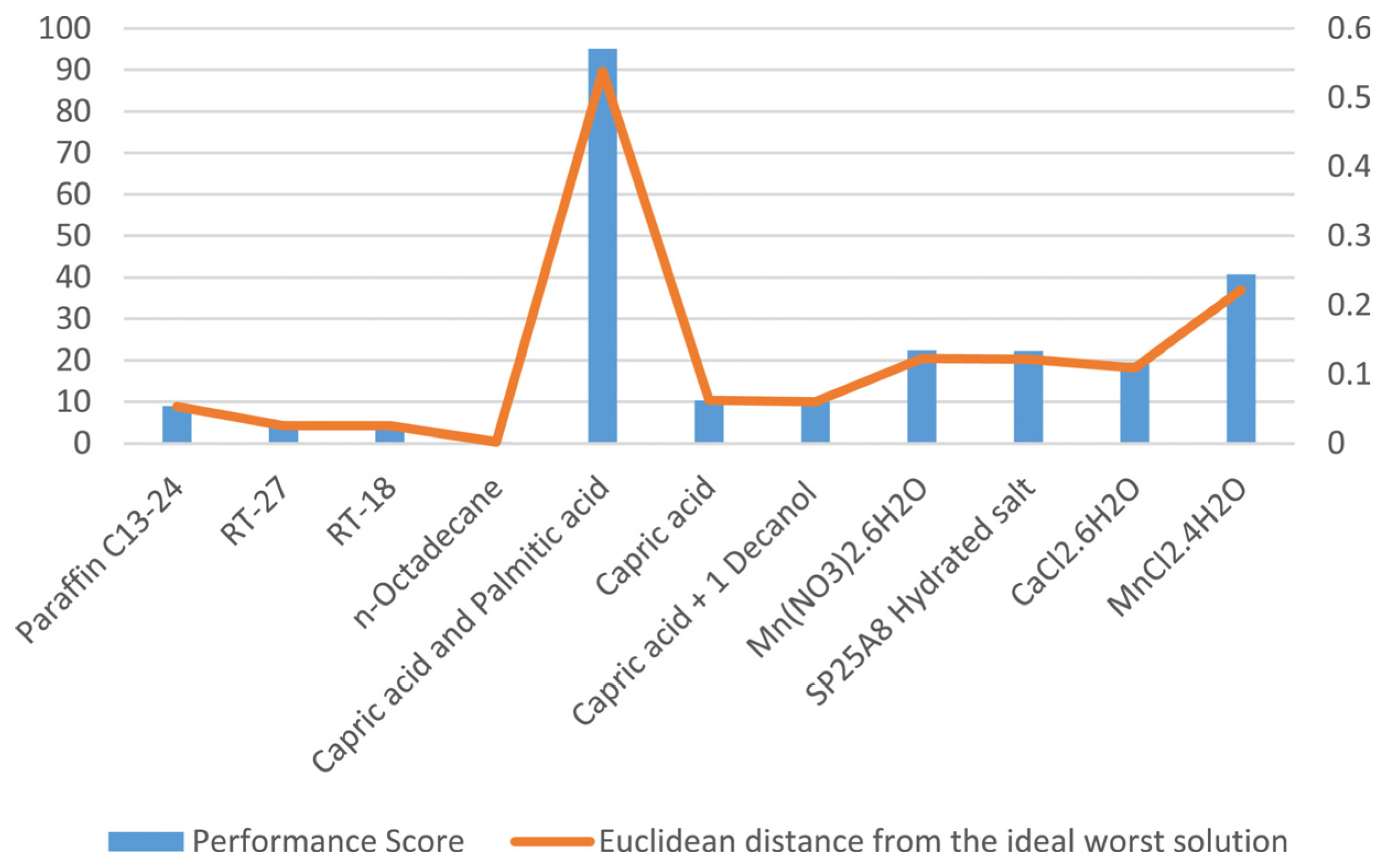
Oluah et al. [
119] evaluated and ranked 11 common PCMs in the range of 18 °C to 28 °C based on four criteria: heat of fusion, thermal conductivity, density, and cost. The entropy weight method was used to determine the performance weights of each PCM, and then the TOPSIS method was used to rank PCMs according to these weights. Ultimately, the study concluded that a eutectic mixture of capric acid and palmitic acid was the best choice in TW applications, as it received the highest performance scores (
Figure 26).
In summary, a phase change parameter matching system should be constructed to suit both cold and warm climates: low phase change temperature materials should be selected for cold regions to enhance daytime heat storage, while high phase change temperature materials should be prioritized for insulation in warm regions. By leveraging PCM-TW’s light-to-heat conversion and multi-objective optimization algorithms, a dynamic balance between seasonal thermal comfort and energy consumption can be achieved, comprehensively improving the system’s climate sensitivity and alleviating existing climate sensitivity issues. Furthermore, good encapsulation technology enhances leak resistance and thermal cycling stability.
4.2.2. Integration with Other Materials
Integrating PCMs with other materials is an important strategy to enhance the performance of PCM-TW systems. More efficient thermal management can be achieved by combining PCMs with building materials, thermal conductive materials, insulation materials, etc. For example, combining a PCM with high thermal conductivity materials (e.g., metals, carbon nanotubes, etc.) can significantly improve heat transfer efficiency, while combining with insulation materials can reduce heat loss and improve the thermal stability of the system. In addition, optimizing the configuration of PCM with other materials can further improve the overall performance of the system to excel in different application scenarios.
Both conventional insulation and PCMs can be used in building walls to achieve energy efficiency goals, but they each have their characteristics in terms of their thermophysical properties and the way they transfer heat. Insulation materials achieve energy savings by increasing thermal resistance and reducing heat flow through their low thermal conductivity [
128,
129,
130]. In contrast, PCMs absorb or release heat through the process of phase change, effectively controlling the flow of heat to and from the room to achieve energy savings [
131,
132]. The application of thermal insulation has been widely adopted in numerous studies on PCM-TWs [
133]. Combining insulation with PCMs can save energy more efficiently than either technology alone [
134].
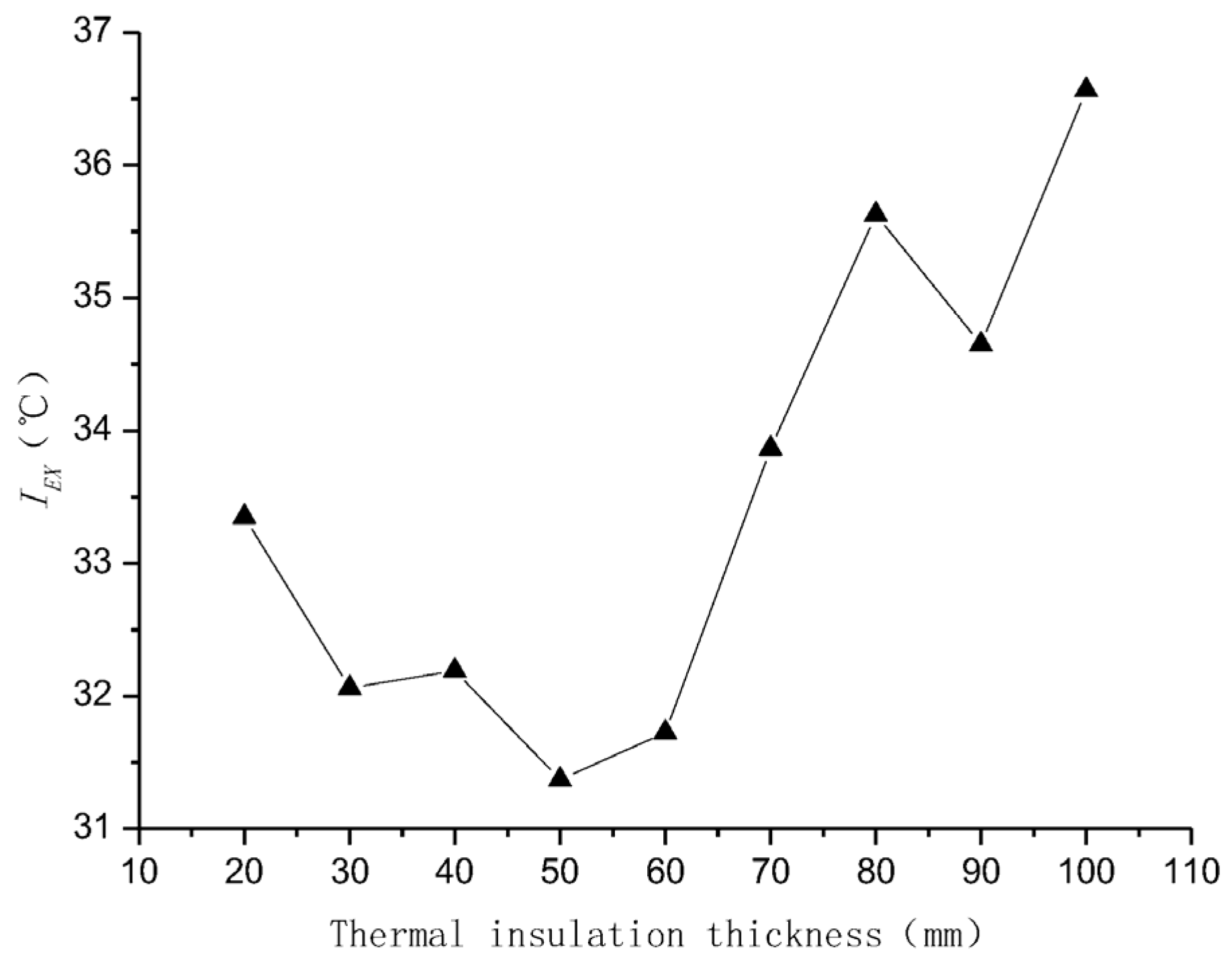
Cheng et al. [
120] determined that the thickness of the insulation layer ranged from 50 to 100 mm, and there was an optimal value for the thickness of the insulation layer (e.g., 50 mm) and, when the thickness of the insulation layer exceeded this value, the indoor temperature fluctuation was exacerbated. In addition, the integration of PCM processed into panels and laminated inside the walls of lightweight steel structures ensured the thermal storage function of the PCM while taking advantage of the prefabrication of lightweight steel structures (
Figure 27).
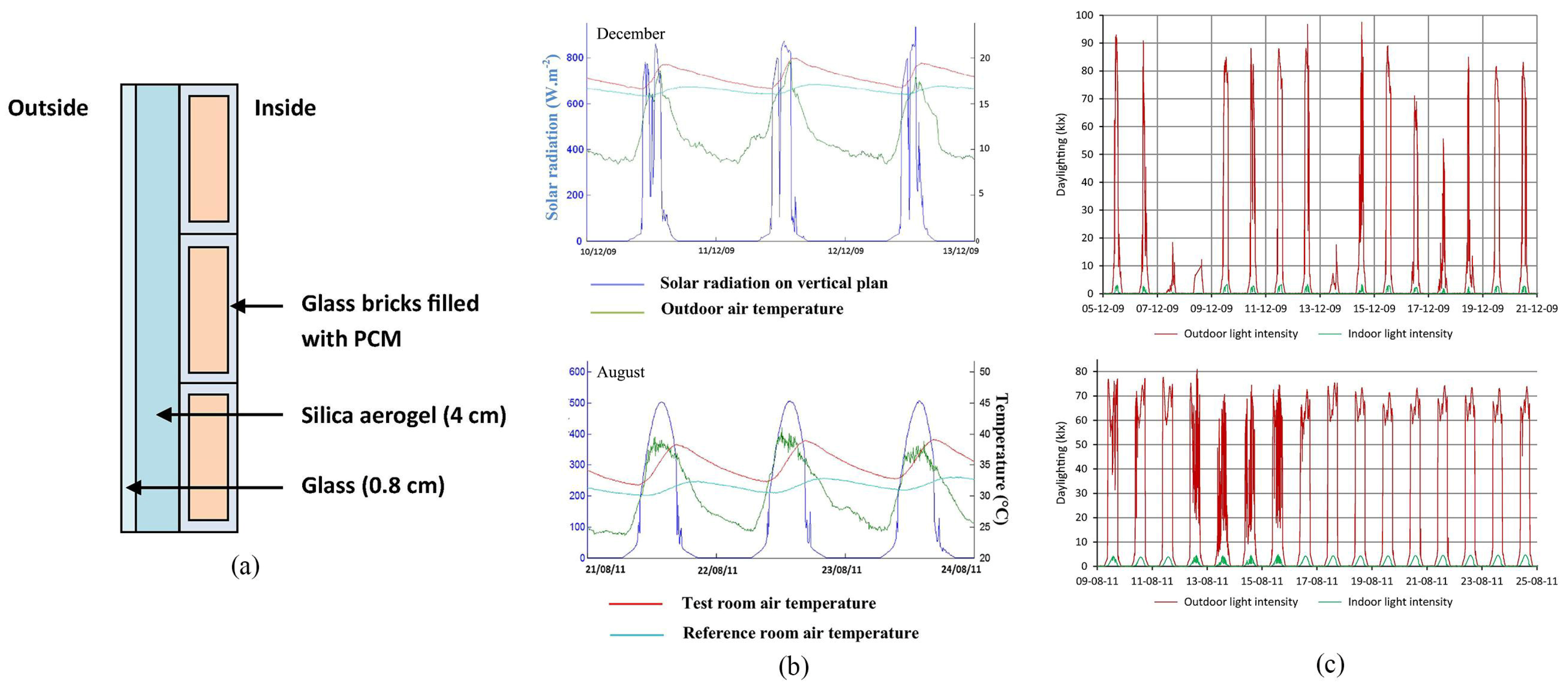
Aerogel, a material with extremely high porosity and low density, has been widely studied and applied for its excellent thermal insulation properties. Berthou et al. [
121] investigated a novel passive solar wall composed of a super-insulating silica aerogel layer, referred to as the Transparent Insulation Material (TIM) layer, and a PCM layer, designed for super-insulation, heat storage, and light harvesting. The TIM-PCM wall featured an external aerogel layer for thermal insulation and light transmission and an internal glass block filled with PCM (
Figure 28). Experimental results showed extremely low heat loss with U-values of 0.59 W m
−1 K
−1 and 0.72 Wm
−1K
−1 when the PCM was in liquid and solid states, respectively. In winter, the wall could maintain indoor temperatures about 9 °C higher than outdoor temperatures and provide up to 500 lux of light, sufficient for spaces like conference rooms. However, it might cause overheating in summer. The study concluded that the TIM-PCM wall performed well in winter and transitional seasons, particularly in cold, sunny climates, but shading and ventilation measures were needed in summer to prevent overheating.
Zheng and Zhou [
122] presented a PCM-TW integrating polyethylene aerogel (PEA) (
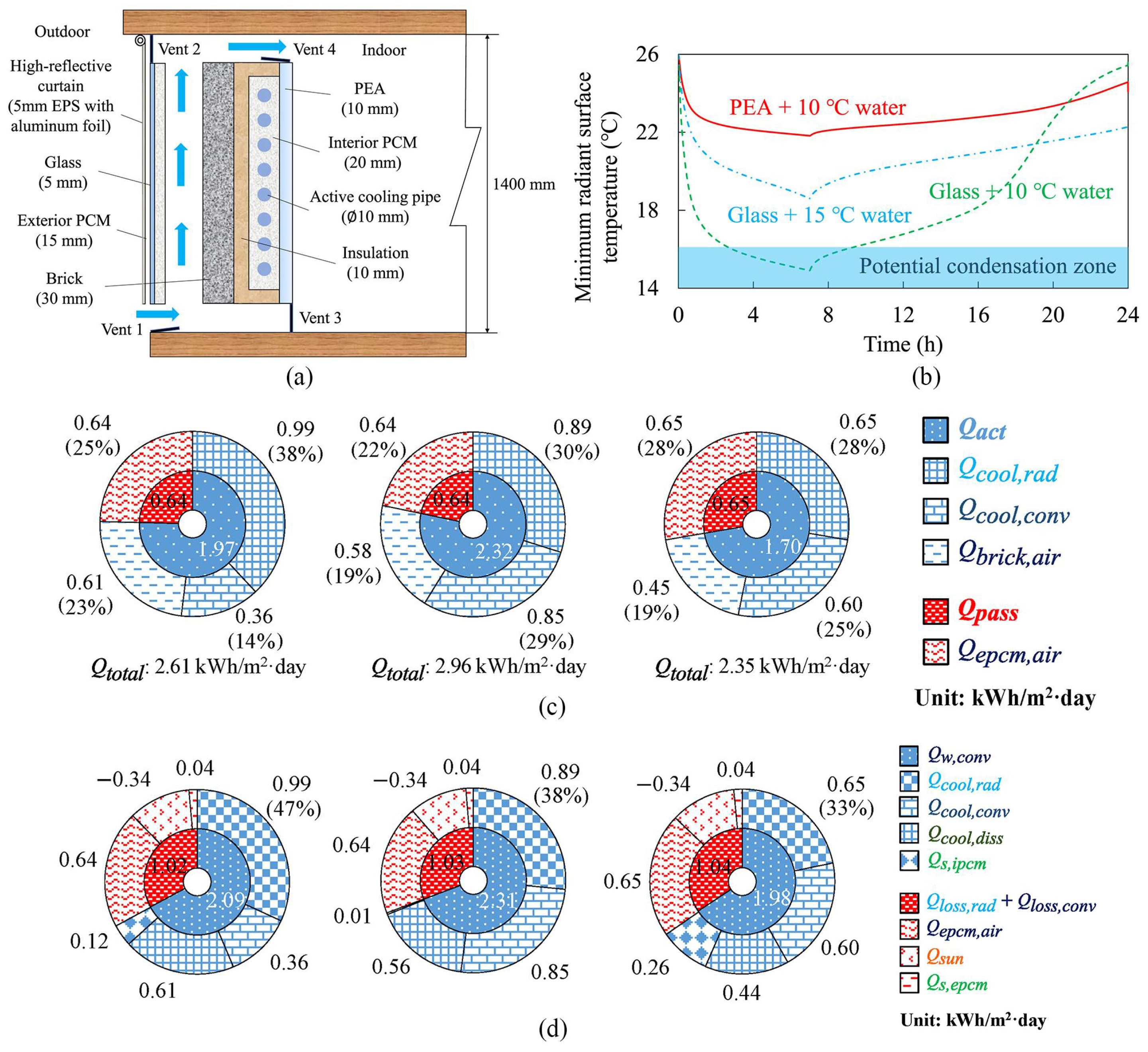
Figure 29). PEA has a high infrared transmittance and very low thermal conductivity (0.0283 W/m·K), which effectively isolated the radiantly cooled surfaces from the indoor environment and reduced the convective cooling energy dissipation. At a cooling water temperature of 10 °C, the PEA layer could keep the surface temperature above the dew point temperature, thus avoiding condensation. Studies have shown that the radiant cooling capacity of PEA-based TWs was significantly higher than that of conventional glass-based TWs, with an increase in the radiant cooling ratio from 33% to 47%, and the surface temperature was maintained above 21 °C. In addition, PEA’s super-insulation reduced cooling energy dissipation, improving the overall cooling efficiency and flexibility of the system.
Sheikholeslami and Al-Hussein [
123] prepared nano-enhanced PCM (NEPCM) by incorporating alumina nanoparticles into PCM (RT18HC). The incorporation of nanoparticles significantly increased the thermal conductivity of the PCM, thus accelerating the heat transfer process and increasing the melting rate of the PCM. Sheikholeslami and Al-Hussein [
124] also found that the concentration of nanoparticles was 0.04 (volume fraction) and, at this concentration, the thermal conductivity of the PCM was significantly enhanced while maintaining good flow and processing properties. By increasing the thermal conduction path of the PCM, the nanoparticles enabled the heat to be transferred to the interior of the PCM faster, thus accelerating the melting process of the PCM and improving the thermal storage efficiency of the system.
Li et al. [
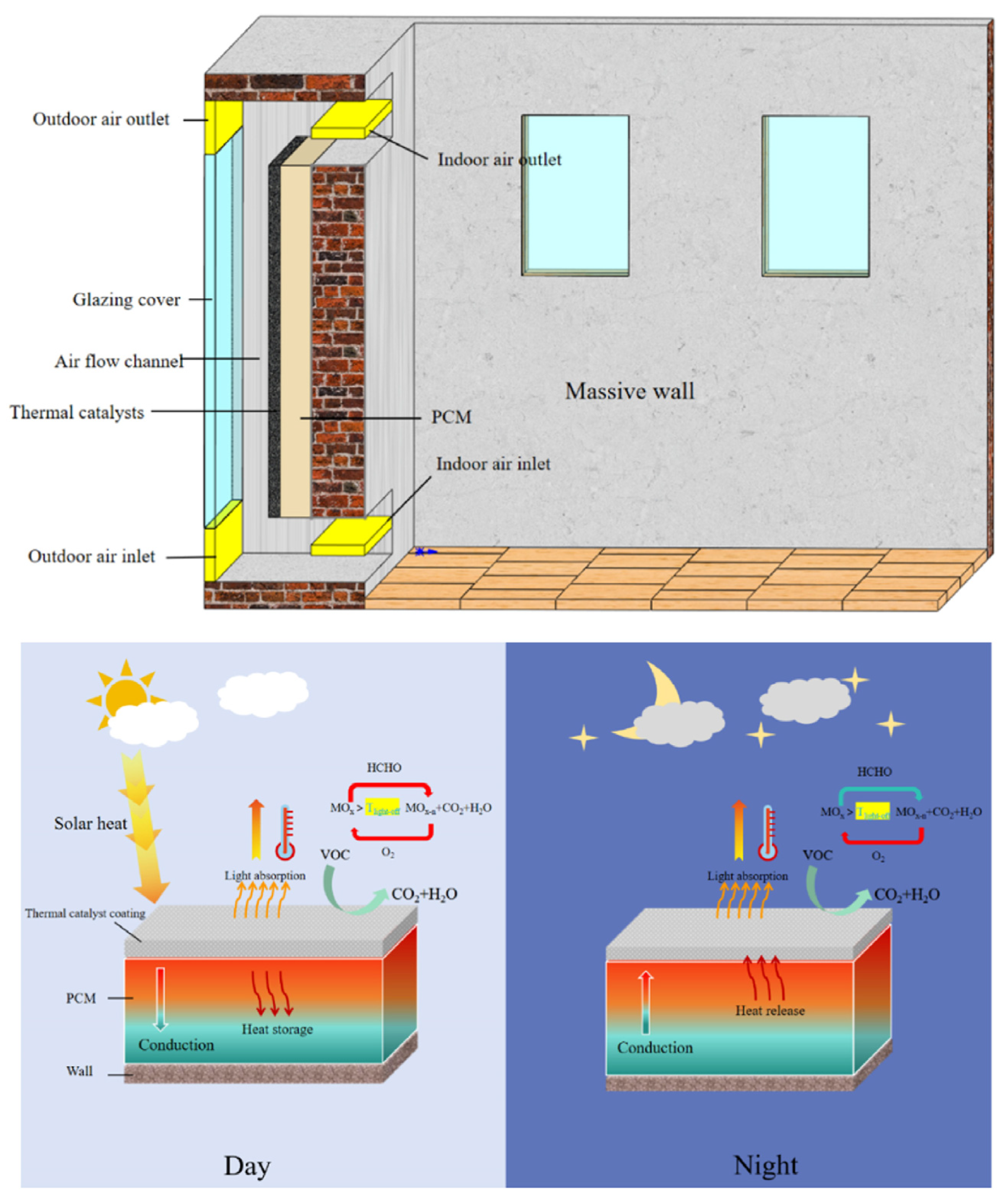
114] proposed a PCM&TC-Trombe wall, a system that combined PCM and thermal catalyst to enable all-weather formaldehyde removal and space heating in winter (
Figure 30). The experimental results showed that the thermal efficiency of the system was 50.8% and the average formaldehyde removal rate was 41.6%. The system could effectively purify and heat indoor air in winter with good thermal efficiency and formaldehyde removal performance.
Wu et al. [
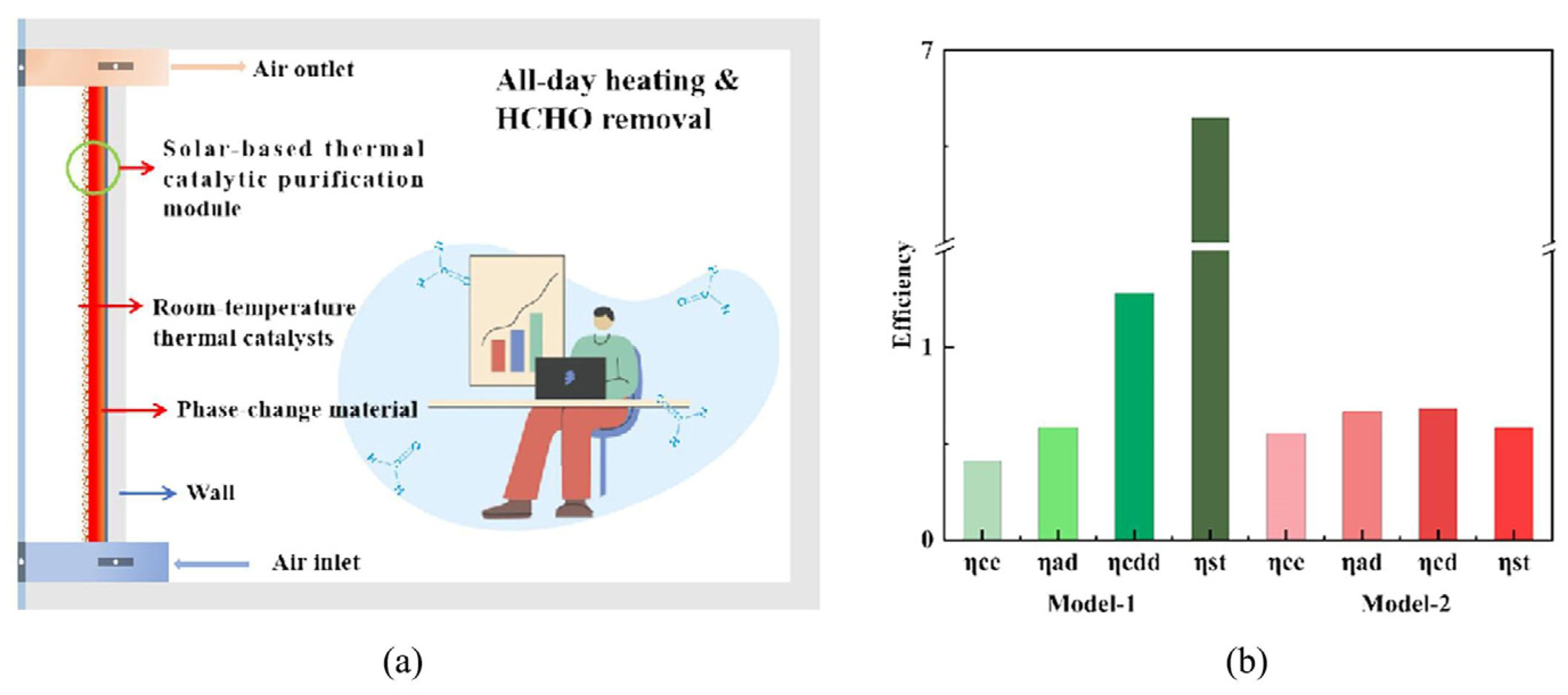
125] proposed a solar energy-based thermo-catalytic purification module (TCPM) integrated with a Trombe wall (TCPM-T-Wall), which enabled all-weather indoor heating and air purification by combining PCM and room temperature thermo-catalytic technology (
Figure 31). The system was designed with two modes of operation: Model-1 (charging during the day and discharging at night) for buildings that require all-day purification, and Model-2 (charging during the day and discharging at night) for residential buildings that were unoccupied during the day. The results showed that TCPM-T-Wall had a heat absorption efficiency of 40.85%, a heat release efficiency of 58.08%, and a purification enhancement coefficient of 128.06% under Model-1 while, under Model-2, there was a significant increase in the release of clean air at night and a purification enhancement coefficient of 68.25%.
Overall, the materials combined with PCM can be roughly divided into two categories from the point of view of the role of materials. The first category is materials used to improve thermal insulation. The second category is materials used to enhance the thermal conductivity and energy storage performance of PCM. Additionally, under the background of increasing requirements for indoor environmental quality, the combination of PCM-TW and thermal catalysis technology not only realizes efficient thermal management but also effectively cleans indoor air.
4.3. Operating Modes
Table 7 documents the current popular ventilation strategies and inversion strategies to provide a reference for optimizing the operation strategies.
4.3.1. Ventilation Strategies
The optimization of the ventilation strategy of the overall system is the first way to improve the mode of operation of the PCM-TW system. With adjusting the ventilation strategy there is additional energy input, making the energy consumption required significantly lower for the optimization of the indoor temperature. In particular, for buildings where PCM-TW systems are applied, ventilation strategies can reduce cooling and heating even further [
143]. This can be commonly understood as follows: at high temperatures, the phase transition of the PCM disperses the concentrated superheated heat carriers on the surface of the TW, while the ventilation strategy accelerates the dissipation of the heat that has already accumulated in the TW, which results in a much sharper diffusion gradient from outdoor to indoor, i.e., indoor temperatures are much lower than outdoor temperatures, whereas at cold times, the internal ventilation is conducive to the use of solar energy carried by the PCM in the winter months. In the cold season, the internal ventilation is conducive to using the PCM for the heat carried by the solar energy in winter and homogenizes the thermal field of the wall, thus improving the thermal efficiency of the building system and, further, making the PCM-TW an effective insulation layer [
88].
Zhou et al. [
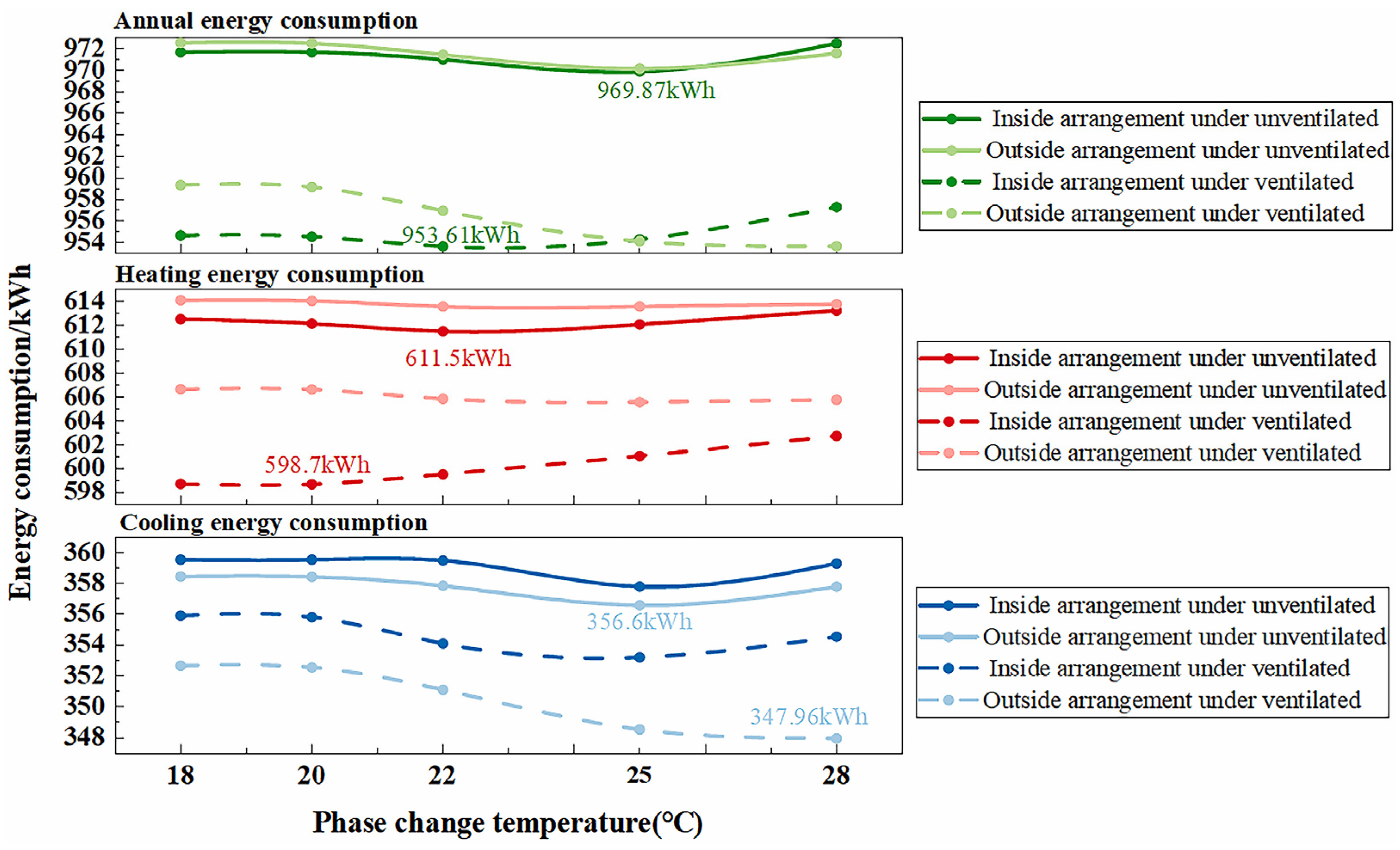
88] investigated the seasonal ventilation strategy of PCM-TWs in winter (10:00–18:00). The internal vents were opened to create an air heat cycle to transfer heat into the room; in summer, the external vents were opened throughout the day to expel heat, while at night (20:00–06:00) the low-temperature air was utilized to naturally ventilate and cool the building. Ventilation of single-layer PCM-TWs reduced annual energy consumption from 971.50 kWh to 955.74 kWh. Heating energy consumption was lower in the PCM layer near the inner surface because more heat was released into the room when the PCM solidified; cooling energy consumption was lower in the PCM layer near the outer surface. Under ventilated conditions, the lowest heating energy consumption (598.7 kWh) was found on the PCM20 floor near the inner surface, and the lowest cooling energy consumption (347.96 kWh) was found on the PCM28 floor near the outer surface. The PCM22 floor adjacent to the inner surface and ventilated had the lowest annual energy consumption of the PCM-TW building (953.61 kWh), which was selected as the best building (
Figure 32).
As previously mentioned, Liu and Zhou [
90,
91] investigated a PCM-TW and an active chilled/hot water piping system designed for buildings in hot summer and cold winter regions. The study proposed three main ventilation methods: nighttime cooling energy storage, nighttime cooling energy release, and daytime natural ventilation. At night, the exterior PCM was cured by cold air to store cooling while, during the day, natural ventilation and a highly reflective coating reduce indoor temperatures by mitigating the effects of solar radiation. The results showed that the annual cooling energy consumption of the PCM-TW system was 20.8% and 18.6% lower than that of the conventional TW system when the indoor air temperatures were 22 °C and 24 °C, respectively; moreover, the study introduced a new metric, ESRE, to evaluate the energy saving potential of the system. In addition, the PCM-TW system had better-predicted turnout (PMV) and predicted dissatisfaction (PPD) than conventional split air conditioning systems [
144].
In addition, as described by Zhou et al. [
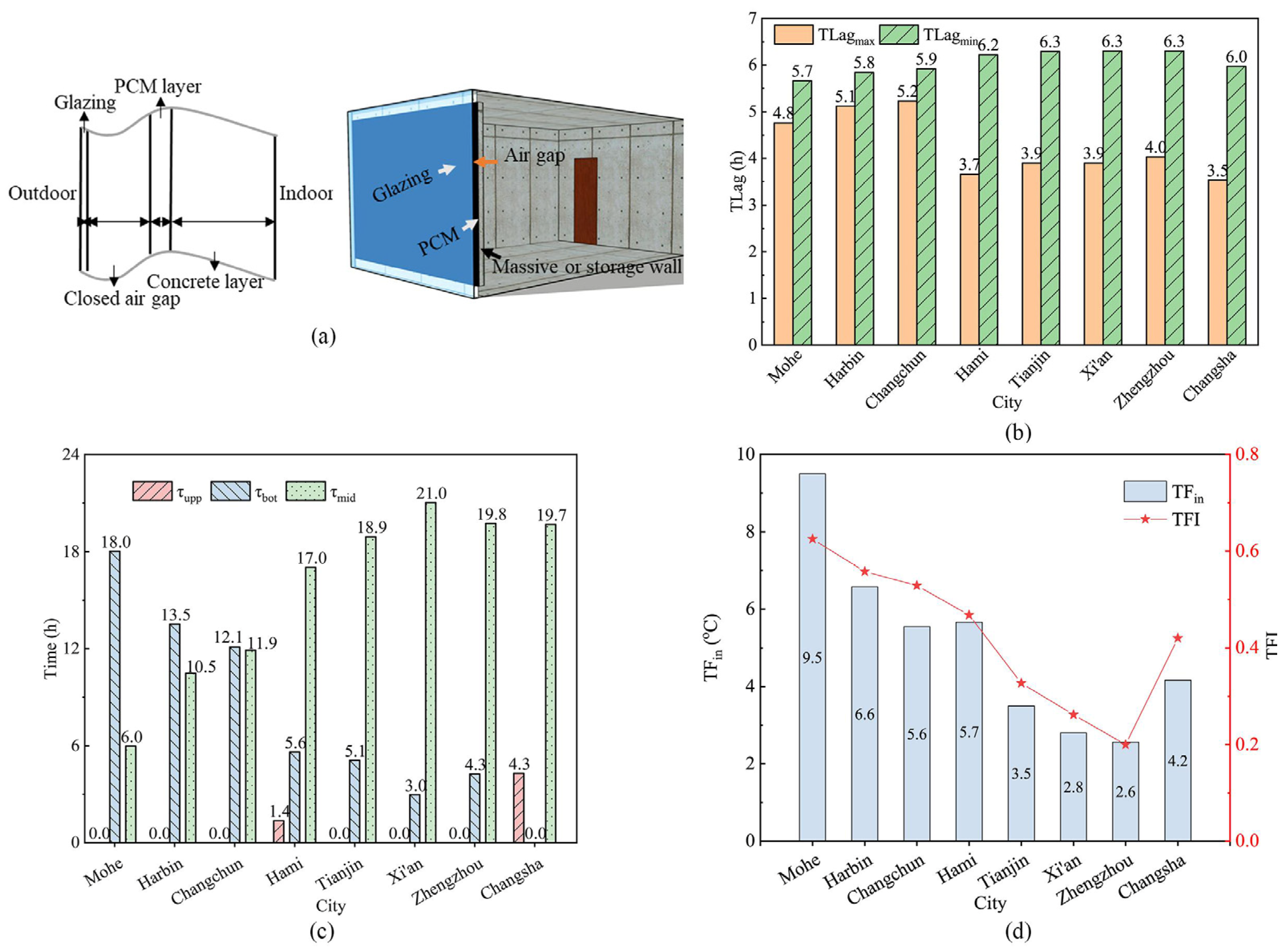
135], the ventilated double-skin wall with a PCM layer (DSWP) was significantly more resistant to a cold winter climate (
Figure 33,
Table 8 and
Table 9). It was found that the eight climate zones investigated could be categorized into three groups. The time lags for maximum and minimum indoor temperatures in buildings with DSWP were 3.5 to 5.2 h and 5.7 to 6.3 h, respectively. The daily heat load intensity and thermal comfort ranged from 1025.3 kJ/m
2 and 4.8 kJ/m
2 and from 6.0 to 21.0 h, respectively. The indoor temperatures fluctuated between 2.6 °C and 9.5 °C. In addition, in the climatic zones studied (excluding the subarctic), cost savings of between 7.76% and 41.33% could be achieved compared to central heating.
Zheng and Zhou [
122] proposed a climate-responsive ventilation mode operation strategy. The strategy consisted of three ventilation modes: full fresh air mode, which introduced outdoor air around the clock and precooled it with an external PCM and was suitable for situations requiring large amounts of fresh air; indoor recirculation mode, which recirculated indoor air and cooled it with a PCM and was suitable for environments that had a low demand for fresh air but needed to maintain a stable temperature inside the room; and hybrid mode, which combined the previous two modes by introducing fresh air at night and early morning, and reducing the entry of hot air during the day, which was suitable for situations that required a balance between fresh air and temperature control.
Xu et al. [
136] studied a dual-channel solar thermal storage wall system with integrated PCM to explore its ventilation strategy in summer and winter. In summer, the solar radiation energy was released through the external channel, and the latent heat was absorbed by PCM to achieve passive cooling. In winter, passive heating was achieved by heating air and PCM through internal channels. The performance of the system was verified by simulation and experiment, and the ventilation strategy and parameters were optimized.
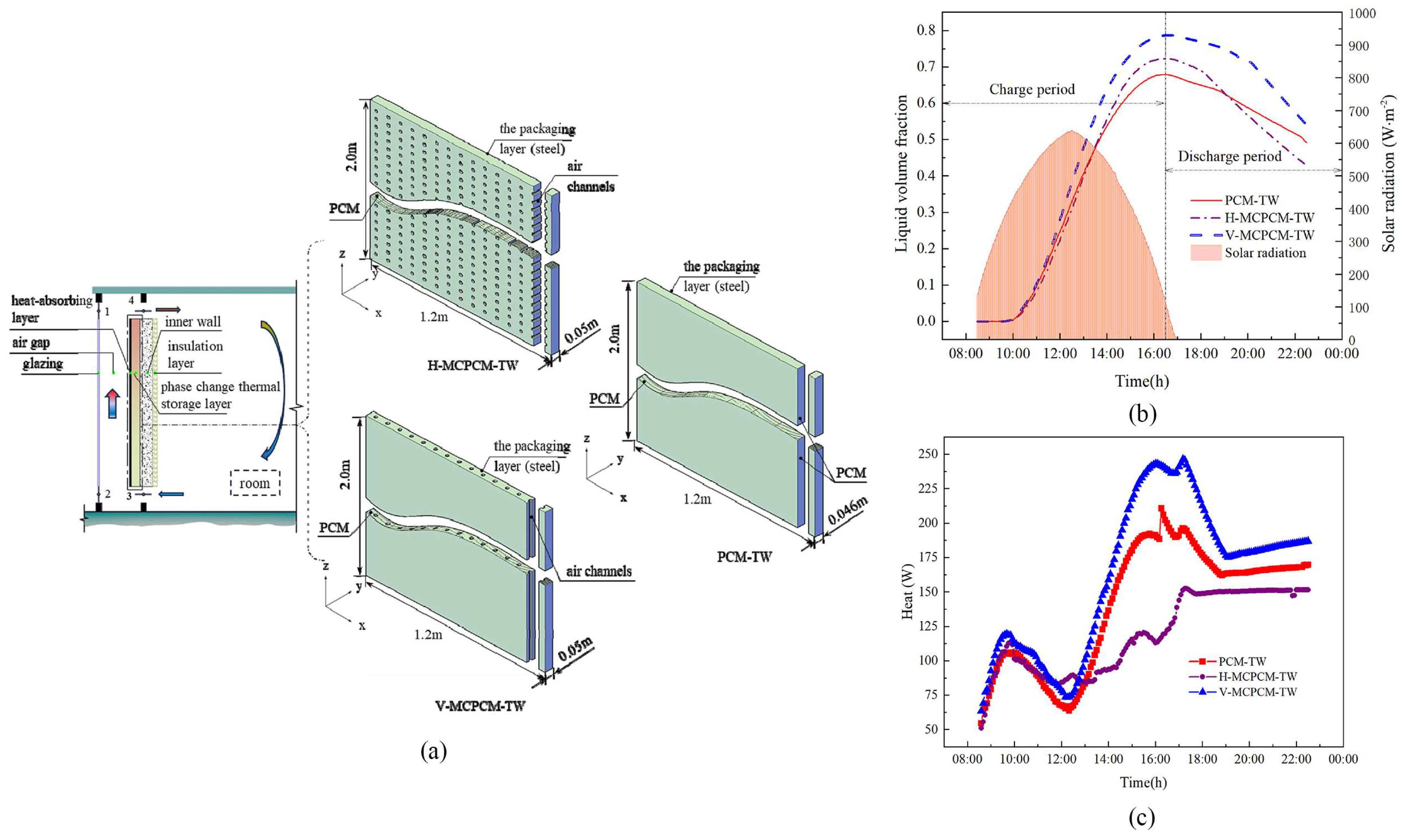
Li et al. [
133] proposed a novel TW with a multi-row channel PCM wallboard (MCPCM-TW) to enhance solar energy utilization efficiency by adding multiple rows of channels in the phase change thermal storage layer (
Figure 34). It was shown that this multi-channel design significantly improved the thermal storage and release capacity of PCM, extended the ventilation time, and increased the cumulative heat supply to the room. In addition, Li et al. investigated the effect of different channel orientations (vertical and horizontal) on the ventilation performance and found that the TW with multiple rows of vertical channels (V-MCPCM-TW) had a higher maximum liquid volume fraction during thermal storage. The maximum liquid volume fraction of V-MCPCM-TW was 16% higher than that of PCM-TW, and the cumulative heat supply was 15.5% higher than that of PCM-TW.
In conclusion, optimizing ventilation strategies can significantly reduce a building’s energy consumption, improve thermal efficiency, and enhance indoor thermal comfort. In winter, the heat load can be reduced by creating an air heat cycle through internal vents to transfer heat into the room while in summer, the cooling load can be reduced by removing heat through external vents. In addition, strategies such as cooling energy storage at night and natural ventilation during the day further enhance the energy saving potential of the system. It was also found that the multi-row access design, different access orientations, and multiple modes of operation of the dynamic Trombe wall all played a key role in optimizing the performance of the PCM-TW system.
4.3.2. Dynamic Flip Strategies
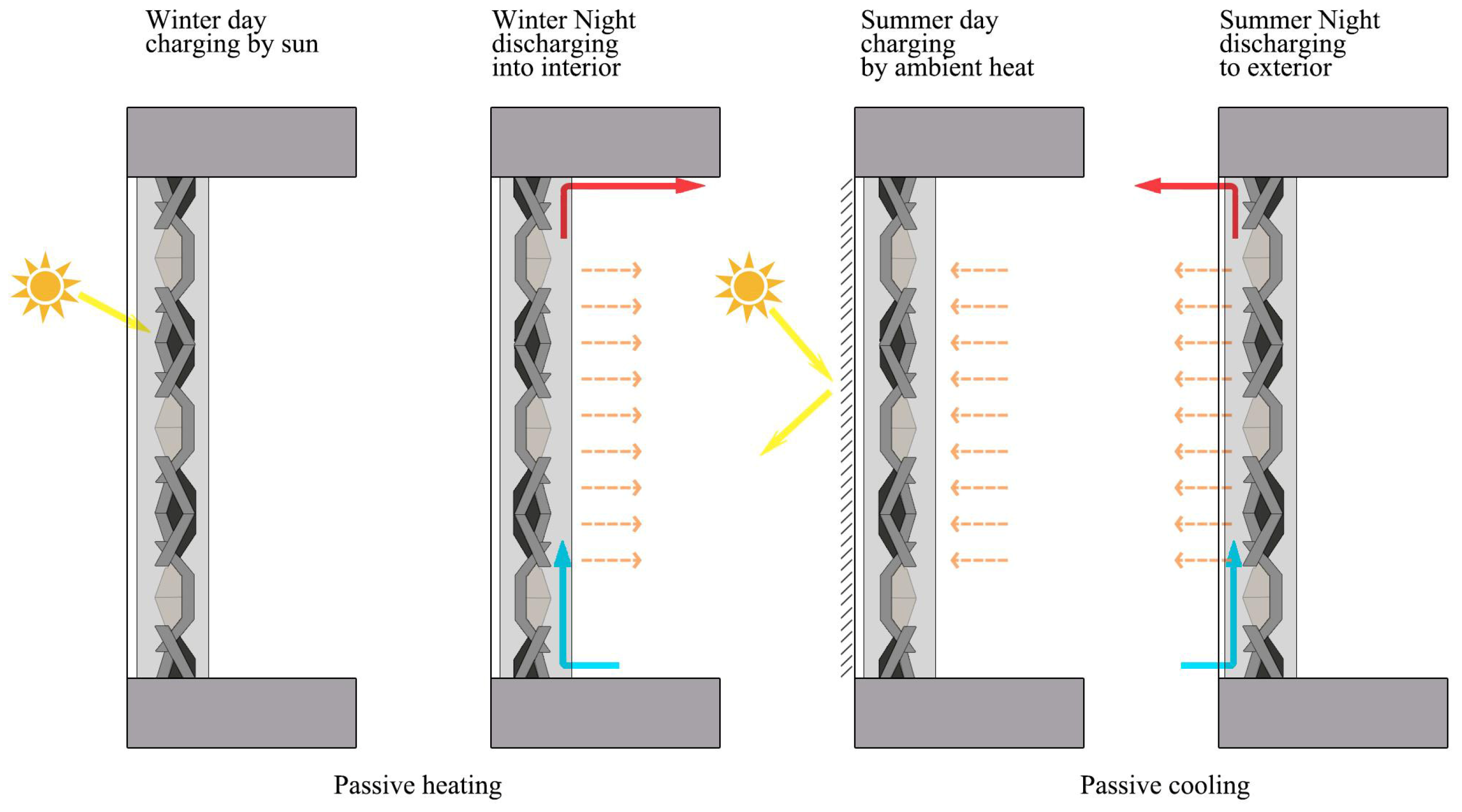
In addition, in recent years, researchers have proposed the concept of dynamic phase change walls, which optimize the heat absorption and release process by adjusting the position of the PCM to further enhance energy savings [
145,
146]. The dynamic flip strategies involve flipping one or more small PCM-TW panels to actively reconstruct the thermal configuration of the building envelope on a diurnal or seasonal scale. During the day, PCM panel faces the sun for efficient heat storage while, at night or in winter, it turns towards the interior for directional heat release. In summer, the configuration is reversed, with the insulation side facing outwards to block heat and the PCM side facing inwards to absorb excess heat and release it outdoors at night. This allows for a controllable “storage–insulation–release” sequence, replacing traditional heavy thermal materials with an extremely lightweight structure to dynamically match the building’s thermal needs.
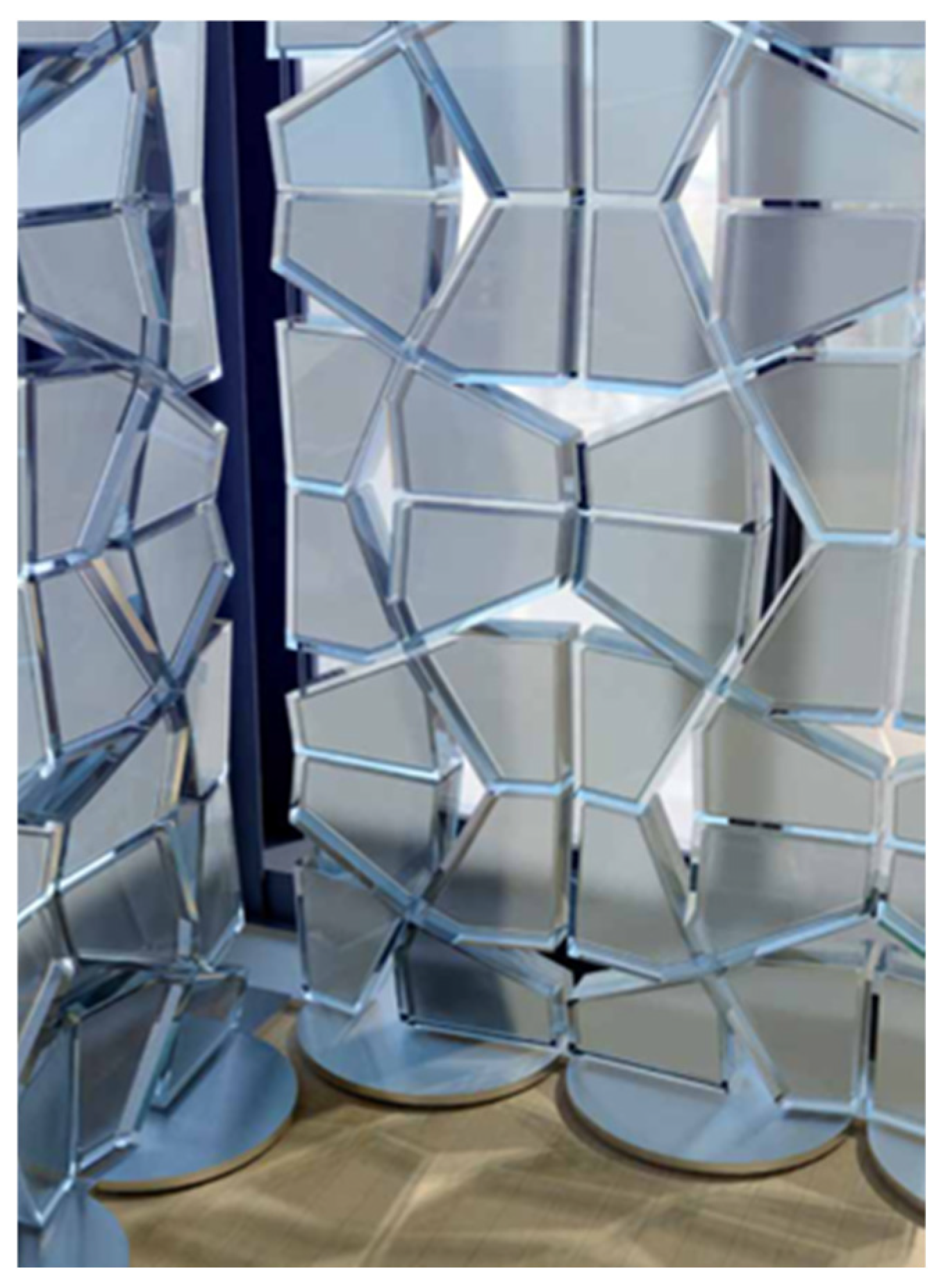
The DoubleFace project developed by Delft University of Technology introduced an adaptive TW system integrating PCMs for latent heat storage and translucent aerogel insulation, operating via dynamic flipping to seasonally reorient panels—exposing PCM to winter sunlight for passive heating (day) and interior heat release (night), while summer configurations prioritize heat dissipation via ventilation and solar shading, achieving a 40% energy reduction compared to non-Trombe scenarios (
Figure 35) [
137]. Optimized through 3D-printed layer simulations (7 cm total thickness: 4 cm PCM, 1 cm aerogel, 1 cm resin) and validated via DesignBuilder/MATLAB models, the system’s combination with aerogel enhanced thermal buffering while maintaining 10% translucency for daylight penetration, balancing structural lightness (5× lighter than traditional walls) and aesthetic integration into glass facades. Further prototyping using hybrid additive manufacturing (PLA/PET molds, laser-cut Perspex) and thermal testing at TU Delft/Eindhoven highlighted its modular scalability, with ongoing refinement of rotation schedules to maximize climate-responsive efficiency across seasonal and diurnal cycles. Based on the discussed studies, the same team from Delft University of Technology worked on the DoubleFace 2.0 project (
Figure 36), which advanced TW efficiency by integrating dynamic flipping to seasonally reorient PCM-aerogel panels—exposing PCM to solar radiation for winter heating (36.1% heating demand reduction) and leveraging ventilation for summer cooling (49.9% cooling reduction) in temperate climates, with an overall 40% energy savings compared to non-Trombe systems [
138]. Optimized via MATLAB/Simulink-NSGA-II models, the 5 cm air cavity and 20% translucent openings balanced daylight penetration and thermal buffering while aerogel integration enhanced insulation, though PCM contributed only 15% of total savings due to slow discharge kinetics driven by convective/radiative heat transfer. Further refinements in surface geometry (smooth curvature) and lightweight 3D-printed structures aimed to mitigate complexity, with ongoing prototyping addressing scalability and real-world applicability across diverse climates.
Based on existing research, 3D printing technology can overcome the technical challenges of traditional PCM-TW from the perspectives of structural customization and functional integration. First, design flexibility and full-scale controllability, allowing for free design of the wall’s geometry and microstructure according to requirements, achieves comprehensive structural customization [
147,
148]. Second, integrated and modular printing design, enabling individual PCM replacement, significantly reduces maintenance costs [
149]. Furthermore, as mentioned above, 3D printing technology has significantly reduced the leakage rate of PCM [
81].
Research has not only focused on the composite application of PCM walls and aerogel glass in buildings [
150] but also on combining the two to create aerogel-PCM-TW systems. Unlike traditional PCM-TW, aerogel-PCM-TW not only provides superior insulation and heat storage but is also semi-transparent, allowing for light transmission [
121,
137,
138].
Moreover, Zhou and Razaqpur [
108] proposed a dynamic TW (
Figure 37), which integrated PCM and insulation layers with operating mode optimization through “dynamic flipping”, wherein surface orientation alternated during PCM charging/discharging cycles to maximize solar absorption during irradiation exposure while minimizing thermal losses through insulation–air contact, as demonstrated by 3D CFD simulations showing 25.3% higher energy efficiency than static PCM walls. This ventilation-enhanced system achieved 79.8% thermal efficiency improvement through cyclical position exchange mechanics, with further optimization potential identified in reducing glazing thermal resistance via low-density materials, as evidenced by a comparative analysis of three building units under energy conservation principles. The pair found that the dynamic TW was better able to maintain indoor temperatures at night, reducing temperature fluctuations and improving thermal comfort, with a thermal efficiency increase of about 20% over the static TW [
139].
In brief, the adjustable strategies in PCM-TW systems enhance energy efficiency by dynamically balancing heat absorption and dissipation. While dynamic flipping synergizes PCM phase transitions with seasonal ventilation, challenges persist in PCM thermal storage kinetics and system complexity, necessitating geometric refinements (smooth surfaces for convective efficiency) and hybrid materials (aerogel-PCM composites) to mitigate thermal resistance. As an efficient method to solve the challenges, advancements in climate-responsive algorithms, low-density glazing materials, and scalable 3D-printed structures could streamline adaptive Trombe walls, with interdisciplinary research needed to harmonize aesthetic integration, structural lightness, and real-world monitoring across diverse climates.
4.3.3. System Integration Challenges
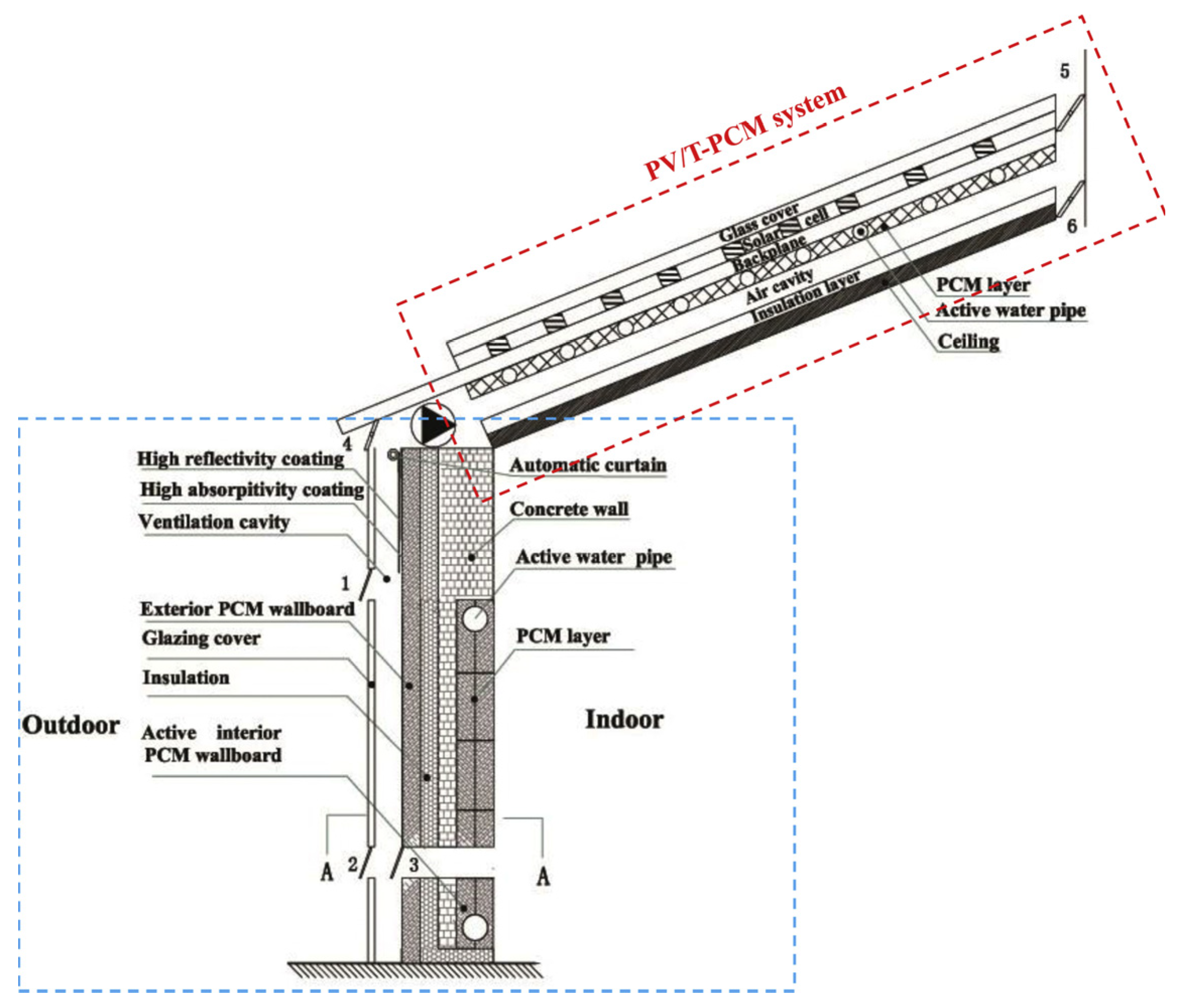
As building energy systems upgrade towards a “passive + active” synergistic model, coupling PCM-TWs with active energy systems such as heat pumps and photovoltaics (PVs) has become an important direction for improving the overall energy efficiency of buildings.
Liu and Zhou [
140,
141] investigated the energy performance of a coupled system of PCM-integrated vented trapezoidal walls (PCM-TW) with photovoltaic/thermal panels (PV/T-PCM) through experimentally verified numerical modeling and the Taguchi method (
Figure 38). The study focused on optimizing the parameters of the PV/T-PCM system, while the parameters of the PCM-TW system were kept at the optimum. The results showed that the equivalent overall output energy (QE) of the system was highly dependent on the mass flow rate of the cooling water and the diameter of the cooling water pipe, while inlet cooling water temperature and the PCM thickness had less influence. The optimized combination of parameters (mass flow rate of 1 kg/s, water pipe diameter of 0.6 m, an inlet water temperature of 15 °C, and PCM thickness of 20 mm) enabled the system to achieve the highest equivalent total energy output of 20,700 kWh. The study demonstrated that the PCM-TW excelled in regulating the building’s heat transfer, especially in terms of natural ventilation and nighttime energy storage, significantly improving the hybrid system’s energy utilization efficiency.
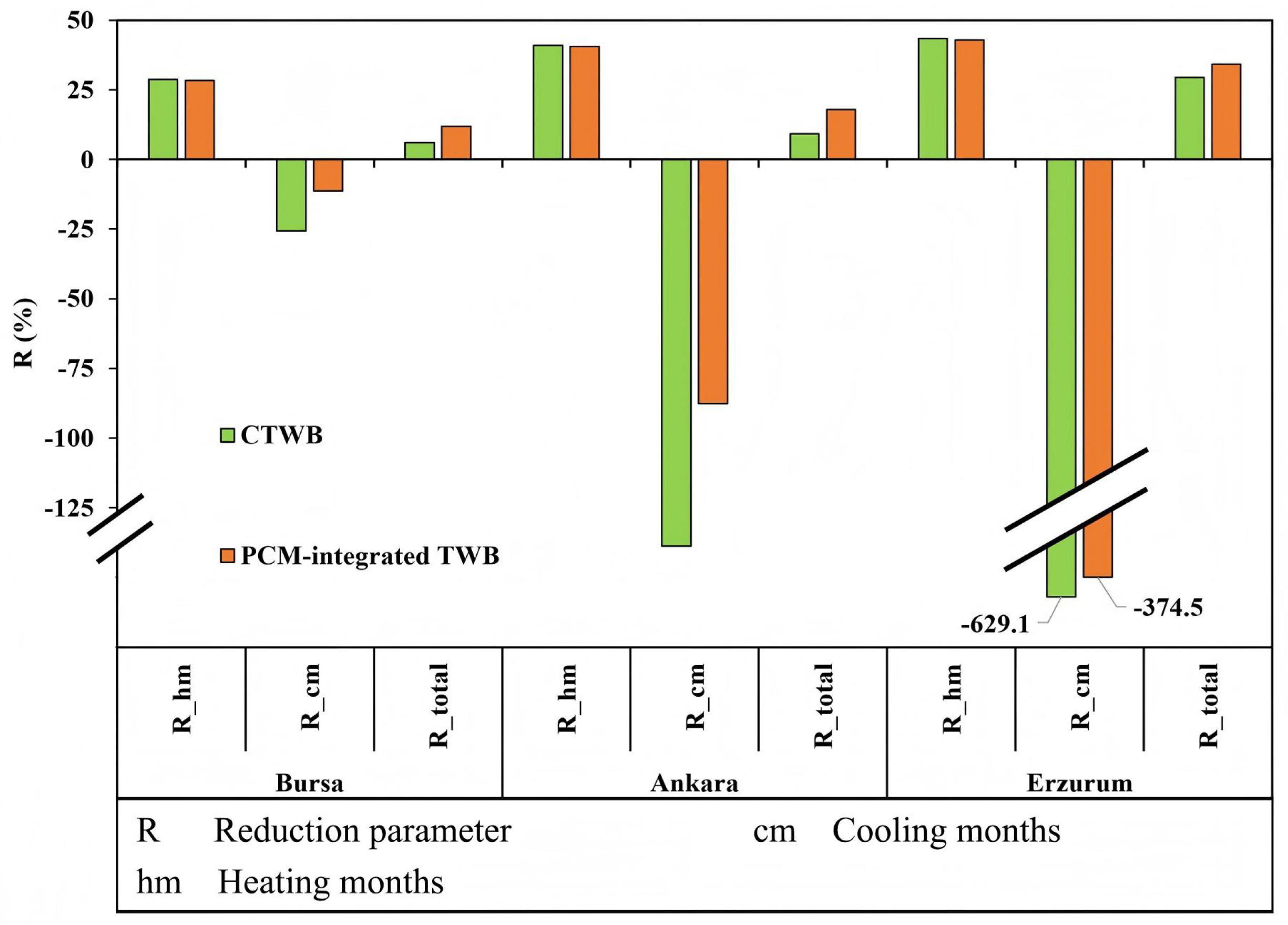
Duzcan and Kara [
142] studied the coupling performance of the shaded PCM-integrated Trombe wall building (TWB) with ground source heat pumps (GSHP) and photovoltaic/thermal (PV/T) systems in three different climate zones of Turkey. The study showed that PCM-TWs effectively alleviated overheating problems in summer. And through shading and phase change heat storage, it reduced heating load in winter by releasing latent heat, achieving annual primary energy savings of 11.9–34.3% compared with classical Trombe wall building (CTWB) (
Figure 39). Based on this, the GSHP handled the building’s annual heating and cooling load, while the PV/T and wind power systems met the building’s electricity needs through grid connection, achieving a net-zero energy consumption target.
However, when PCM-TW is integrated with active systems such as heat pumps and photovoltaic systems, compatibility problems are prominent, mainly in the form of unsynchronized thermal response, uncoordinated control, and misaligned operation schedules. Passive heat absorption and release of the PCM system has a thermal hysteresis, and the heat pump starts and stops according to the real-time load, which is prone to conflict [
151,
152]; the PV daytime power generation peak is not in line with the nighttime release of heat by PCM, which makes the synergy complicated [
153,
154,
155]. For the energy efficiency balance problem, combining the Taguchi method and other optimization parameters, supplemented by coordinated control and peak shifting technology, are needed to achieve energy efficiency optimization [
156,
157].
5. Conclusions
The development of PCM-TW technology has always been guided by the core principle of “overcoming the limitations of classic TW and adapting to the needs of building energy-saving upgrades.” Its core driving force stems from the synergistic advantages of PCMs and TWs. On the one hand, the high-density latent heat of PCMs achieves “narrow temperature range and high capacity,” effectively compensating for the shortcomings of classic TW, which relies on the weight/volume of the wall to increase heat storage capacity and easily increases the building’s permanent load. On the other hand, through phase change temperature regulation and structural optimization (such as double-layer design and dynamic flipping), PCM-TW systems can dynamically respond to the building’s thermal demand, significantly improving their adaptability to different climates, reducing air conditioning energy consumption, and improving indoor comfort.
In summary, this paper reviewed the evolution of the new PCM-TW system and its key operating modes and parameters. PCM-TWs help to save energy and reduce carbon emissions and transition to a low-carbon economy. The key findings are summarized as follows:
- (1)
Double-layer PCM-TWs use two layers of PCM with different phase change temperatures, where the outer layer with a high melting point (e.g., 28 °C) absorbs heat and the inner layer with a low melting point (e.g., 25 °C) regulates the temperature.
- (2)
In combination with other systems, components, and materials, performance can be optimized. Not only do double-layer PCM-TWs solve summer overheating and winter heating, but they also can have other additional properties (e.g., air purification).
- (3)
Cavity shapes have evolved from rectangular to semi-circular, shaped cuts, and 3D printing.
- (4)
Ventilation mechanisms have evolved from passive air supply to active or controlled ventilation with enhanced convective heat transfer.
- (5)
The range of each parameter of the PCM layer is the thickness (5–20 cm), thermal conductivity (0.1–1.0 W/m·K), and phase transition temperature (16–30 °C). However, these need to be selected according to different climate and radiation requirements. The combination of PCM with aerogel reduces the wall thickness and makes it more transparent.
- (6)
Dynamic flip strategies regulate heat absorption and release based on real-time temperature changes to improve energy efficiency throughout the year.
- (7)
Research limitations cannot be ignored. Double layers lead to a rise in structural complexity, which affects the difficulty and cost of construction. Compatibility issues with other systems and energy efficiency trade-offs also need to be addressed by more research.
However, the large-scale application of this technology still faces three major challenges. First, economic cost constraints, the high initial investment in PCM materials, and packaging technology reduce market acceptance. Second, structural and operational complexities, such as double-layer design and device integration, while improving performance, increase construction difficulty and maintenance requirements. And third, multi-system integration issues, such as the asynchronous thermal response of PCM-TWs with active energy systems like heat pumps and photovoltaics, spatiotemporal mismatch of energy supply and demand, and the lack of a universally applicable collaborative control scheme. These factors are the main challenges for PCM-TW technology to move from laboratory research to practical engineering applications.
Based on the above discussion, the future development of PCM-TWs is extremely promising, but this also requires research and improvement of some basic but important aspects:
- (1)
Developing new PCM-TW composite structures, promoting modular products, reducing costs and realizing commercial value.
- (2)
PCM’s own packaging also needs to be studied more in depth to solve the compatibility problem with other systems.
- (3)
Designing more detailed experimental tests for basic research is required, such as durability, operating hours, year-round thermal conversion effects, etc., and the number of basic tests in the system laboratory must be increased.
- (4)
Globally standardized production and common test methods need to be explored, not limiting PCM-TWs to labs and simulations, but to practical applications in real-world environments.
- (5)
Requirements for wall transparency, loading (thickness), and aesthetics can be optimized with resin-encapsulated PCMs, aerogel bonding, and 3D printing technologies.




 ,
,