Article

Tourist Loyalty in Intangible Cultural Heritage Tourism: The Roles of Perceived Attributes, Involvement, and Cultural Identity

1
College of Management Science, Chengdu University of Technology, No. 1 East 3 Road, Erxian Bridge, Chenghua District, Chengdu 610059, China
2
Department of Artificial Intelligent Research and Product Design, Chengdu Zero-One Era Technology Co., Ltd., No. 500 Middle Section of Tianfu Avenue, Dongfang Hope Tianxiang Plaza, Chengdu 610041, China
*
Author to whom correspondence should be addressed.
Sustainability 2025, 17(17), 8056; https://doi.org/10.3390/su17178056
Submission received: 22 July 2025 / Revised: 2 September 2025 / Accepted: 3 September 2025 / Published: 7 September 2025

Abstract

Intangible cultural heritage (ICH) is an evolving repository of collective meaning; however, many ICH destinations face threats from over-commercialization and homogenization, which weaken authentic transmission and visitor engagement. Drawing on the Stimulus–Organism–Response (S-O-R) framework and a cultural identity perspective, this study examines how two stimulus sets—ICH attributes (perceived authenticity, vitality) and tourism involvement (cognitive, behavioral)—influence tourist loyalty, with experiential value as a mediator and cultural identity as a moderator. 385 valid online survey responses were analyzed using structural equation modeling and moderated mediation tests. Results show that perceived authenticity and vitality each exert significant positive effects on loyalty, and higher cognitive and behavioral involvement similarly strengthens loyalty. Experiential value partially mediates the effects of ICH attributes and involvement on loyalty. Cultural identity positively moderates several pathways; notably, when cultural identity is high, experiential value no longer mediates the link between tourism involvement and loyalty. These findings advance understanding of visitor-centered authenticity in living ICH contexts and offer guidance for destination managers seeking to build engaging, identity-sensitive heritage experiences.

1. Introduction

Intangible cultural heritage (ICH) encompasses the living traditions, practices, and expressions that communities recognize as part of their cultural heritage. As an integral component of China’s cultural fabric, ICH manifests in diverse forms—from traditional crafts and performing arts to oral literature and social customs—and is a unique tourism attraction [1]. Integrating culture and tourism has elevated ICH from a passive cultural relic to an active driver of destination competitiveness and community revitalization [2]. Policy directives and consumer trends indicate that ICH tourism is poised for rapid expansion: the Chinese government’s emphasis on “cultural confidence” (Cultural confidence denotes belief in the value, vitality, and future of one’s cultural traditions—including pride, trust, and a willingness to preserve and transmit cultural practices. The phrase has been emphasized in recent Chinese cultural policy statements (e.g., calls to “build cultural confidence”) and is discussed in the academic literature on cultural self-awareness and national culture [3]) has spurred local authorities to develop heritage-based experiences. Meanwhile, domestic tourists increasingly seek meaningful, authentic encounters with traditional culture [4].
The ICH tourism market has exposed several challenges despite these favorable conditions. First, although many visitors express interest in ICH-themed attractions and activities, their understanding of ICH concepts and significance remains limited [5]. Empirical evidence suggests that when tourists lack sufficient knowledge of heritage contexts, their appreciation of ICH offerings is superficial, leading to lower perceived value and diminished loyalty intentions [6]. Second, commercializing ICH experiences in specific destinations has led to a “theme-park” approach that prioritizes spectacle over substance, undermining the live transmission and preservation of traditional skills [7]. In particular, reliance on mass-produced souvenirs and repetitive performances reduces the distinctiveness of ICH sites and contributes to homogenization across destinations [8]. Third, many ICH attributes are not sufficiently highlighted in marketing and on-site interpretation, which weakens tourists’ value perception and engagement [9]. These factors constrain the effective utilization of ICH resources and impede the sustainable development of ICH tourism.
Traditionally, cultural tourism in China focused on preserving and displaying tangible heritage through site-centered, state-led development. Policy and market shifts recently encourage experience-oriented, participatory forms of cultural tourism that foreground visitor engagement with living traditions [4,10,11]. To enhance the competitiveness of ICH tourism destinations and encourage visitor engagement, adopting a tourist-centric perspective that addresses market demands and leverages ICH resource advantages is crucial. From the visitor’s perspective, the destination’s ability to deliver authentic, interactive experiences informs visitors’ experiential value appraisal and shapes their loyalty behaviors, such as repeat visits and word-of-mouth recommendations [12,13,14]. Moreover, the intertwined relationship between culture and tourism underscores the necessity of preserving ICH as a heritage imperative and a driver of economic development and cultural diplomacy [15]. Therefore, integrating ICH and tourism is a strategic priority for managers and an opportunity to revitalize endangered traditions [16]. However, studies examining how ICH attributes and visitor involvement jointly influence tourist loyalty remain scarce.
Furthermore, cultural identity—the psychological bond between tourists and the heritage context—is a critical lens through which visitors interpret and value ICH experiences [17]. Research indicates that individuals with stronger cultural identity derive greater emotional and symbolic value from heritage interactions, strengthening the link between perceived experience and loyalty [18]. However, few studies have integrated cultural identity as a moderating factor to explore ICH attributes, tourism involvement, experiential value, and loyalty.
To address these research gaps, this study employs the Stimulus–Organism–Response (S-O-R) framework [19] and a cultural identity perspective to investigate how two key stimuli, ICH attributes (authenticity and vitality) and tourism involvement (cognitive and behavioral), influence tourists’ experiential value and subsequent loyalty. Specifically, we examine (1) the direct effects of authenticity and vitality on experiential value and loyalty, (2) the role of cognitive and behavioral involvement on experiential engagement, and (3) the mediating function of experiential value in the stimuli-loyalty relationship. Critically, we introduce cultural identity as a moderator to assess how individuals’ heritage-related self-concept shapes these pathways.
By surveying 385 valid visitors at a representative ICH destination and analyzing data through structural equation modeling, this research aims to (a) clarify the dimensions of ICH attributes and tourism involvement that most strongly predict loyalty, (b) uncover the mechanisms by which experiential value mediates these relationships, and (c) reveal how cultural identity amplifies or attenuates these effects. We contribute to the ICH tourism literature by offering an integrated model grounded in S-O-R and identity theory, and we provide practical implications for managers seeking to foster long-term visitor engagement while ensuring the live preservation of ICH. This work advances theory and practice at the intersection of heritage preservation and sustainable tourism development.

2. Literature Review

2.1. Perceived Attributes and Tourism Involvement in ICH Tourism

ICH comprises living traditions, practices, and expressions transmitted across generations [1]. Unlike static and material heritage, ICH relies on human agents for its continuity, manifesting as performance arts, craft techniques, and social customs [20,21]. China’s 2011 ICH Law defines ICH as “traditional cultural expressions and related tangible carriers that various ethnic groups regard as part of their cultural inheritance,” spanning oral literature, performing arts, crafts, rituals, and festivals [22]. Hence, ICH is a collective memory repository and a dynamic resource for tourism development.
Within ICH tourism, perceived attributes denote visitors’ recognition of heritage qualities that inform their engagement [23]. Two core attributes emerge consistently: authenticity and vitality [24,25]. Since living traditions naturally evolve, we note that international heritage guidance (e.g., UNESCO) often frames “authenticity” concerning tangible, material heritage. Therefore, scholars adopt a visitor-centered notion—perceived or experiential authenticity—which captures whether tourists judge performances, practices, or craft demonstrations as genuine expressions of local culture. In ICH contexts, existential authenticity—where tourists feel they experience “true” cultural essence through interaction with practitioners or participation in traditional rituals—becomes paramount [26]. Studies demonstrate that perceived authenticity elevates satisfaction and related forms of emotional bond, thereby driving loyalty intentions [24,27,28]. However, over-commercialization risks producing pseudo-authentic experiences, undermining tourists’ trust and long-term engagement [29].
Complementing authenticity, vitality captures ICH’s “living” dimension [30]. Vital ICH is characterized by ongoing transmission, innovation, and intergenerational dialog. Destinations facilitating hands-on workshops (e.g., craft co-creation) or interactive performances exemplify ICH vitality [31]. Tourists exposed to living traditions report deeper emotional resonance and experiential immersion [32]. Conversely, vitality is lost when heritage is presented as a static artifact without participatory elements, diminishing overall appeal [33].
Beyond these attributes, tourism involvement reflects the degree of personal relevance and participation of tourists who invest in ICH settings [34]. Involvement theory posits that individuals allocate cognitive and emotional resources to essential matters [35]. Within tourism, involvement manifests as two dimensions: cognitive involvement and behavioral involvement [36,37]. Cognitive involvement encompasses mental effort to understand heritage, such as reading interpretive materials or absorbing historical context [28]. Behavioral involvement denotes observable actions and resource investments [38].
Empirical evidence indicates that higher cognitive involvement enhances knowledge acquisition and interpretive depth, strengthening experiential value [28]. For instance, visitors who engage with storytelling sessions report greater cultural resonance than passive observers. Similarly, behavioral involvement, such as direct participation in heritage activities, has fostered co-creation of experiences, increasing emotional engagement and experience value [31].
ICH attributes and involvement are interdependent. Tourists who perceive strong authenticity and vitality are more inclined to invest cognitively and behaviorally [23]. Conversely, high involvement amplifies attribute salience: participants in a traditional dance workshop may better appreciate the historical significance of costumes and choreography [39]. This synergy cultivates richer internal responses, laying the groundwork for loyalty [26].
ICH tourism research consistently identifies authenticity and vitality as essential perceived attributes that differentiate heritage offerings, while cognitive and behavioral involvement represent the visitor’s engagement pathway. When destinations nurture genuine, vibrant ICH experiences, they invite deeper visitor involvement, strengthening experiential outcomes and fostering loyalty [23,32].

2.2. Cultural Identity in ICH Tourism

Cultural identity refers to individuals’ psychological connection to shared cultural symbols, values, and practices [40]. Rooted in Social Identity Theory, cultural identity emerges when individuals categorize themselves as part of a cultural group and internalize its collective norms [41]. Cultural identity shapes how visitors perceive and value heritage stimuli, influencing cognitive appraisals and emotional attachments [42]. Although cultural identity, understood as an individual’s sense of belonging to and pride in cultural traditions, does not apply equally to all tourists. While some visitors may not seek identity affirmation during their travels, others with stronger cultural identities are more likely to interpret ICH authenticity and involvement as meaningful, intensifying satisfaction and loyalty. This study conceptualizes cultural identity as a moderating factor that differentiates how strongly ICH attributes and involvement influence tourist loyalty.
Within ICH tourism, cultural identity often assumes a three-dimensional structure: cognitive (awareness and knowledge), affective (emotional attachment and pride), and behavioral (participation and advocacy). Cognitive identity involves recognizing cultural markers embedded in ICH performances or crafts [43]. Tourists with high cognitive identity may easily contextualize a folk art practice within broader ethnic histories. Affective identity reflects emotional bonds; when visitors feel pride or belonging toward a cultural tradition, they derive emotional satisfaction from ICH encounters [44]. Behavioral identity manifests through activities such as participating in heritage workshops, promoting ICH through social media, or supporting artisan communities [45].
Cultural identity influences both perceived attributes and involvement. Visitors who share ethnic backgrounds with the heritage community or have prior exposure to related traditions perceive authenticity more readily and interpret vitality as personally meaningful [43]. Conversely, low-identity tourists may require additional interpretive support to grasp symbolic nuance [46]. Some studies examined how identity and commodification shape ICH trajectories. In the Chinese context, recent work documents the tensions between official authenticity discourses, marketisation, and local practice. For example, studies show how authenticity is contested and reconfigured in living ICH settings and how commercialization reshapes craft economies and guardian communities [47].
Cultural identity can moderate the relationships among perceived attributes, involvement, experiential value, and loyalty. Domínguez-Quintero et al. [48] demonstrate that authenticity’s positive influence on experiential value is stronger for tourists with high heritage identity. Wu and Li [49] find that identity magnifies the indirect influence of cognitive involvement on loyalty via experiential value. These findings suggest that identity is a psychological lens. High-identity tourists interpret the same ICH stimuli differently, experiencing emotional resonance and commitment.
Destination identity also matters. Genc and Gulertekin Genc [50] indicate that residents’ strong identity with ICH fosters community participation and co-creation of authentic experiences, enriching tourist encounters. This reciprocal identity reinforcement generates a virtuous cycle. Tourists’ identity affirmation strengthens loyalty, economic support sustains ICH vitality, and local identity is further bolstered by positive visitation outcomes [43].
Measurement of cultural identity in ICH contexts adapts established scales to capture its multifaceted nature [43]. For example, the “Heritage Tourist Identity Scale” measures cognitive, affective, and behavioral dimensions. This robust measurement can systematically test identity’s moderating roles within structural models.
Cultural identity may moderate the experiential value-loyalty link. Tourists with strong heritage identity convert experiential gains into loyalty more effectively than low-identity visitors [48]. Rasoolimanesh et al. [51] also note that identity amplifies involvement’s influence on loyalty via experiential value. Hence, identity is a boundary condition. When identity is high, experiential value’s incremental effect on loyalty may be less pronounced, as high-identity tourists already possess strong predispositions [52].
Therefore, cultural identity is a precondition and a boundary condition in ICH tourism. It shapes how tourists perceive authenticity and vitality, steers their involvement strategies, and intensifies the translation of experiential value into loyalty intentions [43,53]. Accounting for identity refines our understanding of visitor behavior in ICH contexts. It effectively informs destination strategies to engage diverse tourist segments.

2.3. Experiential Value and Tourist Loyalty in ICH Contexts

Experiential value arises from tourists’ subjective appraisal of benefits (e.g., enjoyment and social connection) versus sacrifices (e.g., time and cost) during heritage encounters [54,55]. This appraisal hinges on how authenticity, vitality, and involvement converge in ICH tourism to produce functional, emotional, social, and epistemic gains [49,56]. For instance, tourists participating in traditional craft workshops may derive functional, emotional, social, and epistemic values [55,57].
Tourist loyalty in ICH contexts predominantly manifests as attitudinal loyalty (i.e., revisit intention and positive word-of-mouth) rather than actual repeat visits, given tourism’s novelty-seeking nature [58]. Attitudinal loyalty encompasses psychological commitment to a destination, manifesting in willingness to recommend and preference for similar heritage experiences [59]. In ICH tourism, substantial experiential value often translates into emotional attachment, forging sustained loyalty [58].
The S-O-R framework articulates how ICH stimuli (i.e., authenticity, vitality, and involvement) evoke experiential value and drive loyalty responses [19]. For example, Chen [28] finds that authenticity enhances experiential quality, which mediates its effect on satisfaction and loyalty. Lenzerini [31] shows that behavioral involvement elevates existential value, leading to stronger loyalty intentions. Yan et al. [60] confirm that perceived ICH vitality increases experiential value, which fully mediates its effect on festival attendance intentions.
Moreover, experiential value often operates as a partial mediator, reflecting direct effects from stimuli to loyalty. Park et al. [61] observe that while experiential value mediates most of the authenticity-loyalty relationship, authenticity also exhibits a residual direct effect on loyalty. Similar findings indicate that high-identity tourists may translate authenticity directly into loyalty, bypassing intermediary experiential evaluations [52].
Tourism involvement also exerts both direct and indirect influences on loyalty. Scholars argue that cognitive involvement enhances emotional engagement and increases experiential value and loyalty. Behavioral involvement signals deeper commitment, directly boosting loyalty and indirectly through experiential value [31]. For example, participants reported elevated experiential value and advocacy intentions, illustrating the dual pathways [49].
Therefore, experiential value is the central mechanism linking ICH stimuli to tourist loyalty, predominantly attitudinal, with cultural identity that can amplify or attenuate its role [48,51]. Integrating these insights, this study adopts an S-O-R-Identity model to elucidate how ICH attributes and involvement drive experiential value and loyalty, moderated by cultural identity, offering a framework for theory and practice in ICH destination marketing.

2.4. Theoretical Foundation

This study uses three interrelated theoretical perspectives to explain how ICH attributes and tourism involvement influence experiential value and tourist loyalty.
Firstly, the S-O-R framework [19] is the core theoretical foundation of this study. It posits that external environmental stimuli (S) influence internal organismic states (O), which in turn lead to behavioral responses (R). In heritage tourism, destination attributes are stimuli, affecting tourists’ cognitive and emotional evaluations. This subsequently drives loyalty-related behaviors such as revisitation and recommendation. The S-O-R model is widely used to explain how experiential and psychological processes mediate the relationship between destination features and visitor responses [62,63].
Secondly, tourism involvement theory emphasizes the degree of relevance and interest a tourist places in a destination or activity. It typically encompasses cognitive and behavioral components [34]. High involvement implies that tourists are more engaged in their decision-making and participation in destination activities, which leads to stronger emotional bonds and loyalty intentions [64]. In this study, involvement is an antecedent variable influencing both experiential value and loyalty, serving as a key explanatory factor in how tourists connect with ICH destinations.
Thirdly, cultural identity theory explores how individuals perceive, internalize, and express affiliation with particular cultural groups [65]. It is critical in shaping tourists’ attitudes, values, and behaviors. When tourists identify strongly with the culture presented by a destination, they are more likely to develop a sense of belonging, satisfaction, and loyalty [66]. In this study, cultural identity is a moderating variable that strengthens the effects of destination attributes and involvement on tourist loyalty, particularly through its interaction with experiential value.

3. Theoretical Foundations and Hypotheses

3.1. Conceptual Framework

Guided by the S-O-R paradigm and a cultural identity lens, this study examines how ICH attributes and tourism involvement shape tourists’ loyalty via experiential value. There are two categories of stimuli:
ICH attributes are delineated into authenticity and vitality. Authenticity refers to visitors’ perception that heritage presentations are genuine, historically grounded, and minimally commercialized [23,24]. Vitality denotes the degree to which heritage practices remain “living”—actively transmitted, innovated, and experienced as dynamic traditions [31].
Tourism involvement is subdivided into: Cognitive involvement, which involves the mental effort required to understand ICH content through reading, interpretation, and reflection; and Behavioral involvement, which encompasses the extent of hands-on participation, such as attending workshops or purchasing artisan goods [31].
These four stimulus dimensions provoke tourists’ internal evaluative process (i.e., experiential value), integrating functional, emotional, social, and epistemic gains relative to perceived costs [54,55]. Experiential value drives tourists’ attitudinal loyalty [59].
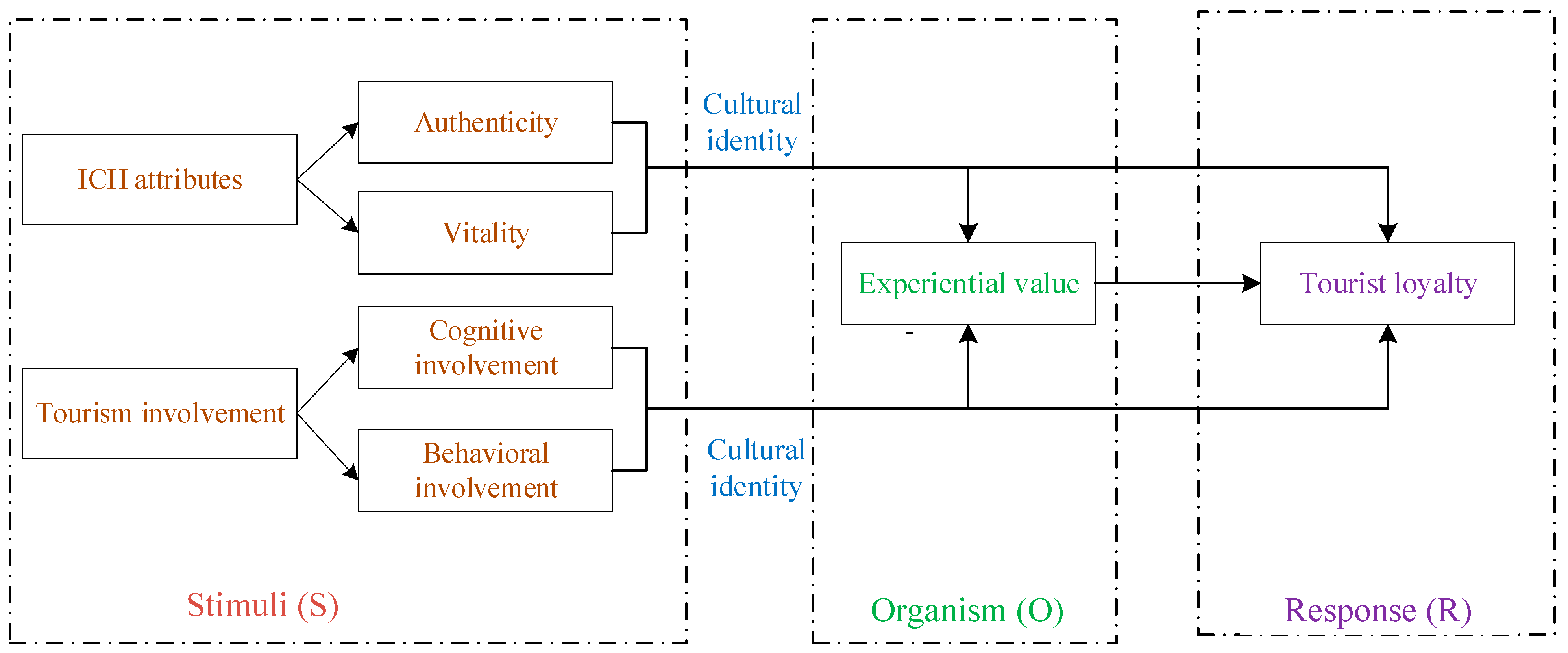
Moreover, since individual differences in cultural orientation can alter these pathways [40], cultural identity is introduced as a moderator of ICH attribute → experiential value relationships. This model isolates cultural identity as the sole individual-level moderator by holding constant other potential influences on experiential value. Figure 1 depicts the basic conceptual model: ICH attributes and tourism involvement (Stimuli) → experiential value (Organism) → tourist loyalty (Response), with cultural identity moderating the stimulus-organism links.

3.2. Hypothesis Development

3.2.1. ICH Attributes and Tourist Loyalty

Research in ICH tourism highlights how heritage authenticity and vitality attract, engage, and retain visitors [31,43]. When tourists perceive heritage offerings as authentic, their trust and emotional connection to the destination strengthen, fostering intentions to revisit and recommend [58]. Through interactive workshops, live performances, and ongoing innovation, ICH vitality anchors tourists’ perceived uniqueness and emotional resonance, making the destination memorable [23]. Therefore, we hypothesize:
H1. 
Destination ICH attributes have a positive effect on tourist loyalty.
H1a. 
Perceived authenticity positively influences tourist loyalty.
H1b. 
Perceived vitality positively influences tourist loyalty.

3.2.2. Tourism Involvement and Tourist Loyalty

Tourism involvement is the degree to which tourists mentally and behaviorally invest in heritage activities [34]. When visitors perceive that a destination’s values align with theirs, they form deeper emotional bonds that encourage repeat visitation and word-of-mouth advocacy [67]. Similarly, behavioral involvement signals commitment and heightens perceived experiential value, translating into stronger loyalty. Higher-involvement tourists report greater satisfaction and demonstrate stronger revisit intentions [68]. Therefore, we hypothesize:
H2. 
Tourism involvement has a positive effect on tourist loyalty.
H2a. 
Cognitive involvement positively influences tourist loyalty.
H2b. 
Behavioral involvement positively influences tourist loyalty.

3.2.3. ICH Attributes and Experiential Value

ICH attributes also enrich the visitor experience, forming the basis for perceived experiential value. Authenticity fosters trust in heritage narratives and elevates perceived quality, directly strengthening experiential value’s functional and emotional dimensions [44]. By inviting tourists into living traditions and encouraging active participation, vitality deepens emotional engagement and epistemic stimulation, thereby intensifying the experiential value derived [69]. As Lenzerini [31] observes, interactive exchanges between heritage bearers and visitors solidify cultural meaning and value. Therefore, we hypothesize:
H3. 
ICH attributes have a positive effect on experiential value.
H3a. 
Perceived authenticity positively influences experiential value.
H3b. 
Perceived vitality positively influences experiential value.

3.2.4. Tourism Involvement and Experiential Value

Tourism involvement shapes how visitors process heritage stimuli and therefore influences experiential outcome. High cognitive involvement drives tourists into the ICH context, resulting in richer knowledge acquisition and emotional resonance [49]. High behavioral involvement creates co-creative experiences that amplify emotional enjoyment and social connection. Empirical findings show that involved tourists perceive higher experiential quality and satisfaction [68]. Therefore, we hypothesize:
H4. 
Tourism involvement has a positive effect on experiential value.
H4a. 
Cognitive involvement positively influences experiential value.
H4b. 
Behavioral involvement positively influences experiential value.

3.2.5. Experiential Value and Tourist Loyalty

Experiential value reflects tourists’ holistic assessment of ICH engagements [54,55]. In heritage tourism, high experiential value generates positive affective responses strongly linked to attitudinal loyalty because memorable, meaningful experiences breed affective attachment and future behavioral commitments [31]. Therefore, we hypothesize:
H5. 
Experiential value has a positive effect on tourist loyalty.

3.2.6. Mediating Role of Experiential Value

Previous studies showed that experiential value mediates the relationship between destination attributes and loyalty [70]. In ICH contexts, authenticity and vitality instill experiential value, fostering loyalty. Tourism involvement enhances experiential value, leading to loyalty intentions [68]. Therefore, we hypothesize:
H6. 
Experiential value mediates the relationship between ICH attributes and tourist loyalty.
H6a. 
Experiential value mediates the effect of authenticity on tourist loyalty.
H6b. 
Experiential value mediates the effect of vitality on tourist loyalty.
H7. 
Experiential value mediates the relationship between tourism involvement and tourist loyalty.
H7a. 
Experiential value mediates the effect of cognitive involvement on tourist loyalty.
H7b. 
Experiential value mediates the effect of behavioral involvement on tourist loyalty.

3.2.7. Mediating Role of Cultural Identity

Previous studies indicate a clear relationship between cultural identity and tourists’ perceived experiential value. Scholars argue that the higher the experiential quality, the stronger the local cultural identity; cultural identity influences tourists’ perceived value, and the two are positively correlated [28]. Huang and Lu [71] confirm that awareness of ICH leads tourists to a deeper appreciation of the forms and cultural connotations of ICH products. This recognition is a prerequisite for cultural identification with ICH products and positively affects purchase intention. Therefore, we hypothesize:
H8. 
Cultural identity positively moderates the relationship between destination ICH attributes and tourist loyalty.
H8a. 
Cultural identity positively moderates the relationship between the authenticity dimension of ICH attributes and tourist loyalty.
H8b. 
Cultural identity positively moderates the relationship between the vitality dimension of ICH attributes and tourist loyalty.
H9. 
Cultural identity positively moderates the relationship between tourism involvement and tourist loyalty.
H9a. 
Cultural identity positively moderates the relationship between tourists’ cognitive involvement and tourist loyalty.
H9b. 
Cultural identity positively moderates the relationship between tourists’ behavioral involvement and tourist loyalty.

3.2.8. Moderated Mediation by Cultural Identity

Tourist cultural identity conditions how ICH stimuli translate into experiential value and loyalty [43]. Tourists who feel a strong cultural affinity for ICH interpret authenticity and vitality as more personally meaningful, generating higher experiential value. Low-identity tourists may require additional interpretive support to achieve comparable experiential gains. Cultural identity amplifies the positive effect of authenticity on experiential value [51] and may strengthen the vitality-experiential value relationship. Under high cultural identity, experiential value is more closely linked to loyalty intentions, as identity-congruent visitors more readily convert positive experiences into repeat visitation and advocacy [44]. Therefore:
H10. 
Cultural identity moderates the mediated relationship between ICH attributes and tourist loyalty.
H10a. 
Under high cultural identity, the mediated pathway from authenticity to loyalty via experiential value is strengthened.
H10b. 
Under high cultural identity, the mediated pathway from vitality to loyalty via experiential value is strengthened.
H11. 
Cultural identity moderates the mediated relationship between tourism involvement and tourist loyalty.
H11a. 
Under high cultural identity, the mediated pathway from cognitive involvement to loyalty via experiential value is strengthened.
H11b. 
Under high cultural identity, the mediated pathway from behavioral involvement to loyalty via experiential value is strengthened.

4. Empirical Analysis

4.1. Data Collection

This study targeted individuals who had visited an ICH destination within the past five years. A structured questionnaire was developed and administered online via the “Wenjuanxing” platform. We disseminated the survey link and QR code through social media channels, including WeChat groups and Moments, immediately following China’s National Day holiday to reach a broad audience. By concentrating data collection in the first two weeks after the October Golden Week (a peak travel period), we maximized the likelihood of capturing respondents’ most recent ICH tourism experiences while ensuring an adequate sample size.
The questionnaire consisted of two sections. The first section contained 31 measurement items, each rated on a seven-point Likert scale (1 = “Strongly Disagree” to 7 = “Strongly Agree”). The second section gathered demographic and background information, such as gender, age, and primary motivation for visiting ICH destinations. These demographic items facilitated the sample representativeness.

4.1.1. Measurement Dimensions and Scale Design

Drawing on established scales, the measurement dimensions cover four categories: (1) independent variables (ICH attributes and tourism involvement), (2) the mediating variable (experiential value), (3) the moderating variable (cultural identity), and (4) the dependent variable (tourist loyalty). Item wording was adapted from previous studies to reflect the characteristics of ICH destinations in China; expert feedback and pre-testing ensured clarity and relevance. Details are as follows:
A.
Independent Variables: ICH Attributes and Tourism Involvement
ICH attributes were conceptualized as comprising: authenticity and vitality. Tourism involvement captures the degree to which visitors mentally and behaviorally engage with the ICH destination. Table 1 lists the measurement items for each independent variable.
B.
Mediating Variable: Experiential Value
Experiential value represents tourists’ holistic appraisal of their ICH experience [54,55]. Since ICH tourism relies on immersive, interactive encounters, the items were designed to capture the extent to which respondents found the destination’s heritage scene visually appealing, emotionally engaging, distinct from other tourism products, and intellectually enriching [72,73]. Table 2 presents five experiential value items.
Table 1. Measurement Items for Independent Variables.
VariableItem CodeItem StatementSource
AuthenticityA1I can feel the genuine essence of the ICH culture here.[28]
A2I perceive that the ICH culture here has a long, continuous history.
A3I perceive an intense traditional atmosphere surrounding the ICH culture here.
A4I perceive that the ICH crafts or cultural elements here are well preserved.
VitalityV1I can observe traditional ICH activities or performances at this destination.[74]
V2I sense a unique ICH ecosystem thriving here.
V3I experience how ICH has integrated with local production and daily life.
V4I have opportunities to interact directly with ICH bearers here.
Cognitive InvolvementC1Visiting an ICH destination is very important to me.[12,75,76]
C2I am very interested in this ICH destination.
C3During my visit, I can identify myself with this ICH site.
C4I find traveling in this ICH environment to be highly enjoyable.
Behavioral InvolvementBI1I actively participate in ICH activities here.[75]
BI2I pause to watch folk performances and ICH demonstrations.
BI3I sample local ICH-related foods here.
BI4I use on-site digital tools (e.g., apps or kiosks) to learn about ICH culture.
Note: English item stems are translations of the Chinese questionnaire used in data collection and analysis (Supplementary Material). Reliability and validity statistics reported in the text are based on the Chinese instrument.
Table 2. Measurement Items for Experiential Value (Mediator).
VariableItem CodeItem StatementSource
Experiential ValueEV1I find that the ICH scenes here are visually distinctive and well themed.[72,73]
EV2The ICH activities here are so engaging that they put me in a good mood.
EV3I feel that this ICH destination clearly stands out from other tourism products.
EV4I learn a lot about ICH culture, skills, and knowledge here.
EV5I believe the ICH experience here can inspire younger generations to protect and carry forward our cultural heritage.
C.
Moderating Variable: Cultural Identity
Cultural identity was conceptualized as tourists’ cognitive recognition, emotional attachment, and behavioral inclination toward ICH [40]. Specifically, the five items capture (a) recognition of ICH as an essential cultural and historical asset, (b) belief that ICH represents a core form of traditional cultural expression, (c) the sense of national or ethnic pride derived from ICH, (d) appreciation for creative integration of ICH with contemporary contexts, and (e) willingness to participate in heritage preservation efforts [77,78,79]. Table 3 lists these items.
D.
Dependent Variable: Tourist Loyalty
Tourist loyalty in ICH tourism was operationalized predominantly as attitudinal loyalty. Although some scholars measure loyalty by repeat visitation, travel researchers argue that attitudinal indicators better capture loyalty where novelty-seeking is common [80]. The five loyalty items measure (a) prioritizing ICH destinations when traveling under similar cost constraints, (b) desire to participate in additional ICH-related activities, (c) willingness to recommend one’s preferred ICH site to friends, (d) intent to share one’s ICH travel experience publicly, and (e) willingness to provide positive word-of-mouth [81,82,83]. Table 4 displays these items.
By grounding each measurement dimension in previous empirical research and conducting rigorous validity checks, this study ensures that all constructs reliably capture the nuances of ICH tourism experiences, involvement, identity, and loyalty.

4.1.2. Questionnaire Adjustment and Data Collection

We conducted a small-scale pre-survey to ensure the questionnaire’s quality, accuracy, and scientific rigor. 109 questionnaires were distributed to individuals who reported having visited an ICH destination within the past five years. We excluded responses from anyone who had not traveled to an ICH destination in the previous five years, and questionnaires were completed in under 60 s, intending to remove inattentive or ineligible respondents. Then, 83 valid pre-survey questionnaires remained, yielding an effective response rate of 76.14%.
Using SPSS 25.0, we evaluated internal consistency reliability for each construct. The Cronbach’s alpha values for these constructs range from 0.908 to 0.952, demonstrating excellent reliability (all exceeding 0.90). In addition, “Cronbach’s alpha if item deleted” values for every item were lower than the overall alpha of their corresponding construct, indicating that no individual item diminished reliability. Corrected item-total correlations exceeded 0.40, signifying that each item correlated sufficiently with its build and did not require removal.
We then assessed construct validity through exploratory factor analysis. The Kaiser-Meyer-Olkin (KMO) measure exceeded 0.90, and Bartlett’s test of sphericity was highly significant, confirming that the data were suitable for factor extraction. These results provided confidence that the revised questionnaire would capture the intended constructs effectively.
We launched the final data collection after this pre-survey and subsequent item refinement. The questionnaire was disseminated online utilizing a non-probability convenience sampling method. During the main data collection period, 487 responses were received. After data cleaning, 385 valid questionnaires were retained for analysis. Thus, the valid response rate was 79.06% (385/487).
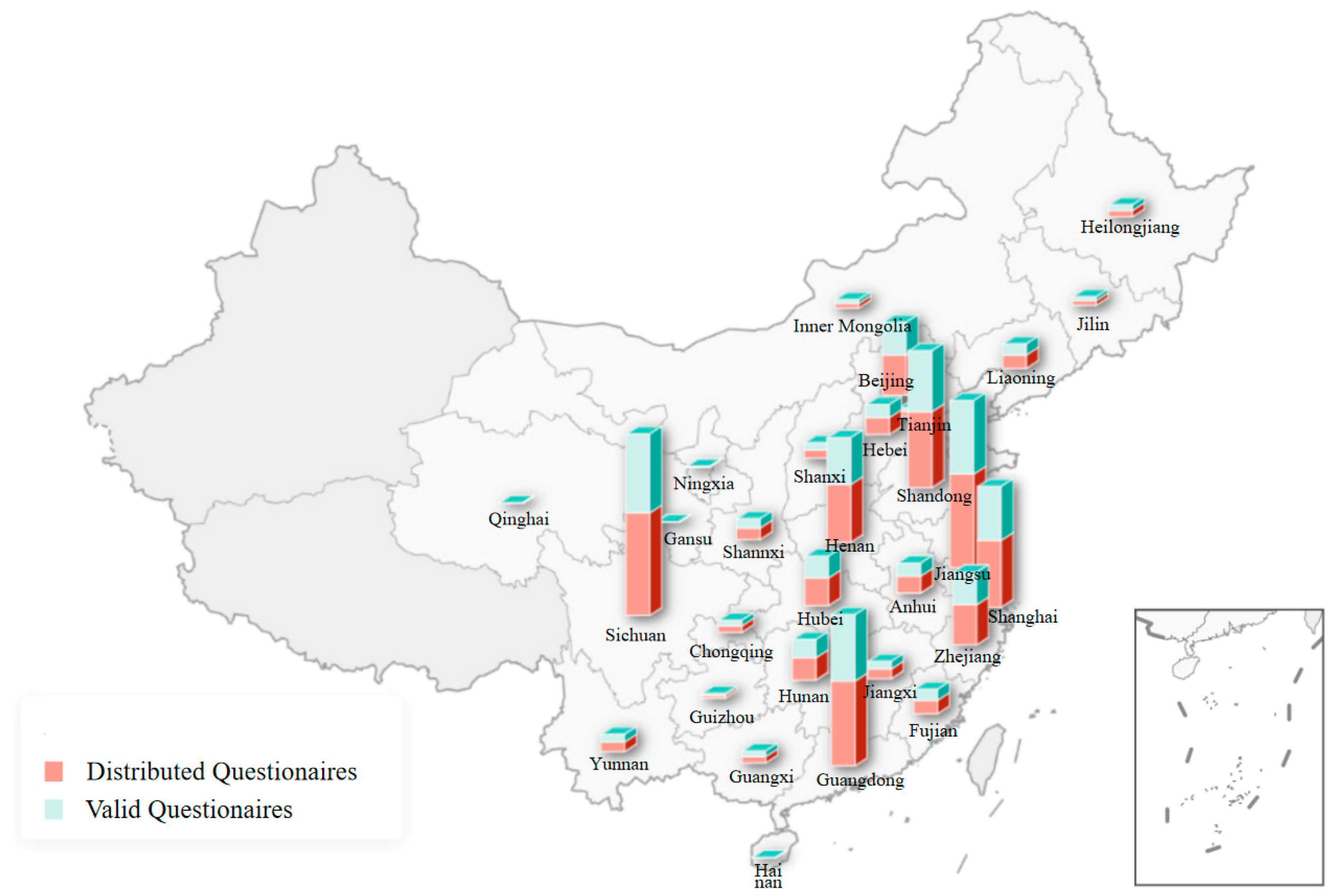
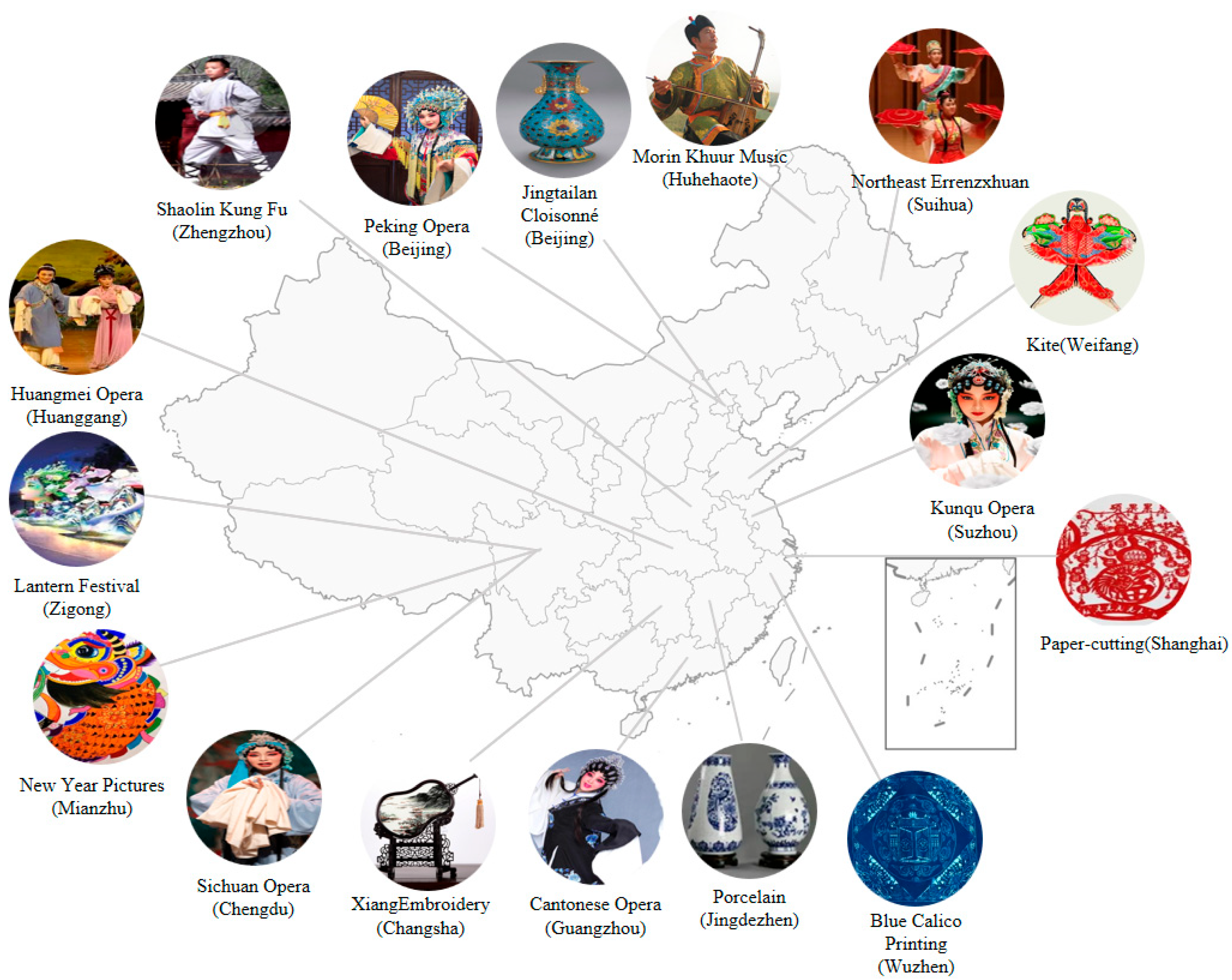
To quickly see nationwide coverage and regional concentration, Figure 2 shows geographic provenance of collected and valid questionnaires (IP-based attribution), where the most significant proportions of respondents come from Sichuan, Jiangsu, Shanghai, and Shandong provinces. In addition, Figure 3 shows the above cities/regions to orient those unfamiliar with Chinese geography. Exact sensitive site names are withheld for ethical reasons; the map uses regional/locality labels only.

4.2. Descriptive Statistical Analysis

The 385 valid questionnaires were subjected to statistical analyses to assess measurement properties and test the research hypotheses. First, we performed a confirmatory factor analysis (CFA) using AMOS 25 to verify the constructs’ factor structure and assess overall model fit. SPSS 25.0 was used to compute reliability measures and examine convergent and discriminant validity (via standard factor loadings, average variance extracted (AVE), and inter-construct correlations). Once the measurement model exhibited satisfactory fit (e.g., CFI > 0.90, RMSEA < 0.08, SRMR < 0.08), we proceeded to test the structural relationships.
Next, the hypothesized structural paths were evaluated using SPSS 25.0 and PROCESS v4.2. Specifically, we estimated regression equations to examine the direct effects of ICH attributes and tourism involvement on experiential value and, in turn, on tourist loyalty. Mediation effects of experiential value were tested using the bootstrap-based approach implemented in PROCESS. Finally, moderated mediation analyses were conducted to determine whether cultural identity significantly moderated the indirect effects of ICH attributes and involvement on loyalty via experiential value. All regression coefficients are reported alongside bootstrapped confidence intervals; significance was assessed at 0.05.
Table 5 summarizes the demographic and travel-related characteristics. The sample is balanced by gender (45.20% male, 54.80% female) and skewed toward higher education (71.43% hold a bachelor’s degree or above); nearly three-quarters (68.05%) are aged 21–40 (mean age = 32.80). Occupations concentrate among enterprise employees (36.62%) and students (35.58%), reflecting the survey’s reach into university networks and working professionals. Monthly income is concentrated in the 4001–6000 RMB band (34.29%), with a substantial student/no-fixed-income subgroup (31.17%). Regarding ICH travel behavior, 42.60% reported 1–2 visits to ICH destinations in the past five years, while only 14.29% visited five times or more; 26.03% were first-time visitors. Most respondents (73.01%) cited “to experience the cultural spirit of intangible heritage” as their primary motivation, whereas 12.99% described their visit as an incidental stop.
These patterns indicate that younger, educated, and digitally active visitors are more likely to seek experiential consumption, engage with interpretive media, and participate in hands-on activities. Moreover, the high proportion motivated by “experiencing cultural spirit” suggests a sample predisposed to register stronger, more substantial experiential value and identity-congruent responses. Hence, the estimated effects of perceived authenticity, vitality, involvement, and cultural-identity moderation on loyalty may be more pronounced in this sample than in a population less intrinsically interested in ICH. The relatively low share of frequent repeat visitors (≥5 visits = 14.3%) indicates that domestic ICH tourism is still maturing for many respondents.

4.3. Data Reliability and Validity Testing

4.3.1. Reliability Analysis

Cronbach’s alpha was computed for each construct to assess internal consistency reliability. Table 6 summarizes the results. The overall questionnaire achieved an alpha of 0.963, indicating excellent reliability. Each construct’s Cronbach’s alpha also exceeded 0.80, which confirms that all scales exhibit high internal consistency.

4.3.2. Validity Analysis

Validity was assessed in two parts: Convergent validity via composite reliability (CR) and AVE; and Discriminant validity.
Convergent validity requires that each construct explains a substantial portion of the variance in its indicators. AVE should exceed 0.50 and CR should exceed 0.60 [84]. Table 7 displays the convergent validity results. All standardized factor loadings are above 0.68 and significant at p < 0.001. CR values range from 0.888 to 0.917, all above 0.80, and AVE values range from 0.529 to 0.734, all above 0.50, indicating satisfactory convergent validity.
Discriminant validity was assessed using the Fornell-Larcker criterion, which requires that the square root of each construct’s AVE exceed its correlations with other constructs. Table 8 reports the discriminant validity results. All diagonal entries are larger than the corresponding off-diagonal correlations, confirming discriminant validity.

4.3.3. Confirmatory Factor Analysis

A CFA was conducted to evaluate the measurement model’s fit. Table 9 presents the CFA results. The model achieved χ2/df = 1.624. CFI = 0.971, TLI = 0.962, and RMSEA = 0.046, all meeting recommended criteria, indicating that the overall measurement model fits the data well.

4.4. Hypothesis Testing

4.4.1. Correlation Analysis

Pearson correlation coefficients (r) were computed to examine the relationships among the key variables. Table 10 presents the results. All correlations are significant at p < 0.01, and coefficients range from 0.33 to 0.69, indicating moderate positive associations. Variance inflation factors (VIFs) ranged from 1.61 to 2.29 (all < 5), confirming that multicollinearity is not a concern.

4.4.2. Main Effects Testing

We conducted hierarchical regression analyses to test H1–H5. Gender, age, education, occupation, and monthly income were entered as control variables in Step 1; independent variables (ICH attributes and tourism involvement) and the mediator (tourist satisfaction) were entered in subsequent steps. Table 11 presents the results.

4.4.3. Path Coefficients

Table 12 examines paths from each dimension of intangible attributes (authenticity vs. vitality) and involvement (cognitive vs. behavioral) to tourist satisfaction and loyalty via satisfaction. Results are confirming H1a–H4b.

4.4.4. Mediation Analysis

To test H6 and H7, we examined whether satisfaction mediates the effects of intangible attributes and involvement on loyalty. We estimated total, direct, and indirect effects using the bootstrap method (5000 resamples, bias-corrected 95% CIs) (Table 13). For intangible attributes, the total effect on loyalty was B = 0.457, SE = 0.037, p < 0.001; the direct effect remained significant (p < 0.001), and the indirect effect (via satisfaction) was B = 0.239, SE = 0.035, 95% CI [0.172, 0.307], supporting partial mediation (H6a and H6b). Involvement had a total effect on loyalty of B = 0.481, SE = 0.039, p < 0.001; direct effect remained significant (p < 0.001); and indirect effect was B = 0.157, SE = 0.031, 95% CI [0.102, 0.222], indicating partial mediation, confirming H7a and H7b.

4.4.5. Moderation Analysis

Hypotheses H8a–H9b posited that cultural identity moderates the effects of intangible attributes and involvement on loyalty. We tested these interactions in hierarchical regression (Table 14). Intangible attributes, cultural identity, and their interaction term were entered after the control variables. The interaction between attributes and cultural identity was significant (p < 0.01), indicating that the positive effect of attributes on loyalty is stronger when cultural identity is higher (H8a). The interaction between involvement and cultural identity was significant (p < 0.05), supporting H9a.

4.4.6. Moderated Mediation Analysis

To evaluate H10 and H11, we used PROCESS v4.2 (Model 7) with 5000 bootstrap samples and 95% CIs. Cultural identity was tested as a moderator of the mediation by tourist satisfaction. Table 15 displays the results.
For Attributes → Satisfaction → Loyalty, the index of moderated mediation (−0.069, 95% CI [−0.118, −0.022]) indicates that cultural identity significantly moderates the indirect effect. Satisfaction mediates the attributes-loyalty link more strongly when cultural identity is lower. H10a and H10b are supported.
For Involvement → Satisfaction → Loyalty, the index (−0.043, 95% CI [−0.100, 0.000]) indicates no significant moderation by cultural identity of the involvement-satisfaction-loyalty mediation. H11, H11a, and H11b are rejected.

4.4.7. Dimension-Specific Moderated Mediation

We examined whether satisfaction mediates the effects of each dimension of intangible attributes (authenticity vs. vitality) on loyalty, conditional on cultural identity (H10a, H10b). Table 16 shows that both indices’ CIs exclude zero. Thus, cultural identity moderates these indirect effects, supporting H10a and H10b. The direct impact remains significant, indicating partial moderated mediation.

5. Discussion

5.1. Heritage Attributes as Drivers of Tourist Loyalty

Our findings confirm that both authenticity and vitality dimensions of ICH significantly and positively influence tourist loyalty. This aligns with current research illustrating the centrality of perceived authenticity in heritage tourism [24,31]. Tourists seek “genuine” cultural experiences, which motivates return visits and positive word-of-mouth [12,13,85]. Meanwhile, the vitality dimension, which reflects ICH’s evolving nature, reinforces loyalty by connecting tourists to dynamic cultural practices. Therefore, when visitors perceive that artisans and bearers actively transmit and adapt traditions to contemporary contexts, they report stronger affective responses and higher experiential value, which supports revisit intentions and positive endorsements. The results align with Lee et al. [86], who found that distinctive heritage features help form deeper destination-tourist relationships, stimulating revisit intentions and positive endorsements. Thus, destination managers should preserve original cultural expressions while supporting living traditions to maximize ICH’s loyalty-building potential.
Moreover, the findings confirm that ICH’s perceived authenticity and vitality significantly and positively influence tourist loyalty. We frame authenticity as a visitor-centered, experiential judgment—whether performances, craft demonstrations, or rituals are seen as genuine expressions of local culture—which aligns with empirical work linking perceived authenticity to stronger experiential outcomes [24,31]. Authenticity and vitality capture distinct but complementary cues: authenticity directs visitors’ attention to provenance and embodied skill, whereas vitality signals that the tradition is living and socially meaningful. These cues promote more profound meaning-making and emotional resonance, which raises satisfaction and motivates revisit intentions and positive word-of-mouth [12,13]. Previous studies also show that distinctive heritage features strengthen destination–tourist bonds [86]. Therefore, managers should protect original expressions while supporting living transmission (e.g., master-led demonstrations and documented craft narratives) so that authenticity and vitality jointly generate the affective and cognitive responses that sustain loyalty.

5.2. Tourism Involvement and Its Role in Shaping Loyalty

Consistent with prior studies [34], cognitive and behavioral involvement strengthen loyalty. The pathway operates via intensified information processing and embodied learning: cognitive involvement promotes interpretive engagement, while behavioral involvement facilitates embodied experience and longer memory traces. These processes heighten experiential value, supporting satisfaction and loyalty, which align with Kempiak and Hollywood’s findings [87]. Importantly, design can scaffold involvement: targeted interpretive materials, short guided demonstrations, or low-cost participatory stations can convert casual interest into deeper involvement. A two-track approach is effective for destination marketers, providing rich interpretive content for curious visitors and practical, low-barrier participation for those willing to invest time.

5.3. Experiential Value (Satisfaction) as a Partial Mediator

Our mediation analysis shows that experiential value partially transmits the effects of ICH attributes and involvement to loyalty. This occurs because perceived authenticity and vitality direct visitors’ attention toward culturally salient cues, which enhances meaning-making and emotional arousal. Cognitive involvement amplifies interpretive processing, while behavioral involvement increases embodied learning; both increase the intensity and durability of the experience. The heightened experiential value raises satisfaction and normative endorsements that motivate revisit intentions and word-of-mouth. The chain, attention→meaning-making/embodiment→affective response→loyalty, aligns with S-O-R logic and is consistent with prior work linking perceived authenticity to stronger experiential outcomes in heritage settings [88,89]. Managers should design interpretive cues and hands-on touchpoints (e.g., live demonstrations with concise narration, tactile workshops) that scaffold visitors’ attention and meaning-making to convert fleeting interest into sustained loyalty.

5.4. Cultural Identity’s Moderating Role

Interestingly, cultural identity amplifies how ICH attributes and involvement translate into loyalty for identity-aligned visitors. The moderating logic is twofold. First, cultural identity furnishes an interpretive frame that increases relevance and personal meaning, so authenticity and vitality more readily convert into loyalty among those with strong identity ties [57]. Second, identity can produce a boundary effect. When cultural identity is high, visitors may rely directly on identity-based devotion as identity already predisposes favorable commitments [90]. However, experiential value remains crucial for visitors with low cultural identity as the pathway through which stimuli and involvement generate loyalty. We also find that involvement’s indirect path via experiential value is comparatively consistent across identity levels, suggesting that active engagement builds experiential resonance broadly. This implies a segmentation strategy: identity-targeted programming (e.g., symbolic festivals) can effectively convert identity-aligned visitors, while broadly accessible engagement tools are needed to build experiential value among less identity-engaged audiences.

5.5. Cross-Cultural Considerations

Cultural frameworks help explain how national or group-level differences might shape the processes we model. According to Hofstede [91] and Hall [92], we expect systematic variation in how ICH attributes, involvement, and experiential value translate into loyalty. High-context, collectivist visitors may privilege relational and symbolic cues. Hence, authenticity and vitality may more readily produce experiential value and loyalty for these visitors [93]. In contrast, low-context or individualist visitors may depend more on explicit information and structured interpretation, which makes cognitive involvement especially important for generating experiential value. Moreover, behavioral involvement may yield broad gains in experiential value across cultures, but the pathways’ strengths (direct vs. mediated through experiential value) are likely conditioned by cultural communication norms [94]. Therefore, destinations serving multi-national markets should combine practitioner-centered, visually contextualized presentations with clear, step-by-step interpretive content and multilingual guides to engage both high- and low-context visitors.

6. Conclusions and Implications

This study employed an S-O-R framework integrated with a cultural identity perspective to investigate the mechanisms driving tourist loyalty in ICH tourism. The findings confirm that perceived ICH attributes and tourism involvement are pivotal stimuli that directly foster loyalty, indirectly through experiential value mediation. Furthermore, cultural identity is a significant moderator, particularly strengthening the direct effects of ICH attributes on loyalty and influencing the mediated pathways.

6.1. Managerial Implications

Our findings offer crucial actionable levers for destination managers to strengthen experiential value and tourist loyalty.
Firstly, protect and activate authentic ICH assets. Base product development on a documented inventory of local ICH practices and collaborate with heritage bearers to preserve original techniques, rituals, and narratives. Avoid superficial “theme-park” staging and build coherent cultural narratives or “ICH cultural IP” that foreground authenticity and living tradition.
Secondly, design participatory, hands-on experiences. Prioritize workshops, master-led demonstrations, and performance-based participation that let visitors learn by doing. These activities raise cognitive and behavioral involvement, converting transient interest into stronger, more substantial experiential value and repeat visitation.
Third, technology can be used to deepen live engagement. Deploy AR/VR, mobile guides, multimedia kiosks, or interactive apps to contextualize ICH, extend interpretation, and scaffold learning; ensure these tools complement face-to-face interaction with artisans rather than substituting for it.
Fourth, ensure experience quality and culturally informed hospitality. Invest in visitor-center infrastructure, clear interpretive signage, accessibility, and staff training so front-line personnel can narrate cultural meanings accurately and empathetically. High service quality protects visitor satisfaction and prevents commodification of heritage content.
Finally, communication plays a crucial role in building cultural identity links. Use storytelling, festival programming, school partnerships, and targeted social-media campaigns to foreground symbolic meanings and identity signals. Identity-focused promotion amplifies the effect of ICH attributes and involvement on loyalty and can strengthen mediated pathways through experiential value.
Additionally, implementation should be community-sensitive. To avoid over-commercialization, local stakeholders should be involved in co-design, intellectual and cultural property should be respected, and impacts on resident attitudes should be monitored.

6.2. Limitations and Future Research

Although this study provides robust quantitative evidence, several limitations should be addressed in future research. First, our online, cross-sectional design may underrepresent groups with limited internet access and cannot establish causal ordering. Hence, future research should employ multi-site field sampling and longitudinal designs to test causal dynamics and enhance generalizability. Second, we operationalized affective response primarily through experiential value. Related constructs (i.e., place attachment or community identification) may capture different facets of emotional bonding and should be directly compared in future research. Third, the predominantly quantitative approach cannot fully reveal the micro-processes by which ICH experiences produce meaning. Hence, qualitative methods, such as semi-structured interviews and in-depth case studies, can be adopted to enrich the understanding of mechanisms, staging practices, and community perspectives. Fourth, since cultural identity operates as a conditional and context-dependent process, future studies should examine how identity evolves through repeated interactions or participatory programs. Finally, since cultural frameworks imply systematic cross-national variation, future studies should incorporate multi-country or multicultural samples to test whether the model’s pathways differ by cultural profile.


Supplementary Materials

The following supporting information can be downloaded at: https://www.mdpi.com/article/10.3390/su17178056/s1, Questionnaire S1: Questionnaire for Tourist Loyalty in Intangible Cultural Heritage Tourism: The Roles of Perceived Attributes, Involvement, and Cultural Identity.

Author Contributions

W.X.: conceptualization, original draft preparation, reviewing and editing, data analysis, discussion, validation, and methodology. B.Y.: preparation of data file, interpretation, results, and discussion. H.Z.: Data fusion and visualization. All authors have read and agreed to the published version of the manuscript.

Funding

This work was supported by a project grant from Chengdu Academy of Social Sciences (Grant No. 2024CS116), Key Laboratory of Digital Protection and Intelligent Sharing of Traditional Local Opera Resources (Chengdu University of Technology), Sichuan Provincial Department of Culture and Tourism (Grant No. 24XQZD02; Grant No. 24XQYB05), Sichuan Mineral Resources Research Center (Grant No.SCKCZY2025-YB004).

Institutional Review Board Statement

The study was approved by the Research Ethics Committee of Chengdu University of Technology, Sichuan, China, on 15 October 2024, under the financial project numbers 24XQZD02 and 24XQYB05. It adheres strictly to ethical standards aimed at safeguarding the rights of human participants, including privacy, confidentiality, informed consent, dignity, protection, and voluntary participation. All processes and procedures followed in this research align with the ethical principles outlined in the Declaration of Helsinki. This approval covers every aspect of the study, such as participant recruitment, data collection and analysis, informed consent procedures, and measures to ensure confidentiality, as specified in the approved protocol.

Informed Consent Statement

Informed consent was obtained from all subjects involved in the study. No personally identifiable information is disclosed in this manuscript.

Data Availability Statement

The data presented in this study are available on request from the corresponding author. The data are not publicly available due to privacy and ethical restrictions.

Conflicts of Interest

Author Bowen Yu was employed by the Chengdu Zero-one Era Technology Co., Ltd. The remaining authors declare that the research was conducted in the absence of any commercial or financial relationships that could be construed as a potential conflict of interest.

References

  1. UNESCO. Convention for the Safeguarding of the Intangible Cultural Heritage; UNESCO: Paris, France, 2003. [Google Scholar]
  2. Silverman, H.; Blumenfield, T. Cultural heritage politics in China: An introduction. In Cultural Heritage Politics in China; Springer: Berlin/Heidelberg, Germany, 2013; pp. 3–22. [Google Scholar]
  3. People’s Daily Online. Xi Calls for Building Cultural Confidence, Strength. Available online: http://en.people.cn/n3/2022/1016/c90000-10159262.html? (accessed on 2 September 2025).
  4. Kuah, K.E.; Liu, Z. Intangible Cultural Heritage in Contemporary China; Routledge Ltd.: Florence, Italy, 2016. [Google Scholar]
  5. Qiu, Q.; Zuo, Y.; Zhang, M. Intangible Cultural Heritage in Tourism: Research Review and Investigation of Future Agenda. Land 2022, 11, 139. [Google Scholar] [CrossRef]
  6. Zhou, Q.; Pu, Y. Impact of cultural heritage rejuvenation experience quality on perceived value, destination affective attachment, and revisiting intention: Evidence from China. Asia Pac. J. Tour. Res. 2022, 27, 192–205. [Google Scholar] [CrossRef]
  7. Massing, K. Safeguarding intangible cultural heritage in an ethnic theme park setting–the case of Binglanggu in Hainan Province, China. Int. J. Herit. Stud. 2018, 24, 66–82. [Google Scholar] [CrossRef]
  8. Dong, B.; Bai, K.; Sun, X.; Wang, M.; Liu, Y. Spatial distribution and tourism competition of intangible cultural heritage: Take Guizhou, China as an example. Herit. Sci. 2023, 11, 64. [Google Scholar] [CrossRef]
  9. Chen, Y.; Tao, L.; Zheng, S.; Yang, S.; Li, F. What drives viewers’ engagement in travel live streaming: A mixed-methods study from perceived value perspective. Int. J. Contemp. Hosp. Manag. 2025, 37, 418–443. [Google Scholar] [CrossRef]
  10. Mo, Y. Touring China: A History of Travel Culture, 1912–1949; Cornell University Press: Ithaca, NY, USA, 2021. [Google Scholar]
  11. Yan, H. Heritage Tourism in China: Modernity, Identity and Sustainability; Channel View Publications: Bristol, UK, 2016. [Google Scholar]
  12. Abou-Shouk, M.; Zouair, N.; Abdelhakim, A.; Roshdy, H.; Abdel-Jalil, M. The effect of immersive technologies on tourist satisfaction and loyalty: The mediating role of customer engagement and customer perceived value. Int. J. Contemp. Hosp. Manag. 2024, 36, 3587–3606. [Google Scholar] [CrossRef]
  13. Liu, D.; Wu, M.; Zhu, T.; Fang, H.; Hu, D. Self-congruity and functional congruity drive positive word-of-mouth in food tourism through moderating effects of emotional experiences. Sci. Rep. 2025, 15, 10560. [Google Scholar] [CrossRef]
  14. Zhou, M.; Yu, H. Exploring how tourist engagement affects destination loyalty: The intermediary role of value and satisfaction. Sustainability 2022, 14, 1621. [Google Scholar] [CrossRef]
  15. Ma, Z.; Guo, Y. Leveraging intangible cultural heritage resources for advancing China’s knowledge-based economy. J. Knowl. Econ. 2024, 15, 12946–12978. [Google Scholar] [CrossRef]
  16. Wasela, K. The role of intangible cultural heritage in the development of cultural tourism. Int. J. Eco-Cult. Tour. Hosp. Plan. Dev. 2023, 6, 15–28. [Google Scholar] [CrossRef]
  17. Colomer, L. ICH and identity: The use of ICH among global multicultural citizens. In Research Handbook on Contemporary Intangible Cultural Heritage; Edward Elgar Publishing: Cheltenham, UK; Northampton, MA, USA, 2018; pp. 194–215. [Google Scholar]
  18. McIntyre-Tamwoy, S.; O’Rourke, K. Under the Bauhinia tree: Lessons from South East Asia on ICH and the intersection between people, place and practice. Hist. Environ. 2017, 29, 12–30. [Google Scholar]
  19. Mehrabian, A.; Russell, J.A. An Approach to Environmental Psychology; MIT Press: Cambridge, MA, USA, 1974. [Google Scholar]
  20. Fu, Y.; Luo, J.M. An empirical study on cultural identity measurement and its influence mechanism among heritage tourists. Front. Psychol. 2023, 13, 1032672. [Google Scholar] [CrossRef]
  21. Gaonkar, S.; Sukthankar, S.V. Measuring and evaluating the influence of cultural sustainability indicators on sustainable cultural tourism development: Scale development and validation. Heliyon 2025, 11, e42514. [Google Scholar] [CrossRef] [PubMed]
  22. NPC. The Intangible Cultural Heritage Law of the People’s Republic of China; Beijing: China Legal Publishing House: Beijing, China, 2011. [Google Scholar]
  23. Sharma, P.; Nayak, J. Examining experience quality as the determinant of tourist behavior in niche tourism: An analytical approach. J. Herit. Tour. 2019, 15, 76–92. [Google Scholar] [CrossRef]
  24. Cohen, E. Authenticity and commoditization in tourism. Ann. Tour. Res. 1988, 15, 371–386. [Google Scholar] [CrossRef]
  25. Tian, D.; Wang, Q.; Law, R.; Zhang, M. Influence of Cultural Identity on Tourists’ Authenticity Perception, Tourist Satisfaction, and Traveler Loyalty. Sustainability 2020, 12, 6344. [Google Scholar] [CrossRef]
  26. Zhang, Y.; Zheng, Q.; Huang, L.; Lee, T.; Hyun, S. Alienation and authenticity in intangible cultural heritage tourism. J. Sustain. Tour. 2023, 32, 2459–2478. [Google Scholar] [CrossRef]
  27. Castéran, H.; Roederer, C. Does authenticity really affect behavior? The case of the Strasbourg Christmas Market. Tour. Manag. 2013, 36, 153–163. [Google Scholar] [CrossRef]
  28. Chen, C.-F.; Chen, F.-S. Experience quality, perceived value, satisfaction and behavioral intentions for heritage tourists. Tour. Manag. 2010, 31, 29–35. [Google Scholar] [CrossRef]
  29. Su, J. Intangible Cultural Heritage and Tourism in China: A Critical Approach; Channel View Publications: Bristol, UK, 2023; Volume 63. [Google Scholar]
  30. Wulf, C. Performativity and dynamics of intangible cultural heritage. In Ritual, Heritage and Identity; Routledge: New Delhi, India, 2020; pp. 76–94. [Google Scholar]
  31. Lenzerini, F. Intangible cultural heritage: The living culture of peoples. Eur. J. Int. Law 2011, 22, 101–120. [Google Scholar] [CrossRef]
  32. Qiu, Q. Identifying the role of intangible cultural heritage in distinguishing cities: A social media study of heritage, place, and sense in Guangzhou, China. J. Destin. Mark. Manag. 2023, 27, 100764. [Google Scholar] [CrossRef]
  33. Wang, C.; Wang, Y.; Edelheim, J.R.; Zhou, J. Tourism commercialisation and the frontstage-backstage metaphor in intangible cultural heritage tourism. Tour. Stud. 2024, 24, 246–265. [Google Scholar] [CrossRef]
  34. Zaichkowsky, J.L. Measuring the involvement construct. J. Consum. Res. 1985, 12, 341–352. [Google Scholar] [CrossRef]
  35. Sherif, M. An Outline of Social Psychology; Harper & Bros: New York, NY, USA, 1948. [Google Scholar]
  36. Gross, M.J.; Brown, G. Tourism experiences in a lifestyle destination setting: The roles of involvement and place attachment. J. Bus. Res. 2006, 59, 696–700. [Google Scholar] [CrossRef]
  37. Havitz, M.E.; Howard, D.R. How enduring is enduring involvement? A seasonal examination of three recreational activities. J. Consum. Psychol. 1995, 4, 255–276. [Google Scholar] [CrossRef]
  38. Akhoondnejad, A. Tourist loyalty to a local cultural event: The case of Turkmen handicrafts festival. Tour. Manag. 2016, 52, 468–477. [Google Scholar] [CrossRef]
  39. Rong, H. Protection of ‘Intangible Cultural Heritage’ and the Everyday Characteristics of Handicraft Folk Customs—A Case Study of the Transmission of Black Pottery-Making Techniques in Northwestern Shandong. Minsu Yanjiu Folk. Stud. 2017, 4, 63–70. [Google Scholar]
  40. Turner, J.C. Henri Tajfel: An introduction. In Social Groups and Identities: Developing the Legacy of Henri Tajfel; Butterworth-Heinemann: Oxford, UK, 1996; Volume 1, p. 23. [Google Scholar]
  41. Kapuściński, G.; Richards, B. Destination risk news framing effects—The power of audiences. Serv. Ind. J. 2022, 42, 107–130. [Google Scholar] [CrossRef]
  42. Shen, S.; Guo, J.; Wu, Y. Investigating the structural relationships among authenticity, loyalty, involvement, and attitude toward world cultural heritage sites: An empirical study of Nanjing Xiaoling Tomb, China. Asia Pac. J. Tour. Res. 2014, 19, 103–121. [Google Scholar] [CrossRef]
  43. Yang, Y.; Wang, Z.; Shen, H.; Jiang, N. The impact of emotional experience on tourists’ cultural identity and behavior in the cultural heritage tourism context: An empirical study on Dunhuang Mogao Grottoes. Sustainability 2023, 15, 8823. [Google Scholar] [CrossRef]
  44. Lam, L.W.; Liu, Y. The identity-based explanation of affective commitment. J. Manag. Psychol. 2014, 29, 321–340. [Google Scholar] [CrossRef]
  45. Tsaur, S.-H.; Yen, C.-H.; Yan, Y.-T. Destination brand identity: Scale development and validation. Asia Pac. J. Tour. Res. 2016, 21, 1310–1323. [Google Scholar] [CrossRef]
  46. Trinh, T.T.; Ryan, C. Visitors to heritage sites: Motives and involvement—A model and textual analysis. J. Travel Res. 2017, 56, 67–80. [Google Scholar] [CrossRef]
  47. Su, J. A difficult integration of authenticity and intangible cultural heritage? The case of Yunnan, China. China Perspect. 2021, 29–39. [Google Scholar] [CrossRef]
  48. Domínguez-Quintero, A.M.; González-Rodríguez, M.R.; Paddison, B. The mediating role of experience quality on authenticity and satisfaction in the context of cultural-heritage tourism. Curr. Issues Tour. 2020, 23, 248–260. [Google Scholar] [CrossRef]
  49. Wu, H.-C.; Li, T. A study of experiential quality, perceived value, heritage image, experiential satisfaction, and behavioral intentions for heritage tourists. J. Hosp. Tour. Res. 2017, 41, 904–944. [Google Scholar] [CrossRef]
  50. Genc, V.; Gulertekin Genc, S. The effect of perceived authenticity in cultural heritage sites on tourist satisfaction: The moderating role of aesthetic experience. J. Hosp. Tour. Insights 2023, 6, 530–548. [Google Scholar] [CrossRef]
  51. Rasoolimanesh, S.M.; Seyfi, S.; Rather, R.A.; Hall, C.M. Investigating the mediating role of visitor satisfaction in the relationship between memorable tourism experiences and behavioral intentions in heritage tourism context. Tour. Rev. 2022, 77, 687–709. [Google Scholar] [CrossRef]
  52. Japutra, A. Building enduring culture involvement, destination identification and destination loyalty through need fulfilment. Tour. Recreat. Res. 2022, 47, 177–189. [Google Scholar] [CrossRef]
  53. da Costa Mendes, J.; Oom do Valle, P.; Guerreiro, M.M.; Silva, J.A. The tourist experience: Exploring the relationship between tourist satisfaction and destination loyalty. Tour. Int. Interdiscip. J. 2010, 58, 111–126. [Google Scholar]
  54. Holbrook, M.B. Consumer Value: A Framework for Analysis and Research; Routledge: London, UK, 1999. [Google Scholar]
  55. Mathwick, C.; Malhotra, N.; Rigdon, E. Experiential value: Conceptualization, measurement and application in the catalog and Internet shopping environment. J. Retail. 2001, 77, 39–56. [Google Scholar] [CrossRef]
  56. Sheth, J.N.; Newman, B.I.; Gross, B.L. Why we buy what we buy: A theory of consumption values. J. Bus. Res. 1991, 22, 159–170. [Google Scholar] [CrossRef]
  57. Fu, X. Existential authenticity and destination loyalty: Evidence from heritage tourists. J. Destin. Mark. Manag. 2019, 12, 84–94. [Google Scholar] [CrossRef]
  58. Oppermann, M. Tourism destination loyalty. J. Travel Res. 2000, 39, 78–84. [Google Scholar] [CrossRef]
  59. Jing, W.; Loang, O.K. China’s Cultural Tourism: Strategies for Authentic Experiences and Enhanced Visitor Satisfaction. Int. J. Bus. Technol. Manag. 2024, 6, 566–575. [Google Scholar]
  60. Yan, Q.; James, H.S.; Xin, W.; Ben, H.Y. Examining the ritualized experiences of intangible cultural heritage tourism. J. Destin. Mark. Manag. 2024, 31, 100843. [Google Scholar] [CrossRef]
  61. Park, E.; Choi, B.-K.; Lee, T.J. The role and dimensions of authenticity in heritage tourism. Tour. Manag. 2019, 74, 99–109. [Google Scholar] [CrossRef]
  62. Kumar, V.; Kaushik, A.K. Destination brand experience and visitor behavior: The mediating role of destination brand identification. J. Travel Tour. Mark. 2018, 35, 649–663. [Google Scholar] [CrossRef]
  63. Ryan, C.; Huimin, G. Tourism in China: Destination, Cultures and Communities; Routledge: London, UK, 2009. [Google Scholar]
  64. Gursoy, D.; Gavcar, E. International leisure tourists’ involvement profile. Ann. Tour. Res. 2003, 30, 906–926. [Google Scholar] [CrossRef]
  65. Stella, T.-T.; William, G. Identity Negotiation Theory: Crossing Cultural Boundaries. In Theorizing About Intercultural Communication; Sage Publications Ltd.: Thousand Oaks, CA, USA, 2005; pp. 211–233. [Google Scholar]
  66. Maleki, F.; Gholamian, A. Antecedents and consequences of ethnic tourist satisfaction: The moderating role of ethnic identity. J. Herit. Tour. 2020, 15, 597–611. [Google Scholar] [CrossRef]
  67. Ng, S.L.; Feng, X. Residents’ sense of place, involvement, attitude, and support for tourism: A case study of Daming Palace, a Cultural World Heritage Site. Asian Geogr. 2020, 37, 189–207. [Google Scholar] [CrossRef]
  68. Zhao, Y.; Zhan, Q.; Du, G.; Wei, Y. The effects of involvement, authenticity, and destination image on tourist satisfaction in the context of Chinese ancient village tourism. J. Hosp. Tour. Manag. 2024, 60, 51–62. [Google Scholar] [CrossRef]
  69. Wanju, T.; Zijuan, W.; Yijie, T. ICH and E-Commerce: Bridging Tradition and Modernity in Cultural and Creative Products. J. Econ. Manag. Trade 2025, 31, 1–8. [Google Scholar] [CrossRef]
  70. Basaran, U.; Aksoy, R. The effect of perceived value on behavioural intentions. J. Manag. Mark. Logist. 2017, 4, 1–16. [Google Scholar] [CrossRef]
  71. Huang, Y.; Lu, Q. The Measurement of Cultural Identity with Intangible Cultural Heritage Products and Its Influence on Purchase Intention. J. Dalian Marit. Univ. Soc. Sci. Ed. 2019, 18, 60–69. [Google Scholar]
  72. Maulani, T.S.; Presetyo, M.H. Experiential marketing, experiential value and their effect on loyalty of culture tourism. J. Econ. Manag. Perspect. 2018, 12, 299–306. [Google Scholar]
  73. Zhan, F.; Wang, C.; Luo, W.; Luo, J. Event tourist experience value: Multi-item scale development and validation. Int. J. Contemp. Hosp. Manag. 2023, 35, 2246–2266. [Google Scholar] [CrossRef]
  74. Dulce, C.; Muntele, I.; Istrate, M. How Do Cultural Vitality and Socio-economic Factors Influence Urban Tourism? Evidence from Romanian Cities. In Cultural Sustainable Tourism; Springer: Berlin/Heidelberg, Germany, 2022; pp. 205–218. [Google Scholar]
  75. Stone, R.N. The marketing characteristics of involvement. Adv. Consum. Res. 1984, 11, 210–215. [Google Scholar]
  76. Tao, H.; Peiying, S.; Huihui, W.; Jiamin, F. How do affective and cognitive involvement affect tourism intentions: A perspective on blogger impact. Curr. Issues Tour. 2024, 4, 1–20. [Google Scholar] [CrossRef]
  77. Farivar, S.; Wang, F. Effective influencer marketing: A social identity perspective. J. Retail. Consum. Serv. 2022, 67, 103026. [Google Scholar] [CrossRef]
  78. Lam, S.K.; Ahearne, M.; Hu, Y.; Schillewaert, N. Resistance to brand switching when a radically new brand is introduced: A social identity theory perspective. J. Mark. 2010, 74, 128–146. [Google Scholar] [CrossRef]
  79. Rather, R.A. Customer experience and engagement in tourism destinations: The experiential marketing perspective. J. Travel Tour. Mark. 2020, 37, 15–32. [Google Scholar] [CrossRef]
  80. Oppermann, M. Predicting destination choice—A discussion of destination loyalty. J. Vacat. Mark. 1999, 5, 51–65. [Google Scholar] [CrossRef]
  81. Buhalis, D.; López, E.P.; Martinez-Gonzalez, J.A. Influence of young consumers’ external and internal variables on their e-loyalty to tourism sites. J. Destin. Mark. Manag. 2020, 15, 100409. [Google Scholar] [CrossRef]
  82. Cohen, S.A.; Prayag, G.; Moital, M. Consumer behaviour in tourism: Concepts, influences and opportunities. Curr. Issues Tour. 2014, 17, 872–909. [Google Scholar] [CrossRef]
  83. McKercher, B.; Denizci-Guillet, B.; Ng, E. Rethinking loyalty. Ann. Tour. Res. 2012, 39, 708–734. [Google Scholar] [CrossRef]
  84. Fornell, C.; Larcker, D.F. Evaluating structural equation models with unobservable variables and measurement error. J. Mark. Res. 1981, 18, 39–50. [Google Scholar] [CrossRef]
  85. Rössler, M. World Heritage cultural landscapes: A UNESCO flagship programme 1992–2006. Landsc. Res. 2006, 31, 333–353. [Google Scholar] [CrossRef]
  86. Lee, S.; Kim, T.; Kim, Y.H. Heritage tourism and allegiance development: A study of the Korean demilitarized zone. J. Vacat. Mark. 2024, 31, 1000–1021. [Google Scholar] [CrossRef]
  87. Kempiak, J.; Hollywood, L.; Bolan, P.; McMahon-Beattie, U. The heritage tourist: An understanding of the visitor experience at heritage attractions. Int. J. Herit. Stud. 2017, 23, 375–392. [Google Scholar] [CrossRef]
  88. Bagheri, F.; Guerreiro, M.; Pinto, P.; Ghaderi, Z. From Tourist Experience to Satisfaction and Loyalty: Exploring the Role of a Sense of Well-Being. J. Travel Res. 2023, 63, 1989–2004. [Google Scholar] [CrossRef]
  89. Omo-Obas, P.; Anning-Dorson, T. Cognitive-affective-motivation factors influencing international visitors’ destination satisfaction and loyalty. J. Hosp. Tour. Insights 2023, 6, 2222–2240. [Google Scholar] [CrossRef]
  90. Wang, T.; Zhong, X.; Wang, Y.; Guo, Y. A broader social identity comes with stronger face consciousness: The effect of identity breadth on deviant tourist behavior among Chinese outbound tourists. Tour. Manag. 2023, 94, 104629. [Google Scholar] [CrossRef]
  91. Hofstede, G.; Hofstede, G.J.; Minkov, M. Cultures and Organizations: Software of the Mind; McGraw Hill: New York, NY, USA, 2010. [Google Scholar]
  92. Hall, E.T. Beyond Culture; Anchor Books: New York, NY, USA, 1990. [Google Scholar]
  93. Ji, G.M.; Cheah, J.-H.; Sigala, M.; Ng, S.I.; Choo, W.C. Tell me about your culture, to predict your tourism activity preferences and evaluations: Cross-country evidence based on user-generated content. Asia Pac. J. Tour. Res. 2023, 28, 1052–1070. [Google Scholar] [CrossRef]
  94. Cheng, X.; Chi, X.; Han, H. Perceived authenticity and the heritage tourism experience: The case of Emperor Qinshihuang’s Mausoleum Site Museum. Asia Pac. J. Tour. Res. 2023, 28, 503–520. [Google Scholar] [CrossRef]
Figure 1. Conceptual Model.
Sustainability 17 08056 g001
Figure 2. Provincial distribution of questionnaire responses.
Sustainability 17 08056 g002
Figure 3. Representative ICH destination regions, cities, and products.
Sustainability 17 08056 g003
Table 3. Measurement Items for Cultural Identity (Moderator).
VariableItem CodeItem StatementSource
Cultural IdentityCI1I believe ICH has significant historical and cultural value.[77,78,79]
CI2I think ICH represents an important form of traditional cultural expression.
CI3I feel a strong sense of national pride and cultural confidence when I think about ICH.
CI4I appreciate how ICH can be innovatively integrated into both traditional and contemporary contexts.
CI5I am willing to actively participate in efforts to preserve and promote the ICH culture.
Table 4. Measurement Items for Tourist Loyalty (Dependent Variable).
VariableItem CodeItem StatementSource
Tourist LoyaltyTL1If the costs are similar, I would choose an ICH destination first.[81,82,83]
TL2I hope to participate in more ICH-related activities or tours.
TL3I would introduce or recommend my favorite ICH destination to friends.
TL4I am willing to share my ICH travel experience with others.
TL5I will offer positive word-of-mouth and evaluations about this trip.
Table 5. Sample Demographics and Travel Characteristics (N = 385).
CharacteristicCategoryCount (n)Percentage (%)
GenderMale17445.20
Female21154.80
Age (years)≤20359.09
21–4026268.05
41–606617.14
≥61225.72
Education LevelHigh school or below359.09
Vocational/Associate7519.48
Bachelor’s degree18147.01
Master’s degree or above9424.42
OccupationEnterprise employee14136.62
Student13735.58
Government/Institution389.87
Self-employed/Business owner318.05
Other389.88
Monthly Income (RMB)No fixed income12031.17
<2000359.09
2001–40009023.38
4001–600013234.29
>600082.08
ICH Visits (past 5 yrs)1–2 visits16442.60
3–4 visits6617.14
≥5 visits5514.29
First-time visit10026.03
Primary Motivation“Experience ICH cultural spirit”28173.01
“Incidental stop, limited ICH interest”5012.99
“Academic/professional purposes”5414.03
Table 6. Reliability Data for All Constructs.
ConstructNumber of ItemsCronbach’s Alpha
Authenticity40.885
Vitality40.935
Cognitive Involvement40.902
Behavioral Involvement40.904
Cultural Identity50.911
Experiential Value50.848
Tourist Loyalty50.853
Overall Instrument310.963
Table 7. Convergent Validity.
ConstructItem CodeFactor LoadingCRAVE
AuthenticityA10.8630.8950.690
A20.824
A30.828
A40.779
VitalityV10.8330.9170.734
V20.860
V30.826
V40.828
Cognitive InvolvementC10.8490.8880.678
C20.821
C30.757
C40.746
Behavioral InvolvementBI 10.8620.9050.706
BI 20.858
BI 30.807
BI 40.901
Cultural IdentityCI 10.8210.9210.699
CI 20.855
CI 30.840
CI 40.826
CI 50.838
Experiential ValueEV 10.7370.8540.539
EV 20.780
EV 30.755
EV 40.691
EV 50.706
Tourist LoyaltyTL 10.6830.8490.529
TL 20.710
TL 30.744
TL 40.733
TL 50.763
Table 8. Discriminant Validity.
ConstructAVE1234567
1. Authenticity0.6900.831
2. Vitality0.7340.743 ***0.857
3. Cognitive Involvement0.6780.605 ***0.601 ***0.828
4. Behavioral Involvement0.7060.550 ***0.550 ***0.582 ***0.840
5. Cultural Identity0.6990.378 ***0.378 ***0.357 ***0.354 ***0.836
6. Experiential Value0.5390.757 ***0.763 ***0.690 ***0.645 ***0.780 ***0.734
7. Tourist Loyalty0.5290.683 ***0.654 ***0.674 ***0.710 ***0.536 ***0.774 ***0.728
Note. Diagonal entries (in bold) are the square roots of AVE; off-diagonal entries are Pearson’s correlation coefficients. *** p < 0.001.
Table 9. Overall Measurement Model Fit Statistics.
Fit IndexRecommended ThresholdModel ValueMeets Criterion?
χ2677.453
df412
χ2/df<3.001.624Yes
CFI>0.900.971Yes
TLI>0.900.962Yes
RMSEA<0.080.046Yes
Table 10. Means, Standard Deviations, and Correlations (N = 385).
VariableMSD1234567
1. Authenticity5.281.181
2. Vitality5.011.050.69 **1
3. Cognitive Involvement4.951.120.55 **0.56 **1
4. Behavioral Involvement5.401.040.51 **0.50 **0.54 **1
5. Cultural Identity5.491.100.35 **0.36 **0.33 **0.33 **1
6. Tourist Satisfaction5.140.980.67 **0.69 **0.61 **0.58 **0.69 **1
7. Tourist Loyalty5.190.930.60 **0.58 **0.59 **0.63 **0.48 **0.66 **1
Note. M = mean; SD = standard deviation. Off-diagonal entries are Pearson’s r. ** represents for p < 0.01 (two-tailed).
Table 11. Hierarchical Regression Results (N = 385).
Model 1Model 2Model 3Model 4Model 5Model 6Model 7Model 8Model 9
SatisfactionSatisfactionSatisfactionLoyaltyLoyaltyLoyaltyLoyaltyLoyaltyLoyalty
(1)(2)(3)(4)(5)(6)(7)(8)(9)
Constant5.103 *** (0.752)1.422 *** (0.375)1.318 *** (0.402)6.012 *** (0.518)3.085 *** (0.281)2.342 ** (0.304)2.893 *** (0.296)2.513 *** (0.322)1.934 *** (0.428)
Control Variables
Gender−0.052 (0.038)−0.018 (0.037)−0.005 (0.036)0.002 (0.041)0.032 (0.025)0.054 (0.028)0.041 (0.027)0.038 (0.029)0.053 (0.032)
Age−0.008 (0.014)0.006 (0.012)0.004 (0.013)−0.022 ** (0.016)−0.013 ** (0.008)−0.011 ** (0.009)−0.012 ** (0.009)−0.014 ** (0.010)−0.012 ** (0.011)
Education0.061 (0.029)0.047 (0.028)0.044 (0.027)−0.022 (0.031)−0.037 (0.019)−0.039 (0.021)−0.059 (0.020)−0.053 (0.022)−0.054 (0.023)
Occupation0.071 (0.035)0.029 (0.032)0.051 (0.031)0.011 (0.034)−0.028 (0.020)−0.012 (0.023)−0.036 (0.022)−0.037 (0.024)−0.028 (0.025)
Income−0.019 (0.022)−0.025 (0.020)−0.021 (0.018)−0.038 (0.023)−0.041 (0.014)−0.039 (0.015)−0.027 (0.016)−0.033 (0.017)−0.031 (0.018)
Independent/Mediator
Intangible Attributes0.594 *** (0.039)0.352 *** (0.056)0.348 *** (0.045)0.281 ** (0.048)0.221 *** (0.047)0.199 *** (0.049)
Tourism Involvement0.582 *** (0.042)0.273 *** (0.059)0.289 *** (0.050)0.248 ** (0.053)0.193 *** (0.052)0.184 *** (0.054)
Tourist Satisfaction0.422 ***
(0.044)
0.410 *** (0.046)0.376 *** (0.048)
Model Fit Statistics
R20.0350.5270.4520.0810.4720.5190.4850.5370.589
ΔR20.0350.4920.4170.0810.3910.4380.4040.0520.052
F-statistic2.145 *55.783 ***43.210 ***5.211 ***49.587 ***46.011 ***48.402 ***55.673 ***62.130 ***
Note. Unstandardized coefficients (B) are reported with standard errors (SE) in parentheses. * p < 0.05; ** p < 0.01; *** p < 0.001. The same as below.
Table 12. Path Coefficient Estimates (N = 385).
Dependent VariablePredictorHypothesisBSEβpSupport
LoyaltyAuthenticityH1a0.2260.0450.21***Yes
VitalityH1b0.1690.0490.16**Yes
Cognitive InvolvementH2a0.2170.0430.20***Yes
Behavioral InvolvementH2b0.3420.0440.33***Yes
SatisfactionAuthenticityH3a0.2750.0420.25***Yes
VitalityH3b0.3180.0480.30***Yes
Cognitive InvolvementH4a0.1980.0410.18***Yes
Behavioral InvolvementH4b0.2030.0410.19***Yes
Note.; ** p < 0.01; *** p < 0.001.
Table 13. Mediation Effect Decomposition (N = 385).
PathEffect TypeBSE95% CI Lower95% CI Upperp
Authenticity → Satisfaction → LoyaltyTotal Effect0.4570.0370.3850.529***
Direct Effect0.2180.0410.1370.299***
Indirect Effect0.2390.0350.1720.307***
Vitality → Satisfaction → LoyaltyTotal Effect0.4890.0400.4100.568***
Direct Effect0.2260.0470.1340.318***
Indirect Effect0.2630.0380.1970.332***
Cognitive → Satisfaction → LoyaltyTotal Effect0.4780.0380.4030.553***
Direct Effect0.2540.0400.1760.332***
Indirect Effect0.2240.0330.1620.289***
Behavioral → Satisfaction → LoyaltyTotal Effect0.5640.0420.4810.647***
Direct Effect0.3310.0440.2430.419***
Indirect Effect0.2330.0320.1690.302***
Note. Bootstrap 95% CIs are reported for indirect effects. *** p < 0.001.
Table 14. Moderation Effects (Hierarchical Regression, N = 385).
Model 10Model 11Model 12Model 13Model 14Model 15
SatisfactionSatisfactionLoyaltyLoyaltyLoyaltyLoyalty
(10)(11)(12)(13)(14)(15)
Constant0.583 *** (0.184)0.420 ** (0.182)2.532 *** (0.238)2.012 *** (0.258)2.393 *** (0.265)1.922 *** (0.277)
Control Variables
Gender−0.007 (0.032)0.005 (0.030)0.043 (0.027)0.052 (0.029)0.041 (0.029)0.049 (0.031)
Age0.005 (0.011)0.001 (0.010)−0.018 ** (0.012)−0.011 ** (0.013)−0.012 * (0.013)−0.010 (0.014)
Education0.009 (0.023)0.006 (0.021)−0.049 (0.019)−0.059 (0.020)−0.053 (0.020)−0.056 (0.022)
Occupation−0.011 (0.027)0.010 (0.025)−0.046 (0.023)−0.029 (0.024)−0.044 (0.024)−0.031 (0.026)
Income−0.022 (0.019)−0.026 (0.017)−0.038 (0.016)−0.040 (0.017)−0.035 (0.017)−0.034 (0.018)
Independent/Moderator
Intangible Attributes0.456 *** (0.036)0.436 *** (0.042)0.317 *** (0.040)
Tourism Involvement0.526 *** (0.039)0.518 *** (0.041)0.426 *** (0.042)
Satisfaction0.397 *** (0.043)0.402 *** (0.045)
Cultural Identity0.231 ** (0.072)0.215 ** (0.069)0.399 **
(0.071)
0.426 *** (0.074)0.133 **
(0.061)
0.120 ** (0.062)
Interaction
(Attributes × Identity)
−0.079 ** (0.025)−0.036 (0.021)
Interaction
(Involvement × Identity)
−0.063 * (0.028)−0.042 (0.023)
Model Fit
R20.7560.6870.5240.5820.5370.587
ΔR20.7560.6870.5240.5820.0150.015
F-statistic121.624 ***87.312 ***41.309 ***23.045 ***39.482 ***48.189 ***
Note.* p < 0.05; ** p < 0.01; *** p < 0.001.
Table 15. Moderated Mediation Results (N = 385).
PathConditionIndirect EffectSE95% CI Lower95% CI UpperIndex95% CI Lower95% CI UpperSupport
Attributes → Satisfaction → LoyaltyLow Cultural Identity0.2060.0280.1470.272−0.069−0.118−0.022Yes
High Cultural Identity0.1370.0240.0850.192
Involvement → Satisfaction → LoyaltyLow Cultural Identity0.1740.0250.1210.236−0.043−0.1000.000No
High Cultural Identity0.1310.0220.0790.186
Note. Unstandardized conditional indirect effects with bootstrapped standard errors (SE) and CIs. Index = difference between high and low identity effects.
Table 16. Dimension-Specific Moderated Mediation (Valid Questionnaires N = 385).
PathIndexSE95% CI Lower95% CI UpperSupport
Authenticity → Satisfaction → Loyalty−0.0460.011−0.068−0.022Yes
Vitality → Satisfaction → Loyalty−0.0410.012−0.063−0.016Yes
Disclaimer/Publisher’s Note: The statements, opinions and data contained in all publications are solely those of the individual author(s) and contributor(s) and not of MDPI and/or the editor(s). MDPI and/or the editor(s) disclaim responsibility for any injury to people or property resulting from any ideas, methods, instructions or products referred to in the content.