Technical and Economic Approaches to Design Net-Zero Energy Factories: A Case Study of a German Carpentry Factory


Abstract
1. Introduction

2. Aim of the Work
- Identify, quantify, and exploiting process flexibility from metered load profiles.
- Evaluate technical integration options, combining process flexibility with energy storage systems and electric vehicle (EV) charging infrastructure.
- Implement blockchain-based monitoring to enhance transparency, traceability, and verification of sustainability indicators.
- Provide a replicable benchmark for other SMEs with similar operational characteristics, ensuring both environmental and economic benefits.
3. Literature Review
3.1. Net-Zero Energy Factories and Their Social, Ecological and Economic Advantages


3.2. Demand-Side Flexibility in Industrial Systems
3.3. Research Gaps
- Limited focus on SMEs: Most NZEF studies address large, automated facilities, leaving a lack of practical methodologies or small-scale, semi-automated production systems.
- Integration of flexibility and transparency: Few works combine process flexibility measures with blockchain-based traceability in a unified framework.
- Economic replicability: Existing studies often overlook the cost–benefit trade-offs for SMSe, particularly in the context of post feed-in tariff scenarios where revenue streams from iRES generation are reduced or are zero.
4. Methods and Materials
4.1. Methodology for Identifying, Quantifying, and Exploiting Flexibility in Industrial Processes
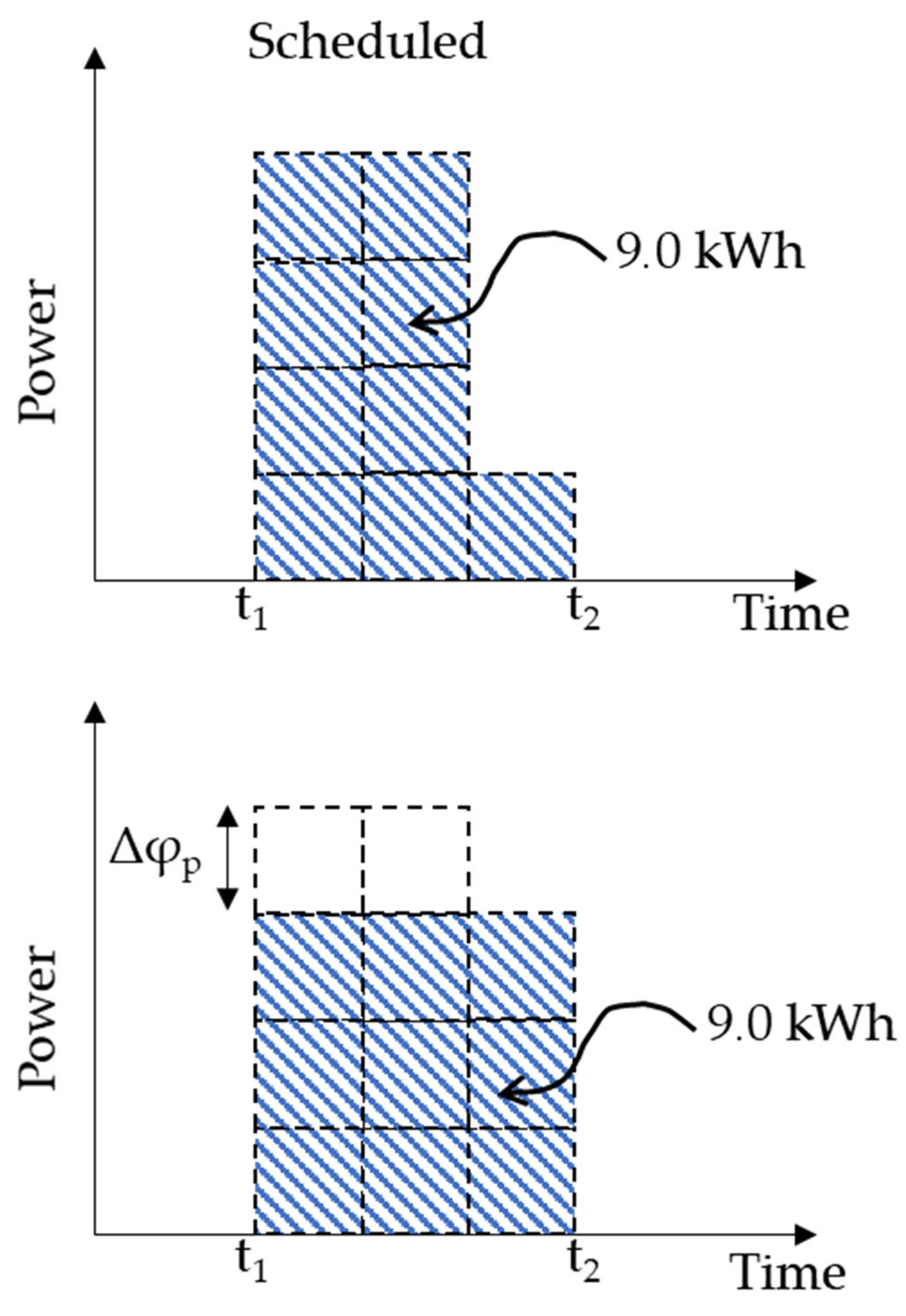
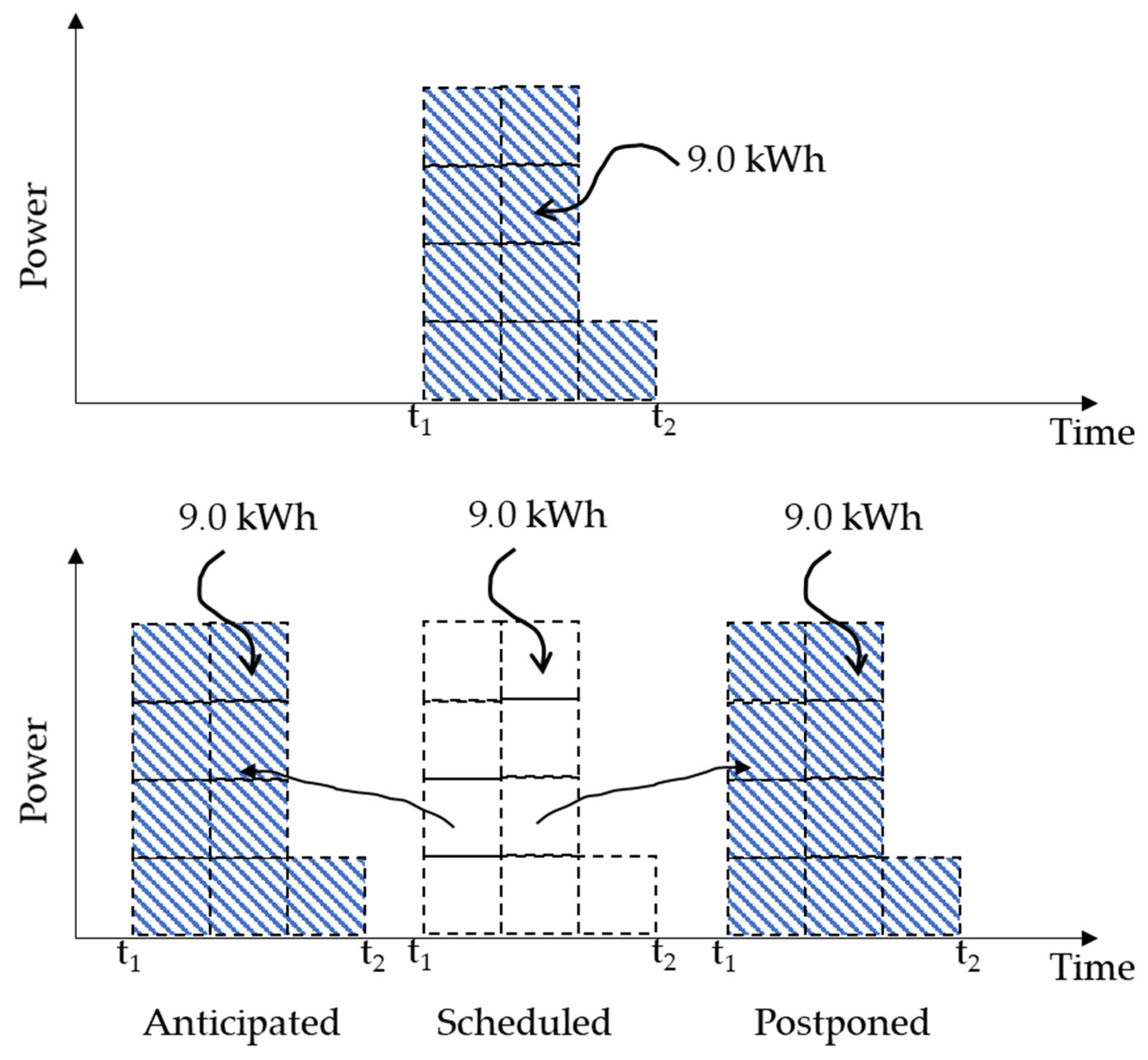
- is the flexible power consumption profile anticipated to an earlier timeframe {ti_ant, tf_ant} relative to the originally scheduled interval;
- is the flexible power consumption profile postponed to a later timeframe {ti_post, tf_post} relative to the originally scheduled interval.

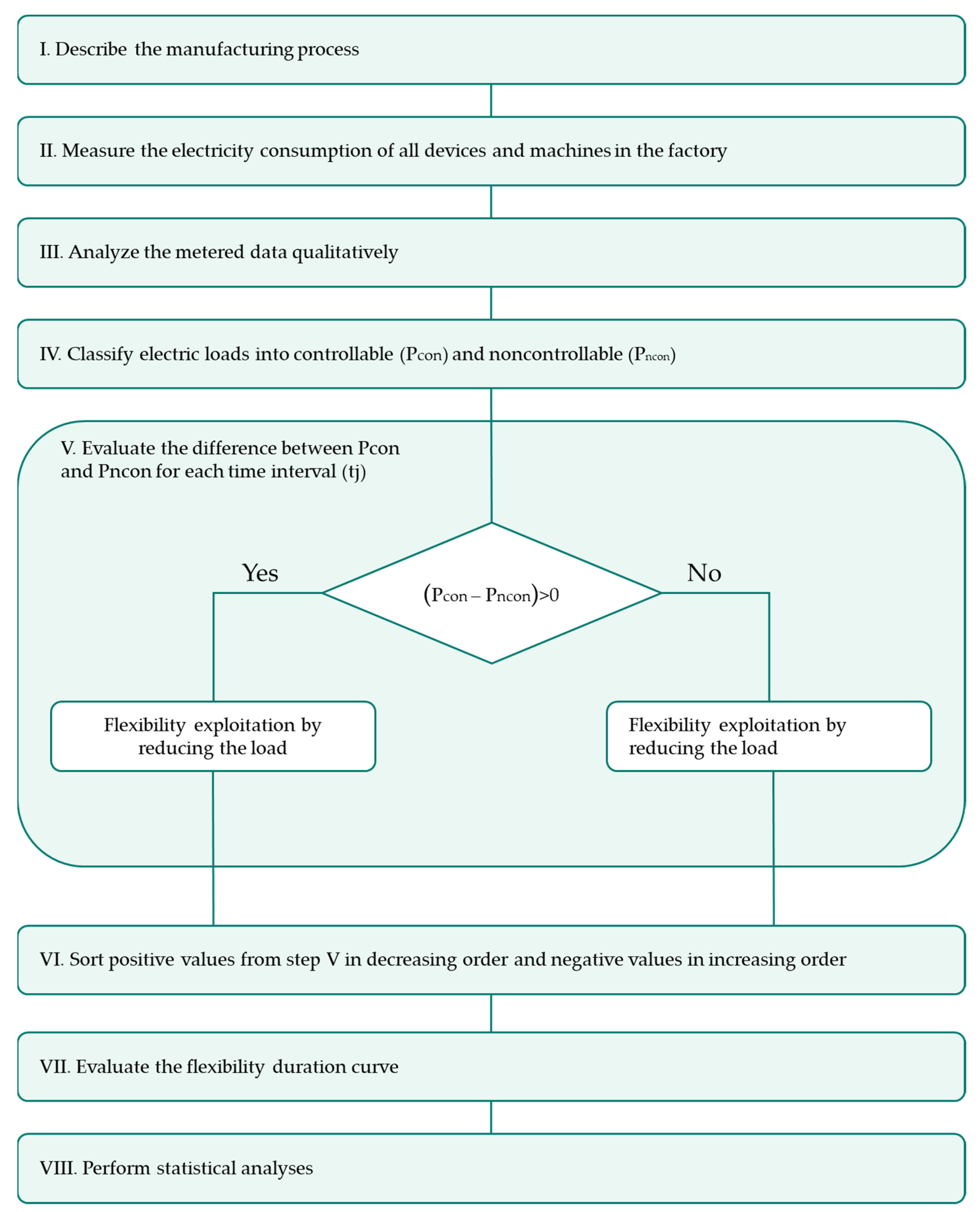
- I.
- Describe the manufacturing process;
- II.
- Measure the electricity consumption of all devices and machines in the factory;
- III.
- Analyze the metered data qualitatively;
- IV.
- Classify electric loads into controllable (Pcon) and noncontrollable (Pncon);
- V.
- Evaluate the difference between Pcon and Pncon for each time interval (tj);
- VI.
- Sort positive values calculated in step V in decreasing order and negative values in increasing order;
- VII.
- Evaluate the flexibility duration curve; and
- VIII.
- Perform statistical analyses.
4.2. Material for Designing a Sustainable Net-Zero Energy Factory: A Case Study of a German Carpentry Factory
- Infrastructures: Encompassing energetic and industrial aspects, such as energy generation, storage (for energy and materials), energy conversion systems (for example, power to heat using industrial heat pumps), load (electric, compressed air, heat at different temperatures), and digital infrastructure.
- Sensorics: Involving devices to measure energy and material flows within the facility, as well as parameters such as wind speed, solar irradiation, ambient temperature, room temperature, and the rotating speed of machines.
- Data Platform: A centralized platform for processing and analyzing data collected by sensorics to enable various services. It will support decision-making processes for flexibilizing the industrial processes.
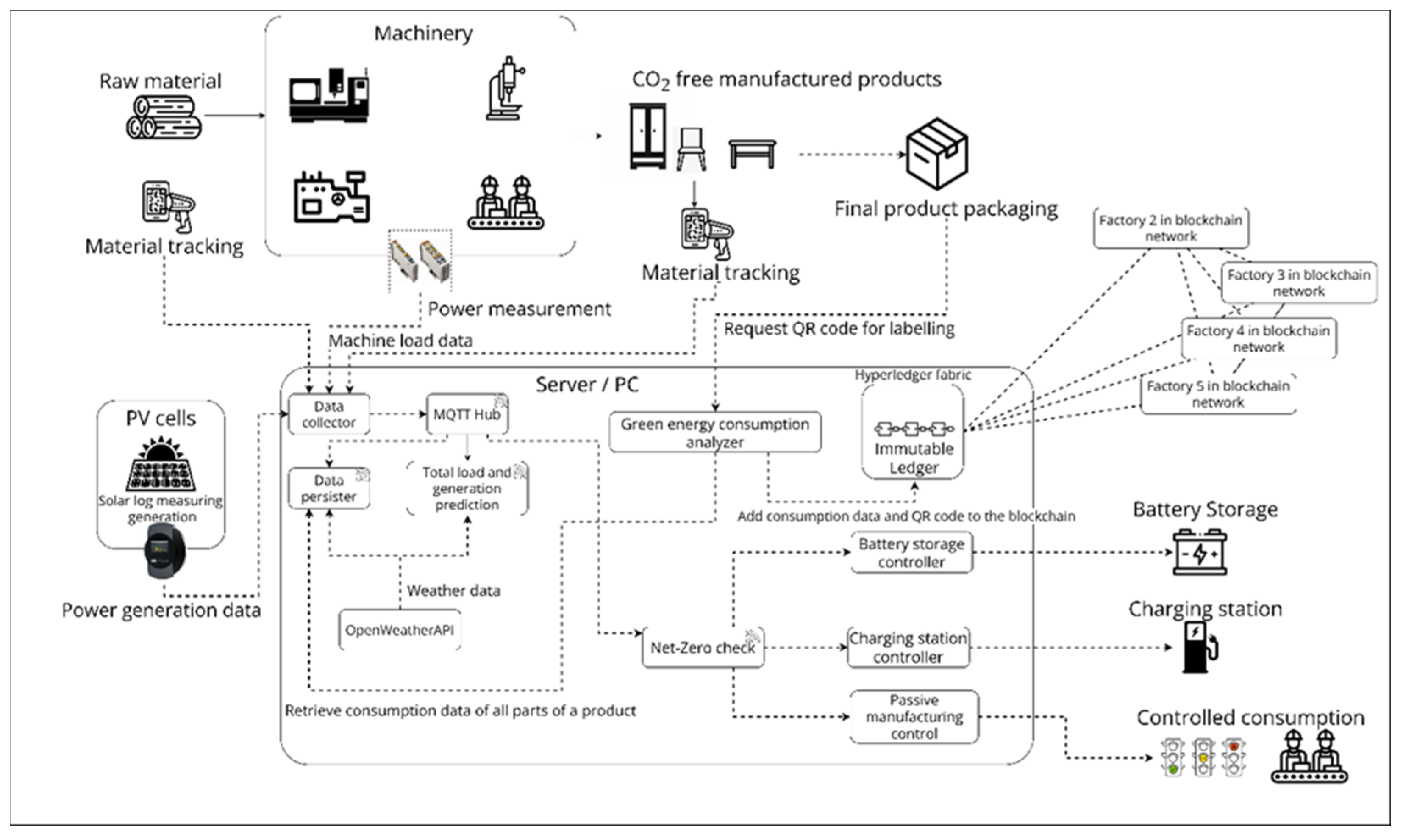
- Services: Offered in two primary categories—energetic services, optimizing the integration of power generated by iRES into industrial processes, and digital services, such as utilizing blockchain for tracking the energetic footprint of industrial processes [72].
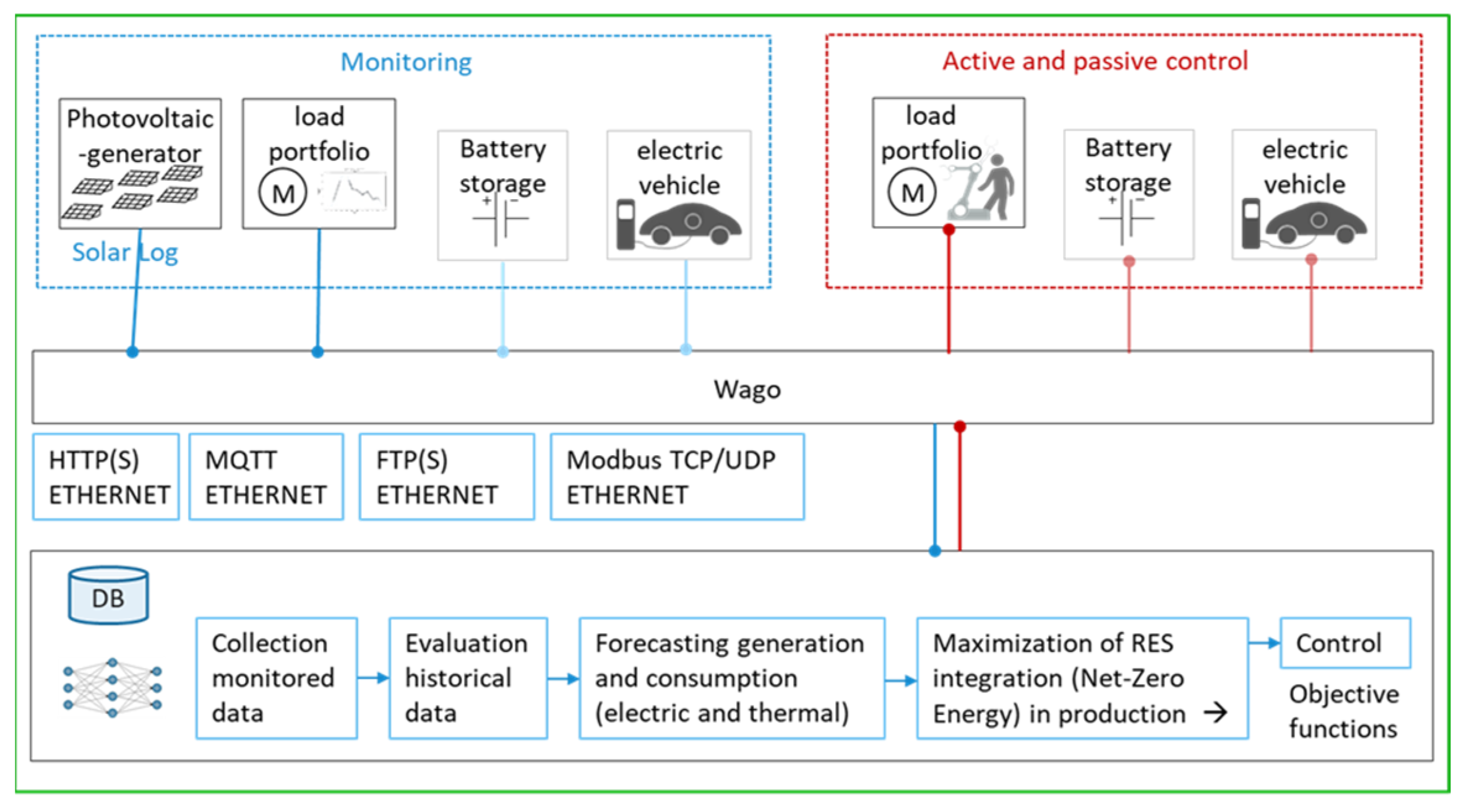
- Monitoring layer: This layer is responsible for continuously collecting and analyzing data from key energy-related components of the factory, including the PV system, load portfolio (sawing, drilling, milling, sanding), battery storage, and electric vehicle charging stations. Smart meters are used to monitor the real-time energy consumption, while the Solar-Log system records the PV generation. Data from all devices are transmitted through various communication protocols—HTTP(S), MQTT, file transfer protocol secure (FTP(S)), and Modbus transmission control protocol/user datagram protocol (TCP/UDP)—and stored in a centralized database. The data are analyzed to evaluate historical trends, forecast future energy generation and consumption (both electric and thermal), and support decision-making processes.
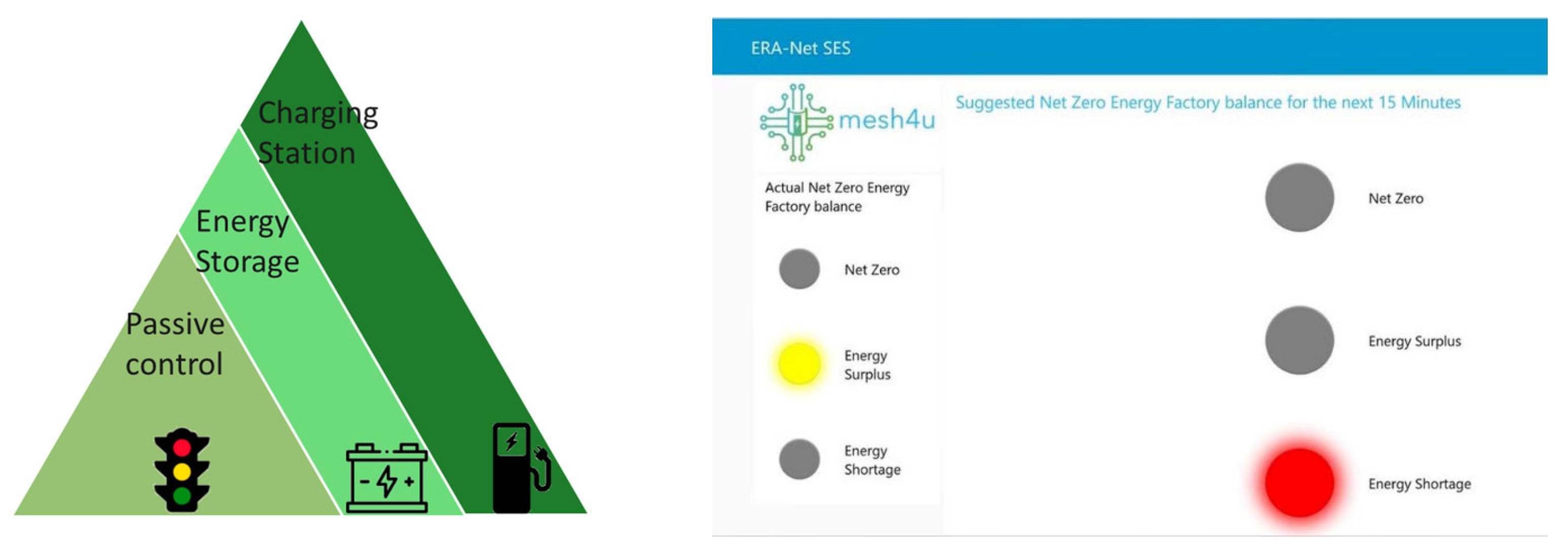
- Active and passive control layer: This layer uses the data collected by the monitoring system to implement control strategies that optimize energy consumption. Passive control provides machine operators with real-time visual feedback (e.g., traffic light signals) to guide process adjustments during periods of high solar power generation. If the suggested adjustments are not made, active control intervenes to manage battery storage and electric vehicle charging, ensuring maximum integration of the renewable energy into the production process.
5. Results and Discussions
5.1. Identification and Quantification of the Flexibility of Industrial Processes
- Sawing;
- Milling;
- Drilling;
- Sanding;
- Banding.
5.2. Exploitation of Identified and Quantified Flexibility
5.3. Energy Sustainability

5.4. Cost–Benefit Analysis of Implementing Flexibility and Sustainability Tracking in Net-Zero Energy Factories

| Installed PV Power (kW) | Yearly Generated Electricity (MWh/Year, After 20 Years) * | Yearly Consumed Electricity (MWh/Year) | Self-Consumed Electricity (MWh/Year) |
|---|---|---|---|
| 125 | 105 | 62.4 | 31 |
- With a 20 kWh battery (power 20 kW), self-consumption increases by about 4.0 MWh/year, reaching 35 MWh/year (about 56% of the demand).
- With a 40 kWh battery (power 20 kW), self-consumption increases by 8.0 MWh/year, reaching 39.0 MWh/year (about 62% of demand).
- With a 160 kWh battery (power 20 kW), the annual increase in self-consumption is 32.0 MWh (100% of its annual electricity demand). Seasonal/weekend surpluses may still occur; the claim refers to the annual energy balance.
5.5. Discussion
- Made visible through fine-grained metering;
- Organized with simple, human-centric scheduling cues;
- Buffered by small, targeted storage and EV charging.
- Meter first, then schedule: sub-meter machines, classify loads, and derive flexibility-duration curves before investing in assets; use simple visual cues to align flexible steps with PV-rich windows.
- Right-size storage: size batteries to daily surplus patterns and operator adherence, not to annual energy balancing; treat EV charging as an opportunistic sink rather than a guaranteed resource.
- Monetize transparency: if sustainability is tracked at the product level (QR-linked proofs), premiums can materially change the business case; governance and data quality are essential for credibility.
- Co-design energy and operations: exploit material buffers and late-stage processes (e.g., finishing) as primary levers; avoid rescheduling that jeopardizes takt or delivery reliability.
6. Conclusions
- Identify flexibility in the process;
- Add small storage only where it is effective;
- Use blockchain to make sustainability transparent and to capture a market premium.
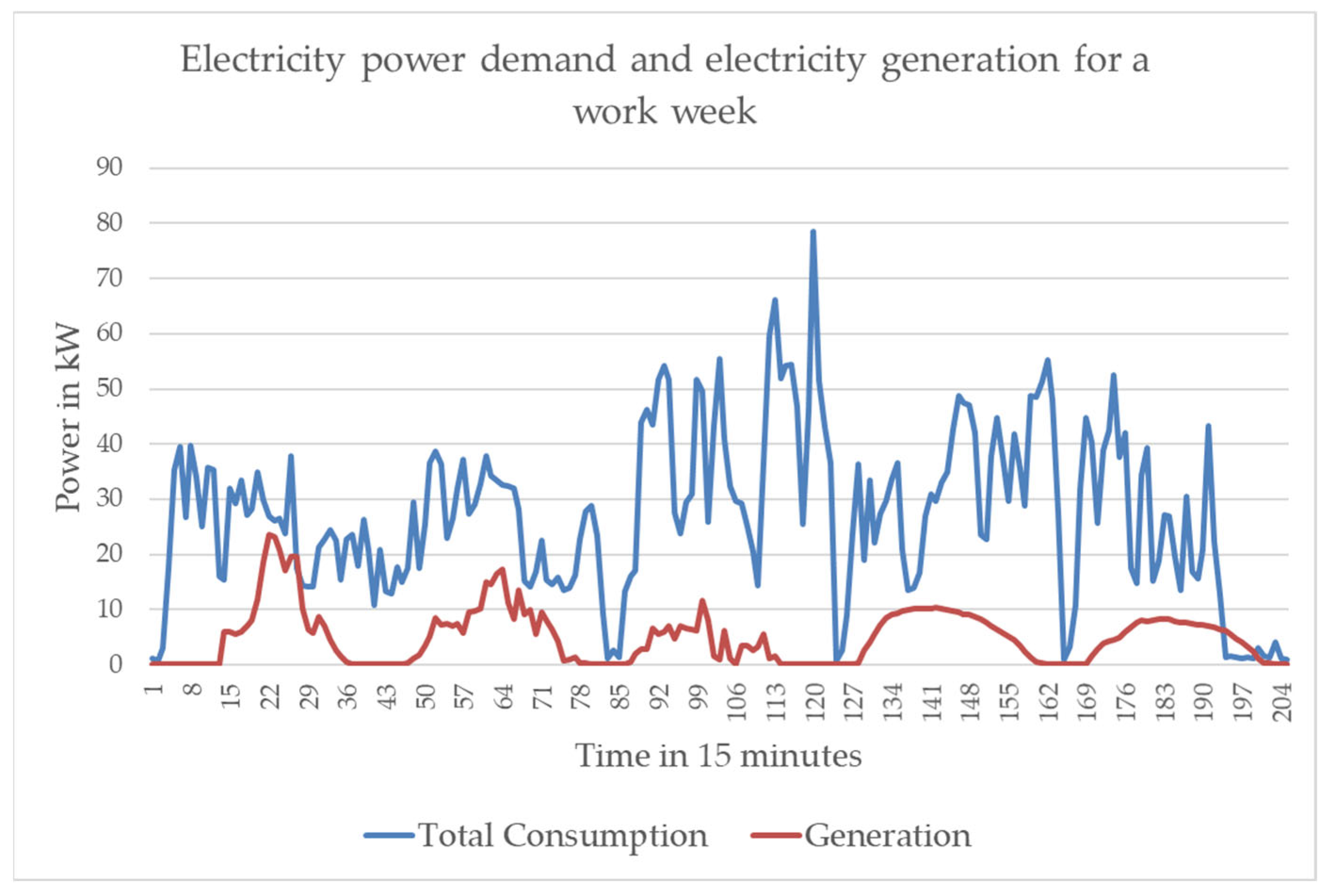
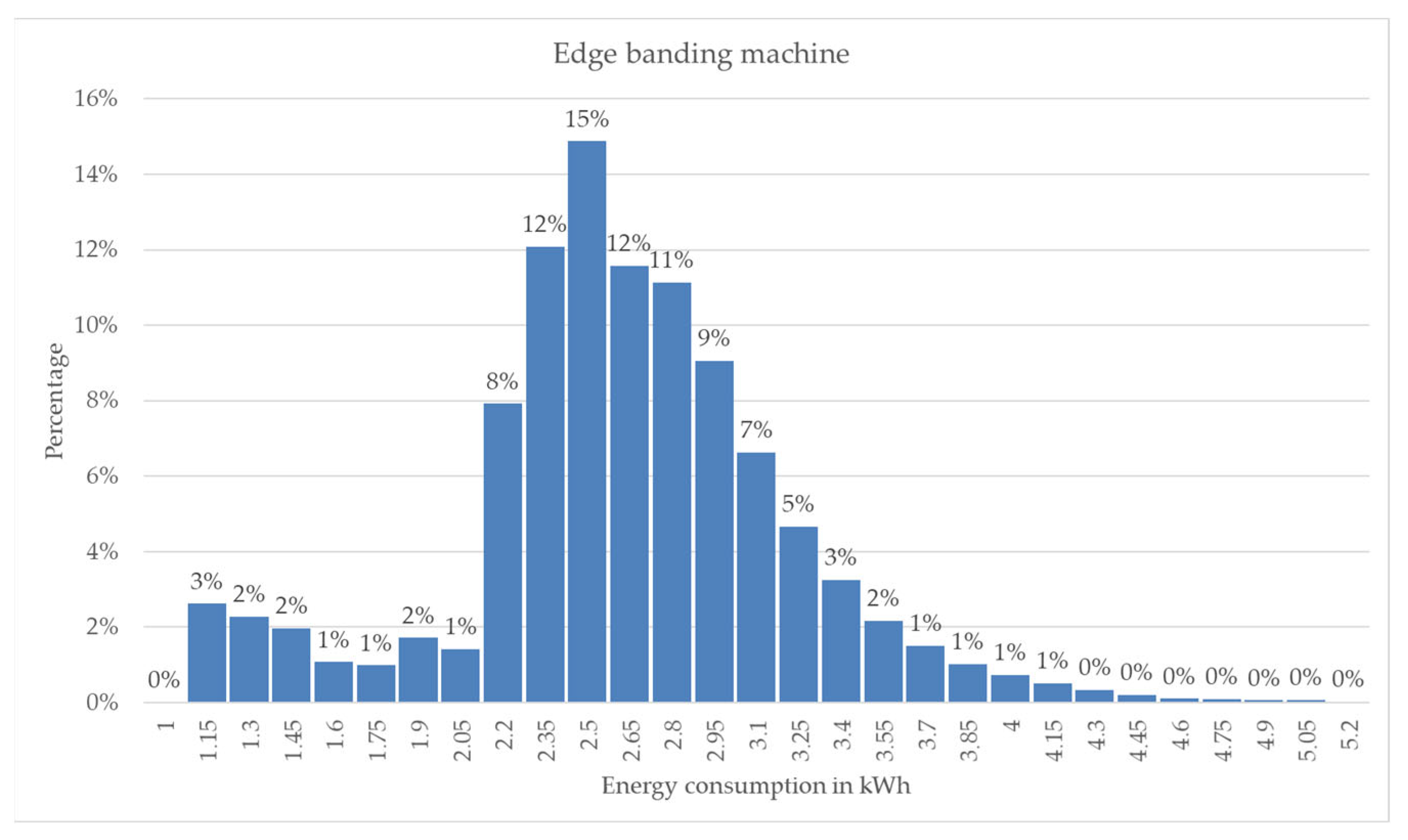
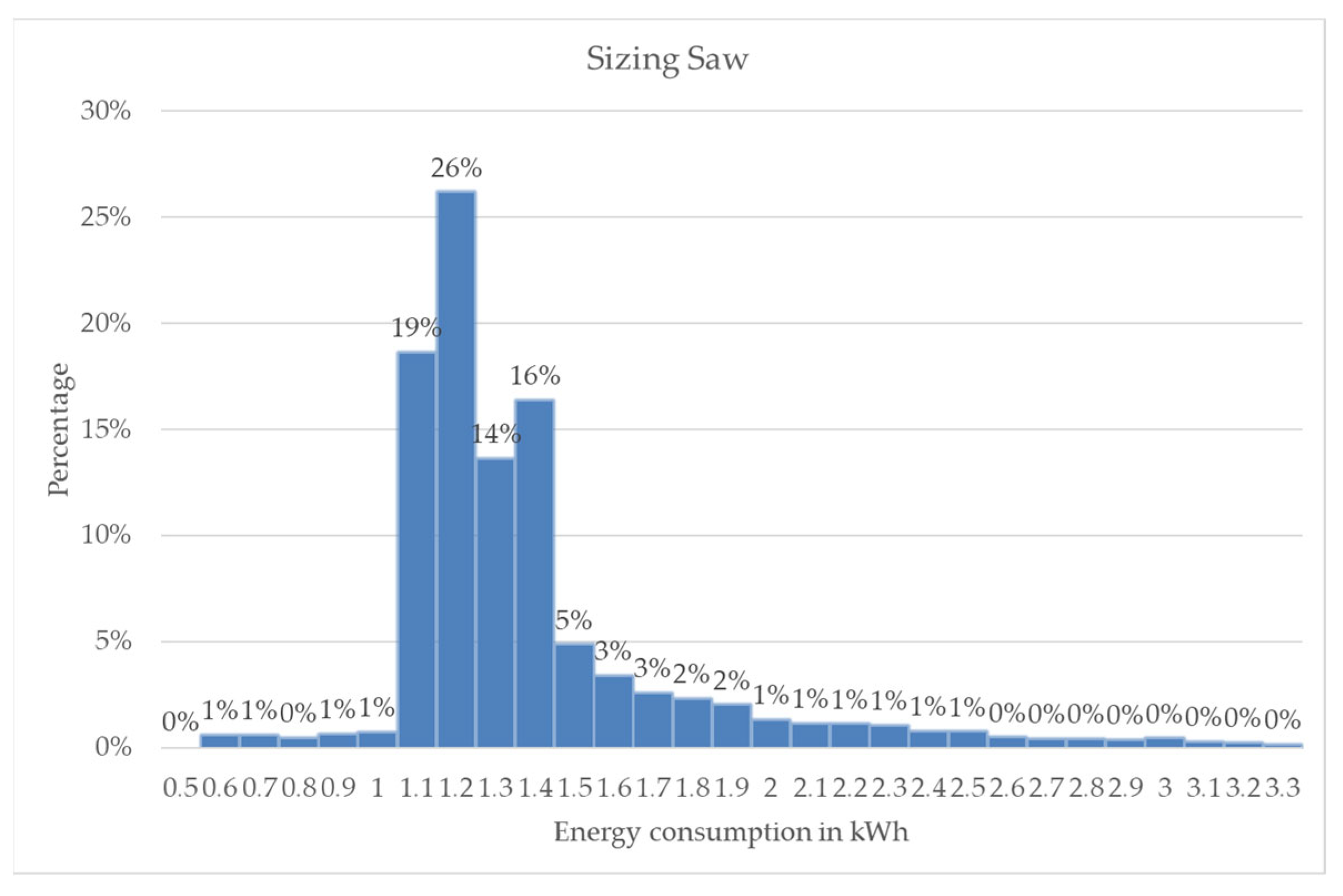
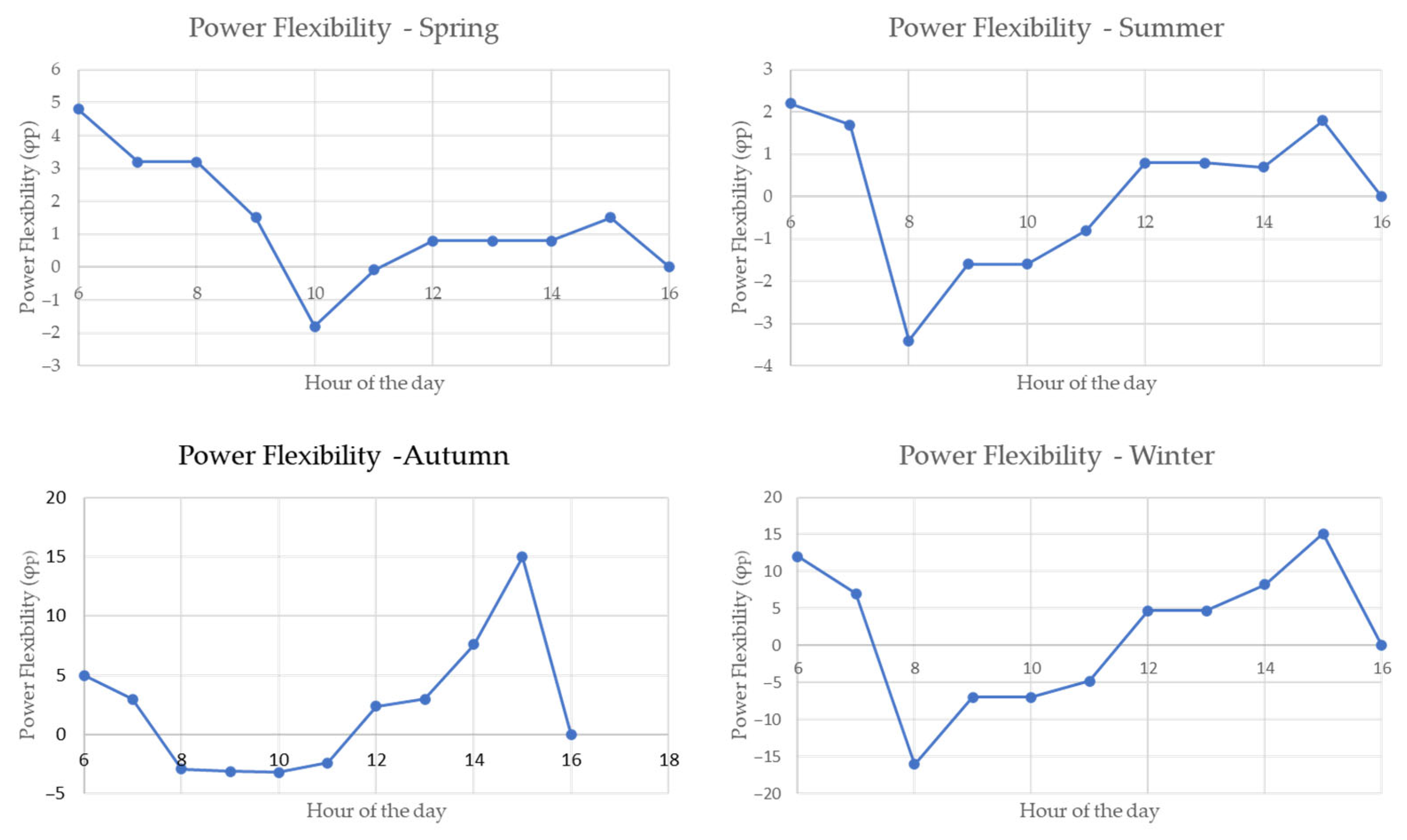
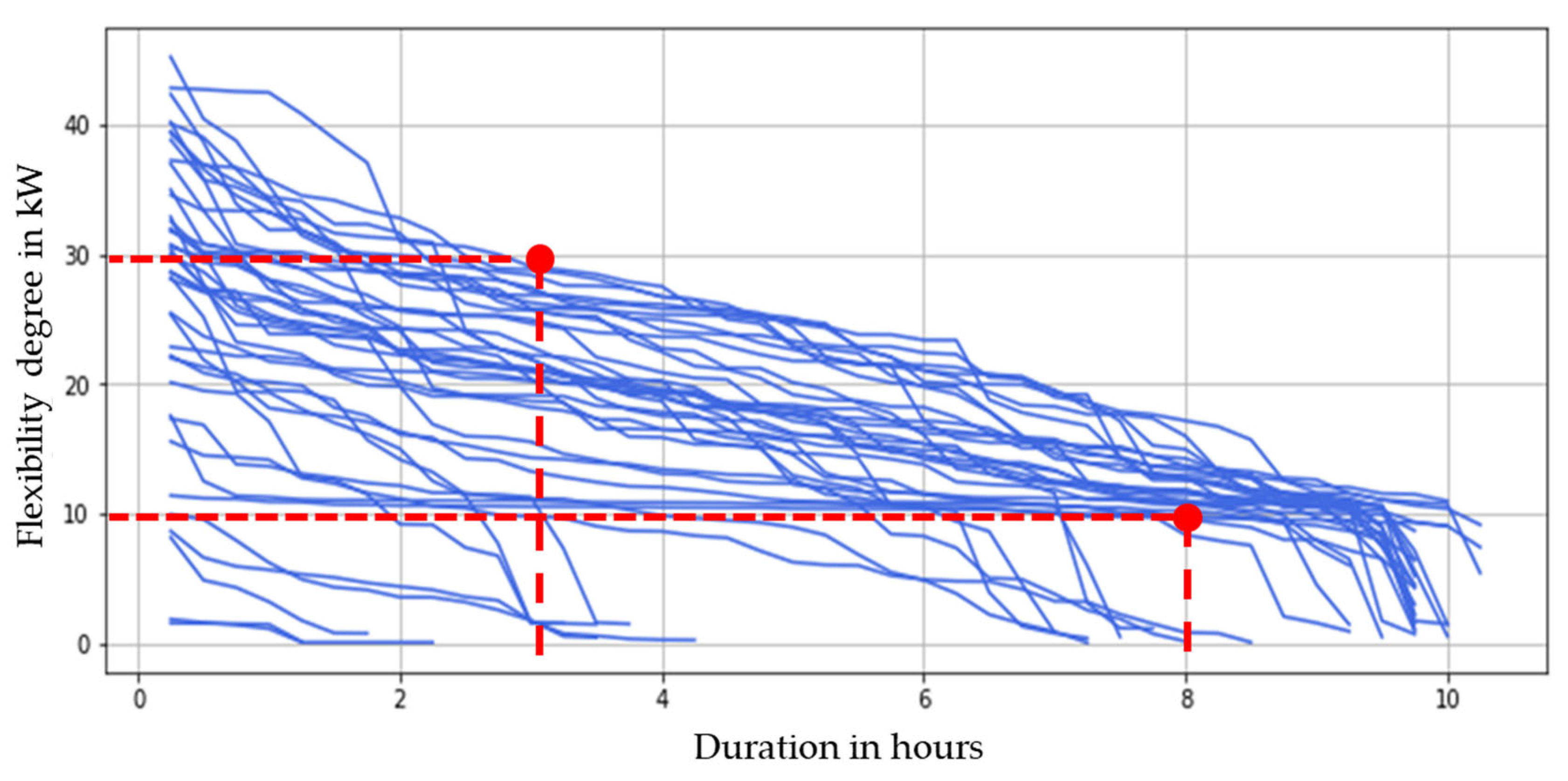
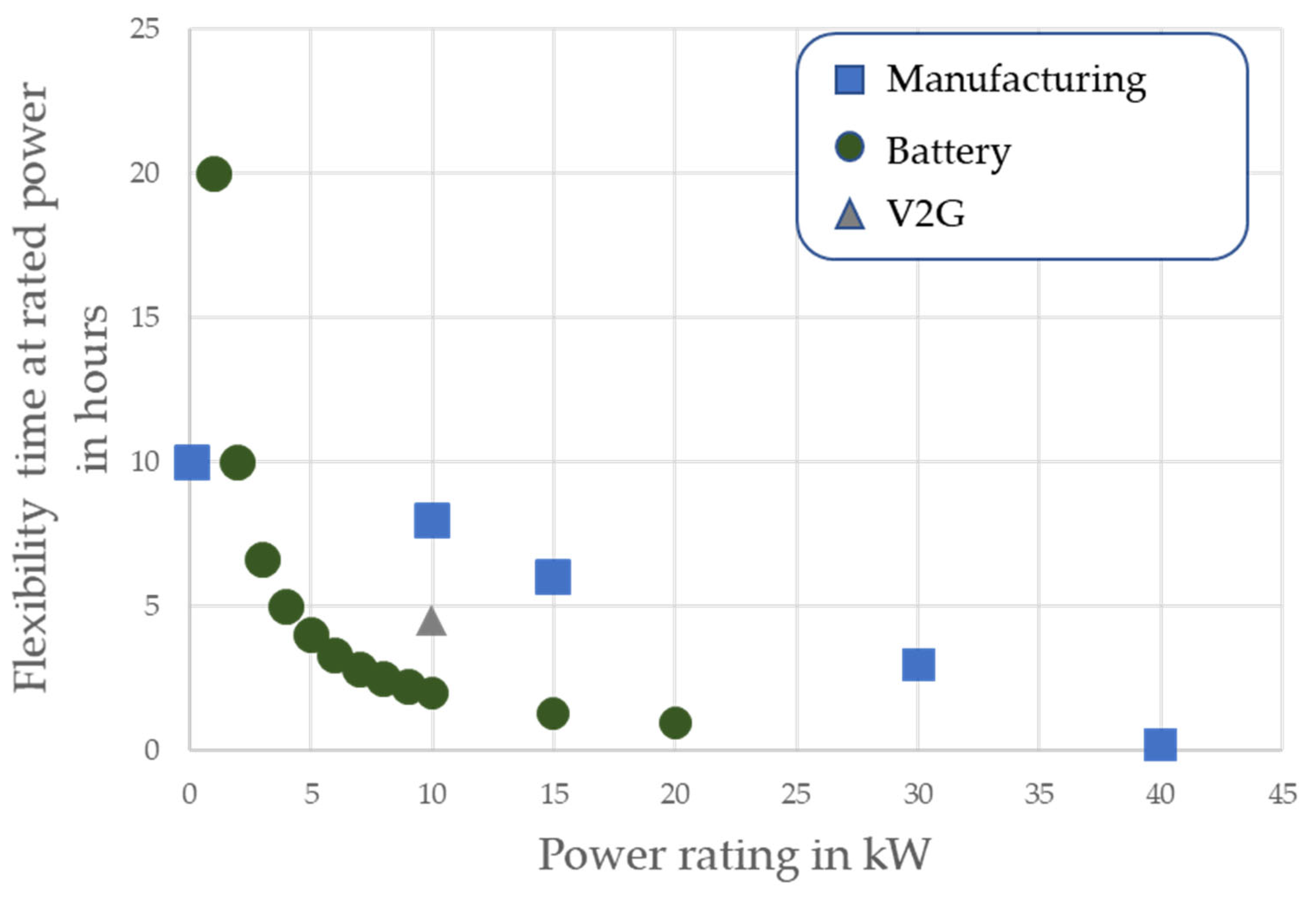
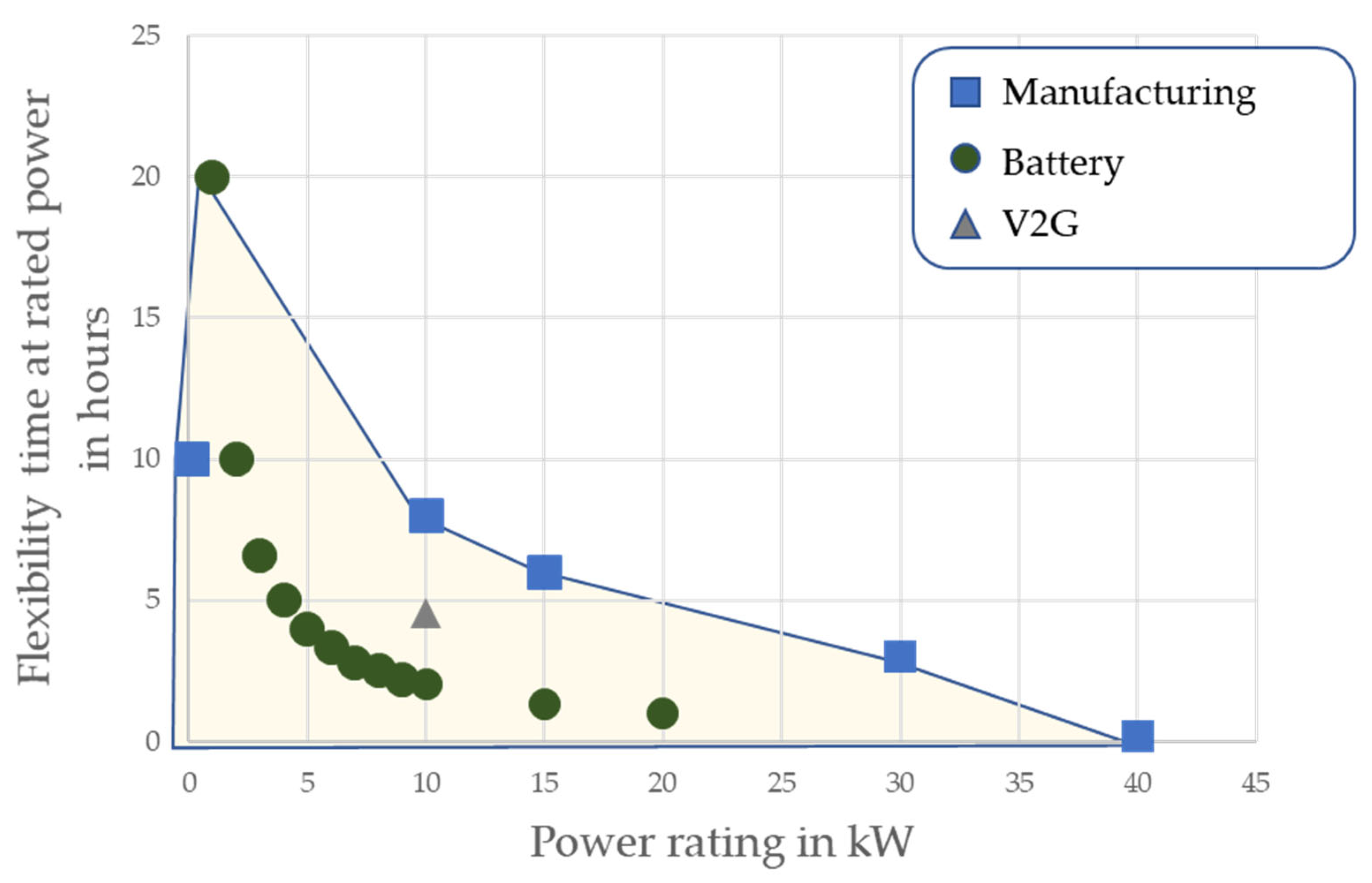
- Process flexibility: The carpentry factory can shift ≈30 kW for ≈3 h or ≈10 kW for ≈8 h (about 30% of peak load). Peak power is 80–100 kW; most operations last for <300 s (about 2 kWh for sawing; 2–3 kWh for banding). This enables better matching with on-site PV without affecting throughput.
- Self-consumption: From a business-as-usual baseline (50%, 31 MWh, 10,680 EUR/year), adding storage raises self-consumption to 56% with 20 kWh (12,050 EUR/year) and to 62% with 40 kWh (13,419 EUR/year). A ~160 kWh battery can reach ~100% (21,431 EUR/year), but requires high investment.
- Economics at current costs: With installed storage at about 750 EUR/kWh, storage alone is not attractive under the adopted assumptions; large batteries (e.g., 160 kWh) do not pay back from self-consumption savings only.
- Transparency and revenue: Tracking product sustainability on-chain can unlock a 5–10% market premium (75,000–150,000 EUR/year on EUR 1.5 M turnover). At 10%, small-to-medium storage (e.g., 20–40 kWh) becomes economically justified, while 160 kWh remains marginal unless premiums are >10% or additional value streams (e.g., demand-charge reduction) are added.
Funding
Institutional Review Board Statement
Informed Consent Statement
Data Availability Statement
Conflicts of Interest
Abbreviations
| φP | flexibility of power |
| φT | temporal flexibility |
| AI | artificial intelligence |
| DR | demand response |
| FTP(S) | file transfer protocol (secure) |
| HTTP(S) | hypertext transfer protocol (secure) |
| ICT | information and communication technology |
| IoT | internet of things |
| iRES | intermittent renewable energy sources |
| MENZEF | matching effect of Net-Zero Energy Factory |
| SMEs | small, and medium-sized enterprises |
| MQTT | message queuing telemetry transport protocol |
| NZEF | net-zero energy factories |
| NZES | net-zero energy system |
| Pg | power generated by iRES |
| Pd | power demanded by the factory |
| Pcon | controllable power load |
| Pncon | noncontrollable power load |
| Ps | power demanded scheduled |
| Pf | flexible power consumption |
| Pf_ant | flexible power consumption profile anticipated |
| Pf_post | flexible power consumption profile postponed |
| PV | photovoltaic |
| SME | small and medium-sized enterprise |
| SO | system operator |
| tfp | final time, during which the manufacturing processes are active |
| tip | initial time, during which the manufacturing processes are active |
| tj | time interval |
| TCP/UDP | transmission control protocol/user datagram protocol |
References
- German Federal Ministry for Economic Affairs and Energy. Renewable Energy Sources Act 2021 in German. Available online: https://www.bmwi.de/Redaktion/DE/Downloads/G/gesetzentwurf-aenderung-erneuerbare-energien-gesetzes-und-weiterer-energierechtlicher-vorschriften.pdf?__blob=publicationFile (accessed on 12 August 2025).
- Sperstad, I.B.; Degefa, M.Z.; Kjølle, G. The impact of flexible resources in distribution systems on the security of electricity supply: A literature review. Electr. Power Syst. Res. 2020, 188, 106532. [Google Scholar] [CrossRef]
- Kara, G.; Tomasgard, A.; Farahmand, H. Characterizing flexibility in power markets and systems. Util. Policy 2022, 75, 101349. [Google Scholar] [CrossRef]
- Tavares, B.; Soares, F.J. An innovative approach for distribution network reinforcement planning: Using DER flexibility to minimize investment under uncertainty. Electr. Power Syst. Res. 2020, 183, 106272. [Google Scholar] [CrossRef]
- Zwickl-Bernhard, S.; Auer, H. Demystifying natural gas distribution grid decommissioning: An open-source approach to local deep decarbonization of urban neighborhoods. Energy 2022, 238, 121805. [Google Scholar] [CrossRef]
- Sun, W.; Harrison, G.P. Active Load Management of Hydrogen Refuelling Stations for Increasing the Grid Integration of Renewable Generation. IEEE Access 2021, 9, 101681–101694. [Google Scholar] [CrossRef]
- Fleschutz, M.; Bohlayer, M.; Braun, M.; Murphy, M.D. From prosumer to flexumer: Case study on the value of flexibility in decarbonizing the multi-energy system of a manufacturing company. Appl. Energy 2023, 347, 121430. [Google Scholar] [CrossRef]
- Heffron, R.; Körner, M.-F.; Wagner, J.; Weibelzahl, M.; Fridgen, G. Industrial demand-side flexibility: A key element of a just energy transition and industrial development. Appl. Energy 2020, 269, 115026. [Google Scholar] [CrossRef]
- Rusche, S.; Weissflog, J.; Wenninger, S.; Häckel, B. How flexible are energy flexibilities? Developing a flexibility score for revenue and risk analysis in industrial demand-side management. Appl. Energy 2023, 345, 121351. [Google Scholar] [CrossRef]
- Shoreh, M.H.; Siano, P.; Shafie-Khah, M.; Loia, V.; Catalão, J.P. A survey of industrial applications of Demand Response. Electr. Power Syst. Res. 2016, 141, 31–49. [Google Scholar] [CrossRef]
- Körner, M.-F.; Bauerb, D.; Kellerd, R.; Rösche, M.; Schlerethb, A.; Simone, P.; Bauernhanslb, T.; Fridgend, G.; Reinharte, G. Extending the Automation Pyramid for Industrial Demand Response. Procedia CIRP 2019, 81, 998–1003. [Google Scholar] [CrossRef]
- Richstein, J.C.; Hosseinioun, S.S. Industrial demand response: How network tariffs and regulation (do not) impact flexibility provision in electricity markets and reserves. Appl. Energy 2020, 278, 115431. [Google Scholar] [CrossRef]
- Stede, J.; Arnold, K.; Dufter, C.; Holtz, G.; von Roon, S.; Richstein, J.C. The role of aggregators in facilitating industrial demand response: Evidence from Germany. Energy Policy 2020, 147, 111893. [Google Scholar] [CrossRef]
- Zhang, X.; Hug, G.; Kolter, J.Z.; Harjunkoski, I. Demand Response of Ancillary Service From Industrial Loads Coordinated With Energy Storage. IEEE Trans. Power Syst. 2017, 33, 951–961. [Google Scholar] [CrossRef]
- Ma, O.; Alkadi, N.; Cappers, P.; Denholm, P.; Dudley, J.; Goli, S.; Hummon, M.; Kiliccote, S.; MacDonald, J.; Matson, N.; et al. Demand Response for Ancillary Services. IEEE Trans. Smart Grid 2013, 4, 1988–1995. [Google Scholar] [CrossRef]
- Ranaboldo, M.; Aragüés-Peñalba, M.; Arica, E.; Bade, A.; Bullich-Massagué, E.; Burgio, A.; Caccamo, C.; Caprara, A.; Cimmino, D.; Domenech, B.; et al. A comprehensive overview of industrial demand response status in Europe. Renew. Sustain. Energy Rev. 2024, 203, 114797. [Google Scholar] [CrossRef]
- Explained, E.S. Businesses in the Manufacturing Sector. 2024. Available online: https://ec.europa.eu/eurostat/statistics-explained/index.php?title=Businesses_in_the_manufacturing_sector (accessed on 12 August 2025).
- Statista. Industriestrompreise (Inclusive Stromsteuer) in Deutschland in den Jahren 1998 bis 2023. Available online: https://de.statista.com/statistik/daten/studie/252029/umfrage/industriestrompreise-inkl-stromsteuer-in-deutschland/#:~:text=Der%20Industriestrompreis%20inklusive%20der%20Stromsteuer,letzten%20Jahren%20deutlich%20gestiegen%20sind (accessed on 12 August 2025).
- Bundesnetzagentur. Marktstammdatenregister. Available online: https://www.marktstammdatenregister.de/MaStR (accessed on 12 August 2025).
- Halicka, K.; Lombardi, P.A.; Styczynski, Z. Future-oriented analysis of battery technologies. In Proceedings of the 2015 IEEE International Conference on Industrial Technology (ICIT), Seville, Spain, 17–19 March 2015. [Google Scholar]
- Komarnicki, P.; Lombardi, P.; Styczynski, Z. Electric Energy Storage Systems: Flexibility Options for Smart Grids; Springer: Berlin/Heidelberg, Germany, 2017. [Google Scholar]
- Hozdic, E. Smart Factory for Industry 4.0: A Review. Int. J. Mod. Manuf. Technol. 2015, 7, 28–35. [Google Scholar]
- Li, Z.; Guo, H.; Wang, W.M.; Guan, Y.; Barenji, A.V.; Huang, G.Q. A Blockchain and AutoML Approach for Open and Automated Customer Service. In IEEE Transactions on Industrial Informatics; IEEE: New York, NY, USA; Volume 15, pp. 3642–3651. [CrossRef]
- Ferreira, J.J.; Lopes, K.M.; Gomes, S.; Rammal, H.G. Industry 4.0 implementation: Environmental and social sustainability in manufacturing multinational enterprises. J. Clean. Prod. 2023, 404, 136841. [Google Scholar] [CrossRef]
- Khan, A.A.; Laghari, A.A.; Li, P.; Dootio, M.A.; Karim, S. The collaborative role of blockchain, artificial intelligence, and industrial internet of things in digitalization of small and medium-size enterprises. Sci. Rep. 2023, 13, 1656. [Google Scholar] [CrossRef]
- NREL. Definition of a Zero Net Energy Community. Technical Report. Available online: https://docs.nrel.gov/docs/fy10osti/46065.pdf (accessed on 12 August 2025).
- Omrany, H.; Chang, R.; Soebarto, V.; Zhang, Y.; Ghaffarianhoseini, A.; Zuo, J. A bibliometric review of net zero energy building research 1995–2022. Energy Build. 2022, 262, 111996. [Google Scholar] [CrossRef]
- Markwirtschaft, F.Ö.-S. Redispatc in Deutschen Stromsystem-Hintergünde, Kostenverteilung, Emissionen. Available online: https://foes.de/publikationen/2023/2023_09_FOES_Redispatch.pdf (accessed on 12 August 2025).
- Bernath, C.; Deac, G.; Sensfuß, F. Impact of sector coupling on the market value of renewable energies—A model-based scenario analysis. Appl. Energy 2021, 281, 115985. [Google Scholar] [CrossRef]
- Biddau, F.; Brondi, S.; Cottone, P.F. Unpacking the Psychosocial Dimension of Decarbonization between Change and Stability: A Systematic Review in the Social Science Literature. Sustainability 2022, 14, 5308. [Google Scholar] [CrossRef]
- Elkington, J. Towards the sustainable corporation: Win-win-win business strategies for stainable development. Calif Manag. Rev. 1994, 36, 90–100. [Google Scholar] [CrossRef]
- Lee, H.J. How do companies’ net zero efforts affect consumer product evaluation through reciprocity and trust? A study in Korea. Sustain. Prod. Consum. 2023, 38, 149–158. [Google Scholar] [CrossRef]
- Garner. The ESG Imperative: 7 Factors for Finance Leaders to Consider. Available online: https://www.gartner.com/smarterwithgartner/the-esg-imperative-7-factors-for-finance-leaders-to-consider (accessed on 12 August 2025).
- Deloitte. The Sustainable Consumer-Understanding Consumer Attitudes to Sustainability and Sustainable Behaviours. Available online: https://www.deloitte.com/uk/en/Industries/consumer/perspectives/the-sustainable-consumer.html (accessed on 12 August 2025).
- Parmentola, A.; Petrillo, A.; Tutore, I.; De Felice, F. Is blockchain able to enhance environmental sustainability? A systematic review and research agenda from the perspective of Sustainable Development Goals (SDGs). Bus. Strategy Environ. 2021, 31, 194–217. [Google Scholar] [CrossRef]
- Wang, Z.; Lin, J.; Cai, Q.; Wang, Q.; Zha, D.; Jing, J. Blockchain-Based Certificate Transparency and Revocation Transparency. IEEE Trans. Dependable Secur. Comput. 2020, 19, 681–697. [Google Scholar] [CrossRef]
- Morkunas, V.J.; Paschen, J.; Boon, E. How blockchain technologies impact your business model. Bus. Horiz. 2019, 62, 295–306. [Google Scholar] [CrossRef]
- Bartolucci, L.; Cordiner, S.; Mulone, V.; Santarelli, M.; Lombardi, P.; Arendarski, B. Towards Net Zero Energy Factory: A multi-objective approach to optimally size and operate industrial flexibility solutions. Int. J. Electr. Power Energy Syst. 2022, 137, 107796. [Google Scholar] [CrossRef]
- You, Z.; Lumpp, S.D.; Doepfert, M.; Tzscheutschler, P.; Goebel, C. Leveraging flexibility of residential heat pumps through local energy markets. Appl. Energy 2023, 355, 122269. [Google Scholar] [CrossRef]
- Bruno, S.; Dicorato, M.; La Scala, M.; Sbrizzai, R.; Lombardi, P.A.; Arendarski, B. Optimal sizing and operation of electric and thermal storage in a net zero multi energy system. Energies 2019, 12, 3389. [Google Scholar] [CrossRef]
- Beier, J.; Thiede, S.; Hermann, C. Increasing Energy Flexibility of Manufacturing Systems through flexible compressed air generation. Procedia CIRP 2015, 37, 18–23. [Google Scholar] [CrossRef]
- Patterson, M.; Singh, P.; Cho, H. The current state of the industrial energy assessment and its impacts on the manufacturing industry. Energy Rep. 2022, 8, 7297–7311. [Google Scholar] [CrossRef]
- Javed, M.S.; Jurasz, J.; Dąbek, P.B.; Ma, T.; Jadwiszczak, P.; Niemierka, E. Green manufacturing facilities—Meeting CO2 emission targets considering power and heat supply. Appl. Energy 2023, 350, 121707. [Google Scholar] [CrossRef]
- De Corato, A.; Saedi, I.; Riaz, S.; Mancarella, P. Aggregated flexibility from multiple power-to-gas units in integrated electricity-gas-hydrogen distribution systems. Electr. Power Syst. Res. 2022, 212, 108409. [Google Scholar] [CrossRef]
- Styczynski, Z.; Lombardi, P.; Sokolnikova, T.; Suslov, K. Power to Gas as an alternative energy storage solution to integrate a large amount of renewable energy: Economic and technical analysis. In CIGRE C6 Colloquium; CIGRE: Yokohama, Japan, 2013. [Google Scholar]
- Ridjan, I.; Mathiesen, B.V.; Connolly, D.; Duić, N. The feasibility of synthetic fuels in renewable energy systems. Energy 2013, 57, 76–84. [Google Scholar] [CrossRef]
- Sterner, M.; Stadler, I. Handbook of Energy Storage: Demand, Technologies, Integration; Springer: Berlin/Heidelberg, Germany, 2019. [Google Scholar]
- Lim, J.Y.; Safder, U.; How, B.S.; Ifaei, P.; Yoo, C.K. Nationwide sustainable renewable energy and Power-to-X deployment planning in South Korea assisted with forecasting model. Appl. Energy 2021, 283, 116302. [Google Scholar] [CrossRef]
- Breyer, C.; Khalili, S.; Bogdanov, D.; Ram, M.; Oyewo, A.S.; Aghahosseini, A.; Gulagi, A.; Solomon, A.A.; Keiner, D.; Lopez, G.; et al. On the History and Future of 100% Renewable Energy Systems Research. IEEE Access 2022, 10, 78176–78218. [Google Scholar] [CrossRef]
- Dranka, G.G.; Ferreira, P. Load flexibility potential across residential, commercial and industrial sectors in Brazil. Energy 2020, 201, 117483. [Google Scholar] [CrossRef]
- Golmohamadi, H. Demand-Side Flexibility in Power Systems: A Survey of Residential, Industrial, Commercial, and Agricultural Sectors. Sustainability 2022, 14, 7916. [Google Scholar] [CrossRef]
- Federal Ministry for Economic Affairs and Climate Actions. Ther Germand Mittelstand as a Model for Success. Available online: https://www.bmwk.de/Redaktion/EN/Dossier/sme-policy.html (accessed on 12 August 2025).
- Forum, I.-G.E. Potential for Demand Side Management in Industry. 2023. Available online: https://www.energyforum.in/fileadmin/user_upload/india/media_elements/publications/20230130_Potential_for_Demand_Side_Management_in_Industry/20230203_mn_KPMG_Rep.pdf (accessed on 12 August 2025).
- Karg, L.; von Jagwitz, A.; Baumgartner, G.; Wedler, M.; Kleine-Hegermann, K.; Jahn, C. Lastverschiebungspotenziale in Kleinen und Mittleren Unternehmen und Erfolgsfaktoren zur Hebung Dieser Potenziale. 2014. Available online: https://nachhaltigwirtschaften.at/resources/e2050_pdf/reports/201408_bericht_lastverschiebungspotenziale_140115.pdf (accessed on 12 August 2025).
- Bakare, M.S.; Abdulkarim, A.; Zeeshan, M.; Shuaibu, A.N. A comprehensive overview on demand side energy management towards smart grids: Challenges, solutions, and future direction. Energy Inf. 2023, 6, 4. [Google Scholar] [CrossRef]
- Caro-Ruiz, C.; Lombardi, P.; Richter, M.; Pelzer, A.; Komarnicki, P.; Pavas, A.; Mojica-Nava, E. Coordination of optimal sizing of energy storage systems and production buffer stocks in a net zero energy factory. Appl. Energy 2019, 238, 851–862. [Google Scholar] [CrossRef]
- Tristan, A.; Hauberger, F.; Sauer, A. A Methodology to systematically identify and characterize energy flexibility measures in industrial systems. Energies 2020, 13, 5887. [Google Scholar] [CrossRef]
- Mezgebe, T.T.; El Haouzi, H.B.; Demesure, G.; Pannequin, R.; Thomas, A. Multi-agent systems negotiation to deal with dynamic scheduling in disturbed industrial context. J. Intell. Manuf. 2019, 31, 1367–1382. [Google Scholar] [CrossRef]
- Shen, W.; Wang, L.; Hao, Q. Agent-based distributed manufacturing process planning and scheduling: A state-of-the-art survey. IEEE Trans. Syst. Man Cybern. Part C 2006, 36, 563–577. [Google Scholar] [CrossRef]
- Ewa, D.-D. Modeling manufacturing processes with disturbances—Two-stage AL model transformation method. In Proceedings of the 2015 20th International Conference on Methods and Models in Automation and Robotics (MMAR), Miedzyzdroje, Poland, 24–27 August 2015; pp. 782–787. [Google Scholar] [CrossRef]
- Paynabar, K.; Jin, J.; Reed, M.P. Informative sensor and feature selection via hierarchical nonnegative garrote. Technometrics 2015, 57, 514–523. [Google Scholar] [CrossRef]
- Deng, X.; Jin, R. QQ models: Joint modeling for quantitative and qualitative quality responses in manufacturing systems. Technometrics 2015, 57, 320–331. [Google Scholar] [CrossRef]
- Liu, J.; Jin, J.; Shi, J. State space modeling for 3-D variation propagation in rigid-body multistage assembly processes. IEEE Trans. Autom. Sci. Eng. 2009, 7, 274–290. [Google Scholar] [CrossRef]
- Djurdjanovic, D.; Ni, J. Stream-of-variation (SoV)-based measurement scheme analysis in multistation machining systems. IEEE Trans. Autom. Sci. Eng. 2006, 3, 407–422. [Google Scholar] [CrossRef]
- Kaibo, L.; Shuai, H. Integration of data fusion methodology and degradation modeling process to improve prognostics. IEEE Trans. Autom. Sci. Eng. 2016, 13, 344–354. [Google Scholar]
- Bukkapatnam, S.; Malshe, M.; Agrawal, P.M.; Raff, L.M.; Komanduri, R. Parametrization of interatomic potential functions using a genetic algorithm accelerated with a neural network. Phys. Rev. B Condens. Matter. 2006, 74, 224102. [Google Scholar] [CrossRef]
- Zeng, L.; Zhou, S. Inferring the interactions in complex manufacturing processes using graphical models. Technometrics 2007, 49, 373–381. [Google Scholar] [CrossRef]
- Sun, H.; Huang, S.; Jin, R. Functional graphical models for manufacturing process modeling. IEEE Trans. Autom. Sci. Eng. 2017, 14, 1612–1621. [Google Scholar] [CrossRef]
- Bebic, J.Z.; Berry, I.M.; James, A.N.; Lee, D.O. Quantifying electric load flexibility using smart meter data. In Proceedings of the 2019 IEEE Power & Energy Society General Meeting (PESGM), Atlanta, GA, USA, 4–8 August 2019; pp. 1–5. [Google Scholar] [CrossRef]
- Lombardi, P.A.; Liserre, M. Net-Zero energy factoriy, Exploitation of flexibility-A technical-economic analysis for a German carpentry. In Proceedings of the 2022 IEEE 21st Mediterranean Electrotechnical Conference (MELECON), Palermo, Italy, 14–16 June 2022. [Google Scholar]
- Bartolucci, L.; Cordiner, S.; Mulone, V.; Santarelli, M.; Lombardi, P.; Wenge, C.; Arendarski, B.; Komarnicki, P. Grid service potential from optimal sizing and scheduling the charging hub of a commercial Electric Vehicle fleet. In Proceedings of the IEEE International Conference on Environment and Electrical Engineering and Industrial and Commercial Power Systems Europe (EEEIC/CPS Europe), Madrid, Spain, 9–12 June 2020. [Google Scholar]
- Gerged, A.M.; Salem, R.; Beddewela, E. How does transparency into global sustainability initiatives influence firm value? Insights from Anglo-American countries. Bus. Strategy Environ. 2023, 32, 4519–4547. [Google Scholar] [CrossRef]
- Steele, G. Green Business Is Good Business: Why Transparency Is Key for Corporate Sustainability. Forbes Business Councill. 2021. Available online: https://www.forbes.com/sites/forbesbusinesscouncil/2021/02/11/green-business-is-good-business-why-transparency-is-key-for-corporate-sustainability/ (accessed on 12 August 2025).
- Hyperledger Foundation Projects. Hyperledger Fabric. Available online: https://www.hyperledger.org/projects/fabric (accessed on 1 July 2025).
- Energetic Sustainability in Business-as-Usual. Available online: https://dipa.iff.fraunhofer.de/artechain/#/block/1 (accessed on 1 July 2025).
- Energetic Sustainability in NZEF Modus. Available online: https://dipa.iff.fraunhofer.de/artechain/#/block/2 (accessed on 1 July 2025).
- Rahman, T.; Mansur, A.A.; Lipu, M.S.H.; Rahman, M.S.; Ashique, R.H.; Houran, M.A.; Elavarasan, R.M.; Hossain, E. Investigation of Degradation of Solar Photovoltaics: A Review of Aging Factors, Impacts, and Future Directions toward Sustainable Energy Management. Energies 2023, 16, 3706. [Google Scholar] [CrossRef]


| Component | Specification | Cost (€) for Investment and Installation |
|---|---|---|
| Infrastructure for Flexibility | ||
| Battery storage systems | Configuration: 20 kW; 20 kWh | 15,000 |
| Electric vehicle charging stations | 22 kW (2 × 11 kW) | 7000 |
| Digital Infrastructure | ||
| IoT sensors and energy monitoring | Smart meters and barcode scanners | 35,000 |
| Data management platform | Blockchain implementation | 20,000 |
| Training Costs | ||
| Training personnel | Initial training | 2000 |
| Benefit Type | Scenario | Value (€) | Additional Savings (€) * |
|---|---|---|---|
| Energy Savings | Business-as-usual (50% self-consumption, 31 MWh) | 10,680 | 0 |
| 20 kWh battery, 56% self-consumption (35.0 MWh) | 12,050 | 1370 | |
| 40 kWh battery, 62% self-consumption (39.0 MWh) | 13,419 | 2739 | |
| ~160 kWh battery (100% self-consumption, 62.4 MWh) | 21,431 | 10,751 |
| Digital Infrastructure and Training–Without Energy Storage | Energy Storage Capacity 20 kWh | Energy Storage Capacity 40 kWh | Energy Storage Capacity 160 kWh | |
|---|---|---|---|---|
| Costs | EUR 64,000 | 15,000 | EUR 30,000 | EUR 120,000 |
| Total costs | EUR 64,000 | 79,000 | EUR 94,000 | EUR 184,000 |
| Total benefits due to the self-consumption | EUR 10,680 | 12,050 | EUR 13,419 | EUR 21,431 |
| Sum of costs and benefits (net balance in year 1) | EUR −53,320 | −66,950 | EUR −80,581 | EUR −162,569 |
| Without Energy Storage | Energy Storage Capacity 20 kWh | Energy Storage Capacity 40 kWh | Energy Storage Capacity 160 kWh | |
|---|---|---|---|---|
| Benefit for market premium 5% in € | EUR 0 * | EUR 75,000 | EUR 75,000 | EUR 75,000 |
| Benefit for market premium 10% in € | EUR 0 * | EUR 150,000 | EUR 150,000 | EUR 150,000 |
| Total benefit including self-consumption and market premium 5% | EUR 10,680 | EUR 87,050 | EUR 88,419 | EUR 96,431 |
| Total benefit including self-consumption and market premium 10% | EUR 10,680 | EUR 162,050 | EUR 163,419 | EUR 171,431 |
| Sum of costs and benefits considering market premium 5% (net balance in year 1) | EUR −53,320 | EUR +8050 | EUR −5581 | EUR −87,569 |
| Sum of costs and benefits considering market premium 10% (net balance in year 1) | EUR −53,320 | EUR +83,050 | EUR +69,419 | EUR −12,569 |
Disclaimer/Publisher’s Note: The statements, opinions and data contained in all publications are solely those of the individual author(s) and contributor(s) and not of MDPI and/or the editor(s). MDPI and/or the editor(s) disclaim responsibility for any injury to people or property resulting from any ideas, methods, instructions or products referred to in the content. |
© 2025 by the author. Licensee MDPI, Basel, Switzerland. This article is an open access article distributed under the terms and conditions of the Creative Commons Attribution (CC BY) license (https://creativecommons.org/licenses/by/4.0/).
Share and Cite
Lombardi, P.A. Technical and Economic Approaches to Design Net-Zero Energy Factories: A Case Study of a German Carpentry Factory. Sustainability 2025, 17, 7891. https://doi.org/10.3390/su17177891
Lombardi PA. Technical and Economic Approaches to Design Net-Zero Energy Factories: A Case Study of a German Carpentry Factory. Sustainability. 2025; 17(17):7891. https://doi.org/10.3390/su17177891
Chicago/Turabian StyleLombardi, Pio Alessandro. 2025. "Technical and Economic Approaches to Design Net-Zero Energy Factories: A Case Study of a German Carpentry Factory" Sustainability 17, no. 17: 7891. https://doi.org/10.3390/su17177891
APA StyleLombardi, P. A. (2025). Technical and Economic Approaches to Design Net-Zero Energy Factories: A Case Study of a German Carpentry Factory. Sustainability, 17(17), 7891. https://doi.org/10.3390/su17177891