1. Introduction
Cultural heritage serves as a vital medium that carries historical memory, artistic value, and collective identity, playing an irreplaceable role in promoting cultural continuity and safeguarding diversity. In recent years, with the ongoing advancement of national cultural strategies, China has emphasised the systematic protection and rational utilisation of cultural heritage in the 13th Five-Year Plan for Cultural Development and Reform, underscoring its central importance in the process of cultural sustainability. However, cultural heritage—particularly fragile forms such as murals—is facing a severe survival crisis. Climate change, air pollution, geological disasters, and human interventions are accelerating the deterioration of heritage assets. For example, fluctuations in humidity, salt crystallisation, and photodegradation have caused physical damage to many ancient murals, including cracking, fading, and pigment detachment [
1,
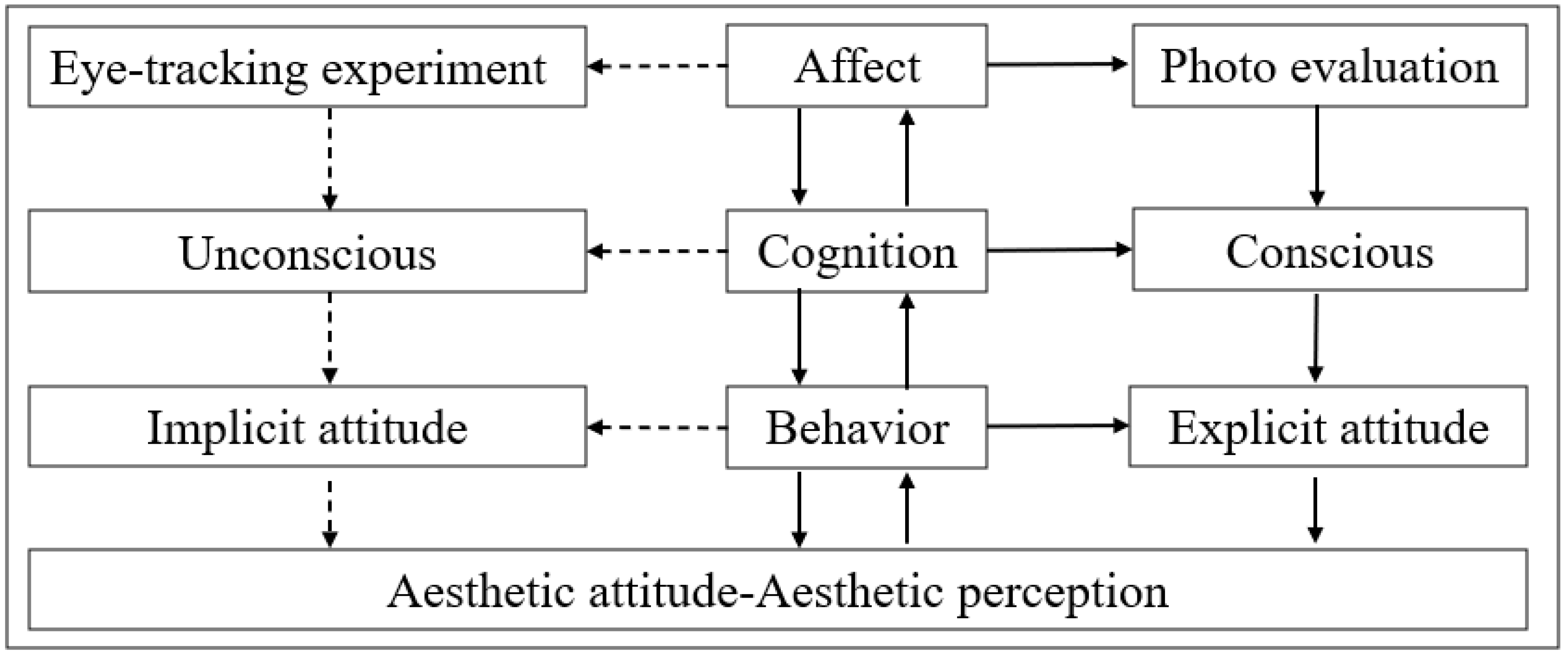
2,
3,
4,
5,
6]. In addition, the excessive development of tourist sites and the pressures arising from urban renewal—such as increased foot traffic, environmental disturbances, and spatial encroachment—have further threatened the integrity and authenticity of cultural heritage [
7,
8].
Against this backdrop, the rapid development of digital technologies has opened new pathways for the preservation and dissemination of cultural heritage. Through high-precision 3D scanning, digital modelling, AI-based restoration, and immersive presentation techniques [
9,
10,
11,
12], heritage assets can now be preserved in a non-contact manner, disseminated across time and space, and recontextualized in multiple scenarios. For example, the digitization achievements promoted by the “Digital Dunhuang” project have not only contributed to the long-term preservation of mural information but have also significantly expanded the accessibility and publicness of heritage dissemination, injecting new vitality into the sustainable development of traditional culture [
13]. As a prominent symbol of Silk Road cultural heritage, Dunhuang murals are renowned for their religious symbolism and artistic uniqueness. Presenting Dunhuang murals through digital technologies not only reduces the risk of physical degradation but also holds the potential to engage the public in traditional culture by stimulating aesthetic appreciation, cultural understanding, and emotional resonance.
However, most current research remains focused on the practical applications of digital technologies in heritage conservation or museum settings [
14,
15], with limited systematic exploration of the aesthetic perception mechanisms involved when the public engages with digital cultural heritage exhibitions. In particular, there is still a lack of in-depth understanding of the interrelated mechanisms between public perception of digital art, aesthetic response, and cultural acceptance [
16,
17]. Moreover, existing literature suggests that the public’s engagement with cultural heritage often remains at the level of sensory pleasure or superficial cognition, lacking deeper comprehension of its artistic connotations and historical contexts [
18]. At the same time, current digital exhibitions also face limitations in terms of expressive formats and narrative depth. They often fail to effectively align with the cognitive characteristics and aesthetic expectations of diverse audience groups, thereby constraining the broader and deeper impact of cultural dissemination [
19].
To address the above research gaps, this study focuses on the aesthetic perception pathways of digital cultural heritage, using the 2023 immersive exhibition “Digital Dunhuang Museum” held in Guangzhou as a case study. It aims to explore the aesthetic mechanisms underlying public perception of digital Dunhuang murals. By integrating methods such as eye-tracking, photo-based evaluations, and post-experiment interviews, the study seeks to reconstruct the perceptual trajectory of the public during the process of “viewing–understanding–resonating”, thereby uncovering the formation mechanisms of aesthetic perception within digital exhibitions. This study aims to address the following two core questions: (1) What are the characteristics of the public’s aesthetic perception process of digital Dunhuang murals? (2) Under the empowerment of digital technologies, what kind of aesthetic perception logic emerges in the sustainable dissemination of cultural heritage? Through this investigation, the study seeks to fill the gap in perceptual dimensions within digital cultural heritage research, enrich the interdisciplinary understanding of digital heritage communication, and provide practical insights for future exhibition content design, audience segmentation, and communication strategies in the cultural heritage field. It is important to note that this study assessed aesthetic perceptions based on a curated set of digital photographs from the “Digital Dunhuang Museum” exhibition, rather than direct observations within the exhibition hall itself. Therefore, the results should be understood as indirect reflections of audience reactions to digital heritage, rather than in situ responses to the exhibition environment.
3. Materials and Methods
3.1. Case Selection
The Dunhuang murals, primarily preserved in the Mogao Caves of Gansu Province, China, represent one of the most significant cultural legacies along the ancient Silk Road. Dating from the 4th to the 14th century, these murals encompass more than 45,000 square metres of painted surfaces across nearly 500 cave temples. They embody a unique synthesis of Chinese, Indian, Persian, and Central Asian artistic traditions, reflecting the intense cultural exchanges that took place along the Silk Road over a millennium. The content of the murals is diverse, including Buddhist scriptures, ritual practices, secular life scenes, and artistic depictions of music, dance, architecture, and dress. This diversity not only conveys the spiritual and religious dimensions of Buddhism in China but also provides vivid evidence of everyday life and intercultural dialogue during different historical periods. The significance of the Dunhuang murals lies not only in their artistic excellence but also in their historical and cultural value. They are regarded as a “library on the wall”, recording the evolution of religious iconography, artistic techniques, and social life across ten centuries. However, the fragile nature of mural paintings—susceptible to environmental damage, human interference, and material degradation—poses a serious challenge to their preservation. As a result, large-scale digitization projects, such as the Digital Dunhuang initiative, have been launched to document, restore, and disseminate the murals through high-resolution imaging and immersive exhibitions. The Digital Dunhuang Museum thus serves as a crucial platform to make this heritage more accessible to a global audience. By providing high-quality visual reproductions and interactive experiences, it not only reduces the physical risks of direct visitation but also extends the murals’ cultural influence beyond geographic and temporal limitations. For both domestic and international audiences, digital representations of Dunhuang murals create opportunities to engage with an unparalleled cultural treasure that epitomises the richness and sustainability of human civilization.
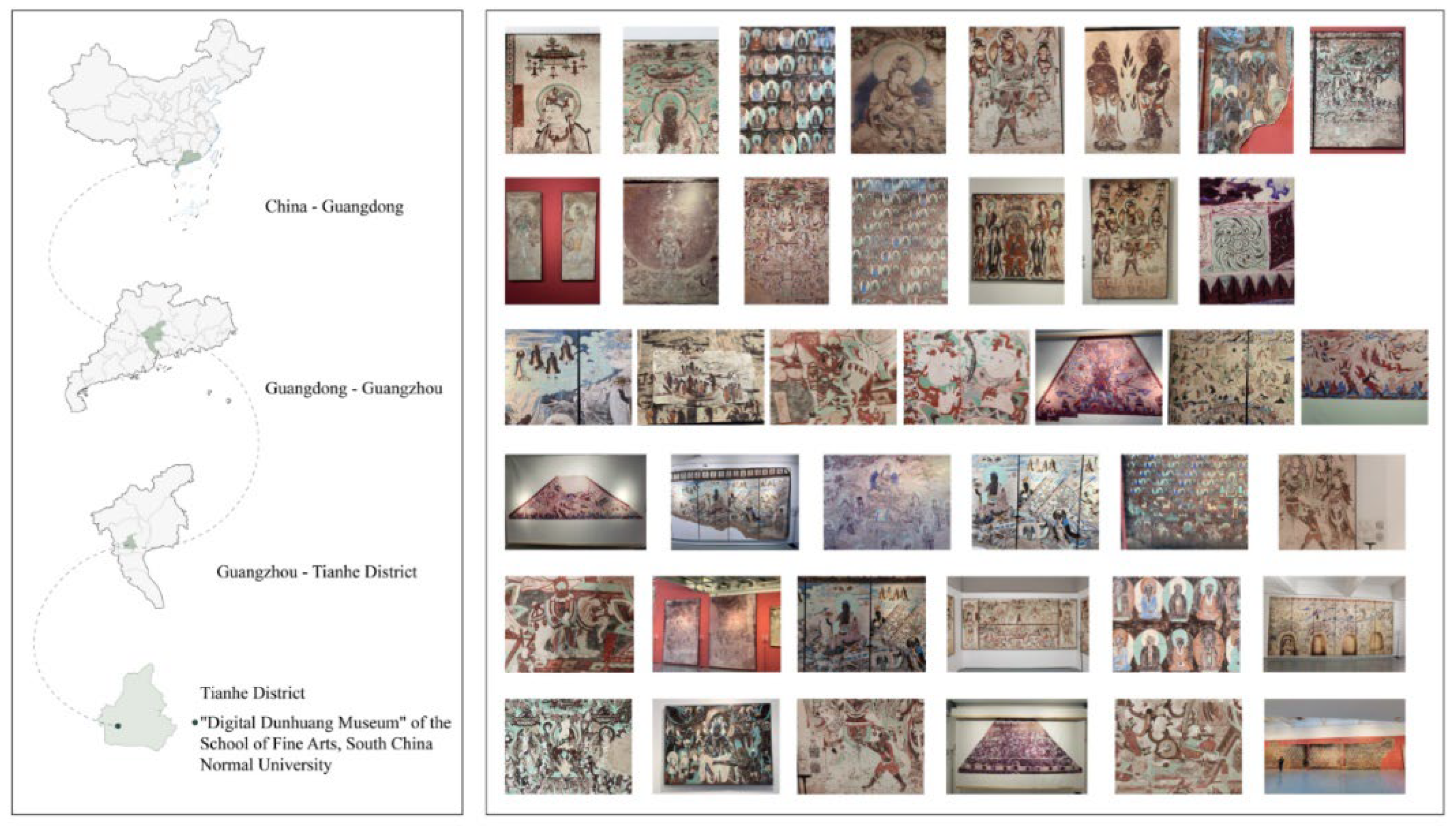
This study uses the “Digital Dunhuang Museum” exhibition held in Guangzhou as the research case. The exhibition was organised and hosted by the School of Fine Arts of a university in South China in April 2023, lasting for approximately one week. The event began with the “Guangdong Province Primary and Secondary School Art Classes Entering Museums On-site Teaching Seminar and the Guangdong-Hong Kong-Macao Primary and Secondary School Art Education Forum”, which invited researchers from the Dunhuang Research Academy, the Director of the Literature Research Institute, representatives from the Hong Kong Education Bureau and Macau Education Bureau, as well as teachers from multiple primary and secondary schools in the Greater Bay Area. The forum also included on-site art lesson case selections.
Subsequently, the exhibition was widely promoted through WeChat official accounts, posters, and other channels, attracting diverse groups from Guangzhou and surrounding areas to visit. Located in the first-floor exhibition hall of the School of Fine Arts, the exhibition centrally showcased digitally restored Dunhuang murals. Using high-resolution imaging and digital reproduction techniques, mural images originally distributed across heritage sites such as the Mogao Caves in Dunhuang were vividly re-presented in a detailed and high-definition format within an urban public exhibition space.
This exhibition effectively expanded public access to and awareness of cultural heritage while reducing the direct exposure and deterioration risks to the original artefacts. It also provided an ideal research context for exploring how digital technologies can enhance the aesthetic perception of cultural heritage and enrich public experience.
3.2. Data Collection
During the exhibition, this study recruited 21 volunteers to conduct autonomous photography. Participants were free to take photos within the exhibition areas, resulting in a total of 301 photographs. These images broadly covered the main visual elements of the exhibition space, as well as representative features of the Dunhuang murals. Subsequently, four experts with professional art backgrounds and research experience related to Dunhuang murals were invited to screen the collected images. The experts evaluated the photos based on criteria such as image clarity, compositional completeness, and representativeness of cultural elements. Photos that failed to meet the standards—such as blurry images, improper dimensions, excessive direct gaze from people toward the camera, or significant textual interference—were excluded. After this preliminary screening, 80 representative mural images were selected. Further consolidation was performed to remove images with more than 50% content duplication, resulting in a final set of 40 photographs chosen as stimulus materials for subsequent visual research (
Figure 2).
3.3. Visual Research Design
3.3.1. Eye-Tracking Experiment
To explore implicit visual attention and emotional responses, this study innovatively employed an eye-tracking experiment in which participants viewed the 40 digital Dunhuang mural photographs described above. Previous research indicates that eye movements do not show significant differences based on demographic factors such as nationality or gender [
44], but may be influenced by prior knowledge and professional background [
45]. The experiment used a Tobii Pro Fusion eye tracker (120 Hz) to record participants’ eye movement data. Accordingly, 15 participants with an arts-related academic background (experimental group) and 15 participants without such a background (control group) were recruited for the experiment, differentiating the two groups by aesthetic prior knowledge and professional experience. All participants had normal or corrected-to-normal vision, normal colour perception, and no prior experience in similar eye-tracking studies, meeting the basic requirements for eye-tracking experiments (
Table 1). This sample design aimed to compare public aesthetic perception characteristics and differences under varying prior knowledge and visual experience contexts.
The 40 photos were presented in a randomised order. Each image was viewed for a self-determined duration, after which participants pressed the space bar to proceed to the next image. A 1 s interval was set between images to mitigate sequential effects. The main recorded indicators included the number of fixations, total fixation duration, and pupil diameter (
Table 2). The number of fixations and total fixation duration reflect levels of visual attention and cognitive load [
46], while pupil diameter serves as an indicator of emotional arousal, enabling inferences regarding participants’ cognitive and emotional states during image viewing [
47].
3.3.2. Photo Evaluation
An individual’s attitude formed when perceiving and evaluating the attractiveness of a place or object is referred to as an aesthetic attitude [
48]. This process can activate the nervous system, eliciting expressions of personal pleasure [
49]. Such pleasure can influence one’s motivation to visit and significantly affect others’ choices and recommendations regarding the destination [
50]. Therefore, when participants evaluated the photos, this study selected three indicators to reflect their aesthetic attitude and perception during the process: level of attractiveness (cognitive dimension), degree of pleasure (affective dimension), and willingness to visit (behavioural dimension). Specifically, after viewing the 40 digital Dunhuang mural images during the eye-tracking experiment, participants were instructed to rate each photo based on their pleasure level, attractiveness level, and willingness to visit, using a 5-point Likert scale (where 1 represents “very low” and 5 represents “very high”). Higher scores indicated a more positive aesthetic attitude toward the digital Dunhuang murals. Through an online questionnaire distribution, responses were collected from all 30 participants regarding their aesthetic evaluations of the digital Dunhuang murals. Reliability analysis confirmed the scale’s consistency, with a Cronbach’s alpha of 0.985 > 0.6. Statistical analyses were conducted to clarify participants’ aesthetic attitudes and perceptions toward the digital Dunhuang murals. This section aimed to capture subjective attitudes across different disciplinary backgrounds to reveal explicit aesthetic preferences and differences.
3.3.3. Semi-Structured Interviews
Following the completion of the eye-tracking experiment and photo evaluations, semi-structured interviews were conducted with all participants. The interviews focused on their viewing experiences within the exhibition space, feelings toward the mural content, and personal emotional responses. Open-ended questions included the following: “Which mural image attracted your attention the most?”, “What elements among all the images did you find appealing?”, and “Did you experience any emotional changes during the viewing process?” The interview data served as a qualitative supplement to the experimental findings, helping to further uncover the deeper mechanisms underlying the audience’s aesthetic perception.
4. Results
4.1. Implicit Attitudes
At the implicit attitude level, eye-tracking data collected while participants viewed the 40 selected Dunhuang mural photographs indicated that the overall sample exhibited moderate performance across three key indicators (
Table 3).
On average, all participants showed 24.19 fixations (SD = 18.59), a total fixation duration of 6963.53 ms (SD = 5325.67), and a mean pupil diameter of 3.22 mm (SD = 0.53). These results suggest that, when visually stimulated by the digital Dunhuang mural images, the audience generally demonstrated a high frequency and duration of visual exploration, accompanied by a certain degree of physiological emotional arousal.
In group comparisons, the arts group scored higher than the non-arts group on all three indicators. The arts group had an average of 31.07 fixations (SD = 23.08), significantly exceeding the non-arts group’s 17.31 fixations (SD = 7.98). For total fixation duration, the arts group averaged 8820.32 ms (SD = 6488.31), significantly longer than the non-arts group’s 4906.73 ms (SD = 2639.93). Regarding pupil diameter, the arts group’s mean was 3.45 mm (SD = 0.53), notably larger than the non-arts group’s 2.98 mm (SD = 0.40). Independent samples t-tests further confirmed that these differences were statistically significant (Number of Fixations: F = 12.05, p = 0.044; Total Fixation Duration: F = 10.942, p = 0.046; Pupil Diameter: F = 2.338, p = 0.014). These findings indicate that viewers with an arts background invested more visual attention and cognitive resources while viewing the digital Dunhuang murals and experienced stronger emotional arousal.
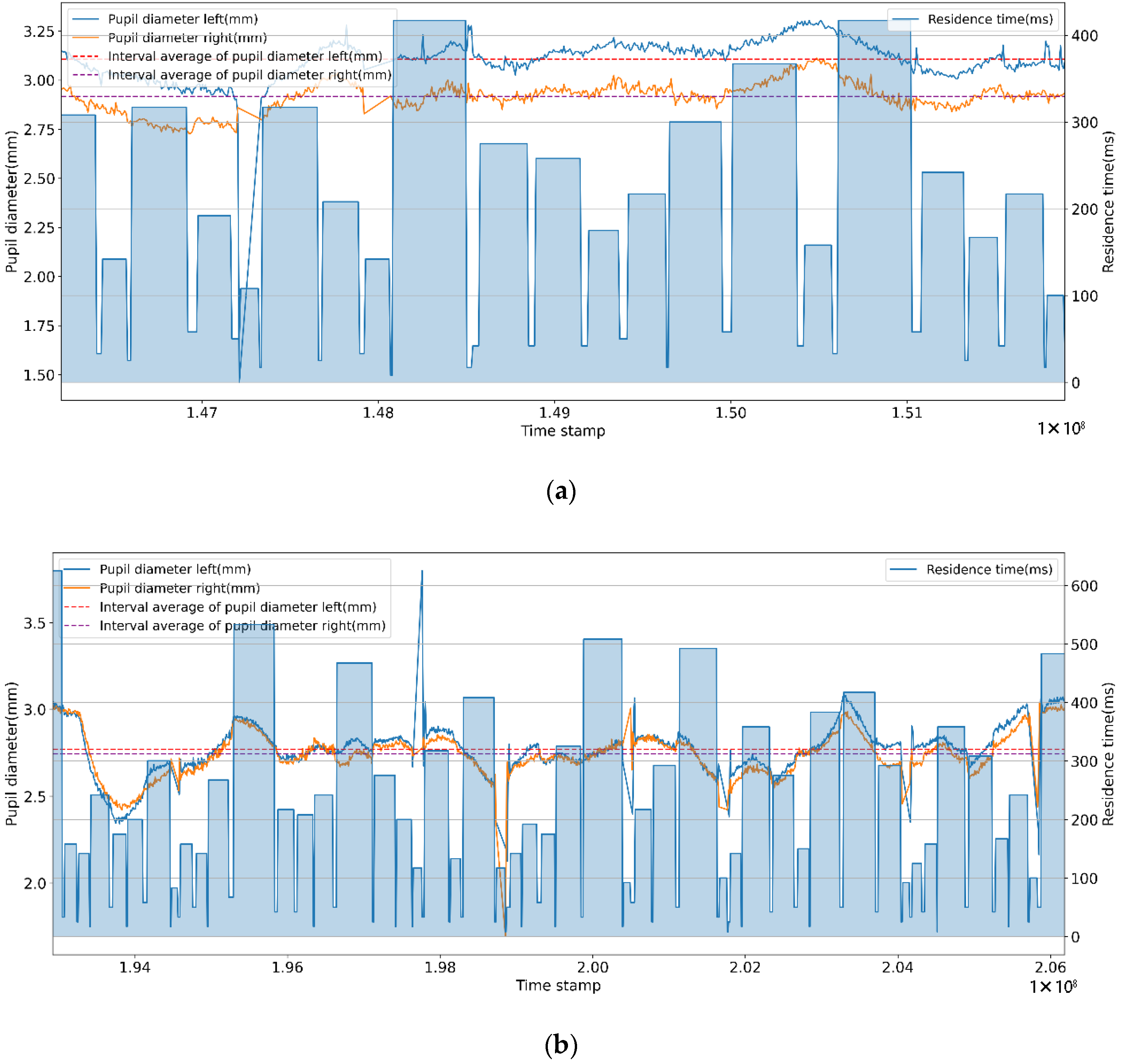
The study selected two participants, YS06 from the arts group and FYS12 from the non-arts group, who are similar in age and gender, to compare and analyse their process of viewing the digital Dunhuang mural photographs (
Figure 3). Clearly, although the participants appeared to employ similar observational strategies, professional background knowledge began to influence the visual observation process, as reflected by differences in pupil diameter variation and the number of fixations. Due to the lack of prior knowledge related to the arts, FYS12 spent more time and exhibited more fixations to familiarise and understand the mural images. This difference was further amplified in terms of cognitive load, as indicated by varying pupil diameters (see Figure below). The comparison in the figure shows that YS06’s pupil diameter was larger and exhibited more pronounced fluctuations than FYS12’s. Overall, an arts professional background significantly enhanced participants’ visual exploration and emotional responses, reflecting lower cognitive load and deeper emotional engagement when perceiving and interpreting the digital Dunhuang murals.
4.2. Explicit Attitudes
After conducting a subjective evaluation of the selected 40 digital Dunhuang mural photographs, participants’ scores across three explicit attitude dimensions—pleasure, attractiveness, and willingness to visit—revealed an overall moderately high level of aesthetic appreciation (
Table 4). The total sample mean for pleasure was 3.33 (SD = 0.54), attractiveness averaged 2.97 (SD = 0.54), and willingness to visit was 2.70 (SD = 0.54). These findings suggest that, regardless of professional background, participants generally perceived the digitalized mural images as visually appealing and emotionally engaging to a certain extent. The relatively positive evaluations confirm the baseline aesthetic accessibility of the exhibition content for a general public audience.
Further grouping analysis by professional background reveals more nuanced insights. Participants with an arts background consistently scored higher across all three explicit attitude indicators. Specifically, the arts group reported a mean pleasure score of 3.78 (SD = 0.31), in contrast to the non-arts group’s 2.88 (SD = 0.28), showing a statistically significant difference. Similarly, the arts group’s score for attractiveness was 3.40 (SD = 0.39), again markedly higher than the non-arts group’s 2.53 (SD = 0.27). Regarding willingness to visit, the arts group averaged 3.10 (SD = 0.44), while the non-arts group averaged 2.29 (SD = 0.30). Independent samples t-tests confirmed the significance of these group differences across all three dimensions (Pleasure: F = 0.004, p < 0.001; Attractiveness: F = 0.604, p < 0.001; Willingness to Visit: F = 0.401, p < 0.001).
These results provide robust empirical evidence that professional training in the arts significantly enhances individuals’ aesthetic sensitivity and appreciation. The arts group not only experienced higher levels of visual enjoyment but also perceived the murals as more compelling and culturally engaging. In contrast, the non-arts group exhibited relatively moderate engagement, pointing to a potential gap in cultural accessibility and aesthetic literacy. These findings underscore the importance of audience segmentation in exhibition design and highlight the need for differentiated curatorial strategies to cater to diverse public groups.
4.3. Integration of Implicit and Explicit Attitudes
By synthesising the results from the eye-tracking experiment (implicit attitudes), photo evaluations (explicit attitudes), and post-experiment interviews, significant consistency and complementary differences emerged in the aesthetic perception of digital Dunhuang murals among audiences with different professional backgrounds.
Firstly, at the explicit attitude level, the arts group scored significantly higher than the non-arts group in pleasure, attractiveness, and willingness to visit. Post-experiment interview findings revealed that participants with an arts background derived greater aesthetic enjoyment from details such as brushstrokes, composition, and colour. For example, one arts participant stated, “I really like the colour usage in these murals; the tones and layering feel very comfortable, which makes me want to visit Dunhuang in person” (Participant YS06). In contrast, a non-arts participant tended to focus on a more general impression, remarking, “The colors look nice, but I can’t really say why exactly” (Participant FYS12).
Secondly, at the implicit attitude level, the arts group exhibited significantly higher numbers of fixations, longer total fixation durations, and larger pupil diameters than the non-arts group. This indicates that they engaged in more detailed visual exploration, invested more attention and cognitive resources during processing, and experienced stronger emotional arousal. One arts participant mentioned, “I tend to focus on local details for a long time, trying to understand how they painted those lines”. In contrast, non-arts participants’ observations were more intuitive and holistic. One non-arts participant explained, “I just scanned the whole image, felt it was magnificent, and after a preliminary judgment, I didn’t look into the details but moved on to the next one” (Participant FYS07).
Combining implicit and explicit results, an arts background not only led to higher explicit ratings in pleasure and willingness to visit but also corresponded with greater engagement and resonance in implicit visual behaviour and emotional physiological responses. Interviews further corroborated this: one arts participant said, “When seeing these murals, I imagine the techniques used by the painters and feel some kind of resonance with them” (Participant YS09). Although non-arts participants had relatively lower subjective scores, eye-tracking data still showed a certain level of visual attention and emotional response. As one non-arts participant remarked, “I’m not very familiar with history, but this kind of exhibition still attracts me; watching it feels like being transported to that era” (Participant FYS11).
Overall, the mutual validation of explicit and implicit data suggests that professional background enhances aesthetic perception and attitude formation toward digital Dunhuang murals by strengthening pathways of visual attention and emotional arousal. This finding not only reveals the potential impact of digital cultural heritage exhibitions on different audience groups but also provides empirical support for exhibition design and audience segmentation strategies.
5. Discussion
This study employed an empirical multi-method approach—integrating eye-tracking experiments, photo evaluations, and semi-structured interviews—to systematically reveal differences in aesthetic perception among groups with different professional backgrounds in the context of the digital Dunhuang mural exhibition. Through this, a perceptual mechanism for the digital dissemination of cultural heritage was constructed. This process not only demonstrates methodological innovation through experimental intervention, but also substantively supplements existing theoretical research on the perception of digital cultural heritage.
5.1. The Influence of Visual Experience and Aesthetic Literacy
The study found that the arts group scored significantly higher than the non-arts group on explicit evaluation dimensions such as pleasure, attractiveness, and willingness to visit. Concurrently, the arts group exhibited deeper visual engagement and stronger emotional arousal based on key eye-tracking metrics, including the number of fixations, total fixation duration, and pupil dilation. These findings reveal a multi-layered structure of aesthetic perception shaped by training and background. Unlike existing literature that primarily relies on subjective questionnaires or qualitative interviews to explore aesthetic responses, this study introduced eye-tracking technology as an experimental intervention to obtain physiological and behavioural data. This method offers a more objective, quantifiable perspective on how participants with different professional backgrounds visually interact with digital mural heritage. As a result, it enables a deeper understanding of the underlying mechanisms that influence aesthetic processing and emotional resonance.
The observed differences can be attributed to the visual experience and aesthetic literacy accumulated by the arts group through systematic professional education and continuous exposure to visual art. These participants are more adept at identifying compositional relationships, decoding symbolic elements, and interpreting stylistic features within complex mural images. Their perceptual engagement often includes a proactive process of meaning construction, informed by their prior learning and cultural familiarity. For instance, one arts group interviewee noted, “The color structure reminds me of the flying apsaras in Western Regions paintings”, while another commented, “This Buddha figure style closely resembles the Western Wei murals I studied”. Such reflections indicate a layered cognitive-affective interaction with the image content. In contrast, non-arts participants tended to rely on surface-level impressions, often making aesthetic judgments based on intuitive visual appeal—e.g., “The painting looks nice” or “It’s like an illustrated story”. These responses reflect a more passive and emotionally restrained engagement, lacking the depth of cultural-semantic interpretation observed in the arts group. Thus, aesthetic perception should not be seen as a singular or universal reaction but rather as a differentiated, knowledge-mediated, and emotionally nuanced process. This insight contributes to methodological innovation by integrating physiological data into aesthetic research and expands the current paradigm beyond self-reported measures.
5.2. The Value of Digital Exhibitions and Cultural Sustainability
This study further confirms the practical role of digital technology in promoting the sustainable development of cultural heritage. The digital Dunhuang mural exhibition, through the integration of high-precision imagery and immersive spatial design, effectively breaks the traditional constraints of time and geography. It enables audiences to access and experience cultural heritage beyond physical proximity, thereby broadening the scope and inclusiveness of cultural participation. The empirical results reveal that even participants from non-arts backgrounds exhibited relatively active visual engagement—as evidenced by their eye-tracking data—suggesting that digital exhibitions have strong potential to democratise access to heritage and stimulate visual attention, aesthetic interest, and cultural curiosity among diverse public groups. More importantly, this study provides empirical support for a dynamic and continuous mechanism by which digital cultural heritage facilitates the progression from “visual input” to “cognitive engagement”, and ultimately to “cultural identity formation”. This layered mechanism highlights how digital exhibitions serve not merely as static displays but as interactive platforms for cultural education, heritage interpretation, and identity reconstruction. In this sense, digital heritage technologies are not only tools for preservation and display, but also vehicles for revitalising collective memory and fostering deeper social connections to the past. From the perspective of curatorial practice, the study offers valuable insights into audience-centred design strategies. For non-arts audiences, curators might consider incorporating supplementary educational tools such as illustrated annotations, multilingual audio guides, interactive touchscreen modules, or narrative-driven visual storytelling to reduce cognitive entry barriers and enhance emotional resonance. For arts-oriented audiences, the inclusion of specialised content—such as technique deconstructions, stylistic comparisons, or historical context modules—would satisfy more advanced intellectual and aesthetic expectations. But a further point concerns the relationship between digital reproduction and perceptions of authenticity, which is closely tied to sustainability debates. While digital heritage expands accessibility and reduces physical pressure on fragile artefacts, some visitors may still regard digital reproductions as less “authentic” than the originals. This tension between accessibility and authenticity highlights a central challenge for cultural sustainability: whether audiences support the digitization of heritage for broader engagement or feel that such experiences are less profound. Future studies should examine these attitudes more directly to understand how digital heritage contributes to sustainable cultural identity formation.
Overall, digital exhibitions emerge not only as a medium for visual appreciation but as a strategic interface for cultural sustainability, fostering inclusive engagement while reactivating historical significance and collective cultural consciousness in the digital age.
5.3. The Aesthetic Perception Mechanism of Digital Cultural Heritage
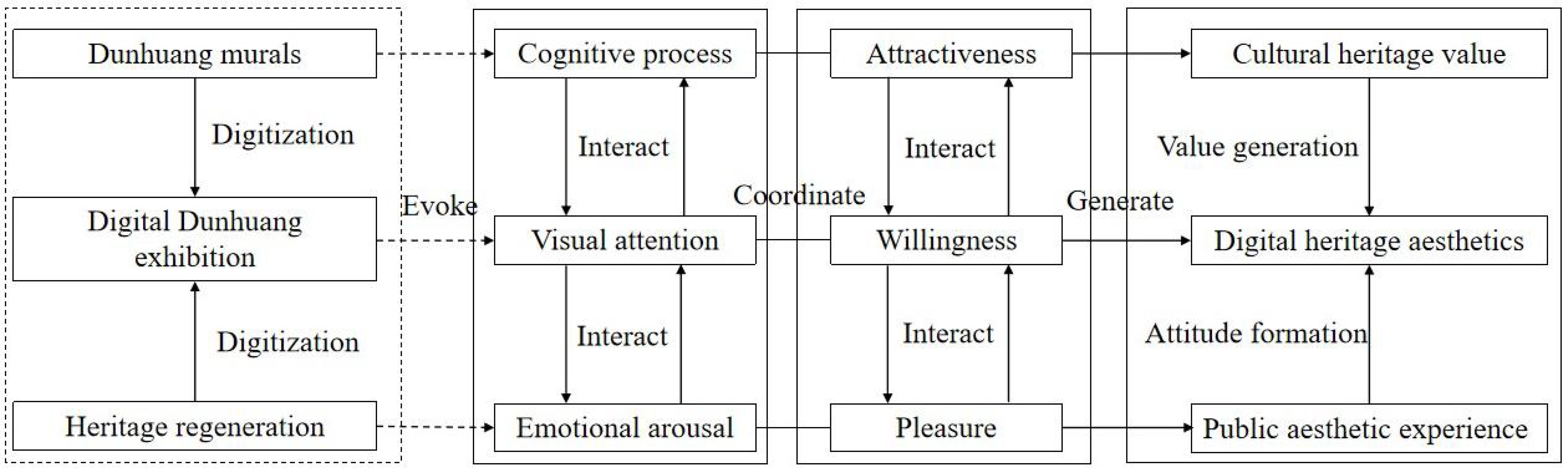
This study integrates eye-tracking experiments, photo evaluations, and semi-structured interviews to construct a comprehensive mechanism that reveals the public’s aesthetic perception process within the digital Dunhuang mural exhibition (
Figure 4). This mechanism is conceptualised as a sequential and interactive perceptual pathway: “visual input—cognitive processing—emotional arousal—attitude formation—value generation.” It underscores the idea that aesthetic experience is not passively received, but actively constructed through dynamic interaction between visual stimuli, cognitive resources, and emotional involvement. Unlike previous models that focus solely on either subjective interpretation or physiological data, this framework offers a multilayered understanding of how individuals engage with digital cultural heritage.
At the initial stage of visual input, high-resolution imagery, colour contrasts, and immersive spatial arrangements serve as strong attention-capturing stimuli. Eye-tracking data indicate that participants with an arts background generated a significantly higher number of fixations and longer viewing durations, suggesting more complex visual scanning patterns and an active decoding of compositional elements. This stage sets the perceptual foundation for deeper cognitive and emotional engagement. The cognitive processing phase involves semantic interpretation and symbolic meaning-making. Arts participants often mobilised disciplinary knowledge to interpret iconography and stylistic features, whereas non-arts participants tended to rely on intuitive judgments and surface-level impressions. Interviews further revealed that the arts group referenced prior knowledge from art history or visual analysis, enabling a more layered understanding of mural content. This cognitive activity triggers emotional arousal, a key psychological mediator in aesthetic perception. Physiological data, such as pupil dilation, along with interview responses describing feelings of “awe”, “tranquility”, or “spiritual immersion”, illustrate the emergence of what can be called “cultural emotion”—an empathetic, affective response linked to heritage appreciation. Finally, these visual-cognitive-emotional interactions contribute to attitude formation and value generation. Participants form more stable judgments about the exhibition’s aesthetic and cultural significance, influencing their willingness to visit, levels of enjoyment, and heritage identification. In addition to the empirical findings, it is important to consider the broader policy context shaping the digitization of Dunhuang heritage. National initiatives, such as the “Digital Dunhuang Project” and related cultural preservation policies, provide not only technical and financial support for high-fidelity digital documentation but also establish a framework that emphasises cultural identity and national heritage. These policies reinforce audiences’ sense of belonging and collective memory, which in turn can amplify the aesthetic engagement with digital heritage. When viewers perceive digital Dunhuang artefacts within a nationally endorsed narrative of cultural continuity, their aesthetic appreciation is not only guided by visual and emotional responses but also intertwined with identity affirmation and cultural pride. Thus, policy-driven digitization serves as both an infrastructural and sociocultural catalyst in shaping how the public perceives and values digital
Overall, this mechanism bridges the gap between behavioural responses and cultural meaning-making, offering new directions for optimising digital heritage experiences.
6. Conclusions and Limitations
Against the backdrop of widespread digital intervention in cultural dissemination, digital cultural heritage has increasingly become a key pathway for achieving cultural sustainability. This study takes the “Dunhuang Digital Museum” exhibition in Guangzhou as an empirical site and employs a mixed-methods design combining photo evaluation, eye-tracking, and semi-structured interviews to explore the public’s aesthetic perception of digital Dunhuang murals and their variation across different groups. Furthermore, it proposes a mechanism for understanding the public’s aesthetic perception. The research not only addresses the theoretical issue of “how to understand public experience” in current digital heritage practices, but also provides empirical support for curatorial design and cultural communication strategies in digital exhibitions.
The findings reveal that the public generally holds a positive aesthetic evaluation of the digital Dunhuang mural exhibition, with high scores in explicit dimensions such as pleasantness, attractiveness, and intention to visit, indicating the potential of digital exhibitions to expand cultural engagement and stimulate interest. In particular, participants from an art background exhibited higher levels in both subjective ratings and eye-tracking indicators, demonstrating proactive engagement and deep experiences in visual exploration, cultural association, and emotional arousal. In contrast, although non-art participants lacked systematic training, their gaze behaviour and emotional responses still suggest that digital heritage exhibitions possess cross-group aesthetic educational functions. Overall, the results suggest that aesthetic perception is not a singular subjective impression, but rather a dynamic process shaped by the interaction of visual input, cognitive processing, emotional experience, and cultural value construction. Based on these findings, the study constructs a public aesthetic perception mechanism comprising visual attention–cognitive processing–emotional arousal–attitude formation–value generation, systematically revealing how digital cultural heritage activates cultural identity and fosters value cognition through perceptual pathways. This mechanism fills the current gap in aesthetic perception studies by integrating physiological data with subjective evaluation, and offers a theoretical foundation for optimising how digital heritage engages public perceptual resources.
Finally, the study recommends that future digital cultural heritage exhibitions should tailor content and form according to the cognitive characteristics of different audience groups. For non-art audiences, more multimodal interpretation, interactive experiences, and emotional guidance mechanisms should be incorporated to enhance understanding and engagement. For audiences with an art background, the presentation of professional details, historical context, and aesthetic interpretation should be emphasised to meet higher cognitive needs. Building such adaptive perceptual environments will help maximise the societal benefits of digital heritage and support the sustainable goals of heritage protection, communication, and cultural identity.
Although this study has achieved preliminary results in revealing the aesthetic perception differences among the public toward digital Dunhuang murals and has constructed a perceptual mechanism for digital cultural heritage, there are still several limitations that need to be addressed and expanded upon in future research. First, the limitations in sample size and regional distribution may affect the generalizability of the research findings. Participants in this study were mainly from Guangzhou and surrounding areas, and the sample size was relatively small, with certain biases in gender, age, and educational background. Future studies should consider expanding the sample size to include a broader range of social groups, especially audiences from different regions, ethnicities, and cultural backgrounds, to enhance the representativeness and external validity of the conclusions. In addition, this study relied on curated digital images rather than on-site observations within the exhibition hall. While this approach allowed for controlled comparison and experimental rigour, it also limited the ecological validity of the results, as participants’ responses may differ in a real exhibition setting. Future research should complement laboratory-based experiments with in situ studies to capture the full spectrum of public aesthetic perception in digital heritage exhibitions. Second, the types of research objects were relatively homogeneous. This study focused on Dunhuang murals, a typical form of two-dimensional cultural heritage images, and did not involve other types of digital cultural heritage such as sculptures, architecture, inscriptions, or audiovisual records of intangible heritage. This somewhat limits the applicability of the findings. Future studies could broaden the research scope to include various types and media of digital heritage exhibitions, comparing perceptual mechanisms across different artistic forms and cultural carriers, thereby constructing a more universal model of aesthetic perception. Third, the technical tools and exhibition formats used in this study limited the depth and breadth of viewer experience. The experiment was mainly based on static digital mural images and did not fully incorporate emerging immersive and interactive exhibition technologies such as virtual reality (VR), augmented reality (AR), or holographic displays. Future research should integrate multisensory digital media to explore dynamic changes in public visual attention, emotional arousal, and behavioural responses in immersive environments, further enriching the cognitive and experiential dimensions of digital cultural heritage displays. Finally, the coupling analysis of physiological and psychological data still has room for improvement. While this study employed physiological indicators such as eye-tracking, it did not systematically incorporate multi-modal methods such as EEG, physiological electrical responses, or facial expression recognition, nor did it deeply explore the relationship between subjective narratives and objective data. Future research could apply machine learning techniques to integrate multi-source data and build high-dimensional, more precise models of aesthetic perception.
In summary, future research has significant potential for expansion in areas such as sample structure, research objects, technological tools, and data integration. These developments will not only deepen the understanding of public aesthetic perception mechanisms but also provide theoretical and methodological support for the optimised design and sustainable dissemination of digital cultural heritage.