Article

Assessment of the Effect of PHBV-Based Bioplastic Microparticles on Soil Organisms

by
Ewa Liwarska-Bizukojc
1,* and
Marcin Bizukojc
2
1
Institute of Environmental Engineering and Building Installations, Faculty of Civil Engineering, Architecture and Environmental Engineering, Lodz University of Technology, al. Politechniki 6, 90-924 Lodz, Poland
2
Department of Bioprocess Engineering, Faculty of Process and Environmental Engineering, Lodz University of Technology, ul. Wolczanska 213, 93-005 Lodz, Poland
*
Author to whom correspondence should be addressed.
Sustainability 2025, 17(17), 7778; https://doi.org/10.3390/su17177778
Submission received: 18 July 2025 / Revised: 26 August 2025 / Accepted: 28 August 2025 / Published: 29 August 2025
(This article belongs to the Special Issue Soil Pollution, Soil Ecology and Sustainable Land Use)

Abstract

(1) Background: A bioplastic poly(3-hydroxybutyrate-co-3-hydroxyvalerate) (PHBV) is used in agriculture and in other applications like shopping bags, toys, and containers. Since the production of bio-based plastics, including PHBV-based materials, is expected to increase within the next few years, they are prone to becoming ubiquitous pollutants of the soil compartment. (2) Methods: An innovative PHBV-based plastic material was tested for its effect on higher plants and earthworms at the community level in a small-terrestrial model ecosystem (STME). The leachates obtained from PHBV-based plastic were studied with the use of ecotoxicological tests with regard to their impact on the early stages of the growth of higher plants and with the use of LC/MS toward the identification of the released chemical compounds. (3) Results: PHBV-based plastic microparticles at the relatively high but environmentally relevant concentration of 2.5% w/w neither affected the germination of higher plants nor inhibited their growth. The synthesis of chlorophyll and the C:N ratio in the plant biomass did not deteriorate, but the content of dry matter of the plant biomass was reduced at a statistically significant level. PHBV-based microplastics did not contribute to the mortality of Eisenia andrei, whereas they affected the depth distribution of these earthworms in the soil. Their downward movement indicated the avoidance behaviour under unfavourable living conditions. In the leachates from PHBV-based bioplastic, lactic acid and glycerol triacetate, commonly used plastic additives, were identified. These leachates did not inhibit the germination and the early stages of growth of higher plants. (4) Conclusions: PHBV-based bioplastic was studied at a concentration not higher than 2.5% w/w, and its leachates do not pose a threat to soil biota and should not affect the sustainability of the terrestrial ecosystem.

1. Introduction

Due to their favorable physicochemical properties, similar to the common thermoplastics, and susceptibility to microbiological decomposition, polyhydroxyalkanoates (PHAs) seem to be a potential alternative for petroleum-based plastics [1,2]. PHAs are characterized as biocompatible, fully biodegradable, water-insoluble, non-toxic, and ultraviolet-resistant materials [2]. They are widely used in biomedical devices, electronics, construction, automotive, packaging, toys, and agricultural areas. They are manufactured by many companies worldwide [1]. PHAs made up about 4.1% of global production of bioplastics in 2024 [3], and it is expected that their production will increase about nine times in 2029 in comparison to 2024 [4].
Poly(3-hydroxybutyrate-co-3-hydroxyvalerate) (PHBV) distinguishes itself from the other PHAs by such features as total biodegradability, proven in soils and in water, and biocompatibility [5,6]. Additionally, it exhibits excellent mechanical characteristics such as a low degree of crystallinity, high flexibility and strength, and resistance to UV radiation [5,6]. PHBV is formed by the incorporation of 3-hydroxyvalerate (3HV) monomers into the PHB structure, and it can be synthesized by microorganisms from various waste materials [6]. The use of waste materials for PHBV synthesis is very important from the circular economy point of view and for maintaining the sustainability of the ecosystems.
The increasing production of PHAs, including PHBV, encourages scientists to study their biological properties not only toward their biodegradability but also with regard to their influence on living organisms. These works often concerned the aquatic environment, in particular marine ecosystems; however, soil plays the role of a sink for almost all substances released into the environment by human activities. What is more, the pollutants released to the soil are subjected to weathering and various biological, chemical, and physical processes and might be accumulated and/or transformed in the soil [7]. One of the results of these processes with regard to plastics is their fragmentation into macro-, micro-, and nanoparticles [7]. The disintegration of plastic items in the soil favours the release of the compounds contained in them and leachate formation.
Plastic pollution on land is a problem for both the terrestrial environment and aquatic systems, to which plastics are often transferred. High levels of microplastic contamination in the soil have been reported and estimated to be from 4 to 23 times higher than in the oceans [8,9,10]. The concentrations of plastics measured in the soil (real data) and reported by other authors varied widely from about 0.001% w/w to almost 7% w/w [11,12,13]. Plastics may enter soil in a variety of routes, like the application of polymer-based slow-release fertilizers, composts and sludges, plastic mulching, wastewater irrigation, and atmospheric deposition [14]. It is worth noticing that plastics, both conventional and bioplastics, contain not only pure polymers but also additives used for the modification of their properties to increase pliability, resist ultraviolet radiation, reduce flammability or degradation, or impart other preferred physical characteristics to the final product [15,16]. Lots of these compounds might be released to the environment as there are no covalent bonds between them and polymers [17,18]. Gunaalan et al. even wrote about the hidden threat of plastic leachates regarding their influence on aquatic species [18]. Therefore, the examination of the effect of plastic particles on living organisms should also comprise testing the impact of plastic leachates on the biotic part of ecosystems [19].
In this work, an innovative PHBV-based plastic material was studied toward its effect on higher plants and earthworms at the community level in the microcosm experiments. Small-terrestrial model ecosystems (STMEs) were constructed to be used in the microcosm experiments. These are relatively large, multispecies systems that ensure a high degree of resemblance to the real environmental conditions. Due to these advantages, the application of STME provides a more holistic view of the effects of soil contamination on soil organisms in comparison to the standard tests made toward individual species. Moreover, the leachate tests were conducted, and chemical substances leached from PHBV-based microplastics were putatively identified. Additionally, the phytotoxicity tests were performed to evaluate the impact of leachates of PHBV-based plastic on the early stages of higher plant growth. All the studies undertaken were aimed at estimating whether and to what extent the sustainability of the biotic part of the terrestrial ecosystems would be disturbed as a result of the presence of bioplastic microparticles in the soil.

2. Materials and Methods

2.1. Bioplastic Tested

A PHBV-based polymer designed to be used for toy production was selected for testing in the Bio-plastic Europe Project Horizon 2020. In accordance with the nomenclature applied in the project, this was BPE-T-PHBV (Bio-Plastic Europe—Toys—Poly[3-HydroxyButyrate-co-3-hydroxyValerate]) provided by NaturePlast SAS (NP, Mondeville, France) in the form of microparticles of the diameter 2.5 ± 0.2 mm. Its composition was as follows: 80–90% PHBV, 10–15% plasticizers, <10% mineral compounds, and <2% anti-UV. The density of BPE-T-PHBV was 1.24 g cm−3. The manufacturer classified this bioplastic as recyclable and industrially compostable.

2.2. Microcosm Experiments

The microcosm experiments were carried out in the small-terrestrial model ecosystems (STMEs) of 4.3-litre total volume that were specially designed for this purpose. An individual STME was a cylindrical acrylic glass pipe of an internal diameter equal to 120 mm and a total height of 380 mm. It had a perforated bottom and was mounted in the rubber rack of a total diameter equal to 156 mm. The detailed construction of STME was previously presented by Liwarska-Bizukojc [20]. STMEs were incubated in the acclimation chamber FITO 700 (Biogenet, Józefów, Poland) for 28 days at 20 ± 0.5 °C and the relative humidity of ~40% in a 16/8 h light–dark regime.
Each STME was filled with 4 kg of the properly prepared material, in agreement with OECD method no. 207 [21], i.e., the soil with or without (control test) PHBV-based plastic particles. The concentration of microplastics in the soil was 2.5% w/w, which was relatively high but previously found in the industrial soil [11]. Then, ten depurated earthworms, Eisenia andrei, of homogeneous age and size were located on the soil surface. Earthworms E. andrei came from the synchronized culture of the Institute of Environmental Protection—National Research Institute (Warsaw, Poland). No sooner had the earthworms buried themselves in the soil than the seeds of two plants, Sorghum saccharatum and Lepidium sativum, provided by Microbiotests (Ghent, Belgium), were sown. To each STME, six seeds of sorghum and mustard were sown.
At the end of the experiments, the percentage of seed germination, mass of fresh shoots and length of shoots, the relative chlorophyll content in the shoots, dry matter of shoots, the mortality of earthworms, the fresh mass of depurated earthworms, and the earthworm depth distribution in the STME were determined. The relative chlorophyll content was expressed as Chlorophyll Content Index (CCI), and it was measured with the use of the Chlorophyll Content Meter CCM-200 plus (Opti-Sciences, Inc., Hudson, NH, USA). CCI was determined for all plants in each STME. In order to determine the earthworm distribution, four zones of similar height (7–8 cm) in each STME were distinguished from top to bottom. After the experiment, the soil from each zone was successively gently removed by hand, and the number of earthworms was counted in sequence. Moreover, the elemental composition (carbon, hydrogen, and nitrogen) of dry matter of plant shoots was determined with the use of an elemental analyzer NA-2500-M (CE Instruments, Hindley Green, Wigan, UK).

2.3. Formation of Leachates

A 20 g of microparticles of PHBV-based bioplastic was introduced to a glass Erlenmeyer flask of total volume 300 mL. Next, 200 mL of deionised water was added to achieve the concentration of 100 g of bioplastic material per litre and a liquid to solid ratio (L/S) of 10 L kg−1 [22]. Three replications were made for the samples containing PHBV-based microplastics. In parallel, three Erlenmeyer flasks containing only deionized water (the control tests) were prepared. All flasks were located in a rotary shaker Certomat® IS (Sartorius, Göttingen, Germany) and stirred at a speed of 90 rpm at a constant temperature of 20 ± 0.5 °C in the darkness for 14 days. After this time, the flasks were taken out of the shaker to allow the microparticles to settle, and next, the plastic leachates were separated and subjected to further analysis.

2.4. Chromatographic Analysis of Leachates

Reversed phase liquid chromatography (UPLC® Aquity) coupled with mass spectrometry Synapt G2 (Waters, Milford, MA, USA) in the positive and negative electrospray ionization modes was employed for the determination of the substances released from the studied PHBV-based bioplastic. The details of this analytical method were previously described by Liwarska-Bizukojc and Bizukojc [23].

2.5. Phytotoxicity Tests of Leachates

Two types of phytotoxicity tests provided by Microbiotests (Ghent, Belgium), i.e., Phytotestkit and Phytotoxkit Solid Samples, were used to thoroughly study the effect of PHBV-based microplastics on seed germination and early growth of higher plants. Three species of higher plants were the model organisms in both tests: Sorghum saccharatum, Lepidium sativum, and Sinapis alba. Each sample was made in triplicate in both tests. Below, these two phytotoxicity tests are briefly described.
The Phytotestkit was applied to determine the “direct” (intrinsic) effects of chemicals on the germination and early growth of plants without prior incorporation of the chemicals into the reference soil [23]. At the same time, Phytotoxkit Solid Samples aimed at the determination of the chemicals/leachates on seed germination and plant growth after they had been introduced into the soil. In this test, the OECD reference soil delivered by Microbiotests (Ghent, Belgium) was applied and hydrated using either the bioplastic leachate or deionized water (the control test) [23].
In both phototoxicity tests, i.e., Phytotestkit and Phytotoxkit Solid Samples, the plates vertically positioned in the holders were incubated in the acclimation chamber FITO 700 (Biogenet, Józefów, Poland) for 72 h at 25 ± 1 °C in the darkness [23]. More details about phytotoxicity tests used in this work are presented elsewhere [23].

2.6. Calculation and Elaboration of Results

At the end of each of the phytotoxicity tests, irrespective of the test type, a digital image of each test plate was taken in order to measure the length of roots and shoots. The measurements were performed with the use of image analysis using the NIS ELEMENTS AR software (Nikon, Tokyo, Japan). Also, the number of germinated seeds was recorded, and the germination percentage for each sample was calculated.
The mean values and standard deviations of each endpoint determined in the experiments made in the STMEs and both types of phytotoxicity tests were calculated.
The statistical significance of differences between the endpoint determined in the control test and its value in the test with BPE-T-PHBV bioplastic was checked with the help of one-way analysis of variance (ANOVA) at the statistical significance of α = 0.05. Prior to using ANOVA, the assumptions required for the parametric tests were checked, including the verification of the normality of data with the help of the Kolmogorov–Smirnov test. The data occurred to meet the requirements for the parametric tests. The results were elaborated statistically with the help of OriginPro 9.0 (OriginLab, Northampton, MA, USA) and MS Excel 365 (Analysis ToolPak) software.

3. Results and Discussion

3.1. Effect of PHBV-Based Microplastics on Soil Organisms at the Community Level

The STMEs are a simplified form of real terrestrial ecosystems. The experiments that were carried out in them allowed for the evaluation of the effect of BPE-T-PHBV microplastics on soil biota at the community level.
Regarding the plants, the percentage of seed germination was lower in the experiments with BPE-T-PHBV compared to the control tests; however, the differences in seed germination were not statistically significant (p > 0.05). In the case of the dicotyledonous plant L. sativum, the percentage of seed germination was 94.4 (±9.4)% for plants exposed to microbioplastics, while for those not exposed, it was 100 (±0)%. The seeds of the monocotyledonous plant S. saccharatum germinated worse than those of L. sativum in these experiments. In the control runs, the germination percentage of S. saccharatum was at the level 78.8 (±2.8)%, while in the tests with PHBV-based microplastic, particles reached 66.7 (±6.3)%. In spite of this difference in the germination percentage obtained for S. saccharatum, the results of one-way ANOVA showed that there was not a statistically significant difference because the p-value equal to 0.454 was higher than the assumed significance level (0.05). However, the required value of germination equal to 70% according to the manufacturer of seeds, i.e., Microbiotests (Ghent, Belgium), was not reached for S. saccharatum exposed to PHBV-based microplastics, whereas it was exceeded in the case of L. sativum and in all control experiments made in the STMEs. It indicated that the presence of microparticles of PHBV-based plastic in the soil might contribute to the decrease in the germination efficiency of some plant species.
PHBV-based plastic microparticles did not inhibit the early stages of growth of either cress or sorghum, as it was clearly proved by two endpoints, i.e., the shoot length and the fresh mass of shoots. The shoot length of both plants was higher in the tests with PHBV-based microplastics than in the control ones by an average of 41.4% in the case of sorghum and by 5.9% in the case of cress (Table 1). The analogous differences between the control microcosm experiments and the experiments with PHBV-based microplastics were found with regard to the fresh mass of shoots (Table 1).
Chlorophyll is an important photosynthetic pigment of the plant that determines photosynthetic capacity and subsequently plant growth [24]. Thus, its content was also measured in the microcosm experiments. No statistically significant differences were found between the relative chlorophyll content in the plant exposed and not exposed to PHBV-based microplastics in the soil (p > 0.05). The values of CCI were at similar levels in all microcosm experiments (Table 1), indicating that the presence of PHBV-based microplastics did not disturb the photosynthetic reactions.
Simultaneously, the content of dry matter in the plant biomass was higher in the control experiments in comparison to the tests with BPE-T-PHBV microparticles (Table 1). In the case of sorghum, the difference between the control runs and PHBV-based plastic runs was relatively small, i.e., 3.40%, and it was not statistically relevant (p > 0.05). With regard to cress, it reached 9.00% and it occurred to be statistically significant (p = 0.00017). It indicated that the dry matter of plant biomass was a more sensitive endpoint than fresh biomass or the length of shoots, and it might be decreased by PHBV-based microplastics present in the soil.
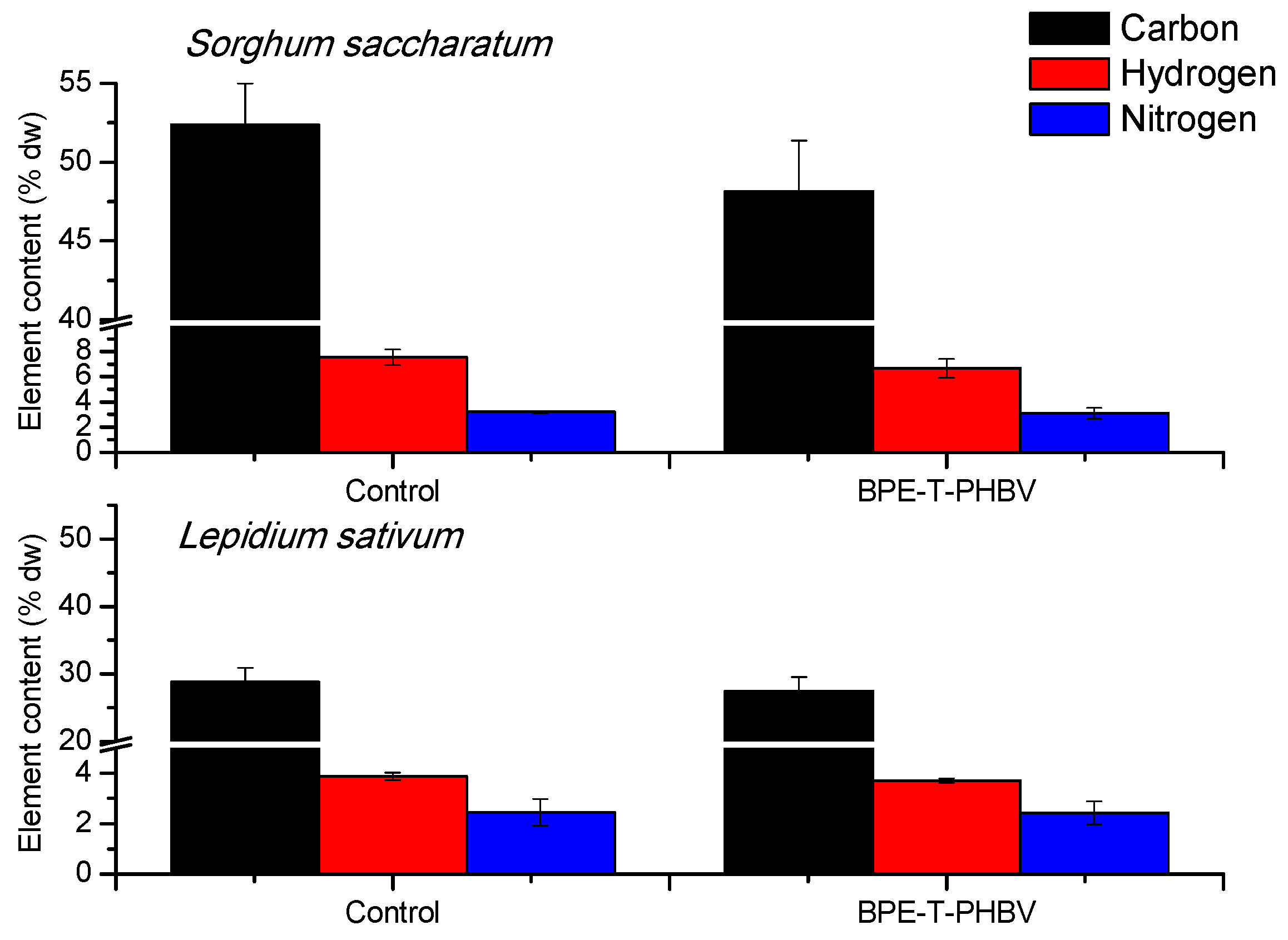
The content of carbon, hydrogen, and nitrogen in the plant shoots of sorghum, as well as of cress, exposed and not exposed to BPE-T-PHBV microparticles, was at a similar level (Figure 1).
No statistically relevant differences (p > 0.05) in the elemental composition (CHN) between the control experiments and the experiments with PHBV-based plastic microparticles were observed. The elemental composition of plant biomass determined in this work was in agreement with literature data for plant biomass [25,26]. Plant carbon:nitrogen (C:N) ratios are a powerful indicator of various ecological processes, including the adaptation to climate and environmental changes [25]. The value of the C:N ratio was at the level of 16.4 and 15.5 for sorghum and 11.8 and 11.3 for cress in the control runs and BPE-T-PHBV runs, respectively. These values corresponded well to the values determined for plants from the grasslands reported by Zhang et al. [25]. What is more, PHBV-based microplastics in the soil did not influence the C:N ratio.
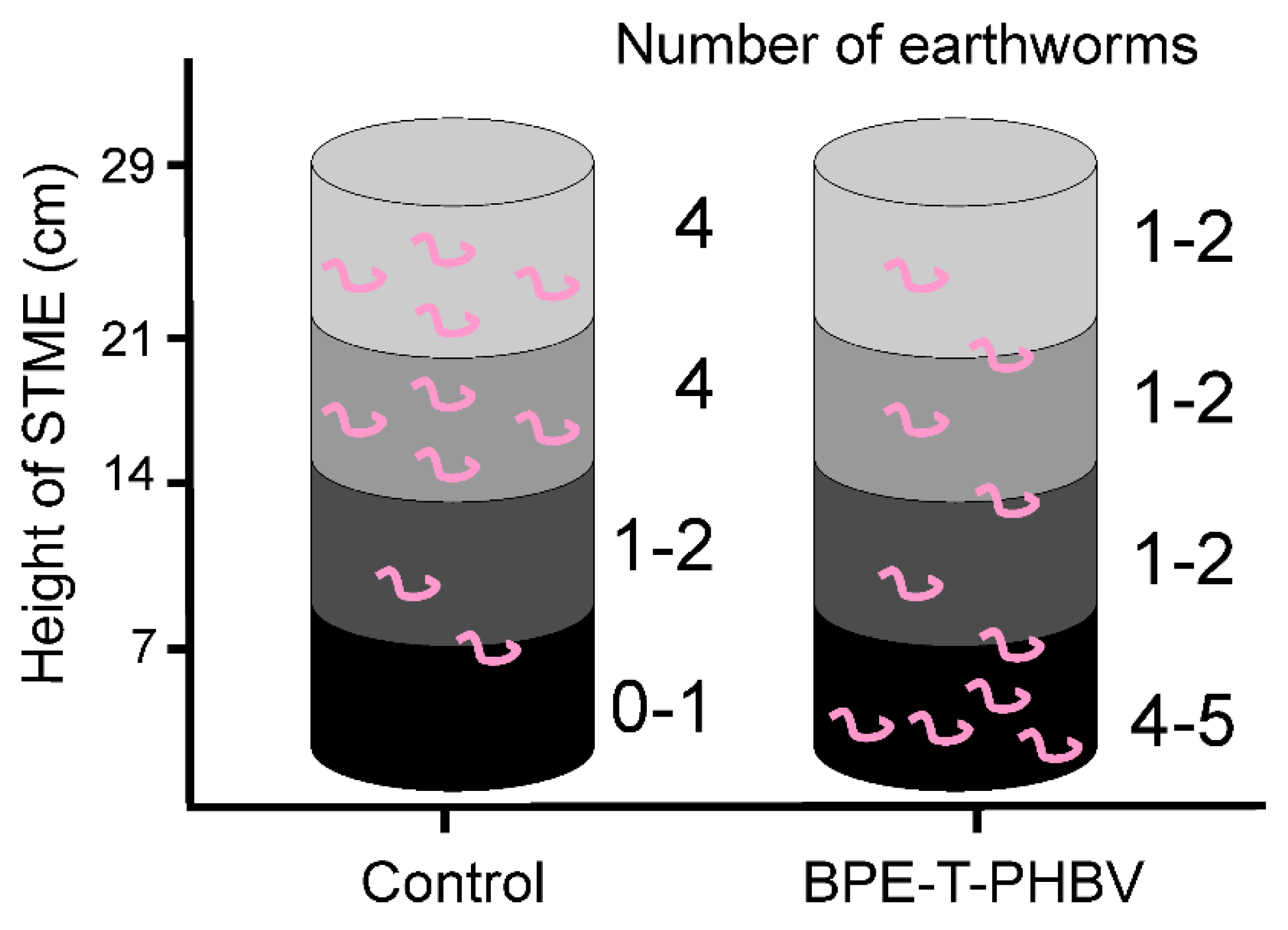
Earthworm communities are generally sensitive to the physicochemical properties of the soil, which influence the availability of resources for earthworm survival [27]. In the microcosm experiments, all earthworms not exposed and exposed to PHBV-based microplastics survived. Their body mass decreased after 28 days because no additional food besides the organic matter present in the soil was added. In order to better understand the effect of the abiotic soil properties on earthworms, it is important to observe their behaviour and quantify their spatial distribution. In this study, the vertical distribution of earthworms in the STMEs differed between the control and PHBV-based plastic experiments. The presence of BPE-T-PHBV microparticles in the soil favoured the downward movements of earthworms to the bottom soil zone (Figure 2). Thus, about half of the earthworms (40–50%) were found in this soil zone in the tests with PHBV-based microparticles, while in the control tests, it was no more than 10% (Figure 2). The same phenomenon was earlier observed for polylactide-based bioplastics [20]. The downward movements of earthworms exposed to bioplastics indicated avoidance behaviour, which is also described in the literature as “escape behaviour” [28]. It was most probably a response of epigeic earthworms that normally should remain in the upper layers of soil to the soil contamination [28].

3.2. Identification of the Chemicals Released from Leachates of PHBV-Based Microplastics

Each plastic or bioplastic introduced onto the market contains additives to improve its functional features. In the composition of BPE-T-PHBV, some plasticizers and other additives were also included. Leachates obtained within the batch leachate tests were subjected to chromatographic analysis to examine and identify, if possible, the composition of chemical compounds released from PHBV-based plastic.
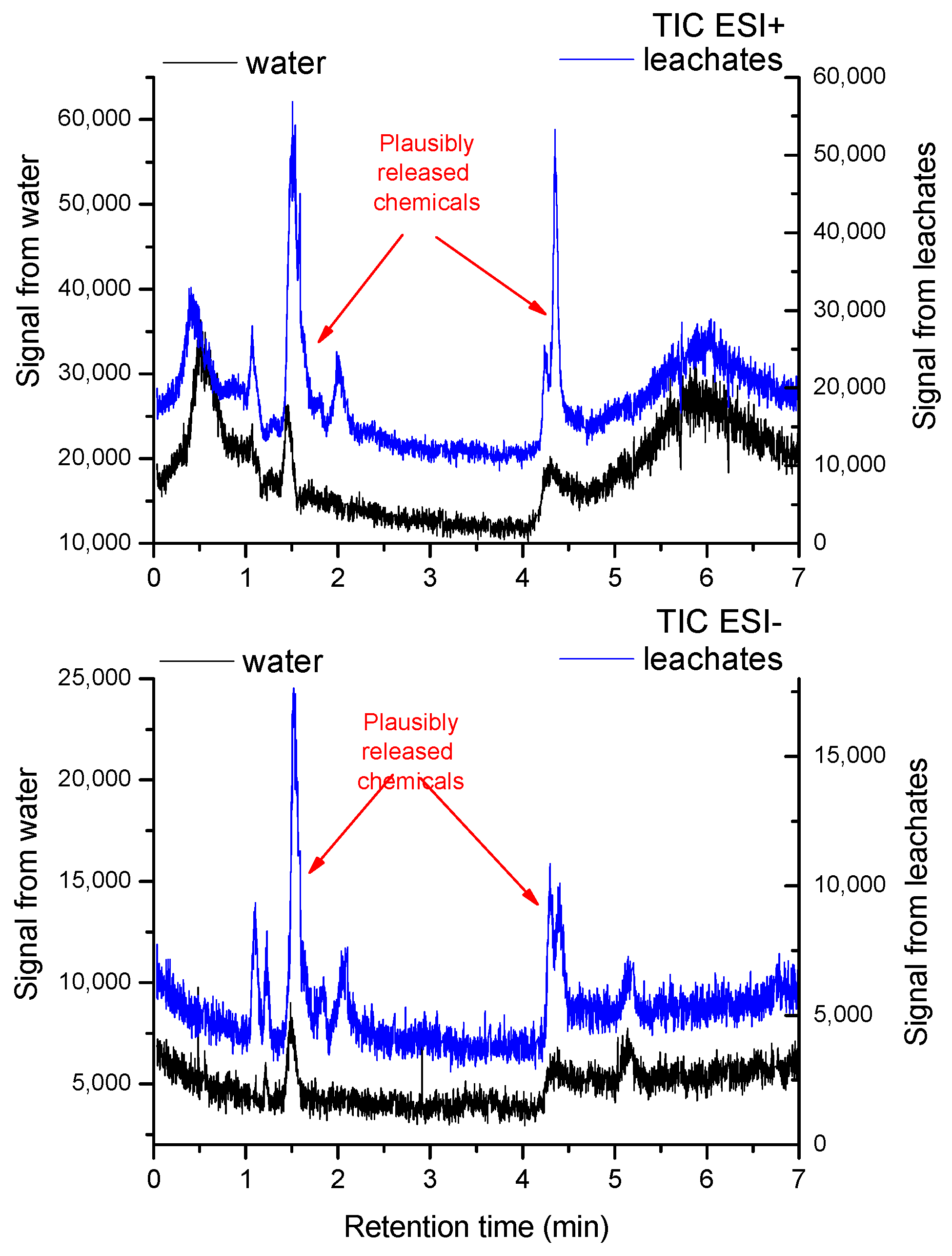
The comparison of mass chromatograms for leachates from BPE-T-PHBV plastic and water clearly indicated that there were substances released from this bioplastic to water (Figure 3).
Their detailed analysis revealed seven ions that could be responsible for the released chemical compounds from PHBV-based plastic to the leachates. These were the ions of monoisotopic masses m/z: 89.0243, 303.9885, 235.9956, 191.0706, 236.0023, and 311.2035 in the negative ionization mode and 219.0864 in the positive ionization mode (Table 2).
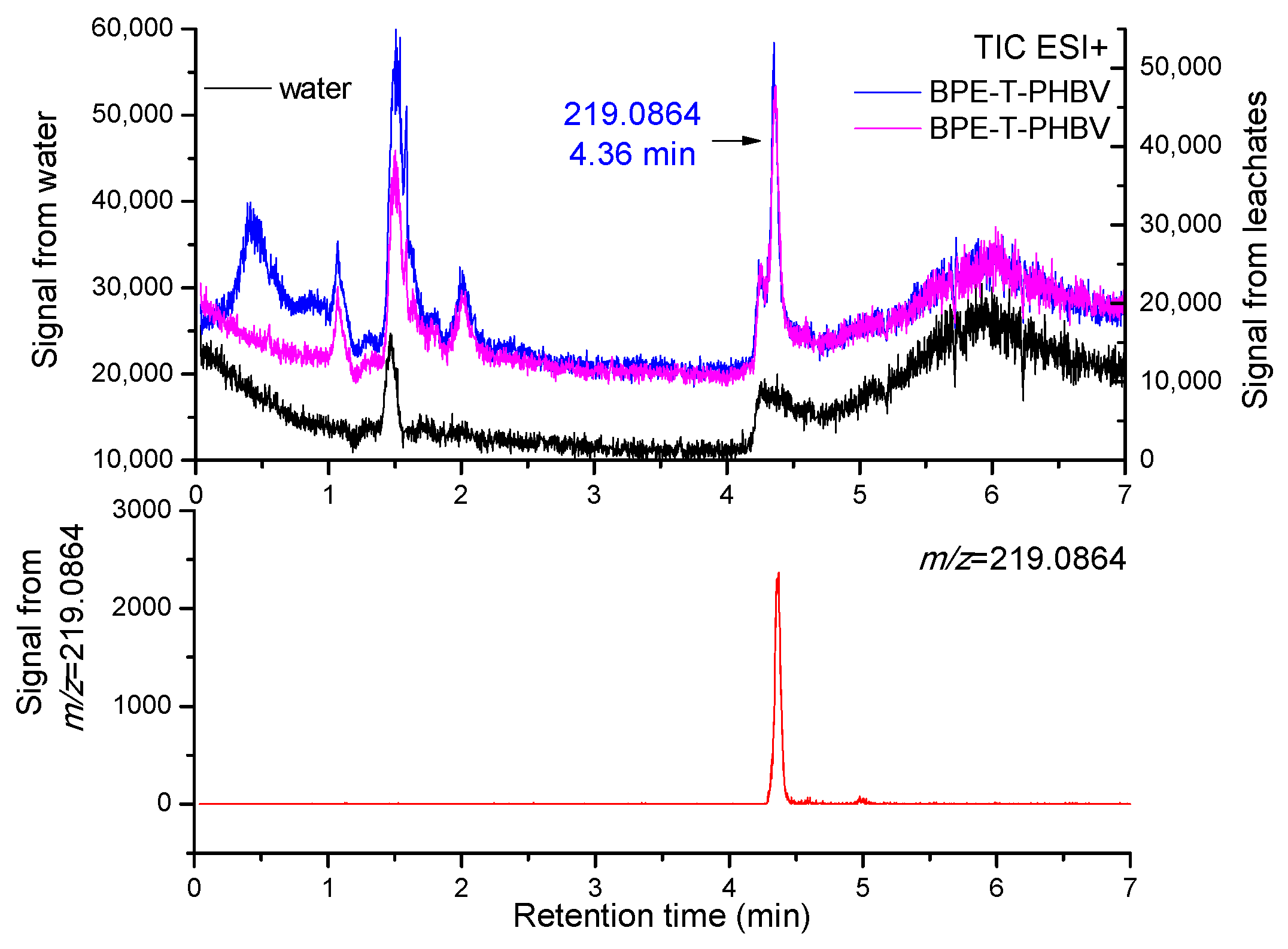
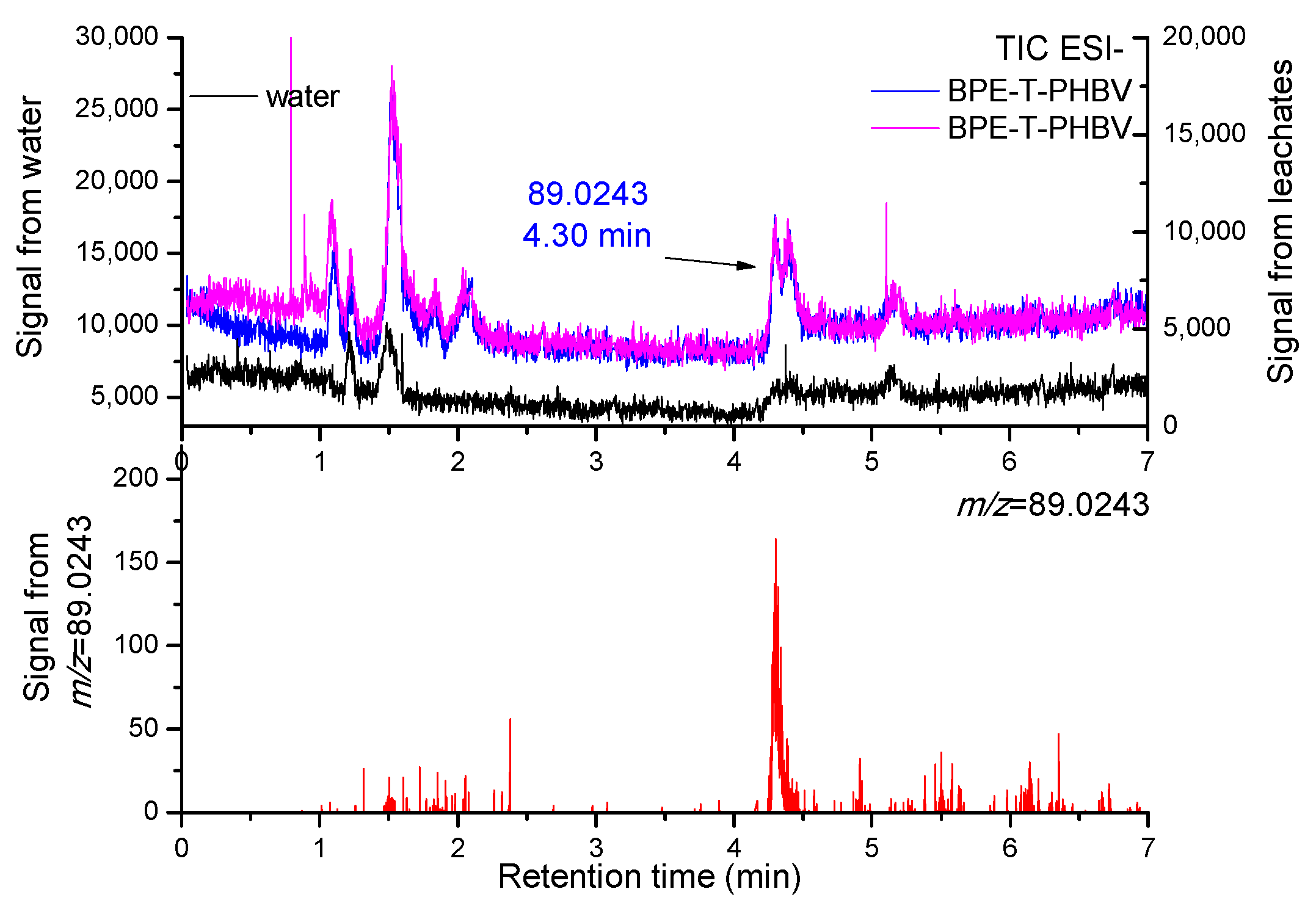
In total, two were attributed to the known chemical compounds, namely m/z = 89.0243 [Δ(m/z) = −0.0004], identified as lactic acid of formula C3H6O3 (neutral), and m/z = 219.0864 [Δ(m/z)= −0.0005], identified as glycerol triacetate (triacetin) of formula C9H14O6 (neutral). The latter is a widely used additive in the formulations of bioplastics [29]. The mass chromatograms indicating the presence of lactic acid and glycerol triacetate are shown in Figure 4 and Figure 5.
Analyzing the levels of the signals of both identified compounds, it is seen that lactic acid was likely released in small amounts, and its peak, although marked, was only slightly higher than the background peaks. The glycerol triacetate signal was much clearer and stronger than the one for lactic acid, which may indicate a higher amount of the chemical released.

3.3. Effect of Leachates of PHBV-Based Microplastics on Higher Plants

Apart from the examination of the composition of leachates obtained from PHBV-based plastic, the influence of these leachates on the early stages of growth of higher plants was also studied. Two types of phytotoxicity tests were performed. In one of them (so-called liquid phase tests), the direct effect of leachates on plant germination and early growth was checked, while in the second type of tests, the leachates were firstly added to the soil (soil tests) and then the effect on germination and early growth of higher plants was tested.
Seed germination did not deteriorate, irrespective of the type of tests and plant species. In the liquid phase tests, the percentage of germination varied on average from 87% to 100% depending on the plant species, whereas in the soil tests, it was from 87% to 93%, also dependent on the plant species. It remains in agreement with the findings of Menicagli et al., who reported that leachates from the low concentration of high-density polyethylene and compostable marine-exposed bags increased the seed germination ability of dune plants Thinopyrum junceum and Glaucium flavum and caused the longer above-ground parts of these plants in comparison to the control [30].
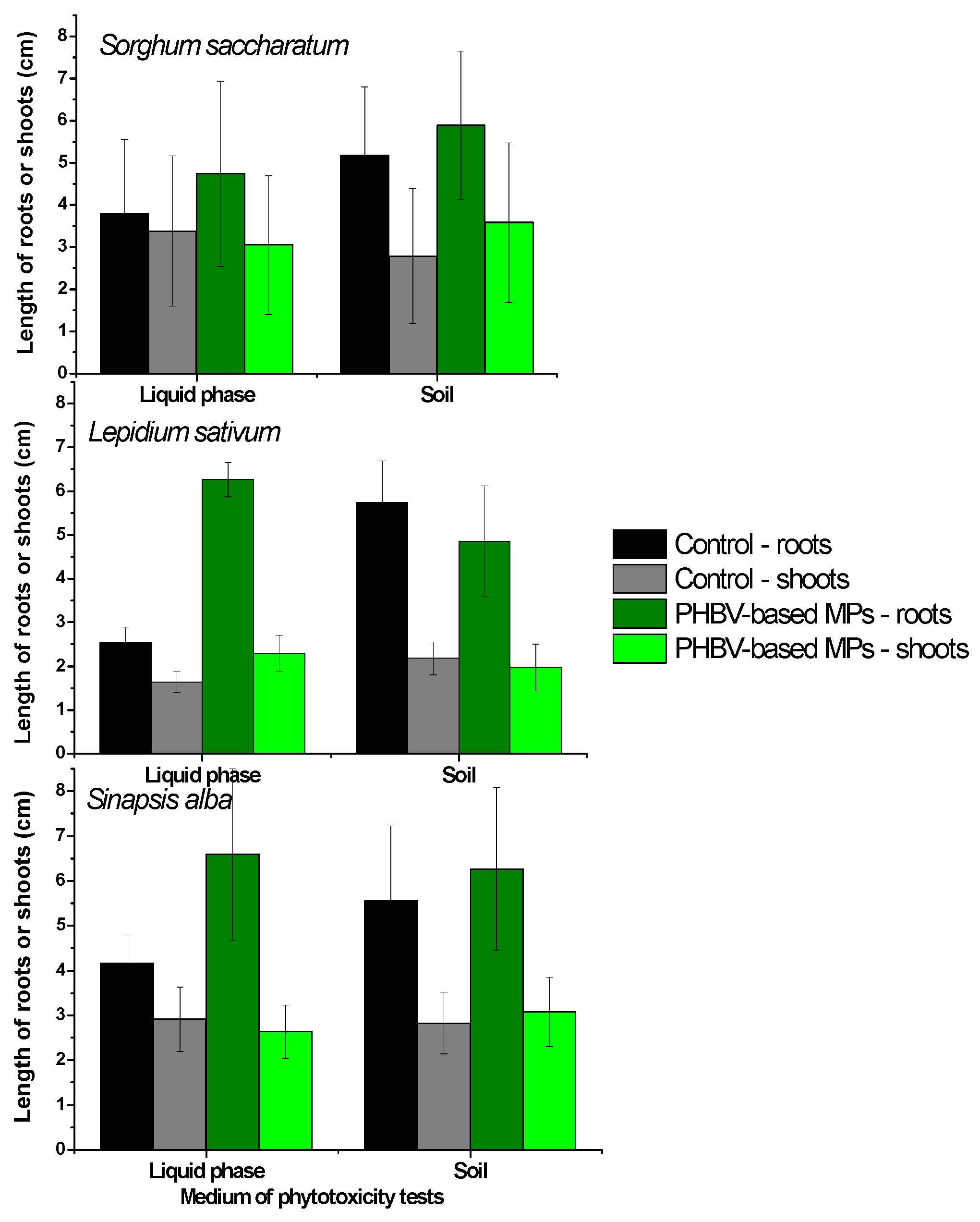
In the liquid phase test, the stimulation of root growth of three higher plants was observed (Figure 6).
In particular, dicotyledonous plants S. alba and L. sativum were stimulated, which might indicate the stress response. For them, the differences in root length between the control tests and the tests with leachates of PHBV-based plastics were confirmed statistically (p < 0.05). With regard to shoots, the decrease in the length of shoots exposed to the leachates containing the chemicals released from BPE-T-PHBV in comparison to the control runs was noticed. It varied in the range from about 3% to 9.7% depending on the plant (Figure 6). One-way analysis of variance showed that these differences in shoot length were not statistically significant (p > 0.05). In the phytotoxicity tests made with the use of soil as a test medium, the roots or shoots of plants exposed to leachates of BPE-T-PHBV were usually longer than those in the control tests. It was observed with regard to two plants, i.e., S. saccharatum and S. alba. For these two plants, no effect or stimulation effect was visible. In the case of L. sativum, the reduction in the length of roots and shoots in the plants exposed to the leachates from PHBV-based plastic compared to the control runs was found. This reduction was equal to 15.5% for roots and 9.6% for shoots of cress (Figure 6); however, the mentioned reductions in root and shoot length were not at a statistically significant level.

4. Conclusions

The presence of PHBV-based plastic microparticles at a relatively high but environmentally relevant concentration 2.5% w/w does not affect the germination of higher plants and does not inhibit the growth of higher plants. Simultaneously, it may cause a decrease in germination efficiency of sorghum (at the not statistically relevant level) and it contributes to the reduction in the content of dry matter in the cress biomass at a statistically significant level. It shows that the effect of PHBV-based plastic microparticles on plants is species-specific. The elemental composition of plant biomass and the C:N ratio are not susceptible to the changes in the soil composition induced by the presence of PHBV-based microplastics. The same applies to chlorophyll synthesis.
The presence of PHBV-based plastic at a concentration 2.5% w/w in the model terrestrial ecosystem does not cause the mortality of earthworms E. andrei, whereas it affects the depth distribution of these organisms in the soil. The downward movement of earthworms in the model terrestrial ecosystems with PHBV-based plastic indicates the avoidance behaviour under unfavourable living conditions.
Lactic acid and glycerol triacetate, which are commonly used as plastic additives, were identified in the leachates of PHBV-based plastic microparticles. These leachates do not deteriorate the early stages of growth of higher plants. They stimulate rather than inhibit the growth of plant roots or shoots, but it is a species-specific phenomenon. Out of three plants used in the phytotoxicity tests, L. sativum is found to be the most sensitive indicator.
By analyzing all the results obtained in this work, it can be stated that the studied PHBV-based bioplastic microparticles at a concentration not higher than 2.5% w/w and PHBV-based bioplastic leachates do not pose a serious threat to soil biota and should not affect the sustainability of terrestrial ecosystems.

Author Contributions

Conceptualization, E.L.-B.; methodology, E.L.-B. and M.B.; software, E.L.-B.; validation, E.L.-B. and M.B.; formal analysis, E.L.-B. and M.B.; investigation, E.L.-B. and M.B.; resources, E.L.-B.; data curation, E.L.-B.; writing—original draft preparation, E.L.-B.; writing—review and editing, E.L.-B. and M.B.; visualization, E.L.-B. and M.B.; supervision, E.L.-B. All authors have read and agreed to the published version of the manuscript.

Funding

This research was funded by the European Union’s Horizon 2020—Research and Innovation Framework Programme, BIO-PLASTICS EUROPE, grant number 860407.

Institutional Review Board Statement

Not applicable.

Informed Consent Statement

Not applicable.

Data Availability Statement

The original contributions presented in this study are included in the article. Further inquiries can be directed to the corresponding author.

Conflicts of Interest

The authors declare no conflicts of interest.

References

  1. Saratale, R.G.; Cho, S.-K.; Saratale, G.D.; Kadam, A.A.; Ghodake, G.S.; Kumar, M.; Bharagava, R.N.; Kumar, G.; Kim, D.S.; Mulla, S.I.; et al. A comprehensive overview and recent advances on polyhydroxyalkanoates (PHA) production using various organic waste streams. Bioresour. Technol. 2021, 325, 124685. [Google Scholar] [CrossRef]
  2. Chong, J.W.R.; Khoo, K.S.; Yew, G.Y.; Leong, W.H.; Lim, J.W.; Lam, M.K.; Ho, Y.-C.; Ng, H.S.; Munawaroh, H.S.H.; Show, P.L. Advances in production of bioplastics by microalgae using food waste hydrolysate and wastewater: A review. Bioresour. Technol. 2021, 342, 125947. [Google Scholar] [CrossRef] [PubMed]
  3. European Bioplastics e.V. Bioplastic Materials. Available online: https://www.european-bioplastics.org/bioplastics/materials/ (accessed on 10 July 2025).
  4. European Bioplastics e.V. Biodegradable Plastics. Available online: https://www.european-bioplastics.org/bioplastics/materials/biodegradable/ (accessed on 10 July 2025).
  5. García-Chumillas, S.; Guerrero-Murcia, T.; Nicolás-Liza, M.; Monzó, F.; Simica, A.; Simó-Cabrera, L.; Martínez-Espinosa, R.M. PHBV cycle of life using waste as a starting point: From production to recyclability. Front. Mater. 2024, 11, 1405483. [Google Scholar] [CrossRef]
  6. Brown, R.W.; Chadwick, D.R.; Zang, H.; Graf, M.; Liu, X.; Wang, K.; Greenfield, L.M.; Jones, D.L. Bioplastic (PHBV) addition to soil alters microbial community structure and negatively affects plant-microbial metabolic functioning in maize. J. Hazard. Mater. 2023, 441, 129959. [Google Scholar] [CrossRef]
  7. Guo, J.J.; Huang, X.P.; Xiang, L.; Wang, Y.Z.; Li, Y.W.; Li, H.; Cai, Q.Y.; Mo, C.H.; Wong, M.H. Source, migration and toxicology of microplastics in soil. Environ. Int. 2020, 137, 105263. [Google Scholar] [CrossRef]
  8. de Souza Machado, A.A.; Kloas, W.; Zarfl, C.; Hempel, S.; Rillig, M.C. Microplastics as an emerging threat to terrestrial ecosystems. Glob. Change Biol. 2018, 24, 1405–1416. [Google Scholar] [CrossRef]
  9. Gionfra, S. Plastic Pollution in Soil. 2018. Available online: https://www.isqaper-is.eu/phocadownload/Briefing_paper_Plastic_pollution_in_soil_v2.pdf (accessed on 10 July 2025).
  10. Horton, A.A.; Walton, A.; Spurgeon, D.J.; Lahive, E.; Svendsen, C. Microplastics in freshwater and terrestrial environments: Evaluating the current understanding to identify the knowledge gaps and future research priorities. Sci. Total Environ. 2017, 586, 127–141. [Google Scholar] [CrossRef] [PubMed]
  11. Fuller, S.G.; Gautam, A. A procedure for measuring microplastics using pressurized fluid extraction. Environ. Sci. Technol. 2016, 50, 5774–5780. [Google Scholar] [CrossRef]
  12. Scheurer, M.; Bigalke, M. Microplastics in Swiss floodplain soils. Environ. Sci. Technol. 2018, 52, 3591–3598. [Google Scholar] [CrossRef] [PubMed]
  13. Zhang, S.; Yang, X.; Gertsen, H.; Peters, P.; Salanki, T.; Geissen, V. A simple method for the extraction and identification of light density microplastics from soil. Sci. Total Environ. 2018, 616, 1056–1065. [Google Scholar] [CrossRef]
  14. Wu, X.; Lu, J.; Du, M.; Xu, X.; Beiyuan, J.; Sarkar, B.; Bolan, N.; Xu, W.; Xu, S.; Chen, X.; et al. Particulate plastics-plant interaction in soil and its implications: A review. Sci. Total Environ. 2021, 792, 148337. [Google Scholar] [CrossRef]
  15. United States Environmental Protection Agency (EPA). A Summary of Literature on the Chemical Toxicity of Plastics Pollution to Aquatic Life and Aquatic-Dependent Wildlife. EPA-822-R-16-009. 2016. Available online: https://www.google.com/url?sa=t&source=web&rct=j&opi=89978449&url=https://www.epa.gov/sites/default/files/2016-12/documents/plastics-aquatic-life-report.pdf&ved=2ahUKEwjO6ca7qa2PAxU_3jQHHf4KPYwQFnoECBcQAQ&usg=AOvVaw1VsbqdUCCiuSKTd1gTpKav (accessed on 10 July 2025).
  16. Lambert, S.; Sinclair, C.; Boxall, A. Occurrence, degradation, and effect of polymer-based materials in the environment. Rev. Environ. Contam. Toxicol. 2014, 227, 1–53. [Google Scholar]
  17. Zimmermann, L.; Bartosova, Z.; Braun, K.; Oehlmann, J.; Völker, C.; Wagner, M. Plastic products leach chemicals that induce in vitro toxicity under realistic use conditions. Environ. Sci. Technol. 2021, 55, 11814–11823. [Google Scholar] [CrossRef]
  18. Gunaalan, K.; Fabbri, E.; Capolupo, M. The hidden threat of plastic leachates: A critical review on their impacts on aquatic organisms. Water Res. 2020, 184, 116170. [Google Scholar] [CrossRef]
  19. Gao, Z.; Yu, H.; Li, M.; Li, X.; Lei, J.; He, D.; Wu, G.; Fu, Y.; Chen, Q.; Shi, H. A battery of baseline toxicity bioassays directed evaluation of plastic leachates—Towards the establishment of bioanalytical monitoring tools for plastics. Sci. Total Environ. 2022, 828, 154387. [Google Scholar] [CrossRef]
  20. Liwarska-Bizukojc, E. Application of a small scale-terrestrial model ecosystem (STME) for assessment of ecotoxicity of bio-based plastics. Sci. Total Environ. 2022, 828, 154353. [Google Scholar] [CrossRef] [PubMed]
  21. OECD. Earthworm, Acute Toxicity Tests. In OECD Guidelines for the Testing of Chemicals; OECD: Paris, France, 1984; pp. 1–9. [Google Scholar]
  22. Lithner, D.; Damberg, J.; Dave, G.; Larsson, A. Leachates from plastic consumer products—Screening for toxicity with Daphnia magna. Chemosphere 2009, 74, 1195–1200. [Google Scholar] [CrossRef] [PubMed]
  23. Liwarska-Bizukojc, E.; Bizukojc, M. Study on microbioplastic leachates: Released compounds and impact on higher plant growth. Chem. Process Eng. 2024, 45, e73. [Google Scholar] [CrossRef]
  24. Li, Y.; He, N.; Hou, J.; Xu, L.; Liu, C.; Zhang, J.; Wang, Q.; Zhang, X.; Wu, X. Factors Influencing Leaf Chlorophyll Content in Natural Forests at the Biome Scale. Front. Ecol. Evol. 2018, 6, 64. [Google Scholar] [CrossRef]
  25. Zhang, H.; Wu, H.; Yu, Q.; Wang, Z.; Wei, C.; Long, M.; Kattge, J.; Smith, M.; Han, X. Sampling Date, Leaf Age and Root Size: Implications for the Study of Plant C:N:P Stoichiometry. PLoS ONE 2013, 8, e60360. [Google Scholar] [CrossRef] [PubMed]
  26. Manasa, P.; Sambasivam, S.; Ran, F. Recent progress on biomass waste derived activated carbon electrode materials for supercapacitors applications—A review. J. Energy Storage 2022, 54, 105290. [Google Scholar] [CrossRef]
  27. Singh, S.; Sharma, A.; Khajuria, K.; Singh, J.; Vig, A.P. Soil properties changes earthworm diversity indices in different agro-ecosystem. BMC Ecol. 2020, 20, 27. [Google Scholar] [CrossRef] [PubMed]
  28. Santos, M.J.G.; Ferreira, V.; Soares, A.M.V.M.; Loureiro, S. Evaluation of the combined effects of dimethoate and spirodiclofen on plants and earthworms in a designed microcosm experiment. Appl. Soil Ecol. 2011, 48, 294–300. [Google Scholar] [CrossRef]
  29. ECHA. Plastic Additives Initiative. 2018. Available online: https://echa.europa.eu/plastic-additives-initiative (accessed on 27 May 2024).
  30. Menicagli, V.; Balestri, E.; Lardicci, C. Exposure of coastal dune vegetation to plastic bag leachates: A neglected impact of plastic litter. Sci. Total Environ. 2019, 683, 737–748. [Google Scholar] [CrossRef] [PubMed]
Figure 1. Carbon, hydrogen, and nitrogen content in the plant biomass exposed and not exposed to the PHBV-based microplastics in the soil. Error bars reflect the values of standard deviation.
Sustainability 17 07778 g001
Figure 2. Depth distribution of earthworms E. andrei in the microcosm experiments.
Sustainability 17 07778 g002
Figure 3. Differences between mass chromatograms of leachates of BPE-T-PHBV and water indicate released chemicals.
Sustainability 17 07778 g003
Figure 4. Total ion chromatogram for BPE-T-PHBV leachates in ESI+ ionization mode and a single ion chromatogram to identify glycerol triacetate.
Sustainability 17 07778 g004
Figure 5. Total ion chromatogram for BPE-T-PHBV leachates in ESI-mode and a single ion chromatogram to identify lactic acid.
Sustainability 17 07778 g005
Figure 6. Effect of leachates obtained from BPE-T-PHBV bioplastic on the early growth of higher plants. Error bars reflect the values of standard deviation.
Sustainability 17 07778 g006
Table 1. Effect of BPE-T-PHBV on the shoot growth of two higher plants: Sorghum saccharatum (SOS) and Lepidium sativum (LES).
Measured EndpointOECD Soil + BPE-T-PHBVOECD Soil
Mean shoot length of SOS (cm)18.1 ± 1.212.8 ± 4.4
Mean fresh mass of individual SOS shoot (mg)171.76119.88
Mean shoot length of LES (cm)5.4 ± 1.15.1 ± 1.1
Mean fresh mass of individual LES shoot (mg)120.82116.83
Relative chlorophyll content in SOS (CCI)13.9 ± 2.614.5 ± 2.9
Relative chlorophyll content in LES (CCI)12.8 ± 1.912.7 ± 2.3
Dry matter of plant biomass of SOS (mg kg−1)115.02 ± 2.93119.02
Dry matter of plant biomass of LES (mg kg−1)82.85 ± 0.19791.03
Table 2. Identification of plausible substances released from bioplastic BPE-T-PHBV.
Negative Ionization ESI−
m/z of
[M − H] or [M + H]+ experimental
Retention time (min)m/z of
[M − H] or [M + H]+ calculated
Absolute error
Δ(m/z)
Identification and ion formula
89.02434.2889.0239−0.0004Lactic acid C3H5O3
303.98854.29
235.99564.41
191.07061.52
236.00234.42
311.203511.28
Positive ionisation ESI+
219.08644.36219.0869−0.0005glycerol triacetate (triacetin) C9H15O6
Disclaimer/Publisher’s Note: The statements, opinions and data contained in all publications are solely those of the individual author(s) and contributor(s) and not of MDPI and/or the editor(s). MDPI and/or the editor(s) disclaim responsibility for any injury to people or property resulting from any ideas, methods, instructions or products referred to in the content.