Article

Evaluation and Prediction of the Coordination Degree of Coupling Water-Energy-Food-Land Systems in Typical Arid Areas

1
Ordos Institute of Liaoning Technical University, Ordos 017010, China
2
School of Geomatics, Liaoning Technical University, Fuxin 123000, China
*
Author to whom correspondence should be addressed.
Sustainability 2024, 16(16), 6996; https://doi.org/10.3390/su16166996
Submission received: 7 June 2024 / Revised: 10 August 2024 / Accepted: 13 August 2024 / Published: 15 August 2024

Abstract

As a typical arid region in China, the Xinjiang Uygur Autonomous Region is severely constrained by the resource and environmental conditions it faces. In order to promote the balance between regional resource supply and demand and environmental sustainability, this study uses the drive-pressure-state-impact-response (DPSIR) model to establish its water-energy-food-land (WEFL) evaluation indicator system. The coupling coordination relationship of WEFL is analyzed quantitatively using the coupling coordination degree (CCD) model. Comparative analysis is carried out on the impact of land on the coupled coordination of water-energy-food (WEF) systems from the perspective of coupled and coordinated time-series development as well as land-use changes. Finally, the future coupling coordination of the composite system is predicted using a PSO-BP (Particle Swarm Optimization–Back propagation) model. The results show the following: (1) From 2000 to 2020, the composite evaluation index (CEI) of the WEFL system has been increasing, the coupling levels are all high-quality coupling, and the coupling coordination grades goes through three stages: low coordination, moderate coordination and well coordination. (2) The inclusion of the land subsystem is good for improving the coupling coordination of the whole WEF system. (3) An increase in the areas of cropland, forest land and built-up land improves the dysfunctional decline of the WEF system. An increase in the area of grassland has a negative effect on the development of the WEF system coupling coordination. (4) Forecasts indicate that the Xinjiang WEFL system coupling coordination will maintain a well level of coordinated development in 2021–2025.

1. Introduction

The cornerstones of human survival and social development are water, energy and food resources [1], guaranteeing sustainable socio-economic development and a virtuous ecological cycle. Relevant studies show that, by 2050, the global human demand for water is projected to increase by 55% and global energy consumption is projected to increase by 50%, compared with the situation in 2000 [2]. FAO forecasts, based on the harvested area of rainfed and irrigated cropland, observe that the area under cultivation will need to increase from 1567 million ha in 2012 to 1732 million ha in 2050 in order to achieve food security goals [3]. An estimated 52 percent of global agricultural land is moderately degraded and nearly 2 billion hectares are severely degraded. Land degradation reduces productivity and food security, and negatively affects water resources. Problems such as resource shortage, energy crisis, food security production and land use conflicts are becoming increasingly serious.
In 2011, the Bonn Conference articulated for the first time the concept of the water-energy-food (WEF) Nexus [2], which highlighted the complex relationship between these three elements [4], and pointed out that a single resource cannot meet the needs of societies’ sustainable development [5]. The Nexus approach takes into account the different aspects of water, energy and food in equal measure. In terms of the scale of the study, it is not possible to generalize because of the dual nature of the WEF, which has both social and natural attributes, and because of the different natural backgrounds and levels of social development in each region. Resource boundaries can be determined either by region [6,7,8] or by distribution of resources [5,9].
In recent years, there has been a surge in the number of WEF frameworks, models, techniques and tools. There are two main phases of related research—qualitative and quantitative. First, for the qualitative phase of the research, system boundaries were established to understand and identify the linkages within the WEF [10]. A number of scholars have built on Nexus theory, where they use any of these three resources as an entry point to explore the trade-offs between the three elements in the region. Some [11,12,13] argue that the WEF system integrates multiple resources and sectors. In order to simultaneously express the goals, means and constraints of human activities, research should emphasize coordinated multi-disciplinary [14] development rather than isolated perspectives [15].
Second, as far as the quantitative research stage is concerned, based on the theory of qualitative research, scholars have developed a series of tools and models, such as quantitative assessment, systematic forecasting, policy simulation and so on, providing solutions to the actual problems of WEF relations, ensuring the science of analysis and the effectiveness of the practice. A synergy evolution model [9] was developed based on a logistic model and an improved constrained genetic algorithm, which suggested that water supply may play a significant role in stabilizing the WEF system. Wang et al. [16] have established an improved model for the extension of matter-element to assess the scope of use of the WEF system, emphasizing that China should improve the use model of the three resources, and that considering them as a whole will help to achieve synergistic use of the resources. Assessing the performance of the coupled system [5] as a whole largely reflects to a large extent the quality and health of the regional resource system. Cross-sectoral and geographical coordination [17,18] is an institutional guarantee of joint policy implementation [19] by different resource managers.
Forecasting, an important part of WEF research, allows scholars to predict future developments on the basis of past trends. Halbe et al. [20] uses system dynamics modeling to quantify relationships and predict future changes in the WEF system. Shi et al. [21] used the patch-level land use simulation model to predict the food-water-land-ecosystem relationship in Xinjiang in 2020–2030 using scenario analysis. Existing time-series forecasting models include the following: grey model (1,1) (GM (1,1)), back propagation (BP), Autoregressive Integrated Moving Average Model (ARIMA). However, due to the limited amount of data, the predictive accuracy of the models will be affected to some extent [22]. In recent years, prediction models based on a PSO-BP (Particle Swarm Optimization–Back propagation) [23] neural network have been widely used because they are excellent at overcoming the limitations that traditional BP neural networks may encounter when searching for optimal solutions.
Land is the spatial vehicle for human, economic and social development, providing the conditions and places to store resources and grow food [24]. The distribution of these resources in turn affects the distribution of population, which in turn changes the spatial pattern of the land [25]. For this reason, a large number of studies have emerged to explore the interactions between water, energy, food and land [26], to analyze land use threats to resource sustainability [27,28], to predict future land use changes using scenario analysis [21], to mitigate negative impacts and to maintain the security of the resource system. Therefore, clarifying the impact of land on the WEF system can provide a theoretical basis for optimizing regional resource allocation [29] and environmental sustainability.
Xinjiang is an important strategic location in China. On the one hand, Xinjiang has outstanding geographical advantages as the core area of China’s Silk Road Economic Belt and a key gateway for China’s outreach to Central and West Asia. On the other hand, Xinjiang, with its vast territory, is one of China’s major grain production bases and China’s largest energy reserve. However, it is deeply inland, far from the sea, isolated by mountain ranges and with a dry climate, resulting in scarce rainfall and severe water resource problems.
In summary, there are still some limitations in the current research on the degree of coordination of the WEF system: (1) Most of the research on water-energy-food focuses on specific geographical areas, while fewer studies have been conducted on the common WEF as a coupled system in Xinjiang. (2) The analysis and establishment of a comprehensive evaluation index system is not complete enough for the aspect of the linkage between the land and the WEF system. (3) The prediction on the coupled coordination tends to mostly predict the long-term development trend, neglecting the importance of short-term prediction for timely management decisions.
Therefore, Xinjiang was selected as the study region in this study. Firstly, the drive-pressure-state-impact-response (DPSIR) model is used to define a water-energy-food-land (WEFL) system boundary and to establish a system for a composite evaluation index (CEI). Secondly, the coupling coordination relationship of WEFL is quantitatively analyzed using the coupling coordination degree (CCD) model. Comparative analysis is conducted to observe the impact of land on the coupled coherence of WEF systems from the perspective of coupled and coordinated time-series development as well as land-use changes. Finally, the future coupling coordination of the composite system is predicted using a PSO-BP. Based on the results of short-term forecasting, the system state will be accurately grasped, and targeted differential optimization and regulation policies will be proposed. The aim is to chart a new course for the sustainable development of Xinjiang. The structure of the rest of this paper is as follows: Section 2 describes the study area. Section 3 describes the research data and methodology. The results are analyzed and discussed in Section 4 and Section 5, respectively. Section 6 sets out conclusions and makes recommendations.

2. Study Area

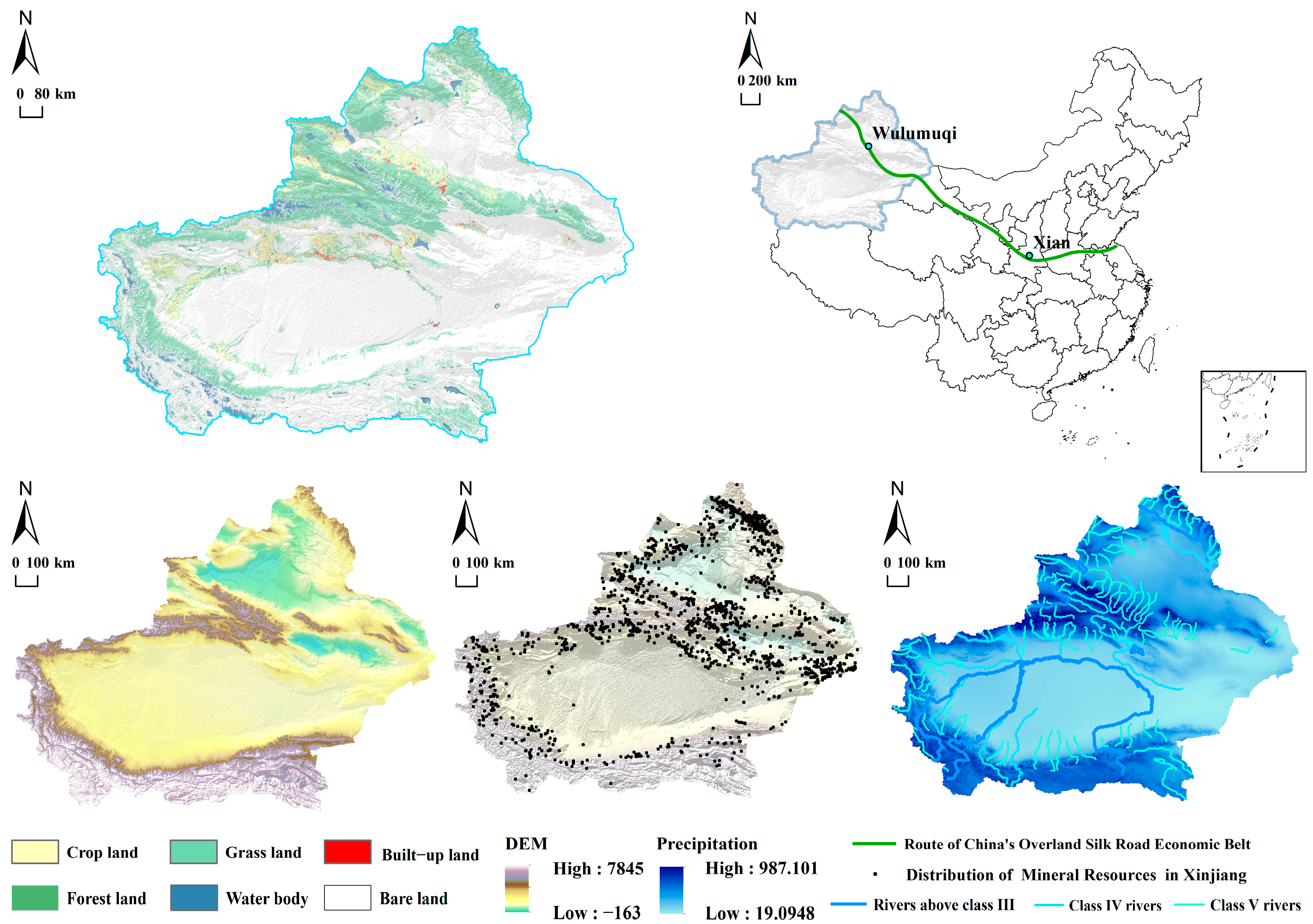
Xinjiang Uygur Autonomous Region (73°40′–96°18′ E, 34°25′–48°10′ N) is located in the northwestern borderland of China, and is the largest province of China [19]. With an area of more than 1.6 million square km and large arable land per capita, Xinjiang is one of the major food production bases in western China. At the same time, Xinjiang is an essential base for energy production and reserve in China. From the perspective of natural resources, Xinjiang is located inland, with a dry climate but sufficient sunshine hours, which has the inherent advantage of developing the photovoltaic industry. From a geological structure perspective, Xinjiang is located in the core of the Paleo-Asian tectonic domain in the global tectonic belt [21], and the underground contains a large amount of fossil energy and mineral resources of high quality. Xinjiang has outstanding multiple resource-endowment advantages, but water resources are structurally scarce and unevenly distributed in time and space, which is classic for arid and semi-arid regions, and the pressure on water resources is exacerbated by the impact of water use for food and energy, as well as the pressure of over-exploitation of groundwater [30]. The location and resource distribution of Xinjiang are shown in Figure 1.

3. Data Sources and Methods

3.1. Data Sources

The 30 m land cover datasets are from China Land Cover Product decoded by J. Yang et al. [31]. Rainfall data and the hydrological network data with a spatial resolution of 1 km were obtained from Geographic Data Sharing Infrastructure, global resources data cloud (www.gis5g.com, accessed on 11 May 2024). The digital elevation model data (30 m × 30 m; 2020) come from the Geospatial Data Cloud (www.gscloud.cn, accessed on 5 May 2024). Statistics were mainly obtained from Xinjiang Statistical Yearbook, Xinjiang Environmental Condition Bulletin, Xinjiang Water Resources Bulletin, Xinjiang Annual Report of Environmental Statistics, Statistical Bulletin of the National Economic and Social Development of Xinjiang and China Urban and Rural Statistical Yearbook for the years 2000–2020. Some missing data are interpolated from fitted values for all historical years.

3.2. Methods

3.2.1. Construction of WEFL Composite Evaluation Index System

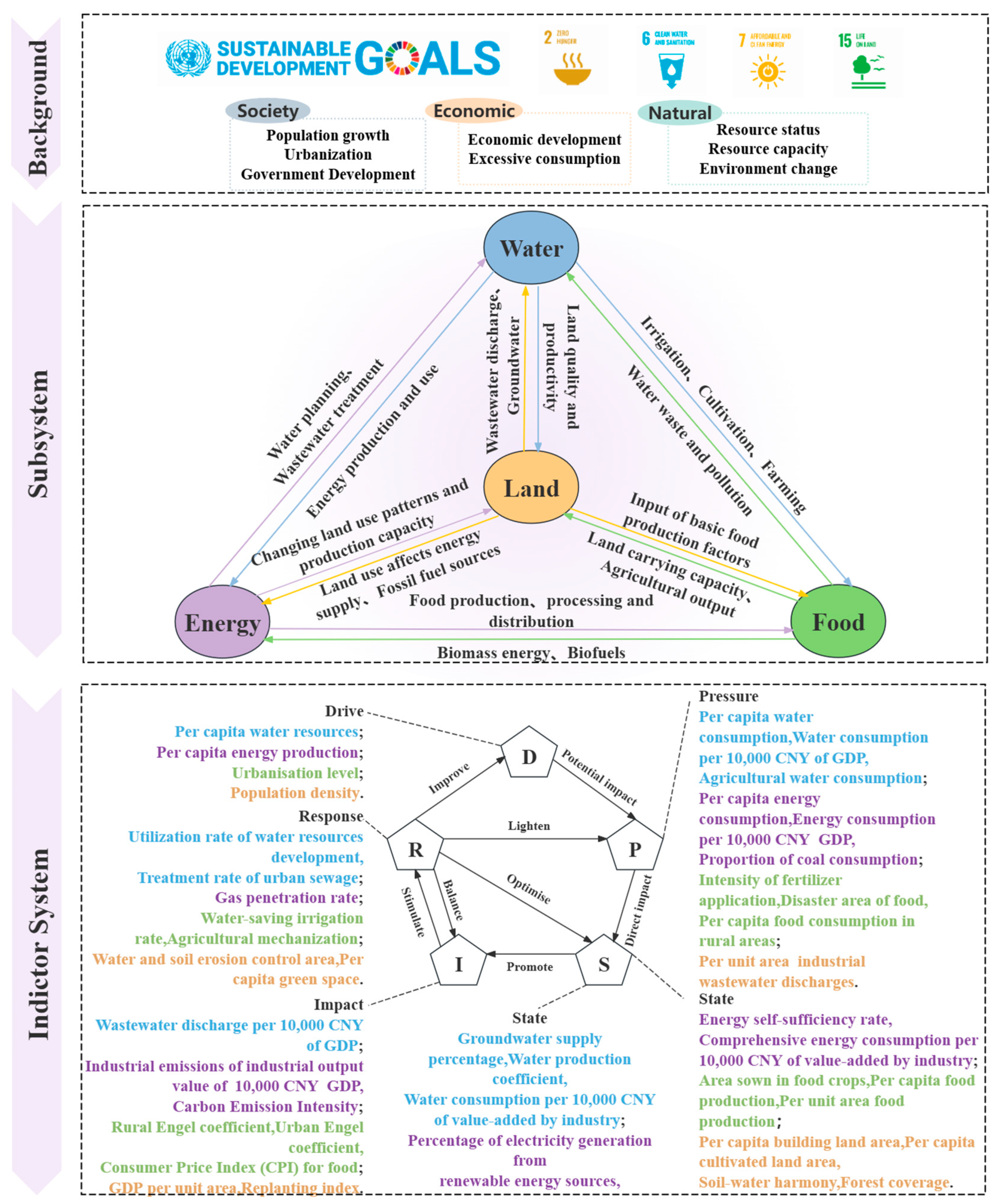
The choice of a scientific and reasonable framework for constructing indicators is crucial for the accuracy of the assessment results. The DPSIR model, as a structured framework for analyzing problems based on causality, is capable of integrating natural, social and economic information, and has the characteristics of comprehensiveness and logic. As shown in Figure 2, based on the four SDGs (SDG2, SDG6, SDG7, SDG15), this paper applies the DPSIR model to construct a coupled water-energy-food-land evaluation index system for drylands in Xinjiang, China, from the perspective of drive-pressure-state-impact-response, based on scientific, systematic, hierarchical and usability principles. Among them, the energy dimension adds the proportion of coal consumption, the proportion of electricity generation from renewable energy sources and the energy self-sufficiency rate, and the land dimension adds the degree of soil–water harmony, the replanting index, and the area of soil erosion control. These can more comprehensively reflect the energy consumption structure, food cultivation characteristics and land environmental management in Xinjiang.

3.2.2. Integrated Evaluation Indicator Model

Based on the judgment principles of “the larger the positive attribute, the more favorable” and “the smaller the negative attribute, the more favorable”, to ensure the comparability and measurability of the various indicators, a normalization process is applied to the raw statistical data using the following formulas:
Positive indicators:
X i t = X i t X m i n ( t ) X m a x ( t ) X m i n ( t )
Negative indicators:
X i t = X max ( t ) X i t X max ( t ) X min ( t ) ,
in the above two formulas, X i t is the standardized value of the index i in year t by normalization. X i t is the original value of the index i in year t . X m a x ( t ) , X min ( t ) are the maximum and minimum values of index i in year t , respectively.
In this study, the entropy value method is used to objectively assign weights to the indicators, to a certain extent, to avoid the randomness generated in the application of the subjective assignment method. According to the entropy characteristics, a low entropy value indicates a high dispersion of a measure, and a high weight indicates a high impact of a measure on the CEI. And vice versa, the smaller the impact. The results of calculating the weights of the indicators are shown in the Table 1.
To visually measure of the level of development of the subsystems of the WEFL, a linear weighting method [32] was used to obtain a CEI for the system with the following formula:
U ( w ) = i = 1 a W i w i t
U ( e ) = i = 1 b E i e i t
U ( f ) = i = 1 c F i f i t
U ( l ) = i = 1 d L i l i t ,
where t is the year, a , b , c and d denote the number of indicators in the water subsystem, energy subsystem, food subsystem and land subsystem. U(w), U(e), U(f), U(l) are the comprehensive evaluation values of the four subsystems in the year t . W i , E i , F i , L i are the weights of the index i of the four subsystems in Table 1. w i t , e i t , f i t , l i t are the standardized values of index i of the four subsystems in year t .

3.2.3. Coupling Coordination Degree Model

Coupling level reflects the degree of interaction between WEFL systems [33], while the level of coordination [2] reflects whether the factors within the WEFL system develop in a harmonious and orderly manner. The CCD merges the degree of coupling and coordination into a single value in a specific way, describing the fitness of coordination between systems. On the basis of the existing research results [32,33,34], the formula for the model of the degree of coupling coordination is as follows:
Degree of coupling (C):
C = n × [ U 1 · U 2 U n ( U 1 + U 2 + + U n ) n ] 1 n ,
where n is the number of subsystems. U 1 , U 2 , U n are the composite evaluation values of each subsystem, respectively.
Composite evaluation index:
T = α 1 U 1 + α 2 U 2 + + α n U n ,
where α 1 , α 2 , , α n are the weights of the importance of each subsystem to the area’s development, and in this study, it is considered that each subsystem is of equal importance. Therefore, the subsystems have the same weights.
Degree of coupling coordination (CCD):
D = C × T .
To better study the level of coordinated and coupled development of the WEF and WEFL systems in Xinjiang, the following hierarchical evaluation criteria (Table 2) are set with reference to the relevant research literature [33,34].

3.2.4. Pearson Correlation Coefficient

The Pearson correlation coefficient is a statistic that measures the degree of linear correlation between two variables. Its formal definition is the product of the covariance of two variables X and Y divided by their standard deviation (as a normalization factor) [35], which can be equivalently defined as follows:
r L ,   D = j = 1 n [ ( l j l ¯ ) ( d j d ¯ ) ] j = 1 n ( l i l ¯ ) 2 j = 1 n ( d j d ¯ ) 2 ,
where n is the sample size of 21, L is the land use type area and D is the coupling coordination degree. l j , d j are the j -th values of the variables L and D , respectively. l ¯ ,   d ¯ are the mean values of the variables L and D , respectively. The coefficients r L ,   D take values between −1 and 1.

3.2.5. PSO-BP Model

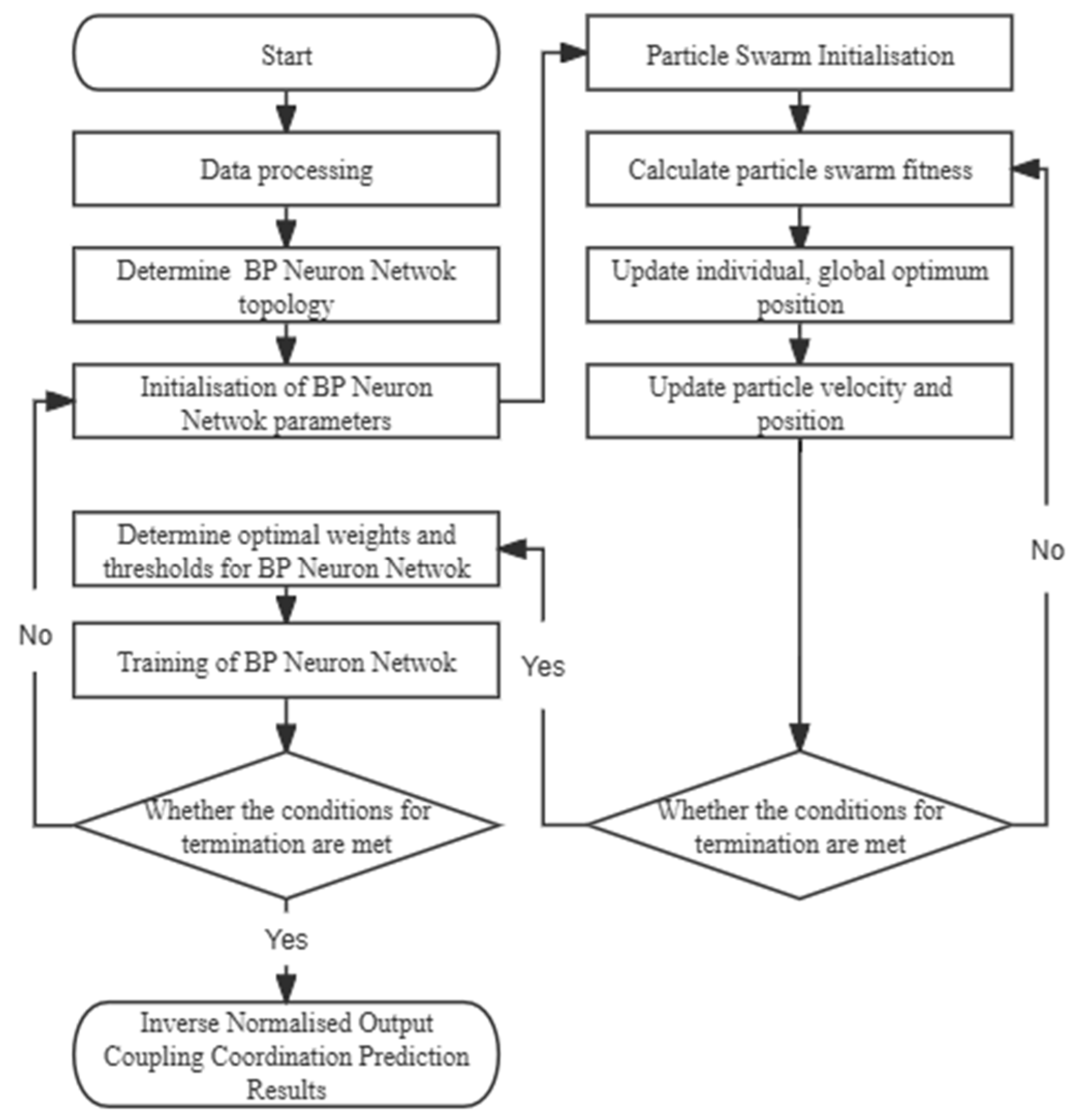
The BP neural network forecasting model is widely used in many fields, and its basic idea is to minimize the mean square error between the output value and the actual output value by gradient descent method [22,36]. But its data-search ability is poor, and it is easy to sink into the tendency of local optimal solution. PSO is a fast and efficient heuristic optimization technique [23]. The PSO-BP neural network prediction model makes full use of the global search capability of the PSO algorithm and the optimization capability of the BP neural network to avoid sinking into the local optimal solution [22]. The fitting values that meet the accuracy requirement are captured by particle swarm operations, from which the optimal weights and thresholds are sought. And the prediction parameters are optimized after several rounds of network training in order to improve the accuracy and efficiency of the time-series prediction. With reference to the existing research [22,23,36,37], this study adopts the BP neural network structure with an input layer, output layer and hidden layer, and uses PSO to control the local optimum and global optimum to select the optimal solution, and establishes the coupling coordination prediction model in Xinjiang. The specific process of PSO-BP is shown in Figure 3.

4. Analysis of Results

4.1. Analysis of the Level of the Composite Evaluation Index

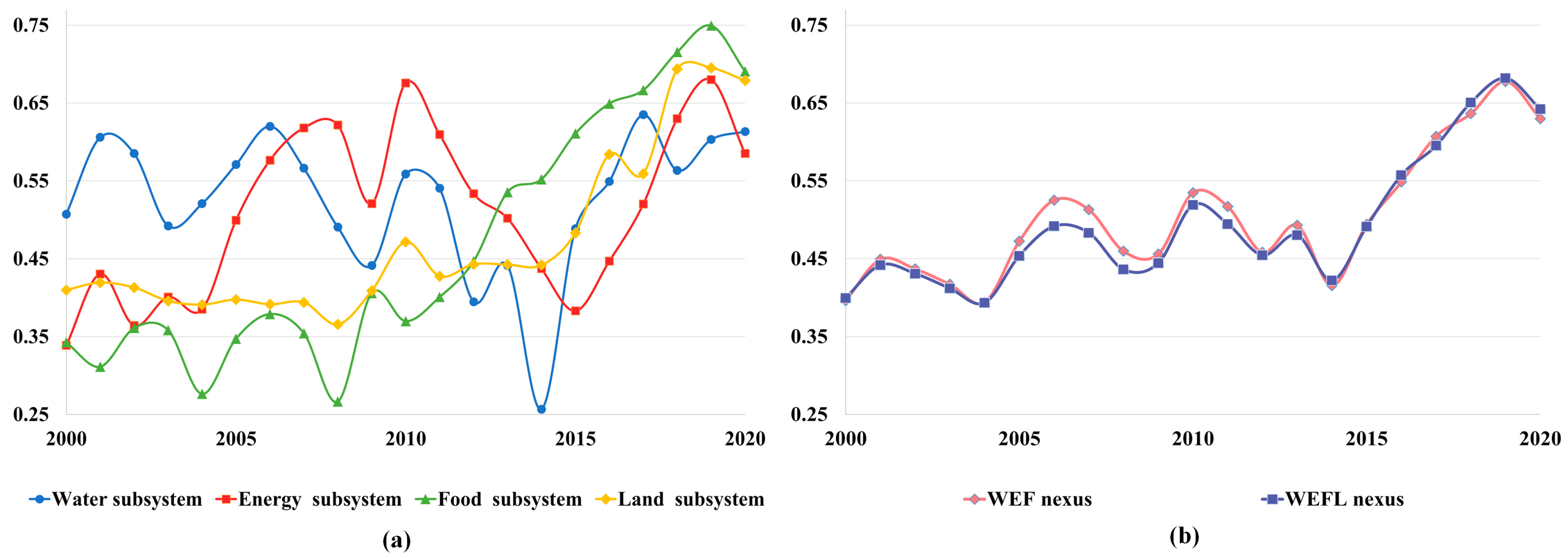
As shown in Figure 4, the CEI of the four subsystems of water, energy, food and land in Xinjiang from 2000 to 2020 all show multi-wavelength changes and continue to grow. Due to the impact of the subsystems, the CEI of the WEF and the WEFL increase slightly differently from year to year. The WEF system CEI rises from 0.39 in 2000 to 0.67 in 2019, and falls to 0.62 in 2020. The WEFL system CEI rises from 0.39 in 2000 to 0.68 in 2019, and falls to 0.64 in 2020.The WEFL system CEI rises from 0.39 in 2000 to 0.68 in 2019, and falls to 0.64 in 2020.
The WEF CEI continues to perform well thanks to a sound food security strategy and policies for a green and low-carbon energy transition. But water remains a constraint for the WEF CEI as agricultural water consumption and water consumption per 10,000 CNY of industrial value added continue to grow, and the energy and food subsystems consume more water than their synergistic cooperation and symbiosis can support. In different periods of the evolution of the WEF CEI, the contributions of the subsystems have shown obvious differences due to the double influence of the resource endowment and the level of socio-economic development. The resource endowment directly determines the quantity of resources that can be mobilized by the subsystems in the development process, while the stage of socio-economic development influences the development objectives and strategic positioning of the subsystems.
As shown in Figure 4b, compared to the WEF system, the CEI of the WEFL system declined in the early and middle stages of the study due to the land subsystem. The land ecological construction system has not yet been perfected in this stage, which in turn restricts the development of the land subsystem. With the coordination and optimization of land use and the gradual maturation of the institutional system in the later stage, the WEFL CEI in a more positive and beneficial direction. This shows that the sound development of the land subsystem has a far-reaching impact on the WEFL system as a whole, and that the integrated regional land use system is the key to promoting its healthy and sustainable development.
The development of the water subsystem has been extremely unstable, with a fluctuating development trend. From 2000 to 2006, its overall development was higher than that of the energy, food and land subsystems, in the early stage of the development campaign of the western regions. The government attached importance to the prevention and control of water pollution, thereby increasing the urban wastewater treatment rate, and the evaluation index fluctuated upwards from 0.5 to 0.62. With the rapid development of Xinjiang’s economy from 2006 to 2014, its agriculture, as one of the pillar industries in Xinjiang, accounted for an increasingly large share of agriculture water use in total water consumption. Limited surface runoff and increased groundwater consumption led to a significant decrease in the water subsystem evaluation index from 59% to 68%. After 2014, Xinjiang focused on promoting high-efficiency water-saving irrigation technology in the agriculture sector. With the upgrading of water-saving technology, the structure of water use improved, and the overall evaluation of the water resources sub-system increased, but the growth rate gradually decreased.
The energy subsystem went through three phases of development, with the period of 2007–2012 being higher than the other three subsystems, and the overall development was in a fluctuating trend. Between 2000 and 2010, the evaluation index was in a growth phase with a large increase from 0.33 to 0.67, a significant increase of 103 percent. China’s Western Development Strategy, which began in 2000, has optimized Xinjiang’s economic structure and promoted industrialization. This has led to a sustained increase in energy production, with industry replacing agriculture as the main industry. During this period, energy consumption per 10,000 CNY GDP and comprehensive energy consumption per 10,000 CNY of industrial value added decreased, and the CEI of the energy subsystem increased accordingly. The evaluation index decreased by 43% from 2010 to 2015, during which time the rapid industrial development in Xinjiang increased the demand for energy, while some industrial emissions were not effectively treated, resulting in a large increase in energy consumption and industrial emissions of industrial output value of 10,000 CNY GDP, which had a negative impact on the energy composite index. In 2015–2019, the evaluation indicator of the energy subsystem increased slightly as Xinjiang vigorously promoted efficient coal mining and cleaner production, and strengthened the development and use of renewable energy as it entered the 13th Five-Year Plan period in 2016. In 2020, due to energy consumption and the proportion of coal consumption reaching a record high, the evaluation index fell to 0.58.
The overall trend in the food subsystem is upward and better than in the water, energy and land subsystems, with short dips in 2004 and 2008. The food consumer price index rose in 2004 due to fluctuations in food acreage and production, threatening food security. Xinjiang faced severe natural disasters in 2008, with extreme weather conditions of drought and low temperatures in some areas causing losses in food production. It gradually became the subsystem with the highest evaluation index after 2013, reaching a peak of 0.74 in 2019. The stable development of the food subsystem is attributed to the region’s adherence to the development path of agricultural modernization. Its vigorous efforts to adapt and optimize the agricultural structure and the implementation of the three agricultural support policies have increased the incentives for farmers to grow food. In 2020, the COVID-19 pandemic had an impact on food production and distribution, causing the food subsystem index to drop to 0.69.
The land subsystem has generally maintained a stable development trend. During the period of 2000–2008, the CEI of the land subsystem showed a slow downward trend, decreasing by 10.8%. At this stage, due to the constraints imposed by natural and economic conditions, the contradiction between land supply and demand has become pronounced and the area of arable land per capita has gradually decreased. The evaluation index fluctuates, rising from 0.36 to a peak of 0.69 from 2008 to 2019. The main reason for the steady development of the land subsystem in the middle and late stages is that Xinjiang implemented projects such as natural forest protection and ecological fallow. Over the past 20 years, it has actively promoted land reclamation work and implemented the strategy of developing agriculture by quality, shrinking the desert area by nearly 40,000 square kilometers and further optimizing the spatial development pattern of the national territory. The significant reduction in total water resources in Xinjiang in 2020 directly affected the irrigation demand for cropland and reduced the degree of soil–water harmony, leading to a decrease in the land subsystem index.

4.2. Analysis of the Time-Series Variation in the Coupling Coordination of the WEF and WEFL

4.2.1. Analysis of Time-Series Variation in the Coupling Coordination of the WEF

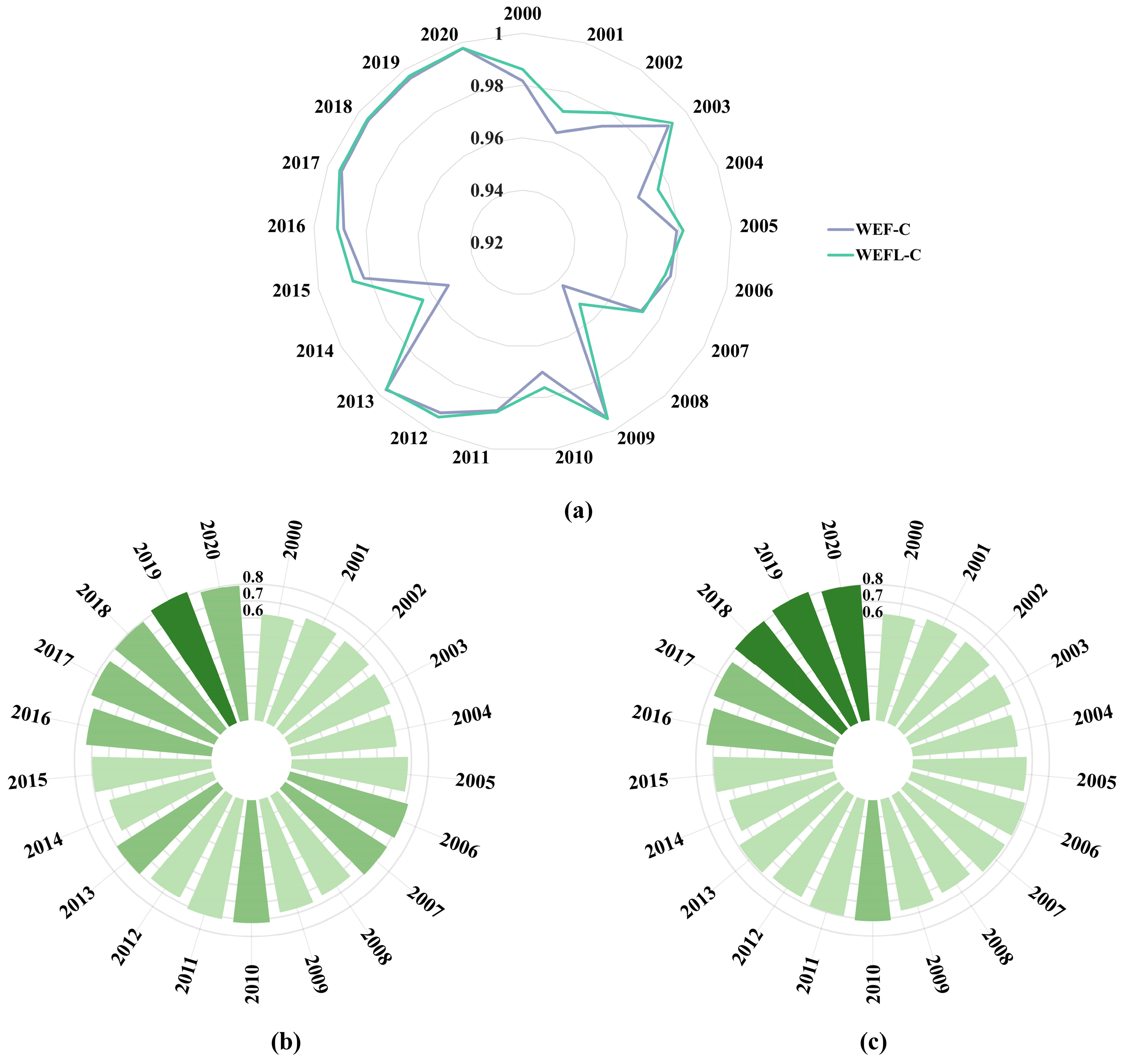
The coupling values of WEF in Xinjiang are between 0.942 and 0.998. All of them are high-quality couplings. As shown in Figure 5a, they are characterized by “decreasing–increasing–decreasing–increasing”. This indicates that the interactions [38] between water, energy and food are highly correlated and close to saturation. At the same time, the food and energy subsystem evaluation indices maintain an overall upward trend and contribute more to the WEF system coupling.
As can be seen in Figure 5a, the WEF coupling degree value in Xinjiang showed a fluctuating decline during 2000–2008, a fluctuating increase during 2008–2013, and a steady increase during 2014–2020, reaching a peak in 2020. In 2008 and 2014, the coupling degree of the WEF system decreased significantly, and the coupling degree values decreased to 0.94 and 0.95, respectively. In 2008, due to climatic anomalies, Xinjiang experienced their most severe drought since 1974, resulting in widespread drought and even crop failure, with a loss of 655,400 tons of grain and 1.322 billion CNY of cash crops. At this time, the food system evaluation index was only 0.26. The heavy occurrence of drought disasters in 2014 resulted in a low water resources system evaluation index of 0.25, which negatively impacted the development of WEF. Subsequently, in 2015, Xinjiang’s “three red lines” water use policy was strictly implemented, the water use structure was improved and the efficiency of water use increased, which had a positive impact on the degree of coupling, which increased to 0.97 in 2020.
The high or low degree of coupling cannot reflect the coordinated orientation of the role relationship between the subsystem layers, and the status of coupling coordination between the subsystem layers needs further analysis. As shown in Figure 5b, the overall CCD of WEF in Xinjiang increases from 0.62 to 0.79 from 2000 to 2020, with an overall increase of 27.09 percent. The change in coupling coordination involves four development stages of the CCD. The fluctuating upward trend between 2000 and 2010, with several downturns on the way up, is affected by the insecurity of water and food resources, and repeated fluctuations in the low coordination and moderate coordination phases. This shows that the coupling coordination trend of the WEF in Xinjiang has been mitigated, but the improvement effect is weak and unstable. Therefore, the ability to mobilize food and water resources across regions and basins should be strengthened to cope with externalities such as natural disasters. In 2010–2014, the coordinated development was greatly affected by the instability of the water resources system, which showed a fluctuating downward trend, indicating that the government should take active measures, such as strengthening the regulation of groundwater and building a water resources pattern for the transfer of abundance and depletion, to solve this problem. The period 2014–2019 shows a steady increase from 0.62 to 0.82 with a growth rate of 30.58%, entering a stable moderate coordination development stage and reaching a well coordination development stage in 2019. In 2020, the COVID-19 pandemic led to the reduction in food production, the instability of food prices and the lack of regulation of water pollution and exhaust gas pollution and so on, which made the WEF system fall into the intermediate coupling and coordination development stage. Therefore, the government should strengthen the stockpiling and deployment of emergency supplies to minimize the impact of resource instability on the WEF system.

4.2.2. Comparative Analysis of the Coupling Coordination between WEFL and WEF

From Figure 5a, it can be seen that the overall coupling degree has increased after land is included in the water-energy-food system. The WEFL system’s values are all high-quality couplings from 2000 to 2020, showing the characteristics of multi-segmental changes. This indicates that the correlation degree of the interdependent interactions among water resources, energy, food and land is extremely high, and has been close to saturation. The values of coupling are in the range of 0.952–0.998, and the mean value of overall coupling is improved from 0.98 to 0.984. The coupling is improved from 0.981 to 0.986 in 2000, and the coupling is improved from 0.98 to 0.984 in 2020. The minimum value is improved from 0.942 to 0.952. Compared with the changes in coupling in the WEF system, in the same year, the difference between the maximum and minimum values of coupling is reduced, and the range of values is more compact.
Compared with the WEF system, the fluctuation amplitude of the CCD of the WEFL system is smaller, and the CCD chaos is reduced, as shown in Figure 5c. It is mainly divided into four stages. During the period of 2000–2010, this fluctuating increases, but the CCD is in the low coordination stage. This indicates that the contradiction of mutual constraints between subsystem layers is emphasized at this time. In 2010, it entered the intermediate coordination stage, but during 2011–2014, the CCD showed a fluctuating decline and fell into the low coordination stage. During 2014–2019, it showed a steady increase, and reached the well coordination level in 2018, with 2019 being the peak of the CCD. In 2020, the CCD was still in the well coordination stage, but compared to 2019 the CCD is a decreasing state.
In summary, there is an equilibrium among the four resource subsystems, and a disturbance in one of them will affect the others, thus disturbing the equilibrium state. Therefore, the establishment of a cross-sectoral coordinating body and the clarification of the responsibilities and competencies of each sector are effective ways to promote synergy and achieve the sustainability of the dryland WEFL linkage.

4.3. Impact of Land-Use Change on WEF

4.3.1. Land-Use Change

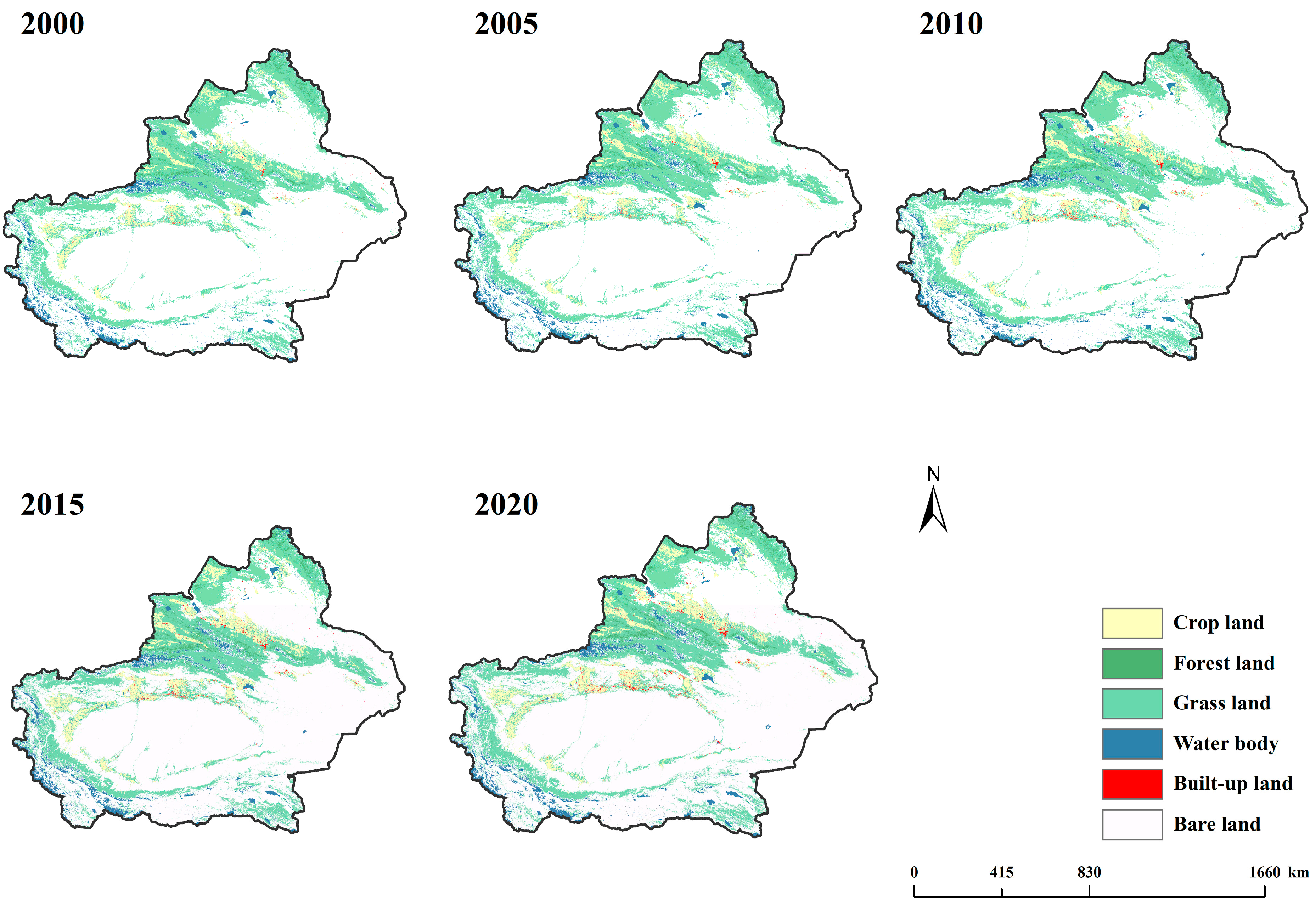
Land use type data for Xinjiang were raster-calculated using ArcGIS10.2 to obtain the land use area in different periods; the data cover the period 2000 to 2020. As shown in Figure 6, the land use structure in Xinjiang is dominated by bare land and grassland, with the lowest proportion of built-up land.
Between 2000 and 2020, the area of bare land decreased from 68.62% to 67.5%. The change in the area of arable land showed a more obvious increase, from 3.75% to 5.28%. The change in the area of water bodies and wetlands increased somewhat, with the percentage share of the area rising from 2.61% to 2.81%. The area of forested land increased from 0.9% to 1.12%. The area of built-up land showed a relatively smooth expansion trend, with the area share increasing from 0.07% to 0.3%. The area of grassland showed a decreasing trend, with the area share decreasing from 24.06% to 23%. See Table 3 for detailed data.

4.3.2. Analysis of the Impact of Land-Use Change on WEF

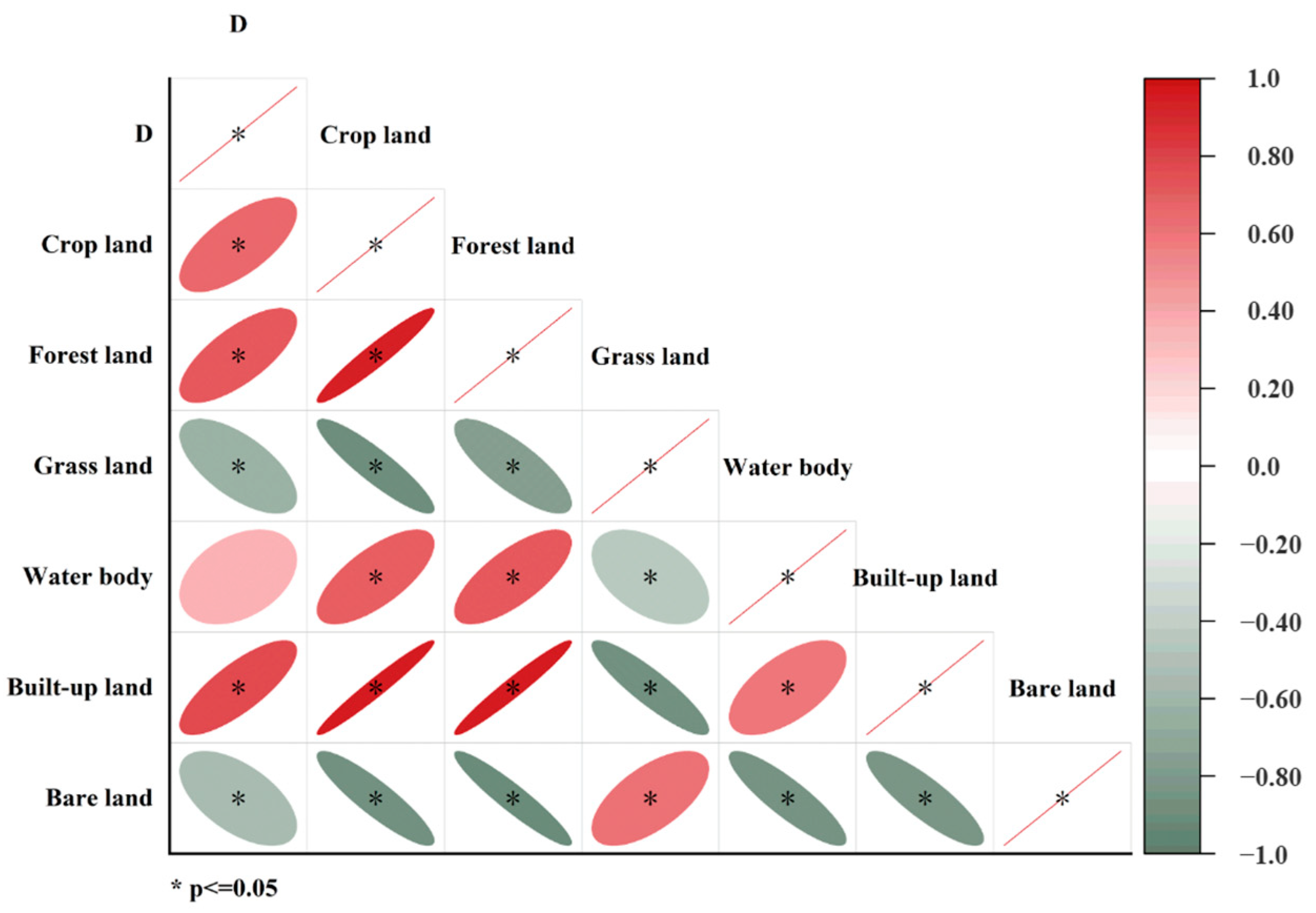
Correlation analysis based on the Pearson correlation coefficient for the area of different land use types and the degree of coupling coordination of the WEF system. As shown in Figure 7, the CCD of WEF coupling is significantly positively correlated with arable land, forest land and construction land, negatively correlated with grassland and unused land and not correlated with water bodies and wetlands.
The correlation coefficient between the CCD of the WEF system and the area of arable land is 0.68, which has a positive correlation. On the one hand, as the most basic constraint for food security, the increasing area of arable land represents the expansion of food production space, which can ensure the continuity of food production and reduce the impact of market fluctuations on food prices. On the other hand, Xinjiang has vigorously promoted new technologies and modes of agricultural modernization, and promoted land reclamation with the rational exploitation and use of groundwater and water-saving irrigation as its main components. During the period from 2000 to 2020, the proportion of water used in Xinjiang’s agriculture has decreased from 92.81% to 90.93%, and the area of water-saving irrigation has increased significantly. This reduces the pressure on water resources and enables the WEF system to evolve.
The CCD of WEF is significantly and positively correlated with forest area, with a correlation coefficient of 0.72. Under the long-term effect of natural forest protection in Xinjiang, the growth rate of forest cover in Xinjiang is 24.58%, which mainly affects the CCD of the WEF system through the following aspects: First, by increasing the vegetation cover, water is effectively trapped [39], ensuring the safety of the water system. Second, the plant root system has the ability to fix and absorb pollutants, and this natural purification process improves water quality and reduces the need for wastewater treatment facilities, which in turn reduces energy consumption and lightens the burden on the energy system [40]. Third, in Xinjiang, soil salinization is being managed through the “irrigation, drainage and salt washing” approach, combined with planting protection forests to strengthen biological drainage and drought and water rotation. The quality of arable land resources can be effectively improved in this way. In the long run, the increase in forest area may increase the consumption of water resources, and Xinjiang is deeply restricted by climatic conditions, making it more likely to aggravate the burden of the development of WEF. Therefore, in the development of water and comprehensive use of water planning and water conservancy, construction should be coordinated to arrange for natural forests, planted forests and water to ensure the growth of forests and restoration. Planting varieties with good soil and water conservation, emission reduction and sink enhancement can allow the forests to better adapt to drought-prone and water-scarce growing environments.
In general, the increase in built-up land will squeeze the space for food production, which will have a negative effect on the progression of the WEF system. However, in this study, the CCD of WEF is significantly positively correlated with built-up land, with a correlation coefficient of 0.79. This may be related to Xinjiang’s strict land use planning policy and vast bare land resources to provide land security for economic development. The Xinjiang government has proposed to curb the blind expansion of urban build-up land and ensure the demand for land for basic ecological construction and environmental protection land. The expansion of built-up land is one of the hallmarks of urbanization development. On the one hand, urbanization development attracts a large number of rural workers, and high water-consuming agricultural production is reduced, easing the pressure on water resources. On the other hand, economic development provides a basic guarantee for resource regulation and environmental management, and mitigates the dislocation of the WEF system. Between 2000 and 2020, the treatment rate of urban sewage will increase from 0.46% to 0.96%. The urban gas penetration rate will increase from 92.8% to 98.6%. Industrial wastewater discharge, water consumption and energy consumption have been reduced to varying degrees. The structure of water and energy resources has been adjusted and optimized, reducing the burden on the coordinated development of the WEF system.
The CCD of WEF is significantly negatively correlated with grassland, with a correlation coefficient of 0.66. The arid climate and low rainfall in Xinjiang have led to a decline in the overall quality of grassland. Caused by the changing climate and anthropogenic interference, the degradation of grassland in Xinjiang from 2000 to 2020 was 1.02%. The government has strengthened grassland protection, overgrazing has been well controlled and soil water conservation capacity has enhanced, alleviating pressure on the WEF system.
The CCD of WEF is not correlated with water bodies and wetlands, which may be due to the irregular changes in the area of water bodies and wetlands. Most of the water resources in Xinjiang exist in the form of glaciers, which makes it difficult to develop and utilize water resources, and the development of the water subsystem is unstable.

4.4. Analysis of PSO-BP Prediction Results

In this study, we use the RStudio 2023.03.0+380 to build the PSO-BP prediction model, with PSO-related parameters set as follows: learning factor c1 = c2 = 2; the number of particles n = 20; particle position interval [1, 10]; maximum iteration number maxit = 100; maximum particle velocity v.max = 1; inertia weight w = 0.8.
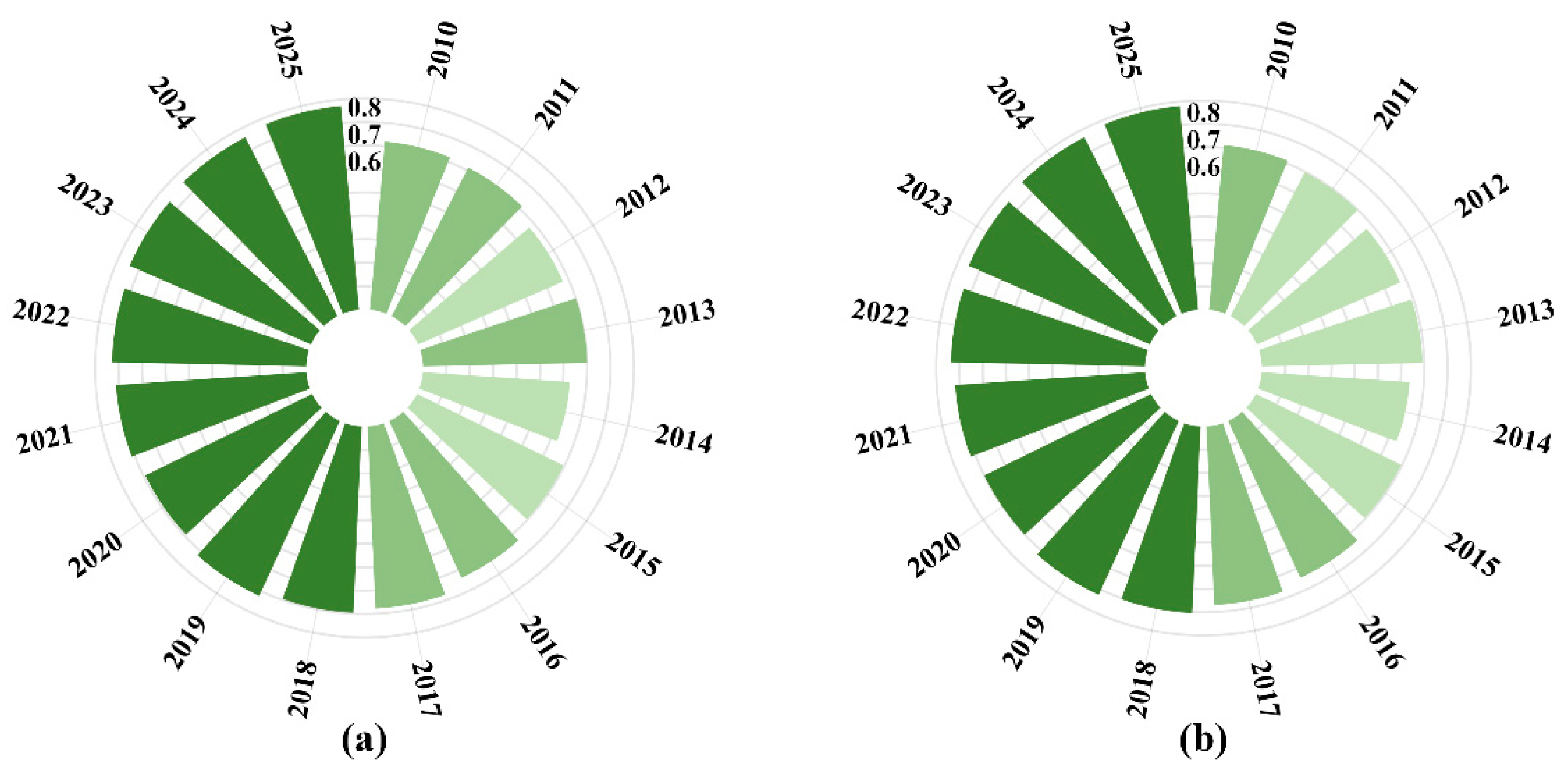
Using the PSO-BP to predict the CCD of WEF and WEFL in Xinjiang, the results are shown in Figure 8. The state of development of the coupling coordination of WEF and WEFL in Xinjiang in the period 2021–2025 basically continues the trend of development and change from the period 2000–2020. The prediction of the CCD of WEF increases from 0.81 in 2021 to 0.87 in 2025. The growth of the CCD is small, with an average annual increase of 0.01, but overall, the coordinated development trend is maintained. After the introduction of the land subsystem, the overall WEFL coupling and coordination is predicted to be more stable, increasing from 0.82 in 2021 to 0.88 in 2025, always maintaining a steady growth in development. Overall, the synergy of WEFL in Xinjiang will be strengthened in the future. Therefore, it is important to utilize intra-regional cooperation to take advantage of the overall benefits, so as to promote the WEFL system to always maintain a high level of coupling without retreating. The government’s goal is to integrate water conservation, storage and transfer, improved energy efficiency and enhanced agricultural productivity.
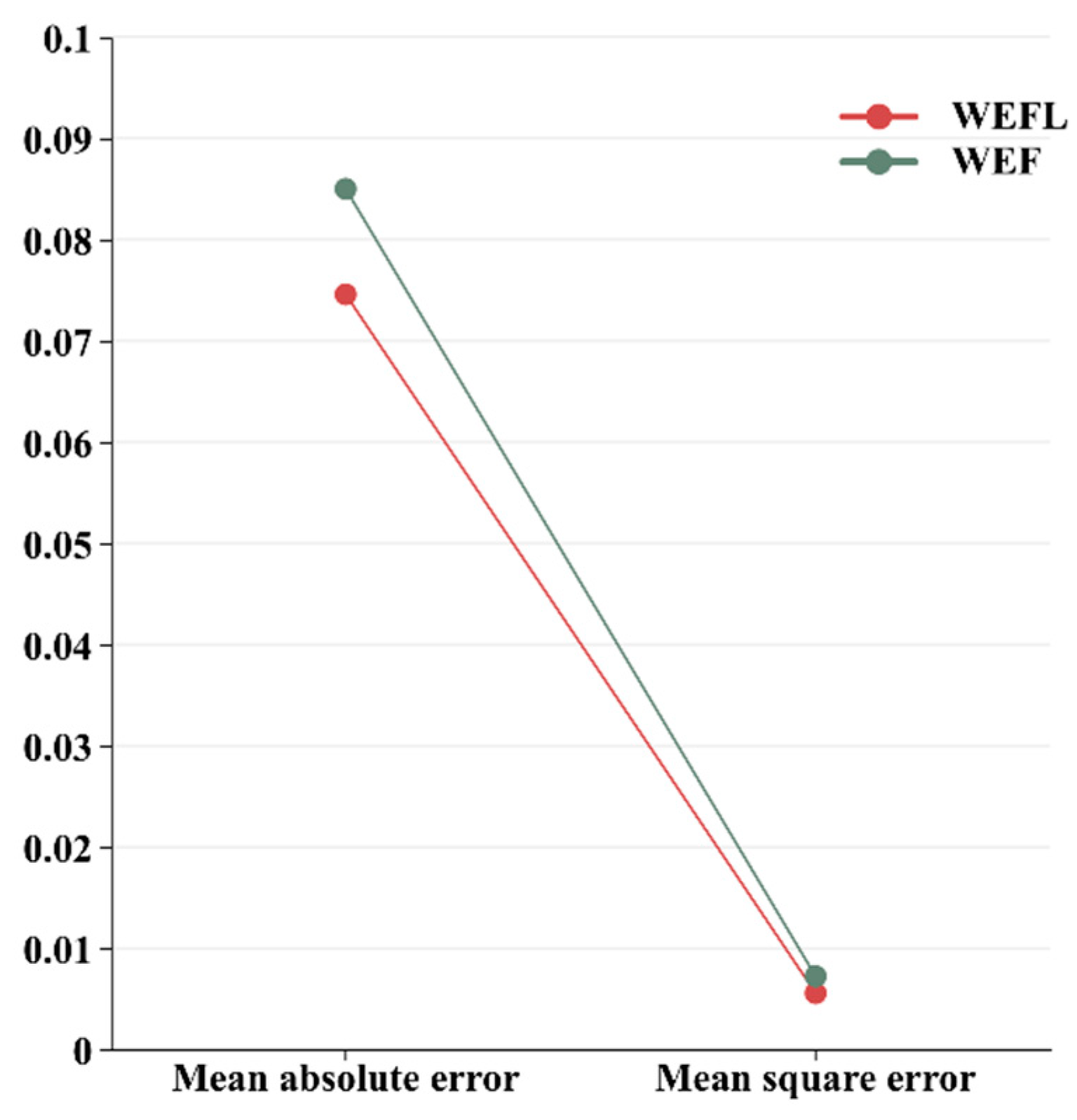
The mean square error and the mean relative error are used to measure the performance of the final PSO-BP model. Smaller values are predicted to be better simulated. As shown in Figure 9, the relative error and the mean square error are both <10% in absolute value, indicating that the prediction accuracy is high and the simulation is good.

5. Discussion

5.1. Result Discussion

A good harmonization of the water-energy-food-land is conducive to mitigating the negative impacts of structural resource scarcity on regional sustainable development. Considering the natural conditions and resource endowment of Xinjiang, this study constructed a CEI system for the WEFL system in Xinjiang under the DPSIR framework. The composite evaluation model and the coupling coordination degree model are used to conduct an in-depth study of the coordinated development level of WEFL. It is found that at different stages of the WEFL, different subsystems play different roles. This is in common with the study by Sun et al. [41], who studied the synergistic development of the WEF system in northwestern China and concluded that the synergistic upward trend is obvious in the Xinjiang region, and that in the first and second phases of their study, the development of the WEFL is dominated by the water and energy subsystems, respectively. The difference is that when comparing the scope of research in the northwest region, the provincial scale of this study is more adapted to the characteristics of the economic growth of the Xinjiang region as well as the situation of resource distribution in the selection of research indicators.
In the current research on WEF systems, most focus on the interactions within the WEF, ignoring the importance of the resource carriers. Feng et al. [42] analyzed the level of development of the WEF system coupling coordination in Xinjiang from 2000 to 2019 using the coupled coordination degree and the grey model (GM) (1, 1). The trend of the results obtained in this study is the same as those of the above studies, with the difference that land is included in the WEF system. The comparative analysis reveals that during the process of land use change, the land environment and the resources it carries undergo a change, which reduces the degree of confusion in the CCD of the WEF system. This is sufficient evidence that land use activities have an externality effect.
With forecasting as an effective means of exploring the interactions and coordinated evolution of multiple systems, accurate short-term forecasts can identify potential risk factors in the integrated system in advance, so that decision makers can adjust policies and management measures in time. The performance of a predictive model depends on factors such as specific application scenarios, data availability, and model settings, and most time-series predictive models rely on a large amount of data. But in coupling coordination studies, this requires a higher level of model accuracy due to the limited amount of data. The PSO-BP prediction model is able to circumvent the limitations that traditional BP neural networks may encounter when searching for optimal solutions, thus significantly improving the accuracy of the model prediction. Sun et al. [22] constructed a comparative model, which by comparing the performance of BP and PSO-BP in predicting short-term carbon emissions, concluded that the optimized model has a higher prediction accuracy than the original model. Verifying the feasibility and validity of the model, the prediction errors obtained in this study are within a reasonable range.
However, there are some shortcomings in this study. Due to the limitations of data collection and the limited research period, only the time series of coupling coordination changes from 2000 to 2020 were studied. The development of coupling coordination in space could not be studied in depth, which makes the evaluation in this paper lacking in a certain degree of integrity. There is a high degree of uncertainty in predicting future changes in dryland resource systems, with factors such as the effects of climate change, policy changes and technological advances all likely to affect the predictions. Therefore, future research will combine the resource status in Xinjiang, fully consider the spatial and temporal changes, and will explore the coupled and coordinated relationship of the WEFL system from multiple perspectives. Consideration can be given to using multi-scenario prediction analysis to actively explore the influence mechanism of multiple elements and increase the depth of research.

5.2. Policy Implications

The development level of WEFL subsystems affects the level of coordination of the whole system [43,44,45]. The total amount of water resources in the region is large in the early stage of the study, and therefore water resources contribute the most to the coupled and harmonized development in this stage. Due to Xinjiang’s inland location, low rainfall and irrigated agriculture, the proportion of water used in agriculture has been above 90%, with the main sources being groundwater and surface water. Therefore, the excessive proportion of agricultural water use and over-exploitation of groundwater lead to the slow development of the water subsystem. After the 11th Five-Year Plan [46], the state expanded the scope of investment in Xinjiang’s regional assets, improved infrastructure and water-saving technology, and improved water use structure, which eased the pressure on the water resources system to a certain extent.
In the middle of the study, Xinjiang took advantage of its energy abundance and self-sufficiency to accelerate industrialization and strengthen pollution control efforts. According to China’s Ministry of Natural Resources, Xinjiang ranks first in the country in terms of prospective coal reserves, accounting for about 40% of China’s total reserve. Crude oil and natural gas reserves rank third in the country, accounting for 30 percent and 34 percent of the country’s onshore resources, respectively. Xinjiang has abundant energy resources, but they are difficult to develop and utilize. During the 11th Five-Year Plan, Xinjiang, with the support of the state, accelerated the pace of new industrialization and implemented the strategy of converting advantageous resources. This has become a key factor for the stable and coordinated development of WEFL.
At the end of the study, the grain subsystem and the land subsystem together dominated the development of the WEFL coupling coordination system. The increasing level of grain production in Xinjiang cannot be separated from the protection and use of arable land. According to the Xinjiang Statistical Yearbook, the grain production per unit area in Xinjiang has increased from 5595 (kg/hm2) in 2000 to 7100 (kg/hm2) in 2020. The government has actively coordinated land use and ecological construction, significantly increased forest cover and strengthened soil erosion control, all of which have contributed positively to the coordinated development of WEFL.

6. Conclusions and Suggestions

6.1. Conclusions

(1)
The overall trend of the CEI of the WEF system and the WEFL system in Xinjiang from 2000 to 2020 is increasing. Compared with the WEF system, the CEI of the WEFL system was influenced by the land subsystem in the early and middle stages of the study, and steadily increased in the late stage of development.
(2)
Both the Xinjiang WEF system and the WEFL system as a whole belong to the high-quality coupling from 2000 to 2020, indicating that there is a close connection between the four subsystems. Compared to the WEF system, the degree of coupling coordination disorder in the WEFL system is reduced, but the overall coupling coordination rating is at a lower level. In 2000–2016, the coordinated development of the four subsystems restricted each other and was in the transition stage from low to moderate coordination. The level of coordinated development reached a well coordination in the period 2017–2020.
(3)
The increase in cultivated land, forest land and construction land area has improved the state of the WEF system imbalance and decline in Xinjiang. The increase in grassland area has a negative effect on the coupling and coordinated development of the WEF system in Xinjiang. WEF coupling and coordinated development are not related to water bodies and wetlands.
(4)
The prediction results of the PSO-BP neural network model show that the coupling coordination level of the WEF system and WEFL system in Xinjiang in 2021–2025 is maintained well, and the coupling coordination development of the WEFL system is better.

6.2. Suggestions

In view of the impact analysis of Xinjiang’s WEFL coupling and coordination from 2000 to 2020, and in conjunction with the forecast results of WEFL coupling and coordination projections for the period 2021–2025, Xinjiang should adopt a series of strategies to ensure sustainable development on the basis of current development, specifically:
(1)
Given the spatial and temporal limitations of Xinjiang’s water resources and the difficulty of developing and utilizing them, the government should further improve the centralized and unified water resources management system. It can learn from China’s South-to-North Water Diversion Project to build a multi-source and complementary water resources pattern and increase support for local water scarcity areas and the construction of water supply and storage projects. Various industries can reduce the consumption of water resources in the production process and adjust the structure of high water-consuming industries through innovative technologies such as water-saving irrigation in agriculture and industrial wastewater recycling.
(2)
The Xinjiang government should make full use of its energy advantages, speeding up the research and development and construction of new energy technologies such as wind power, solar power and natural gas. All sectors of society should strive for the synergistic development of traditional energy and new energy sources, and promote green transportation while promoting the clean development of coal, so as to effectively reduce carbon emissions. Various industries should carry out in-depth technological transformations of energy-consuming industries through technological innovation and upgrading to improve energy efficiency and reduce environmental pollution through the promotion of energy-saving products and technologies.
(3)
Xinjiang has always adhered to the food security policy of “balance within the territory, with a slight surplus”, and the stability of the food system gradually increases from 2000 to 2020. Therefore, the government should continue to prioritize the implementation of measures to increase food production capacity. To this end, agricultural service teams can be formed to promote drought-tolerant food crops and provide technical advice on crop cultivation to ensure that the area under cultivation and production is stabilized. In response to the efficiency and quality of food production, the government should promote integrated water and fertilizer irrigation technology in the mechanization of agricultural production. A cultivated land rotation system should also be implemented to increase the productive potential of the land.
(4)
To rationally develop and utilize land resources and build an ecologically sound land-use pattern, on the one hand, the government should rationally formulate the red line of ecological and arable land protection as well as cities’ and towns’ development boundaries in accordance with the requirements of territorial spatial planning. At the same time, they must strengthen the crackdown on illegal land use to ensure the efficient utilization of land resources. On the other hand, in terms of land ecological construction, the implementation of afforestation projects on barren land and barren mountains to increase forest cover can promote an increase in carbon stocks. The use of “irrigation and drainage and salt washing” to combat land salinization and ensure the sustainable use of land resources.
(5)
Synergistic management mechanisms must be established between the water, energy, food and land subsystems and cross-sectoral coordination bodies must also be established. Their role could begin with 1. Establish an intelligent monitoring and management platform to monitor and evaluate key indicators, as well as integrate, analyze and visualize indicator data. 2. Select pilot regions for technology demonstration. 3. Based on the experience of the pilot regions, conduct a Xinjiang-wide promotion. Second, conduct quarterly assessments of progress in implementing the strategy and analyze issues. Then, in response to issues identified in the assessment, timely feedback is provided to relevant departments for policy adjustment and optimization. Finally, the public is encouraged to actively participate in the monitoring of the strategy, thereby increasing their awareness of resource conservation.

Author Contributions

All authors contributed to the study conception and design. Conceptualization, formal analysis by D.R.; software, validation, visualization, writing—original draft, writing—review and editing by Z.H.; supervision by A.C. All authors have read and agreed to the published version of the manuscript.

Funding

This research was funded by the “University-local government scientific and technical cooperation cultivation project of Ordos Institute-LNTU”, grant number “YJY-XD-2024-B-006”.

Institutional Review Board Statement

Not applicable.

Informed Consent Statement

Not applicable.

Data Availability Statement

Data will be made available on request.

Acknowledgments

We would like to express our sincere gratitude to the editors and the anonymous reviewers for their crucial comments, which have significantly improved the quality of this paper.

Conflicts of Interest

The authors declare no conflicts of interest.

References

  1. Qian, X.-Y.; Liang, Q.-M. Sustainability evaluation of the provincial water-energy-food nexus in China: Evolutions, obstacles, and response strategies. Sustain. Cities Soc. 2021, 75, 103332. [Google Scholar] [CrossRef]
  2. Lv, Y.; Li, Y.; Zhang, Z.; Luo, S.; Feng, X.; Chen, X. Spatio-temporal evolution pattern and obstacle factors of water-energy-food nexus coupling coordination in the Yangtze river economic belt. J. Clean. Prod. 2024, 444, 141229. [Google Scholar] [CrossRef]
  3. Ren, D.; Cao, A. Analysis of the heterogeneity of landscape risk evolution and driving factors based on a combined GeoDa and Geodetector model. Ecol. Indic. 2022, 144, 109568. [Google Scholar] [CrossRef]
  4. Wang, S.; Yang, R.; Shi, S.; Wang, A.; Liu, T.; Yang, J. Characteristics and Influencing Factors of the Spatial and Temporal Variability of the Coupled Water-Energy-Food Nexus in the Yellow River Basin in Henan Province. Sustainability 2023, 15, 13977. [Google Scholar] [CrossRef]
  5. Feng, M.; Chen, Y.; Duan, W.; Zhu, Z.; Wang, C.; Hu, Y. Water-energy-carbon emissions nexus analysis of crop production in the Tarim river basin, Northwest China. J. Clean. Prod. 2023, 396, 136566. [Google Scholar] [CrossRef]
  6. Cao, M.; Chen, Y.; Duan, W.; Li, Y.; Qin, J. Comprehensive Evaluation of Water-Energy-Food System Security in the China–Pakistan Economic Corridor. Water 2022, 14, 1900. [Google Scholar] [CrossRef]
  7. Saladini, F.; Betti, G.; Ferragina, E.; Bouraoui, F.; Cupertino, S.; Canitano, G.; Gigliotti, M.; Autino, A.; Pulselli, F.M.; Riccaboni, A. Linking the water-energy-food nexus and sustainable development indicators for the Mediterranean region. Ecol. Indic. 2018, 91, 689–697. [Google Scholar] [CrossRef]
  8. Tang, X.; Huang, Y.; Pan, X.; Liu, T.; Ling, Y.; Peng, J. Managing the water-agriculture-environment-energy nexus: Trade-offs and synergies in an arid area of Northwest China. Agric. Water Manag. 2024, 295, 108776. [Google Scholar] [CrossRef]
  9. Zhang, T.; Tan, Q.; Yu, X.; Zhang, S. Synergy assessment and optimization for water-energy-food nexus: Modeling and application. Renew. Sustain. Energy Rev. 2020, 134, 110059. [Google Scholar] [CrossRef]
  10. Purwanto, A. Grasping the Water, Energy, and Food Security Nexus in the Local Context: Case study: Karawang Regency, Indonesia, 1st ed.; CRC Press: Boca Raton, FL, USA, 2021. [Google Scholar]
  11. Li, M.; Fu, Q.; Singh, V.P.; Liu, D.; Li, J. Optimization of sustainable bioenergy production considering energy-food-water-land nexus and livestock manure under uncertainty. Agric. Syst. 2020, 184, 102900. [Google Scholar] [CrossRef]
  12. Rasul, G. Food, water, and energy security in South Asia: A nexus perspective from the Hindu Kush Himalayan region☆. Environ. Sci. Policy 2014, 39, 35–48. [Google Scholar] [CrossRef]
  13. Niva, V.; Cai, J.; Taka, M.; Kummu, M.; Varis, O. China’s sustainable water-energy-food nexus by 2030: Impacts of urbanization on sectoral water demand. J. Clean. Prod. 2020, 251, 119755. [Google Scholar] [CrossRef]
  14. Bazilian, M.; Rogner, H.; Howells, M.; Hermann, S.; Arent, D.; Gielen, D.; Steduto, P.; Mueller, A.; Komor, P.; Tol, R.S.J.; et al. Considering the energy, water and food nexus: Towards an integrated modelling approach. Energy Policy 2011, 39, 7896–7906. [Google Scholar] [CrossRef]
  15. Beck, M.B.; Villarroel Walker, R. On water security, sustainability, and the water-food-energy-climate nexus. Front. Environ. Sci. Eng. 2013, 7, 626–639. [Google Scholar] [CrossRef]
  16. Wang, Q.; Li, S.; He, G.; Li, R.; Wang, X. Evaluating sustainability of water-energy-food (WEF) nexus using an improved matter-element extension model: A case study of China. J. Clean. Prod. 2018, 202, 1097–1106. [Google Scholar] [CrossRef]
  17. Sun, L.; Niu, D.; Yu, M.; Li, M.; Yang, X.; Ji, Z. Integrated assessment of the sustainable water-energy-food nexus in China: Case studies on multi-regional sustainability and multi-sectoral synergy. J. Clean. Prod. 2022, 334, 130235. [Google Scholar] [CrossRef]
  18. Li, C.; Wang, R.; Cui, X.; Wu, F.; Yan, Y.; Peng, Q.; Qian, Z.; Xu, Y. Responses of vegetation spring phenology to climatic factors in Xinjiang, China. Ecol. Indic. 2021, 124, 107286. [Google Scholar] [CrossRef]
  19. Rasul, G. Managing the food, water, and energy nexus for achieving the Sustainable Development Goals in South Asia. Environ. Dev. 2016, 18, 14–25. [Google Scholar] [CrossRef]
  20. Halbe, J.; Pahl-Wostl, C.A.; Lange, M.; Velonis, C. Governance of transitions towards sustainable development-the water-Energy-Food nexus in Cyprus. In Sustainability in the Water Energy Food Nexus; Routledge: Abingdon, UK, 2018; pp. 165–182. [Google Scholar]
  21. Shi, M.; Wu, H.; Jiang, P.; Zheng, K.; Liu, Z.; Dong, T.; He, P.; Fan, X. Food-water-land-ecosystem nexus in typical Chinese dryland under different future scenarios. Sci. Total Environ. 2023, 880, 163183. [Google Scholar] [CrossRef]
  22. Sun, W.; Ren, C. Short-term prediction of carbon emissions based on the EEMD-PSOBP model. Environ. Sci. Pollut. Res. 2021, 28, 56580–56594. [Google Scholar] [CrossRef]
  23. Lahmiri, S. Intraday stock price forecasting based on variational mode decomposition. J. Comput. Sci. 2016, 12, 23–27. [Google Scholar] [CrossRef]
  24. Leck, H.; Conway, D.; Bradshaw, M.; Rees, J. Tracing the Water-Energy-Food Nexus: Description, Theory and Practice. Geogr. Compass 2015, 9, 445–460. [Google Scholar] [CrossRef]
  25. Luo, W.; Jiang, Y.; Chen, Y.; Yu, Z. Coupling Coordination and Spatial-Temporal Evolution of Water-Land-Food Nexus: A Case Study of Hebei Province at a County-Level. Land 2023, 12, 595. [Google Scholar] [CrossRef]
  26. Jing, P.; Hu, T.; Sheng, J.; Mahmoud, A.; Liu, Y.; Yang, D.; Guo, L.; Li, M.; Wu, Y. Coupling coordination and spatiotemporal dynamic evolution of the water-energy-food-land (WEFL) nexus in the Yangtze River Economic Belt, China. Environ. Sci. Pollut. Res. 2023, 30, 34978–34995. [Google Scholar] [CrossRef] [PubMed]
  27. Sassi, R.; Bond, R.R.; Cairns, A.; Finlay, D.D.; Guldenring, D.; Libretti, G.; Isola, L.; Vaglio, M.; Poeta, R.; Campana, M. PDF-ECG in clinical practice: A model for long-term preservation of digital 12—Lead ECG data. J. Electrocardiol. 2017, 50, 776–780. [Google Scholar] [CrossRef] [PubMed]
  28. Qin, C.; Tang, Z.; Chen, J.; Chen, X. The impact of soil and water resource conservation on agricultural production—An analysis of the agricultural production performance in Zhejiang, China. Agric. Water Manag. 2020, 240, 106268. [Google Scholar] [CrossRef]
  29. Wang, S.; Yang, J.; Wang, A.; Yan, Y.; Liu, T. Coupled coordination of water resources-economy-ecosystem complex in the Henan section of the Yellow River basin. Water Supply 2022, 22, 8835–8848. [Google Scholar] [CrossRef]
  30. Shahmohammadi, A.; Khoshbakht, K.; Veisi, H.; Nazari, M.R. Exploring Dynamics of Water, Energy, and Food Systems in Agricultural Landscapes Using Mental Modeling: A Case of Varamin Plain, Iran. Environ. Manag. 2024, 73, 34–50. [Google Scholar] [CrossRef] [PubMed]
  31. Yang, J.; Huang, X. The 30 m annual land cover datasets and its dynamics in China from 1990 to 2021. Earth Syst. Sci. Data 2022, 13, 3907–3925. [Google Scholar] [CrossRef]
  32. Fu, N.; Liu, D.; Liu, H.; Pan, B.; Ming, G.; Huang, Q. Evaluation of the coupled coordination of the water-energy-food-ecology system based on the Sustainable Development Goals in the Upper Han River of China. Agronomy 2024, 14, 706. [Google Scholar] [CrossRef]
  33. Wang, S.; Yang, J.; Wang, A.; Liu, T.; Du, S.; Liang, S. Coordinated analysis and evaluation of water-energy-food coupling: A case study of the Yellow River basin in Shandong Province, China. Ecol. Indic. 2023, 148, 110138. [Google Scholar] [CrossRef]
  34. Cheng, Y.; Wang, J.; Shu, K. The coupling and coordination assessment of food-water-energy systems in China based on sustainable development goals. Sustain. Prod. Consum. 2023, 35, 338–348. [Google Scholar] [CrossRef]
  35. Zhou, H.; Deng, Z.; Xia, Y.; Fu, M. A new sampling method in particle filter based on Pearson correlation coefficient. Neurocomputing 2016, 216, 208–215. [Google Scholar] [CrossRef]
  36. Li, S.; Fan, Z. Evaluation of urban green space landscape planning scheme based on PSO-BP neural network model. Alex. Eng. J. 2022, 61, 7141–7153. [Google Scholar] [CrossRef]
  37. Liu, K.; Su, H. Optimization of BP Neural Network for Wind Power Output Prediction Based on Particle Swarm Optimization Algorithm. In Proceedings of the 2023 3rd International Conference on Artificial Intelligence and Industrial Technology Applications (AIITA 2023), Suzhou, China, 26 March 2023; IOP Publishing: Bristol, UK, 2023; Volume 2562, p. 012010. [Google Scholar]
  38. Zou, S.; Liao, Z.; Liu, Y.; Fan, X. Research on the Impact of Heterogeneous Environmental Regulation on the Coordinated Development of China’s Water-Energy-Food System from a Spatial Perspective. Sustainability 2024, 16, 818. [Google Scholar] [CrossRef]
  39. Amini Parsa, V.; Istanbuly, M.N.; Kronenberg, J.; Russo, A.; Jabbarian Amiri, B. Urban Trees and Hydrological Ecosystem Service: A Novel Approach to Analyzing the Relationship Between Landscape Structure and Runoff Reduction. Environ. Manag. 2024, 73, 243–258. [Google Scholar] [CrossRef] [PubMed]
  40. Vincent, J.R.; Ahmad, I.; Adnan, N.; Burwell, W.B.; Pattanayak, S.K.; Tan-Soo, J.-S.; Thomas, K. Valuing Water Purification by Forests: An Analysis of Malaysian Panel Data. Environ. Resour. Econ. 2015, 64, 59–80. [Google Scholar] [CrossRef]
  41. Sun, C.; Wei, Y.; Zhao, L. Co-evolution of water-energy-food nexus in arid areas: Take Northwest China as an example. J. Nat. Resour. 2022, 37, 320–333. [Google Scholar] [CrossRef]
  42. Feng, M.; Chen, Y.; Jiao, L.; Duan, W.; Chen, S. Research on the coupling and coordinated development ofwater-energy-food system in Xinjiang during 2000–2019. J. Water Resour. Water Eng. 2022, 33. [Google Scholar] [CrossRef]
  43. Bwire, C.; Mohan, G.; Karthe, D.; Caucci, S.; Pu, J. A Systematic Review of Methodological Tools for Evaluating the Water, Energy, Food, and One Health Nexus in Transboundary Water Basins. Environ. Manag. 2023, 72, 598–613. [Google Scholar] [CrossRef]
  44. Mercure, J.F.; Paim, M.A.; Bocquillon, P.; Lindner, S.; Salas, P.; Martinelli, P.; Berchin, I.I.; de Andrade Guerra, J.B.S.O.; Derani, C.; de Albuquerque Junior, C.L.; et al. System complexity and policy integration challenges: The Brazilian Energy-Water-Food Nexus. Renew. Sustain. Energy Rev. 2019, 105, 230–243. [Google Scholar] [CrossRef]
  45. Sun, C.; Yan, X.; Zhao, L. Coupling efficiency measurement and spatial correlation characteristic of water-energy-food nexus in China. Resour. Conserv. Recycl. 2021, 164, 105151. [Google Scholar] [CrossRef]
  46. Zhang, T.; Qiu, Y.; Ding, R.; Yin, J.; Cao, Y.; Du, Y. Coupling coordination and influencing factors of urban spatial accessibility and economic spatial pattern in the New Western Land-Sea Corridor. Environ. Sci. Pollut. Res. 2023, 30, 54511–54535. [Google Scholar] [CrossRef] [PubMed]
Figure 1. Location of Xinjiang in China.
Sustainability 16 06996 g001
Figure 2. Composite evaluation indicator system.
Sustainability 16 06996 g002
Figure 3. PSO-BP process.
Sustainability 16 06996 g003
Figure 4. (a) Subsystems evaluation index, (b) composite evaluation index.
Sustainability 16 06996 g004
Figure 5. (a) C of the WEF and WEFL, CCD of the (b) WEF and (c) WEFL, higher levels of coupling coordination are indicated by darker colors in (b,c).
Sustainability 16 06996 g005
Figure 6. Spatial distribution map of land use of Xin Jiang, 2000–2020.
Sustainability 16 06996 g006
Figure 7. Correlation coefficients between the CCD of the WEF system and land use pattern in Xinjiang.
Sustainability 16 06996 g007
Figure 8. Prediction of the coupling coordination degree of (a) WEF and (b) WEFL, higher levels of coupling coordination are indicated by darker colors in (a,b).
Sustainability 16 06996 g008
Figure 9. Prediction error plot.
Sustainability 16 06996 g009
Table 1. Xinjiang WEFL composite evaluation index system.
SystemCriterionIndexUnitAttributeWeight
Water subsystemDrivePer capita water resources (W1)(m3/cap)+0.114406
PressurePer capita water consumption (W2)(m3/cap)0.115802
Water consumption per 10,000 CNY of GDP (W3)(m3/10,000 CNY)0.071669
Agricultural water consumption (W4)m30.091027
ImpactWastewater discharge per 10,000 CNY of GDP (W5)(t/10,000 CNY)0.096603
StateGroundwater supply percentage (W6)%0.100779
Water production coefficient (W7)%+0.1346
Water consumption per 10,000 CNY of industrial value added (W8)(m3/10,000 CNY)0.053099
ResponseThe rate of water resources development and utilization (W9)%0.110383
Treatment rate of urban sewage (W10)%+0.111632
Energy subsystemDrivePer capita energy production (E1)(tons of SC/cap)+0.110207
PressurePer capita energy consumption (E2)(tons of SC/cap)0.07672
Energy consumption per 10,000 CNY GDP (E3)(tons of SC/10,000 CNY)0.091155
Proportion of coal consumption (E4)%0.113821
ImpactIndustrial emissions of industrial output value of 10,000 CNY GDP (E5)(m3/10,000 CNY)0.106056
Carbon Emission Intensity (E6)t/tce0.100251
StatePercentage of electricity generation from renewable energy sources (E7)%+0.118741
Energy self-sufficiency rate (E8)%+0.100123
Comprehensive energy consumption per 10,000 CNY of industrial value added (E9)(tons of SC/10,000 CNY)0.095235
ResponseGas penetration rate (E10)%+0.087689
Food subsystemDriveUrbanization level (F1)%0.08330877
PressureIntensity of fertilizer application (F2)t/ha0.07853909
Disaster area of food (F3)ha0.019699
Per capita food consumption in rural areas (F4)kg/cap0.099412
StateArea sown in food crops (F5)ha+0.073628
Per capita food production (F6)t/cap+0.06861
Per unit area food production (F7)kg per hectare+0.109171
ImpactRural Engel coefficient (F8)%0.086397
Urban Engel coefficient (F9)%0.096157
Consumer price index (CPI) for food (F10)%0.116457
ResponseWater-saving irrigation rate (F11)%+0.076103
Agricultural mechanization (F12)Kwh/ha+0.092518
Land subsystemDrivePopulation density (L1)cap/ha0.10313733
PressurePer unit area industrial wastewater discharges (L2)t/ha0.10930701
StatePer capita building land area (L3)ha/cap+0.1170801
Per capita cultivated land area (L4)ha/cap+0.10704832
Soil-water harmony (L5)%+0.11186578
Forest coverage (L6)%+0.08082236
ImpactGDP per unit area (L7)10,000 CNY/ha+0.09380142
Replanting index (L8)%+0.08432541
ResponseWater and soil erosion control area (L9)ha+0.0996994
Per capita green space (L10)m3/cap+0.09291287
Table 2. Classification criteria for coupling coordination degree.
The Range of DQualitative Descriptor
[0, 0.1)Extreme disorder
[0.1, 0.2)Serious disorder
[0.2, 0.3)Moderate disorder
[0.3, 0.4)Mild disorder
[0.4, 0.5)Marginal disorder
[0.5, 0.6)Marginal coordination
[0.6, 0.7)Low coordination
[0.7, 0.8)Moderate coordination
[0.8, 0.9)Well coordination
[0.9, 1.0]High coordination
Table 3. Table 1 area and proportion of each type of land use in Xinjiang, 2000–2020.
Crop LandForest LandGrass LandBuilt-Up LandWater Body and WetlandBare Land
2000Area/(km2)61.117514114.6052315392.10729391.146673842.47765551118.454033
Proportions/%3.75%0.90%24.06%0.07%2.61%0.07%
2005Area/(km2)66.159333916.2378576391.09255922.025933345.71869411108.674023
Proportions/%4.06%1.00%23.99%0.12%2.80%68.02%
2010Area/(km2)76.739045417.209224387.39645093.000081649.55341051096.010189
Proportions/%4.71%1.06%23.77%0.18%3.04%67.24%
2015Area/(km2)86.619543317.7968637380.57411163.863189749.17186811091.882825
Proportions/%5.31%1.09%23.35%0.24%3.02%66.99%
2020Area/(km2)85.989193218.1951137374.90758474.947368445.75030121100.11884
Proportions/%5.28%1.12%23.00%0.30%2.81%67.50%
Disclaimer/Publisher’s Note: The statements, opinions and data contained in all publications are solely those of the individual author(s) and contributor(s) and not of MDPI and/or the editor(s). MDPI and/or the editor(s) disclaim responsibility for any injury to people or property resulting from any ideas, methods, instructions or products referred to in the content.