Article

An Eye-Tracking Study on the Effect of Different Signalized Intersection Typologies on Pedestrian Performance


by
Chiara Gruden
1,
Irena Ištoka Otković
2 and
Matjaž Šraml
1,*
1
Faculty of Civil Engineering, Transportation Engineering and Architecture, University of Maribor, Smetanova Ulica 17, 2000 Maribor, Slovenia
2
Faculty of Civil Engineering and Architecture Osijek, Josip Juraj Strossmayer University of Osijek, Vladimira Preloga 3, 31000 Osijek, Croatia
*
Author to whom correspondence should be addressed.
Sustainability 2022, 14(4), 2112; https://doi.org/10.3390/su14042112
Submission received: 14 January 2022 / Revised: 1 February 2022 / Accepted: 10 February 2022 / Published: 12 February 2022
(This article belongs to the Special Issue Traffic Flow, Road Safety, and Sustainable Transportation)

Abstract

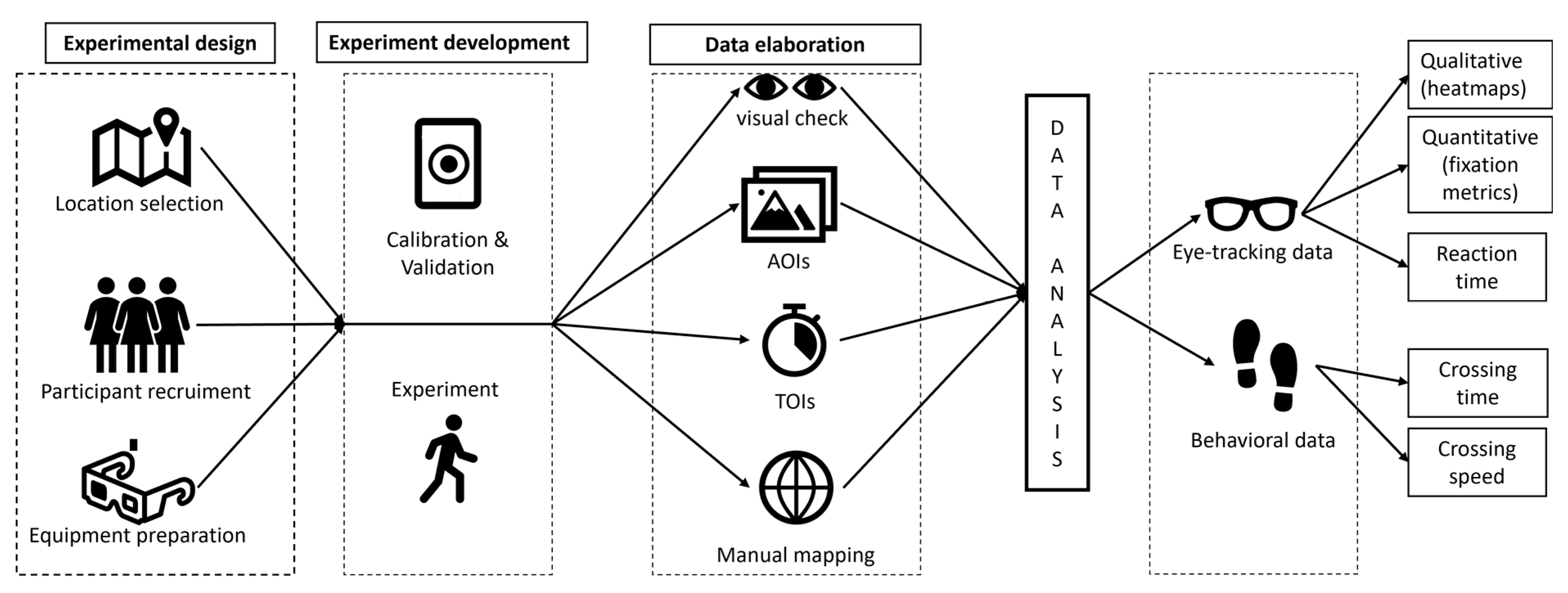
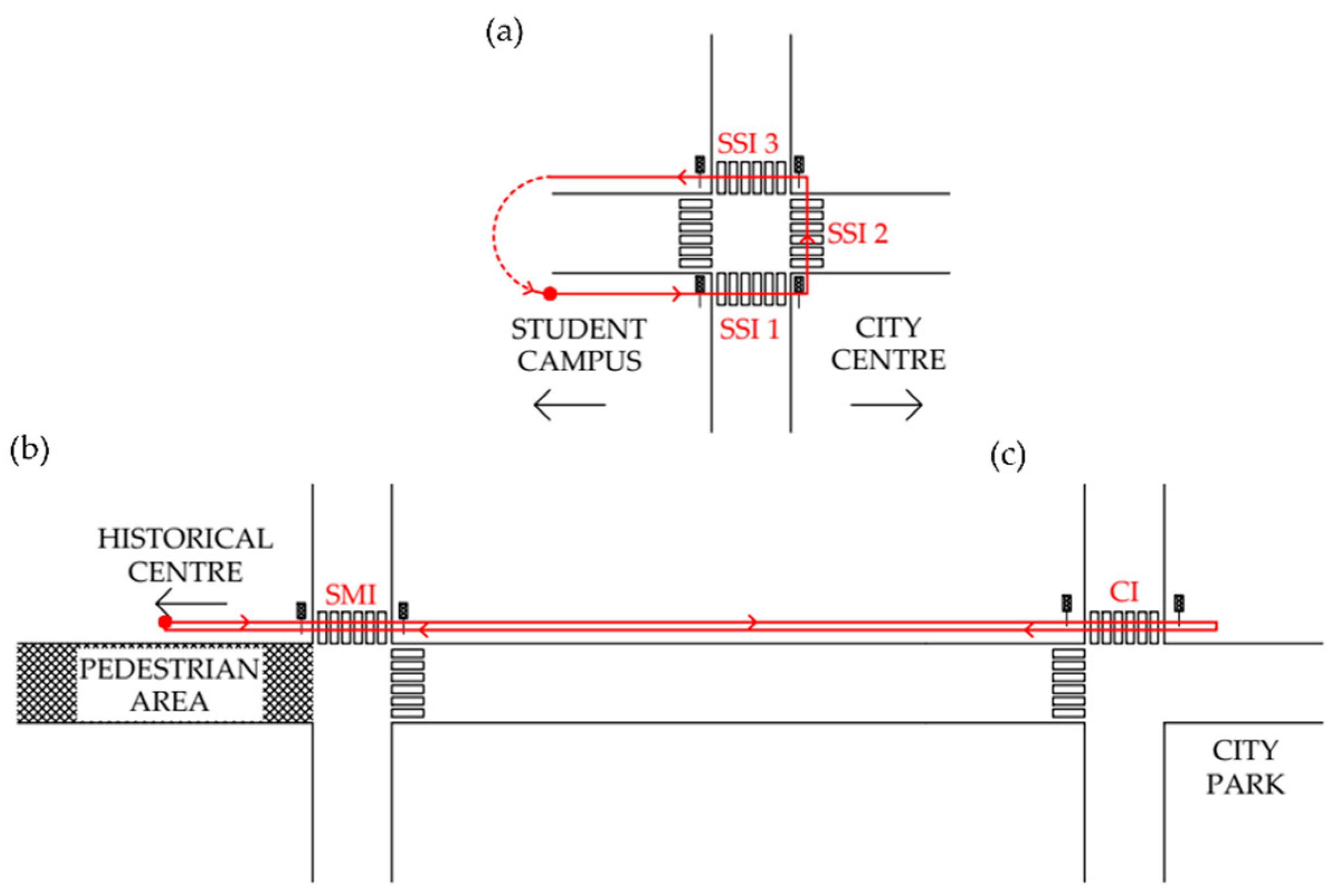
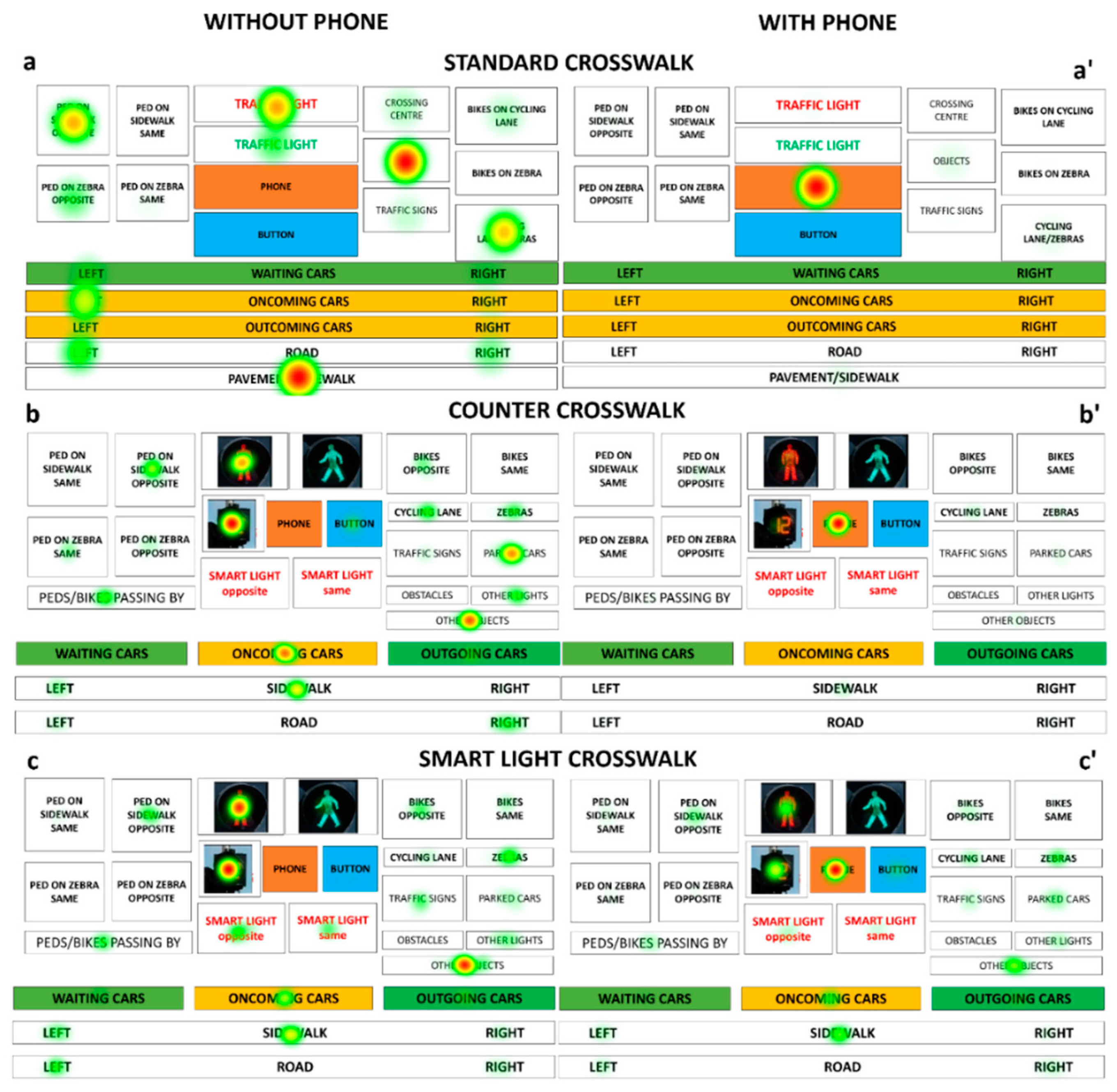
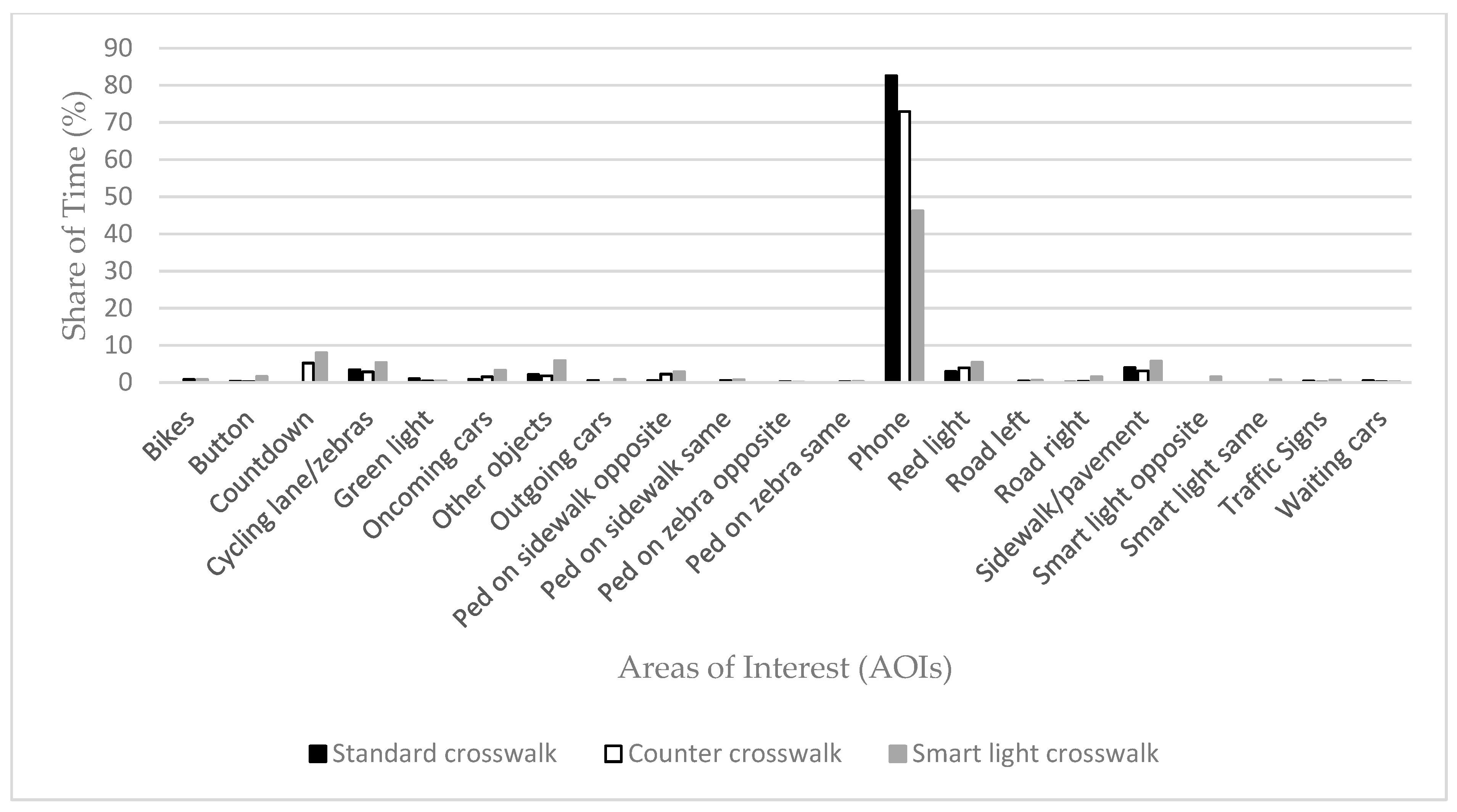
Pedestrian safety is a well-known issue, such that many road safety associations emphasize measures to improve this aspect. One of the main conflict points is pedestrian crossings, where motorized and non-motorized traffic flows directly interact and where pedestrian attention and reaction are two elements that can strongly influence their safety. Nowadays, these aspects are often deviated by the use of smartphones to surf the Internet or social media. The aim of the present study is to find out (1) whether and how intersection typology affects pedestrian behavior, both in terms of attention and crossing performance, and (2) whether and how gaze and behavioral characteristics are affected by smartphone use and social media browsing. To achieve this goal, eye-tracking technology was used to obtain qualitative and quantitative information on the number of fixations, their duration, and reaction times of pedestrians. Additionally, from the eye-tracking videos, it was possible to derive pedestrian waiting times, crossing times, and speeds. Statistical tests were conducted to determine if there is a significant difference in pedestrian behavior at the three different types of intersections and in their behavior when using or not using their device. Results confirm the initial hypotheses and quantify the difference in pedestrian gaze behavior and crossing performance when walking across three different types of signalized crosswalks.
Keywords: pedestrian; gaze behavior; eye-tracking; reaction time; signalized intersection; crossing behavior pedestrian; gaze behavior; eye-tracking; reaction time; signalized intersection; crossing behavior