1. Introduction
About 81 percent of Nepal’s population lives in rural areas, and more than 68 percent are dependent on agriculture [
1]. Nepal, however, struggles to produce an adequate supply of food for its citizens [
2], due to low productivity of its agricultural systems which is further worsened by the outmigration of youth and male farmers [
1,
3,
4]. This outmigration has increased the feminization in agriculture significantly [
4,
5,
6,
7]. However, the agricultural system in Nepal still considers men as the farmers, and the majority of agricultural research and extension services are still male biased with lower extension coverage for women farmers [
1,
8]. Smallholder women farmers have little or no access to services from the national extension system [
8,
9]. Some of the major reasons for this are: very few or no frontline female extension workers at the village level [
8,
9,
10]; male extension workers are not well trained in terms of gender-sensitive service delivery skills [
1]; cultural values in some societies prohibit free movement of women out of their homes [
5]; and women farmers do not seek extension services as they are occupied by the daily drudgery of farm work due to a lack of women-friendly technologies [
8]. All of this is exacerbated by the additional responsibilities of child and elder care and household chores [
4,
11], as well as a lower literacy rate amongst women farmers compared to males [
1,
8]. Moreover, women are rarely consulted in technology development, despite a high adoption rate of appropriate technologies among female-headed households [
4,
12,
13].
Since female farmers in Nepal have low literacy with very limited access to information and limited access to women-friendly technologies/inputs, rapid agricultural innovation adoption is challenging in rural areas [
14,
15,
16]. There are two schools of thought in terms of effective knowledge diffusion to smallholder farmers including women. One school of thought points to advanced information and communication technologies (ICTs), which have been shown to have the potential to effectively diffuse innovations in different parts of the world [
10,
17]. However, a second group of practitioners and scholars argues that these ICTs have been, and for the foreseeable future will remain, less relevant to developing countries since less-literate and resource-poor users cannot access nor afford advanced technologies, such as internet-connected smartphones [
18,
19,
20]. Even when accessible, marginalized peoples do not have the capacity to use smartphones or advanced ICTs due to low literacy [
9,
19,
21,
22]. In this context, traditional communication and learning practices, such as conveying information using picture-based printed materials/lessons, still may have the potential to encourage best practices among farmers [
18,
19]. Pictures communicate knowledge, practices, and ideas in ways that cannot be realized by means of text or verbal words alone [
23]. Some studies [
24,
25,
26] have argued that pictures have a direct emotional effect on the observer and can induce a set of responses.
Pictures are more important than text in terms of providing information to readers with low literacy [
27]. Some studies [
18,
28] further show that pictures with text improve the learning process. Muller and Griffin [
29] noted that visual communication has not gained much attention in the social science literature, even though it started after World War II. They further argued that studies pertaining to visual communication have only recently become a “recognized field of communication research”.
Use of picture-based printed materials as a means of communication in agricultural extension has a long history, particularly following World War II and the early eras of international development [
18,
30]. Some international organizations, such as the Food and Agriculture Organization (FAO) and the United Nations International Children’s Emergency Fund (UNICEF), have used picture-based extension materials extensively in past training across the globe [
18,
30,
31]. Picture-based methods used as training materials were found to be helpful in increasing farmer engagement, facilitating communication and collaboration, and further improving the expression of tacit knowledge to bring changes in individuals or in communities [
32]. Pictures minimize the language barrier [
31] and, if used with text, aid comprehension of extension materials [
33].
Nevertheless, Hoffman [
18] (p. 3), in his book on “picture supported communication in Africa”, has strongly argued that the “true potential of pictorial communication is both overestimated and underexploited”. He argued that the academic study of pictorial communication in extension has been very rare and scattered, with most of the research rarely published, and even if published, it has been in the form of grey literature. A major criticism raised is that picture-based methods have not been pre-tested, which has resulted in them failing to be locally relevant, and therefore meet their objectives [
18].
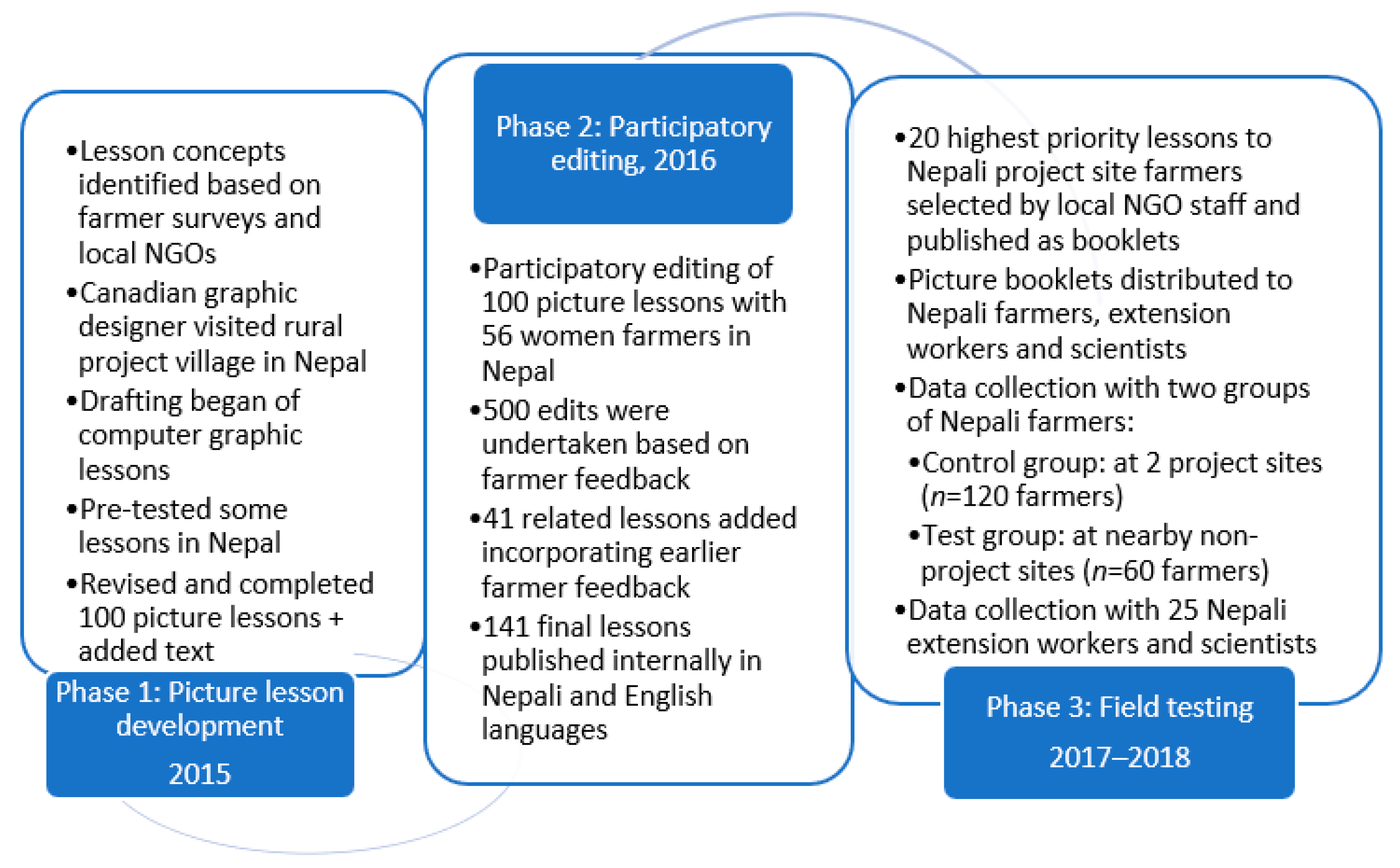
To address this research gap, this paper is a case study involving participatory field testing and editing of picture-based printed lessons developed for, and in partnership with, smallholder women farmers with low literacy in Nepal. The main objectives of our study are: (1) to explain the methodology used to develop participatory-based picture lessons (participatory conceptualization, testing and editing); (2) to pre-test the effectiveness of 20 farmer-edited printed lessons across a diversity of themes; (3) to survey the smallholders for their preferred ICT; and (4) to perform a qualitative survey of local agriculture stakeholders for their perception of the value of picture-based printed materials as extension tools for smallholders using NVivo analysis.
2. Theoretical Framework
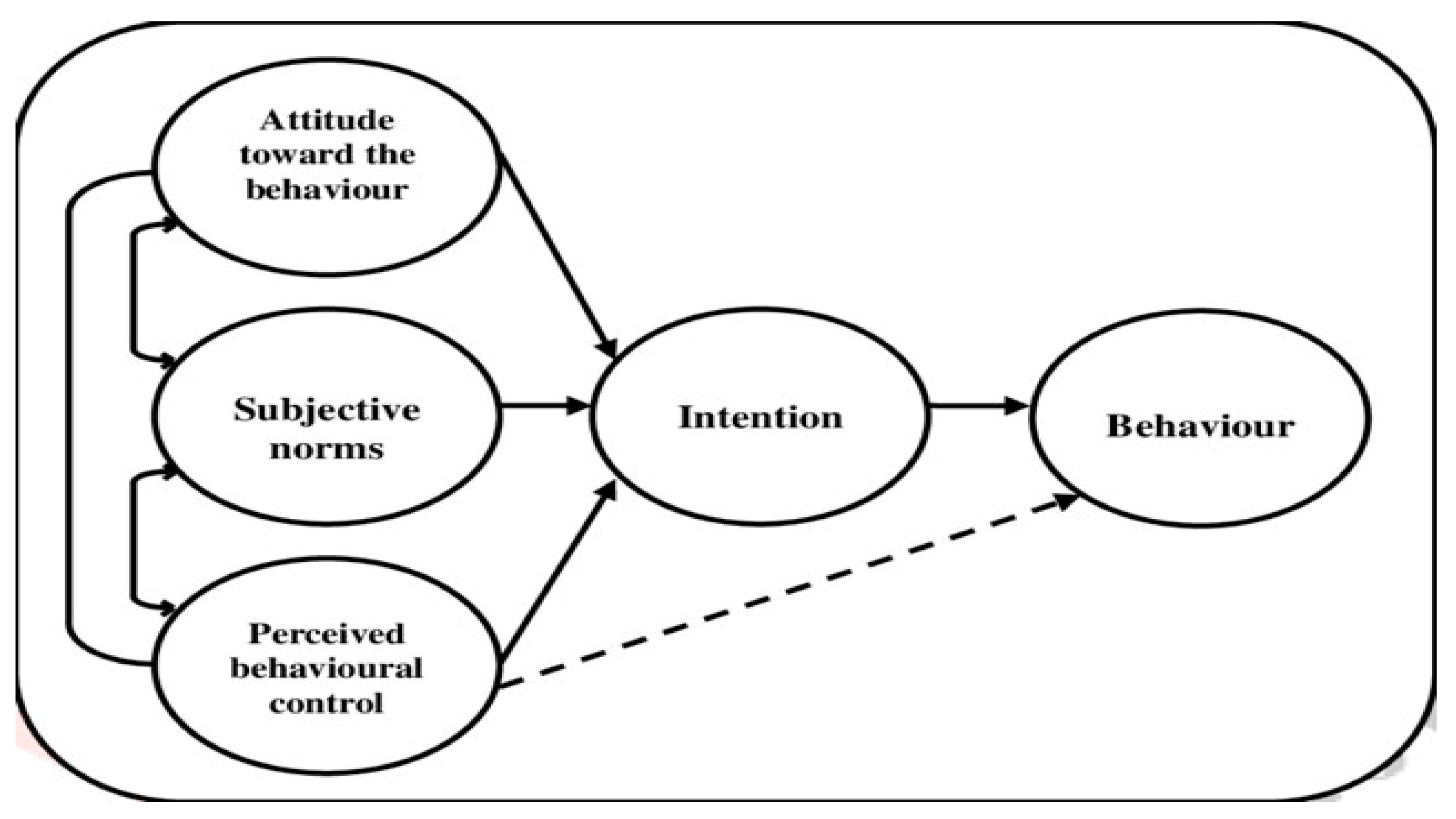
This study is conceptualized and analyzed based on the Theory of Planned Behavior (TPB), which is an extension of the Theory of Reasoned Action (TRA) [
34]. In TRA, a person’s behavioral intention is described as a factor of one’s attitude toward behavior and one’s subjective norm. Subjective norm reflects the level of social pressure felt by an individual from significant reference persons to engage or not to engage in a particular behavior. It is argued that people tend to conform to subjective norms due to a fear of social exclusion [
35]. Attitude and subjective norms affect the individual’s behavioral intention, and the intentions consequently reflect on an individual’s final behavior. In 1985, TRA was revised and extended to the ‘Theory of Planned Behavior (TPB)’ [
34]. According to the TPB, one’s intention is the most important predictor of behavior, which relates to an individual’s motivation or willingness to invest effort in performing the behavior [
34,
35]. The greater the intention, the more likely an individual is to enact the behavior. The intention, in turn, is determined by three socio-psychological constructs: attitude, subjective norm and perceived behavioral control as shown in
Figure 1 [
34]. Perceived behavioral control is an individual’s perception of the ease or difficulty related to their performing a given behavior, which is also related to the presence of facilitating conditions, sometimes referred to as situational constraints [
34,
35]. This construct reflects the extent to which an individual perceives that the behavior in question is under his/her volitional control [
34]. Thus, if an individual perceives that performing a task is easy, he/she is more likely to undertake it.
In this research, we assumed that female and male farmers’ intent to apply the picture lessons to improve their livelihoods in the long term would increase as the degree of their perceived control over undertaking the task(s) increased [
36]. Previous research has shown that attitude, subjective norm and perceived behavioral control are positively associated with farmers’ intentions to adopt best management practices in agriculture [
37,
38]. Unlike previously published studies on TPB, this study focused on both descriptive data and qualitative information from different stakeholders.
4. Results
The findings of this study have been presented in three categories below: key findings of participatory editing of the picture lessons among women farmers; perceptions of men and women farmers towards the use and understanding of the picture lessons; and, similarly, the perception of stakeholders.
4.1. Key Findings from Participatory Editing of Picture Lessons by Women Farmers
During the participatory picture lesson editing process, approximately 500 edits were requested by the women farmer editors. These edits were categorized on the basis of literacy and age, culture, and gender as discussed below.
4.1.1. Findings from Edit Requests Related to Low Literacy and Age
In general, the women farmer editors found that the lessons helped them to understand the new agricultural practices and technologies shown. They noted that they were easy to understand and looked attractive due to the colorful pictures. Mostly, young women who were more literate were comfortable with the booklet format and understood the lessons easily. However, older women faced difficulties in comprehending the flow of the picture lessons and where to start because they did not know the meaning of the arrow symbol (which was used in the lessons to sequentially connect images). The older women, especially, did not understand the thermometer image, symbols of water droplets, day and night signs, and the meaning of a cross (X) over an image (e.g., ‘X’ above a water droplet to indicate drought). When the women were asked the reasons as to why these symbols might be challenging for them, the women farmers stated that most of them “never attended school”, and that, for elderly women, “book reading was minimal”, even at home. Some of them had learned to write their names, by attending adult learning classes for some nights run by the government and local NGOs, but not much more.
4.1.2. Findings from Cultural Edits Requested by Women Farmer Editors
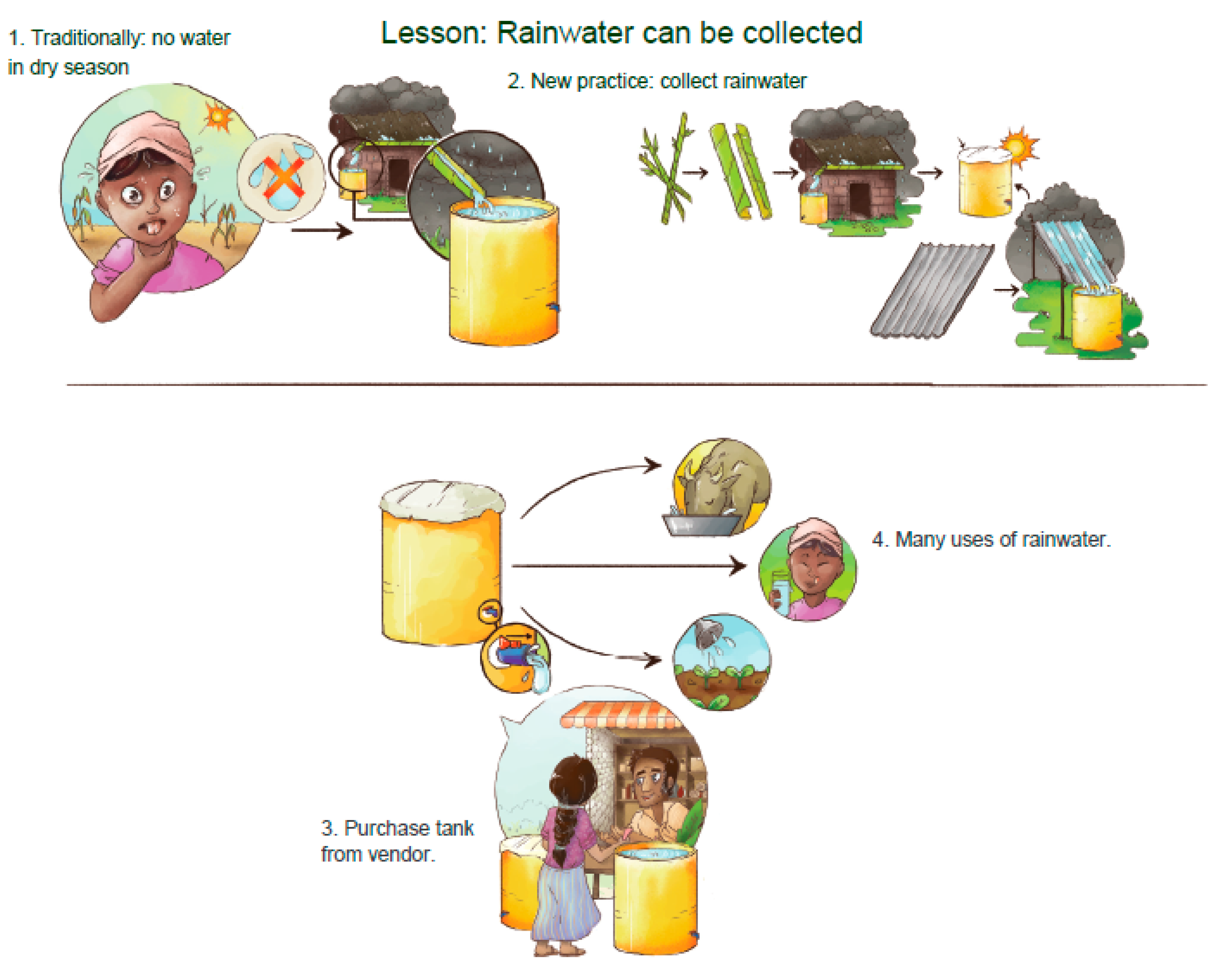
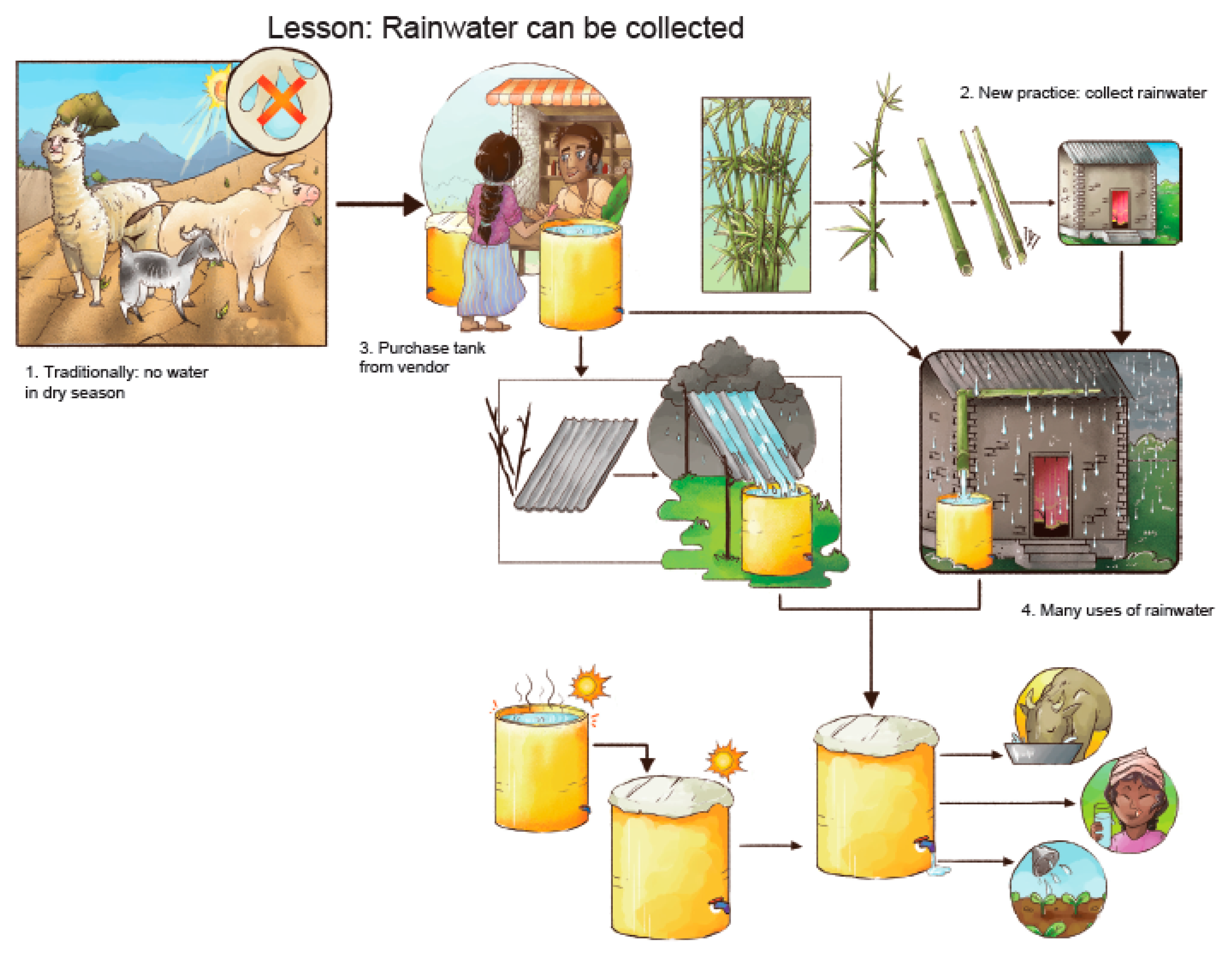
The participatory testing process also revealed geography-specific and cultural differences in the intended comprehension of images that the scientist/graphic designer thought were universally understood. Most of the time, the women farmer editors tried to identify the type of crop/grain shown in the picture lessons, but some could not be identified as they did not visually match locally available seeds and crops. Thus, the women farmers recommended modifying these images to be more local (and larger) so that they could be recognized immediately (e.g., a North American cow looks different than a South Asian cow). Cultural differences were revealed in a lesson to introduce rainwater harvesting techniques. In this lesson, the image of a boy was shown with his hand around his neck and his tongue stuck out, which were intended to show thirst (
Figure 3, before edits). However, women farmers in Nepal understood this image differently, stating that this image shows the boy “vomiting”. Furthermore, locally in Nepal, rainwater is mostly used for livestock as it is considered too dirty for human consumption, so this part of the lesson created confusion. To make this lesson locally relevant, the picture of the boy was removed entirely, and the boy was replaced with the livestock (and all images were increased in size to assist elderly readers) (
Figure 4, after edits).
4.1.3. Findings Related to Gender Specific Edits
In addition to the above issues, the participatory editing process with women farmers in Nepal uncovered gender-specific concerns related to the picture lessons. For example, some of the women farmer editors were concerned about the dress worn by the women characters in the picture lessons. One middle-aged women farmer shared her experience of the lessons as follows:
“I saw a woman wearing a white long dress and thought these lessons were from other countries. It feels like these practices are for foreign women, not for us, because we rural women always wear saris in our day to day life. If this lesson is for us, then it would be better to make the pictured women similar to us.”
(45-year-old woman farmer, Majhthana, Kaski District, Nepal)
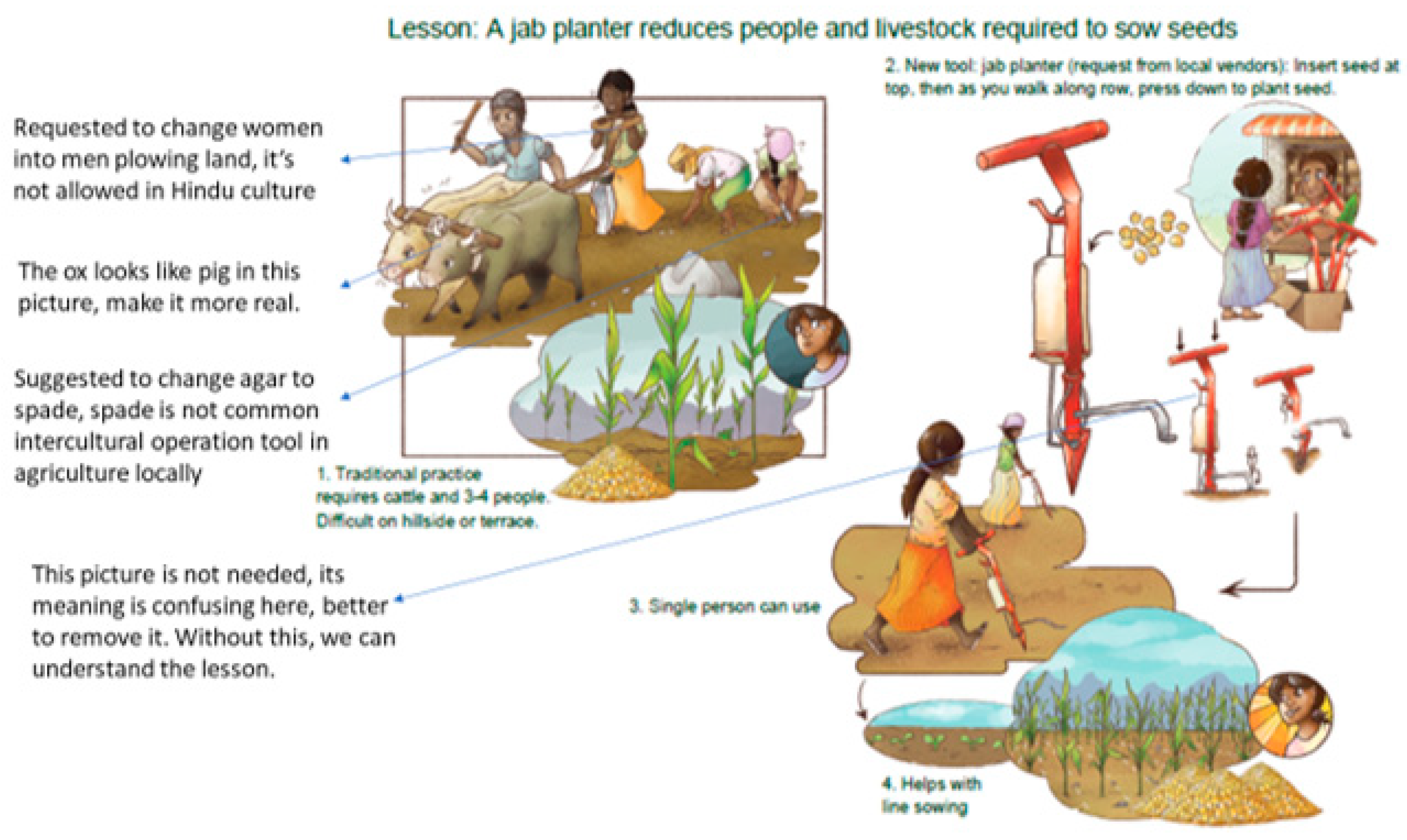
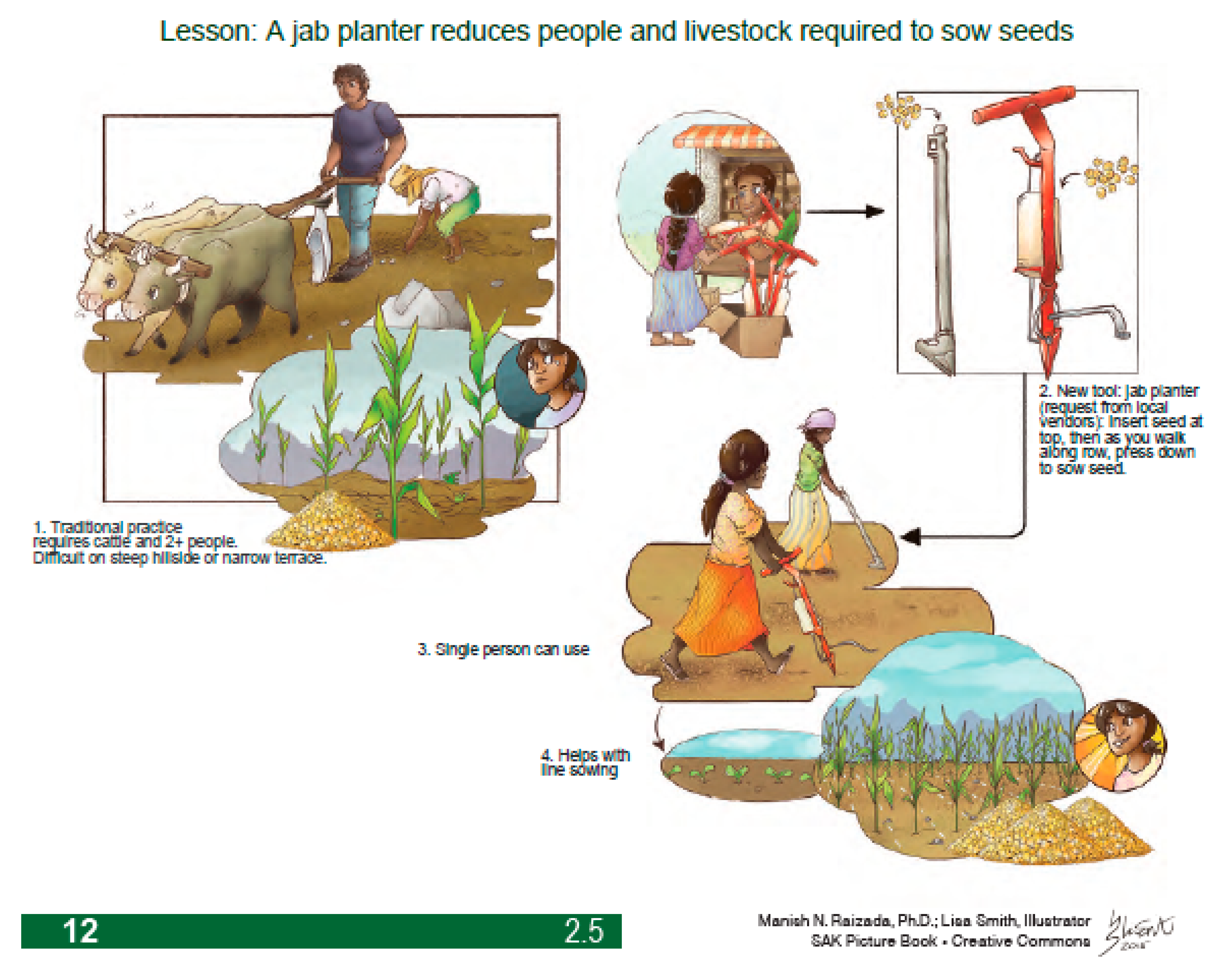
The SAK picture lesson development team was aware of the importance of innovations that could transform traditional gender roles in the society, and hence, as noted earlier, women were almost always placed in lead roles in the lessons, but this was sometimes not accepted in the local cultural context. For example, a picture lesson was shown that introduced the women farmers to a seed drill planter (jab planter,
Figure 5) intended to mitigate male outmigration that has caused declines in the traditional male-dominated practice of livestock plough-based sowing. In the lesson, to illustrate the traditional practice, a female farmer was shown ploughing the land using oxen; however, women are not allowed to plough land using livestock in the local Hindu culture [
41]. As a result, during participatory discussions, most of the women farmers stated that they were offended by this image and asked for it to be changed (see edit request, upper left in
Figure 5, and an edited version in
Figure 6). In general, however, showing women as the users of the recommended tools and practices was accepted by women farmers, and the reason may be very interesting: as the tools in particular were completely novel to the local society, there were no cultural gender-based taboos associated with them. As a result, whereas many previous books and extension lessons have shown men as the farmers, here it was corrected by showing women as the lead farmers and users of innovations and complex practices. Indeed, a woman farmer from Jogimara shared that:
“In most of the lessons, it showed that woman farmers were doing the task, or had exposure to new tools. It feels good to see women everywhere in the book.”
(52-year-old woman farmer, Kot, Jogimara, Dhading, Nepal)
4.2. Perceptions of Farmers Towards Printed Picture Lessons
The results presented here are based on field testing of the final women farmer-edited booklet (20 lessons) with two groups of farmers: control farmers (project farmers previously exposed to the lessons and receiving guidance from project staff, similar to an extension agent) and test farmers (farmers with no prior contact with the lessons). Informed by the Theory of Planned Behavior (TPB), data collection was focused on questions related to farmers’ attitudes, subjective norms, and perceived behavioral control.
4.2.1. Farmers’ Attitude Towards Using the Printed Picture Lessons
The male and female farmers’ perceptions about the usefulness of the printed picture lessons and their attitudes towards using them in the future are summarized here. In the literature, there is skepticism about the utility of printed picture lessons compared to “innovative” ICTs, such as smartphones [
17,
20,
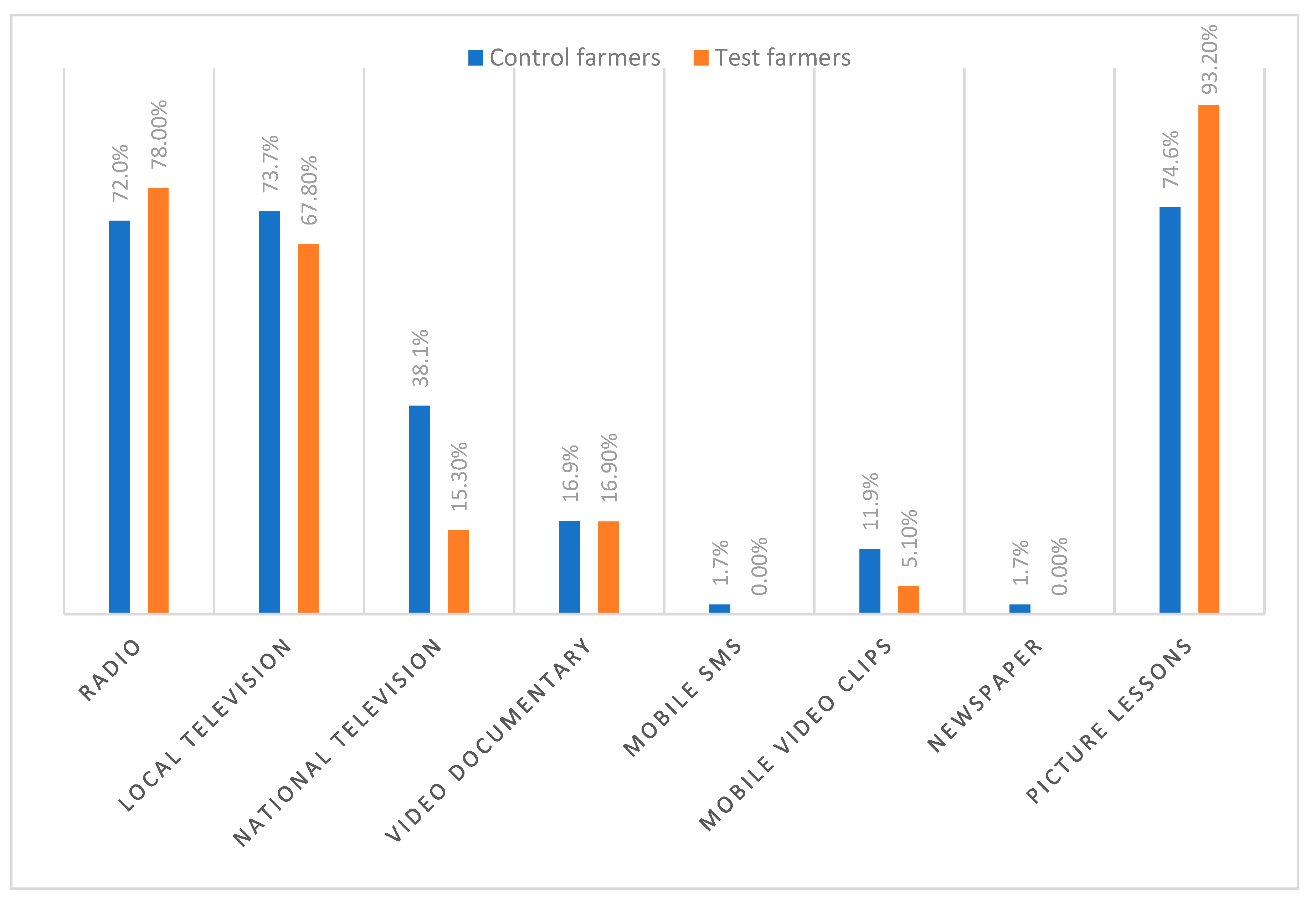
22]. In terms of different ICT options, here, 93 percent of control farmers and 75 percent of test farmers selected picture lessons as one of their top three means of agricultural communication, on par with radio or combined TV sources, and much higher than mobile phones (
Figure 7). This result showed that farmers had a pre-conceived positive attitude towards picture lessons. There was no significant relationship between the demographic variables (age, education, sex, and caste) and preferred media in both study groups (
Supplemental Material 5: Binary logistic regression test results). Most of the women farmers noted that, even though radio and TV are convenient source of agricultural information and can reach a larger audience in rural areas, farmers did not have the flexibility to re-use/re-listen/re-watch such information, making it difficult for them to recall the details when needed.
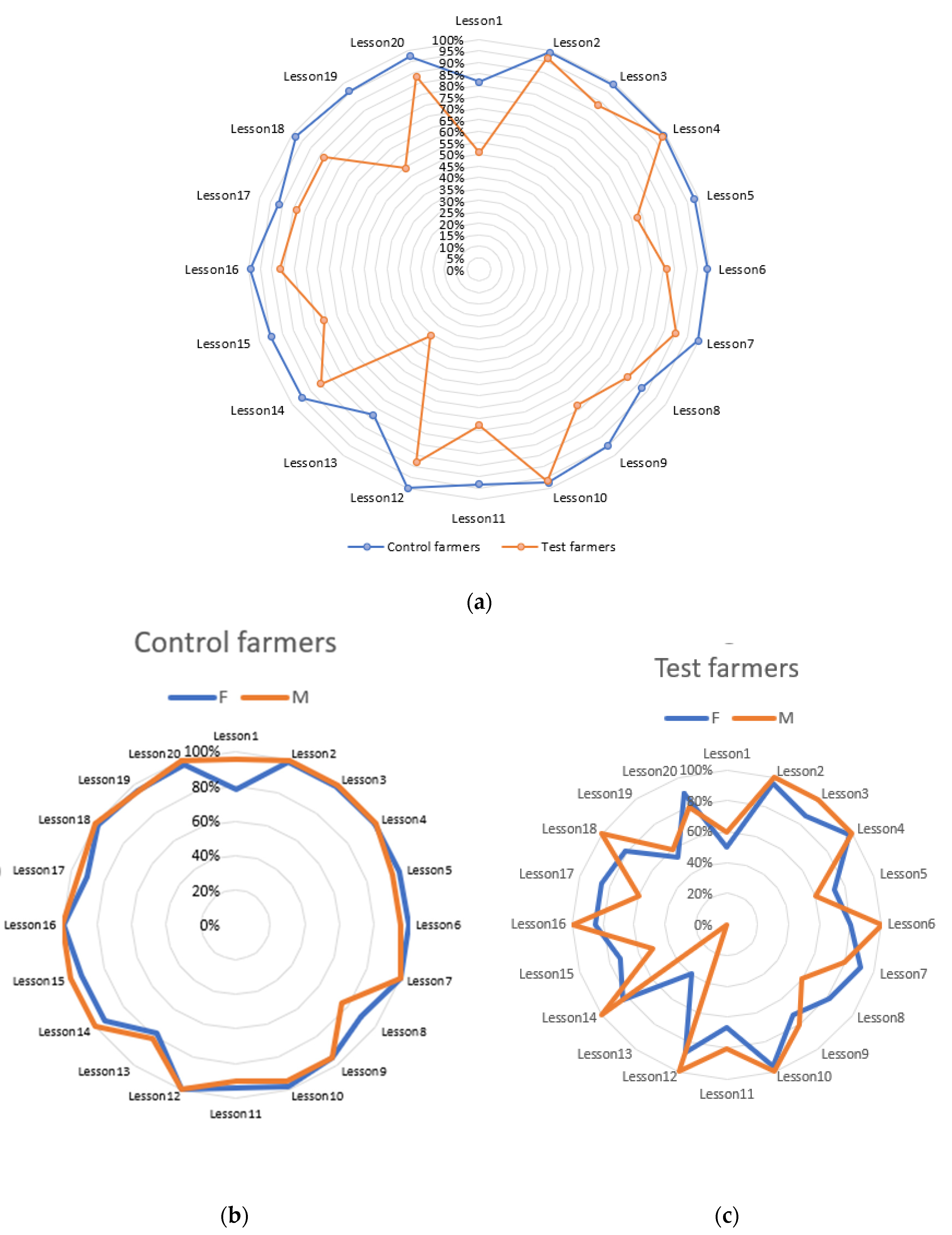
In this study, it was expected that control farmers, who were pre-exposed to the lessons and SAK Nepal project practices/tools and personnel, would find the lessons to be more relatable compared to the test farmers who had no prior exposure. Surprisingly, averaging all 20 lessons, approximately 85 percent of control group women farmers and more than 80 percent of test groups found the lessons to be easily understandable (
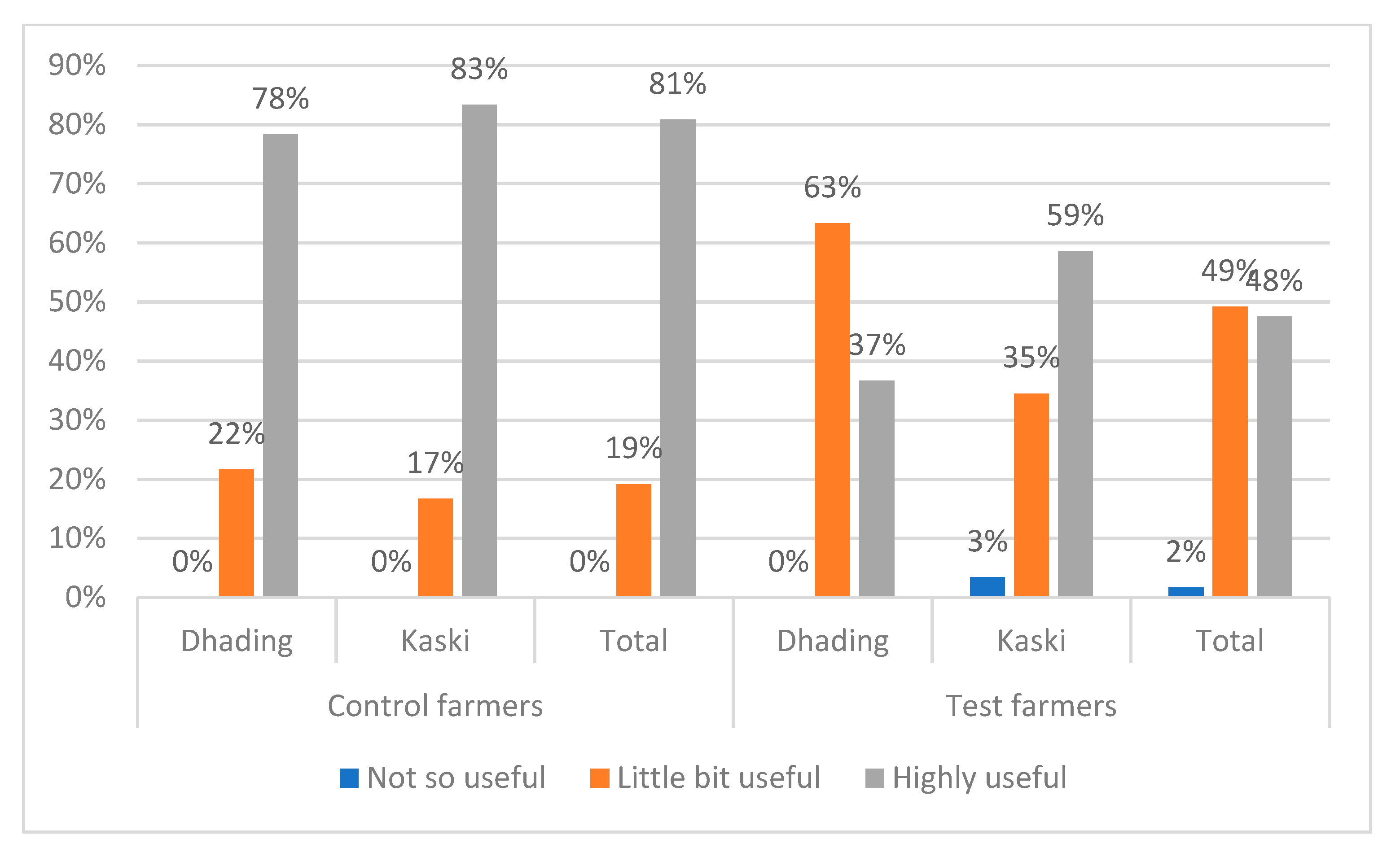
Figure 8). Perhaps because control farmers had seen evidence of the impact of SAK tools/practices in their village, 81 percent of control farmers found the picture booklet to be “highly useful” for their day-to-day agricultural activities, compared to only 48 percent of test groups farmers, though another 49 percent of test farmers rated it as a “little bit useful” (
Figure 9).
The three least understood lessons (Lessons 1, 13, 19; see
Supplemental Material 6) were due to the complex/technical nature of lessons including the meaning of specific illustrations (e.g., for crop rotation), combined with too many small pictures on one page.
Overall, the higher rates of lesson comprehension among control farmer groups compared to test groups suggested that farmers were able to better understand tools/practices that they previously directly observed or used rather than seeing them for the first time.
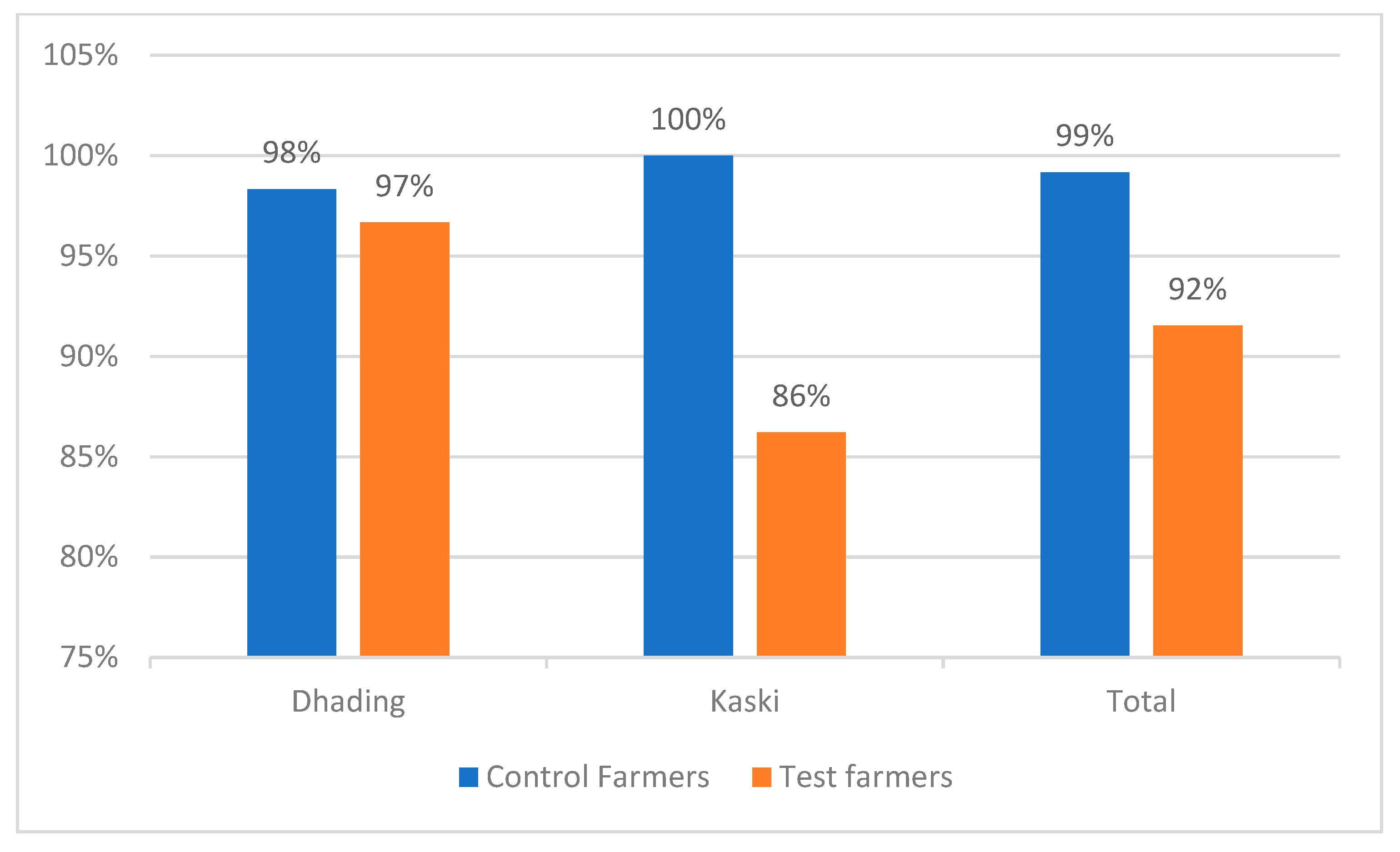
Furthermore, the farmers’ perceptions of the relevancy of using the picture lessons in their local rural context were considered another parameter of their attitude towards the long-term use of the picture lessons. The field study found that more than 90 percent of both male and female farmers from both test and control groups agreed that the printed pictures were an appropriate means of communication among low literacy women farmers in rural Nepal (
Figure 10). Most of the respondents were illiterate or had low literacy (80% among control farmers, and 52% among test farmers) but literacy varied (
Supplemental Material 3). For most of the 20 lessons, the association between the understanding of lessons and demographic characteristics of education along with age, gender, and caste showed insignificant relationships (
Supplemental Material 7: Nominal association test results). Gender was significantly associated with the level of understanding of the lessons only in Lesson 1 (
Supplemental Material 7), but the values were low (both 0.16). Caste was shown to be significant in Lessons 1, 2, 4, 8, 11, 17, and 18 but the association values of caste were also low (ranging from 0.26 to 0.37) indicating a low degree of association between caste and the understanding of the lessons. Education was significantly associated with the understanding of the lessons only for Lessons 6, 8, and 9, but the association values were again low (ranging from 0.26 to 0.29) (
Supplemental Material 7).
The major three reasons for liking the picture lessons among women and men farmers were: the “attractive/artistic/beautiful words”, along with the colorful pictures; the relevant subject matter provided in the booklet, such as small farm tools, like the handheld corn sheller and fruit picker; and the layout of the booklet. In terms of the text used in the lessons and the colorful pictures, one elderly farmer shared her experience after seeing the picture lessons as follows:
“The font and images used in this booklet are very nice and attractive. I don’t know how to read and write, but I kept touching and feeling it for a long time.”
(65-year-old woman farmer from Majhthana VDC, Kaski District, Nepal)
In terms of the relevance of the subject matter, another female farmer noted:
“I never knew that a fruit picking tool is also available in the market. Every season we have a huge loss of oranges, pears, guava and several other fruits due to picking difficulties. I am old and my husband also cannot climb the trees now. My sons and daughter are in the city to study and for jobs. Mostly, we shake the fruits trees so that ripe fruits fall to the ground and we collect them and sell them, or we use a stick to pick them. We get a low price as there is lots of damage to the skin while picking. But the fruit picking tool shown in the picture lesson looks relevant for us as it saves the fruit quality and is also easy to handle”.
(53-year-old tribal women, Kot village, Jogimara VDC, Dhading District, Nepal)
4.2.2. Subjective Norms for Social Influences
In this study, the perceptions of other members of each household and the local village were considered as a subjective norm which might influence or affect the use of the picture lessons in the future. To gauge the perception of women farmers on the views of their household/community, in a focus group discussion, they were asked, “Would you feel pressure to use the printed picture lessons if someone in your home, community or village encouraged you to do so?” A woman farmer from Majhthana shared the following:
“I know that picture lessons are helpful for us to get the knowledge about new agricultural farm tools and innovative practices, but I do not feel compelled to follow those practices mentioned in the picture lessons on a regular basis. If I see that my neighbors and active women farmers are using it, then I may be use it automatically. Most of the women in our villages are like that.”
(48-year-old woman farmer, Majhthana VDC, Kaski District, Nepal)
There was a totally different perspective from an elderly, single tribal woman farmer on the impact of social influence as noted below:
“I never touch a book by myself, as women were supposed to stay at home and take care of the household and kids in our time. Now, I don’t have the belief and courage that I can learn by seeing a book or picture lessons by myself. I need big support, not only technical support to read it but also emotional support to hold a book and to convince my heart and brain to focus on the picture and gain the knowledge out of it. It looks simple for you but for me it’s too personal and a deep process.”
(66-year-old woman farmer, Kot, Jogimara VDC, Dhading District, Nepal)
Based on the focus group discussions, the women farmers perceived that most of their fellow women farmers would not take the picture lessons seriously, despite the benefits they offered to improve agricultural productivity. This suggested that there may be an opportunity to take advantage of local social norms to increase the impact of the picture lessons.
4.2.3. Perceived Behavioral Control
In terms of perceived behavior control, the results pertaining to both facilitating conditions and situational constraints related to the usage of the printed picture lessons are presented here.
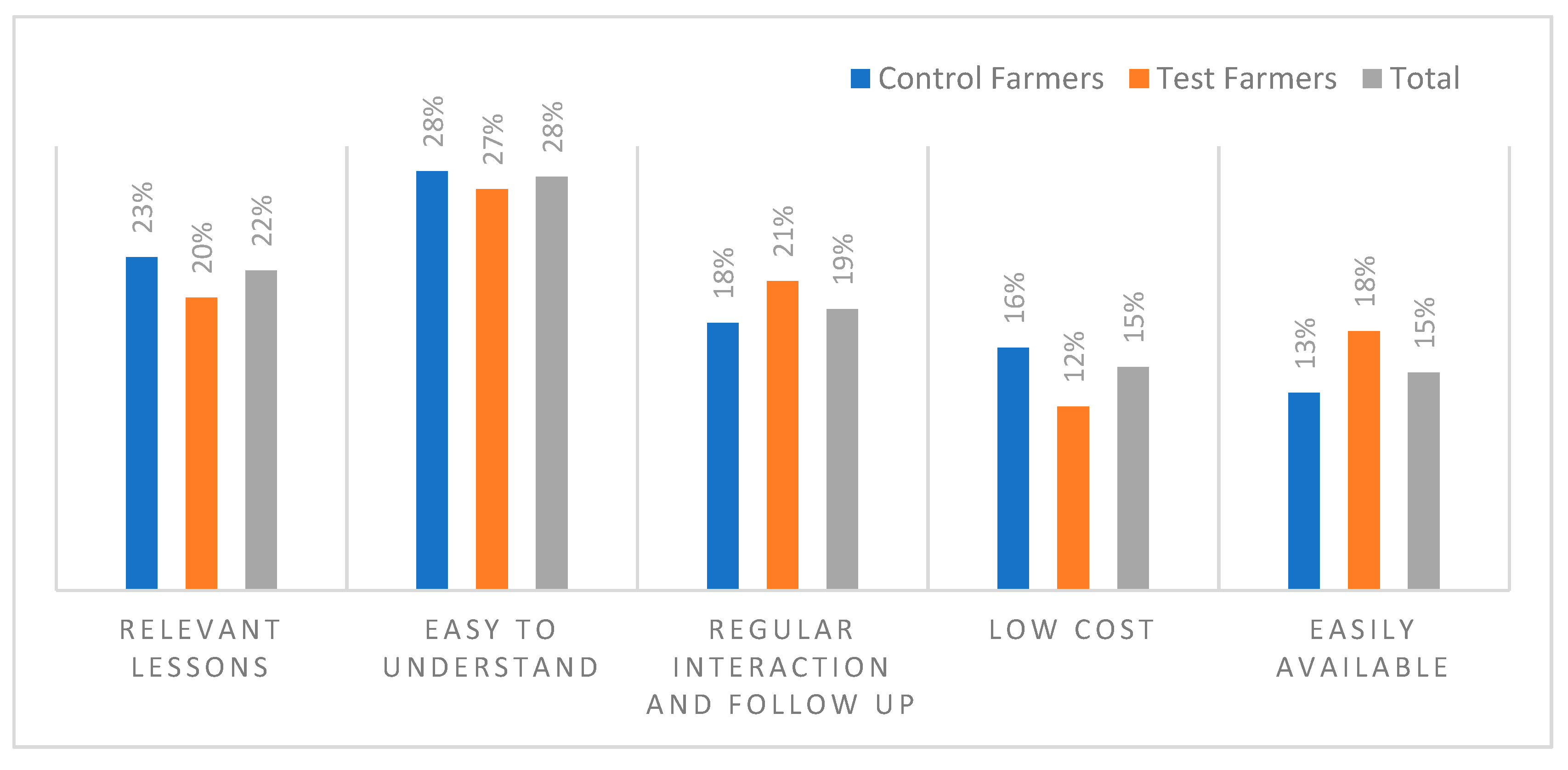
First, all men and women farmers from both the control and test groups reported that they were likely to use the picture lessons in the future. The three major facilitating conditions (
Figure 11) noted by the farmer groups for them to use the picture lessons in the future were: (a) pictures should be easy to understand (28%); (b) lessons should be directly relevant to their agricultural activities (22%); and (c) they (farmers) should have regular interaction and follow up from the extension agents or farmer leaders so that farmers felt obliged to use the lessons (19%). Farmers further reported that low cost (15%) and easy availability of the picture lessons (15%) were other facilitating conditions that would increase the intention of men and women farmers to use the picture lessons and actually adopt the described technologies and practices in the future. For example, some women farmers asked for more lessons, specifically pertaining to controlling specific crop insects and pests that were local of concern.
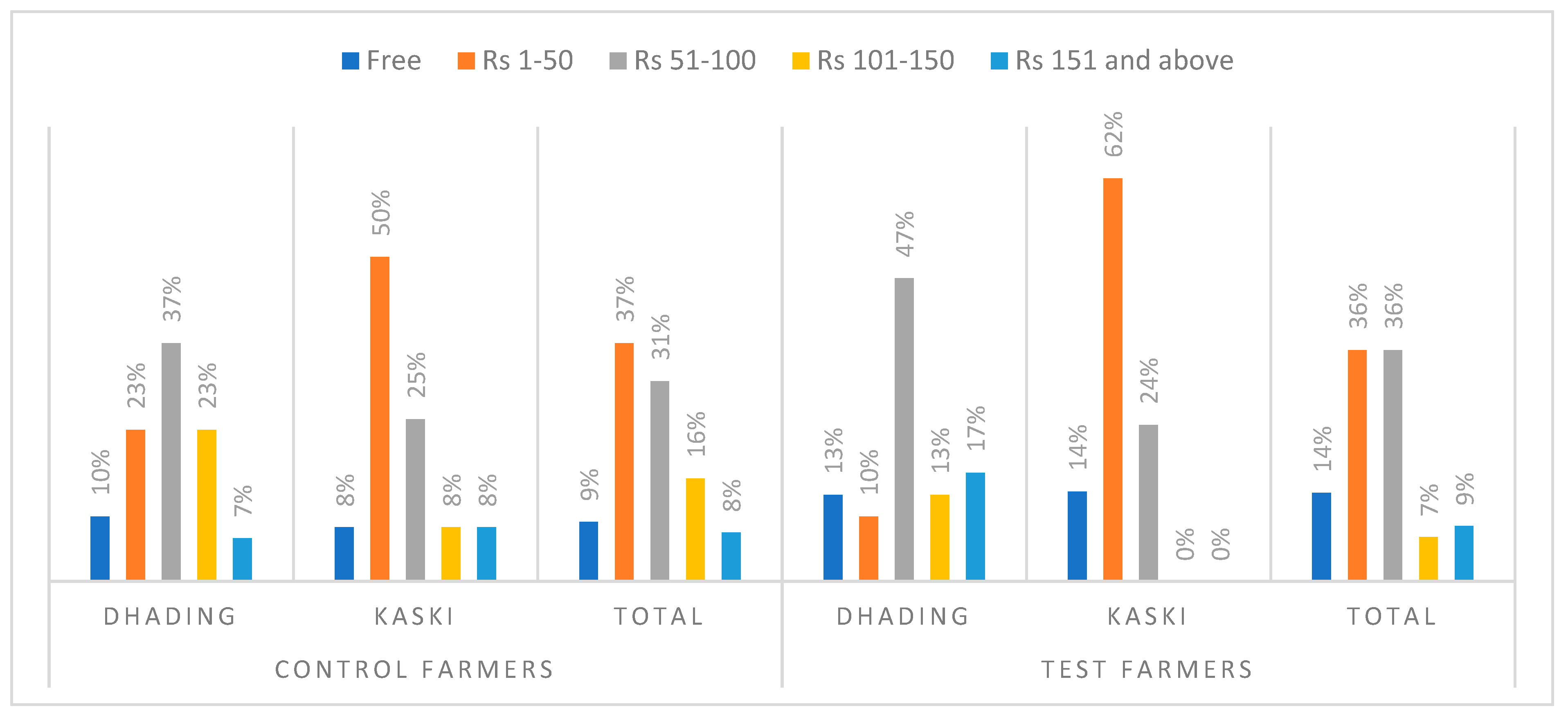
Men and women farmers were also asked about their willingness to pay for the picture booklet, in case they had to purchase it (
Figure 12). We saw this question as a tangible indicator of the farmers’ real perceptions about the picture lessons. About 67 percent of the respondents from the control groups and 71 percent from the test groups said that they were ready to pay up to 100 Nepalese Rupees (NPR) (1 USD = 118 NPR) for a SAK picture booklet. On average, men and women farmers were ready to pay NPR 82 (USD 0.69) in the control groups and NPR 81 (USD 0.69) in test groups). To understand the relative value of these numbers in the Nepalese village context, a farmer can buy four cups of tea for 80 NPR; hence, it is not an insignificant amount of money for resource-poor farmers. As further context, women farmers in the focus group discussions mentioned that on average they considered about NPR 100-150 (USD 0.85–1.27) as their affordable amount, within their decision-making control, without having to consult with their husbands.
By contrast, some of the farmers (9% control and 14% test farmers) wanted the booklet to be free of charge. These farmers said that they had received extension materials from the local governmental and the non-governmental organization free of cost, so they also expected the same with the SAK picture lessons. Both test and control group farmers from the Dhading district were willing to pay more for the printed booklet compared to farmers from the Kaski district.
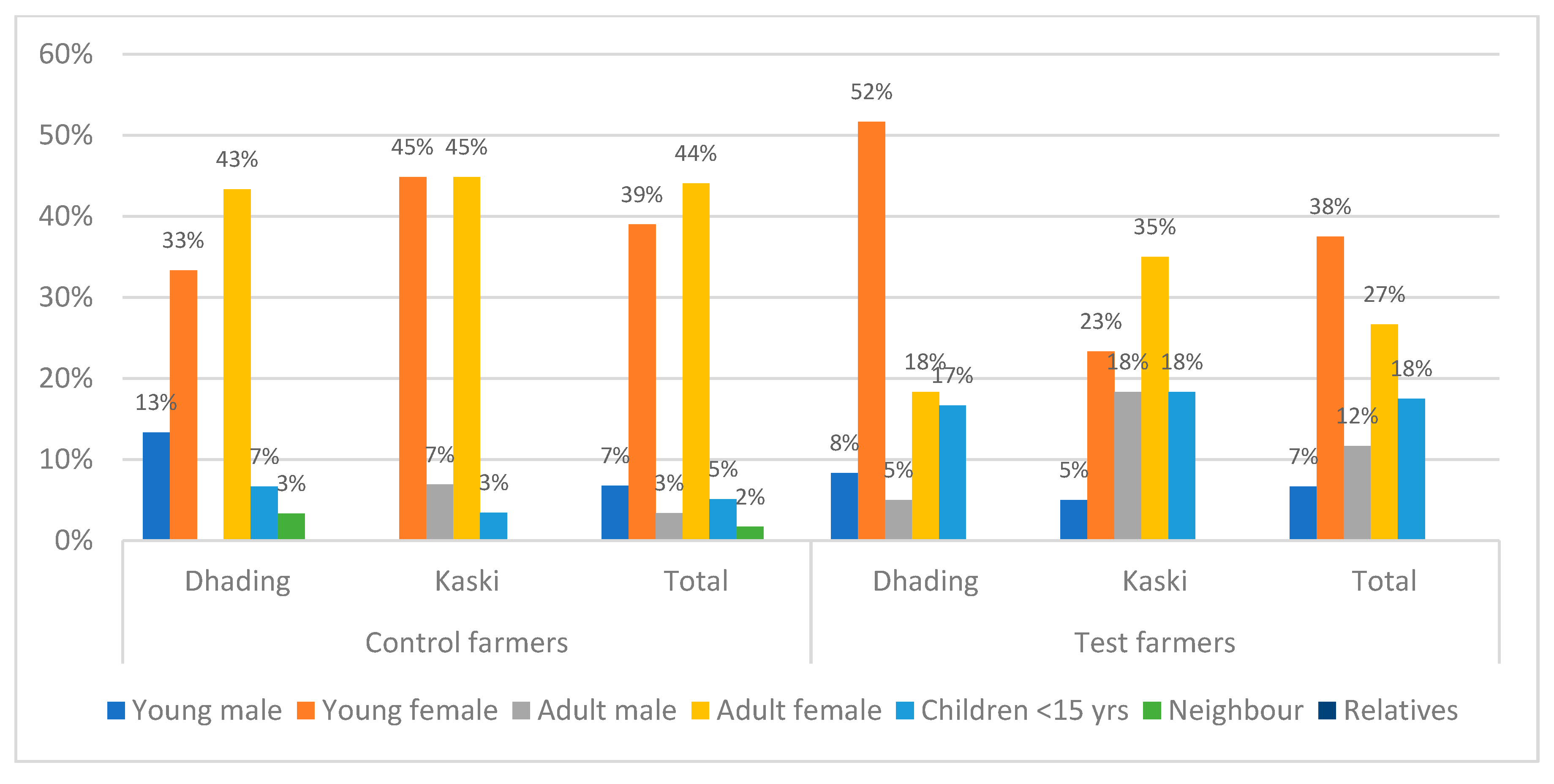
In terms of situational constraints, the low literacy level of the women farmers was considered one of the major drawbacks against their use of the picture lessons because they contain text captions. To address this constraint, data on farmer literacy and the primary users of the picture lessons at home were collected (
Figure 13). The findings showed that young females (39%) and adult females (44%) were the primary readers (of the text captions), followed by young males (7%) and children (5%) in the control groups. However, in the test groups, young females (38%), adult males (27%), and school attending children (18%) were the main readers, followed by adult males (12%). This test group data, combined with focused group discussions, indicated that women farmers who could not read the captions were getting help from their (more literate) husbands and school-attending children at home. In the control groups, such family help was not much needed, likely because the women farmers had already been exposed to the lessons and project activities. A particular interesting result from the above question was that few neighbors and no relatives outside the household appeared to help the women farmers to read the lesson captions (
Figure 13 and focused group discussions).
4.3. Stakeholder’s Perceptions on the Effectiveness of Printed Picture Lessons in Agriculture Communication
In this section, the perceptions of key stakeholders in Nepal, including experienced agricultural extension workers and scientists, are discussed in terms of the relevancy and required conditions for the effective use of printed picture lessons. The results discussed here were generated from NVivo analysis based on online surveys and key informant interviews during the field-testing phase (Phase 3) of the picture lessons.
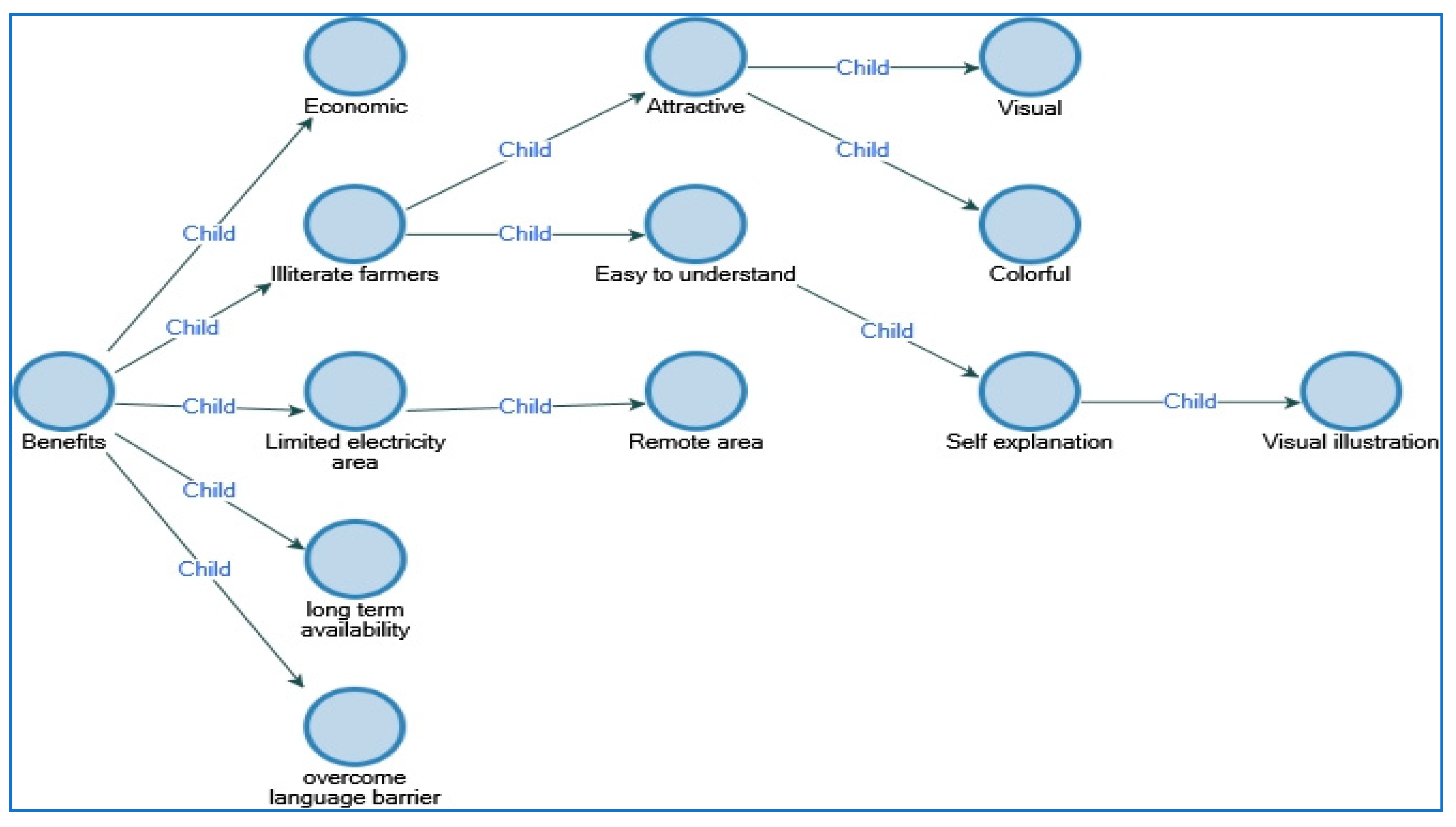
Most of the respondents perceived that printed picture-based extension materials are relevant for farmers with low literacy. In terms of the perceived benefits of printed pictures, the responses received from the stakeholders have been summarized using NVivo with a set of nodes (
Figure 14). Almost all (100%) respondents agreed that printed pictures are an economical and effective means of disseminating innovation to illiterate or semi-illiterate farmers in rural Nepal, where the required infrastructure (electricity), resources, and farmer capacity to adopt advanced ICTs are lacking. One of the agricultural scientists shared his view as follows:
“Color pictures look attractive and draw a farmer’s attention compared to the text description. Similarly, pictures speak for themselves, thus they overcome a language barrier. However, they should look simple, attractive and should come with a step-wise procedure”.
(KII, 1.3.1.2)
Previous studies have suggested that picture-supported extension materials do not work in every context [
18,
19,
27,
31,
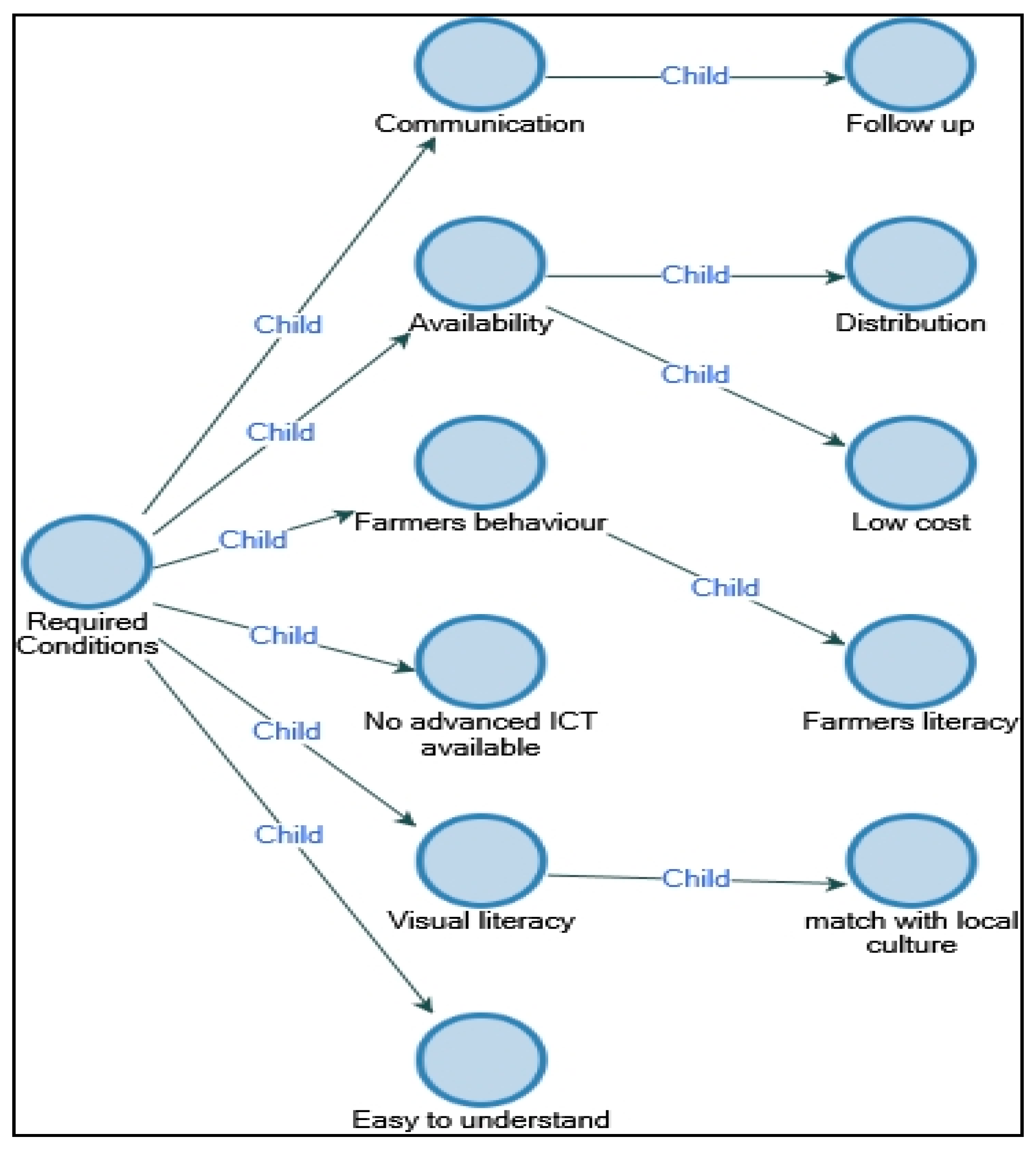
42]. Therefore, in this study, extension workers and scientists were asked about their perceptions of the major conditions required to allow printed pictures to be relevant as a tool for agricultural communication in rural areas. Some of the most important required conditions identified by the stakeholders were: proper communication, availability of the printed pictures, farmer reading habits (behavior), lack of more advanced ICTs, visual literacy, and ease of understanding (
Figure 15). Most of the extension workers emphasized that regular communication/follow up with farmers about the picture lessons (the way they use and apply them) was the most required condition for their future continuous use. They further suggested that linkage with the local agriculture extension workers (Government, NGOs) might be necessary to ensure use of the picture materials and long-term adoption of the described technologies. In addition, the stakeholders further emphasized that a distribution mechanism should be in place so that (other) farmers could get these extension materials without difficulties, since lack of local availability of such materials was seen as the challenge based on their experience. Furthermore, most of the stakeholders noted that farmers would not use these picture lessons unless they were convinced that they were easy to use and met their needs. A farmer’s prior habit of reading books was perceived as being the most critical. One of the respondents shared his views on the link between use of the picture lessons and farmer behavior as follows:
“Most of the farmers especially female farmers are illiterate in the village, and they would have difficulty following the picture materials. Sometimes, pictures are confusing. Thus, female farmers need help either from their children or from their husband to understand the picture lessons by using the (associated) text captions.”
(Online survey with male extension workers from Nepal). (Details on NVivo coding is provided in
Supplemental Material 8.)
Most of the stakeholder respondents perceived that, if farmers are literate and advanced ICTs are available in the area, then printed pictures may not be an effective means of communication to smallholders. One of the agricultural extension officers from the local government in Kaski shared a similar observation as follows:
“It’s true that, nowadays farmers are using smartphones, the internet and television. However, they don’t know how to use them for getting information from different websites and apps, as they are mostly in English. Even though some apps are in Nepali, most of the farmers, particularly rural women farmers, can’t read them. So, it’s tough for them to use smart devices as a source of information. Furthermore, the internet is expensive, at least for a farmer in rural Nepal. In that context, picture lessons still can play a role as a cheaper means of mass communication of agriculture to rural Nepal”.
(Online survey with male agricultural extension officer, Nepal) (Details on NVivo coding is provided in
Supplemental Material 8)
The stakeholder respondents also perceived the visual literacy of farmers as one of the most important determinants of the potential success of printed picture-based lessons in rural areas. Most of the stakeholders suggested that picture illustrations or the physical background should reflect/provide a sense of the local culture and traditions. Some agricultural scientists in the interviews also shared that pictures developed for one part of the country or region (for example, Africa) may not work for another (Asia). Most of the extension agents in the study area maintained that printed picture lessons were being effectively utilized as training materials for their farmers for a long time. One of the extension agents further noted that picture lessons could be used as a means of raising awareness amongst school children.as follows:
“The Kaski School Committee came to visit us and asked for our support to develop picture based, easy learning agricultural materials for school children, so that they could use them in all schools in the district as part of their curriculum on environmental studies starting in grade 8.”
(Program manager, LI-BIRD, NGO working on the SAK Nepal project, Kaski district, Nepal)
5. Discussion
The purpose of this study was to evaluate the effectiveness of printed picture lessons in terms of agricultural extension for low literacy smallholder farmers in Nepal. The four surprising findings from this study are: (1) smallholder farmers did not need extension agents to understand picture-based extension materials developed using participatory methods including editing by women farmers and pre-testing; (2) smallholder farmers, particularly women farmers participating in this study, tended to prefer picture lessons as an appropriate means of communication compared to other available ICTs, such as radio, TV, smartphones, etc.; (3) children played a significant role in helping their mothers understand the caption-based picture lessons; and (4) unlike the perceptions of the stakeholders and existing relevant academic literature, the resource-poor farmers of this study were willing to pay for the picture lessons as extension materials, which would help to make these materials cost-neutral and highly scalable.
5.1. Participatory Editing and Increased Understanding of Picture Lessons
One of the most interesting findings of this study was that smallholder women farmers in Nepal who were not guided by extension staff found the printed picture lessons easy to understand and potentially useful in their local context. One key reason was likely the prior participatory needs-based assessment which resulted in the inclusion of the most relevant lessons. Perhaps the second most important reason for this finding was that local women farmers were involved in the picture development process as editors, and the project respected their voices. This confirms the importance of the emotional dimension mentioned in the Theory of Planned Behavior literature [
34,
43]. This is consistent with key literature on communication for locally relevant agricultural and rural development practice [
18]. The local editing by women farmers and field-testing of the picture lessons reduced the use of difficult symbols and culturally inappropriate images. Researchers in several studies argue that culturally relevant books expand comprehension among readers [
27,
44], which help to validate the identity, culture and language of the users/readers [
27,
45], which is similar to our findings. The stakeholder perception that pictures about farming developed for one region may be inappropriate for another is of particular concern in Hoffman [
18]. In line with our study, Maunder [
31], in “FAO’s extension reference manual”, has also mentioned that people in rural villages can be confused when using visual aids/images, including symbols used in posters or handouts, as they are not accustomed to these kinds of reading materials, which is similar to the findings of this study. The “beautiful words", colorful pictures, and layout of the booklet were some of the other reasons that women farmers liked the lessons more, which is consistent with previous studies [
27,
31]. In terms of common edits, the women farmers asked the interviewer to make the individual lesson images larger, as poor eyesight is one of the major challenges for most elderly women in rural Nepal [
46]. A study from Katzir et al. [
47] (p.6) also found that font size and type “trigger encoding and retrieval processes that supports learning, comprehension and remembering”.
For all of the above reasons, local input, review, and revision of the visual communication is an essential stage of developing picture lessons [
18,
48]. Regardless of the medium used, the communication and development literature confirms the importance of the interactive dimension of learning [
49,
50]. The participatory processes used to develop the picture lessons also addressed the local stakeholders’ perspectives pertaining to the conditions required for picture lessons to be relevant (
Figure 15: attractive, easy to understand, low cost, locally relevant). Such relational aspects of agricultural extension and communication for development are well recognized in the past literature [
18,
49,
51].
Evidently, there were higher rates of lesson comprehension among control farmer groups compared to test groups (
Figure 8). One possible explanation is that farmers are able to better understand tools/practices that they have previously directly observed or used rather than seeing them for the first time. This interpretation is consistent with Yigezu et al. [
52] (p. 6) in their study on the adoption of zero technologies in Syria, where smallholder farmers quickly accepted and practiced an innovation that they could see and try by themselves compared to other innovations that they had only heard about from others. In our study, there was also a difference between control and test farmers in terms of how useful they perceived the lessons to be (
Figure 9), which would imply that extension agent interactions or the combined use of ICTs enabling interaction (e.g., media convergence of the picture lessons with a TV/radio interview with a farmer) may be important.
Future research is needed in this case study to consider how attitudes to the received knowledge influence farmer adoption of the lesson content and put ideas and intentions into practice, or not. There is also skepticism in the literature [
18,
30] as to whether printed pictures alone can help smallholder farmers in the absence of discussions about farmers’ first-hand experience, particularly interpersonal communication involving other farmers or specialists such as extension agents. These results are consistent with previous studies showing that if a farmer directly observes the benefits of a product/practice, it is more accepted [
52,
53]. That said, some of the high favorable percentages reported in this study should still be viewed skeptically because, often in the Nepalese culture, men and especially women do not like to directly make negative statements to others [
54]. Communication for development studies recommend a participatory and “listening, not telling or asking” approach used over time [
49,
50].
5.2. Choice of Women Farmers: Modern ICTs or Printed Picture Lessons?
Most of the local stakeholders in Nepal and the current literature, which often influences the training of agricultural stakeholders, such as extension workers, have a generally positive attitude towards advanced ICTs, such as smartphones, compared to traditional means of communication, such as printed picture lessons [
10,
19,
21,
22,
55]. Contradictory to their view, here the findings from the farmers that participated in this study showed a positive attitude towards printed pictures as extension materials even though such methods tend to represent an older era of ICTs (
Figure 7). Farmers, especially women farmers with low literacy, depend more on verbal communication; therefore, they prefer recalling what they hear which is less possible from TV/radio or rare extension visits [
27,
56]. This is one reason why in the relevant literature on farm radio, it is recommended that farmers join radio listening clubs to discuss and reinforce what they have heard on radio [
57,
58]. Most of the women farmers in both study groups liked the long-time availability of the printed picture lessons in the household which could assist with recall [
56], as the booklet could be viewed when they had free time or when they needed them (
Figure 7). This finding is similar to various studies in Africa [
18,
19,
27,
56] and South Asia [
8,
30].
The resource-poor rural farmers in the study area also noted their limited access to advanced sources of communication, such as computers, the internet, and smartphones, along with their limited computer literacy. These results are consistent with the findings from the systematic review on the use of ICTs in rural areas by Salemink et al. [
20]. Combined with their high cost, many advanced ICTs are thus irrelevant for many smallholders [
19,
22]. By contrast, a few respondents mentioned that printed pictures are low cost unlike video or radio and do not rely on the availability of electricity once printed.
Furthermore, both farmers and stakeholders mentioned that picture-based methods can reduce language barriers (whereas advanced ICTs are highly language-dependent). In Nepal, 123 languages are spoken as the mother tongue or first language, and the percentage of the population who speak the predominant language (Nepali) is only 45% [
59]. Language is a major barrier particularly among rural Nepalese women, who have limited exposure to Nepali compared to men [
60].
In addition to the above factors, Stefano et al. [
19], in their study in Africa, revealed that smallholder farmers found agricultural programs broadcast on TV and radio as irrelevant in terms of content as they were mainly targeted to large-scale commercial farmers. Even though radio and television are somewhat common in Nepal, information related to smallholder tools and practices are poorly disseminated through these means [
10,
61]. Lessons can be learned, however, from the TV series Shamba Shape Up, which has been effective and relevant example of providing extension services to smallholders in East Africa [
62].
Therefore, stakeholders and academics may appear to be under-rating simple, printed-picture based forms of extension. It may be that their viewpoint was shaped accurately by printed pictures that were not developed using participatory based approaches. Alternatively, as noted by Hoffman [
18], picture-based success stories are underrated because they are confined to the grey literature, since practitioners in less developed countries have limited capacity to publish in academic journals.
5.3. Gender Considerations
In terms of gender considerations, as most farmers in rural contemporary Nepal are women due to male outmigration [
11,
14,
63], the whole participatory book testing and editing process employed here kept women farmers at the center of the communication process, and furthermore, women were shown to be the lead farmers in the lessons. Some feminist researchers may argue for the need to use gender transformative approaches within communication processes to examine cultural and social representations in media [
64]. In some lessons, however, where cultural norms conflicted with the existing gender roles, women farmers were not ready to accept such lead roles (e.g., ploughing land by women using large livestock). The findings from this study suggest that visual communication can accommodate or challenge existing gender relations. There is more research needed in working with awareness-raising agricultural extension materials that aim to bring about long term change in the gender roles and relations in society [
64,
65,
66,
67].
5.4. Perceptions and Intentions of Farmers and Stakeholders to Use Picture Lessons
The Theory of Planned Behavior posits that the intention of smallholder farmers can be predicted based on their attitude, subjective norms, and perceived behavior control.
5.4.1. Attitudes of the Farmers and Stakeholders
In line with previous studies [
18,
31,
52,
53], this study assumed that, if the extension materials were easy to understand and if farmers found them useful, there would be greater intention to adopt these practices/tools in the future. As the Theory of Planned Behavior informs, a positive attitude of the benefits of the printed pictures should contribute to increasing the intention of smallholder farmers or the idea of being open to new behavior. The diffusion of an idea is not the diffusion of a practice [
68]. It is not possible to know if the use of the picture-based lessons will influence the adoption of the proposed innovations in the short or long term. Much of the relevant extension literature and even the stakeholders’ perspective insist that printed pictures are only useful as training materials in direct communication with an agricultural extension officer, without which it is much less helpful [
8,
19,
22,
30]. However, from the perspective of the smallholder farmers in this study, the findings indicate that there was no significant difference in comprehension with or without an extension officer or trainer (
Figure 8). There were very few dissimilarities in the intended understanding of the lessons among test and control group farmers, including no or very low associations between comprehension and age (including the elderly), gender, literacy, and caste (
Supplemental Material 7).
5.4.2. Social Norms
In terms of the importance of social norms (social influence) as proposed by the Theory of Planned Behavior, social interaction and follow up were deemed to be highly important by local stakeholders (
Figure 15) and the literature [
8,
37,
69] to create social pressure for women to use/adopt the lessons. By such a strategy, similar to the deliberate social pressure created in women’s microfinance groups to repay loans [
69], then, most of the women farmers would feel pressure to use the picture lessons and adopt the recommended tools/practices. Otherwise, some women may use the lessons and others may not. Here, the control and test farmers both agreed that regular interaction (among women farmer groups) and follow up (from women farmer groups or extension agents) would help motivate them to use the lessons in the long term, though this point was ranked third after ease in understanding and relevancy of the lessons (
Figure 11). In the focus group discussions, the women farmers noted that endorsement by their neighbors and influential lead female farmers would highly motivate them to use and adopt the picture lessons and innovations.
5.4.3. Perceived Behavioral Control
With regard to the importance placed by the Theory of Planned Behavior on perceived behavioral control, it is argued that if facilitating conditions and situational constraints related to an agricultural innovation are addressed, then individual behavior can be controlled/influenced, which, in turn, will increase the intention of smallholder farmers to adopt that innovation [
36,
37,
70,
71,
72]. The stakeholders perceived, however, that smallholder farmers would not be ready to purchase the picture-based booklet, so they suggested that it must be provided free of cost. Similarly, some relevant literature also suggests that farmers are not ready to pay for any type of extension material [
27,
73]. The findings of this study from both groups of farmers contradicted this point, and the amount farmers suggested as payment could have been very small but was not in the local context. Hence, it is the monetary value that was surprising, and if accurate, would allow the picture booklet to be cost neutral and highly scalable. The main reason behind the farmers’ willingness to pay is that farmers were concerned not about the cost but more about access to informative materials, as long as the content was relevant. Indeed, the participatory editing in particular may have increased the dollar value of the picture-based booklet in the study, to make it more cost-neutral and scalable.
The Theory of Planned Behavior also states that behavioral control includes any situational constraint that might diminish the intention of the farmers to potentially adopt or use an innovation. Here, both the perceptions of the stakeholders (
Figure 15) and the literature [
18,
19,
27,
31] consider the low literacy level of smallholder farmers, particularly women and elderly farmers, as one of the major drawbacks against the use of printed pictures because they contained text captions. The literature suggests that the literacy level of relatives and neighbors are equally important as that of the target family in terms of promoting such extension materials in low literacy farmer groups, such as in African villages [
18,
19,
42]. However, this study showed that literate husbands and school-attending children of low-literacy women, rather than neighbors and other relatives, played the most important roles in helping the women to read the captioned materials (
Figure 13). The high involvement of children as readers of the extension materials should be viewed very positively, as they might be influencing their parents in the short-term, and themselves to become long-term knowledge holders. This study reveals the critical role played by family-level literacy in rural Nepalese villages. The farmers contradicted local stakeholders who perceived women farmer reading habits (behavior) as one of the most important required conditions to promote picture-based extension materials (
Figure 15).
The stakeholder responses (
Figure 15), the literature [
18,
19,
27,
30] and even both groups of farmers (
Figure 11), all surprisingly share a common voice in terms of the need to increase the availability and accessibility of the printed pictures, which is considered to be a challenge in rural Nepal. It has been emphasized that a distribution mechanism should be in place so that (other) farmers can get extension materials without difficulties [
8,
18,
19]. The agricultural related information distribution system has been reported to be very poor in rural Nepal in practice [
1,
61,
74], consistent with findings from Africa [
18,
19,
27] and Asia [
8,
30].
6. Future Perspectives
Given that developing nations lack financial resources, a highly scalable, cost-neutral means of extension is needed as a substitute, even if less effective than methods involving trained personnel (e.g., extension agents). Thus, despite of being considered an out of date method in the era of digital ICT, this study shows that a picture lesson printed on paper remains a very effective method of communication with smallholders if created using genuinely participatory approaches at all stages of development and involving low-literacy smallholder women farmers as editors. If additional interpersonal and mediated communication involving human resources (i.e., via extension agents) and technological resources are available (i.e., ICTs that reinforce the lessons, such as TV/radio), then the true potential of printed picture-based extension materials could be fully realized in a synergistic manner.
Finally, one of the most promising findings of the study was the high participation of children as readers of the printed pictures amongst test farmers, no doubt attracted by their colorful, cartoon-like features in addition to their higher levels of book reading. The children may be placing pressure on their parents to follow the lessons—this should be viewed as an opportunity and not underestimated in terms of learning value to both parents and children. Perhaps children should also be involved in future participatory editing of such extension materials. Visual communication has the potential to promote transformative learning and inter-generational knowledge sharing about farming, which is an important goal of agricultural extension.



 ,
,